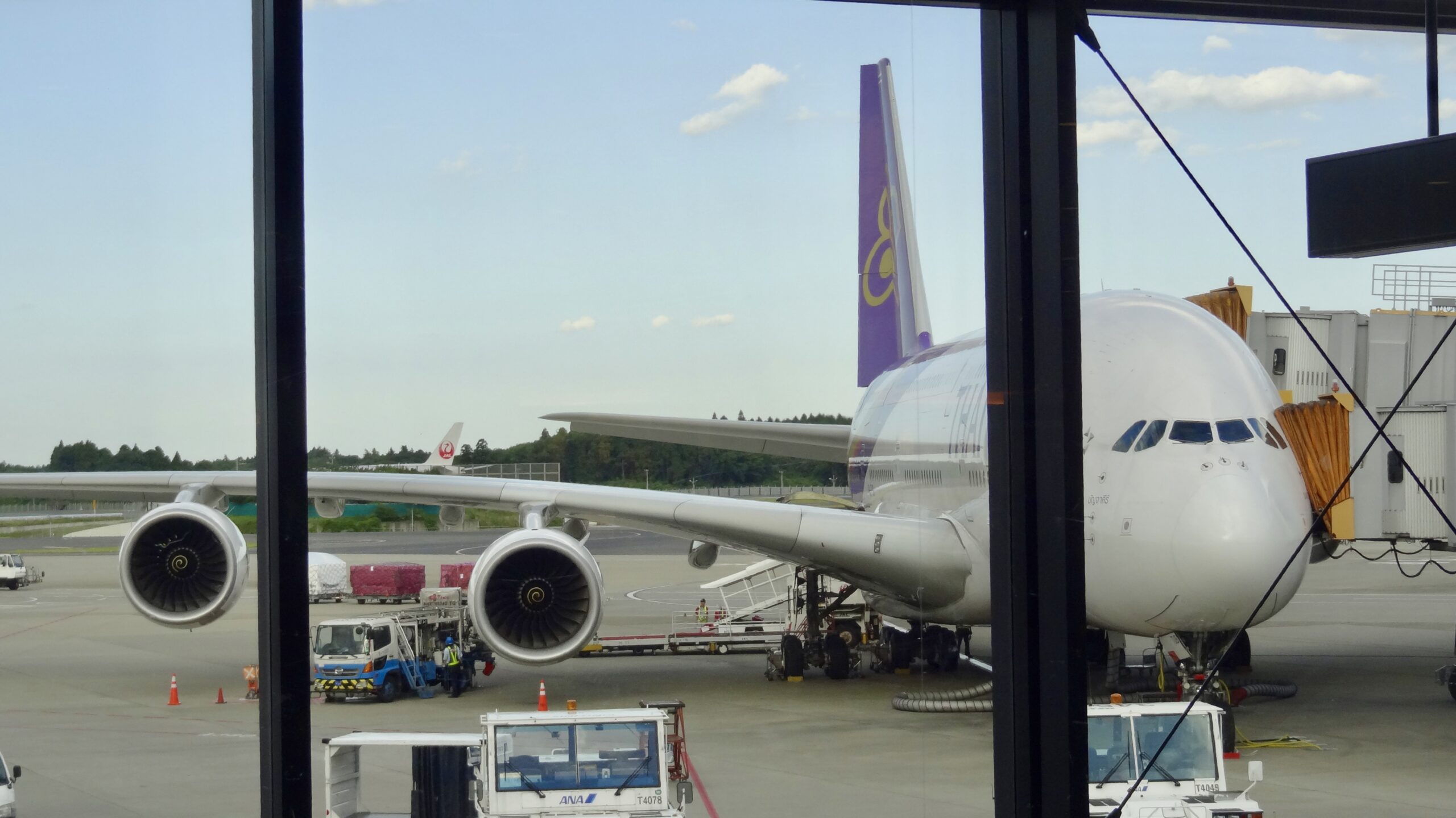
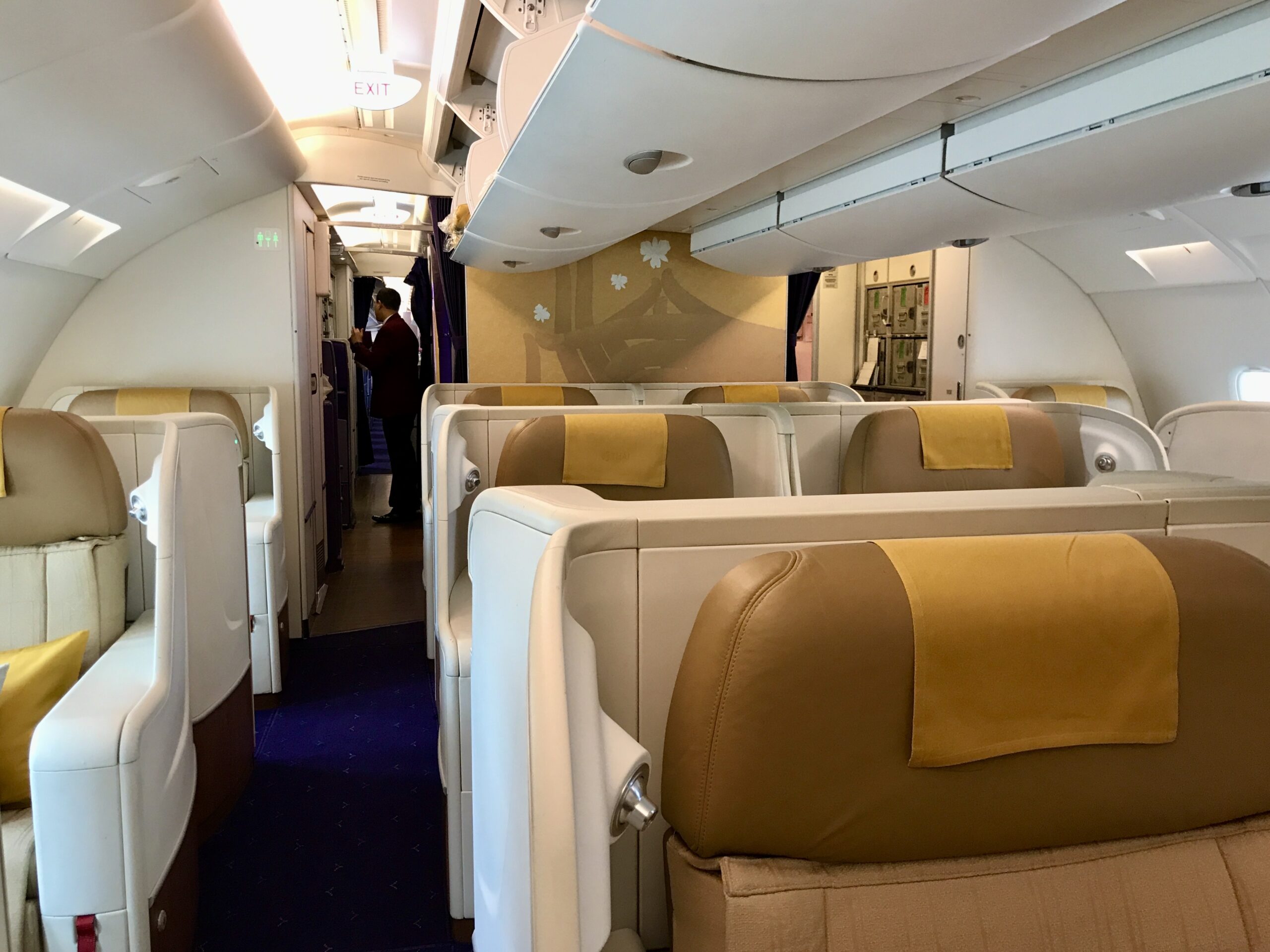
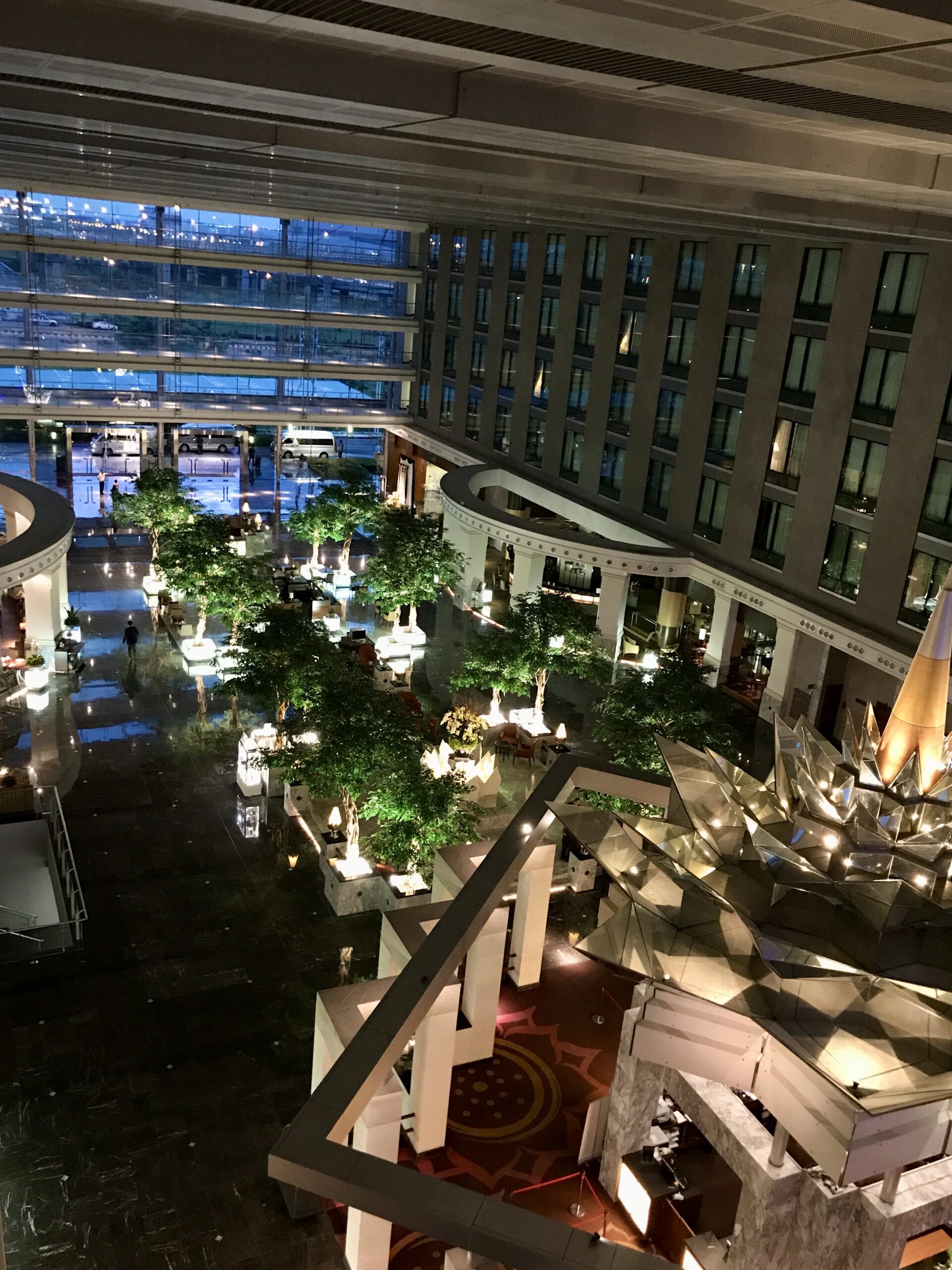
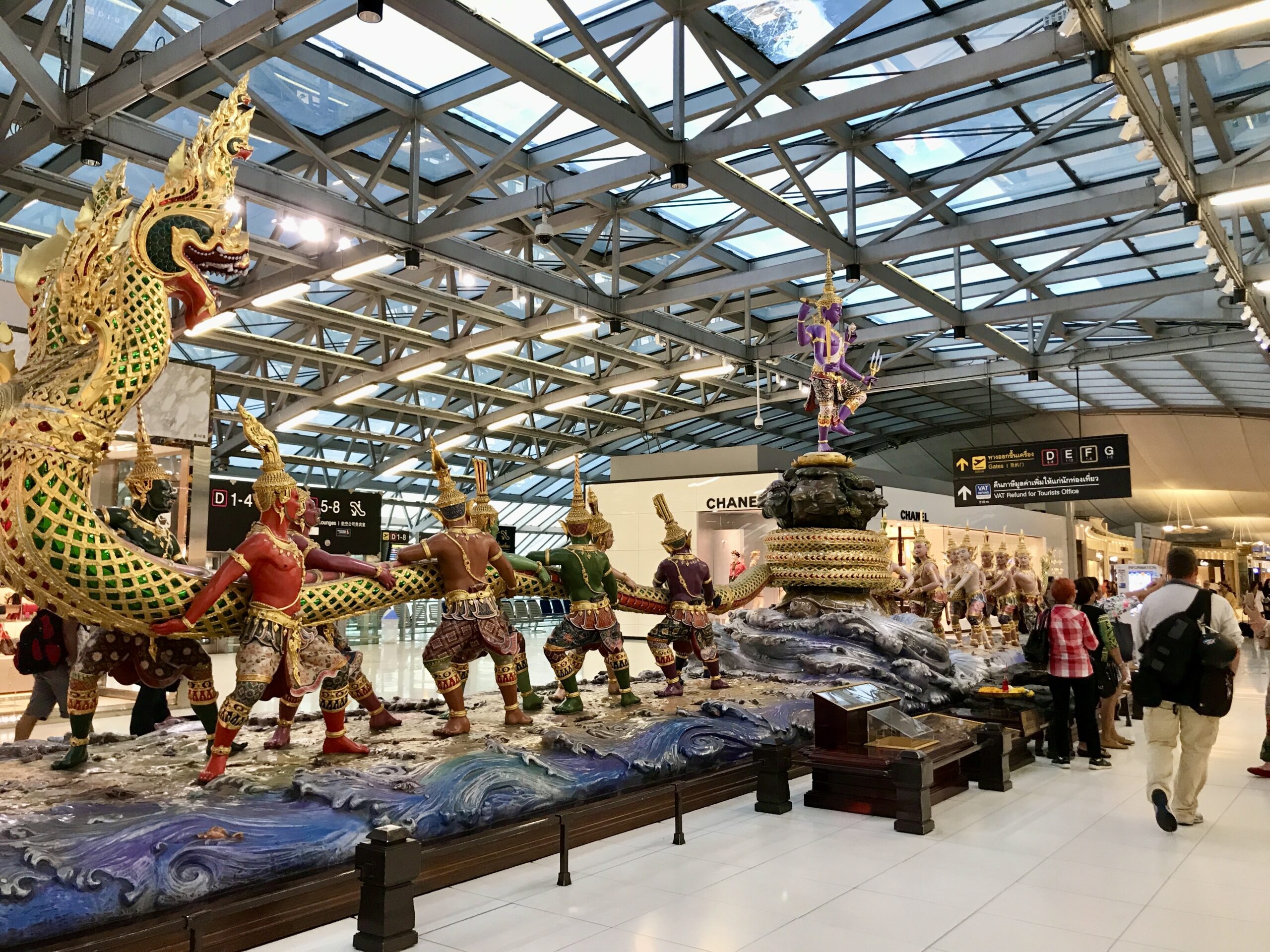
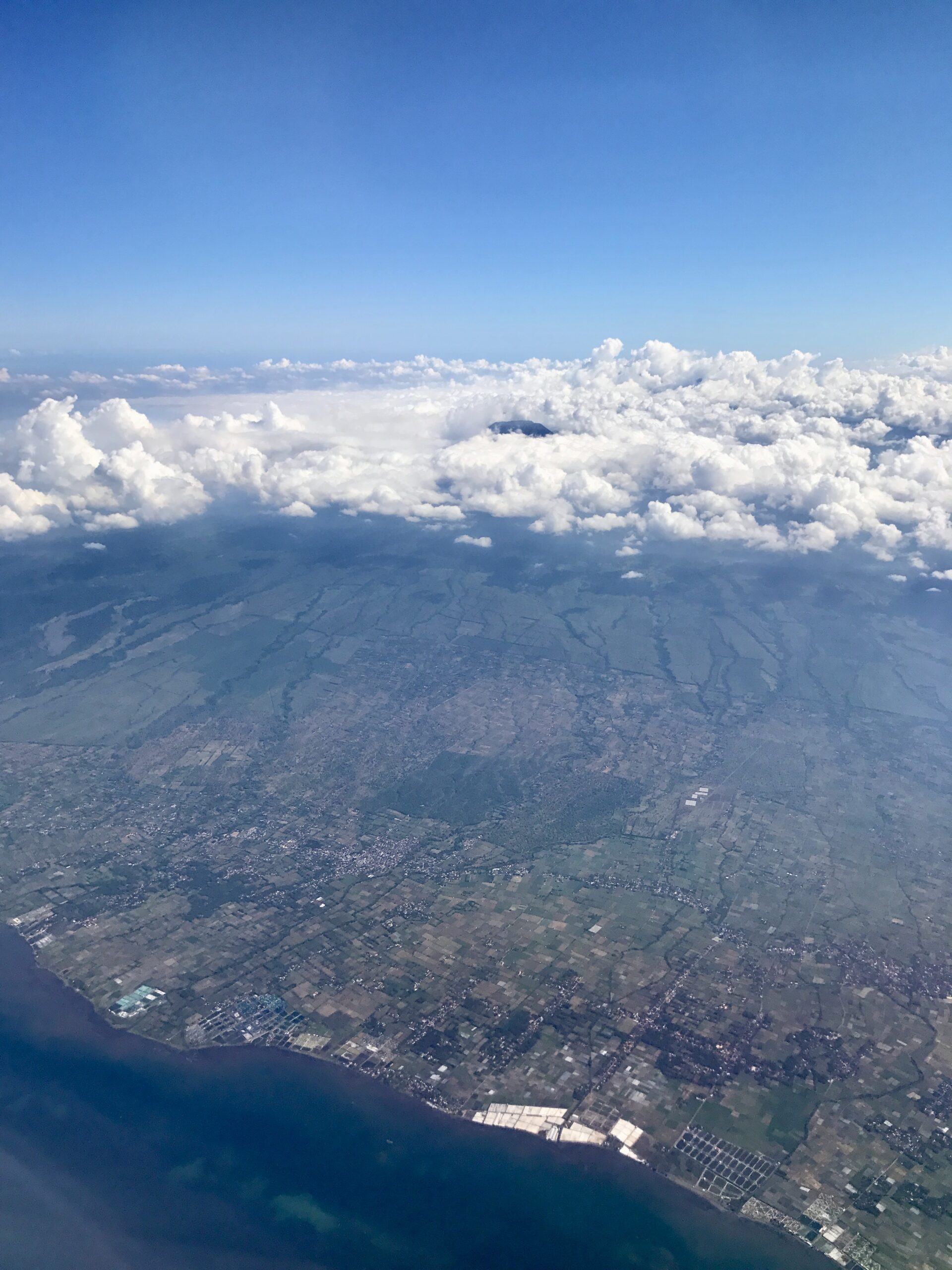
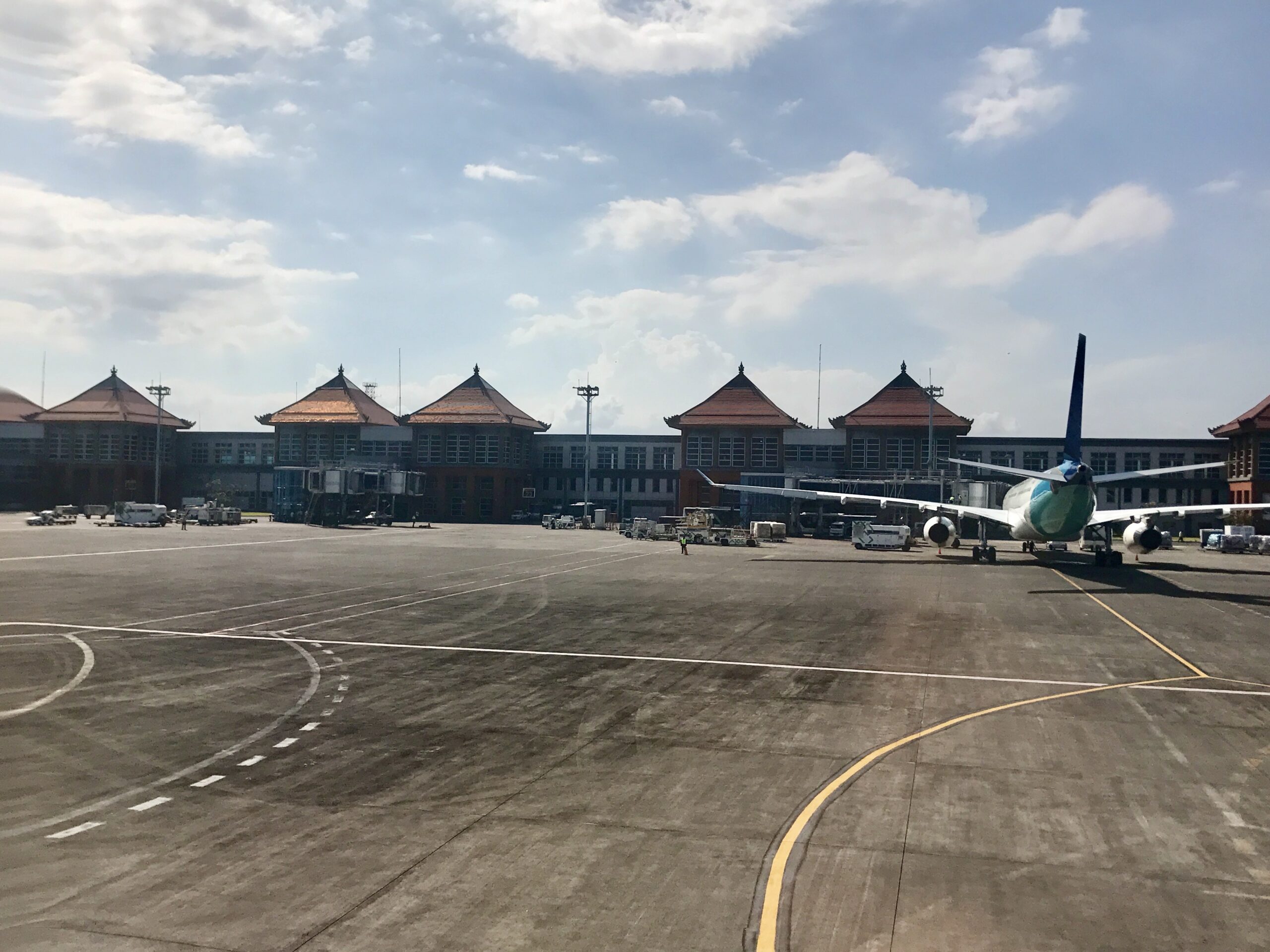
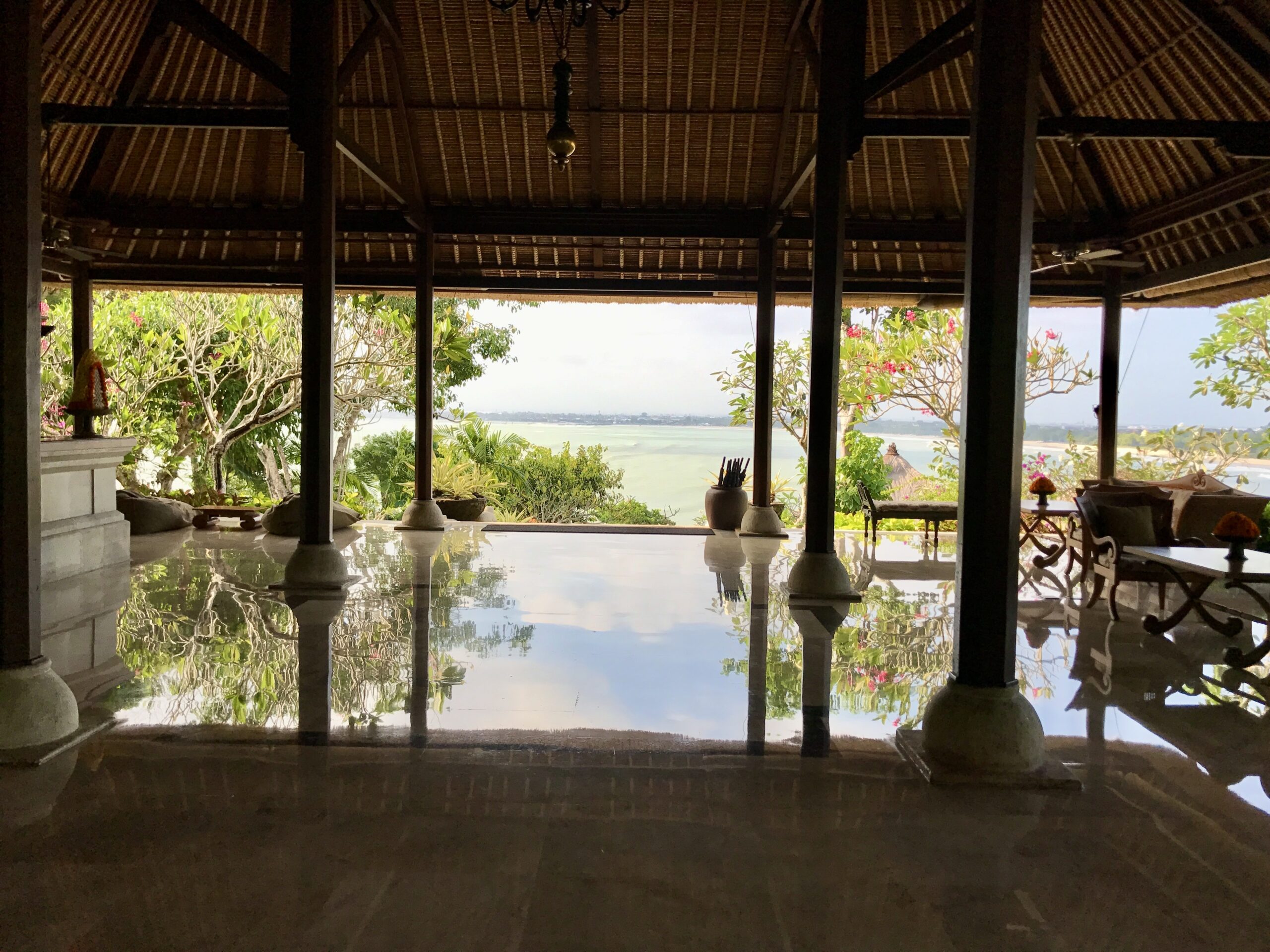
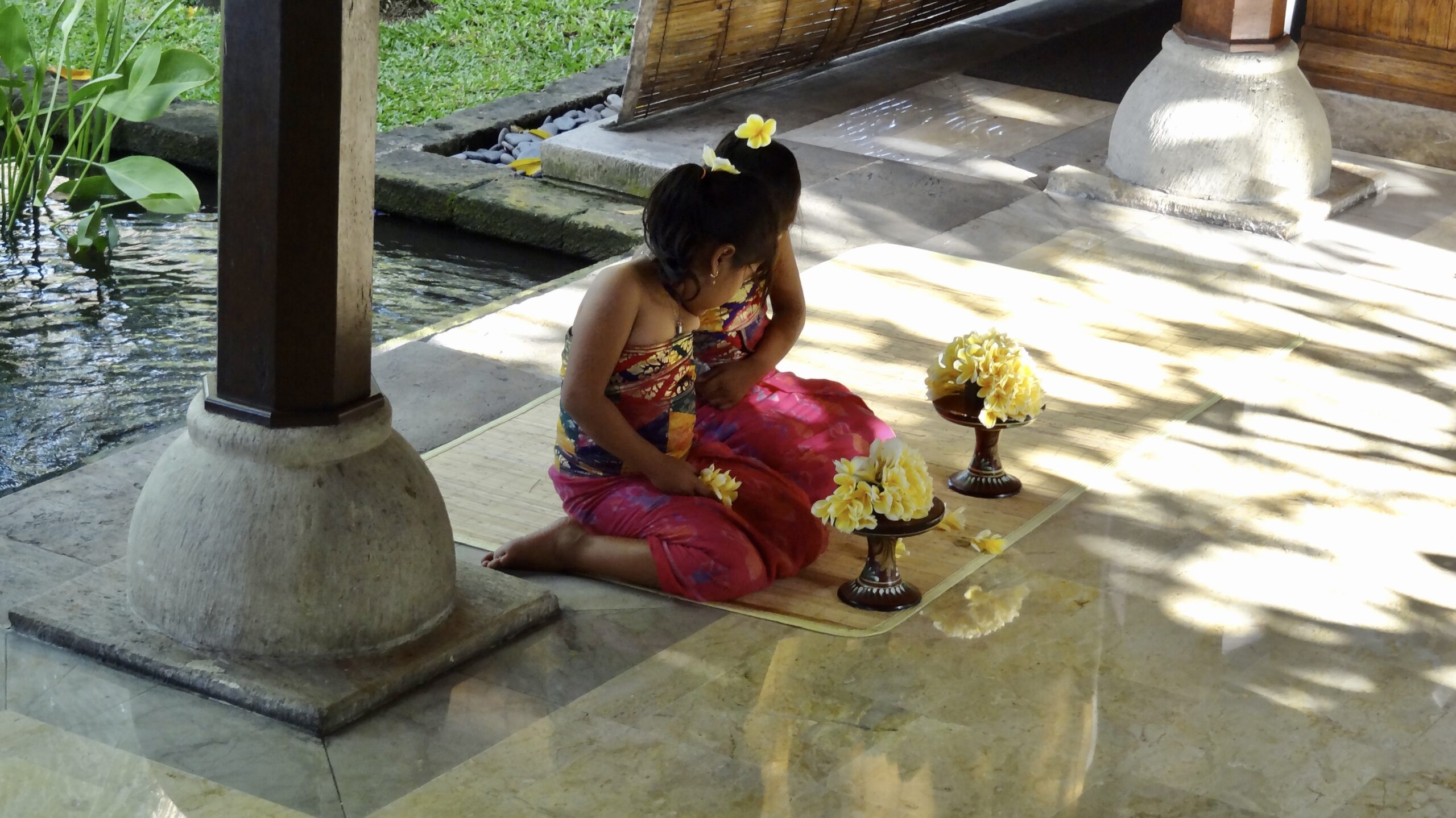
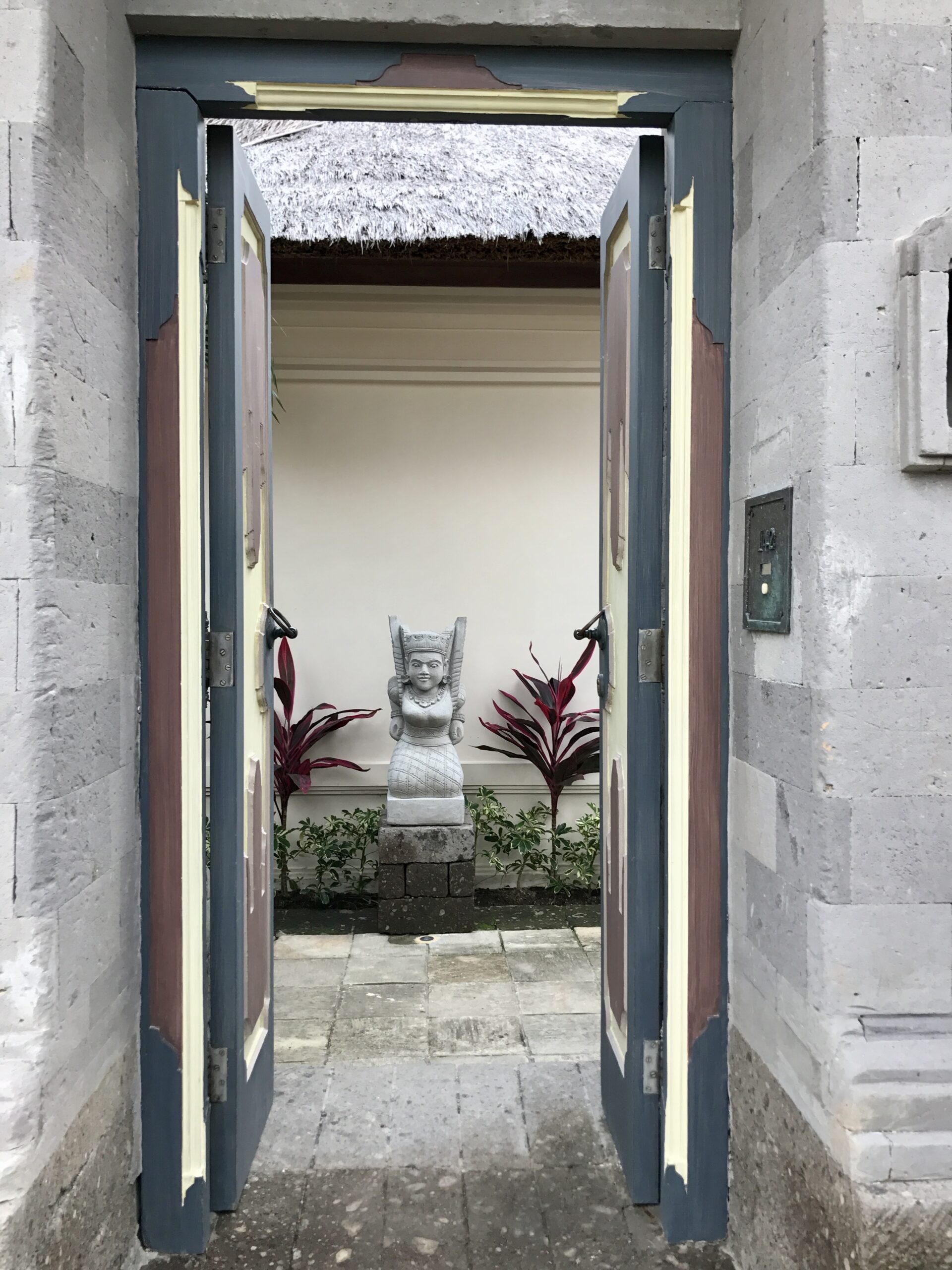
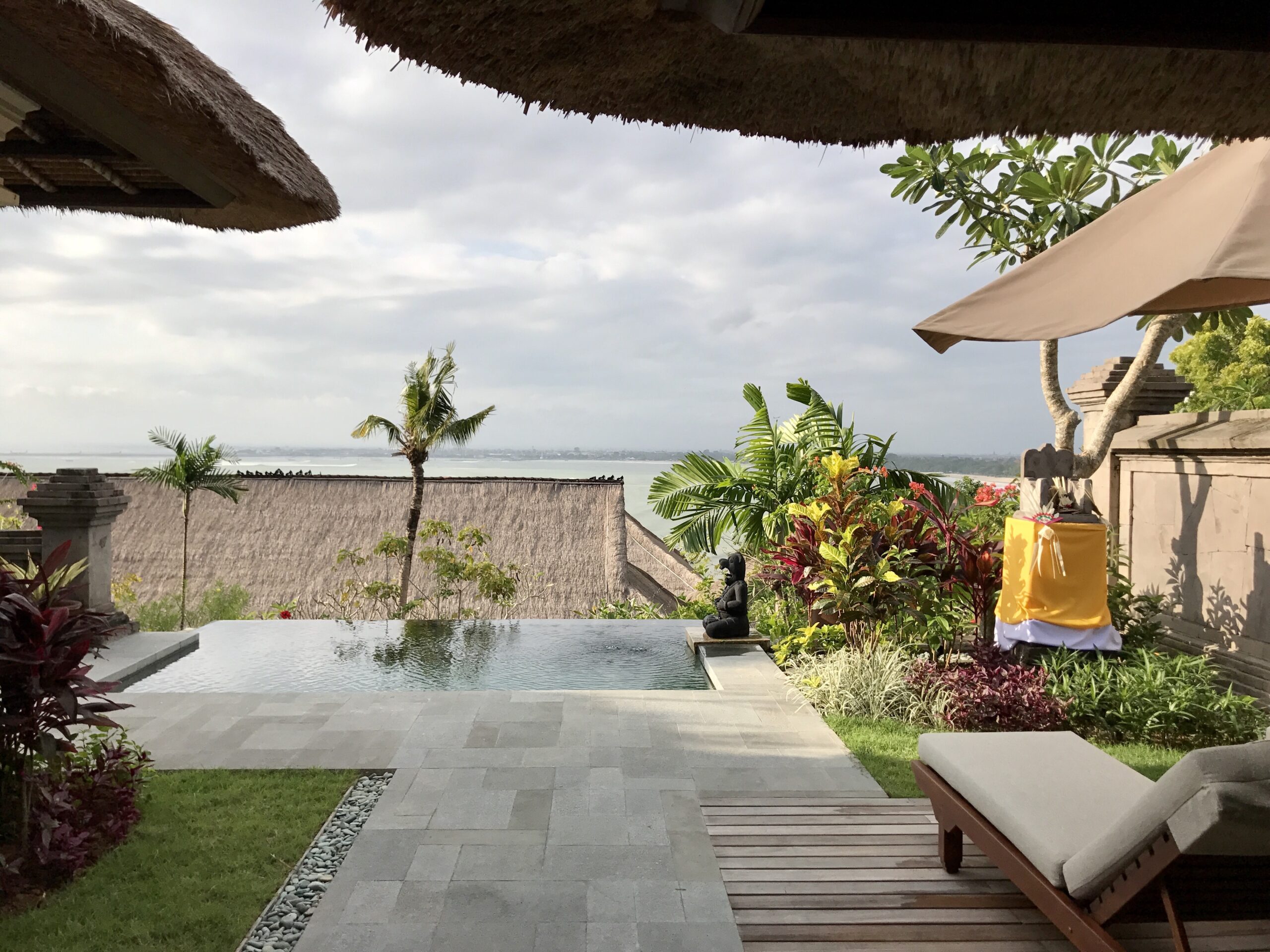
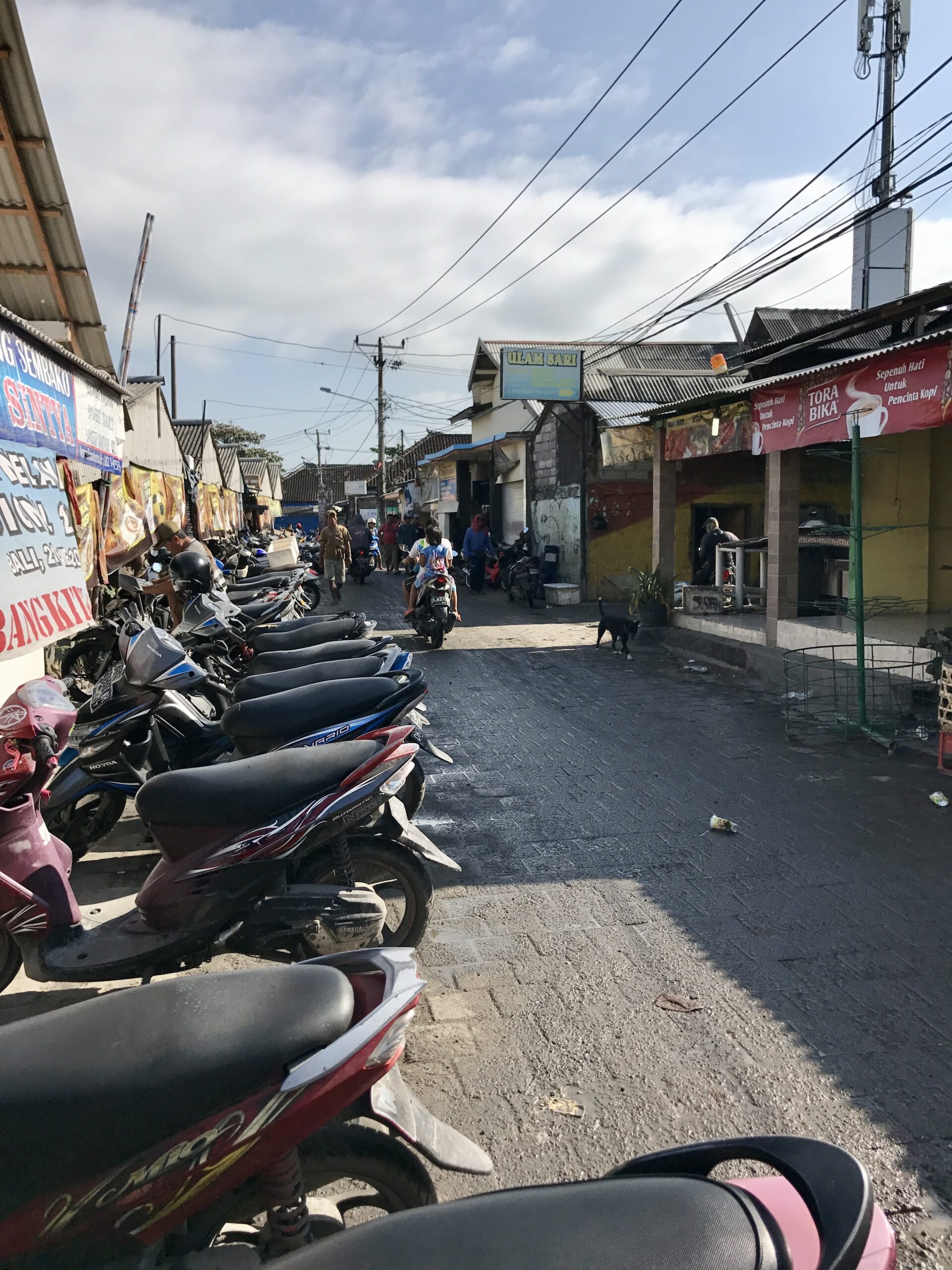
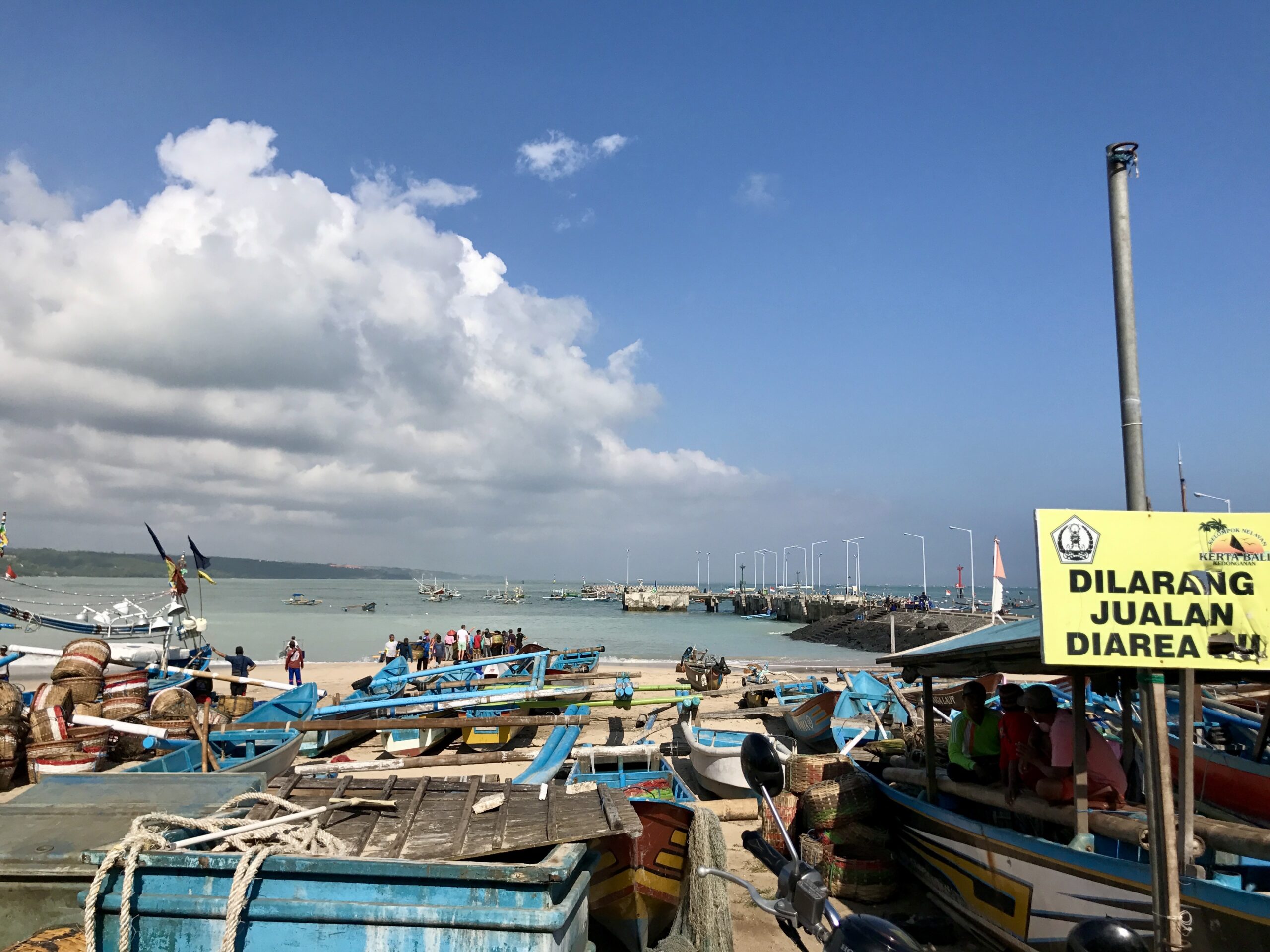
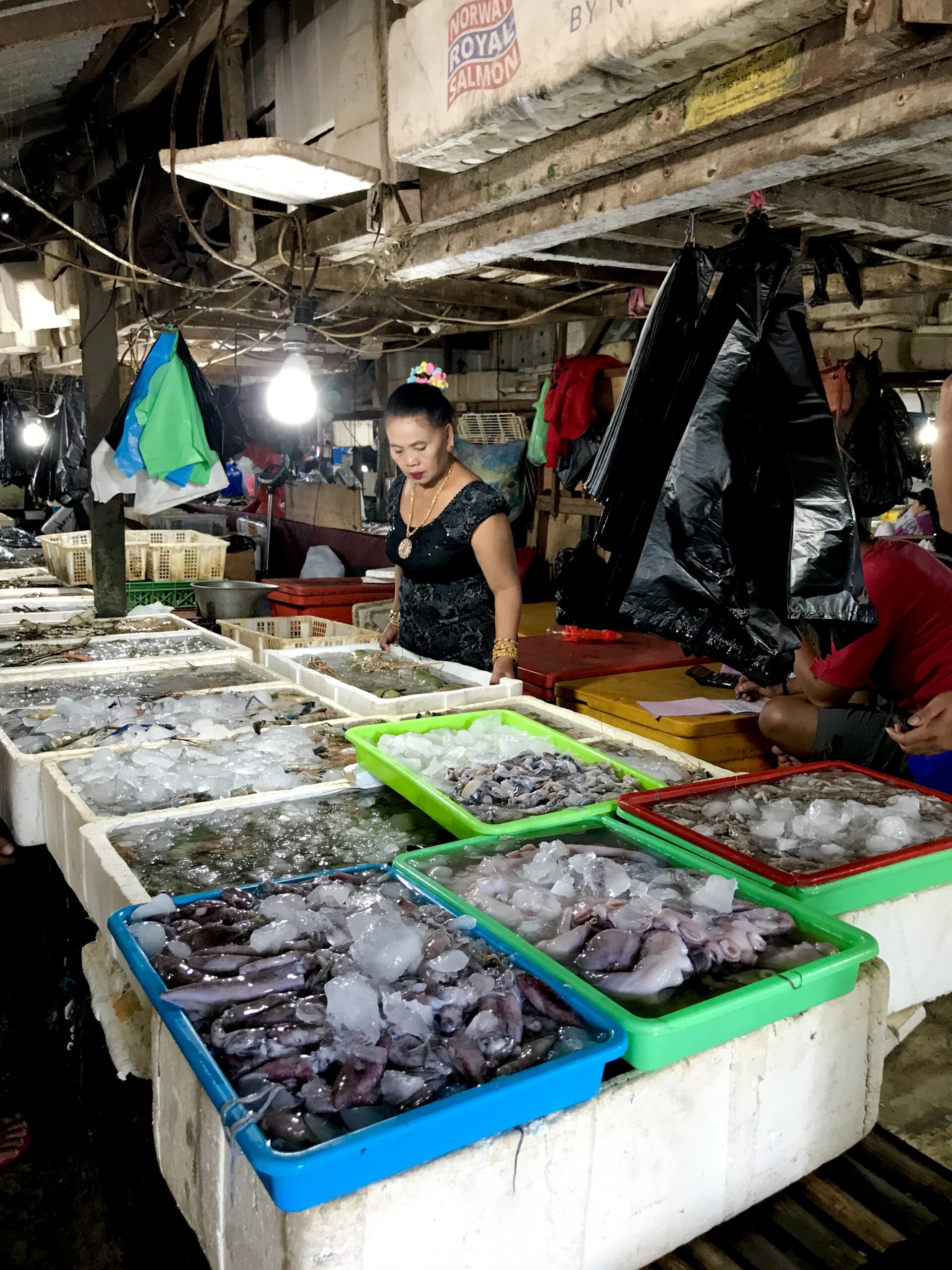
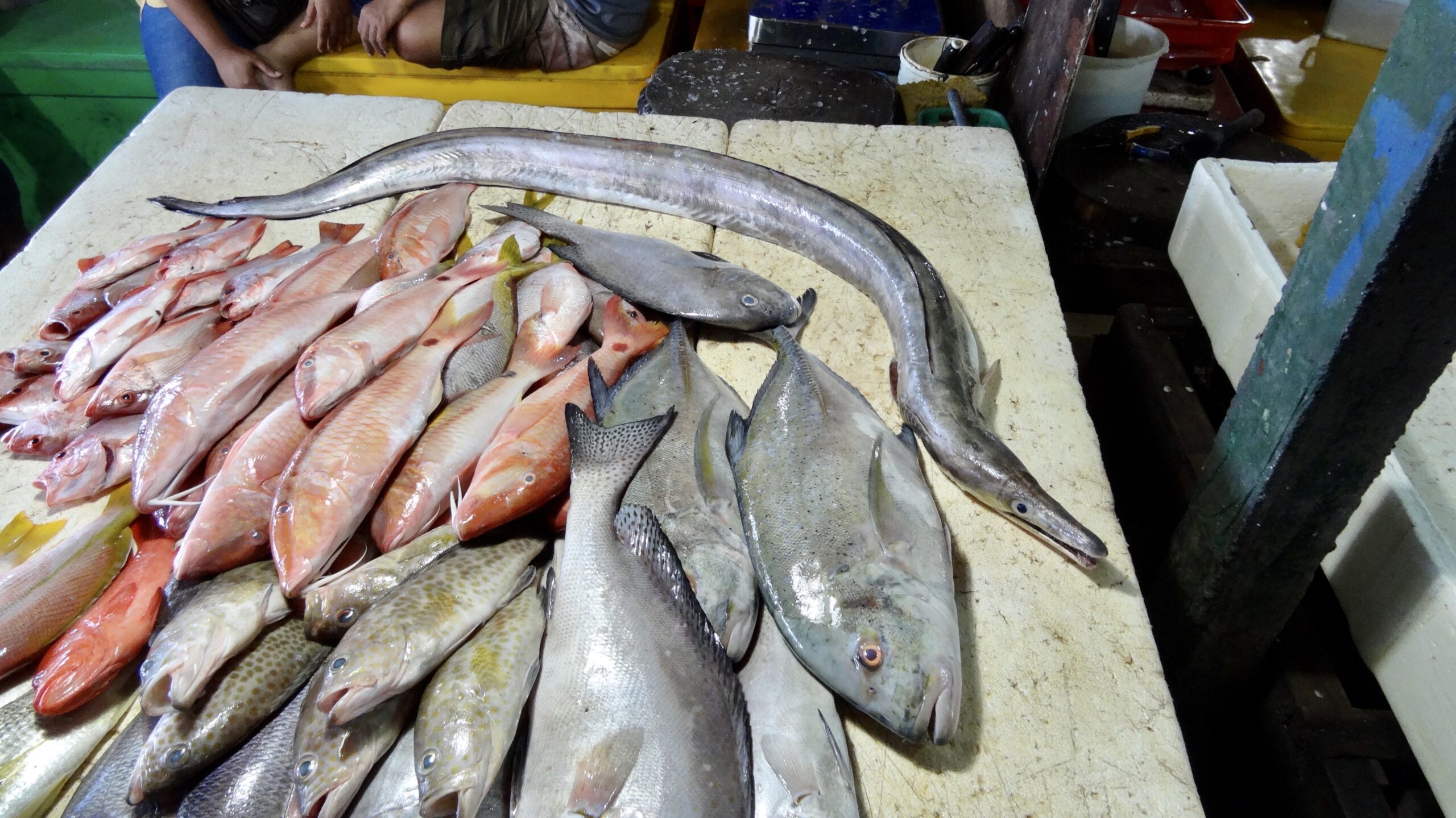
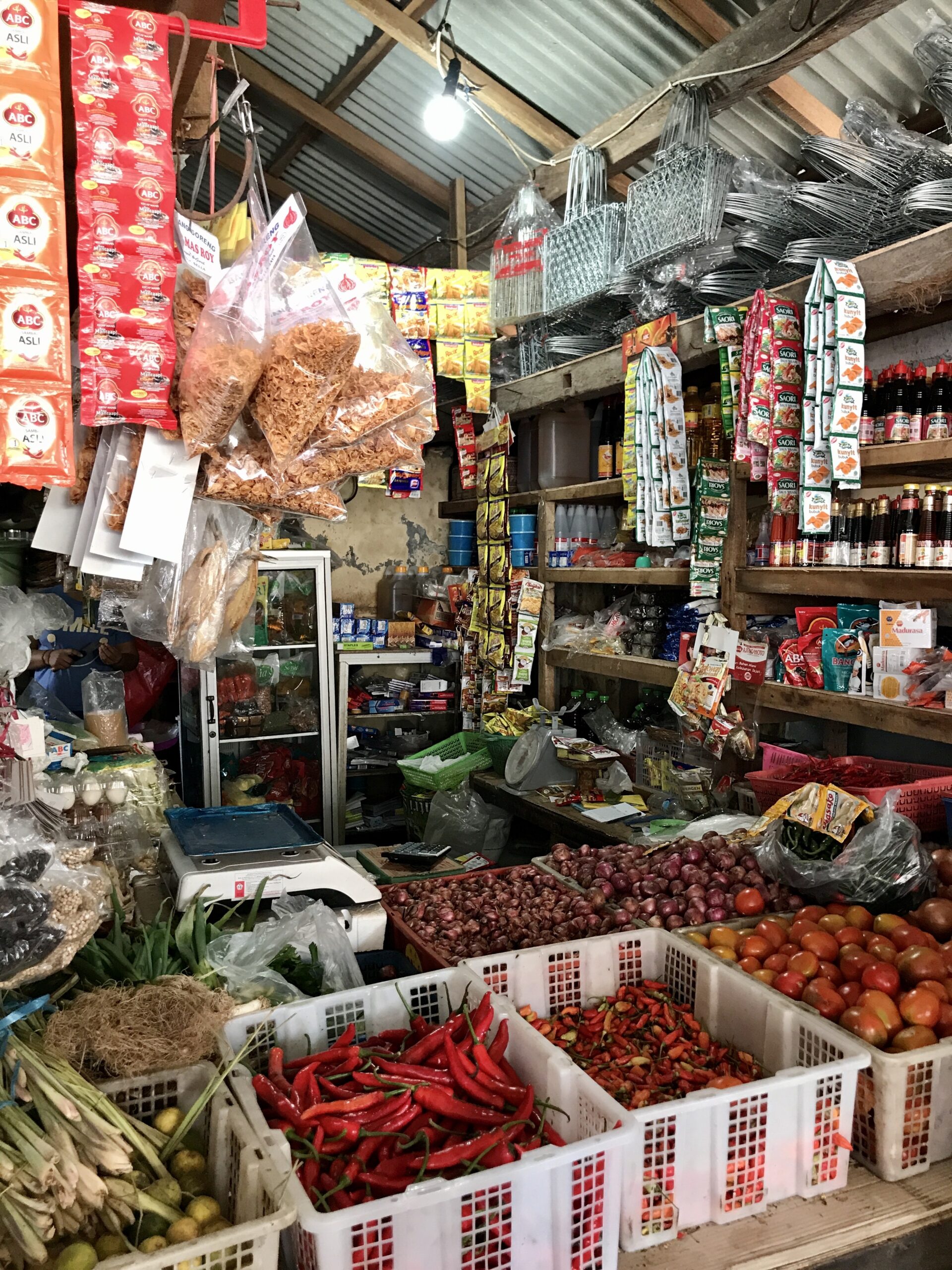
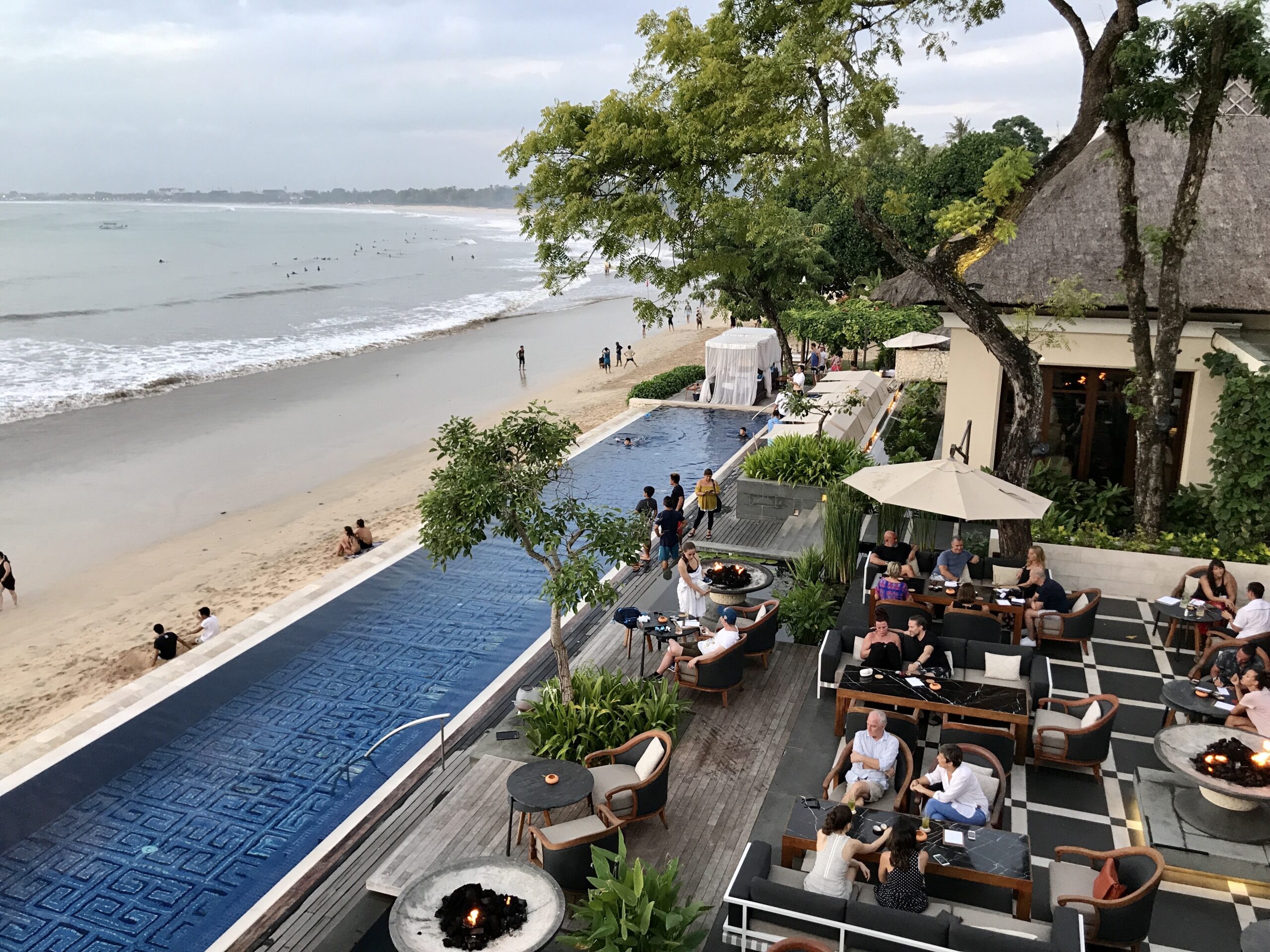
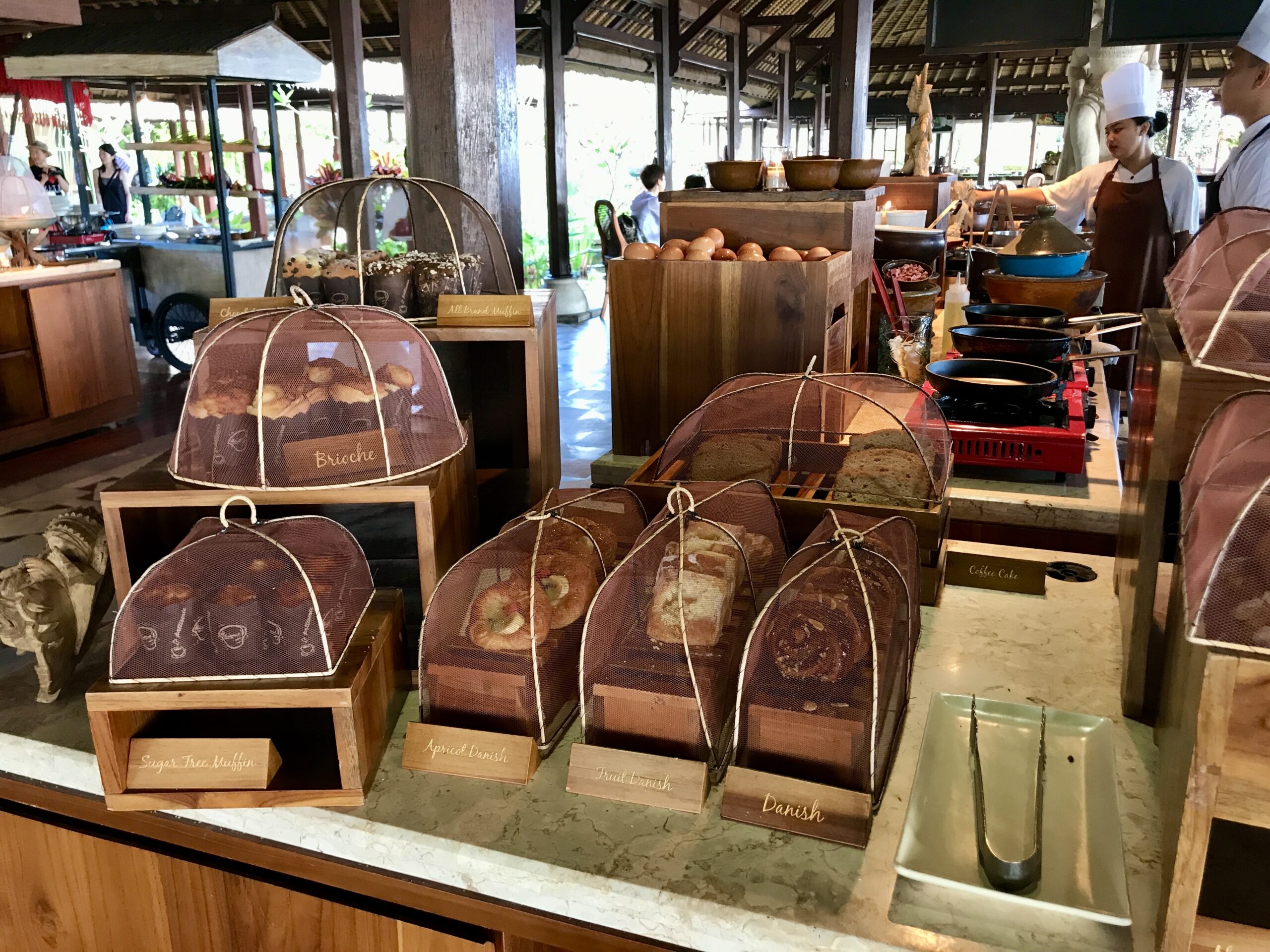
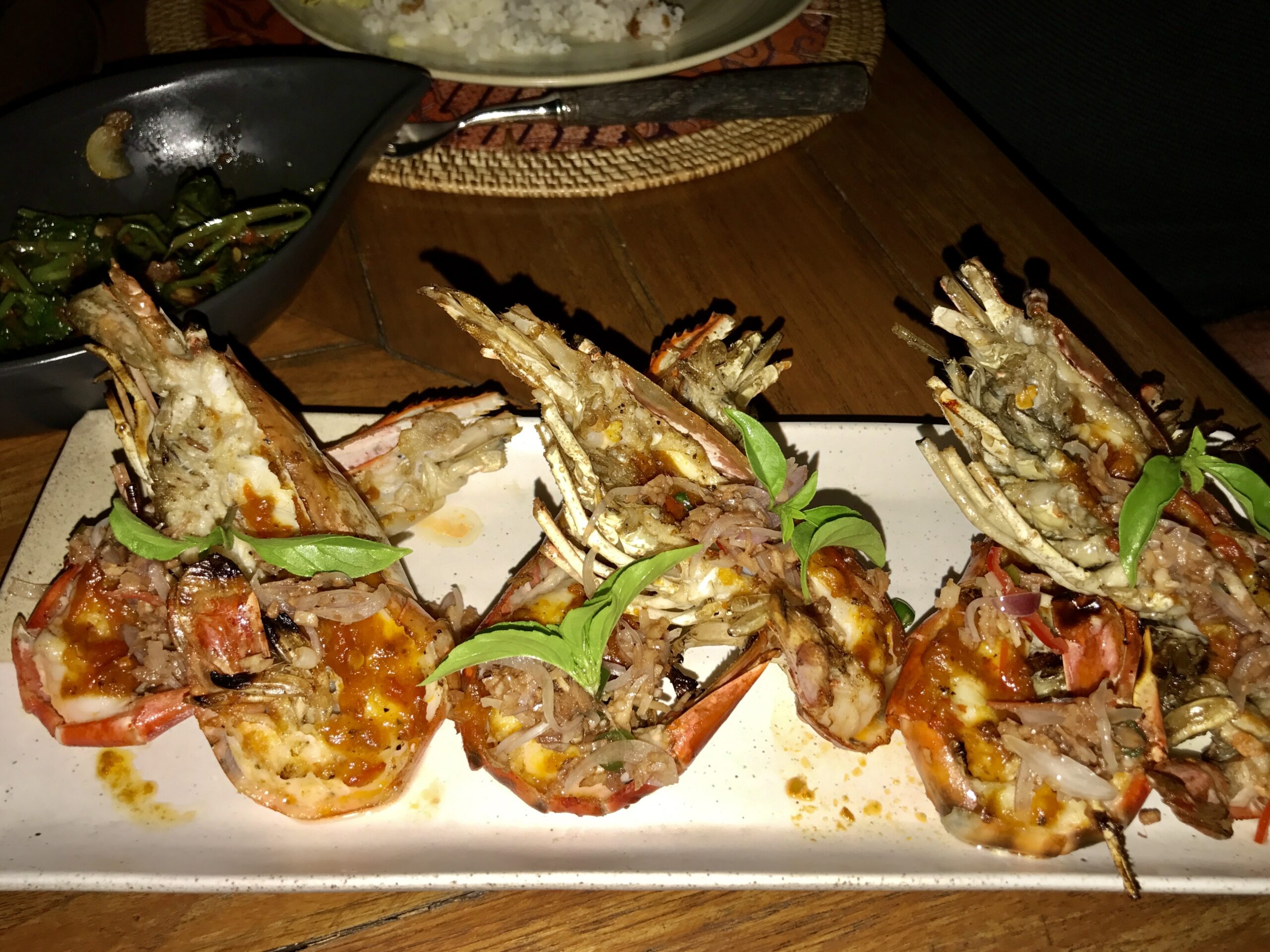
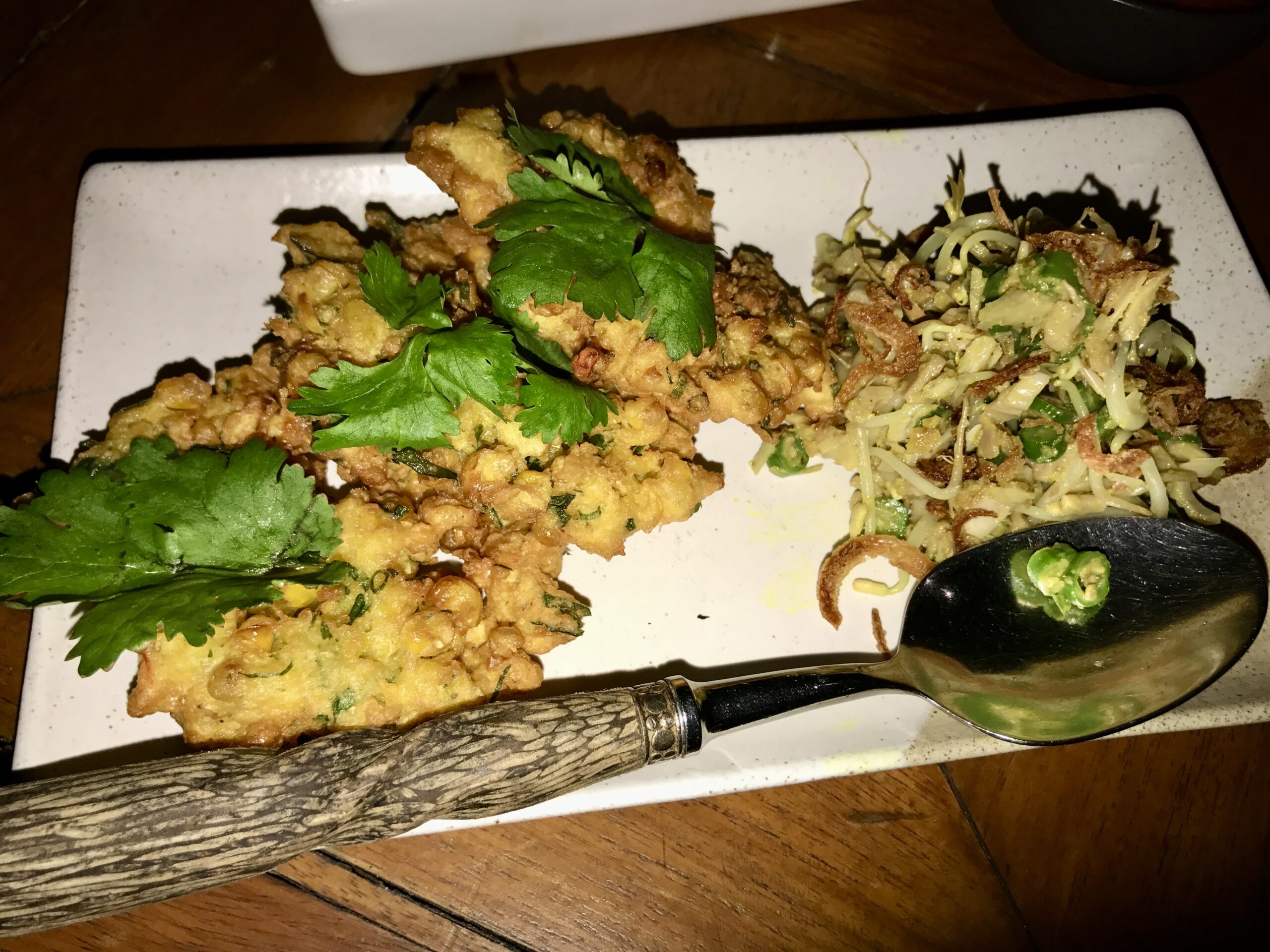
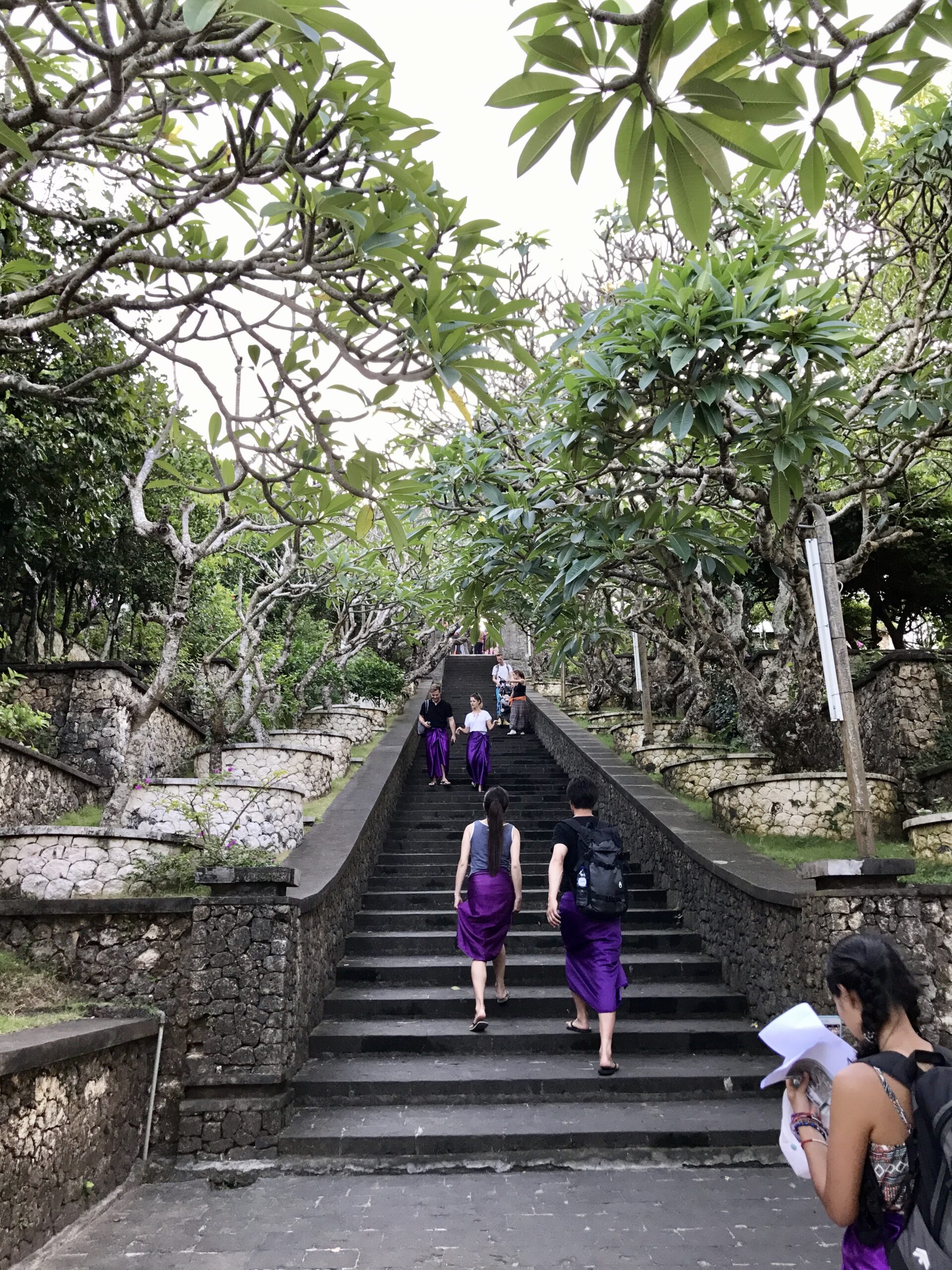
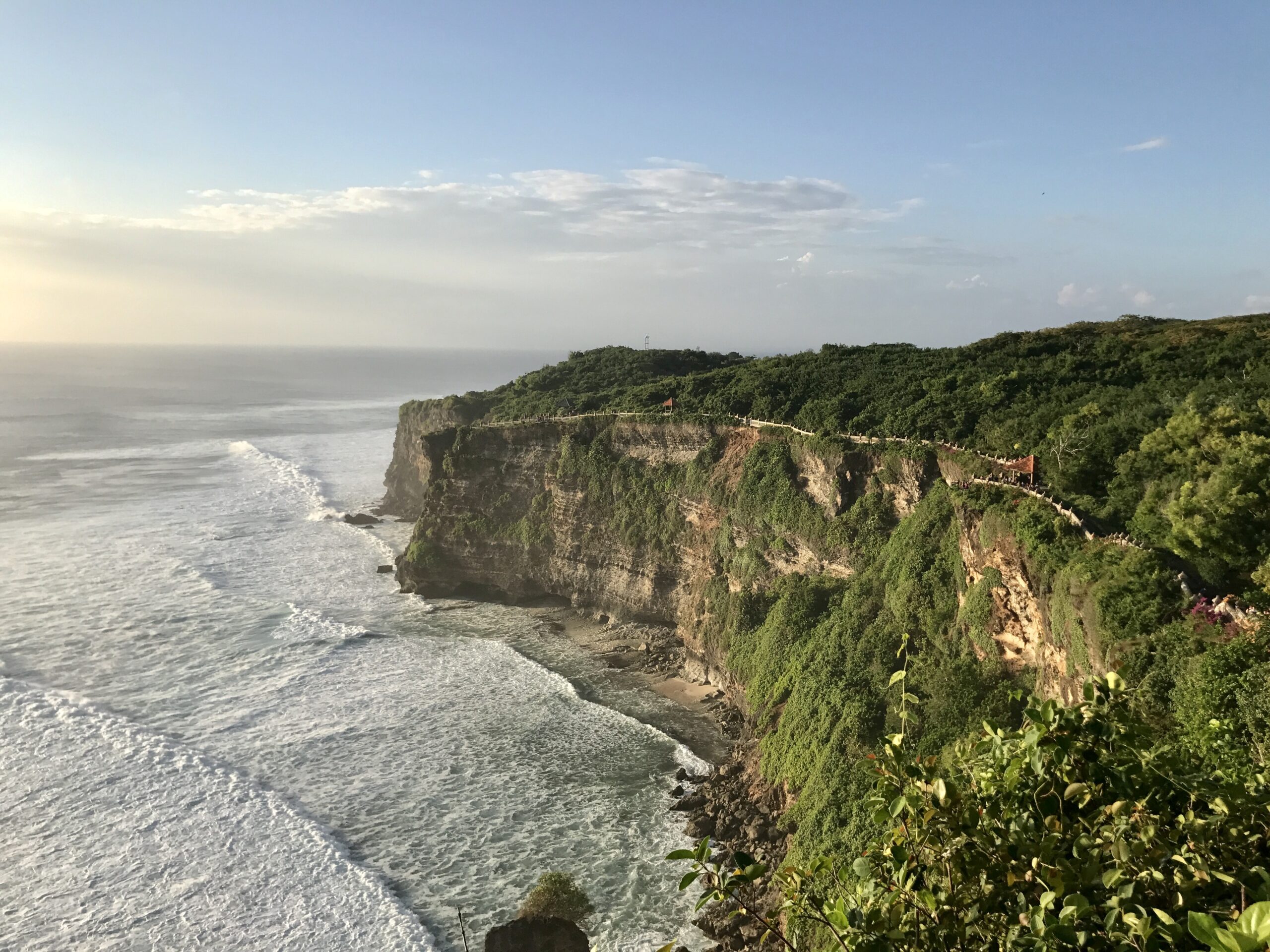
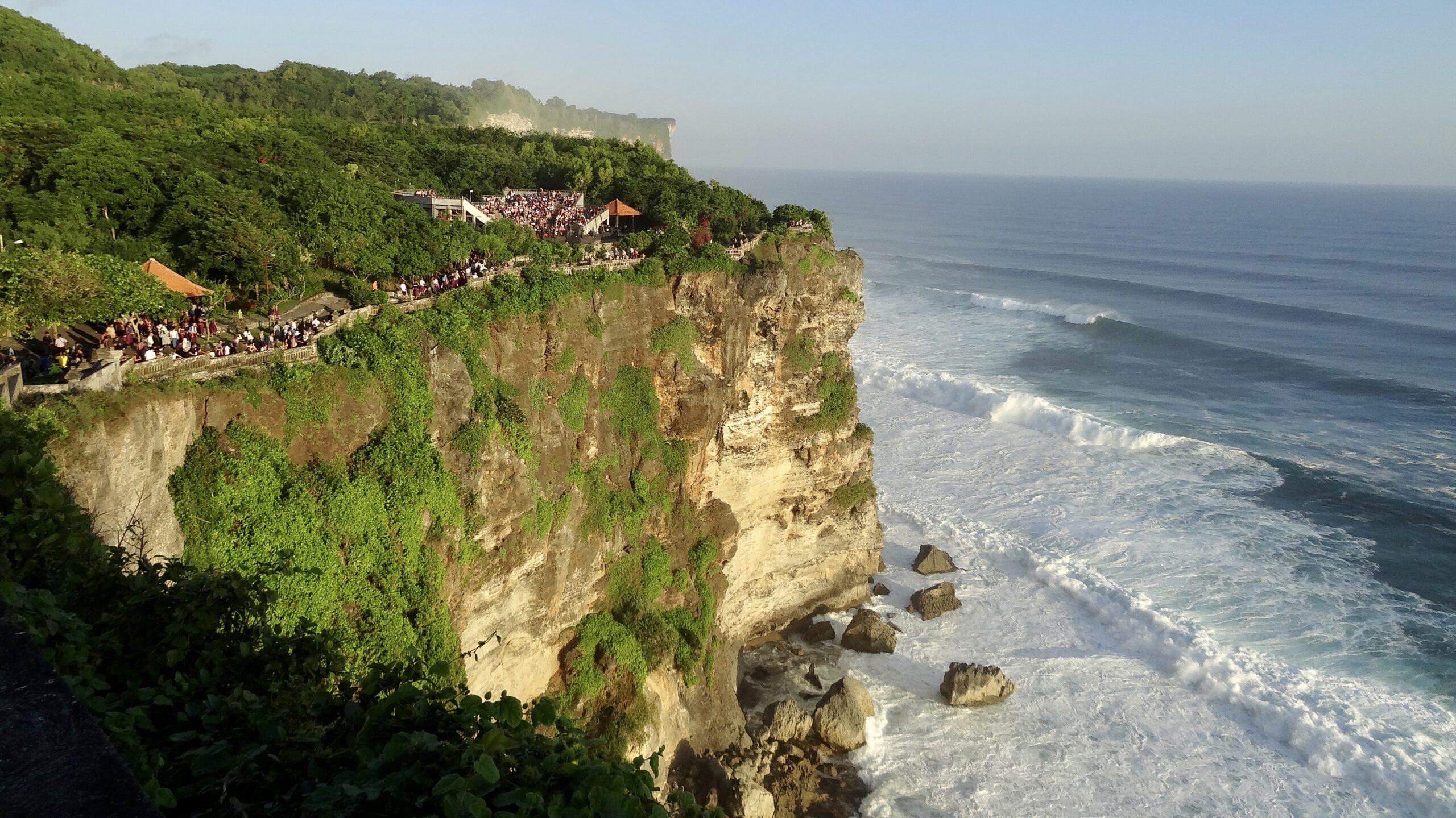
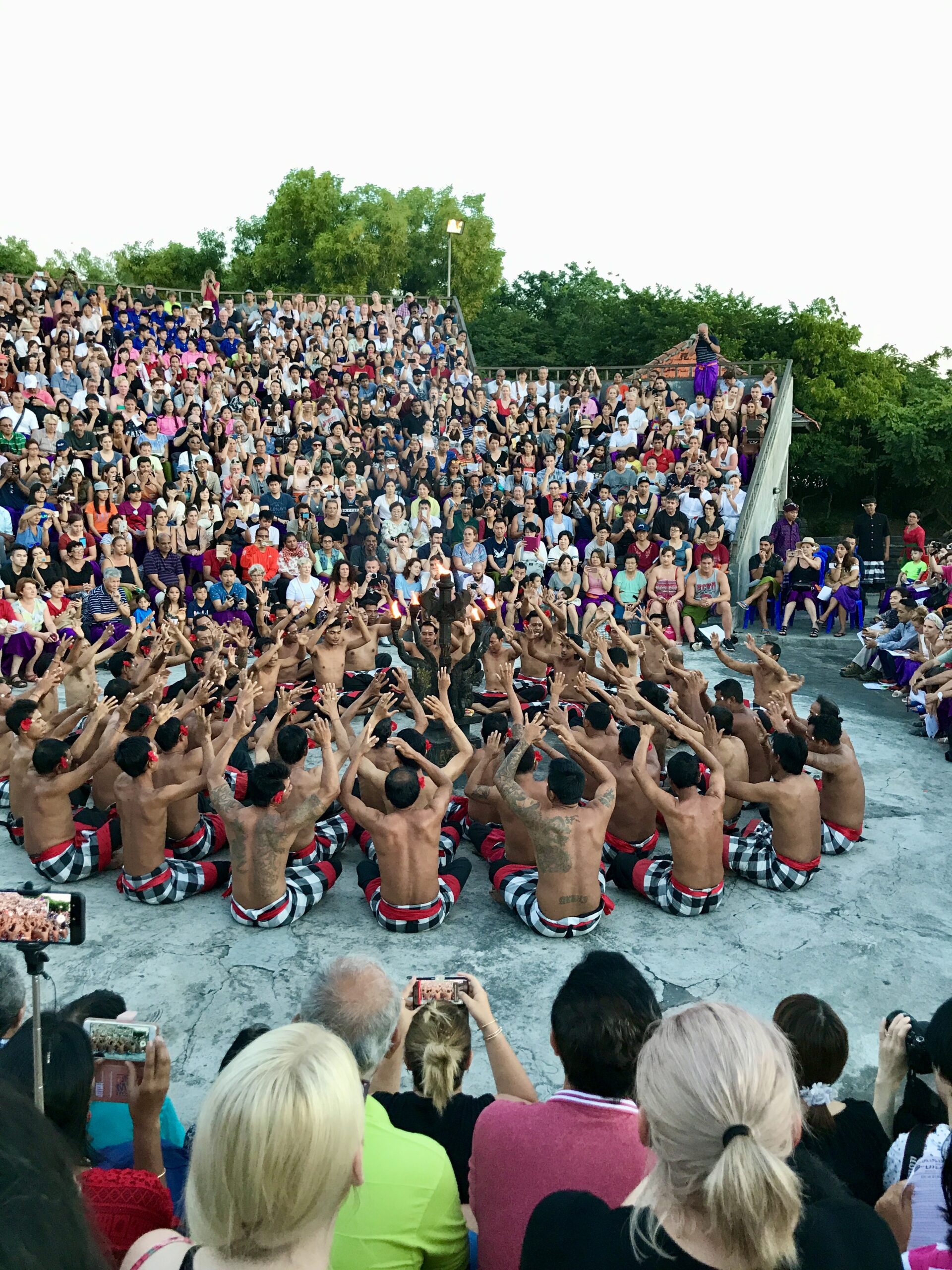
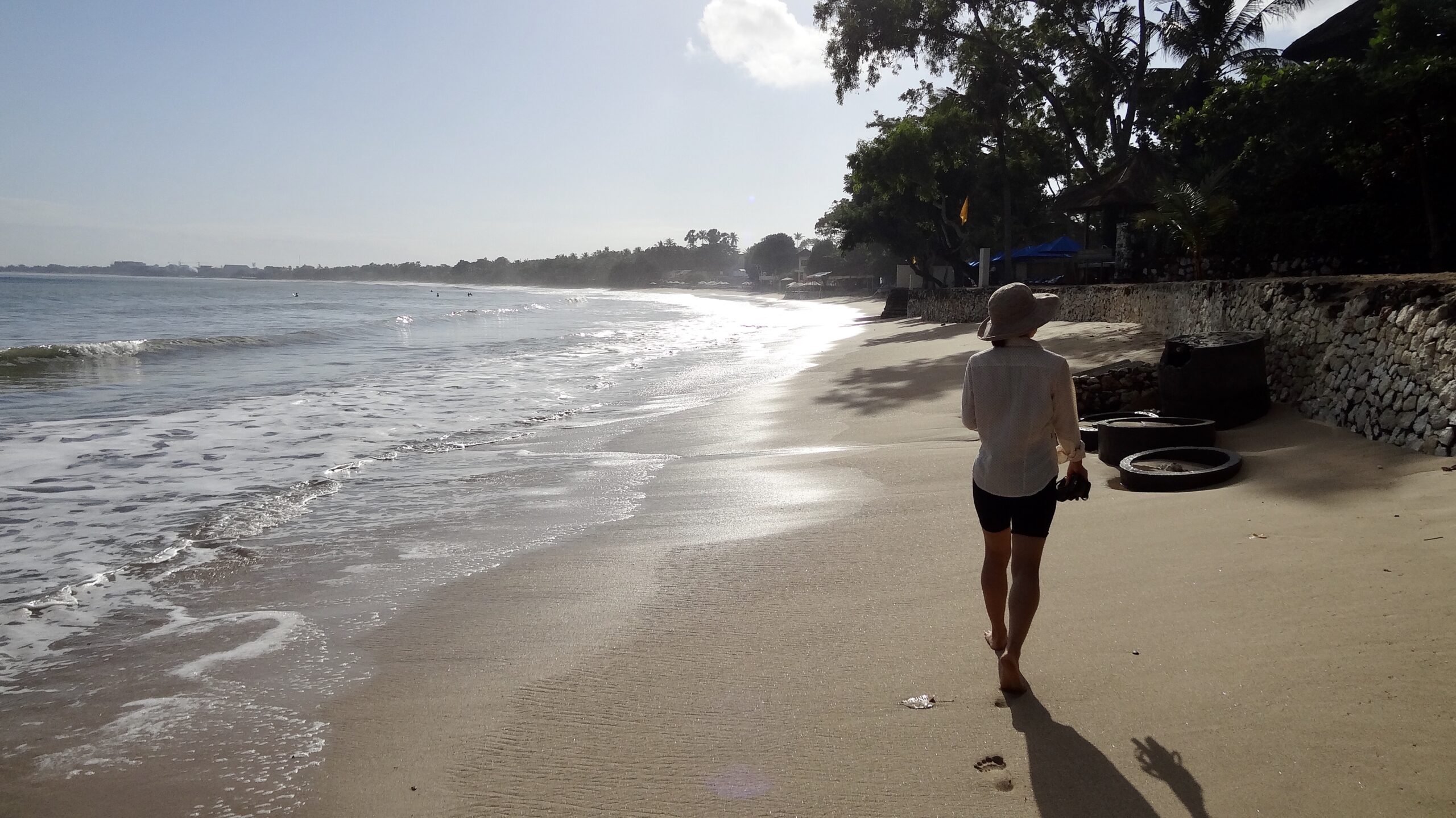
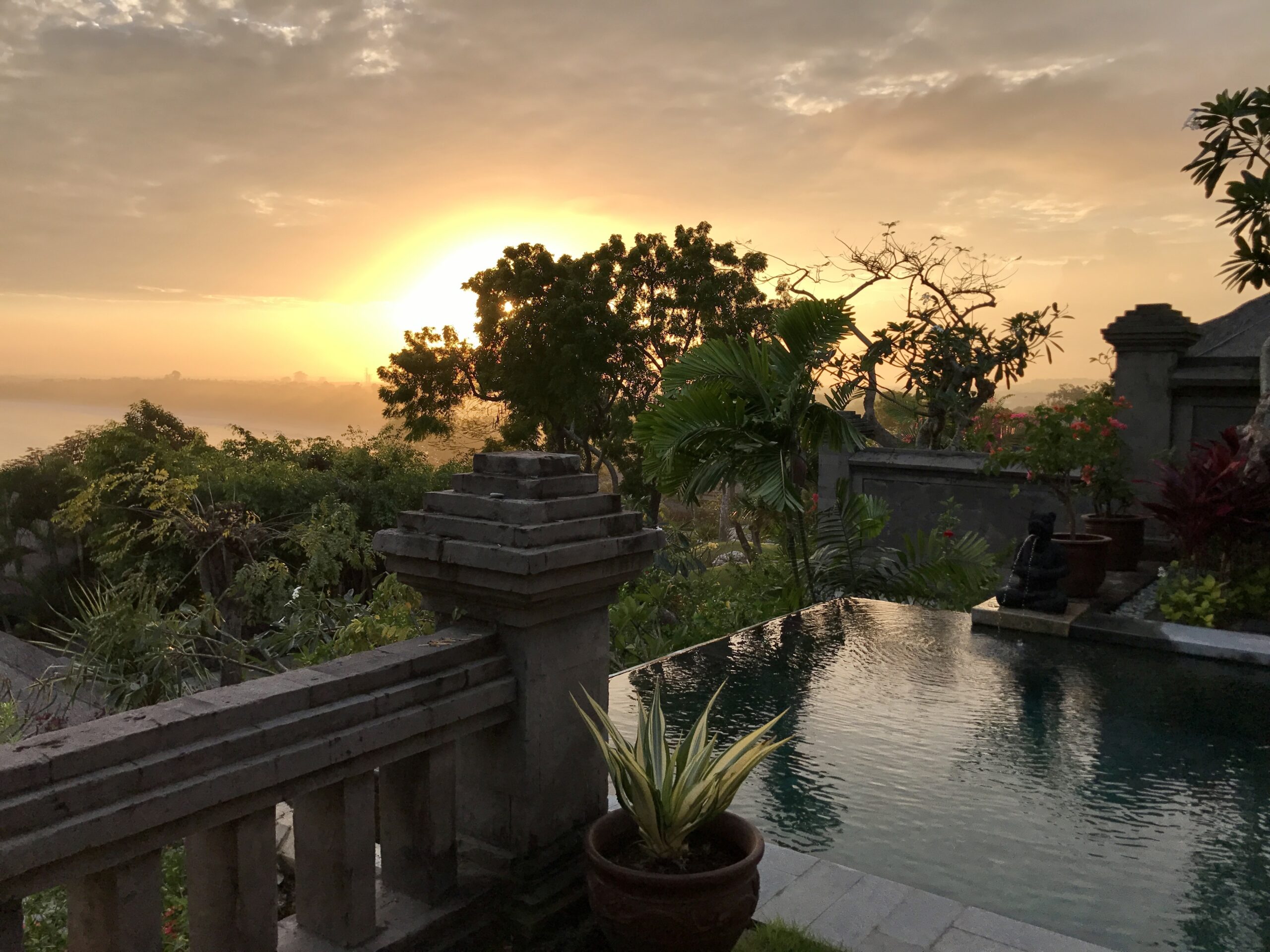
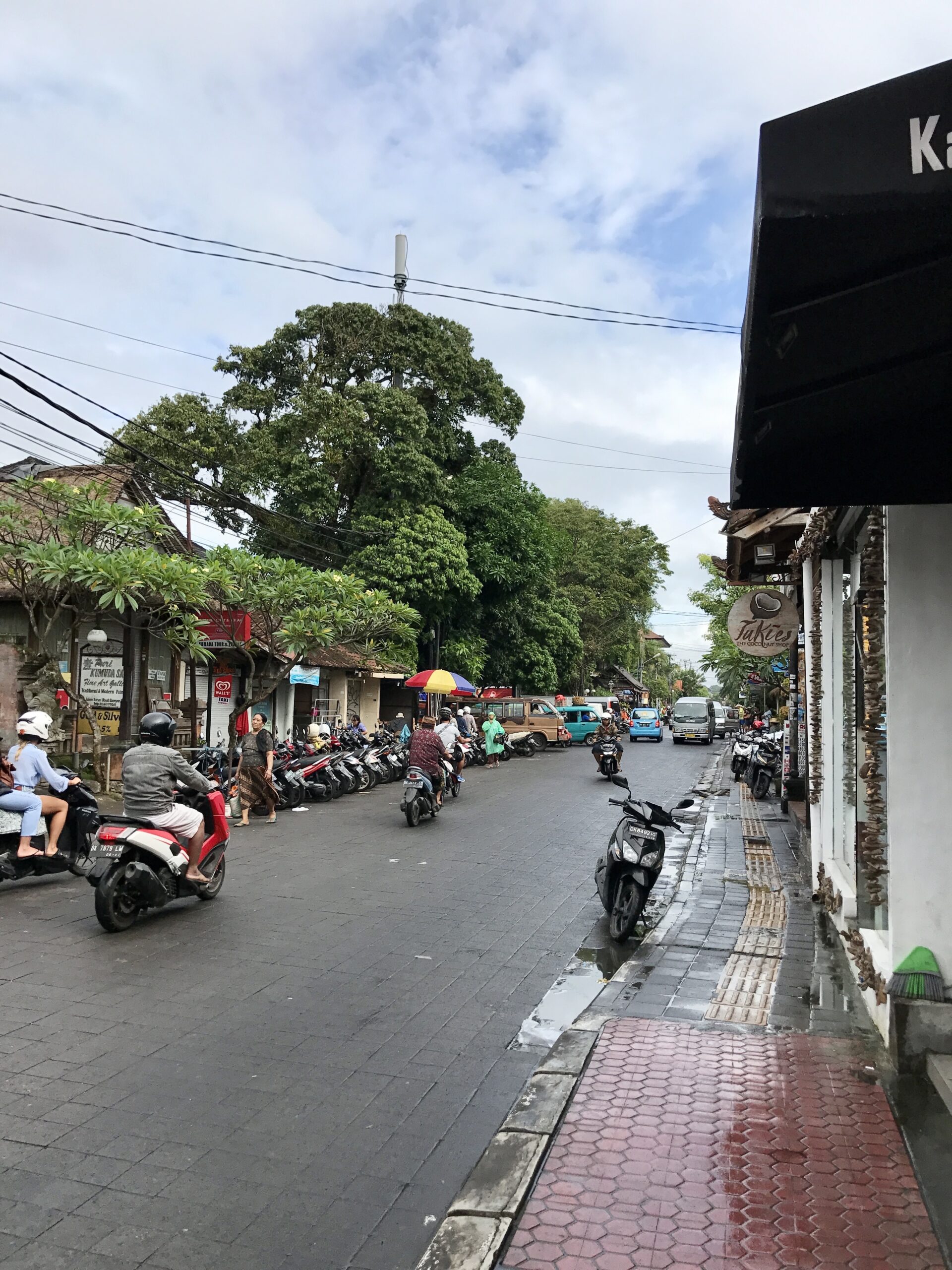
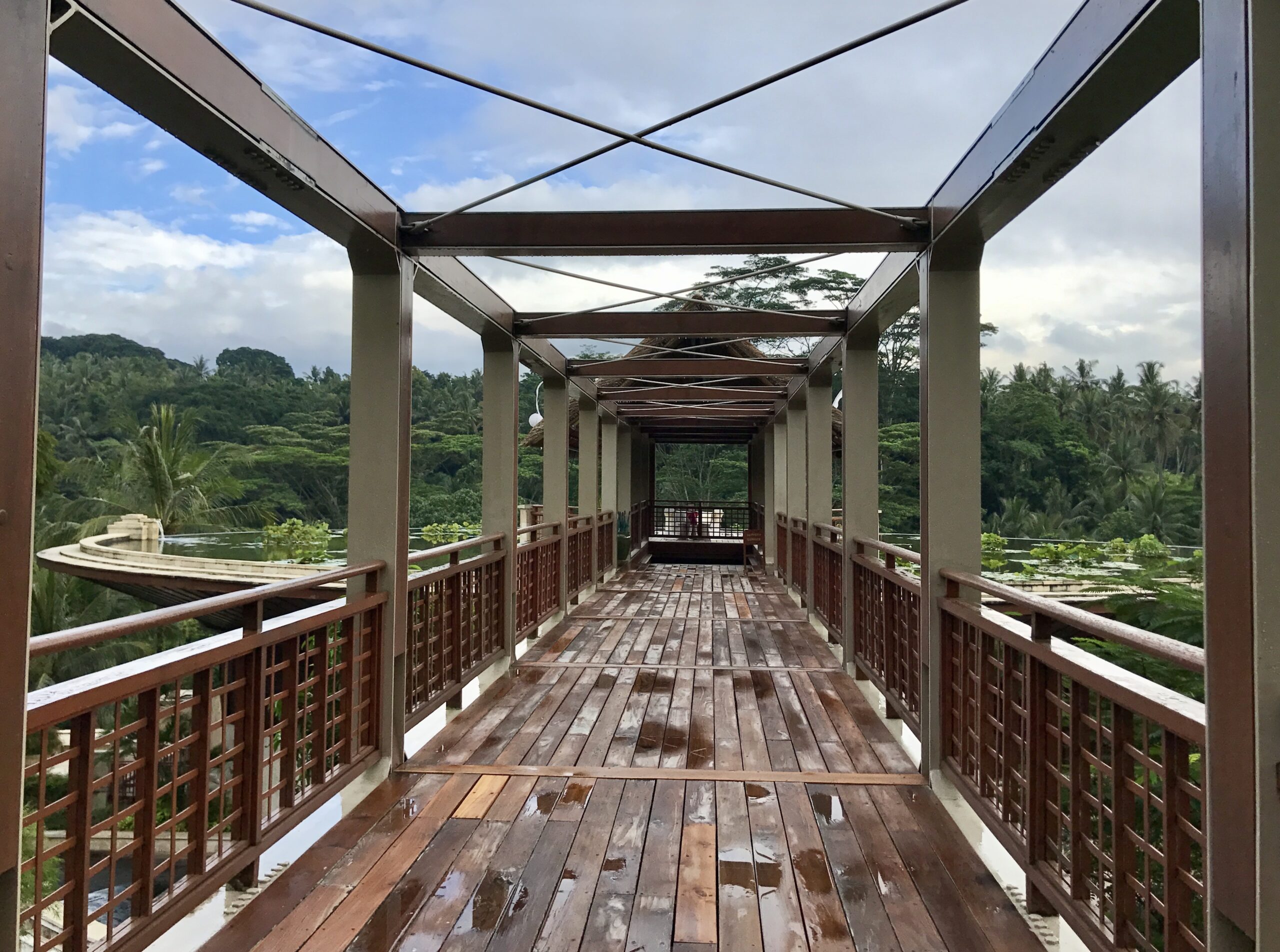
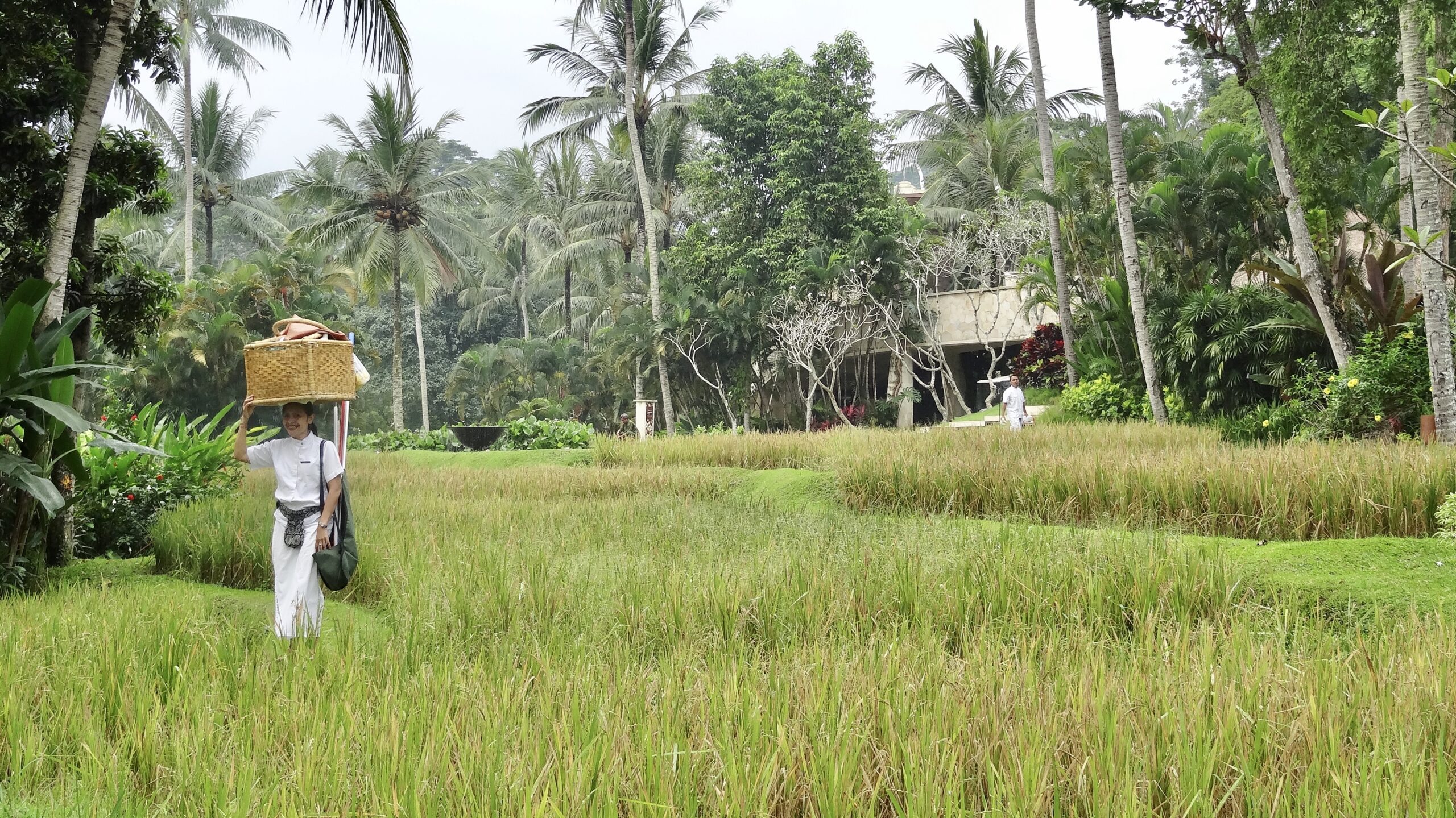
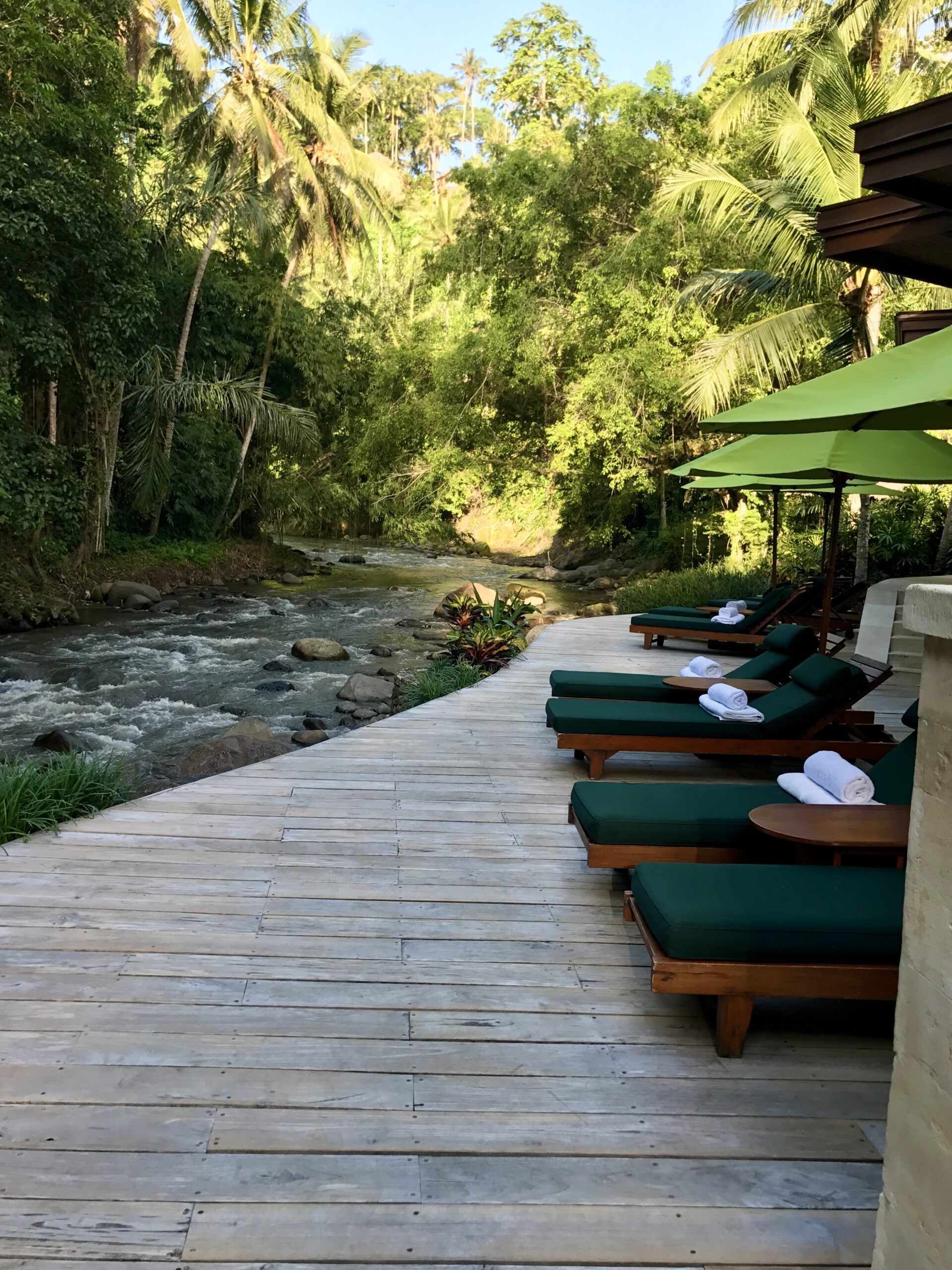
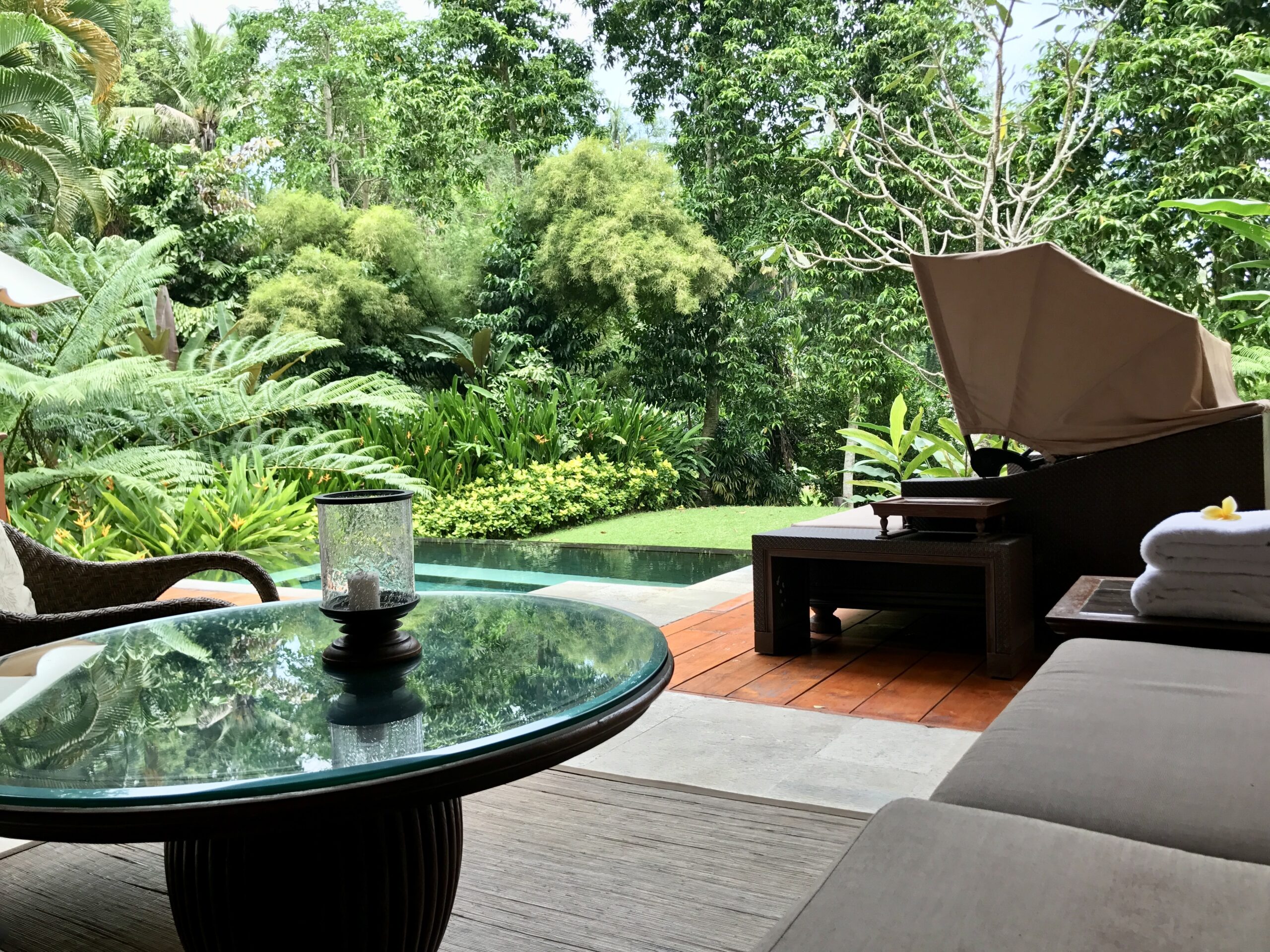
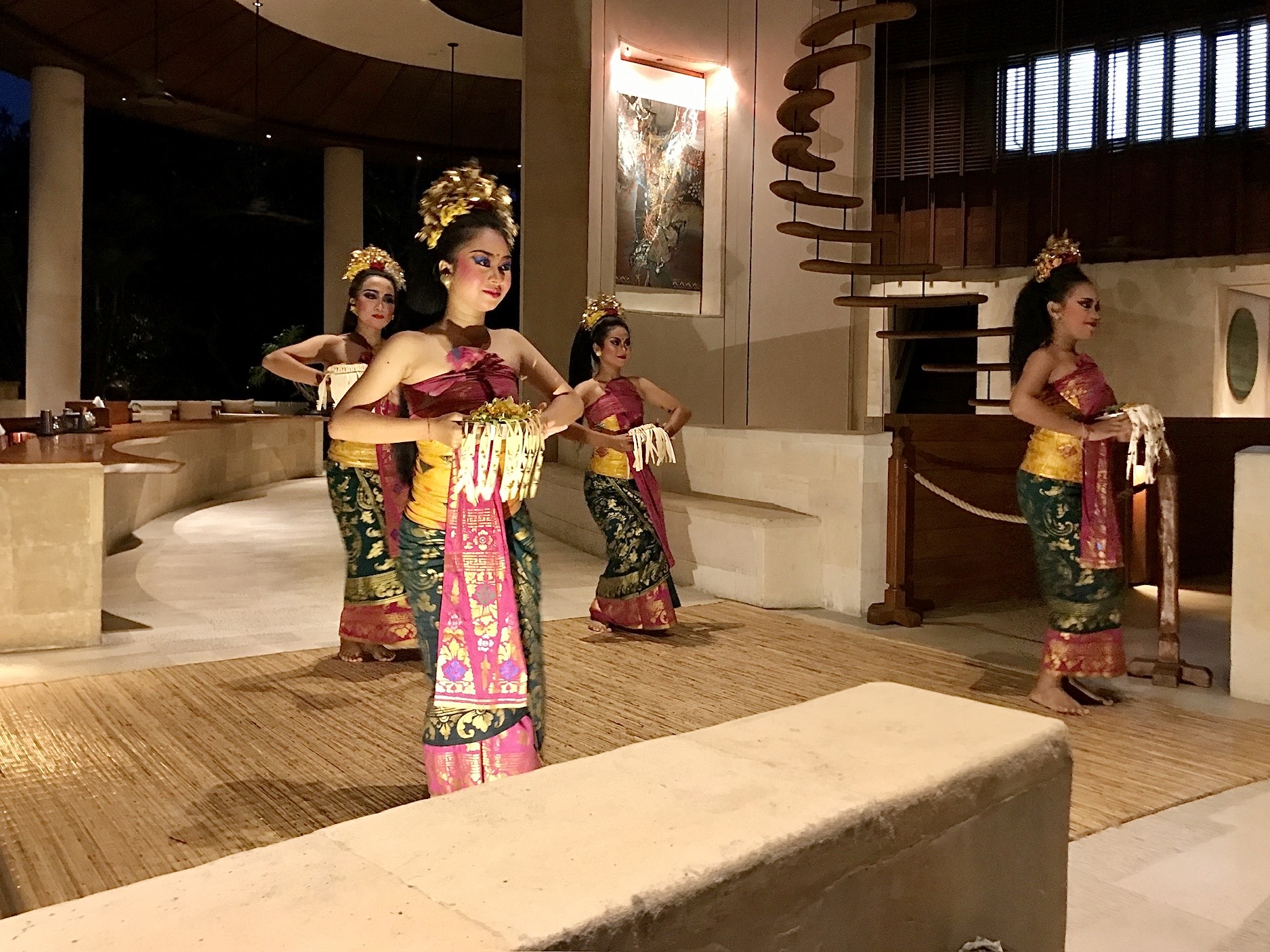
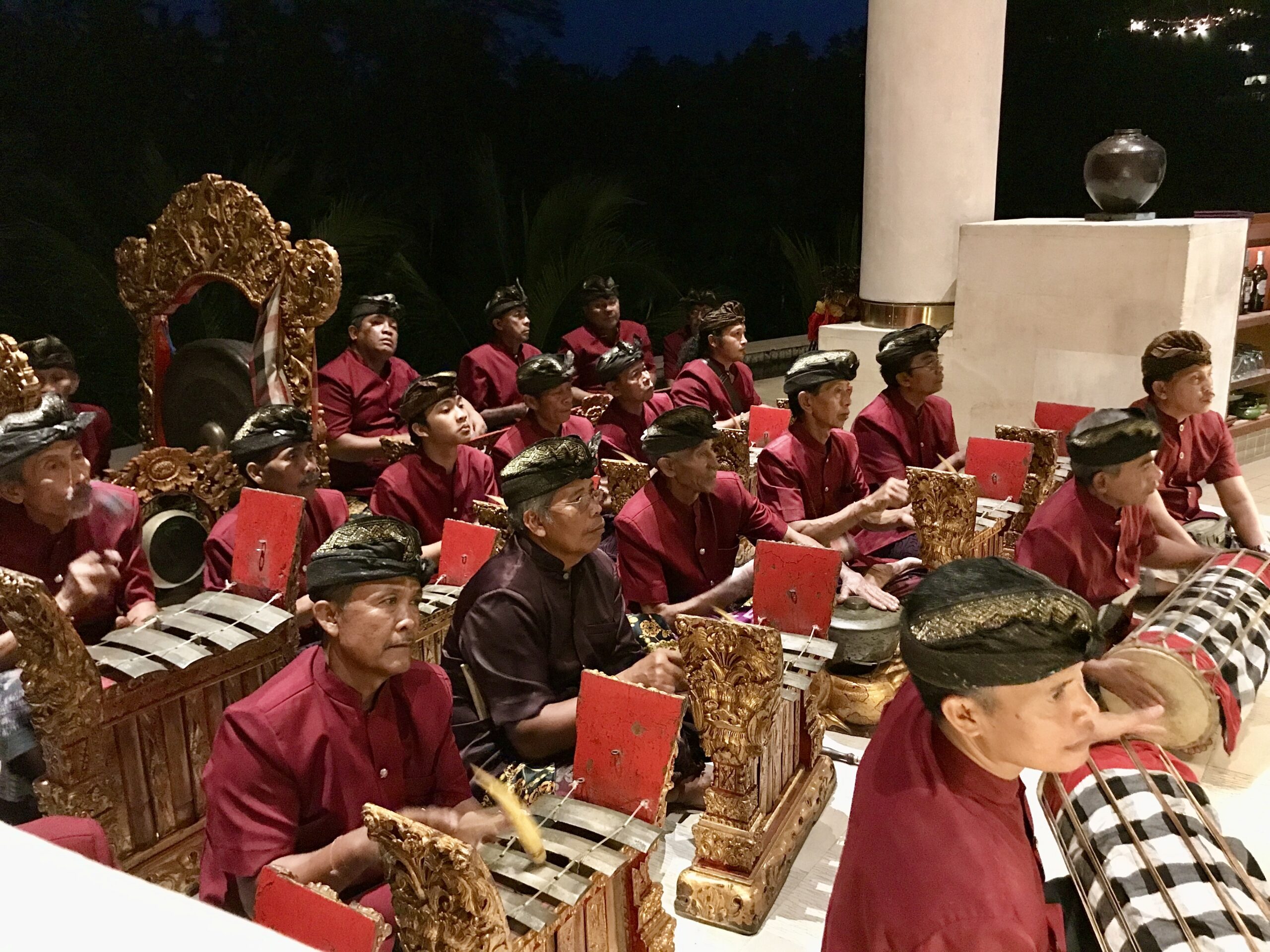
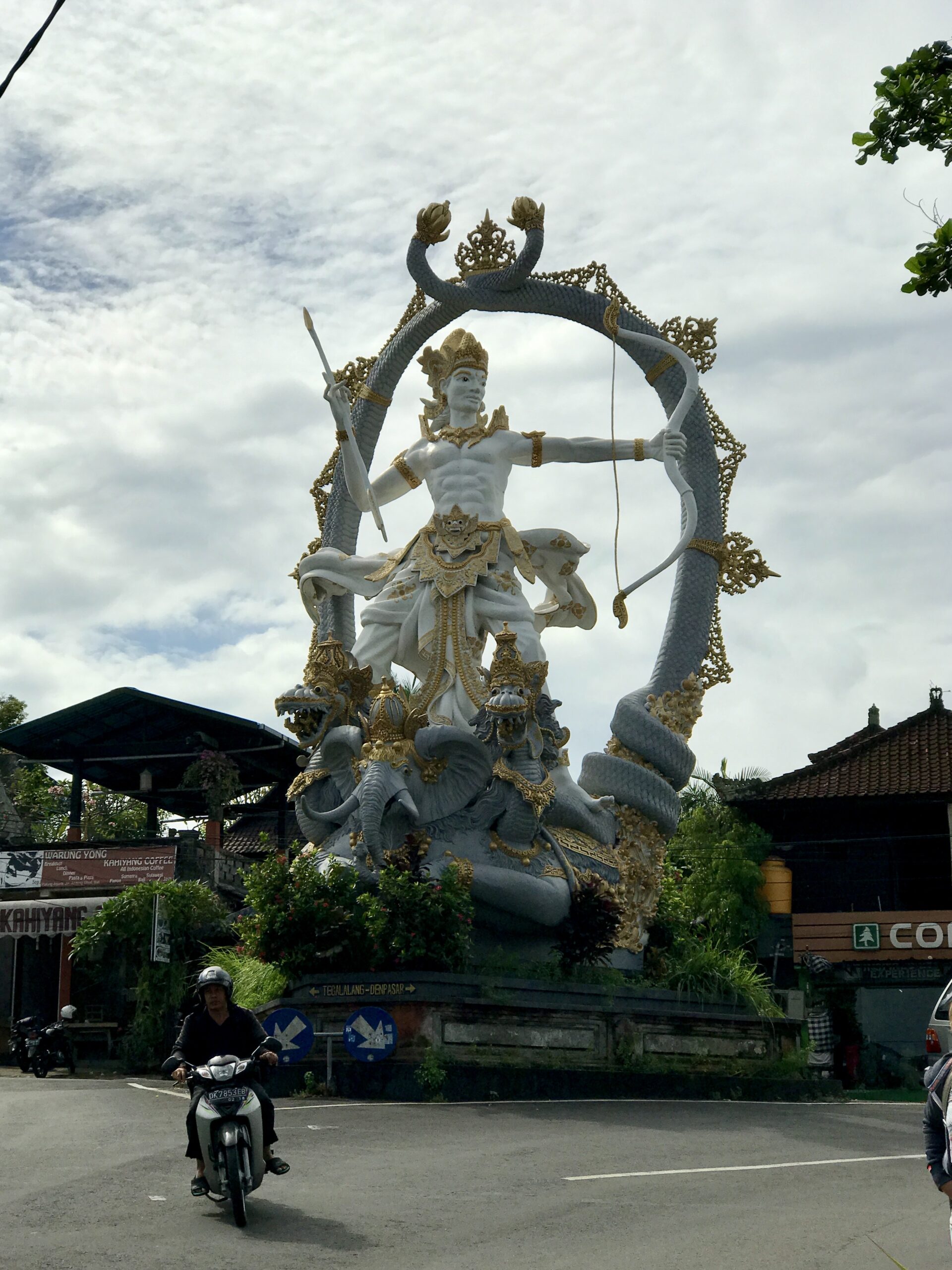
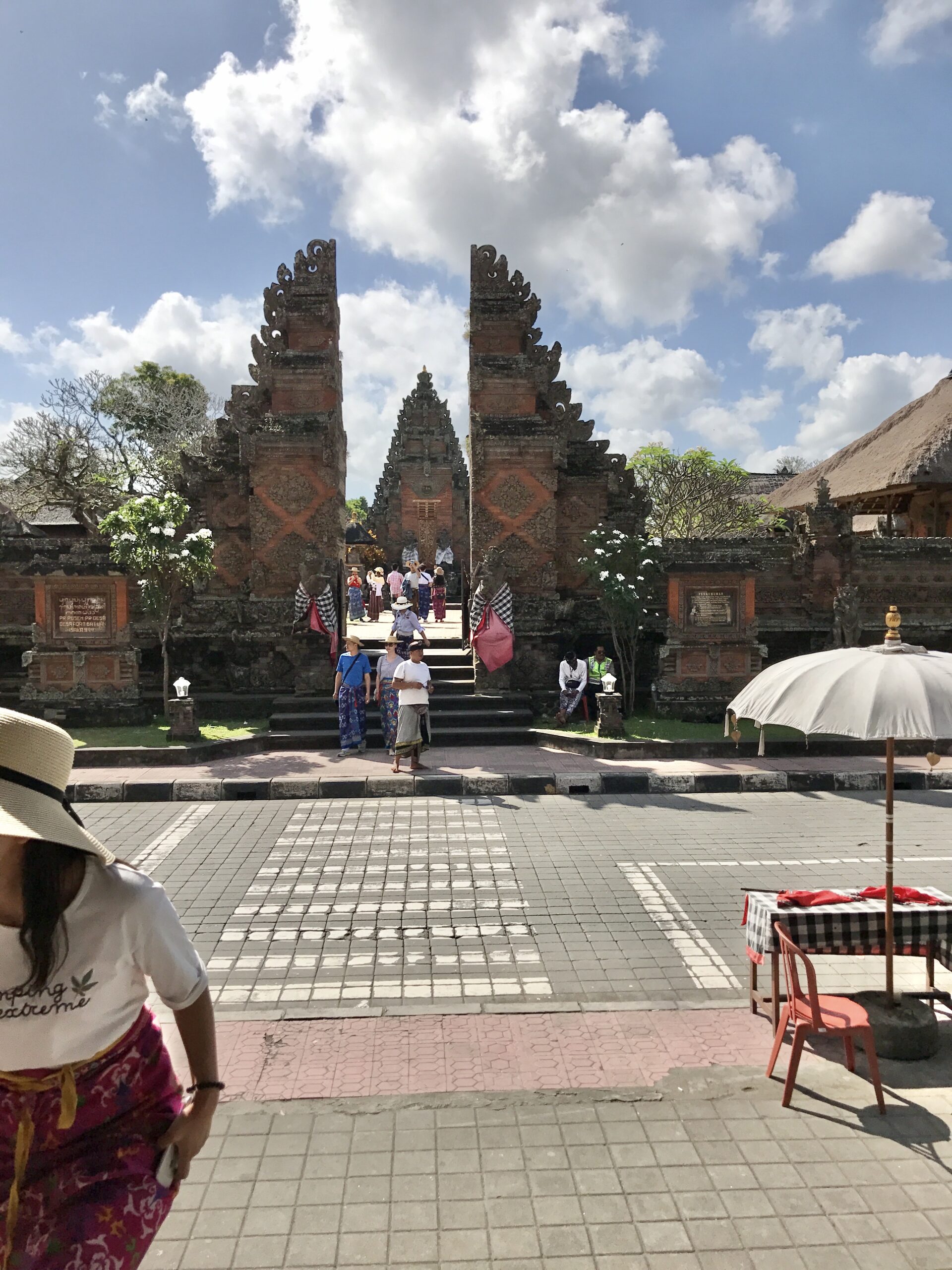
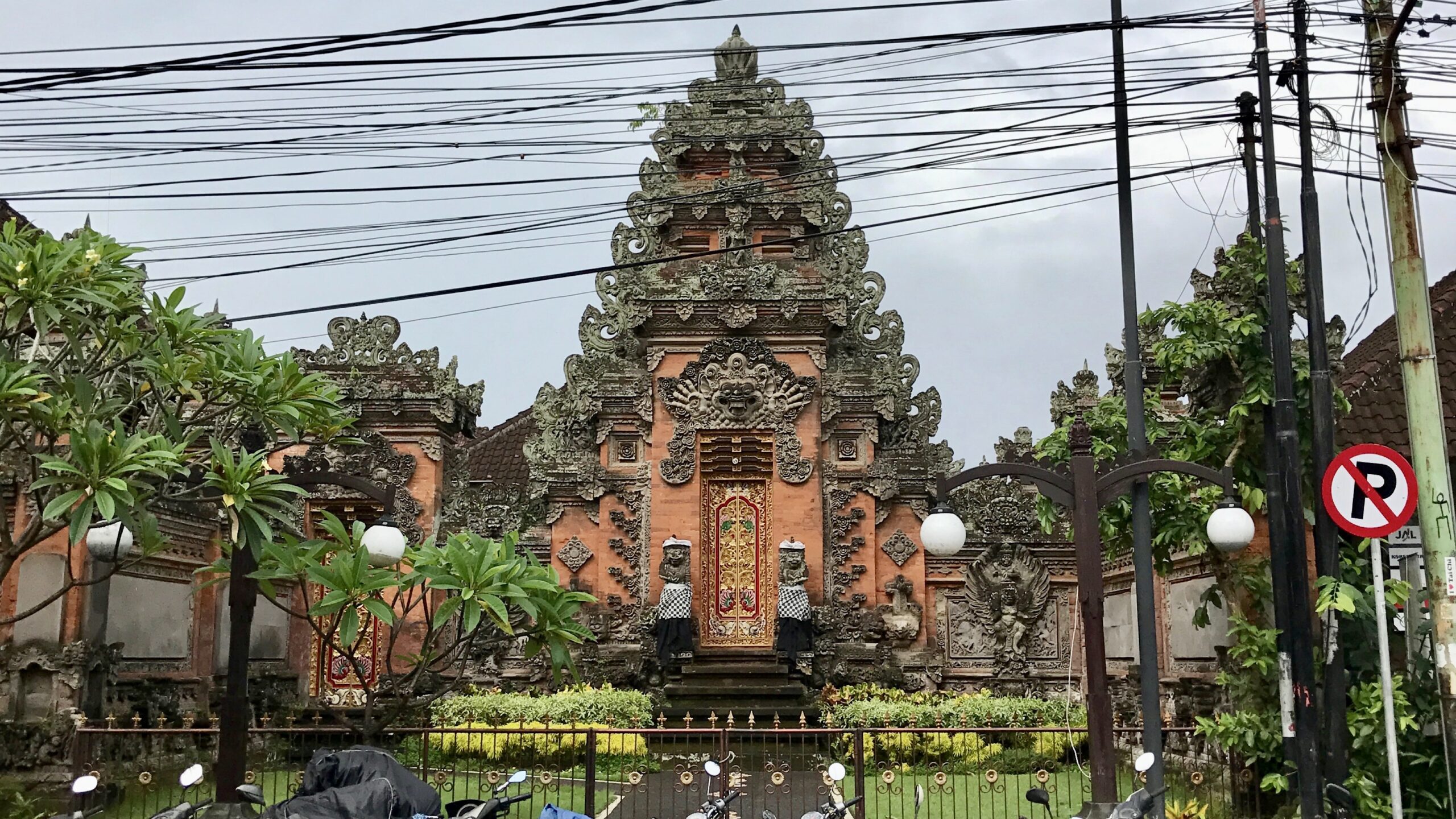
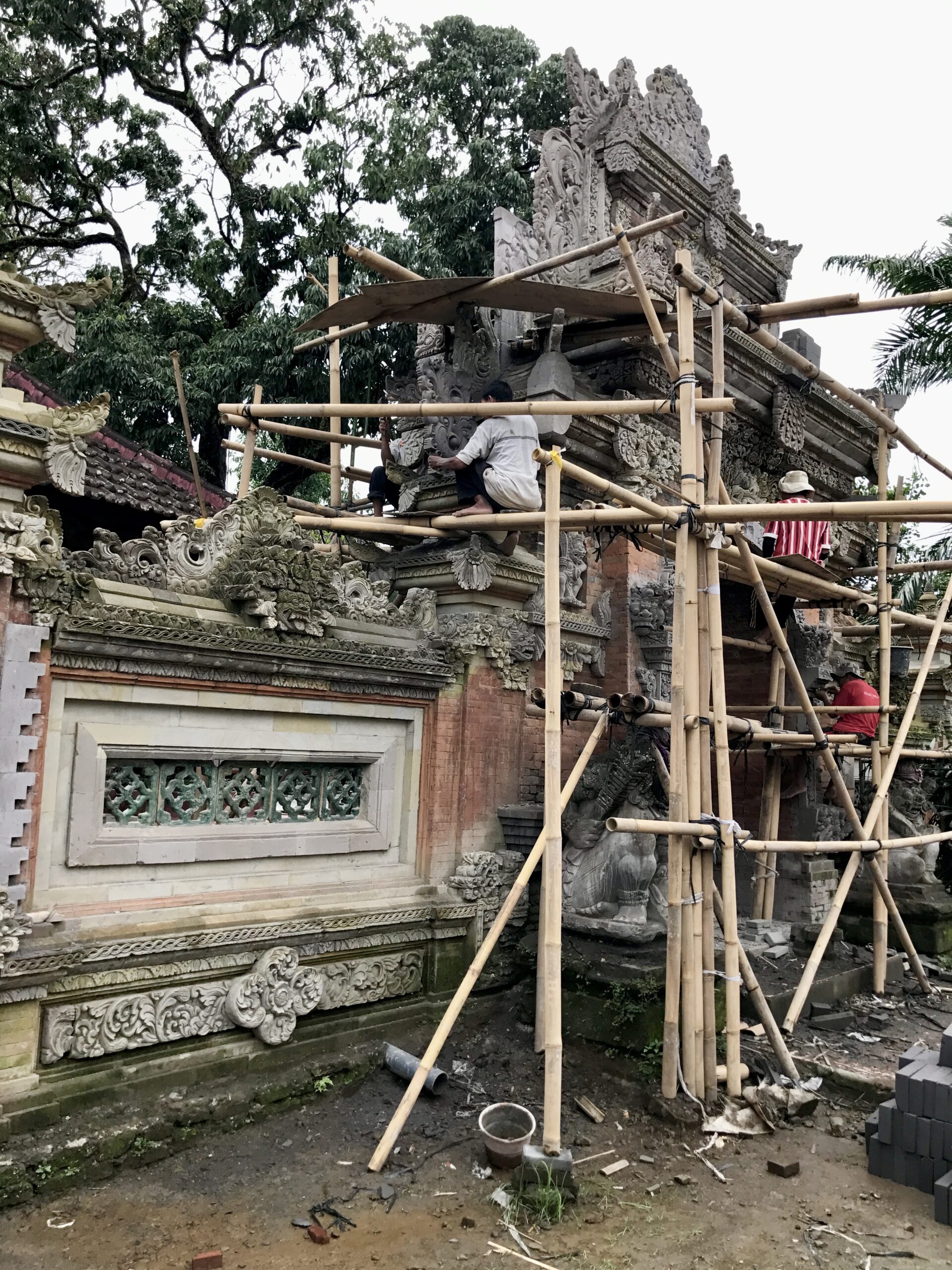
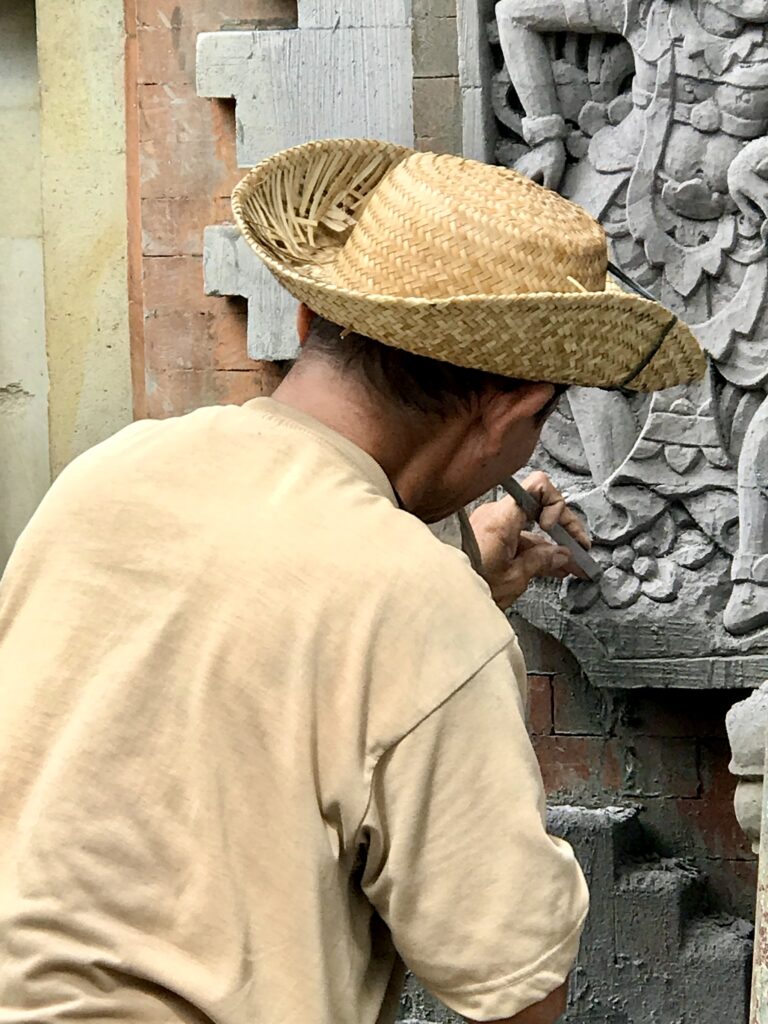
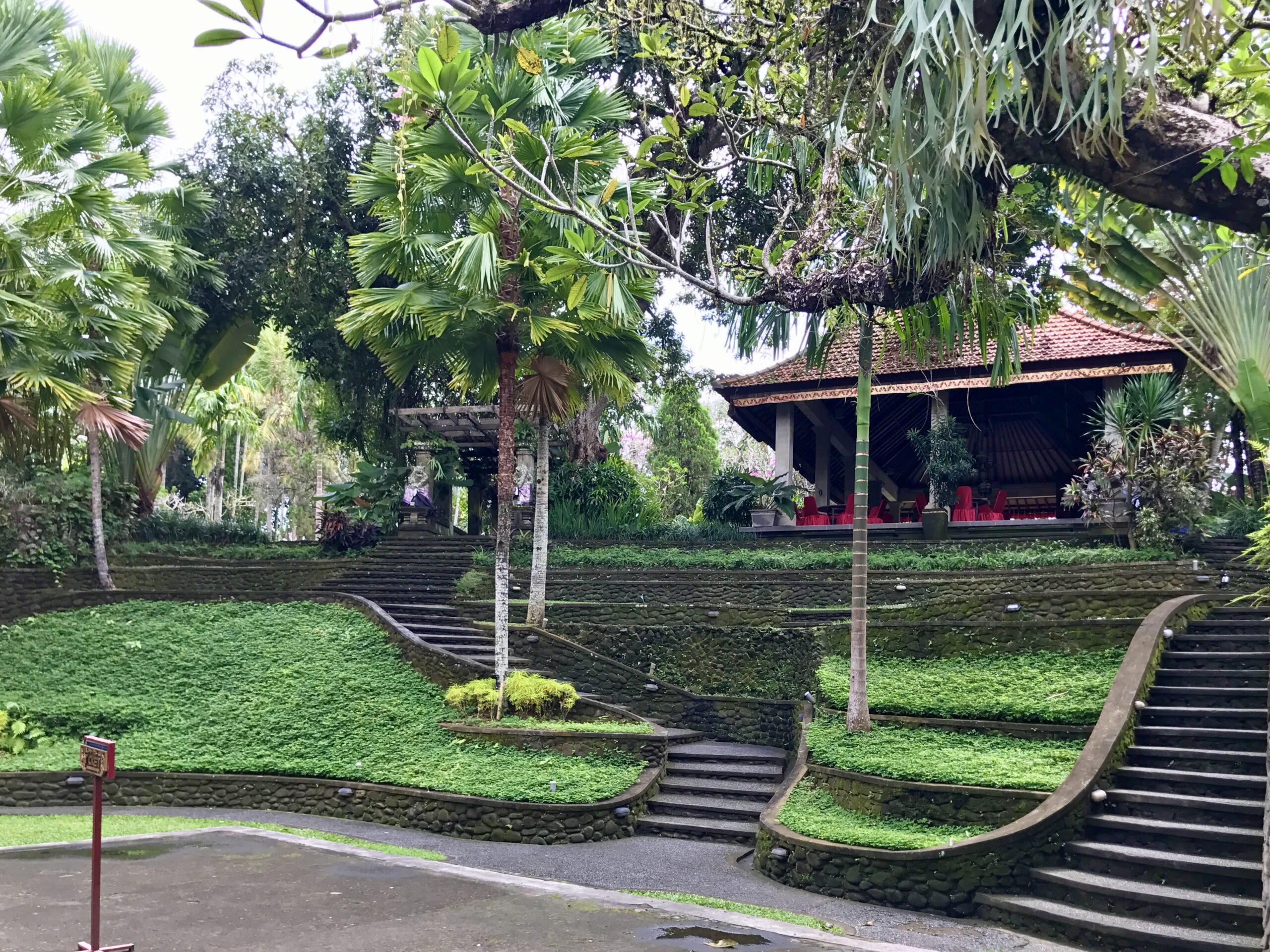
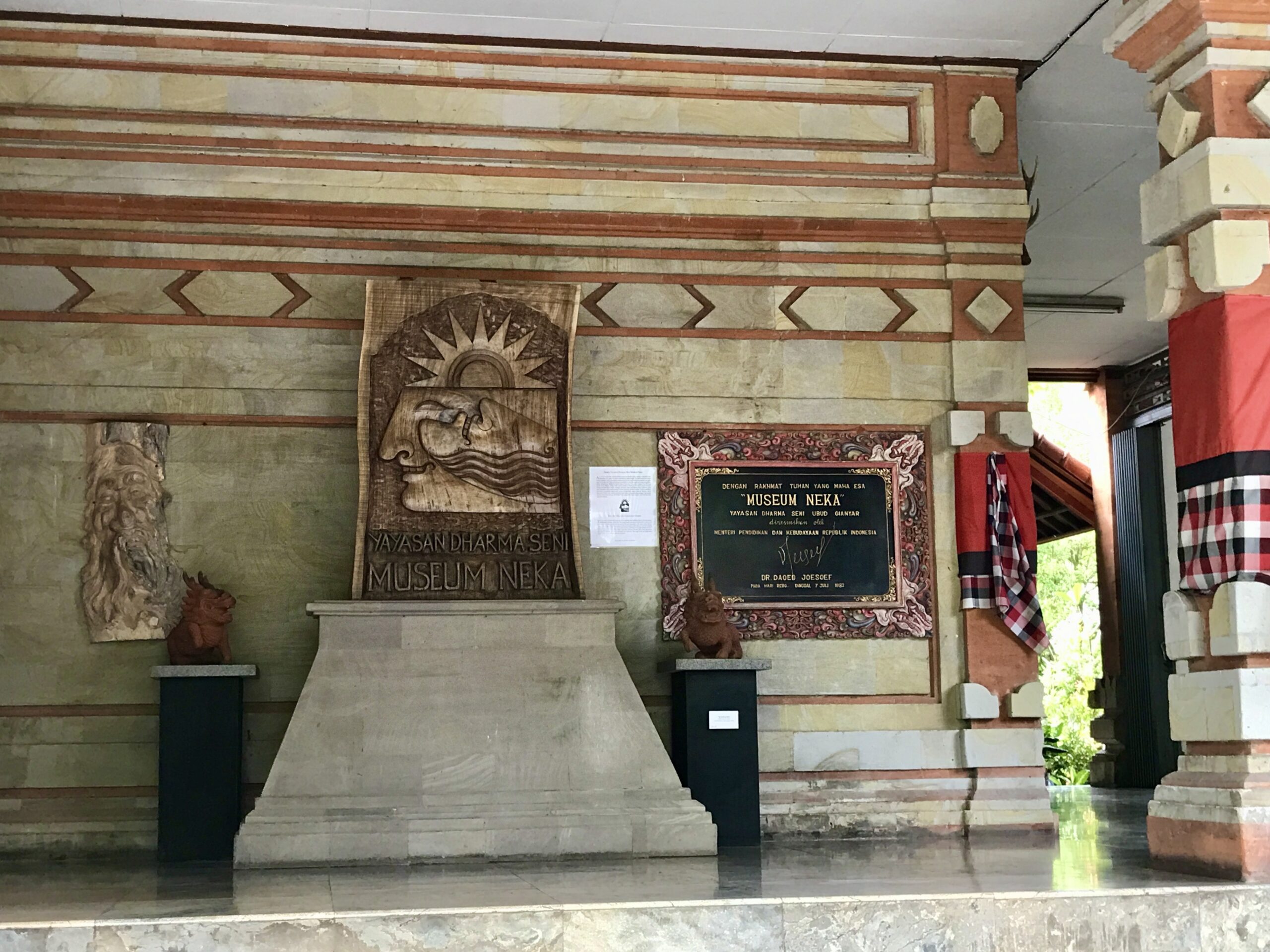
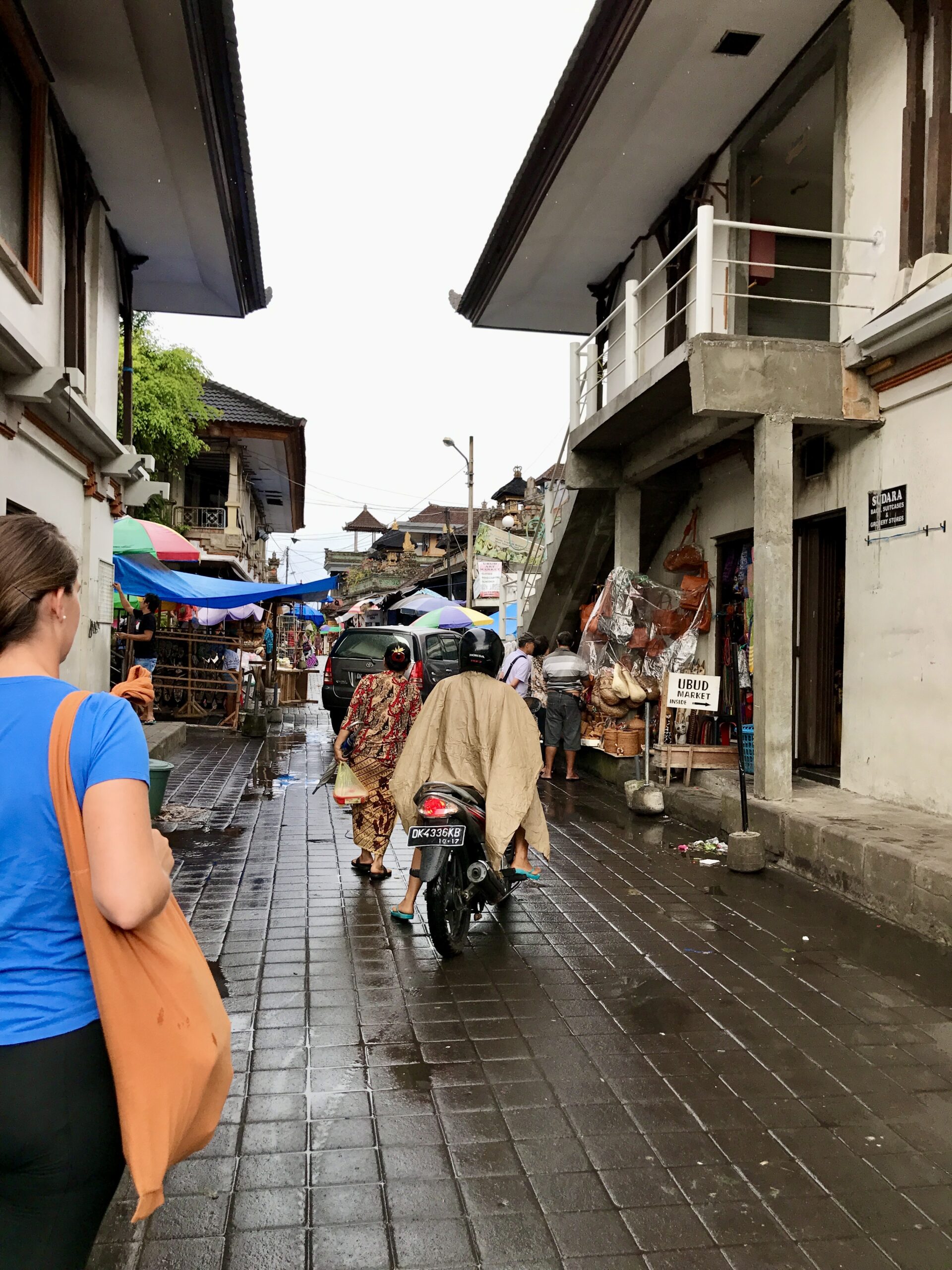
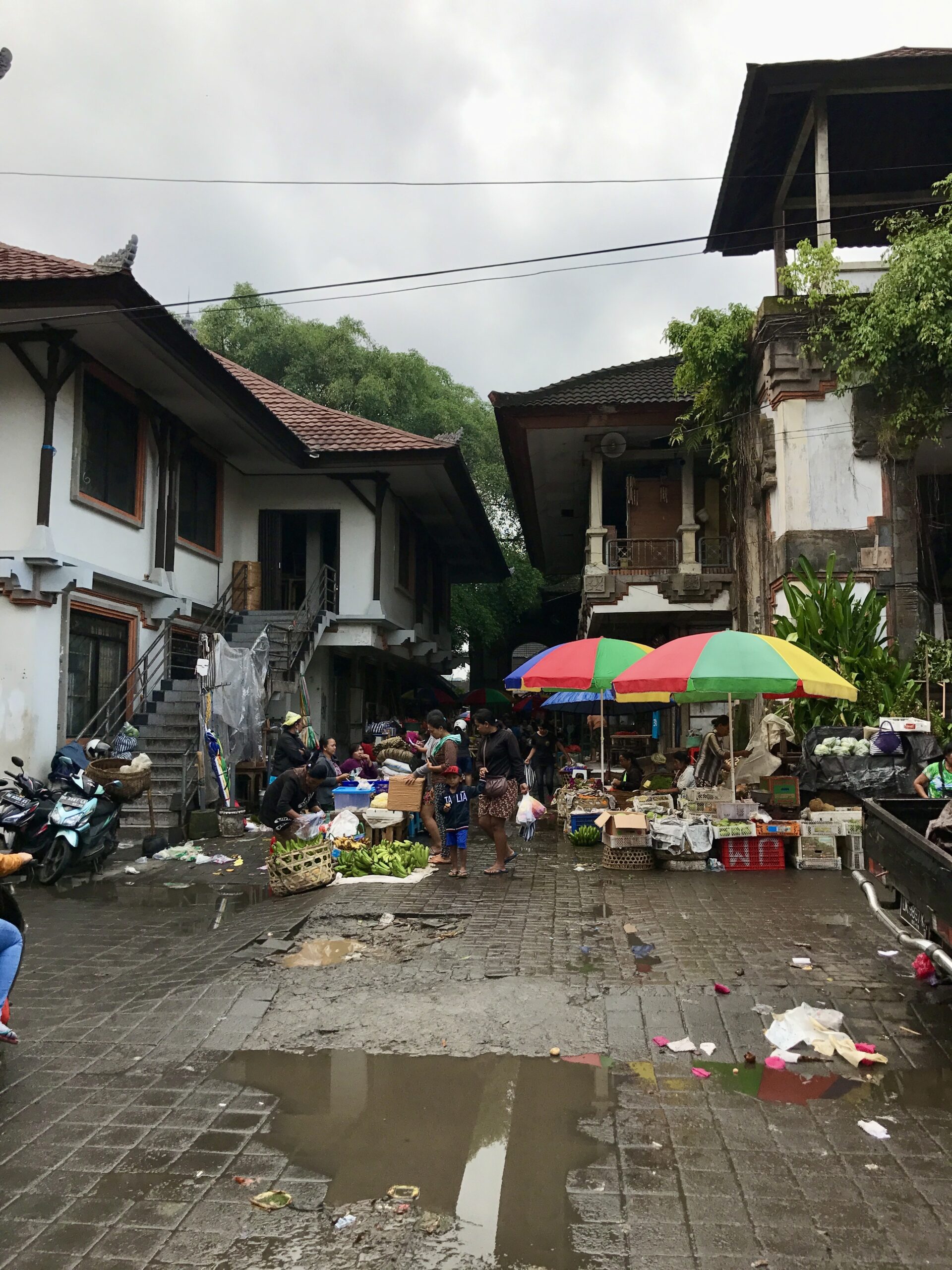
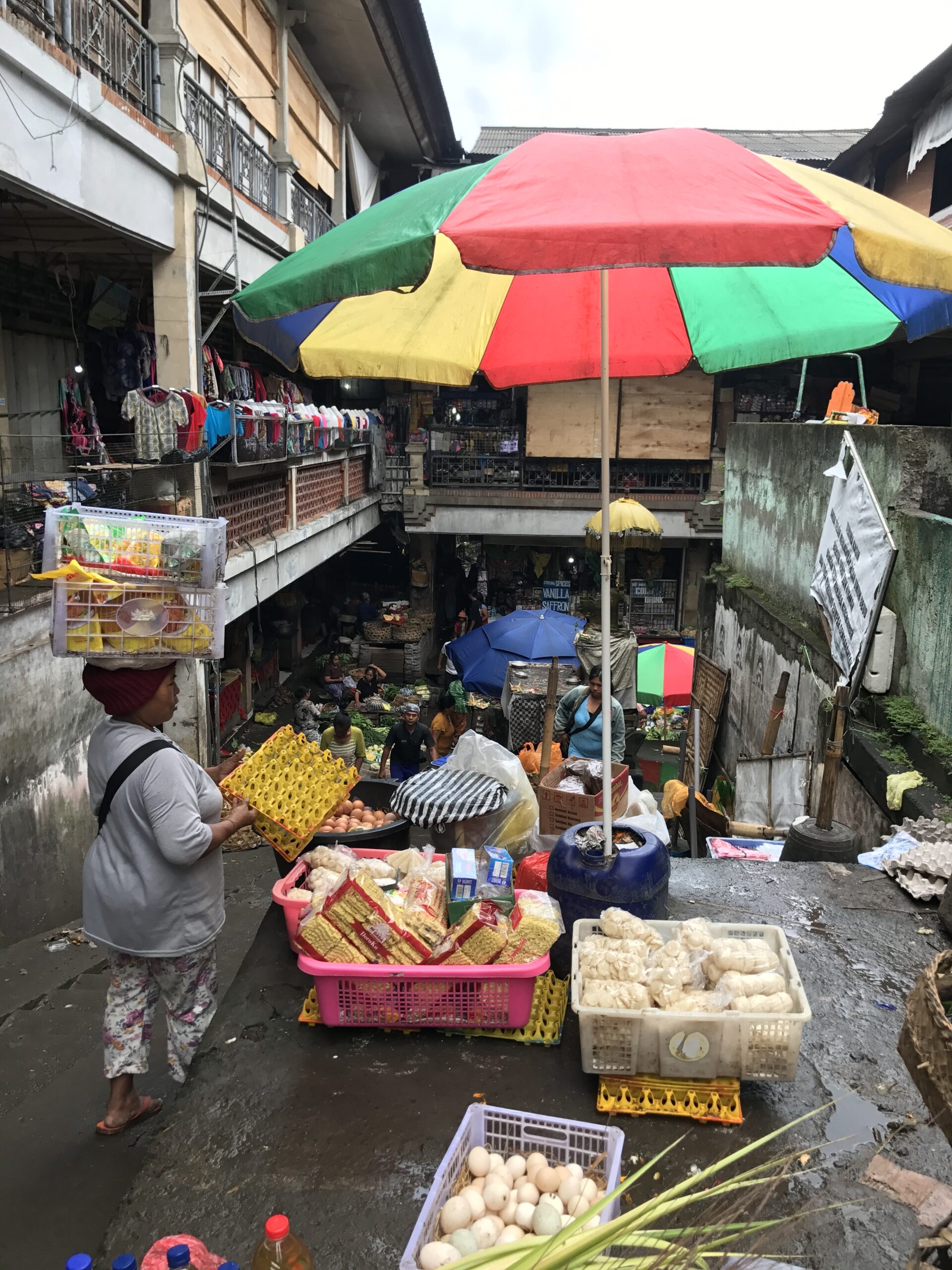
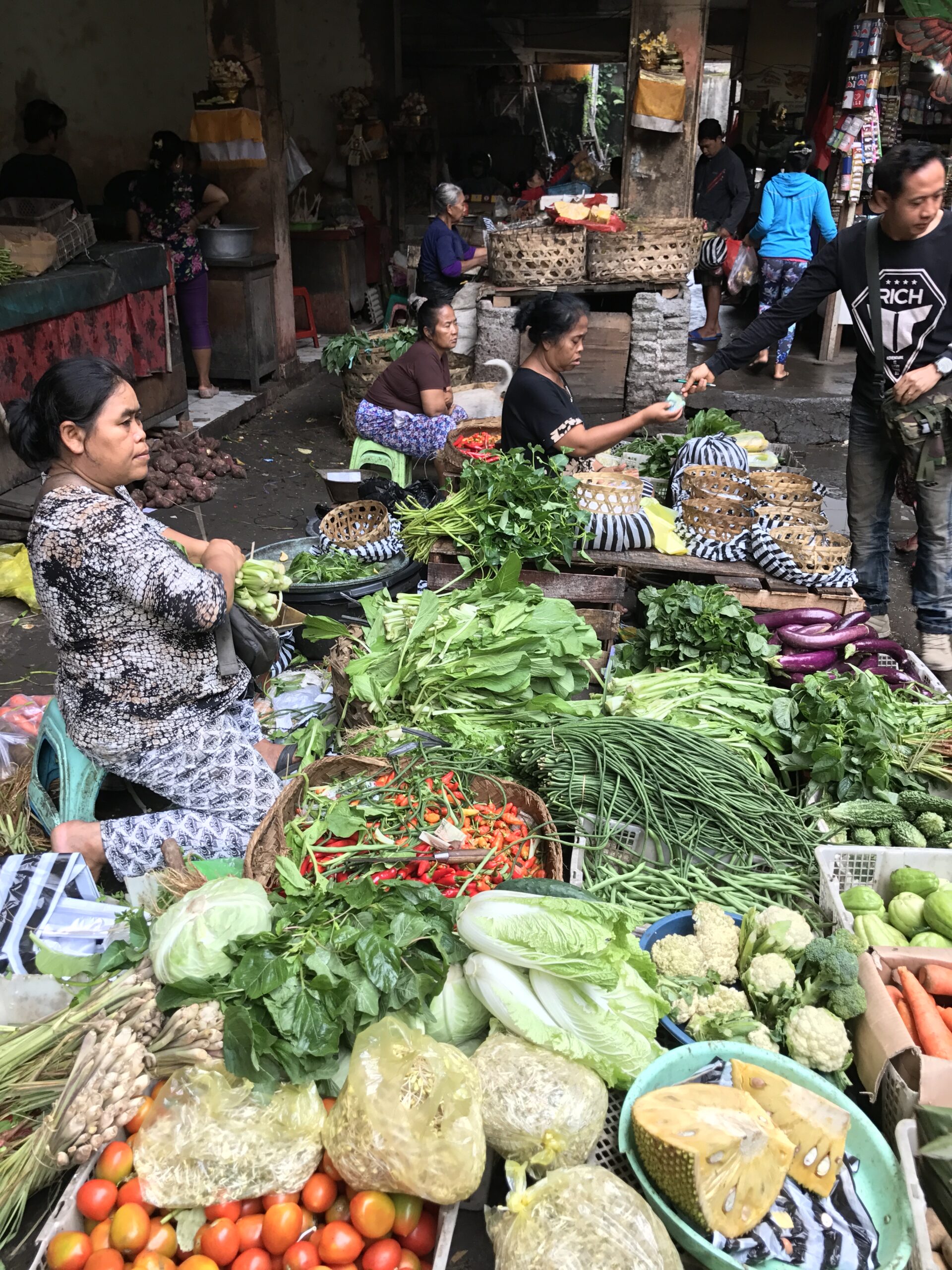
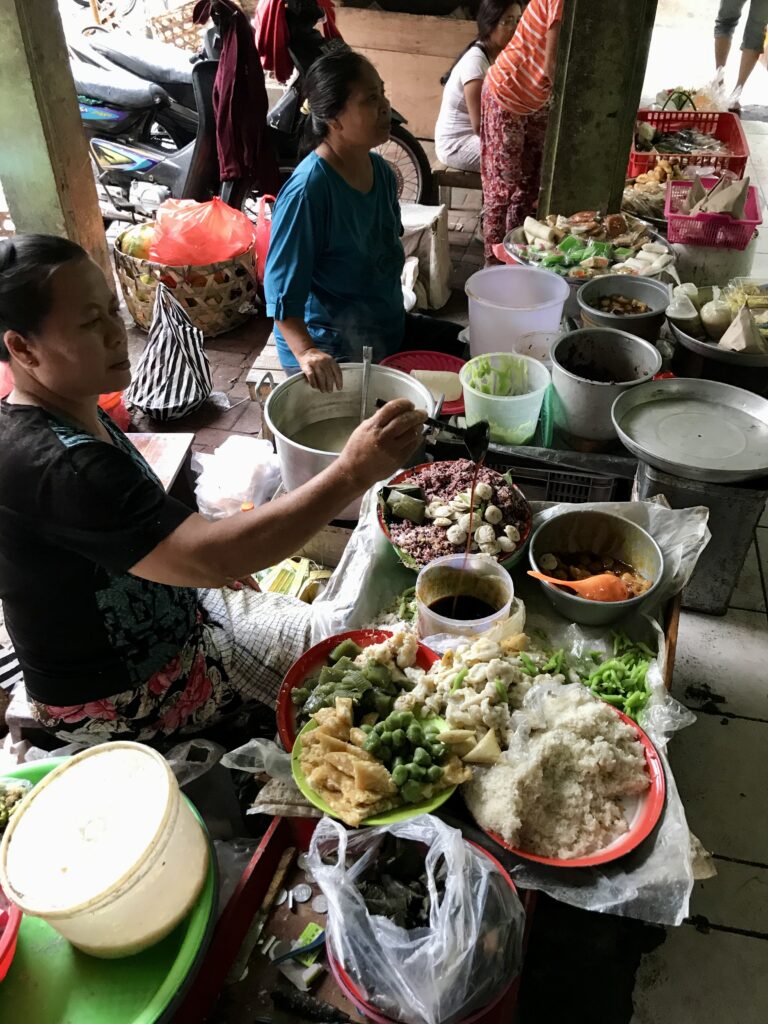
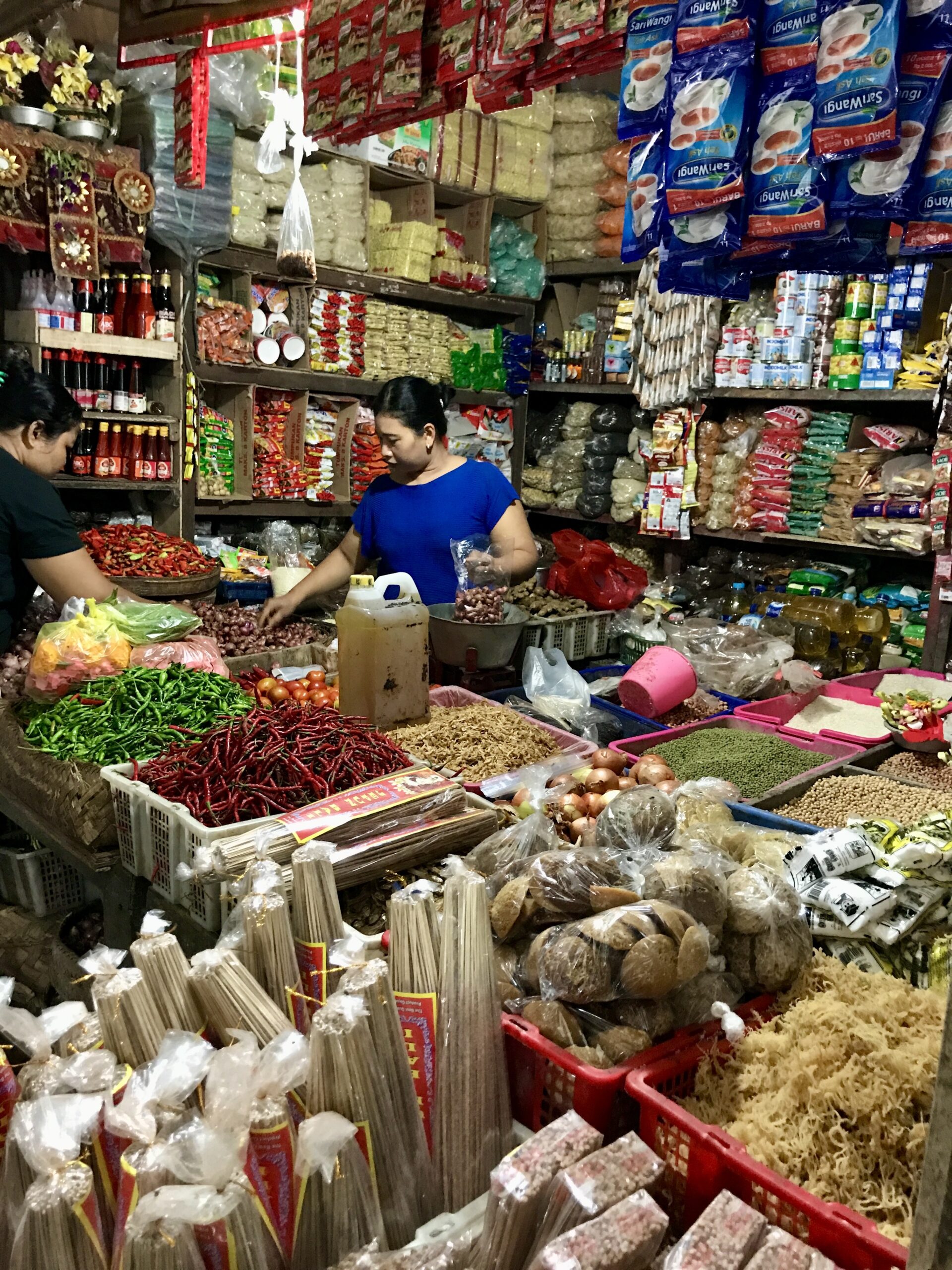
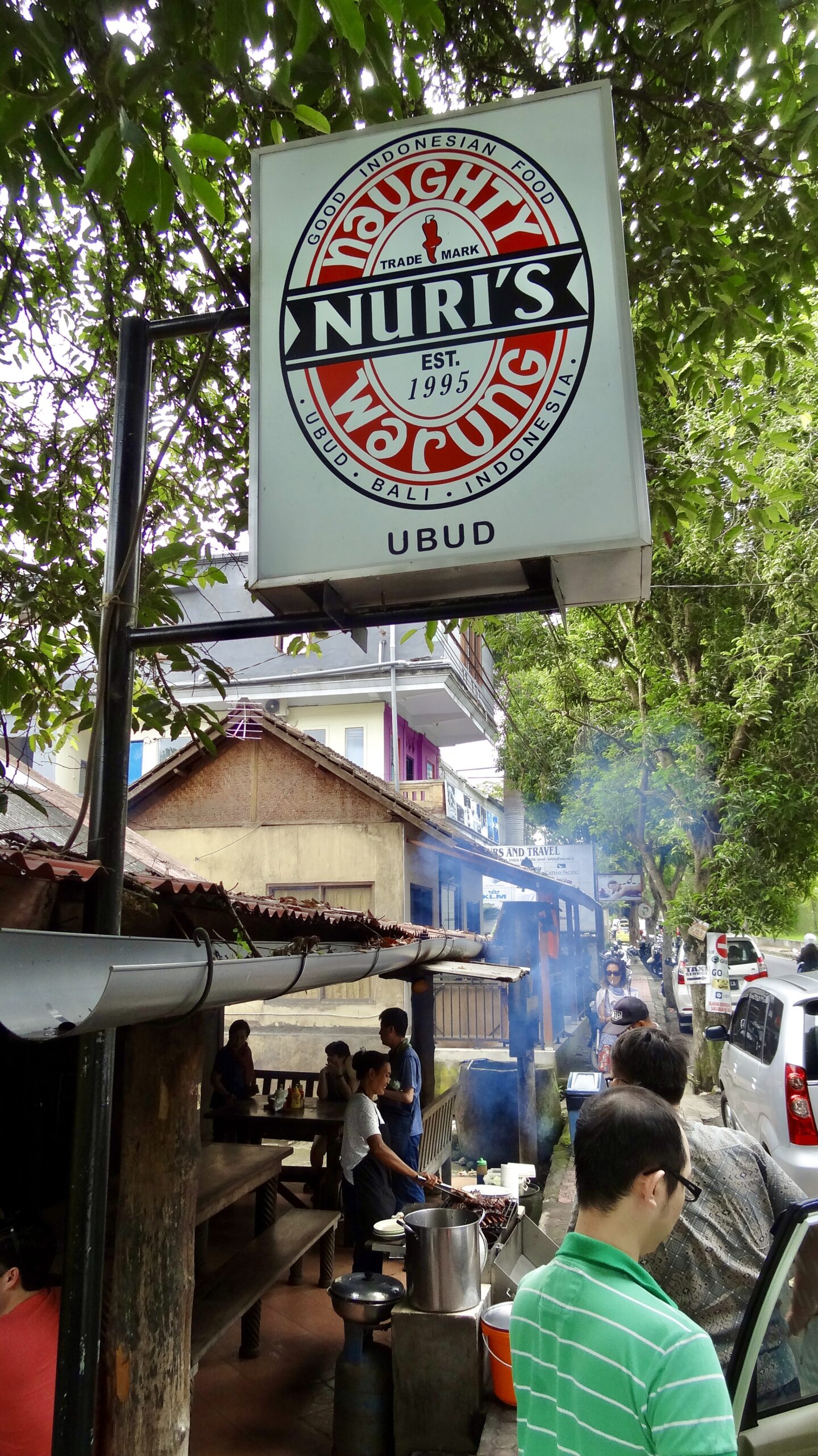
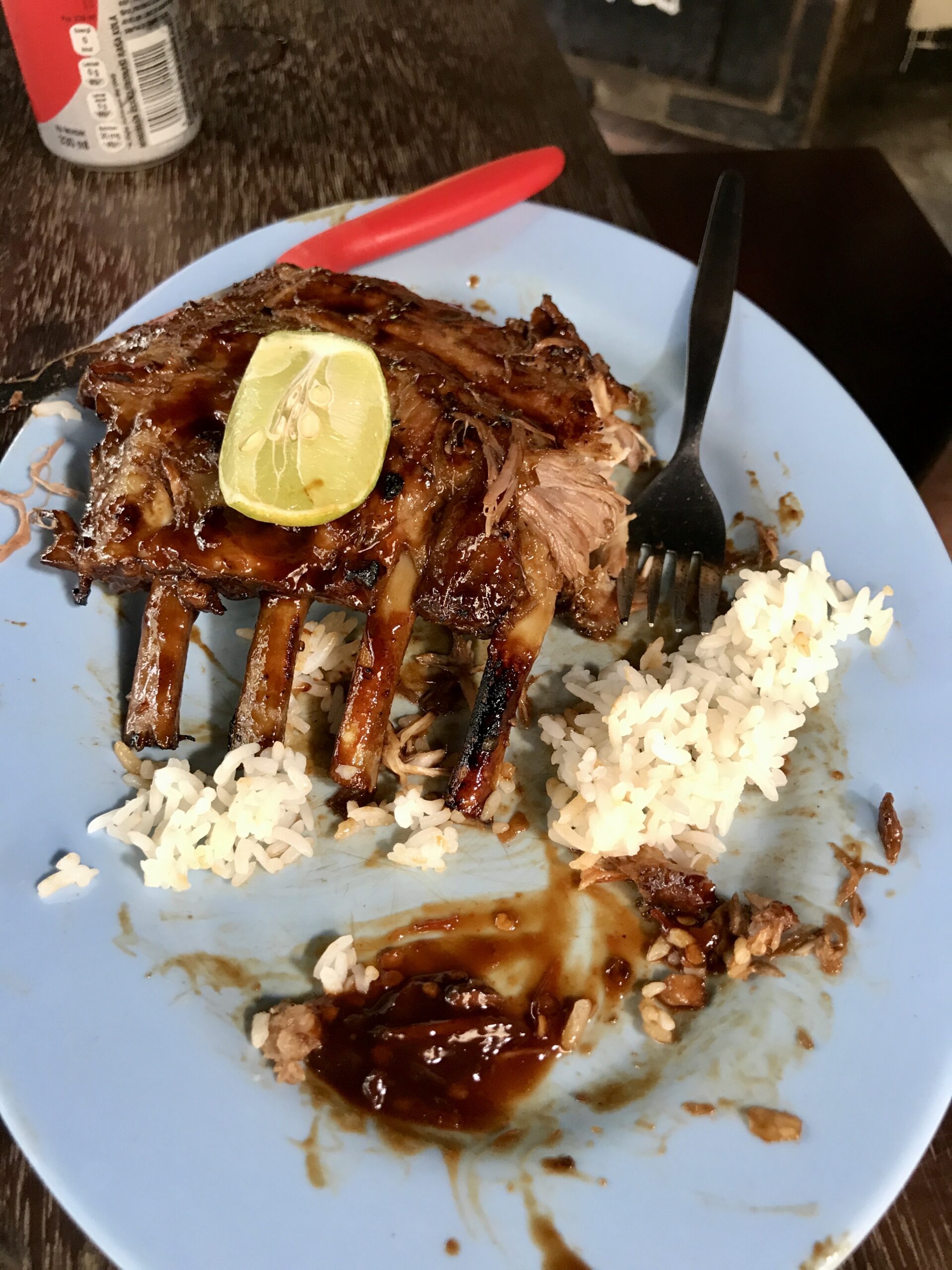
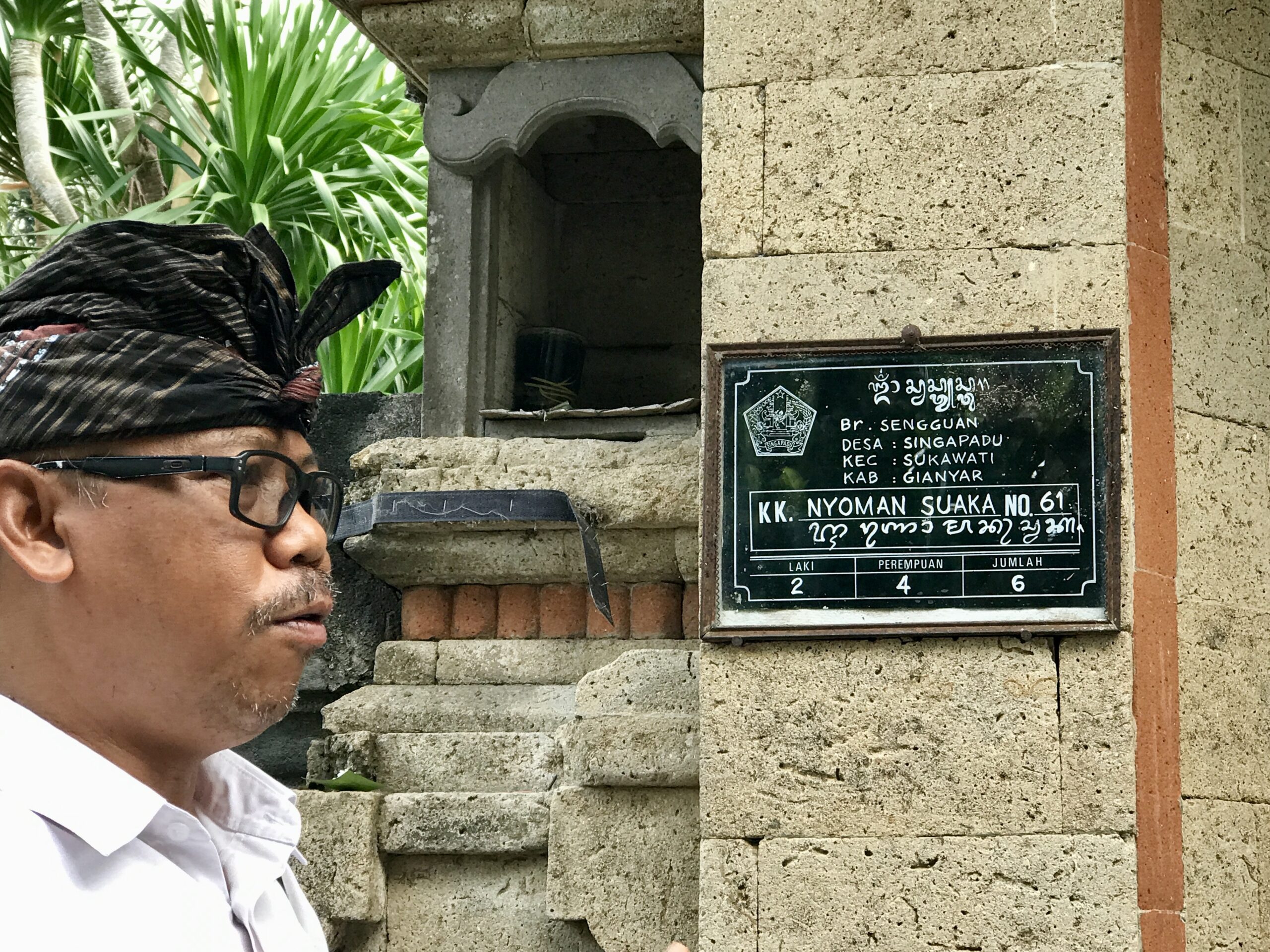
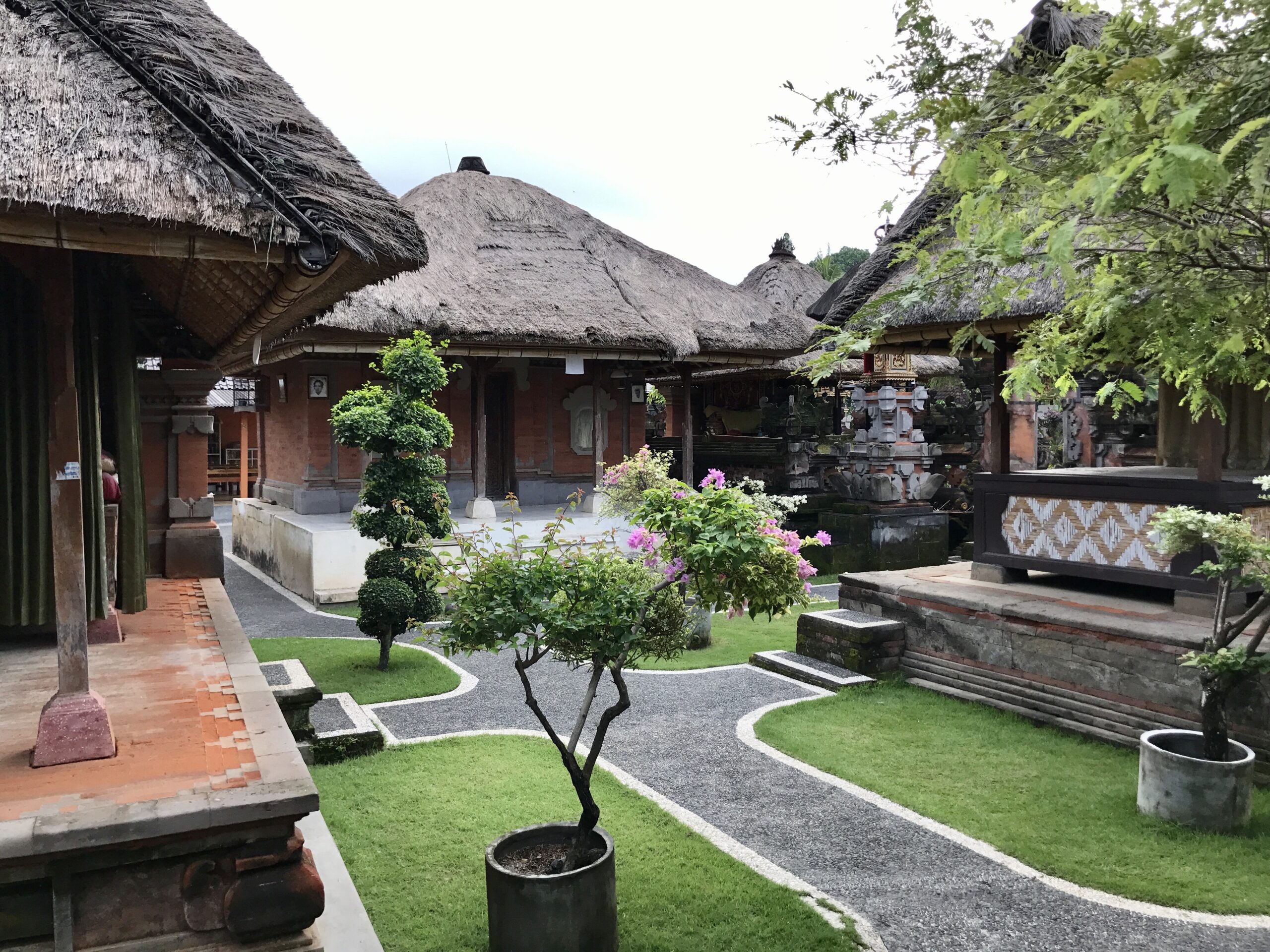
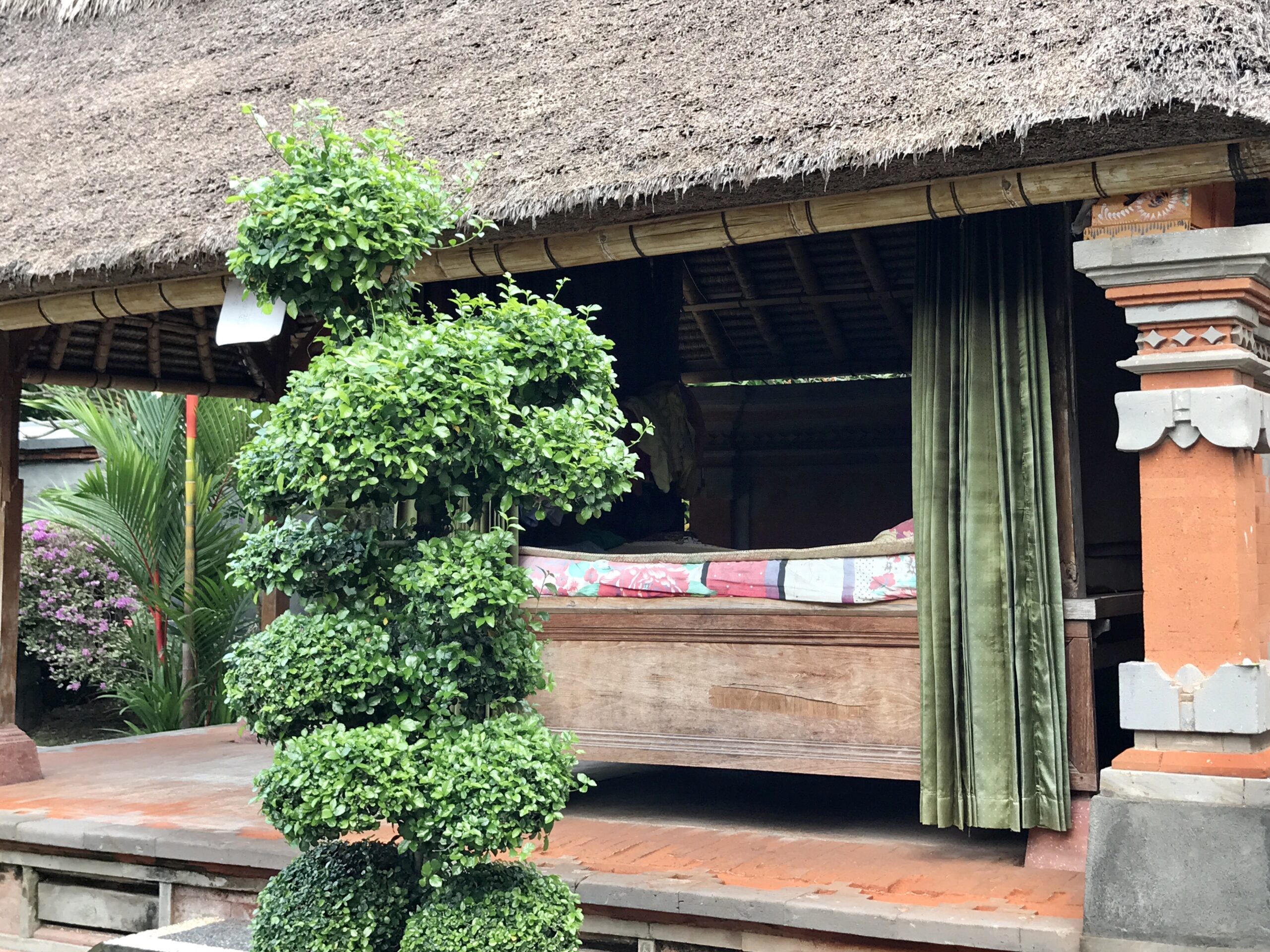
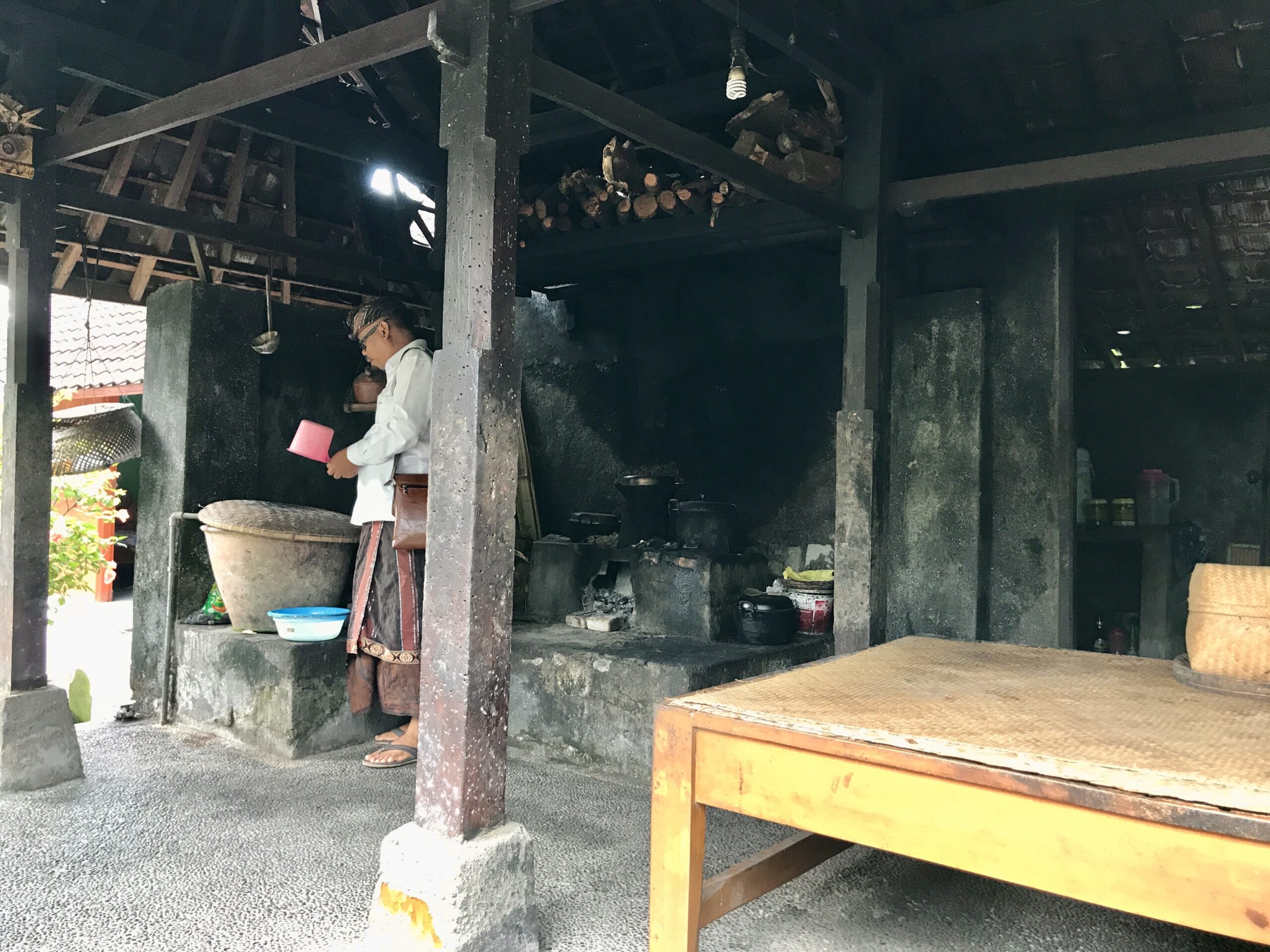
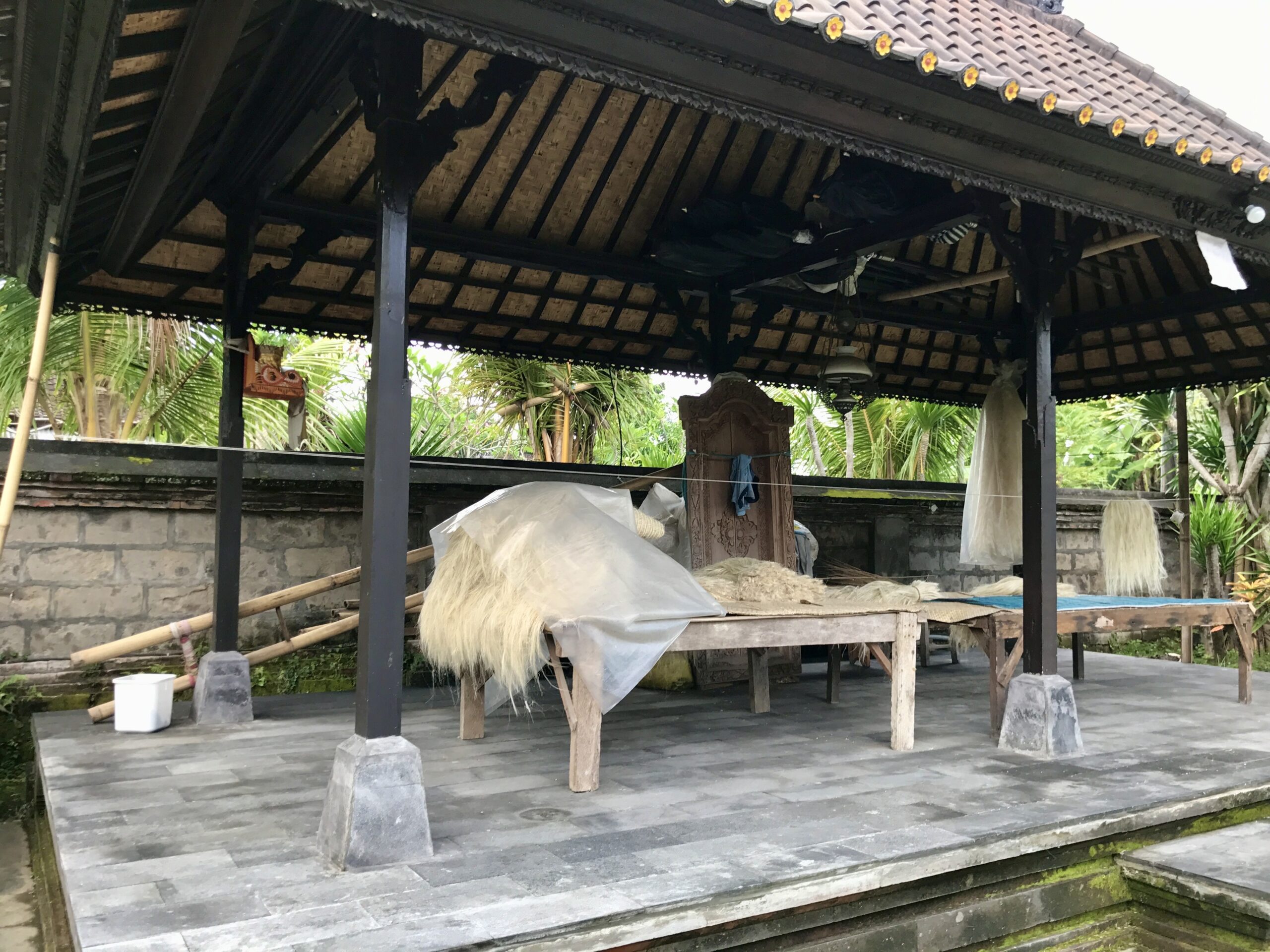
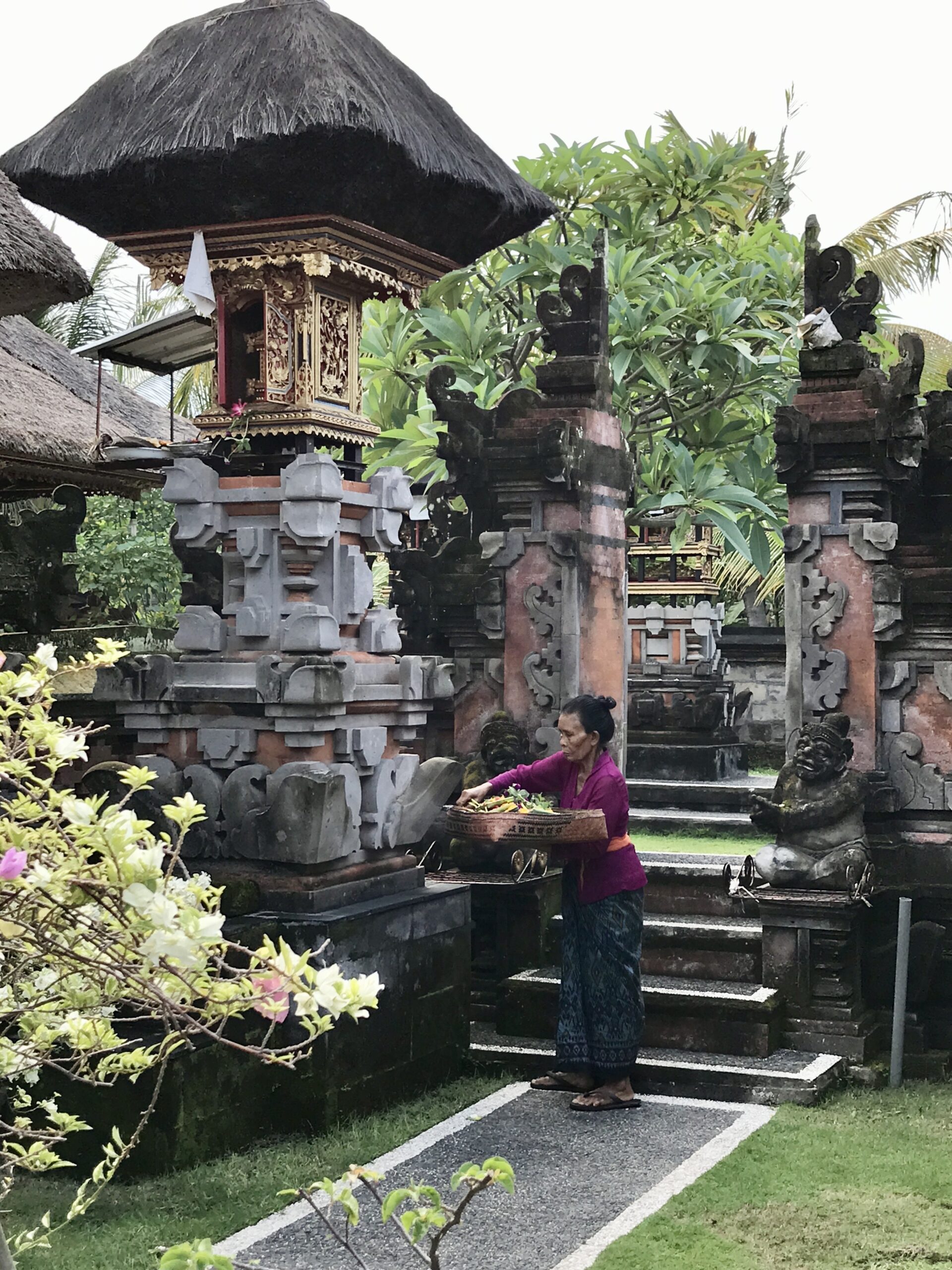
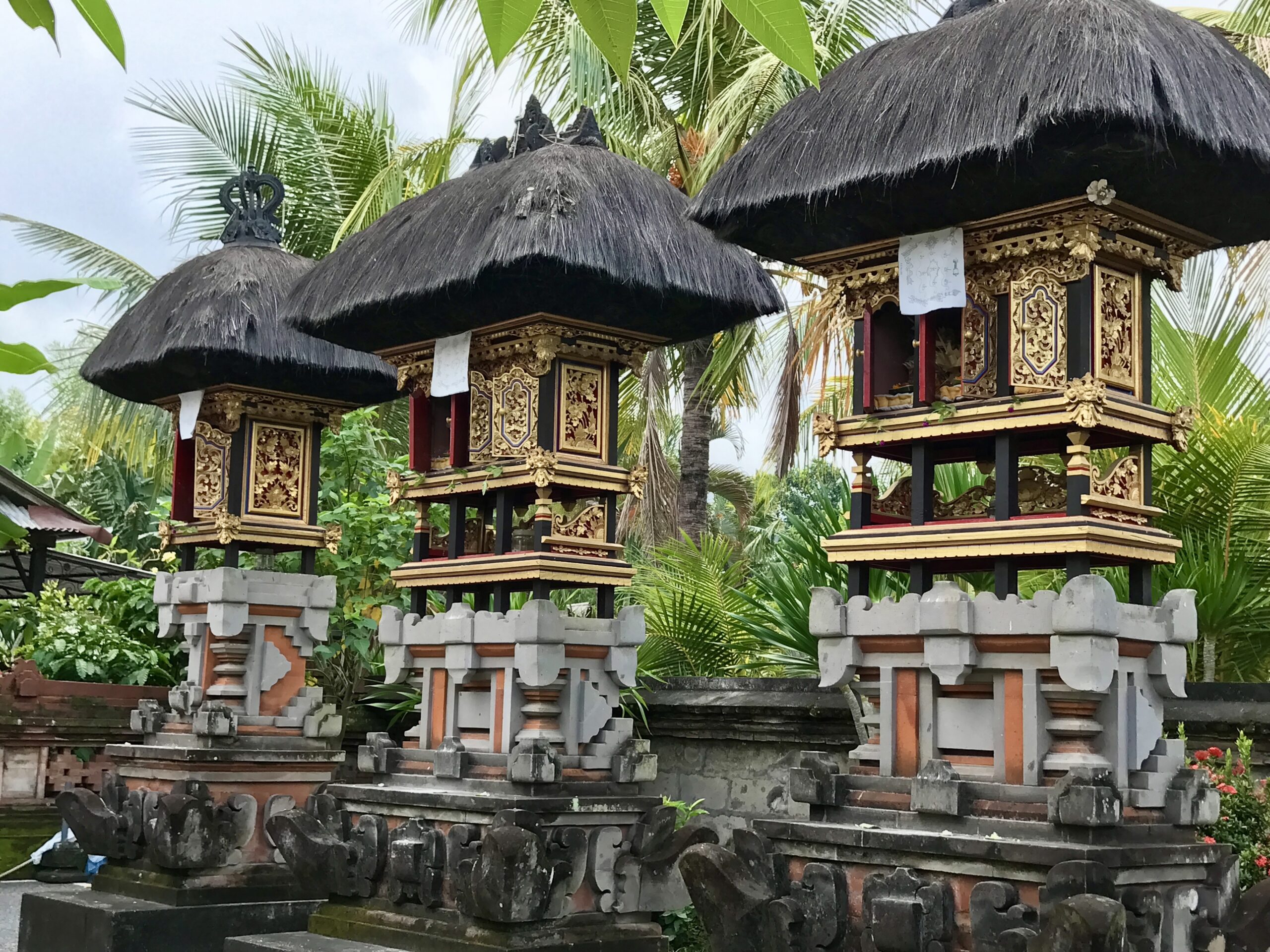
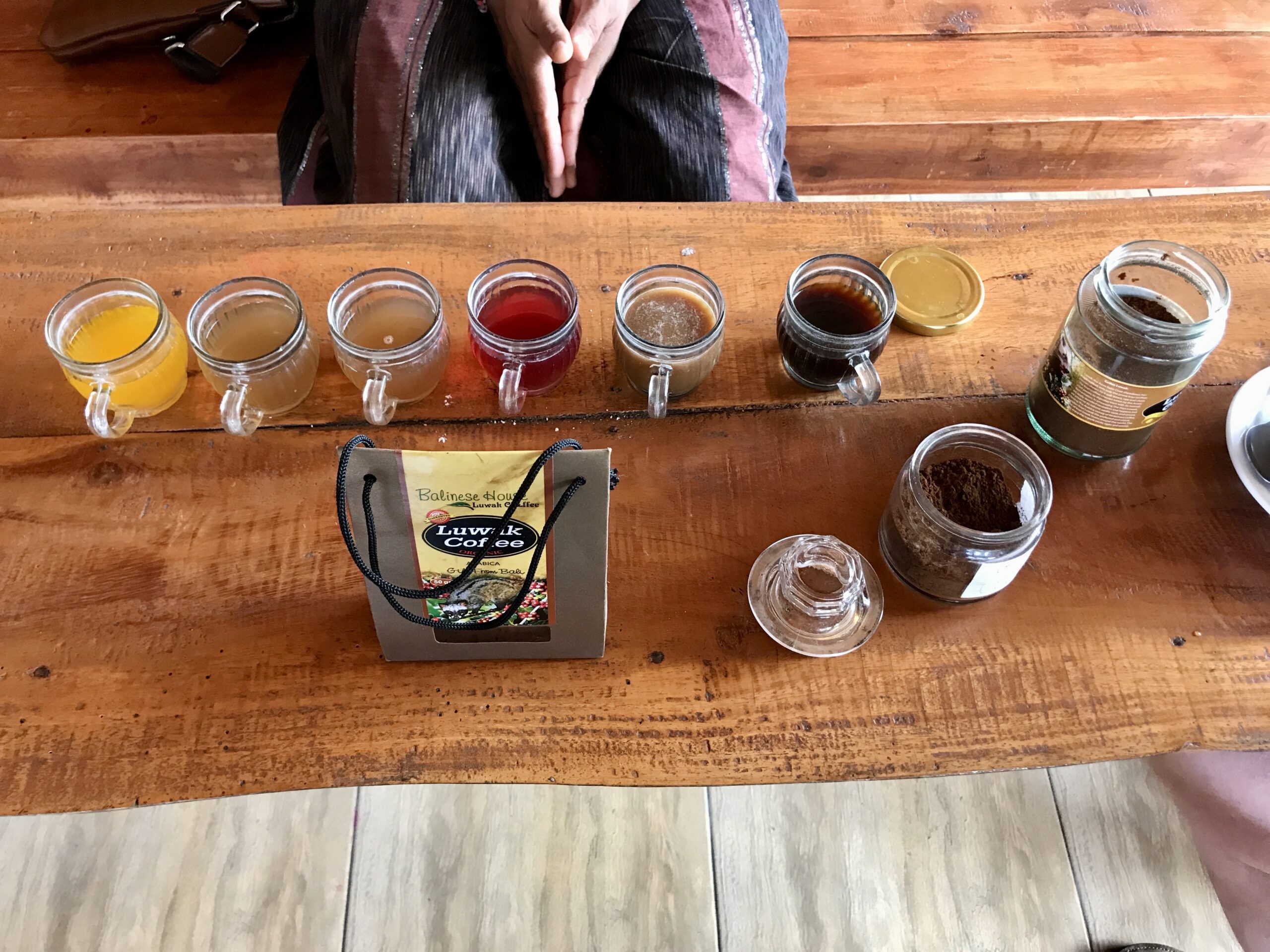
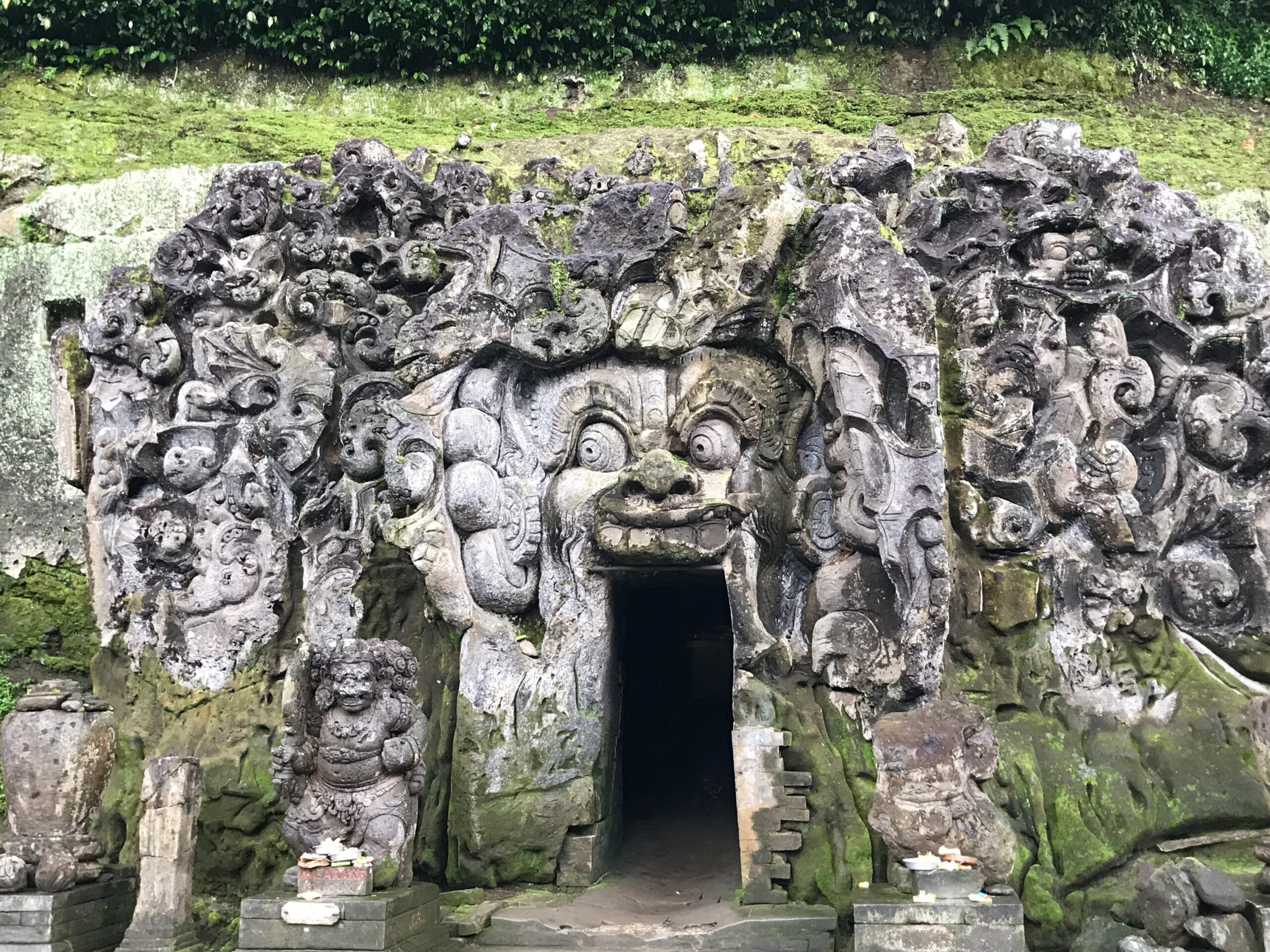
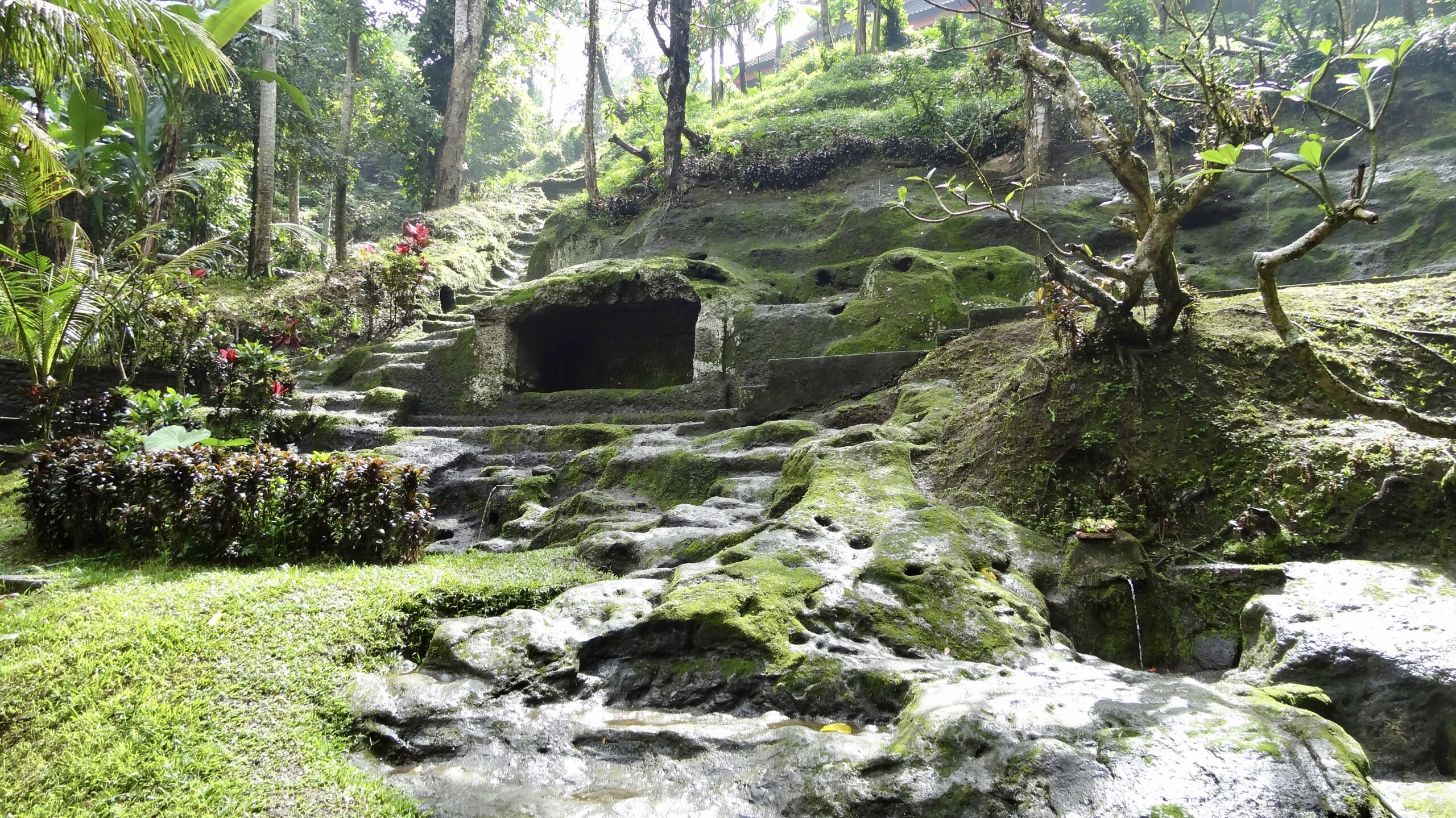
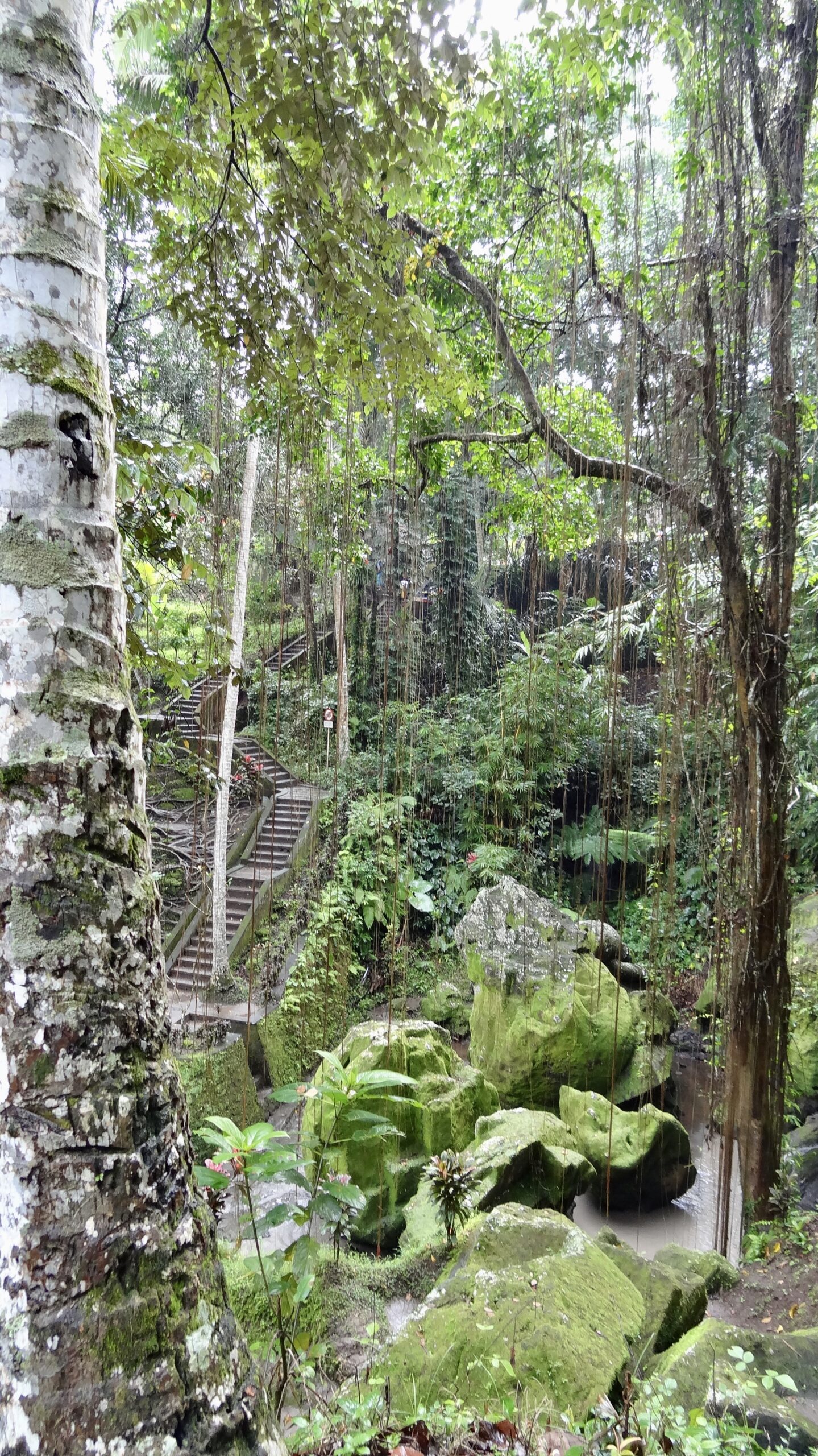
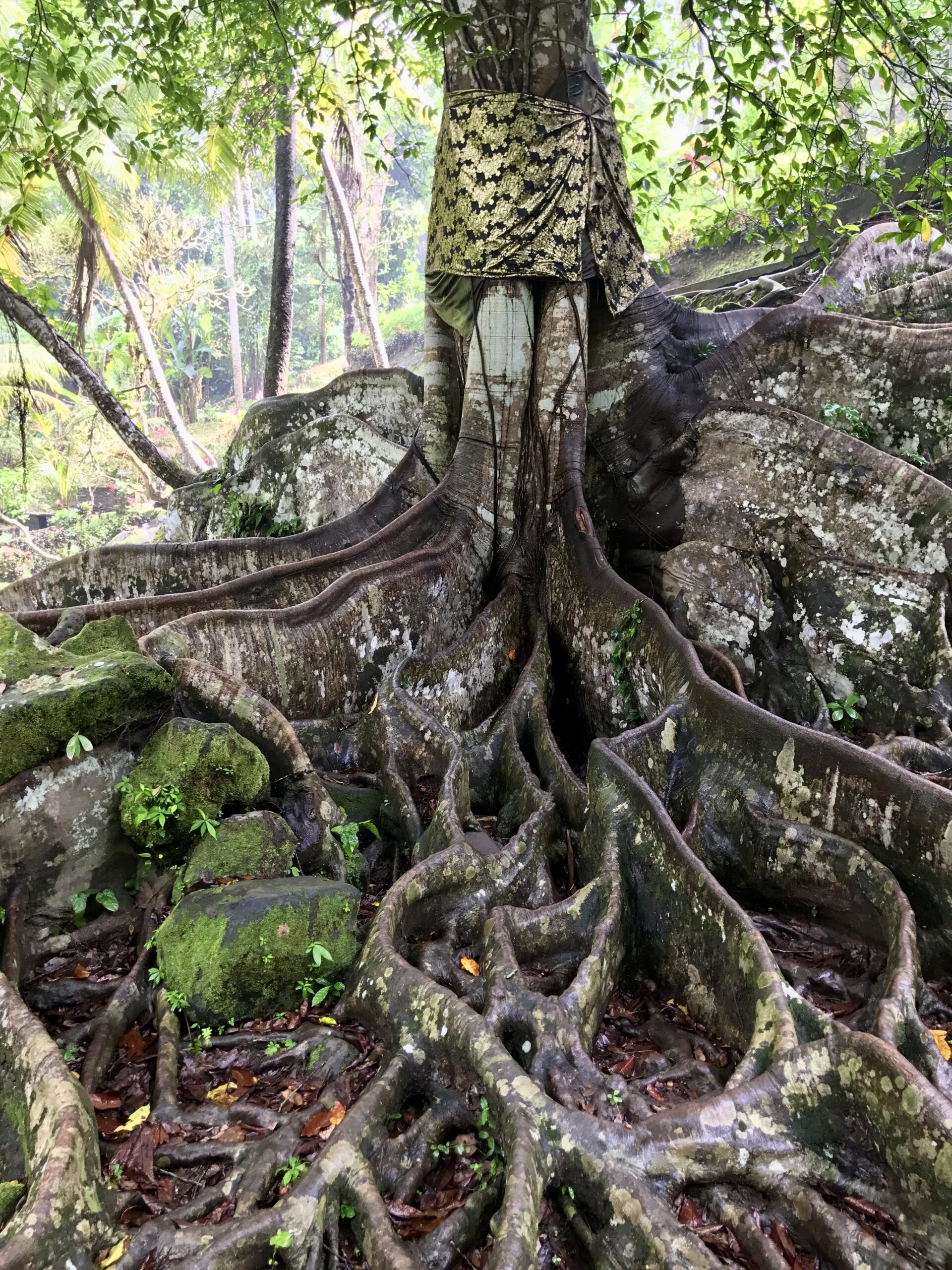
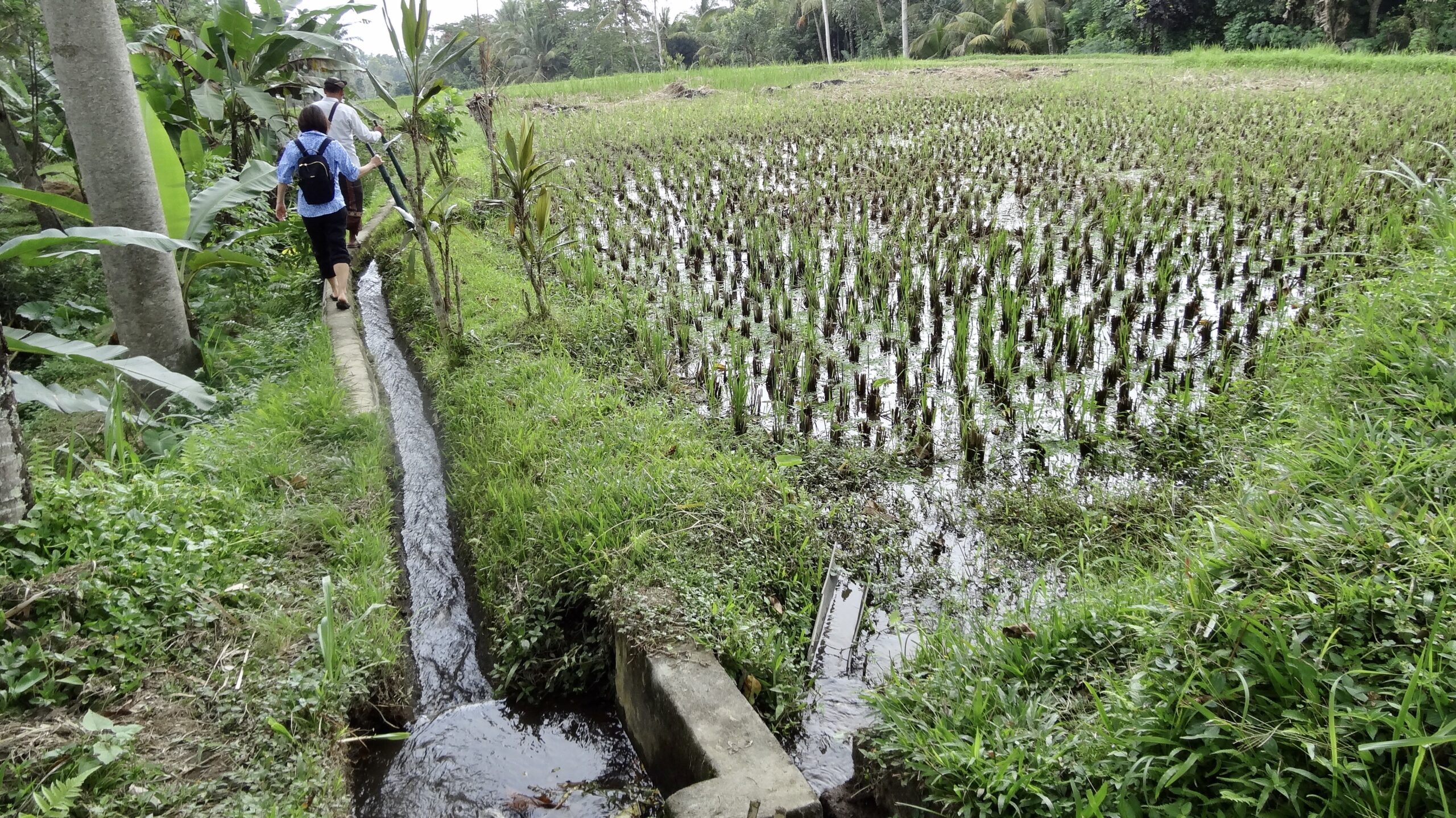
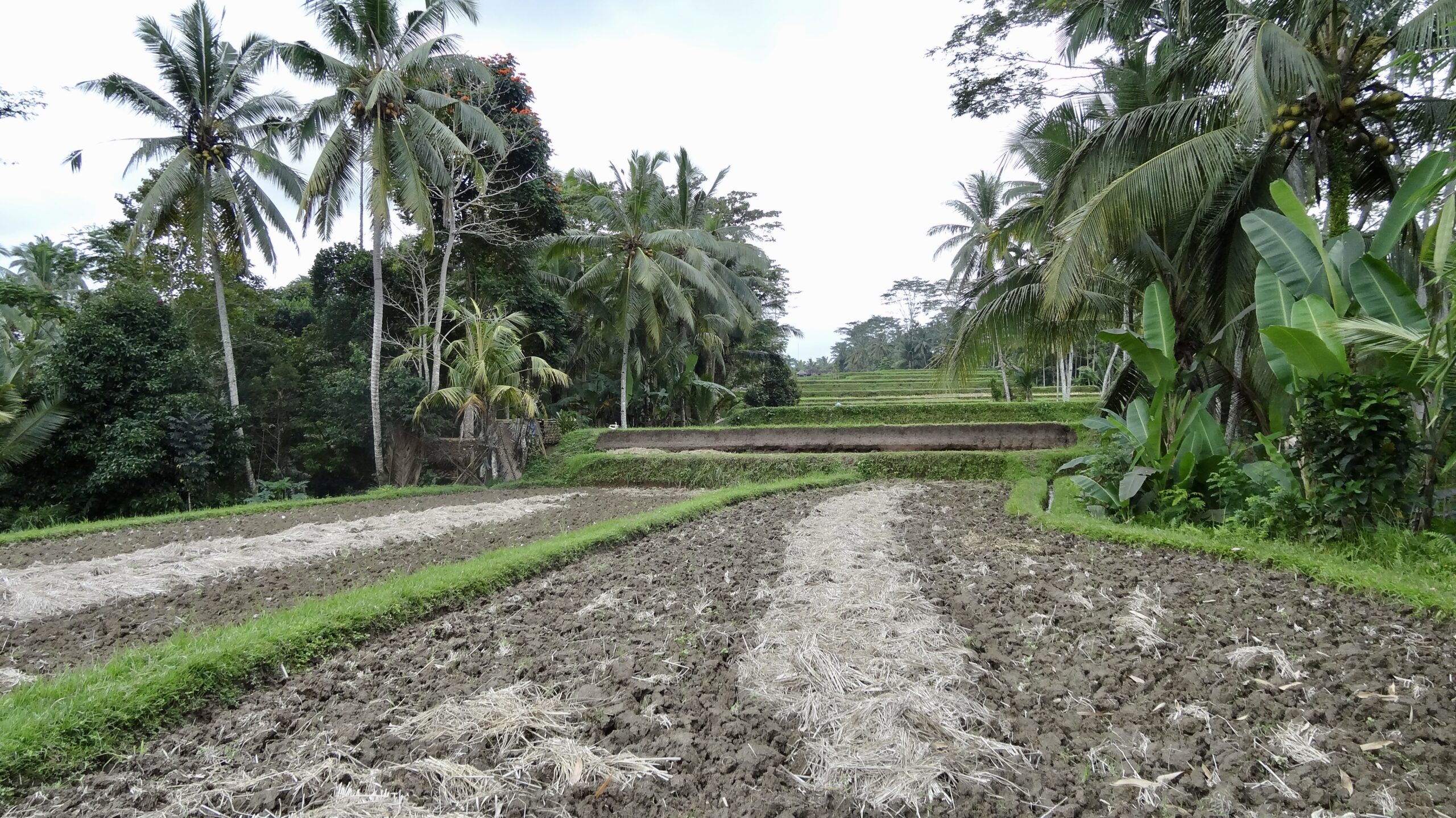
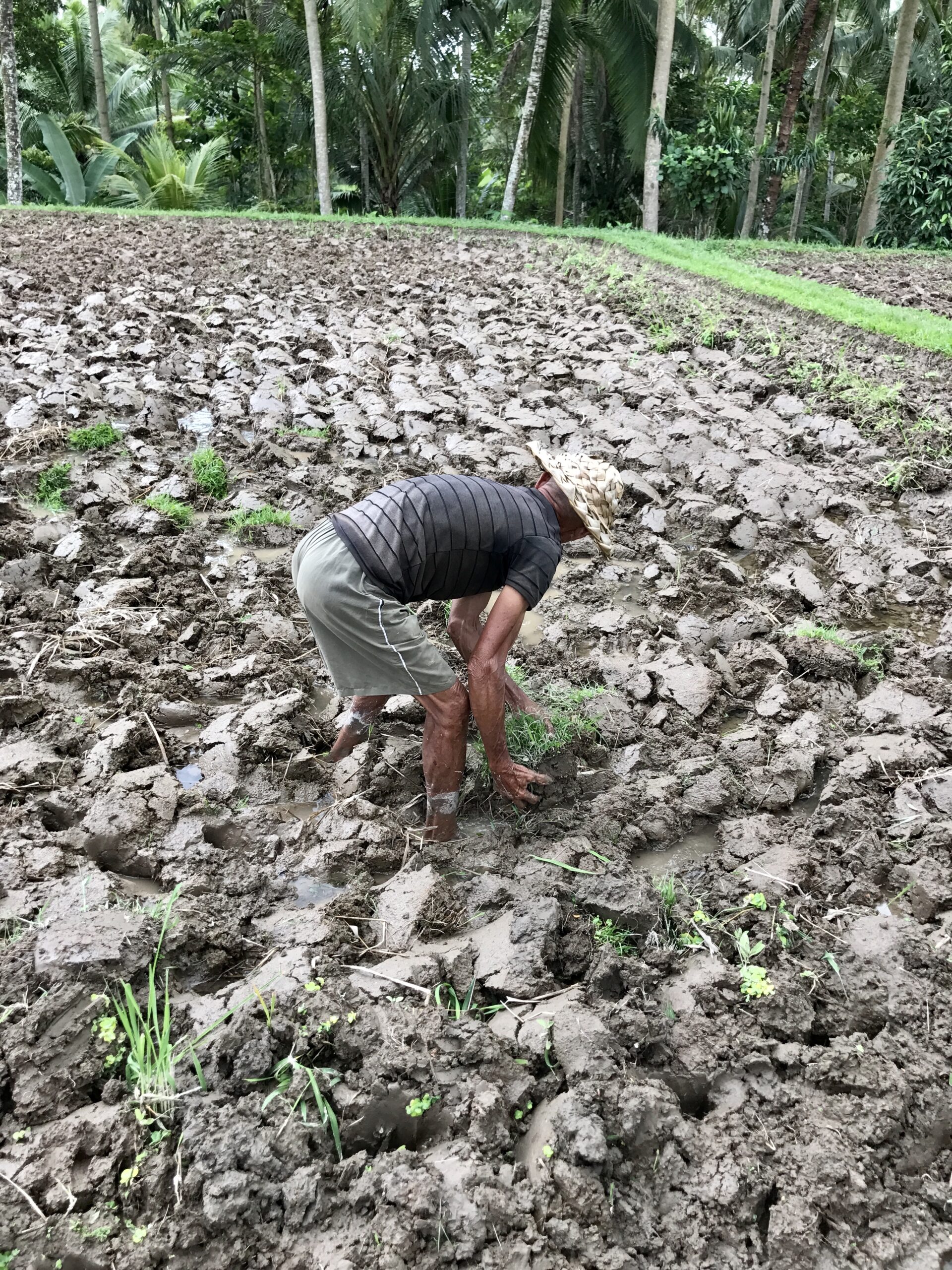
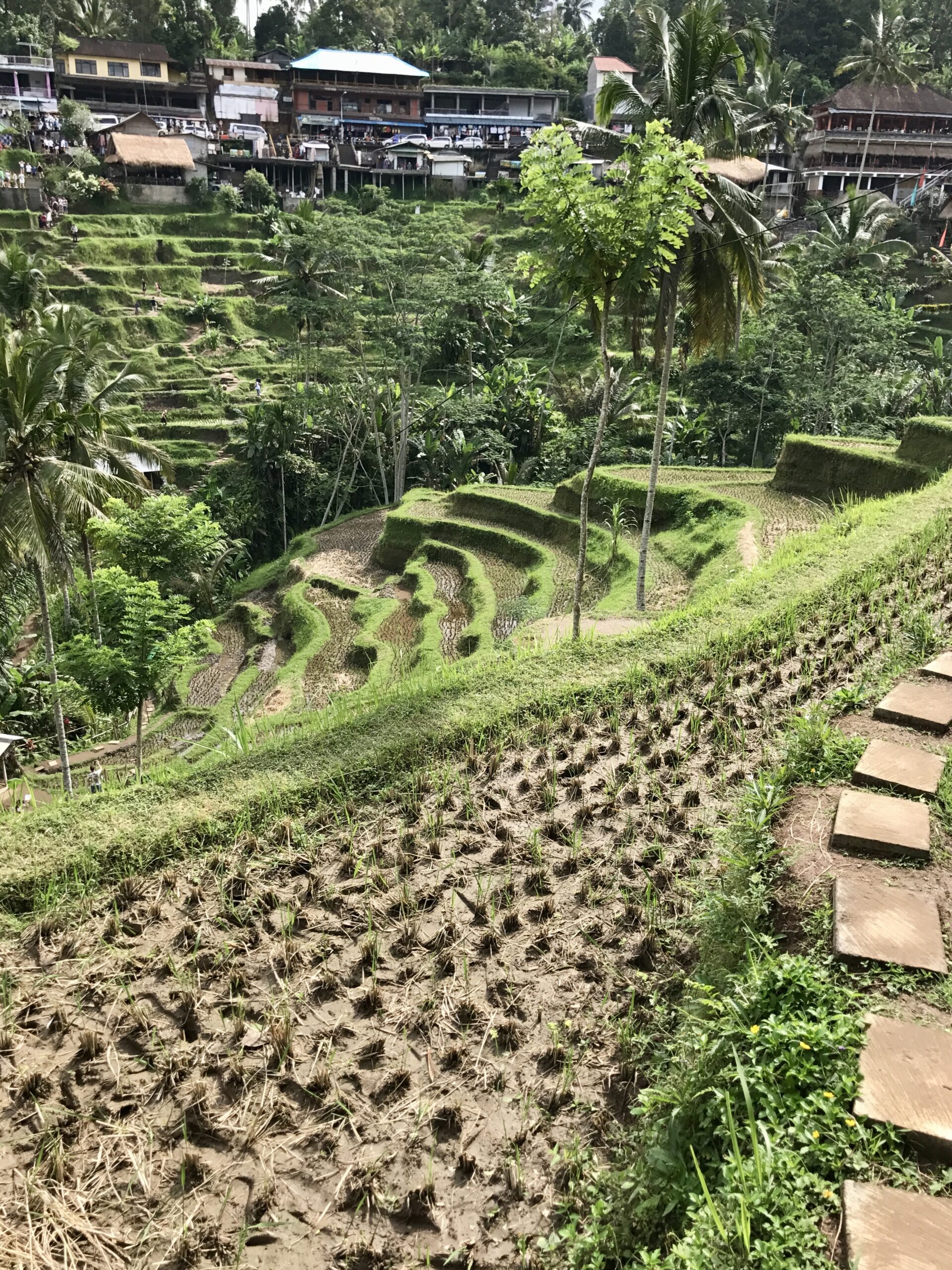
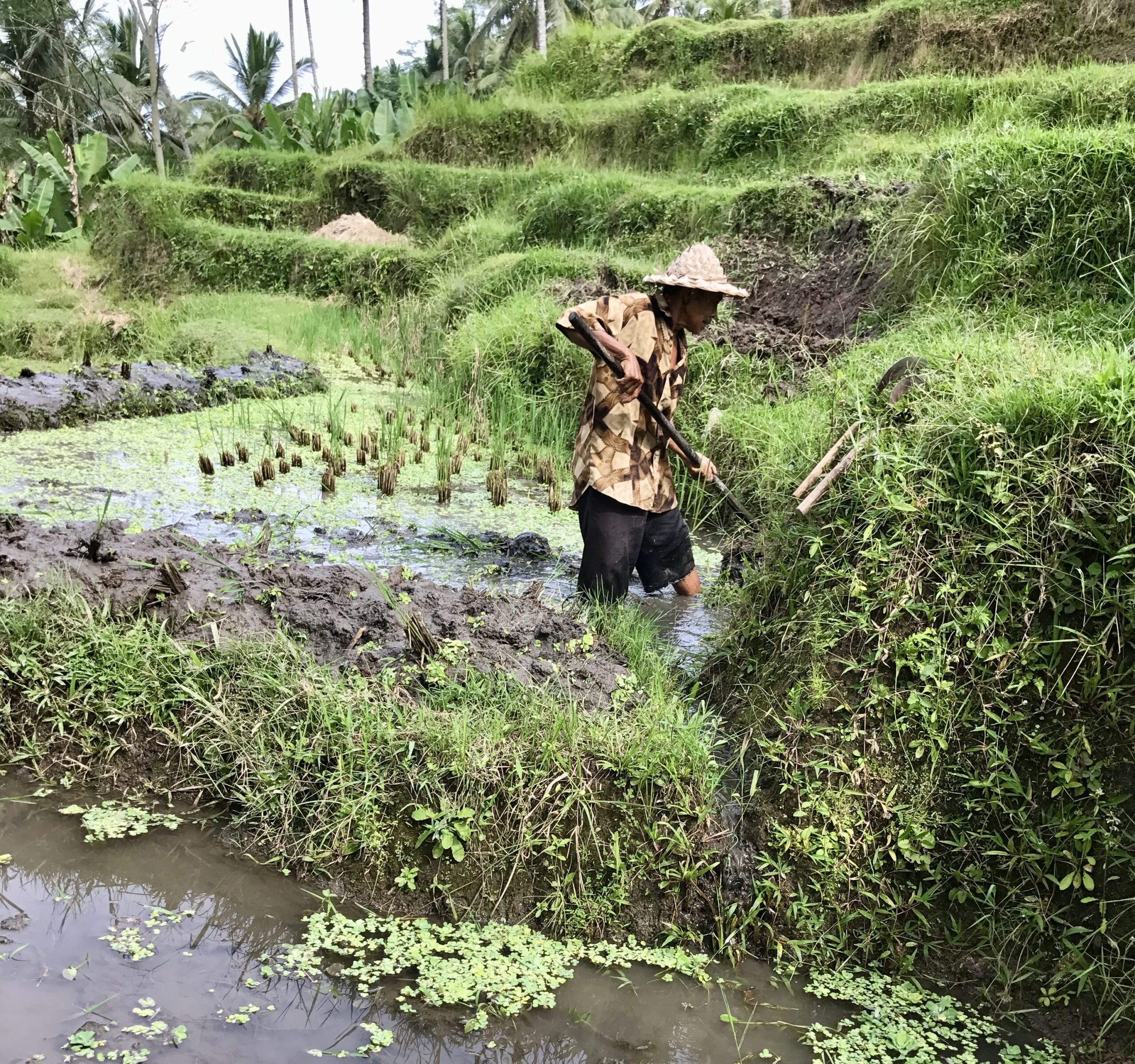
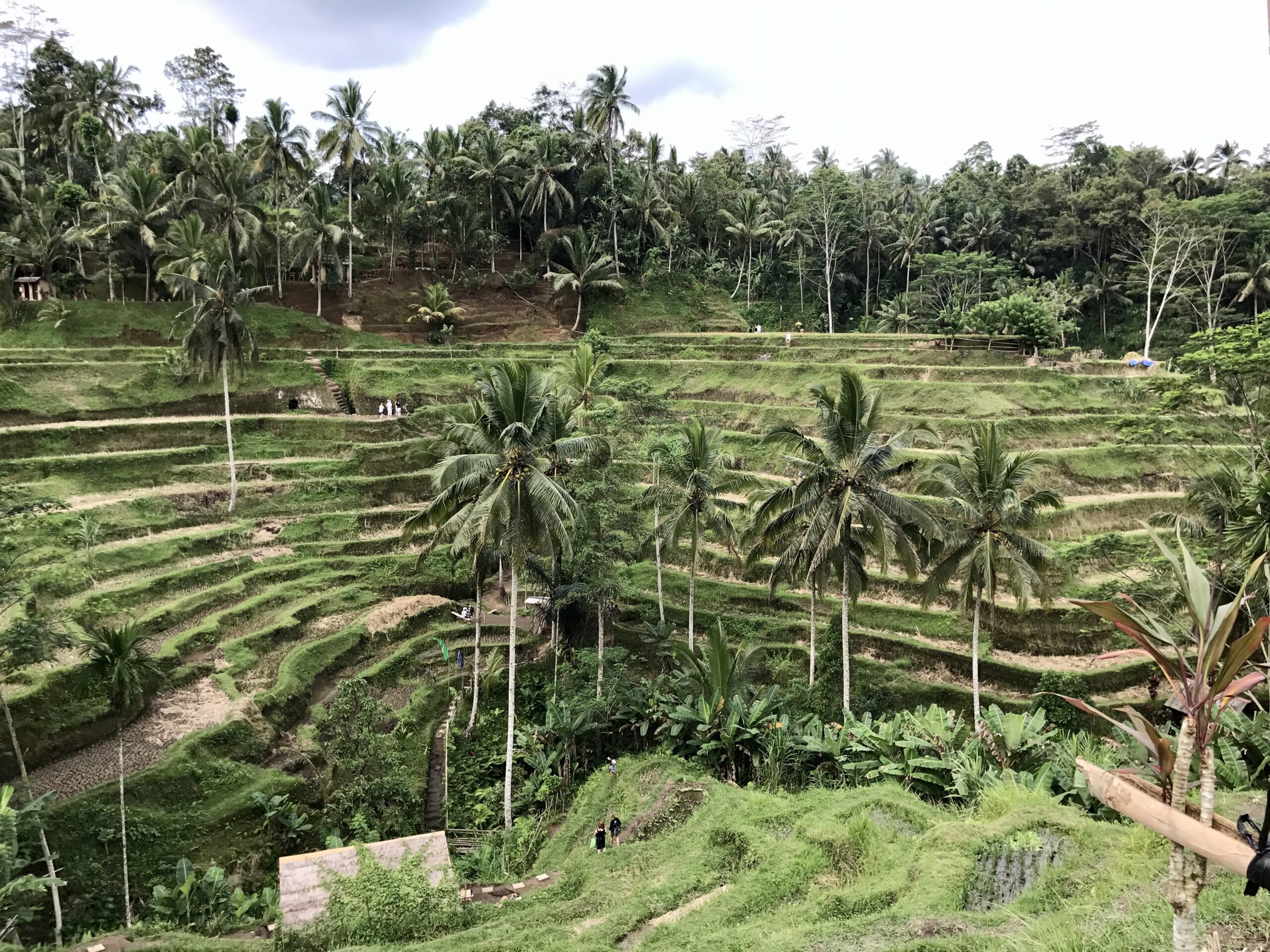
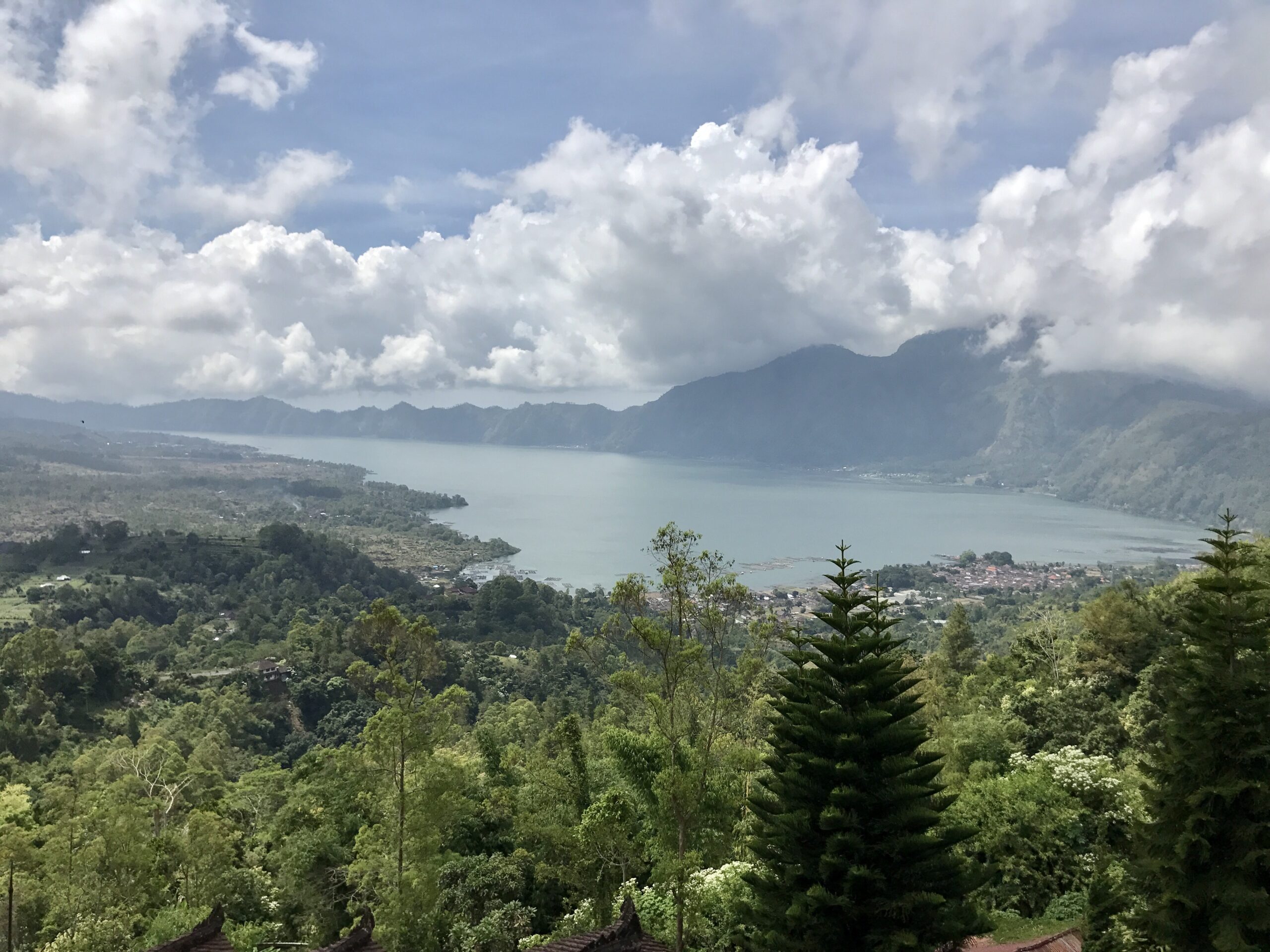
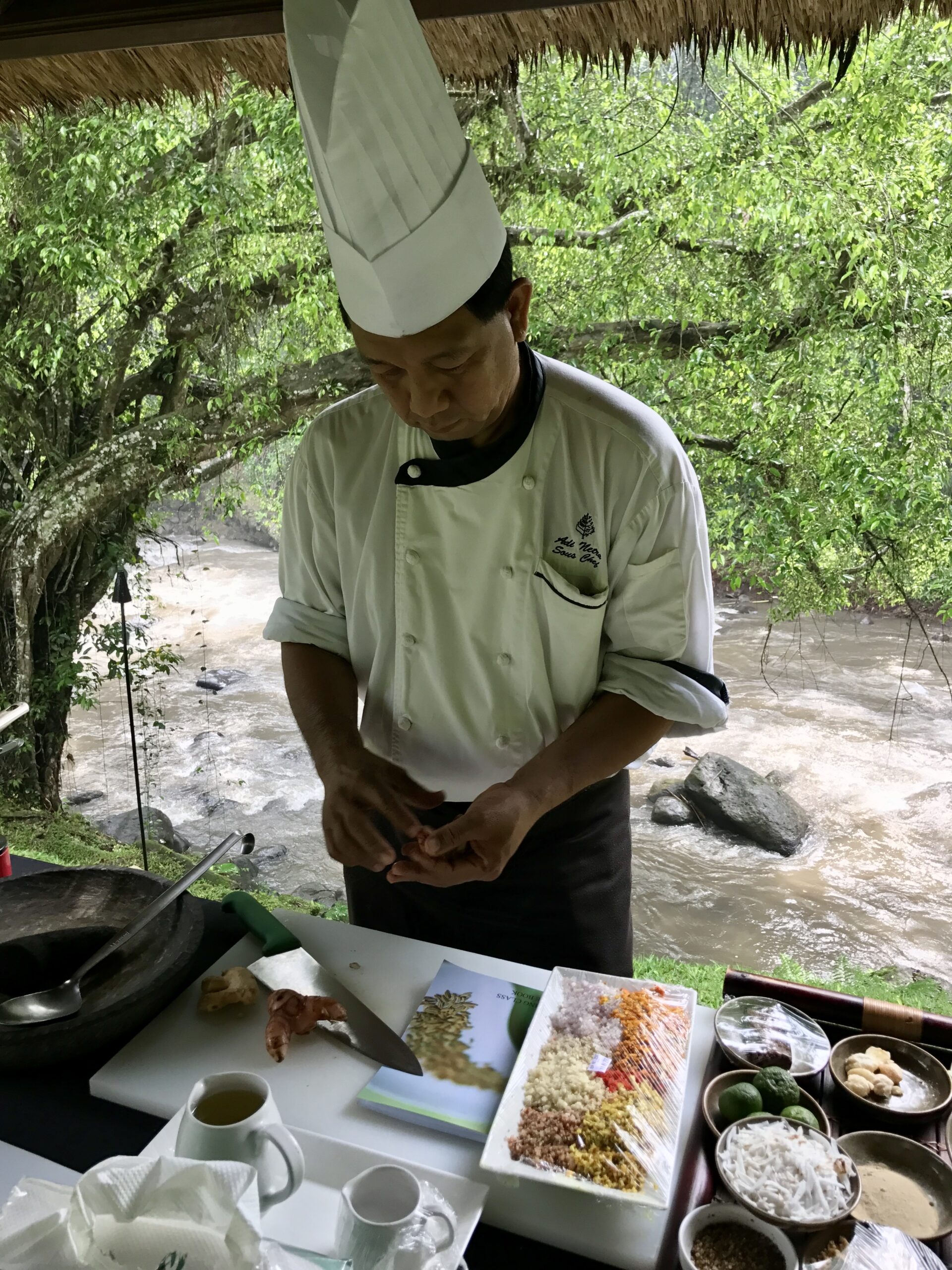
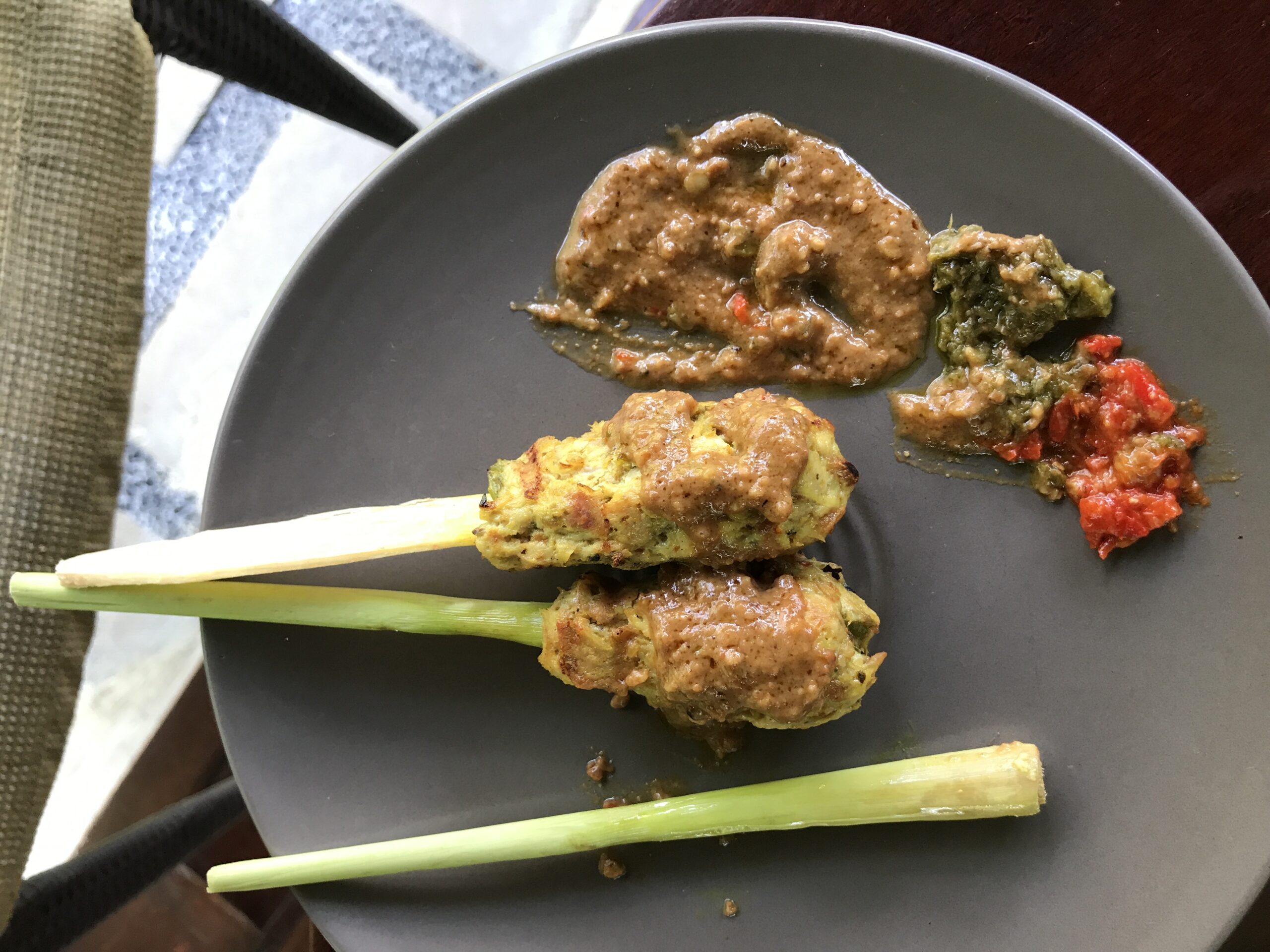
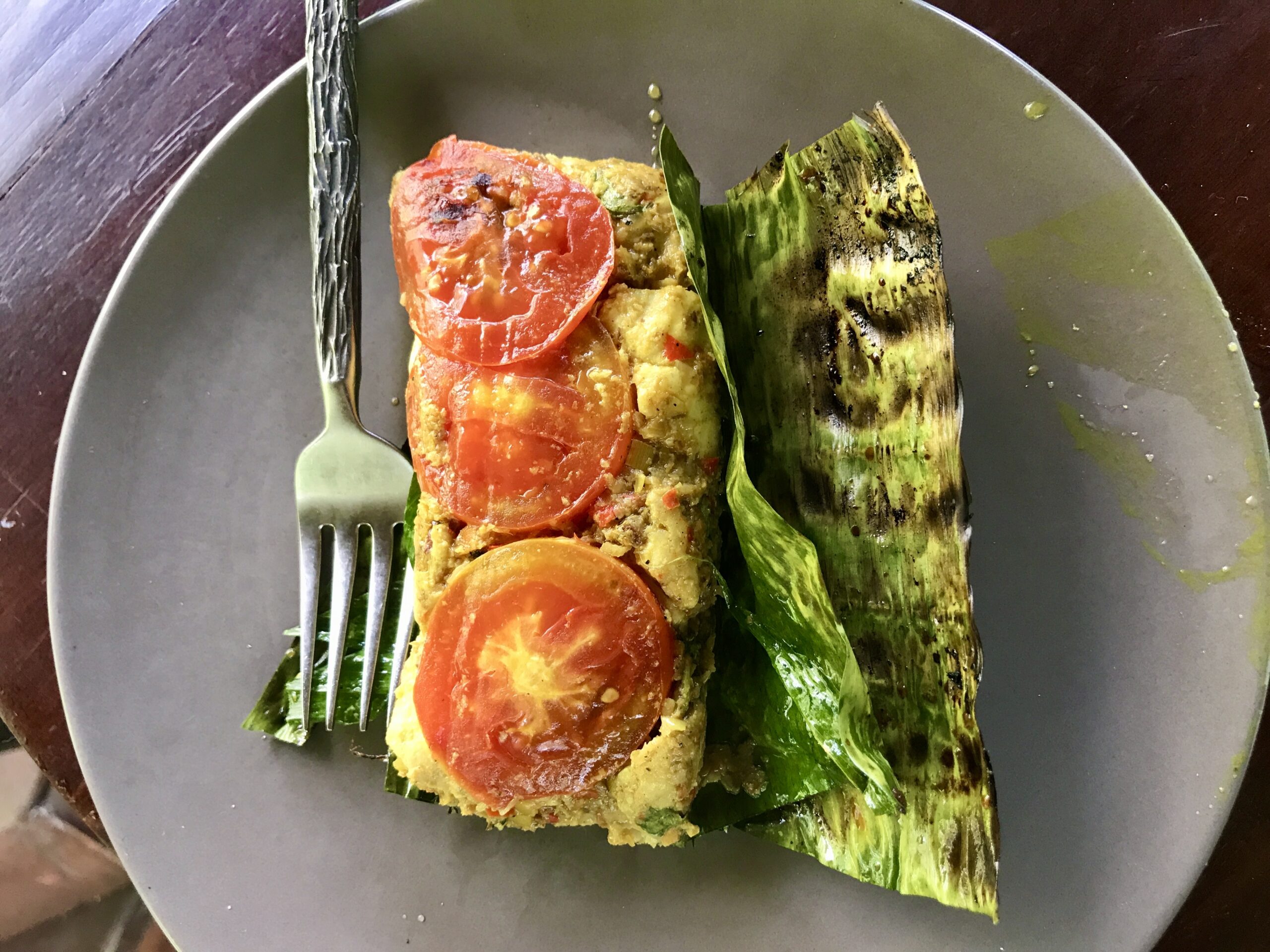
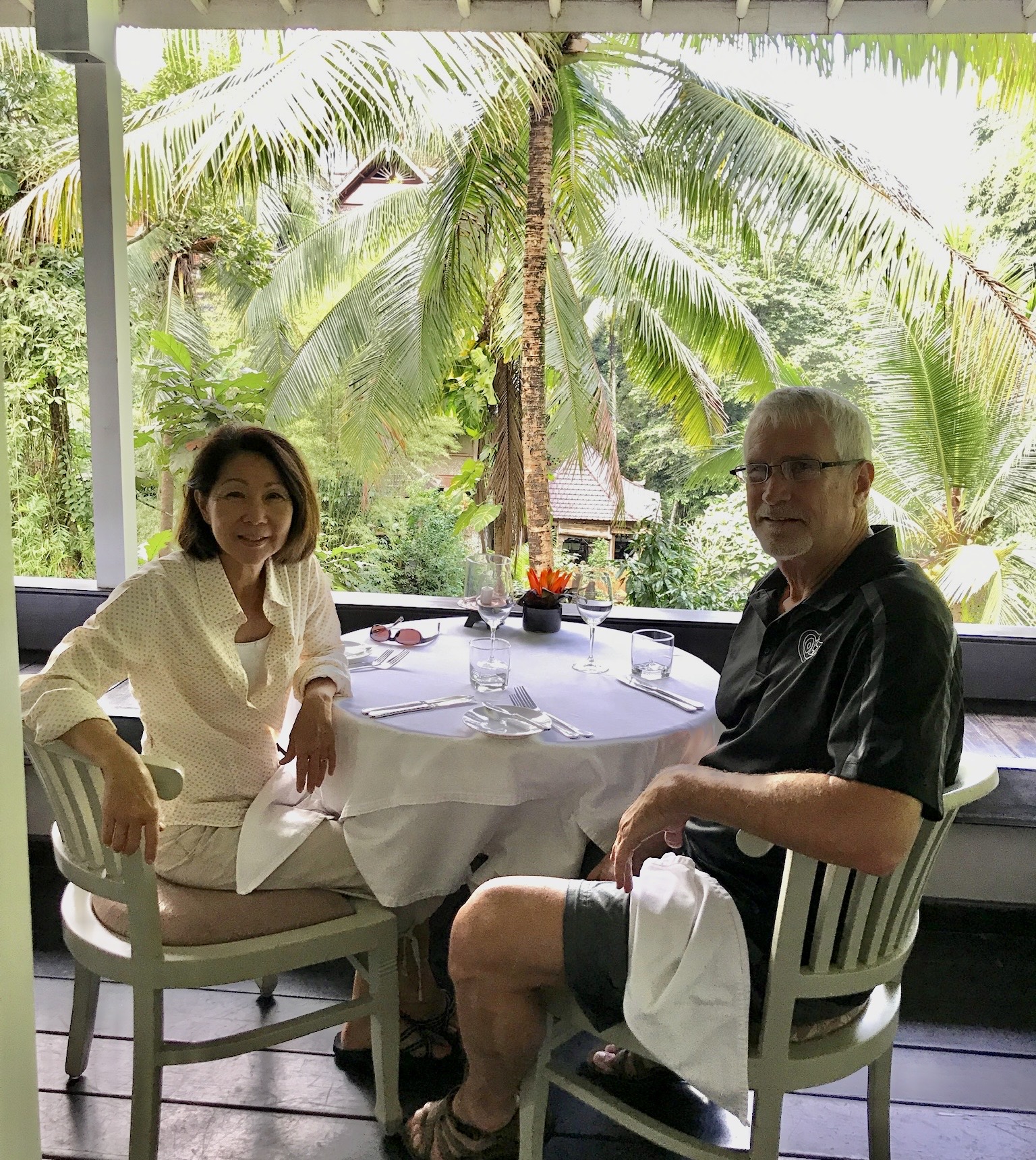
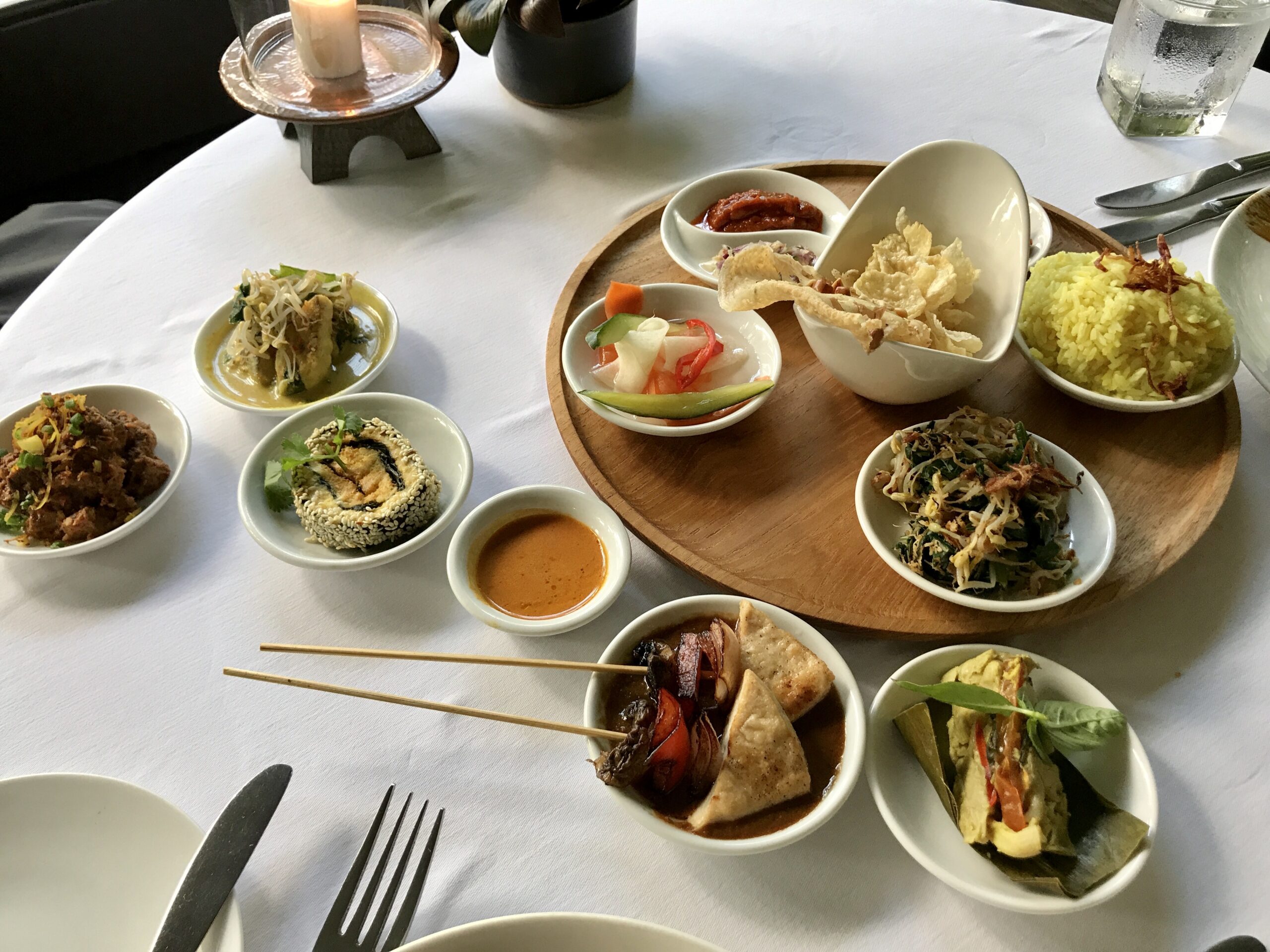
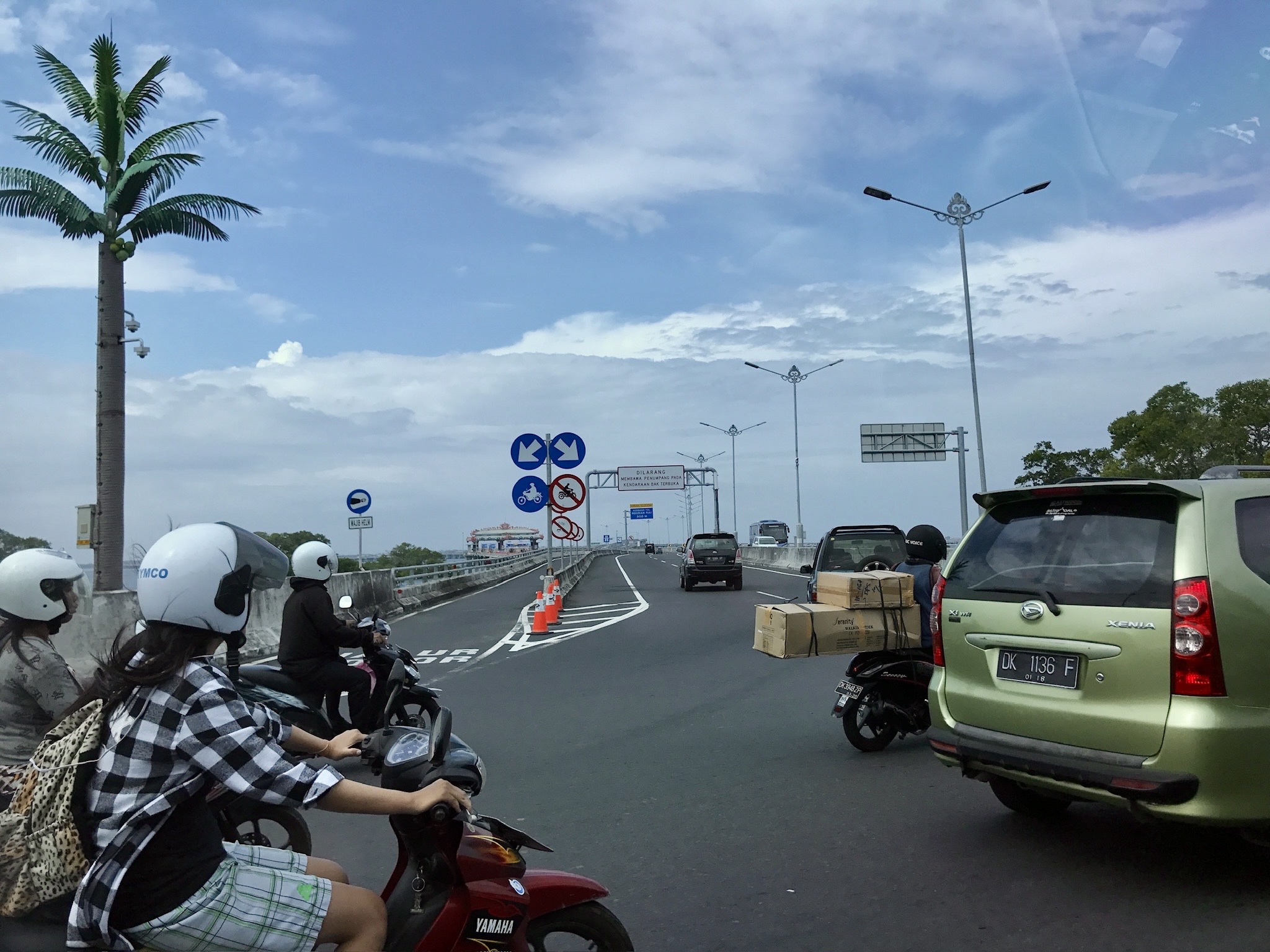
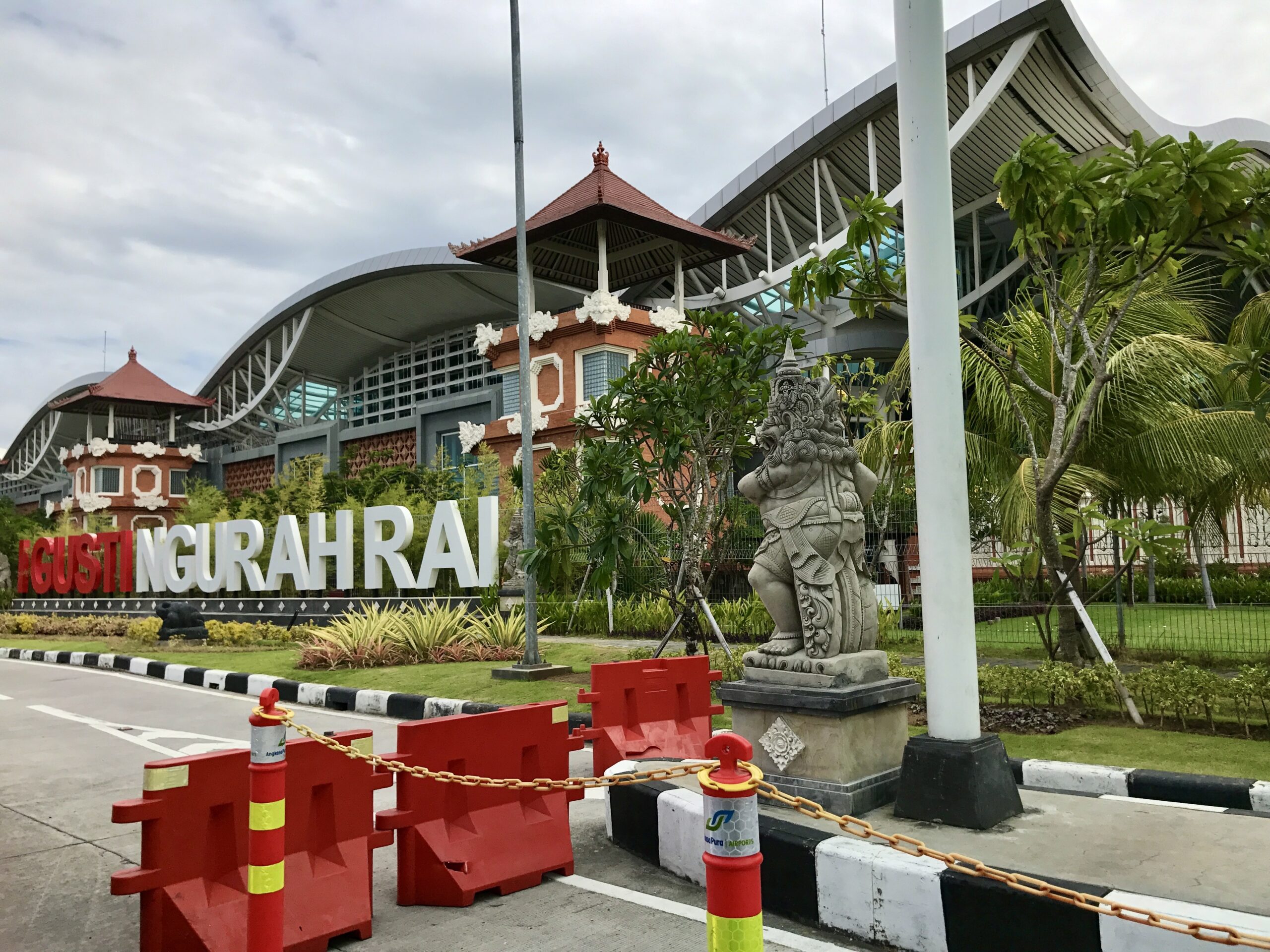
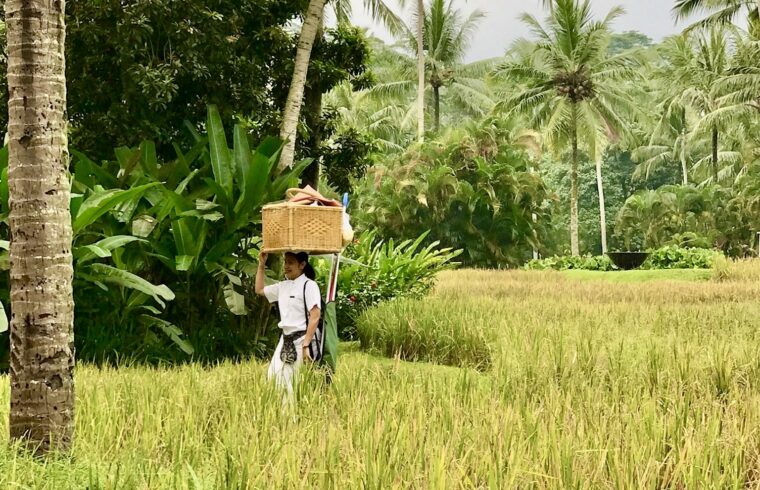
We flew Asiana from Honolulu to Inchon then Thai Airlines to Bangkok on the double-deck A380.On the A380, we flew first class on the top deck. The all-white color palette was a bit of a mistake on Thai Airlines part – it was obviously hard to keep clean. The first class section had a sterile little sitting room up front and a large toilet room. The appeal, though, was the two decks, like flying in two wide-bodies stacked on top of each other.After two long flights, we were happy to have an overnight layover in Bangkok. We stayed at the Novotel Bangkok Suvarnabhumi Airport Hotel.This was our first time at the new BKK airport. The old one was rustic, with shops and chickens just outside of the terminal. The new one is … well … new, but it lacks the charm. And the chickens. It was another 4½ hour flight to Denpasar, Bali. Here we fly over the strait between Java and Bali, with Java’s Mount Merapi poking up between the clouds. The Bali airport’s architecture has a sense-of-place to it. The only other international airport we’ve seen with any similar sense is the Kona International Airport on the Big Island of Hawaii.We stayed at the Four Seasons Jimbaran Bay Resort. It sits at the south end of long Jimbaran Beach.We were lucky enough to arrive when the little frangipani greeters were on duty. Girls from a dance troupe work occasional short shifts to make money for their club. They were having fun, but we never saw them again. The rooms are villas, with individual entries into small private courtyards …Plunge pool and view included. At the far end of the beach is a sort of town and the Kedonganan Fish Market.Fishing boats offload at the jetty and right on the beach.The market itself is appropriately cluttered and smelly, though some of the fishmongers seemed to be a bit overdressed. The fish were varied and super fresh.Next to the fish market are shops that sell everything you might want for cooking your fish, and a few things you don’t.In the evenings, we’d sometimes sit out by the beach for dinner. The fire pits were a bit of a mystery, though, as both the temperature and humidity were close to 90.Breakfast was alfresco, which in this part of the world means warm. The food was excellent and well protected from flying things. One evening we had dinner at Jala Cooking Academy restaurant, which teaches regional Indonesian cooking during the day – Balinese, Sumatran, Javanese, Sulawesian – and serves dinner at night. The lighting was very atmospheric, hence the flash photography, and the dishes were excellent (above and below).There’s a unique Indonesian spice mix called bumbu used in many dishes, and the raw spices in it – over 40 of them – are so prevalent that the air itself carries the exotic smell. From anise to sichuan peppers, cardamom to tamarind, kafir lime to candlenut, it is quite the spice mix. One evening we visited Uluwatu Temple, where unprepared visitors dawned borrowed sarongs as coverups. The 11th century temple is uniquely Balinese in that it honors the Hindu god Achintya, which has evolved on Bali to become the supreme god, of which all other gods are manifestations.The temple sits on the edge of a stunning sea cliff.A half amphitheater on the temple grounds is perched right on the edge of the cliff, facing west.A kecak dance telling the Ramayana story is performed in the amphitheater as the sun sets. The story is enacted in a circle of men percussively chanting chak. It’s mesmerizing, and like the temple’s deity, it’s uniquely Balinese.Back on Jimbaran Bay, our beach time was mostly walks, either in the morning or evening, because they’re marginally cooler. Then, after a final sunset over Jimbaran Bay, it was time to head upcountry to Ubud. We liked Ubud. For one thing it’s cooler, being in the mountains. It’s also a curated arts and cultural area that, though a bit touristy, offers both culture and countryside.We stayed at the Four Seasons Resort Sayan, just outside of the not-so-small small town. It sits in a river valley with a causeway to an aerial pond that serves as both an overlook and the hotel’s entrance.Individual villas dot the slopes and floor of the lush valley, with small rice fields traversed by housekeepers and staff. We loved the riverside.Our villa had a quiet deck and plunge pool that looked out to the lush grounds.The hotel featured a fairly elaborate Balinese dance presentation with a number of traditional dances enacting stories and legends. The dancers were accompanied by a rather large Gamelan, or traditional Balinese orchestra (below).In town, the huge Patung Dewa Indera dominates a main crossroads. It’s both stunning and a bit confusing. It’s named Statue of the God Indra but is an image of Arjuna, one of Indra’s sons. But then Hindu gods and epics were confusing enough before they entered Indonesia. And then the Balinese got ahold of them.All around the town are temples, and compounds with temples (above and below).Some were being painstakingly restored (above and below).We walked through the Puri Lukusan Museum, dedicated to preserving Balinese art. No photos are allowed inside, so a picture from outside must do.Another museum, the Neka Art Museum named for a famous Balinese sculptor ironically features paintings and photographs. Not as interesting as the Puri Lukusan, it, too, didn’t allow photos to be taken of exhibits.We went looking for the street market, with umbrellas in tow against the sporadic drizzles. At first, the market didn’t look like much …But then we came to the stairs. When it’s rainy, the street market becomes a kind of basement one. Sellers set up under any bit of cover around, offering produce (above) and prepared food to go or eat on the spot (below).All of them packed into the walkways around the little stores.If there was one place in Ubud that we simply couldn’t miss, it was Naughty Nuri’s ribs. The photographer has been having the blogger grill Nuri’s ribs from a recipe in Stephen Raichlen’s Barbeque Bible for years. Here was our chance to eat the original. Incredible. Seeing how she boiled and then grilled the ribs changed forever how we made them at home. The was no chance the blogger would wait for the photographer to take pictures before eating them. To learn more about the culture we engaged a guide, who took us to a traditional family compound. As in so many other societies, the historic core unit of housing was – and often still is – the family compound, where multi-generational households live.The compound we visited was well kept, as they allow guides to bring paying tourists by a couple of times each day to walk through the grounds. Architecturally, a Balinese house is a collection of separate structures surrounded by an outer wall. Each structure is like a single, open-air room serving a single function.Several were bedrooms for the different family membersThe kitchen was its own building – and well used.Another structure is used by the family patriarch to make rayung brooms, which they sell. Here the family matriarch places canang sari around the compound. These are small intricate offerings of food and flowers put out anew each day to thank and show respect for the gods. We saw this done at the hotels and see the little offerings everywhere. And every house has its own temple, three in this case. Walking around town, we’d see these walled-in shrines and thought each was a stand-alone temple. We now know they were all simply Balinese homes. Next door to the home is a coffee shop. We tried different brews and bought a bag of civet coffee to take home with us. The beens are what comes of coffee berries after being eaten by palm civets. Think mongoose poop coffee.We also visited Goa Gajah, a temple centered on a cave that dates to the 9th or 11th century. It has both Hindu and Buddhist carvings and is sometimes called the elephant cave, because it has an altar with a statue of Ganesh. The other altar has carved lingam and yoni, so it could have easily been called the birds and the bees cave.We followed a path down into the lush ravine that is part of the temple grounds, and also home to hundreds of macaques. At the bottom of the ravine, a spring feeds a stream, which in turn waters a sacred tree …We’re not sure why it’s sacred, other than its roots may well be holding the little valley together. We also drove up the slopes of Mount Batur with our guide and hiked a mile or so through rice fields on a roundabout way to some picturesque rice terraces.The hike was mostly downhill, as we worked through fields that step down through narrow tracts.Farmers were hand clearing clumps of tilled sod in the dense muddy soil. At the end of our hike, we came upon the popular rice terraces from the back side. Lots of tourists were making photo stops on the narrow strip of road and shops that winds along the top of the stepped valley.Many different farmers worked the stepped paddies in the valley.We took a parting shot from the road as our driver met us to head further up the mountain.We had lunch at a viewpoint looking out over Lake Batur. The lake is in the caldera that formed about 30,000 years ago when the 5,600 foot volcano’s lava chamber collapsed. There are four farming and fishing villages around the lake, but the volcano is still quite active. In 1926, a lava flow wiped out one of the villages. Undeterred, the residents rebuilt it.One day at the hotel, the photographer booked a cooking class with one of the sous chefs. Prepping turned to grilling and then to eating (above and below). We also searched out Balinese restaurants in town. One we found was Arcadia, which featured a broad range of Balinese dishes (above and below).Like Malaysian cuisine, Balinese cooking is influenced by Chinese and Indian spices and dishes, but indigenous traditions and regional Indonesian cuisine take it in unique directions. The result is some of the best food on the planet. It was then time to head back down to Denpasar and the airport. From the airport, our next stop was Sydney.