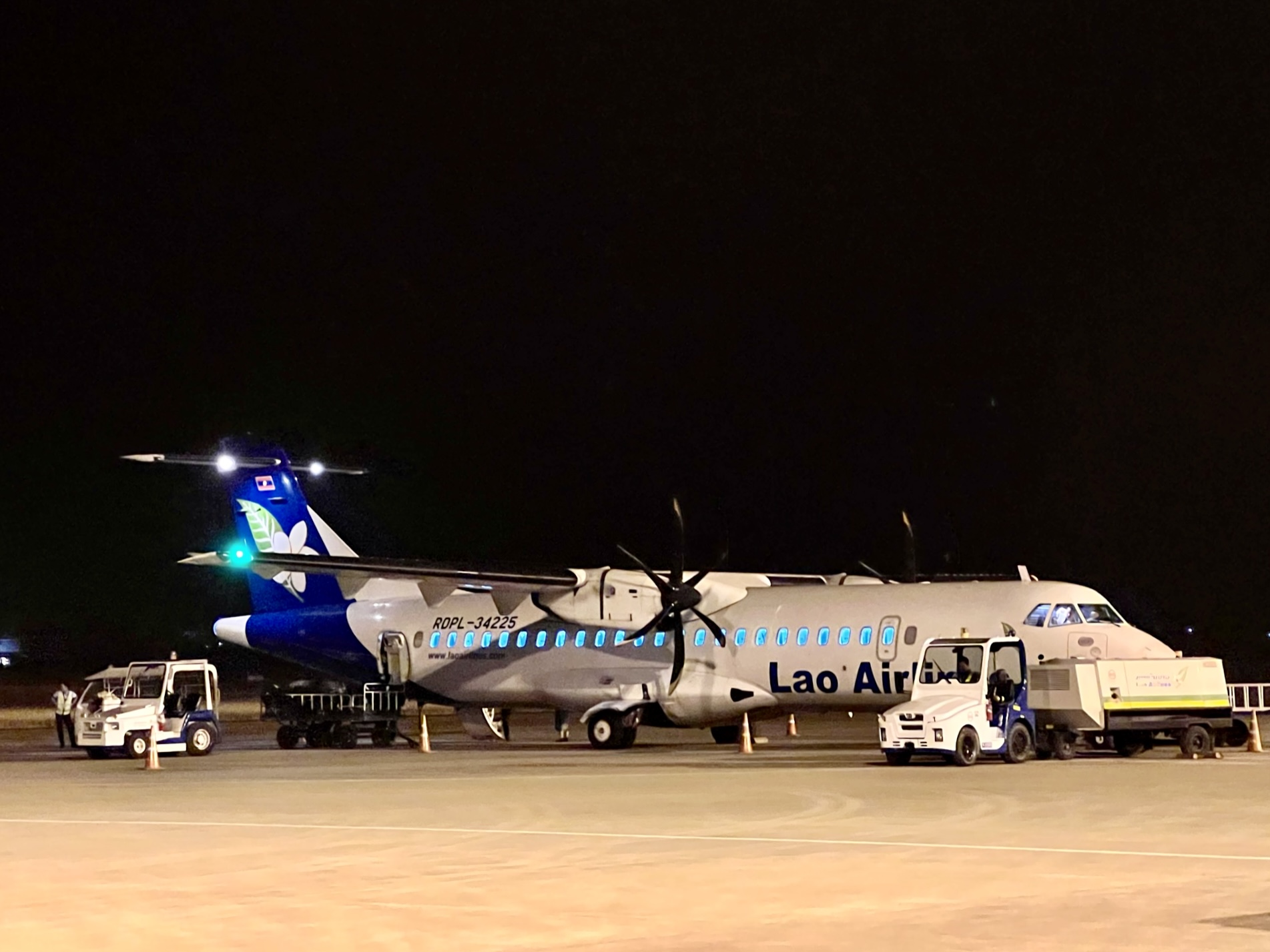
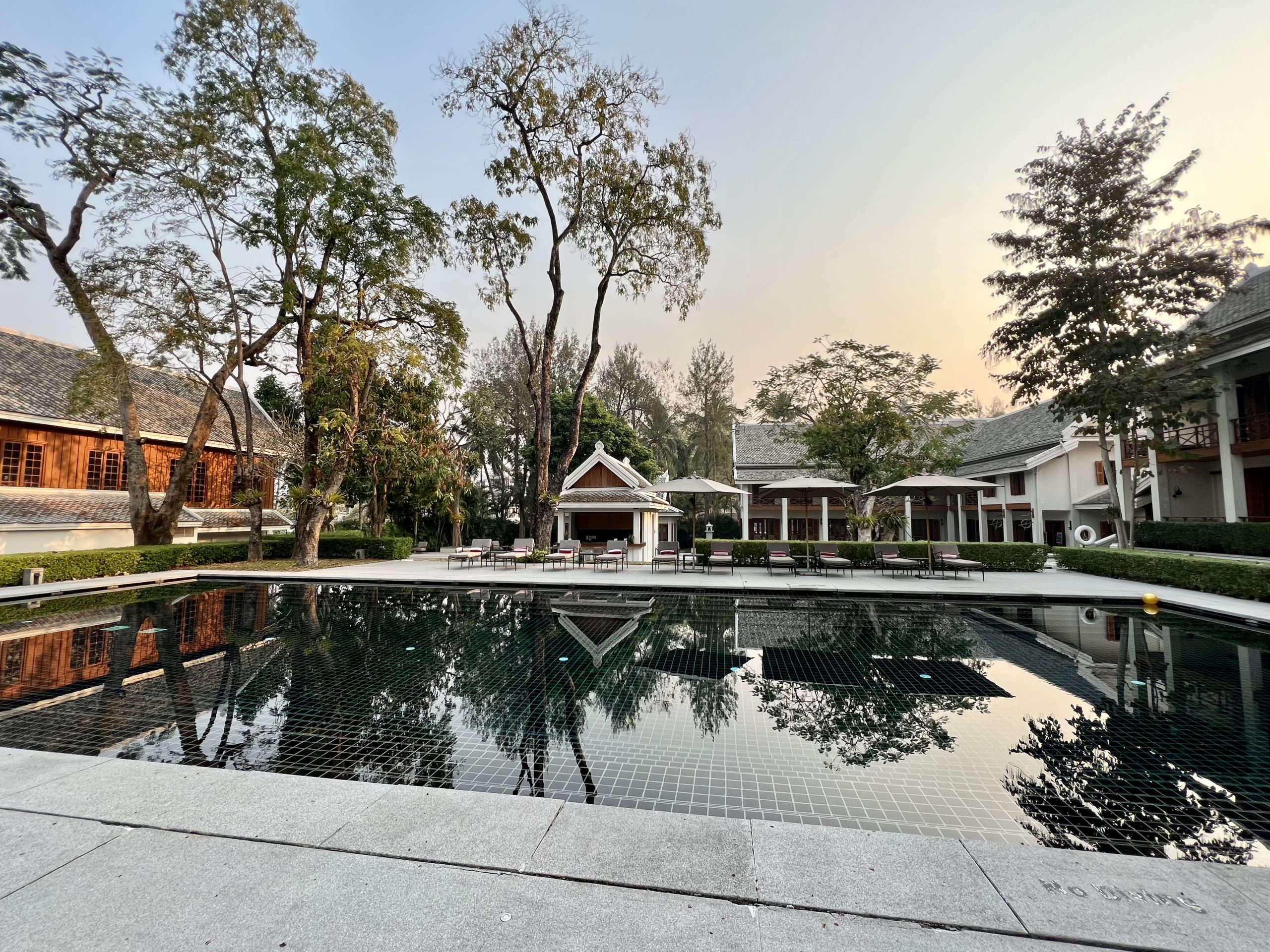
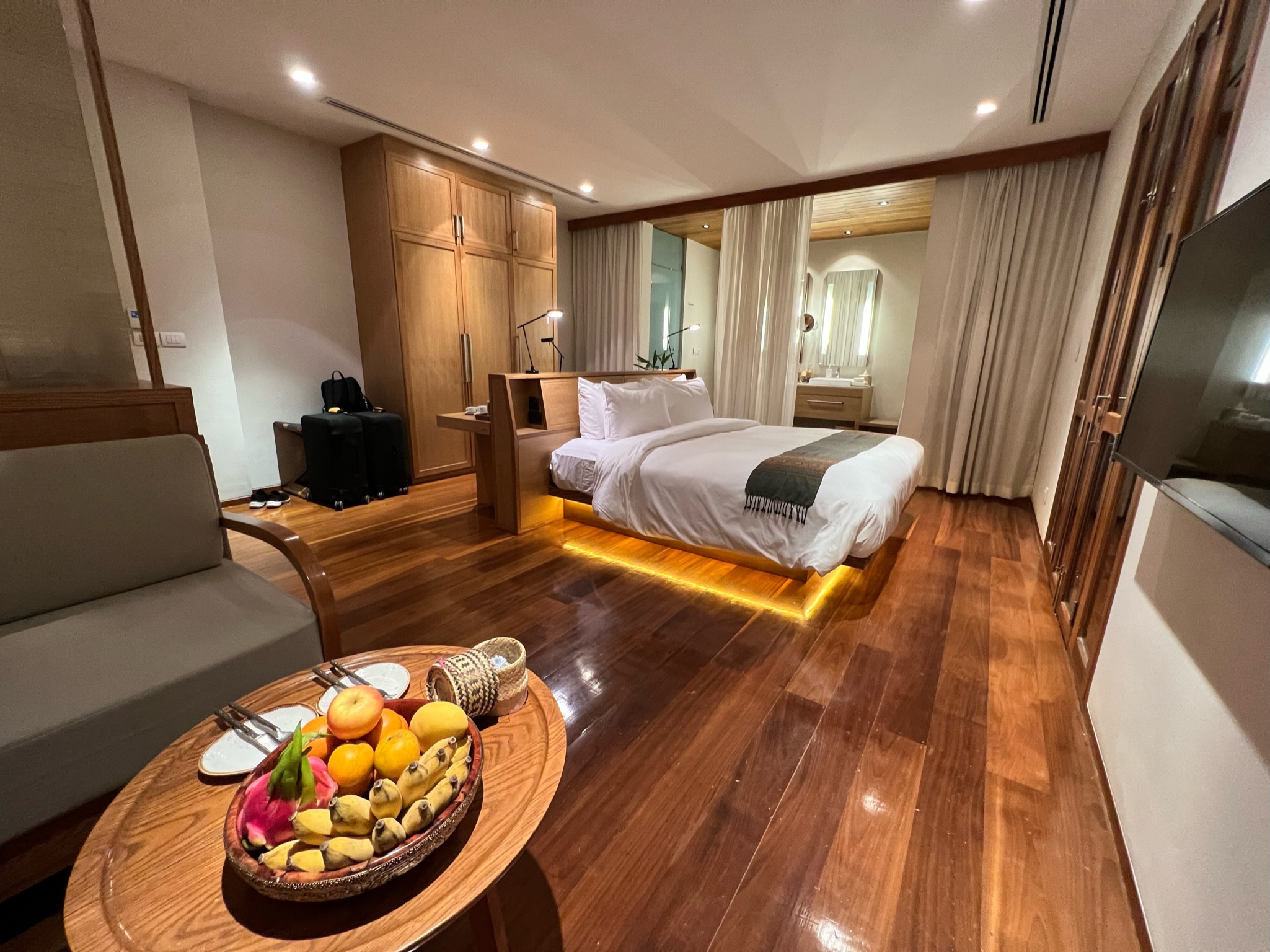
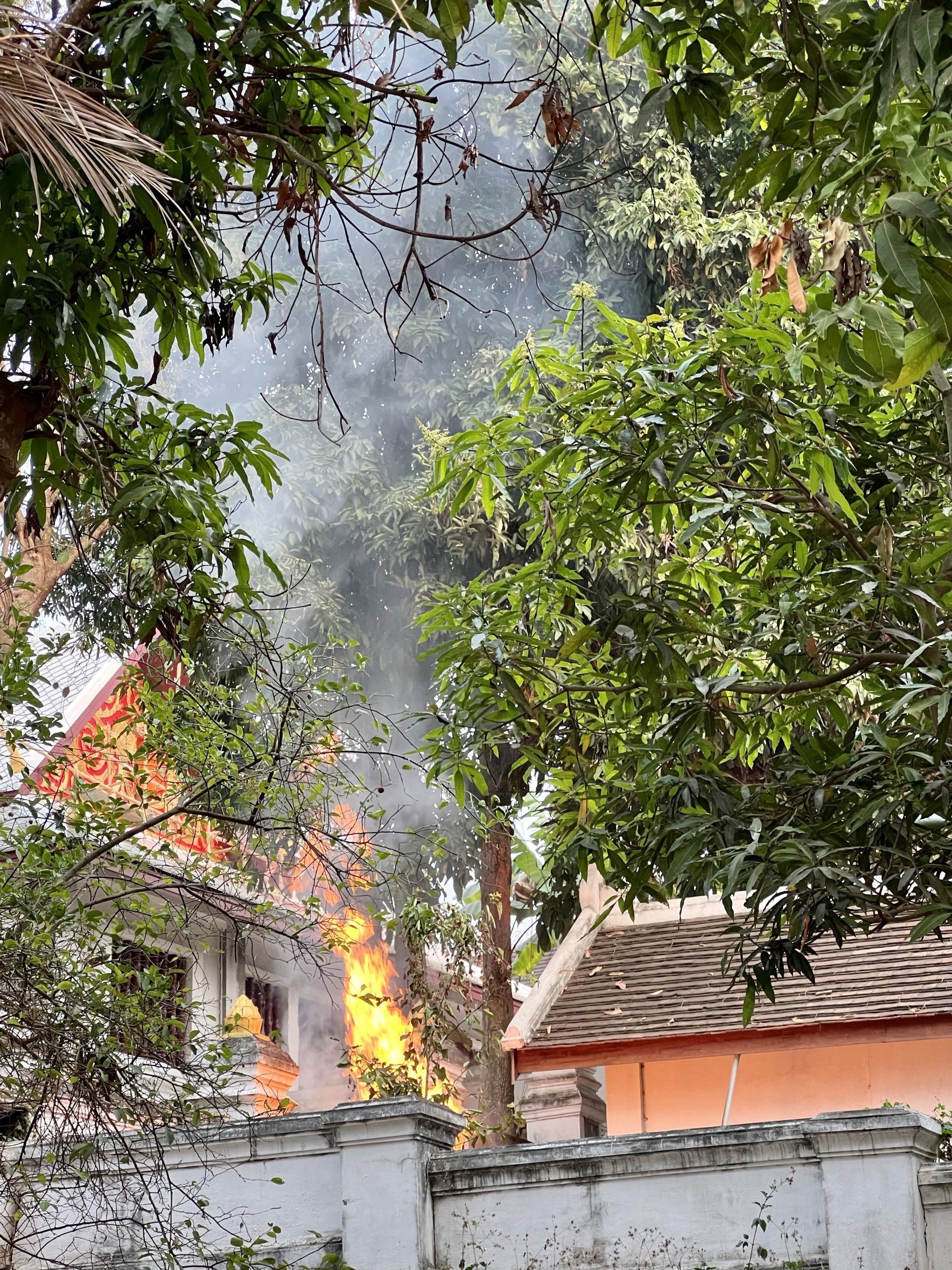
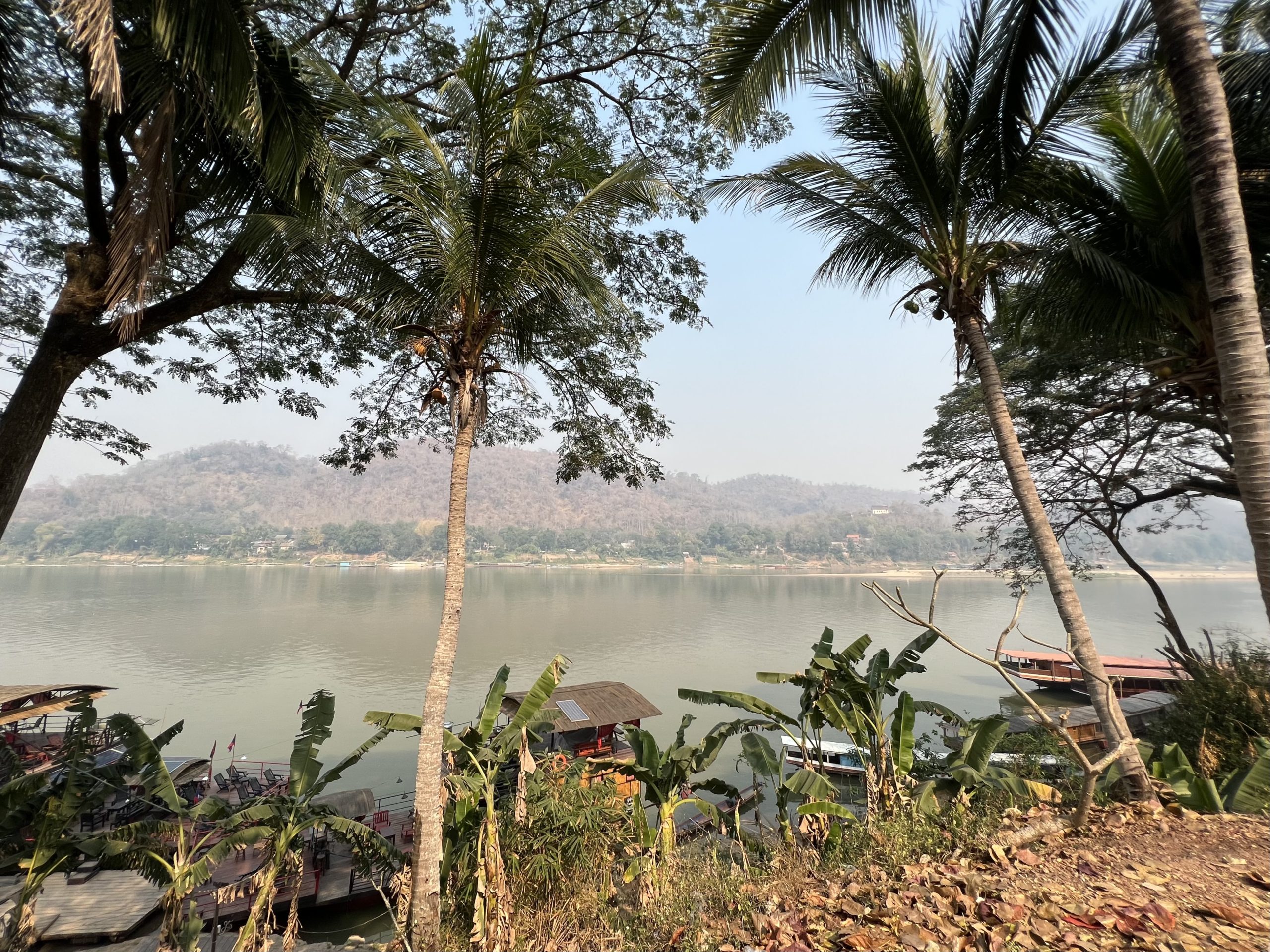
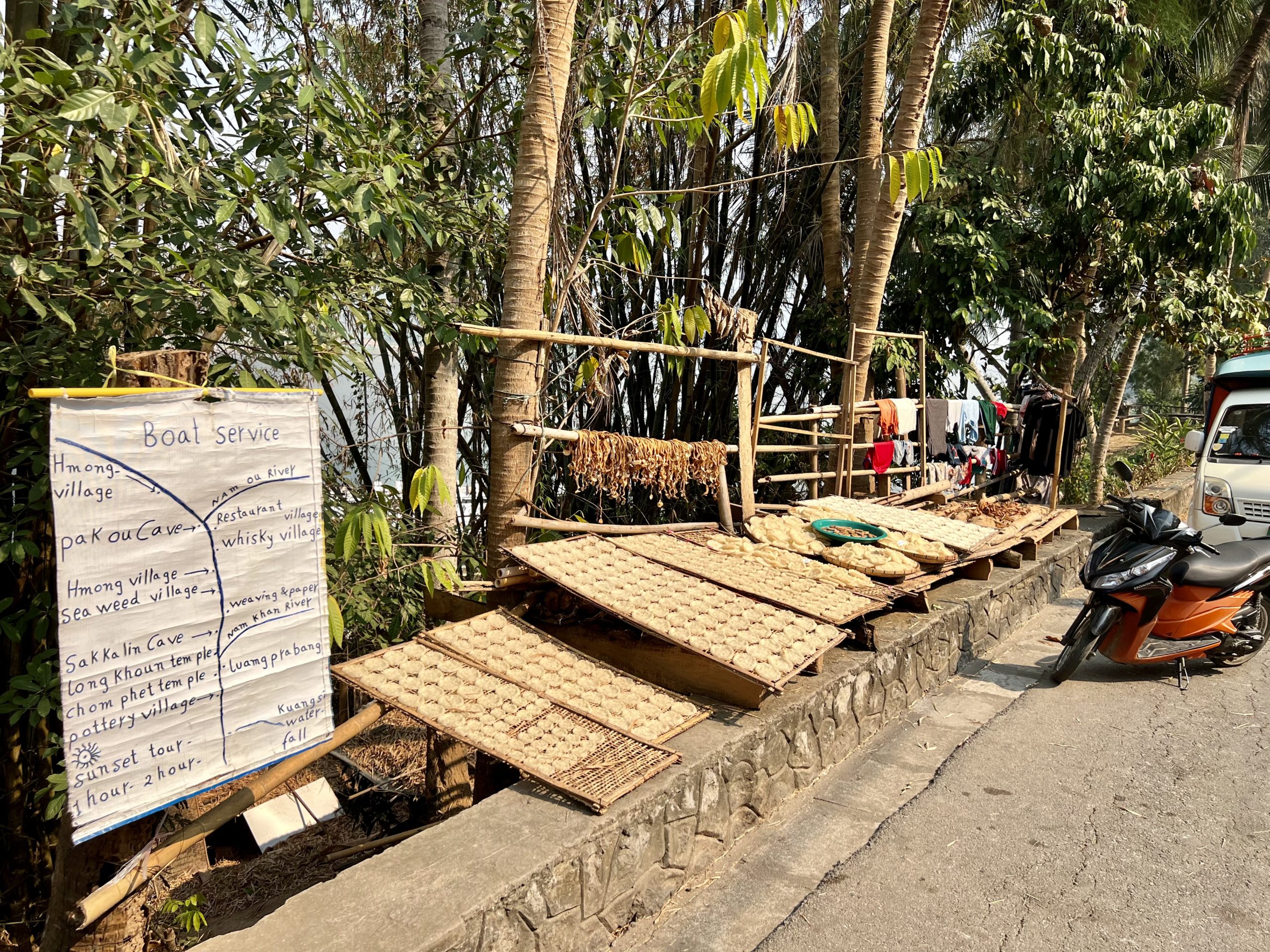
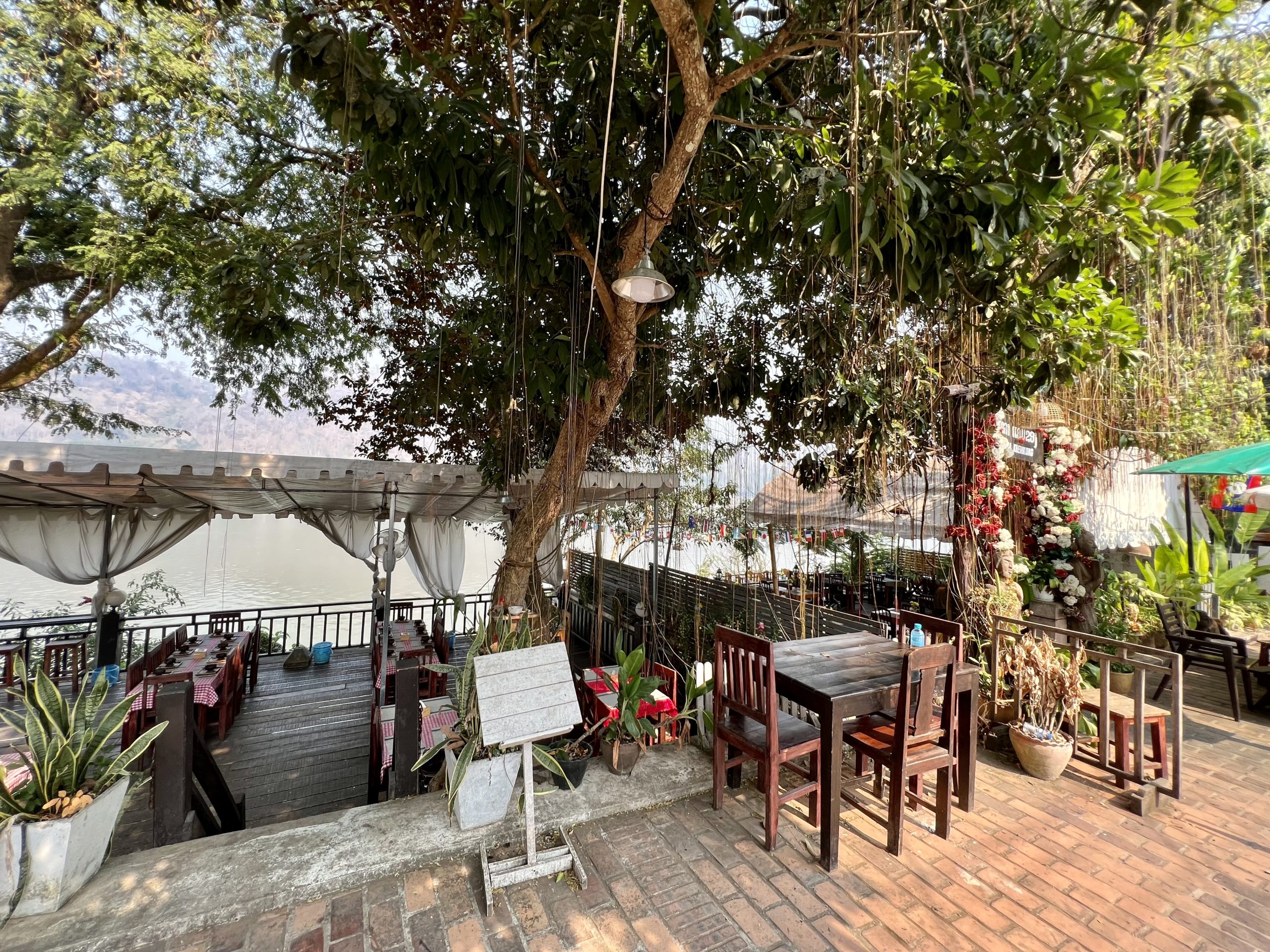
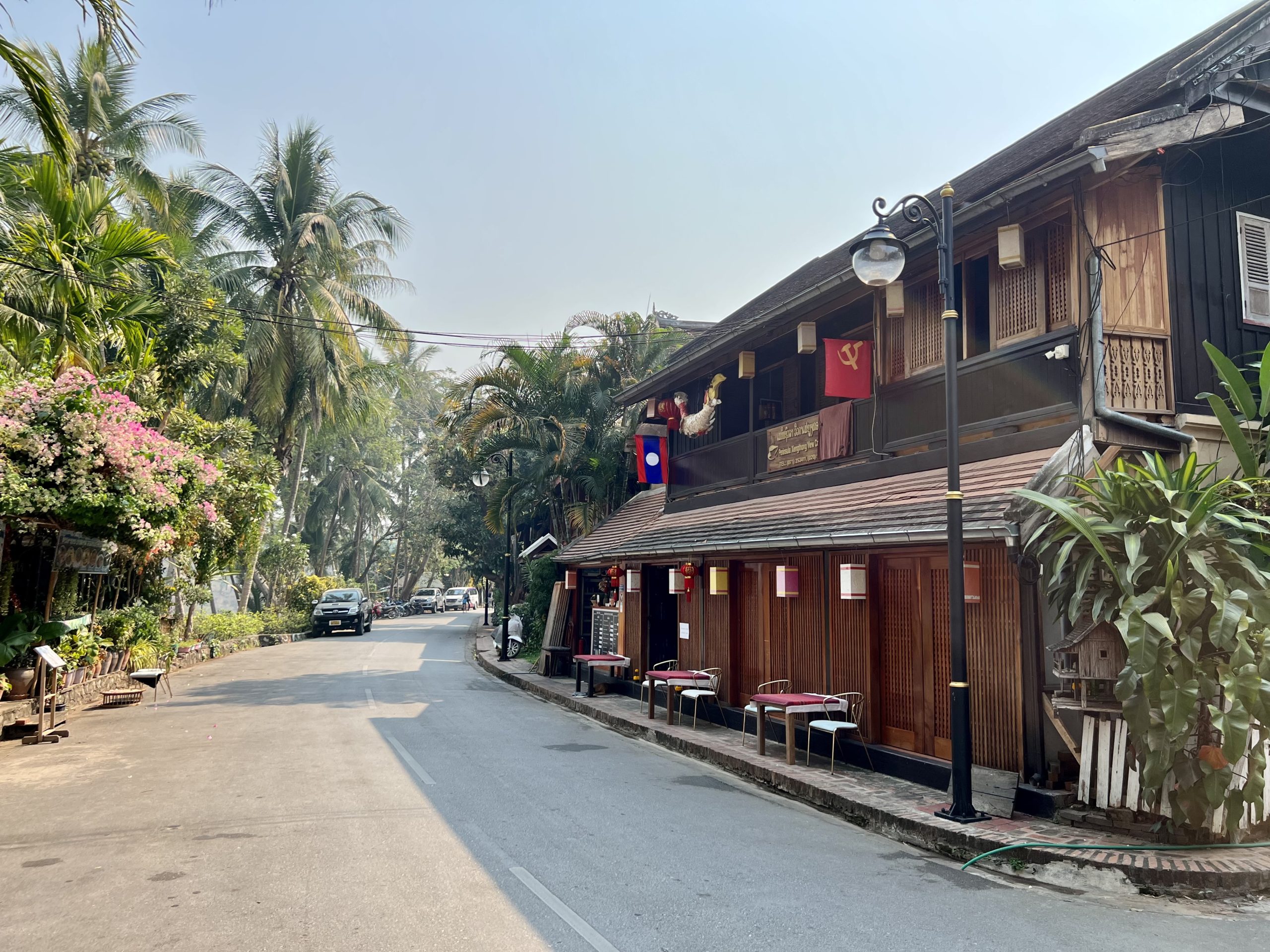
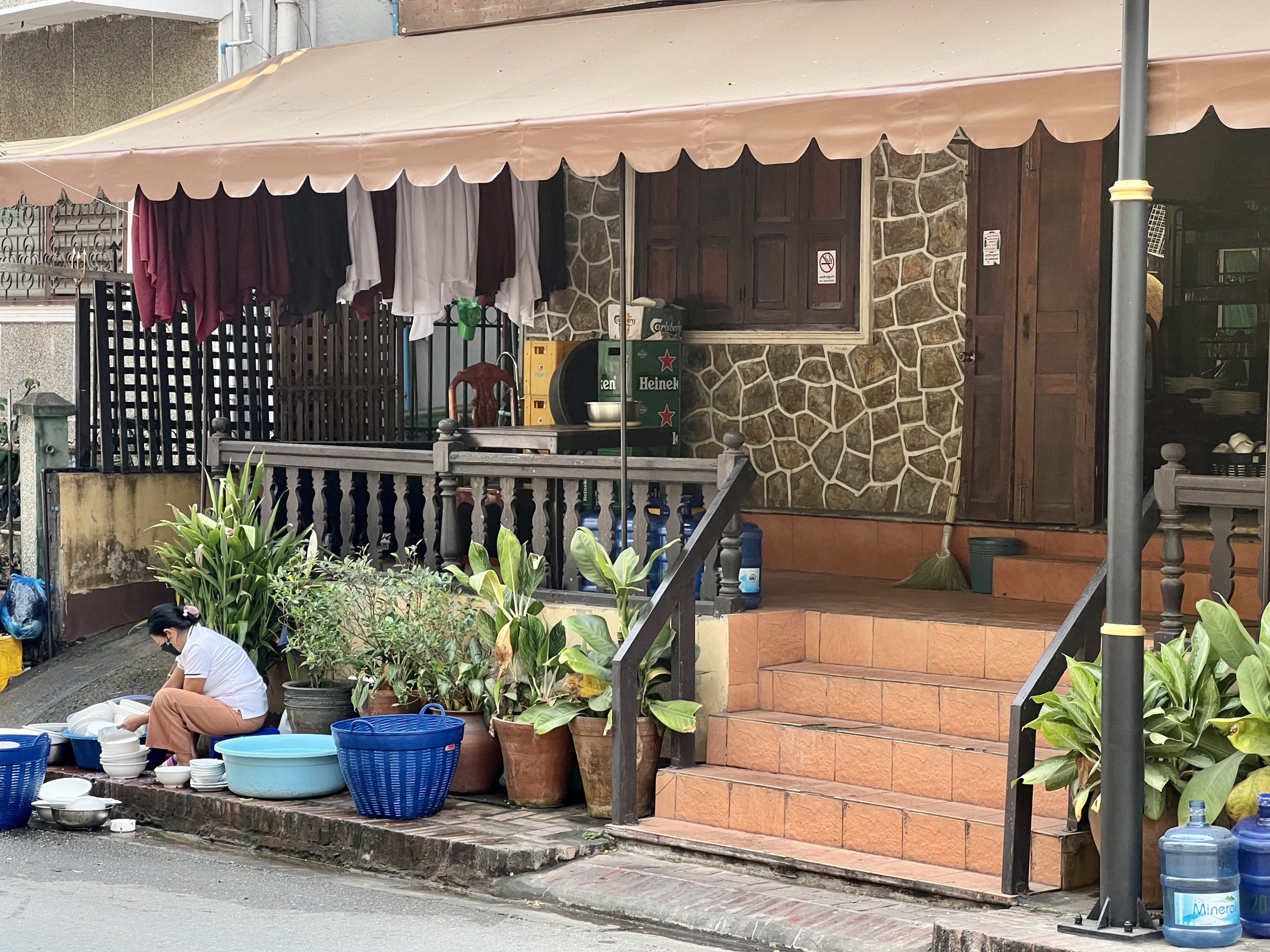
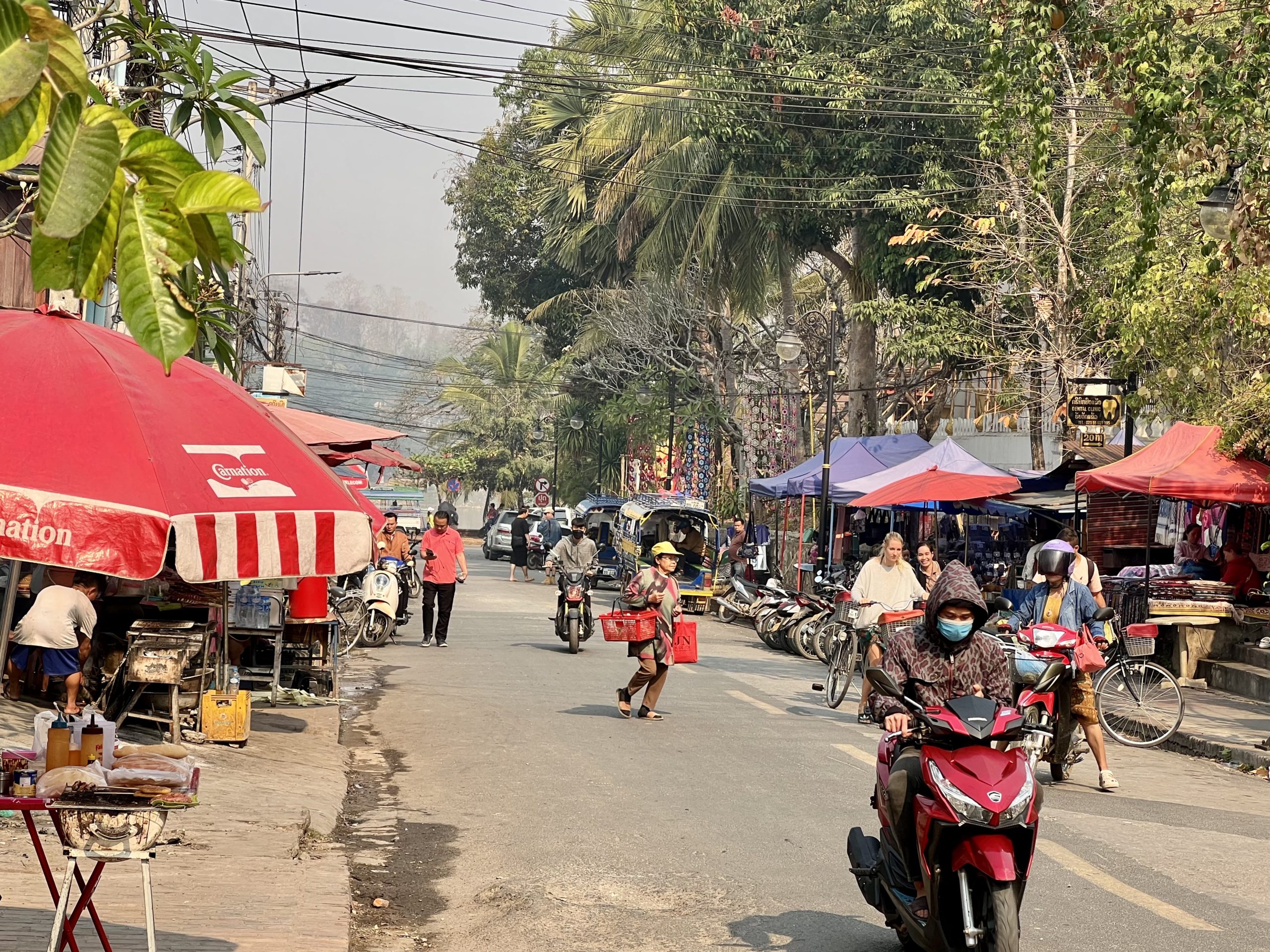
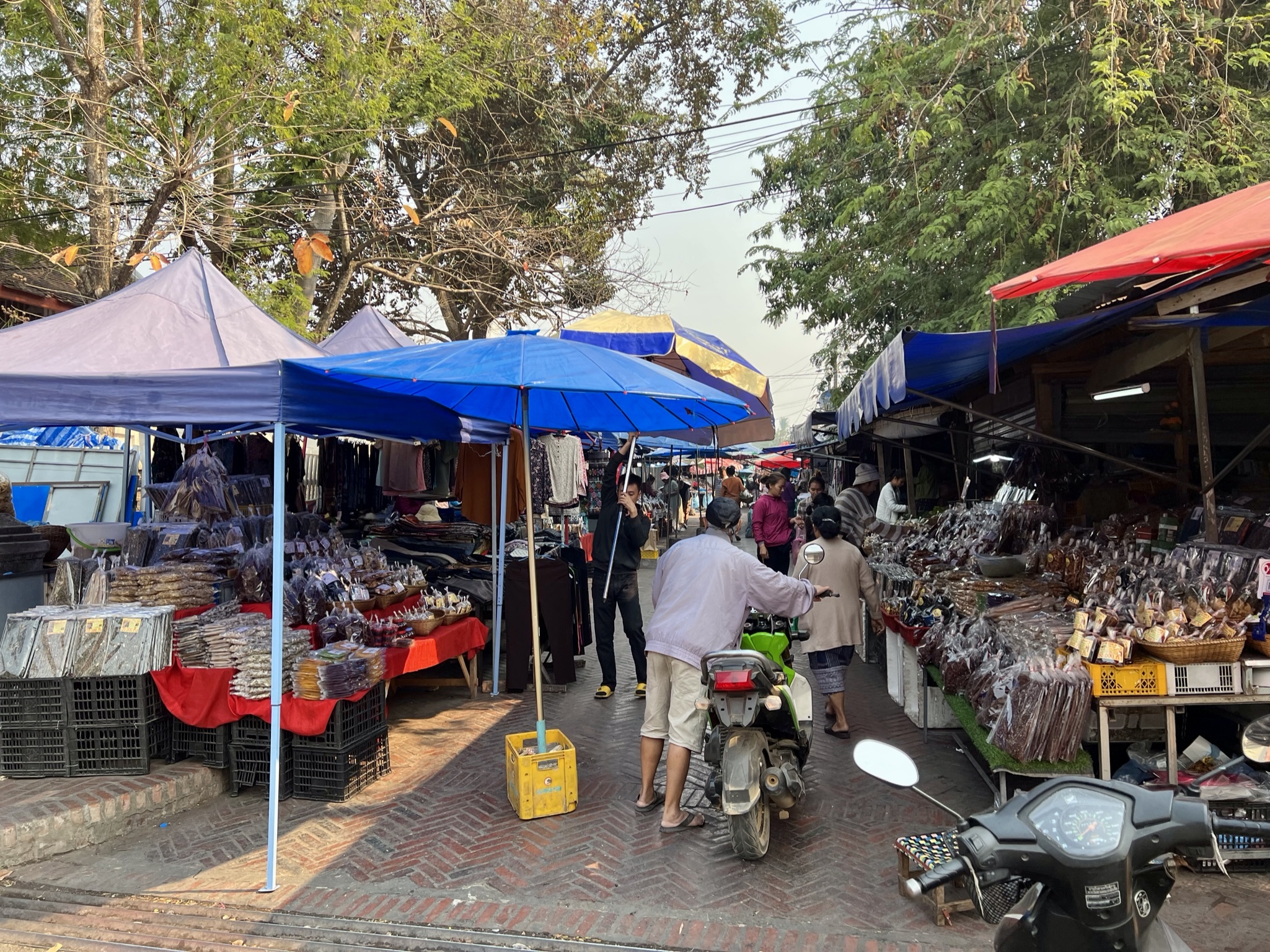
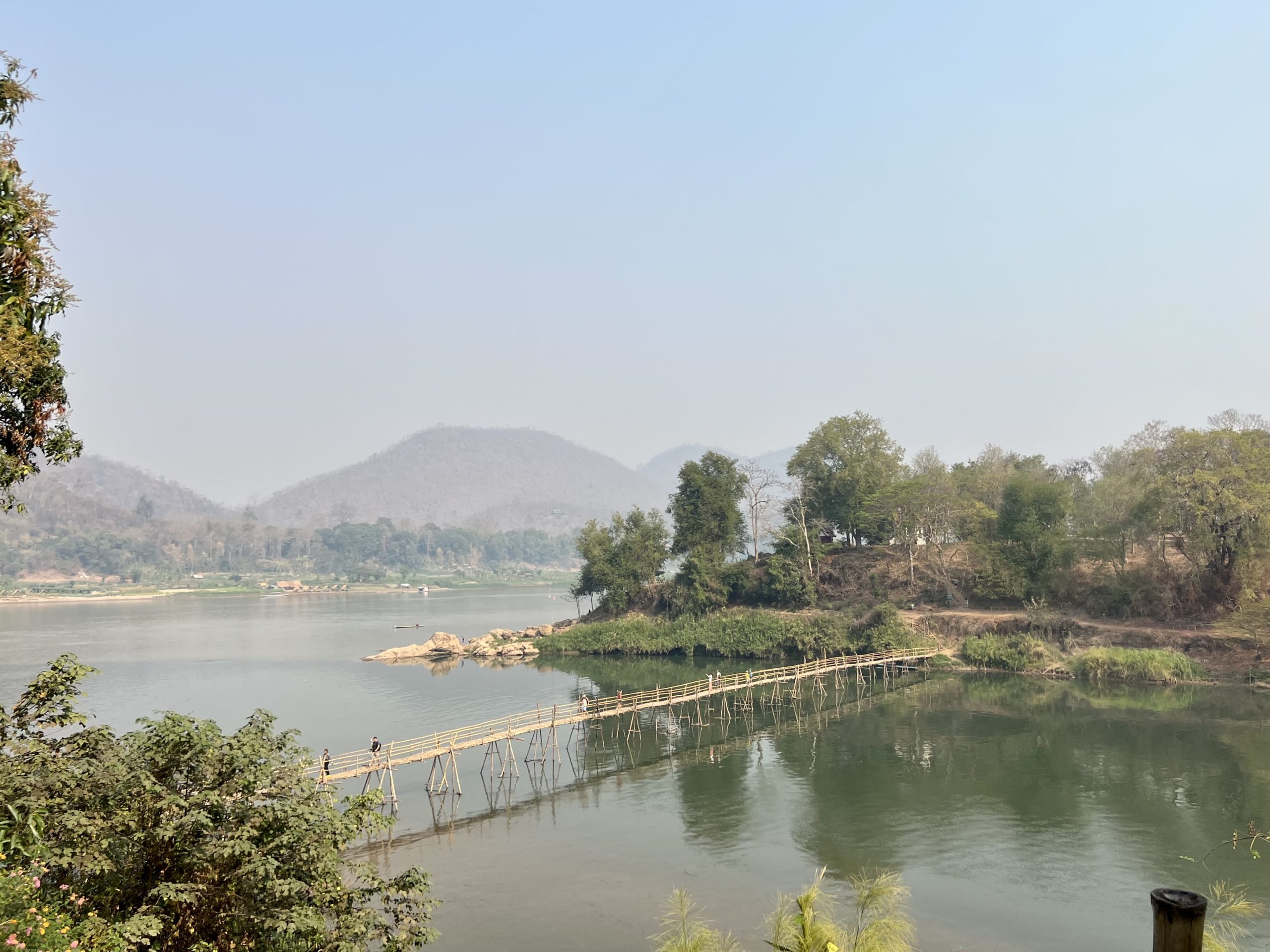
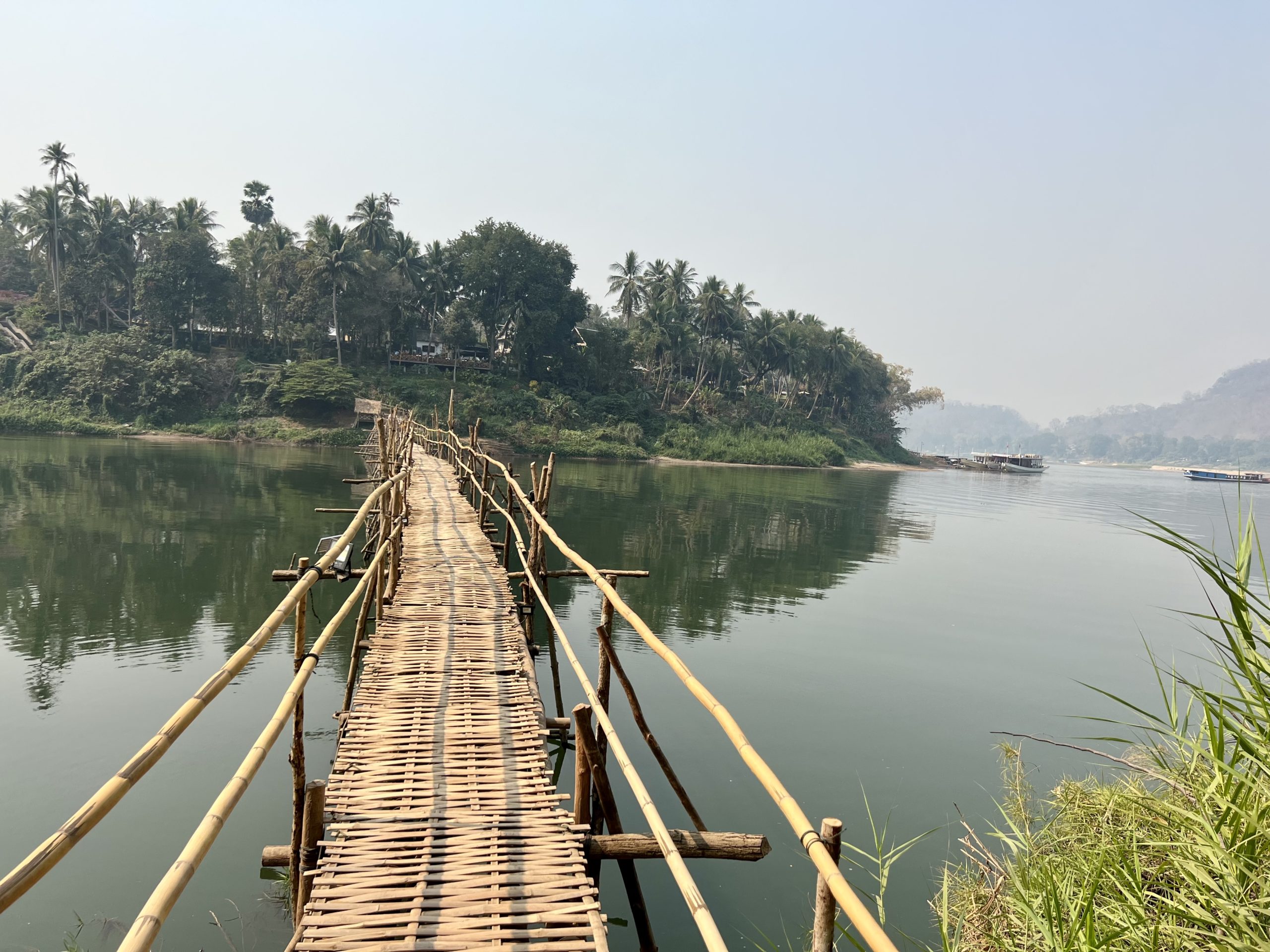
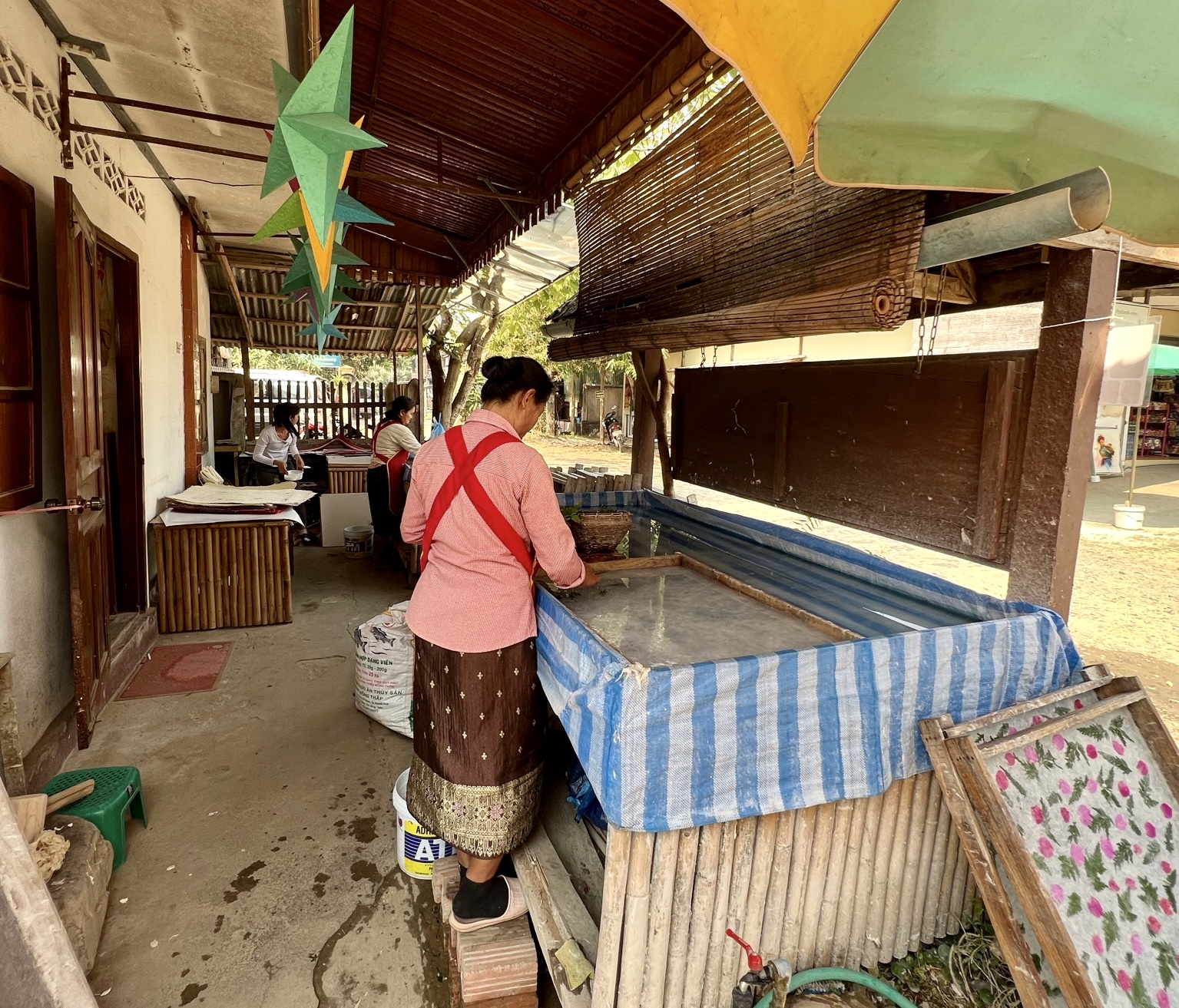
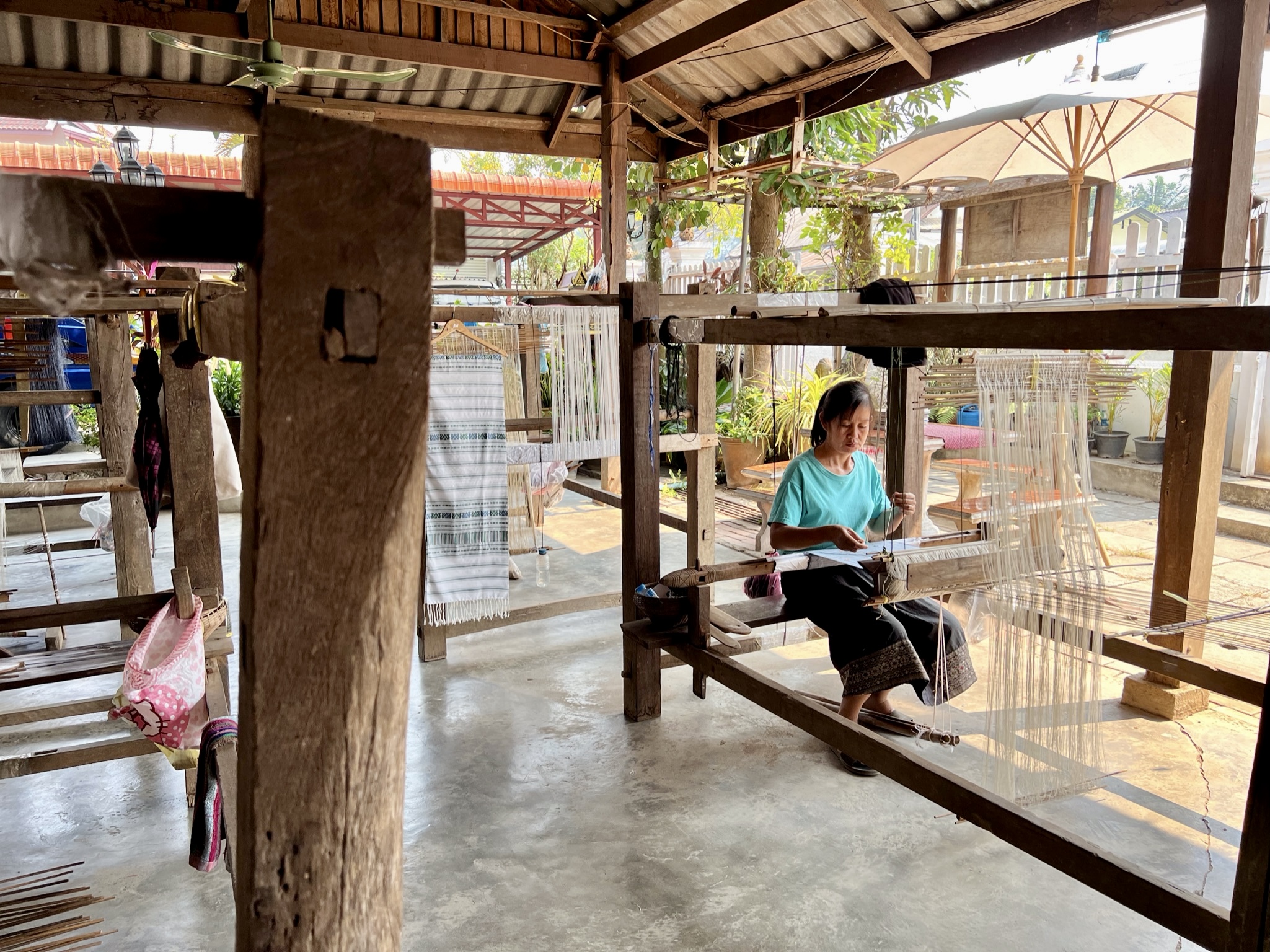
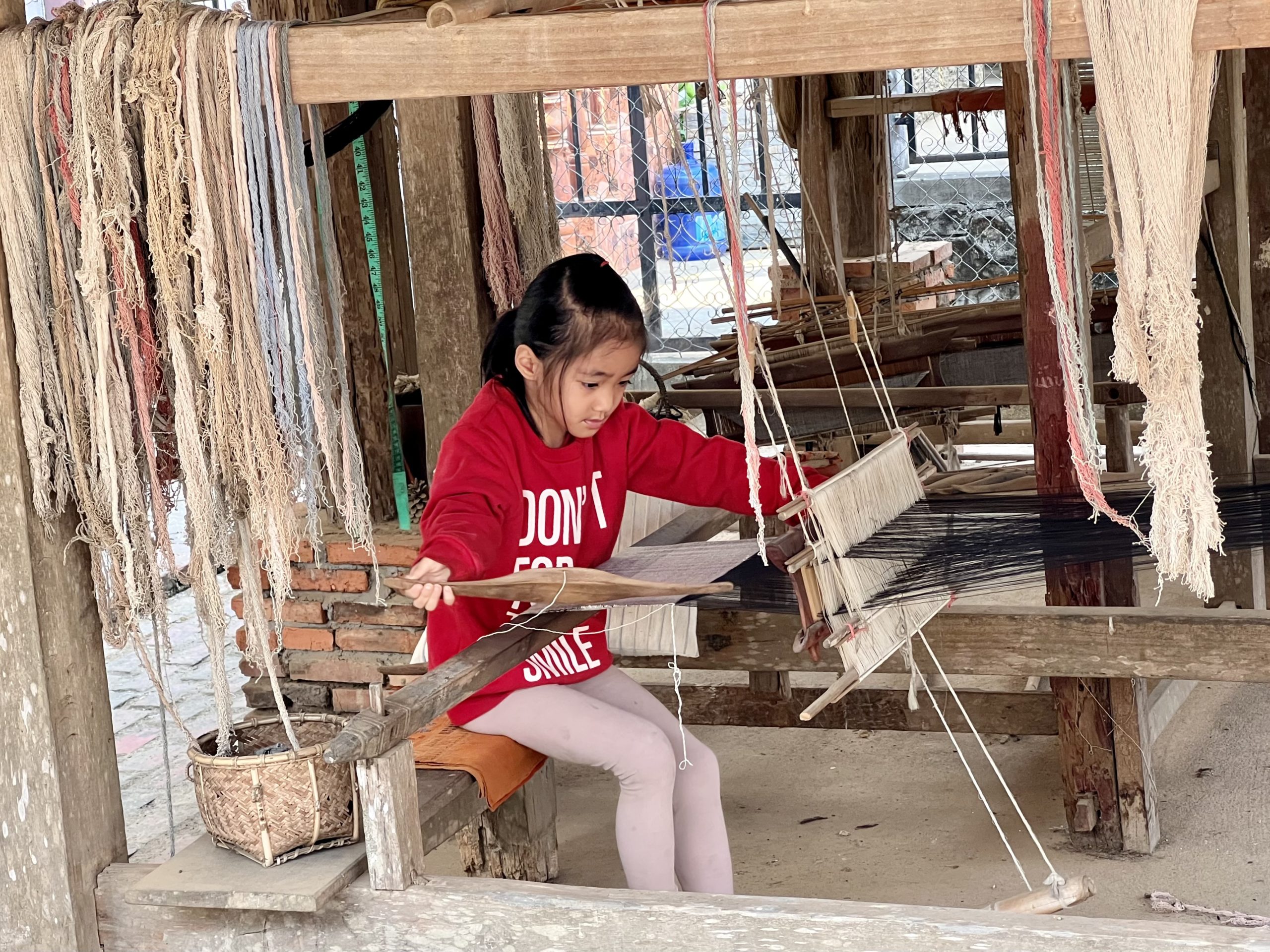
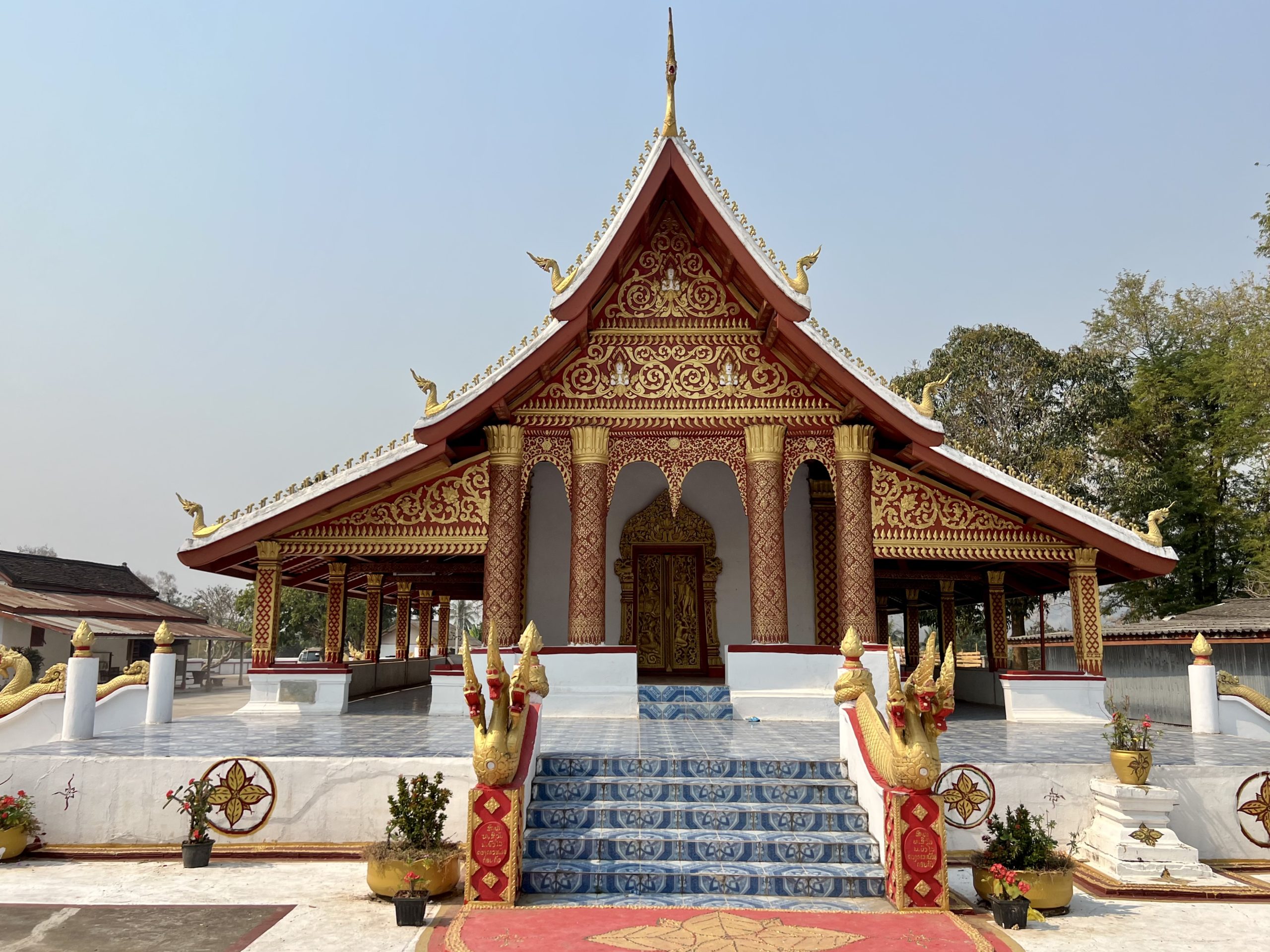
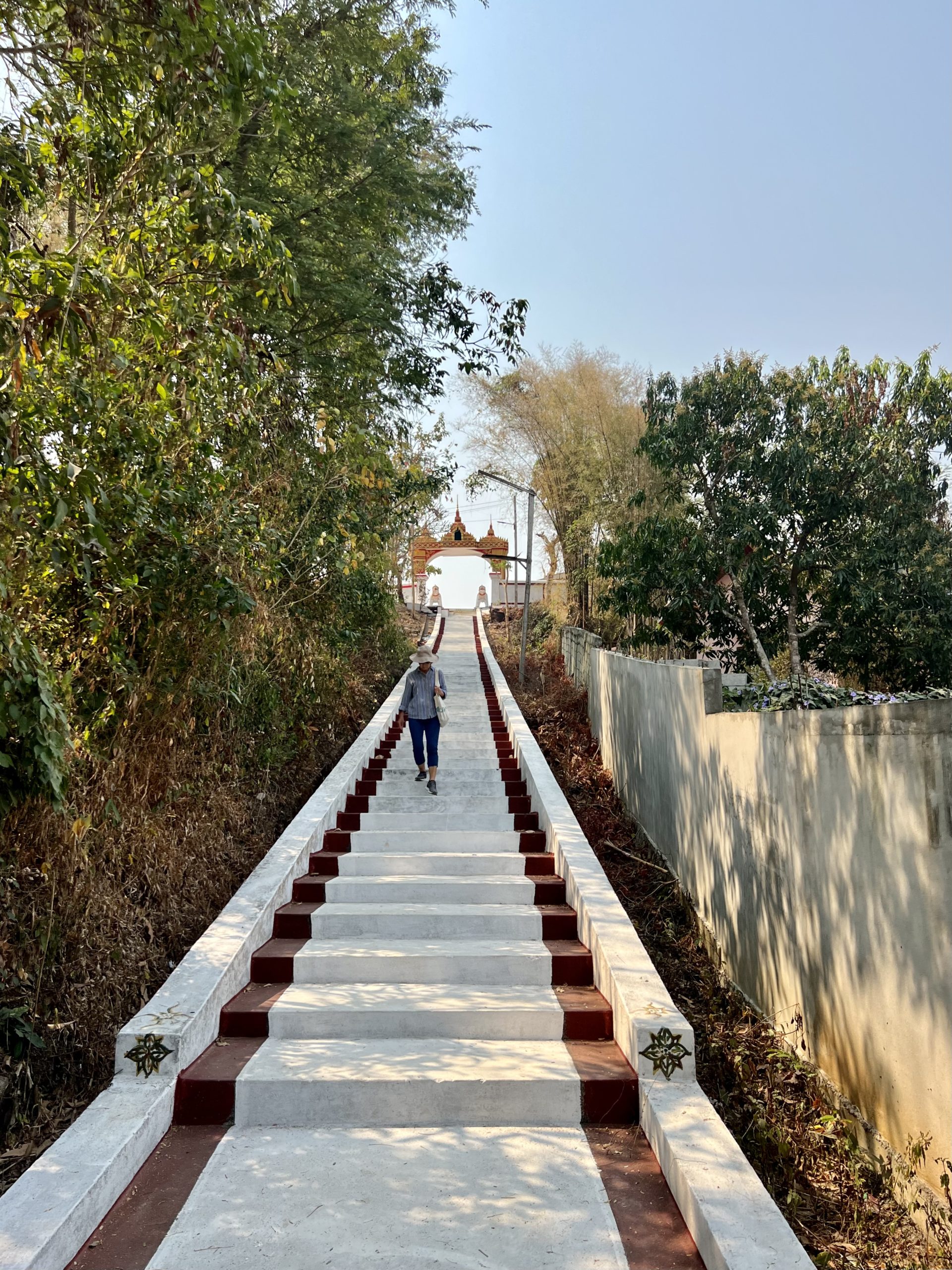
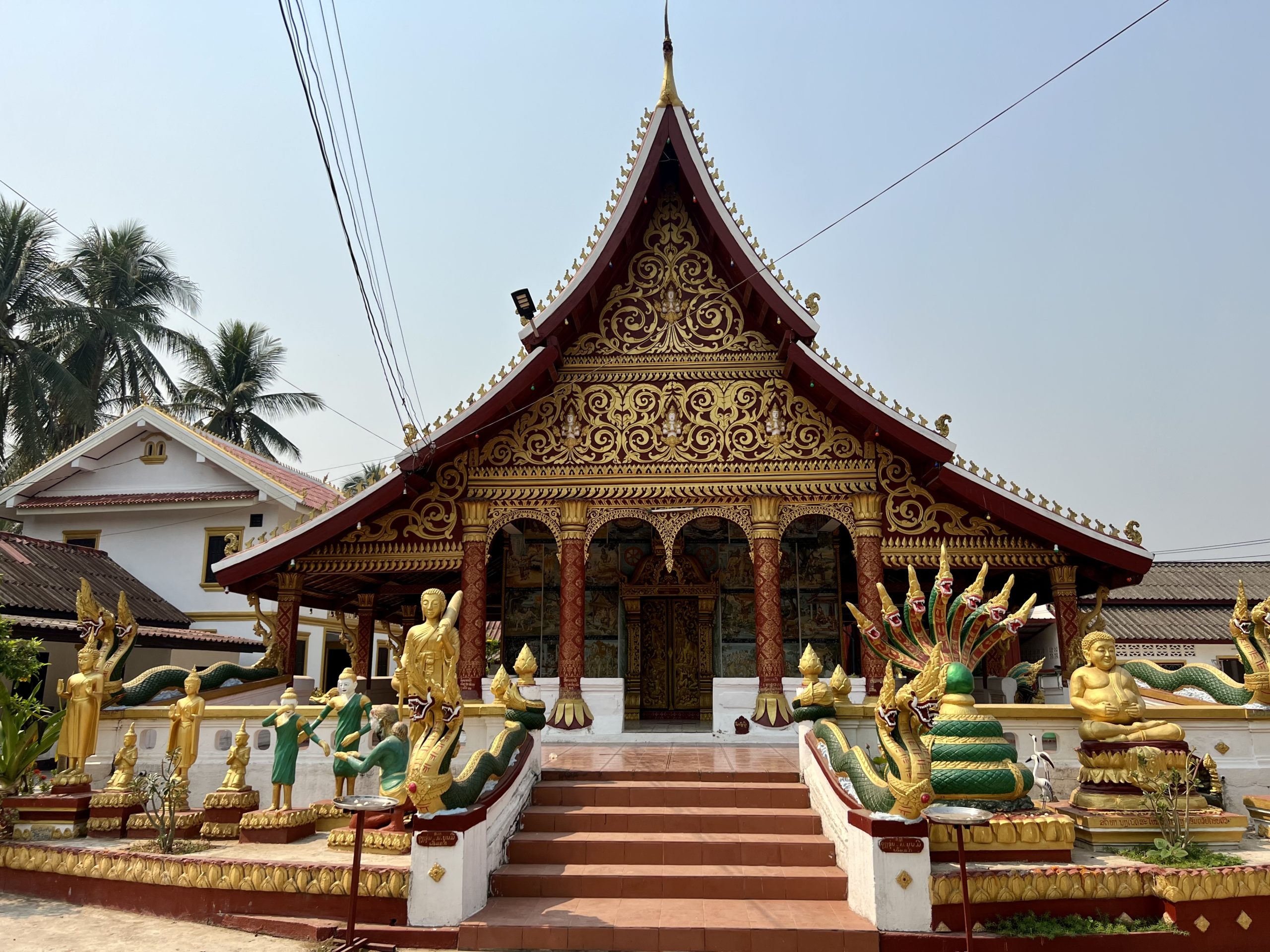
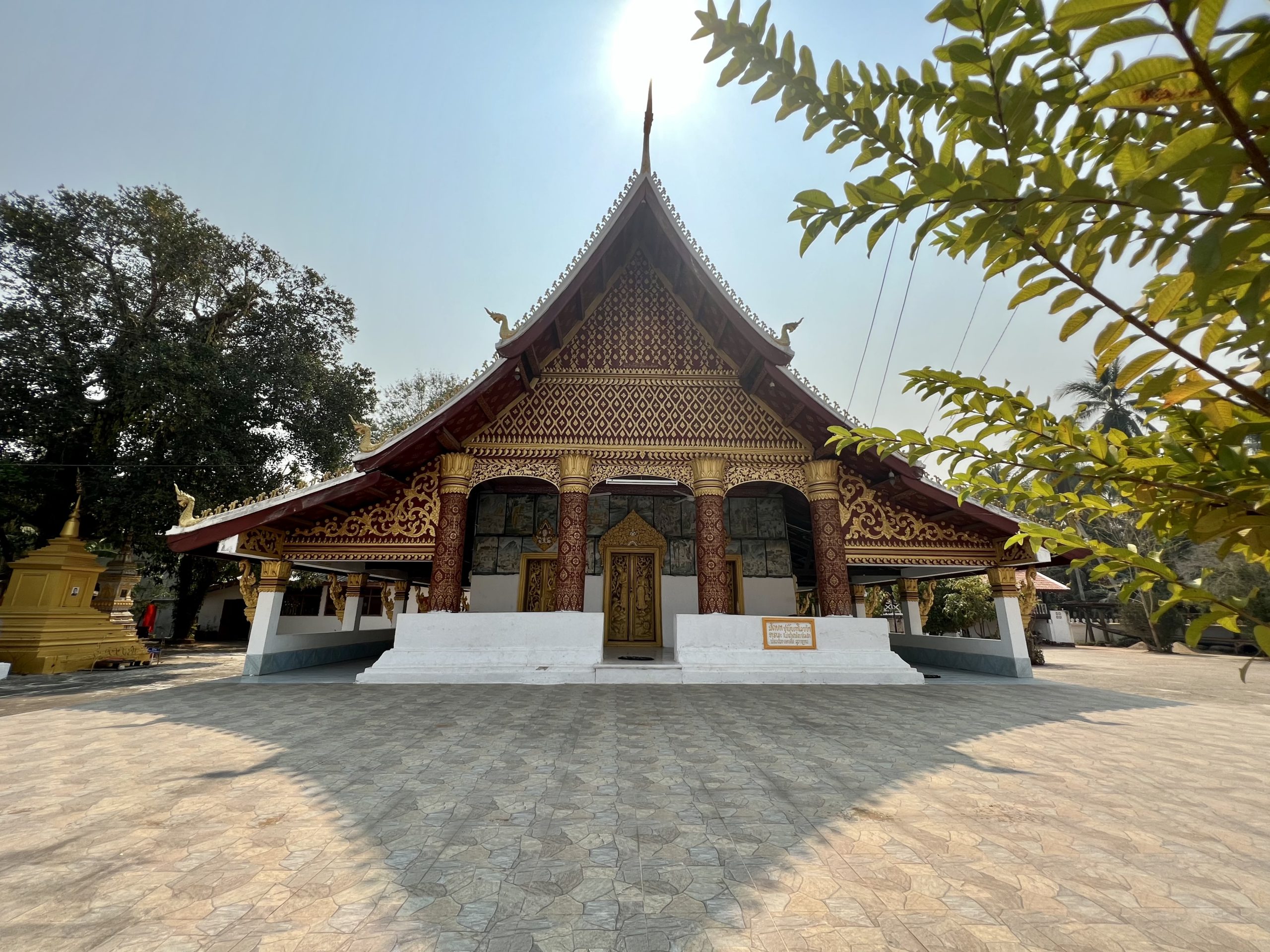
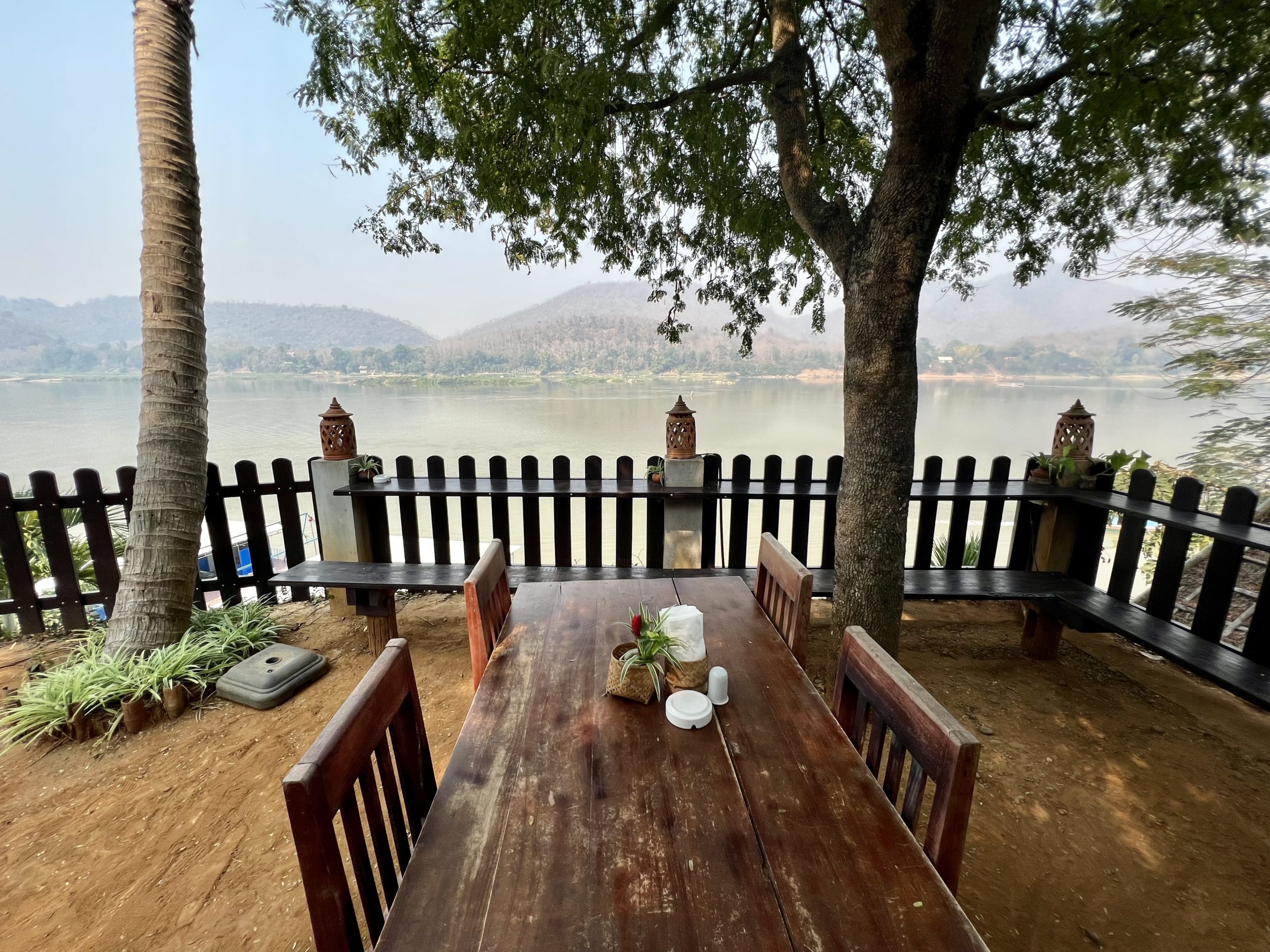
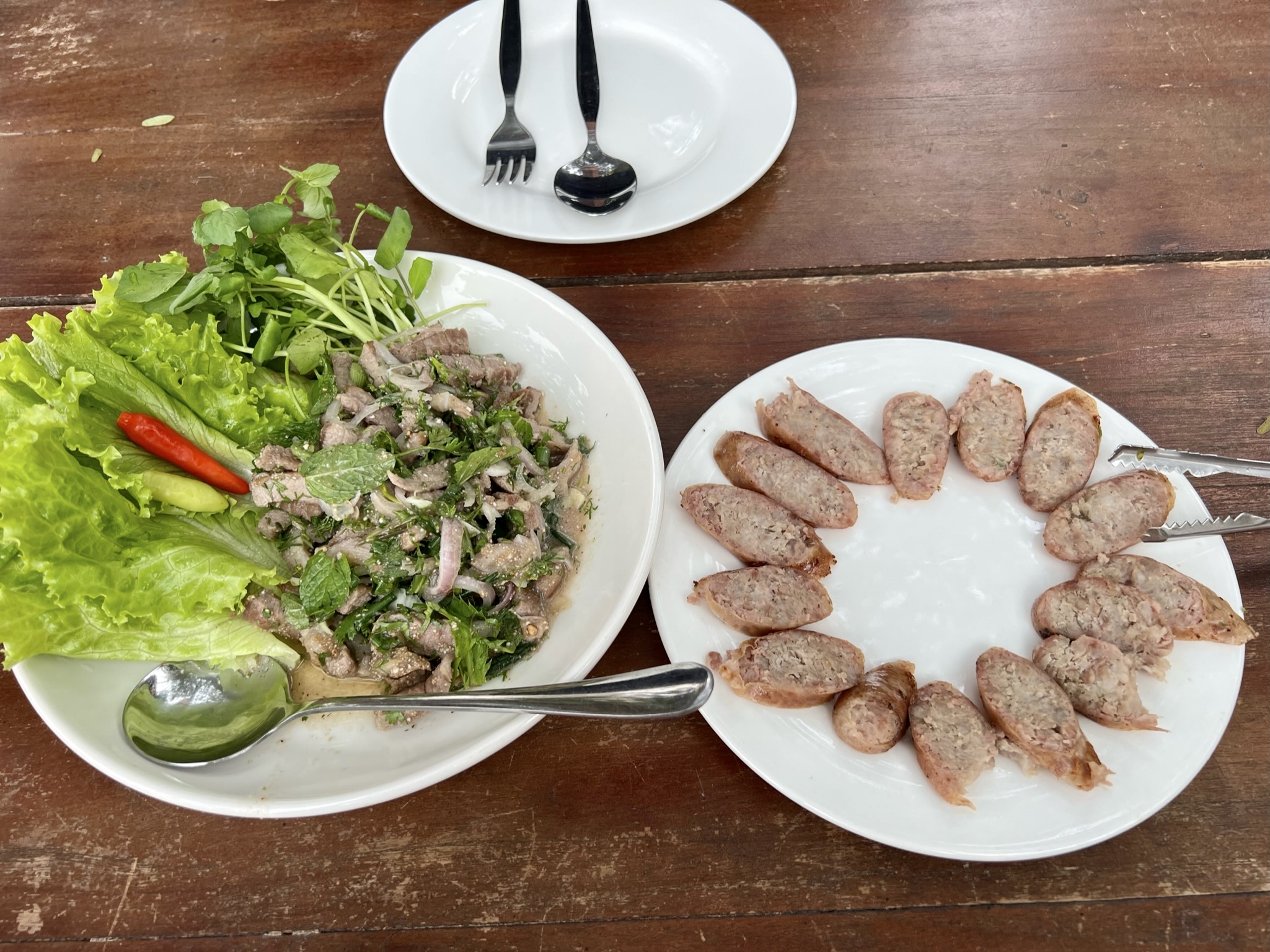
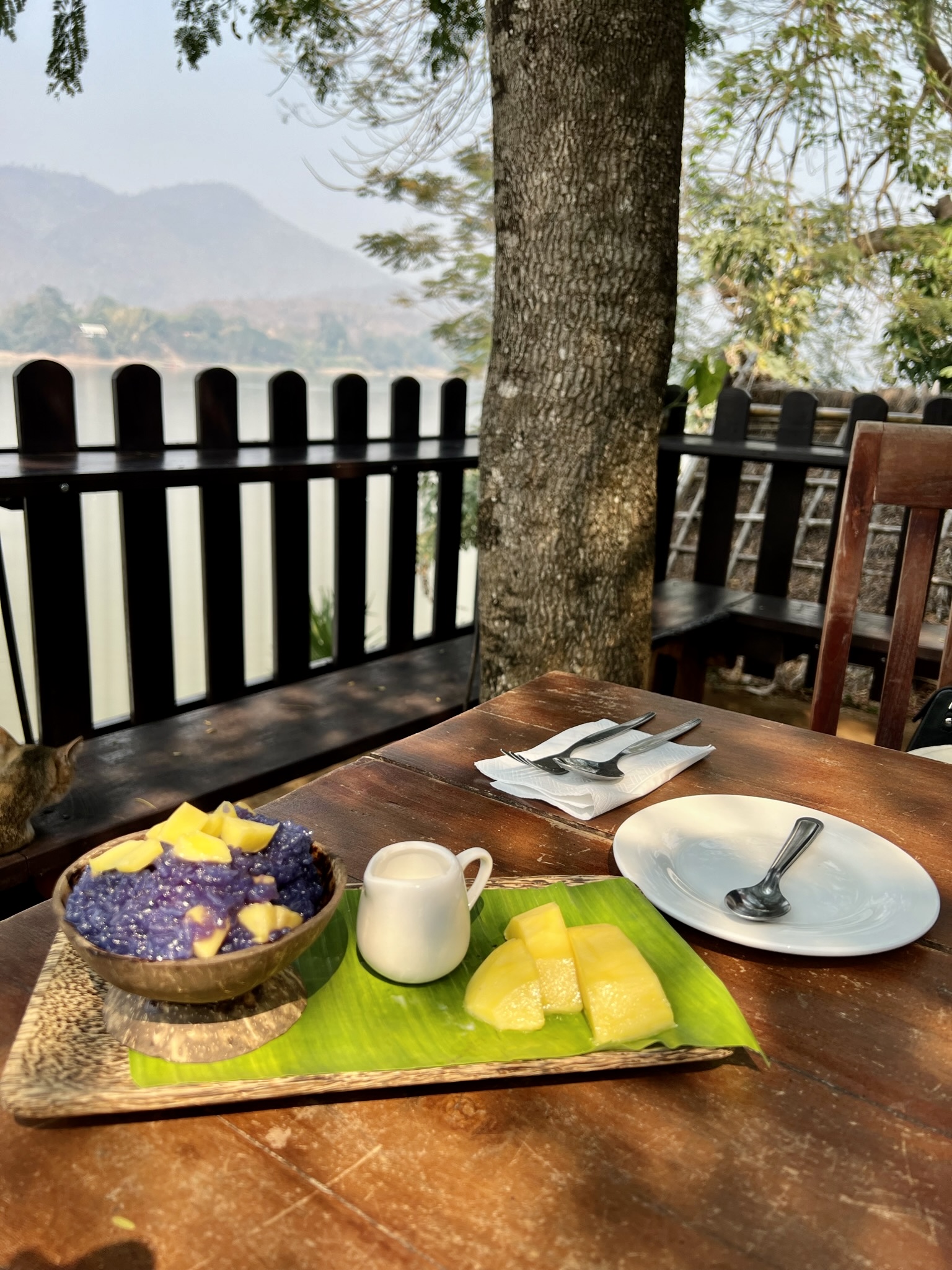
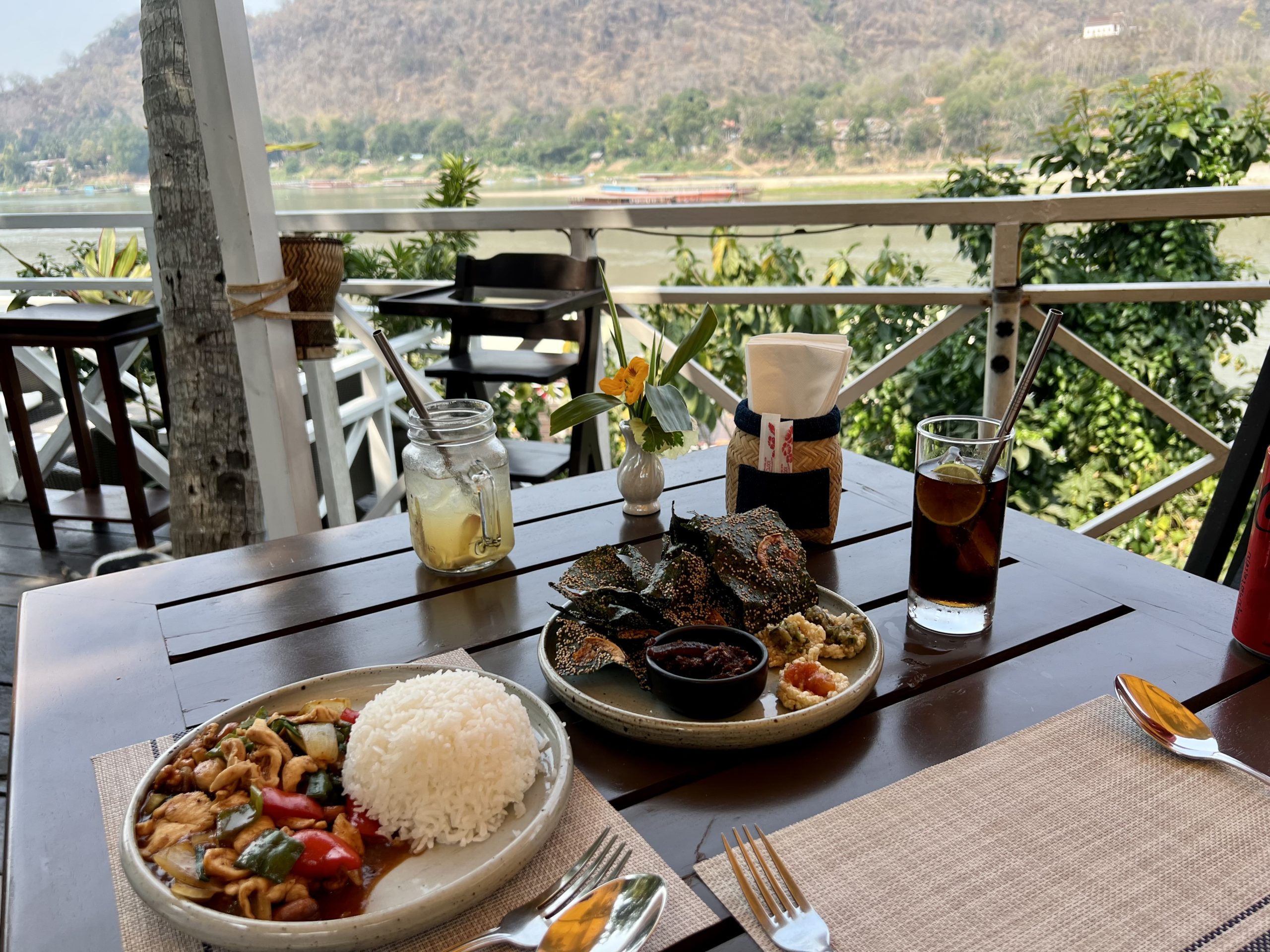
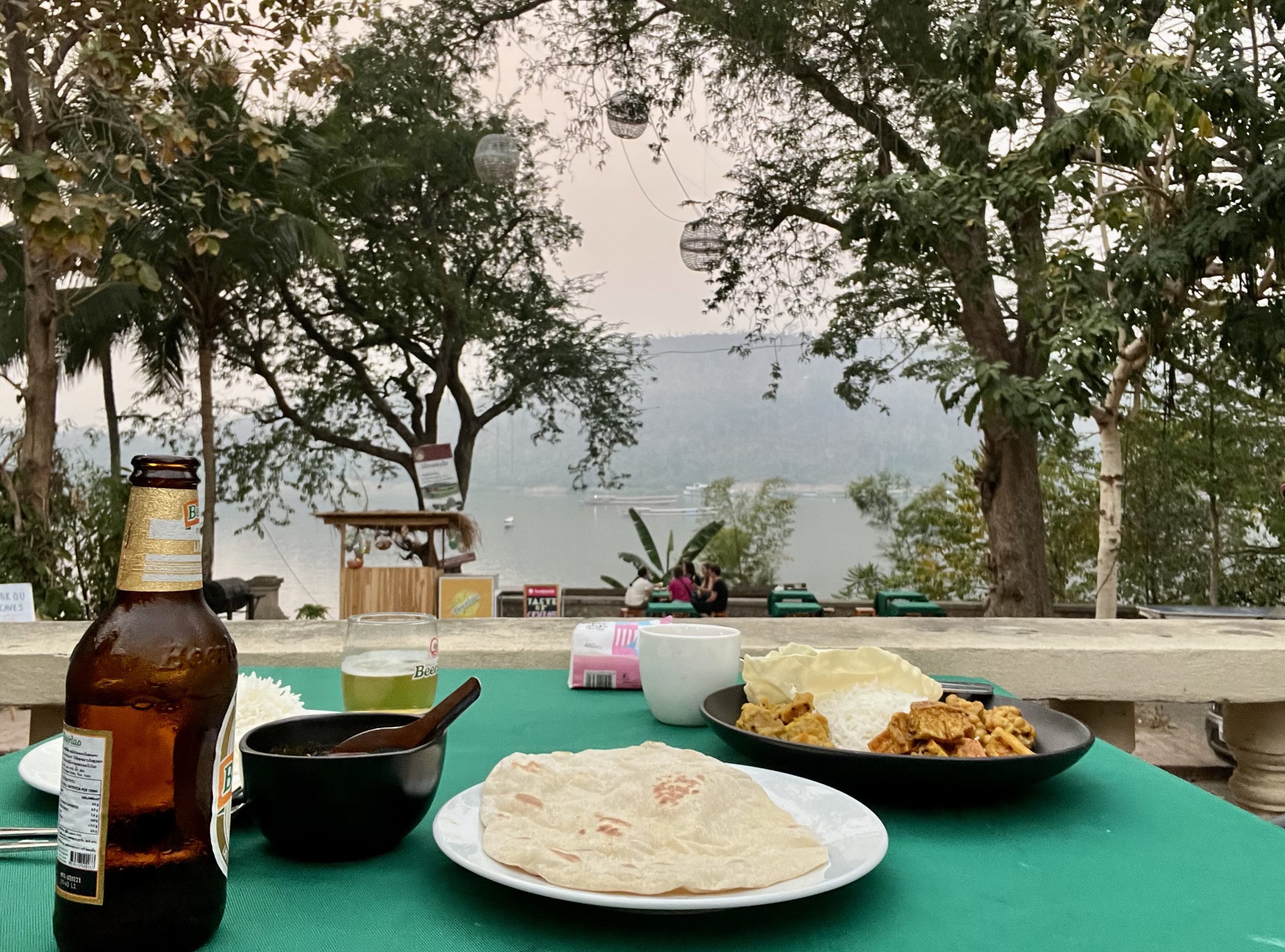
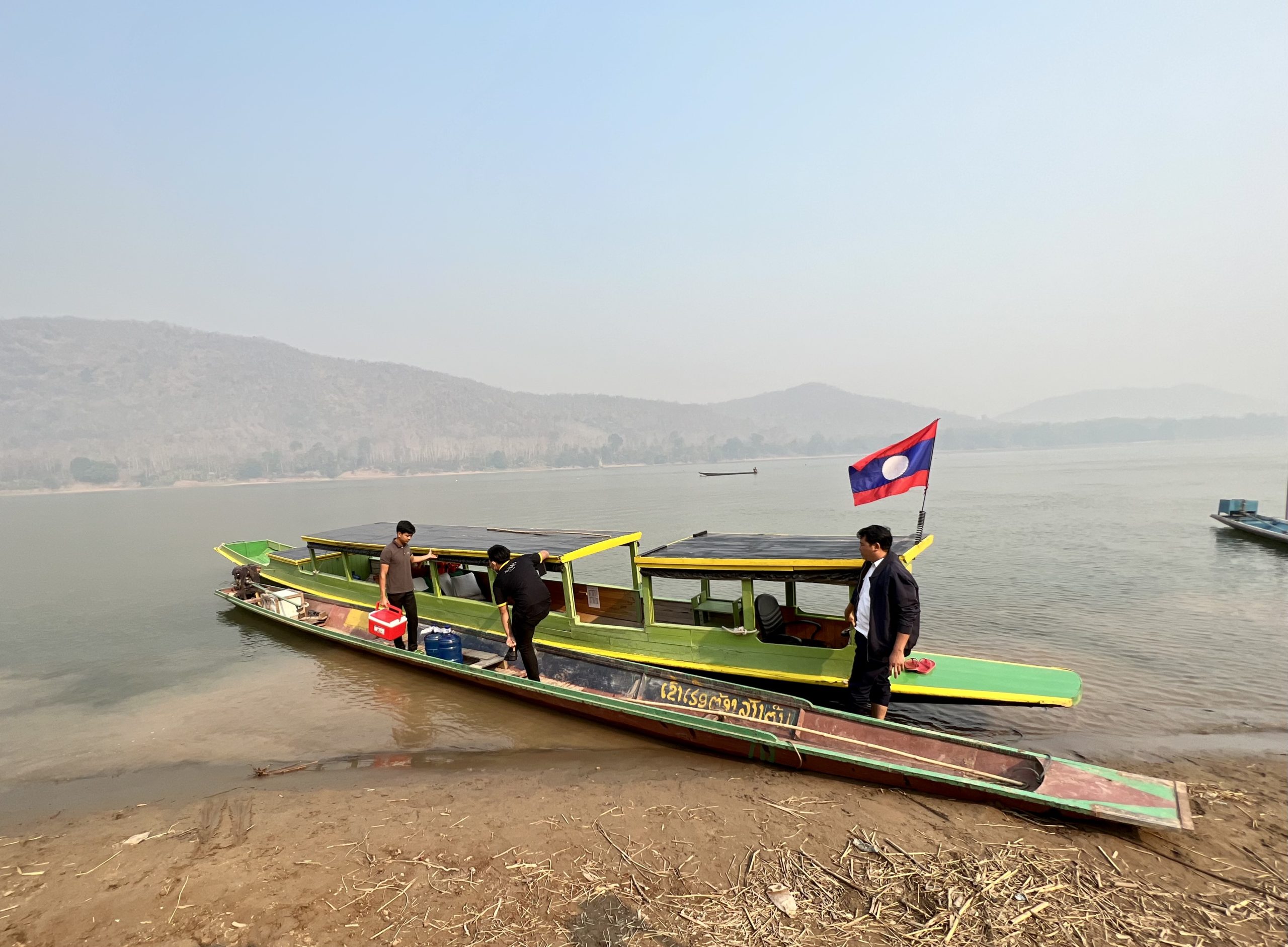
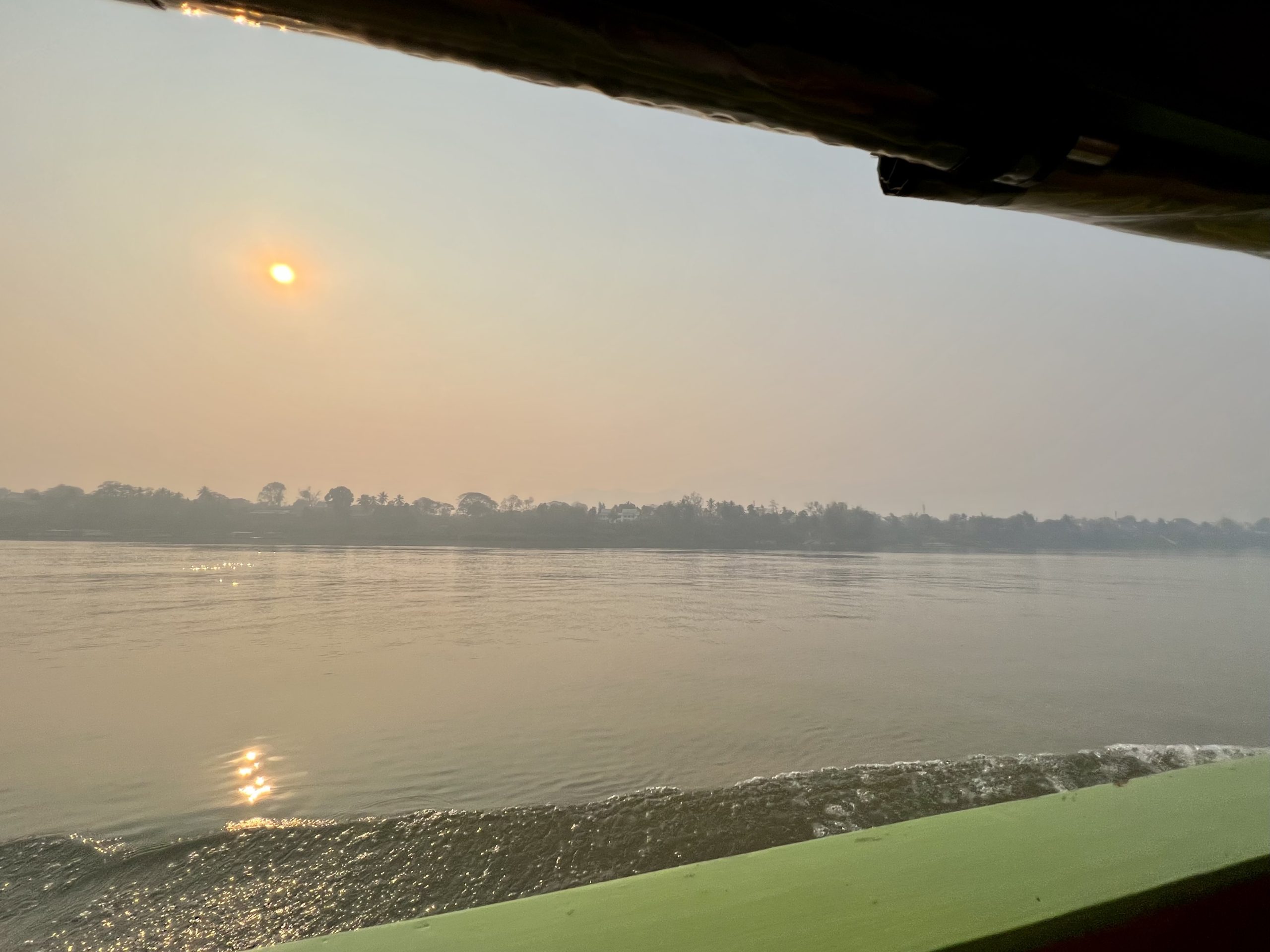
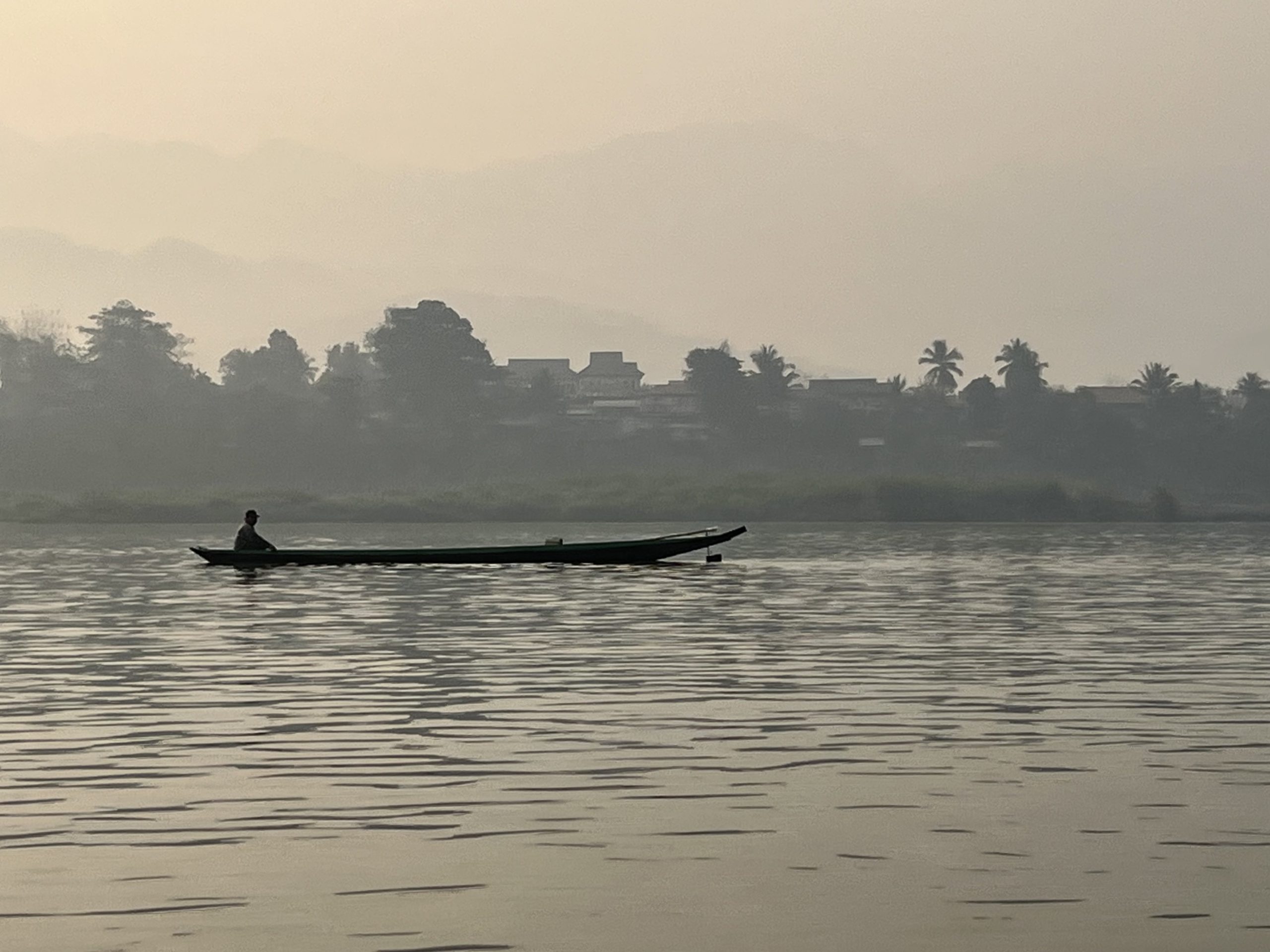
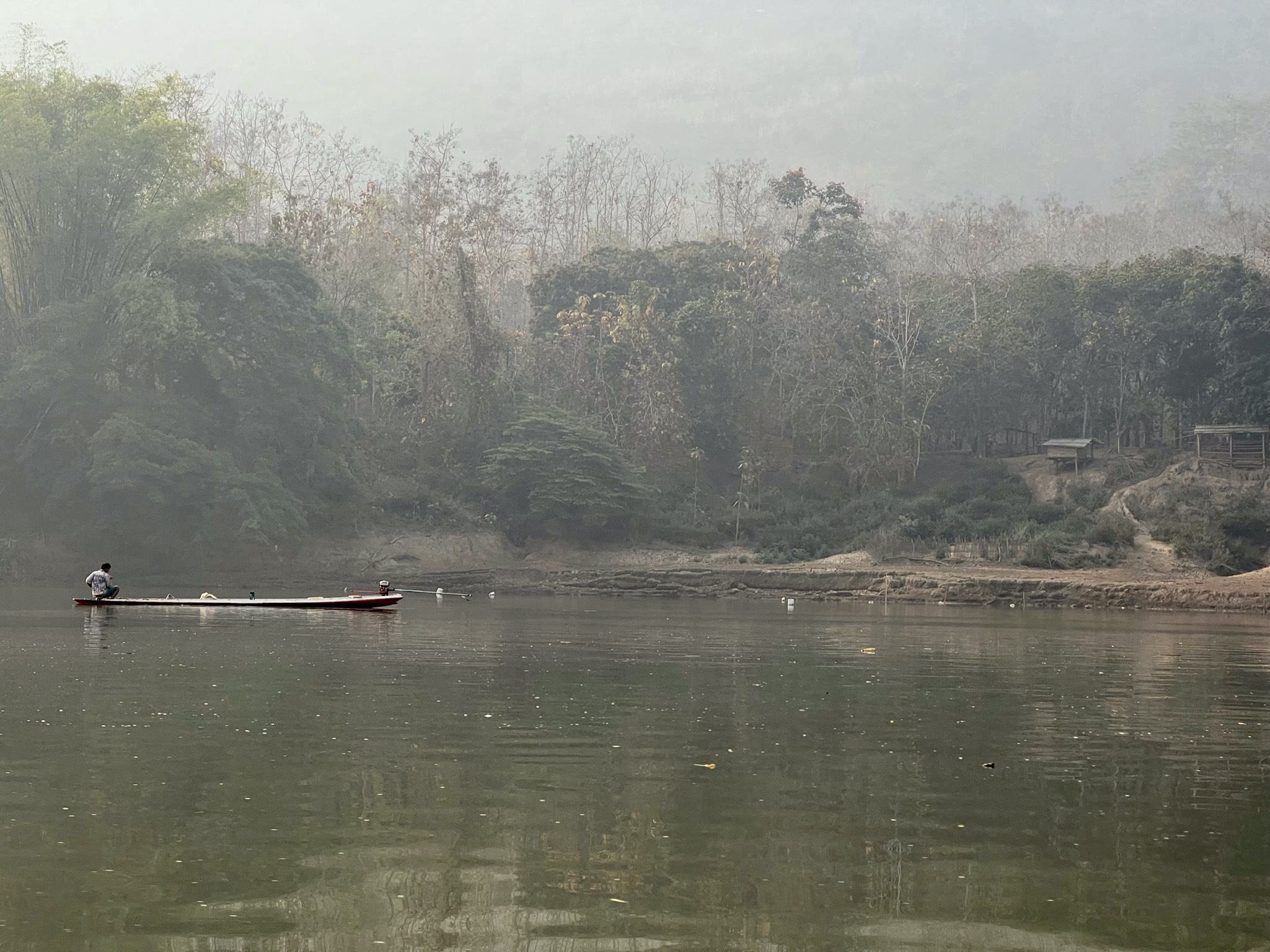
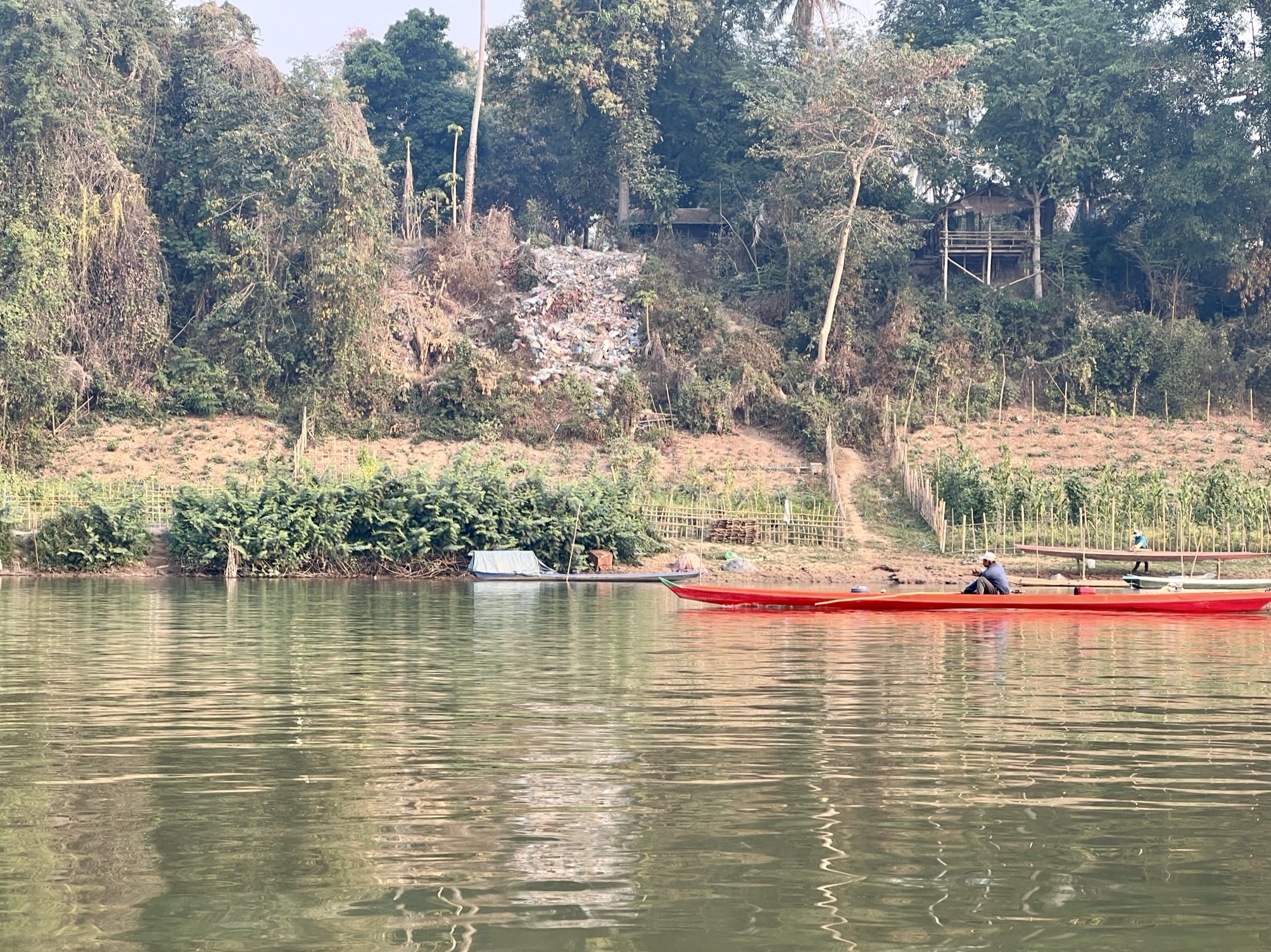
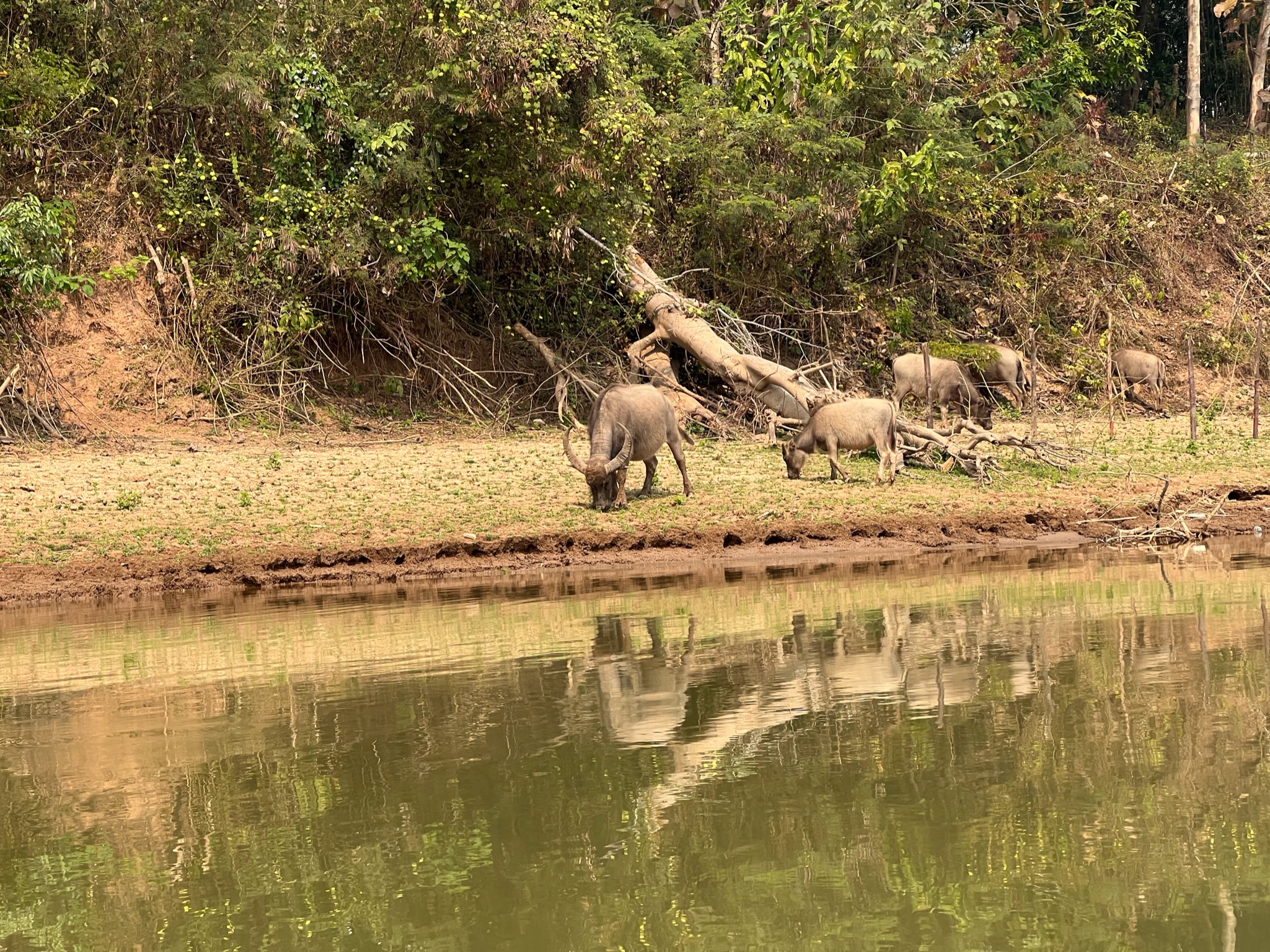
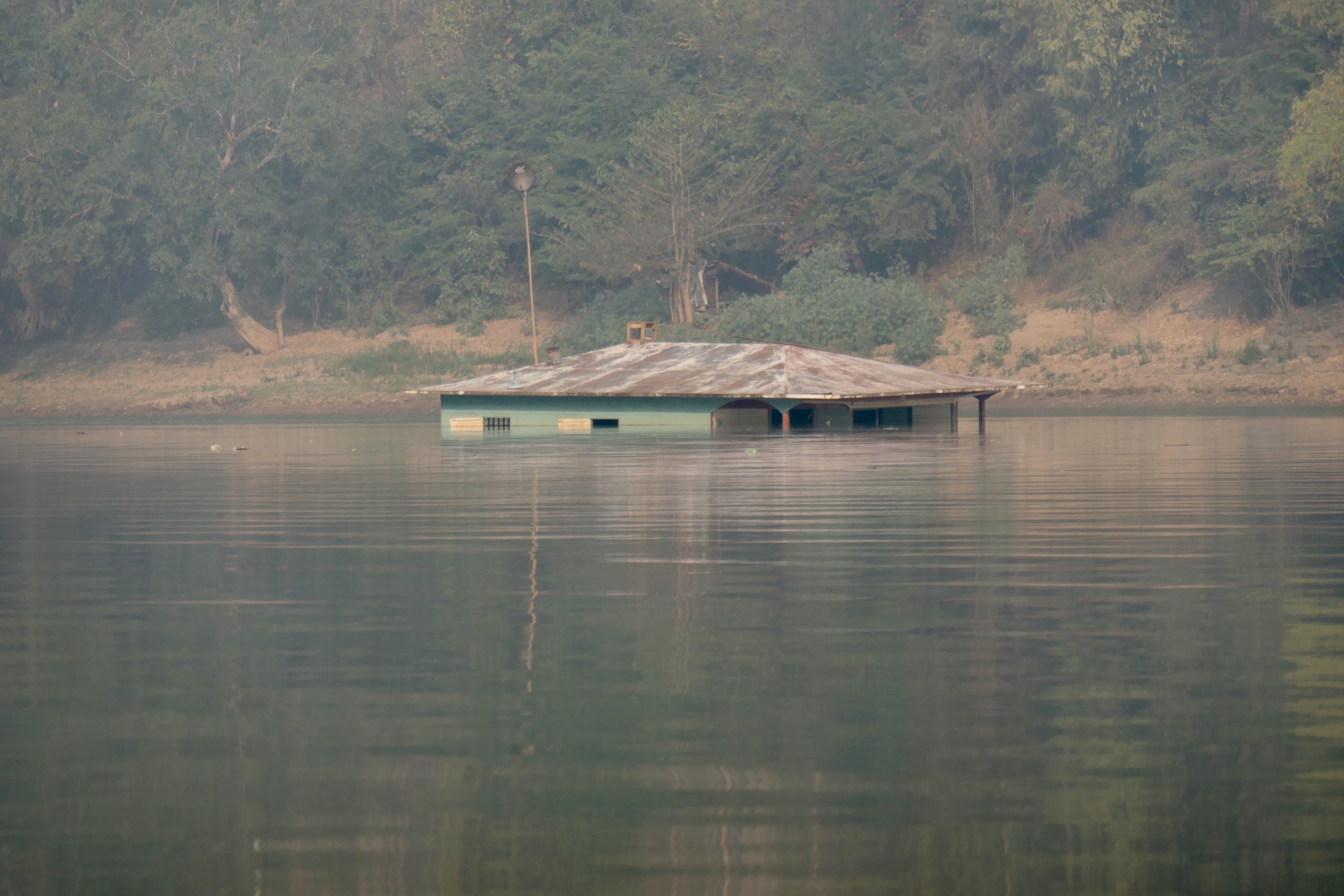
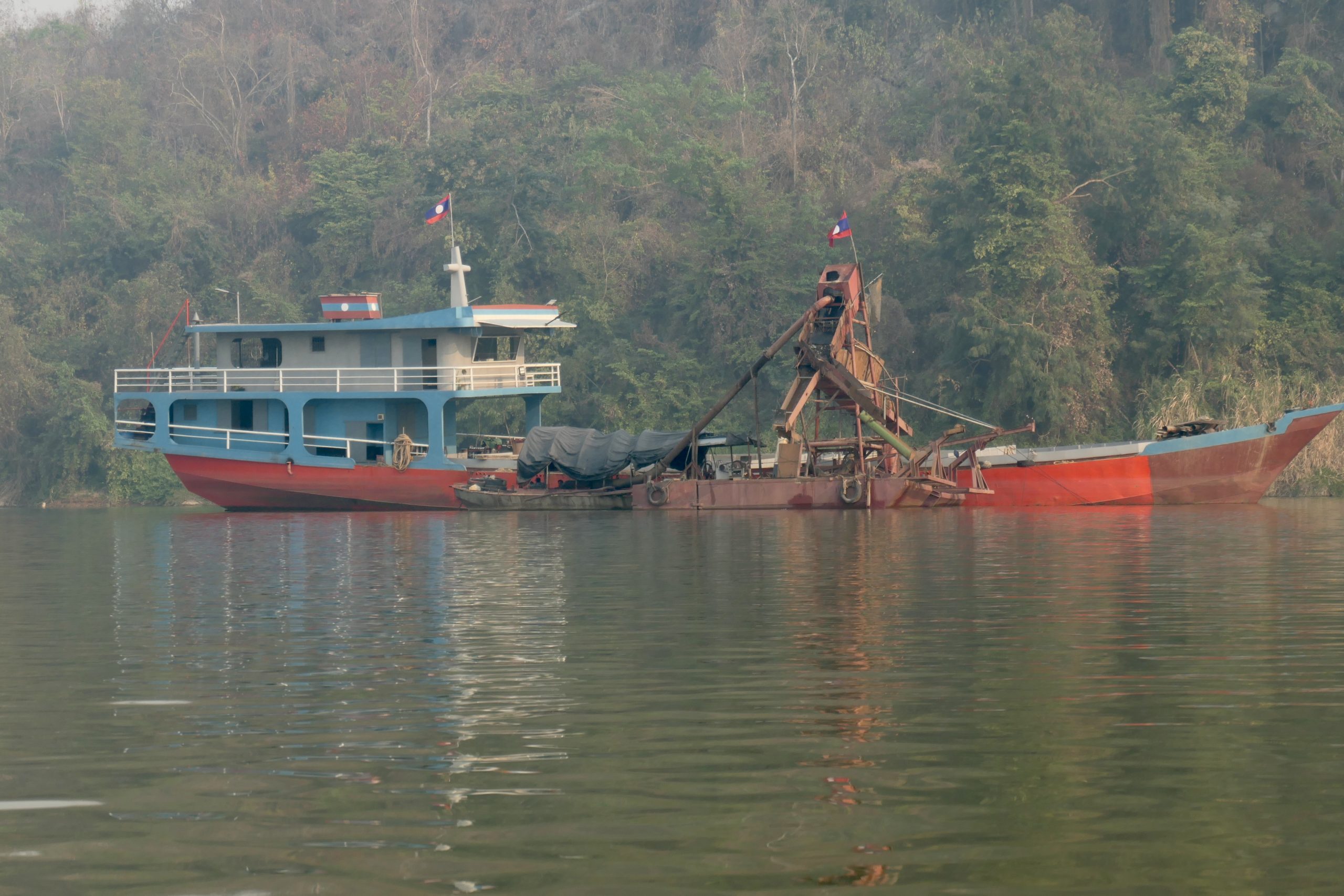
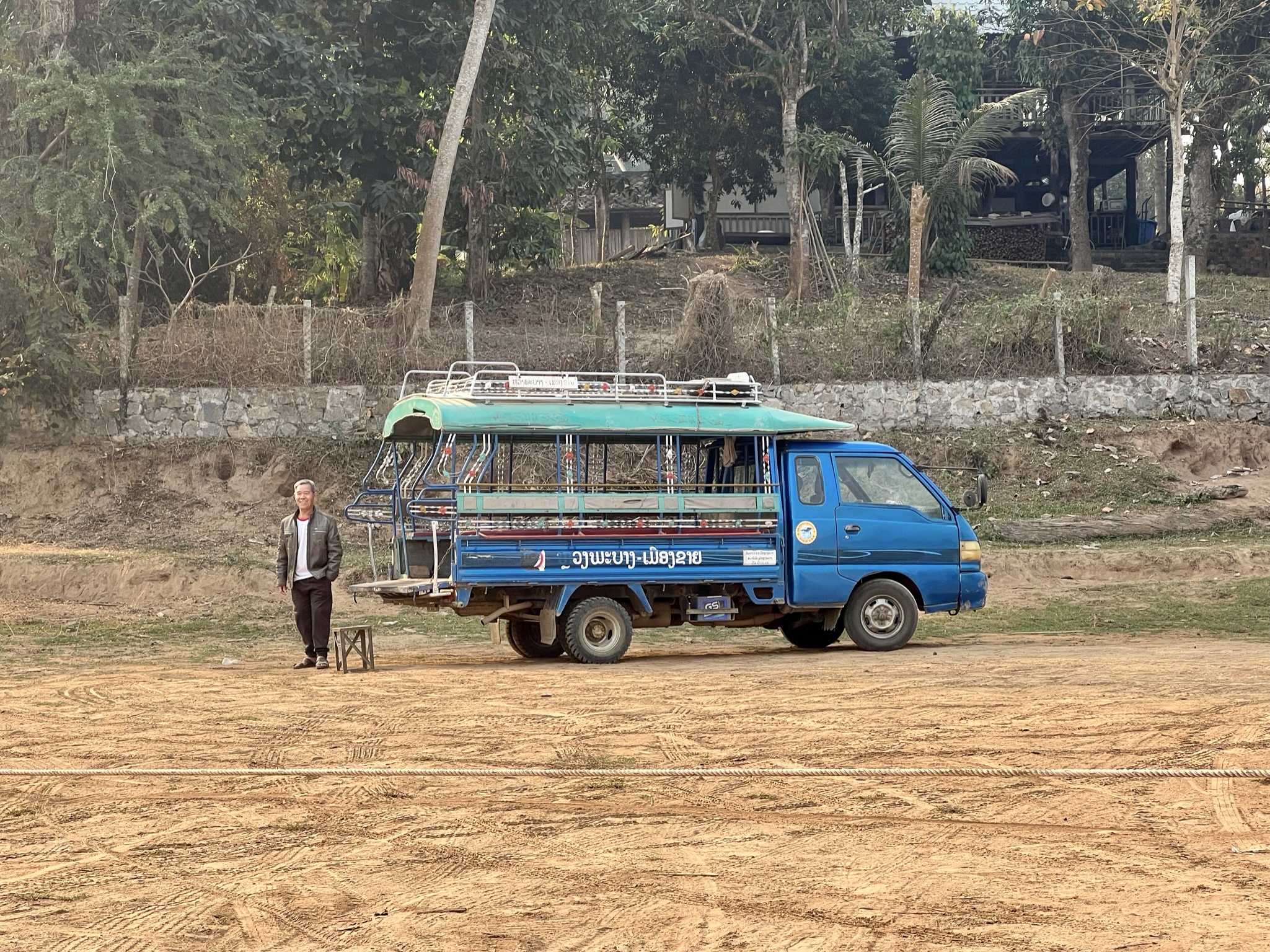
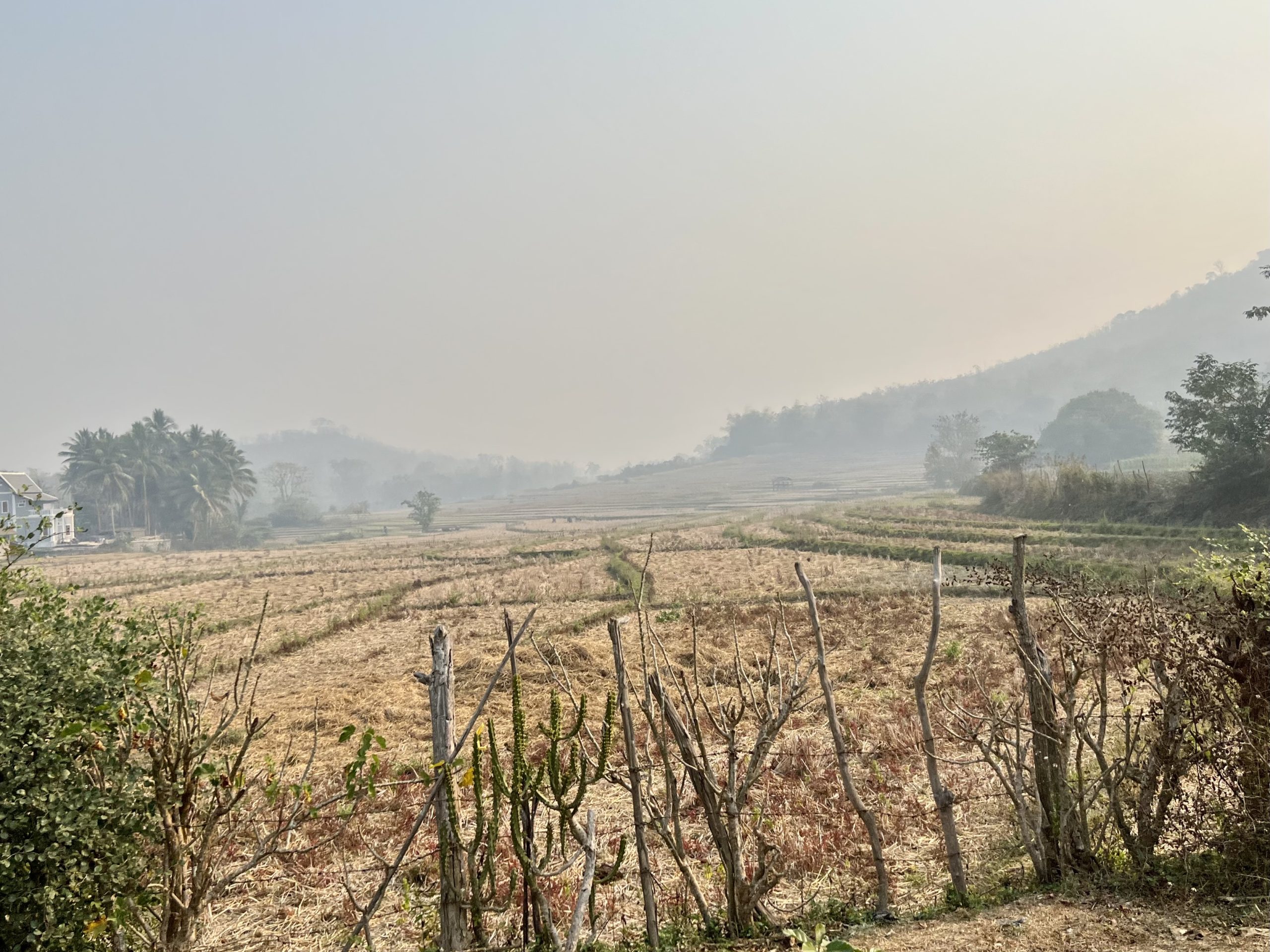
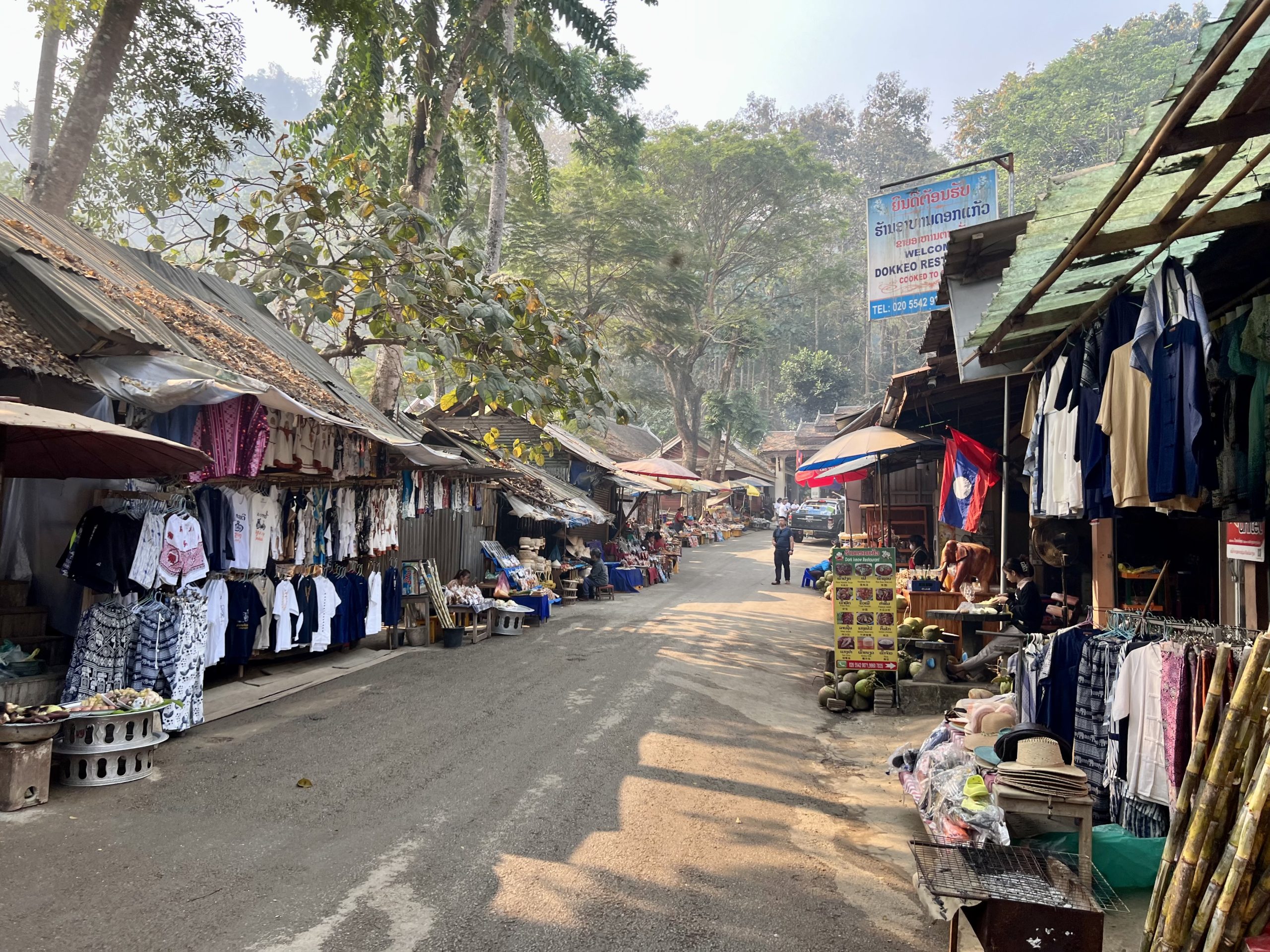
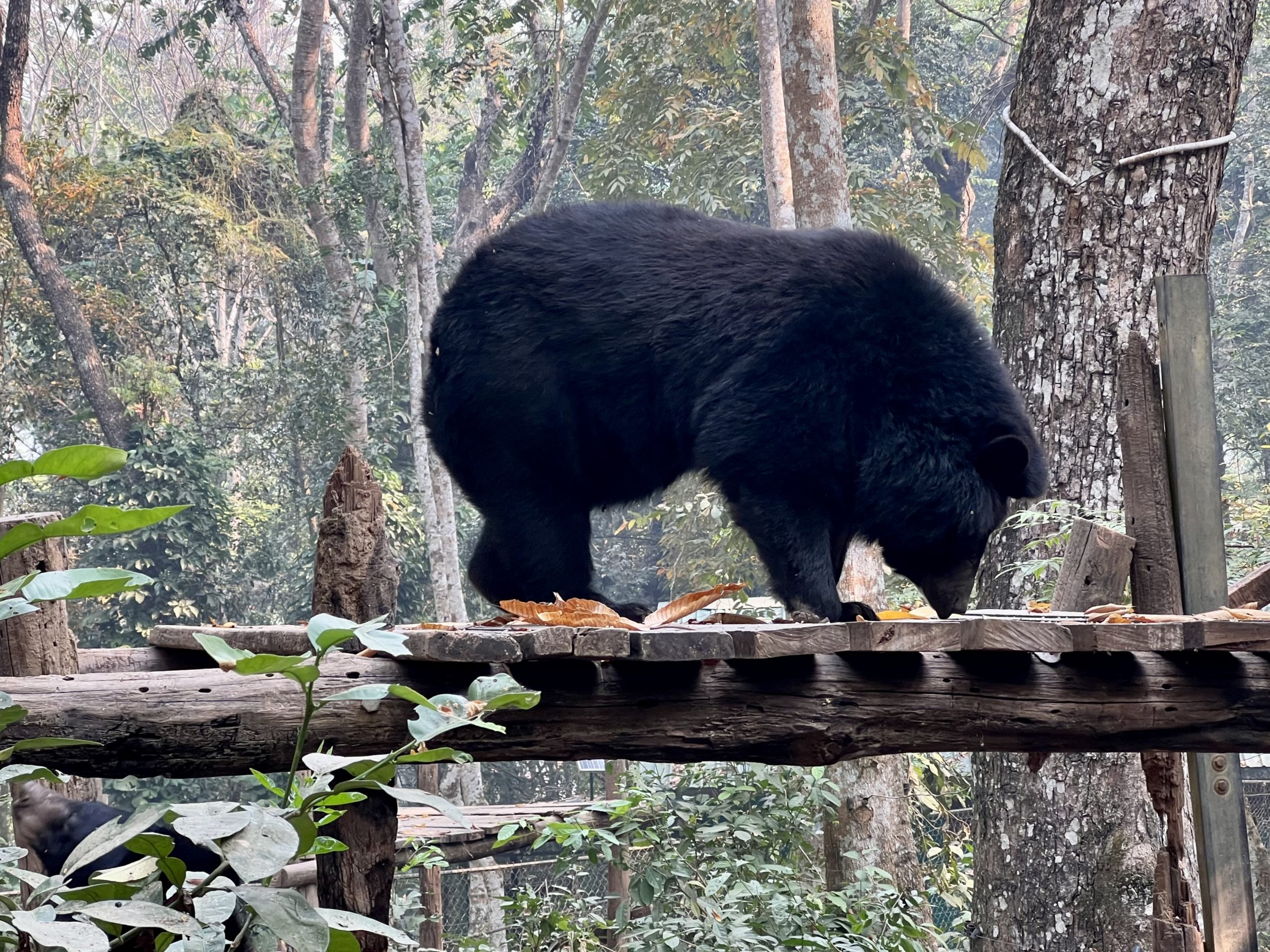
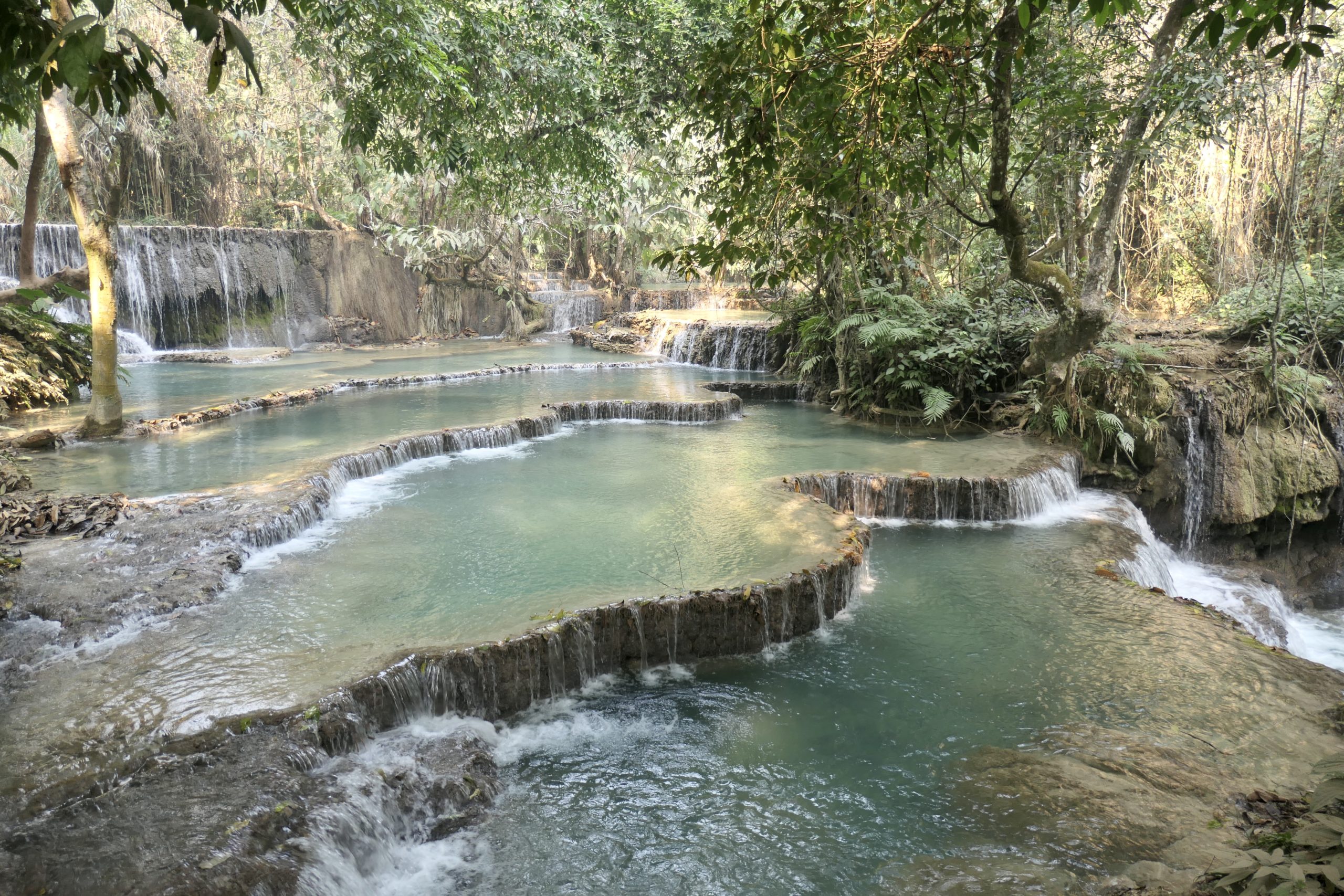
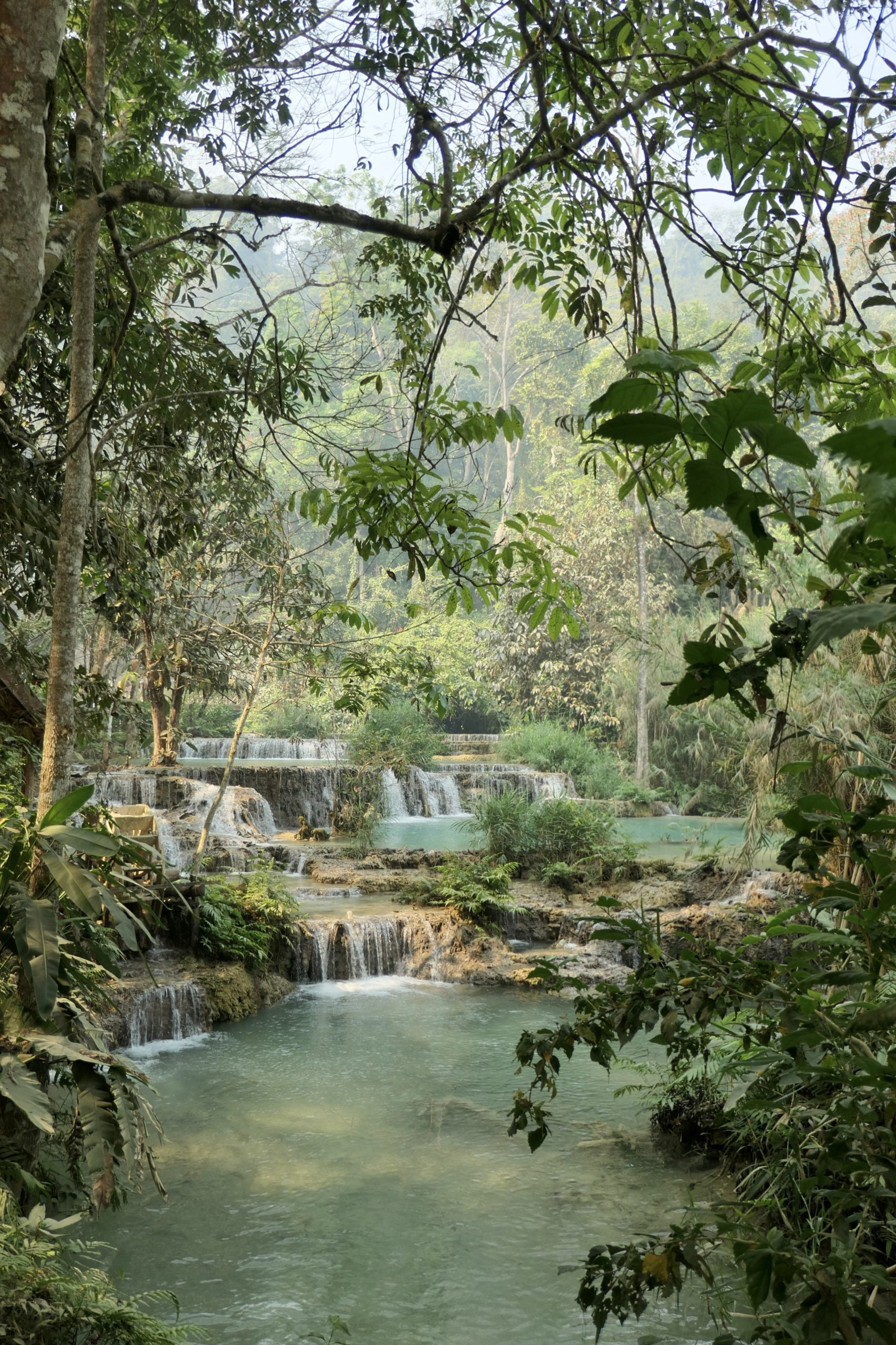
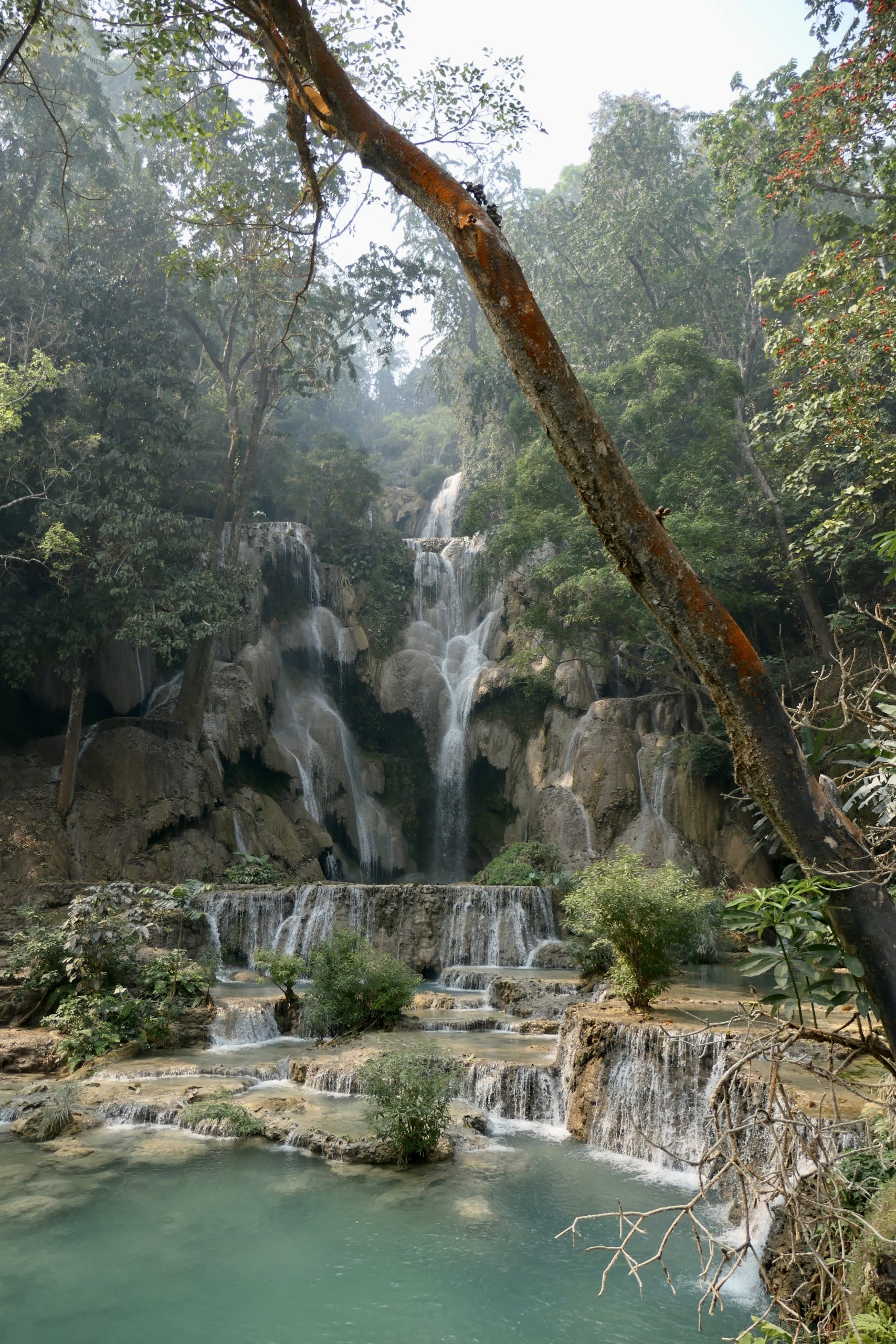
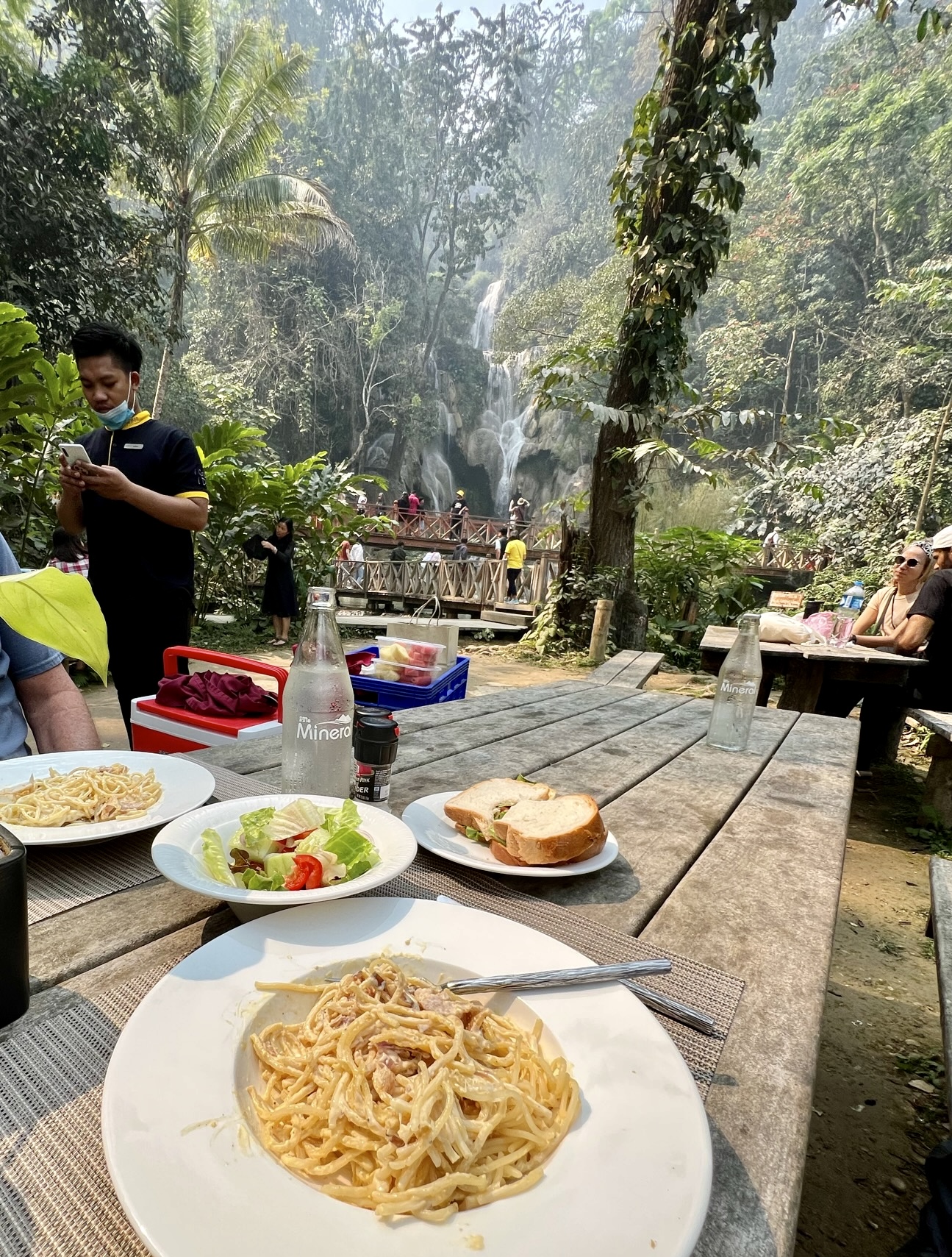
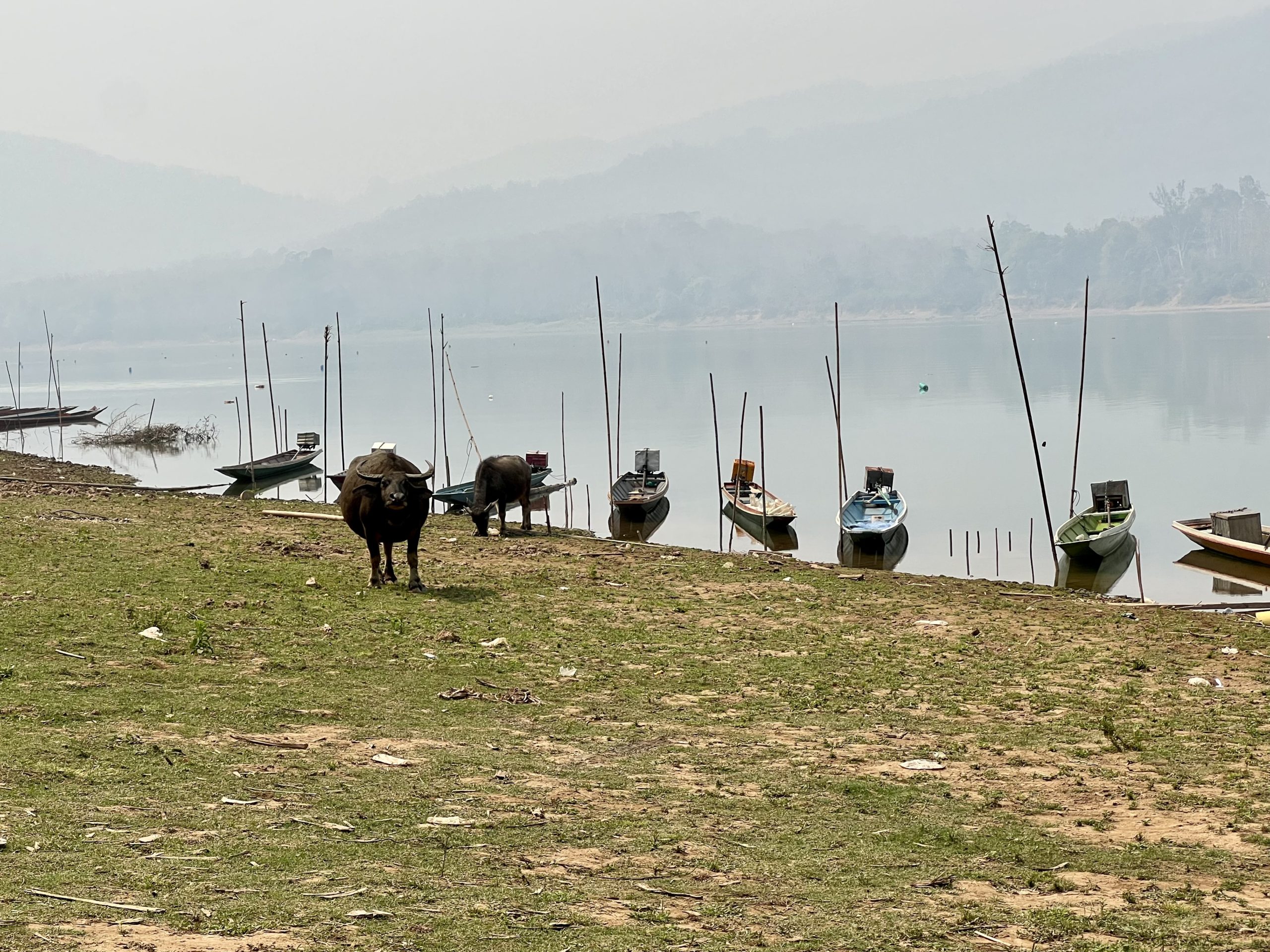
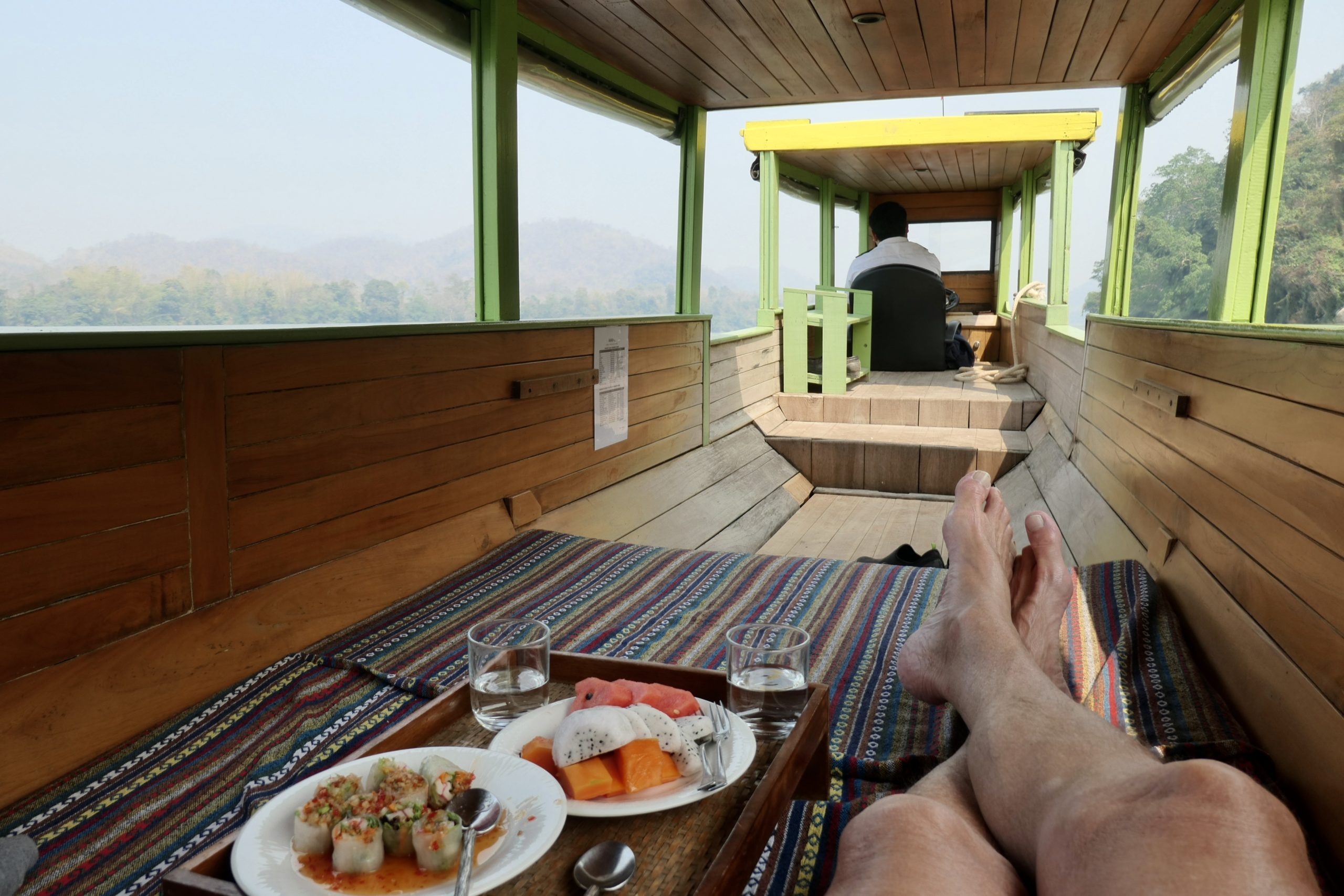
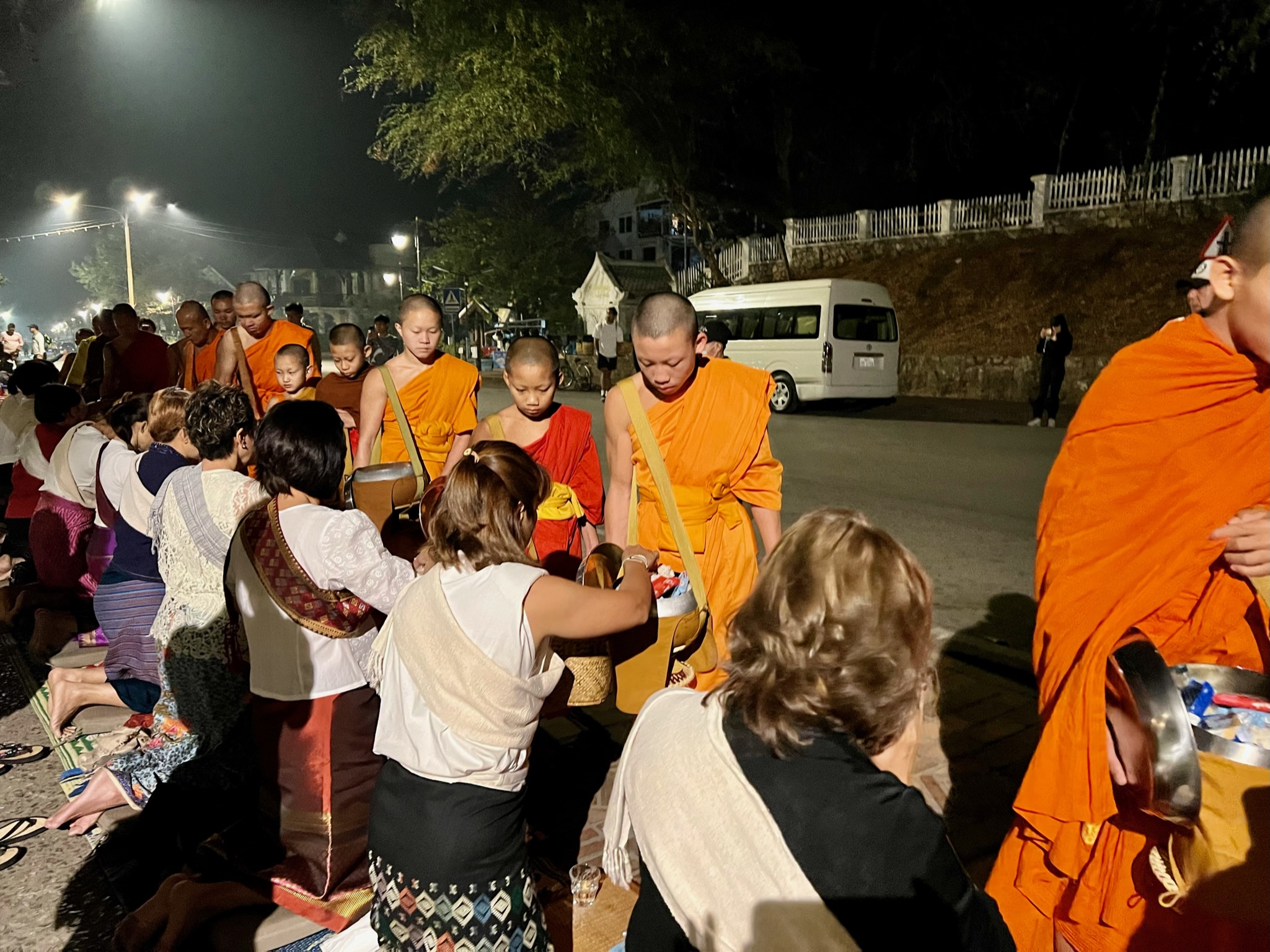
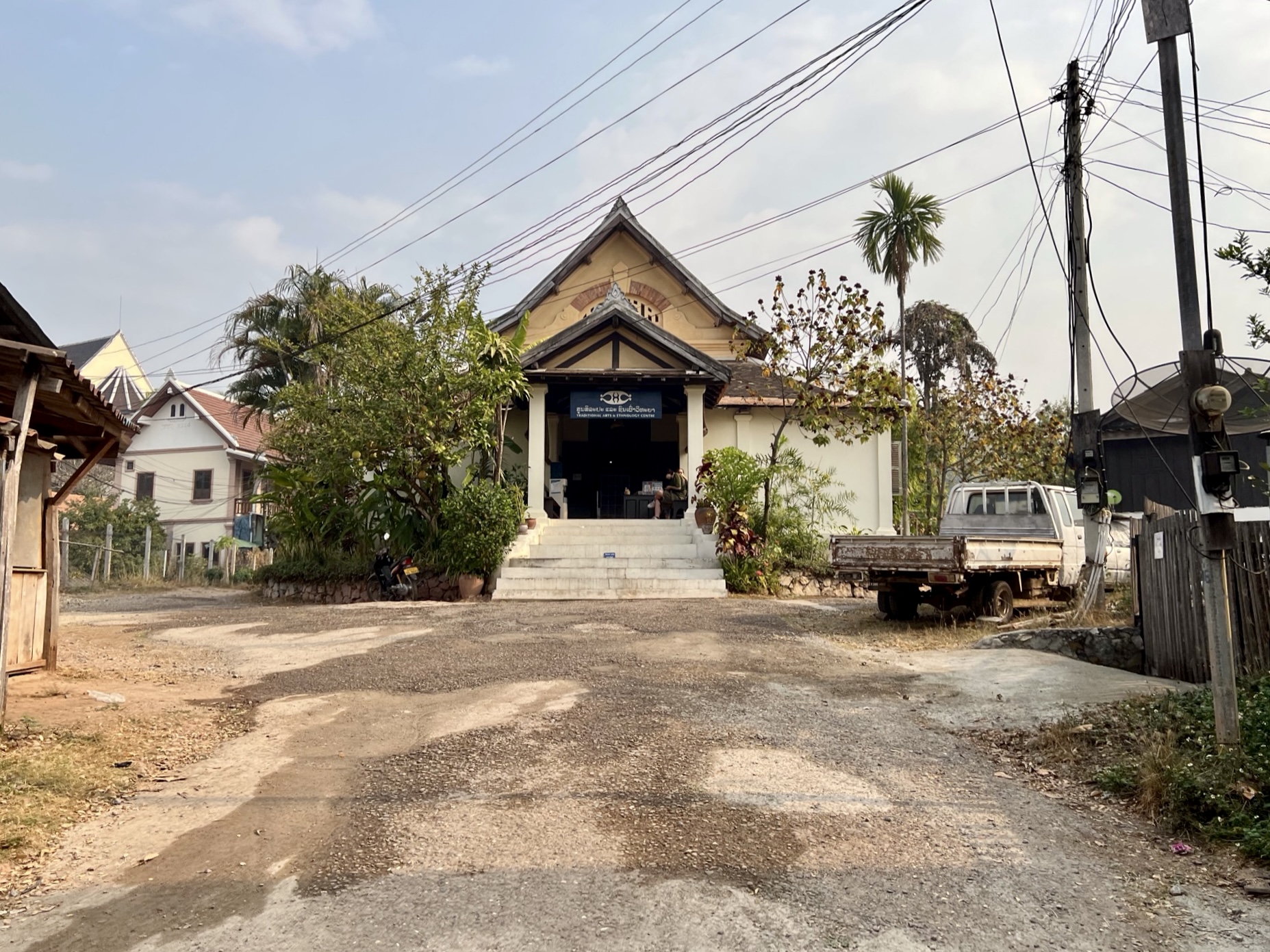
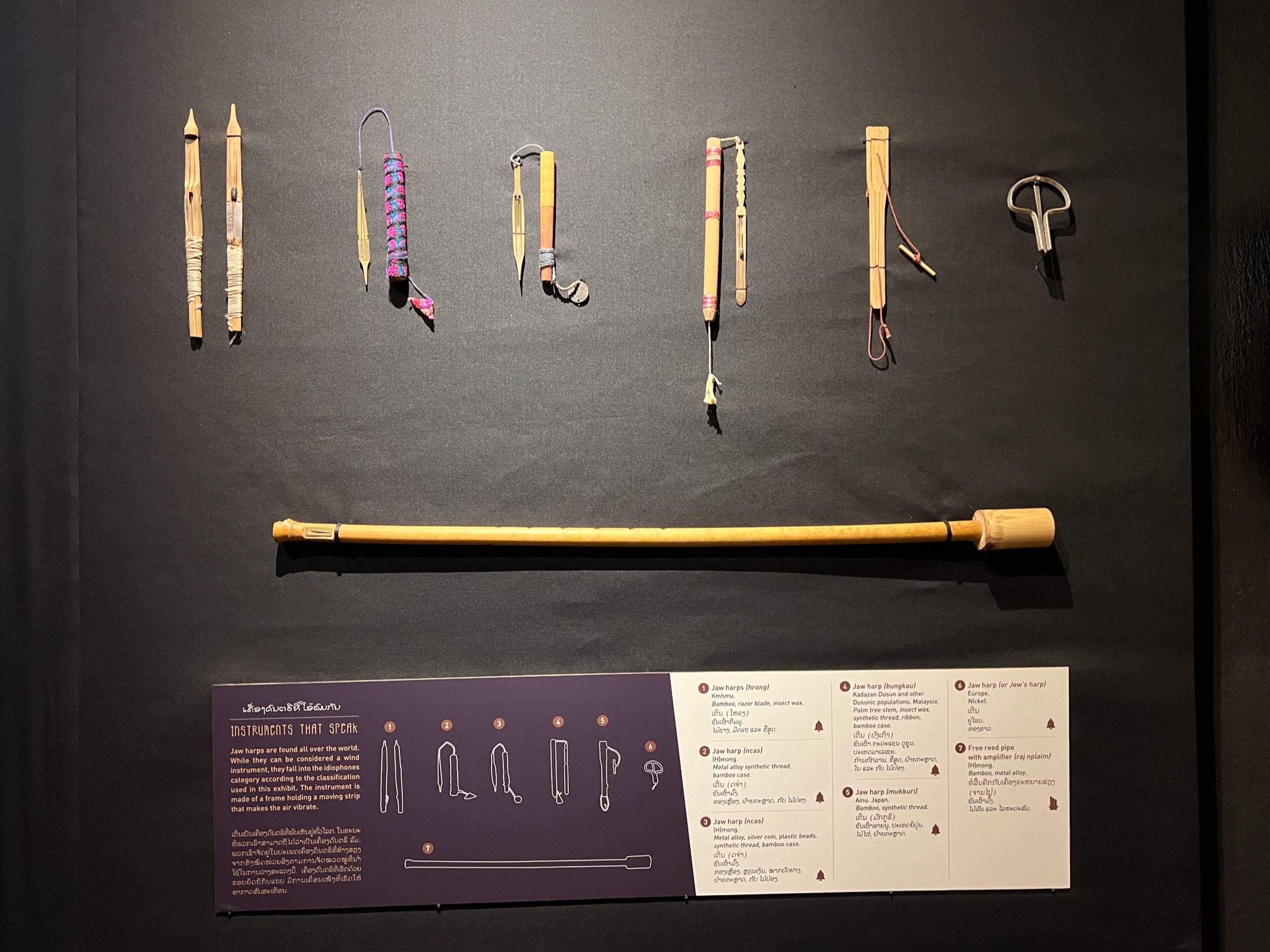
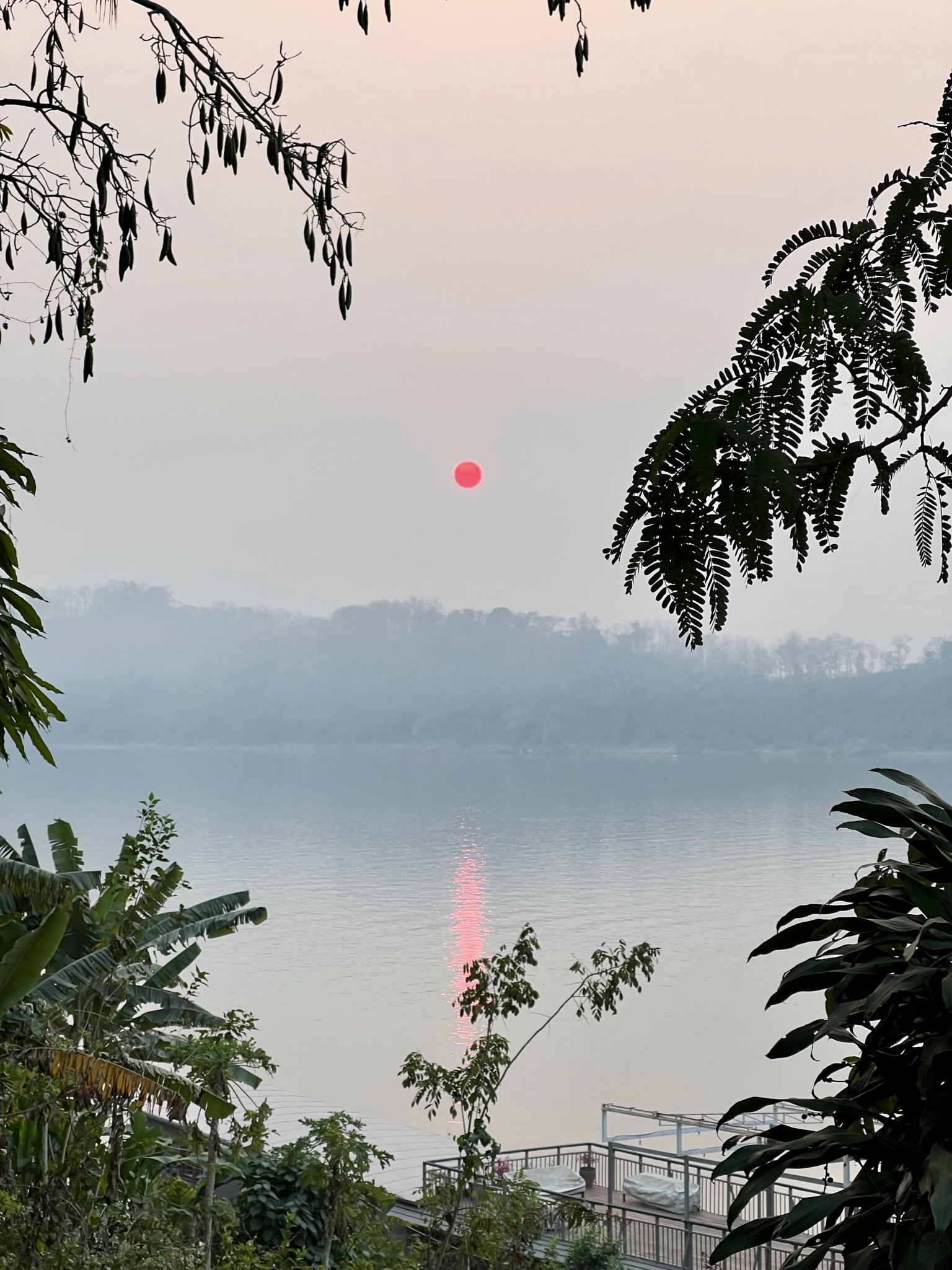
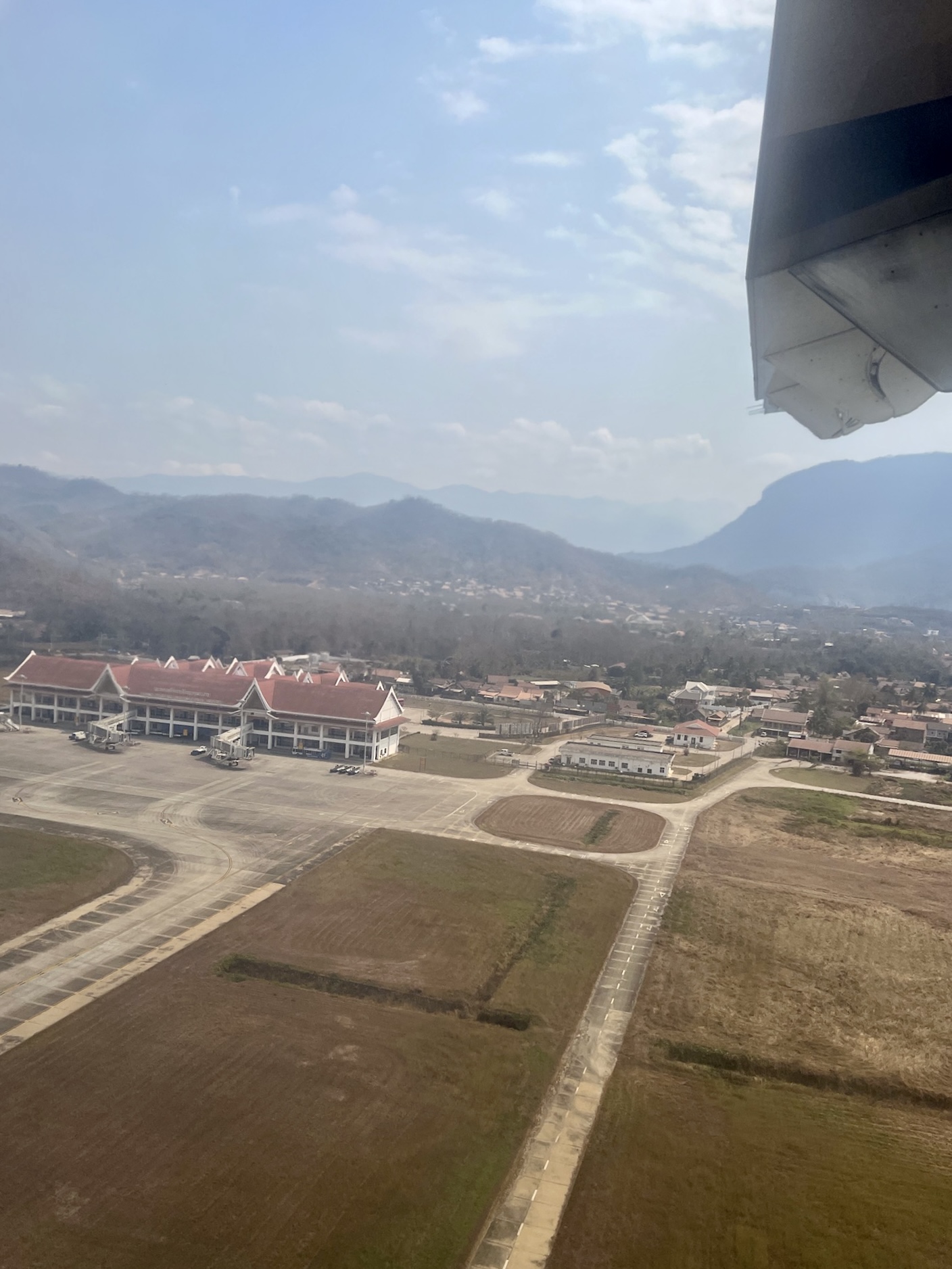
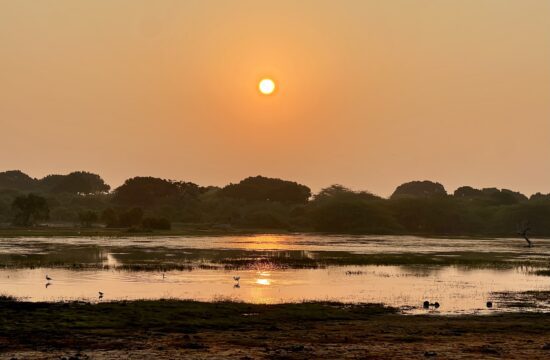
We arrived in Luang Prabang, Laos, on a Lao Airlines ATR 72. The smallish French-Italian turboprop plane is the airline’s main workhorse, which isn’t surprising given the size of the country. It was a full flight, packed mostly with animated European and American backpack tourists, though there were a few representatives from our generation. Unlike Vietnam Airlines, Lao Airlines doesn’t require masks. We slipped ours on anyway when the young group sitting near us showed signs of over-caffeination.We stayed at the Avani+ hotel in the heart of Luang Prabang.We were given a lovely suite, but despite air conditioning, the air inside smelled of wood smoke, just like the air outside. If we had this air in the US, people would have a conniption. The smoke-filled air is supposedly seasonal and due mostly to burning rice fields and some slash-and-burn farming, but everyone gets in on it. Down the street from the hotel, a roaring trash fire was whipping and scorching the overhanging trees while people passed idly by. There seems to be a national passion for burning stuff.Luang Prabang town runs along and above the upper Mekong River, with the river side of the road used to tether boats …Dry rice cakes and clothes …And run a restaurant, if there’s room.Opposite the river are inns, houses, inns, shops, and inns.The street itself serves as a scullery in a pinch. Running up from the riverfront are the worked-in, lived-in streets of the little city. With some streets taken over entirely by commerce, like this morning market. Upriver of Luang Prabang, where the Nam Khan contributes its green water to the brown of the Mekong, the longest of two vital footbridges give villagers quick access to the town. The bamboo bridges are taken down each rainy season and built anew when the rains stop. It did its job nicely and took us to several small villages known for their craftwork.At one, decorative saa paper is made from mulberry bark in numerous outdoor workshops. We bought a couple of reliefs made from the paper. Another village held weavers at their looms. The industry is clearly a family enterprise. This young girl shyly agreed to let us take her picture. Each village has its own temple. This one sits above the paper village Ban Xieng Lek (or Xiengleck, as some would have it). Ban means village. If a village has a hill handy, the wat gets put on top of it. Wat Nongxay belongs to the next village up, and so the pattern goes. In each case, for what’s not a lot of village, there’s an awful lot of wat.We turned around at Ban Khomkhouang’s wat and headed back for lunch at a restaurant we spotted a village or so back.Down a narrow alley, through a driveway, and into the backyard of a house sits a garden restaurant terraced along the river bank.We had the house version of the national Laotian dish pork laab (or larb) and sai oua, the popular Laotian sausage made from coarsely chopped fatty pork, lemongrass, galangal, kaffir lime leaves, shallots, cilantro, chillies, garlic, and salt.For dessert, we had sticky purple rice with sweet mango and coconut cream. Because they had it on the menu and we needed to eat it. If you weren’t there, you missed out. Yet another Laotian dish is kaiphen, shown at the top here. It’s dried river-weed fried with sesame and dried tamarind and usually served with a spicy pepper sauce or paste. Many dishes mirror those in neighboring countries, too, like the accompanying cashew chicken. Ethnic restaurants also thrive, like this Ceylon one serving Sri Lankan food. On the right is a trio of vegetarian curries with crispy papadam, center is chapati, and unseen in the small bowl is beef gosht, a rich, very spicy, very tasty curry-like dish. One morning we hired a sampan to take us downriver to Kuang Si falls. Here one of the crew uses someone’s parked boat as a convenient boarding plank. The trip took about an hour and a half, with us comfortably reclined on big cushions. Sometimes we could even see the shore through the haze and smoke. We shared the river with many working sampans …As the shore quickly turned rural …With subsistence farming …And grazing water buffalo taking advantage of the narrow floodplain. We passed this was-boat en route, resting peacefully on the bottom in the river shallows. Our sampan driver didn’t know who it belonged to but said it’s a recent addition to the river. It may have been part of one of the floating gold mining operations (below) that vacuum the river bottom and screen it for gold eroded out of the upriver hills. Then we arrived at our landing spot to board a tuktuk to complete our multi-modal trip to the falls. Between river and falls is mostly farmland scattered with small clusters of houses. However, the run up to the falls is the same as it is at any tourist attraction, lined with sellers of t-shirts and what-nots.Of interest, though, was the nearby sun bear rehabilitation center. But we saw only moon bears. Go figure. At least the center has a high success rate for returning both species to the wild.Then the falls, which lived up to their advertised beauty …… with level after level of stepped cascades and jade green pools. What makes these falls so unique and visually arresting is that the flowing water doesn’t erode and reduce the falls but instead it deposits dissolved mineral carbonates leached from mountain stone and builds them up layer upon layer, like stalagmites in a cave, giving them a soft, fluid look. With too many cascades to include here, the trail ends at a large cataract, above which is the artesian spring from which the mineral rich water flows. When it came time to break out the picnic lunch we ordered from the hotel, the fellow who brought us said he’d be right back. He returned with a borrowed Sherpa carrying a large crate and proceeded to unpack a portable dining room. Out came spaghetti carbonara, salads, fried chicken and egg sandwiches, fruit, linen, and god knows how many plates, bowls, and serving pieces. We kept asking him to dial it back a little. He would nod his head and pull out more stuff. Finally, when he realized we weren’t going to leave the table and allow him his transformation, he agreed to compromise. We got him down to only placemats, a single sandwich to share, and no basket of assorted rolls. Though he did sneak in a 15-pound potted centerpiece when we had our heads turned. We suggested he look up the translation for “picnic.”Then back to the shore, past the guard buffalos to our little boat.On the trip back, our minder broke out more food: spicy-sweet summer rolls and a plate of papaya, dragon fruit, and watermelon. He apparently had a bar back there somewhere, too, but we kept to cool water.Early the next morning, the photographer was out at 5:30 am, watching the morning ritual of giving alms to the local temple’s monks. By tradition and rule, Theravada Buddhist monks generally take their daily nourishment only from the food placed in their bowls each morning. Speaking of tradition, we went by the little Traditional Arts and Ethnology Center. Though small, its displays are polished and focus on the four primary ethic groups in Laos.Perhaps the most fascinating section is the one on music. The number and variety of string and wind instruments is astounding, with the reeded ones especially so. The “circular breathing” technique required to render an uninterrupted stream of music and the way the instruments are used to echo the tonals of the language so as to be understandable as language by the initiated conveys the complexity of both the mastery of the instruments and their integration with the culture. The photographer attempted to capture a sunset several times. The day doesn’t end in a blaze of glory as you’d expect with all the smoke. The sun just turns red, fades into the haze, and drops out of site. Then it was time to leave the sepia-tone world of the upper Mekong, so we packed ourselves into the seats of the little Lao Airlines plane and went in search of less visible air.