//Borneo – February 2023

Borneo – February 2023

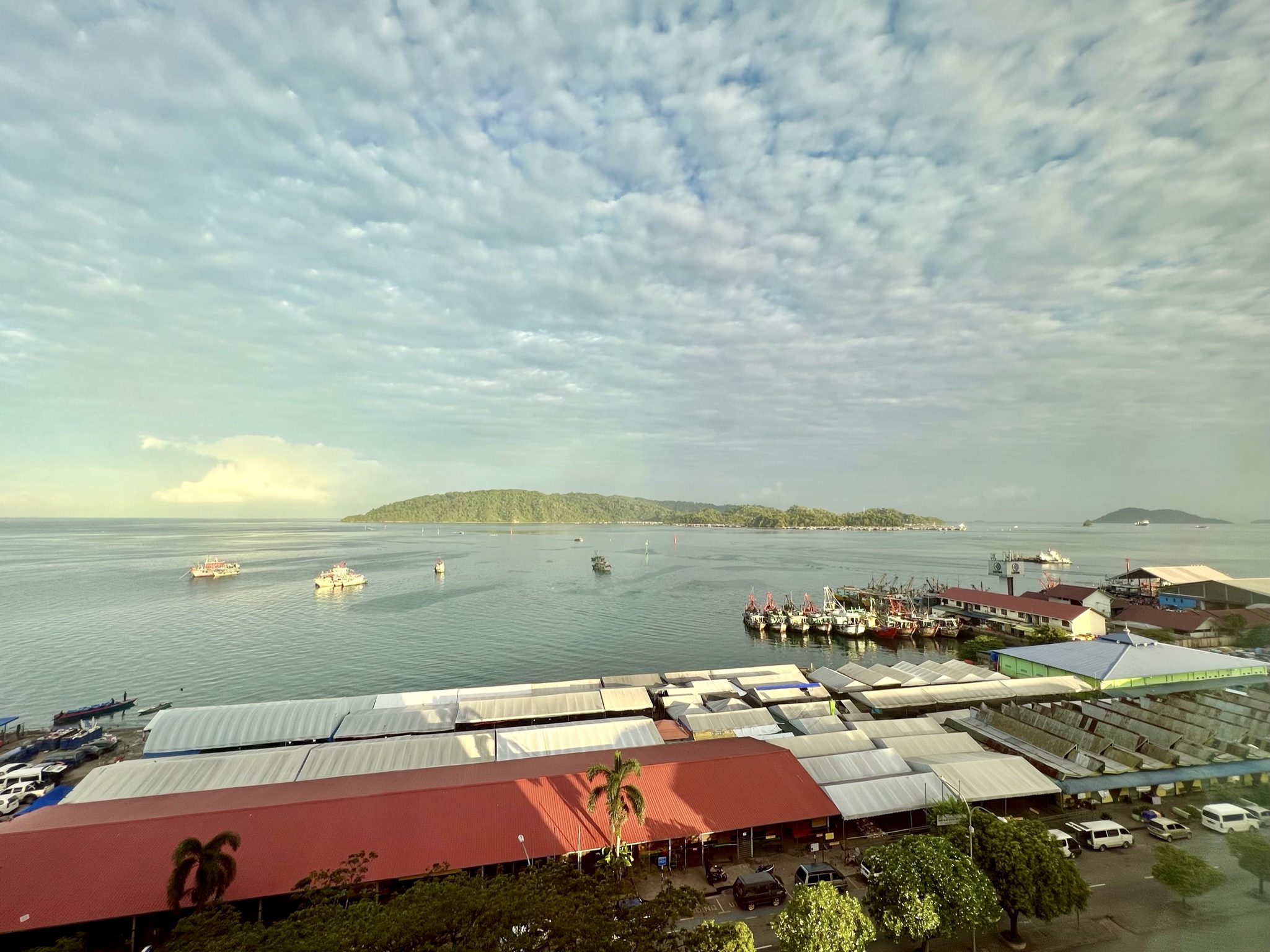
We arrived in Kota Kinabalu late in the evening and woke the next morning to much clearer air than we’d grown accustomed to while on the Indochina Peninsula. Our room at the Le Meridien looked out to Gaya Island in the distance, fishing boats coming and going, and the fish market below, where they sell their catch.
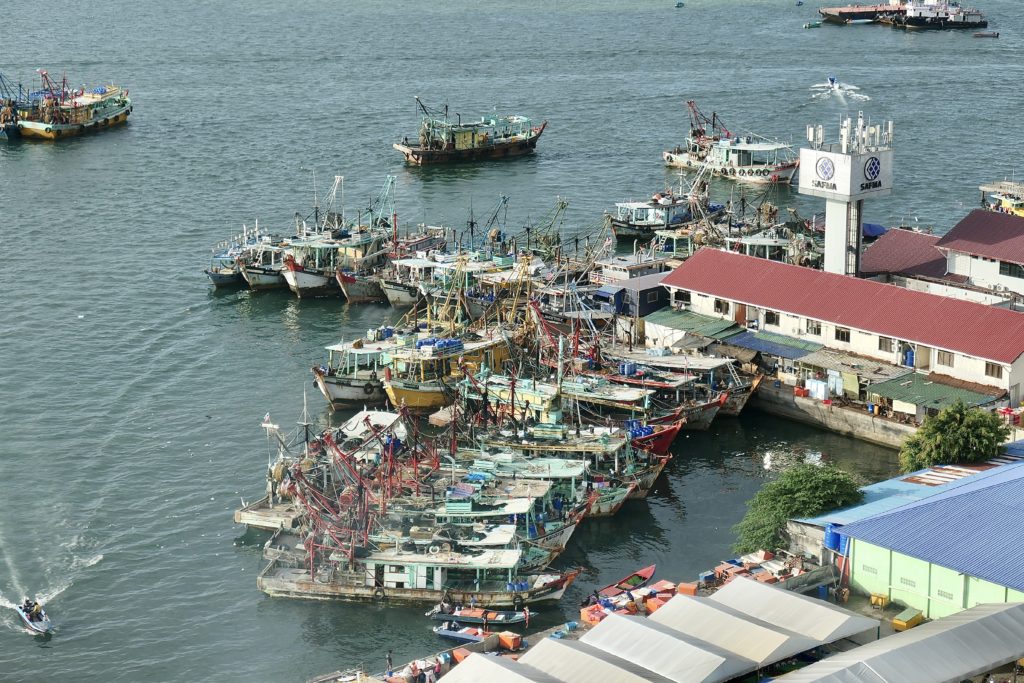
At any given moment, on any given day, if you look down on the harbor, you’ll see a different set of fishing boats, rafted together, unloading, or returning to sea. In the mornings, some still have their bright fishing lights on. We saw many such boats night fishing in the South China Sea as we flew over it on our evening flight in.
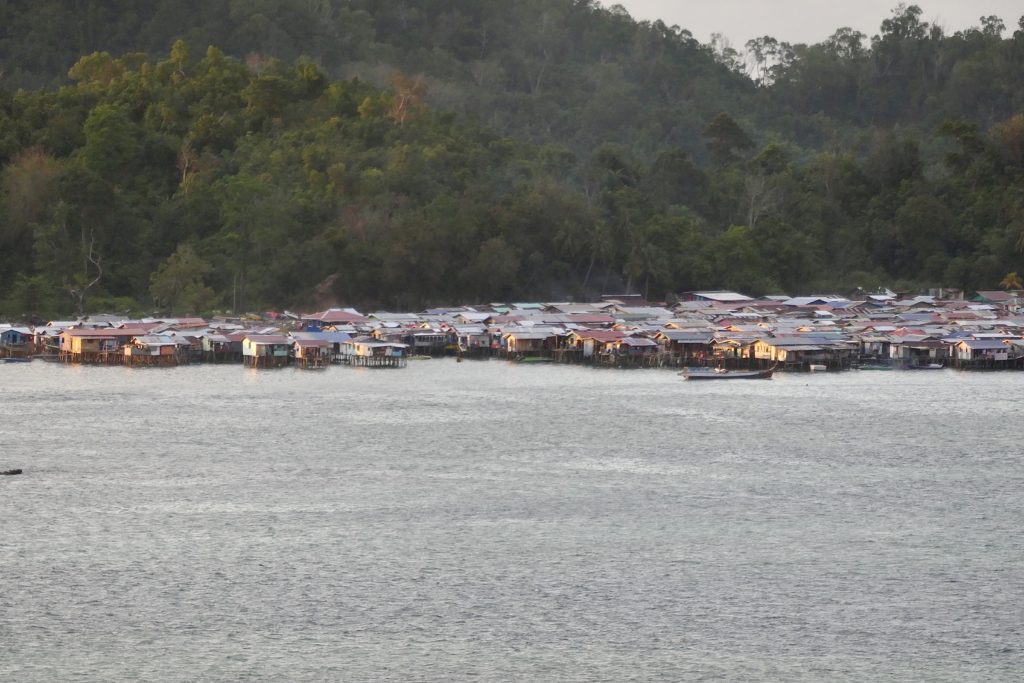
Apparently many of the fisherman live in the water villages across the narrow channel on Gaya Island. Considered squatters by the government, some are Malaysian citizens but many are not. There is a long tradition of seafaring communities in the Sulu Sea, north and east of Borneo, that don’t pay much attention to national boundaries. In the 1970s, when the Moro Conflict in the southern Philippines peaked, many migrated to this area. Now they fish or drive the (many) boats that are the villages lifeline to the mainland.
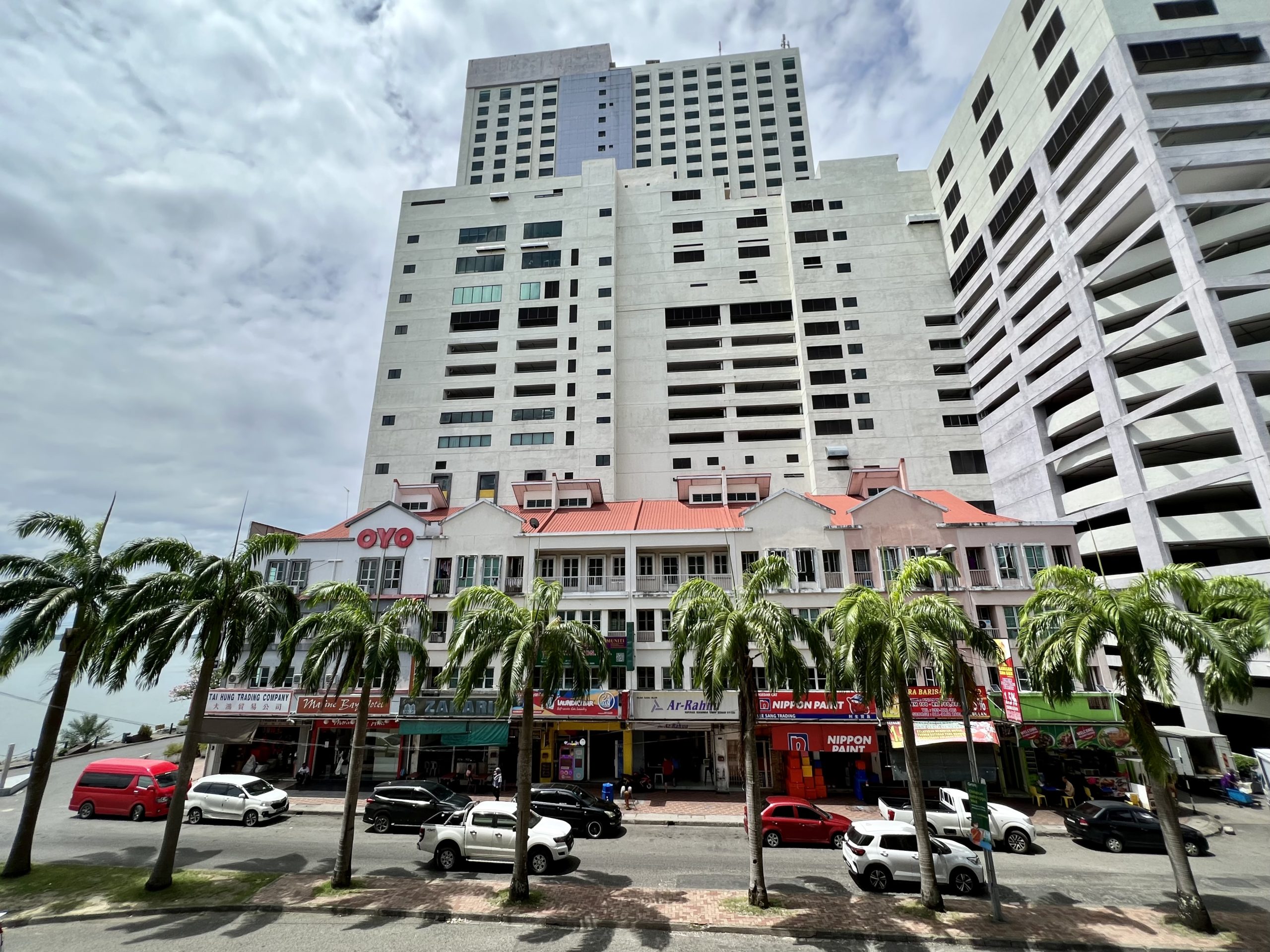
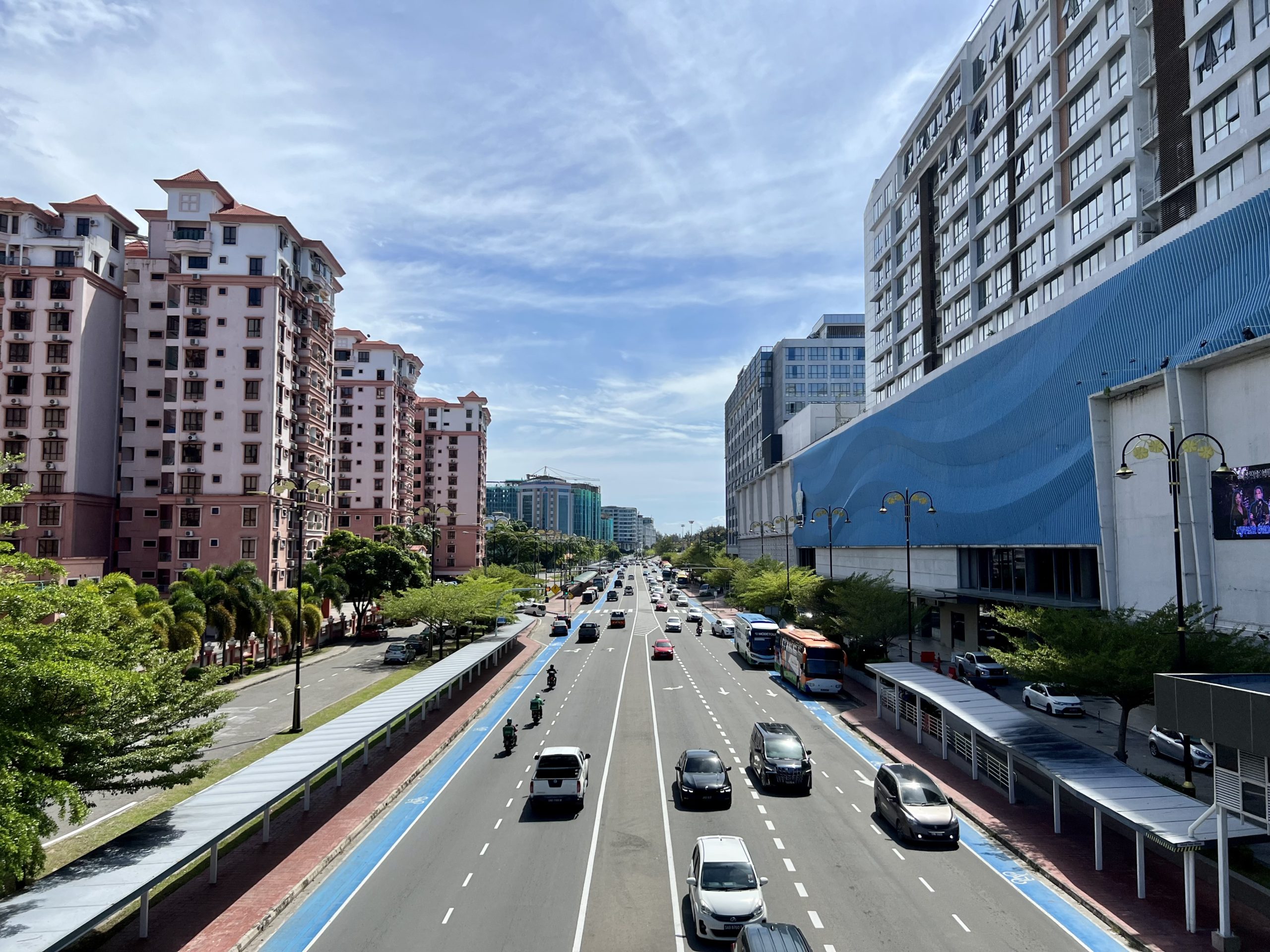
The main street through Kota Kinabalu is the modern Kota Kinabalu Coastal Highway, lined with hotels, shopping centers, and markets of all kinds, as it cuts through the coastal city.
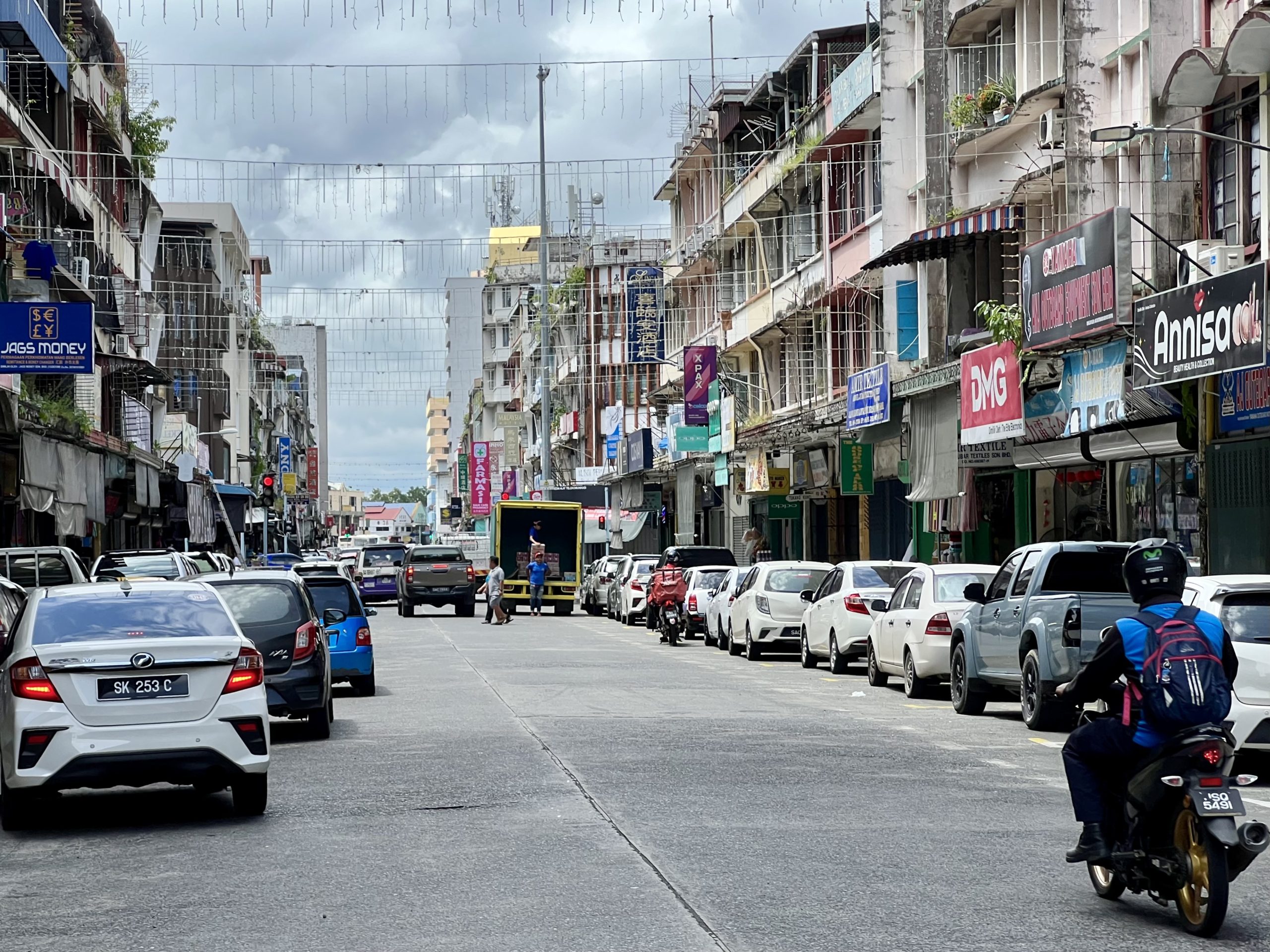
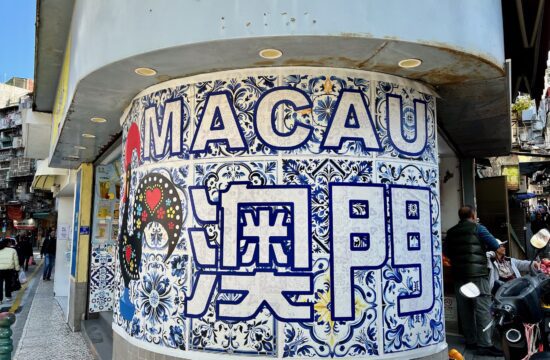
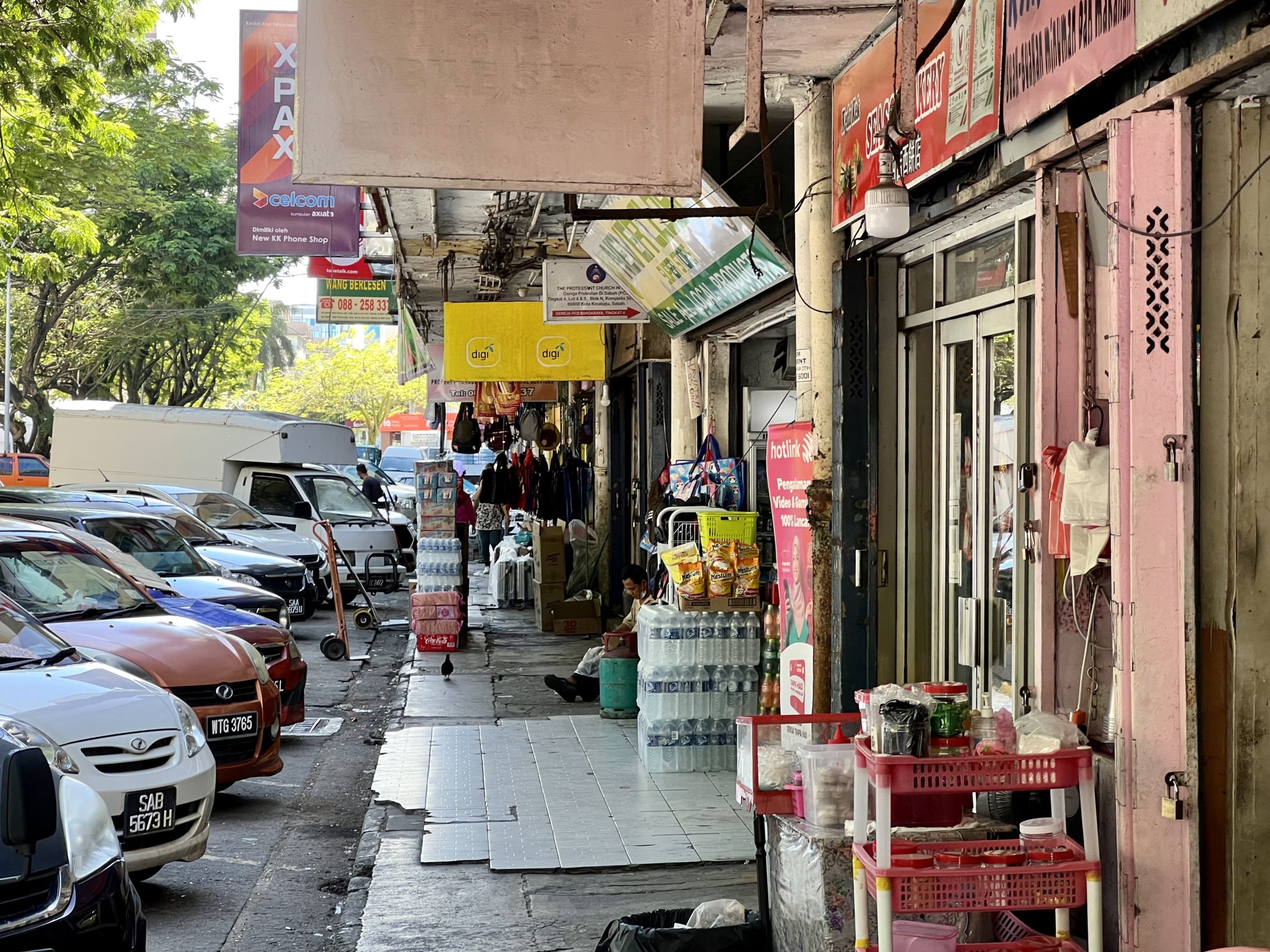
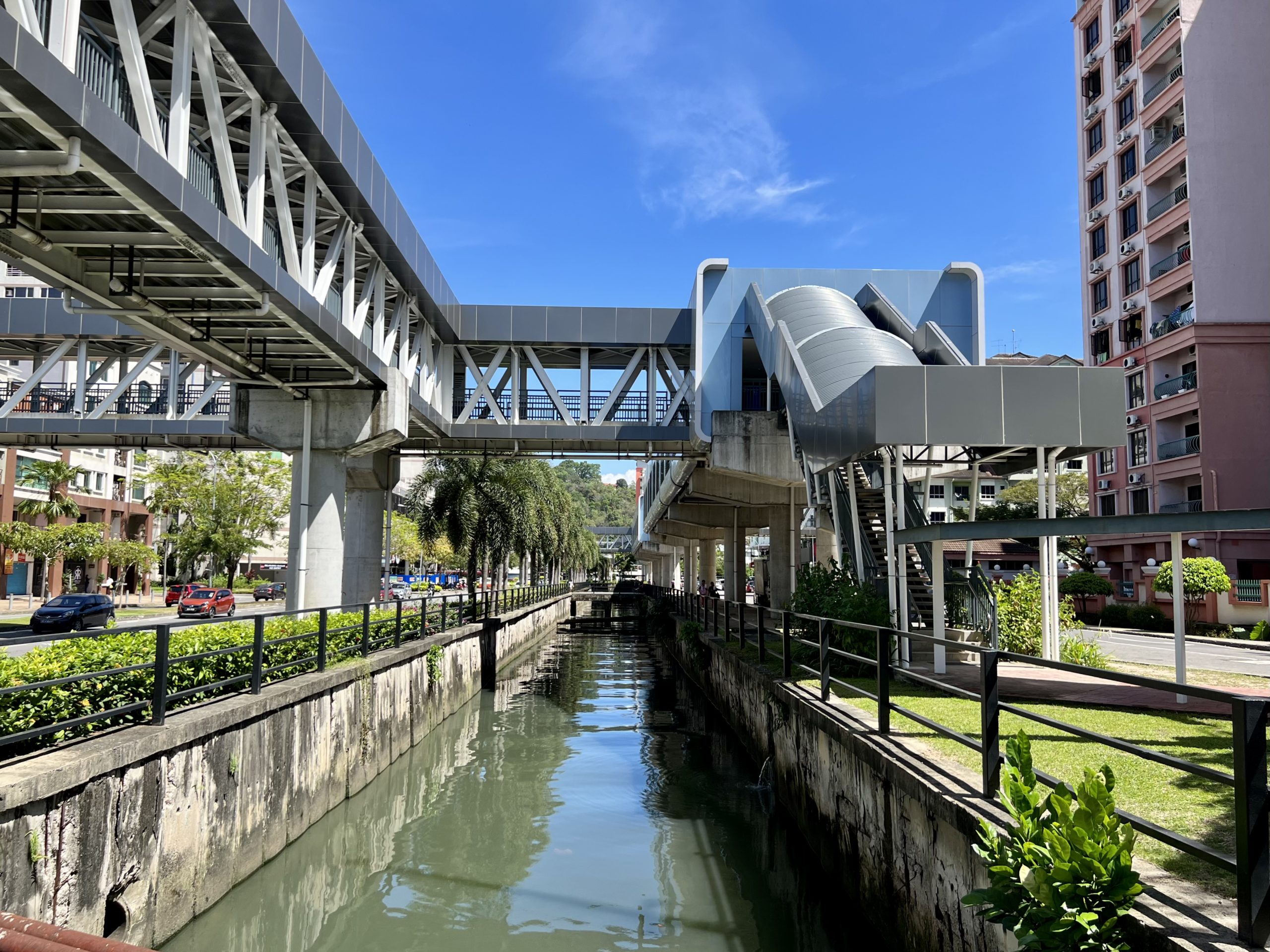
Some of the side streets are more colorful (above), but the majority of the city is contemporary and neatly arranged (below).
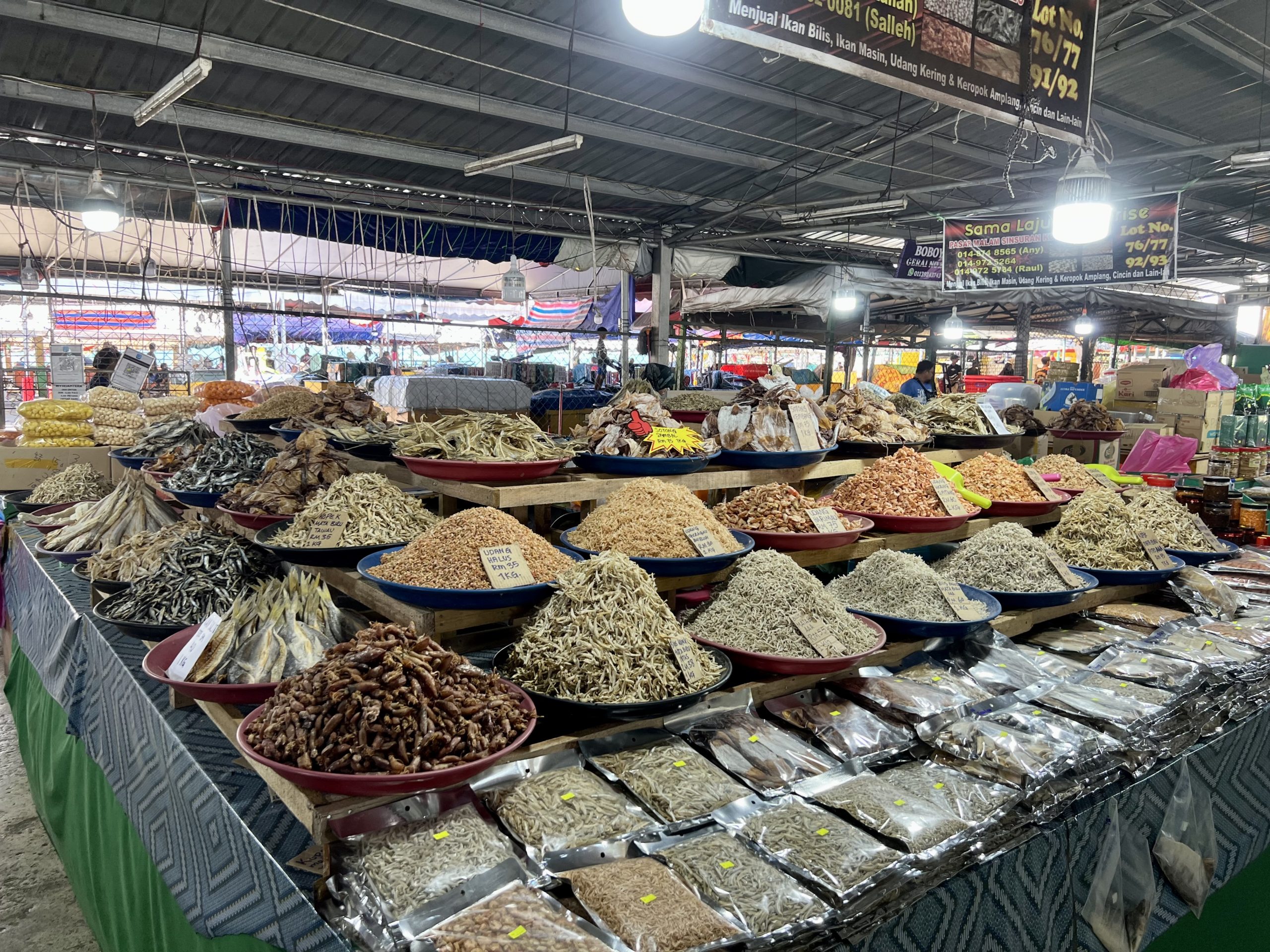
A notable exception is the working waterfront markets. Collectively I call them the fish market, because that is what the stretch of tents and tin roofs smells like, as does everything else in a radius of where they gut and sell the regular flow of fish from the boats. But in truth, there are any number of markets and open-air eateries. Above is one stall in the dried-seafood section of the large central market.
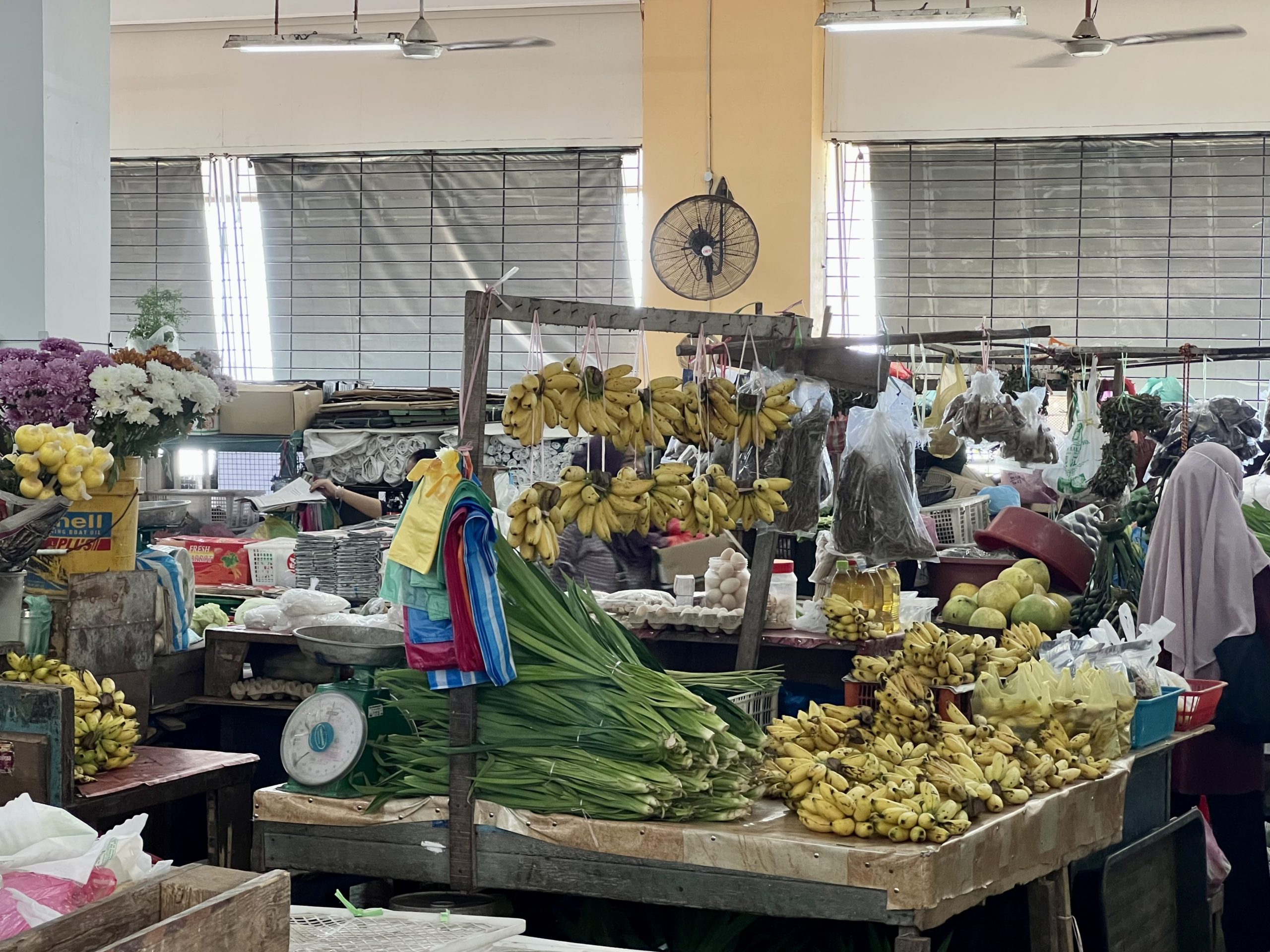
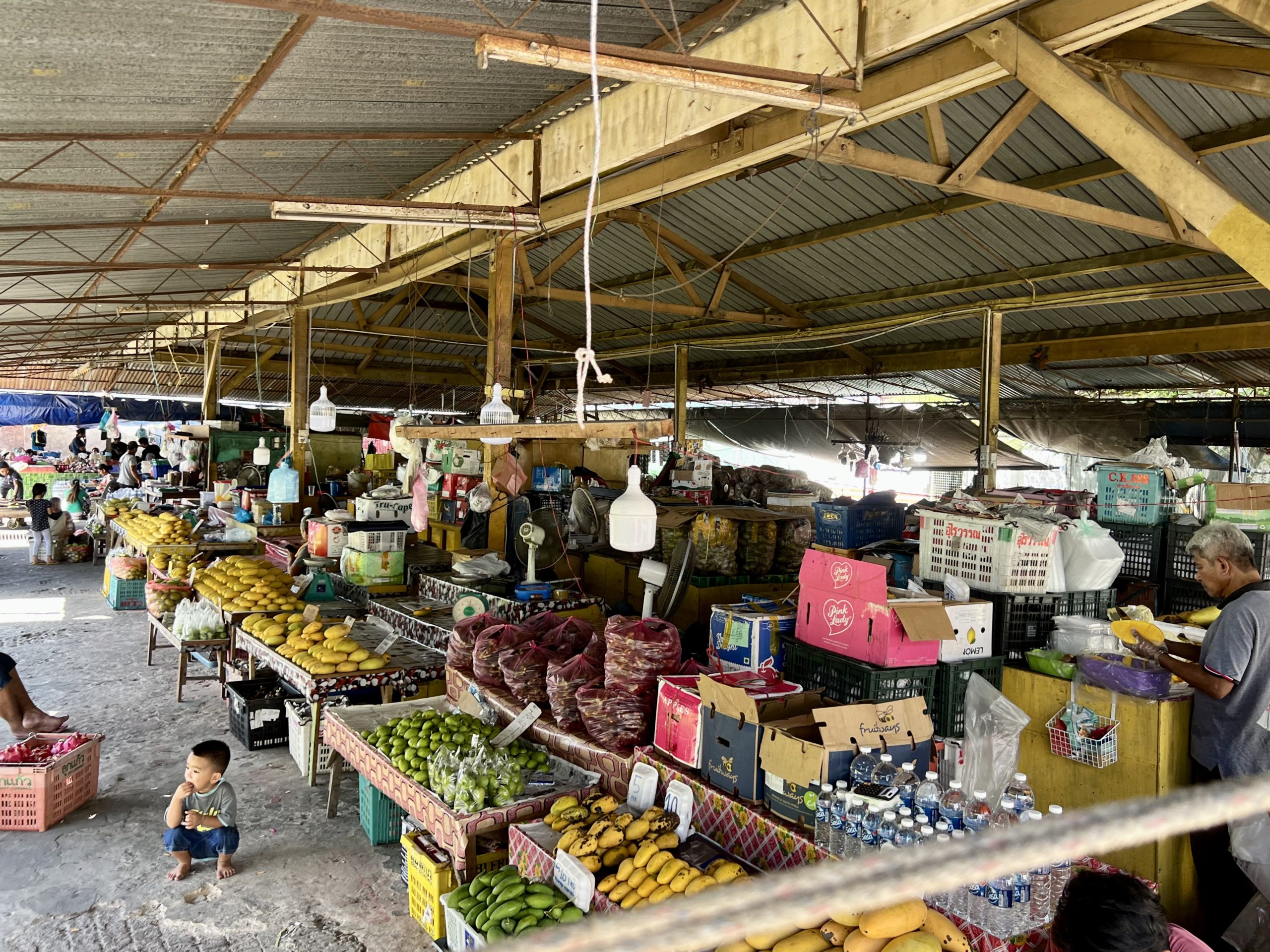
Here is a section of the nearby fruit market.
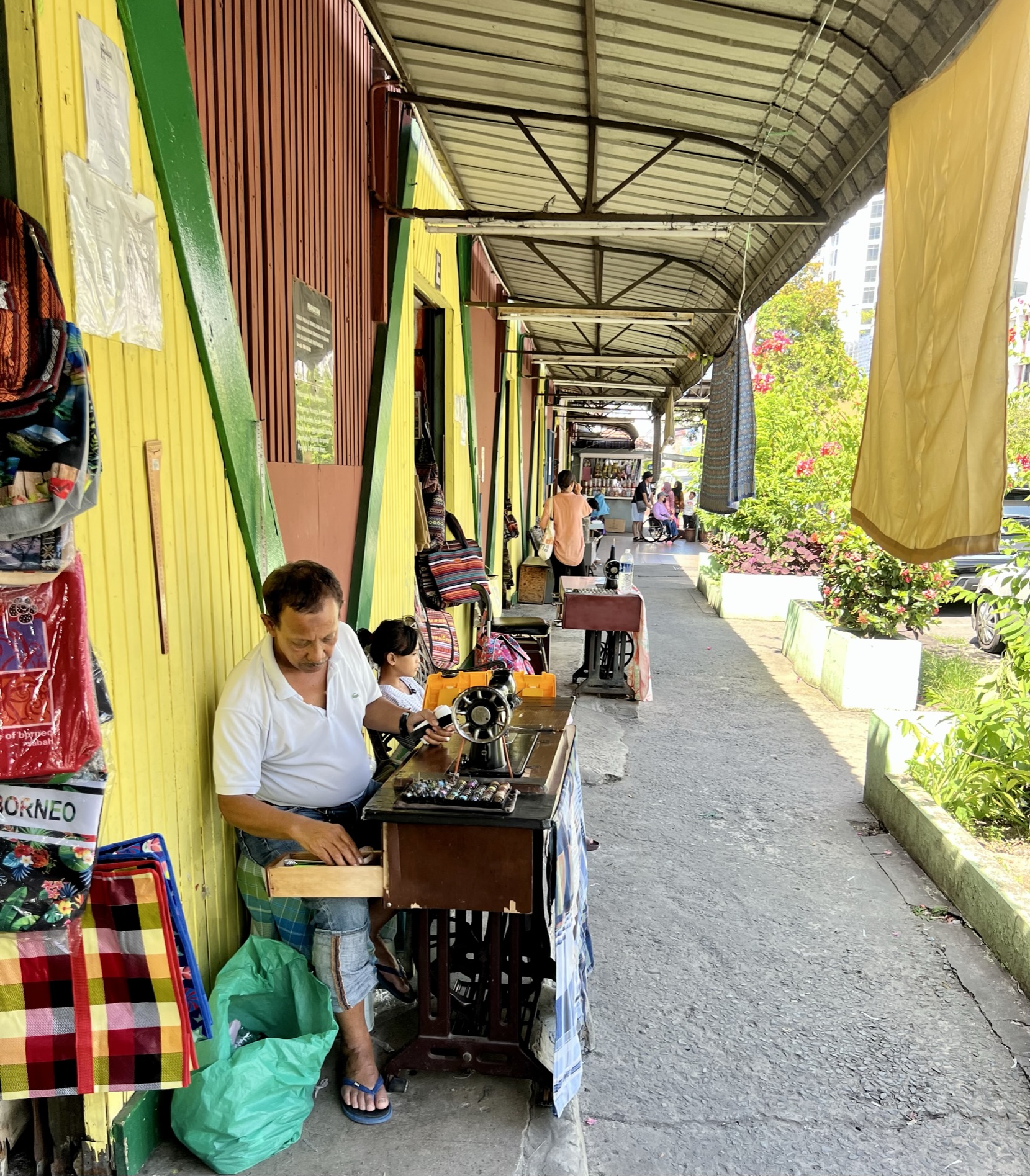
Along the same stretch is the Handicrafts Market, previously known as the Filipino Market, with shop owners sitting out front at their treadle sewing machines.
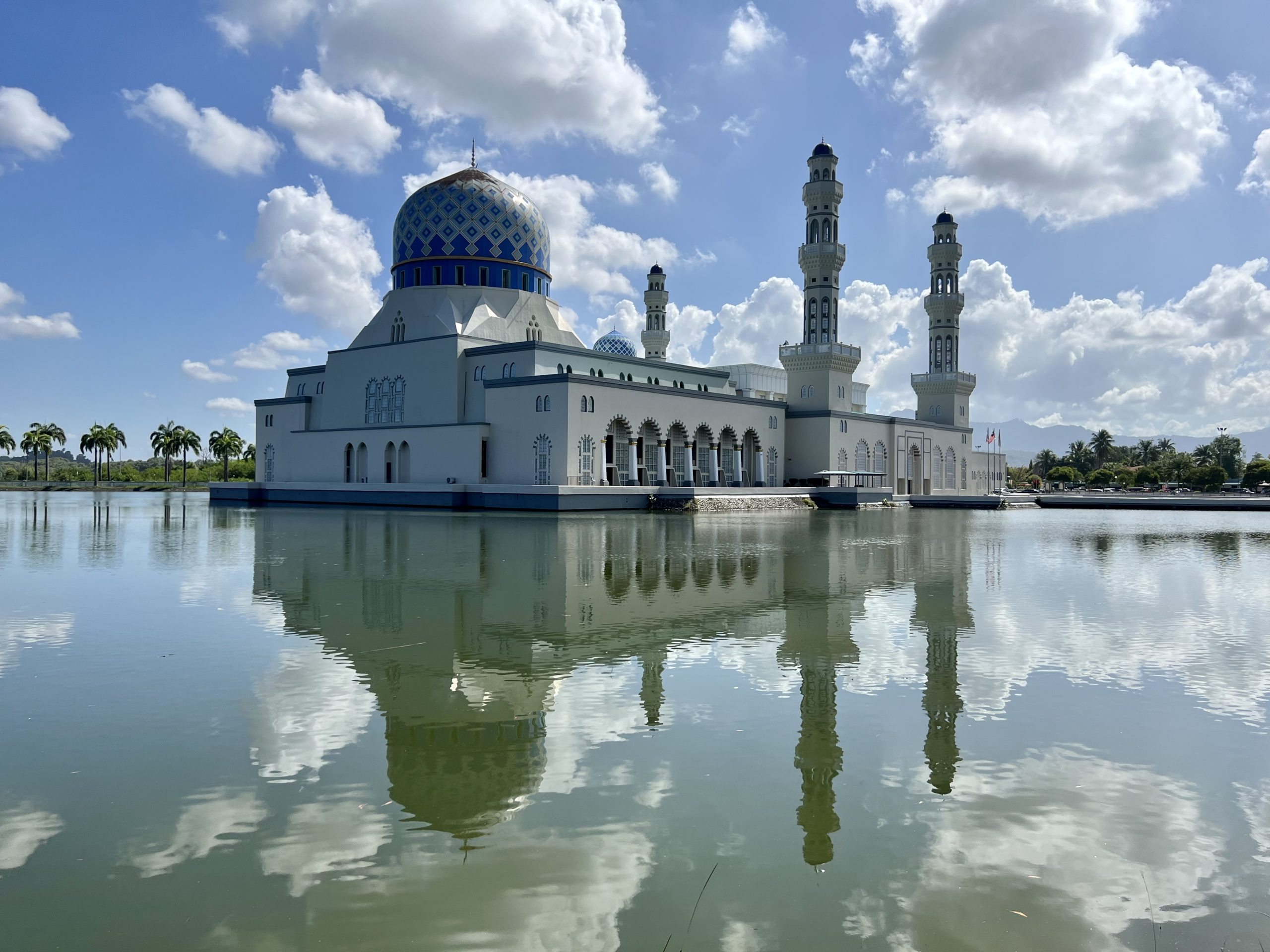
Beyond the port and markets of “downtown” Kota Kinabalu, there are many mosques. Islam entered the island over a thousand years ago by way of muslim traders. Within a few hundred years the Brunei Sultanate effectively ruled all of coastal Borneo. Here is the Kota Kinabalu City Mosque, also called the Floating Mosque.
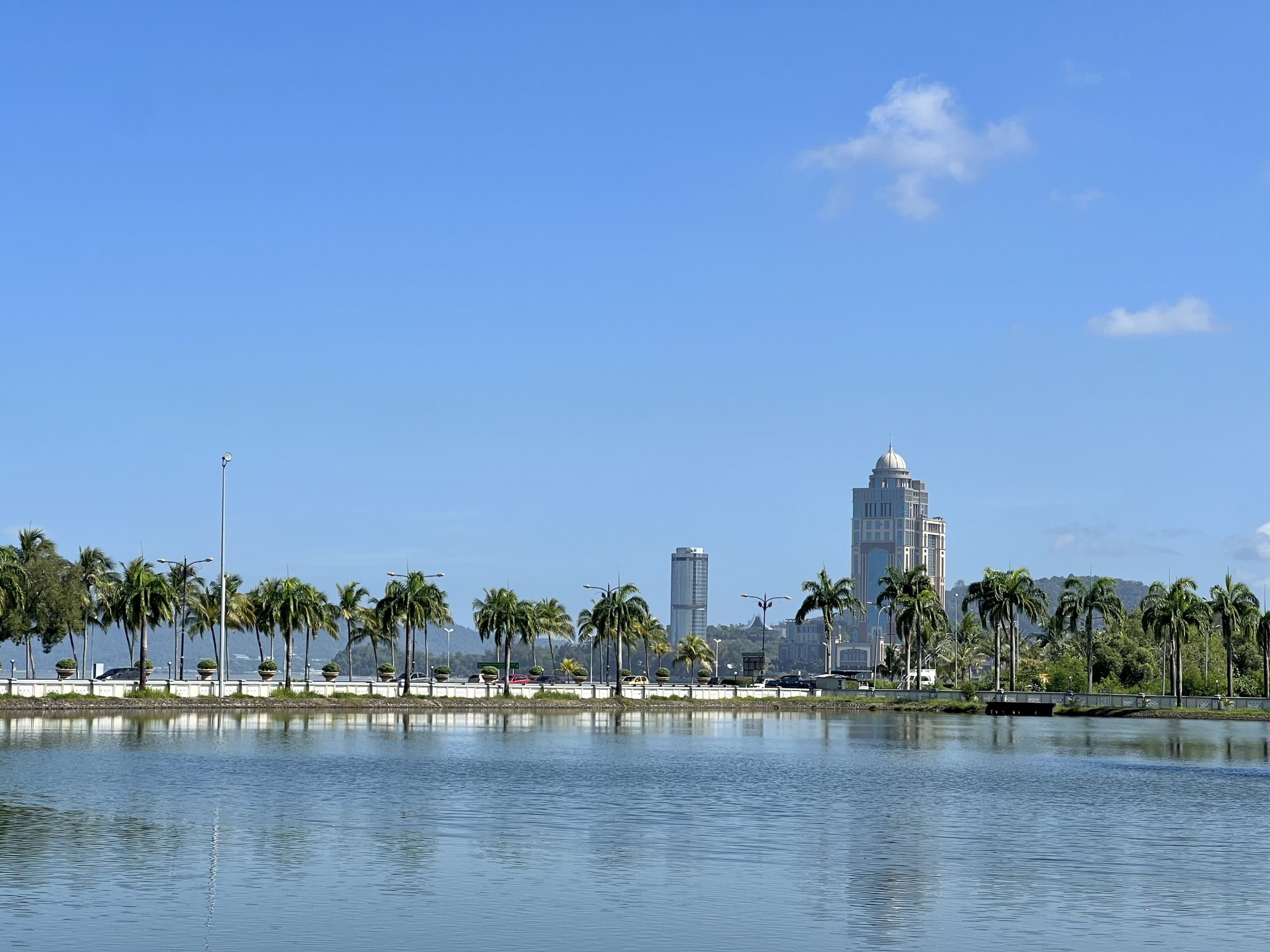
Further along the coast from the mosque is the second tallest building in the city and the home of the Saba State Government, basically the Saba State Capital Building.
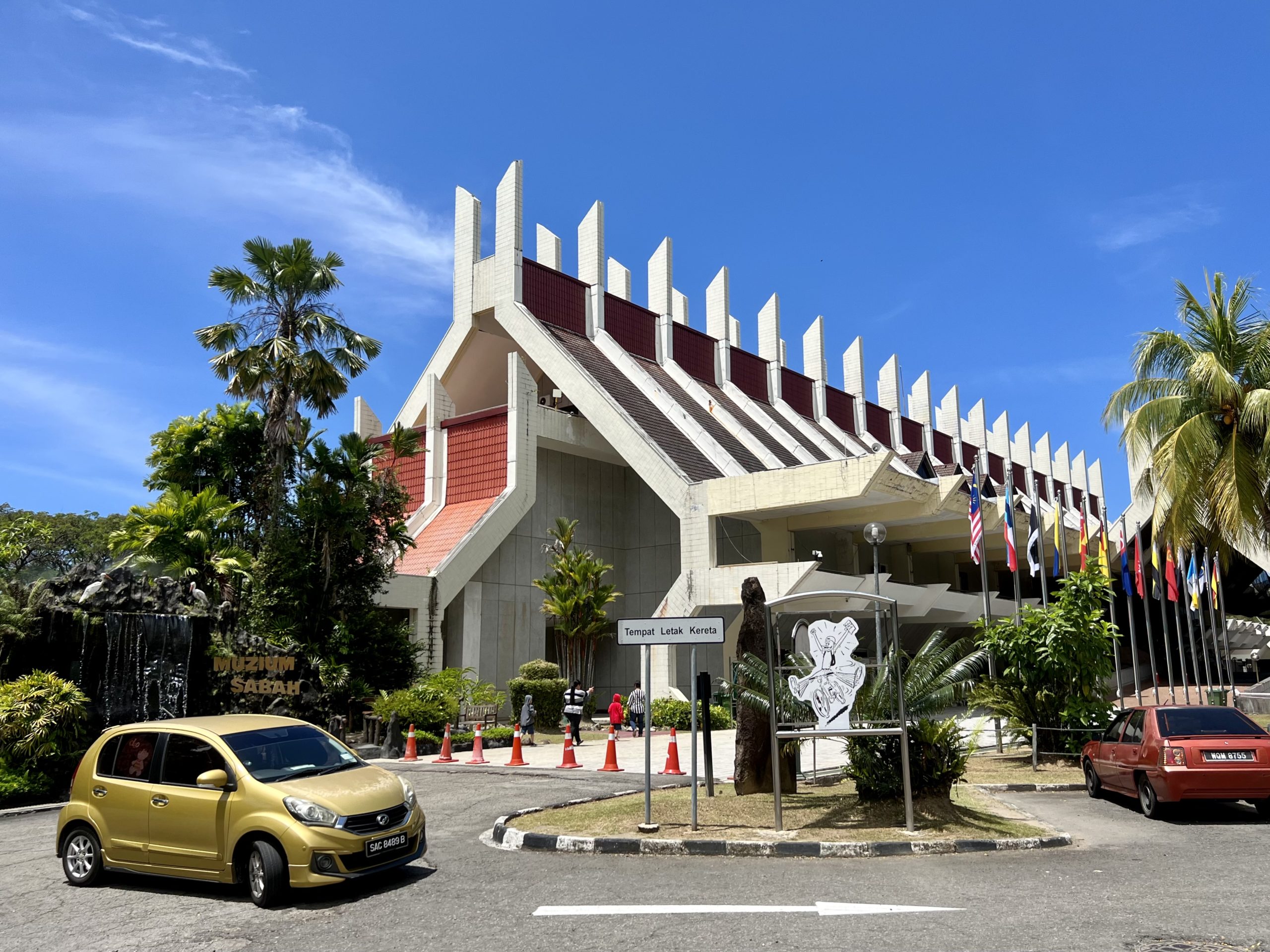
Further inland is the Sabah State Museum, where we spent a long morning.
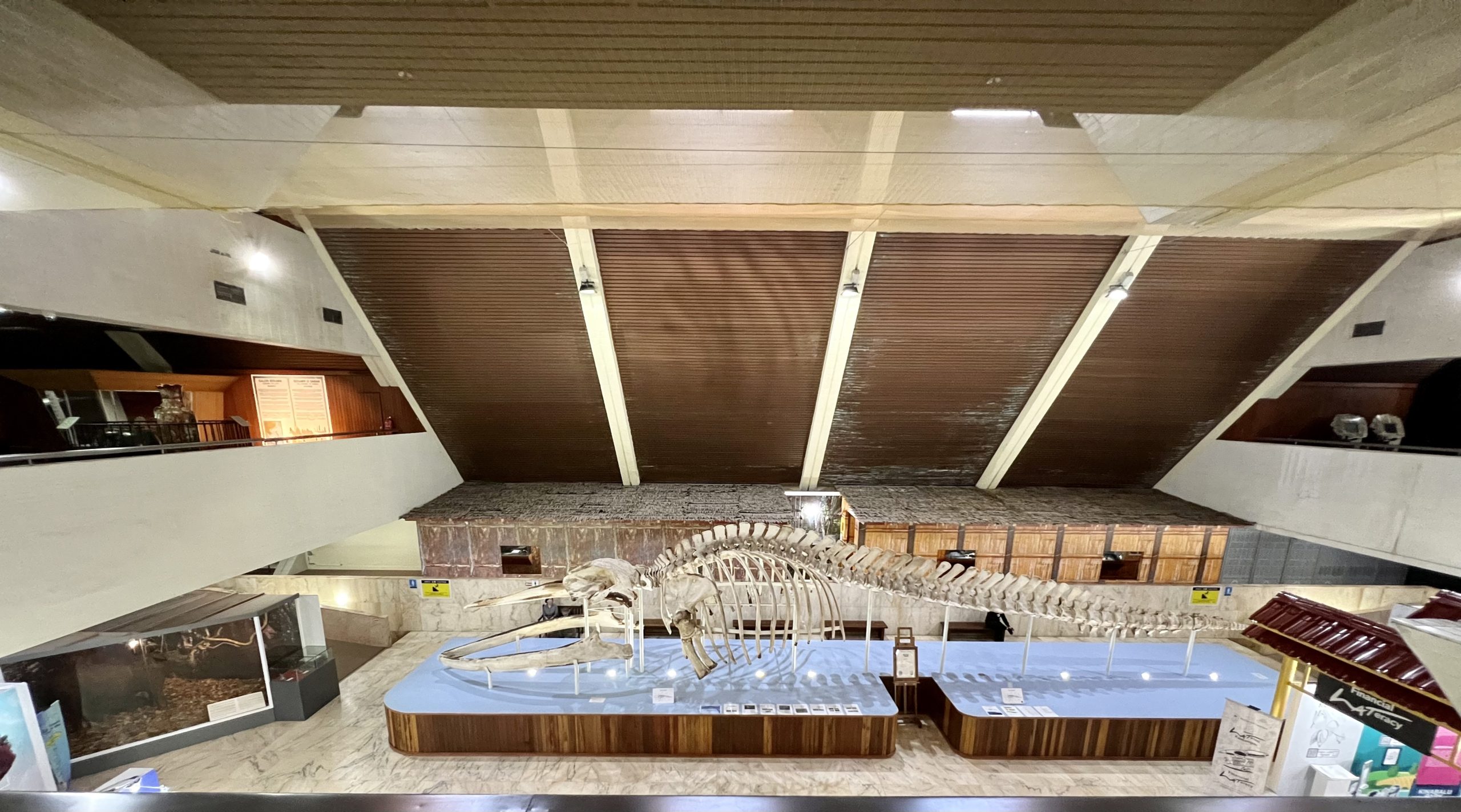
The indoor part of the museum includes the obligatory large skeleton, in this case a baleen Bryde’s whale, and many galleries covering the cultures, crafts, and wildlife of northern Borneo.
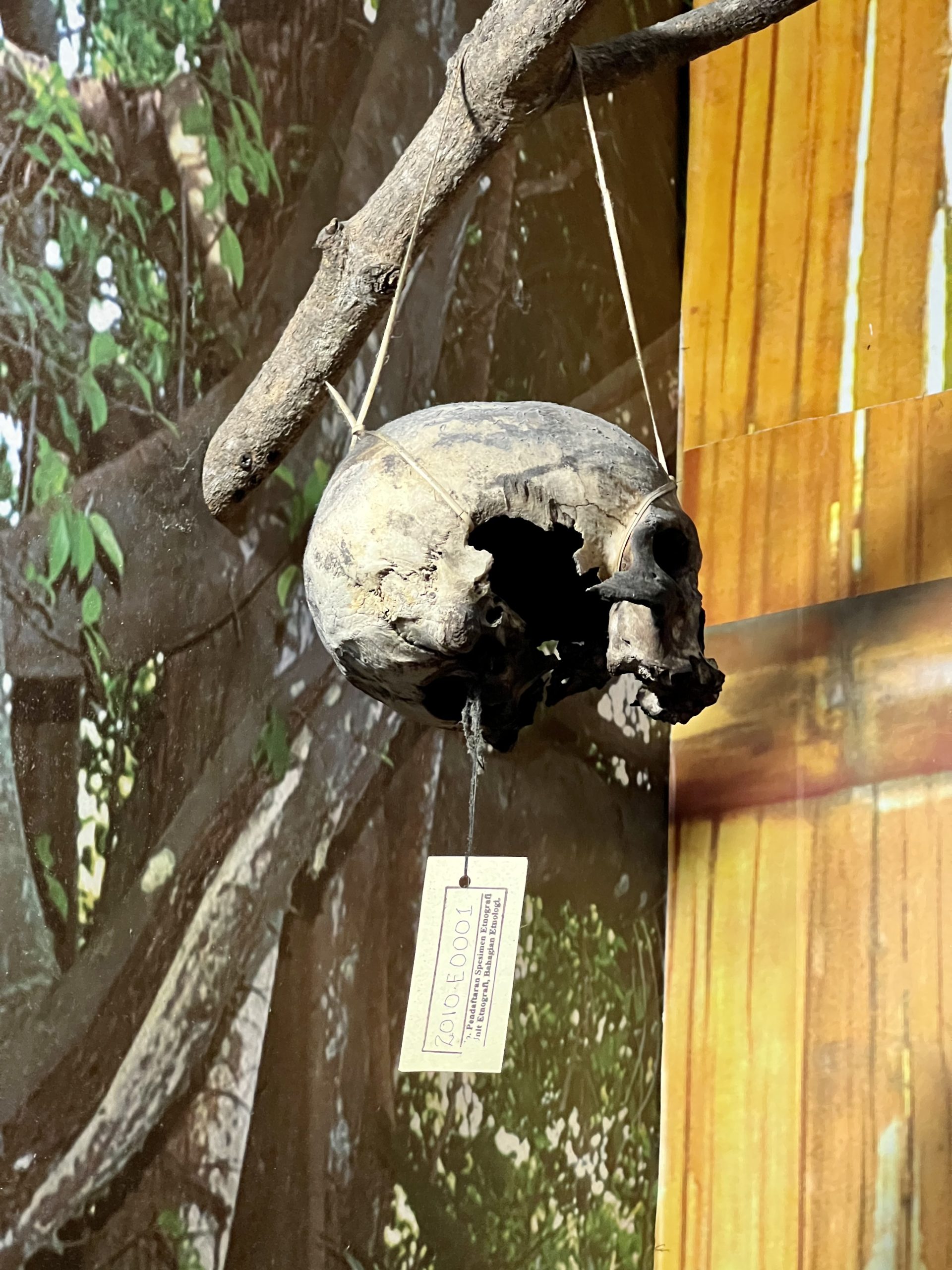
The blogger’s favorite gallery is the small section dedicated to the infamous Bornean headhunters. The Iban people collected and displayed the heads of slain enemies, like this one here, for good luck. The reasoning behind this is a bit puzzling, though, since the same head didn’t bring much in the way of good fortune to it’s original owner.
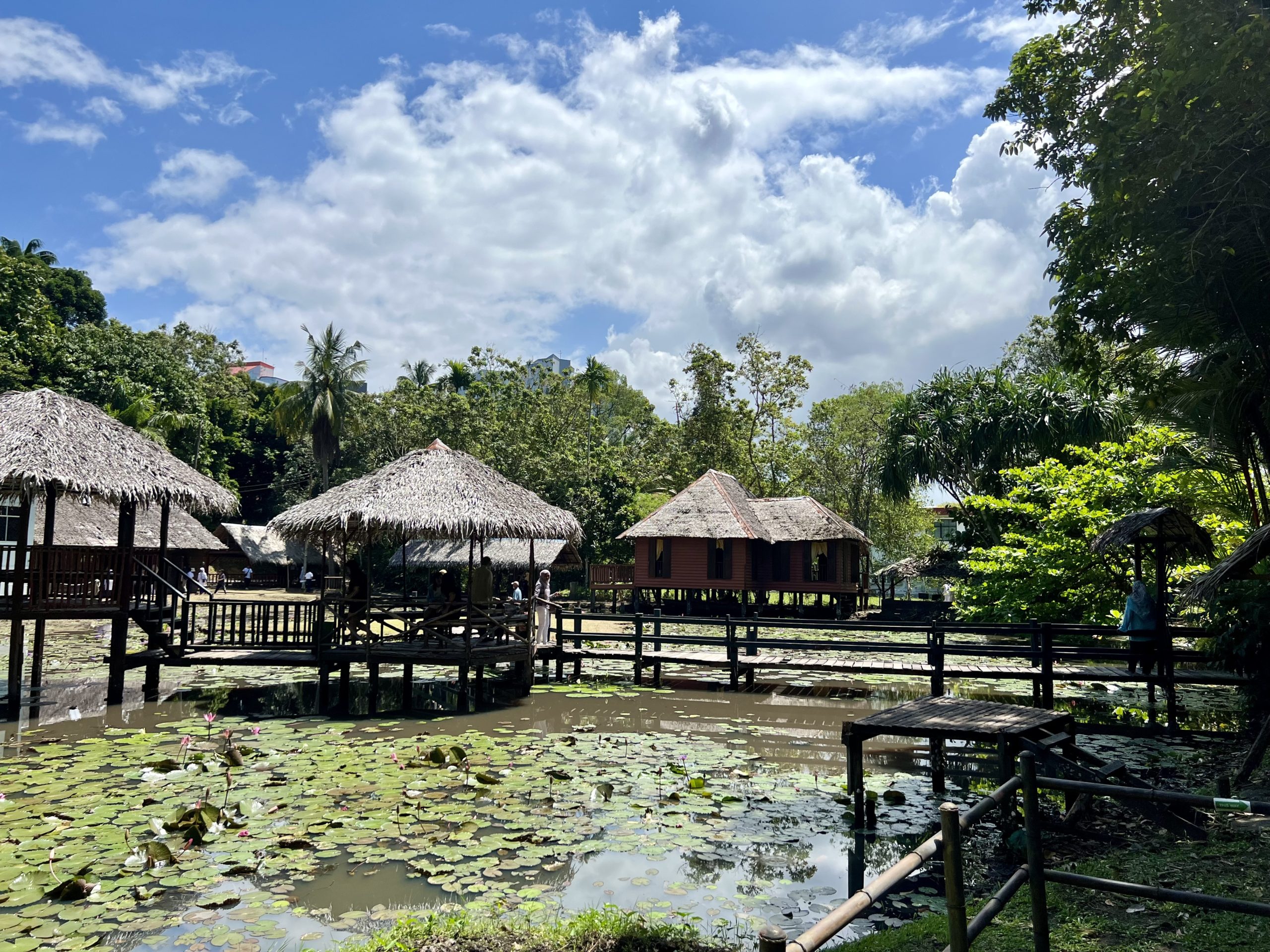
Elsewhere on the museum’s grounds, examples of villages and house types are open to view …
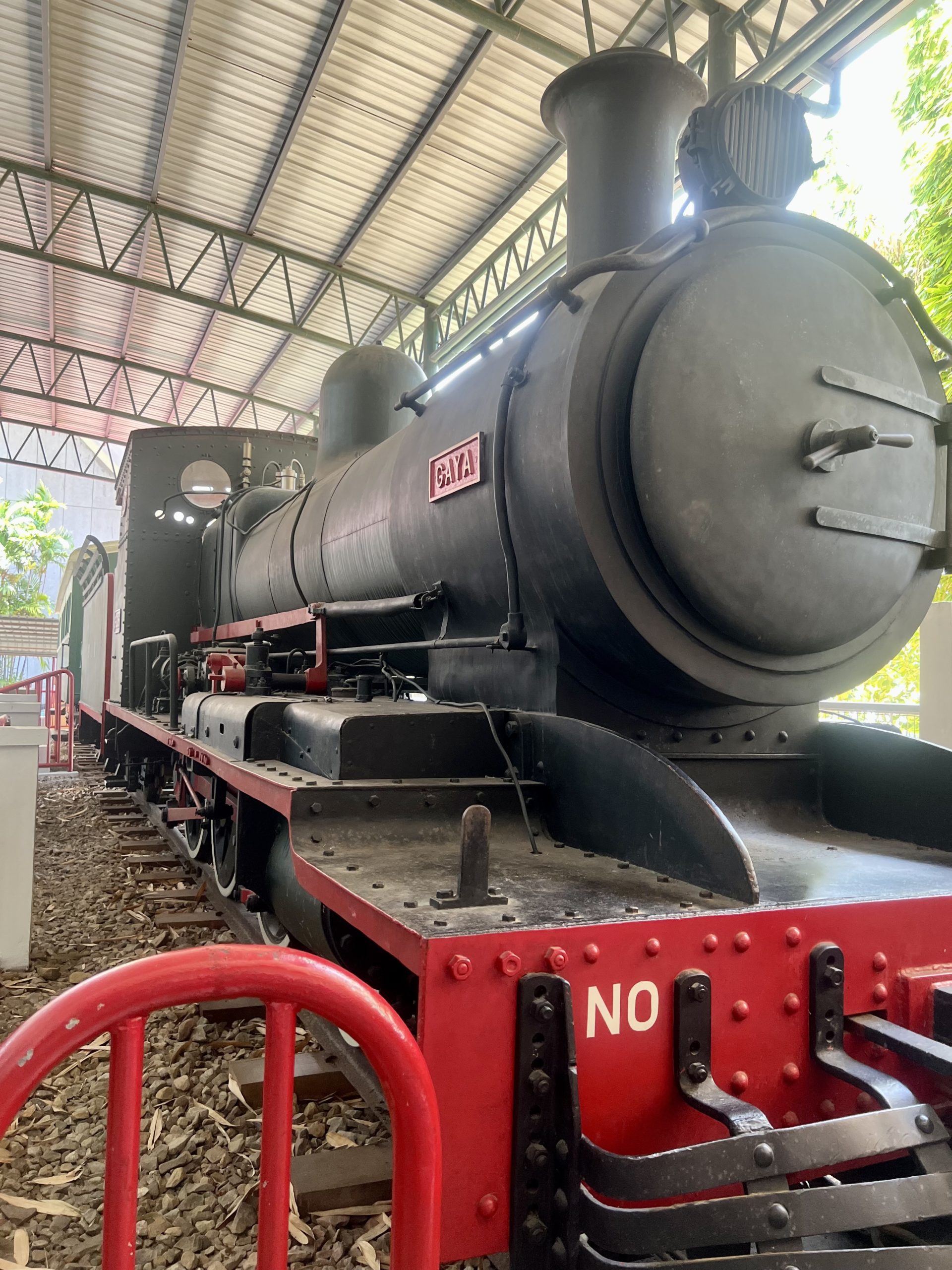
In another section are old cars and trains. Our one disappointment was to not be able to ride on the restored North Borneo Railway, which has been shut down since the start of the country’s covid lockdown.
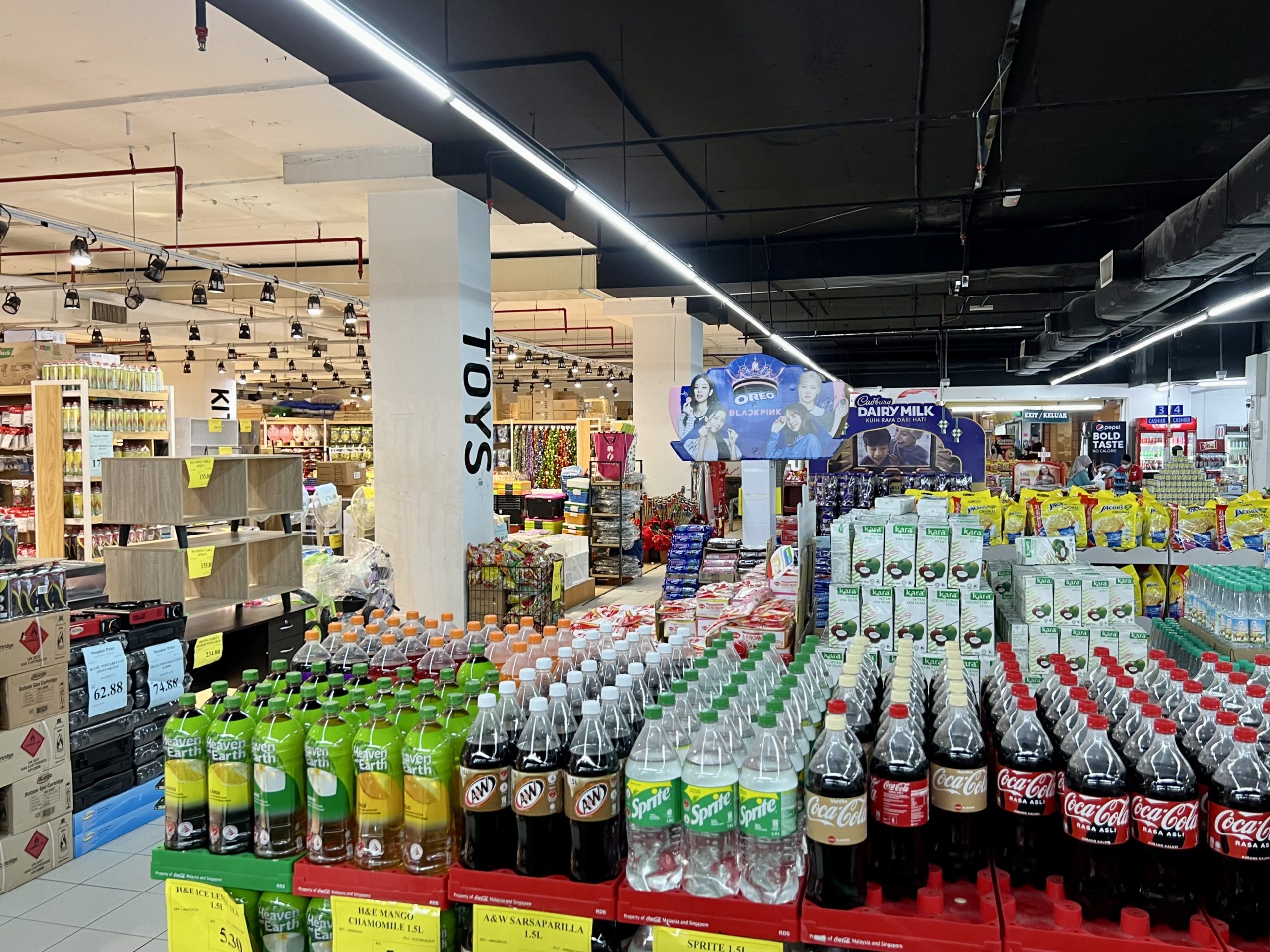
One morning, as is our habit, we went in search of local stores and malls where we could get a sense of everyday life. Bataras Superstore, above, called out to us as we passed. It is like a cross between a Walmart, a Chinese discount store, and a Japanese mom-and-pop.
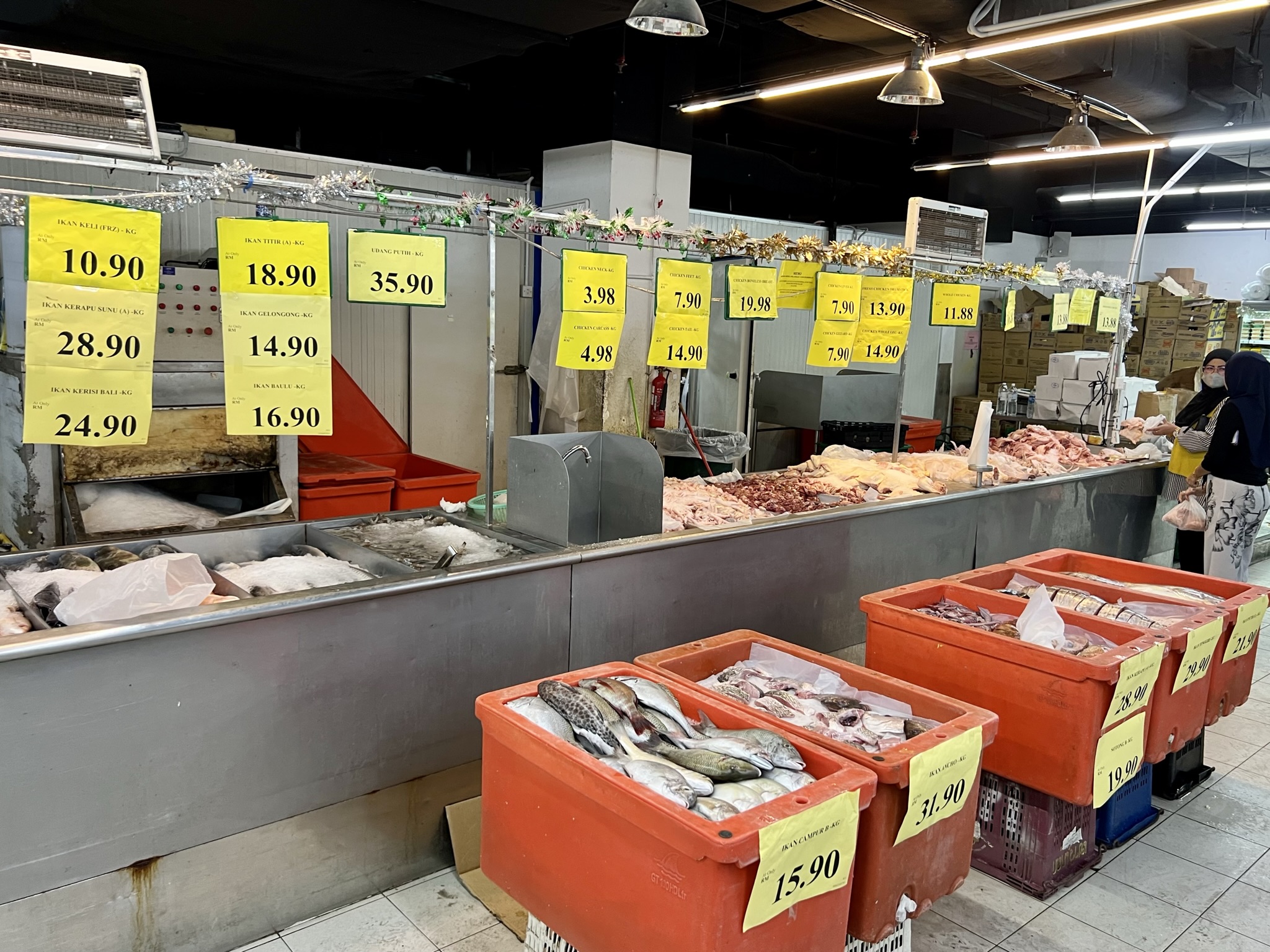
And the seafood section is much like the fish market down the way, except with ice.
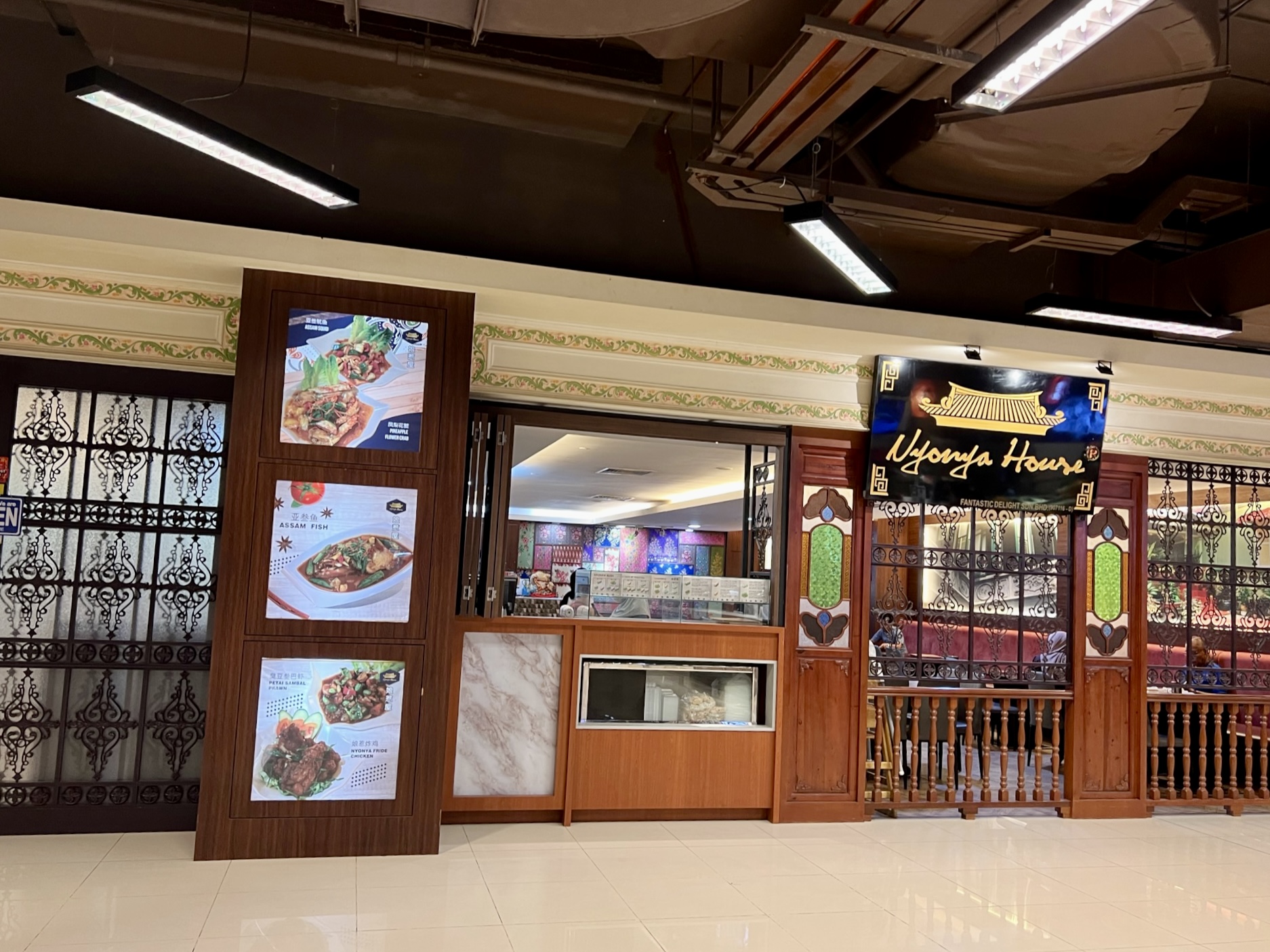
We eventually wound up at the Imago Shopping Mall and looked for a lunch stop. Since Nonya, or Peranakan, cuisine is a foundational style of cooking in greater Malaysia-Indonesia, we didn’t make it past the Nonya House restaurant.
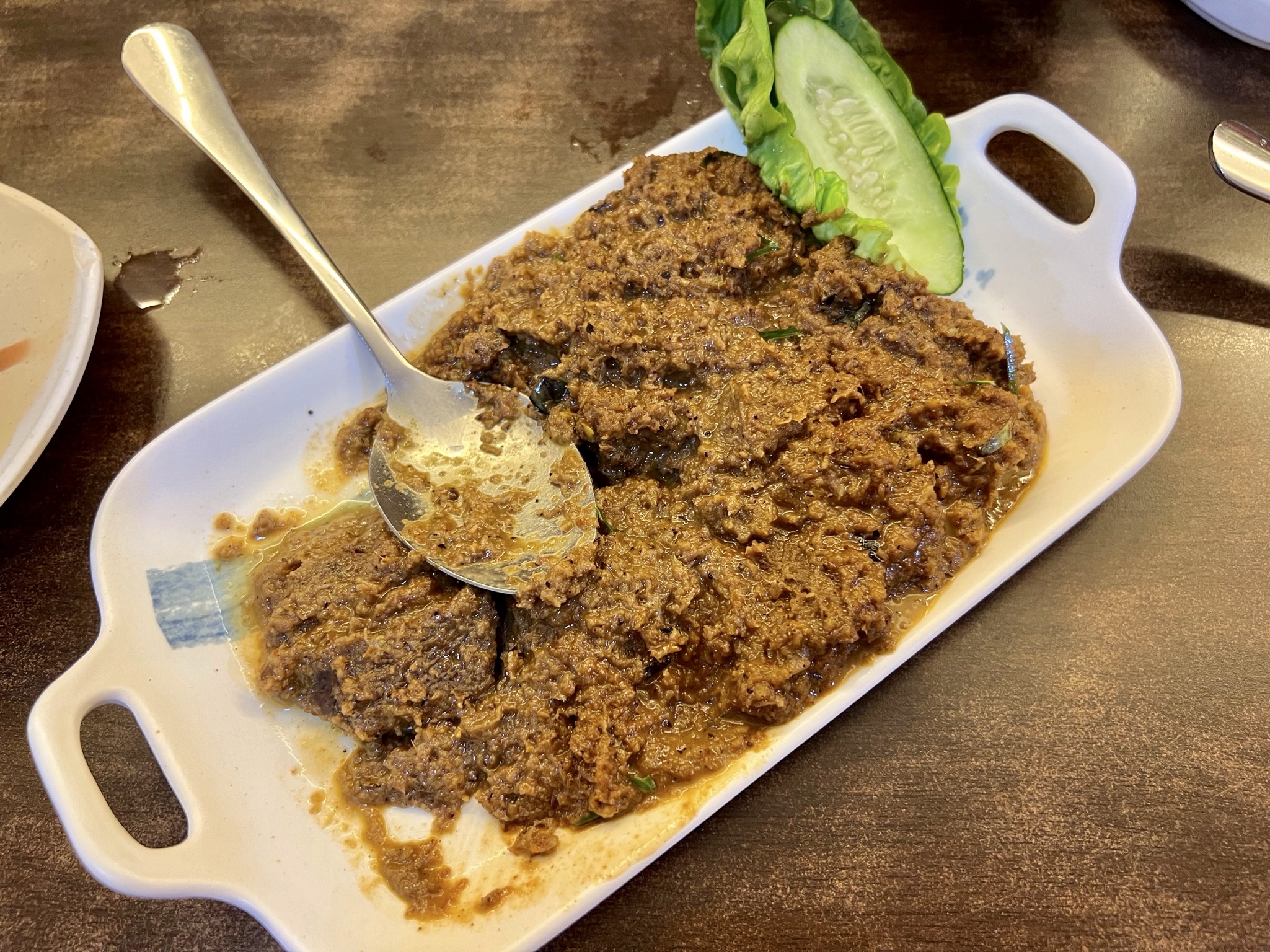
One of the dishes we had was Beef Rendang. It is a caramelized beef curry and a Nonya standard. Nonya cooking is rooted in the early Chinese settlers and their adoption of Malaysian and Indonesian spices, which creates a wildly flavorful fusion cuisine.
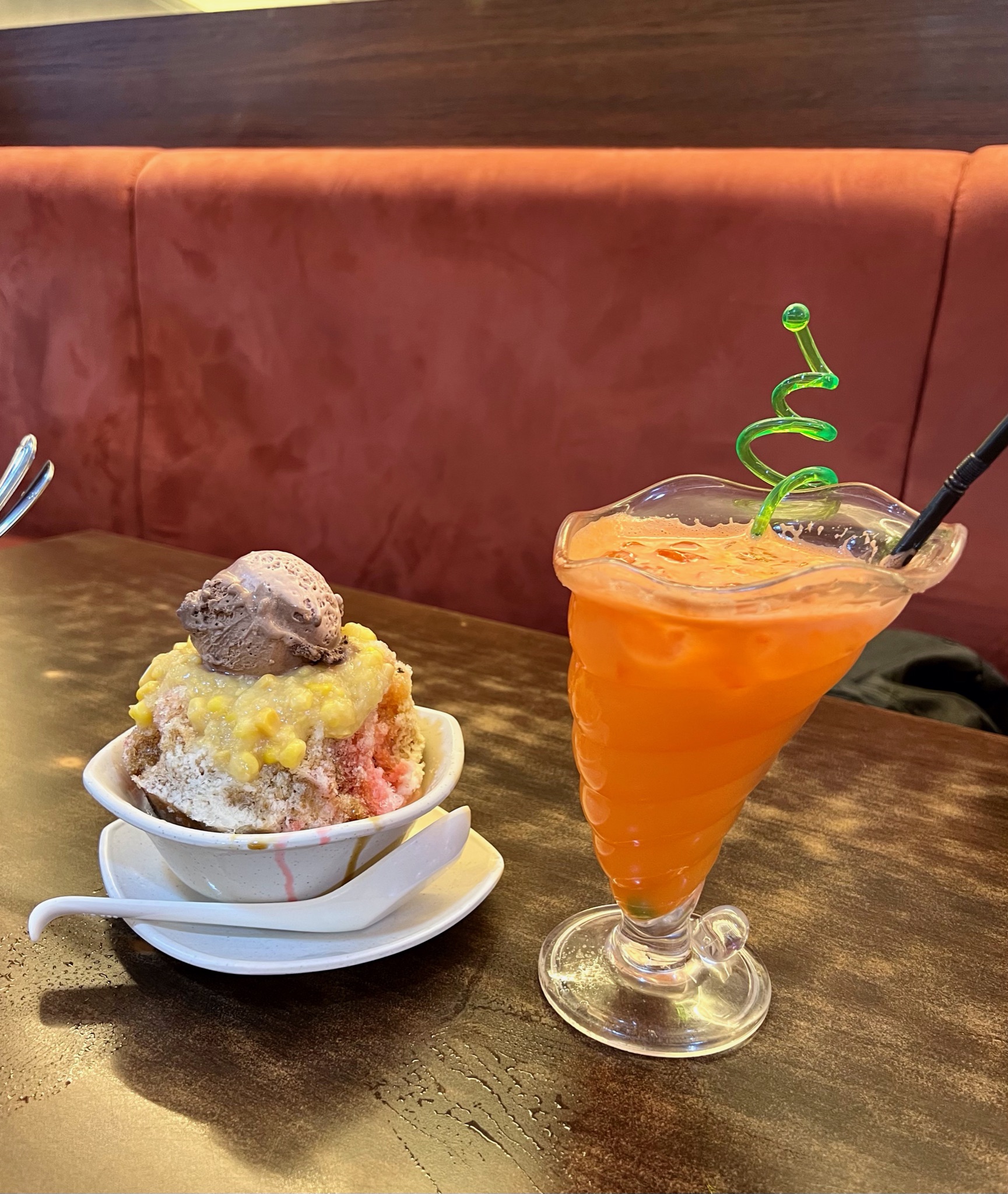
For dessert we had ice kacang, shown here next to the photographer’s carrot juice, because she liked the glass and twirly. Ice kacang is Malaysian shaved ice dressed with some combination of red bean, grass jelly, palm sugar syrup, condensed milk, and any number of other things, like sweet or creamed corn, durian, peanuts, and almost anything else laying around. We ordered ours with ice cream, which turned out to be chocolate. ‘Nuff said.
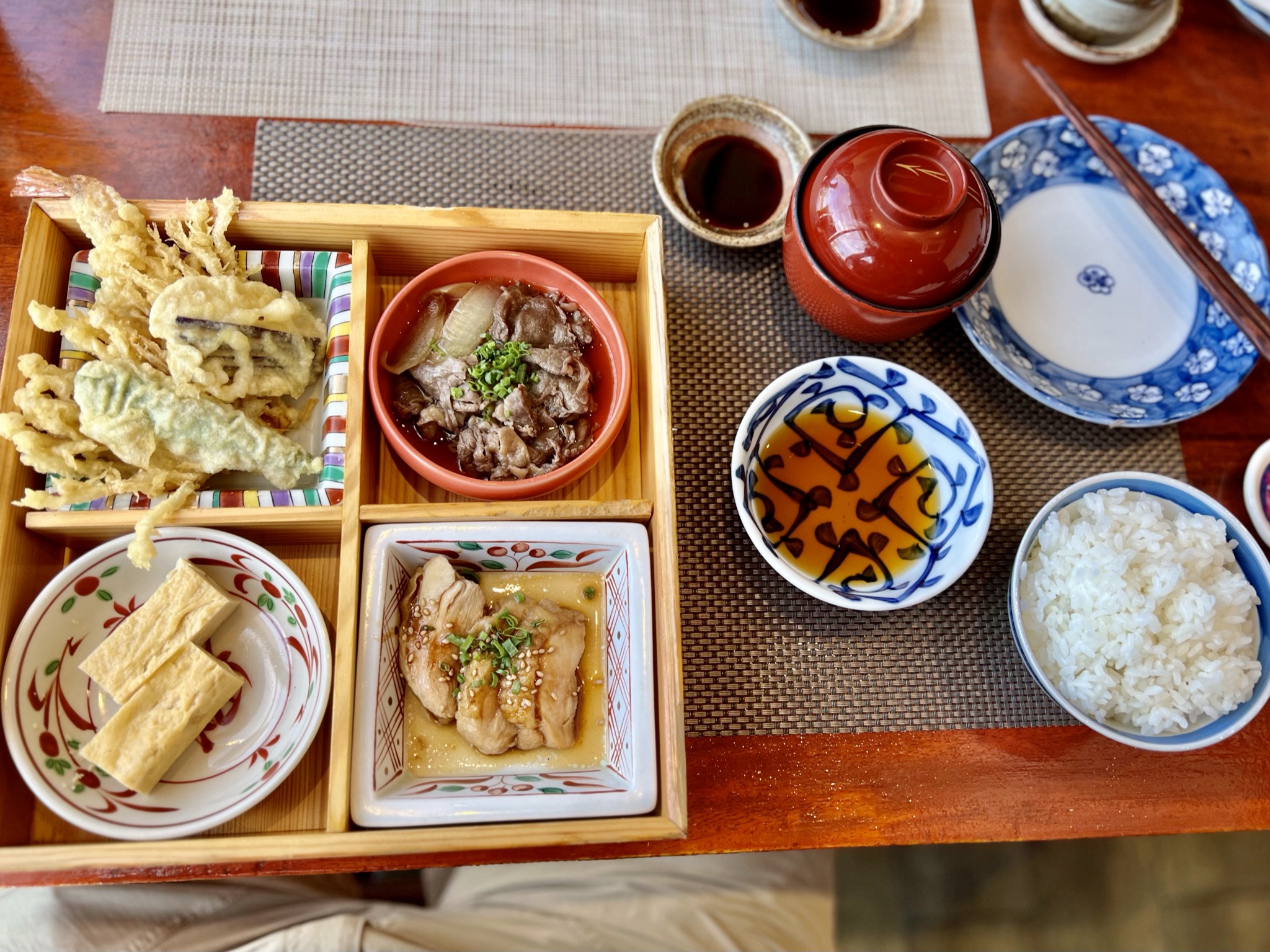
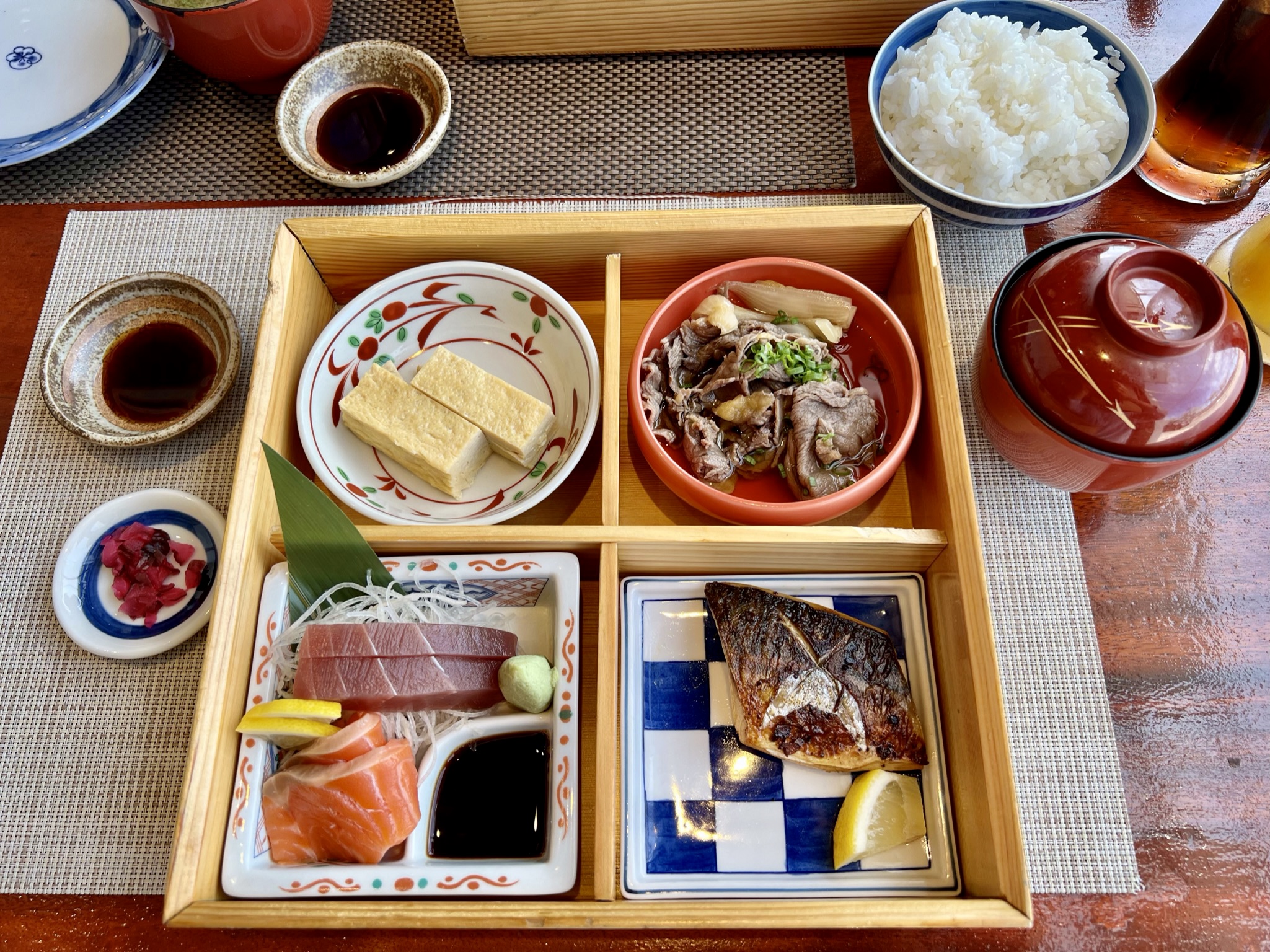
Another lunch found us at Sakagura Restaurant, because someone in our party wanted Japanese. The food was both excellent and photogenic, so we ate it all and photographed it all, not necessarily in that order.
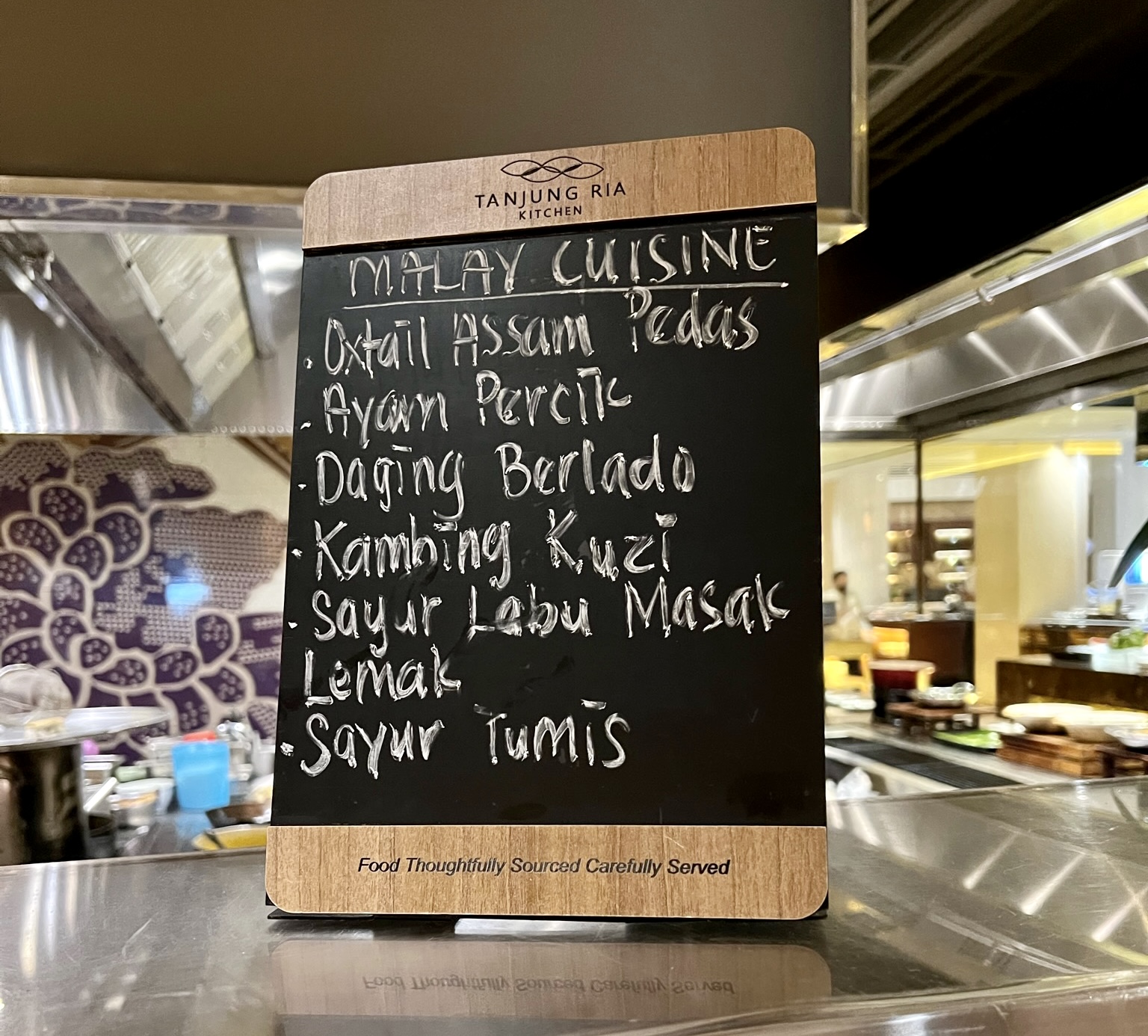
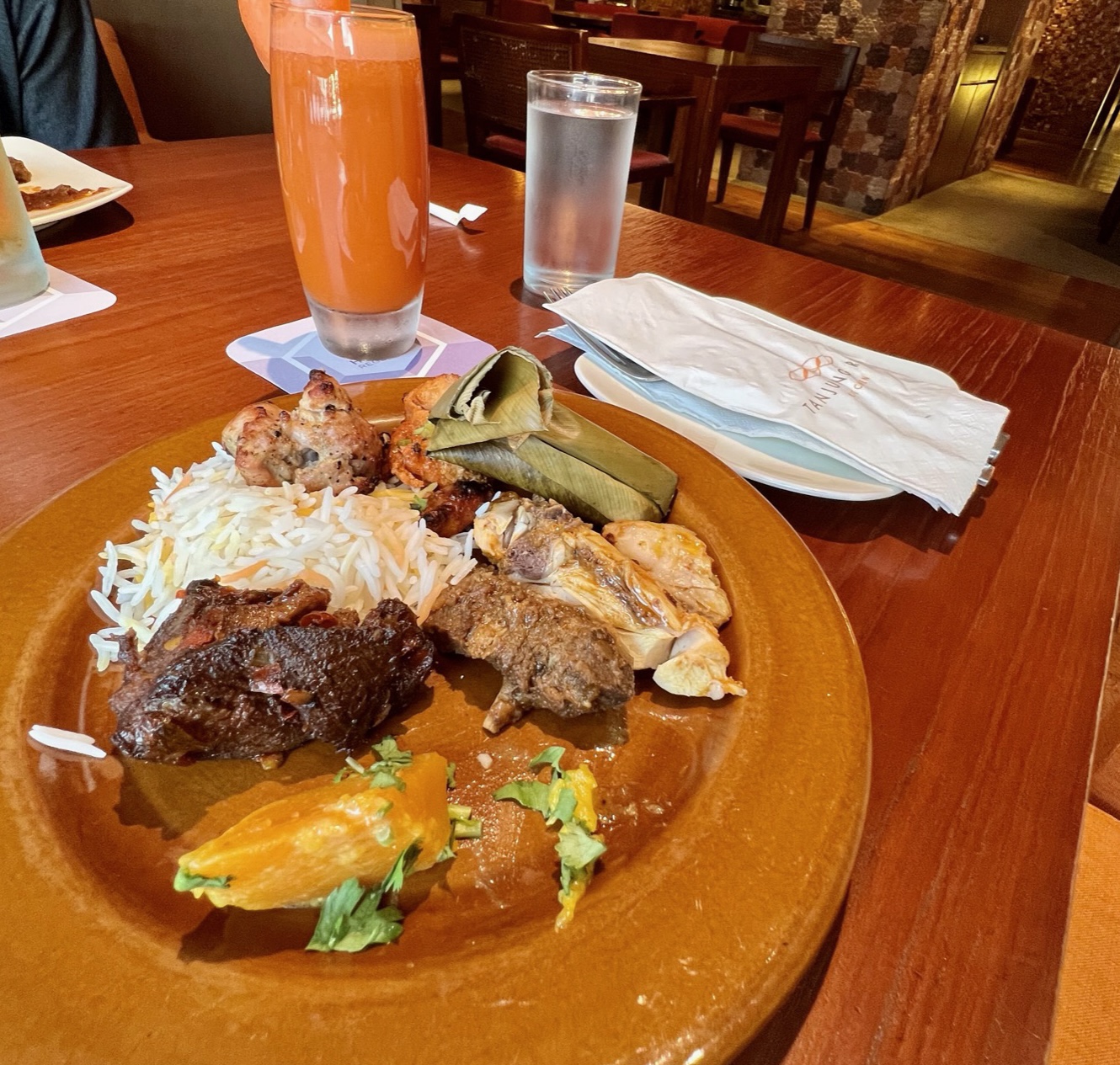
We wanted more Malaysian food, so before we left we ended up at Tanjung Ria, a multi-cultural buffet that emphasizes … well … Malaysian food.
A fascinating feature of the buffet is that none of dishes are named, only listed on an aggregated chalkboard, so we had no idea what we had on our plates. Eat now, Google later, we said. Risky, but the food didn’t get cold. Besides, it all tasted good.
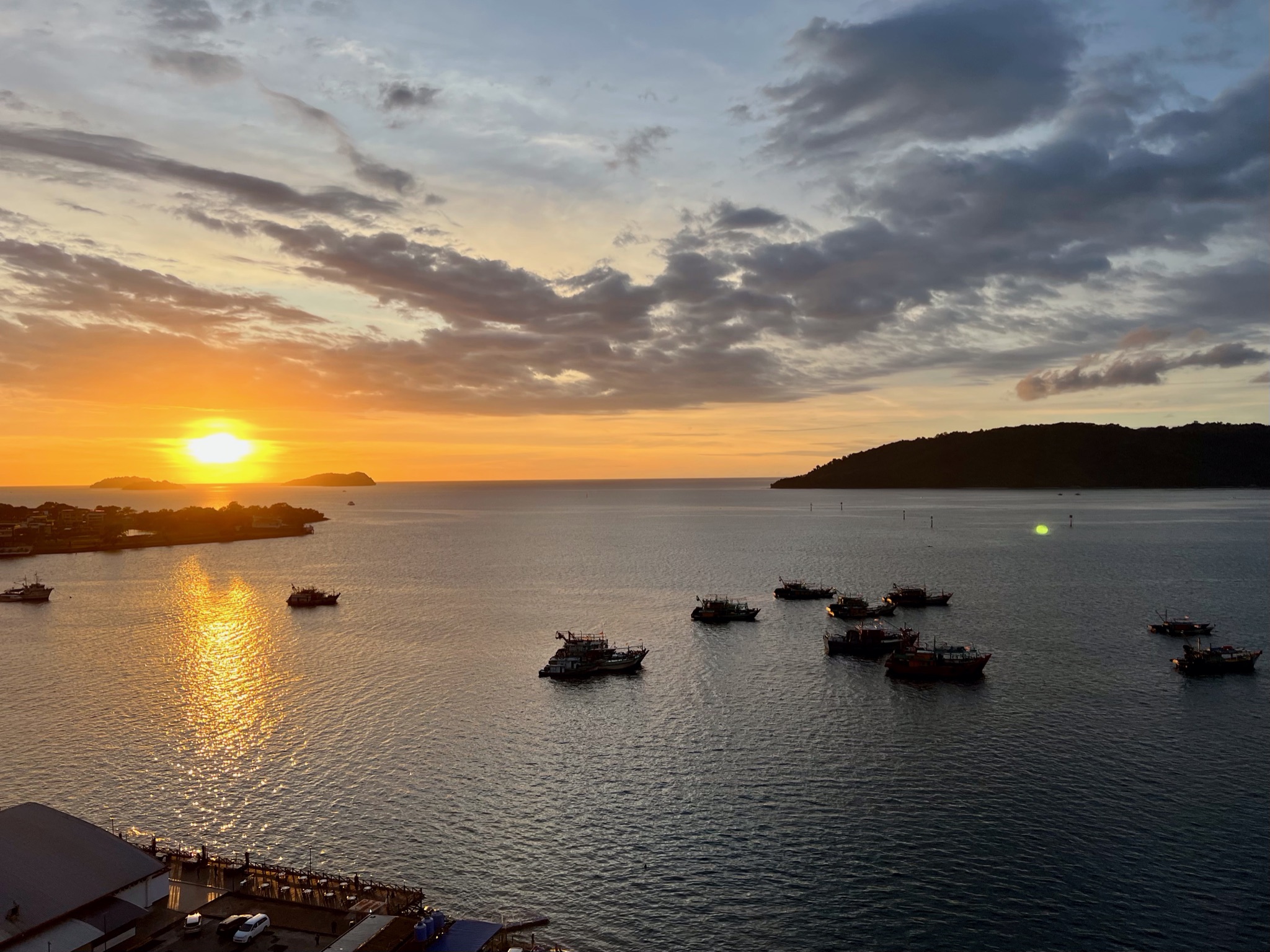
On our last night in KK, we watched the sunset from our hotel’s rooftop lounge. It wasn’t terribly different from all the others we watched during our stay, but it was special just the same.
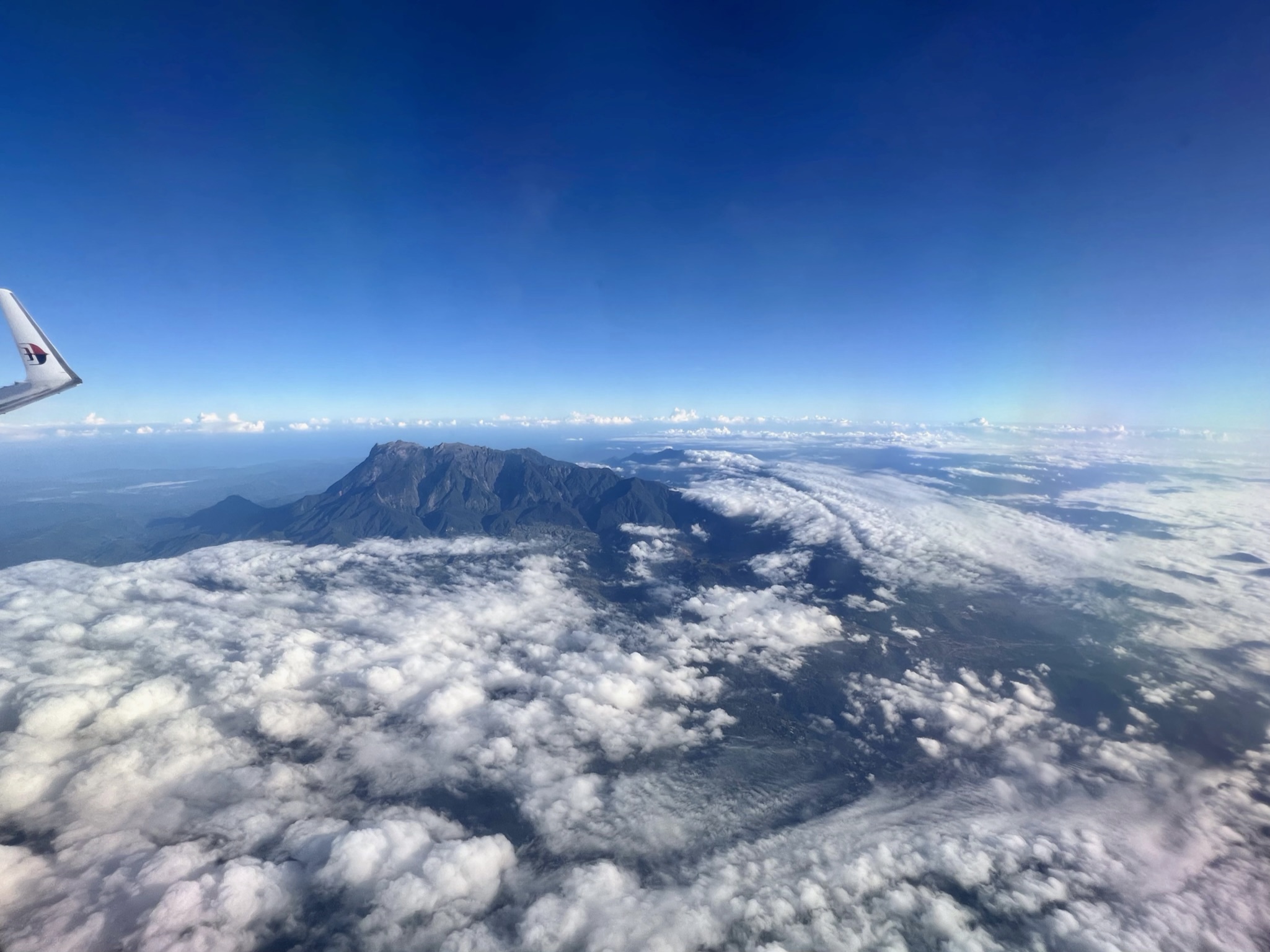
Early the next morning, we took our flight to Sandakan, on the northwest coast of Borneo. We flew by Mt. Kinabalu, or so the photographer claims. The blogger was napping in the aisle seat.
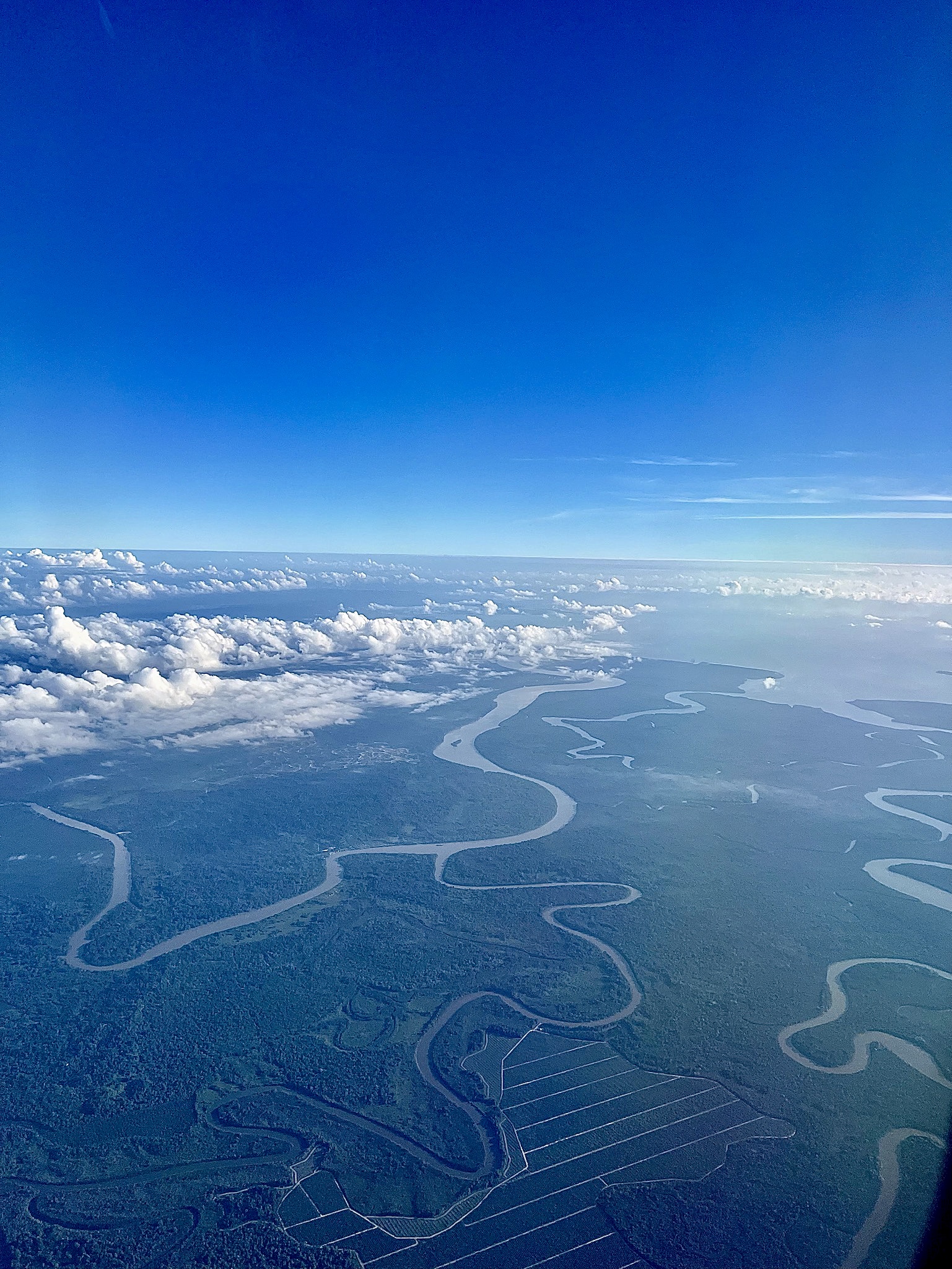
As we approached Sandakan, we could see the intertwined Klagen and Pimpin rivers emptying into the Sulu Sea. Borneo has much jungle, still, but so much of it has become palm oil plantations.
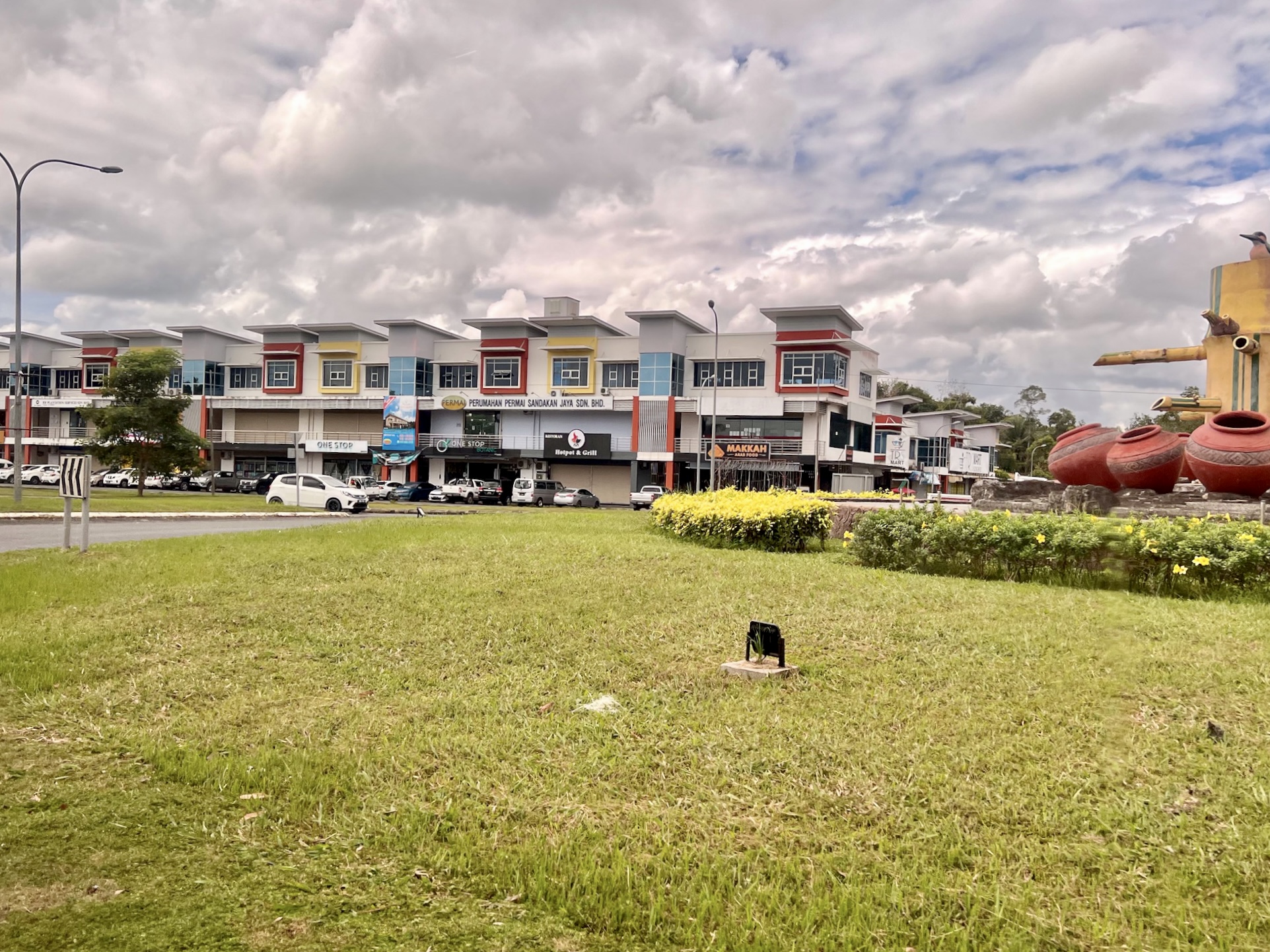
As the drive from the airport to Sepilok became more rural, the roundabouts strung along the highway gave the impression of local shopping hubs.
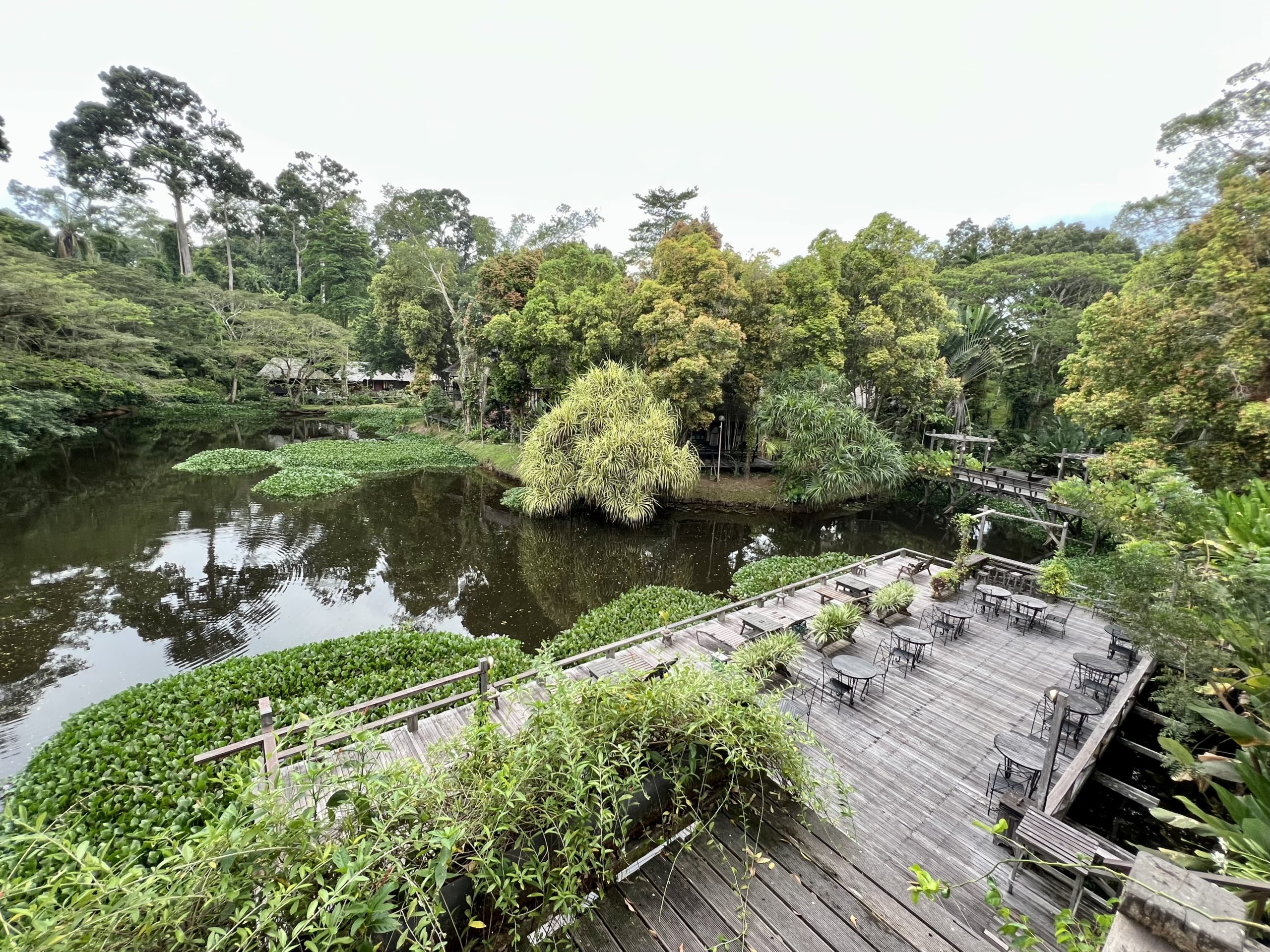
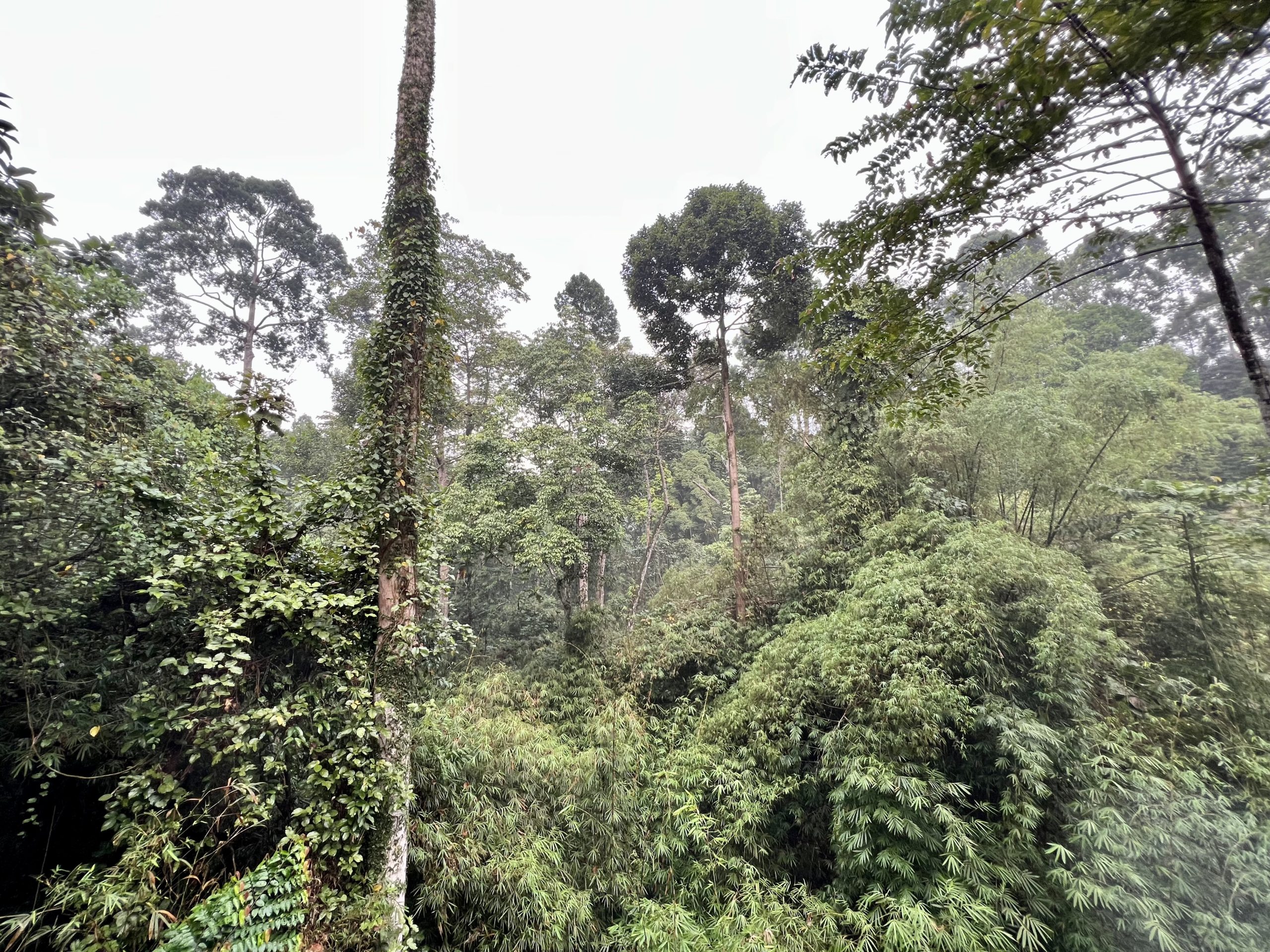
We checked into the Sepilok Nature Resort, one of several small properties on the edge of the Kabili-Sepilok Nature Reserve, a nearly 11,000 acre reserve set aside to protect primary virgin rain forest.
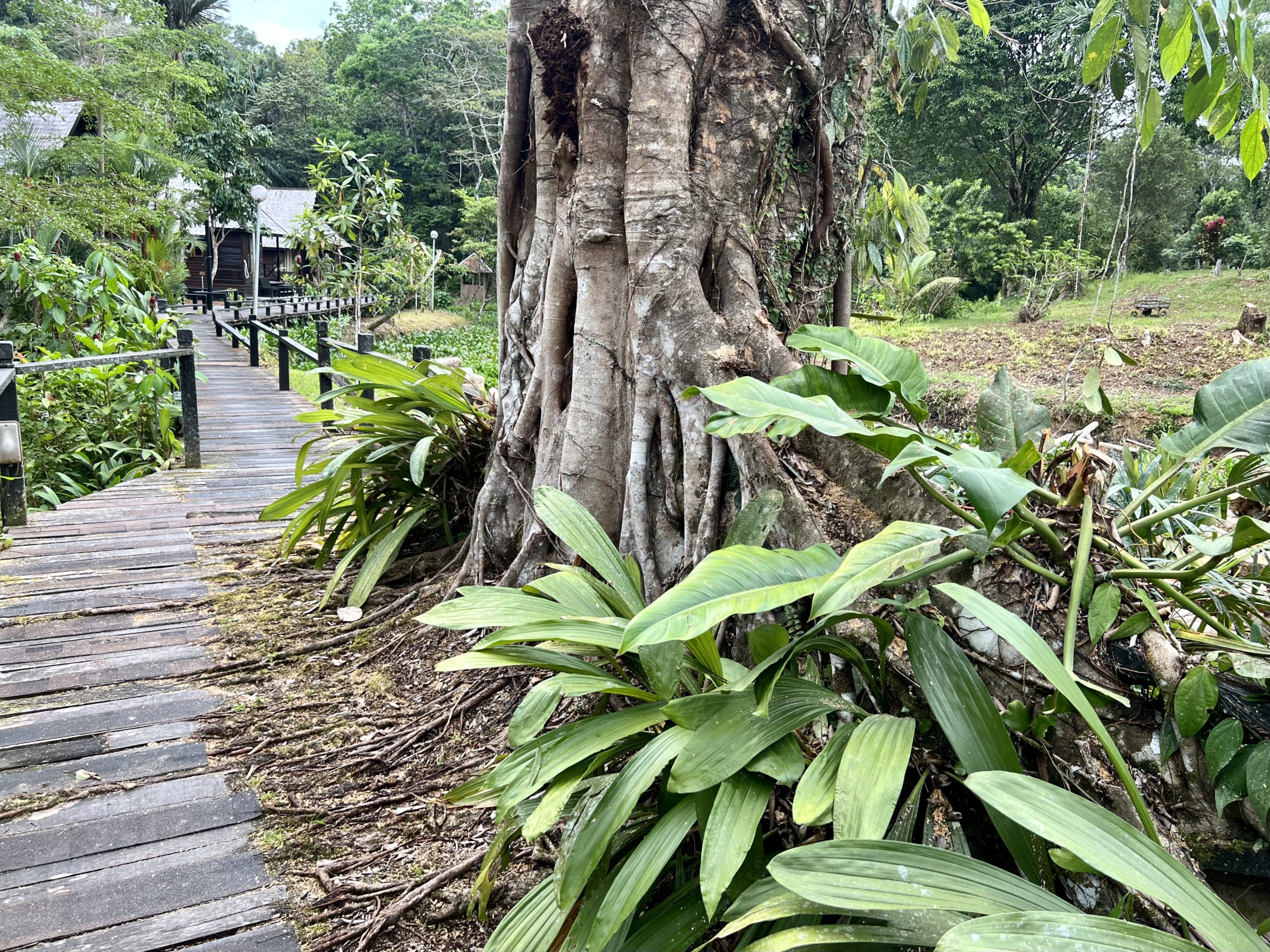
Our room, or “chalet,” was at the end of a long boardwalk and up against the forest.
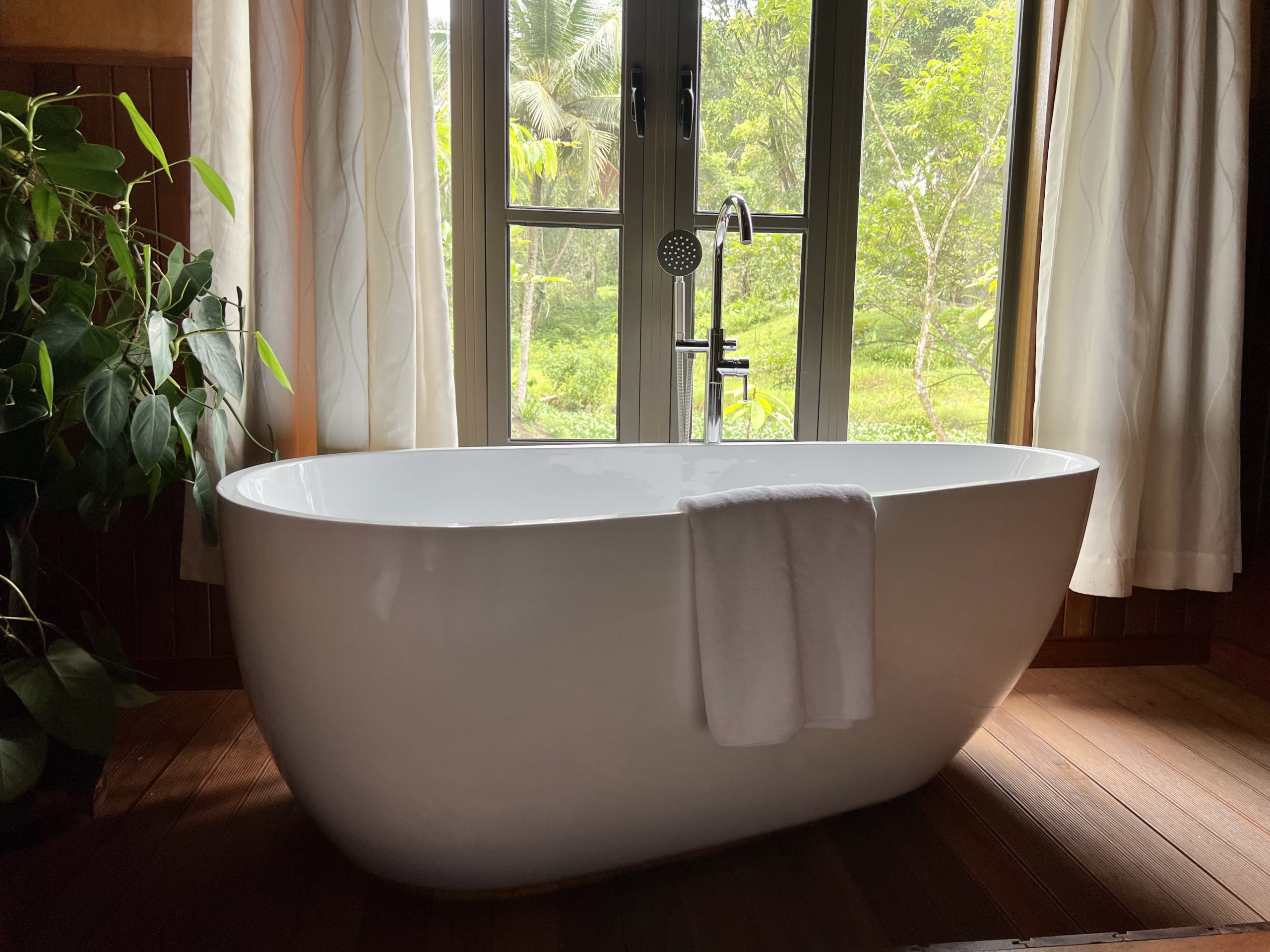
The rooms are rustic-chic. Press the button and wait five minutes for hot water. When trying to book our reservation, we got off to a rough start, in part because they were opening after being closed for the pandemic, but also because they are a small operation and poorly organized. We’re glad we stuck it out.
Being embedded in the reserve’s forest, where close to 100 wild orangutans live, evidence of the great apes is common. We didn’t see any during our stay, but we knew they were there. This nest, high in a tree outside our room, appeared one morning. Orangutans make new nests nightly, high in trees that seem barely able to carry their 100 to 200 pound weight.
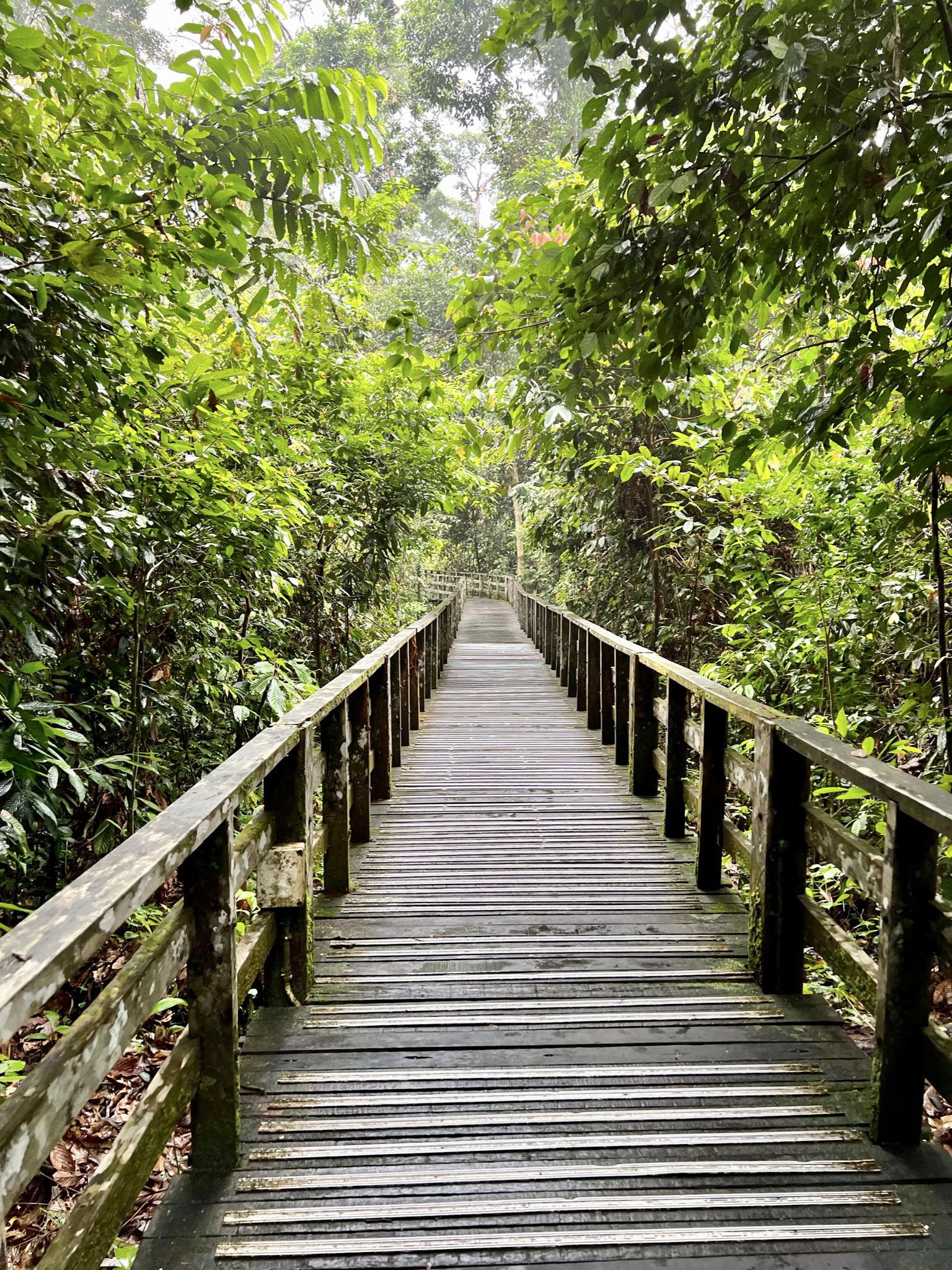
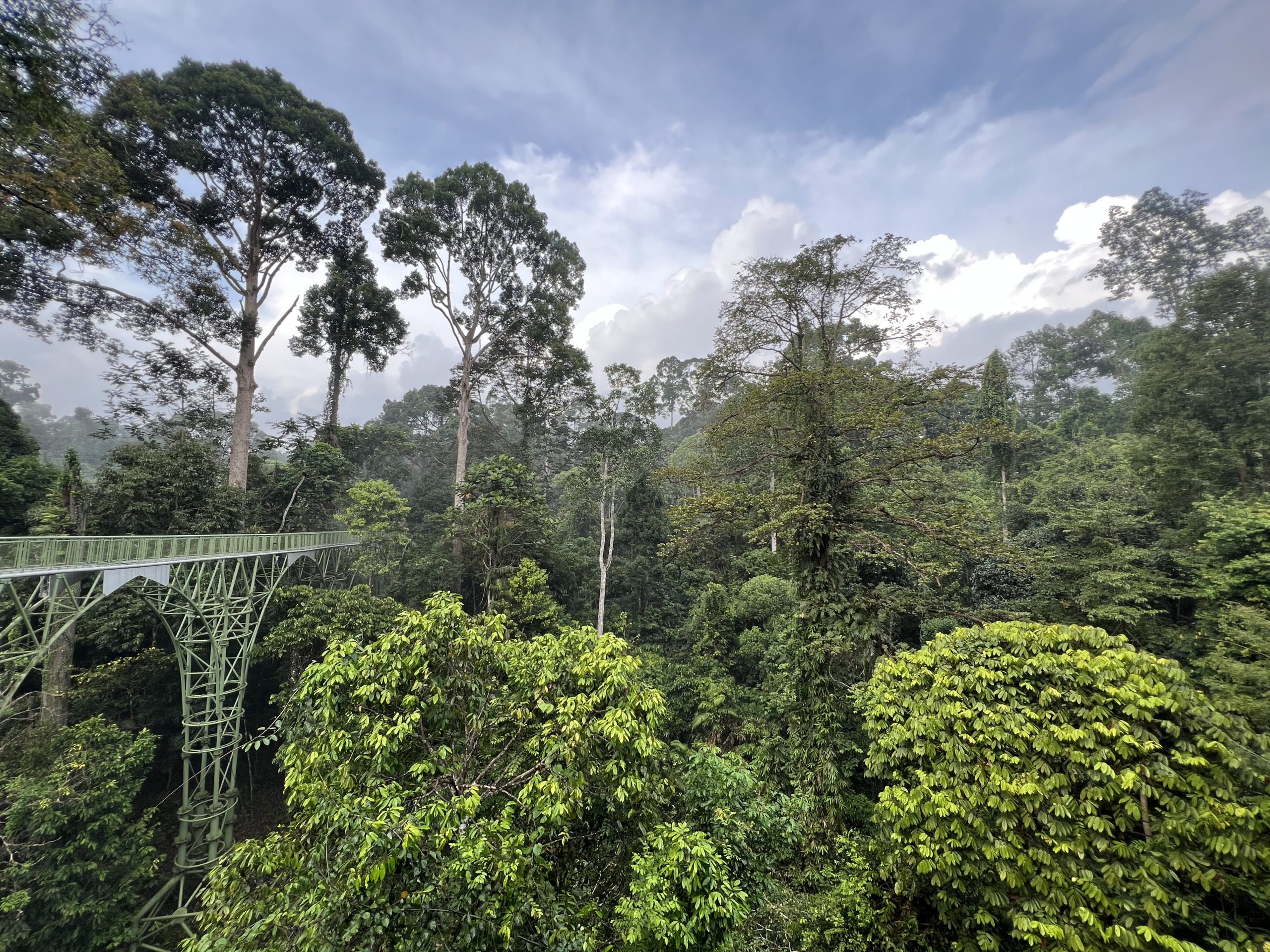
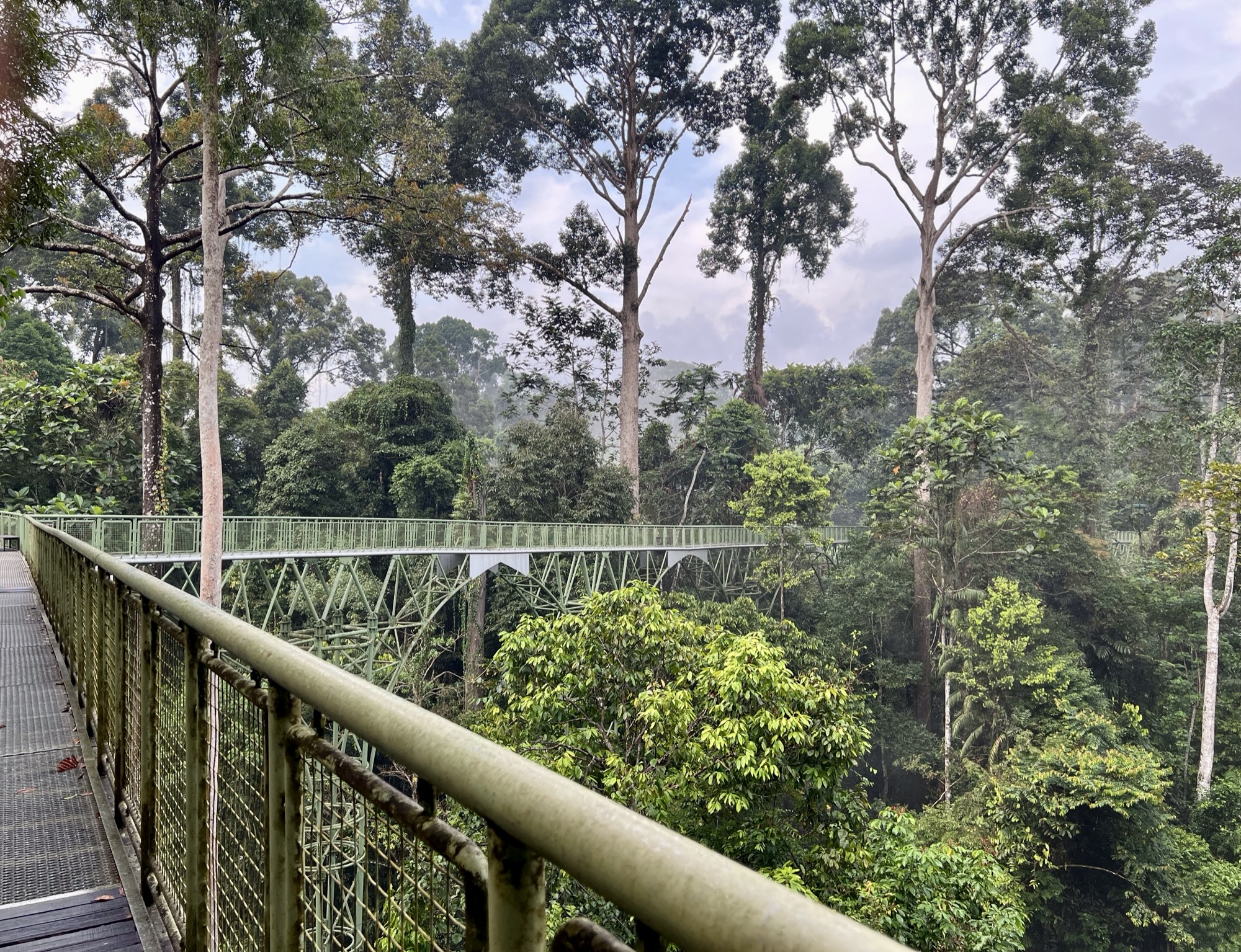
Also in the reserve is the Rainforest Discovery Center. Its key feature is a nearly 400 meter canopy walk (above and below) that takes one through different levels of the forest.
At several points along the walk are high towers. At the top of one, we joined some birders and tried to benefit from their, and our guide’s, spotting skills. After some time, we saw a blue-something. Birding is like fishing without bait and simply requires more patience than I have access to.
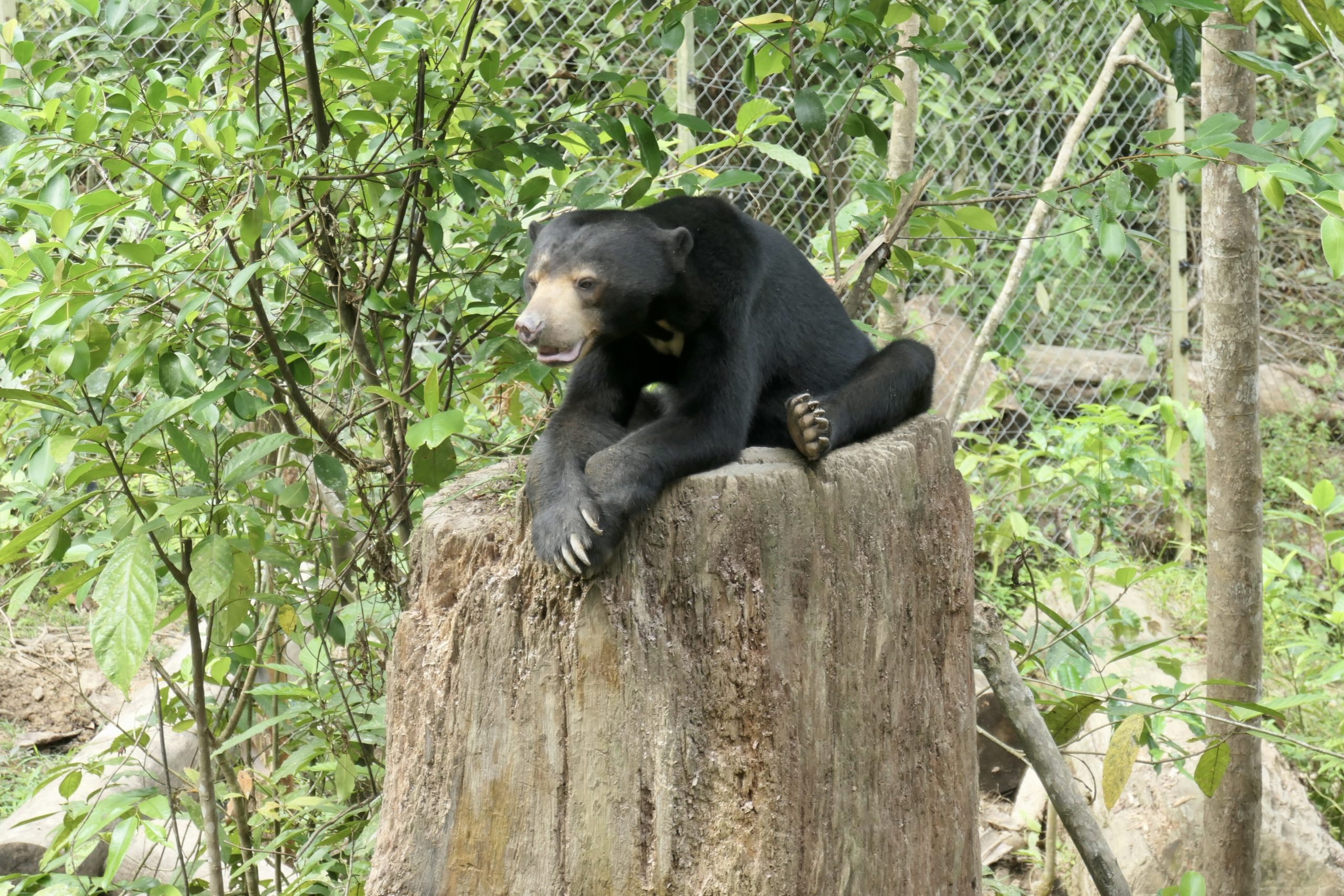
Also nearby is the Bornean Sun Bear Conservation Center, where we finally saw a sun bear. The center is where rescued and orphaned sun bears are rehabilitated before being returned to the wild. They are a distinct species, with very long claws and an even longer tongue. We tried to get a picture of their tongue, but this one wouldn’t oblige, even though we could tell he really wanted to stick it out at us.
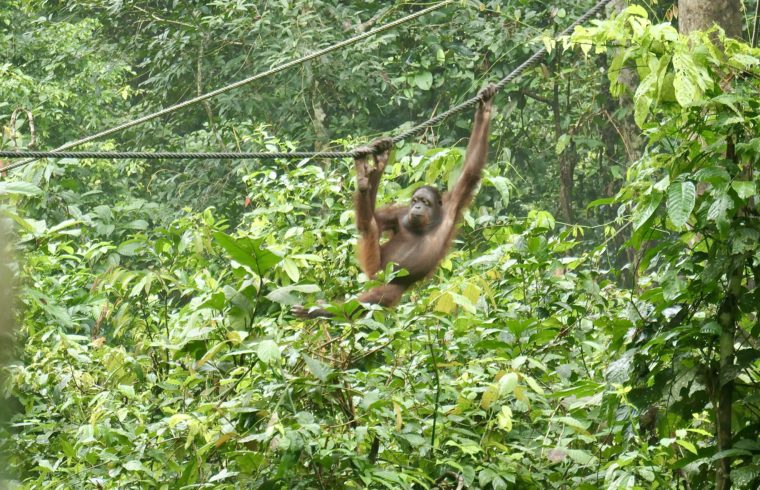
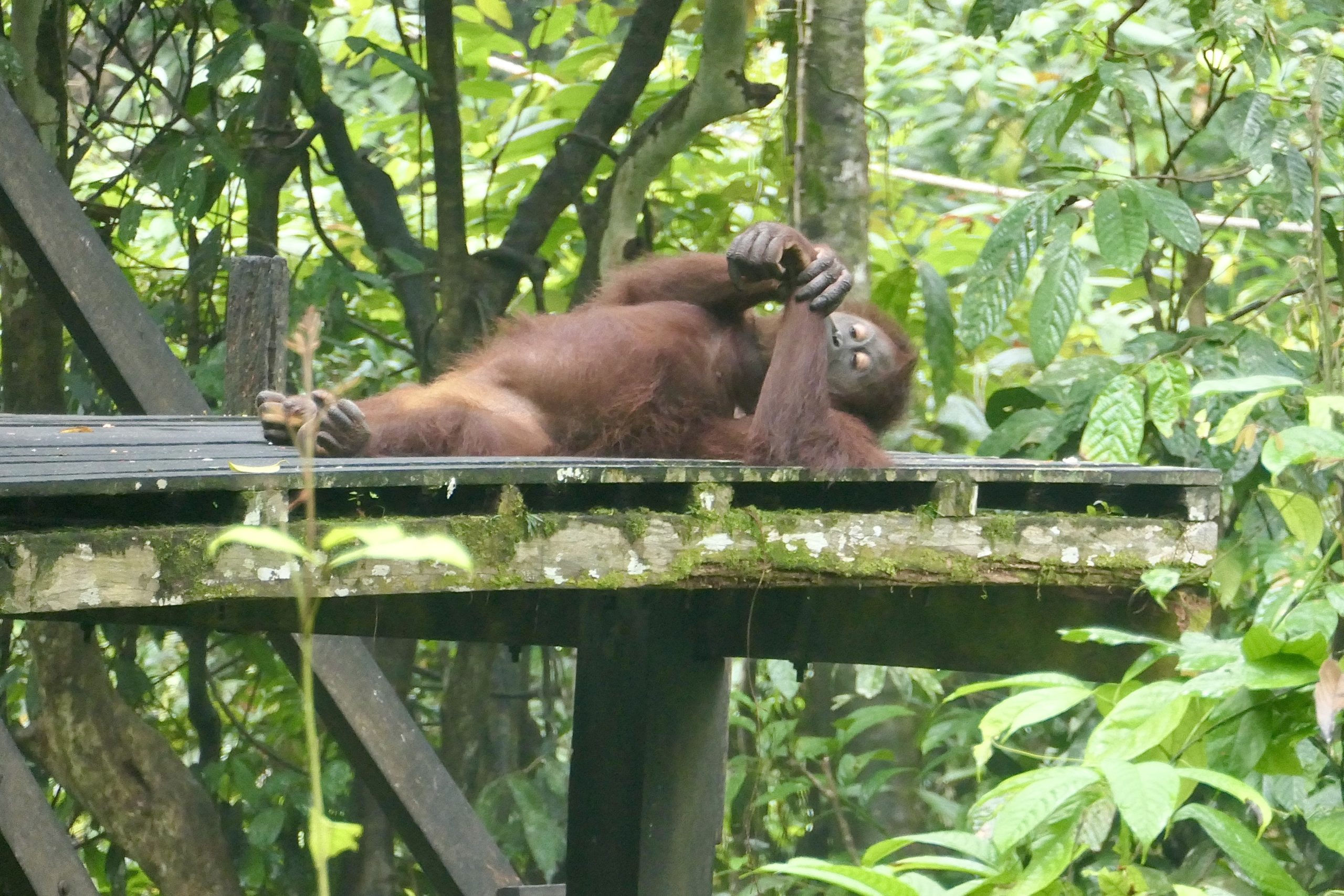
One morning we met up with our guide and visited the Sepilok Orangutan Rehabilitation Center. These guys are the real reason we came to the area. There are 30 or 40 orangutans at the Center, but unlike the Sun Bear Center, there are no confining barriers. The orangs are free to come and go, and less than a half dozen take advantage of the feeding platform, those being mostly juveniles. The majority of the rescued orangutans have become self sufficient and live about the reserve. Occasionally they are relocated to other forests, to broaden their range. This one here is the oldest of those who came to the feeding, and the first to arrive. She doesn’t appear to subscribe much to the whole develop-self-sufficiency idea.

Strung about the feeding platform are ropes, handy bridges of sorts to give the orangutans easy access.
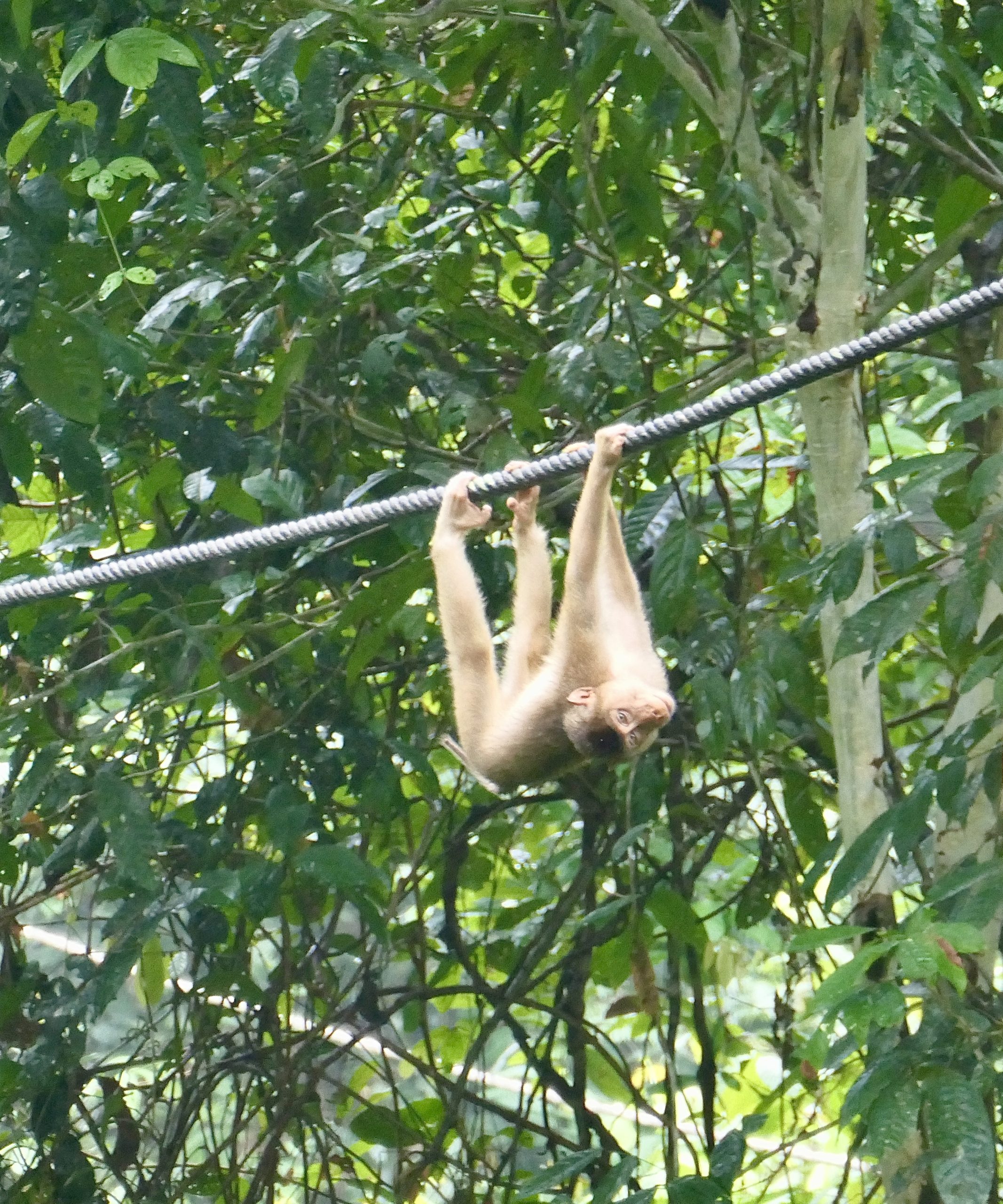
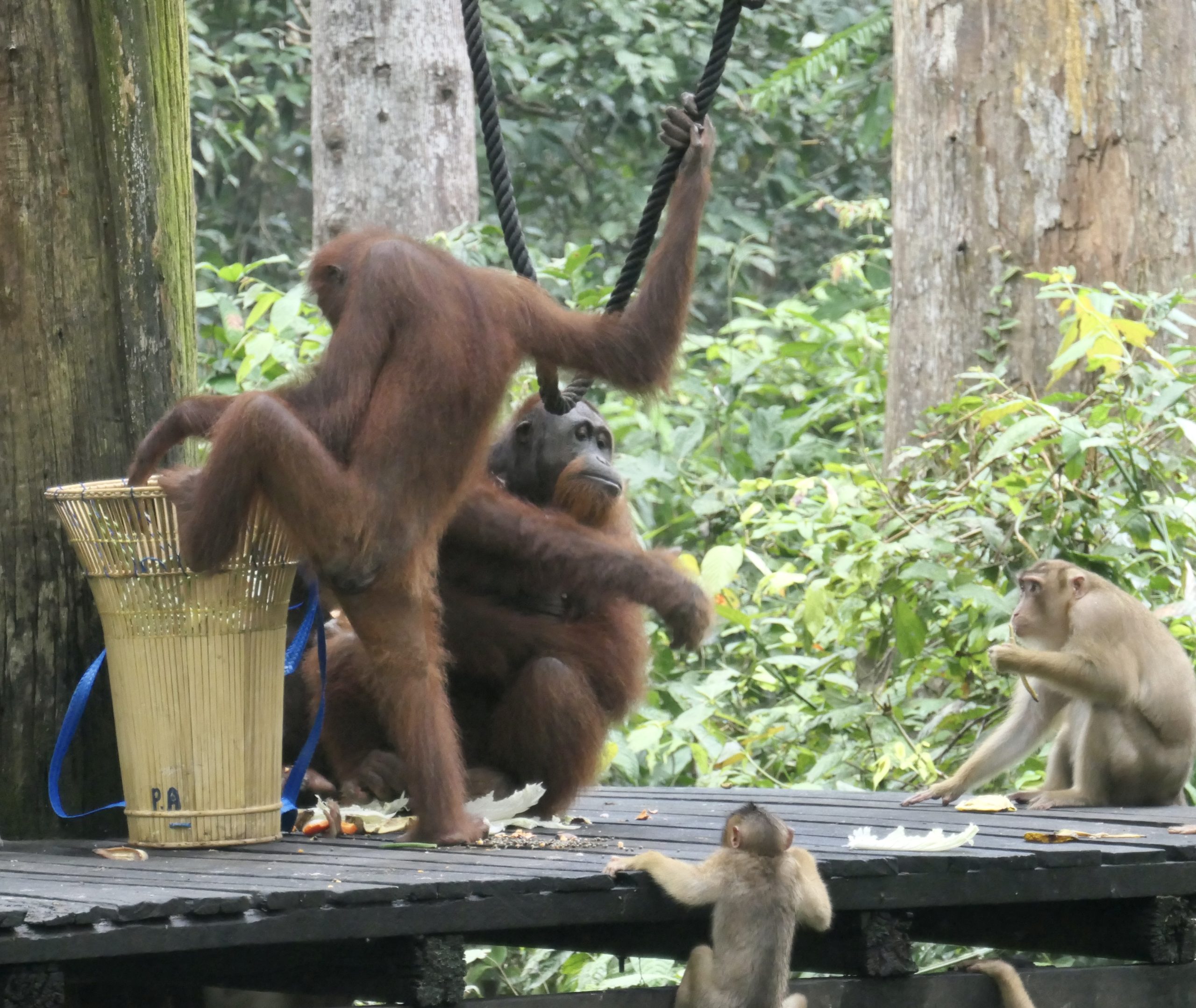
Orangs aren’t the only hungry primates about. Local macaques swing in at feeding time.
Generally, the monkeys keep their distance from the feeding orangutans …
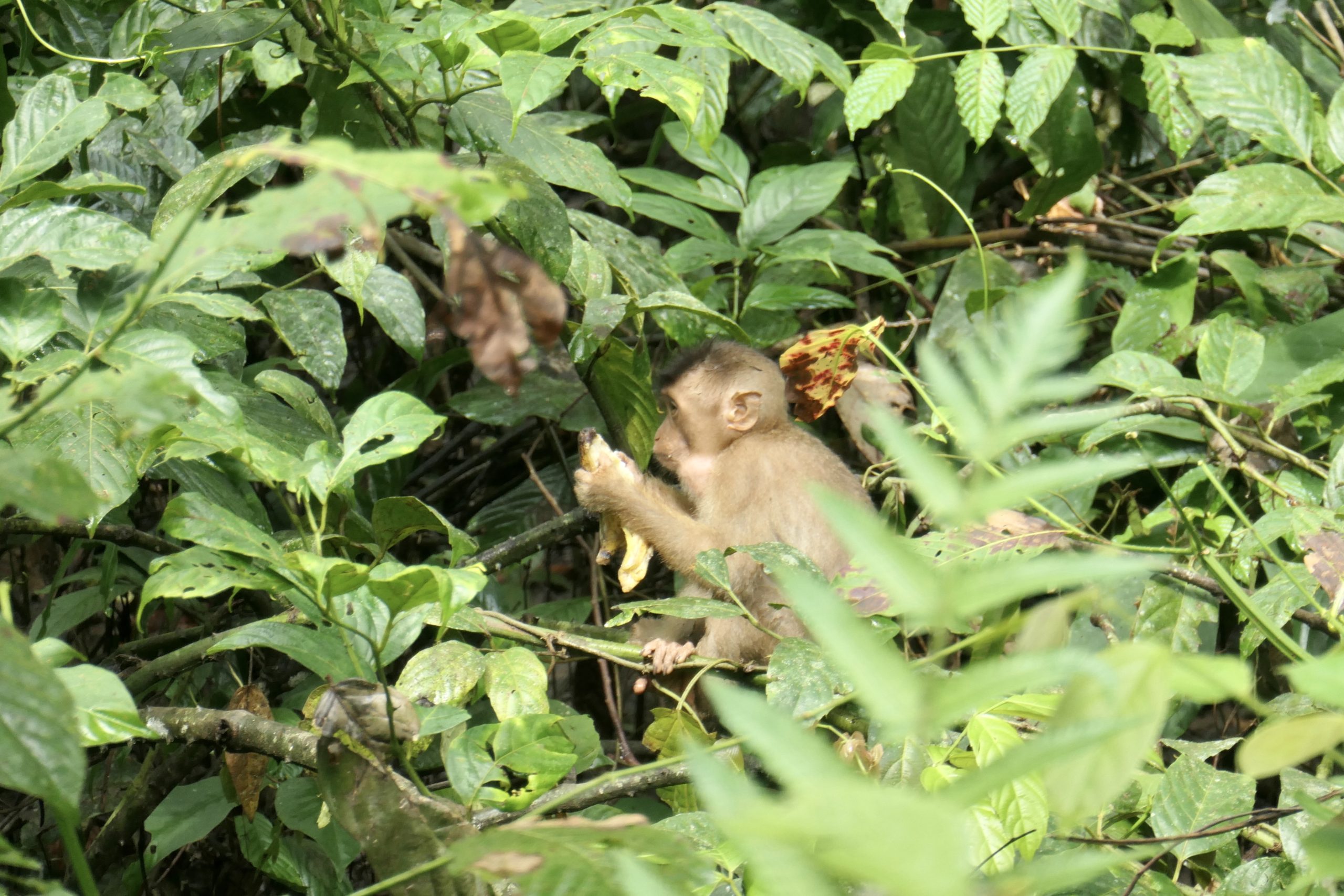
But a few, like this very young one, might grab a banana and find a spot to eat it peace.
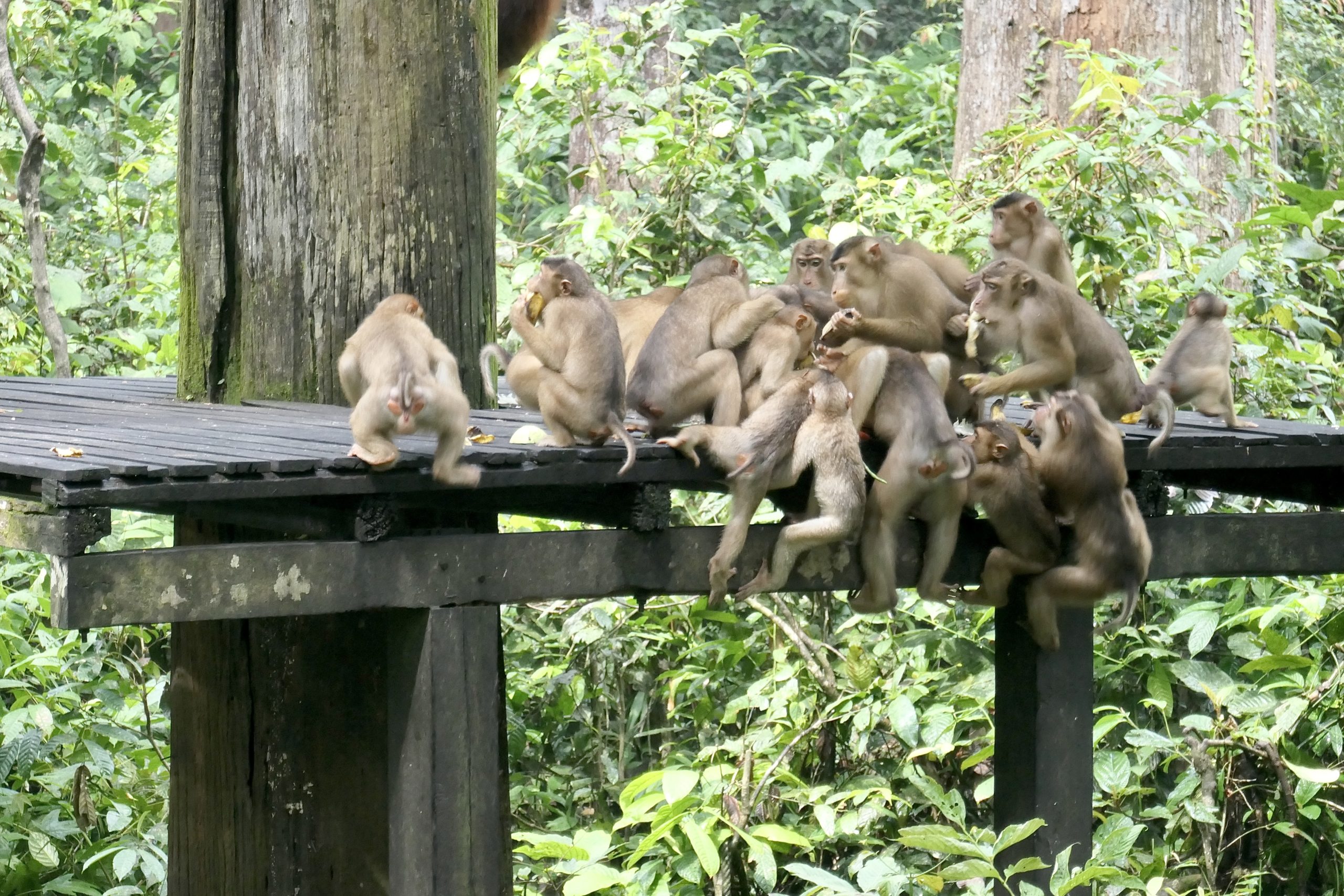
But when the big apes are done, the feeder dumps the remaining produce on the platform, where the waiting macaques swarm it.
The feeding platform is well away from the forest’s edge, and the center is only open to the public for the short, twice-daily feedings. Rangers are posted along the wood trail and stop visitors when an orangutan is about.
Sandakan town is itself a city. With a population north of 150,000, it is the second largest city in Saba, after Kota Kinabalu. In the 19th century, it was the capital of British North Borneo.
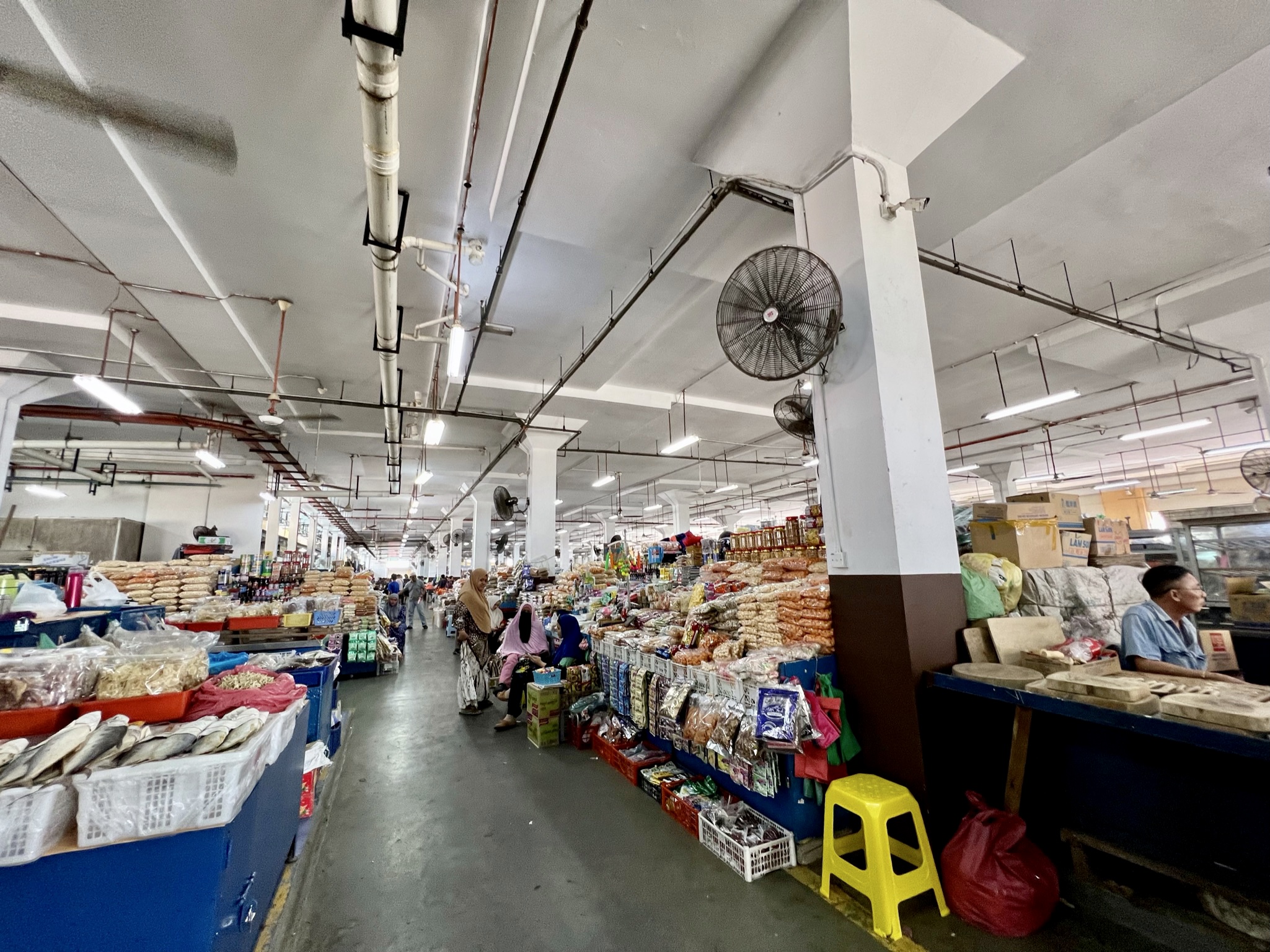
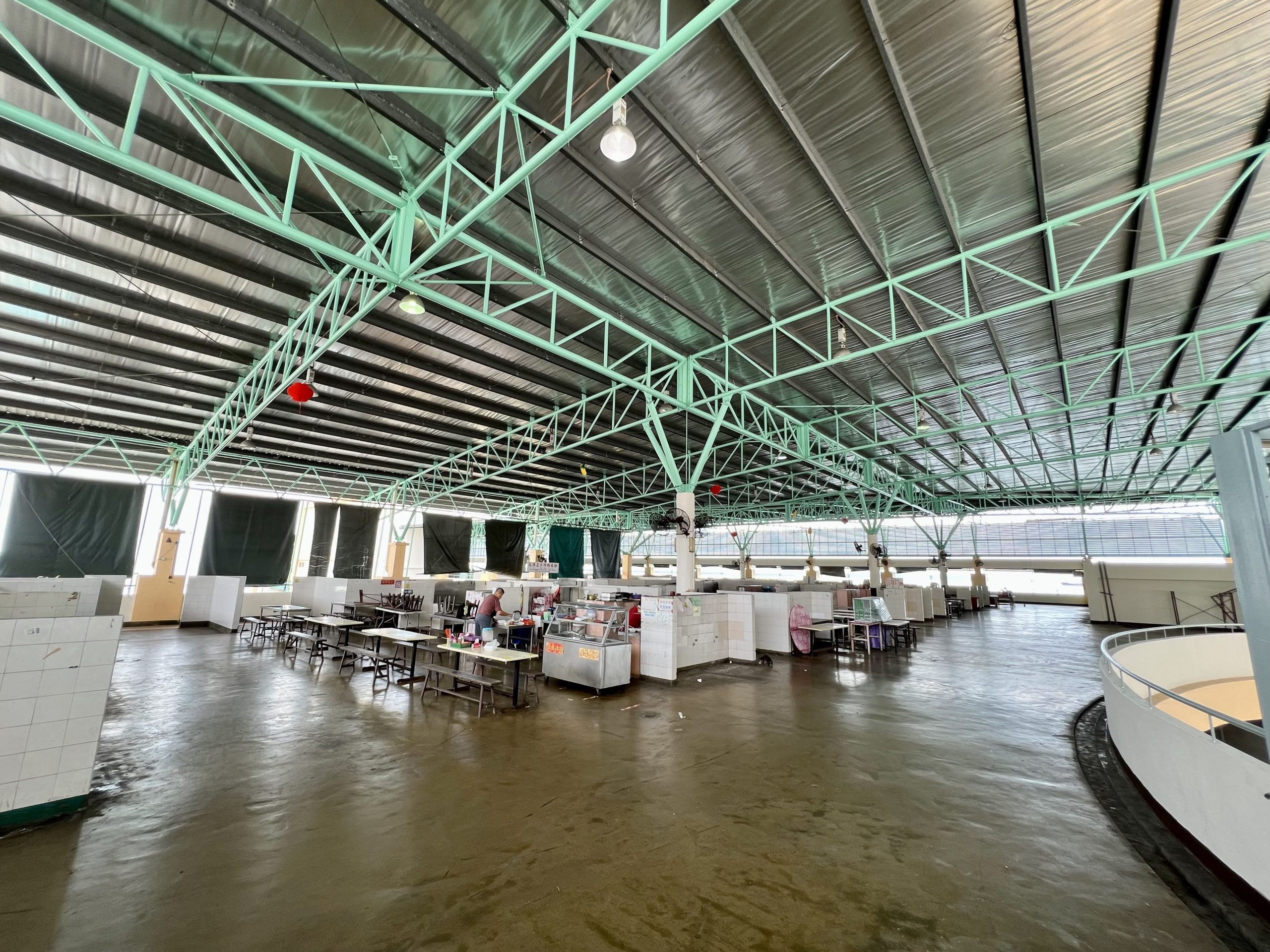
Central in the city is the Sandakan Central Market. It is a concrete, three-level, tin-roofed building that follows the usual pattern of individual stalls selling life’s necessities.
The ground level is largely food.
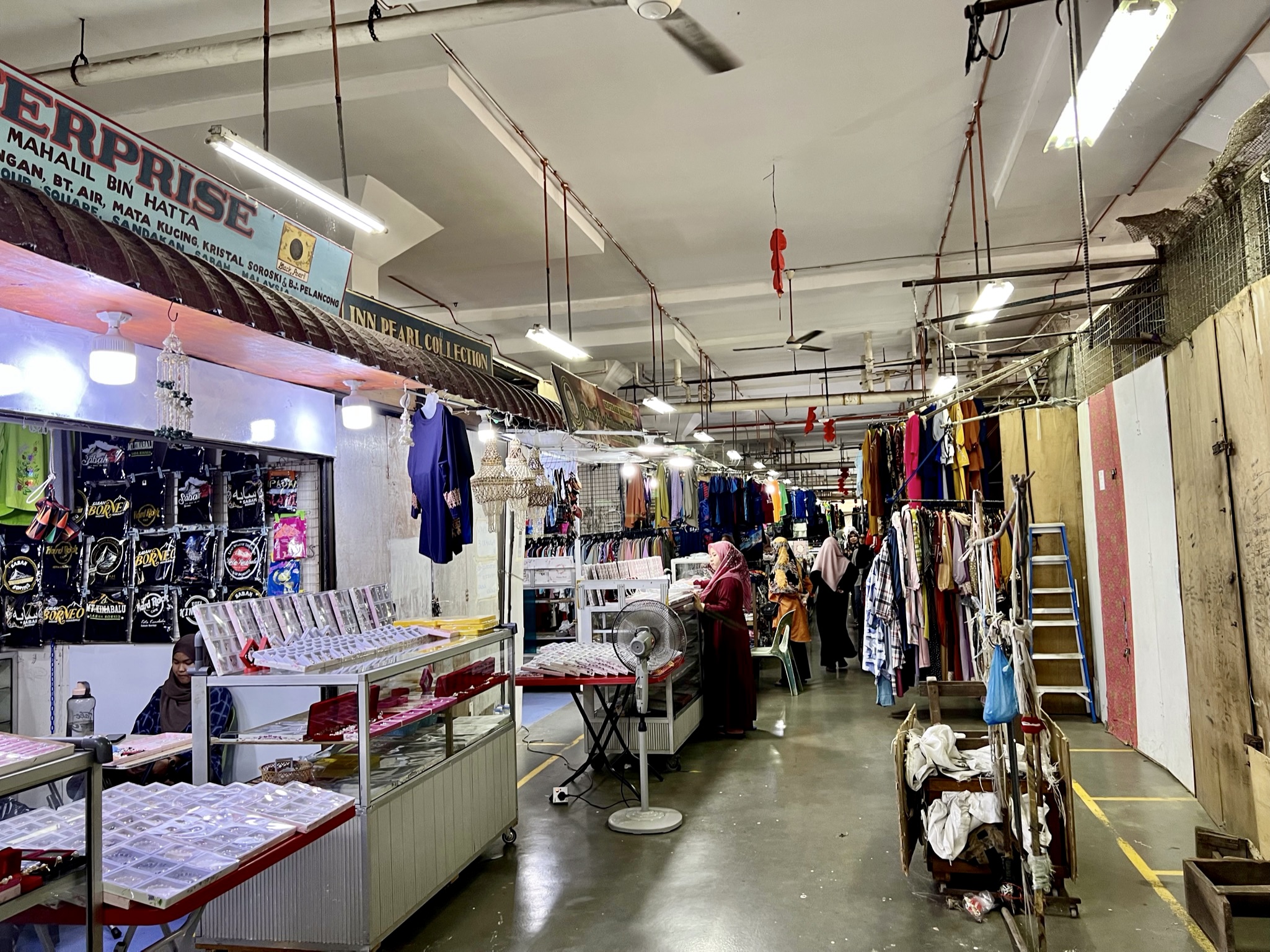
The second floor is half sundries …
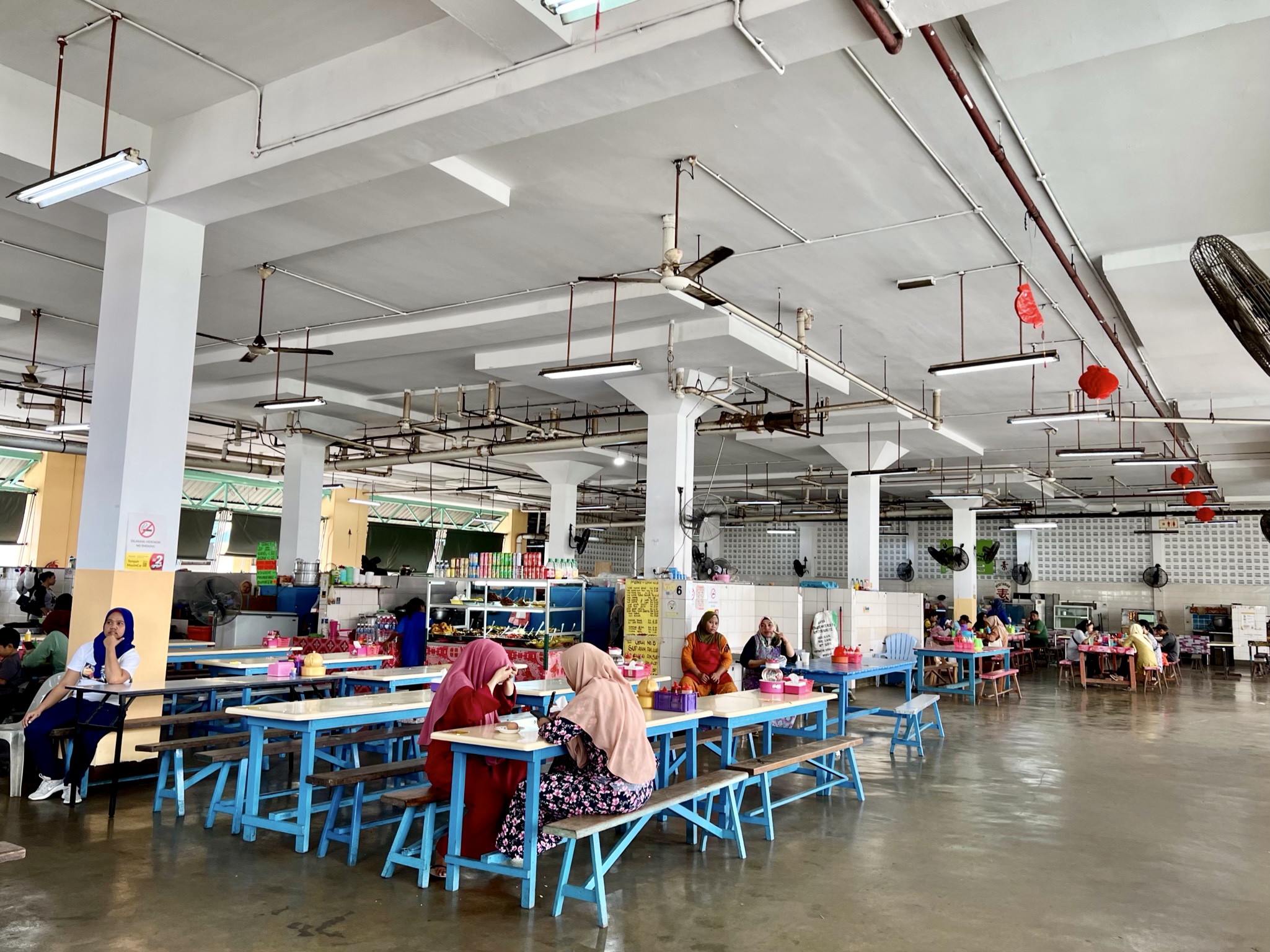
And half halal food court.
The top level is non-halal food, only, and is all but deserted. This is where you go if you absolutely must eat yourself some pork. There are three types of restaurants in Malaysia: halal (porkless), non-halal, and Chinese. All restaurants declare at their entrances whether it serves pork or not, unless it’s a Chinese restaurant. Everyone knows the Chinese eat everything, so a sign would be redundant.
Sandakan is not a tourist town. It is local to its core. It used to have a Sheraton Hotel, shown here, but it has been shuttered since covid. If you’re white, expect to get some attention. Nothing overt or threatening, just the curious, you-don’t-see-that-everyday kind of looks. Doubly so if you’re taller than most.
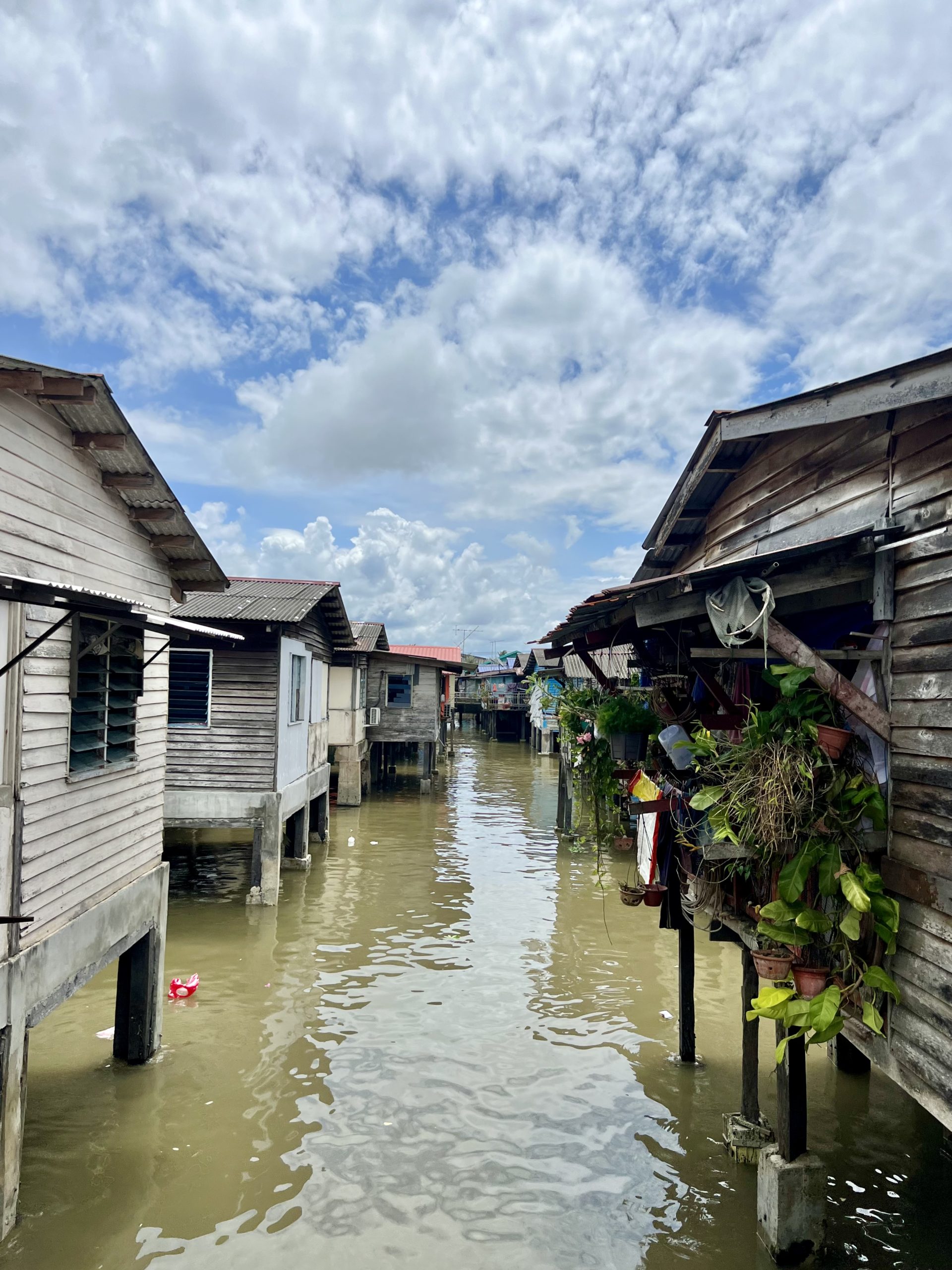
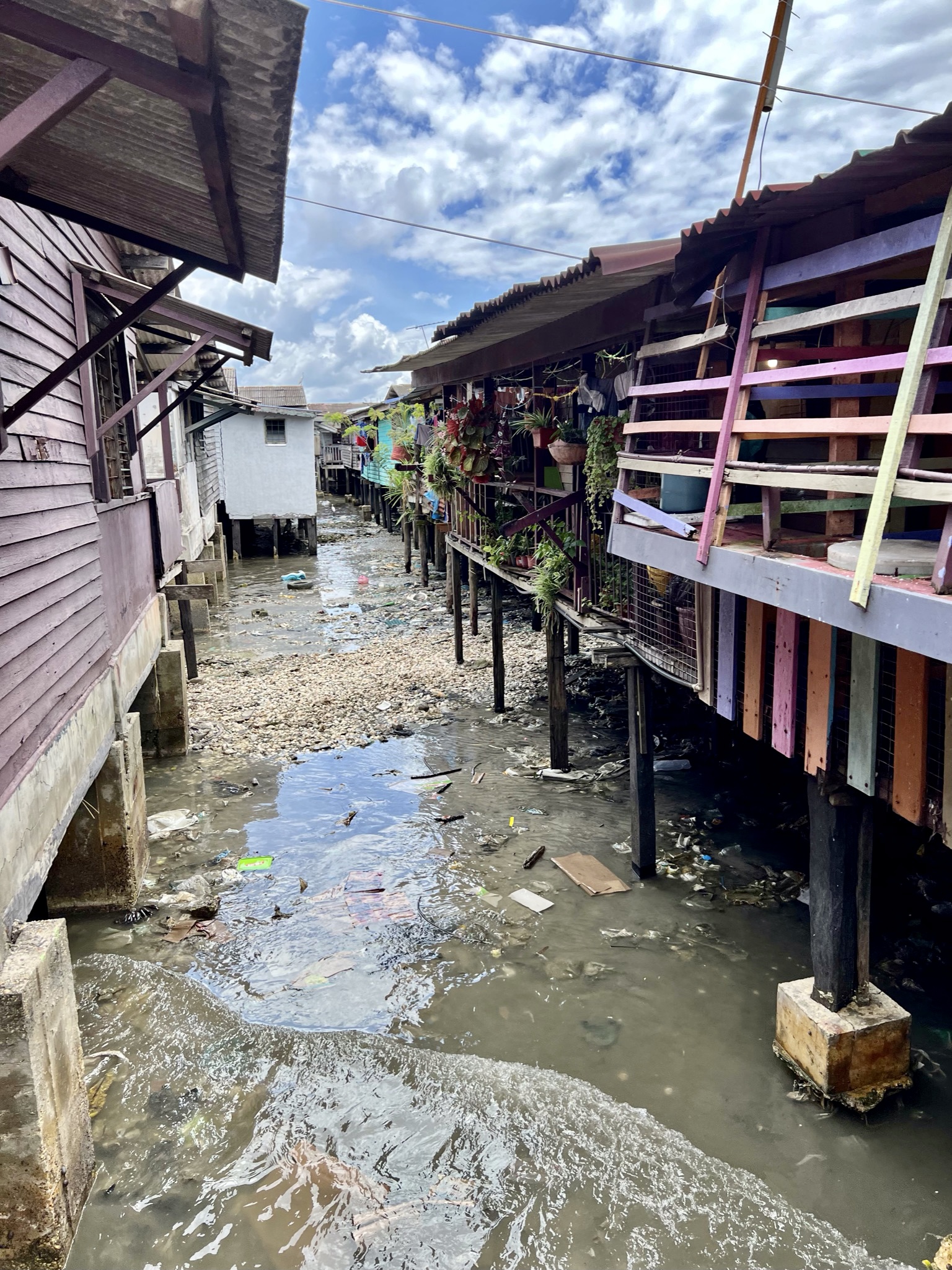
On the way back from downtown Sandakan, we stopped at a floating village. Not really floating, but stilted to create living space in the shallows. No one is quite sure when the village began or whence those who live there came, but it’s been around a very long time and is believed to have been founded by immigrant fishermen, probably from the southern Philippine islands or some such.
Though the settlement is recognized by the local government, and regulated to some degree, it has no sewage system. Waste is simply dropped beneath the house, which isn’t so good on the best of days, let alone when the tide is out.
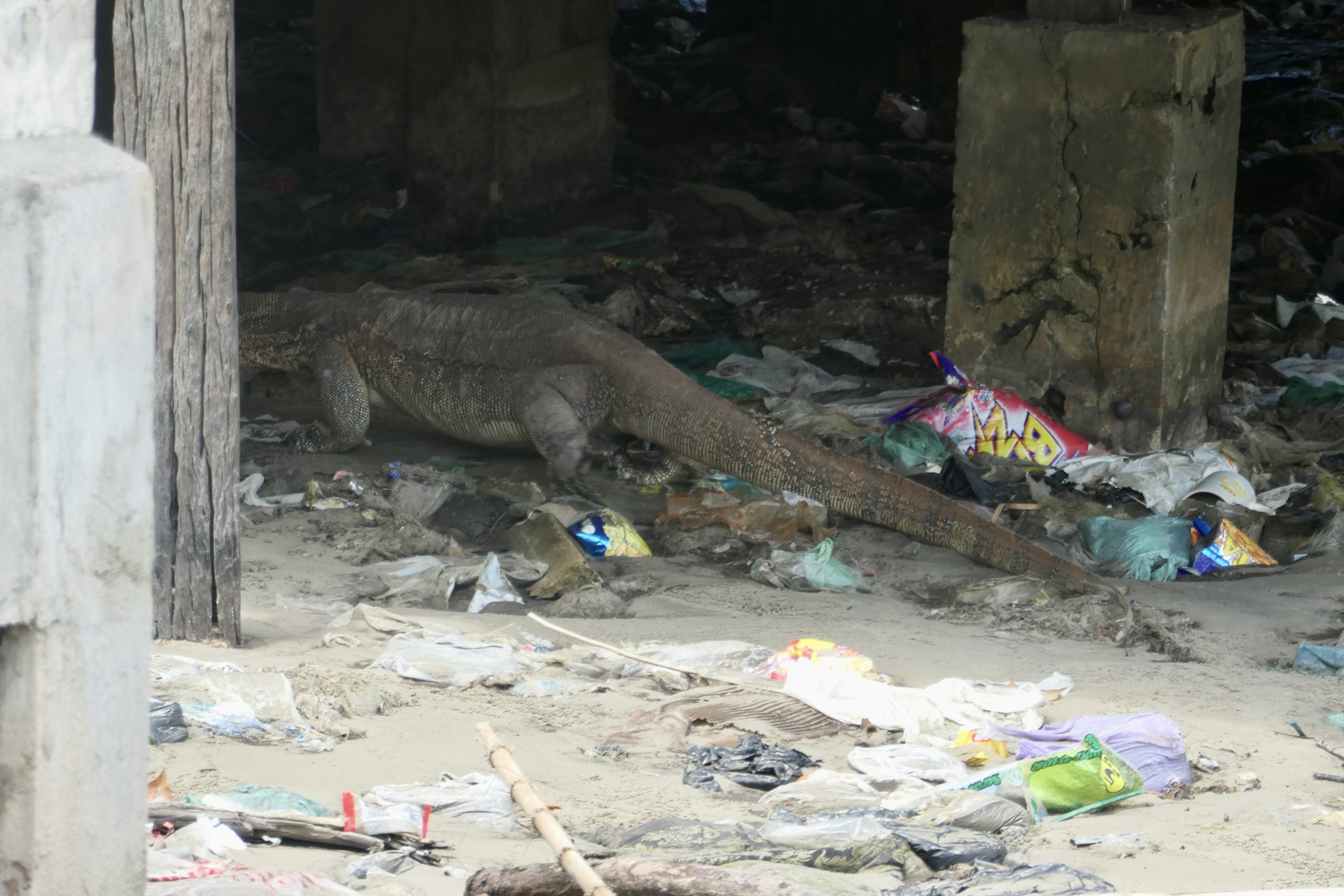
The stilts also keep lizards out of the house. This monitor lizard we spotted trolling the trash is bigger than the photographer, who has issues with pinky-size geckos.
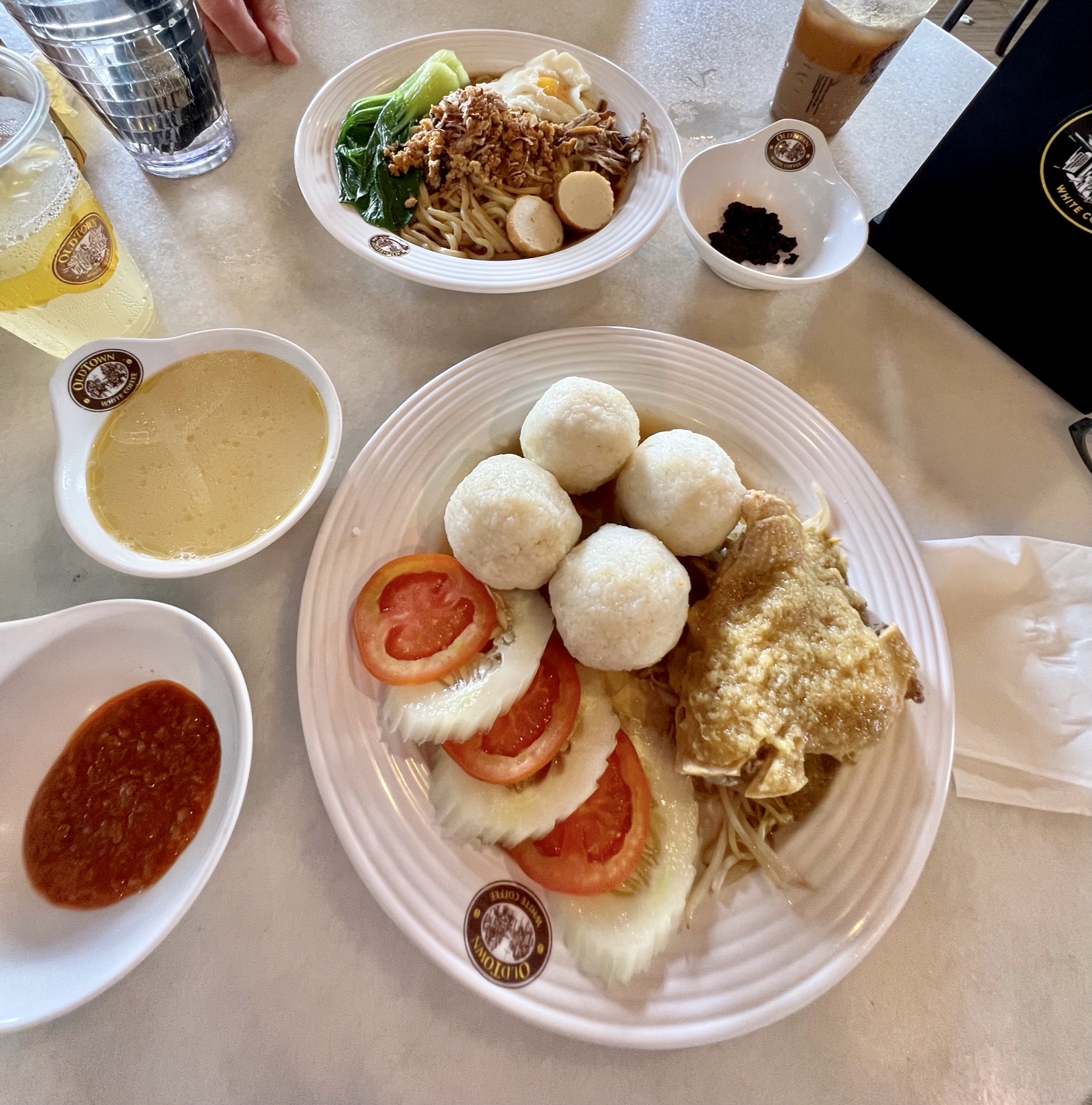
We took most of our meals at our hotel or in recommended local restaurants. Our guide recommended Old Town White Coffee because it’s a chain restaurant with deep Malaysian roots. It became wildly popular in the 90s for their special coffee blend and commitment to air conditioning. We ordered dry noodles with a kind of Malay style minced chicken (top), and the creatively named steamed chicken with rice balls – the rice is cooked in chicken stock and mixed with coconut milk before becoming balls. The coffee was good, but then the blogger will say that about anything with milk and sugar in it. The air conditioning was good, too, at least when they closed the doors. The food was so-so.
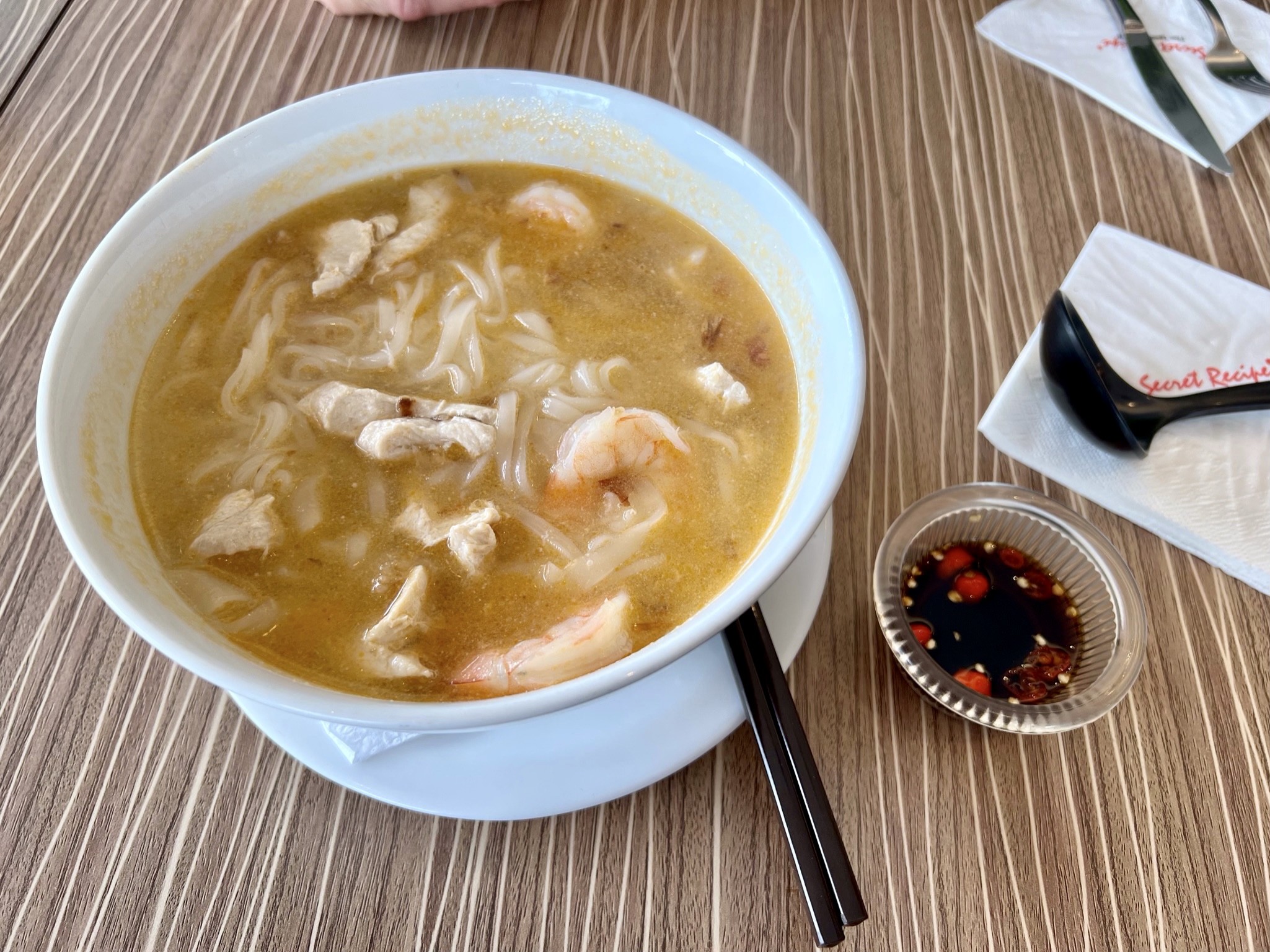
One lunch found us at a Secret Recipe restaurant. Another Malaysian chain, started about the same time as Old Town White Coffee, now with hundreds of locations around SE Asia. The photographer ordered ipoh hor fun, shown here, which is asian chicken noodles with soy sauce and shrimp or shrimp flakes. The dish originated in Perak, Malaysia, and is another example of Chinese and Malay fusion cuisine. It was very good.
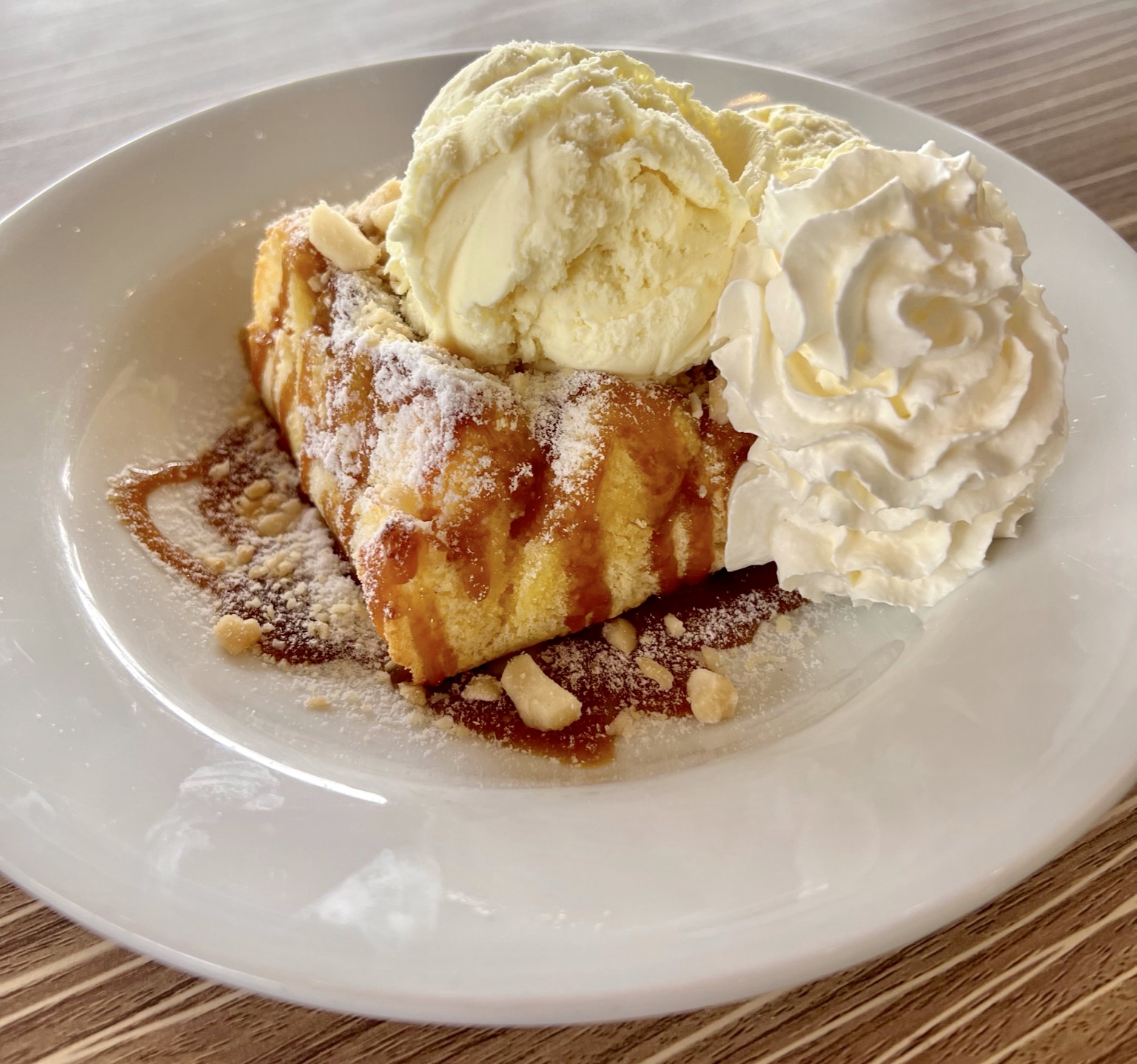
Because Secret Recipe is also a “gourmet lifestyle cake cafe” and had a line at the cake counter the entire time we were there, the blogger ordered a caramel bake, which gets a closeup hero shot for this post. This restaurant was head and shoulders above the White Coffee one, in quality of food, service, and air conditioning.
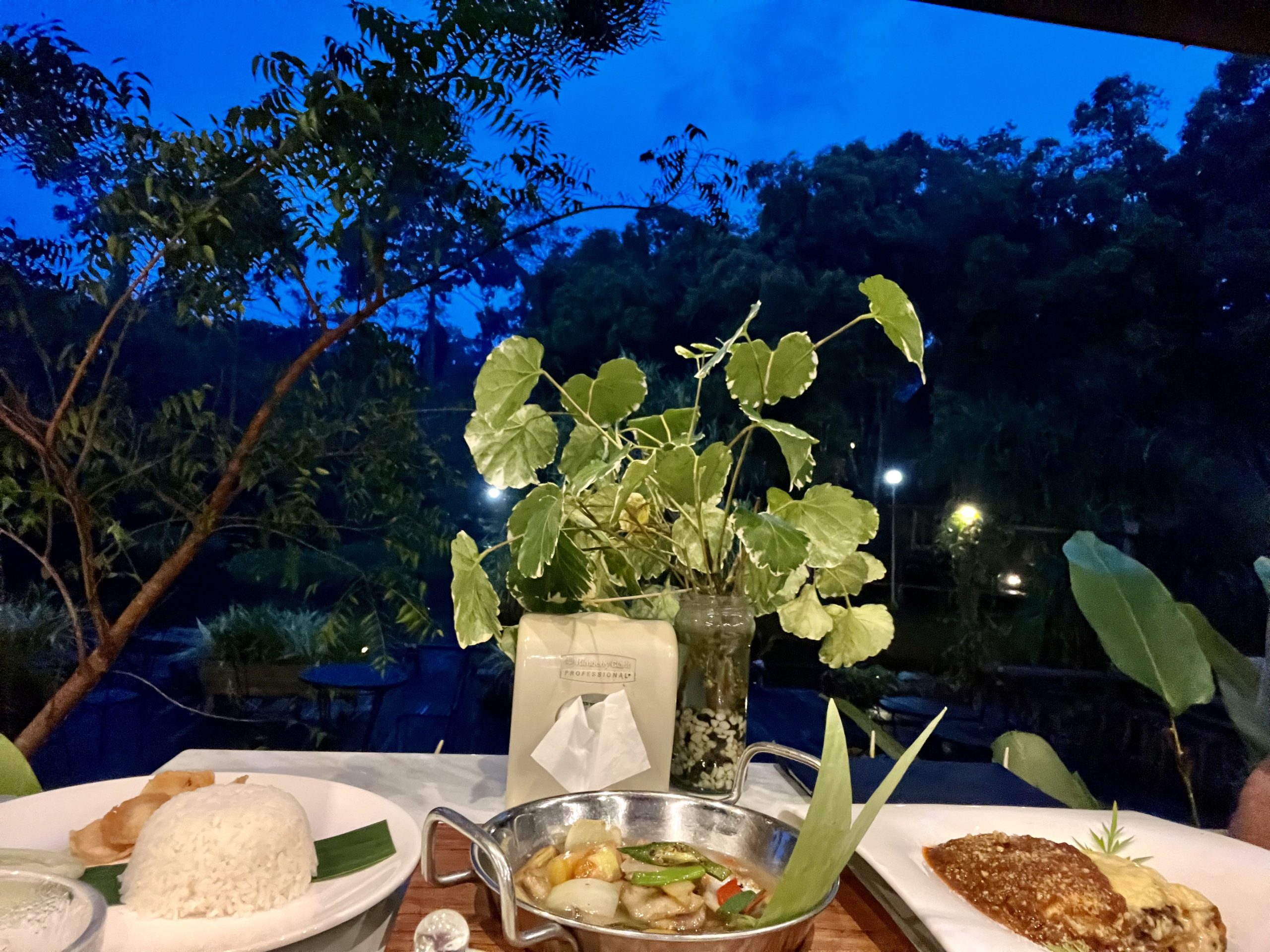
A couple of evenings we enjoyed dinner al fresco at the Sepilok Nature Resort. Here we’re having ginger fish and Malay style lasagna.
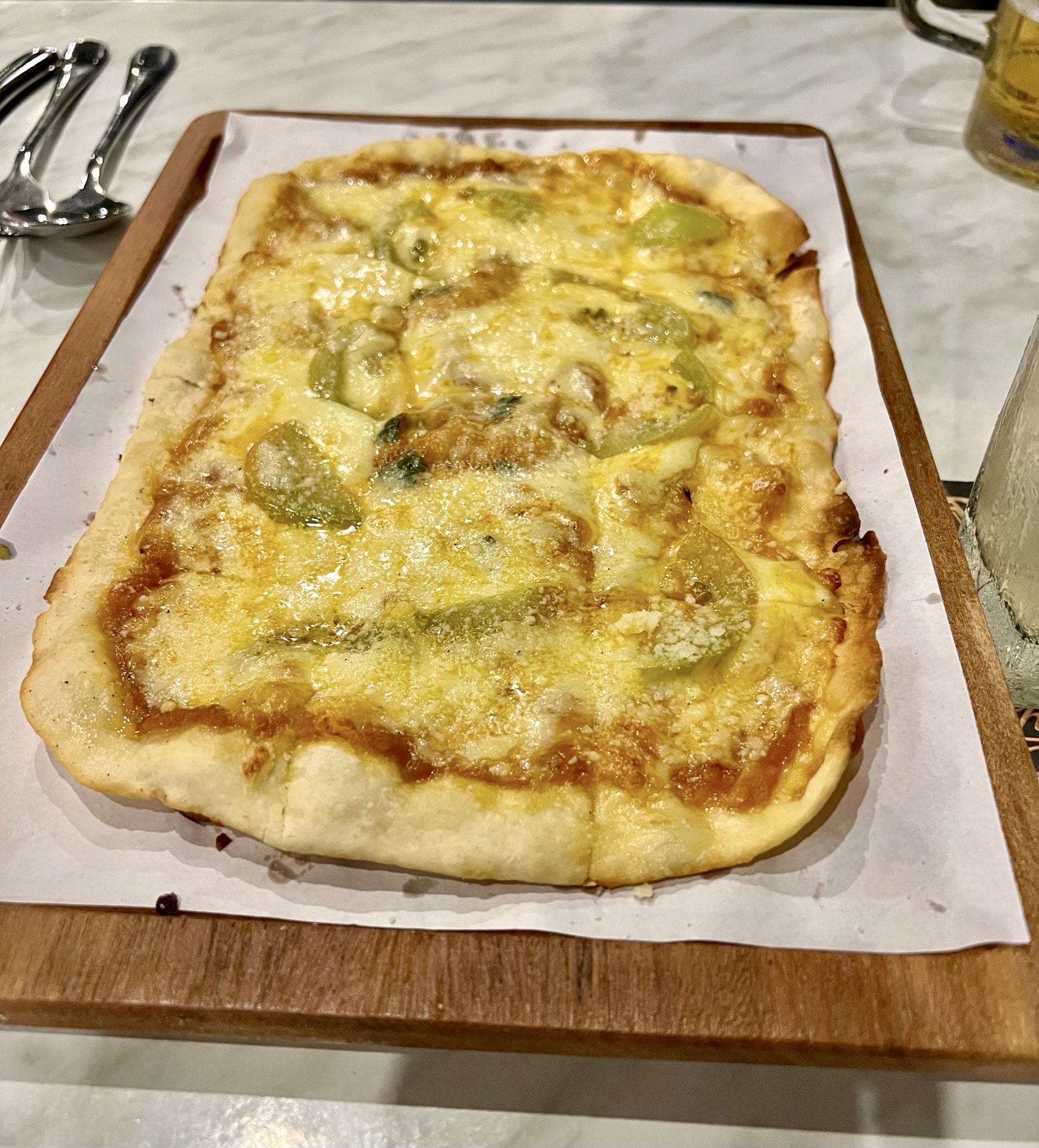
On another night, we continued our sampling of pizzas of the world. This is a margarita pizza, which was more of a flatbread and quite good. The cheese seemed to be a local version of mozzarella, sans buffalo, or maybe a mild cheddared cheese.
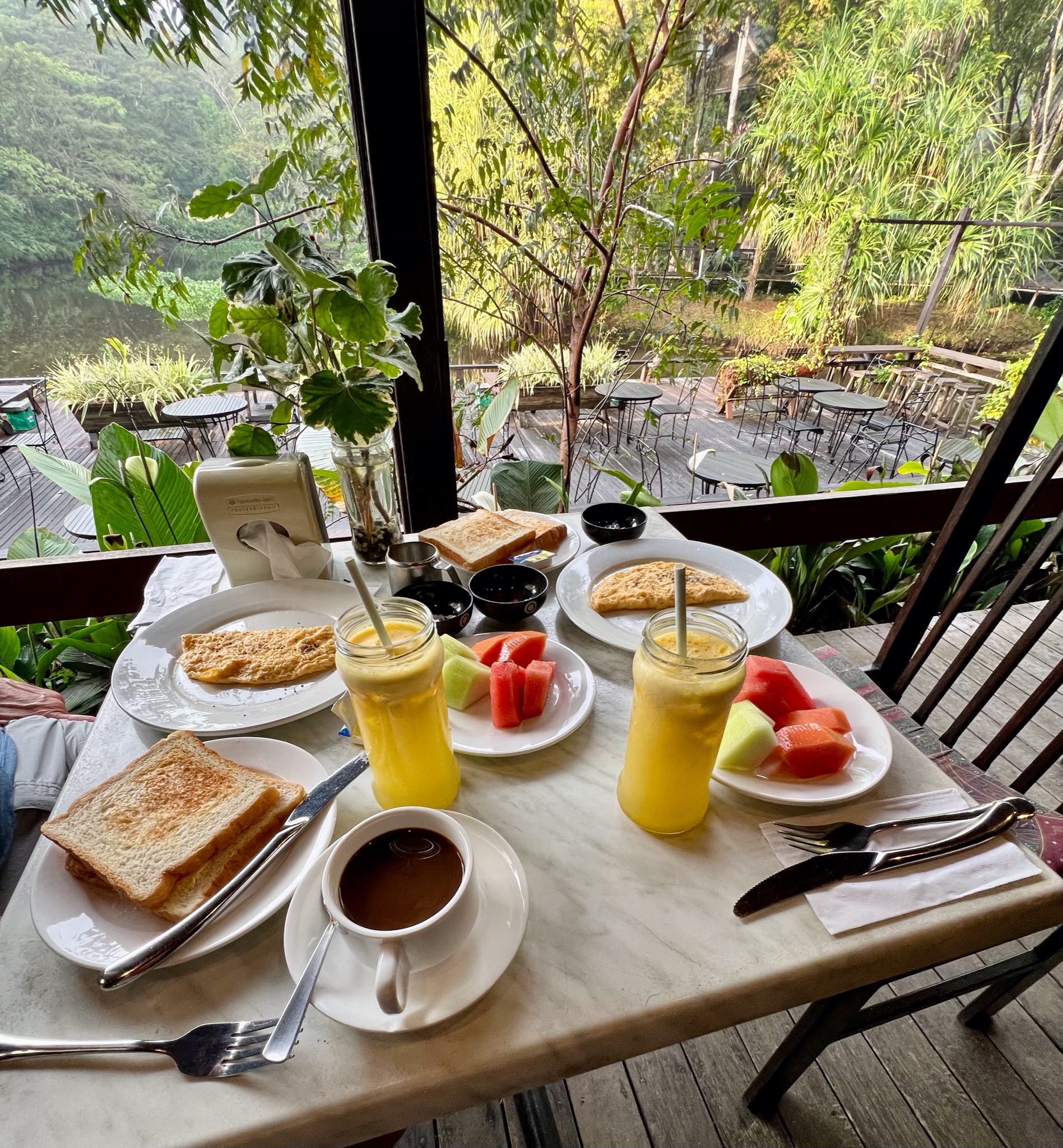
Breakfasts were traditional, limited to the few western combinations the kitchen offered, give or take the substitutions we could finagle. The photographer can’t eat unmodified menu items, so she was happy for the flexibility.

On our final morning, the mystery of where all the water and jungle comes from was solved. During breaks in the deluge, we got our luggage out of our distant room, but not without the help of bumbershoots.
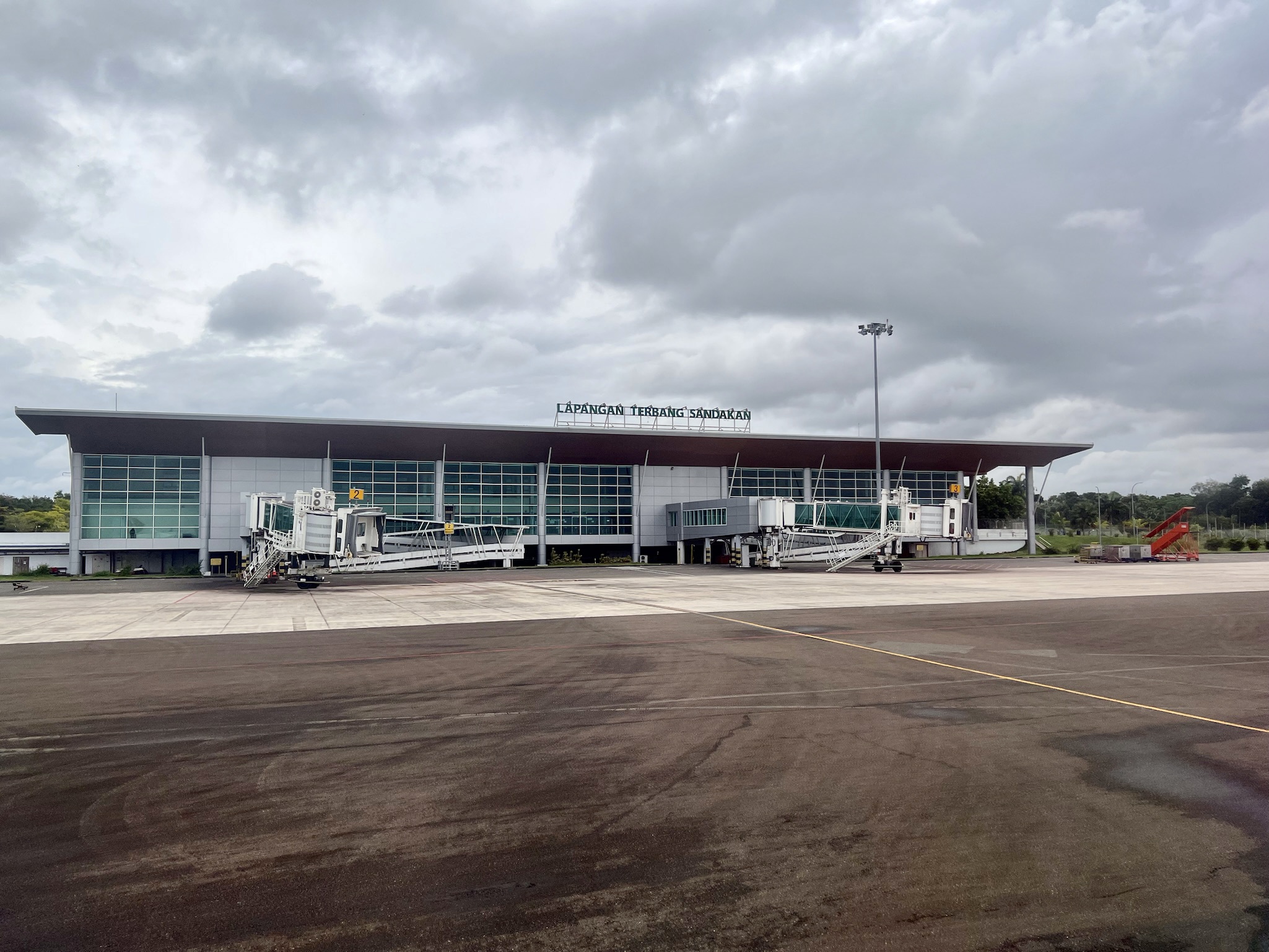
Then it was ciao ciao Borneo as we departed Sandakan’s little two-gate airport for Kuala Lumpur.
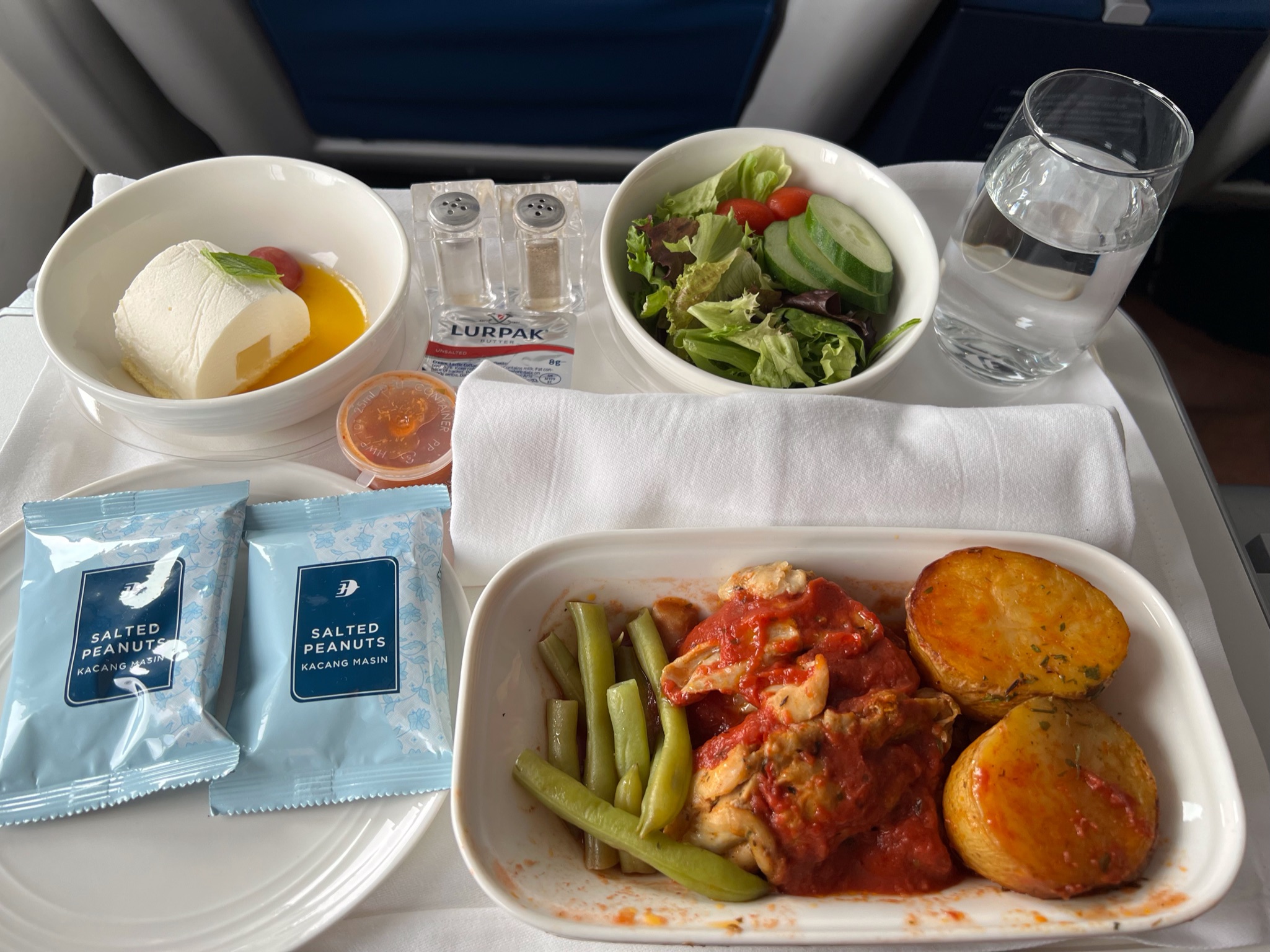
Oops. Though arguments have been made to the contrary, airplane food is food, so it deserves blog space. Here, on the way to KL, the photographer has ordered the aptly named tomato chicken. The blogger had beef rendang, but the photographer is going to have to be a little quicker if she wants pictures of the blogger’s meals.