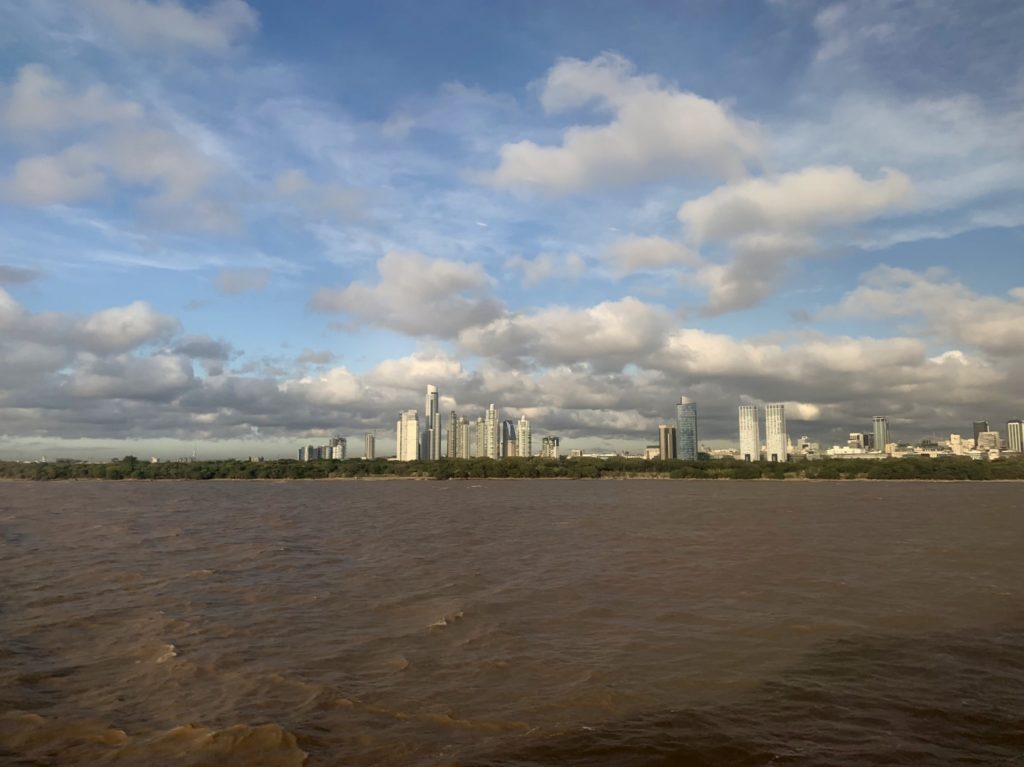
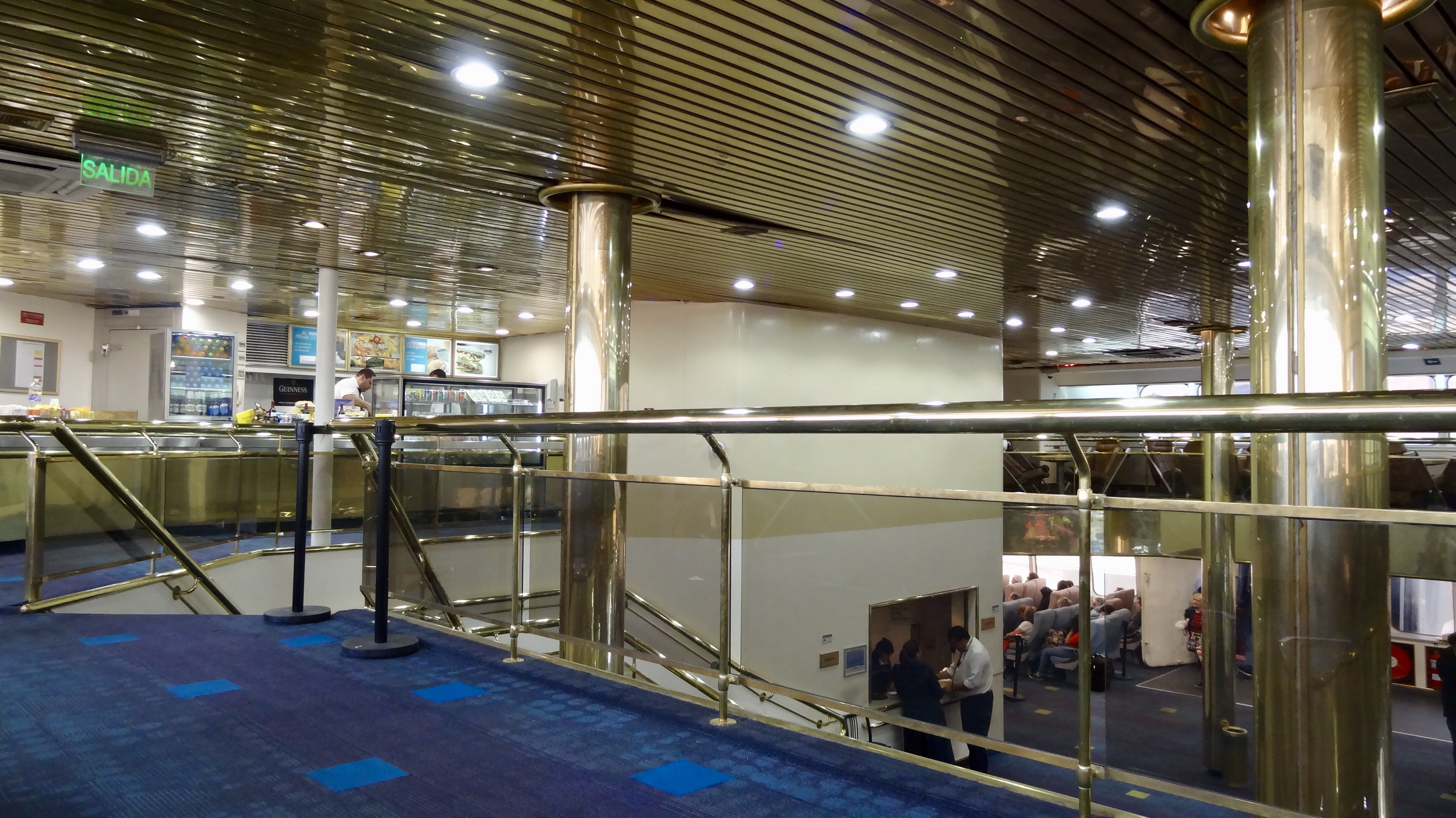
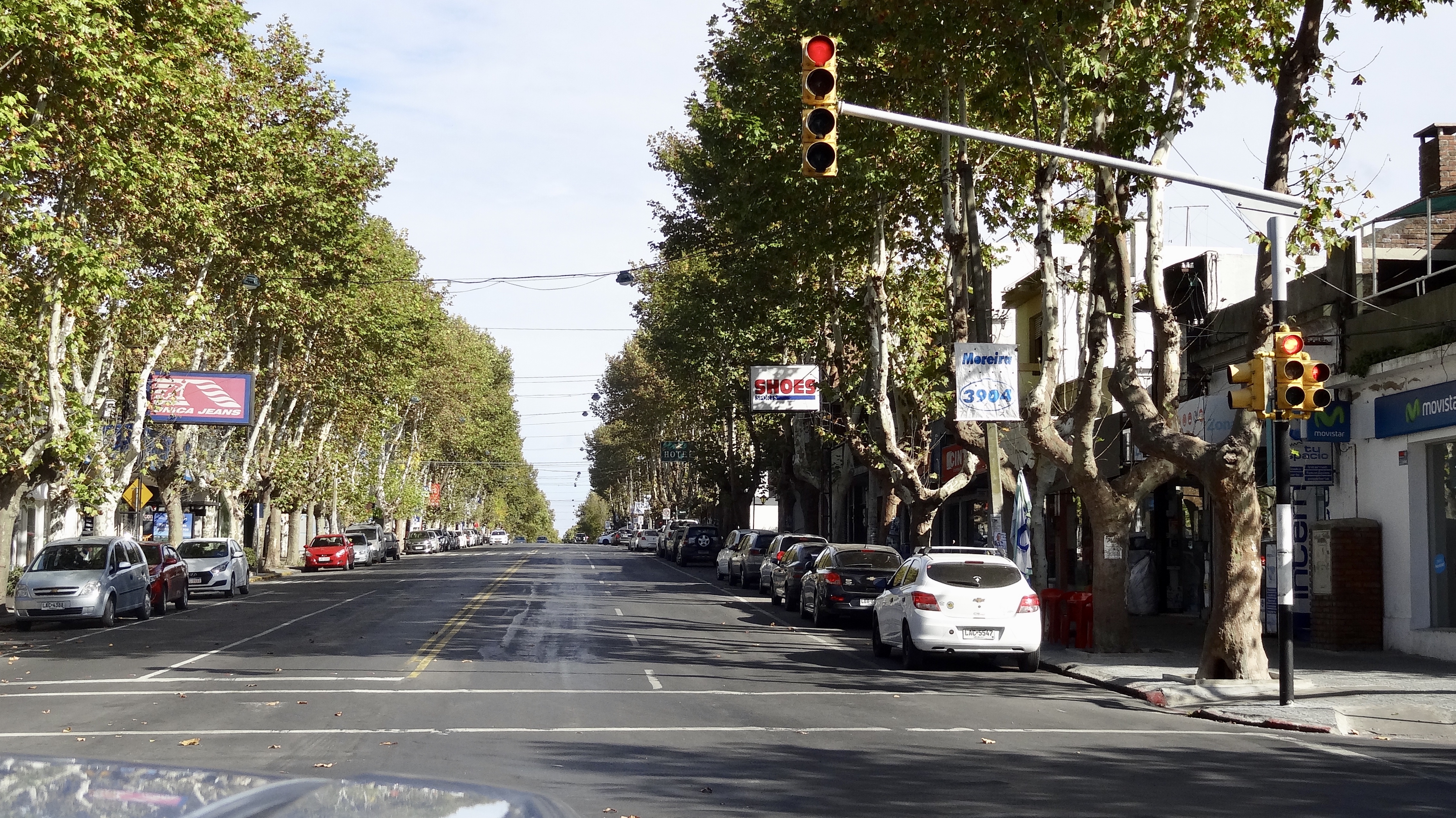
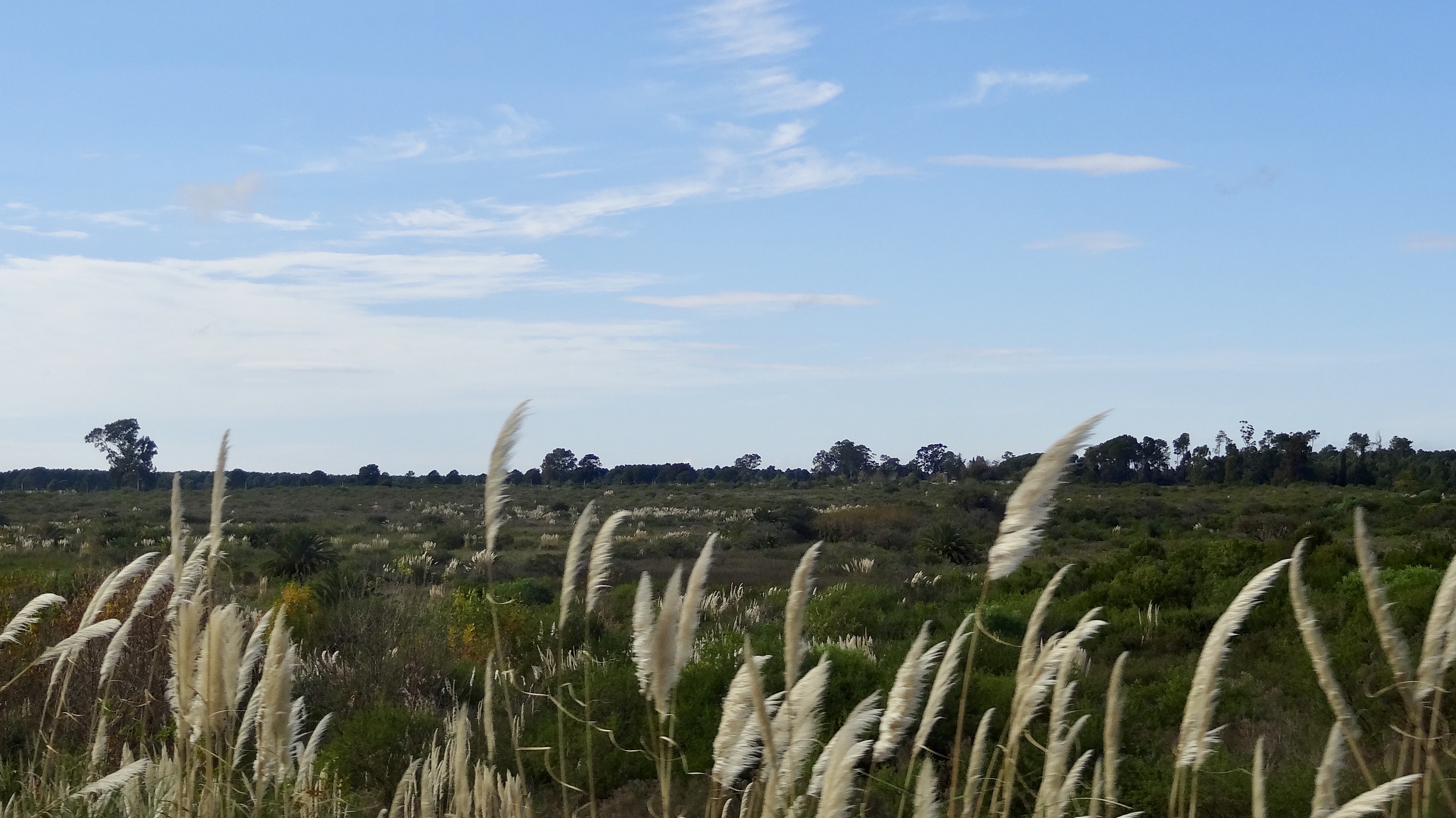
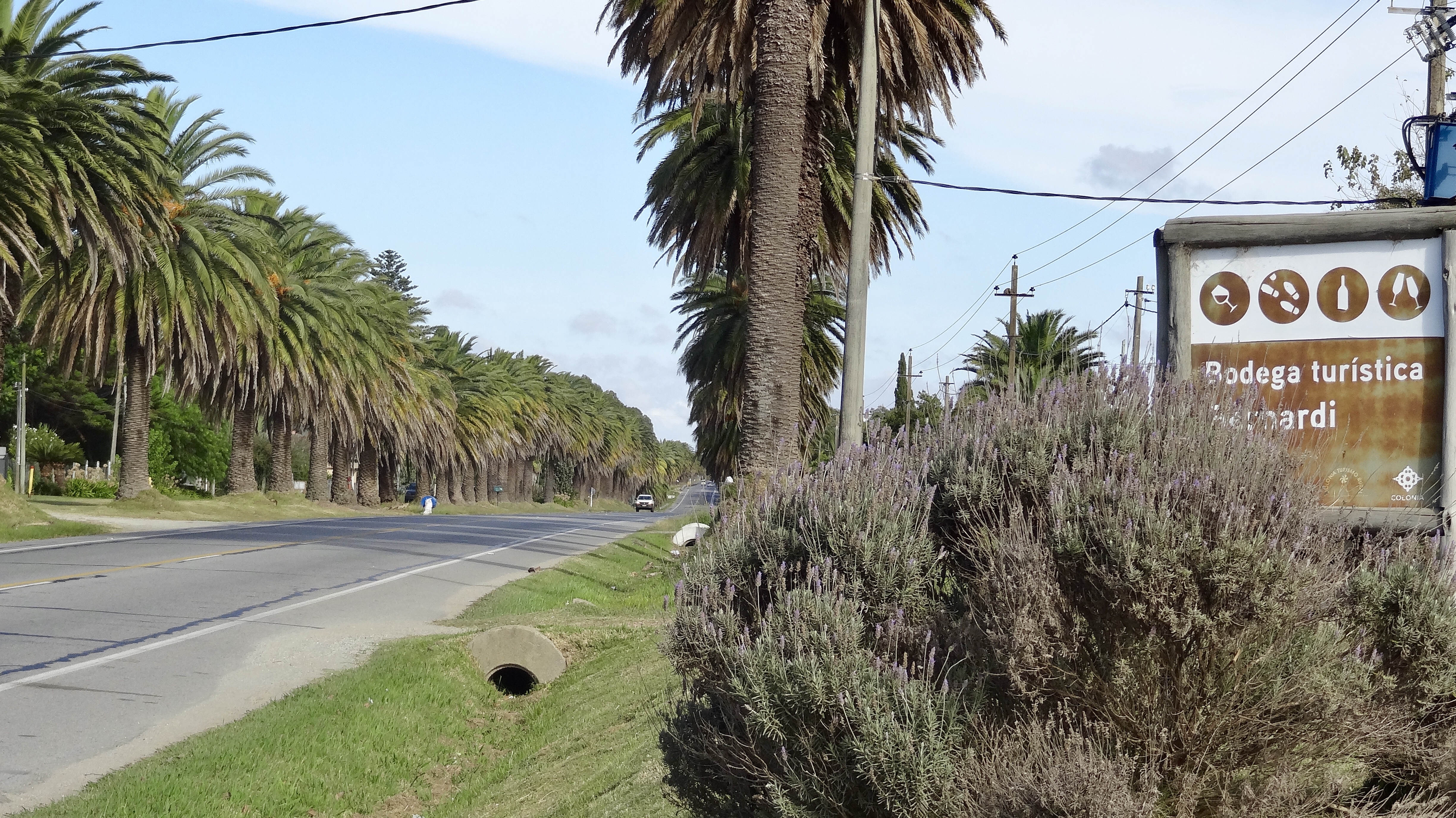
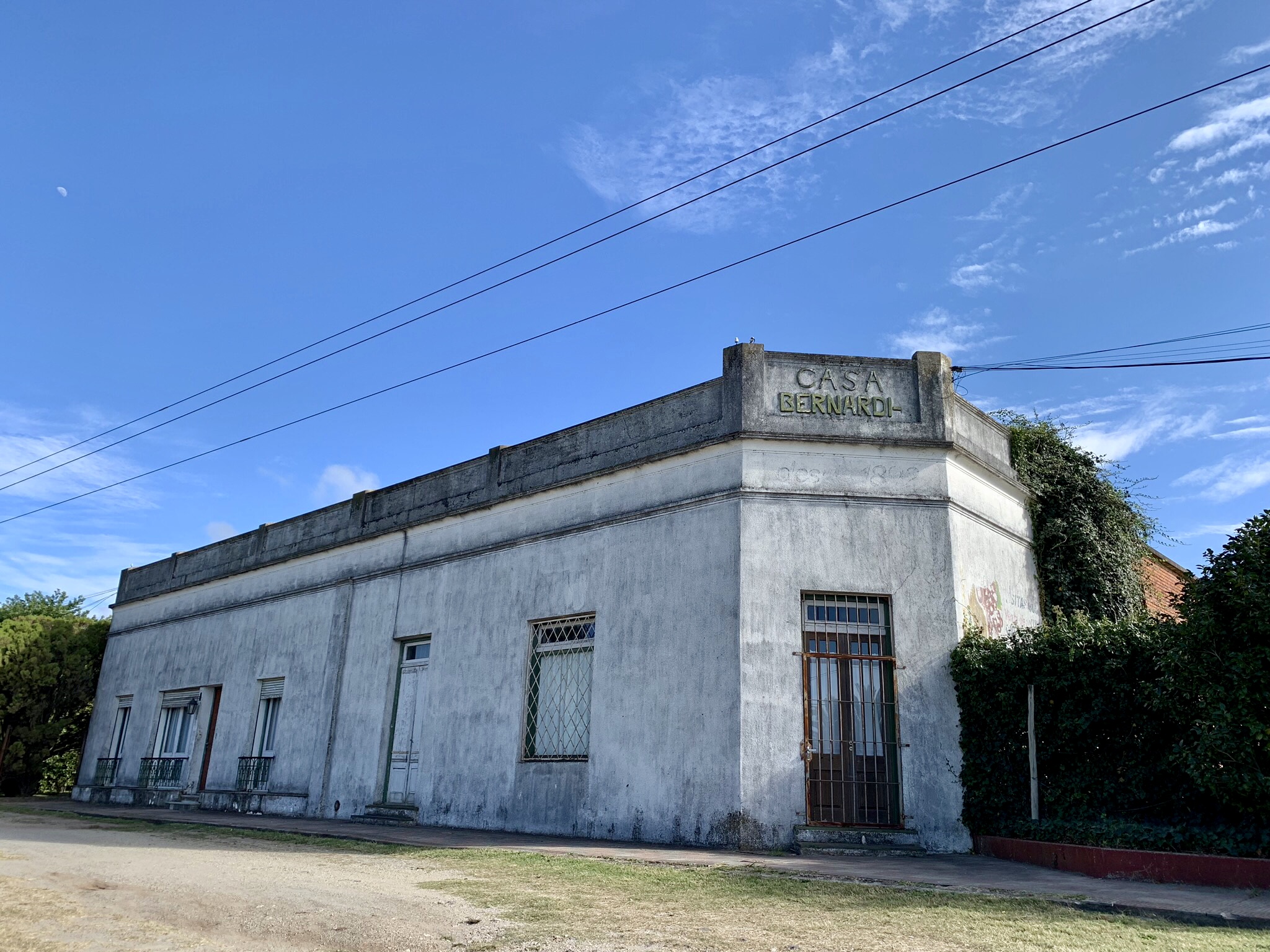
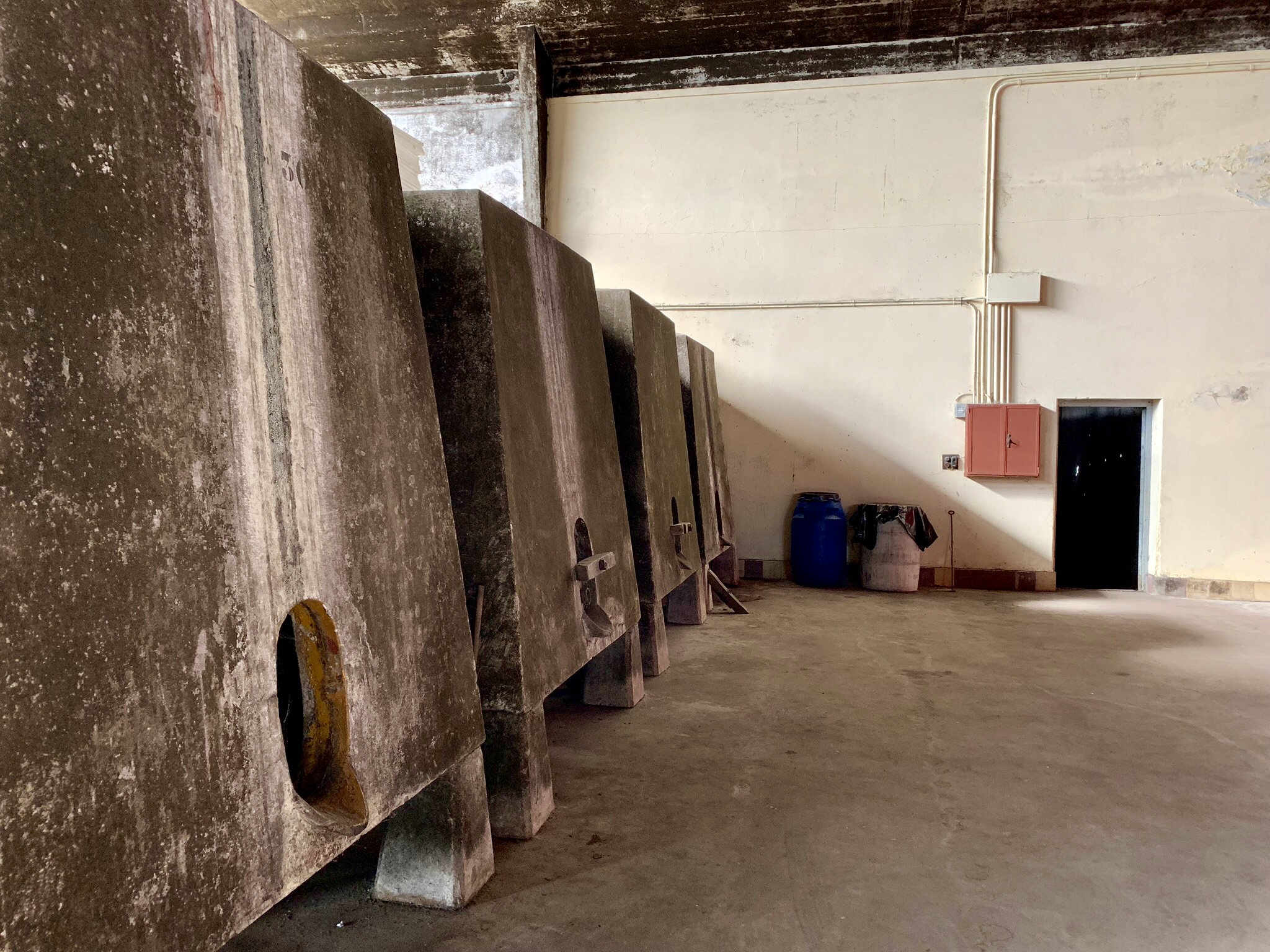
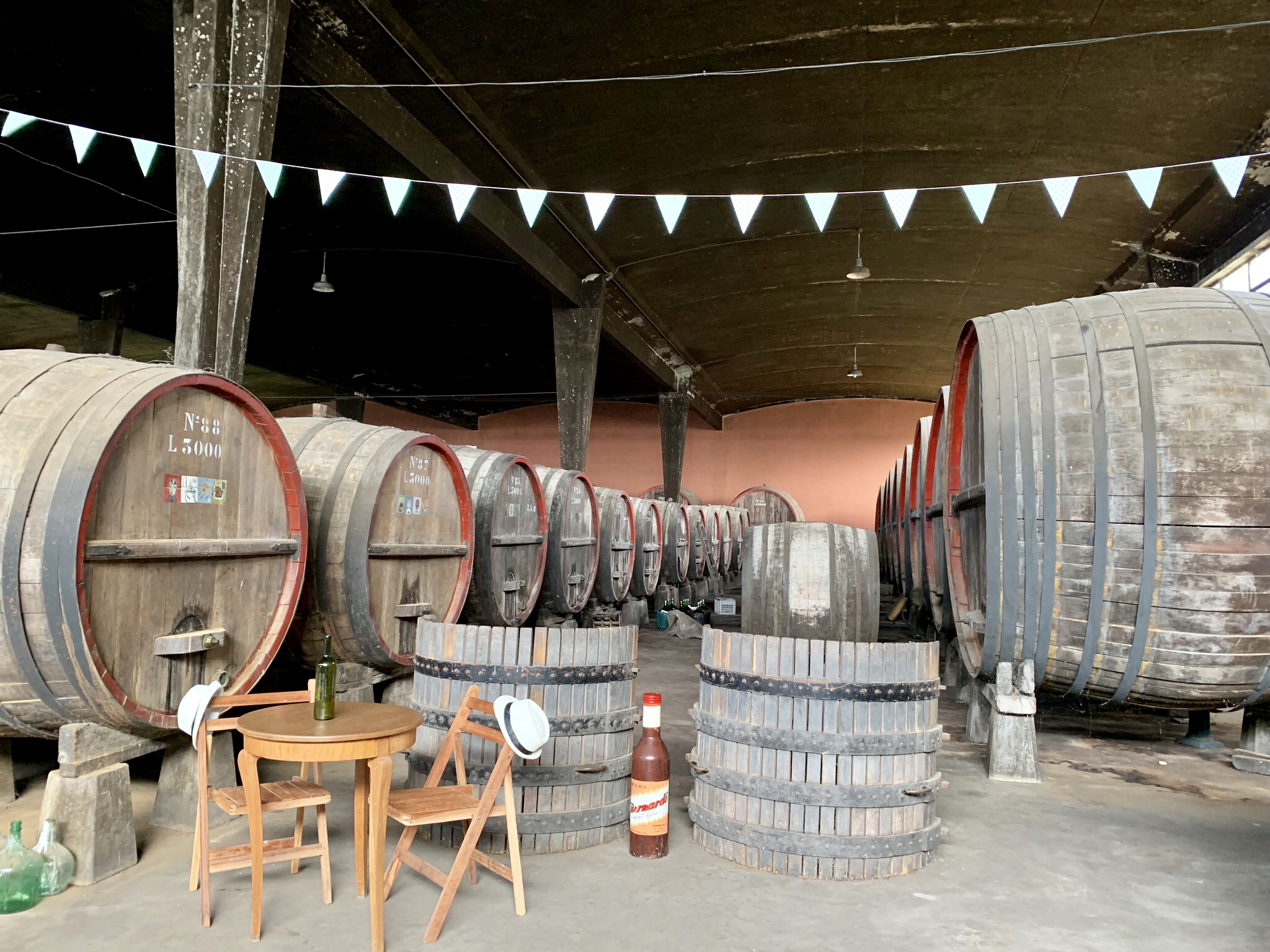
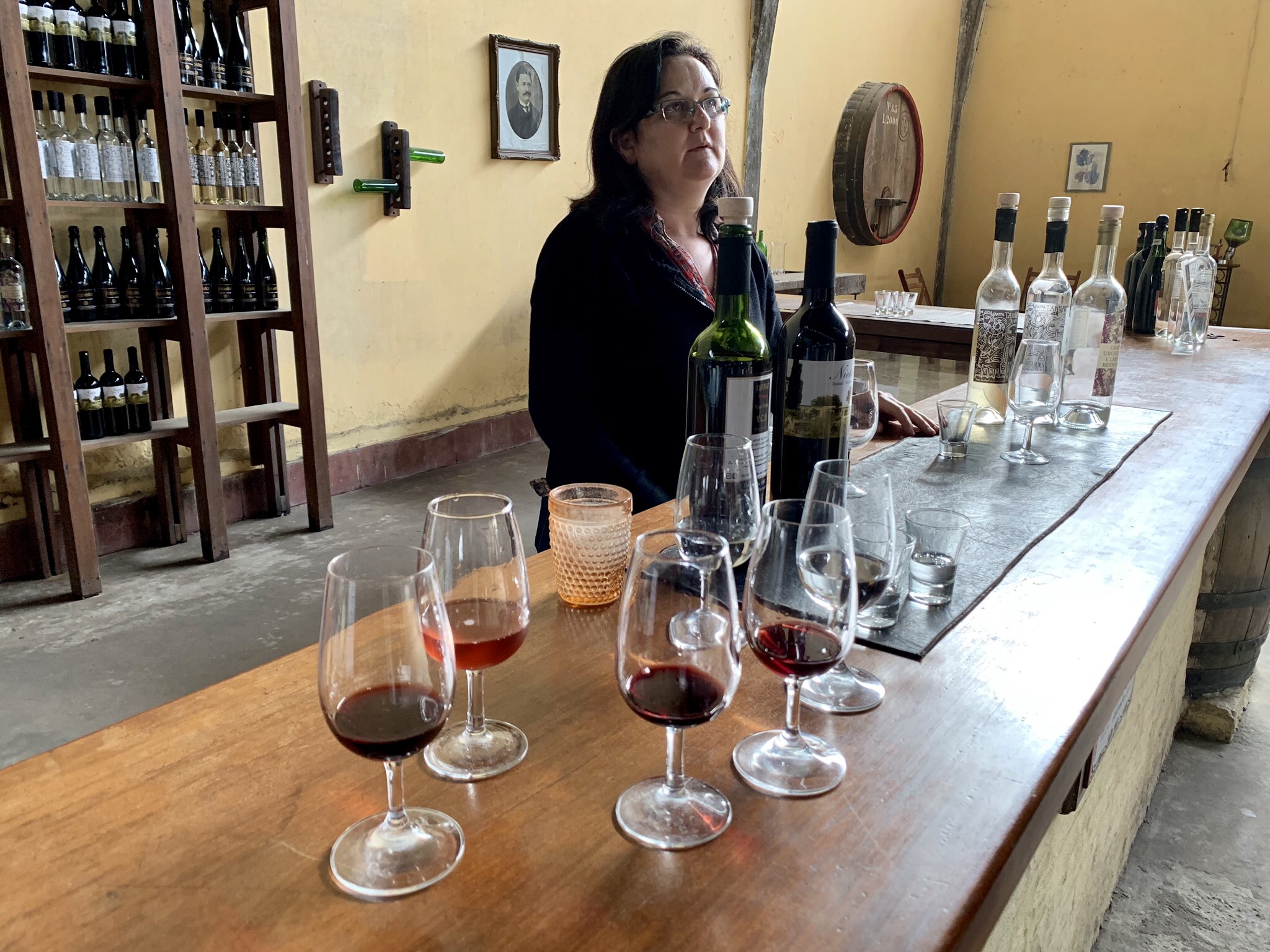
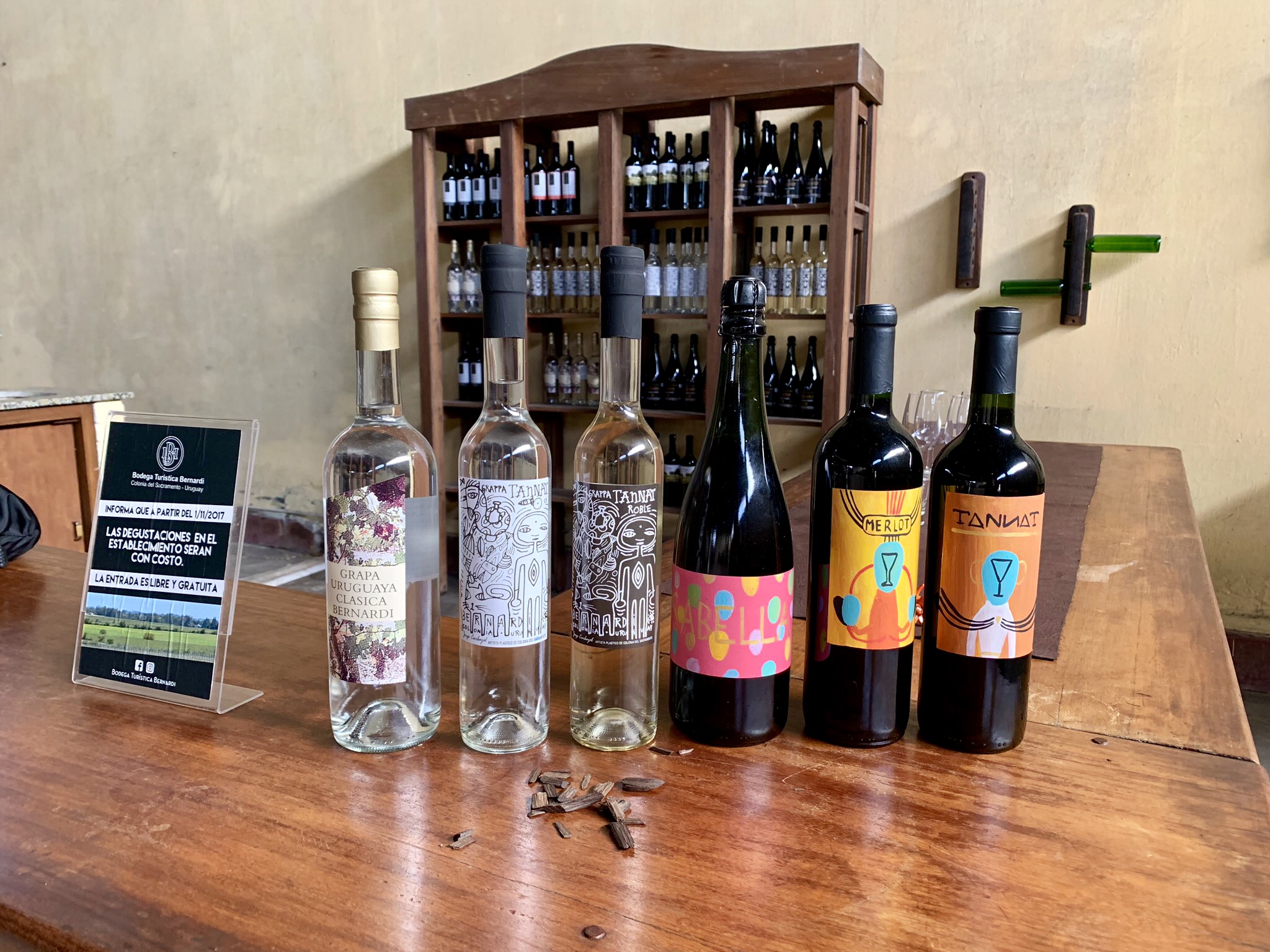
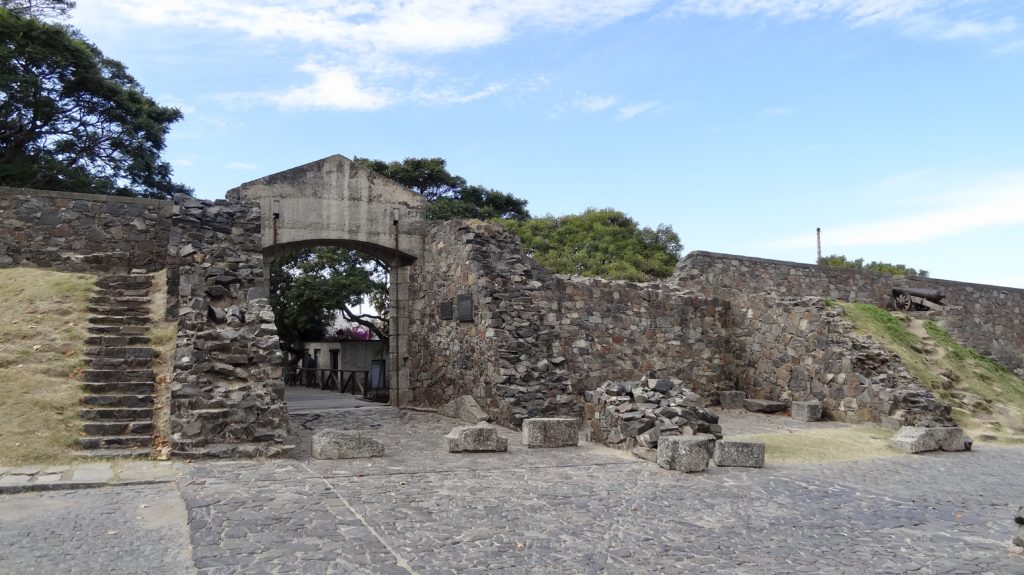
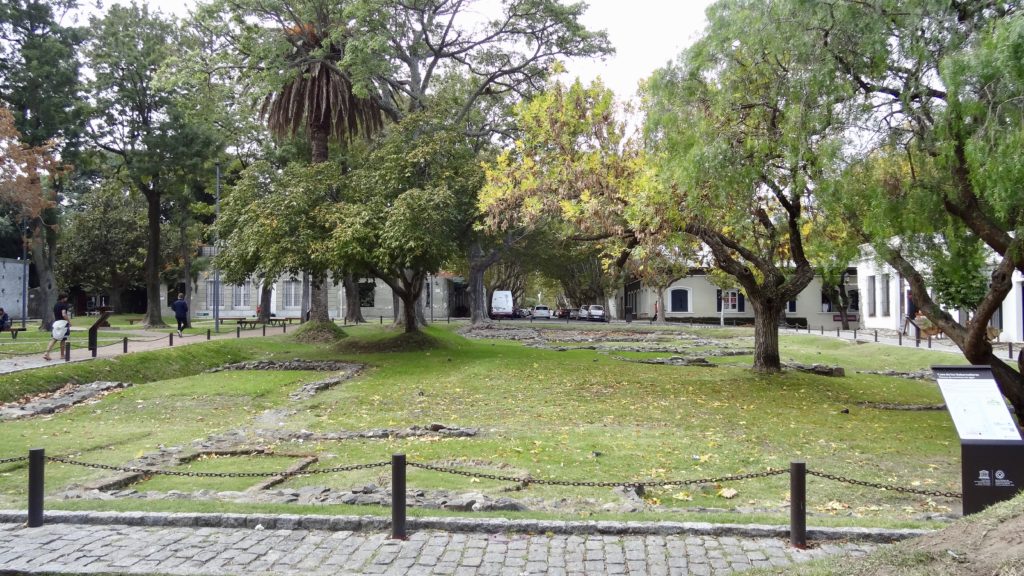
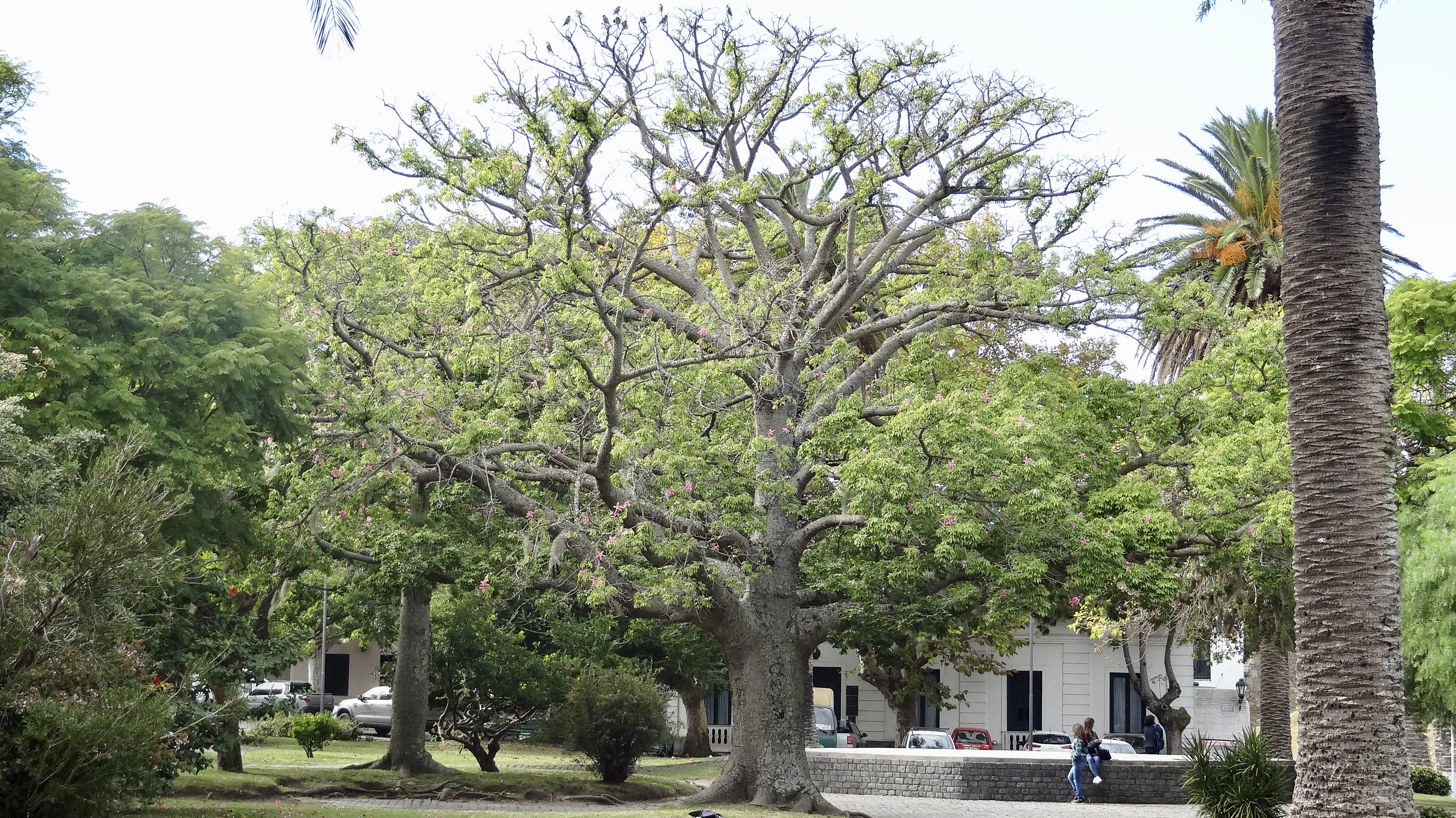
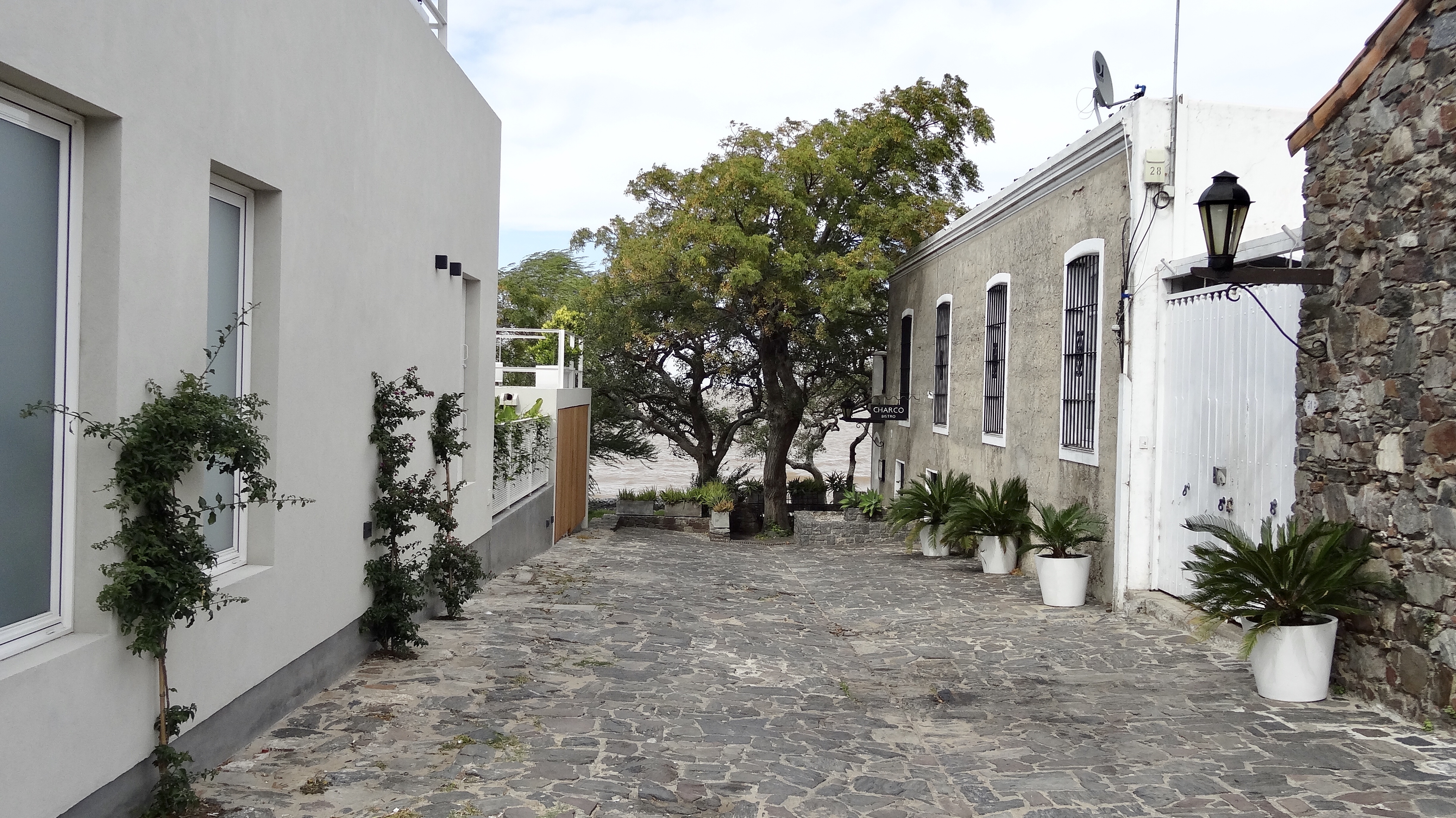
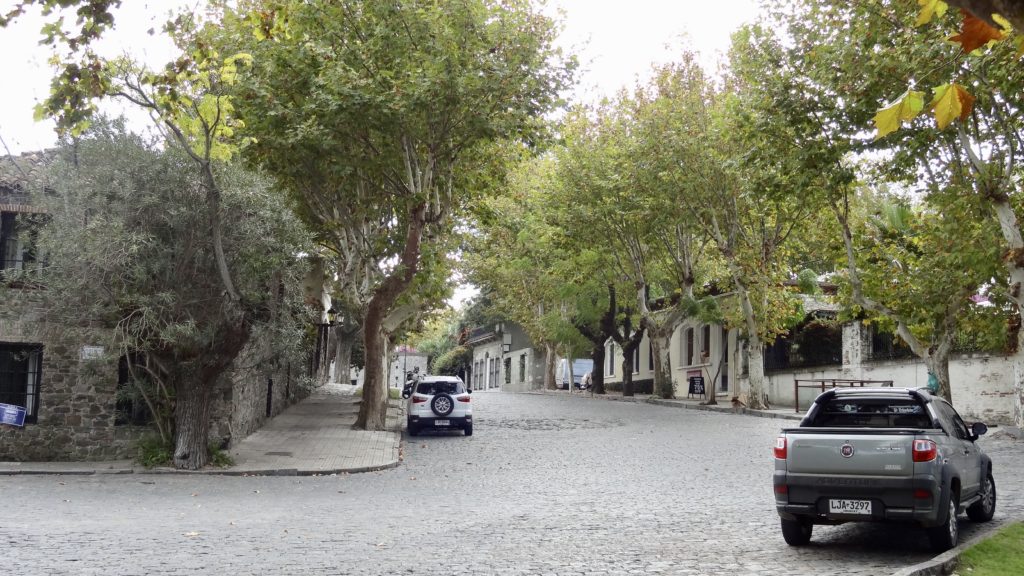
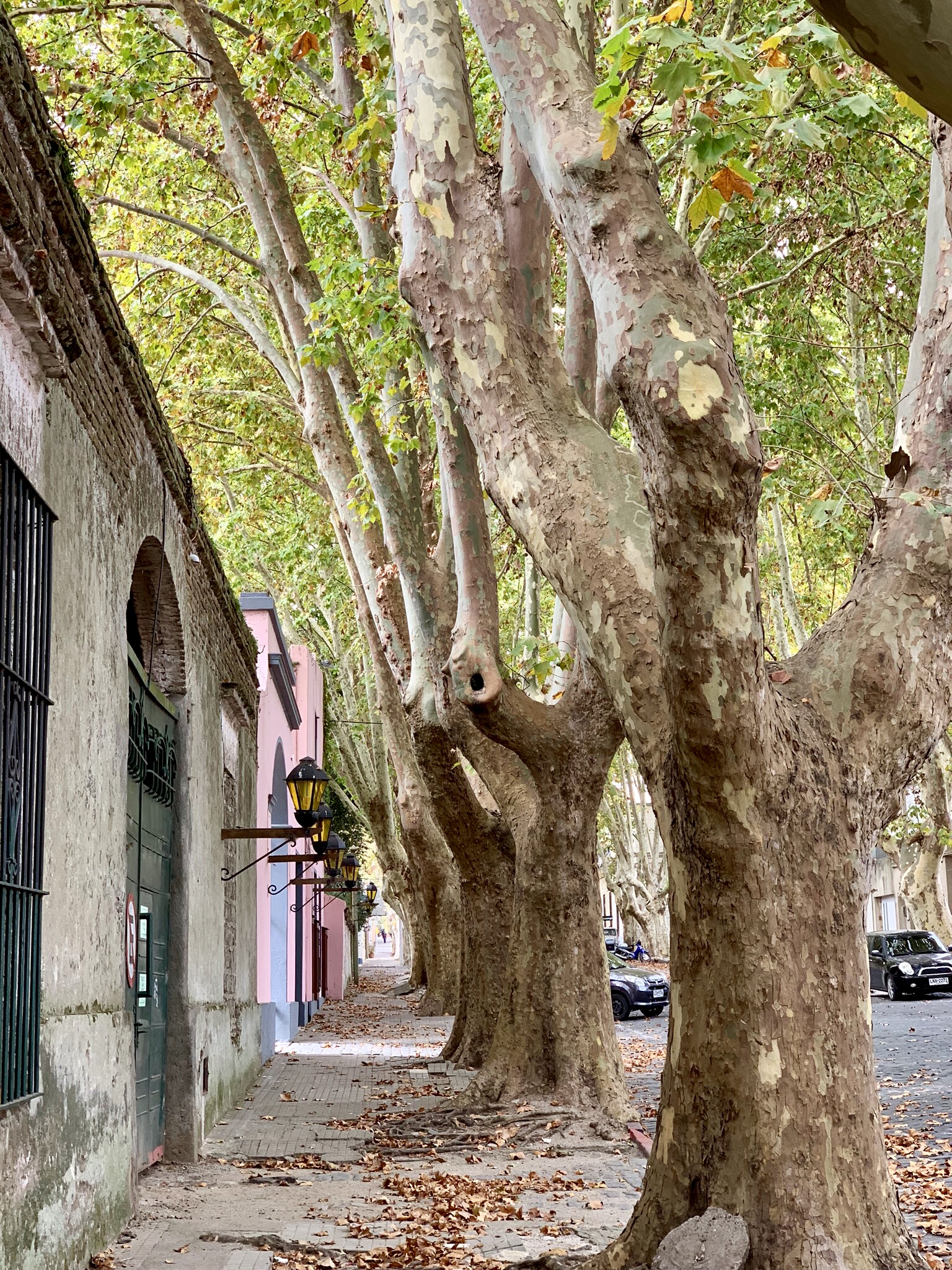
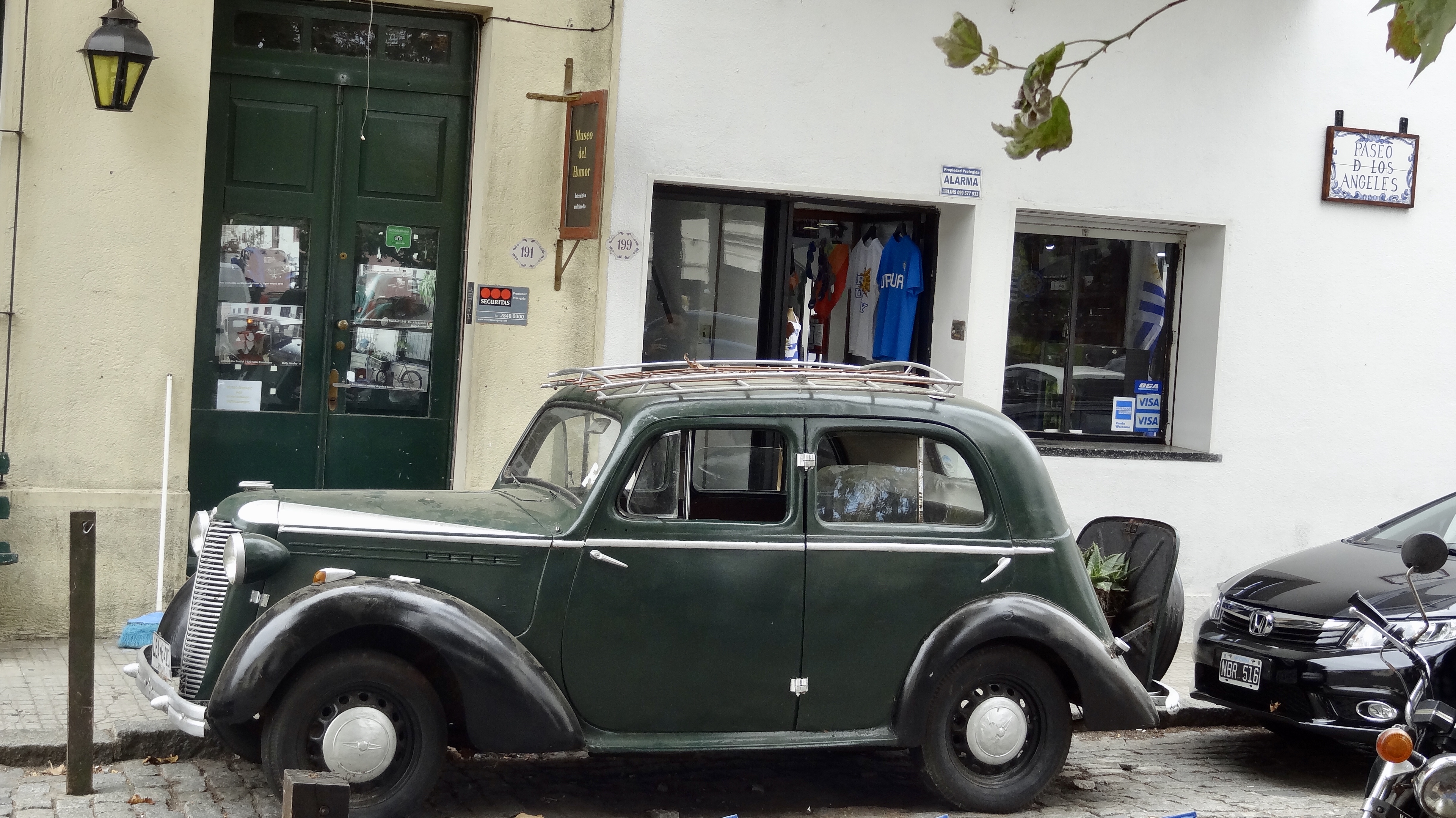
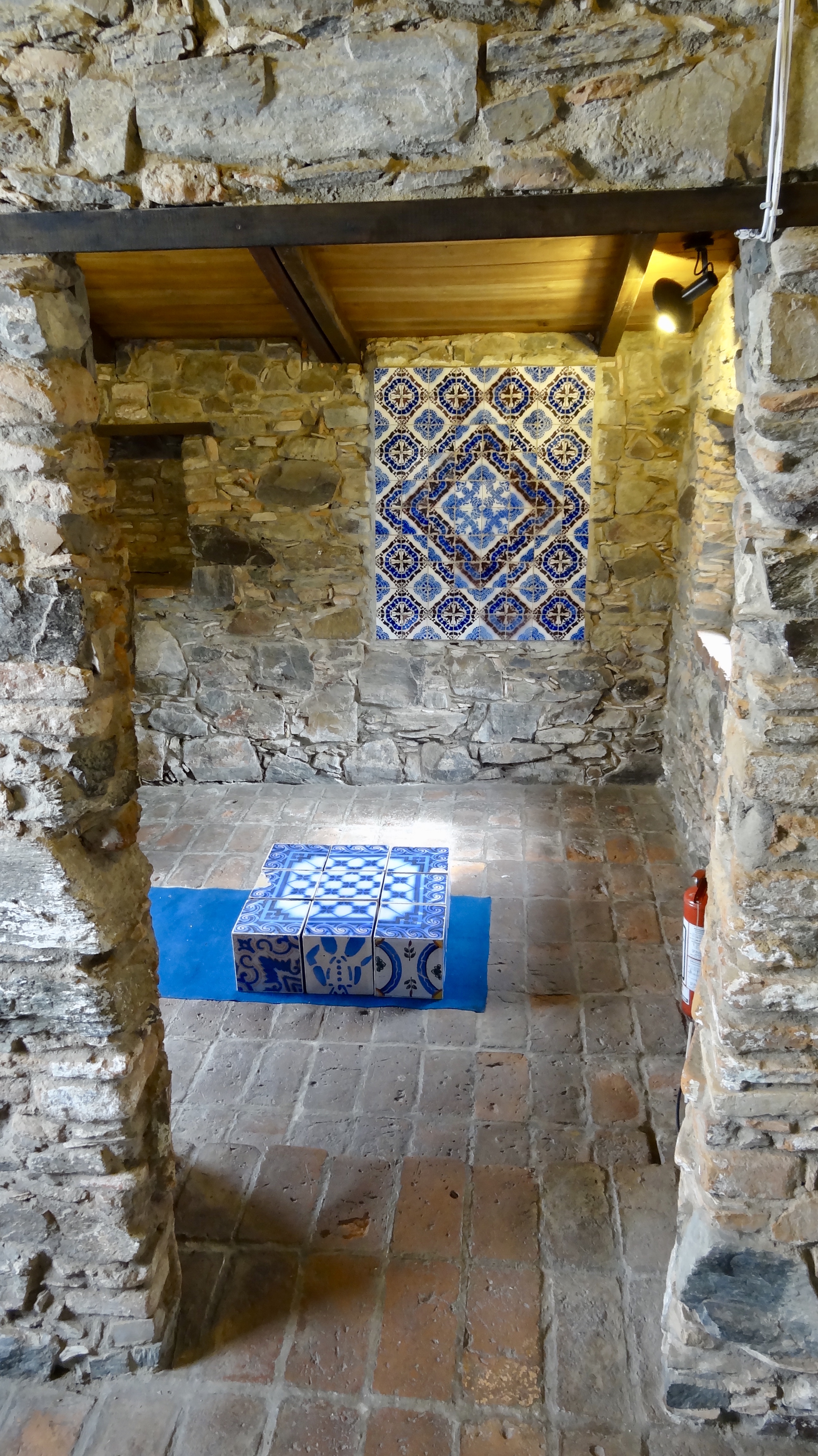
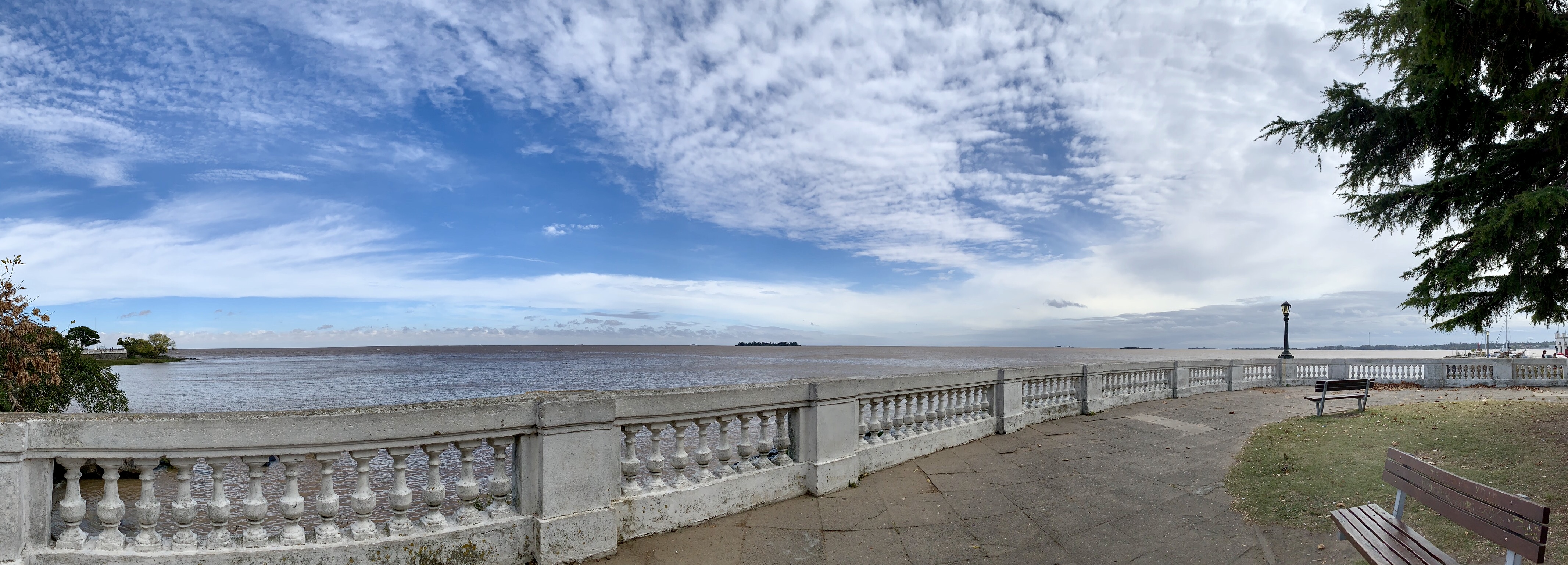
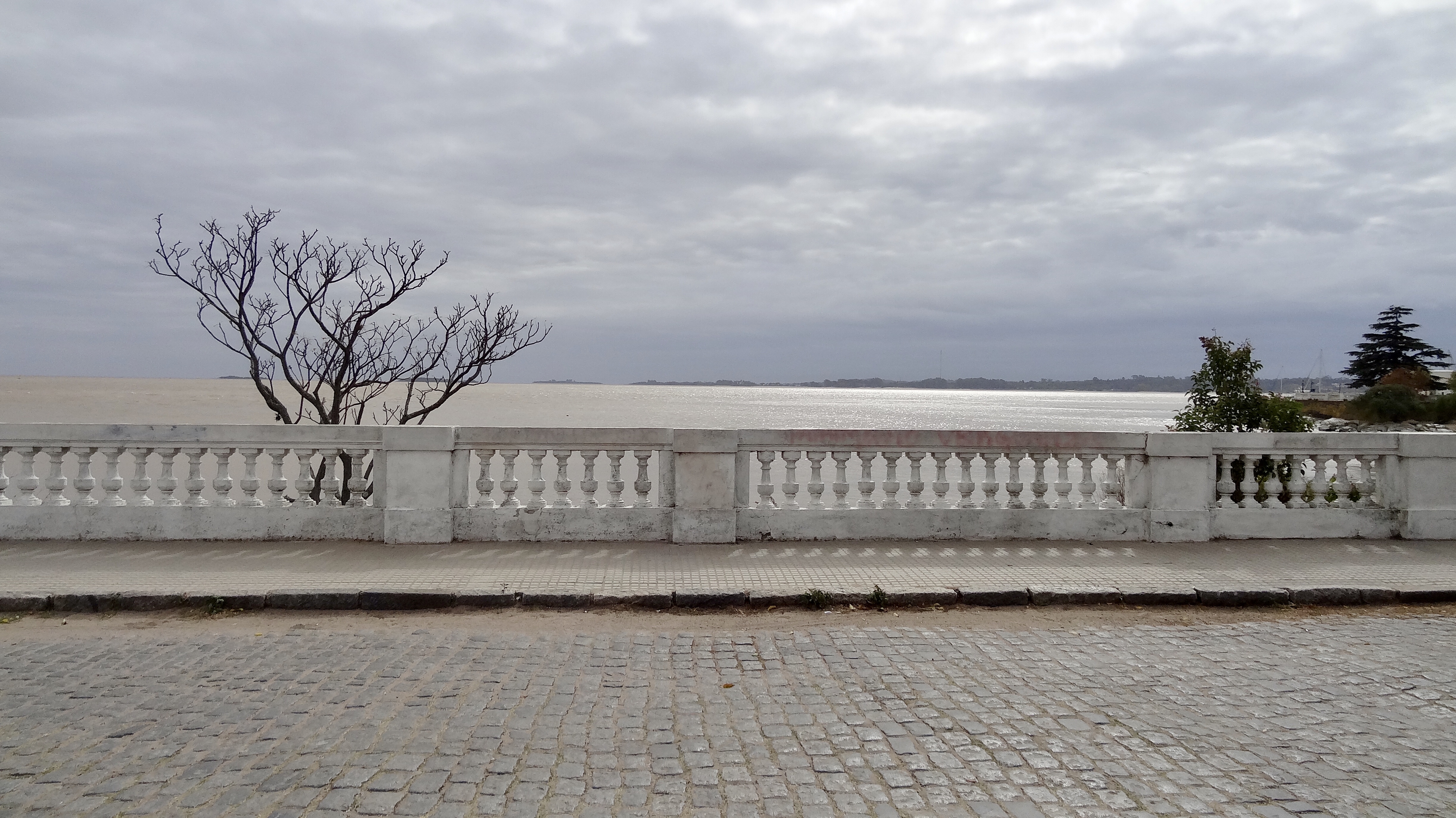
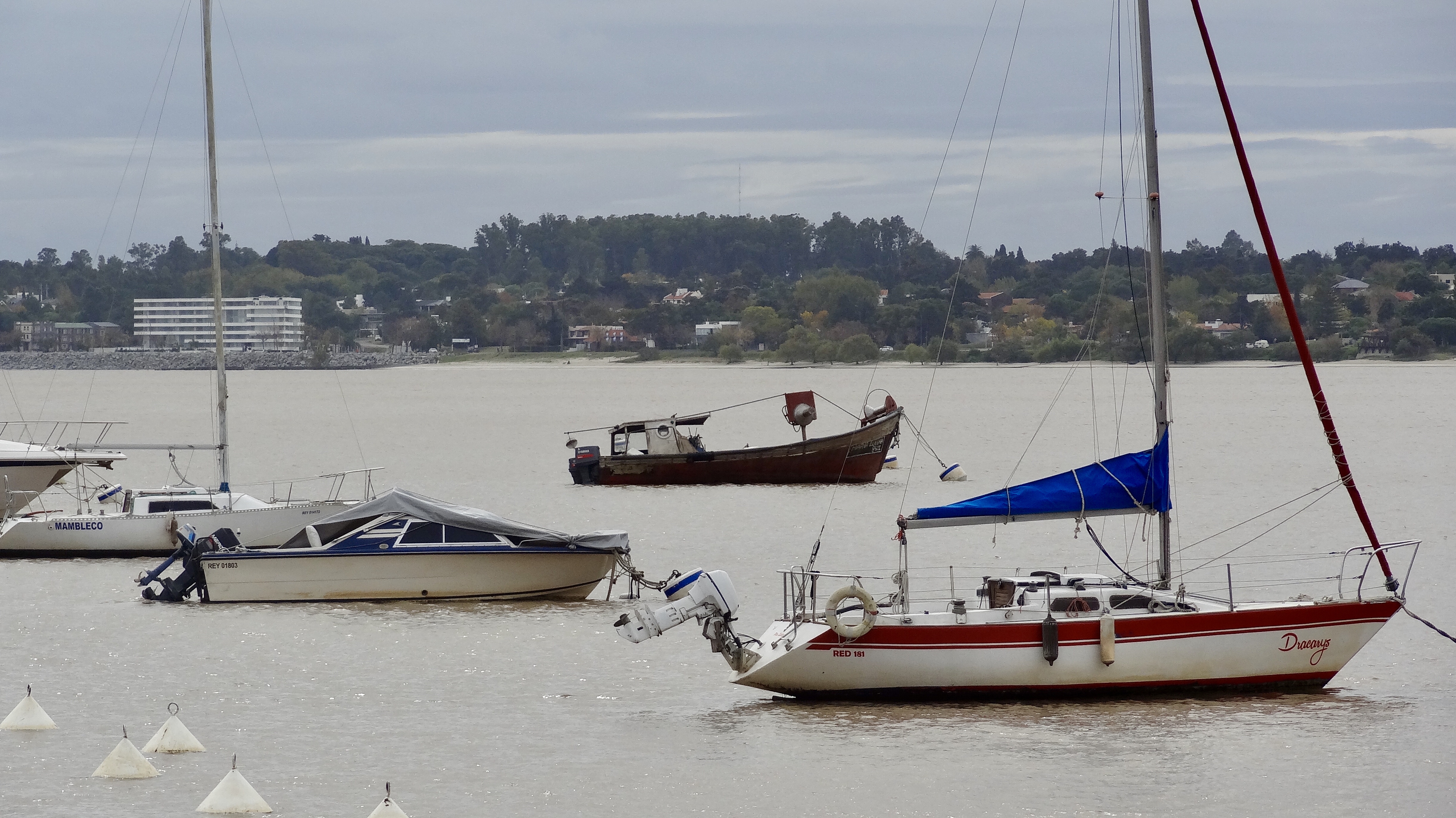
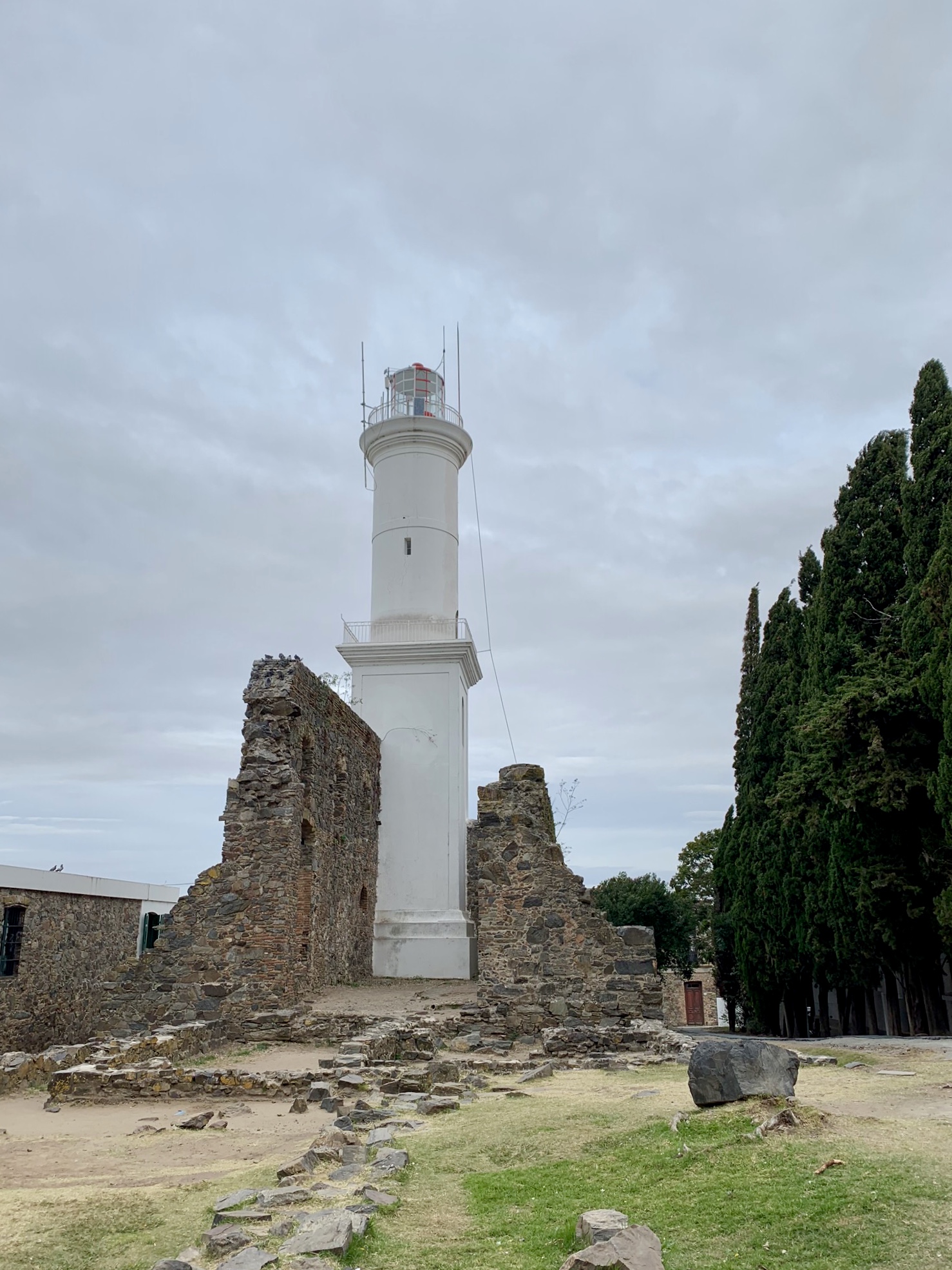
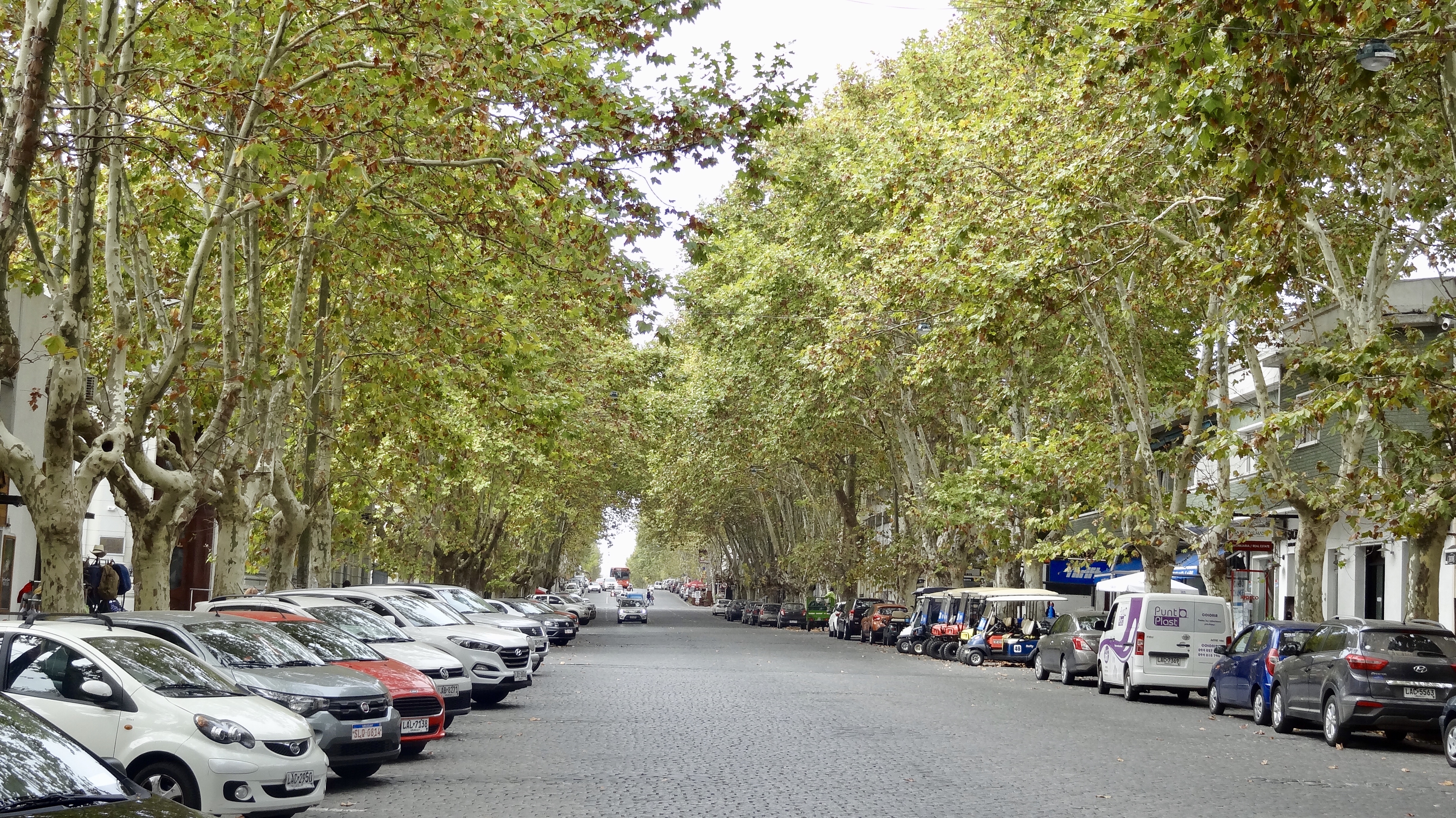
Toward the end of April, we took a day trip by ferry to Colonia del Sacramento, Oriental Republic of Uruguay. Usually called simply Colonia and Uruguay. Here we leave Buenos Aires to cross the silty Rio De La Plata. Buquebus runs a “fast” catamaran ferry. Comfortable enough on the inside, the hour and a quarter can seem a little long if the ride is rough. Fortunately, or unfortunately, only the approach to Uruguay was choppy. The city itself is quite small, with a couple of not-very-busy avenues laid out in a Spanish grid around a smaller old town with meandering streets. First we headed outside of town to the green countryside, which took all of a couple minutes by taxi. Our goal was one of the older wineries and vineyards, Bodega Bernardi. 120 years old, it is both rustic and rusty. You pound on the door and hope one of the Bernardis hears and answers. With luck, you’re taken around back to the winery and shown around a bit. The initial maturation and aeration is done in great concrete vats. They claim only the natural yeast on the grapes is used. The primary varieties grown are tennat and merlot, which spend some time in old oak barrels before being bottled. The operative word here is old. USD$5 gets you a tasting of several of their wines and grappas. The woman here is fourth generation Bernardi family. Her great grandfather founded the vineyard and winery. They produce less than 100,000 bottles of wine per year, so none of it gets exported. My suspicion is their wines are a byproduct of their grappa production. Nevertheless, we bought a bottle of their Tannat-Merlot blend to take back for a dinner in BA. We then called our faithful taxi and headed back to town and the old gate and wall that was built to protect it from attacks. Unsuccessfully, I might add, since the town was overrun and changed hands no less than 10 times.The Plaza Mayor centers the old town, where the mayor’s house and watchtower once stood. Great old trees abound. Which helped color the lectures I was getting from Michele about her current reading, Lab Girl, written by a plant biologist in love with trees. Most of these trees were too big for hugging, though. As we strolled the streets, none is far from the water. Most are still cobbled. And very quiet. Some trees have clearly outgrown both sidewalk and street. As if to lend a sense of museum to the town, old cars decorate the streets, some missing vital parts, like steering wheels, but otherwise diligently maintained. We visited a postage-stamp sized museum that showcased a small sampling of hundreds of years of tiles used to decorate the town’s buildings.Founded in 1680 by the Portuguese, right between Portuguese Brazil and the Spanish Vice Royalty of the River Plate, Colonia is just about the oldest city in Uruguay. Its location opposite the Spanish made it a lucrative smuggling port for the Portuguese. Which explains why it was always being attacked by whichever country didn’t have possession at the moment. Once plied by galleons, the little bay is peaceful now, and home to mostly sailboats, below.The Colonia lighthouse, built in the 1850s on top of an earlier stone convent already a ruin then. It’s an old new world. Uruguay is the second smallest country on the continent. And we went in expecting an economically challenged backwater. Instead we learned that Uruguay is ranked first in South America in prosperity, low government corruption, freedom of the press, lack of terrorism, and so many other quality-of-living-there factors. Who knew?

Interesting. I wonder how they manage being prosperous and un-busy at the same time. No history of earthquakes or hurricanes probably helps.
I love how even the winery’s lavender is old and gnarly looking!