//Namibia – March 2019

Namibia – March 2019

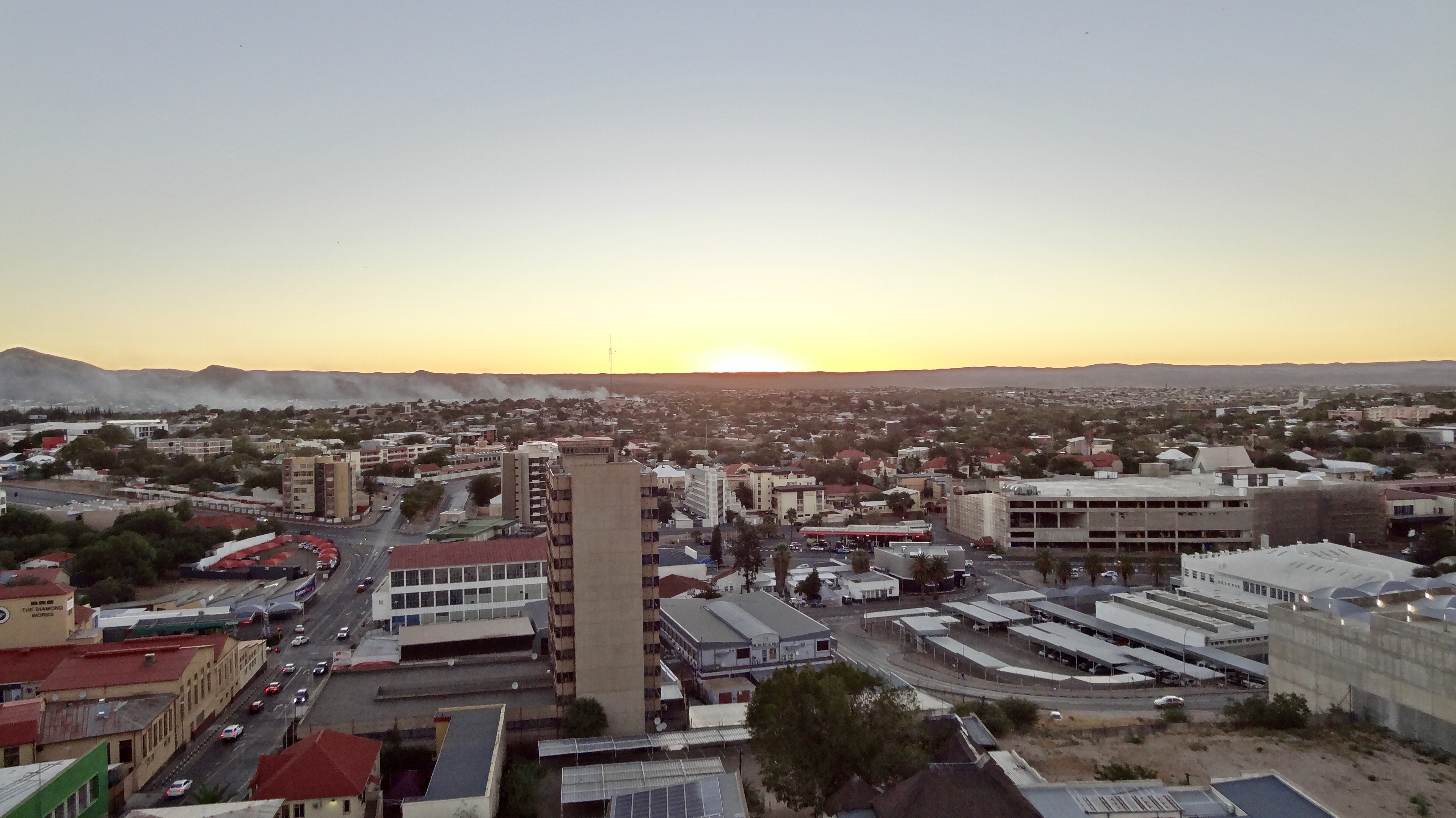
We took a morning flight from Cape Town to Windhoek, the small capitol of Namibia, where we spent an afternoon and a night to check out the town of 350,000 or so, and stock snacks and water for the drives ahead. Namibia is not the breadbasket that South Africa is, and the meager fresh selections in the markets showed it.
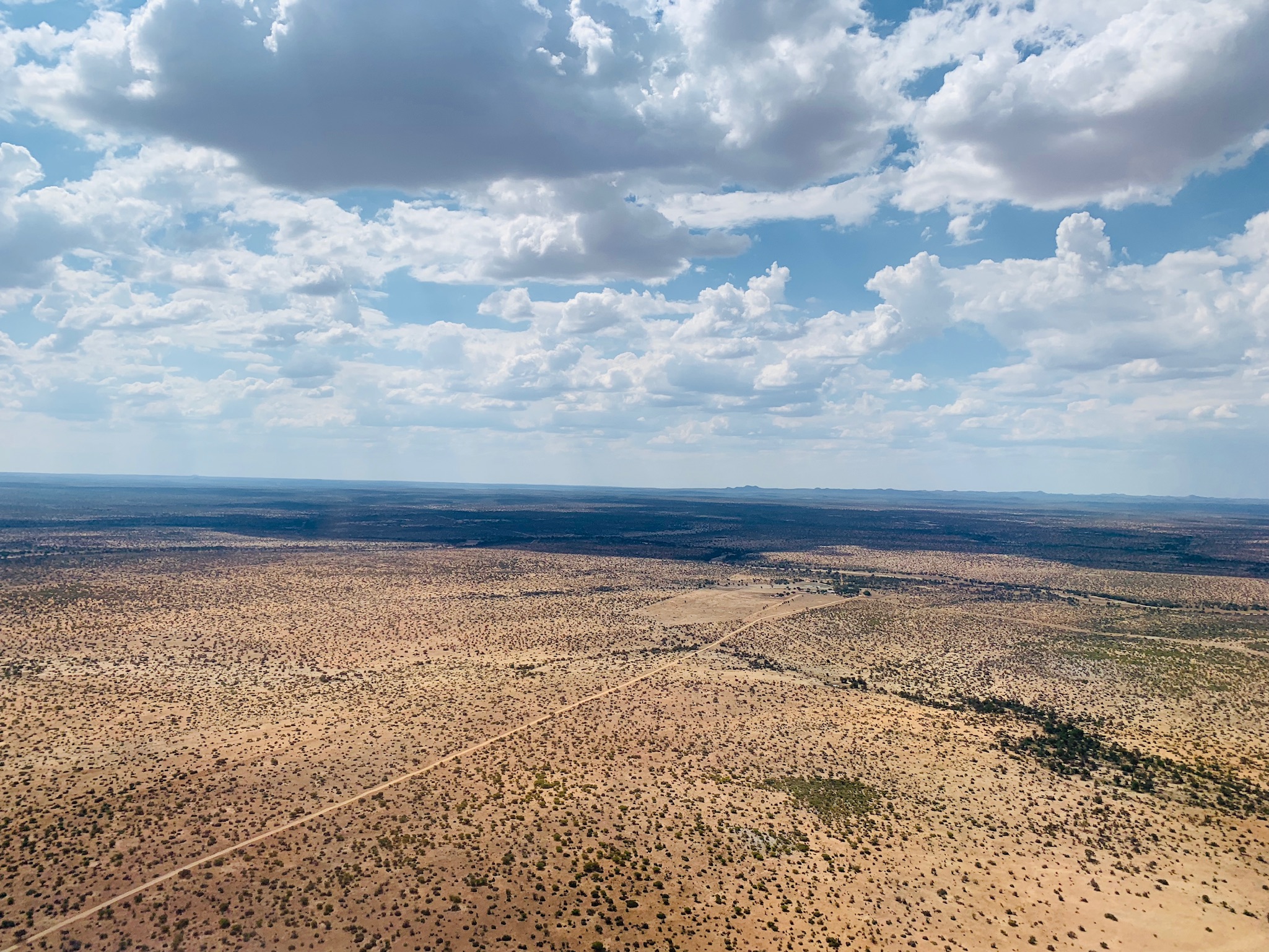
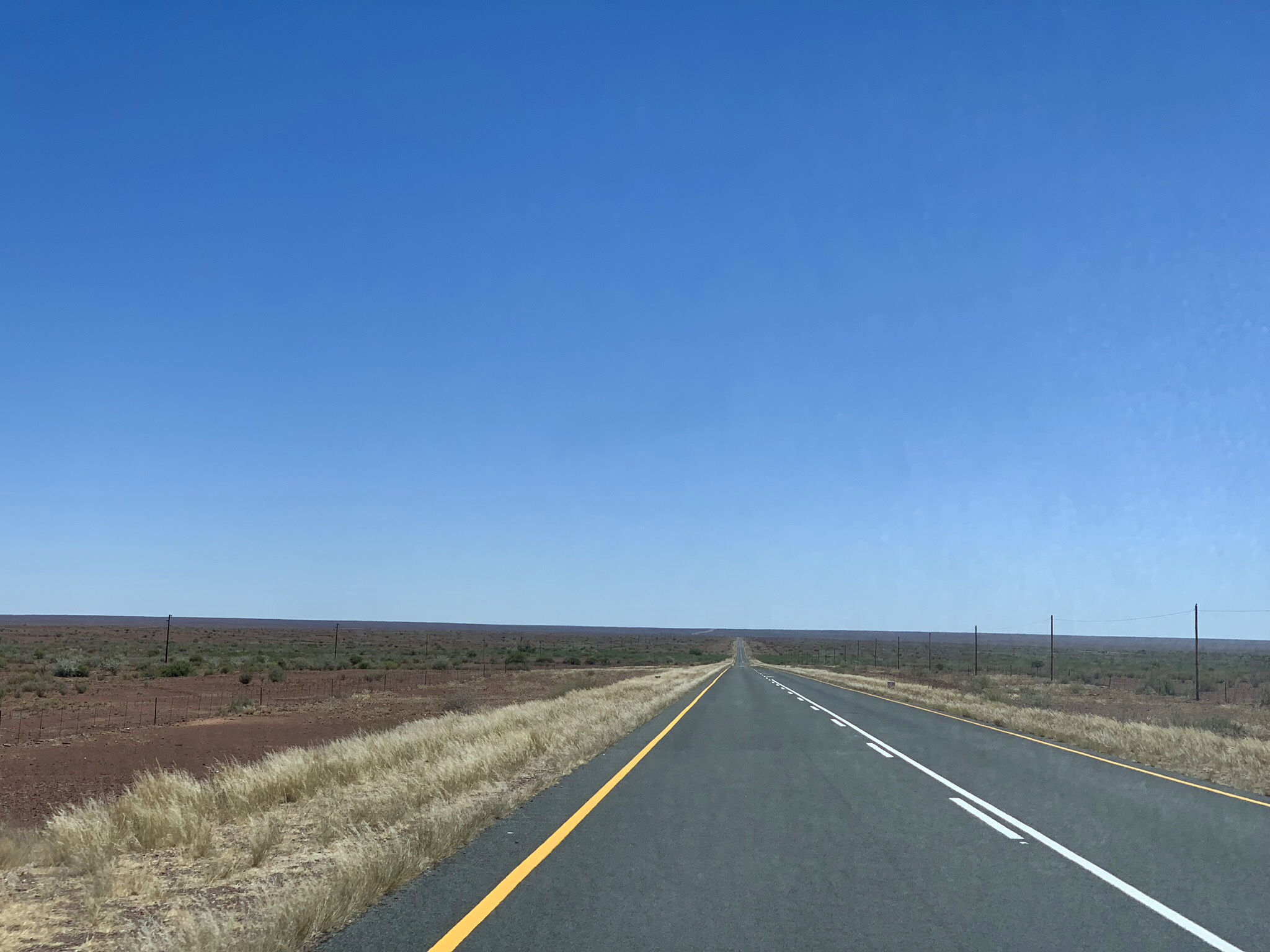
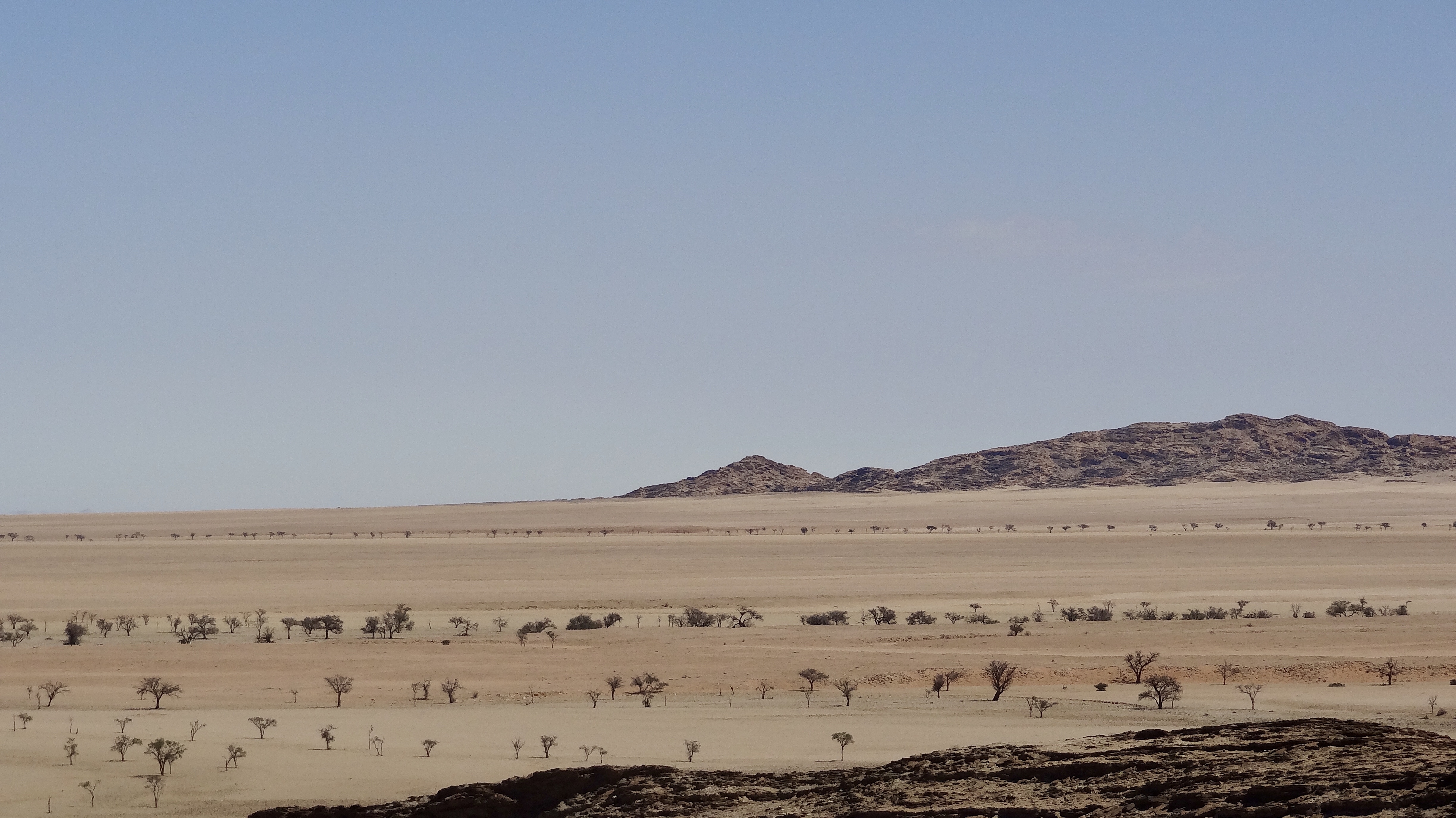
The country is vast expanses of flat lands punctuated by low ancient mountains. A sparse network of excellent paved roads ties the major parts together.
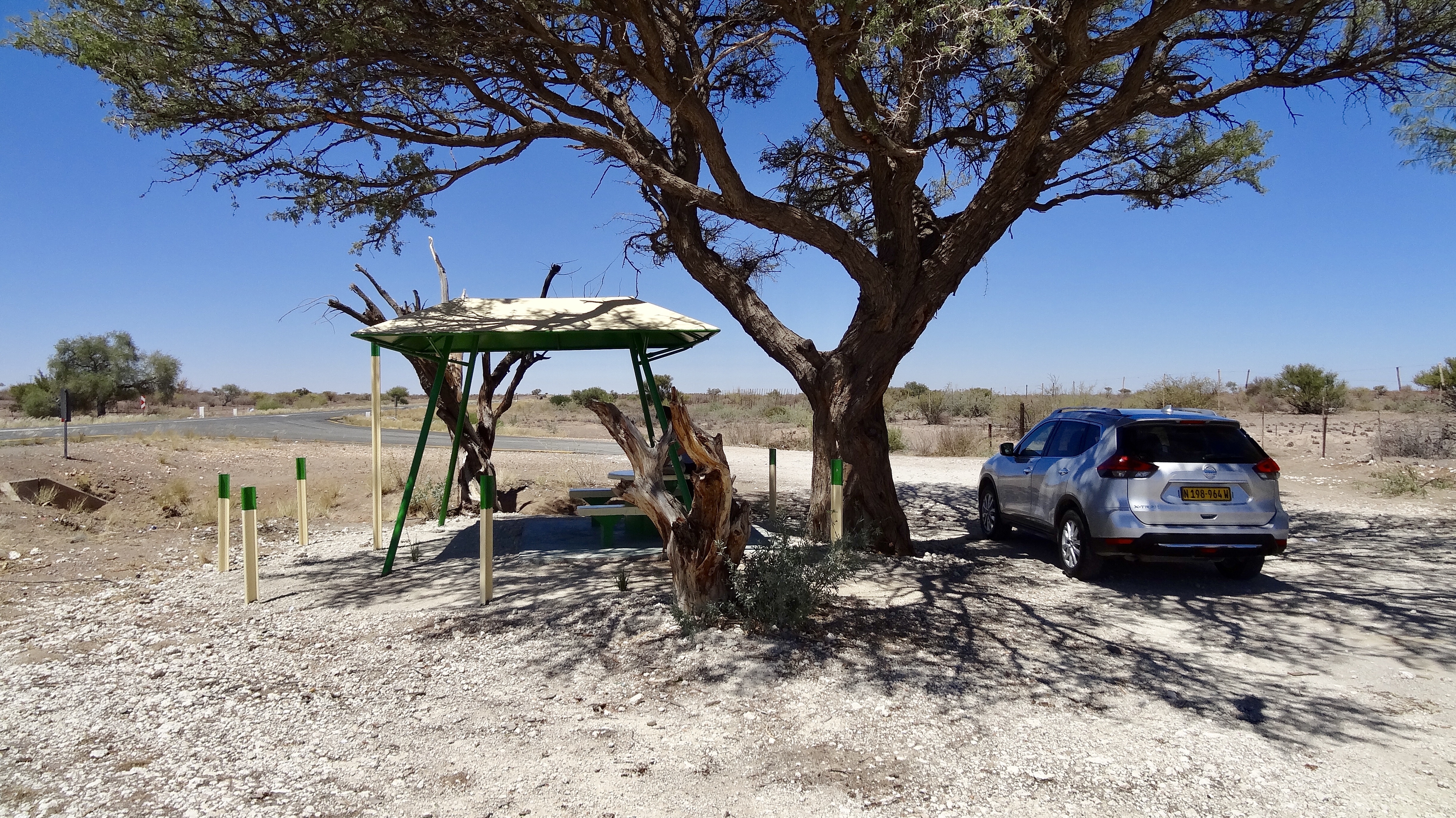
On our way to the Namib Desert, we stopped at one of the many roadside rest stops for lunch.
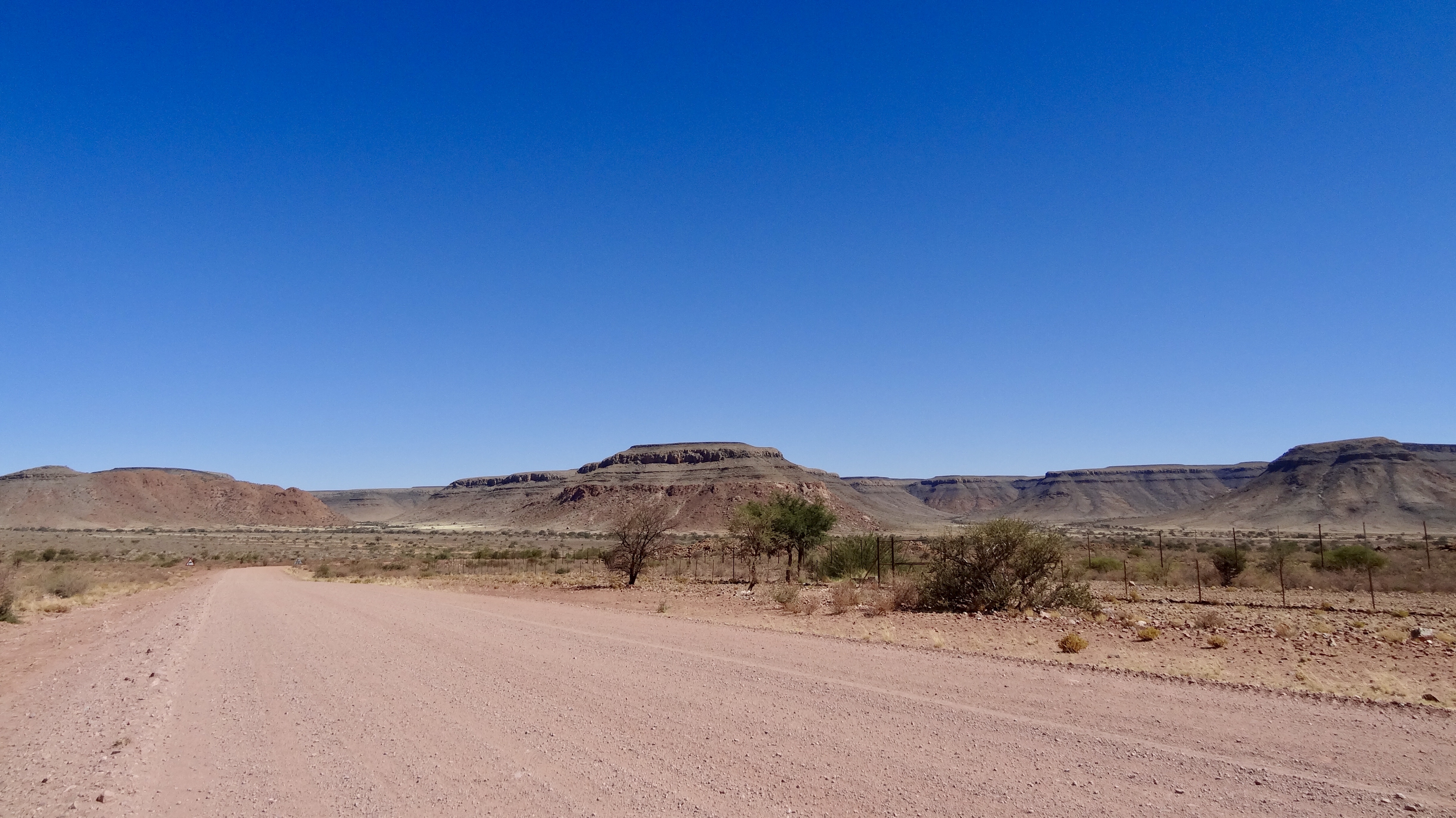
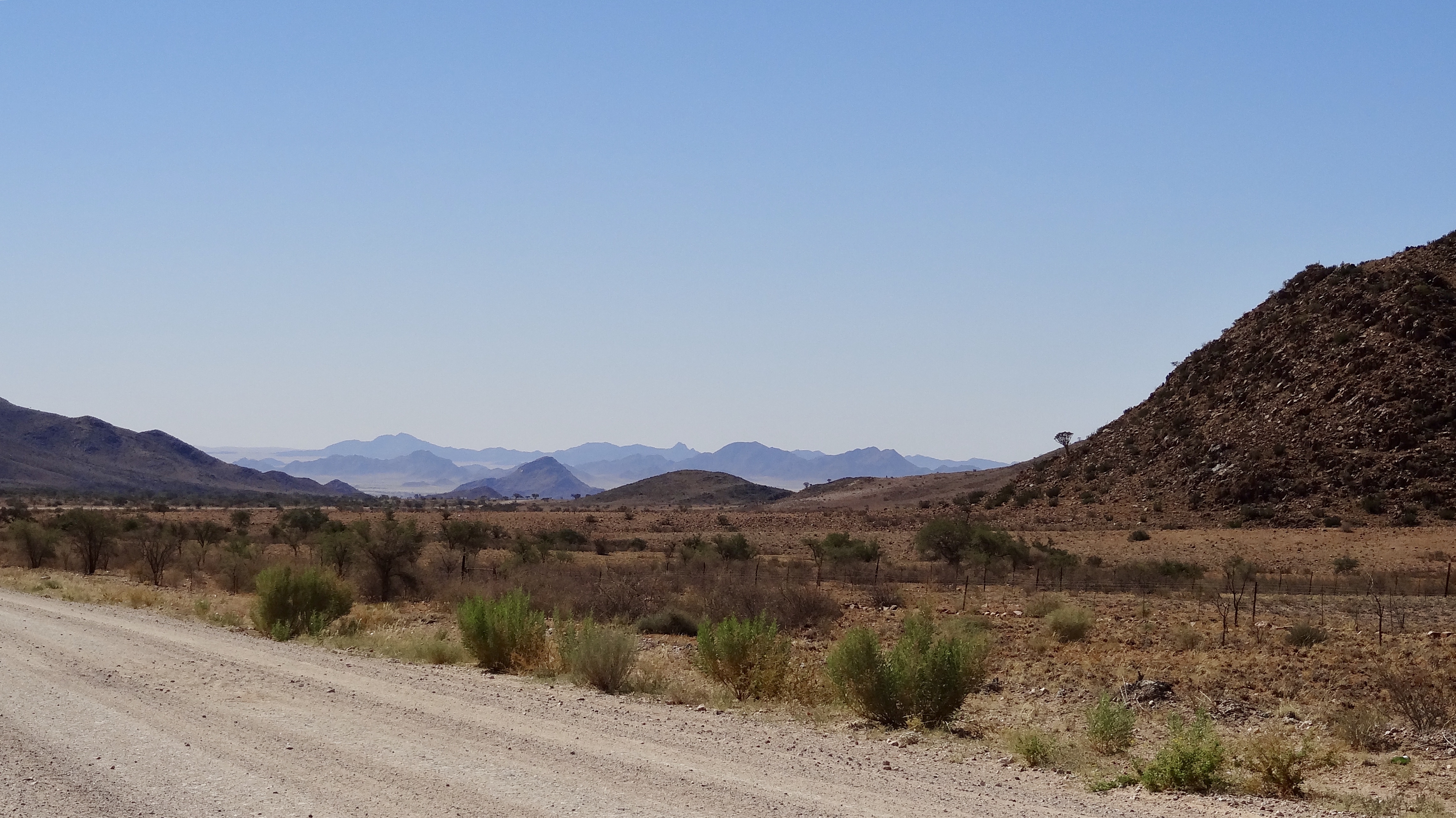
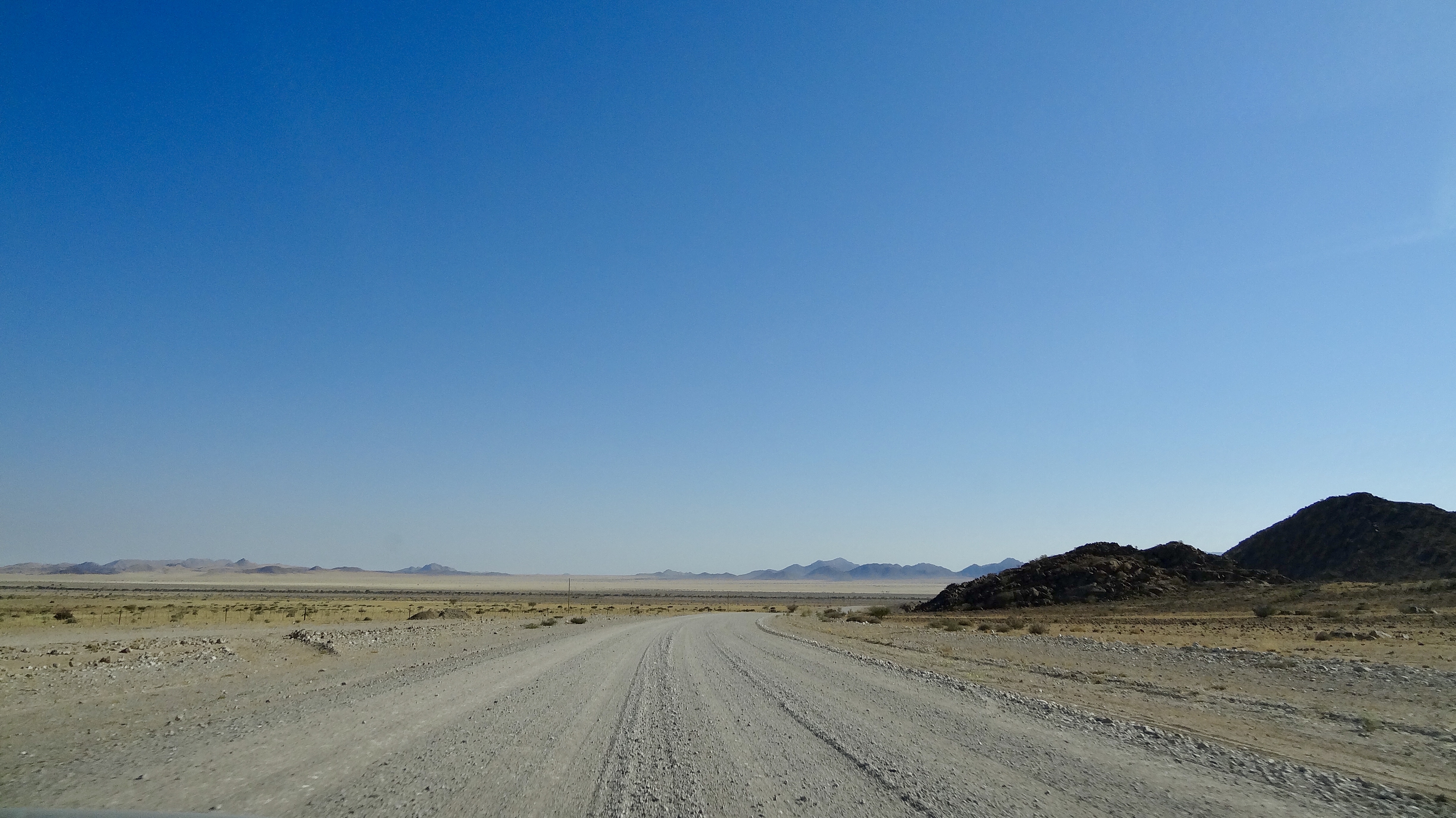
Once we left the B1 highway, it would be a few days before we’d see pavement again. The 150 or so miles of dirt and gravel roads to Sossusvlei were a mixed lot. Some nicely graded, some a marriage of washboard and pothole.
The trade off for hours of noisy rough rides: views. And isolation.
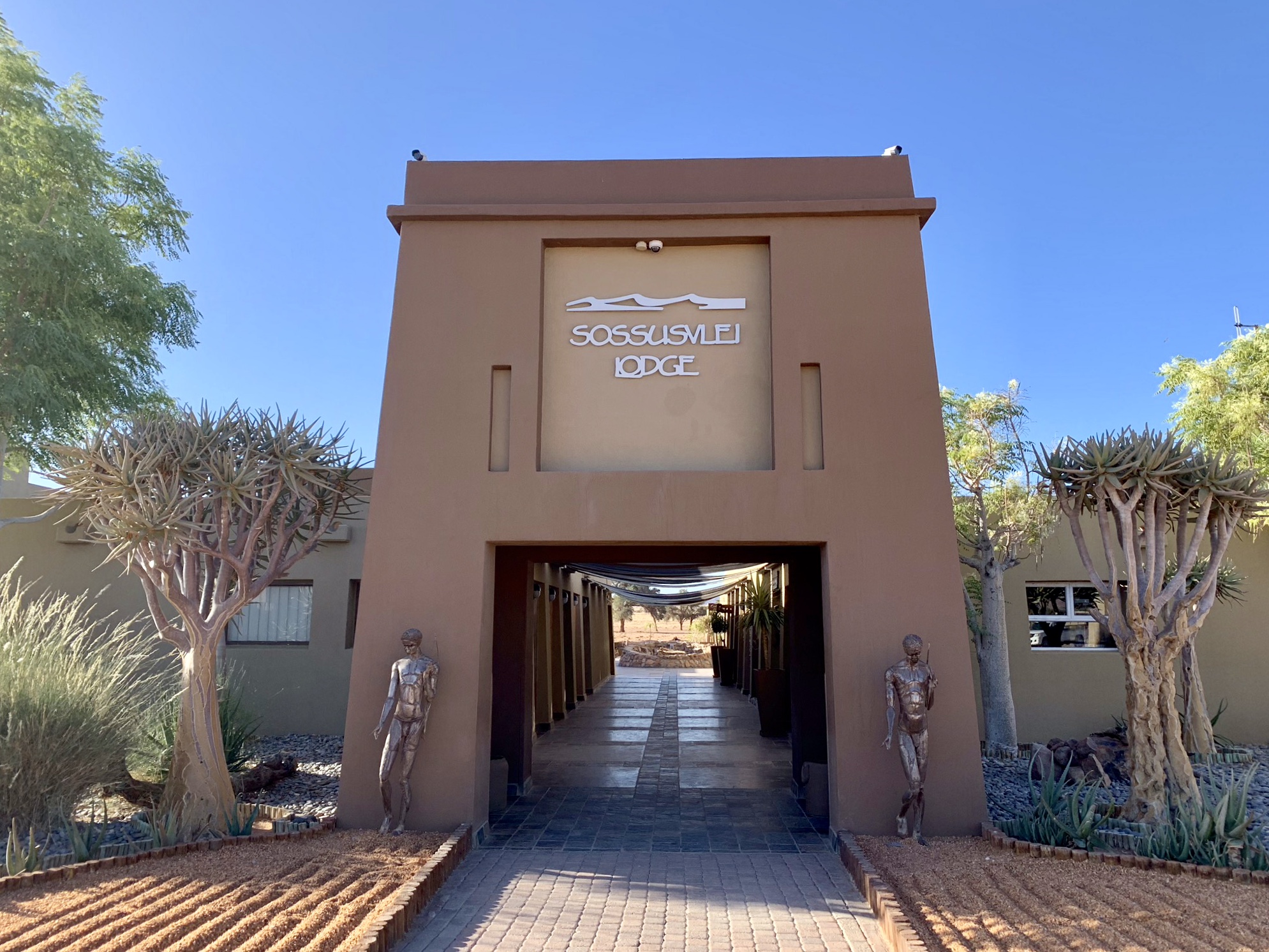
At the end of the day, Sossusvlei Lodge. More hotel than lodge, it was OK. The food was buffet and uninspired, as was the service, but the many German guests seemed to enjoy it. And it maintained a sense of the desert that surrounds it. But it’s real redeeming value is its location right outside the entrance to the Namib-Naukluft national park.
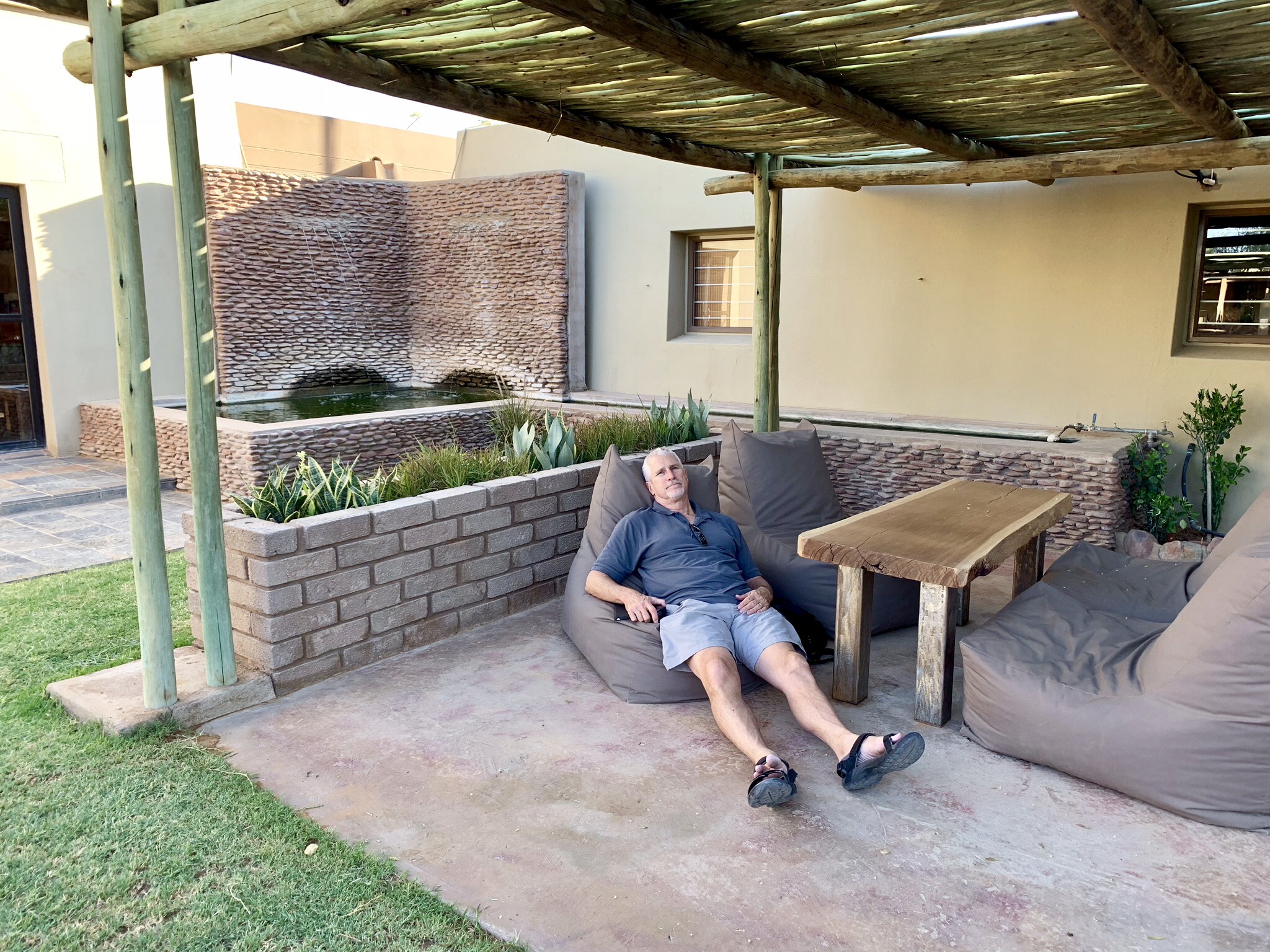
The driver waiting for refreshments while the passenger runs around taking pictures.
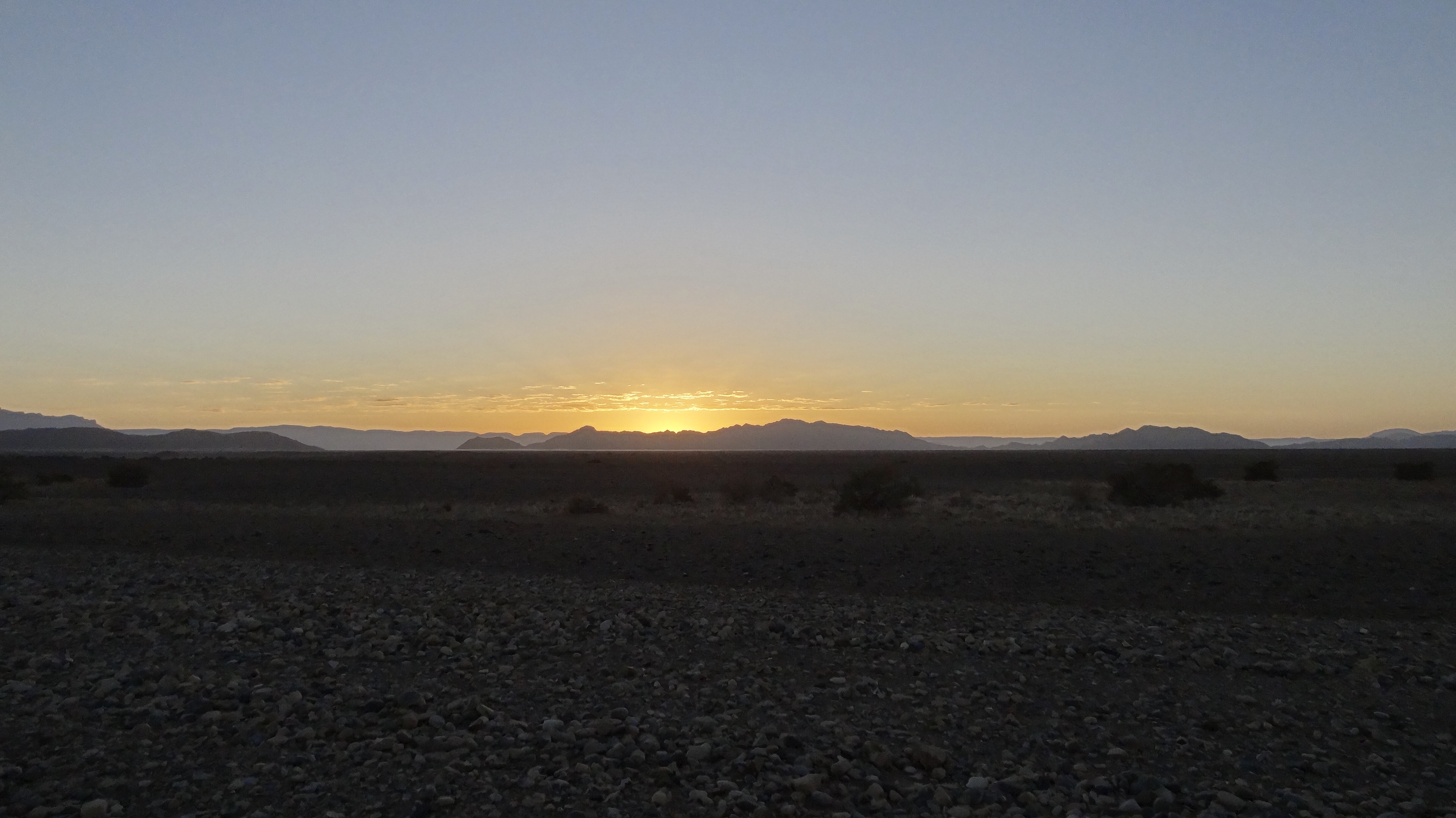
Sunrise the next morning as we drive toward the Namib dunes, 35 or so miles from the park entrance.
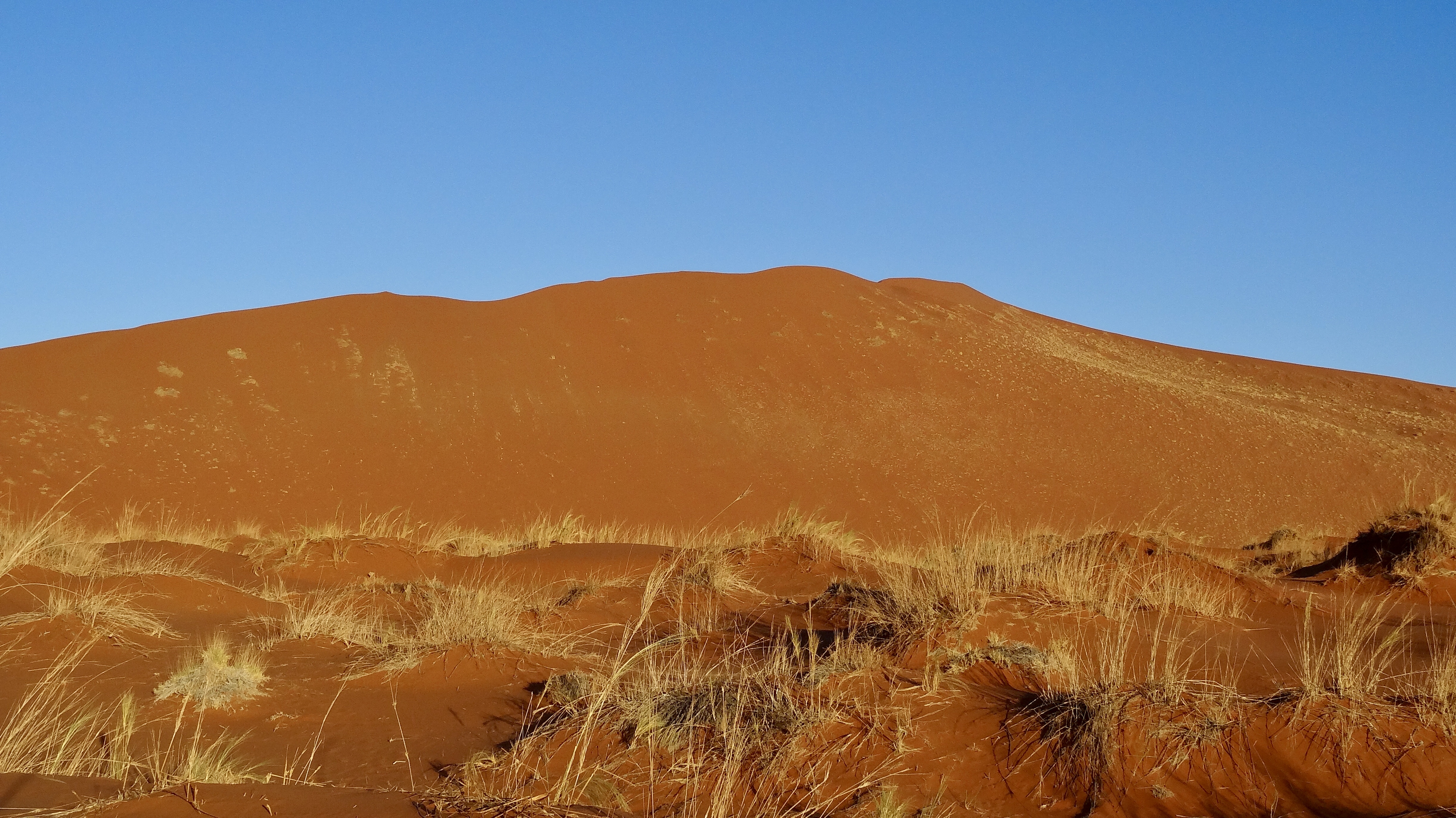
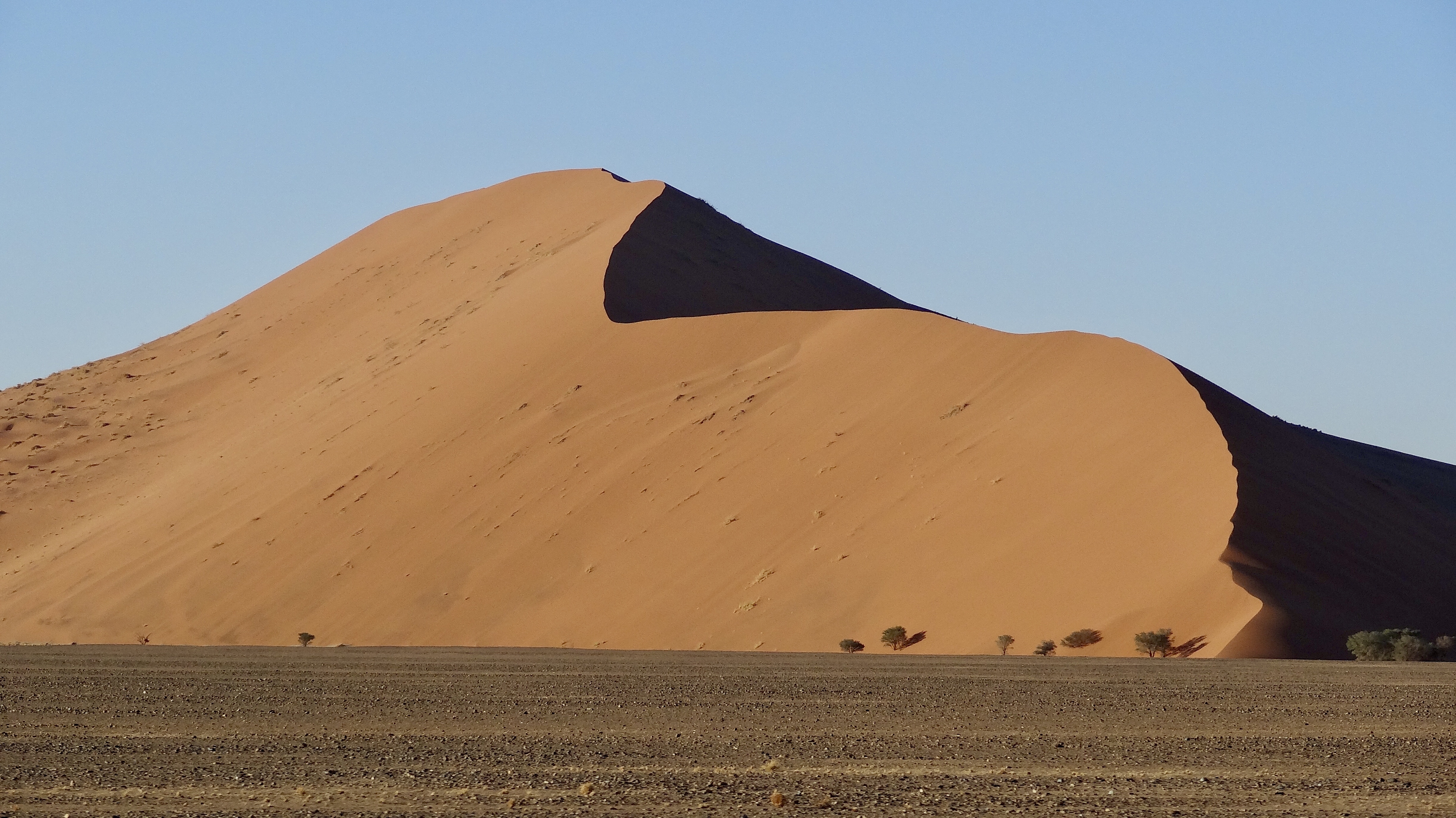
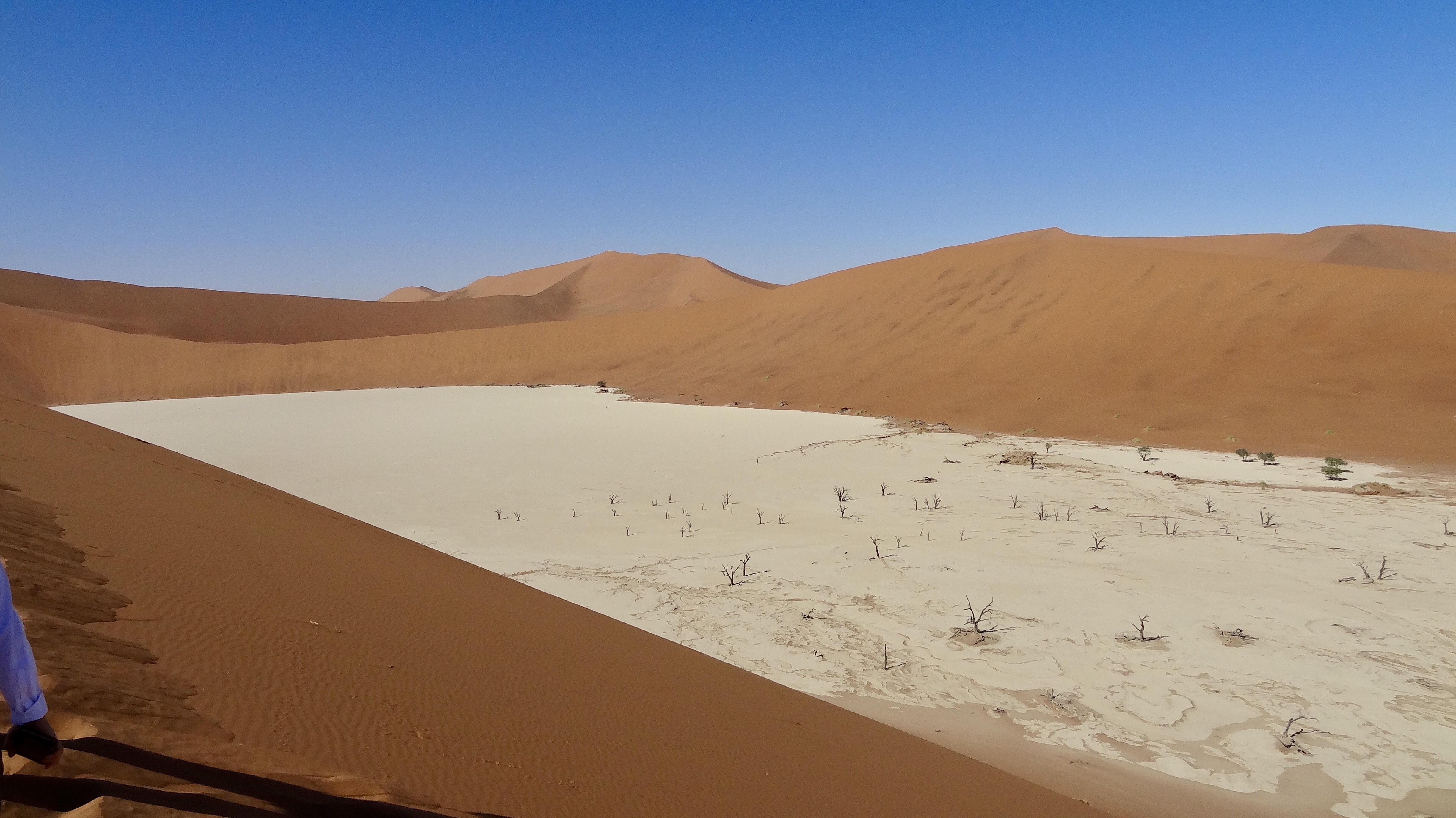
The Namib desert is the oldest desert on the planet. The dunes are relatively stationary, a result, in part, of being anchored by sparse vegetation. Iron oxide gives them their red cast.
Some dunes reach to 1,000 feet and seem to rise right out of the rocky plain.
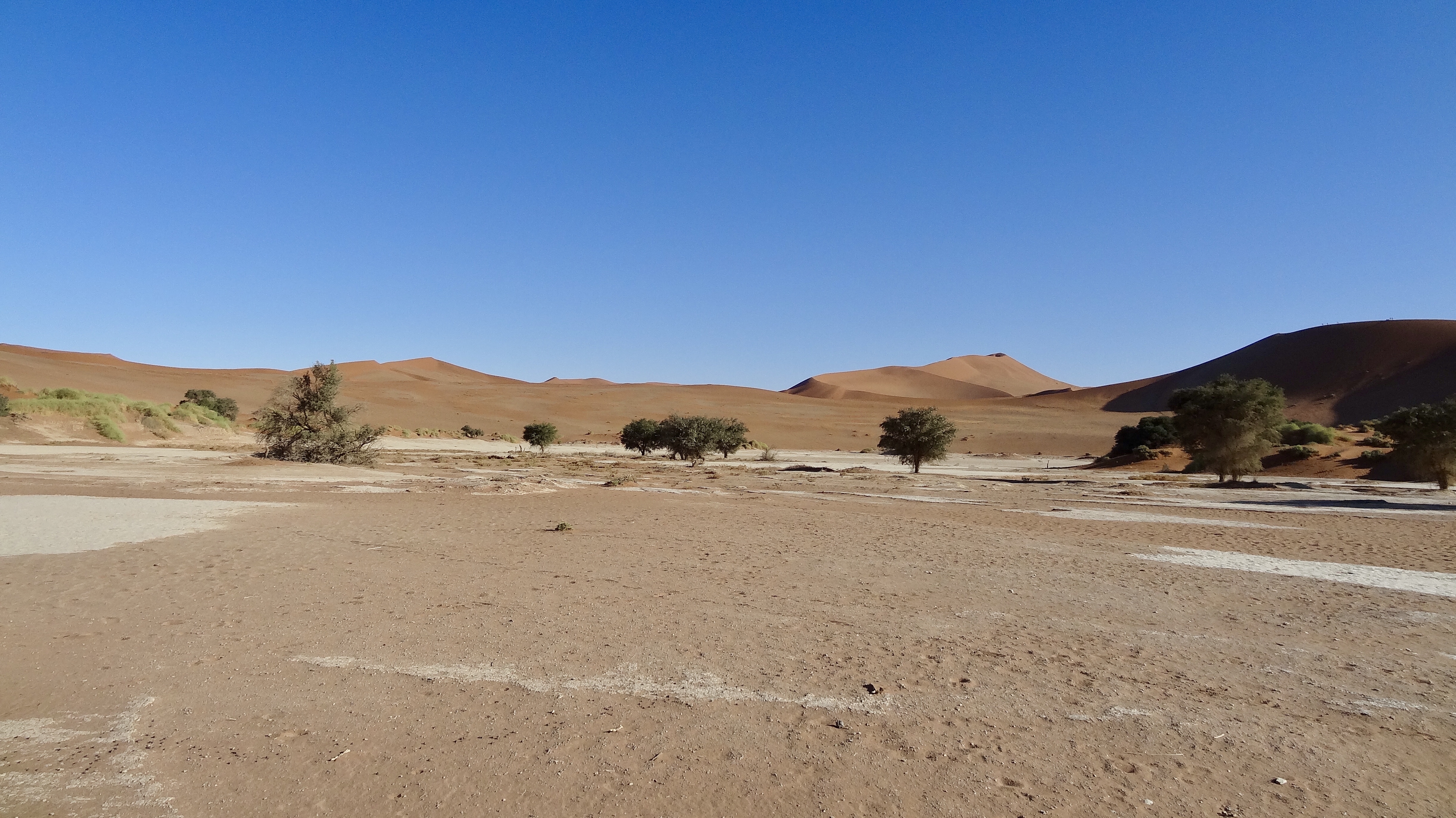
Sossusvlei itself is a small dry pan amongst the dunes, where water collects when it does rain. 2011 was the last time it rained here. The plants otherwise subsist on light morning fog.
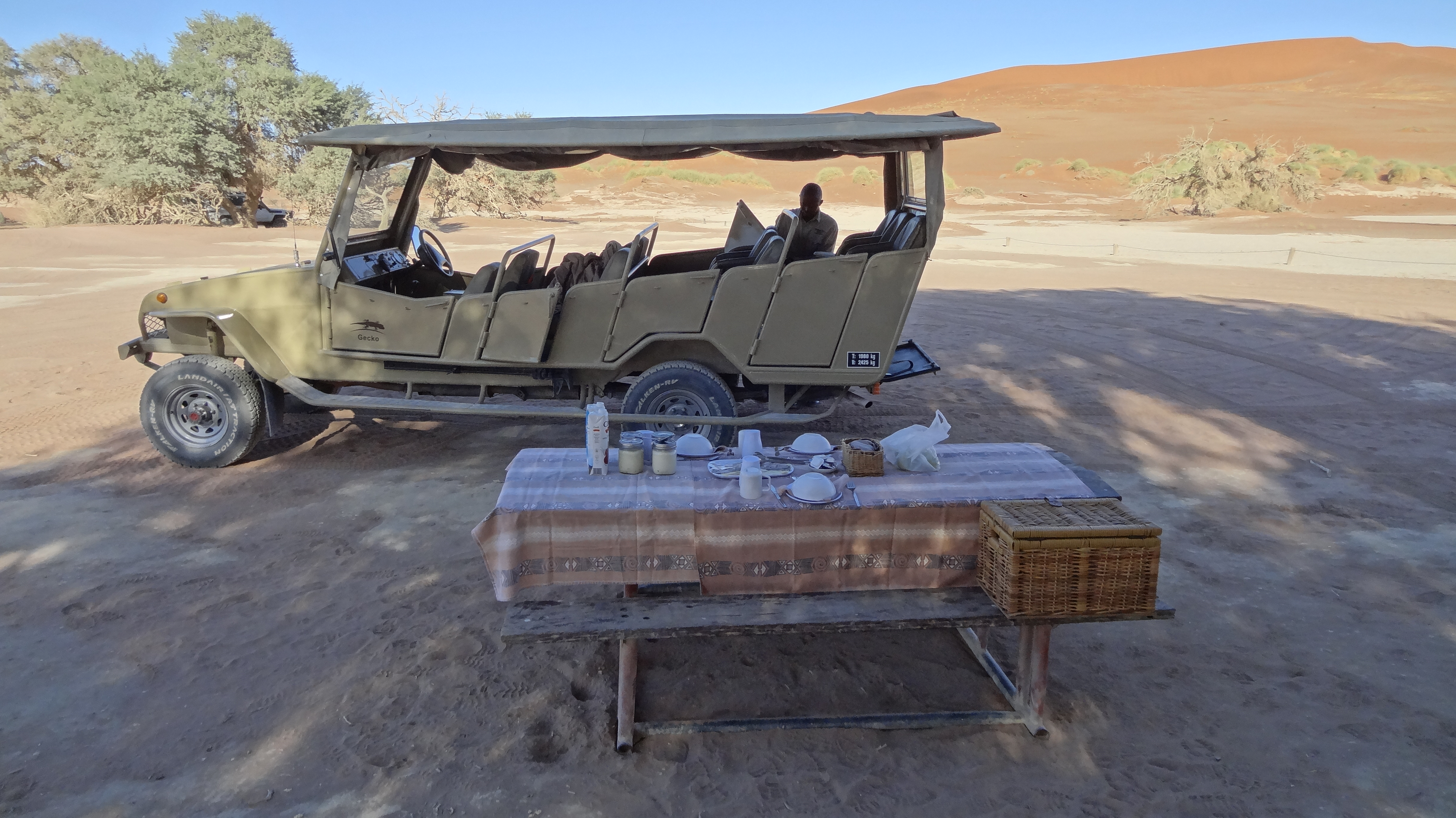
We stopped here for a late breakfast with Jonah, our driver and guide. We chose to avoid driving this portion of the route ourselves. Probably a wise decision given the several self-drivers we encountered stuck in the sand, awaiting tows to freedom.
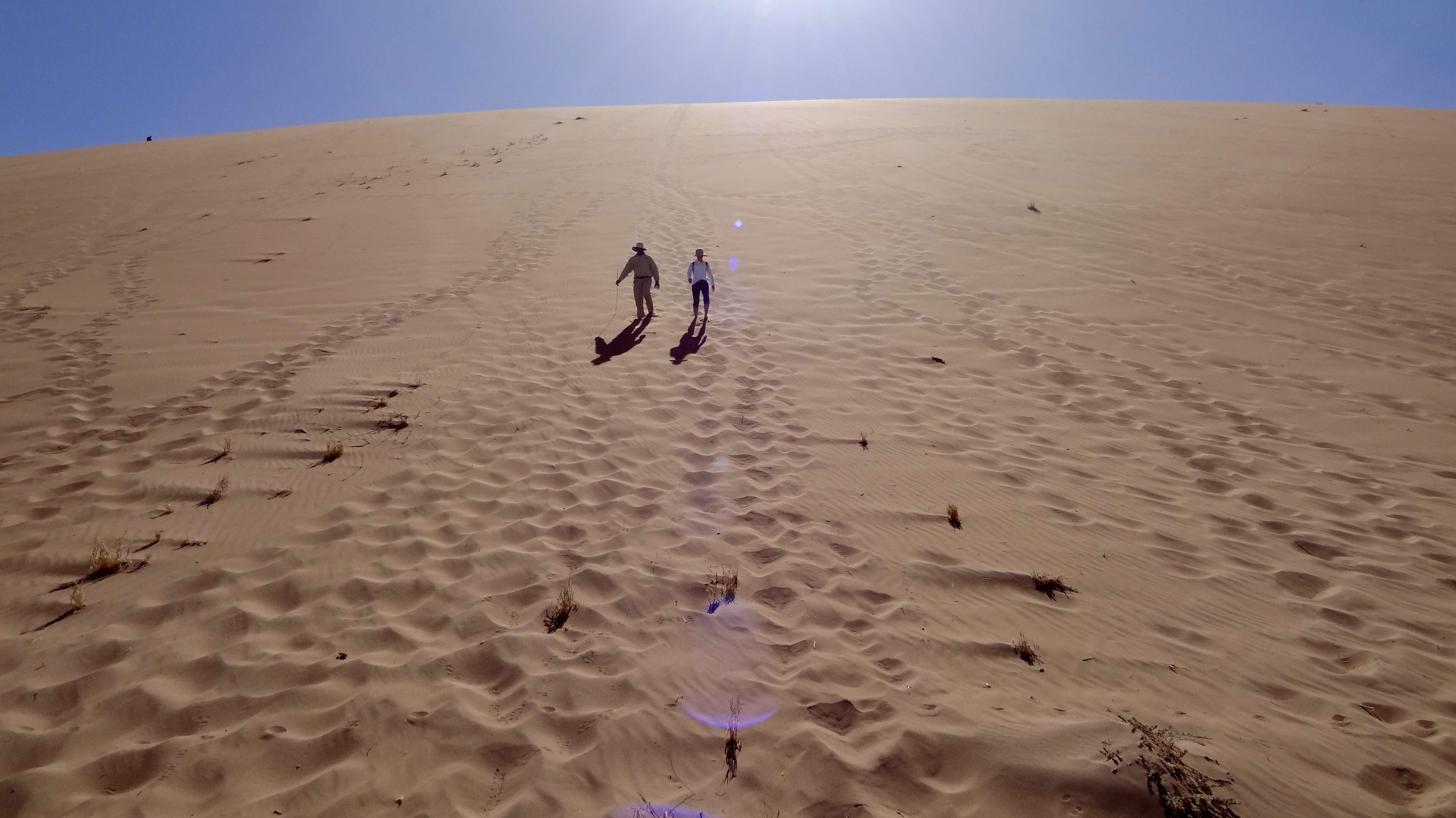
The highlight was a hike up the crest of one of the great dunes overlooking the Deadvlei pan below.
The real fun, though, was taking the short way down, slipping through steep soft sand that’s more like talcum powder than the beach sand were used to in Hawaii.
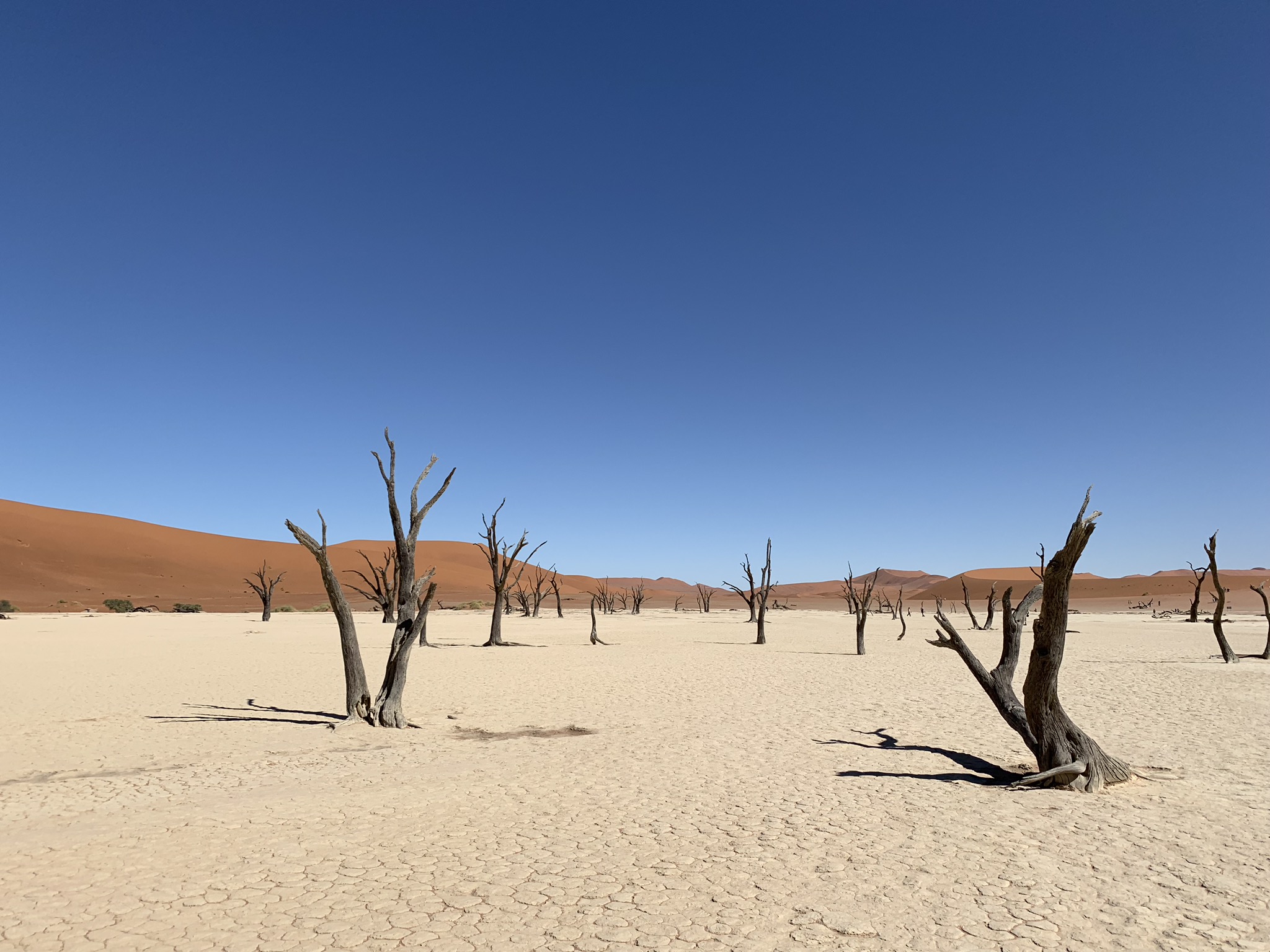
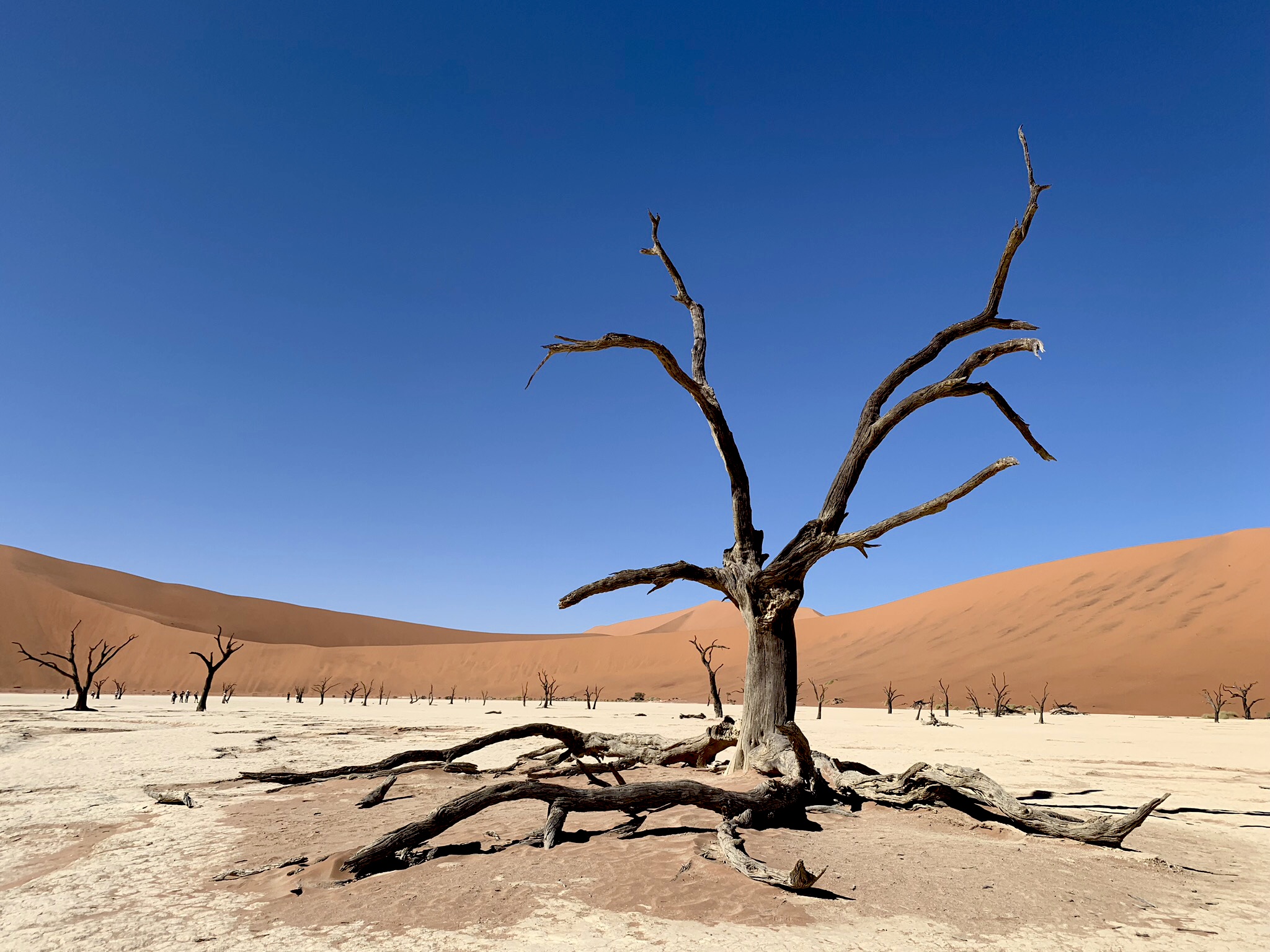
Deadvlei itself is eerily beautiful. These trees are over 1,000 years old, having died when the climate changed some 900 years ago, becoming too dry for them to even decompose.
The following day we left the sand sea for the gravel plains and another 250 miles or so of unpaved travel. It would sometimes be 30 or 50 miles between sightings of other cars.
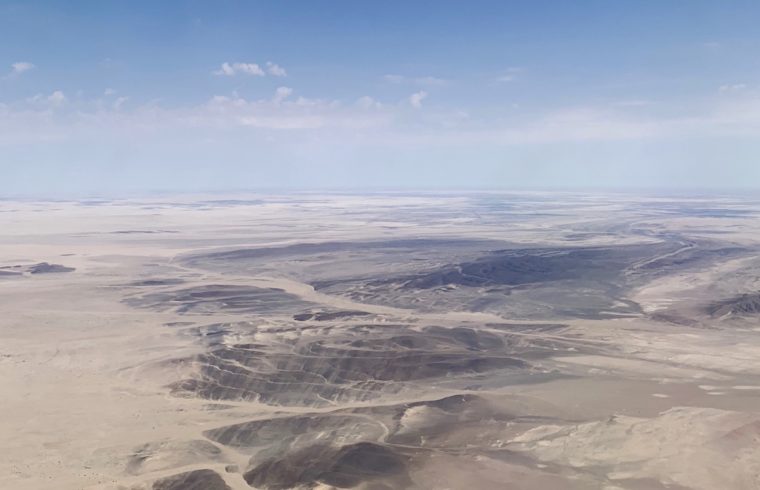
Namibia is a curious mixture of sameness and variety. It is named for the 1,200 mile coastal desert that is its entire coast, but heading inland and higher doesn’t relieve the dry landscape. Nevertheless, each new vista is different. Uplifted and folded rocks from different epochs speak to the land’s tectonic history.
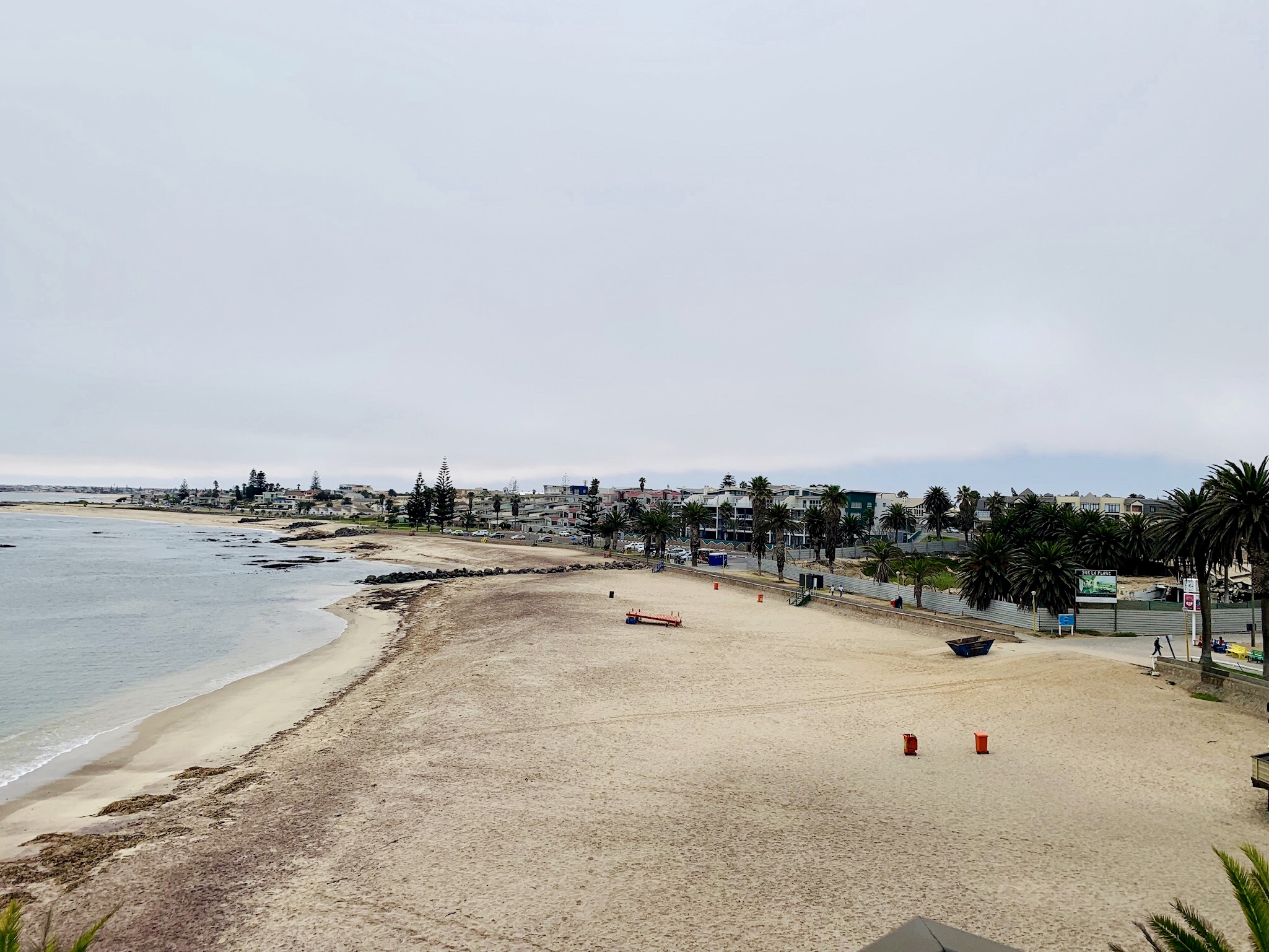
We found our way to Swakopmund, a coastal town thriving on fishing, mining, and tourism. It’s architecture is an appealing mix of older colonial German and rectilinear new-builds.
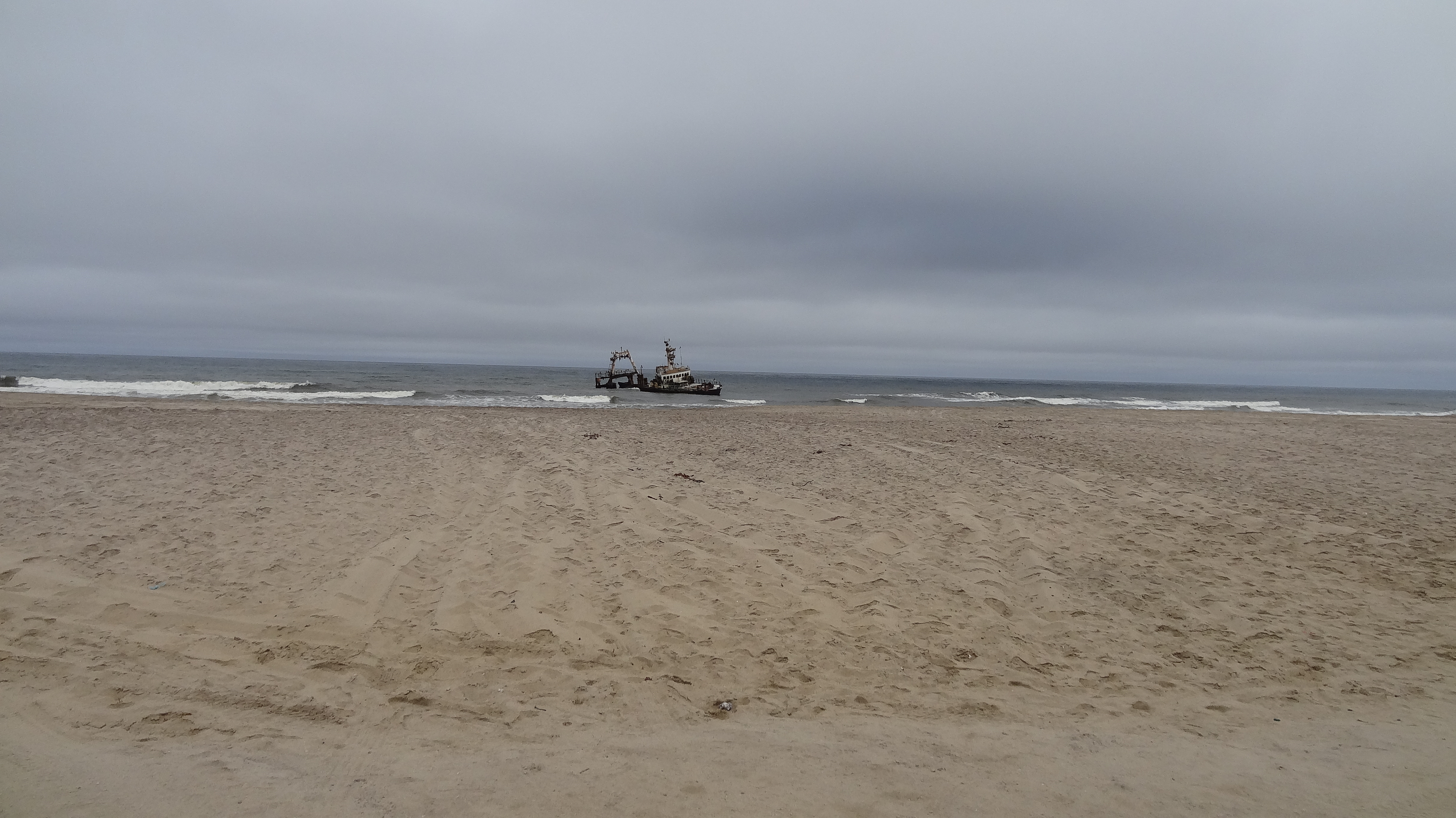
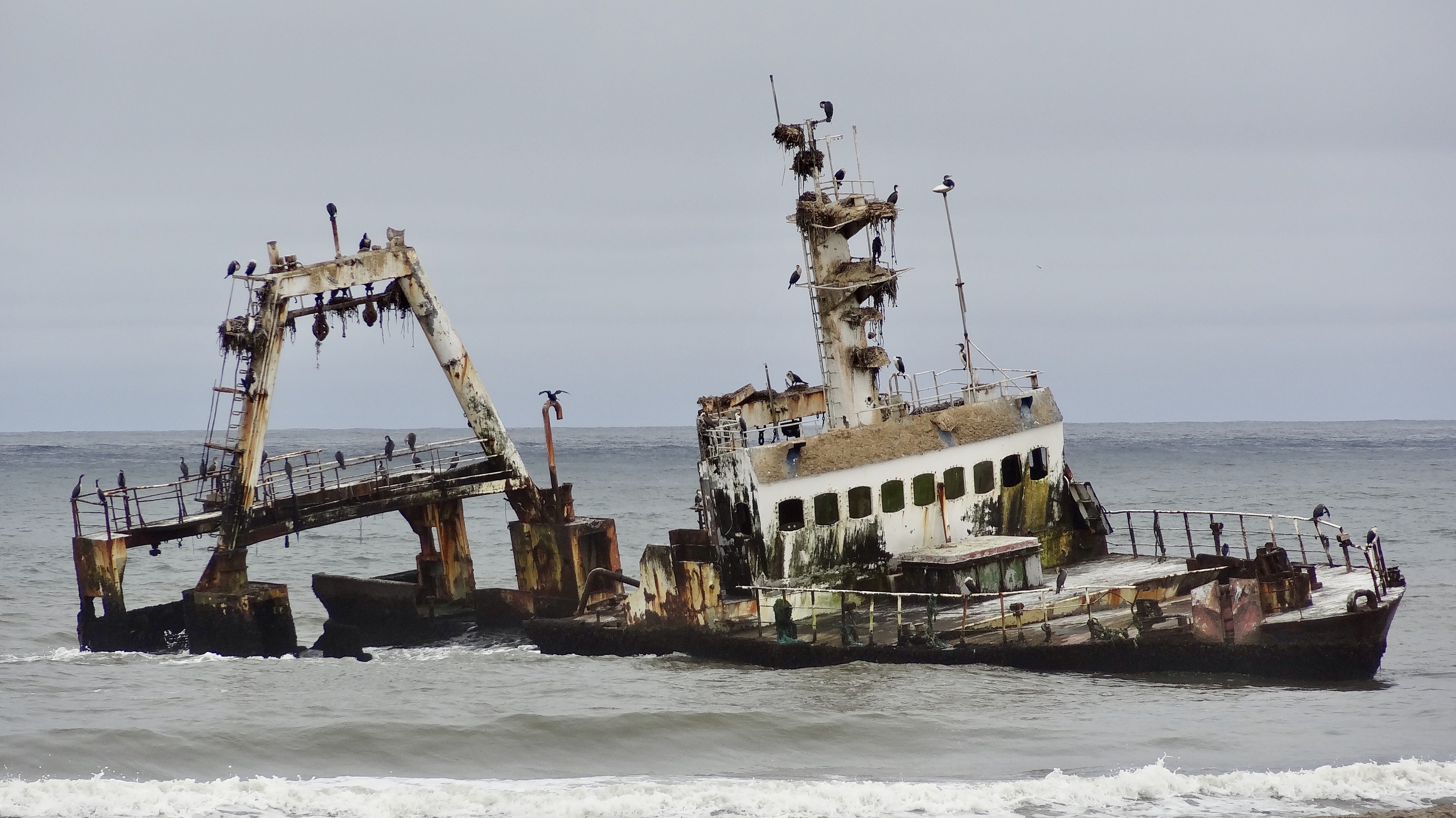
After seafood and a night at the Strand Hotel, we headed up the Skeleton Coast, named for its shipwrecks. The coast is under overcast most of the time, but it remains desert, the clouds bringing no rain. In contrast, though, the temperatures are 25 or so degrees cooler than inland. After 95 degree days, 70 degreees was welcome.
Wrecks, though frequent and many, don’t last long on the coast. We stopped at one of the more recent ones.
We spent a night at Cape Cross, in a rustic beach lodge that made us feel like we were in the 50s. Though still summer, it was cool enough for a wood fire in the common room.

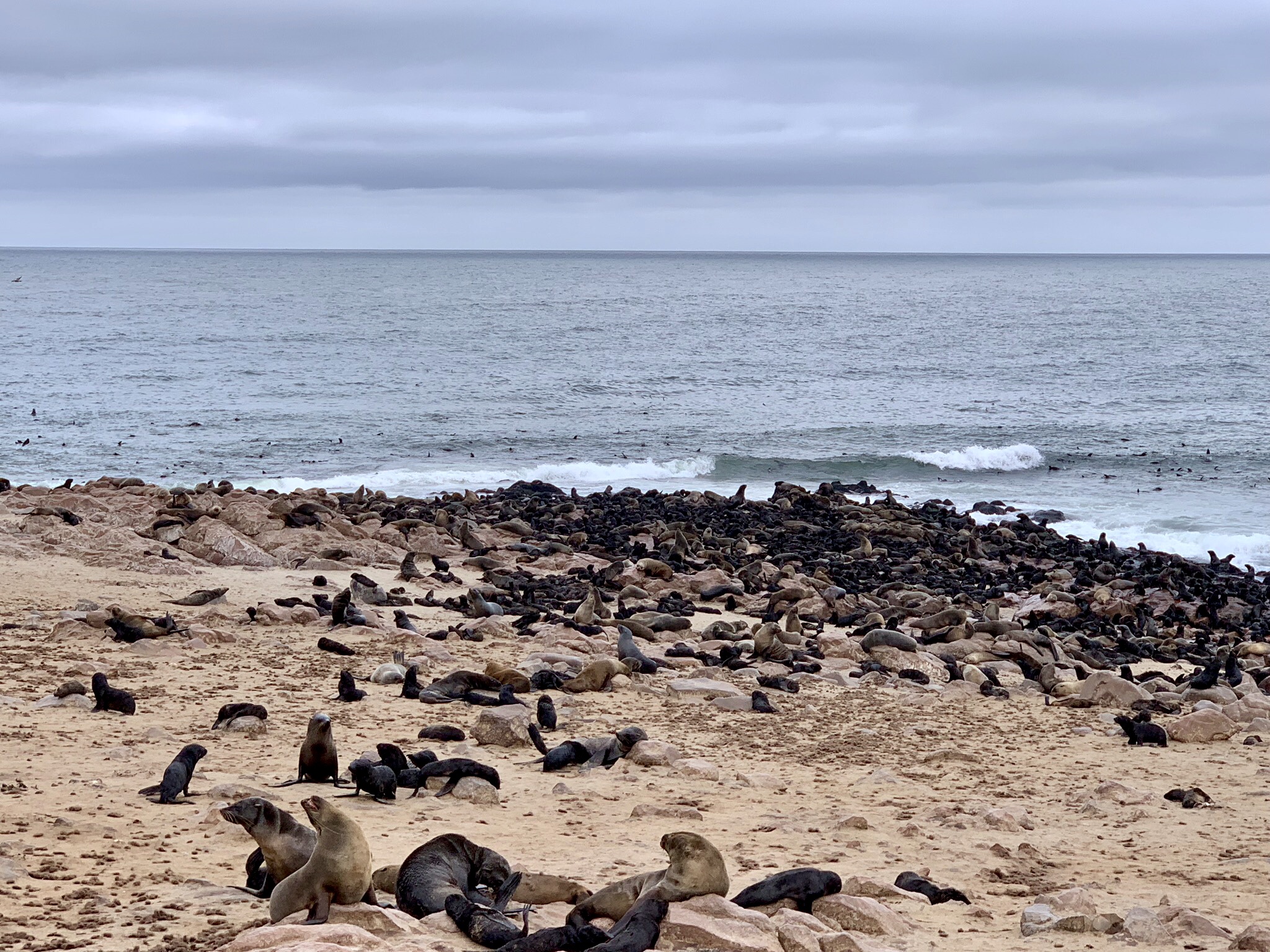
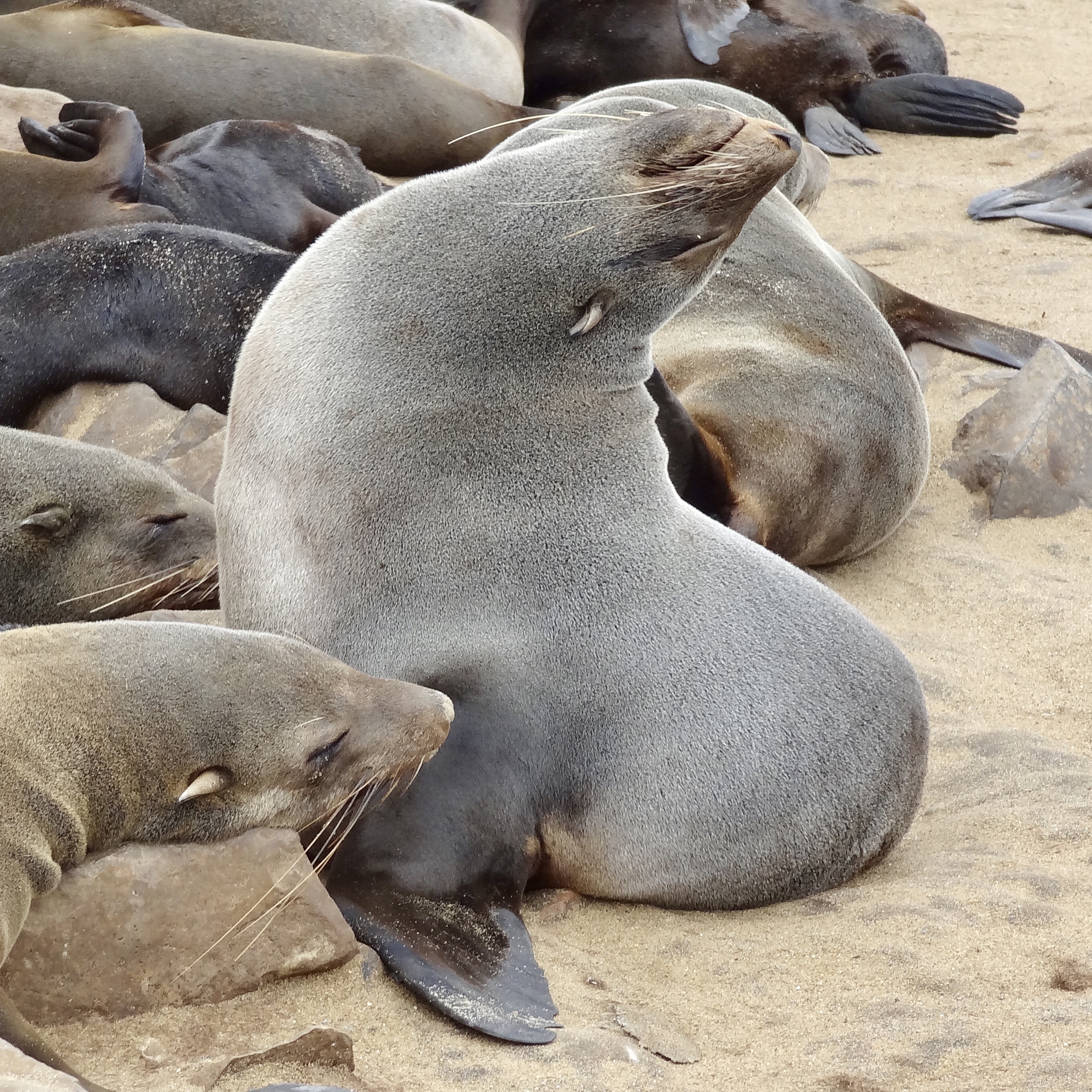
We visited the nearby cape fur seal colony, where the magnitude of smell surpasses the magnitude of seals, and there are 100,000 seals.

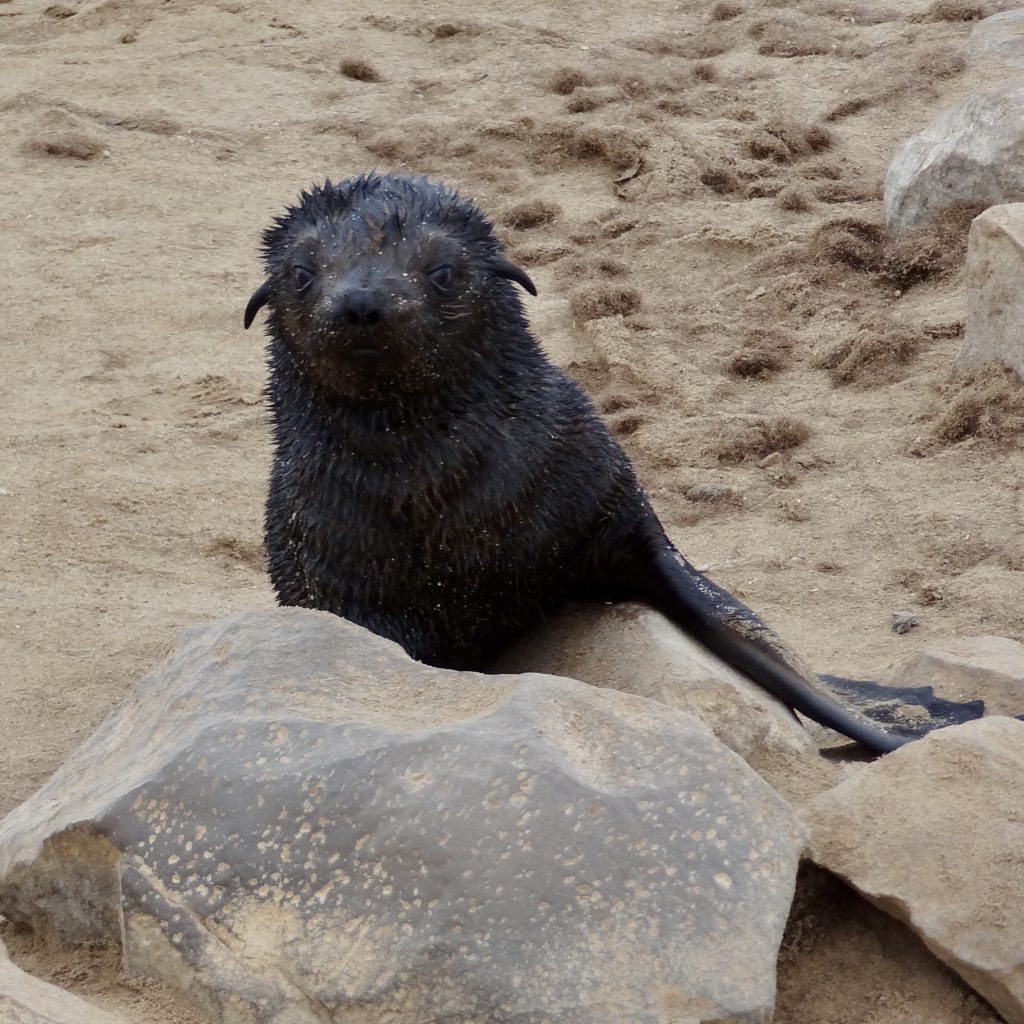
The little guy on the left came over to see what we were about.

The one below appears to have dozed off mid-thought.
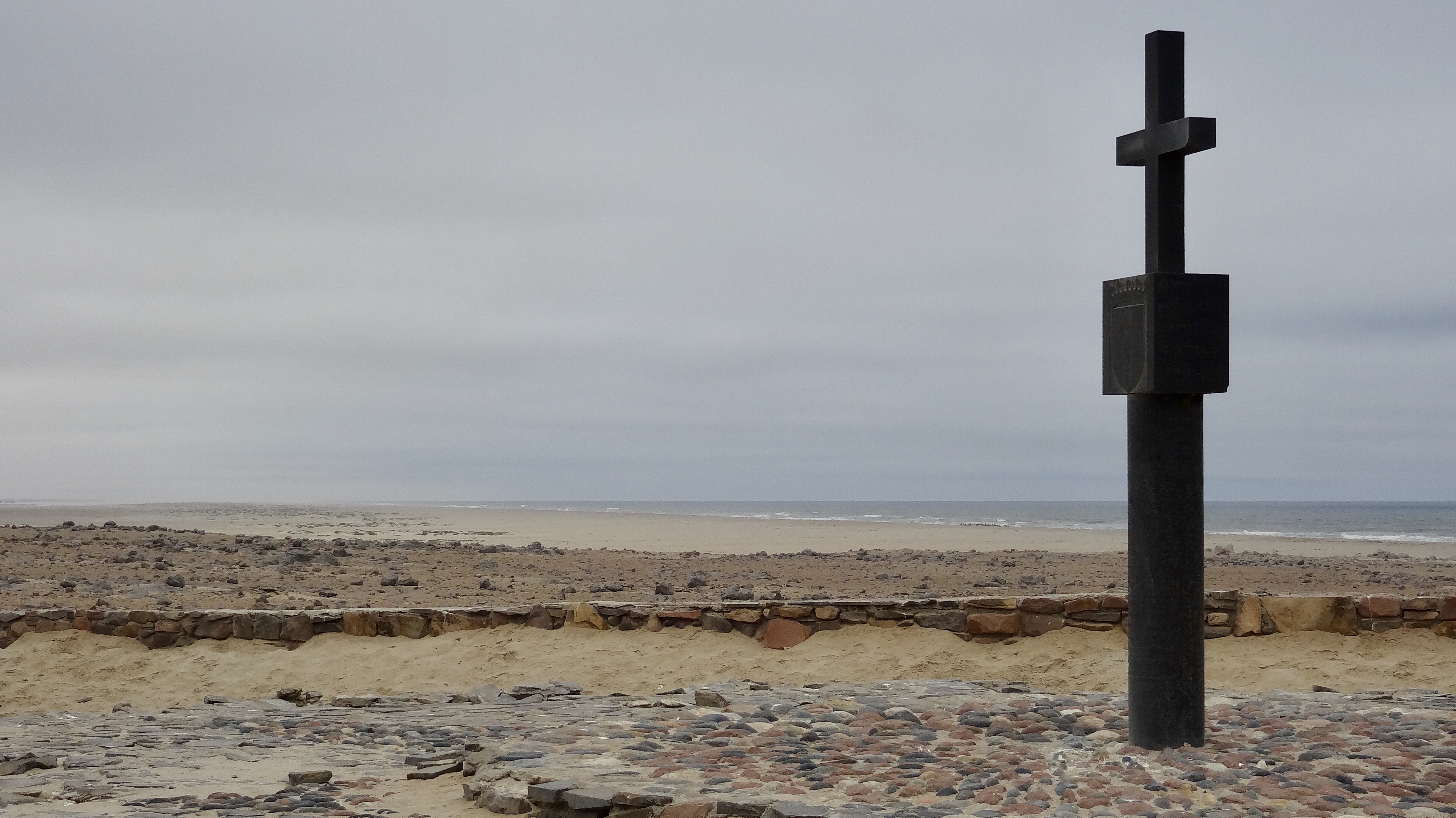
Cape Cross takes its name from the padrao, or cross, set by a sea captain and explorer in the 1480s, claiming the land for the Portuguese crown.

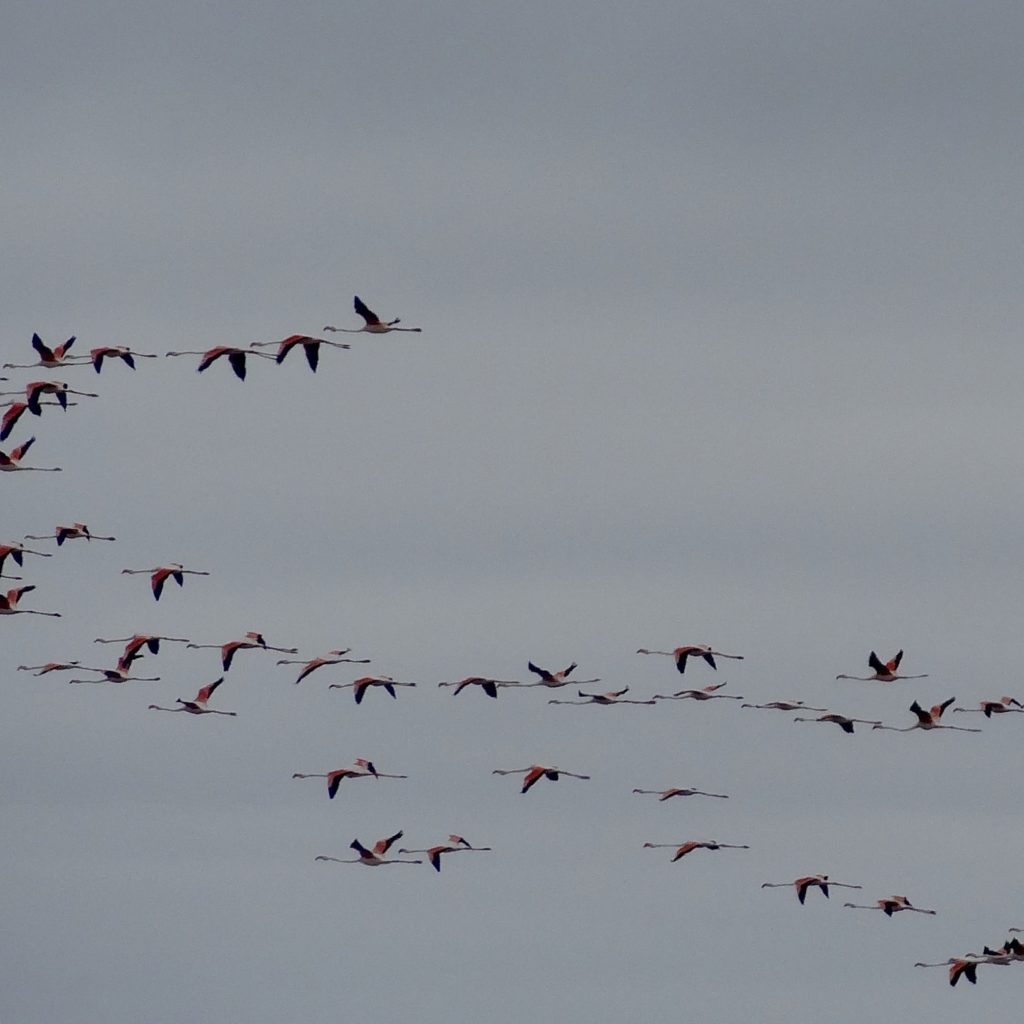
A flock of flamingos going somewhere.
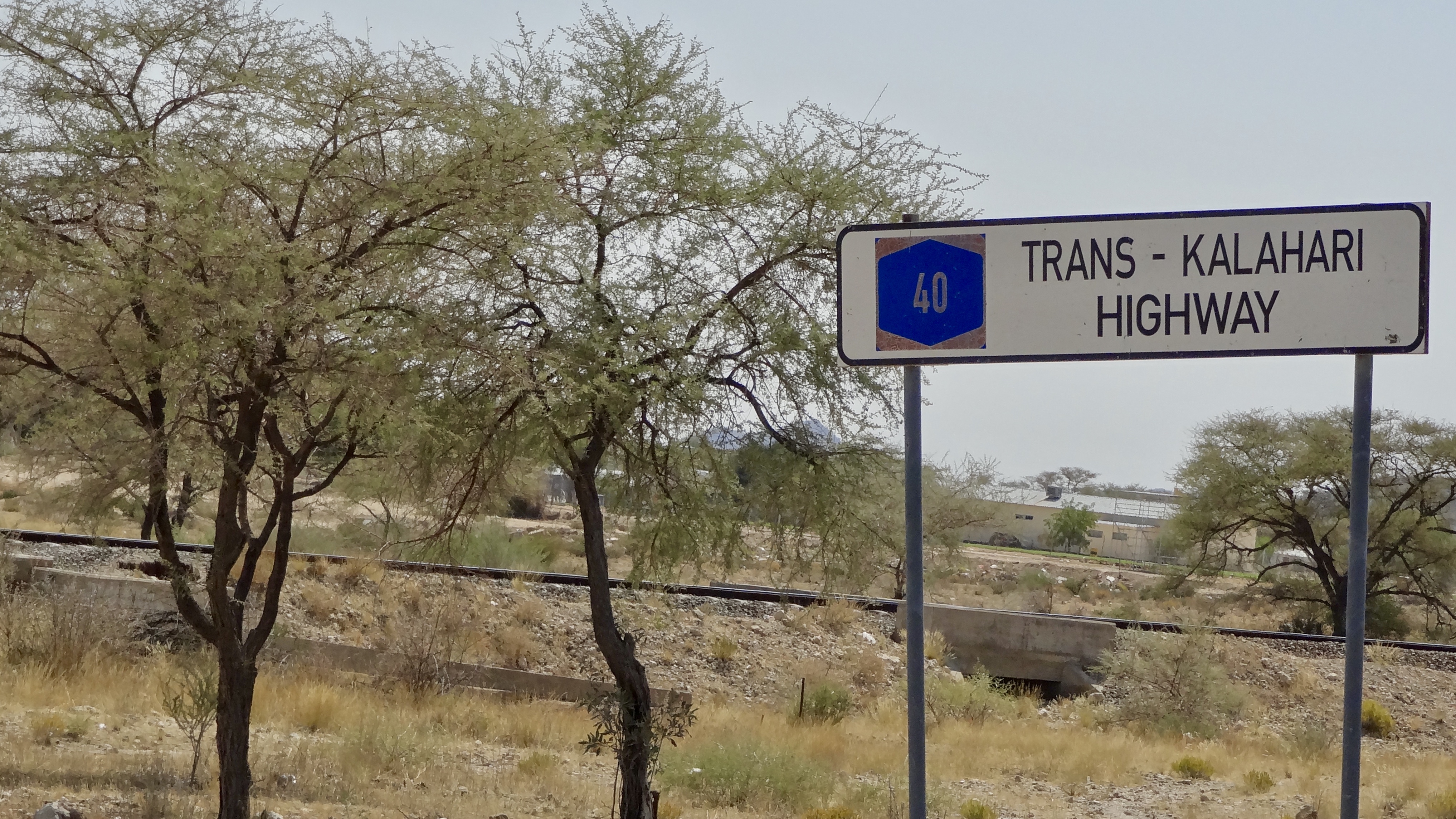
Then back on the (paved) road, this time inland to Etosha.
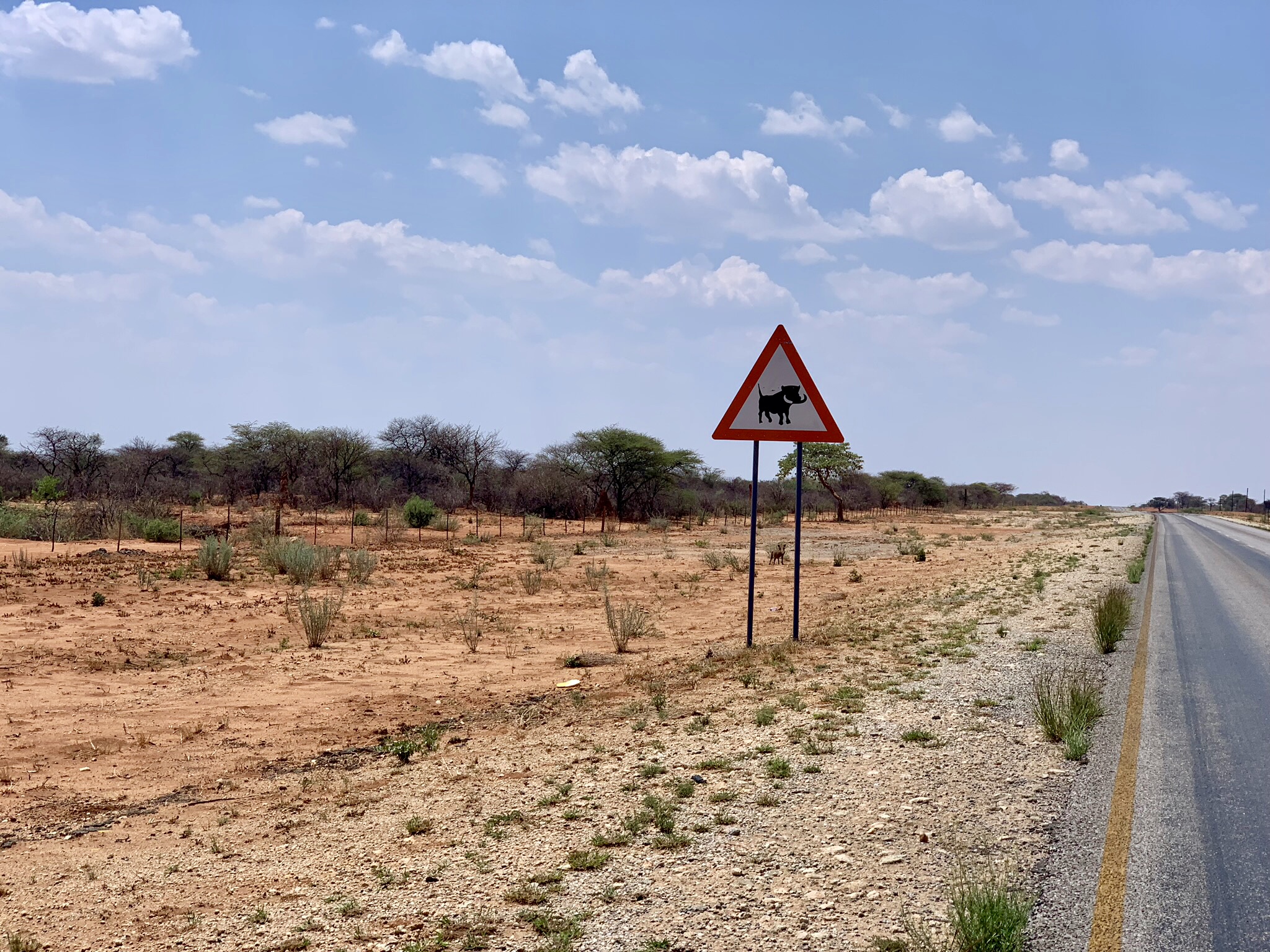
En route warthog crossings were frenquent. If you tap on this picture, you’ll see one between the signs posts.
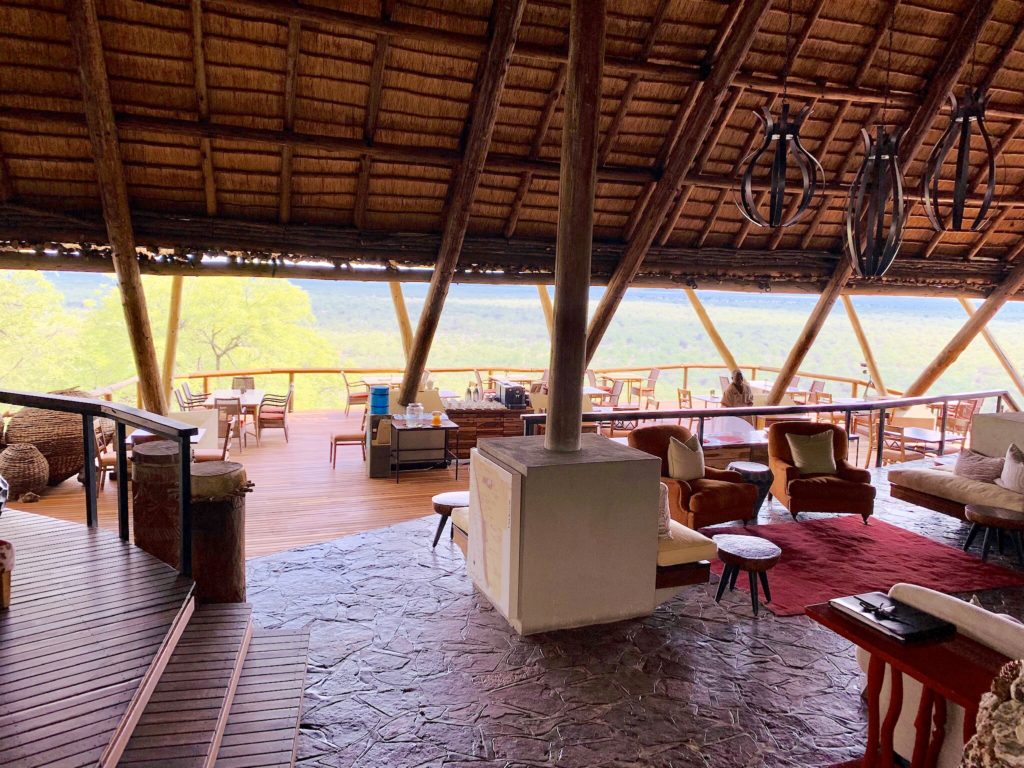
At the end of the day we arrived at the Ongava Lodge, in the foothills of the Ondundozonanandana Range.
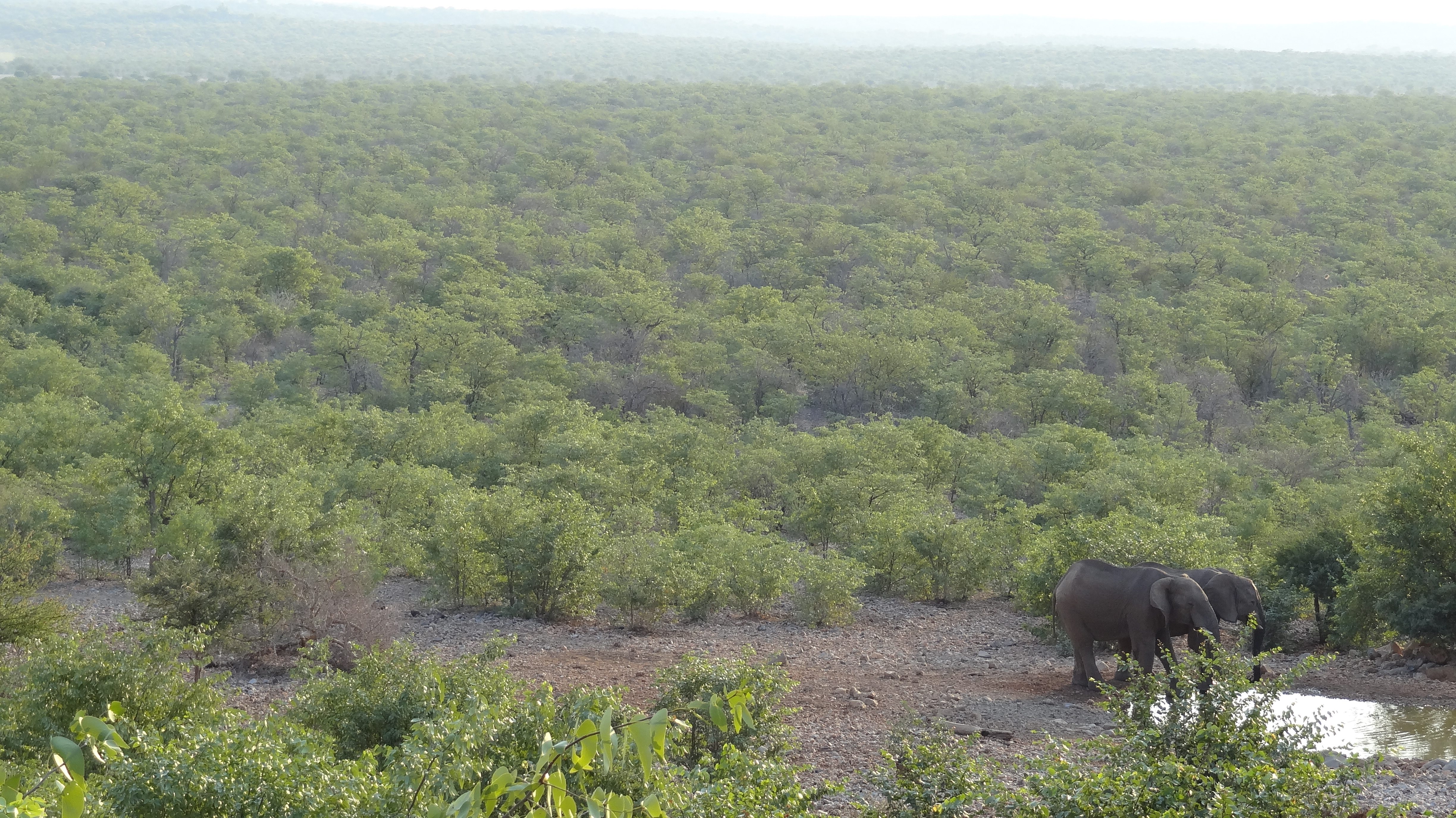
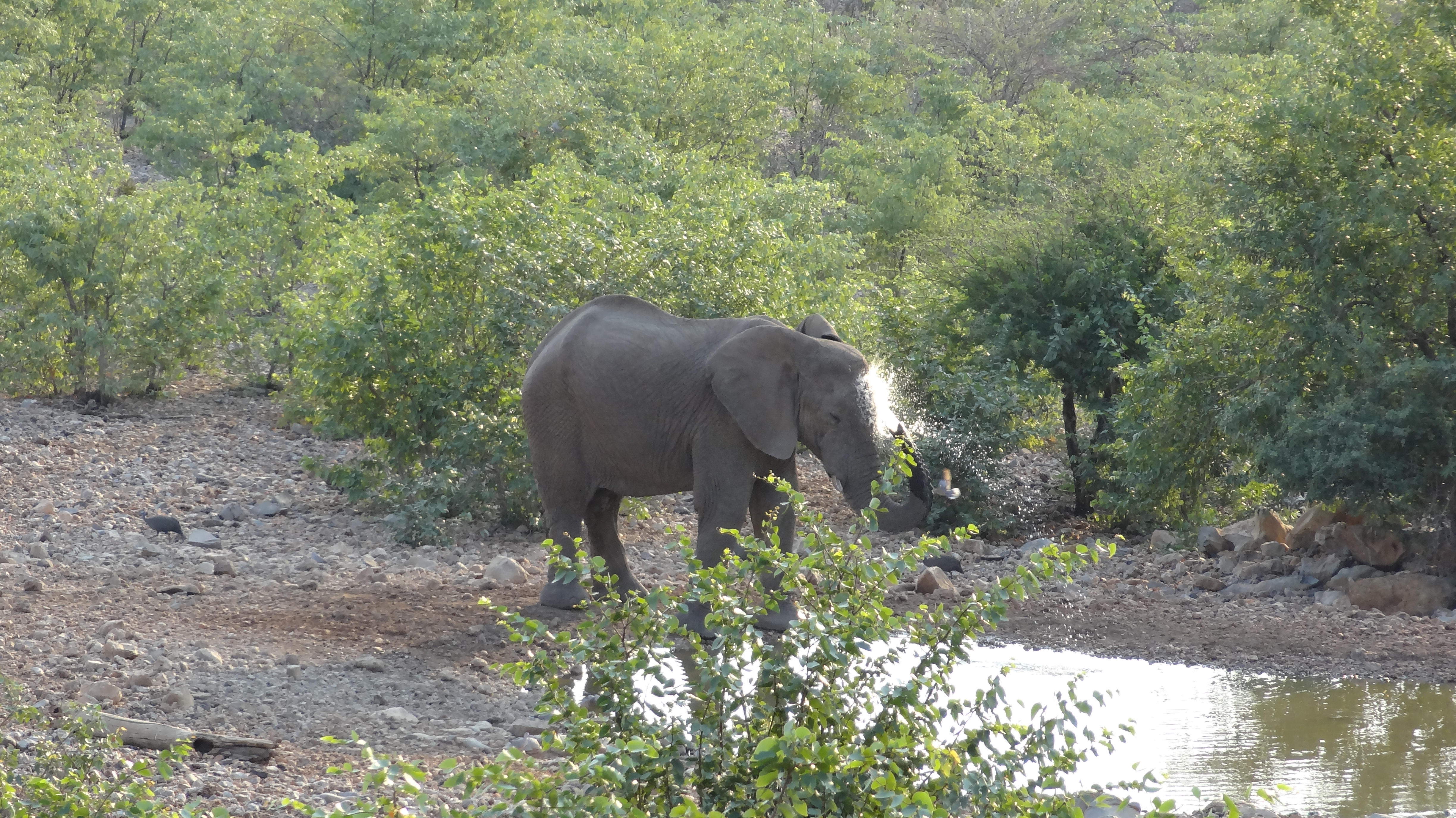
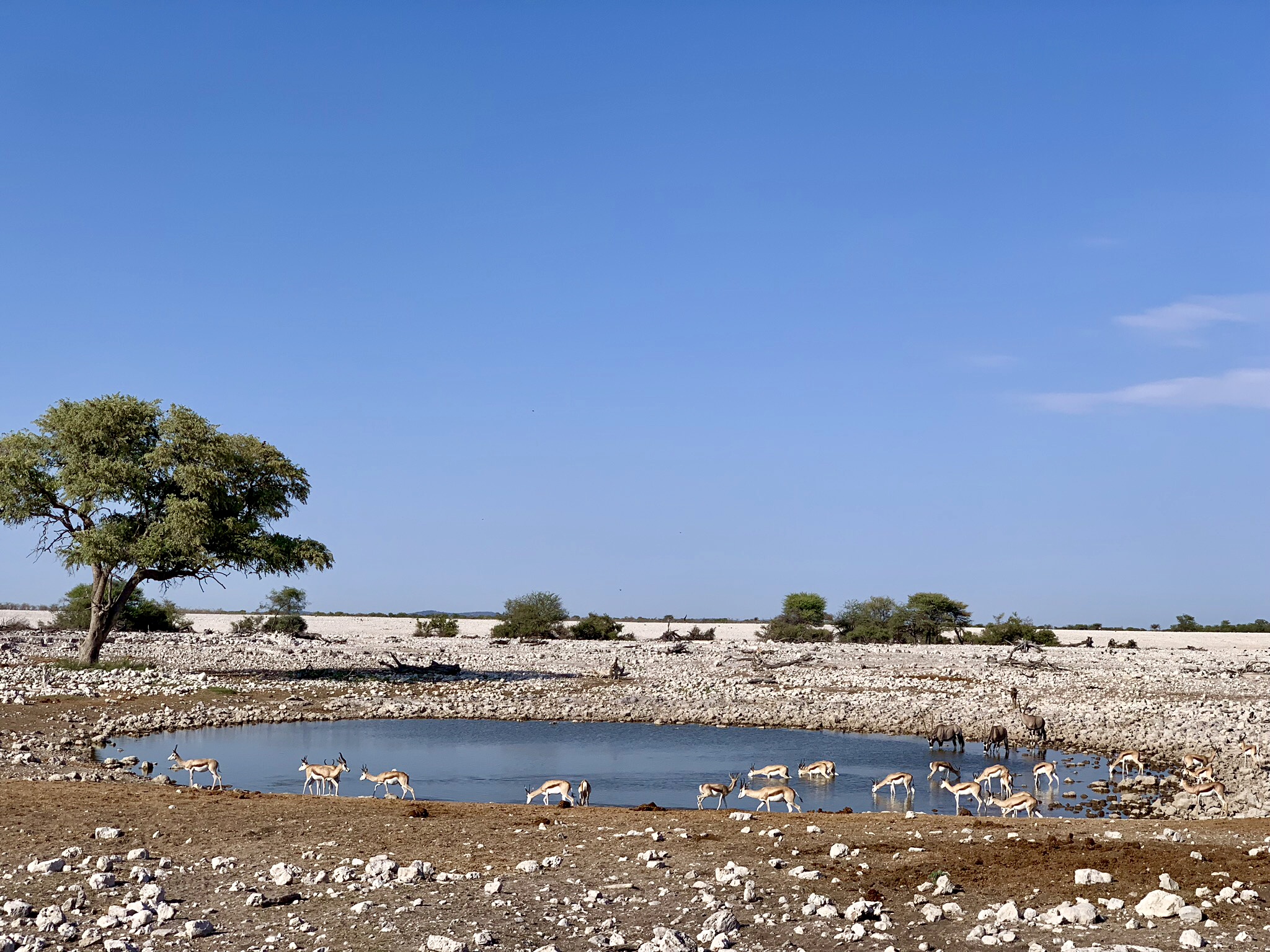
The Etosha area has a wet season, so it has more green, though mostly in the hilly areas. Even still, standing water is rare and watering holes popular. This one is below the lodge.
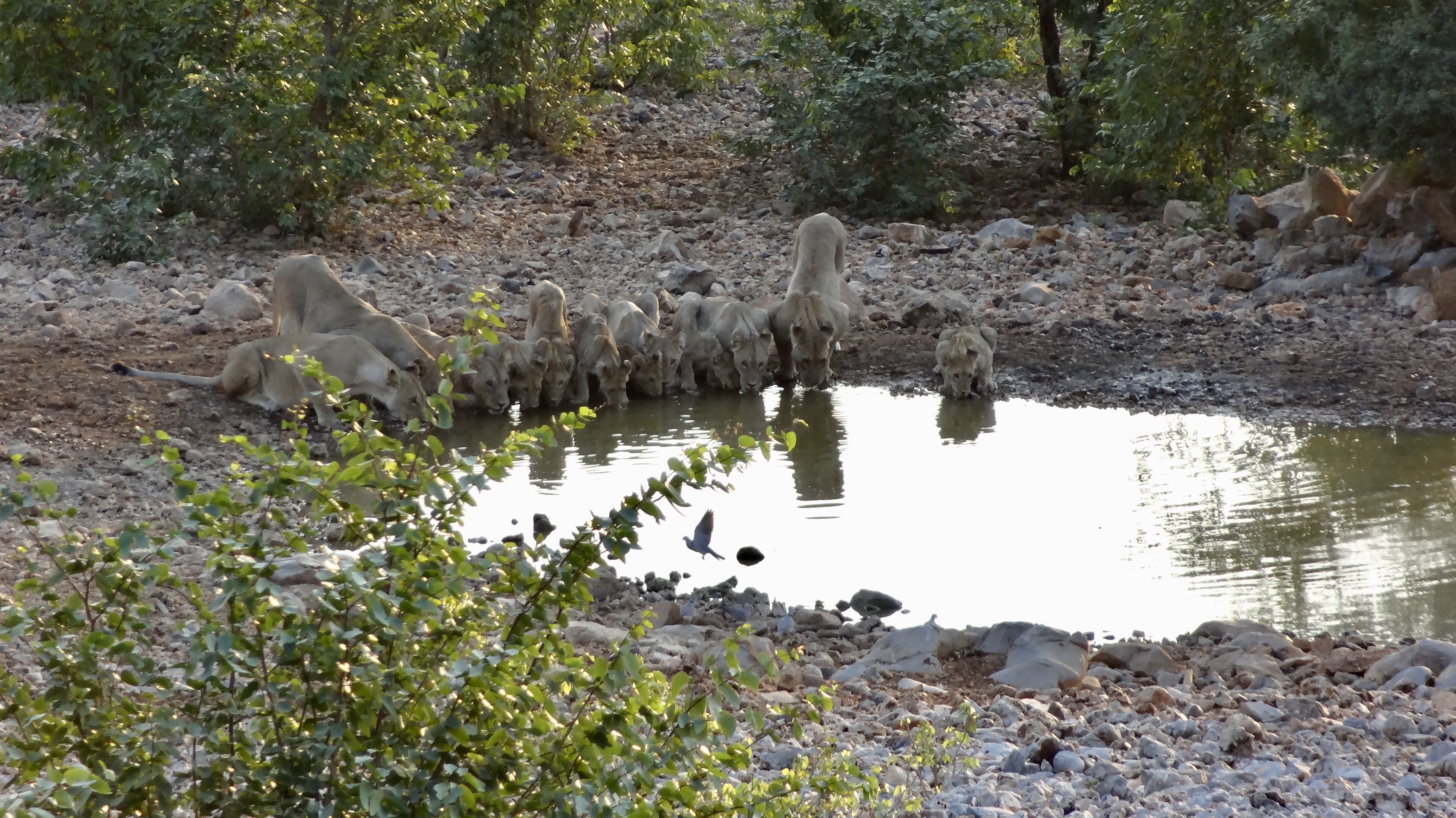
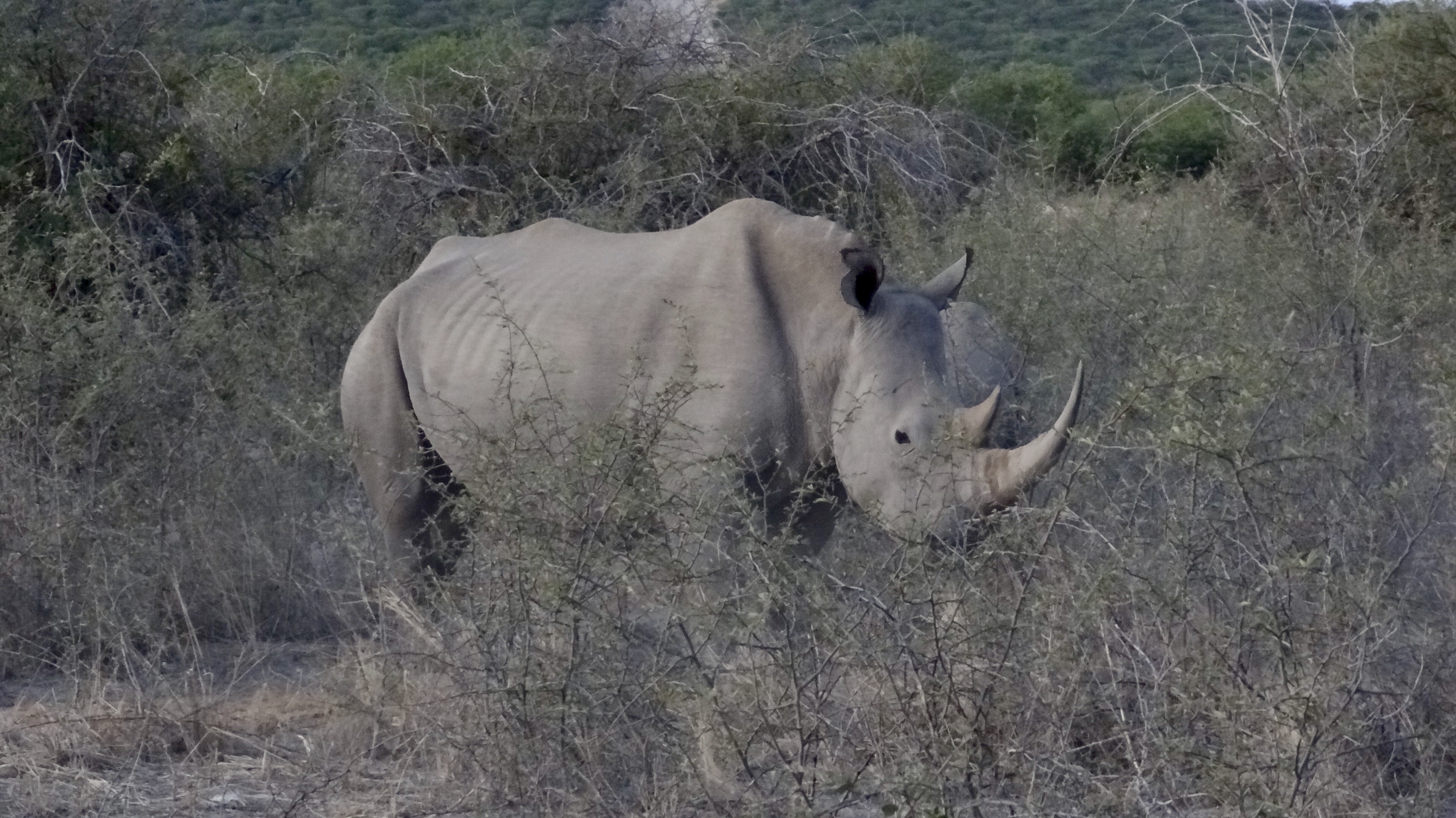
When this pride of lions came to drink, any other animals cleared out. In their turn, the lions were cleared out by rhinos. Rhinos rule.
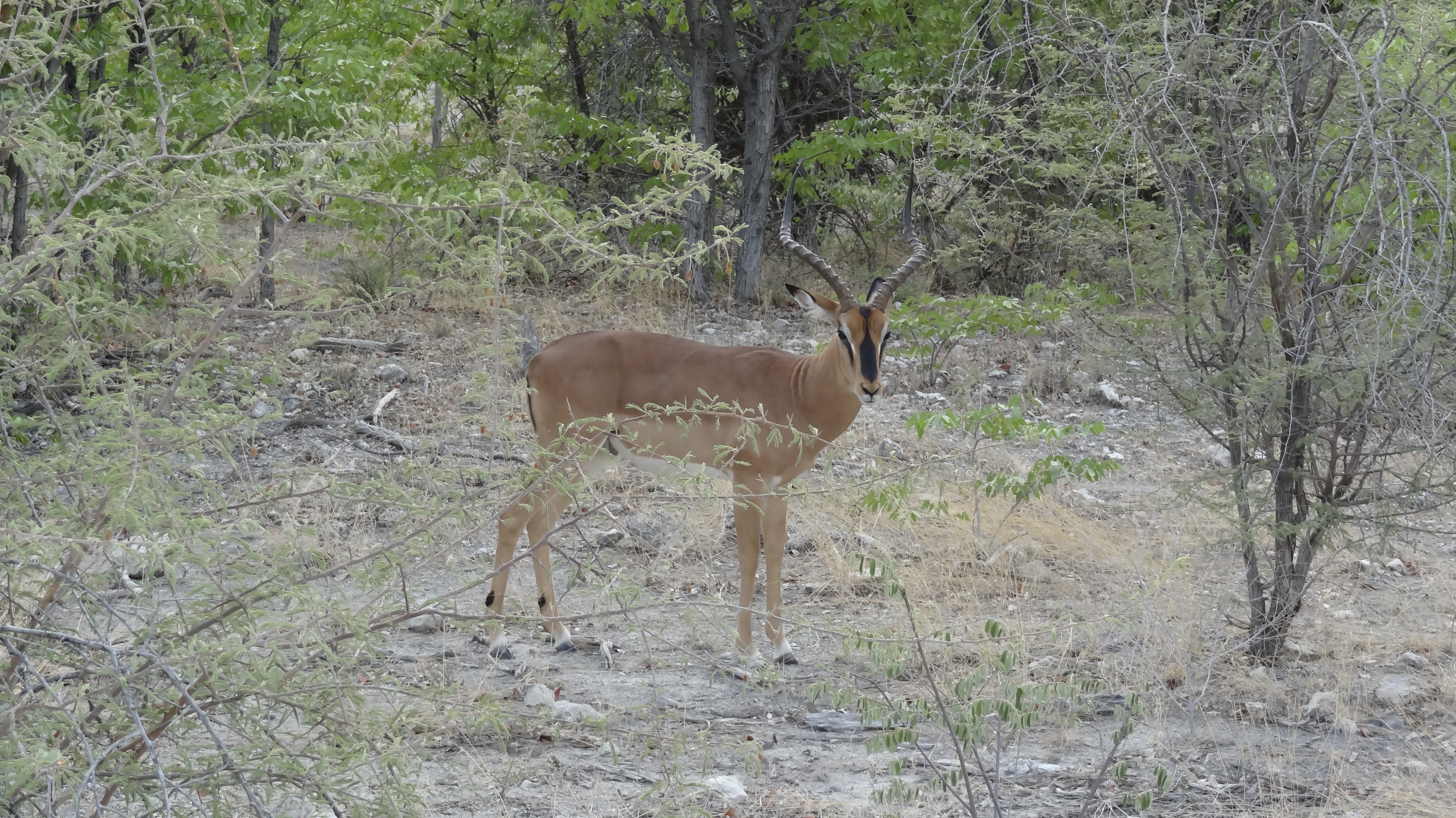
We spent an afternoon with a guide exploring the Ongava reserve. A black faced impala, here.
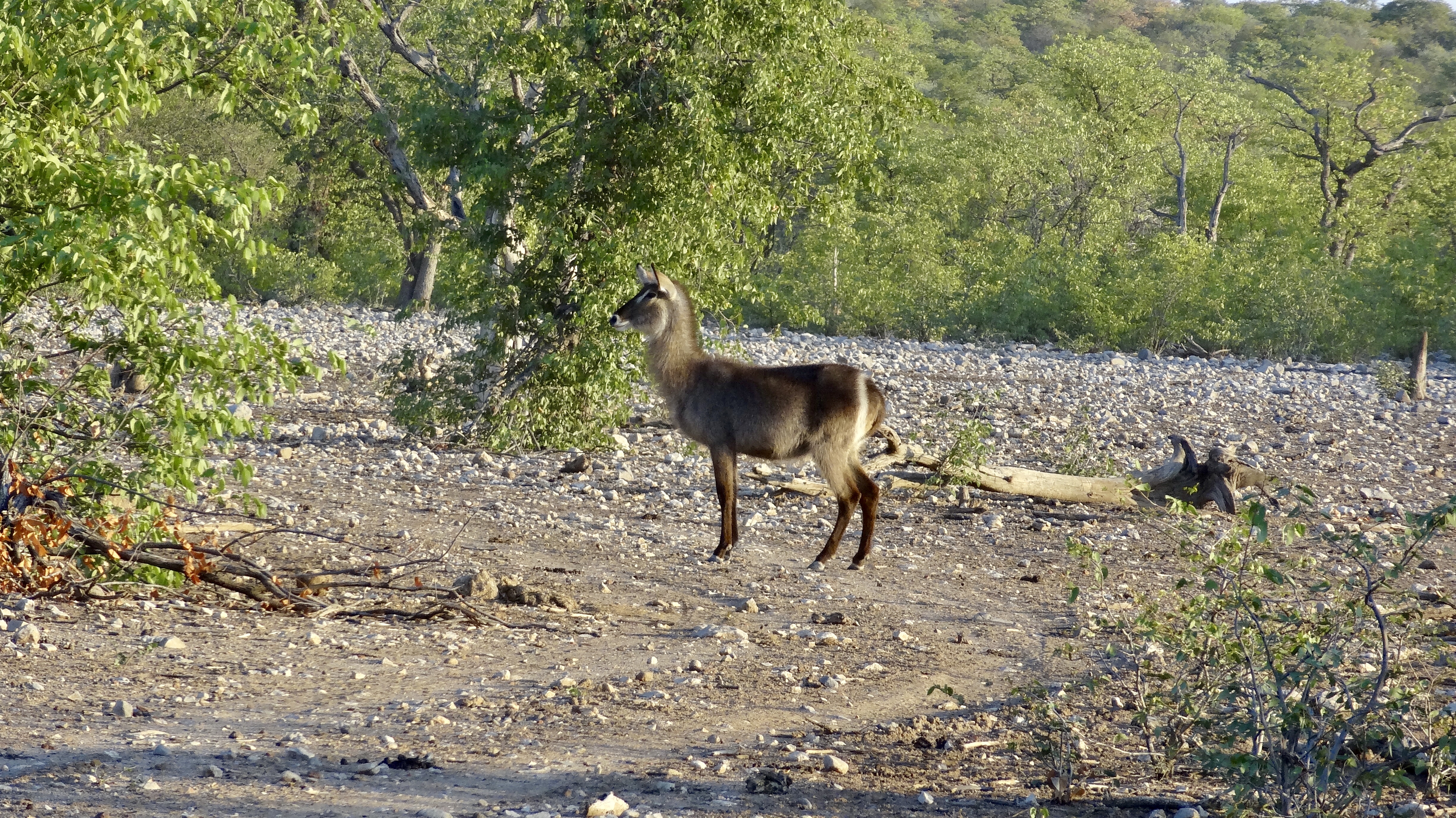
We saw a waterbuck, a large antelope, for the first time.
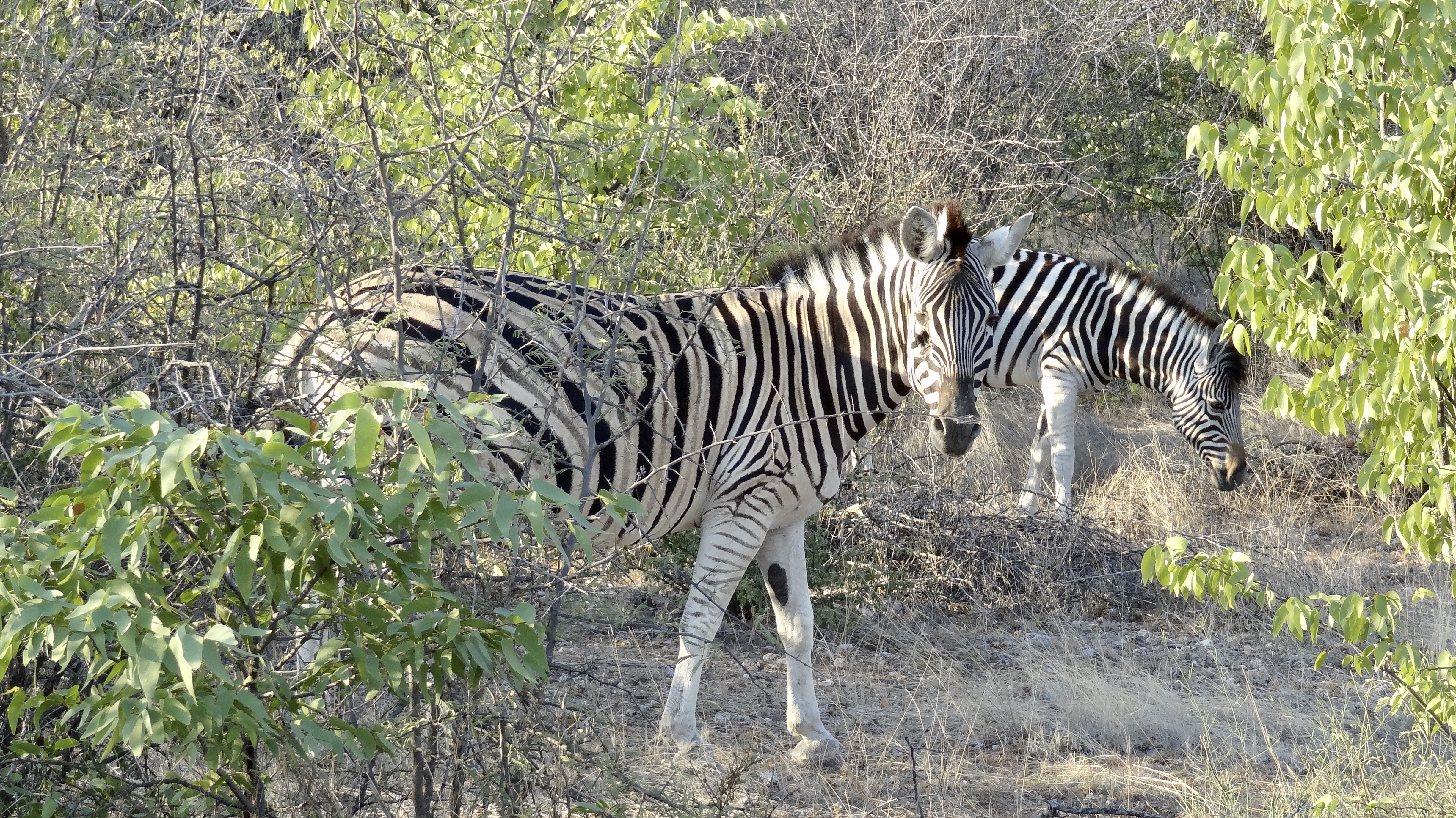
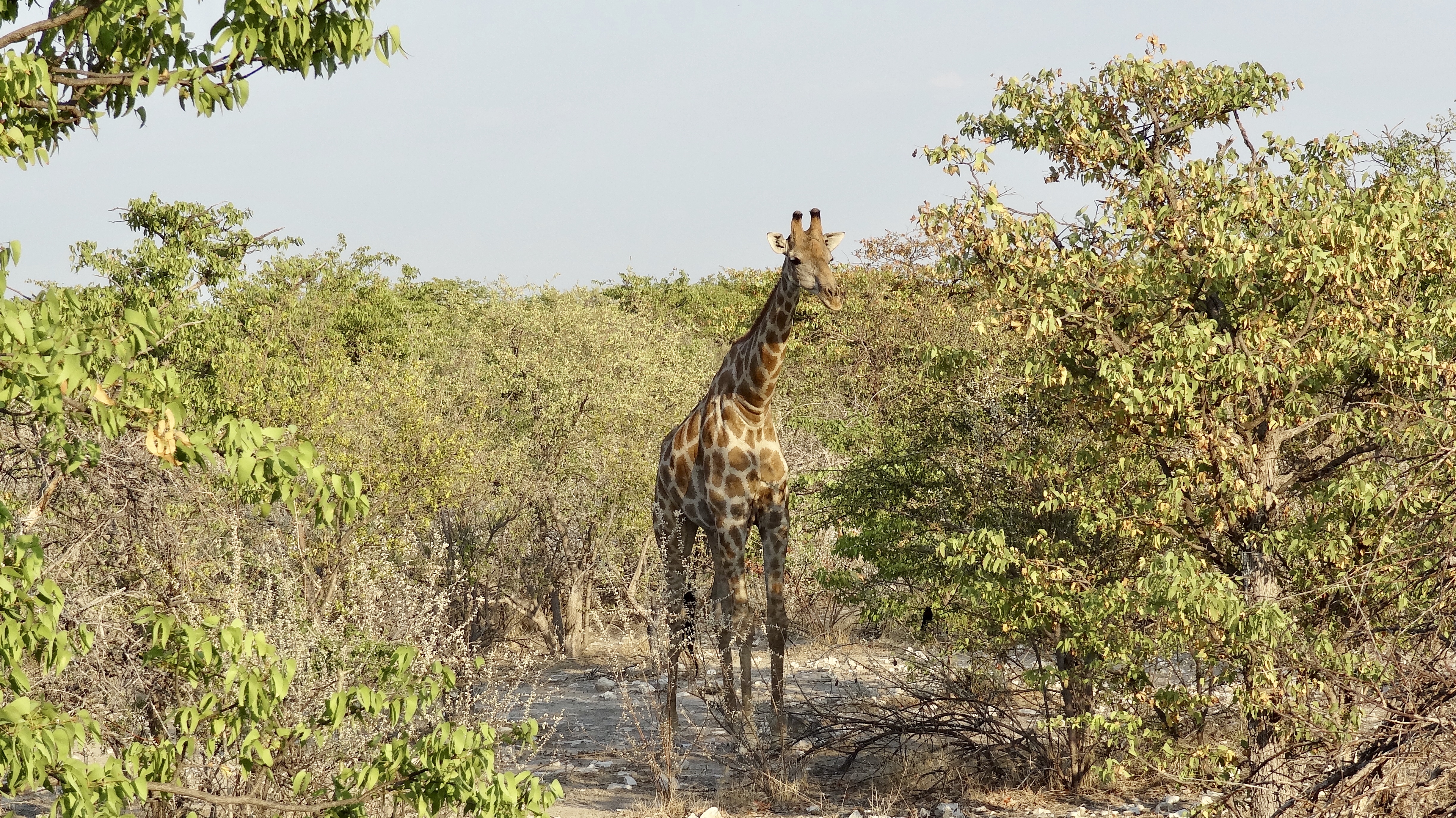
Zebra and giraffes in the bush.
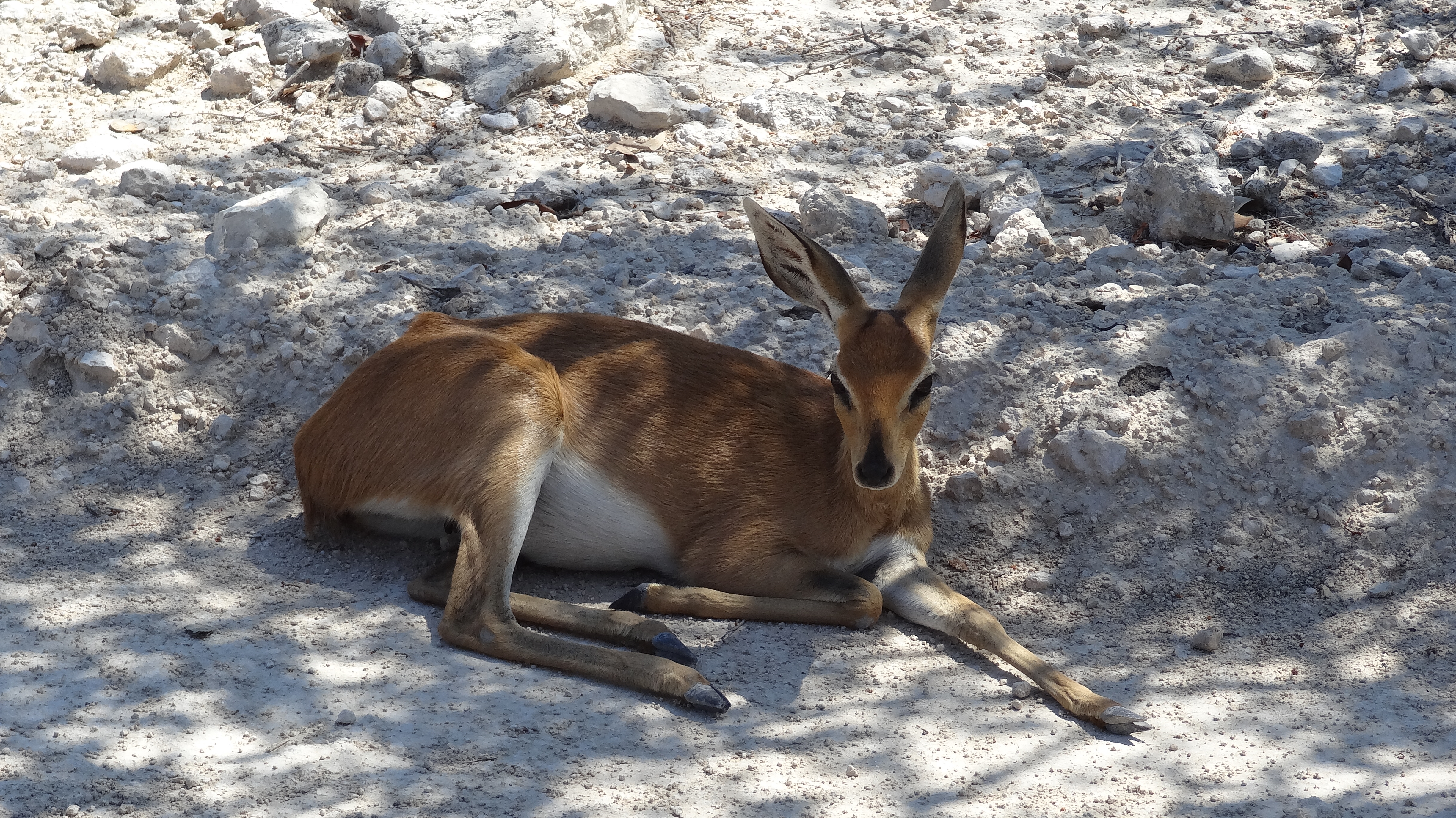
A young steenbock more interested in shade than us.
Ongava means rhinoceros in Herero. The Ongava reserve is private and intent on protecting and breeding the endangered white rhino.
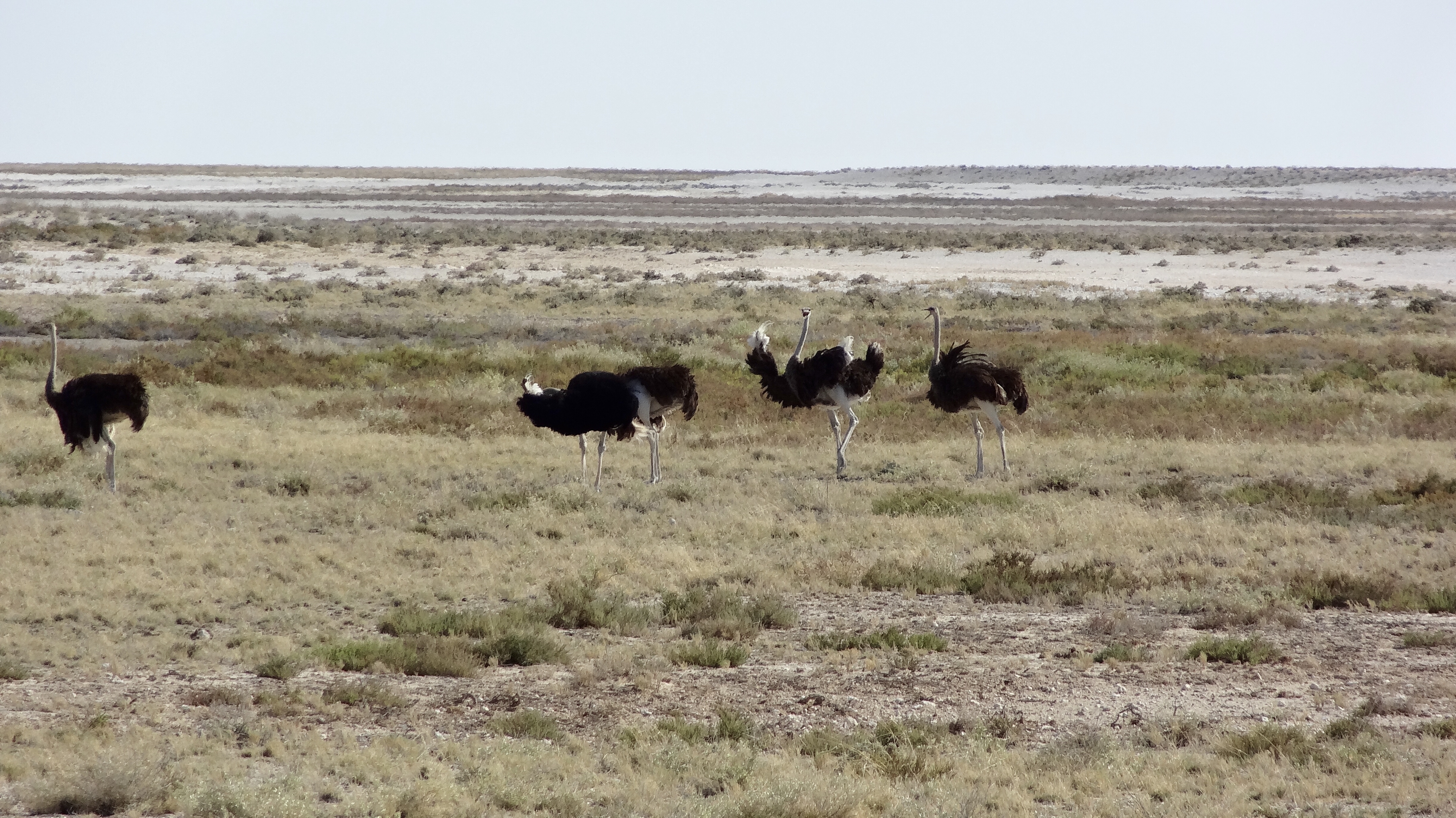
One morning we spent in Etosha National Park. Named for the large pan in the center of very sparse, very dry brush land. In the park, sighting animals is more a function of touring waterholes than the spotting and tracking of our past safaris.
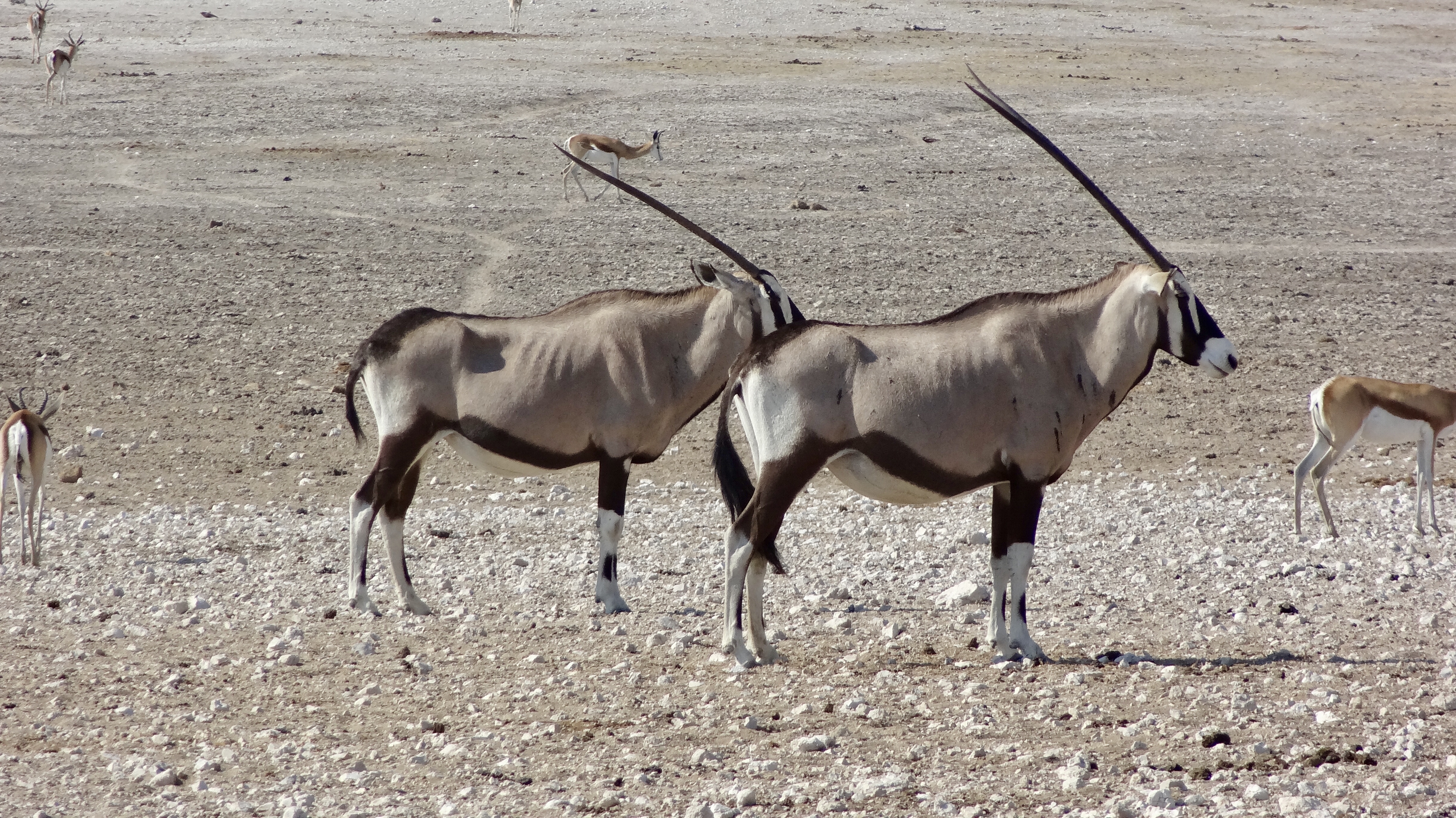
The oryx is Namibia’s national animal, for good reason, as it is the only animal that can thrive in the deepest parts of the desert.
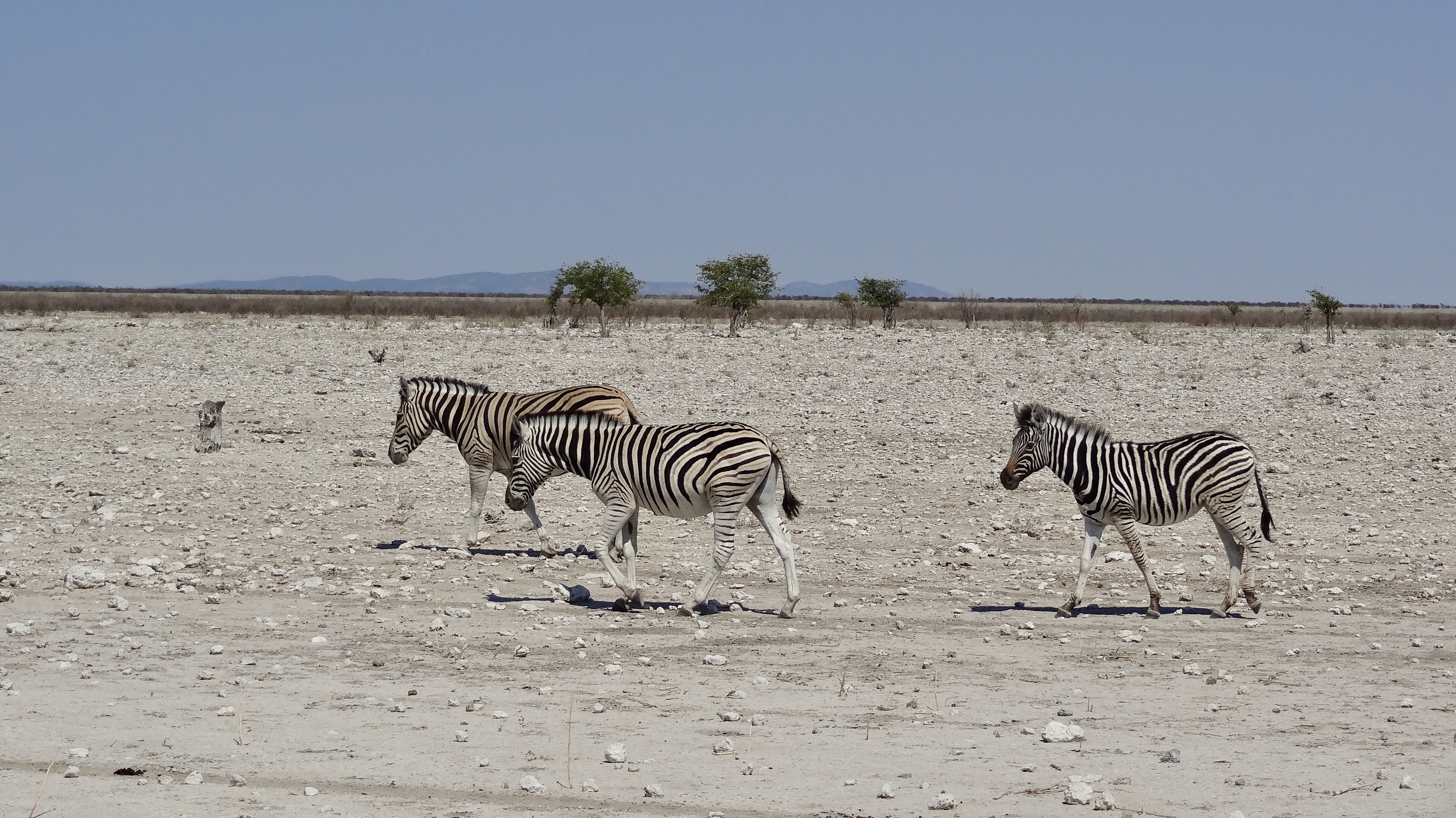
The Burchell’s zebra here have markings distinct from its northern plains cousins, with their black stripes alternating with tawny ones as they mature.
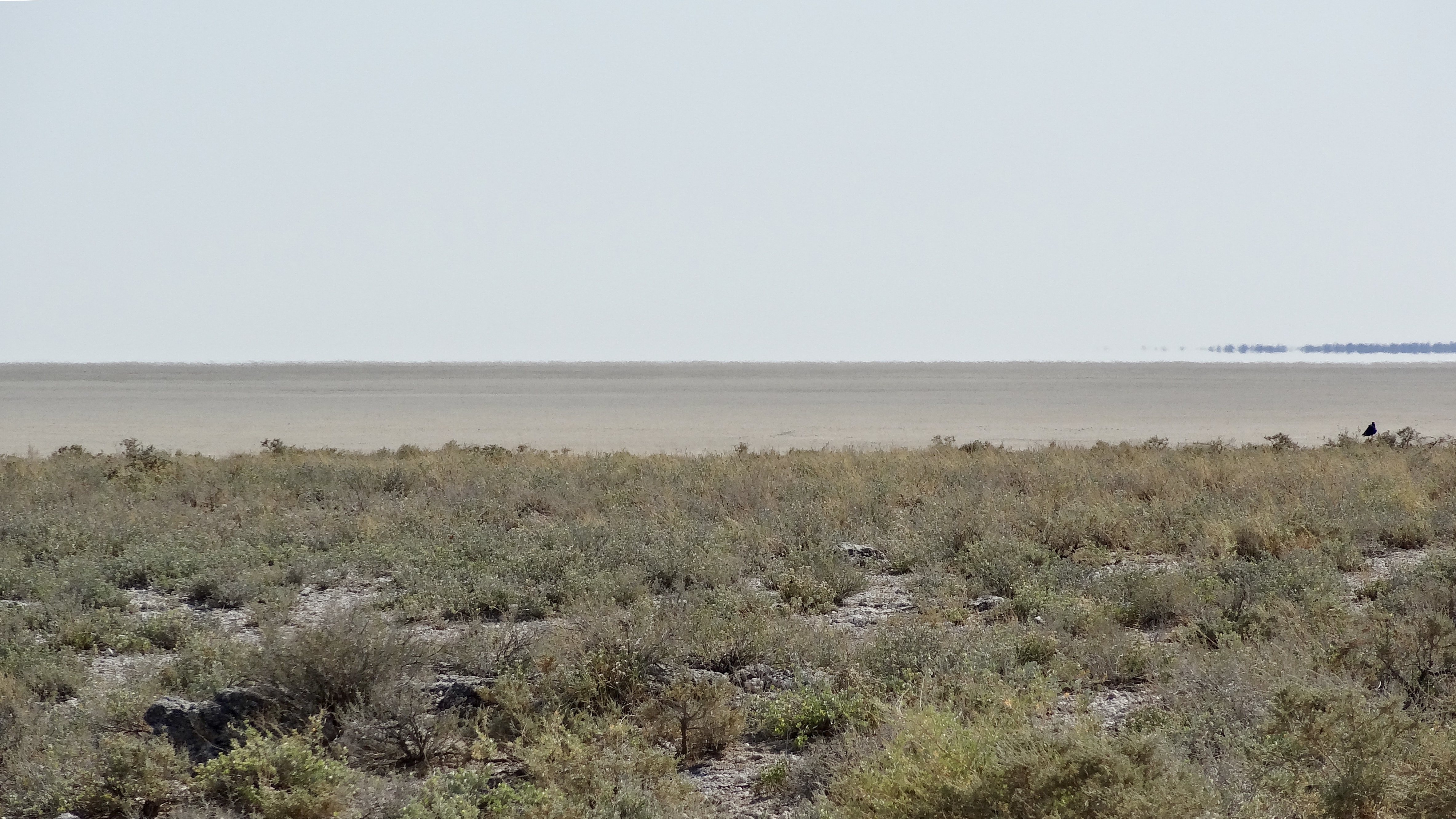
The Etosha Pan itself. Almost 2,000 square miles of salt and clay that rarely sees a covering of water.
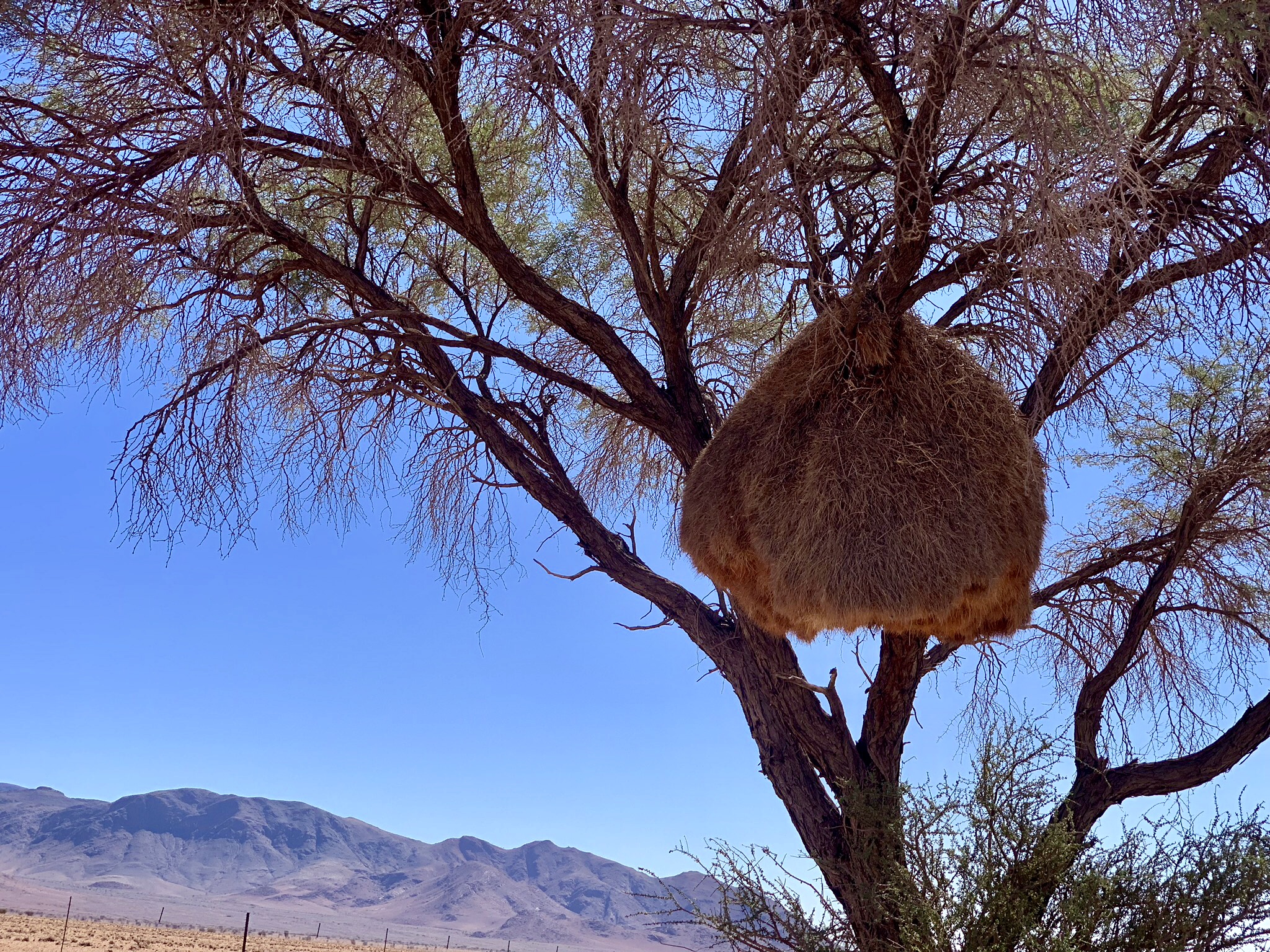
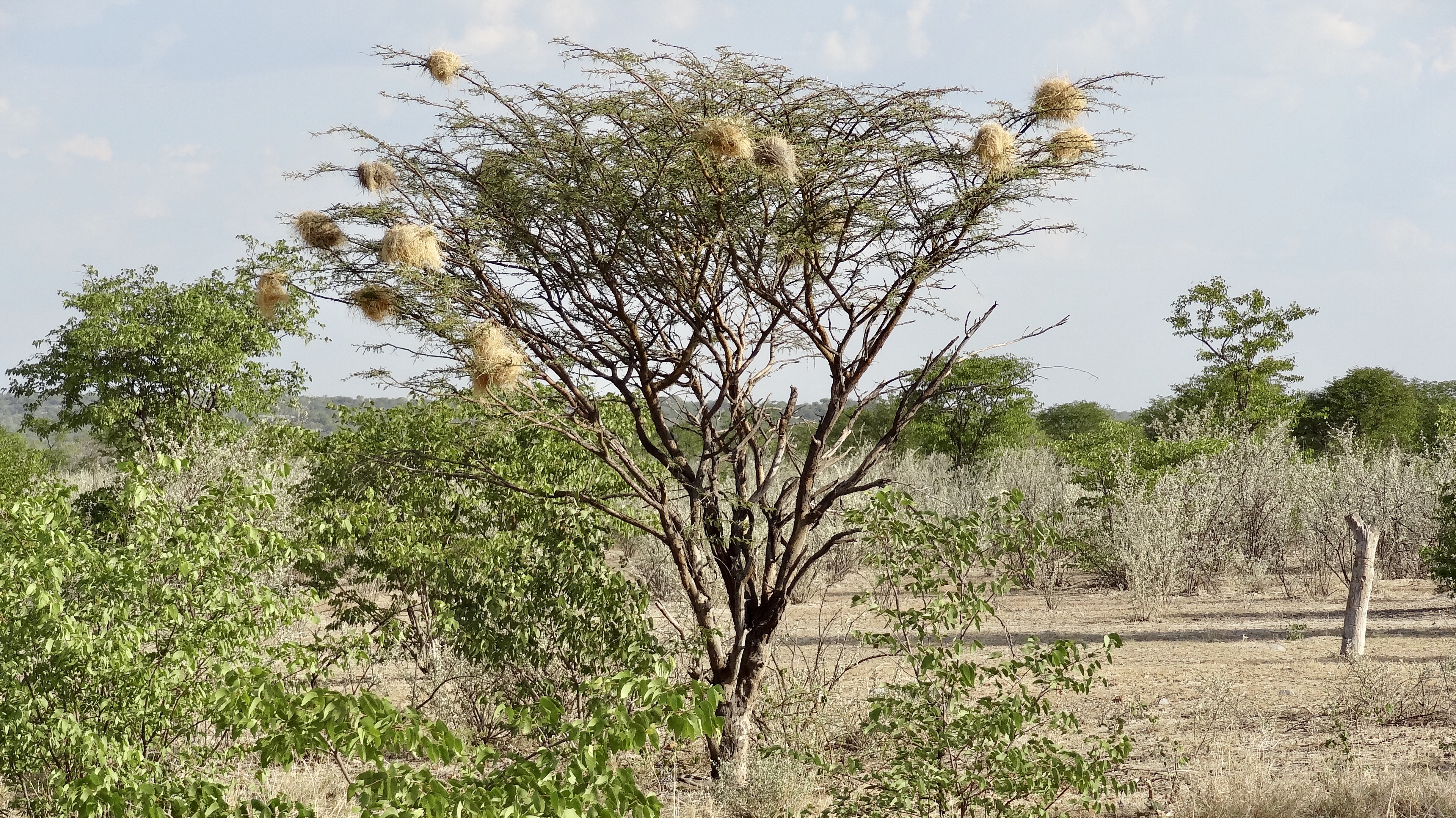
We saw weaver birds everywhere we went. Sociable ones, with hundreds living in condominium-style nests, and less sociable ones, I guess, that build their own individual nests. In both cases, though, all the birds in a tree are part of the same extended family that begins as a single mating pair.
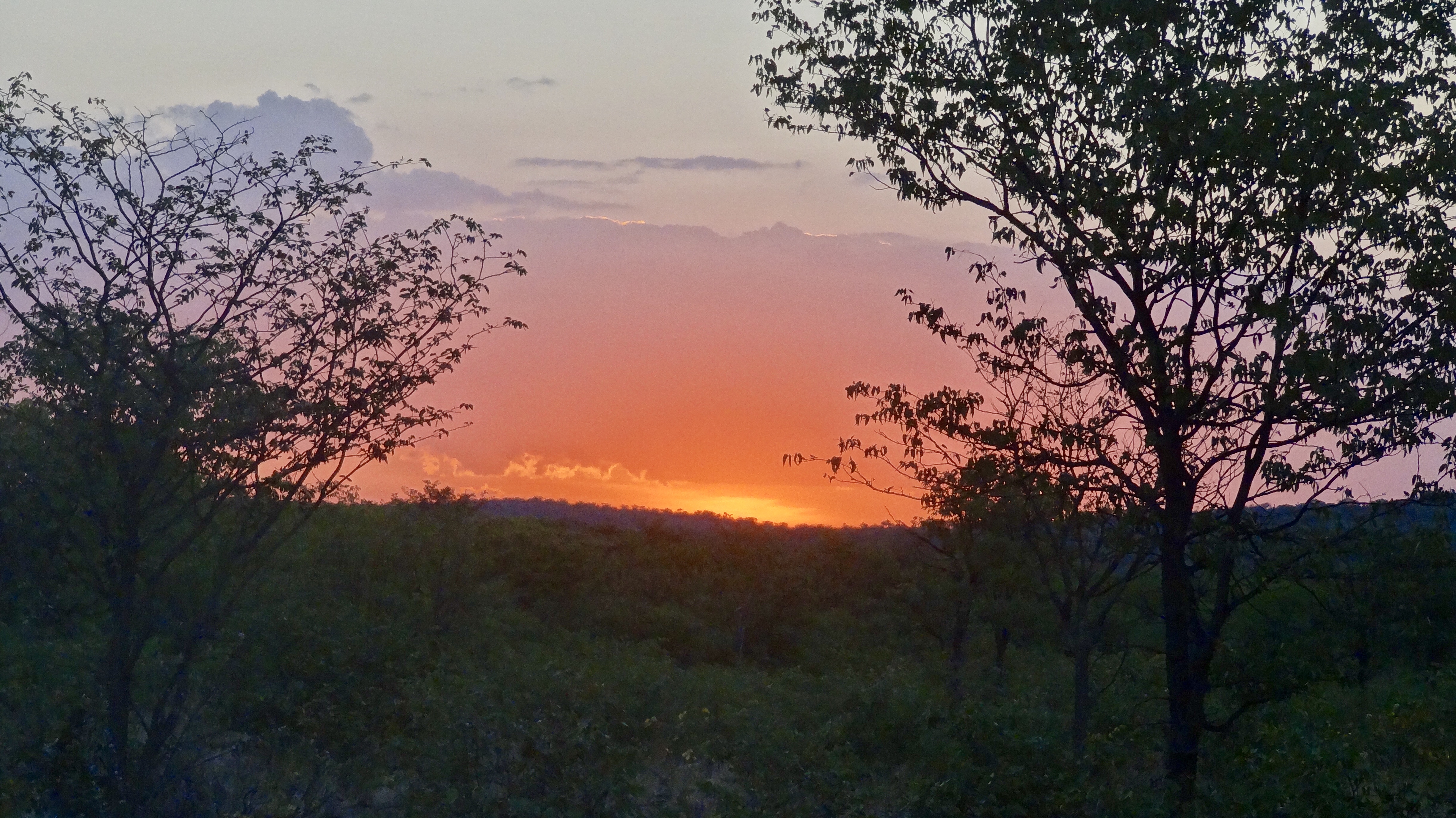
After a week of sunsets, our last.
Airborn again and headed back to Cape Town for the last couple of weeks of South African summer.