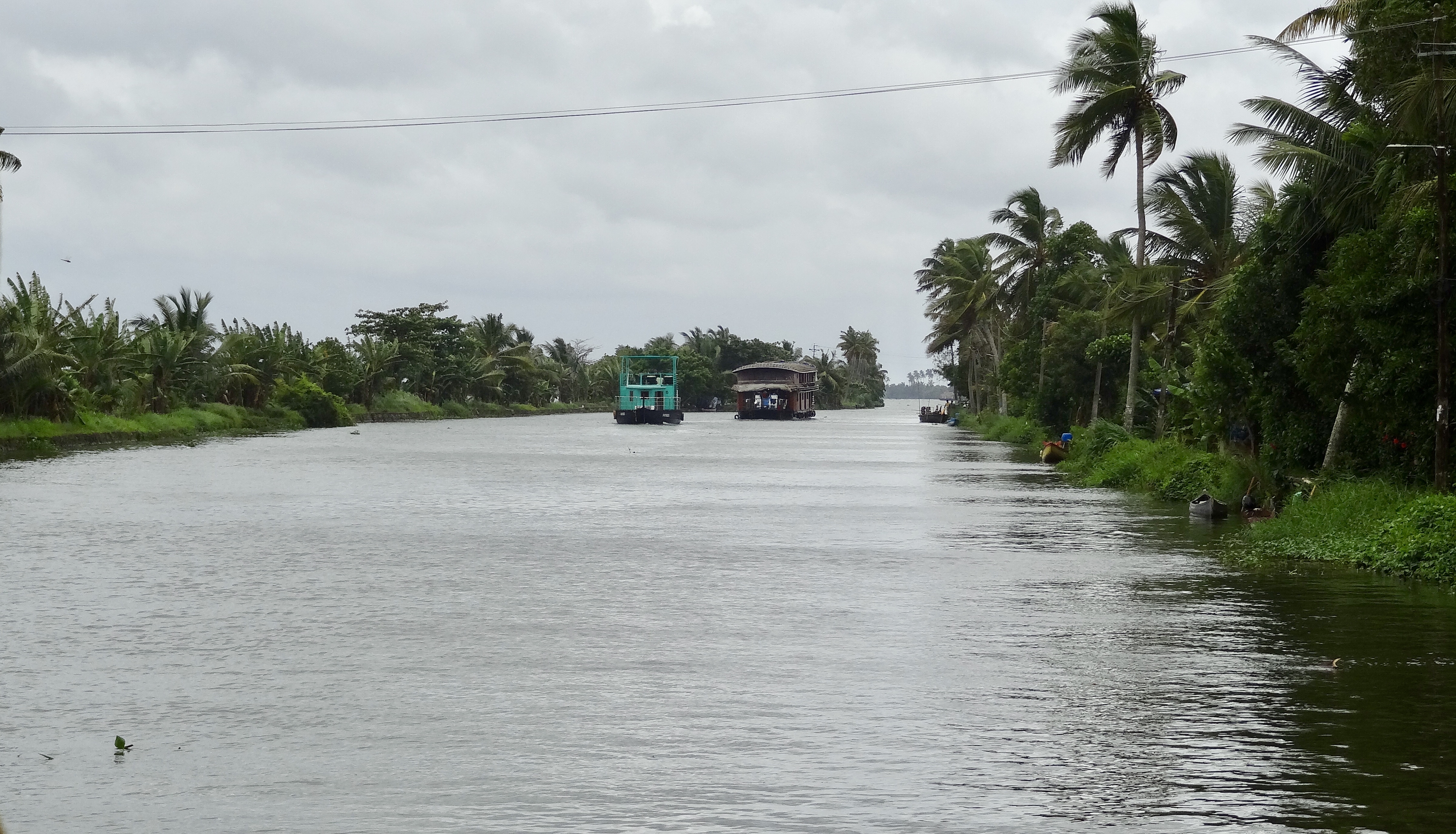
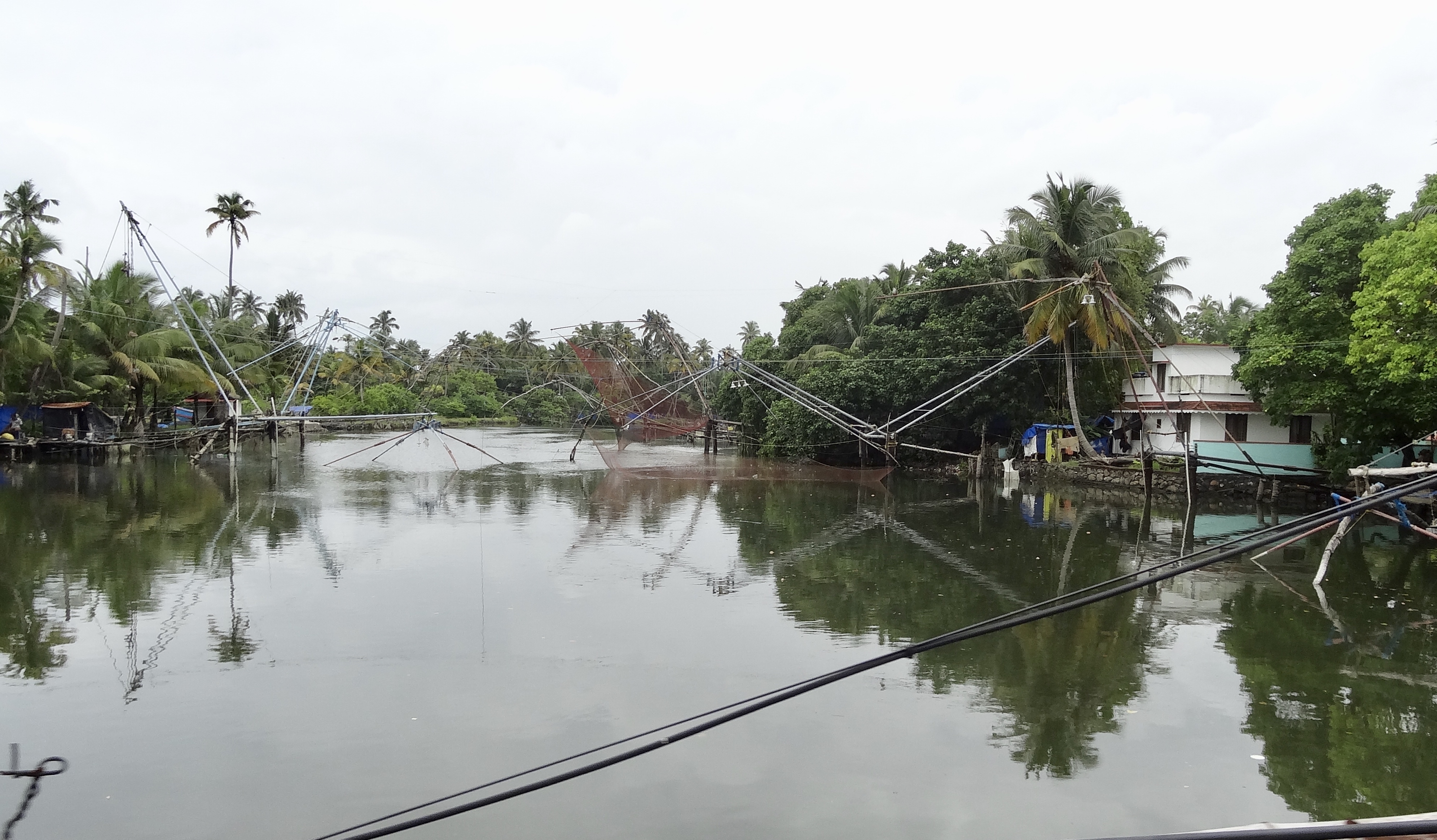
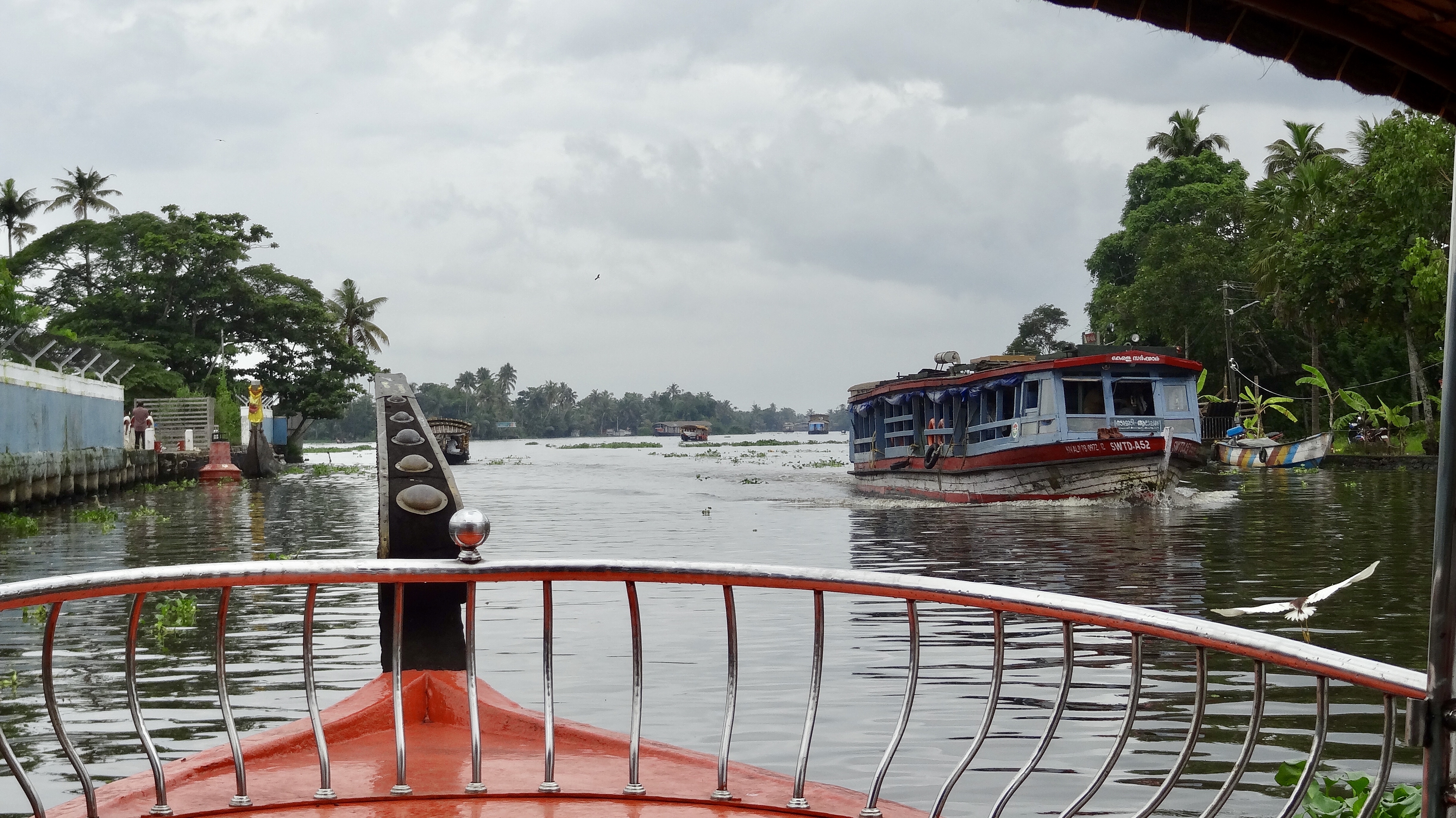
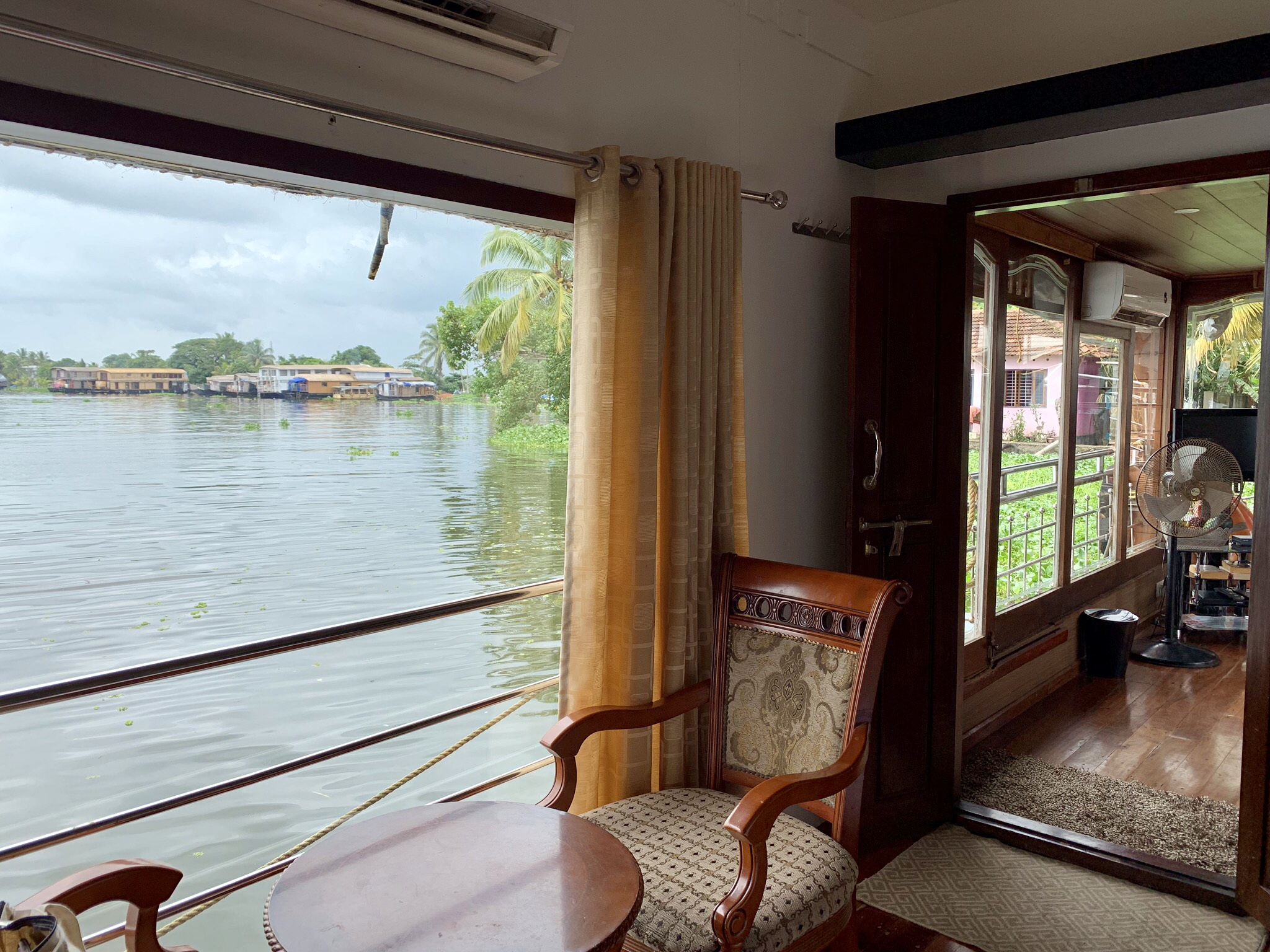
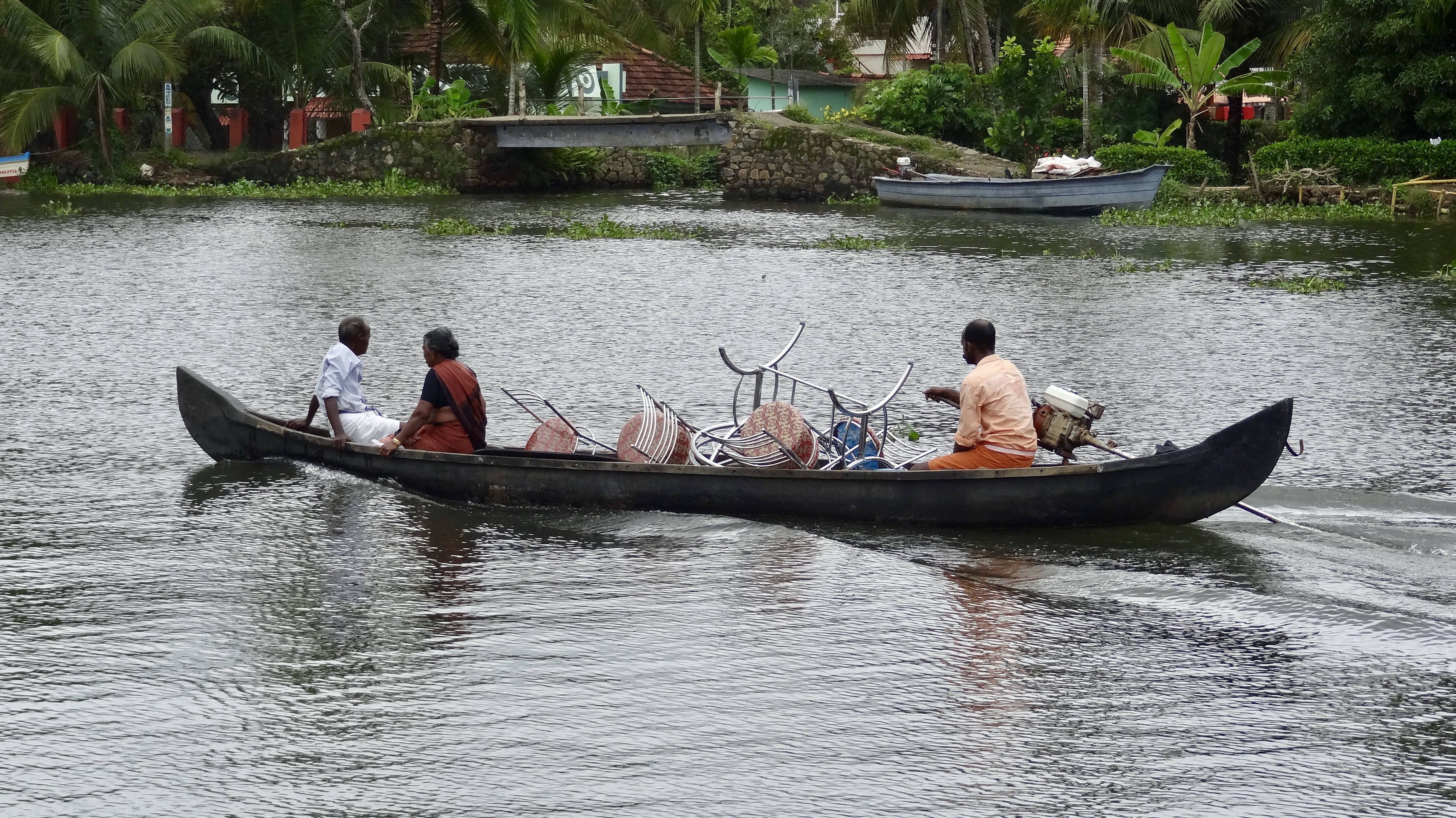
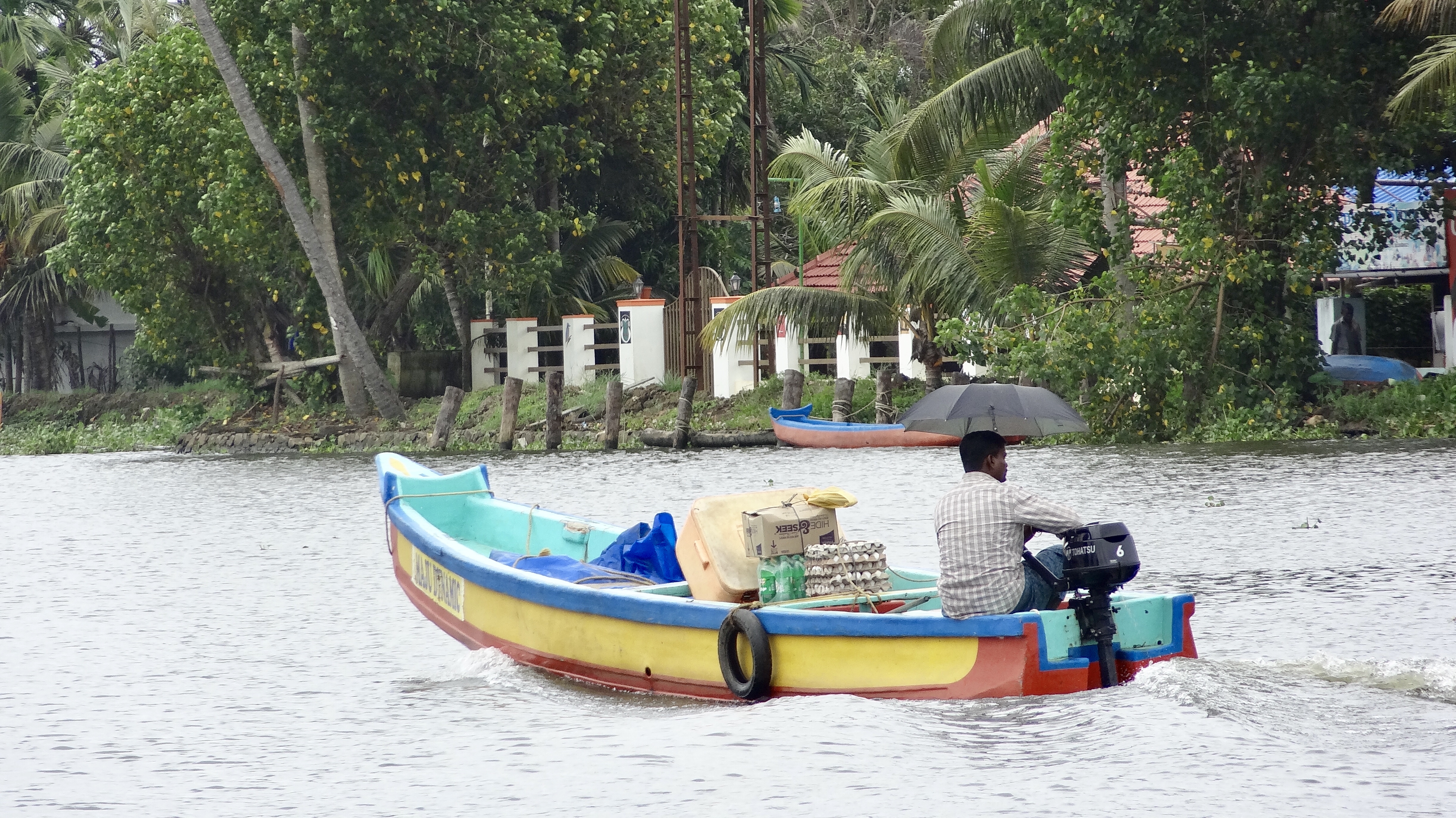
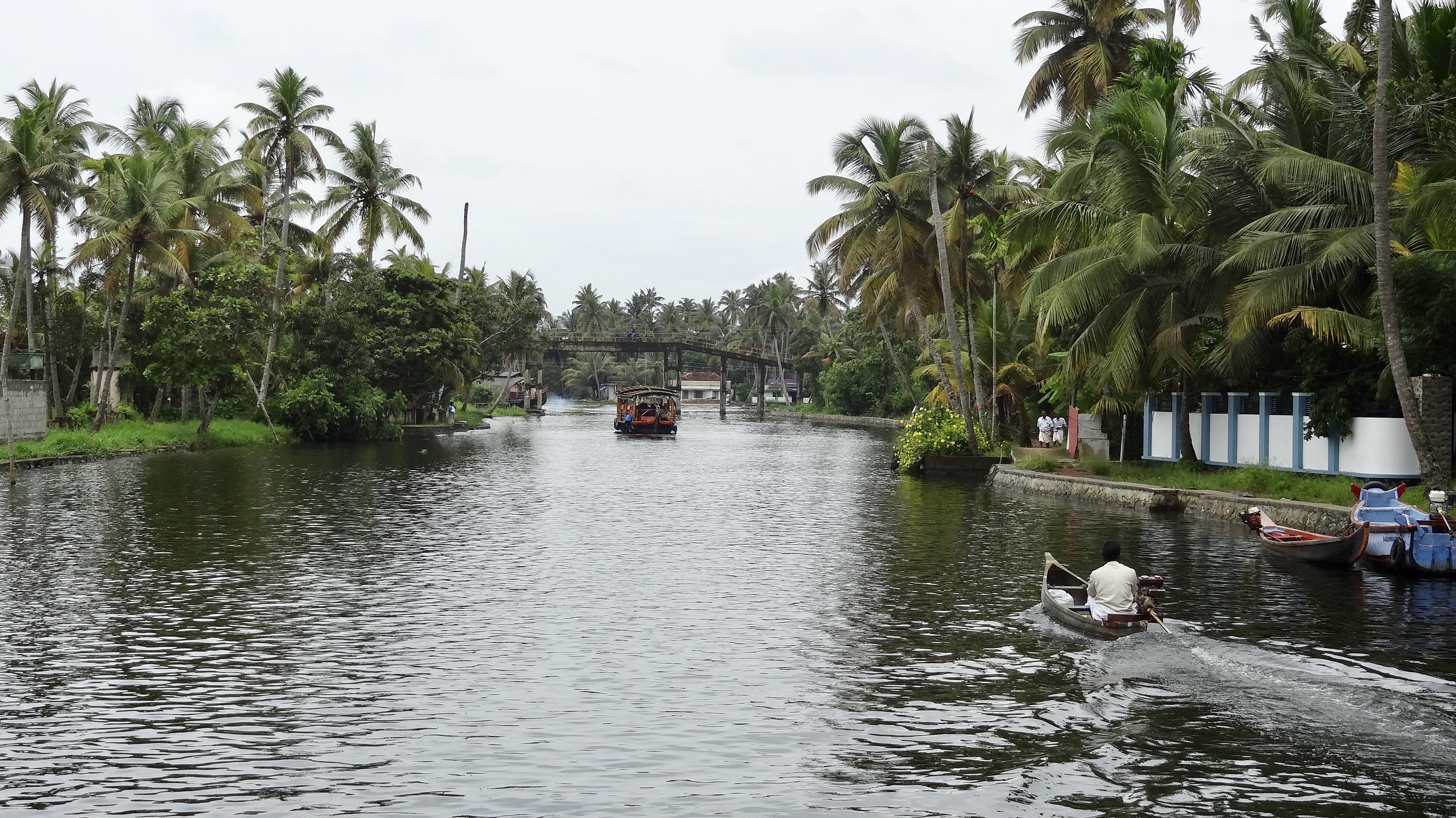
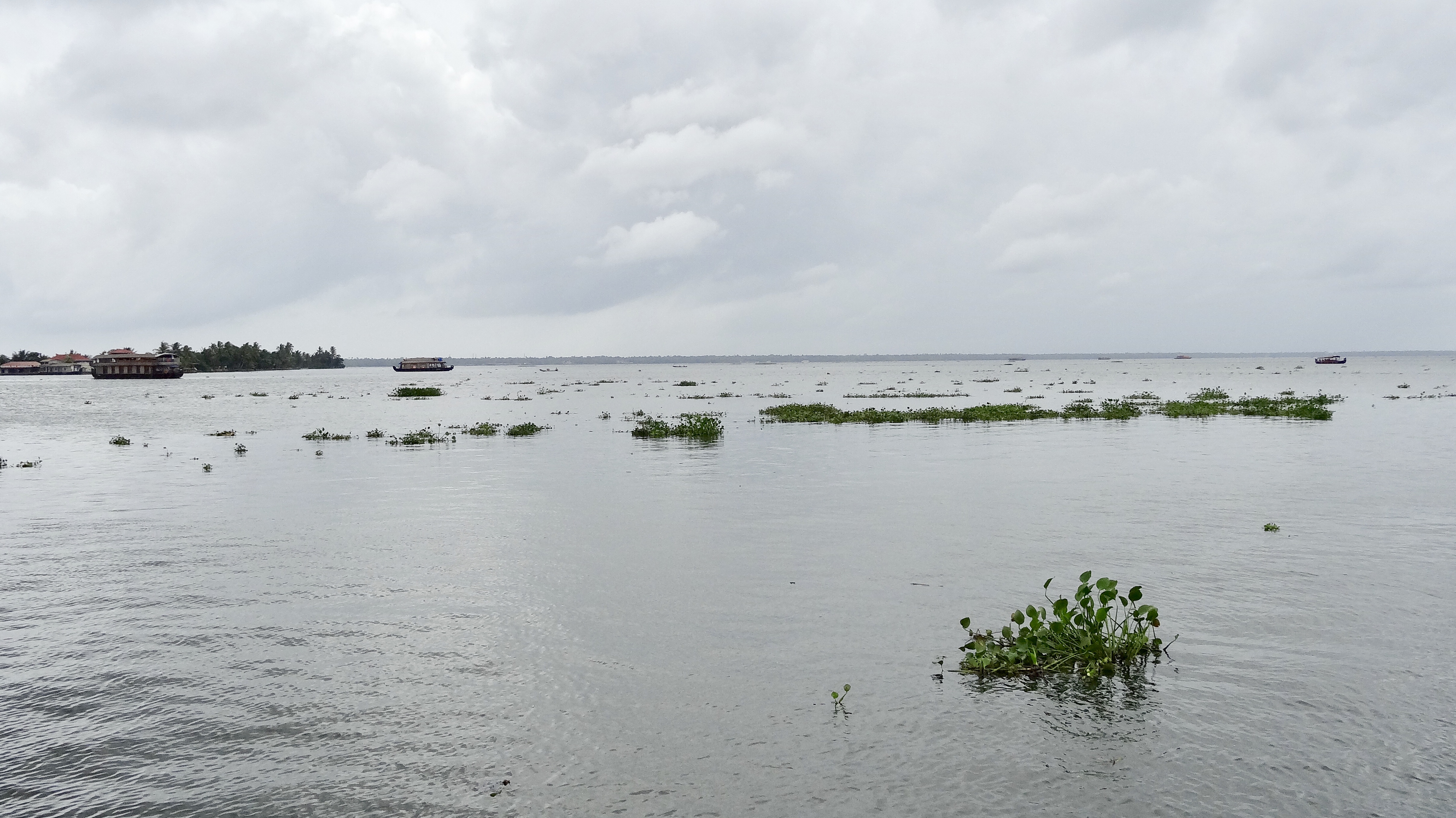
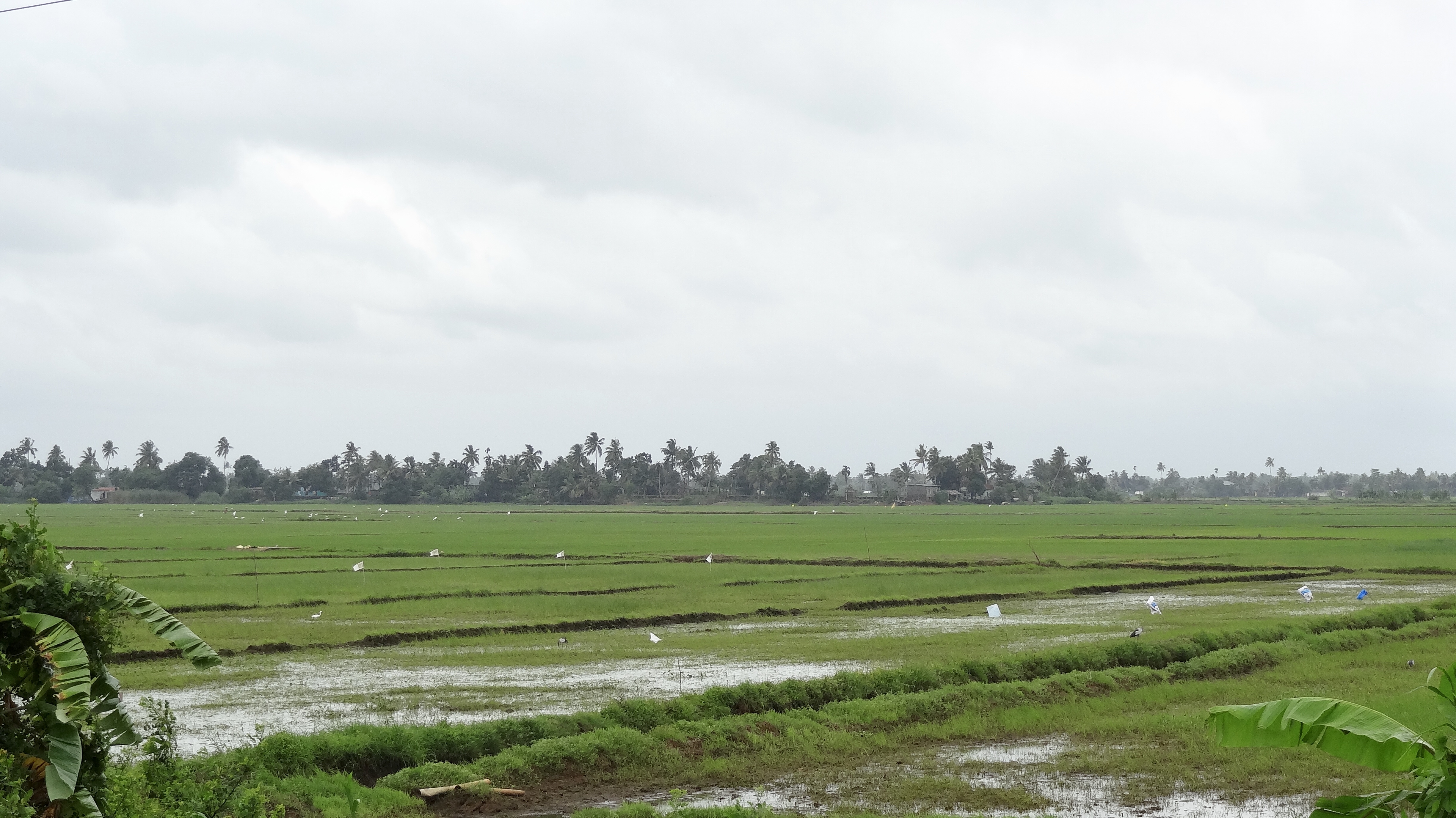
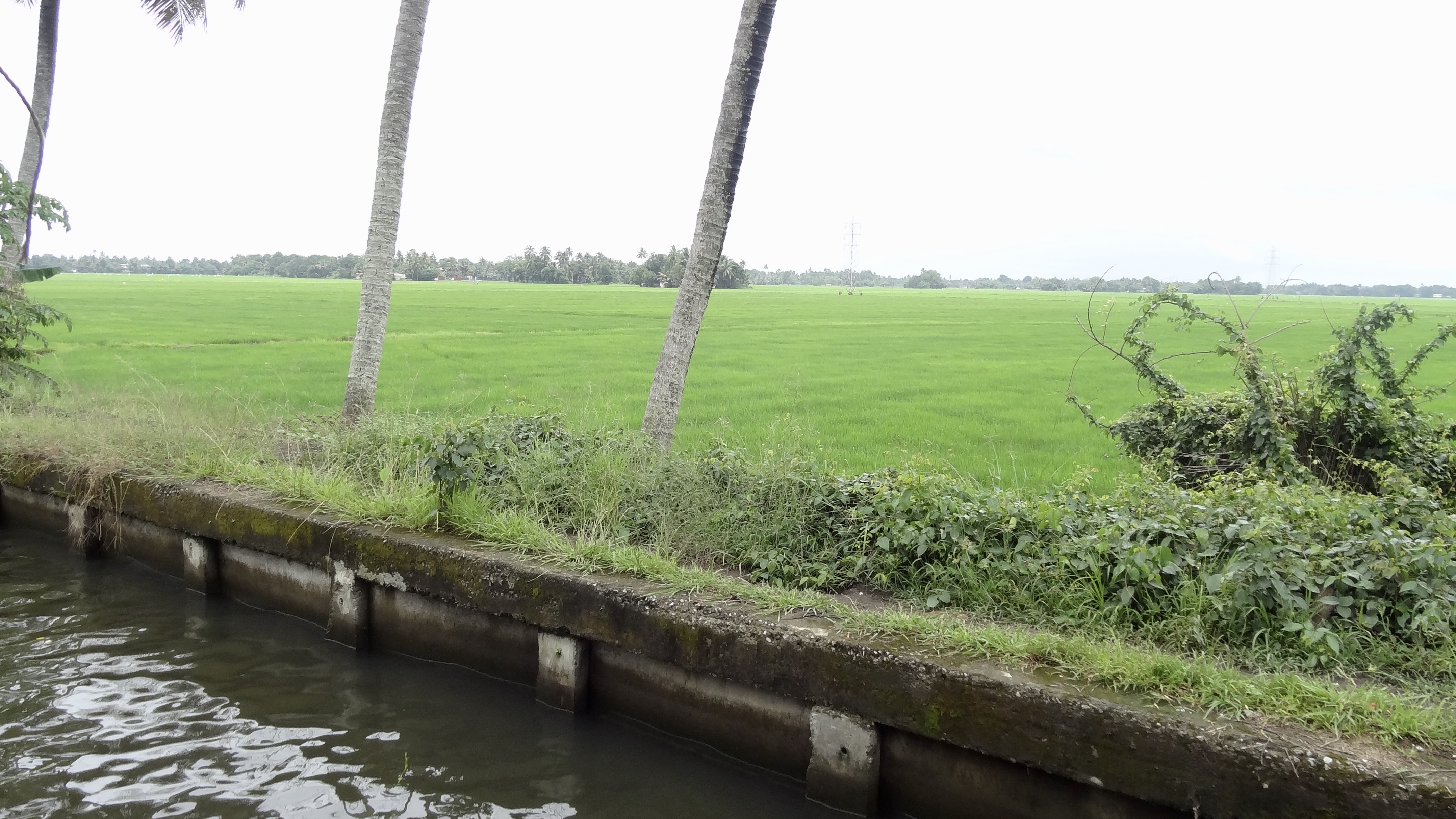
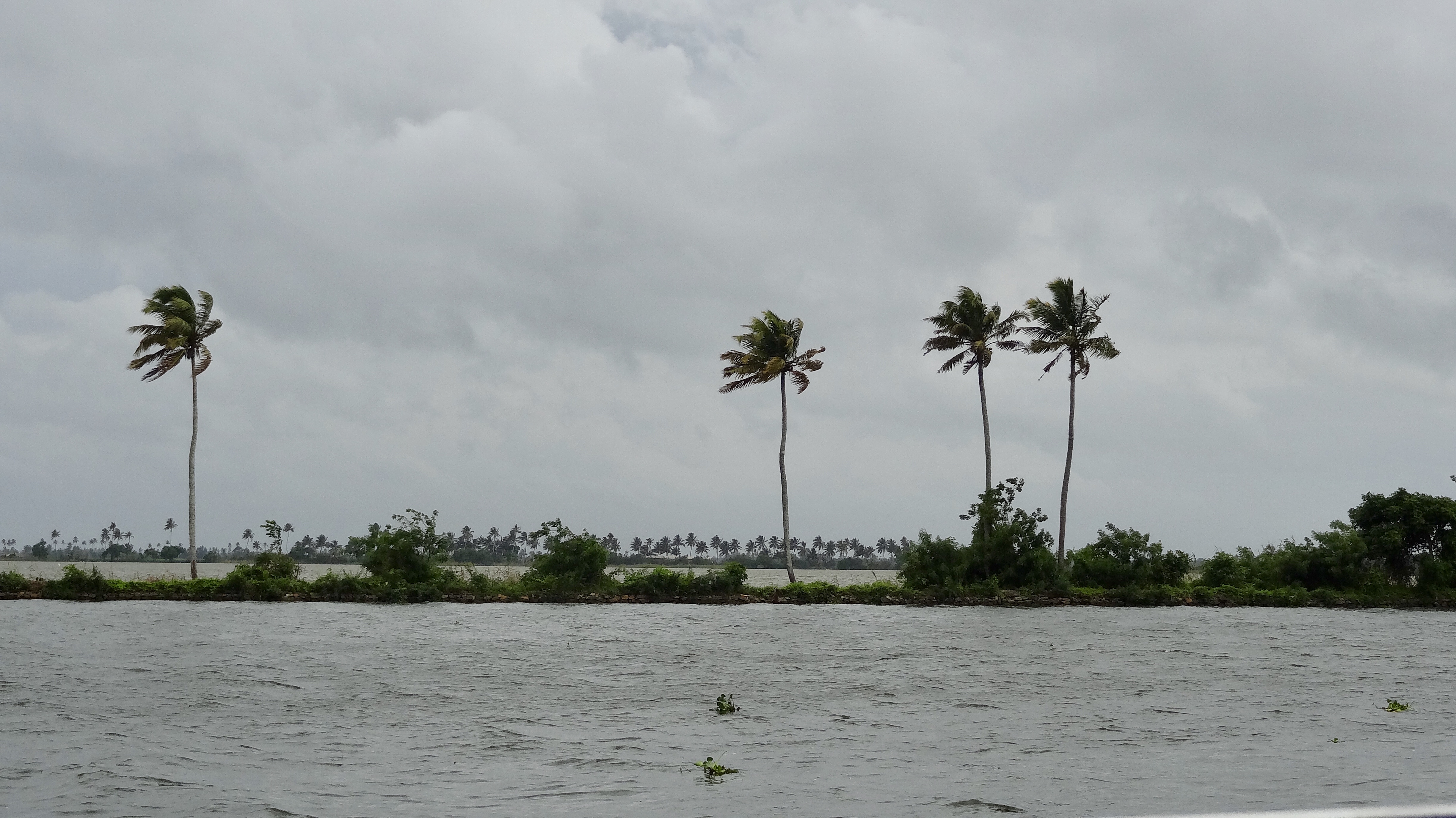
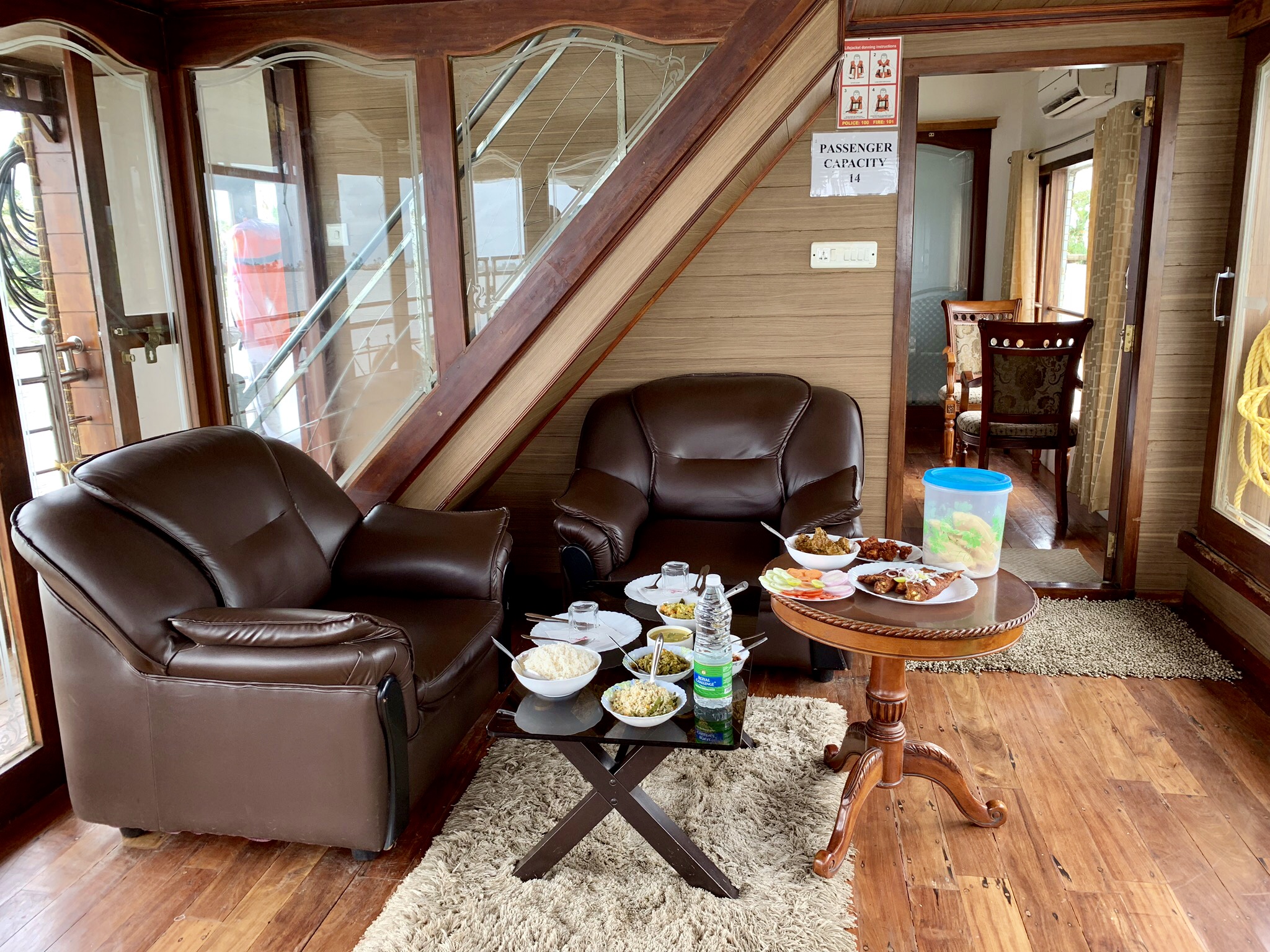
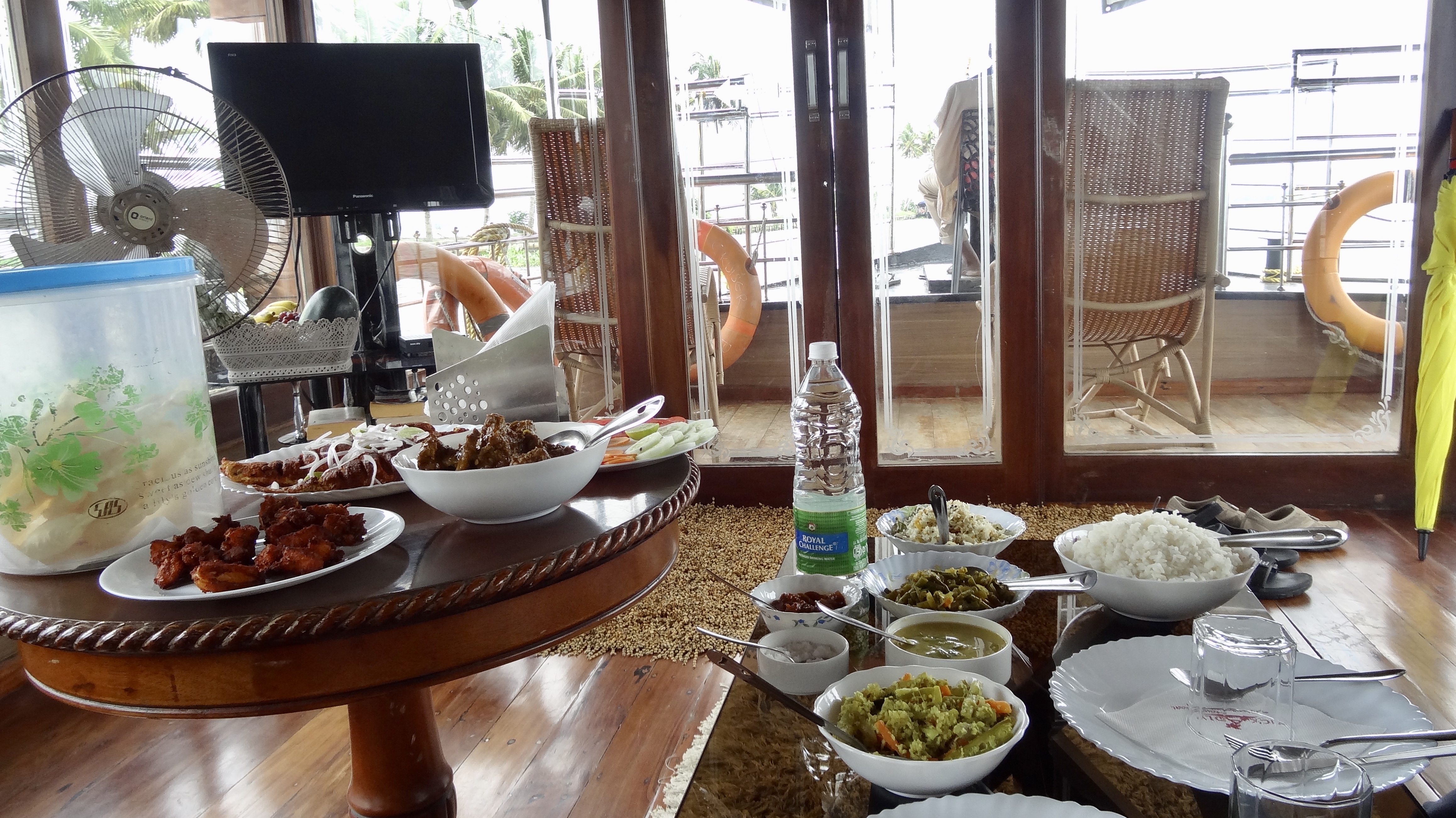
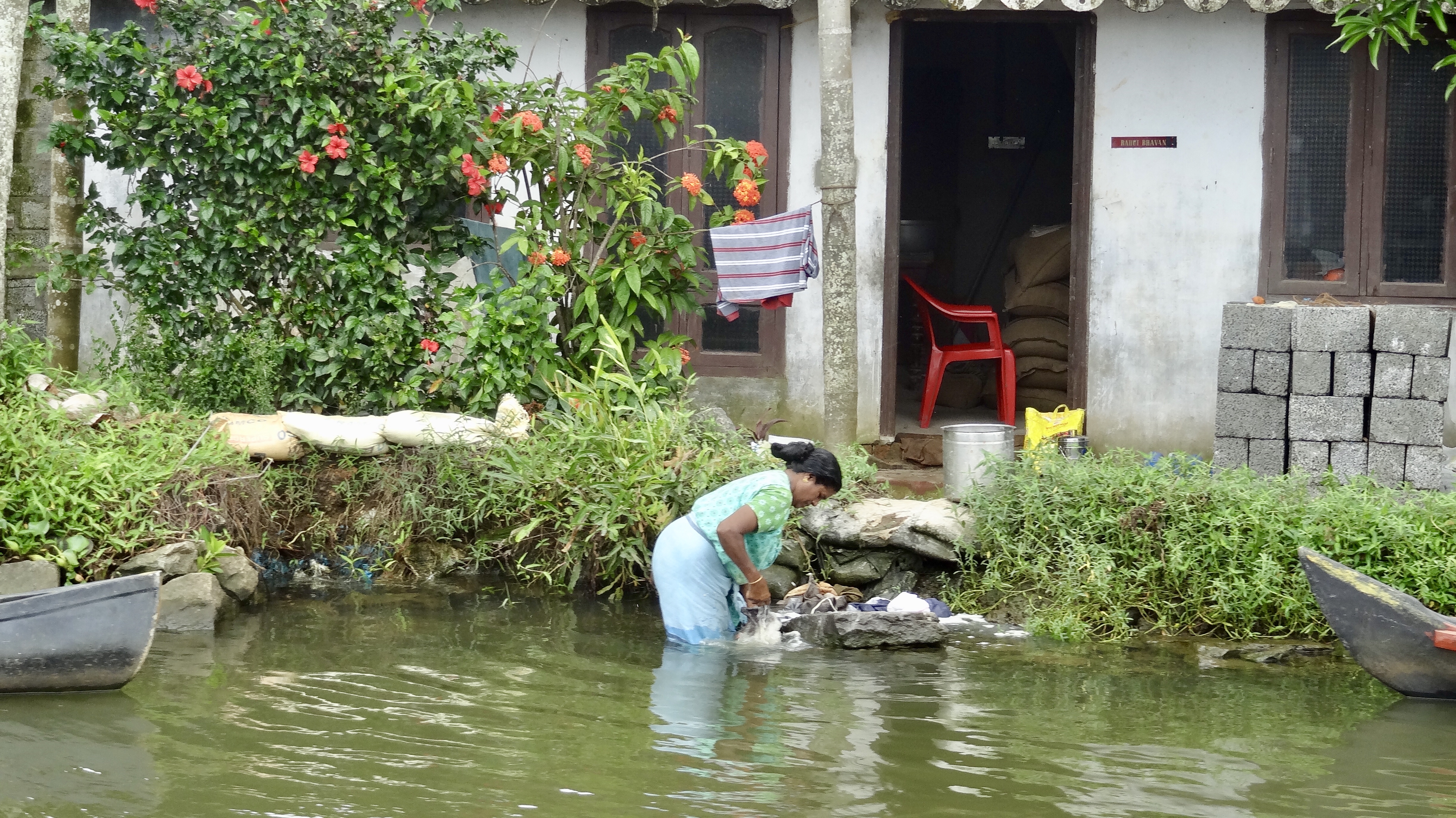
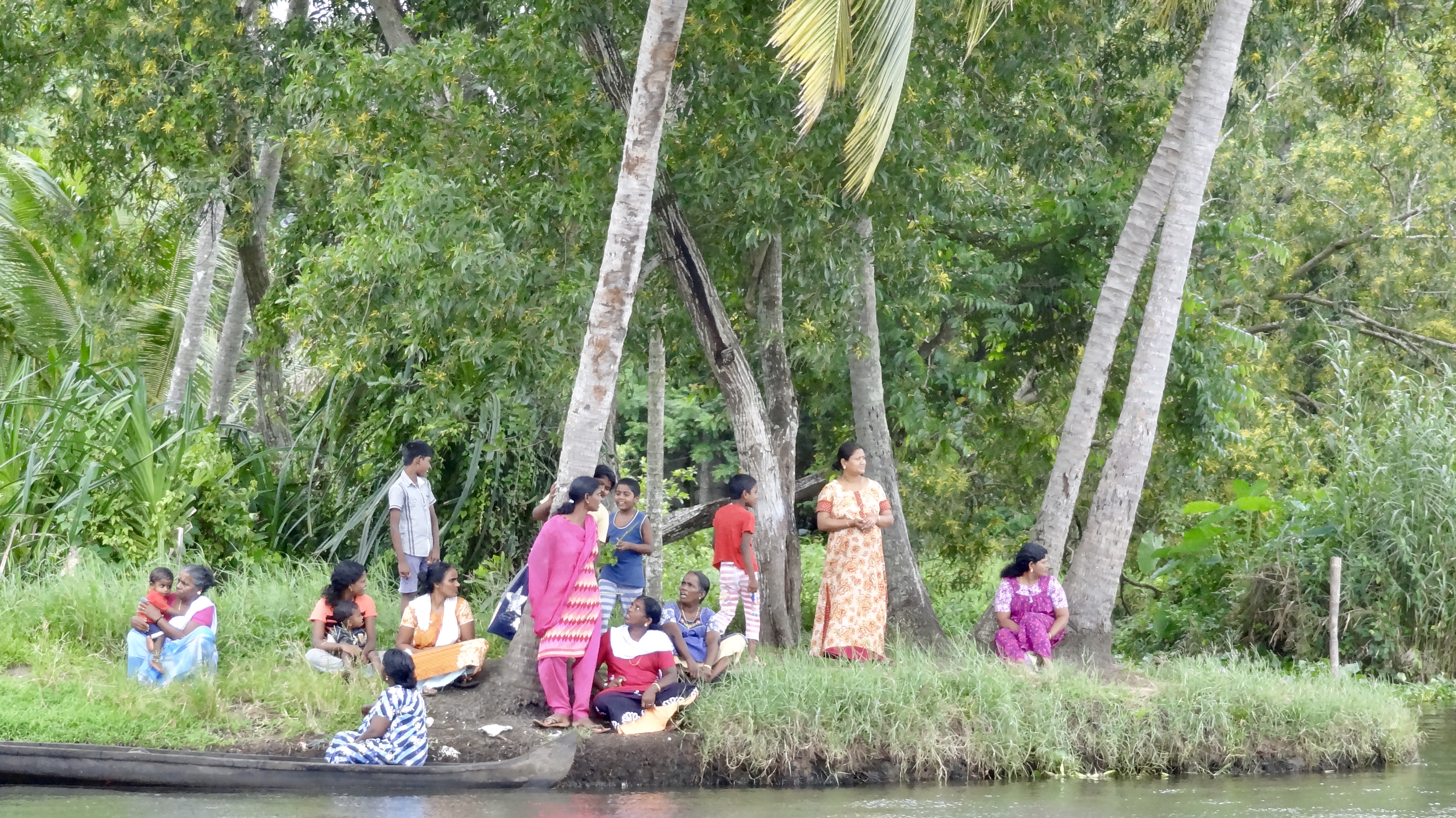
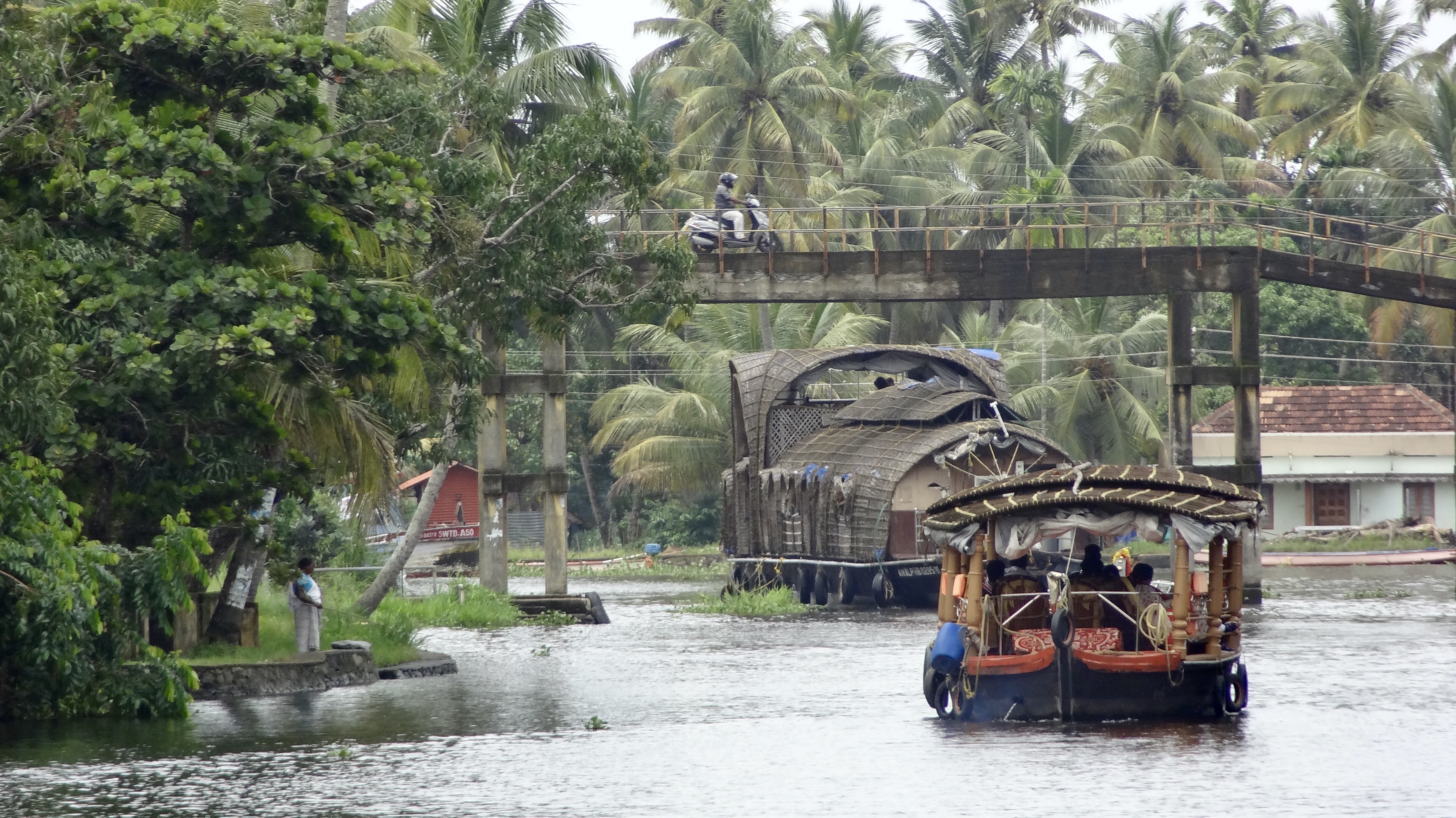
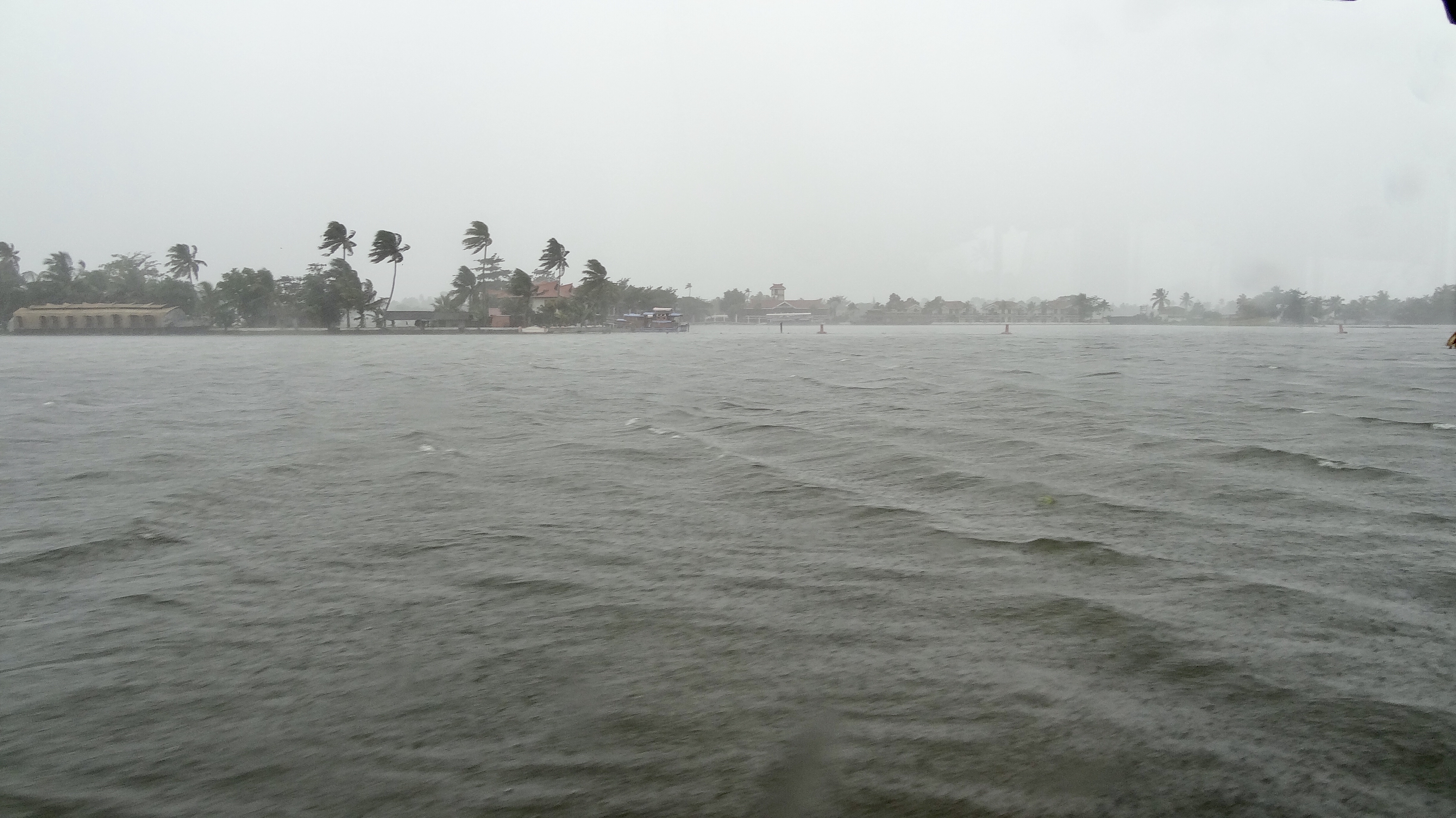
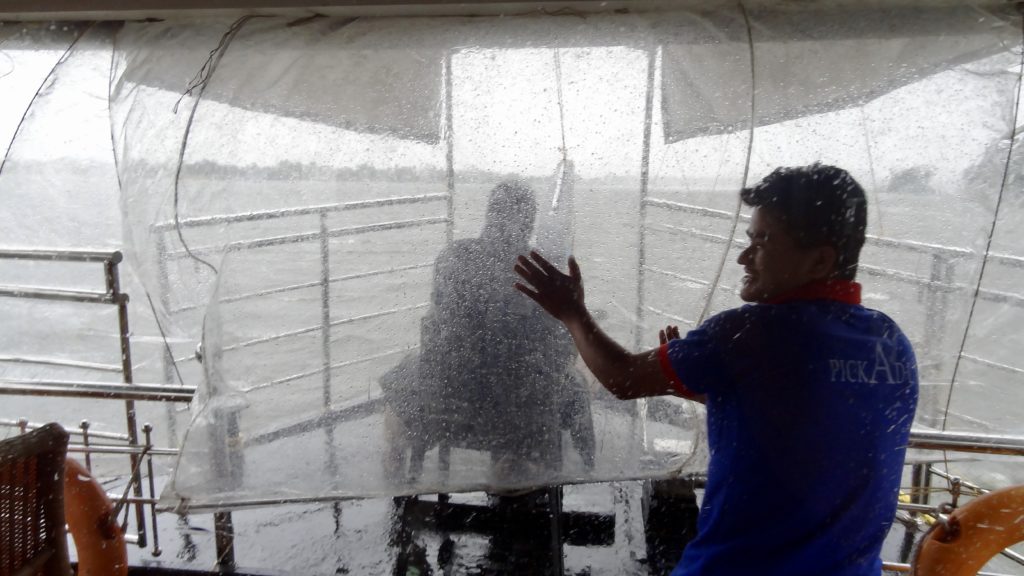
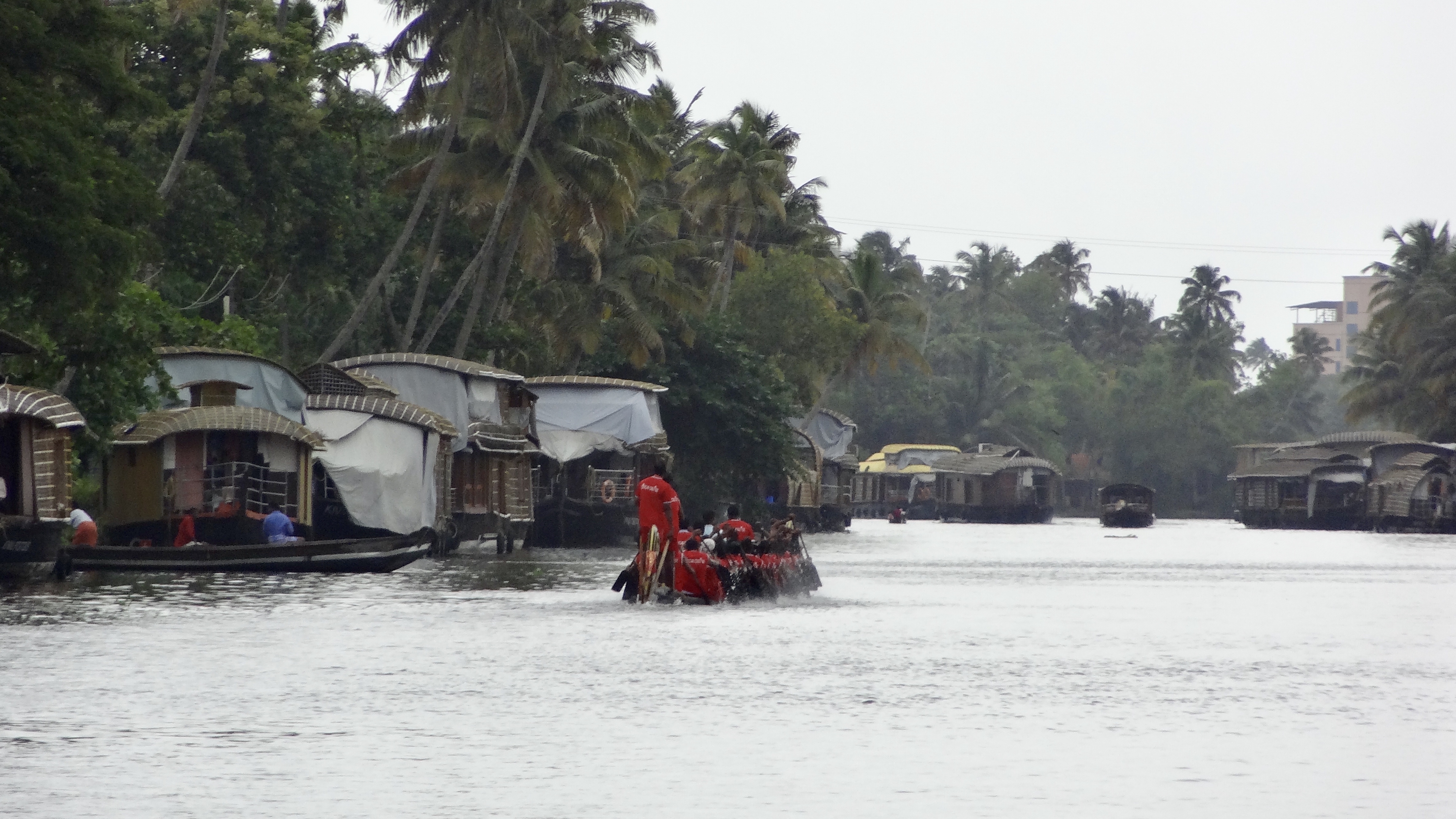
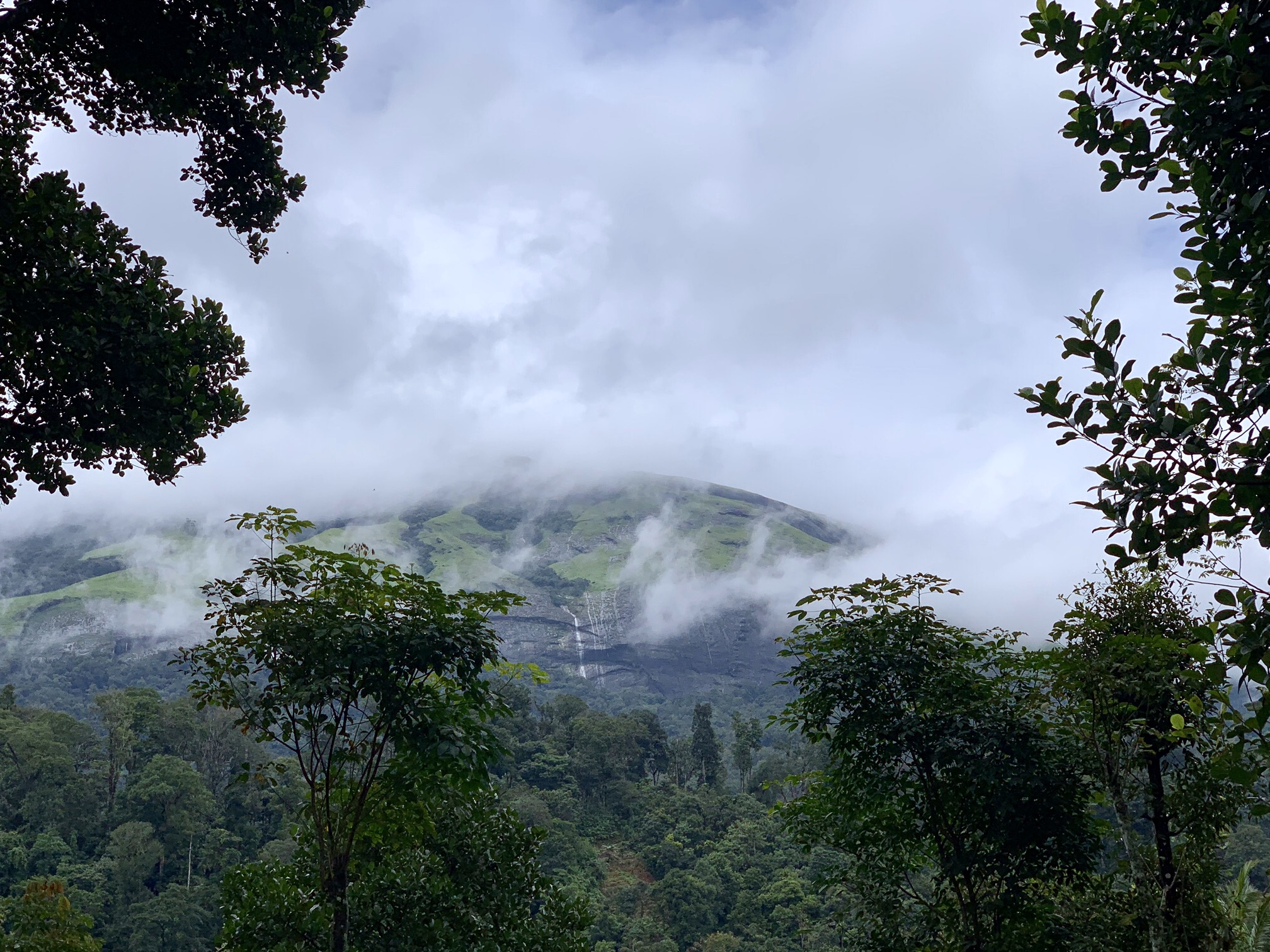
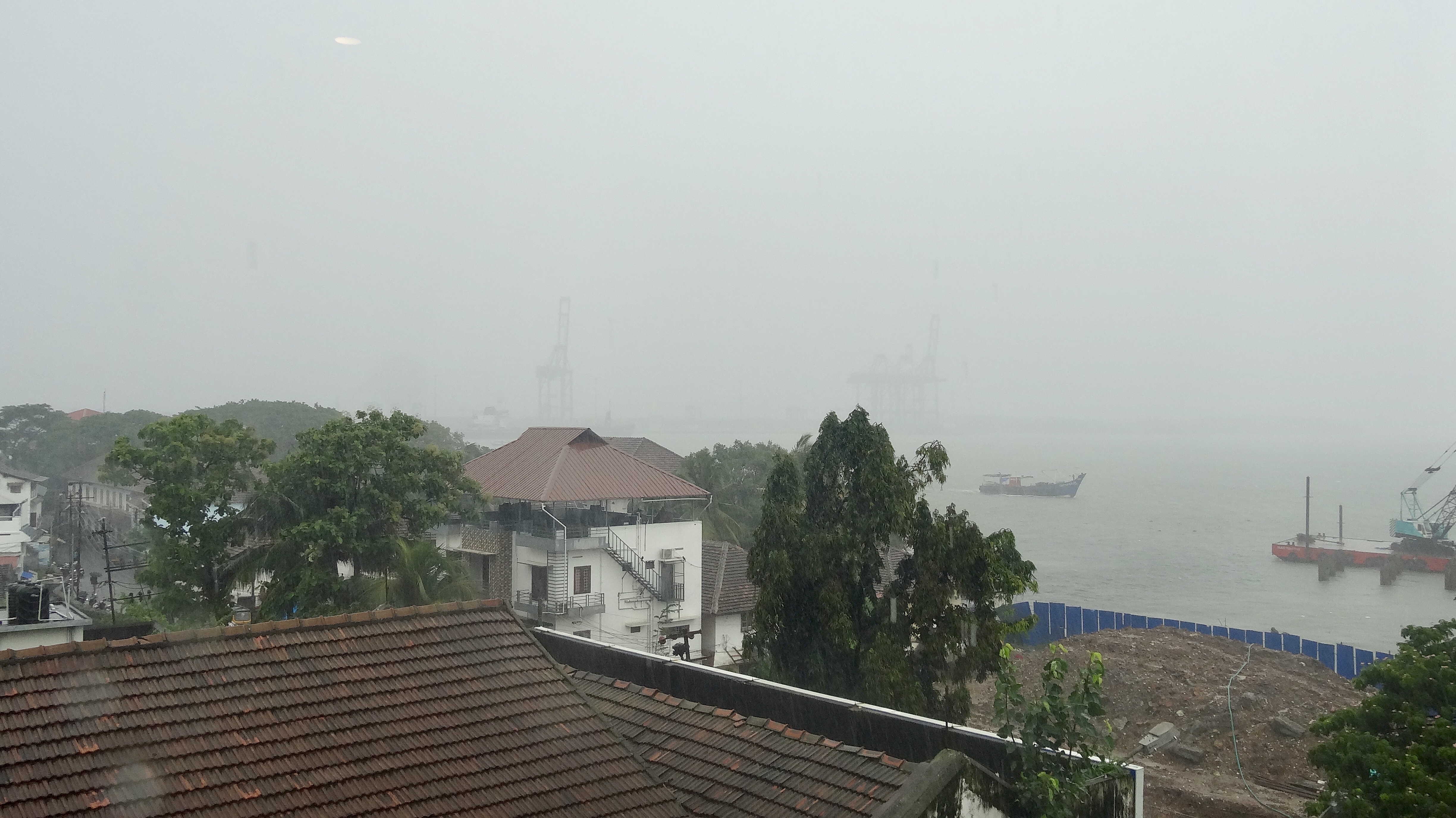
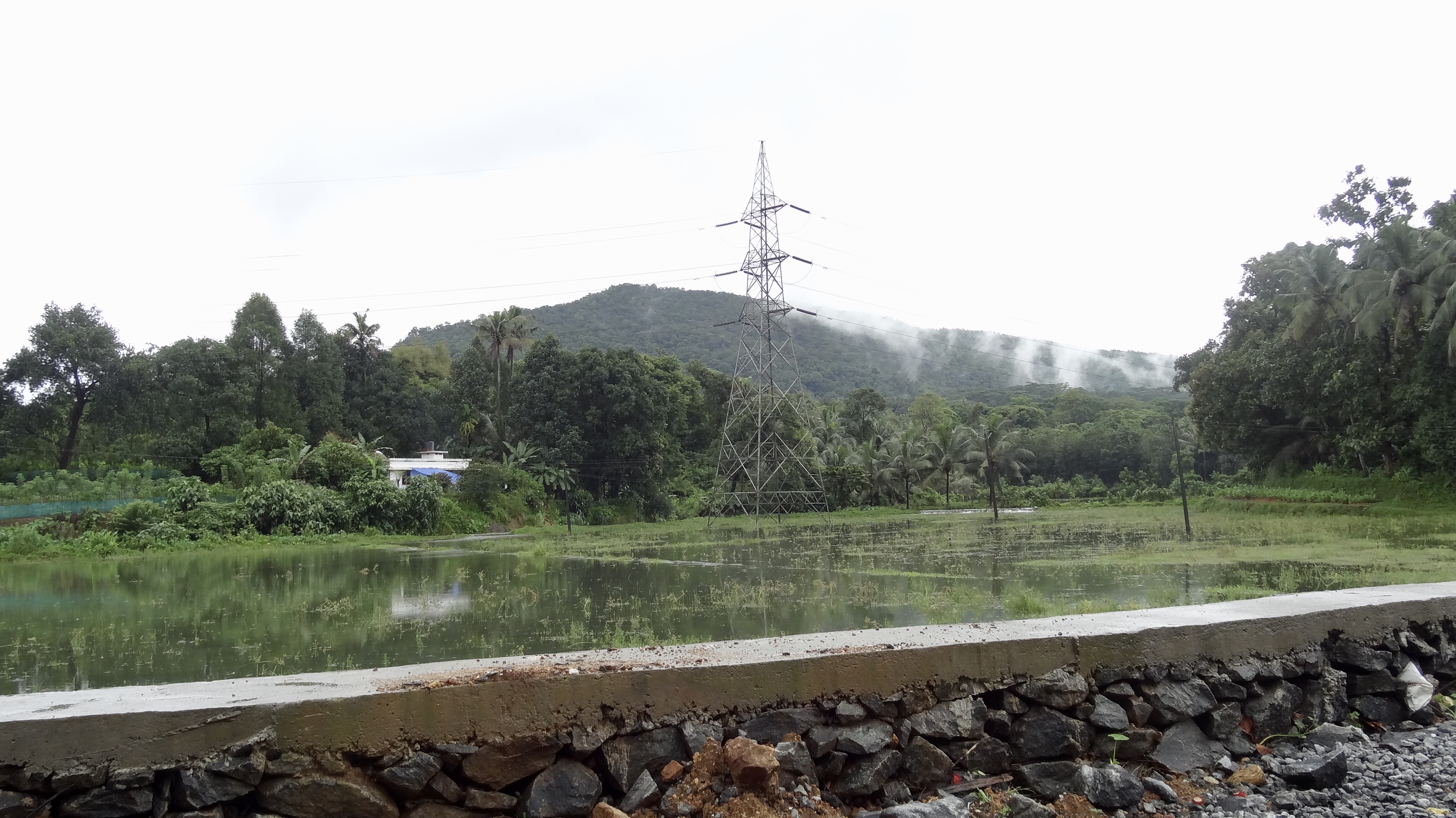
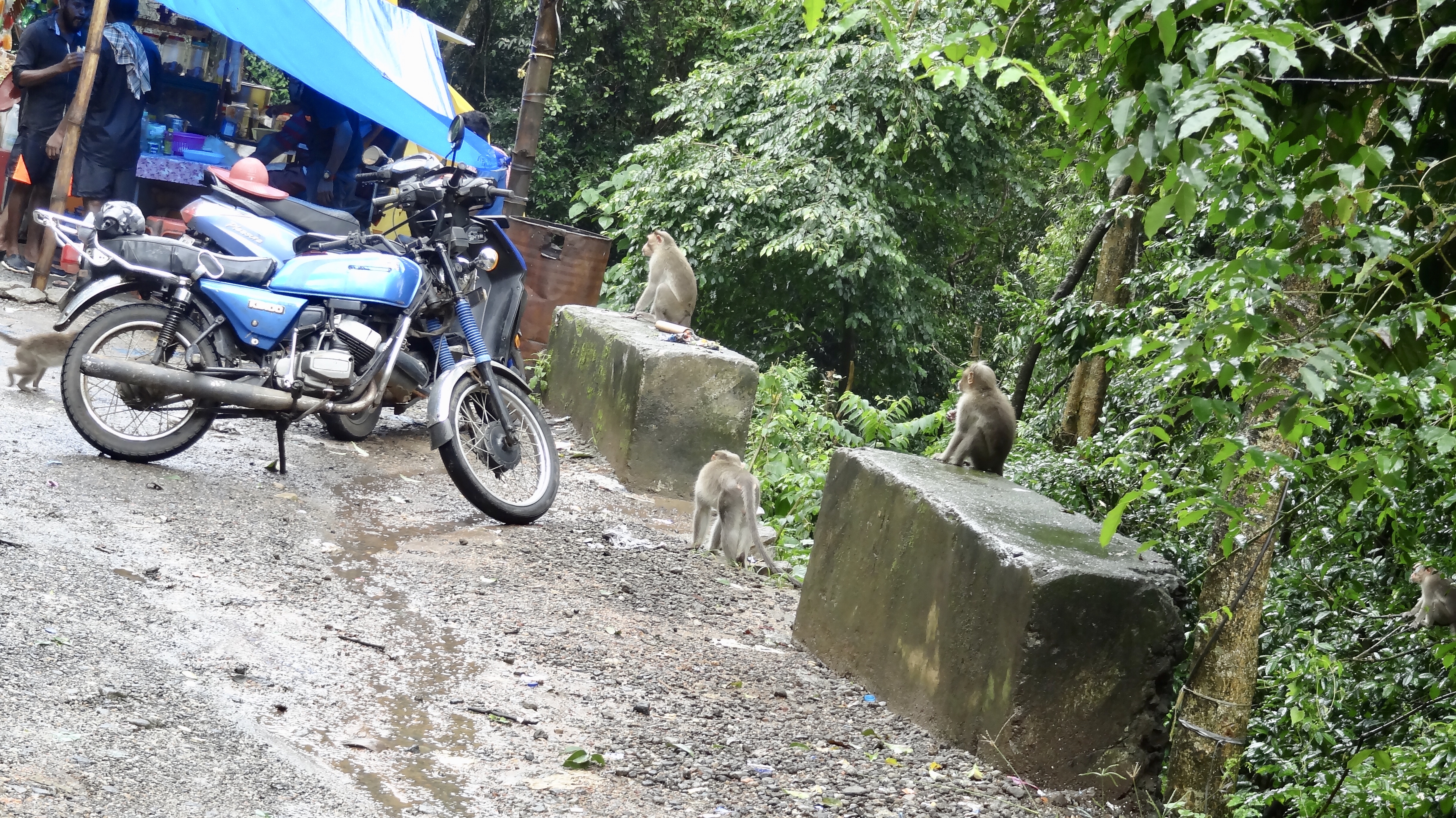
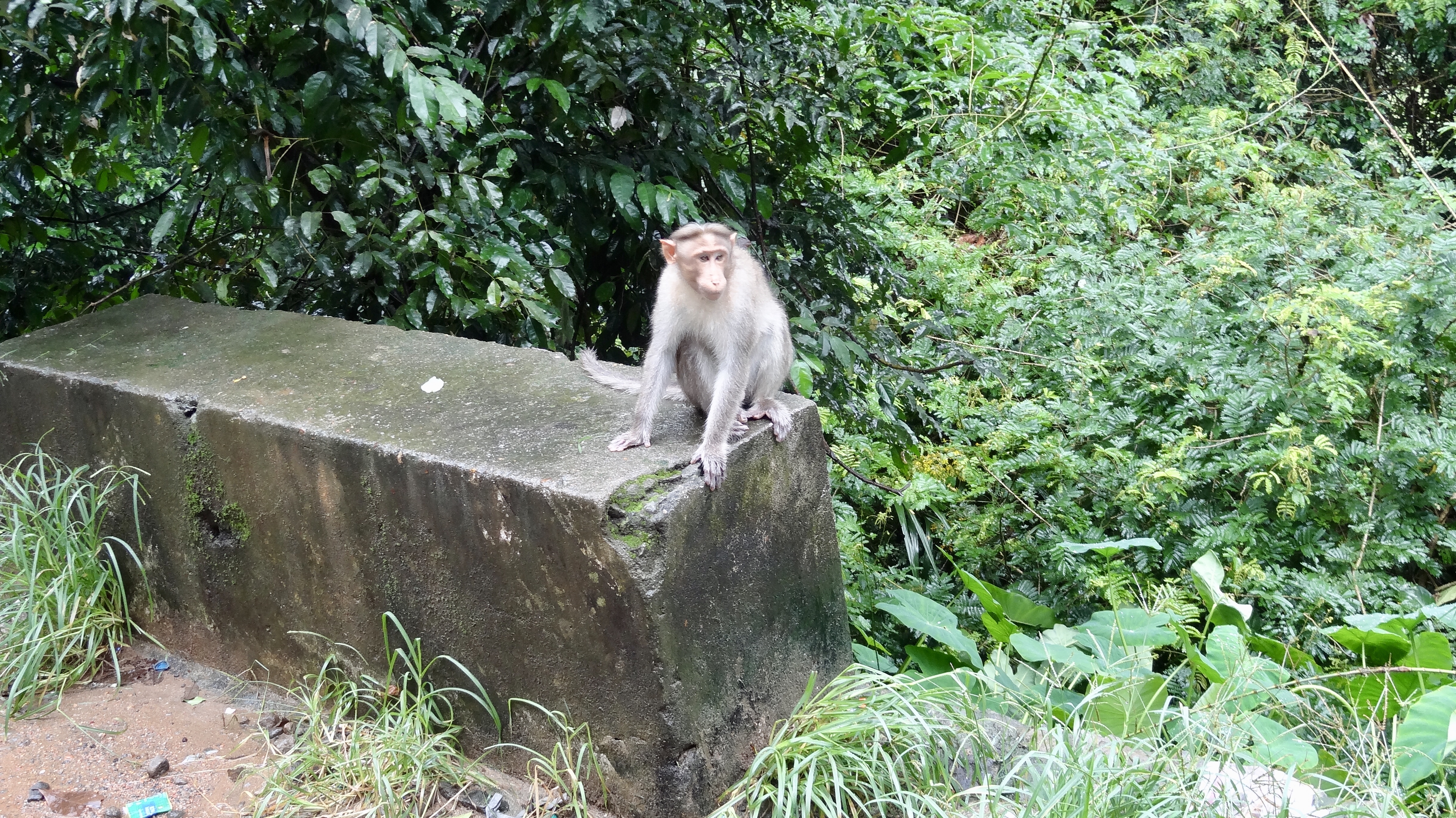
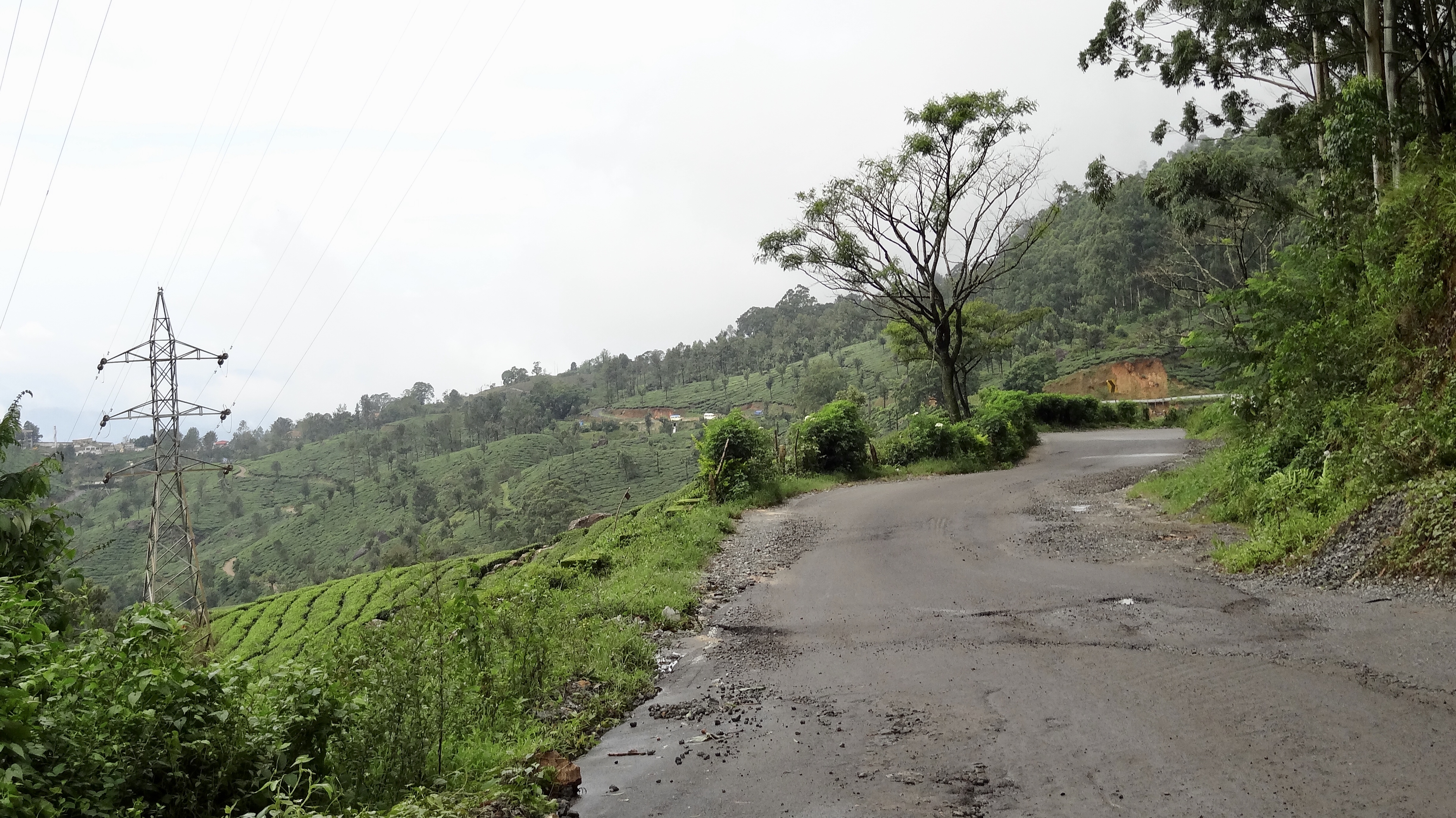
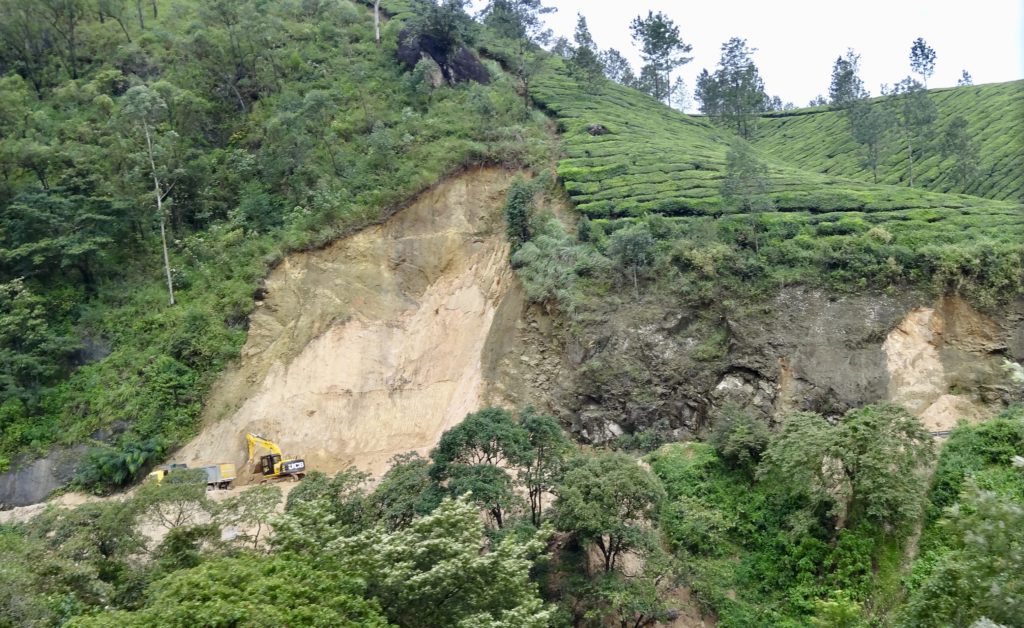
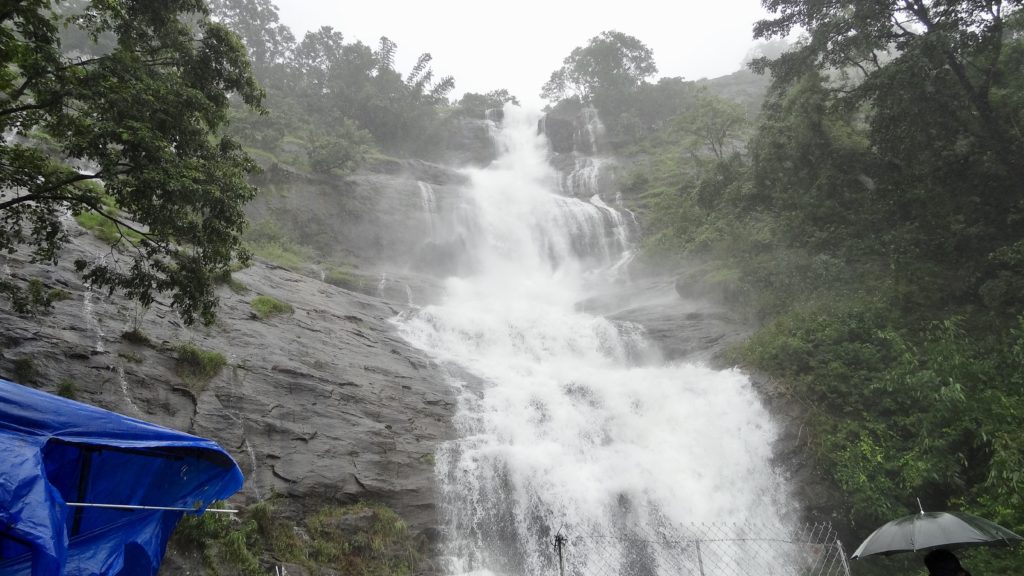
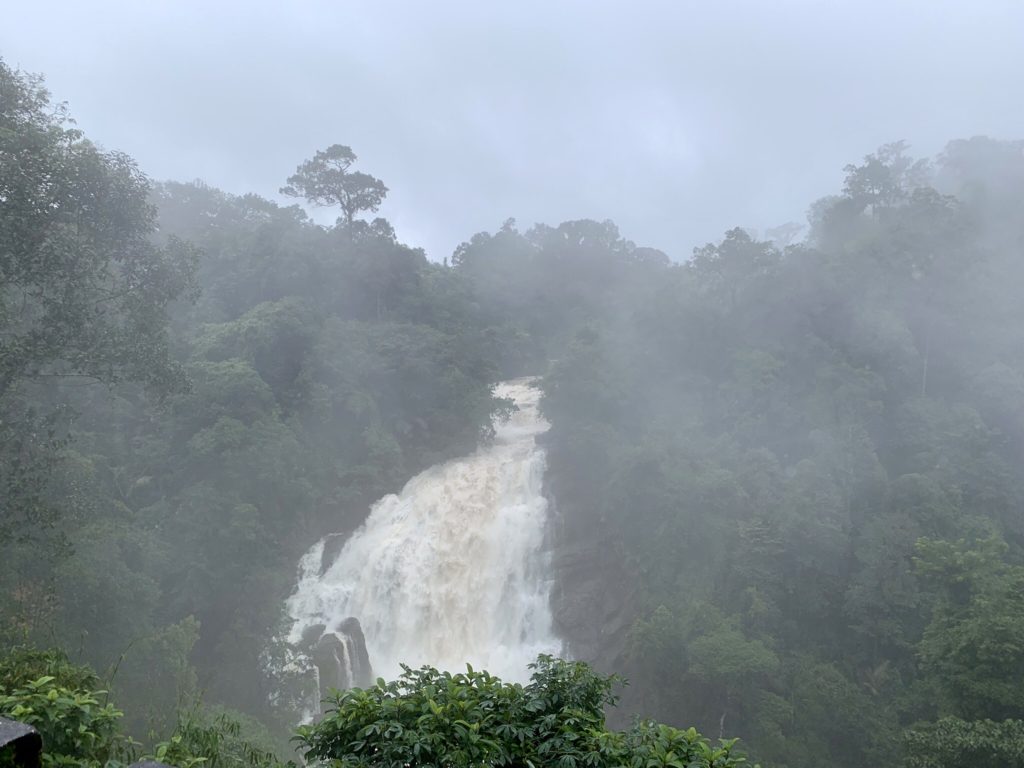
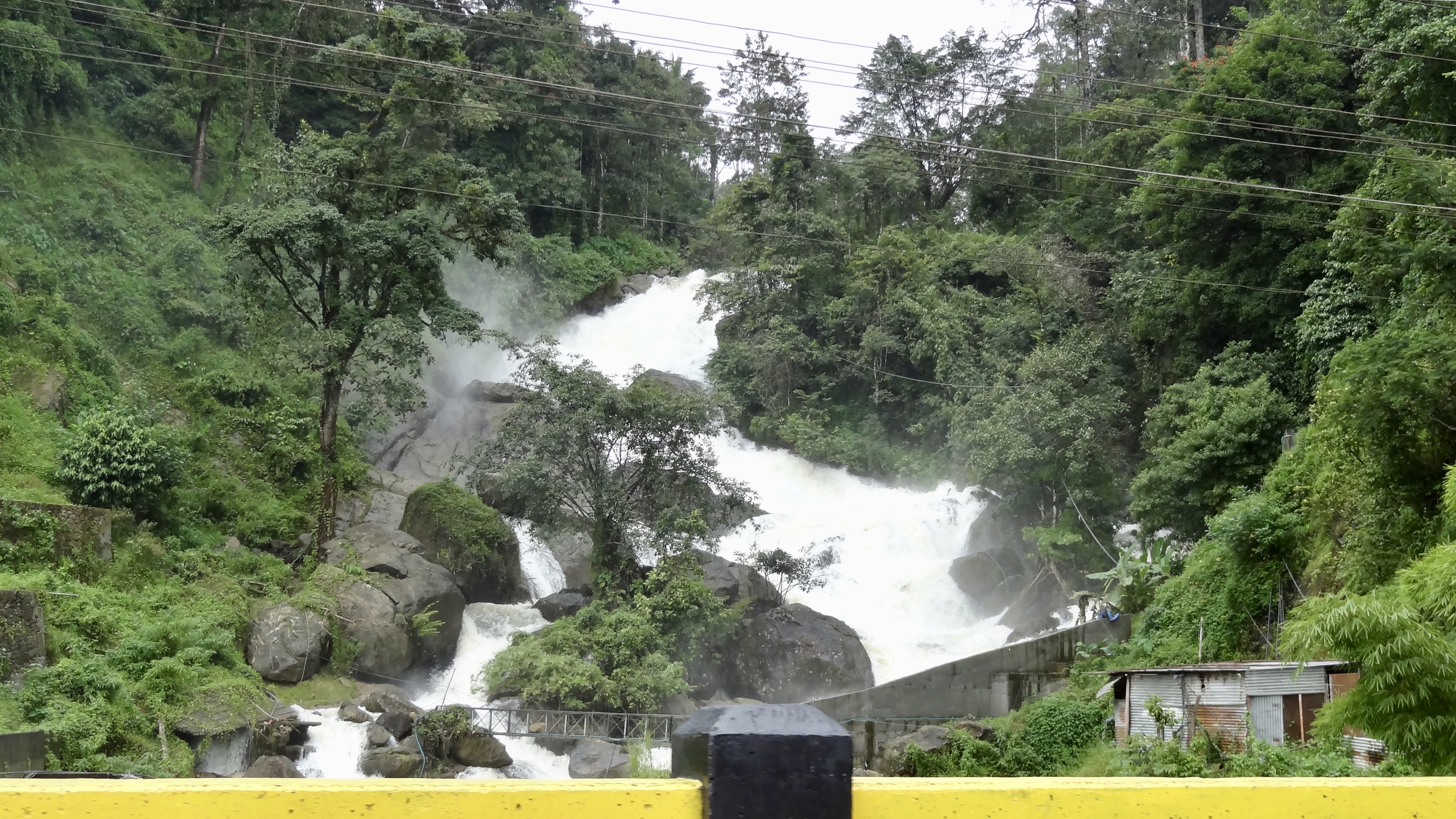
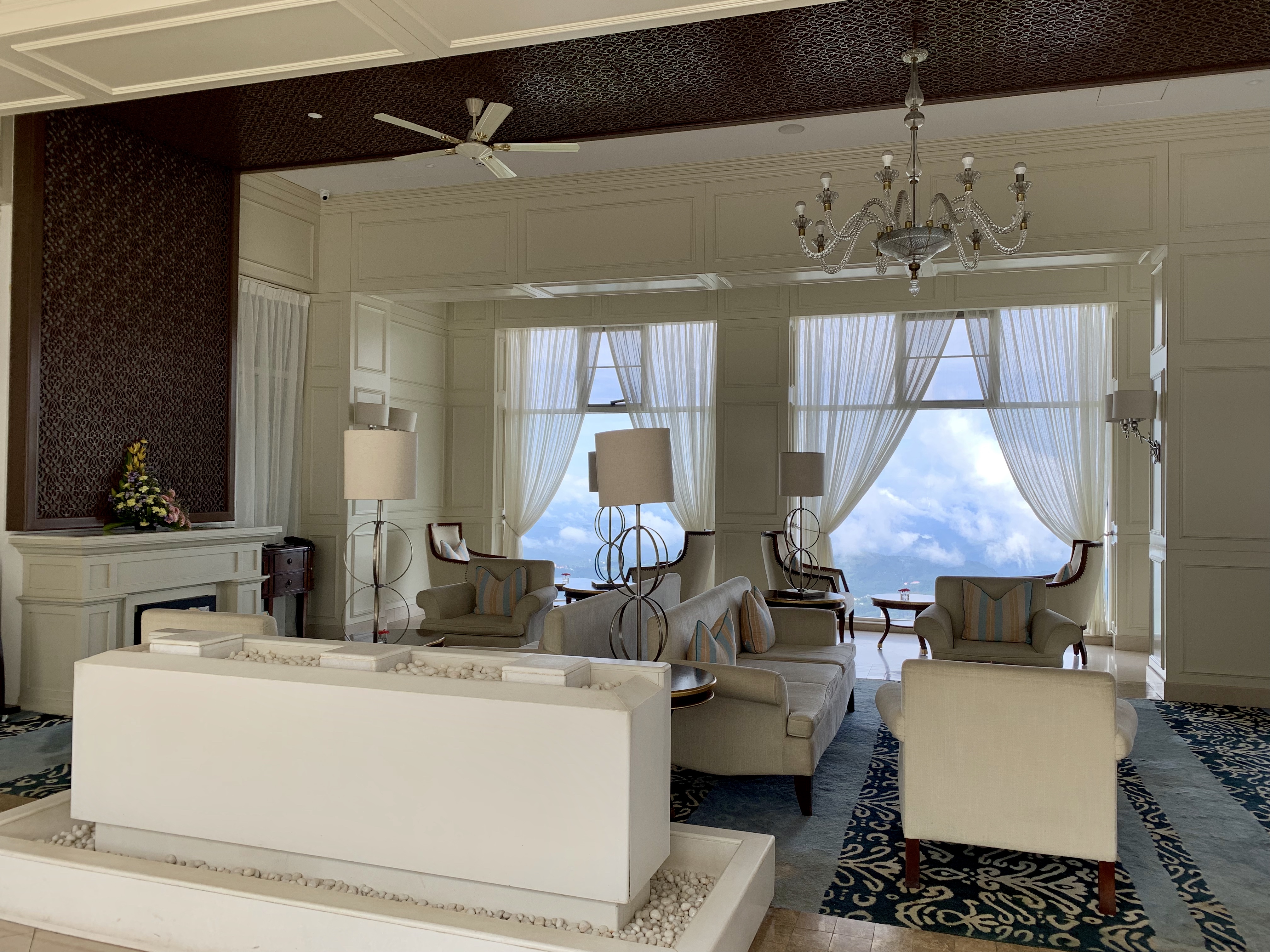
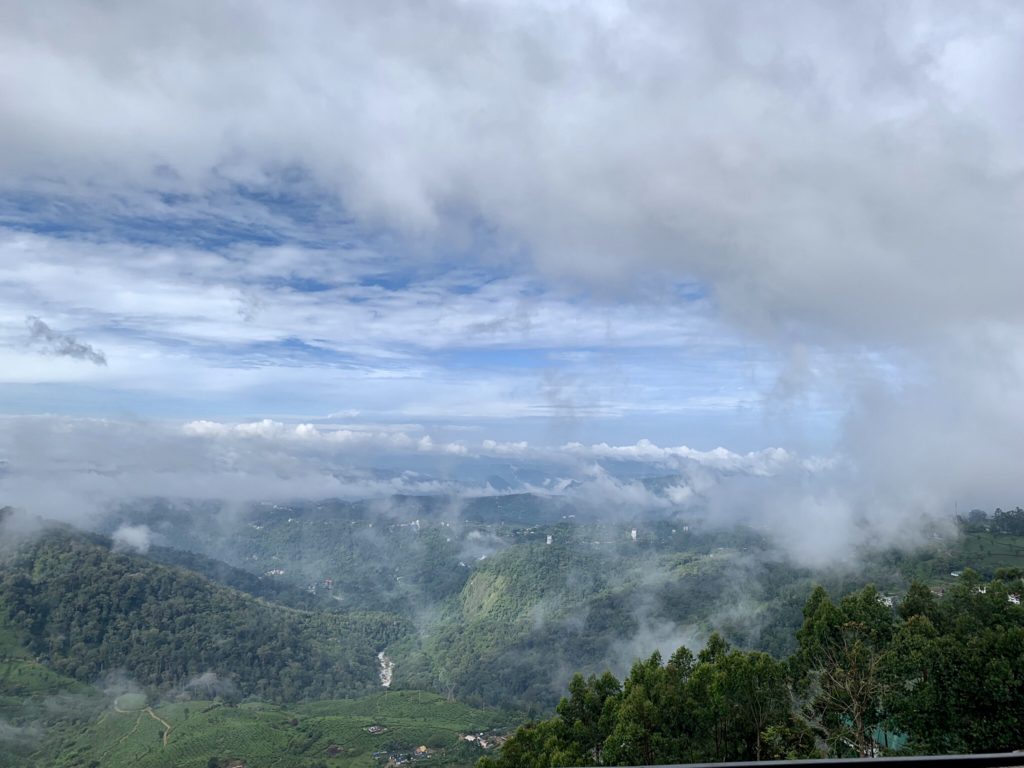
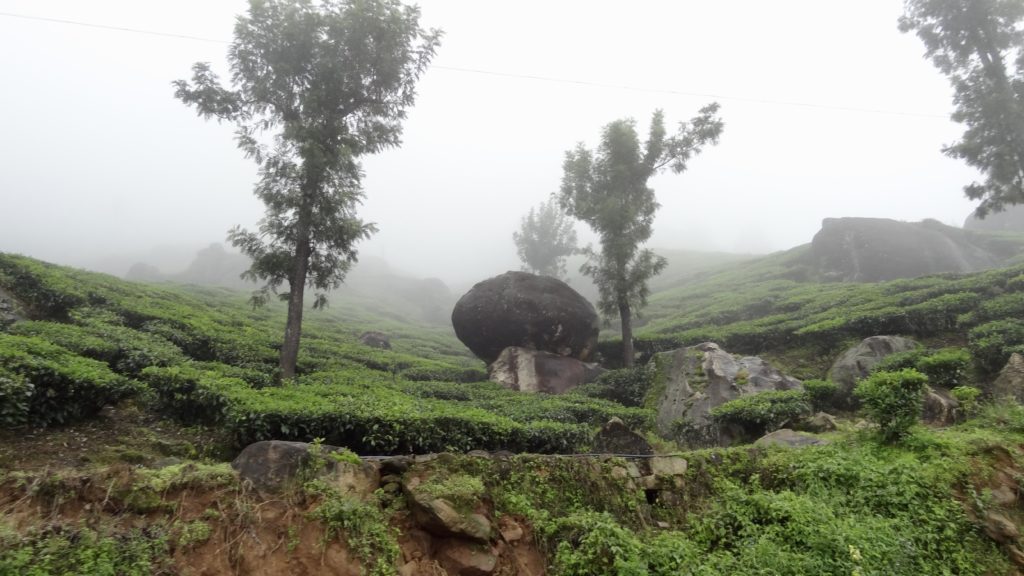
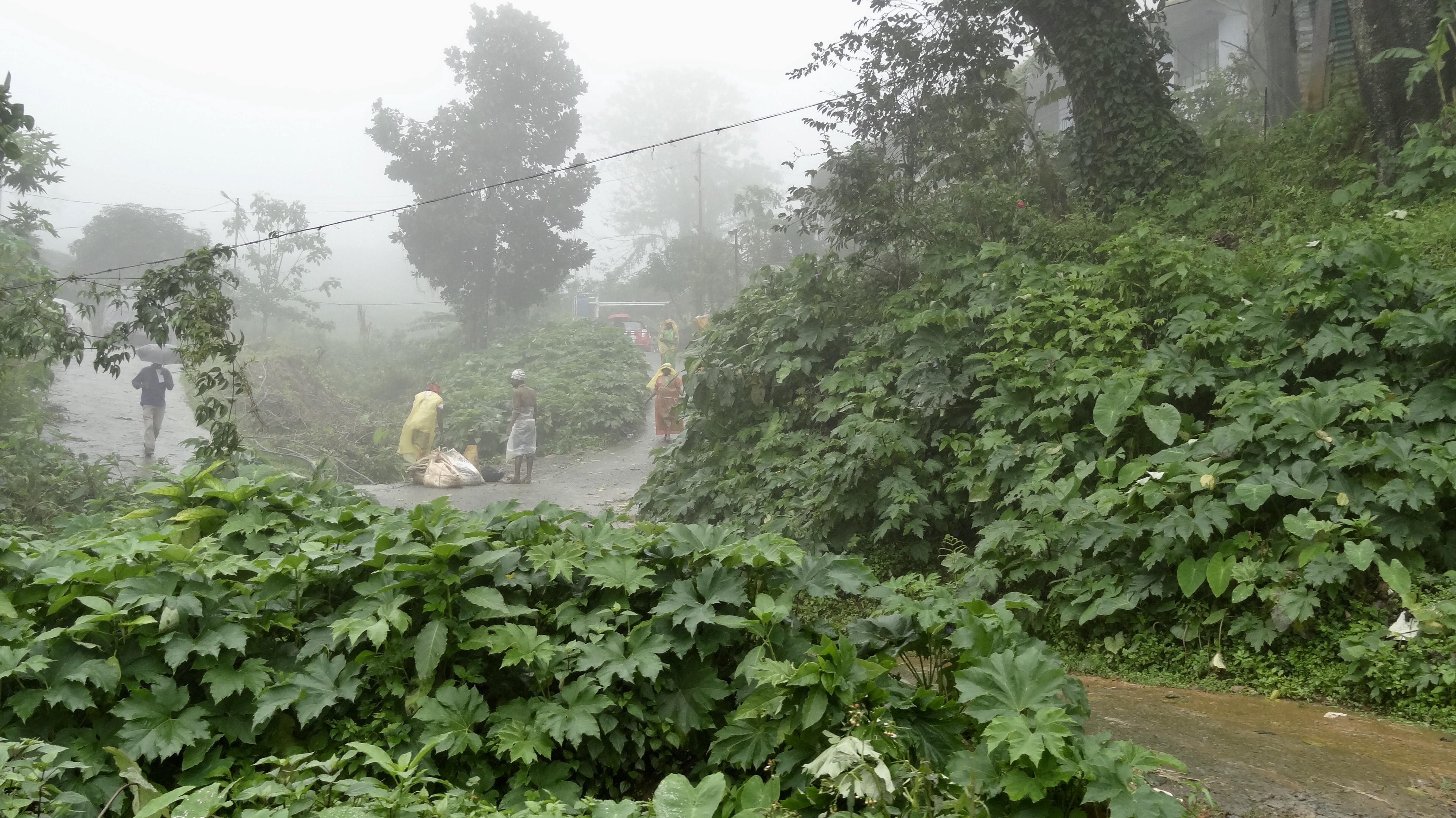
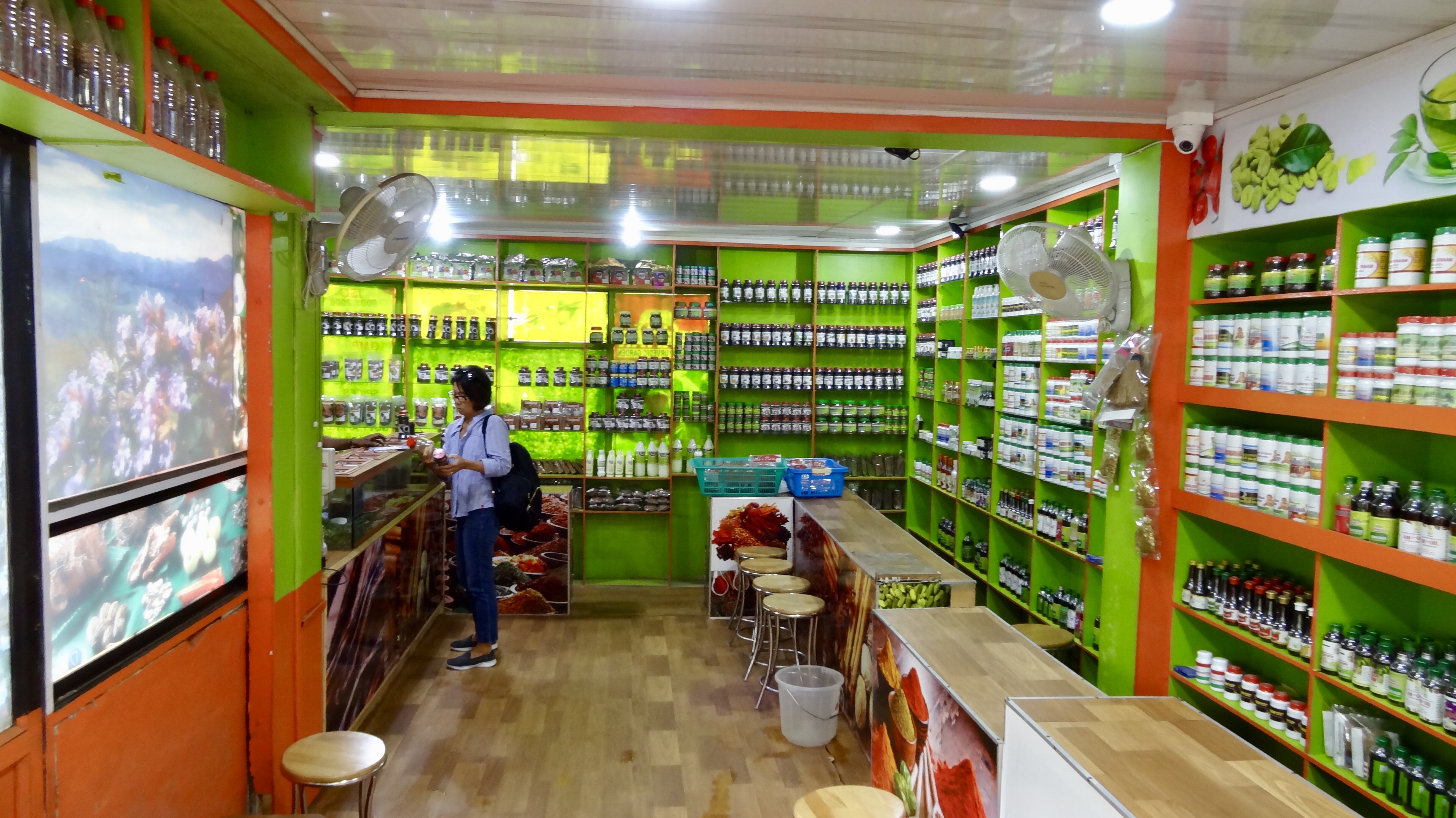
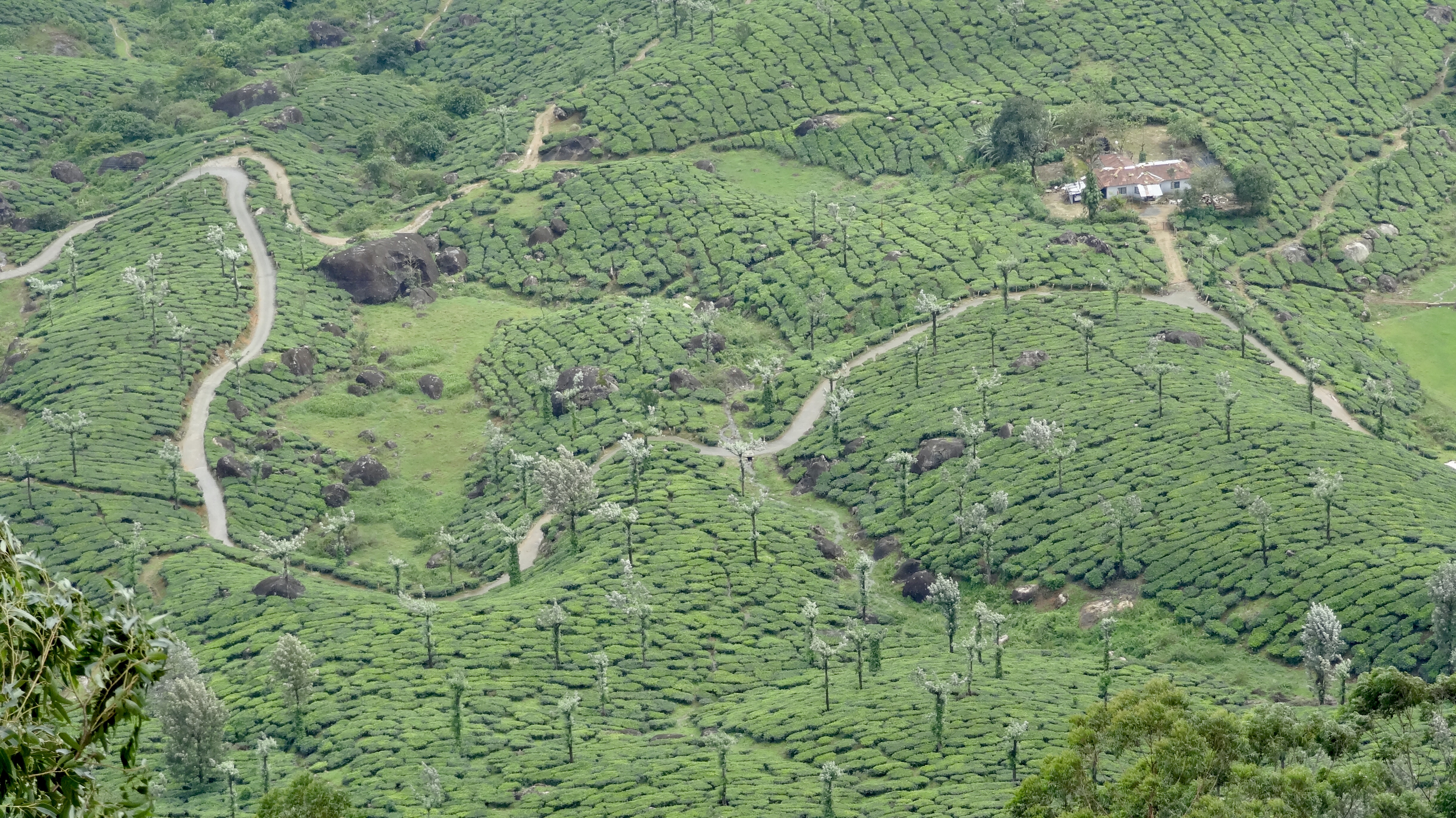
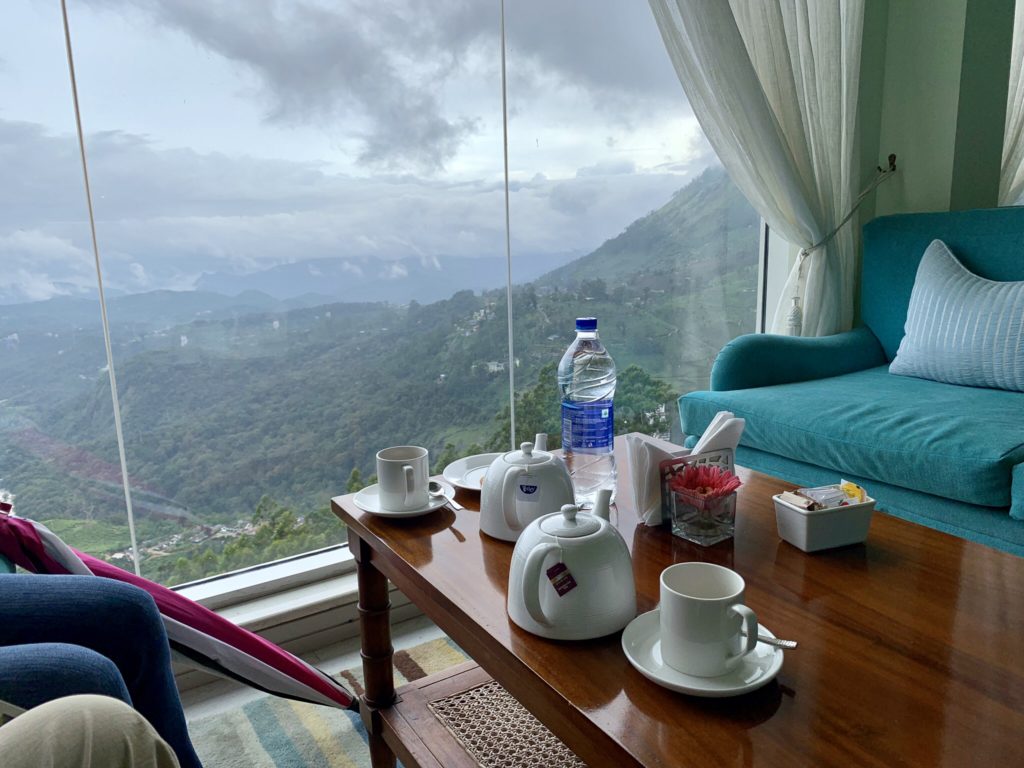
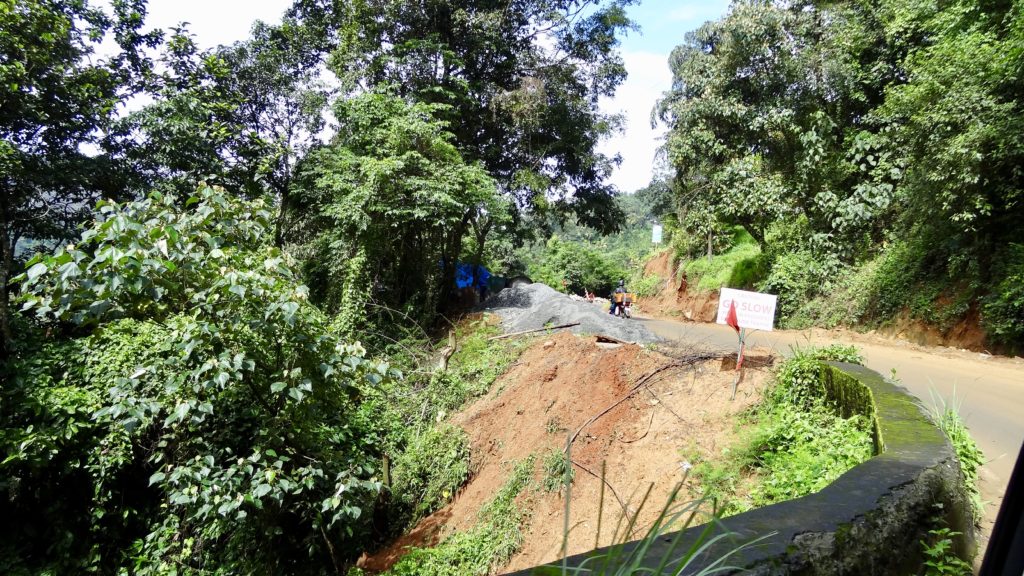
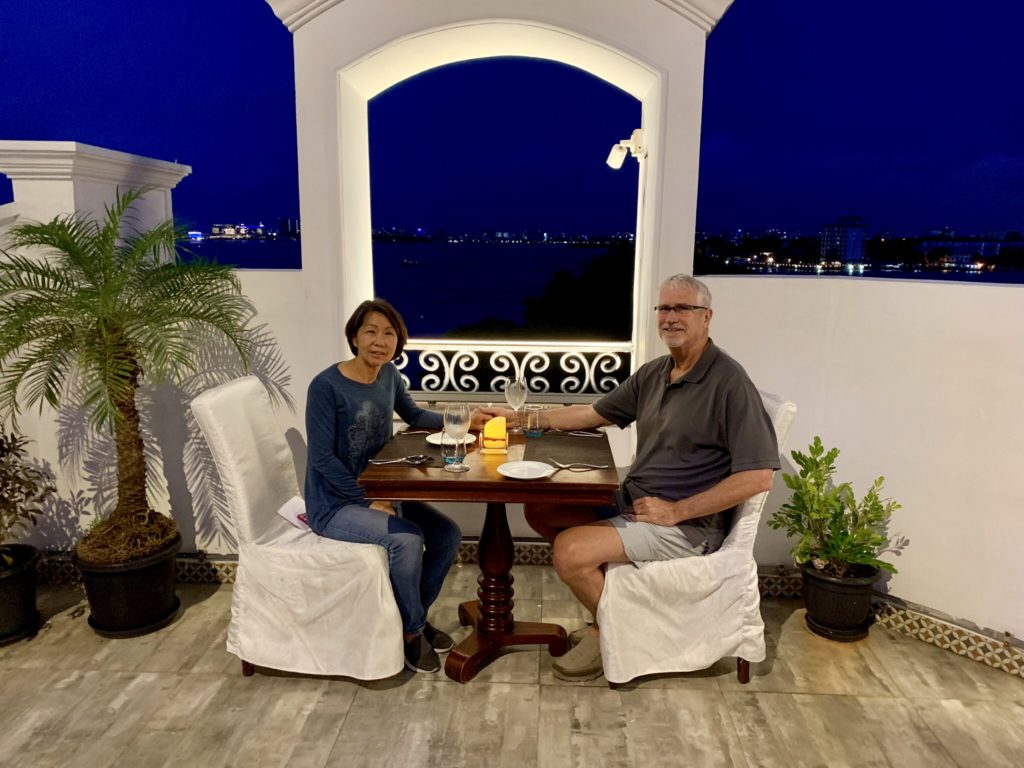
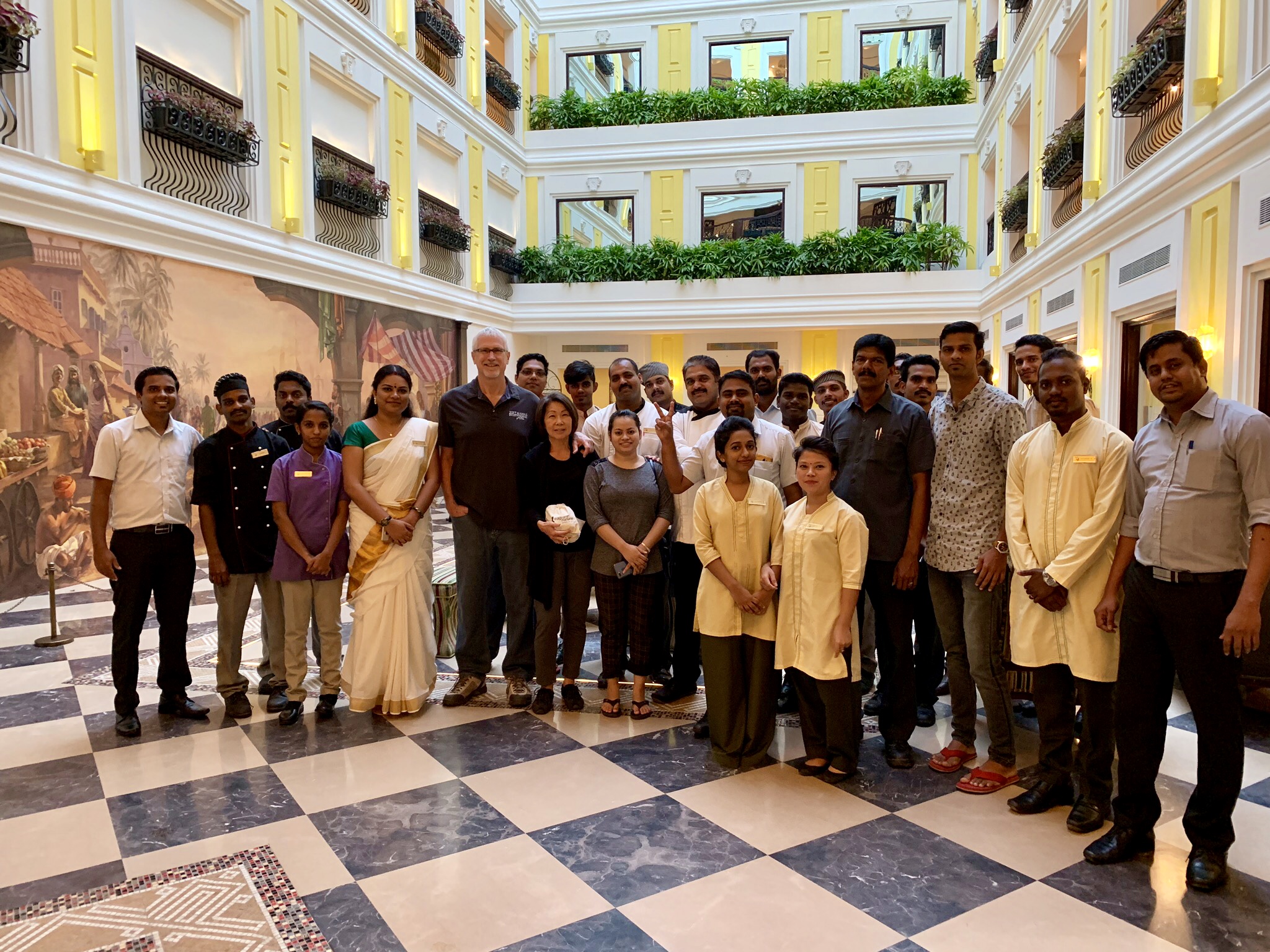
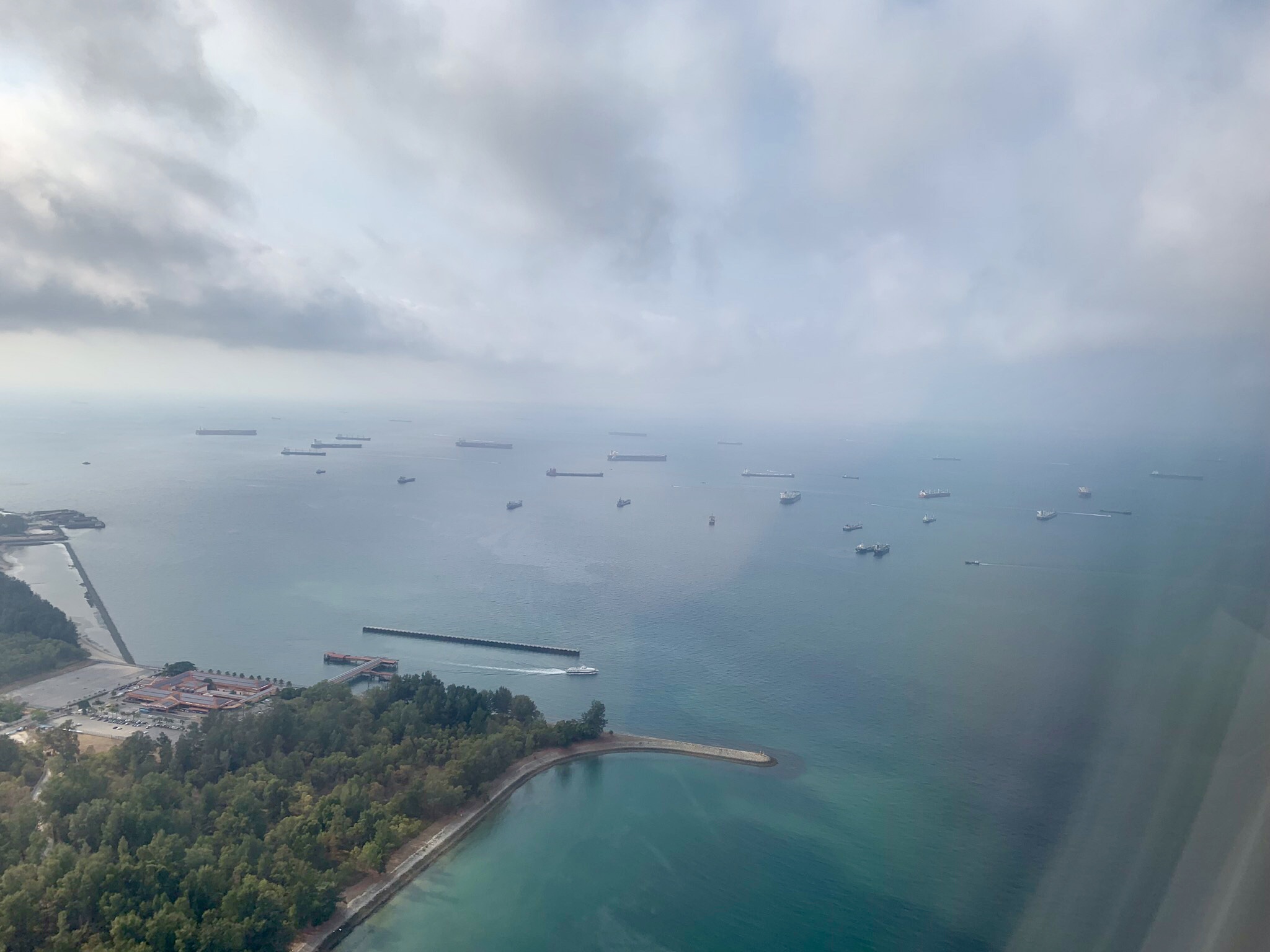
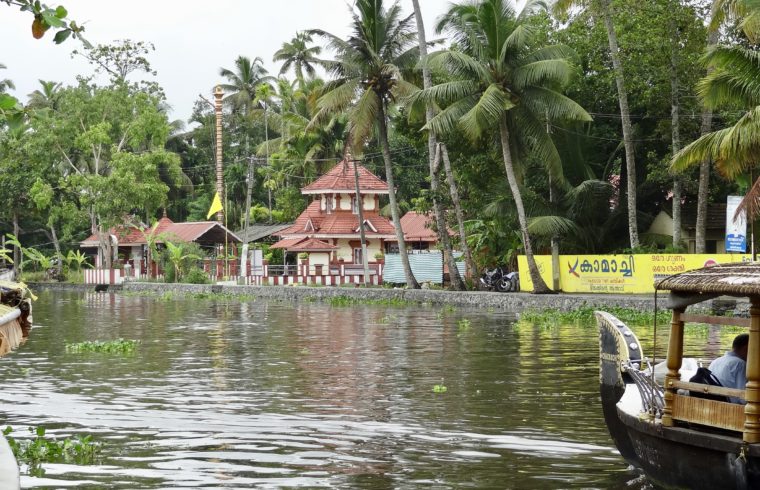
The Kerala backwaters run for over 150 miles, north and south, inland along Malabar’s Arabian Sea coast. It encompasses over 1,000 square miles of brackish lagoons and lakes, connected by, and to, over 1,000 miles of waterways, canals, and rivers.We hired a car and driver for the two and some hour drive from Kochi to Alappuzha, in the Alleppey district, where both locals and foreign tourists go to cruise the backwaters. Our winding way took us by ocean beaches and more Chinese fishing nets.In Alappuzha we caught one of the canal boats working the waterway that cuts through the town.It took us to the houseboat we rented for the day. We paid extra for a luxury one to get air conditioning. As the house boat headed out, we passed residents using waterways as roads (above and below). Kochi is no less part of the backwaters, but the water there is not used so domestically. Some stretches were quite suburban.After a bit, the waterway opened out onto Vembanad Lake, the longest lake in Kerala.Along the shores of both lake (above) and waterways (below) are vast green fields of rice.But some rice fields you couldn’t tell from lake, except they stand separate and the water is a little brownish. Low-lying fields flood during monsoon, and the previous week had seen almost continuous rain throughout Kerala.After puttering around lake and waterways for half the day, we stopped for lunch — the boat comes with a crew of three: grumpy captain, singing cook, and general boat wallah.There are only the two of us, so we left uneaten much more backwater fish, spicy chicken, and vegetarian buffet than we were served, all of it surprisingly good. Credit the singing cook. I don’t know exactly what we expected of the backwaters, but we found domesticity in even relatively isolated stretches, like a rice farmer’s wife doing laundry, above, and a well-dressed family waiting for the boat to be brought around (below). Everywhere we sailed, there were houseboats and day boats, and this is the quiet season. There are a couple of thousand houseboats on the water. This time of year they are almost all rented by local families out for a day or two. Though we’d had a week of almost solid rain, and it was still completely overcast, the day had been dry. But as we headed back toward town at the end of our day, the wind picked up and rain started coming down in monsoonal bucketfuls.Rattan deck chairs blew around while the happy chef tried to keep the horizontal rain from, what, getting the boat wet? Rightfully, the captain was left out in the weather to tend to his captaining — his grumpy karma coming full circle, perhaps. We retreated inside and were snug and dry.By the time we made it into the more congested channels, the hard rain had stopped, and dragon boat crews were out practicing for the upcoming weekend’s big annual championship race. Kind of like Italy’s Siena horse race, the Paleo, competition between the neighborhood teams is fierce. We were going to try to come back for the races, but it was postponed for a month out of respect for the many who lost their lives during the past week’s flooding in northern Kerala. A week later, we took a couple of days and went inland, into the Western Ghats mountain range.We headed out from Fort Kochi under a steady rain. As we left the lowlands, the rain lessened, though it was obvious it had been here. Once out of the towns surrounding Kochi, we stopped at a roadside tea tent. A troop of bonnet macaque monkeys wanted more than tea. They’re like a rhesus macaque, but with hair like Alfalfa’s, from Spanky and the Gang (below). And just as troublesome. The trip to Munnar hill station is only about 80 miles. But there’s only one twisty-windy road, tortured by monsoons and landslides (below). And last year’s monsoon was a doozy. So lots of pot holes, narrow bits, wash-outs, and one-lane construction zones make for slow going. It took five hours to get there. Let’s see, that’s 16 miles per hour on average. At least one of us didn’t care much for the ride. As we moved through clouds and rain, we passed waterfall,…after waterfall,…after waterfall. All the rivers in a mad rush to get to the backwaters.When we finally arrived at the Fragrant Nature’s sister property in Munnar, the hotel was in a dense cloud bank. The staff said give it 15 minutes, and sure enough, the view from the mountain-side lodge opened up to show valleys and peaks. And clouds, of course (above and below).During the day, clouds would roll in and envelope both tea fields and pickers (above and below).We sought out a government-approved shop and bought tea and masala tea blends to take back as omiyage for our new friends in Kochi.We love the manicured green of tea farms. The fields and cool weather here in the Idukku district remind us so much of Darjeeling.And like in Darjeeling, we sat and enjoyed both teas and views. Here we are having both Munnar and Darjeeling teas. Darjeeling remains my favorite, still.Our drive back the next day was under blue skies. But the road was still the same. As we left the slow, loopy, jarring mountain roads behind, we were actually happy to be on the slow, loopy, jarring roads of the low-lying towns. And then we were back “home” with one more week before we leave India for Vietnam. On our last evening, there was no rain, so the hotel set up our favorite table and treated us to our favorite red snapper dinner.The next day, all of the staff turned out to wish us farewell. With the hotel being at its very slowest during the monsoon season, I think we provided some little entertainment for them. They all knew what we did each day, what we ate, how we felt about something. What we told one, all knew. We were like their own little reality show slash soap opera. In truth, though, after more than three weeks with them, they really did feel like family.Then we were gone. Overnight to Singapore, ships in its harbor above, and on to Da Nang.