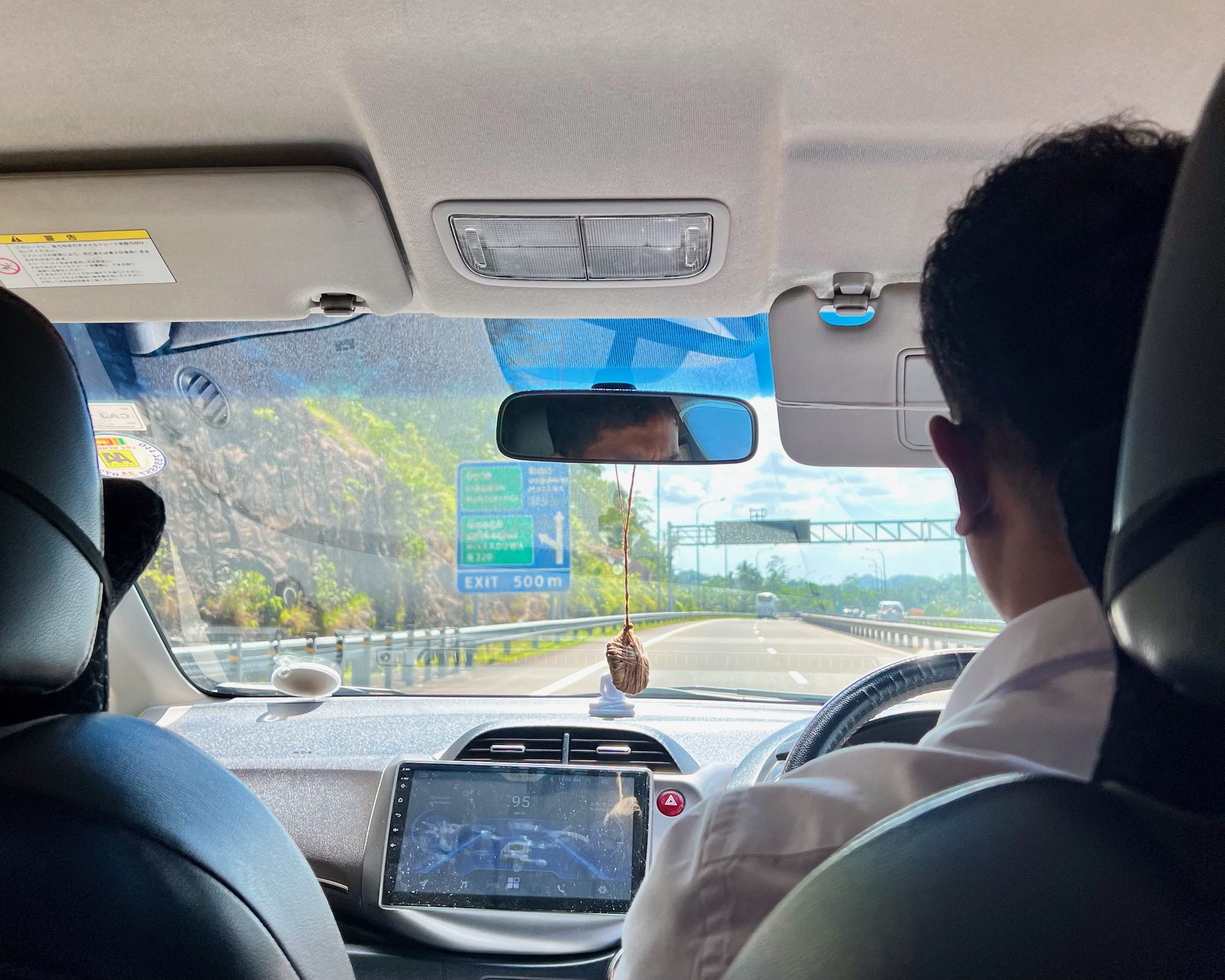
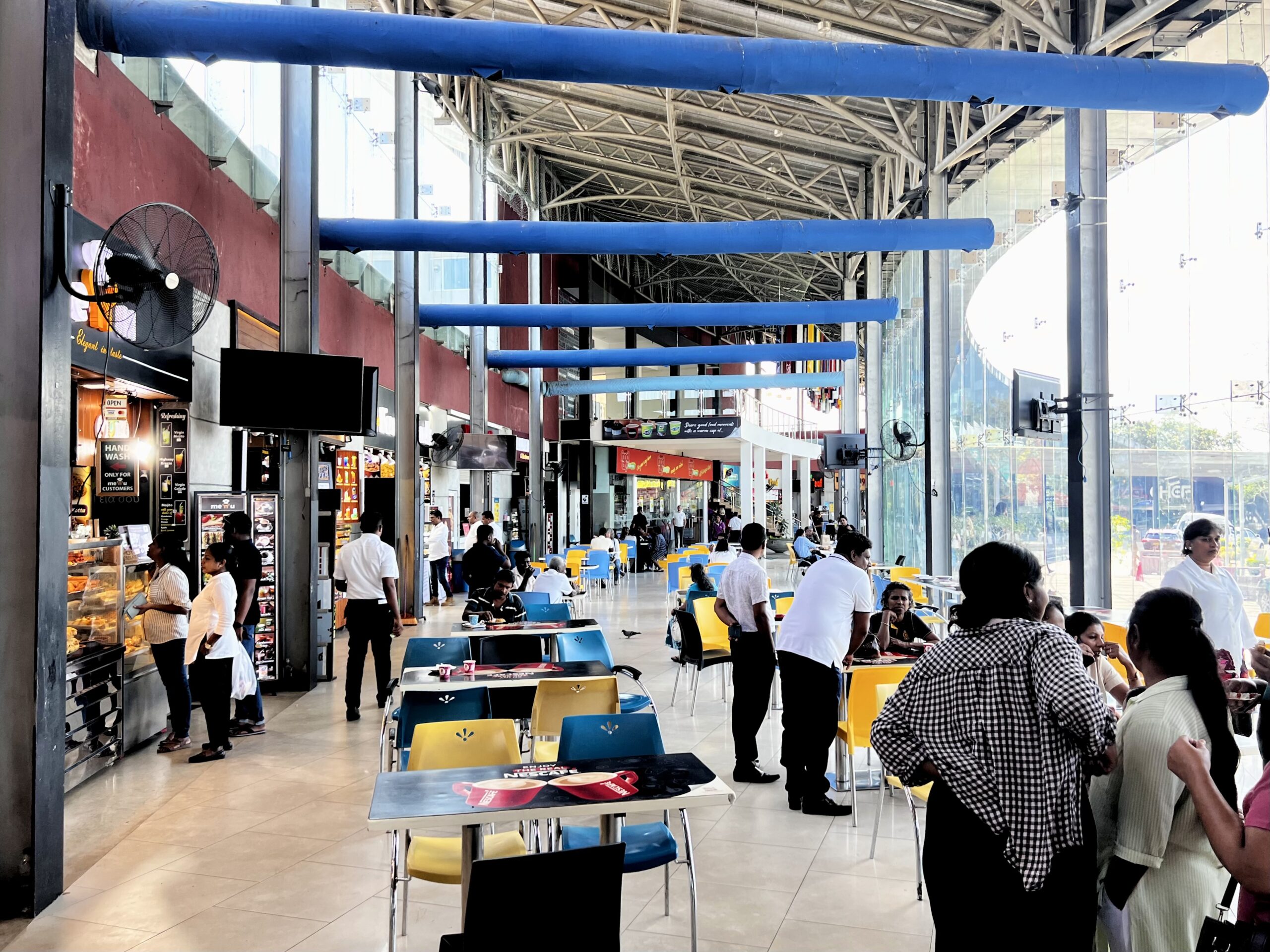
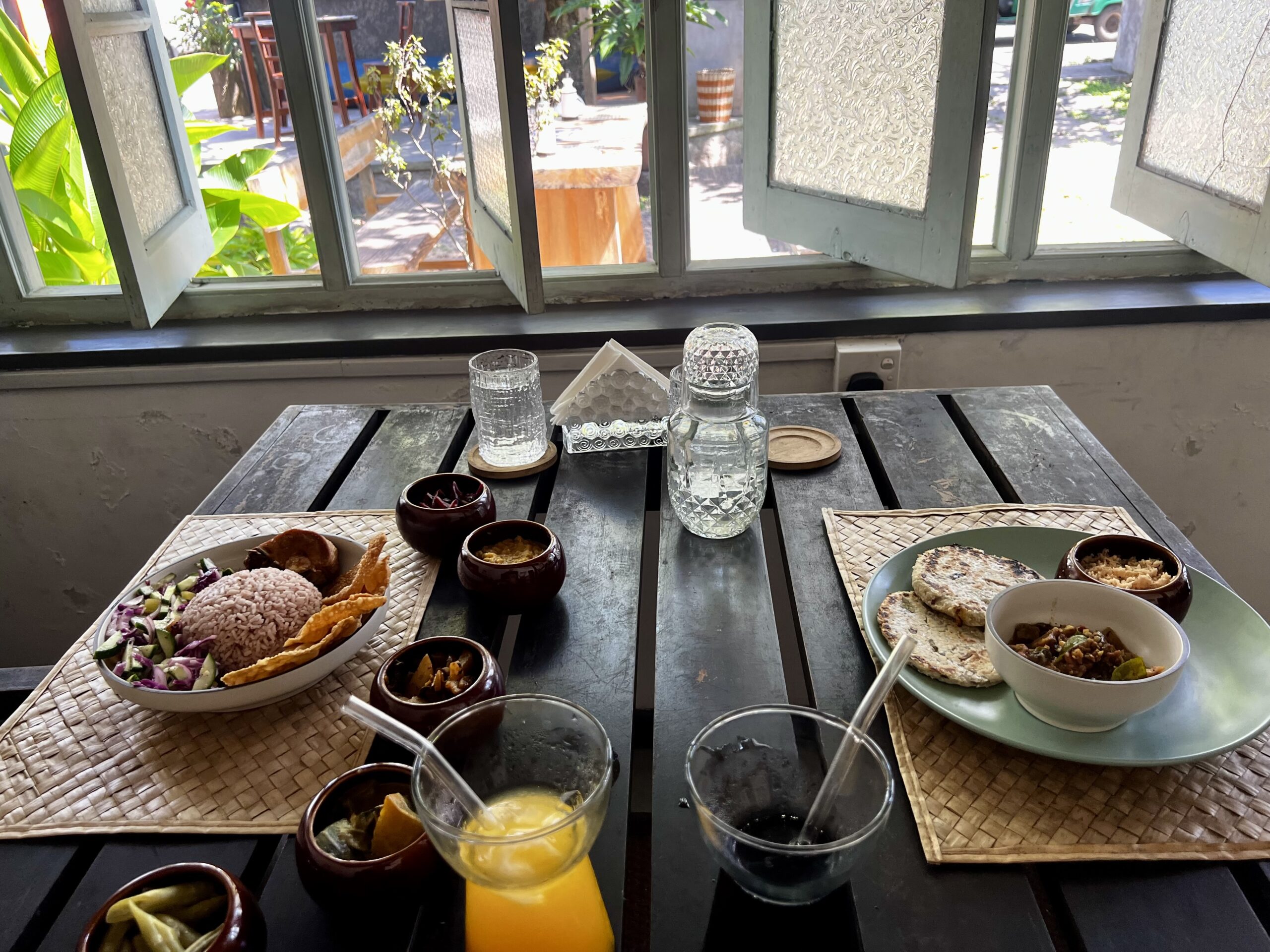
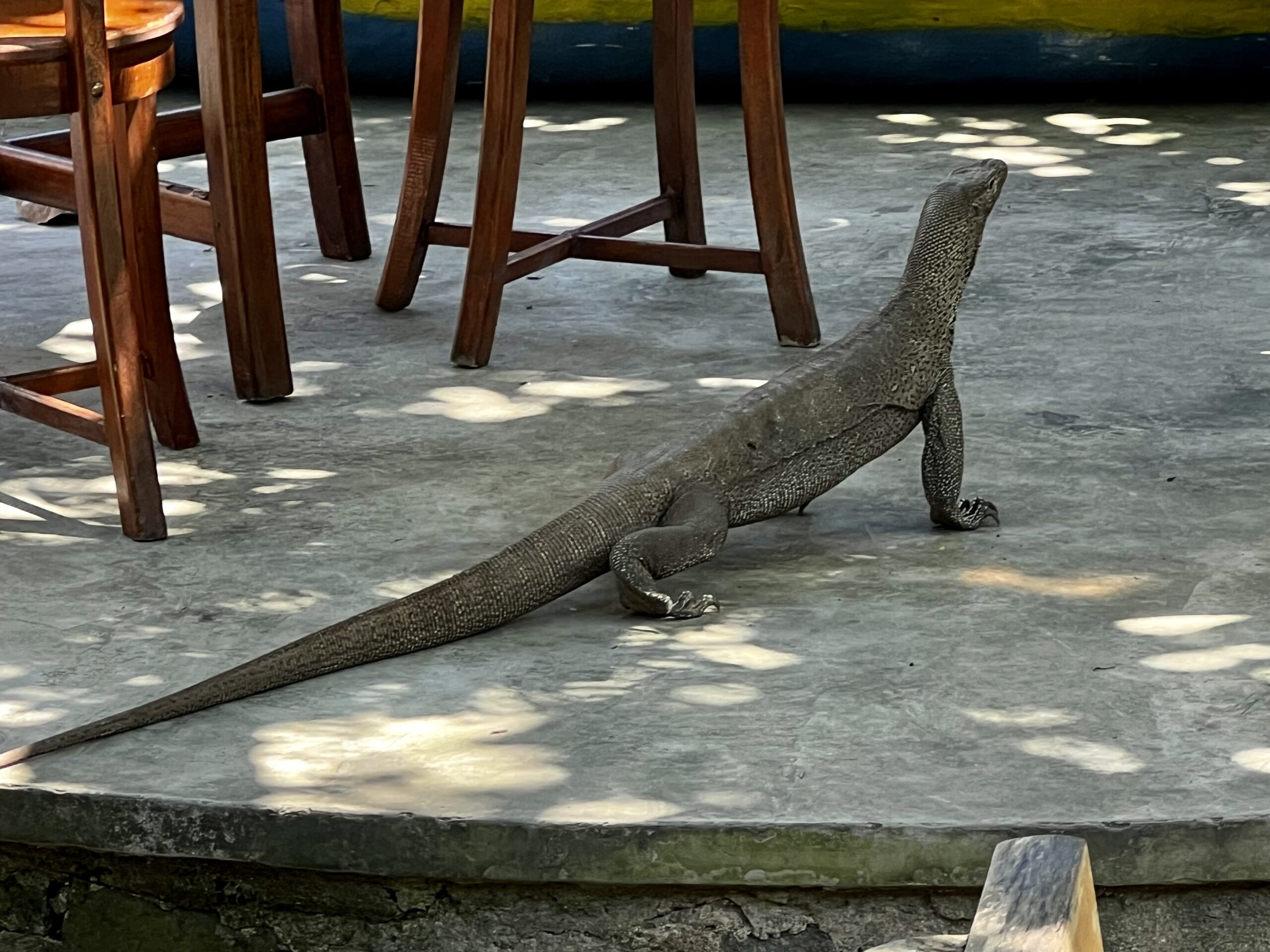
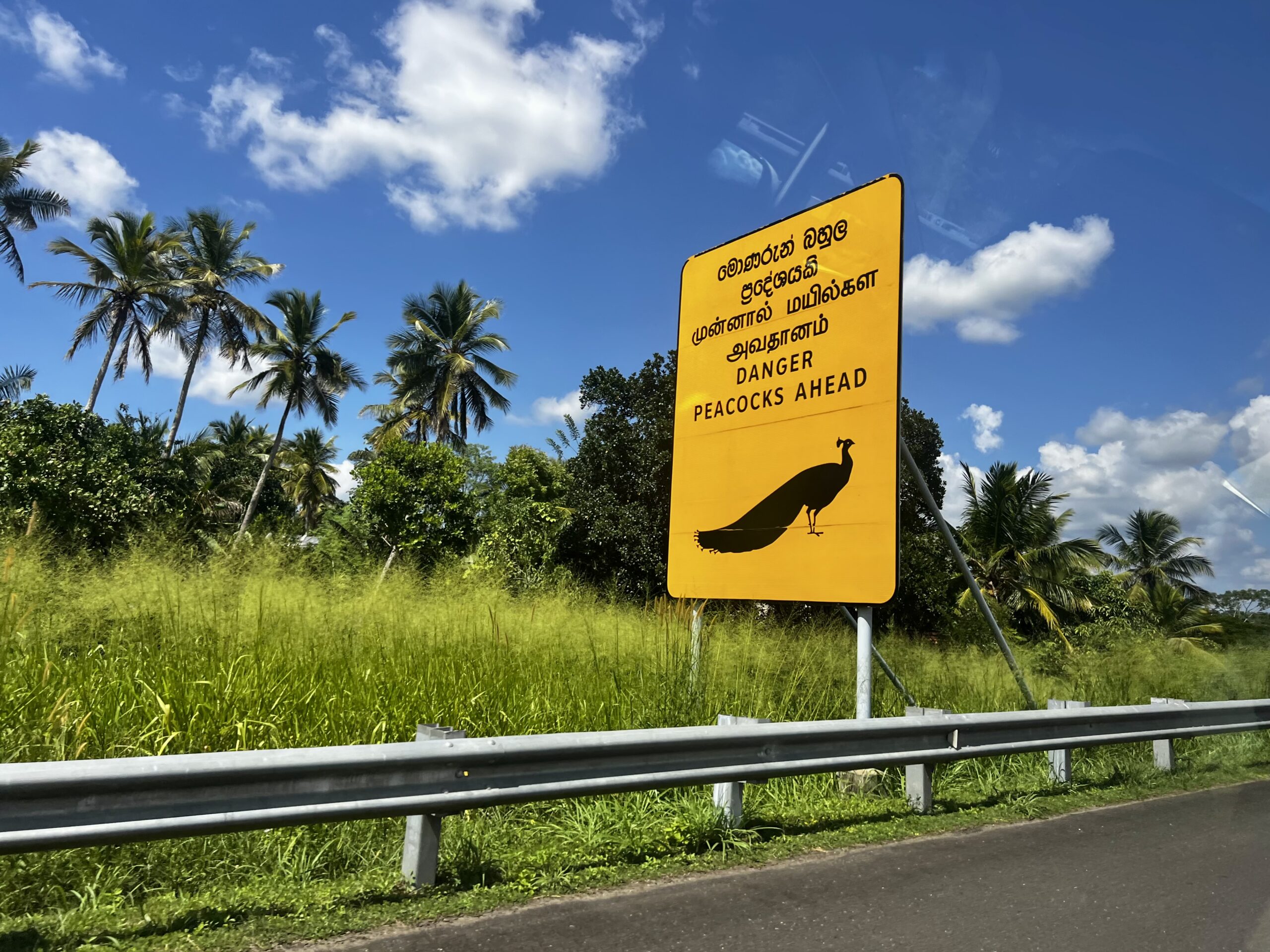
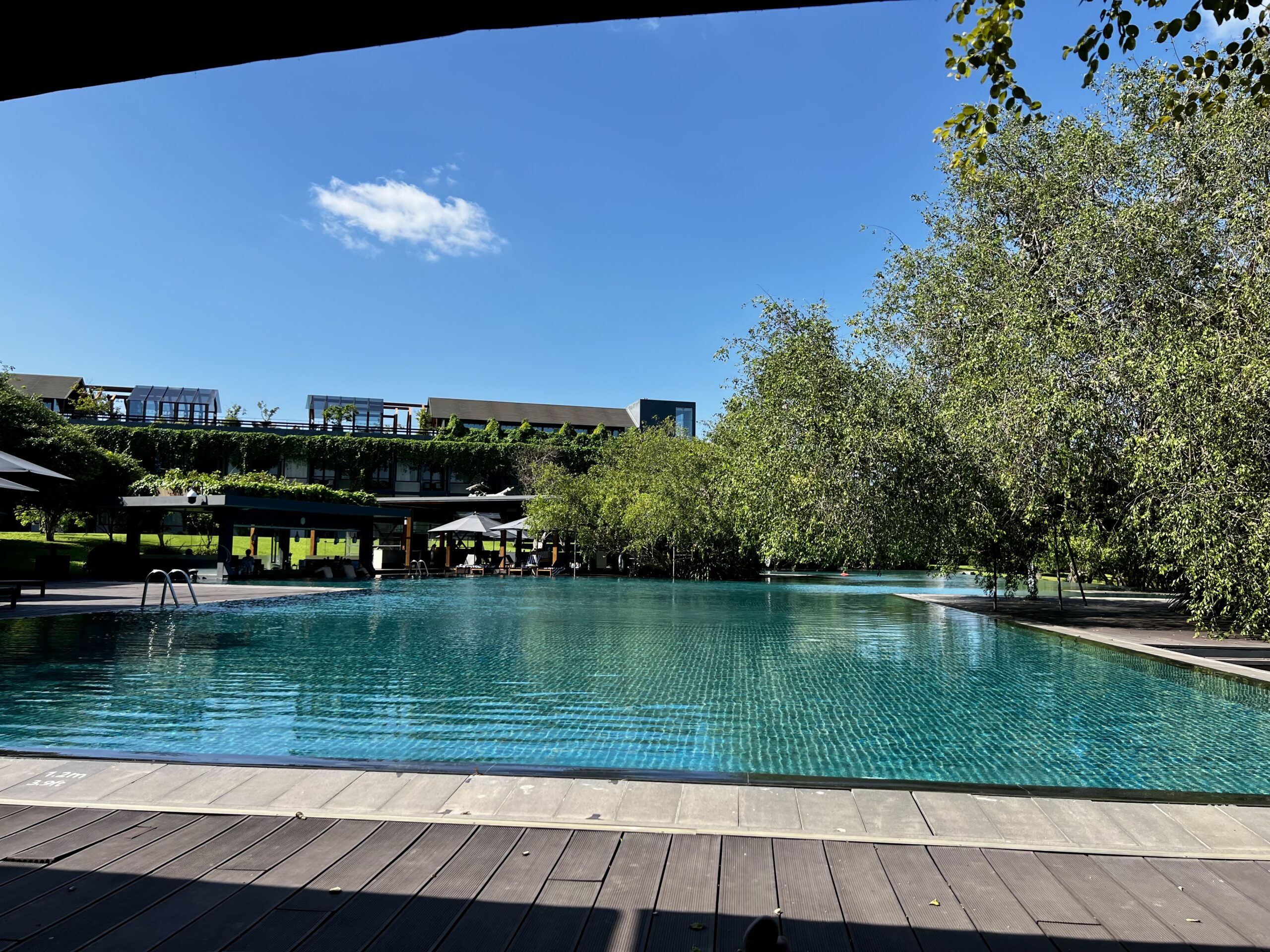
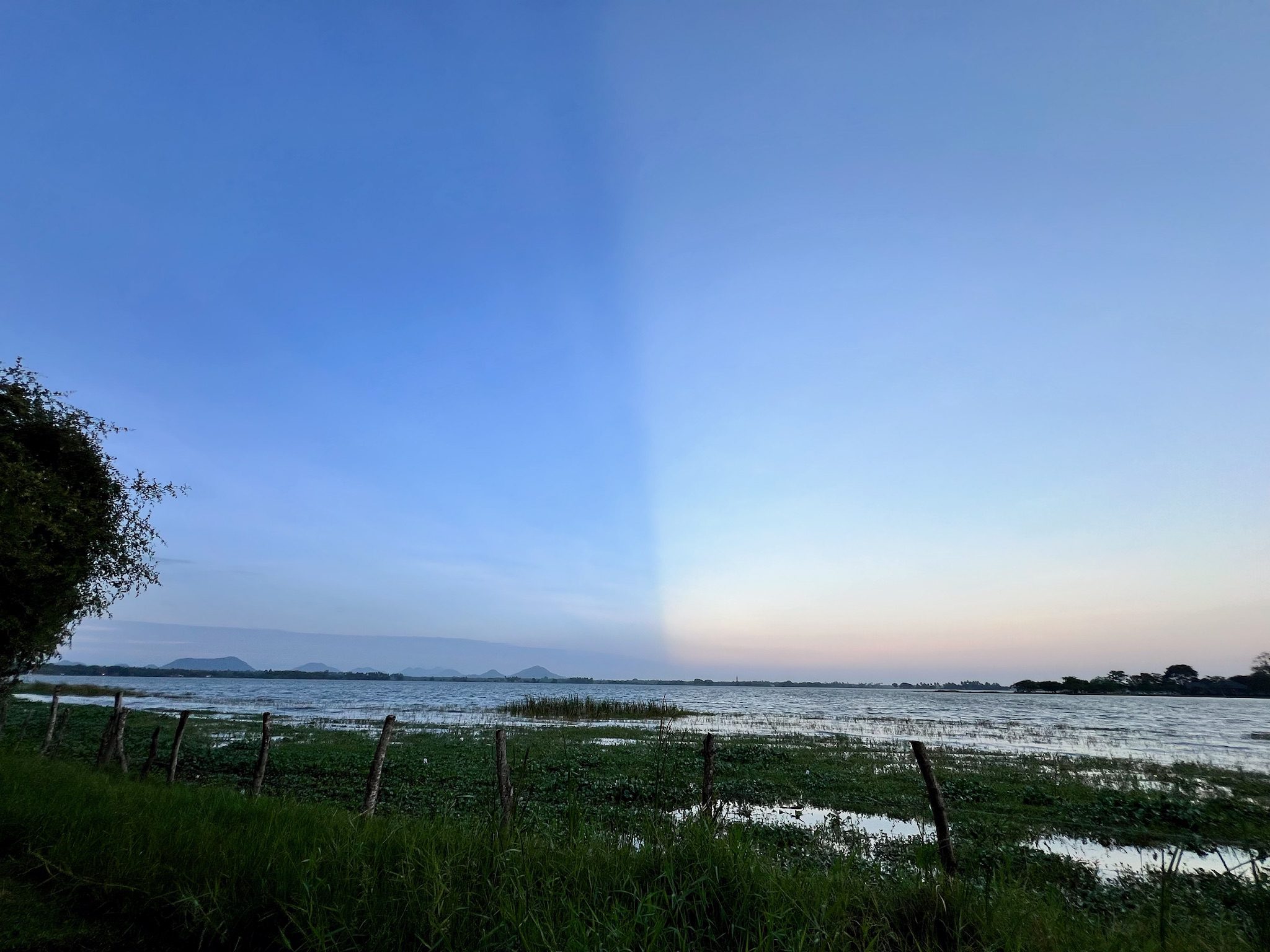
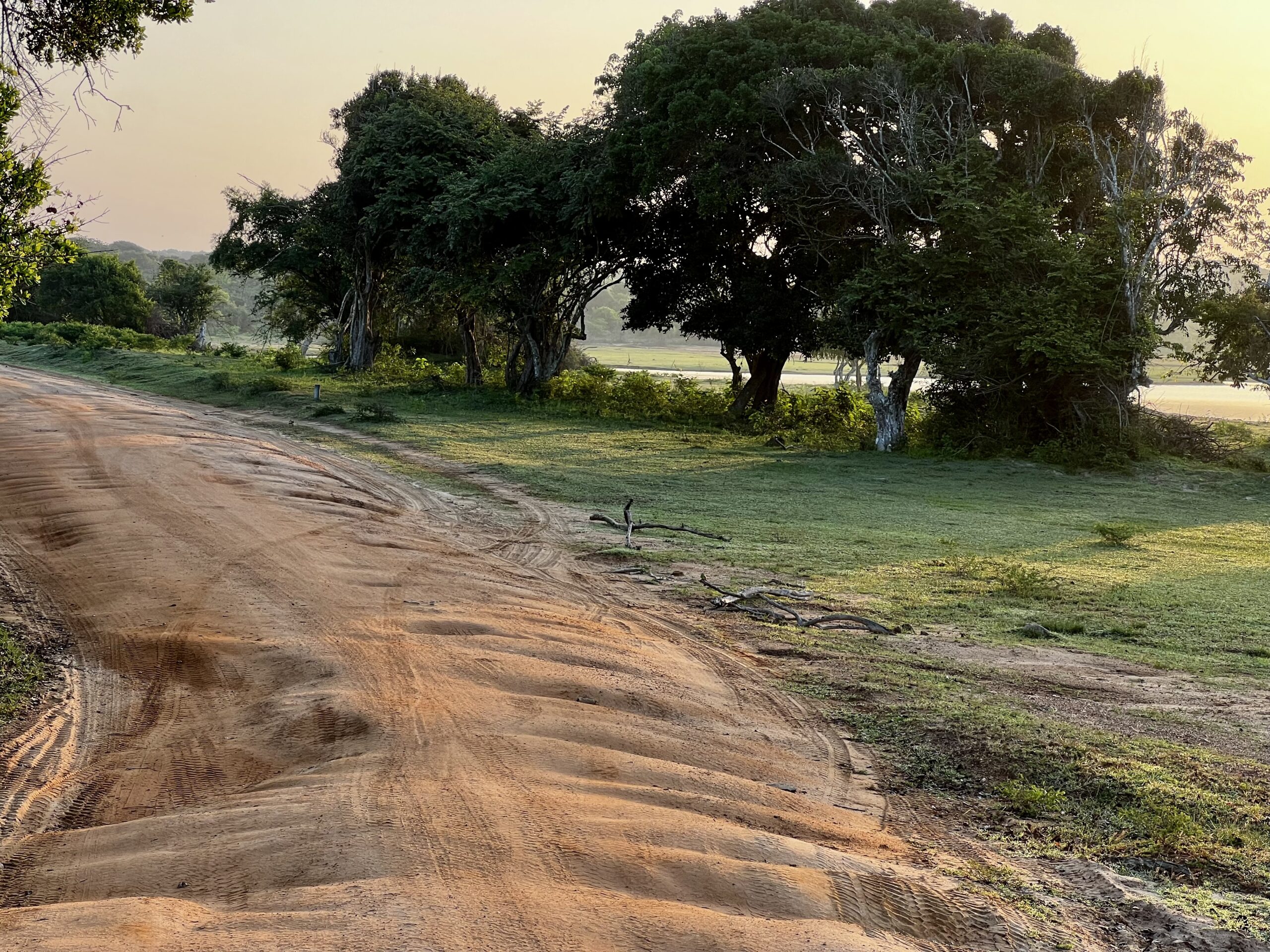
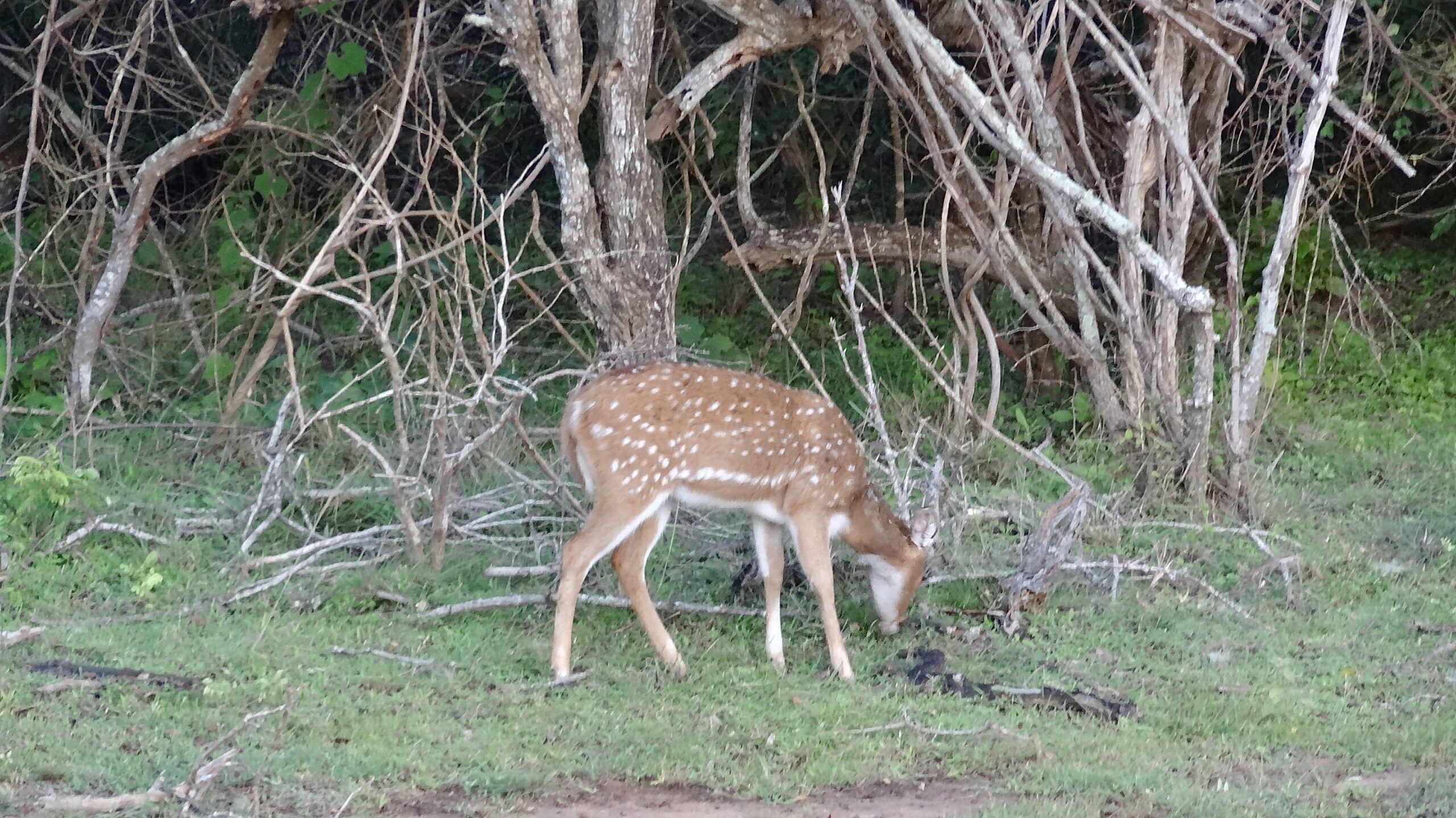
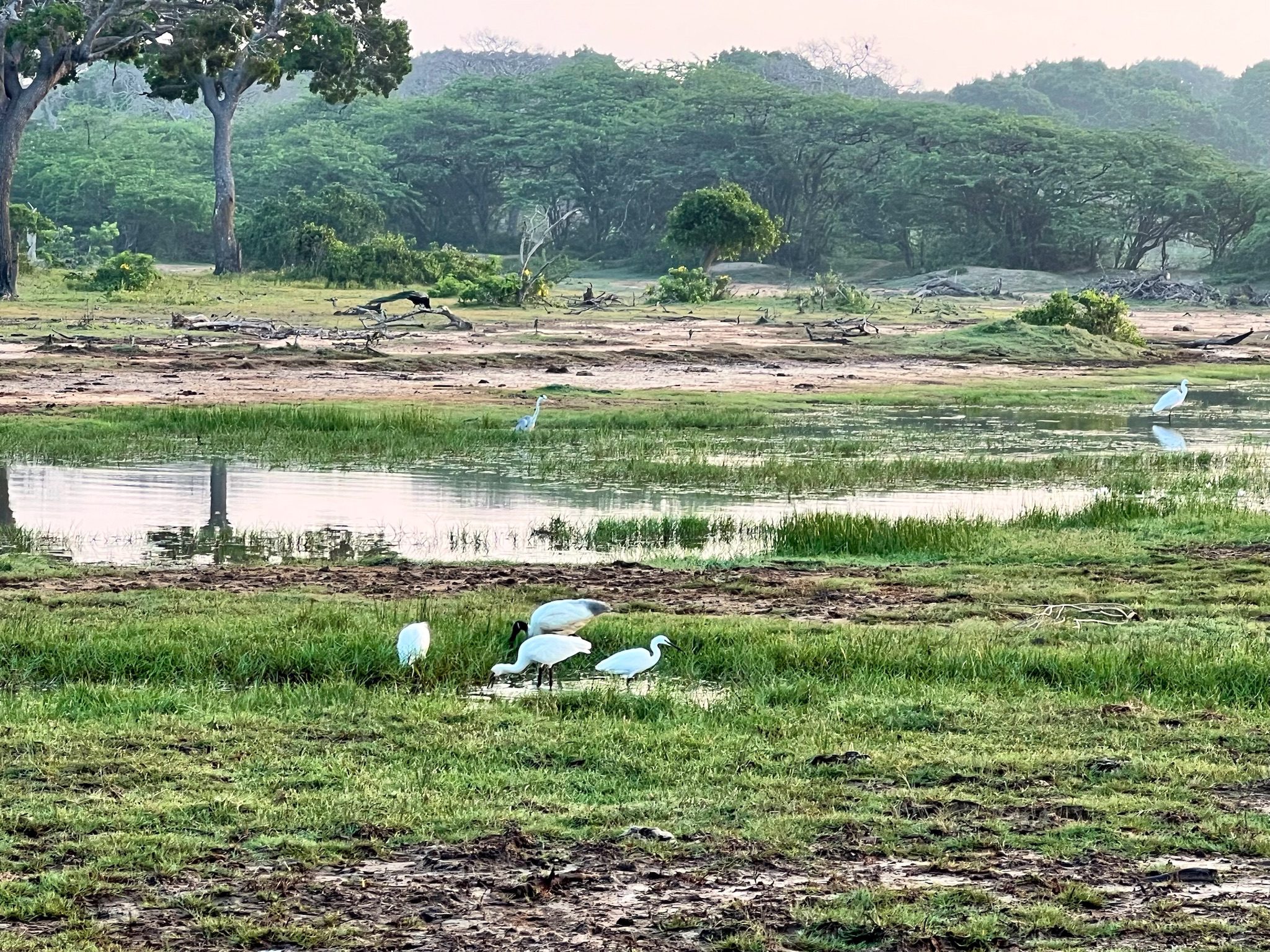
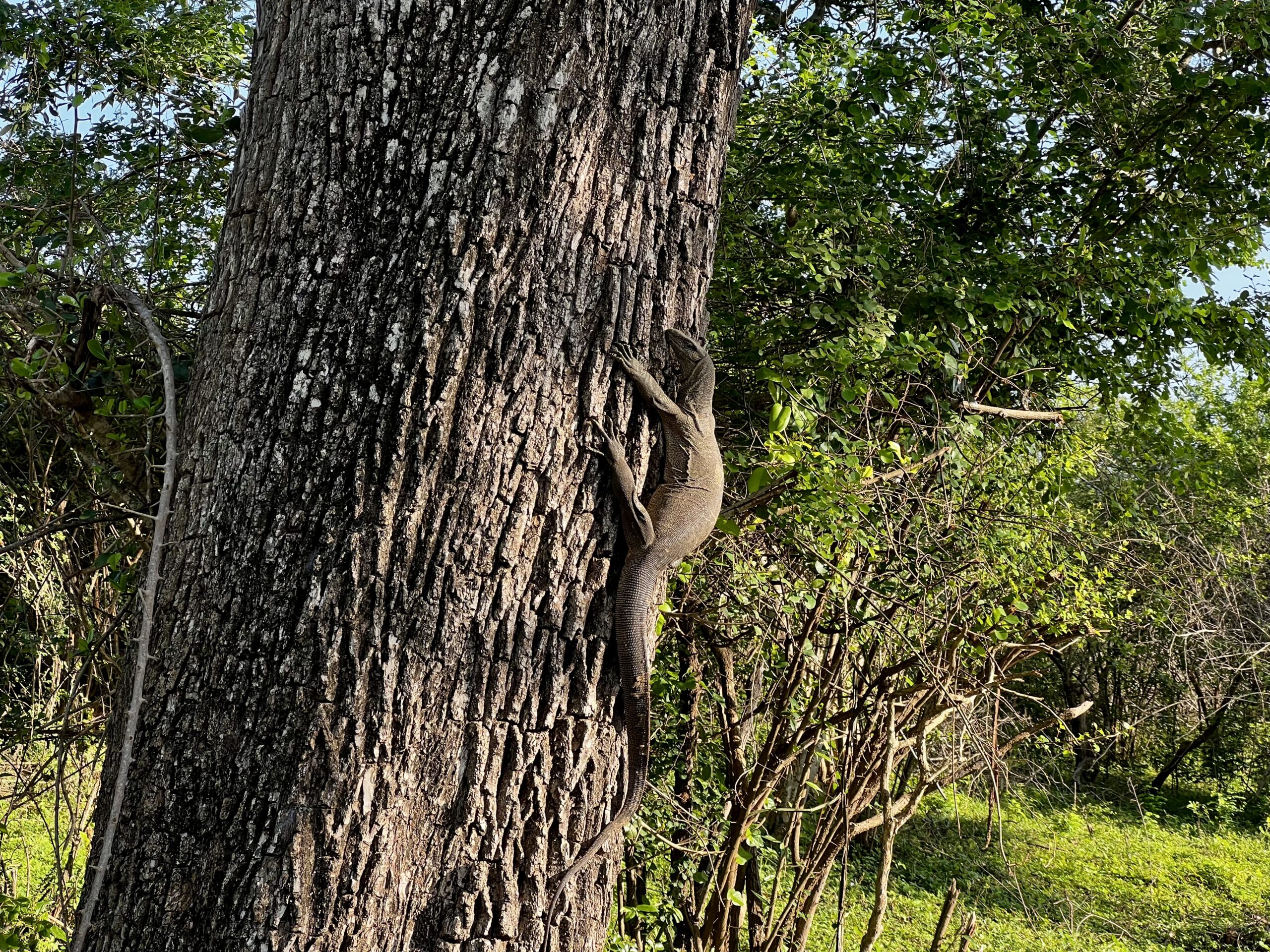
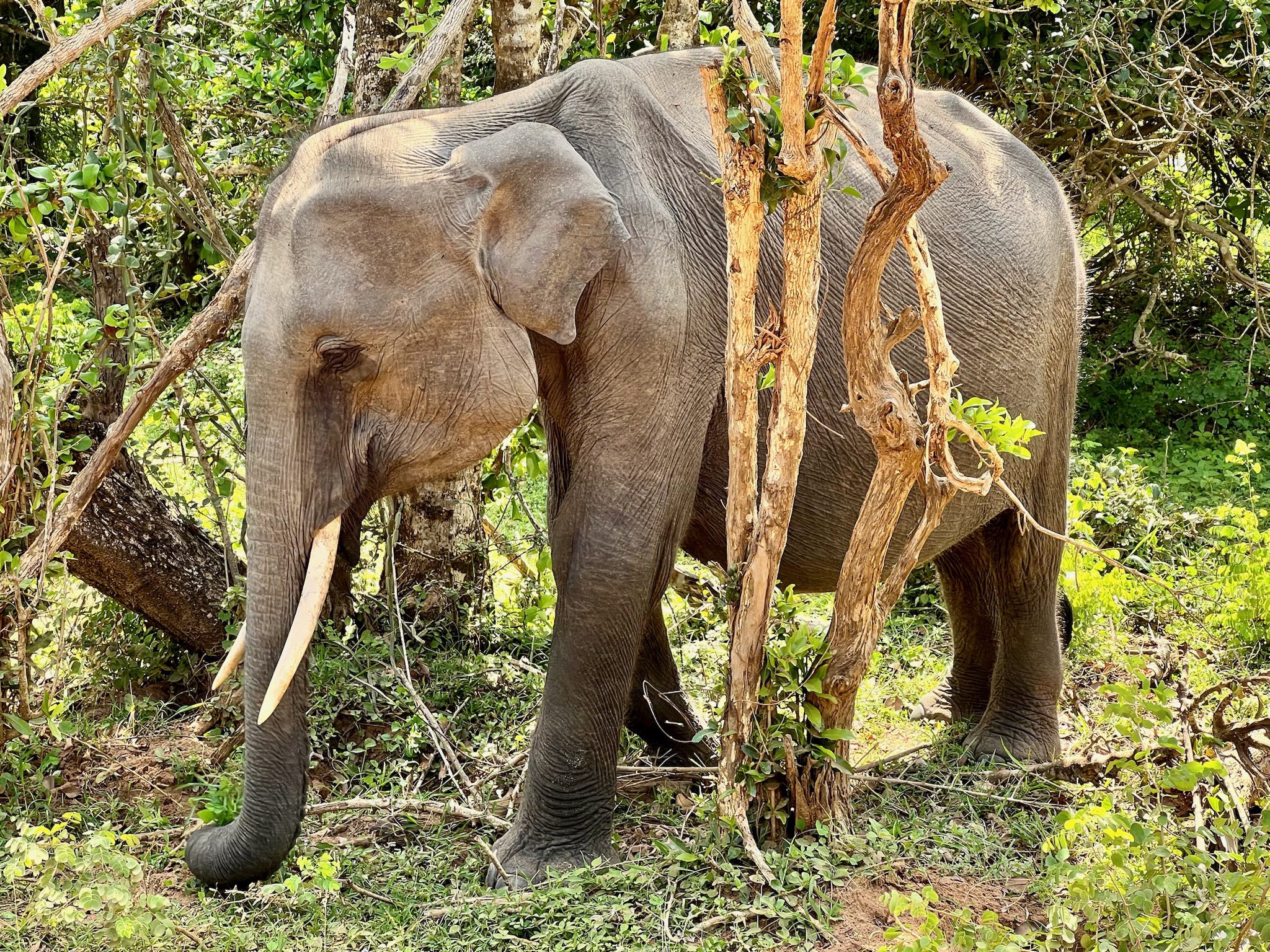
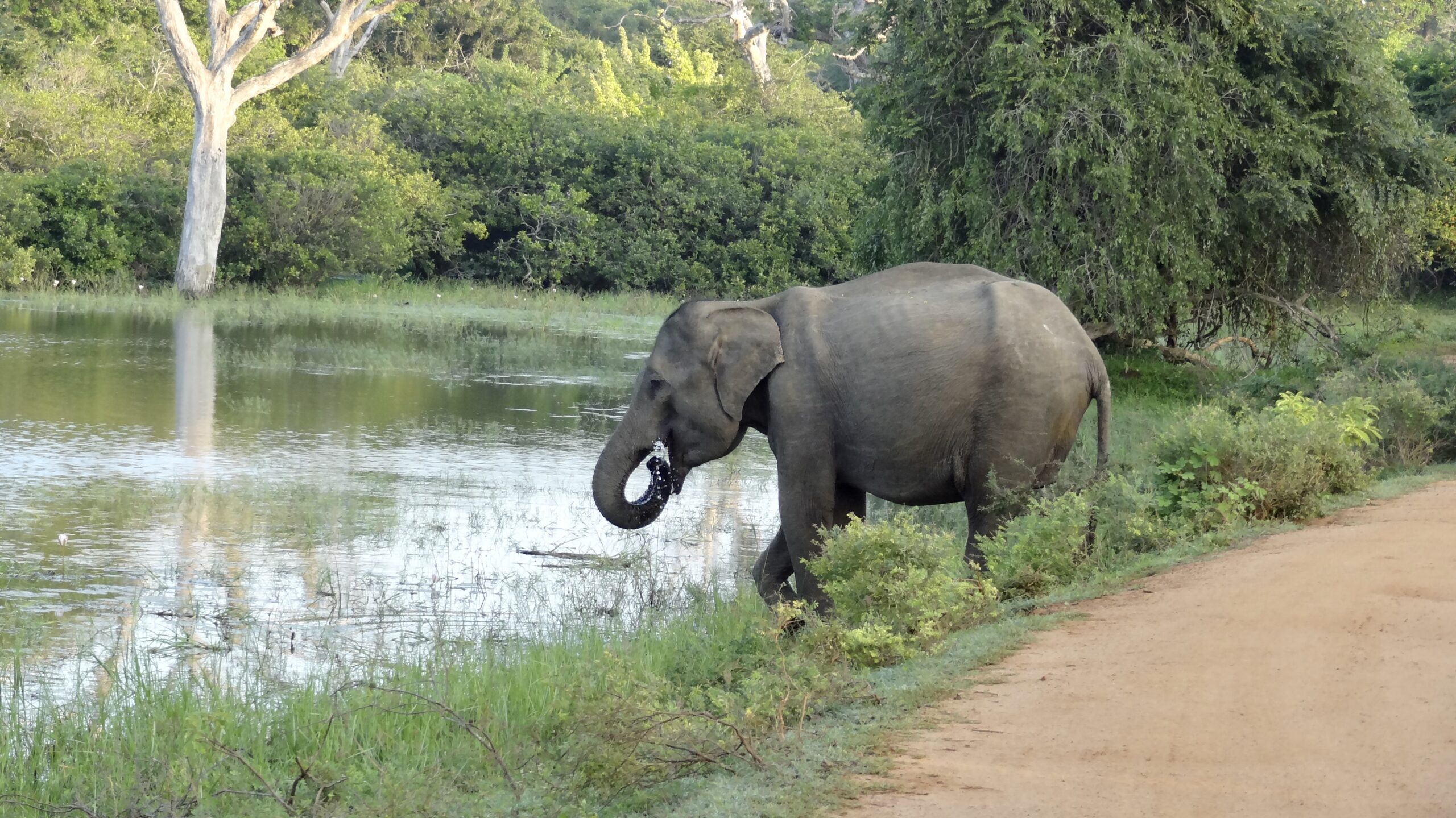
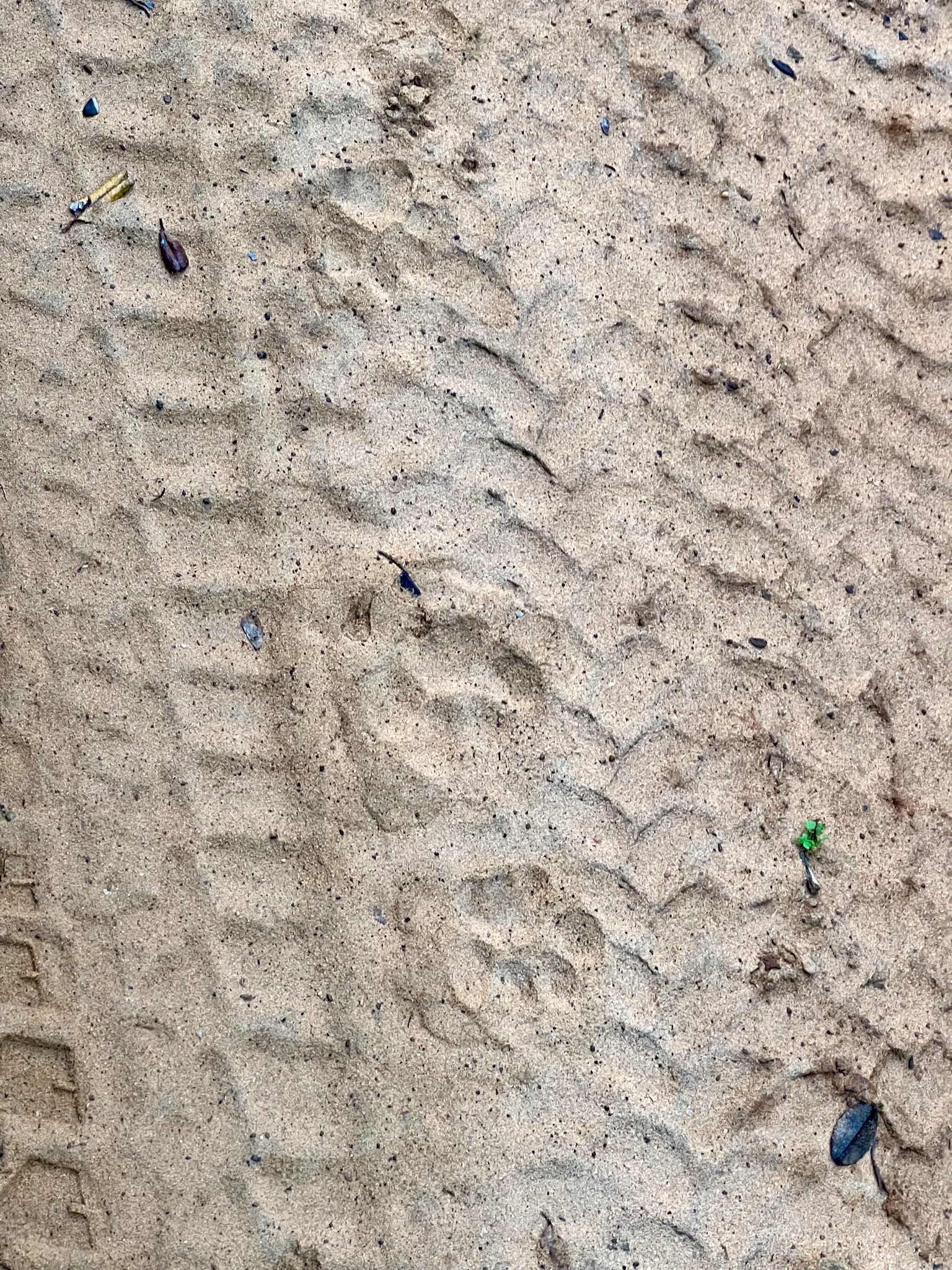
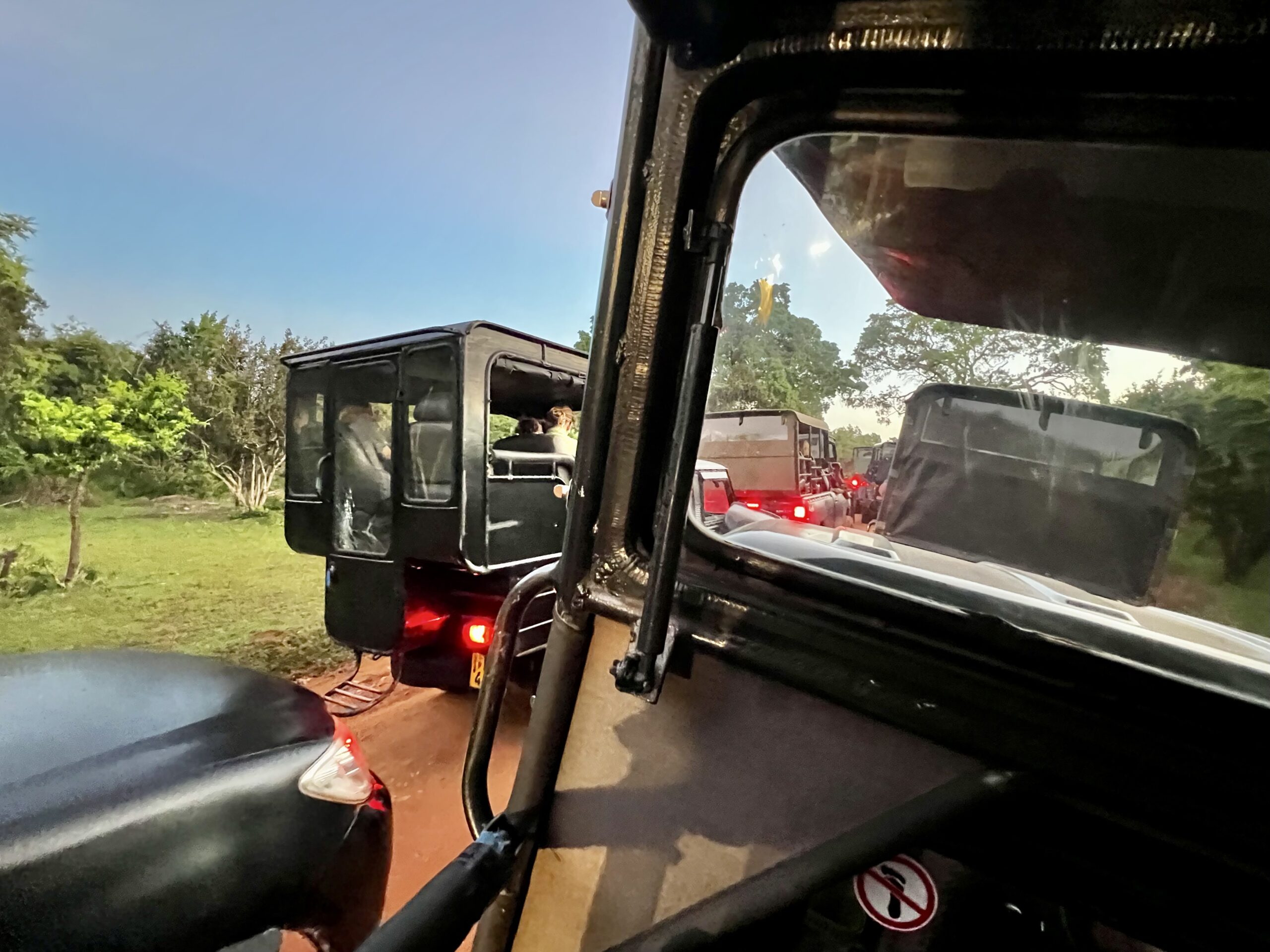
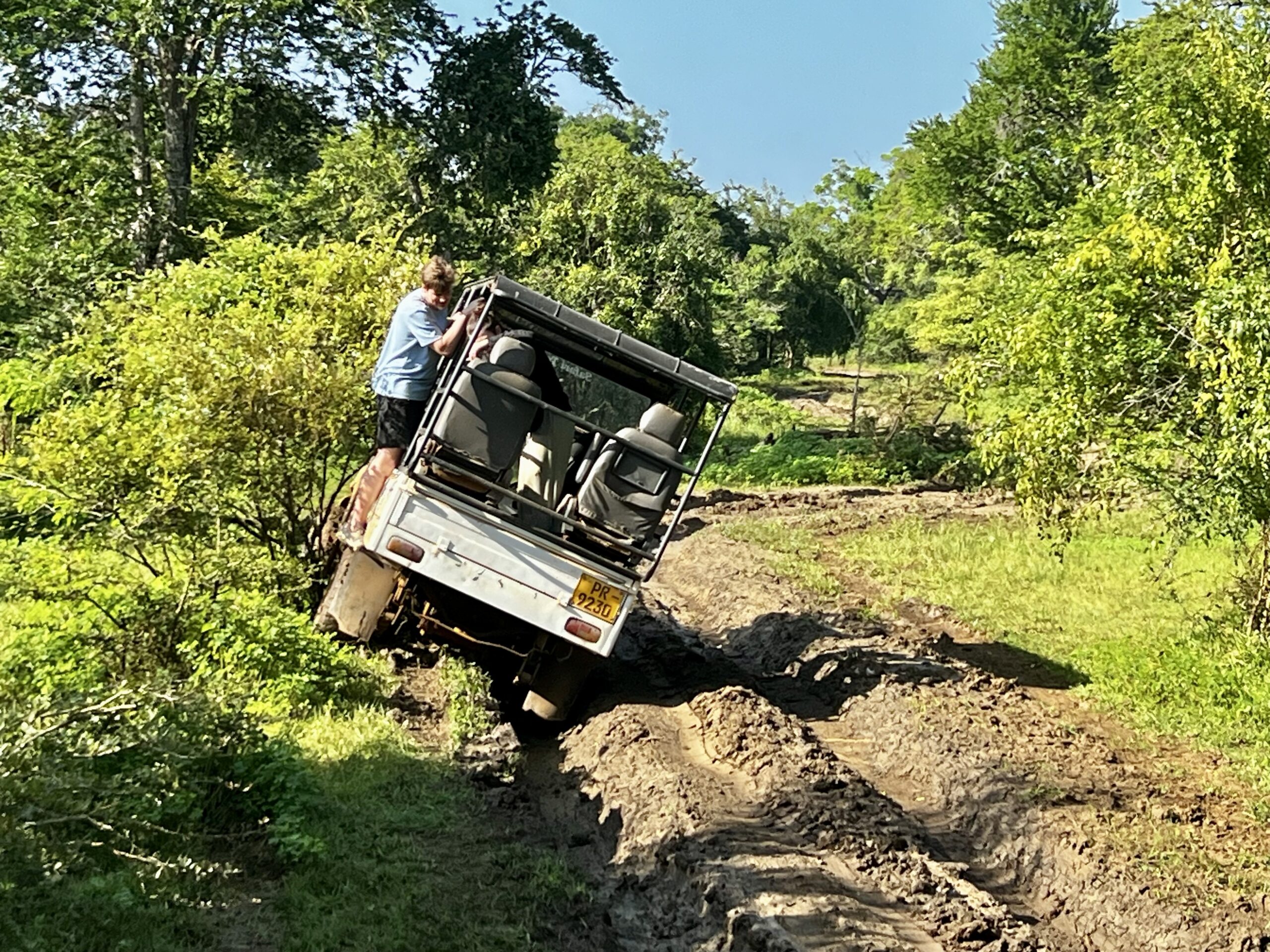
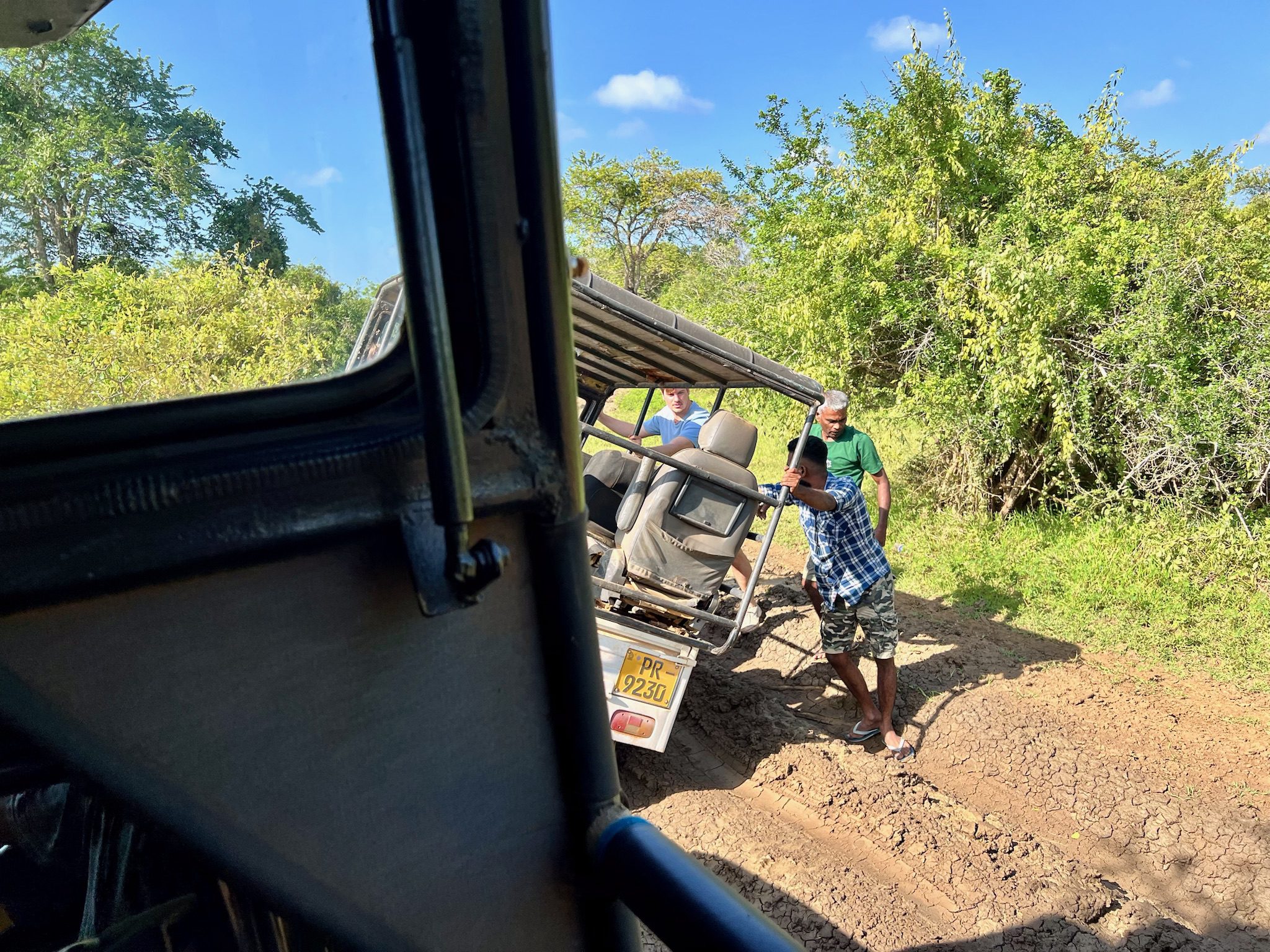
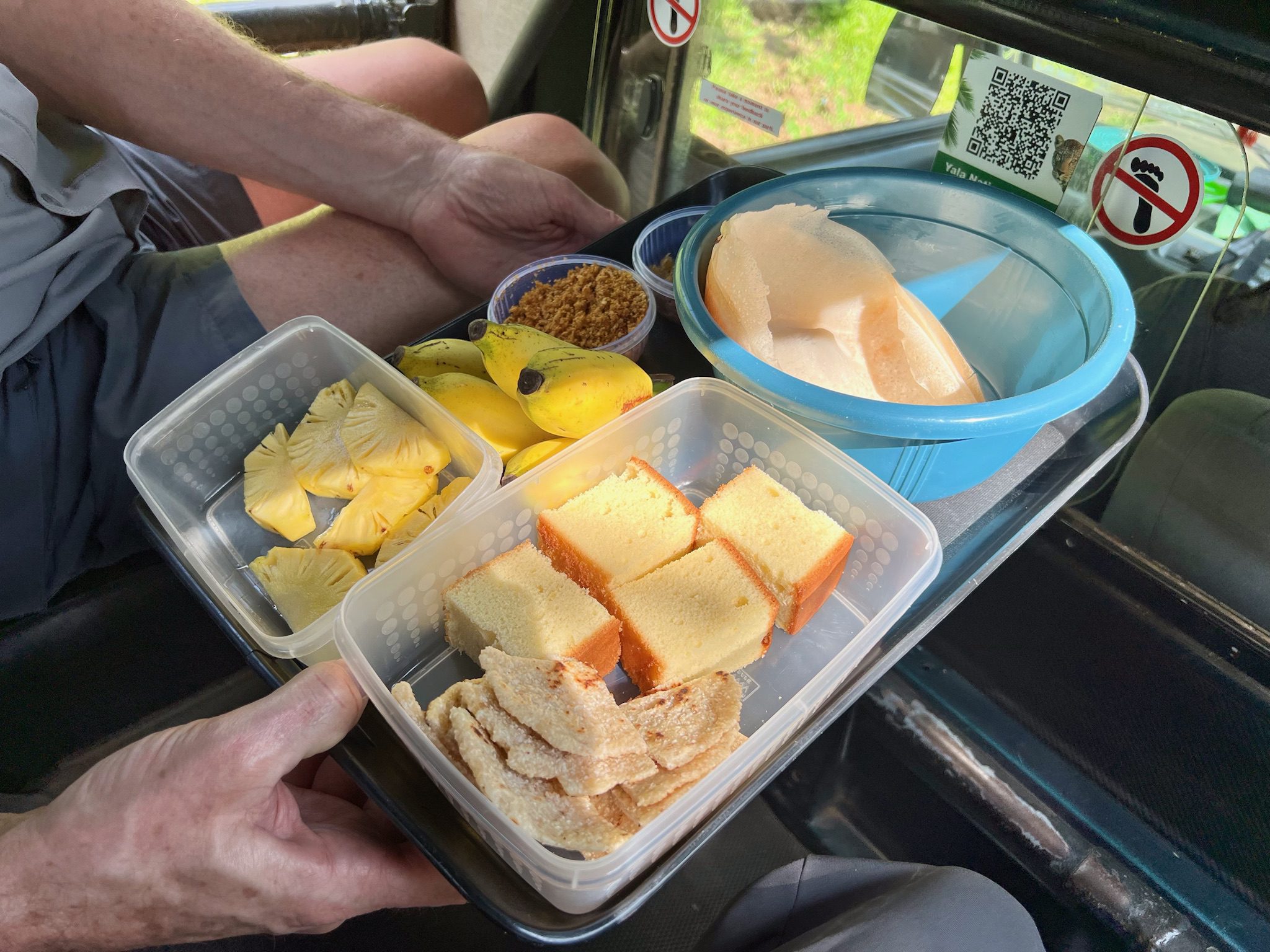
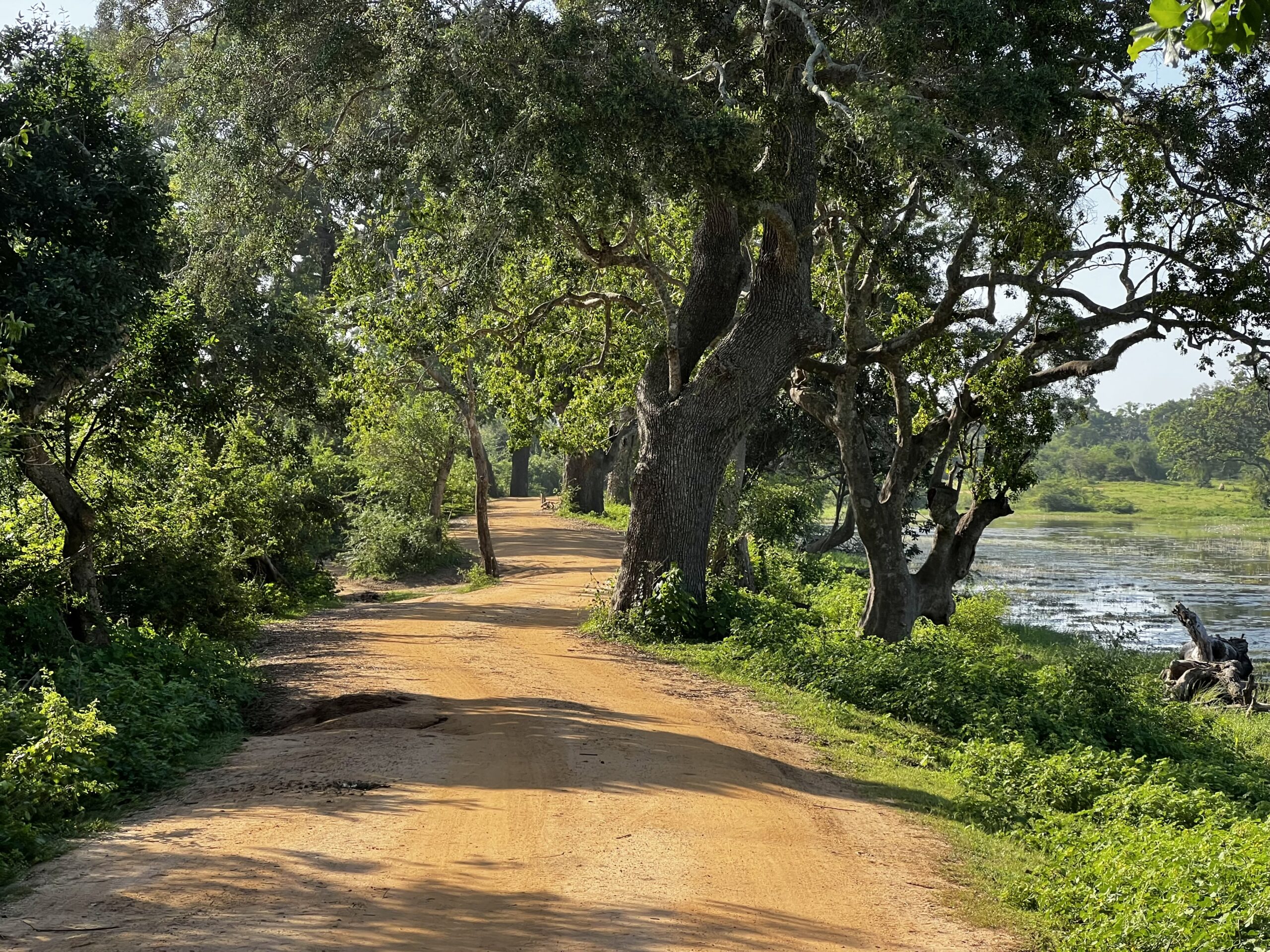
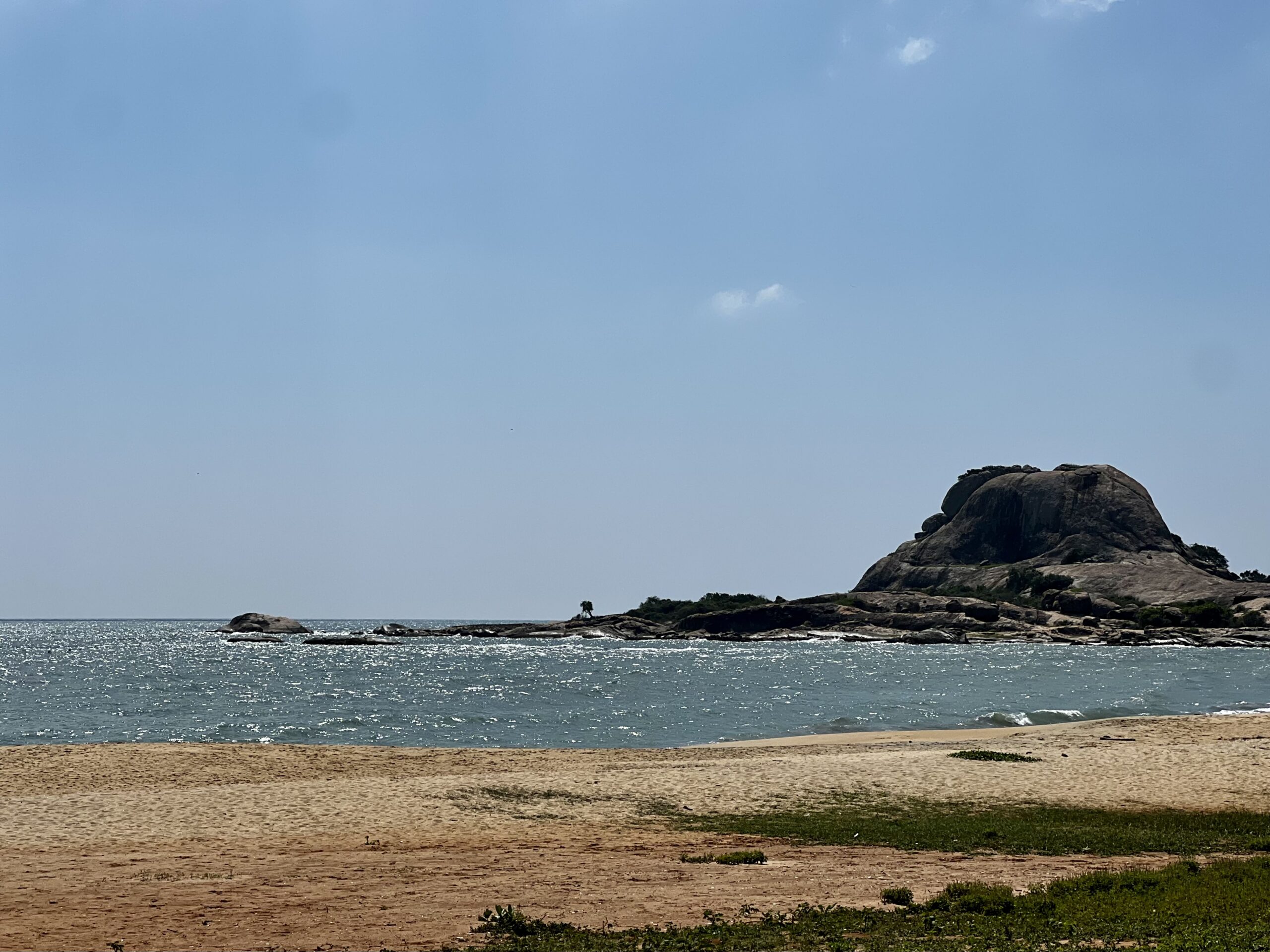
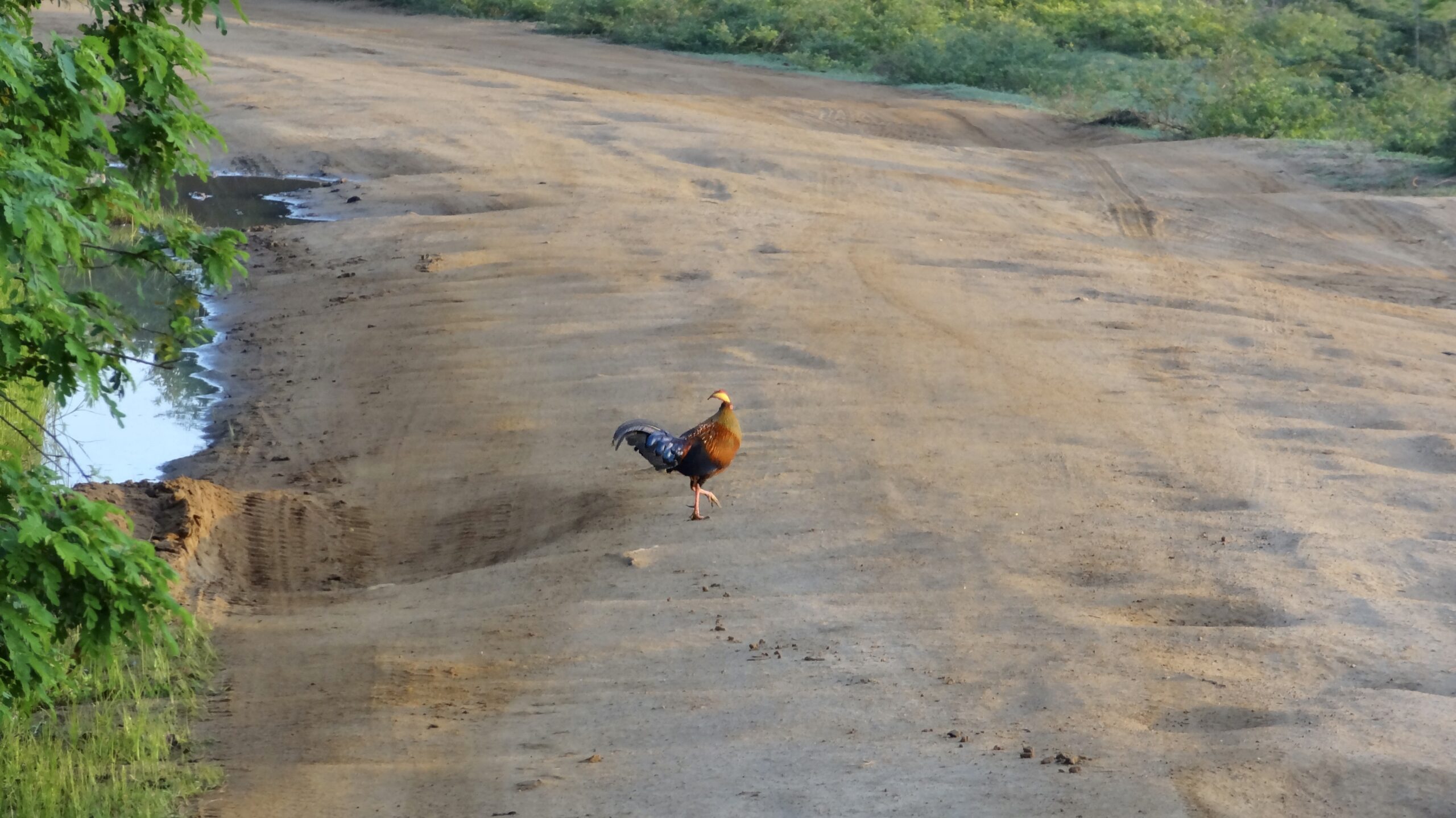
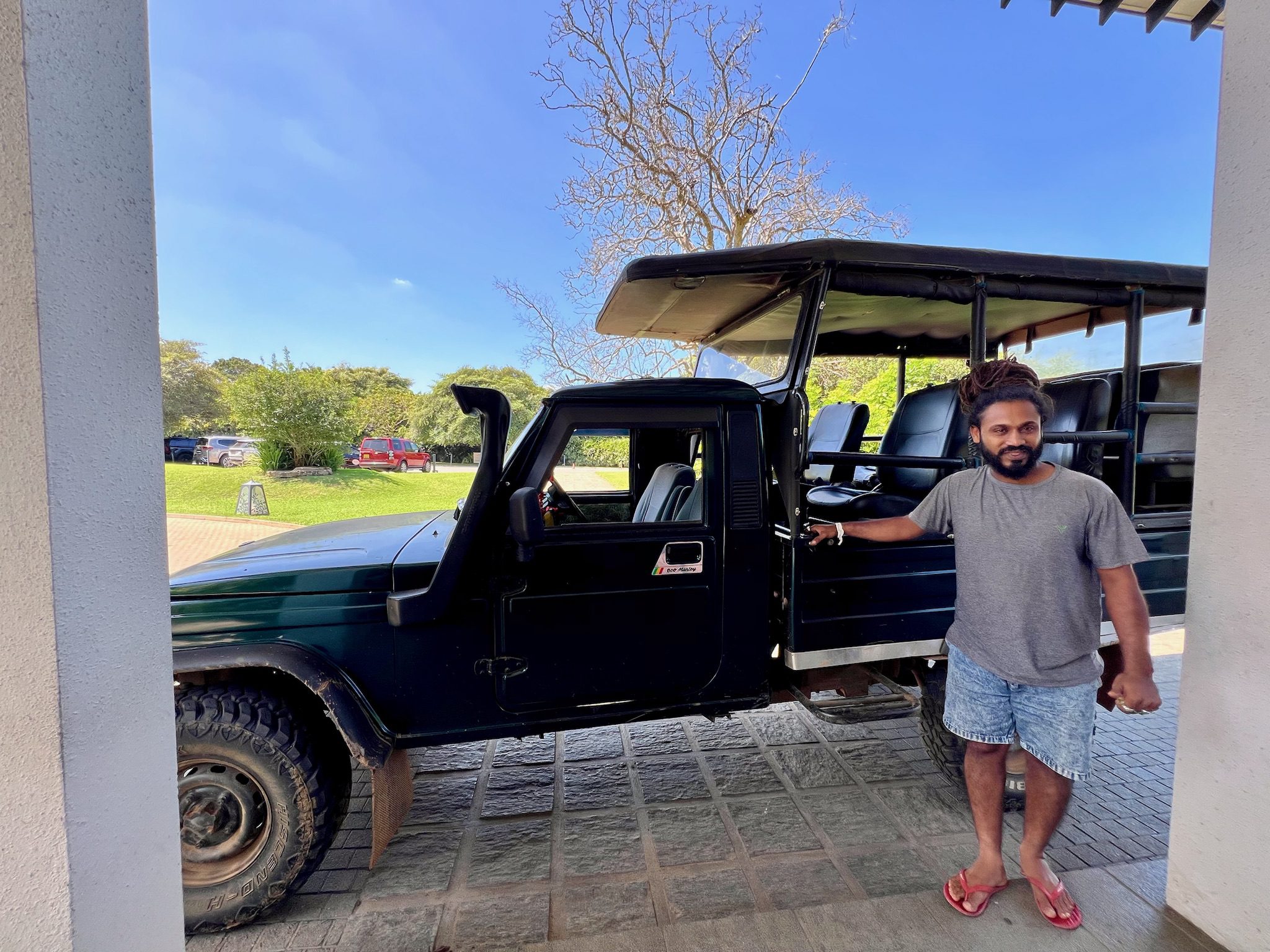
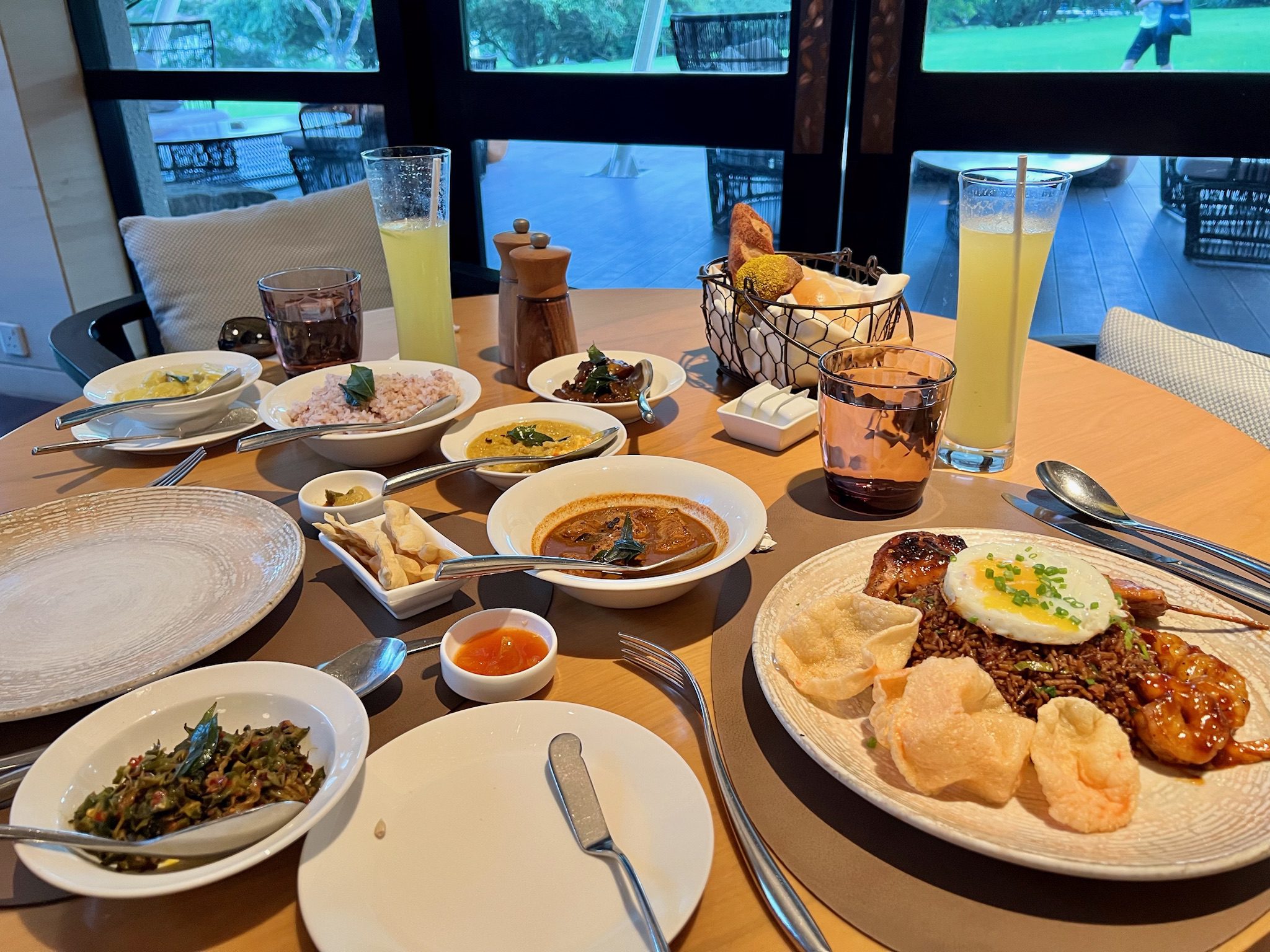
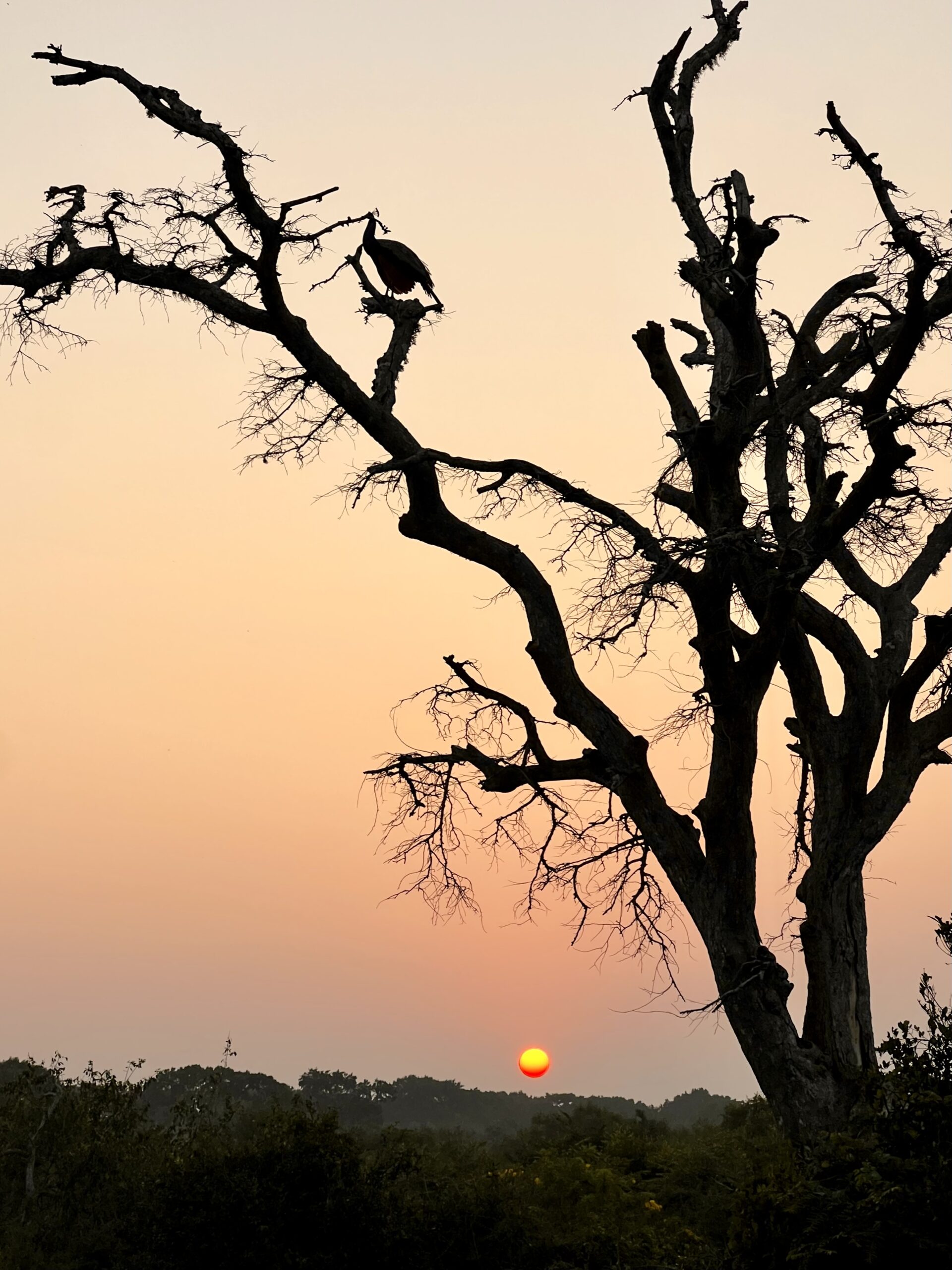
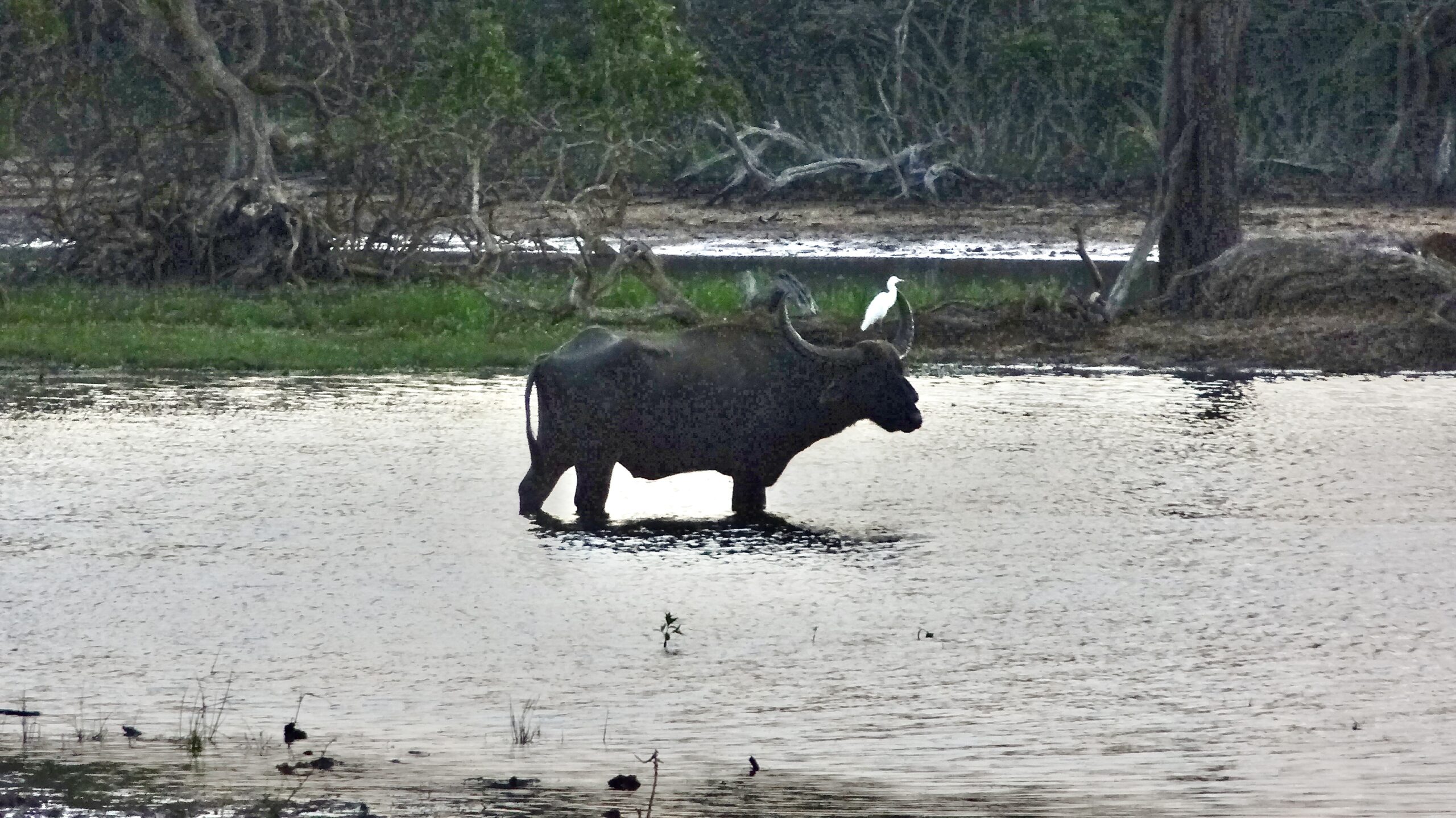
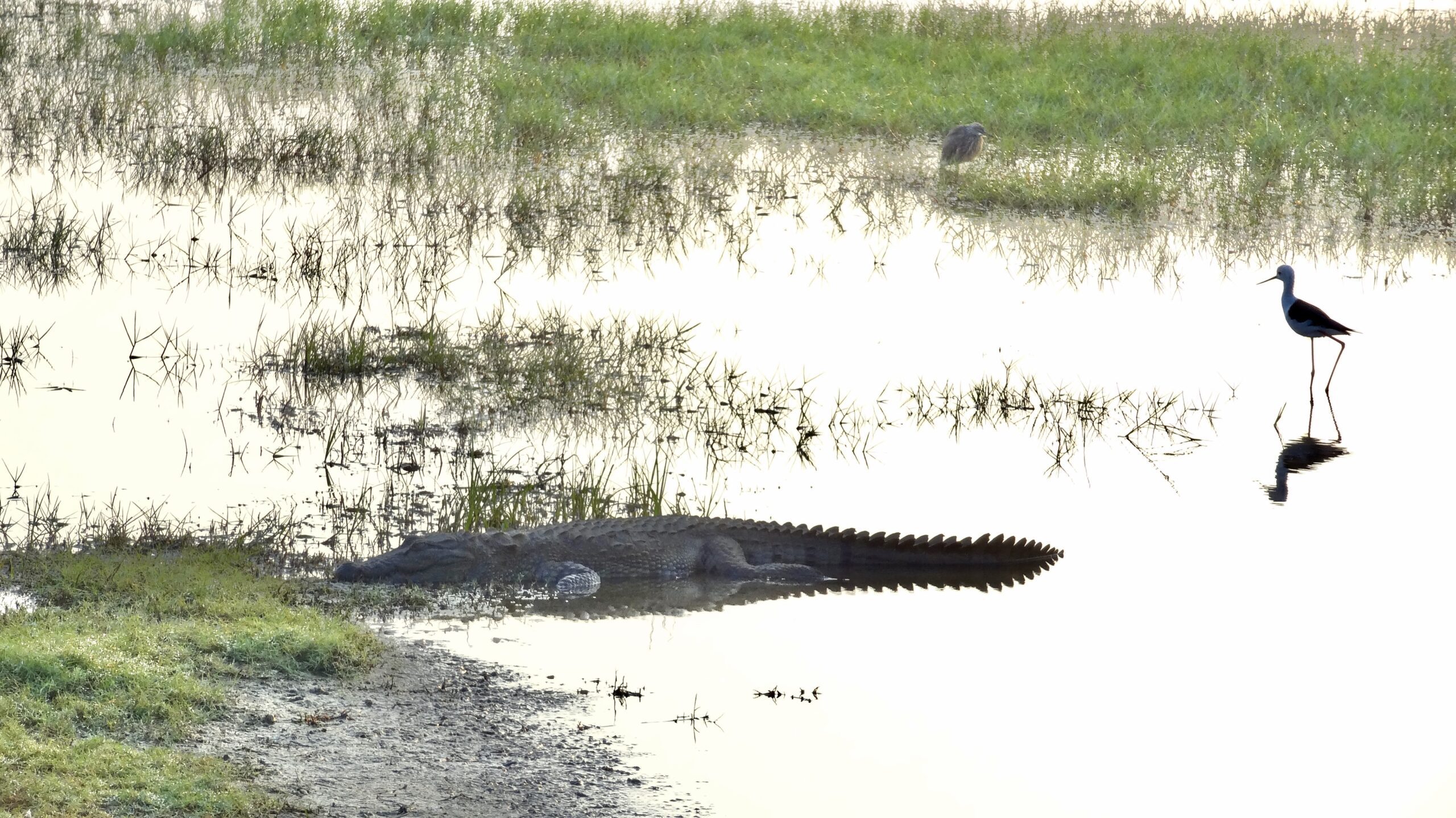
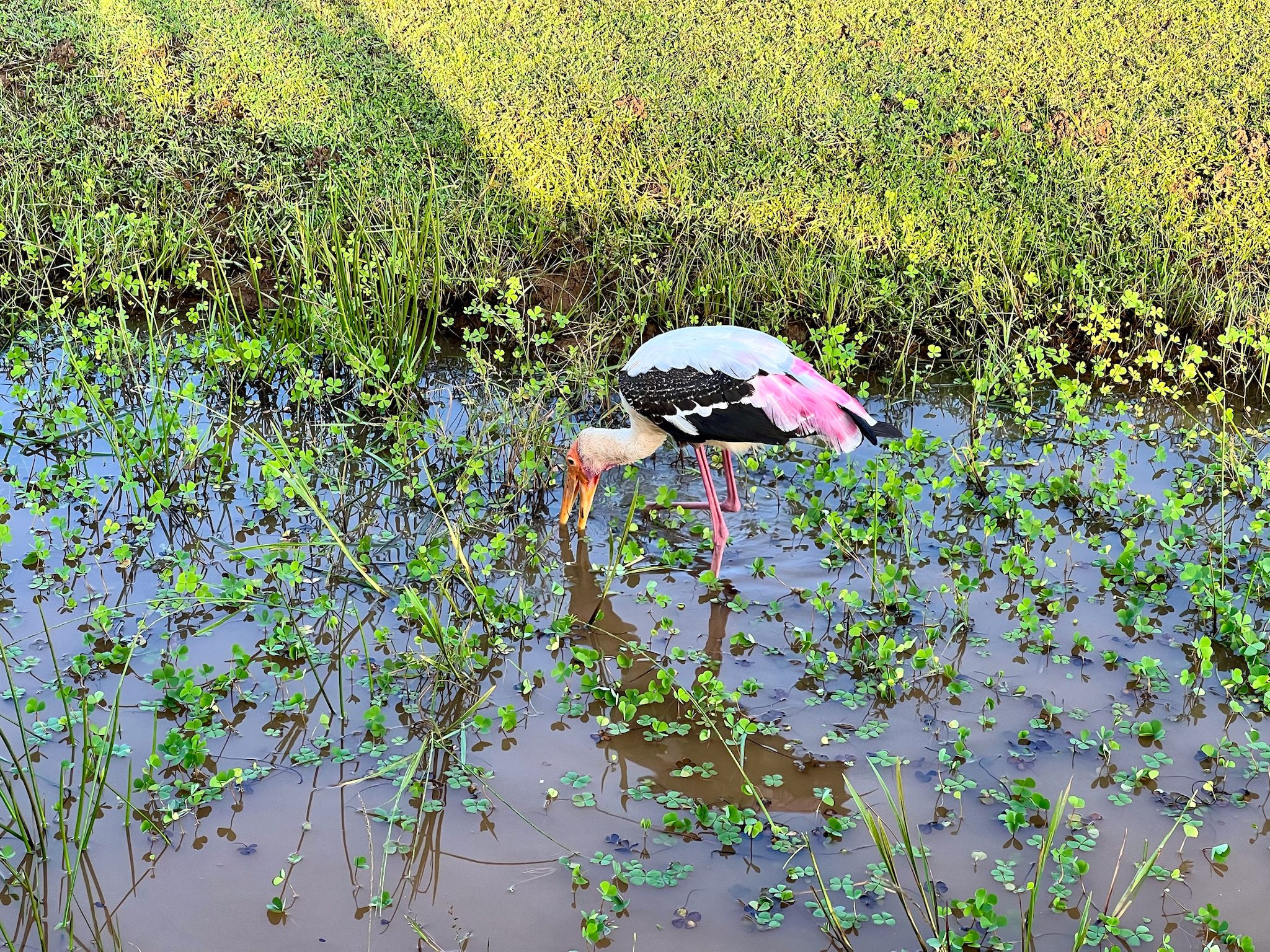
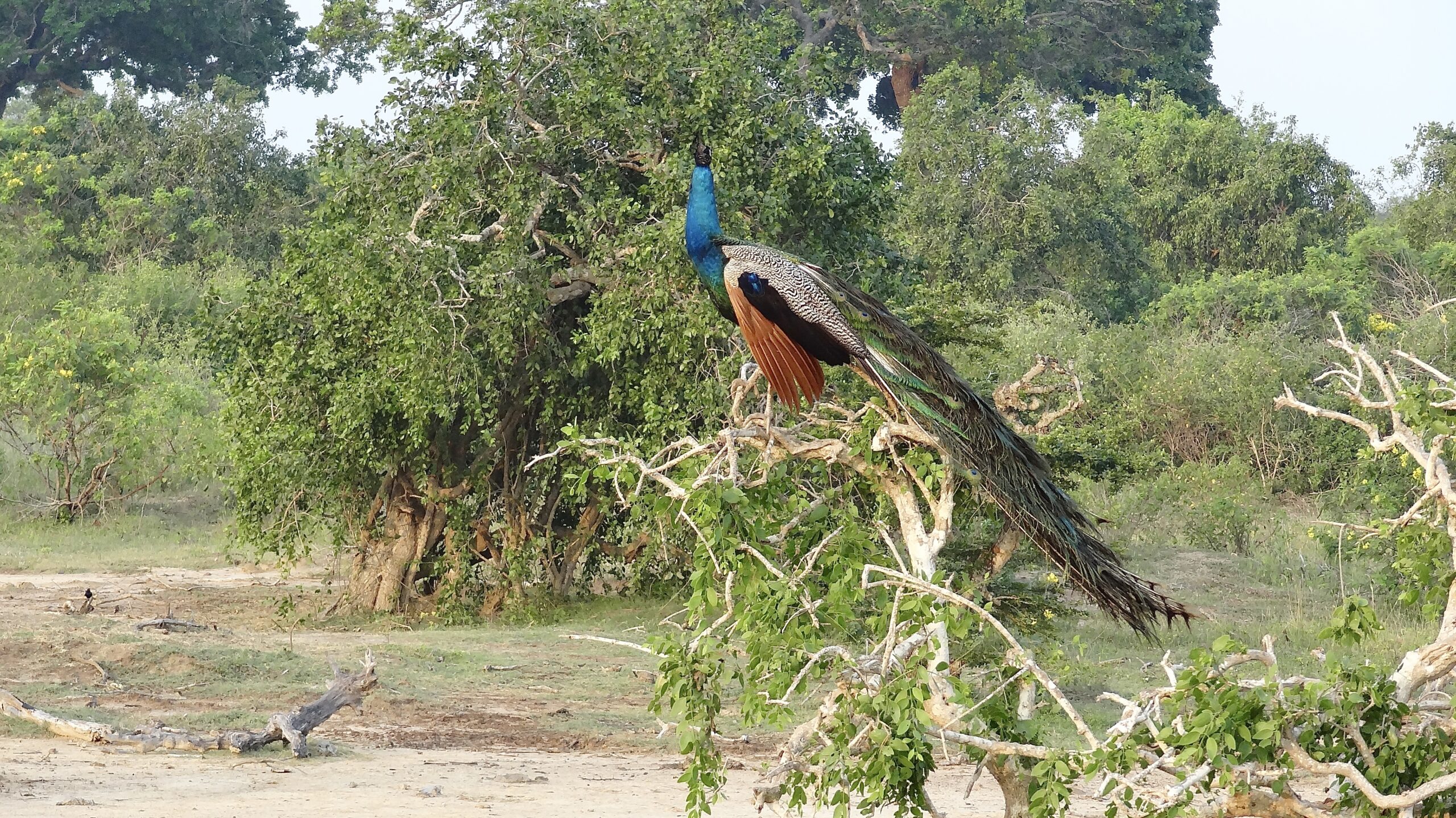
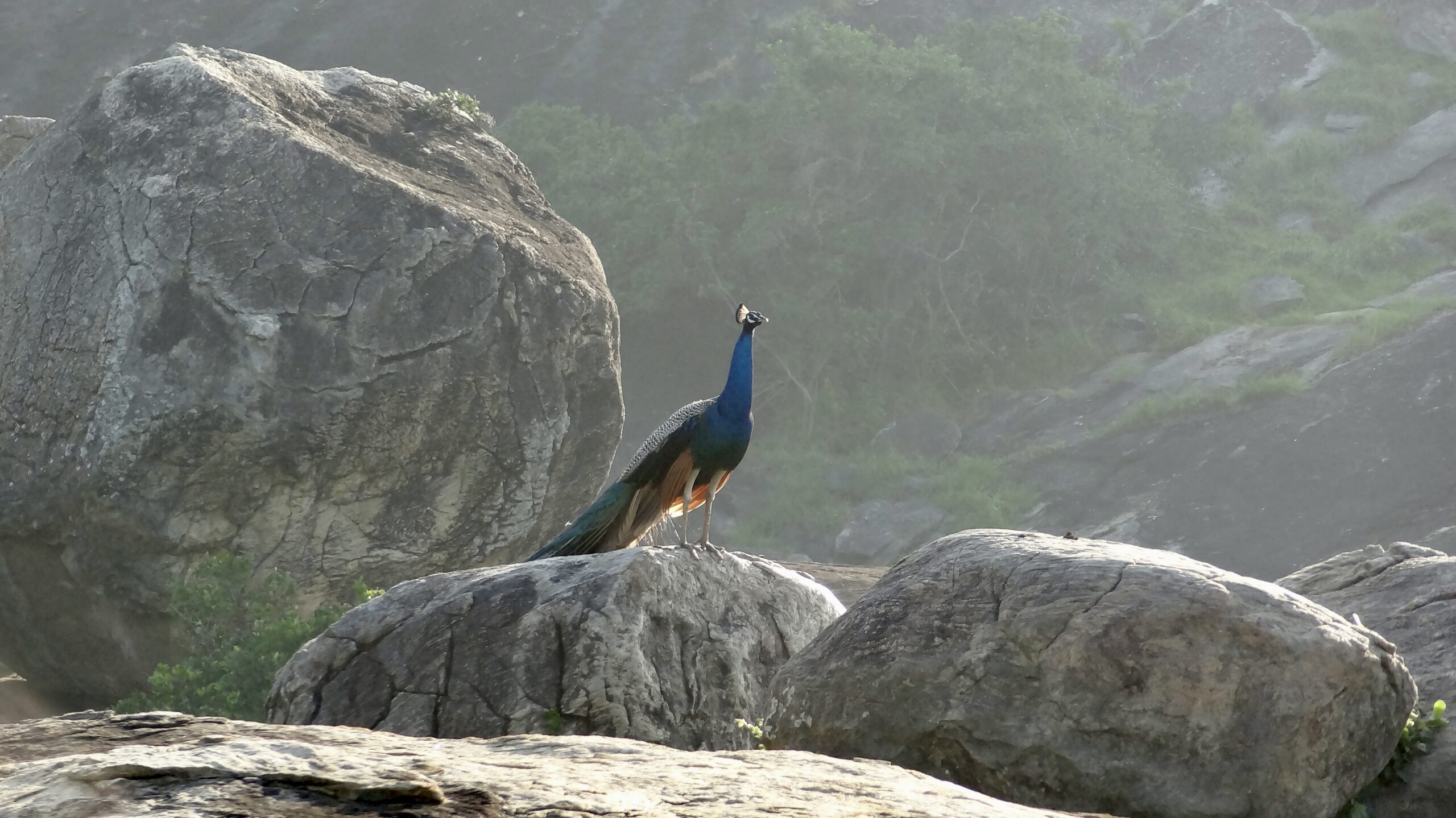
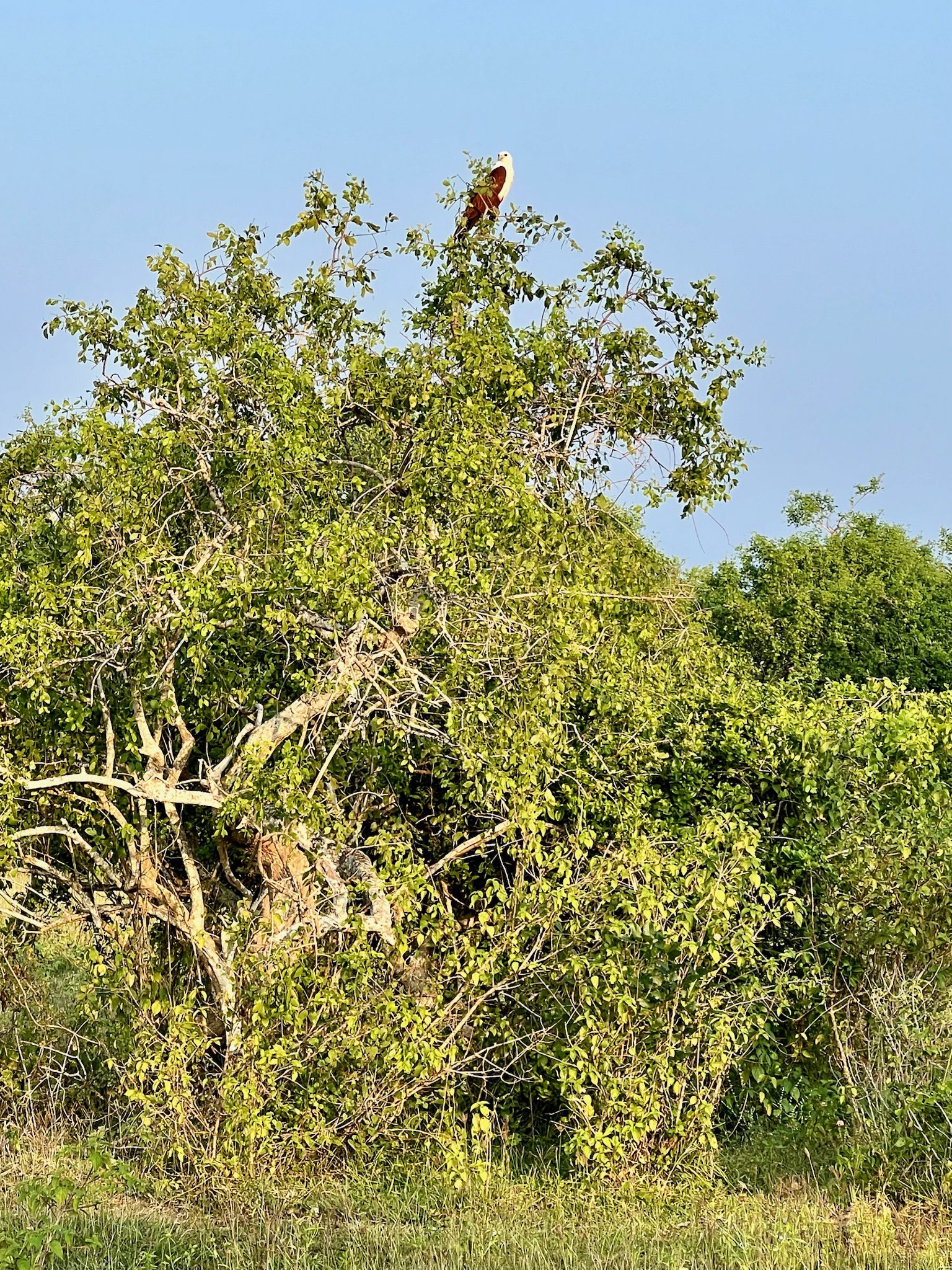
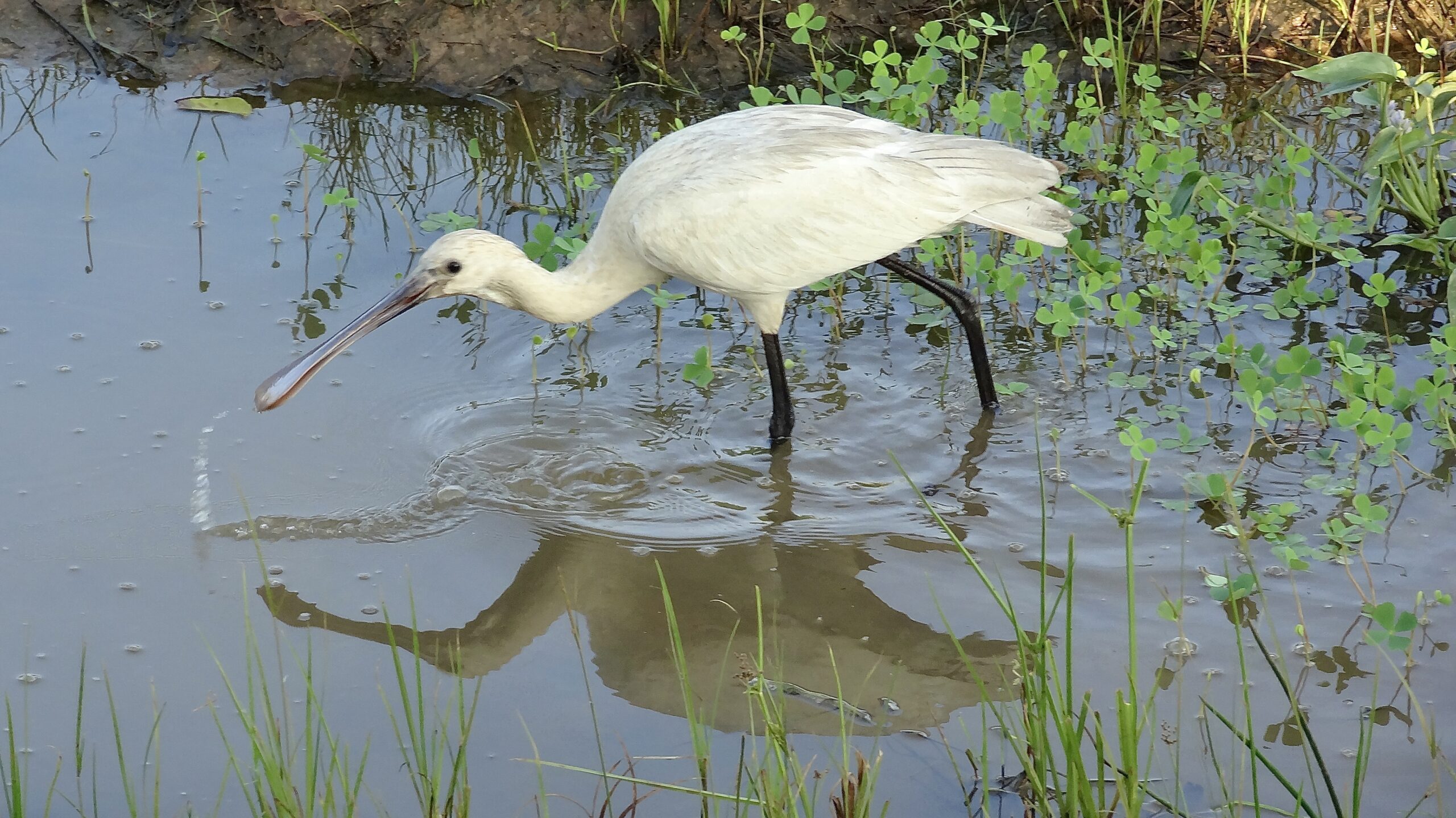
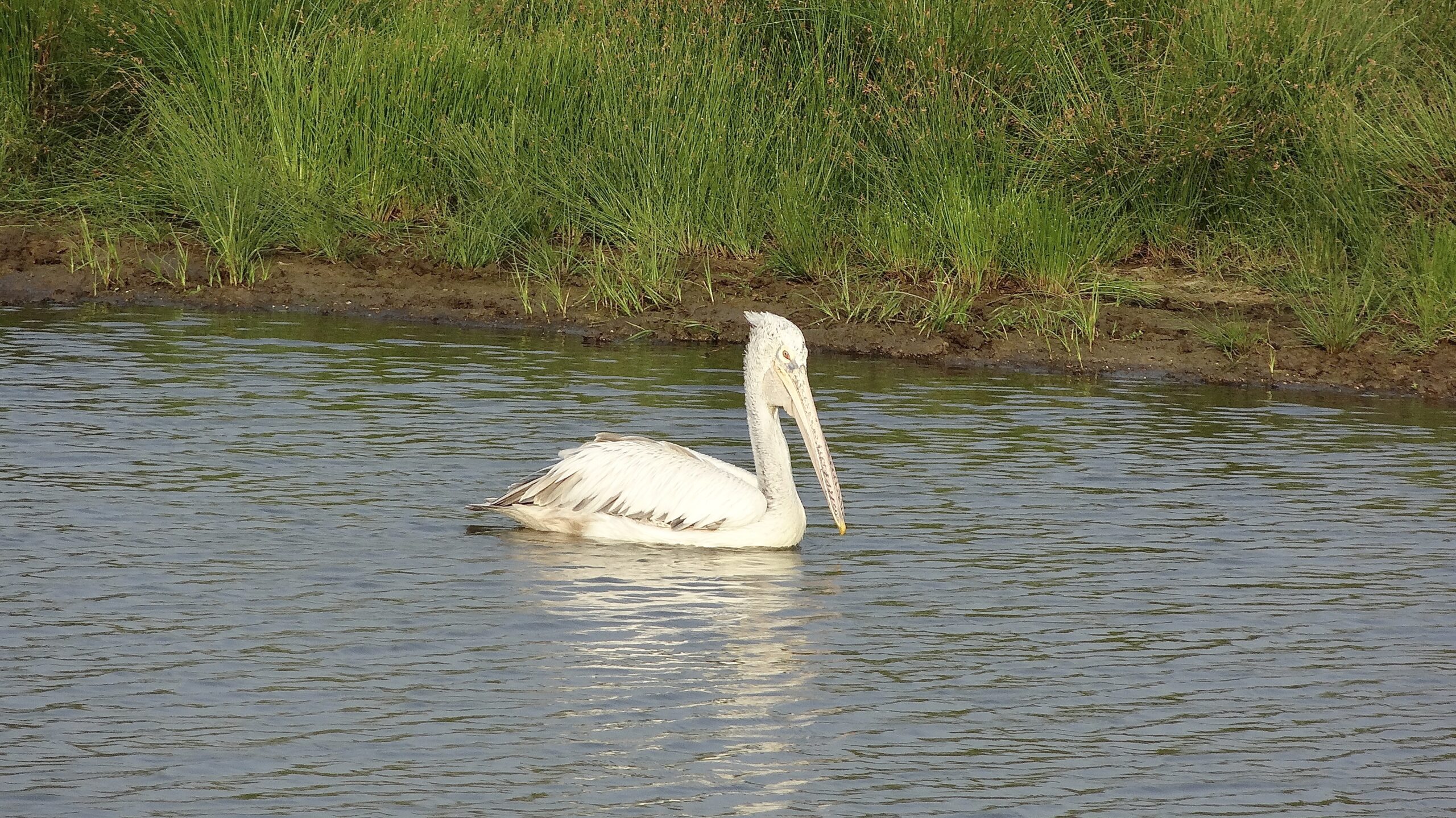
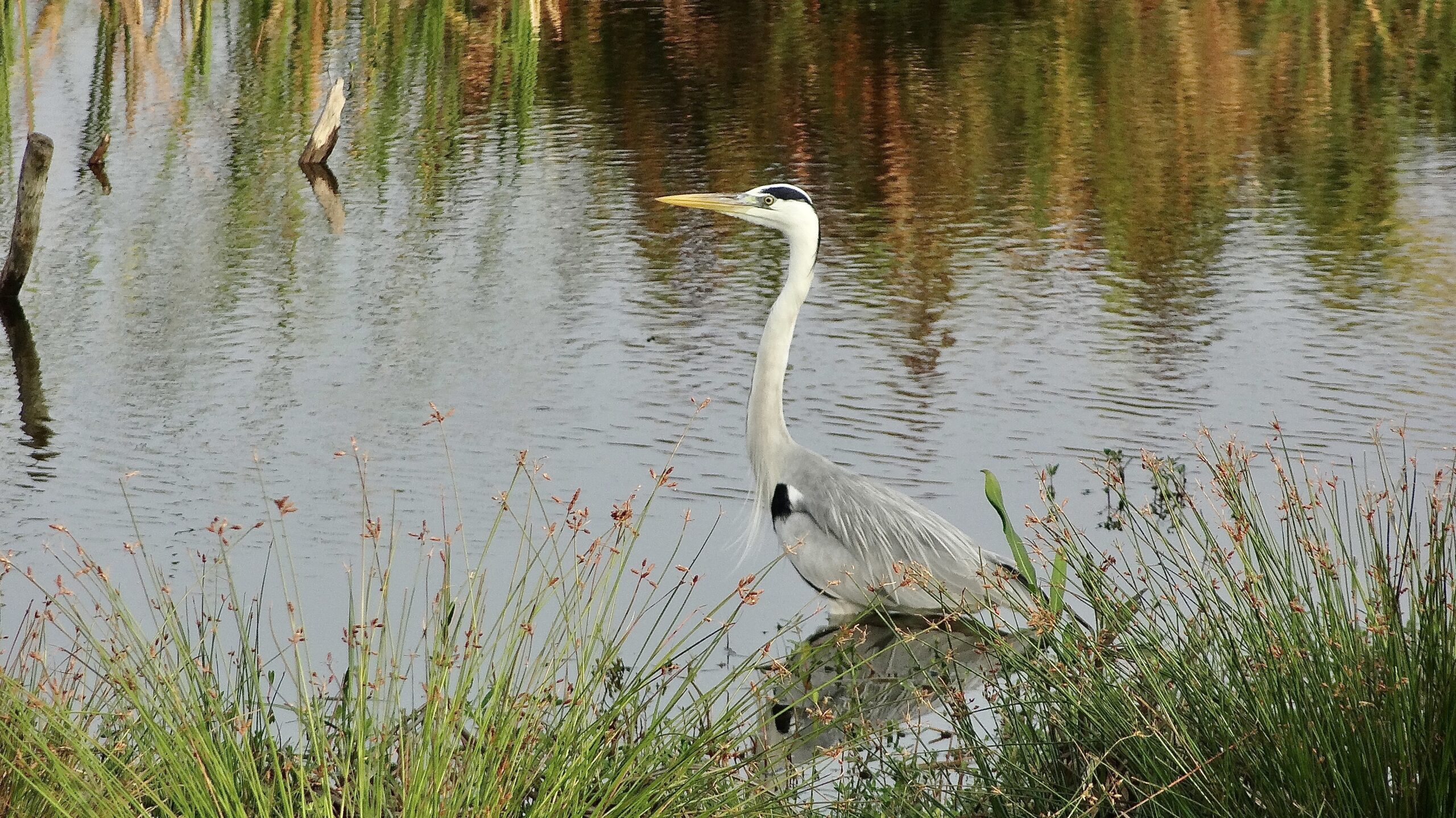
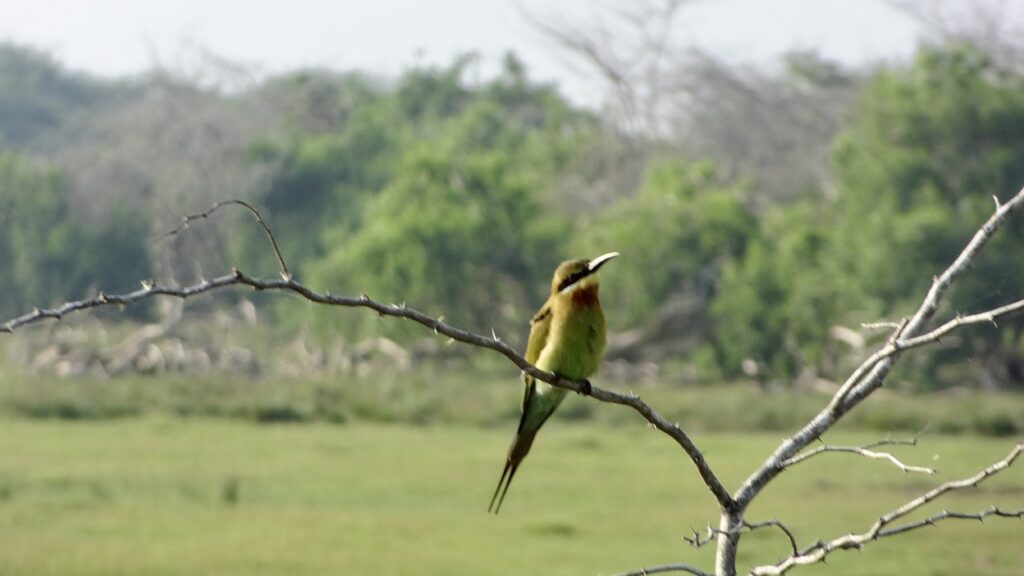
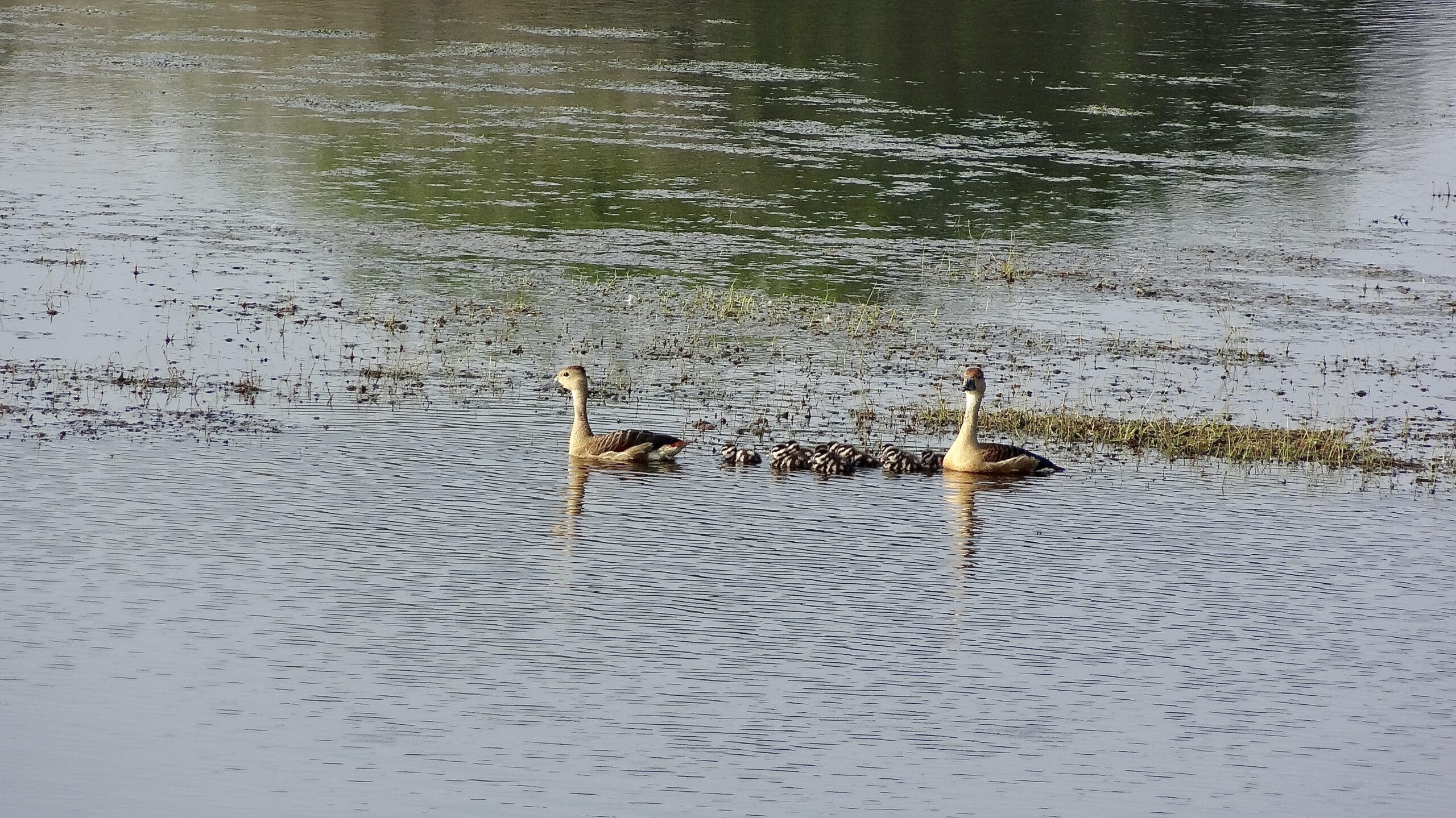
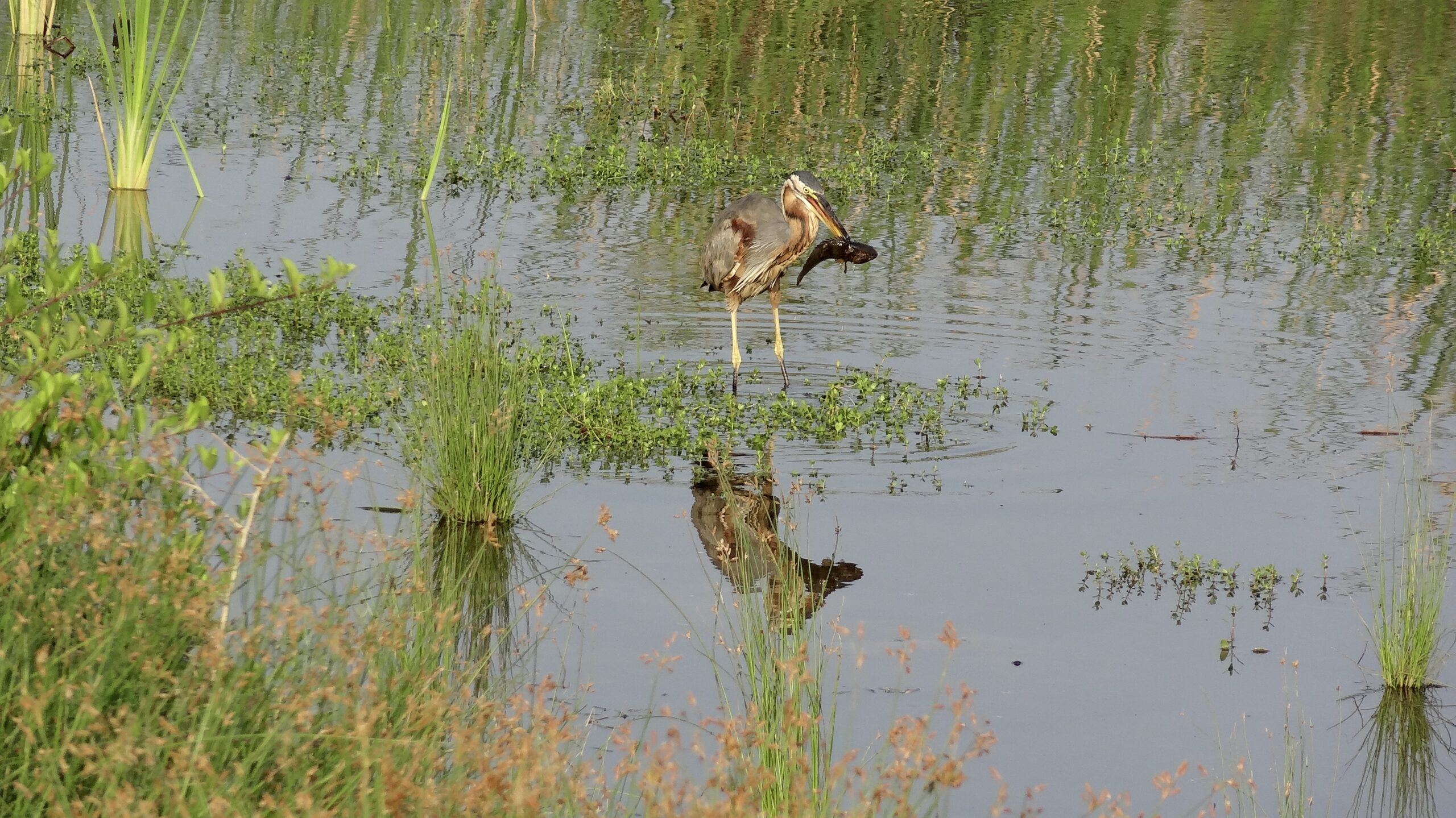
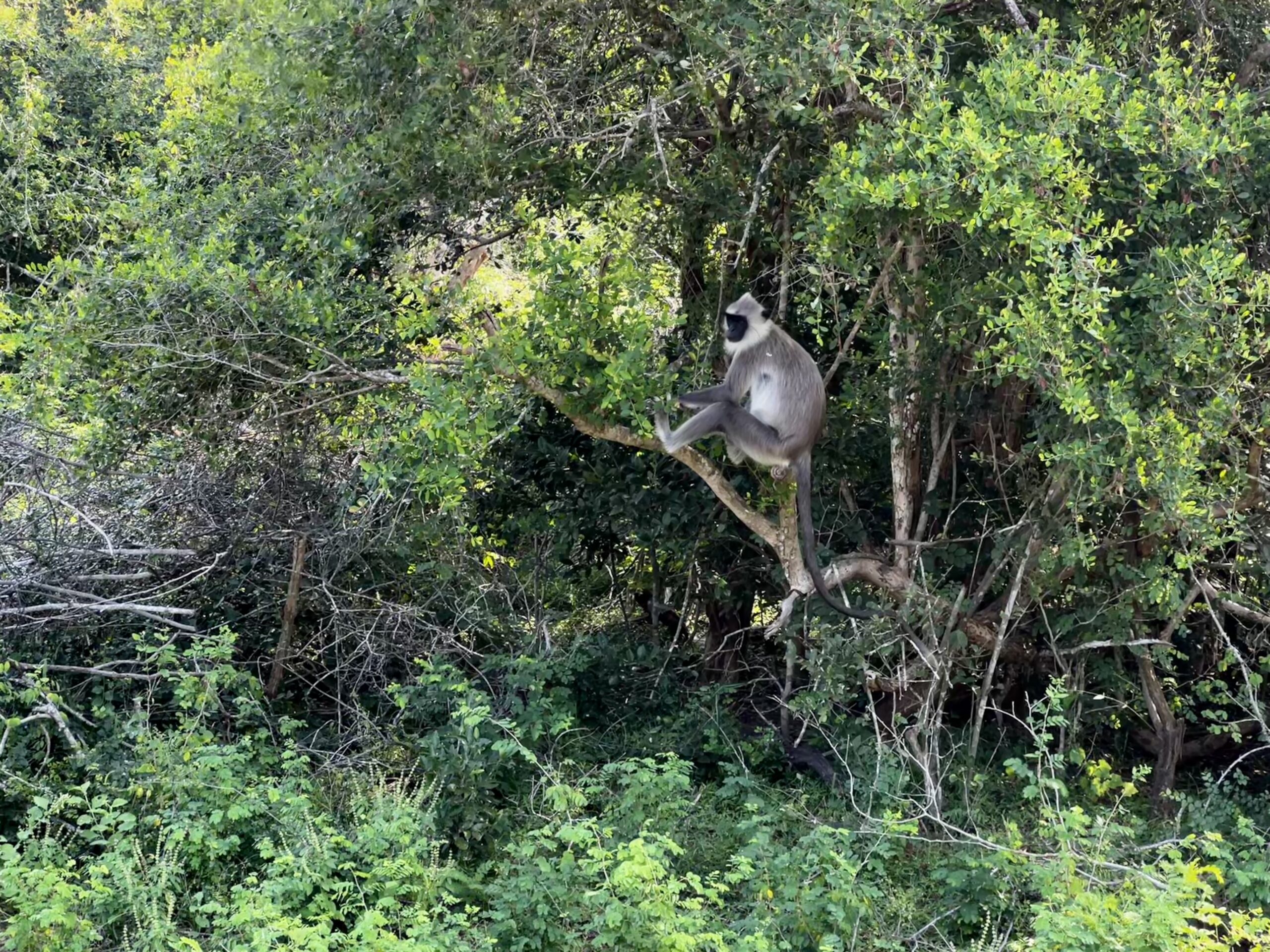
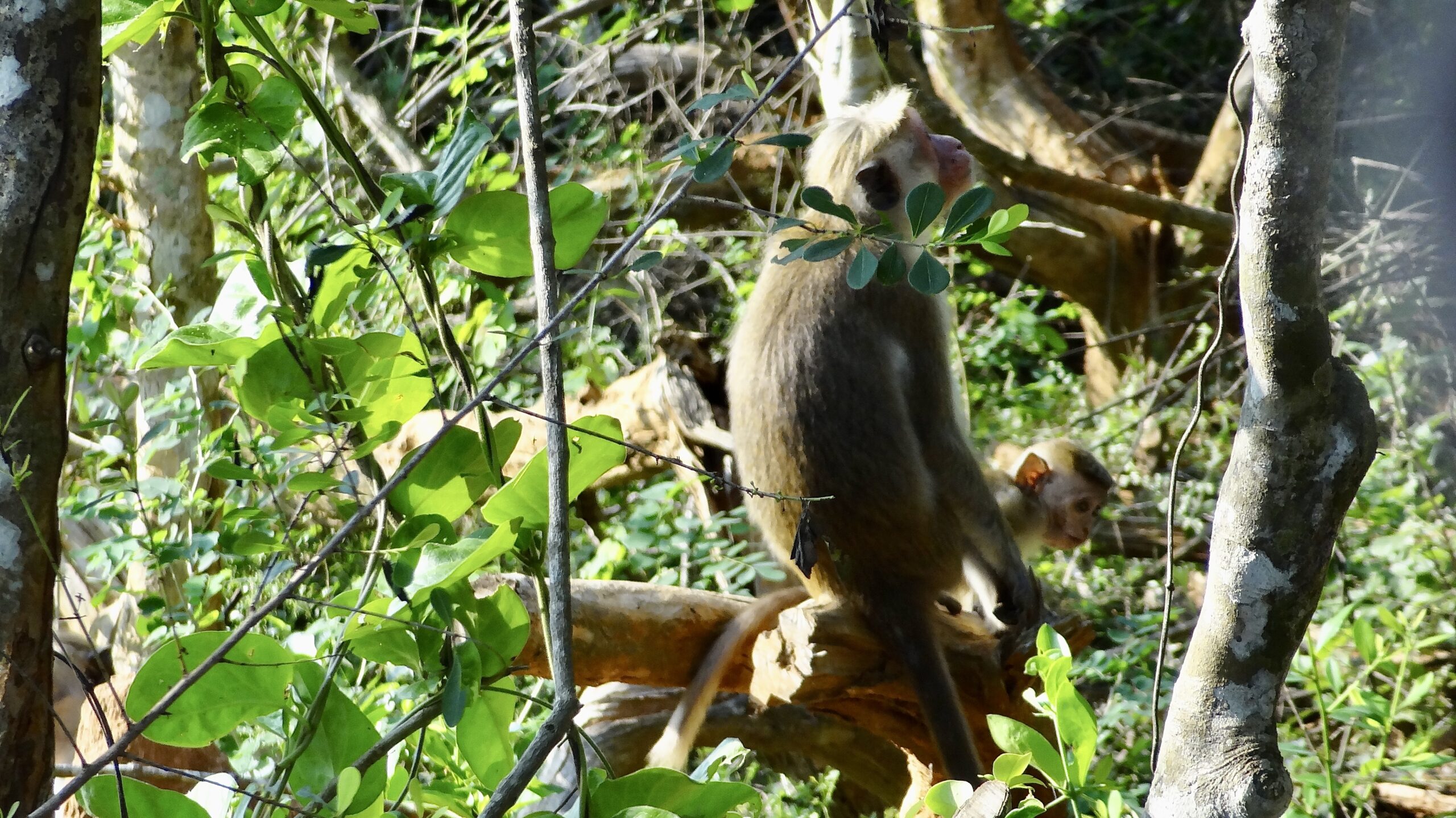
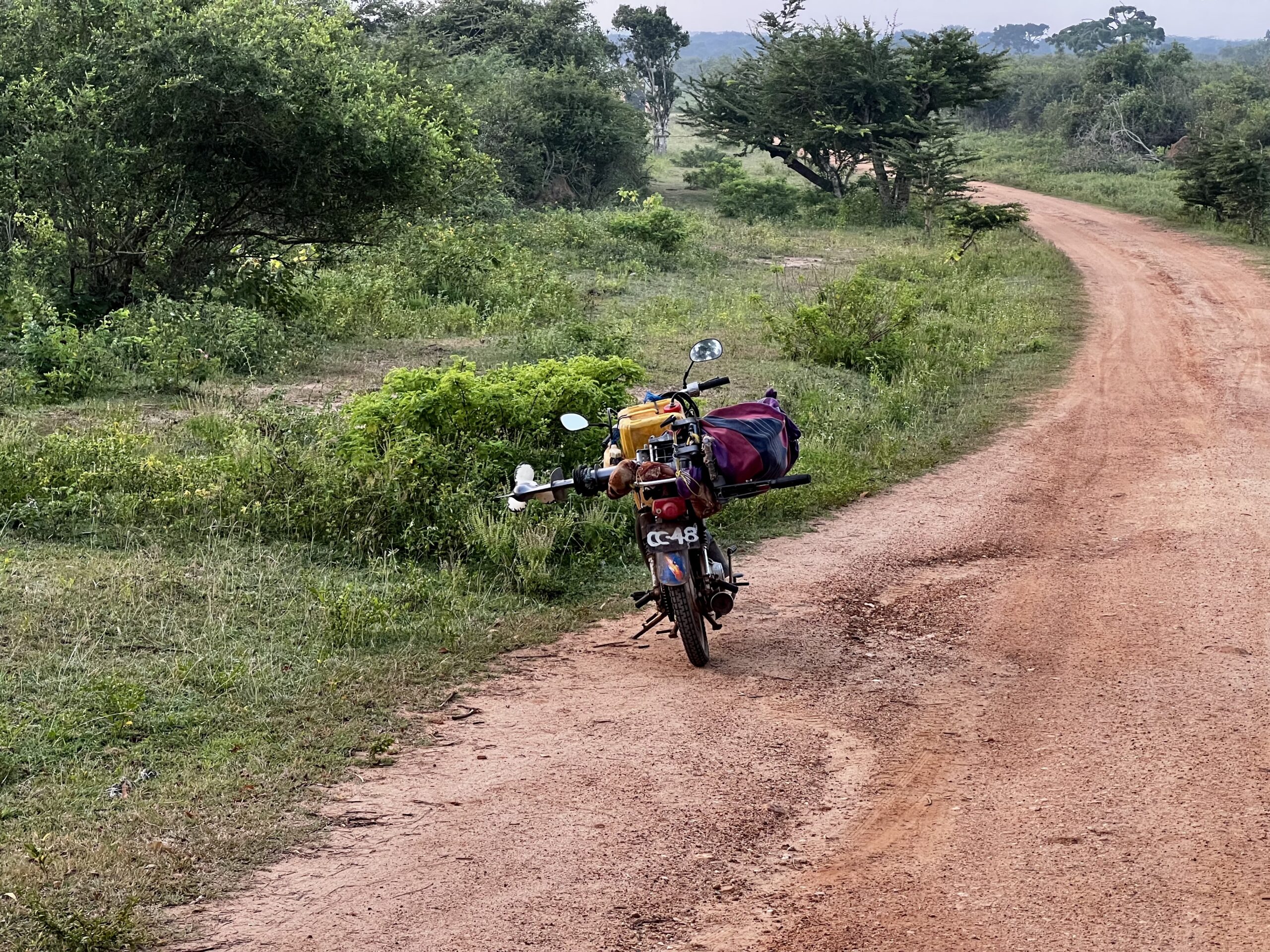
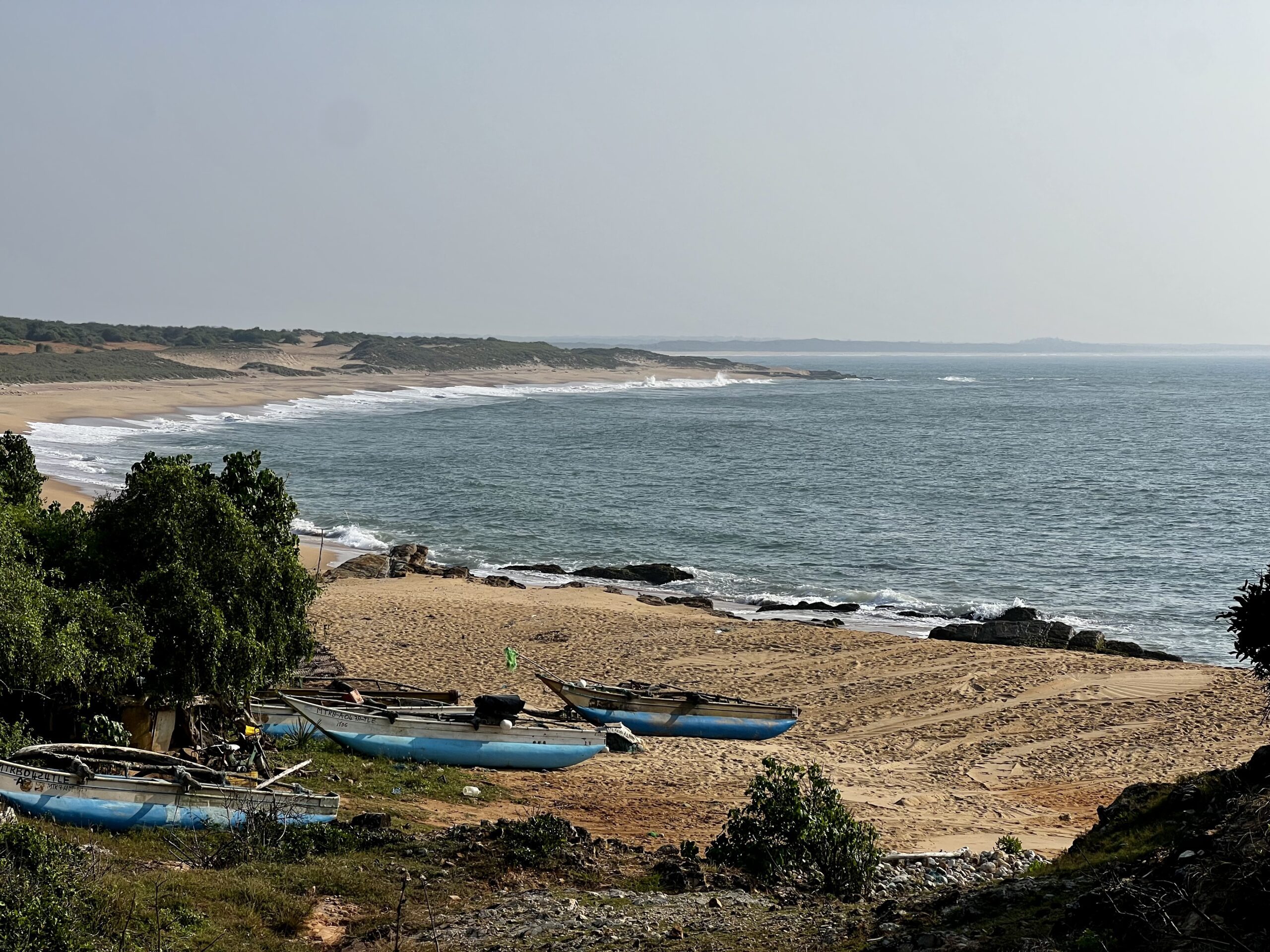
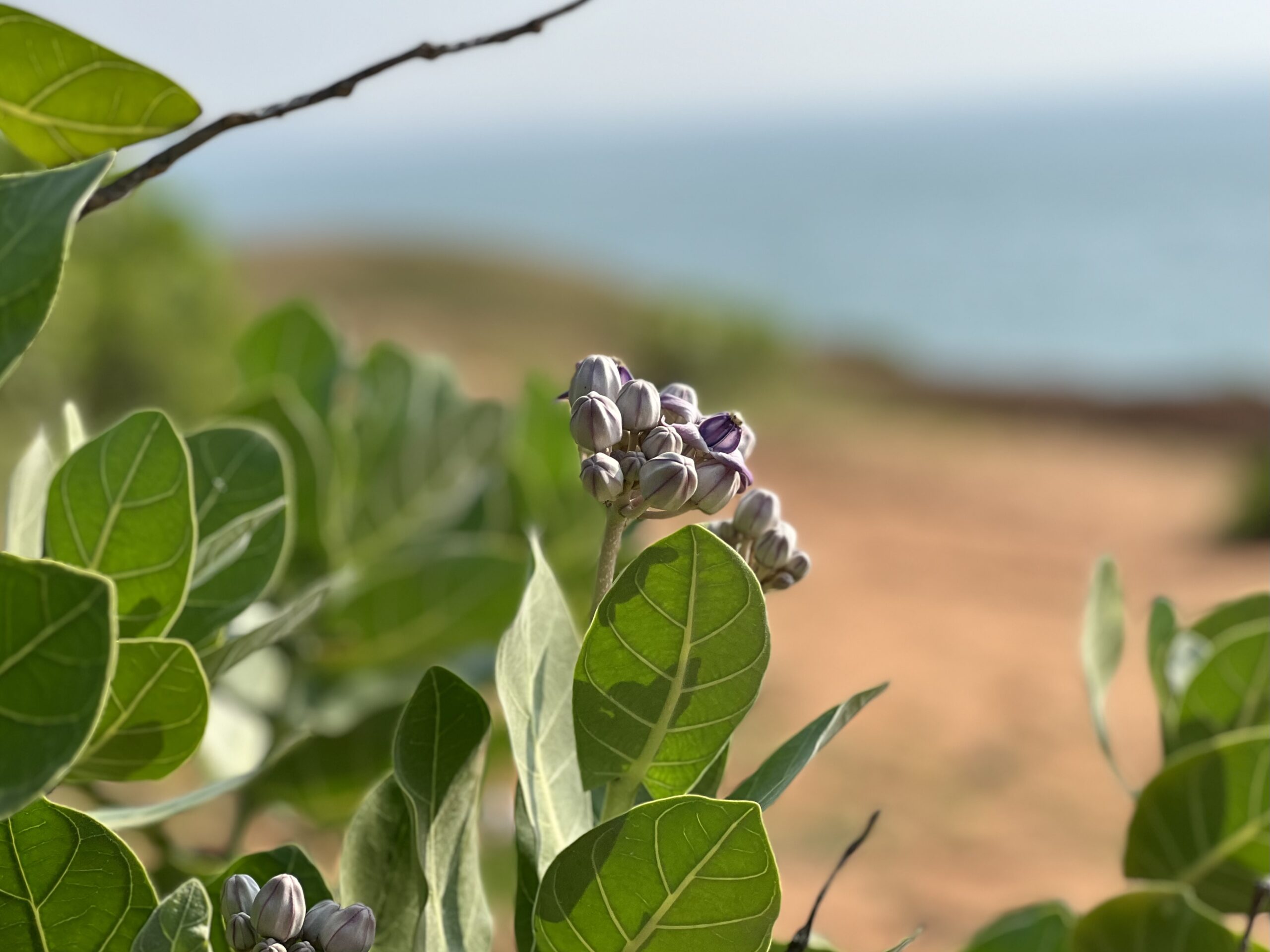
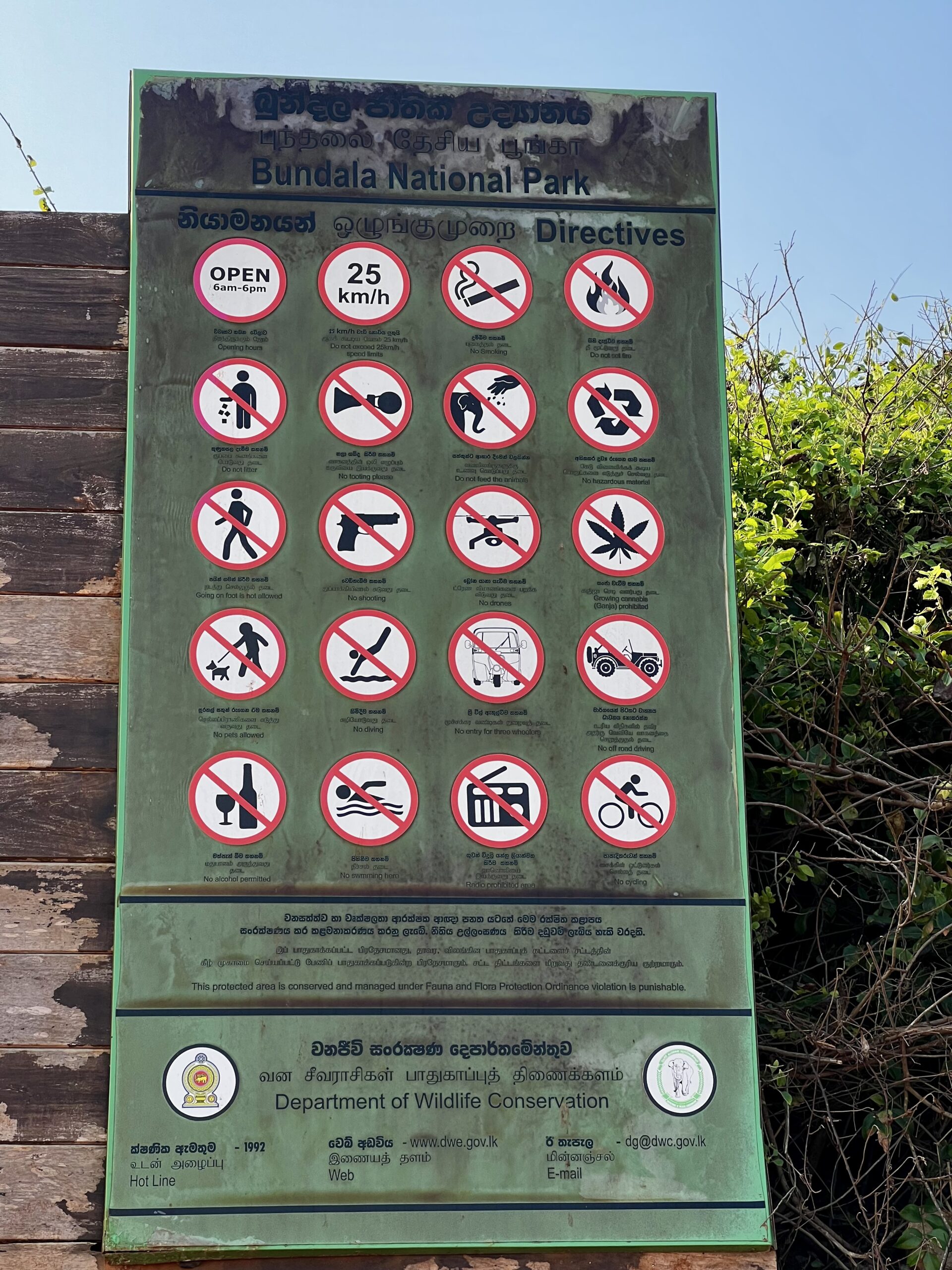
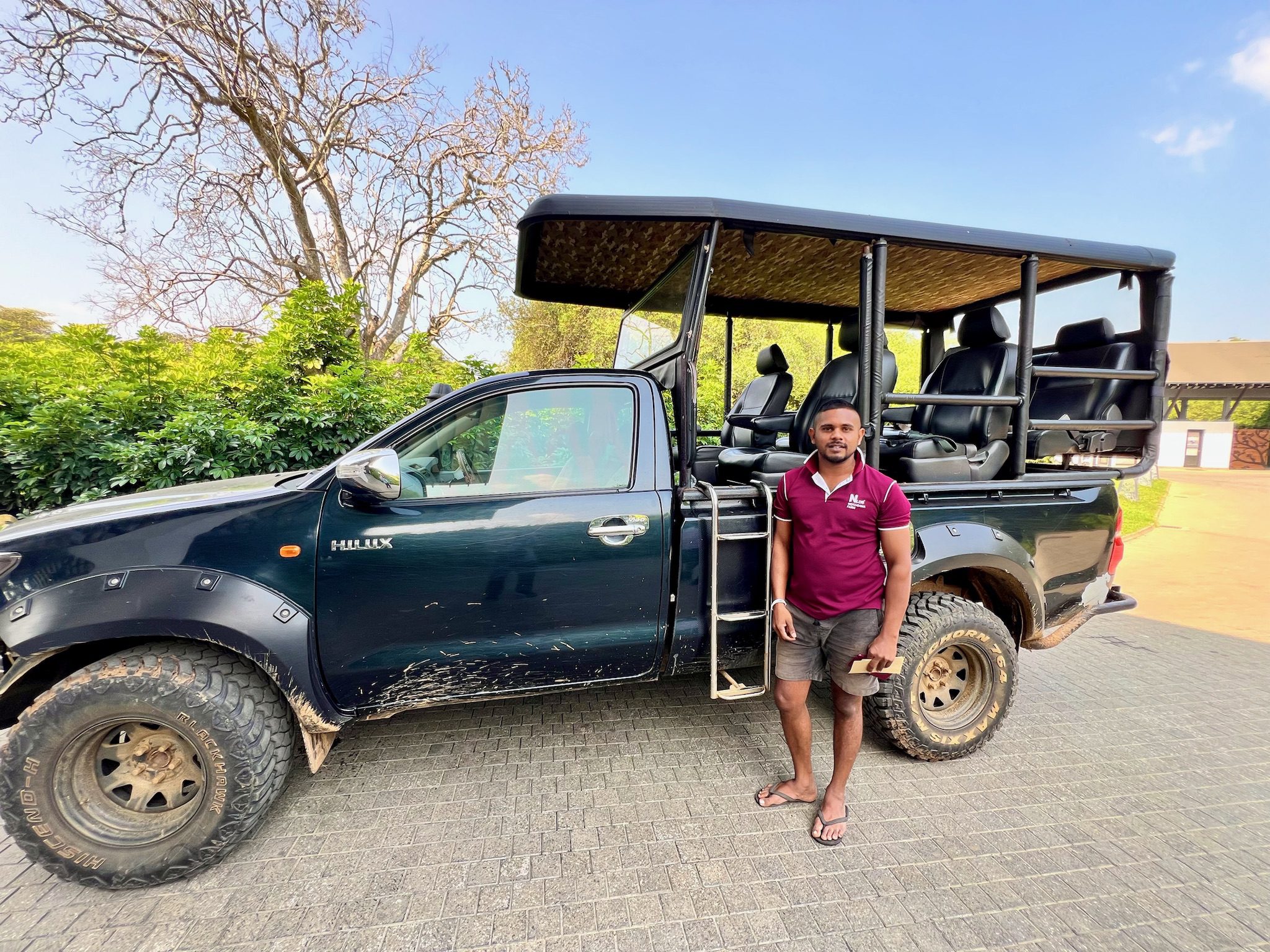
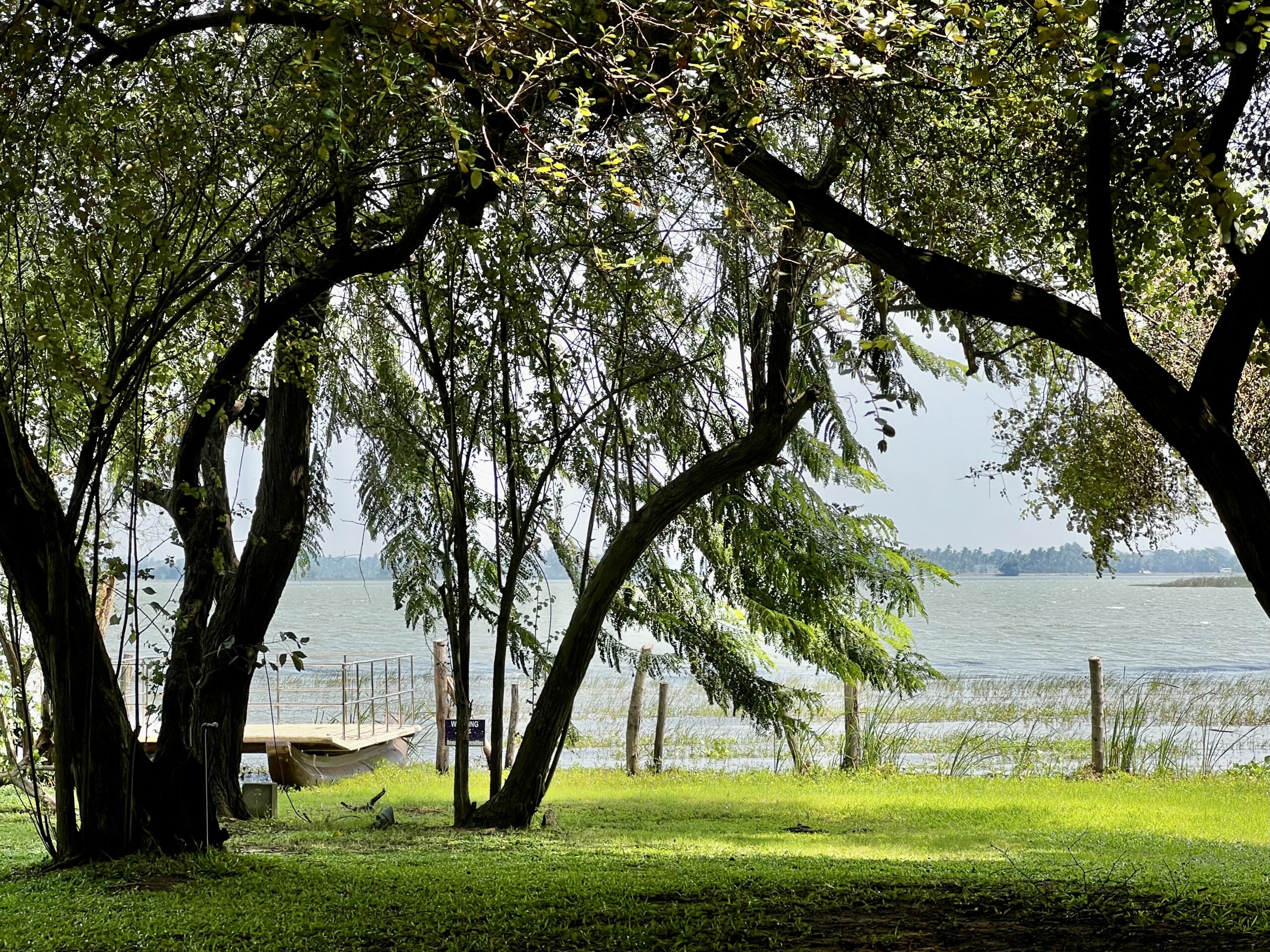
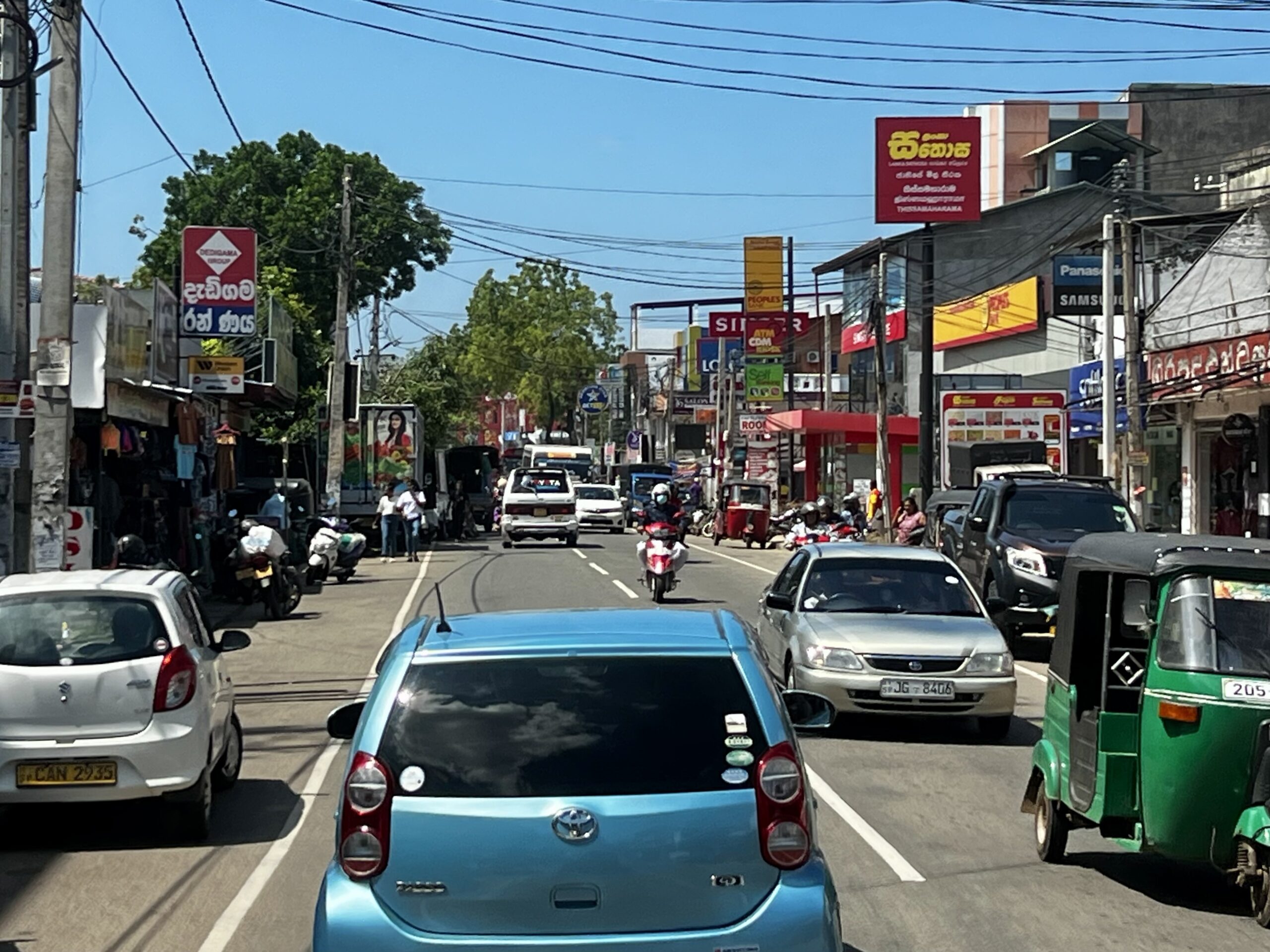
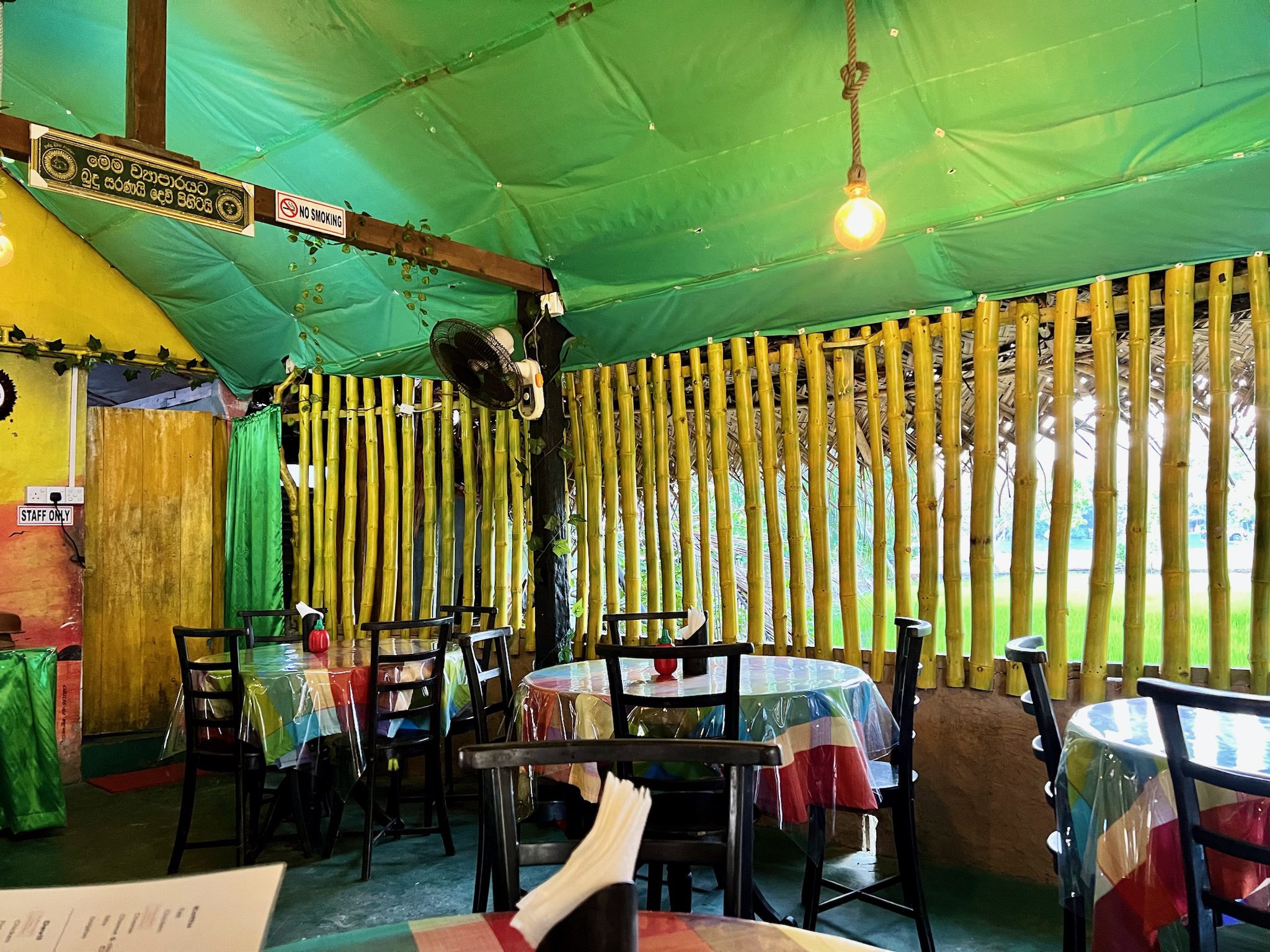
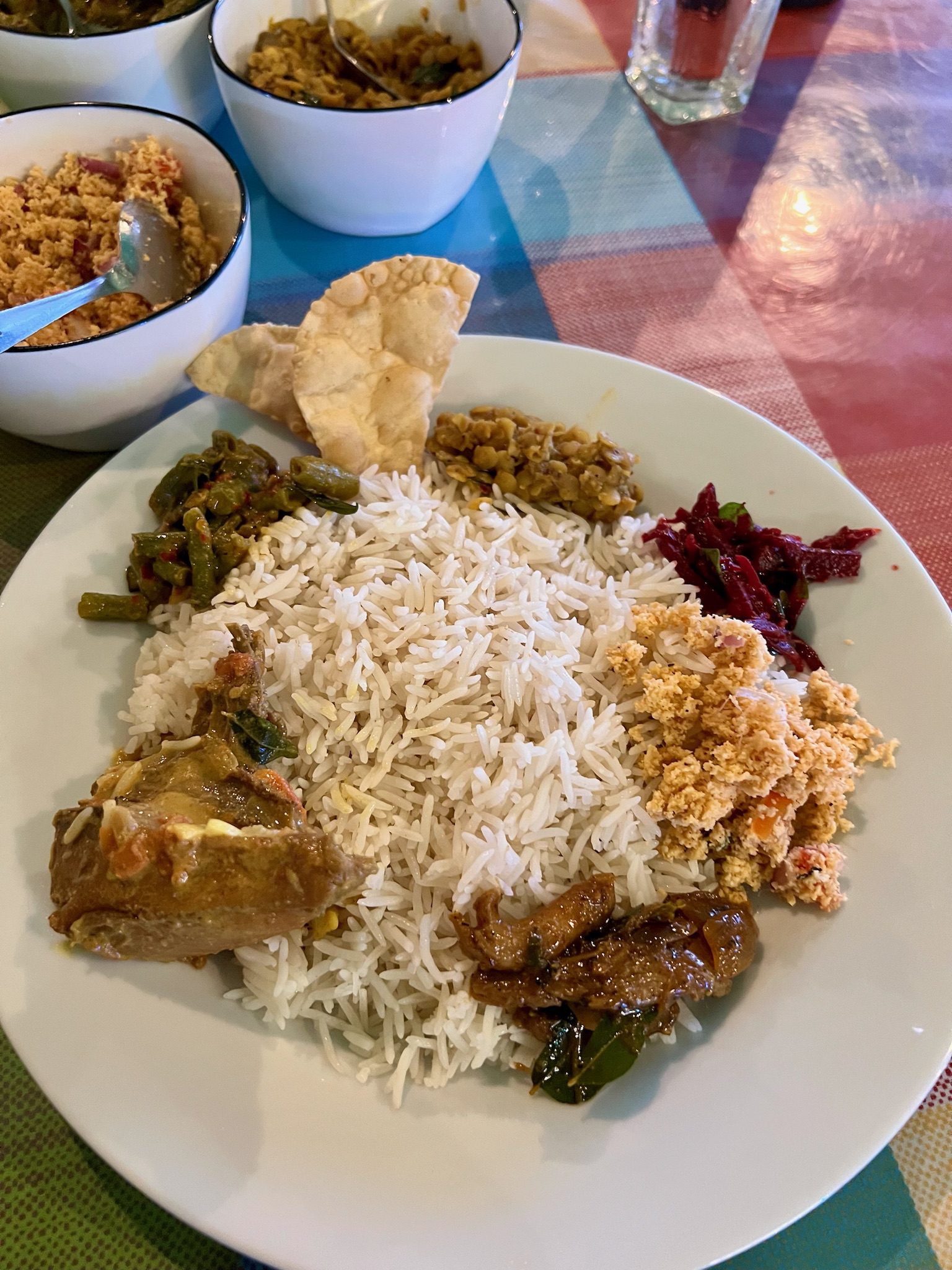
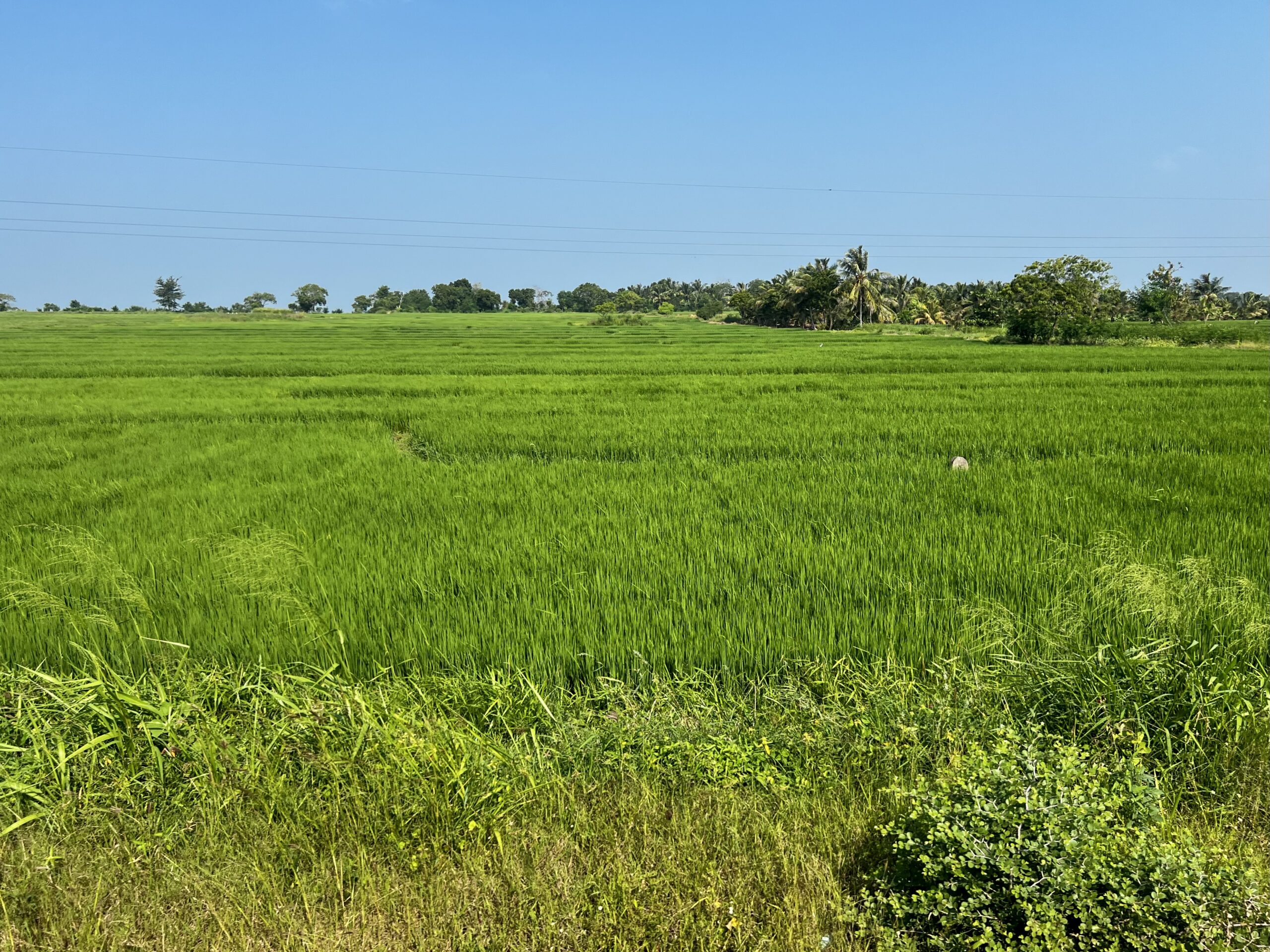
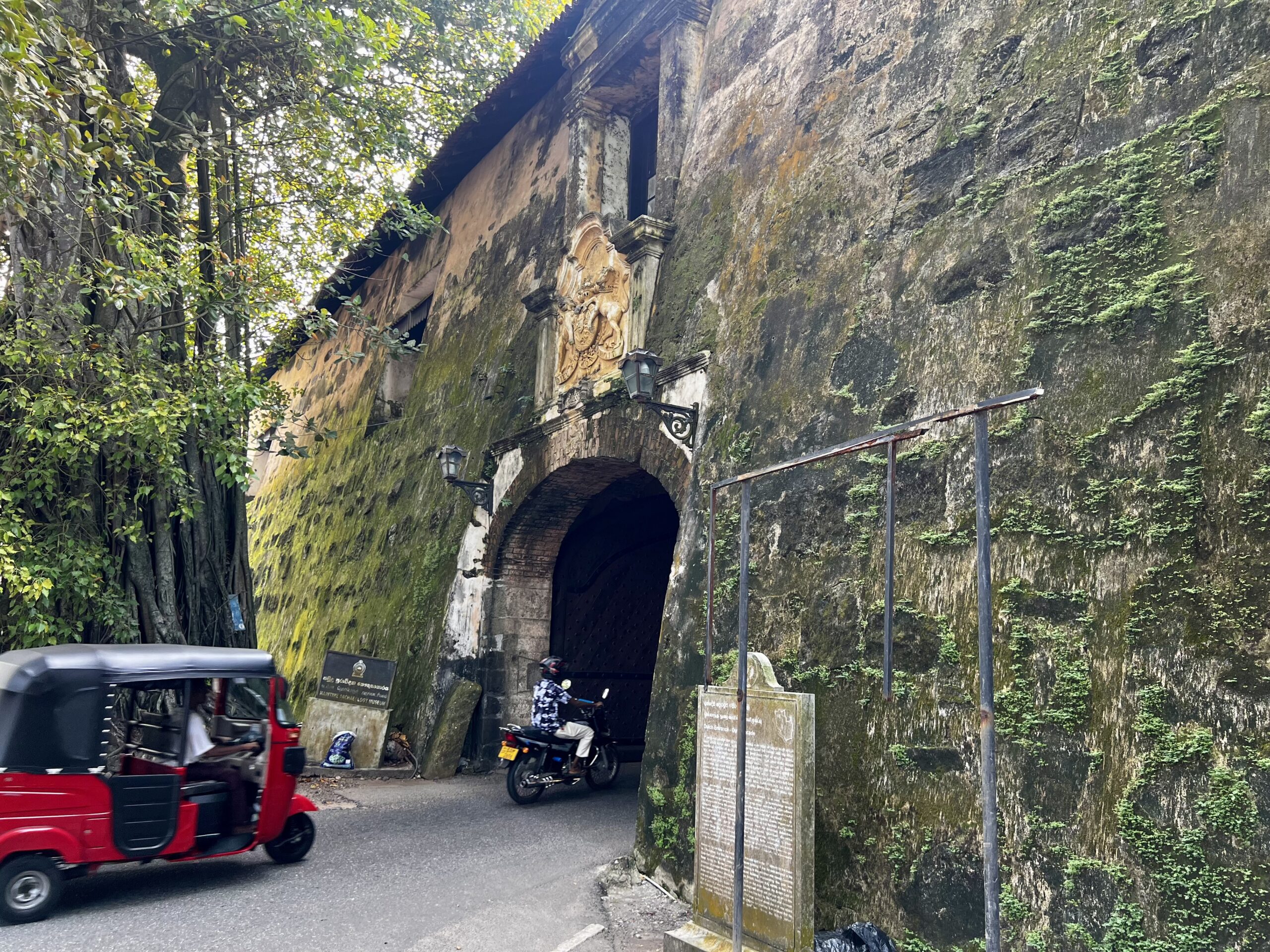
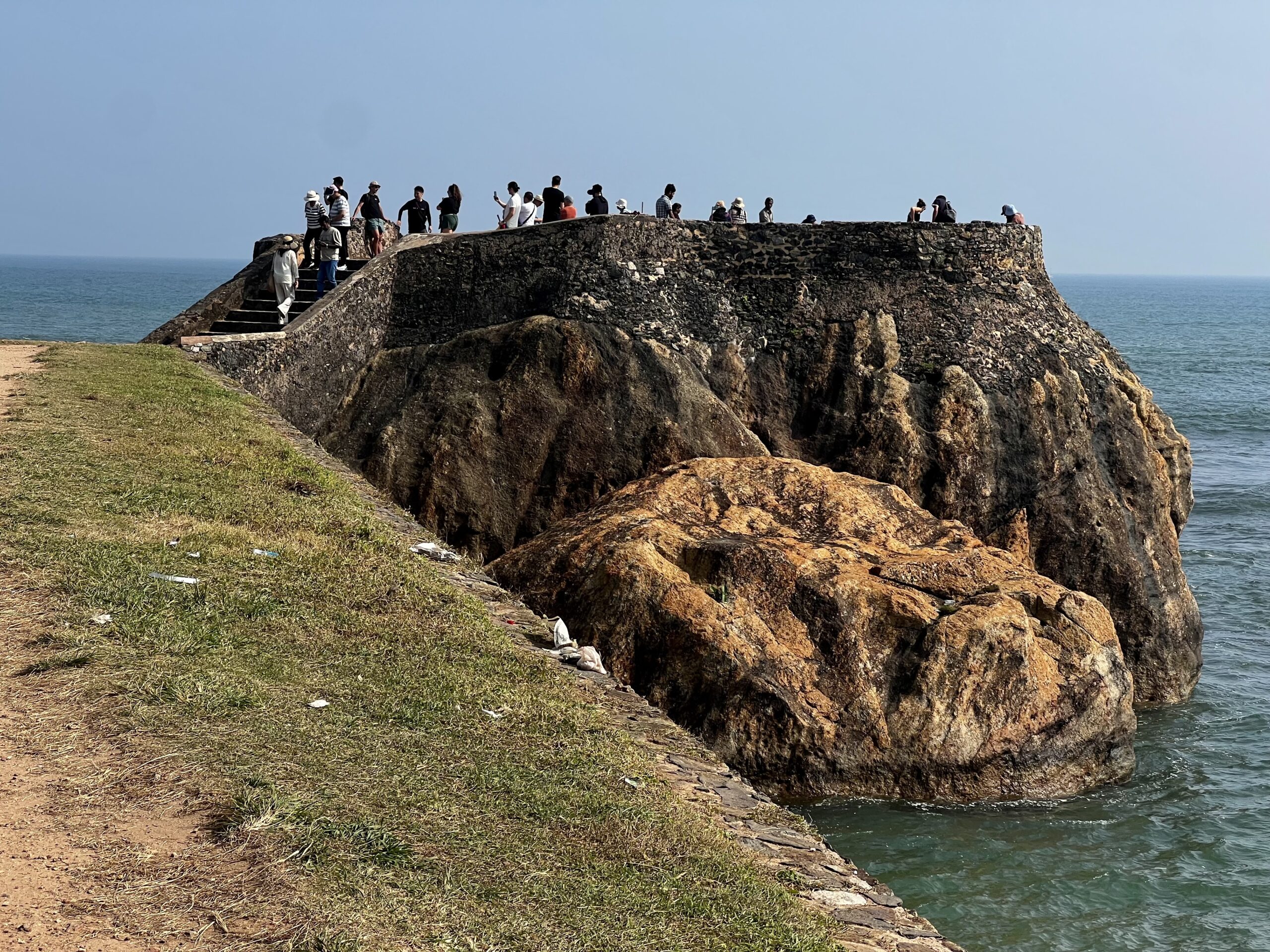
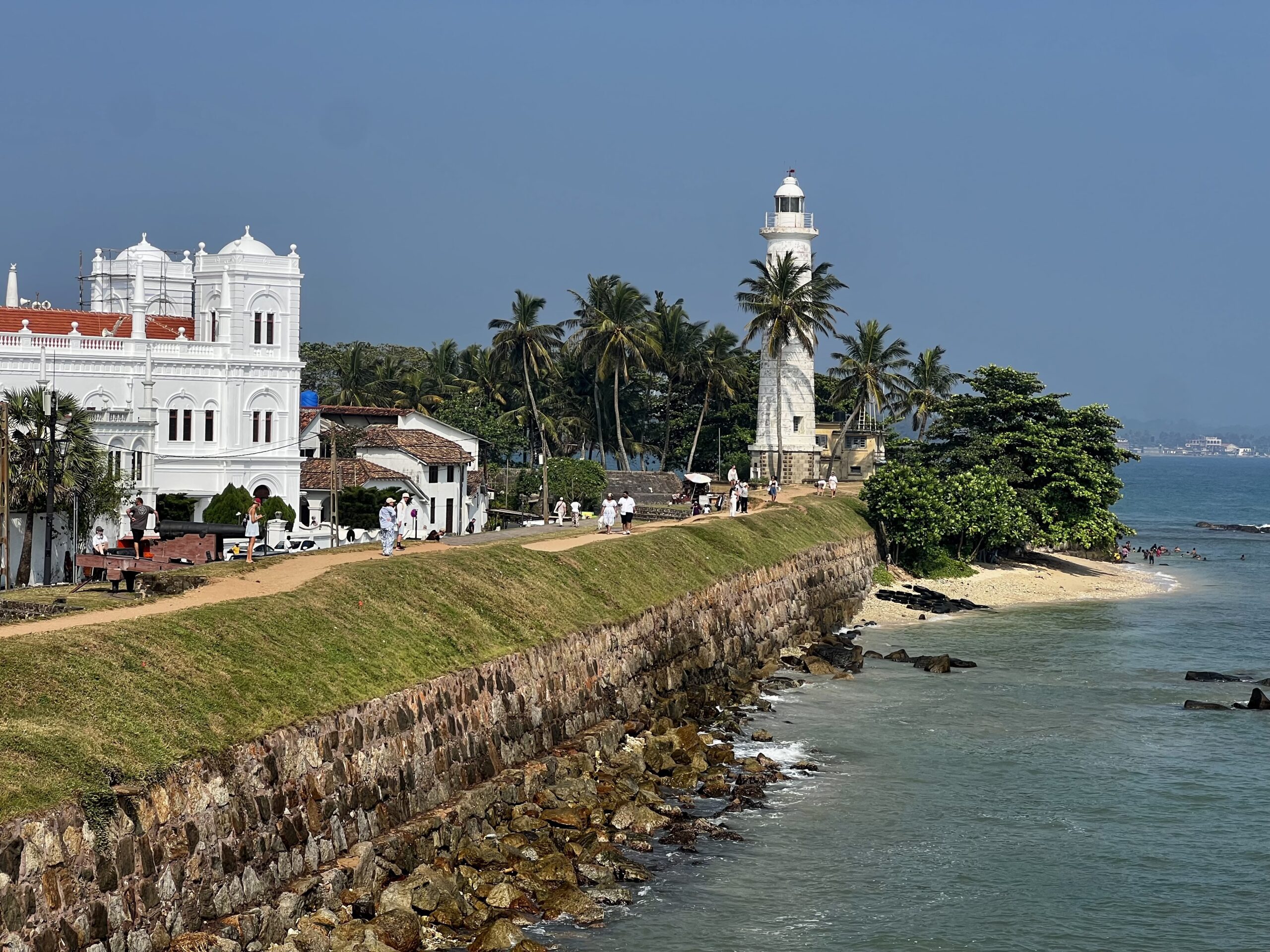
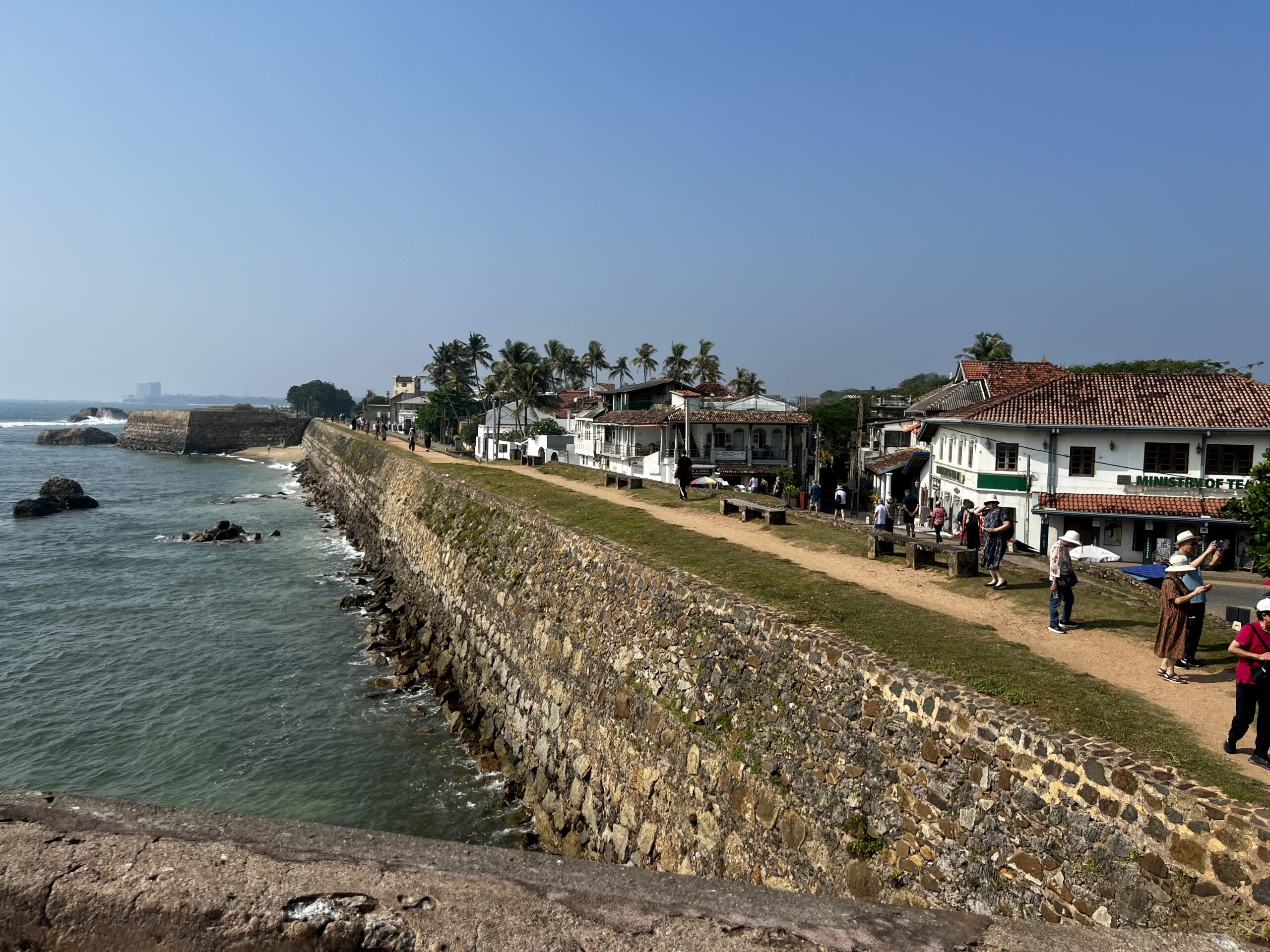
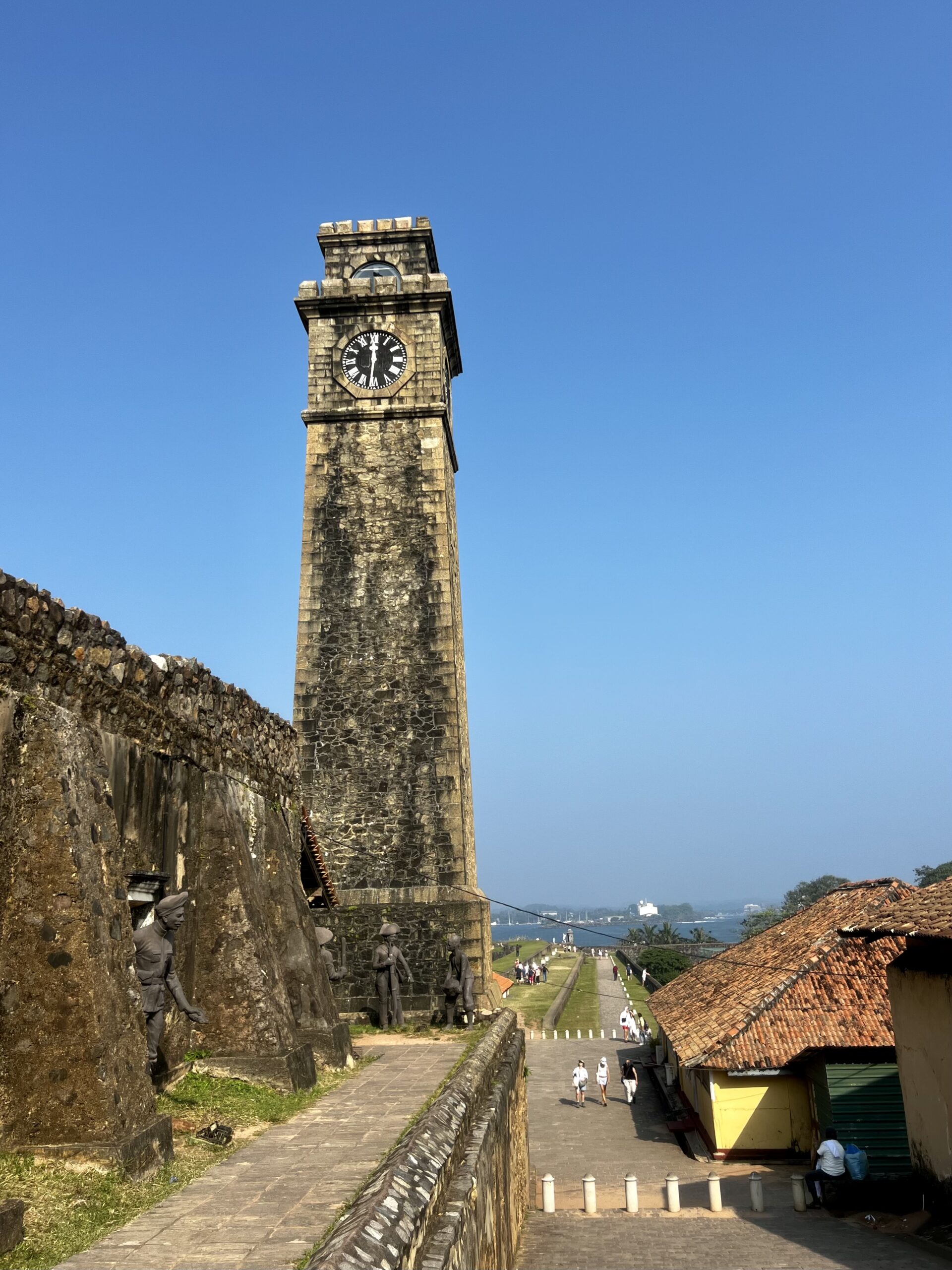
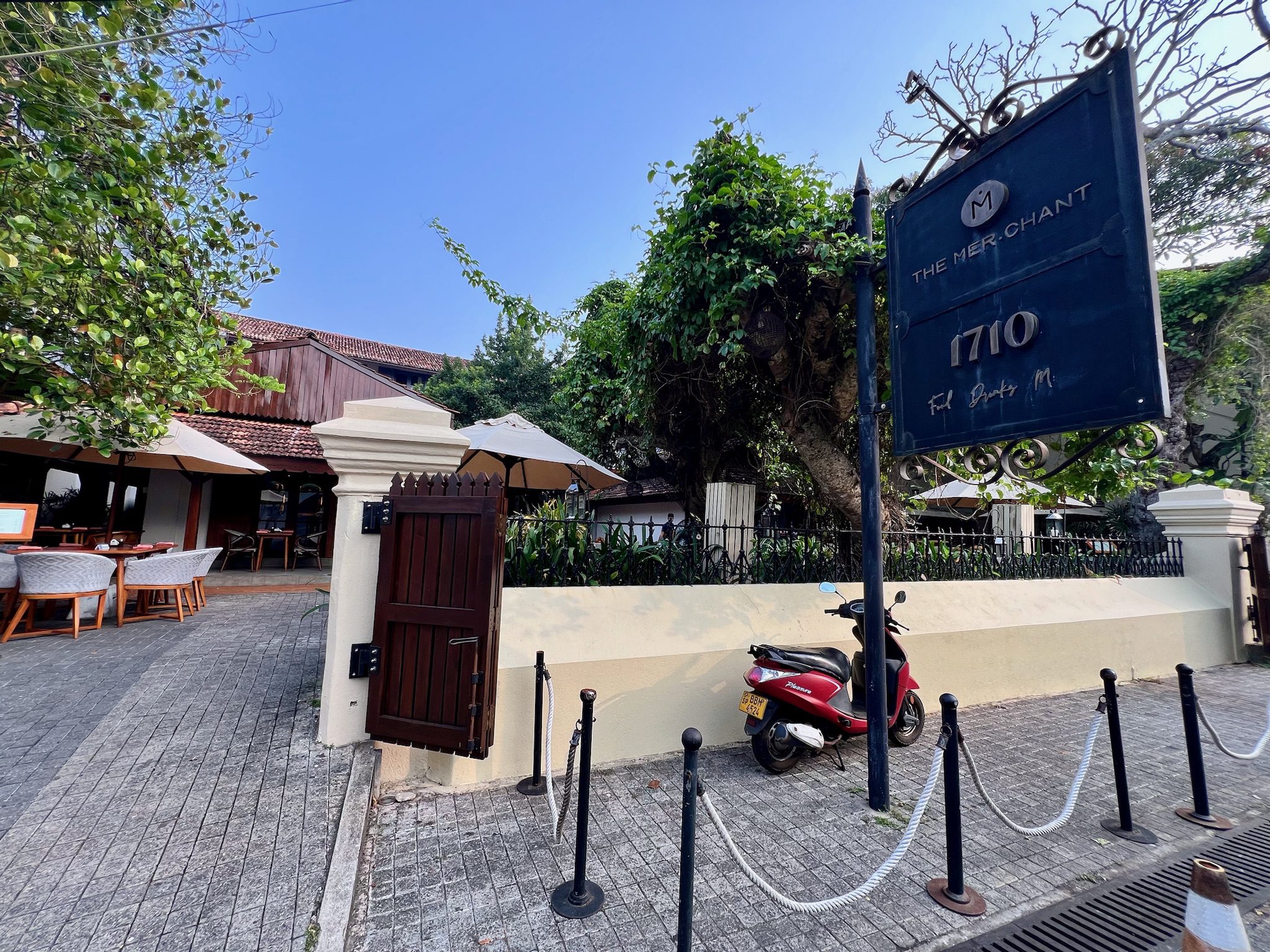
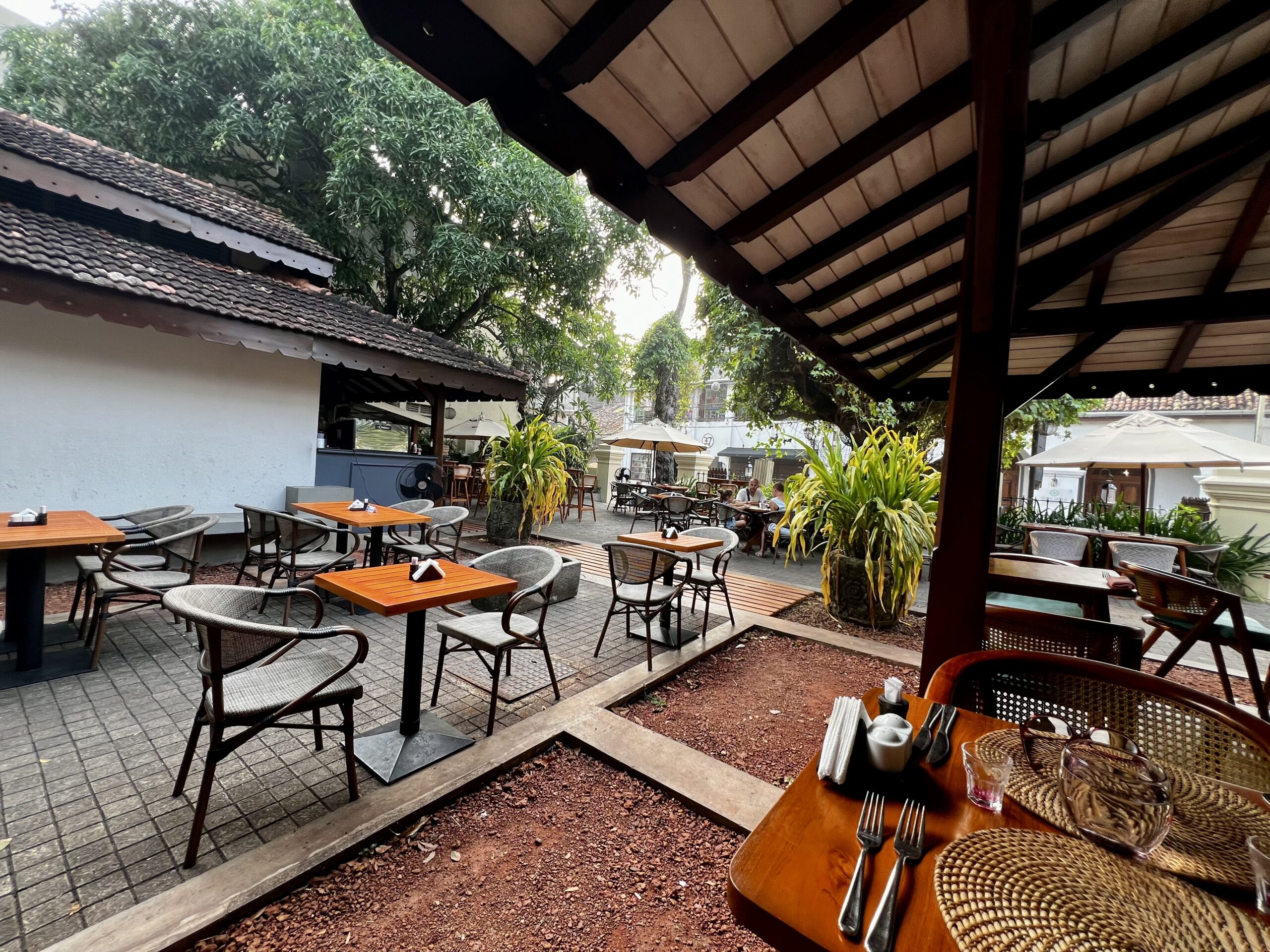
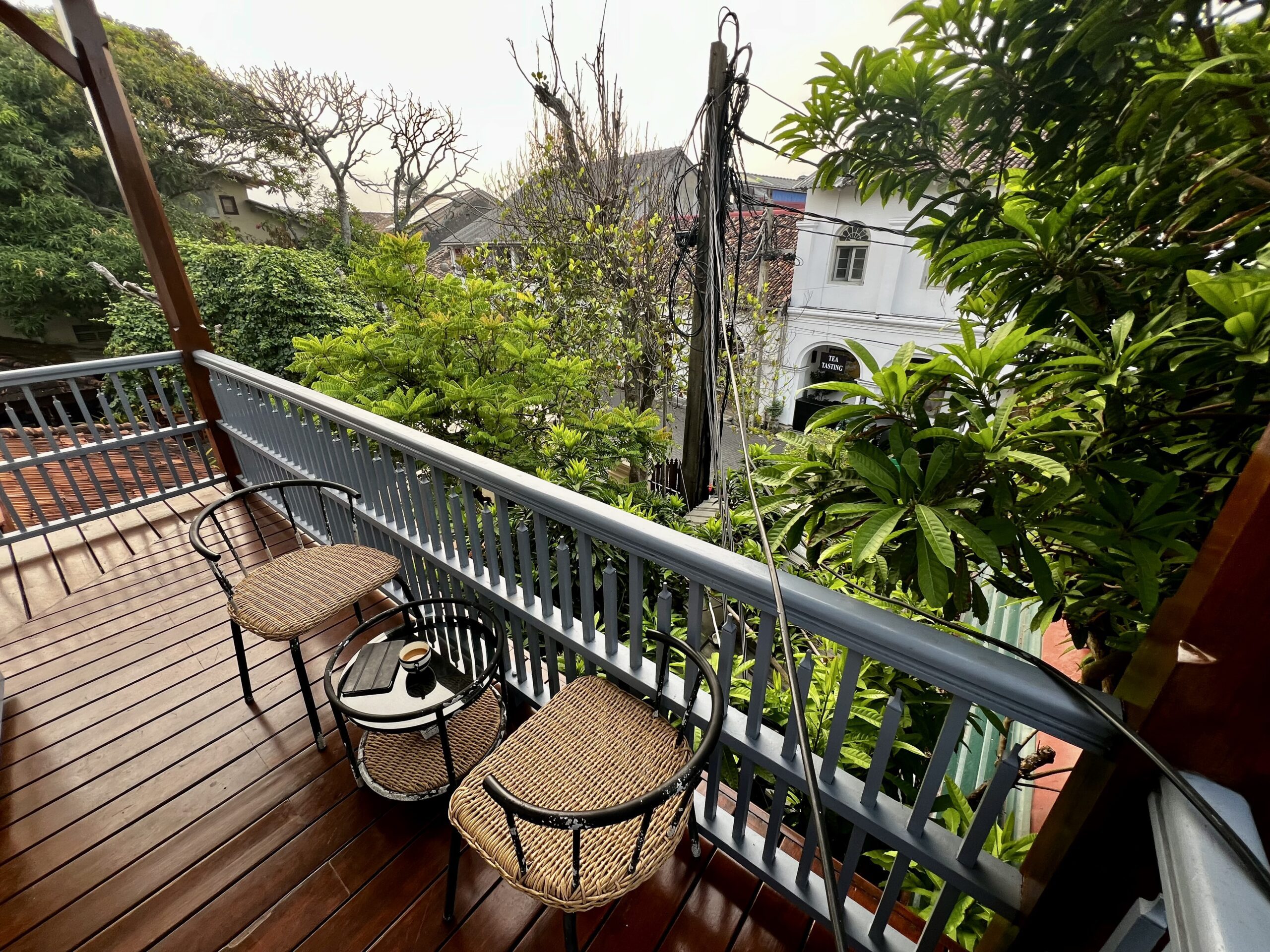
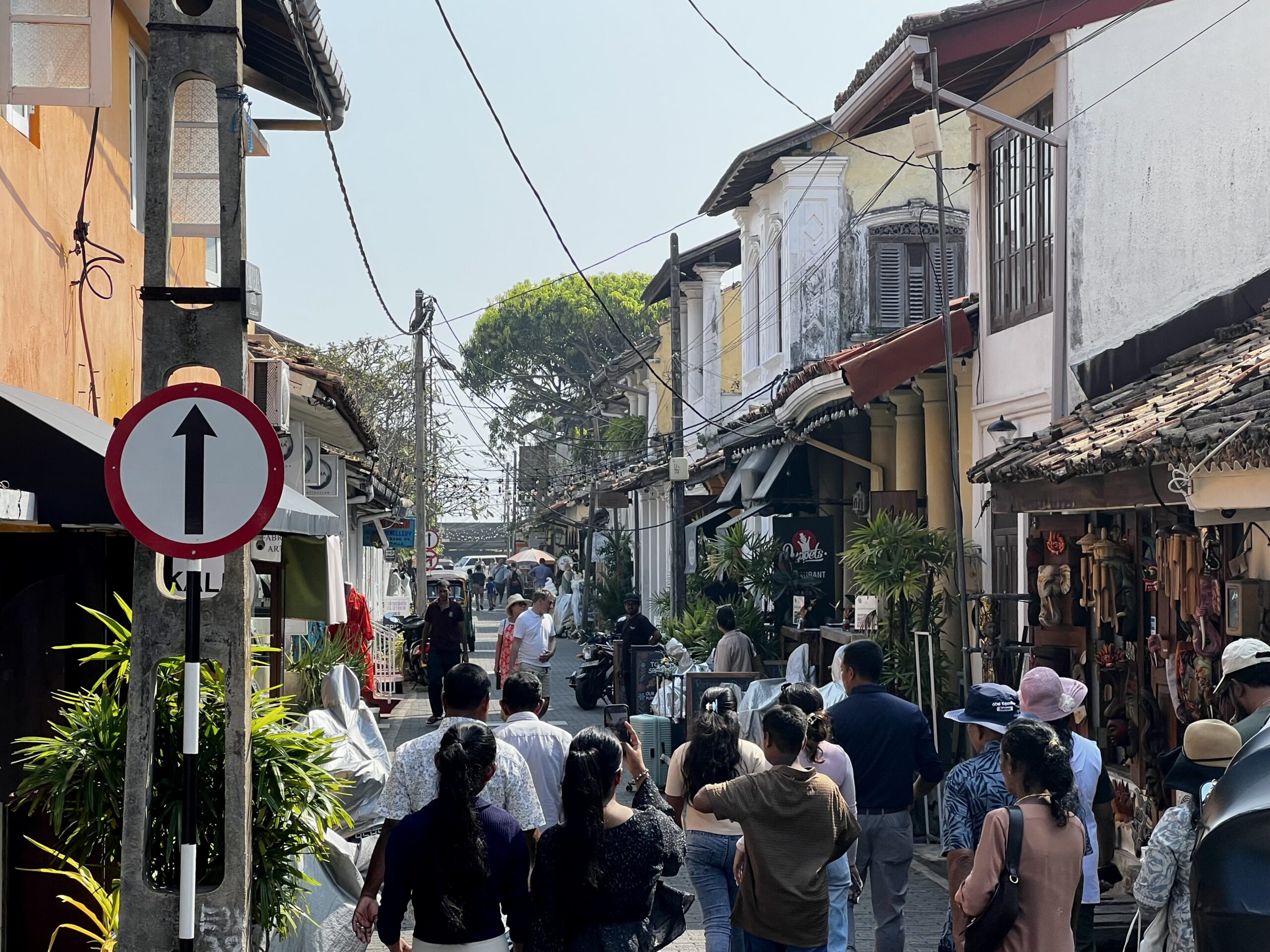
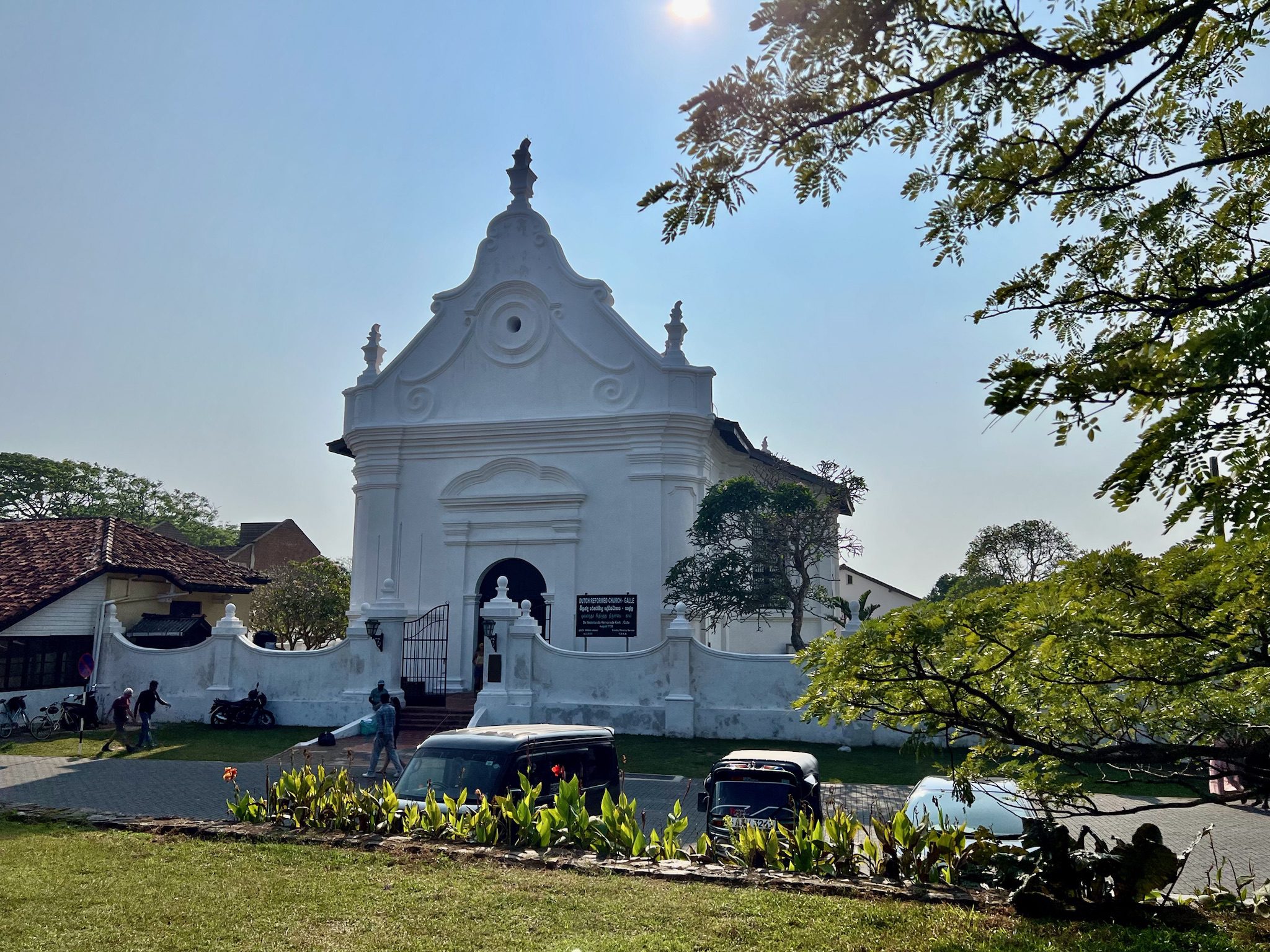
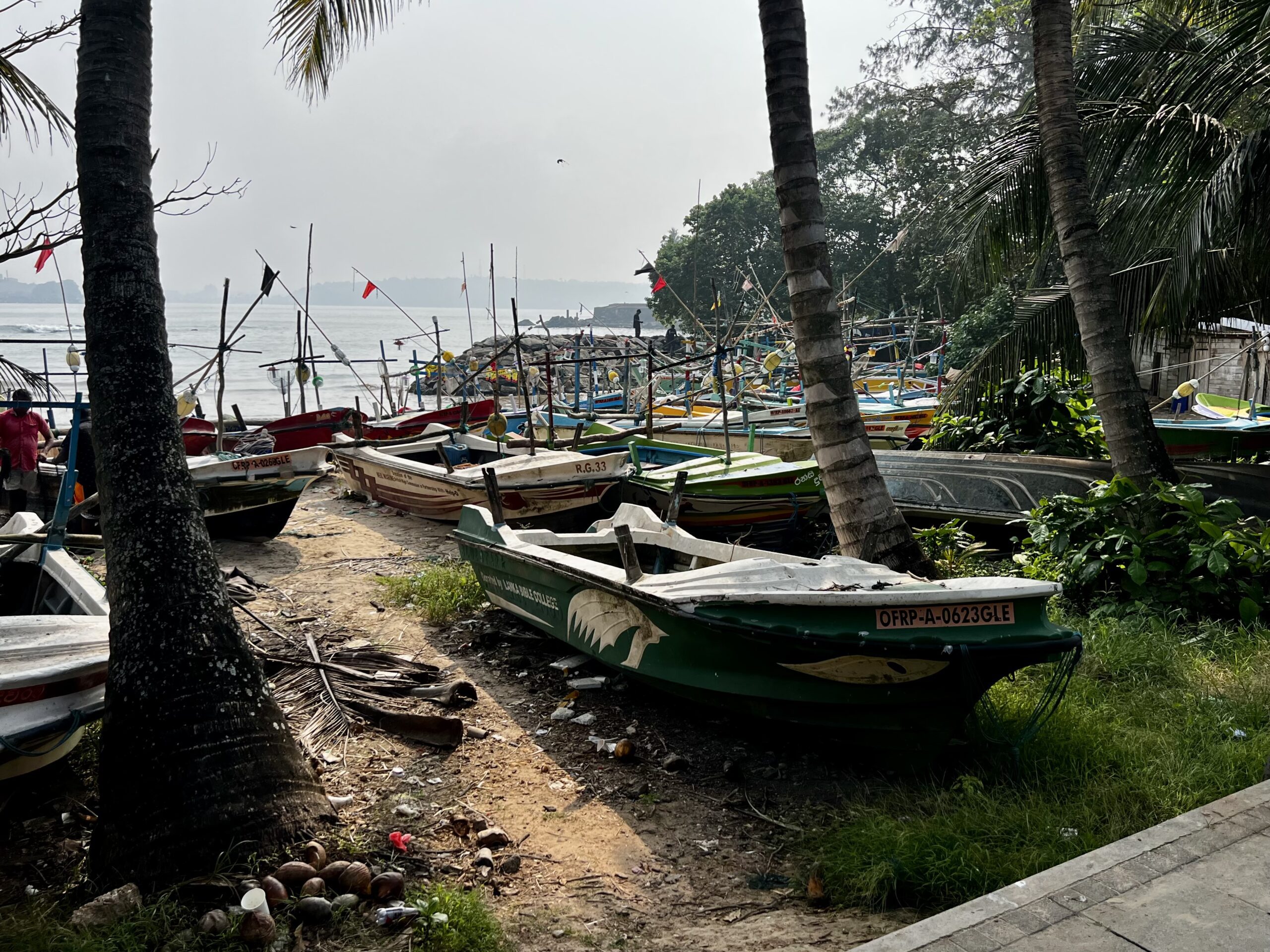
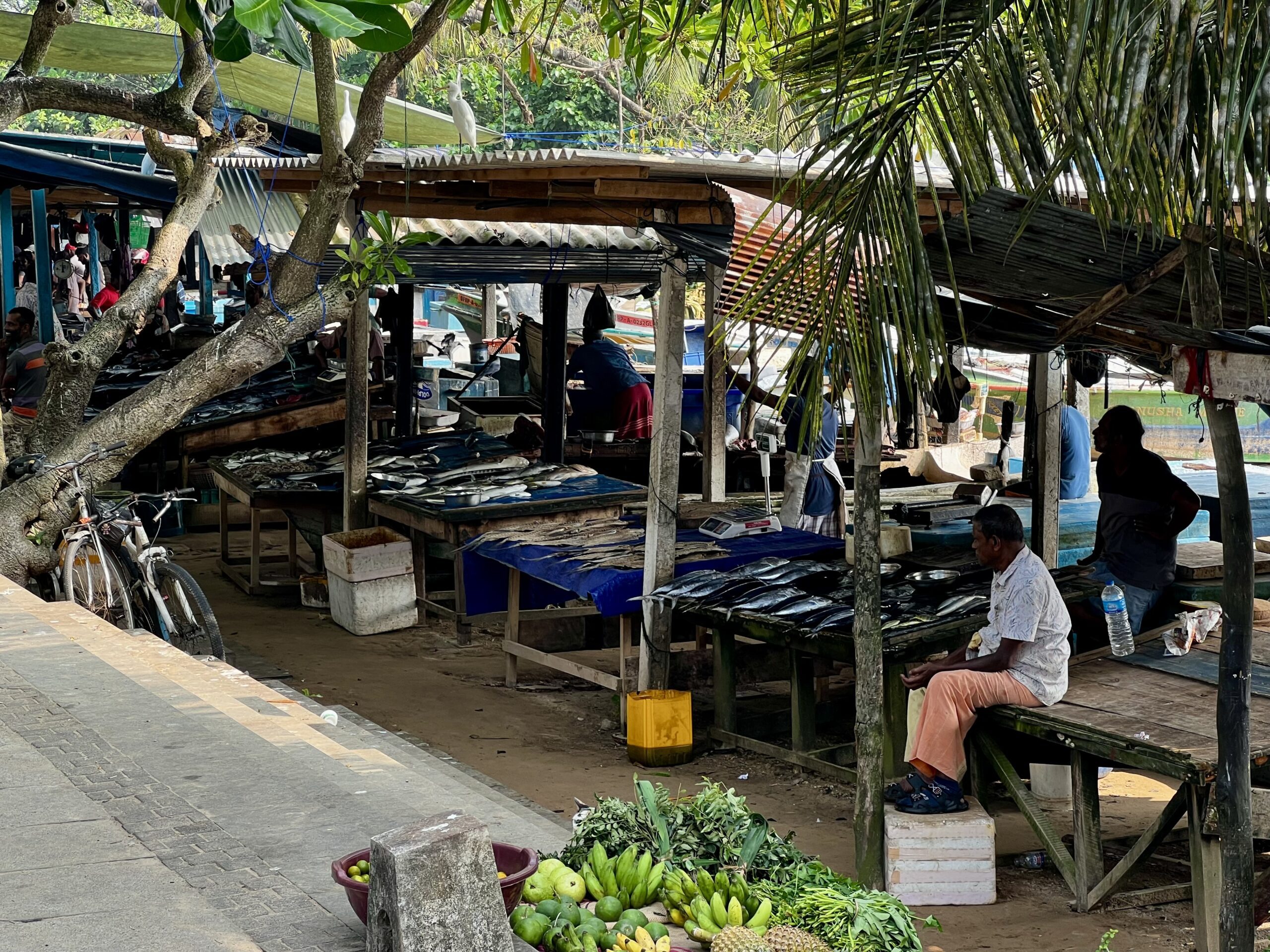
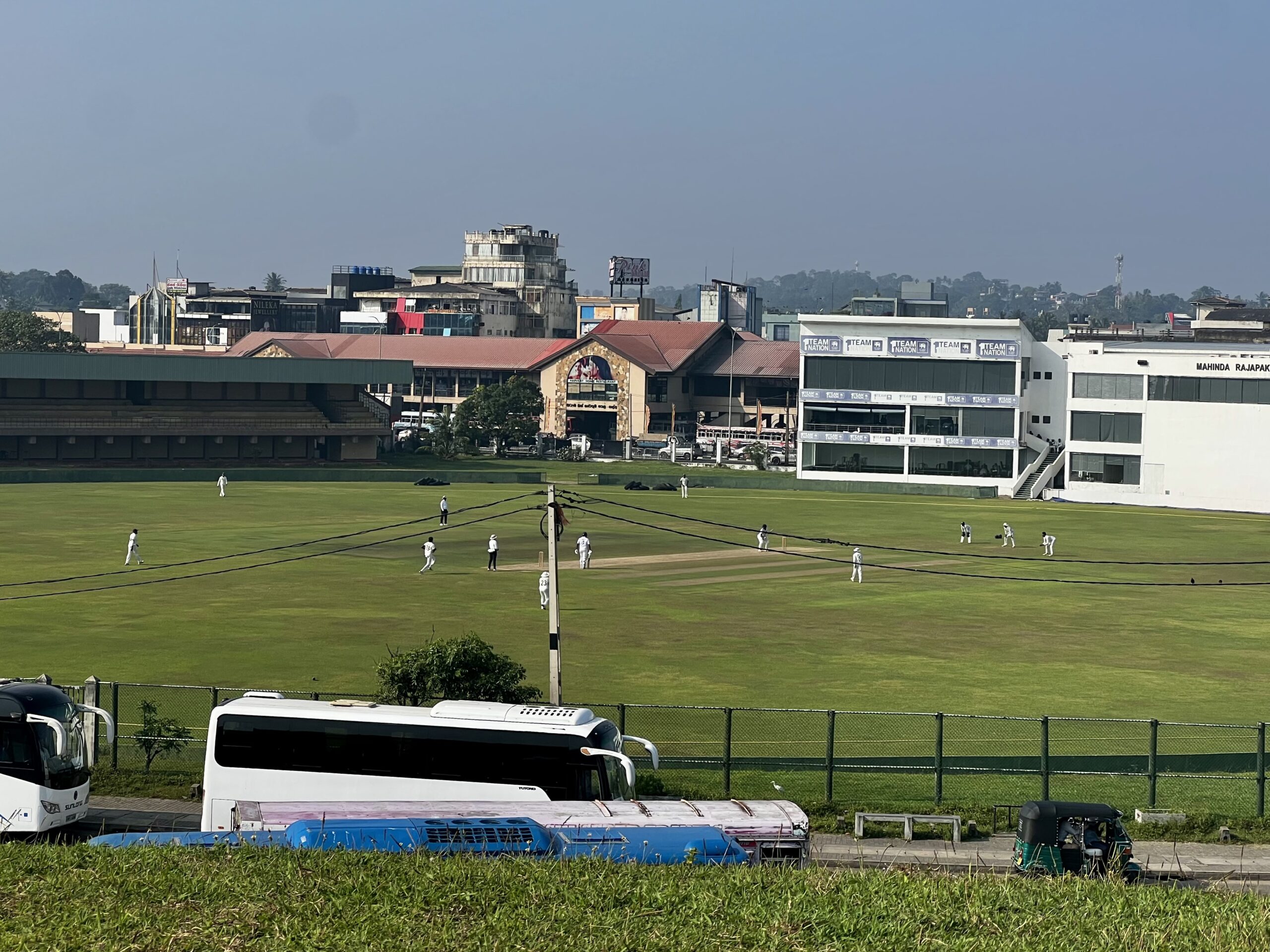
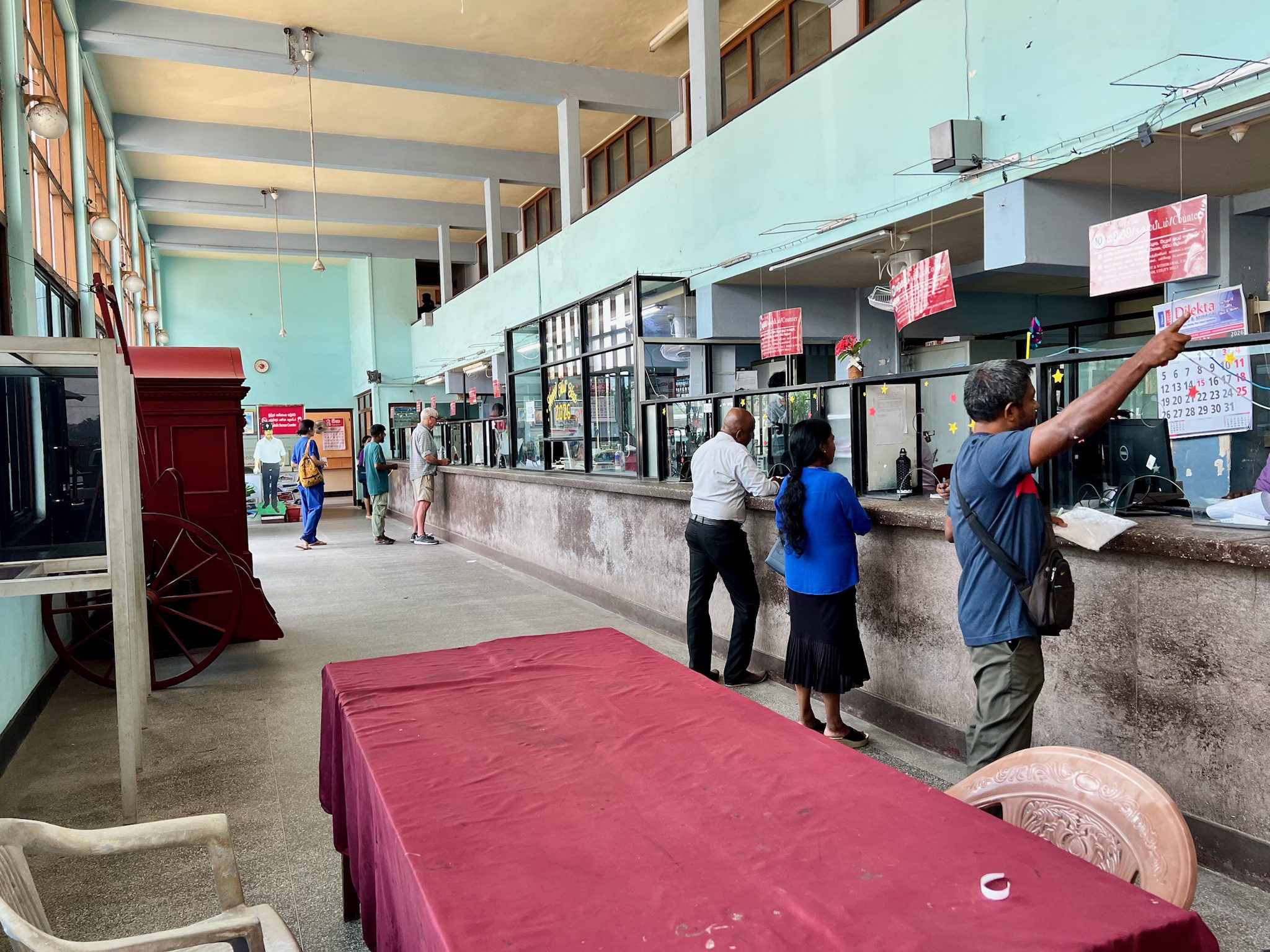
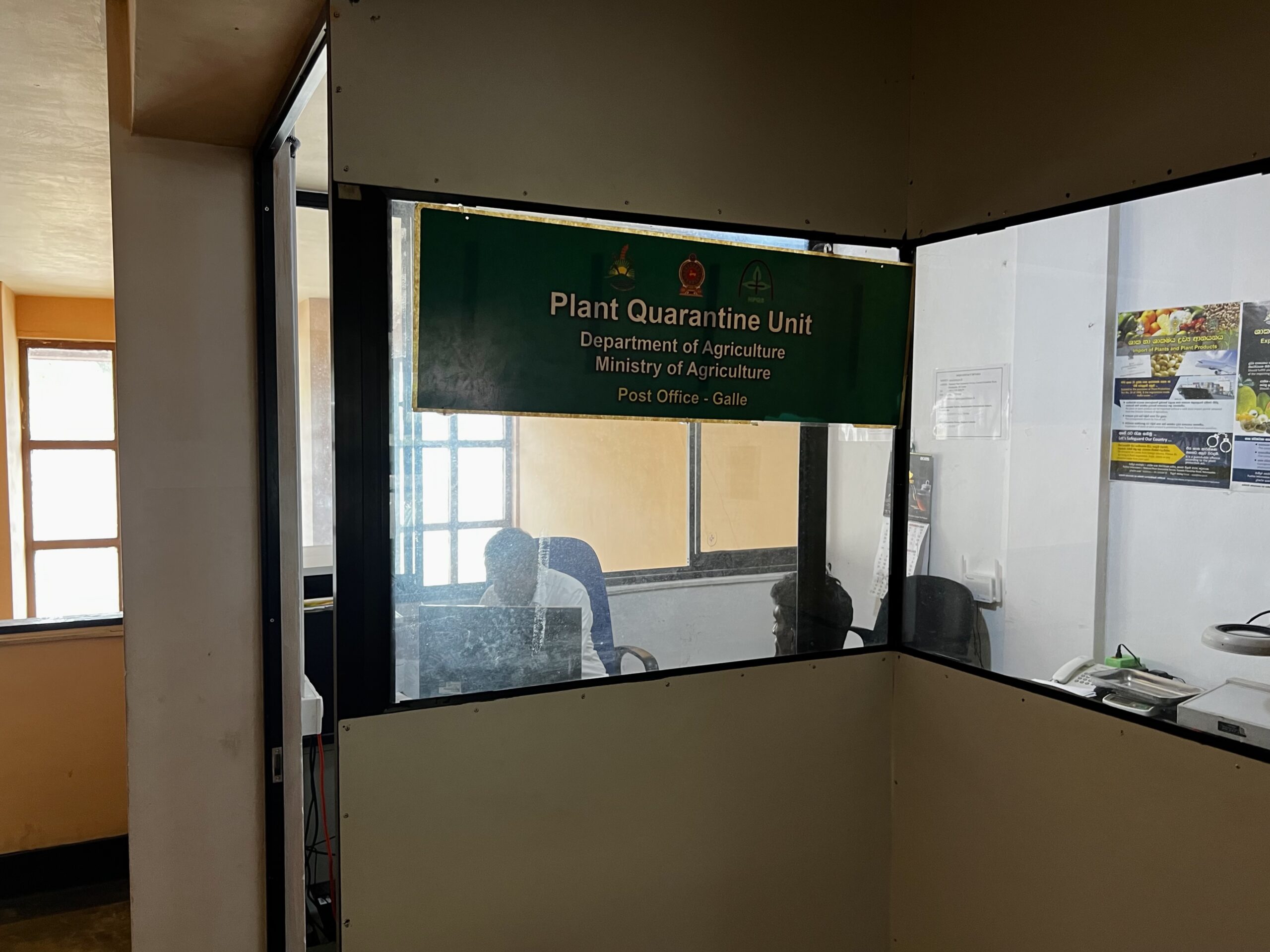
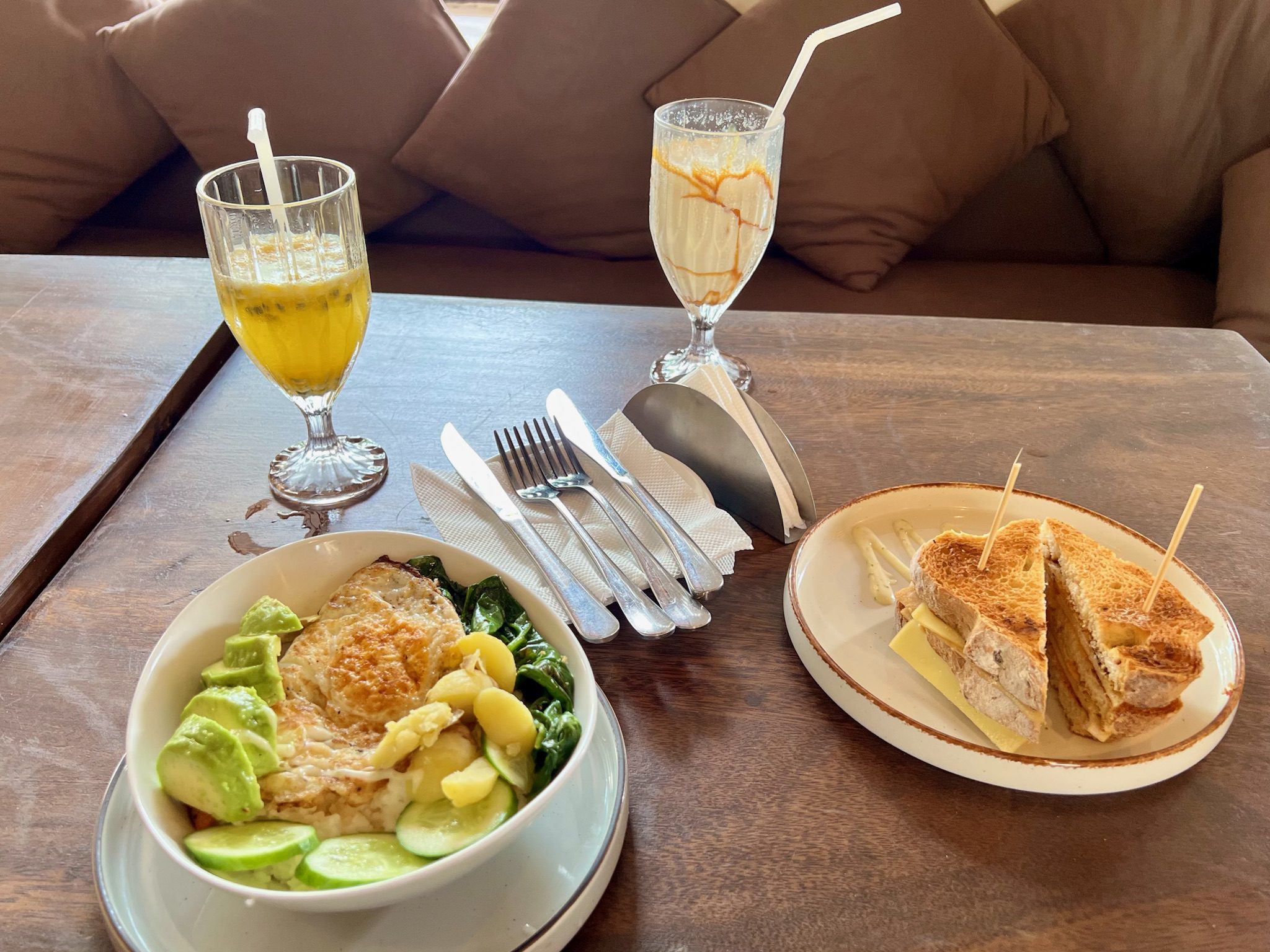
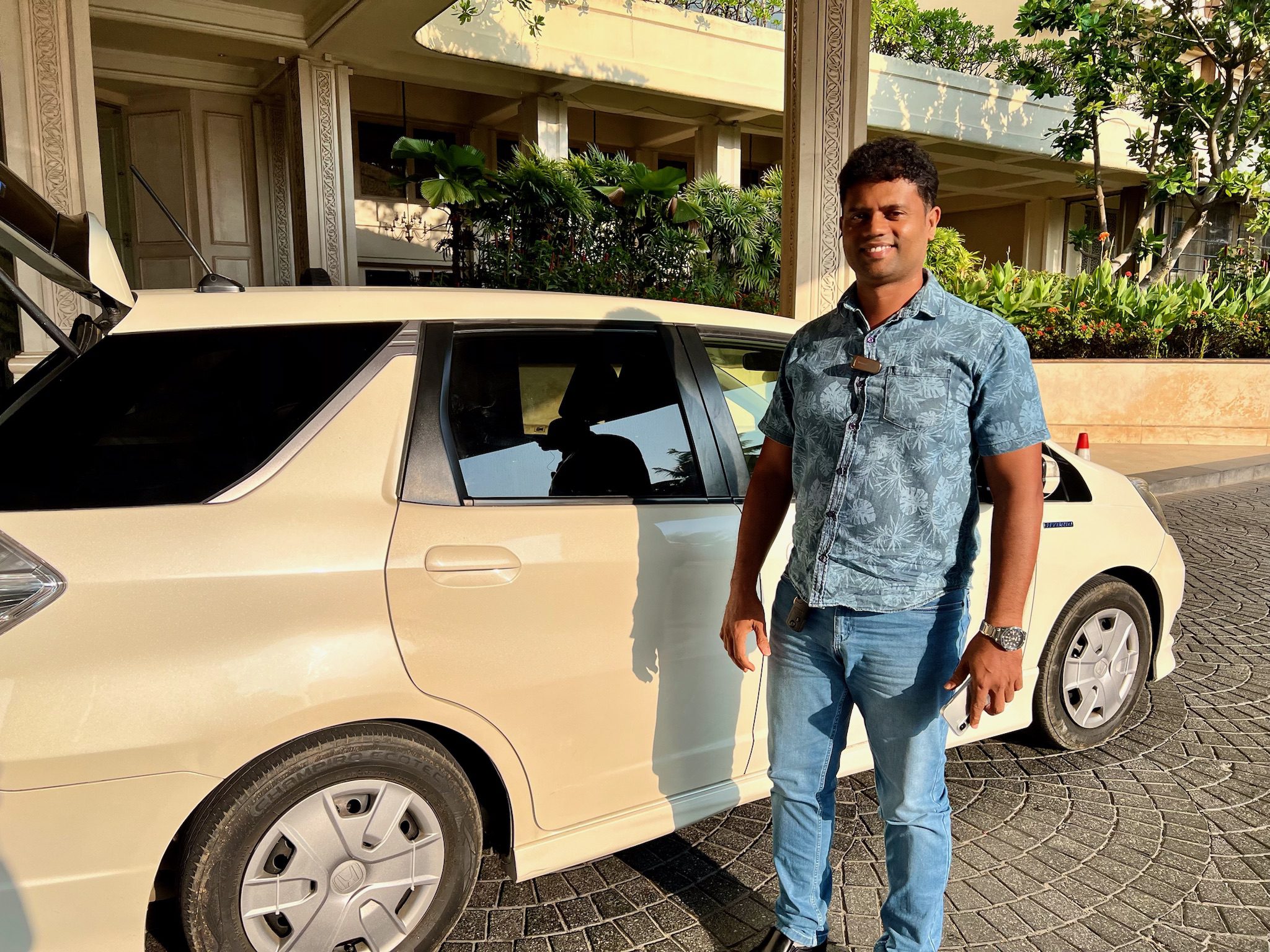
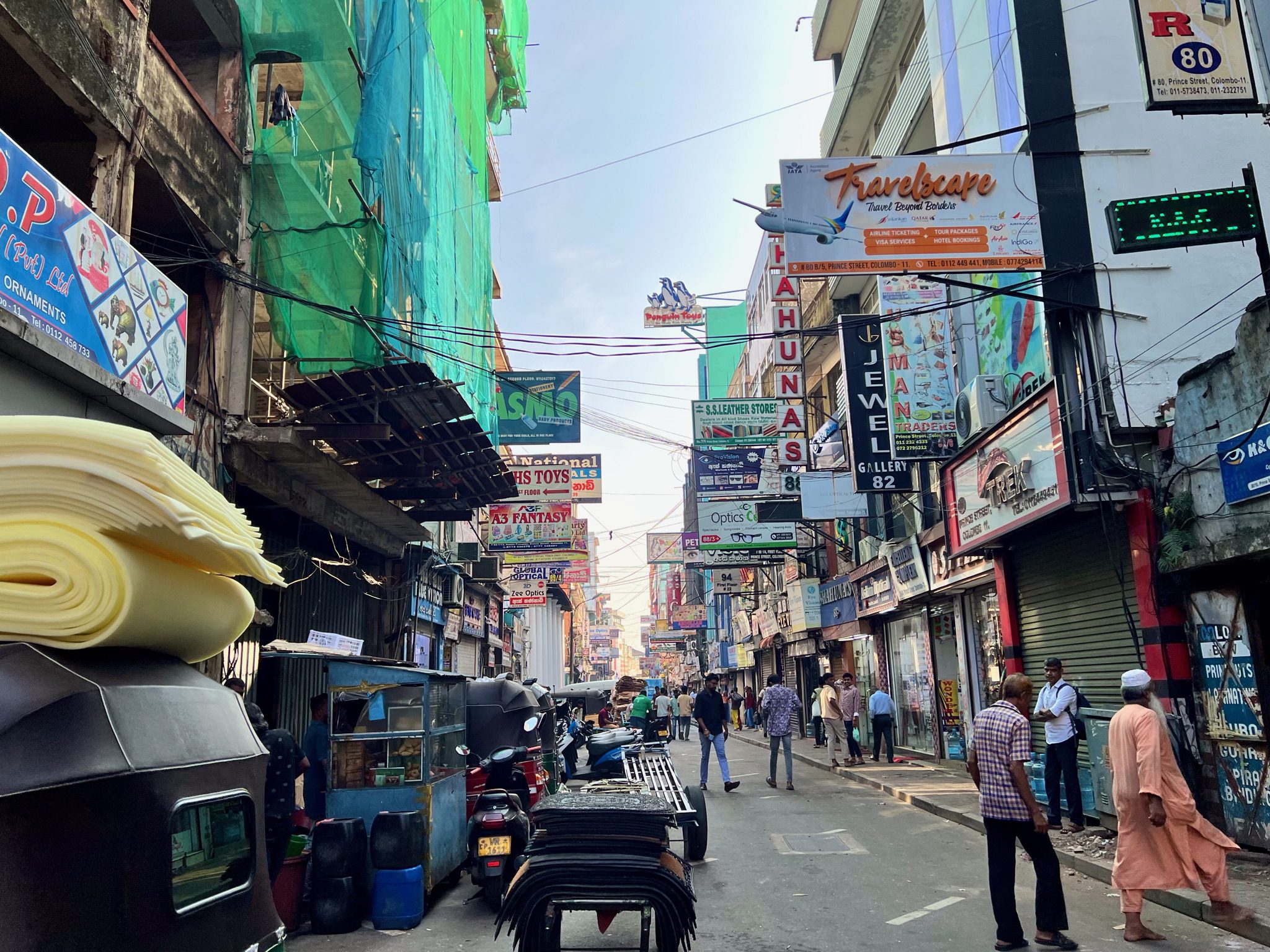
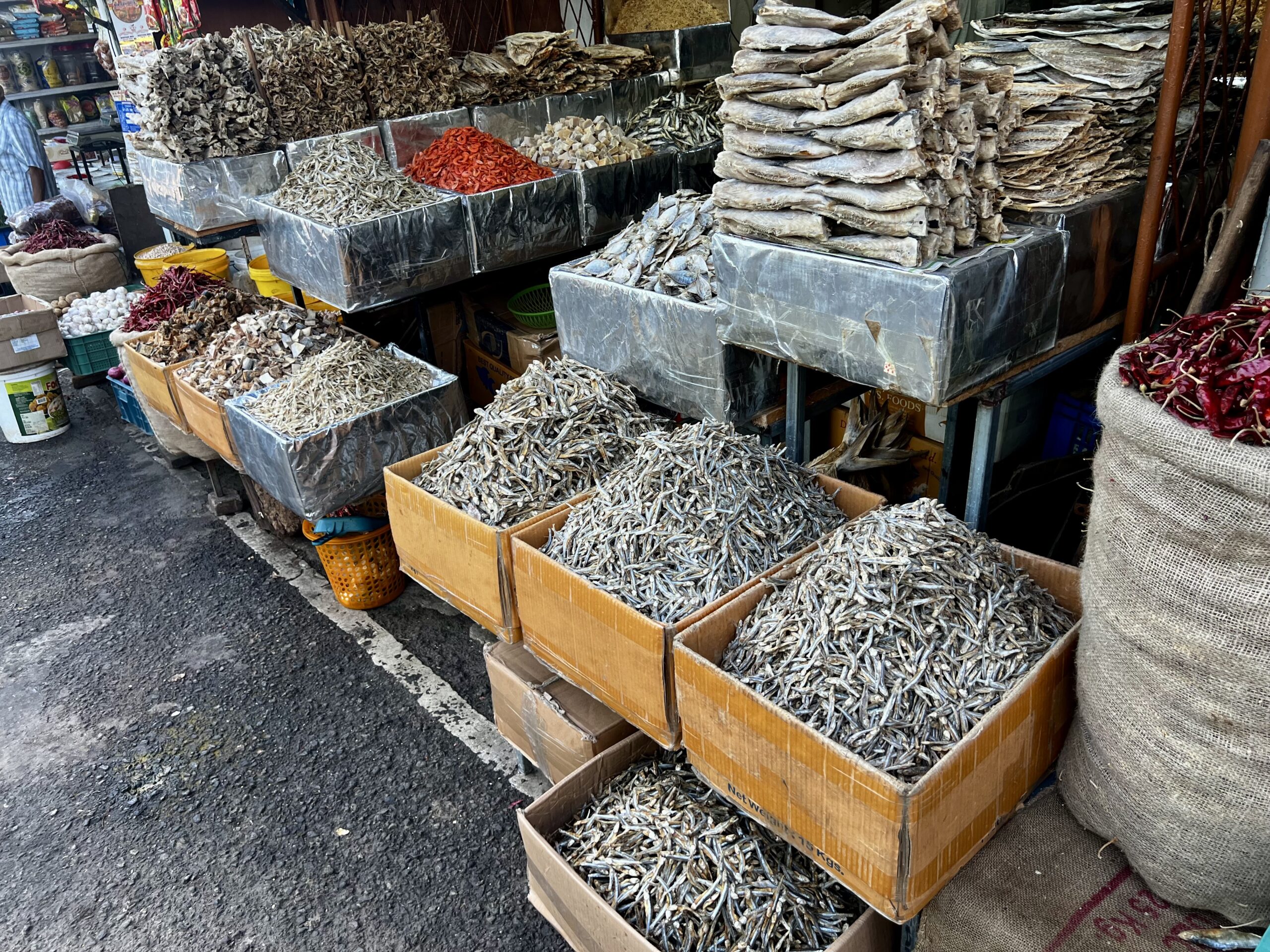
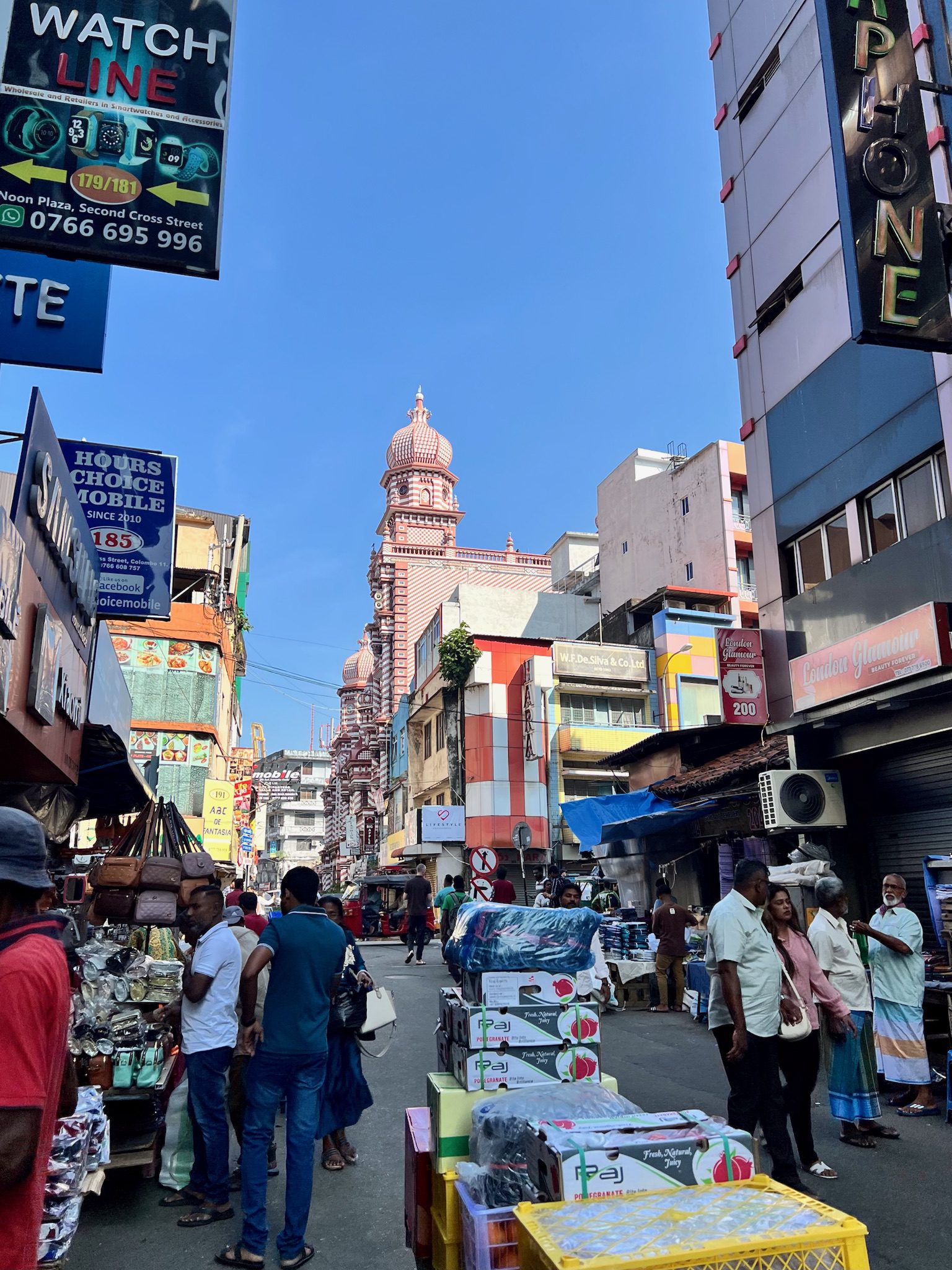
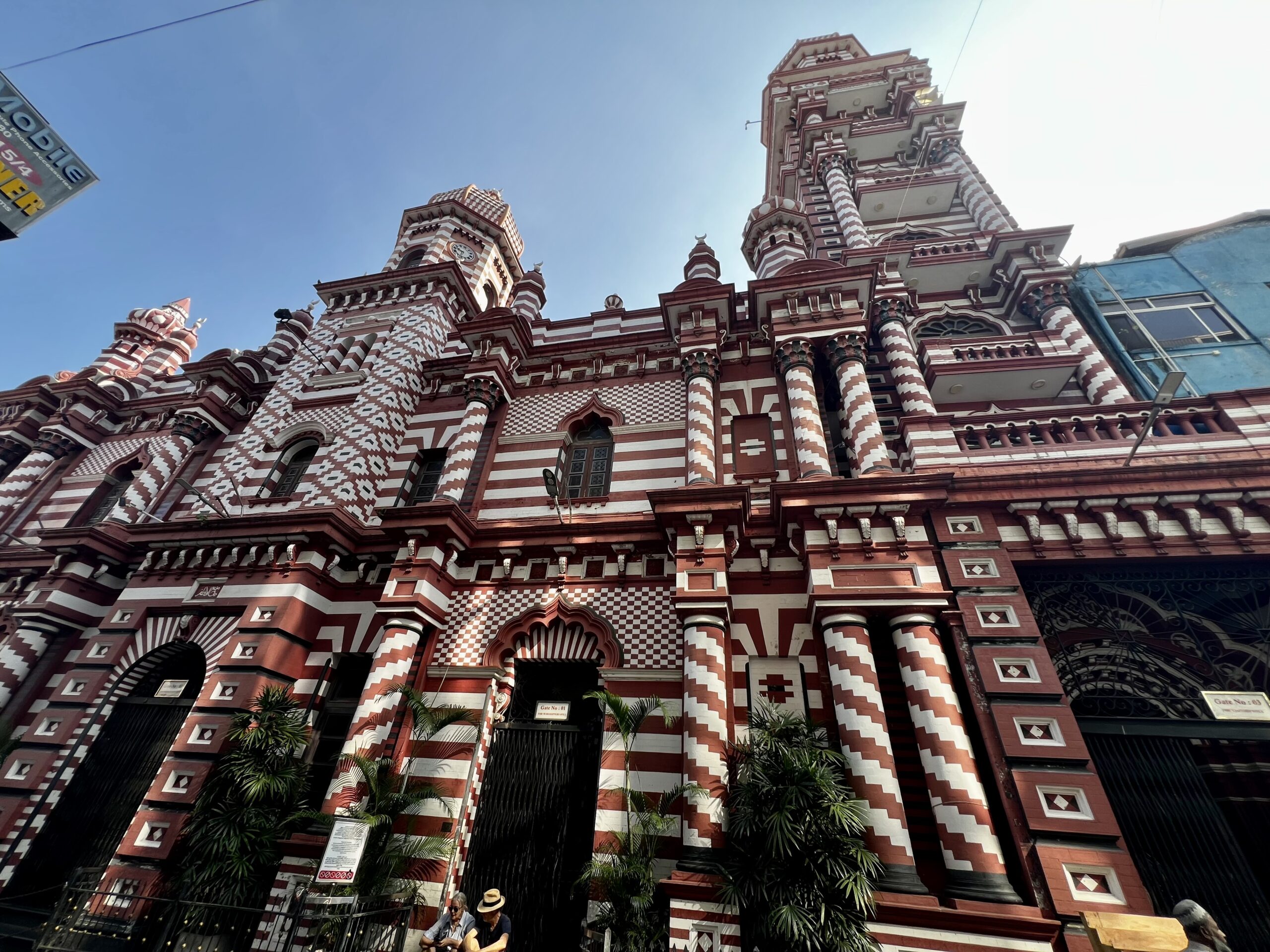
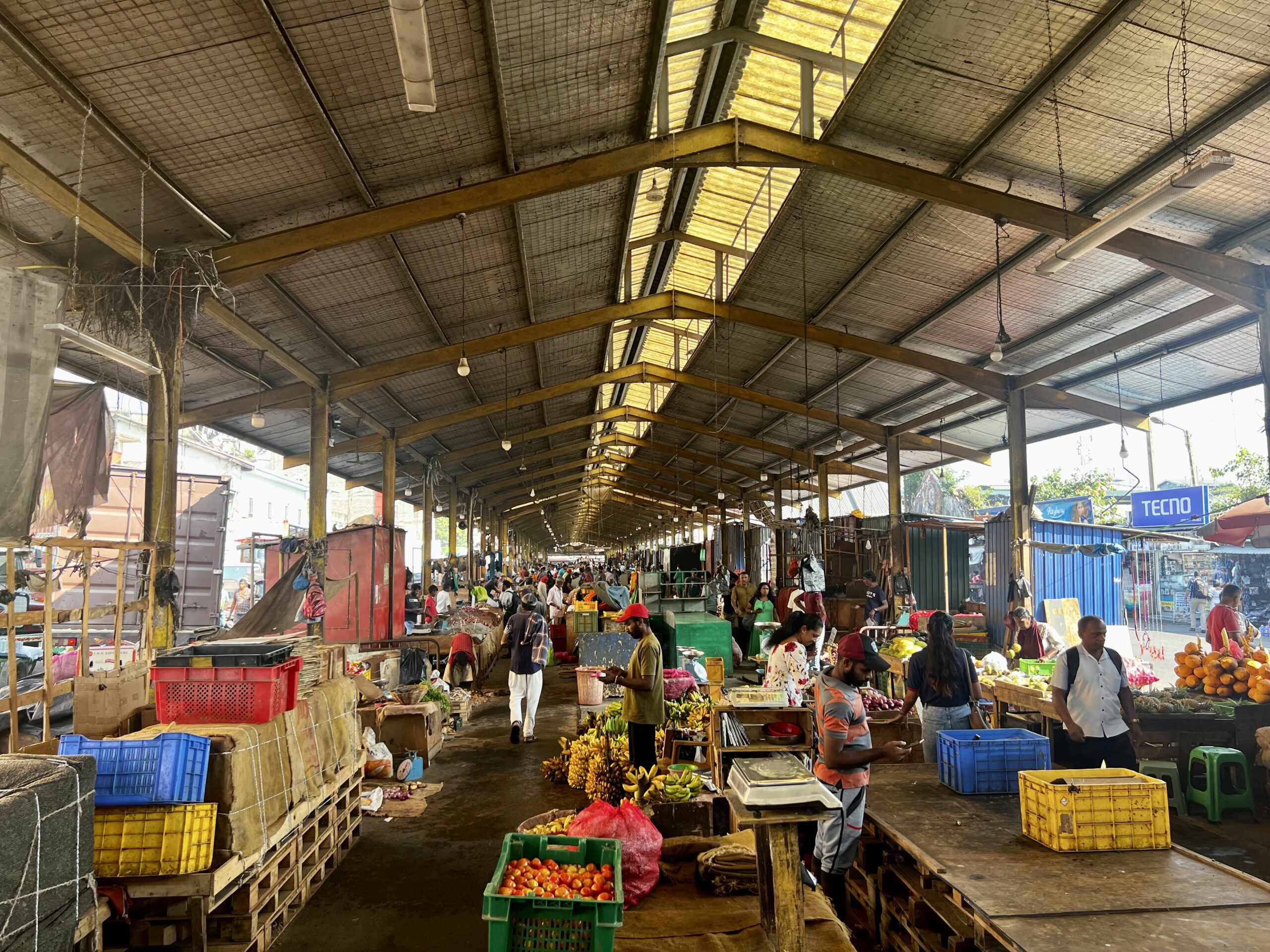
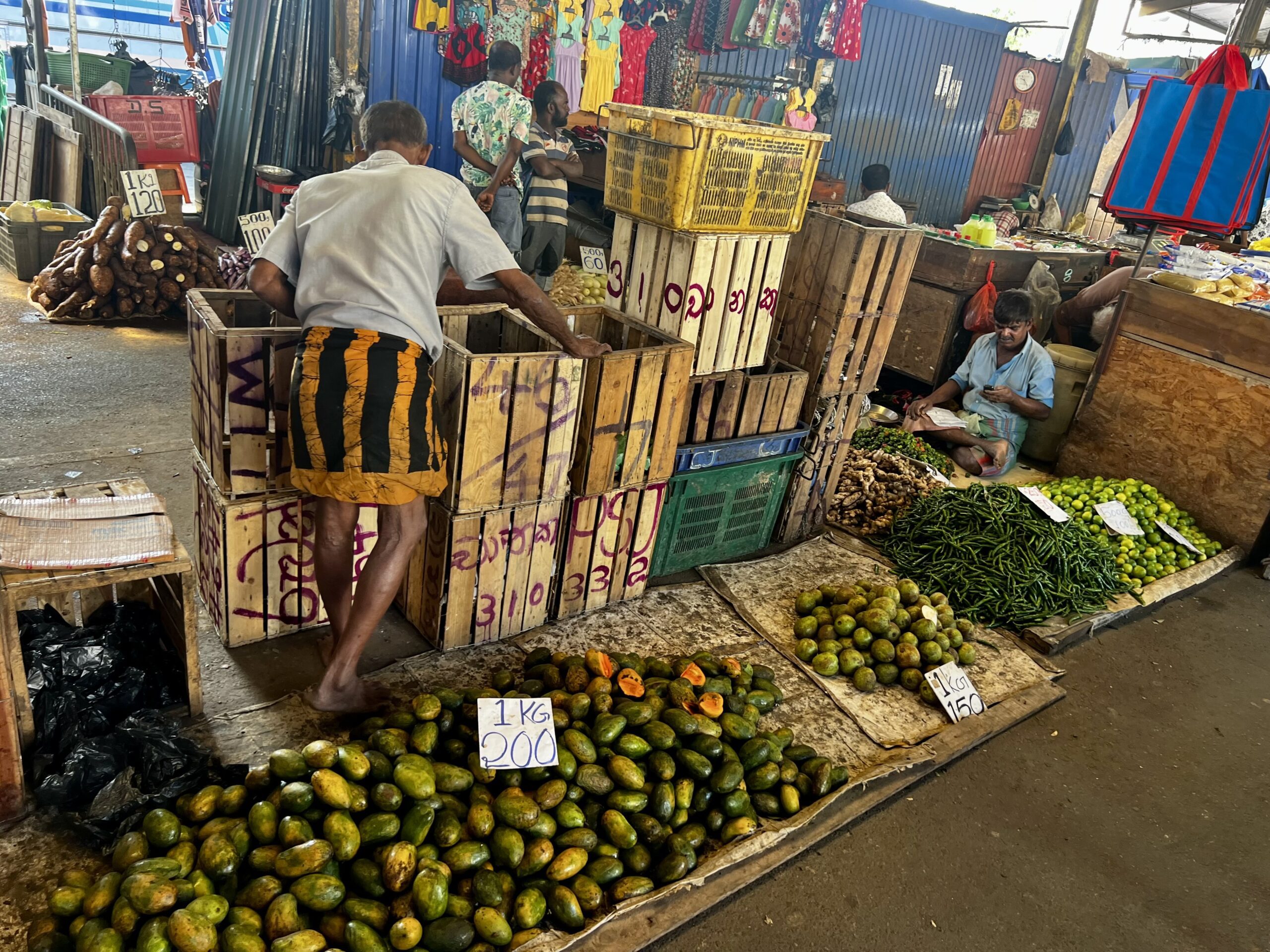
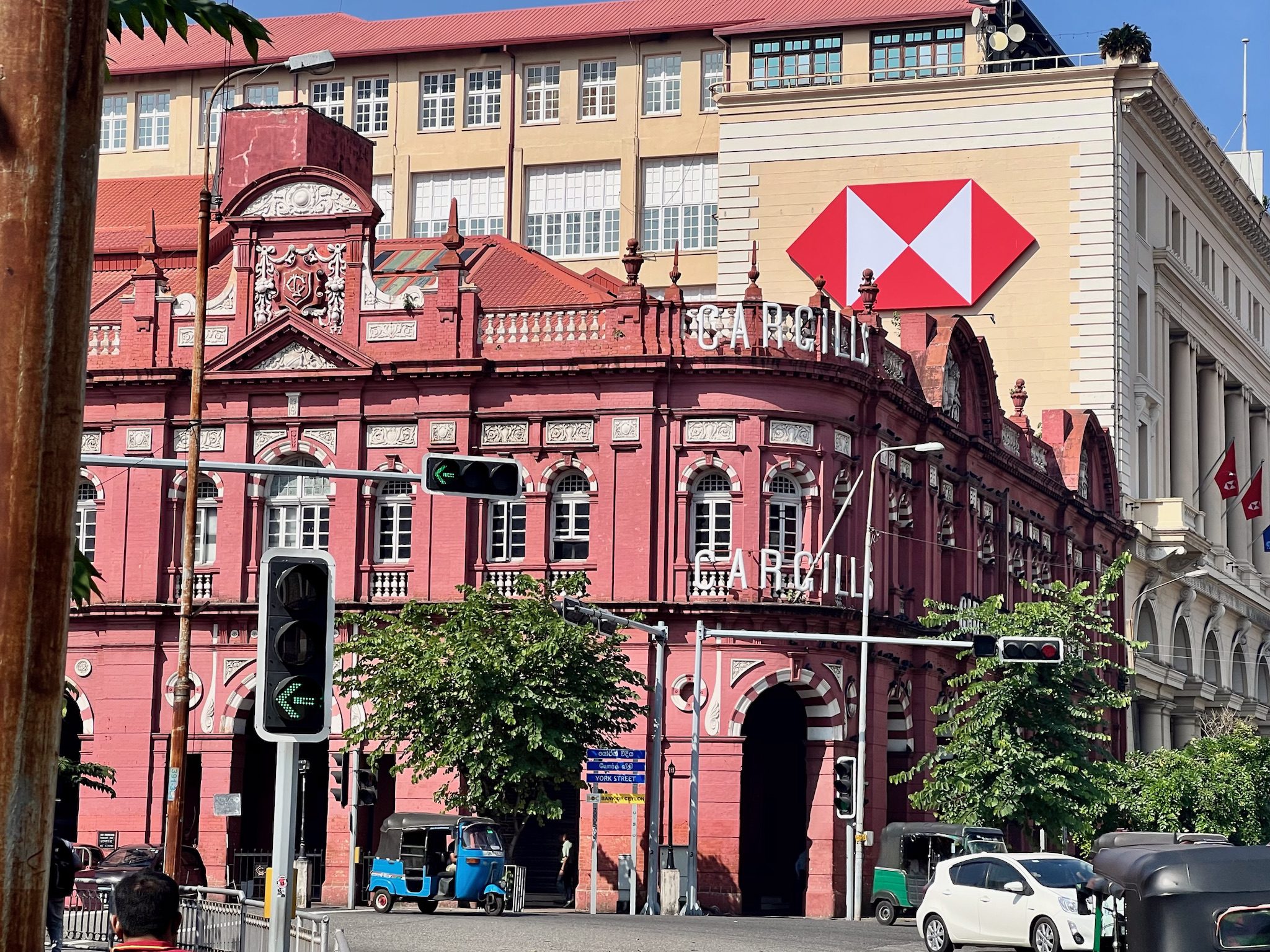
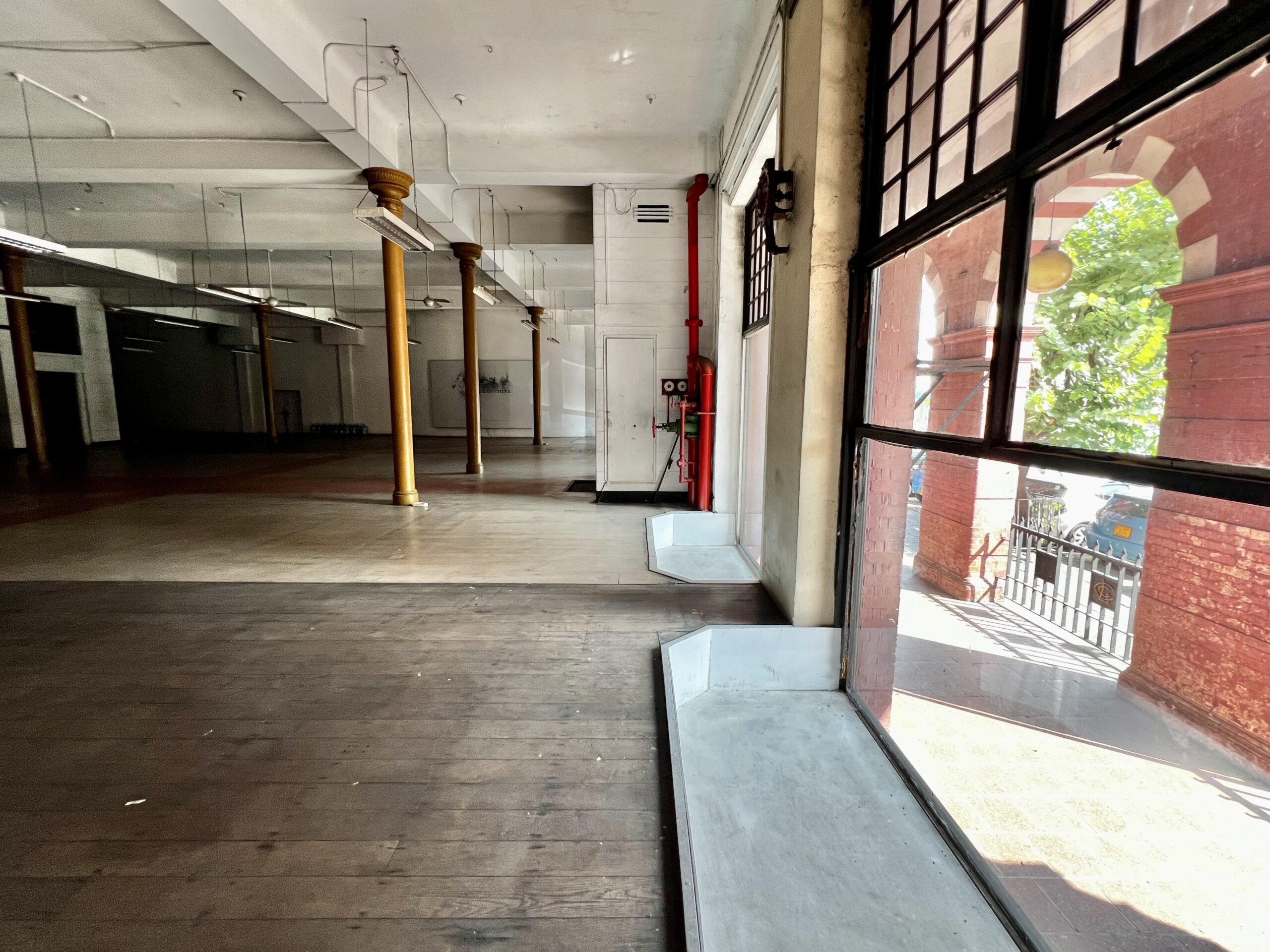
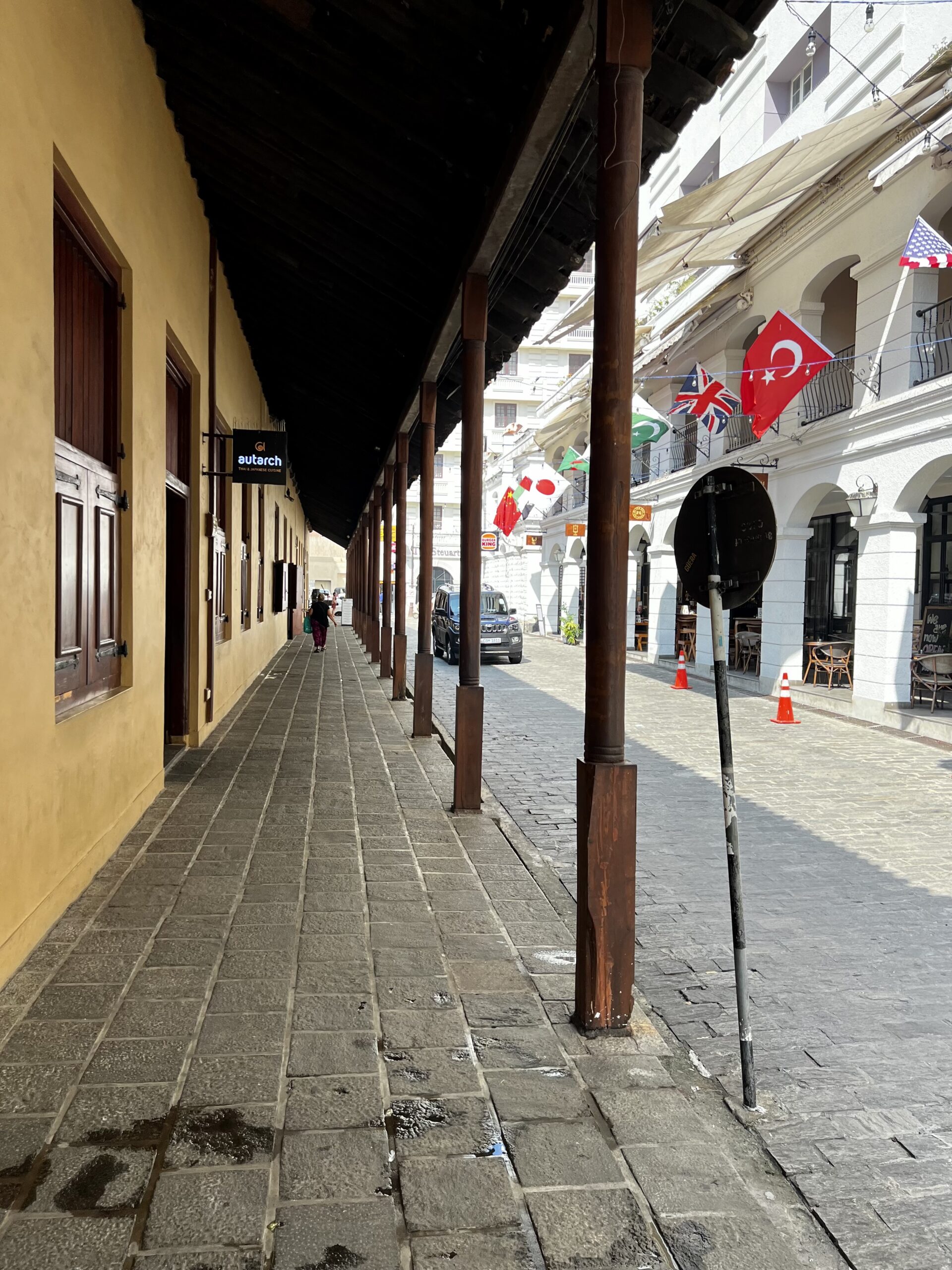
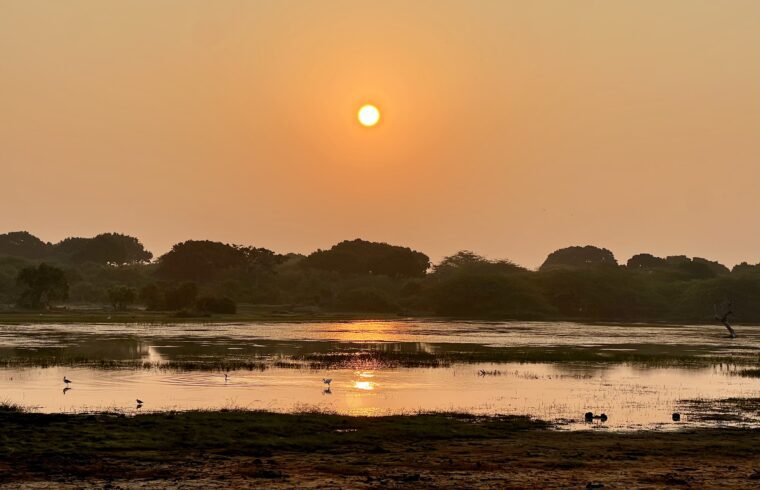
We hired a car and driver for seven days and left Colombo for Southernmost Sri Lanka. Once we made it through the city traffic and got on the E001 toll expressway, it was easy going.A hour or so in, we pulled into at an expressway rest stop. We were expecting toilets and a soda machine. We got a good size, air conditioned mall.Being a four hour drive from Colombo to Weerawila, we picked Unawatuna for a lunch stop, both because it’s about halfway and … well … because it’s called Unawatuna. We ate at Ceylon Folk Food. The photographer had Traditional Rice and Curry and the blogger had Pork Curry with Roasted Bread, but it wasn’t bread. Both were terrific.The restaurant is a house and yard, and the kitchen is a food trailer permanently parked in the driveway. While we waited for our food, we watched a seven-foot monitor lizard wander through the tables, checking things out.Back on the road, peacock signs began appearing as we approached our turnoff to Weerawila.We checked into the Hilton Doubletree Weerawila, a five-year old low-rise property fronting Weerawila Lake (below).Clouds on the horizon behind us drew a line in the sky over the lake, as the sun moved behind them. The next morning, we were up before dawn and at the entrance to Yala National Park in time to watch the sunrise. We scheduled two safaris, one for Yala and one for Bundala National Park. Safari companies warn away anyone who is pregnant or has back problems. The tracks through the park were nothing if not a test of suspensional endurance.We saw Ceylon Spotted Deer, a type of Axis Deer …Spoonbill, Black Headed Ibis, and Little Egrets …And we learned that Monitor Lizards climb trees. The photographer was not happy about that, given the number of trees we walk under in a day. Plus we spent some time watching a herd of elephants foraging …And crossing the track to have a bit of a sip. Yala National Park’s big draw is their native leopards. These fresh prints were as close as we got …But it wasn’t for want of the driver’s trying. This is his second attempt to fight through a mob of drivers. It was comedy. The southern part of Yala is way oversold. Swarms of safari vehicles rush leopards and elephants, cluster at scenic sites, and generally race around the washboard trails.Our most interesting adventure involved a fellow who walked out of the bush all muddy. He jumped in the front seat with our driver, and this is where we ended up. He had high-sided his safari truck in a muddy trench of a track. We learned that he had just walked off into the bush without so much as a word to his two passengers, a Dutch couple. That explained their frantic waving when they first spotted us.Our driver tried to help pull the truck loose, with no tools except a comically short tow rope. The stranded driver jumped back into our vehicle and we started to drive away, again with no word to the couple. We suggested we take them on board until other transport could be arranged. So our driver backtracked and we met a nice couple and had a few laughs. Their compensation for being abandoned was a leopard siting – they got some great pictures. Inexplicably, we ran into their driver and his now-freed but empty truck in the logjam of vehicles stuck in the leopard cluster.After our new friends jumped to their truck, we ate a second breakfast of bowl hoppers, pol sambol, fruit, and bread. We had the time, since it took 20 or 30 minutes for the drivers to work their way out of the mashup. Some stretches of the park are idyllic …And at one point, we came out of the bush onto one of the beaches that run along the southern limits of the nearly 400 square mile reserve.The highlight of our game drive was probably seeing a “It’s Not A Chicken,” the national bird of Sri Lanka. Also known as a Ceylon Junglefowl.Some eight hours after setting out, the photographer snapped a picture of our Rastafarian wannabe driver and guide, with his truck named Bob Marley. As a safari, it was a bust, but it was an experience to be had.That evening, after some quiet pool time, we enjoyed a dinner of traditional curry and Nasi Goreng. Great flavors. Too much eating.On our second safari we visited Bundala National Park, a much quieter mixed wetland reserve popular with birders. Here a peacock sits high in a tree as the sun rises. We saw lots of Water Buffalo, this one with a Cattle Egret hood ornament. Alligators were commonly sleeping in shallows, this one being eyeballed by a Black Winged Stilt. Painted Storks were also plentiful …Peacocks were everywhere. On bushes …And on rocks. We spotted a Brahminy Kite atop a tree …Spoonbills spoonbilling …Spot-Billed Pelicans …Gray Herons …A White Throated Kingfisher at work …Little Green Bee Eaters …And a family of Lesser Whistling Ducks. One Purple Heron had caught a fish bigger than its head. It wasn’t about to let it go. We watched until it managed, somehow, to get it inside itself.We also saw elephants pushing through the Acacia trees and Sri Lankan Golden Jackals darting about. Black Faced Langur troops were fun. The adults would watch us as we watched their young bounce around like pinballs.We also saw the occasional Toque Macaque with their young. As we moved through the park, we’d see motorbikes toting small outboard motors …We understood why when we got to the Indian Ocean side of the park. Fishermen used the park trails to get to their outrigger fishing boats, which they leave pulled up on the sand.As we stretched our legs walking the dunes, we saw clumps of Crown Flowers, favored in Hawaii for leis. As we left the park, the photographer captured the Directives board with its red-slash pictographs. We’re near certain we violated something.Here is our driver and safari truck. Certainly a place for seeing birds, we had an altogether better experience at Bundala National Park.After two early mornings, we spent a down day taking advantage of the hotel’s covered platforms and lounge chairs, arranged under the trees along the lakefront. Some 400 species of birds make Weerawila Lake their home We saw many of them. Plus wild water buffalo cavorting in the shoreline marshes, and the ever present monitor lizards, one of which strolled right by our loungers – at first we thought the sound of its claws dragging against the deck was a bird. The photographer needed some spa time after that.One afternoon, we had our driver run us into Tissamaharama town for an ATM stop, a little snack shopping, and an early dinner.The restaurant we picked was Curry Kingdom, a small roadside spot recently opened by two brothers. They appeared to be doing a booming take-away business from an arrangement of clay pots at the back of the dining room.We ordered their rice and curry (of course) and they disappeared into the back for a while and returned with too much food. Curry chicken, beets, and beans, dhal, and the ubiquitous pol sambol.Our outward drive to Galle Fort was through many of the same fields we passed on our way in.Galle Fort is an ancient place, first noted as a trading port by Ptolemy, back in the 100s. The 400+ year old Portuguese and Dutch fortress that now sits on the peninsula is a World Heritage site. The walls still stand.Rock outcroppings facilitated the building of bastions along the seaward walls …Looking east to the lighthouse from a bastion.Looking westward to another bastion. It didn’t take us long to walk the entire perimeter wall. The town is surprisingly small for its past importance as the island’s main port. For this distinction, the Portuguese, Dutch, and English took turns bashing each other – and the Sinhalese natives – for possession of the fort and its harbor.Inside the walls, we stayed at The Merchant Hotel. Like every other hotel and inn within the old fort, it is a repurposed something else, with maybe a dozen small rooms. One of the appeals of this property is its large open courtyard restaurant (below) which gives it some breathing room.Our room was cramped, but we did have a bit of a front porch overlooking Pedlar Street. It was someplace to enjoy a cup of instant Nescafé coffee while waiting for the restaurant to begin serving breakfast. Which didn’t happen until 8:00am.Though quaint and historic, Galle Fort is a tourist town. Within the walls are only tourists and people selling stuff to tourists.The meaning of Galle may have come from a Sinhalese word meaning a place where cattle are herded. Or it could be from the Portuguese word for rooster. And that’s useful how? Anyway, we had planned on staying two days, but one circuit of the walls and a look at historic buildings, like the 1755 Dutch Reformed Church above, and we were good.So we headed outside the walls, past the adjacent harbor. Once a bustling merchant port, now filled with fishing boats …And surrounded by fish stalls.Just outside the Galle Fort main gate is a huge cricket pavilion. Cricket is The sport in Sri Lanka. We watched a few pitches.Just beyond the pavilion, we found the main post office. We had purchased some gifts and souvenirs and didn’t want to haul them around for two more months. Post being way cheaper than DHL, this was our fourth opportunistic post office stop in two countries. It used to be easy to mail things to the US, but now they just shake their heads and mumble “Trump.” Back in the day, when we were asked where we are from and we said “US,” we would get, “What do you think of Bush/Obama?” Now the response is a universal “What’s wrong with Trump?” It’s a little funny and completely embarrassing. Since this post office happens to be a “main” post office, they were willing to ship our box. But first, two inspections, one of them by the quarantine office (because we were sending tea and the like), then a visit to additional counters for weighing, taping, postage payment, form filling, and finally stamping and acceptance. Some counters had to be visited twice, and two were staffed by the same person. It took about an hour. But we travel for experiences, and it saved us having to pack stuff around. We were beginning to tire of filling Sri Lankan foods, so we started looking for lighter fare. We found a salad and ham & cheese in a restaurant next to a giant, 300 year old breadfruit tree planted by the Dutch. Our final drive was about two hours and took us back to Colombo and the Taj Hotel. The photographer snapped a shot of Ishara, our driver. We had a couple of days before our flight to Jakarta, and we’d saved exploring the old town for our outward-bound return to the city. The old town is the Colombo Fort area, now home to new financial towers, and the Pettah district, with the Pettah Market. The streets in between are organized chaos.Block after block of shops, trucks, laden drays, tuk-tuks, and porters. The stores are mostly grouped by commodity. Potato sellers were grouped together, as were dried fish shops, and fake-flower stores. Mostly.Squished in amongst the shops and buildings is Jami Ul-Alfar, a 100 year old mosque. Its sharp, red and white stonework helps it stand out against the architectural mayhem.It’s a striking building that takes up nearly half of a block. The Pettah District is anchored by the centuries old Pettah Market, an evolving center of trade now with a quarter-mile of high, barn-like roofs.Trucks choke the surrounding streets as sellers stock their produce and wares.Back toward the Fort district, are venerable old buildings, like Cargills, a one-time giant of a department store, where the “white people” shopped …Now it’s mostly empty space, with a corner carved out for a Cargills Food City.Nearby, the 300 year old Dutch Hospital is now restaurants and shops, surrounded by hotels and the World Trade Center towers.Sri Lanka is an interesting country, with lots to offer. And Colombo would be a charming city, if you could breath the air.