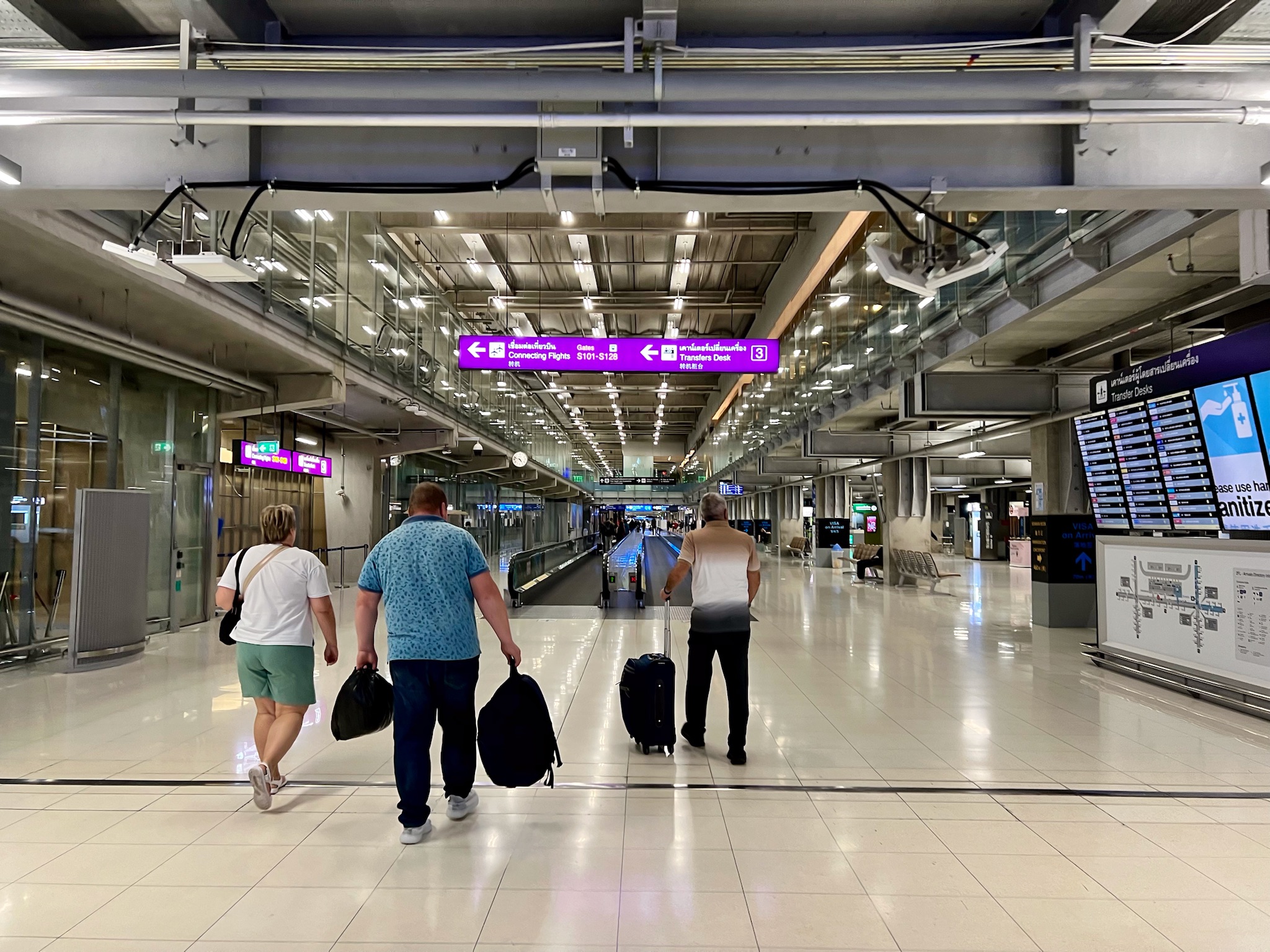
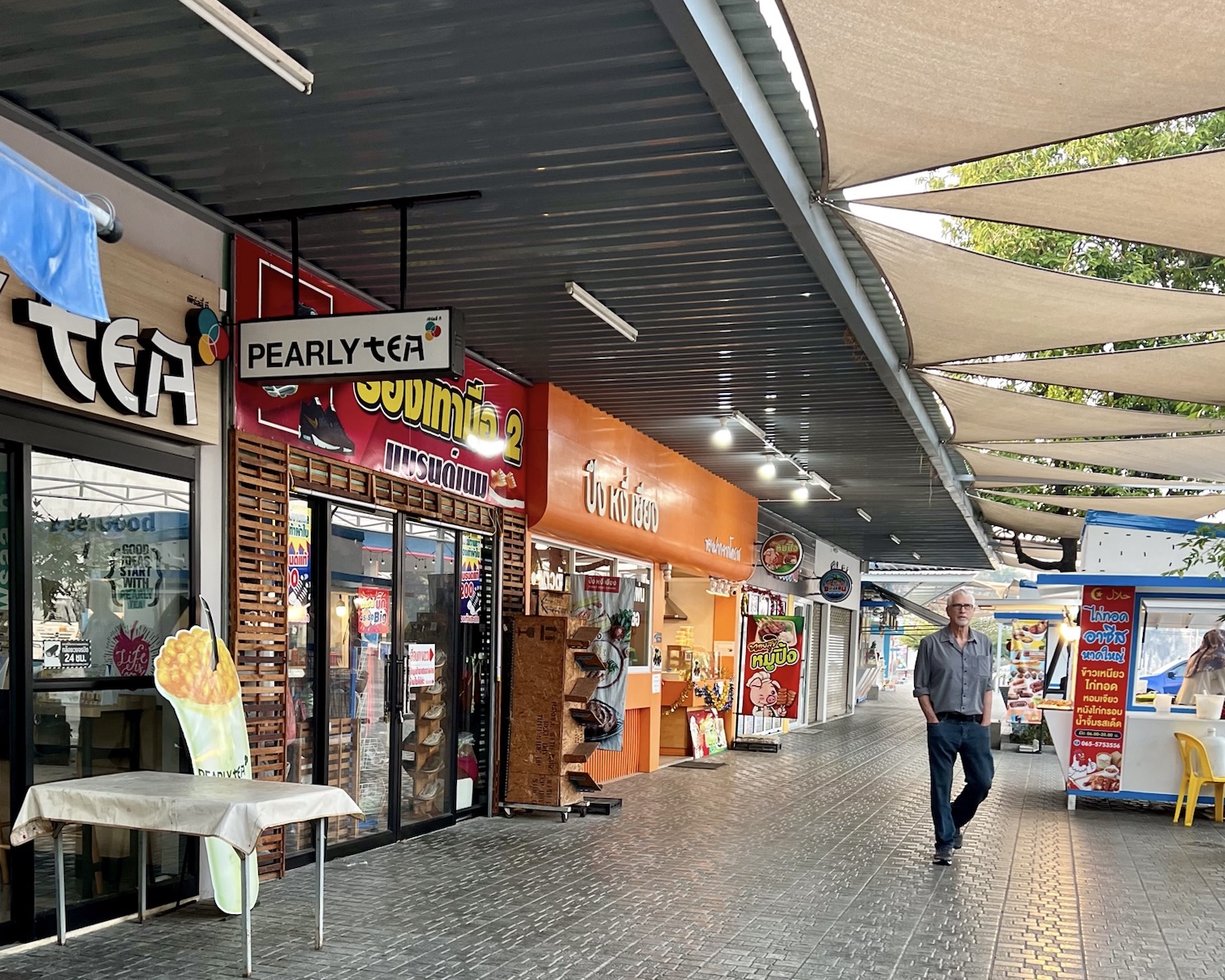
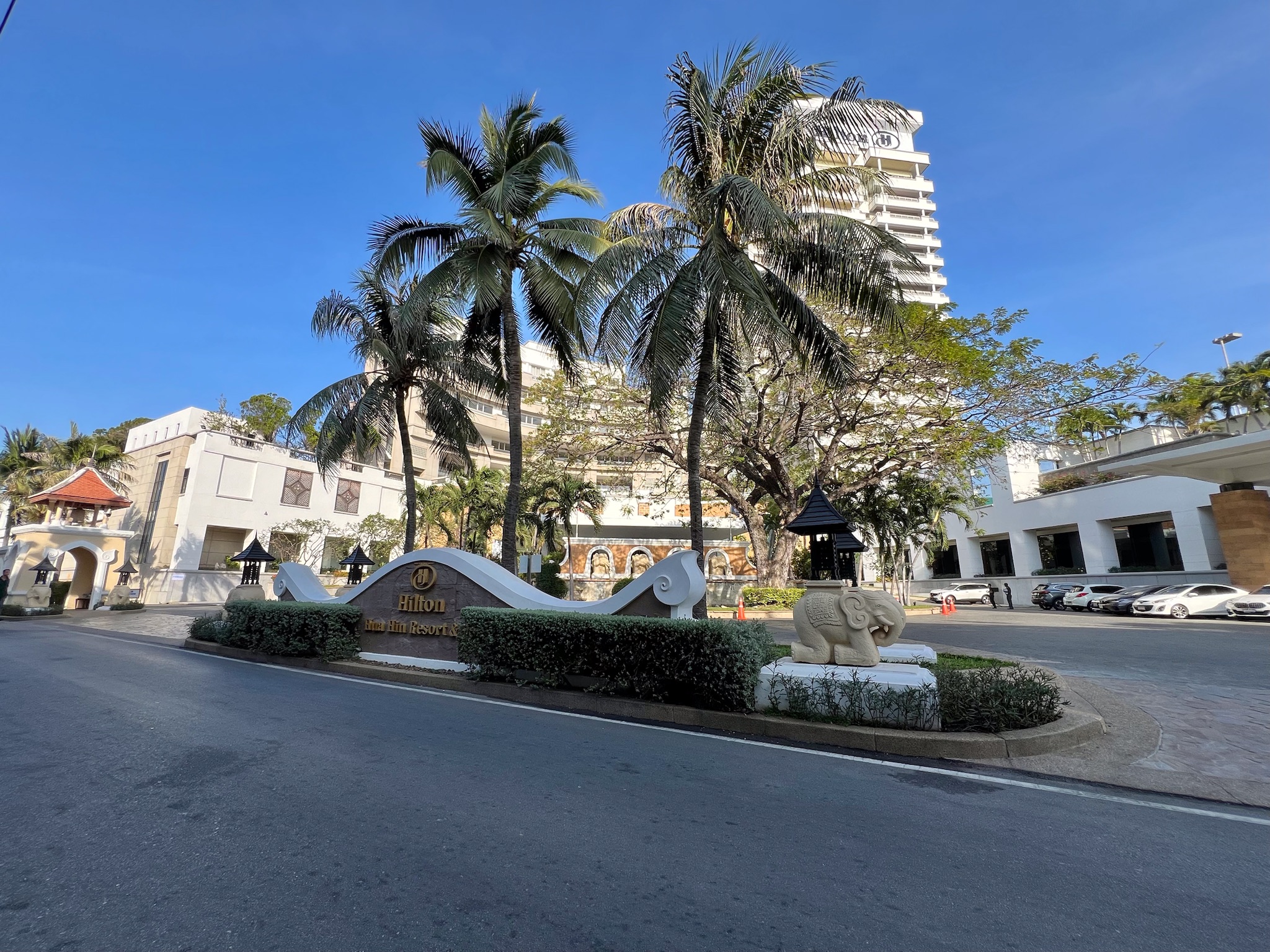
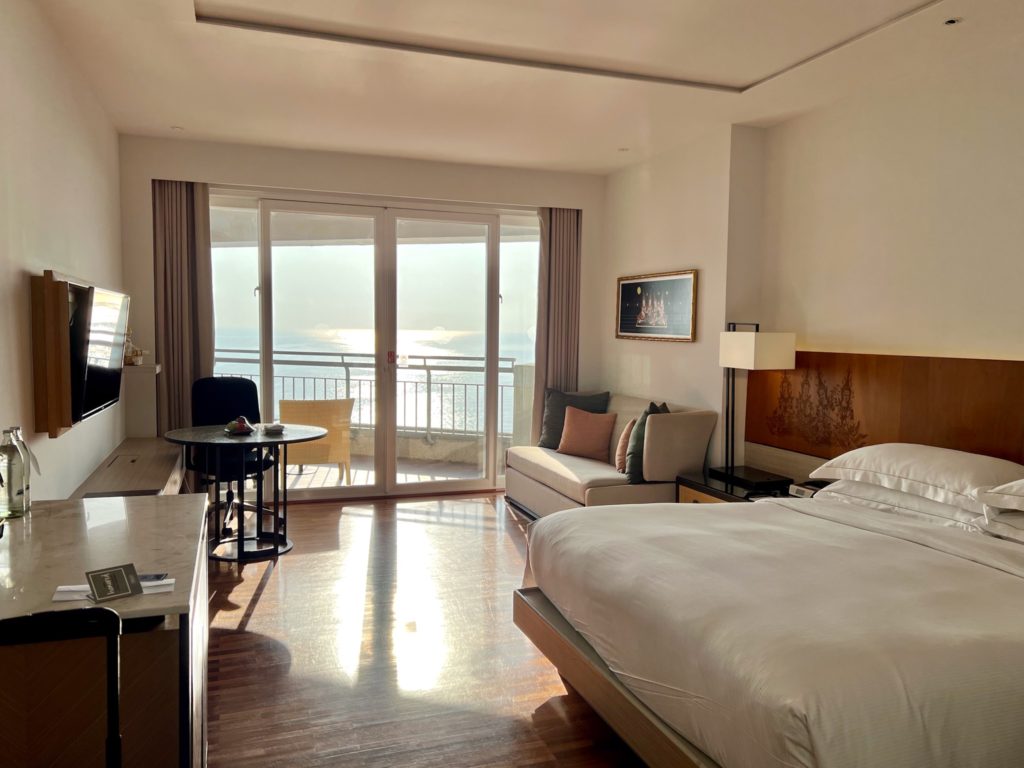
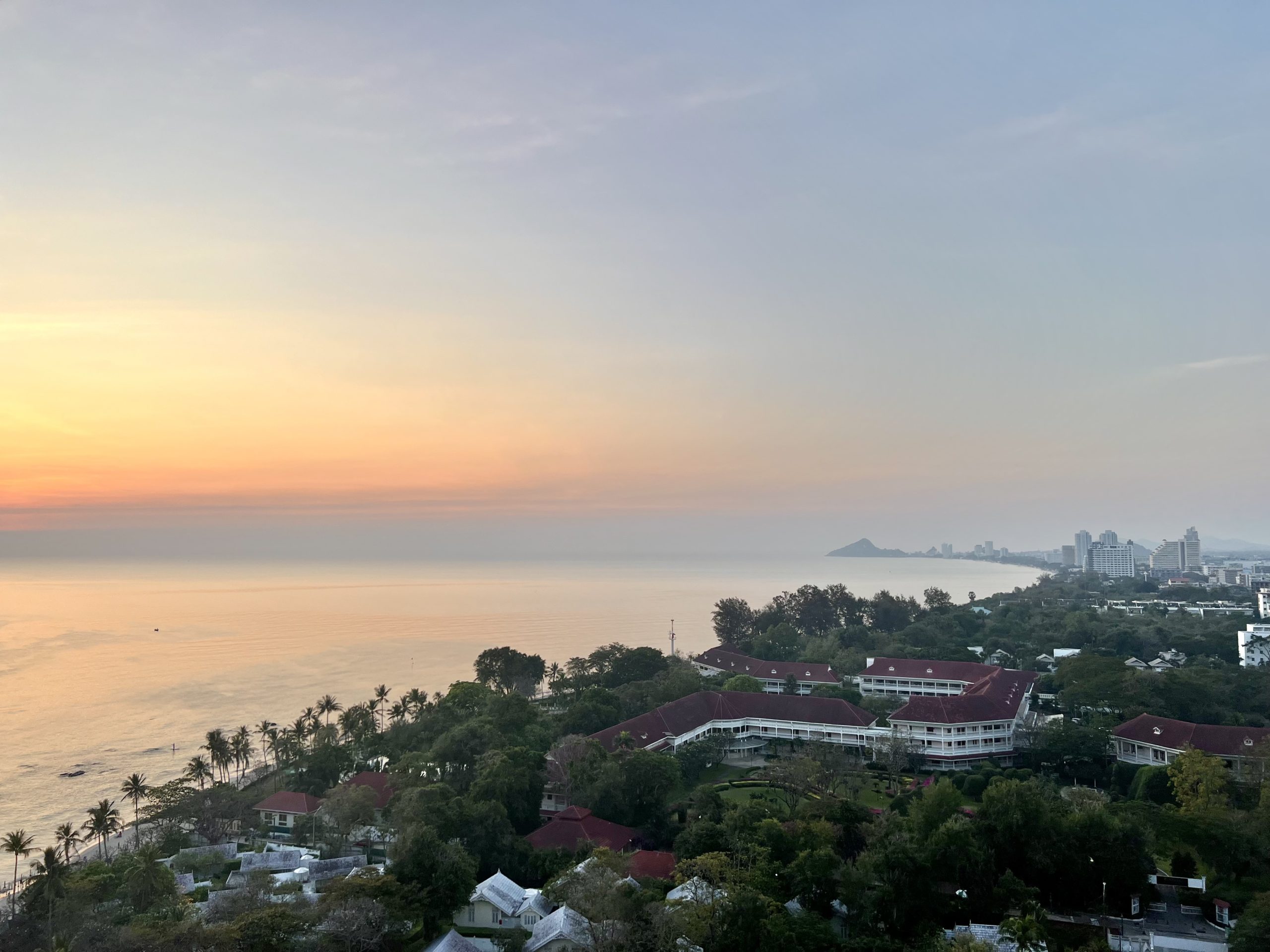
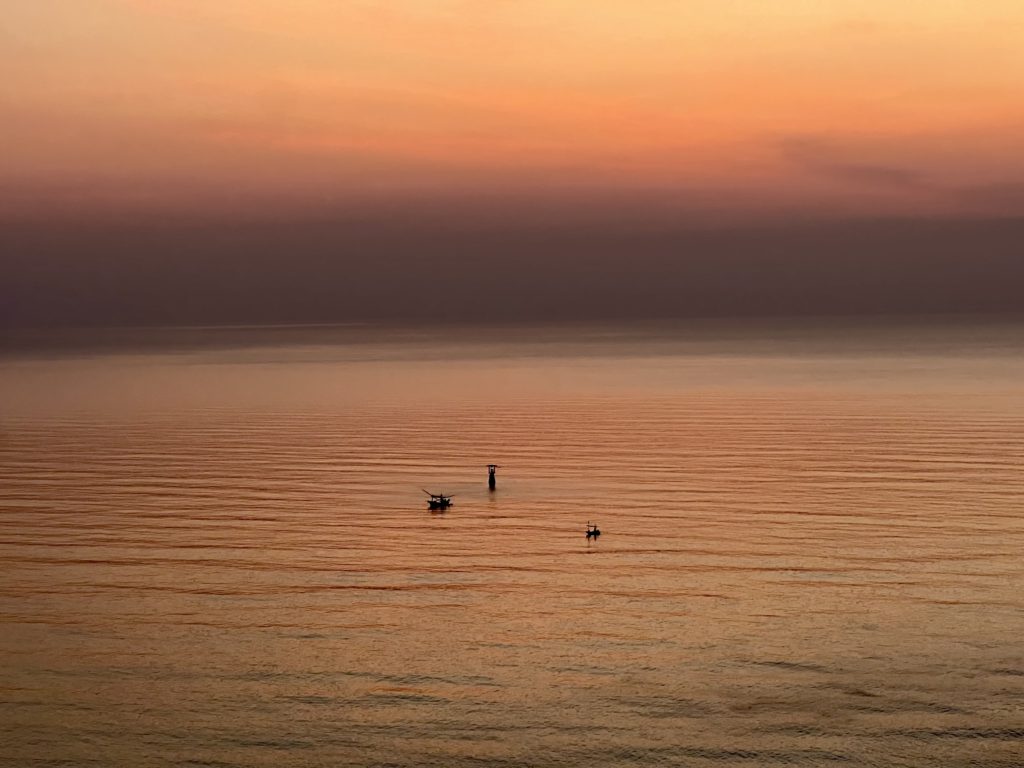
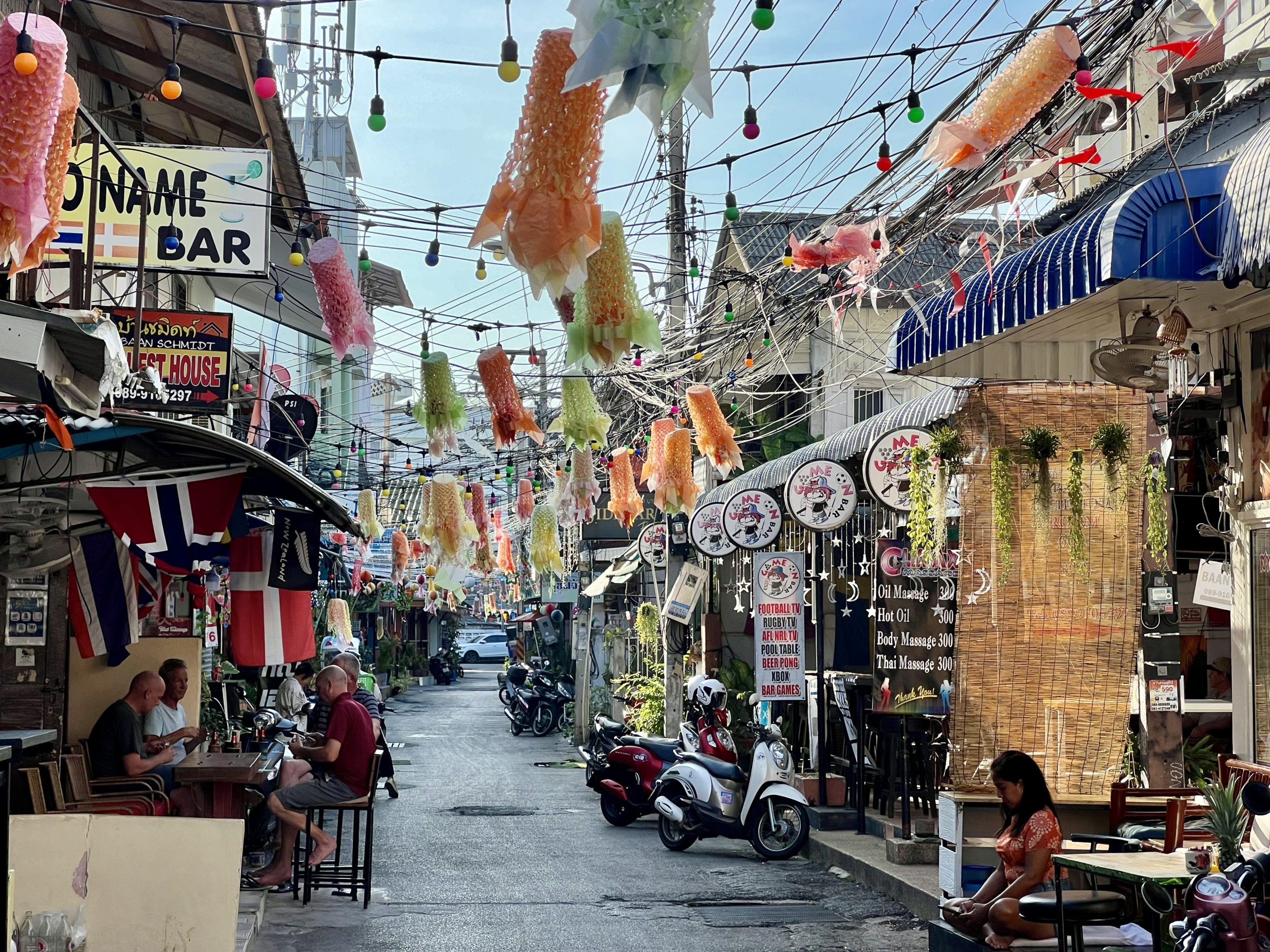
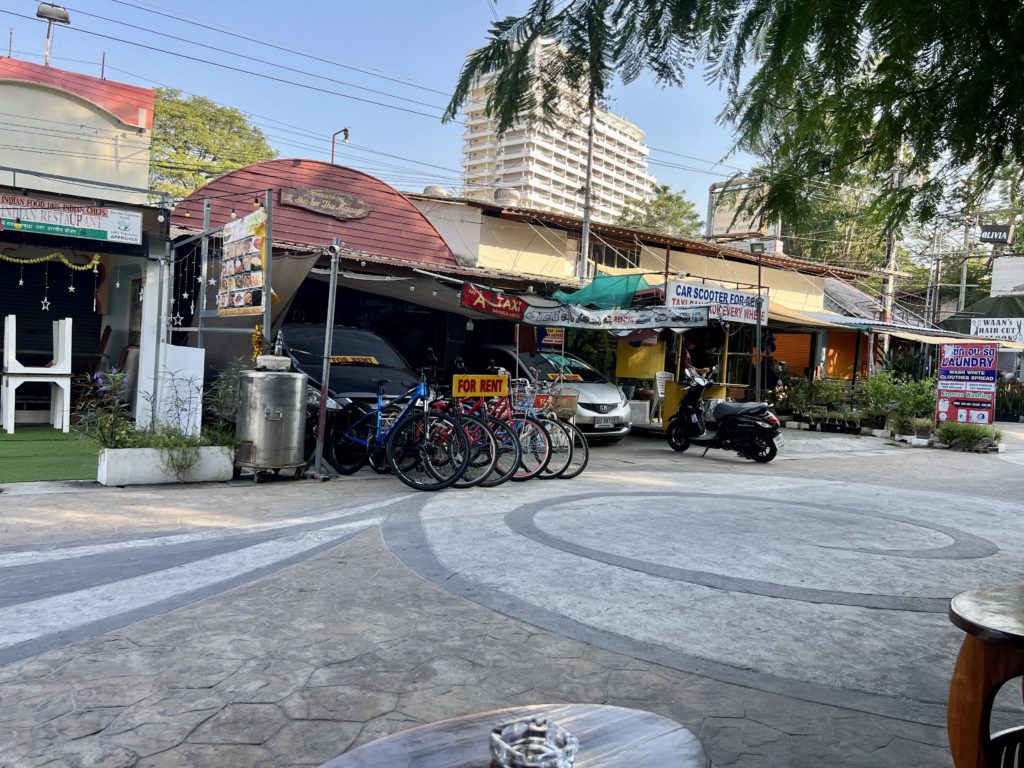
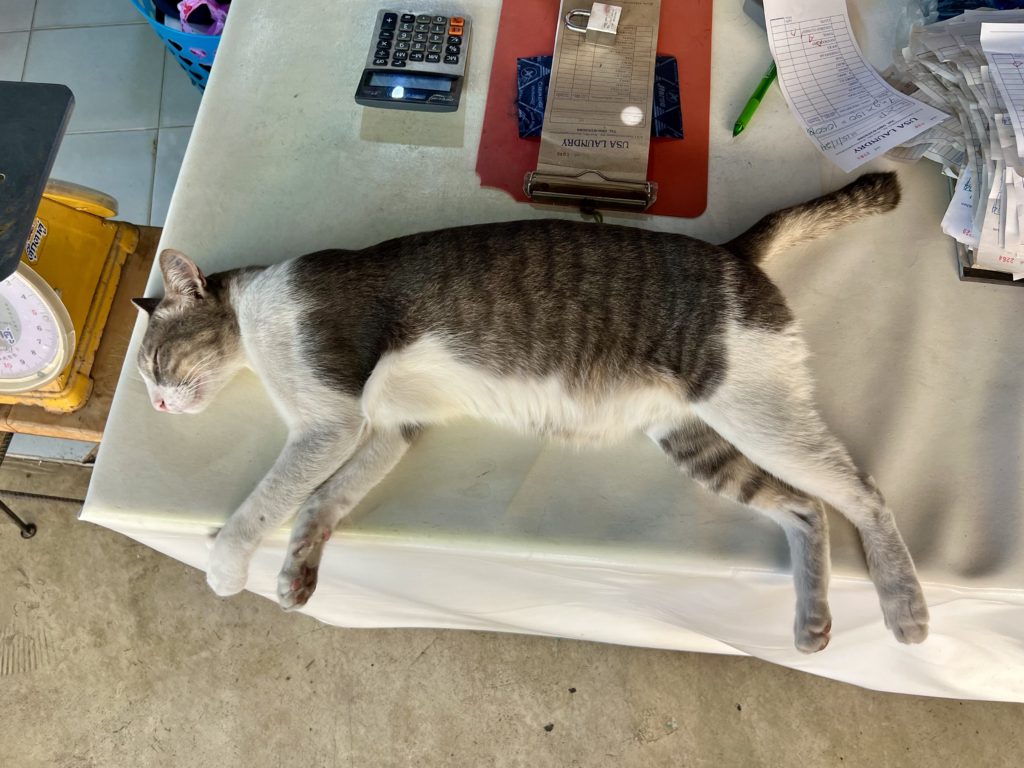
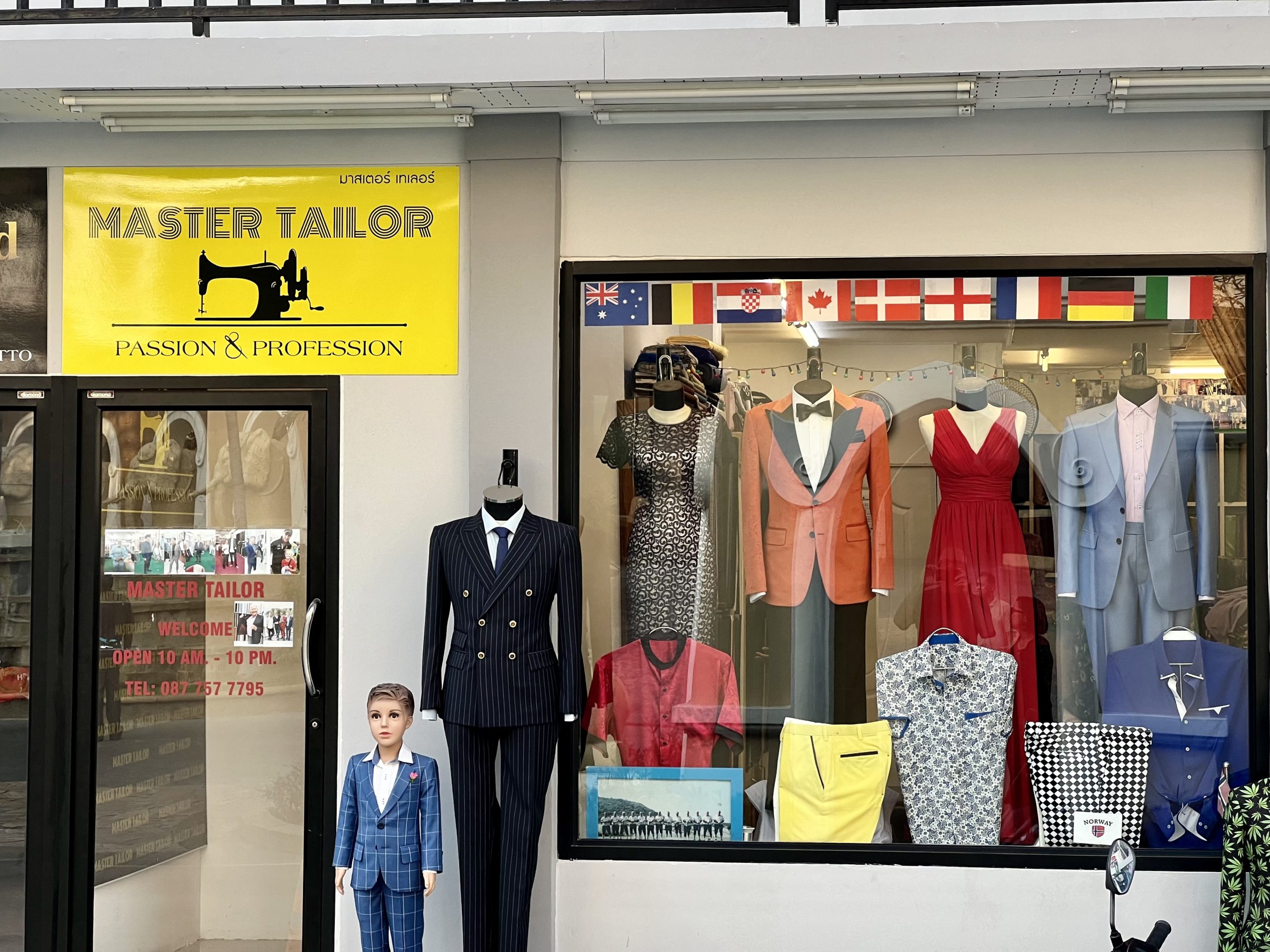
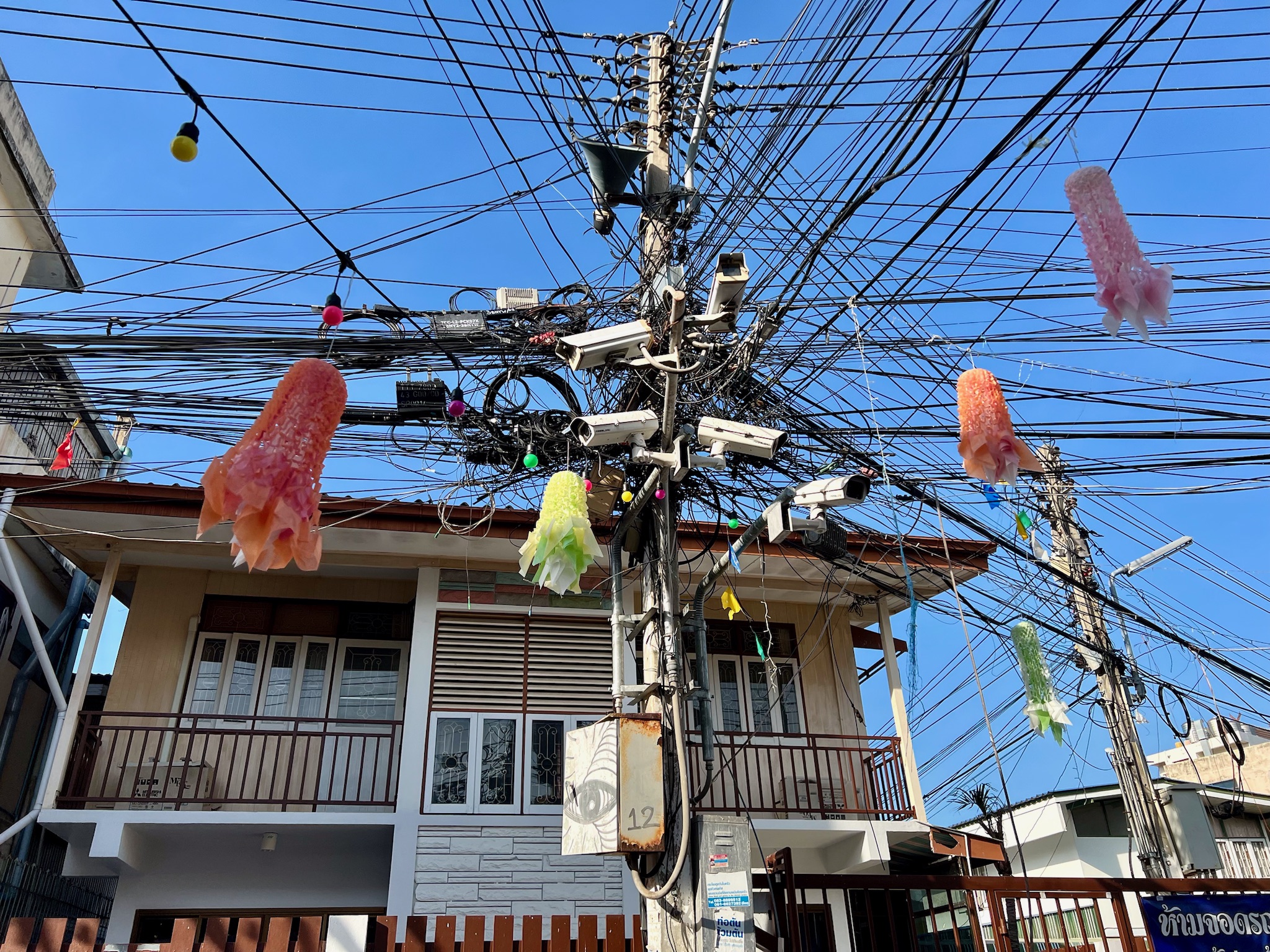
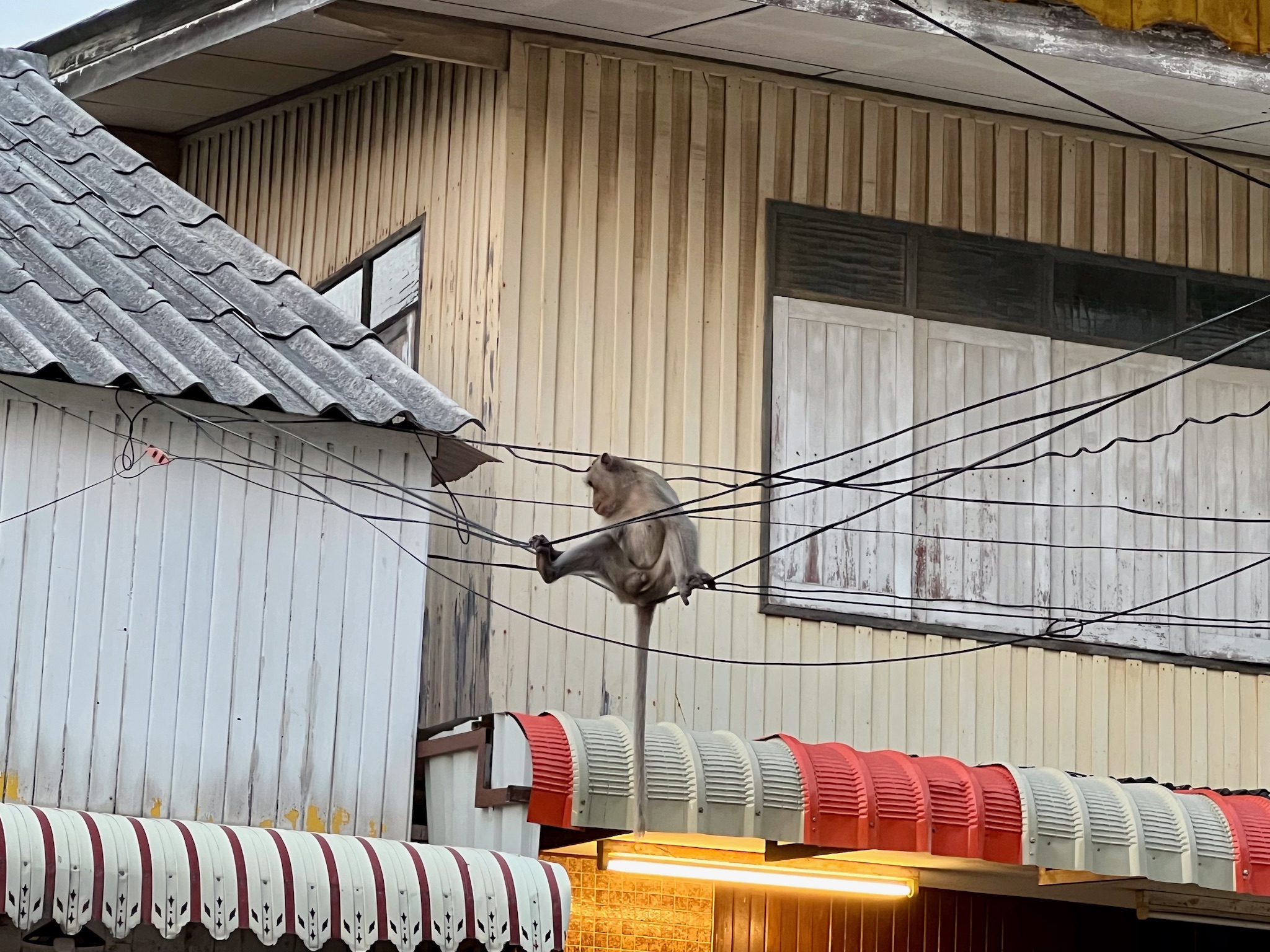
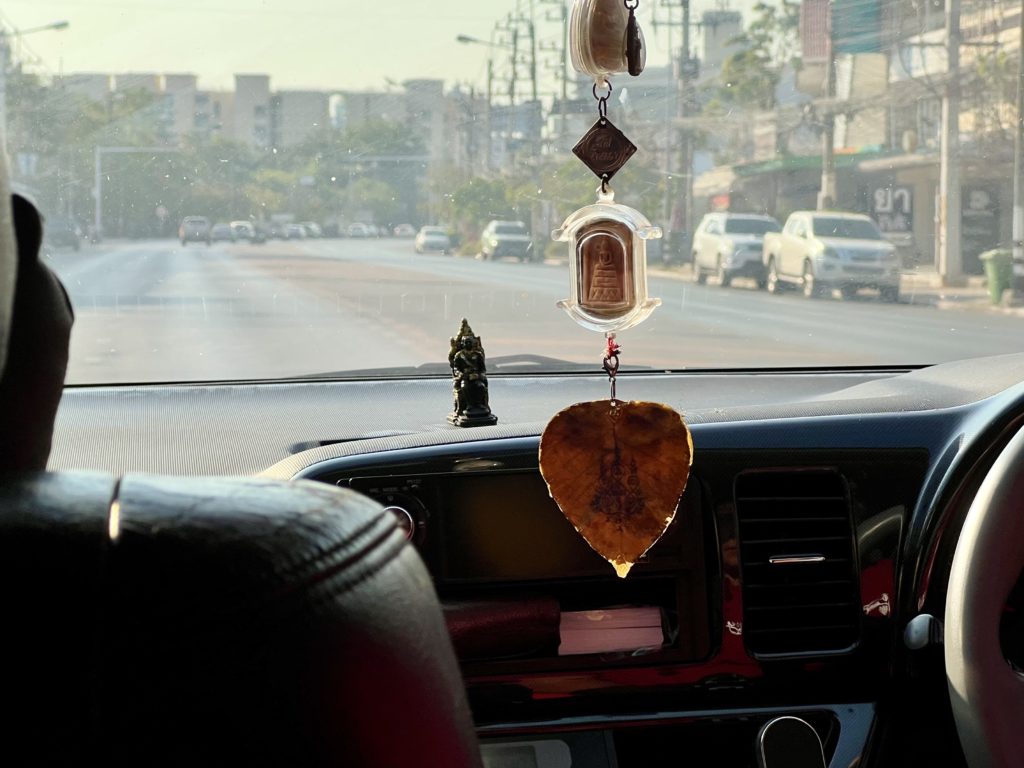
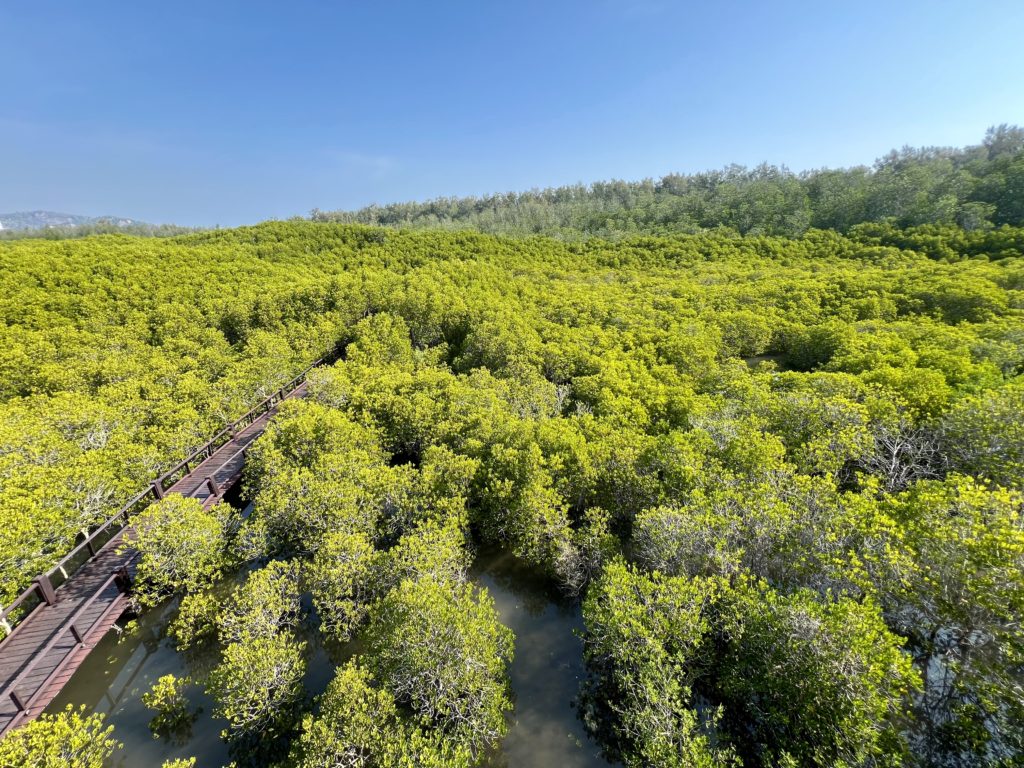
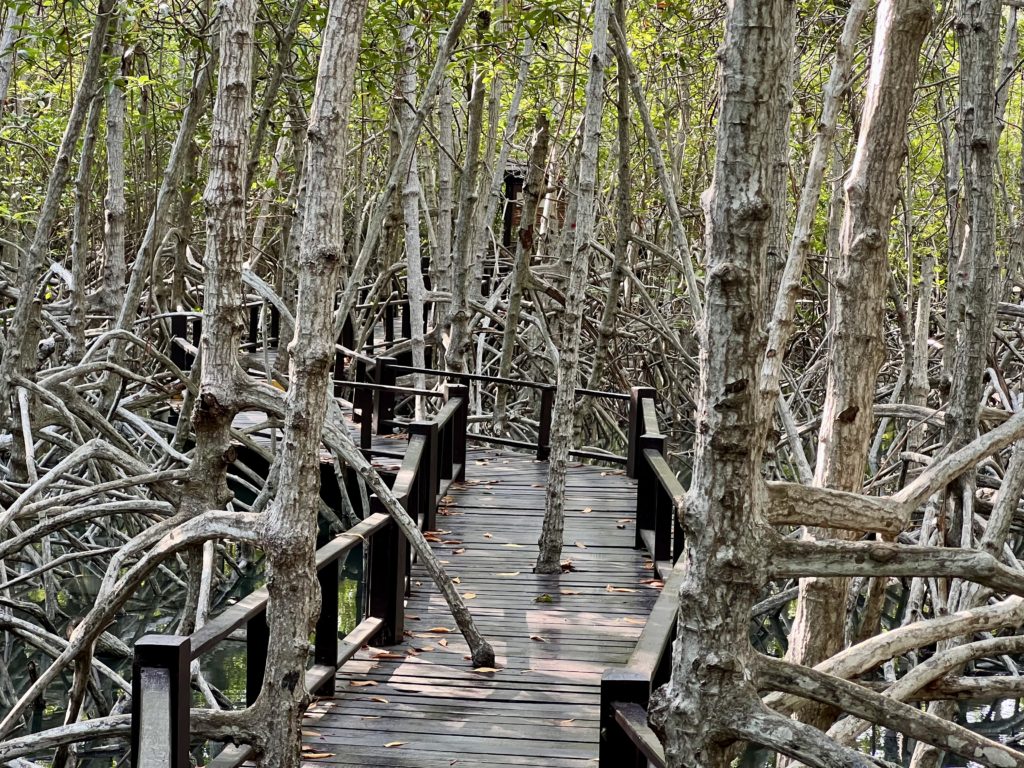
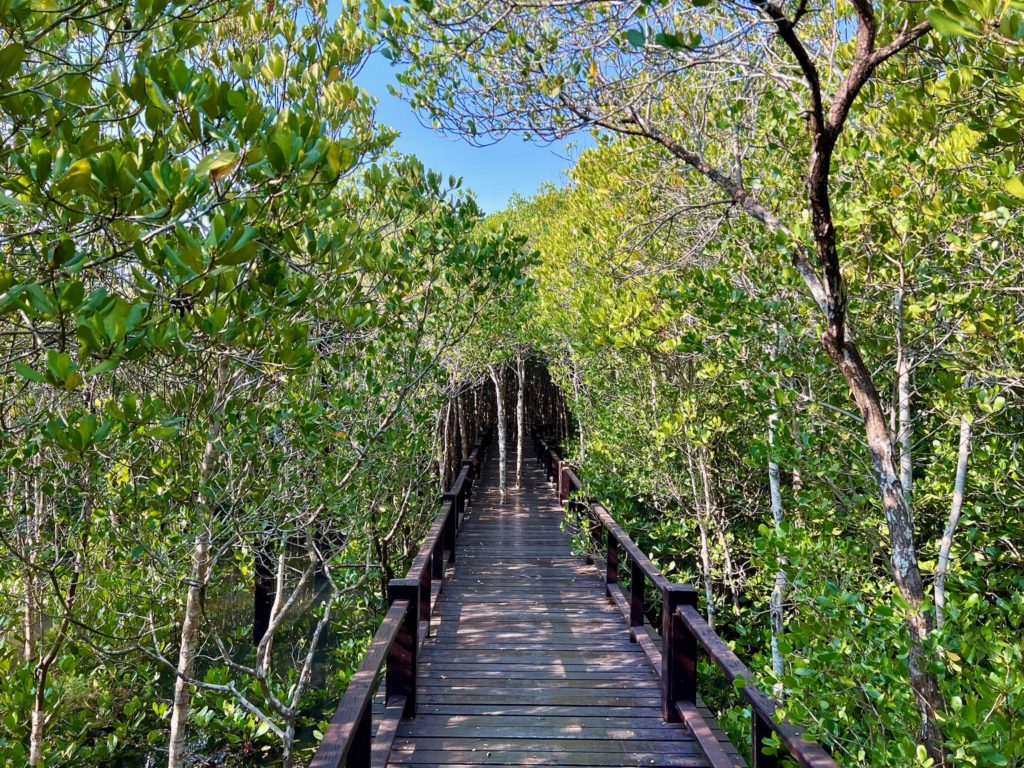
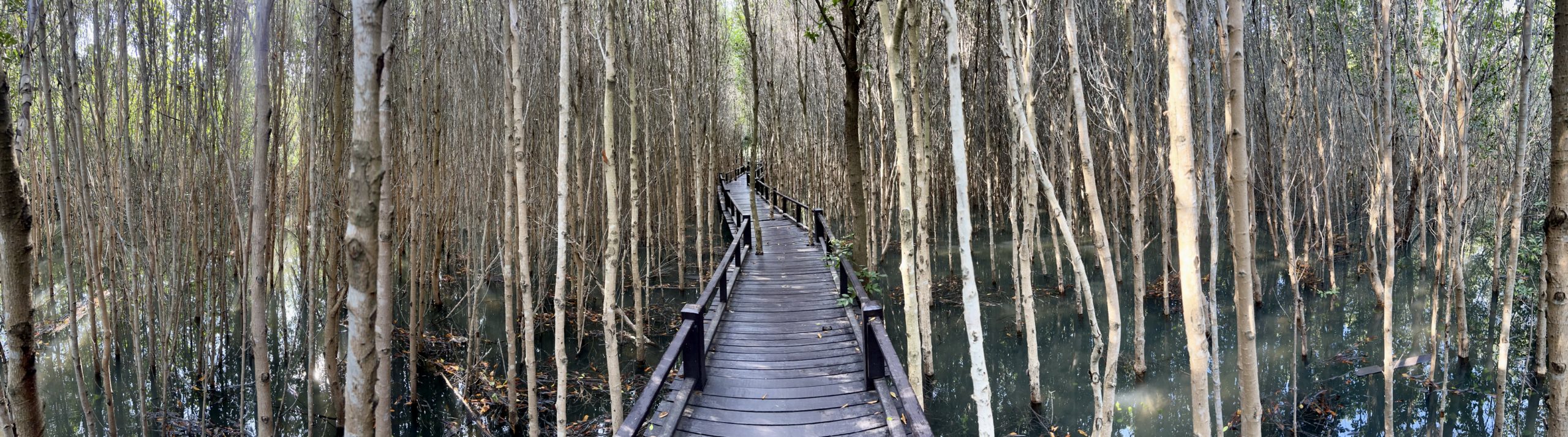
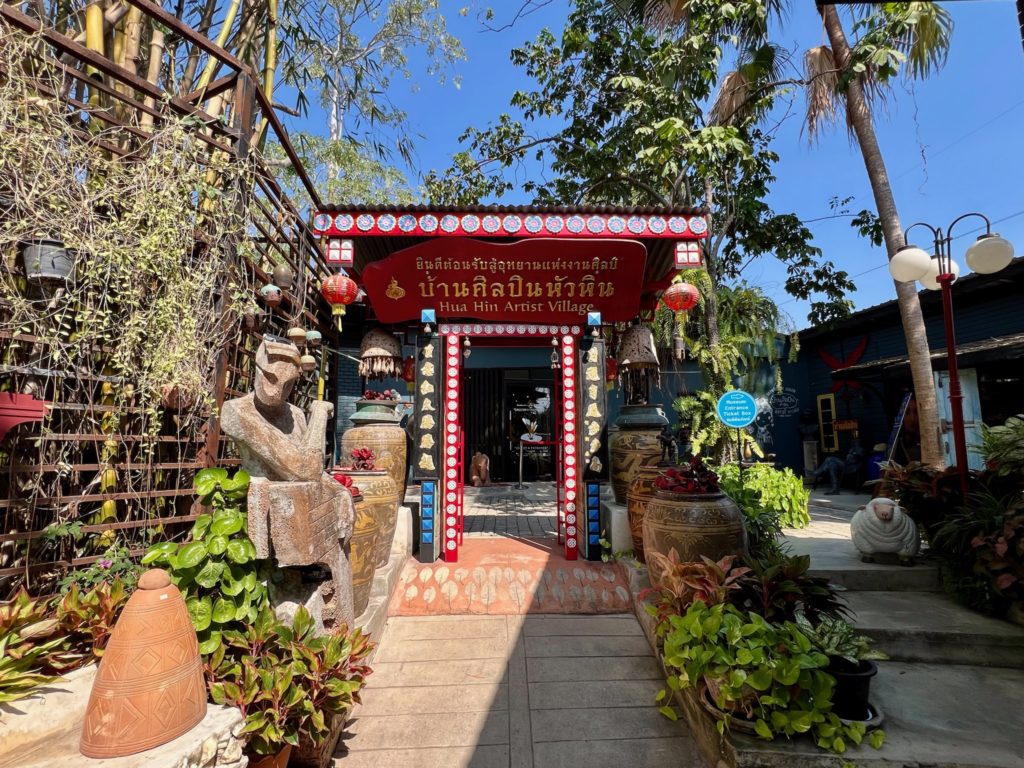
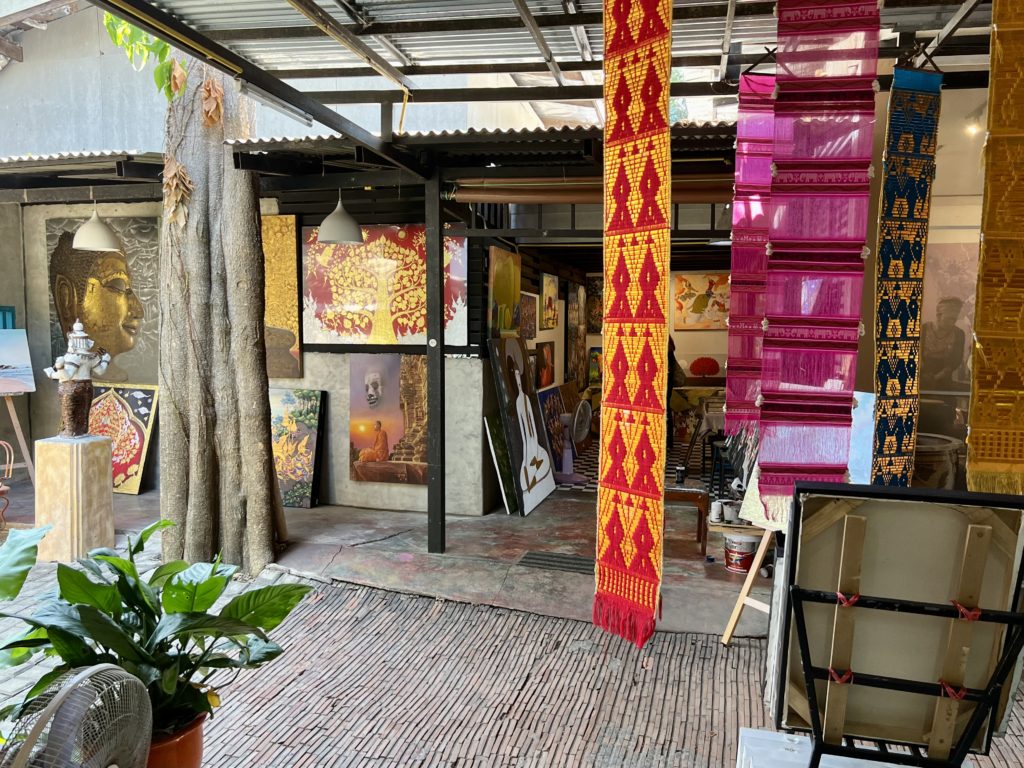
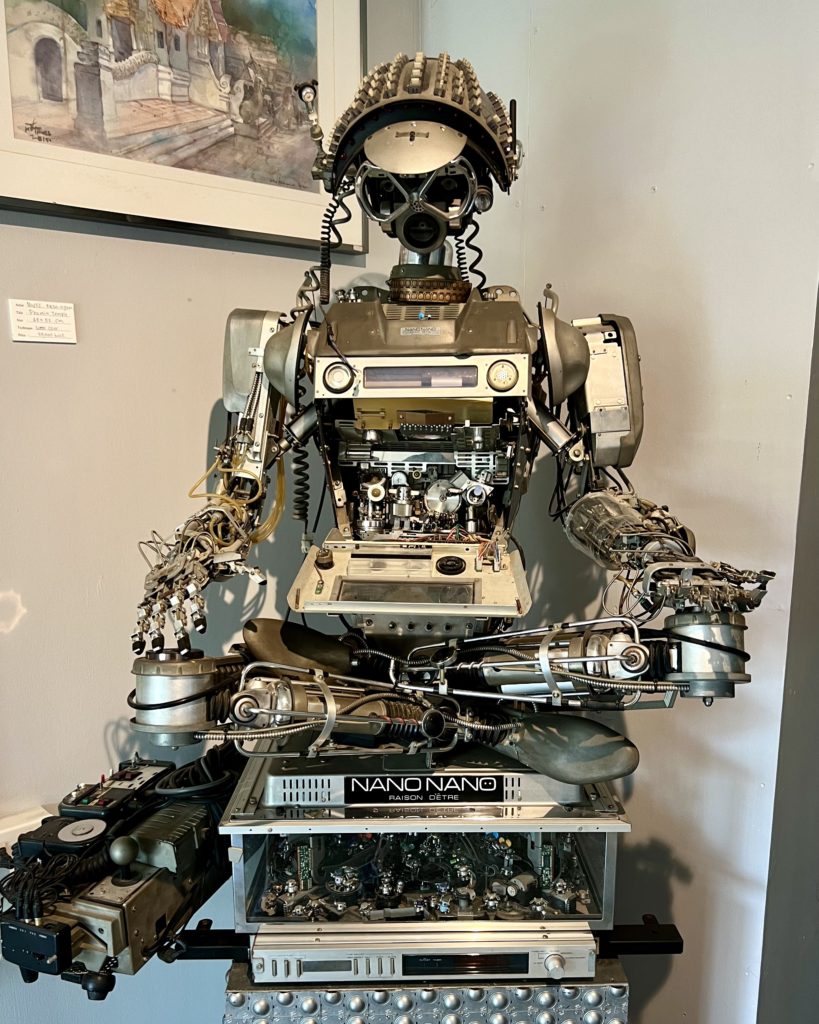
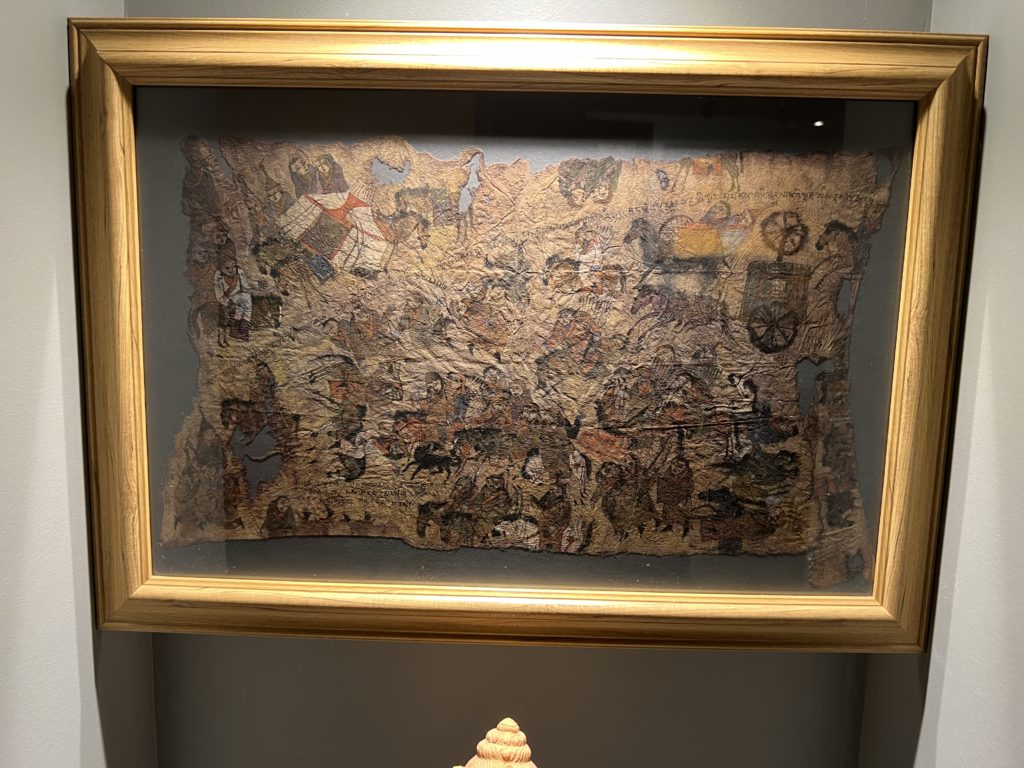
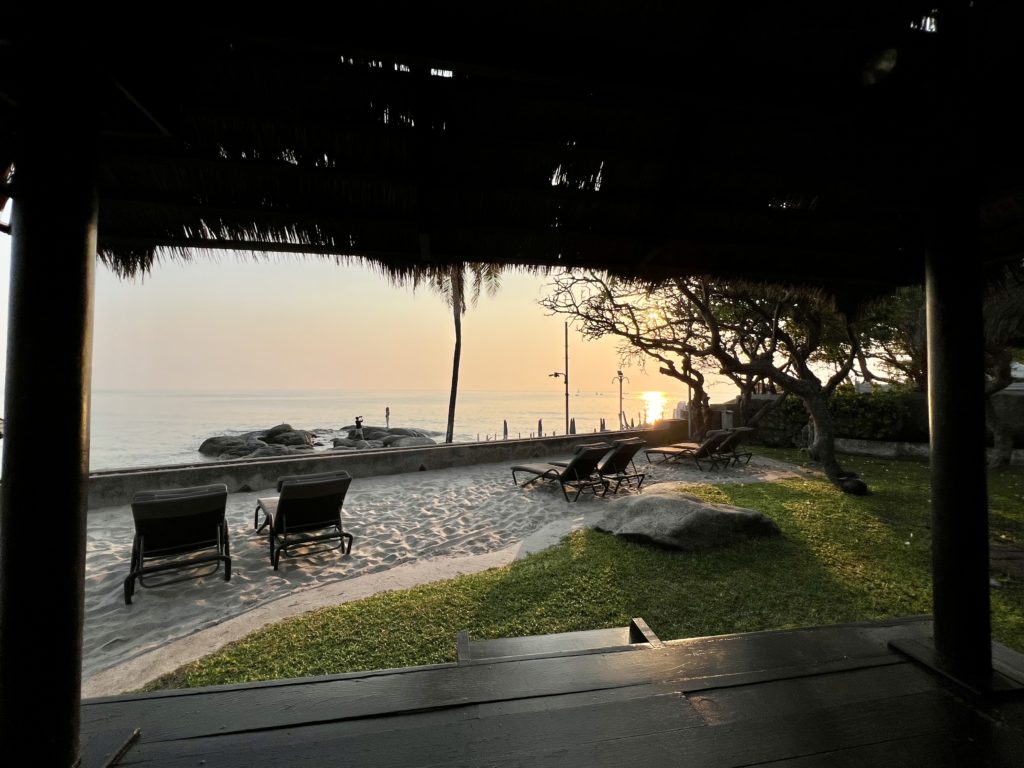
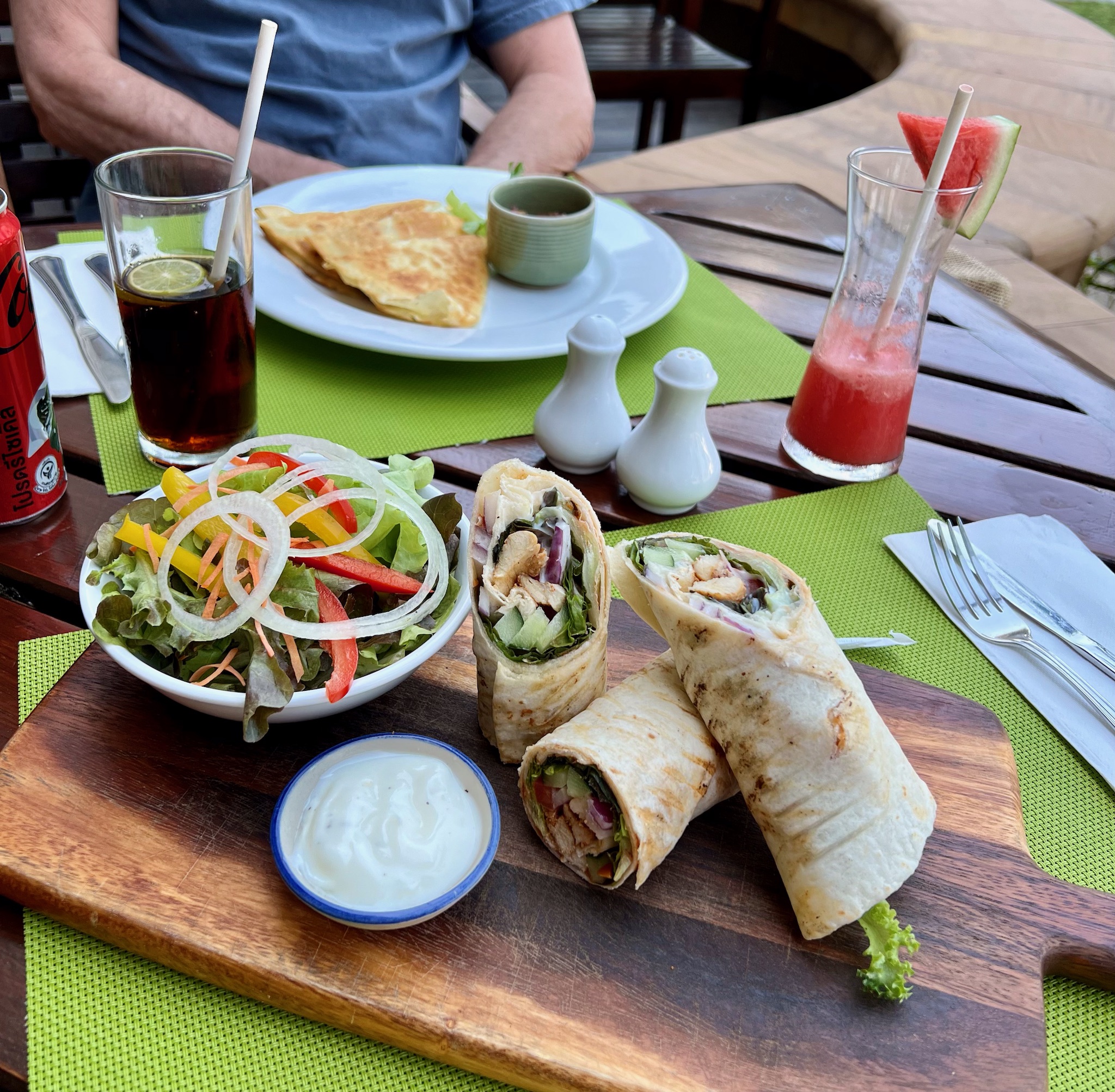
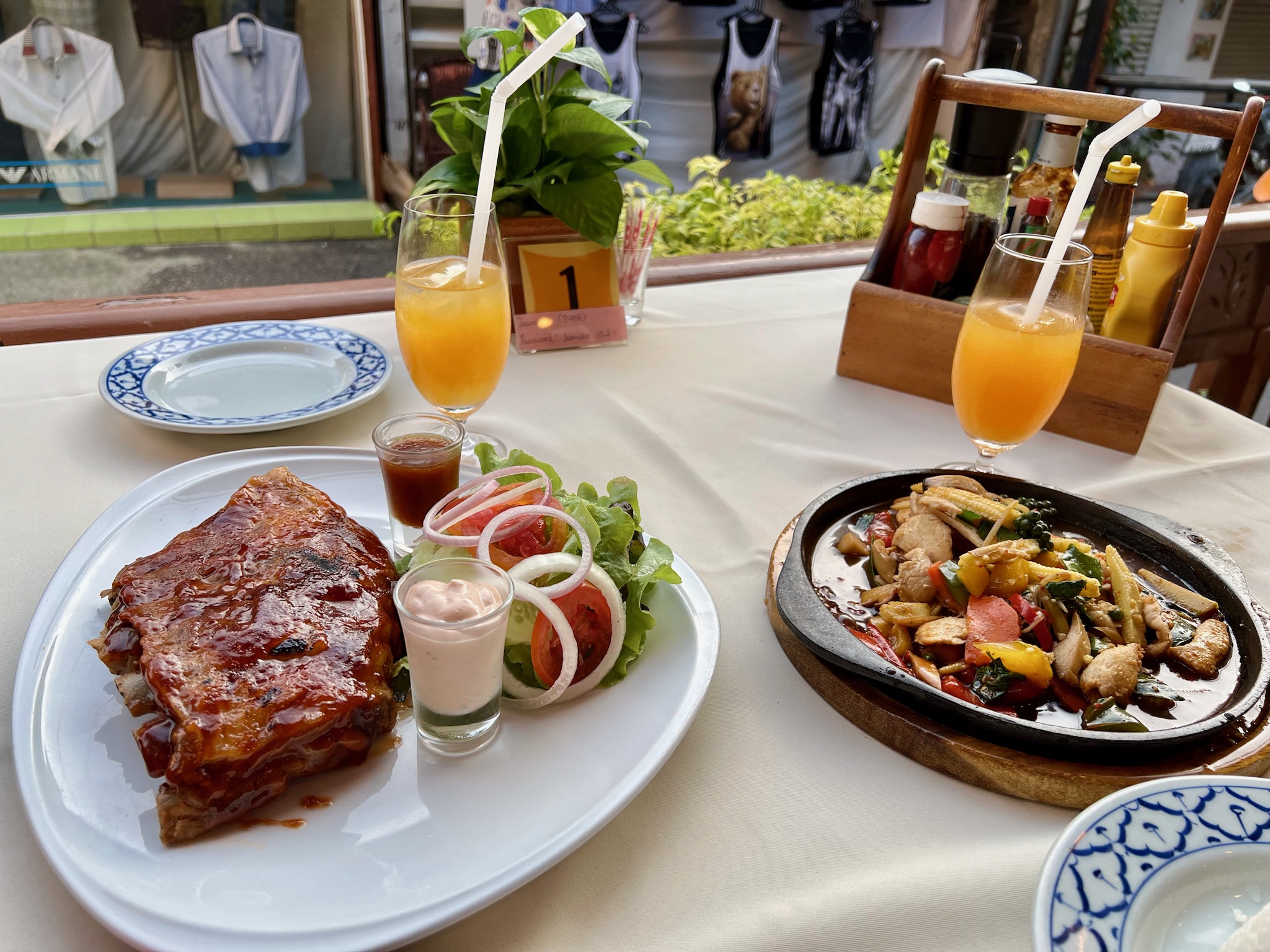
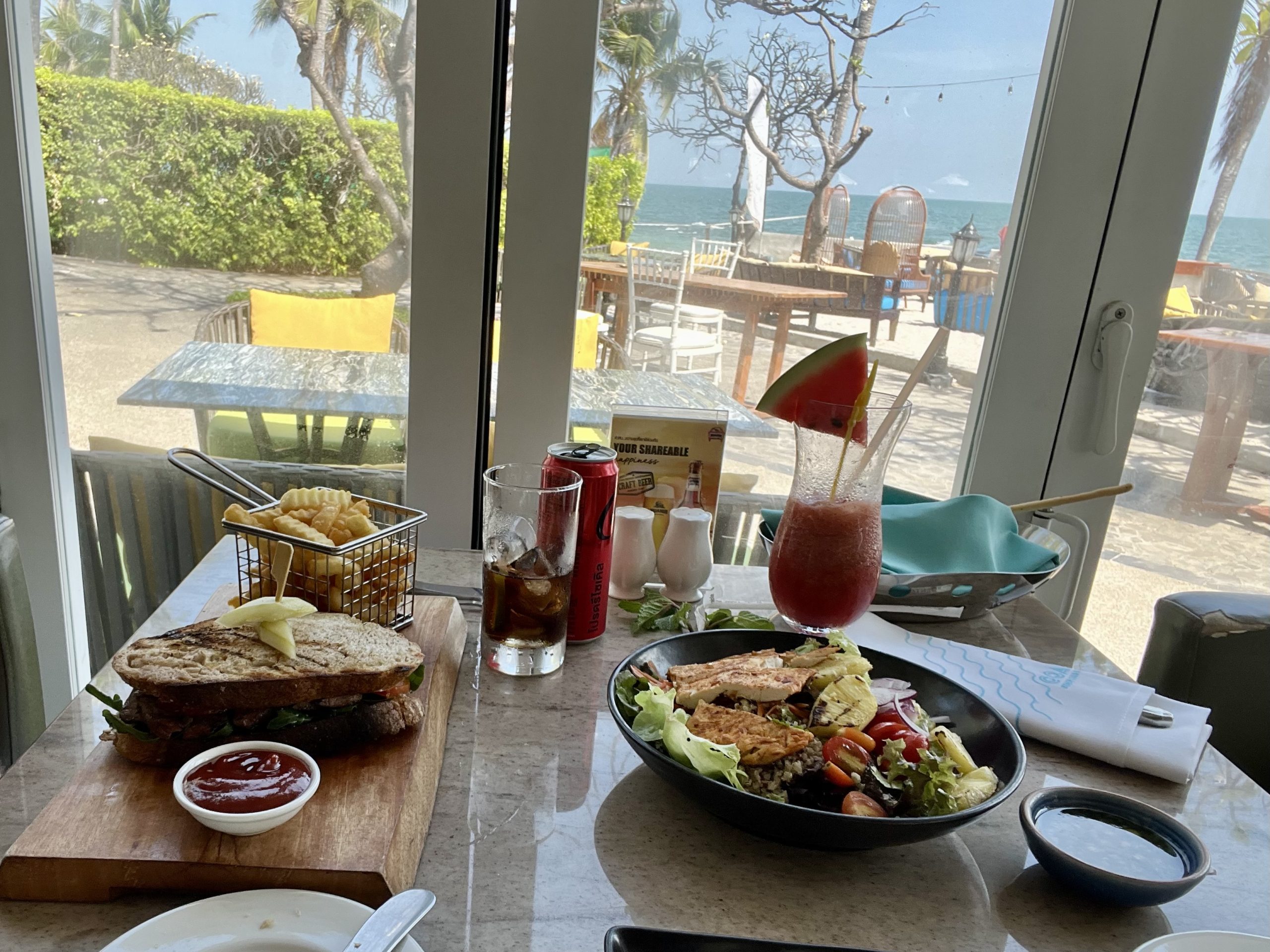
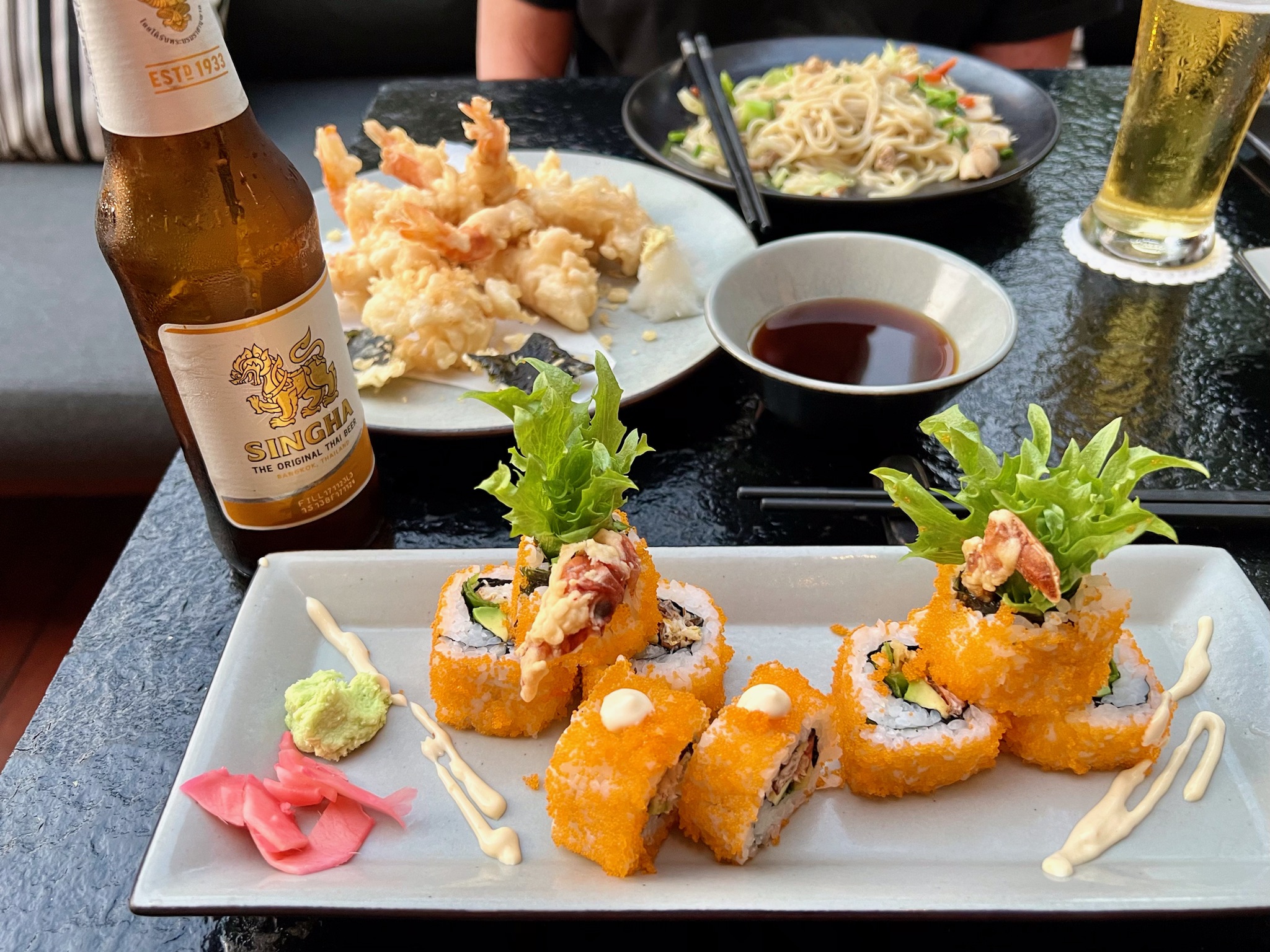
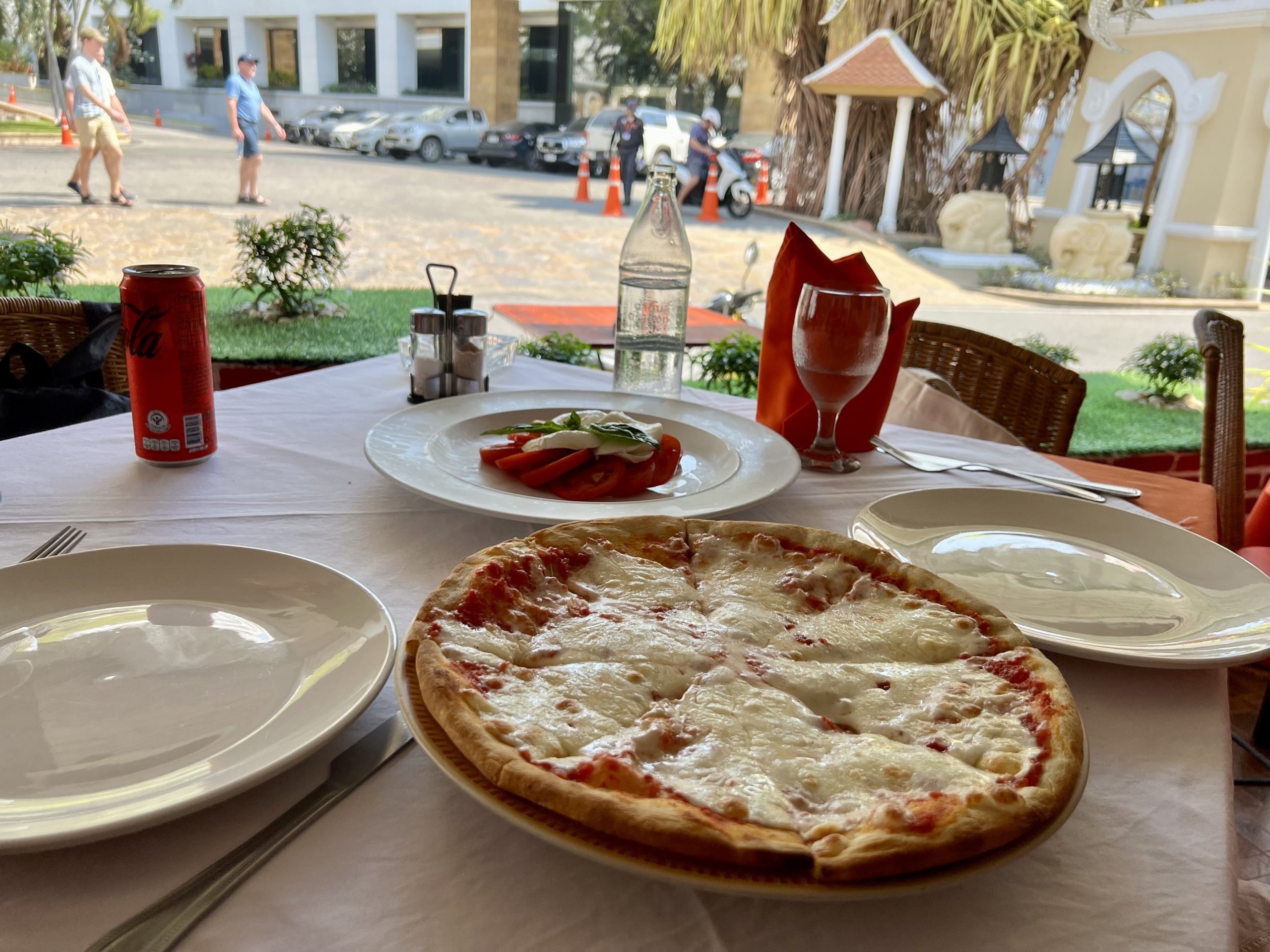
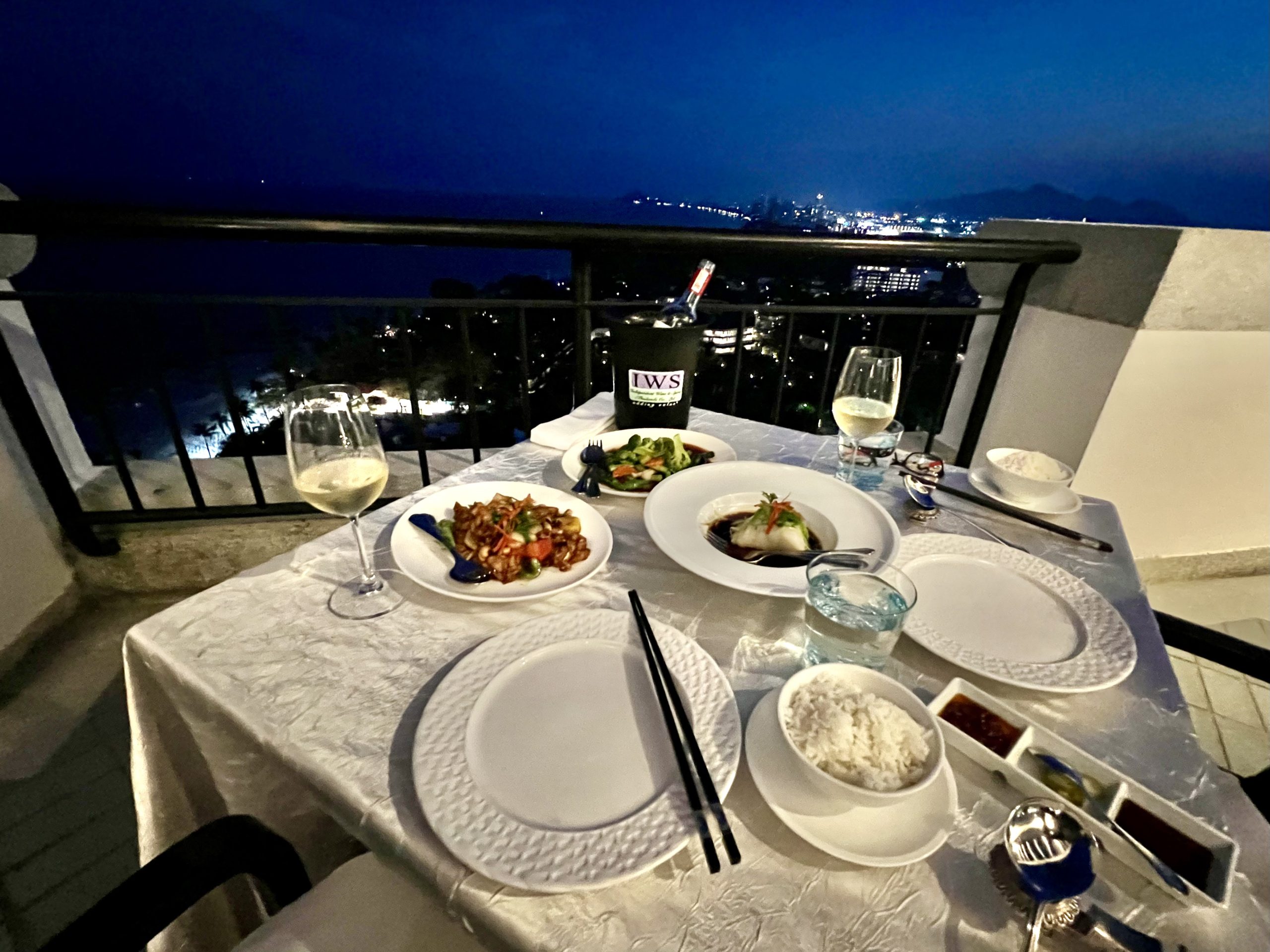
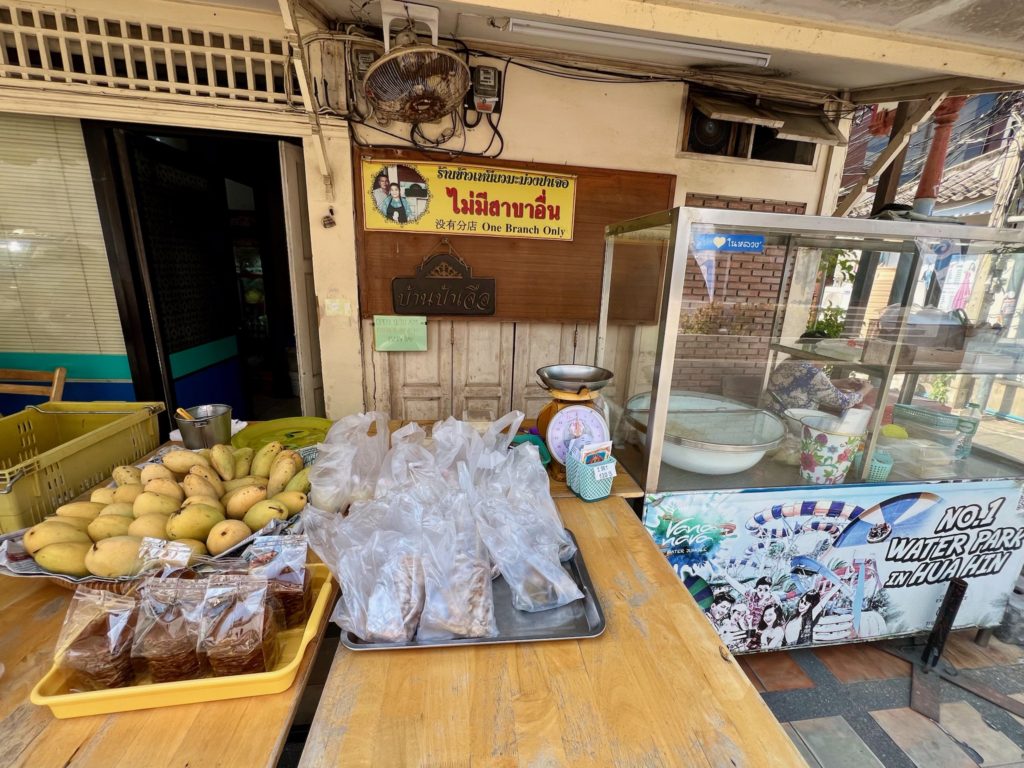
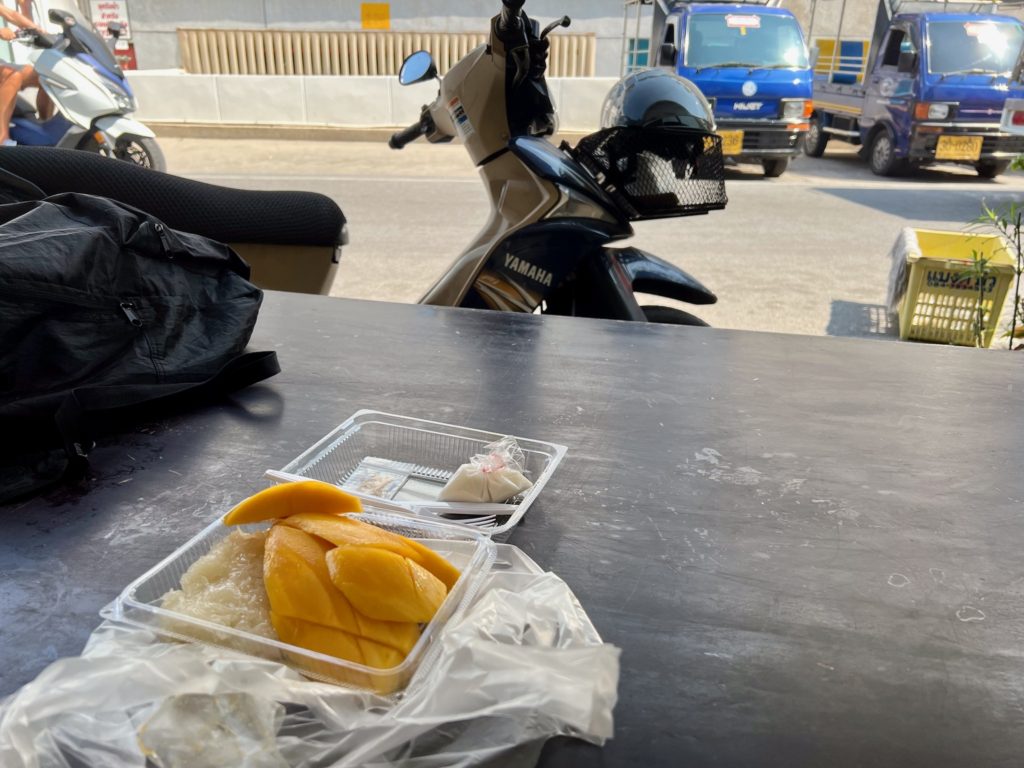
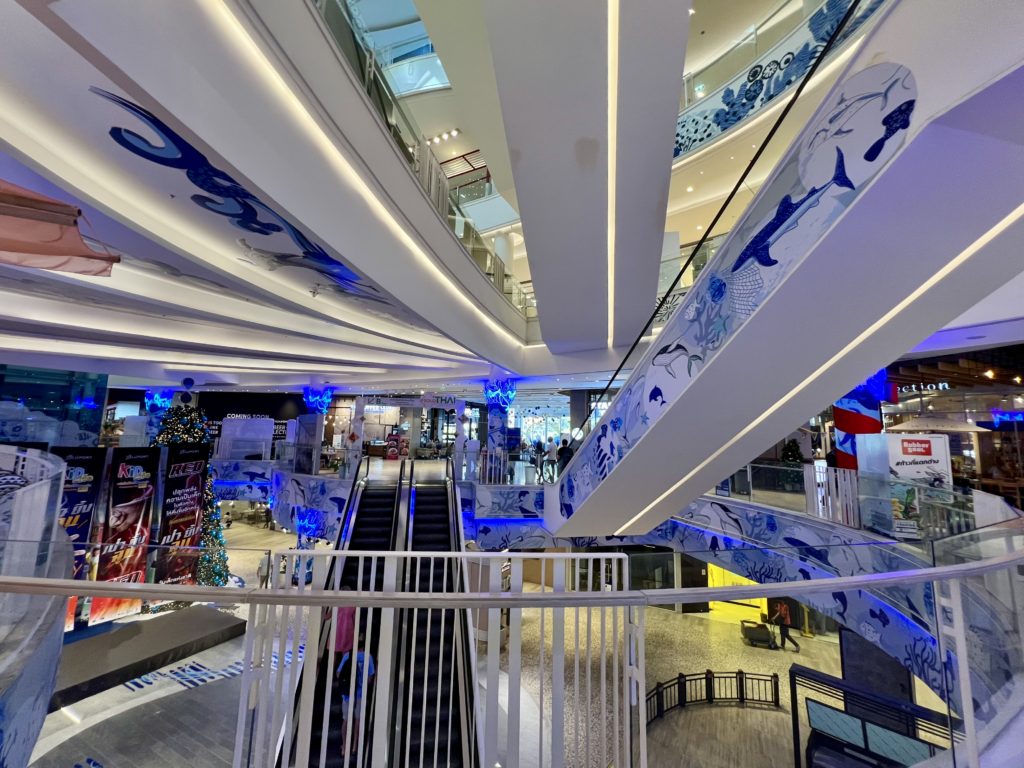
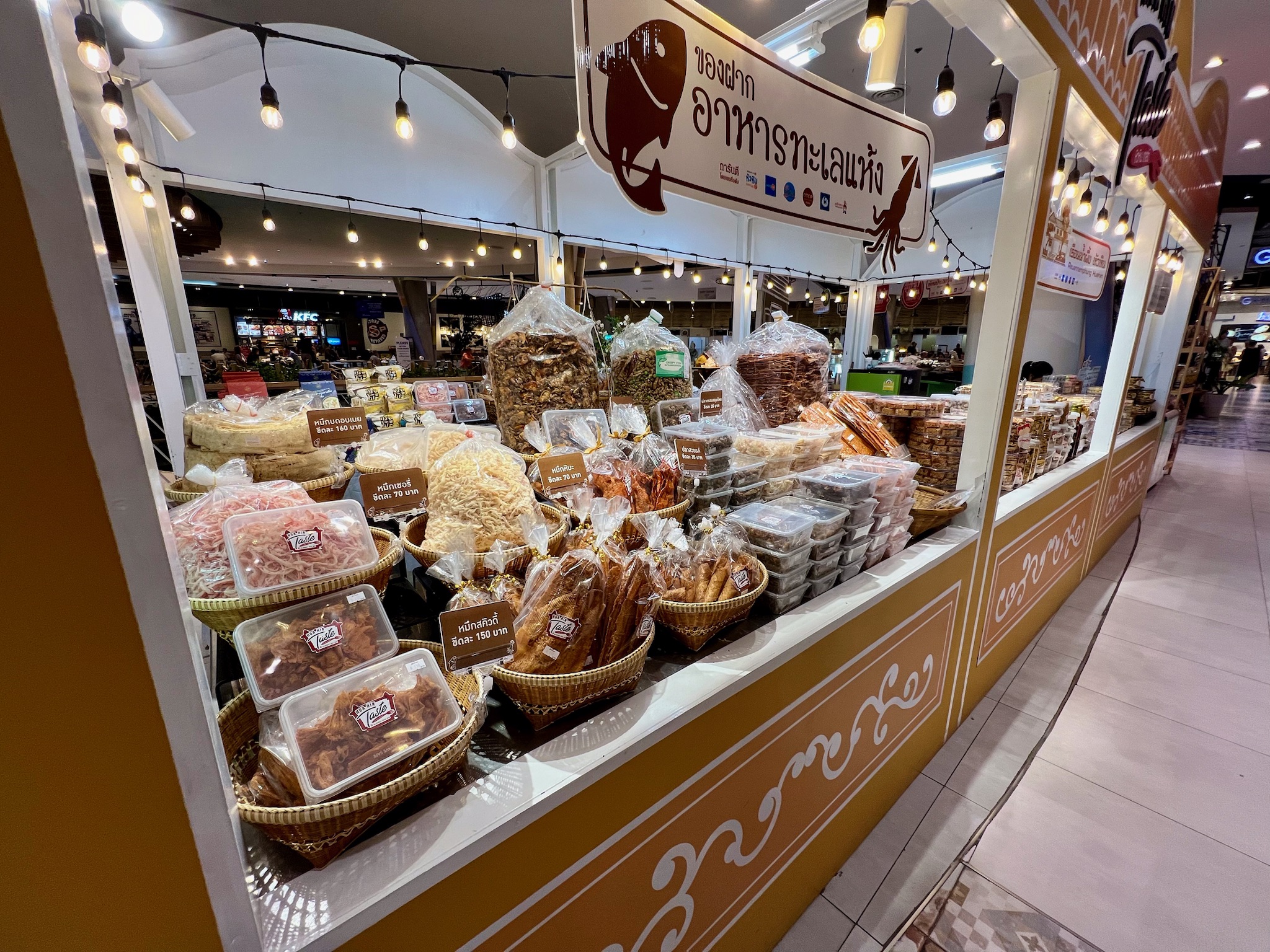
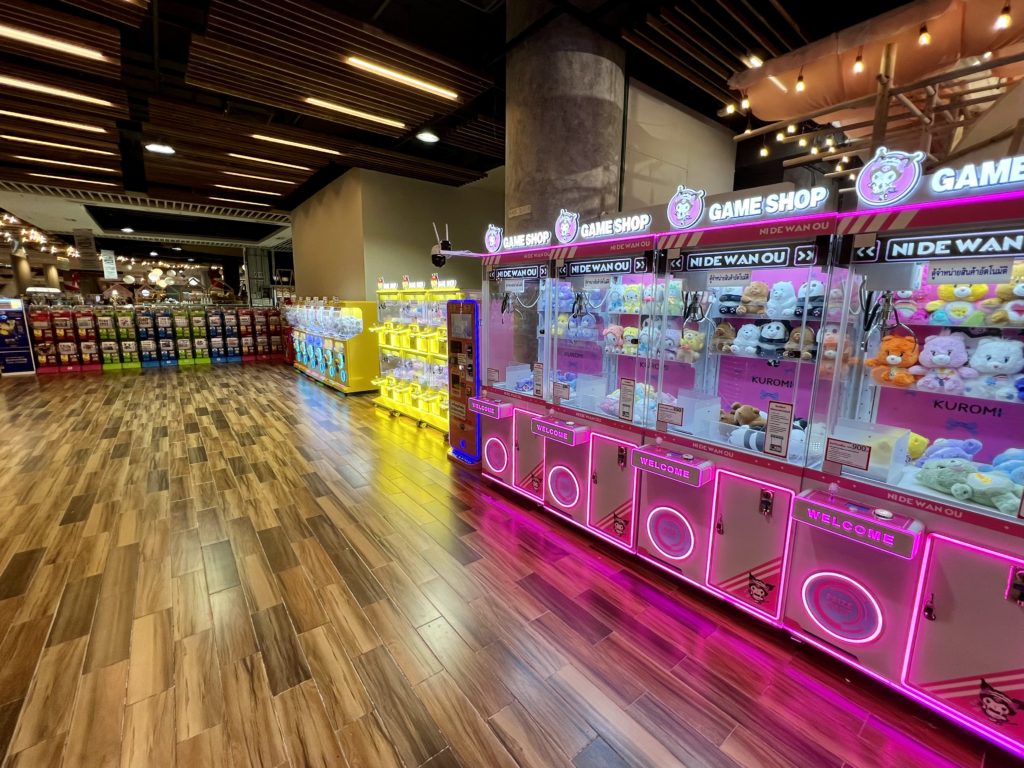
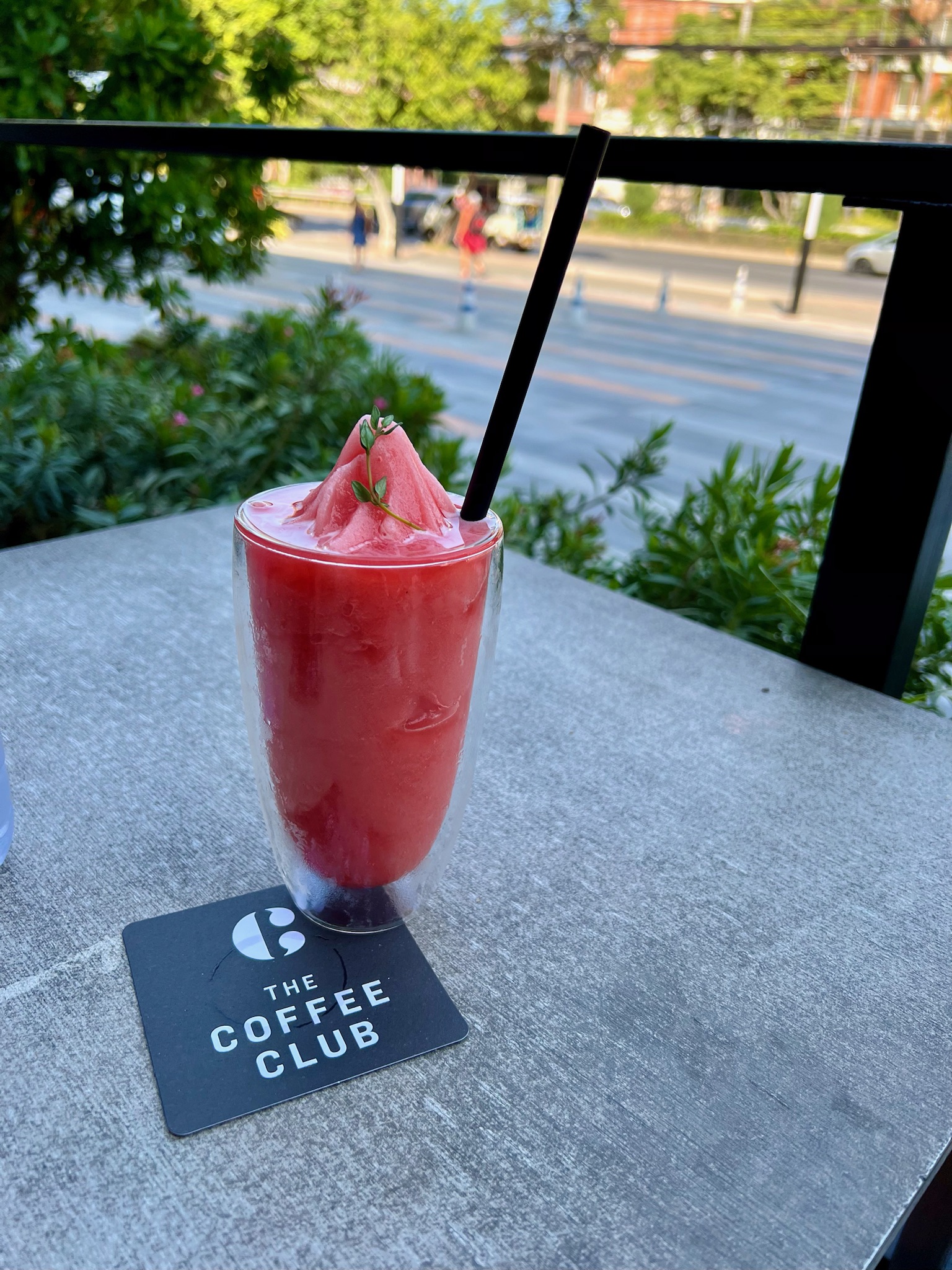
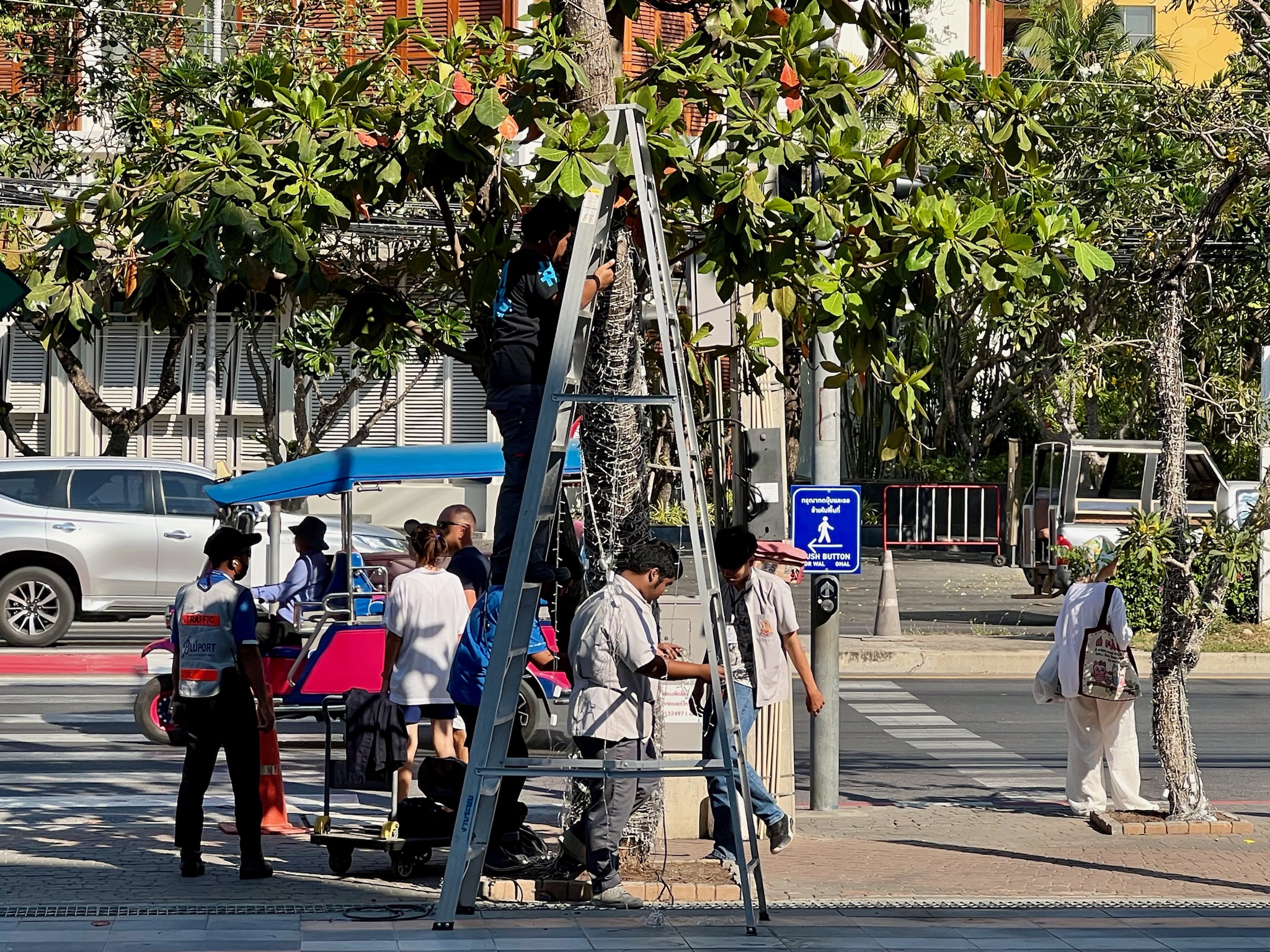
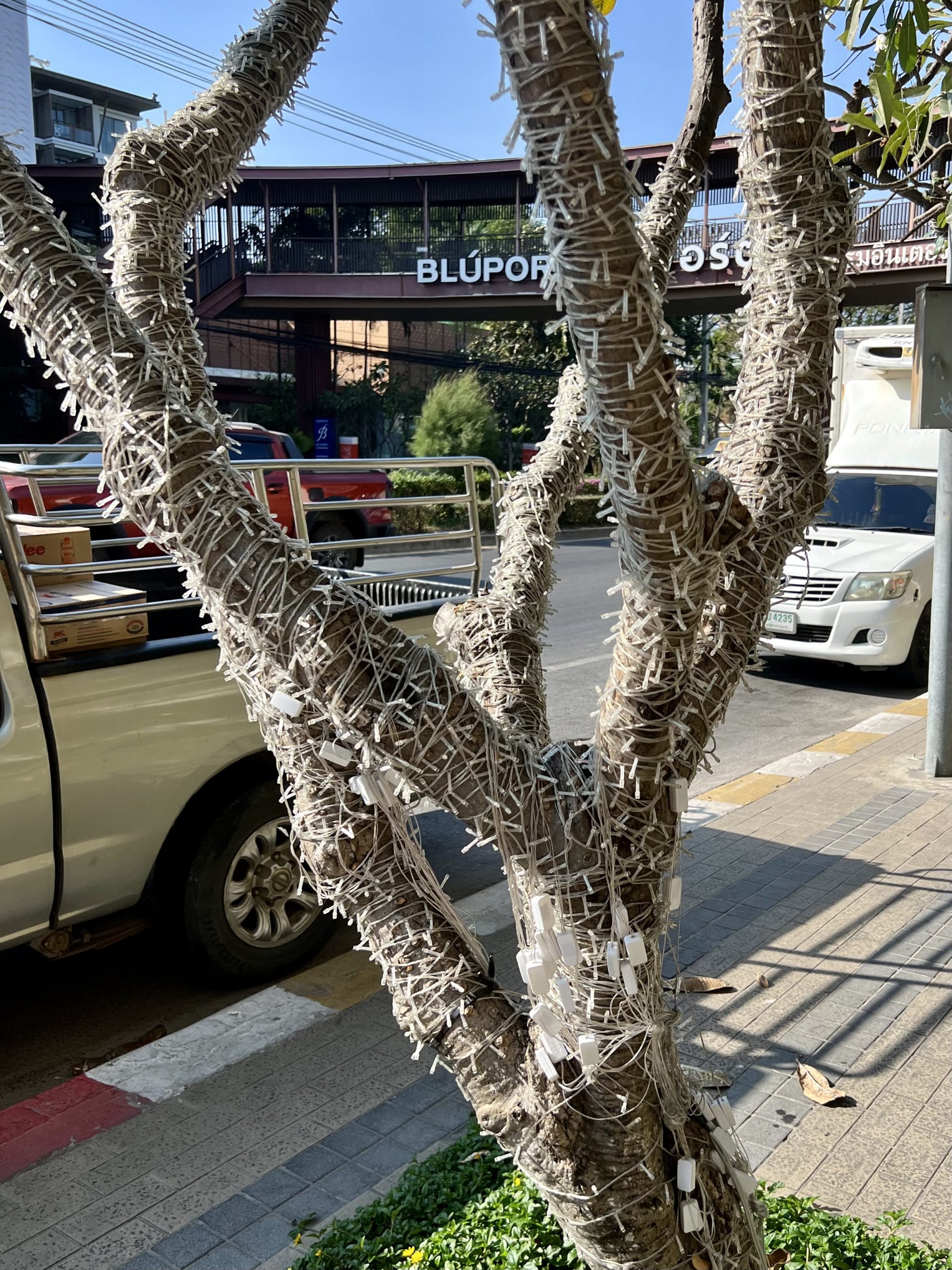
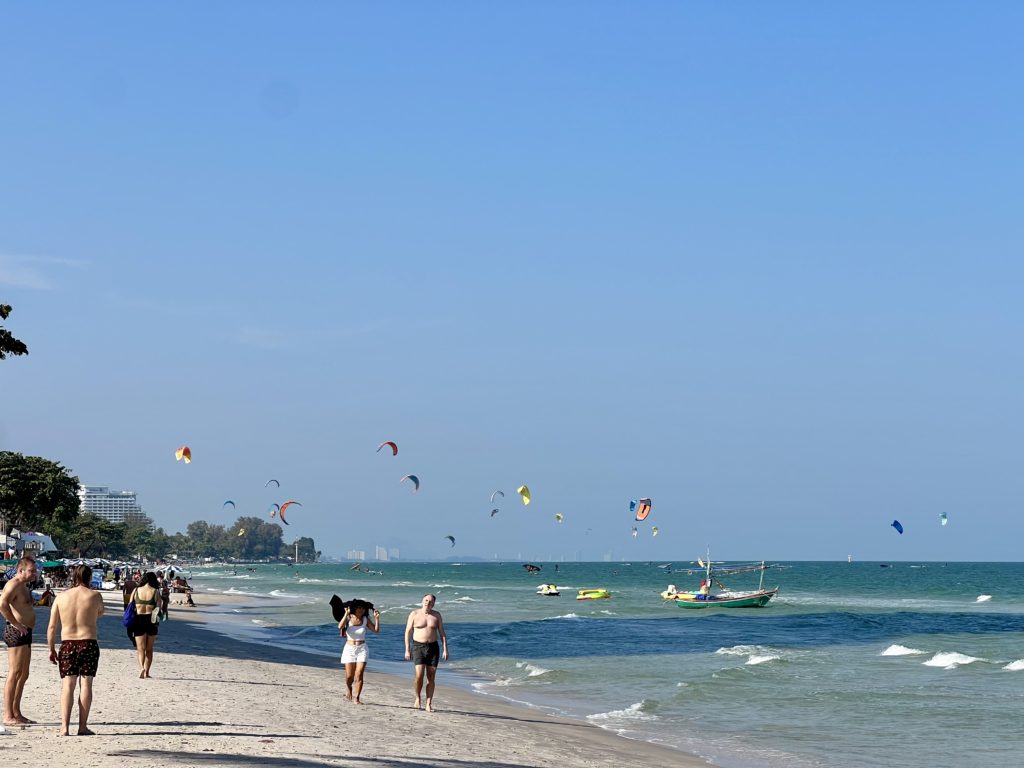
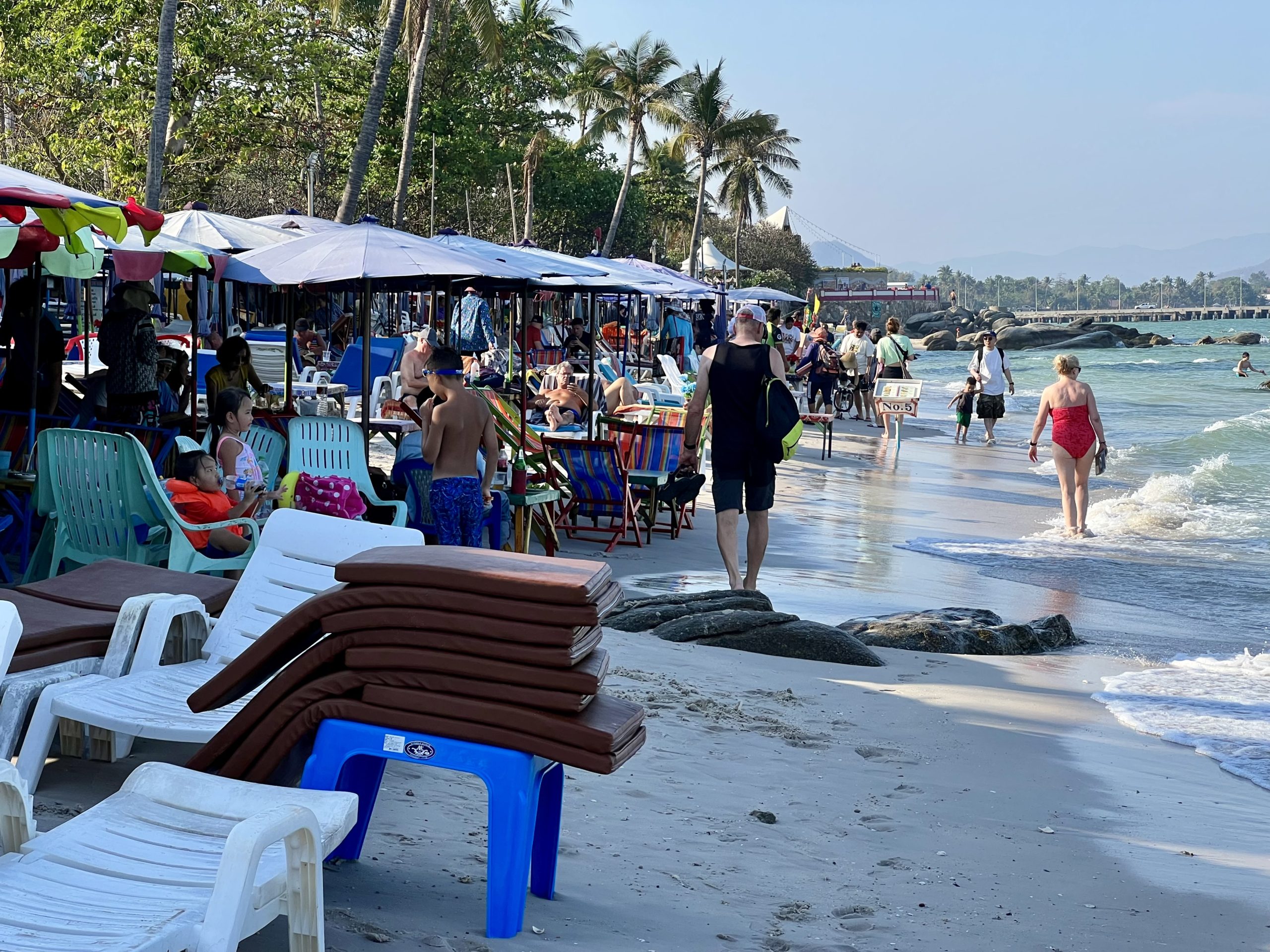
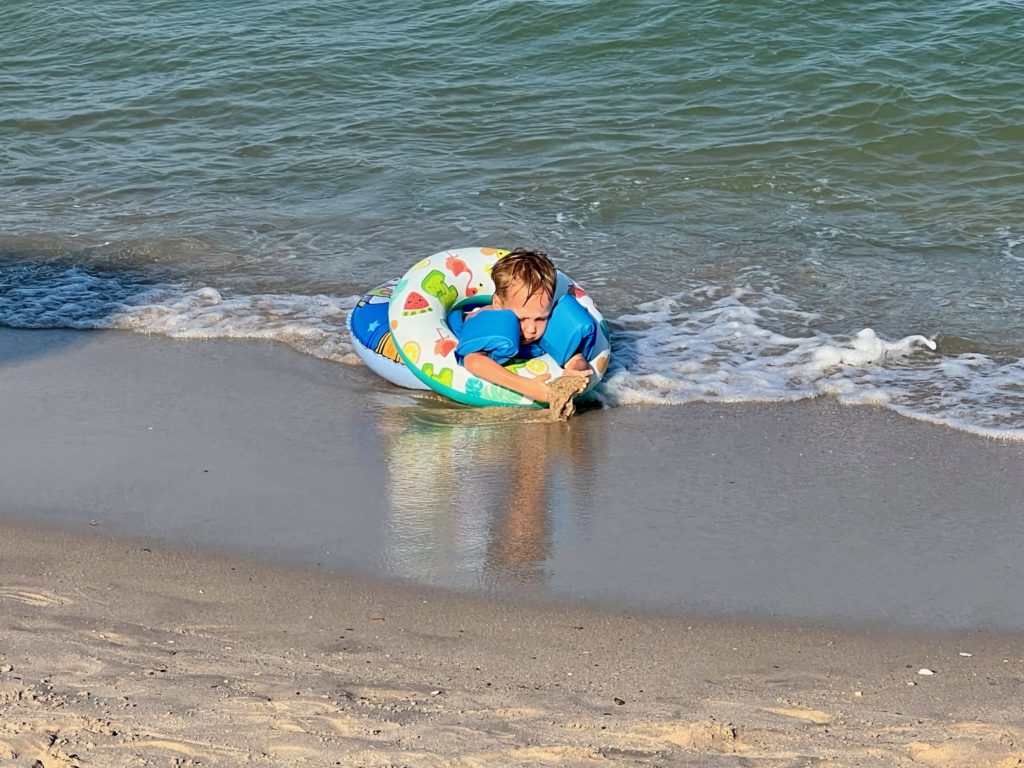
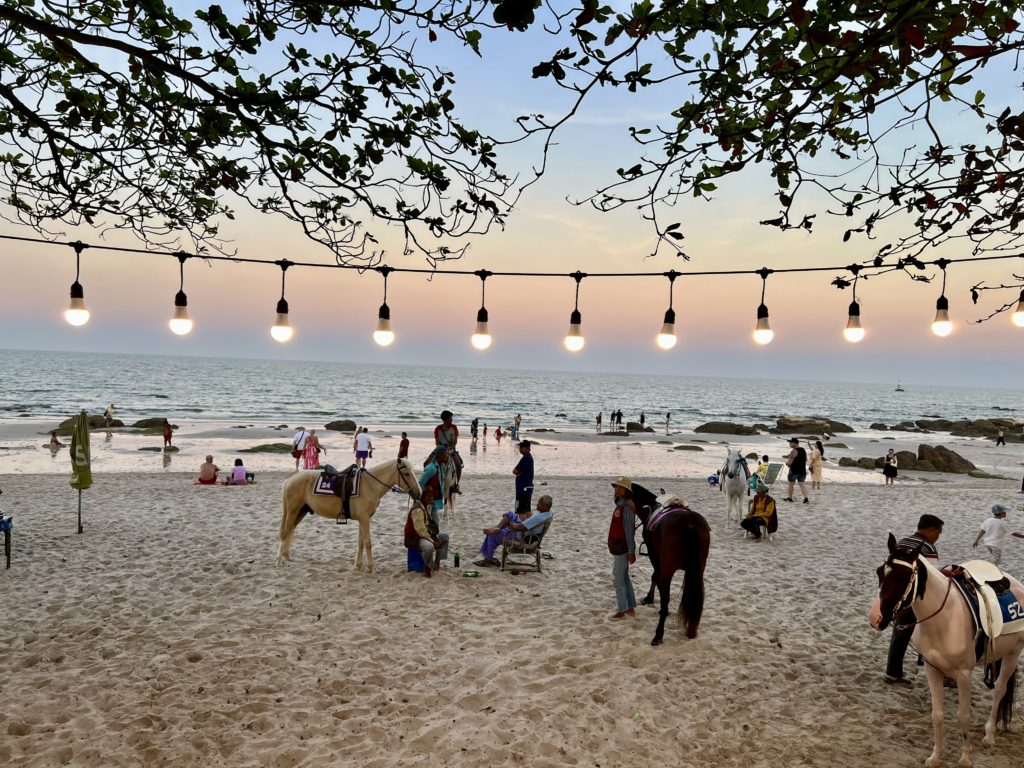
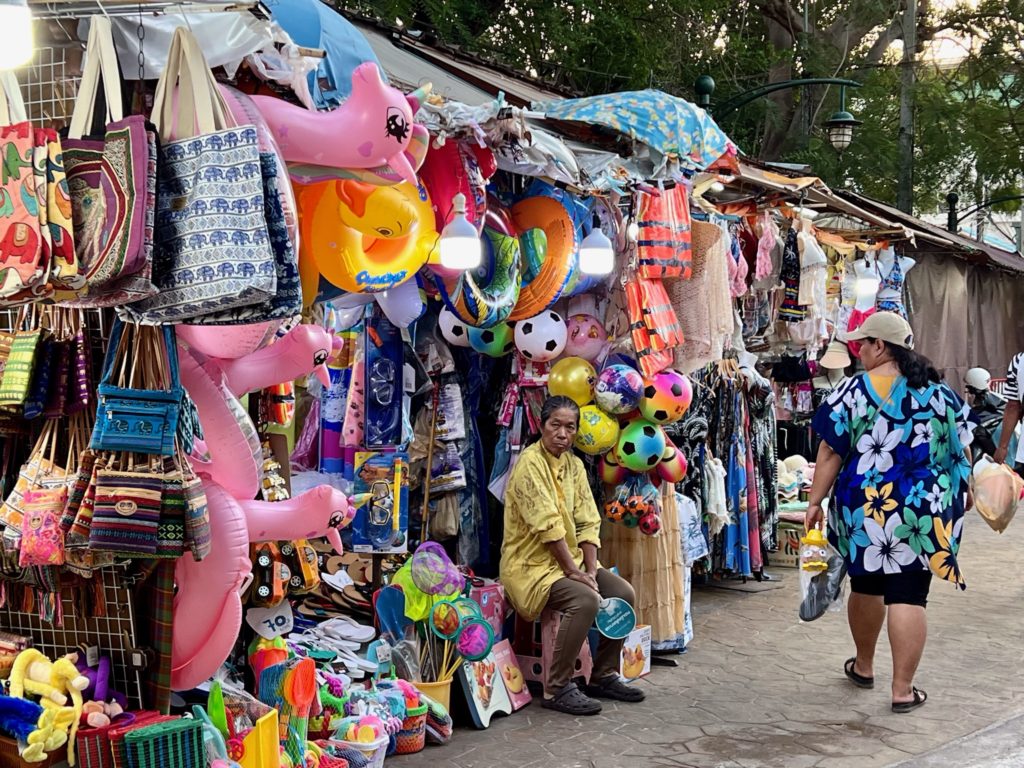
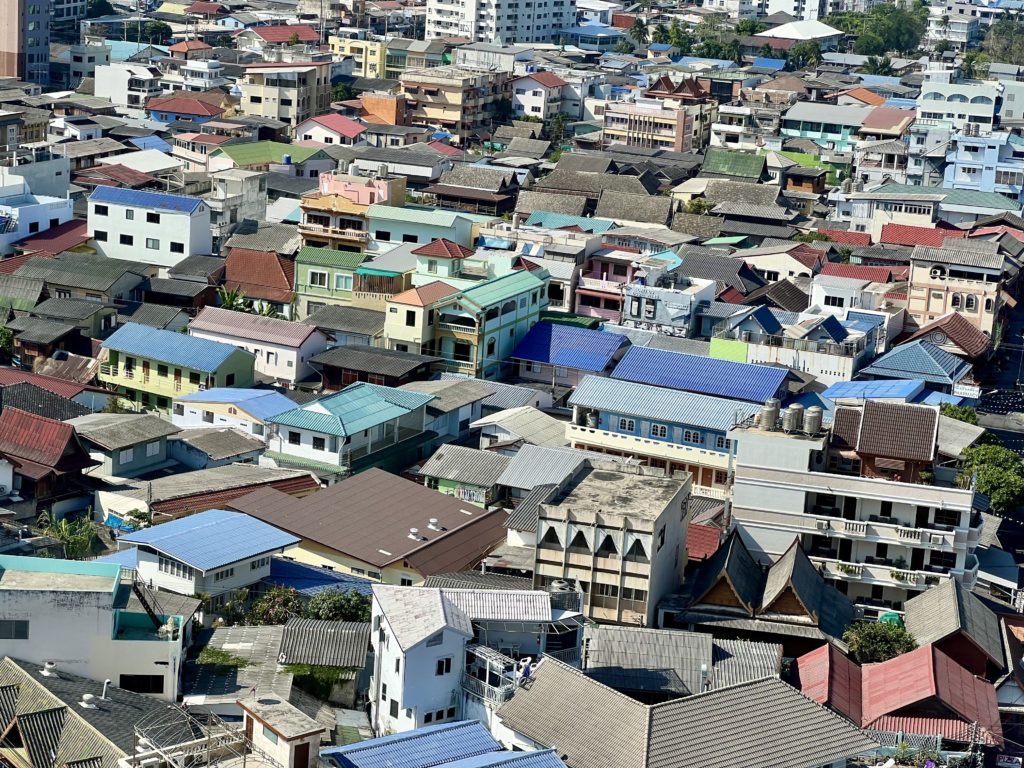
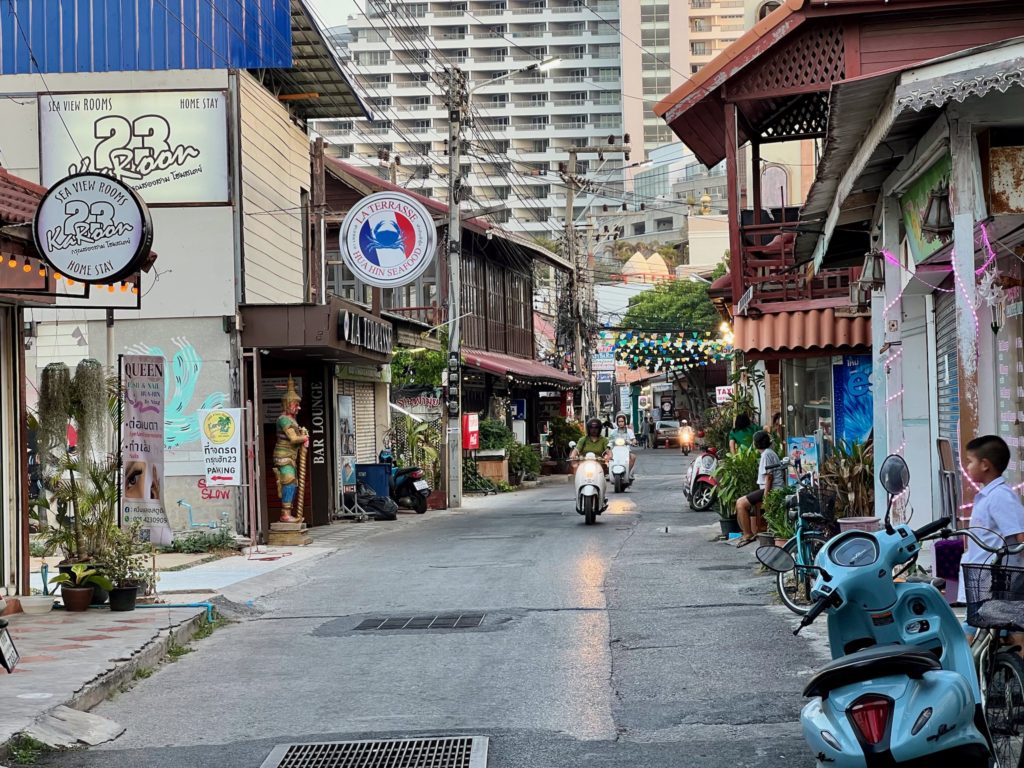
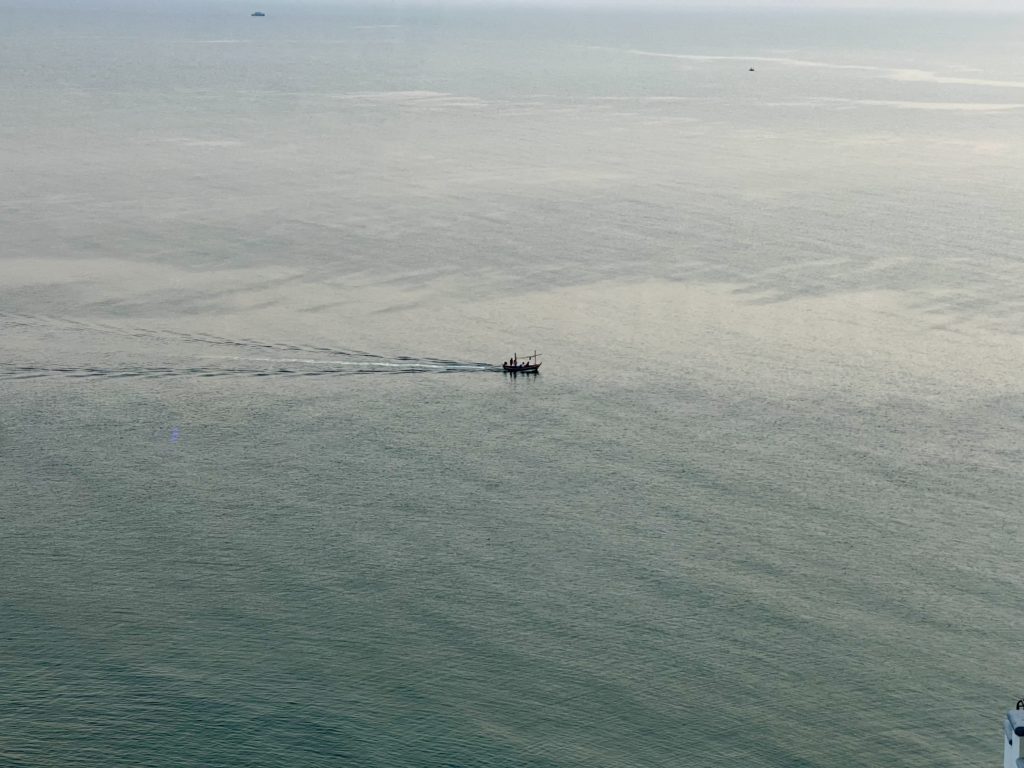
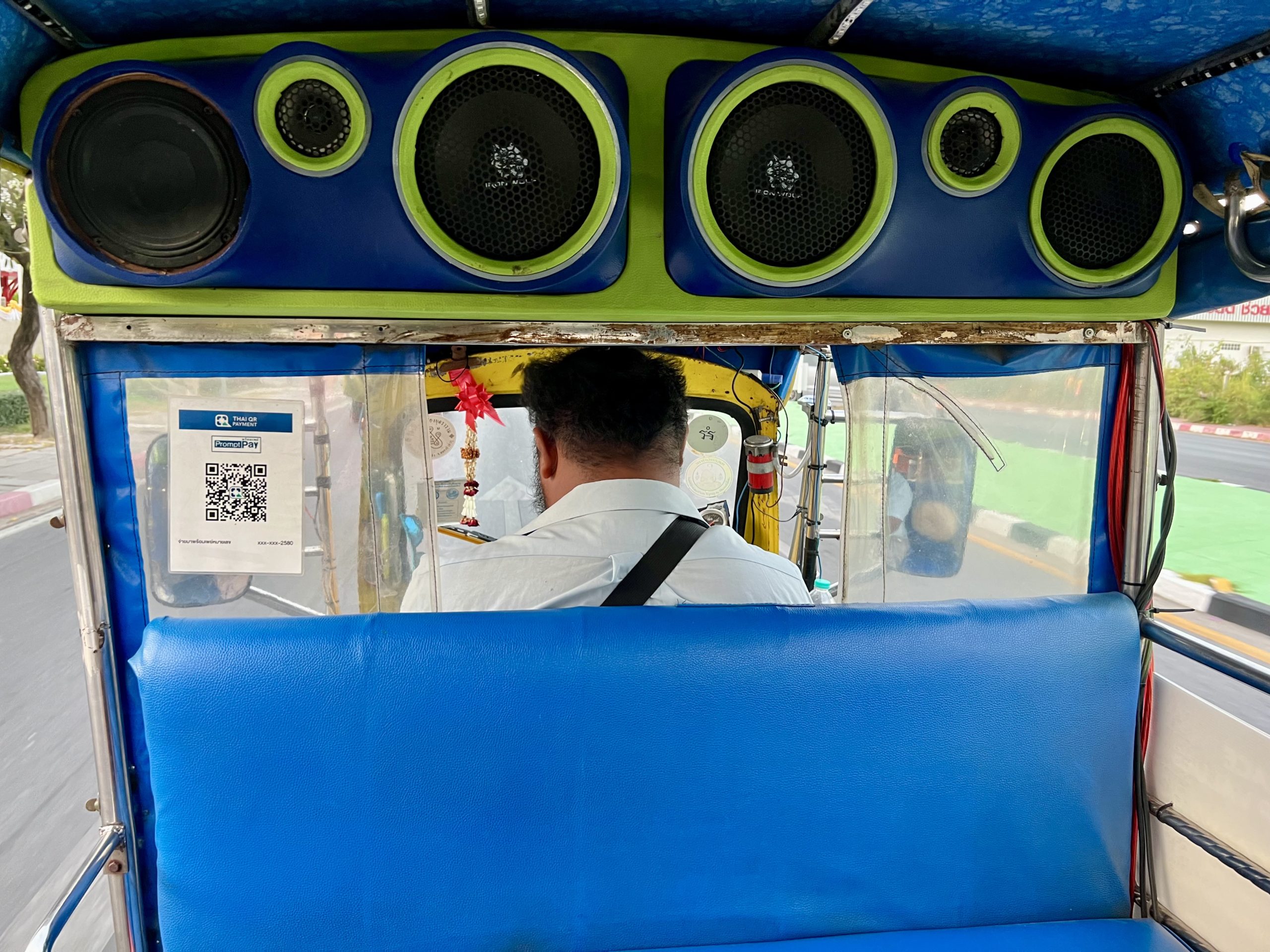
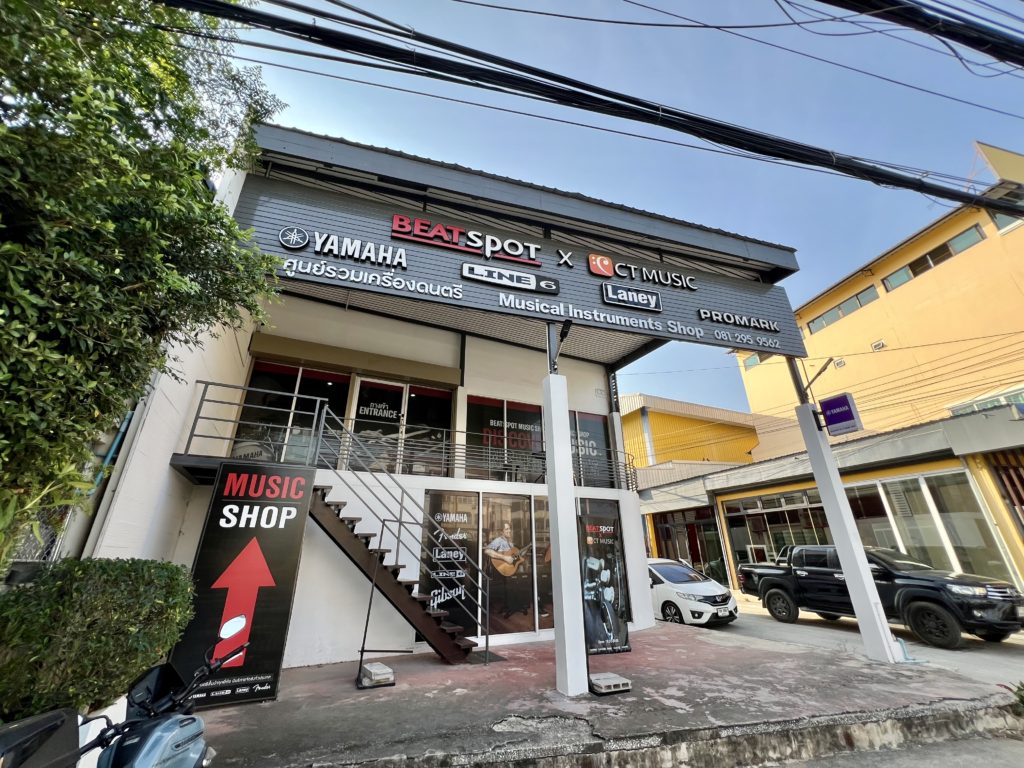
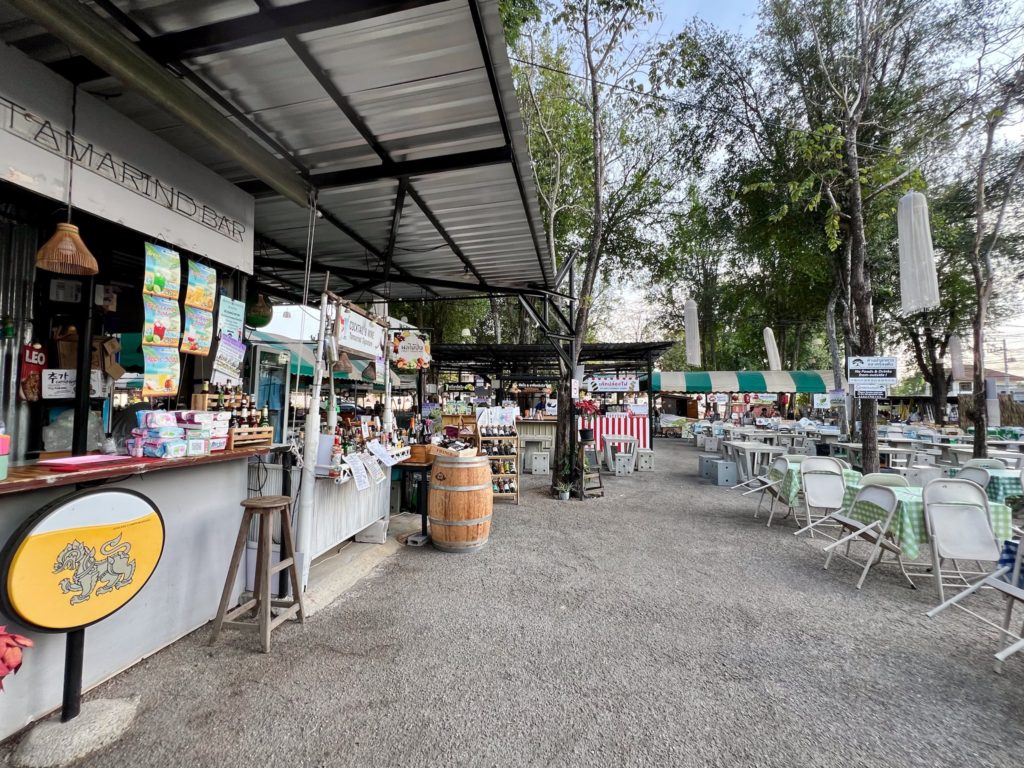
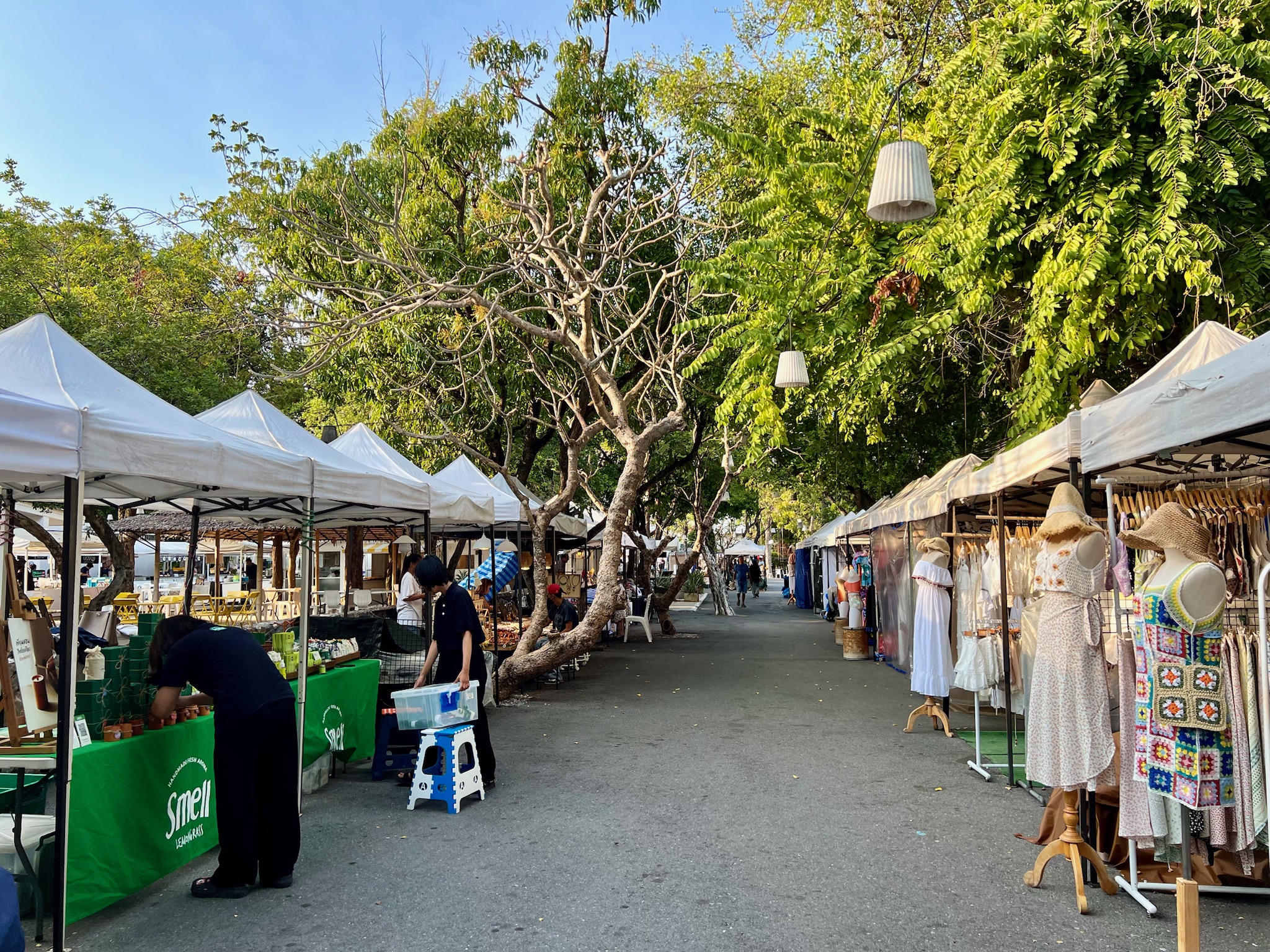
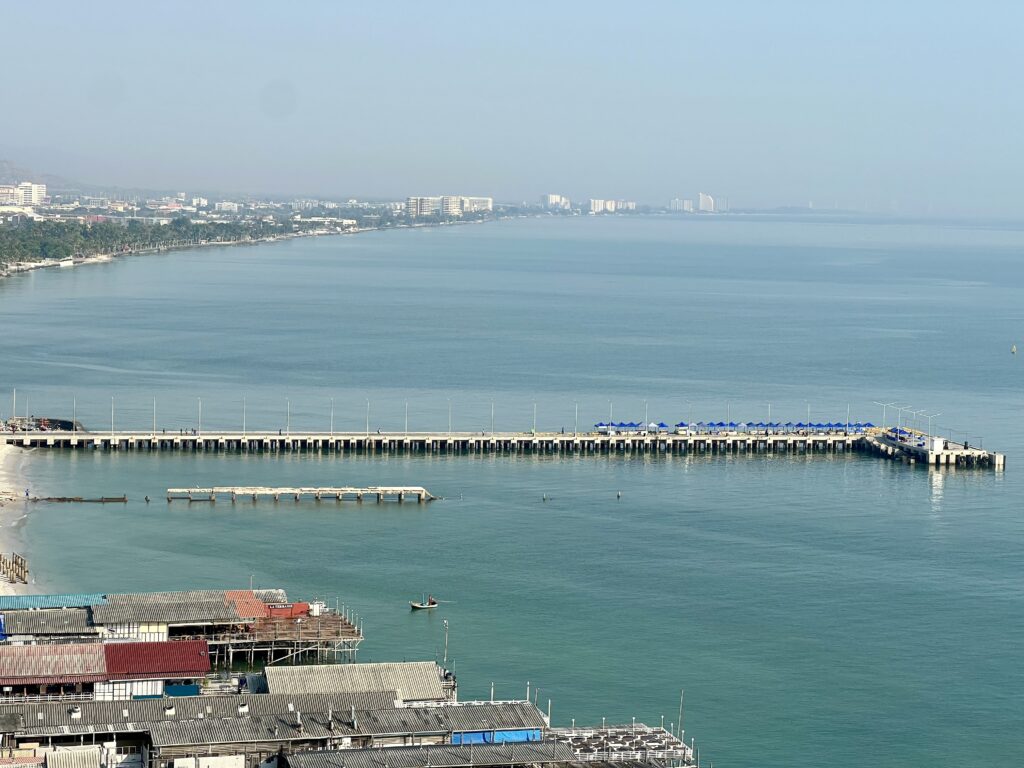
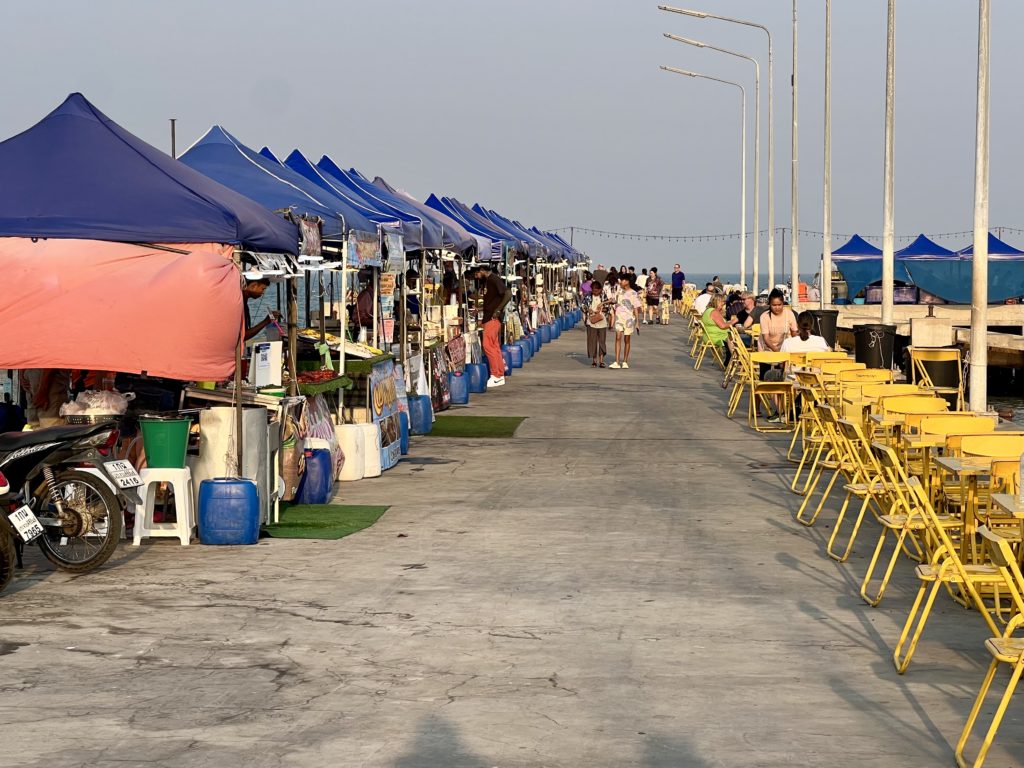
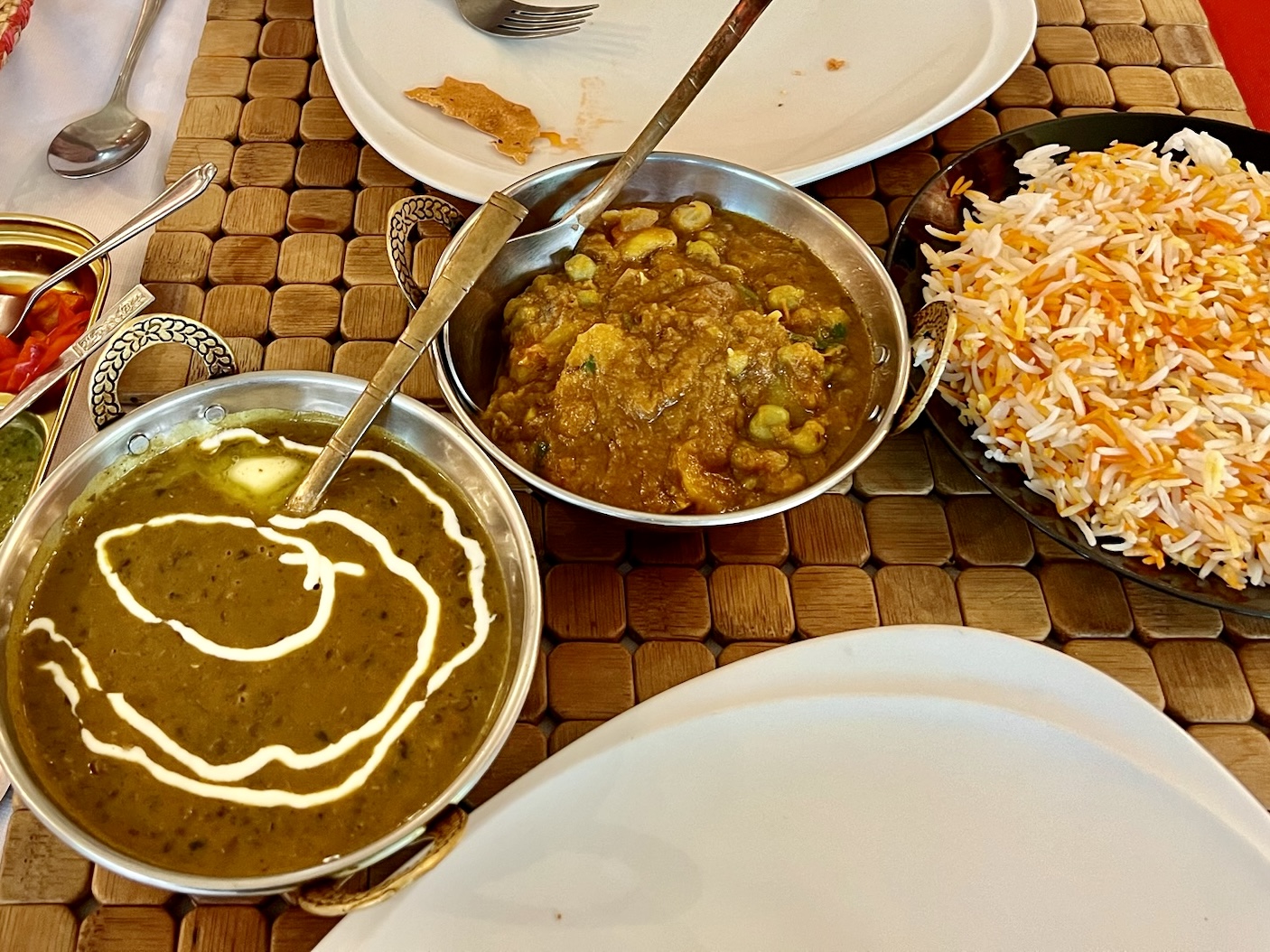
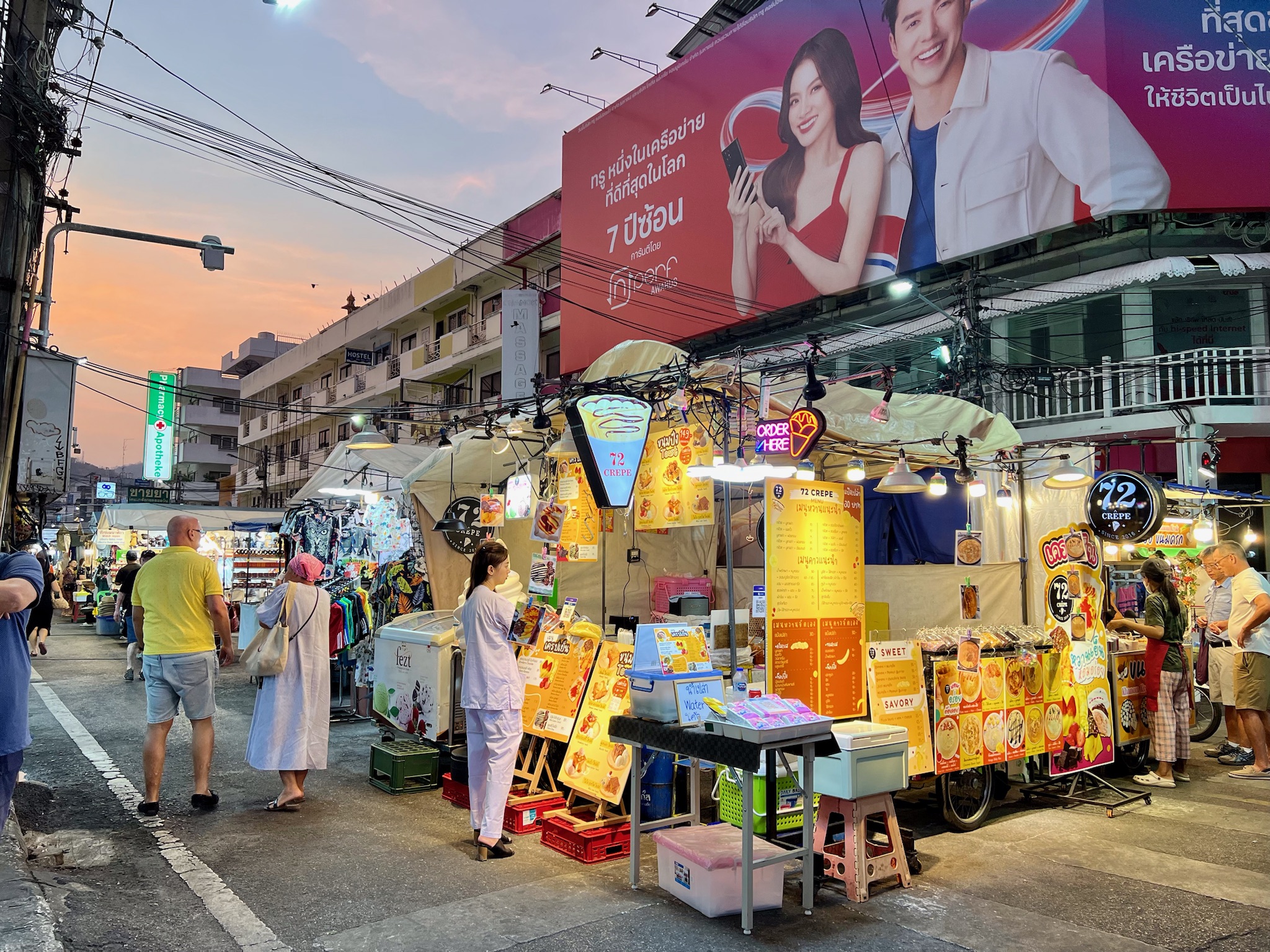
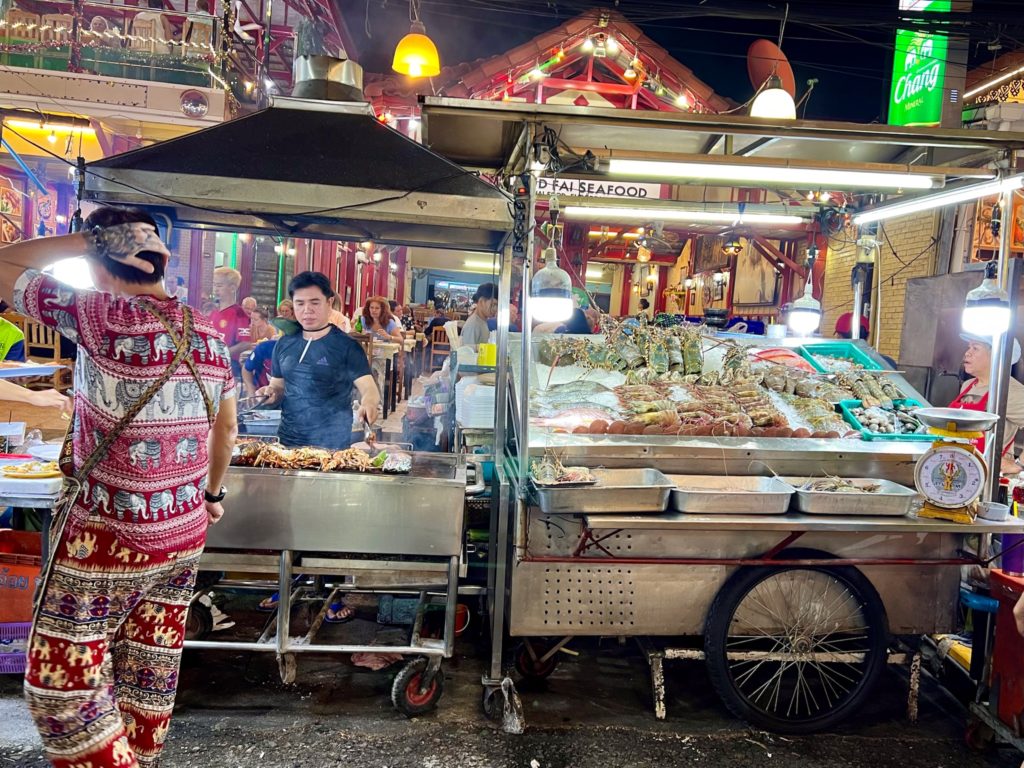
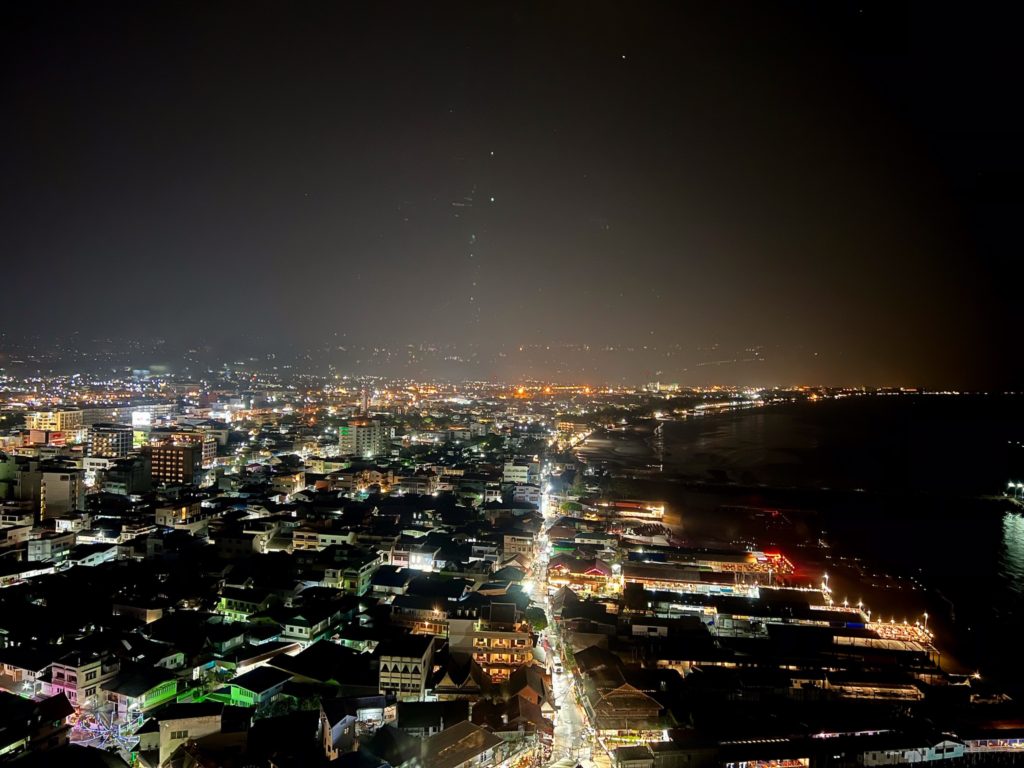
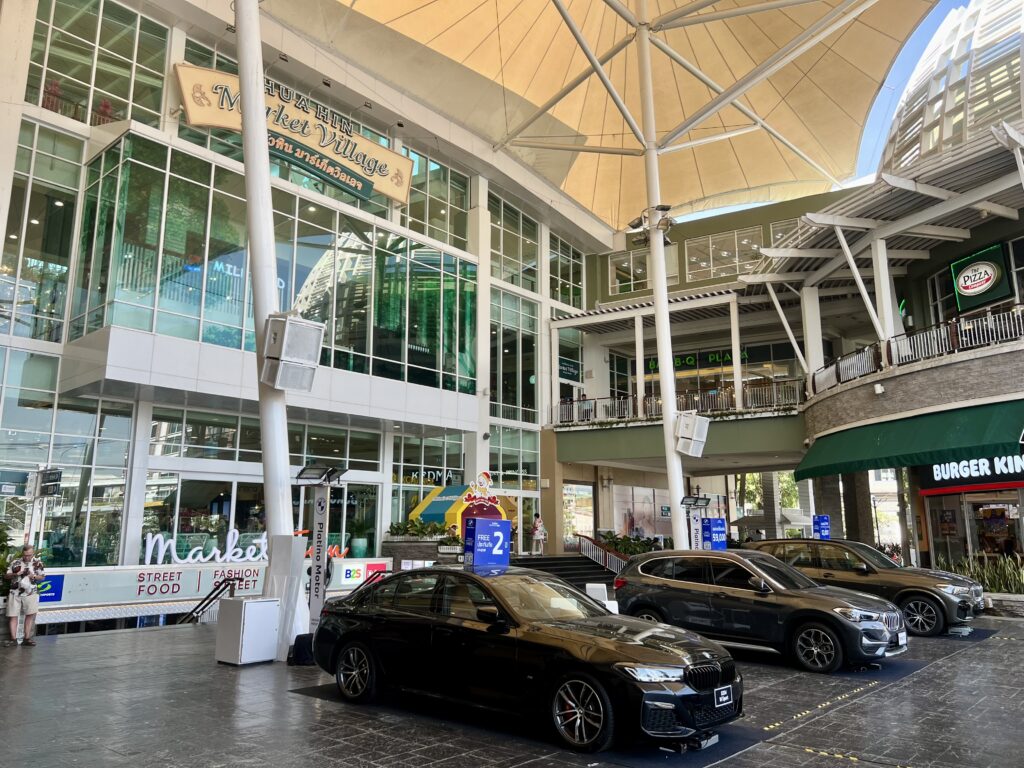
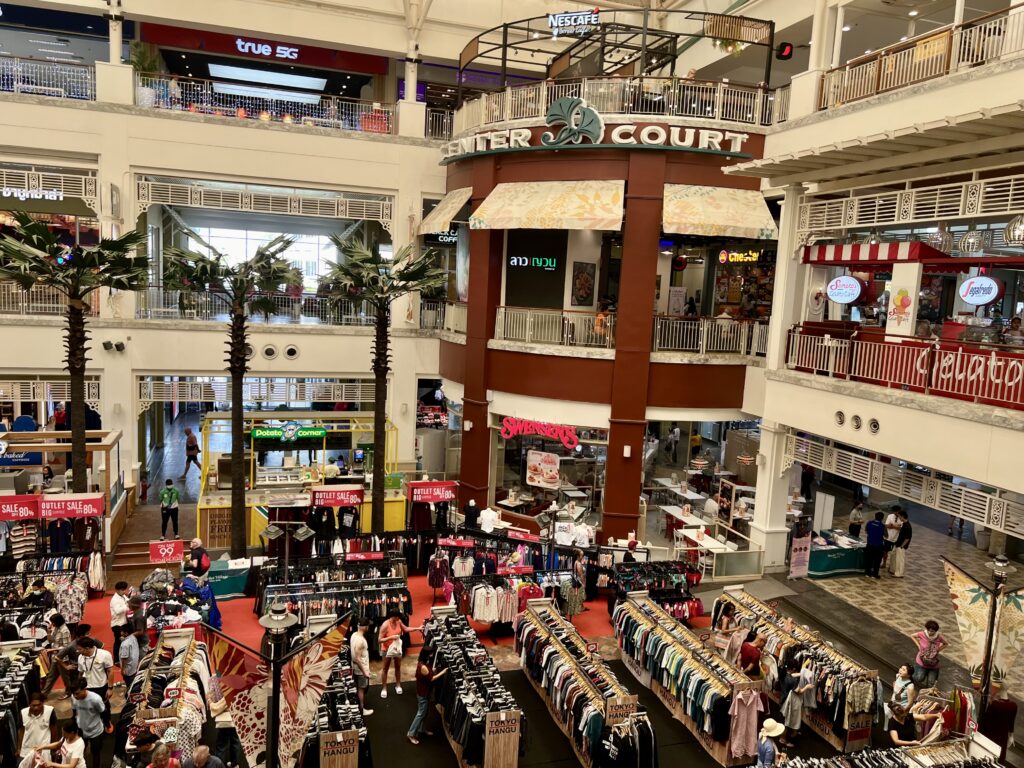
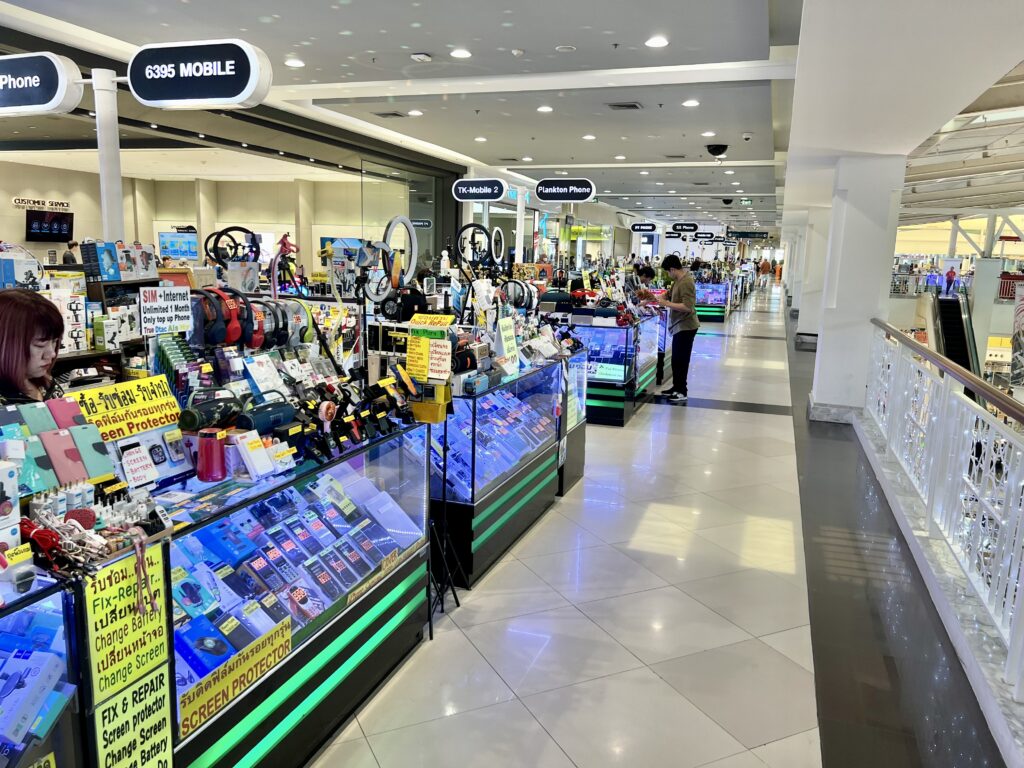
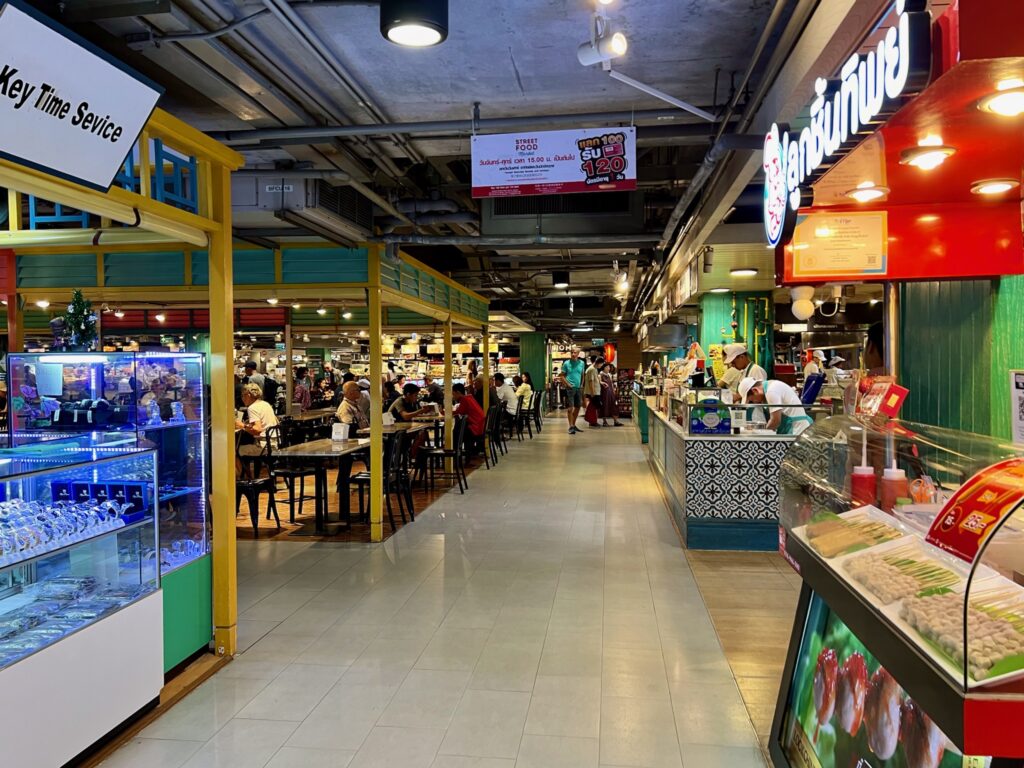
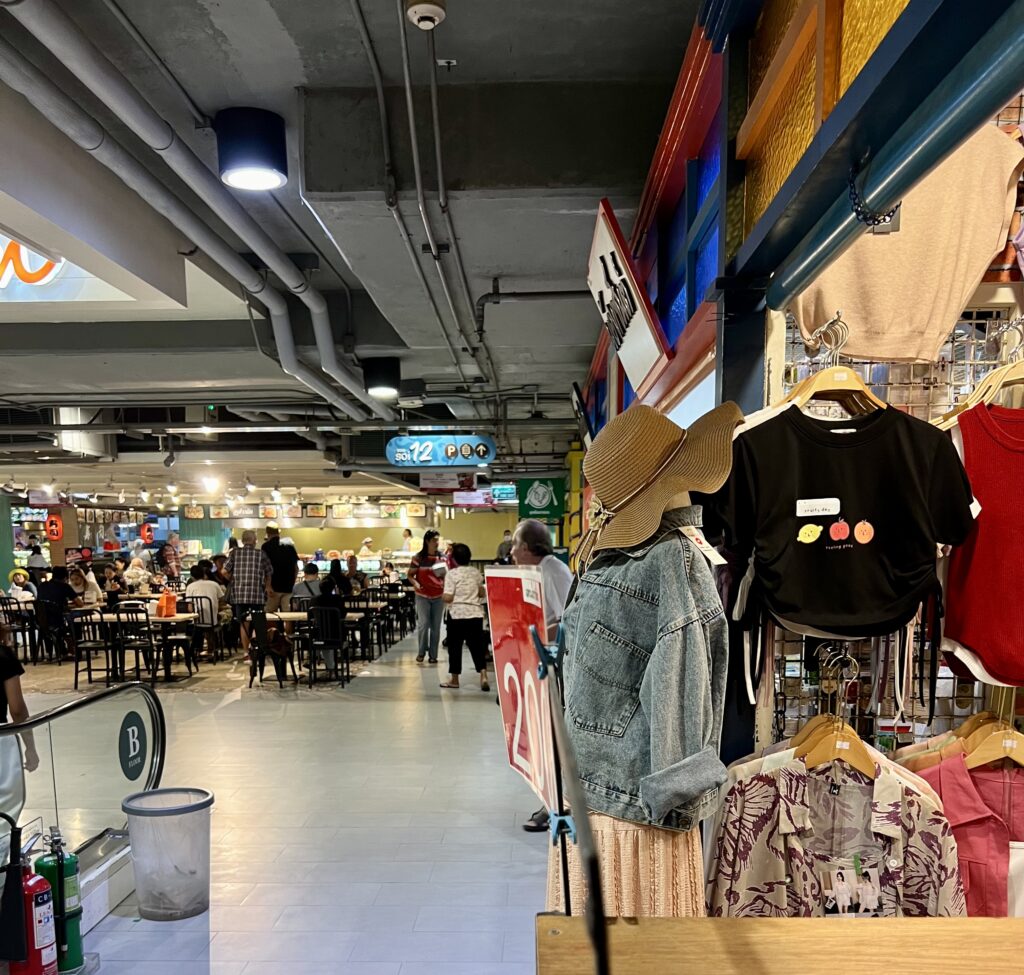
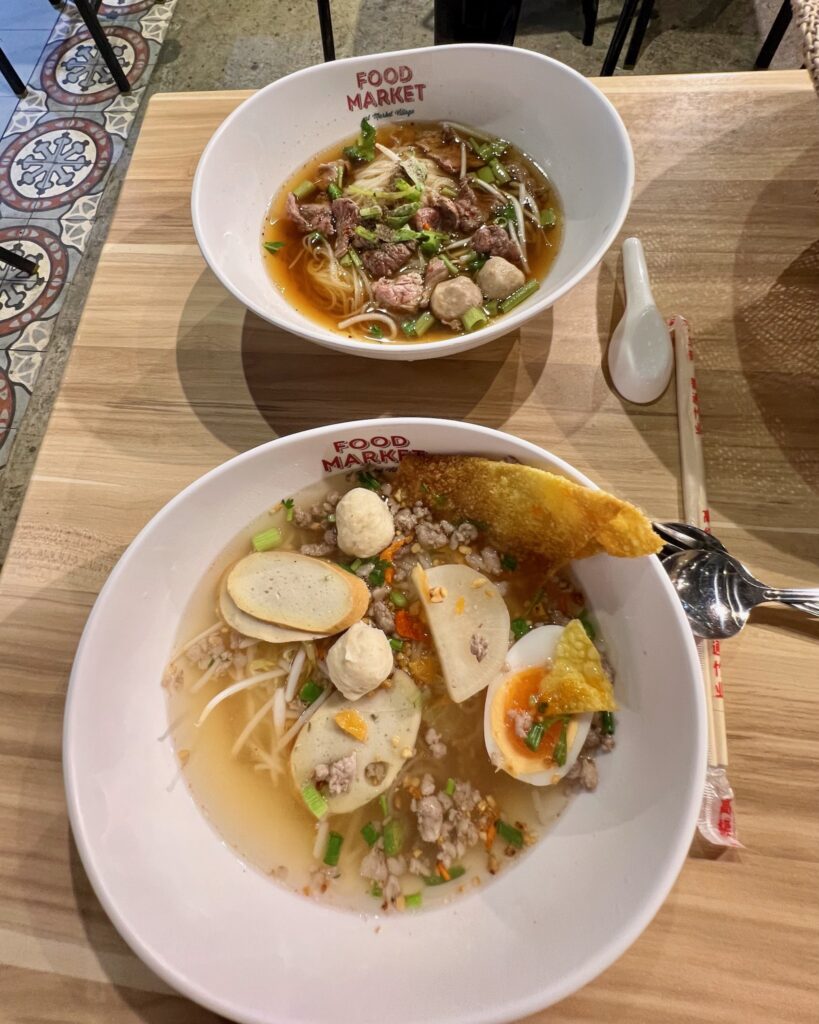
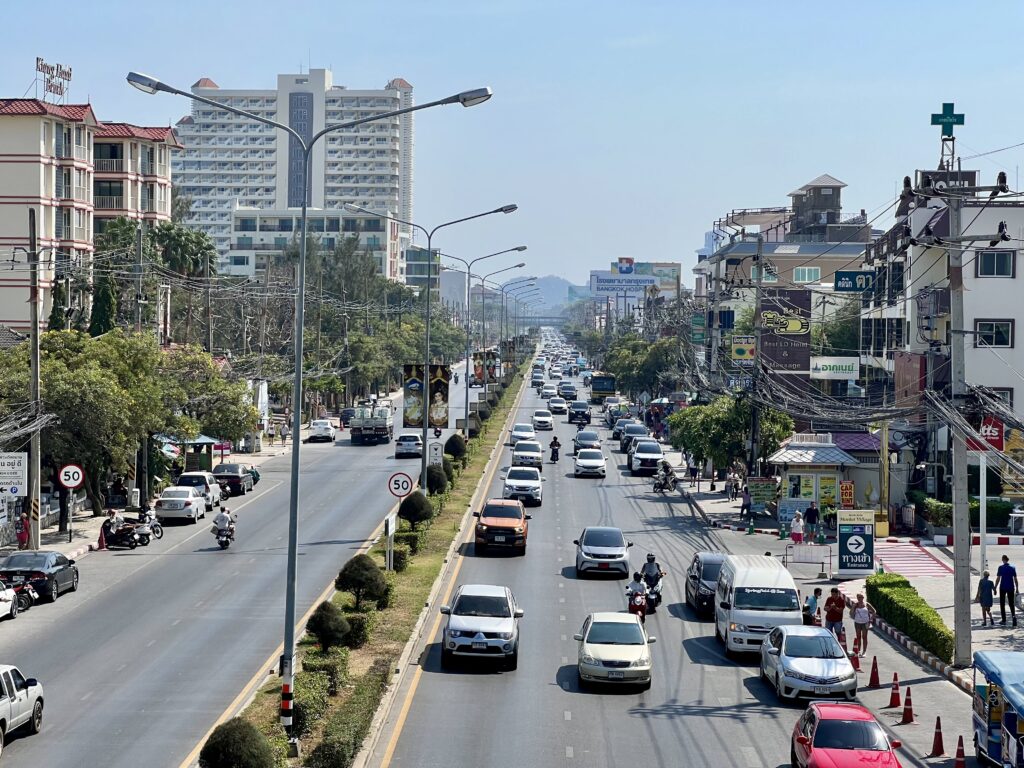
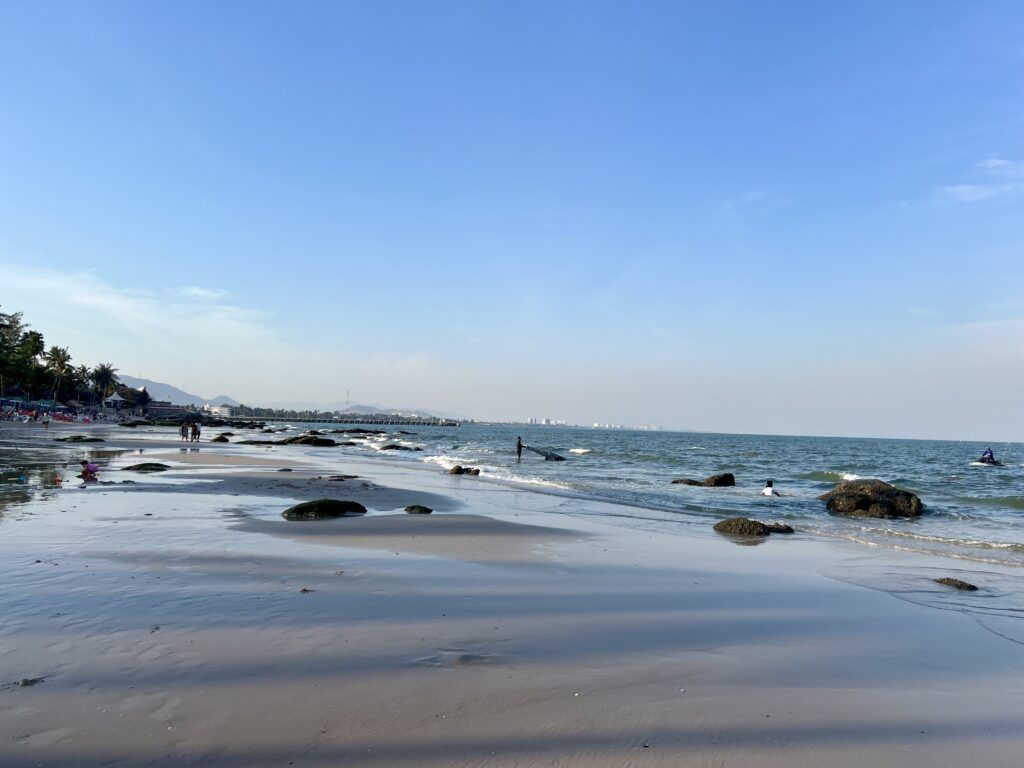
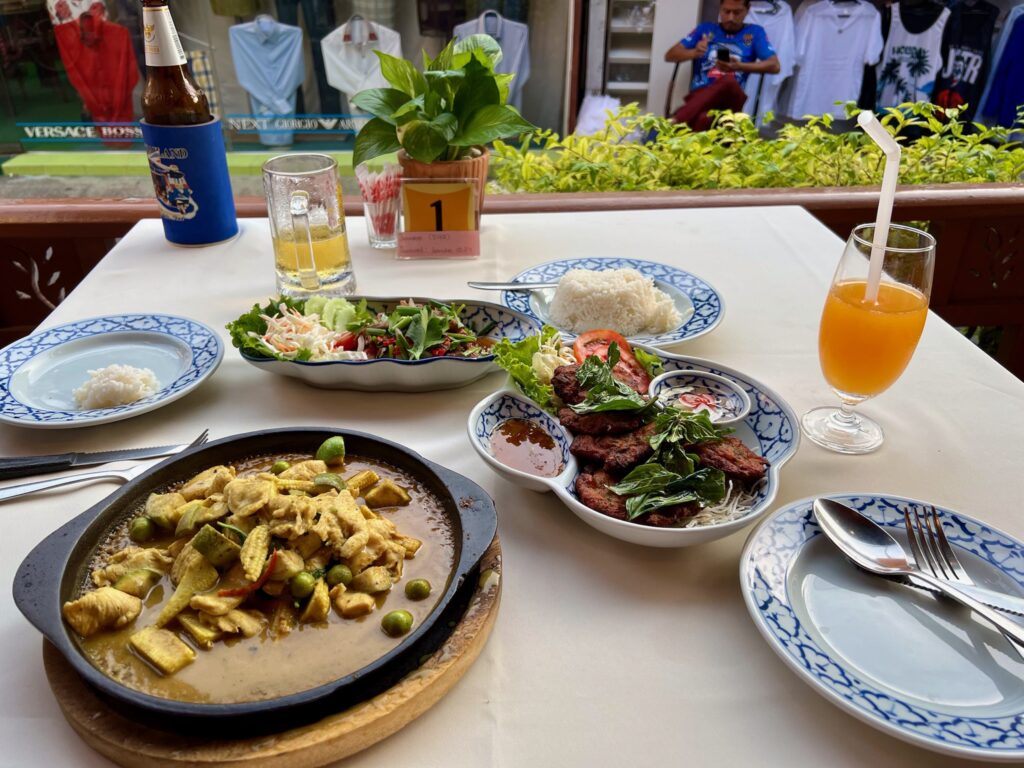
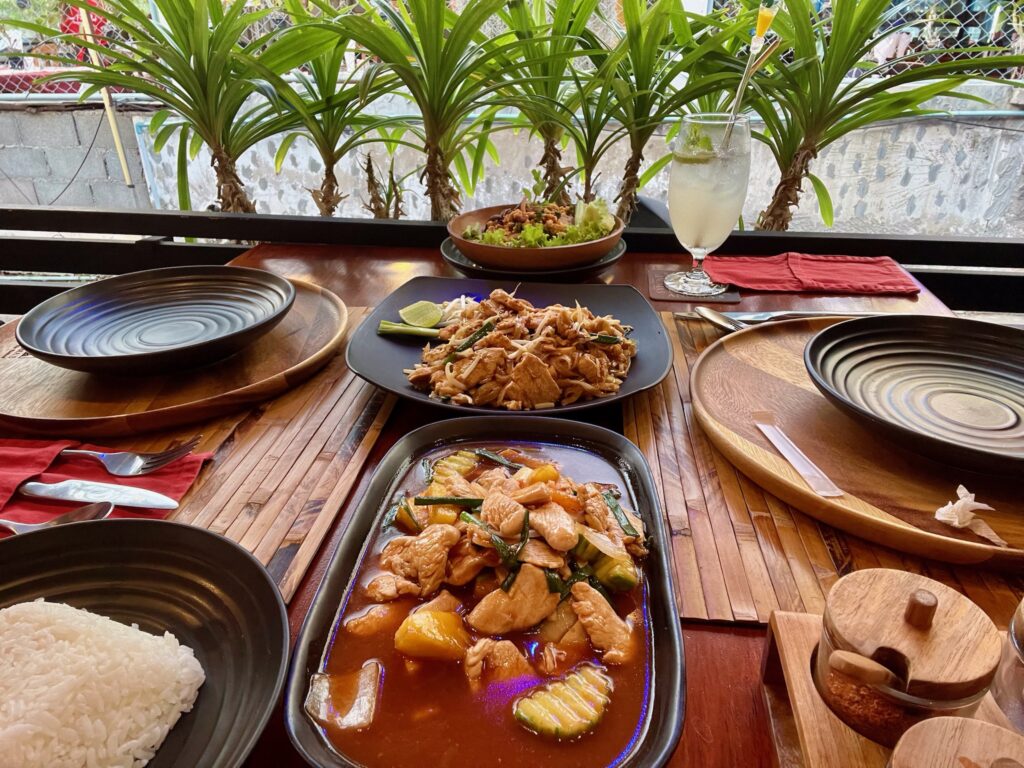
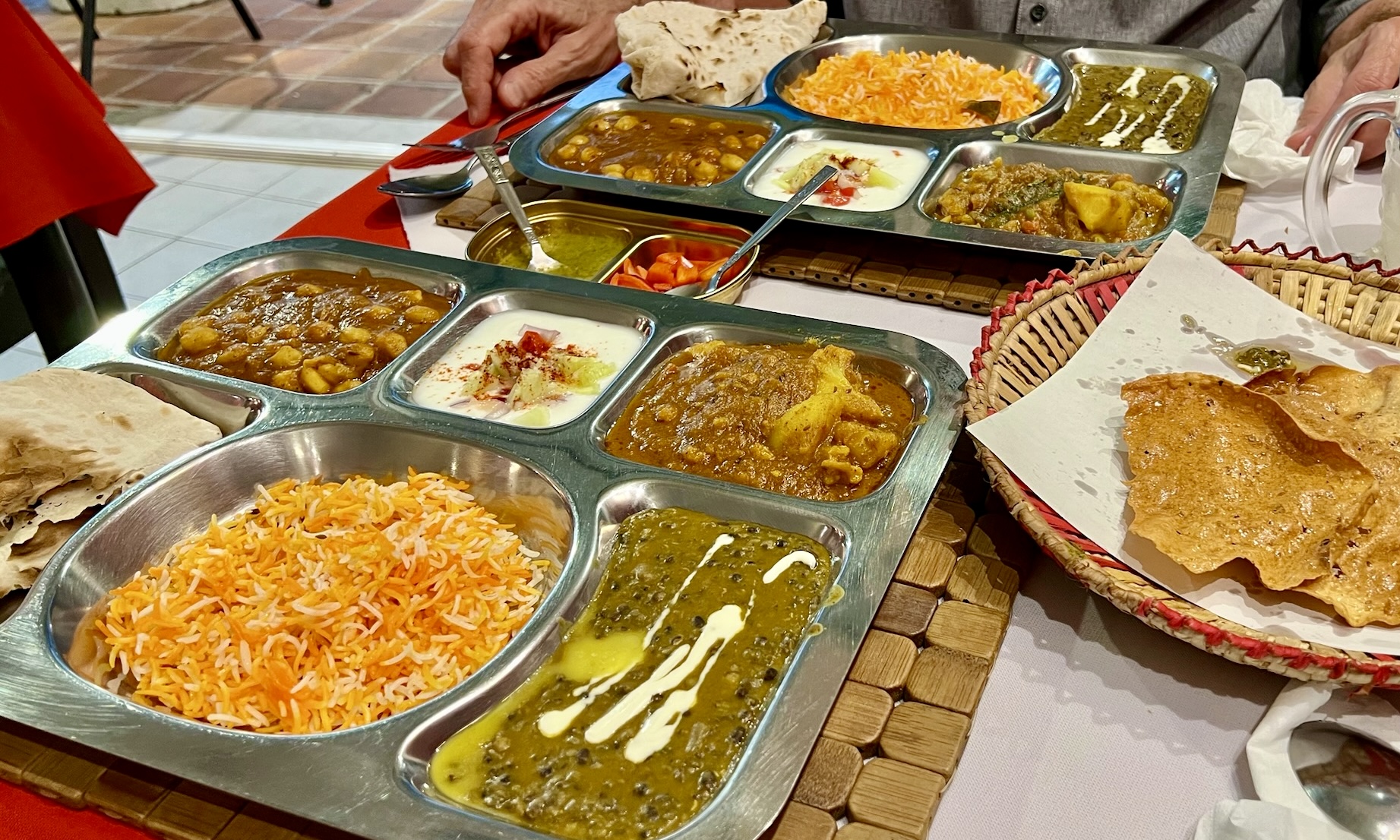
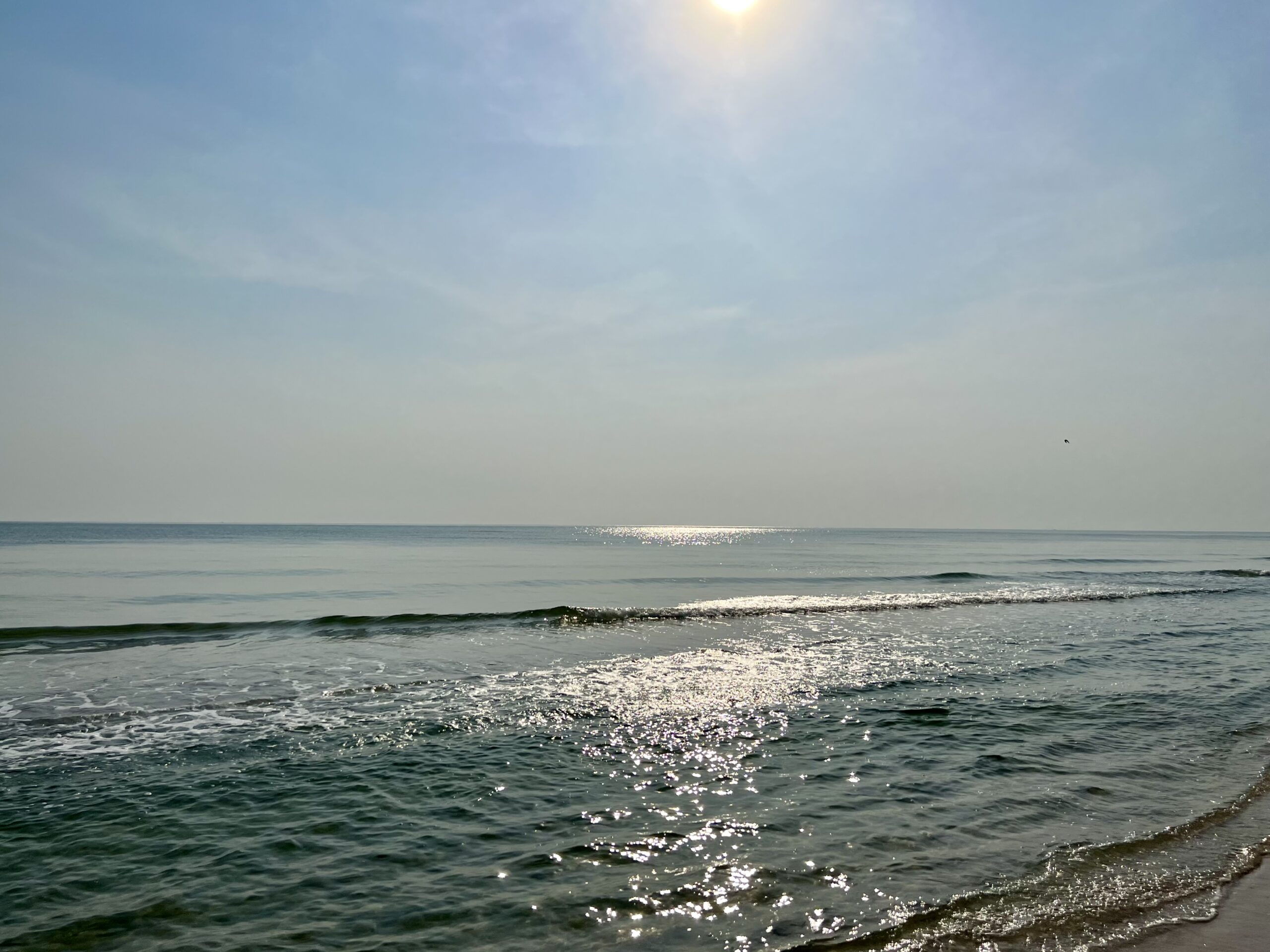
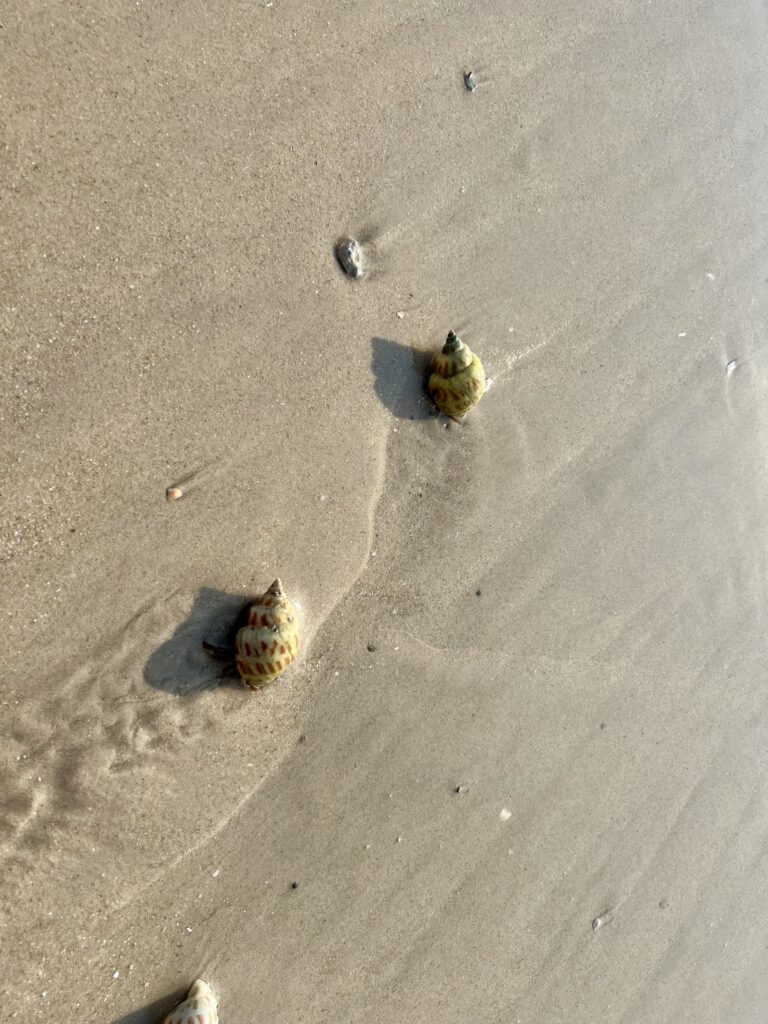
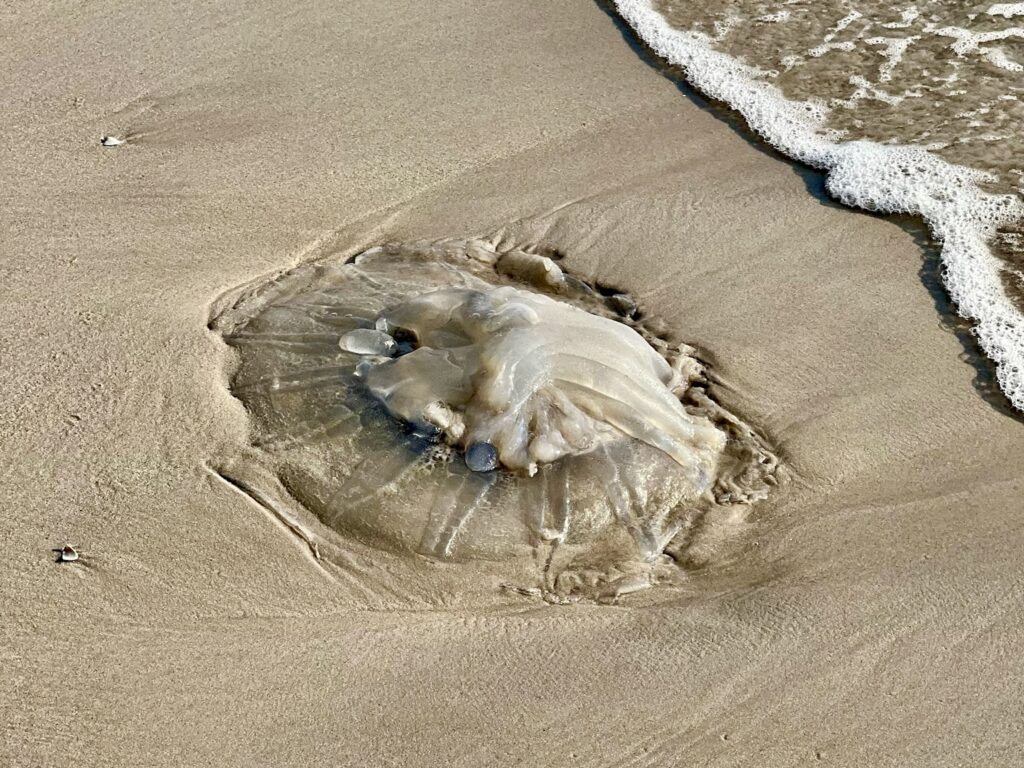
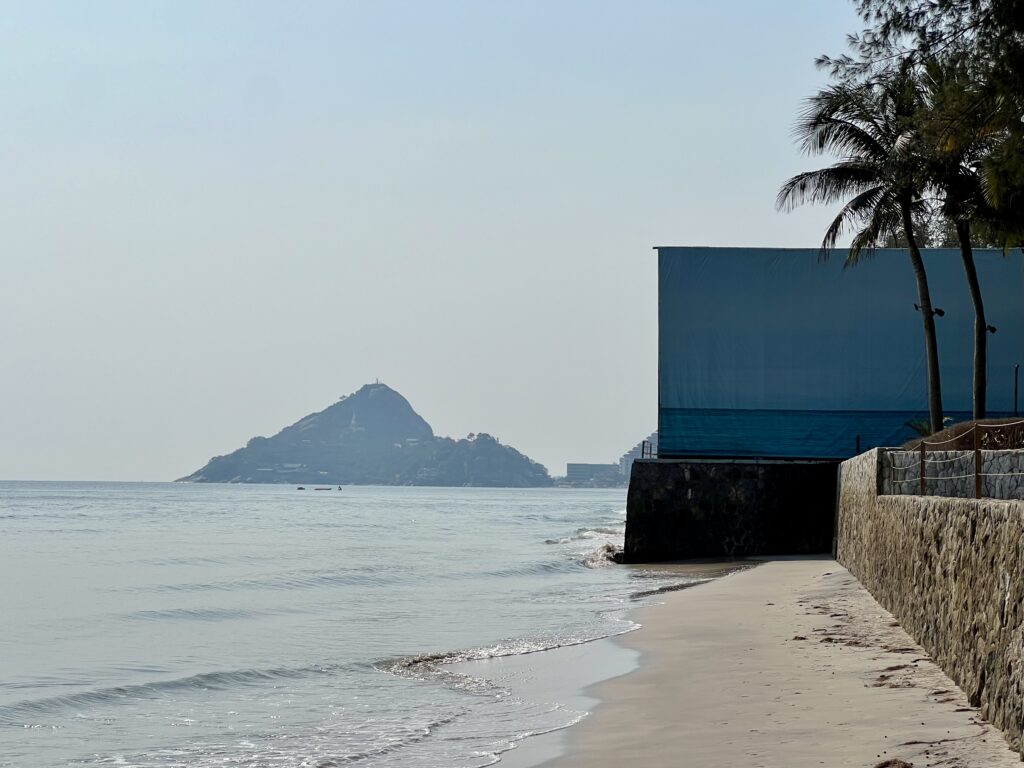
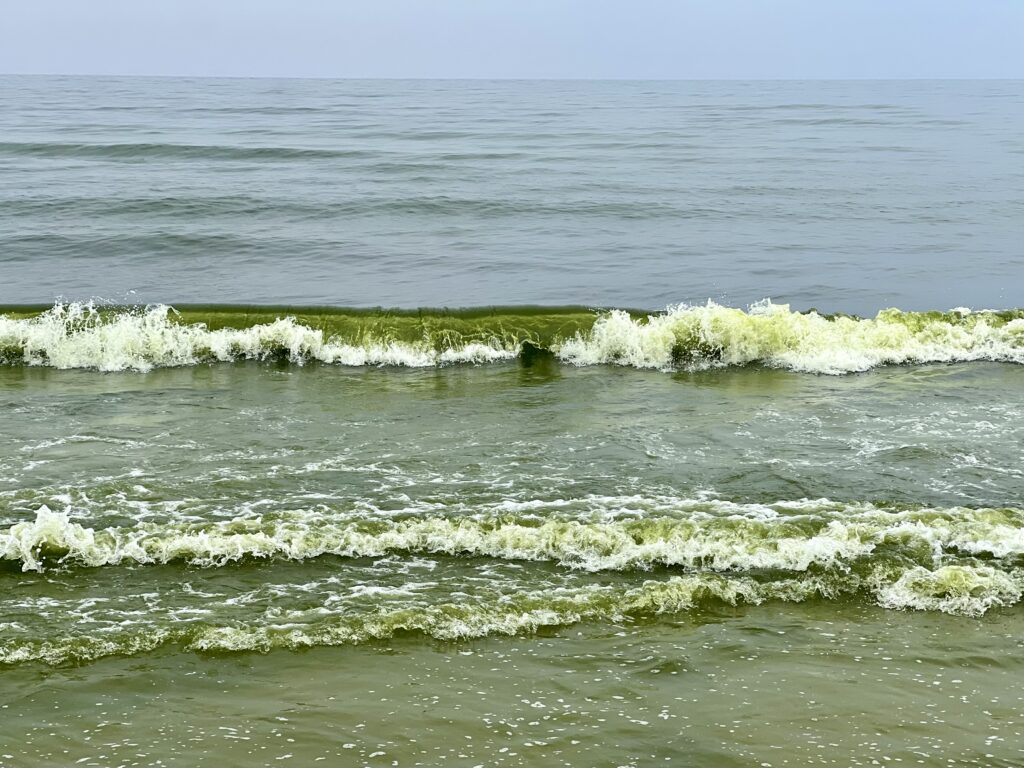
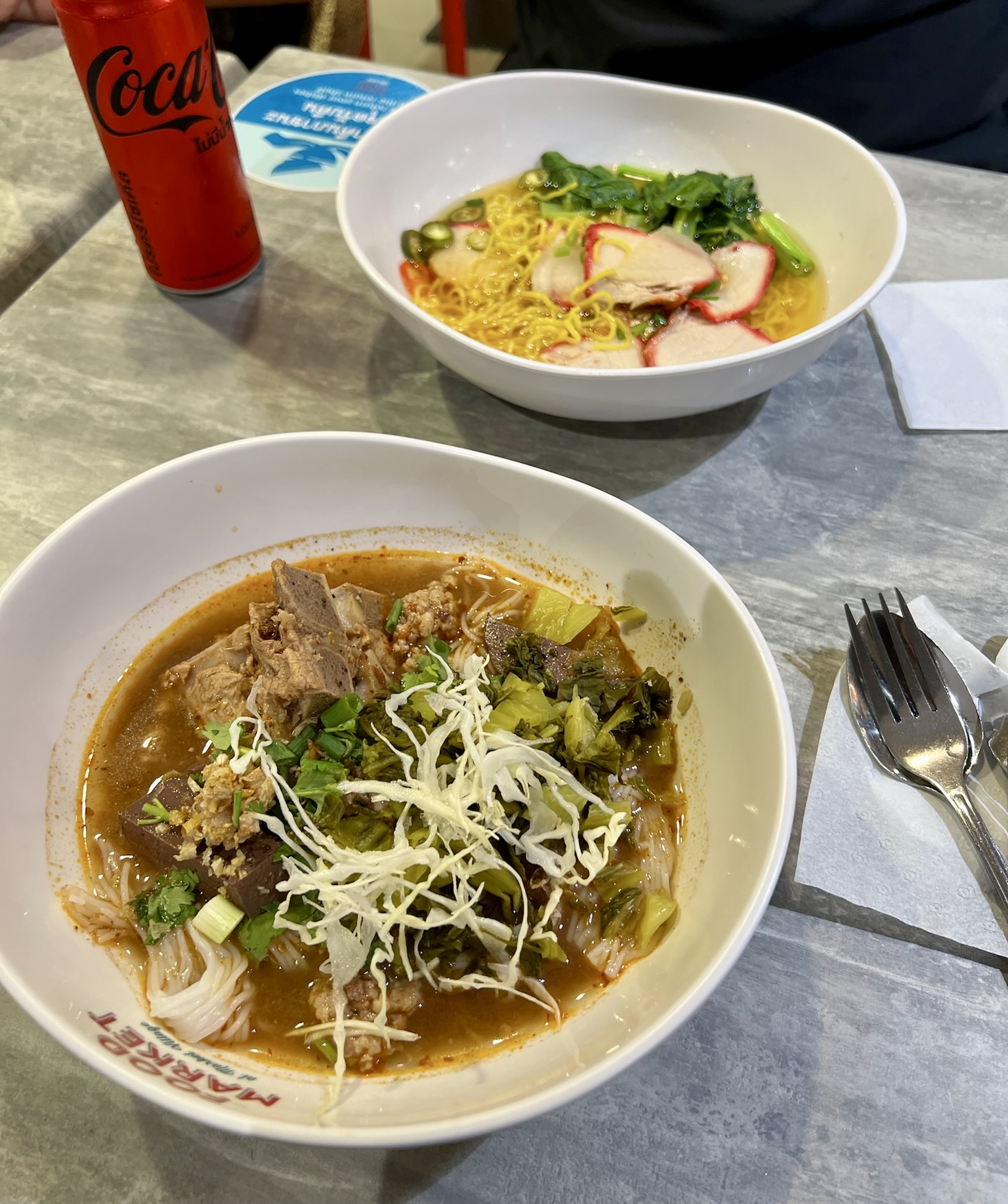
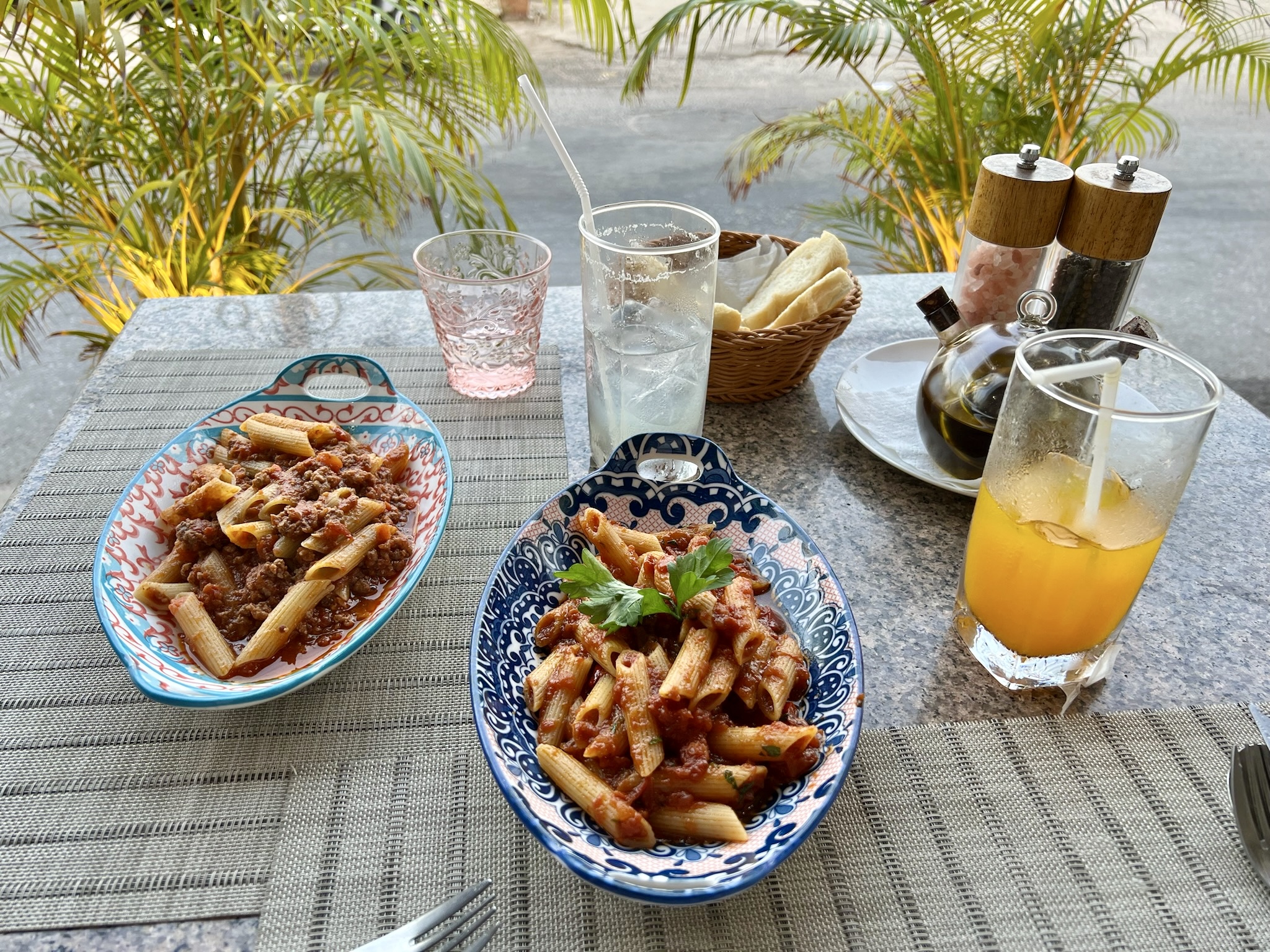
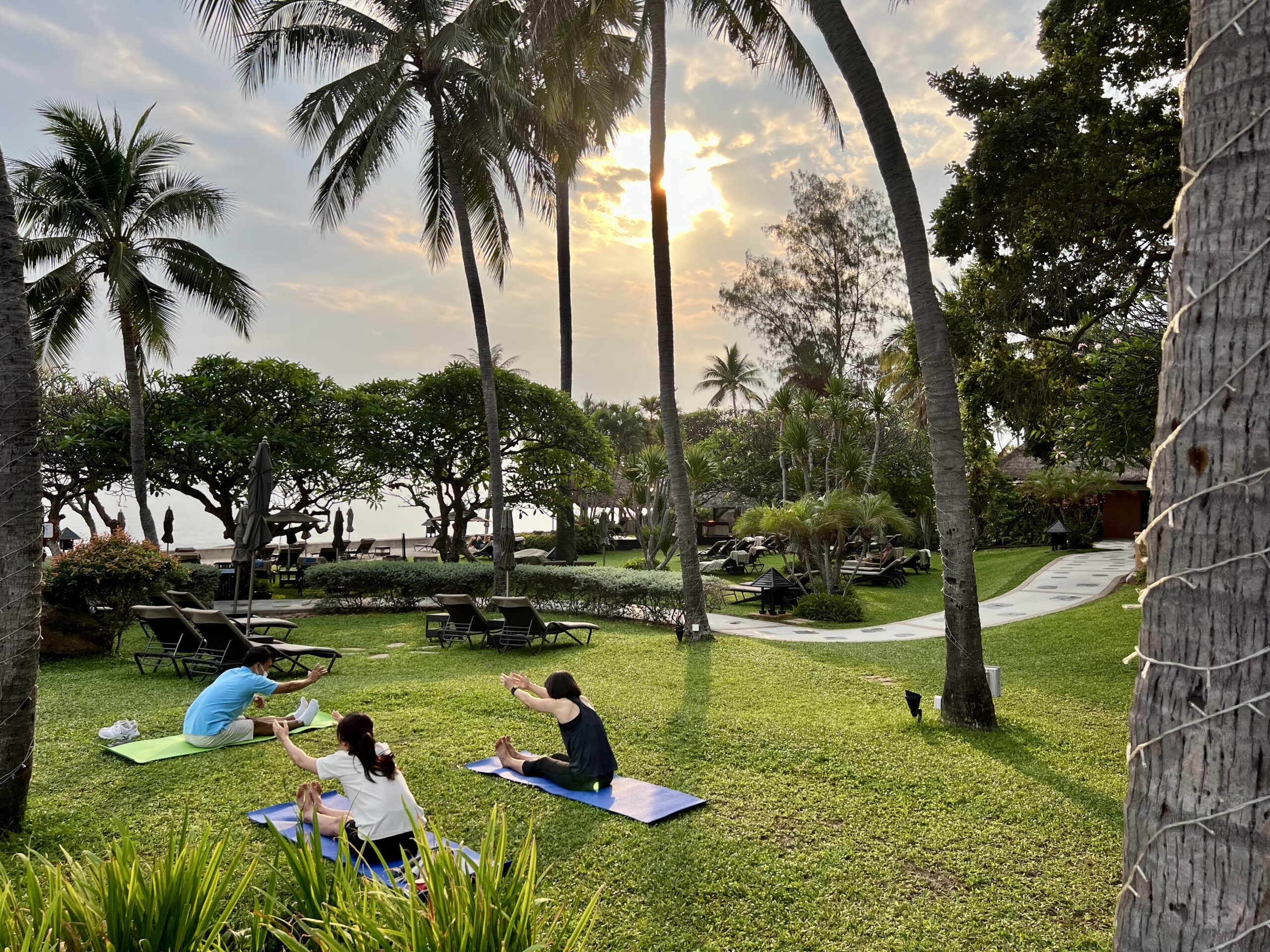
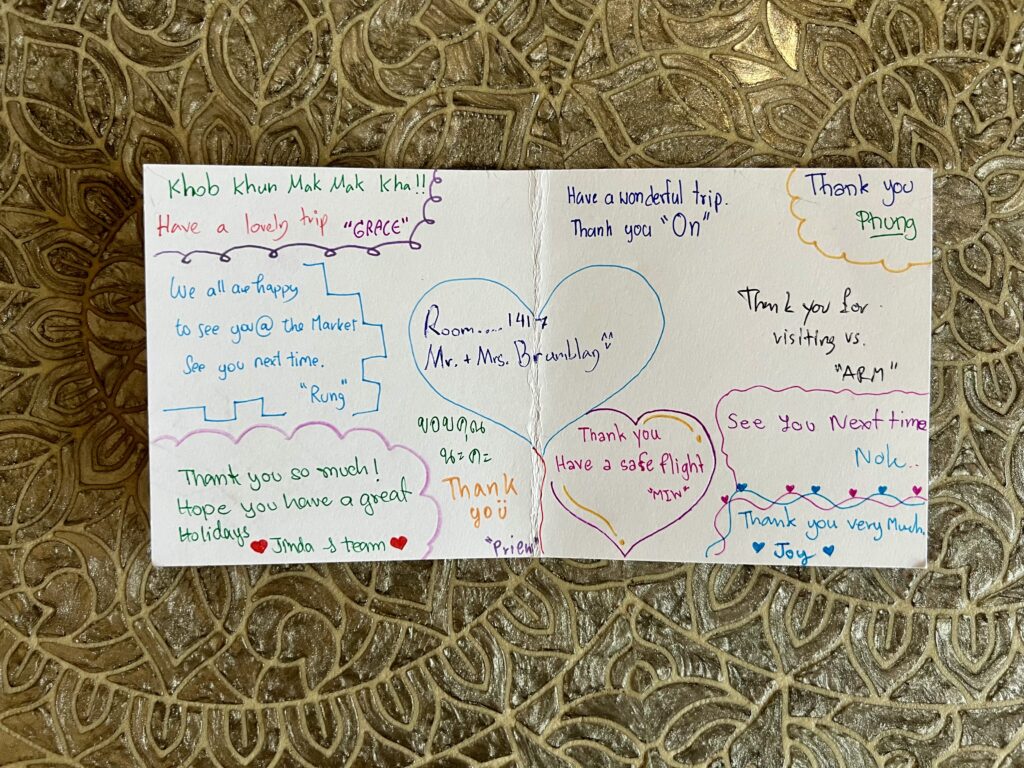
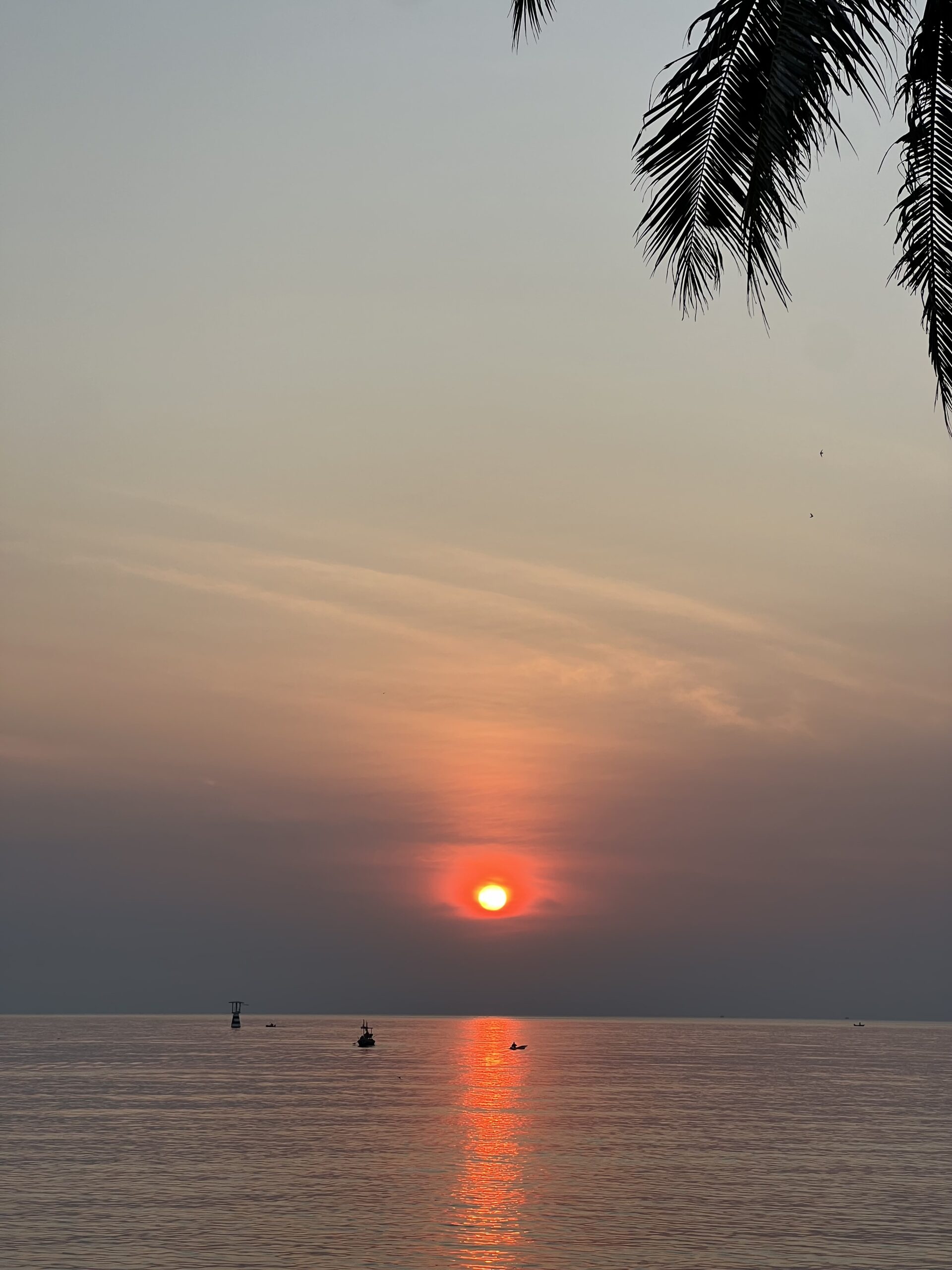
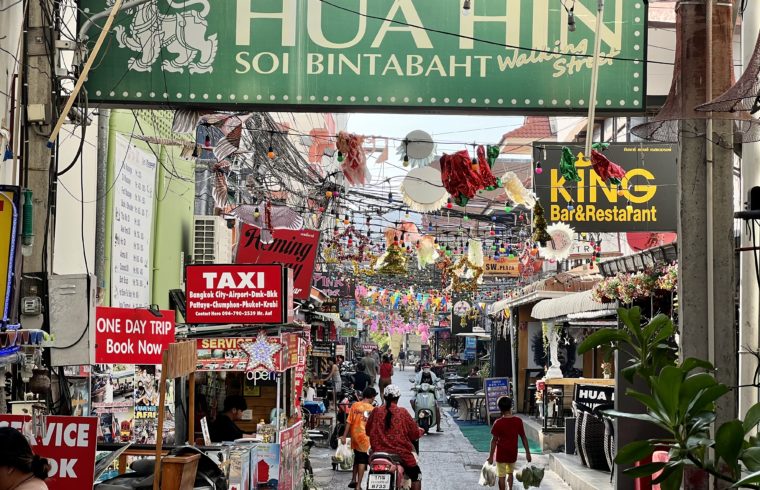
We arrived in Bangkok about 4:00am. It was a very long walk through the huge airport to immigration and baggage claim. We avoided the people movers and made a brisk walk of it, to get what excercise we could. We had slept a little on the plane, and though we were tired, we weren’t wiped out. This was good, since we still had a 3½ hour drive to Hua Hin. Halfway through our drive, we were given a bio-break. The blogger wandered around, checking out the 7-Eleven and fried chicken kiosk, probably trying to guess what time zone he’s in. We were booked at the Hilton Hua Hin for 22 nights. We don’t usually stay at Hiltons beyond a night or two, but there are only two hotels of note in Old Town Hua Hin, the Hilton and the Centara, next door. The Centara looked good, but the oceanfront rooms looked dark and cave-like, where the Hilton’s looked bright and airy. We weren’t disappointed. Our room turned out to be both adequately Hilton and adequately bright. The view south along the coast from our balcony (above) was perfect, with colorful sunrises (below), thanks in no small part to the smoke and dust from the winter agricultural burning, which seems unavoidable in this part of the world. The real estate in Hua Hin Old Town itself is mostly dedicated to restaurants and budget tourist hotels, but scattered between them is a repeating pattern of tailors, laundries, jewelry shops, and questionable massage parlors. The alley next to the Hilton is an example of the randomness of the place. An Italian restaurant, next to a bike and car rental, next to a wash-and-fold laundry, all across the way from a makeshift sidewalk bar run by the same fellow who rents the cars. Hard liquor and car rentals. You gotta love this place. This is Heng Heng, the laundry cat. He likes attention almost as much as he likes sleeping. If he’s awake enough to know we’re there, he runs up and plops down on the laundry counter for a tummy scratch. On a side note, the local laundry soap is so strongly floral, we buy our own unscented detergent and have the ladies use that. They charge a little extra, of course, because we’re tourists intent on making more work for them, but it’s worth it. We found the tailor shops to have the most entertainment value. They tout Italian designer names and showcase their orange, plaid, and checkered wares, unabashedly.The photographer was particularly attracted to the street wiring, often dense enough to provide a measure of shade. Because the wiring is so similar to that in India, at first we thought that Thai engineers must be getting their training there. Then we realized those responsible may be a different species entirely. On one day, we hired a car and driver – with the requisite charms and talismans – to drive us to the Pran Buri Forest Reserve, some distance south. The reserve is a mangrove swamp, which anchors the delta of the Pran Buri river. A sturdy boardwalk wanders through the forest and takes one through different evolutions of the mangrove, from typical swamp (above) to parts populated by a type of salt-tolerant mahogany (below).The tide was in, so we saw little wildlife, which is mostly crabs, anyway. No crocodiles or iguanas, to the photographer’s disappointment and delight. On our way back, we stopped at Baan Sillapin artists village, which is also billed as a museum. The museum part, which is most of what’s there, is really a gallery and gift shop. They charge a few dollars to enter, and virtually everything is for sale. This fellow here is probably the closest thing to creative art on display. The majority of everything else is the work of artisans. Incredibly skilled, but mostly producing variations on well-known themes forged by the likes of Vermeer, Botticelli, Seurat, Kliban, Vân Gogh, Warhol, Pollock, Klimt, and so many others. The one piece that the blogger really liked was probably the only one not for sale. It turned out to be an ancient map brought from Mongolia by a friend of the gallery’s owner. C’est la vie.A fair number of our hours and days were spent reading and listening to the sea under the shade of trees or thatched roofs. And then there’s eating. Thai chicken wraps and roti quesadillas at the beach restaurant. Thai-ish barbeque ribs and cashew chicken, at Jasmin’s down the street.Steak sandwich and Hawaiian salad, next door at the Coast restaurant.Shrimp tempura, spider roll, and ramen noodles at Hagi Restaurant.Caprese salad and a cheese pizza billed as a Margherita at a Thai-Italian restaurant across the street. Chinese-ish kung pao chicken and steamed red snapper at the Hilton’s rooftop restaurant. And the blogger’s favorite, mango sticky rice at the shop on the corner generally referred to as The Famous Sticky Rice Place. It really is about the best we’ve had.The rice is sticky-firm and salty-sweet, the mangoes are perfectly ripe and sweet, and you get just enough fresh coconut cream to keep you regular. Packed up for easy take-away for a couple of dollars, they do have one table you can eat it at, as long as it’s not being used for naps by the women who work there. On another day, we grabbed a tuk-tuk and went to Bluport Mall, a modern shopping mall that caters to locals and expats. The food court sells a wide variety of dried shrimp and squid, packaged well, probably to discourage you from eating it indoors. On the top floor of the mall is a theater, where we’d hoped to see Next Goal Wins with Thai subtitles, but it didn’t make it to this theater. It also has a very neon arcade for juveniles wishing to work on their gambling habit, and in need of plushies. Before heading back, the photographer needed a watermelon frappe …So we sat and watched five men remove Christmas lights from a plumeria tree. One remover, two untanglers, and a supervisor. Plus a traffic safety guy, to make sure a tuk-tuk doesn’t jump the curb and take them out, I suppose. We have since decided to buy stock in whatever company makes plumeria-tree-Christmas-lights. We walked the beach for the two miles back to the Hotel. One section of the beach was consumed by kitesurfing, and in many cases kitecrashing. Lots of learning going on. As we neared the hotel, we ran the gauntlet of what we’ve come to call the umbrella jungle. Its umbrellas and beach lounges packed cheek by jowl in service of tourists staying at off-beach hotels who want sand and sun without being too far from a bar. They serve food, too, though the tented kitchens are unburdened by refrigeration. Though the sea was calm this day, one beach-goer was prepared for the worst.All this is at the end of Hua Hin 61 Alley, which provides public beach access. Here you’ll find any number of horses, used more for instagram posing than actual riding, though riding can occasionally happen, sometimes on purpose.This is the same alley that Heng Heng lives on, and where beach toys, aloha shirts, and swimwear create a riot of color and compete for attention and dollars. Our hotel, being a high rise, gives us a birds-eye view of Hua Hin Old Town (above). There are streets between the rooftops, but sidewalks are at a premium (below). At night, the horizon is lined with the lights of fishing boats, like a great city in the distance, but during the day they are scarce, with only the odd wake carved into the often placid sea. On land, there are tuk-tuks. We had a mission that required one, and we were fortunate that this one’s sound system was on the blink. First stop was Beat Spot, one of two instrument stores that looked like they might have ukuleles. No phone number, so we took a chance. This one had one, and only one, for sale – a salmon-pink Fender made in China. Perfect. And they threw in an Aloha uke case and a no-name tuner. Next stop: a pair of night markets at the other end of Hua Hin Bay. The Tamarind market, above, is mostly about food – and alcohol. The grilled chicken and corn on the cob were disappointing. But then our failure to include an adult beverage may have worked against us. Across the alley from the Tamarind Market is the Cicada Market, featuring mostly dry goods. The blogger bought a t-shirt. It was that or a rusty padlock purportedly from Tibet. Night markets are a thing in Hua Hin, as they are most everywhere in Southeast Asia. On the weekends, the long concrete fishing pier (above) in Old Town hosts a street-food night market (below). With the exception of some baked potatoes, the offerings included the usual suspects. We opted, instead, for the Bombay Palace, an Indian restaurant run by a Pakistani fellow and advertising Thali. Sorry, no Thali, he says. Our second choice had chick peas. Sorry, no chick peas. We ended up with Aloo Matar and Daal Makhani. Unlike traditional Mughal cooking, no ghee is used, and it was the best Indian food we’ve had in a long time. Things worked out. Then we were off to the Hua Hin night market, a semi-permanent arrangement of tents and carts set up along two blocks of closed streets. Mostly the same stuff, though a couple of pink elephants caught our eye, and we found some cheap Chinese luggage that would probably survive the flights back to Seattle and get our loot home, in a pinch.The crustaceans on offer got the photographer’s attention, due both to the size of the things and that they were actually on ice. Still not to be trusted, though, as all the shellfish were demonstrably dead. Evenings in Hua Hin are very pleasant. The humidity climbs a bit, but the temperatures quickly drop into the 70s, and a soft breeze is usually included. Another day, another shopping mall. We usually don’t hit more than one mall per town, but we’re here three weeks, and the last mall felt more like a resort than a local thing. So after another tuk-tuk ride up to Baan Sillipan to pick up a couple of things, we went to the Market Village. Despite the BMWs on show out front, it was a bit more homey. Instead of phone-case and hair-scrunchie kiosks, many of the open spaces were filled with discount clothes racks, popular with both locals and expats. That’s not to say you can’t get a phone case. Half of the top level is nothing but one tech kiosk after another, all selling essentially the same things. The real find, though, was the basement food court. Inexpensive and hugely varied. All around the food stalls are ones selling clothes. We speculated on how many washings it would take to get the reminder of fish sauce and chili oil out of a purchase. But, wow, the food was good. At the beginning, we tried to puzzle out the Thai food descriptions using our translator apps, but then we switched to looking at what locals were eating at the tables. When asked, they’d go out of their way to walk us to the right counter. Good thing, too. From the highly reflective laminated pictures and cryptic Thai descriptions, who knows what we would have ended up with. After lunch and some absolutely unnecessary purchases, it took another watermelon juice to fortify the photographer for the walk back. Then we took the pedestrian flyover to the beach side of the main street and walked the sand back to the hotel. When the tide is in, there’s barely enough beach to write home about, but when the tide is out, the slope of the sand is gradual, and the beach broad and flat. The tide in or out, the result is not so much a swimming beach as a wading one. Evenings follow days, of course, and with them more food. Above are spicy beef salad, fish cakes, and a Thai yellow curry. This makes it a Thai restaurant. That doesn’t mean you can’t get a pizza or even a steak of some kind, but the ethnic offerings are Thai.At Anoma’s, another Thai-food restaurant, we had chicken larb, pad gai, and sweet & sour chicken. This restaurant is one among several on the same street that target Germans – the menu is in English and German instead of English and Thai. Next door is a Swedish restaurant, at least in name. No pickled herring or Skagen toast, but they do have pork schnitzel and spaghetti. Somehow, that makes it Swedish. After trying several Indian restaurants, we decided the Bombay Palace was our favorite. On our second visit, they had thali. Their presentation is not on the usual round platter with small bowls but instead on tin cafeteria trays more like those used on trains in India, albeit they laid flat and had fewer dents. But we came back for the food, though, not the plates. One morning, after breakfast, we determined we would walk Hua Hin beach as far as we could. The heat and sun not withstanding.We came across a line of hermit crabs, all dressed alike, marching in our direction. They kept getting tumbled by the surf, though, and couldn’t keep up.As on every other day, Giant Hua Hin Jellyfish littered the shore. Opinions on how toxic their stings are is varied, but being the size of a Buick hub cap, they’re easy to spot and avoid. On this, our longest walk, it was high tide, and at a little past the 3½ mile mark, we ran up against a wall. We touched it, called it the end, and headed back. During our stay, we made several similar trips down the beach and into town, for lunch or to pickup a t-shirt or something. On one of our beach walks, for at least a half-mile stretch, the surf was vivid green from an algae bloom. Kind of yucky, and even a little smelly, but it didn’t stop people from wading in. Generally not harmful to humans, they are a primary source of the paralytic neurotoxins that make shellfish, and the crustaceans that eat them, a risk at mealtime. On another of our beach excursions, we revisited the Market Village food court that we like. The photographer decided to be adventurous. Her pig-neck and pork-blood soup turned out to be a Bad Food Choice. The blogger’s savory red pork with noodles was excellent, remarkably like saimin in Hawai’i.That evening, when we spun the what’ll-we-eat-tonight wheel, we ended up at an Italian restaurant. The Penne all’Arrabbiata made the photographer happy again. The blogger had Penne Bolognese.Other than one day of clouds and a bit of rain, the weather was more than fine. Nevertheless, despite the photographer’s weekly yoga sessions, we decided to shorten our three week stay by three days and add the time to Bangkok. Seeing the same staff every morning at breakfast, we got to know them a bit. On our last morning, they gave the photographer a card they’d all signed. The blogger assumed they do this for most long-stay guests. The photographer said they probably only do it for people they like. They did give it to her and not me, so it’s probably a bit of both.We enjoyed Hua Hin, though we won’t be adding it to our list of favorite places. It is inexpensive, like Vietnam, but being neither communist nor Muslim, the country is far more liberal – witness its history of sex tourism and recent legalization of marijuana. This seems to influence the number, and in some cases types, of western tourists and expats it attracts.