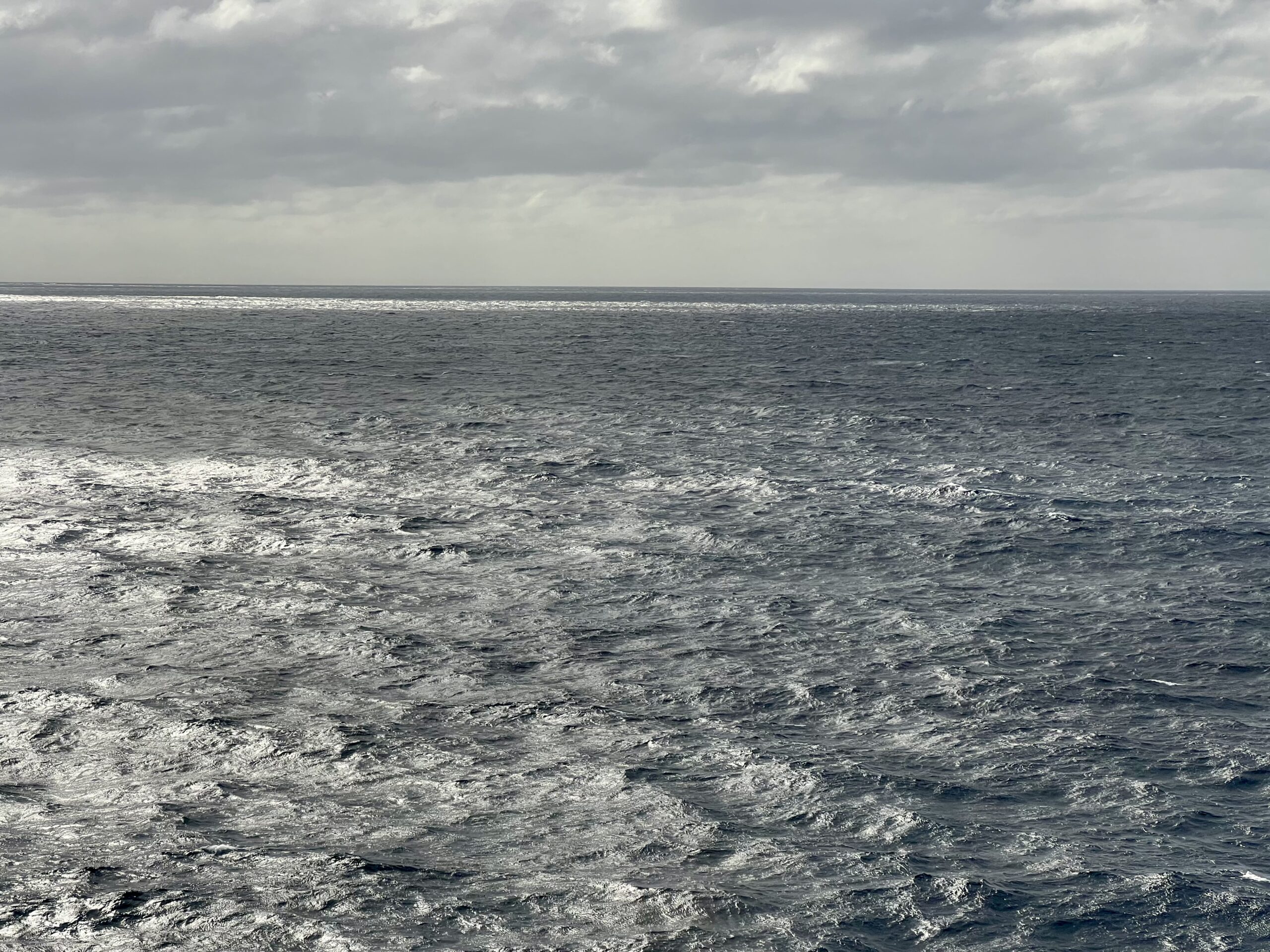
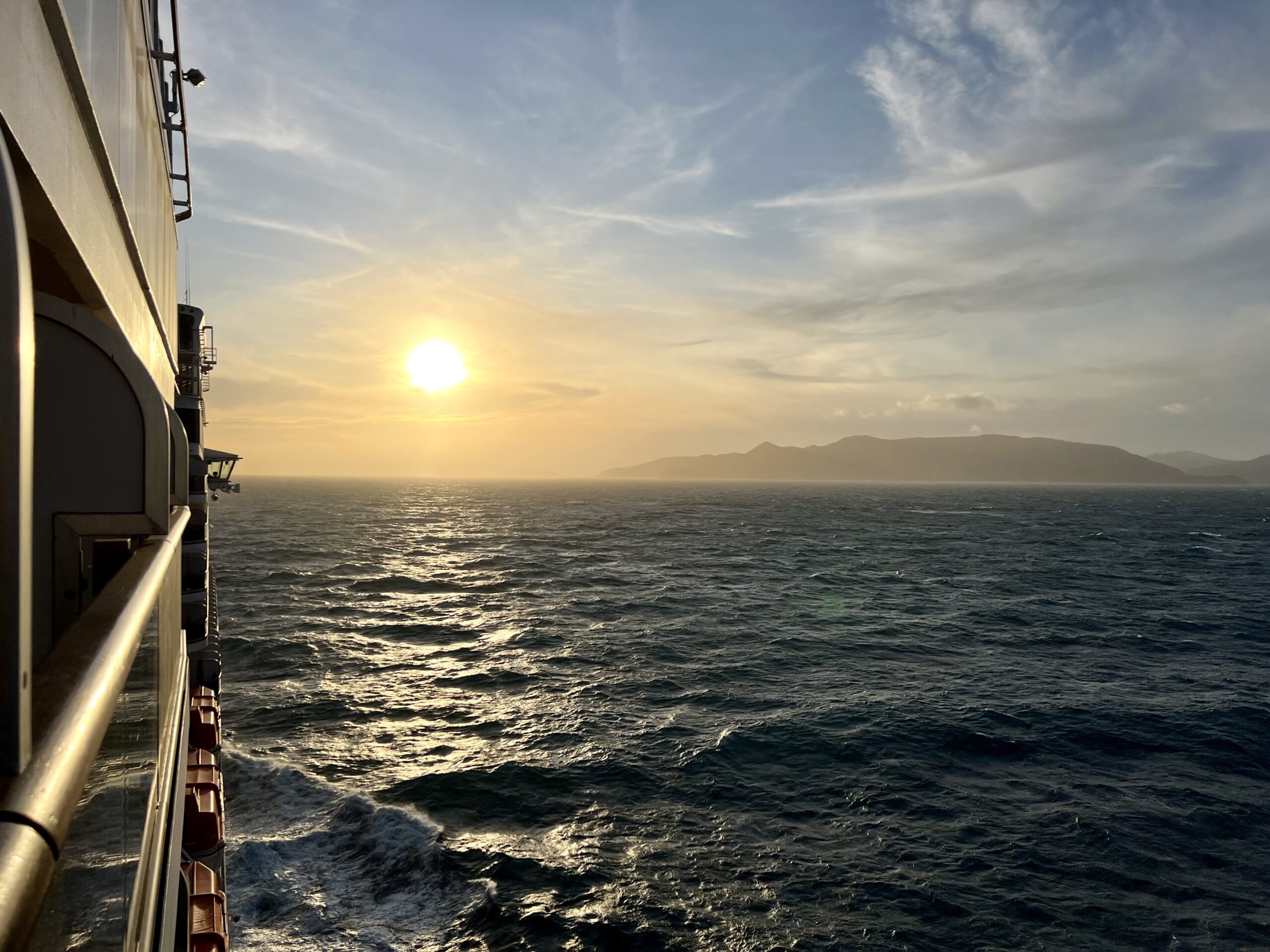
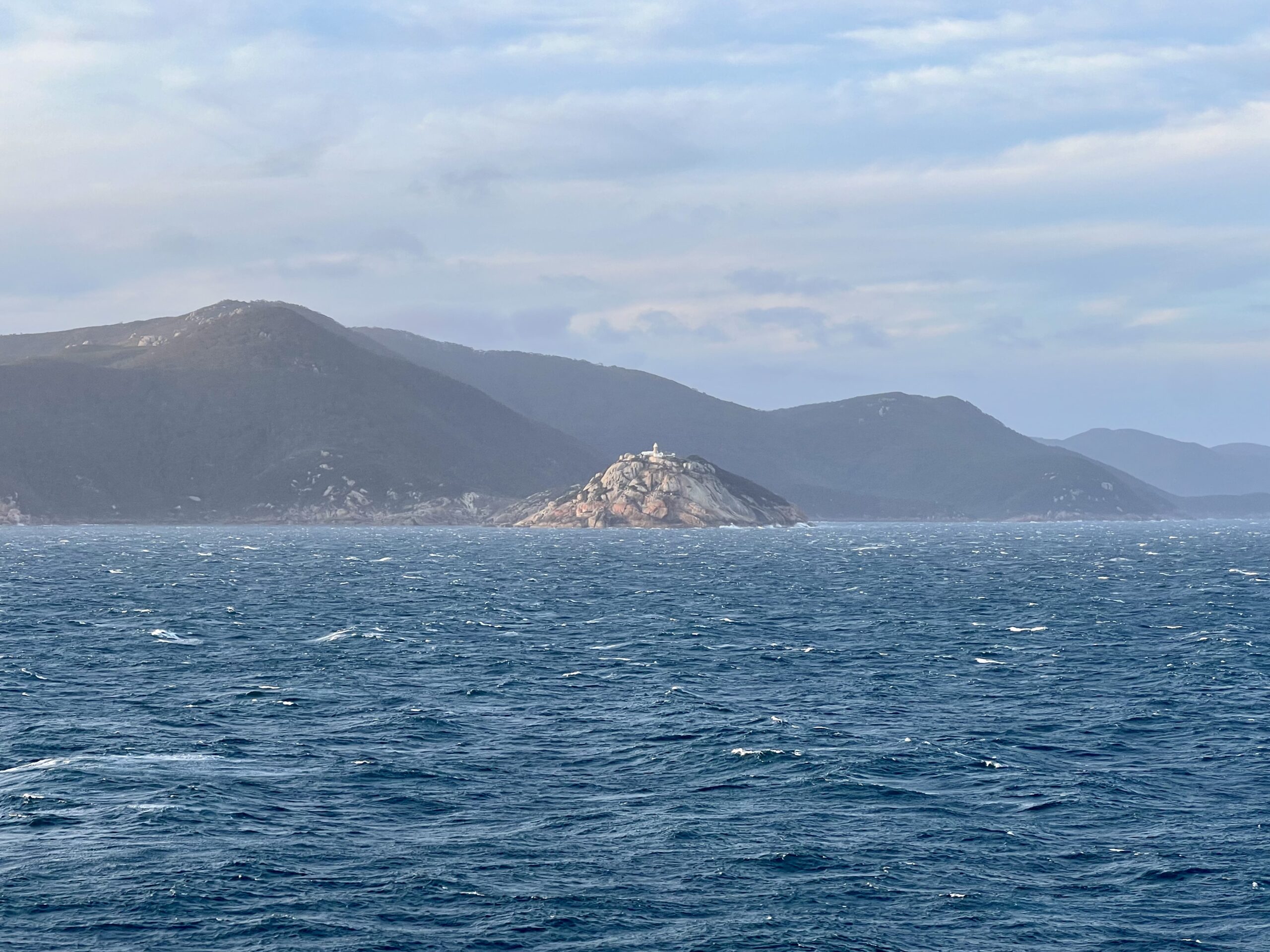
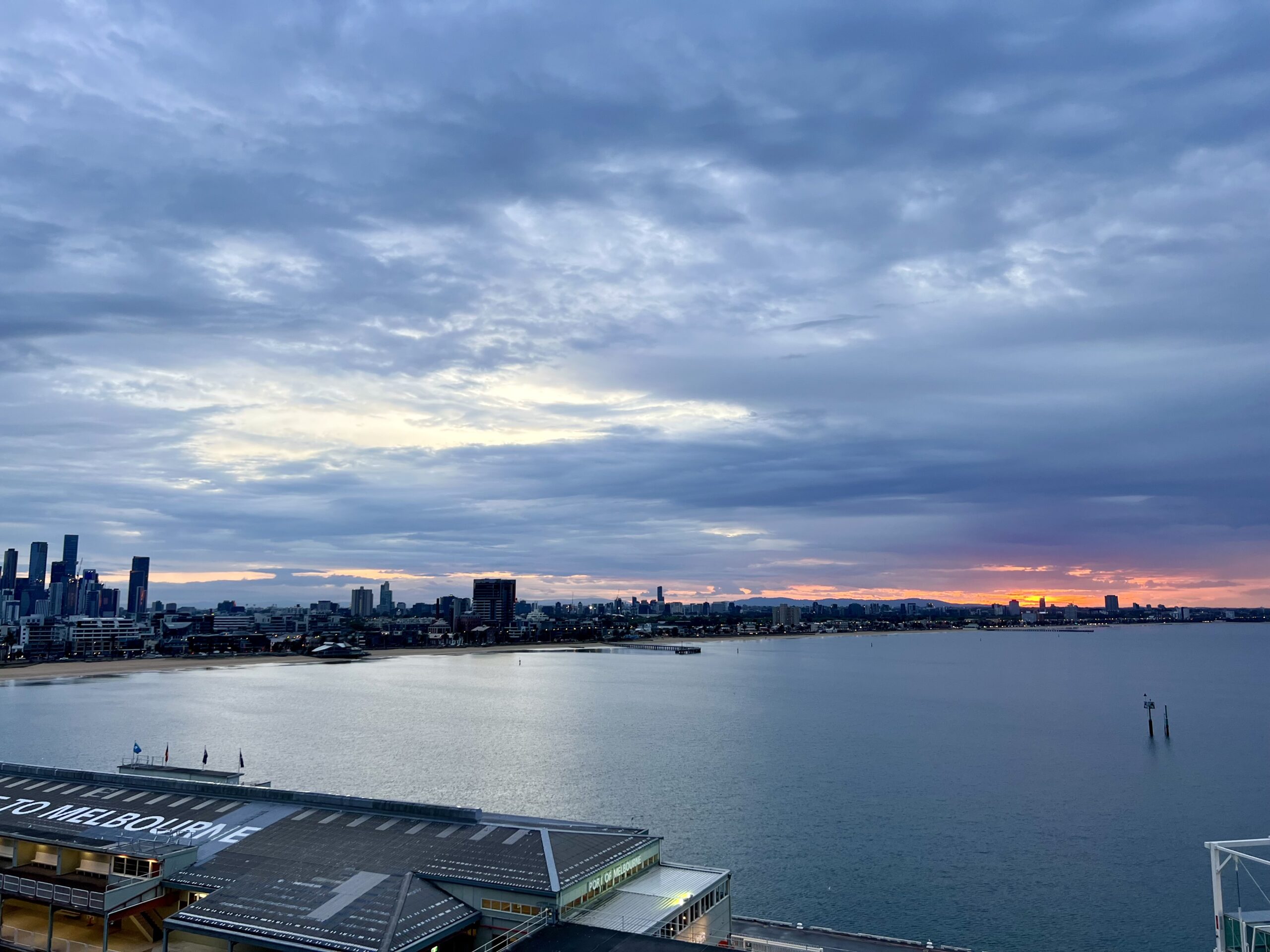
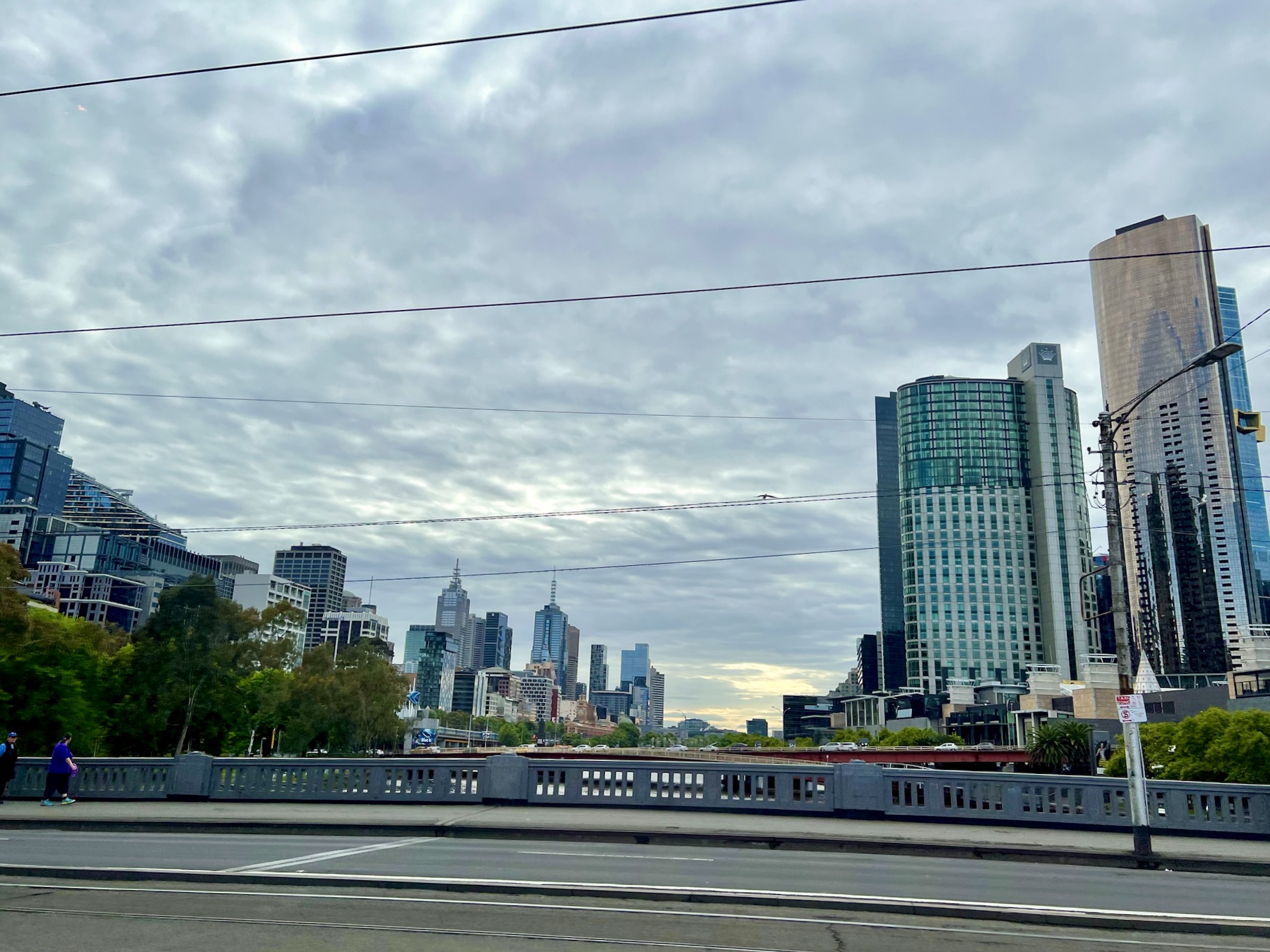
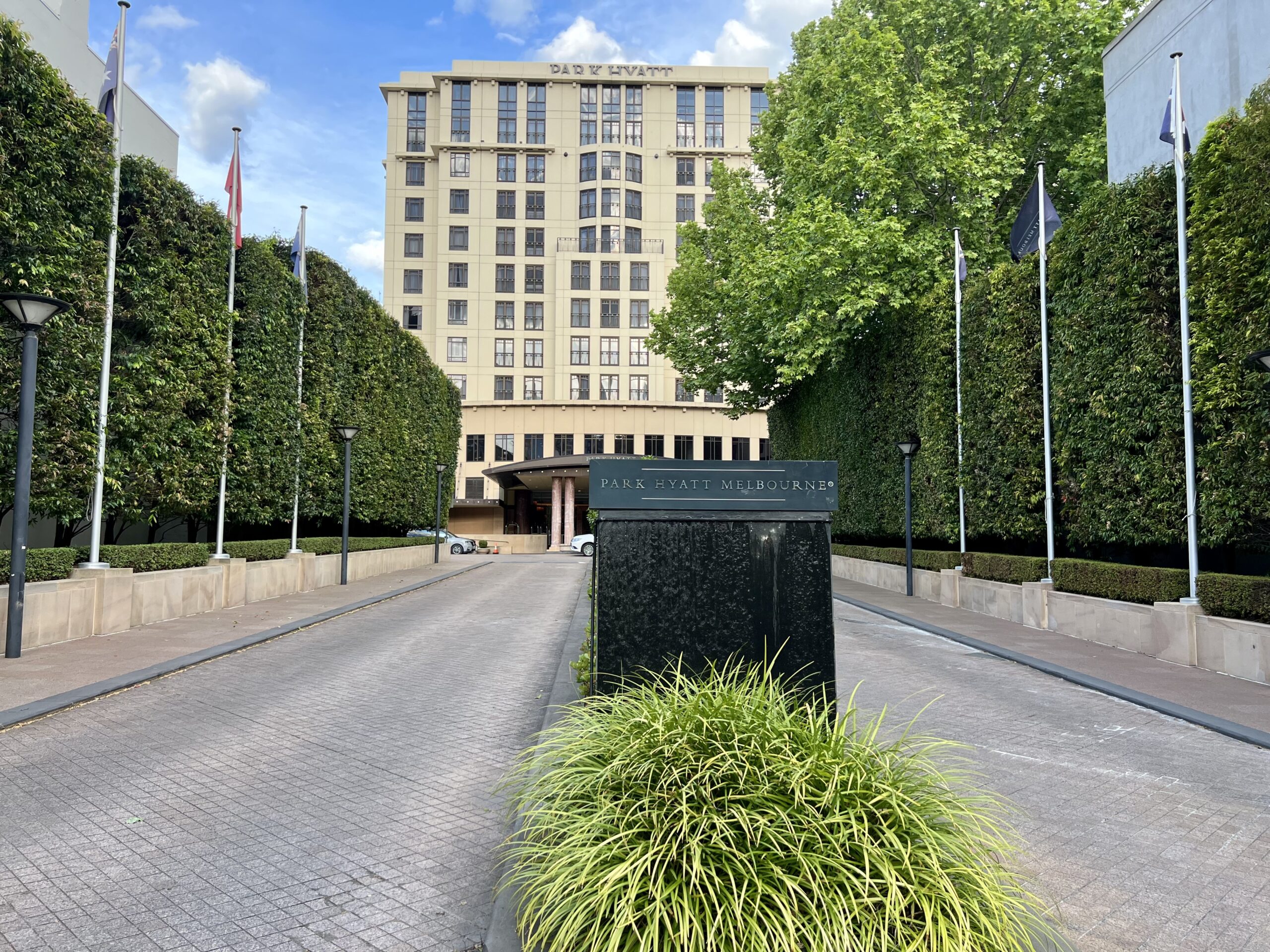
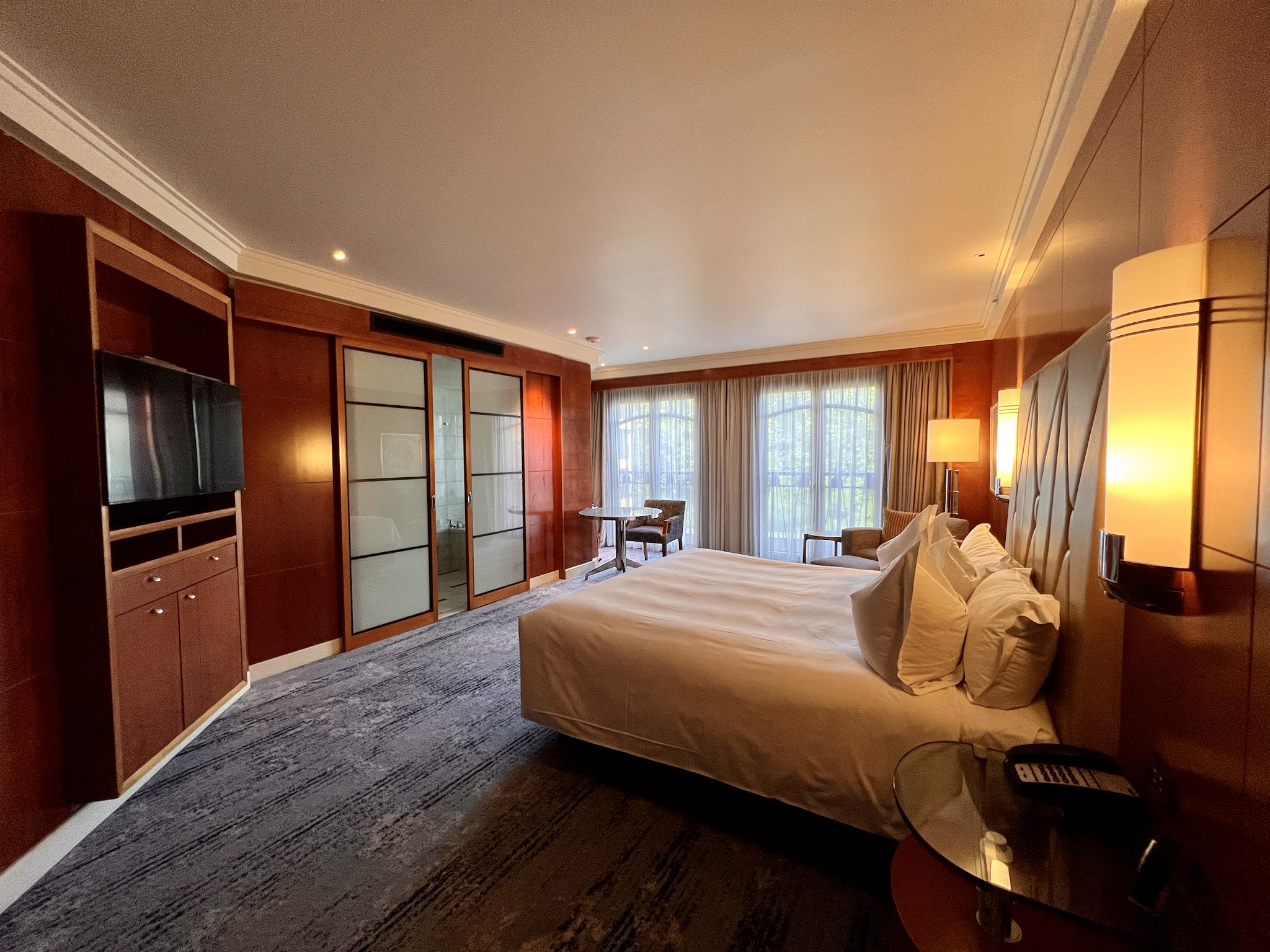
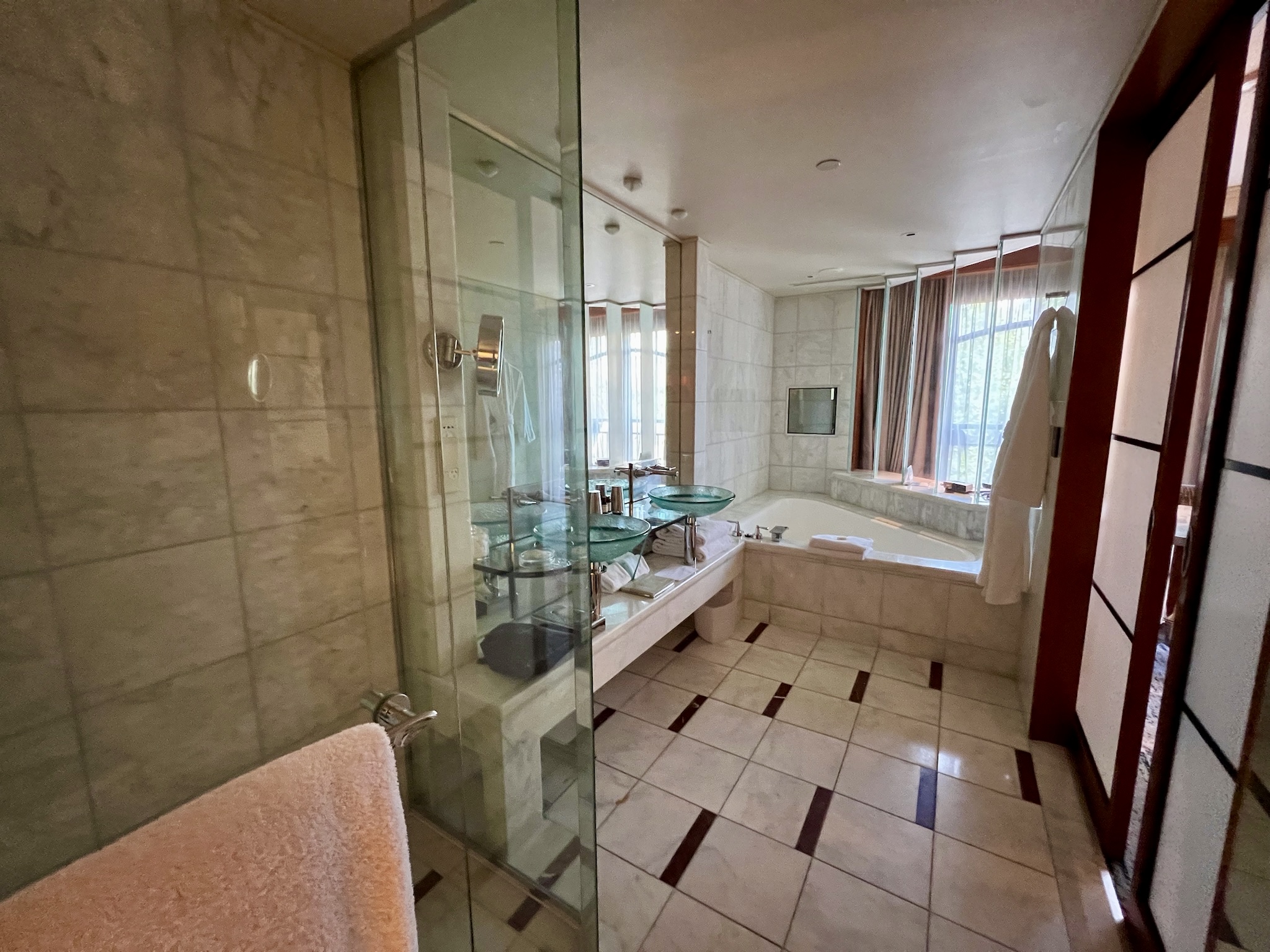
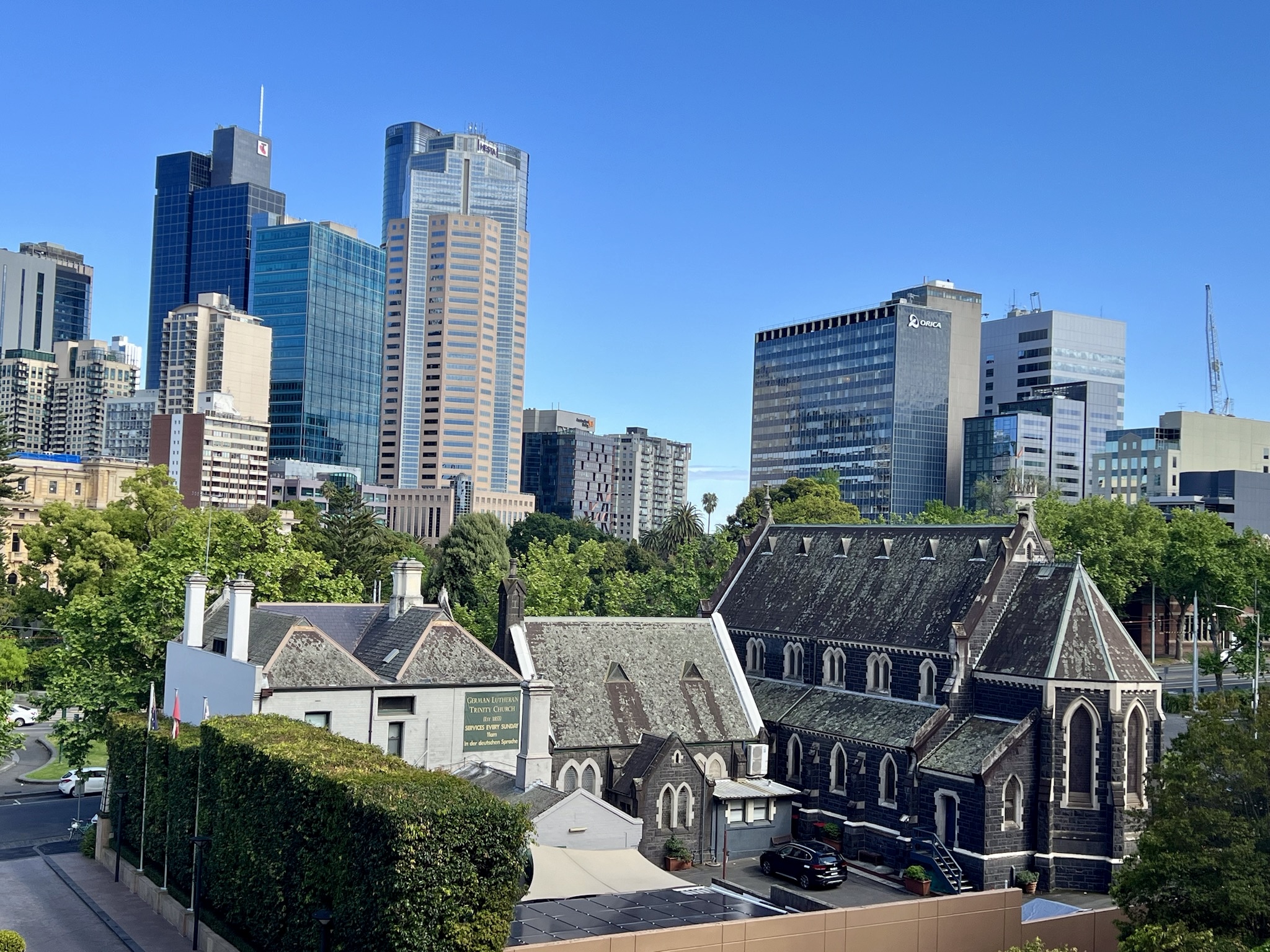
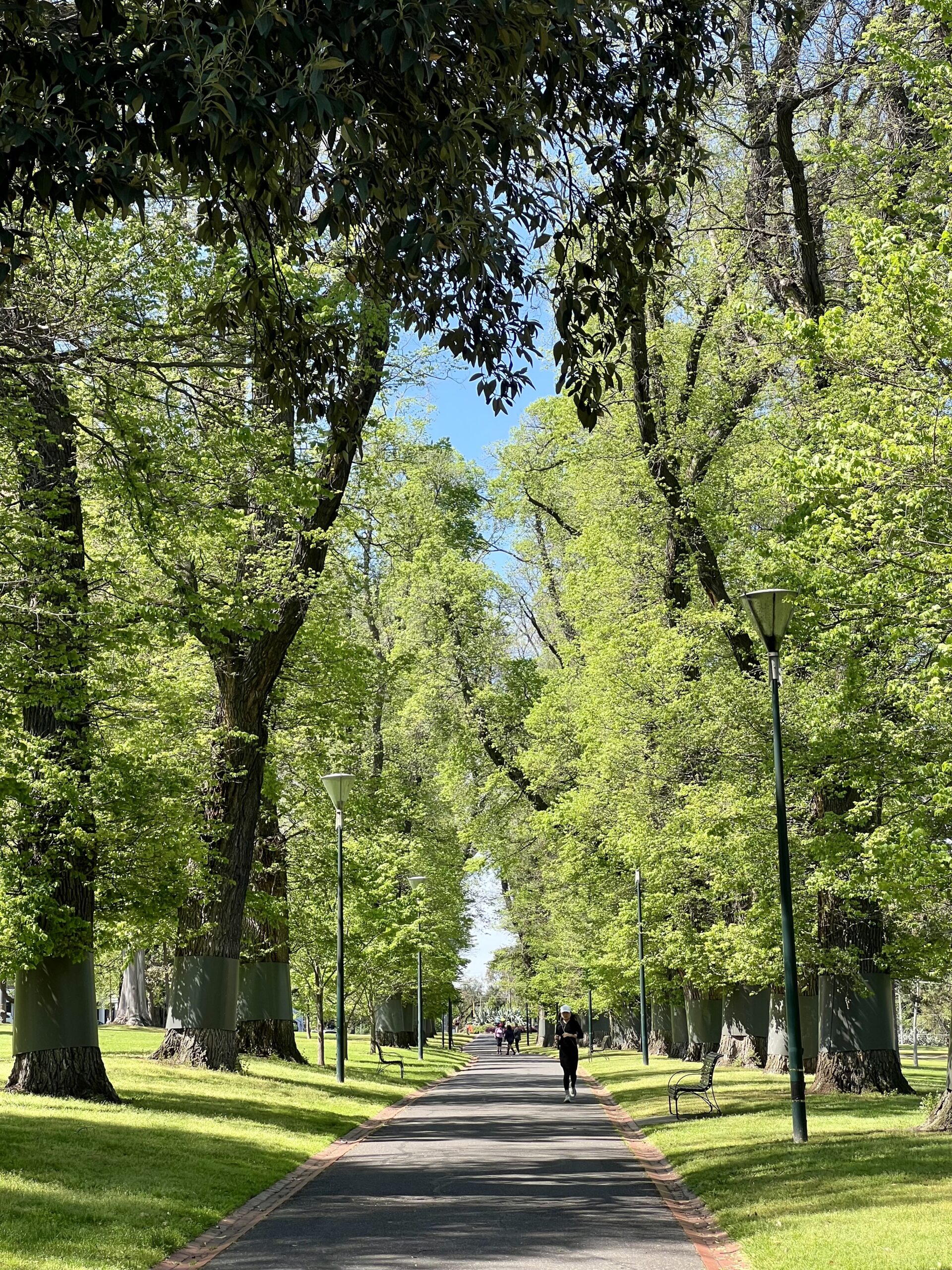
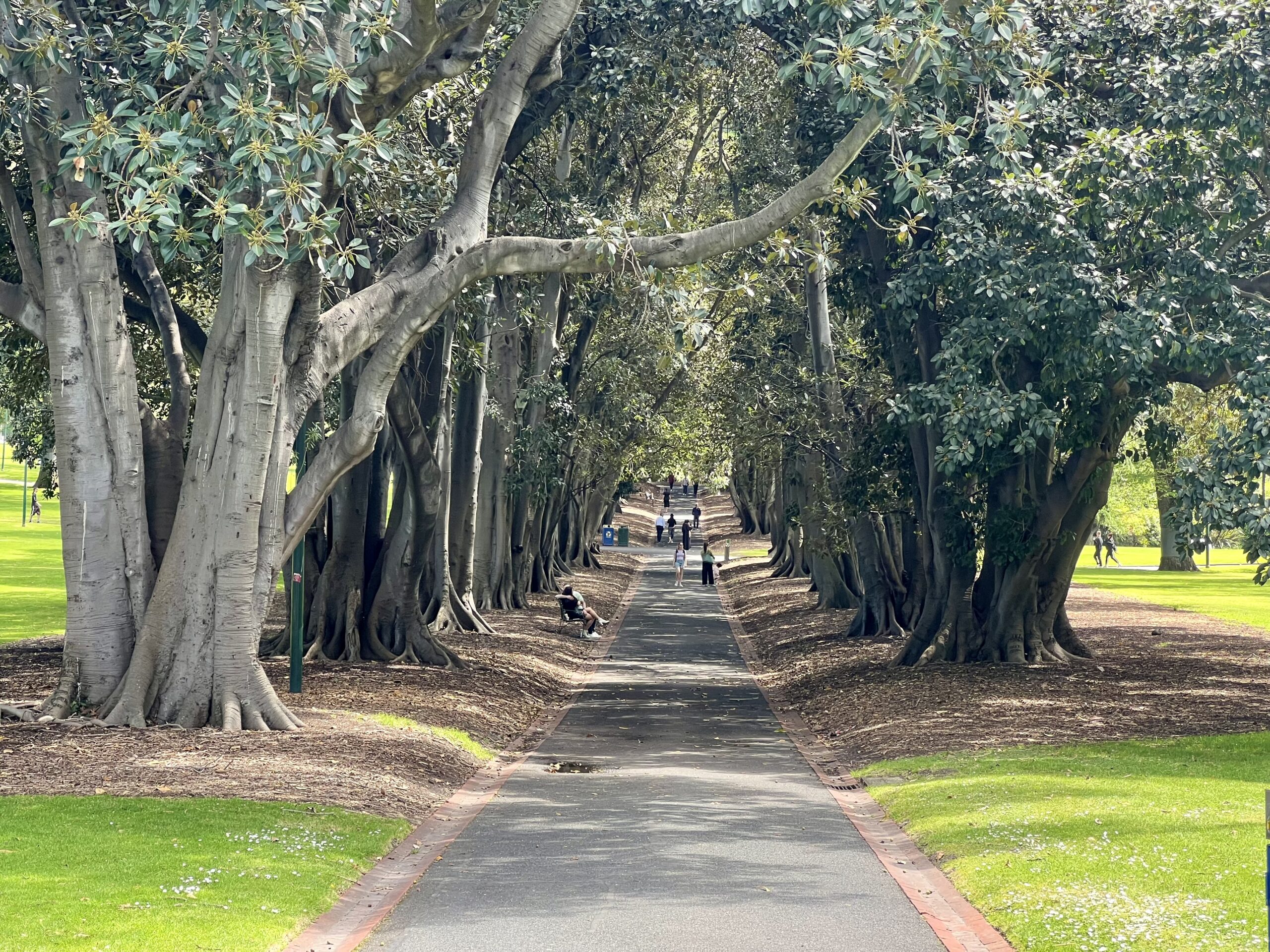
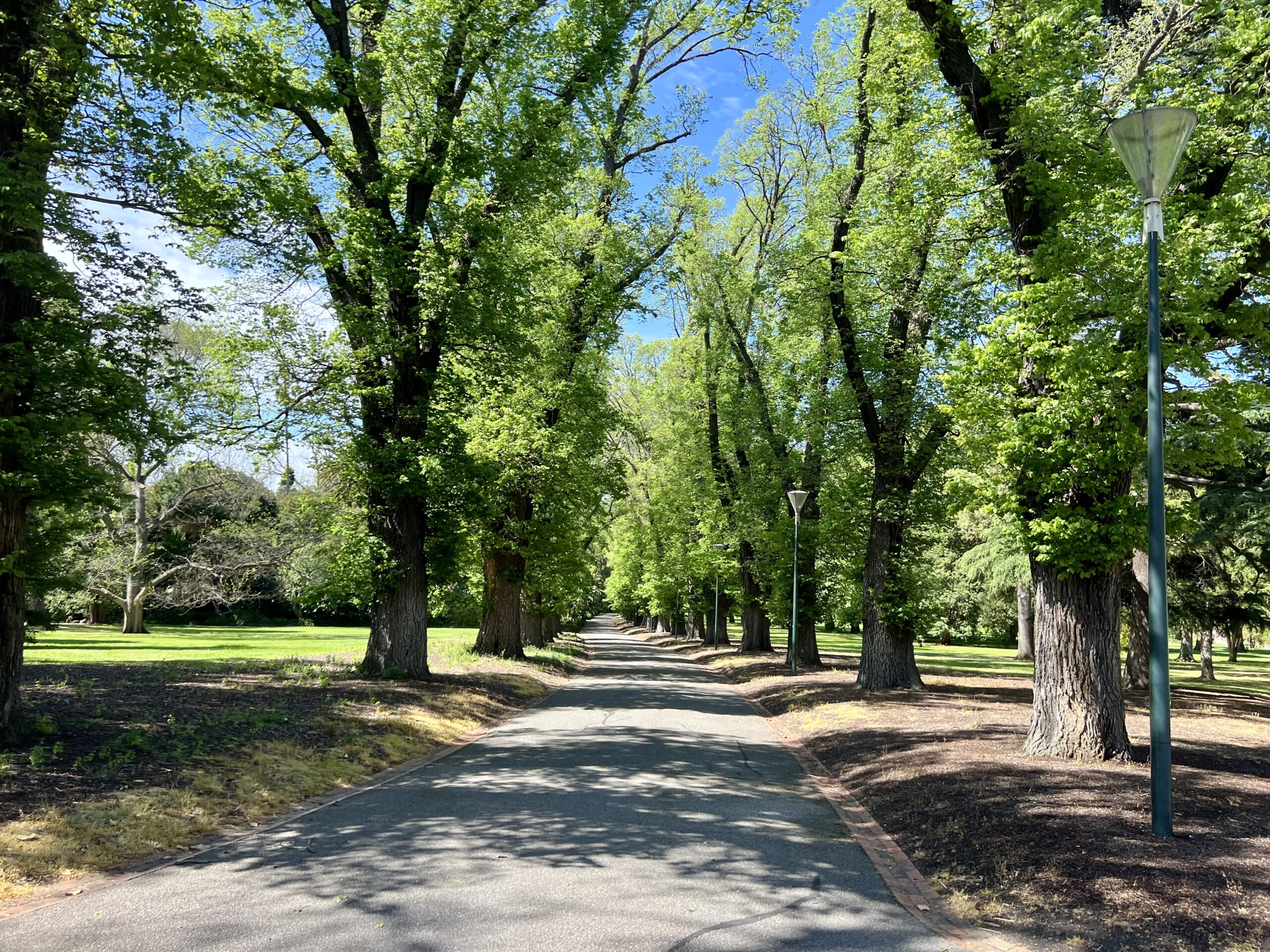
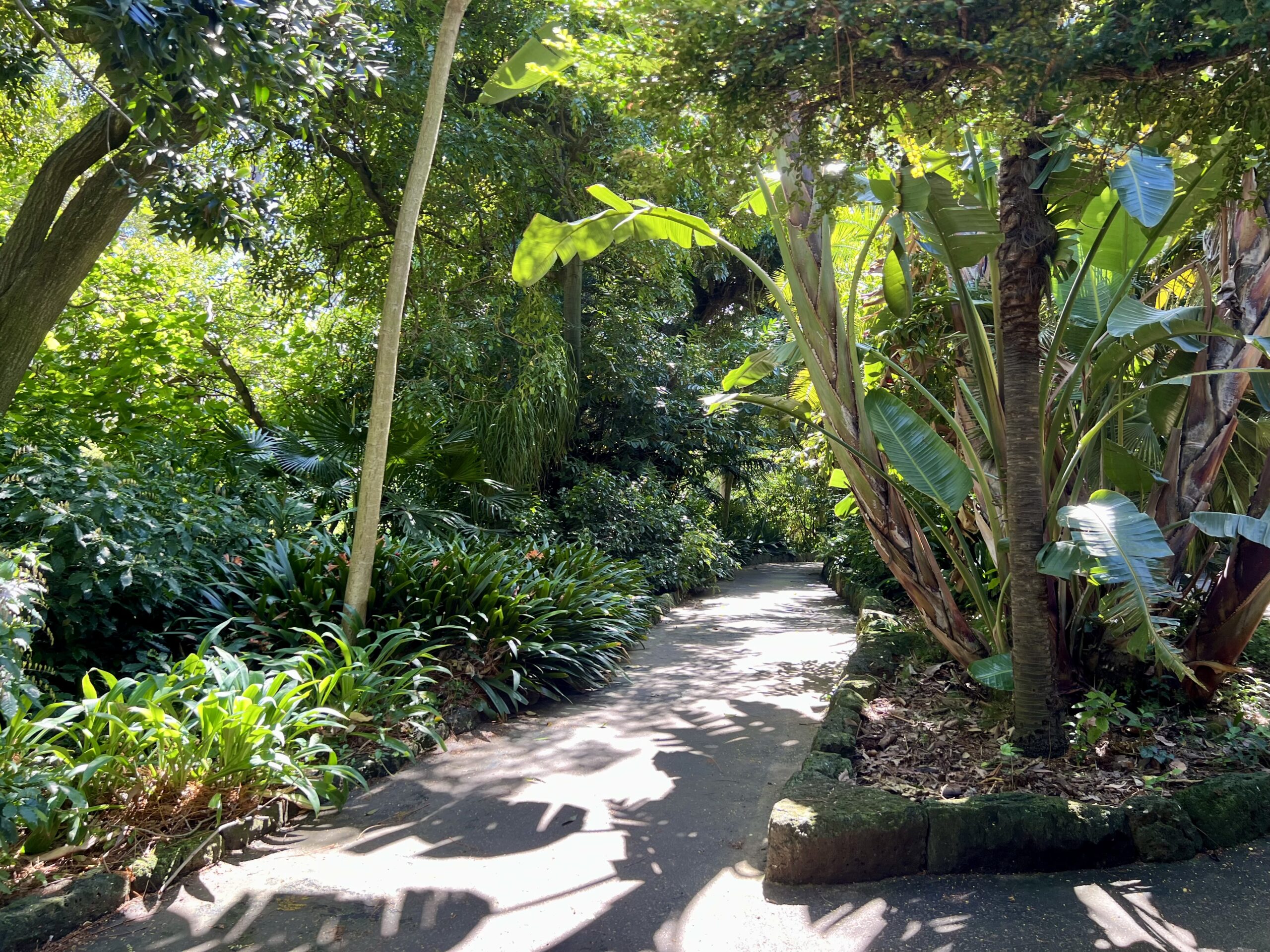
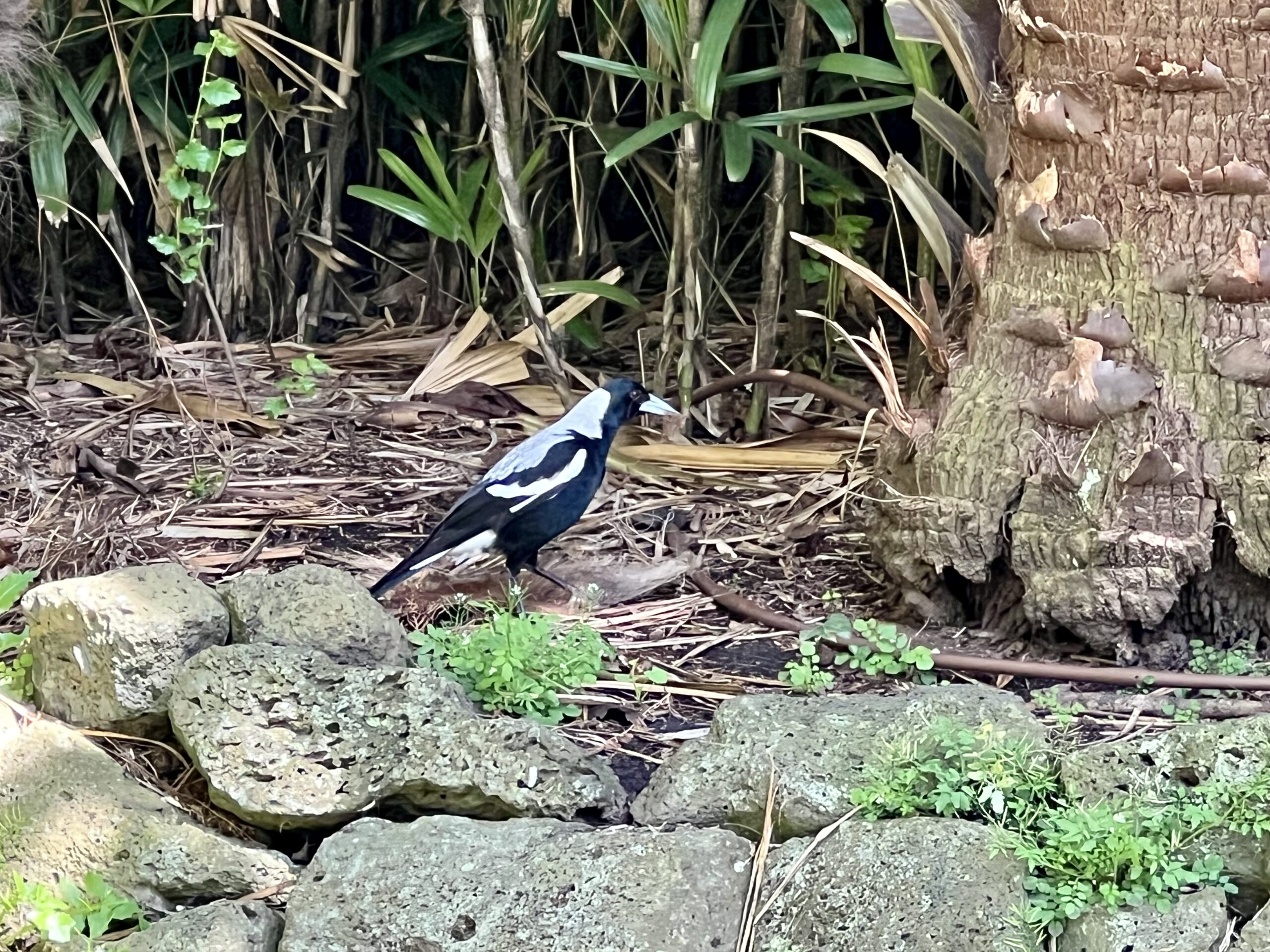
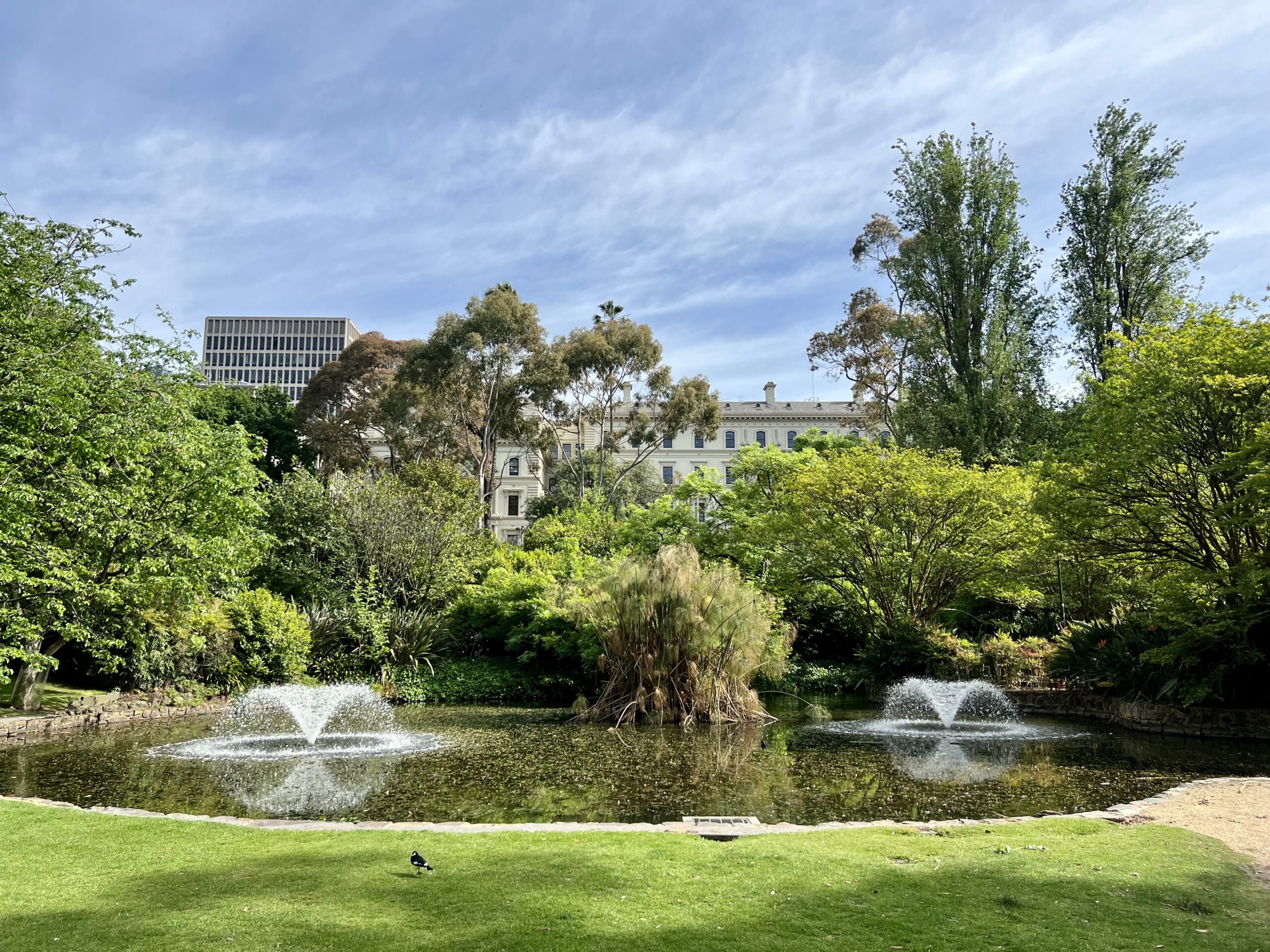
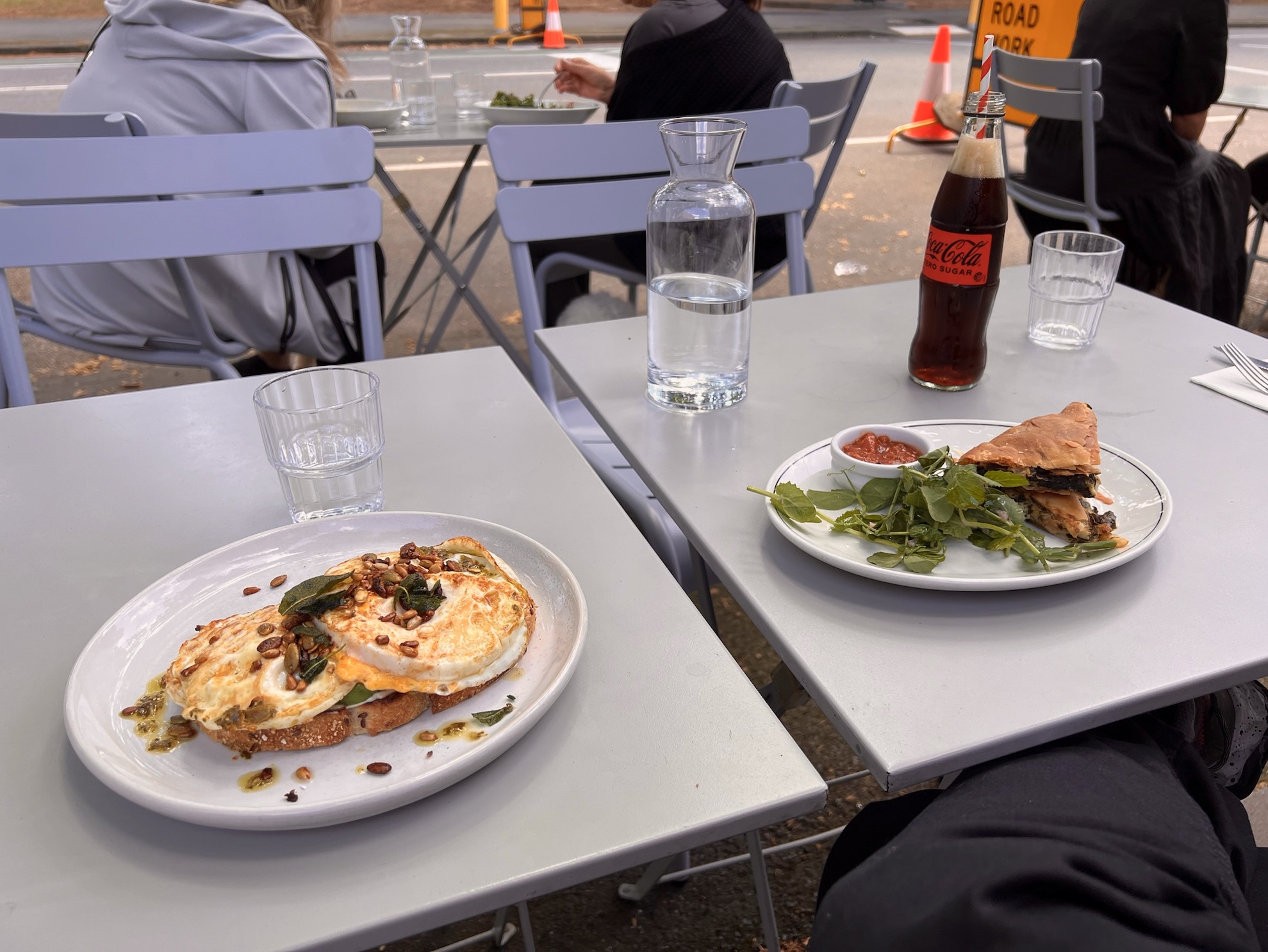
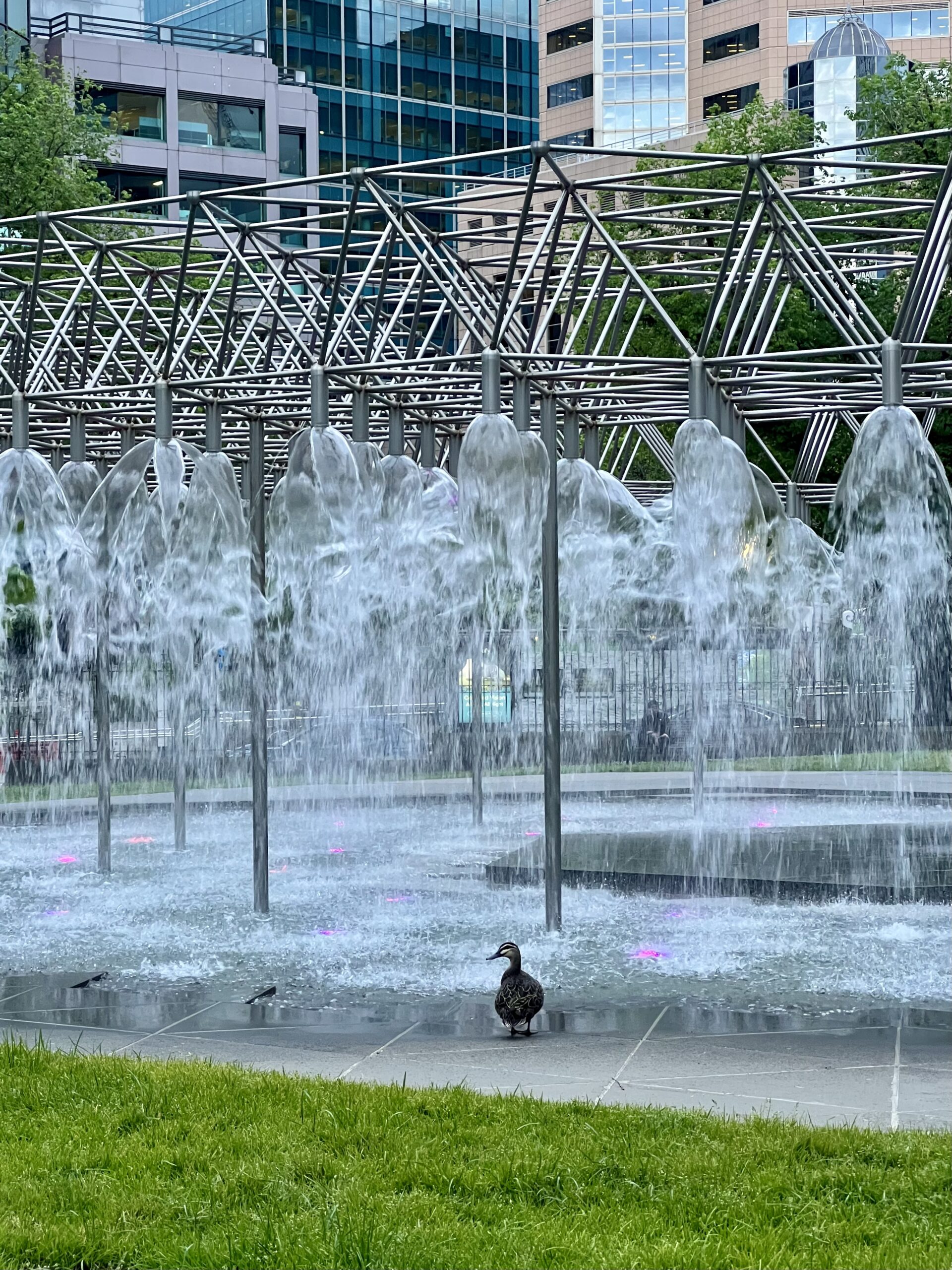
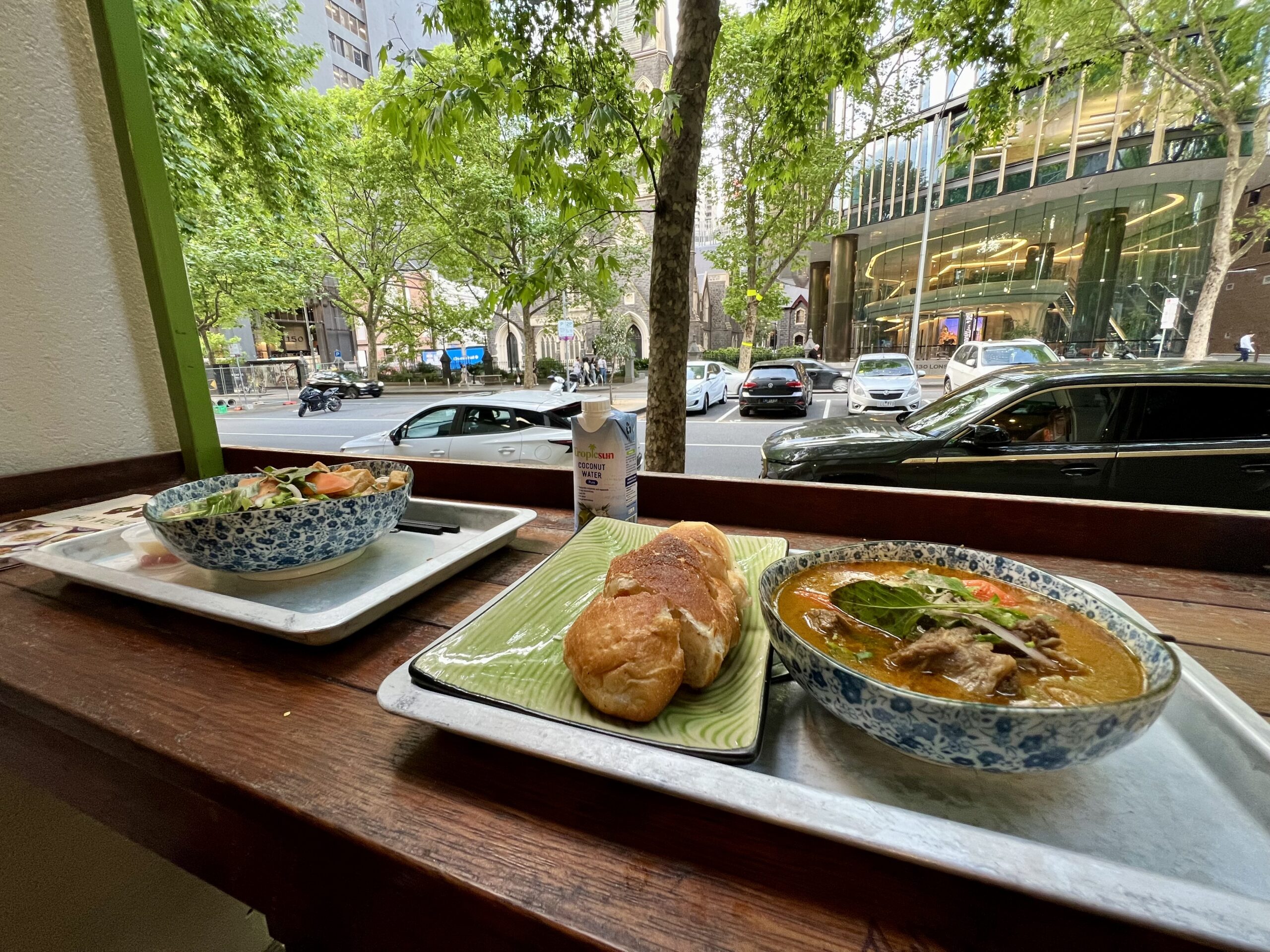
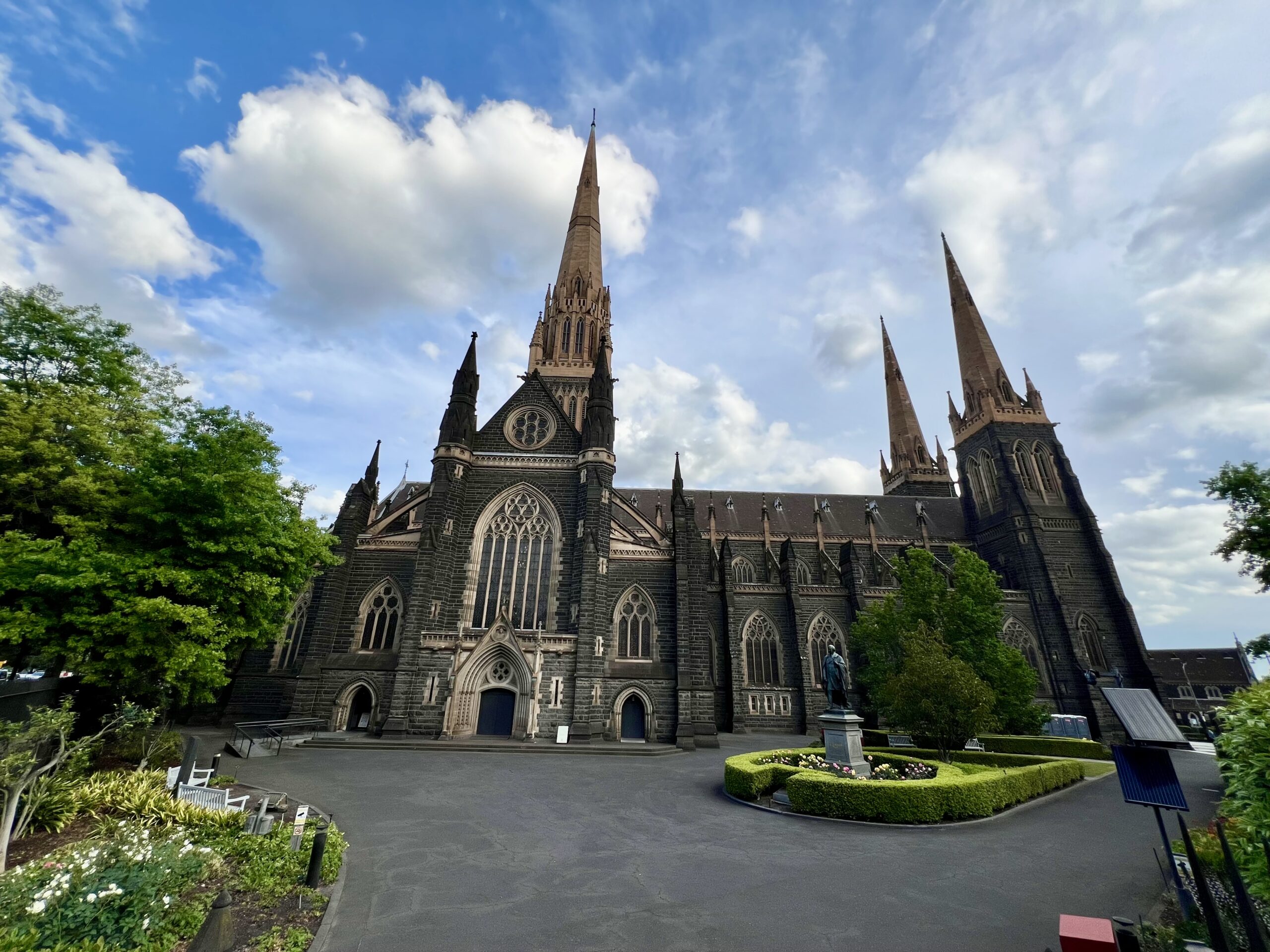
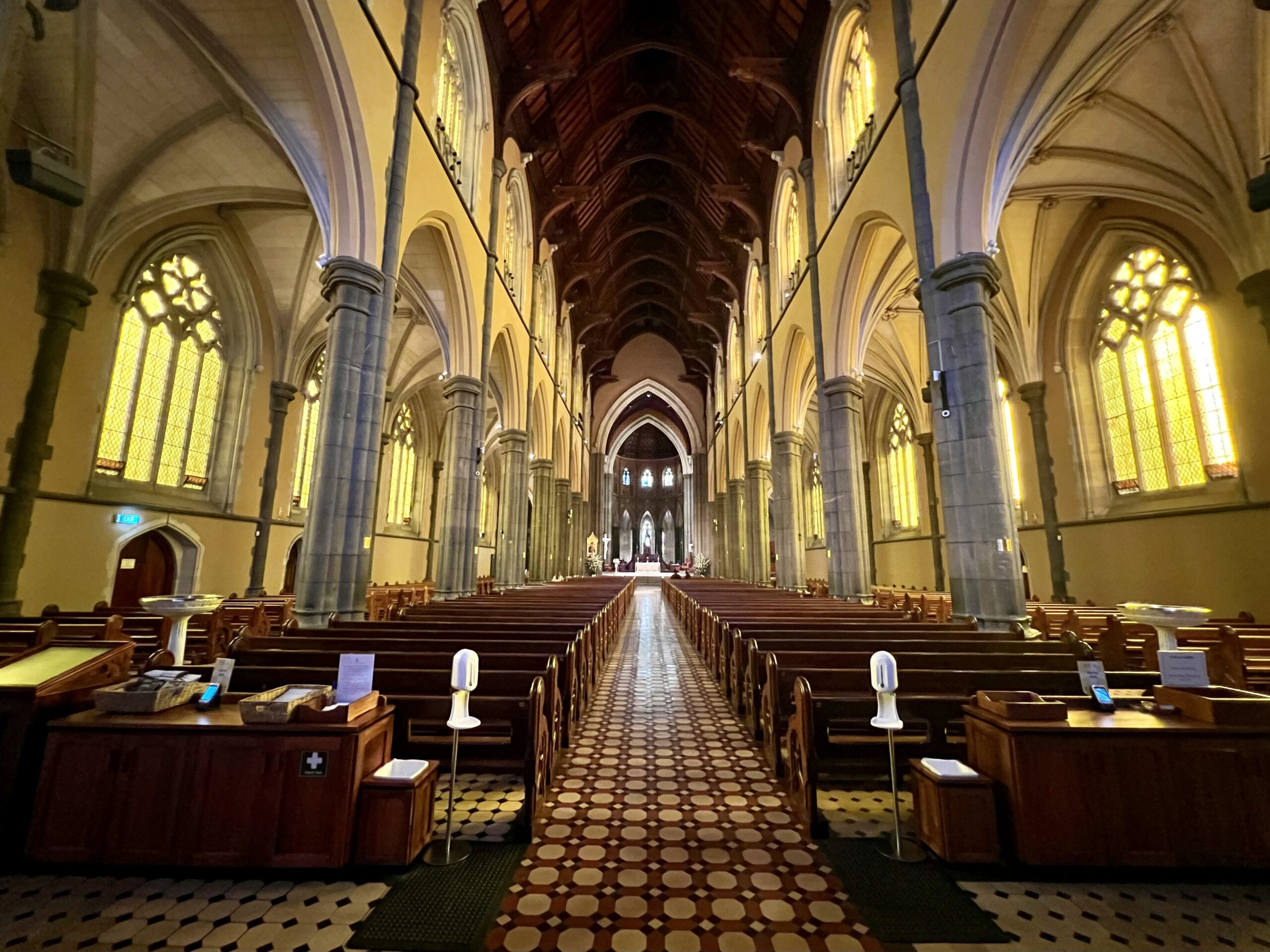
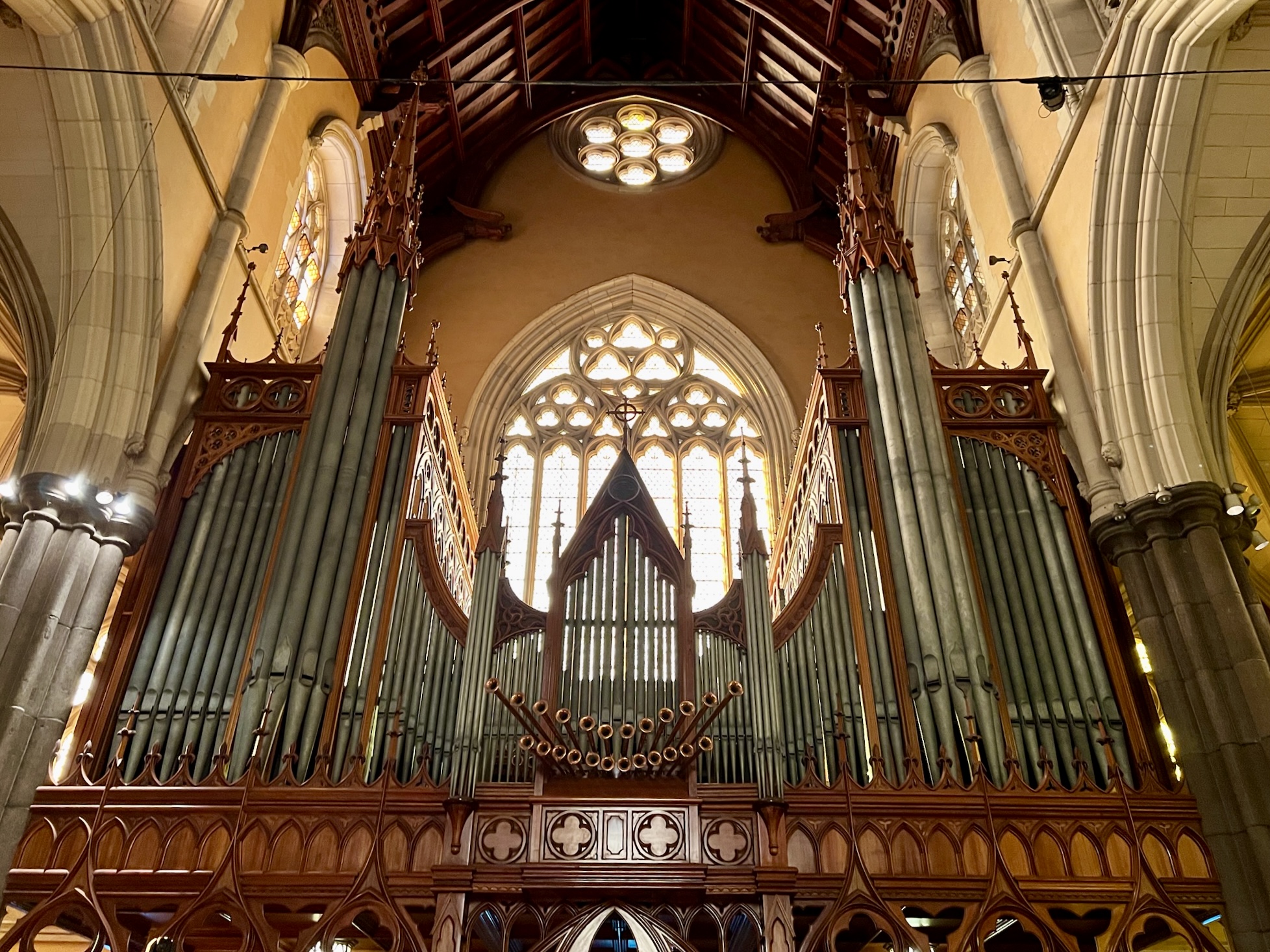
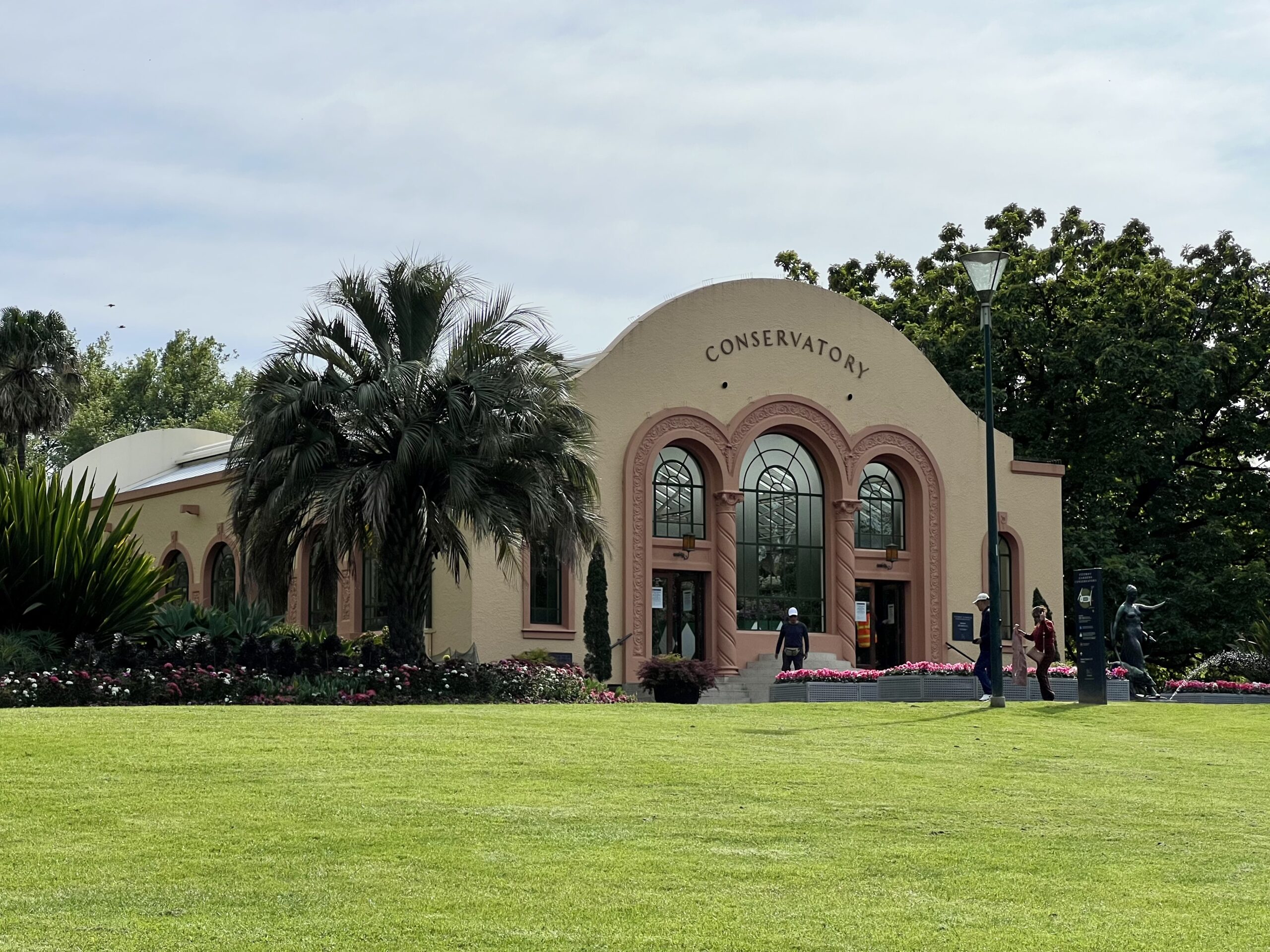
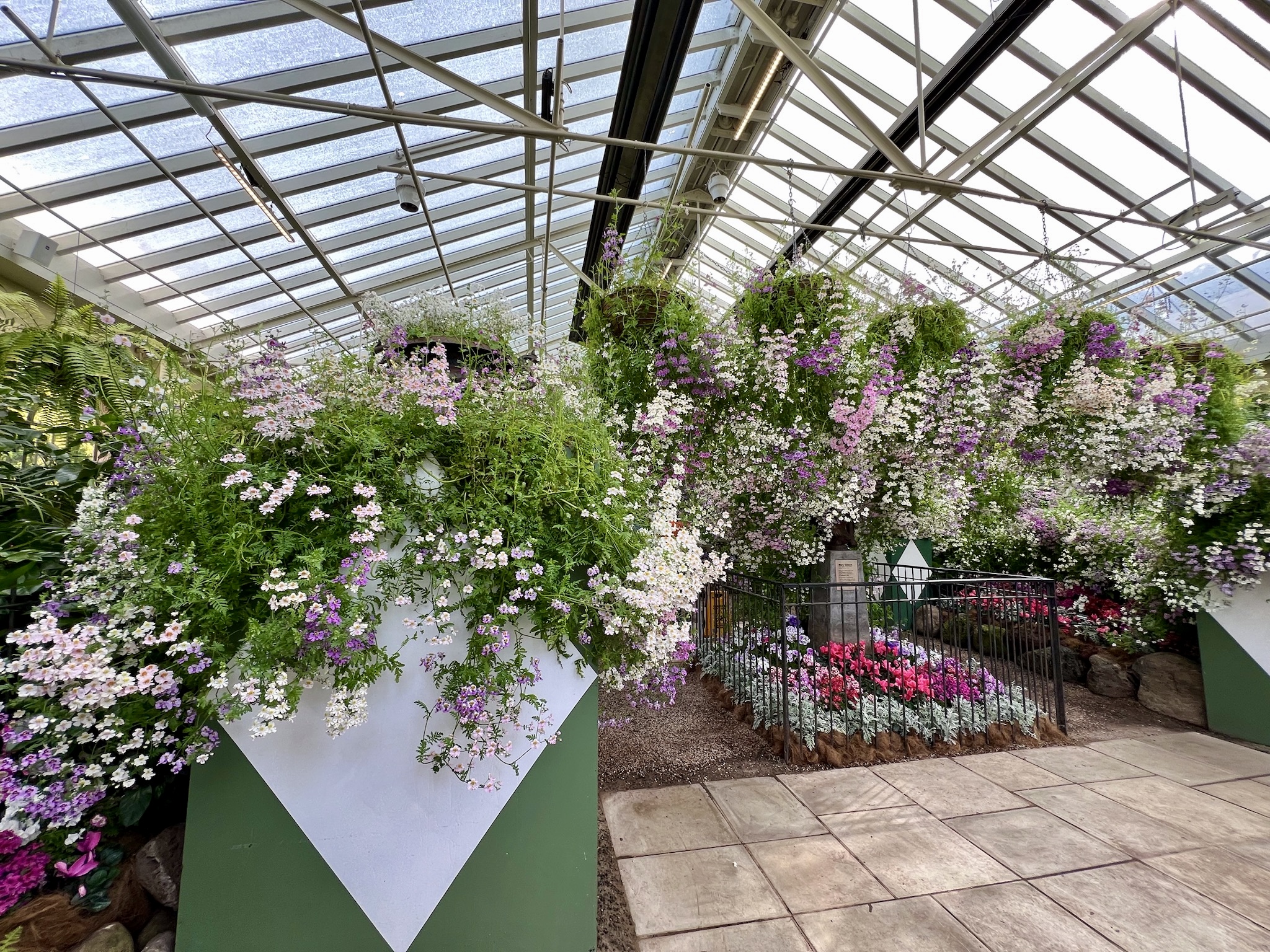
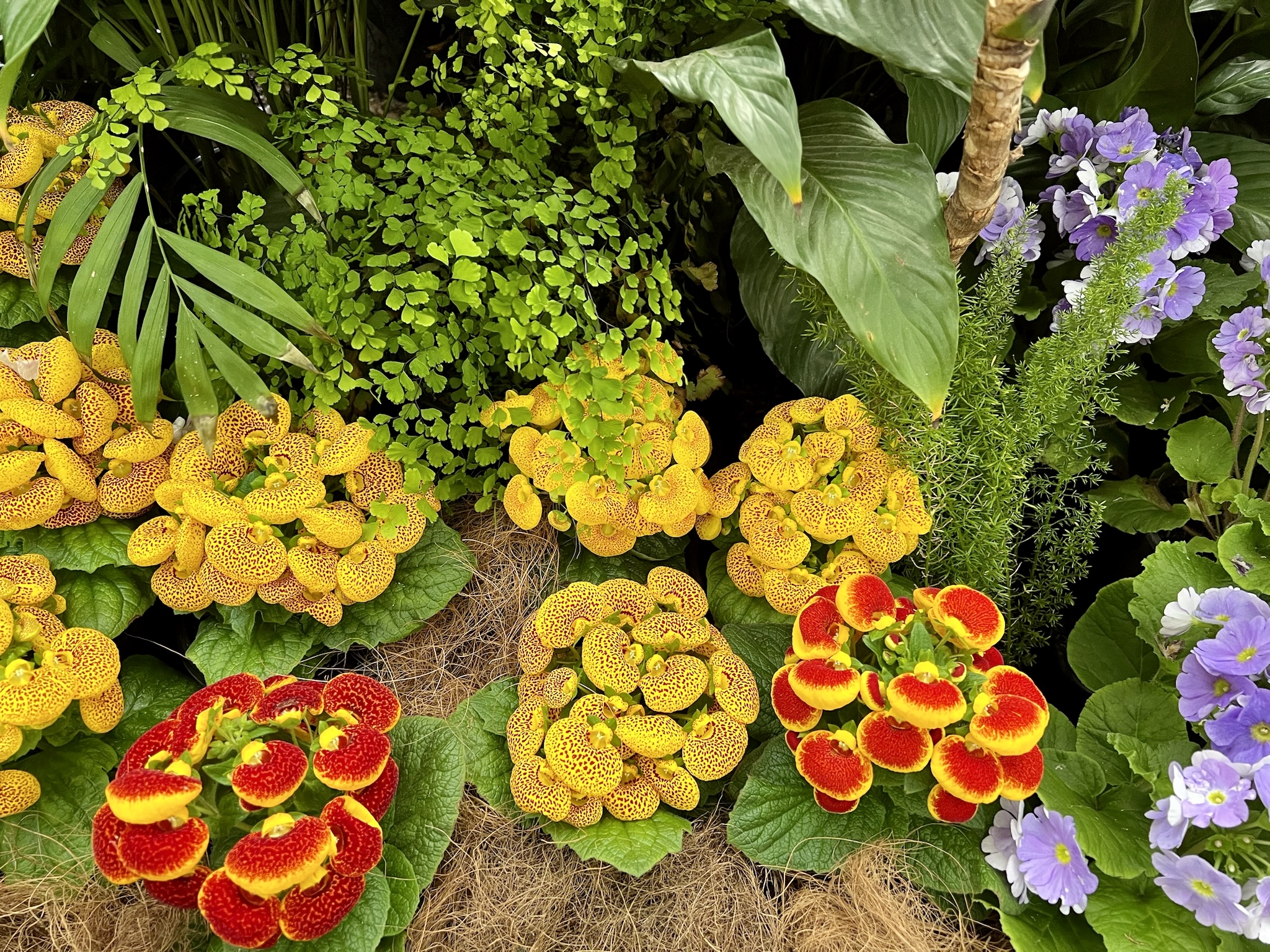
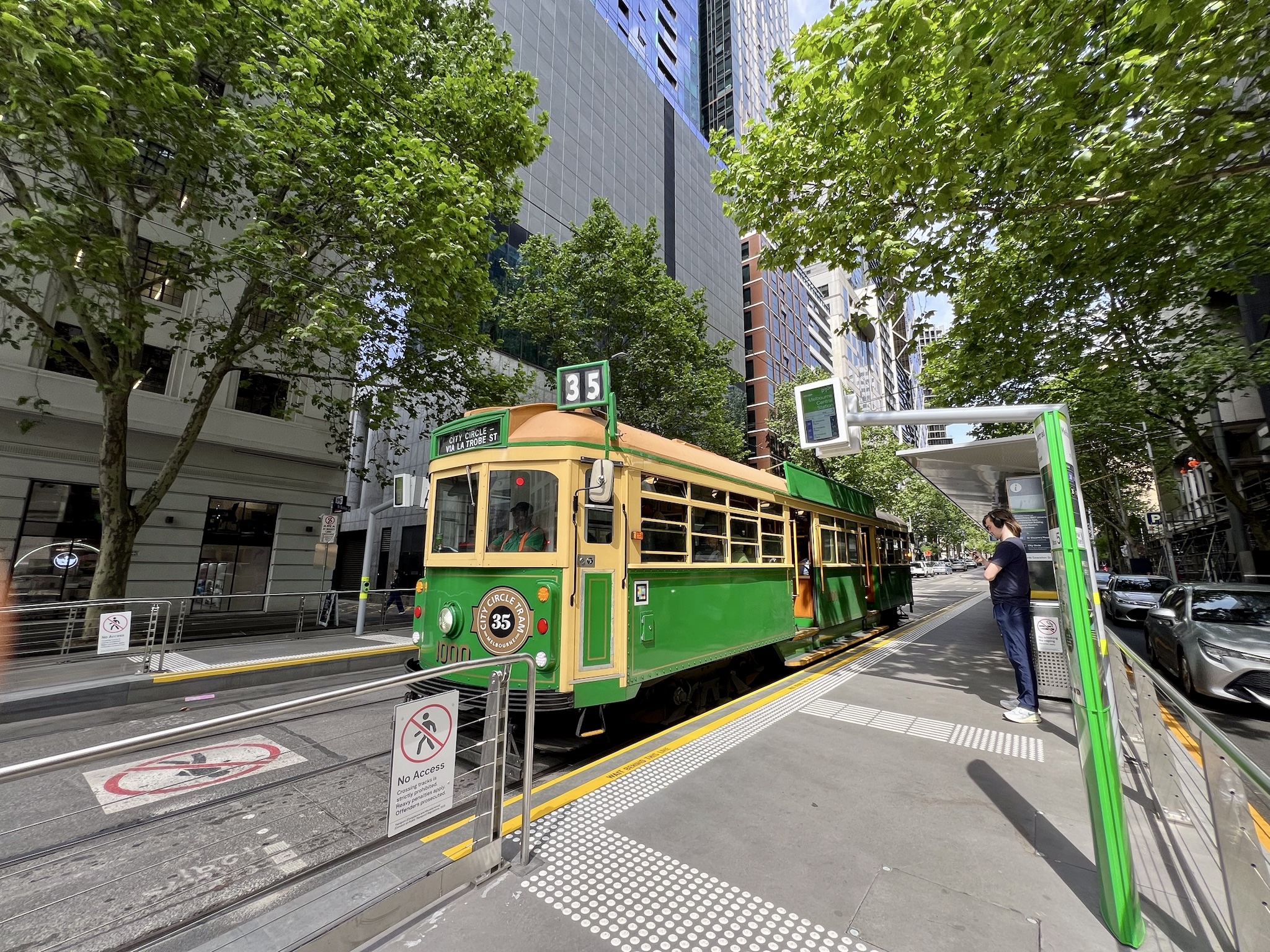
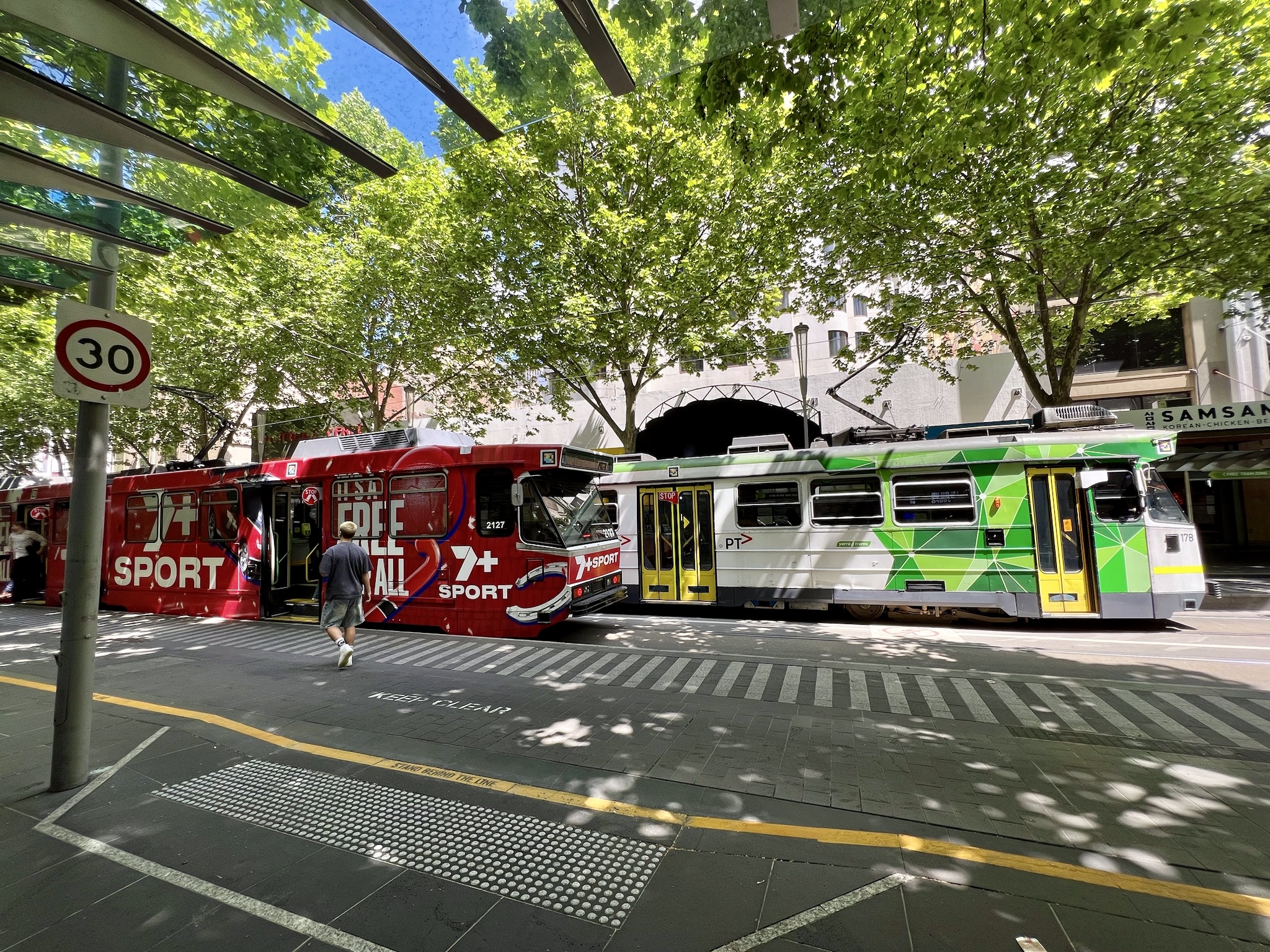
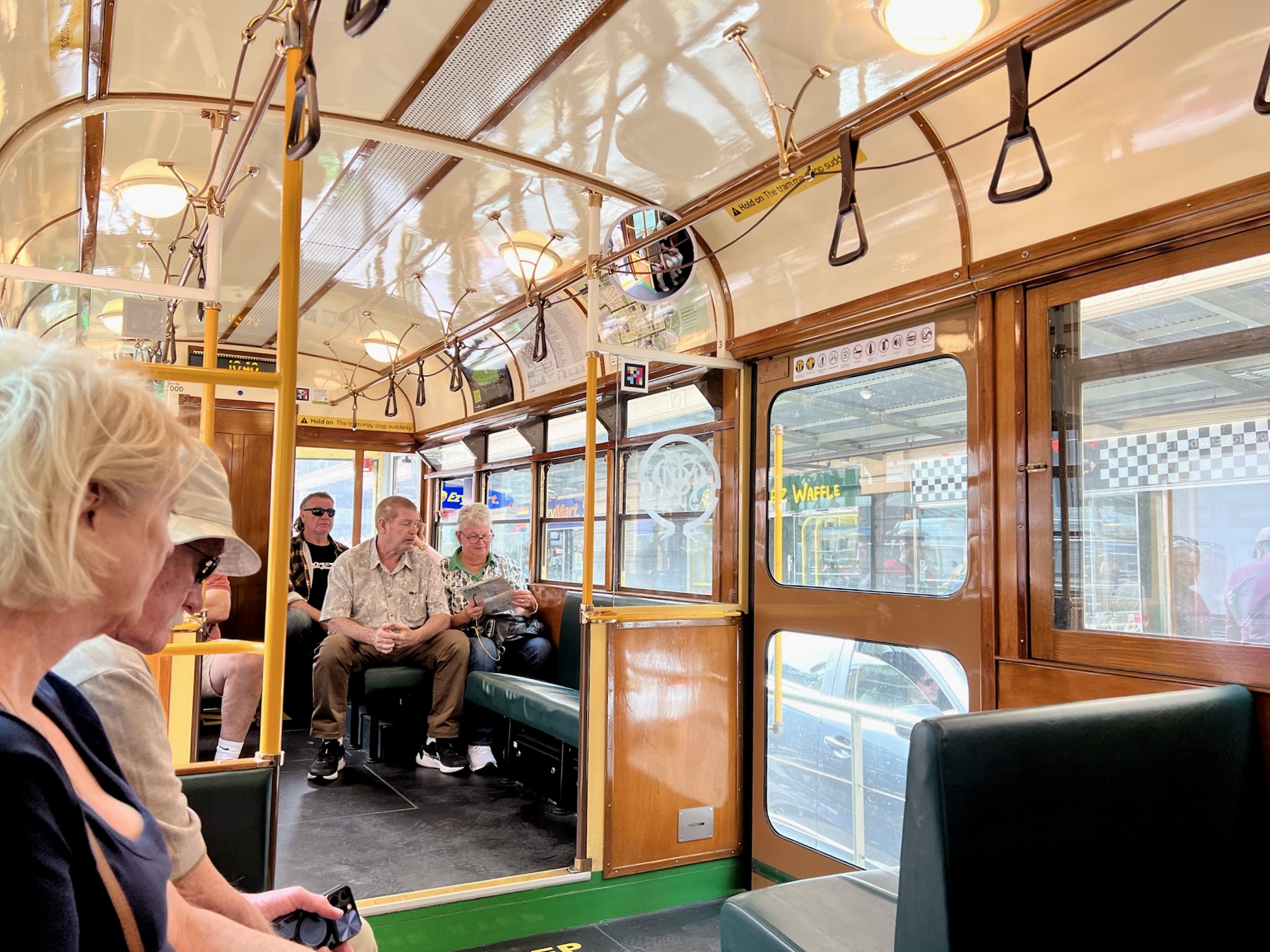
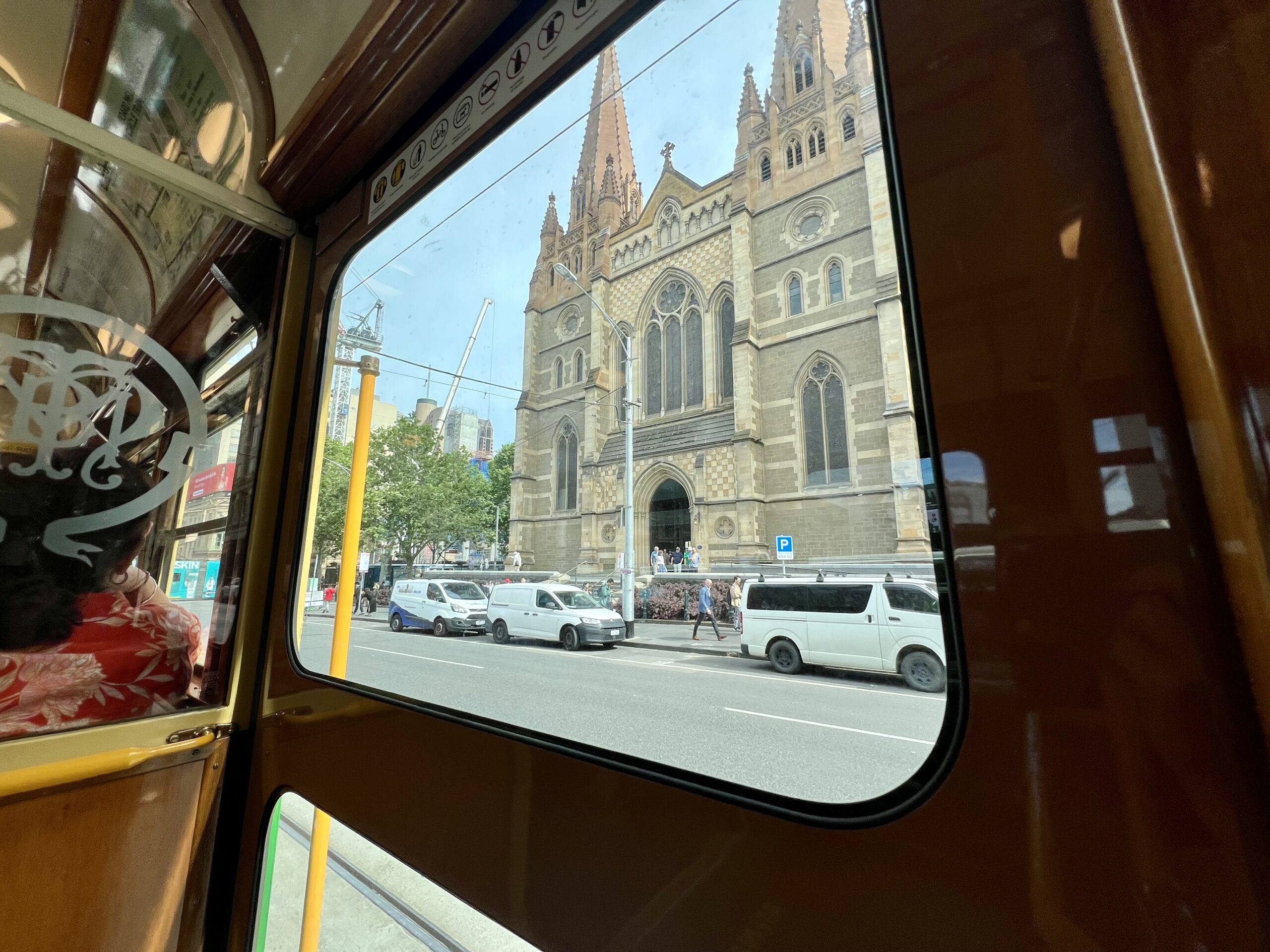
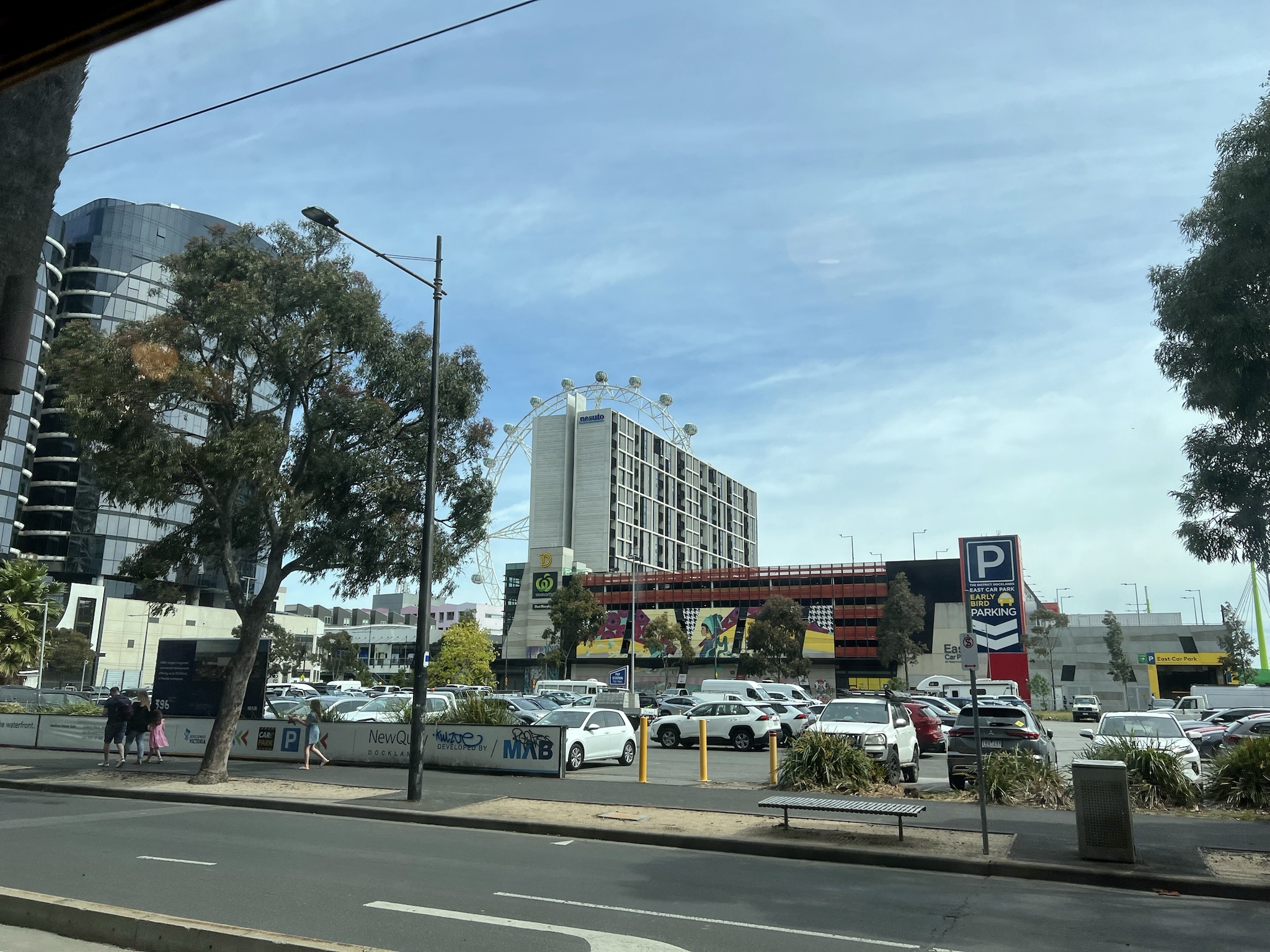
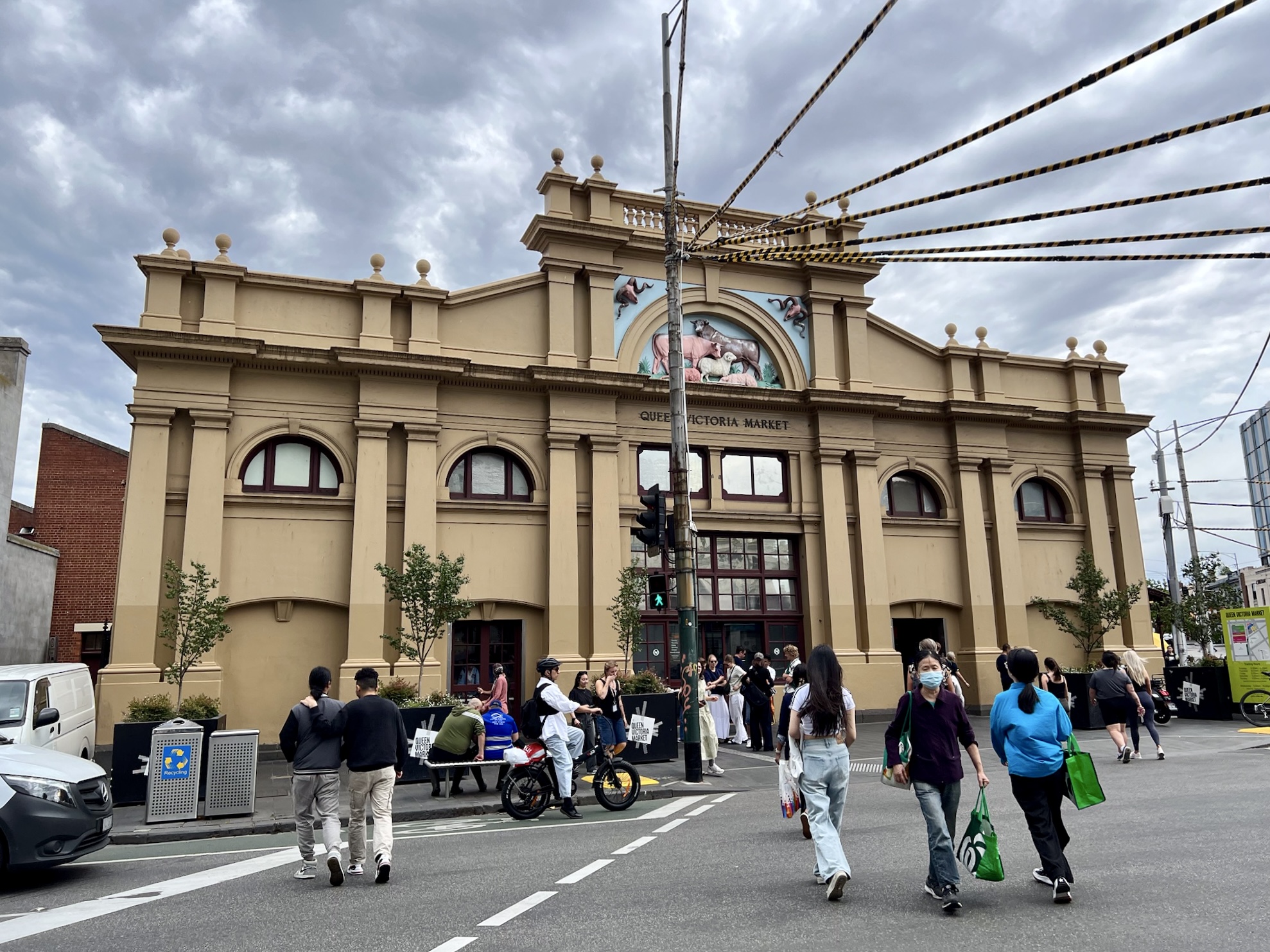
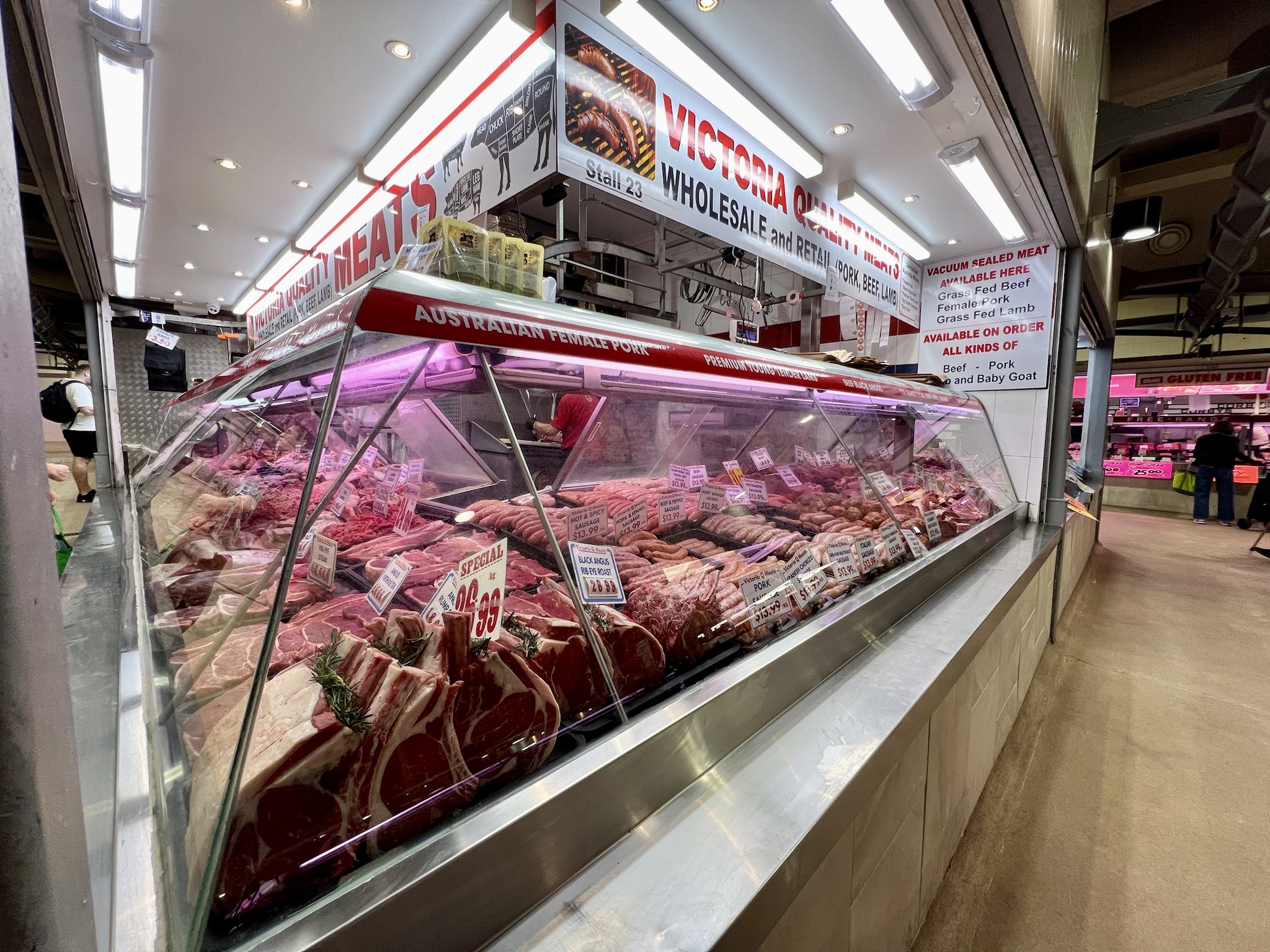
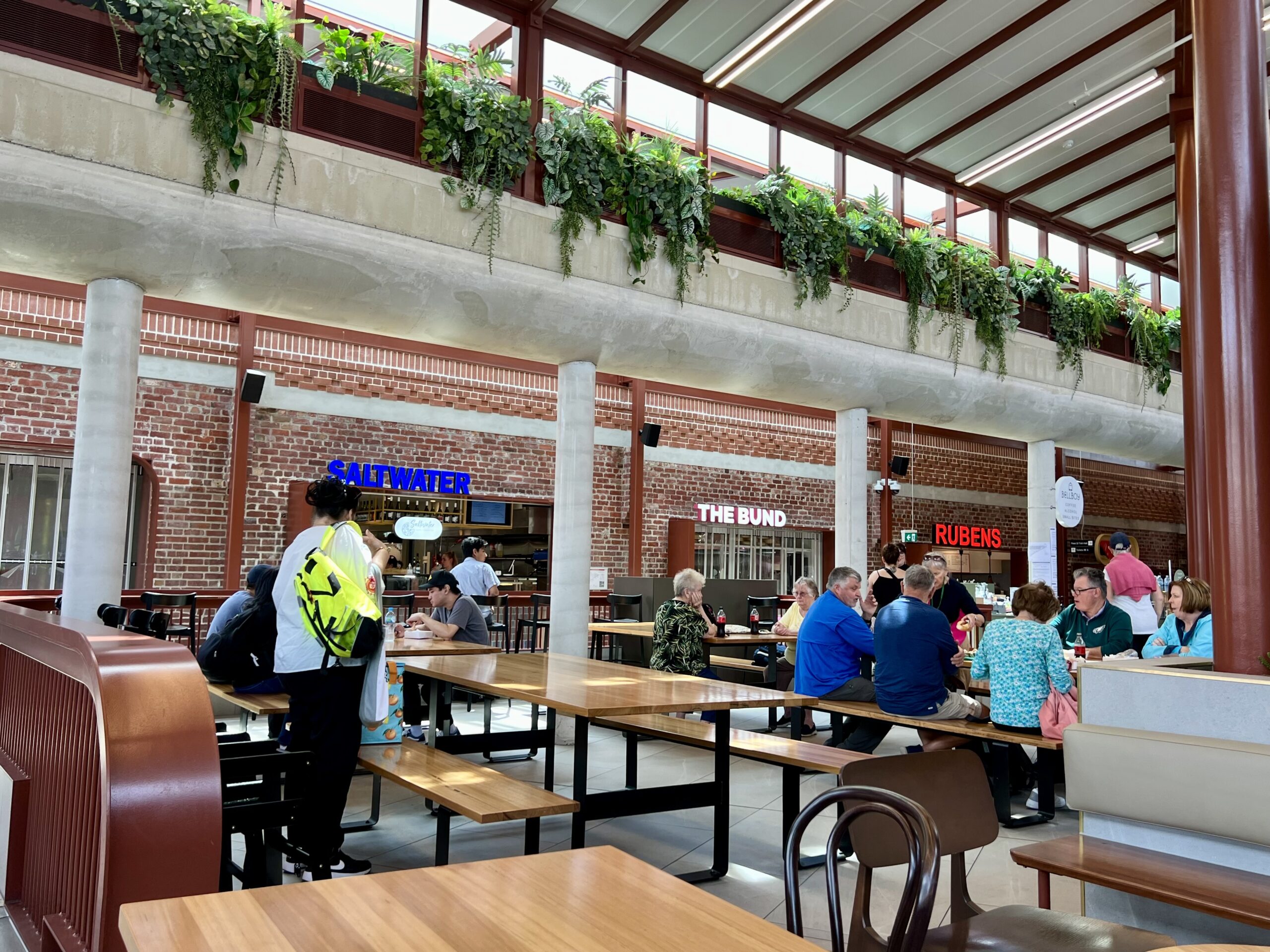
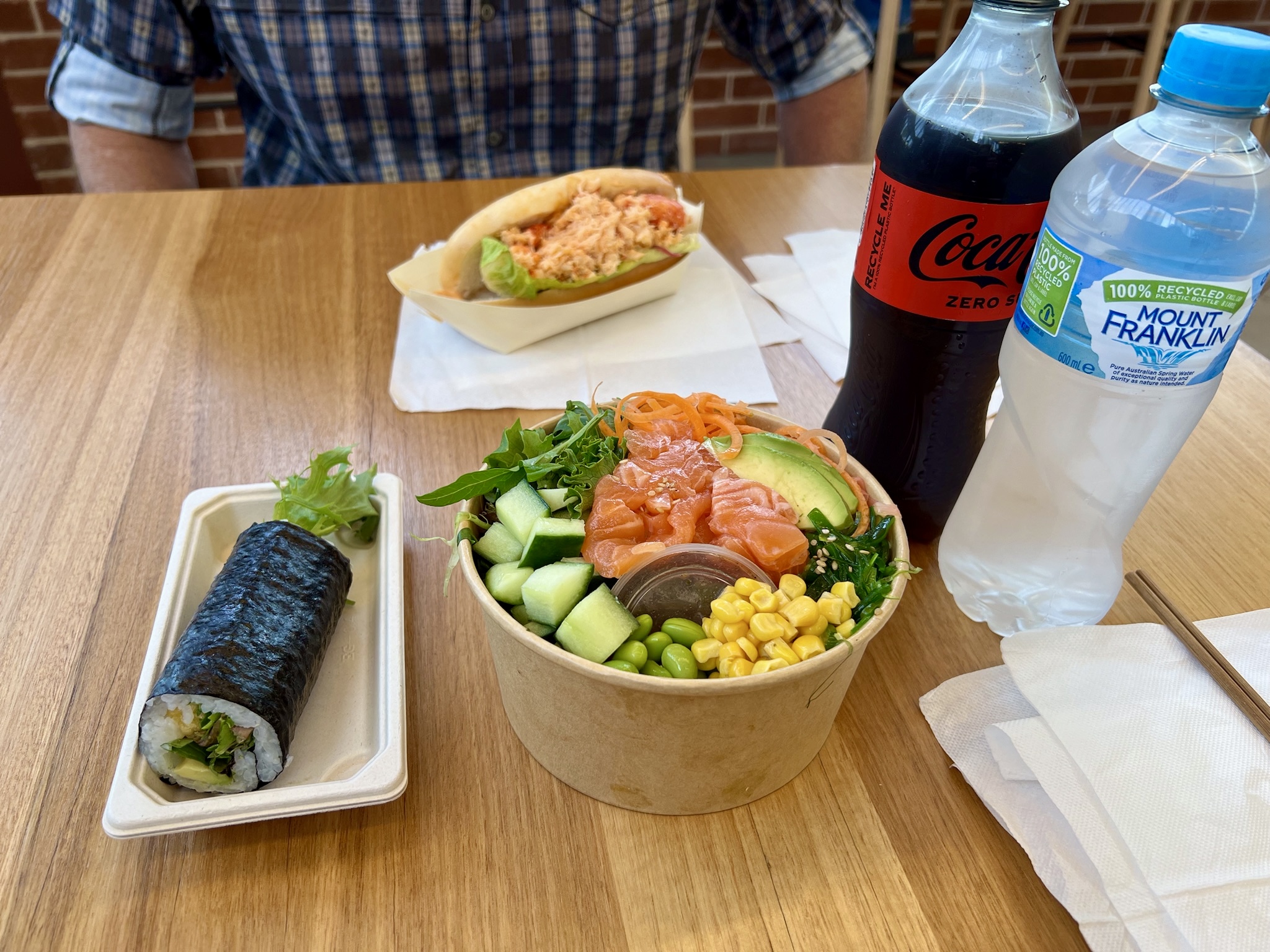
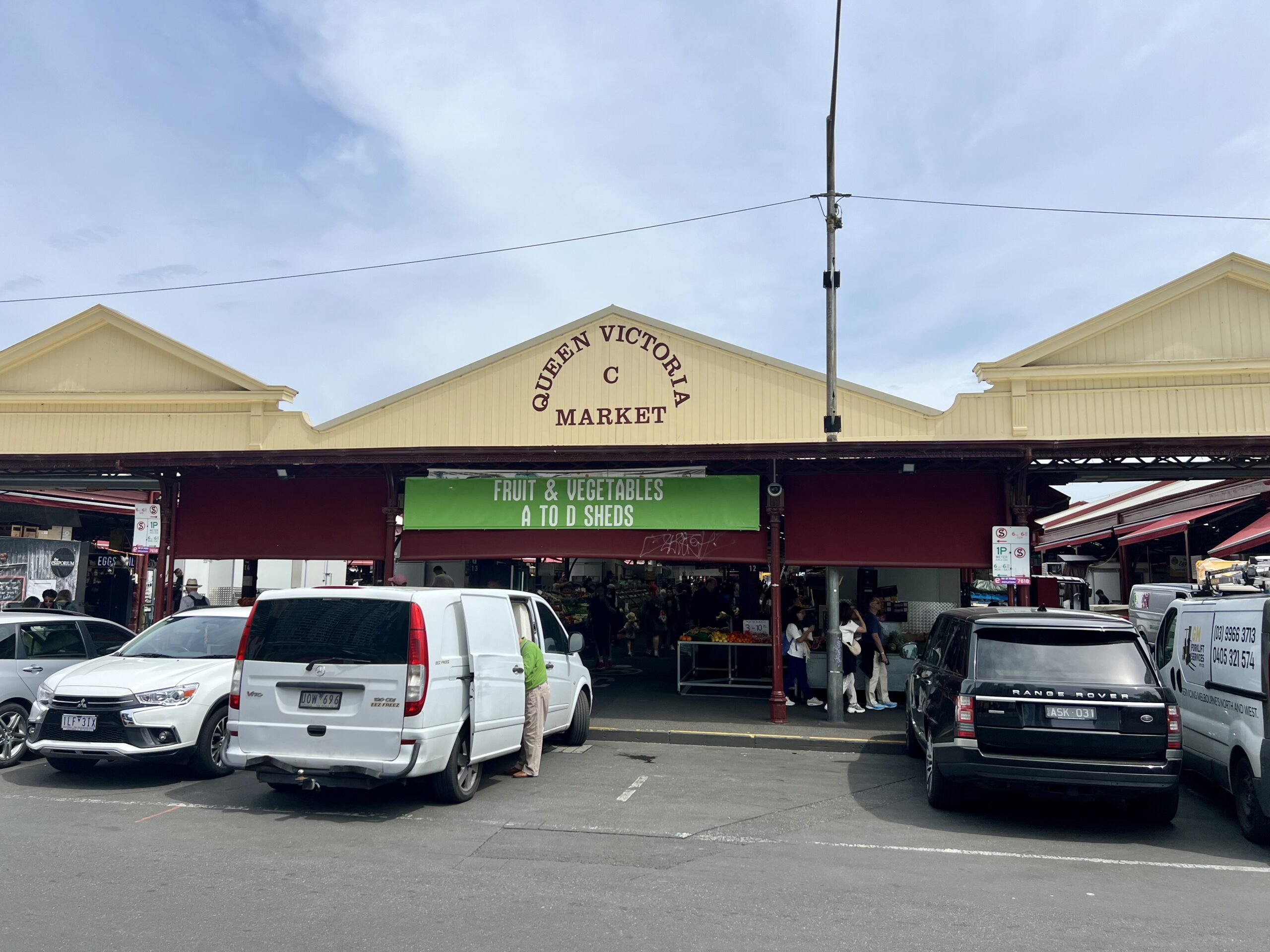
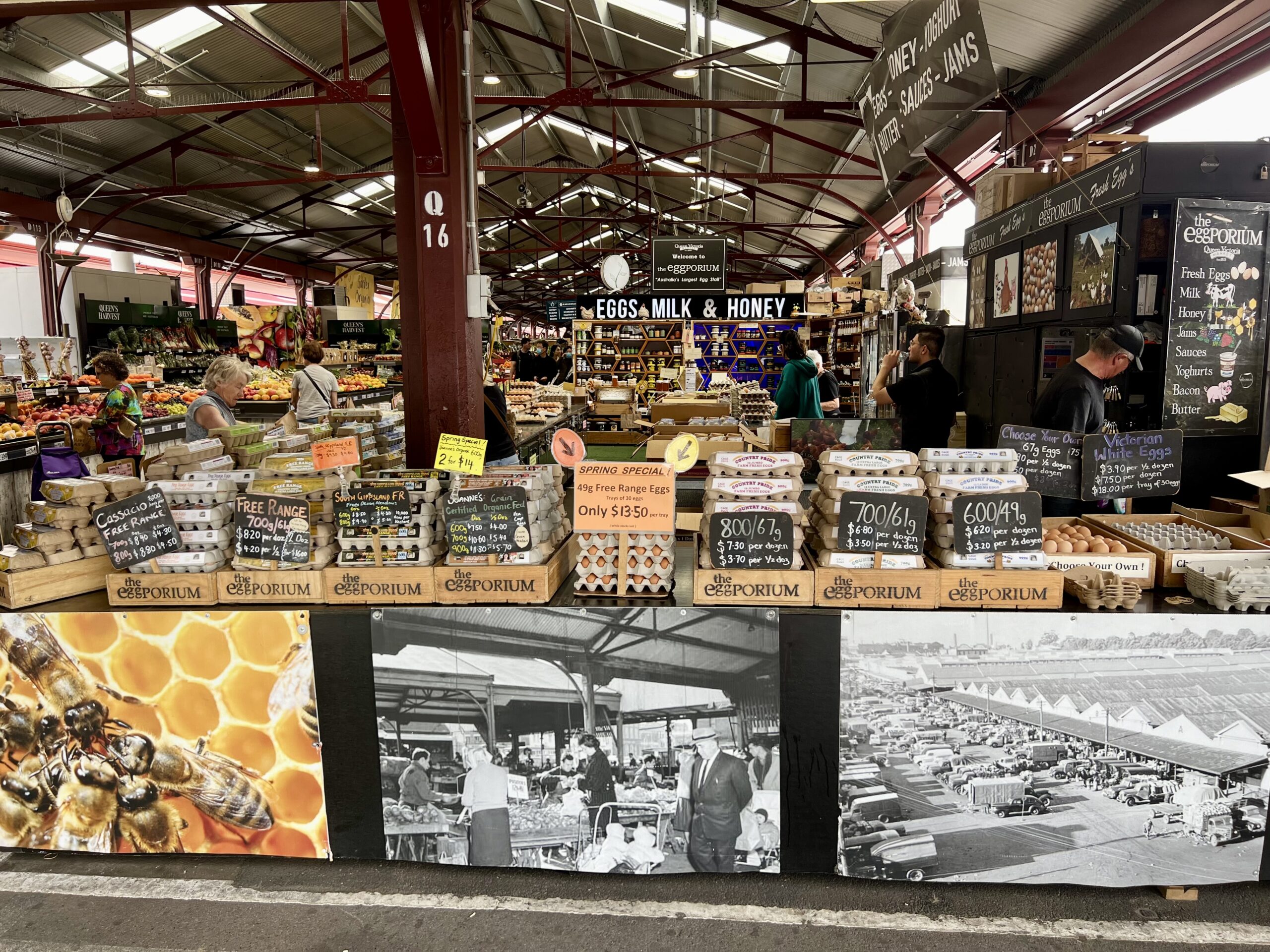
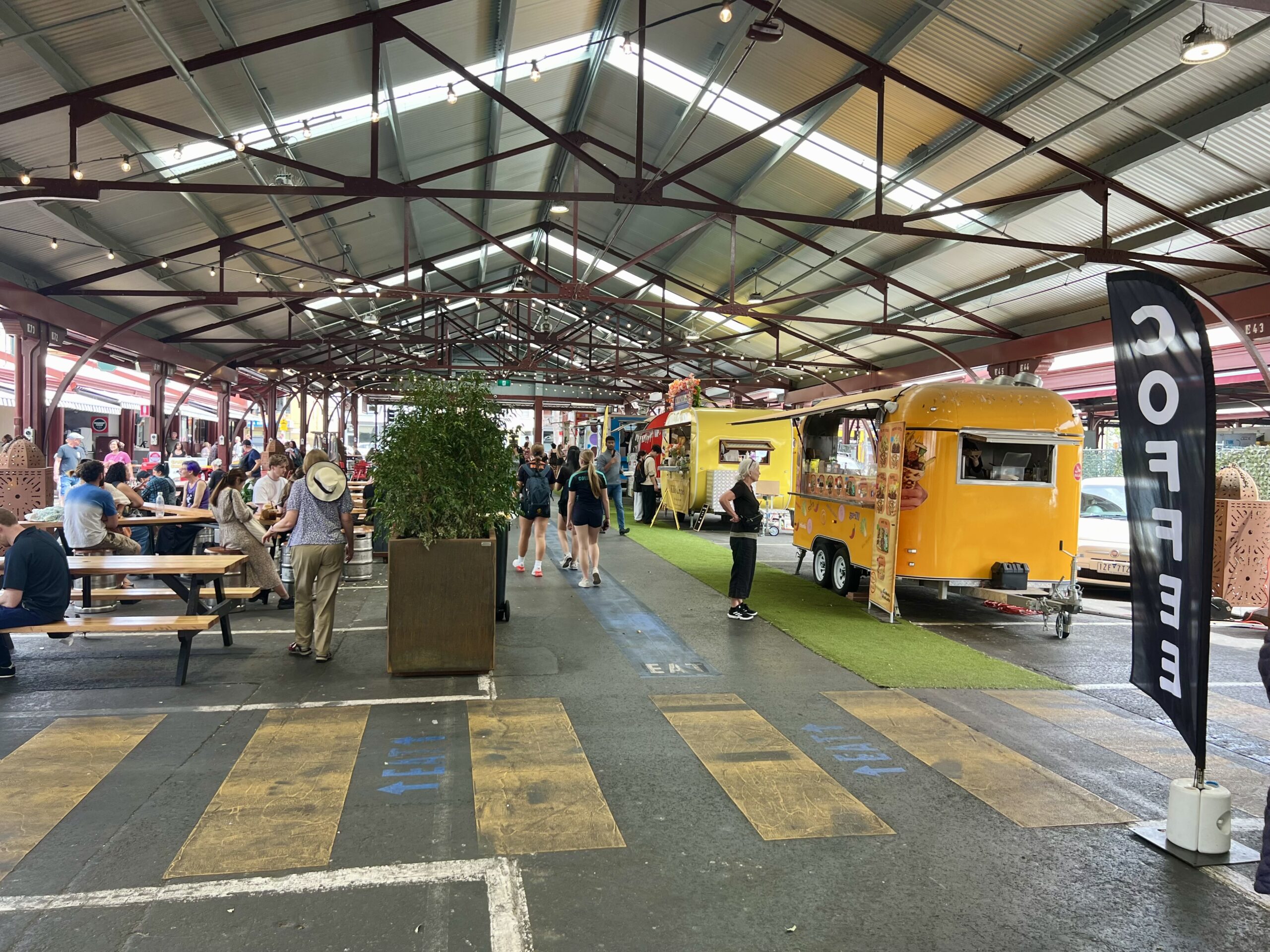
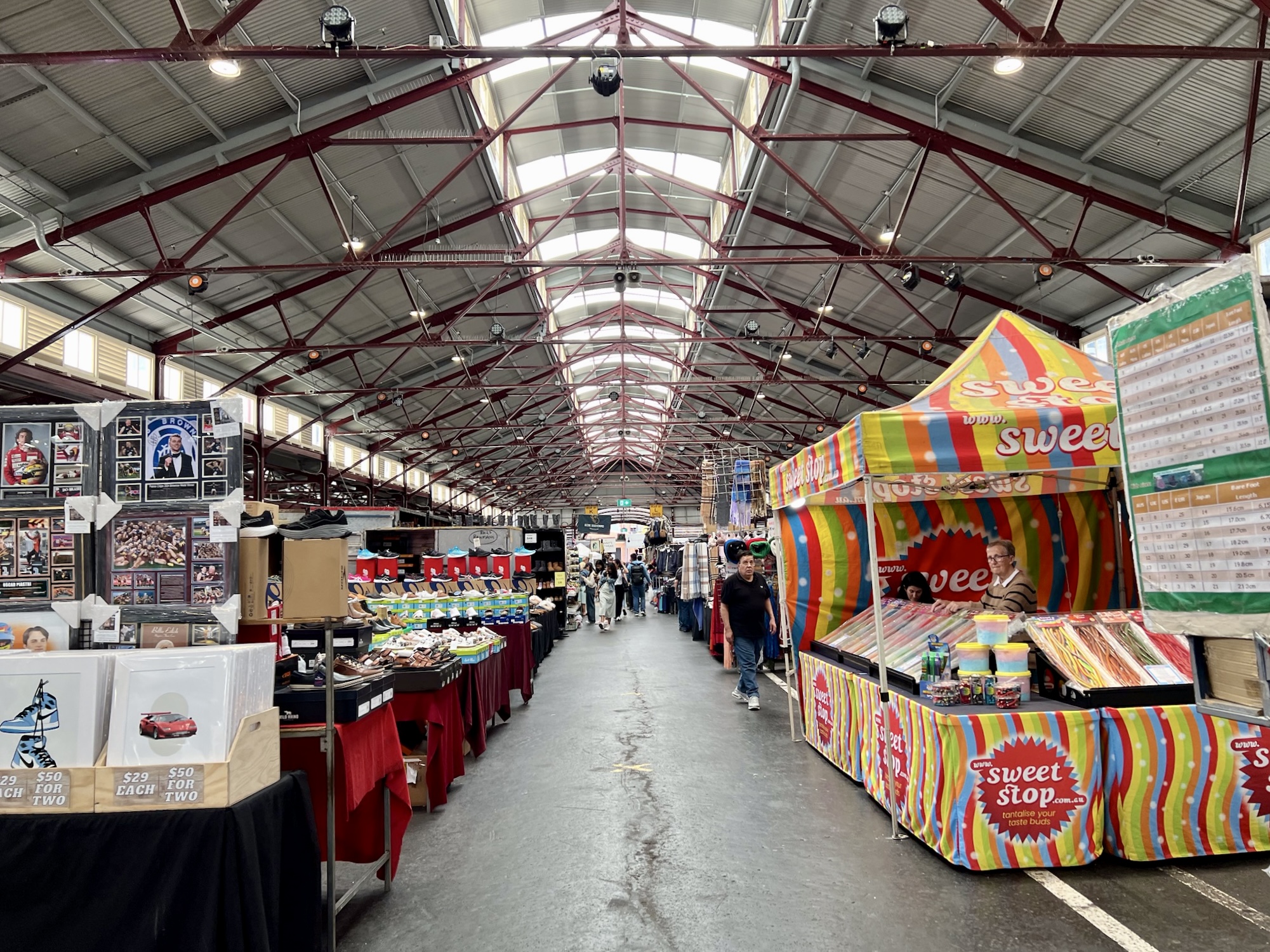
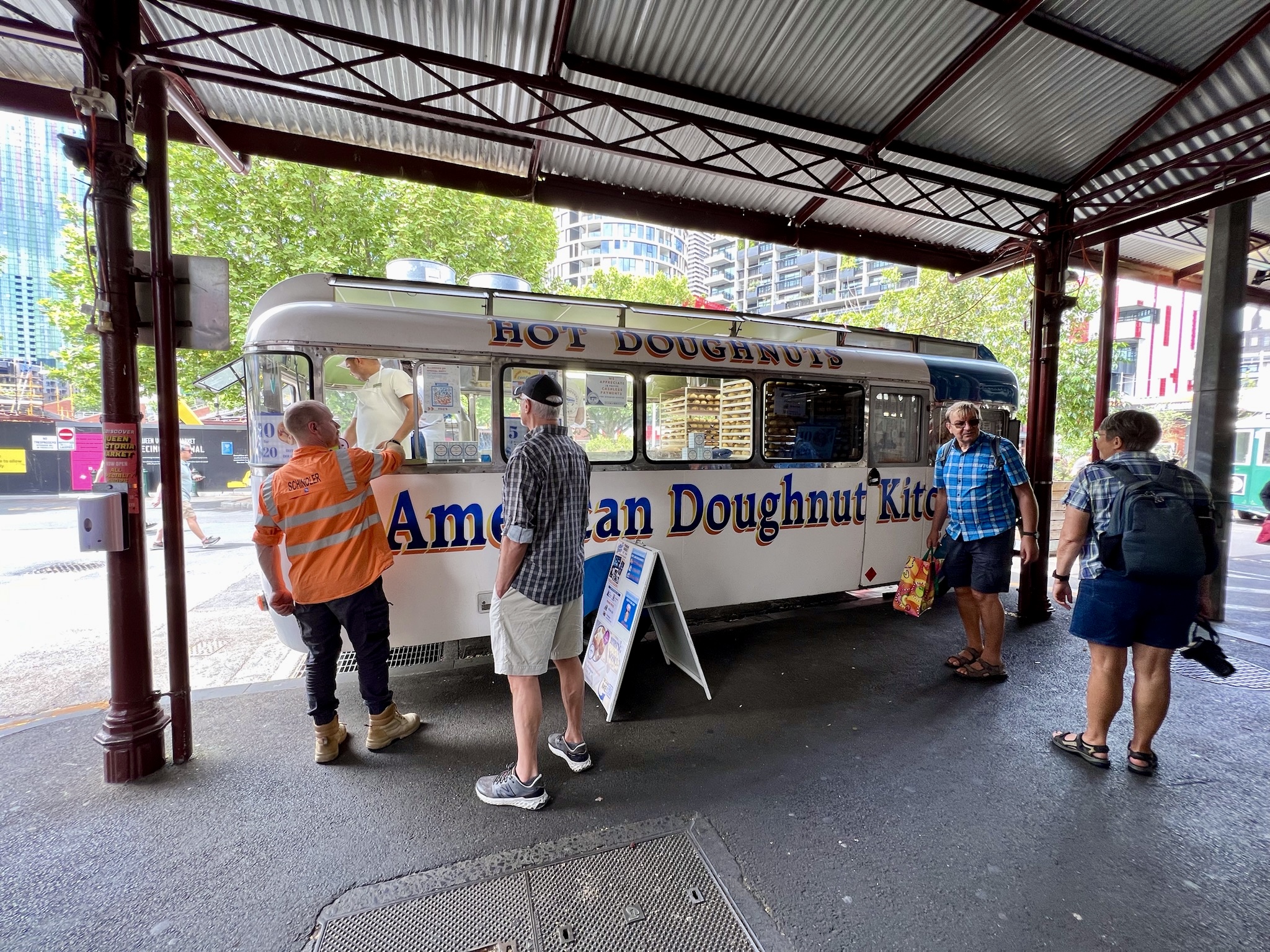
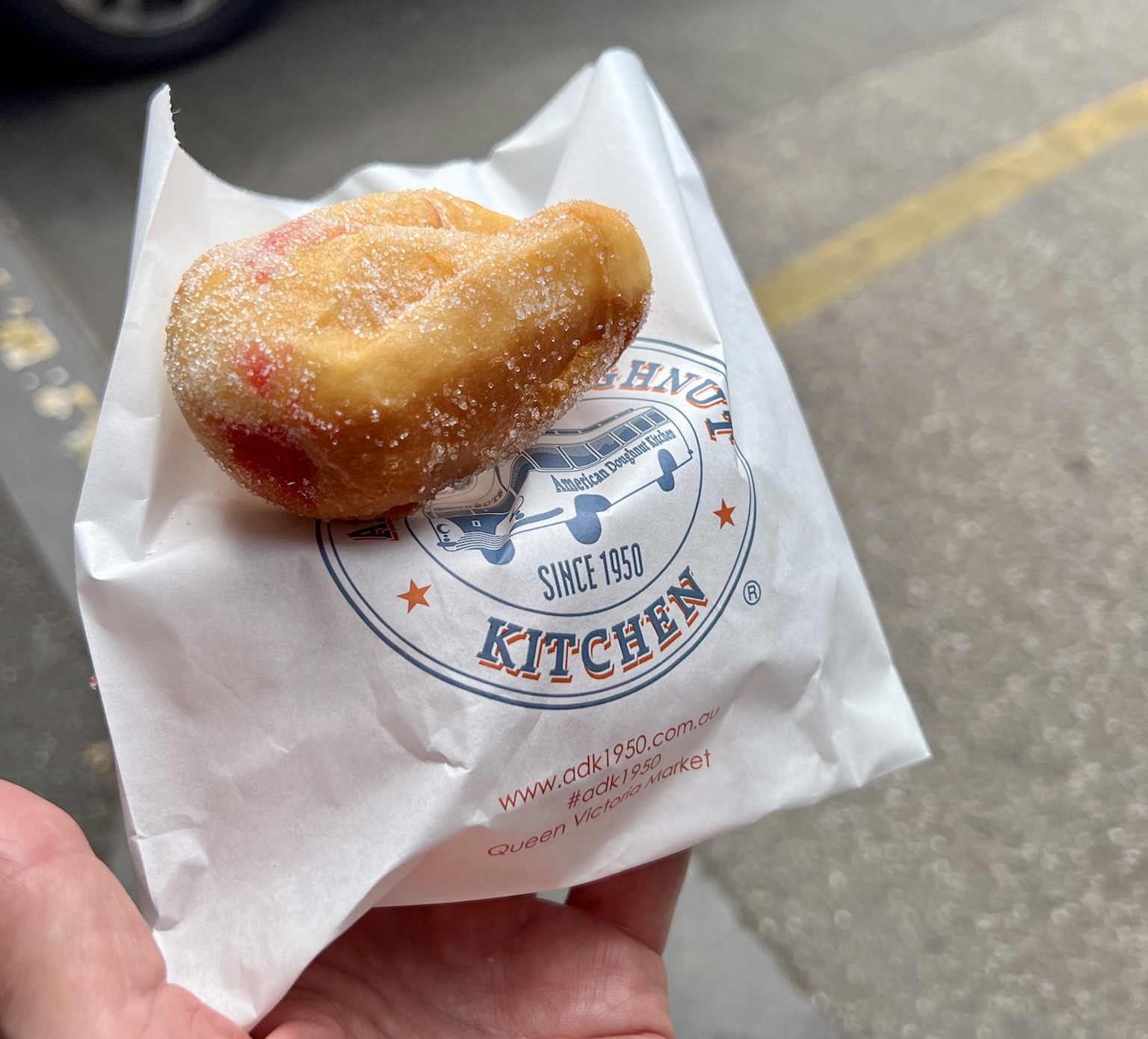
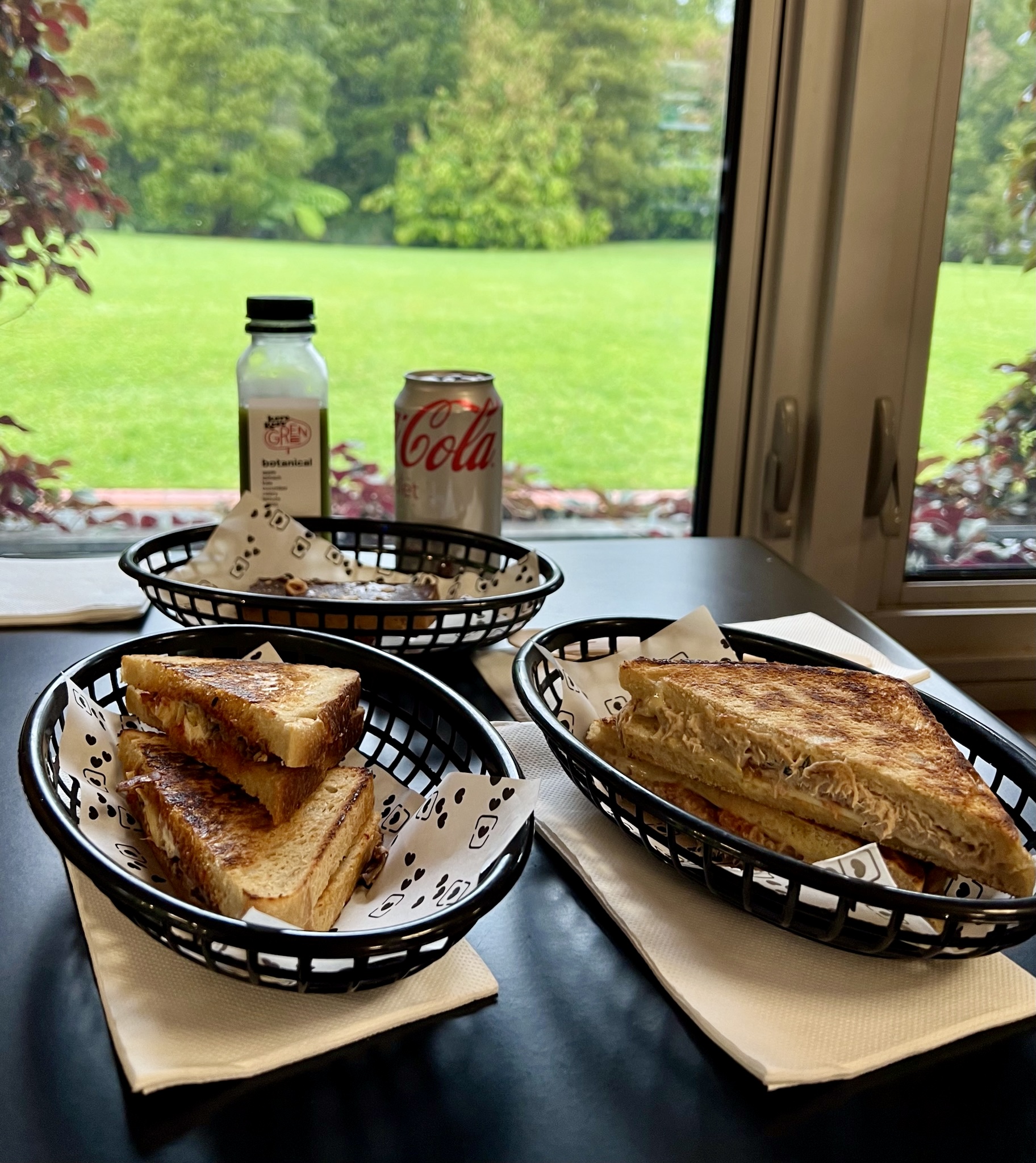
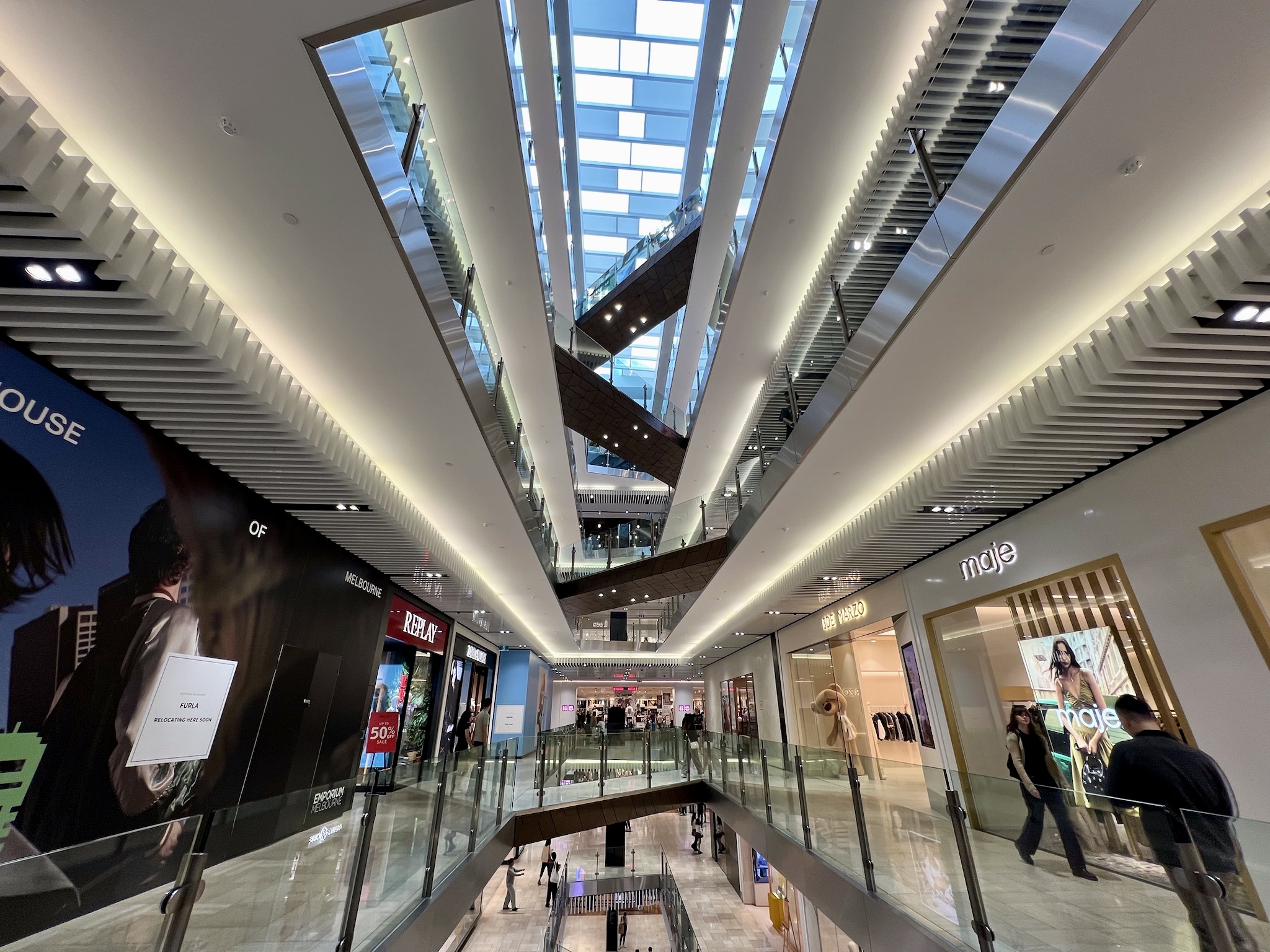
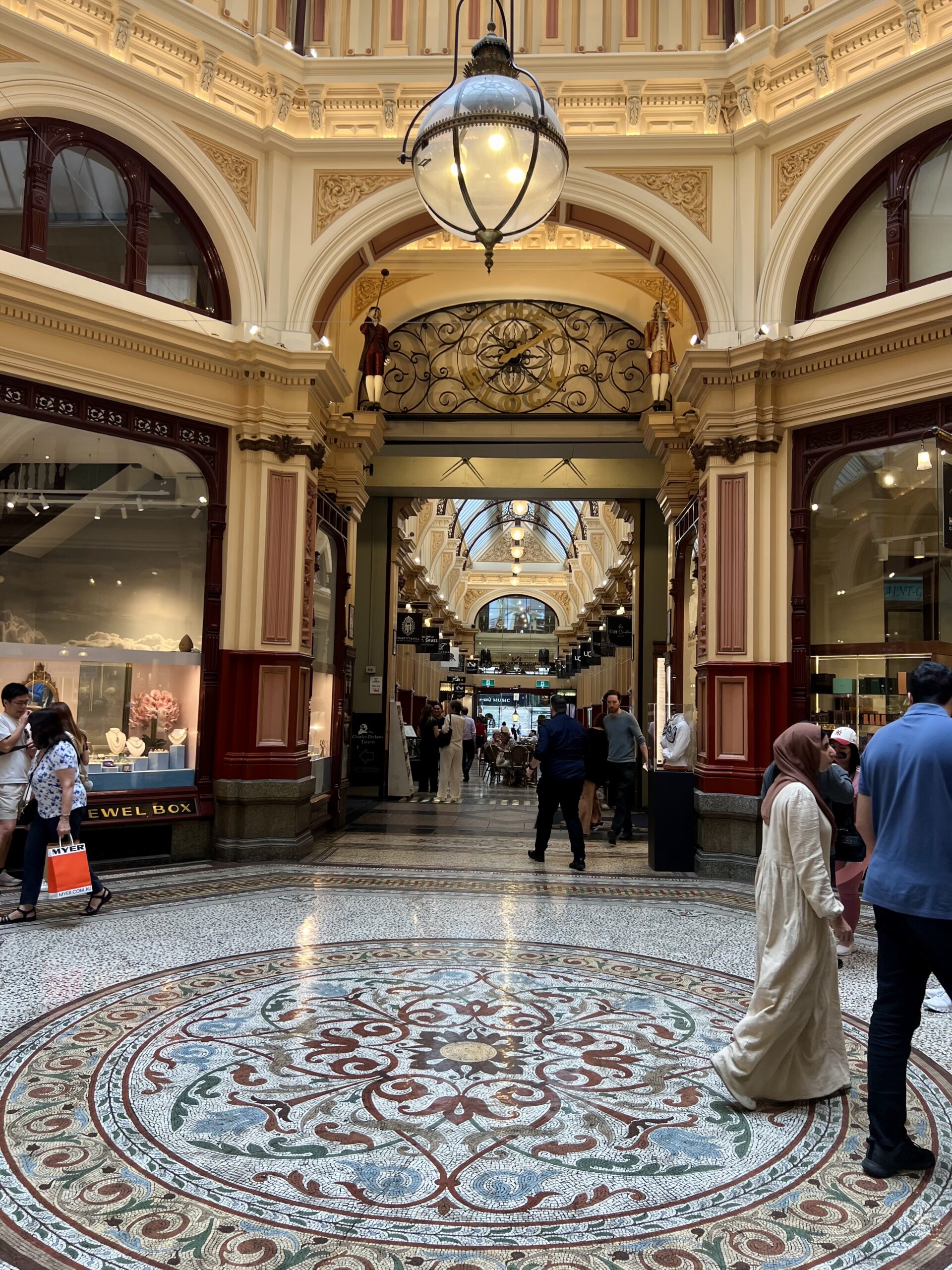
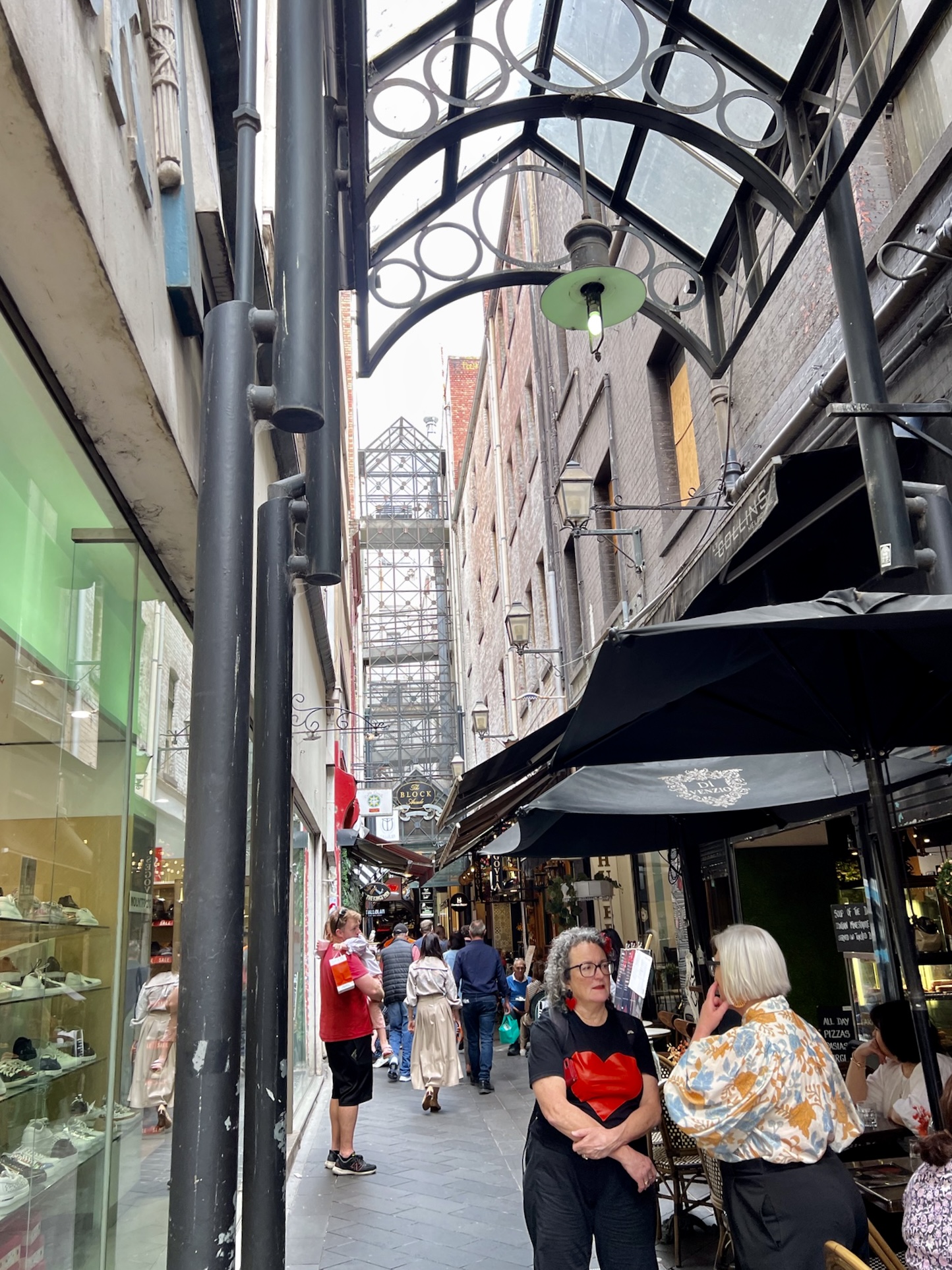
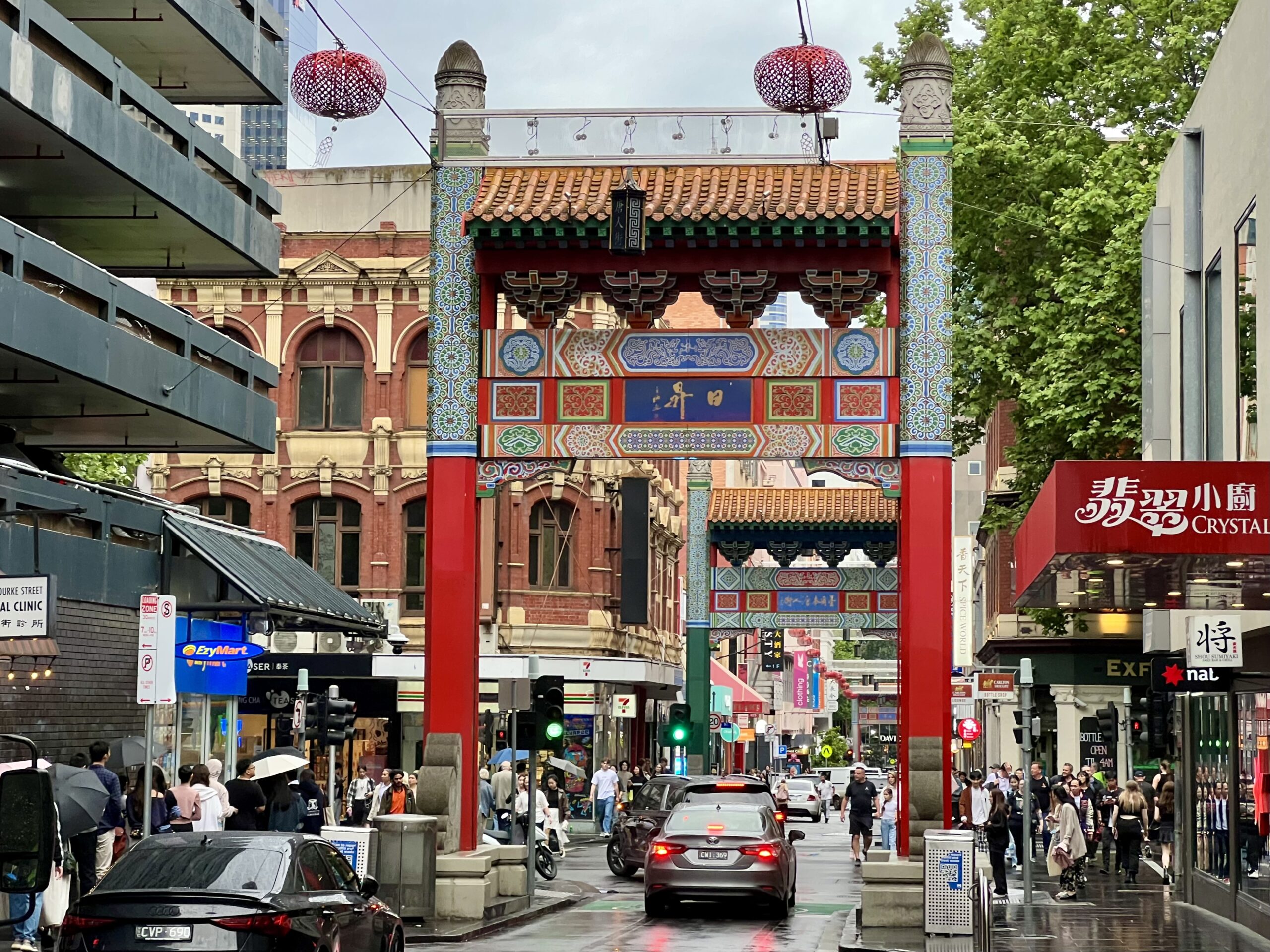
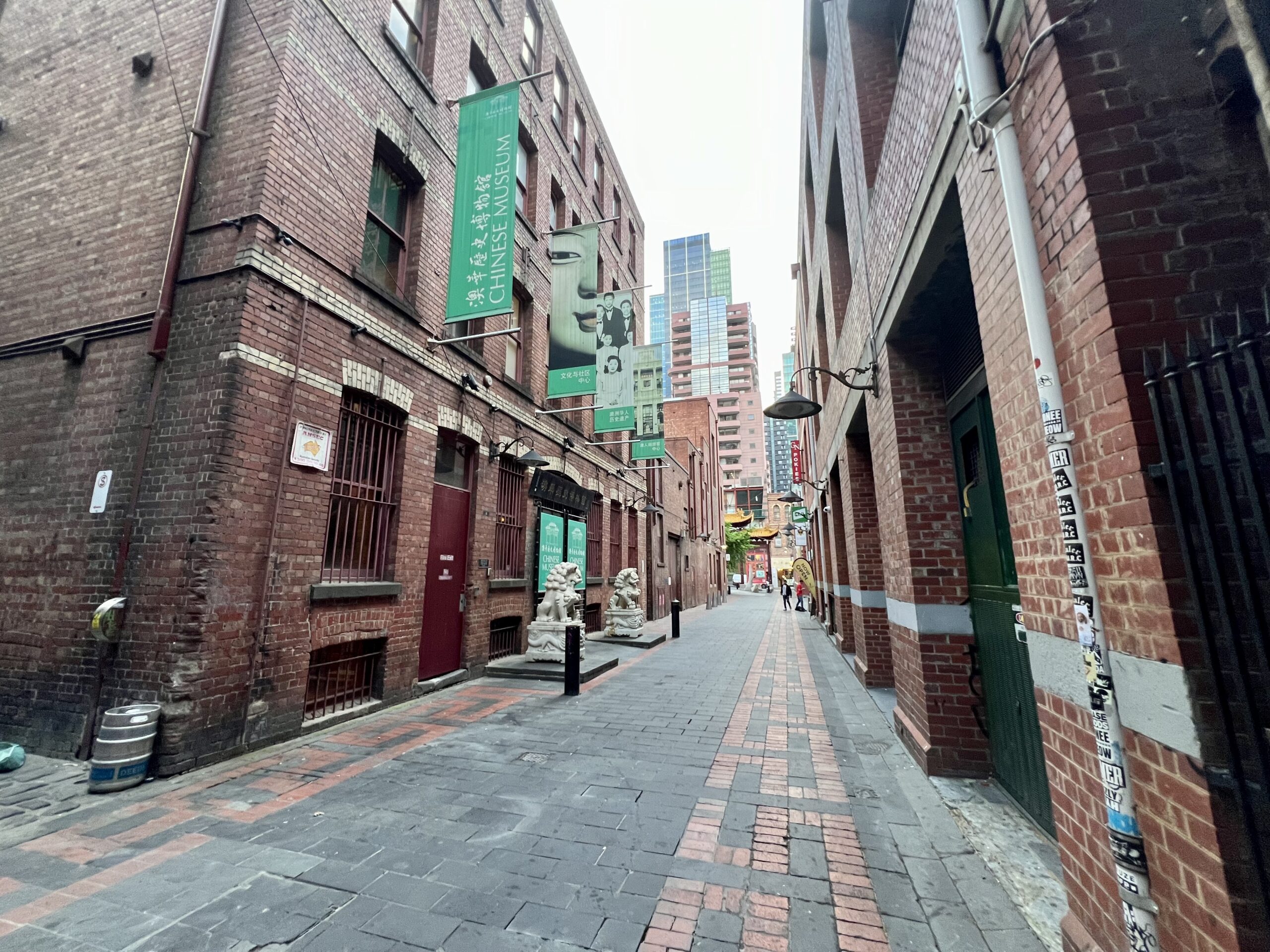
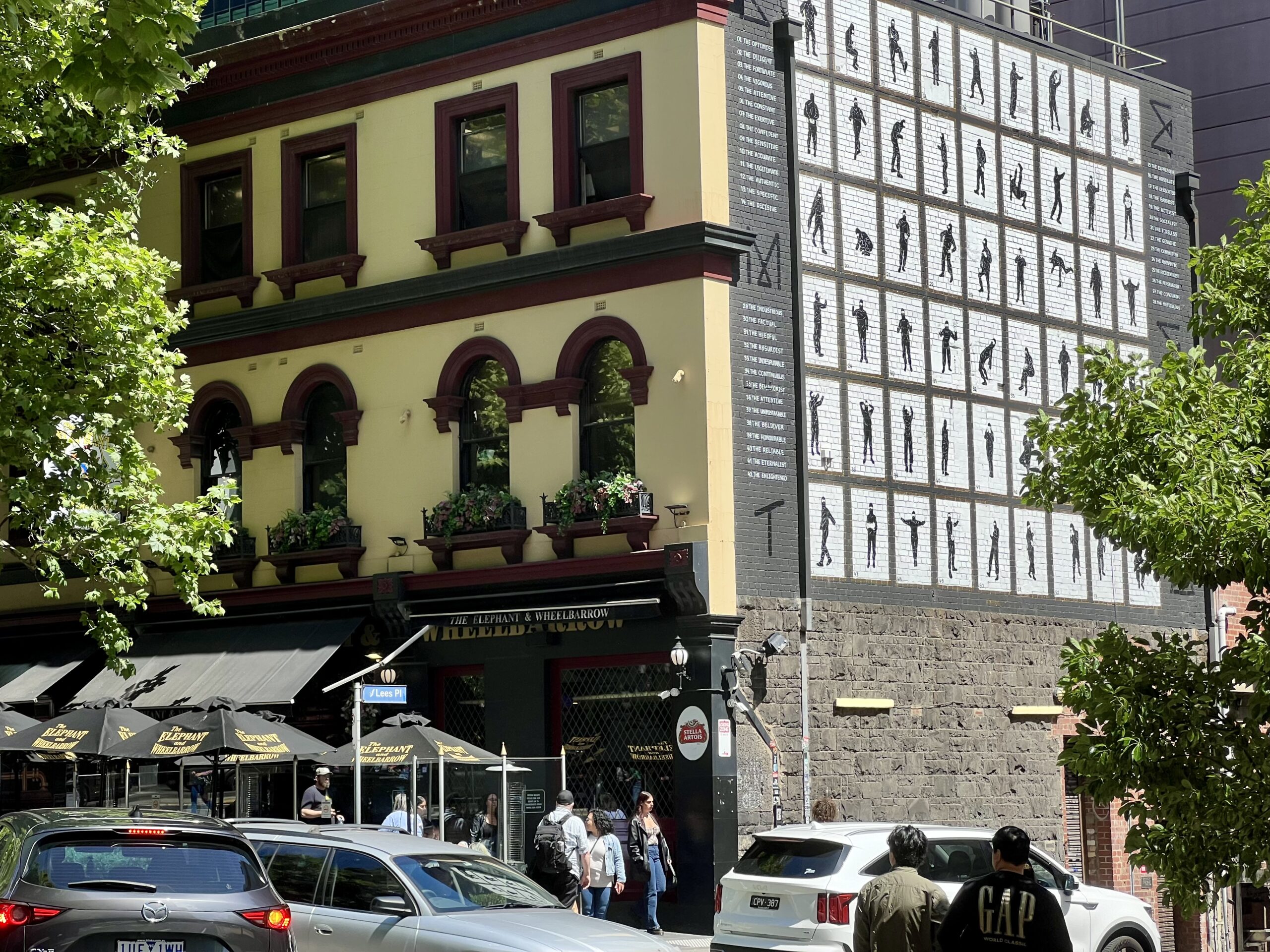
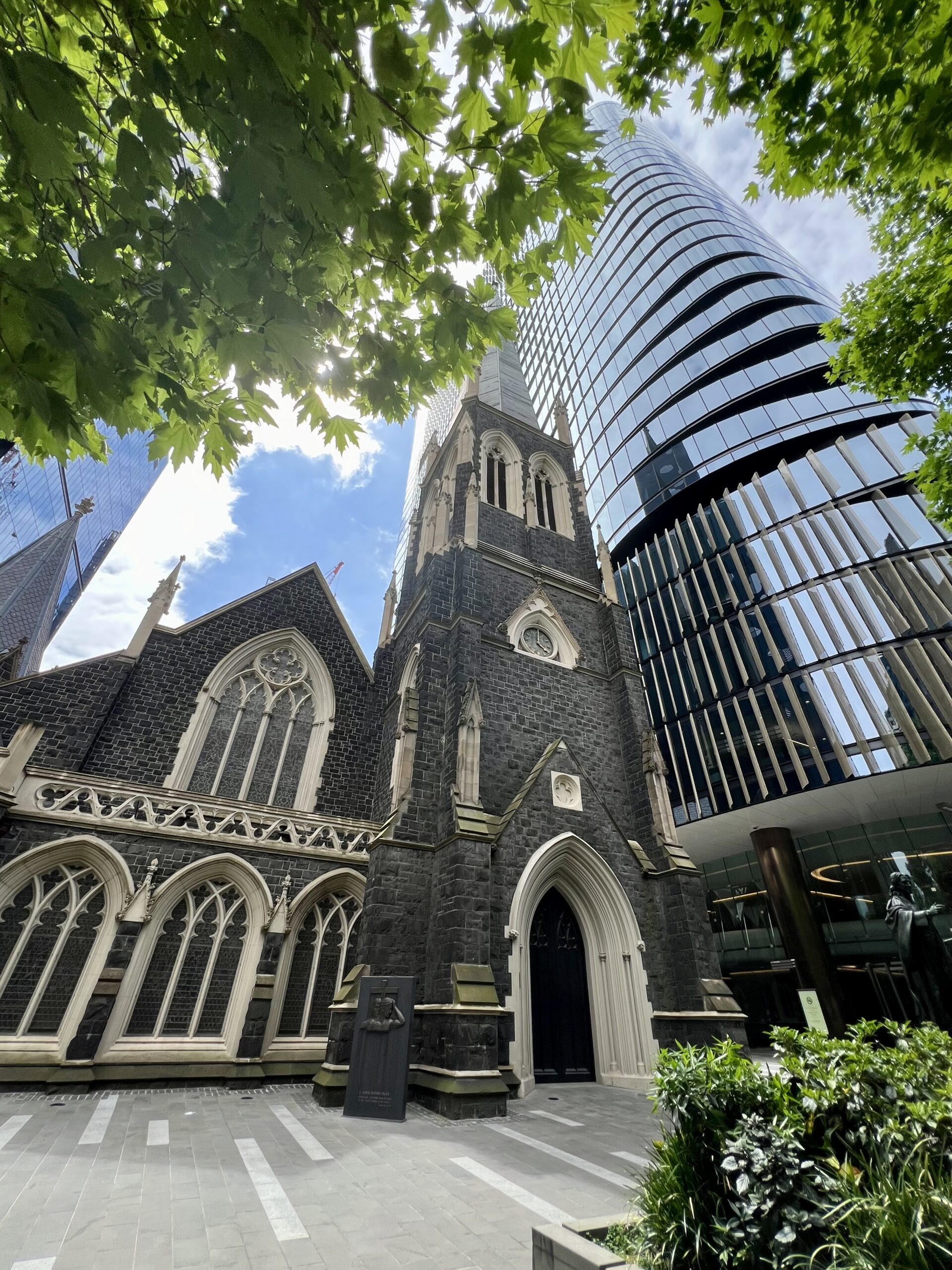
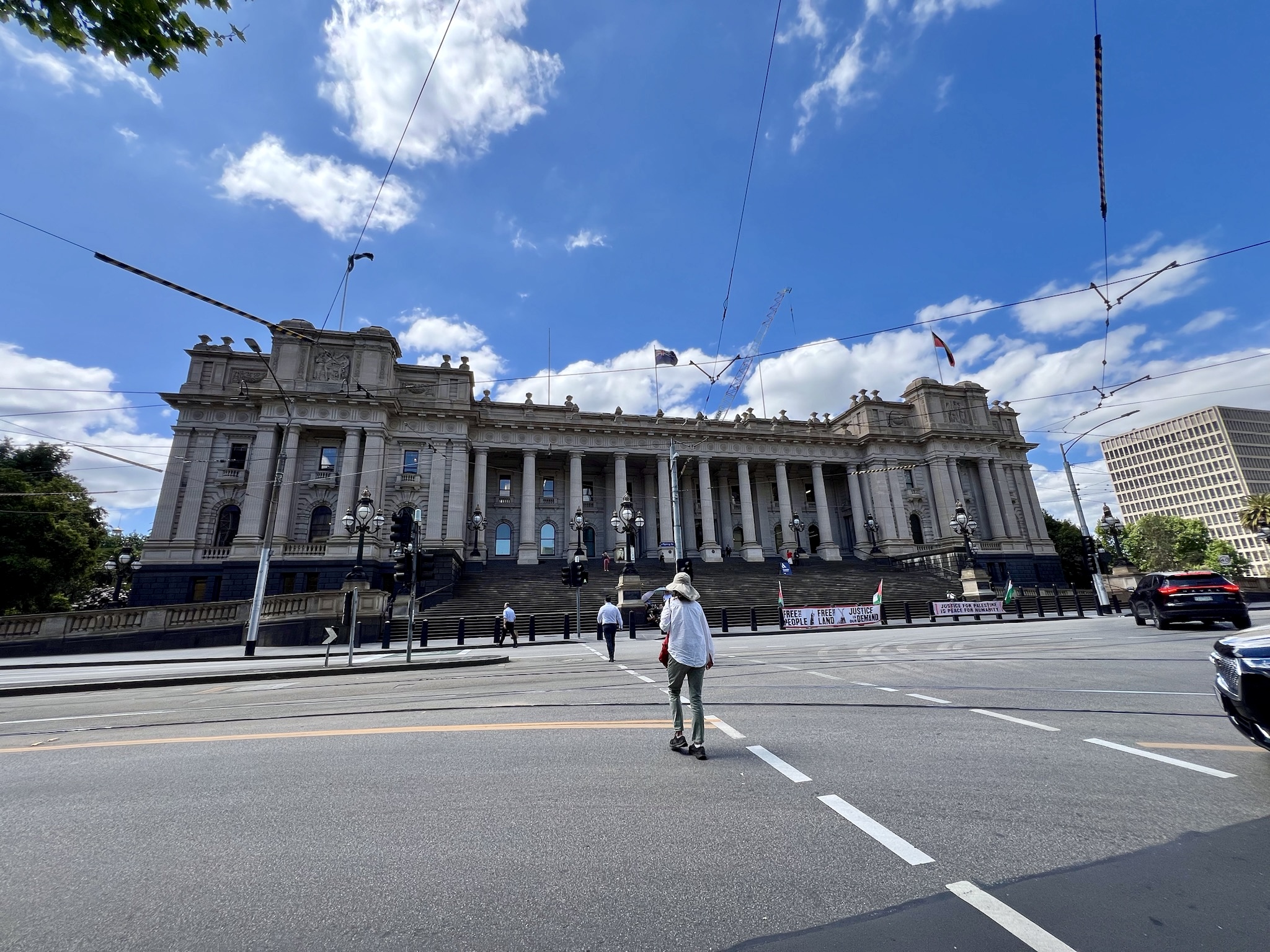
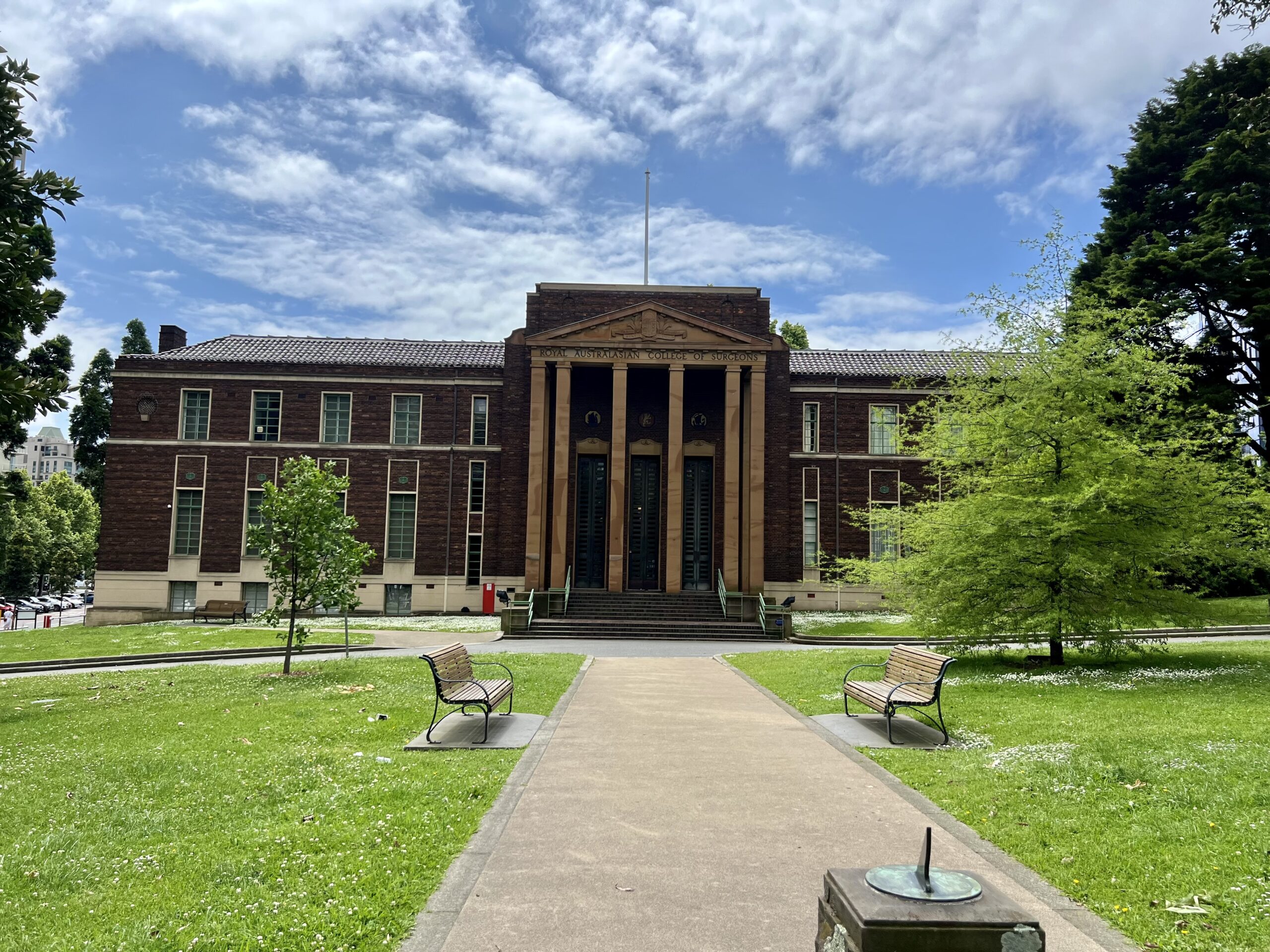
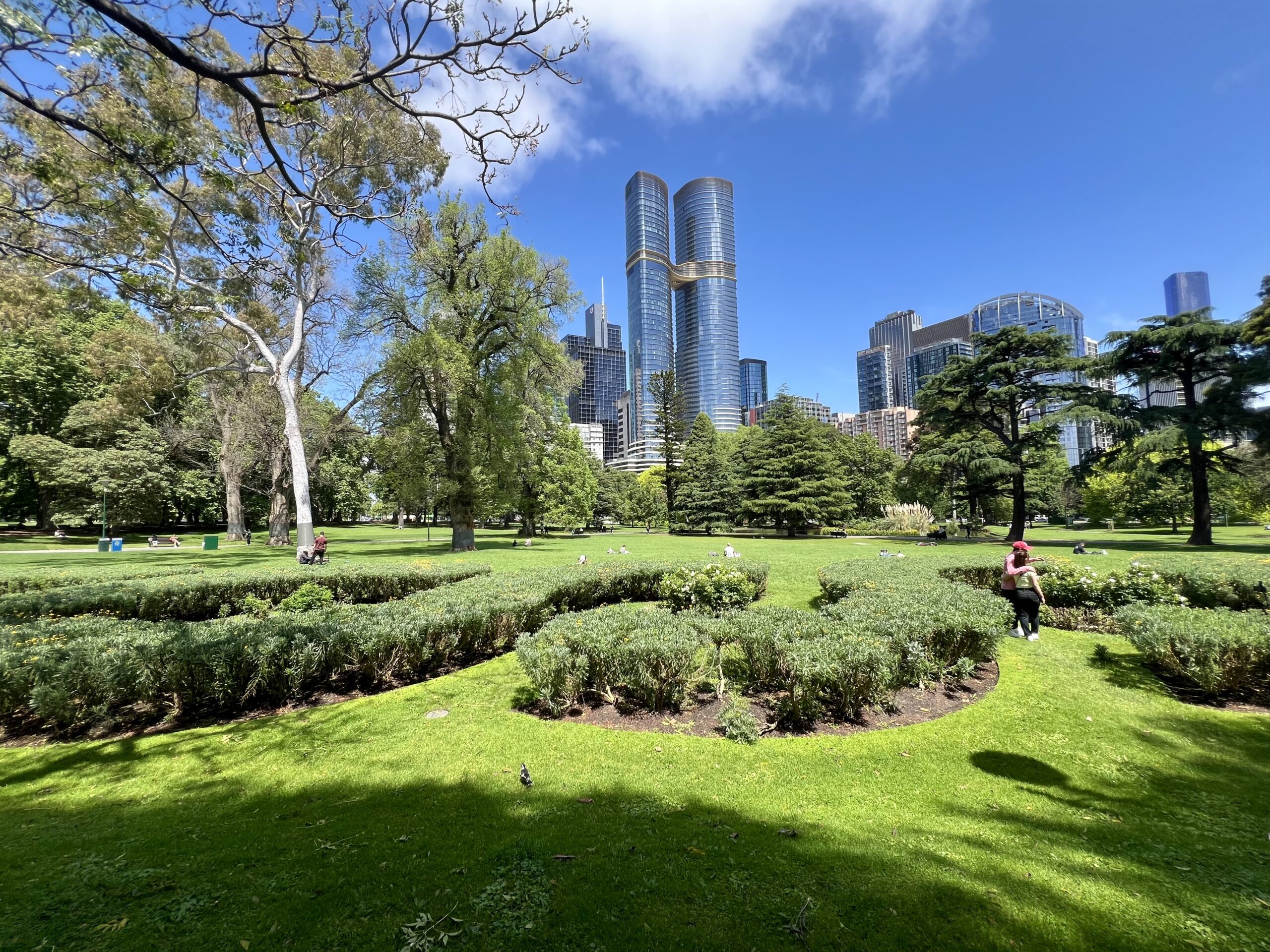
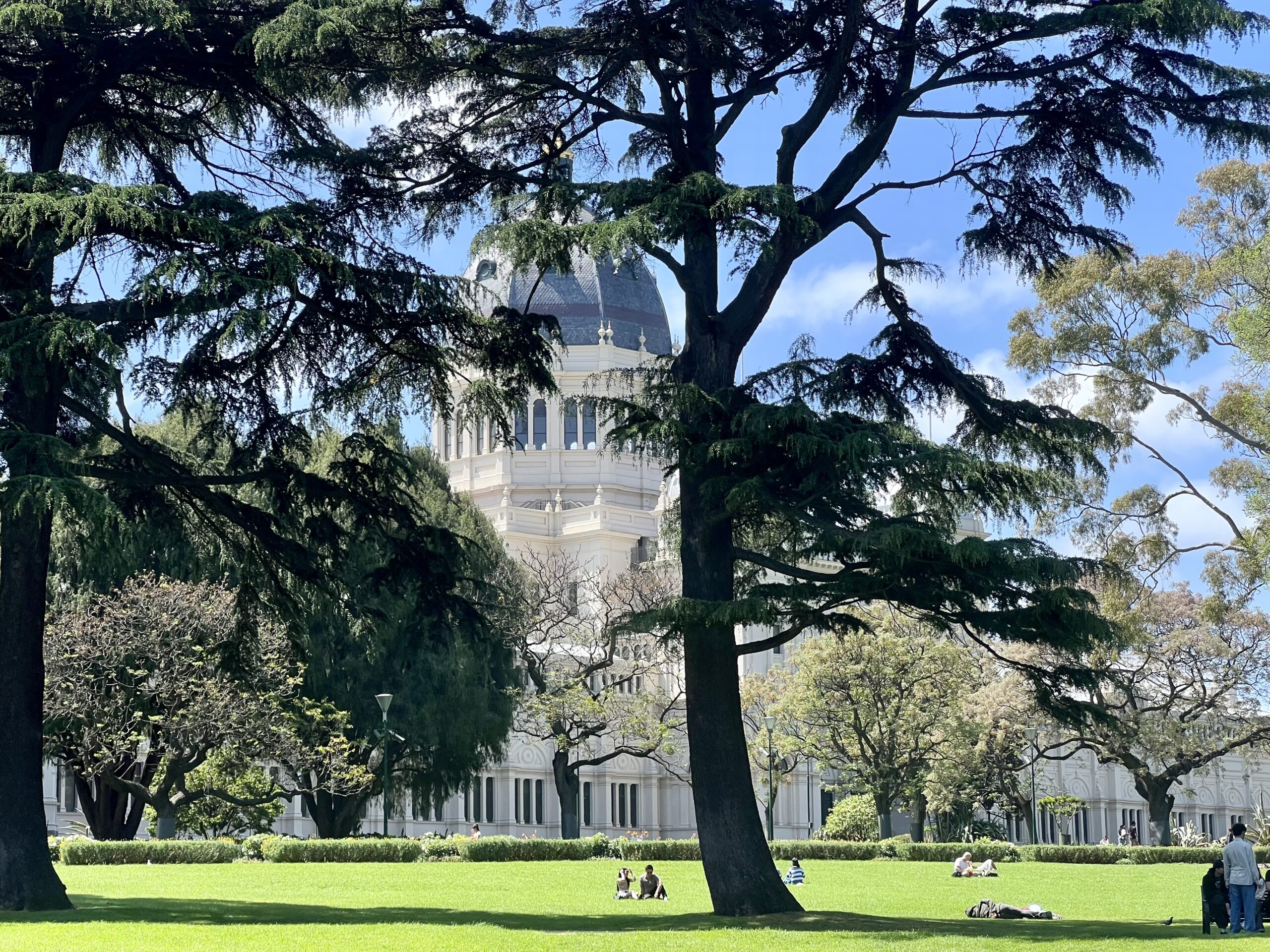
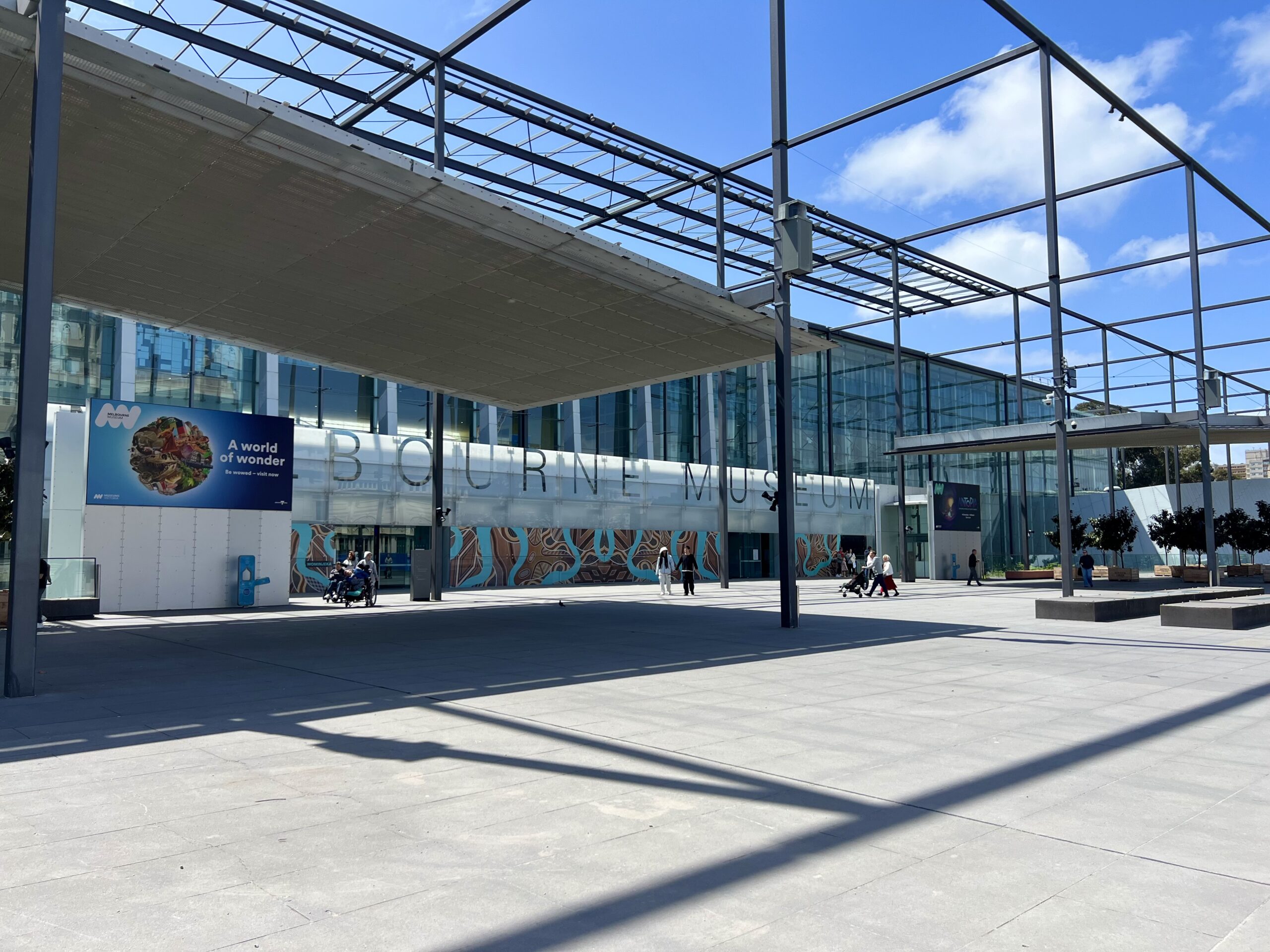
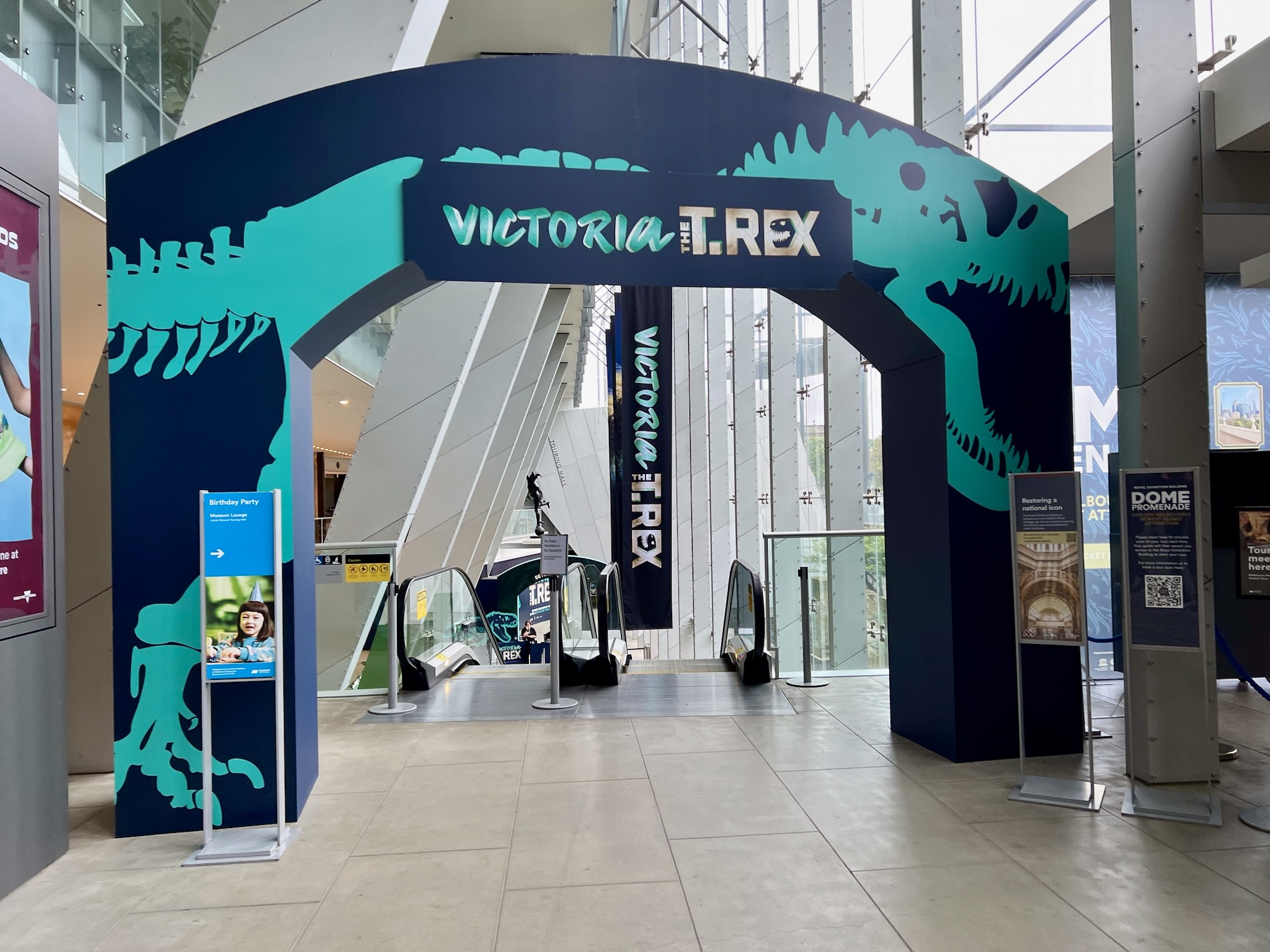
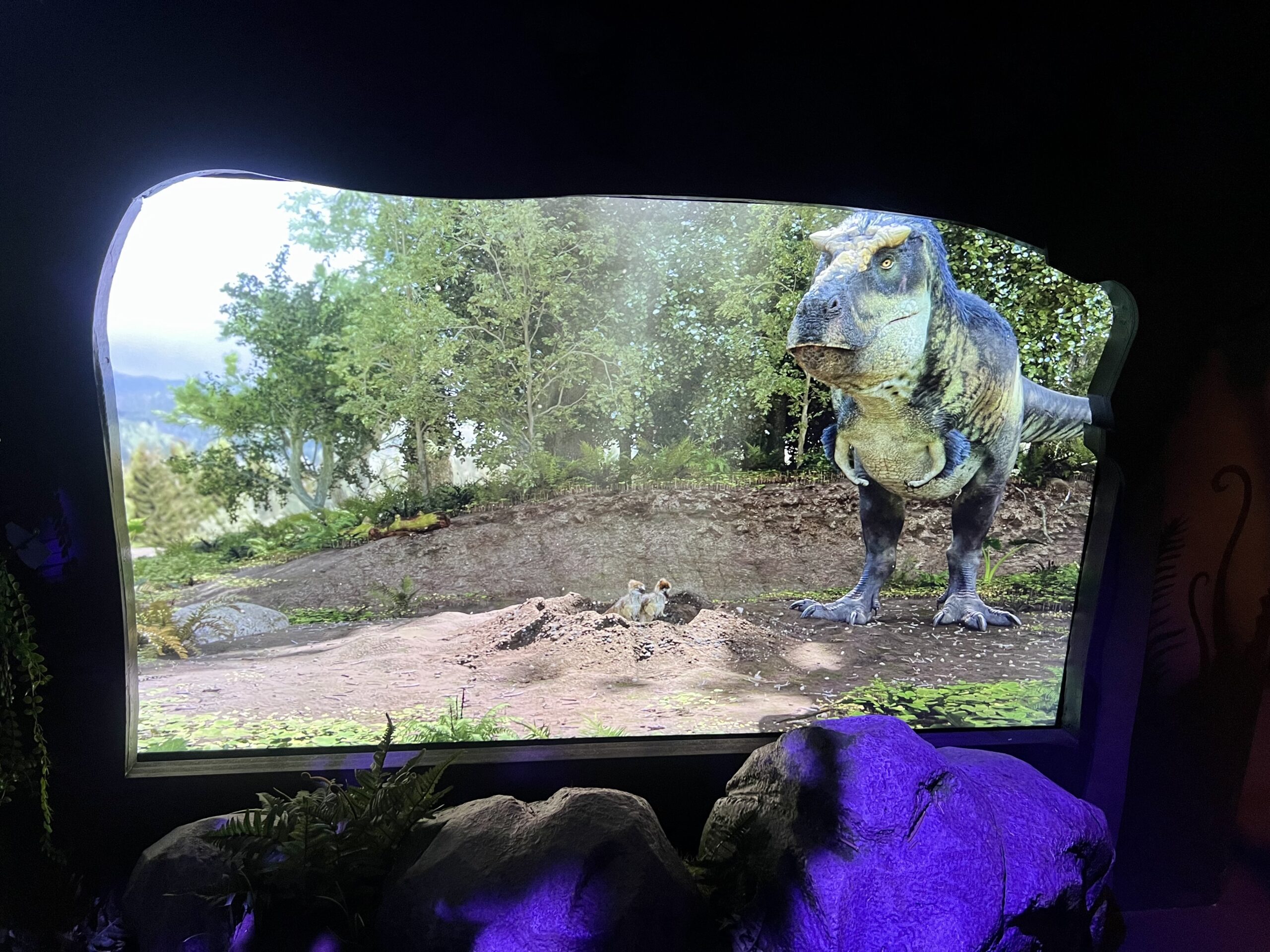
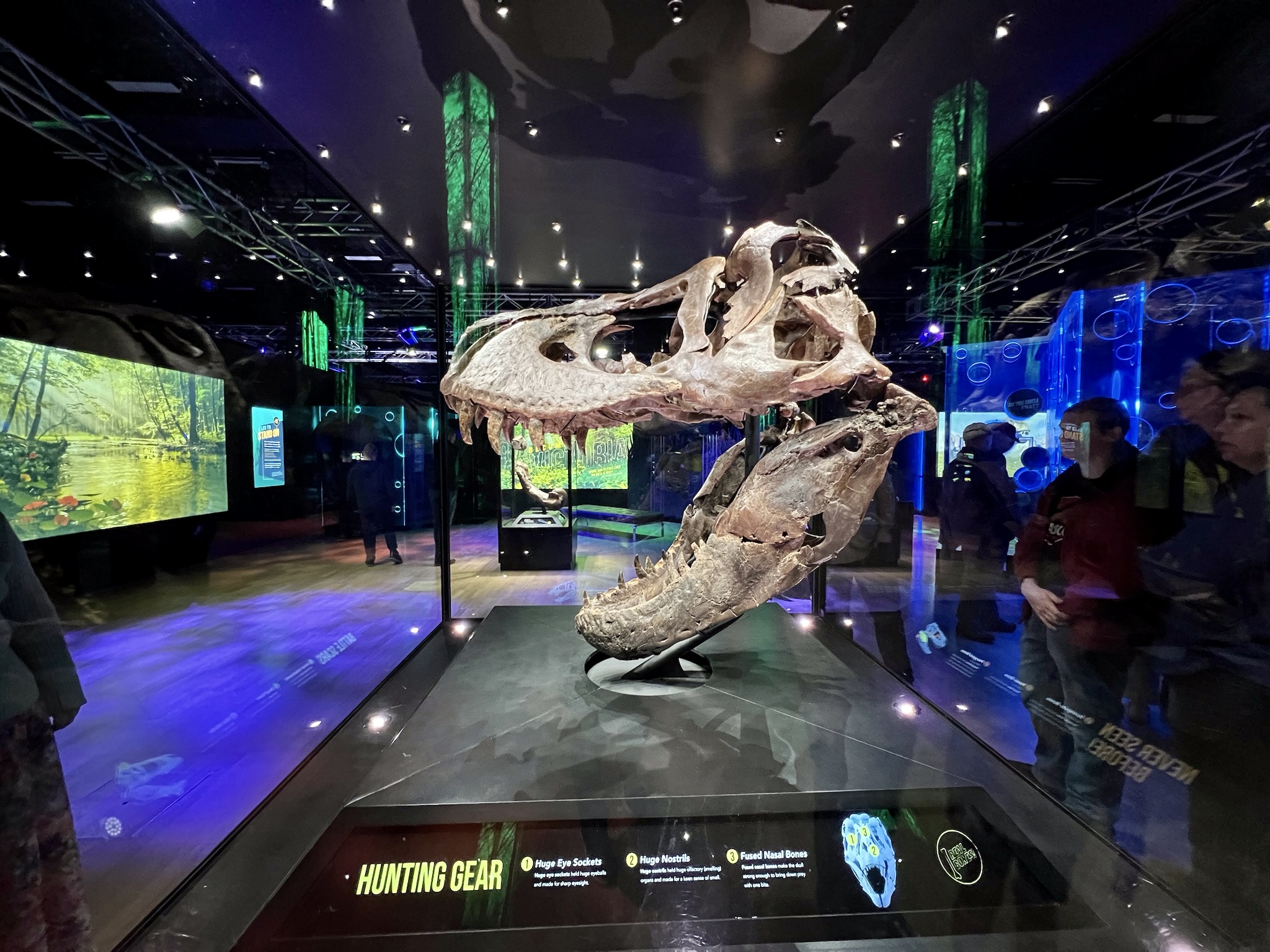
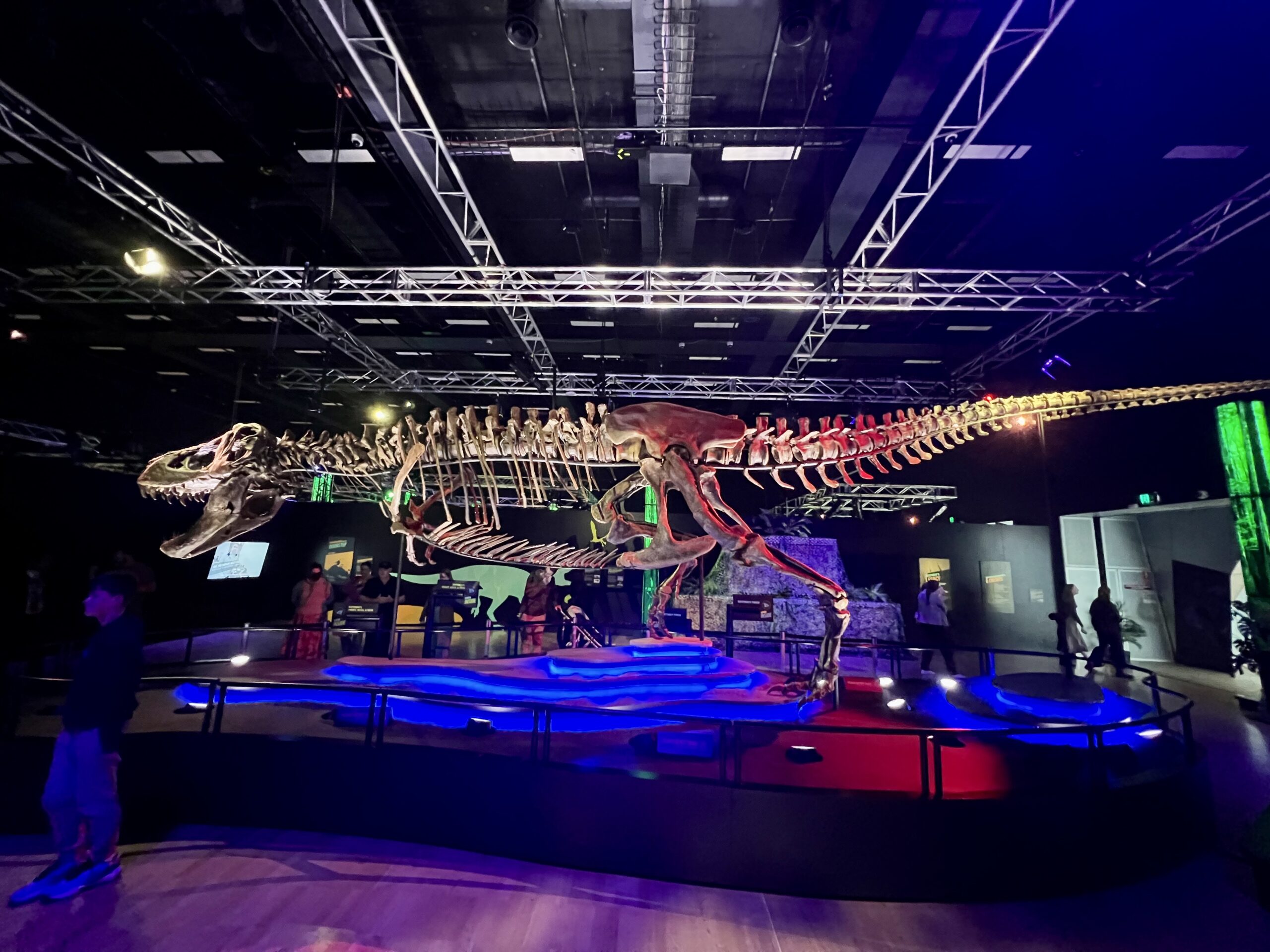
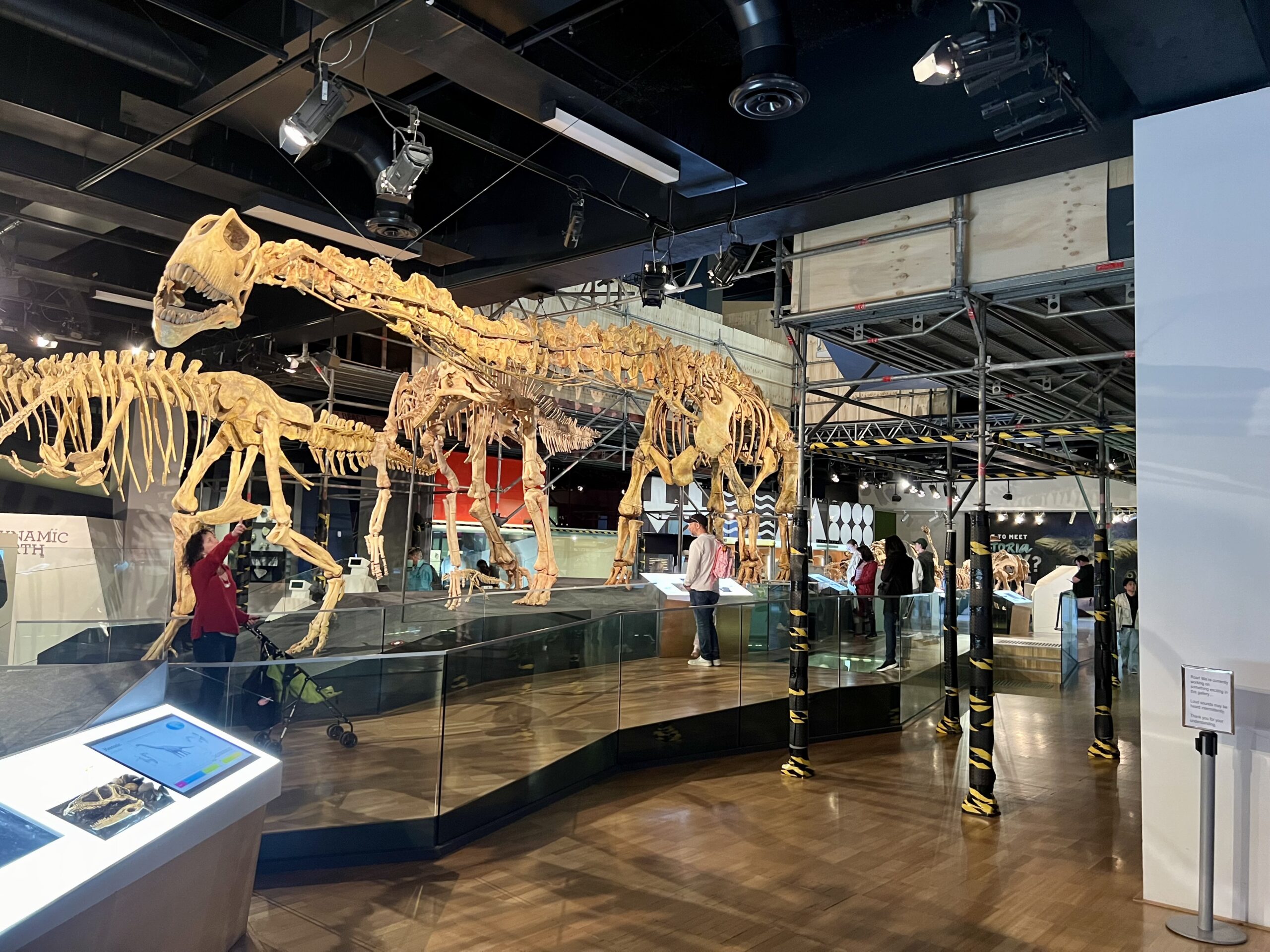
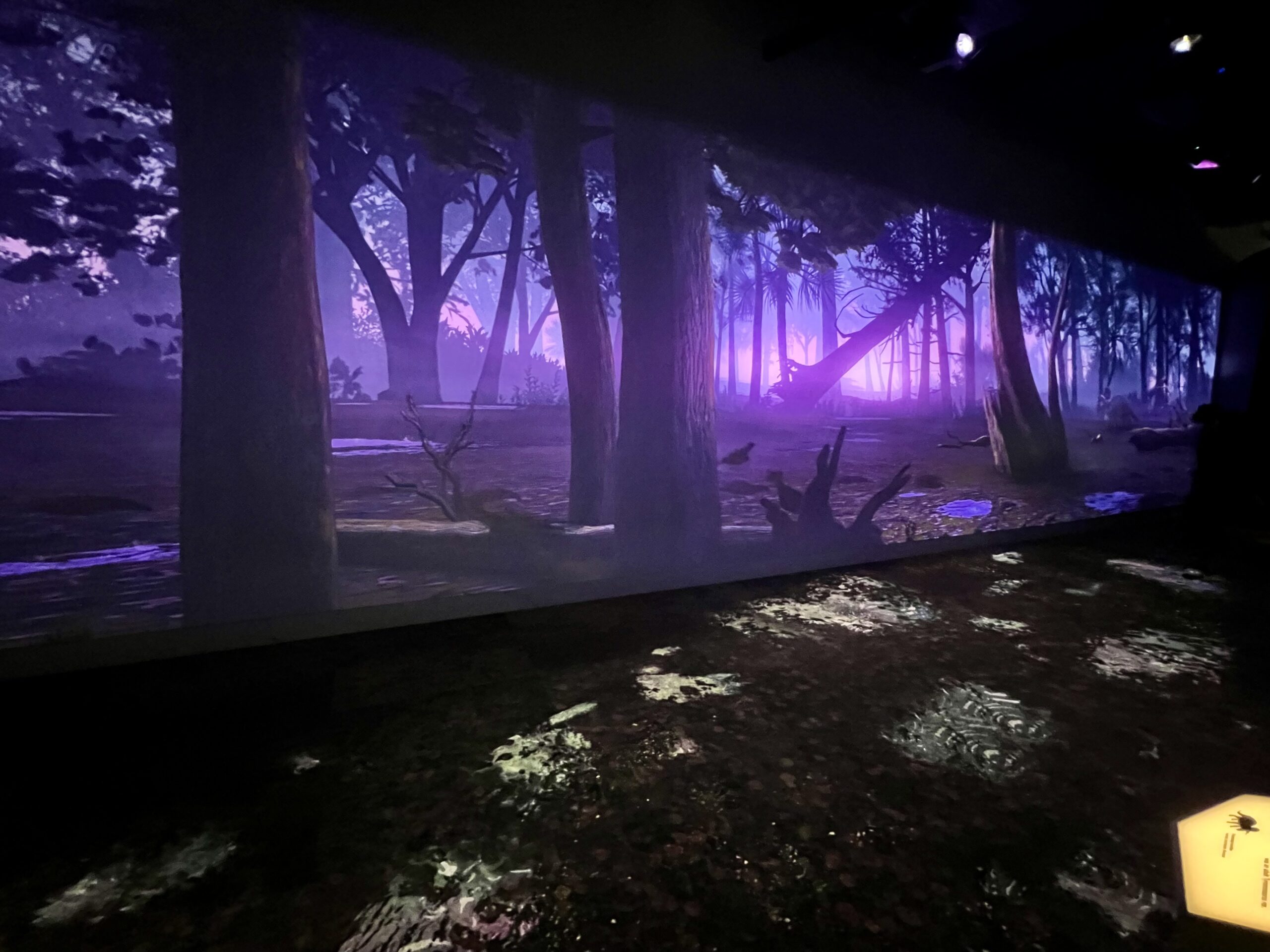
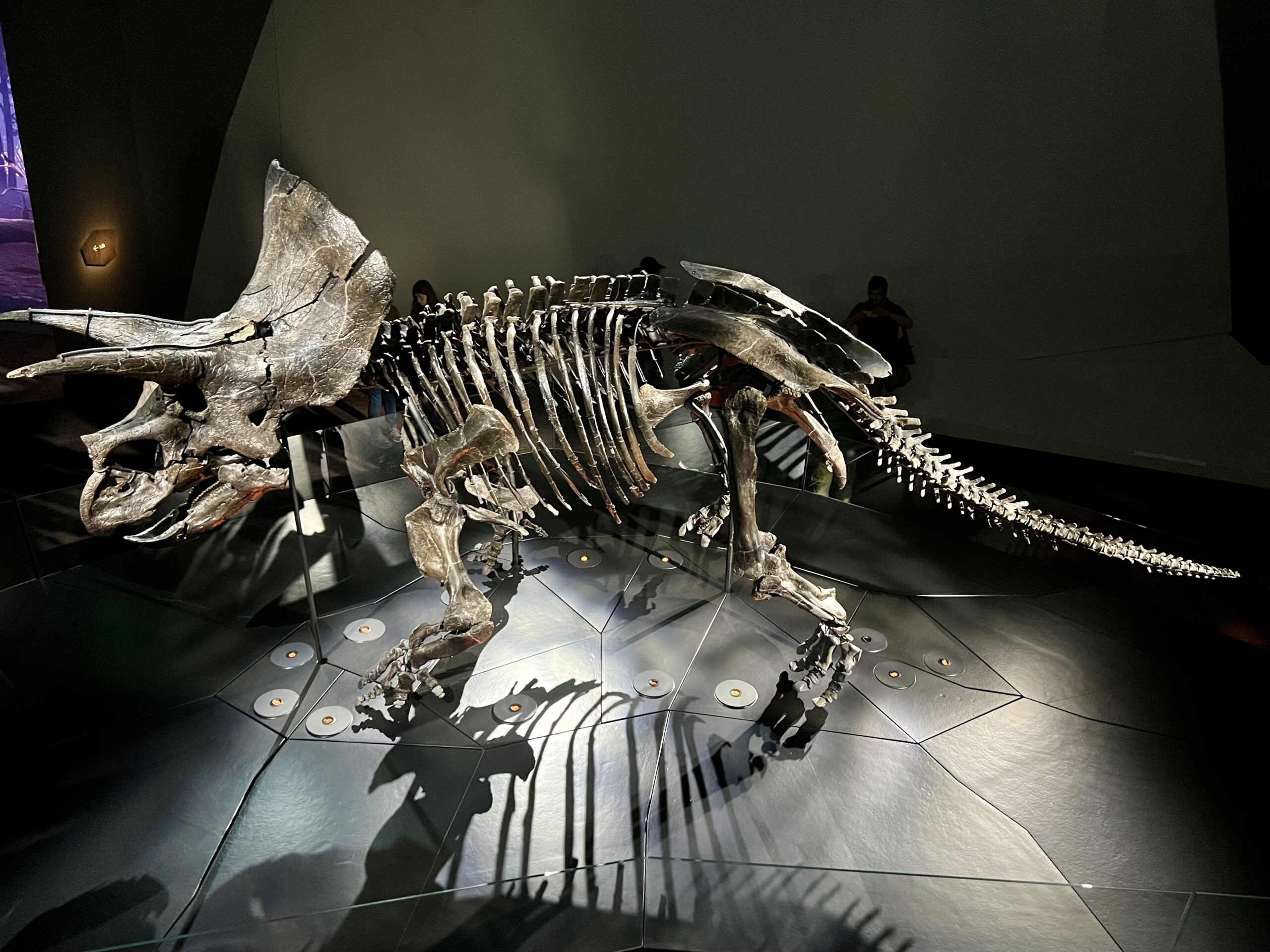
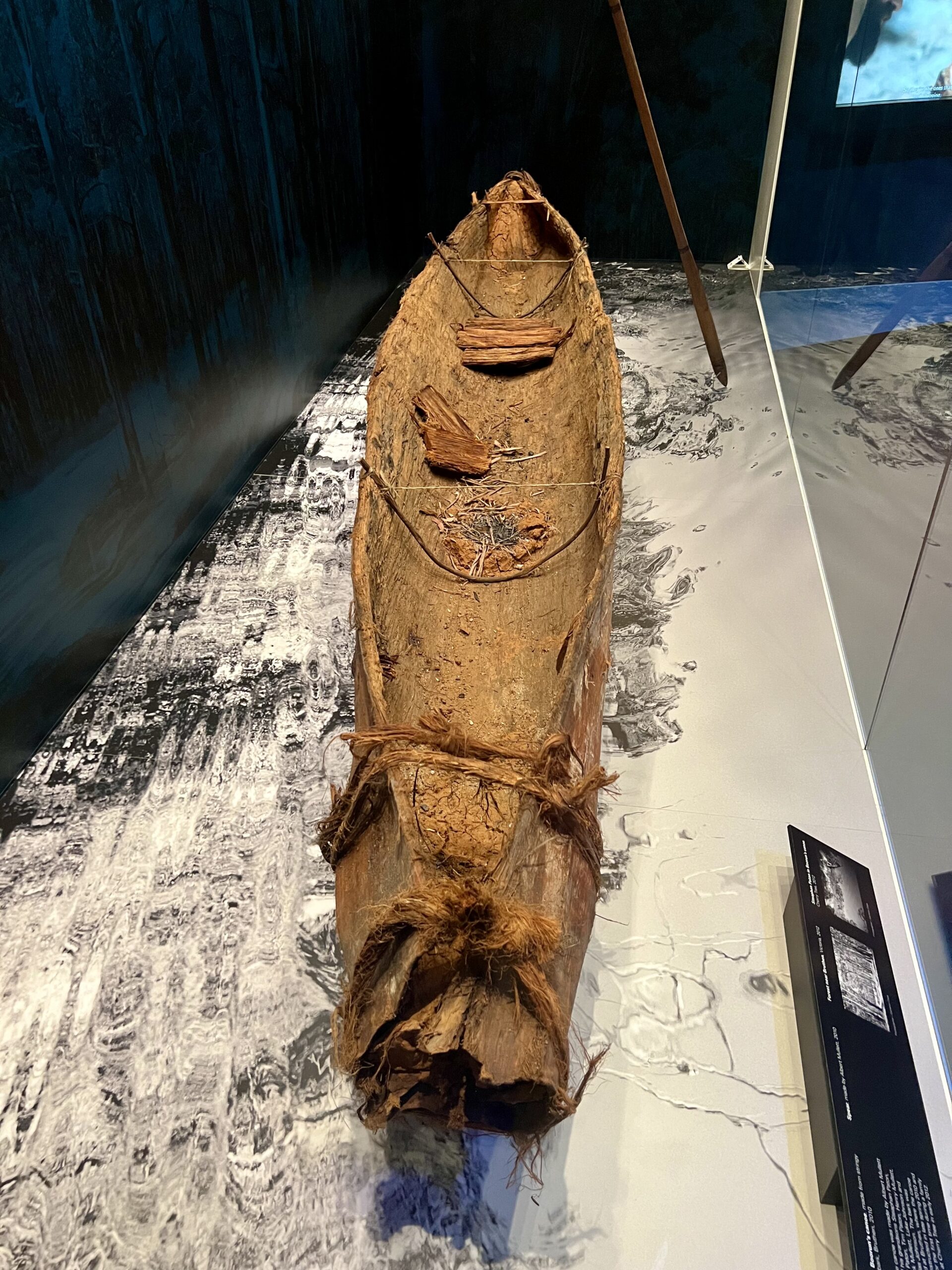
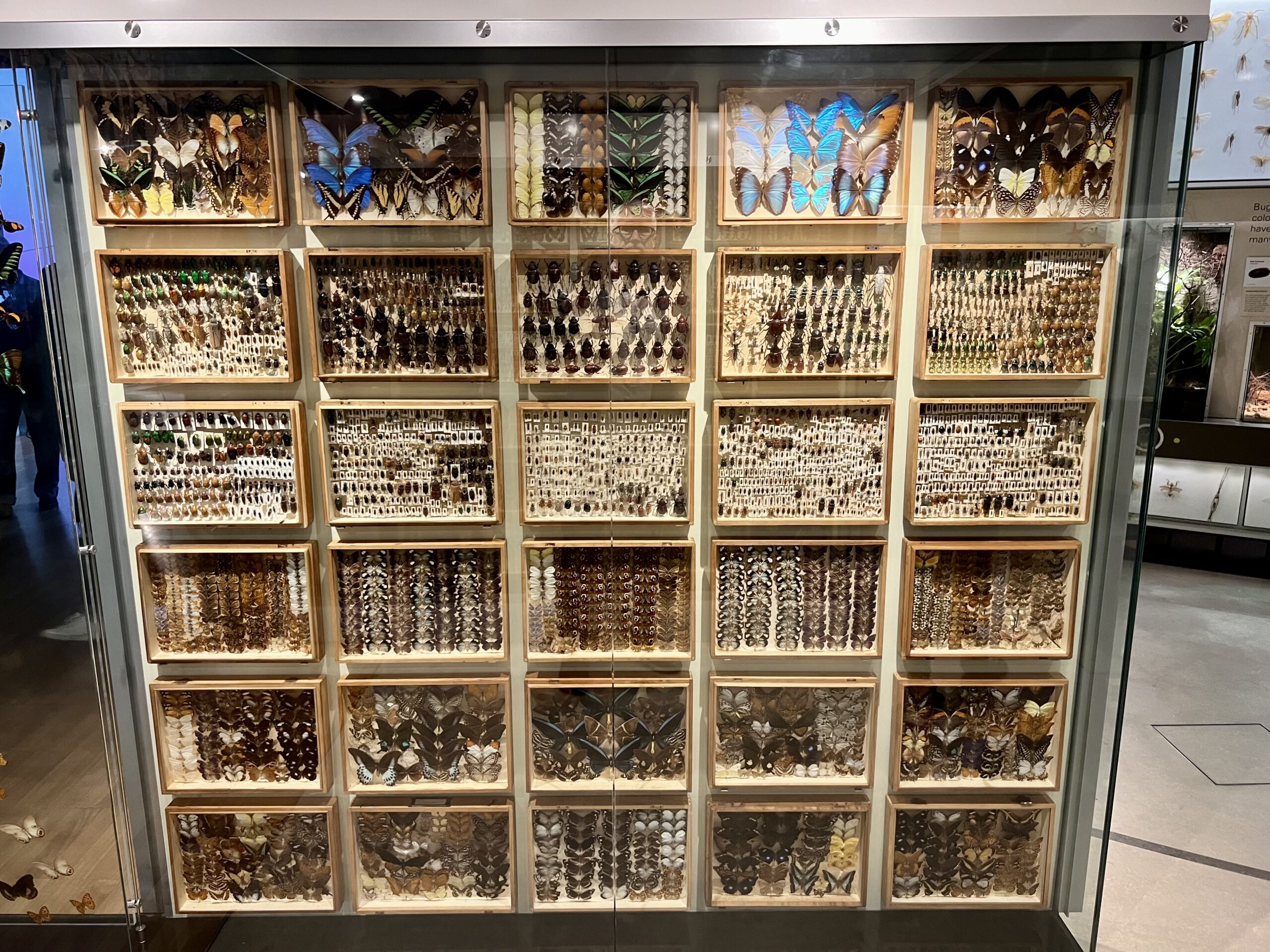
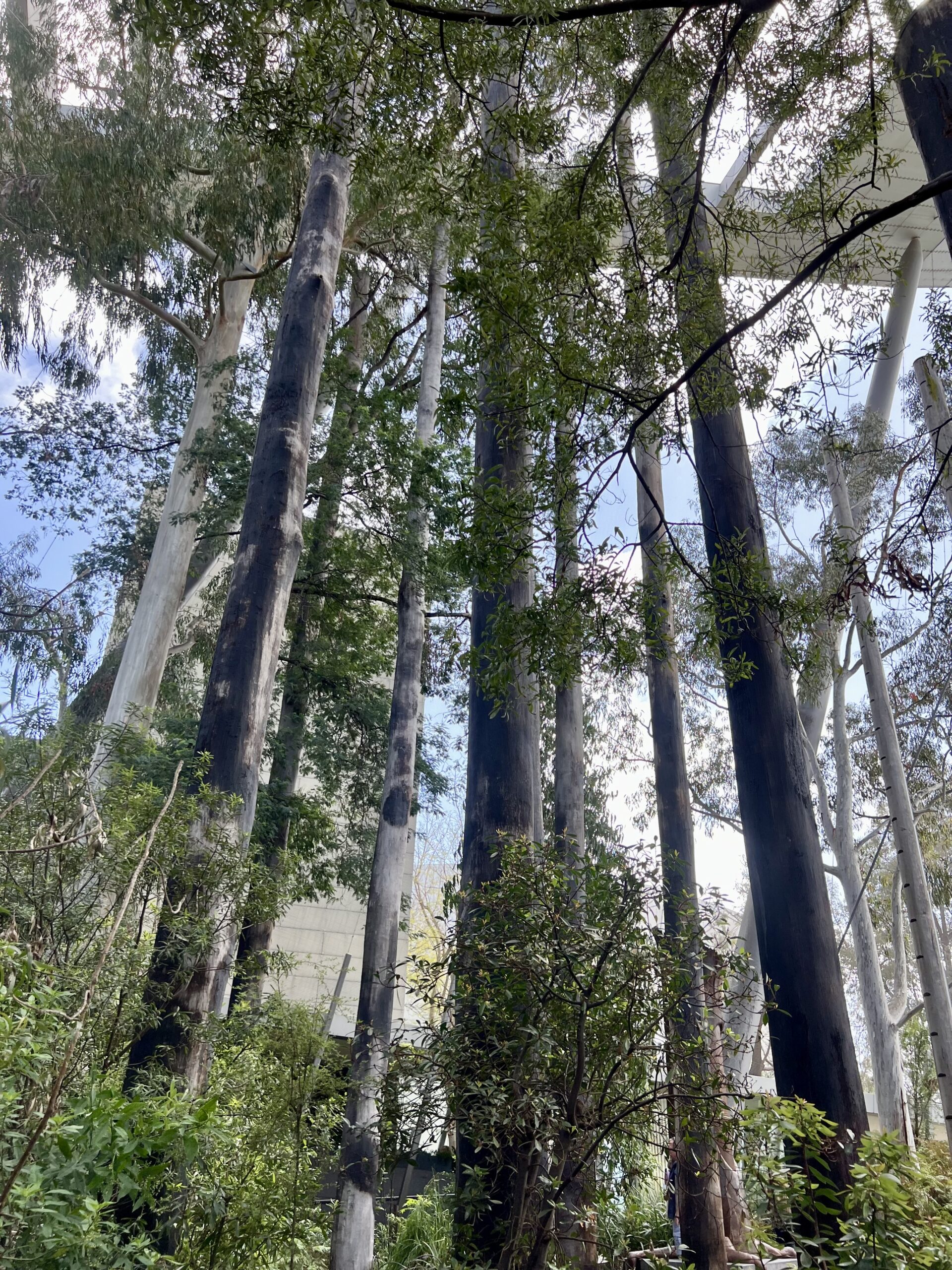
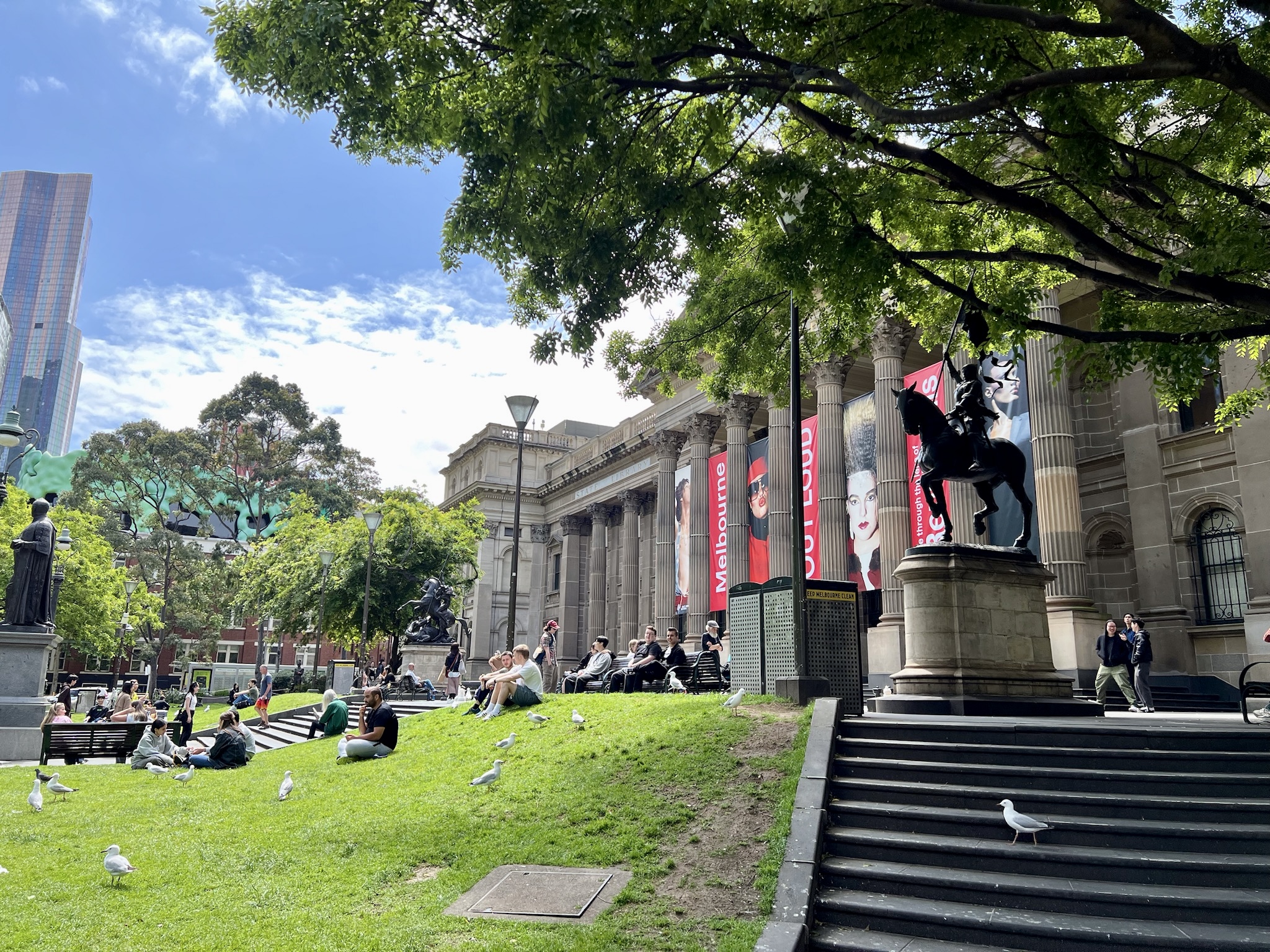
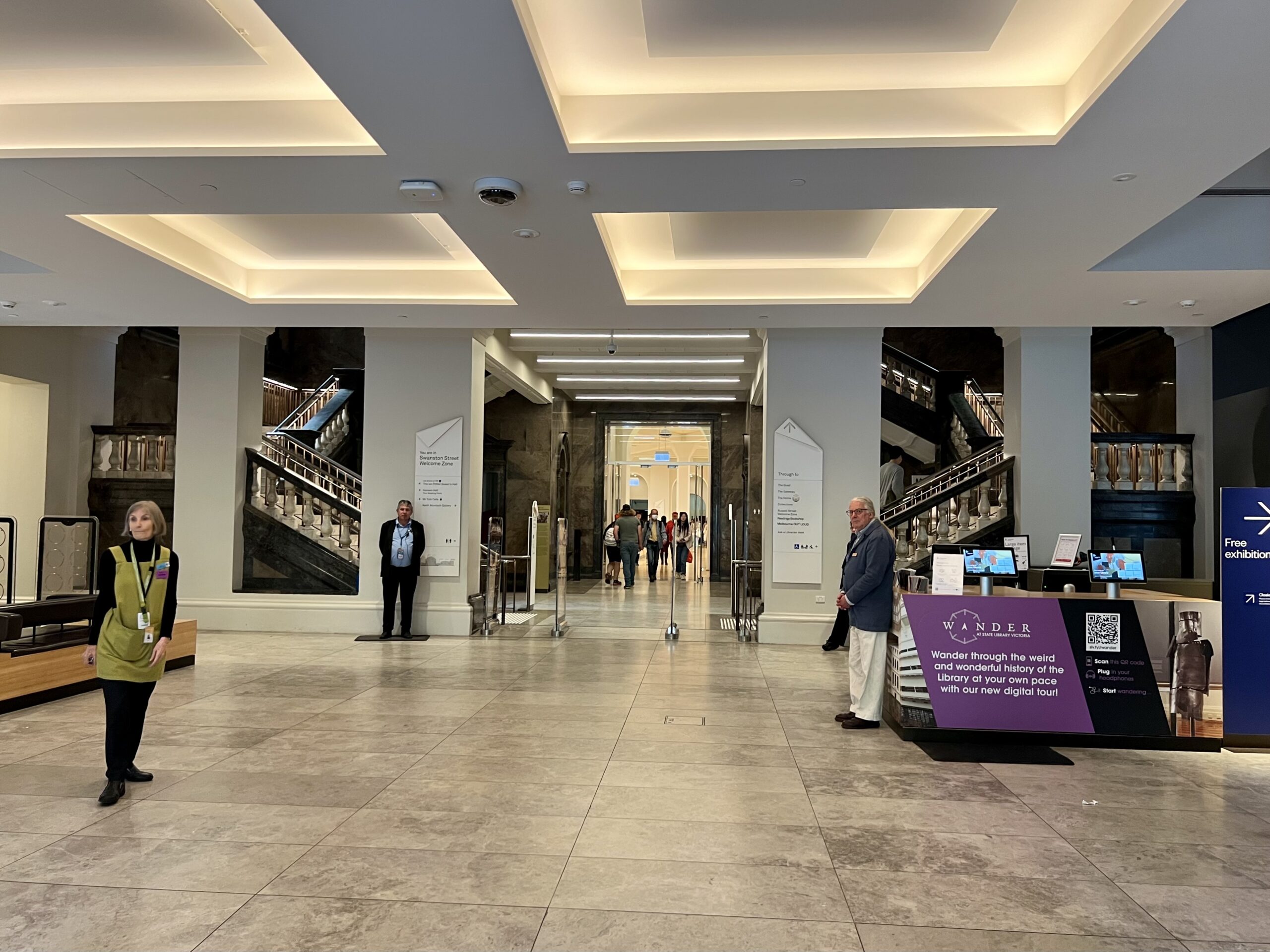
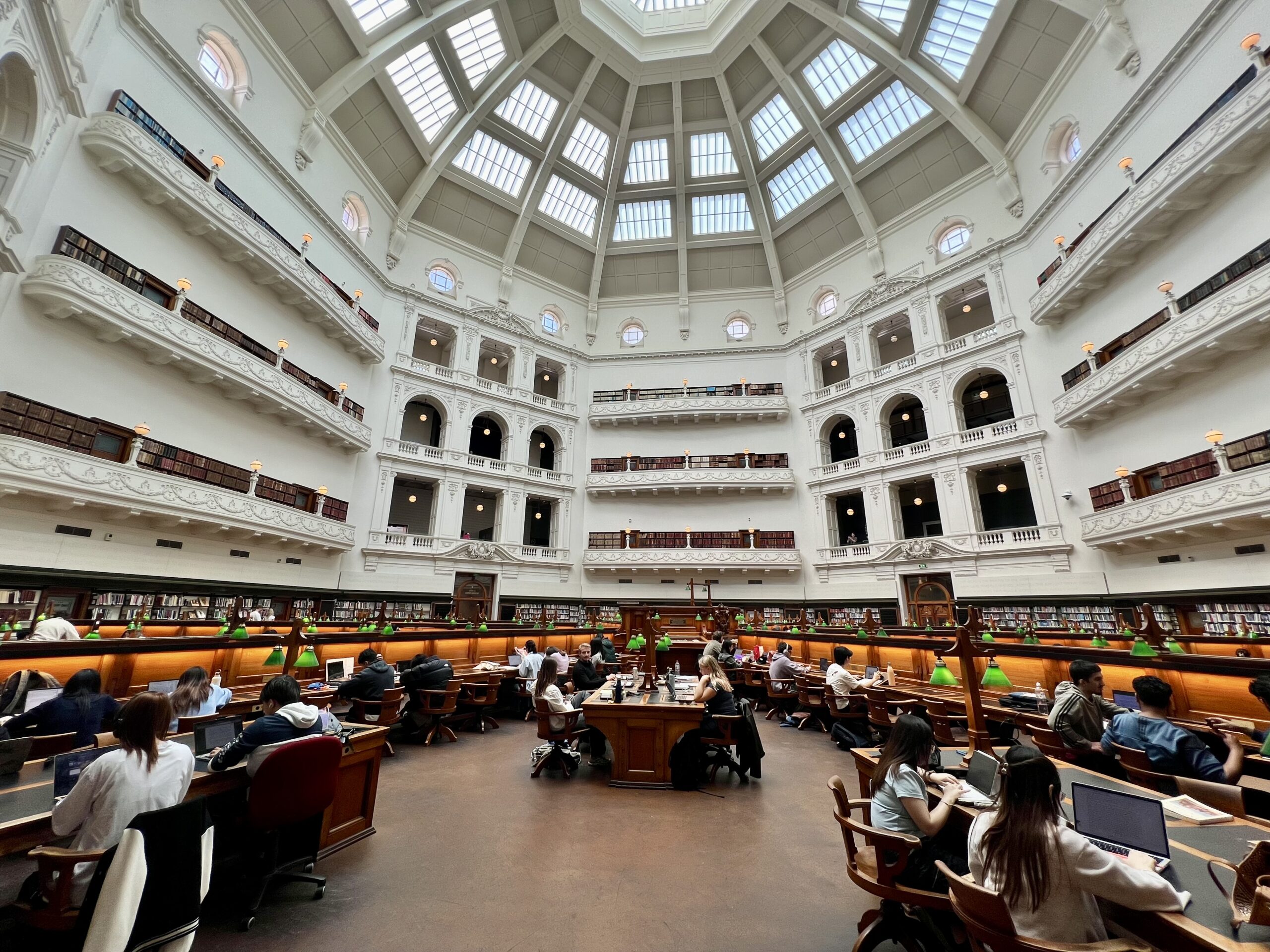
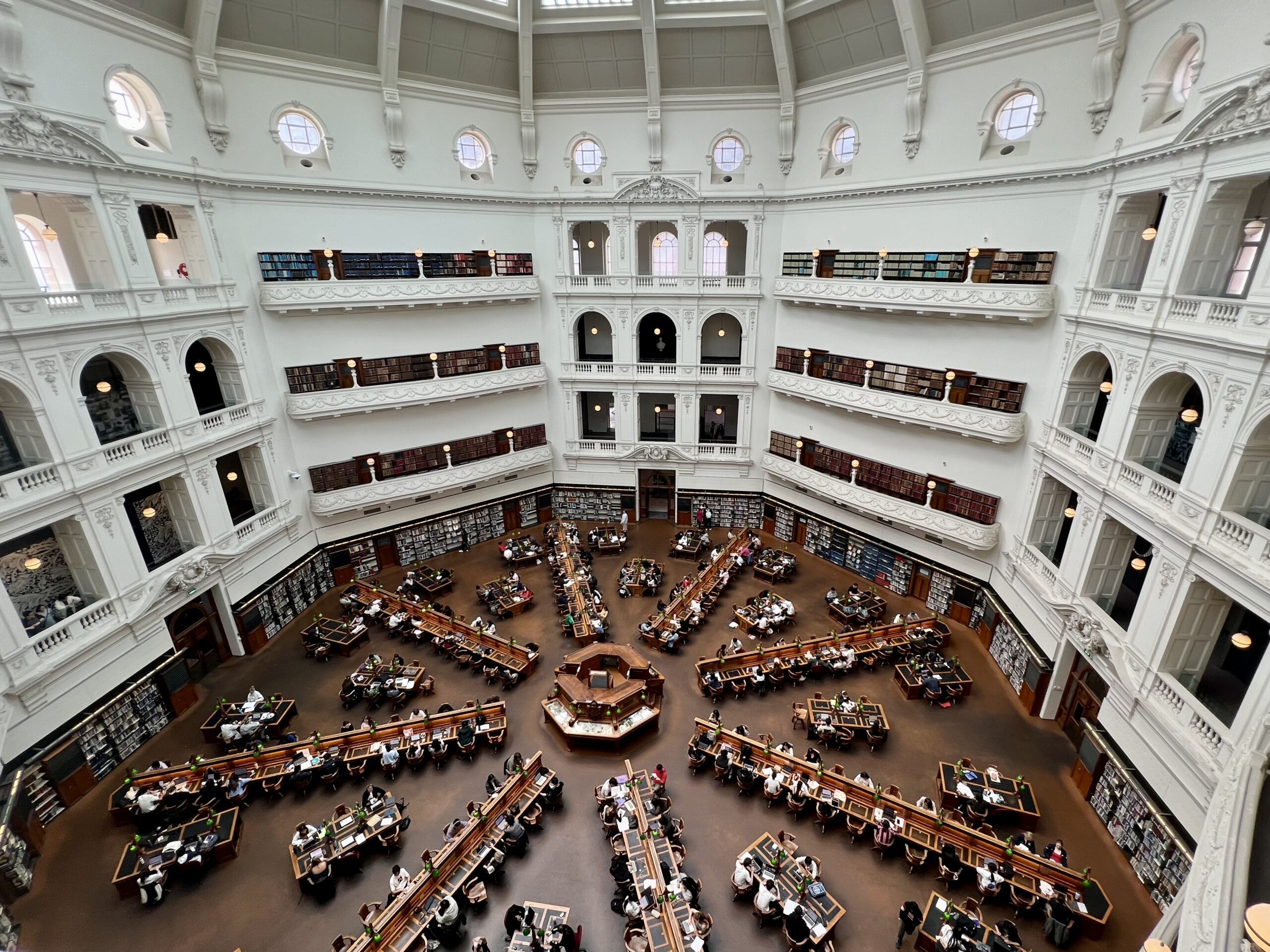
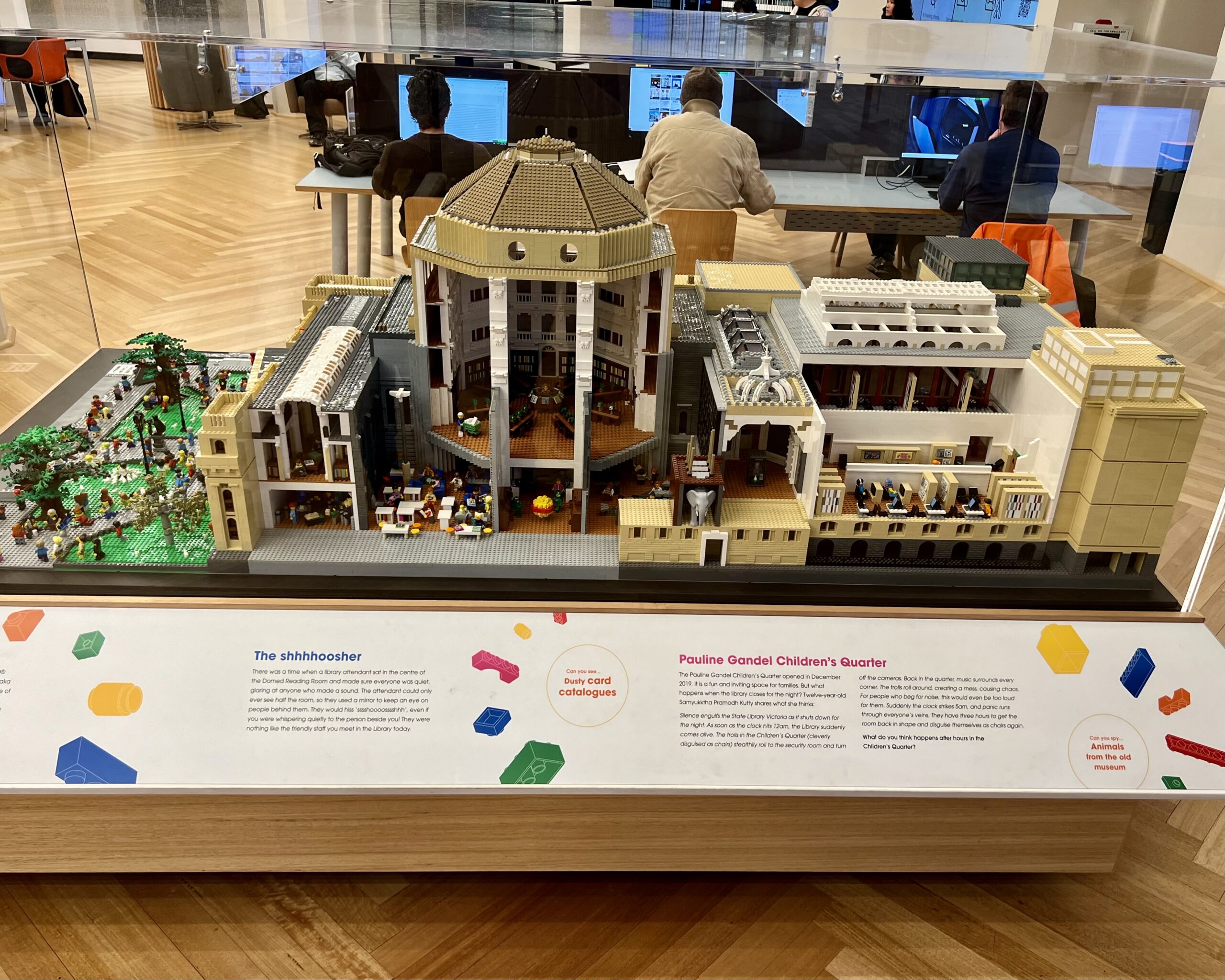
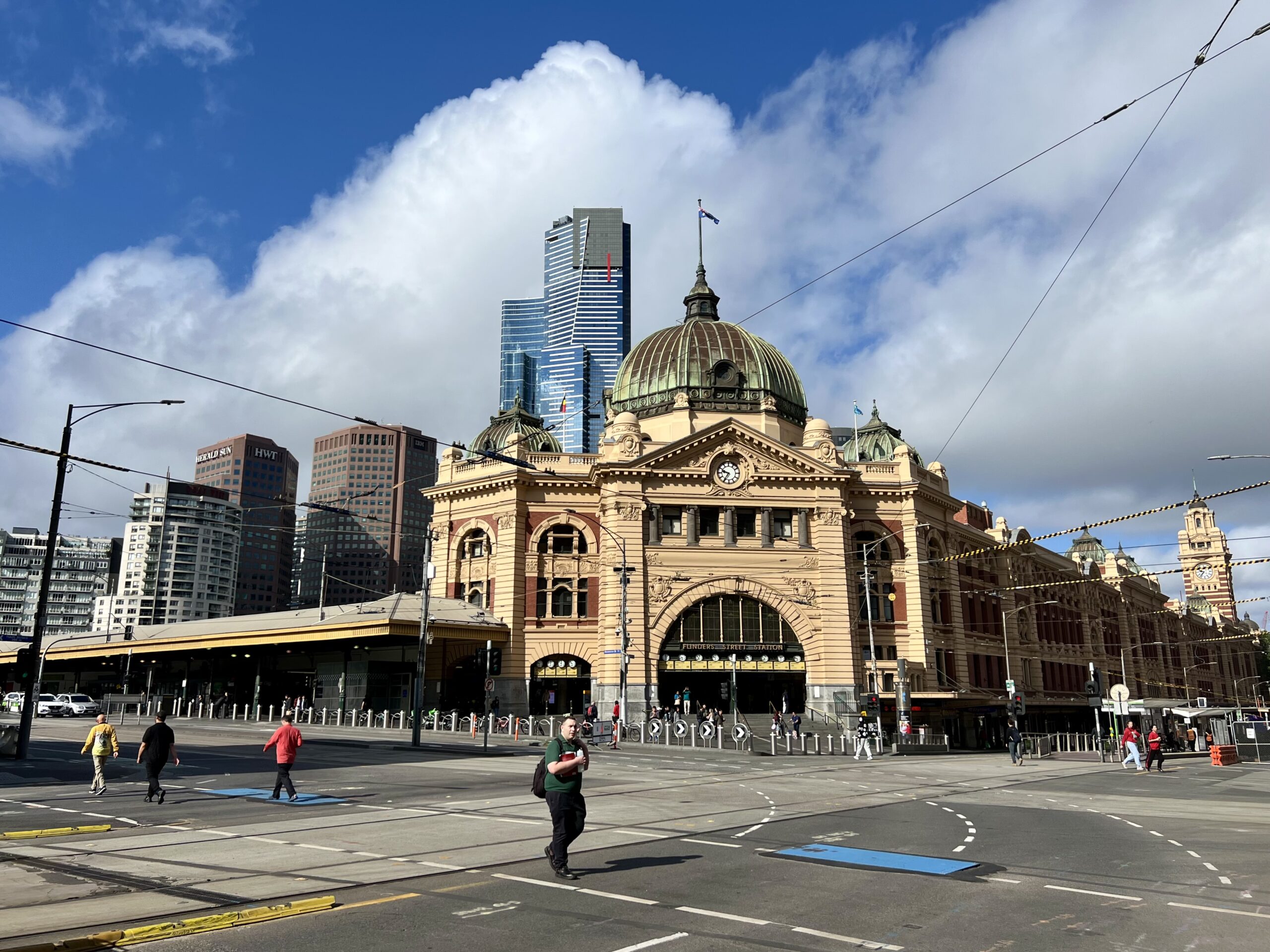
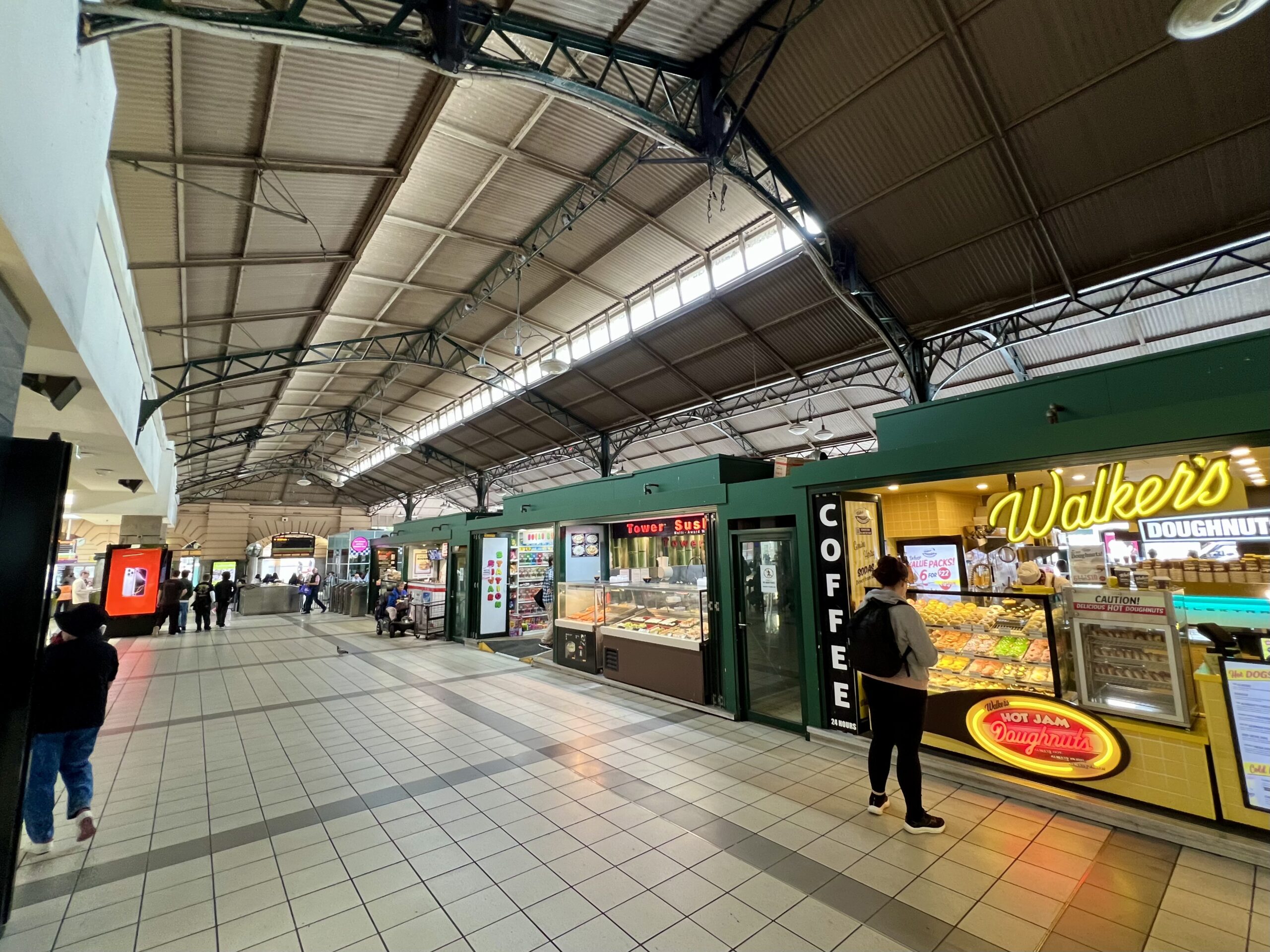
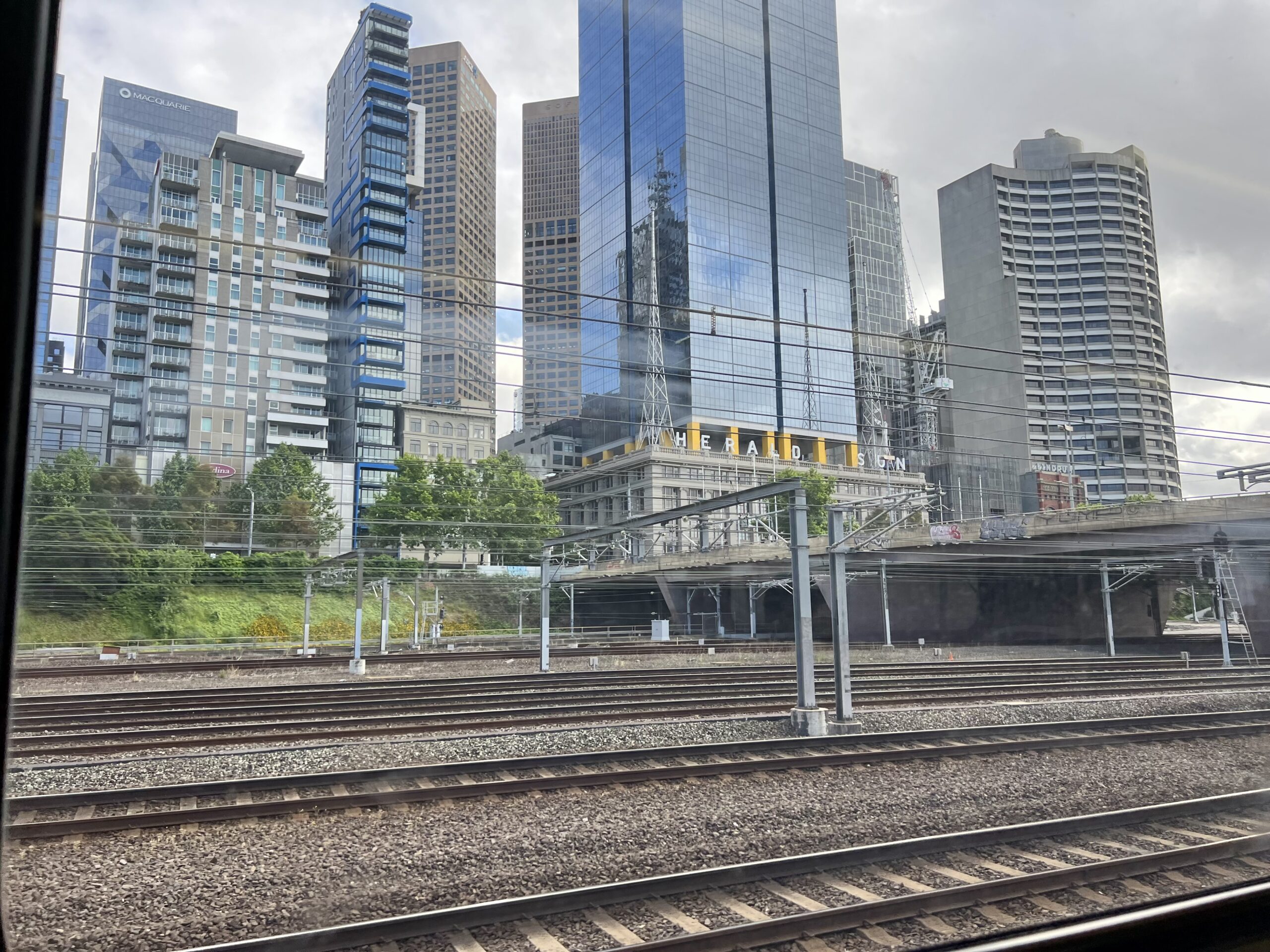
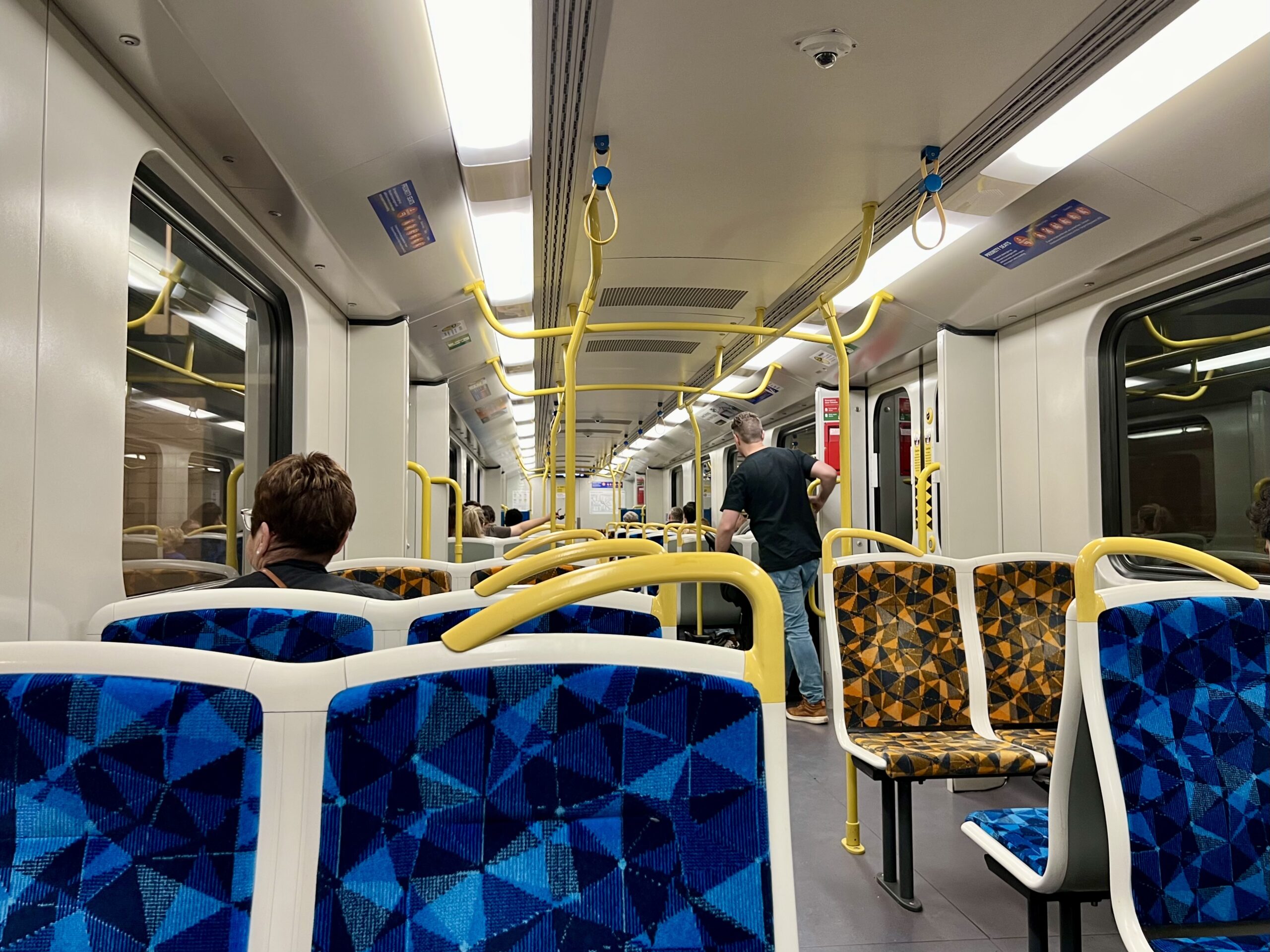
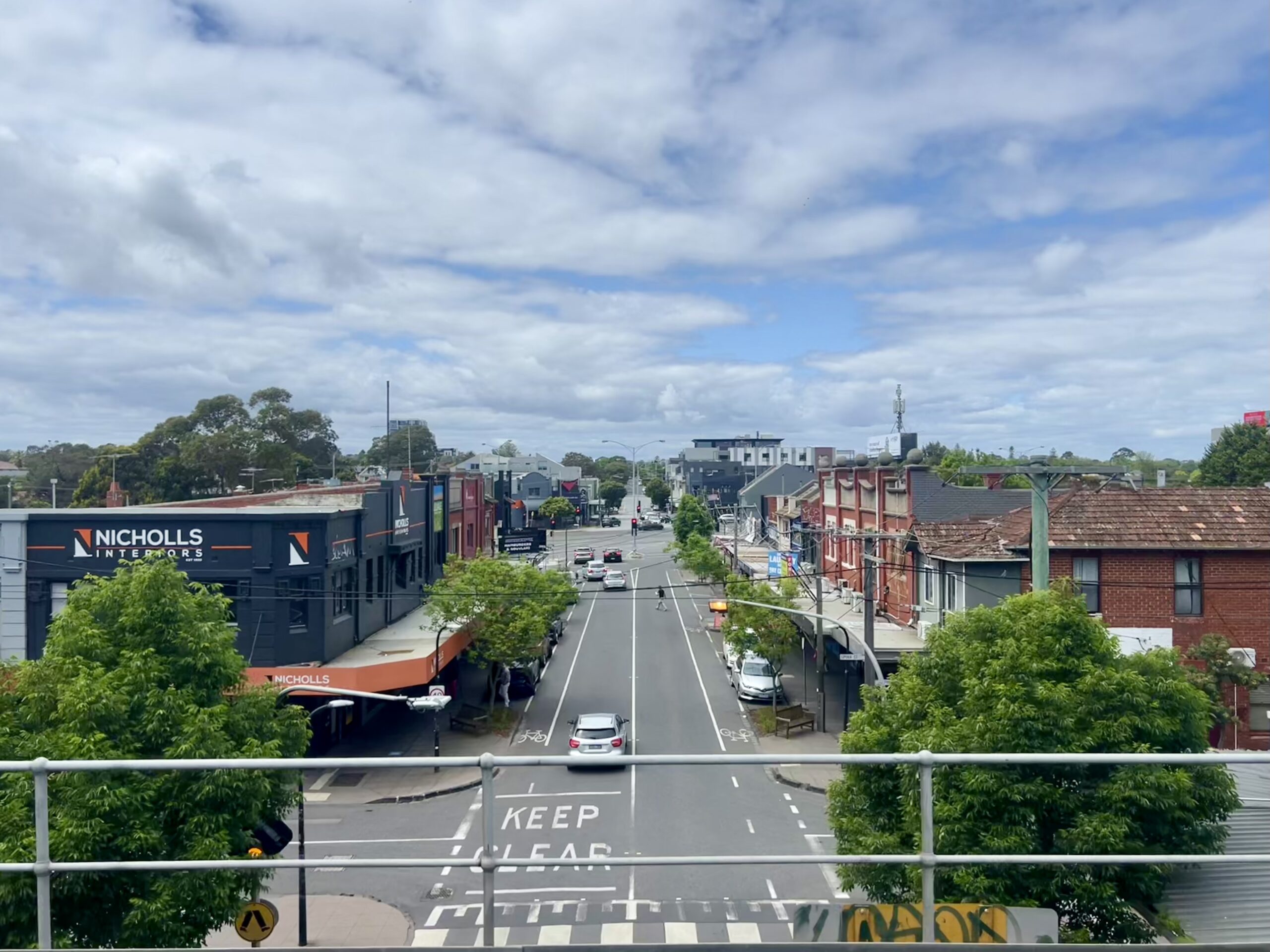
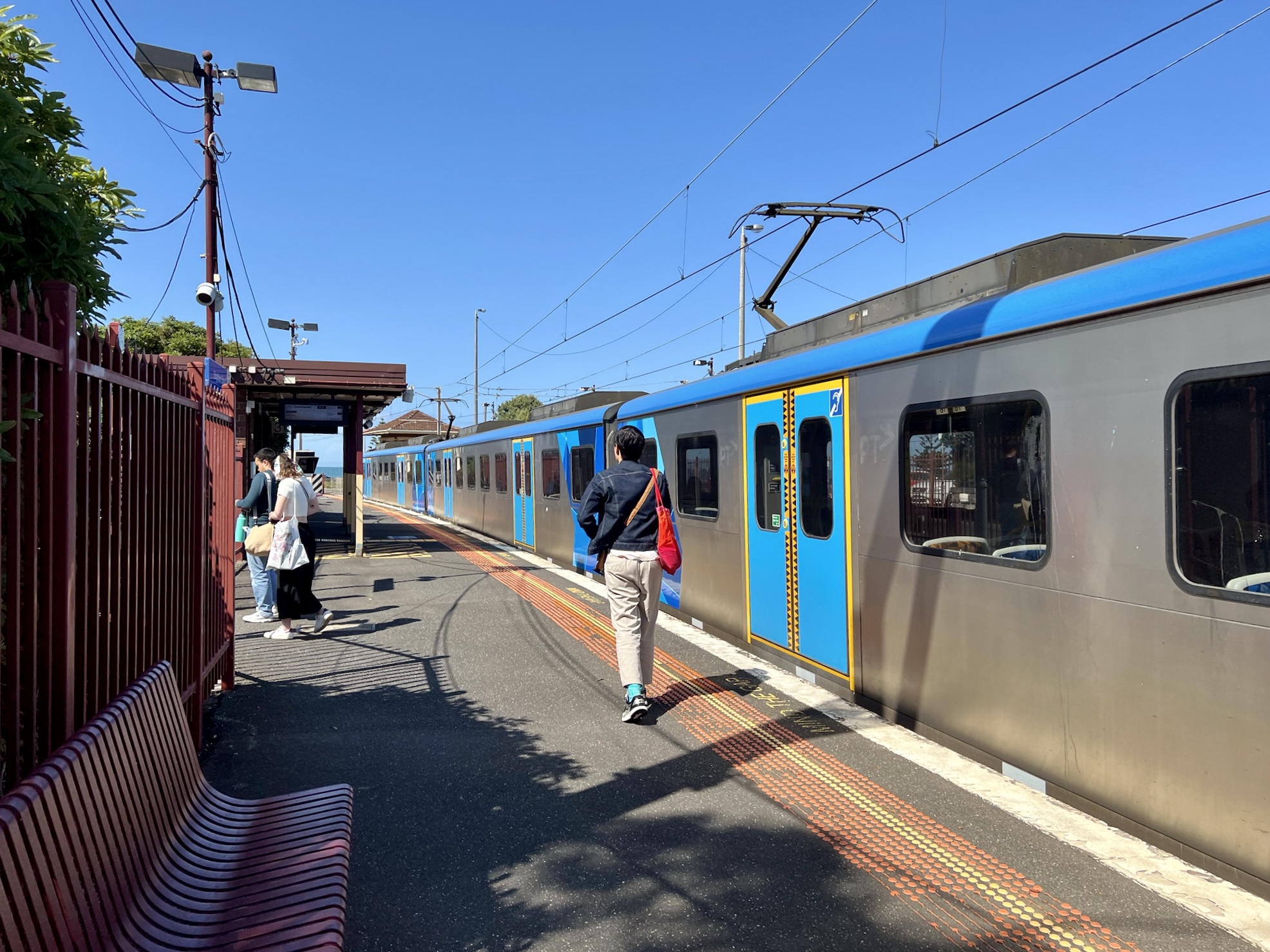
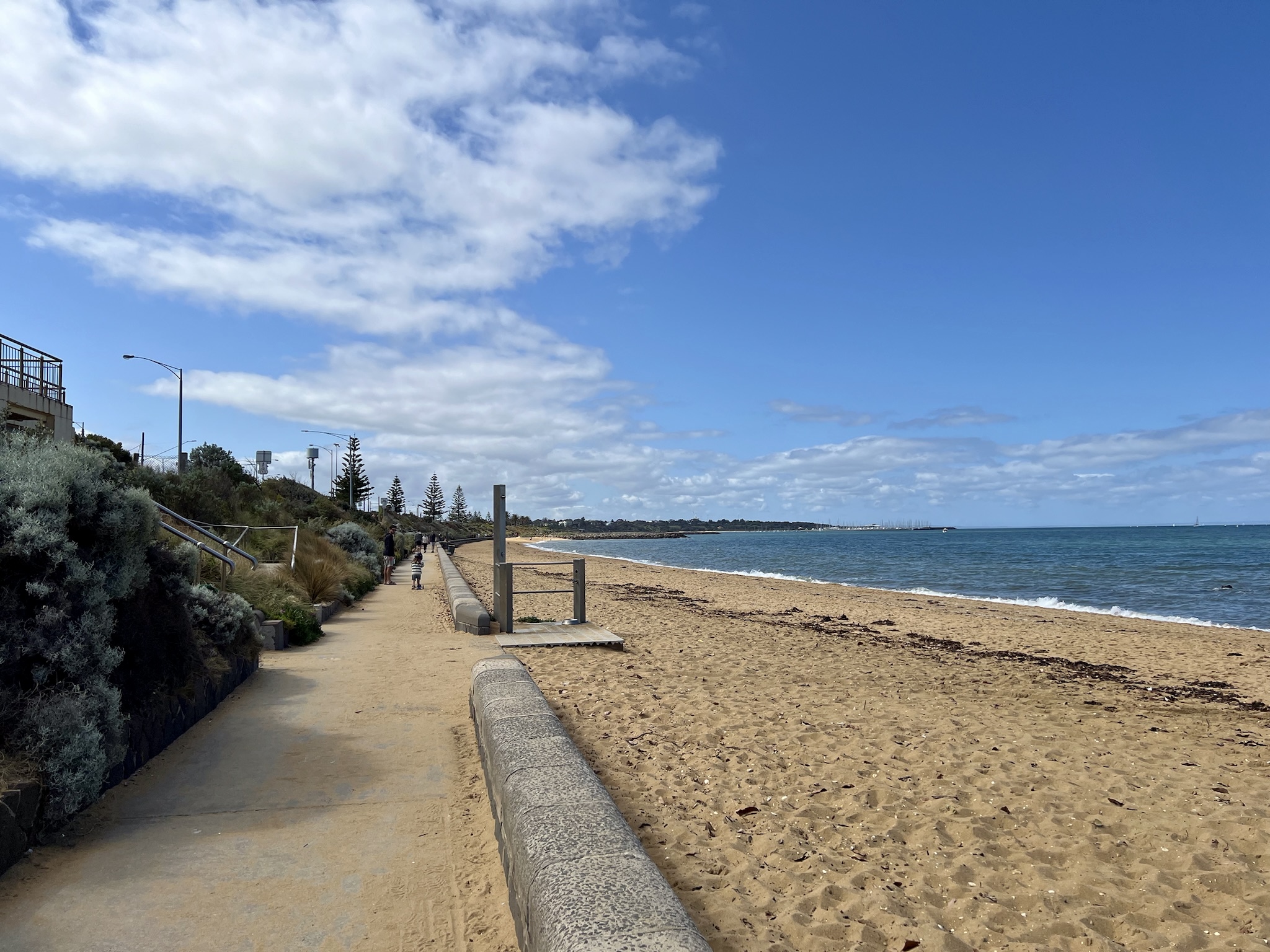
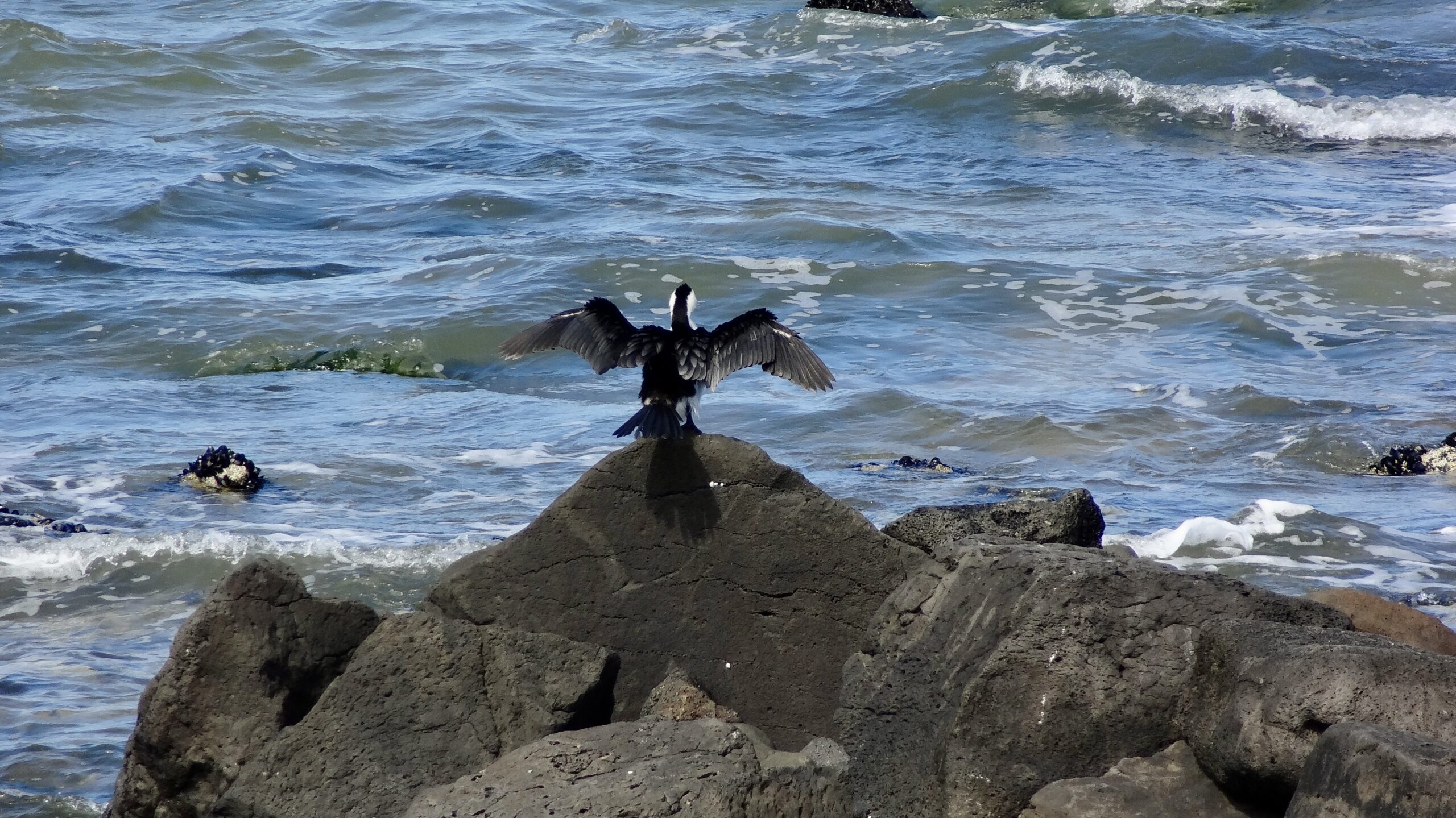
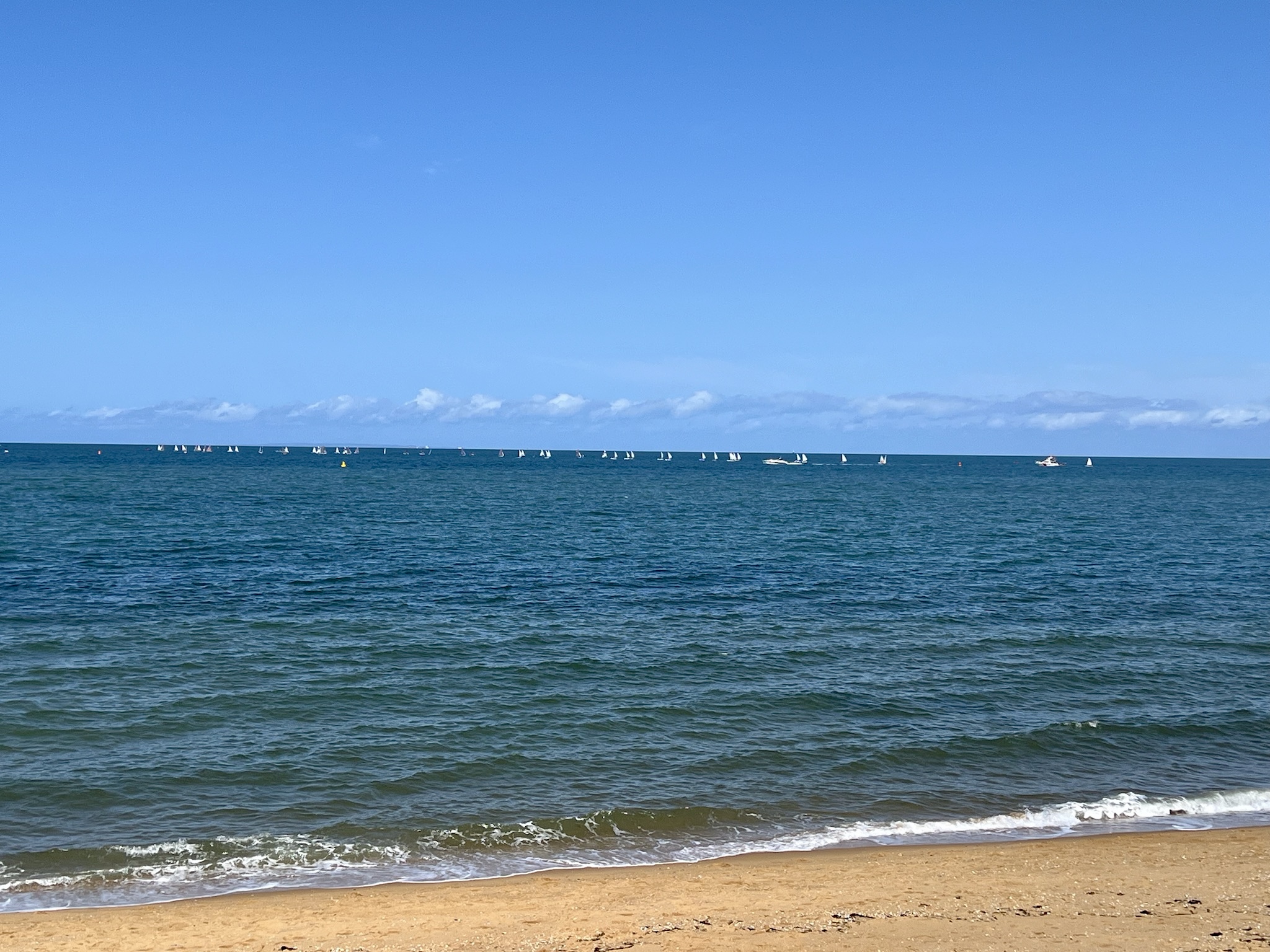
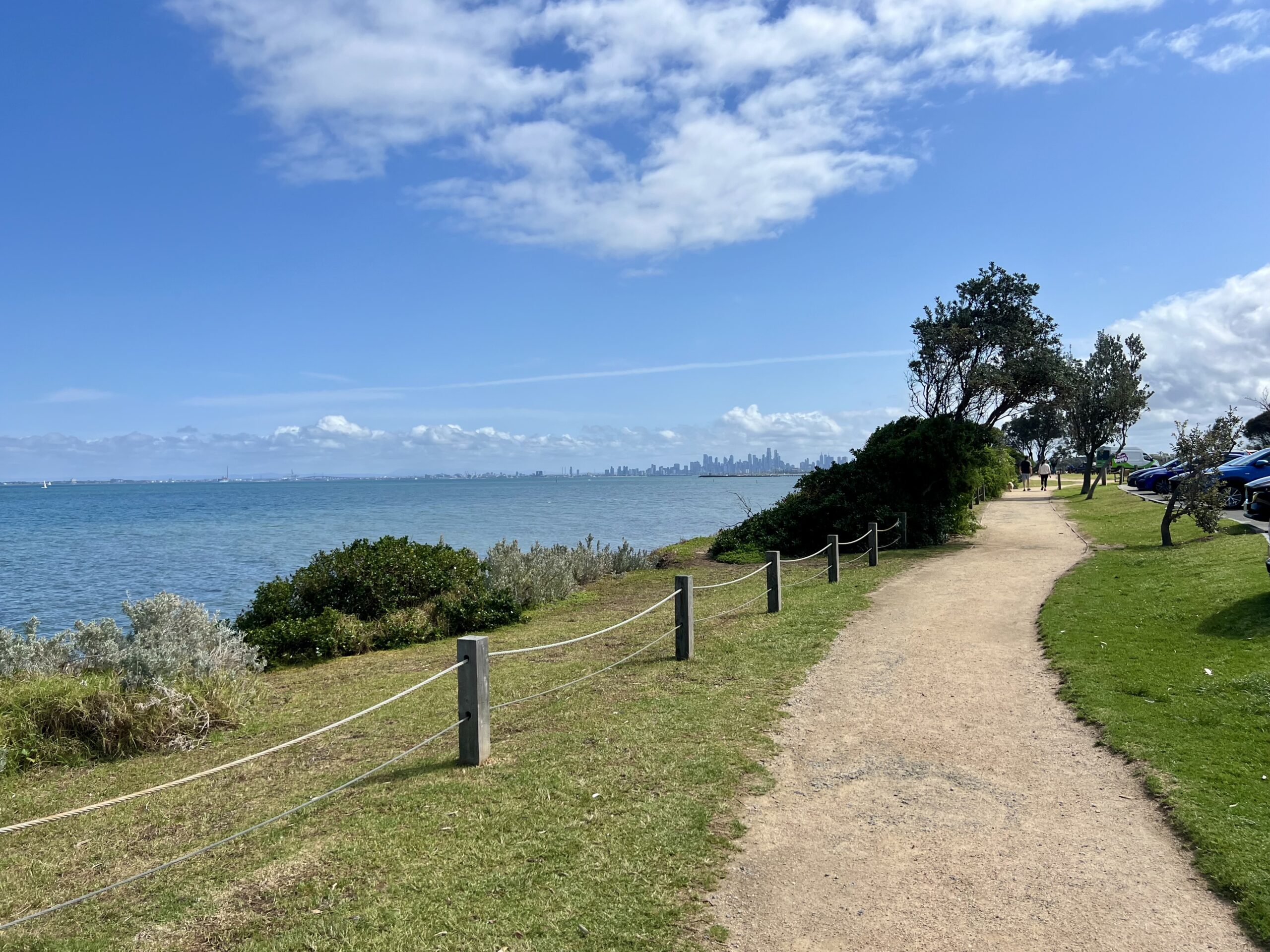
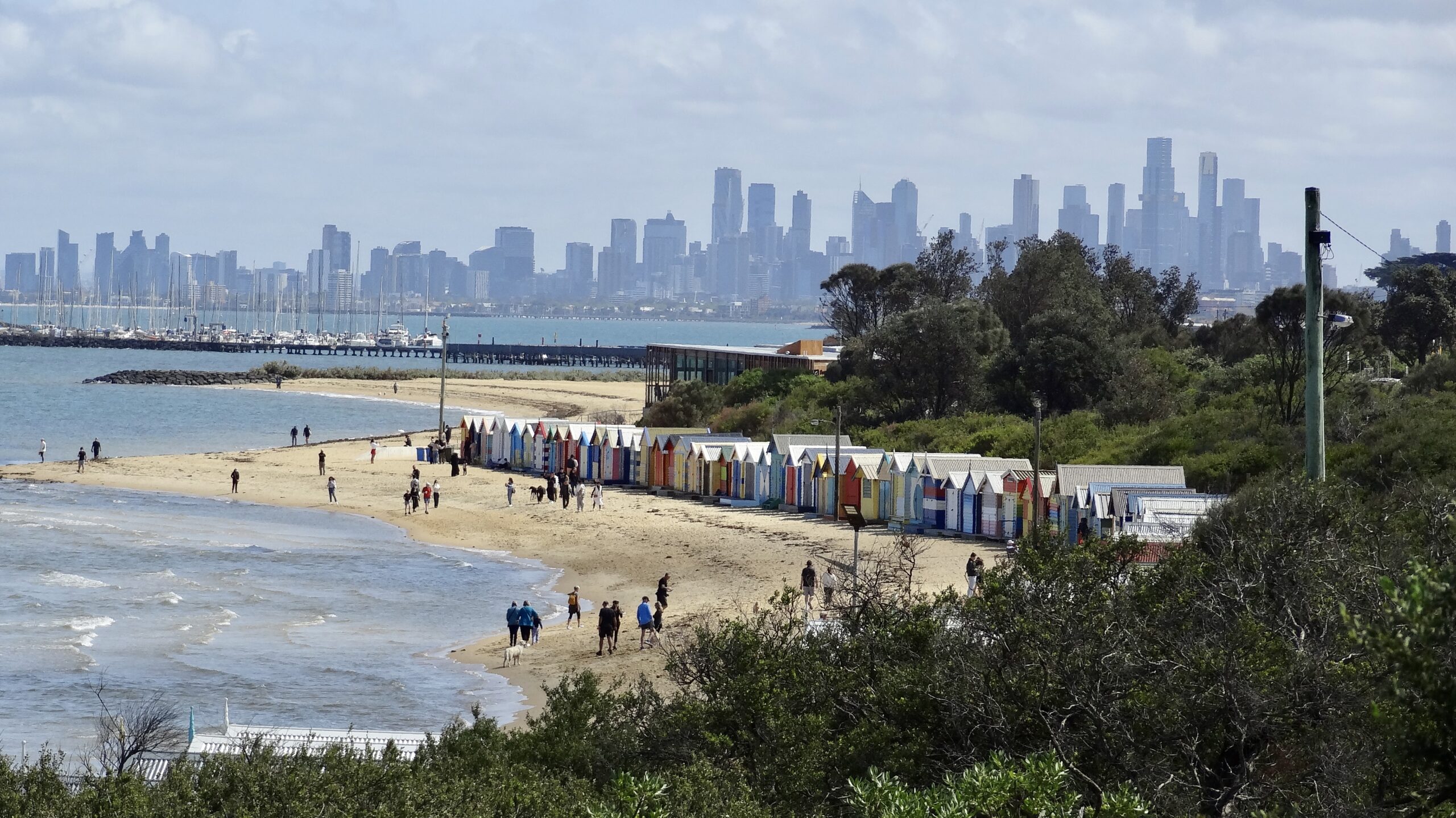
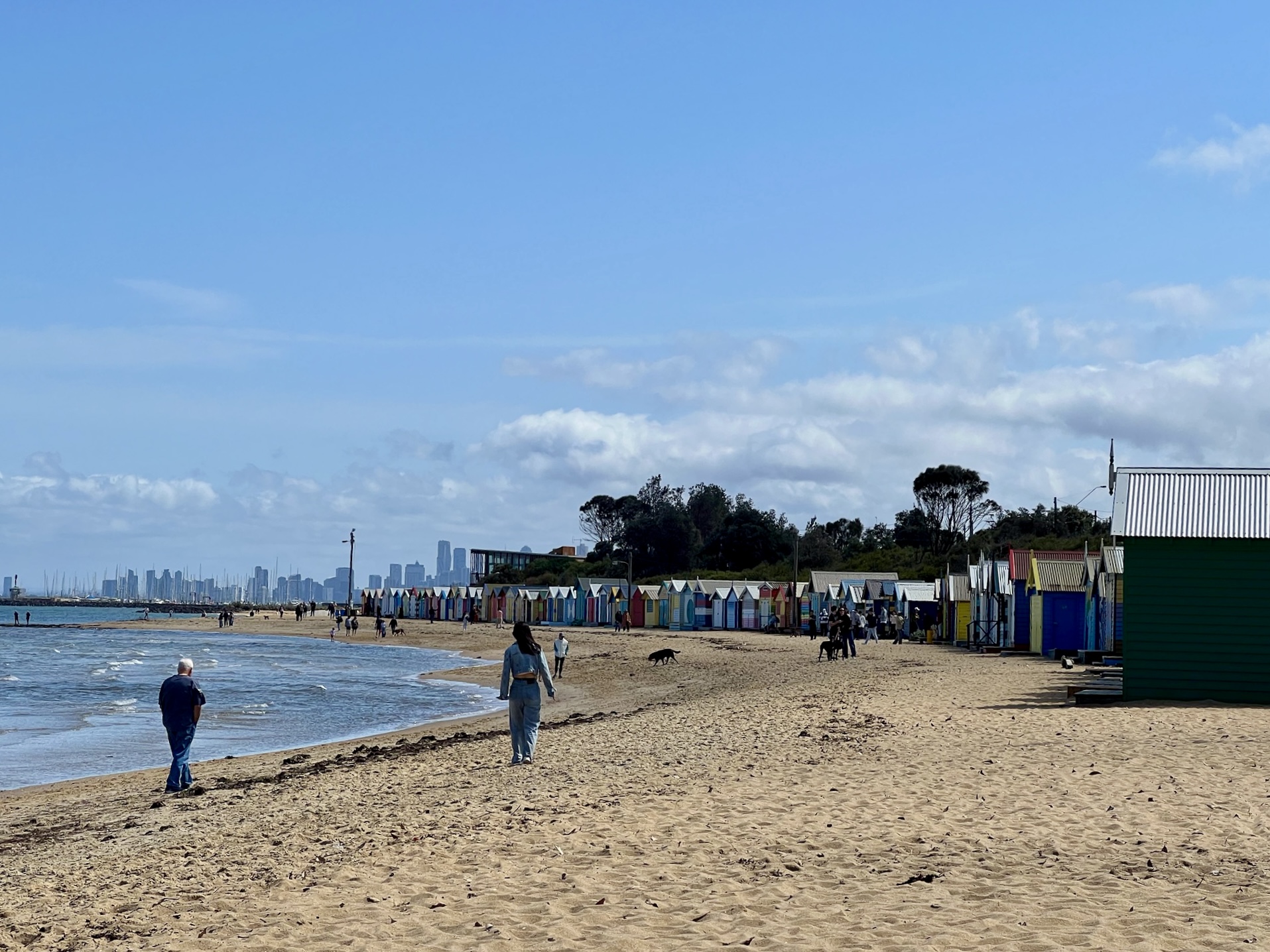
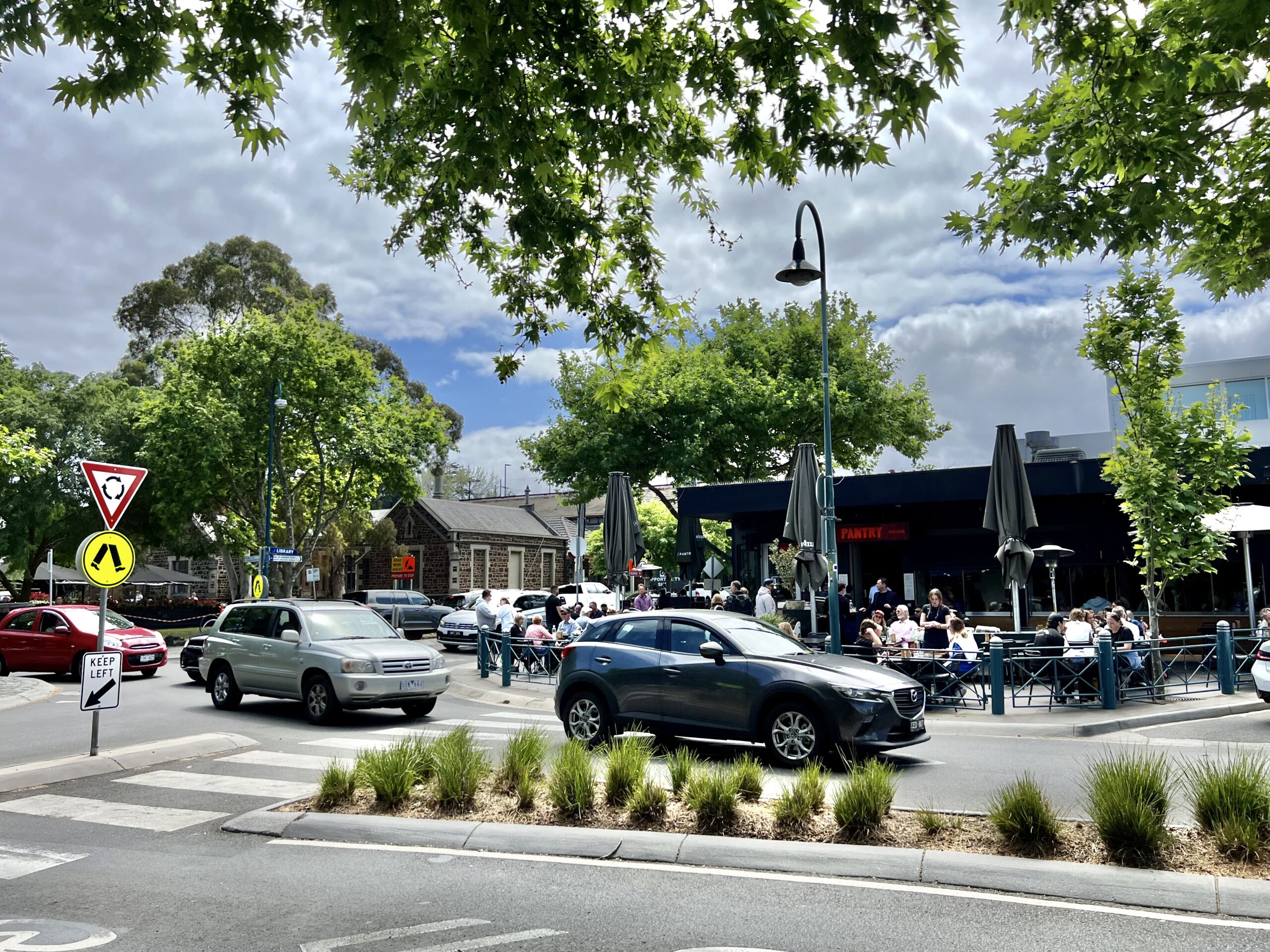
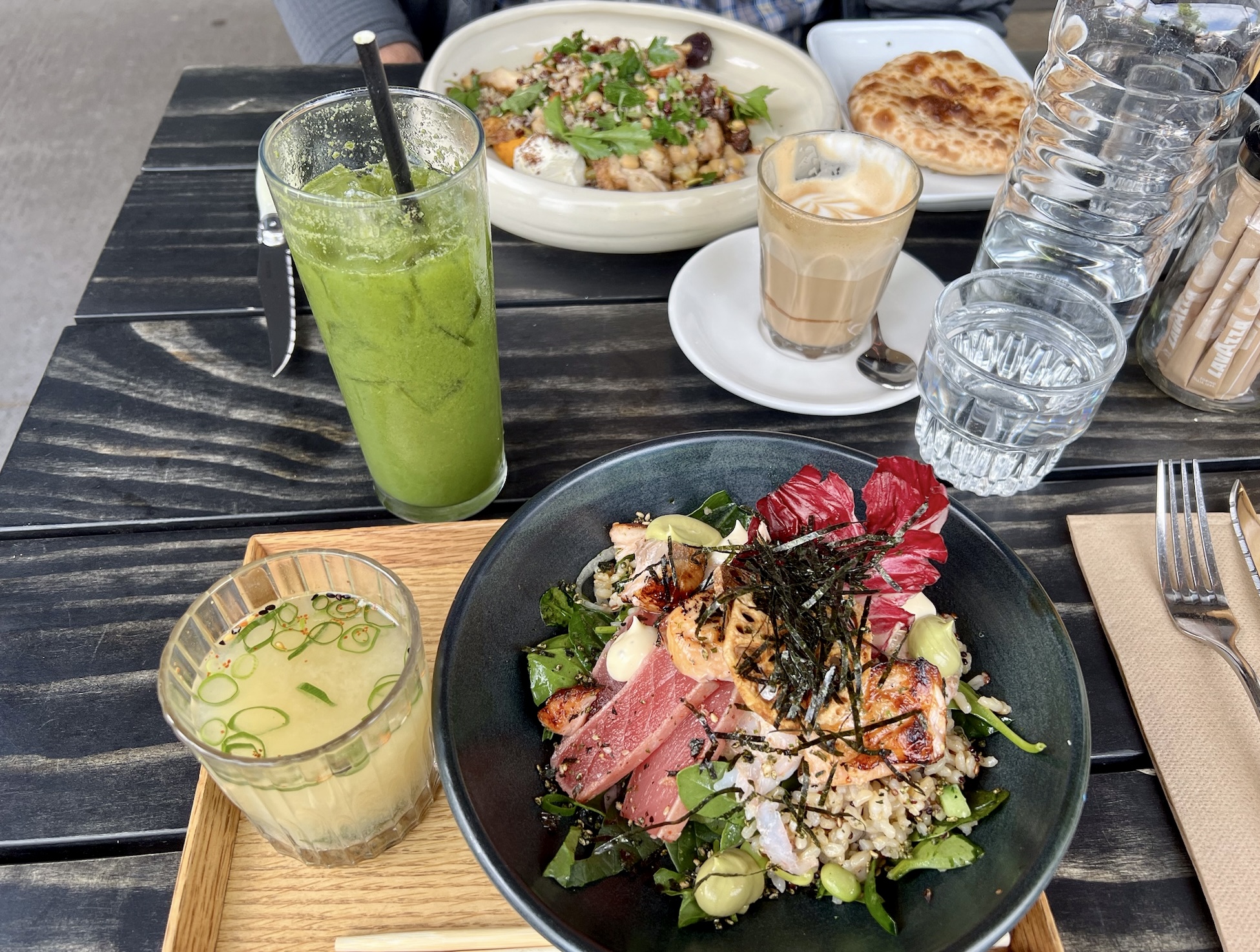
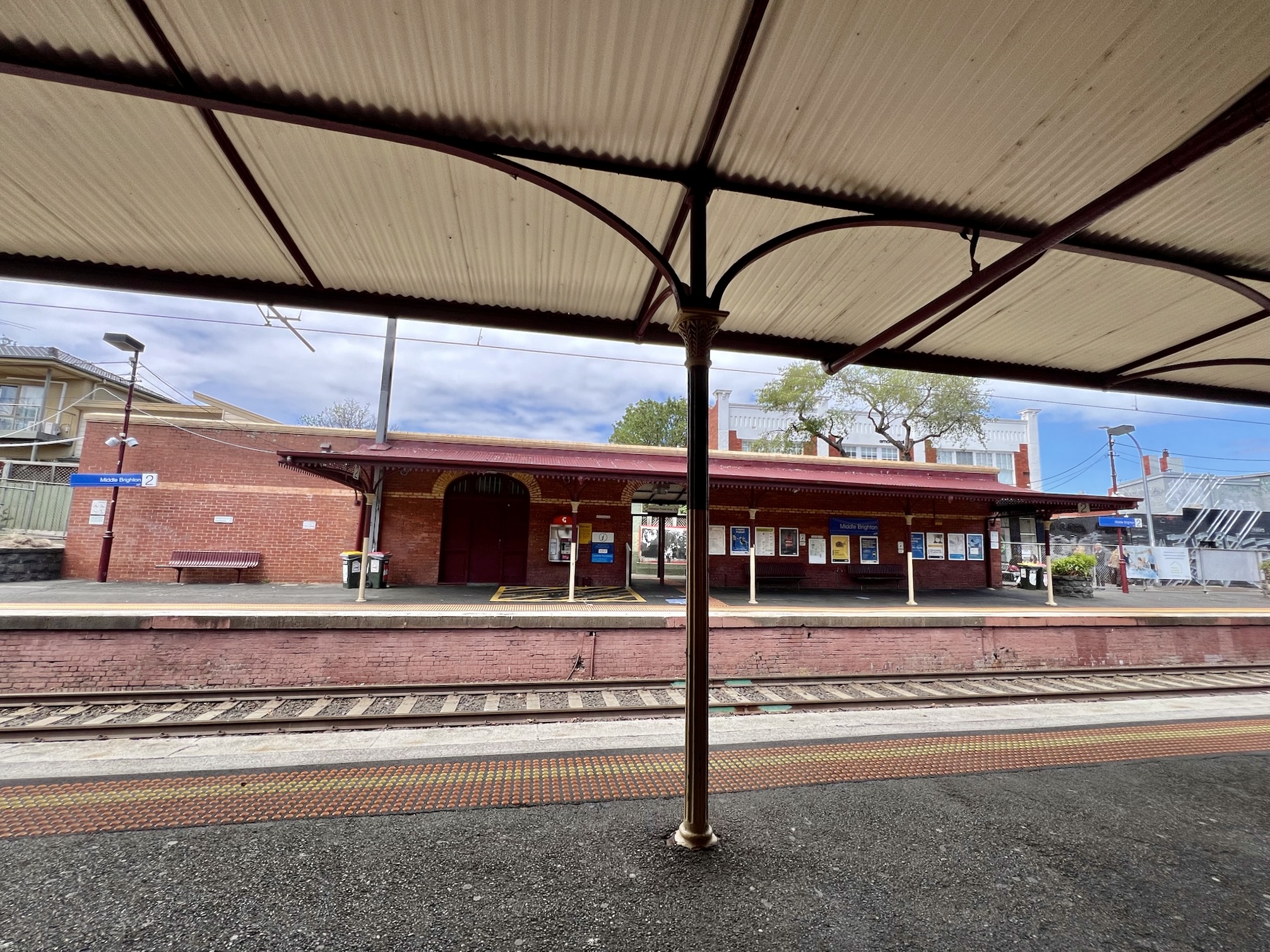
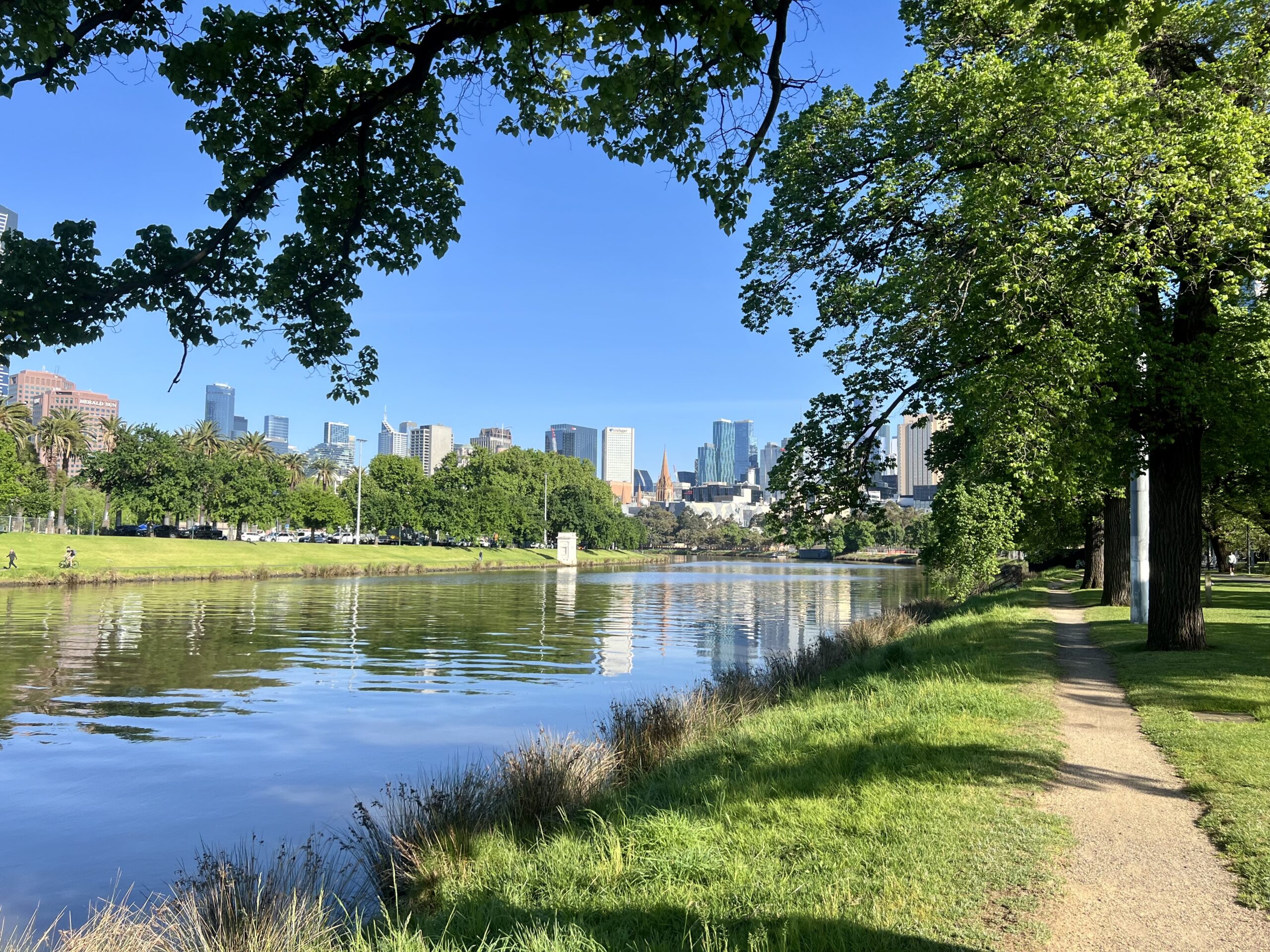
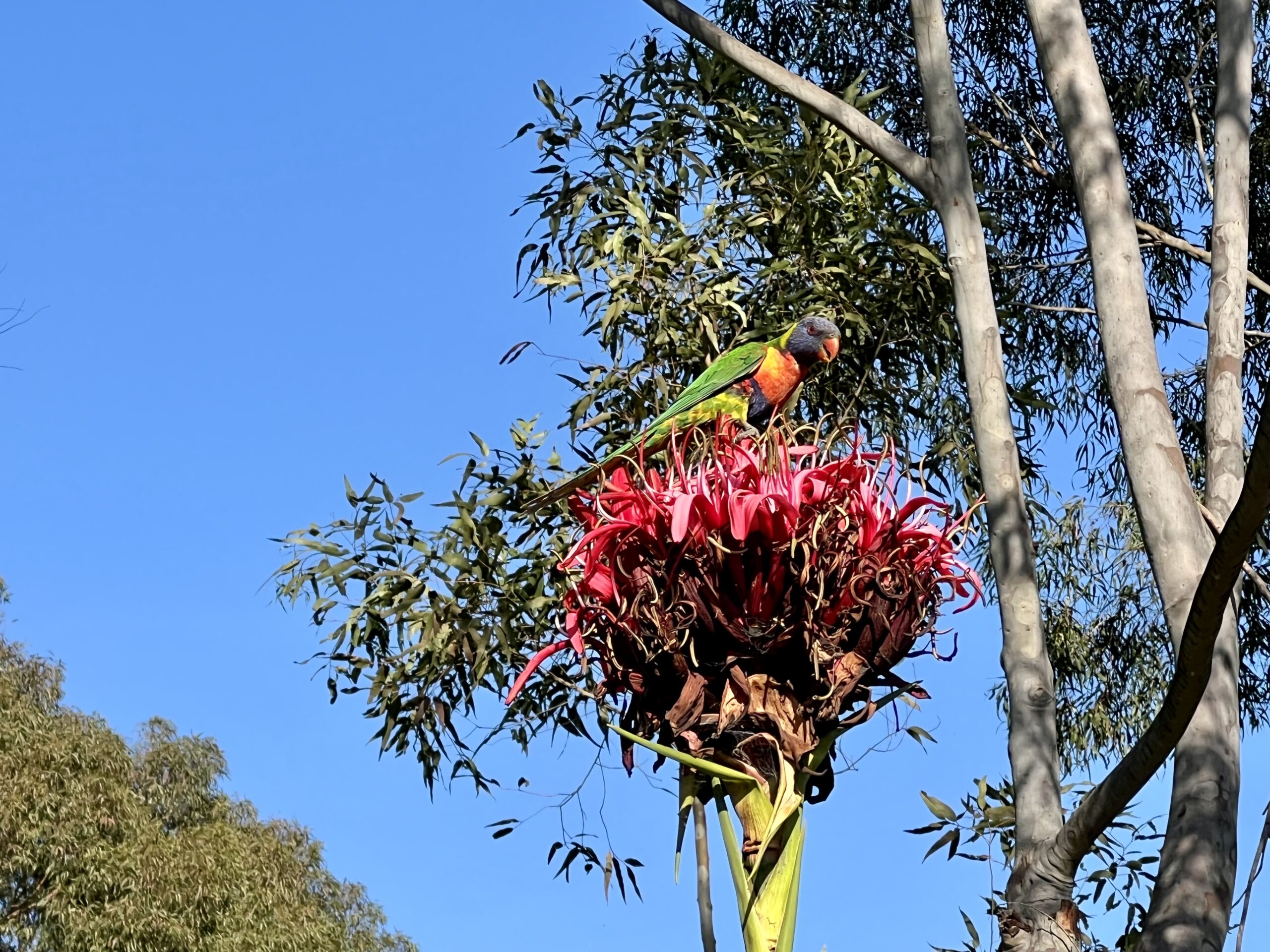
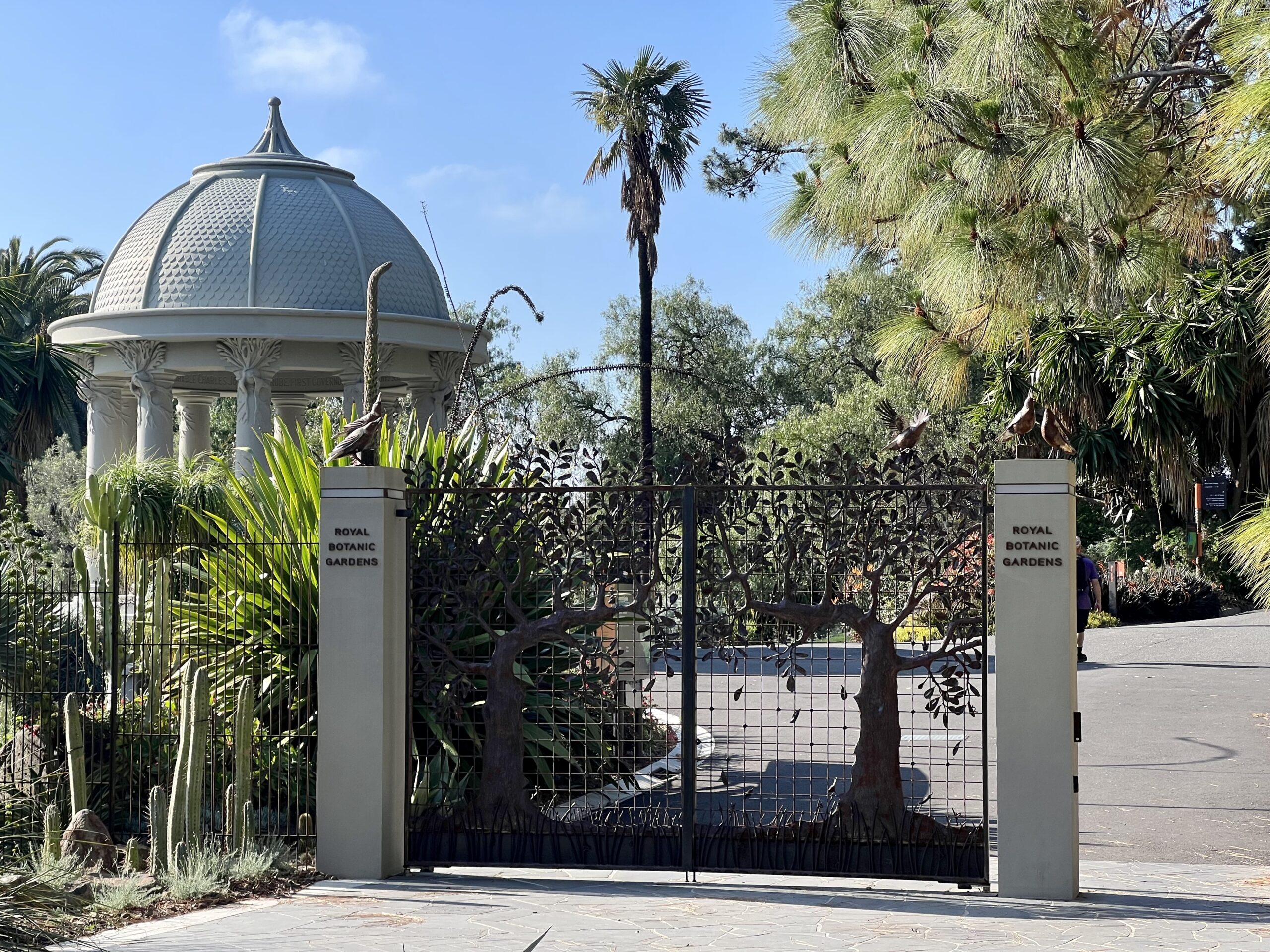
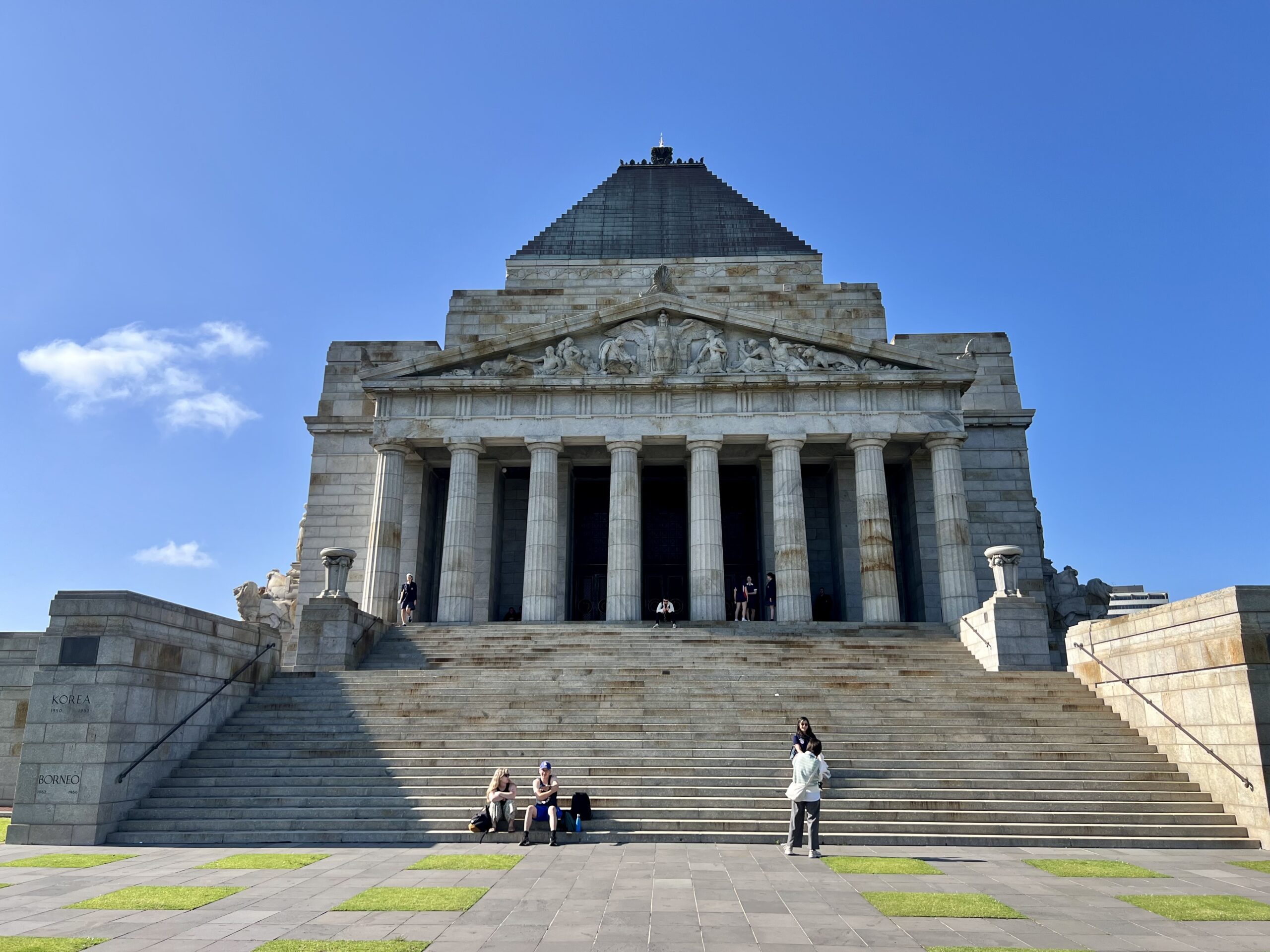
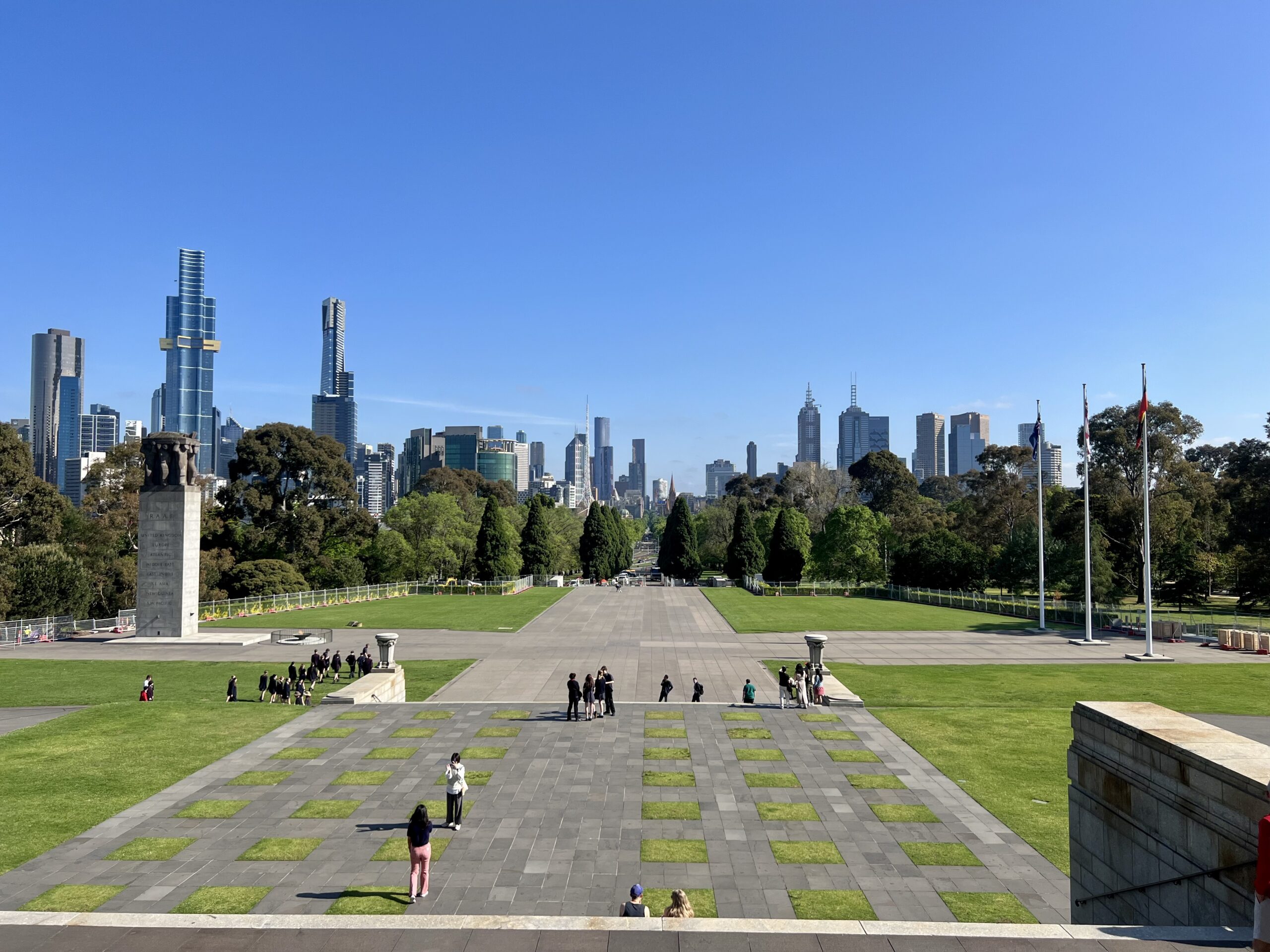
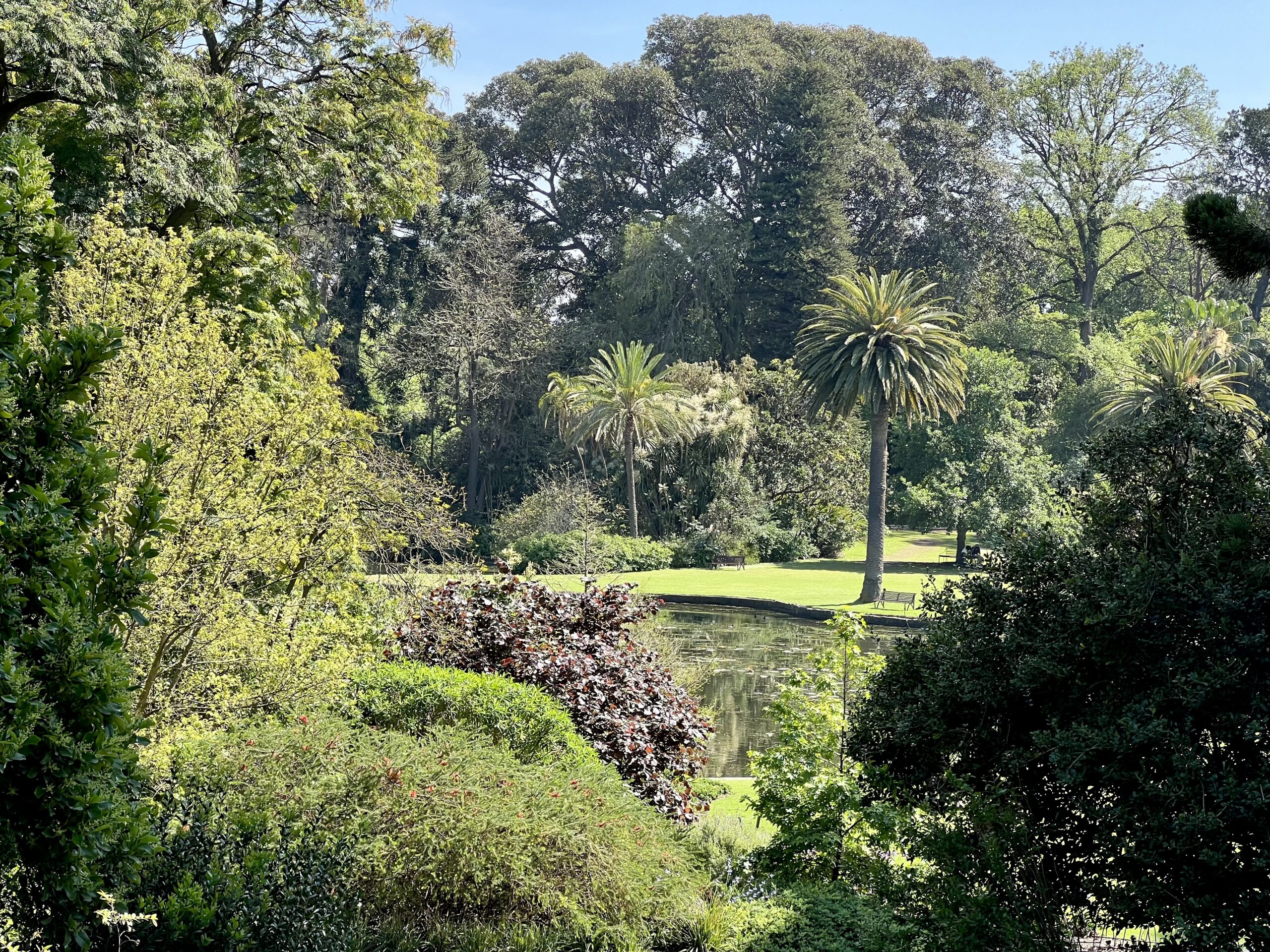
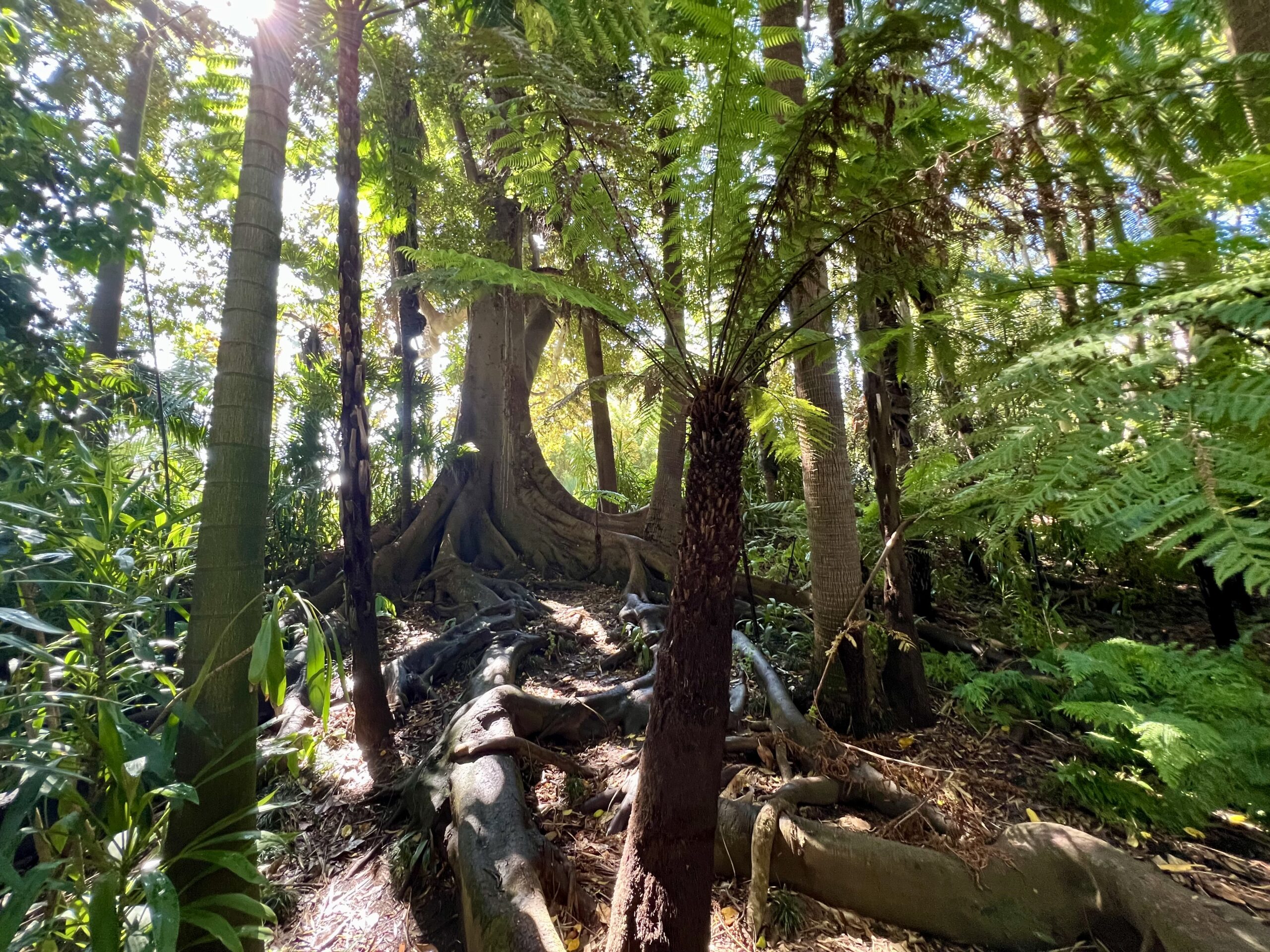
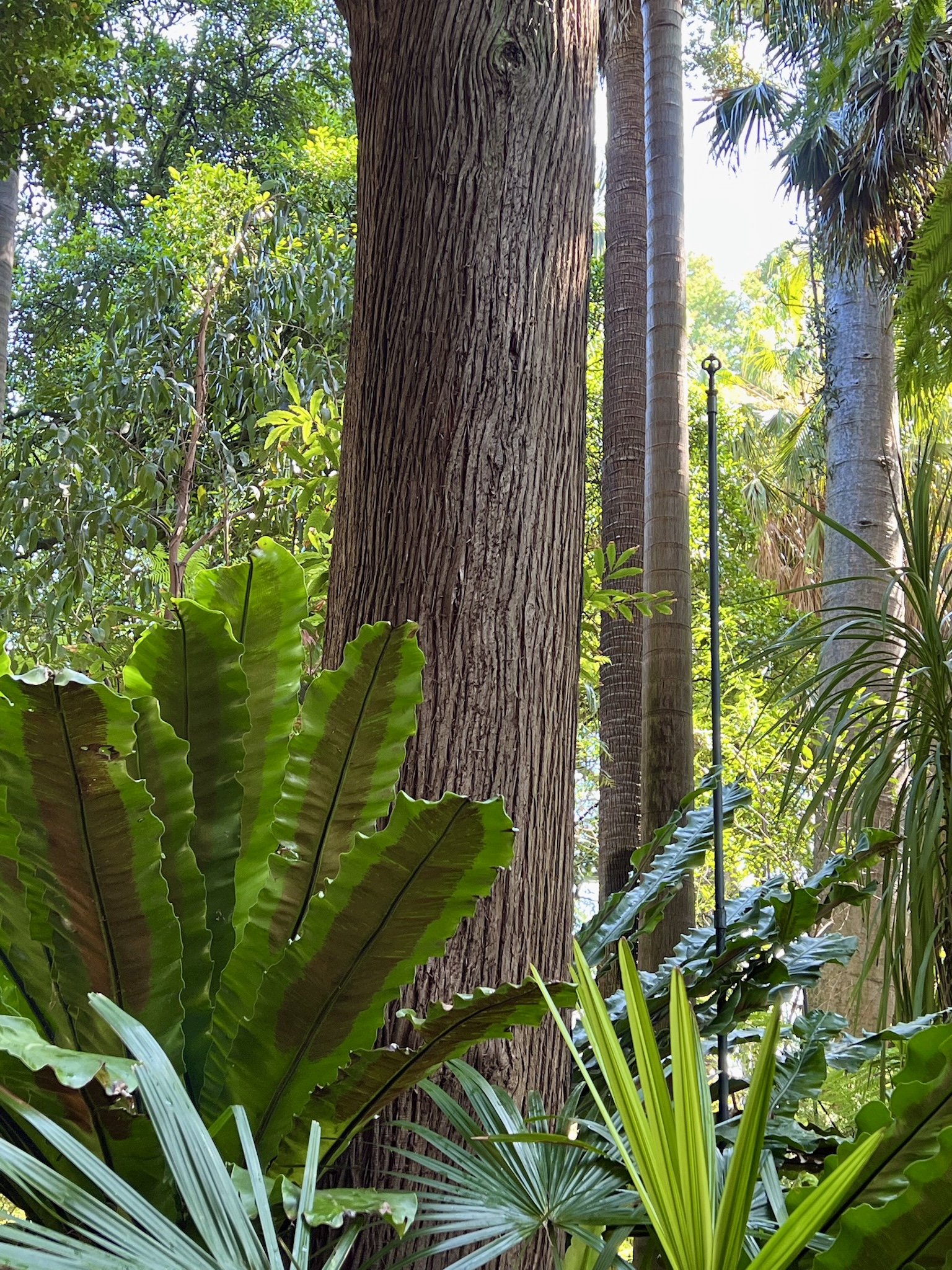
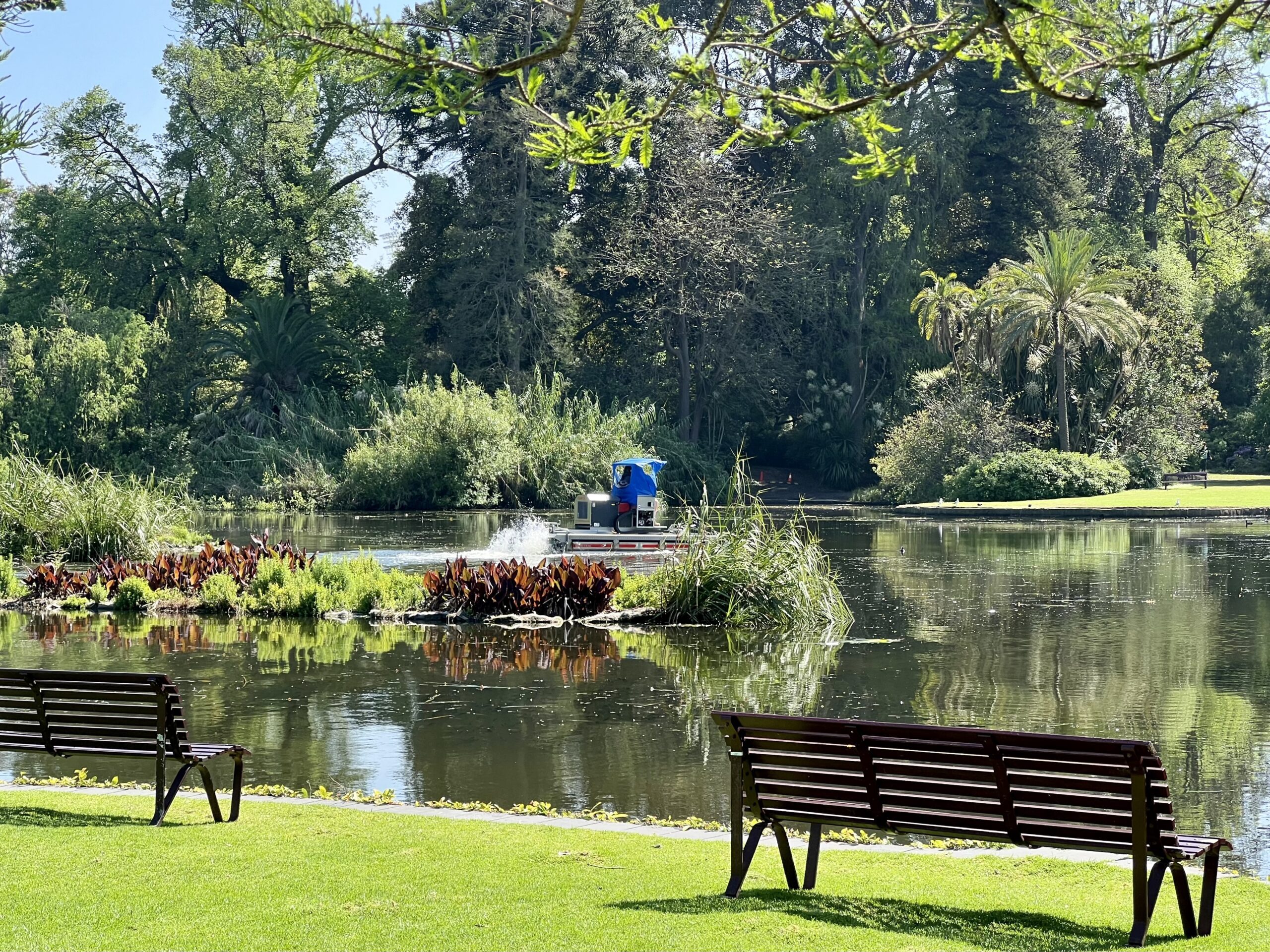
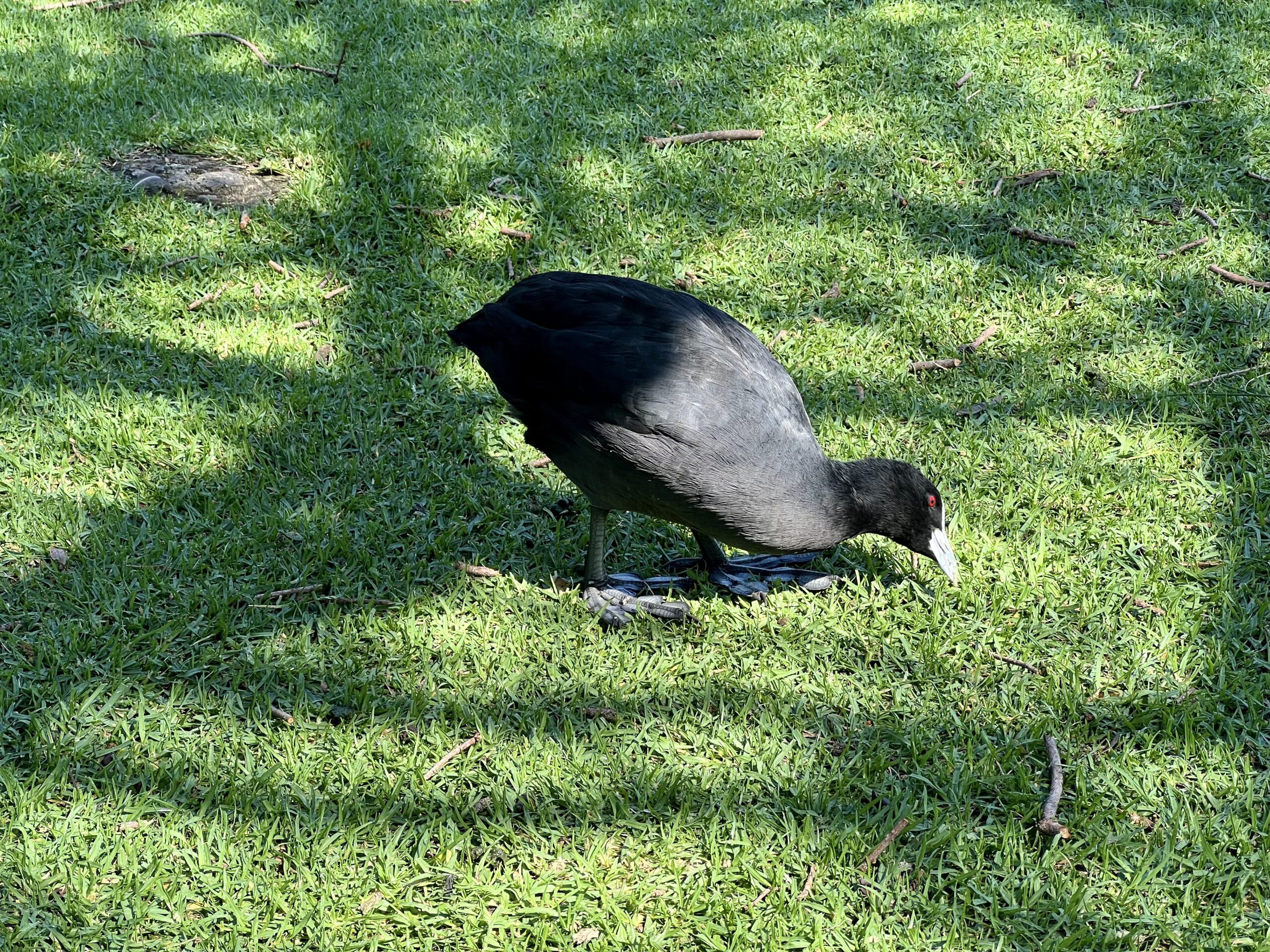
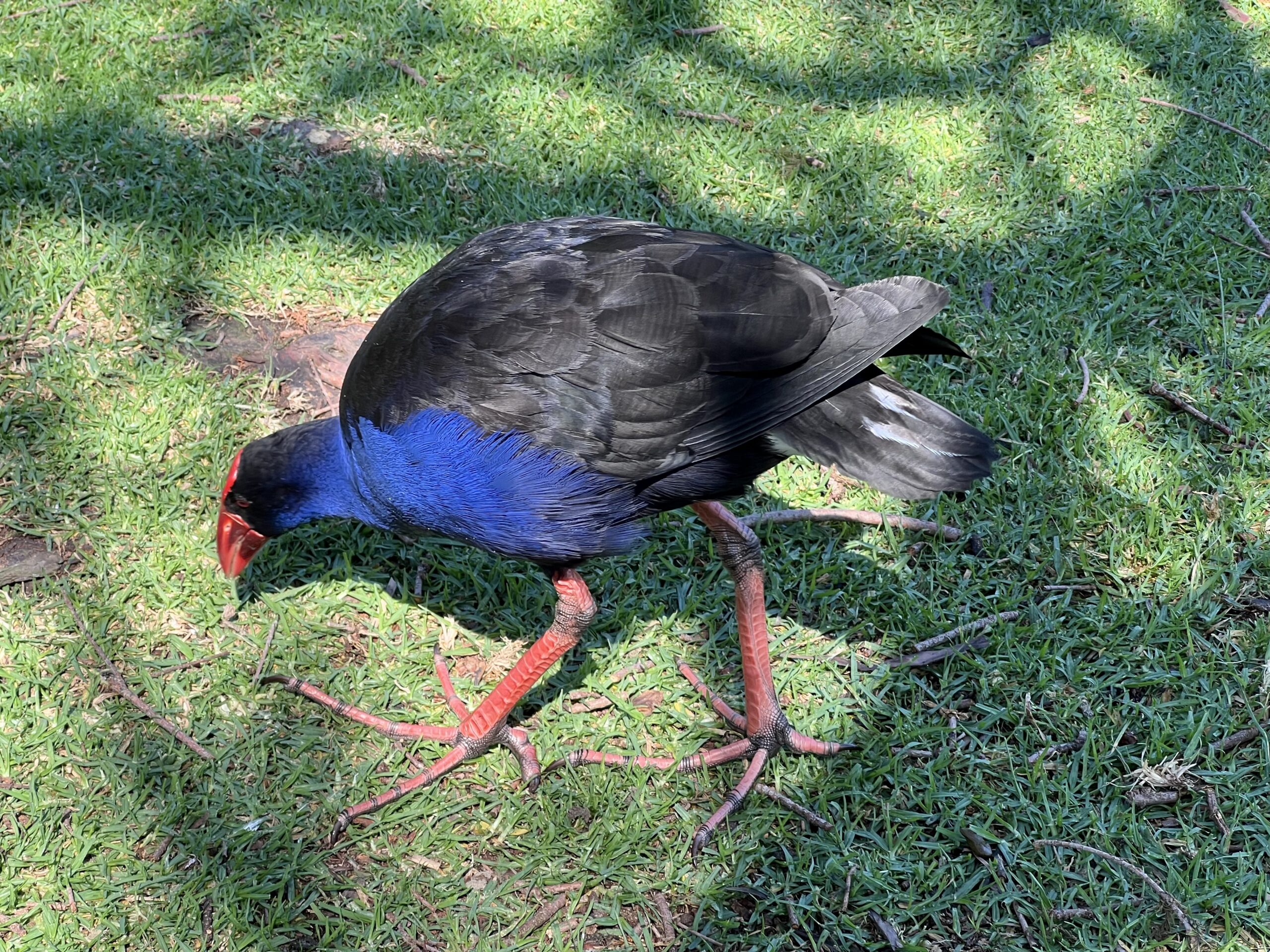
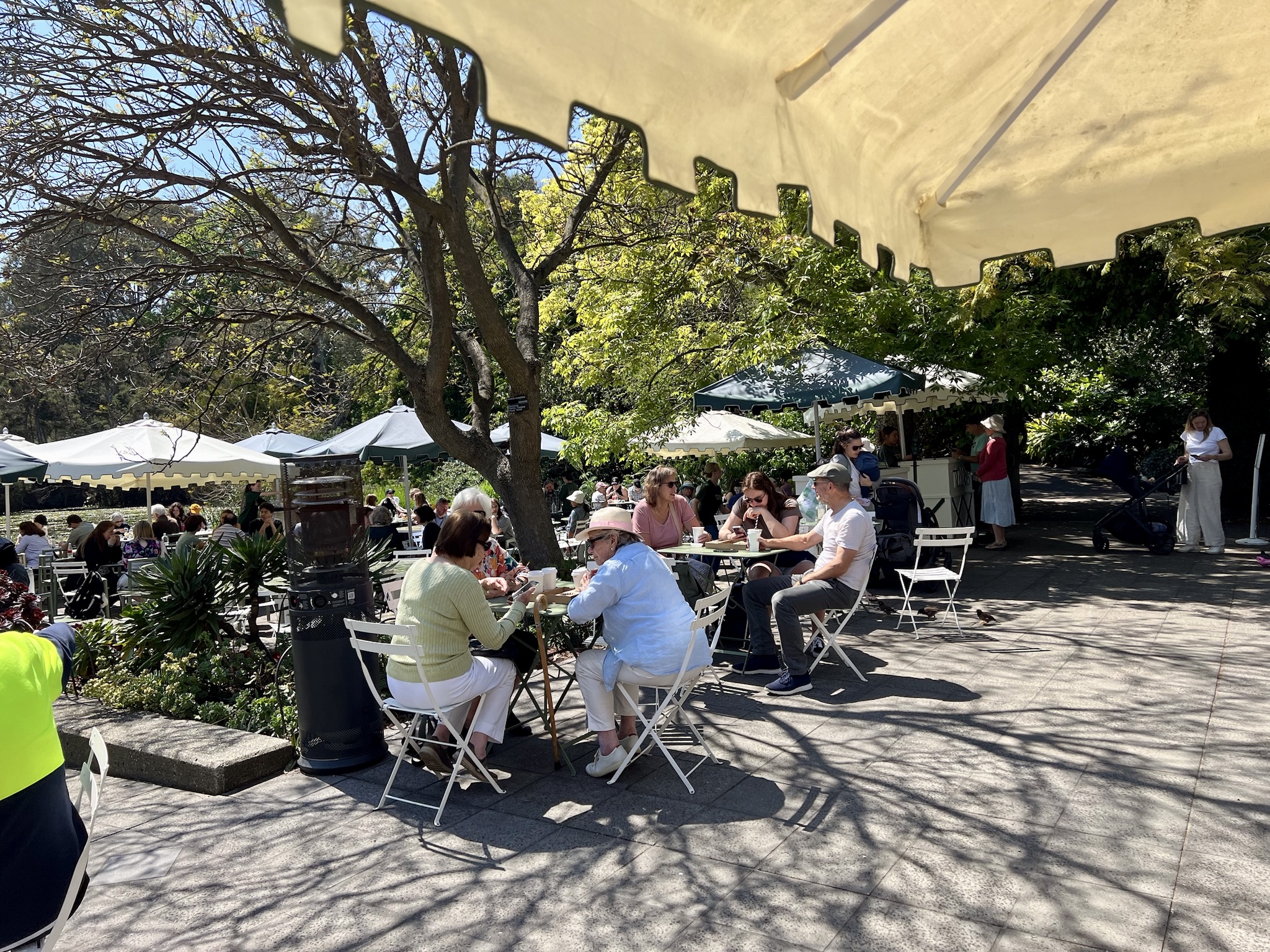
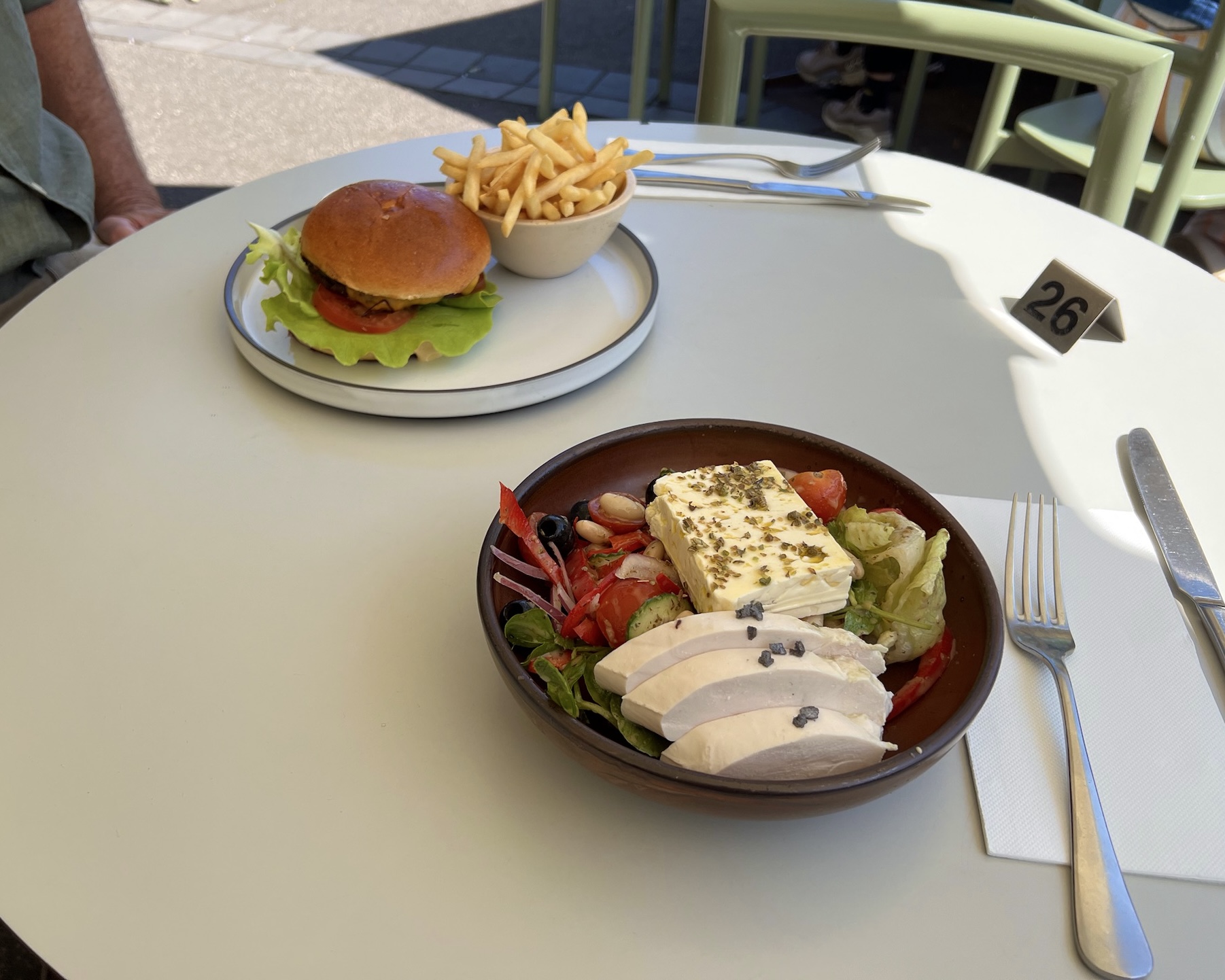
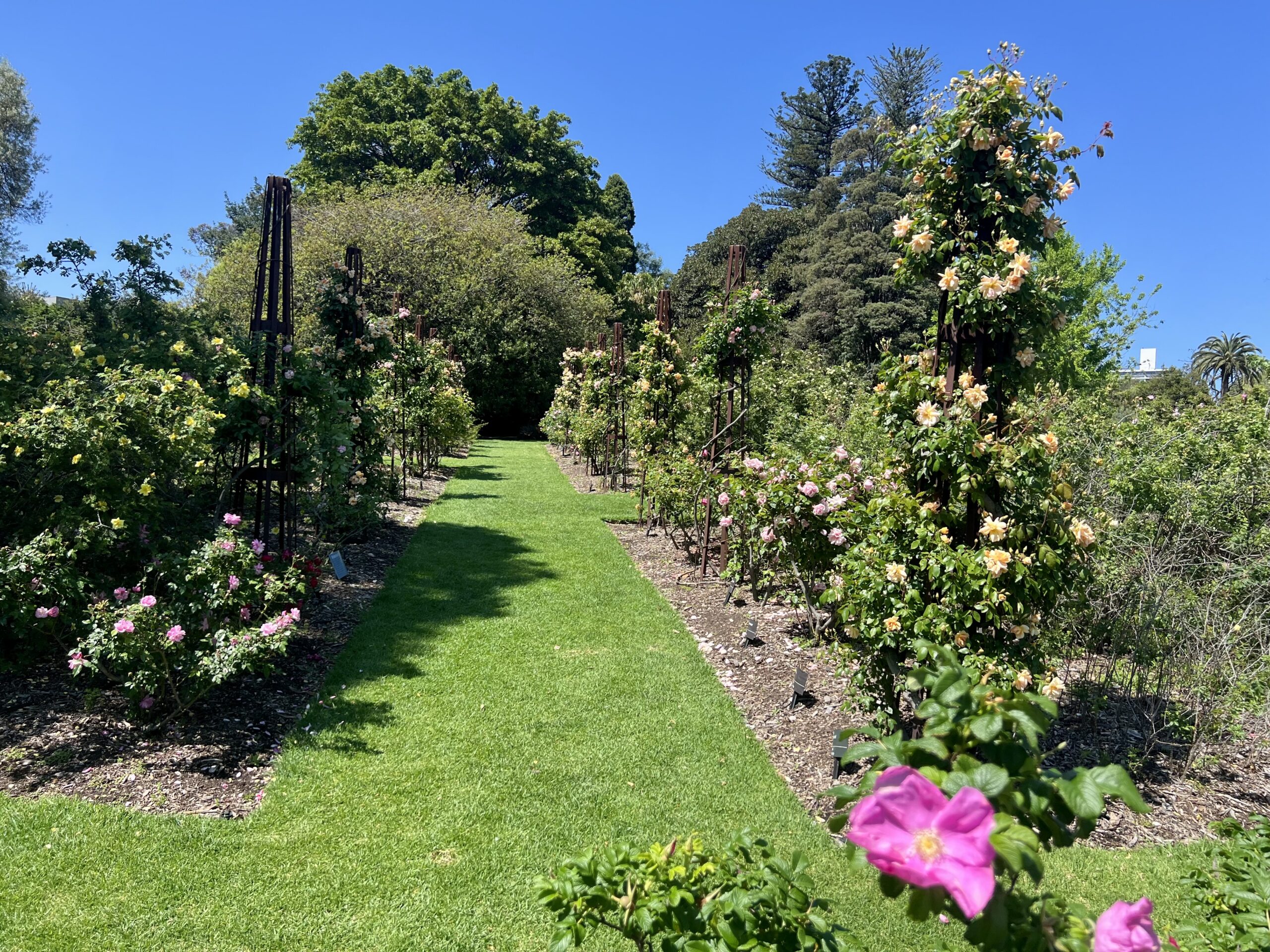
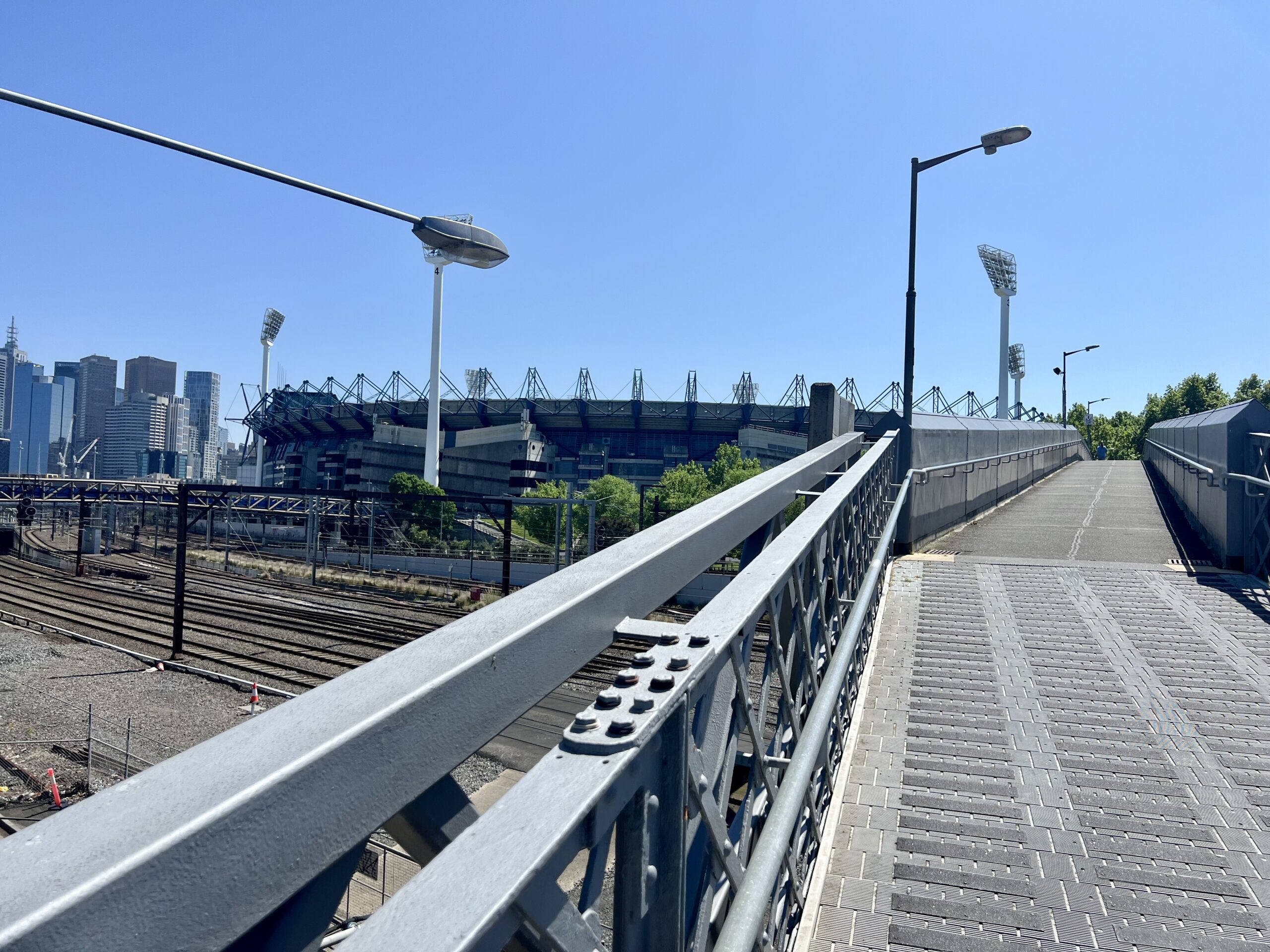
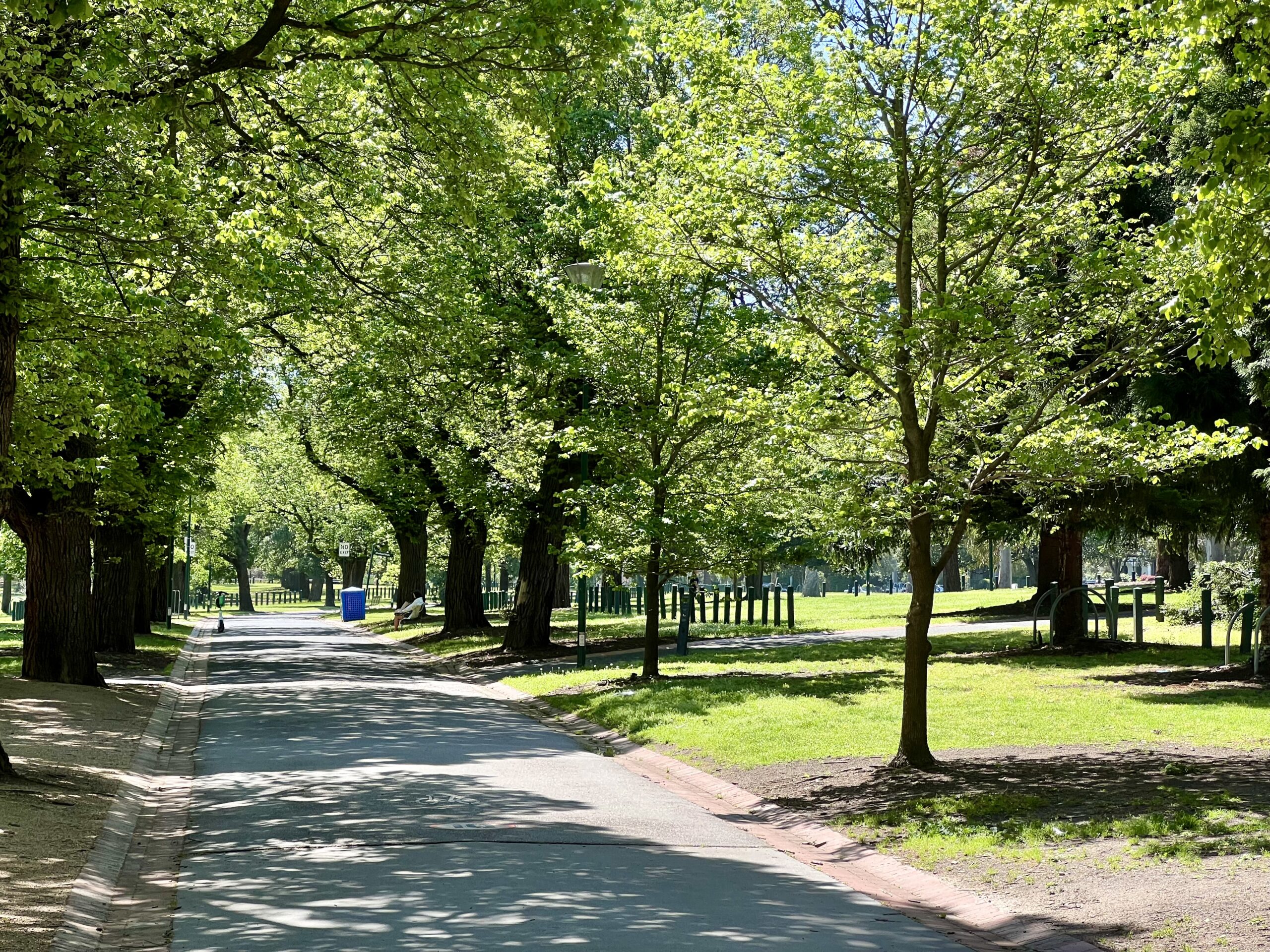
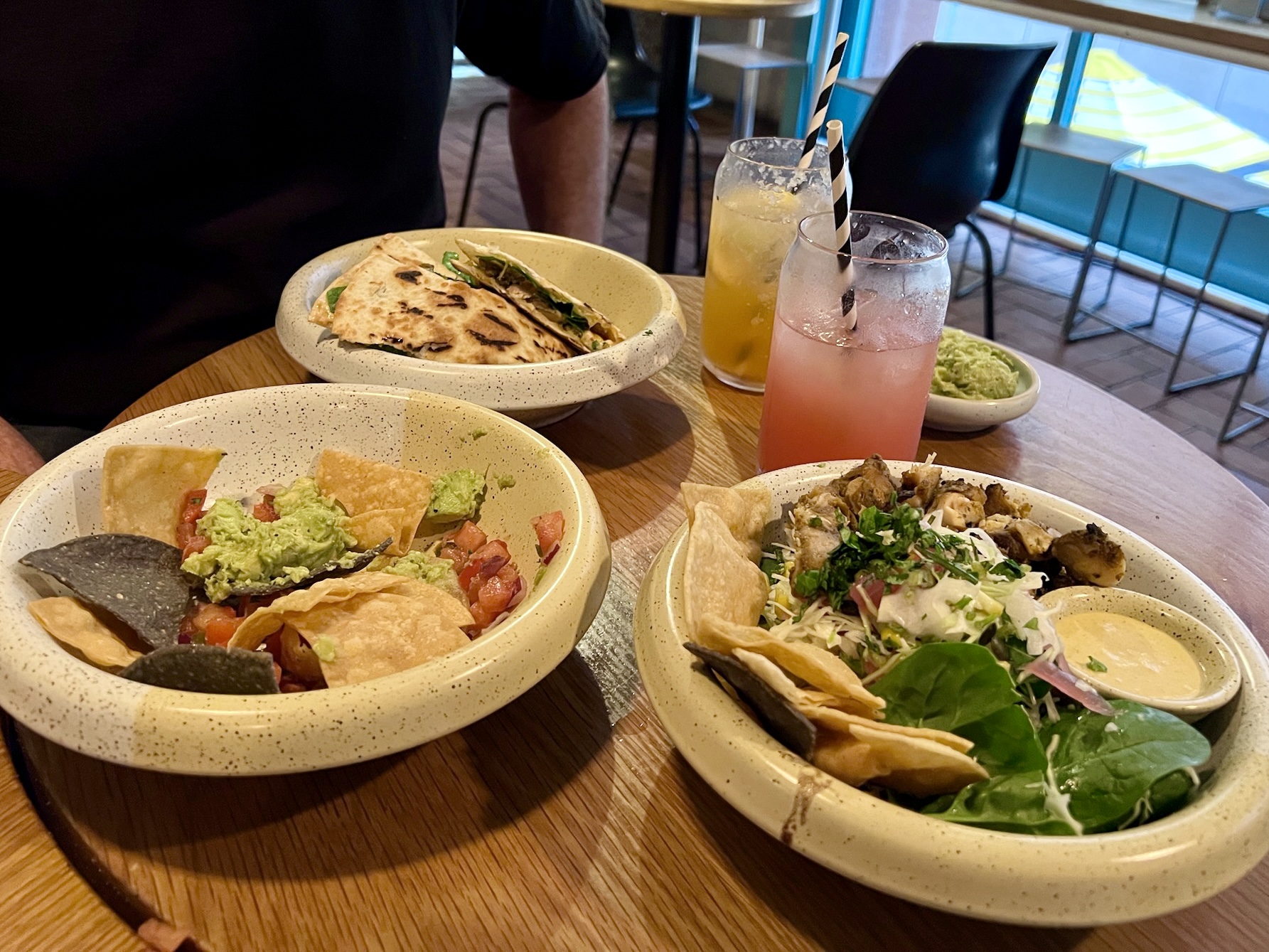
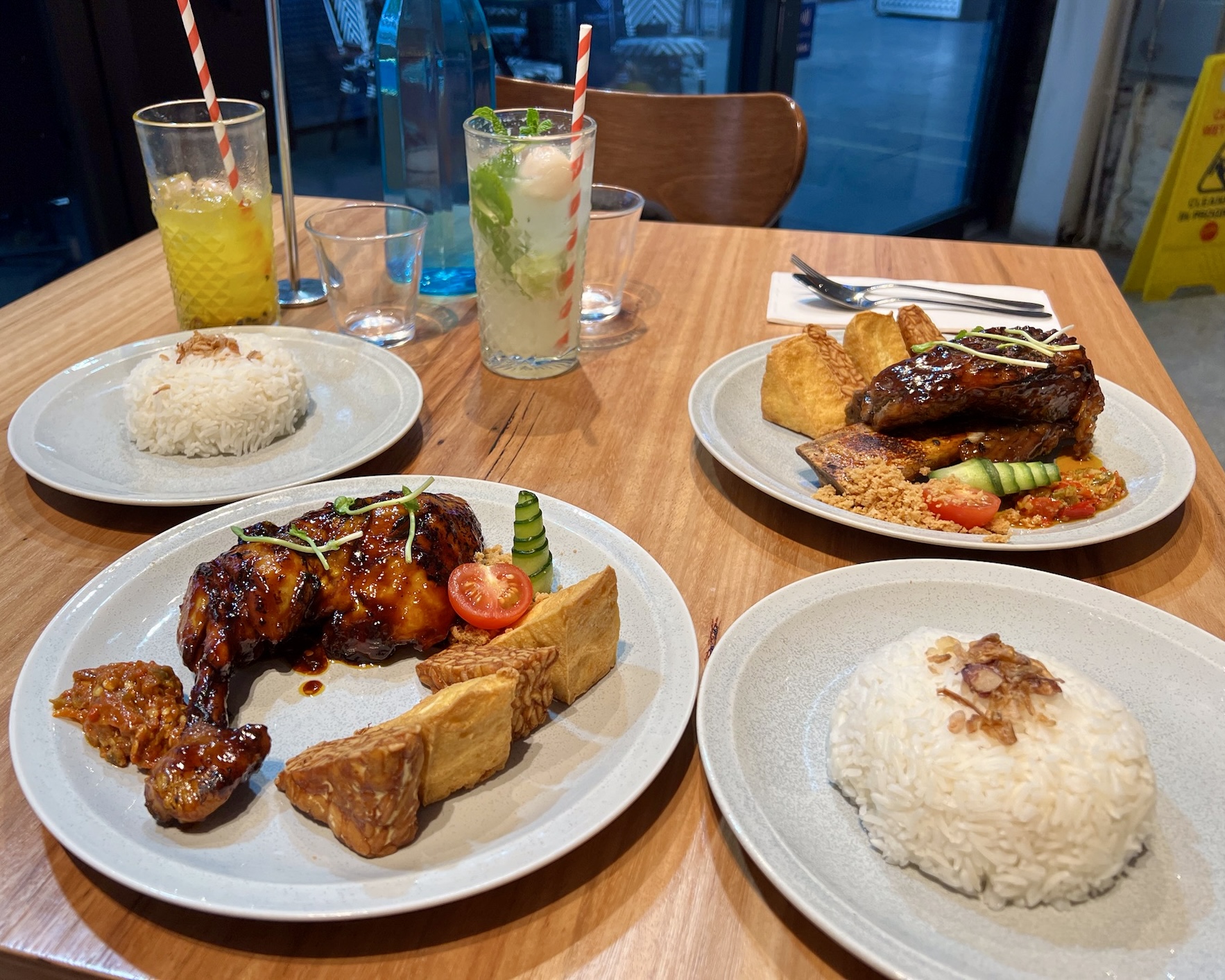
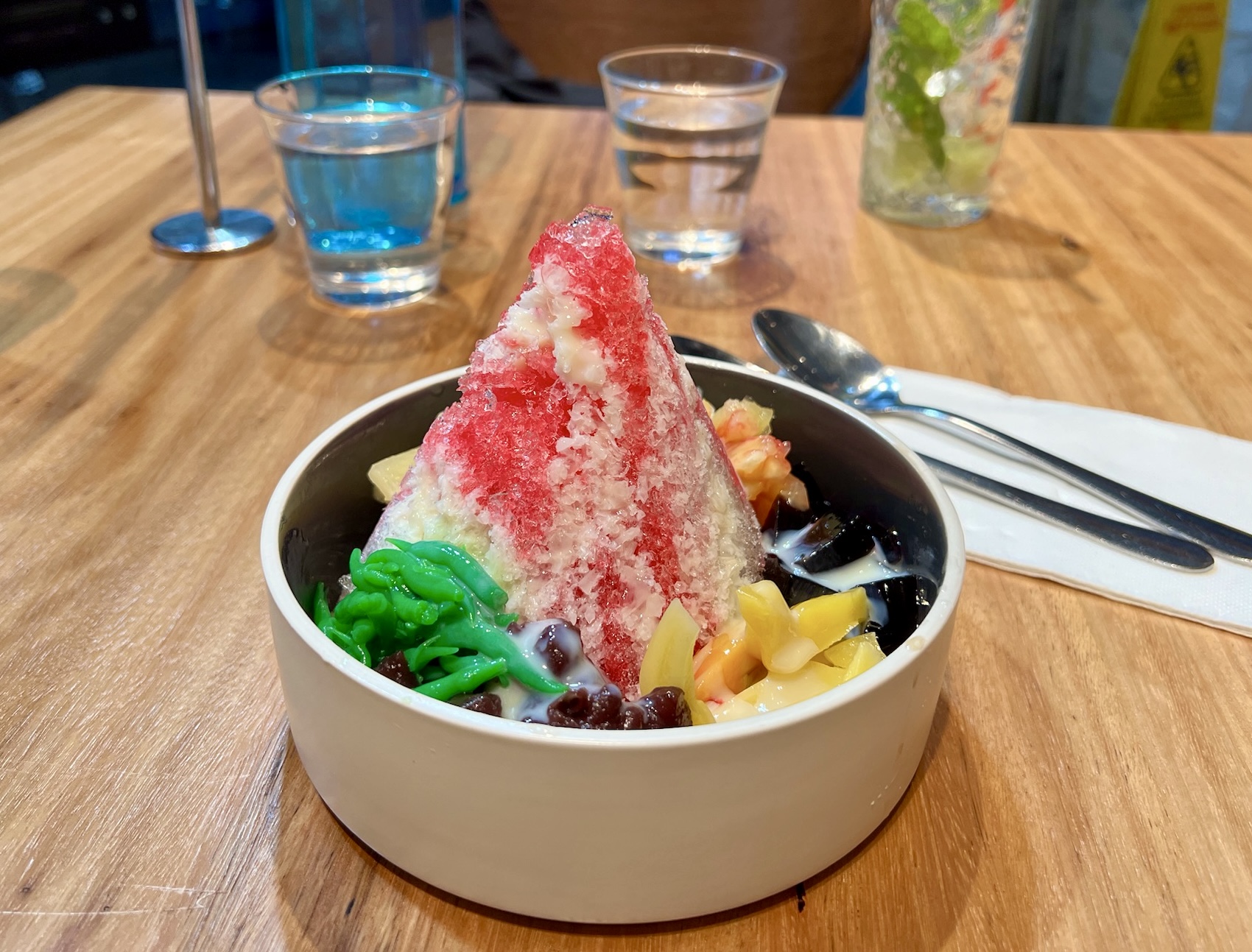
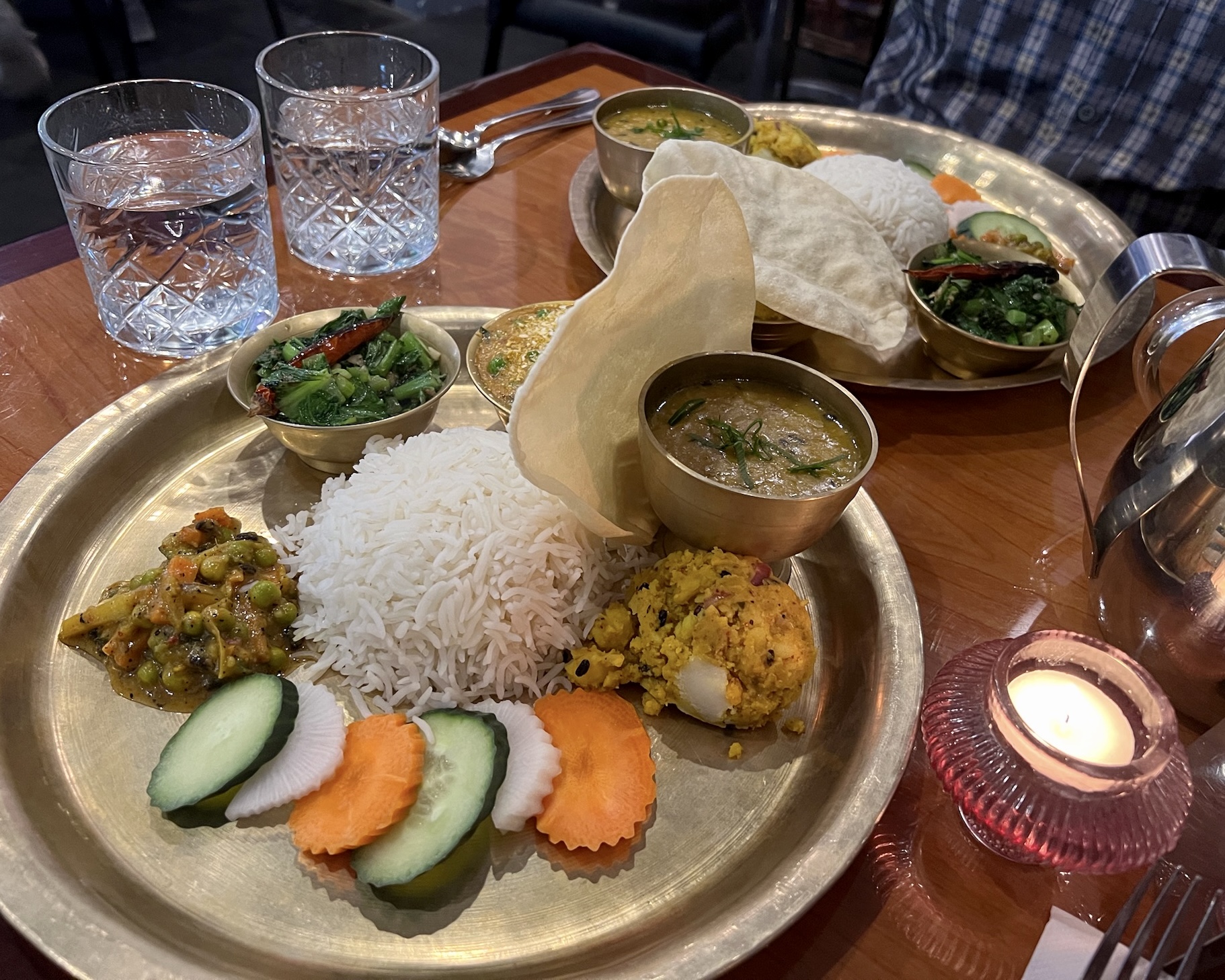
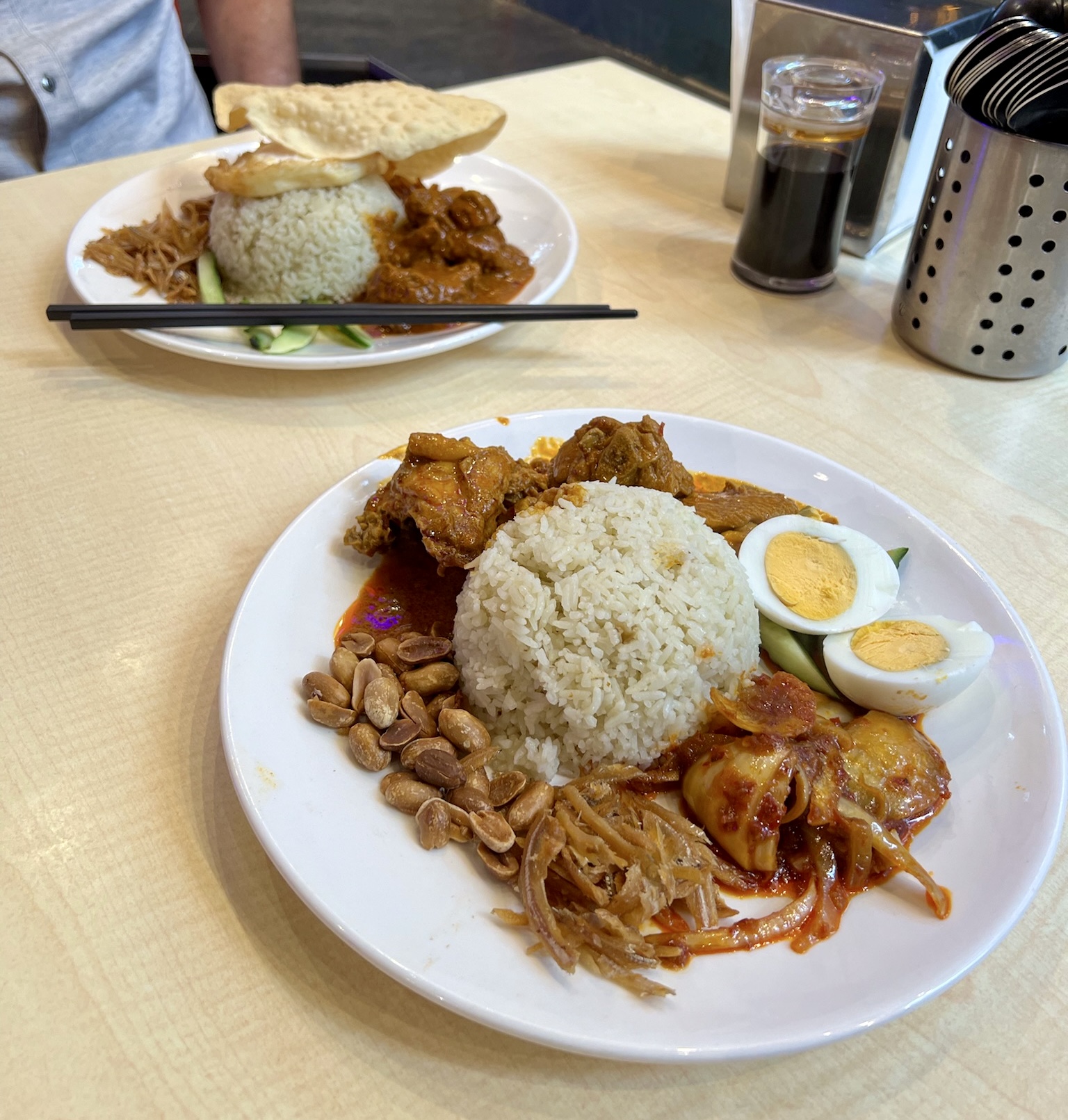
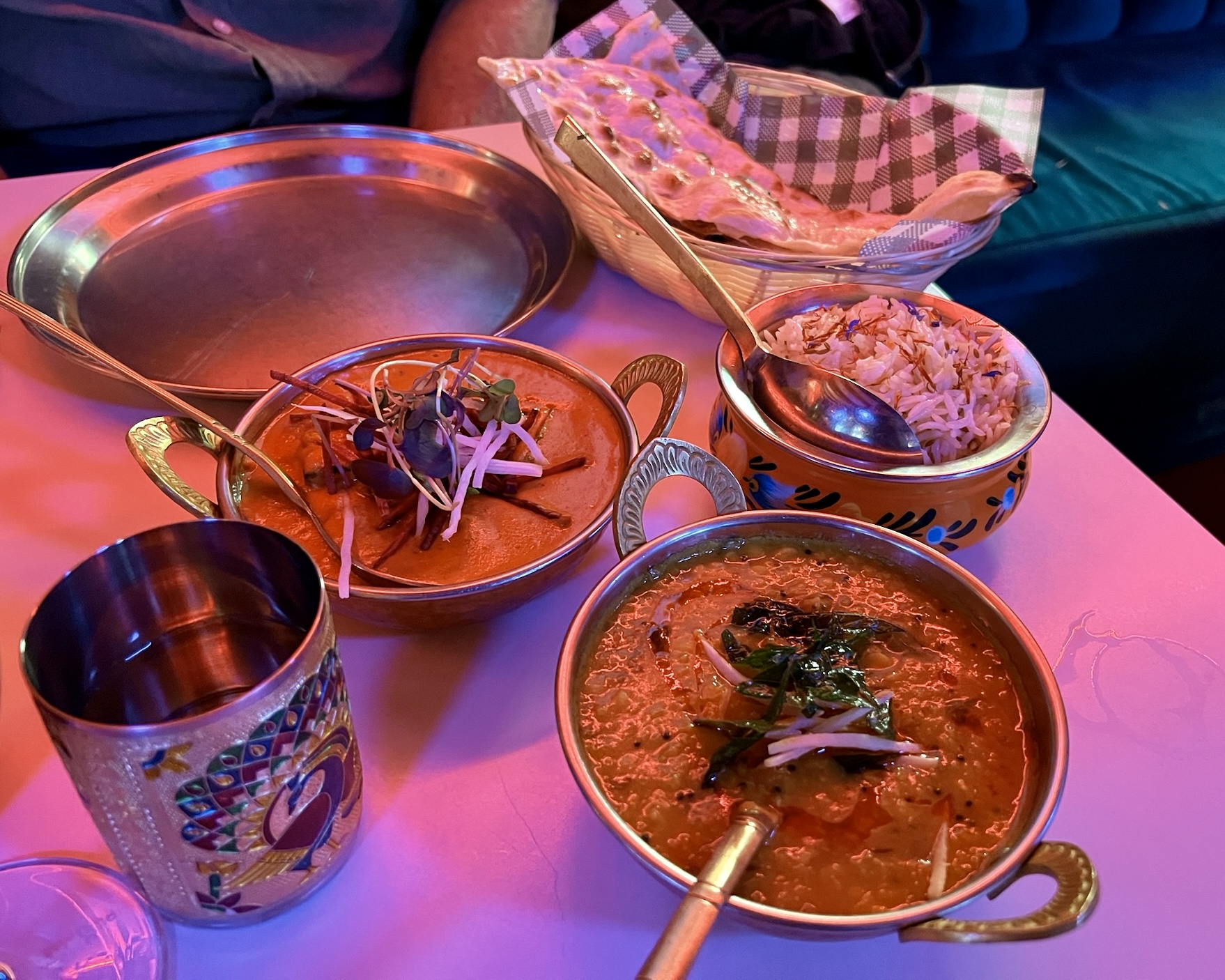
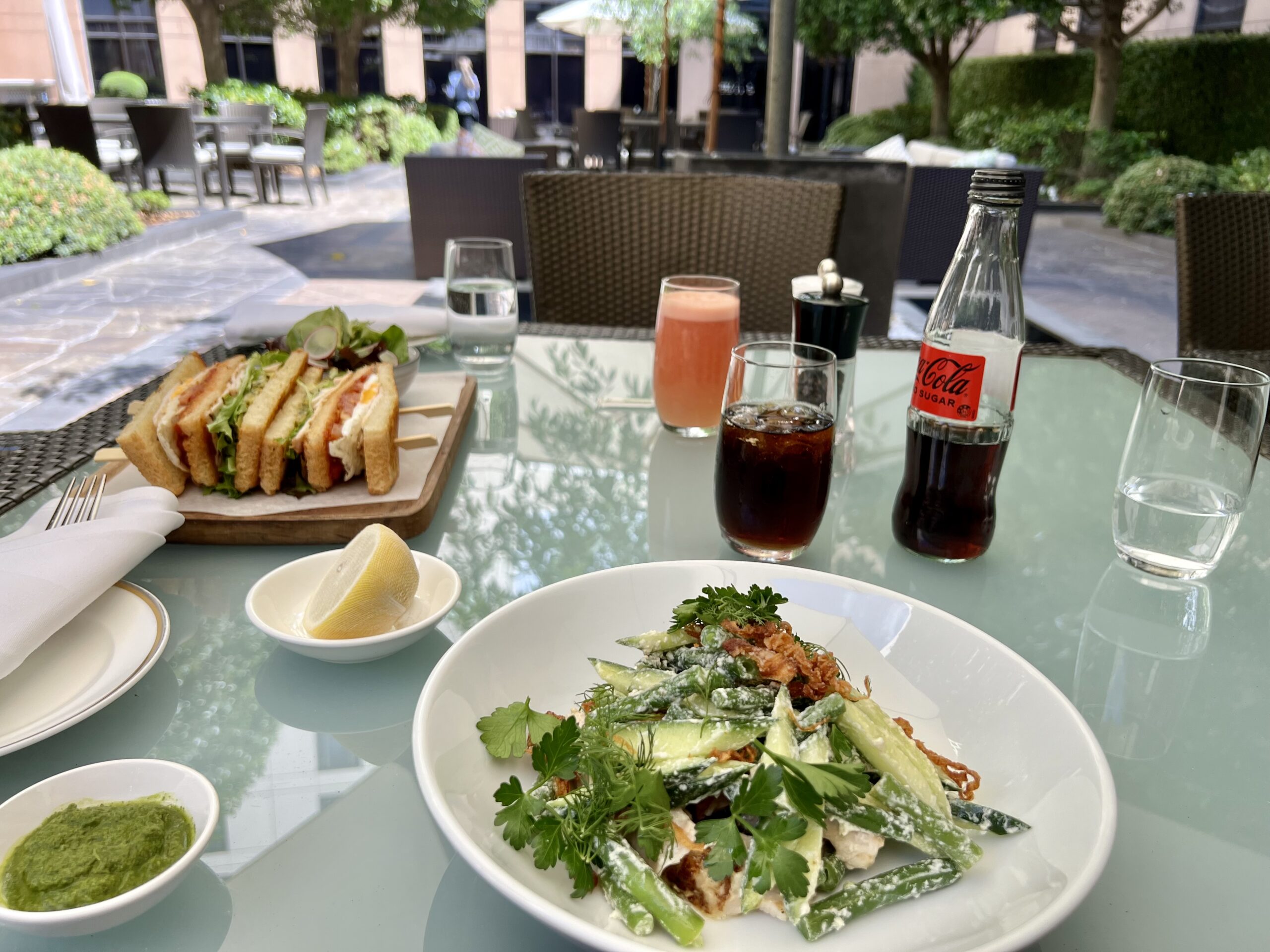
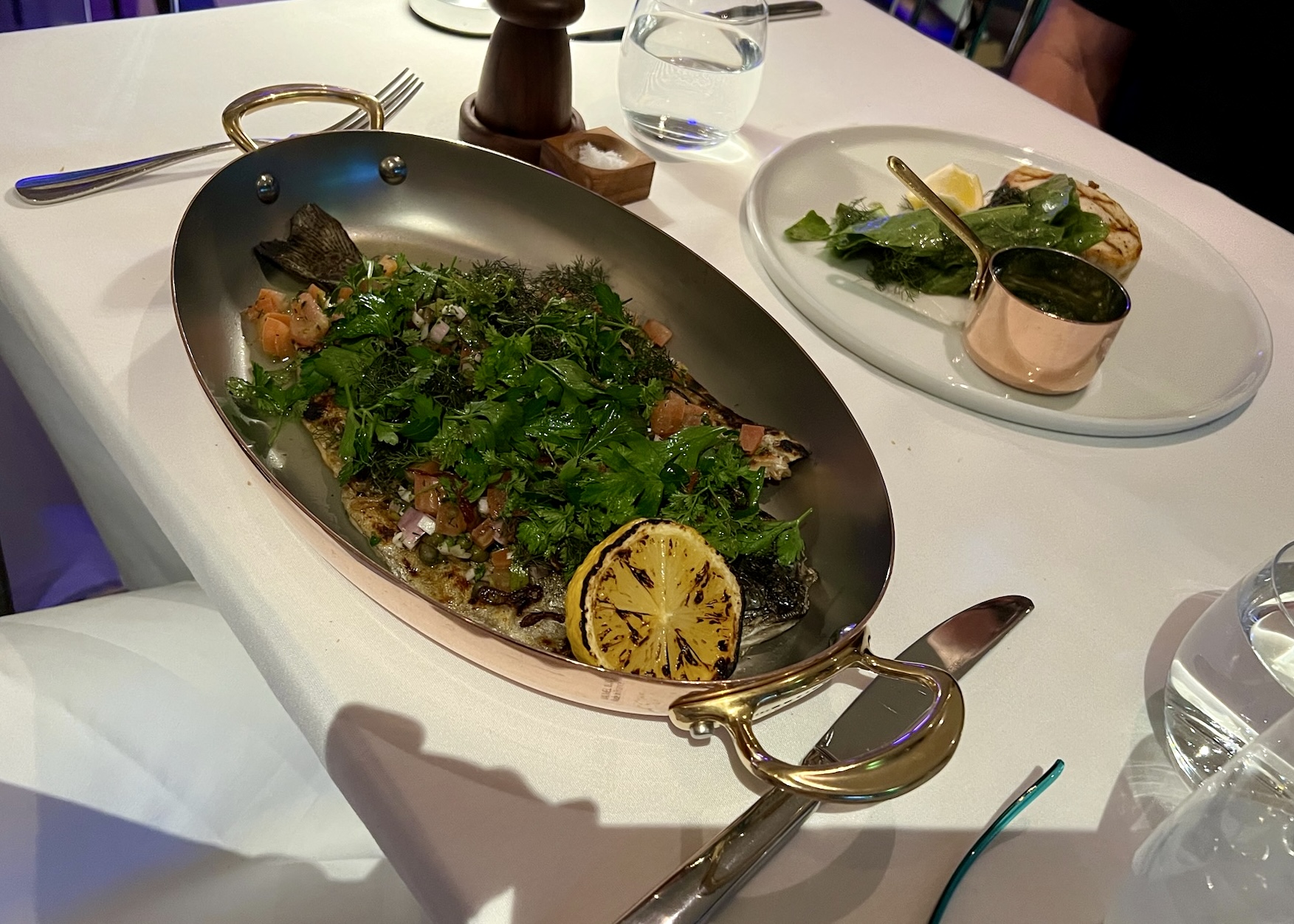
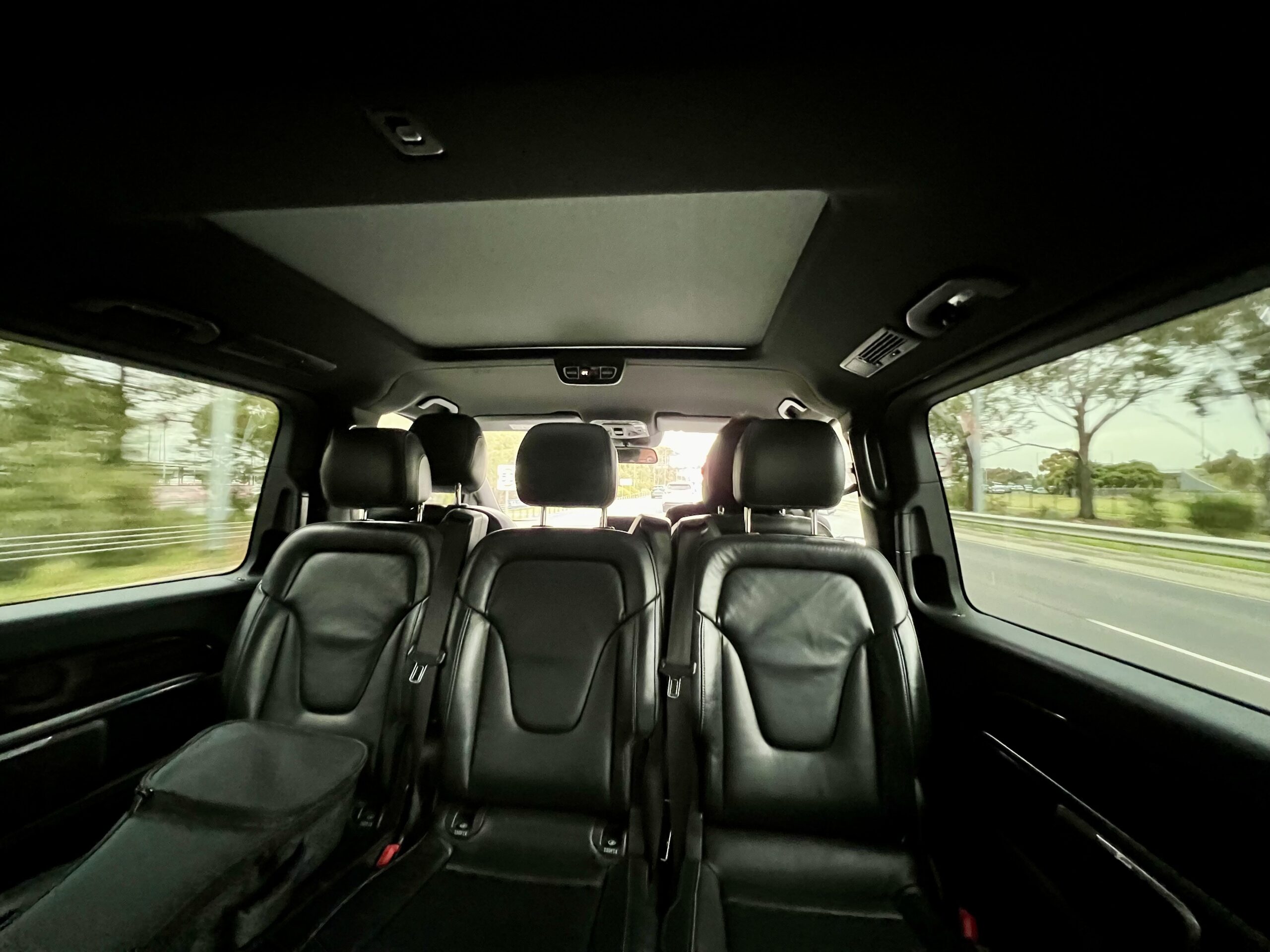
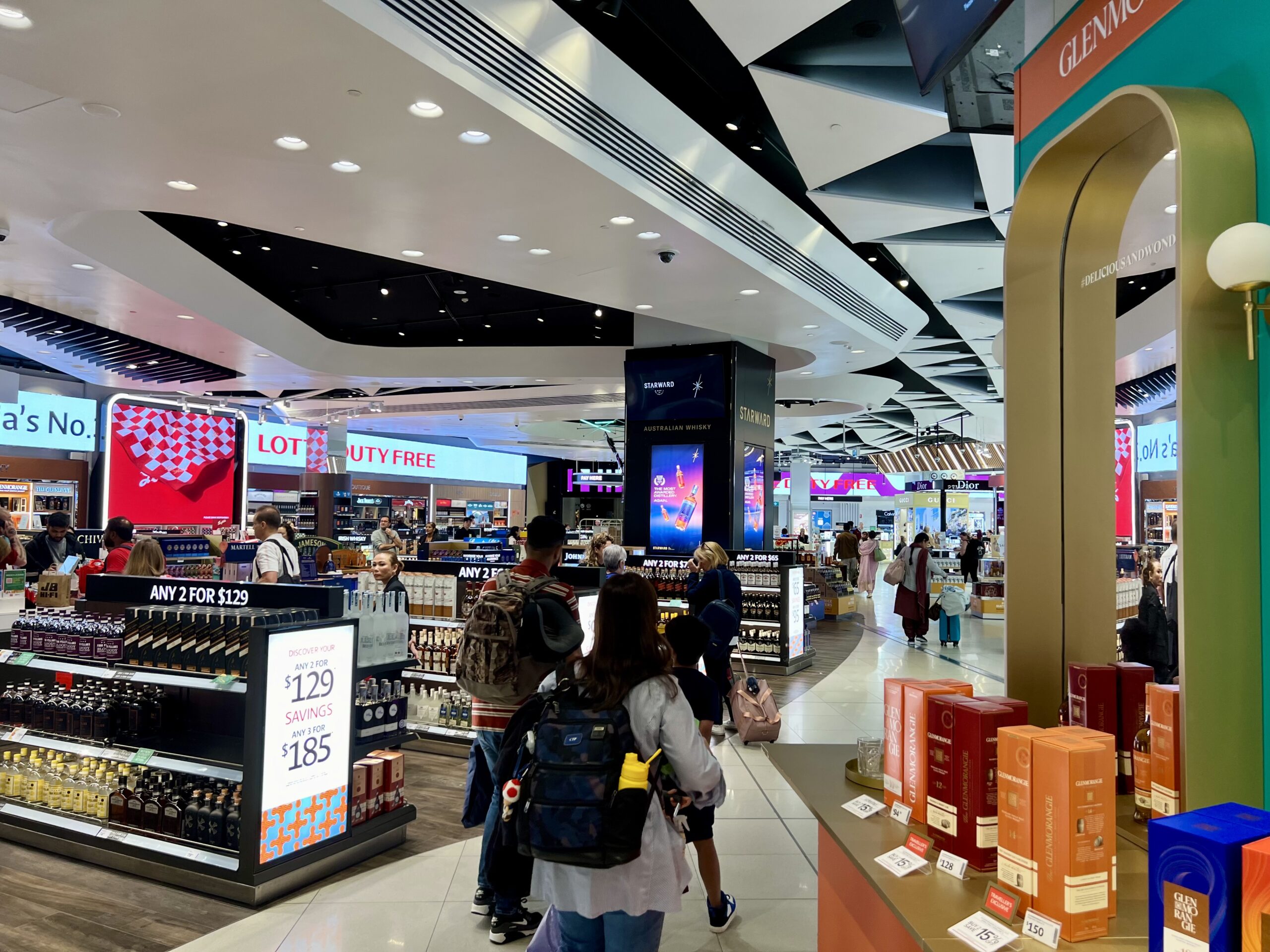
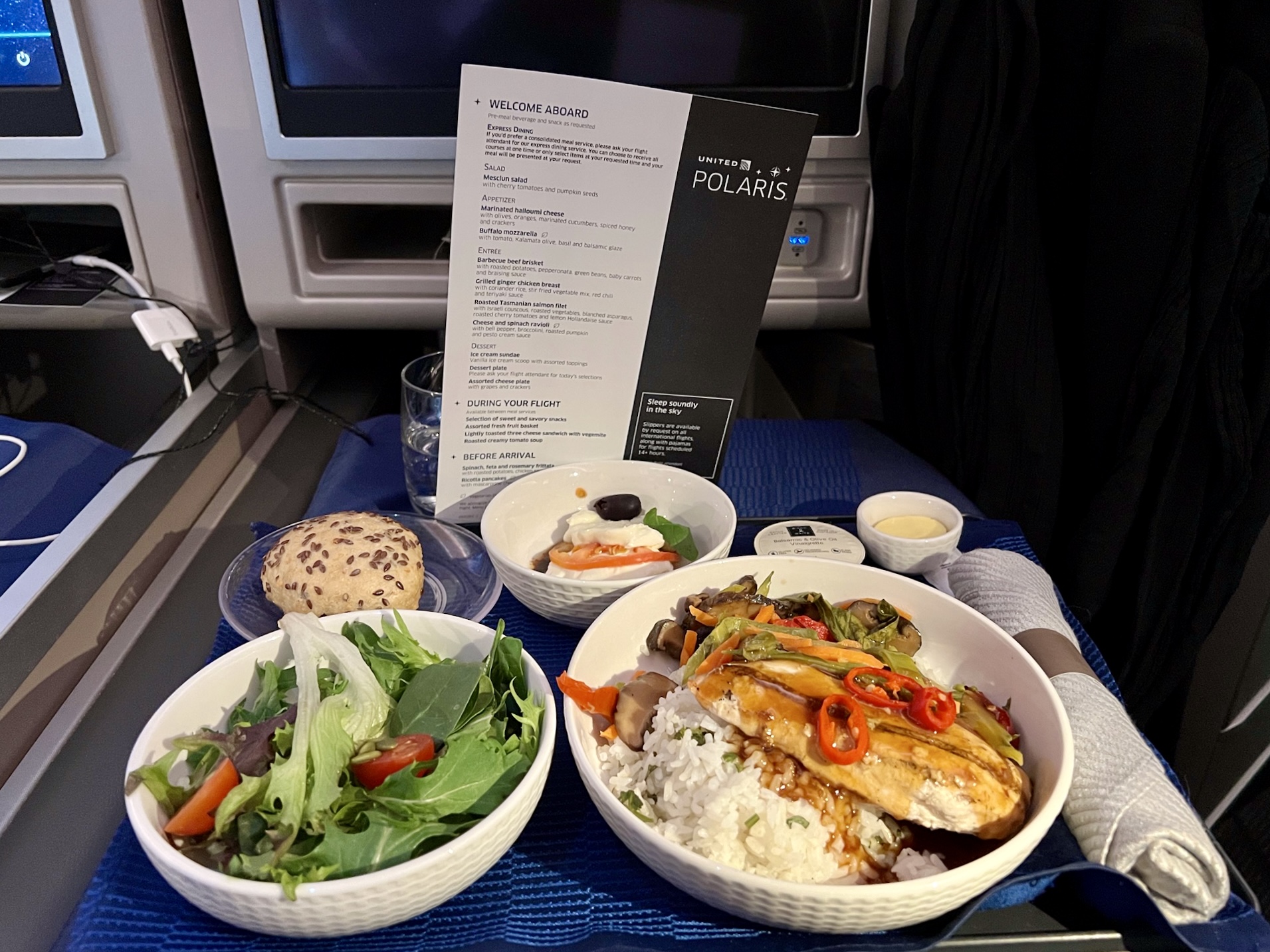
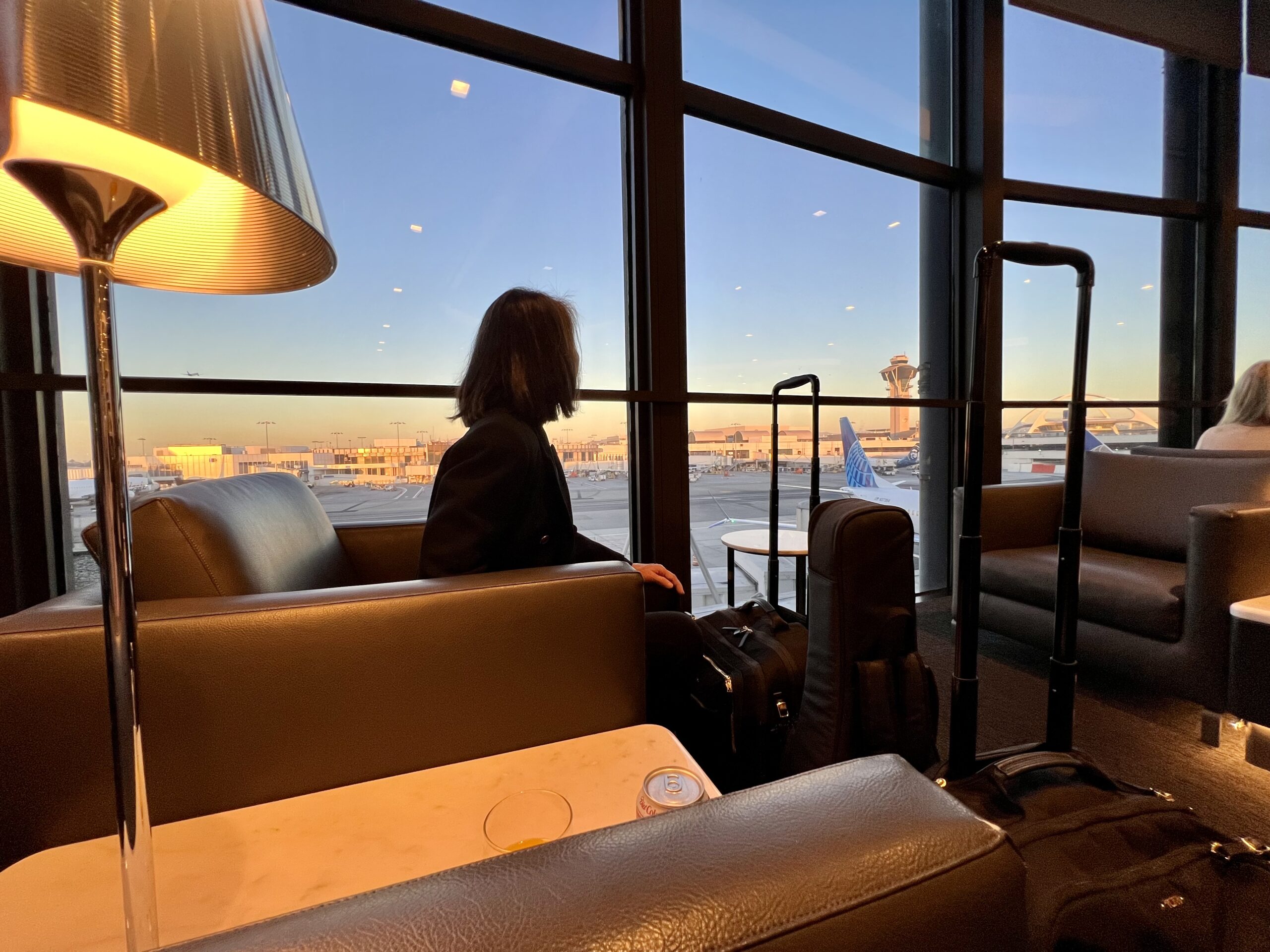
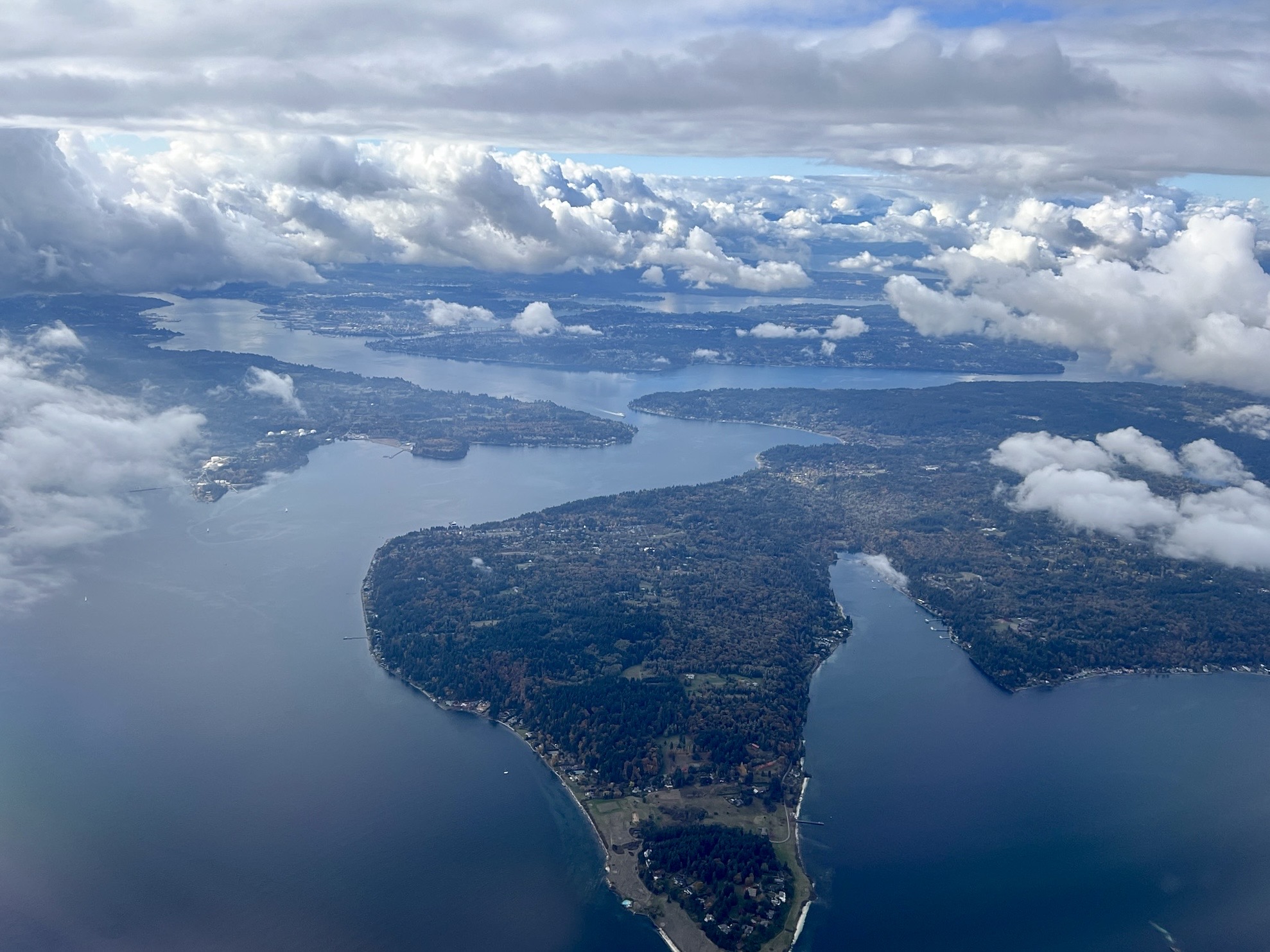
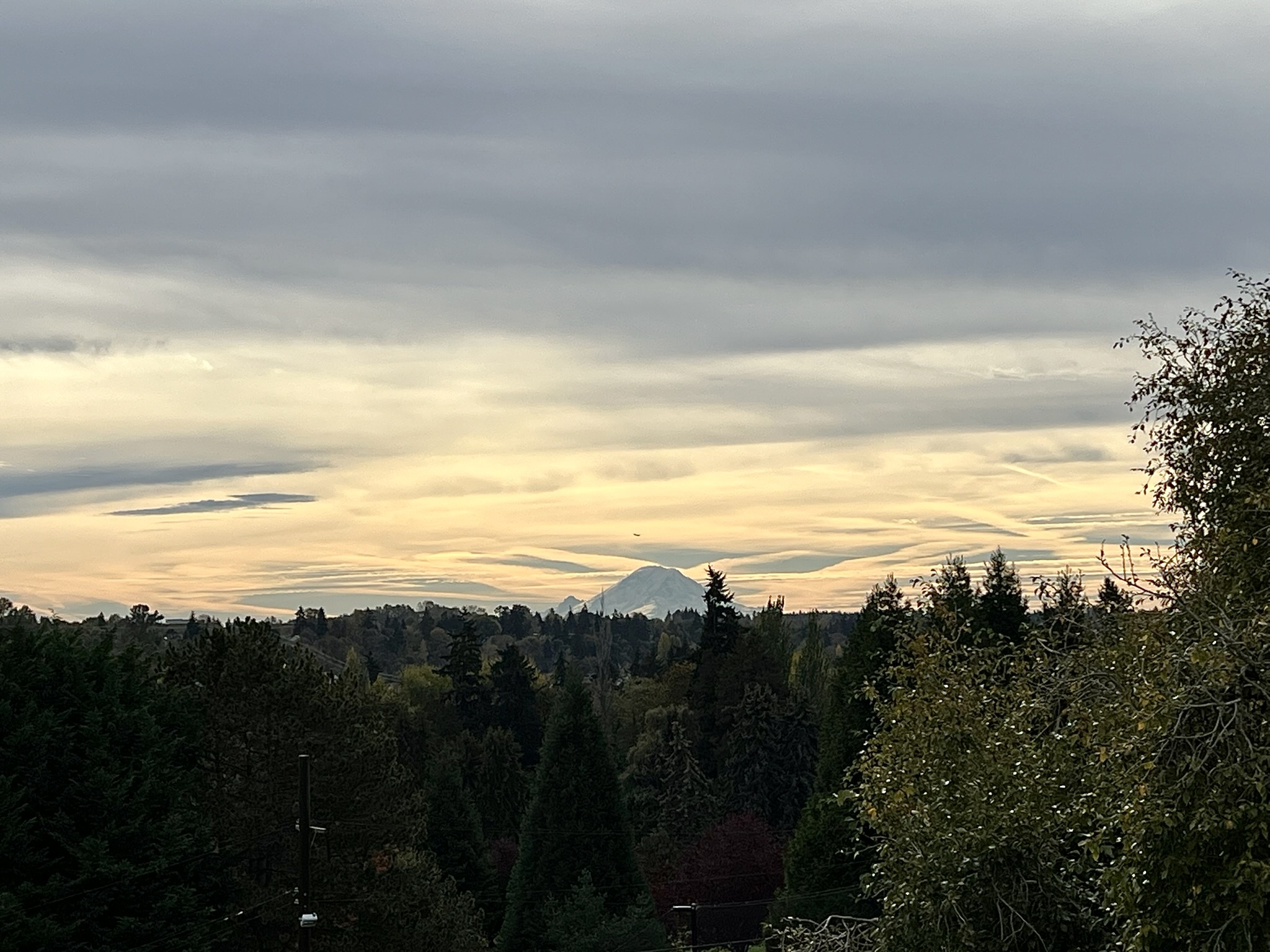
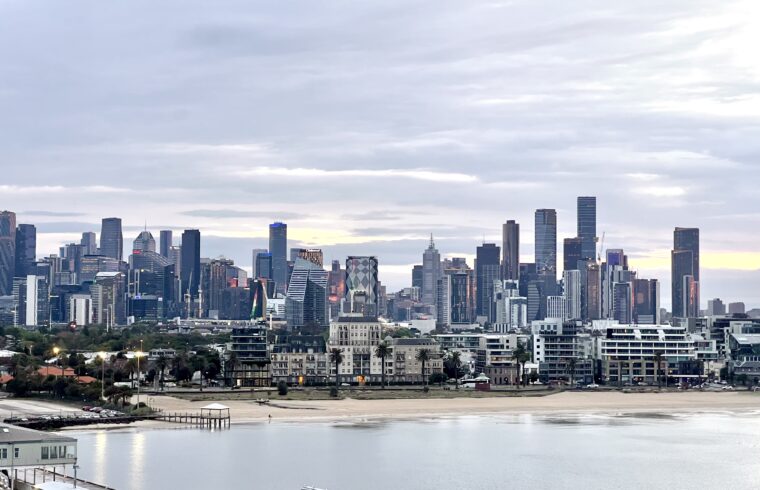
Our 23 days on the Queen Elizabeth is almost over, and not a minute too soon. The water, though technically not rough, kept the ship in noticeable motion once we entered the Tasman Sea, where the wave energy from the Southern Ocean mixes with the Pacific.After another four days at sea, the promise of land looked good. Here we approach South Point, the southernmost tip of Australia, and enter Bass Straight, between mainland Australia and Tasmania.The ship hugged the coast for calmer water, the deep blue of open ocean changing to a cerulean blue. Here we pass the Wilsons Promontory Lightstation.The next morning, alter an early breakfast, we stood on deck and watched the sun rise as the Queen Elizabeth docked at the cruise ship terminal in Hobsons Bay. Then we sat around and waited for them to let us off the boat. It took them more time to let us down the gangway than it did to clear passport control, customs, and agricultural inspection.Once we were feet-dry, we needed an SUV to get us and our bags of dress-up clothes and souvenirs to the hotel. The ride was easy, despite traffic, and we made our way quickly over the Yarra river.We booked a week’s stay at the Park Hyatt Melbourne. We’ve enjoyed all our stays at Park Hyatts, and this one’s location at the edge of the city’s CBD, right up against beautiful parks and gardens, is perfect.After the ship, the photographer was uncharacteristically happy with the size of the room.And the bathroom was nearly as big as our entire “suite” on the ship.Outside the window, we had a nice rooftop view westward to the city.With no real plans for our arrival day, we decided to walk through the nearby Fitzroy Gardens. There are lots of beautiful walks there, along these rows of centennial English elm trees …And other seemingly endless avenues of trees, above and below …Smaller paths lead through foliage and alongside little streams …Giant cockatoos and colorful lorikeet parrots fly about in the trees, but that day only the striking Australian magpie made itself available for photos.We took some time to sit and watch fountains. We’ve always liked parks, but weeks on a ship, even with breaks, sure sharpens appreciation.South of the park, over Wellington Parade and the train tracks, is a little neighborhood called Jolimont. Here we had a sidewalk lunch at Bedggood & Co. – egg and avocado toast and spanakopita. Food with flavor.That evening, we walked through Parliament Park on the way to and from dinner, and sat and watched the fountain, and a couple of ducks that seemed to be responsible for it.Our dinner was at Pho Nung, a Vietnamese restaurant not too far into the business district. Pho and Bho Ko. We loved it.The next day we went exploring, starting at the nearby St Patrick’s Cathedral, seat of the Melbourne Roman Catholic Archdiocese. This is the side entrance.Building began in 1851 and extended into the early part of the 20th century, with further expansion in the 1990s. Apparently popular with popes, who have dubbed it a minor basilica, it is a striking cathedral.And it has a pipe organ the size of a four, maybe five, bedroom house.From the cathedral, we went back to Fitzroy Gardens to visit the conservatory …Because the photographer can’t not visit a building full up with flowers, above and below.Wanting to get a sense for the city, we took the Circle City tram. Number 35. The city has many trams crisscrossing it, and all trams running within the CBD, including no. 35 that circles it, are free to all riders. We got on at a quiet corner and found a seat. Later it was standing room only …Which made it hard to get photos out the windows, without body parts …The tram goes as far as the Docklands on the west side of the city. The west side has more of an industrial feel, but it has the home team’s soccer stadium, restaurants, a yacht harbor, and the city’s Melbourne Star observation wheel.Completing most of a circuit, we jumped off the tram on the north side and walked up Elizabeth Street to the Victoria Market. The front is deceiving, as there are some 17 acres tucked behind it.The front building houses the wet markets – red meat and seafood …Beyond, both inside and outside, are any number of places to find a lunch …We settled for an inside food hall and ate salmon poke bowl and a lobster roll.Deeper into the market are long sheds sheltering all sorts of merchants, starting with alphabetized vegetables …And unalphabetized other foods …And food trucks …And random not-food stuff …Here the blogger gets advice from a local on how to order an American Doughnut. The recommendation: a double jelly …The doughnuts are really beignets stuffed with mixed fruit jelly. Similar but not quite as good as a malasada, but malasadas are at the top of the doughnut food chain.Our days in Melbourne had perfect spring weather: sunny and cool taking turns with sunny and warm, with only one day of spring rain. On that day, we grabbed our umbrellas and walked to a little cafe in the park for toasties. And a salted chocolate caramel.We really like Melbourne. The CBD is not all office buildings. It has a vibrant street life, with people shopping, eating, and just going places. Walk through an unassuming door and you can find yourself in a multi-floor shopping center …Or a Victorian mall, like the Royal Arcade.And there are lots of alleyways and “little streets” hiding cafes and more shops.Plus there’s Chinatown, with its colorful streets and brick alleys – above and below.And the mix of architecture makes walking the streets interesting. Broad avenues like Bourke Street are lined with creatively reenvisioned storefronts from the last century, or the one before that …while on others, skyscrapers share space with stone churches …Just to the east of the CBD, where the Park Hyatt is, are more stately buildings, like the Victoria Parliament House, the state’s capital …And 19th century brick buildings, like the College of Surgeons, a former 19th century public school …And in all directions are parks and gardens. The 25 acre Carlton Gardens sits on the north side, above and below …It surrounds the Royal Exhibition Hall, shown above, and the Melbourne Museum (below).And as we like to do, we visited the museum, with timed tickets for the last day of their special T-Rex exhibit (below).Victoria the Tyrannosaurus is 67 million years old and the most complete T-Rex found to-date. Dug up in the badlands of South Dakota, it is named for Victoria, Canada. Nevertheless, she is quite popular in Victoria, Australia.The lead up presented information on what is known about T-Rex’s environment and lifecycle, using video dioramas and 3D models.The penultimate display is her head, unceremoniously presented separate from her body, to allow closeup inspection of the original fossil. And it’s teeth. Then you get to see the assembled original fossilized skeleton. Cartoon and rubber Tyrannosaurs are so pervasive, we forget the reality of them. Up close, it’s a bit mind numbing to imagine one alive. We were grateful for the 67-million-year distance between us. After the exhibit, we had tickets for the 3D IMAX show that takes you through the current understanding of T-Rex and its world.The museum’s other, permanent, exhibits included the usual fossil reproductions of sauruses …With interesting attempts to immerse visitors in the Cretaceous world …And another headliner: the museum’s original fossilized skeleton of a triceratops.Unfortunately, the museum’s section on indigenous history and culture is a bit thin and more than a little apologetic. A bark canoe was just about the most interesting artifact on display.Ironically, the museum’s bug room was better presented … but then bugs rarely have a say in how they or their culture are represented.And their enclosed garden featuring endemic plant and animal life is impressive. One afternoon we stopped by the State Library, where as many people were enjoying the outside (above) as the inside (below).We visited the domed reading room, thinking we might, well, read …But it was pretty much standing room only.They did have on display a Lego model of the library, built by the only Certified Lego Professional in the southern hemisphere. We thought he could have done a better job with the glass dome. On a sunny Sunday, we decided to take the train to Brighton Beach. Flinders Station, like virtually everything else, was a short walk.The inside is classic train station: ticket kiosks, food, and echos.The station has served Melbourne and beyond since the middle of the 18th century …It’s now the busiest station in Victoria and an integral part of Melbourne’s metro network.Our ride was 11 stops and took about 30 minutes. Most stations served little town centers, like Gardenvale above, now all part of greater Melbourne.We got off at Brighton Beach …Looking south along the beach, Sandringham is in the far distance …Small cormorants, which we learned are Little Pied Cormorants, fished and dried themselves on the rocks …Offshore, Port Phillip Bay was dotted with boats and Sunday regattas.We followed the beach path north for about a mile … To the colorful Brighton Bathing Boxes …We borrowed the porch of one bathing box and sat to watch the beach and its goers. The first boxes were built in the 1860s to accommodate the modesty of the times. They are privately owned and now sell for about $350k, assuming one comes up for sale.After shaking the sand from our shoes, we worked our way inland through well kept neighborhoods.Our destination was the top of Church Street, where Middle Brighton’s quaint shopping district begins.The photographer had picked The Pantry as our spot for lunch out of doors. It was Sunday-busy. The food was good.After lunch, we walked the shopping street and found a store a little like West Seattle Runner. The photographer bought a souvenir in the shape of a lightweight sports hoodie.At the bottom of Church Street is the Middle Brighton Train Station. We tapped our MyKi cards and sat on a wooden bench to wait for our ride. On another fine day, we walked a couple of miles south, along the Yarra River, to visit Melbourne’s Royal Botanic Garden, which is part of the larger Kings Domain parklands.On the way, a lorikeet watched us while having a nibble.There are a number of entrances to the garden’s 95 acres. The first one we tried was at the Temple of The Winds, though it was no windier than elsewhere.Then we walked to the main entrance, which is across from the Shrine of Remembrance. It was built in memory of Australians who lost their lives in WW I and now serves as a memorial to all of Victoria’s war dead. Here is the view back to the city from the steps of the monument.The Botanic Garden itself is idyllic …With paths through prehistoric-looking fern gullies.And all kinds of trees to distract the photographer. We picked a bench by one of the little lakes and watched the paddle-wheel water-weeder work.The odd bird wandered by, like this Eurasian Coot with its leafy toes that work like webbing.And this Australasian Swamphen, with its huge feet.Once again the photographer came through with a lunch spot, the only one in the park …We lucked out with a table in the shade and ate government-issue hamburgers and salads.We took a different way back, past the roses …Out of the garden and across the tracks …And into Yarra Park and the Melbourne Cricket Ground, the site of both soccer and rugby stadiums.In the evenings, we ate mostly ethnic. Like Australian-rules Mexican food at Fonda Mexican, a small local chain.And grilled chicken and honey ribs, with passion fruit and lychee juices (above) and es campur (below) at ENAK Indonesian restaurant.Es campur is like cendol, a shave-ice dessert with random tropical fruit, red beans, grass jelly worms, condensed milk, and it seems like anything else handy. Refreshing and not too sweet.Another night we had thali from Gurkhas, a Napalese restaurant in Chinatown. And another night, we had beef rendang and chicken curry at Hor Kitchen Malaysian restaurant. And still another night, we ate at Daughter In Law, a Sri Lankan restaurant, where we had paneer makhani and yellow dahl – in pink lighting. On our last day in Melbourne, we wanted to picnic in the park, but it was too windy. So we ate in the hotel’s protected courtyard. And we ate at the hotel again for dinner and had rainbow trout and fresh-caught swordfish.The next morning, we were off to the airport, the driver trying to spot kangaroos for us. What the photographer really wanted to see, though, was a wombat. No luck on either count. As at nearly every other modern airport, we exited the country through the gift shop. Then spent an hour or so in the ground level Air New Zealand Star Alliance lounge …Then we were tucked into our airplane seats for the 14 hour flight to Los Angeles. United has a hard time measuring up to its international competitors. The food was pretty terrible (below), and the flight attendants seemed to believe they are doing passengers a favor by showing up for work. We’ll take Turkish Airlines for food any day, and any Asian airline for in-flight service.We landed in LA just in time for sunrise, and another turn at sitting in a lounge waiting for our flight back to Seattle.Unfortunately, the sleep we got on the long flight was no help with jet lag. Flying eastward is the worst. We both had trouble keeping our eyes open on the short flight to Seattle. The photographer did manage to take occasional pictures out the window, though. Bainbridge Island looked green and welcoming as we got ready to land.It was good to be home. Again.