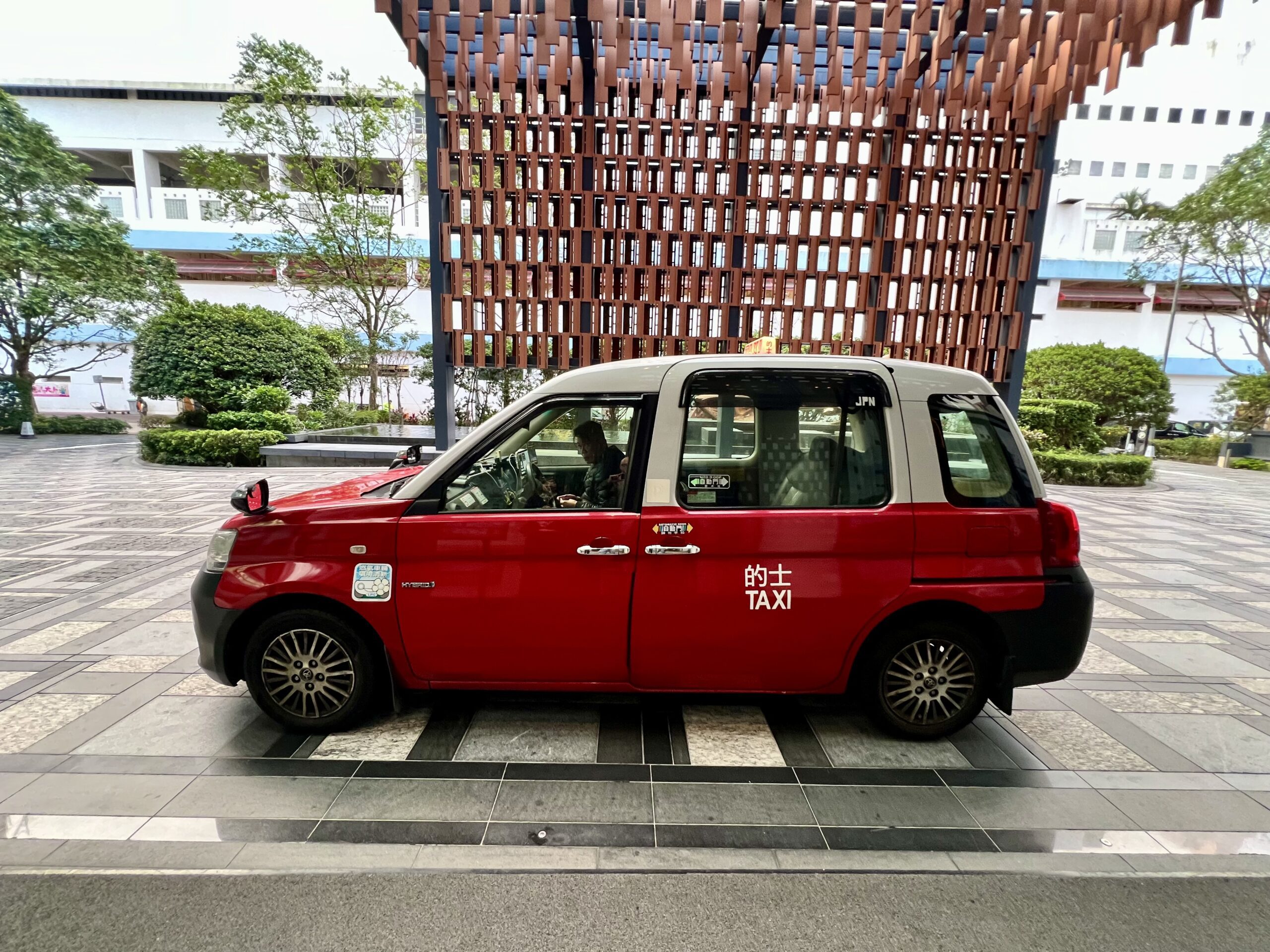
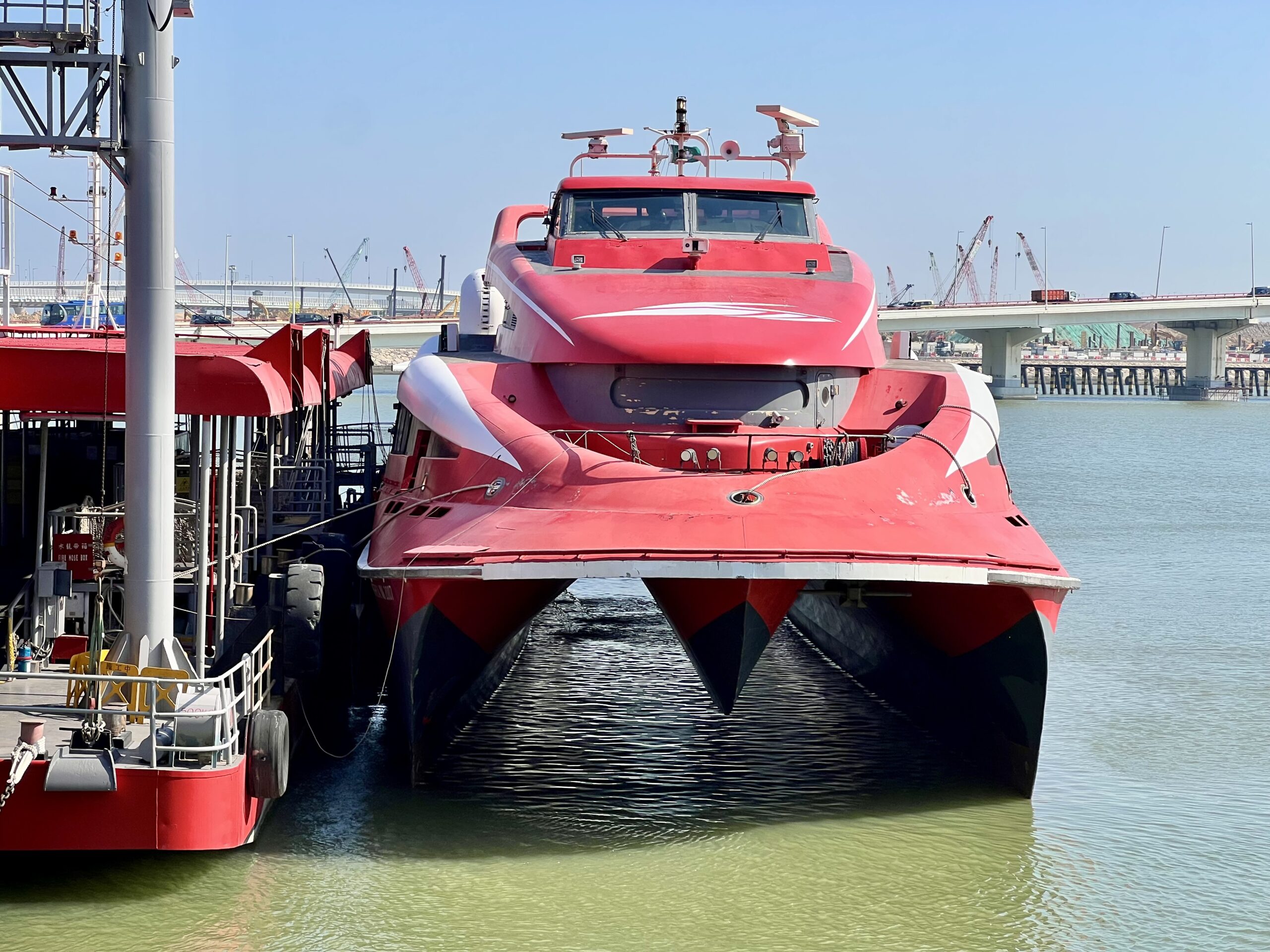
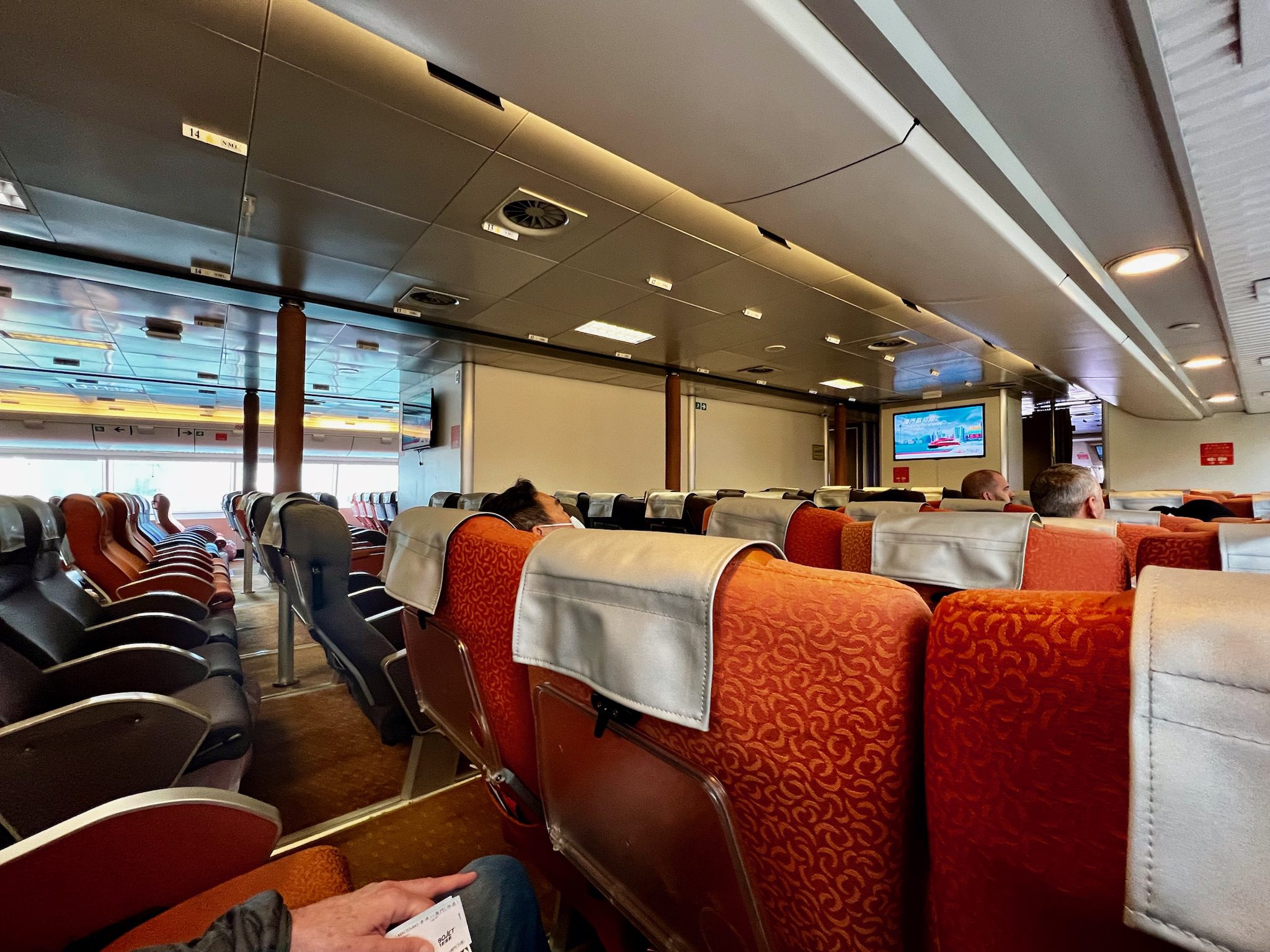
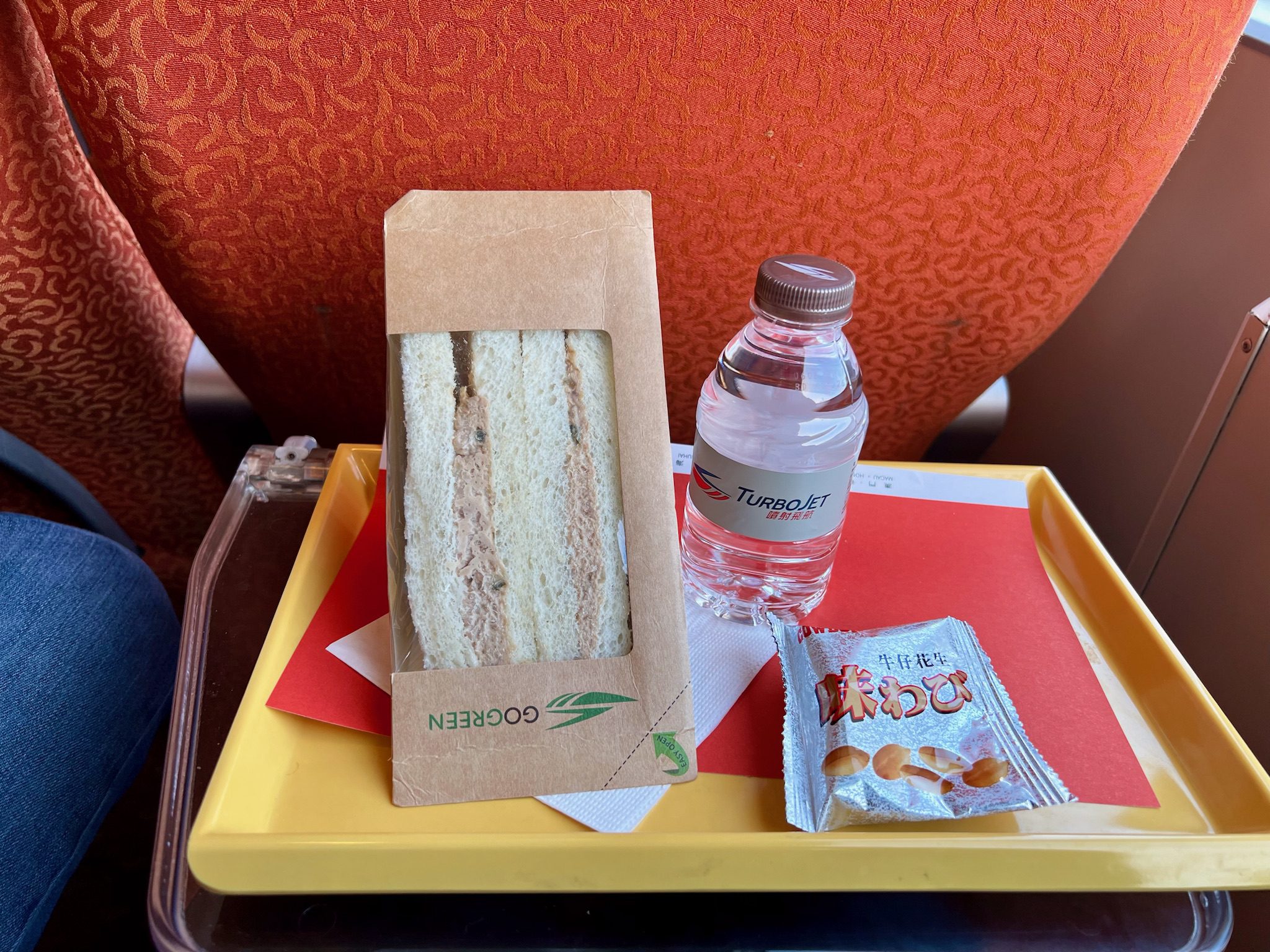
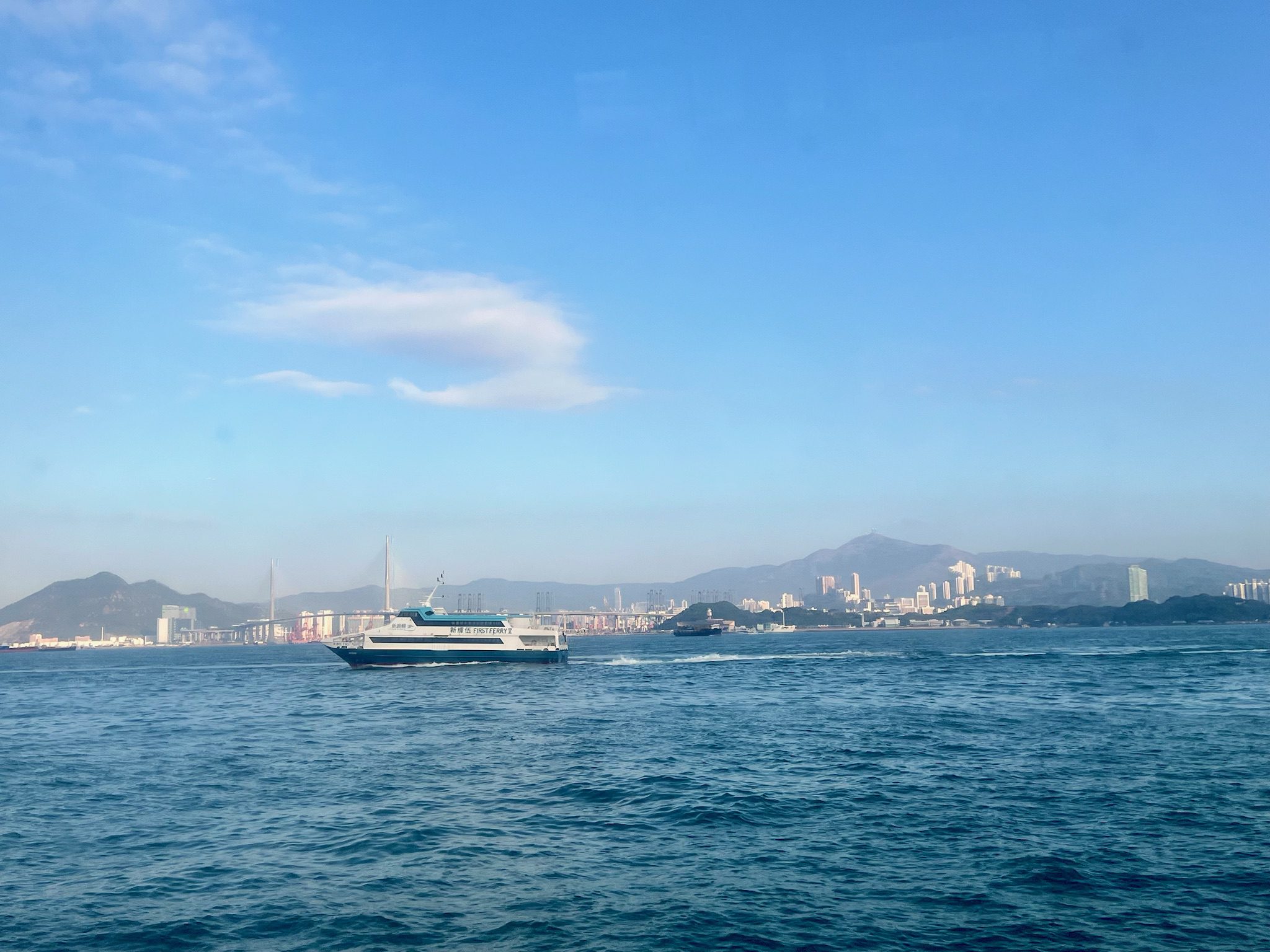
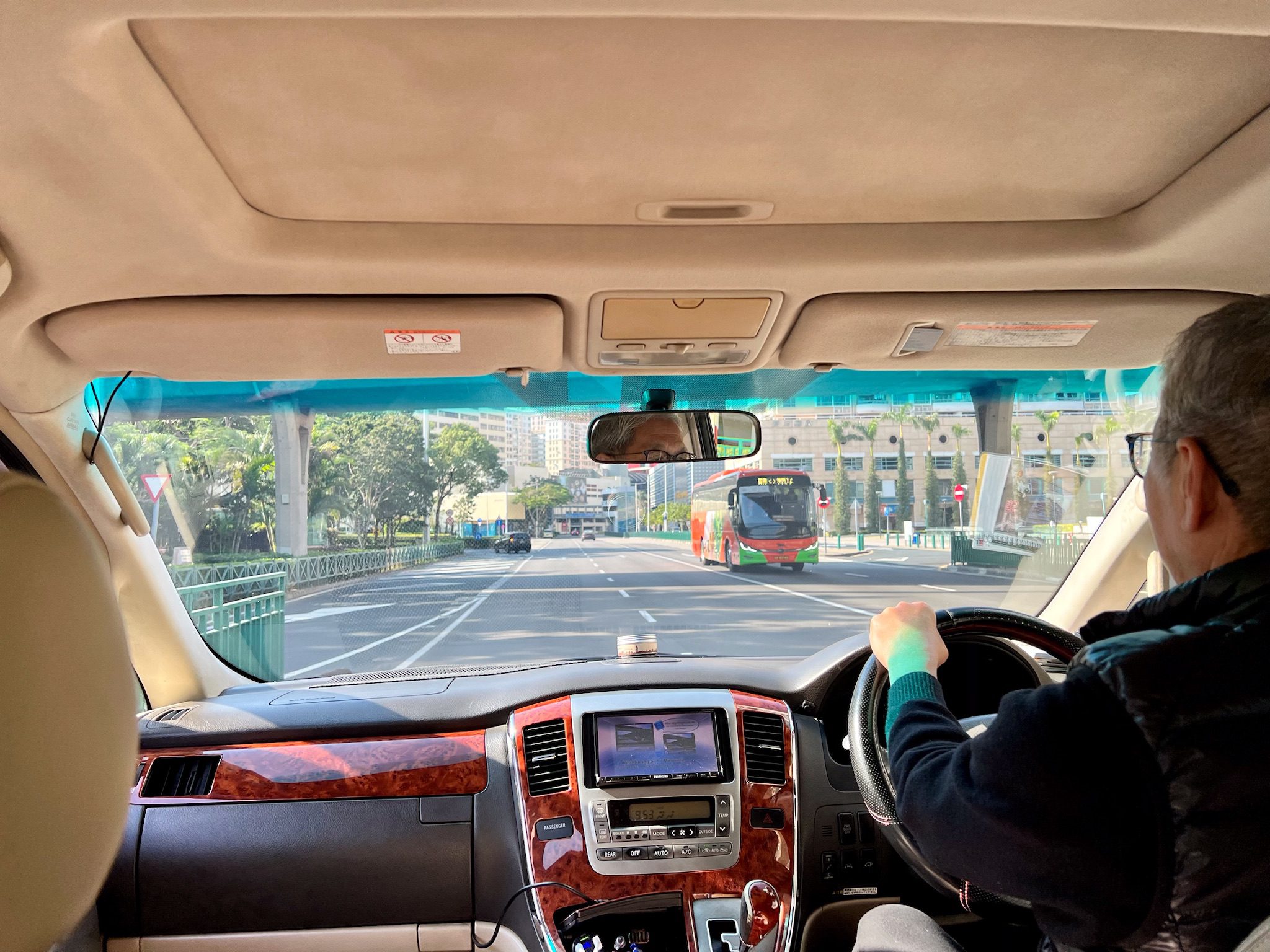
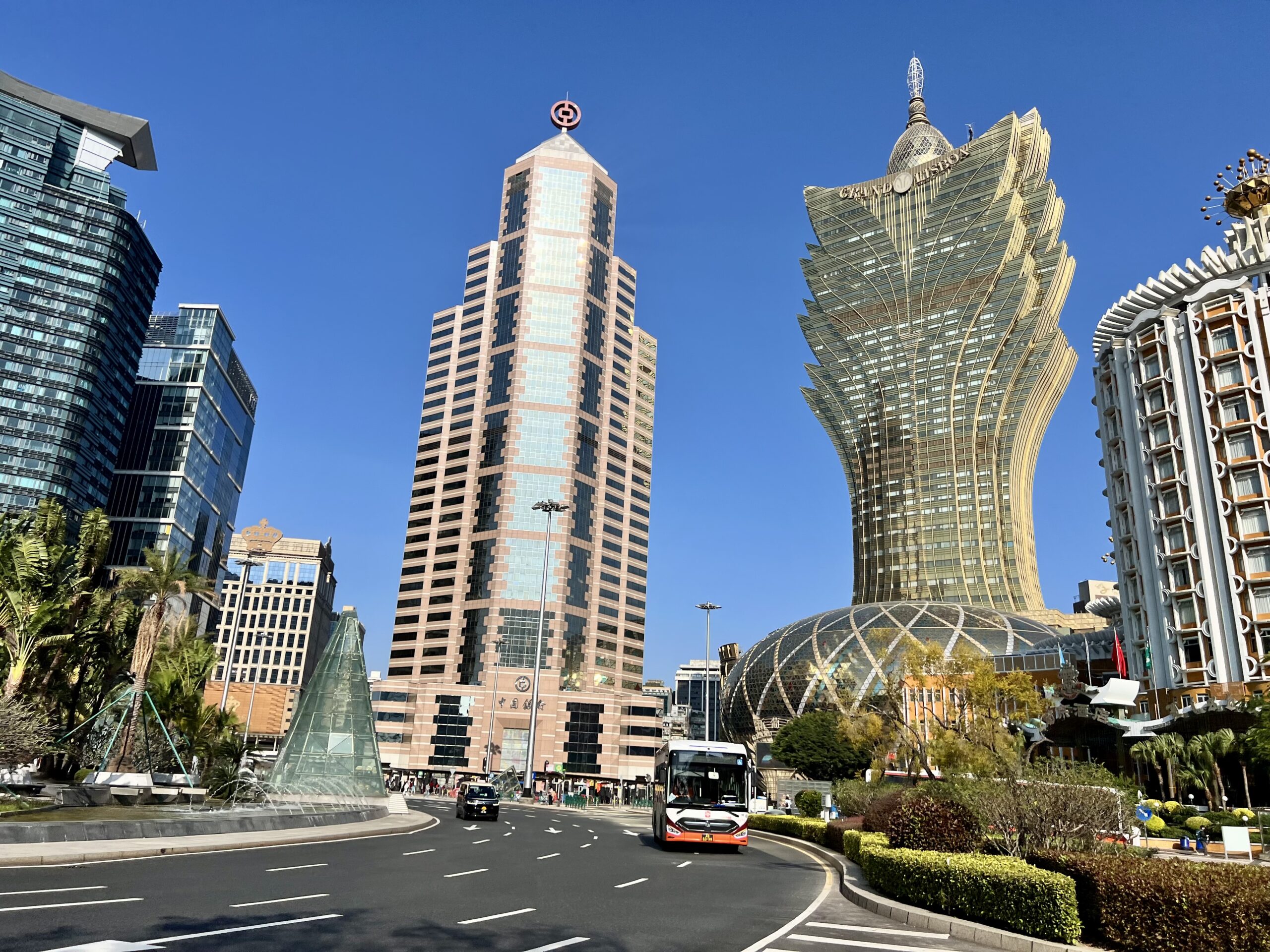
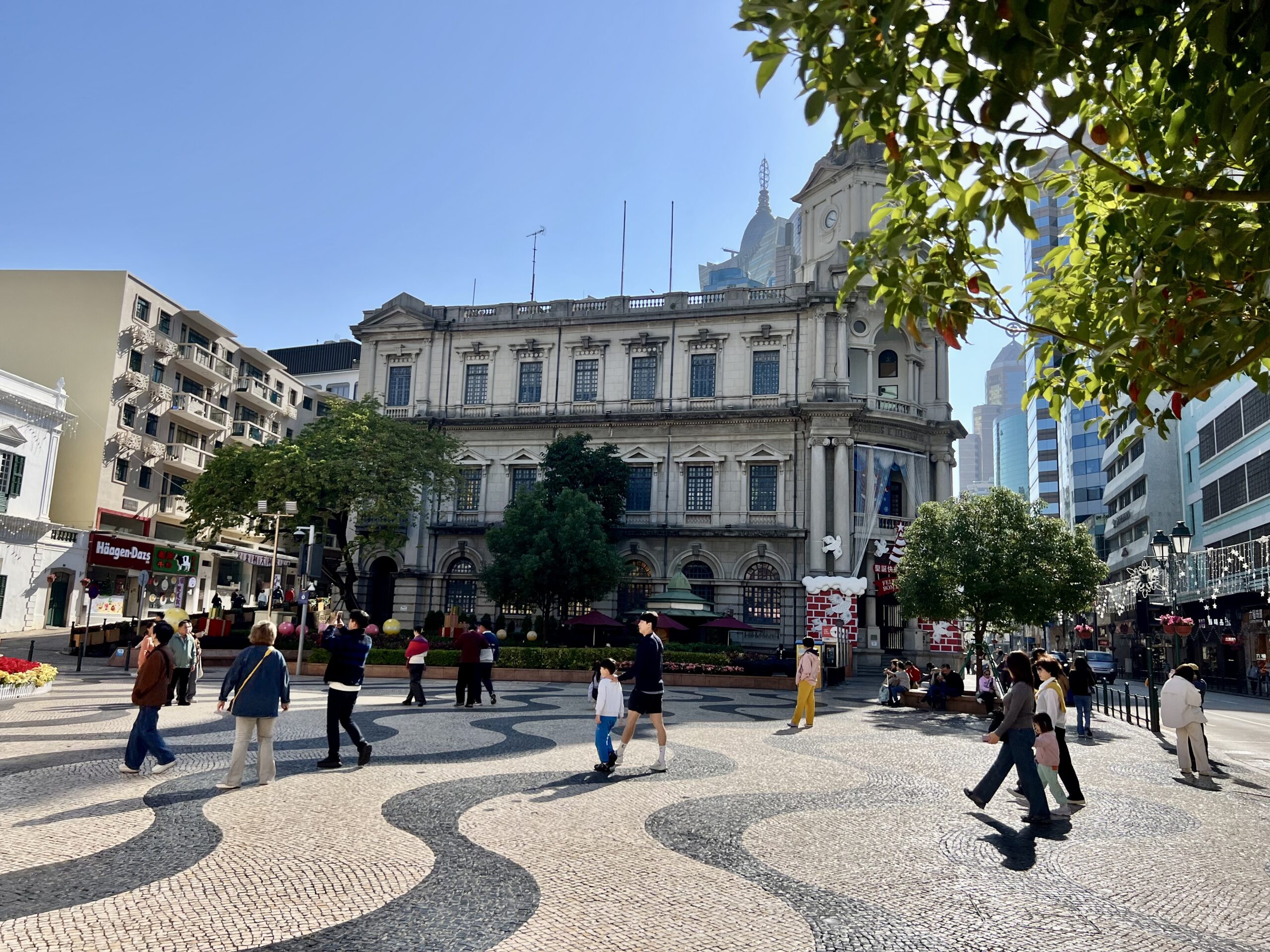
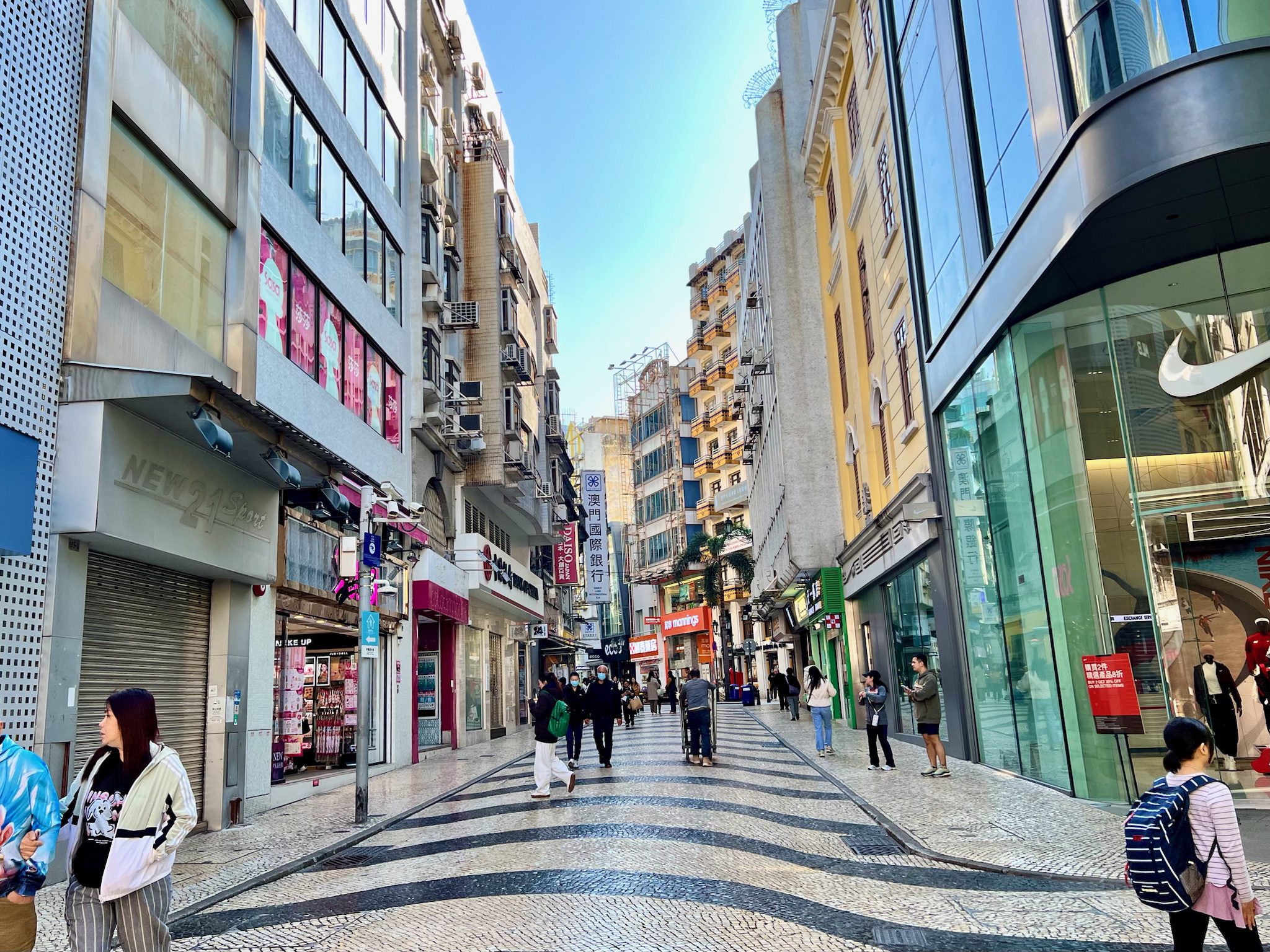
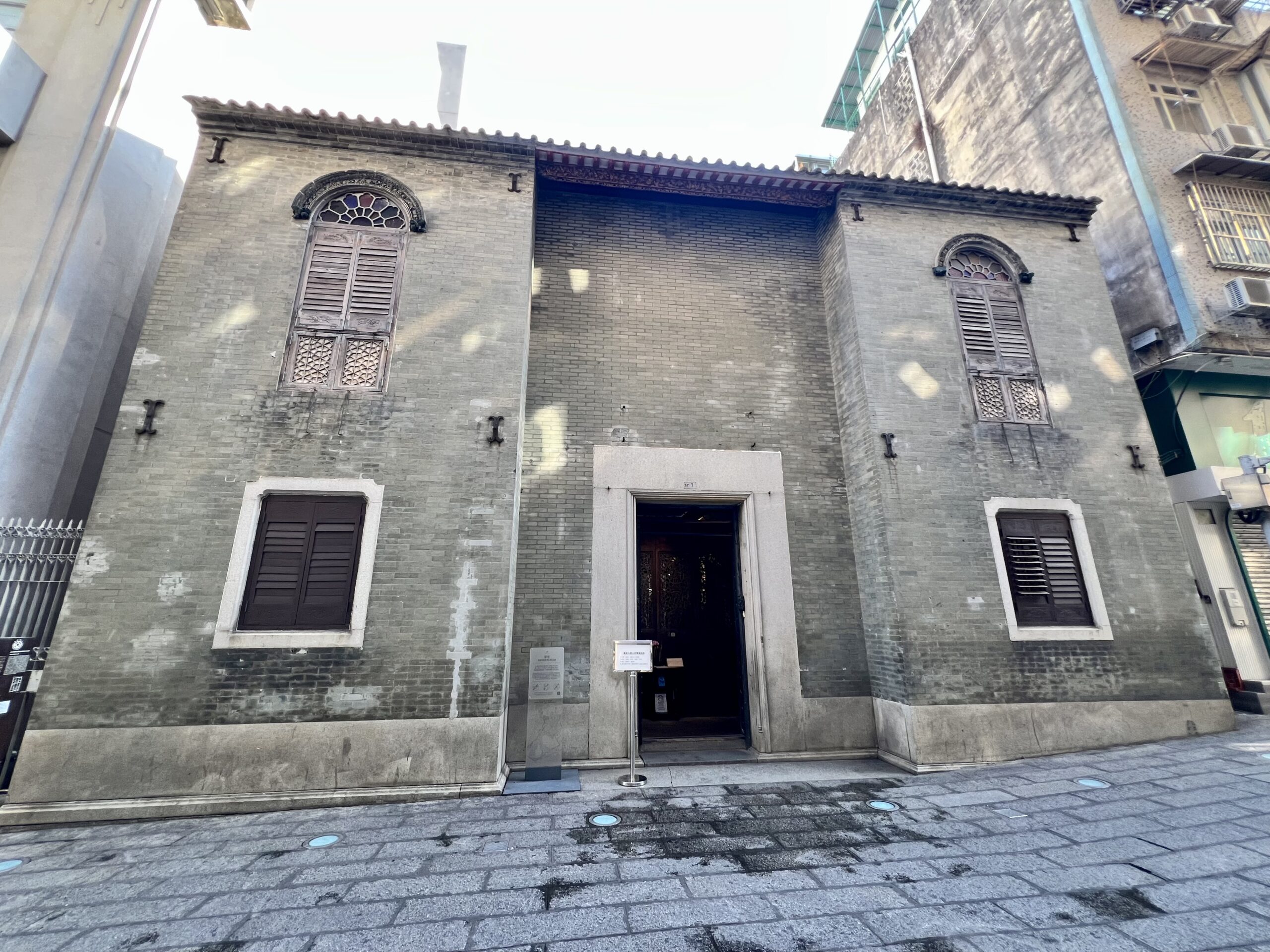
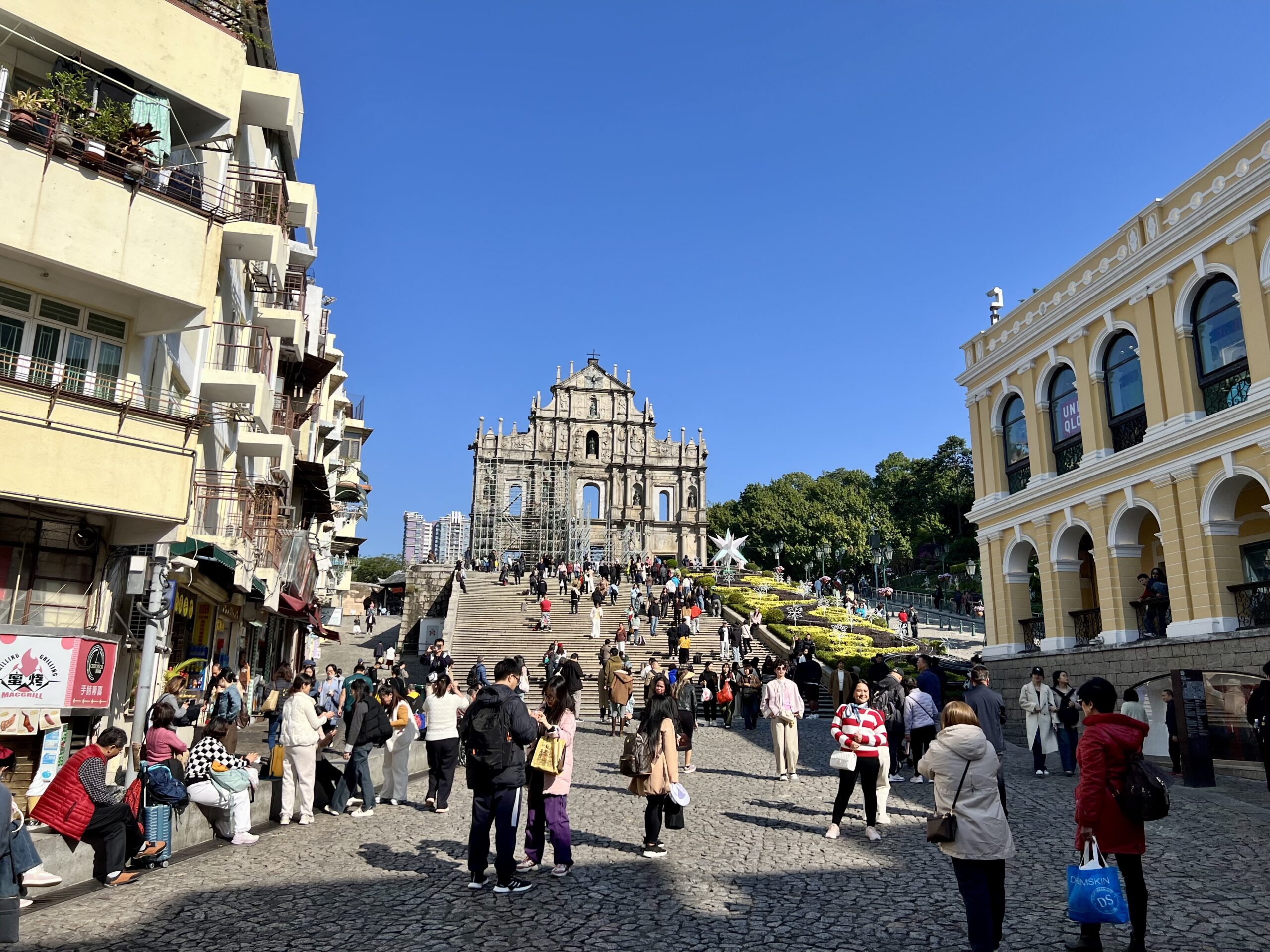
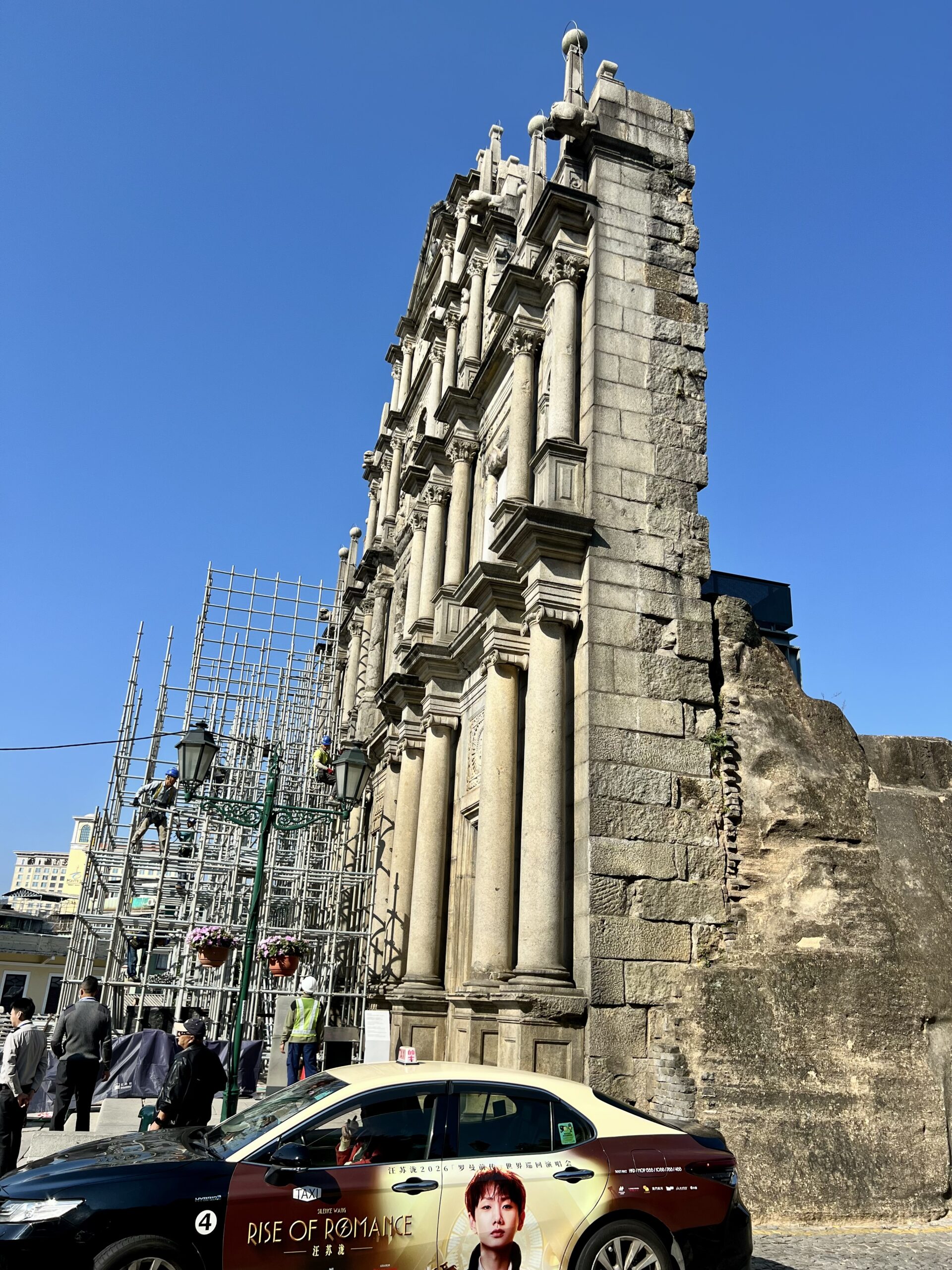
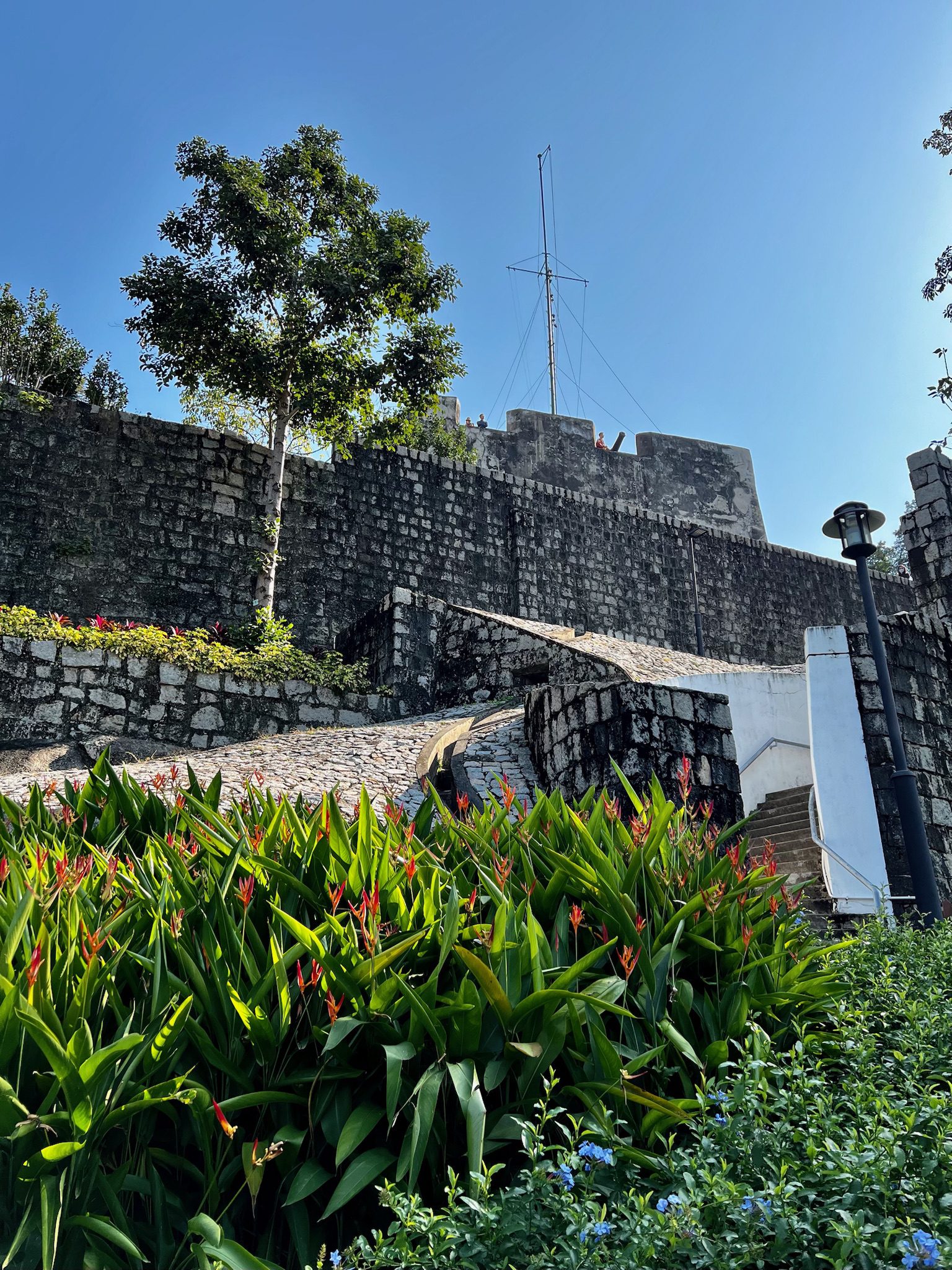
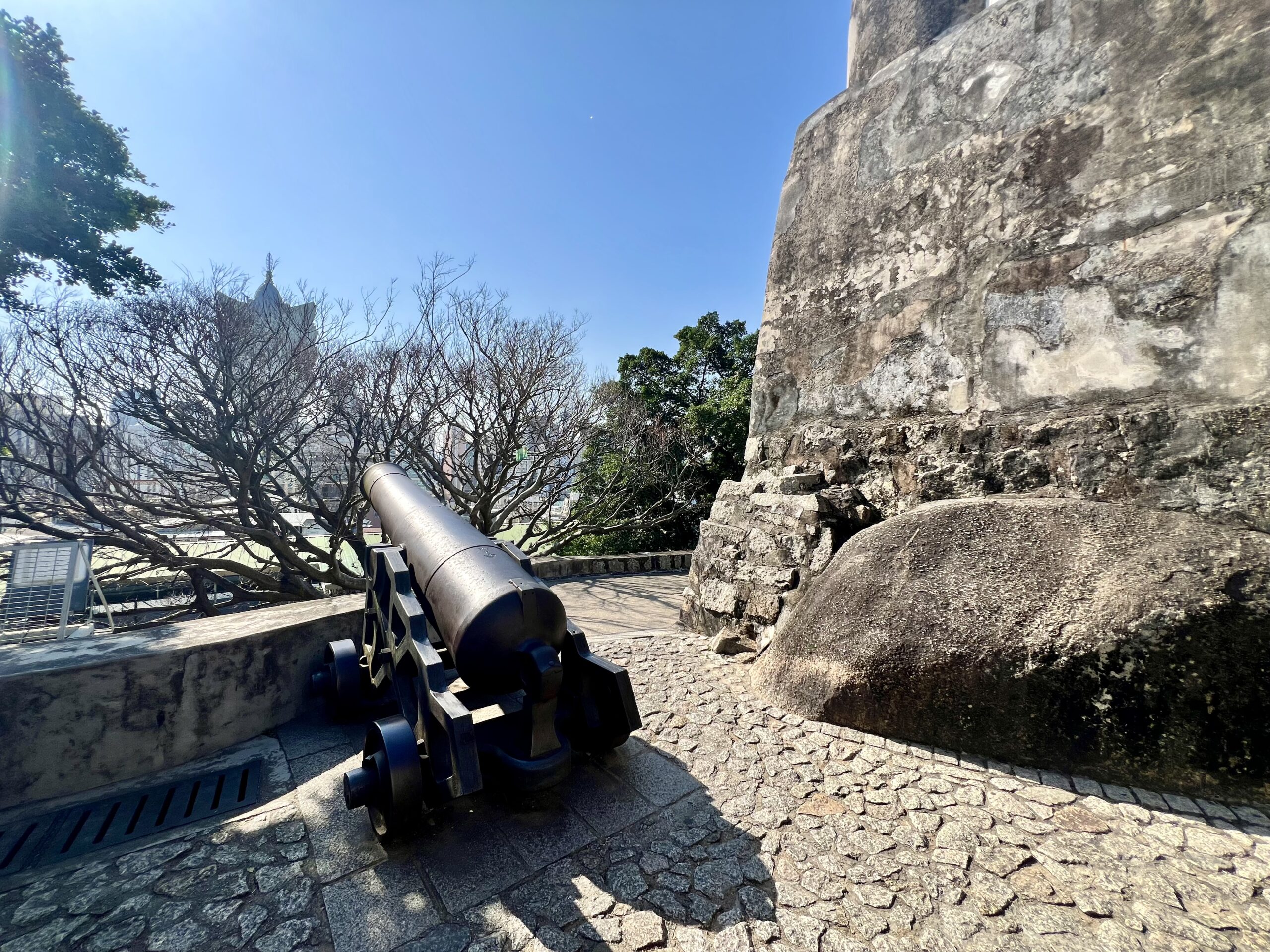
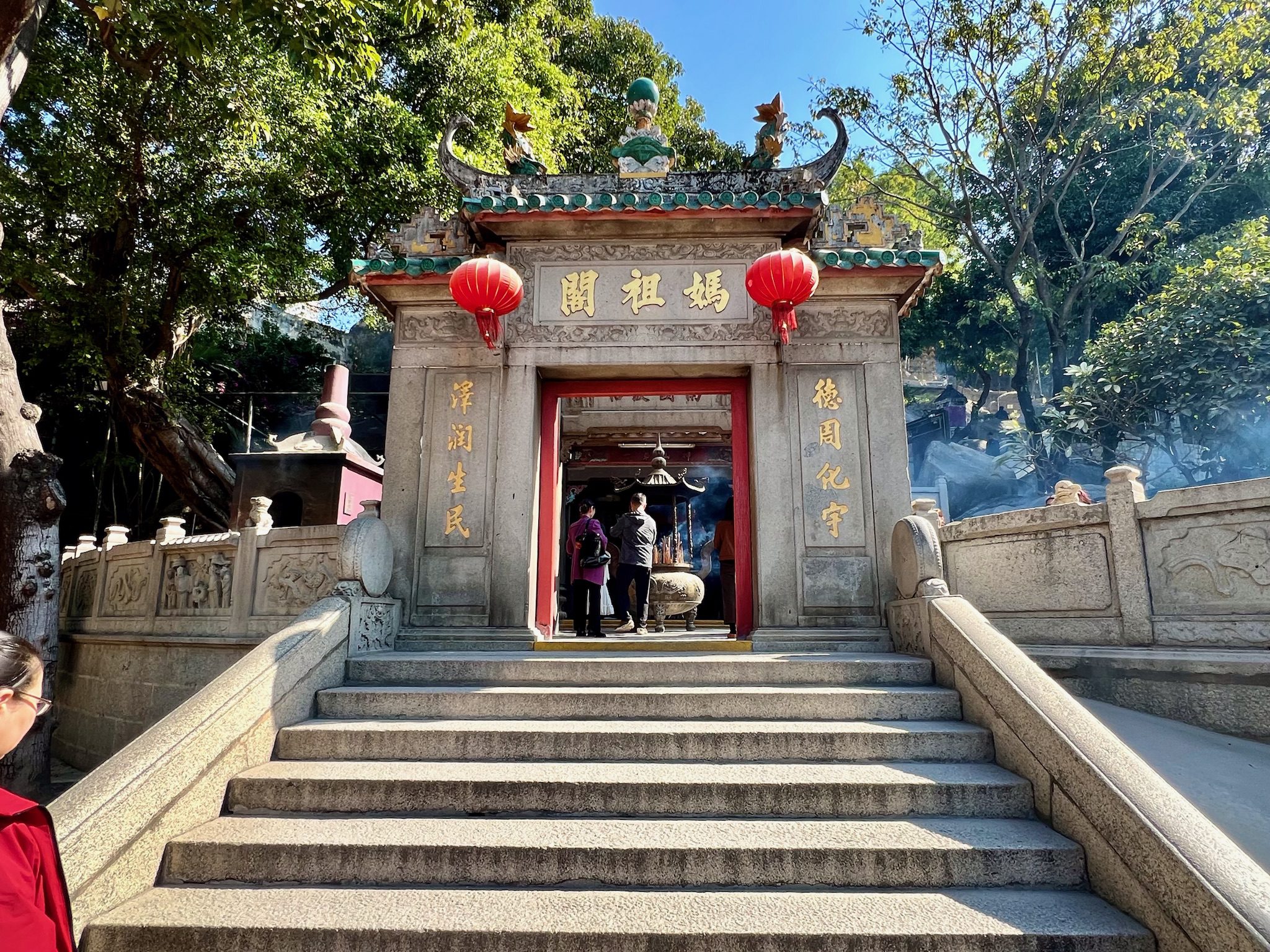
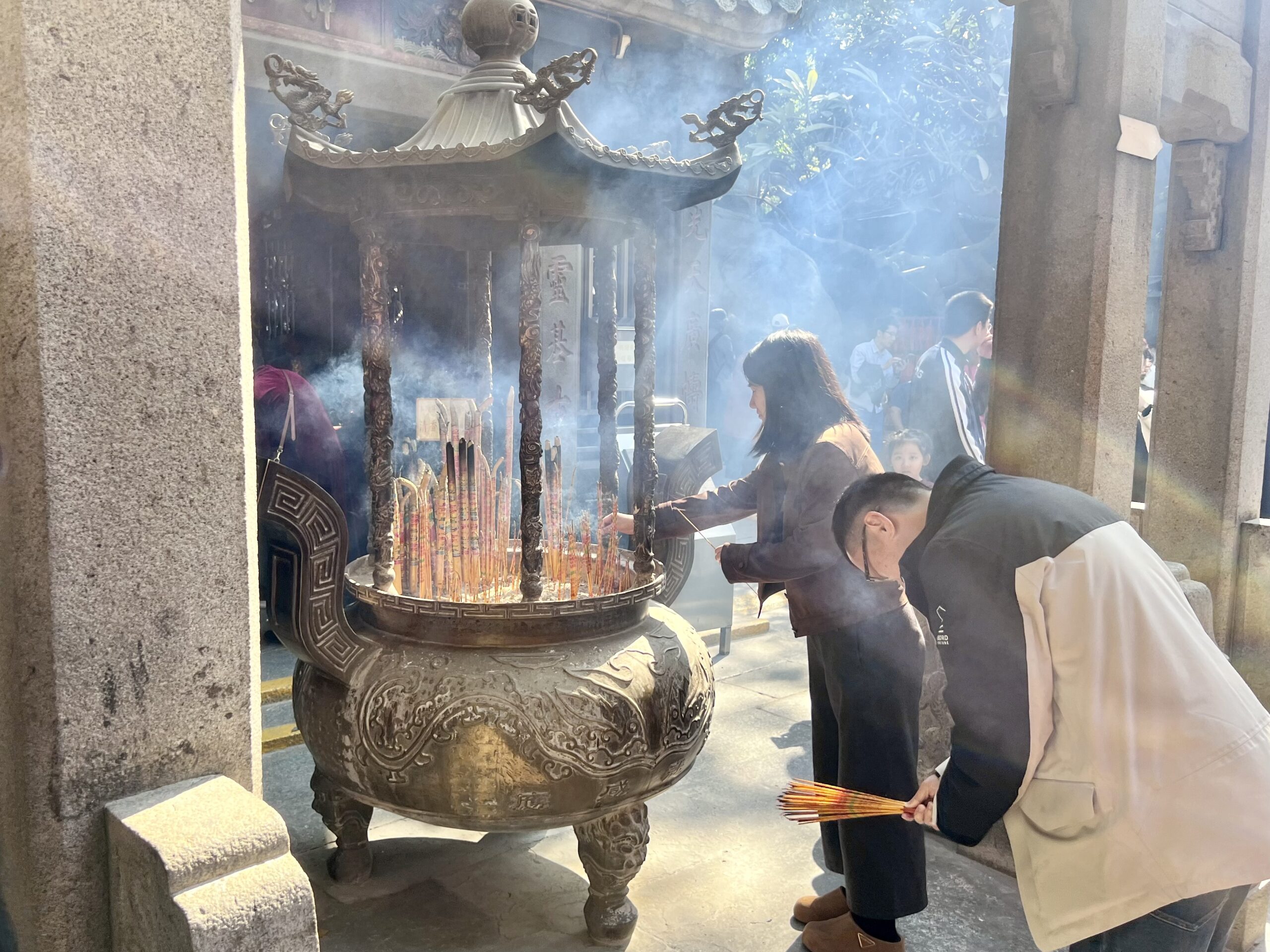
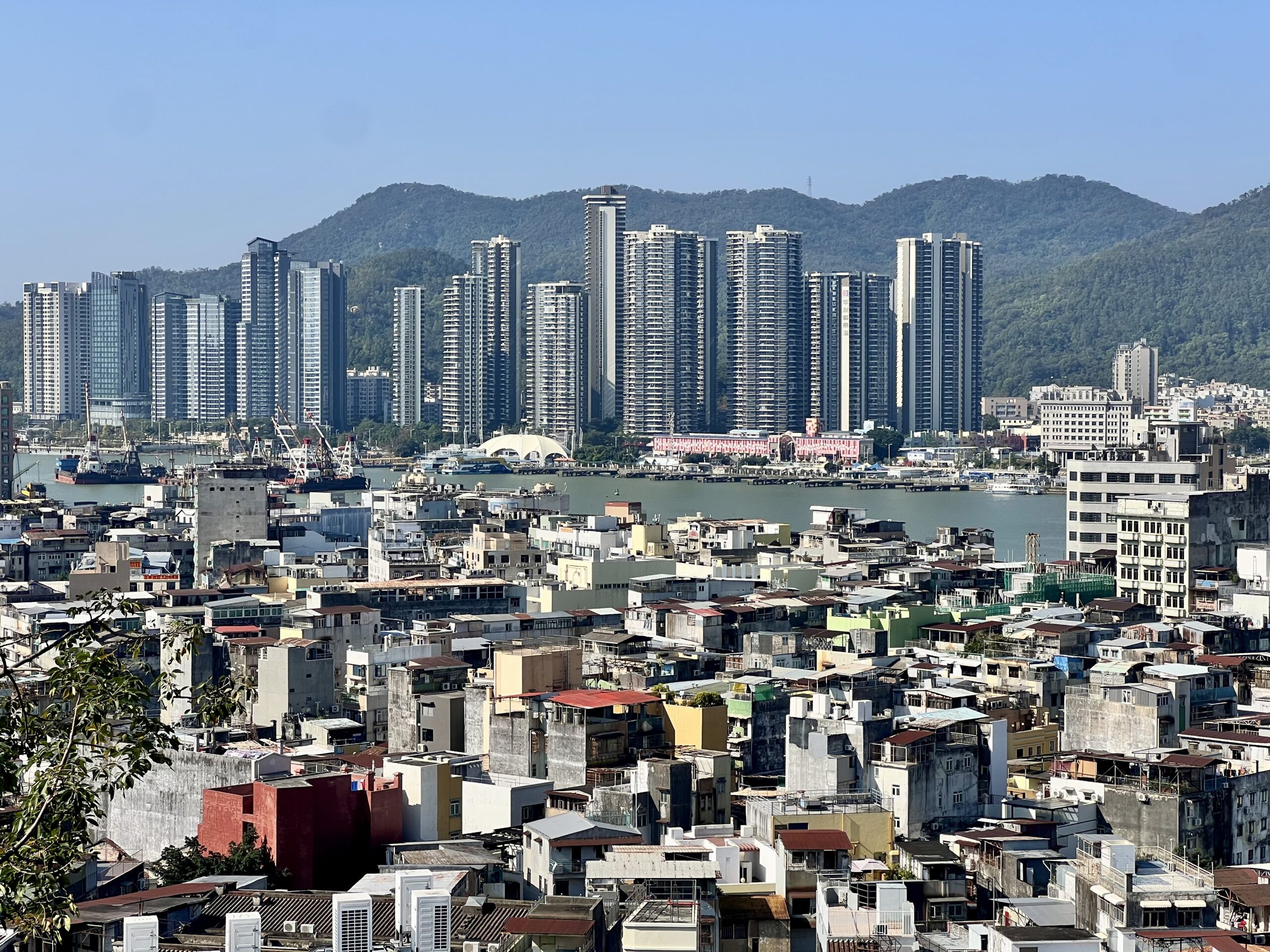
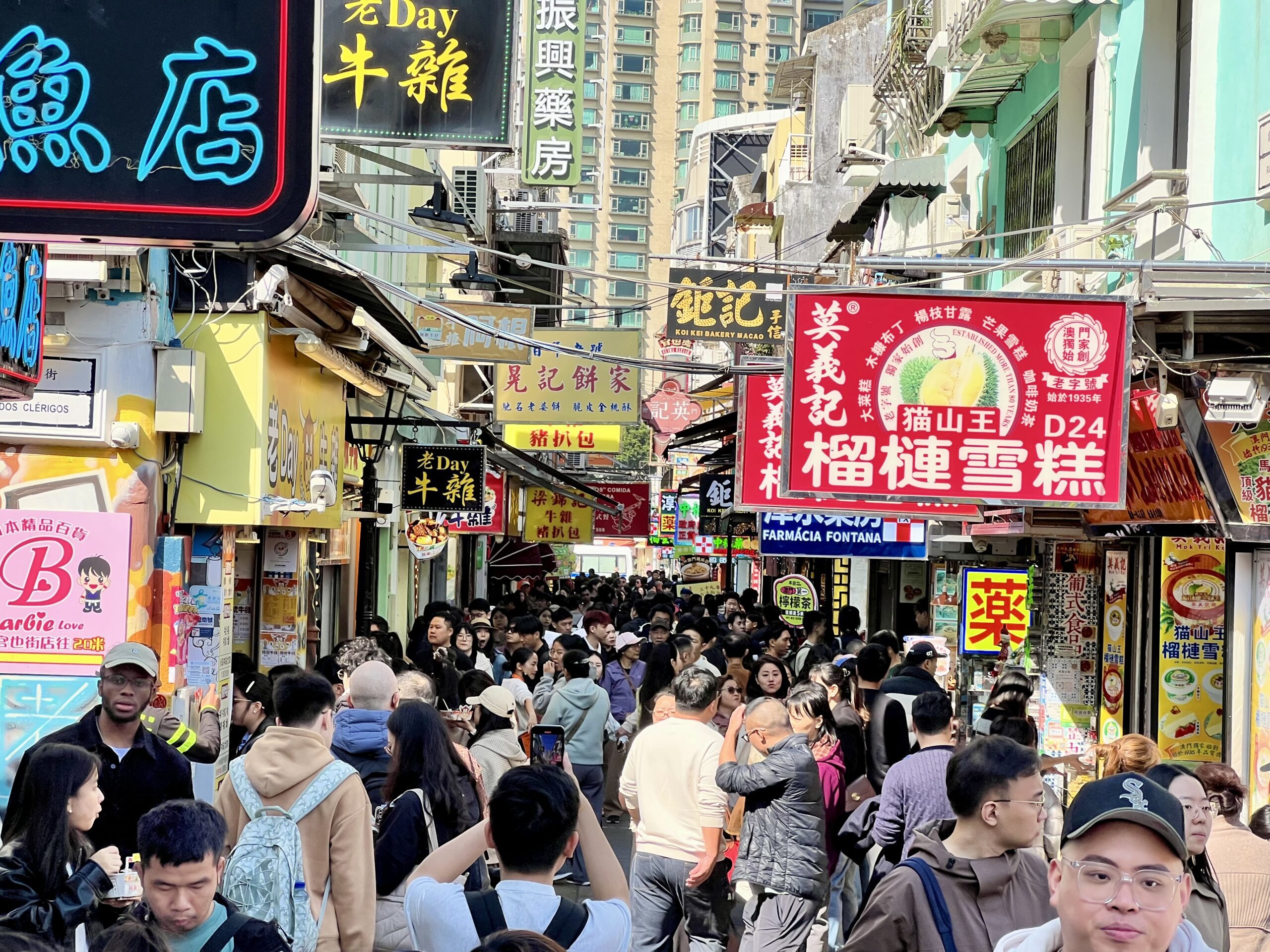
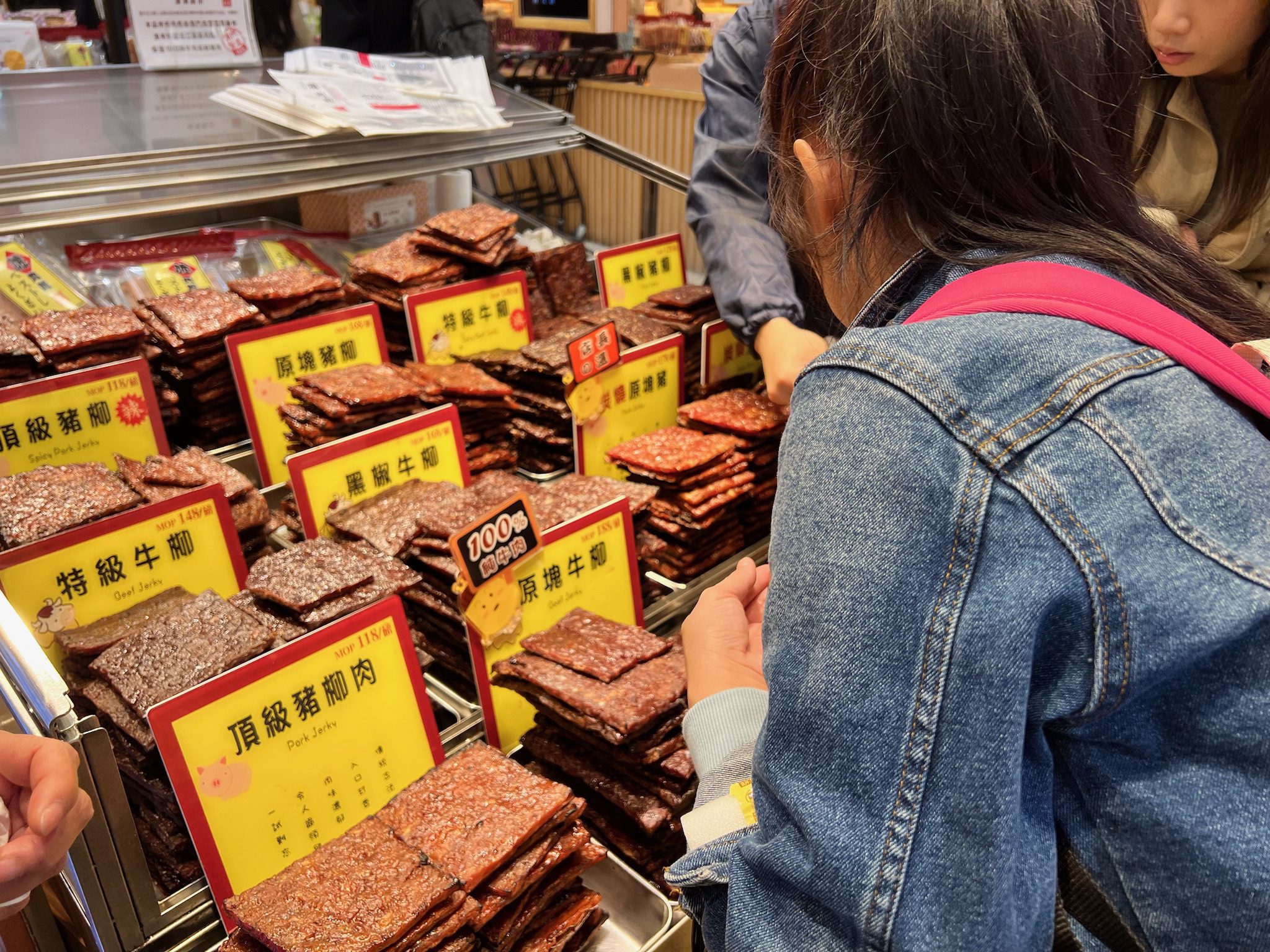
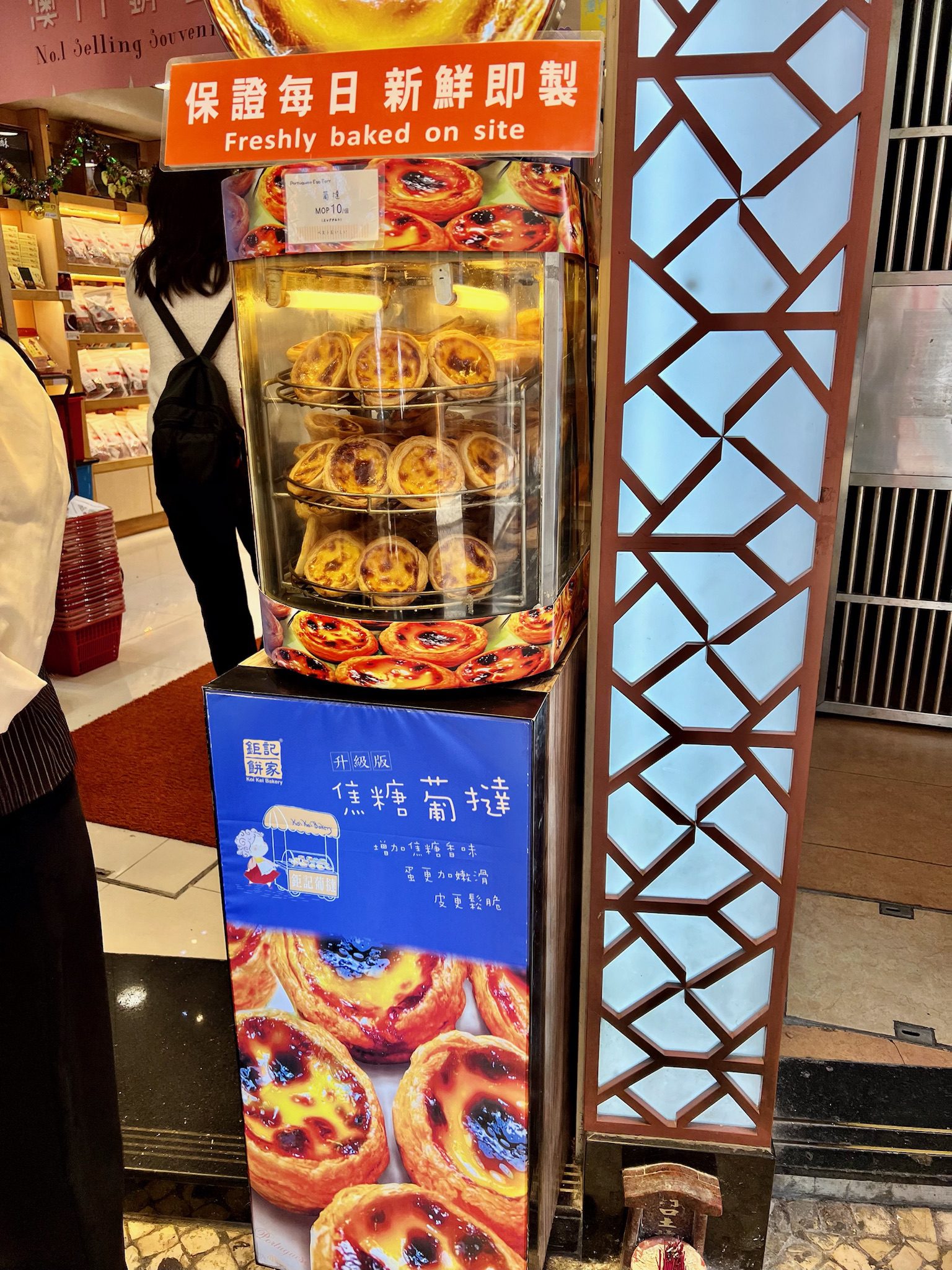
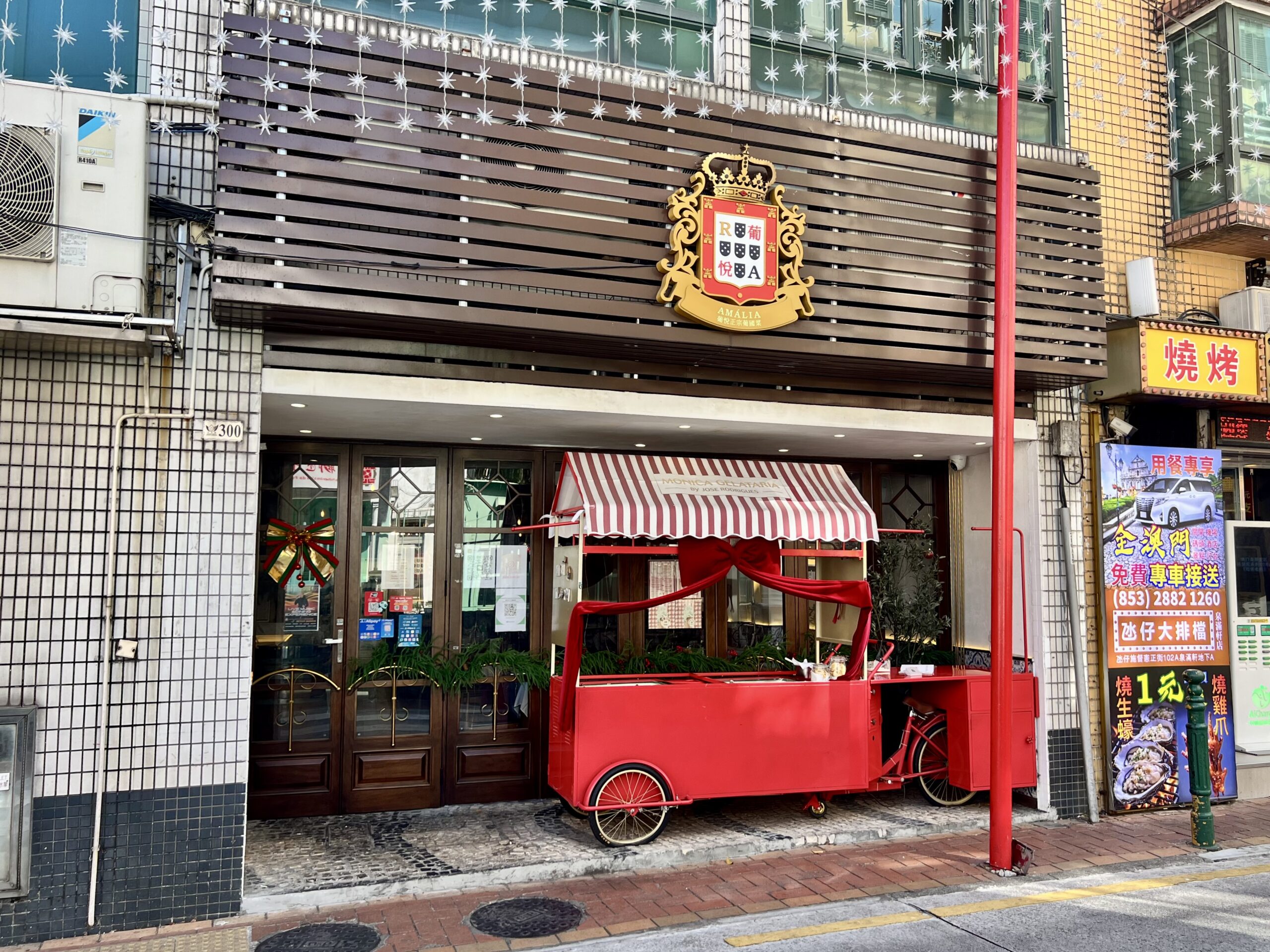
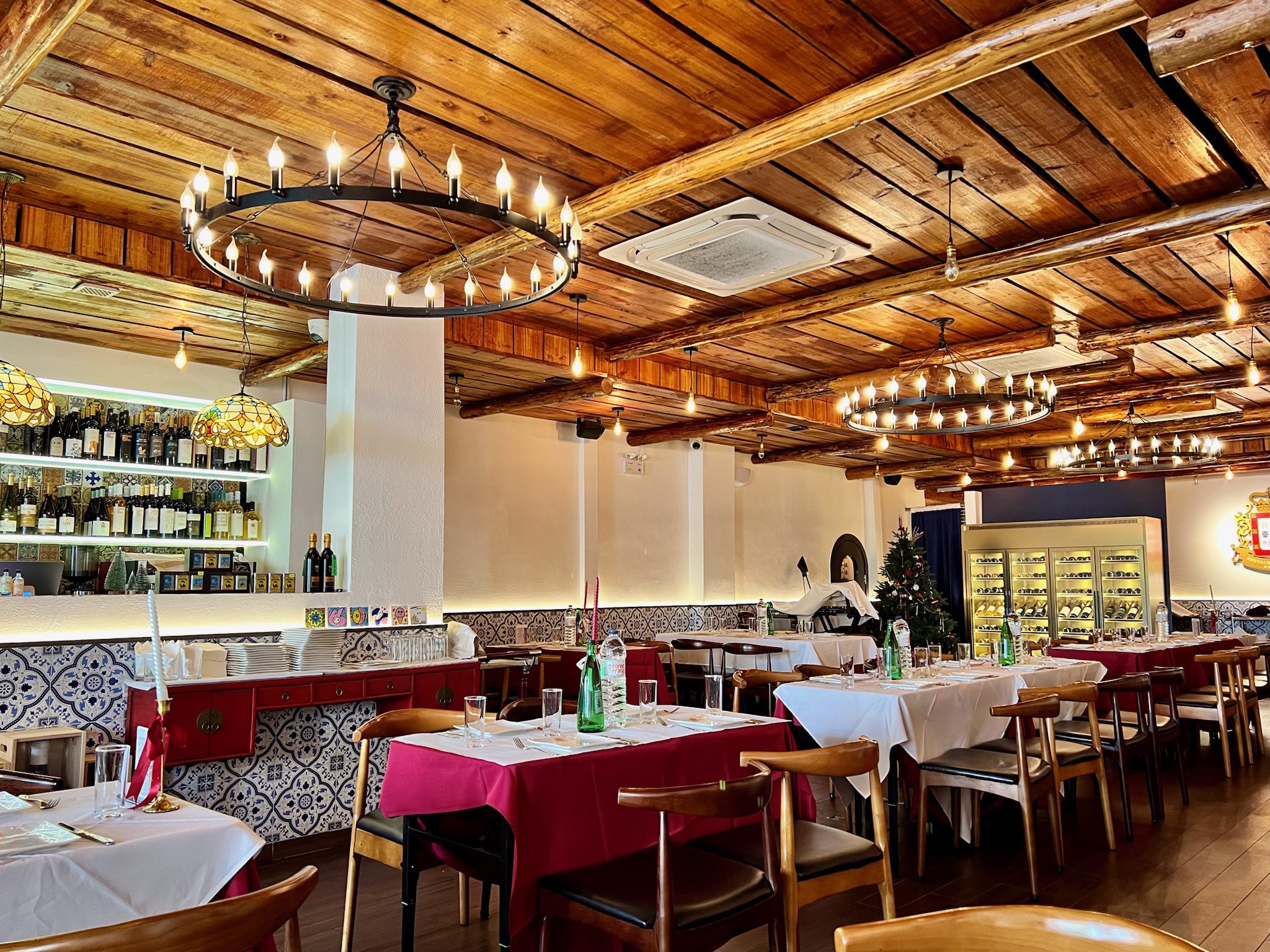
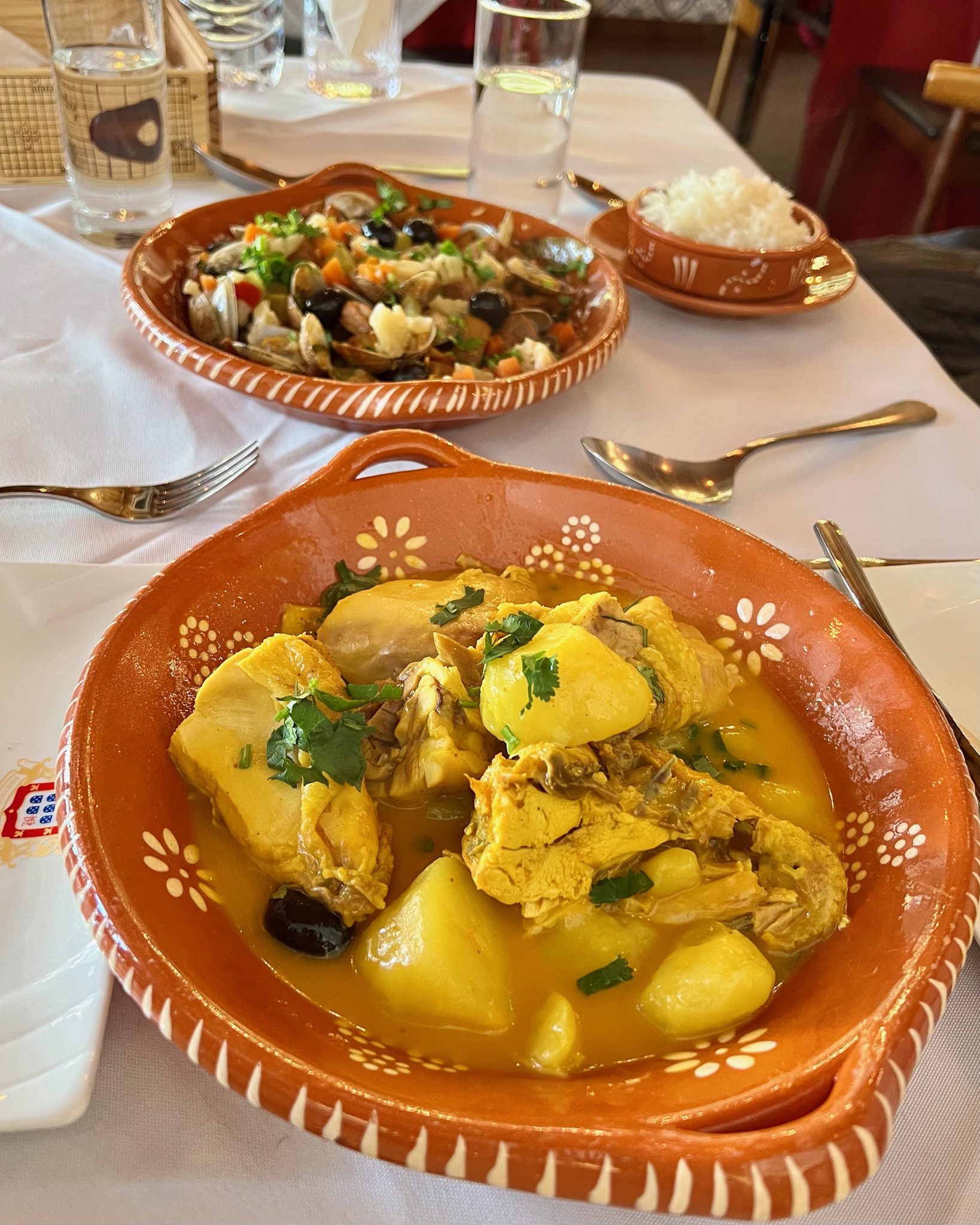
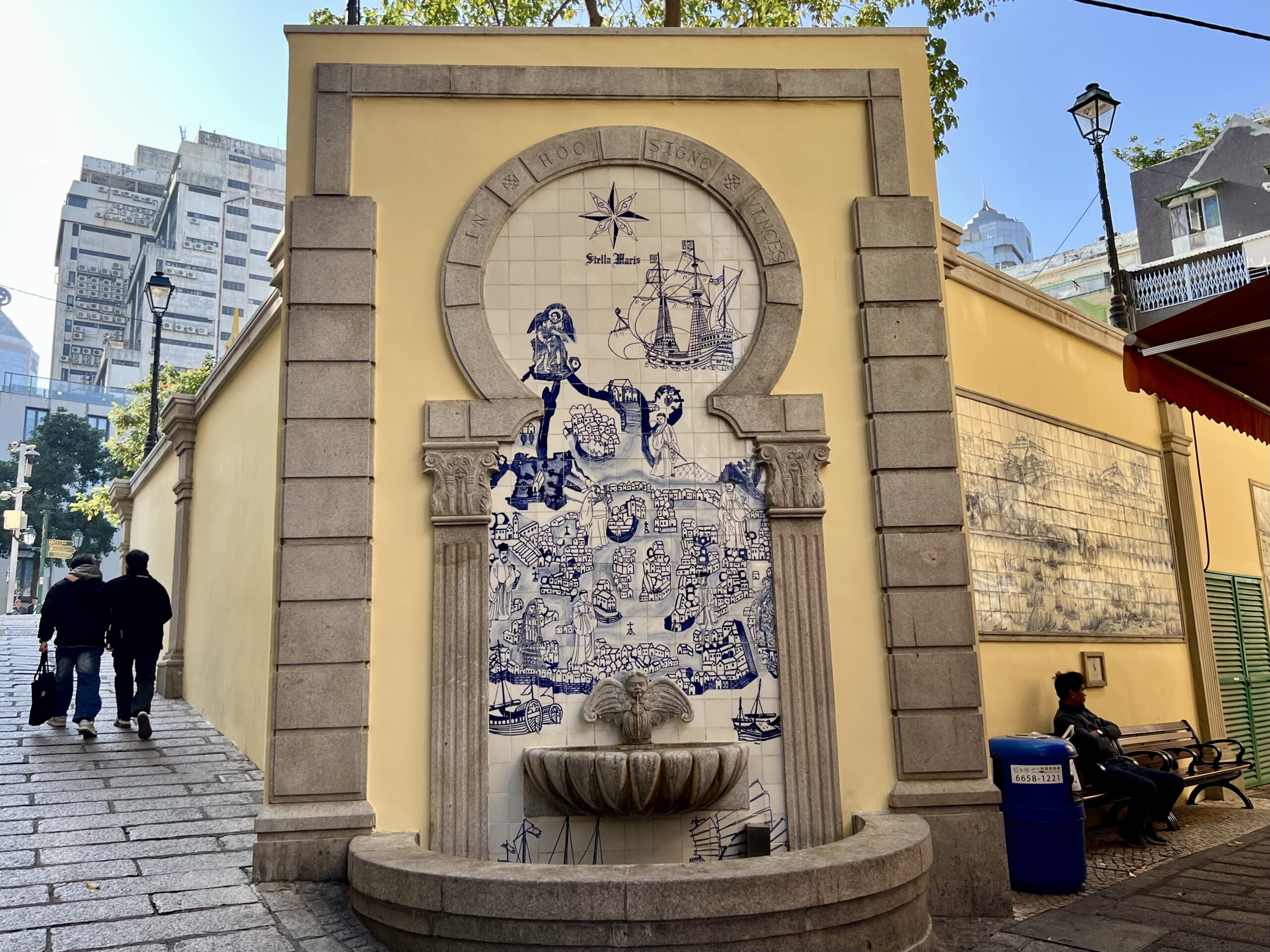
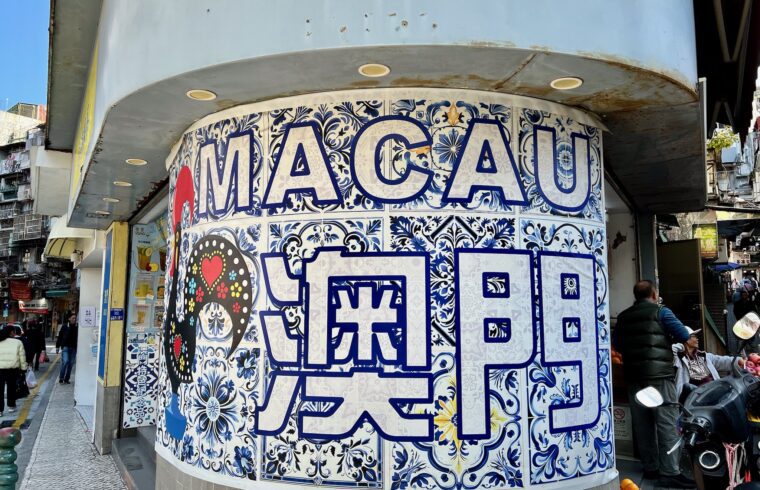
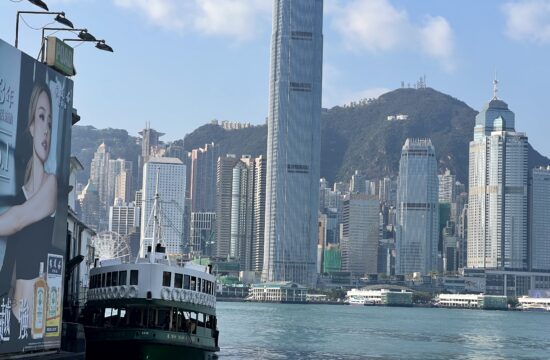
On one of our days in Hong Kong, we decided to take the Turbojet Ferry to Macau. This is not it. This is the taxi we took to get to the ferry dock.This is the Turbojet Ferry. At 50+ MPH, it takes about an hour to cross the wide Pearl River Estuary. Faster – and cheaper – than taking the new 34 mile long bridge now connecting the two. Turbojet offers several classes. We went for Super Class. It offers reclining seats and priority boarding, which might have mattered if there were more passengers. The real highlight was the meal service. Choice of tuna or ham and cheese from a big Igloo cooler. Choice is probably the wrong word. You just get a tray put in front of you. We drank the water.Once the boat got up on its hydrofoils, it moved right along and passed the slow boats nicely. Once in Macau, rather than bounce around the city with taxis, we hired a car and driver for half a day. With Macau’s dearth of taxi cabs, it turned out to be a brilliant decision.Macau is considered by many to be the gambling capital of the world. Much larger than Vegas, and reputed to be far more decadent, which is probably the important metric. We took pictures as we drove past the casinos.Our first stop was Senado Square, the center of Old Portuguese Macau. With its wavy cobbled pavers, it looks all the world like a plaza in Lisbon.We strolled up one of the malls in search for what’s left of St Paul’s Cathedral.On the way and just off the mall is the 1889 residence of Lou Kau, a prominent Chinese businessman and banker. A typical Chinese house in the then Christian Portuguese center of town. St Paul’s itself was built in the early 1600’s, and then it burned down regularly, about every hundred years or so. A fire during an 1800s monsoon finally did it in, leaving only the stone facade standing.Under perpetual rehabilitation, to keep it from tipping over flat, it has carved into it an image of the Holy Mary stepping on a seven-headed something. The accompanying inscription translates as “Holy Mother tramples the heads of the dragon.” I’m not sure which gospel that was taken from.Mount Fortress rises right next to and above the cathedral. Officially named Fortaleza de Nossa Senhora do Monte de São Paulo, it was built by the Jesuits to protect their property, including the cathedral. Now it’s guns have only the opulent casinos in their sites. On our way to Taipa, a separate part of Macau, we stopped at the A-Má Temple. The original temple was built in the 1400s to the Chinese sea-goddess Mazu, well before the Portuguese landed. It is believed that Macau takes it name from the temple. Mazu is a Chinese goddess of sailors and fishermen. She’s quite popular, and her worship has spread widely with the Chinese diaspora, co-opted into Buddhist, Taoist and local folk beliefs throughout Asia. Her purview now includes merchants and travelers. If you’re superstitious, what’s a minor coughing fit when it comes to hedging your bets for better fortune and luck. More smoke, more luck. Across the Xijiang River from Macau is one of the wealthier enclaves of Mainland China. A good part of that wealth probably coming from the Pearl River Delta and the tens of thousands of factories that make up China’s industrial heartland – and which thoughtfully provide Hong Kong and Macau with their perpetual haze.Taipa is a district of Macau that was once an island, mostly. Land reclamation, though, has pretty much joined it to Coloane, making it a single large island south of the Macau peninsula. Its main draw is its old town area and the Rua do Cunha, a sort-of food street.The two main food souvenirs sold are pork jerky, in a gazillion different varieties…And Pasteis de Nata, a Portuguese baked custard.The narrow streets are also known for their Portuguese restaurants. We ate at Amalia.The restaurant is owned and cheffed by a Portuguese expat, who the staff assures us speaks nothing but Portuguese.His Iberian Pork Stew with Red Beans and Macanese Chicken dishes were excellent. We’d eat there again in a minute. Macau’s blend of Chinese and Portuguese cultures sure gives it a unique identity. On our way back to Hong Kong, the photographer commented that, if she was forced at gunpoint to live in China, she’d pick Macau. High praise indeed.