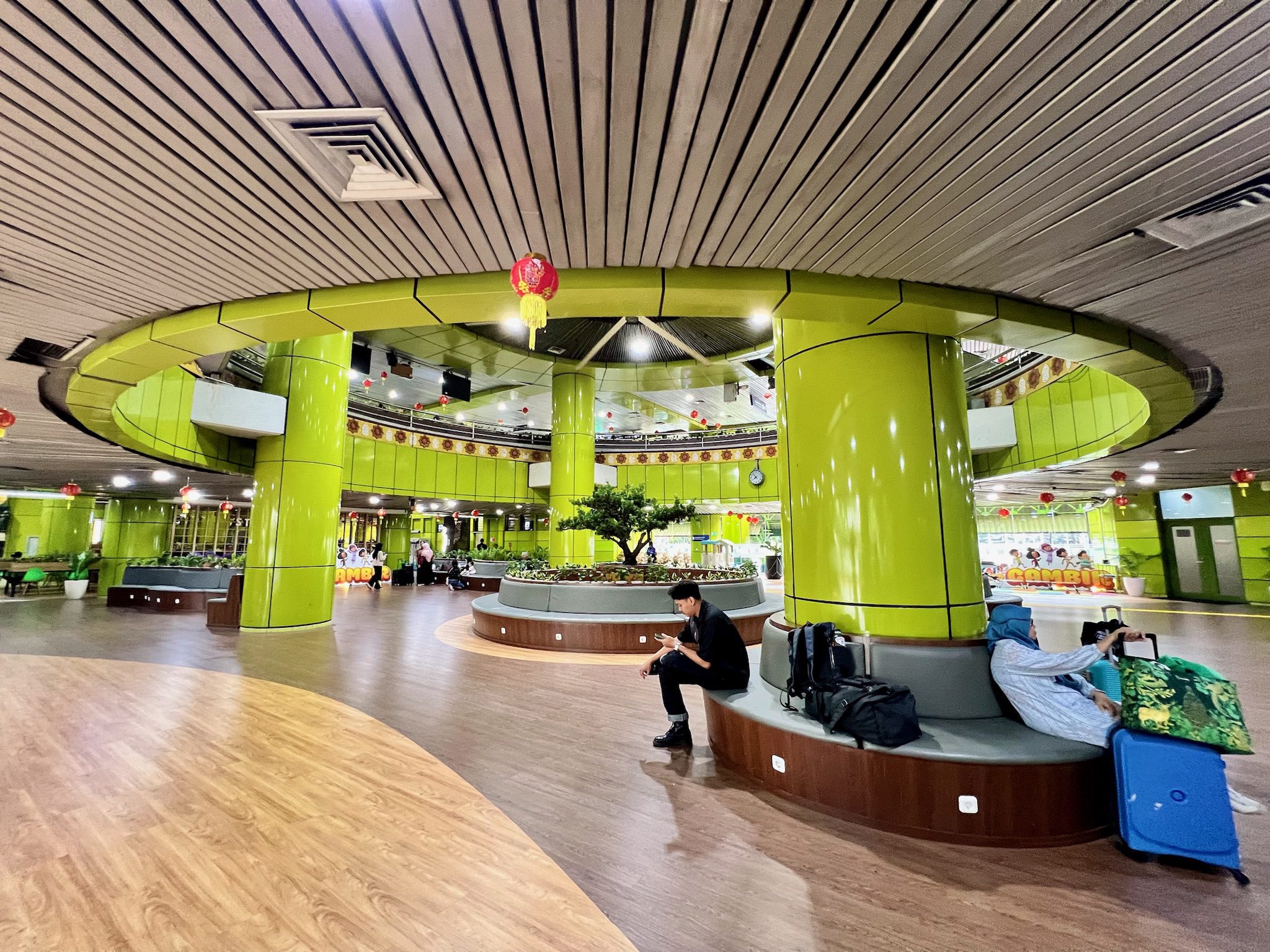
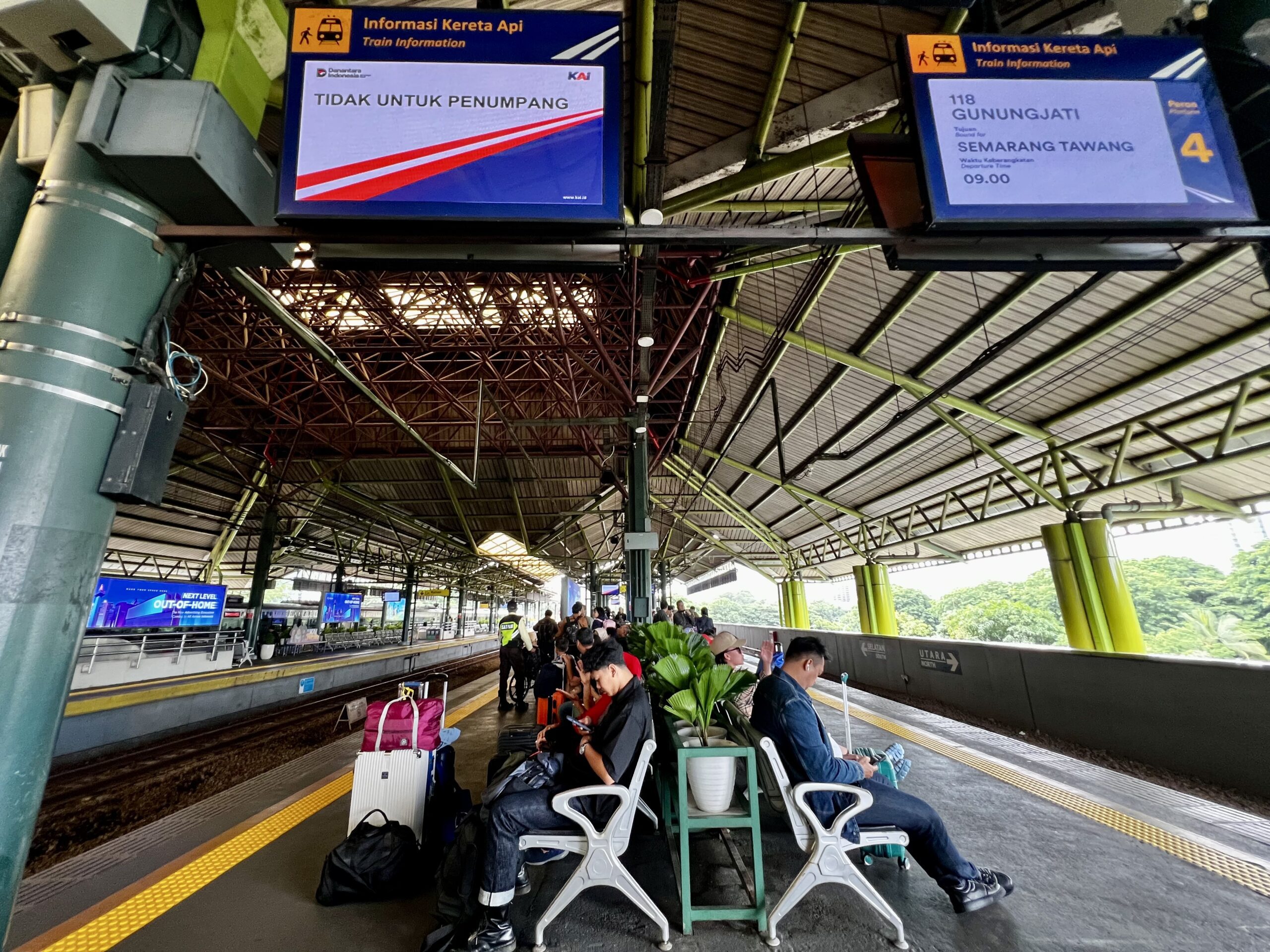
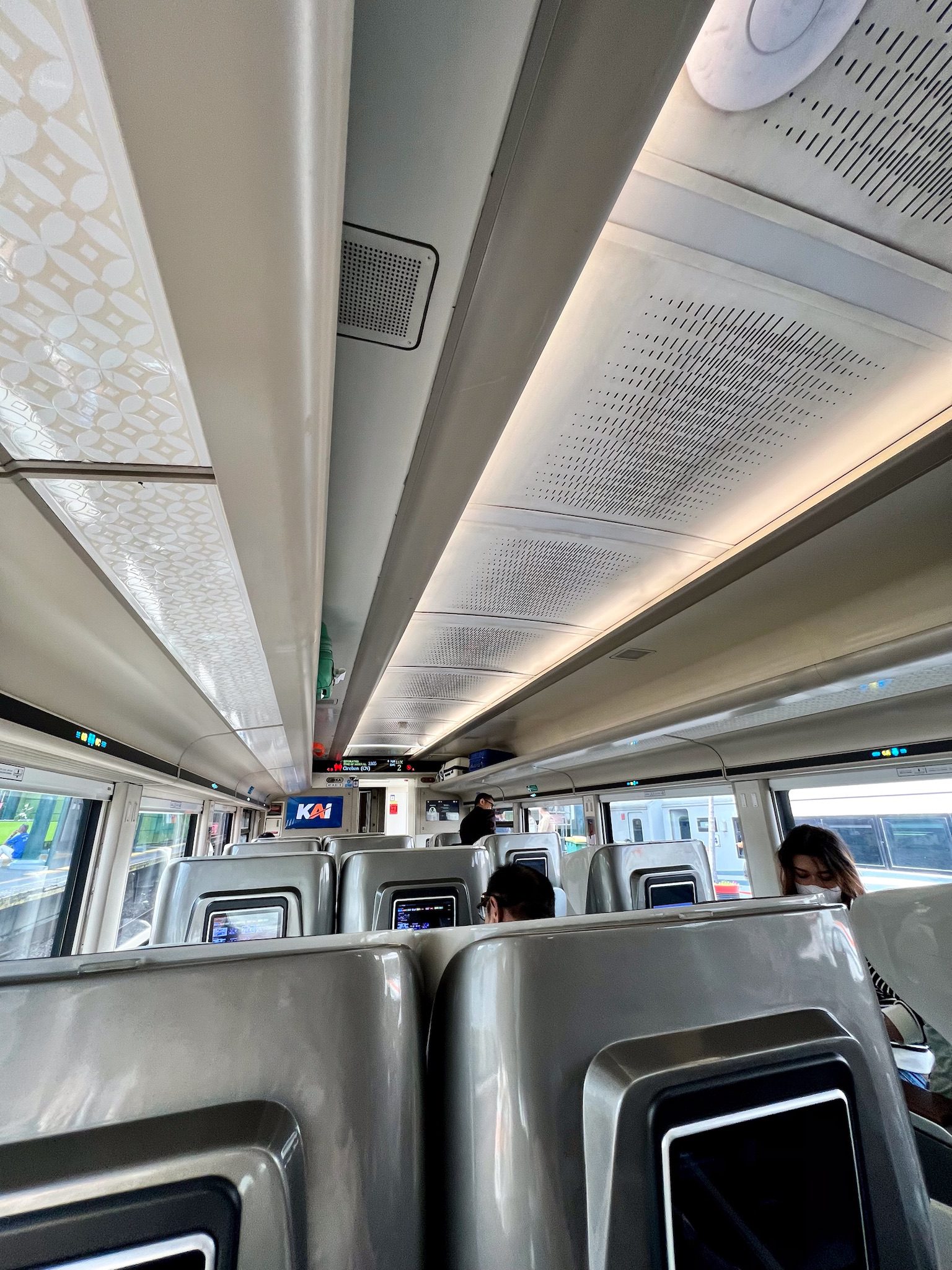
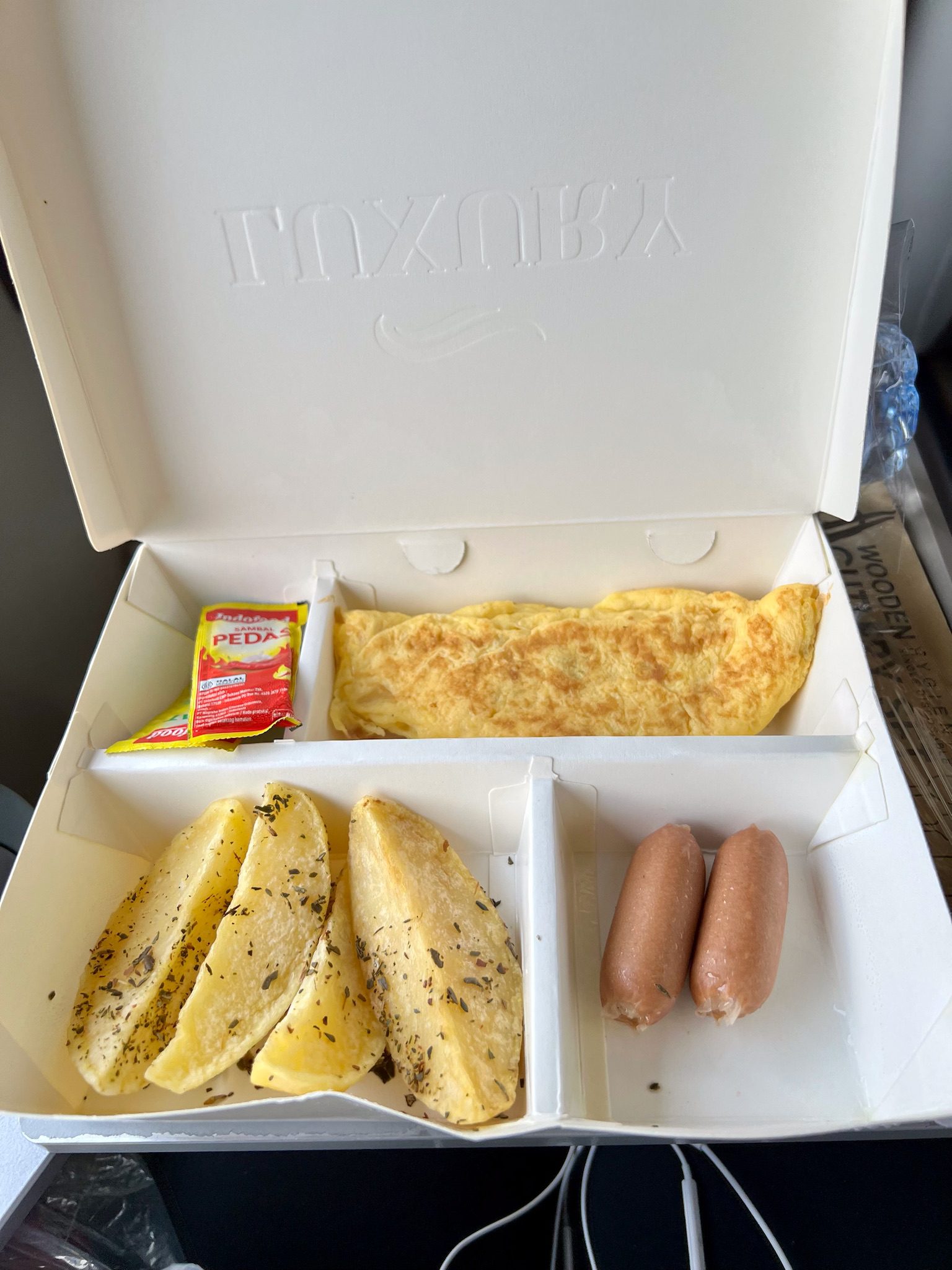
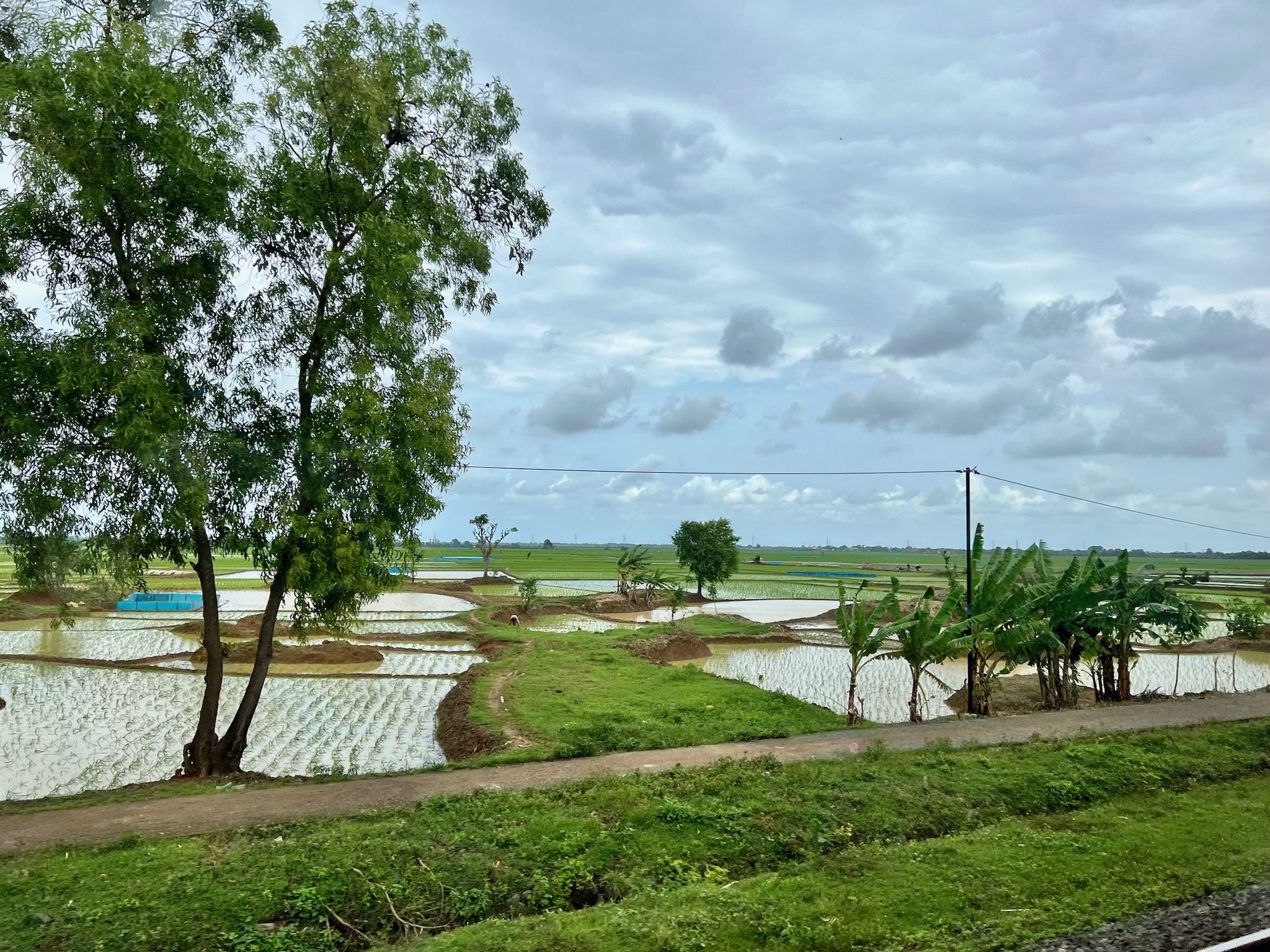
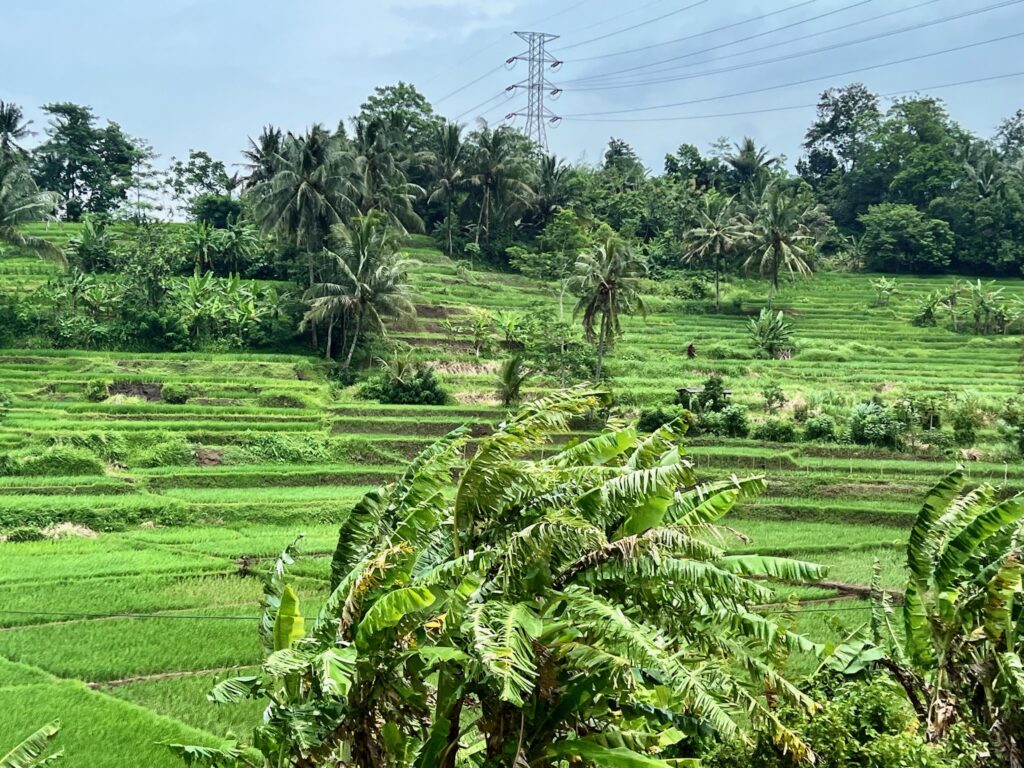
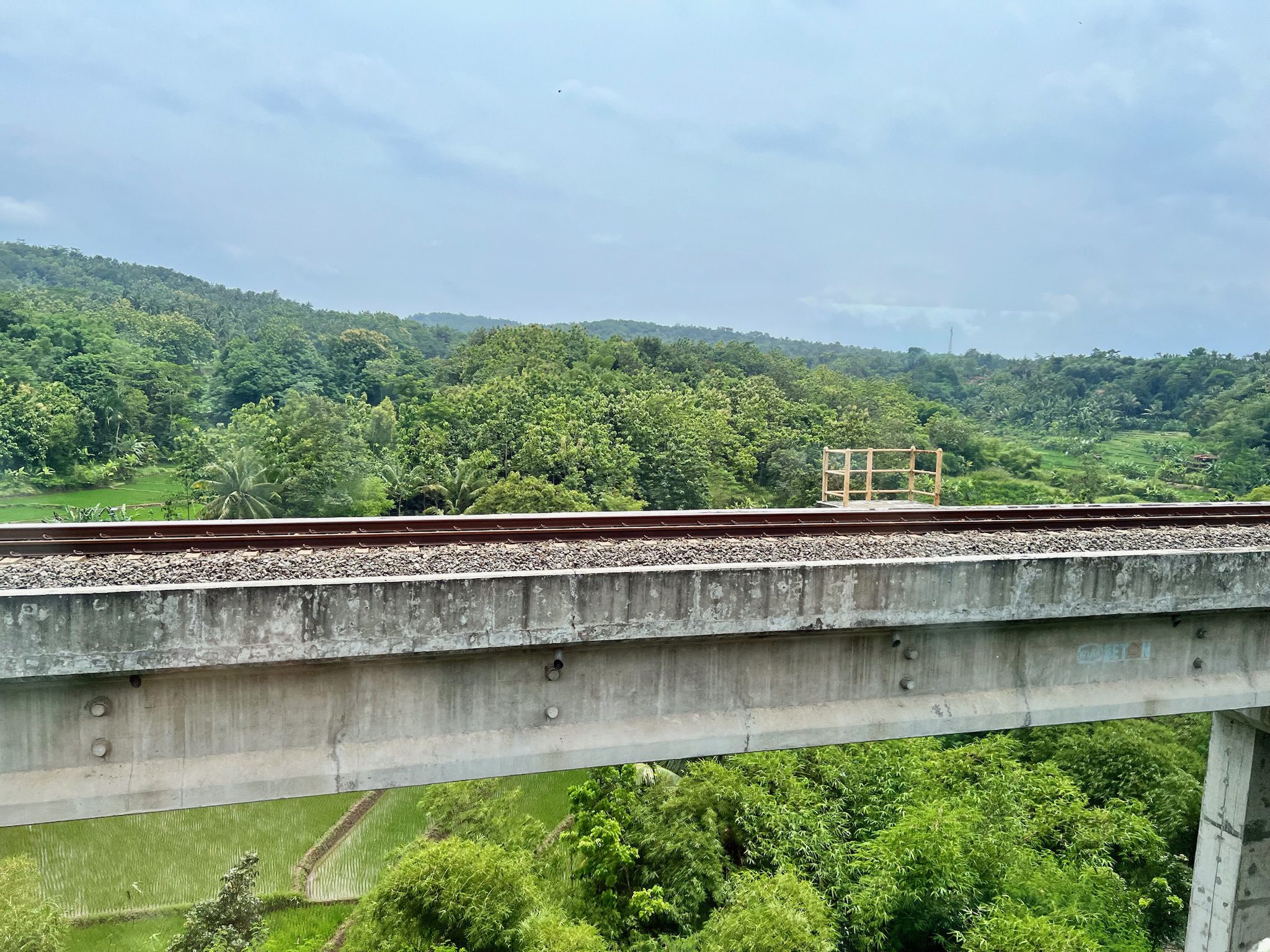
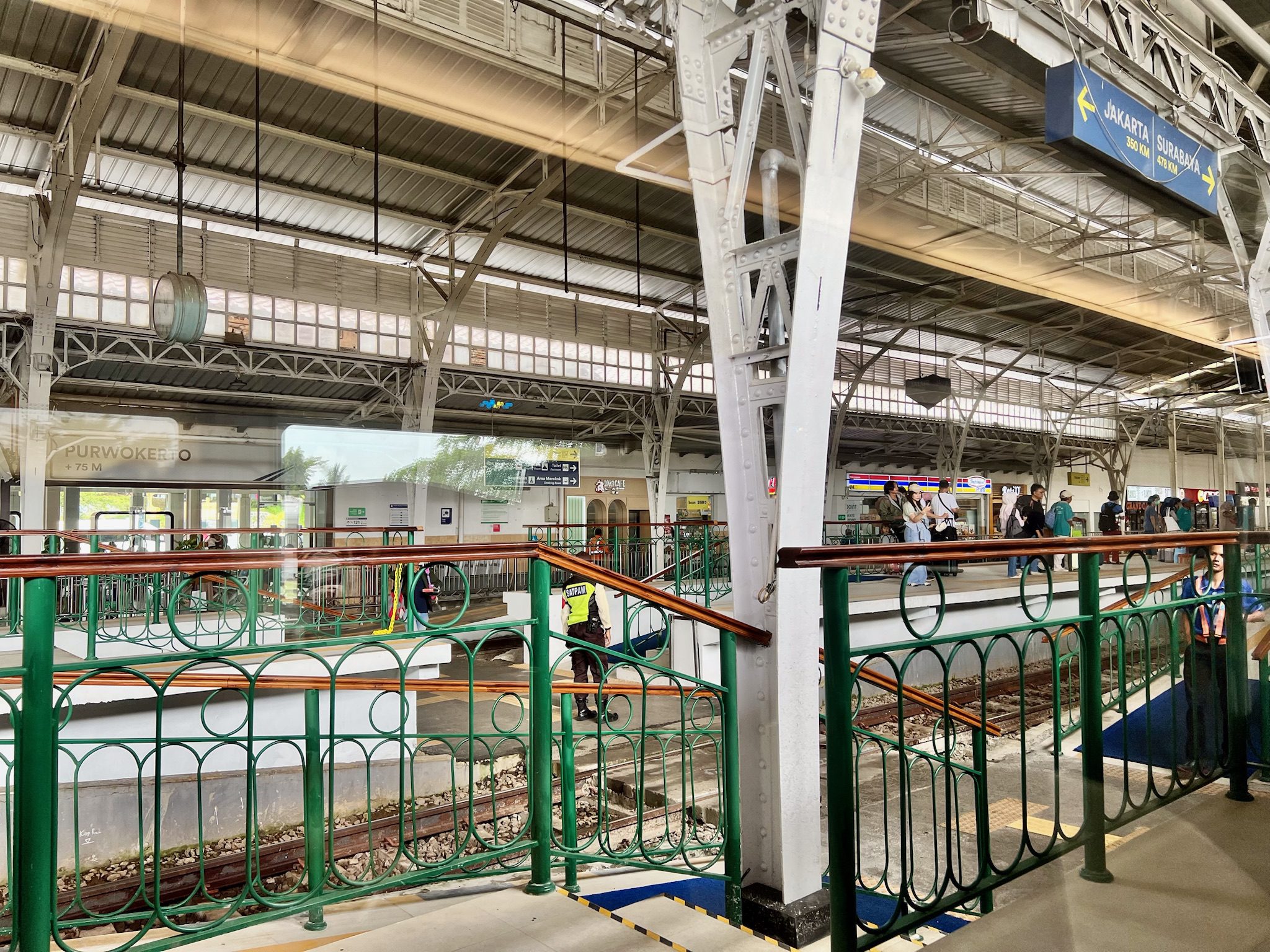
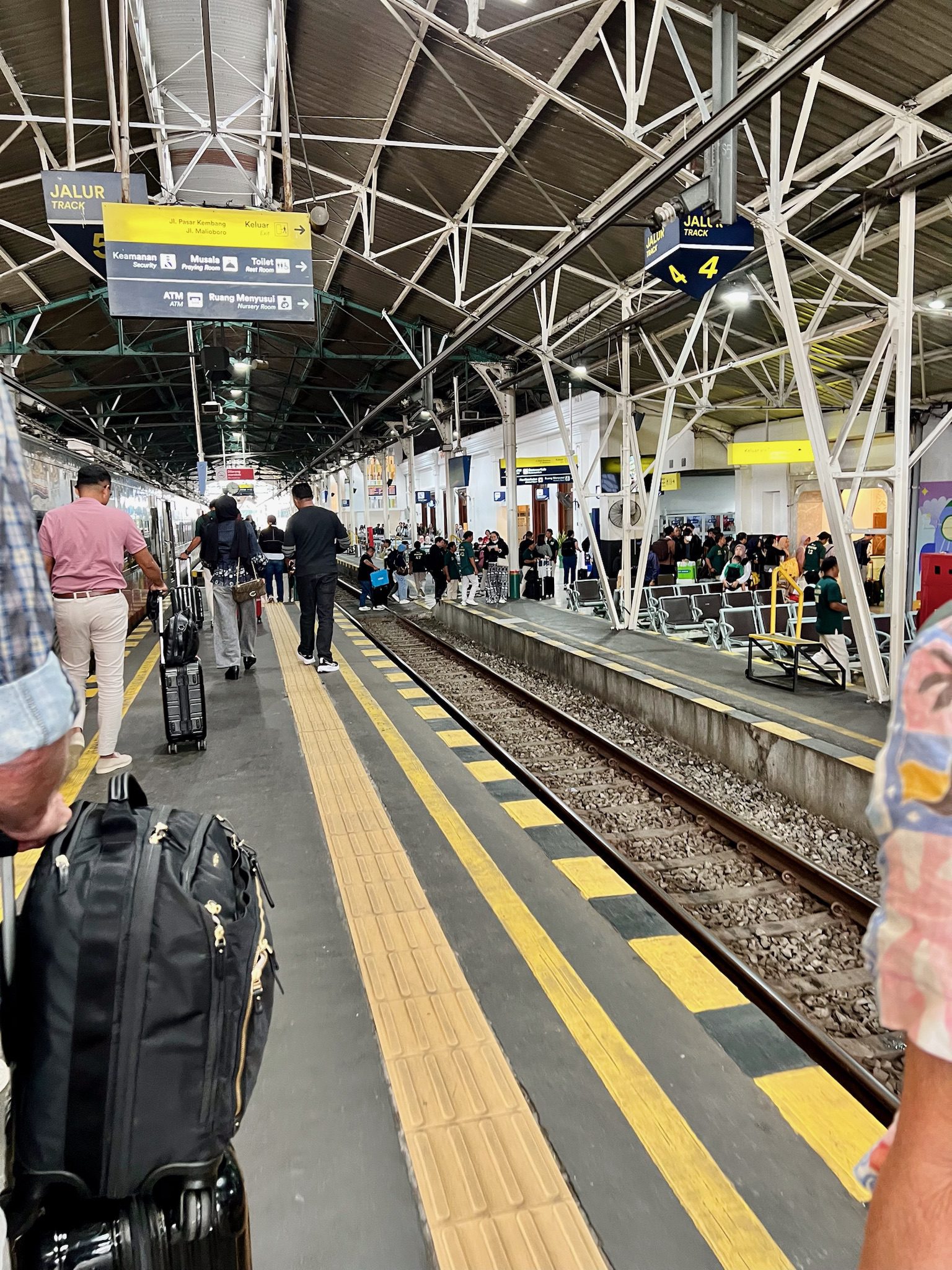
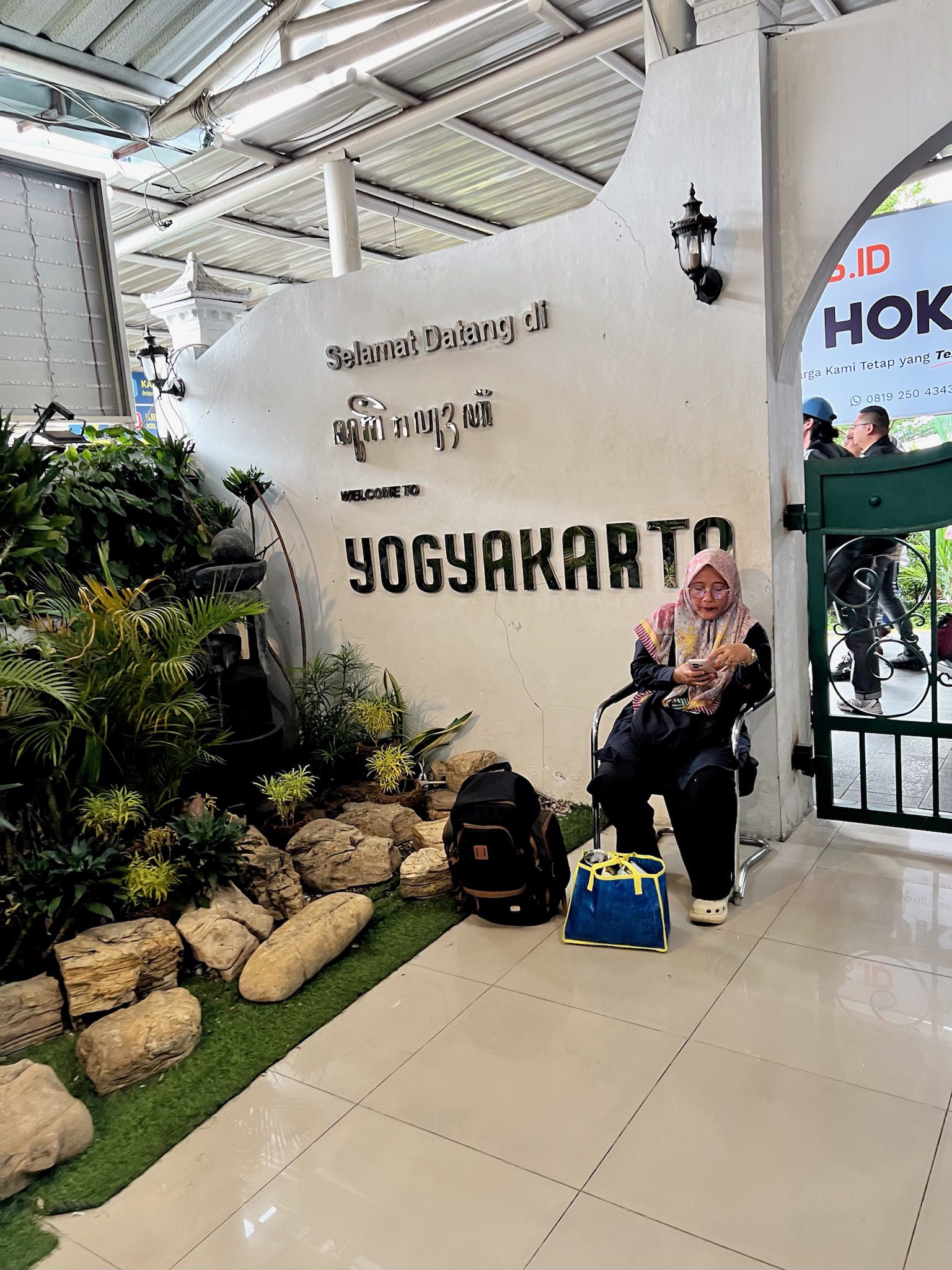
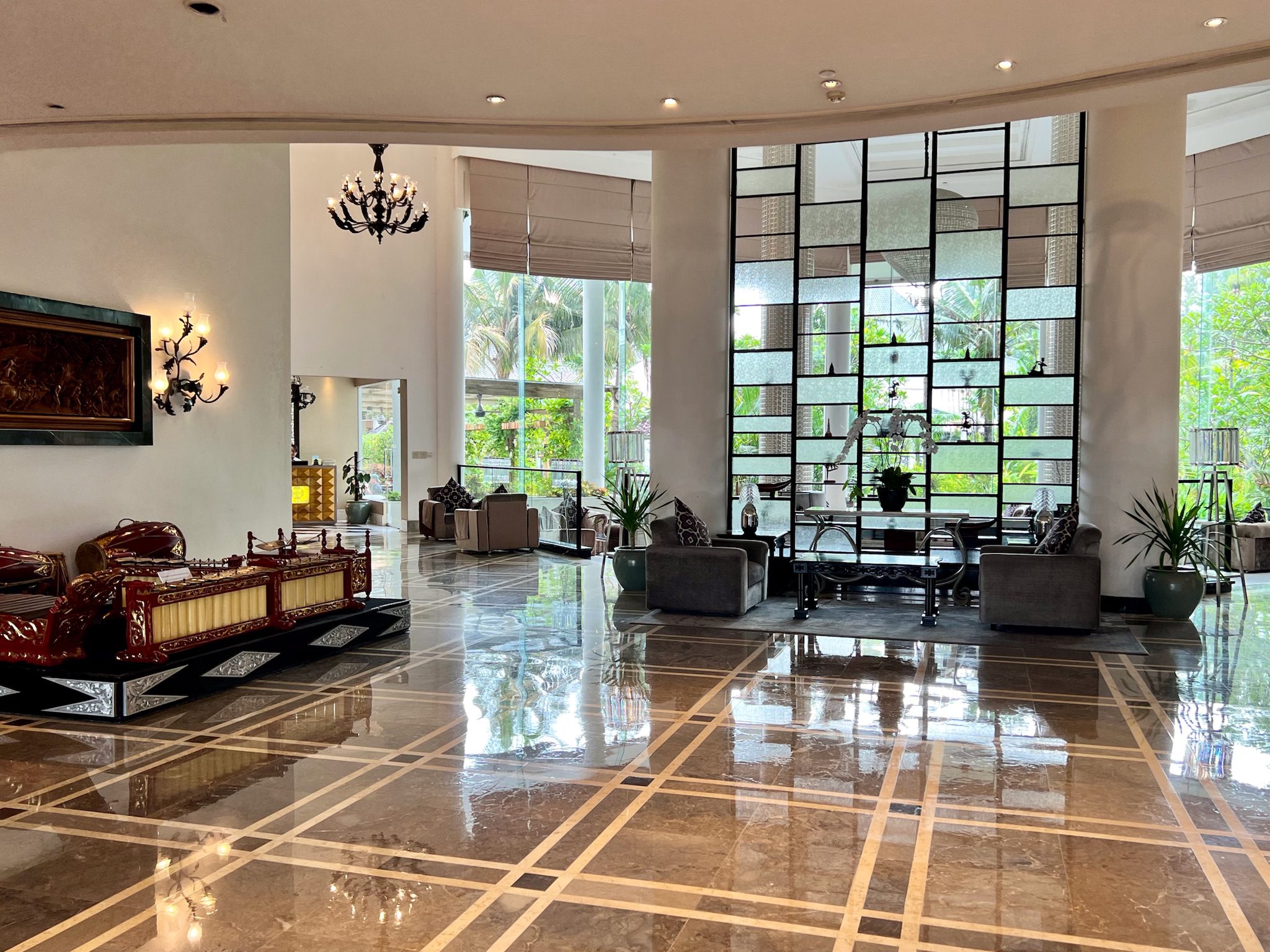
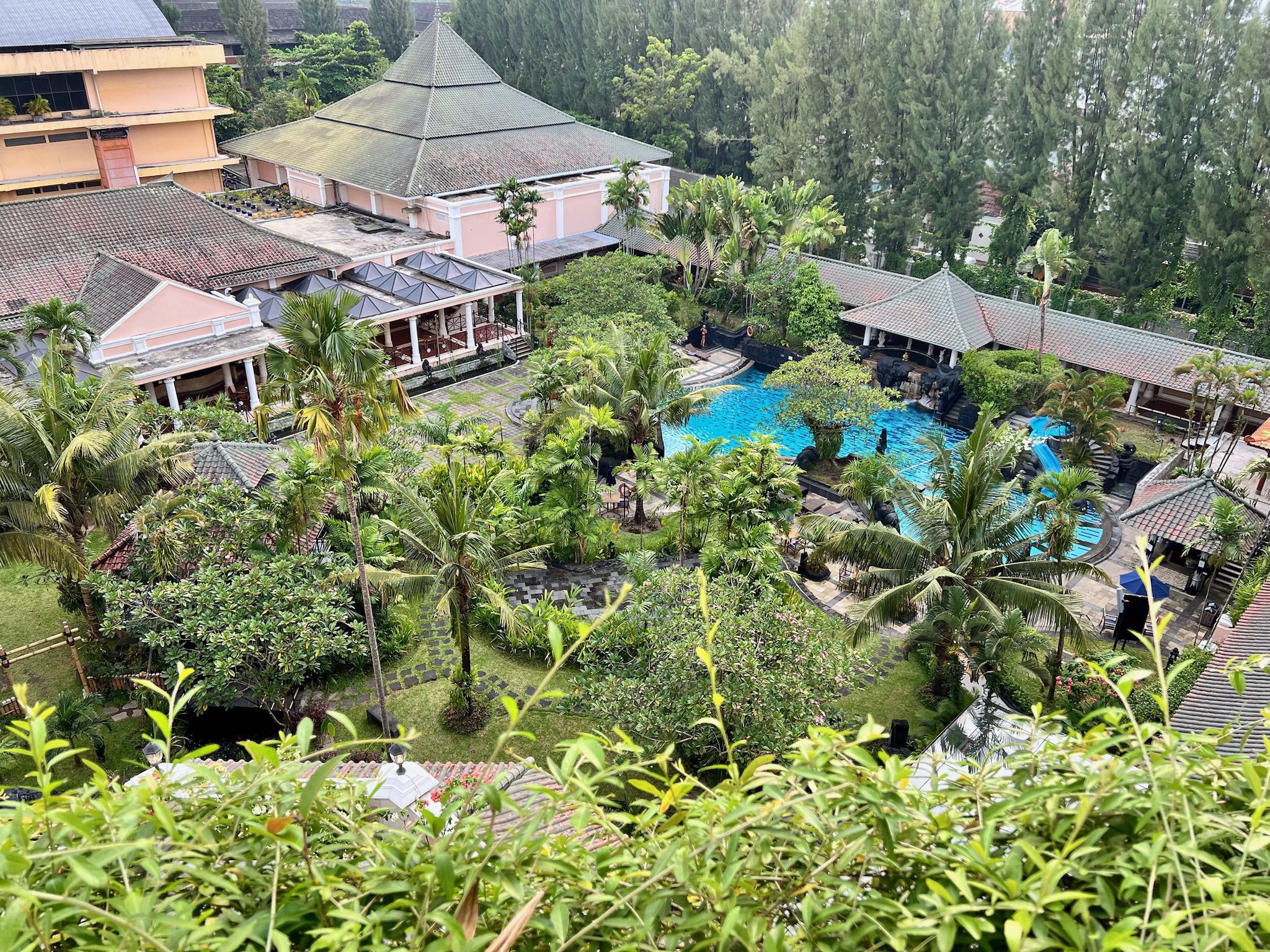
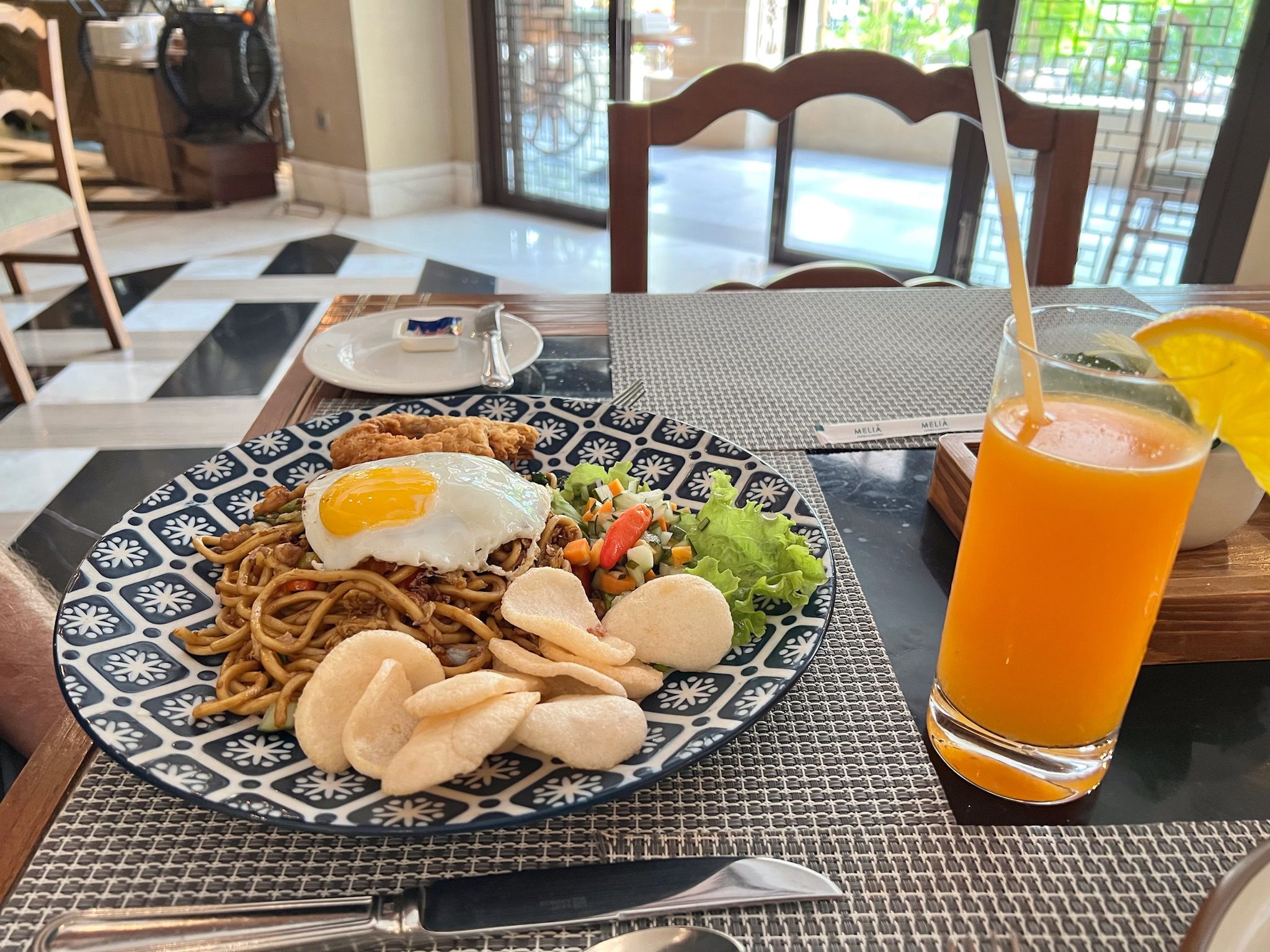
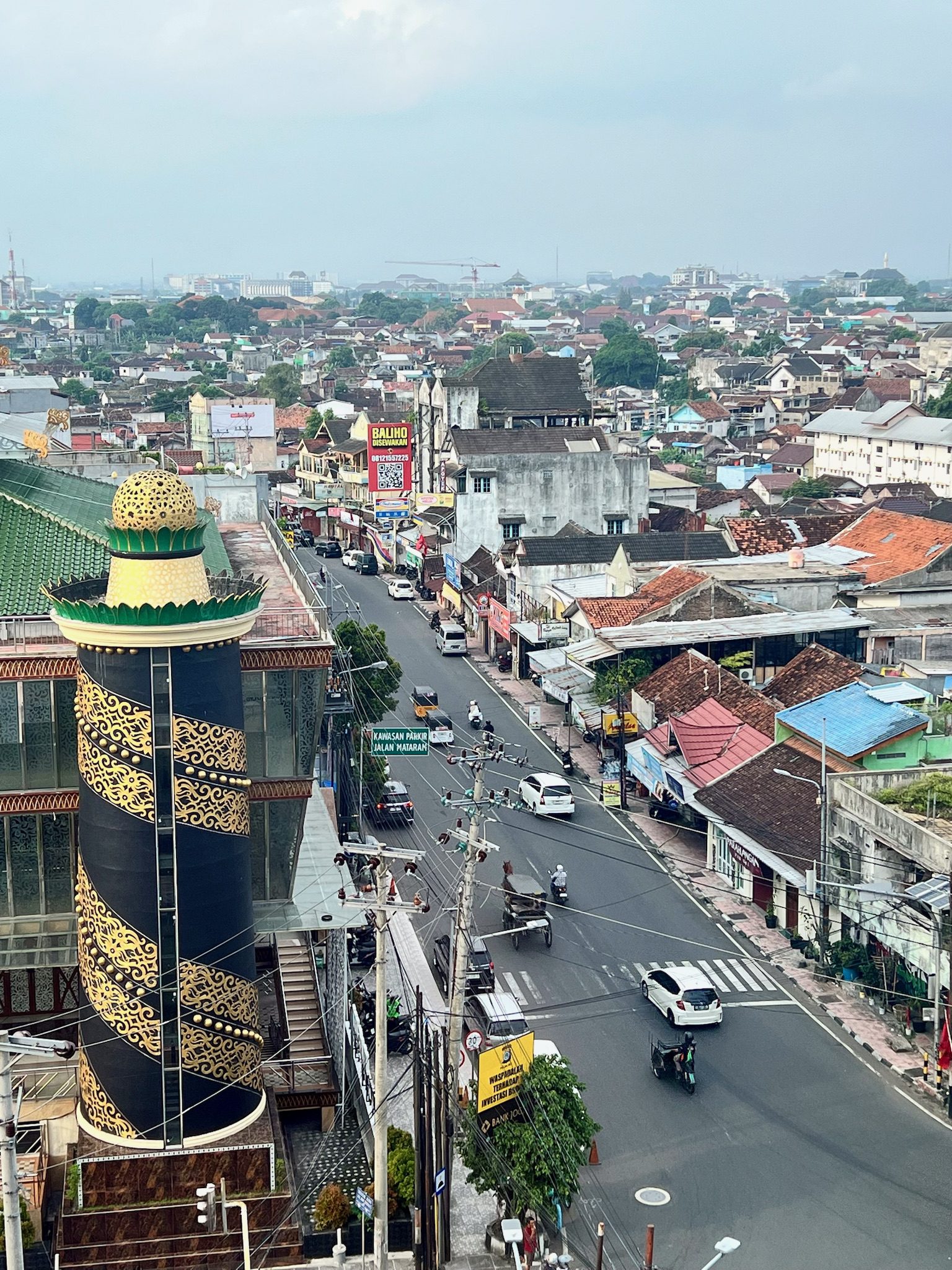
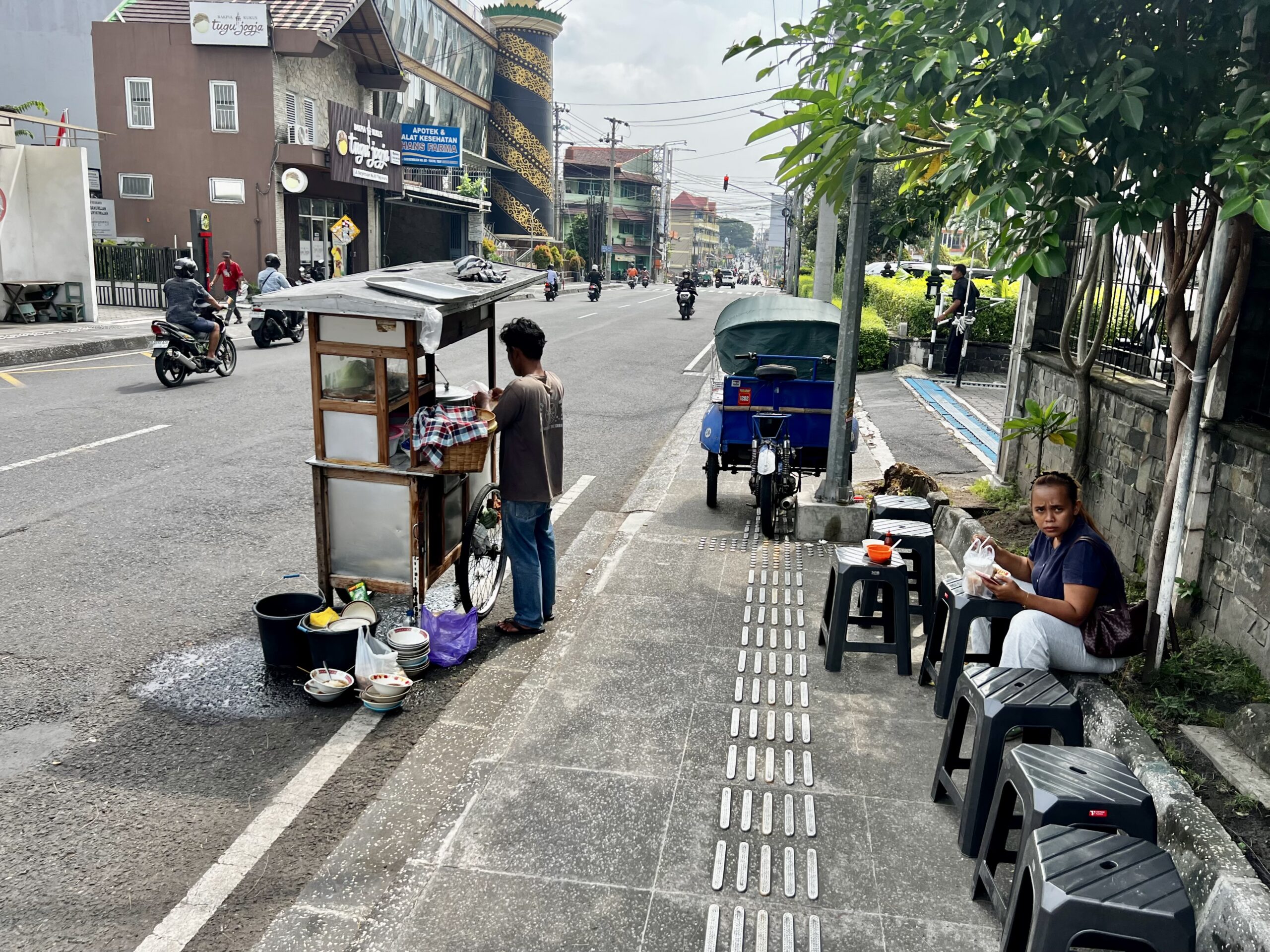
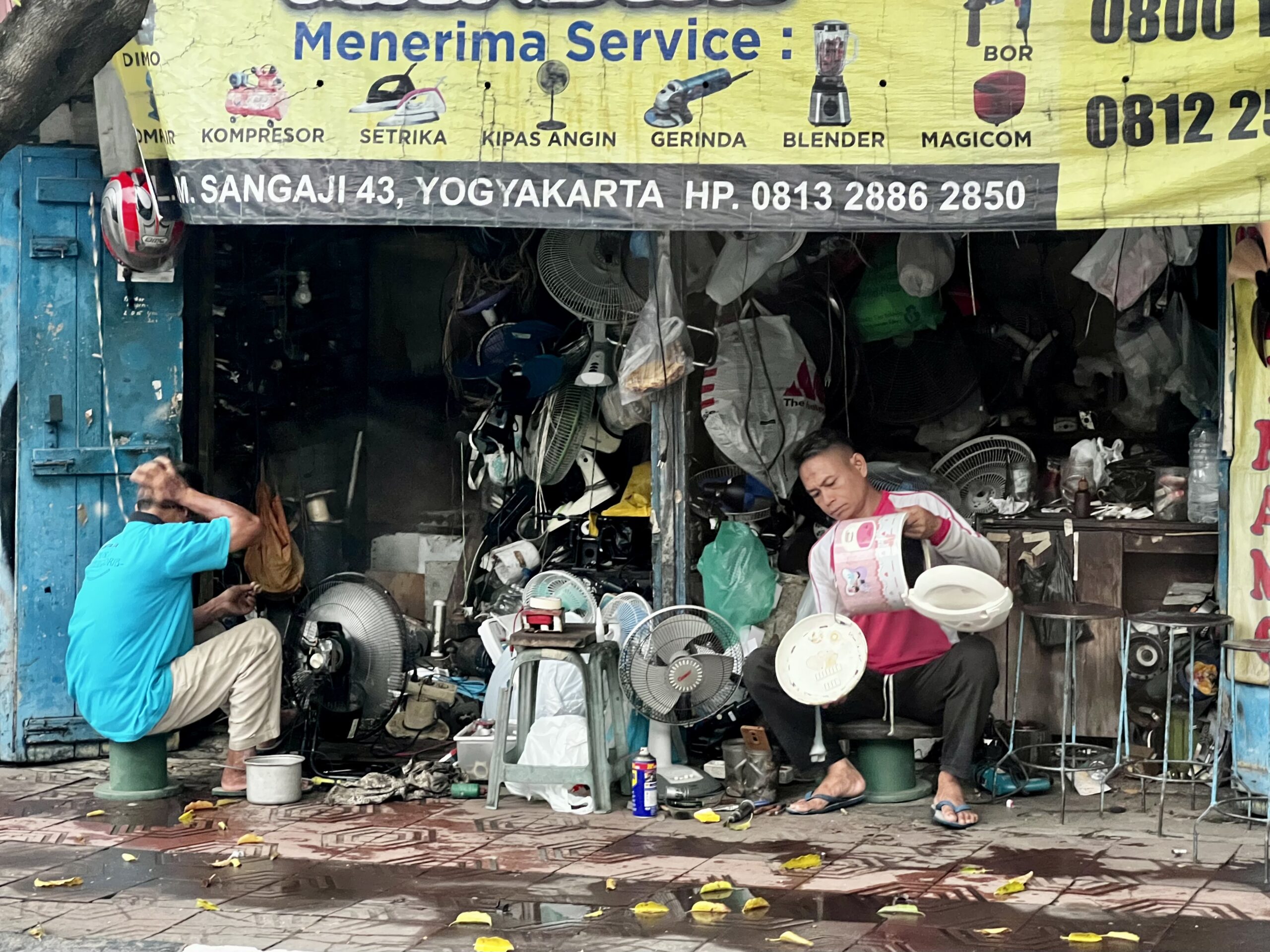
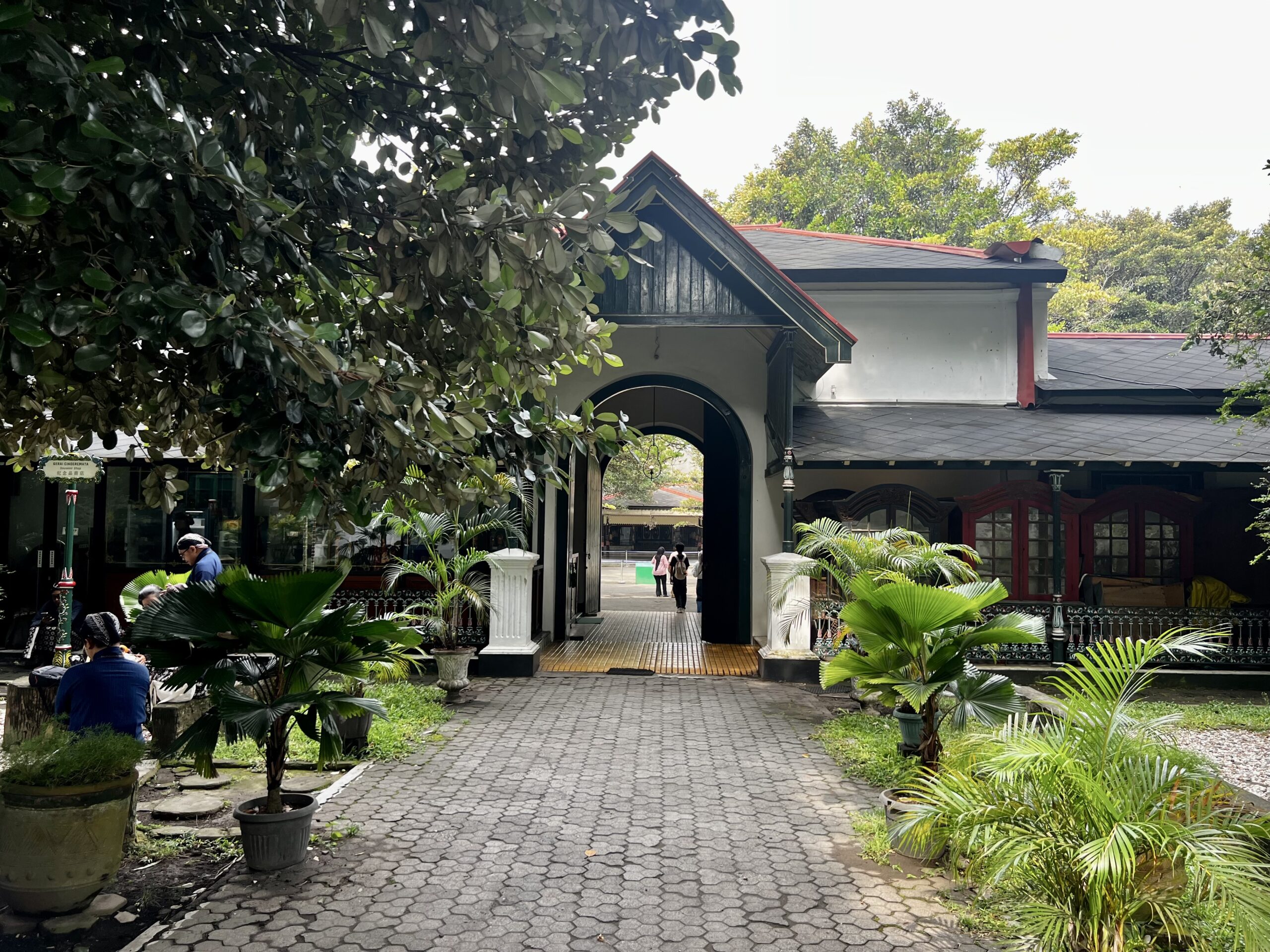
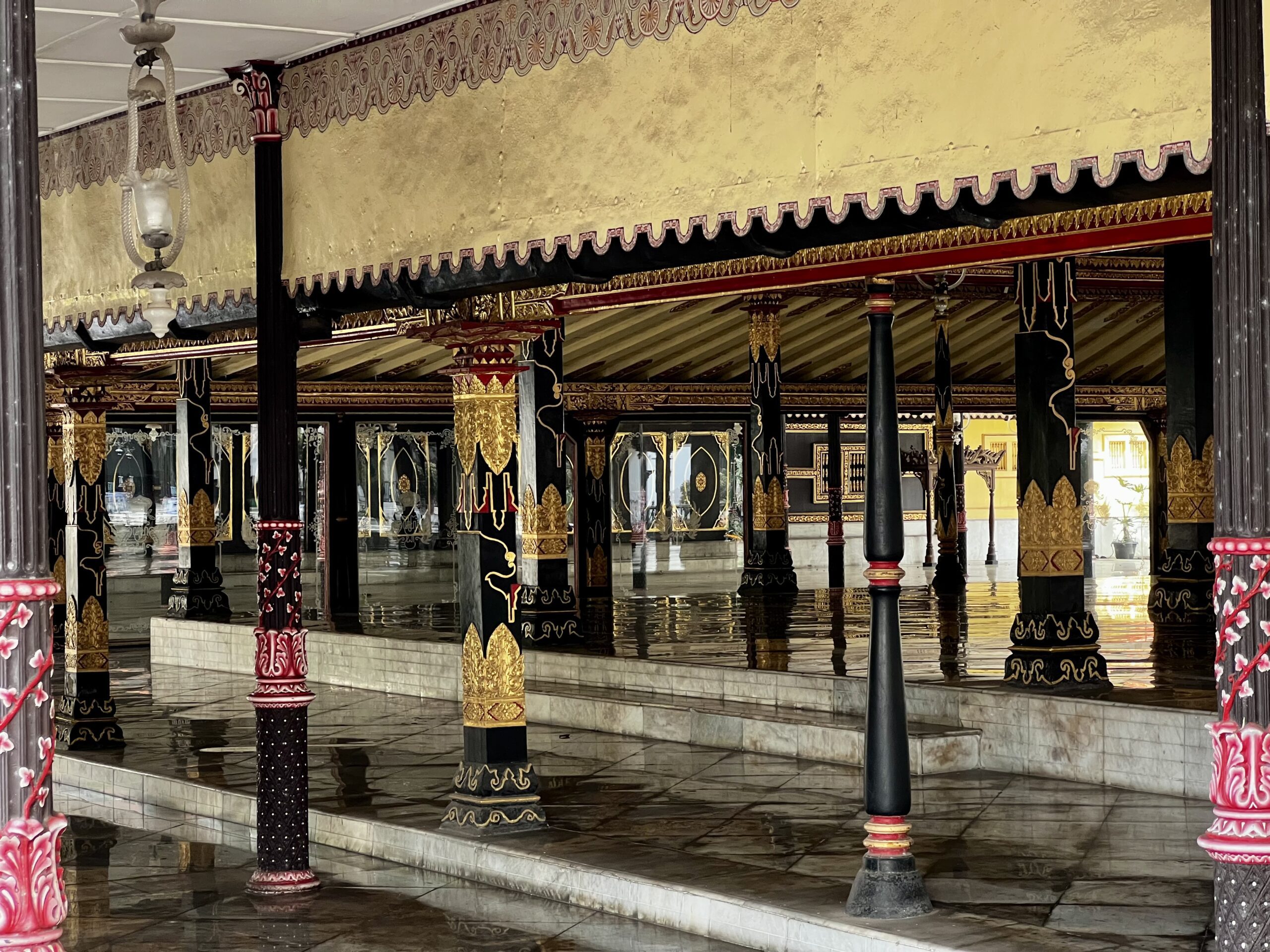
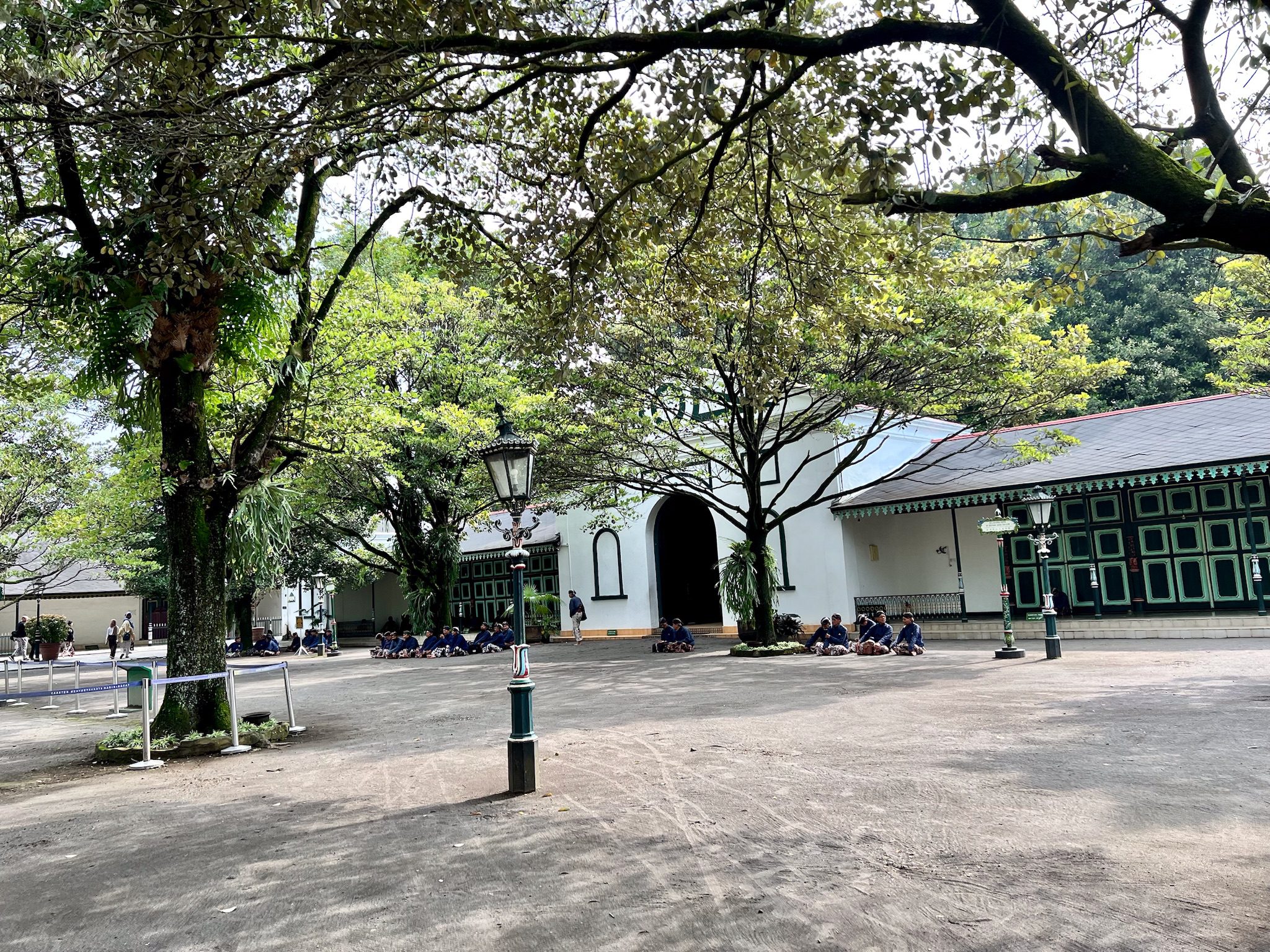
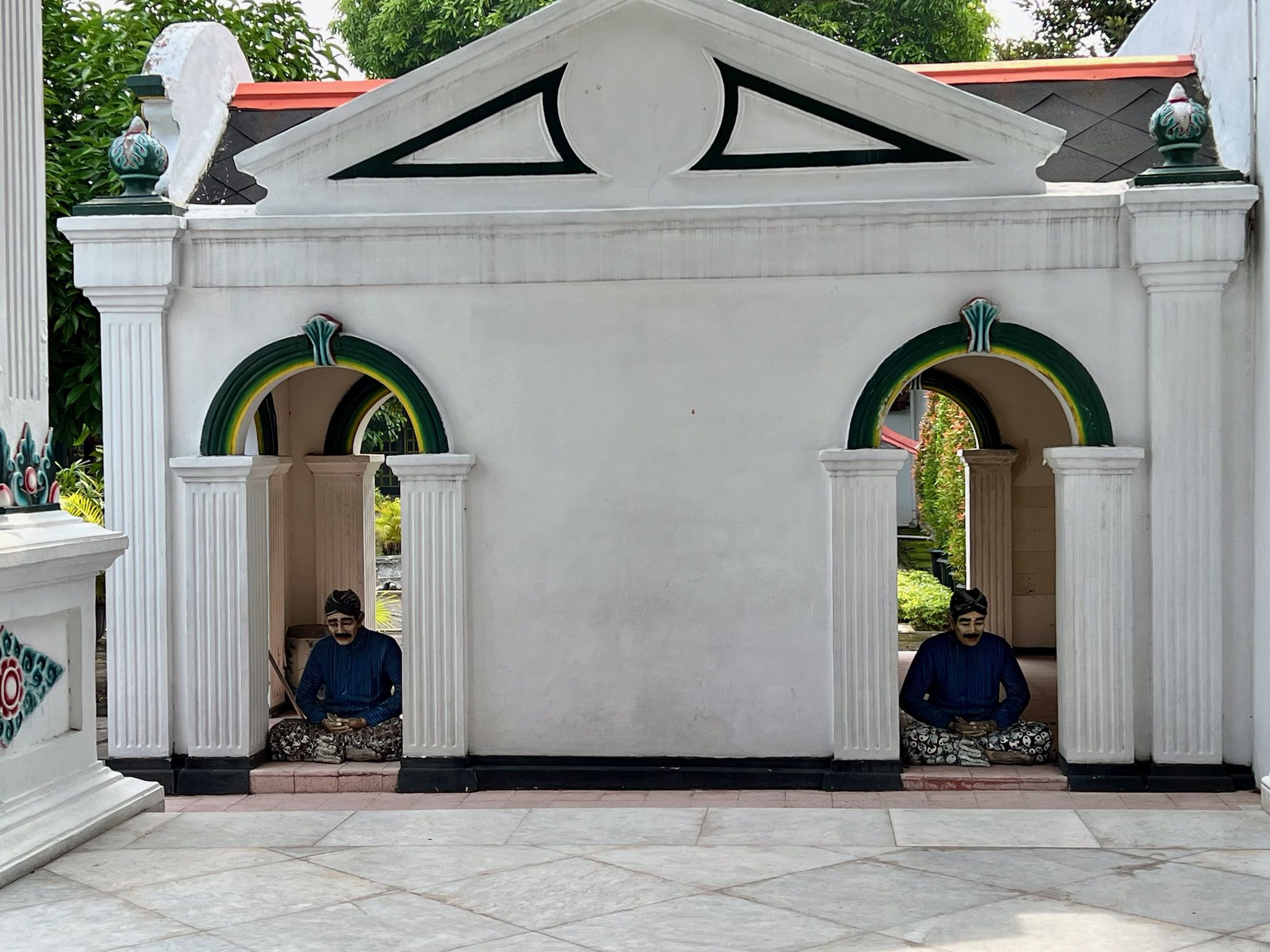
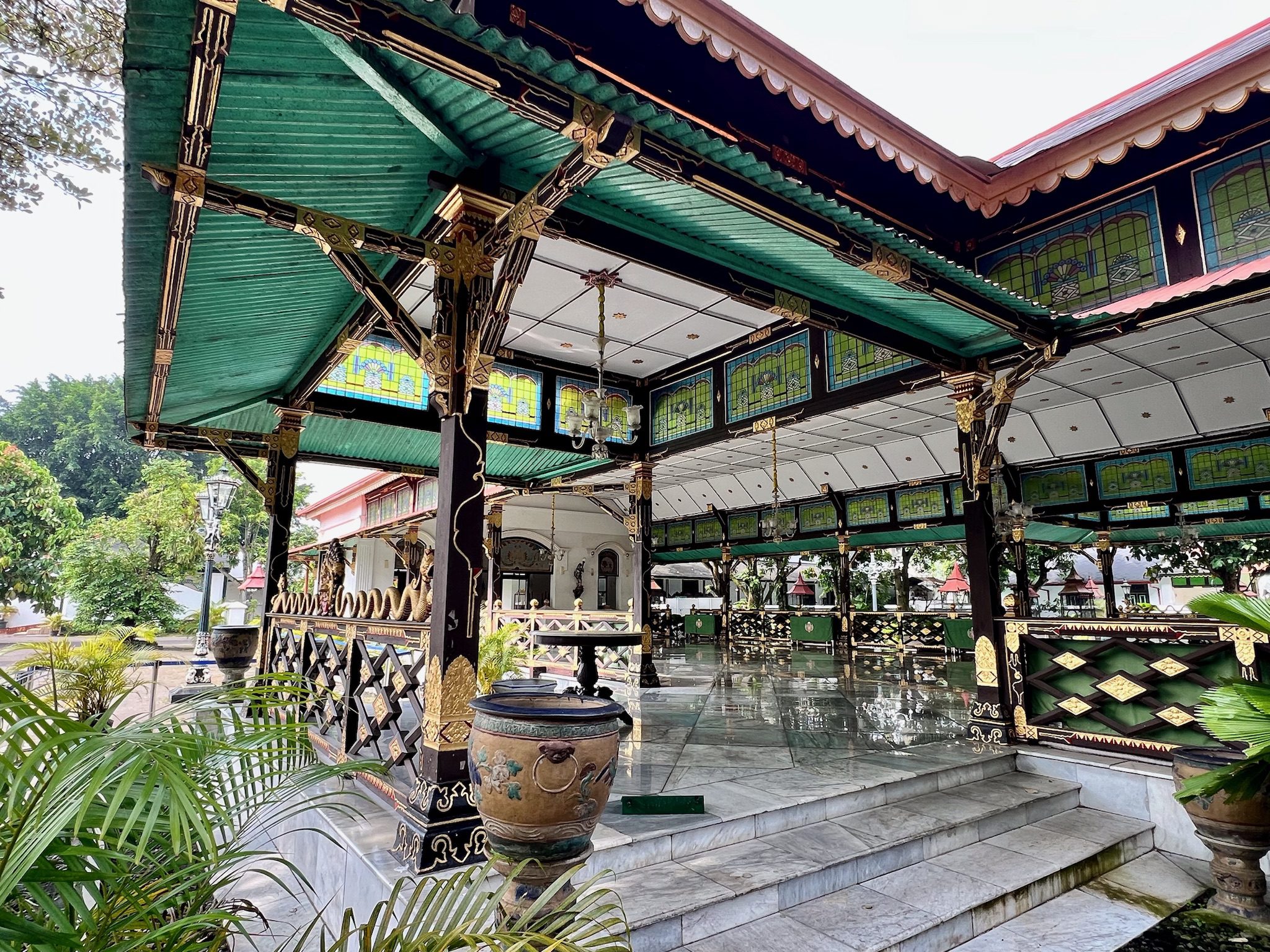
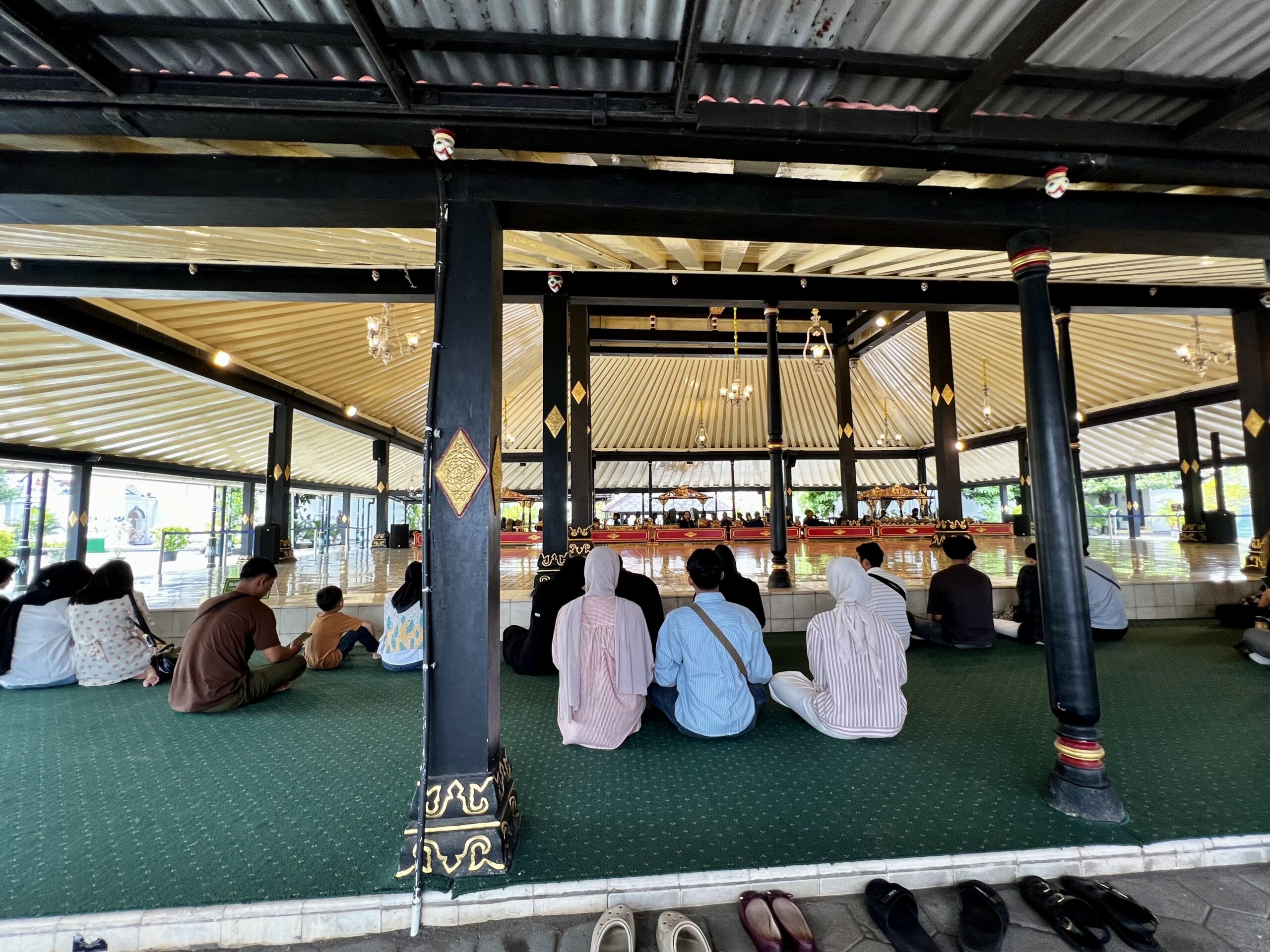
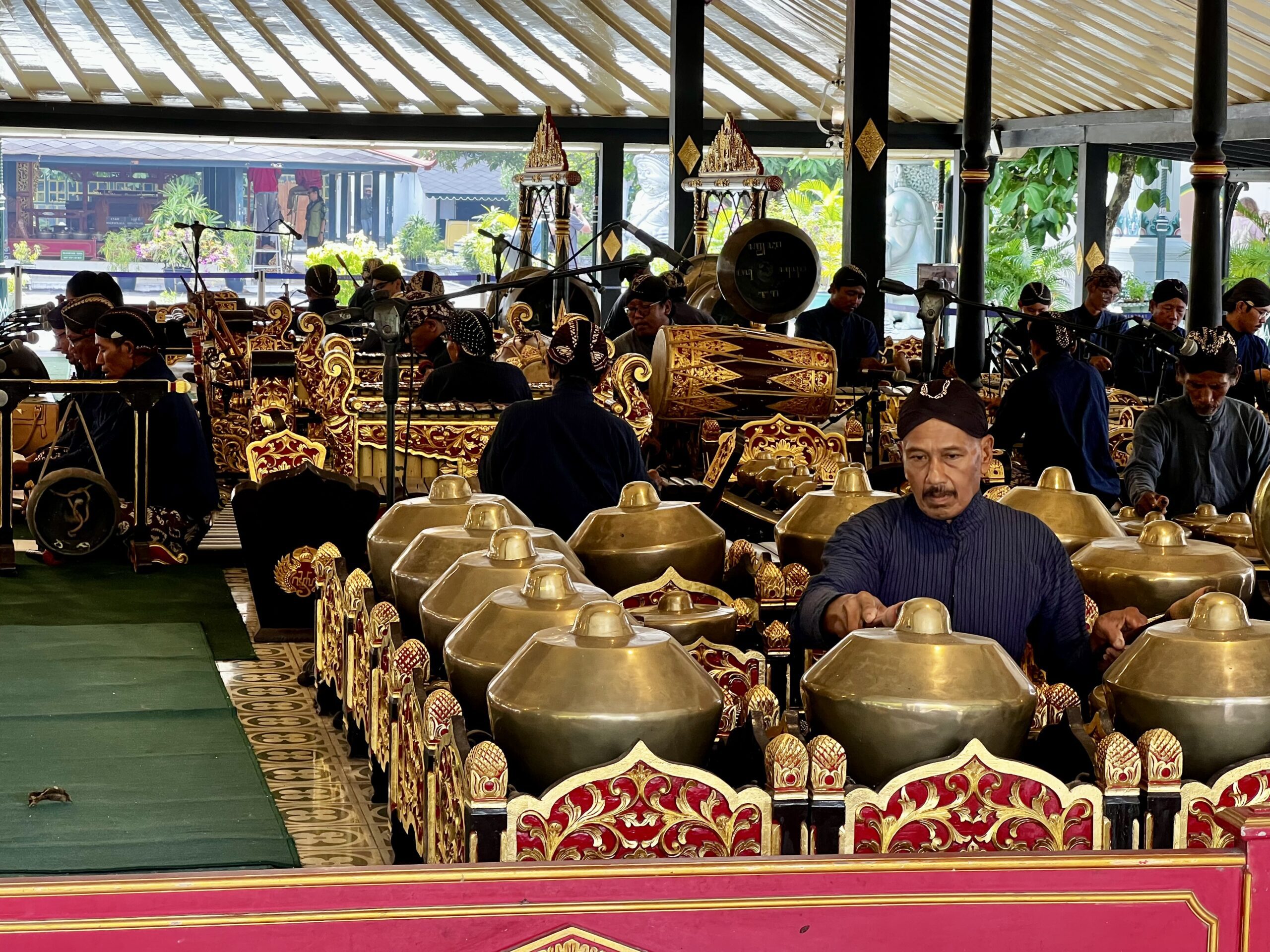
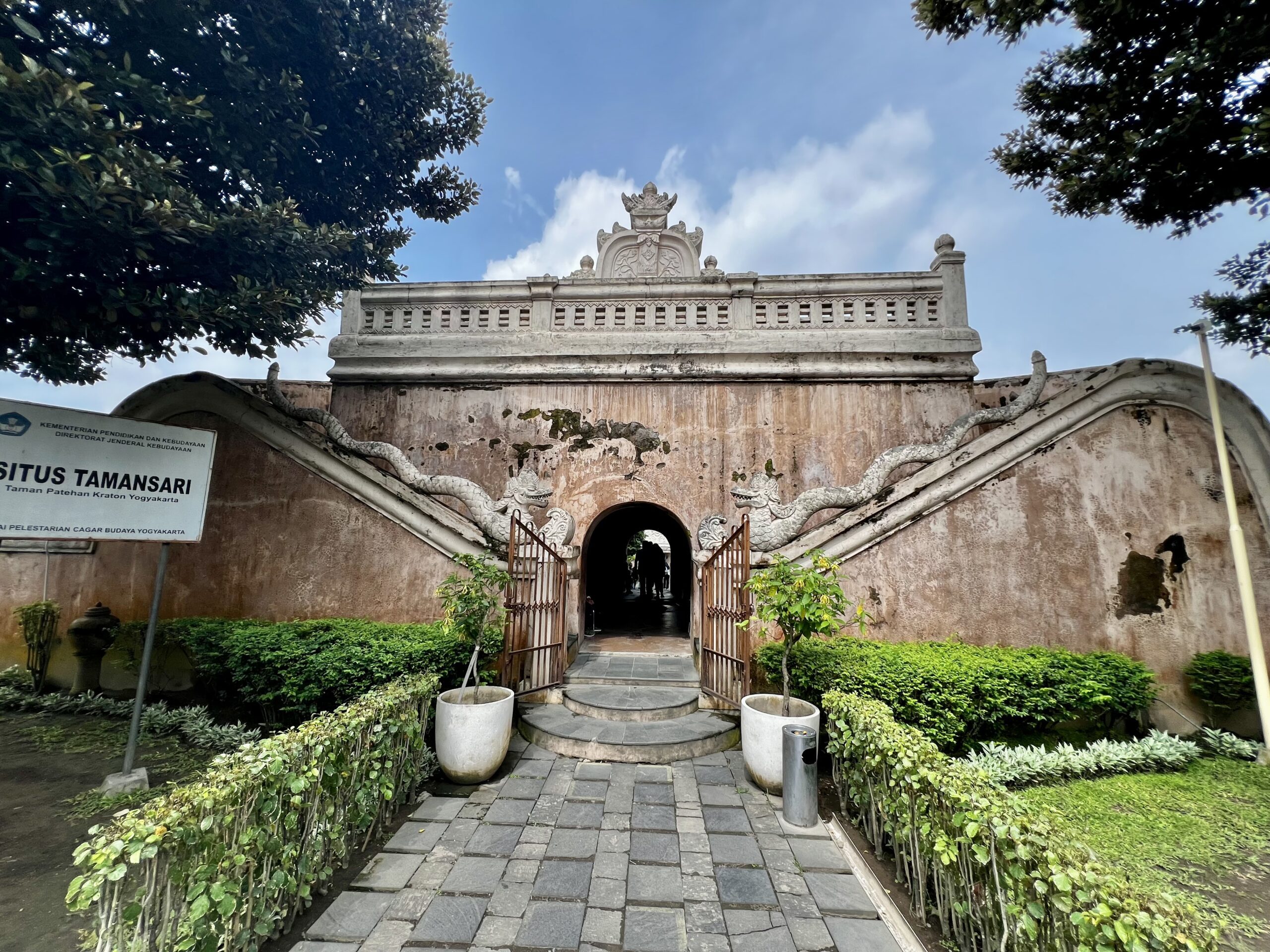
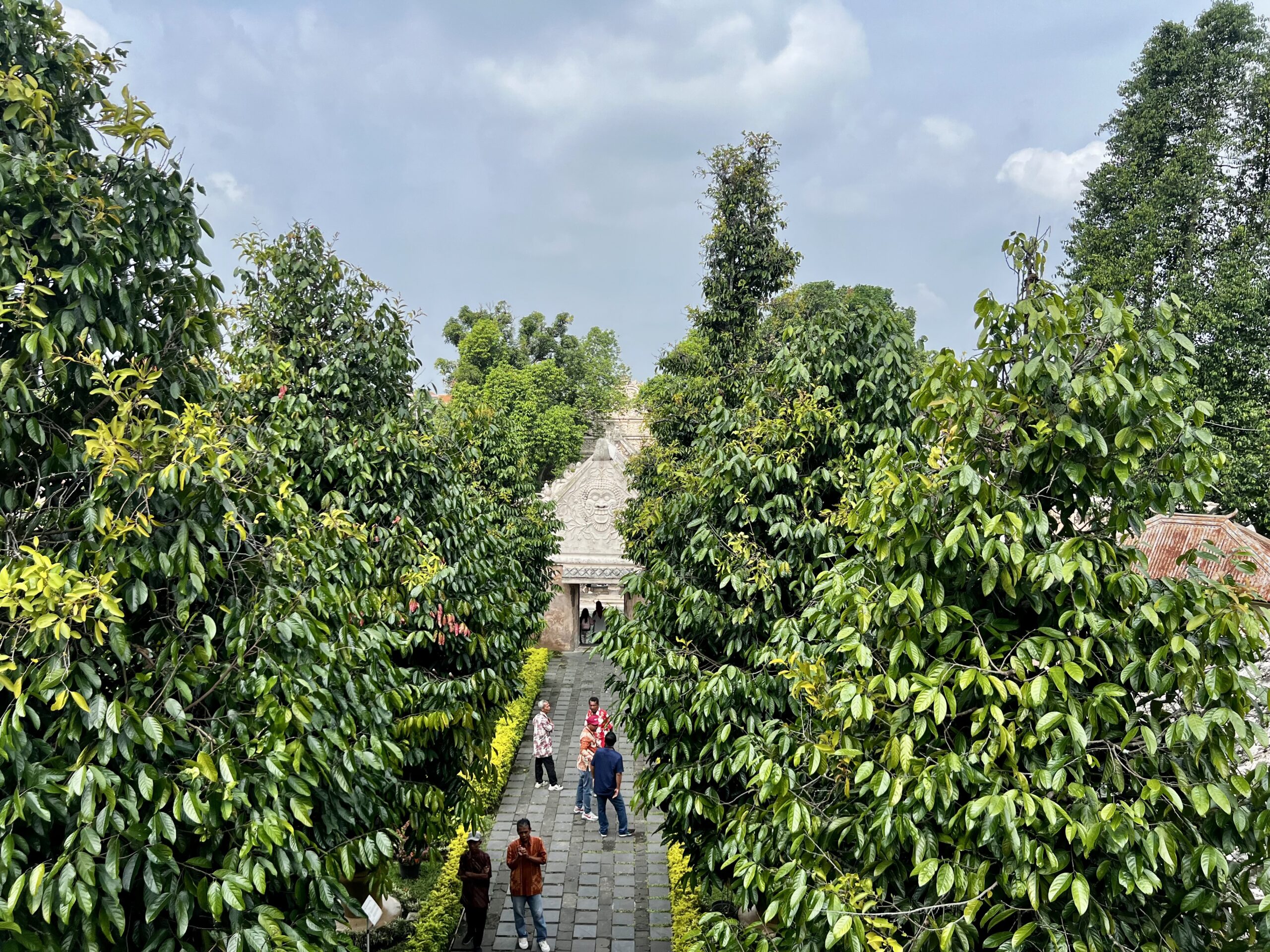
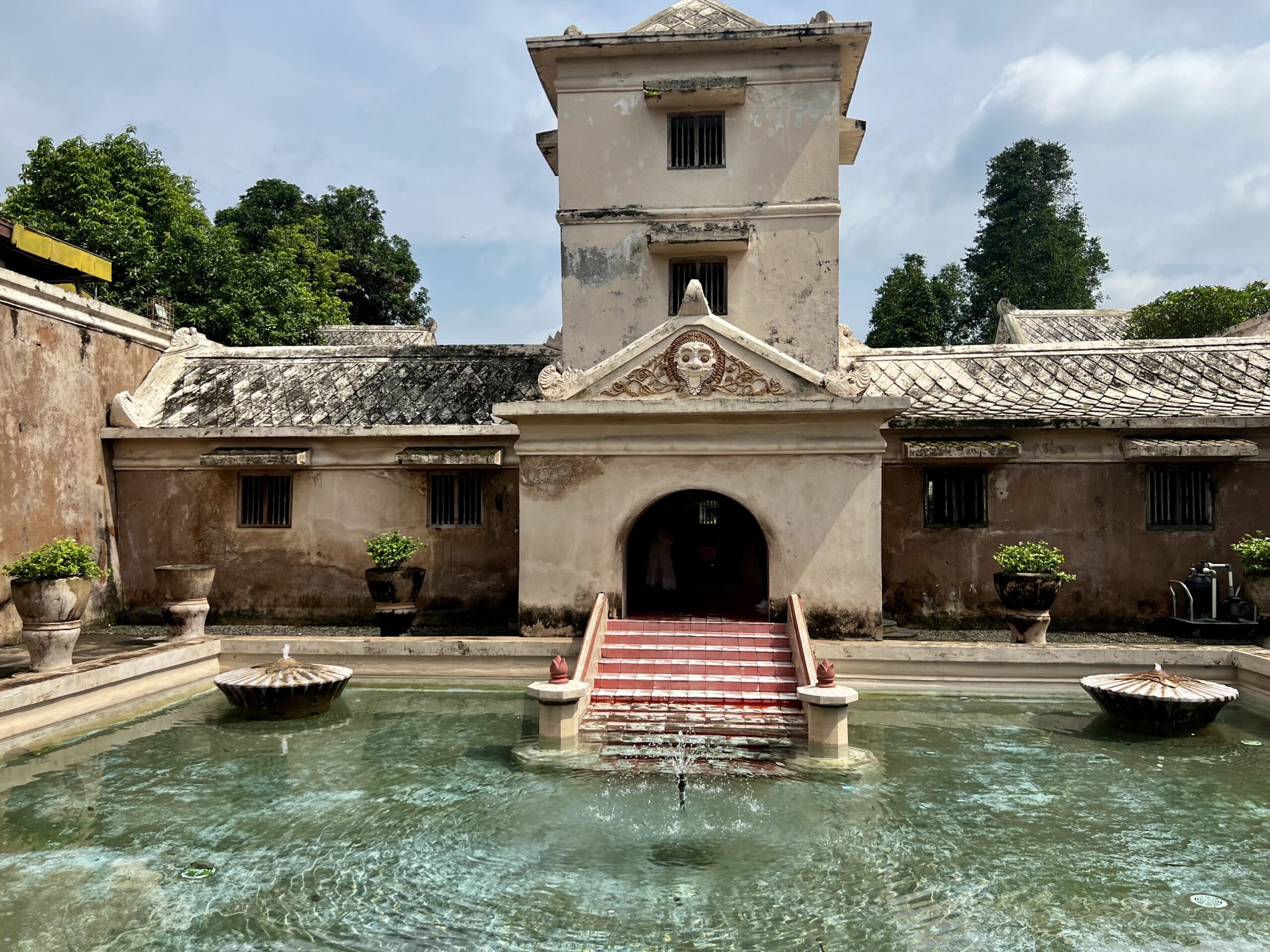
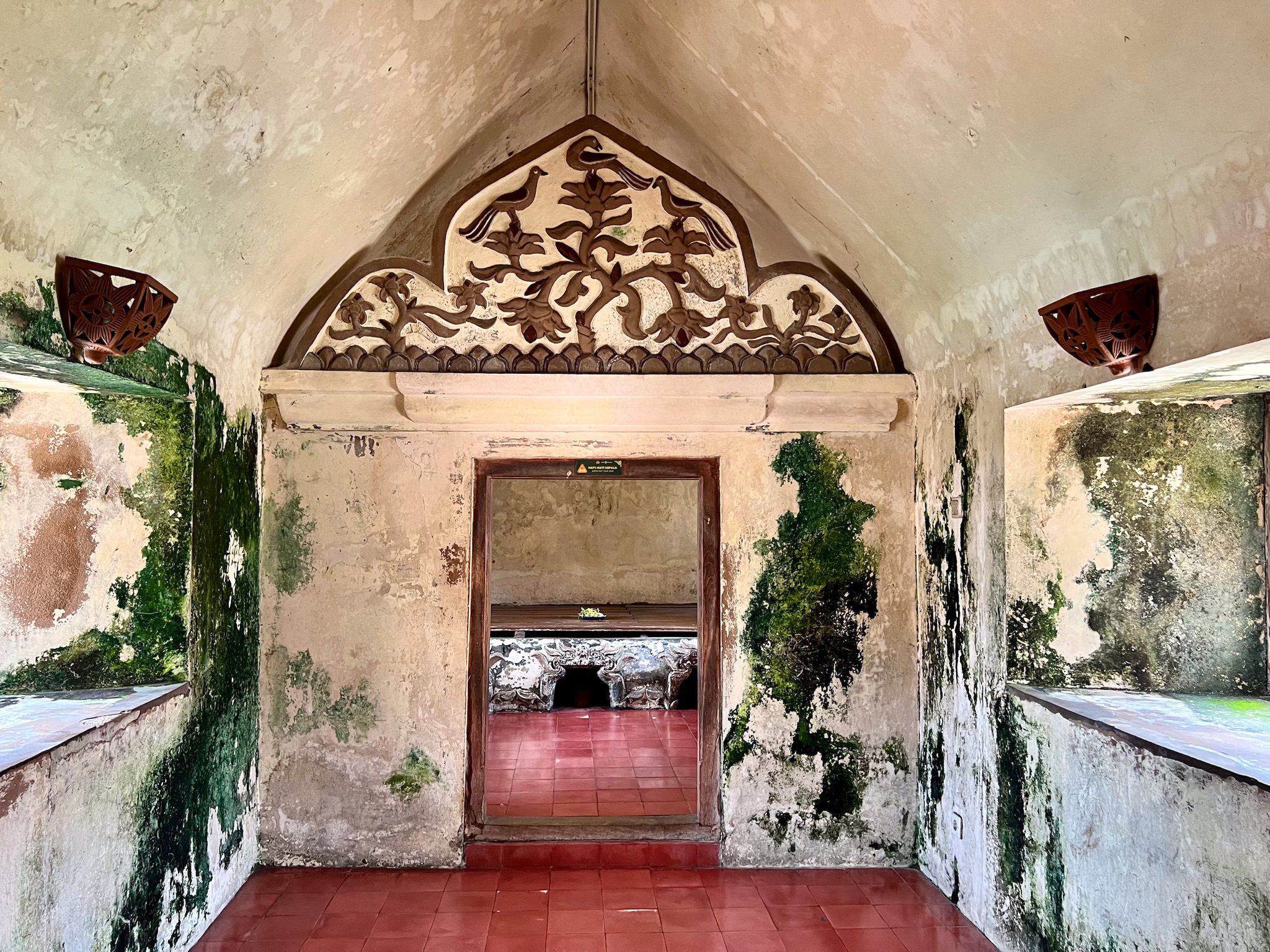
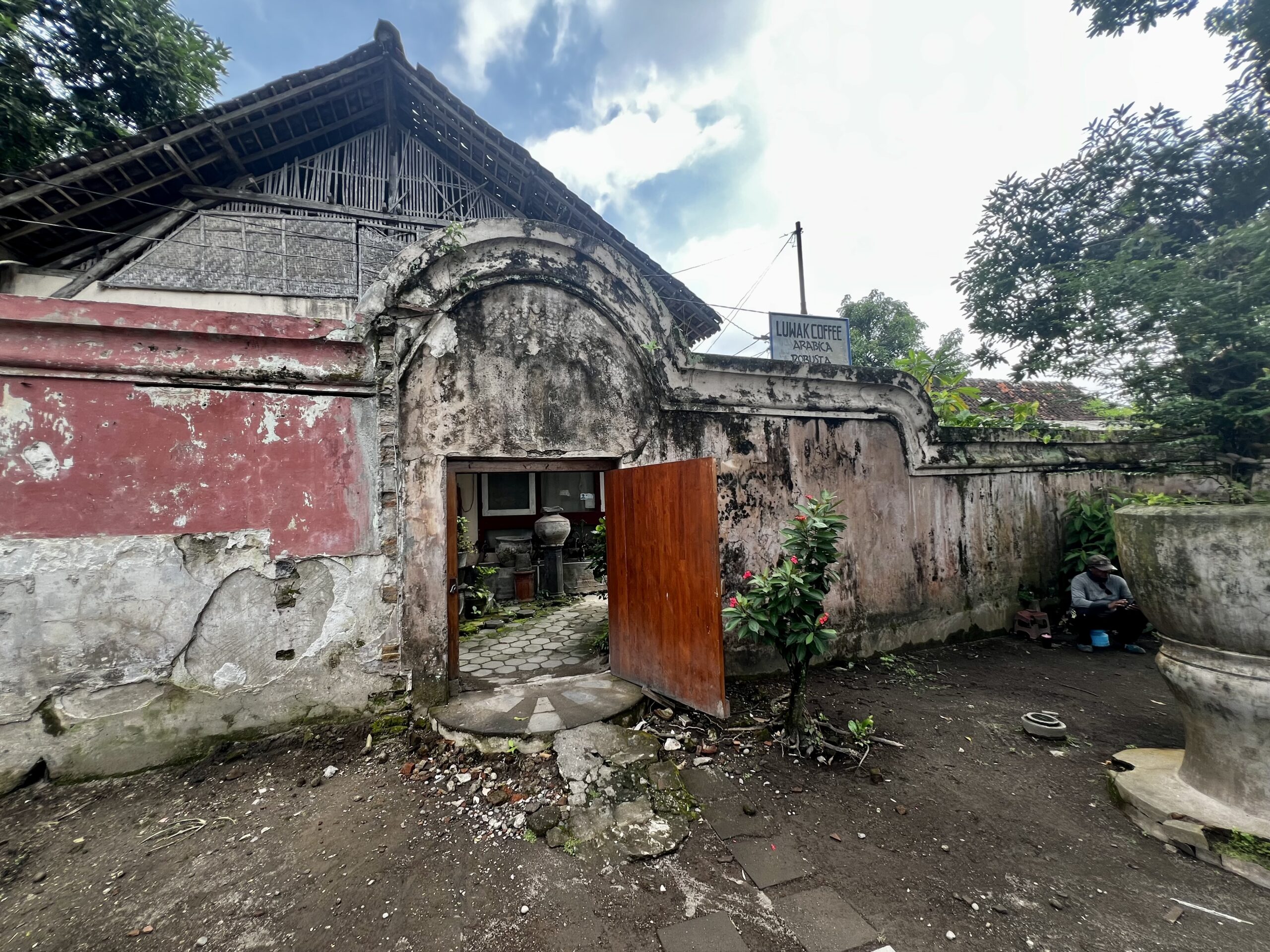
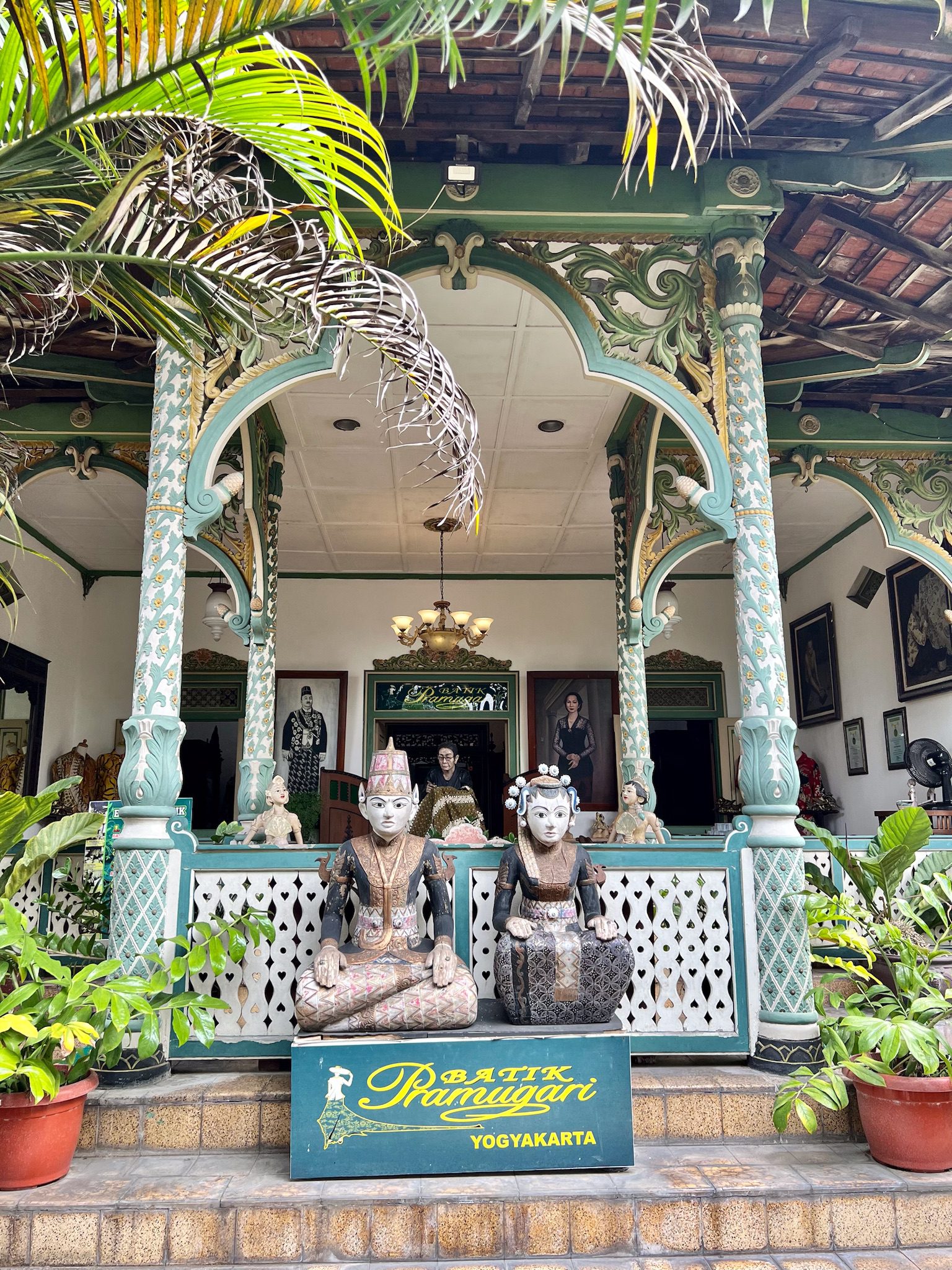
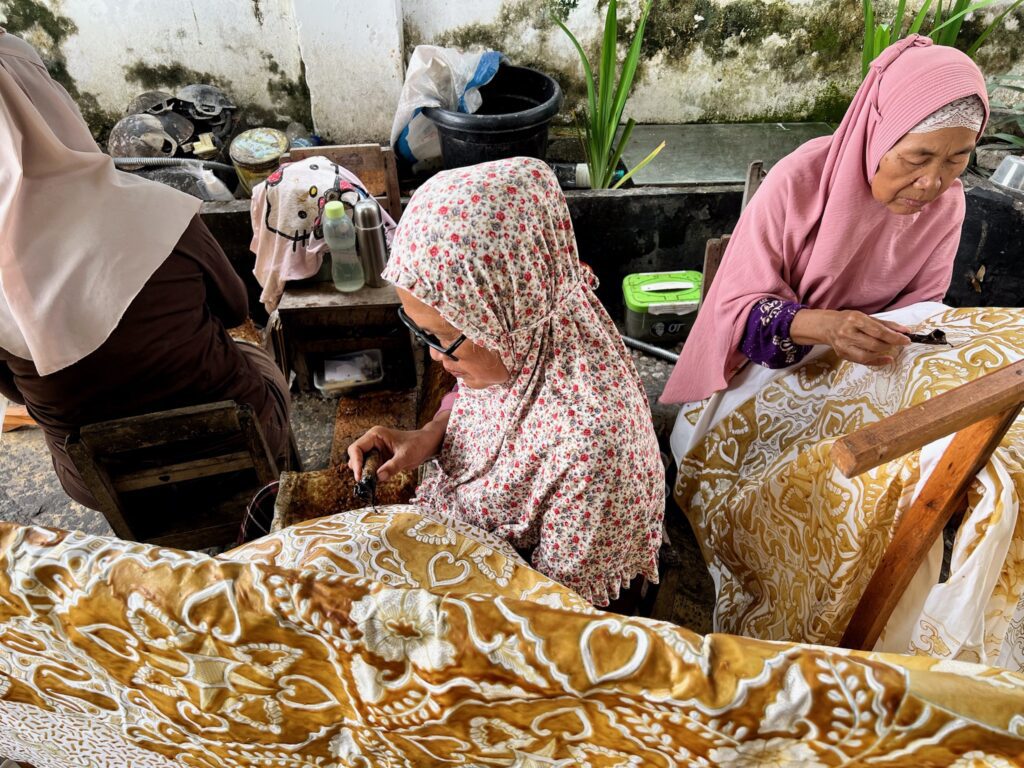
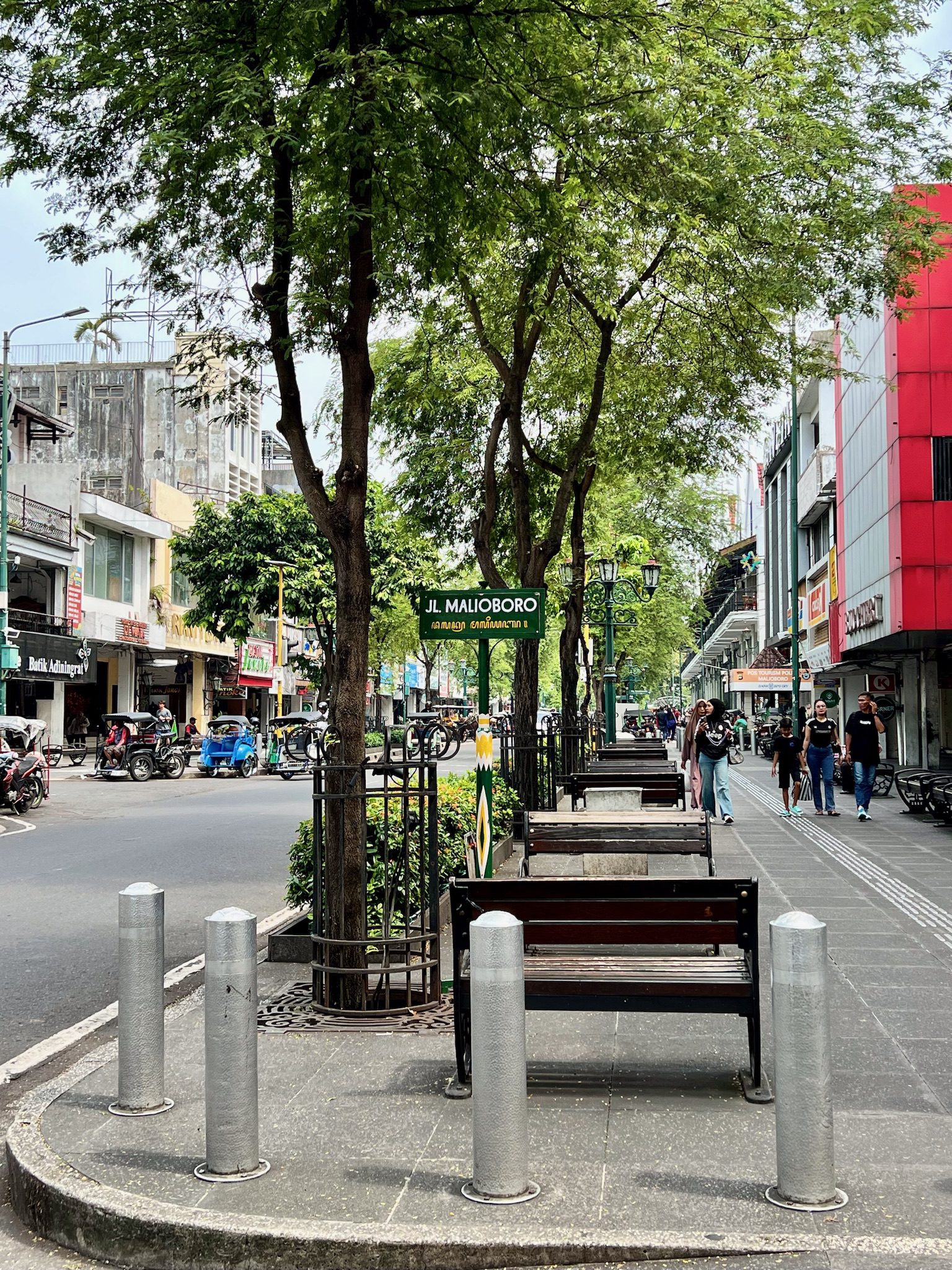
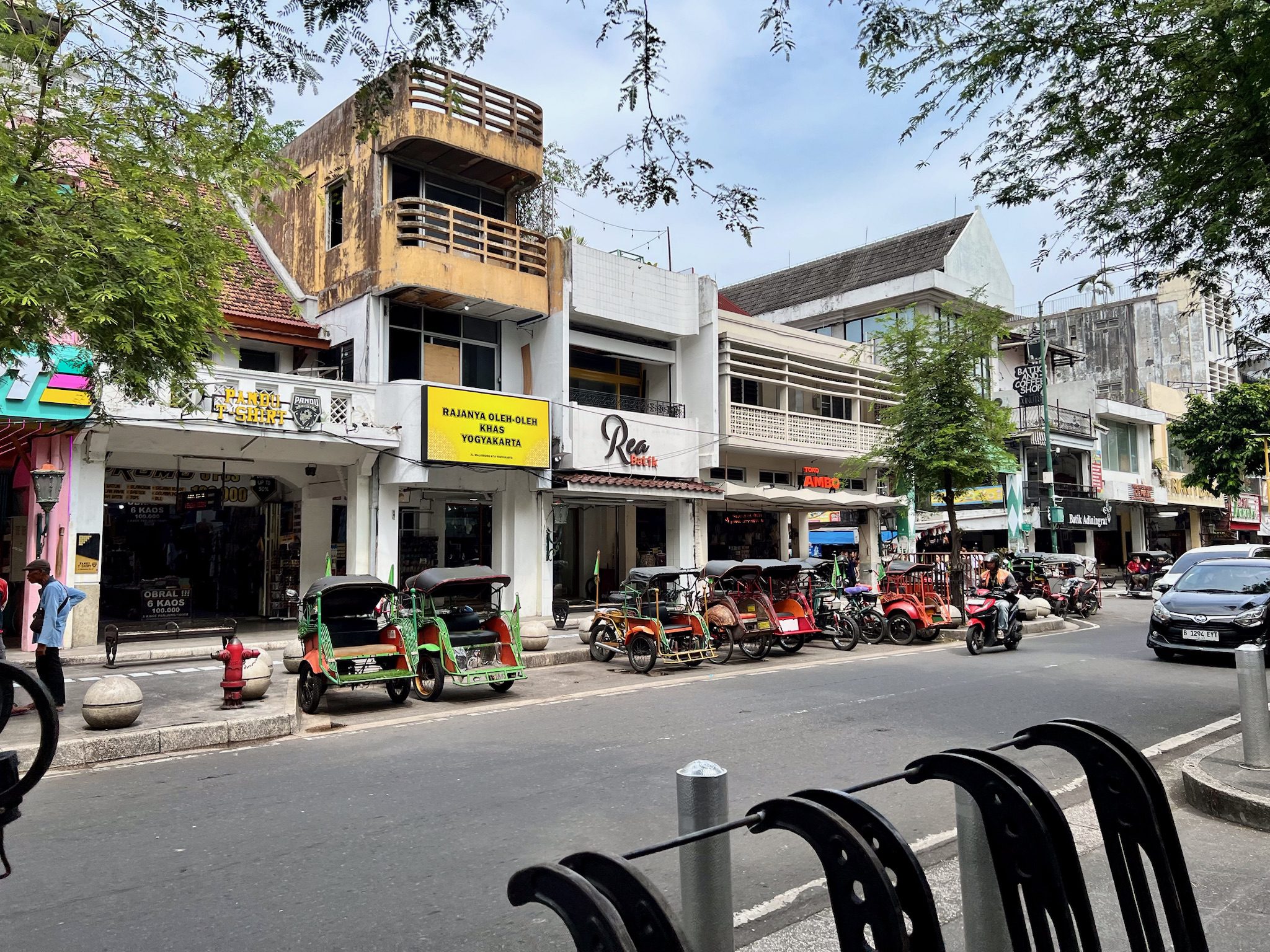
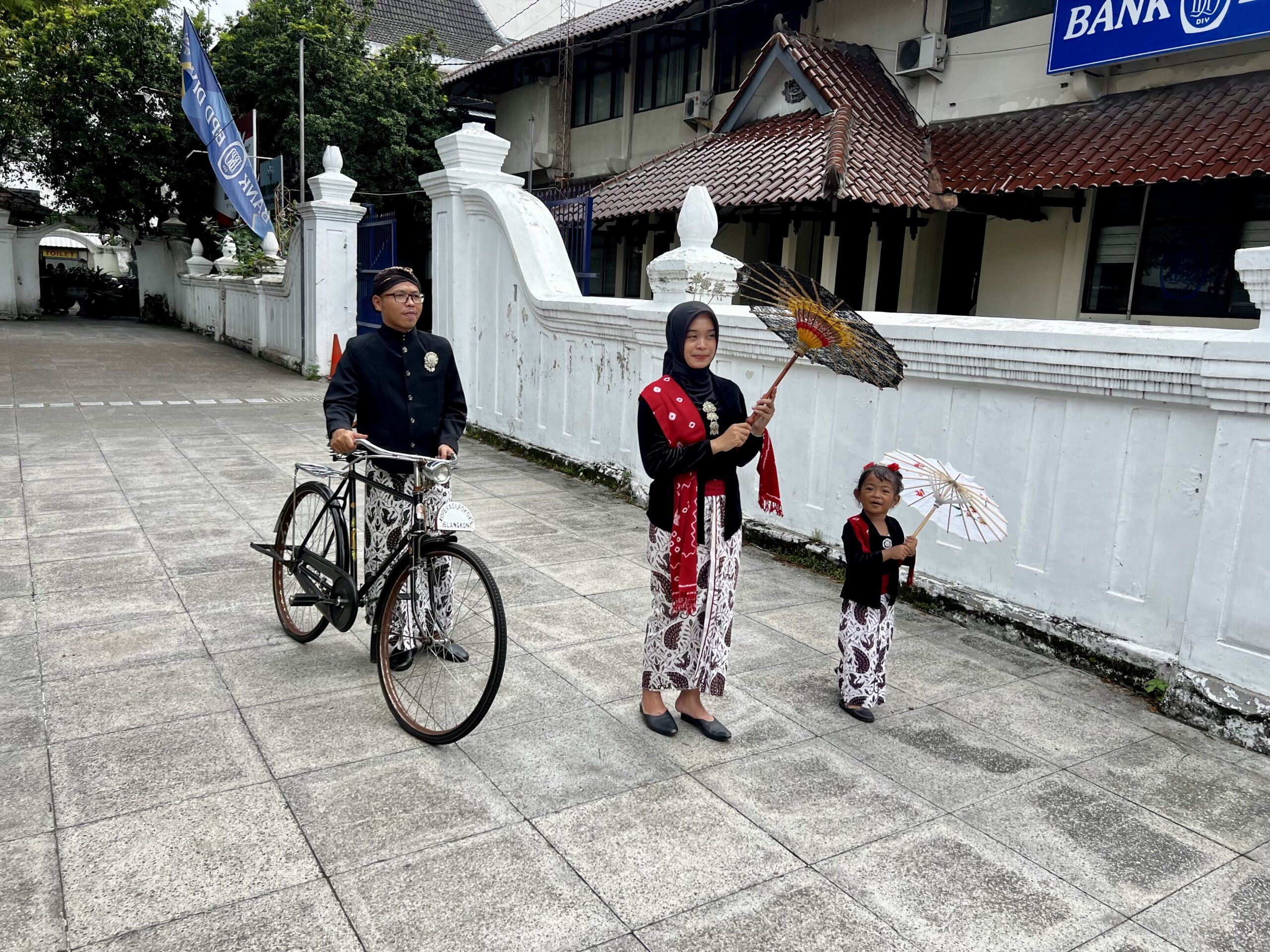
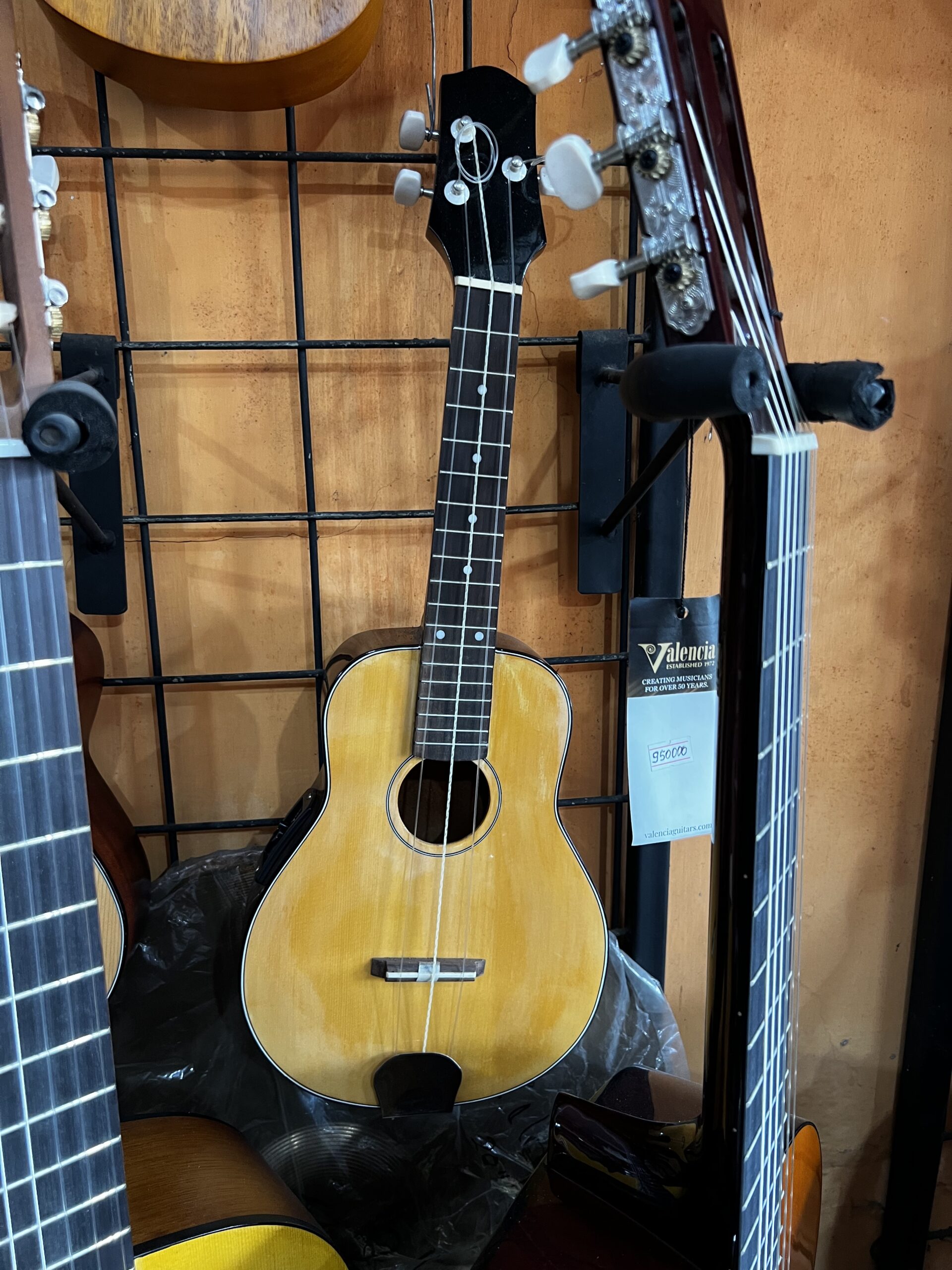
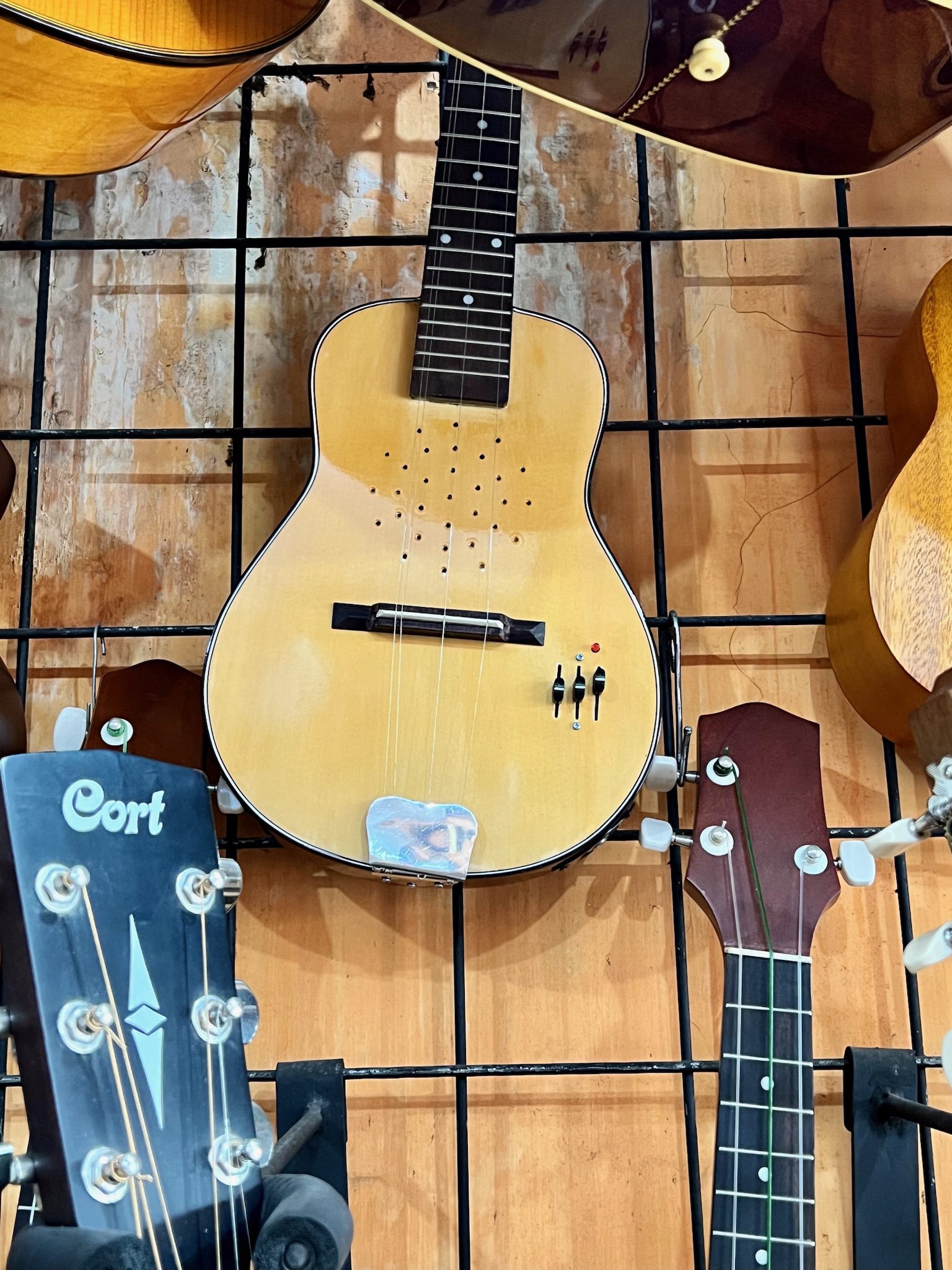
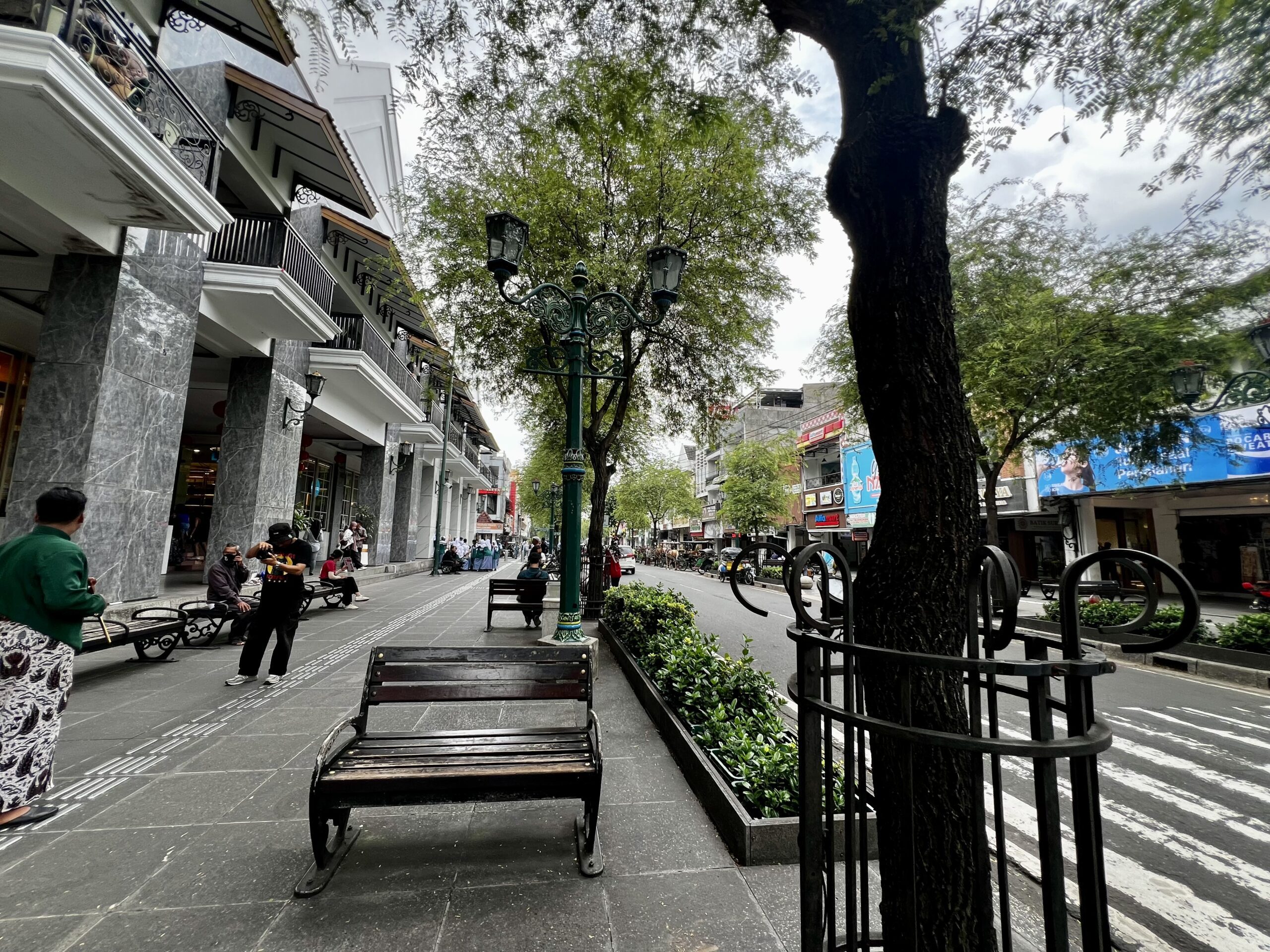
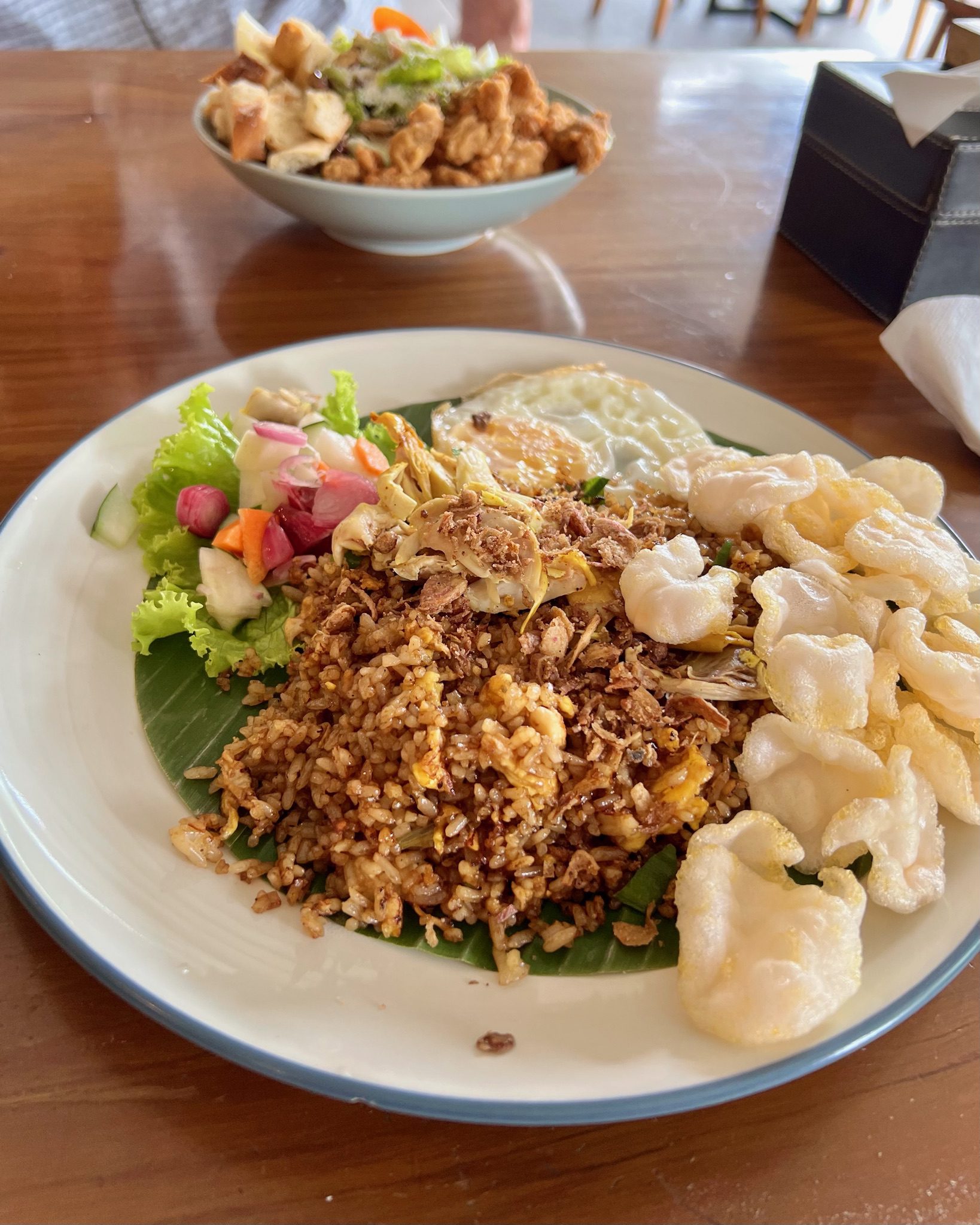
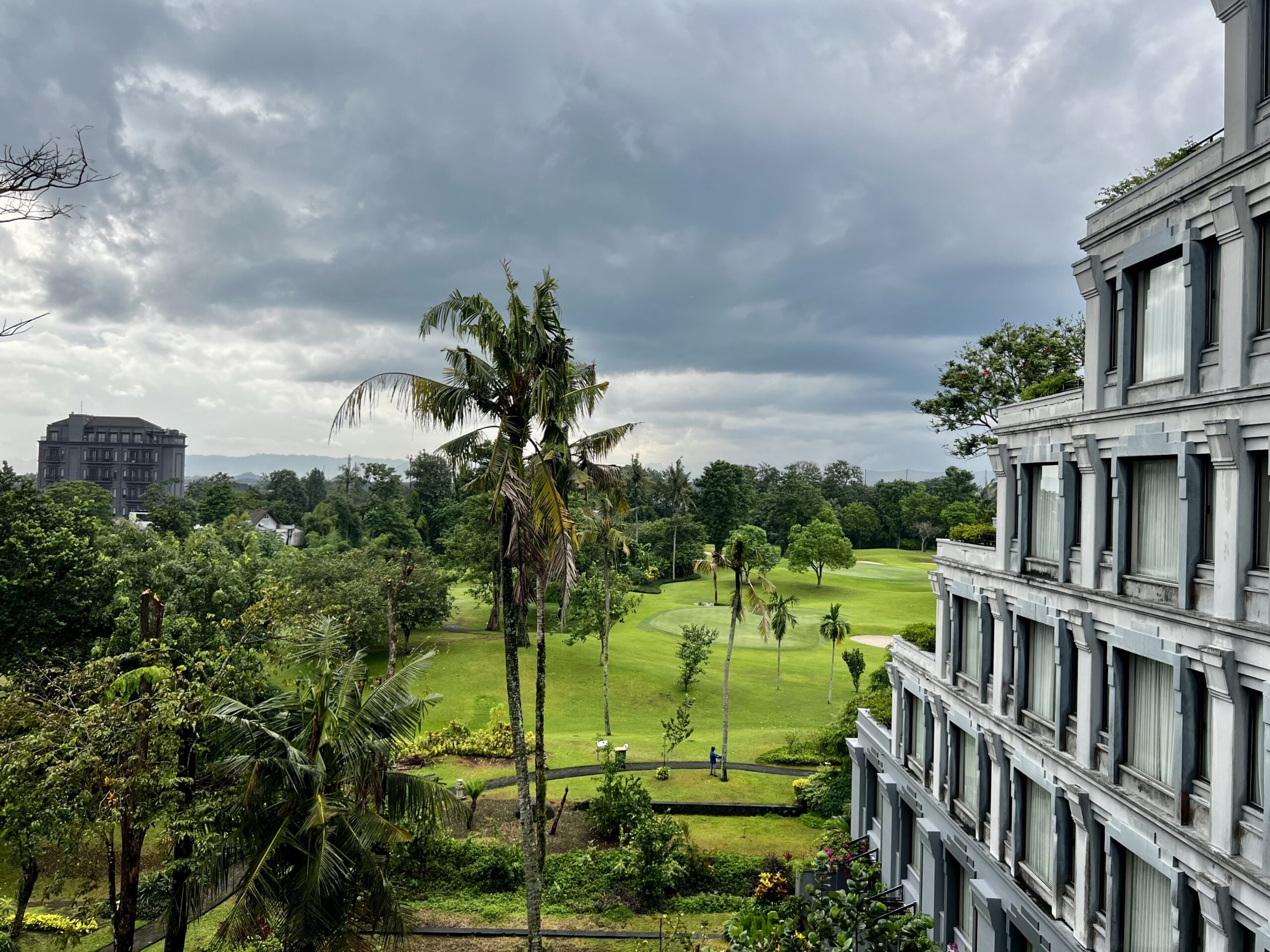
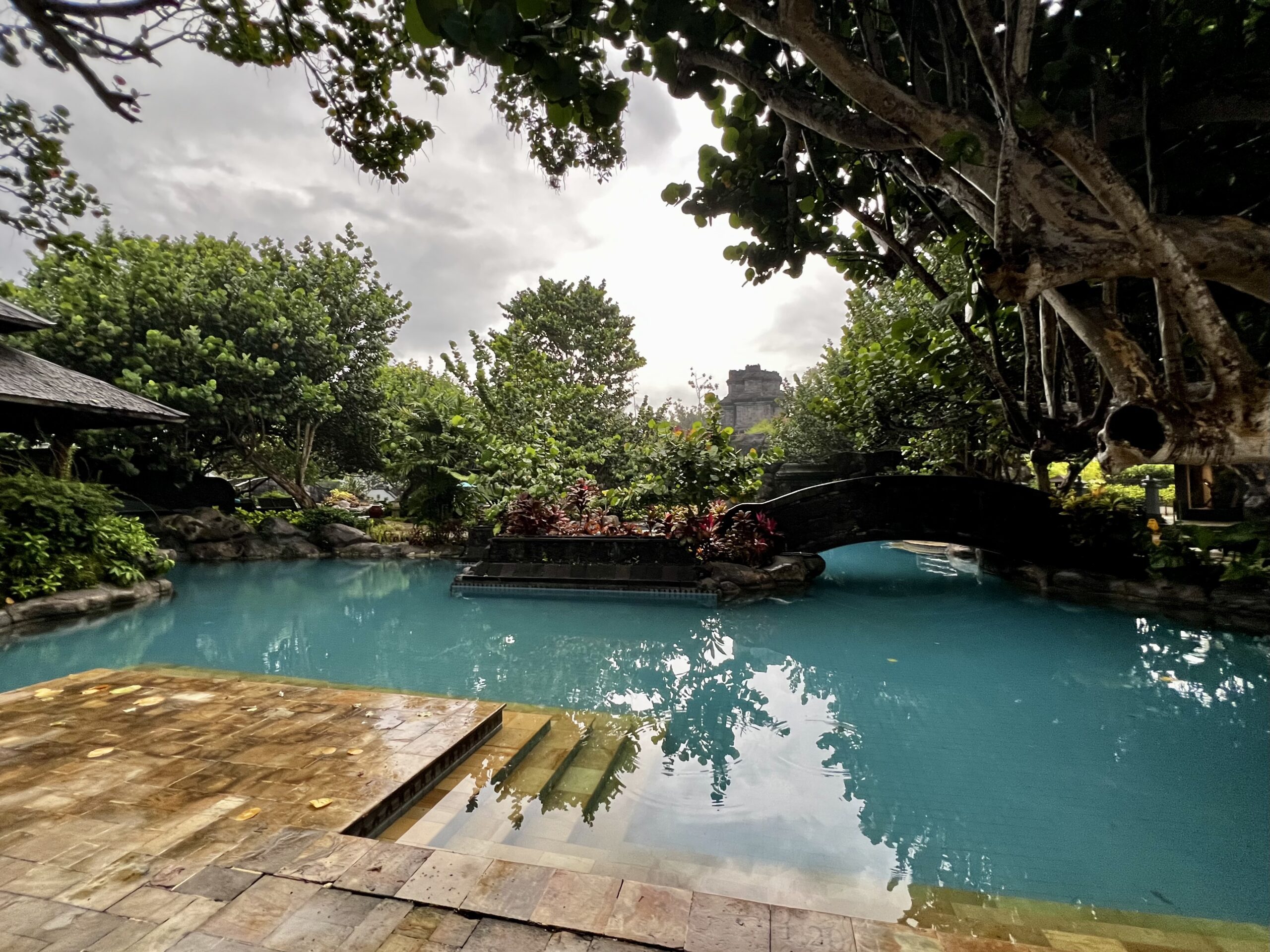
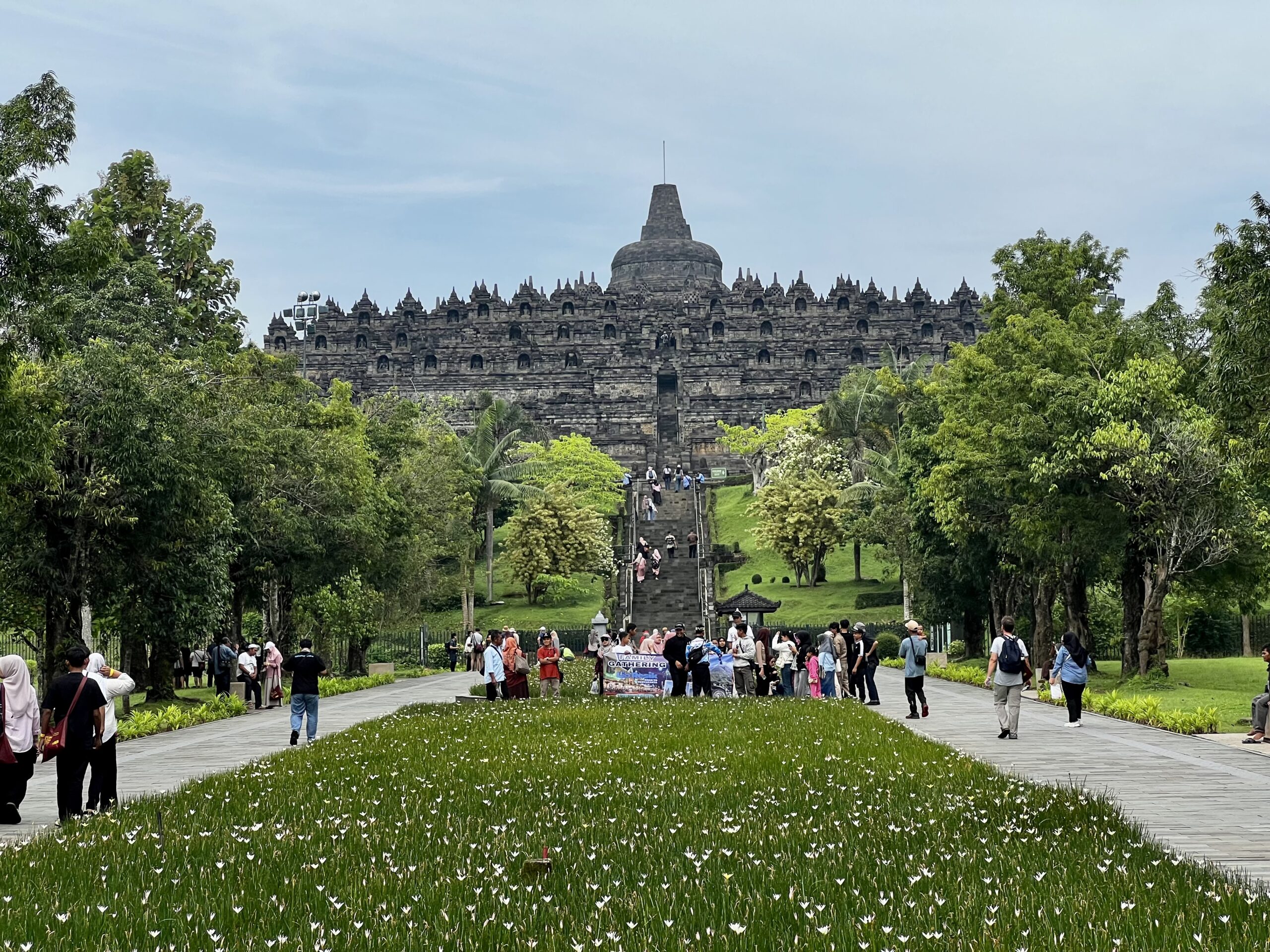
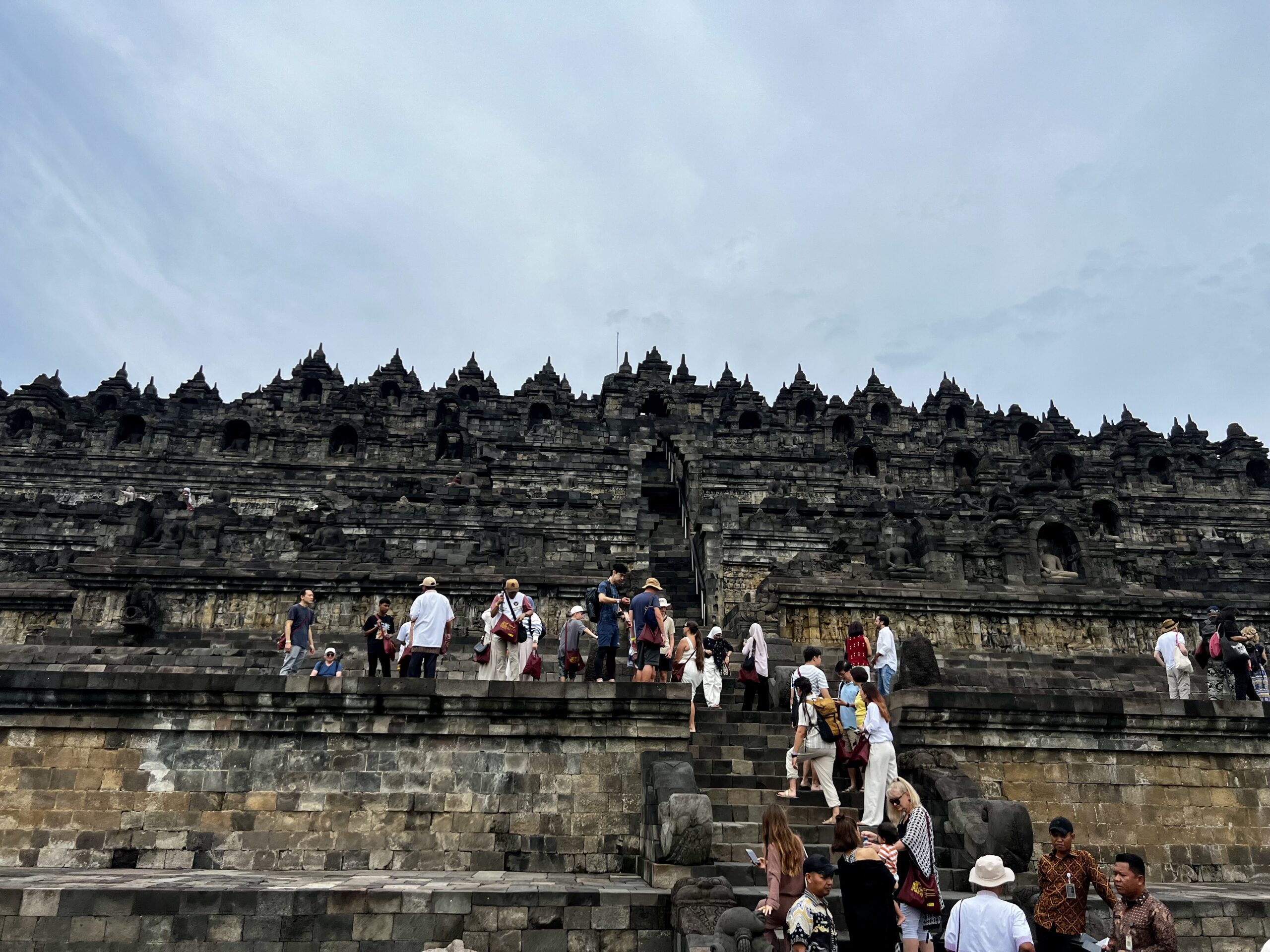
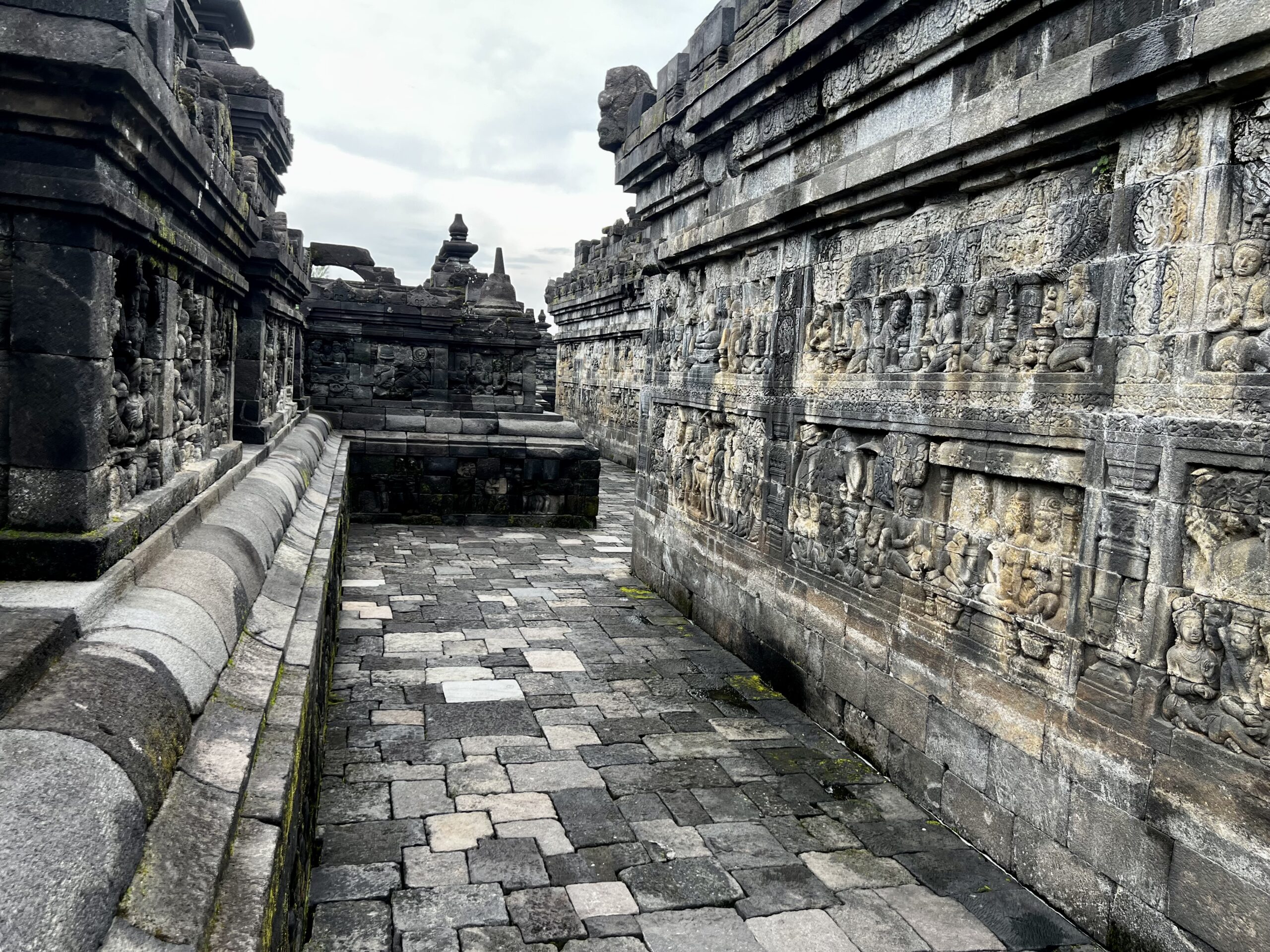
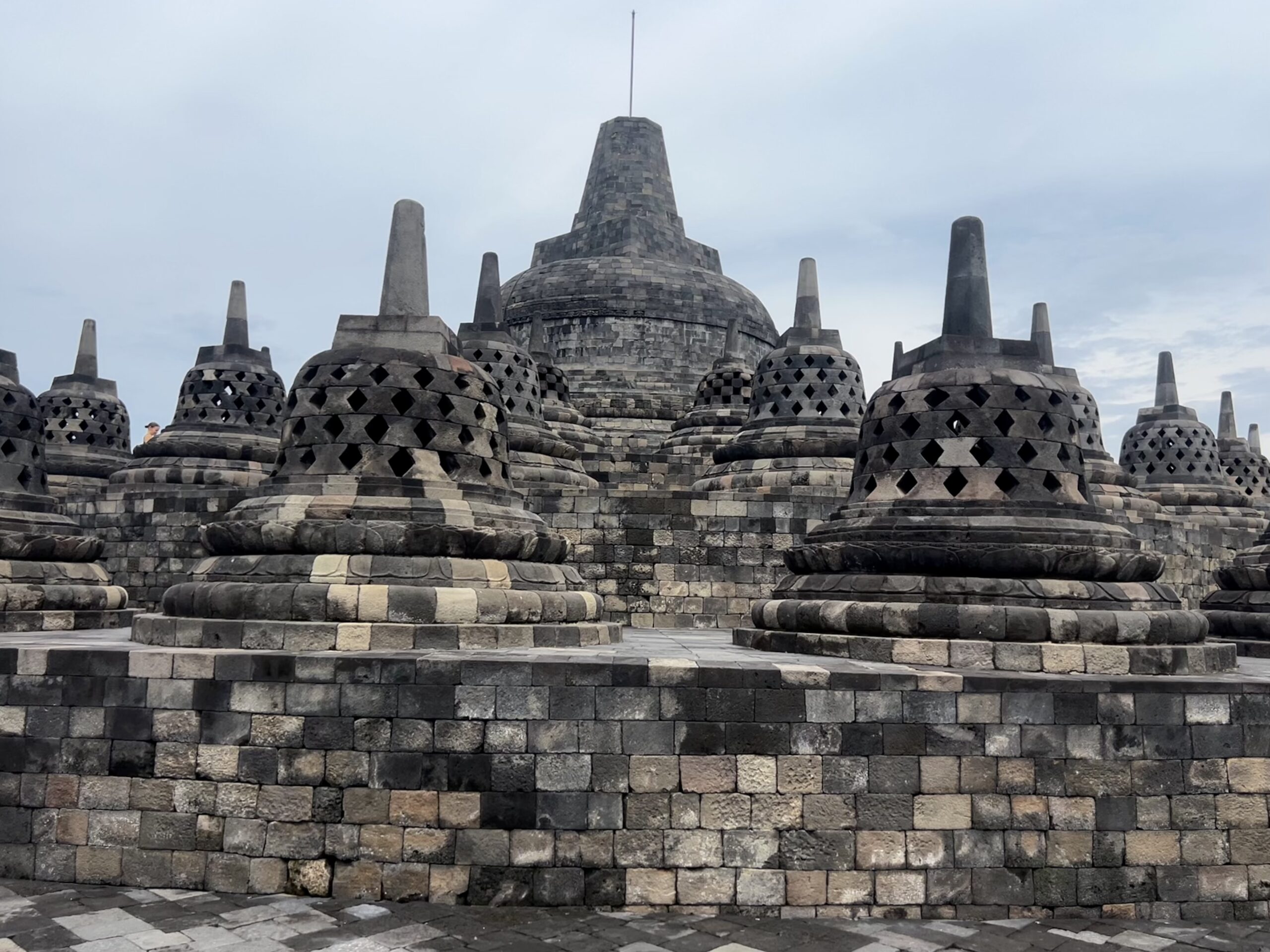
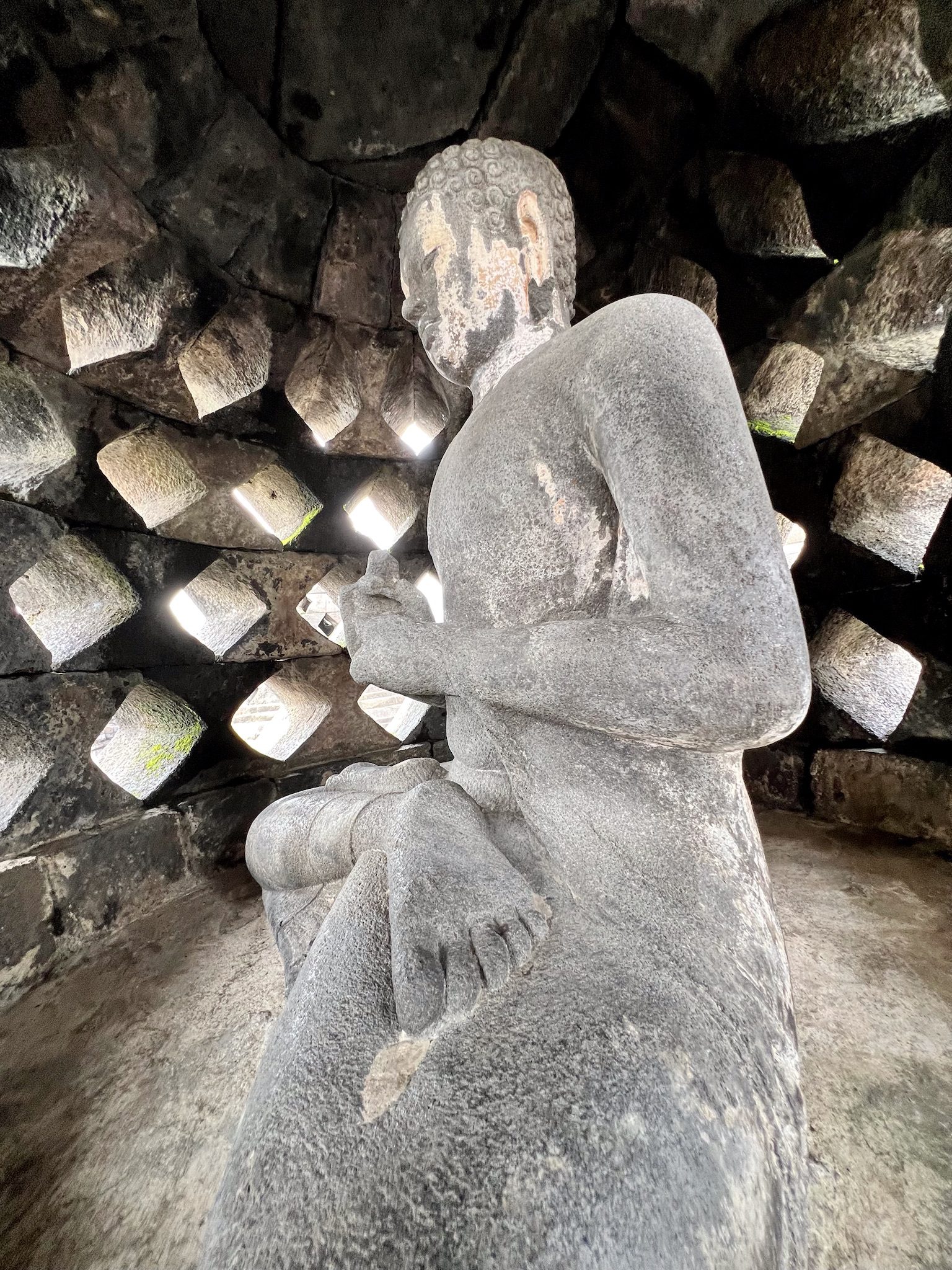
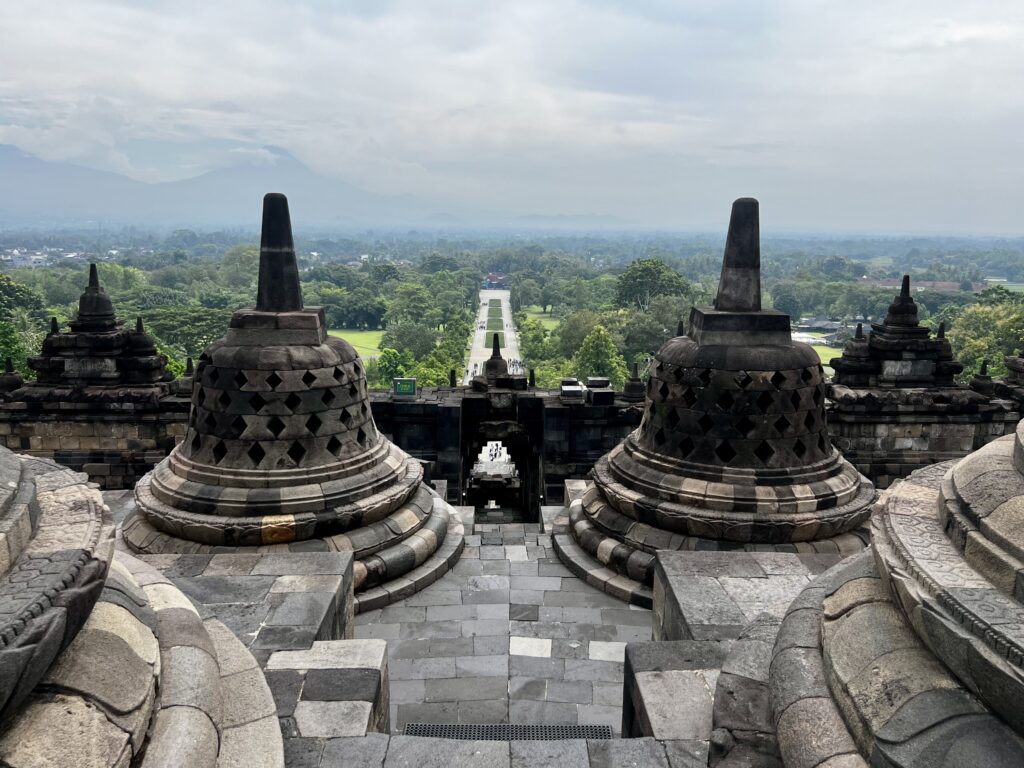
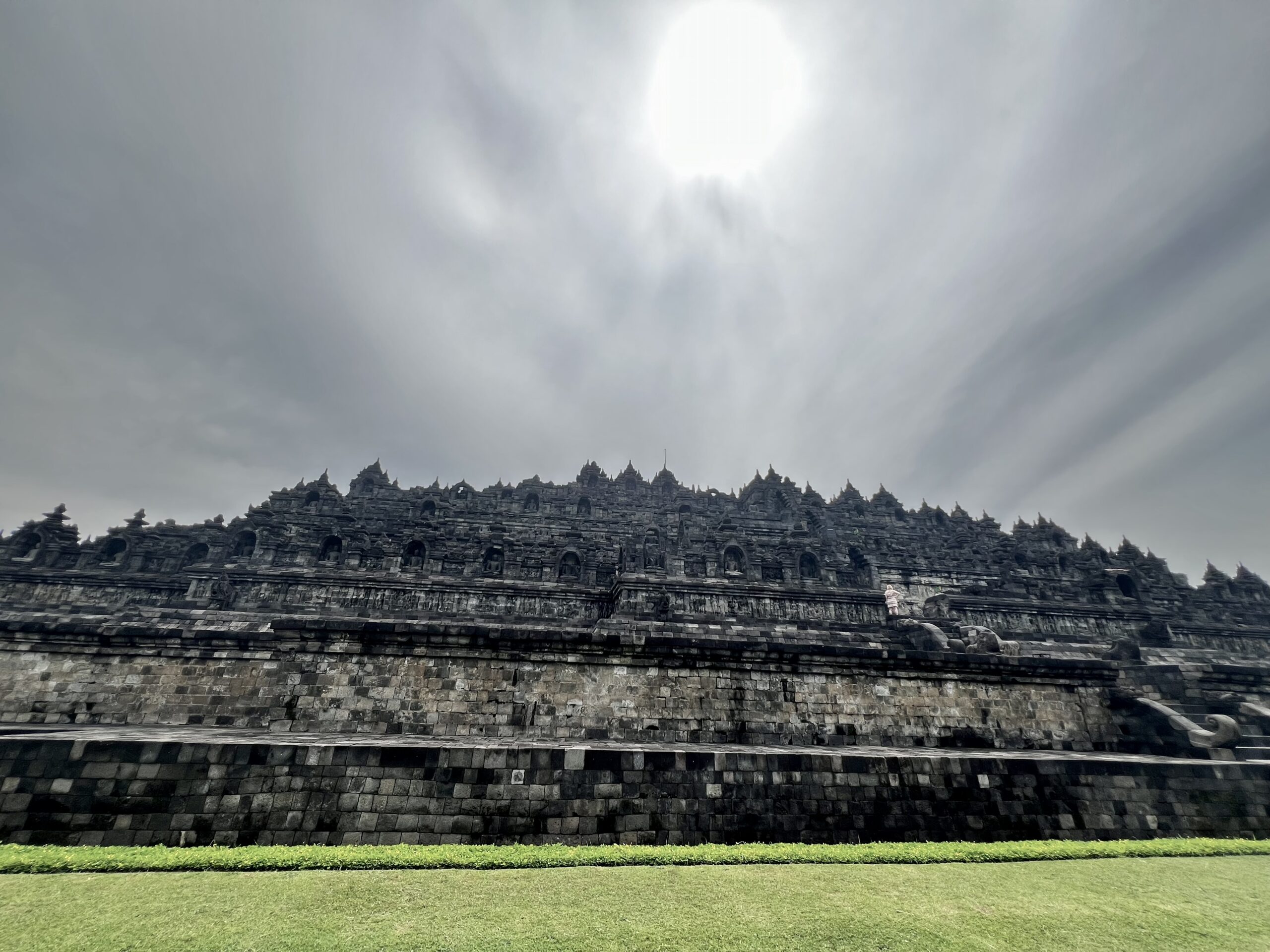
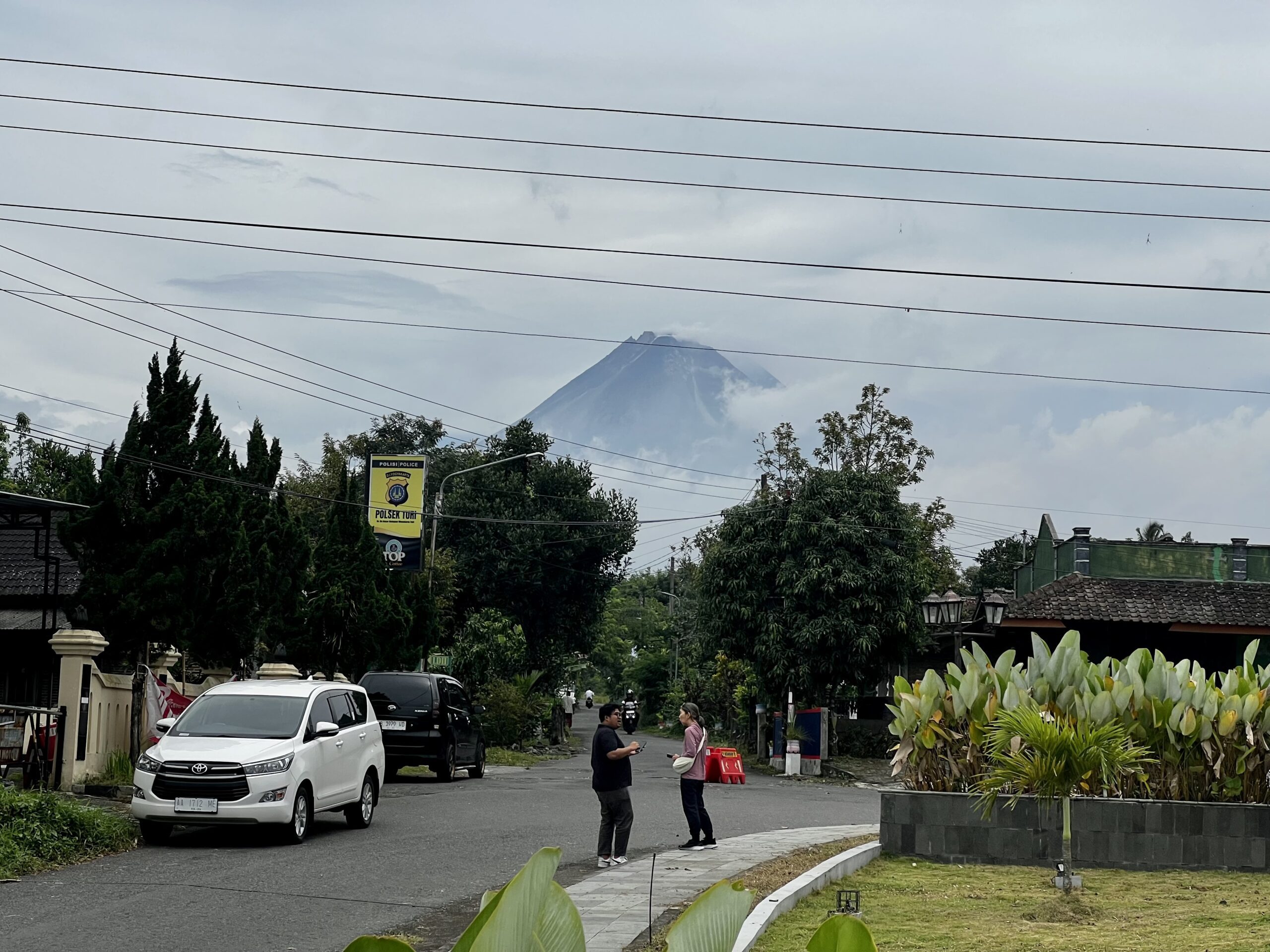
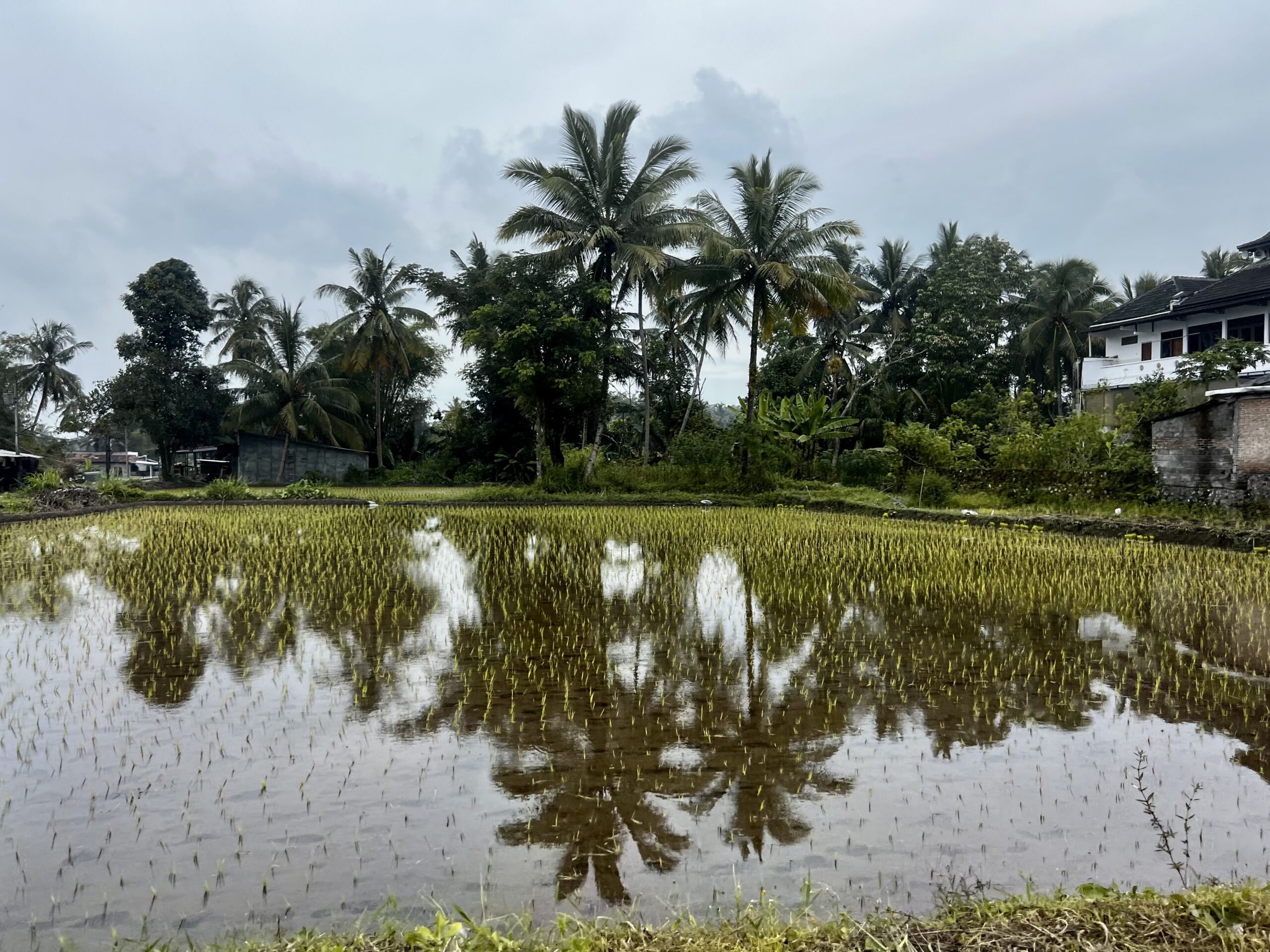
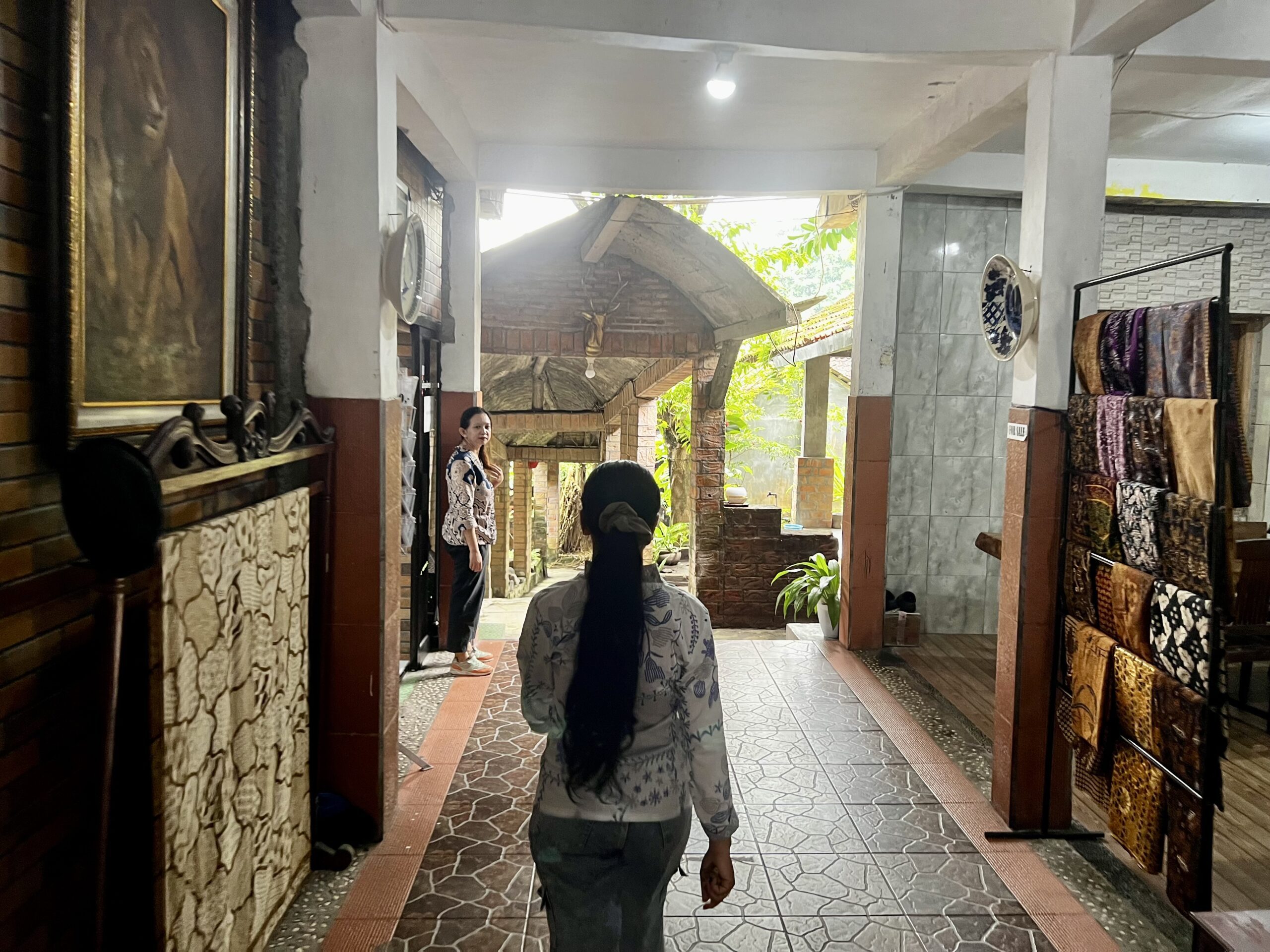
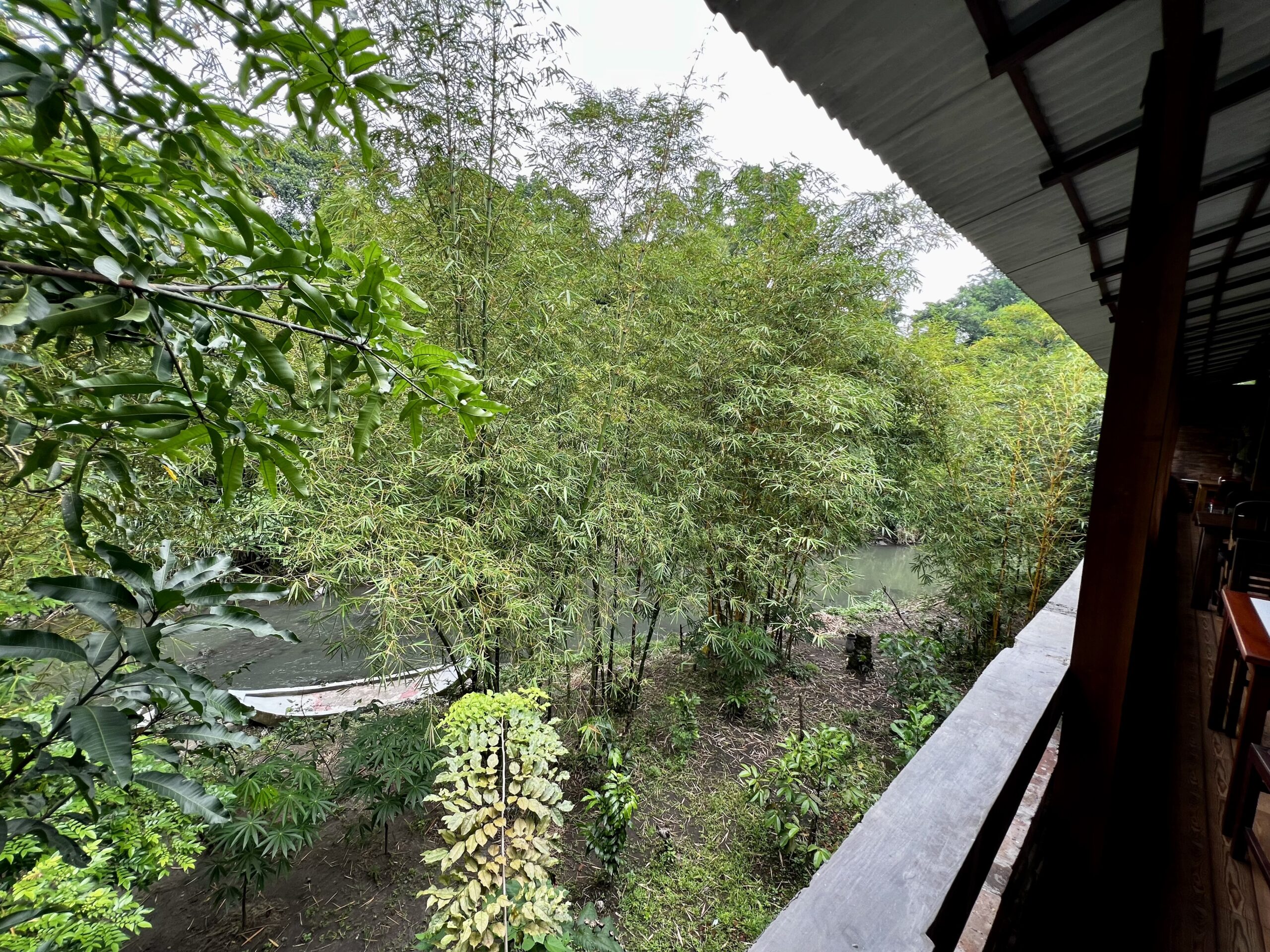
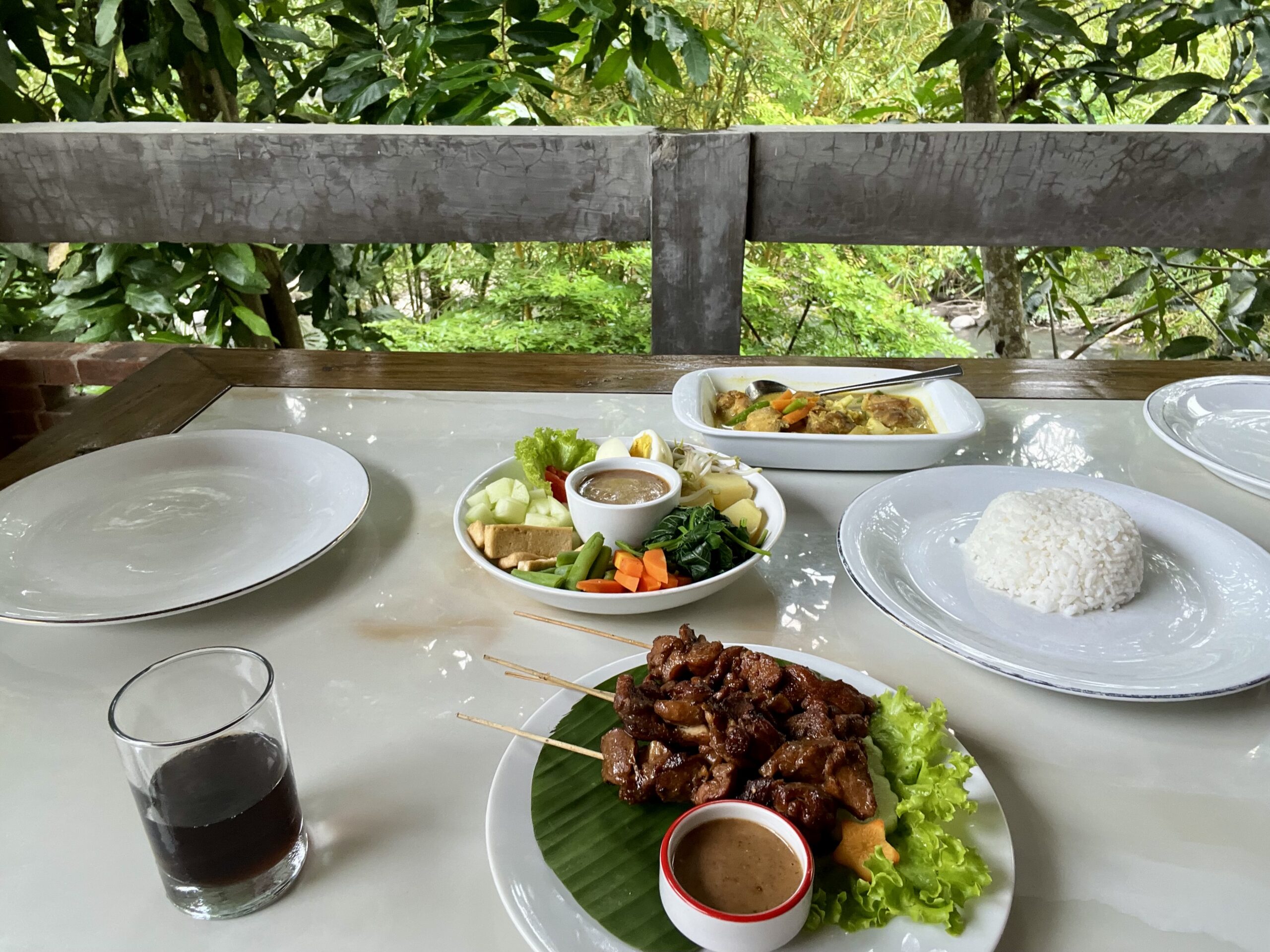
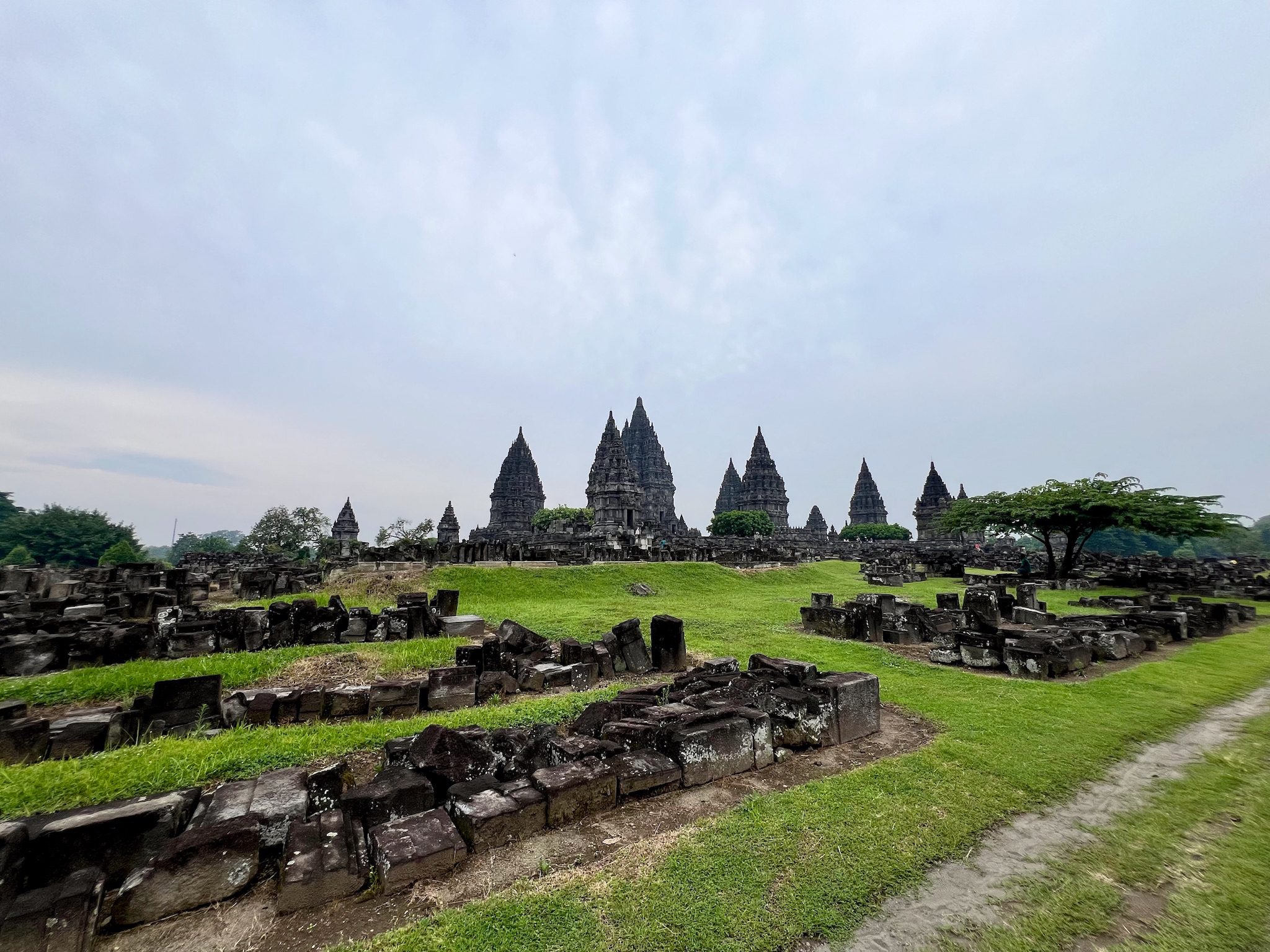
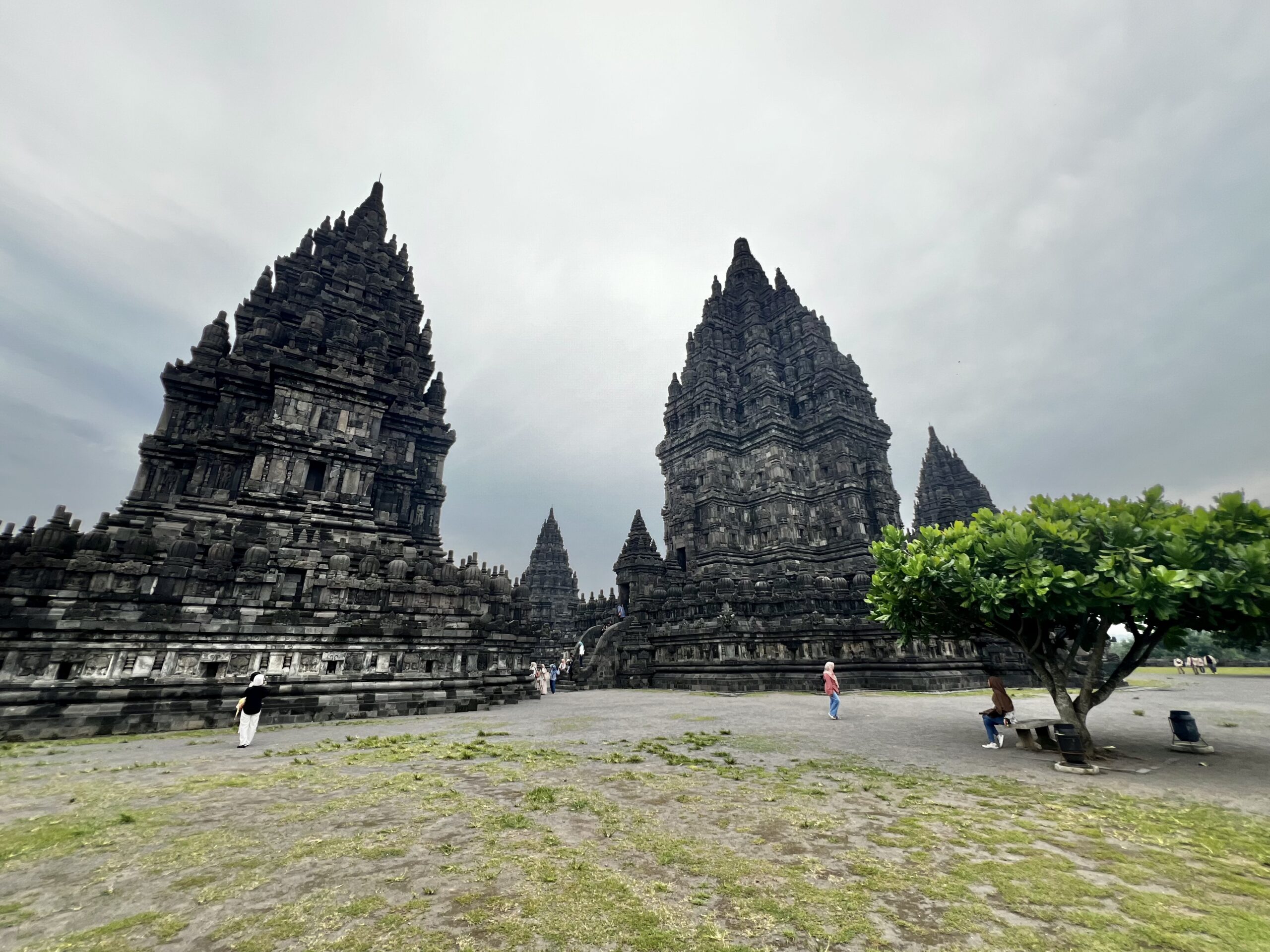
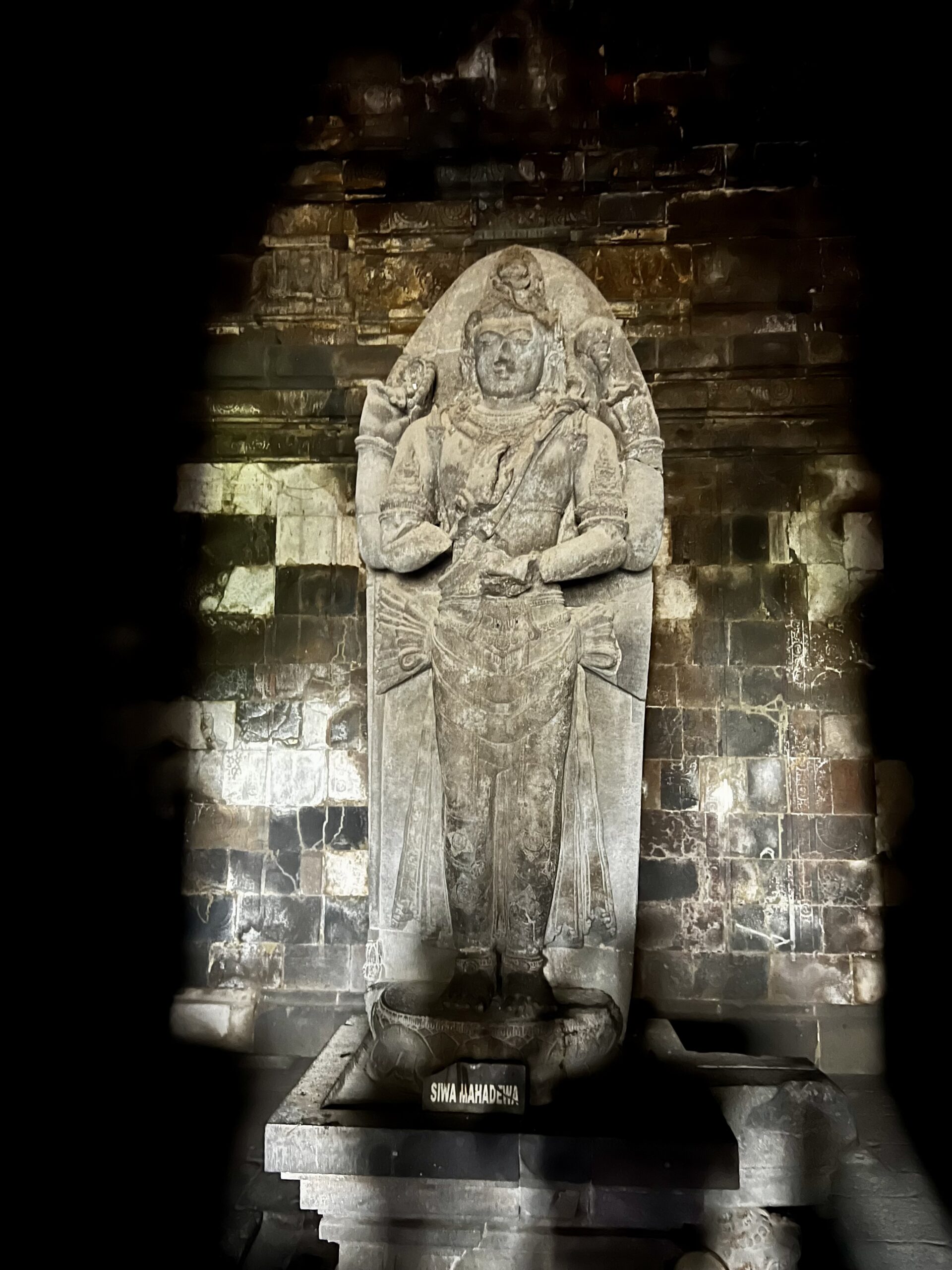
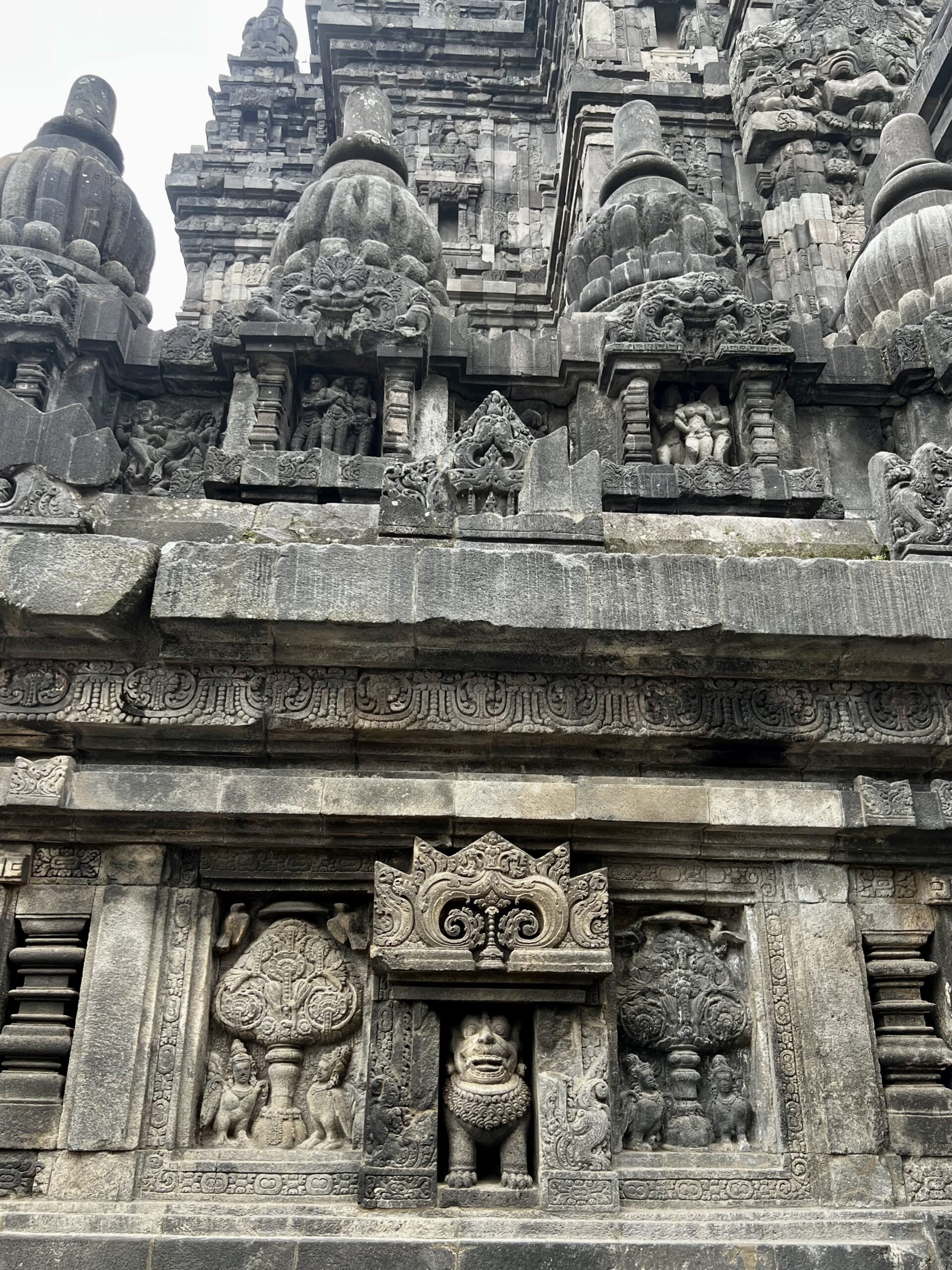
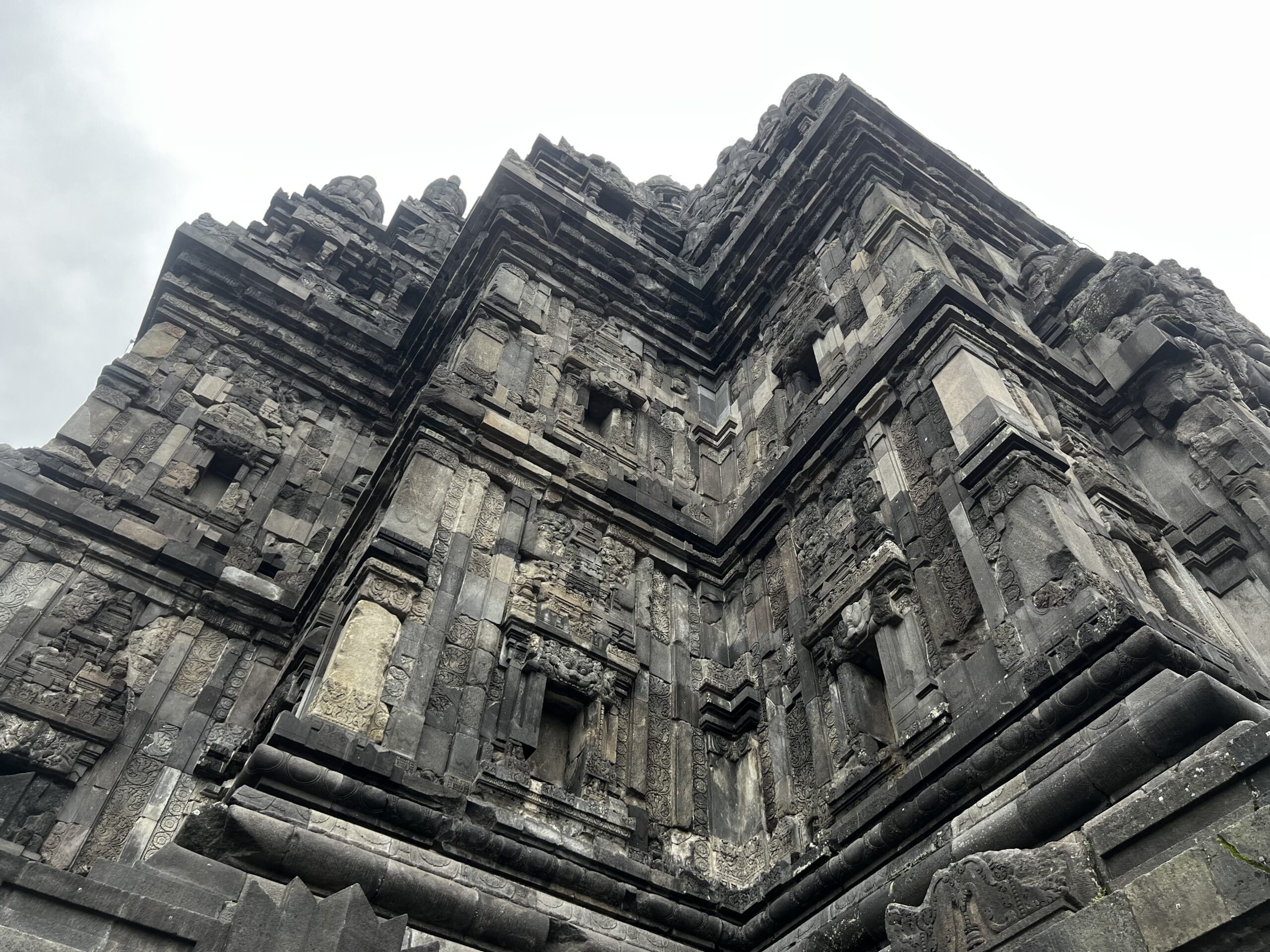
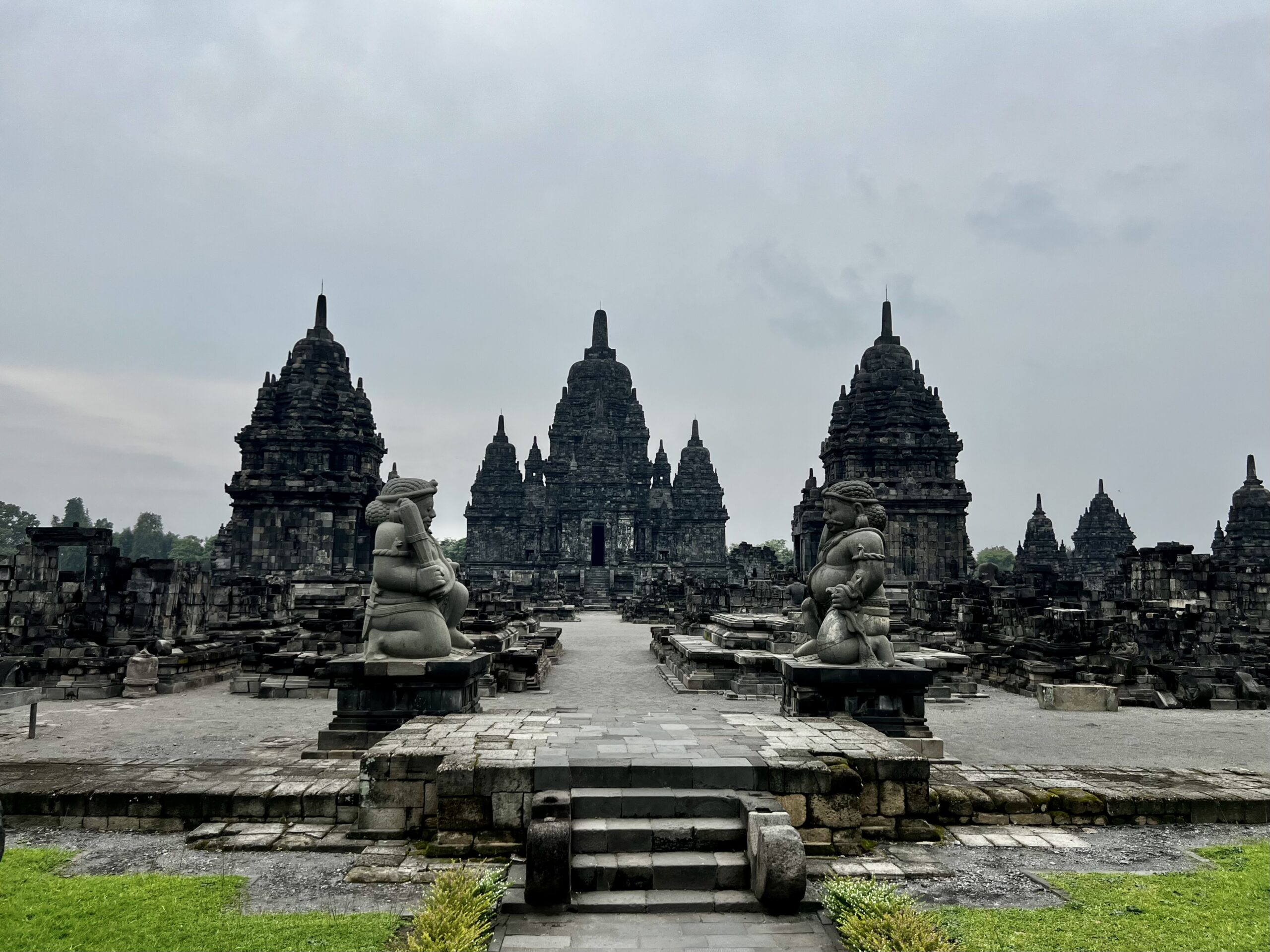
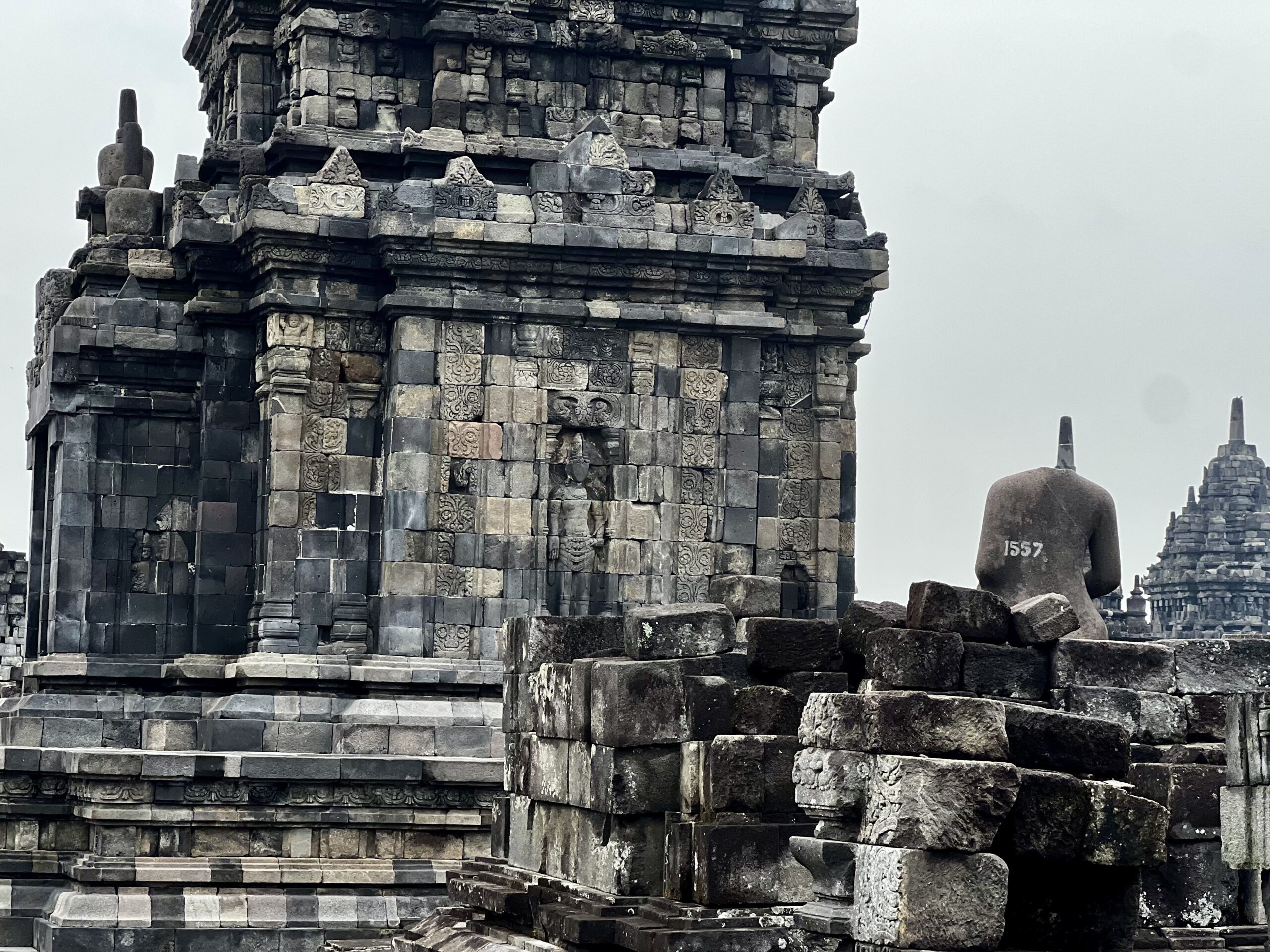
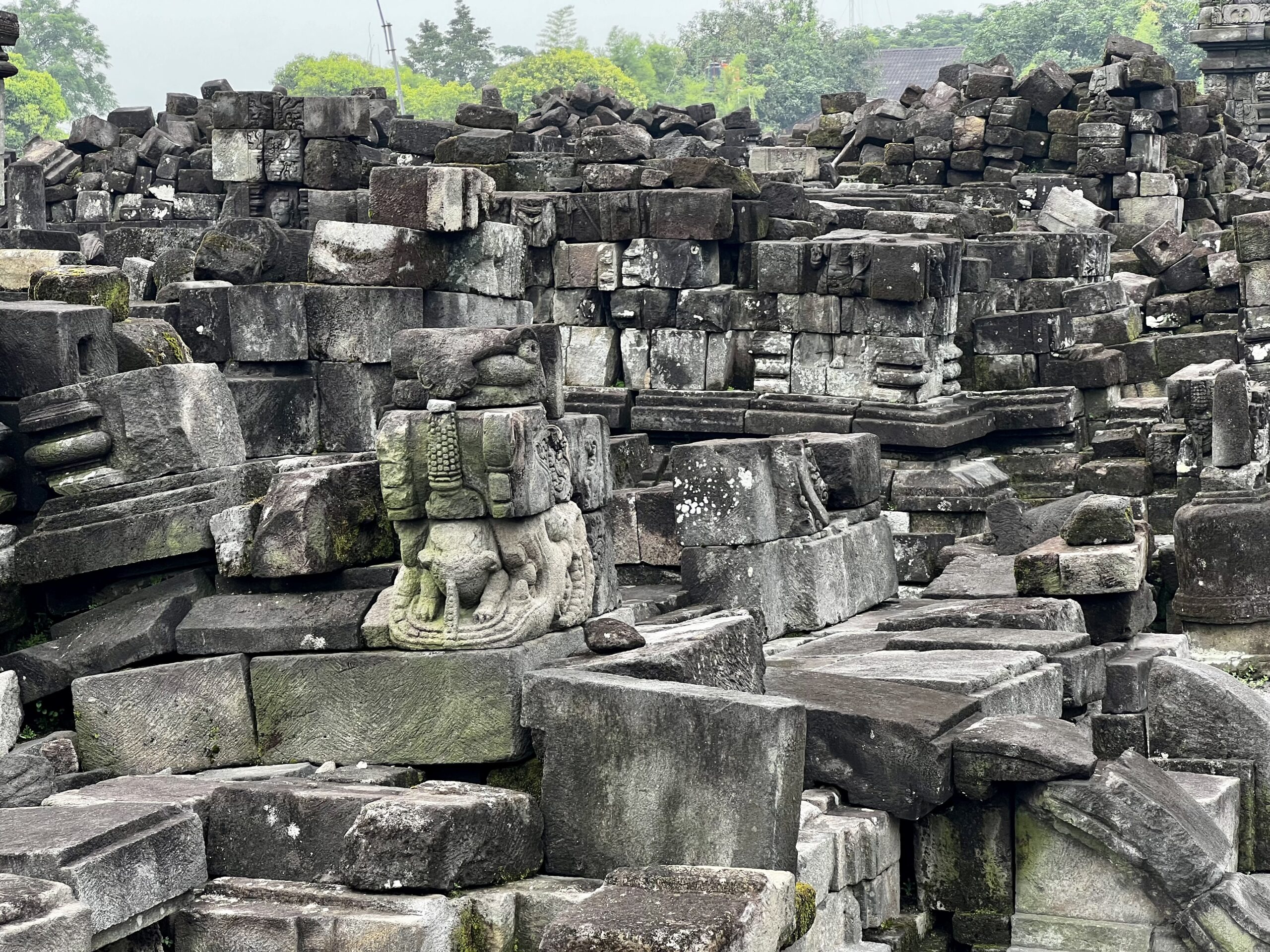
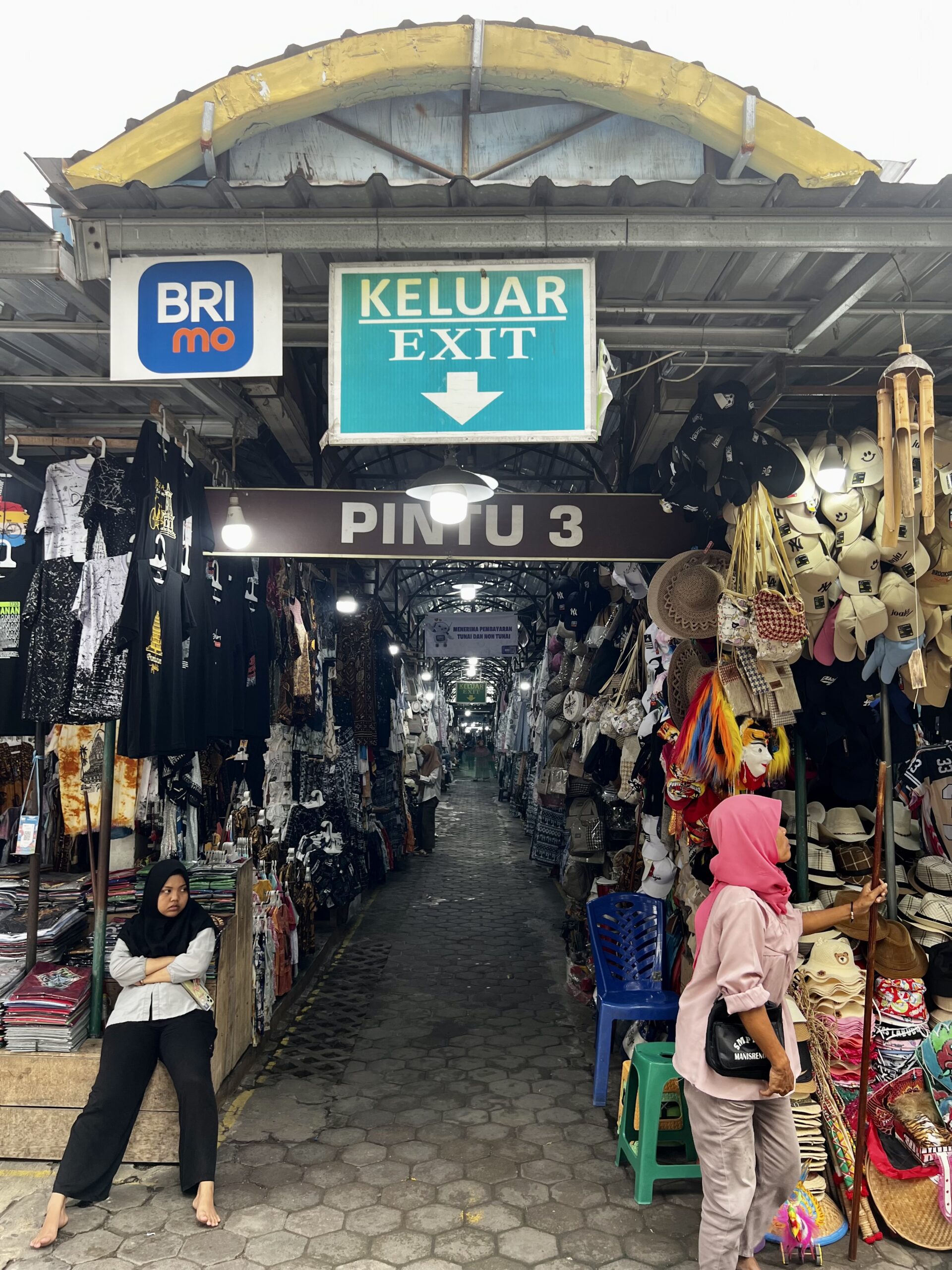
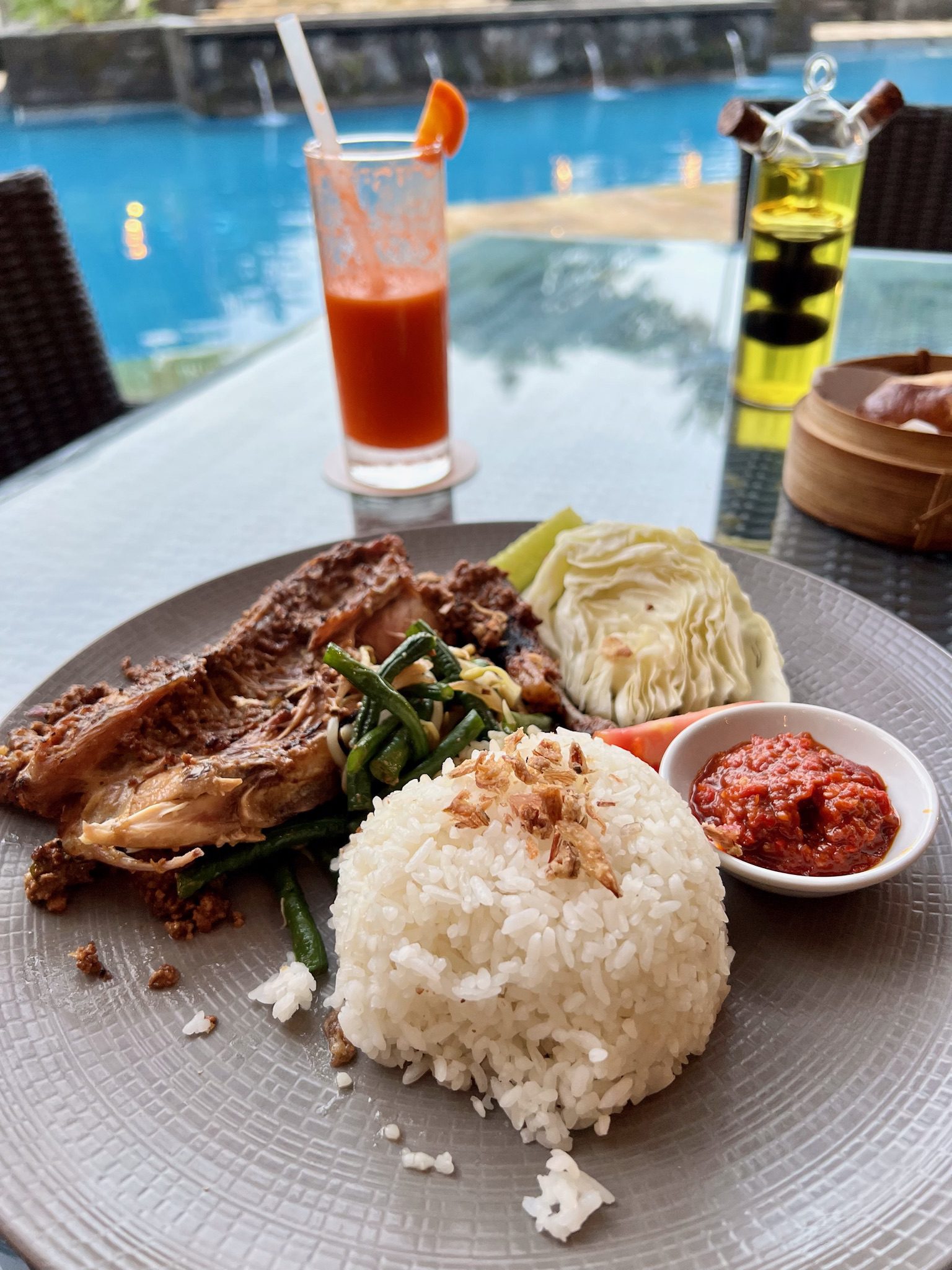
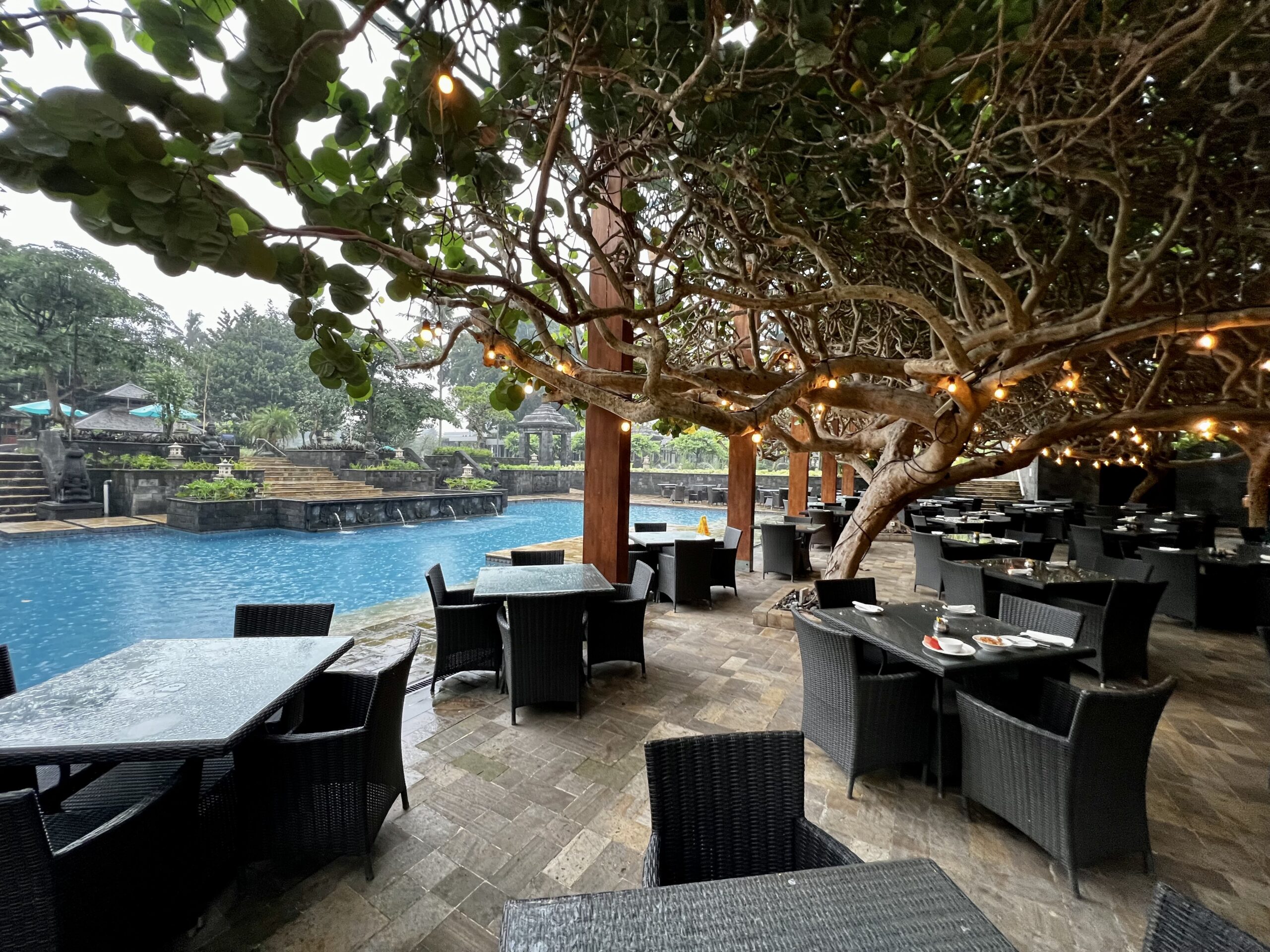
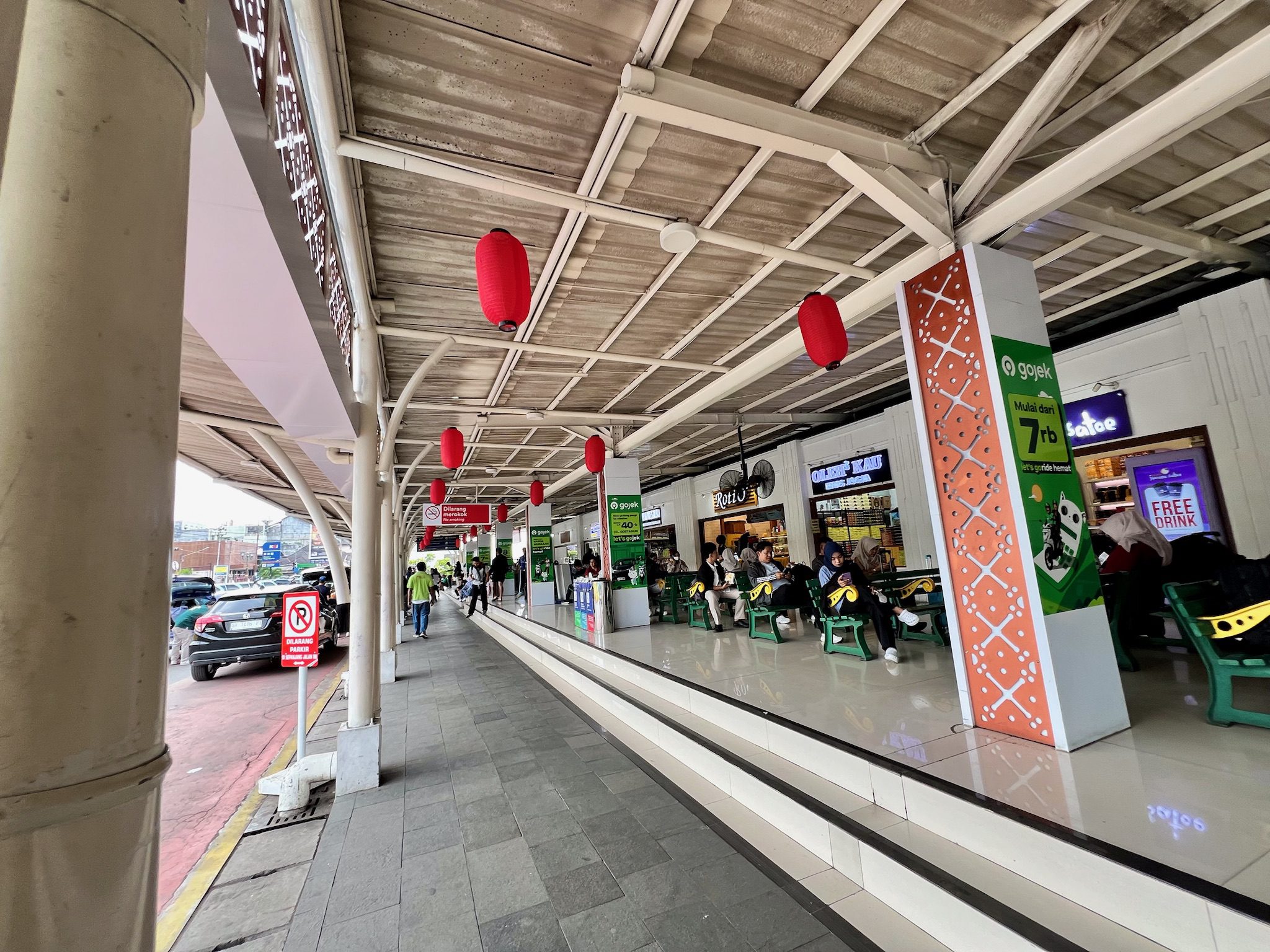
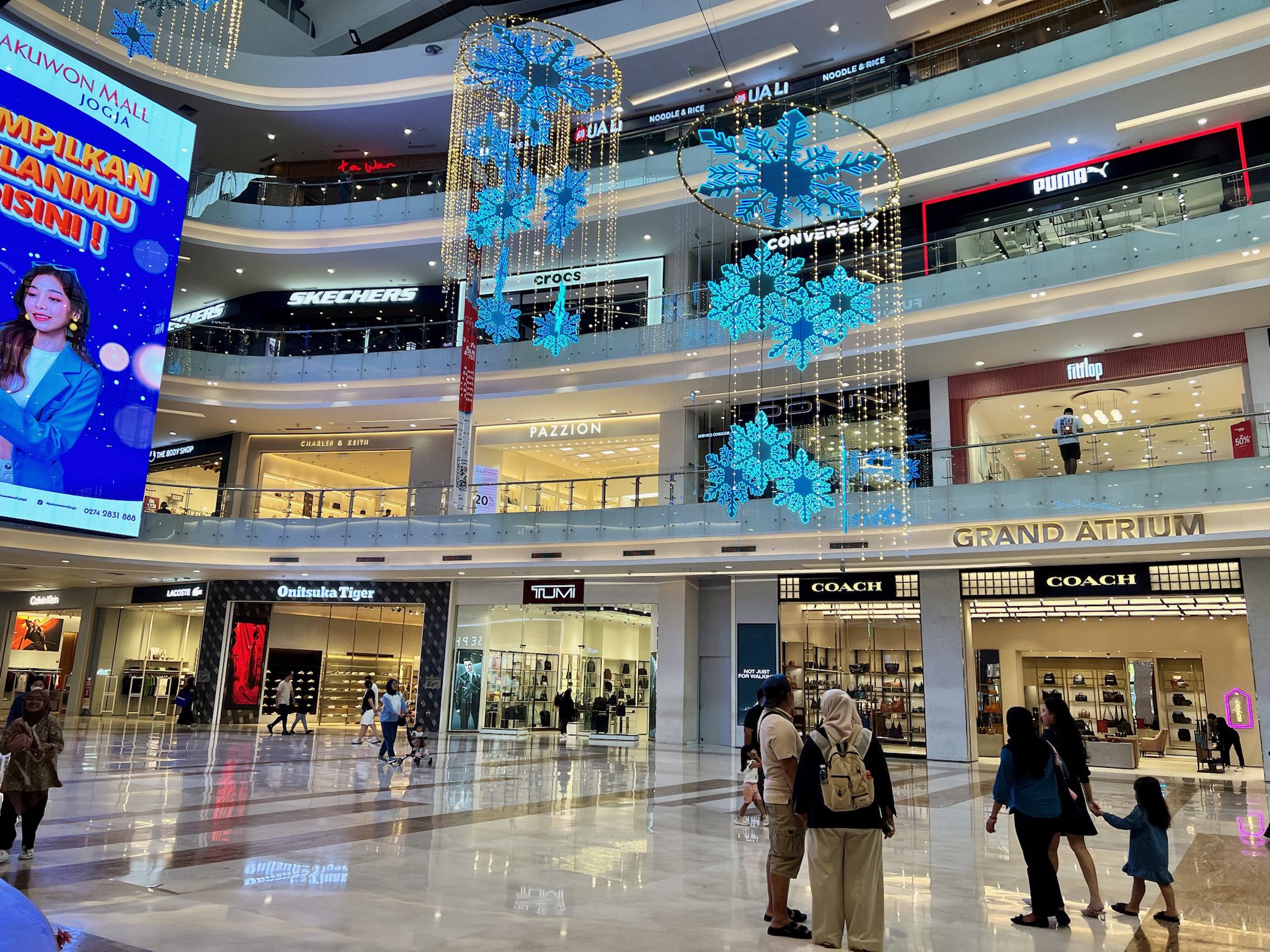
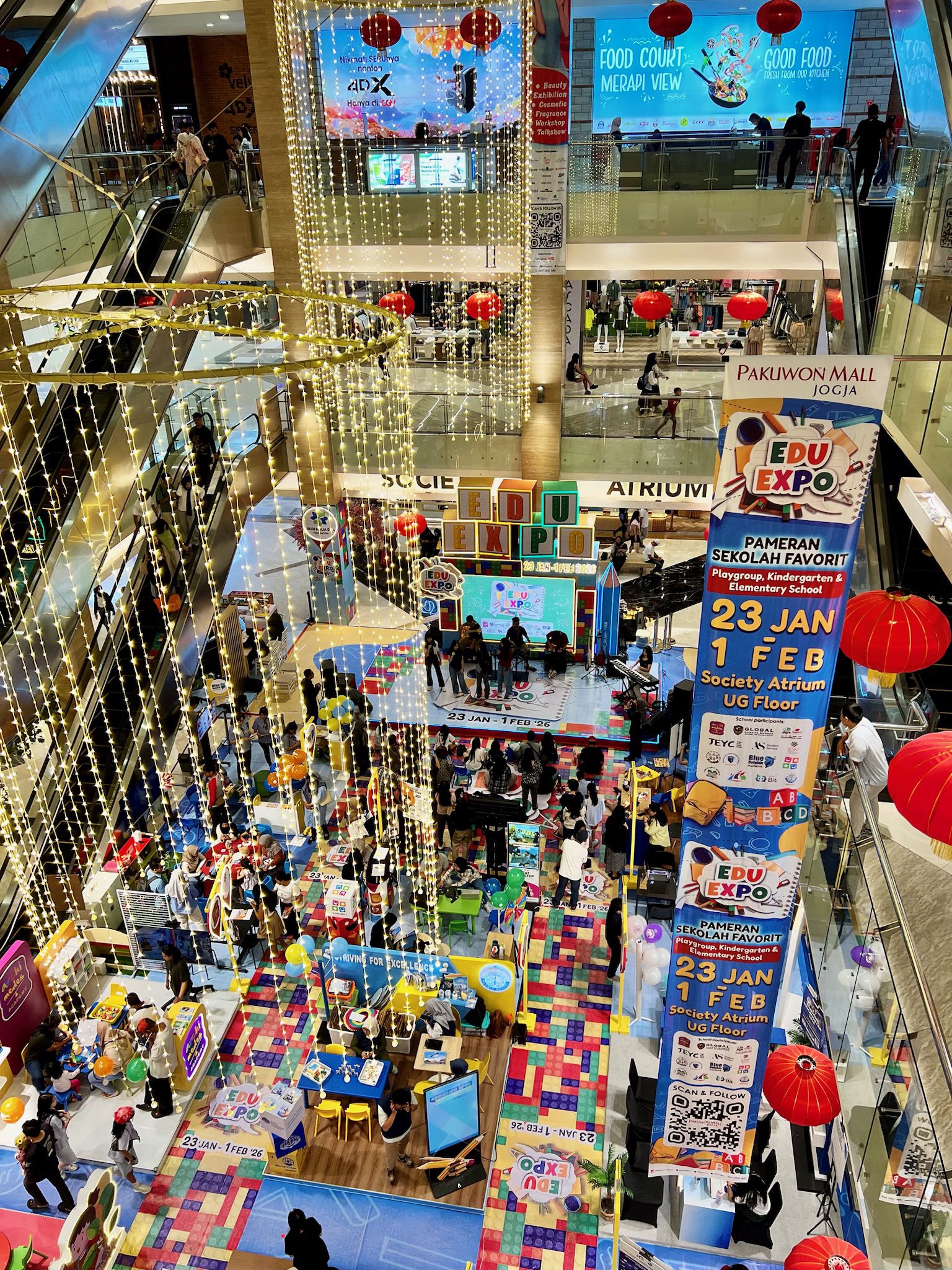
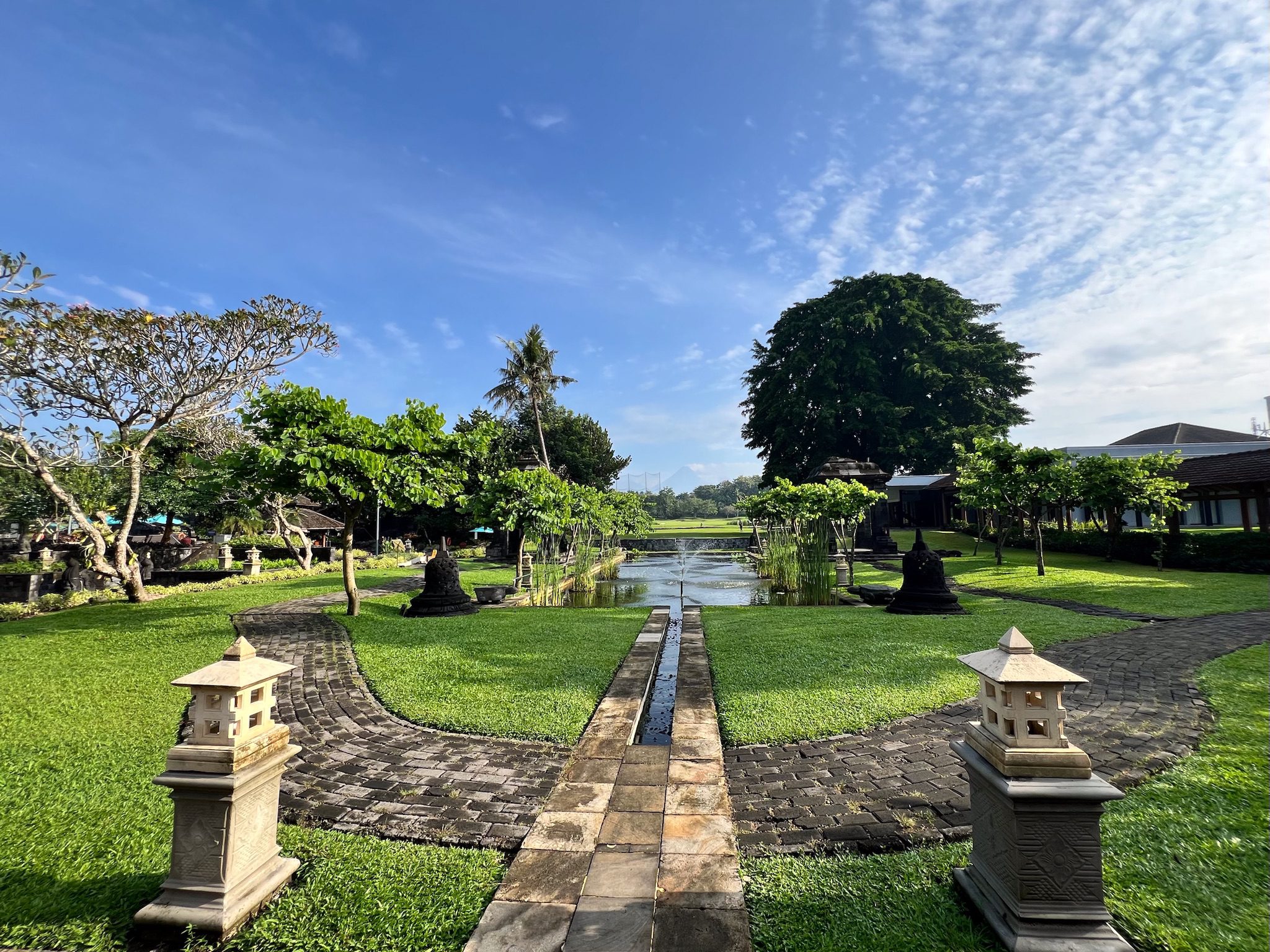
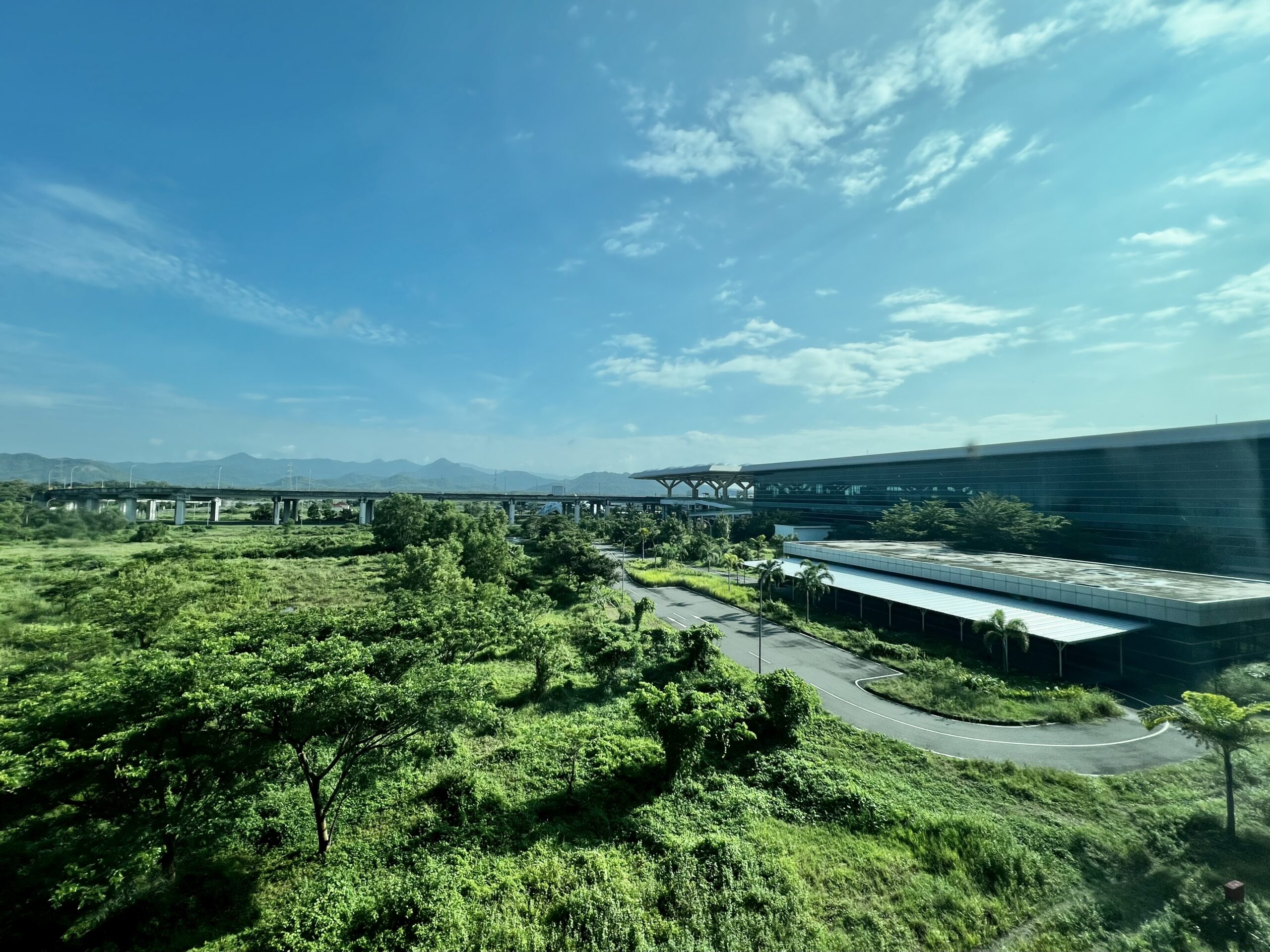
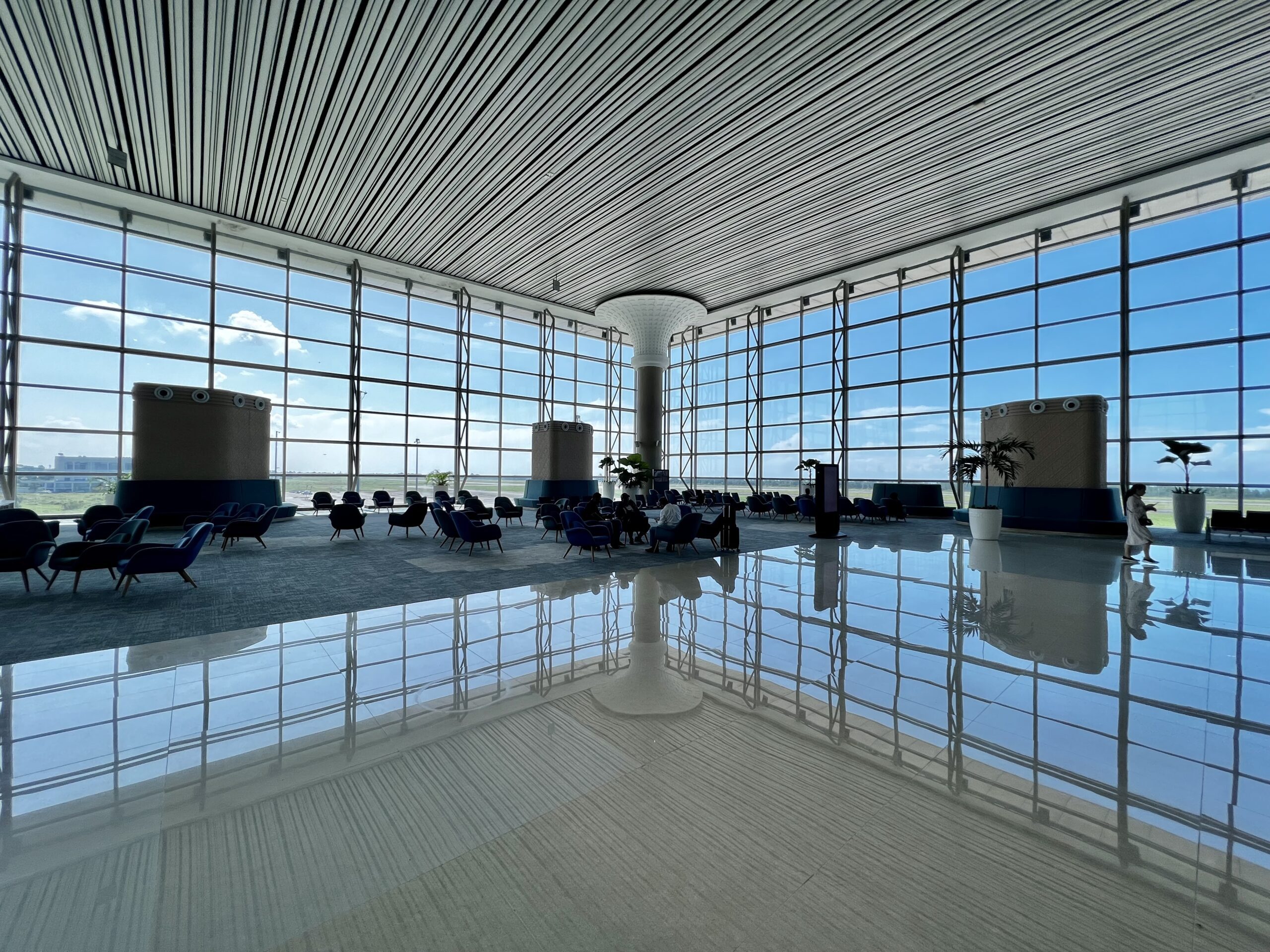
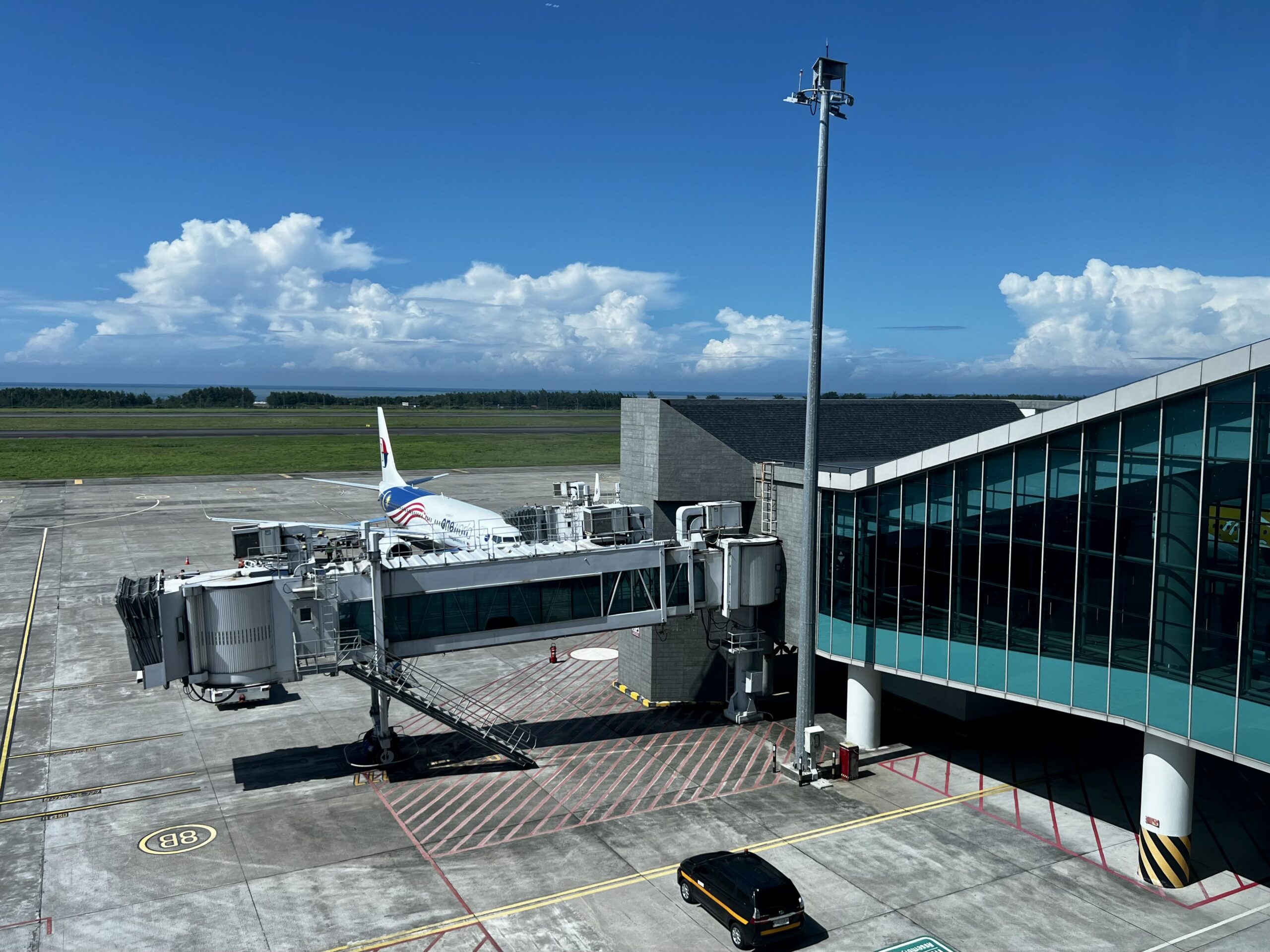
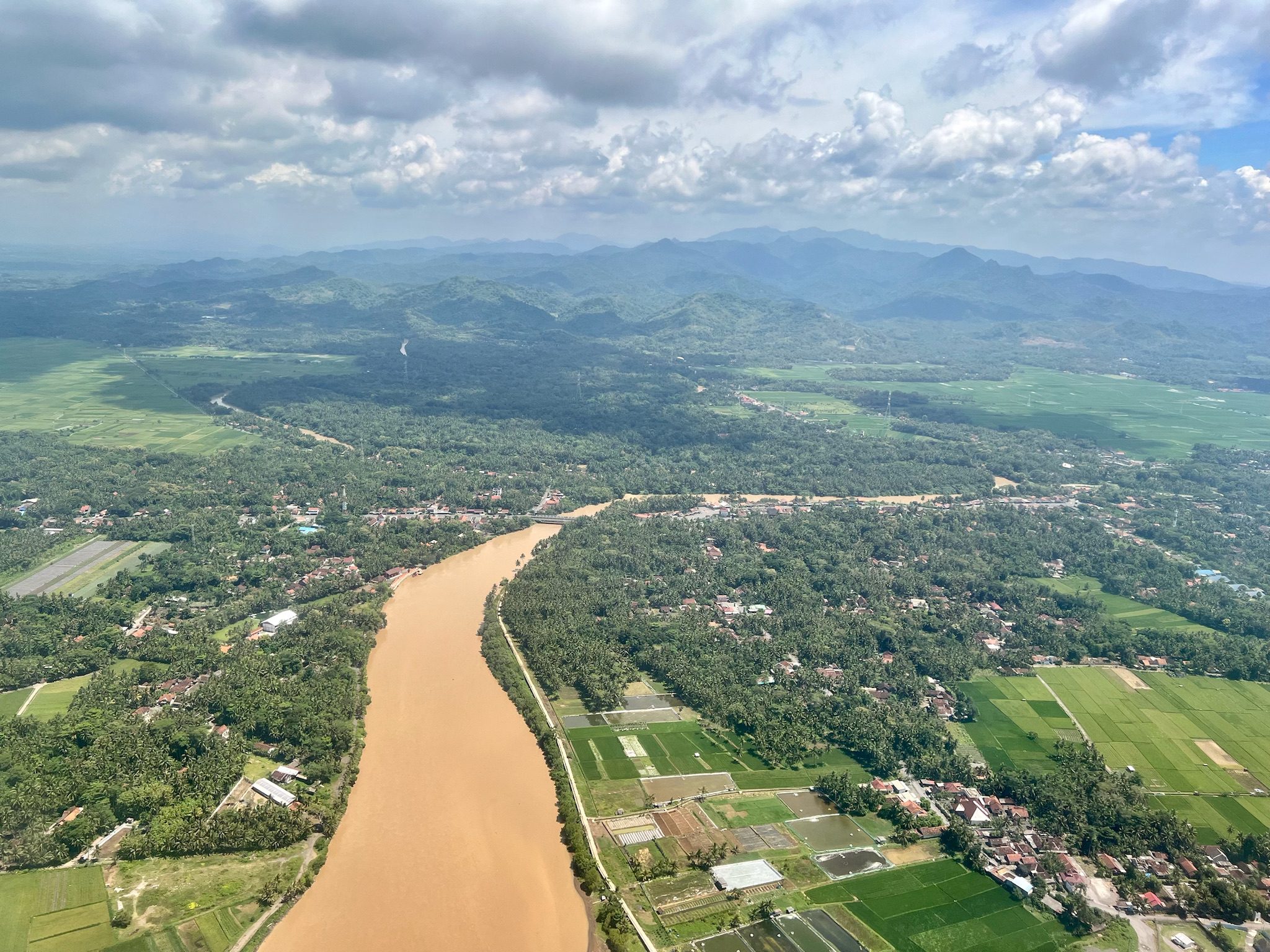
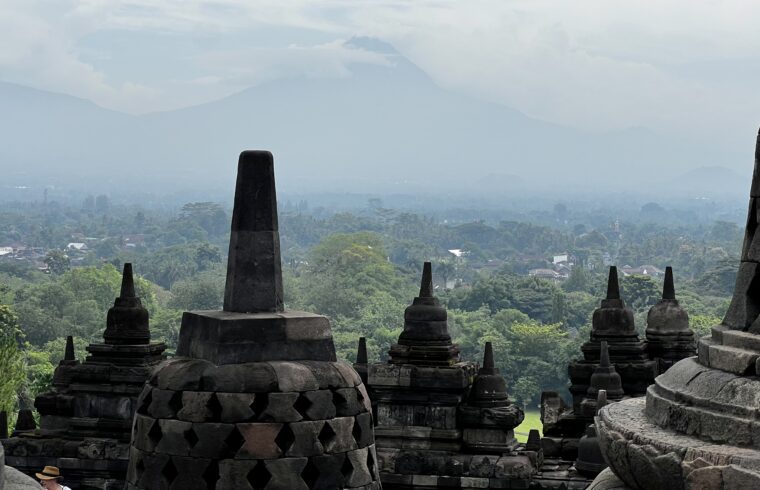
On a Sunday morning, we took the Argo Dwipangga train from Gambir station in Jakarta to Yogyakarta. The station was hectic on the outside but calmer on the inside. We got our e-boarding passes in advance to avoid the queues at the kiosks.Our bookings included access to a small “luxury” lounge at the station, but it was far more pleasant to simply sit on platform benches and watch trains come and go. The KAI intercity trains are government owned and operated. They are fairly progressive, though, and are in their second generation of upgraded service. They run hundreds of trains, and they have a bewildering number of carriage configurations. Our train, the Argo Dwipangga was pulling higher end carriages – two “luxury” cars and a bunch of “executive” ones. We chose the remarkably inexpensive “luxury” business class, with seats similar to international long-haul business class flights, except for short people.Luxury seats include a luxury lunch. Omelette, potatoes, and little weenies were one choice. Luxury fare.The trip was about six hours and covered some 450 miles. Not a bullet train, but definitely faster than driving. We passed flat rice patties …Terraced rice patties …Rice patties under skinny bridges …And only stopped at a handful of stations. We arrived in Yogyakarta mid-afternoon. Rolling luggage on and off the train was easy, with one noticeable exception. In both Sri Lanka and Indonesia, virtually every sidewalk and walkway has these (often bright yellow) ADA strips running right down the middle. They are raised enough to be tripped over. Lines mean safe to walk, dots mean something else. At first we thought they are to benefit the visually impaired. But then it dawned on us that they are there to level the playing field, to make it as hard for the sighted to walk as it is for the sight-impaired. Genius.Knowing how chaotic Southeast Asia train stations are, we had arranged for a driver to meet us at the Yogyakarta train station. This isn’t him. It’s just the welcome sign. He drove us the short distance to the Melia Purosani, a lovely older hotel in the center of town. Despite its age, it is well maintained. That said, we cut our stay there to two nights and checked in early at the Hyatt Regency Yogyakarta north of town. Our only real complaint was the property’s air conditioning wasn’t up to handling Indonesian heat and humidity. After a hot muggy day, cold AC is high on our list of necessary amenities.We chose the hotel because its location is ideal, right in the middle of central Yogyakarta, and its courtyard is an oasis in a busy city. Plus the photographer gives the spa a thumbs up.Plus their food is quite good. This is traditional Mie Goreng at their not-so-traditionally-named El Patio restaurant.Greater Yogyakarta, the special district, has 3.5M people. Yogyakarta the city is not that large, with about 400,000 residents. Nevertheless, it is densely populated – even without high rises, it has some 11,000 people per square kilometer.And like so many cities in Southeast Asia, the streets serve many off-label purposes, like this restaurant replete with curbside scullery and sidewalk seating.More traditional shops are varied but often spill onto the sidewalk, too. This two-man fan repair business probably does quite well. Though one fellow seemed a bit puzzled over a recalcitrant fan, while the other had taken on a rice cooker.If Jakarta is the political and financial capital of Indonesia, Yogyakarta is its cultural capital. Not far from the hotel is the Sultan’s Palace. It is the residence of Sri Sultan Hamengkubuwono X. He is the hereditary monarch of the Sultanate of Yogyakarta, which the Indonesian national government recognizes it as the Yogyakarta Special Region, of which the Sultan is the hereditary governor. So it is a kingdom within a republic.Like the US White House, the palace is both a museum and a residence. The public is allowed into some courtyards, but even in those the pavilions are roped off. Traditional Indonesian residential compounds contain many open-sided pavilions, each serving as does a room in a western house. The palace grounds are no different, though the pavilions are closer to great halls than rooms.All about the palace grounds, under the trees and amongst the pavilions, are men in traditional garb. There are about 150 of them at any given time, and they serve as a kind of honor guard for the Sultan. They receive a token wage equivalent to about 60¢ per month, so they are, in essence, volunteers, men who see it as an honor and privilege to support their sultan and culture.Other guards are less real, though very realistic looking, and probably paid even less.Most pavilions are rooms of state, like Bangsal Manis, which is used for hosting celebrations and parties.Every morning in one pavilion, a large gamelan orchestra plays.Mostly percussion, a couple of string instruments are used for some arrangements.Less than a quarter-mile from the Sultan’s Palace is the Taman Sari Water Castle. It was originally part of the palace grounds, with 59 separate buildings, man-made lakes, water gardens, a mosque, and underground tunnels. From atop the entrance wall, you can get a sense of what the original garden must have been like. Of all the original lakes and water gardens, only three pools in the central bathing complex remain.Along with a wood-fired sauna. A sauna on an equatorial island seems a bit redundant, but there you have it.Much of the park, with its lakes filled in, has become housing, and inner gates open onto back patios, many trying to sell something to visitors.Not far from the palace and water castle is the well-regarded batik shop Batik Promugari that specializes in hand-made batik cloth and clothes.It was fascinating to watch the women apply hot liquid wax to cloth to make a negative pattern of the print. Dye is then applied, annd after it has set, the wax is removed by boiling the fabric.The beating heart of modern Yogyakarta is Malioboro Street, a perfectly Indonesian shopping Street (above and below).We were told that, at any given time, over 80 percent of tourists visiting Yogyacarta are from Indonesia itself. Because of its cultural importance, many people want to be photographed in traditional dress. Shops rent clothing and provide props, and hook visitors up with professional photographers. We counted maybe a dozen or so such photo sessions as we walked. This family gave us the okay to take their picture.We walked up and down the street and ducked down side streets, where we found a musical instrument shop. In addition to the usual stuff, we spotted what looked like three-string ukuleles. The store owner explained they are the Indonesian Cuk (chook) and used mostly for playing Keroncong, a melodic style played by Indonesian ensembles.Tuned like the first three strings of a guitar but the first string an octave higher, the standard soundbox version sounds like a ukulele. The version above sounds more like a mandolin. Originally thought to be of Portuguese influence, like the ukulele, it’s now understood to predate the Portuguese, but probably without the hollow soundbox. As the day continued to warm, we took hydration breaks on the shady benches and watched school kids, hawkers, tourists, and photo sessions pass by.For lunch, we stopped at Karta, a restaurant overlooking the street. The photographer ate classic Nasi Goreng, while the blogger ate some kind of overdressed salad with fried chicken parts. Should have taken a cue from the photographer.As planned, we moved to the Hyatt Regency, which is only four miles north of “downtown” Yogyakarta, but traffic means it can take upward of 30 minutes to make the trip.The hotel grounds are spacious, with multiple pools, gardens, and walking trails.Having explored Yogyakarta town, after moving to the Hyatt, we hired a car and driver to explore further afield. First stop: Borobudur. It was built in the 700s and 800s atop, and encompassing, an existing hill.Borobudur is a single, monolithic temple, the largest Buddhist temple in the world. Its nine levels reach 115 feet, and the steps to the top are many and not necessarily cut the same height, but the treads are wide, which helps with footing. One can only visit in a guided group of about a dozen, and only 4,000 or so tickets are sold each day. Our guide guessed only about 700 would visit this day. Before restrictions, high season could see over 60,000 visitors in a single day.One can circle the temple on each level, and nearly 1,500 narrative relief panels telling of Buddha and a pilgrim’s path to enlightenment line the walks, on both sides, sometimes double stacked.The top levels are circular rather than square, and they hold dozens of perforated stupas, each containing a statue of Buddha (below).The temple sits between two active volcanoes, Murapi and Sumbing. Murapi, seen to the middle left here from the top of the temple, is believed to be the one that erupted around 1,000 AD, burying the region in ash and causing the nearby capital to be relocated and the temple to be abandoned.Our final impression? Big temple.On the 1½ hour drive from Borobudur to Parambanan, we stopped at a village crossroads to try to get a picture of Mt Murapi through the power lines – it was unusually clear for a minute.Then it was lunch time, and our driver recommended a restaurant in a riverside village, where rice patties stretch between the houses.The entrance to the restaurant, Kali Opak, is through a nondescript door, but it opens on batiks and antique Kris knives and down a covered path.A fairly large open-air dining room sits overlooking the Opak River, the same river that flows by the Parambanan temple. We had Chicken Curry, Gado Gado, and Chicken Satay. Simple fare excellently prepared with nuanced flavors. Very good.Parambanan, our destination, is a temple compound still undergoing restoration. Built about the same time as Borobudur, it was abandoned about the same time, too, and for much the same reasons. Except Parambanan wasn’t covered by ash from the Mt Murapi, it just lost its supporting population. Later, though, a 16th century earthquake leveled the temples, with restoration not undertaken until the early 20th century.The three central temples are to Shiva, Vishnu, and Brahma. Shiva the Destroyer has the largest temple at the center. Maybe it was felt he needed the extra propitiation, thanks to regular tectonic earthquakes and being surrounded by explosive volcanoes.Each temple contains chambers with openings in the four cardinal directions. In the temple to Shiva, the east-facing chamber contains a statue of the god. The faces of the temples contain reliefs illustrating the Ramayana Epic and its symbols. And tower over 150 feet – some fifteen stories – high.A quarter of a mile north of the Parambanan Hindu temple complex is a string of three Buddhist temples, the furthest being Candi Sewu. Sewu predates both the Parambanan and Borobudur temples, but not by a whole lot. It is second in size only to Borobudur.Candi Sewu, meaning 1000 temples, was actually came up a bit short, with a few less than 250. Of those, only a handful have been restored …The rest are like so many Lego pieces, waiting to be assembled.As we left the temples to reconnect with our driver, we experienced an entirely new take on the exit thru the gift shop model. There were at least eight “doors” to choose from, each leading through a seemingly endless aisle of redundant shops selling the same souvenirs. The light at the end of the tunnel? More shops.All told, we spent several hours with Praja, our driver, and learned much from him. He is a remarkable man with a remarkable story. Born into a remote village completely unconnected with the modern world – far from the nearest roads, no electricity, no connectivity, moneyless barter economy, animist religion and world view, and the only “healthcare” provided by the shaman – Praja is self-educated and one of the most intelligent, articulate people we’ve met in a long time.Our meals in Yogyakarta were among the best we’d enjoyed so far in Indonesia. Near the Hyatt, we found Restaurant Sasanti. As it turned out, President Obama had dined there, and we understood why. Our meal was delicious. The blogger had sweet marinated beef, tamarind soup, fried tempe with soy beans, and cured fish stir fried with peppers.The photographer had Nasi Langgi – stir-fried cassava leaves, caramelized beef in coconut milk, egg omelette, potato fritter, caramelized chips, and sambal.And we enjoyed the food at the hotel no less. Their Soto Ayam, a wonderful Indonesian chicken soup with glass noodles, was the best chicken noodle soup either of us have ever had. And dishes like their fresh Snapper in Coconut Curry was subtly spiced and and cooked perfectly.Another excellent dish was Aram Bakar Areh, chicken marinated in coconut milk and spices and grilled. Though we were in Indonesia during the rainiest month of the rainy season, the typical pattern is heavy rain late in the day or at night. Though we went equipped for downpours, we had no rain on any of our excursions. And we woke to rain only once, but still enjoyed a breakfast under the Sea Grape trees.As our time wound down, we decided to cancel our planned short visit to Surabaya and spend a little more time in Yogyakarta. We had to go back to the train station to cancel our train tickets and get a refund. In cash. The largest denomination in use in Indonesia is the 100,000 Rp note, worth a little less than USD $6.00. So even though the train fare wasn’t much, we got a stack of bills. Since we were in town, we stopped at the Pakuwan Mall, the biggest mall in Yogyakarta.It is just a mall. The only thing of interest was an education fair with what appeared to be high school bands entertaining. When we weren’t exploring, we spent time enjoying the hotel’s pools, grounds, and spa and had a relaxed time. We’d definitely recommend the Hyatt Regency to anyone visiting the area. We probably spent more time in Yogyakarta than the average foreign tourist, and it was nice to have the time to get to know some of the people.When it came time to finally leave, it took 1½ hours to get to the new international airport. It’s in the boonies, and if it were any further we wouldn’t be in Yogyakarta anymore.With only about 20 flights a day, the airport seems to be hardly used. Just the same, it did its job and got us headed out on Malaysian Airlines to Kuala Lumpur. A final view up the Progo River to the mountains of Central Java.