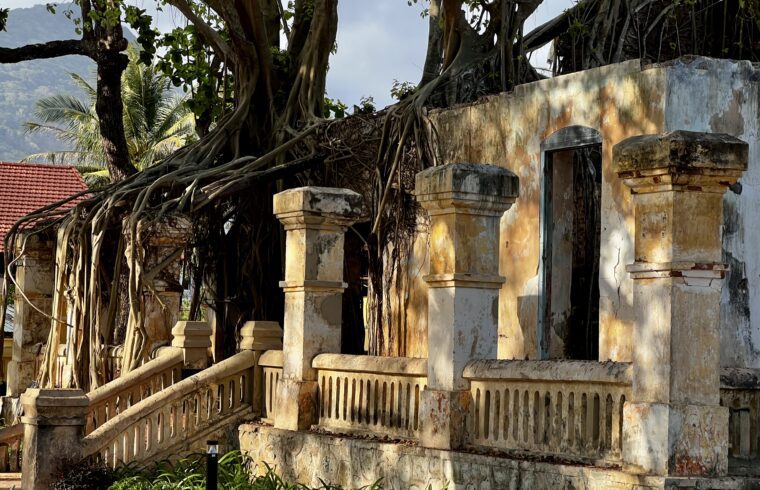
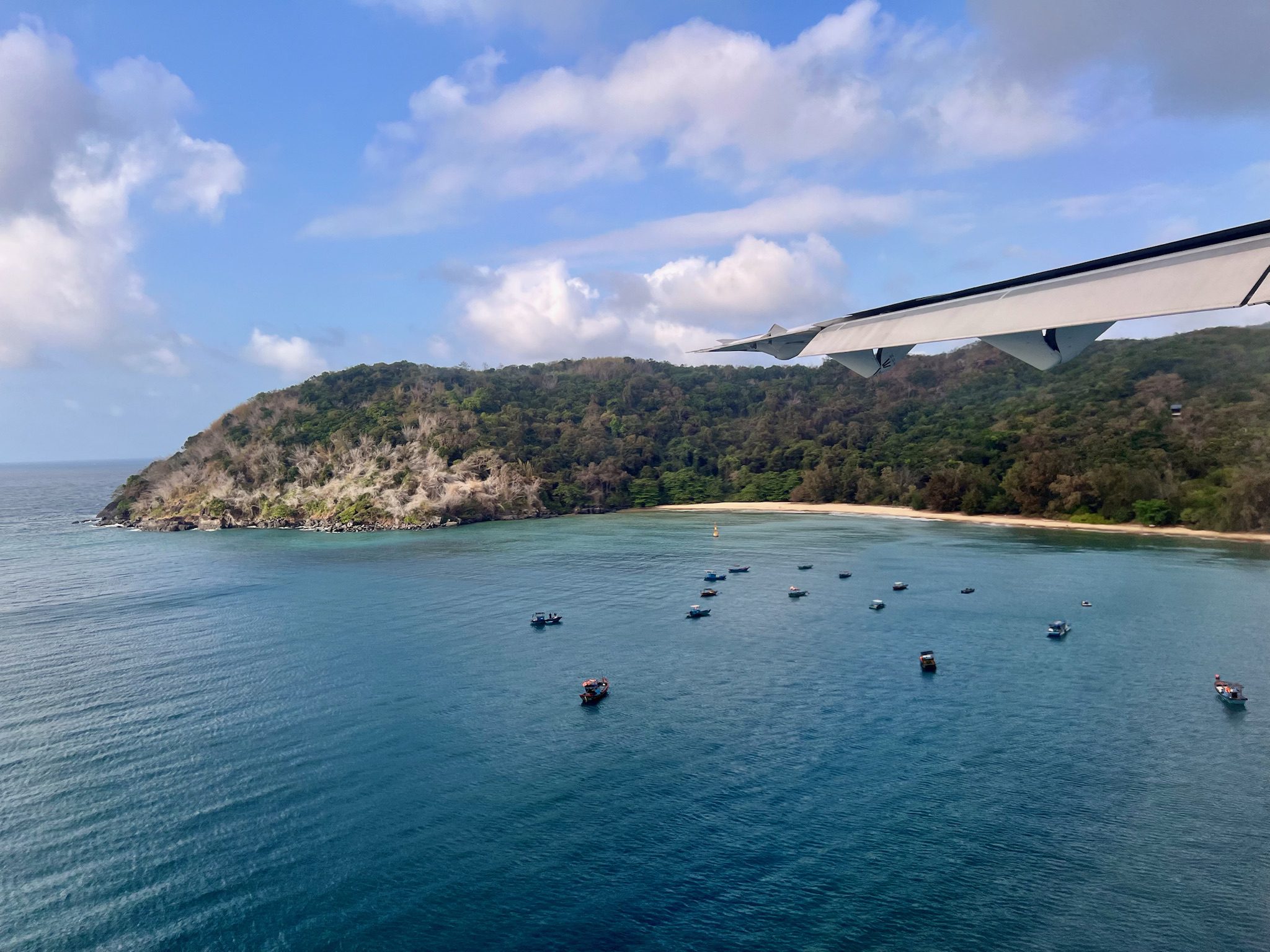
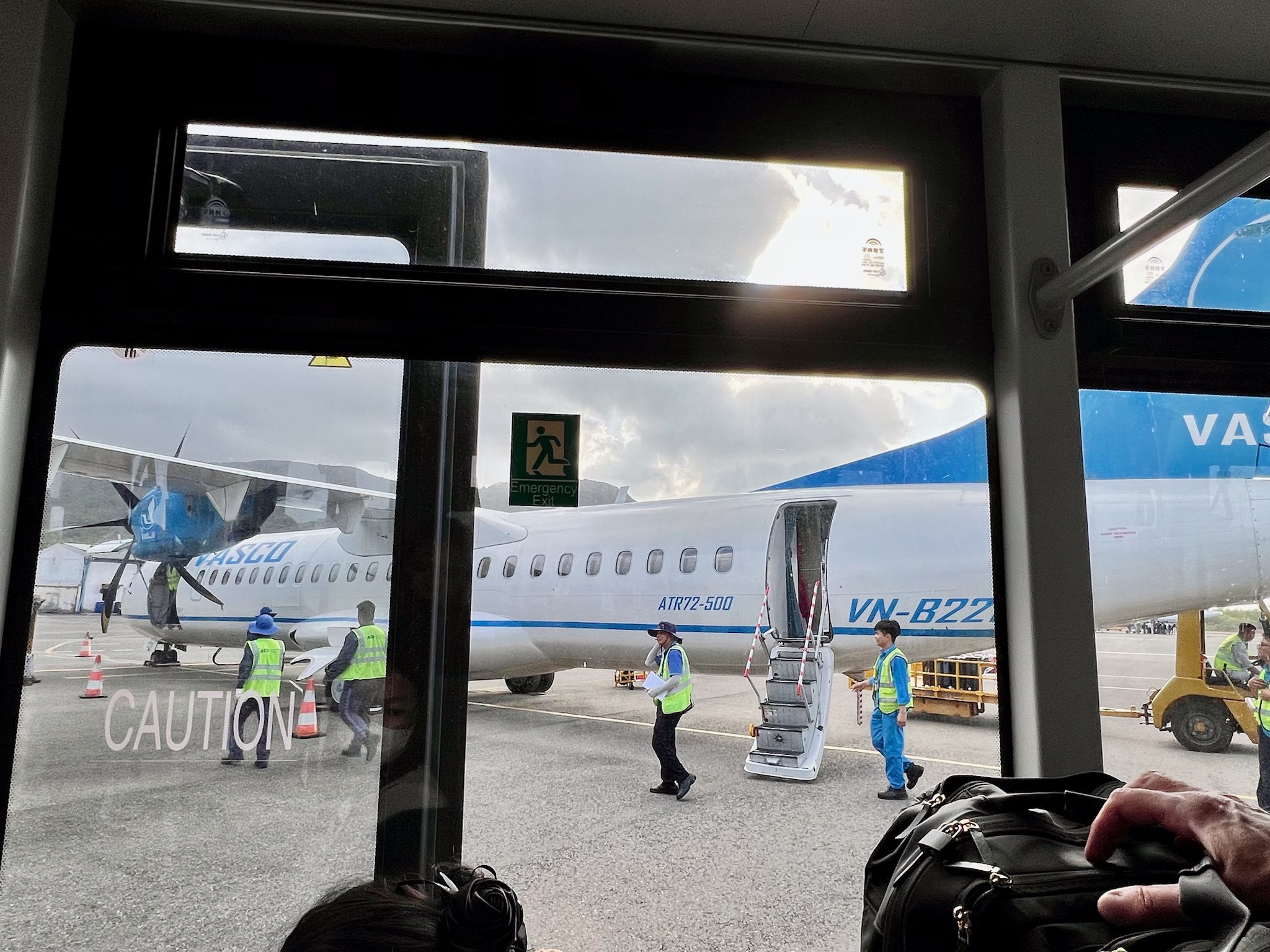
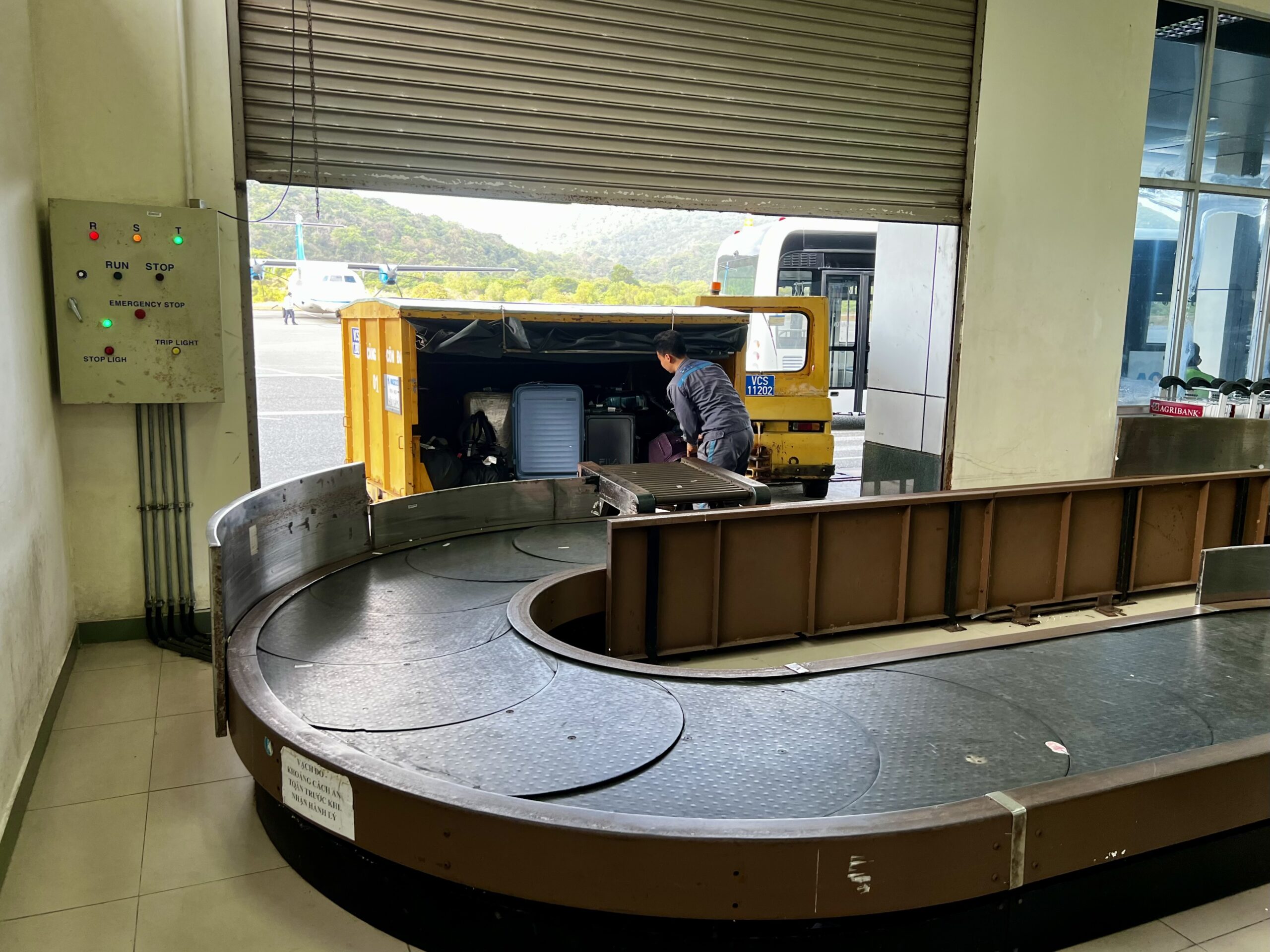
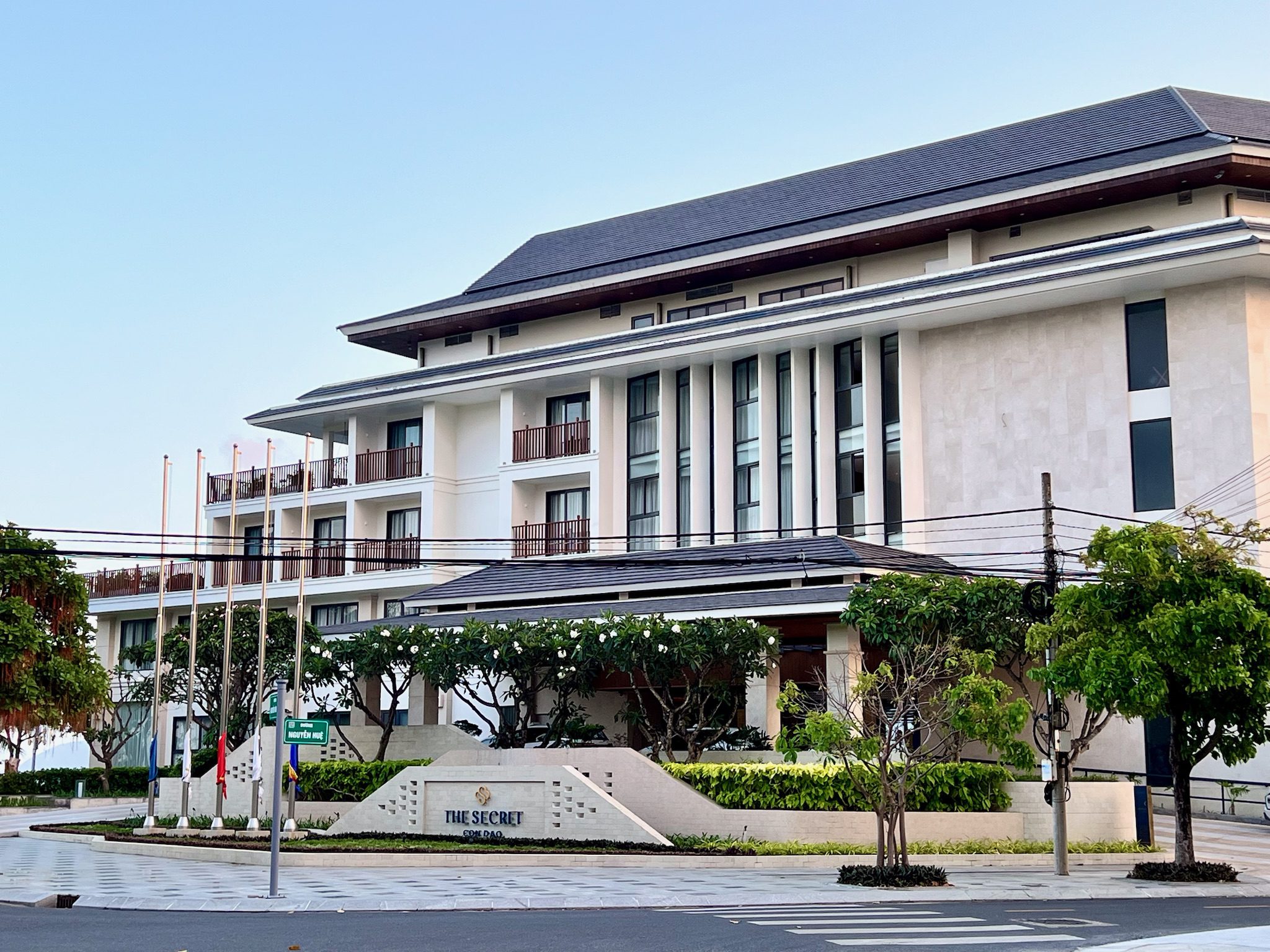
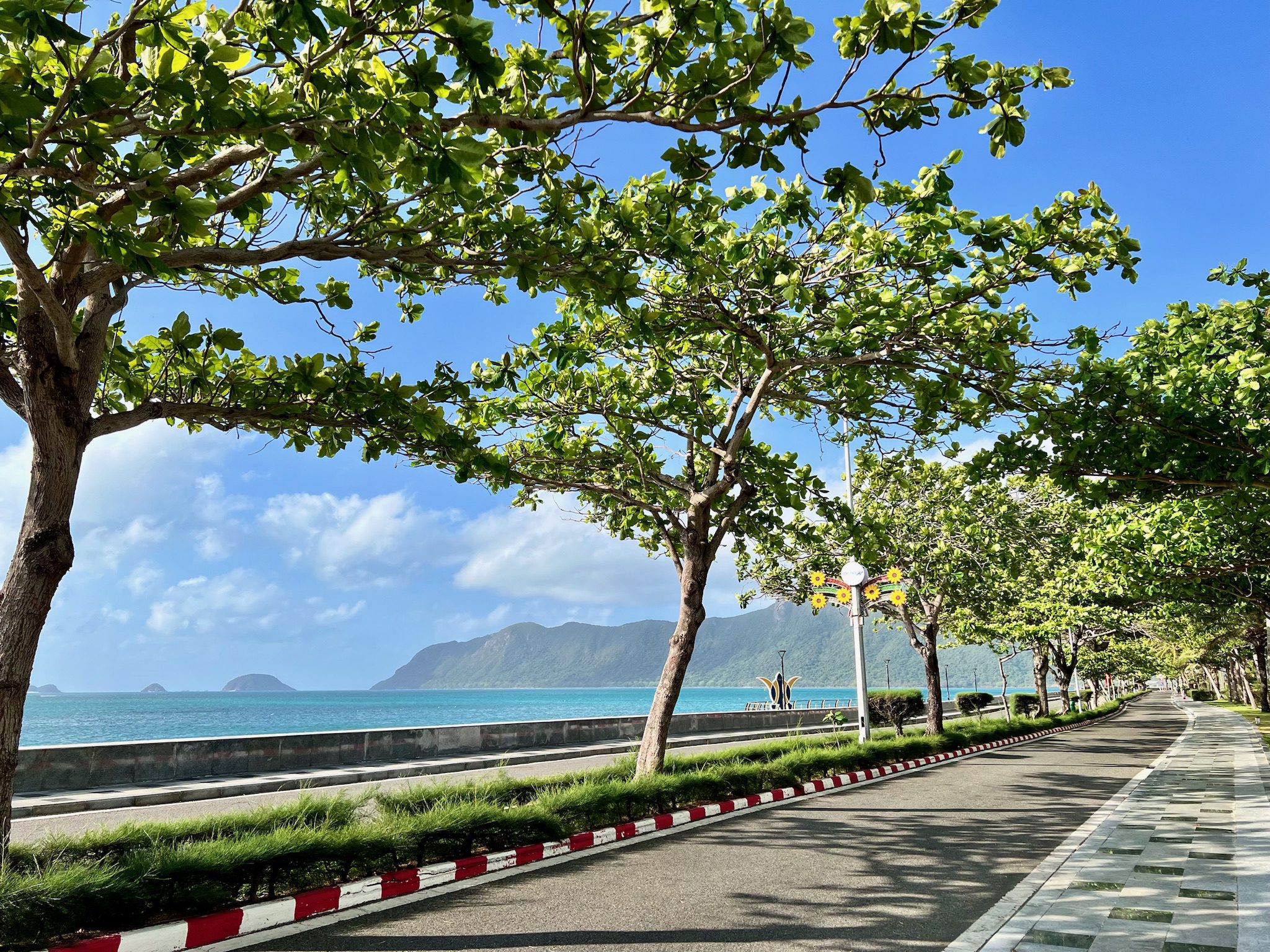
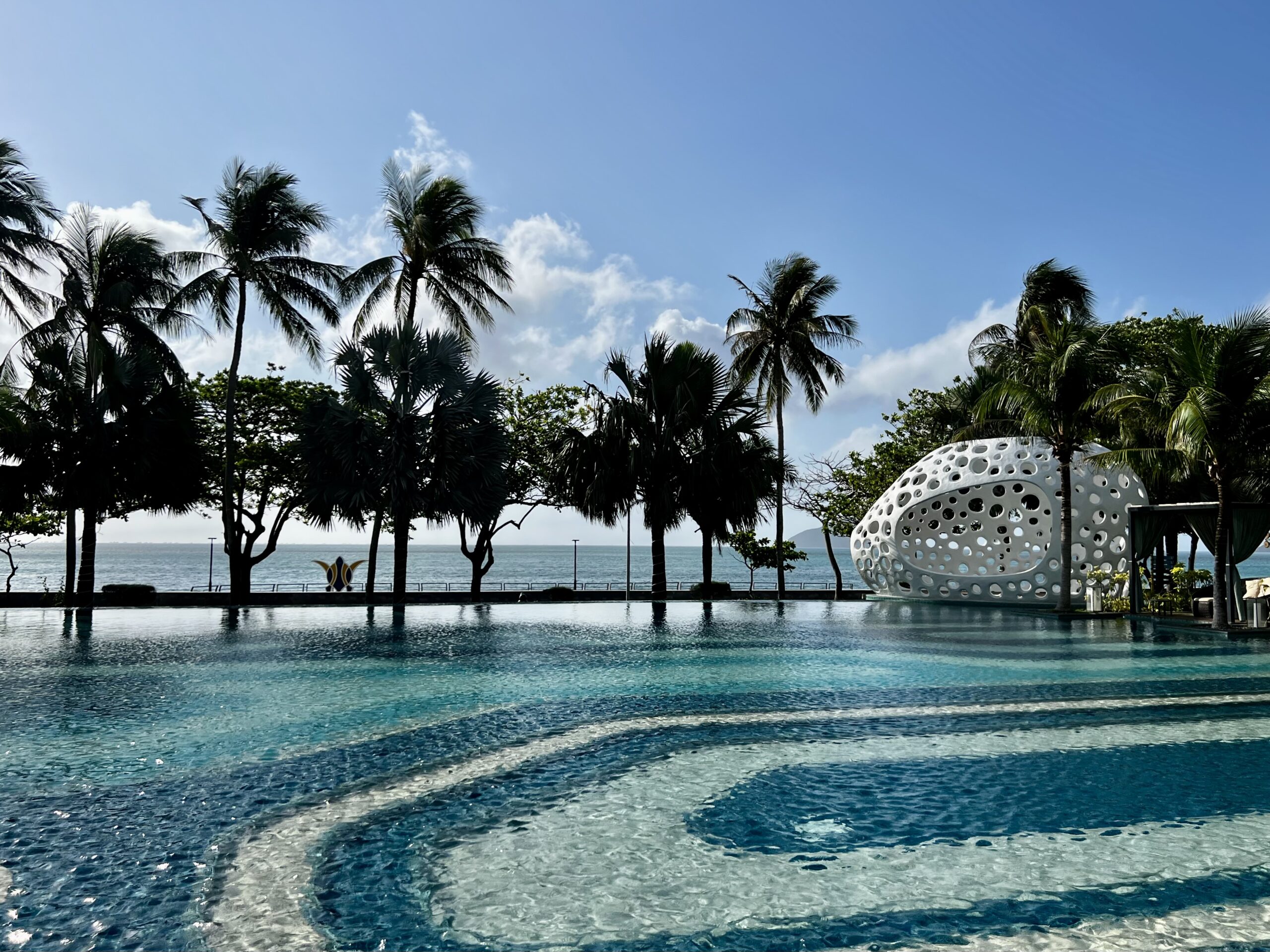
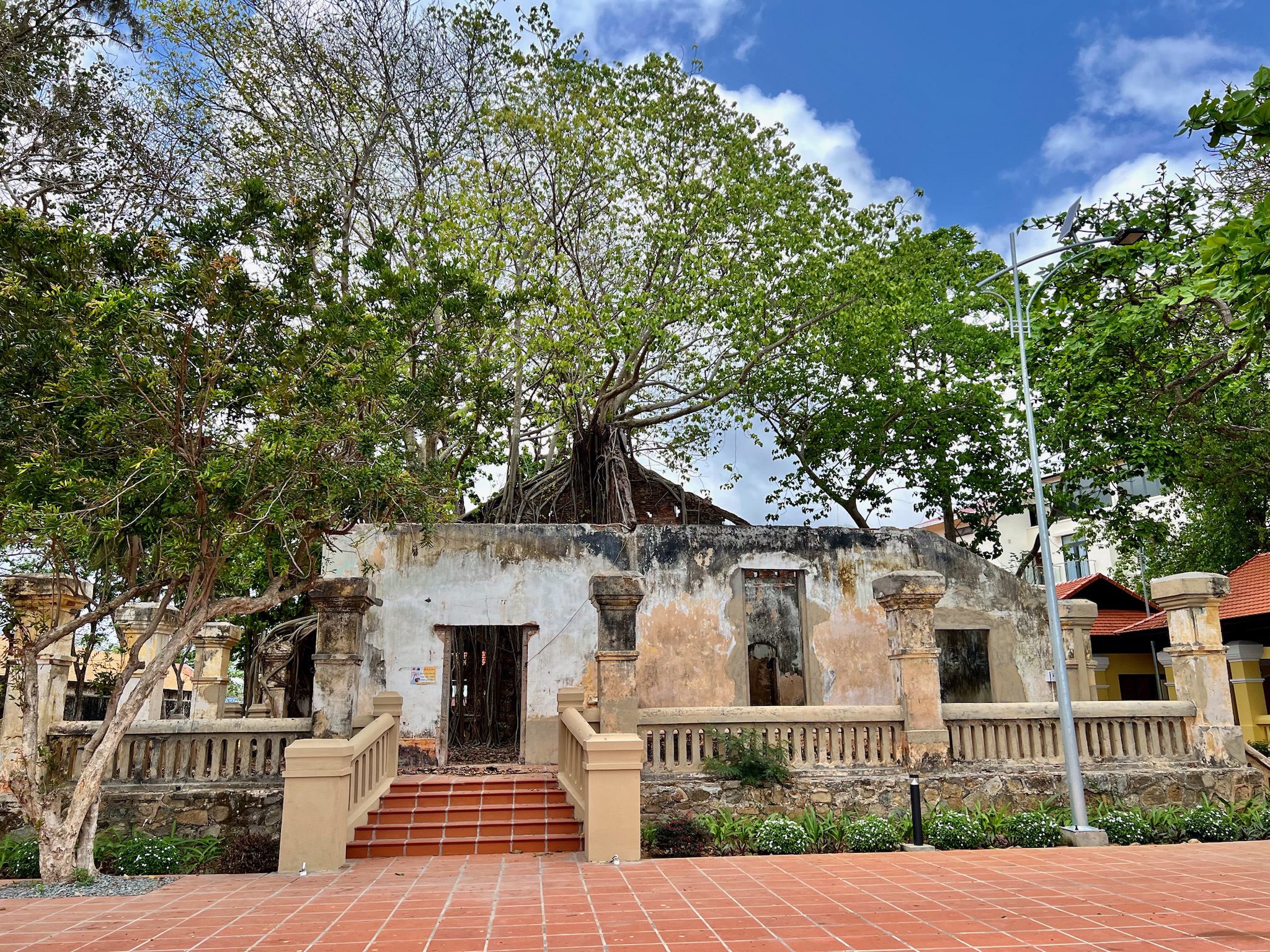
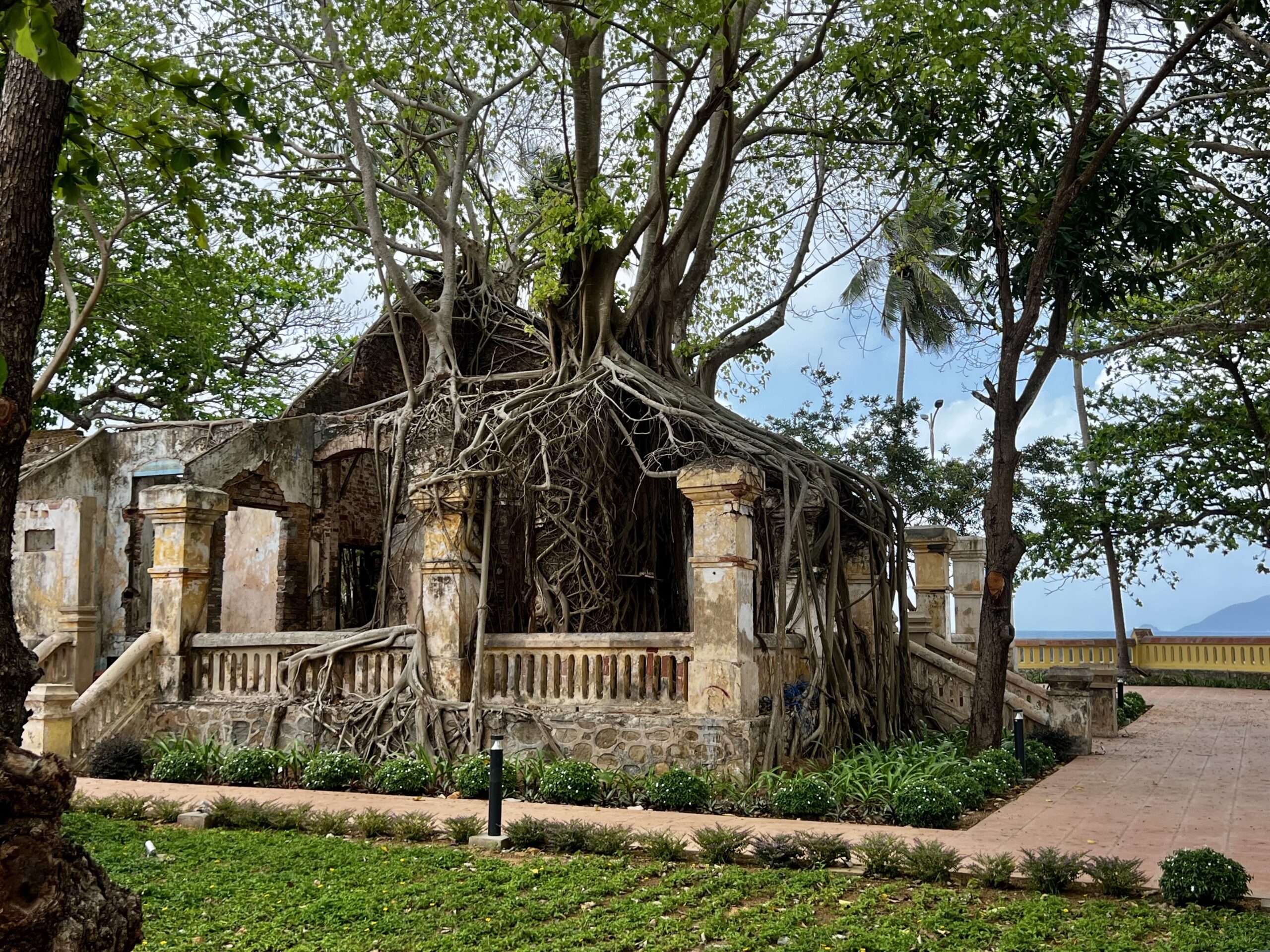
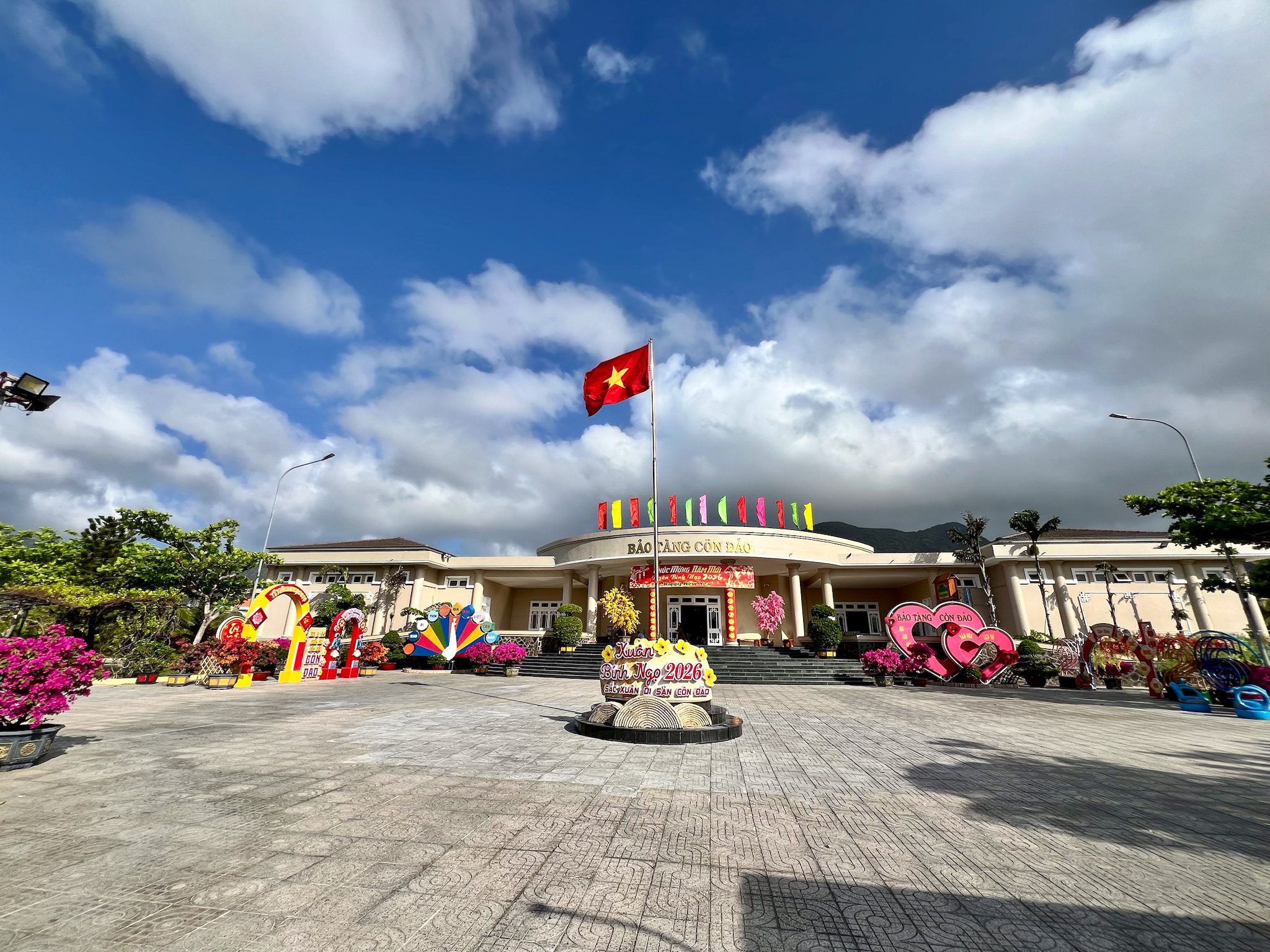
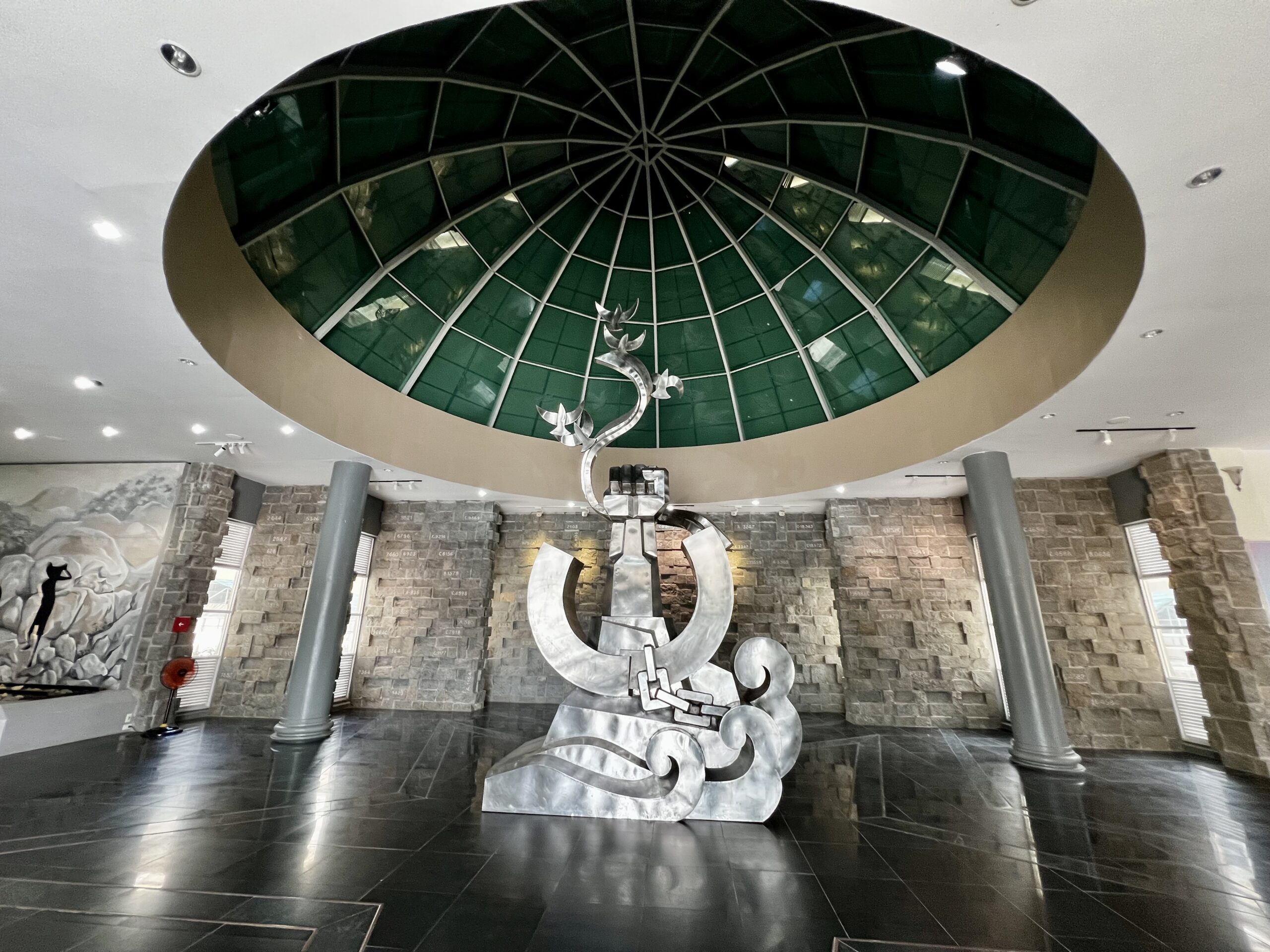
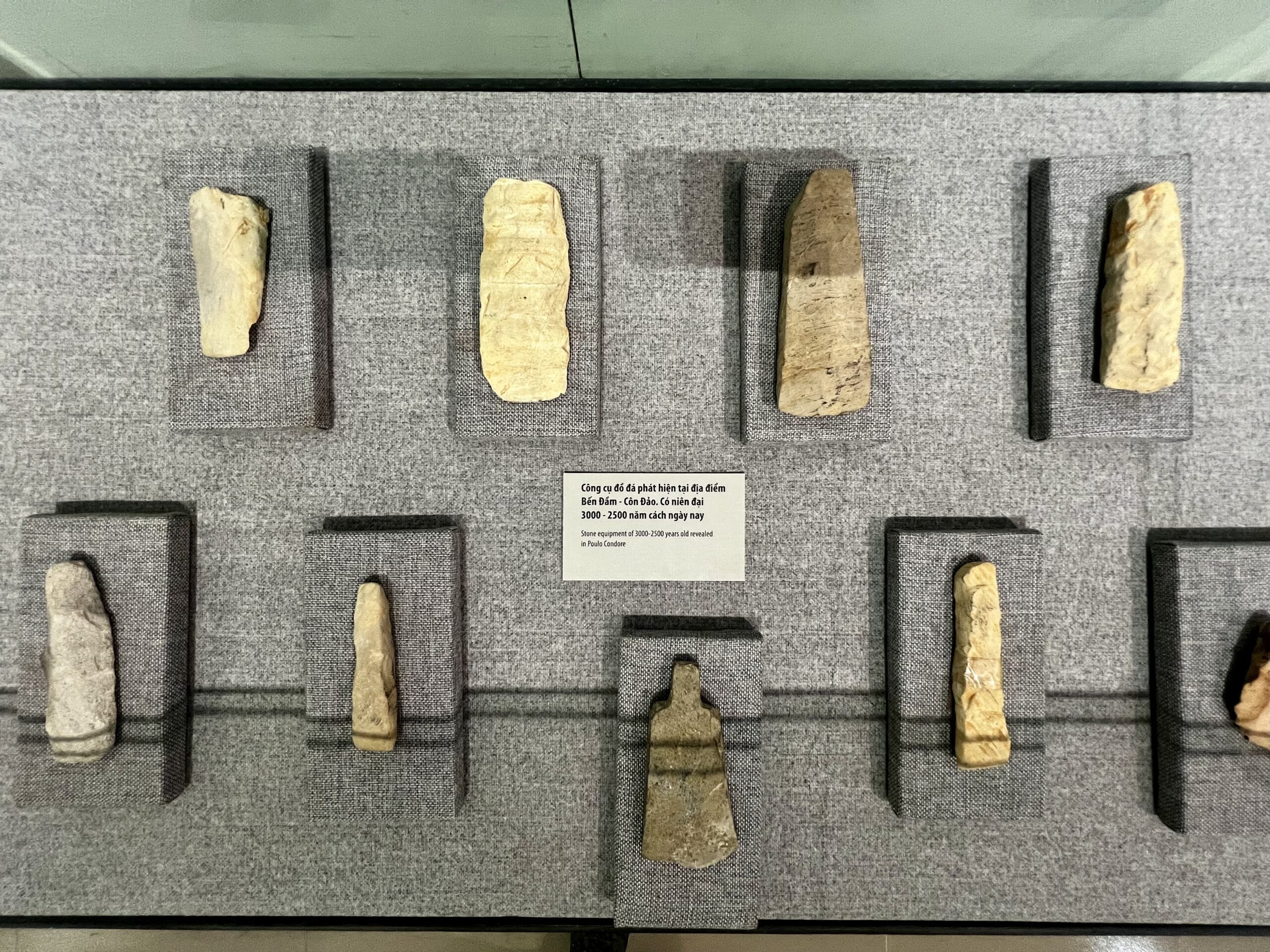
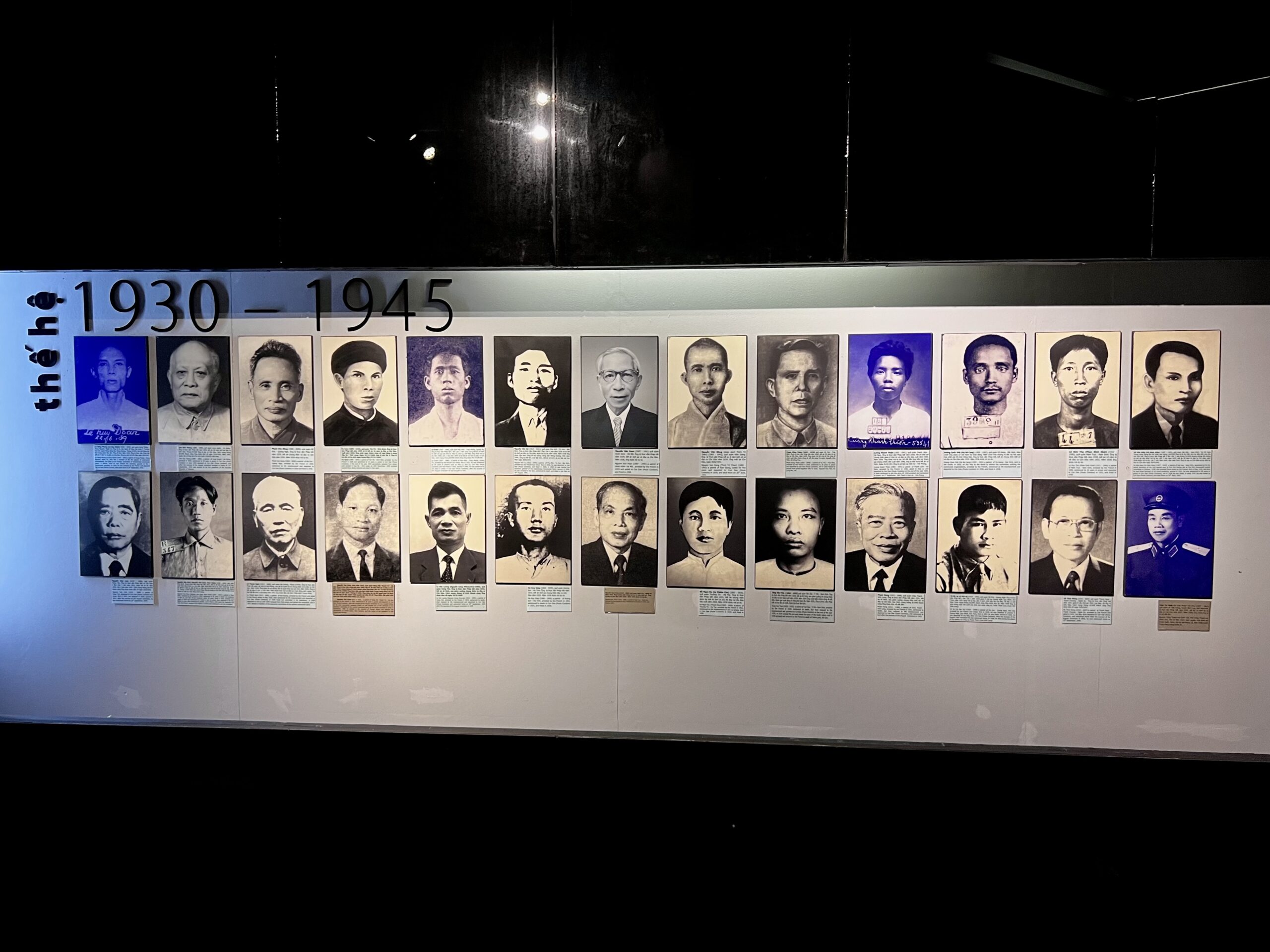
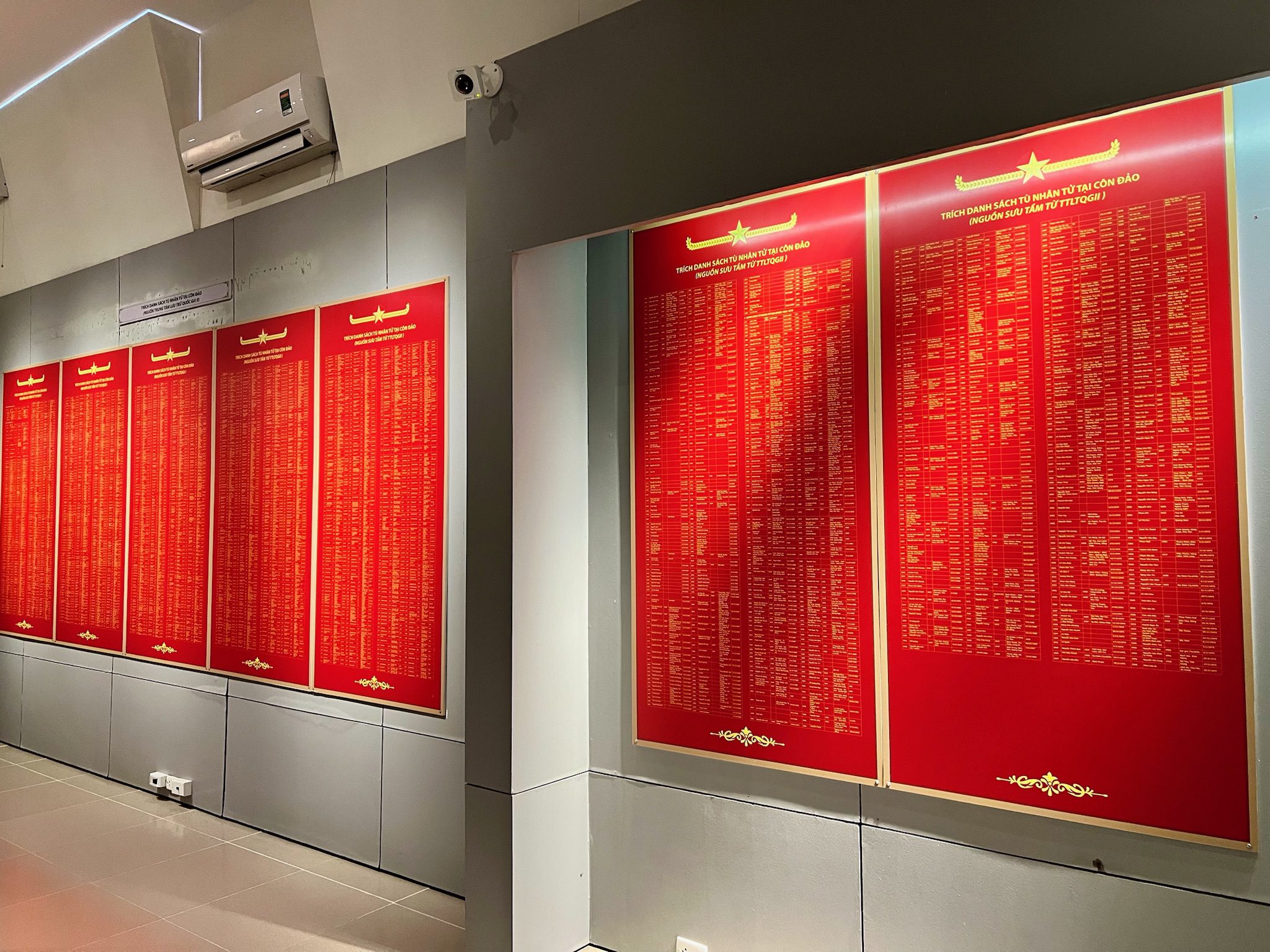
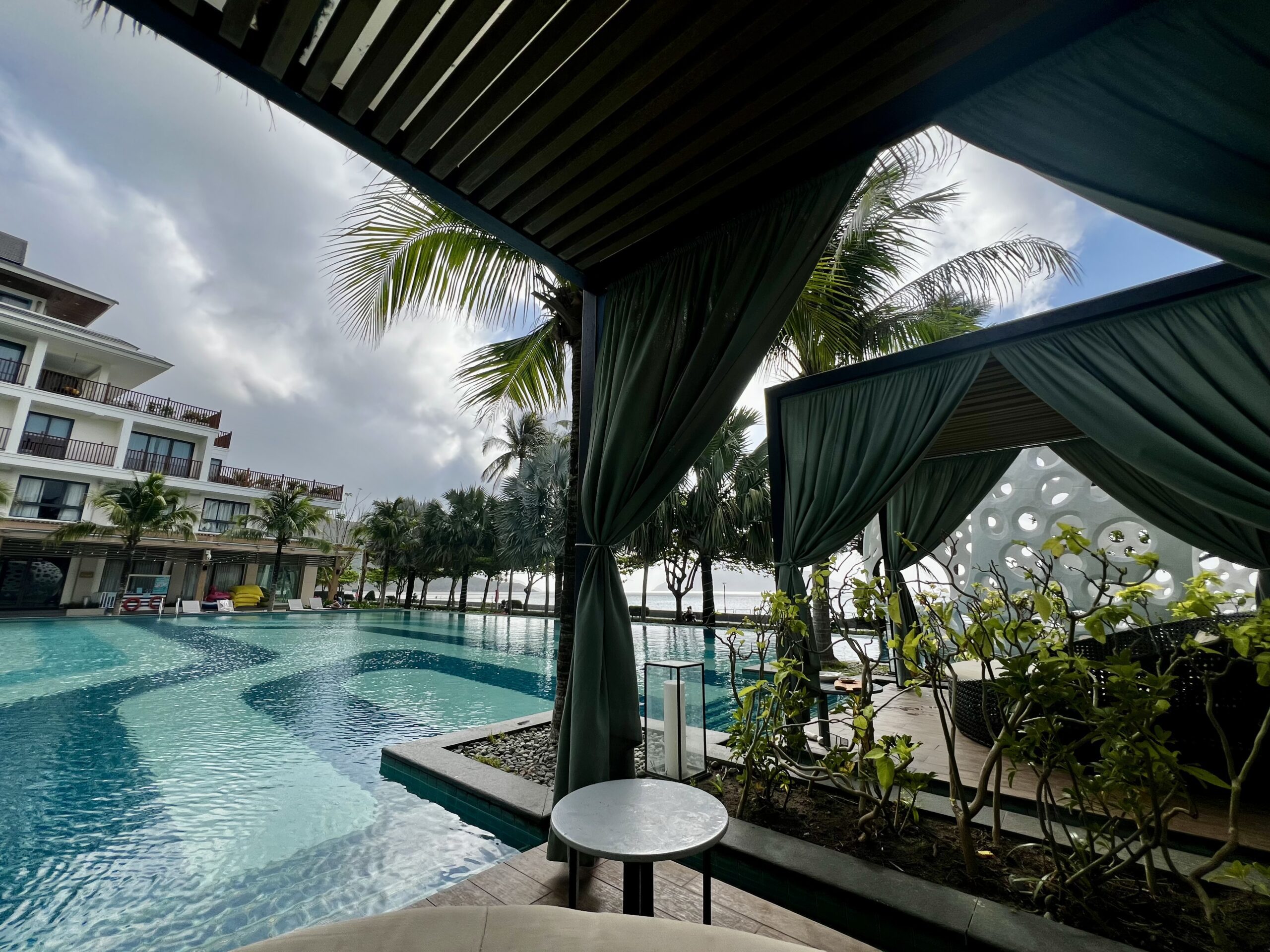
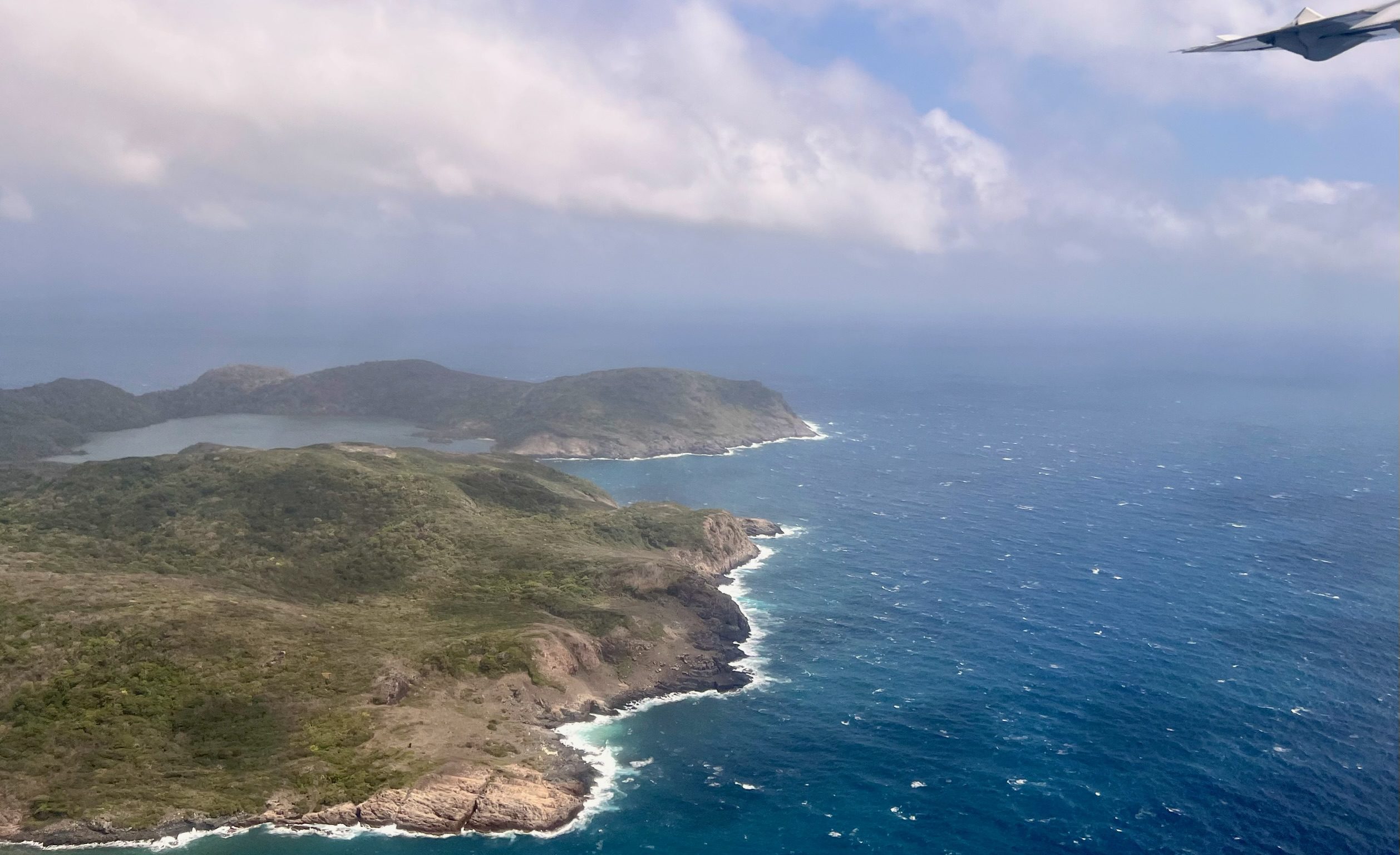
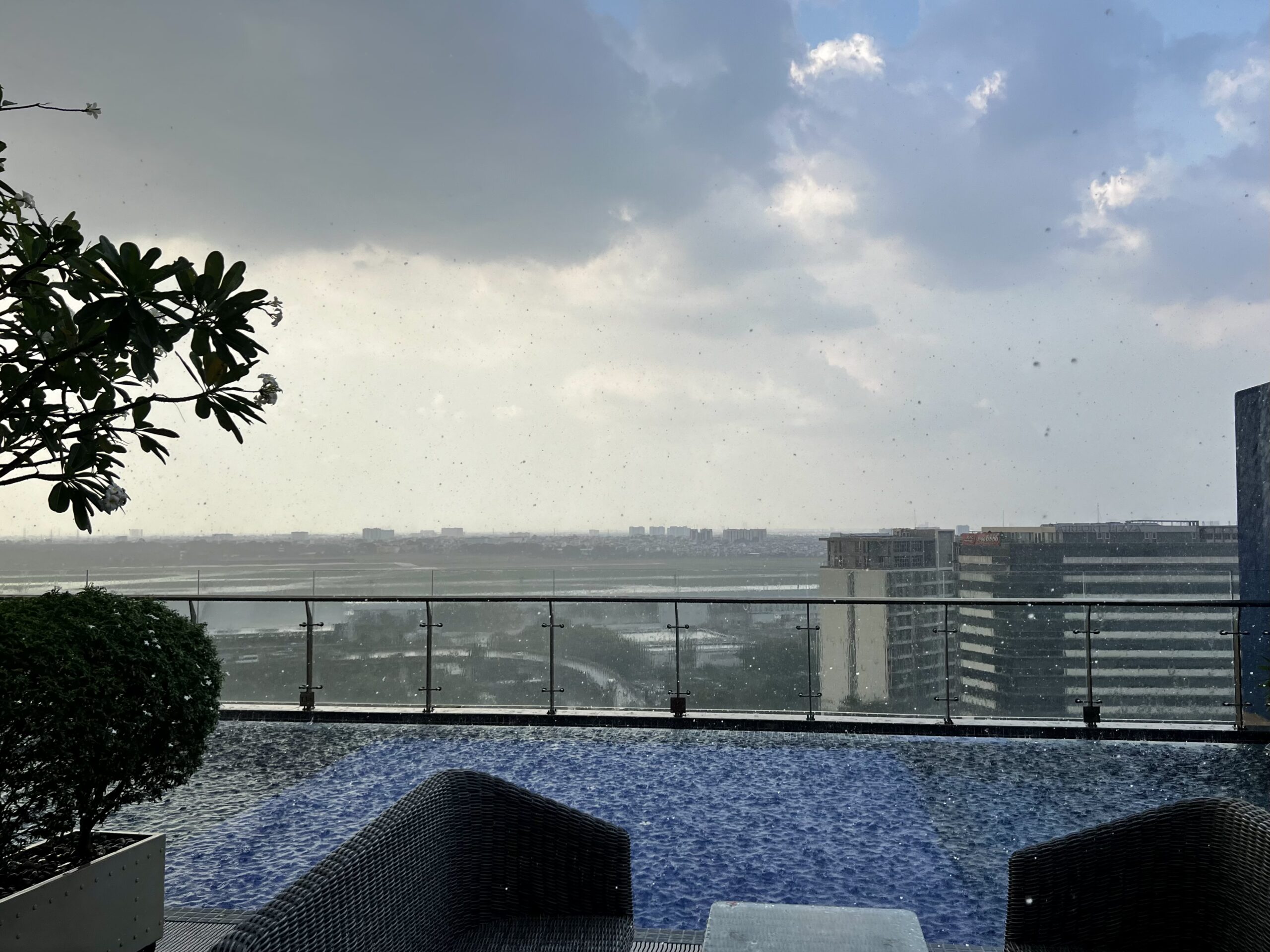
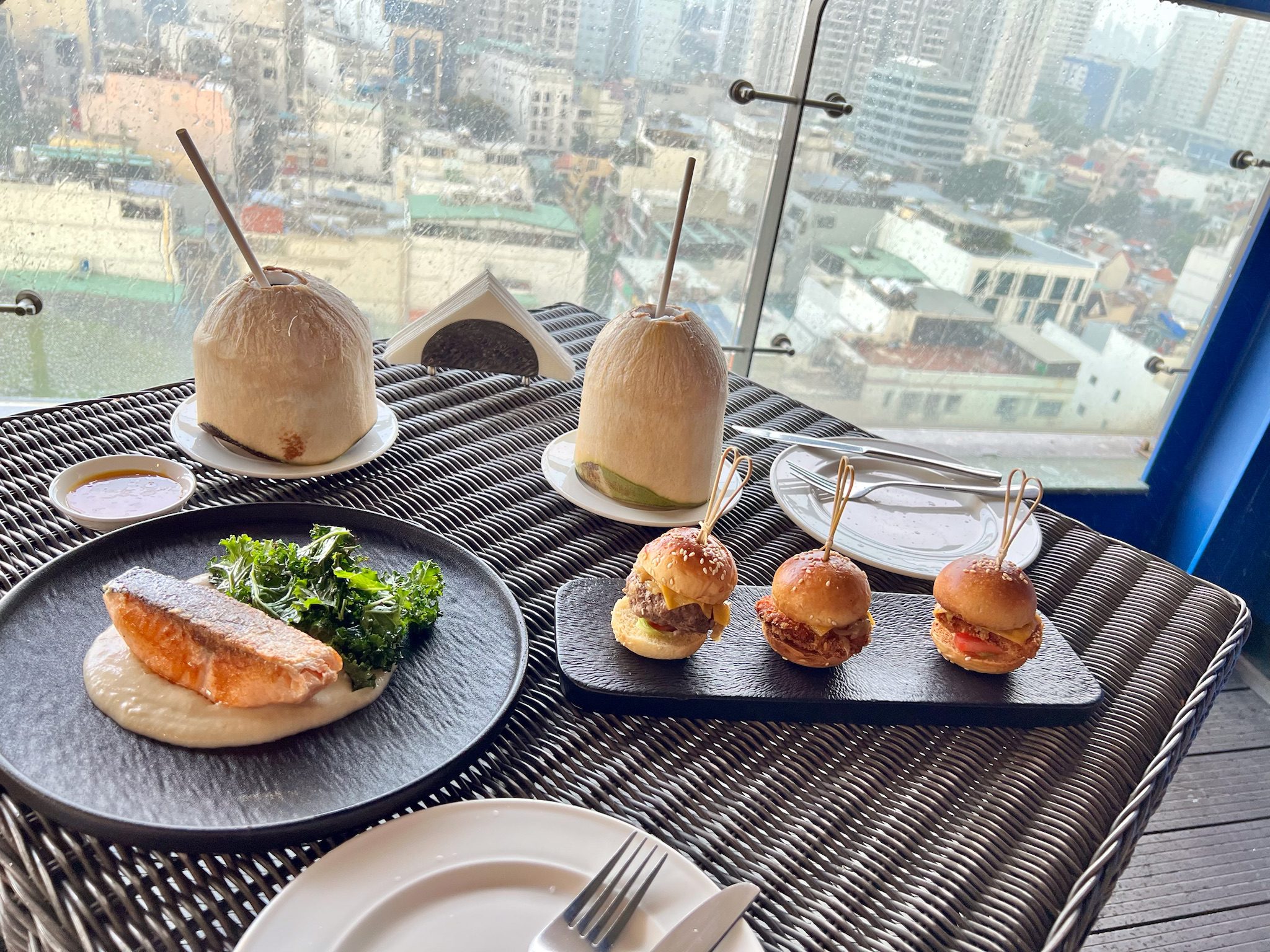
Con Dao is the name of a group of 16 islands off the southern coast of Vietnam. Here we find ourselves landing on the main island of Con Son, the only inhabited one. Names are a bit confusing here. Everyone knows Con Dao, but few recognize Con Son. Maybe cecause Con Son has also been called Paulo Condor, Con Lon, and Con Non. As long as the pilot knows where he’s landing, we’re good.The airport is small, and our airplane brought its own stairs. Oddly enough, after climbing out of the plane, we got on a bus and were driven the 20 feet to the terminal. It took longer to get everyone on the bus than it would have taken to walk. But a bus driver has a job.Except for the bus ride, the experience reminded us of Hawaii airports back in the day, when there was no mystery around how your luggage got on the baggage-claim belt.We stayed at The Secret Con Dao. It’s not a great hotel, but if you want to stay someplace that resembles a modern hotel, there are not a lot of options.Plus it’s right in town, and right across the street from the ocean.Plus it has a pool. With lounge chairs. And a big egg thing. In fact, the hotel was built right in the middle of what was the Con Dao Prison complex. Just west of the hotel are the Phu Son and Phu Hai prison camps. Ruins of some of the original camp buildings remain …Though the buildings themselves are now prisoners of their banyan keepers. Just east of the hotel is Con Dao Museum. It is a new museum, opened less than 15 years ago, dedicated to preserving the Island’s history.The earliest evidence of human habitation goes back about 3,000 years. Stone tools used by farmers and fishers were quickly followed by bronze technology.Many cultures touched Con Dao, from Javanese pirates to Portuguese and Malay traders to the English, and finally the French, who made the greatest impact. In 1861, they built a prison to hold Vietnamese and Cambodians who opposed their colonial government. Many thousands of men and women were imprisoned.And over 20,000 prisoners were killed during its more than 100 year history. Several thousand of those for whom the French kept records are listed.
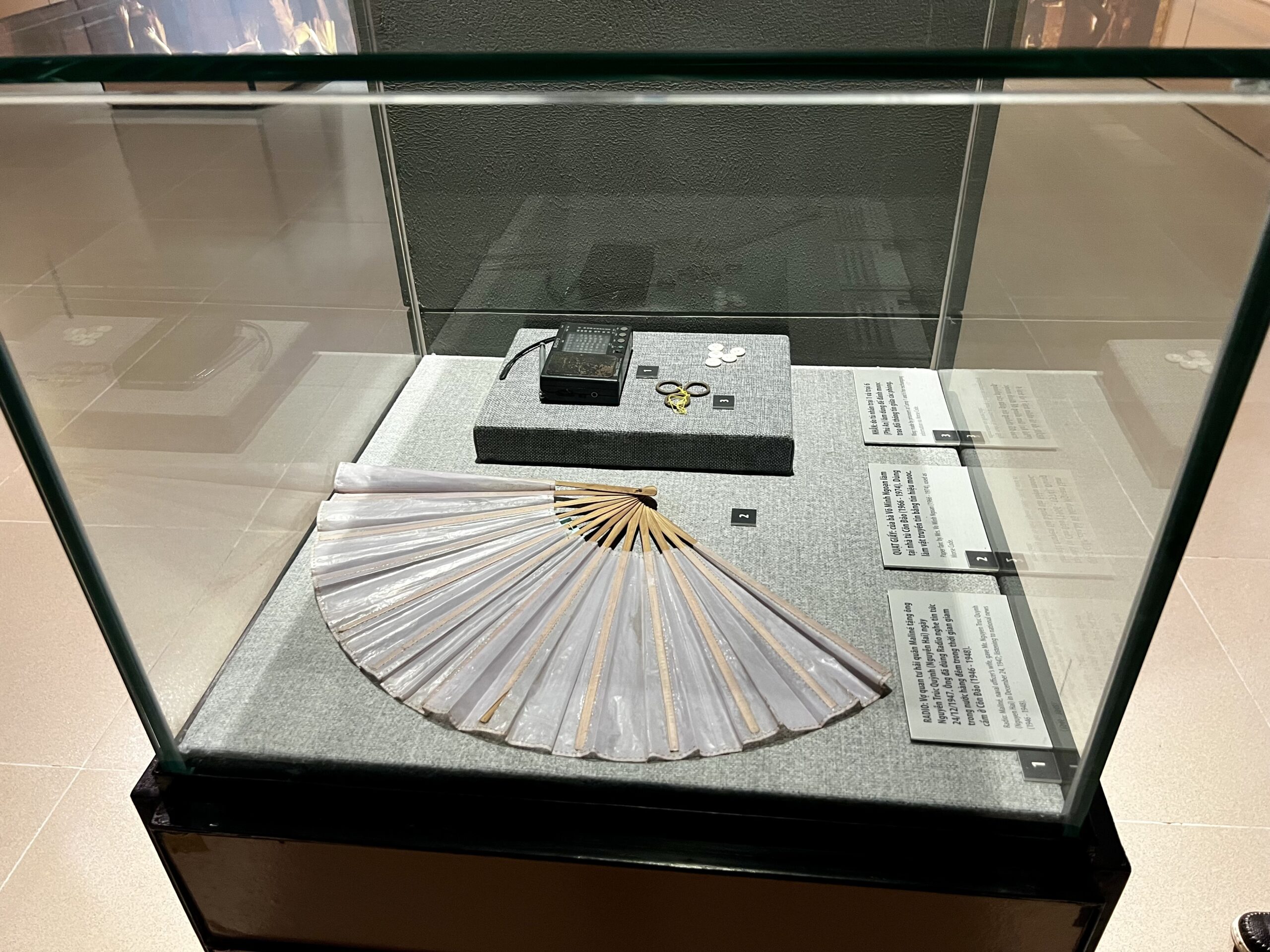
Mid-20th century, the prison became a sort of training ground for communist leaders, as so many were incarcerated there. Clandestine cadres were formed and communist thinking taught. Elaborate communication methods were developed using everything from smuggled radios to Morse code using fans and metal rings.
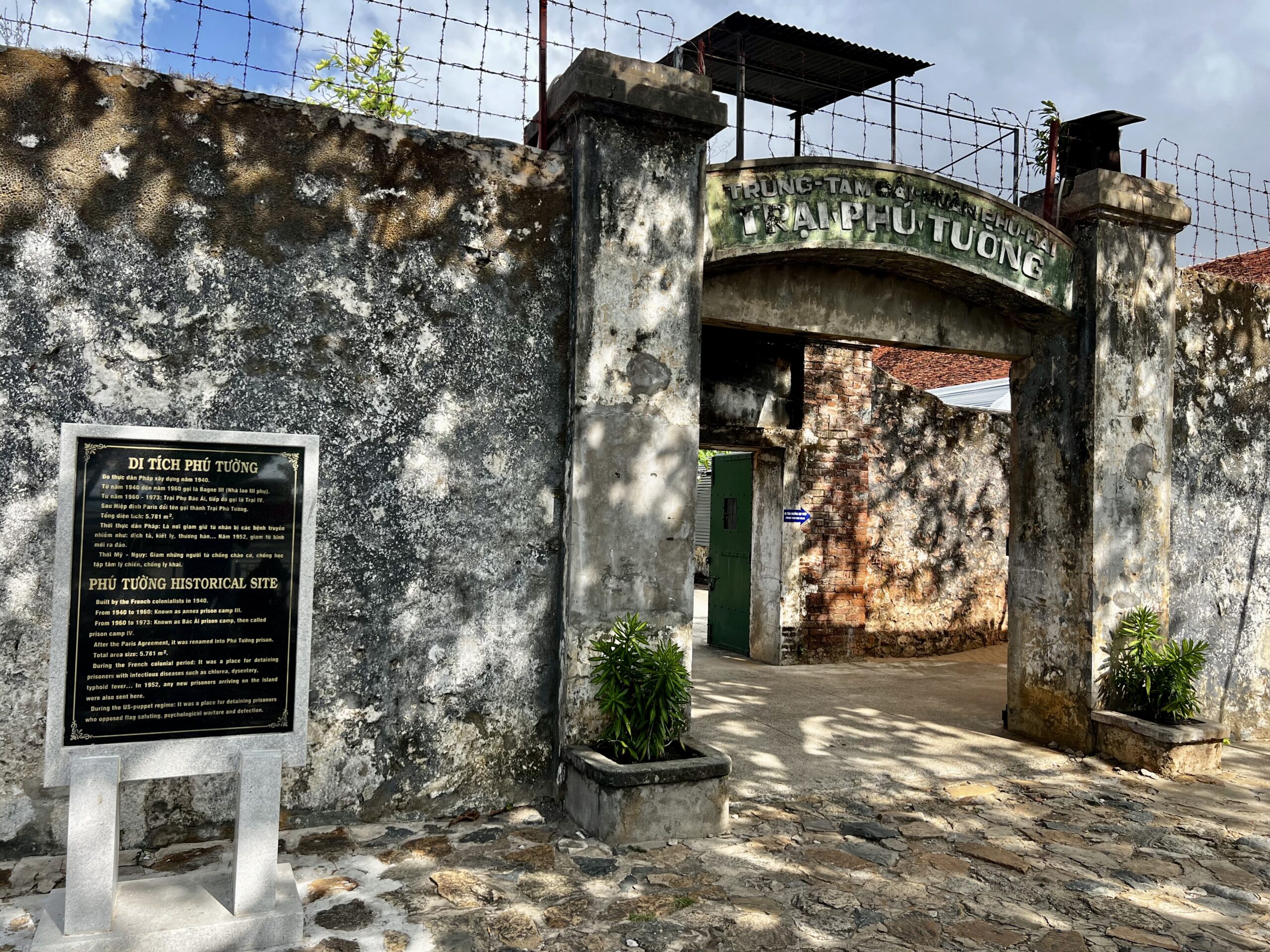
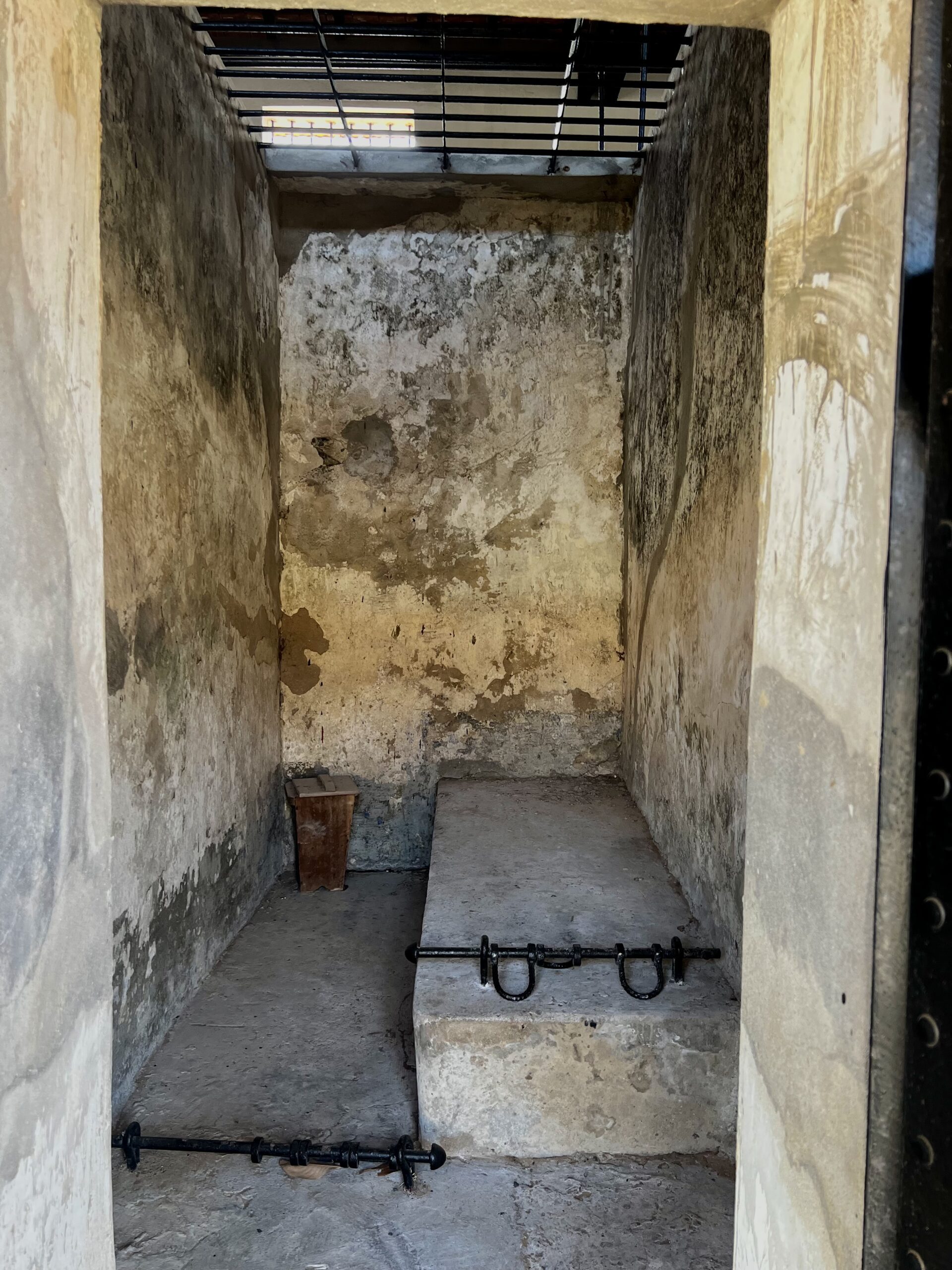
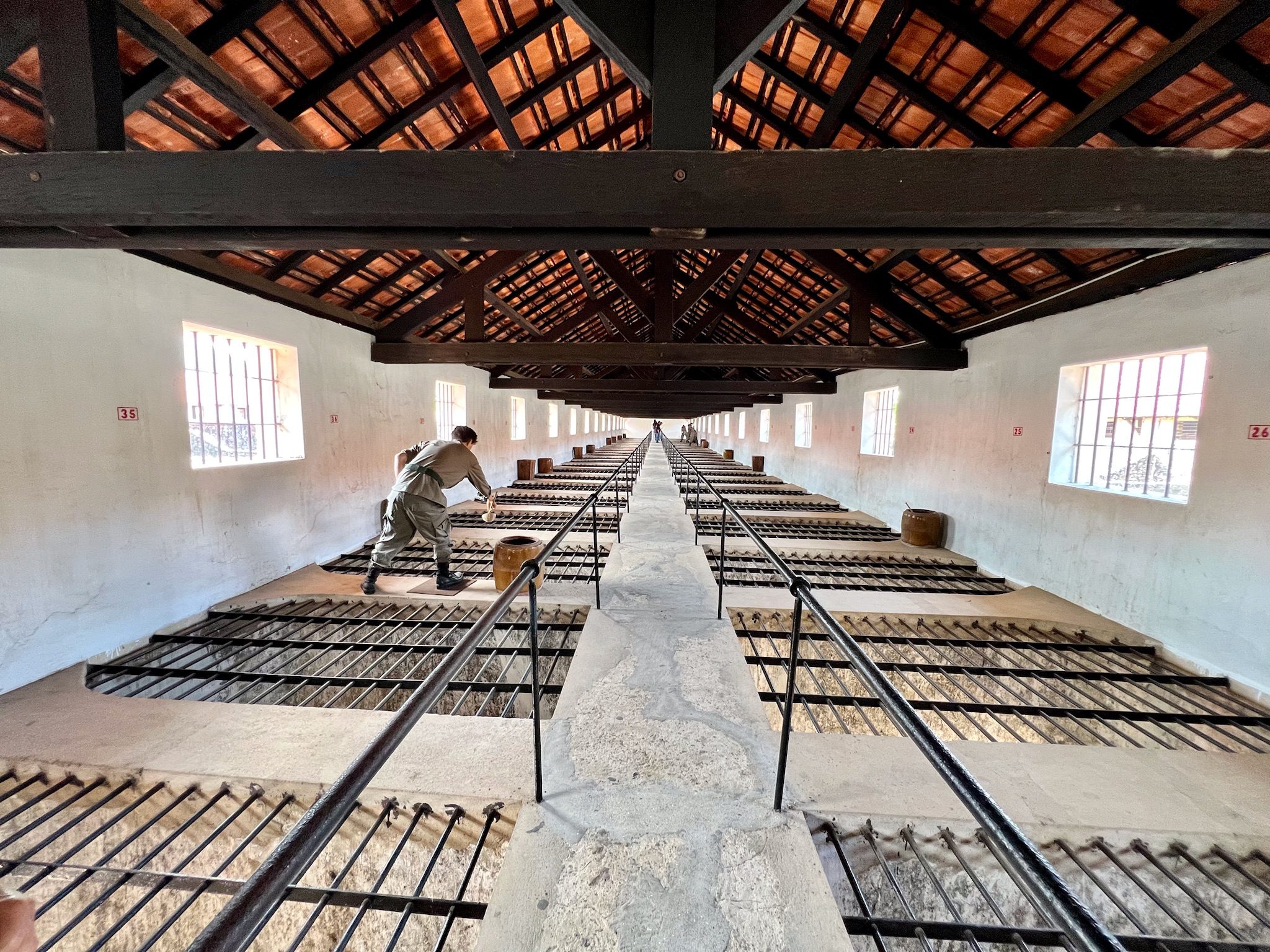
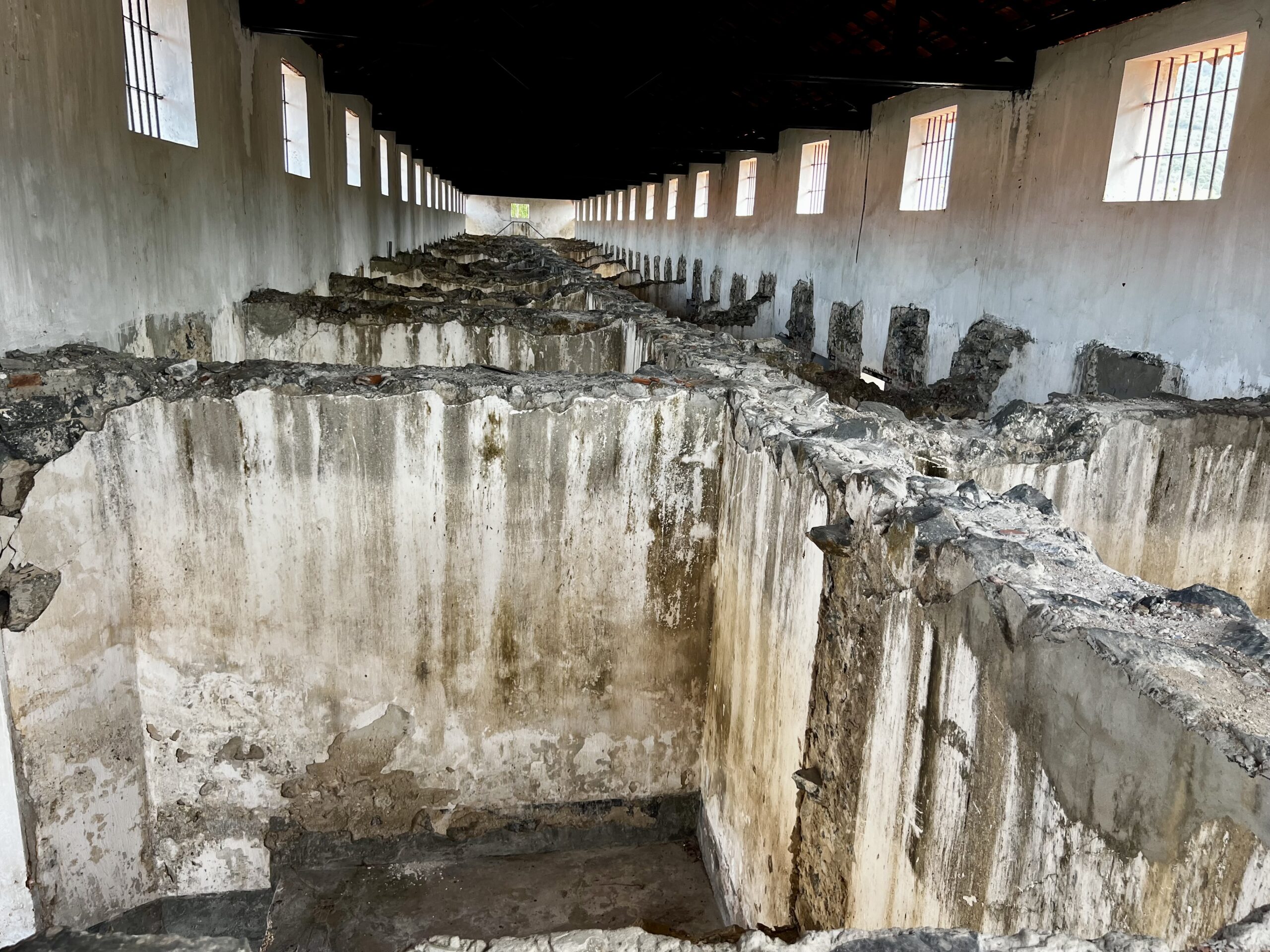
Across the street from the museum is the most infamous part of the prison, Phu Tuong camp, which housed the so-called tiger cages. Tiger cages were built by French colonial authorities in 1940 for the dehumanization and torture of prisoners. Each cell held one to six men or women, manacled to a concrete platform or the floor.Half of the tiger cages were under catwalks, from which guards tortured captives with sharp poles and powdered lime. One tiger cage building has been restored and populated with mannequins depicting guards and prisoners.The rest have been left as they are, destroyed as they were by liberating forces in 1975.
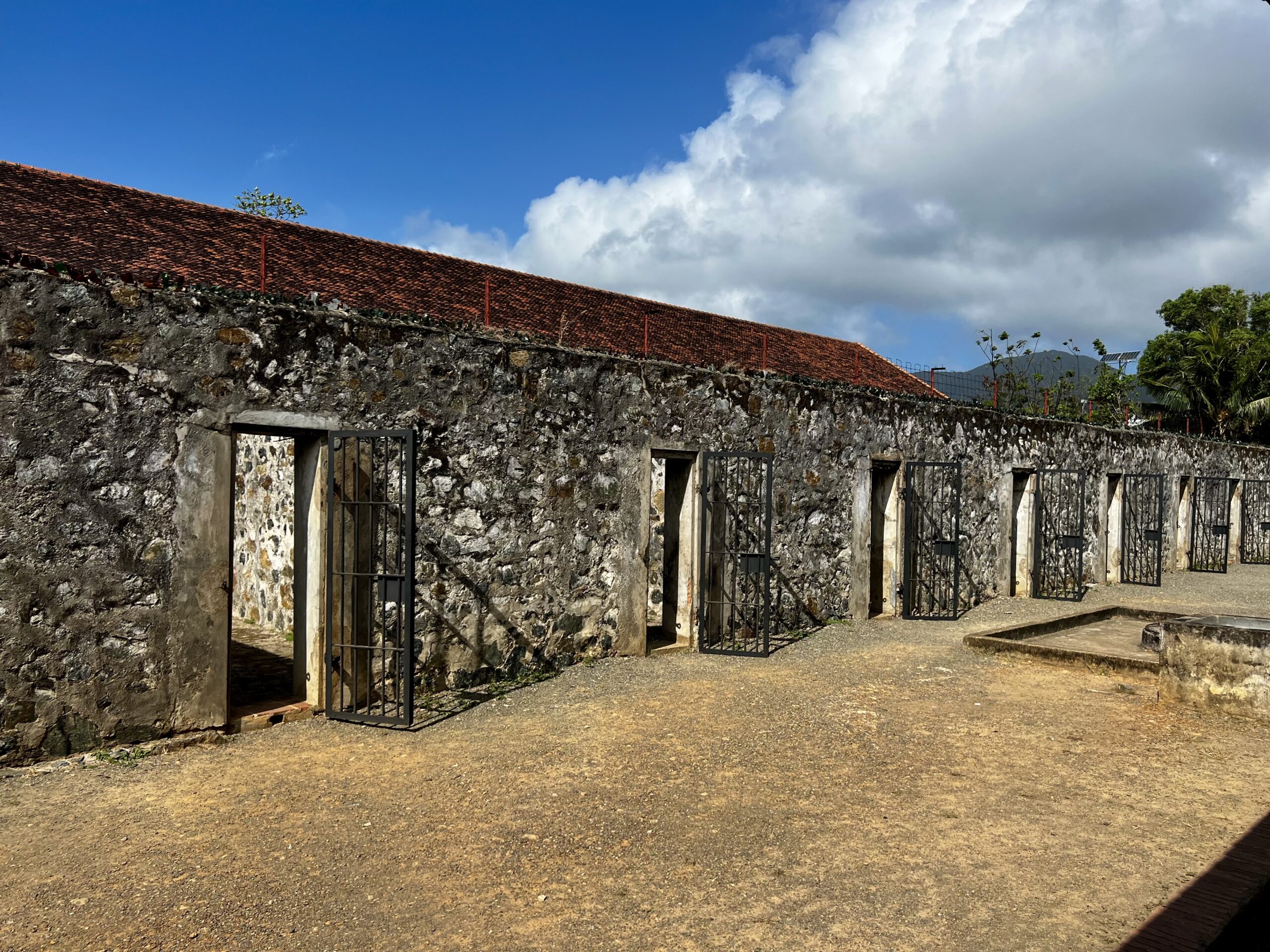
Another half of the cages were left open to the elements, where stripped prisoners were forcibly exposed to the sun.
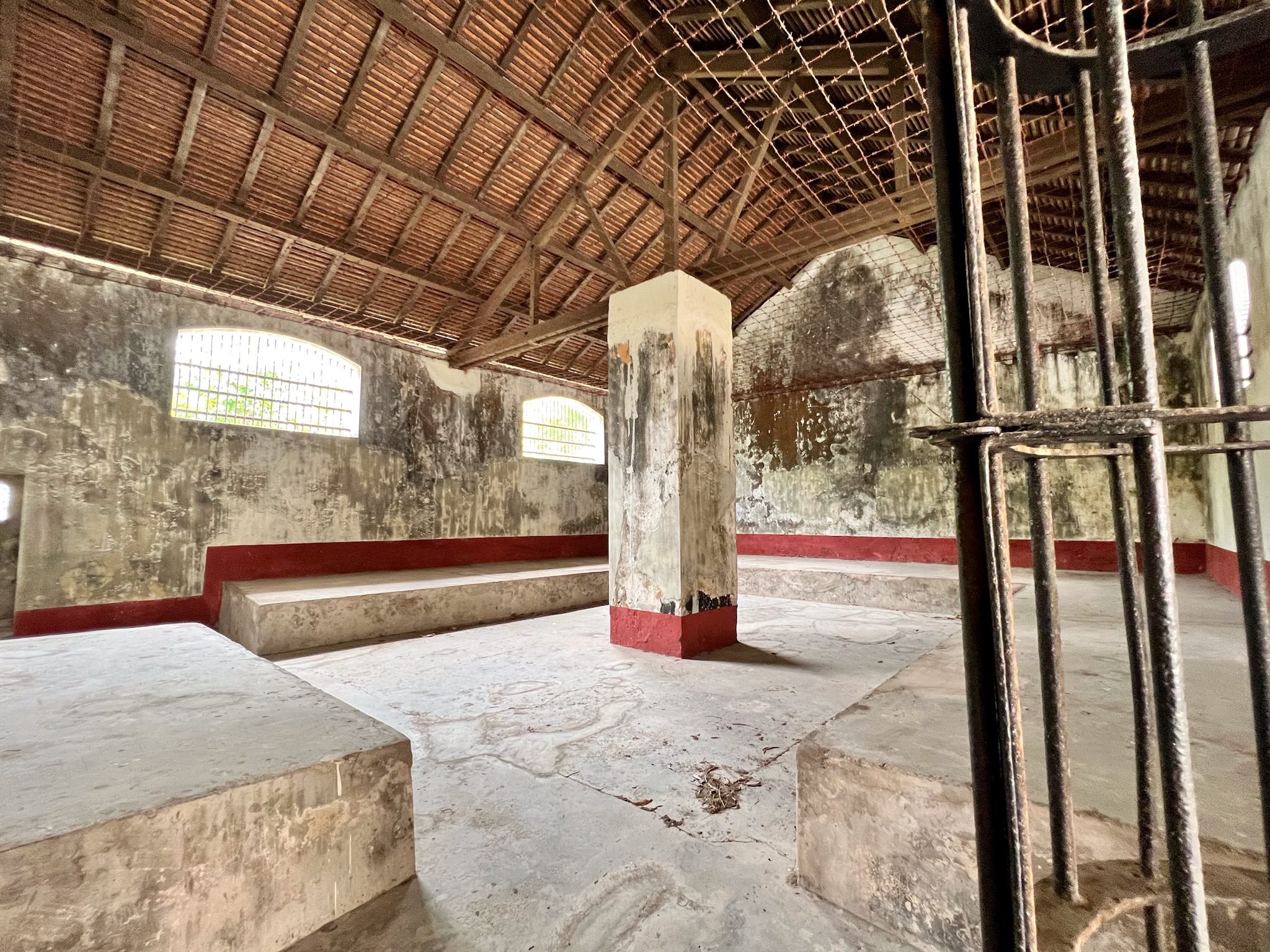
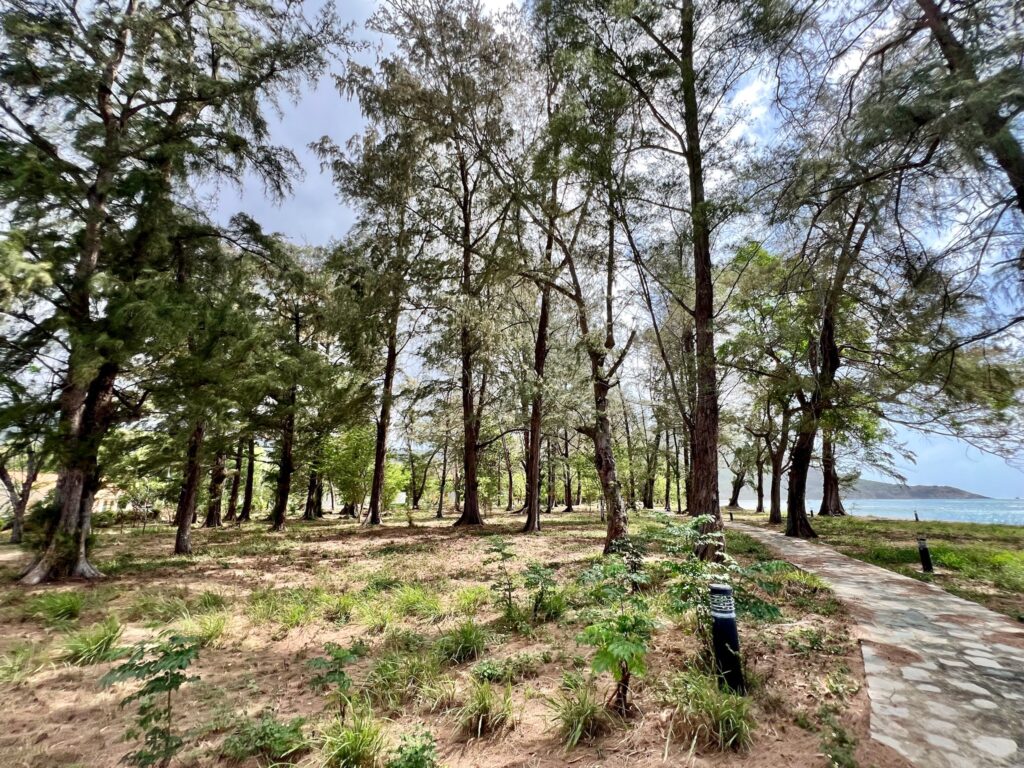
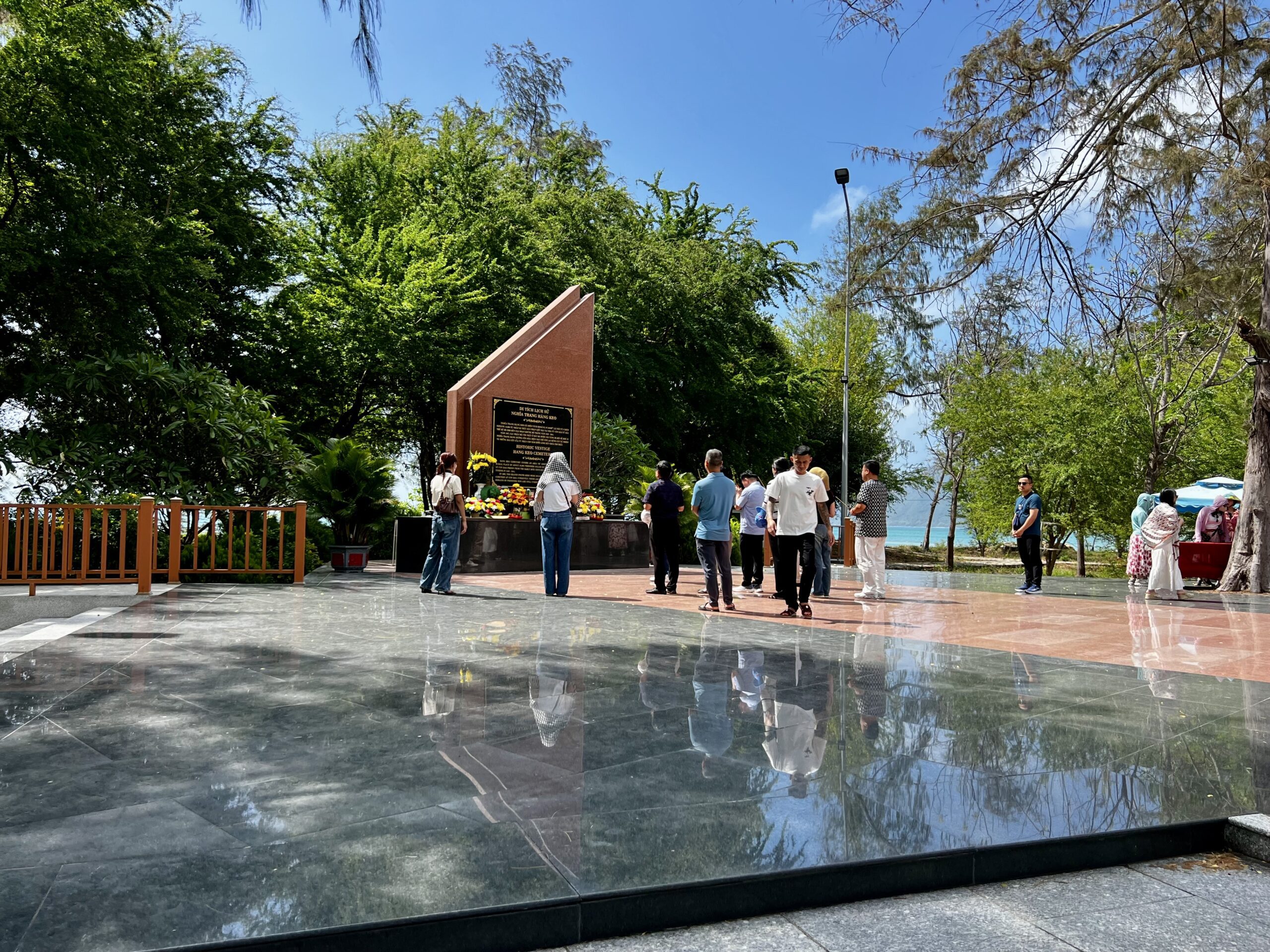
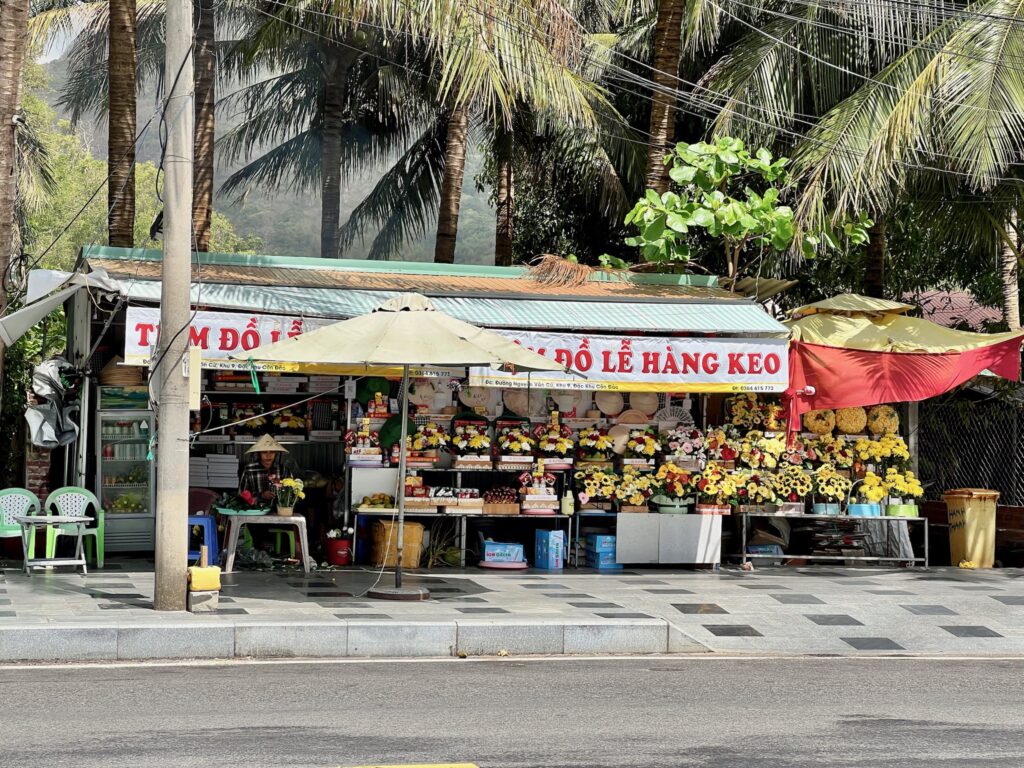
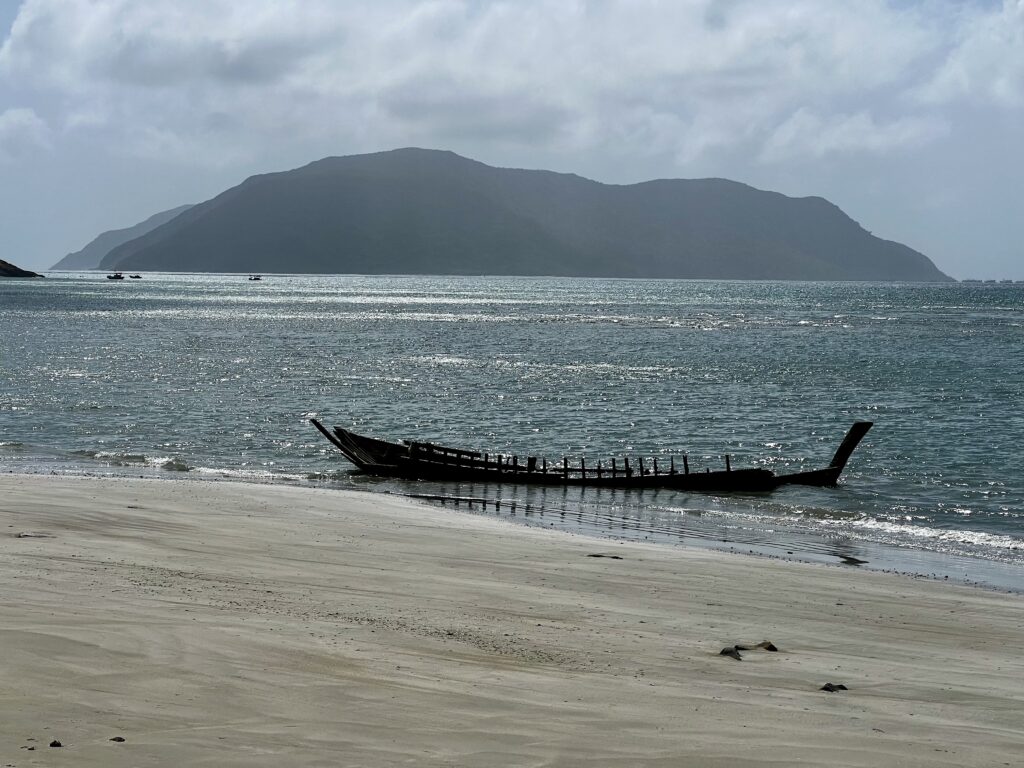
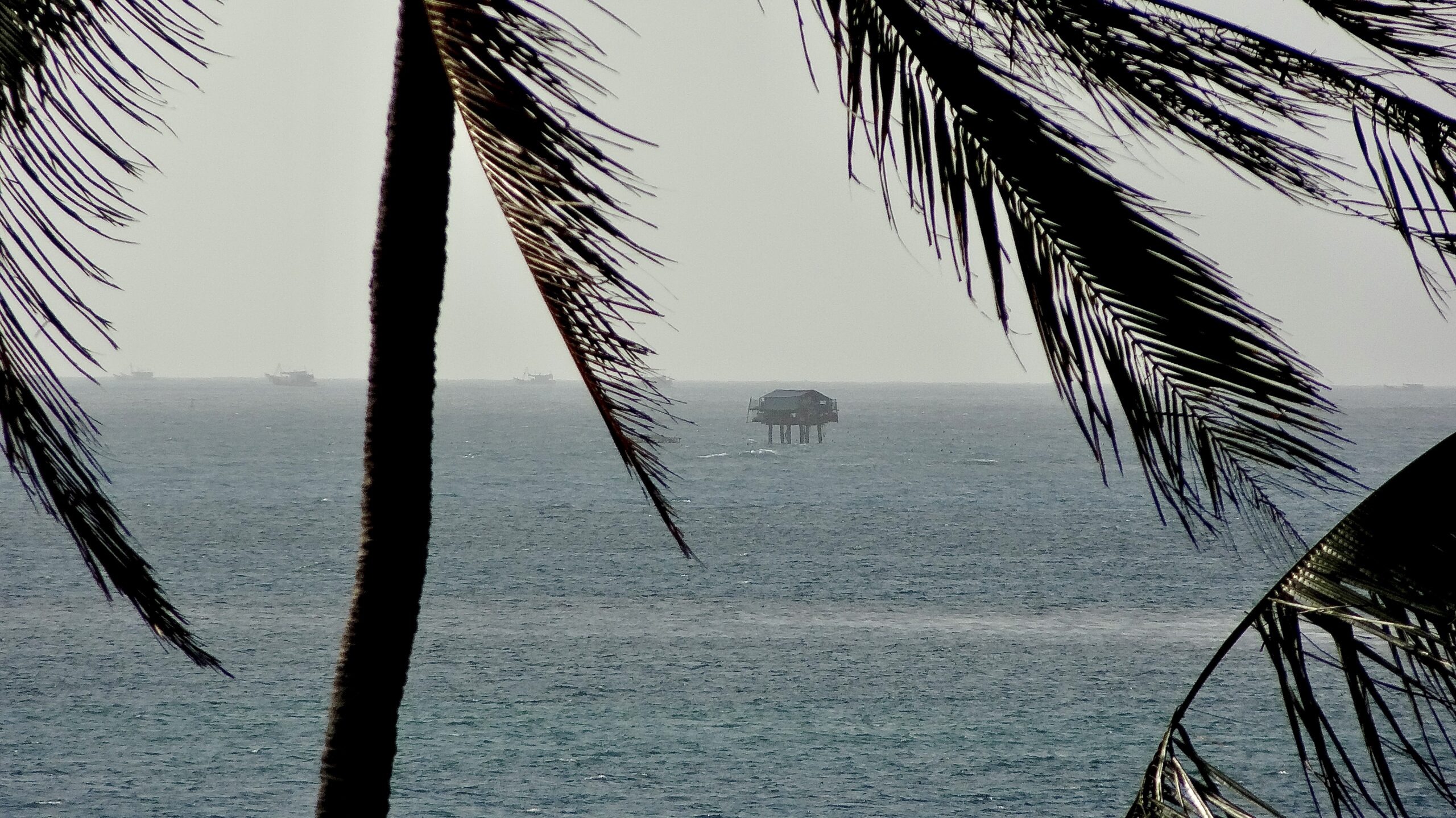
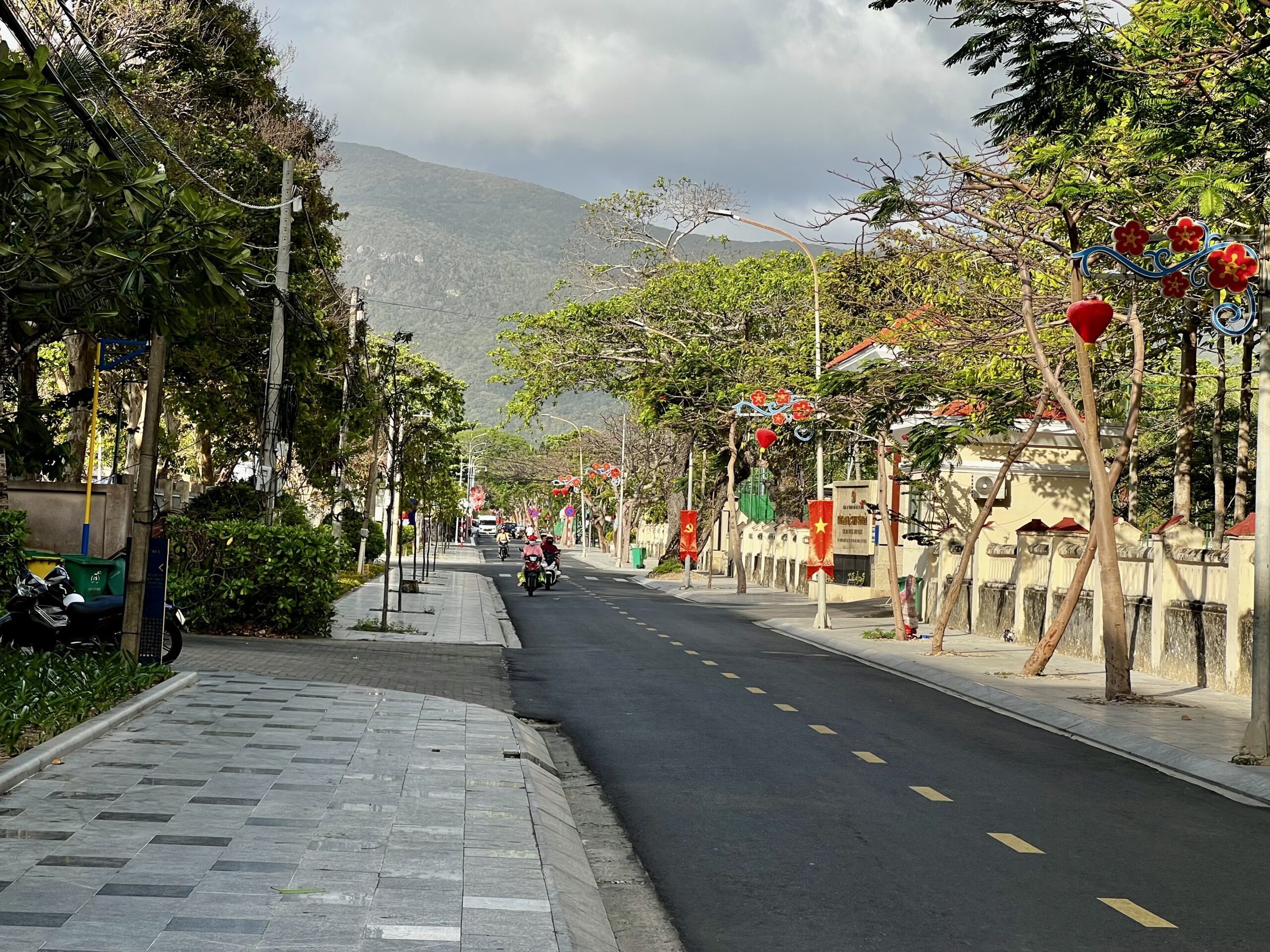
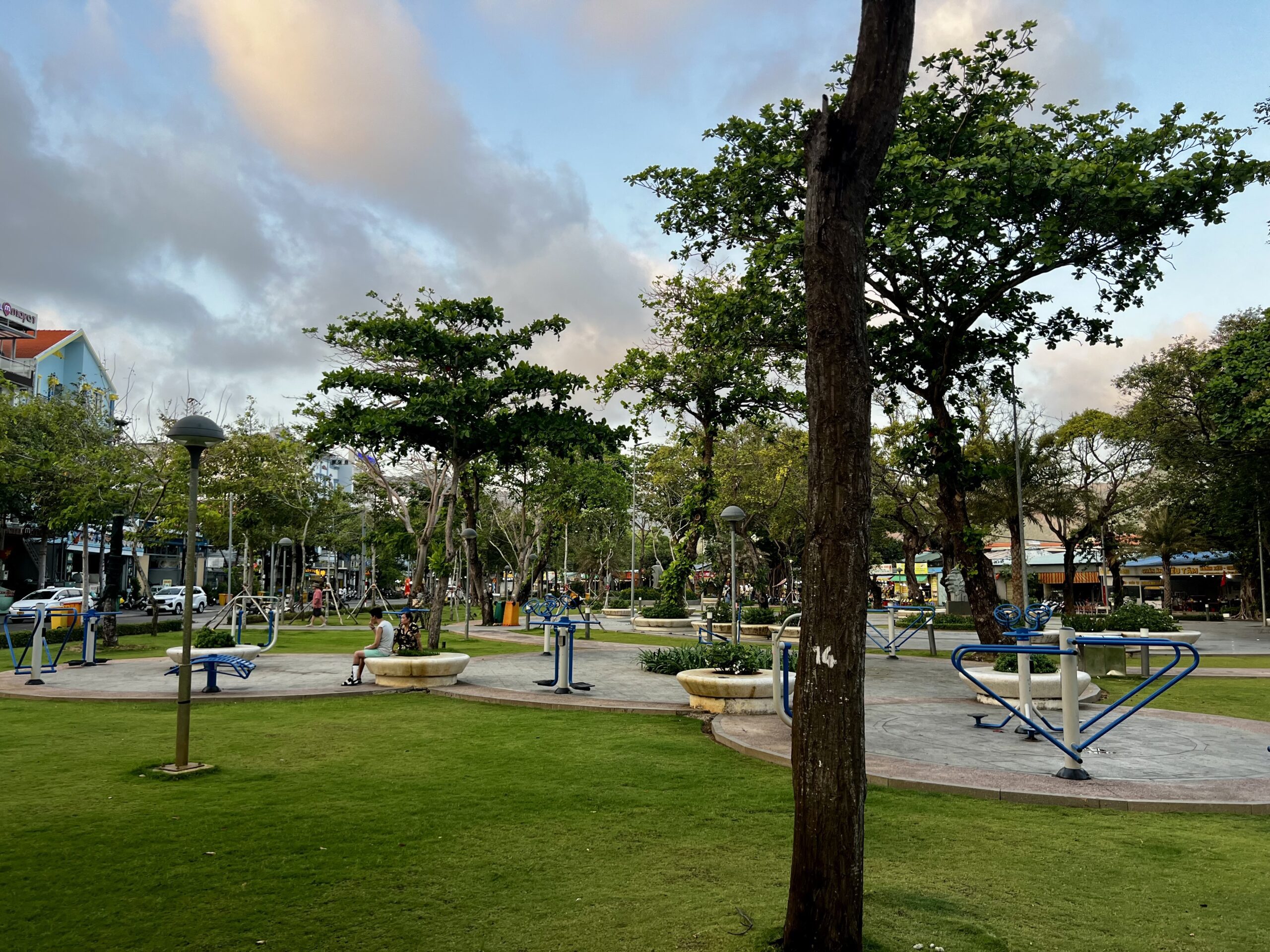
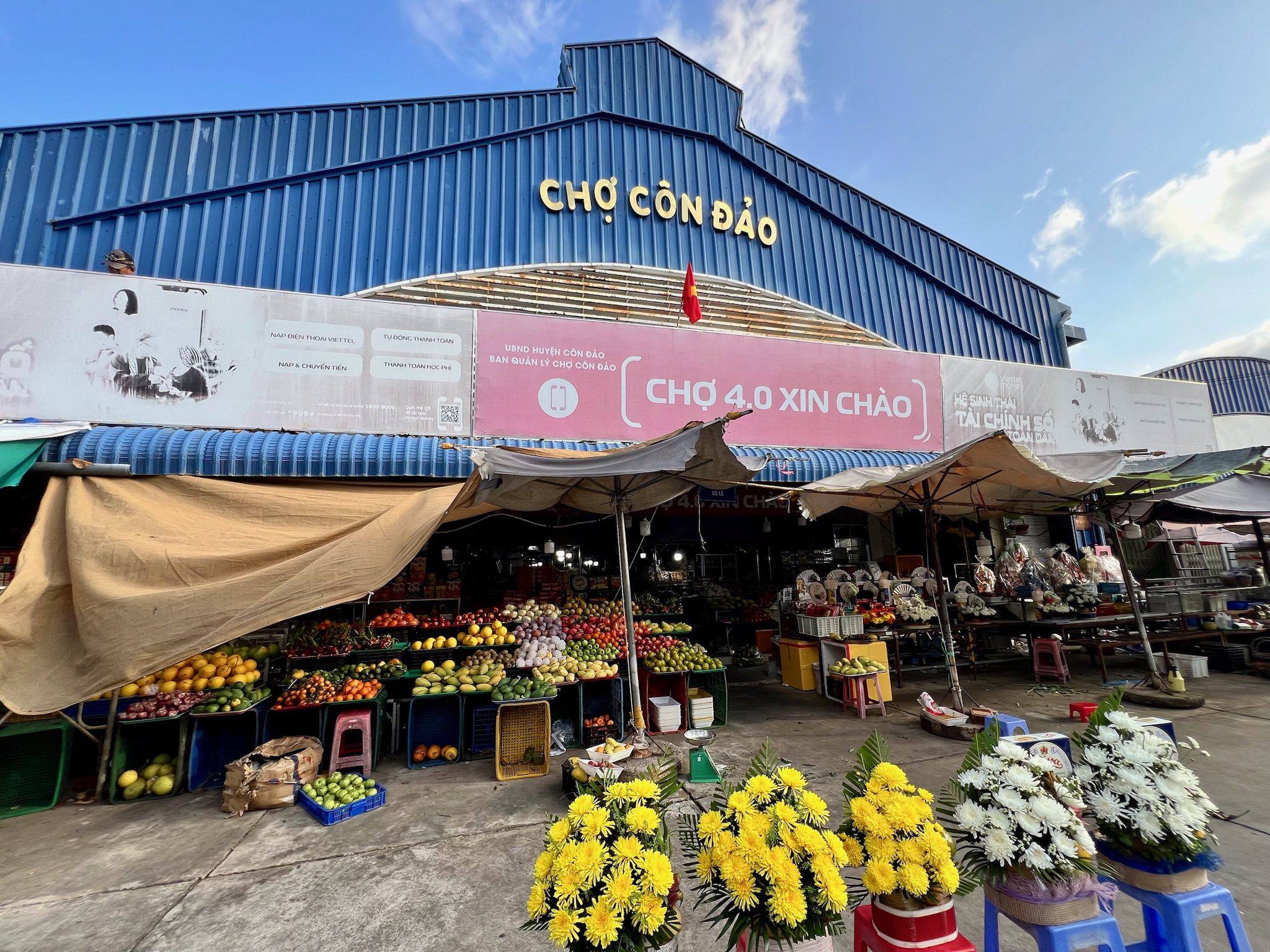
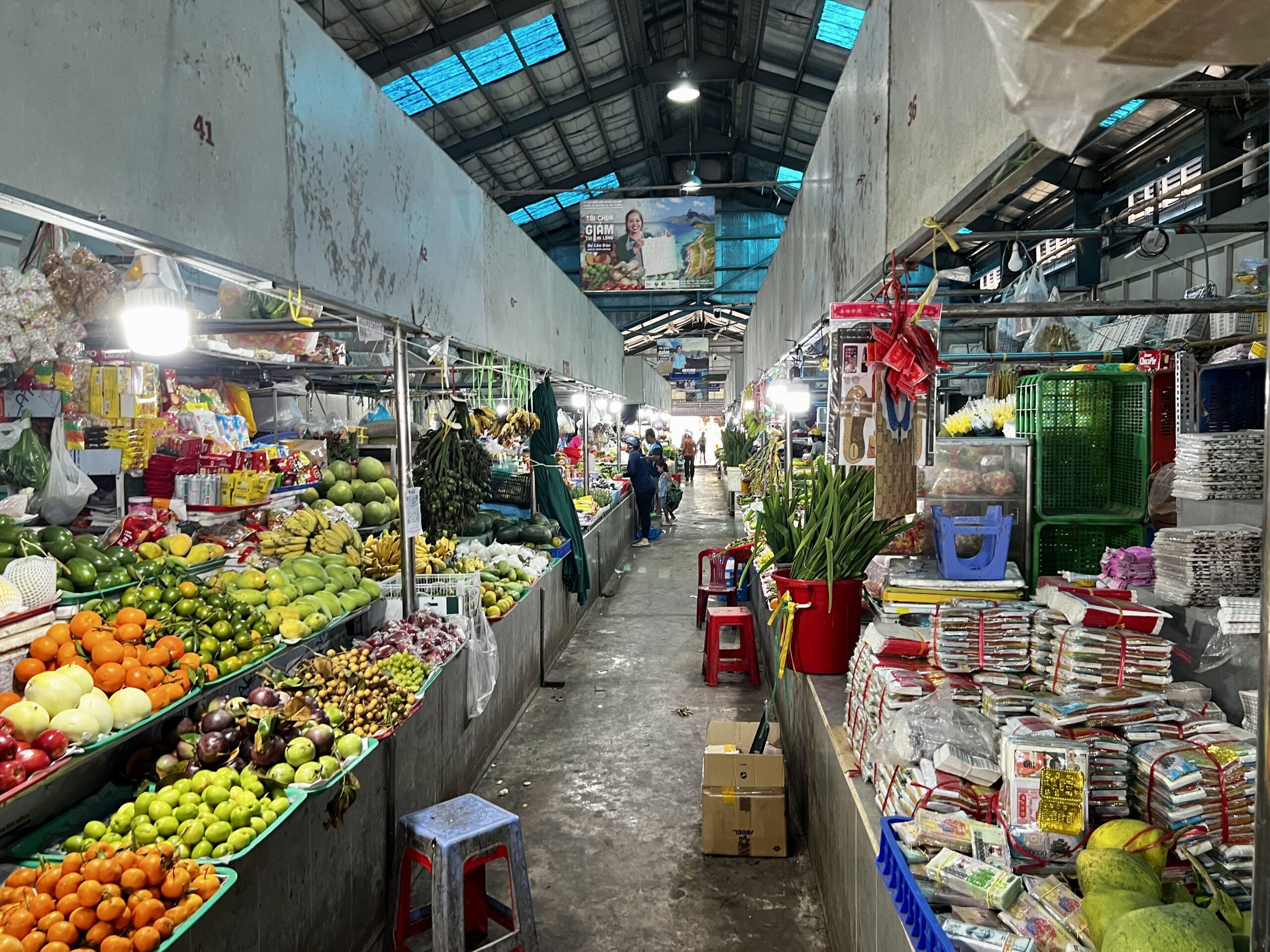
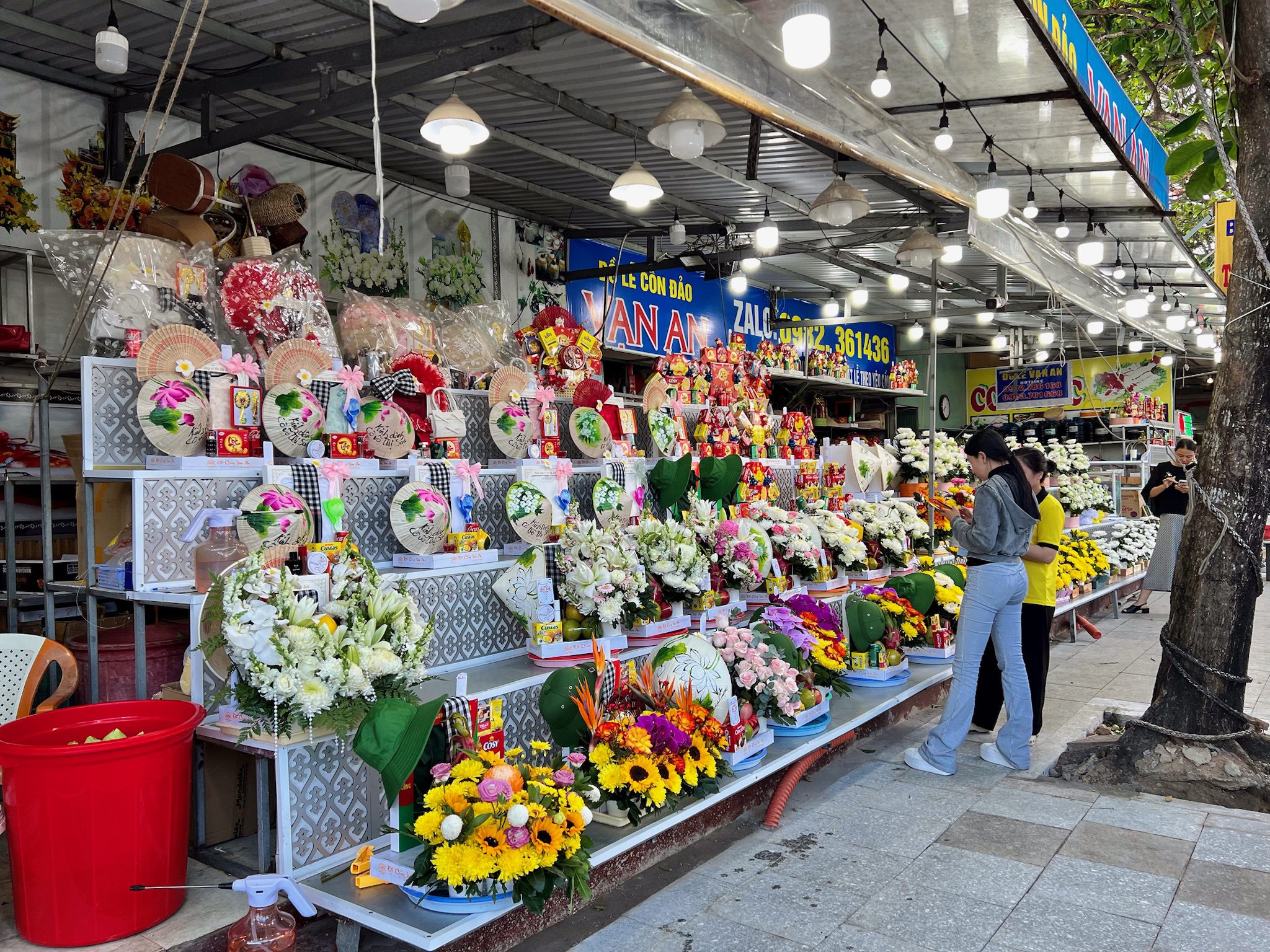
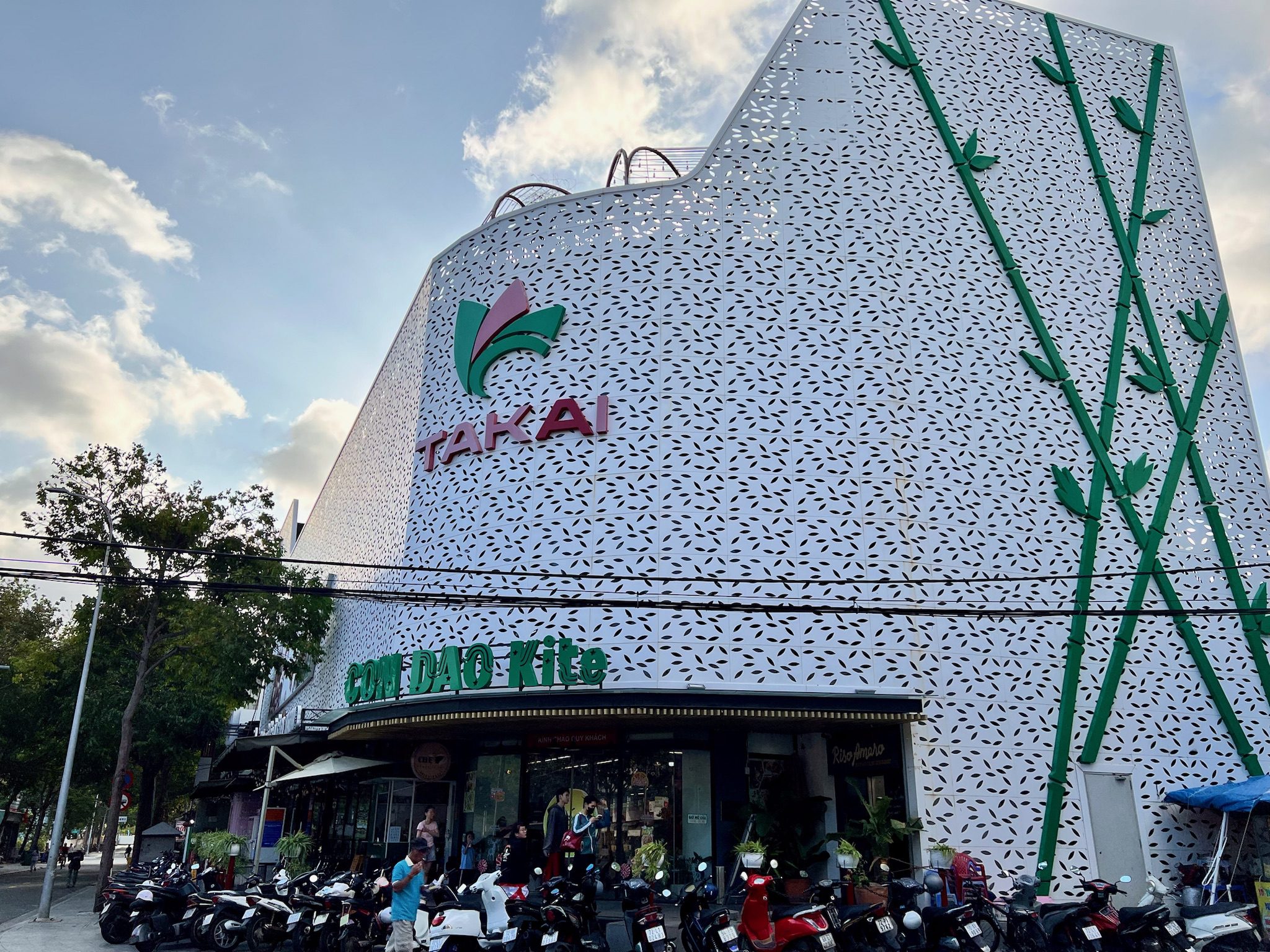
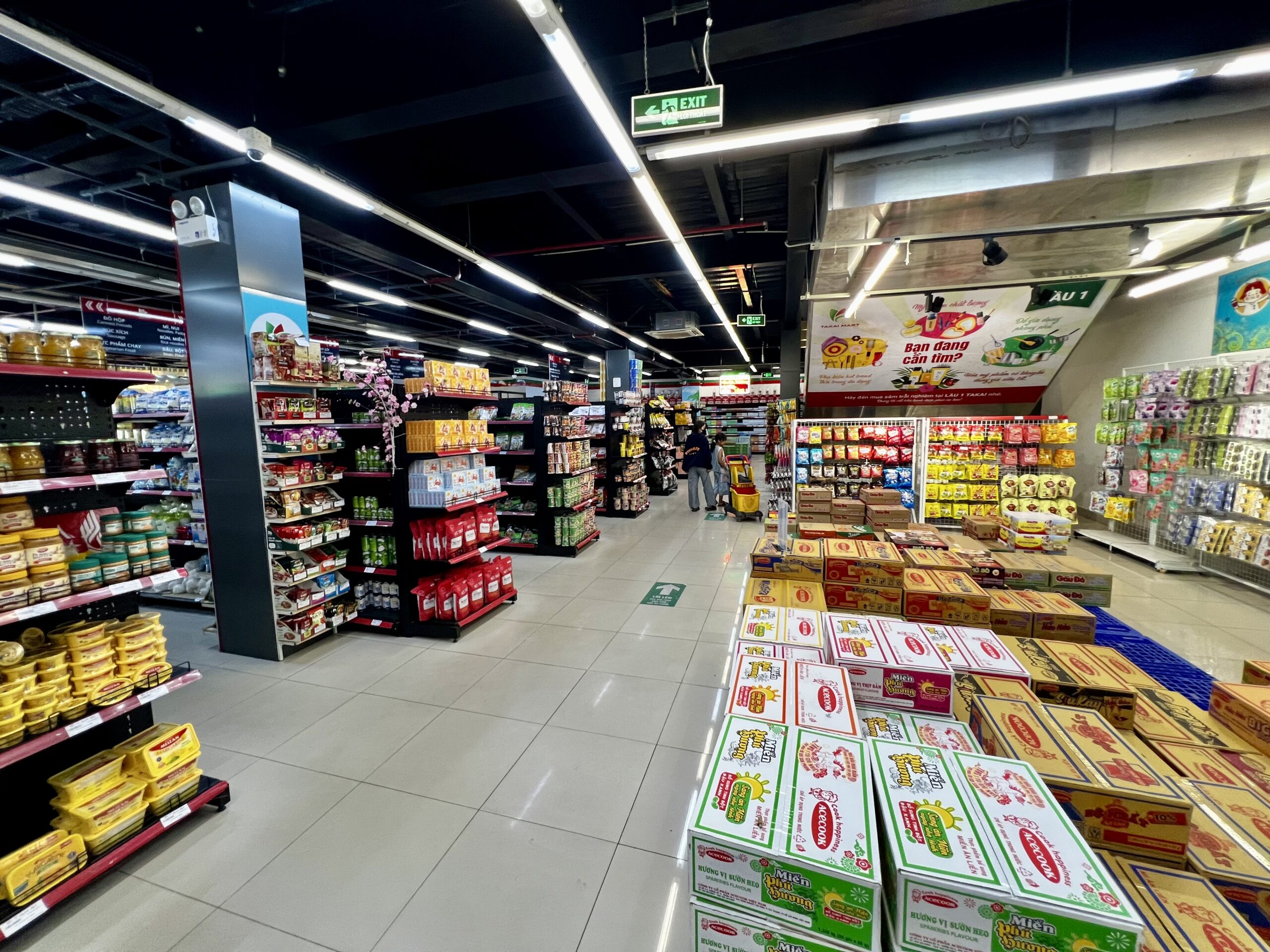
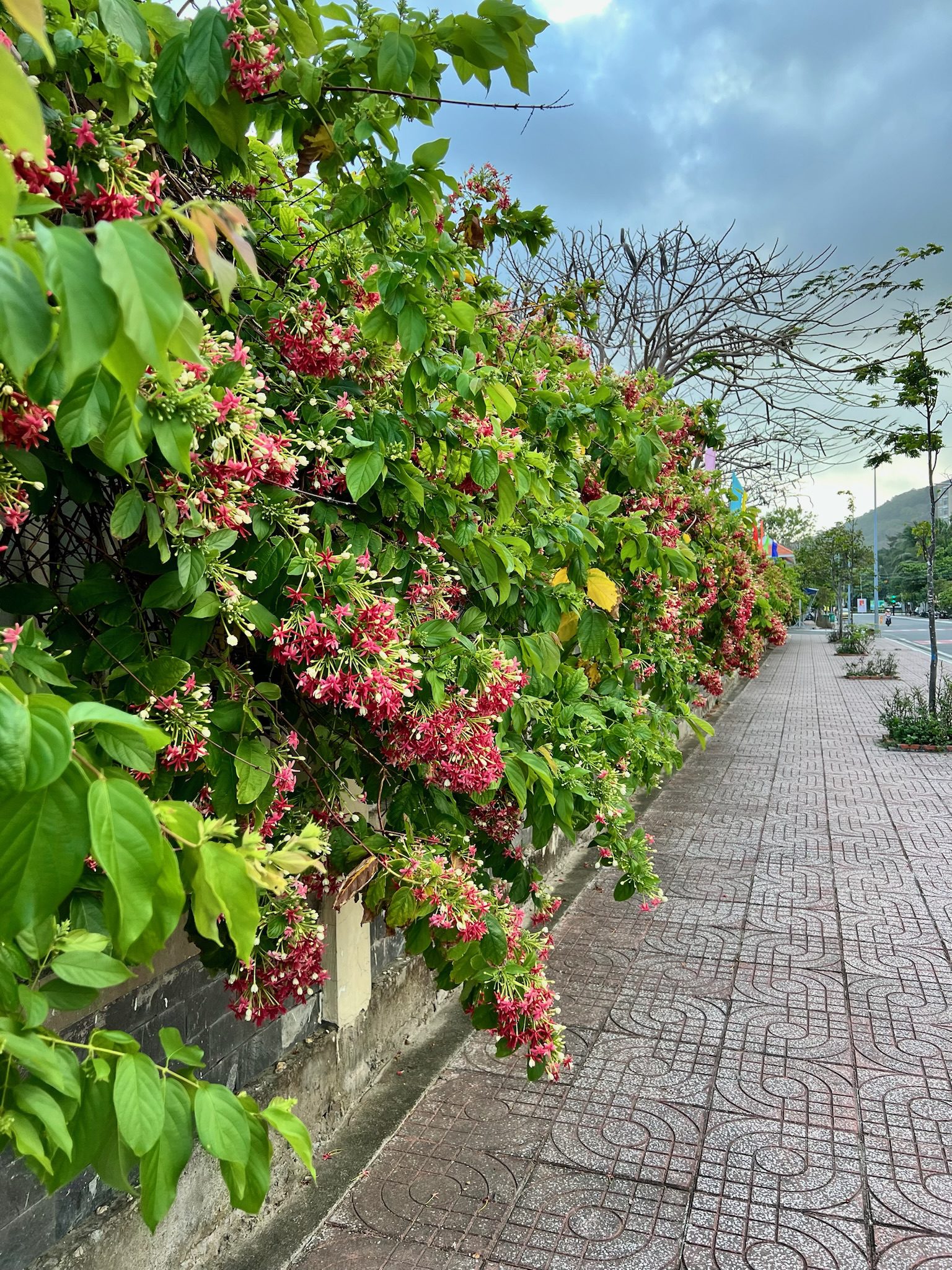
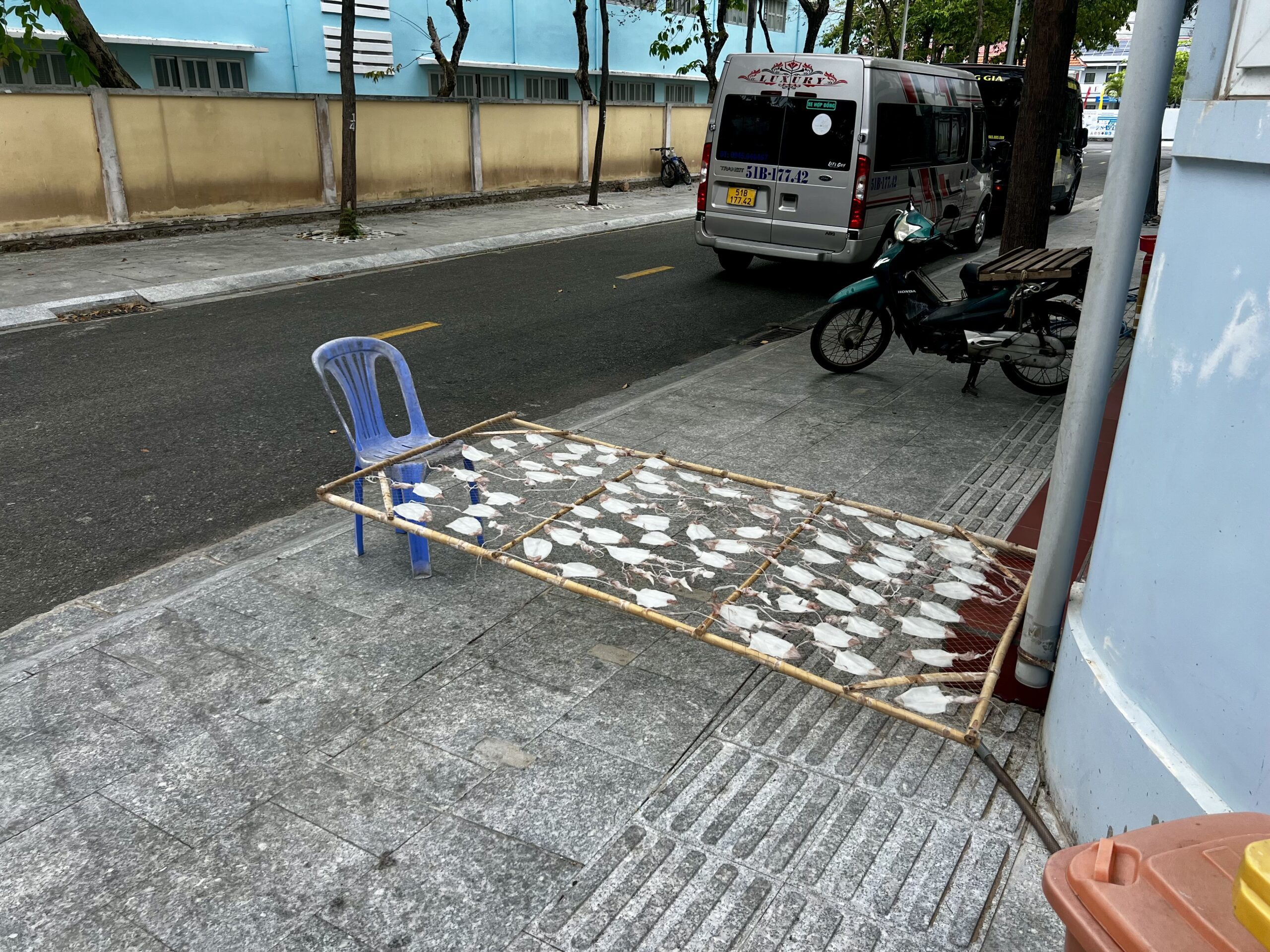
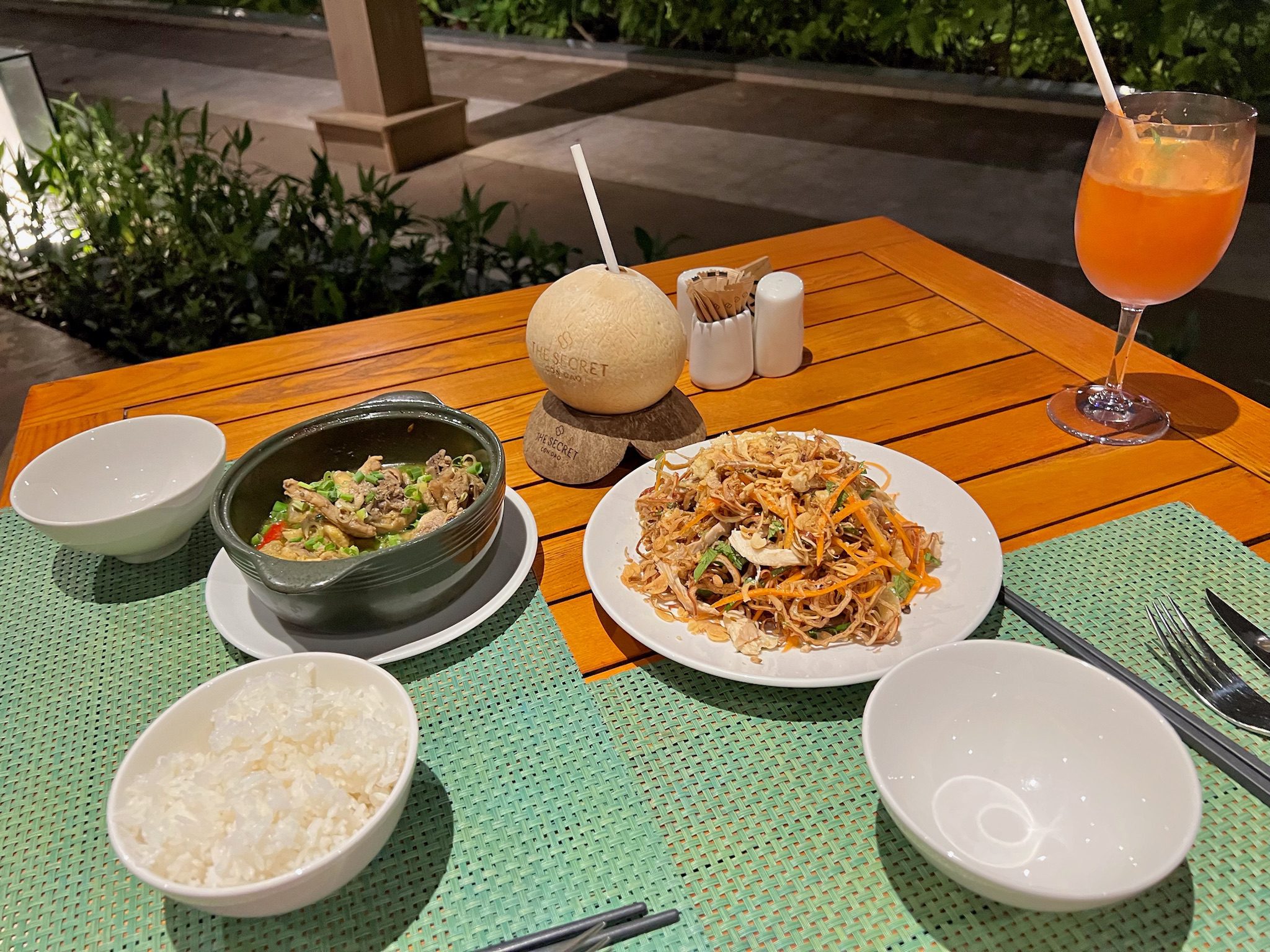
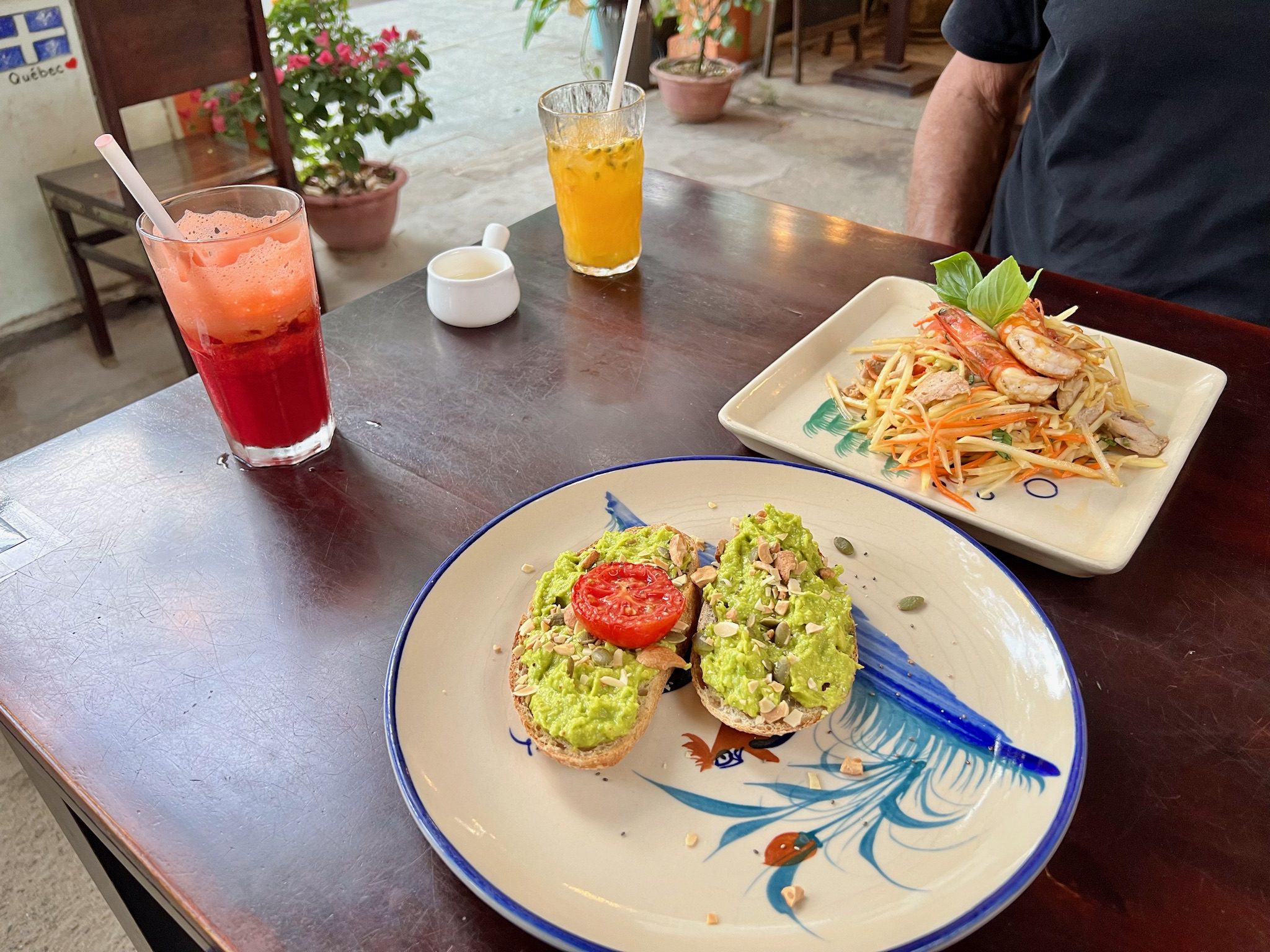
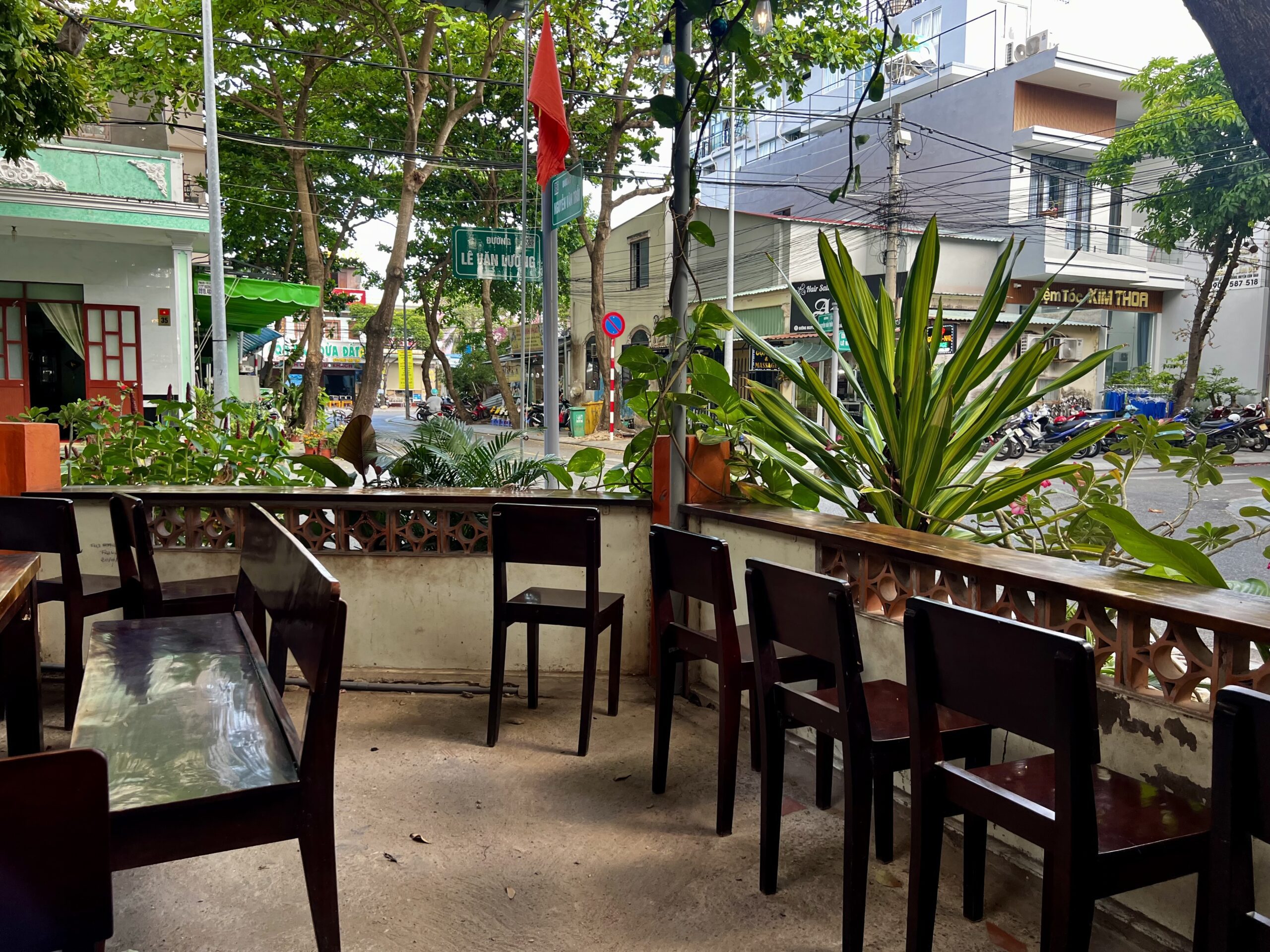
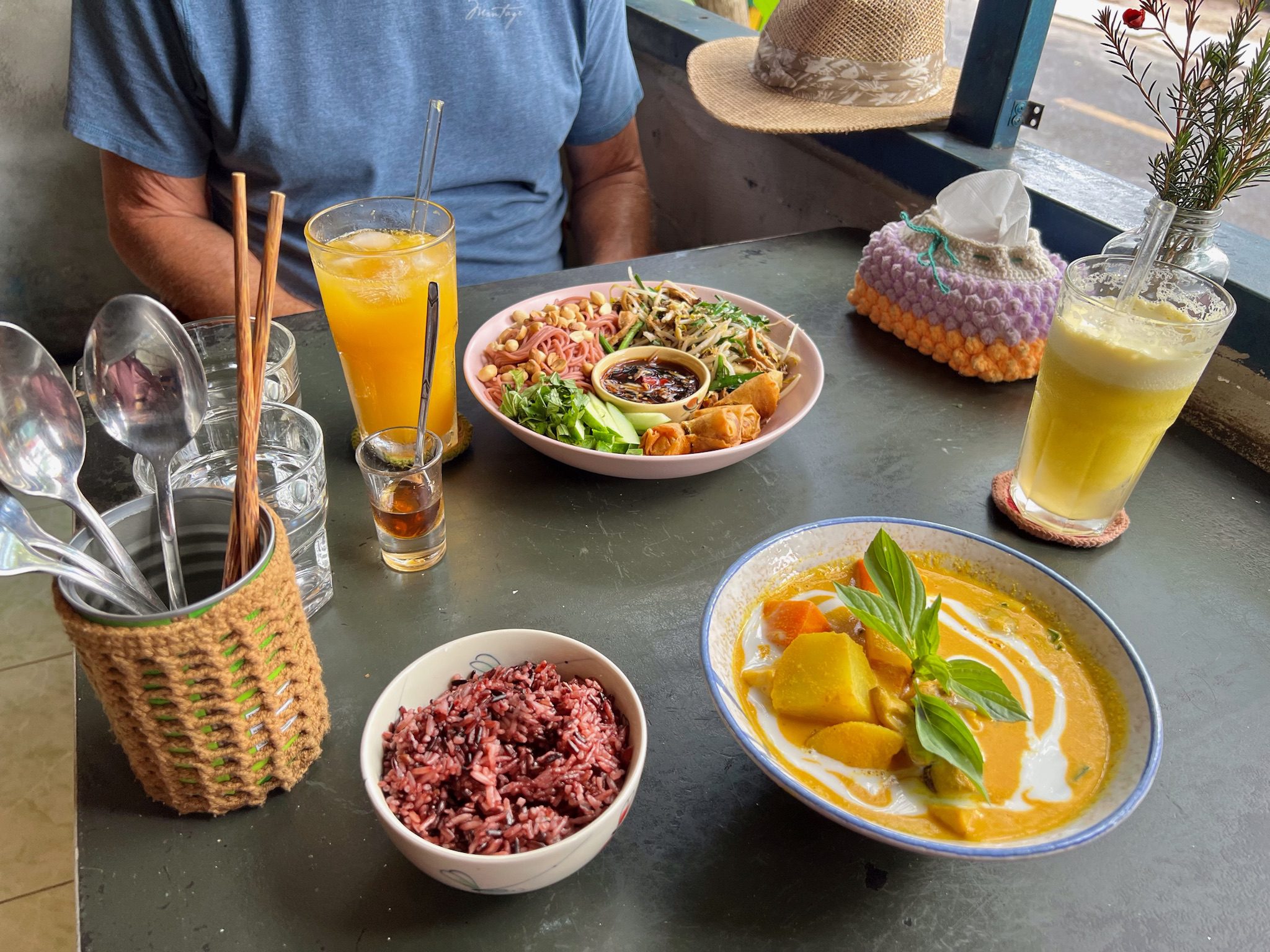
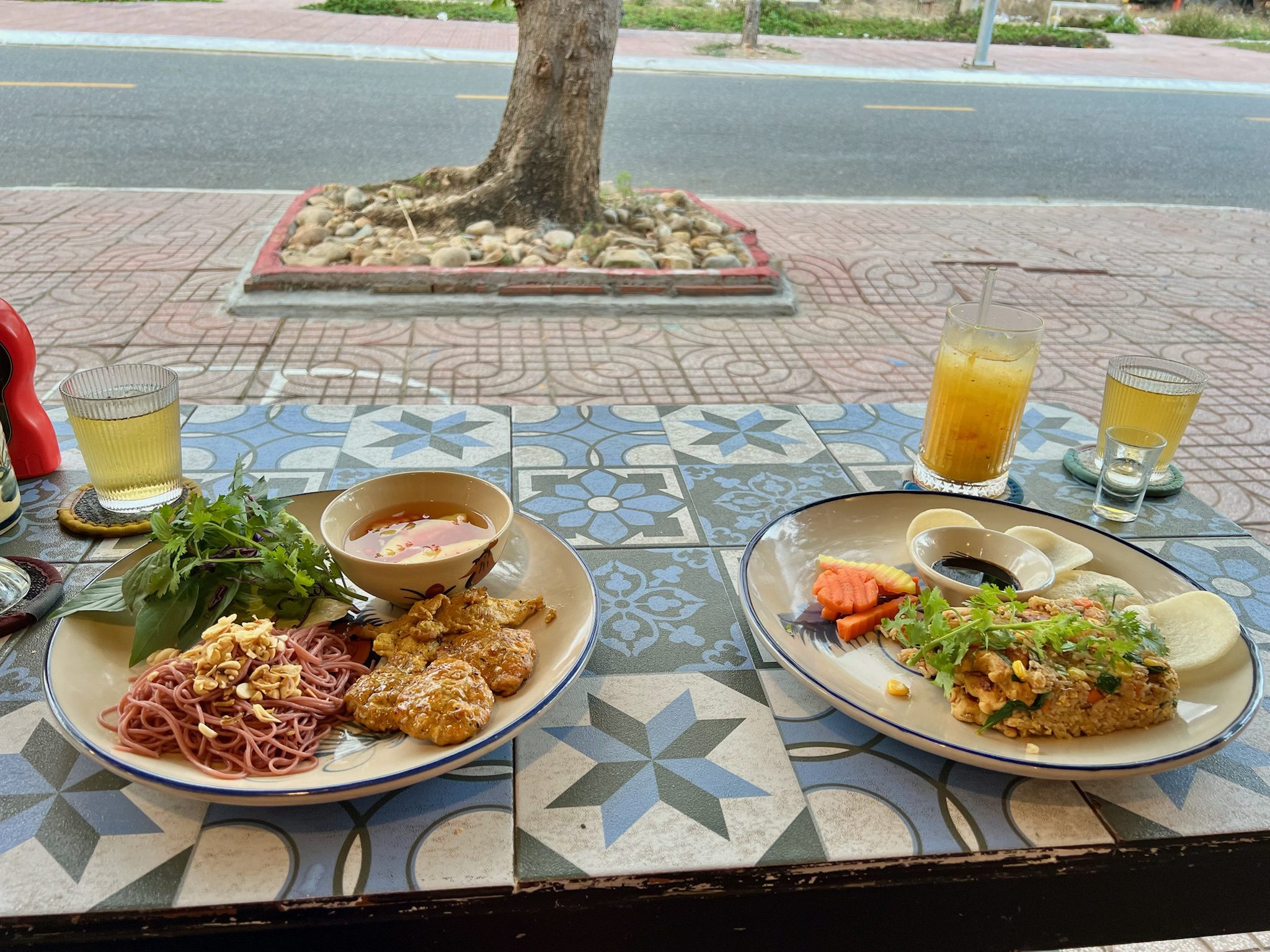
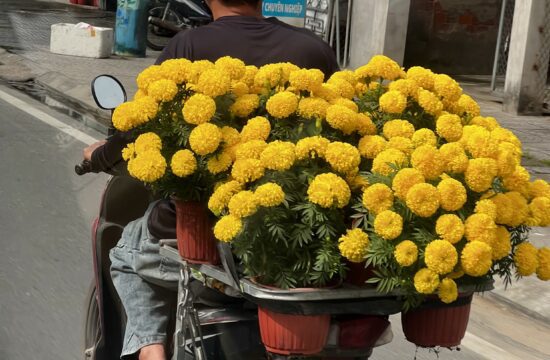
Other sections of the prison housed massed prisoners in large concrete rooms.Across from Phu Tuong Camp is An Hai Beach, a long stretch of beautiful white sand backed by whispering ironwood trees. This was the prison’s mass graveyard. The remains of all those who could be found were relocated to a special section of the Con Dao cemetery – however, many are believed to lie here undiscovered still. A memorial has been raised to commemorate those whose lives were lost here. The prison operated during the US involvement in the Vietnam war, tolerated and ignored by the US. We bought flowers for the memorial from a stall (below) and sat to pay our quiet respects.Con Dao is also the site of many shipwrecks and boatwrecks. An Hai beach hosts one, maybe an unlucky fishing boat?We saw many fishing boats as we flew in, and they are a constant sight, day and night off nearby Hon Ba Island. And stilt fishing houses can be seen in Con Son Bay. Beyond Con Dao prison, there is not much to the island. And despite the nearly 4,000 tourists it hosts on any given day – most of them Vietnamese – it is a sleepy place. This made for pleasant walks through town. Here we walk along Nguyen Hue, a major street, at morning rush hour.With a population of only about 10,000, the town is remarkably well provisioned. No doubt thanks to tourism. Sidewalks are of quarried stone, and there are little new-looking parks and squares everywhere, like Pham Van Dong Park.Shopping while we explored took us by Con Dao Market …Selling mostly produce – we bought sweet little bananas and Wow apples – stacks of fake US $100 bills caught our attention, meant for burning as votive offerings.We saw more such votive gifts and flowers for sale in Con Dao town than we’ve seen anywhere else in Vietnam, even during Tet. We were told they are mostly for offerings to island ancestors, more specifically those who suffered here and those who freed the island from its repressive past. Presumably visitors purchase much of these for visits to temples, memorials, and the cemetery.The closest thing to a local mall we could find was Takai …It’s 80 percent supermarket and 20 percent department store. We were looking for a Vietnamese brand of canned condensed milk. They only had cartons.In general, the streets and sidewalks are open and walkable, even picturesque …But sidewalks in front of stores do attract motorbikes, and the odd repurposing of space for something like drying your cuttlefish is not uncommon. When it came to eating, we were happy. At Spice Kitchen, we shared chicken parts with lemongrass and ginger and a Banana Blossom Salad …We had Avocado Toast and Papaya Salad at An Oi, a corner restaurant in the middle of town (below).At Madame Ha’s vegetarian restaurant, we had an excellent Bun Tron Nam Bo and Ca Ri yellow curry …And at the edge of town, we enjoyed Bun Cha and Chicken Fried Rice on a sidewalk table at May’s BistroOur last day on Con Dao was our last day of note for this trip. We spent it doing not much more than reading, blogging, and lounging. The next morning, we were back in the air saying goodbye to the island. With an early flight out of Saigon to Hong Kong, Los Angeles, and finally Seattle, we overnighted at the Ibis Saigon Airport hotel. We sat in their rooftop pool restaurant and listened to pounding rain. The downpour reminded us that we’ll be changing climates as well as time zones. We ordered Grilled Salmon and a Trio of Sliders for an early dinner. We figured we’d better get started eating western food again if we wanted to avoid food lag.