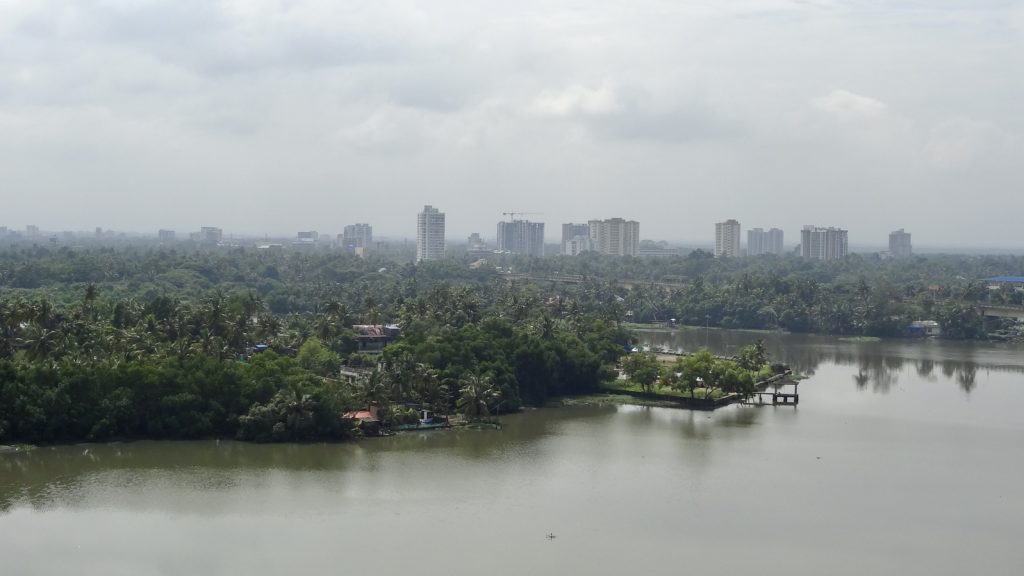
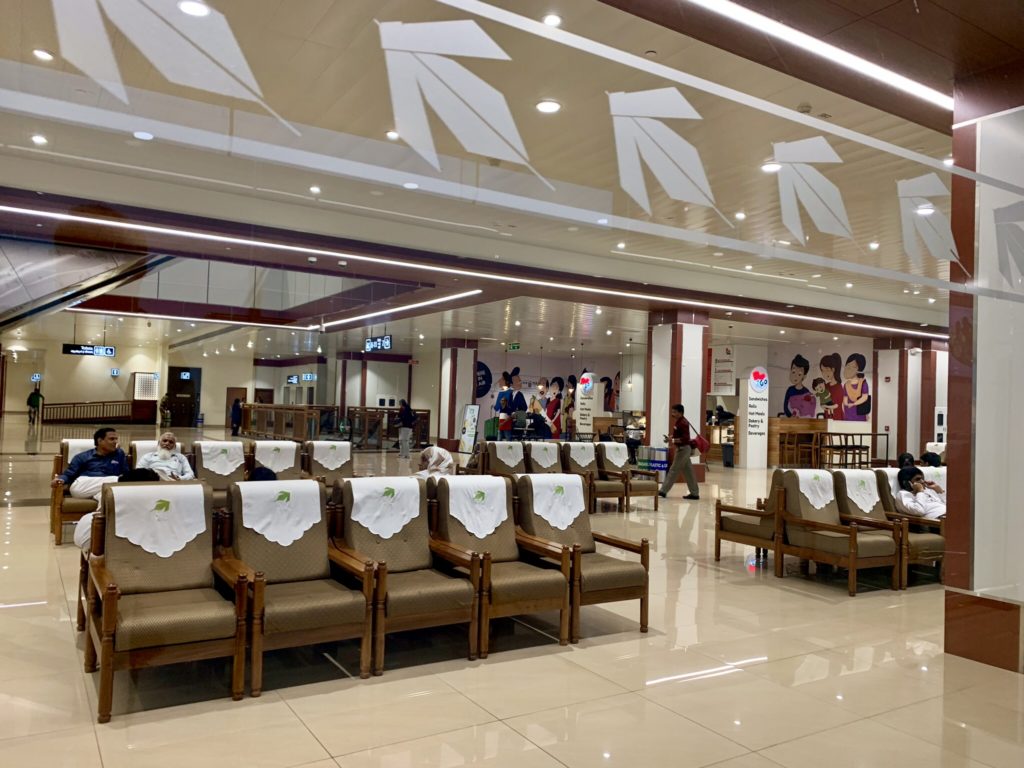
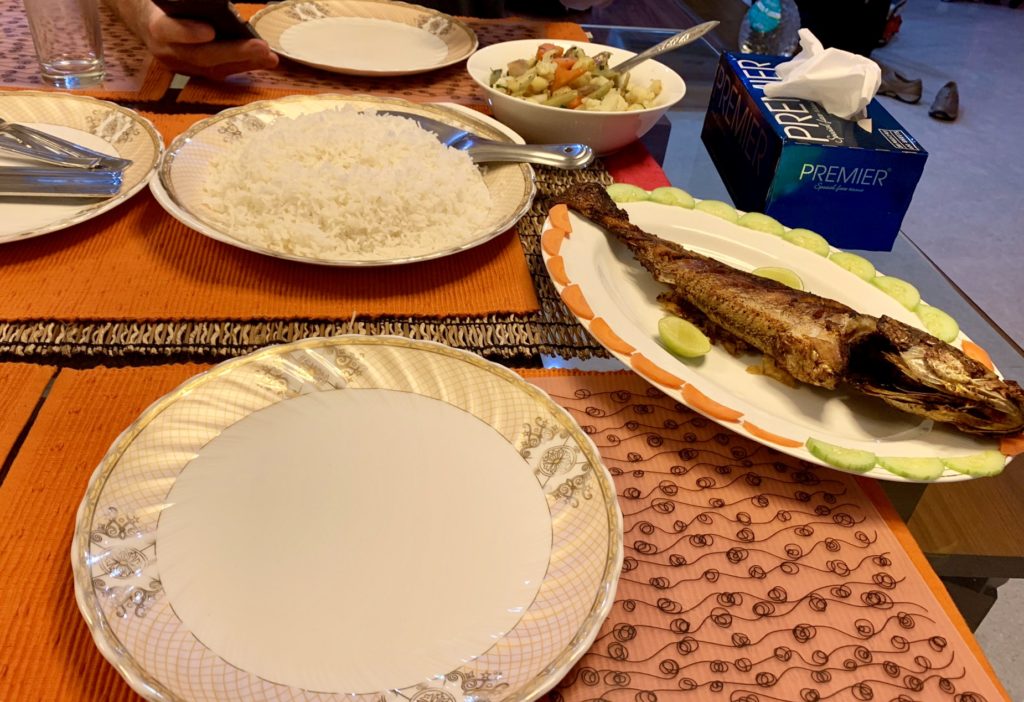
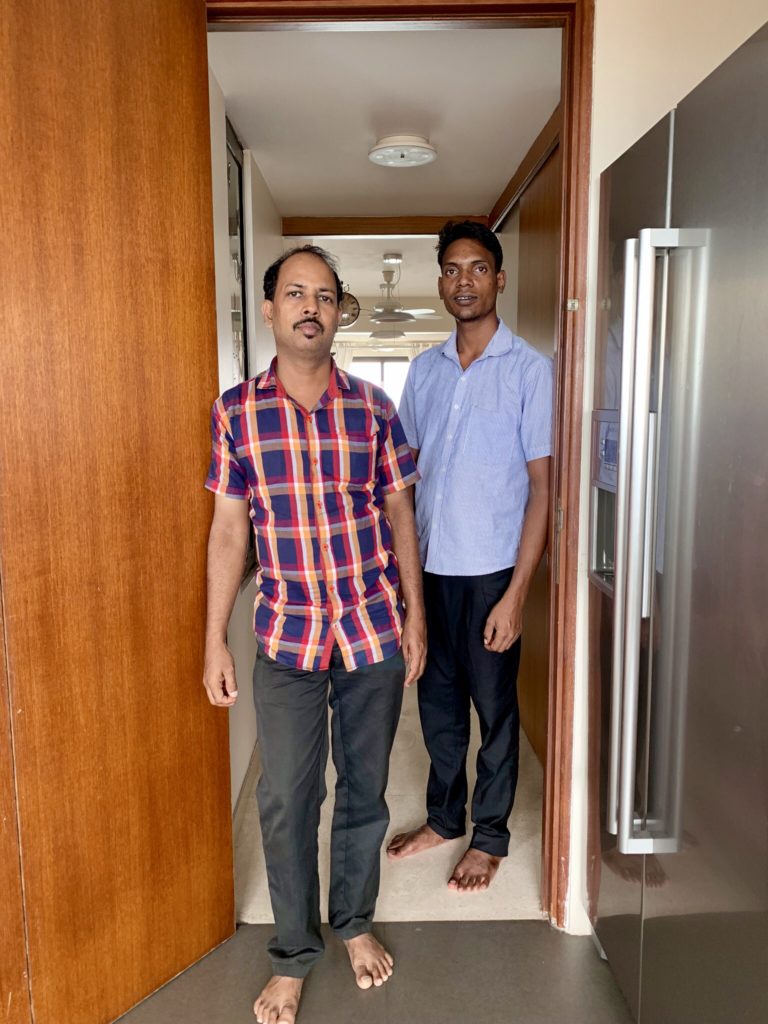
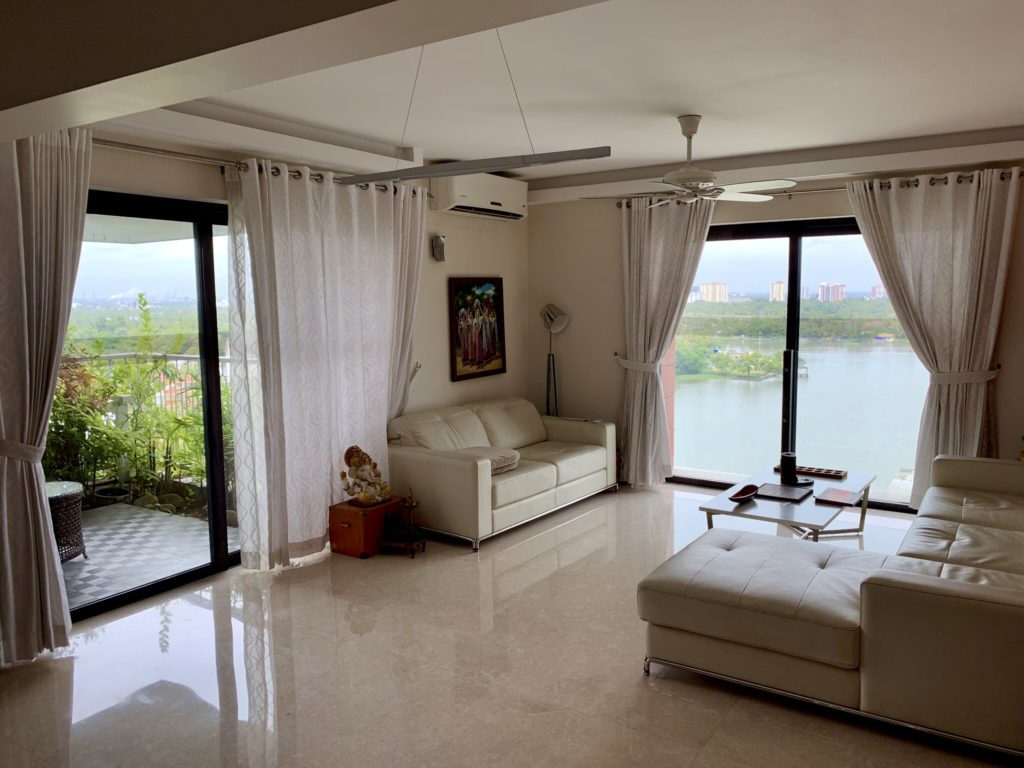
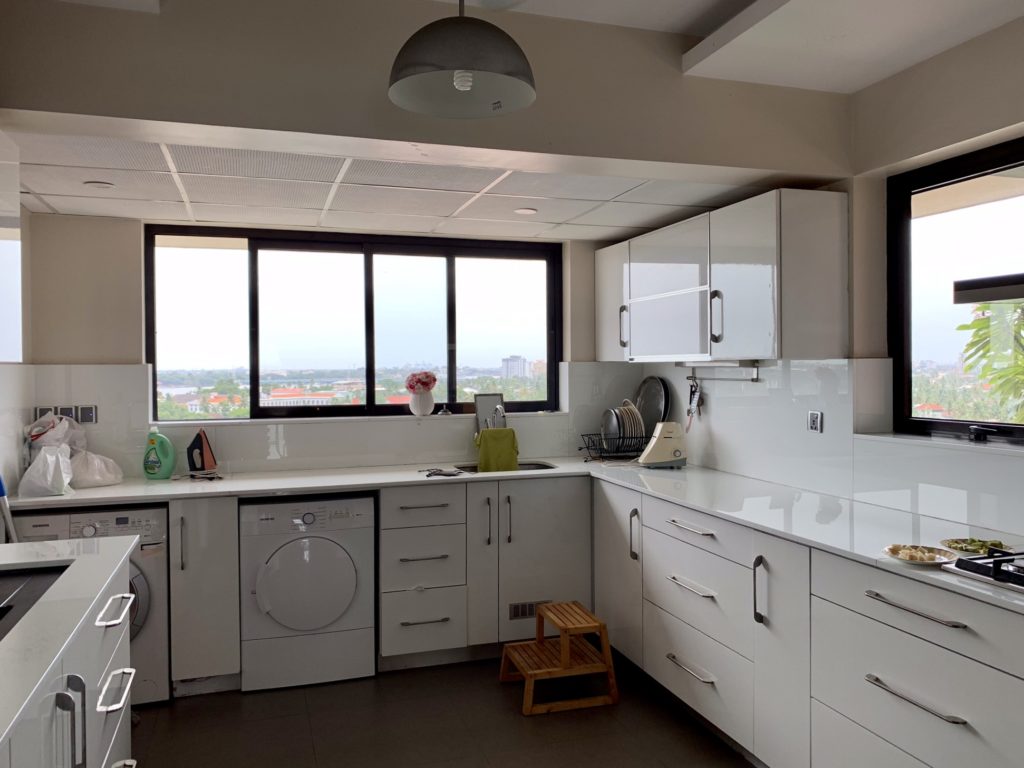
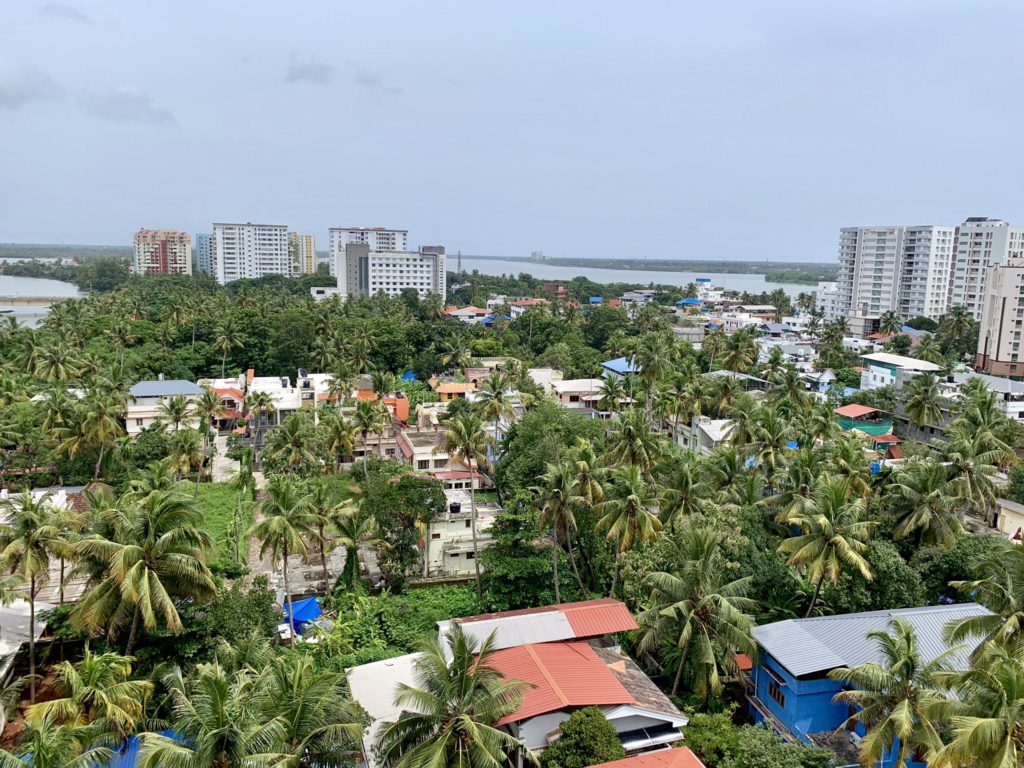
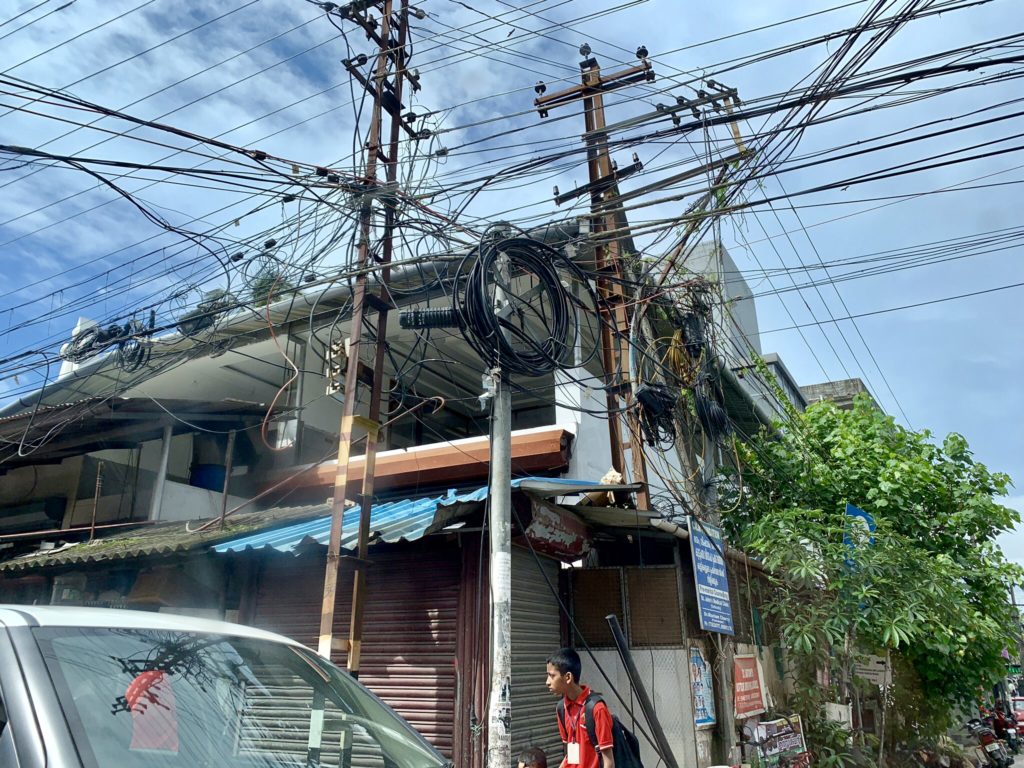
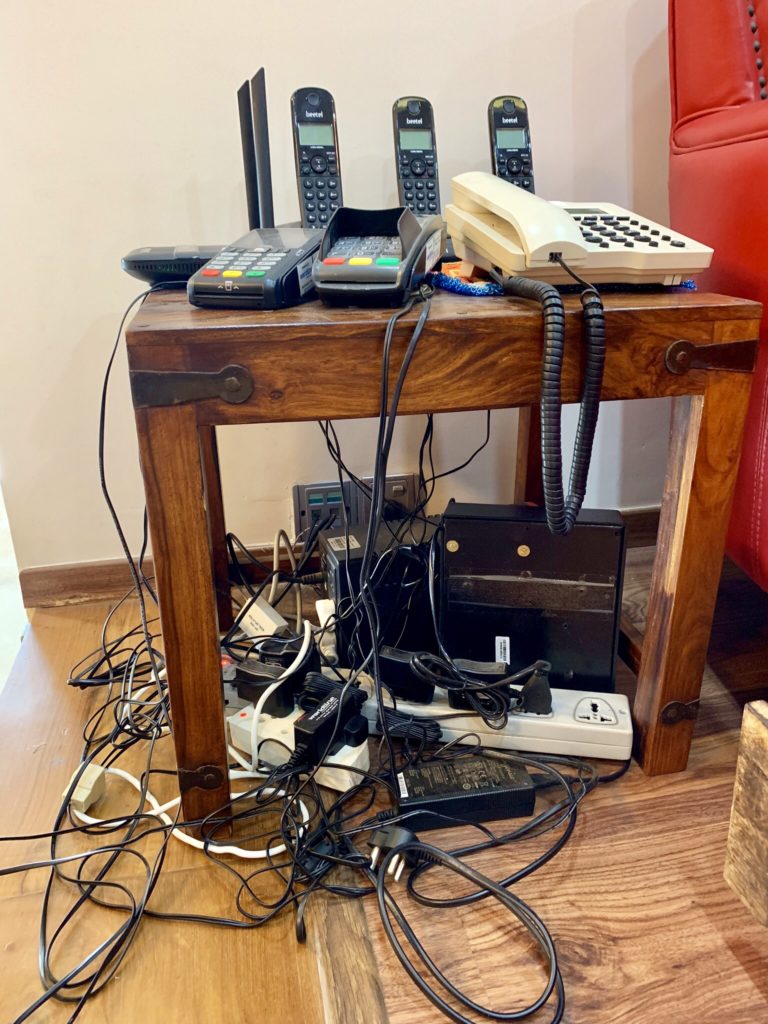
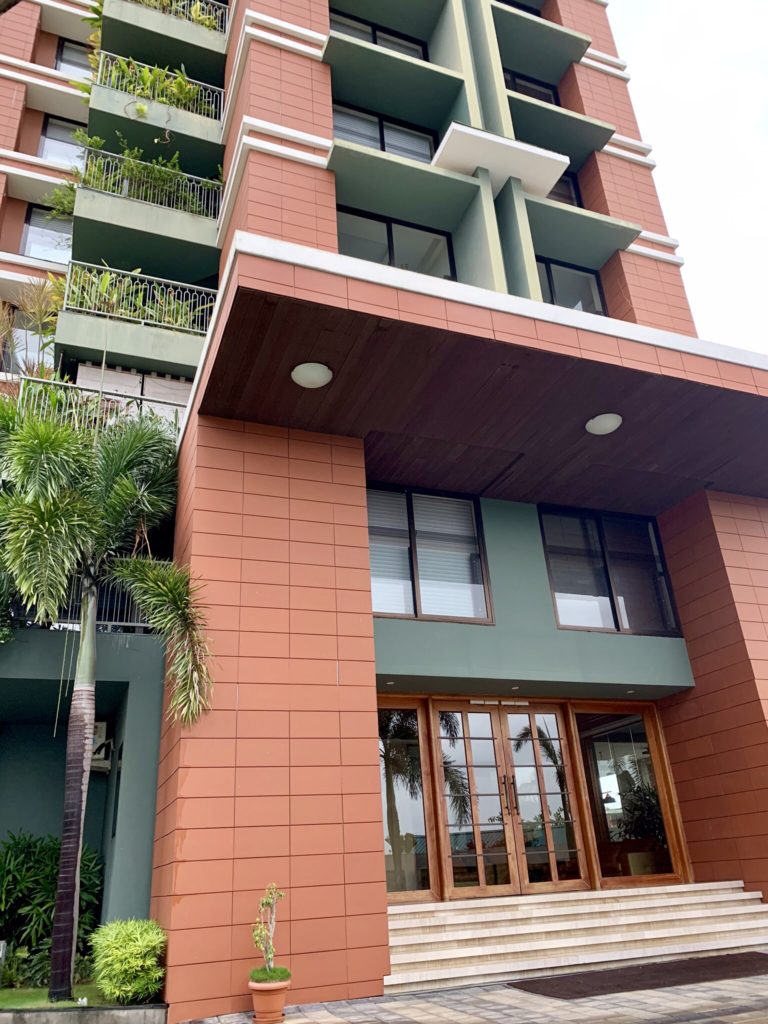
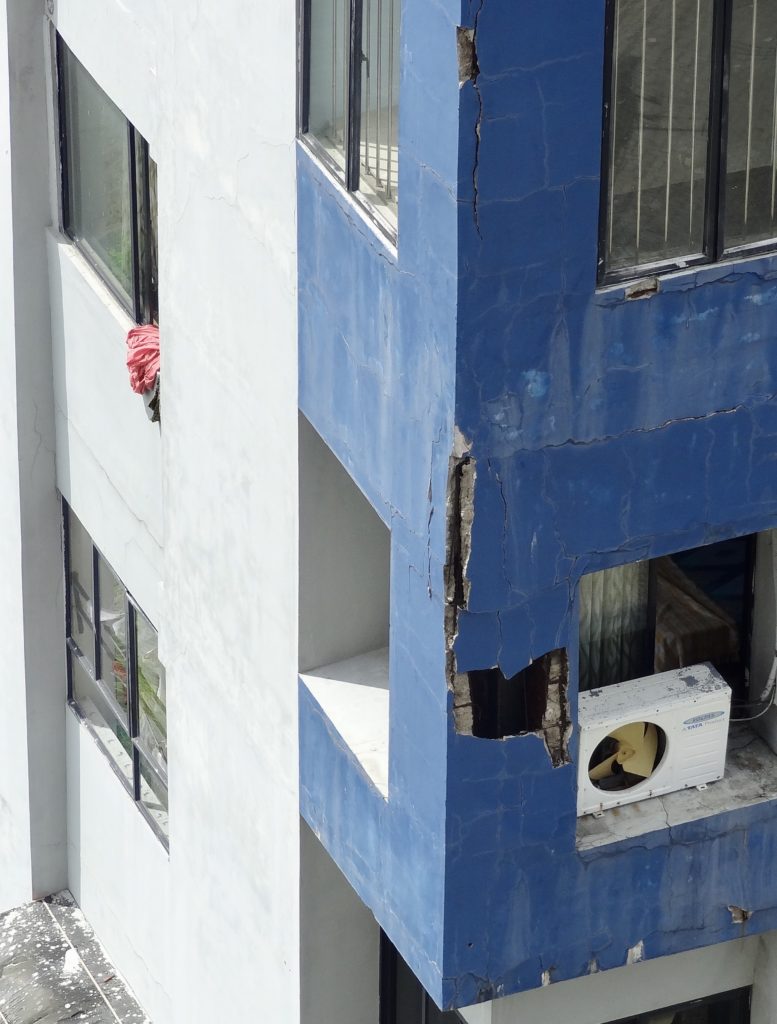
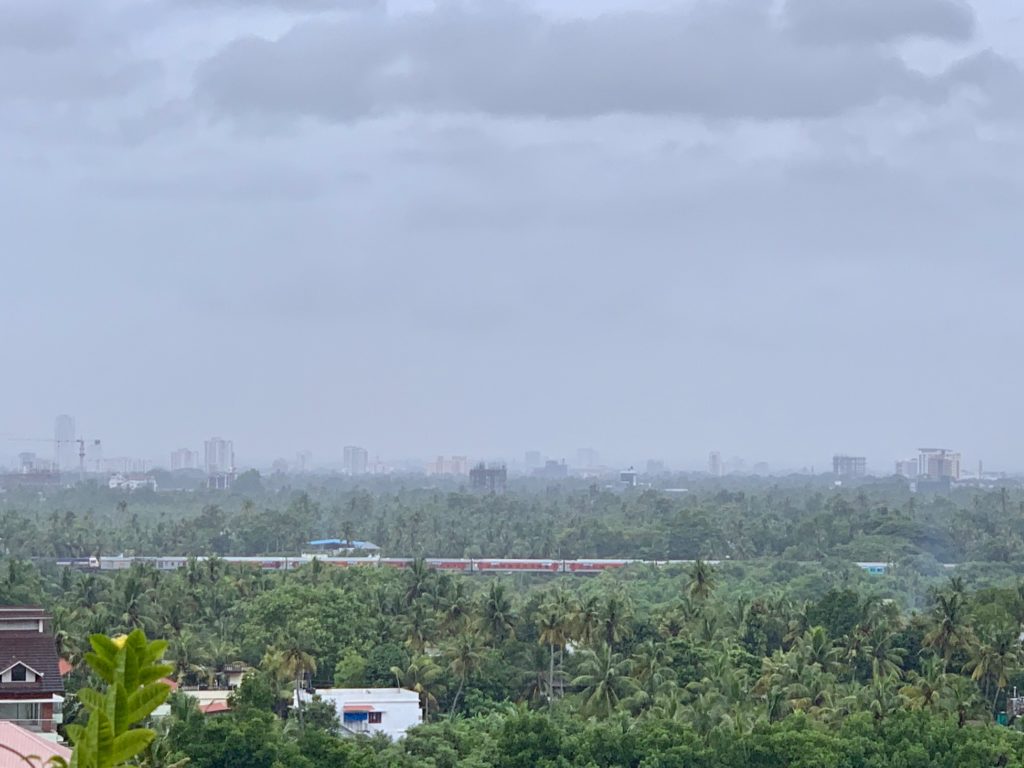
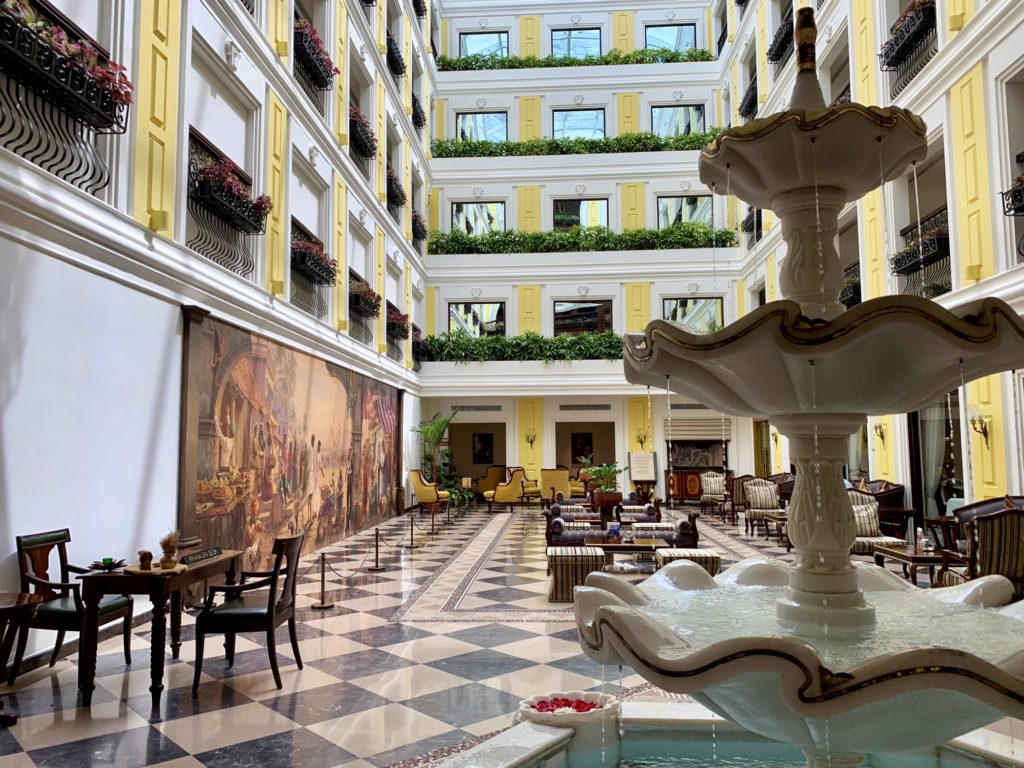
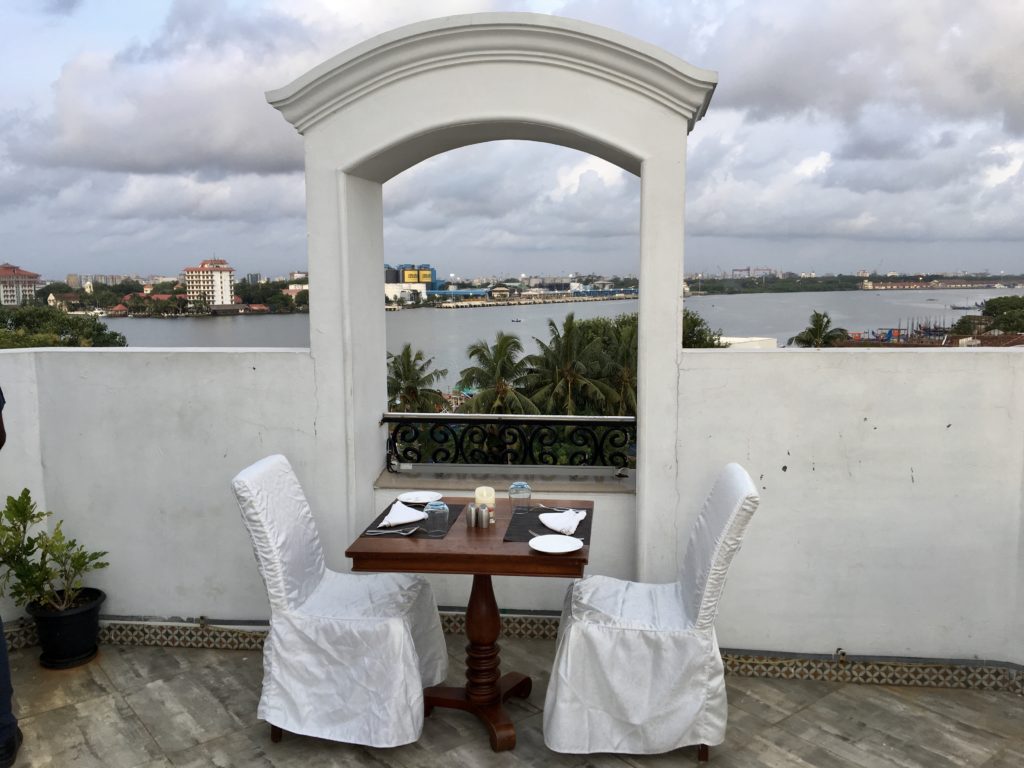
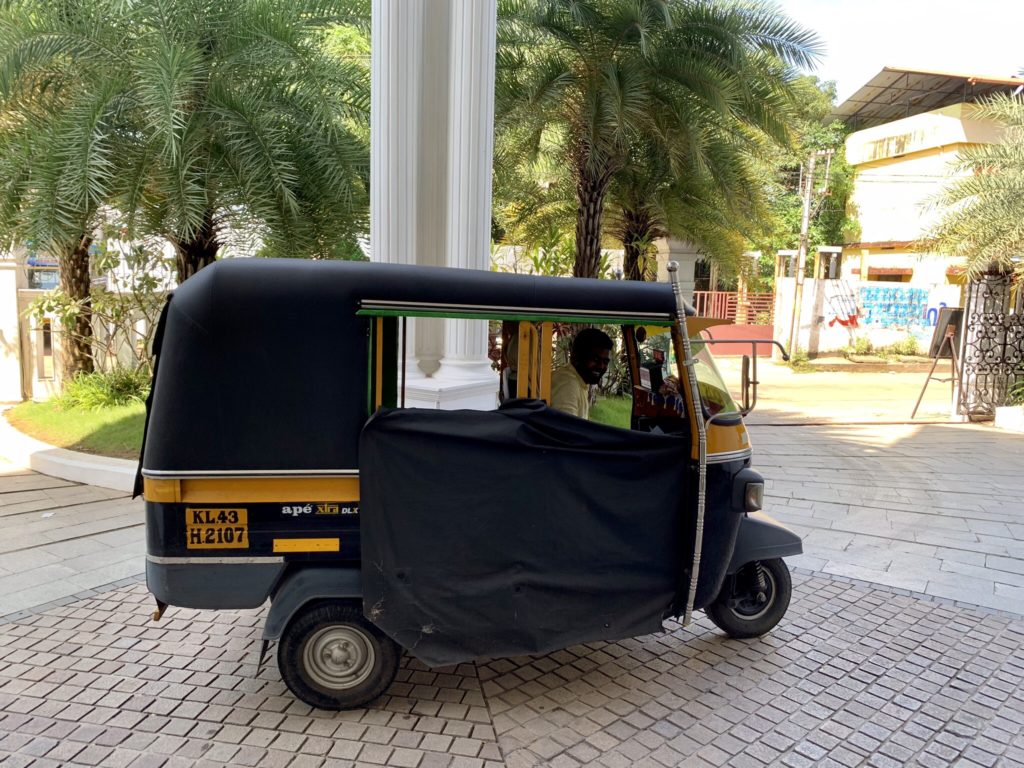
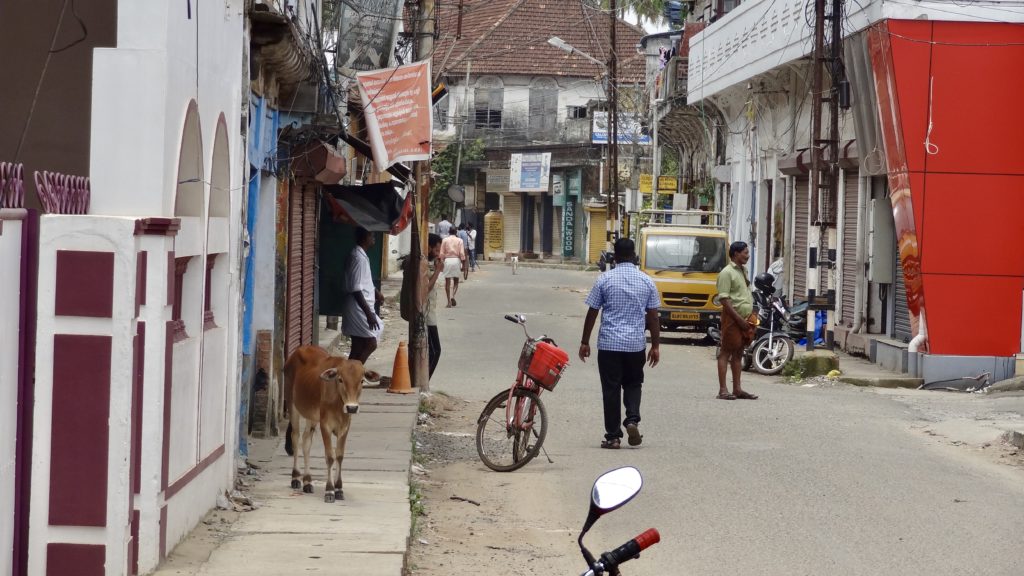
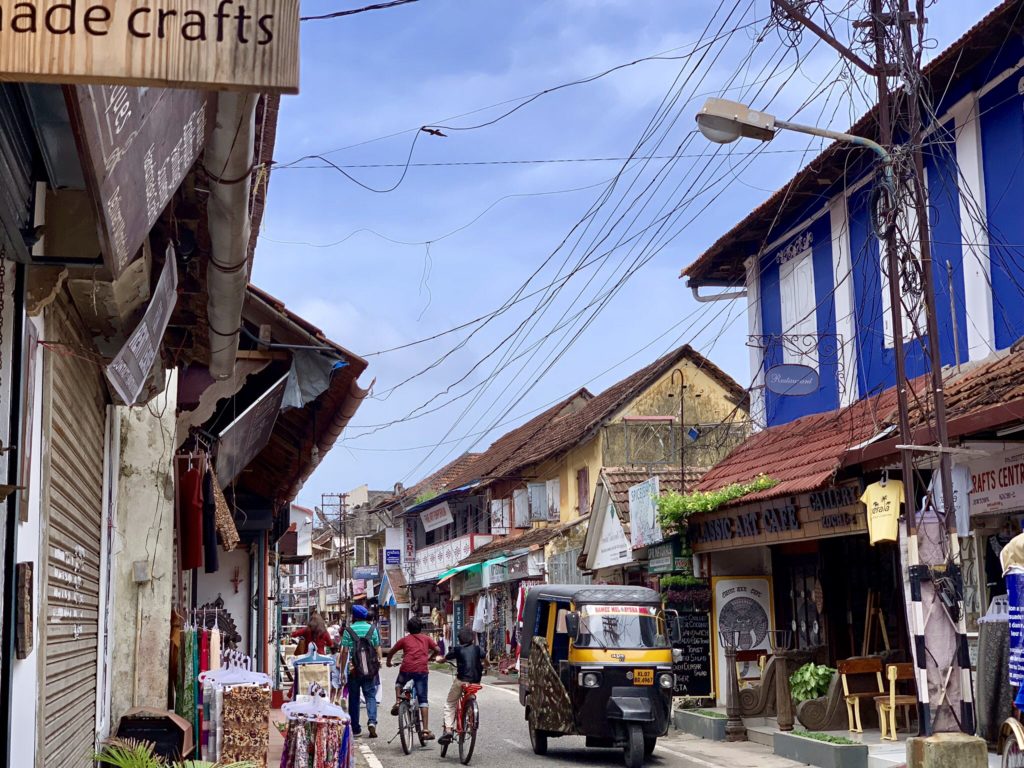
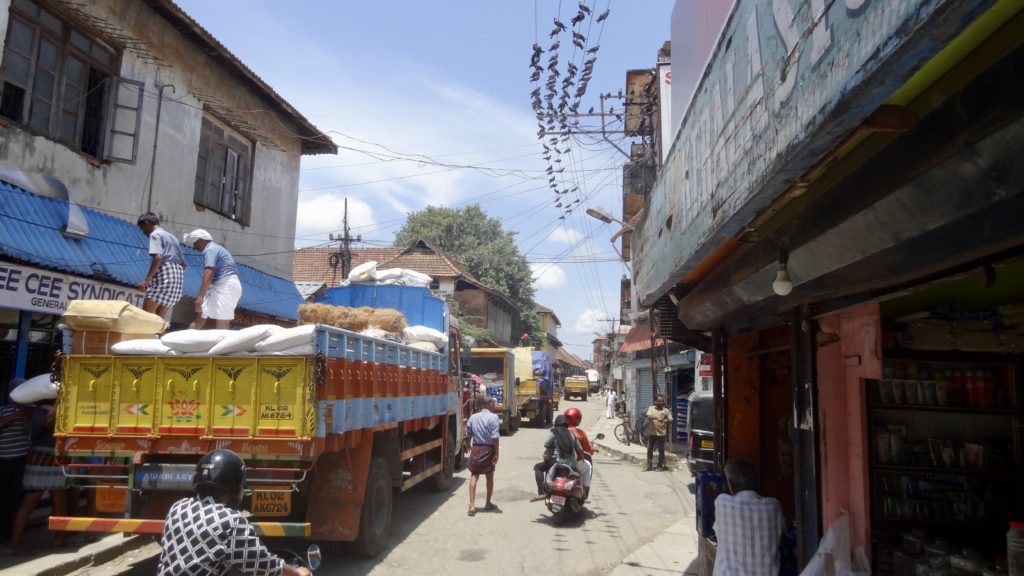
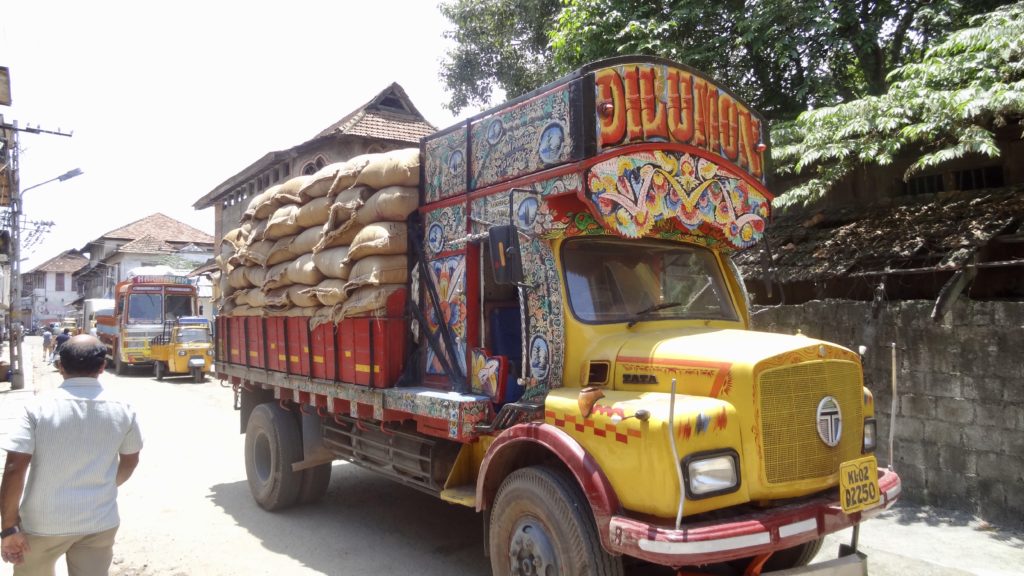
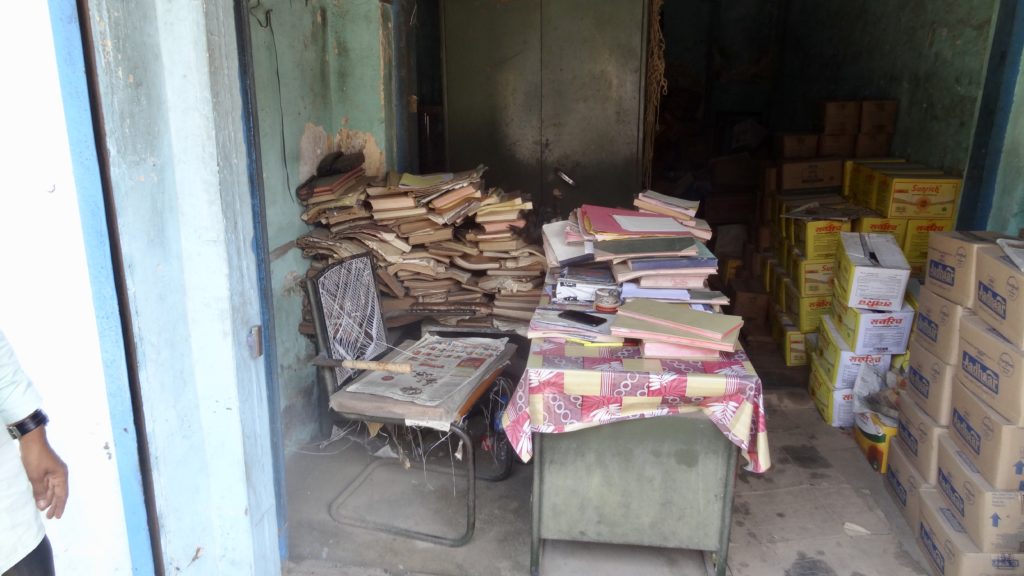
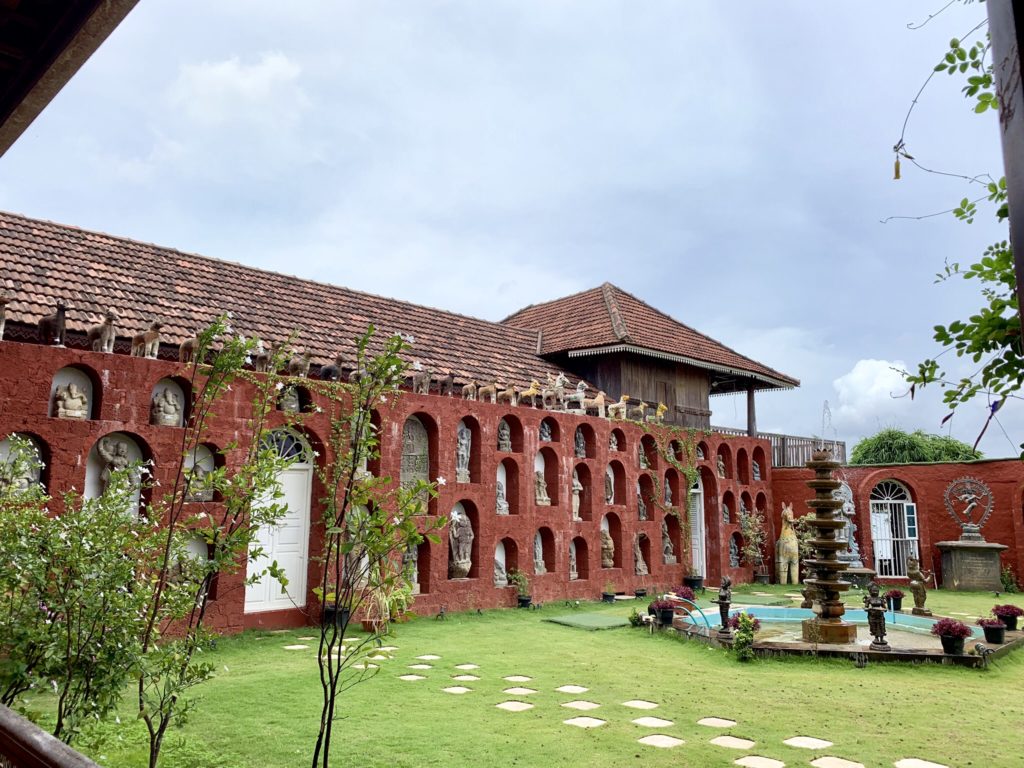
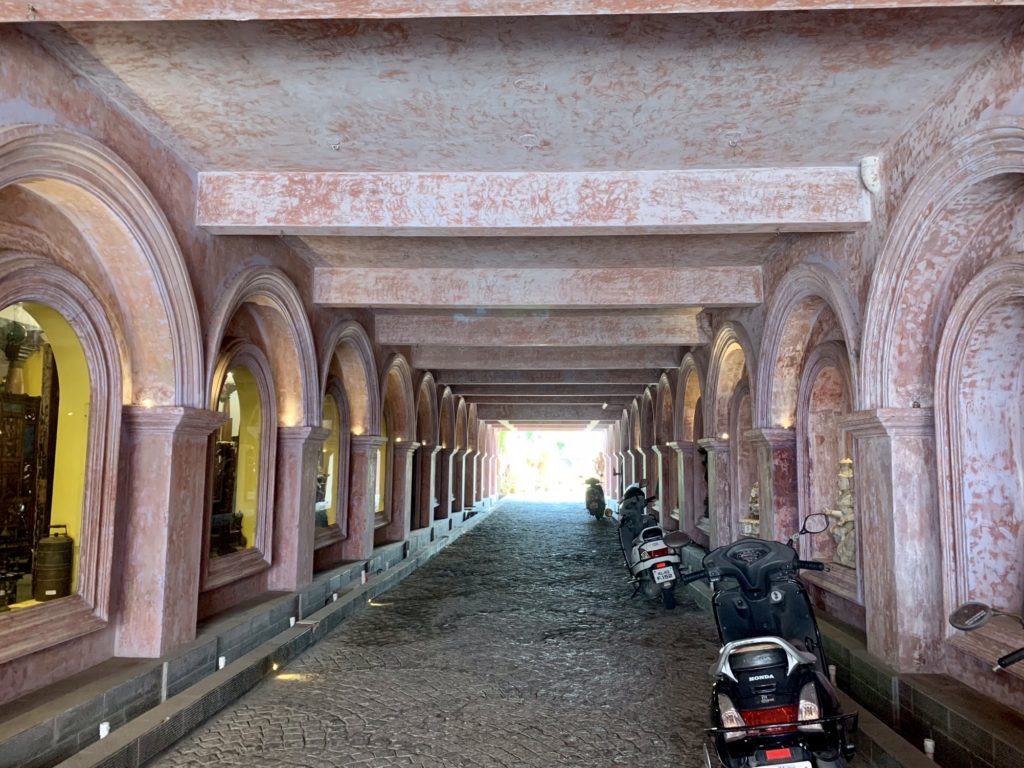
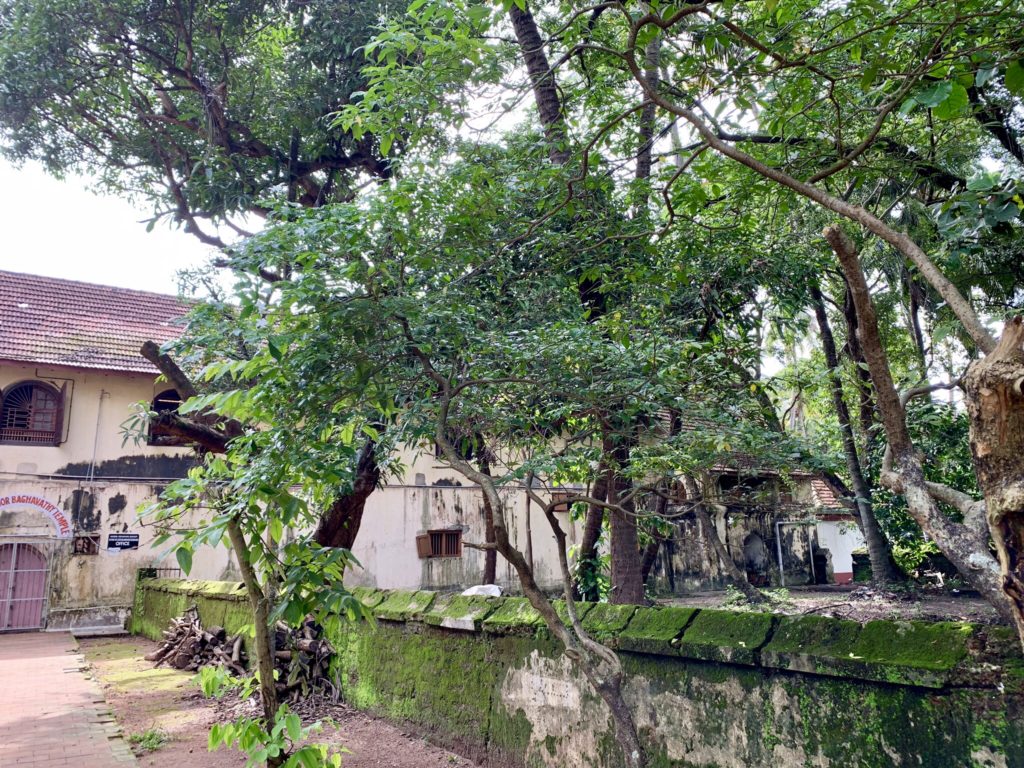
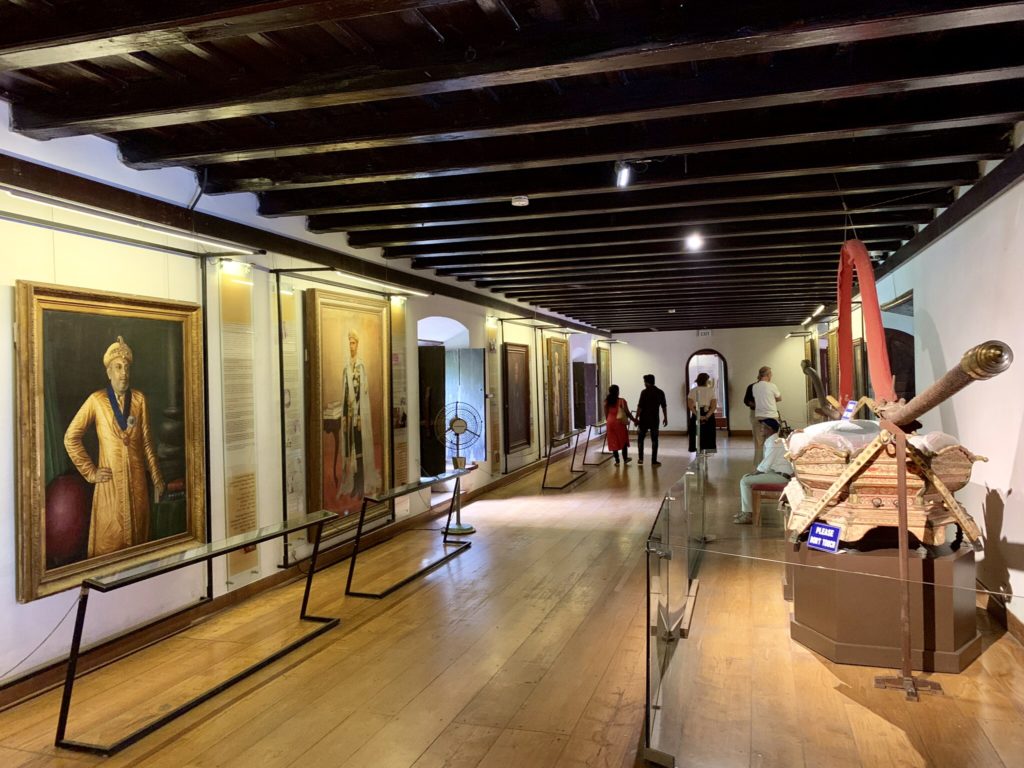
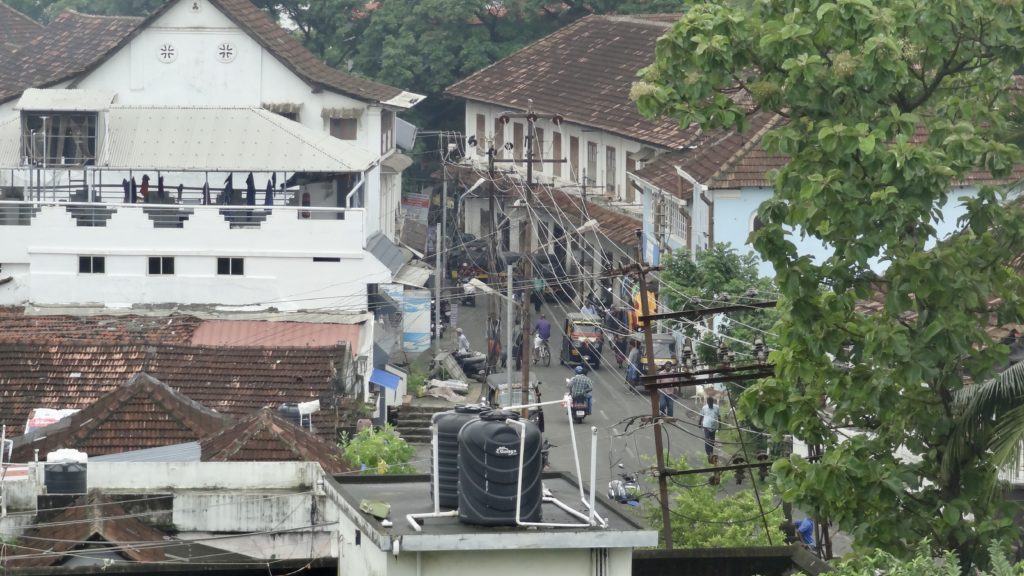
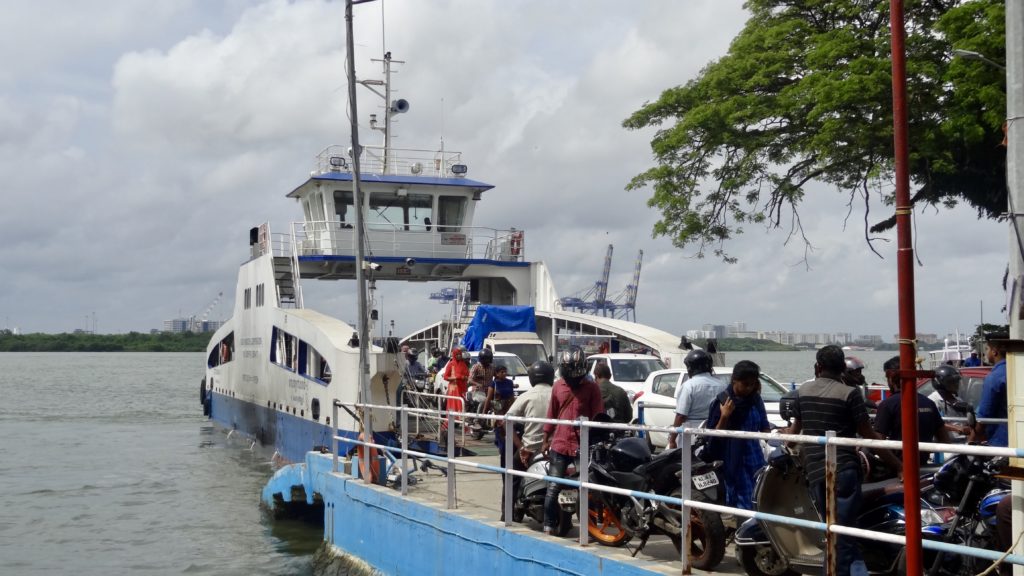
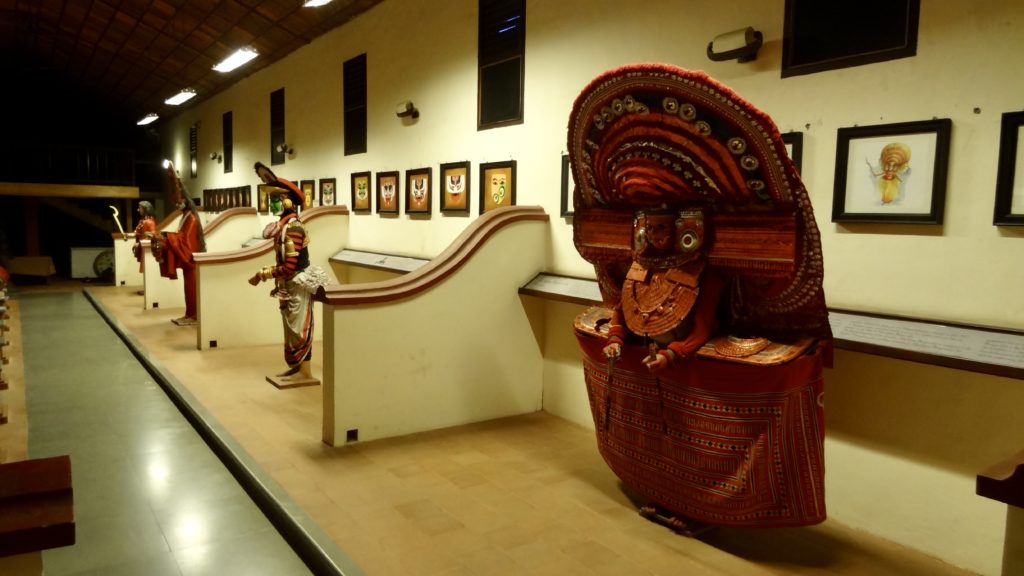
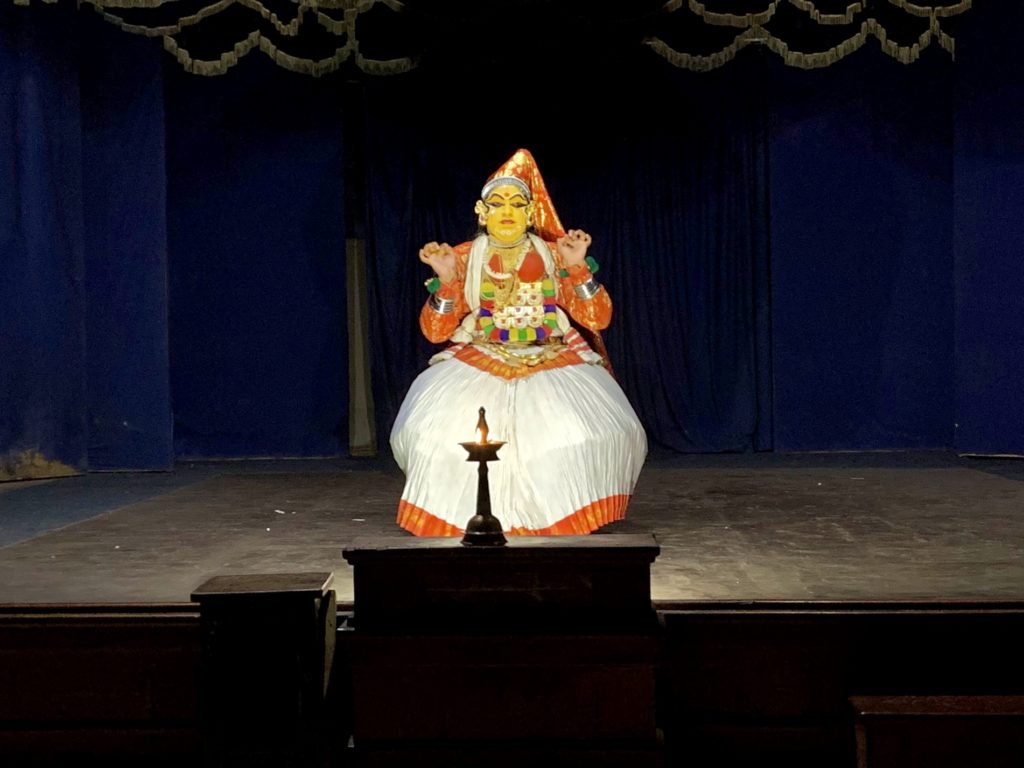
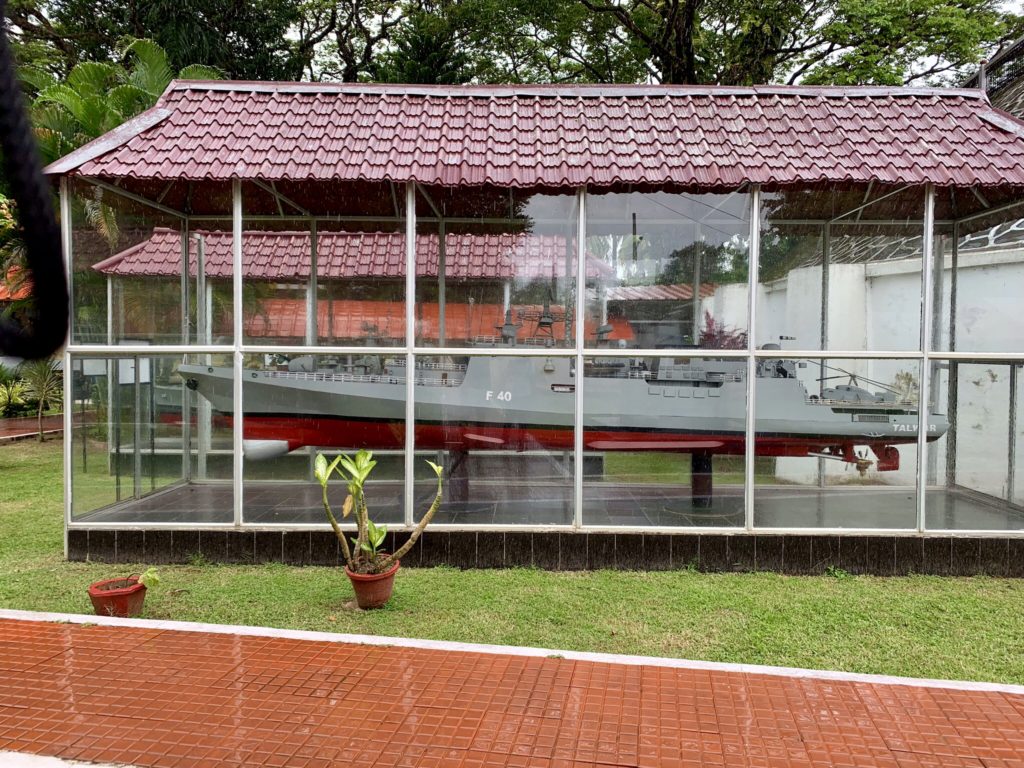
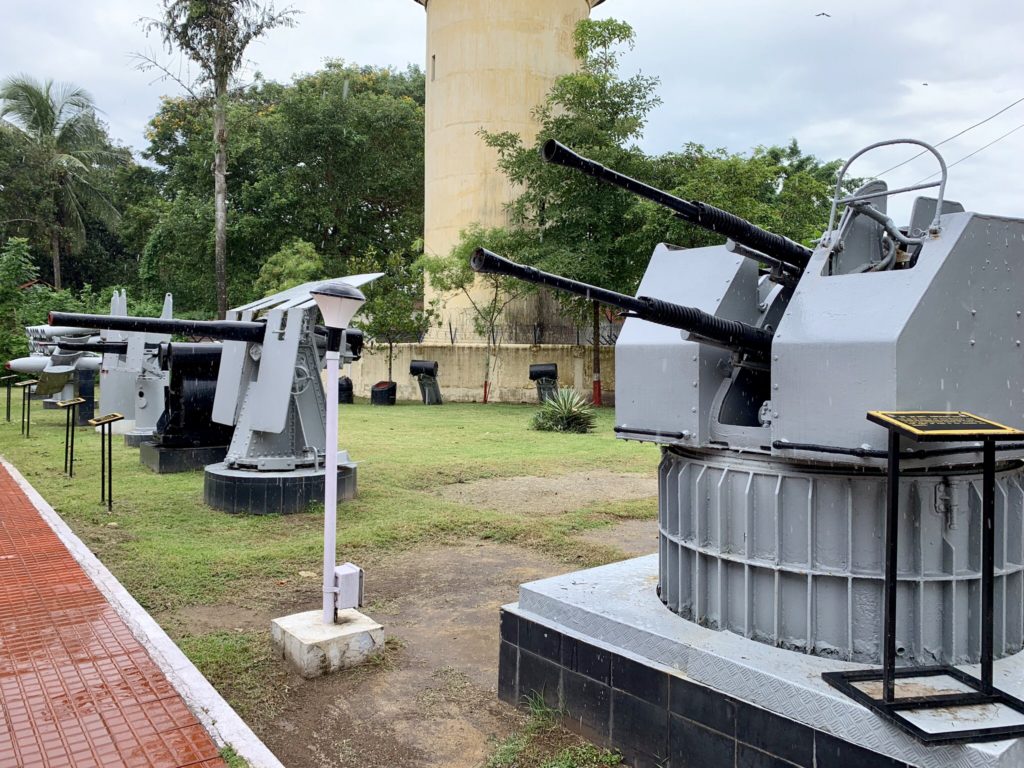
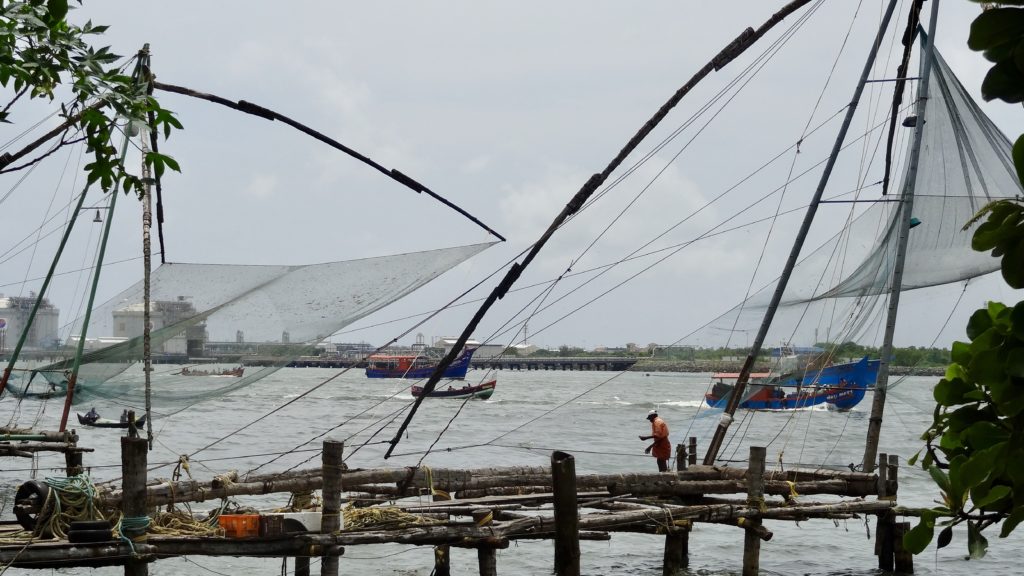
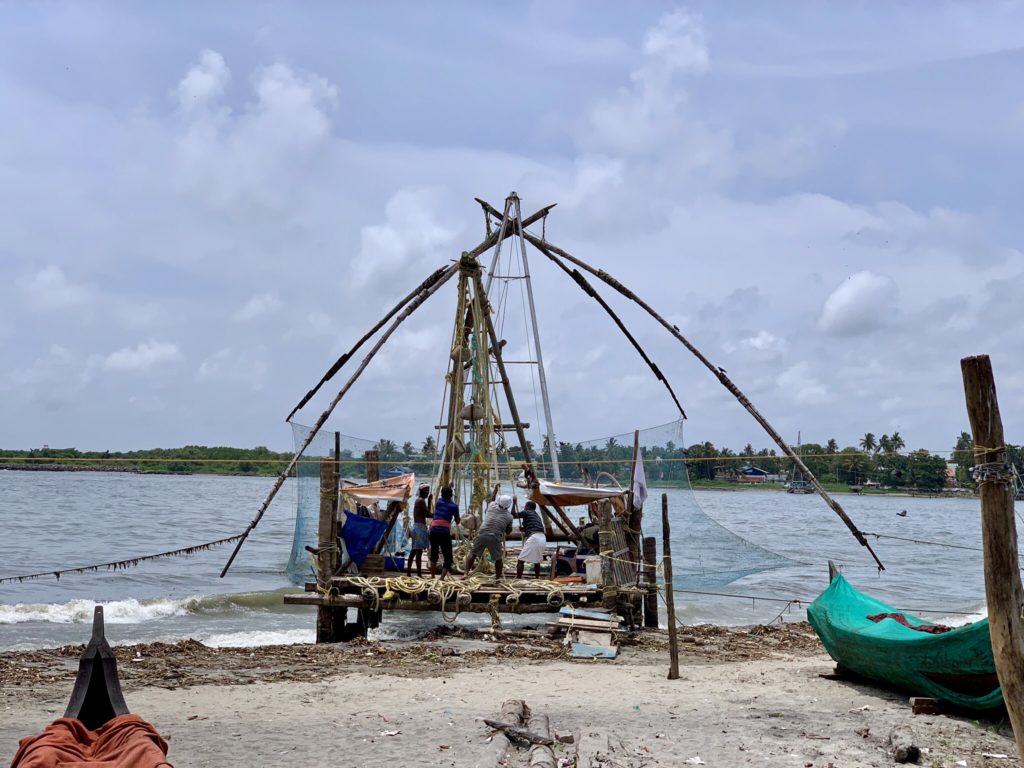
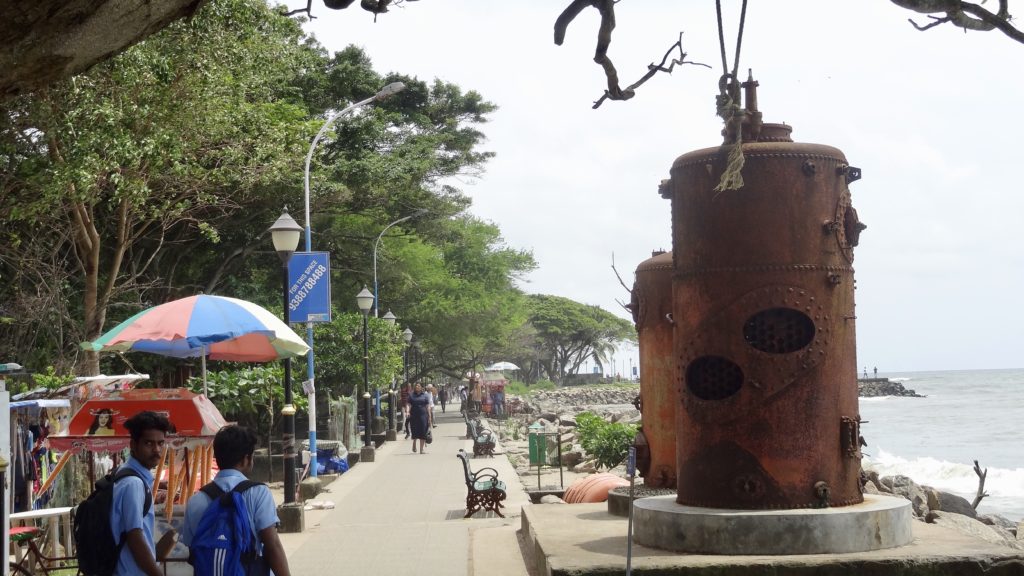
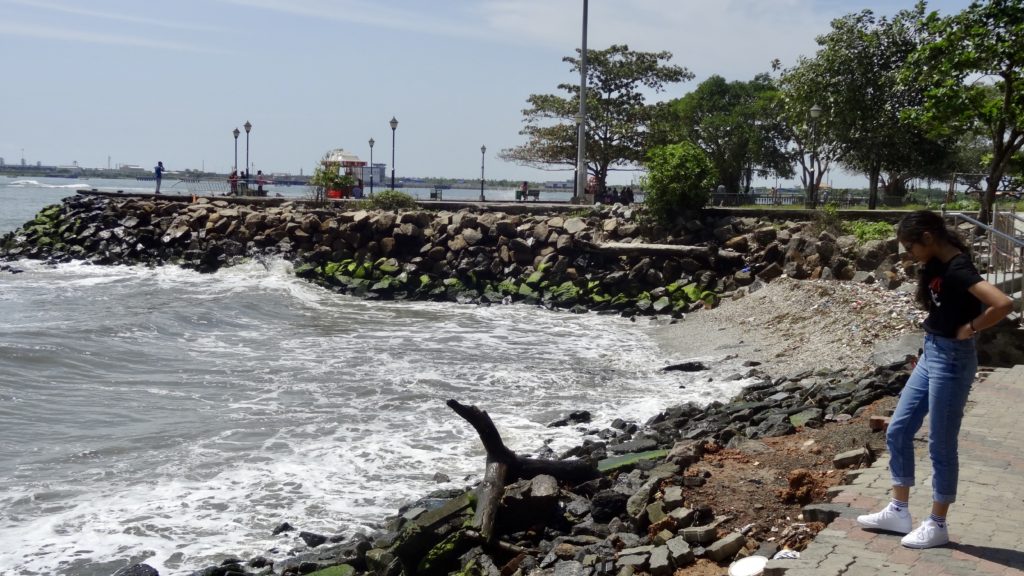
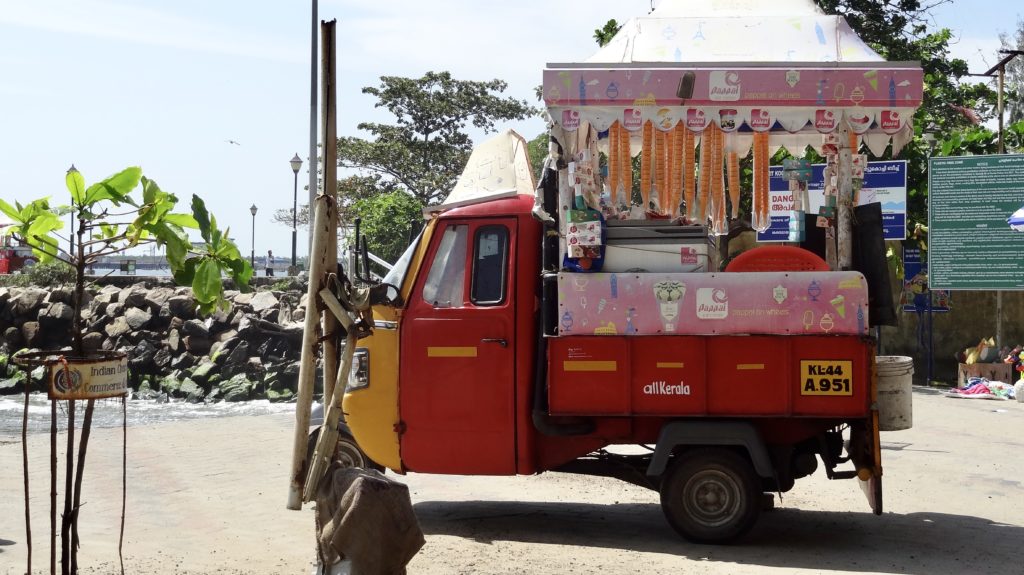
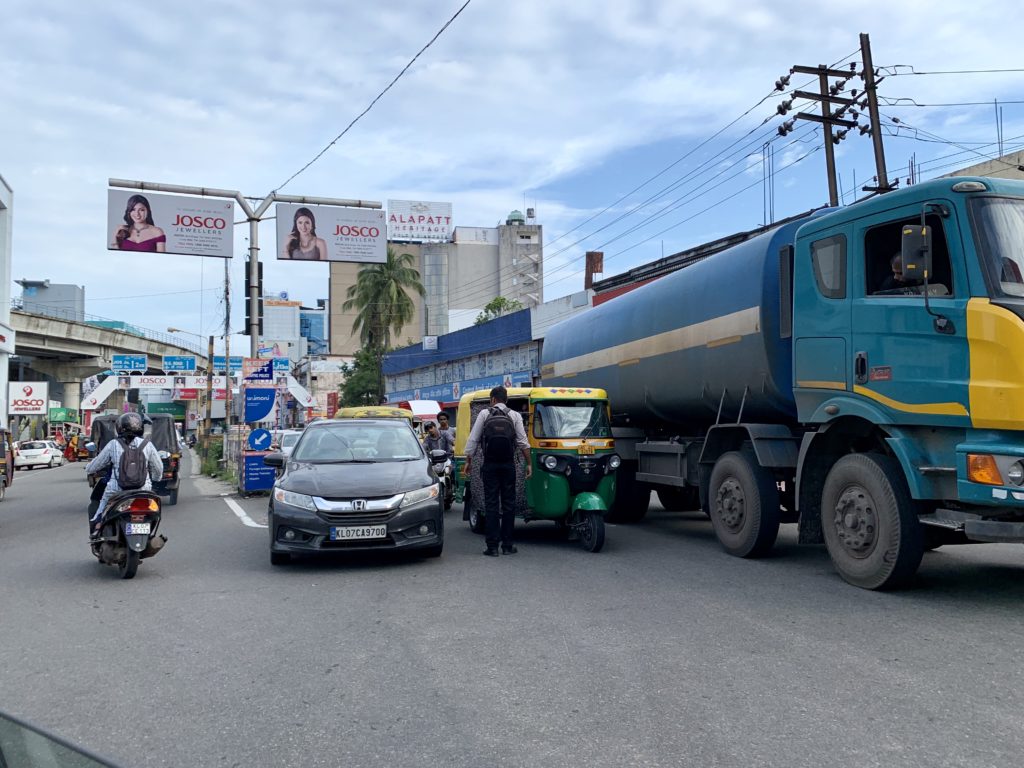
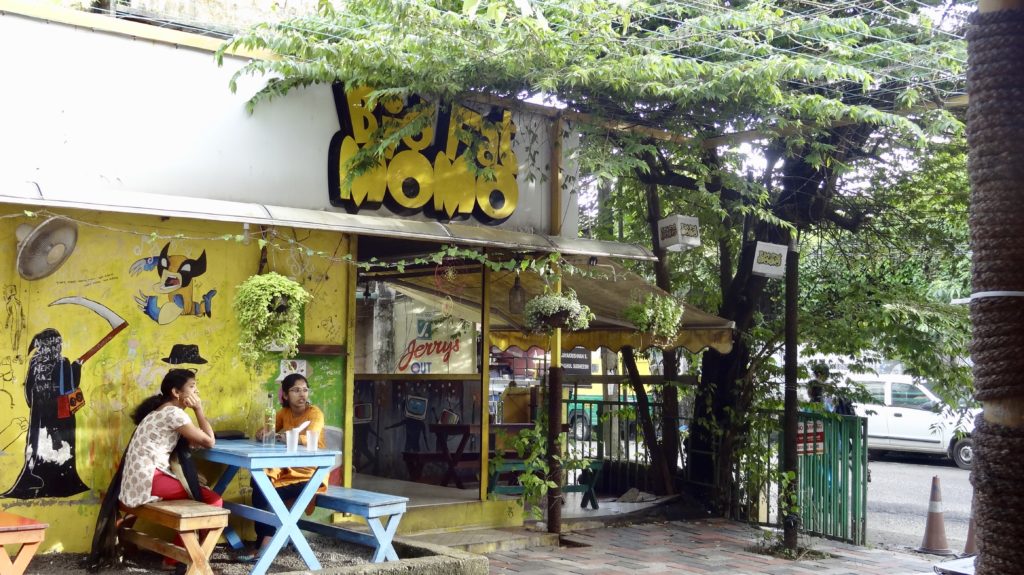
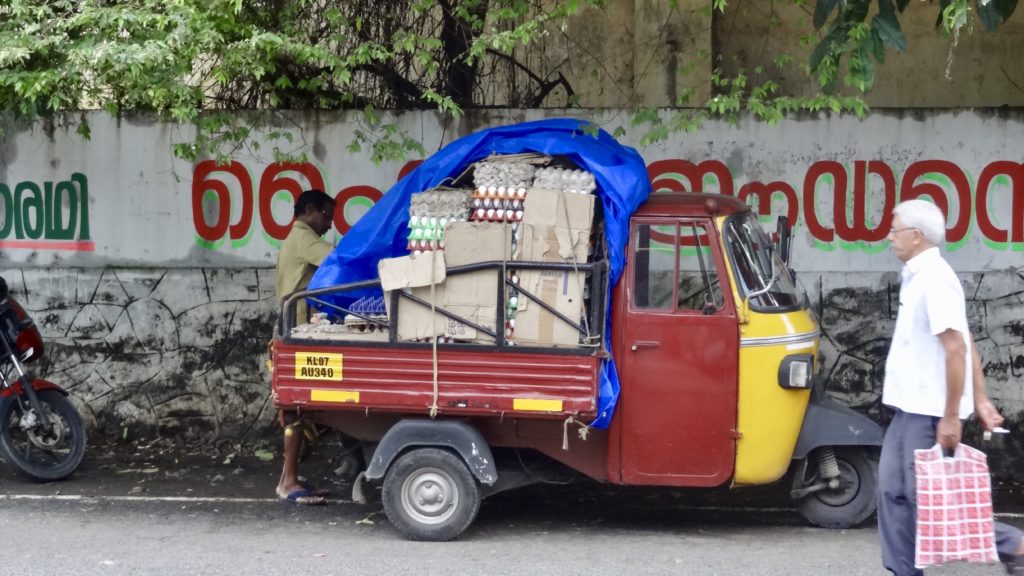
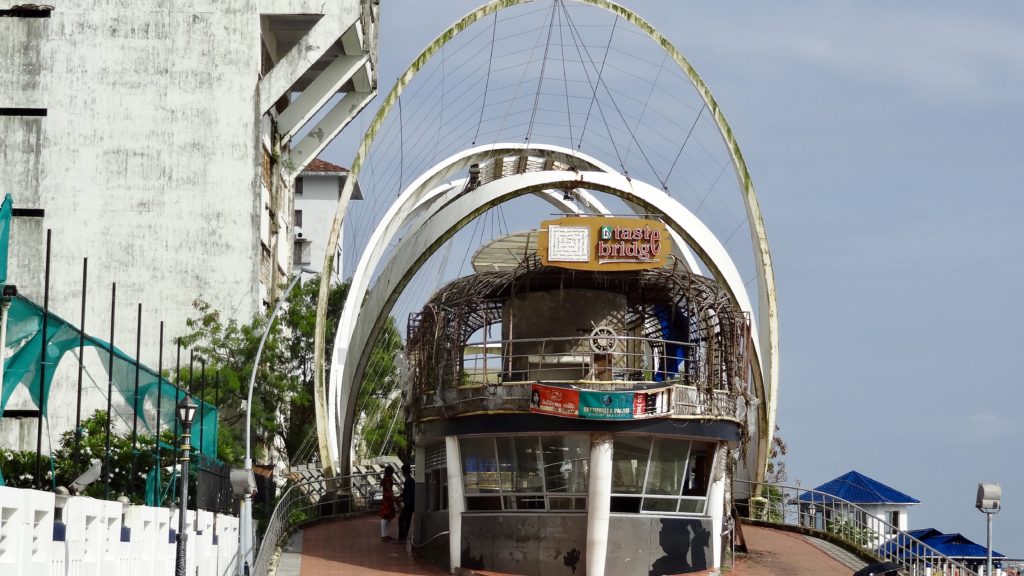
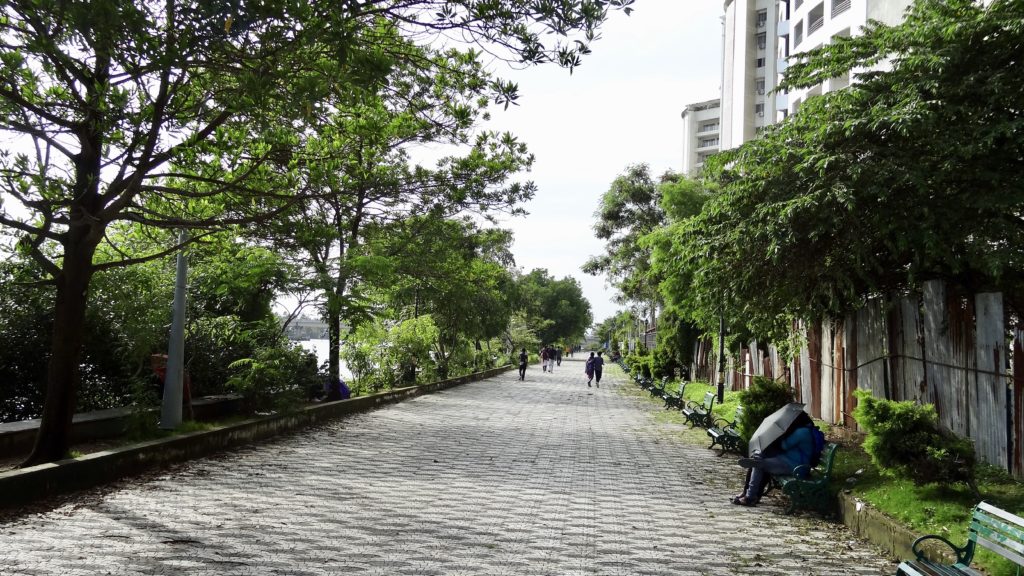
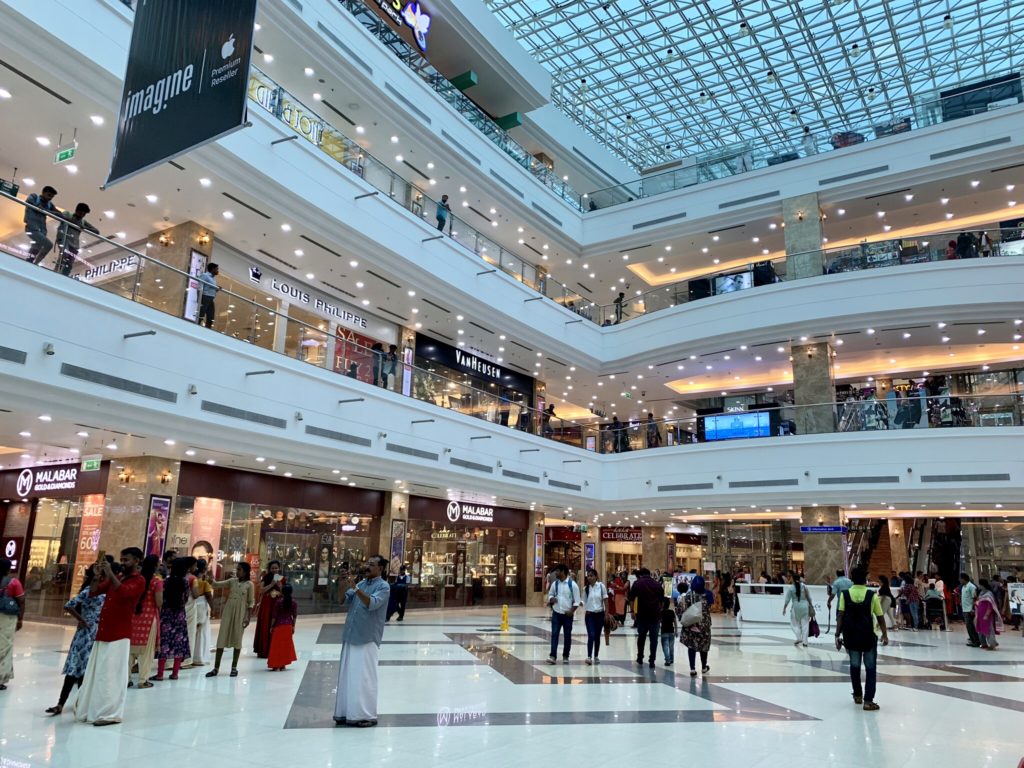
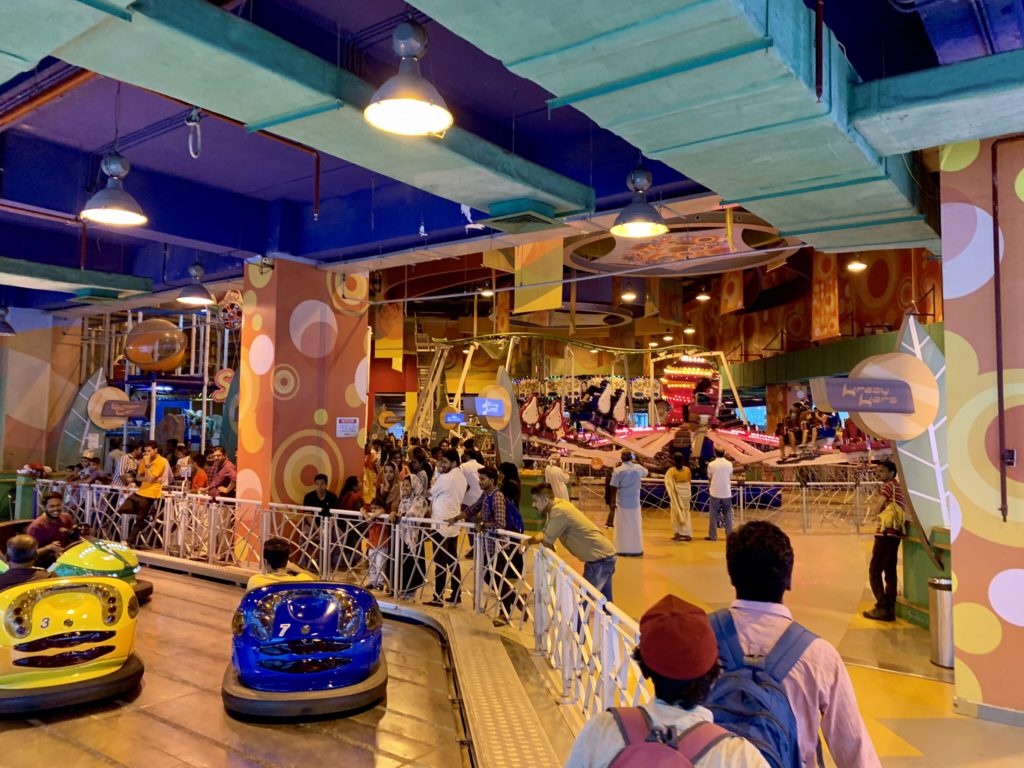
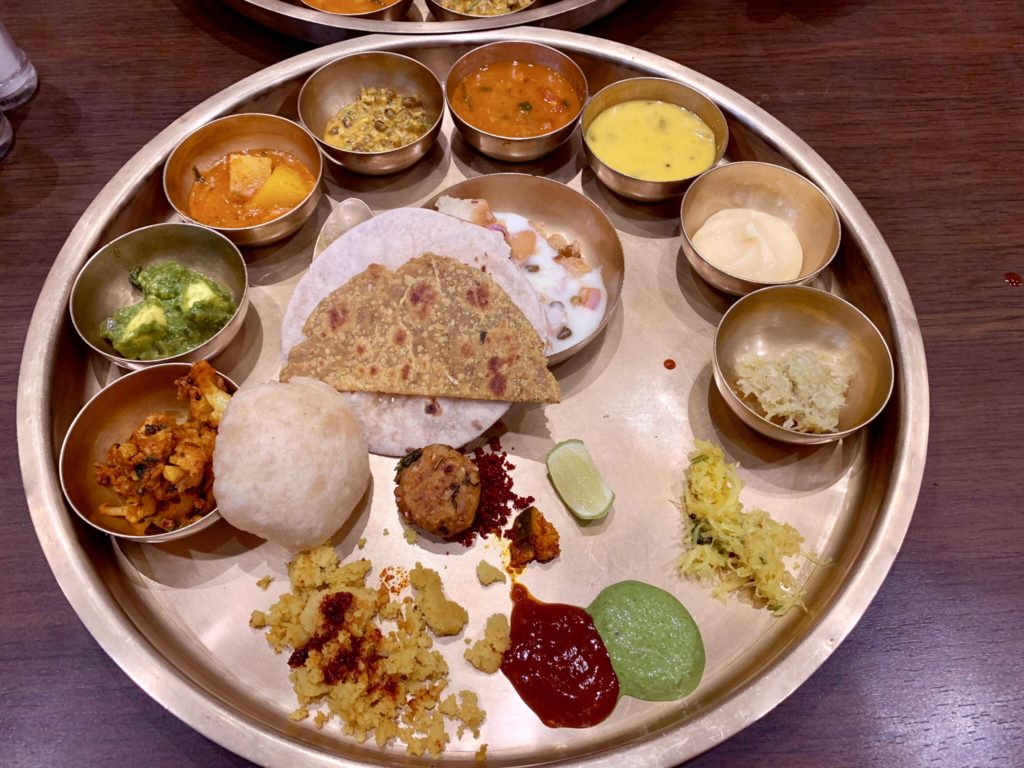
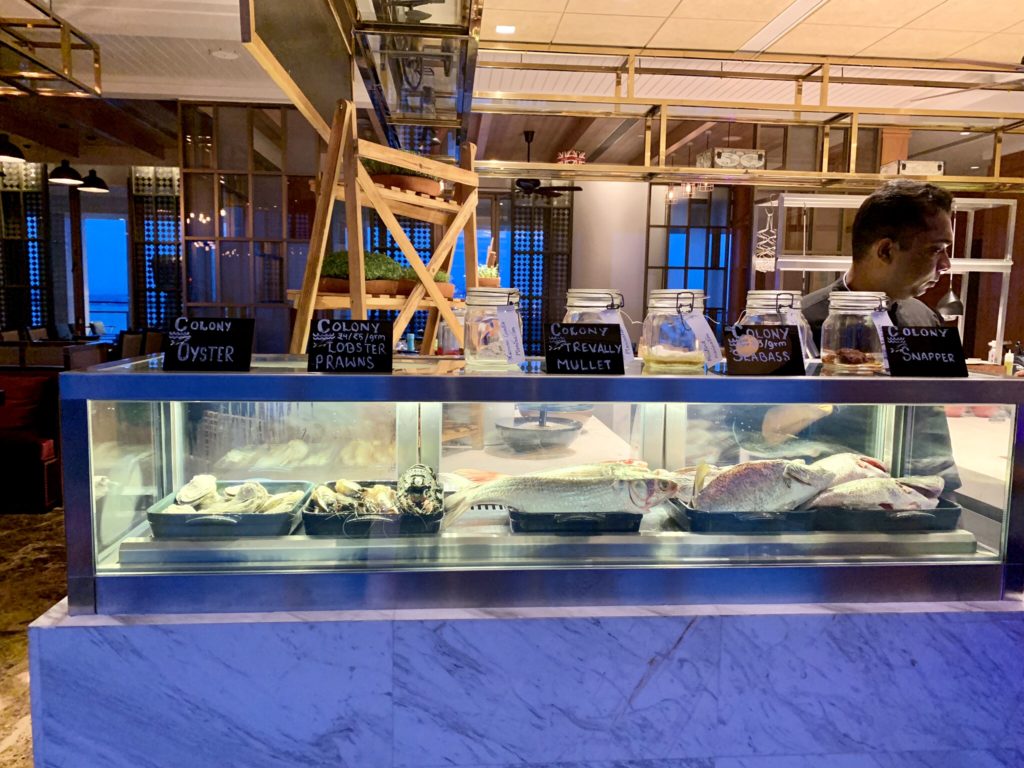
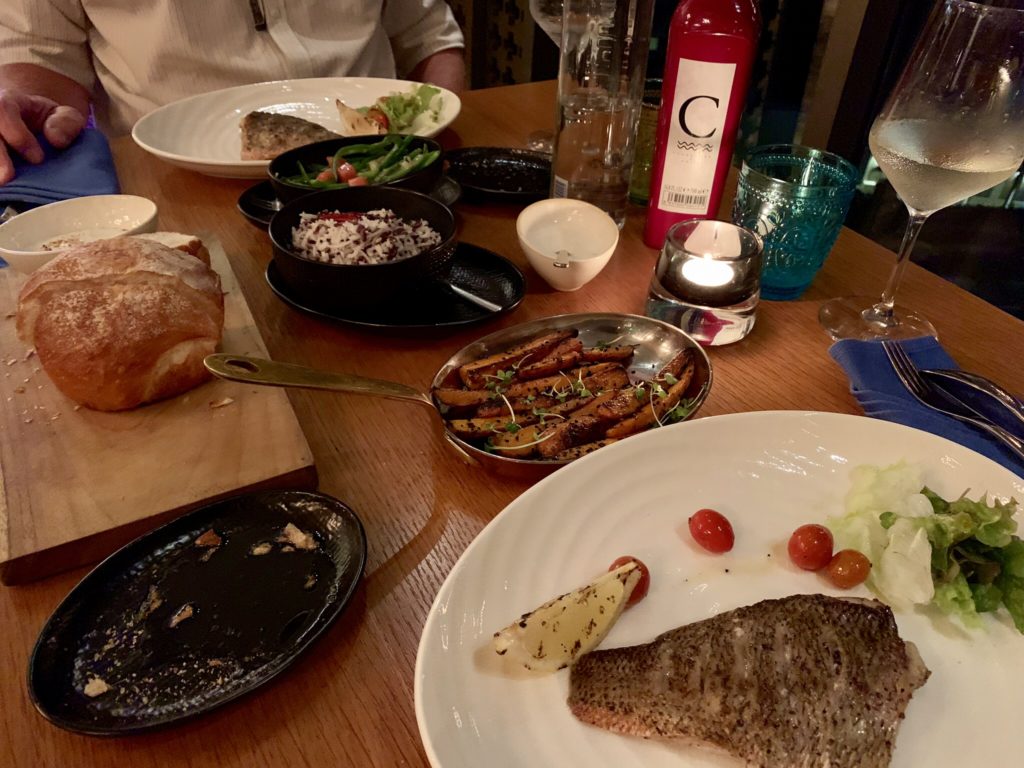
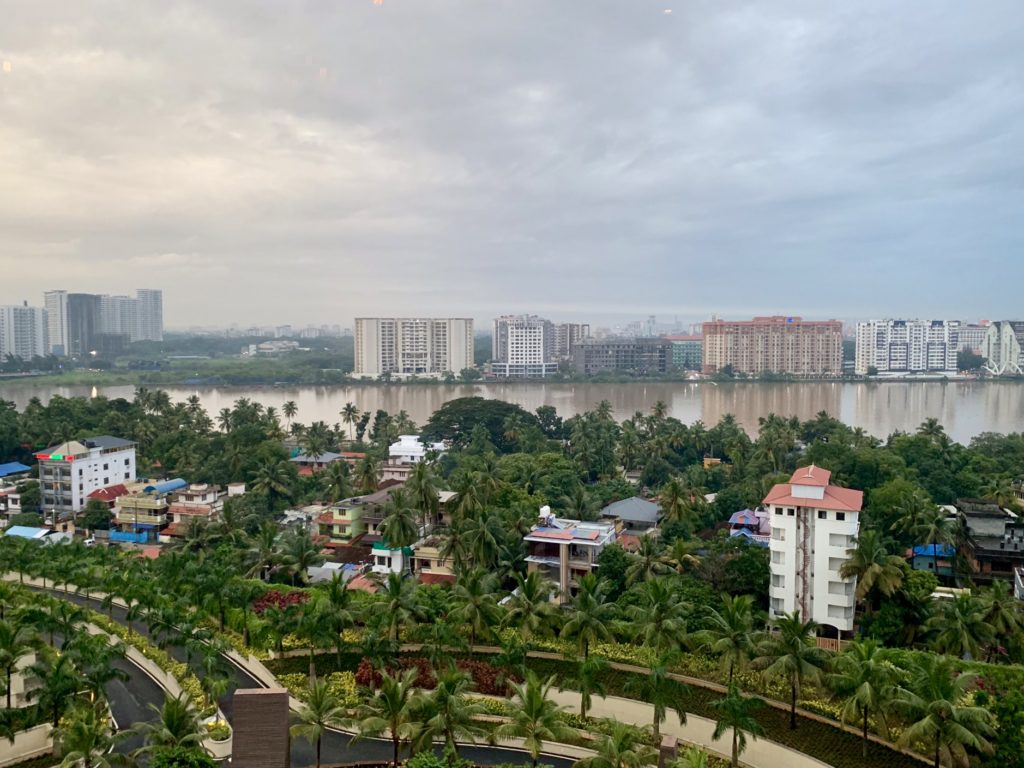
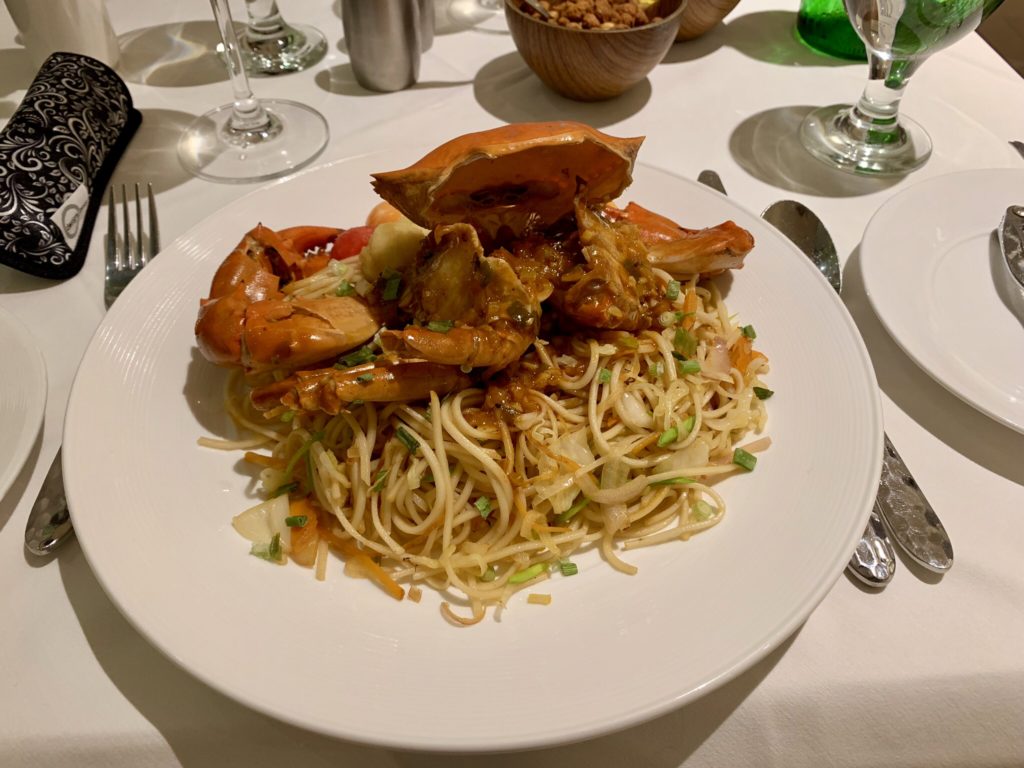
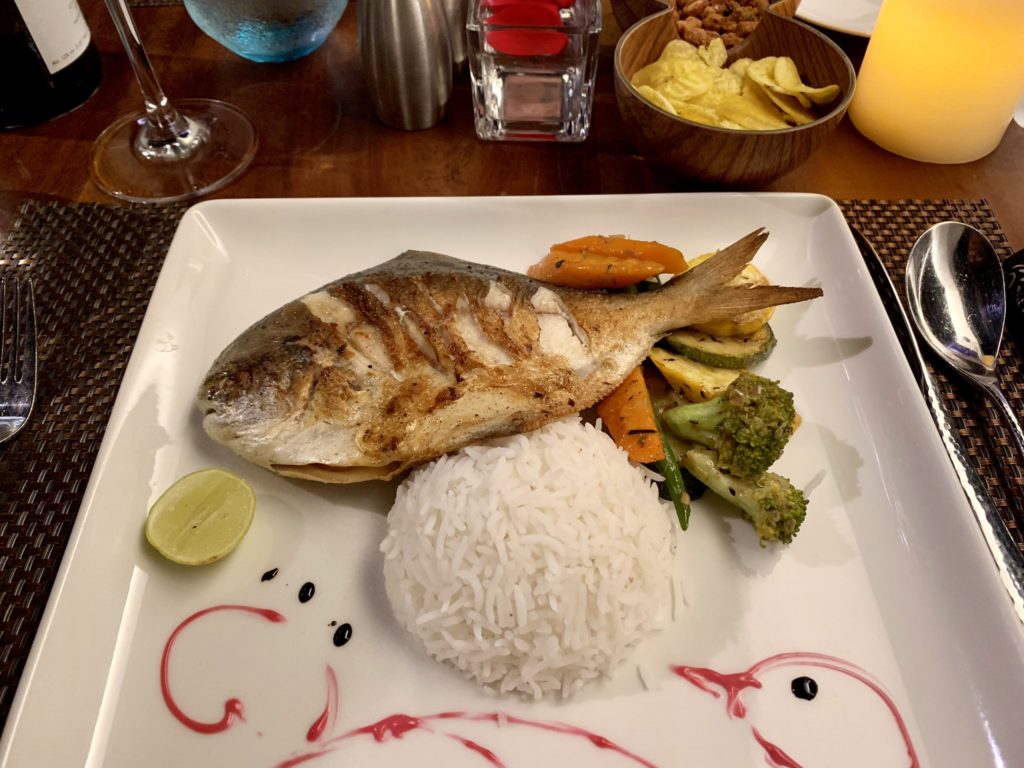
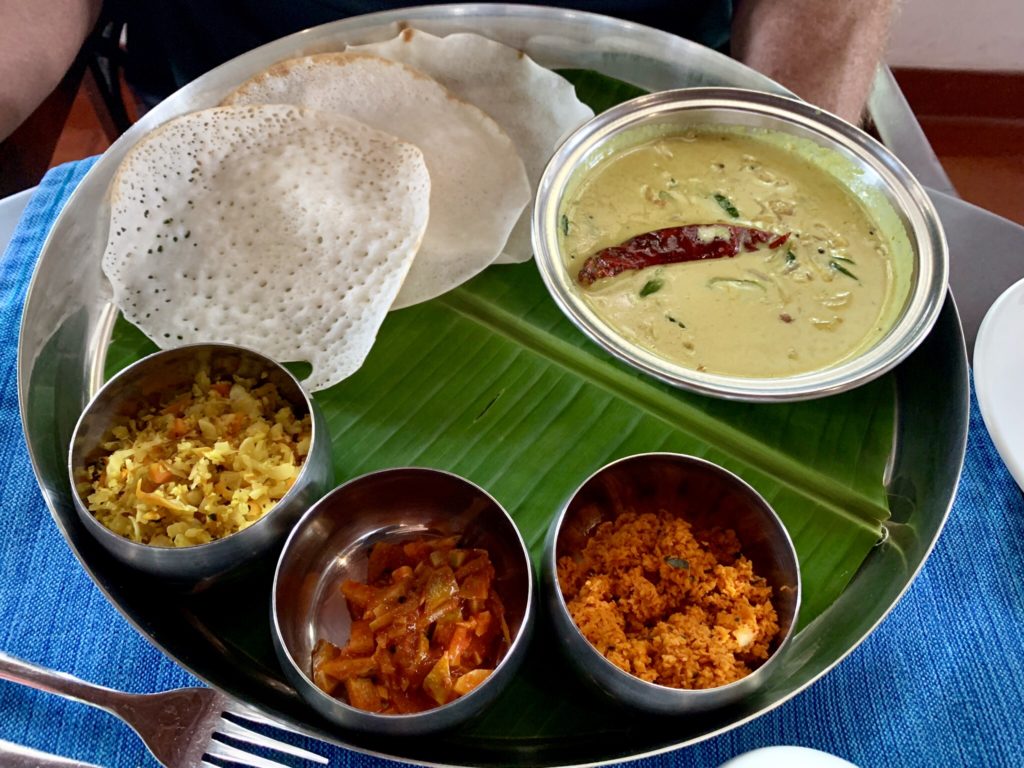
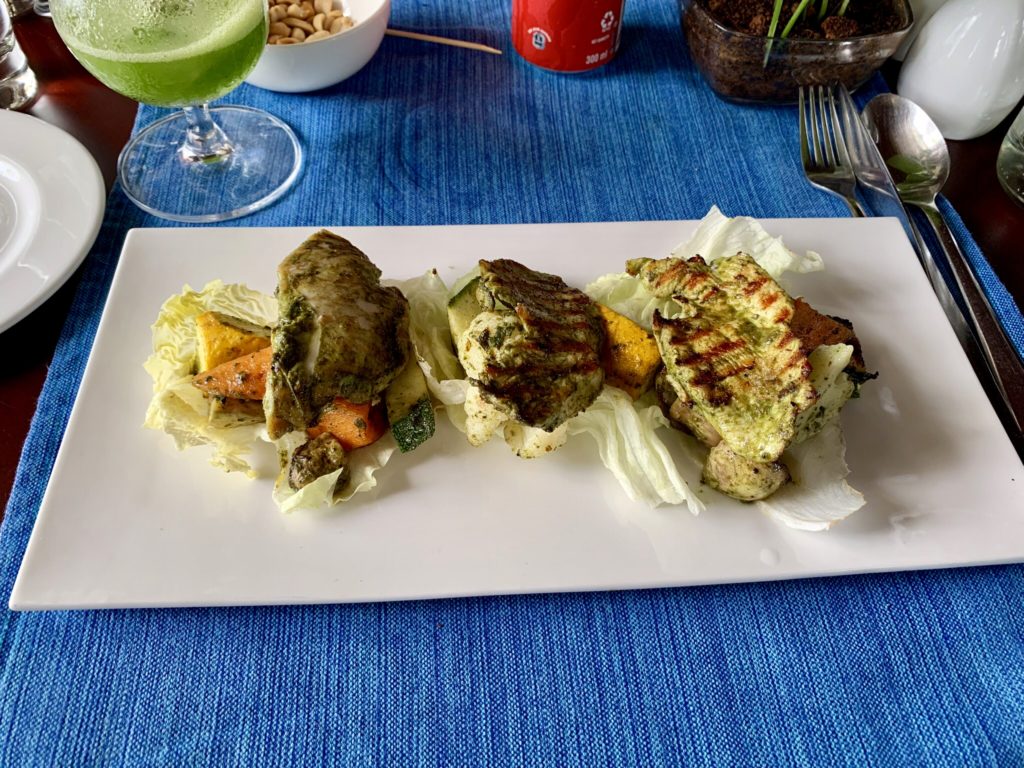
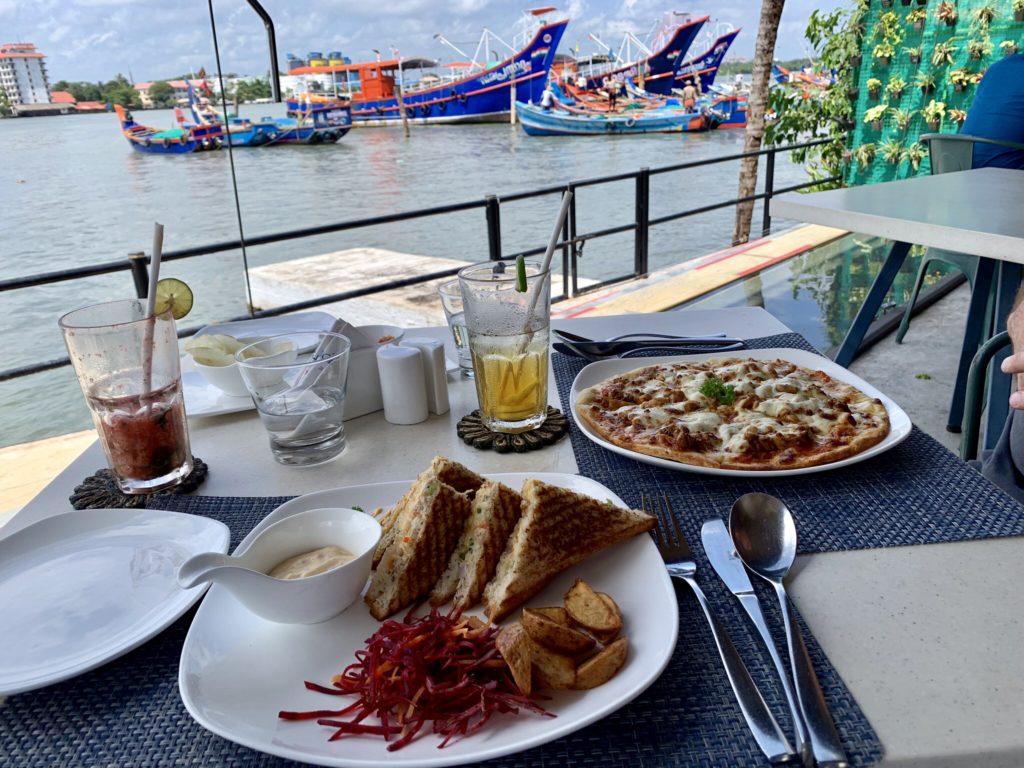
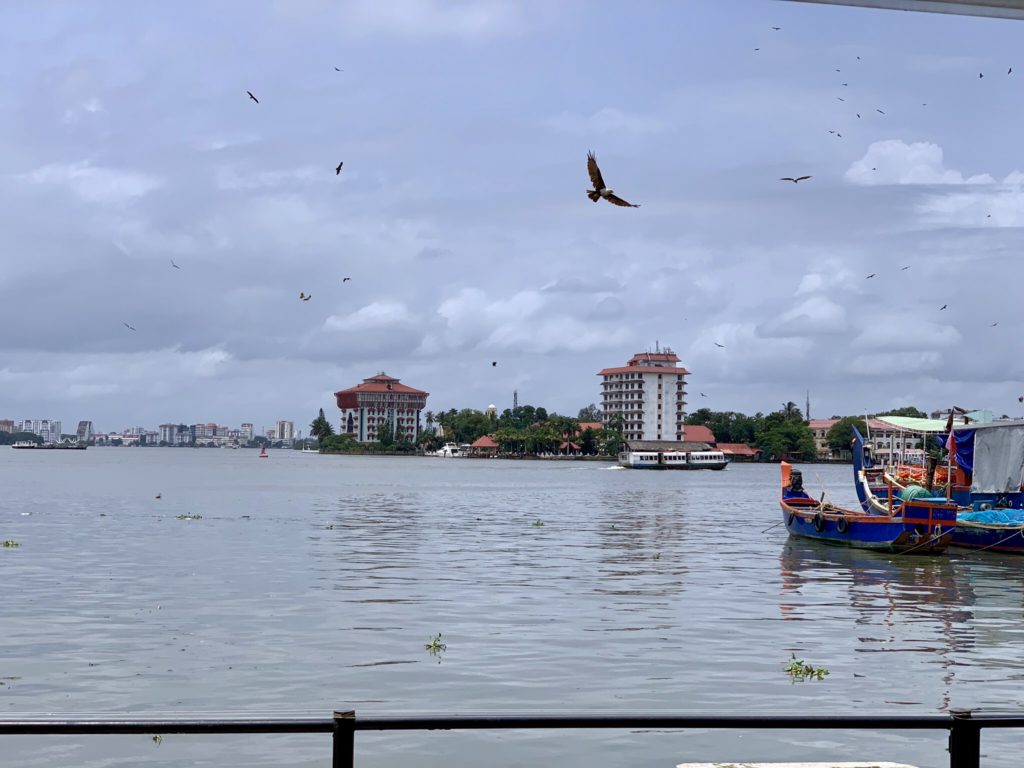
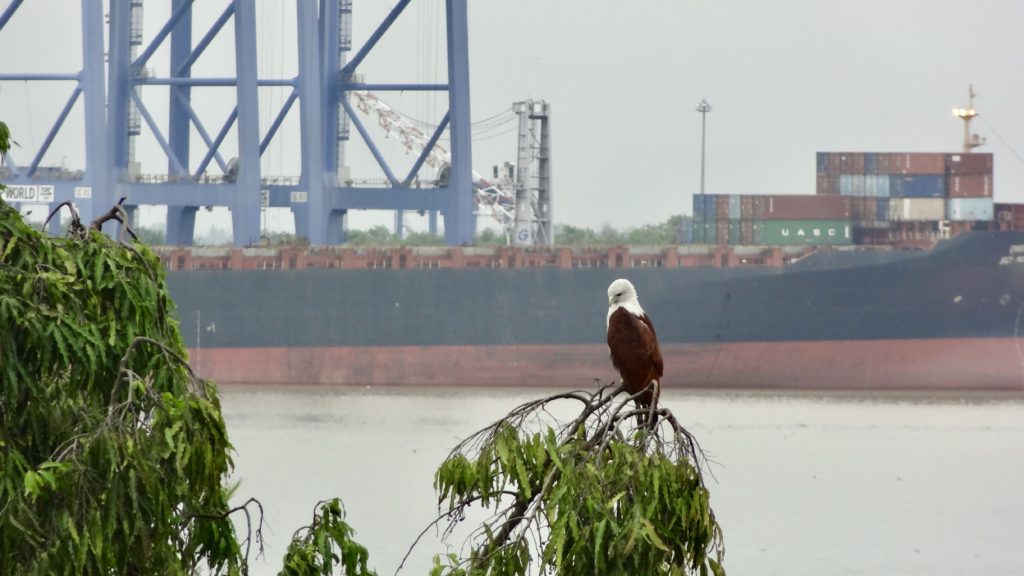
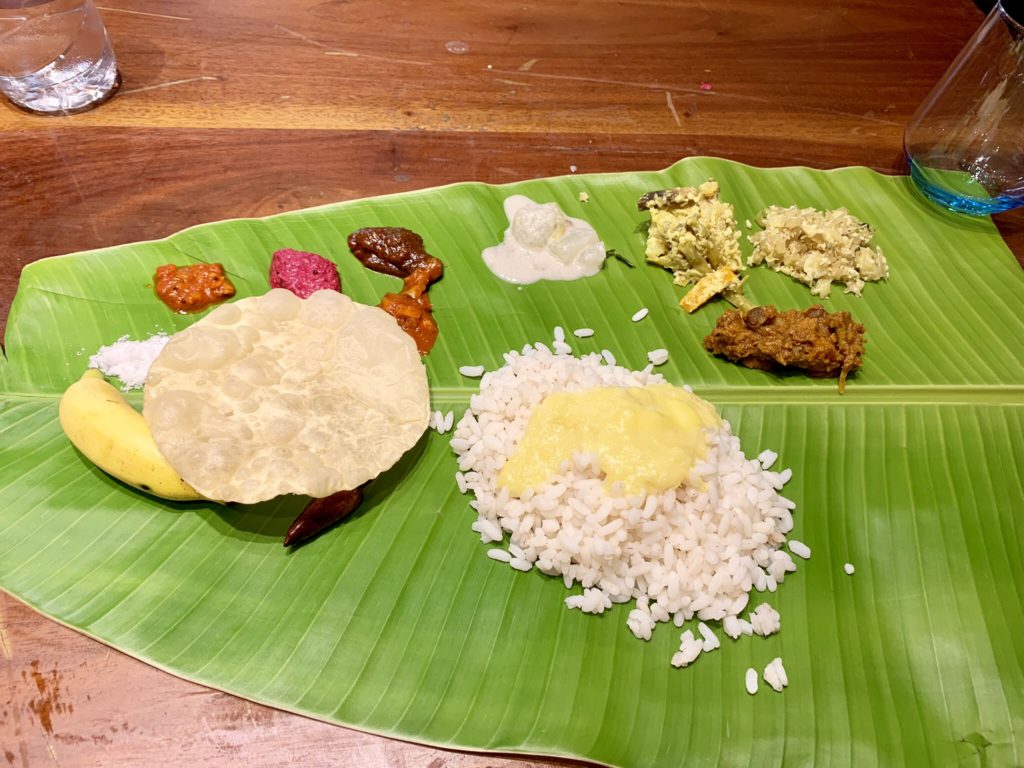
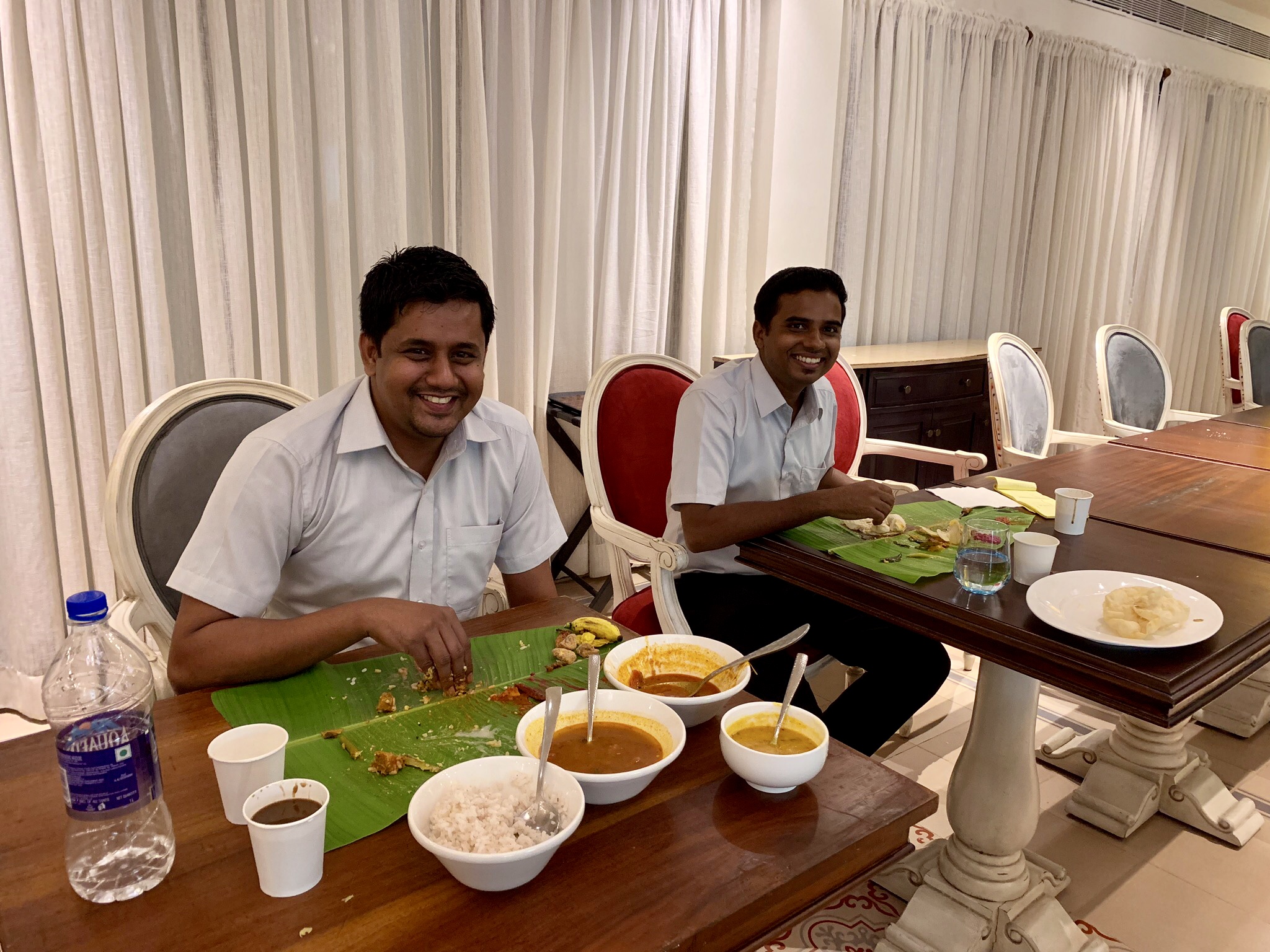
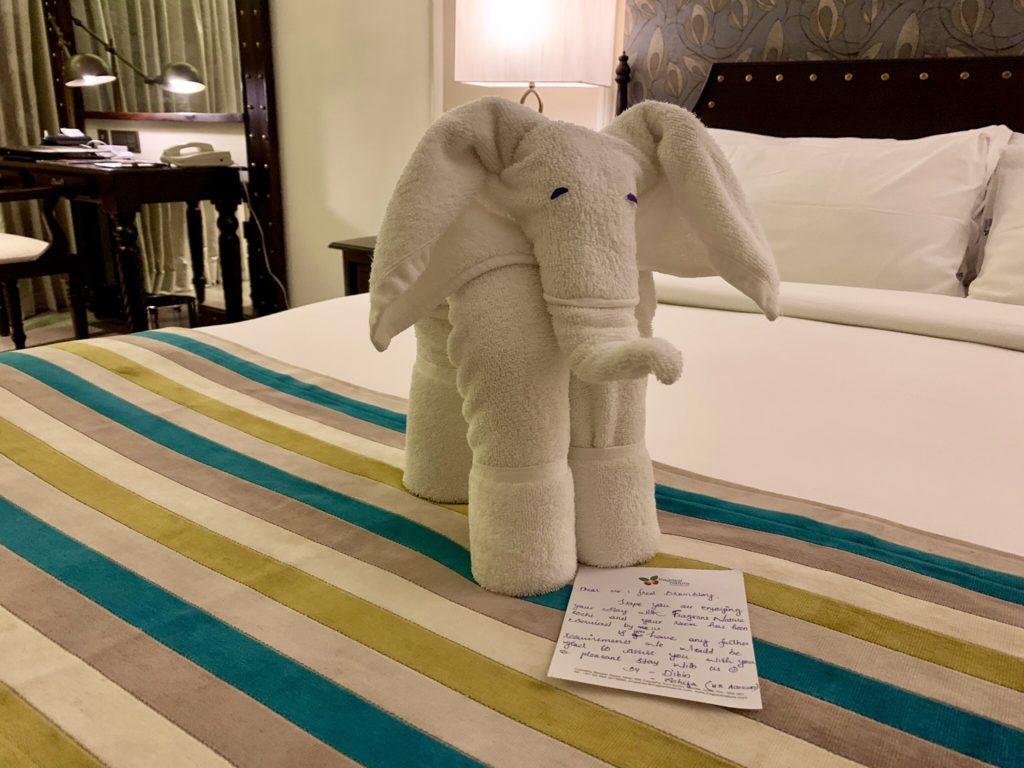
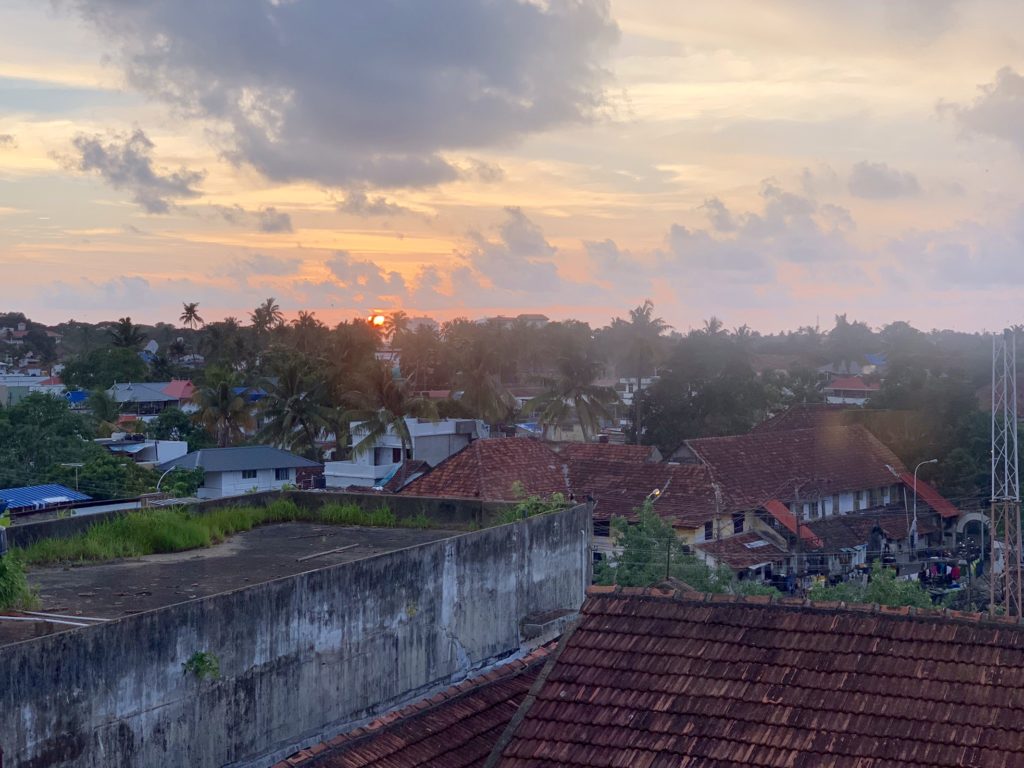
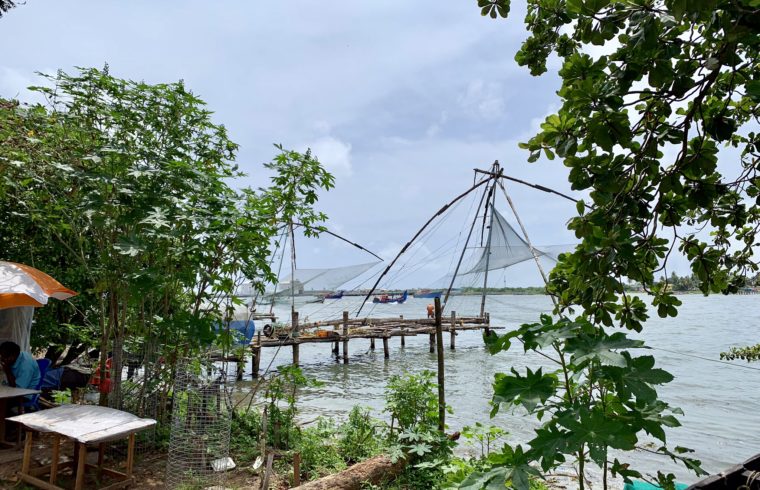
We arrived in Kochi after a three-hour flight from Delhi. The city lies on India’s tropical Malabar Coast, and is equal part water, palm trees, and people.We arrived early evening to an airport much cosier than New Delhi’s sprawling Indira Gandhi International. We rented an apartment for our planned month’s stay. It came with a breakfast cook and a cleaner. Since we arrived kind of late, the cook, Sumesh, had dinner waiting for us: pan-fried karimeen fish from the Kerala back water. Sumesh the cook and Antony the cleaner. They only smile when not being photographed. The apartment is a huge three-bedroom affair, with separate TV room and large kitchen (below), with it’s own separate small servant’s bedroom and bathroom. The view over the backwaters is why we picked the place.The neighborhood is Thevara, a respectable Indian middle-class mix of houses, schools, condos, and shops.Despite being monsoon season, our first days saw some blue sky, as you can see here through the chaos of the local power lines. On a side note, the power goes out a few times each day. It probably loses its way in the wiring. Speaking of chaos and and things going out, we didn’t have internet access at first. The host blamed it on the monsoon. I pointed out the wiring. She just gave me a puzzled look. It took three visits from two different “technicians” to get us back online. In the end, we had three different WiFi services to switch between, as each went up and down.The condominium building is the Asset Casa Grande. It is five years old, with 12 floors, one apartment on each. A movie star lives just below us, we’re told. Flats sold new for about $150,000. Given the direction the building’s condition seems to be headed, I think they’ll be able to fully depreciate their investment in another year. All of the fountains are broken, the fob entry system doesn’t work, the swimming pool is a moss farm (under maintenance, they say), the pool-deck planks are pratfall boobytraps, and one of the elevator call buttons on our floor doesn’t work, so when the left elevator isn’t working, we have to go down a floor to call the other one. Shall I go on?Next door is a somewhat older condominium, still fully occupied. You don’t need writing on the wall to see the future of Asset Casa Grande. Kochi is a city of between one and two million people, depending on who’s counting who, putting it well down the list of Indian cities by population. But its land area is very large. I think if humans stepped away for even a short time, Kochi would disappear into the jungle. We were done with the apartment in Thevara after about a week. Too out of the way to reliably get an Uber, and too spread out to make walking a useful alternative. So we jumped ship and moved to the 45-room Fragrant Nature Hotel — owned by a Dubai company who, I’m guessing, hired a Japanese PR firm to help them name it. We ignored the name and chose it for its Fort Kochi location, and the fact it is less than five years old.At five stories, plus a clock on top, it’s the tallest building in Fort Kochi. We took full advantage of this when they set up roof-top dining between monsoon storms. This is our favorite table, where we could look out over Vembanadu Lake to Willingdon Island. Fort Kochi sits at the northern tip of the Mattancherry Peninsula, surrounded by many things of interest. Plus there are tuk-tuks everywhere, so when you can’t walk, like when it’s pouring rain, you can tuk-tuk — the monsoon profits tuk-tuk drivers. And Uber is always available for more distant destinations.Outside the hotel is Bazaar Road. A fairly typical street, maybe better paved than most. Walking southward, there are touristy shops mixed in with stores selling local staples. Then there’s the spice market. As you can see, the road is just wide enough for a truck to park and unload, with room for a motorcycle and a few pedestrians. Cars and tuk-tuks in the know take a different way. Others honk until their heads blow up. Then they, too, take a different way.Not surprisingly, drivers seem to paint their trucks with the idea of blocking traffic in mind. No flashers needed. Tucked between the spice warehouses are small offices, usually with large ceiling fans. The merchant in this one said these are his record books going back to his grandfather’s day. He also said something about having or not having a computer, then waggled his head. The accent is hard to understand, sometimes. The Mattancherry Peninsula is one of oldest parts of Kochi, so it has an eclectic mix of repurposed historic buildings, like this old warehouse in Jew Town, now a colorful courtyard and waterfront cafe (above) next to a museum slash antique store slash scooter ally (below).Not far from Jew Town is the Mattancherry Palace. Built by the Dutch in the 1500s and gifted to the local Rajah. I don’t know if it looks good for its age or not. It’s still standing, so that’s something. Inside is a museum of sorts, with portraits of Kochi rajahs, along with examples of tools of their trade, like palanquins and ceremonial swords. Looking northward from the hotel, you see the beginning of Fort Kochi proper. As a fort, it no longer exists, but the area encompasses the first land deeded to foreigners by the Rajah at the time. The foreigners, being Portuguese, built a fort, which is what you do when you want to be attacked. The Dutch eventually accommodated them, torched it, and built their own. It stood until the English decided it was just where they would like to have a fort. Across a narrow strait from Fort Kochi is Vypin Island. This narrow waterway is kind of like the Golden Gate in San Francisco, draining much of the vast backwater. As such, this little ferry kind of serves as their Golden Gate Bridge, effectively spanning the fast-moving channel. The noisy, diesel-powered, three minute crossing saves 45 minutes over going around. The time we took it, the line to get on the ferry was an hour. We weren’t surprised. Maybe we’re getting used to India. The area also hosts a Kerala dance museum and Kathakali classical dance showcase (above and below).Kathakali dance is unique to Kerala. Now primarily a Hindu performance art, it still includes folk mythologies reaching back three thousand years. Beside the Arabian Sea, on the western shore of the peninsula, is the Indian Navy’s old gunnery school, now their Maritime Museum, most of which is out in the rain (above and below).At the top of the peninsula are Chinese fishing nets. Legend has it they were introduced to the area in the 1300s by the Chinese, who also gave the area its name: Kochi or Co-chin for “like China.” A more scholarly theory for its naming, though, is that Kochi is from a local Malayalam word related to lagoon or harbor.The net structures are made from bamboo, with rocks tied on ropes as counterweights. They leave the nets down for about five minutes, then haul them up to see what they’ve got. These guys didn’t catch anything on this try. It’s hard to believe four men can make a living doing this. Past the nets is a promenade popular with tourists and locals, at the end of which is Fort Kochi Beach (below).Yes, this is the beach. All of it. Visitors assuage their disappointment with the beach at ice cream tuk-tuks. They wake the driver, who is usually passed out in his sweltering cab; he then serves up cones and frozen treats and promptly returns to his little hothouse. Keep in mind as you look at these pictures, from the comfort of wherever you are, both temperature and humidity are in the 90s.To find the more urban part of Kochi, you have to venture to Ernakulam. Its congestion makes it perfect for studying Indian traffic rules. After much consideration, I have distilled the rules for intersections, round-abouts, merges, and u-turns into one simple precept: every man for himself. Unless pedestrians are involved, then women are also included.A popular stretch of road in Ernakulam is Marine Drive. Many seaside cities, like Mumbai, Cape Town, even Hagatna Guam, have a Marine Drive. Kochi’s Marine Drive is not like those. It has no sidewalk to speak of, and you can’t see any water from it, unless it’s raining. But it does have Big Fat Momos, where we bought some big fat momos — Indonesian steamed dumplings — and ate them. It also has egg thieves. I couldn’t resist taking a picture of this guy on the left pilfering eggs from an egg tuk-tuk. The driver lost two eggs while making a delivery. Behind the buildings on one side of the drive is a promenade that does run along the shore. It features a few picturesque studies in architectural decay, like this suspension bridge. Its cables are worrisomely slack and its once (probably) functioning snack bar abandoned.Further down the promenade, near one end, are shady benches and countless couples huddled under umbrellas. Umbrella-cuddling is quite common, and quite benign we’re told. Former participants assure us that the practice rarely, if ever, results in matrimony.Also in Ernakulam is a crowd favorite: Lu Lu Mall. It’s the largest mall in India, and we made weekly pilgrimages to stock up on foreign essentials, like Colgate Toothpaste and Yogi Protein Bars. Visiting the mall is a special occasion for many Kochi residents, especially kids. We made two trips just for its Hamleys toy store, once to buy a toy plane for Sumesh’s son, who wants to be a pilot, and once for some Hot Wheels cars for the son of an Asset Casa Grande Maid, who brought us some of his birthday cake.Speaking of cake, we segue to the required food pictures. Here we are having thali at a vegetarian thali restaurant in Lu Lu Mall. It happened to be two-fer Tuesday, so we dined for USD $8.00. We love thali. And the high ghee content probably helps keep us regular.The best part of eating in Kochi is the fresh seafood. We haven’t seen fish this fresh in Hawaii for probably 30 years. Every fish we saw had been swimming that morning — you can tell by the eyes. Our go-to fish is red snapper. It’s shamefully inexpensive here. It used to be common in Hawaii; now it’s hard to get, and costly when you can. This is a picture from the Grand Hyatt’s top-floor restaurant. We go for the red snapper and the views of Ernakulam and Bolgatty Island. Marine drive is somewhere behind the tall buildings on the far shore. Given our concern over the backwaters’ potential pollution, we generally stick with ocean-caught seafood. But sometimes the freshwater mud crab (above) and bony but tender white pomfret (below) simply must be eaten.We also try to limit our intake of saturated and trans fats, pronounced ghee in the Indian cooking vernacular. Technically, though, it’s impossible to avoid Indian cooking in India. Here we’re having dosas with cashew-nut, coconut-cream curry. In for a penny, in for a pound.Fortunately, grilling is common in southern India. And many of the local chefs are very creative with it, as with this grilled chicken and vegetable salad. They are also creative with Indian versions of continental favorites, like this chicken tikka masala pizza and spicy grilled chicken sandwich from Restaurant 51, just down the street. We like Restaurant 51 for lunch because we can watch the colorful brahminy kites make a living. Kochi is the first seaside city we can recall where we haven’t seen any seagulls, but there are lots of kites.Also called the red-backed sea eagle, we see them pull fish from the water and, if they are small enough, eat them claw-to-beak in flight. For larger fish, they fly low and fast to a tree, to avoid having another eagle acrobatically pluck it from their talons.Our favorite food experience was a sadya meal hosted for us by the Fragrant Nature management team. Sadya is Malayalam for feast. It’s time-consuming to assemble, all-vegetarian, and usually made up of between 24 and 26 separate dishes served on a banana leaf. It’s generally reserved for celebrations. About a half-dozen managers joined us. On the left here is the hotel’s dining manager Anup. When we took meals in the hotel, he was ever present, breakfast, lunch, or dinner. It’s good not to be in food and beverage. The staff at the hotel tease us for not eating more and richer foods. They assure us the only healthy diet is one rich in ghee. The masseuse at the spa is concerned Michele isn’t eating enough, while Michele is concerned she’ll suffer internal injury, the masseuse being more accustomed to pressures required by significantly larger Indian clients. Nevertheless, we have been treated like family by everyone.To end the post, here is the only sunset we have seen here. Though we have had some blue skies, the usual monsoon condition is overcast or rain, so it’s hard to even know which way is west — or north or south. And building moss just isn’t as useful for direction-finding as tree moss.