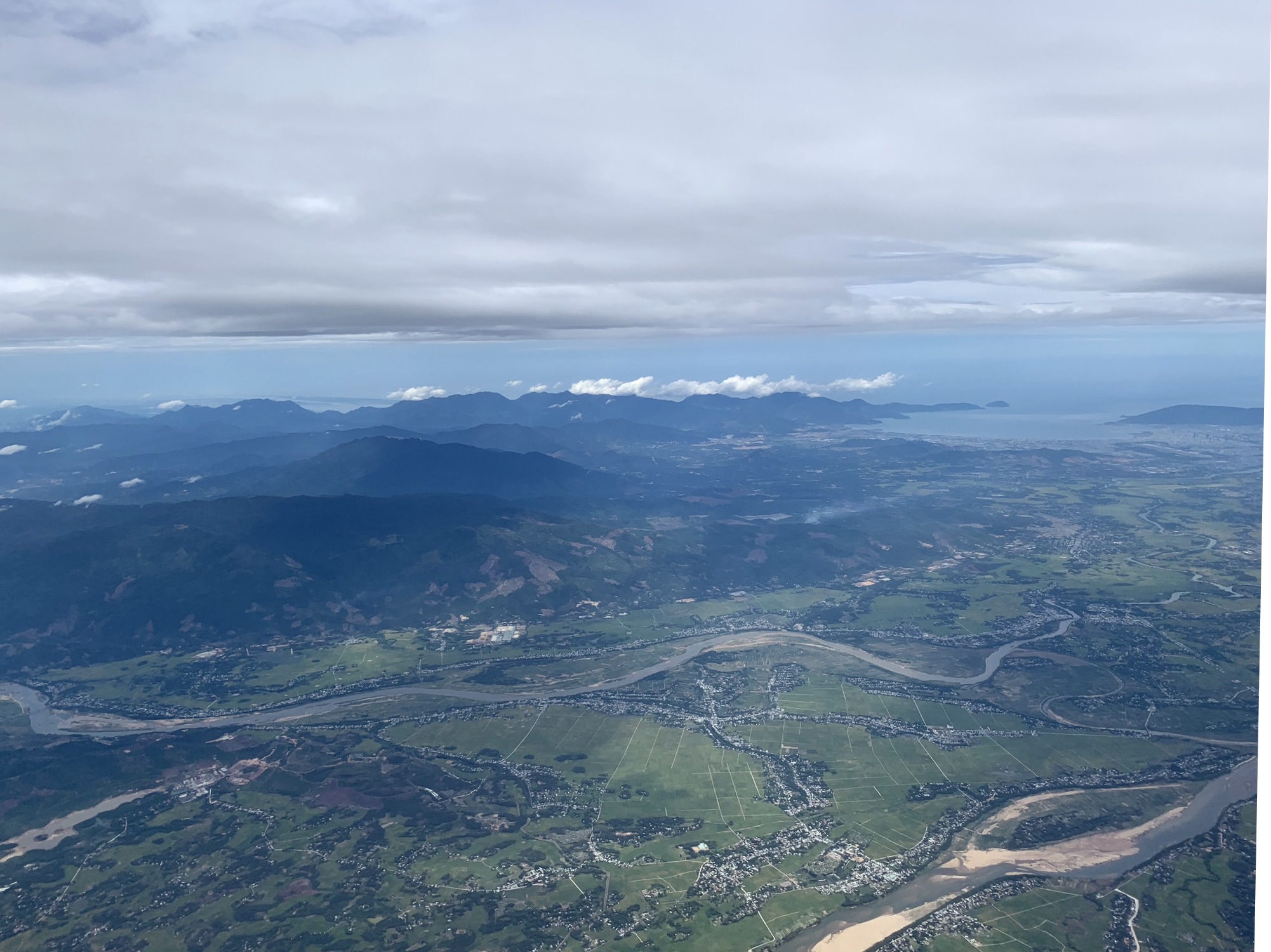
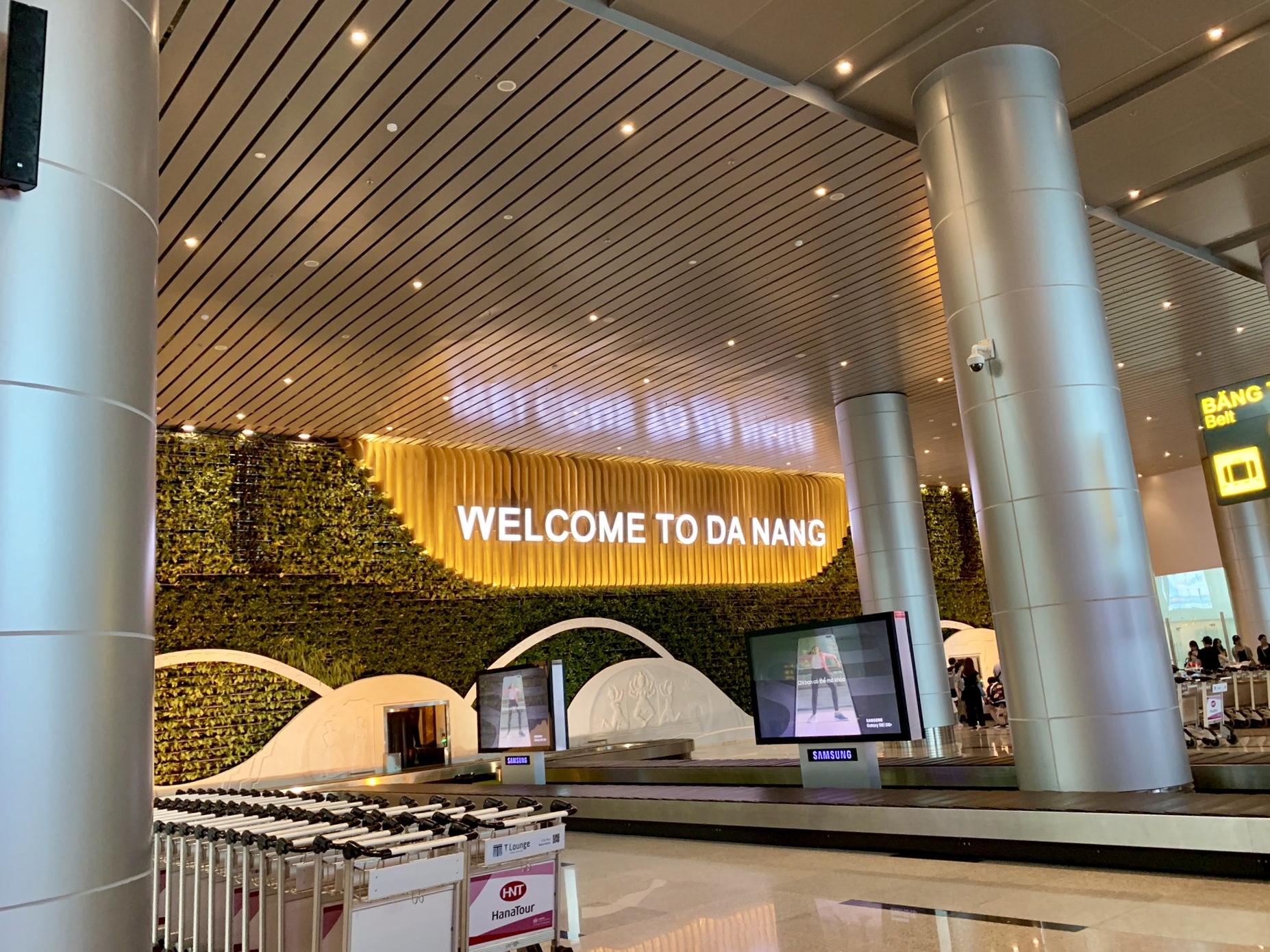
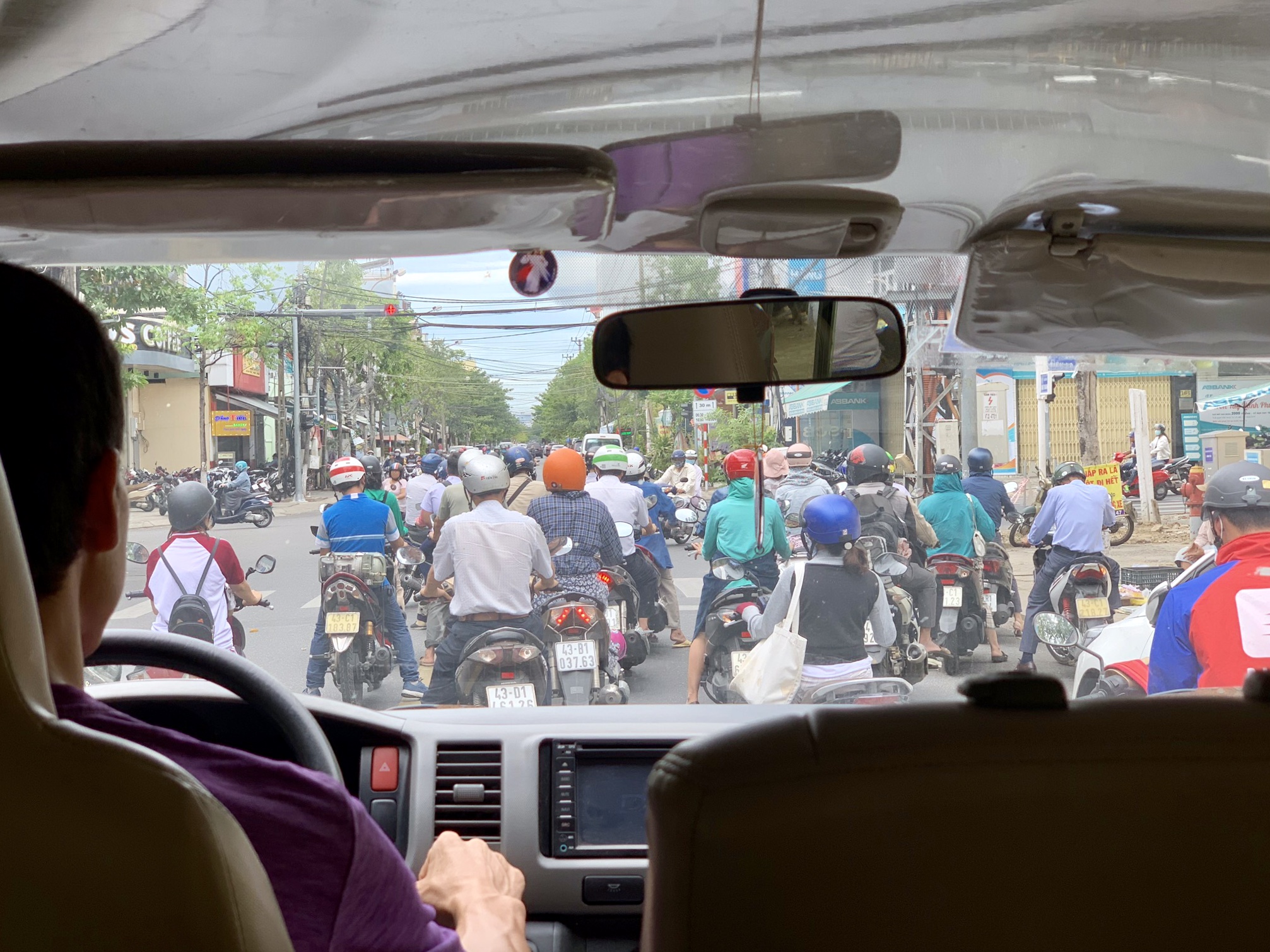
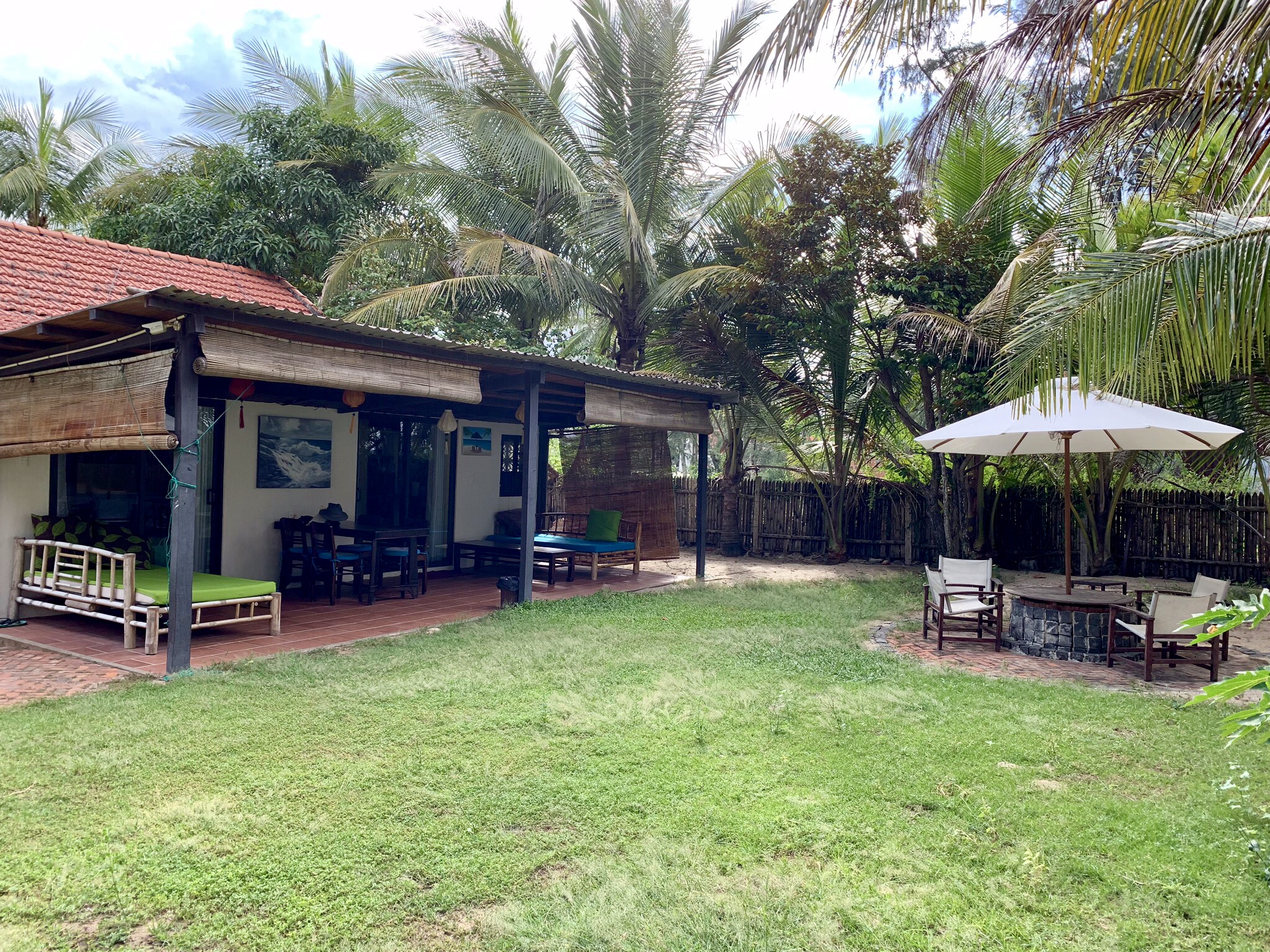
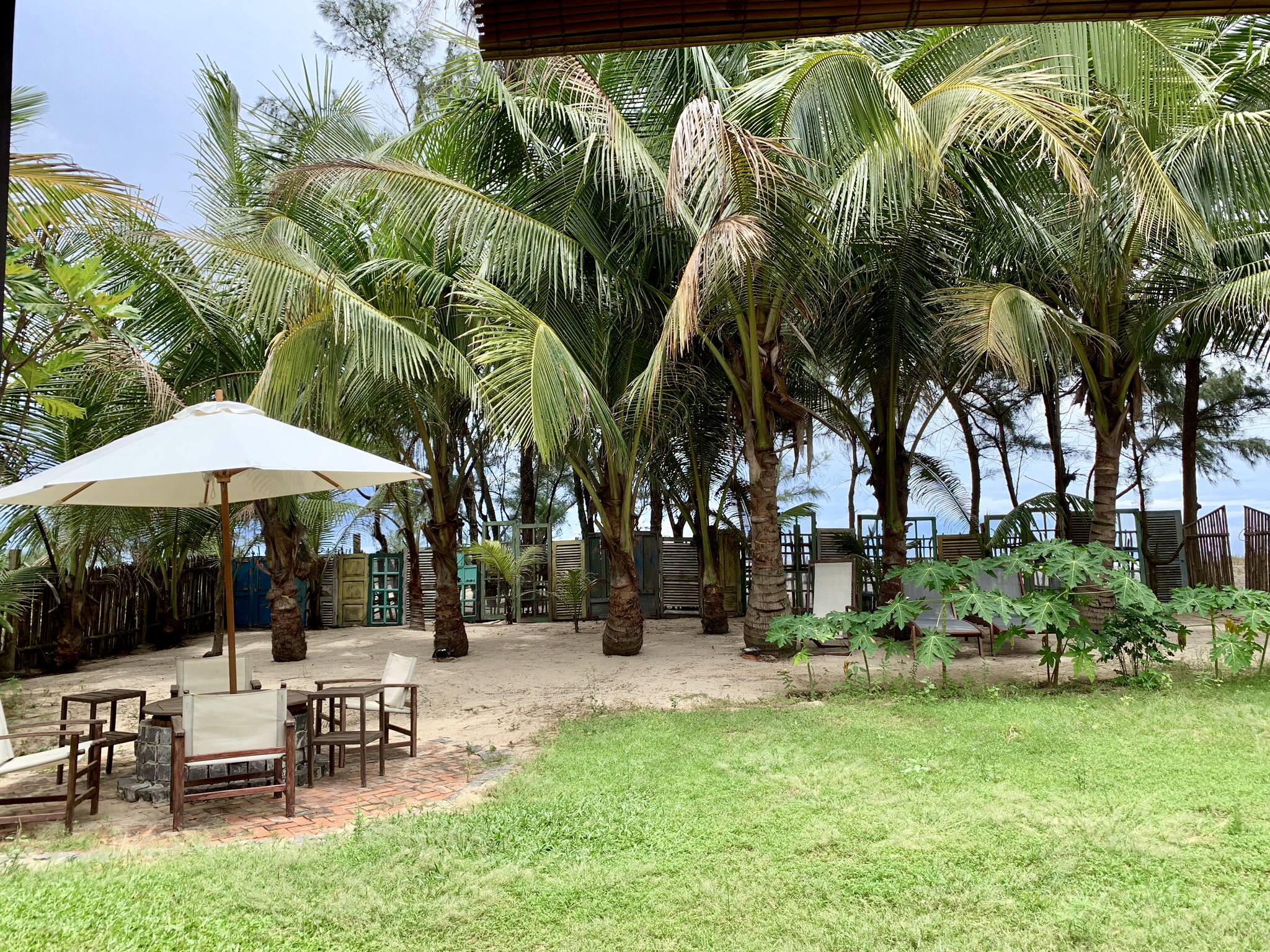
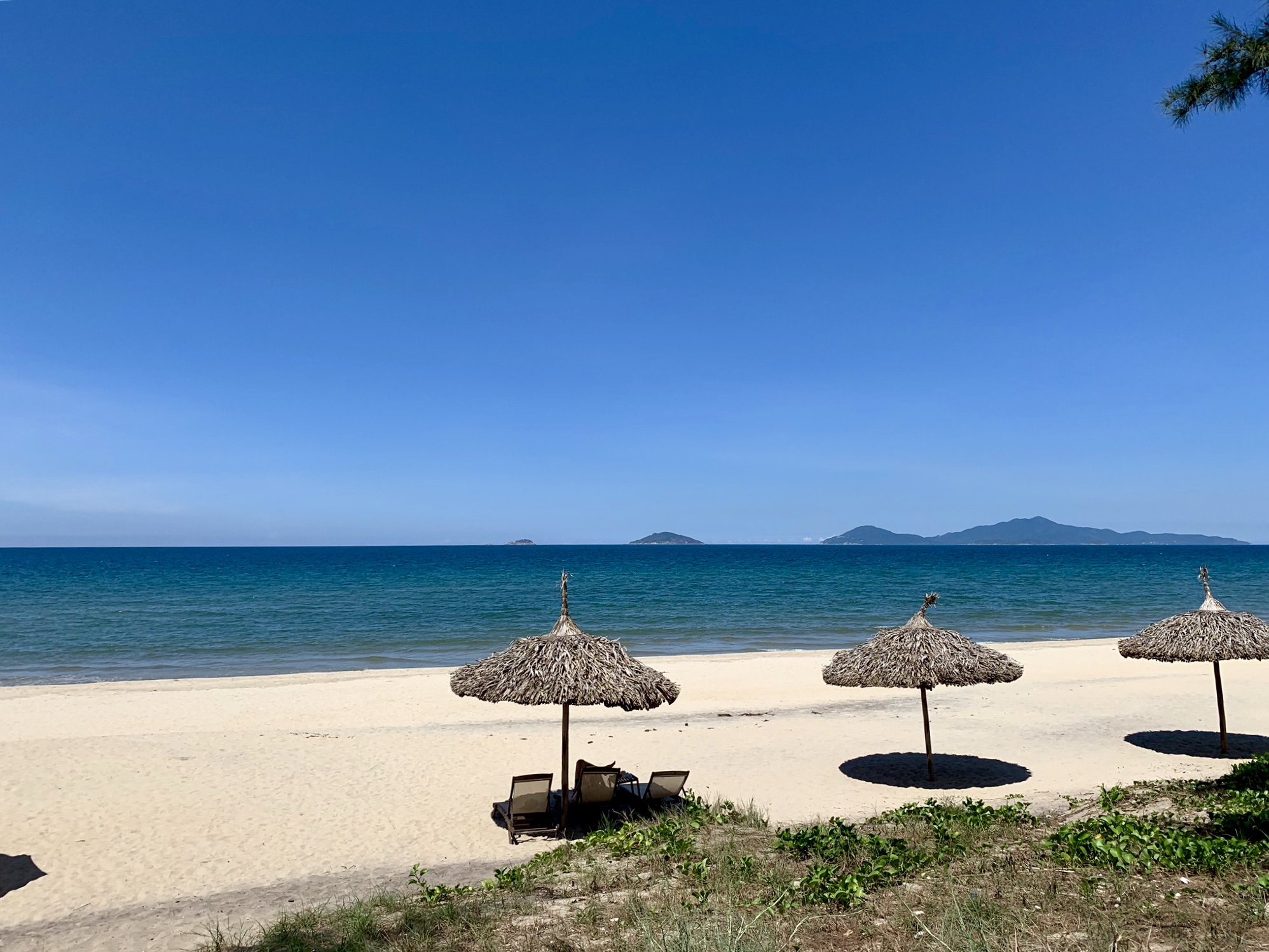
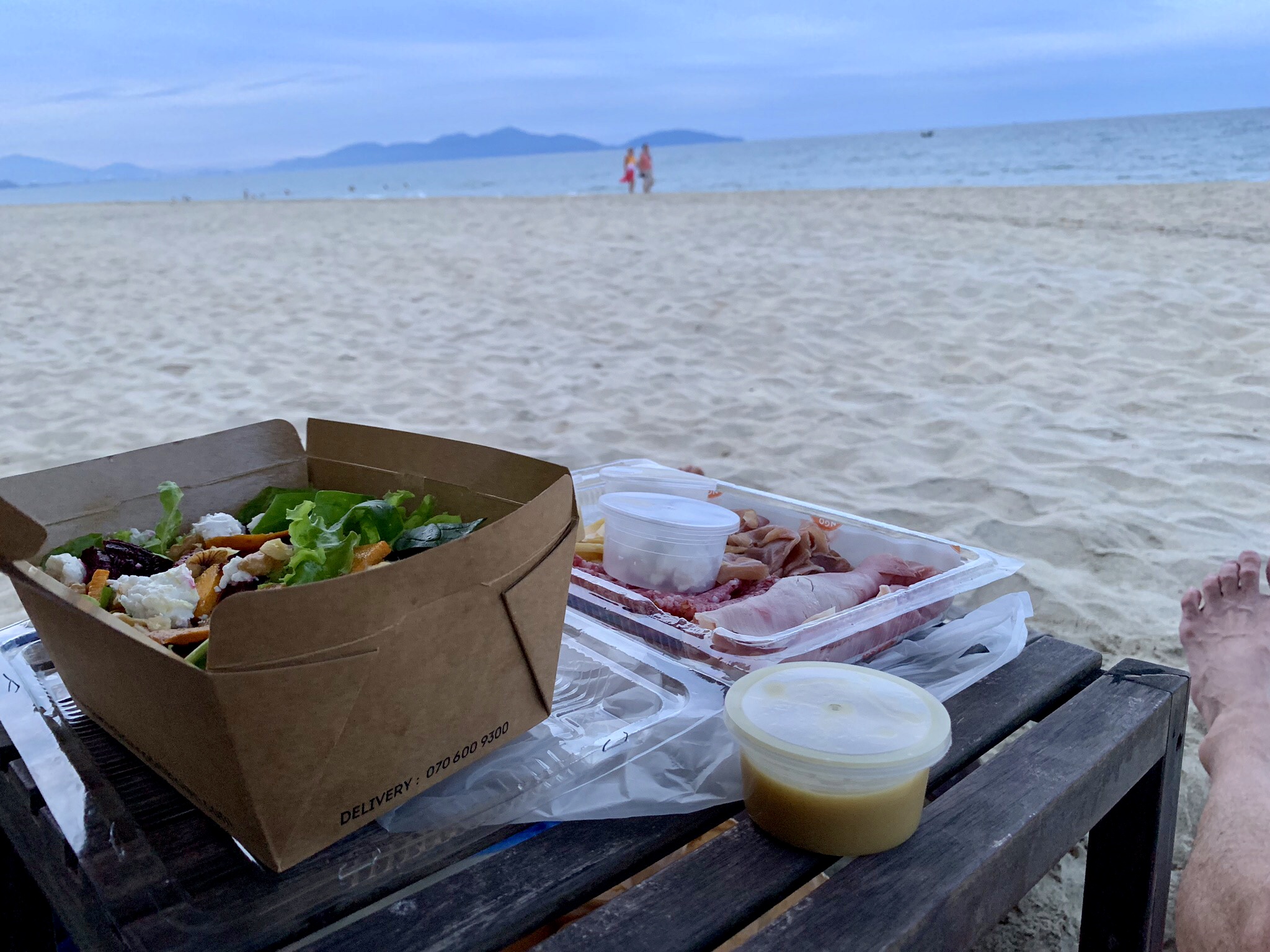
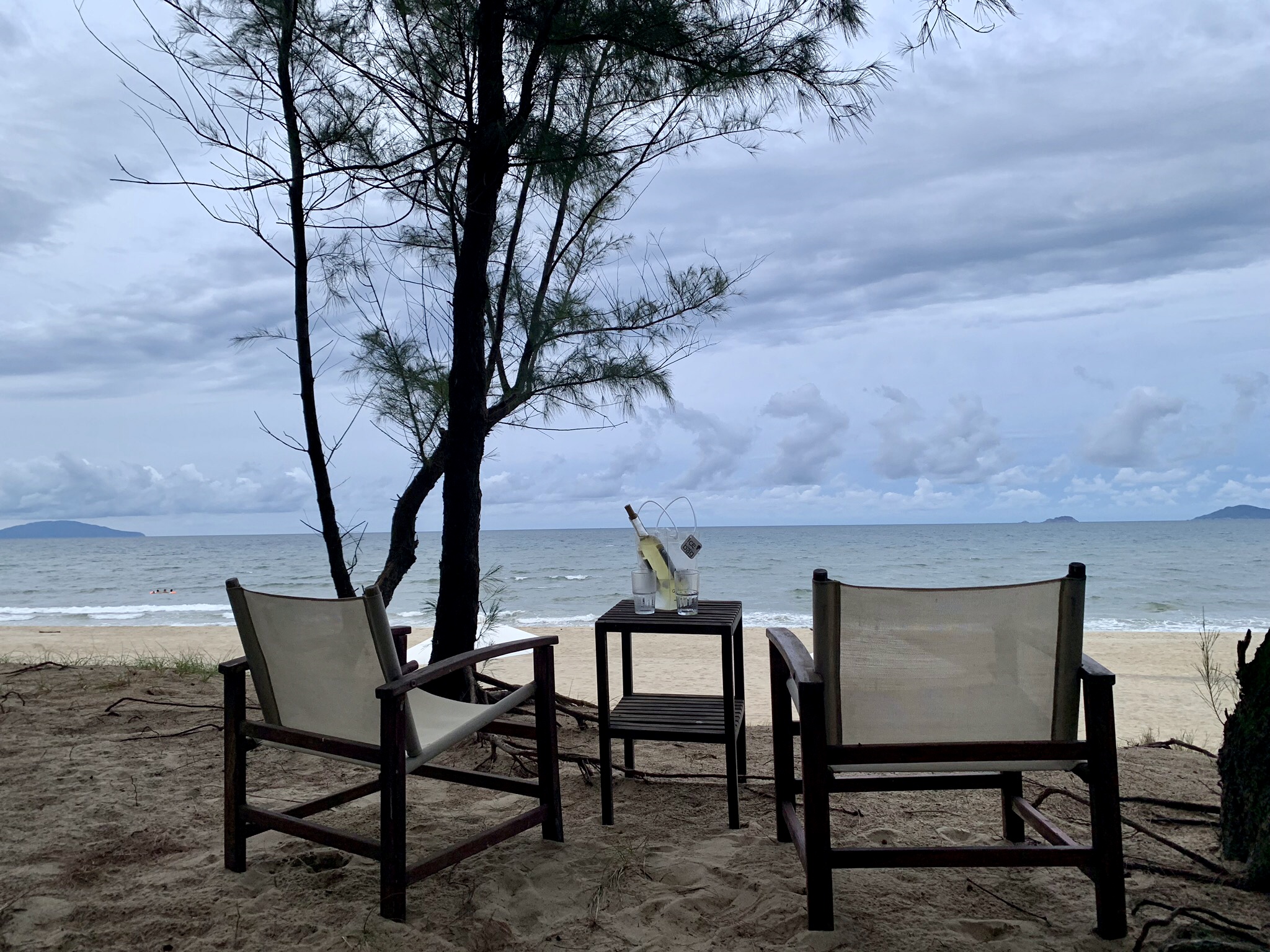
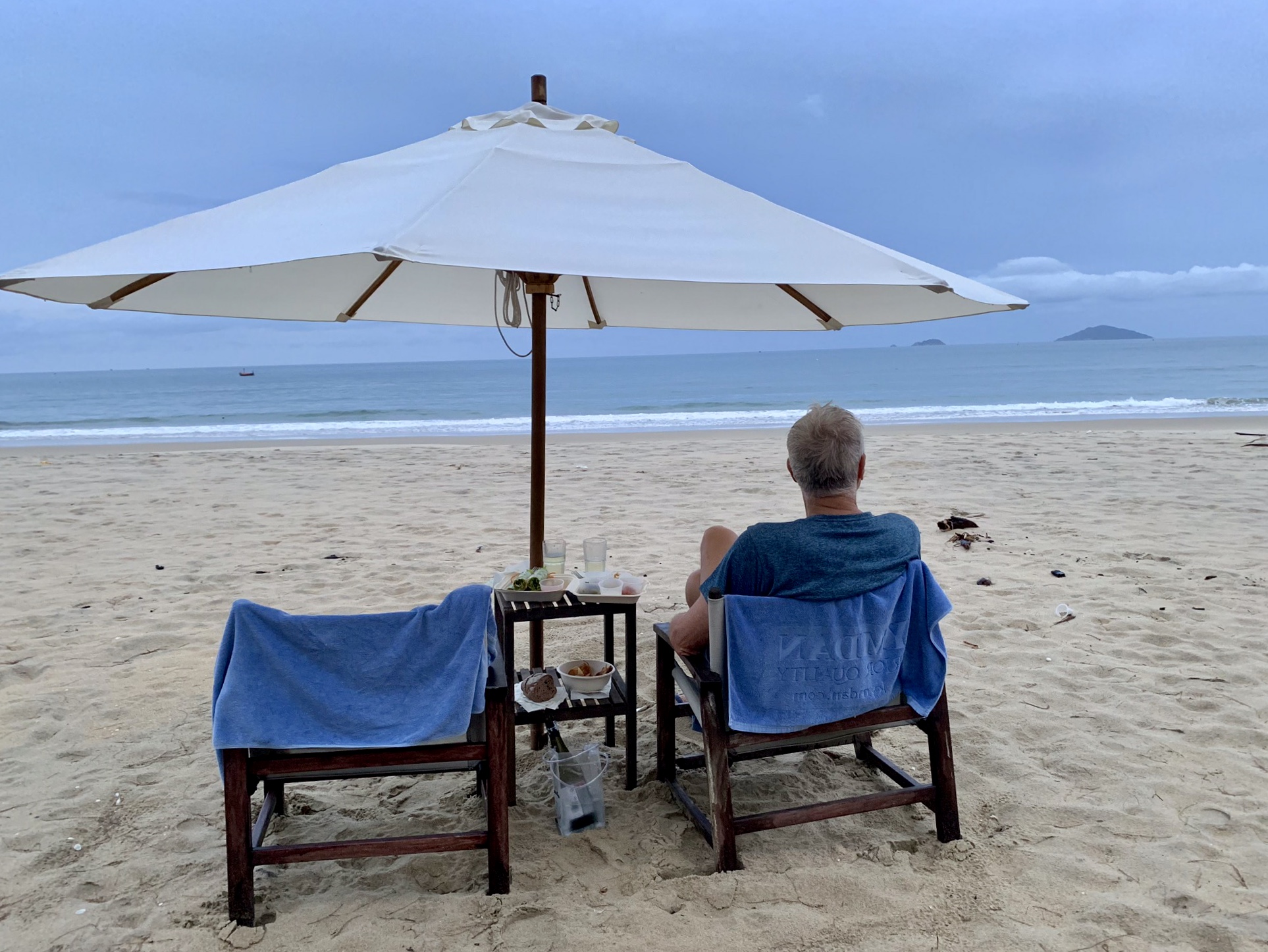
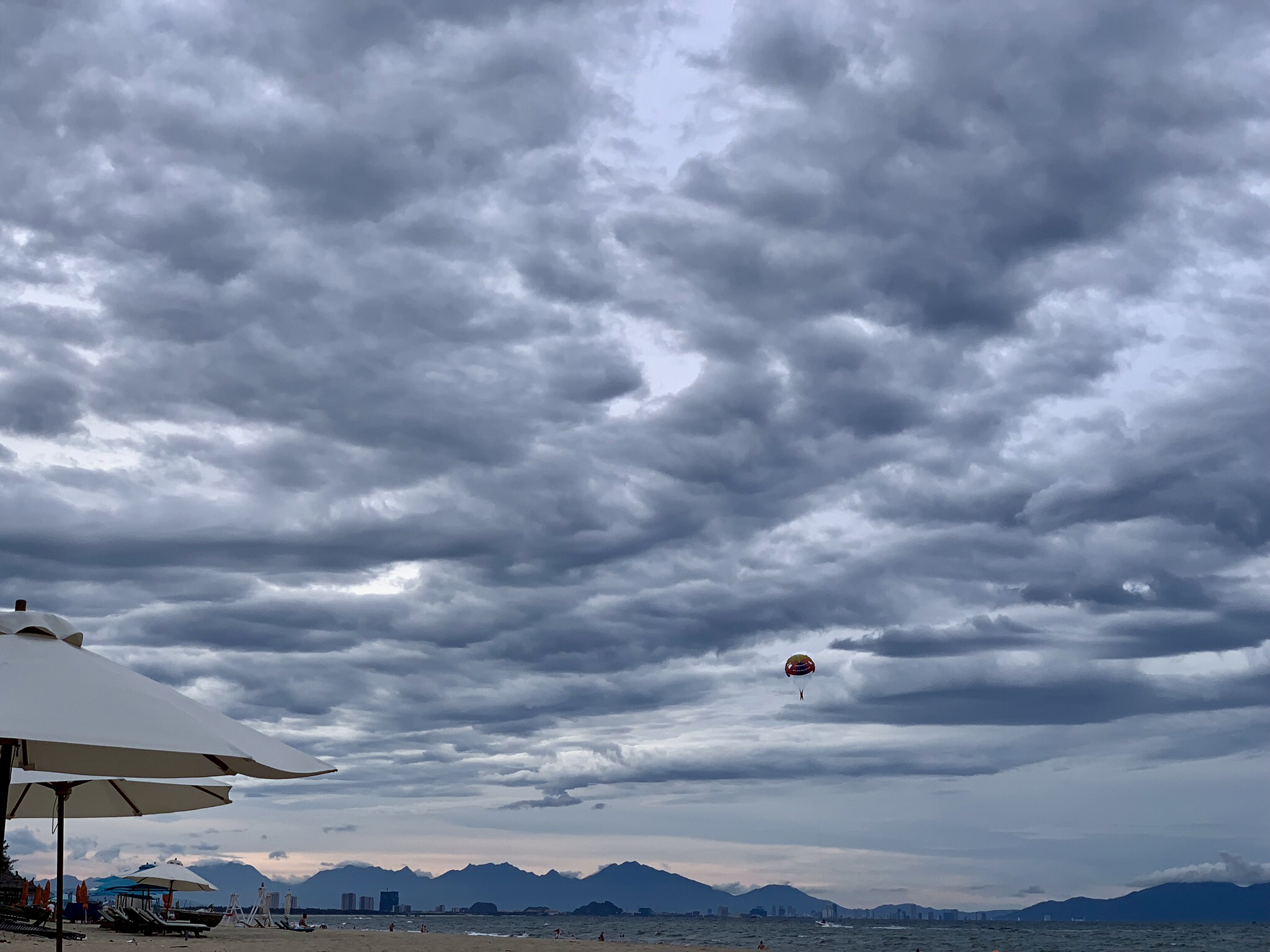
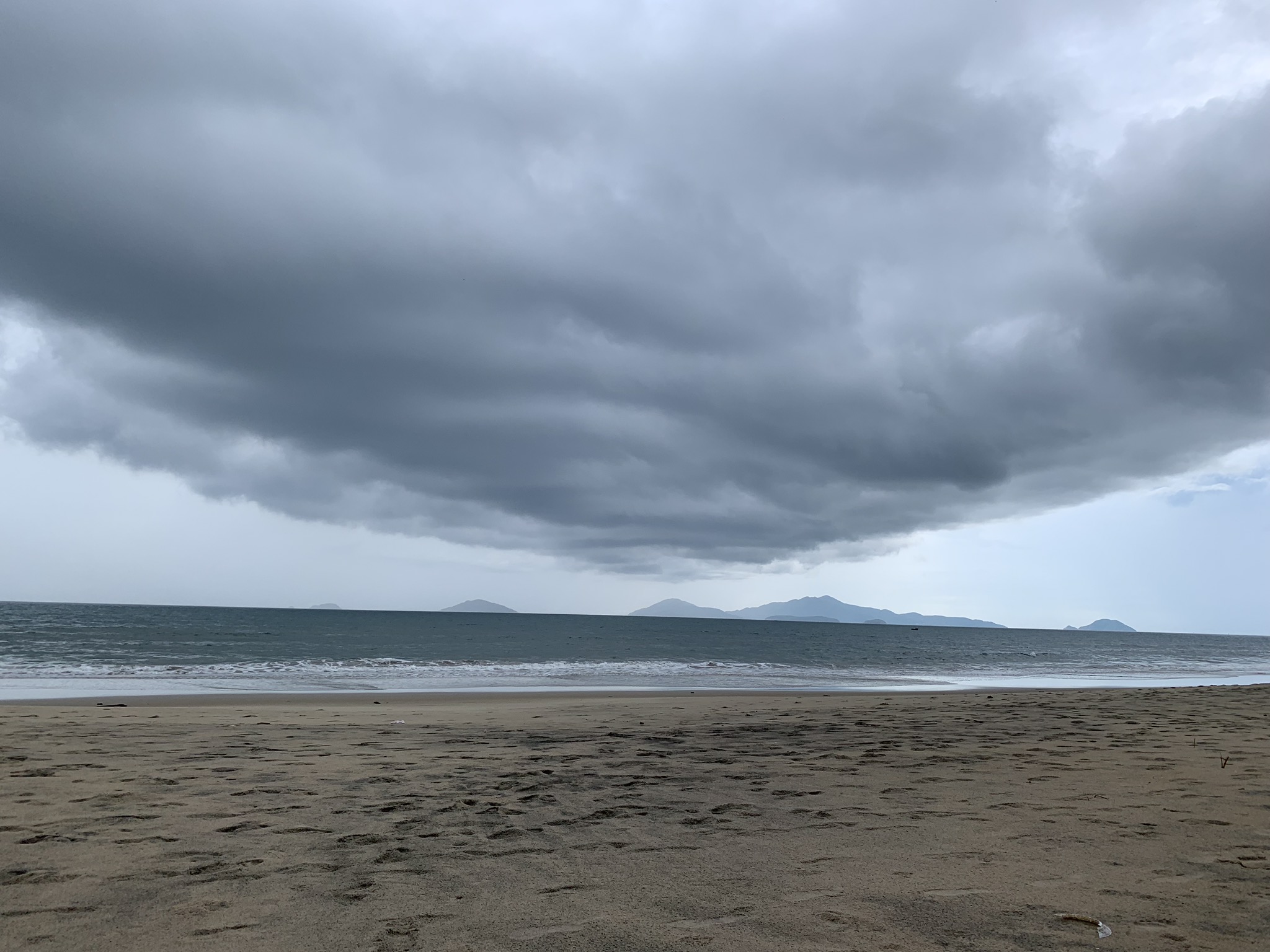
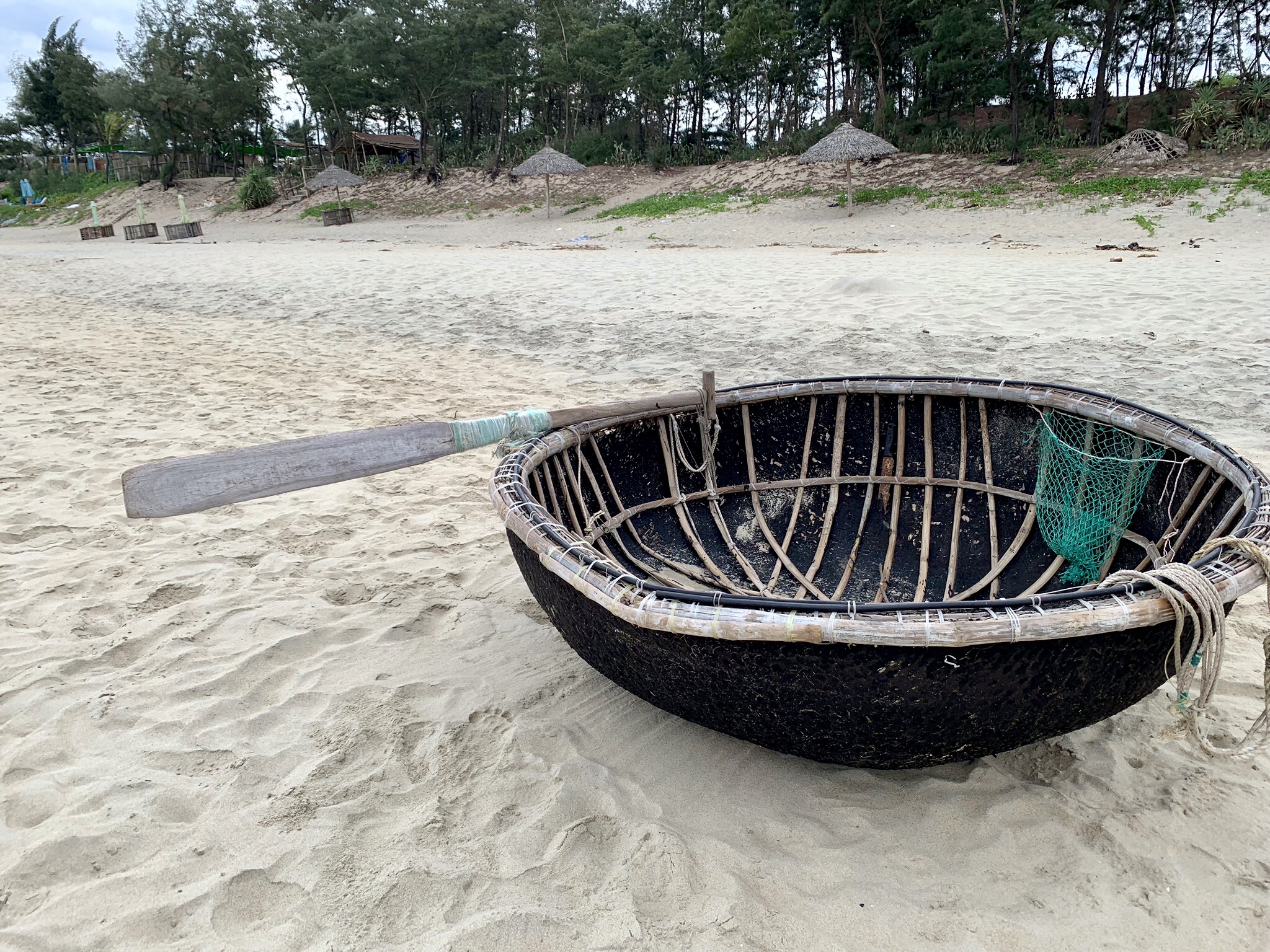
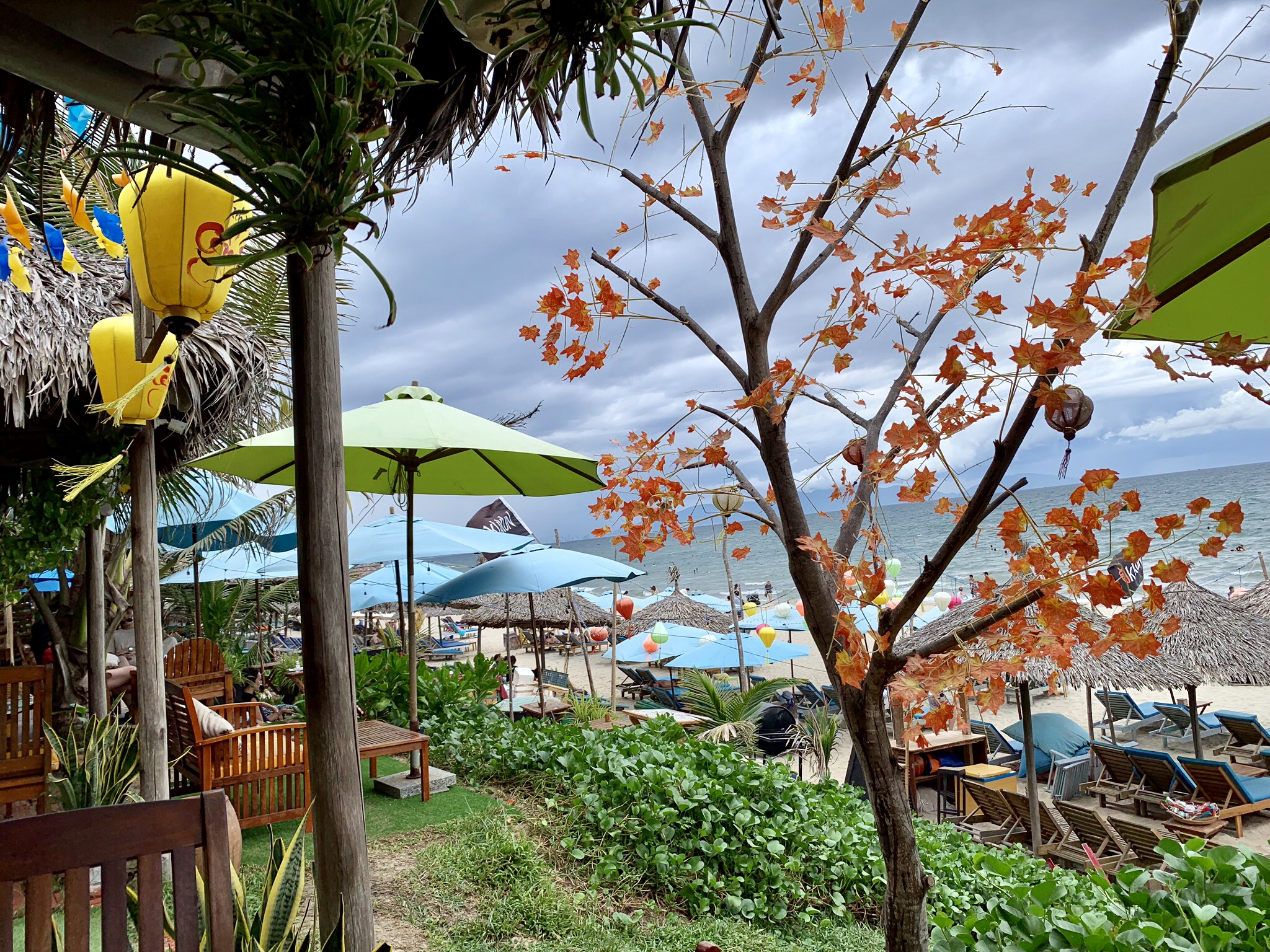
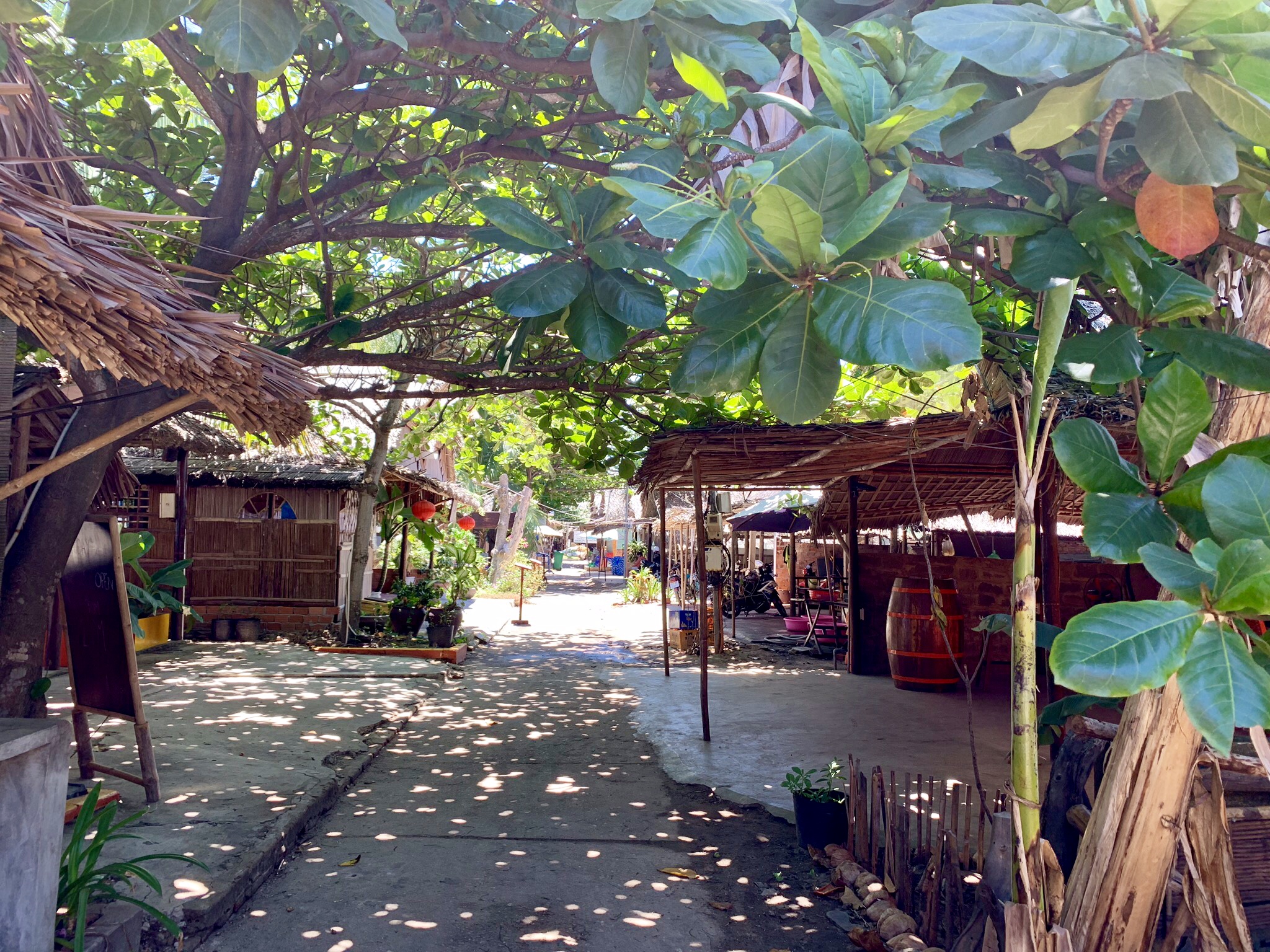
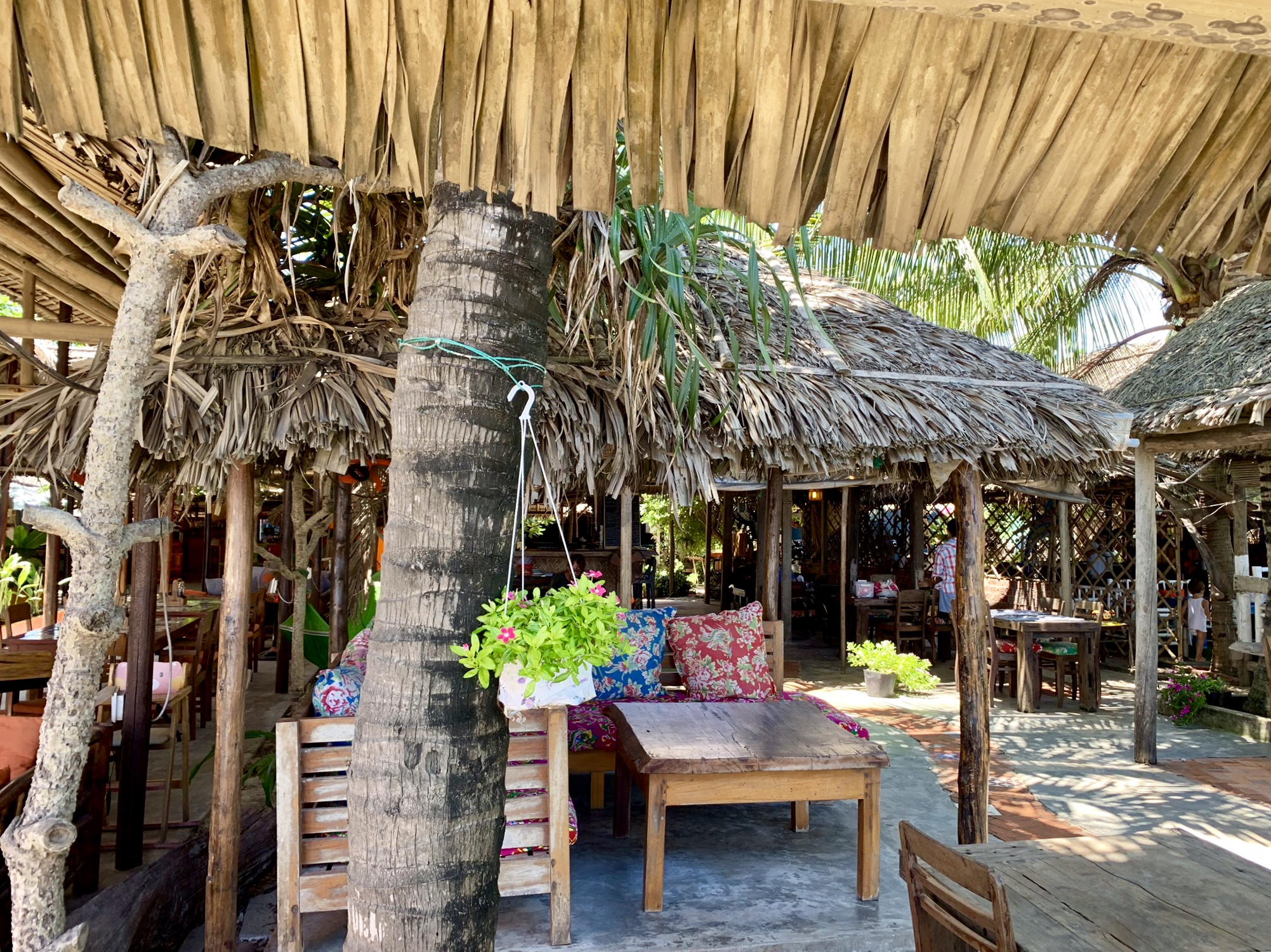
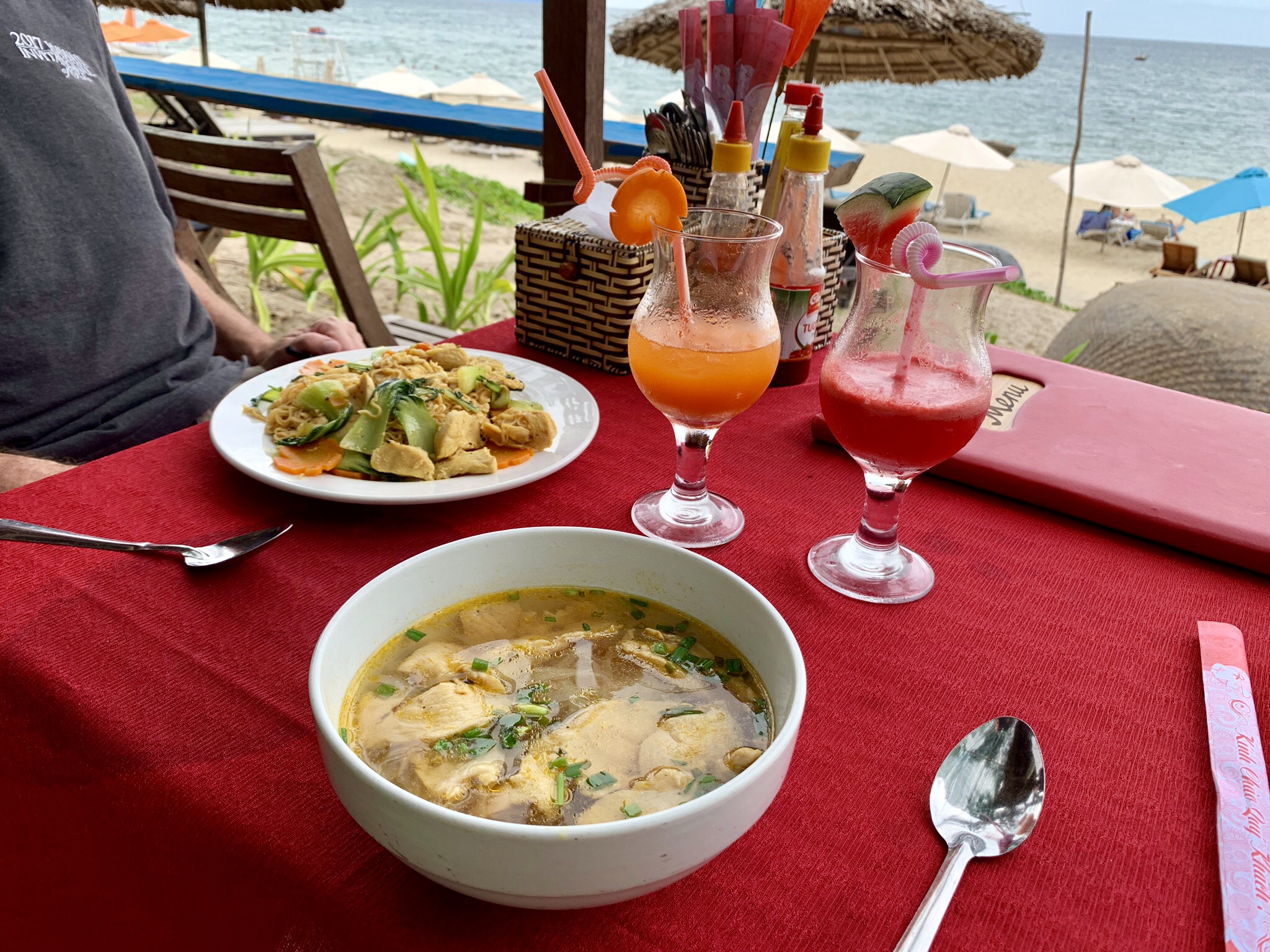
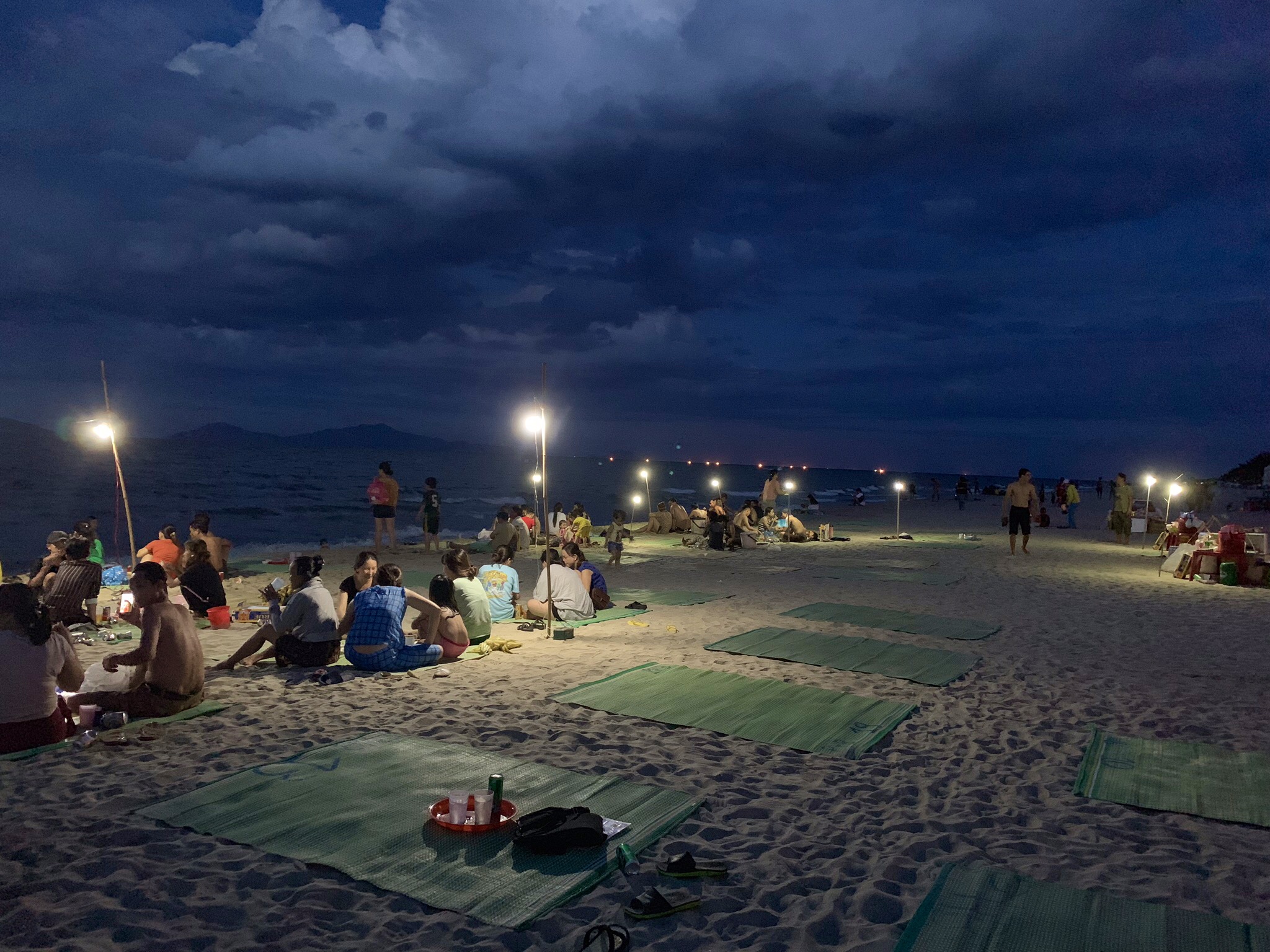
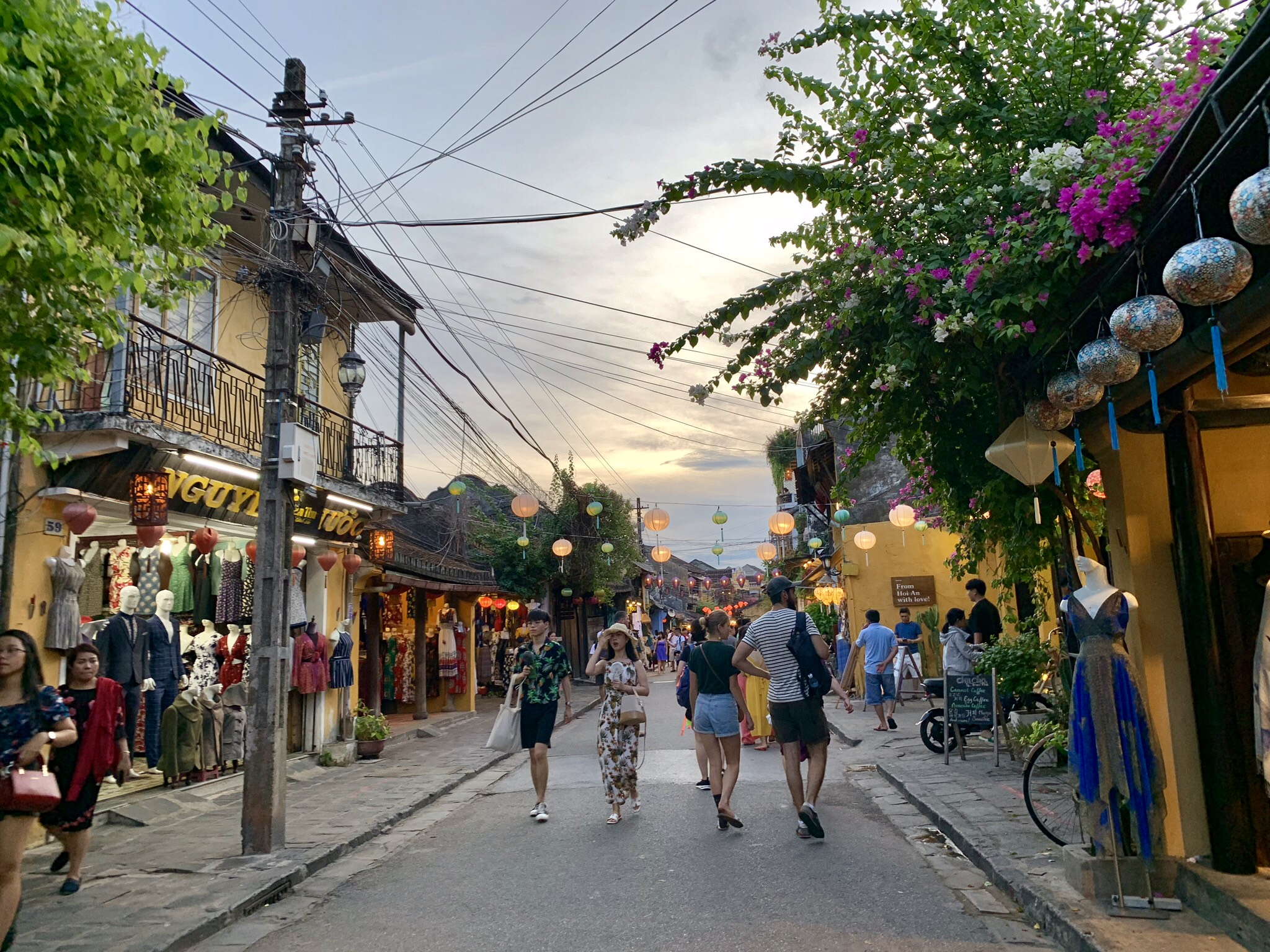
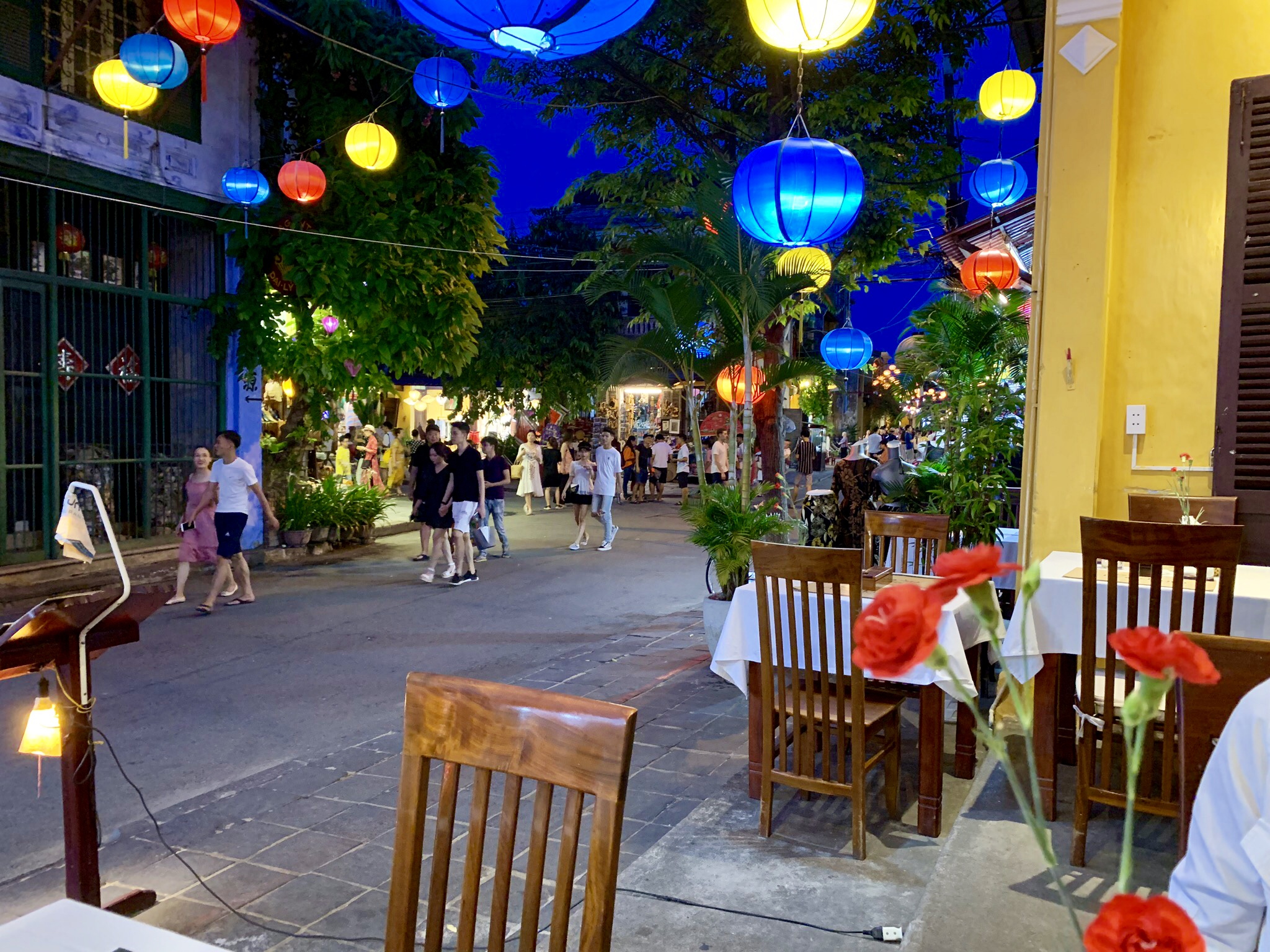
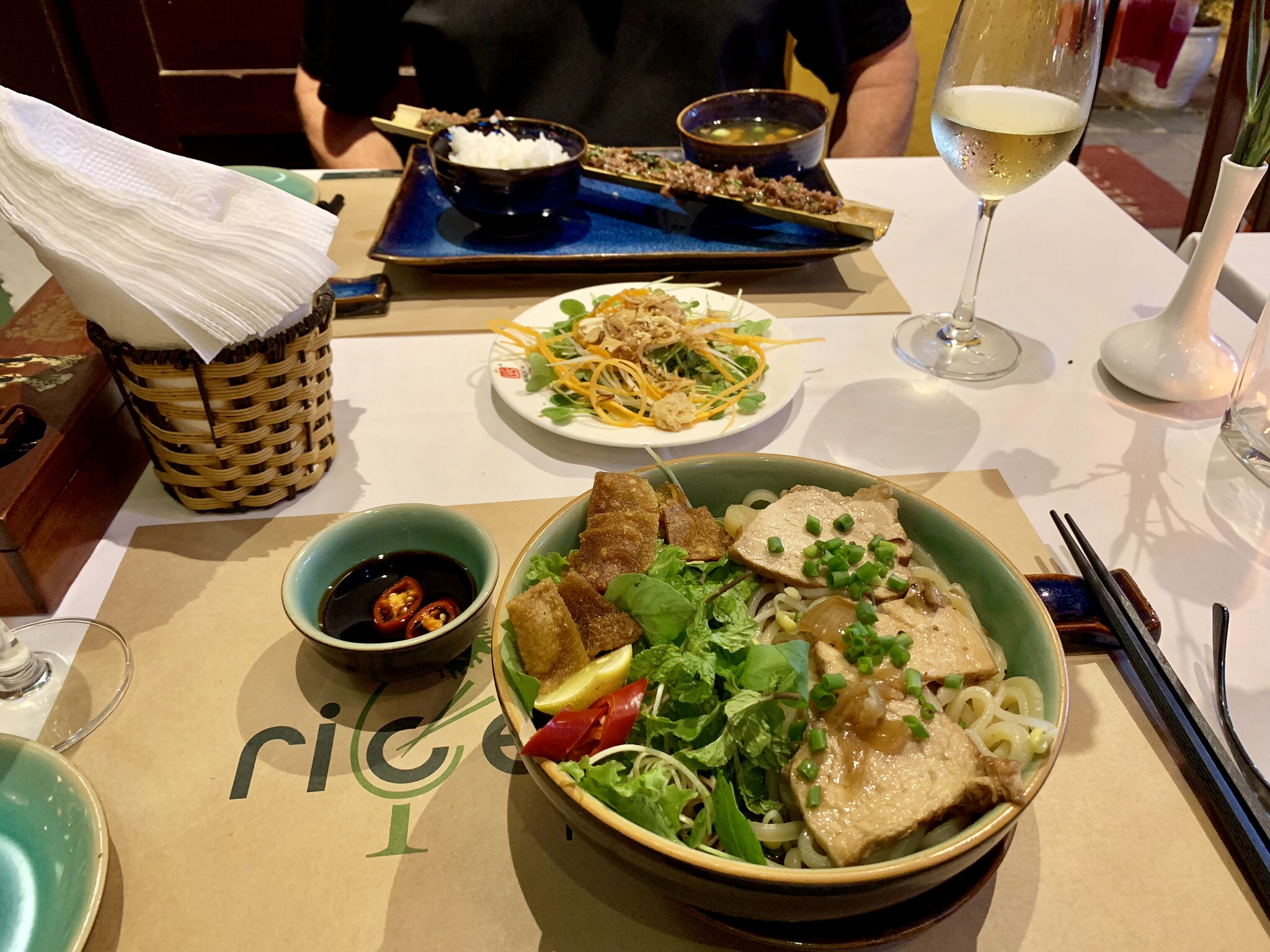
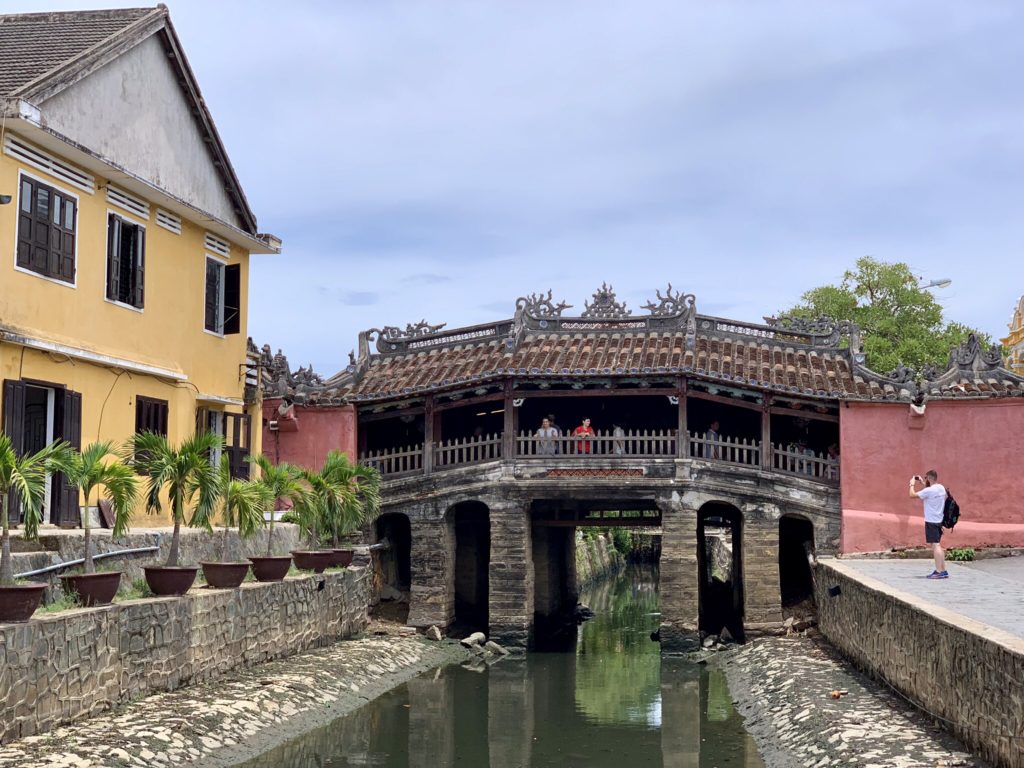
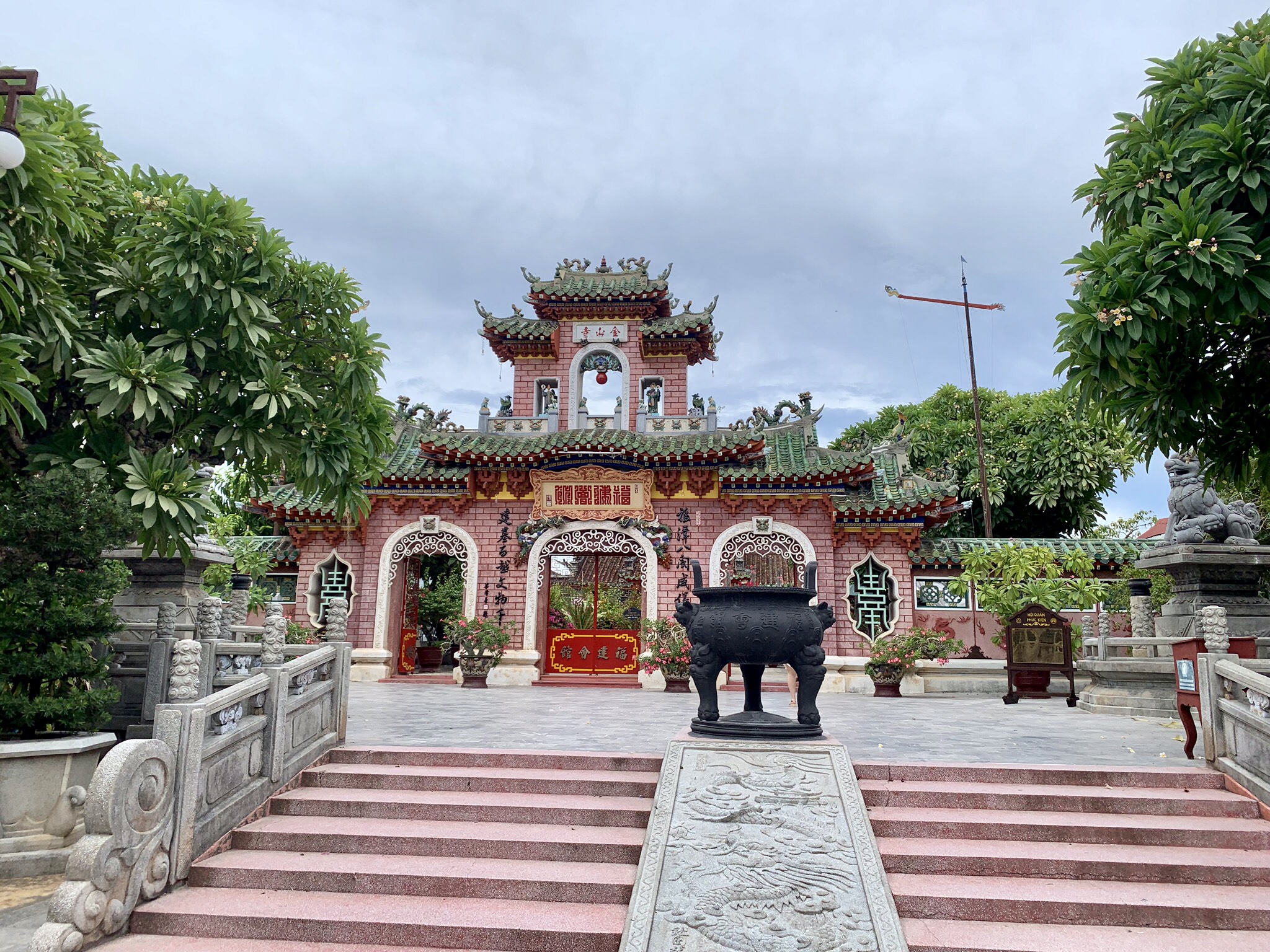
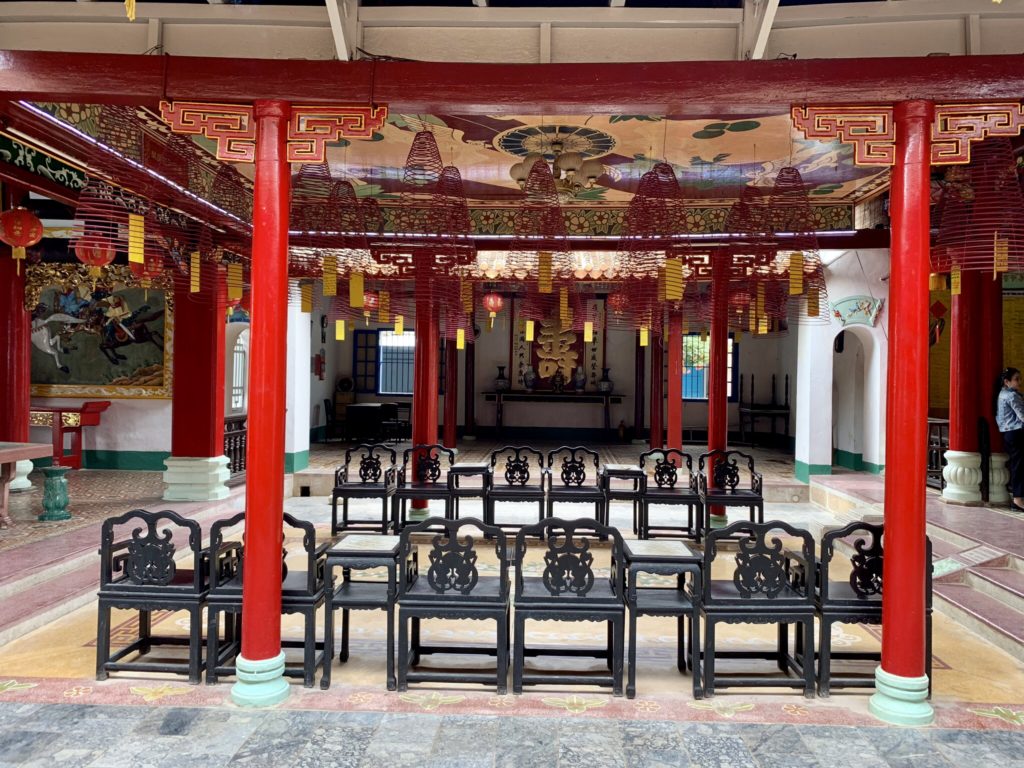
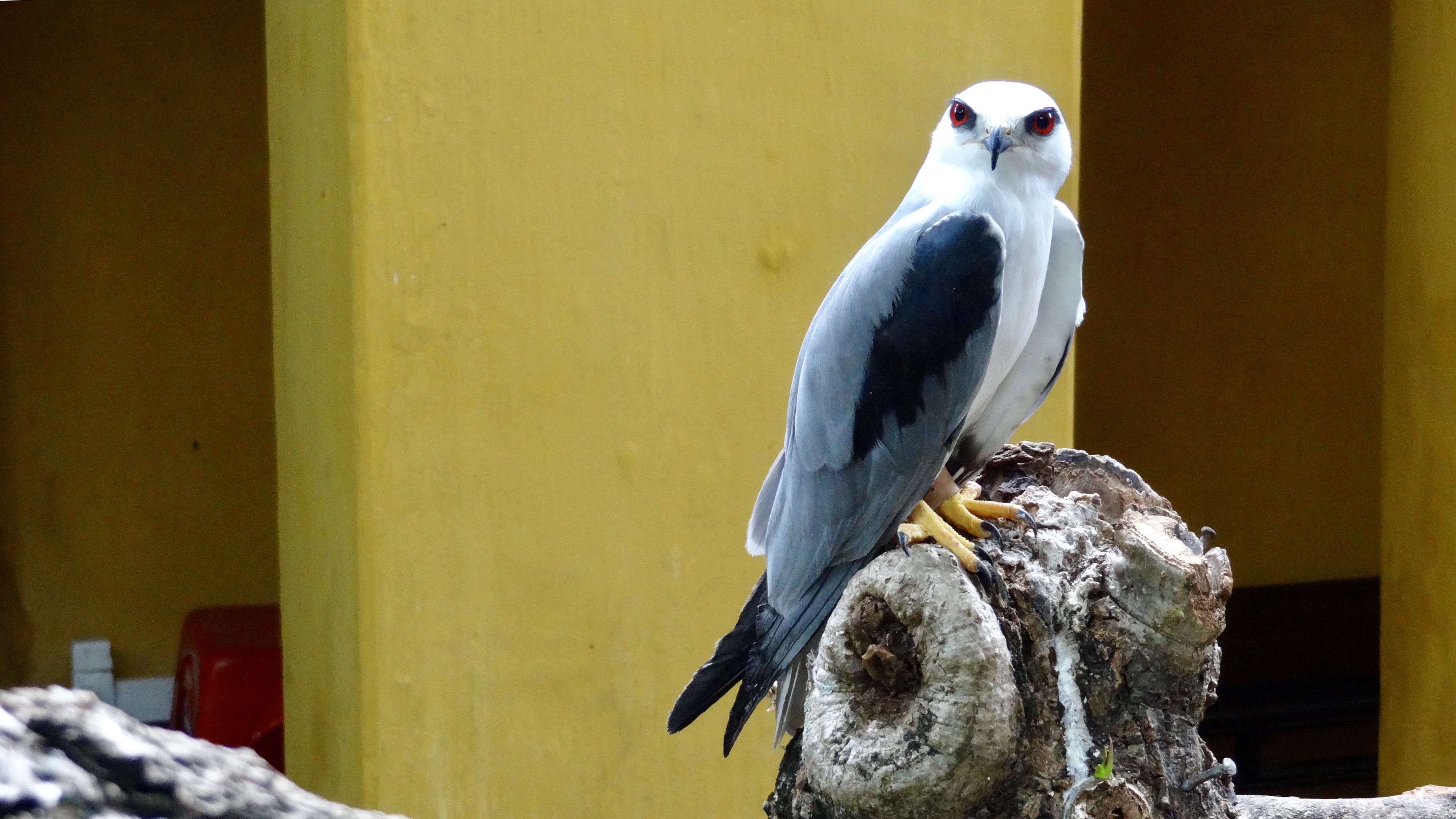
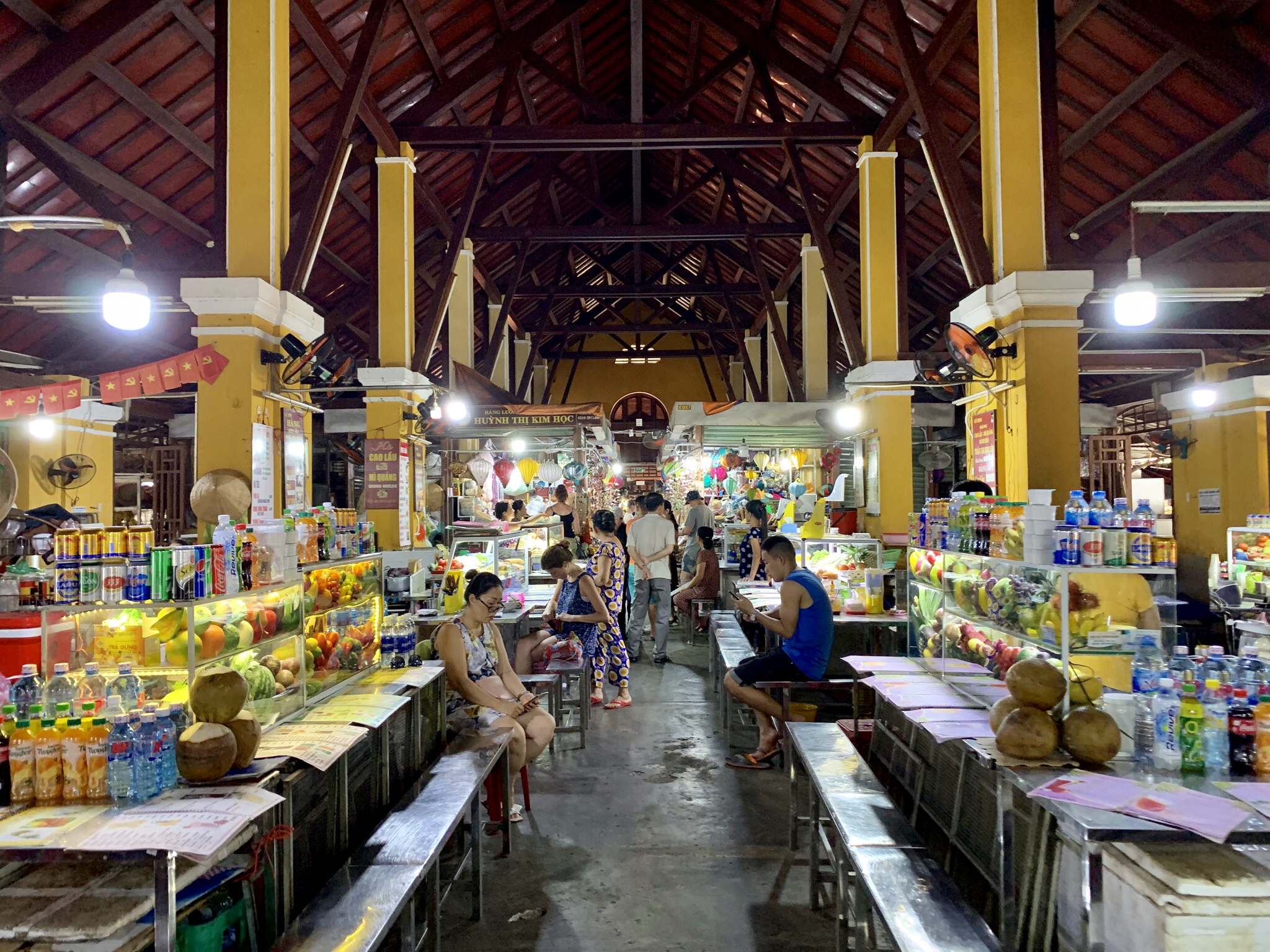
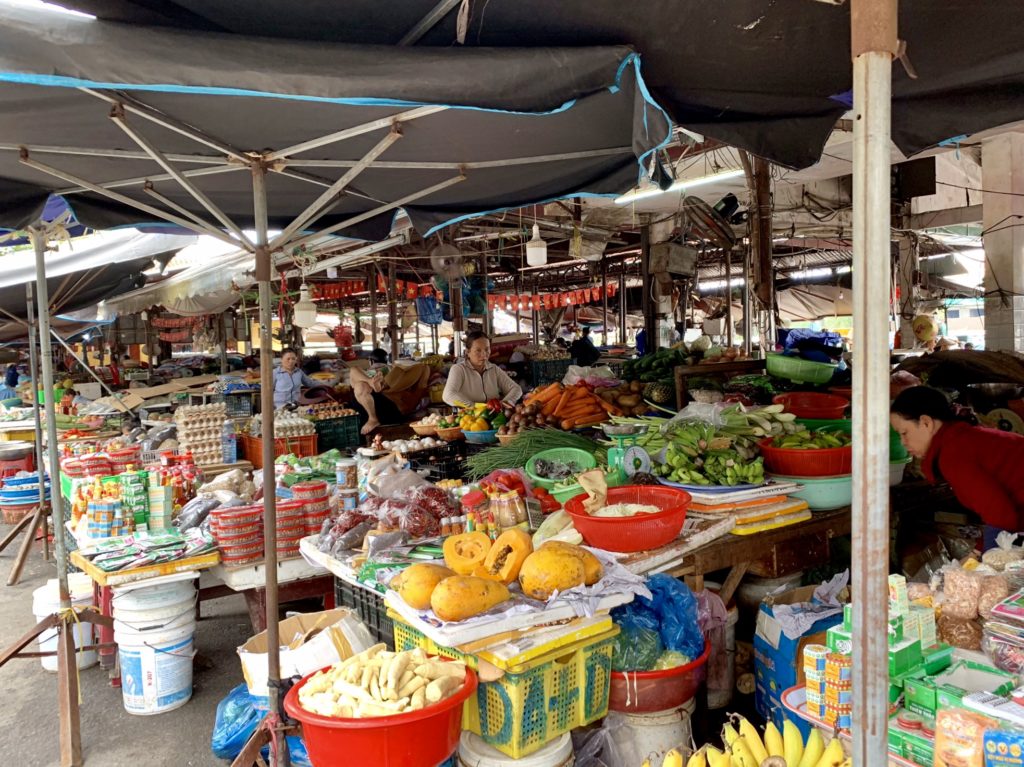
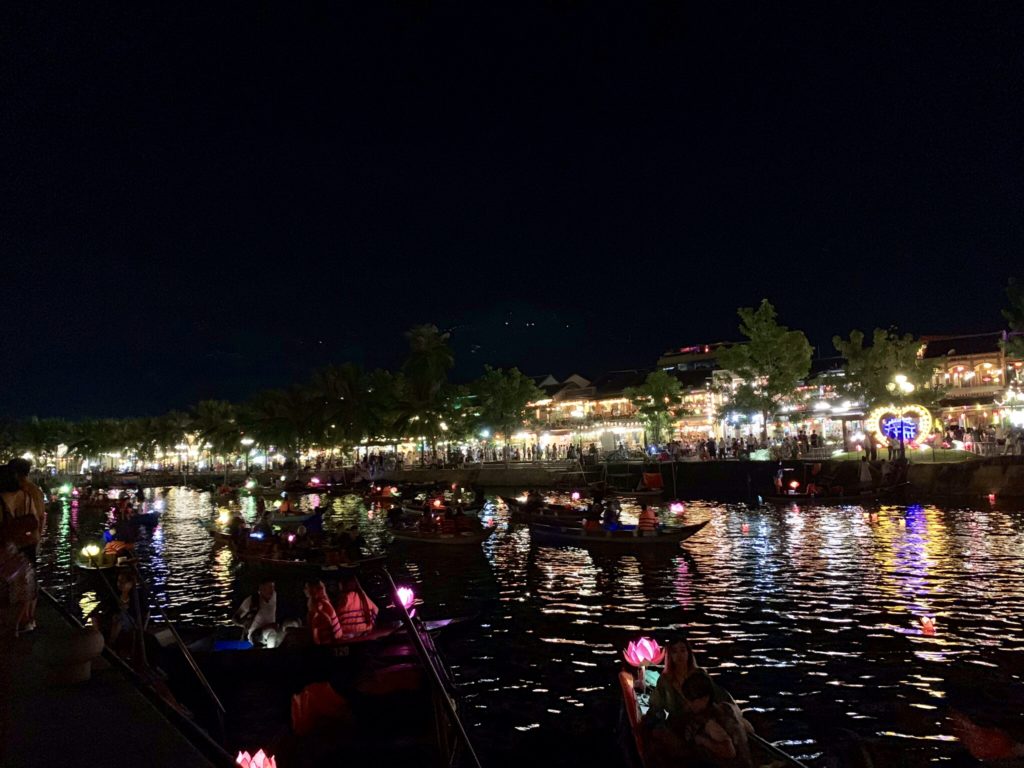
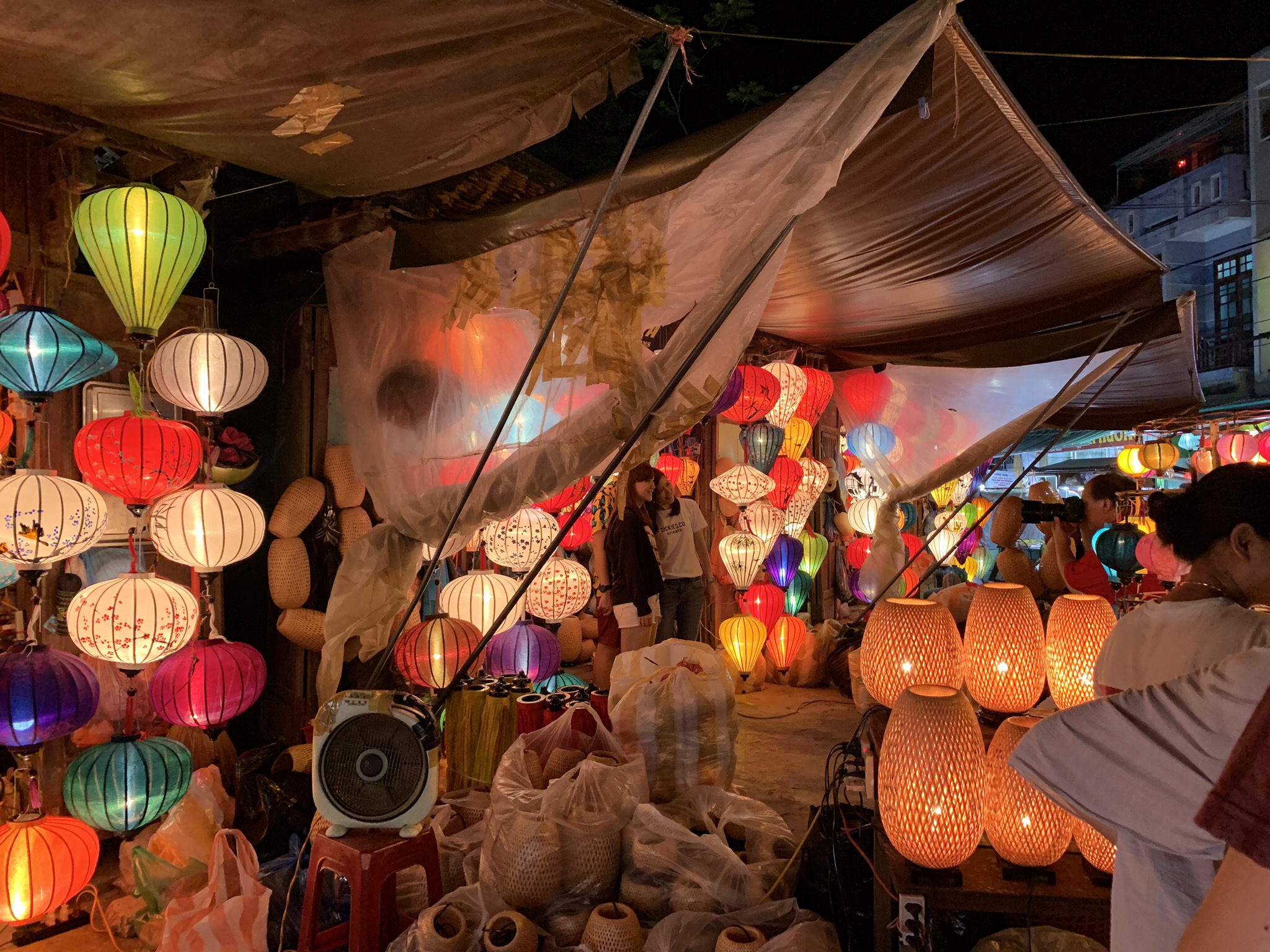
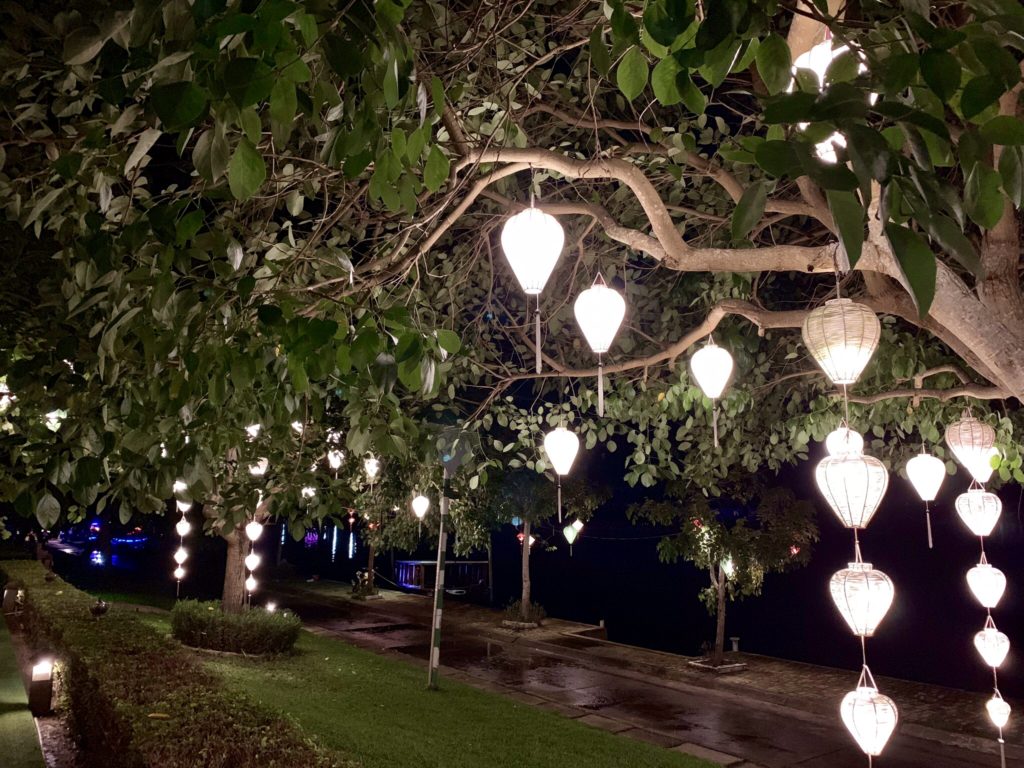
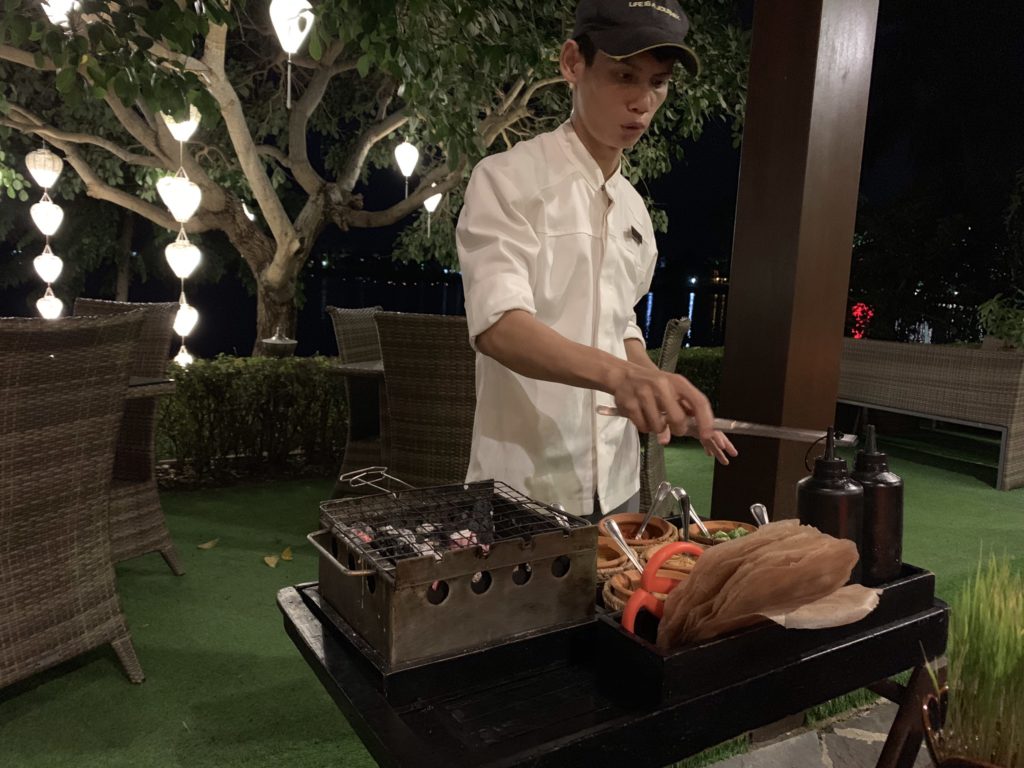
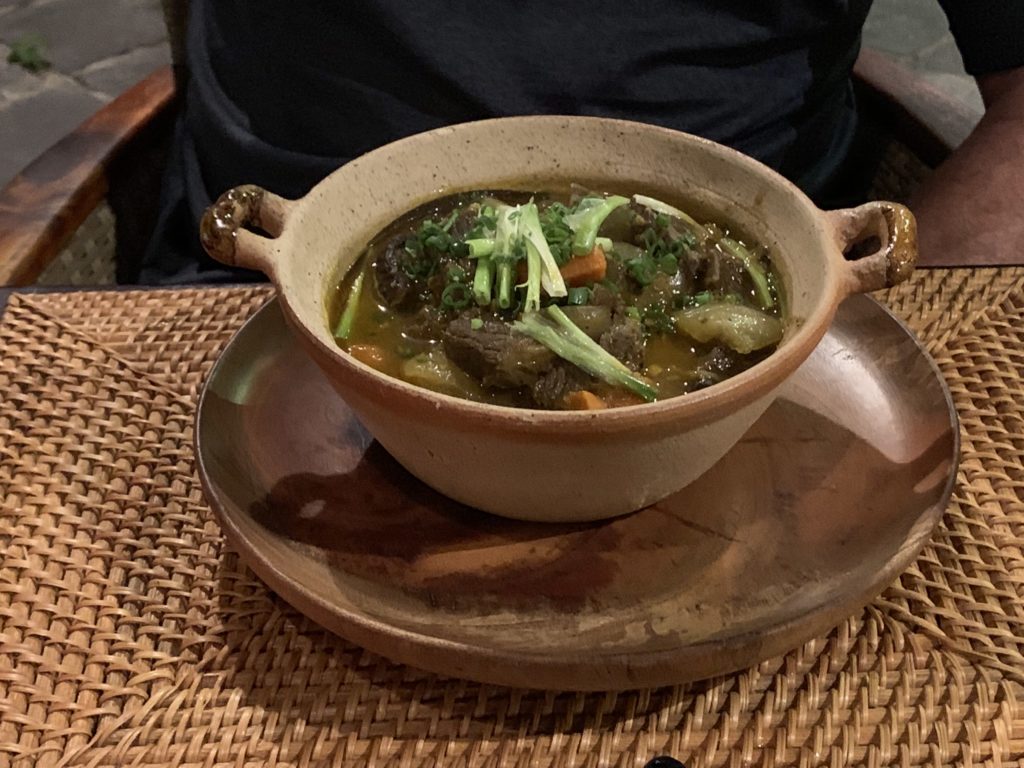
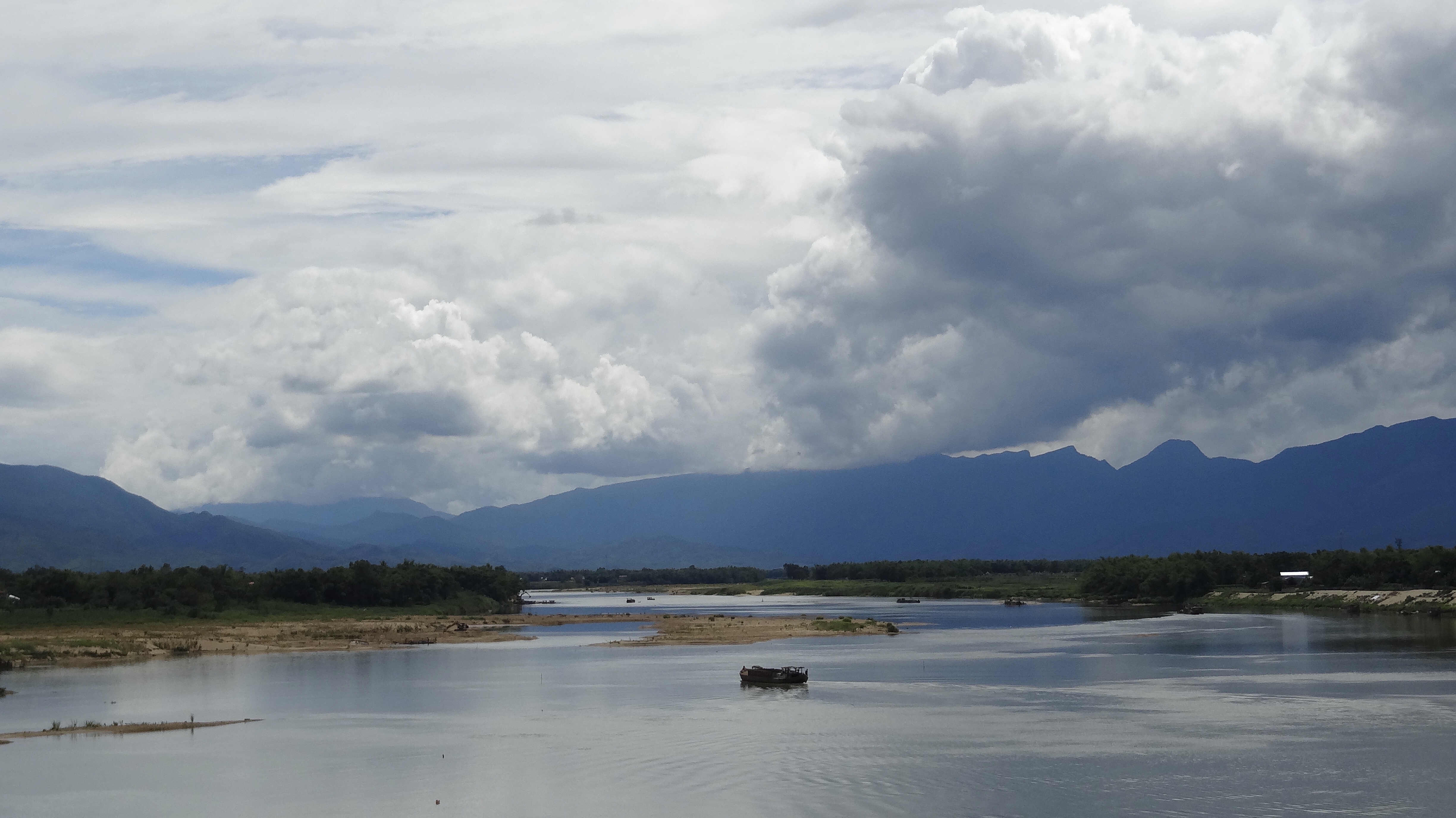
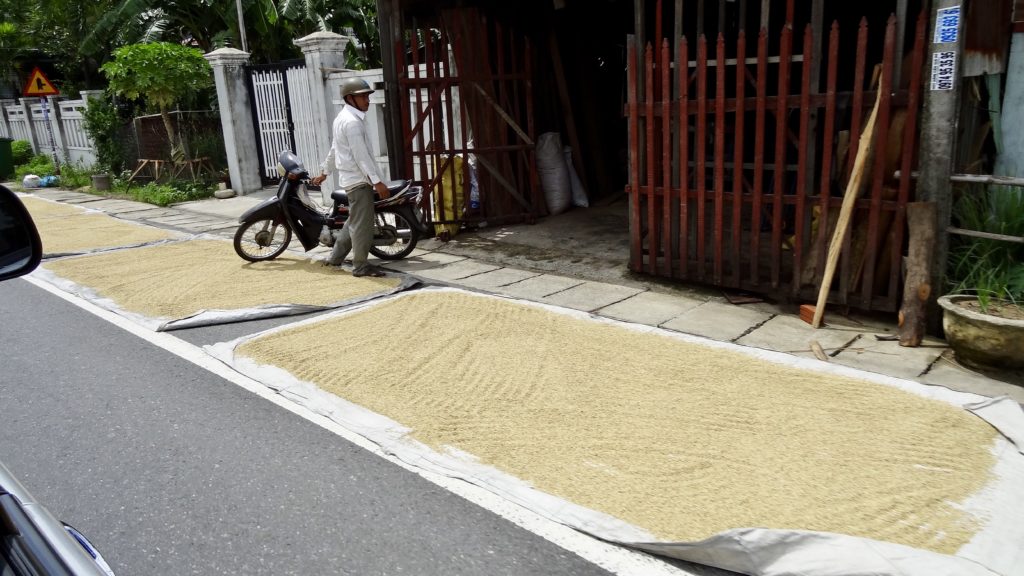
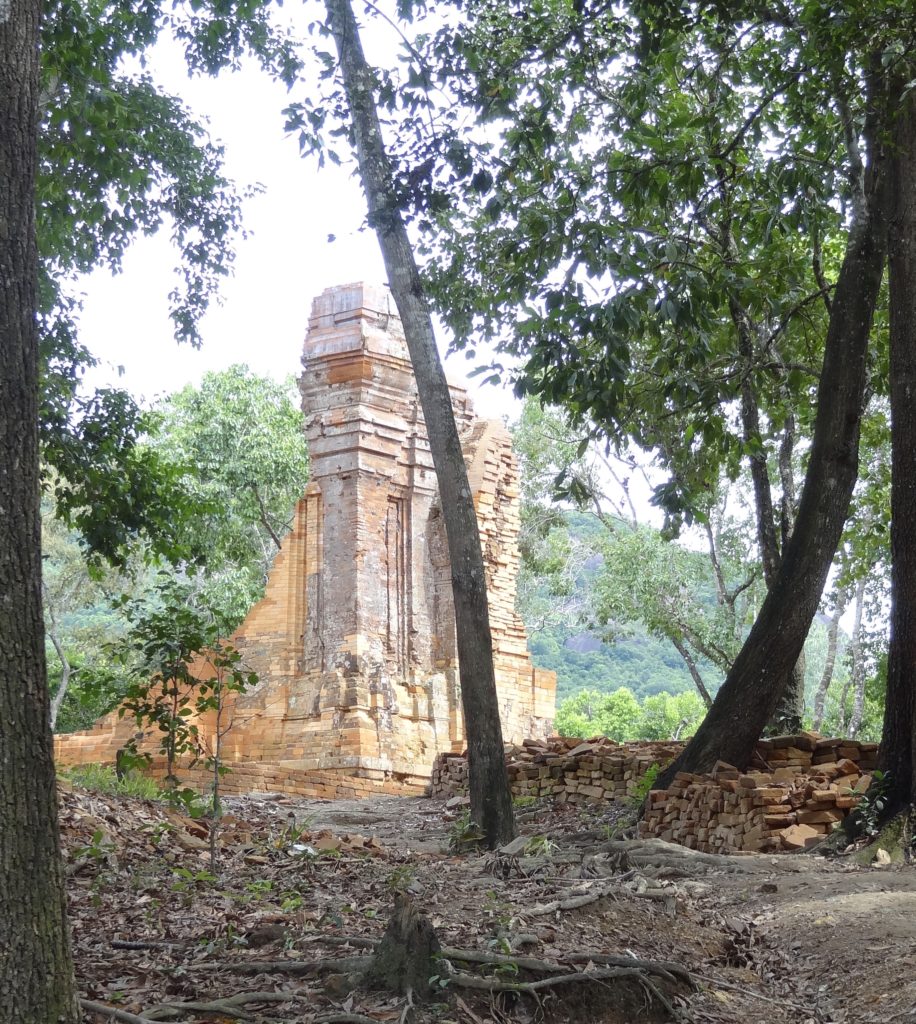
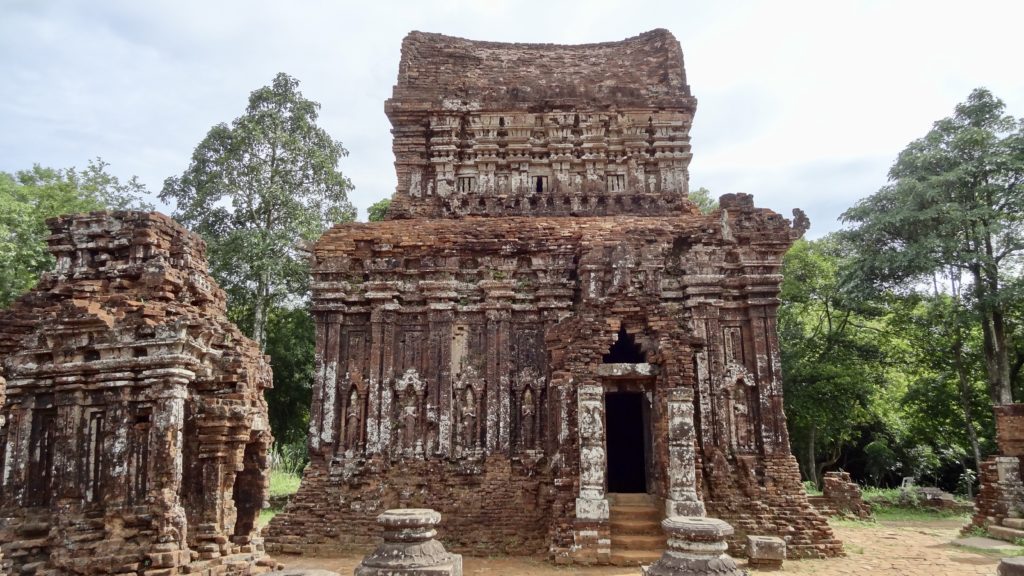
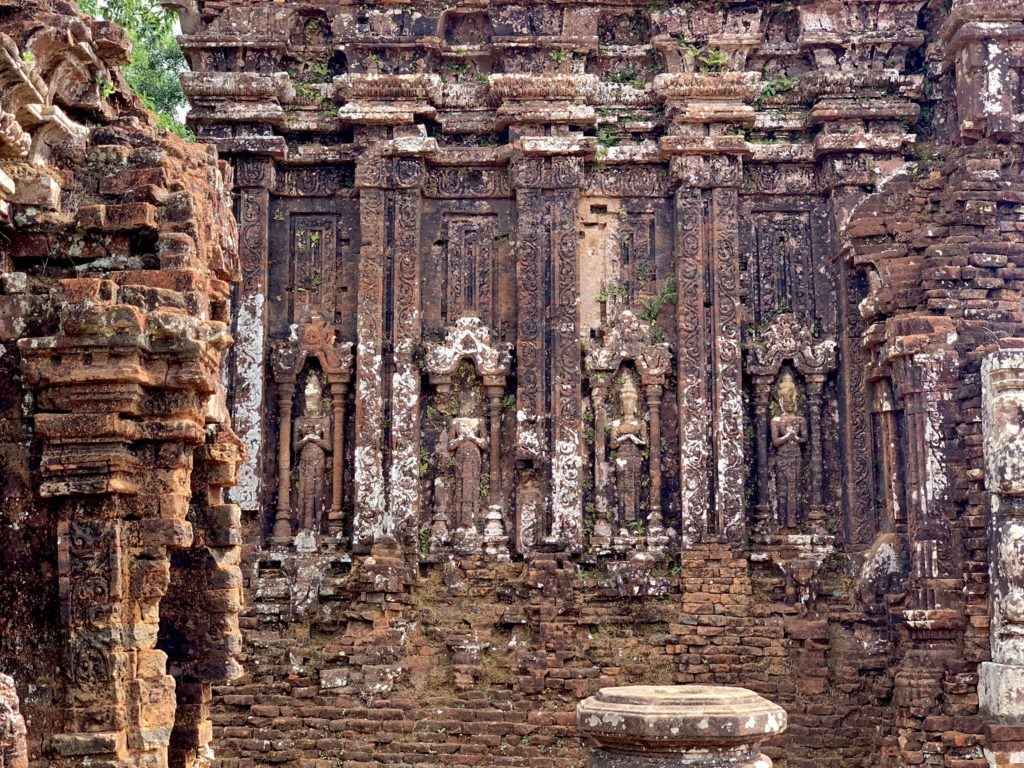
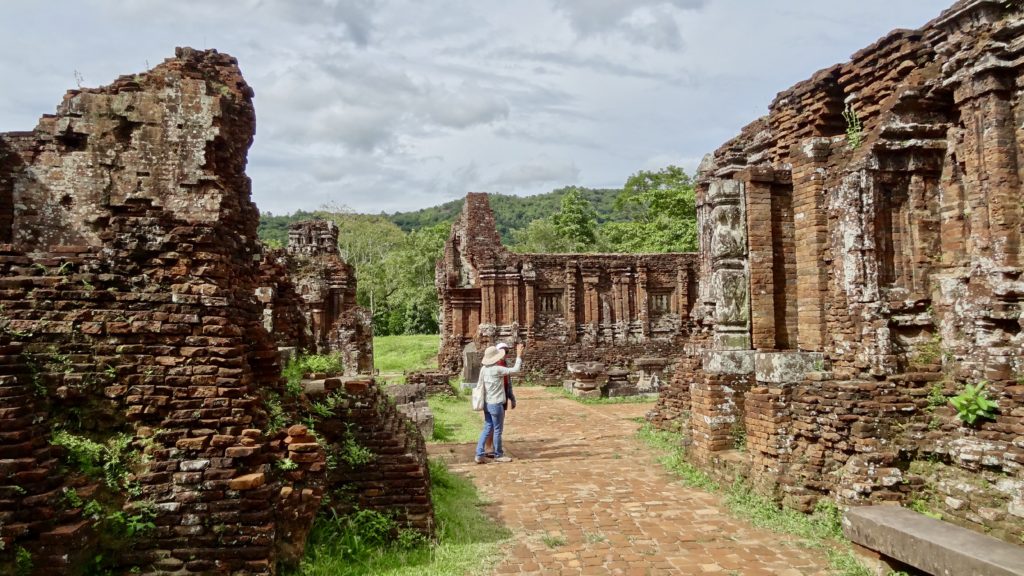
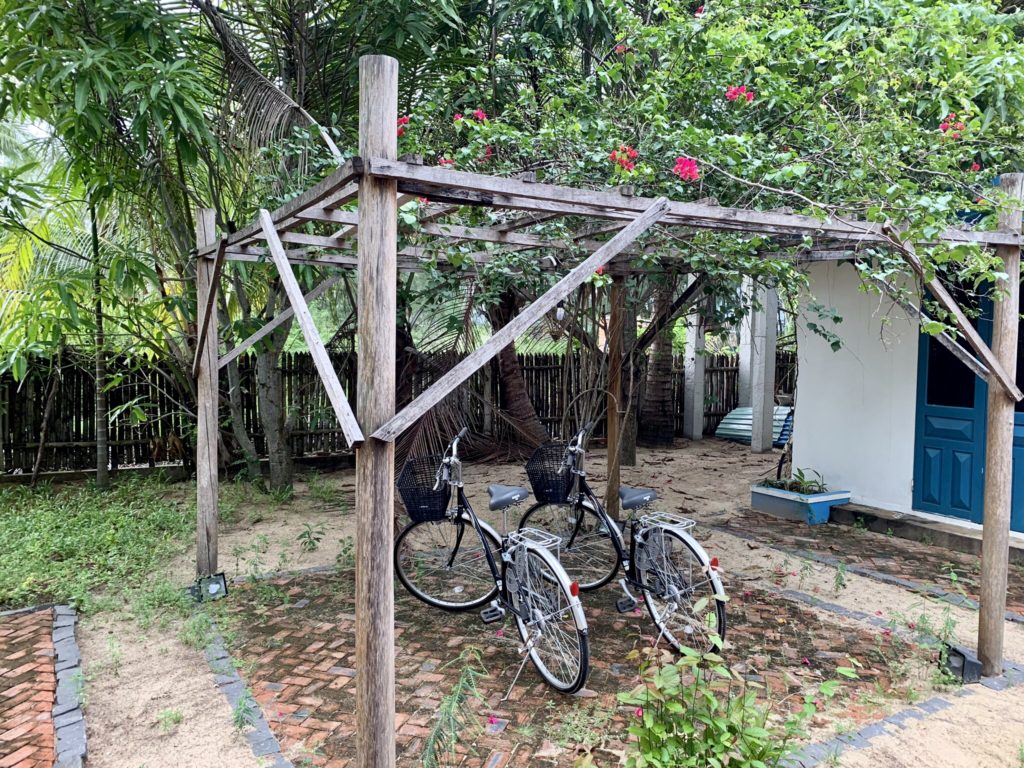
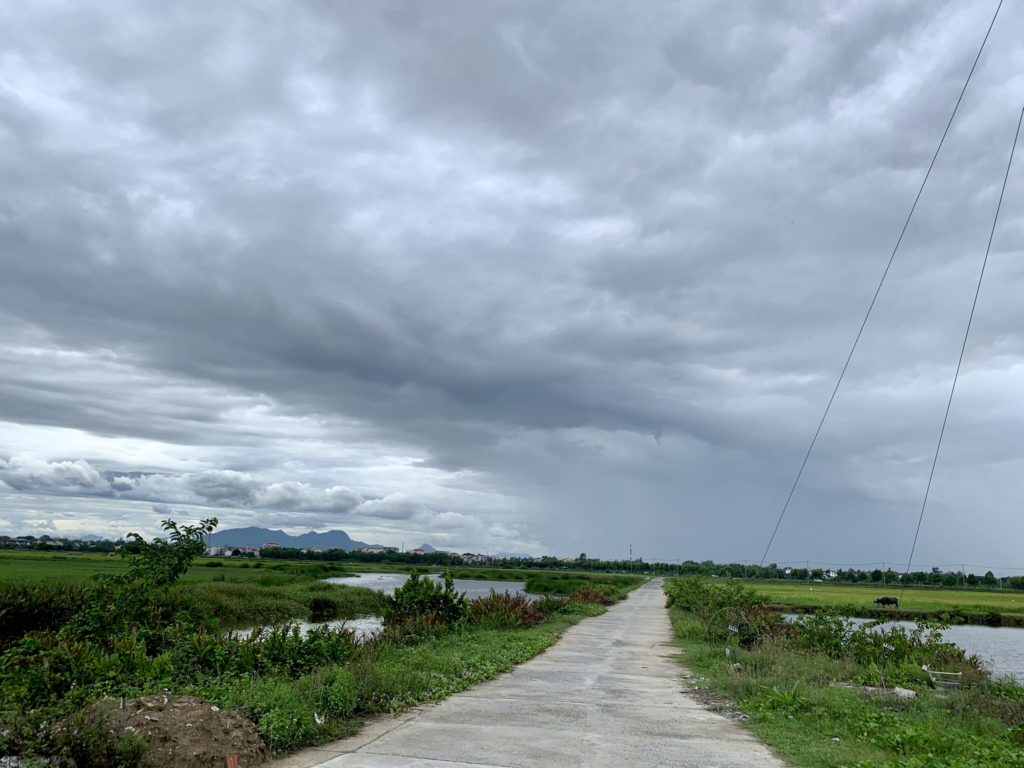
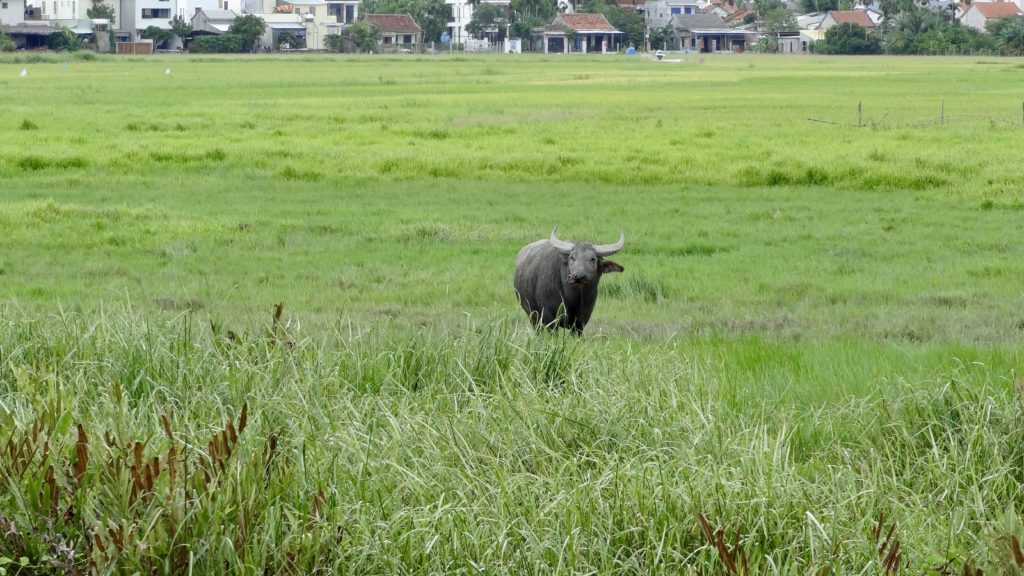
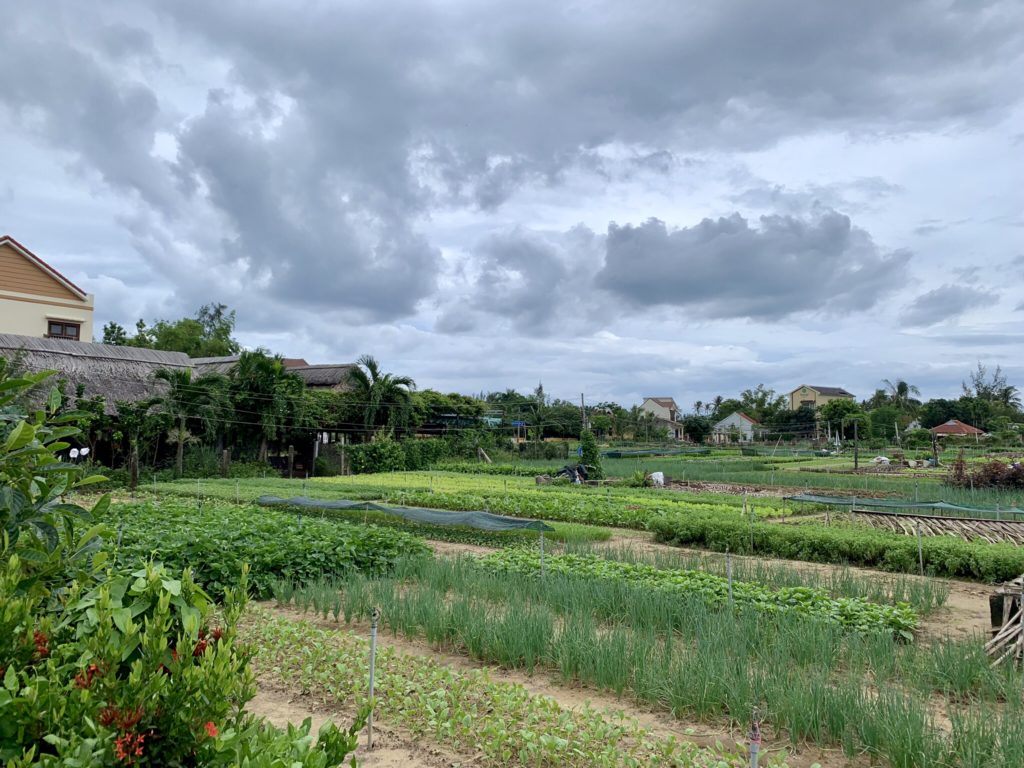
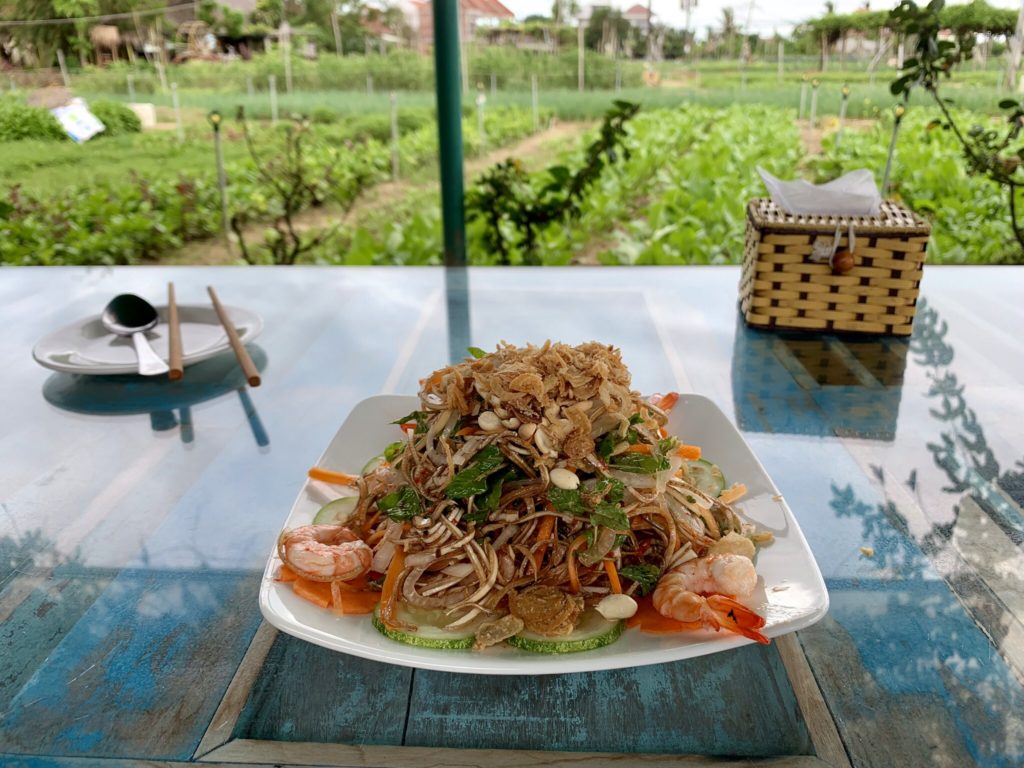
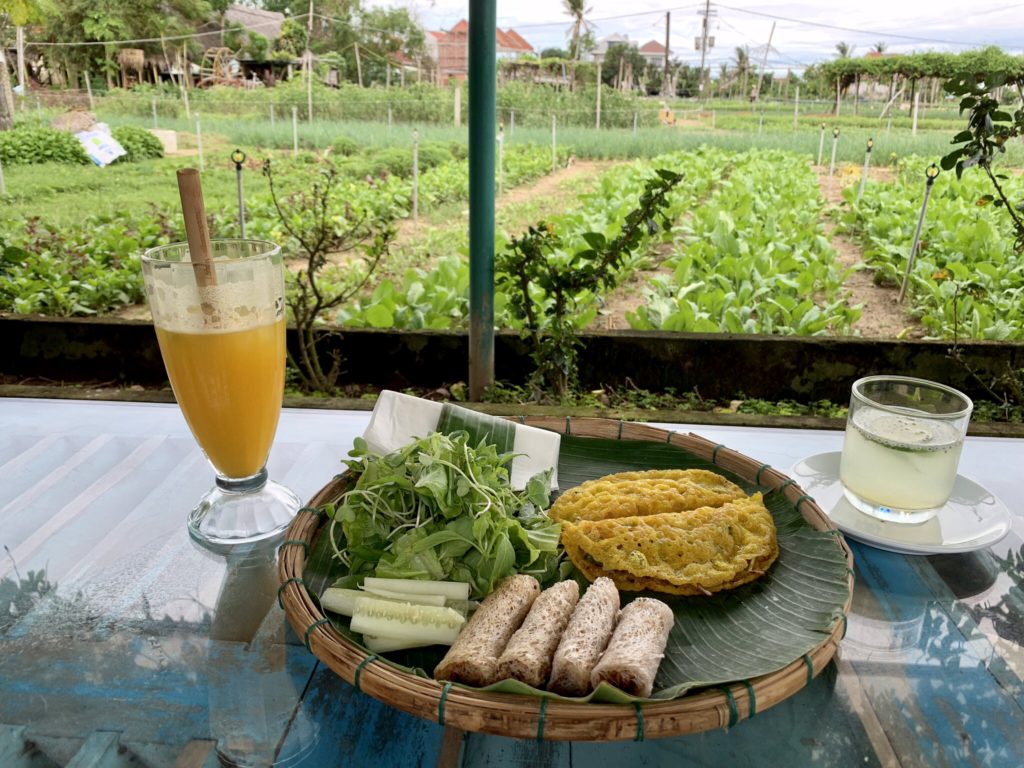
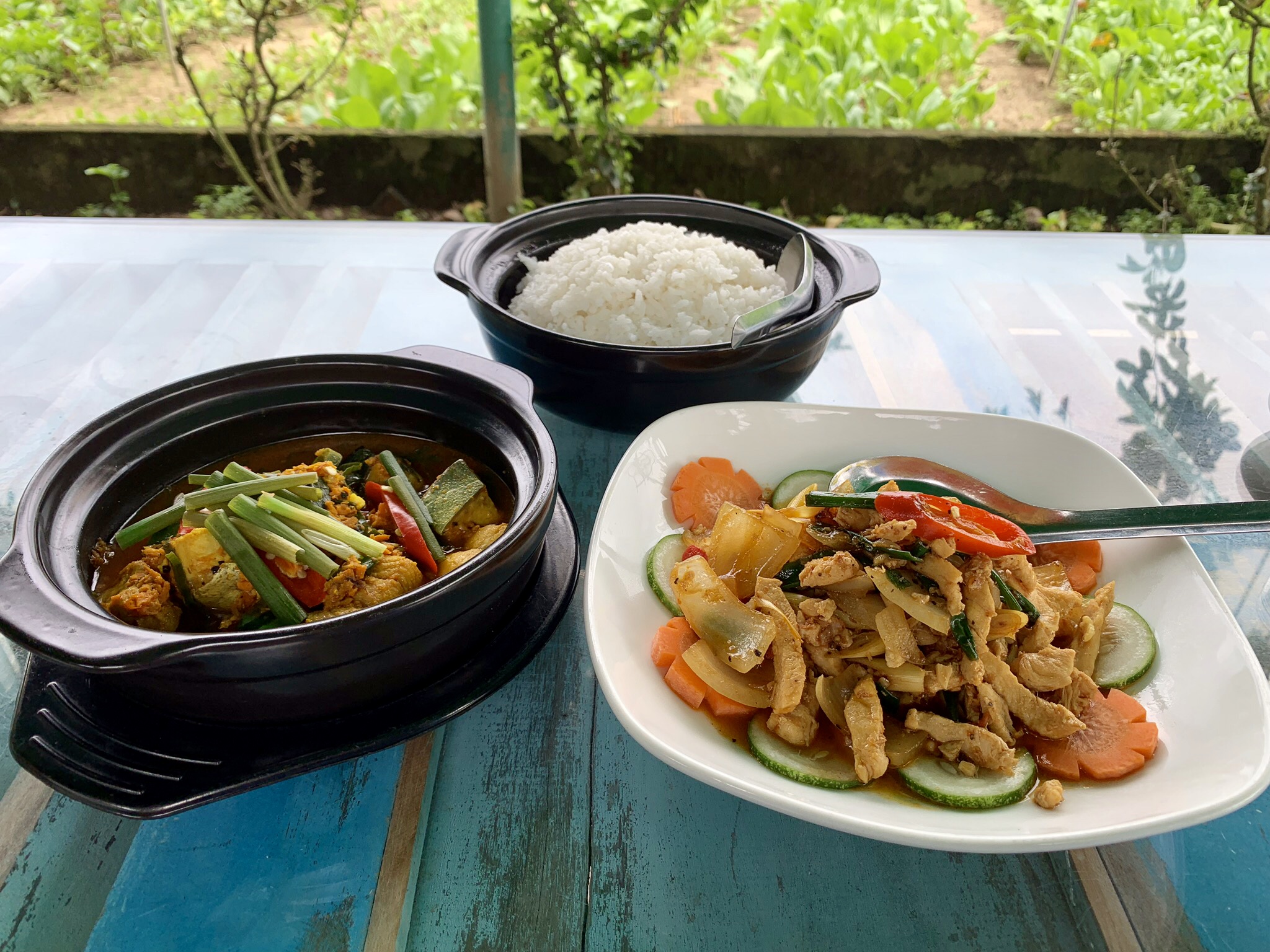
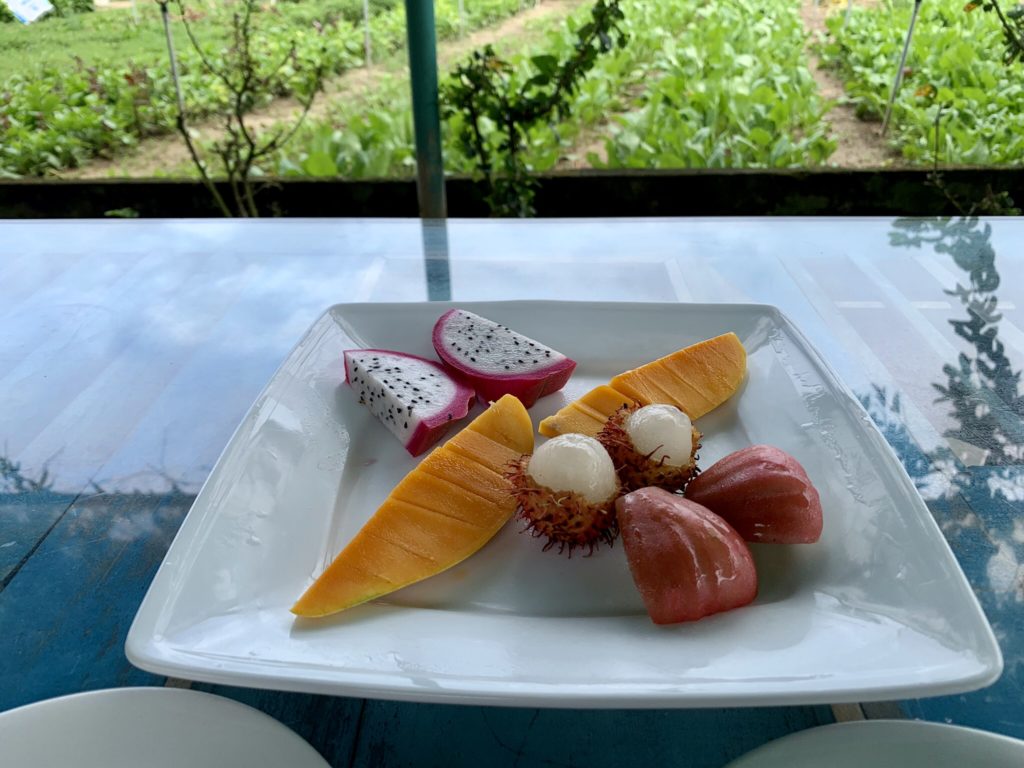
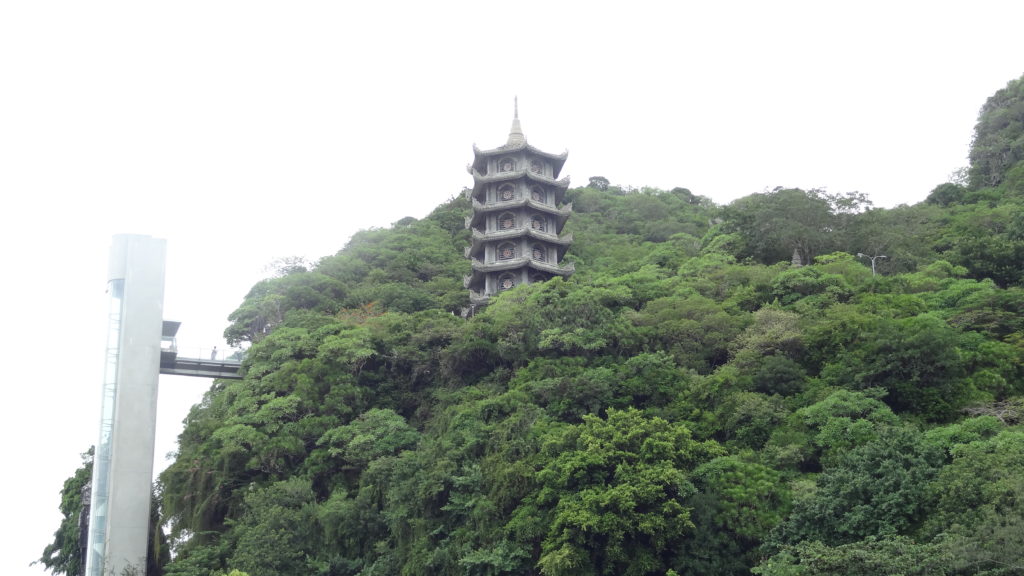
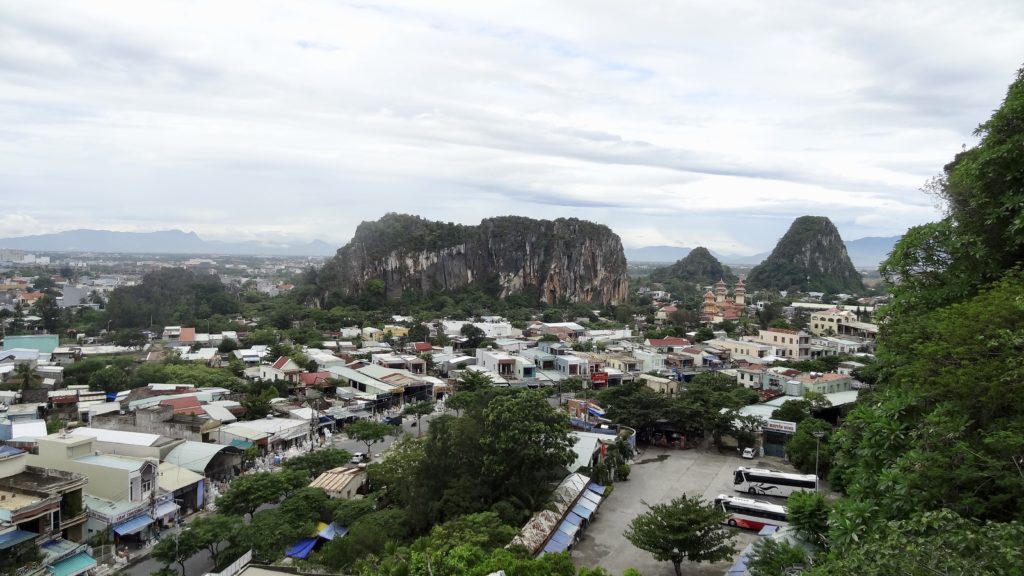
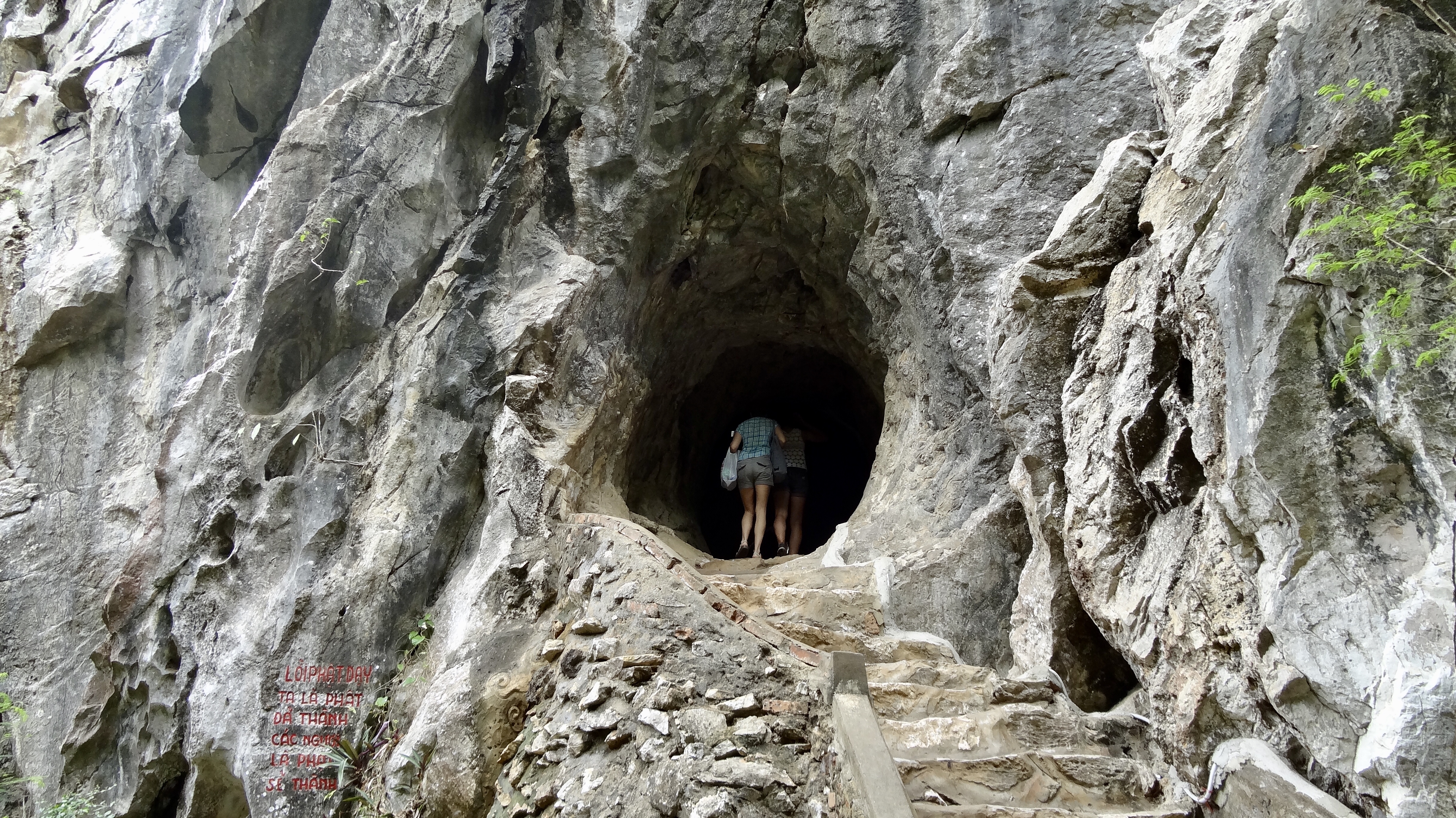
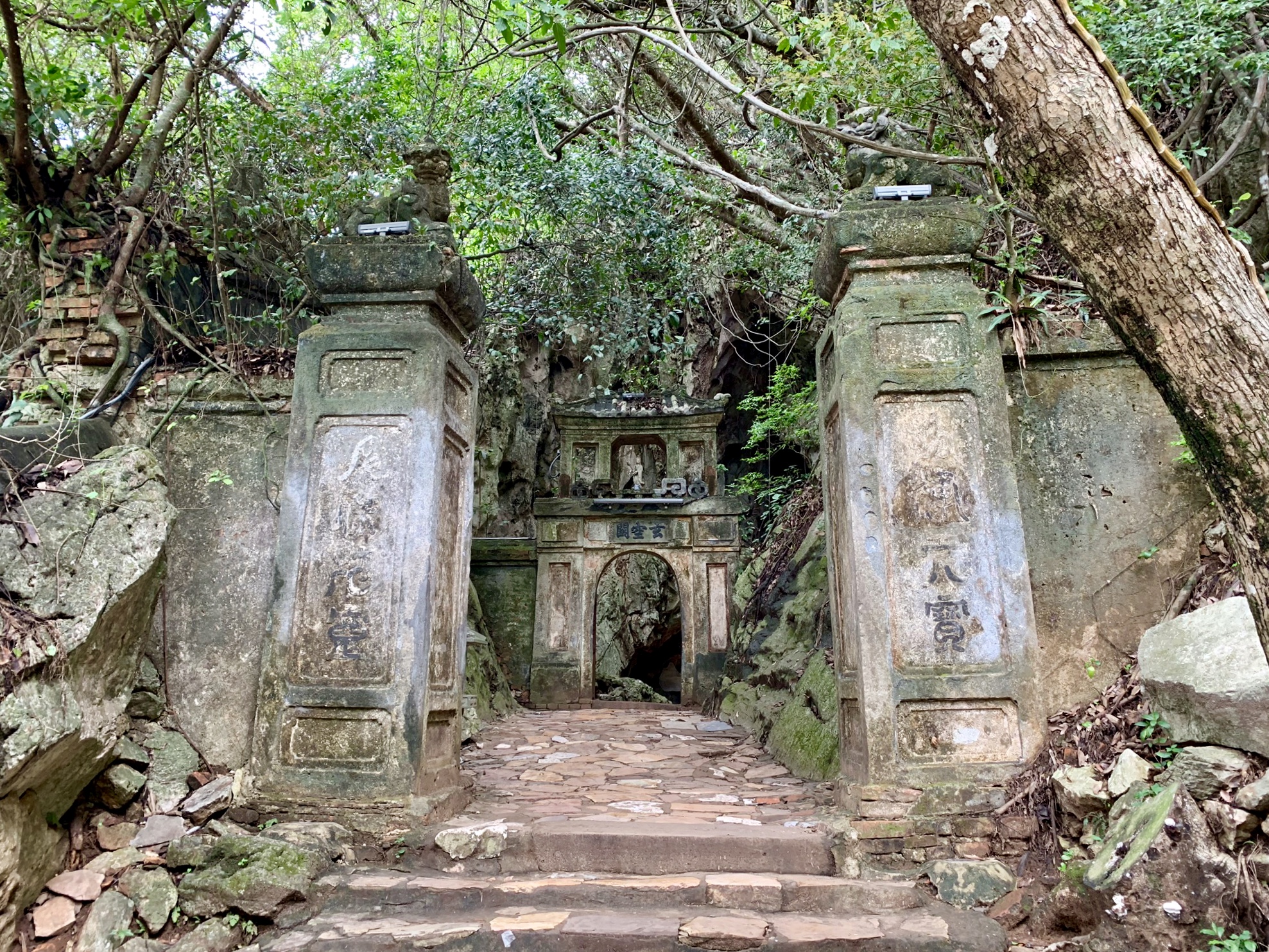
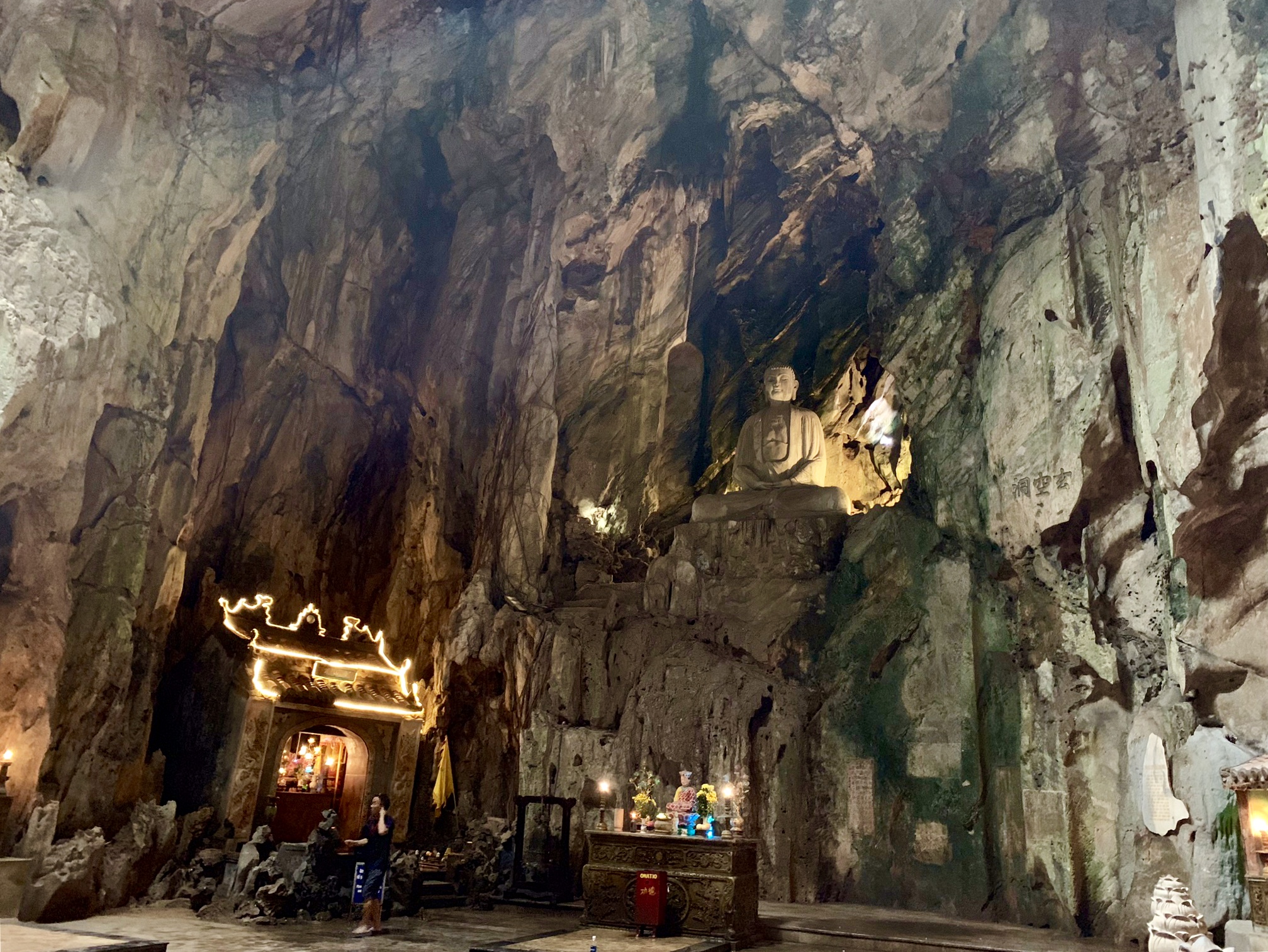
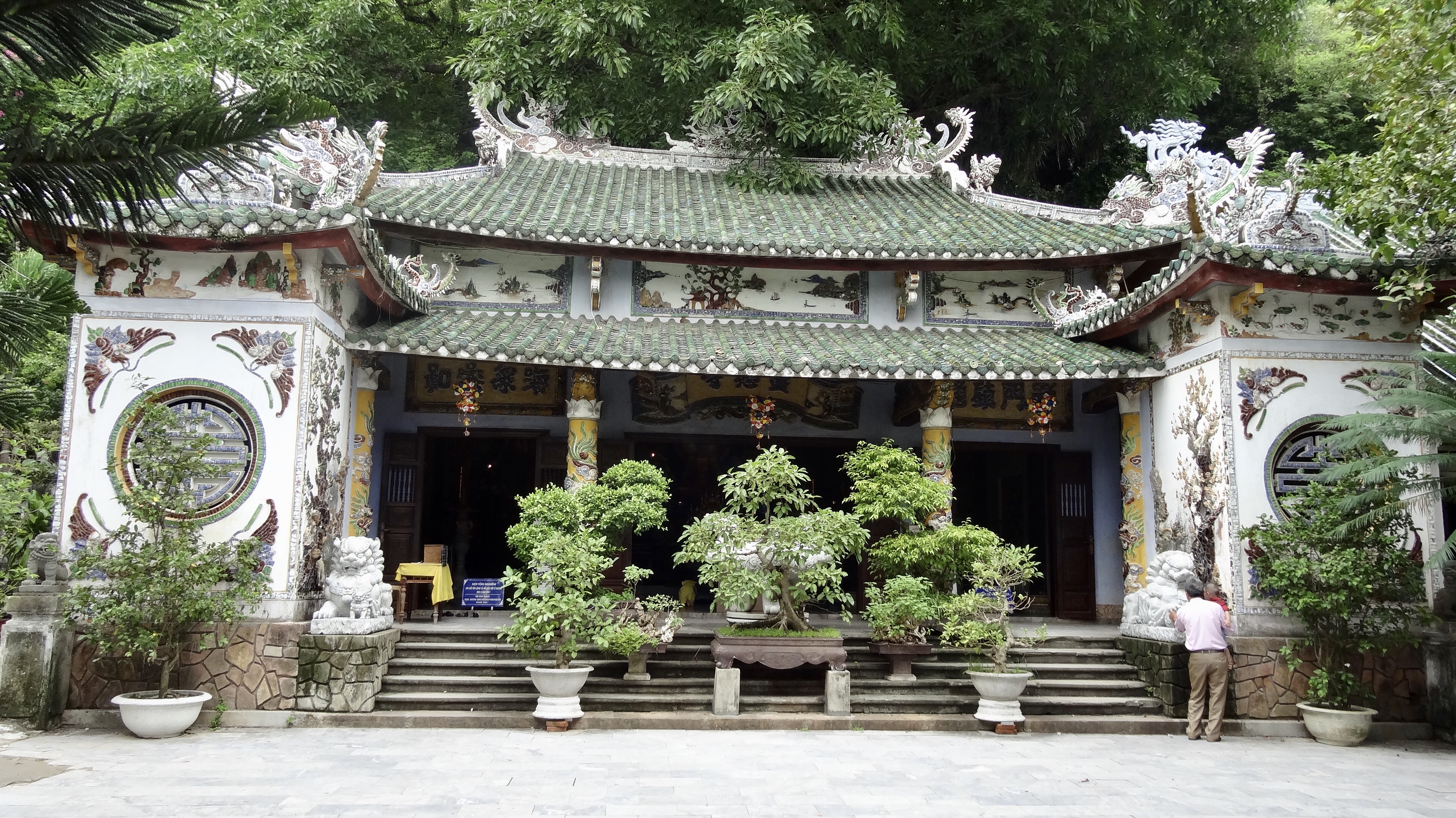
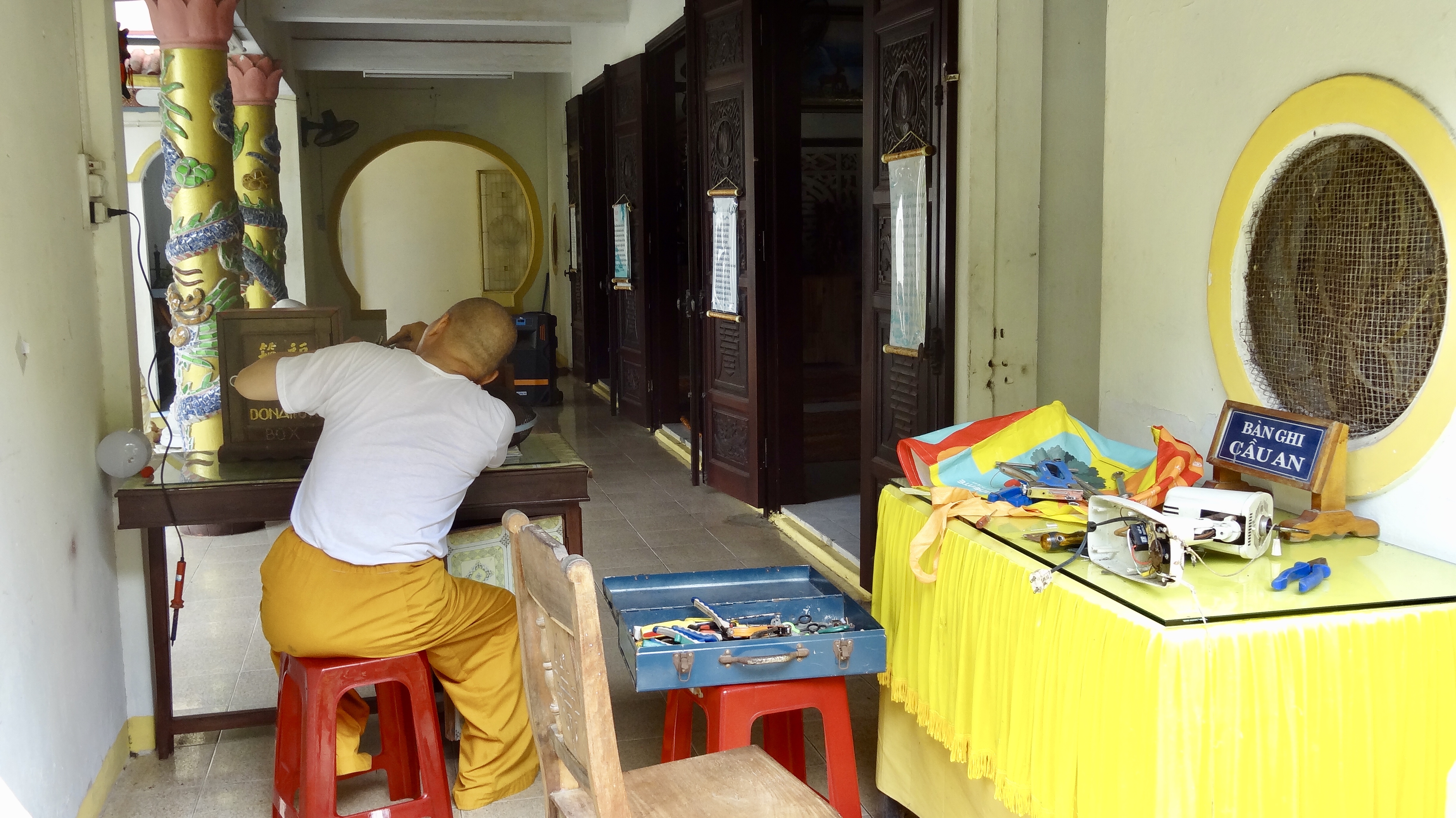
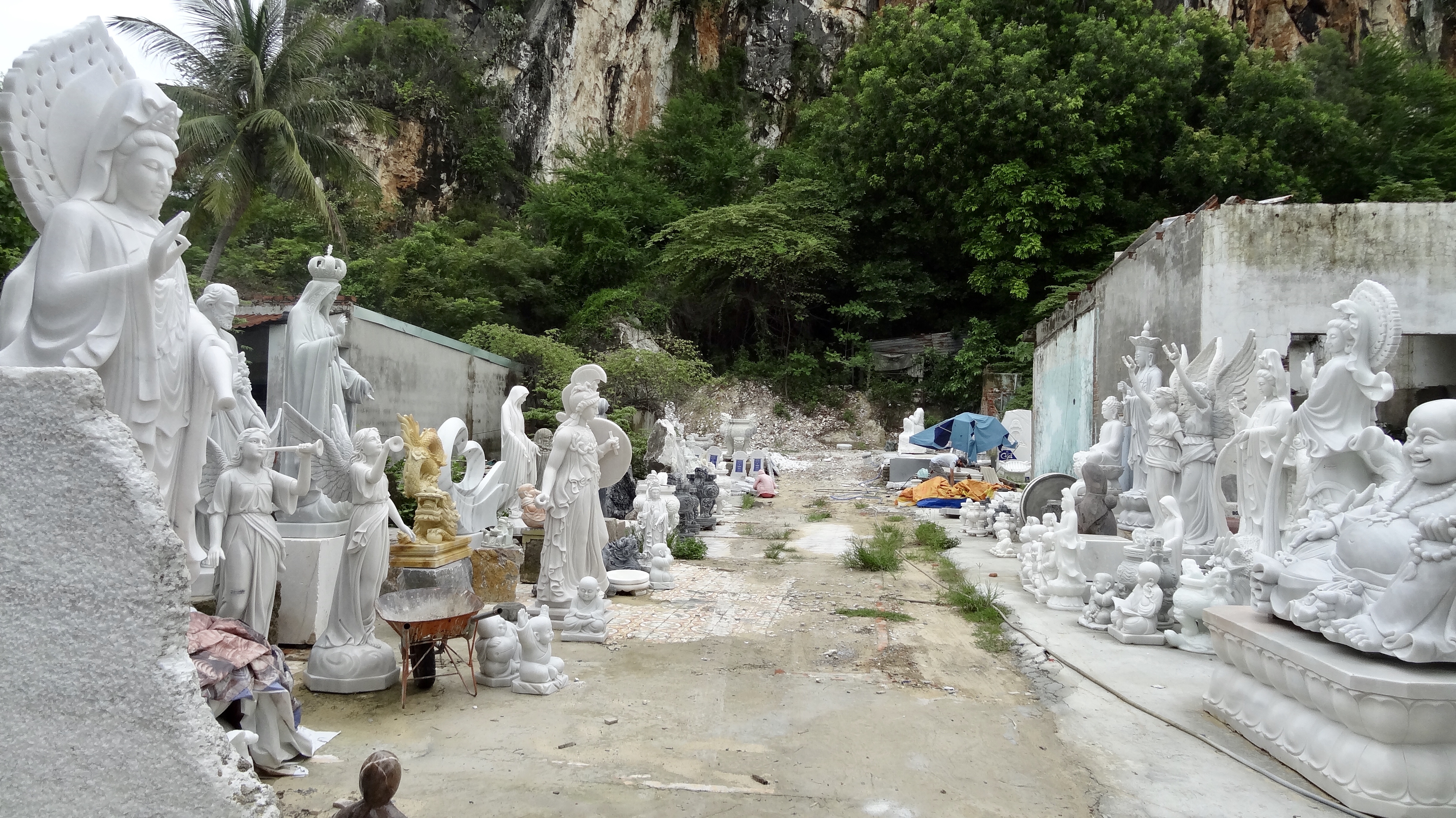
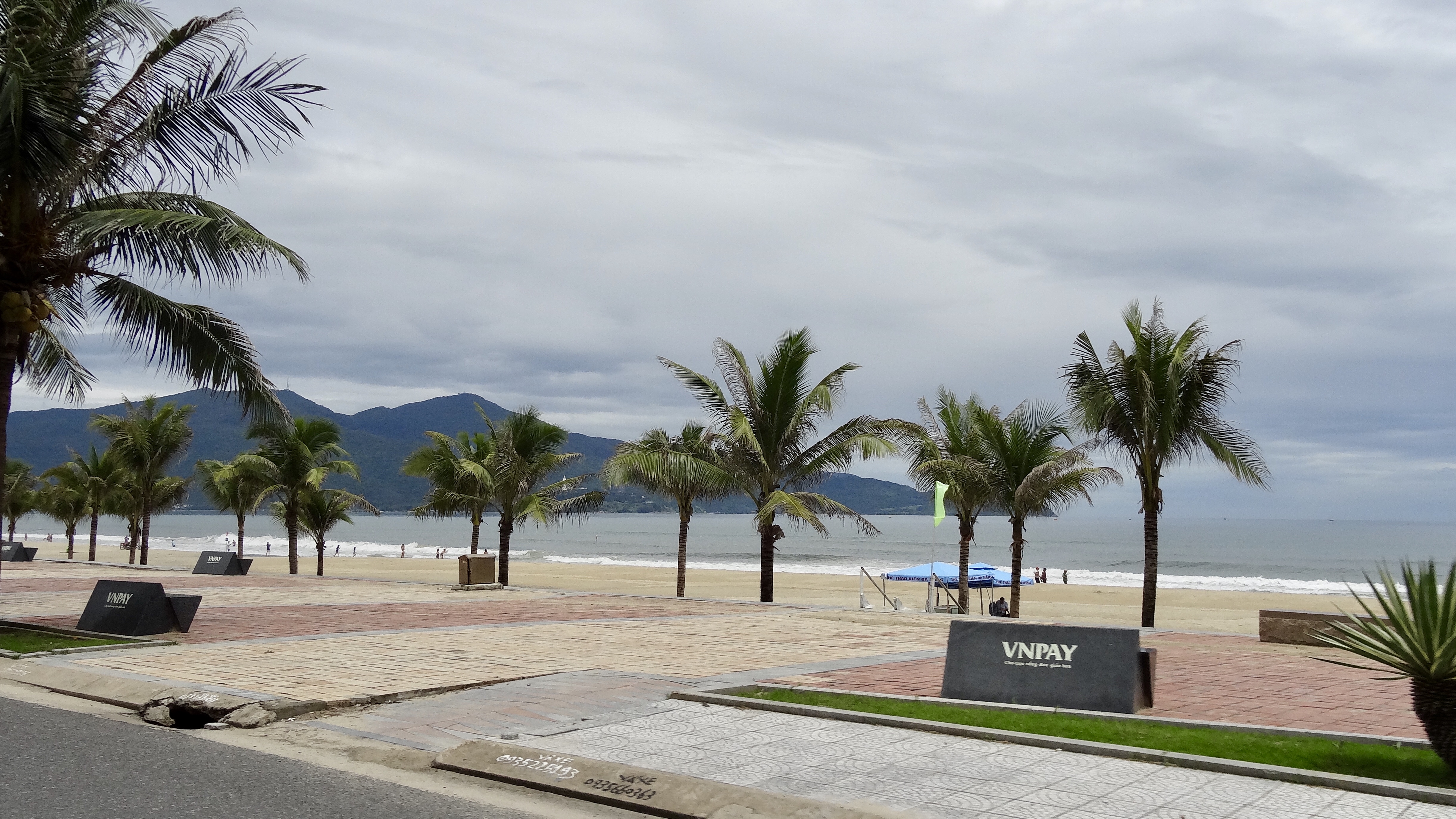
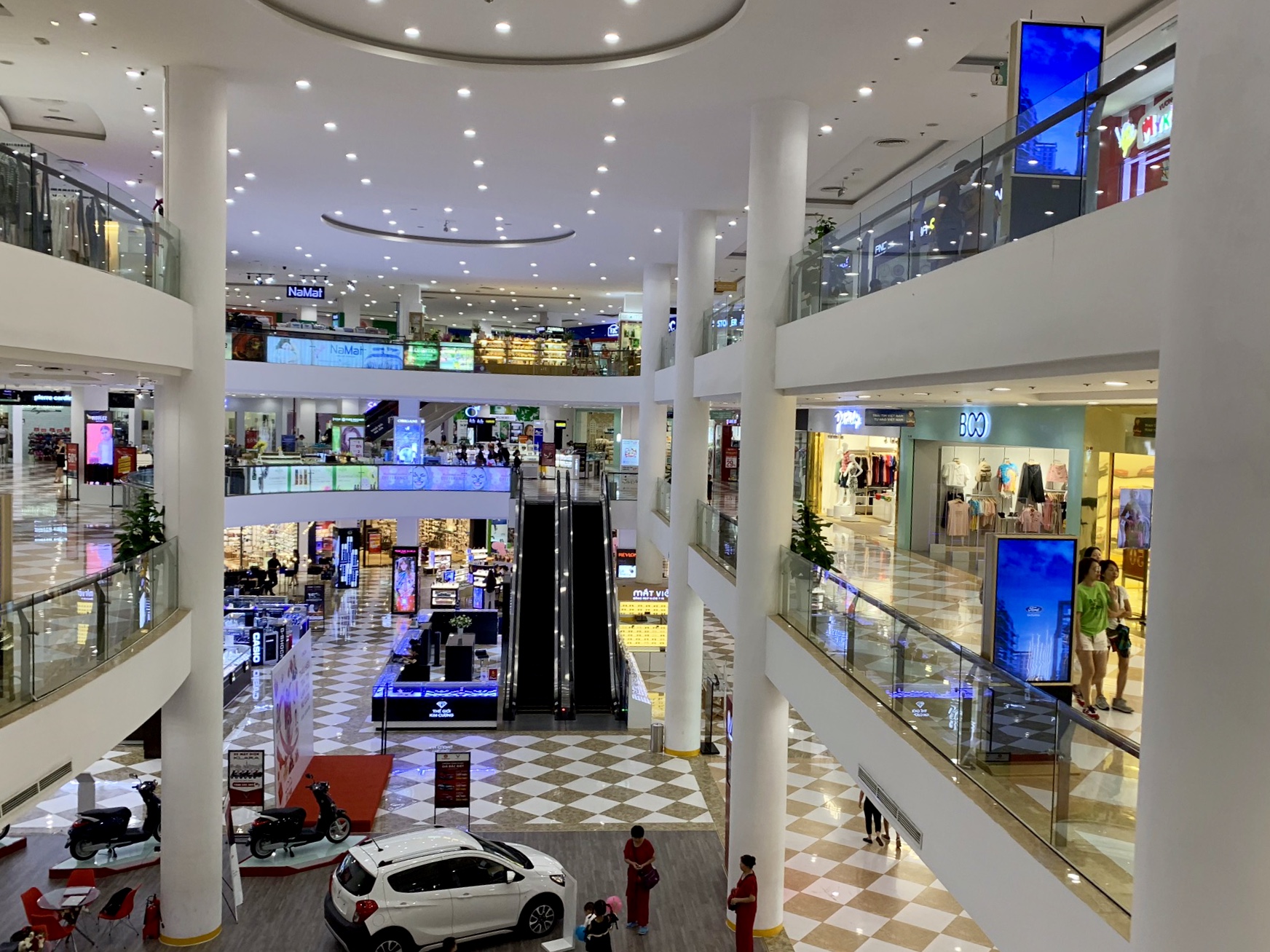
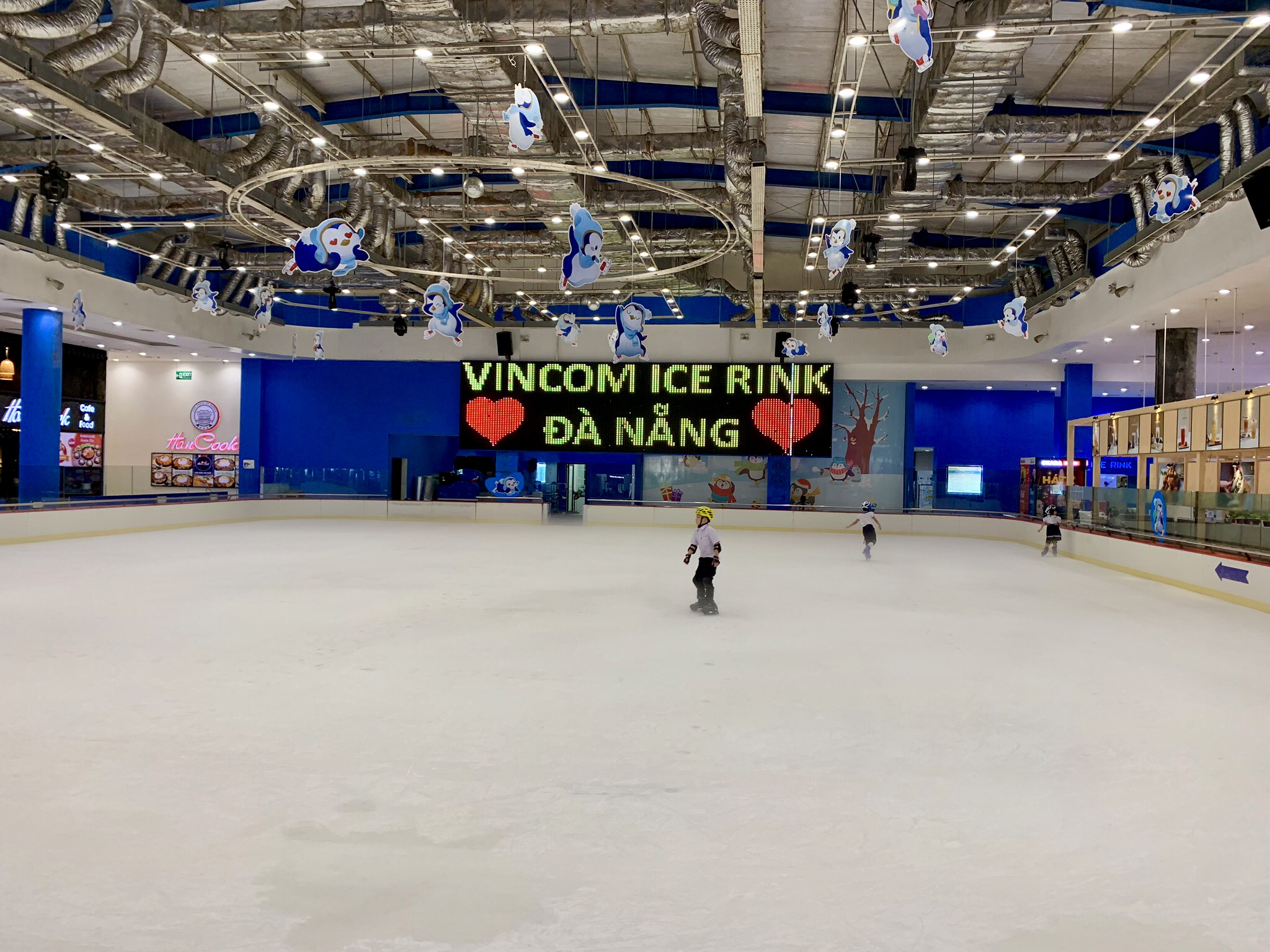
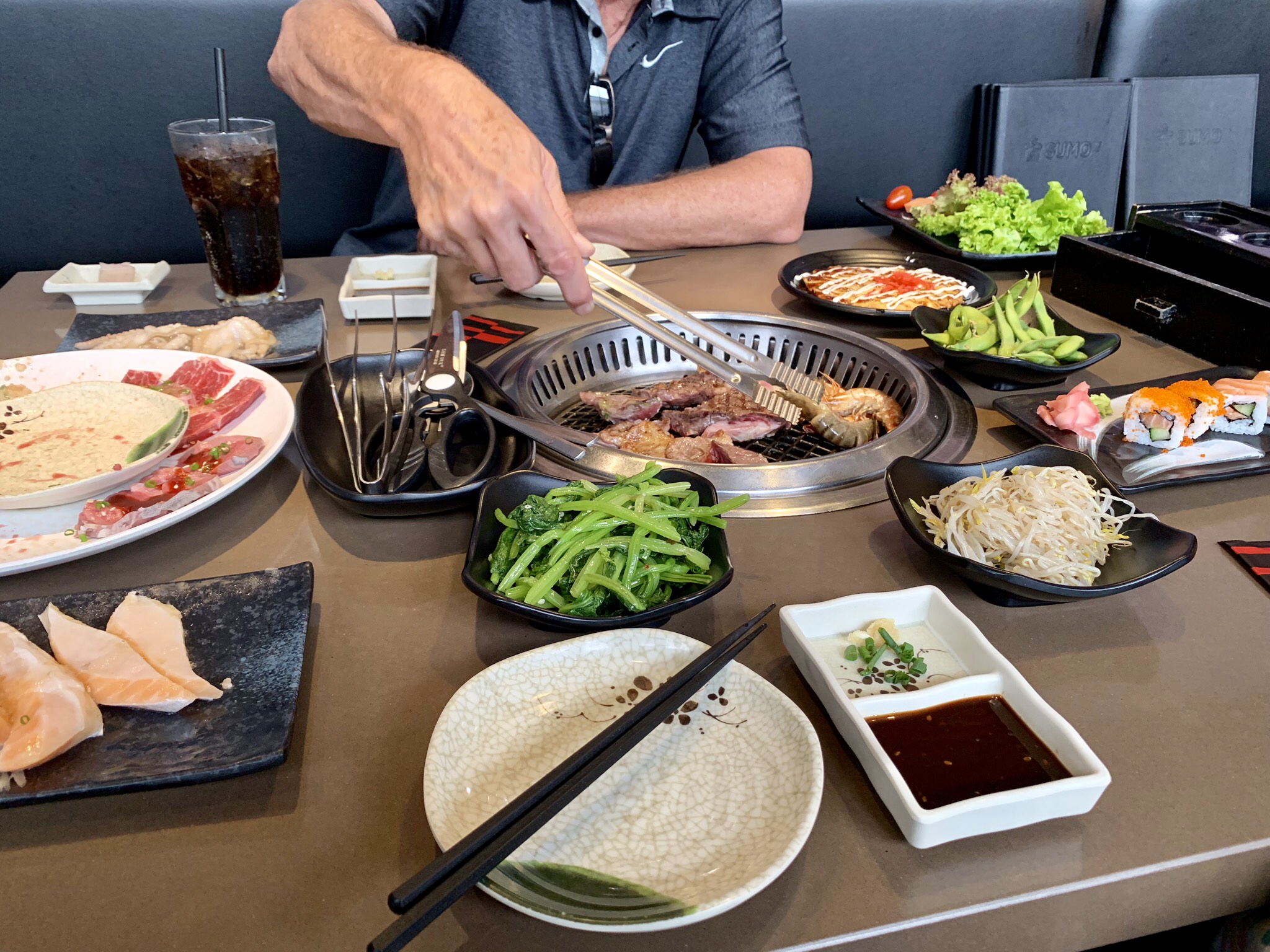
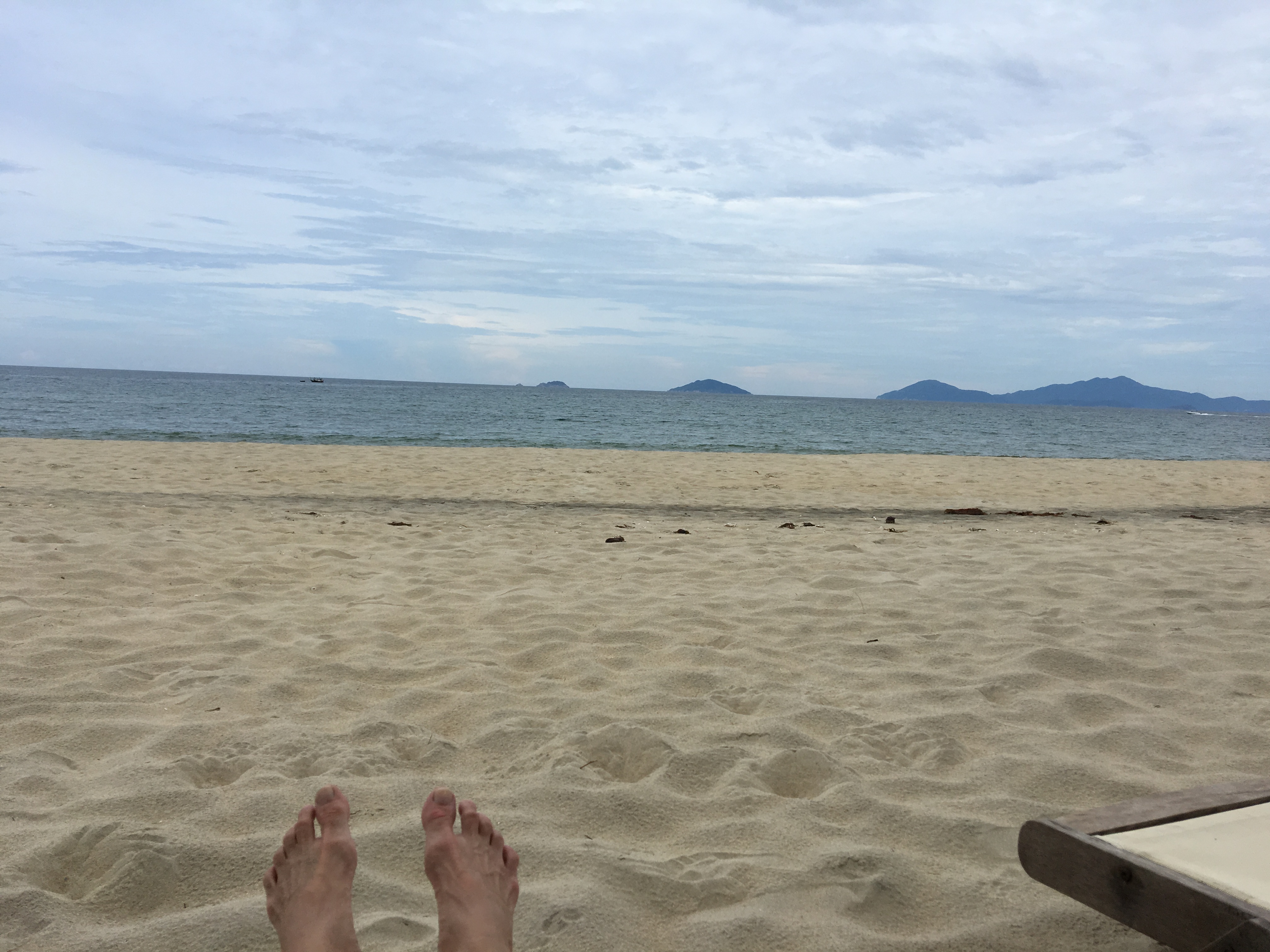
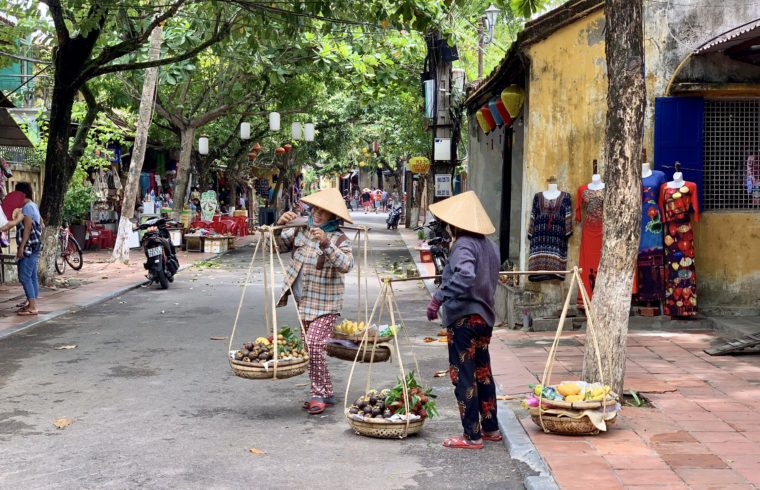
We flew into Da Nang mid-morning, under tropical monsoon clouds. This picture looks down the Thu Bon River valley to Da Nang Bay in the distance. Da Nang was where US troops first came ashore in Vietnam, and its small but modern airport occupies what was the US airbase that anchored a significant part of the US presence during the war.Once on the ground, we didn’t need to check our boarding passes to know we were in Vietnam. From Da Nang, it’s a 45 minute drive to An Bang Beach, part of greater Hoi An. We rented a cottage here for two and a half weeks. The two-bedroom place is 75 percent rustic and 25 percent funky. The photographer says it’s more like 60 percent rustic and 40 percent funky — one of the bathroom sinks is in the shower, and light bulbs do hang from bare wires — but the blogger is going with 75/25.However, and this is a big-butt however, the place is 100 percent on the beach and 100 percent air conditioned.And it comes with its own beach umbrella and lounge chairs. We spent a lot of time on the beach, lunch often picked up at one of the countless beach restaurants.Dinner was often on the sandy berm, under whispery ironwood trees.Sometimes, though, we had to move dinner from the berm to one of the beach umbrellas to get out of the rain. You can’t see the steady drizzle here, but the photographer can attest to it.Summer weather his is monsoon. A typical day starts with some blue sky and temperatures and humidity in the high eighties. By noon the numbers are in the nineties and feels like the hundreds. Then it turns mostly cloudy, with maybe a passing shower. As the afternoon wears on, onshore breezes bring relief, and heavy clouds roll in. Most days bring thunderstorms, sometimes local, sometimes distant, sometimes both.Fortunately, the warm rain is not a big deal when you spend your days in swimsuits, and it does cool the world down enough for runs on the beach.An Bang Beach itself is a free-for-all. Fishermen’s round coracles compete with umbrellas and jet skis for space on the sand. Our bit of beach is just about the last residential stretch, with a small handful of houses coincidentally owned by Vietnamese-Australian couples, one of whom we rented from.The rest of the beach, in both directions, is commercialized chaos. There is no zoning, so if you own the land, you do with it what you will. There are some older low-rise resorts, and new modern ones are being built, but most beachfront has been turned into restaurants that offer “free” sun beds to consumers. Off-beach tourists flock to these for sun, beer, pho, and french fries. Most of the activity, though, is centered around An Bang Town and the official entrance to the beach, which is about a 15 minute beach-walk from our cottage. There restaurants create a tightly packed warren of alleys, tables, and kitchens (above and below).When we’re not stuck to our beach loungers like pale opihi, we walk the sand to An Bang Town for lunch or dinner. Here we’re having fresh watermelon and carrot juices with chicken pho and a Vietnamese stir fry. The universally fresh juices here are great, but it’s the twisty straws that close the deal.At night, when it’s not monsooning, beach mats are set up by mobile entrepreneurs, where dinners and drinks are served from coolers and little hibachis. Though the beach is seductive, we made regular trips exploring, like to Hoi An’s old town, where streets are essentially malls and pedestrians can stroll, sweat, buy matching outfits, and dodge motorbikes to their hearts’ content. Eating is also an option, which we did on one of our trips at the Rice Drum restaurant (above). We enjoyed our beef-in-bamboo and cao lao (below) almost as much as the industrial-sized fan the waitress dragged over and aimed at us. Da Nang is the big city now, but for centuries Hoi An was the area’s economic nexus, a major port for the sea-trading Champa Kingdom, an early Chinese trading outpost going back to the Han dynasty, and a waypoint for Portuguese and Dutch traders. Above is an early 18th century Chinese bridge.As in other countries, the Chinese built assembly halls for social cohesion, kind of like the Chinese benevolent societies in San Francisco. In Hoi An, though, they are quite ornate and have tended to become temples of sorts. The Fijian Assembly Hall (above and below) was built in the 1600s and turned into a temple when they found a statue of the goddess Thien Hau washed up on the shore.We visited other temples in town, too. This beautiful white-tailed kite was more interesting than the temple it was in. We’ll leave it at that. At the east end of the old town is the Choi Hoi An market. Inside is a steamy food hall and meat market. The heat and pungent smells keep tourists at a minimum, but fortunately for shopkeepers someone invented mobile phones and internet.Outside are tents and probably an acre of produce, cashew nuts, spices, and just about anything else tropical and edible. We bought bananas, papayas, mangoes, rambutan, and some other stuff that escapes me. Once the sun sets, the night market opens up. A boat ride milling around a short stretch of the Thu Bon River is popular. We opted out. With the heat and no wind, we didn’t want anything to do with open-air vehicles not doing at least 35 miles an hour.The night market is also called the lantern market. Lots of silk lanterns and selfies. One night we went into Hoi An Town and ate at the Anantara Riverside Restaurant. The food was among the best we’ve had, like their local beef curry (below). The real novelty, though, is their table side amuse-bouche of charcoal grilled rice paper filled with onions, chilies, egg, tiny shrimp, and the like. It’s a typical street food often called Vietnamese pizza. I wish we could have recorded the dialogue between us and the chef (above), as he attempted to pronounce amuse-bouche, and we attempted to understand him. One day we hired a car and driver and took the two-hour drive to My Son, a group of temples in a valley southwest of Hoi An. Along the way we crossed the Thu Bon River, broad at this point, and headed toward the South China Sea with its load of silt for the delta. Rice harvesting season was starting, so long stretches of road were lined with rice set out to dry, and maybe park on. The rice is from small family farms and won’t see any market beyond the local village. Deep in a valley, the My Son site dates to the fourth century, with temples and towers added by Champa kings for a thousand years, as propitiation required or resources allowed. The temples are Hindu (above and below), mostly built to worship Shiva. Hinduism arrived from the west on the wave of Indic influence that left in its wake so many abandoned temples, including those in Cambodia, like Angkor Wat and the amazing temples at Koh Ker.We ended up with two guides, a kind of two-fer. Here the photographer is being educated by Mỹ, our young woman guide. I don’t know where Hu, the guy she was training, went off to. I think our driver was named Ralph. Ralph was the only one who didn’t speak English. On another day, we jumped on the trusty one-speeds that came with the place. Unfortunately for me, the seats can’t be raised much. But then it’s common to see Westerners peddling around An Bang and Hoi An with their knees up to their chins.We rode off through the rice fields (above and below) in search of a little garden restaurant where we had reservations.We passed many water buffalo, but only this one gave us attitude.Through the rice patties and over a bridge is an alluvial Island in the middle of the Thu Bon River. It is wholly dedicated to organic micro gardens. And the people who farm them. And the restaurants that people who farm them opened to attract tourist dollars.We were the only guests at our little restaurant, but reservations are required because it is so little, and it serves only a set menu sourced from their garden. The first course was a banana blossom salad. We ate it all.Then crispy rice crepes and rice-vermicelli summer rolls that you wrap in rice paper. We ate it all, too. Then Vietnamese turmeric fish casserole and chicken with lemongrass. We almost ate it all. We were starting to worry about being able to make it back up the hill to the bridge on our bikes. Dessert was dragon fruit, mango, rambutan, and rose apples. We went back to eating it all. For the record, the meal was $10 per person, tourist-dollar wise. On another occasion, since we didn’t get to see much of Da Nang when we arrived, we hired a car and driver to go see the city, and to check out the Marble Mountains just south of it.The mountains are five limestone and marble peaks named for the five Eastern elements. They became sacred to both Hindus and Buddhists, who built temples and shrines on their peaks and in their many caves and grottos (below). Some caves are small, some are quite large, with statues carved from living stone.Many of the temples are still active and tended by monks. Like this fan-repair monk. The villages around the mountains became famous for stone carving, though craftsmen are no longer allowed to use the mountains as their source for raw material.After the mountains, we headed into Da Nang for some sightseeing. The beautiful Nguyễn Trãi Beach that runs along Da Nang Bay is equal to any beach we’ve seen. We ended up at the Vincom Mall. No tourists here, just local people. OK, two tourists here. The ice rink on the top floor was unexpected.For lunch we settled on an all-you-can-eat, Korean-Japanese teppanyaki place named Sumo, presumably because Sumos eat a lot. The waitress wouldn’t let us order from the a-la-carte menu, using a Vietnamese argument akin to duh. Here the blogger is cooking because the photographer is too busy. Then it was back to the beach. From Hoi An it’s on to Hue and Hanoi. Ciao, ciao An Bang.