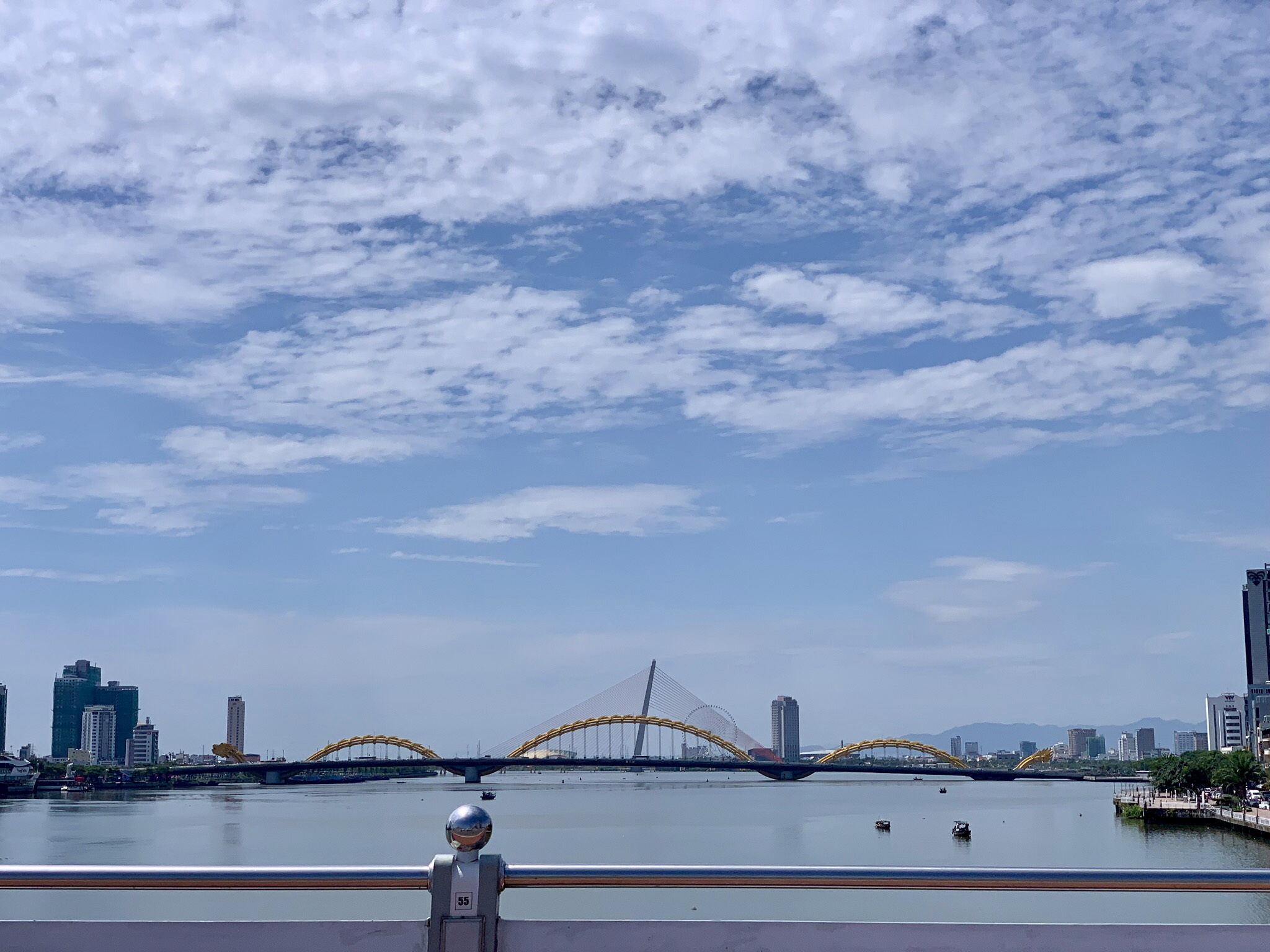
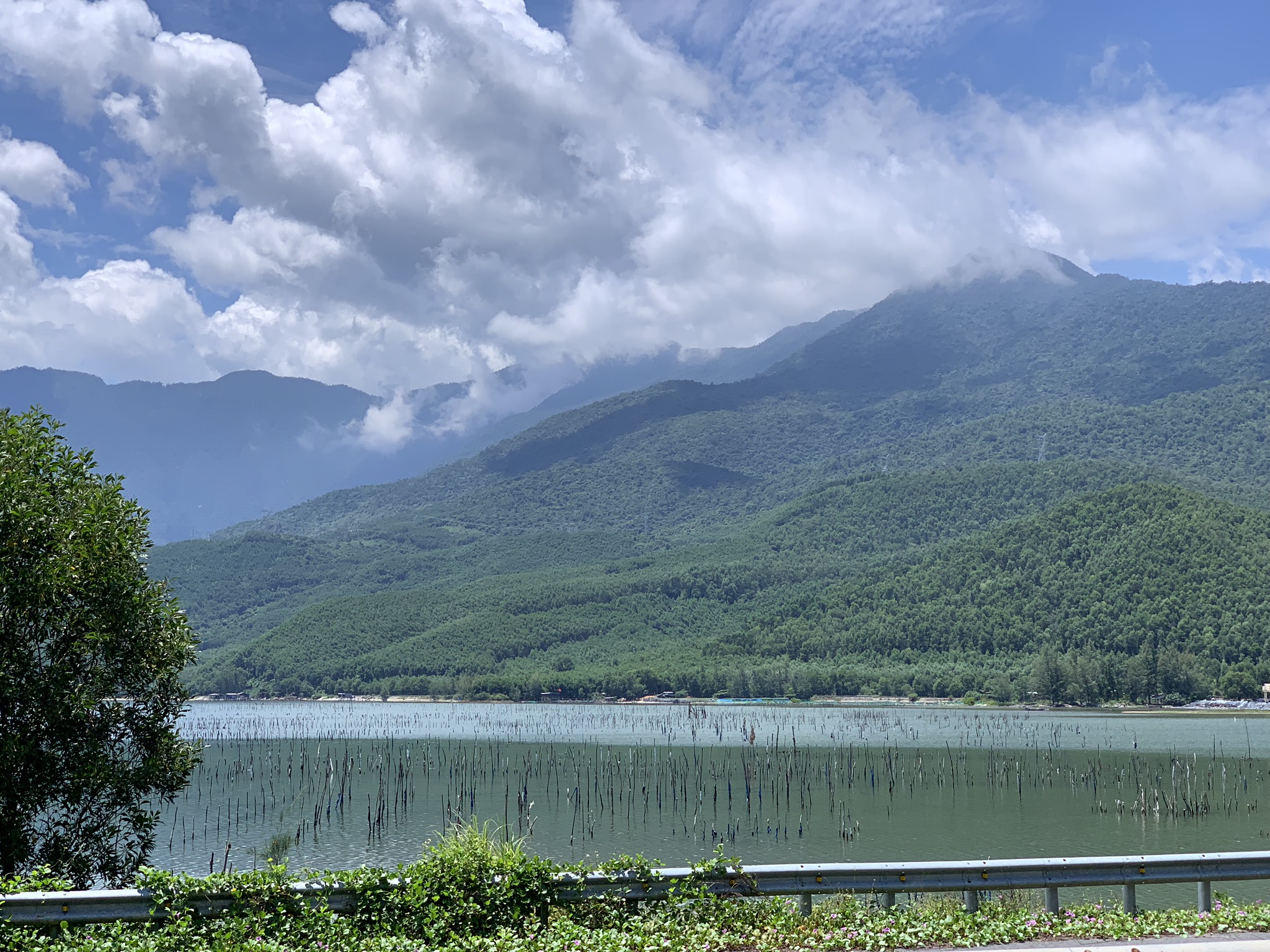
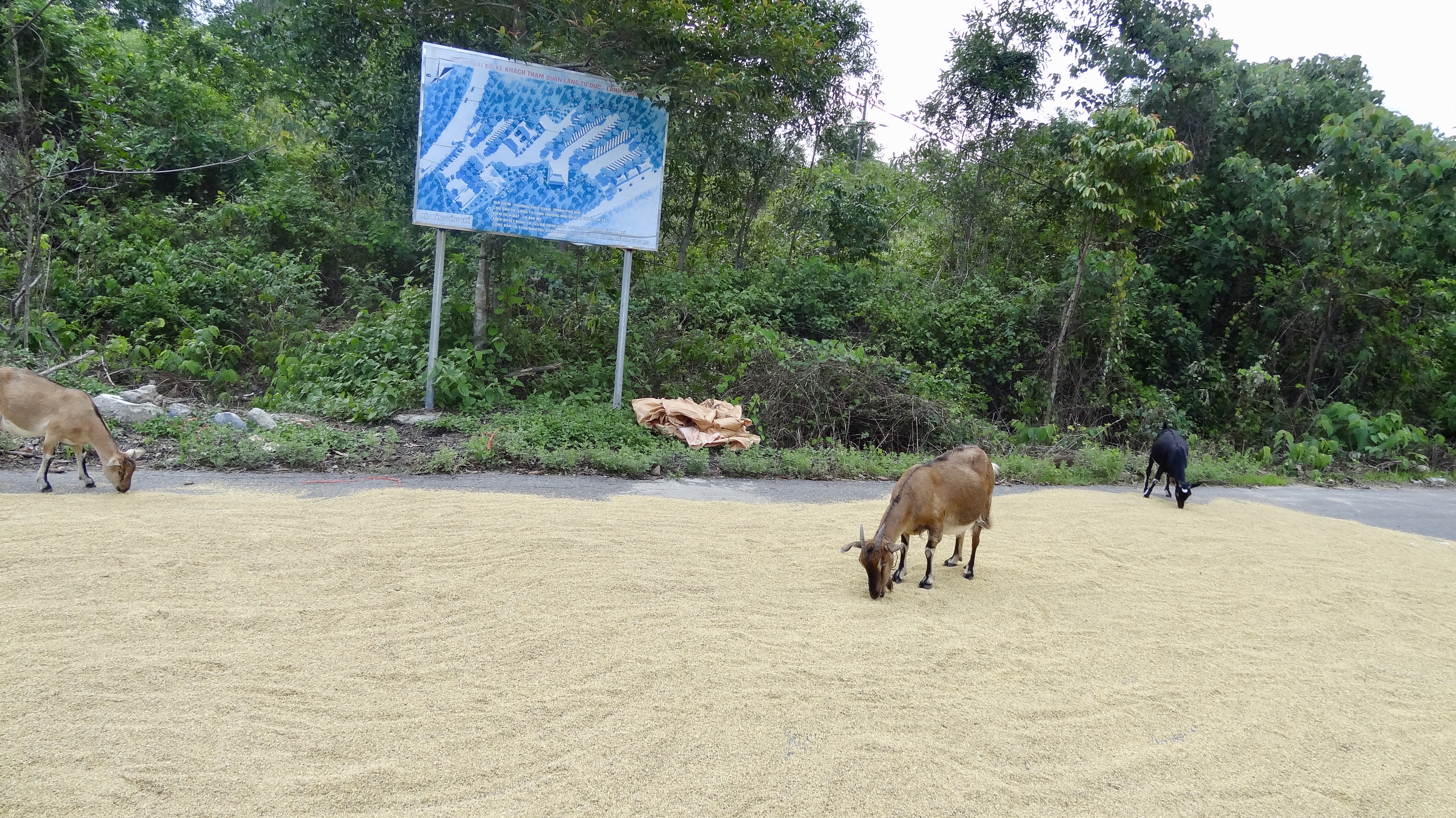
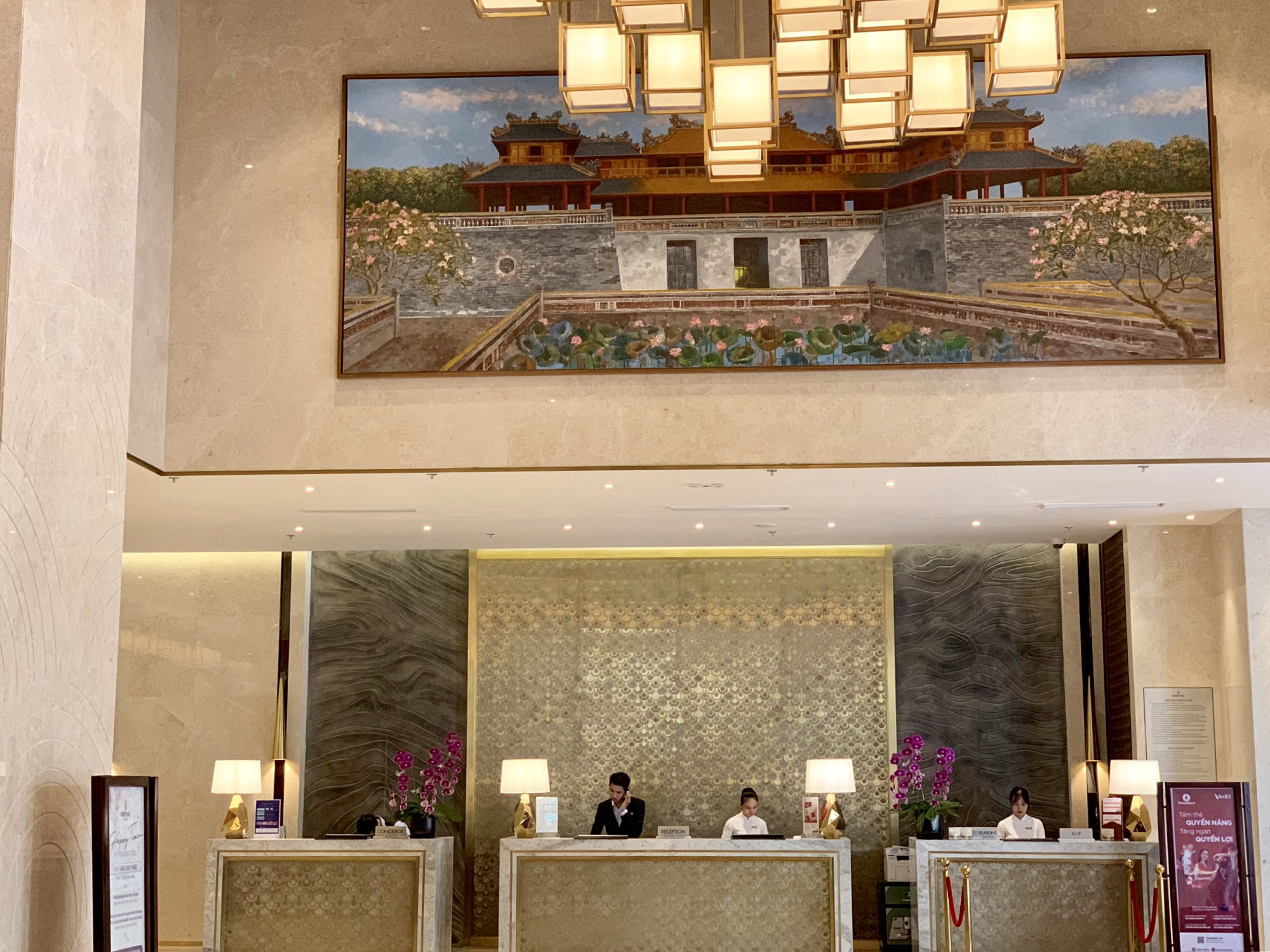
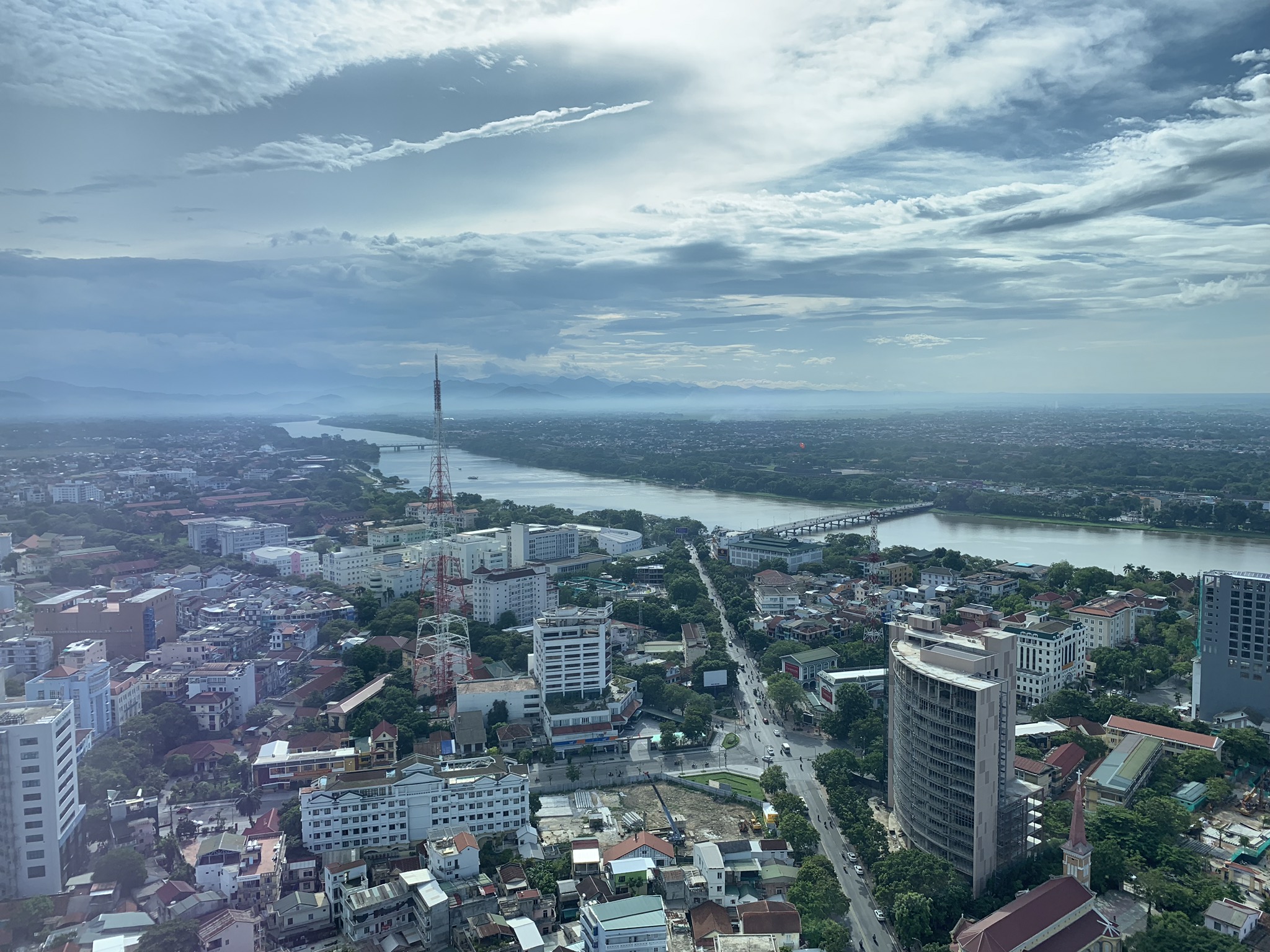
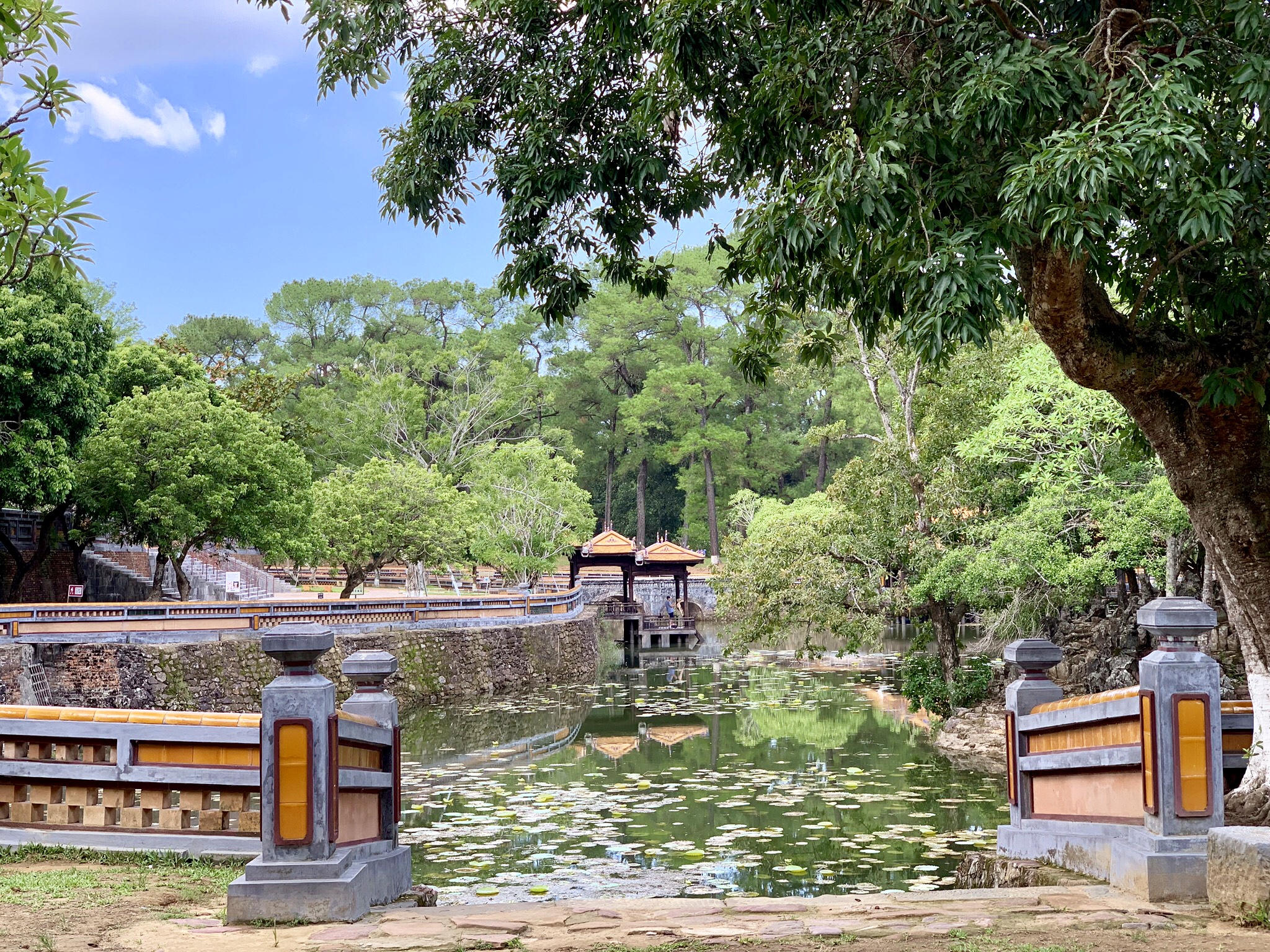
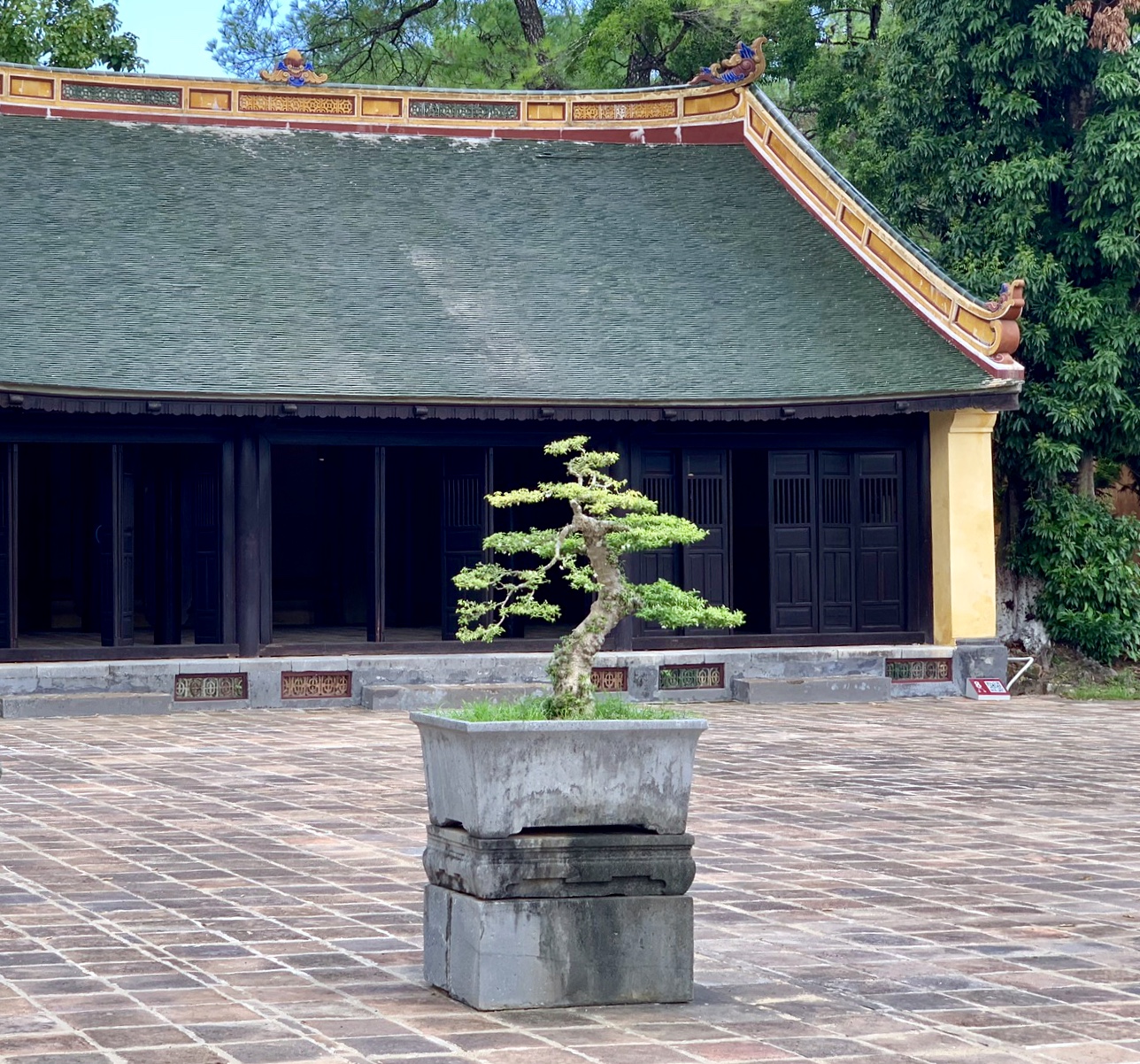
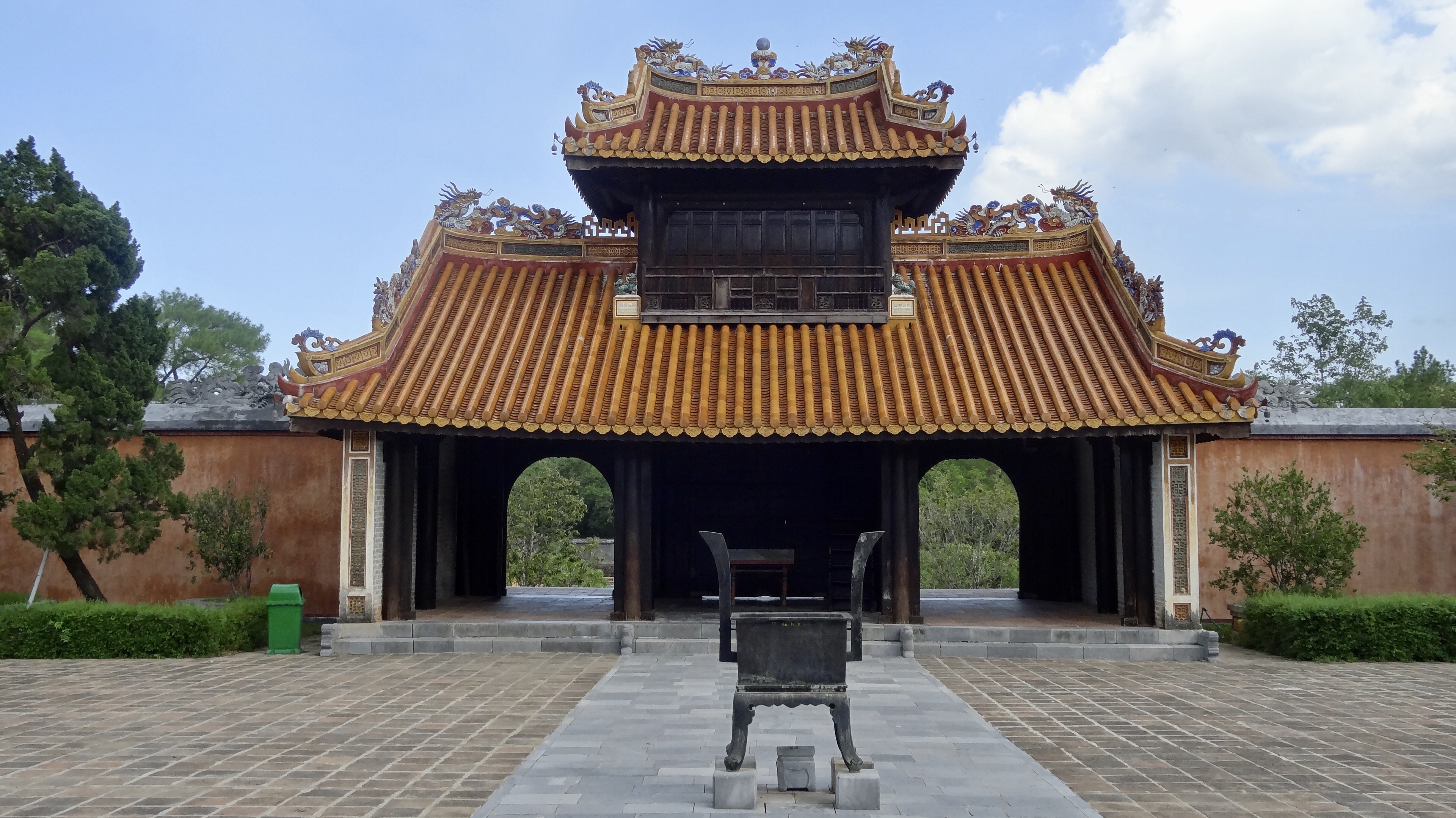
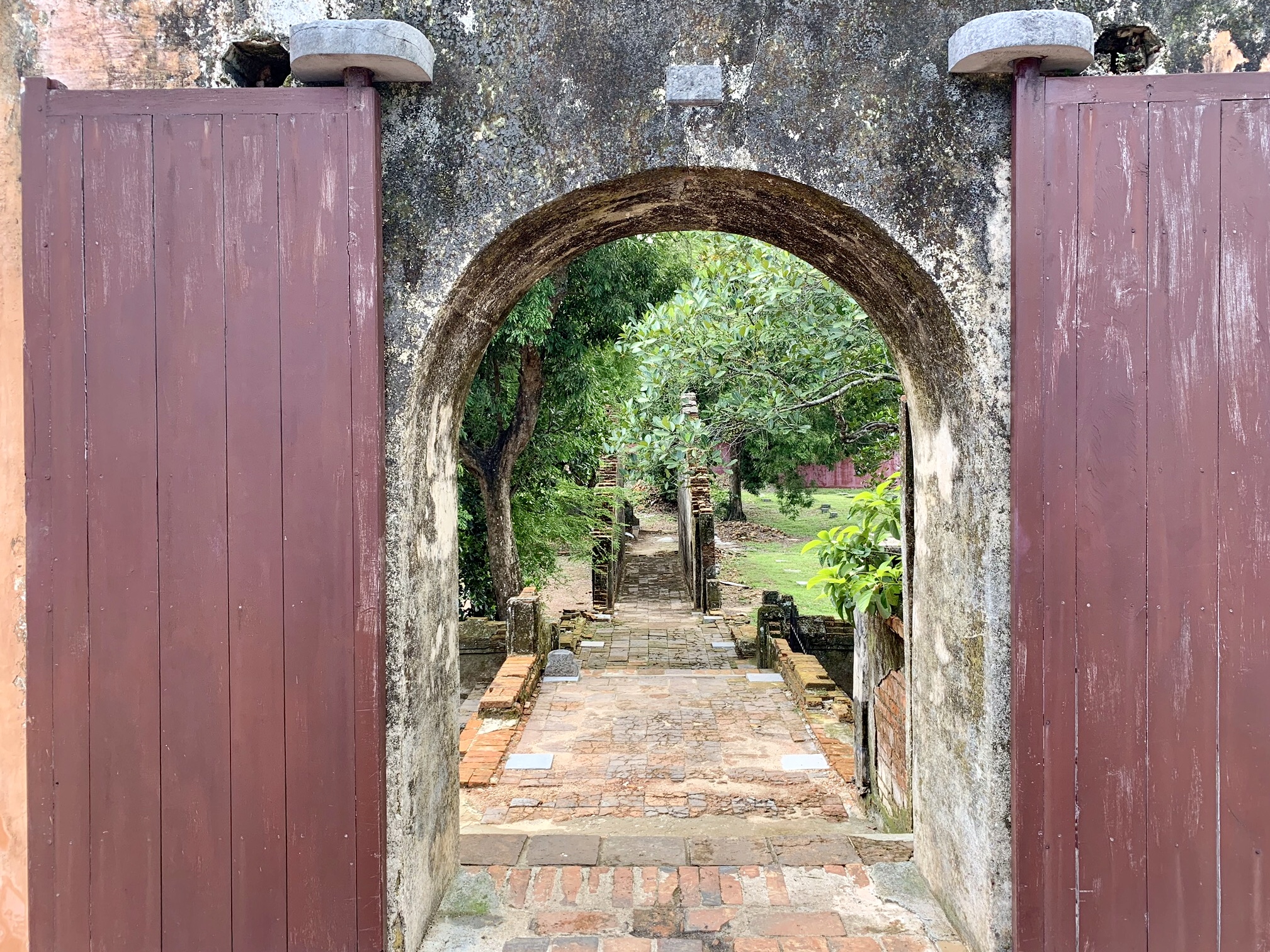
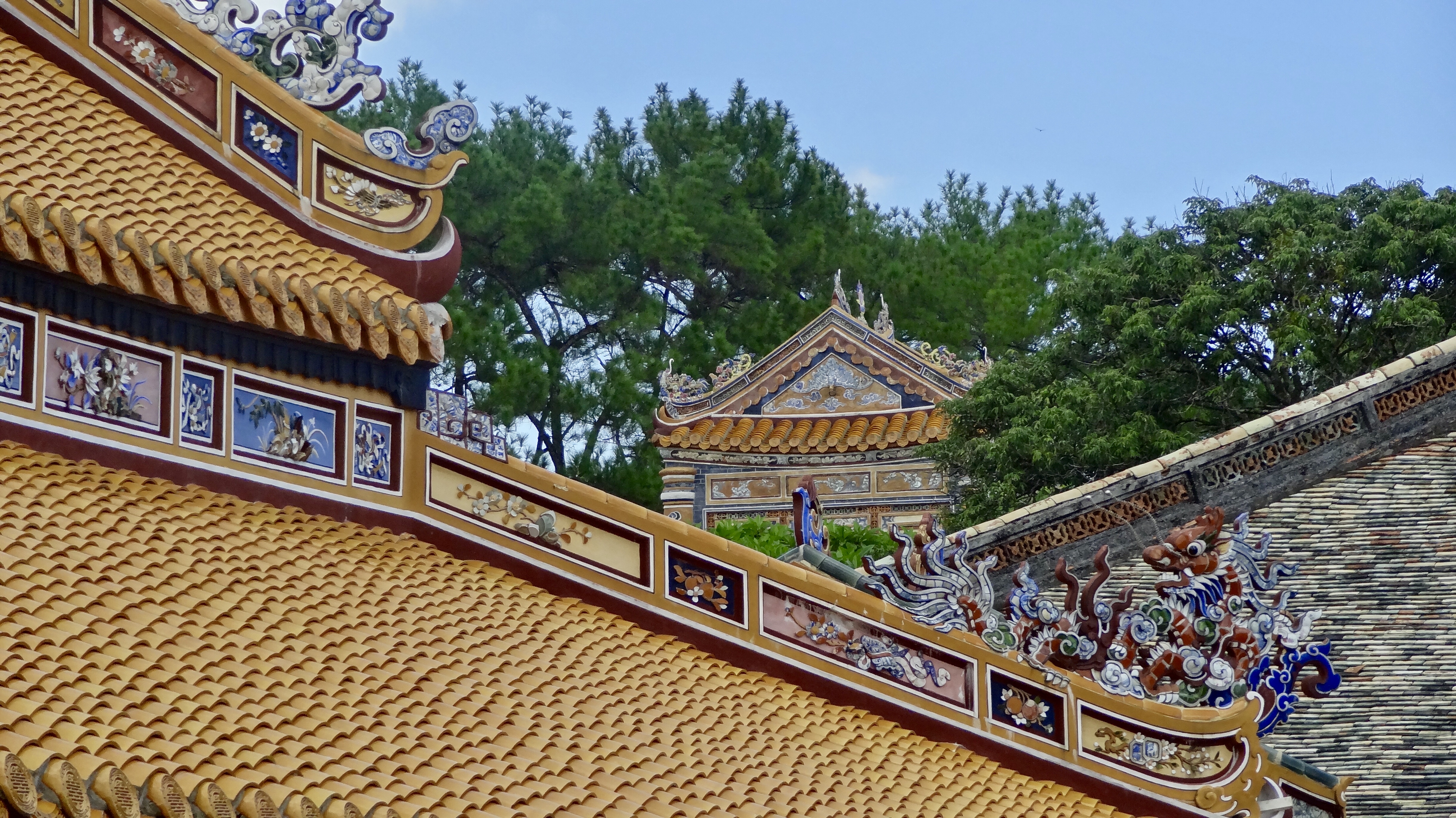
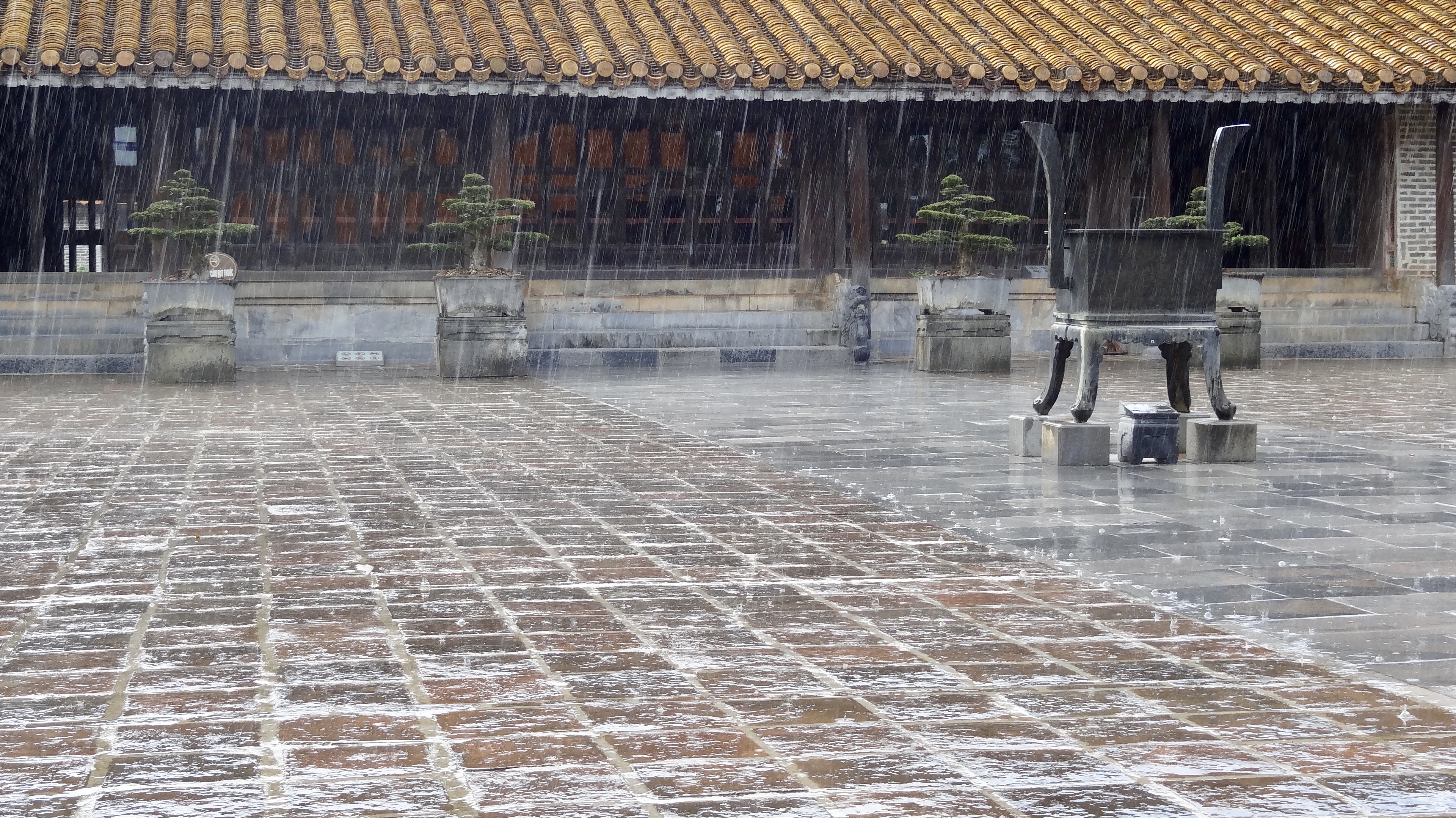
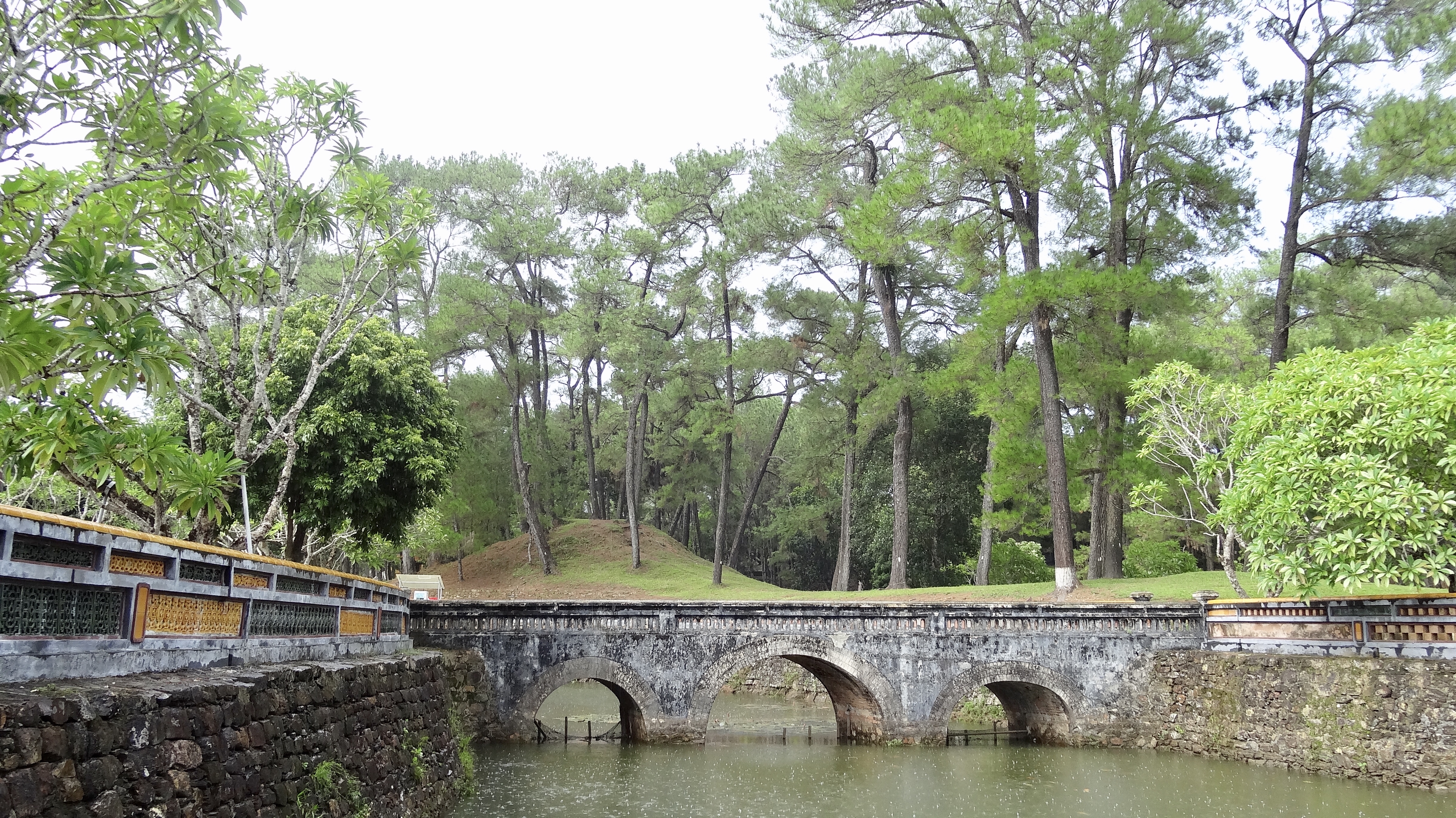
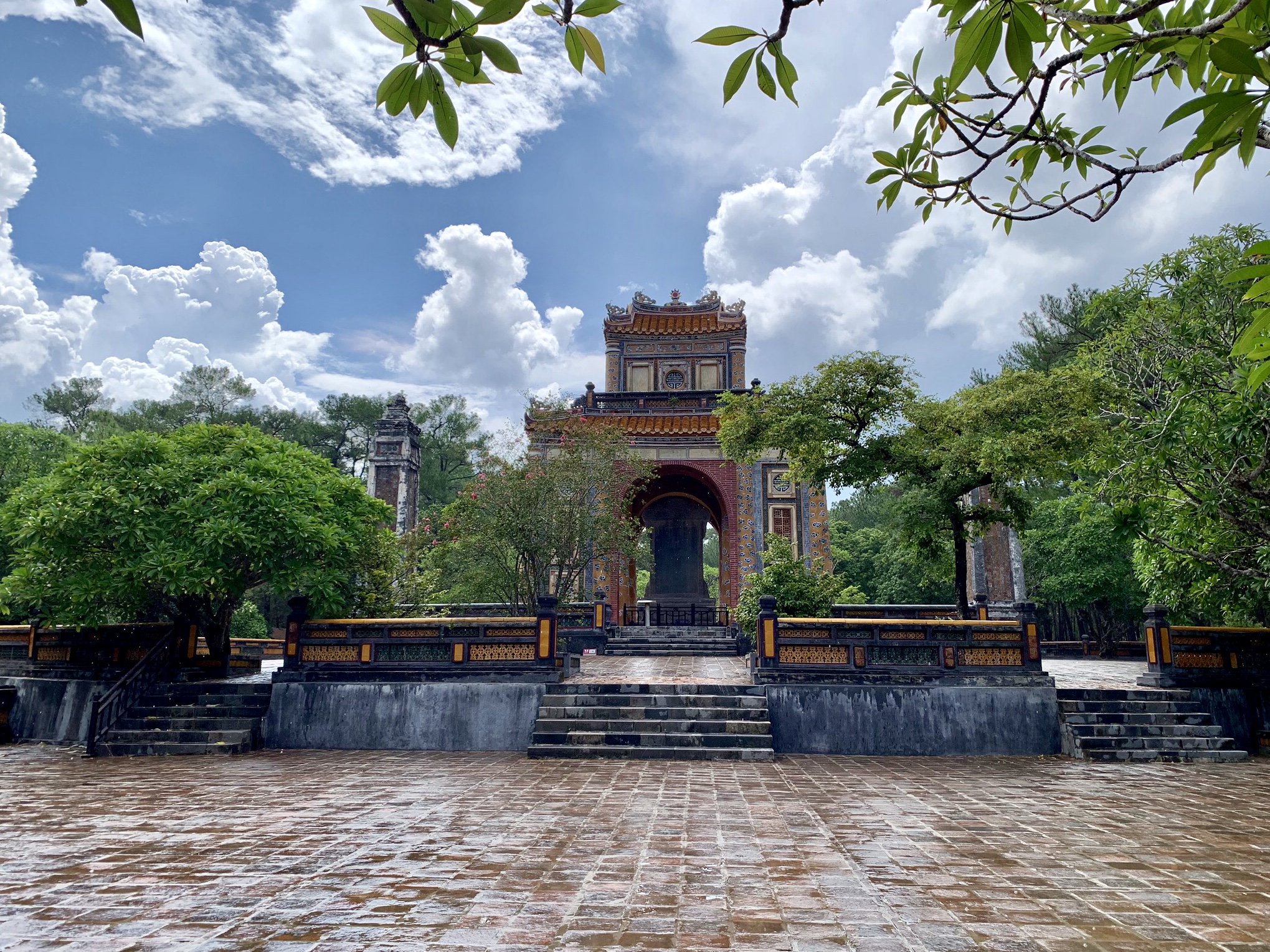
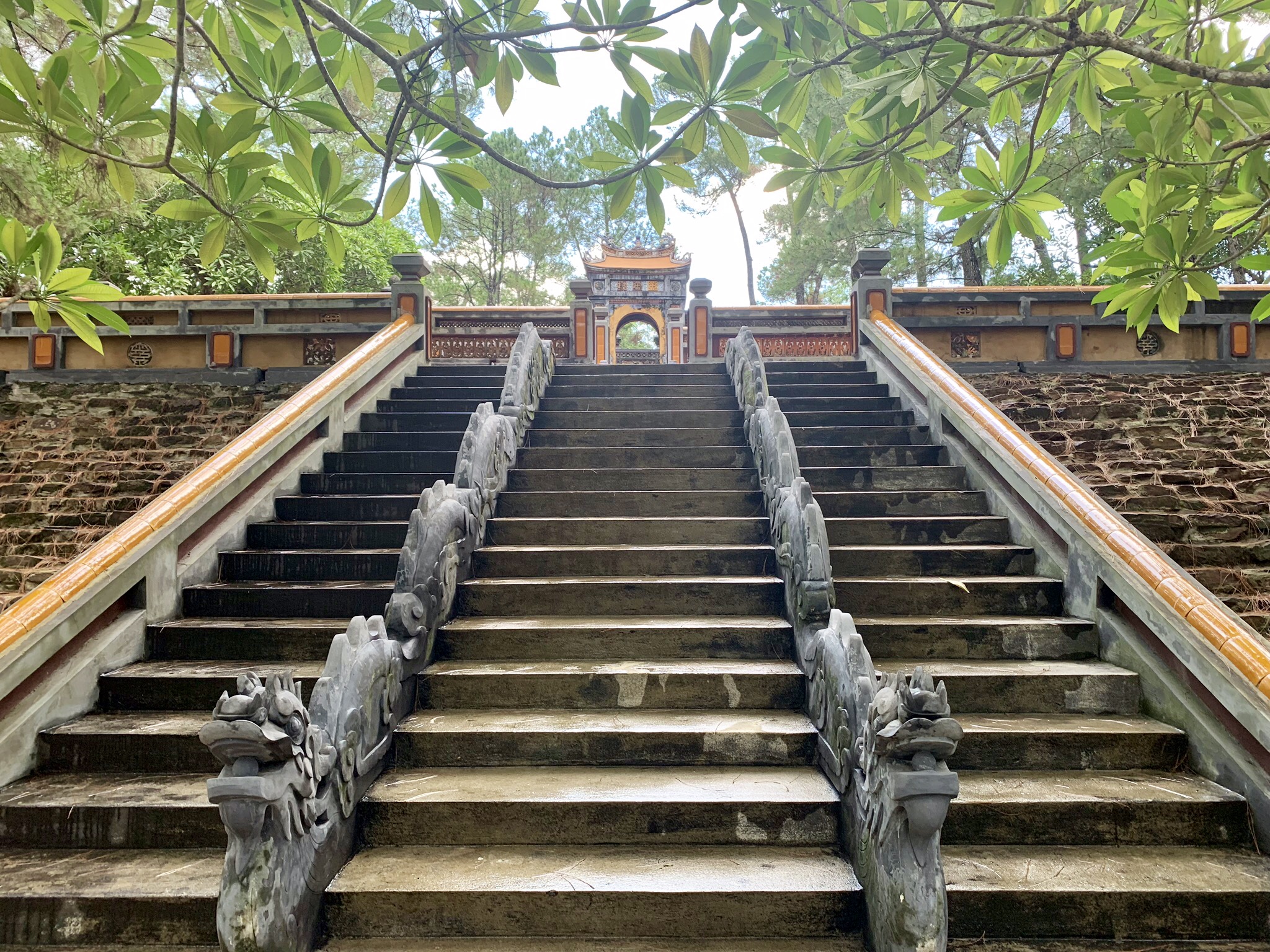
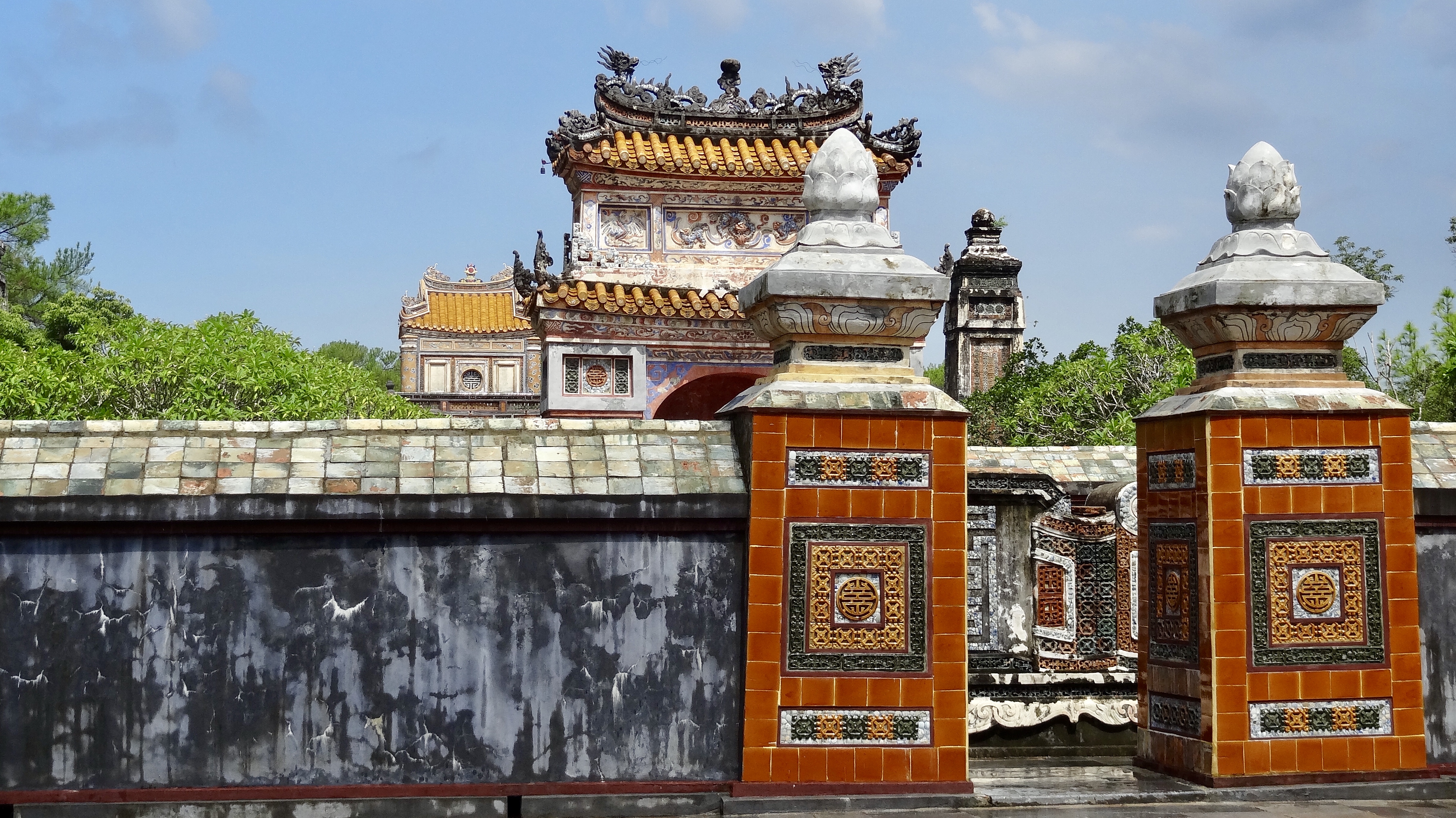
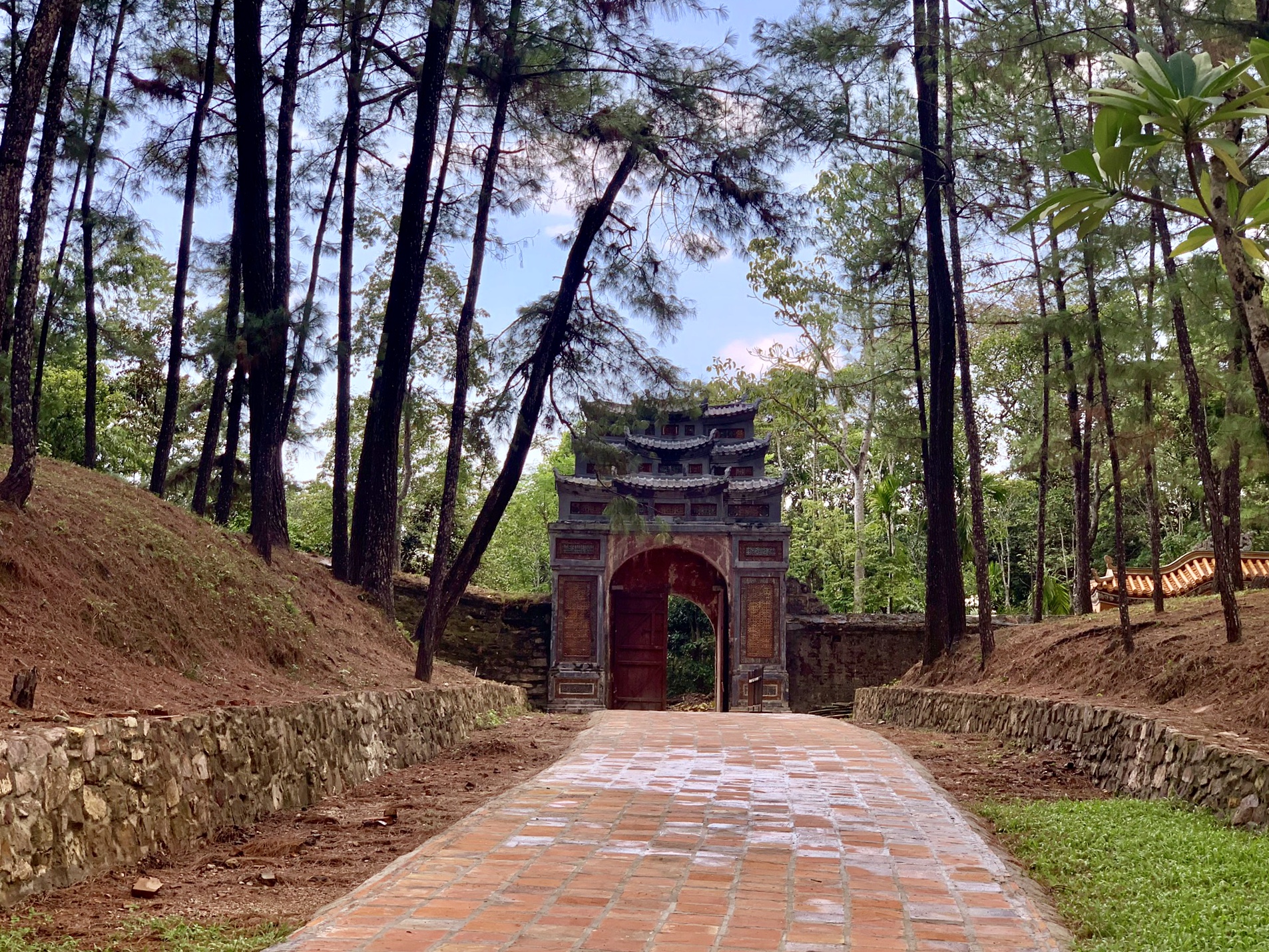
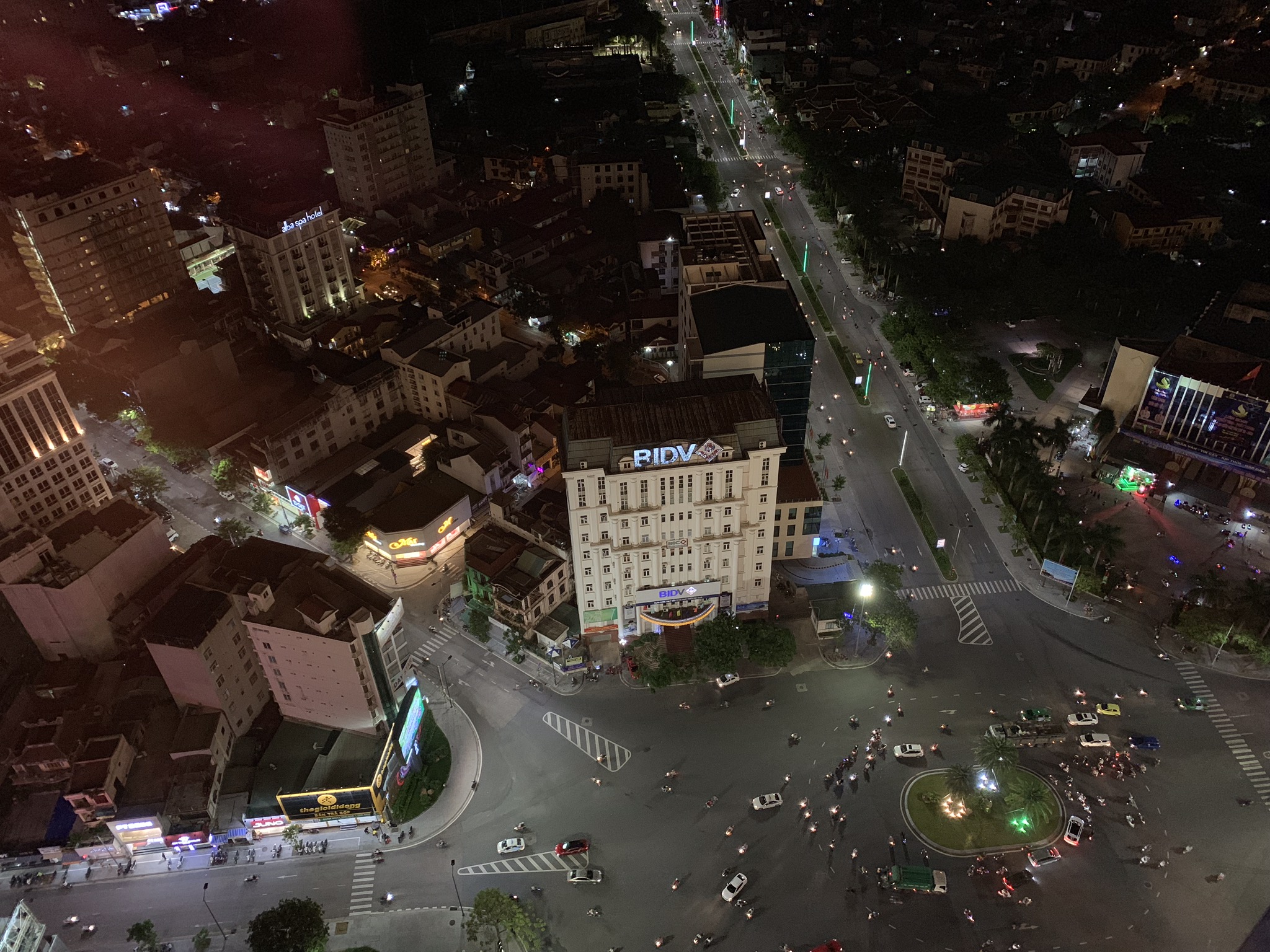
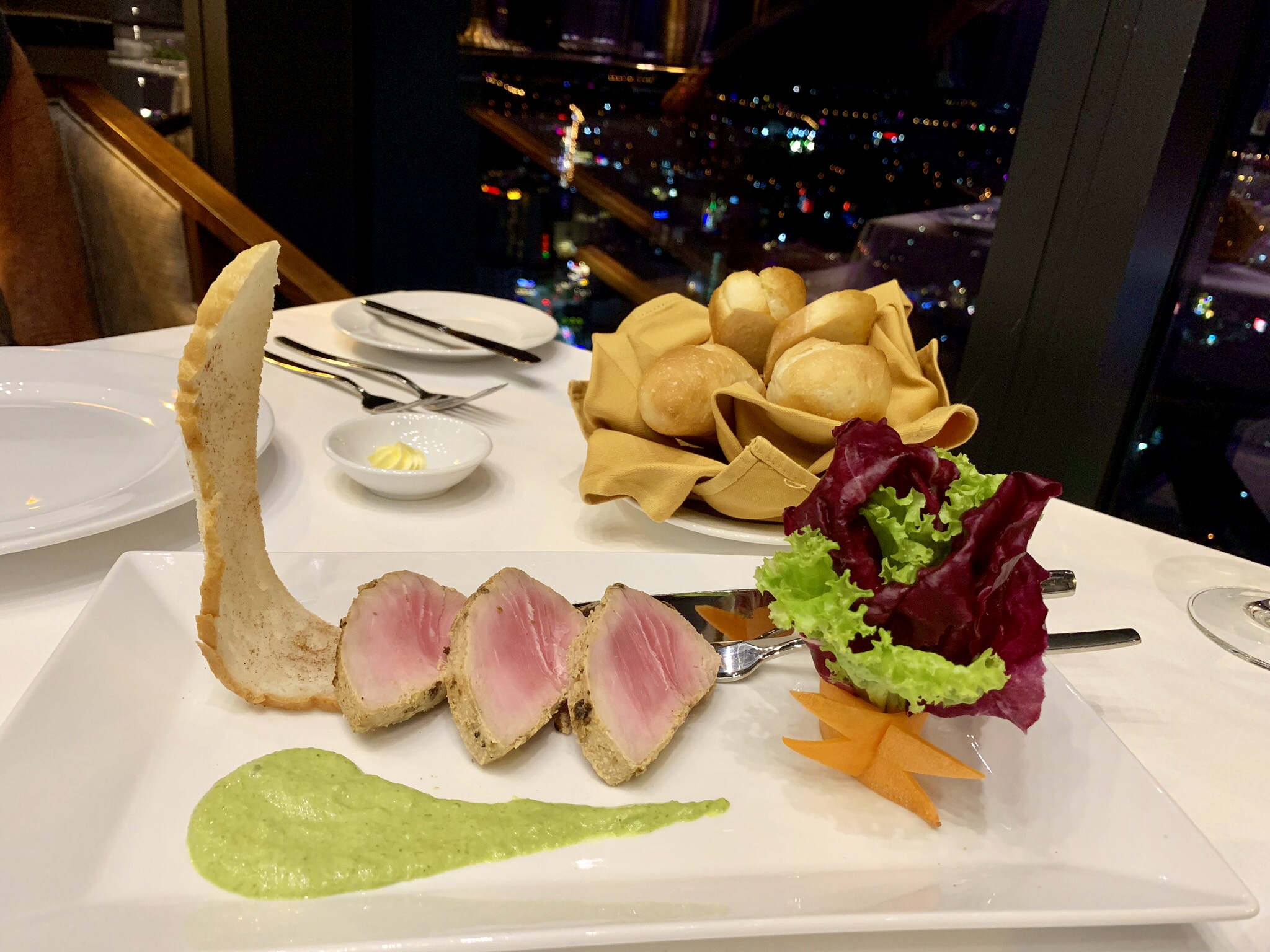
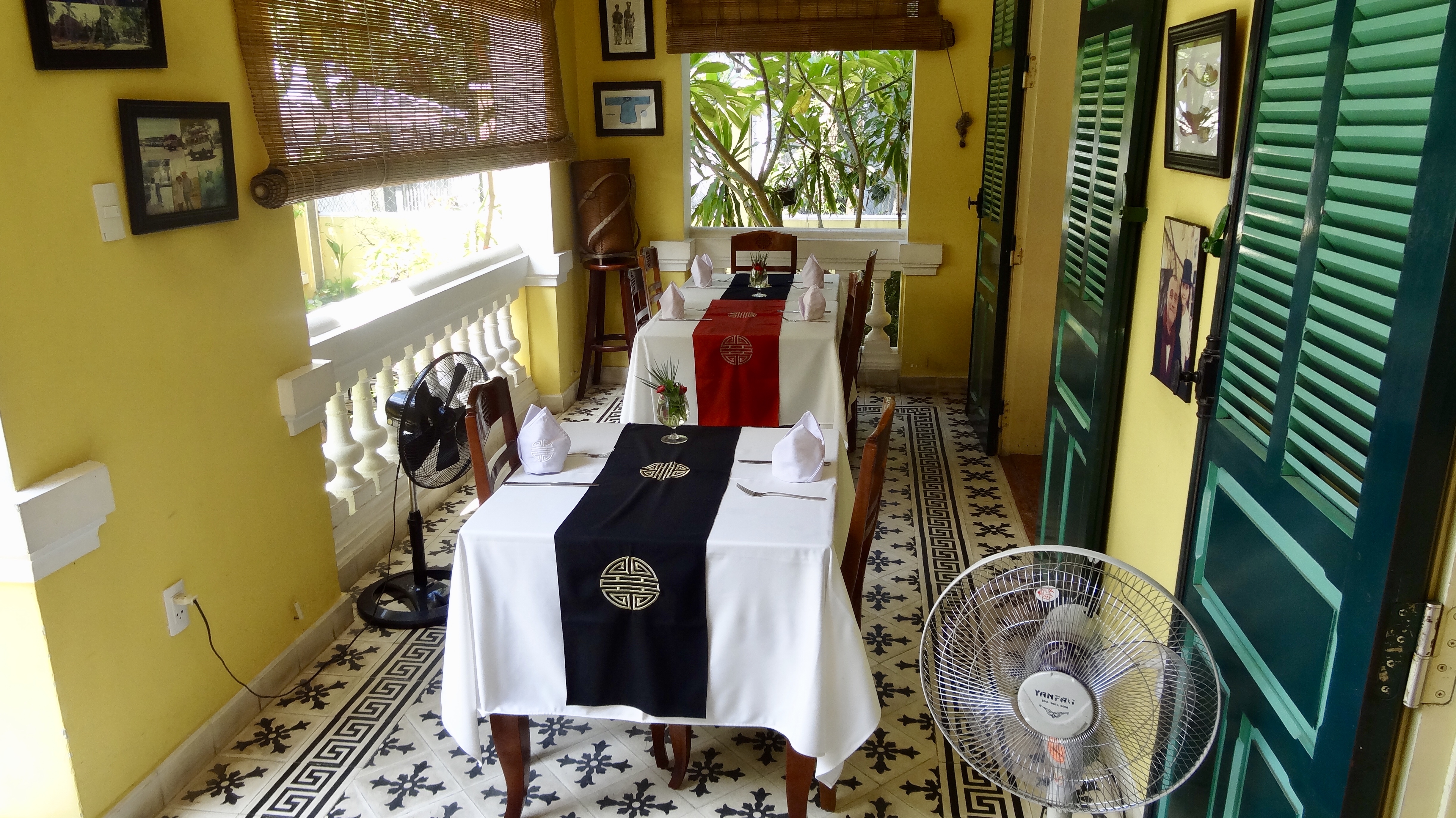
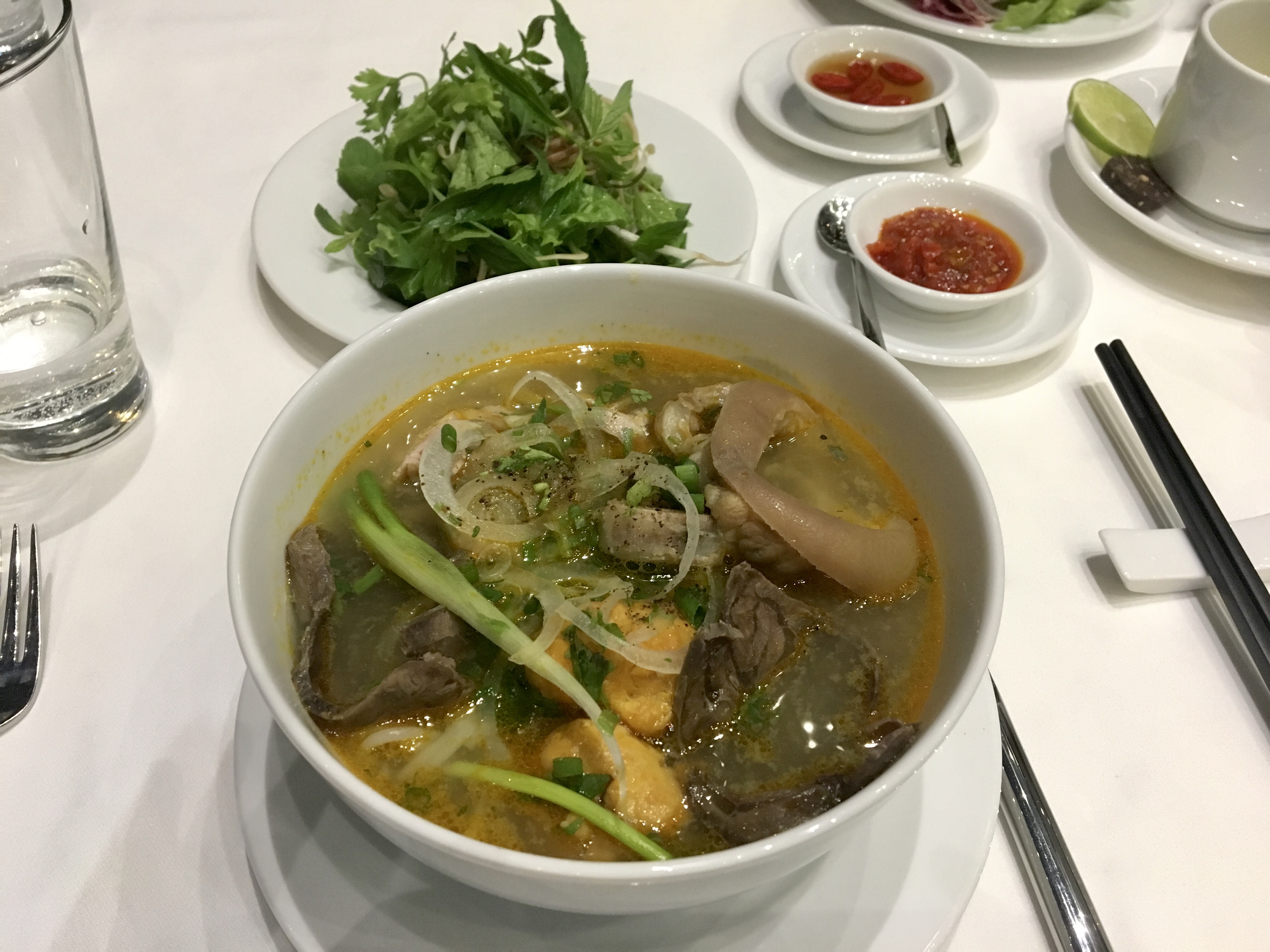
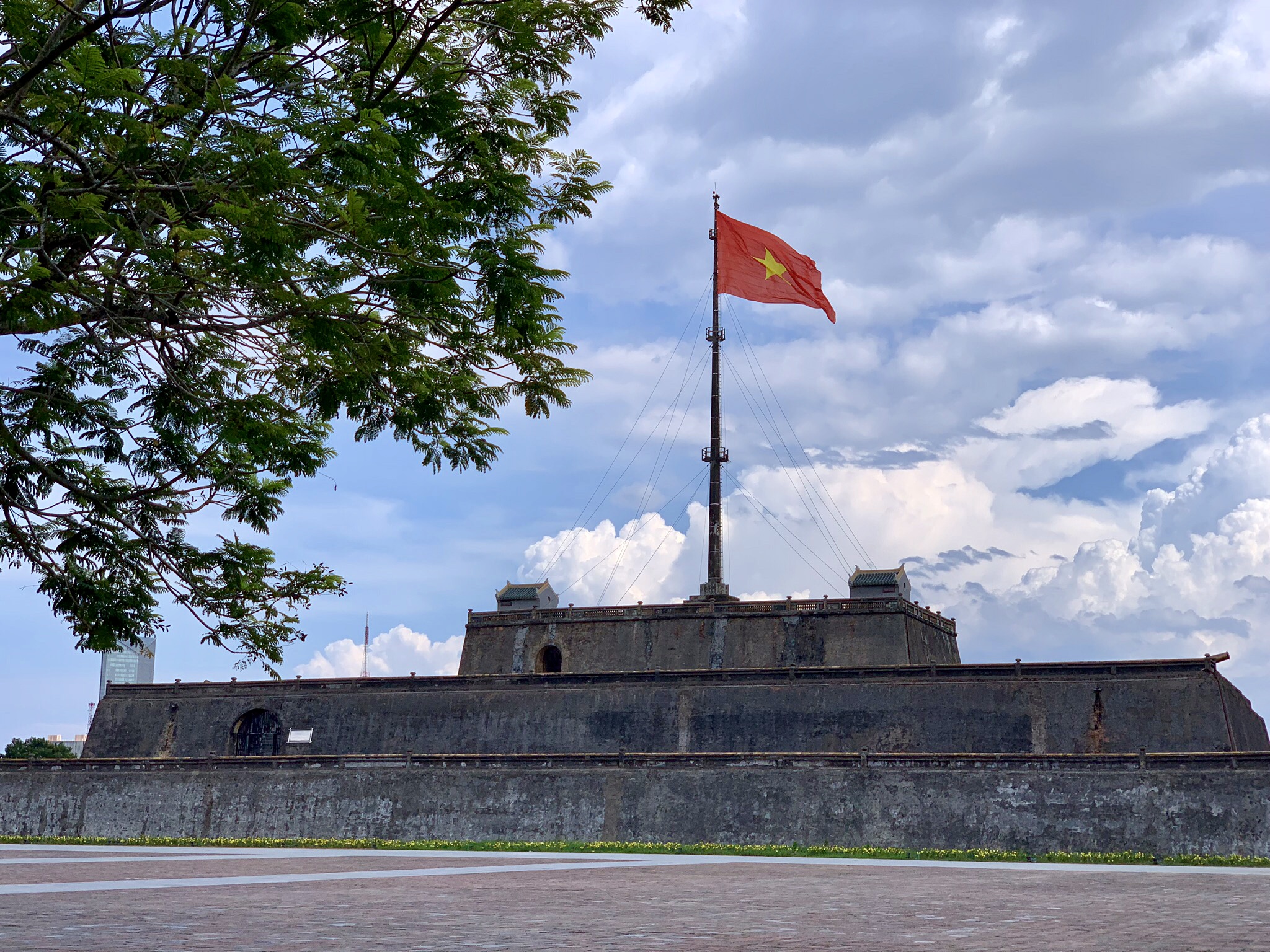
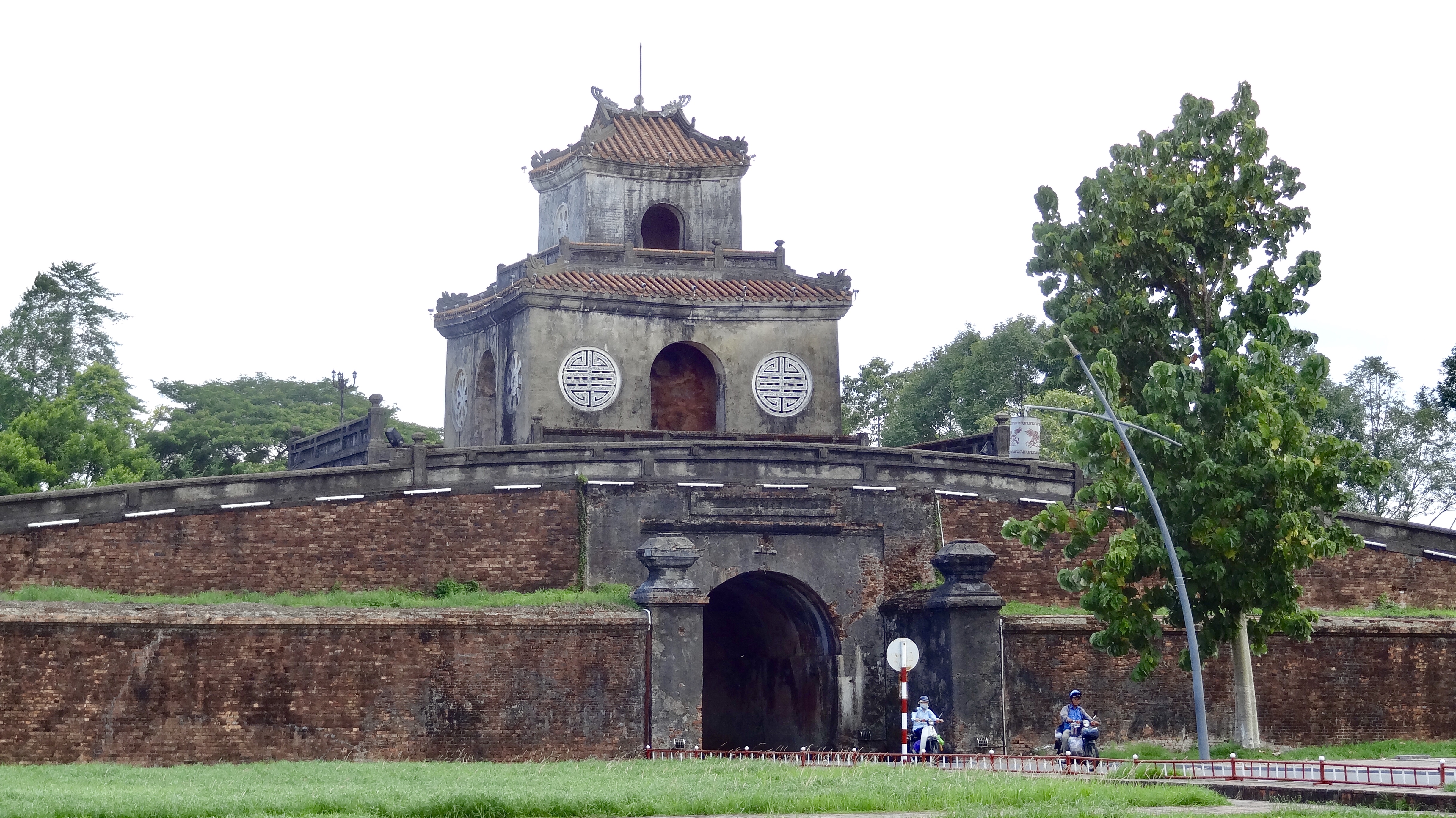
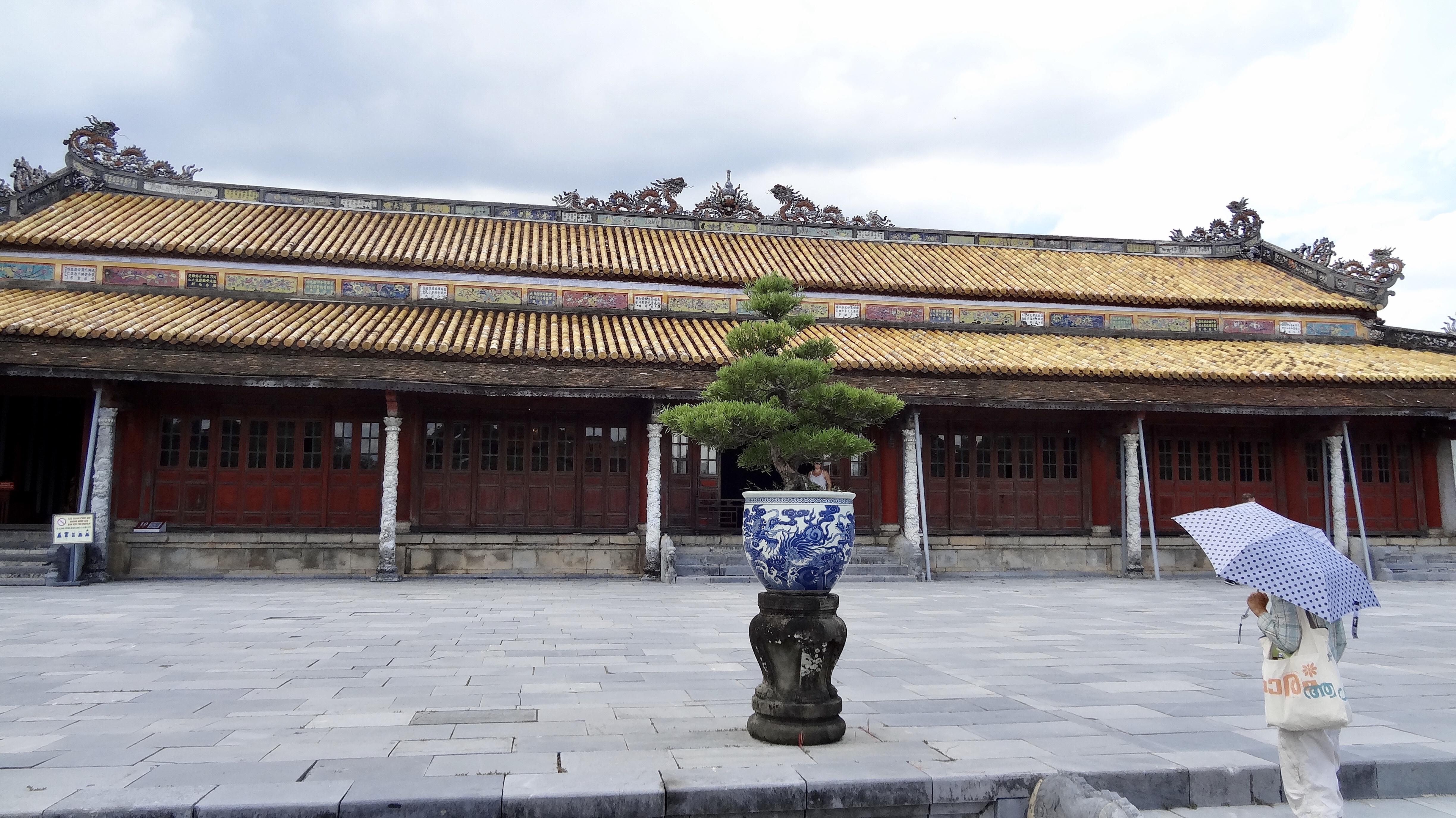
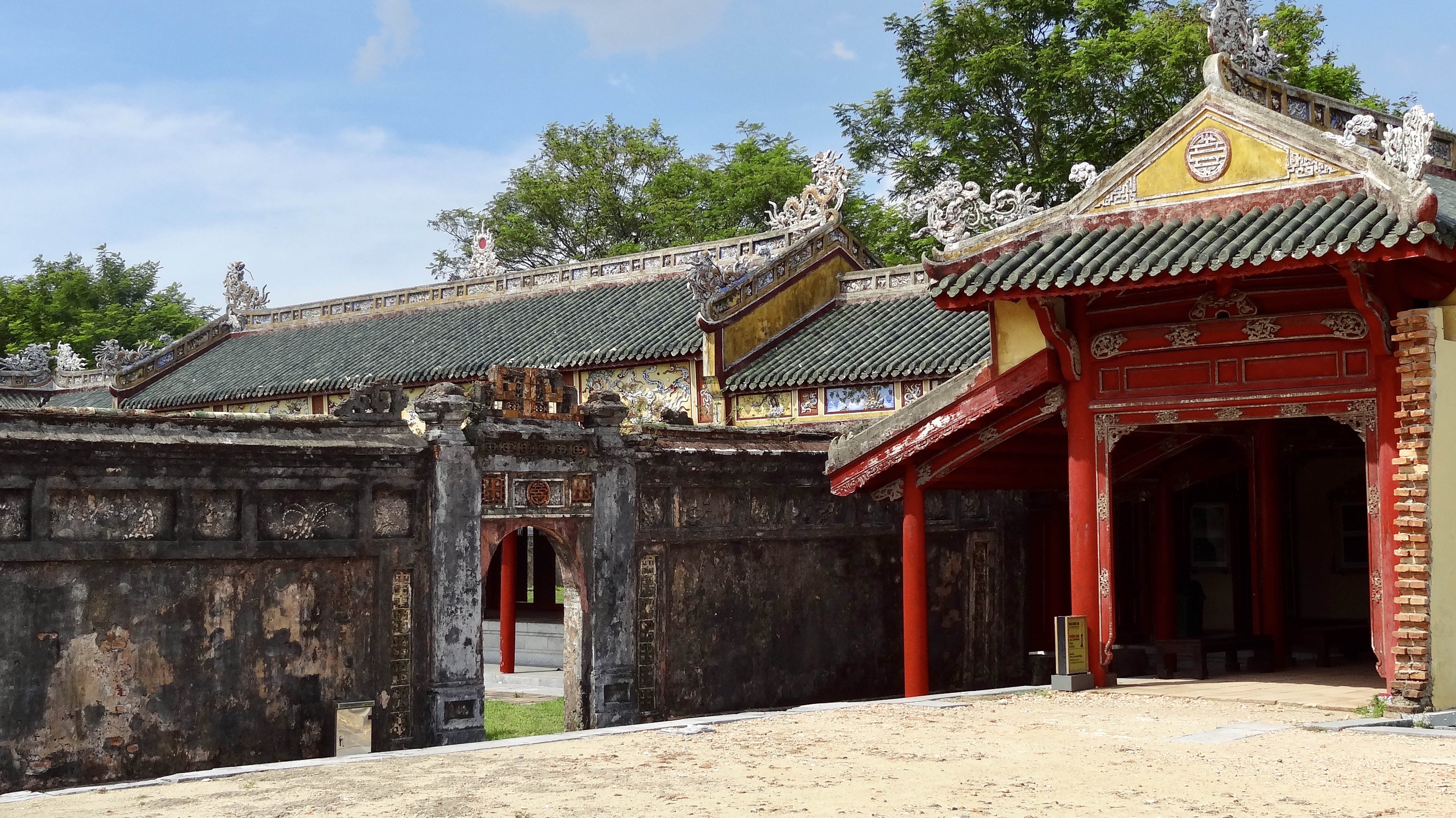
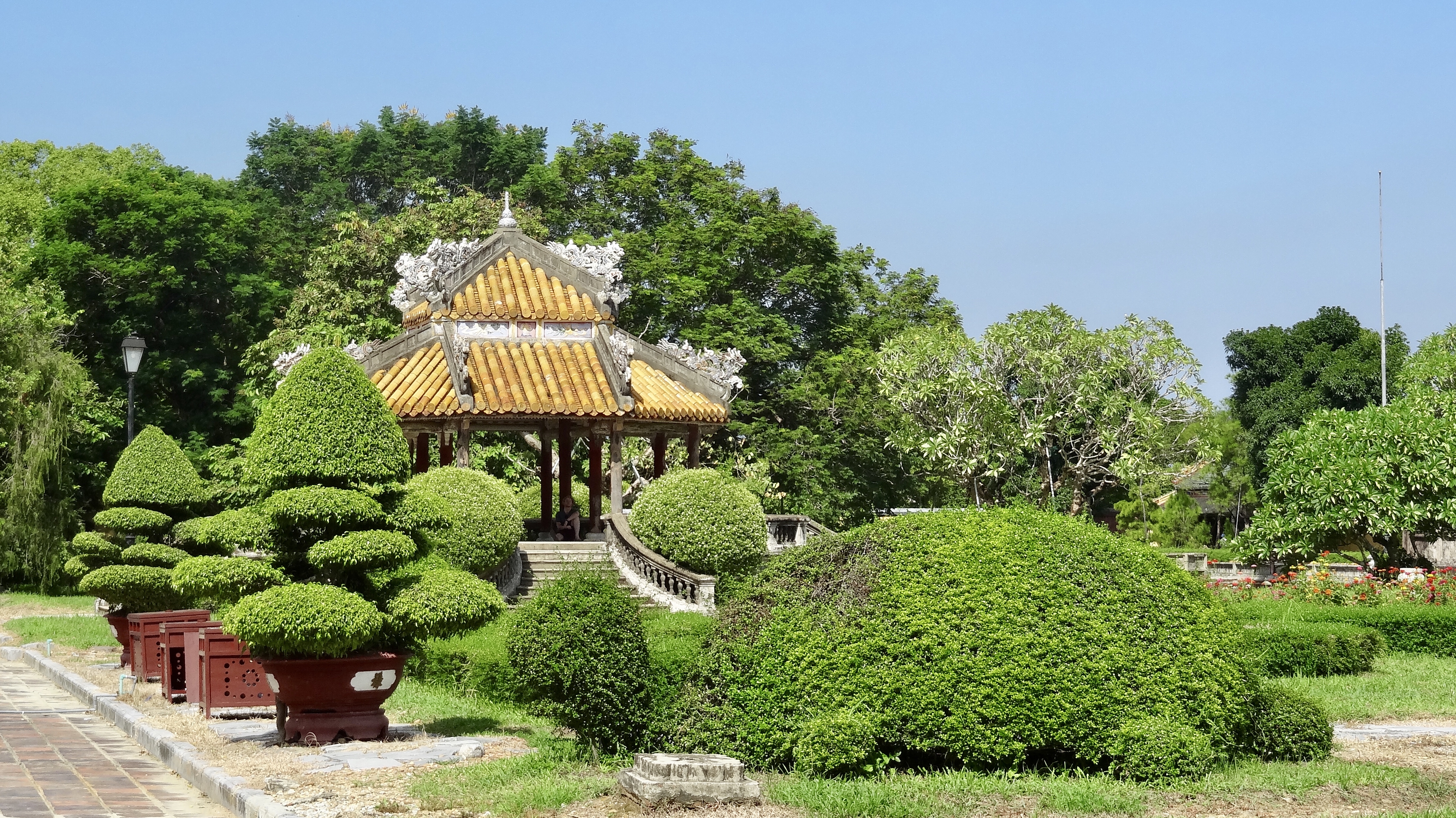
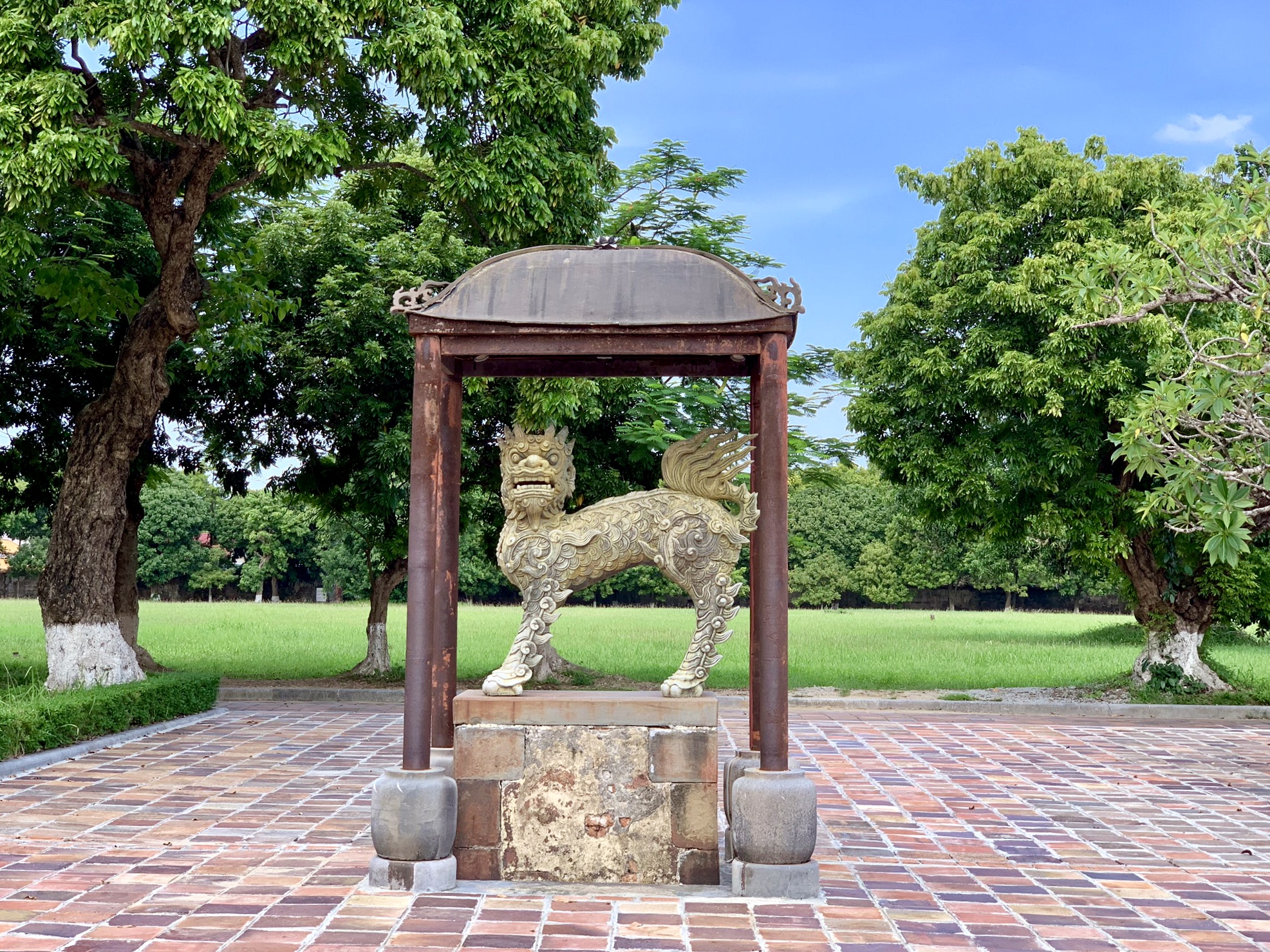
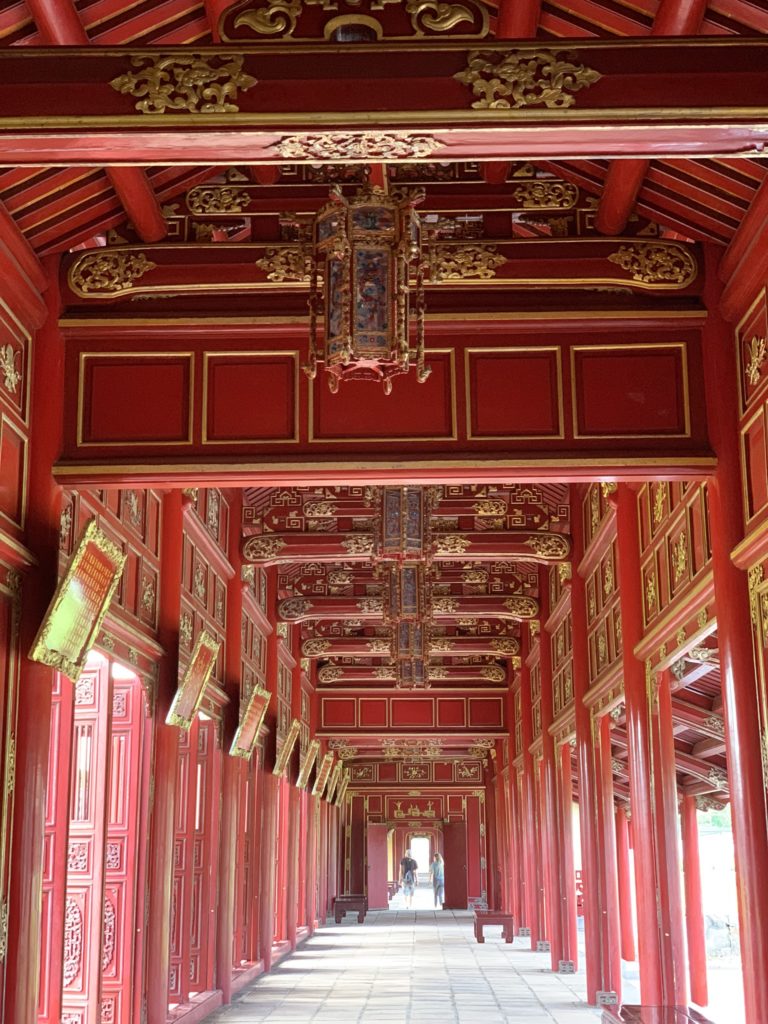
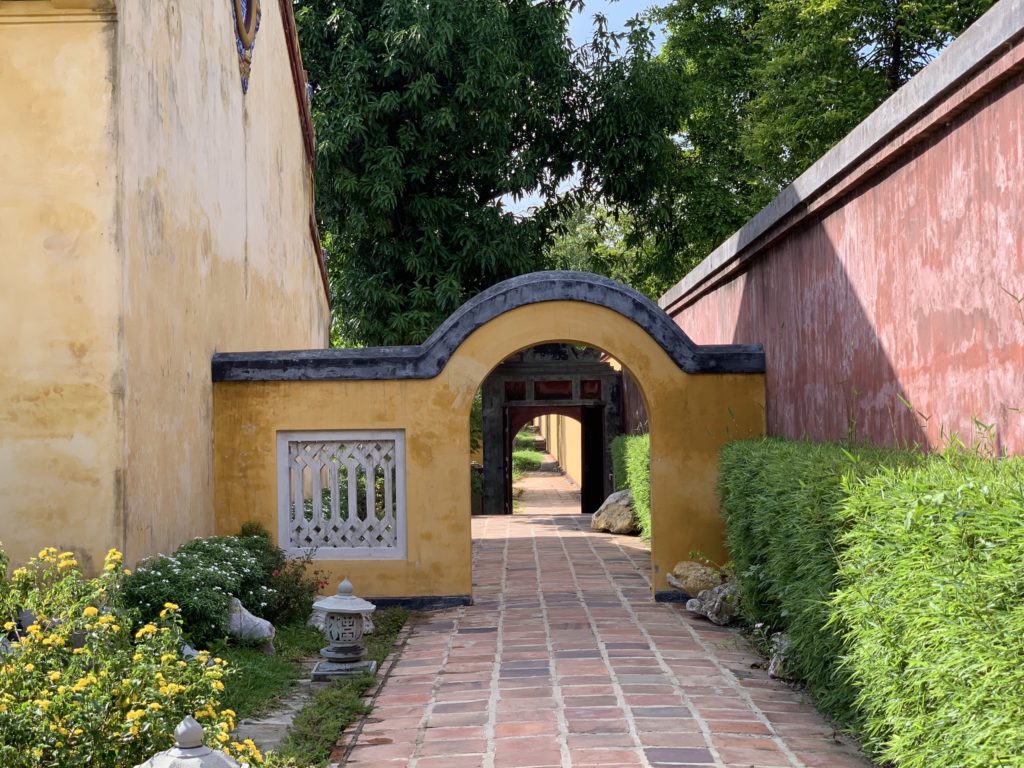
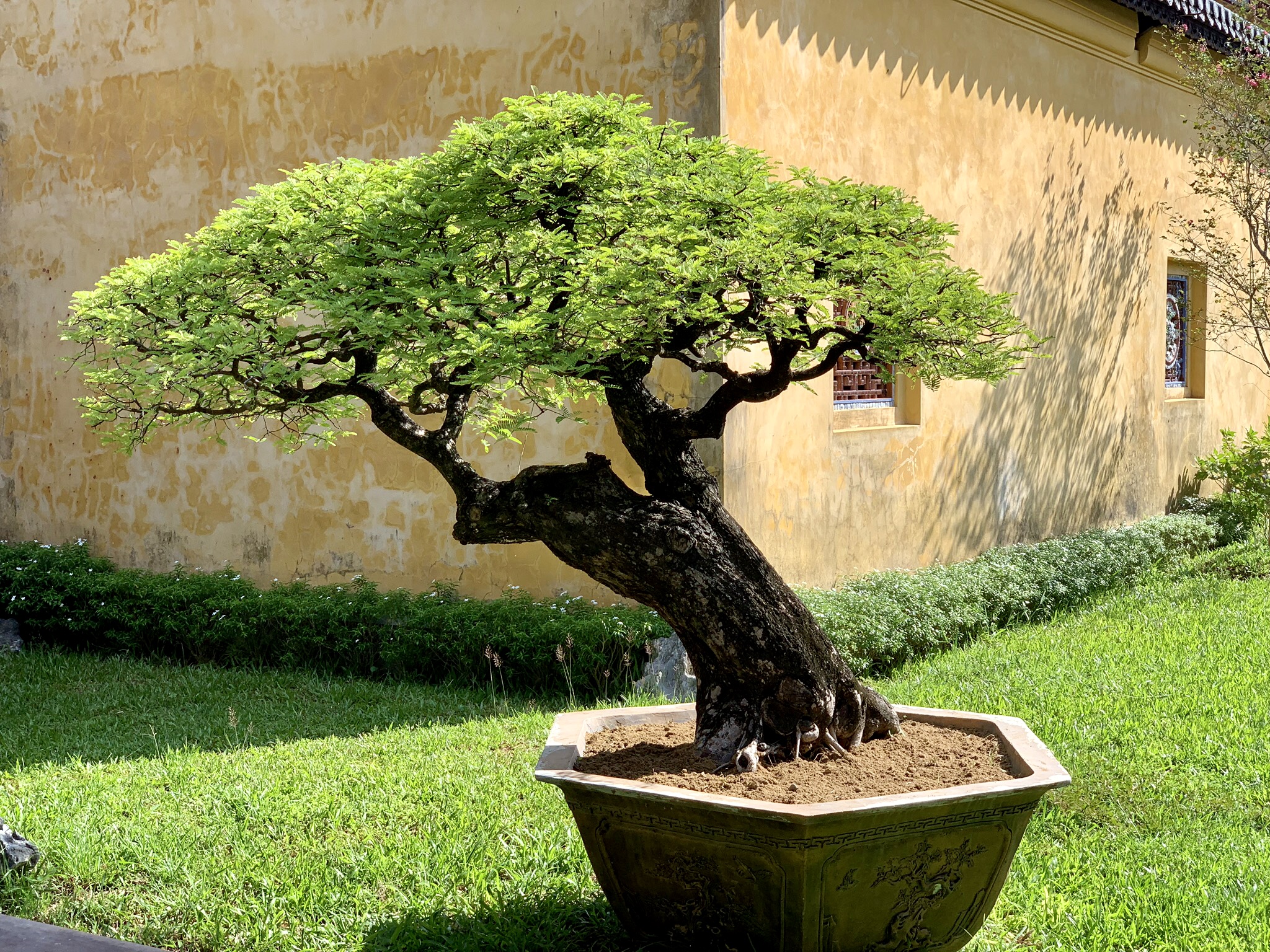
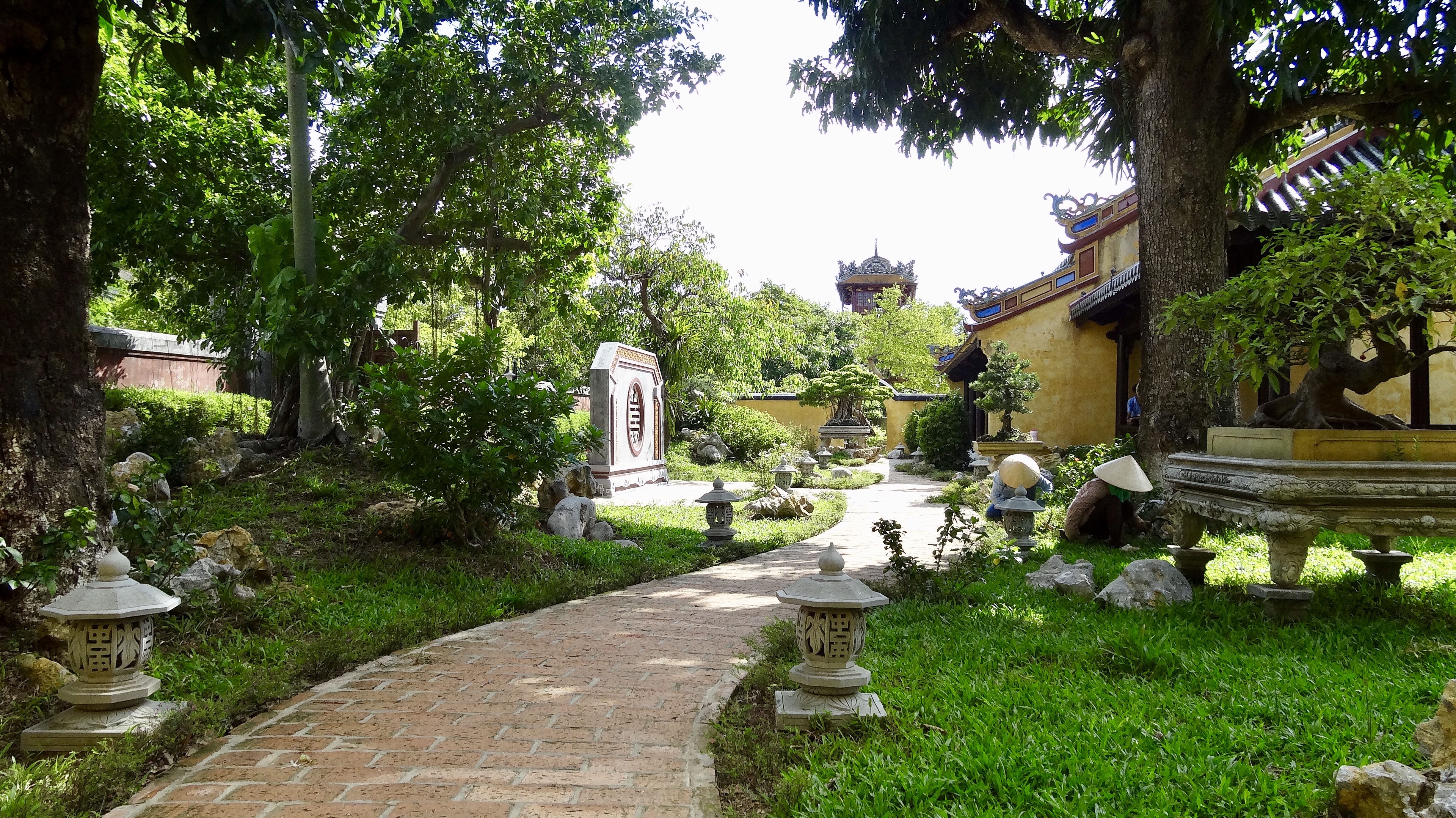
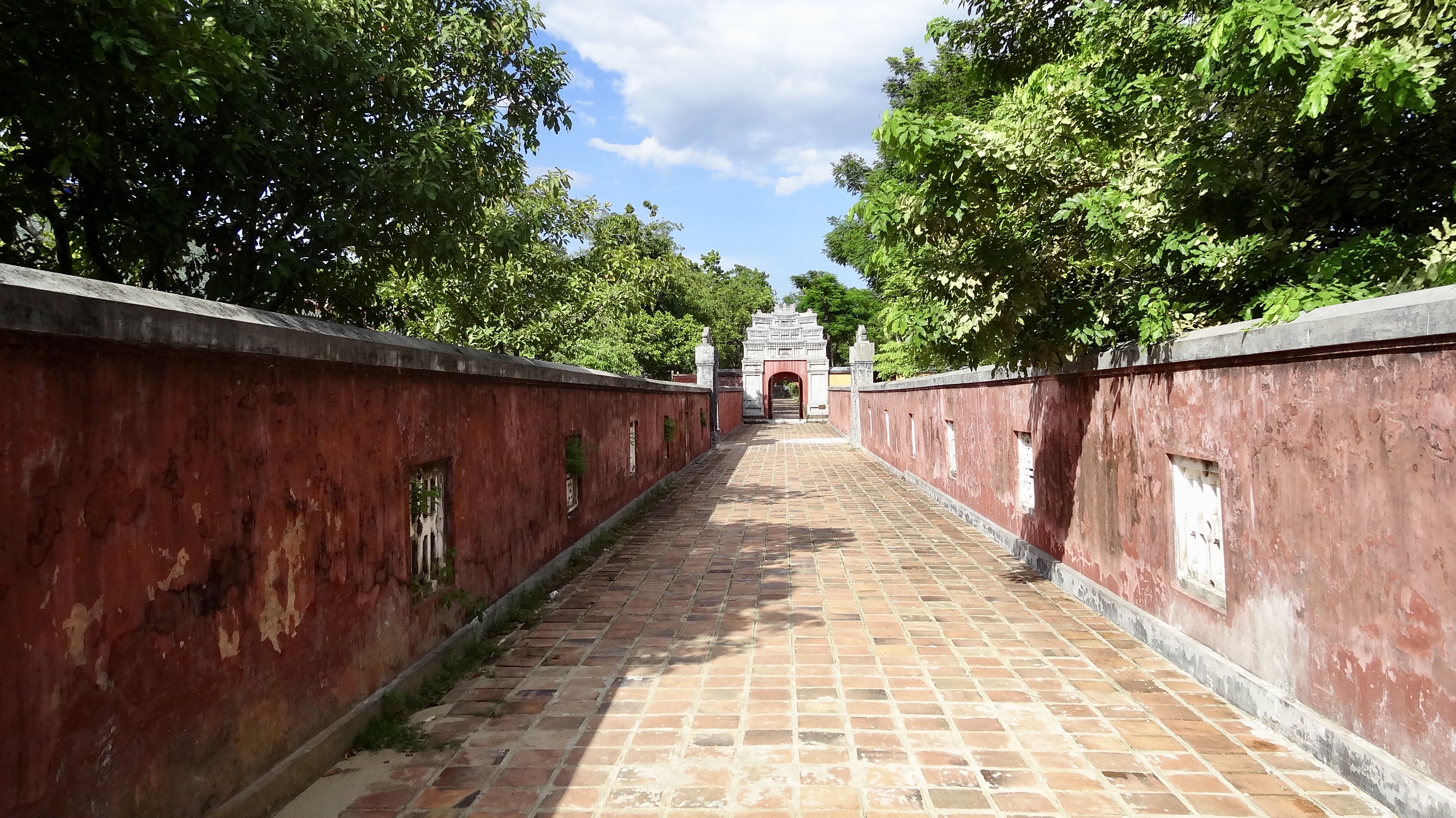
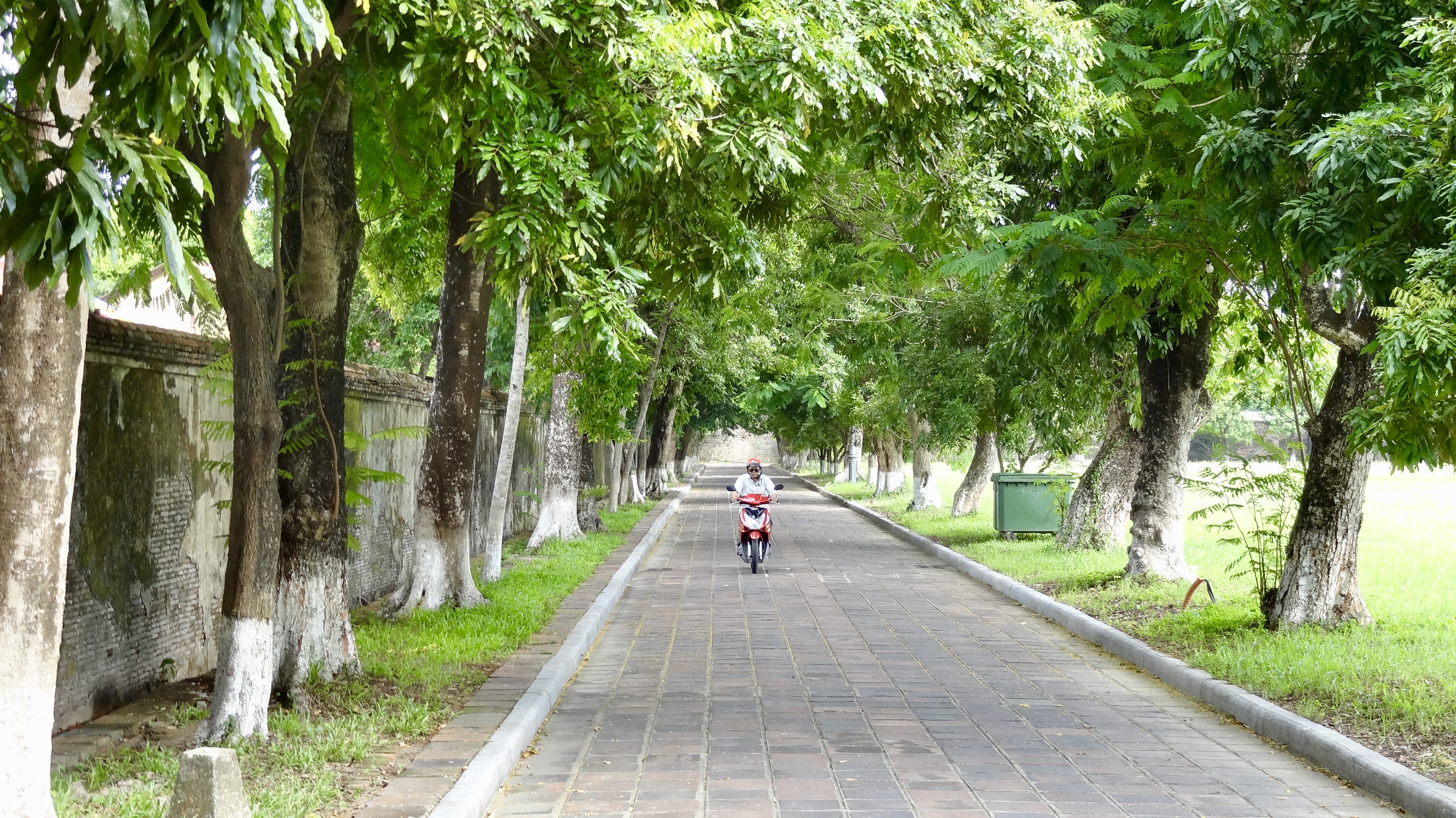
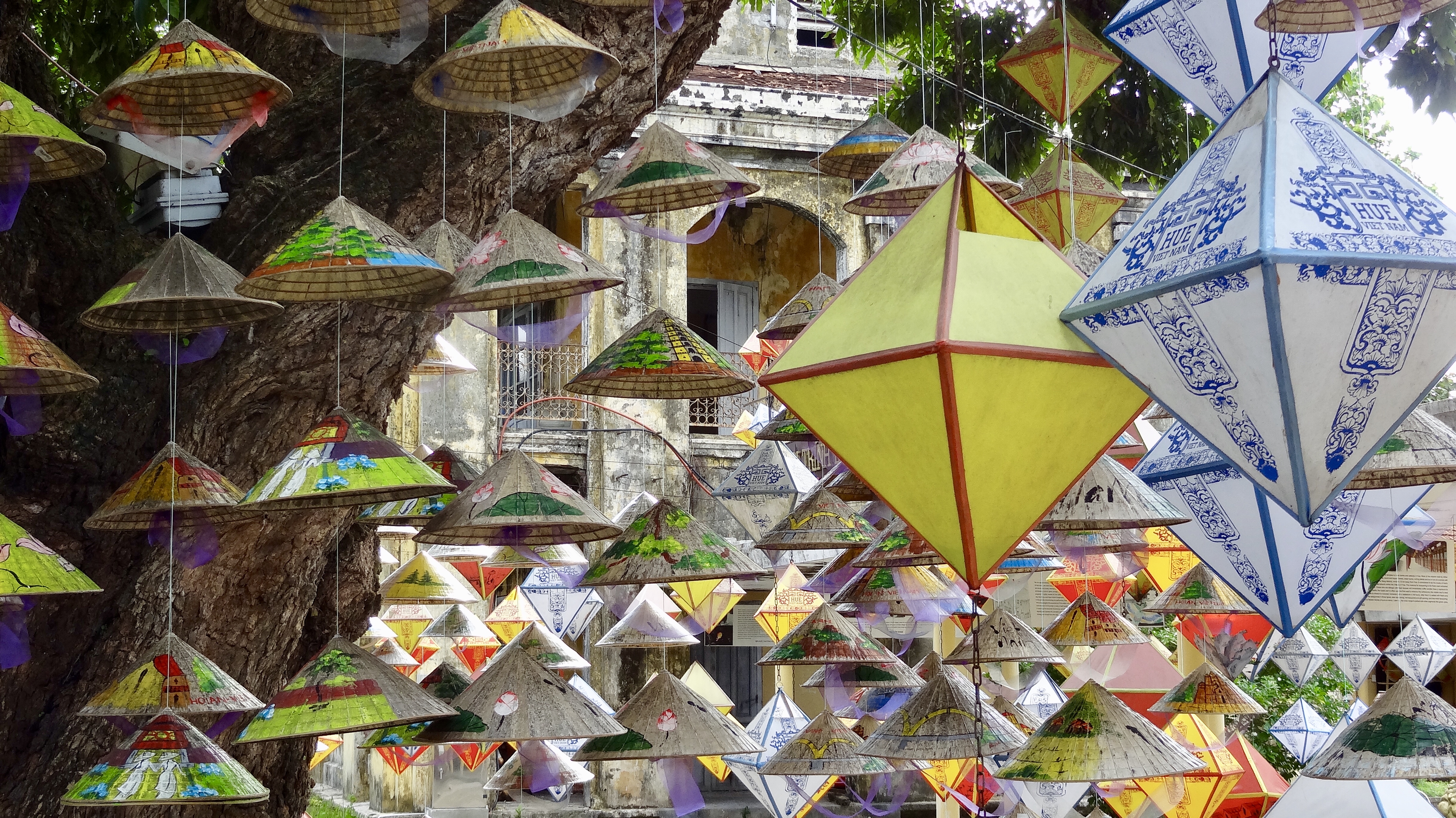
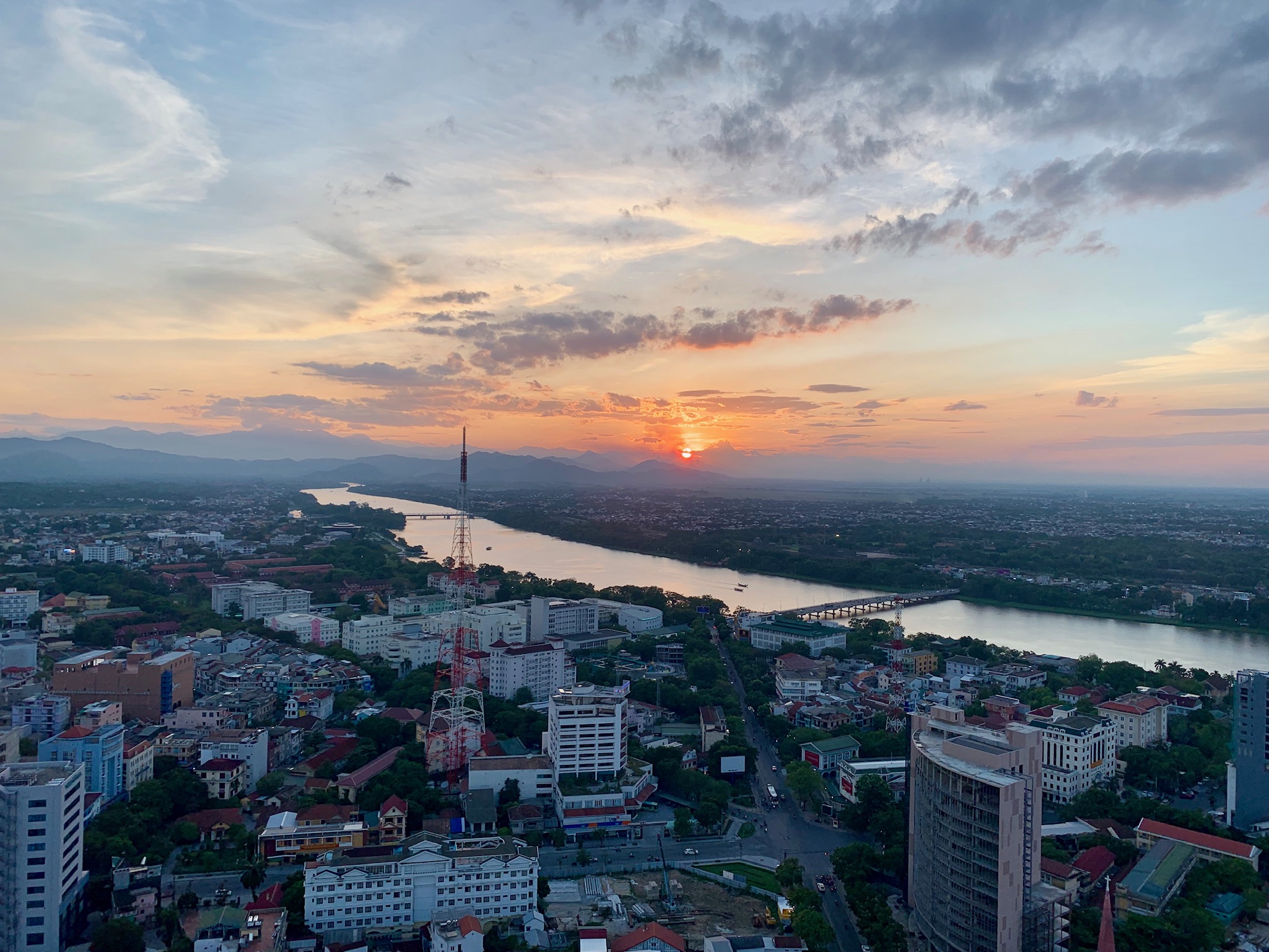
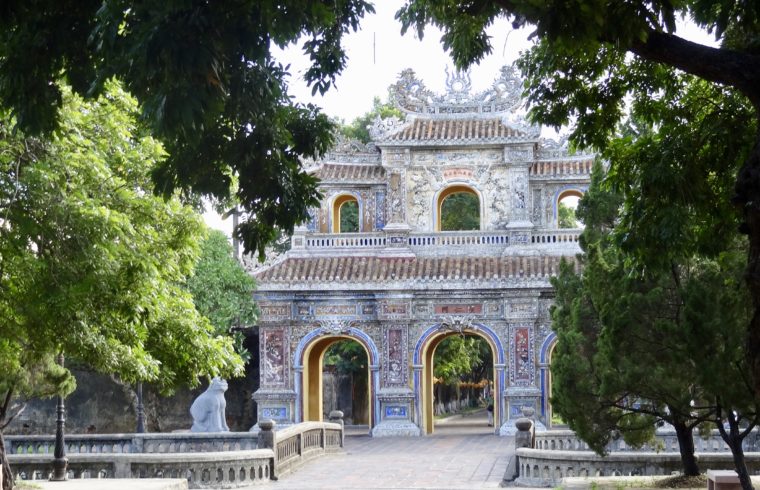
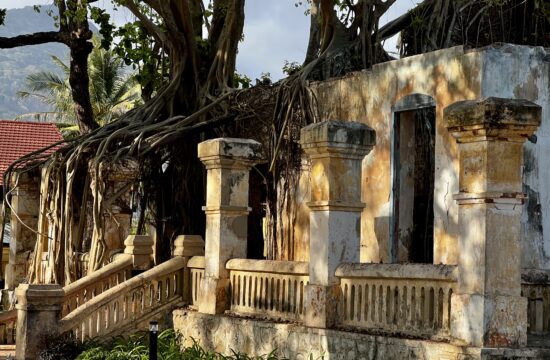
After our time in Hoi An, we hired a car and driver to get us to Huế. We drove north through Da Nang (above) and on through the four-mile Hai Van tunnel that runs under the Annamese Mountains. Once we were on the Huế side, between the green mountains and the sea are acres and acres of oyster beds. As we got close to town, we saw the familiar rice harvests spread out on roadside and road alike. Unlike in the Hoi An countryside, the problem here was less moped and more quadruped. We checked into the Vinpearl Hotel, a quintessentially Vietnamese modern hotel. Everyone there is over-the-top helpful and speaks English. But that doesn’t necessarily mean we can communicate. Between our competing accents, American and Vietnamese, conversations are often mutually unintelligible. Our room looked out to the Perfume River, which separates the older city to the north from the newer city layed out by the French to the south. On our first day we visited the site of the tomb of Tu Duc (above and below). Except it’s not his tomb. More on that in a bit. He used the extensive grounds, temples, and palace buildings as a retreat and eventually as his full time residence.As it turned out, the taxes and labor that made the whole beautiful thing possible were revolt-worthy. Tu Duc survived the attempted coup and ruled for over 30 years.While there, a short but industrious thunderstorm flew over. What we thought was suffocating humidity before the rain became fond memories after, when the hot stones and tiles insisted on returning all the fallen moisture. We sheltered under a riverside pavilion, and as the rain let up returned to exploring. The intended tomb itself contains only an engraved stele with Tu Duc’s autobiographical epitaph. He was buried in secret (and secret still) somewhere else in Huế.We really enjoyed the architectural elegance of the many different elements, from dragon stairs (above) to the mosaic and tile temples (below). Even the exit was picturesque. Though it looked kind of lonely without a gift shop.One night we ate at the hotel’s 34th floor restaurant. We watched from above the dance between cars and motorbikes that the locals call a traffic circle. The funny thing is, for all that it looks like a traffic circle, it’s really a five-way intersection with no signals. If you want to go straight across, you don’t get in the circle and then make the second right, you drive straight through the center, stopping and starting and honking your way through the other four streams of cross traffic. While we watched traffic and our fellow diners celebrating special occasions, we had seared ahi, steak, and sea bass. The menu is not very Vietnamese, but then who goes out for a special dinner and the best view in town for local food?One day we went north over the river to the older part of the city. We enjoyed lunch (pronounced phở by the photographer) at Les Jardins de la Carambole, well known for their French-Vietnamese fusion cuisine. I was more impressed by their high fan-to-customer ratio. The one with the camera had phở. After lunch we walked to the Imperial Citadel. The capital of Vietnam moved around a lot over the centuries, and sometimes had competing ones. In the early 1800s, it was at Huế. The emperor at the time decided he needed a fortress and a palace to call home, so he had a fortress (above) and citadel wall built, and within it a palace complex based loosely on China’s great imperial forbidden city.Modern traffic still moves through the citadel’s gates. The citadel’s construction preceded Tu Duc’s Tomb by a little over 50 years, and it’s obvious that the one architecture influenced the other. Here the photographer is experiencing a little déjà vu. Above is the old wall and entrance to the imperial “forbidden” part of the city. Much of the complex was damaged or destroyed by modern wars.But much survived and is being restored. From pavilions to statuary to the great long halls of the emperor’s private palace grounds (above and below).One of our favorite areas is the imperial gardens. With its bonsai treesAnd walled green spaces. The citadel wall and moat enclose well over 1,000 acres, connected by stone-paved walkways and roads (above and below).Someone decided to string rice hats and silk lanterns from a massive old tree near one of the gates. It’s a colorful spectacle, and the tree doesn’t seem to mind.Next stop Hanoi. Ciao, ciao Huế.