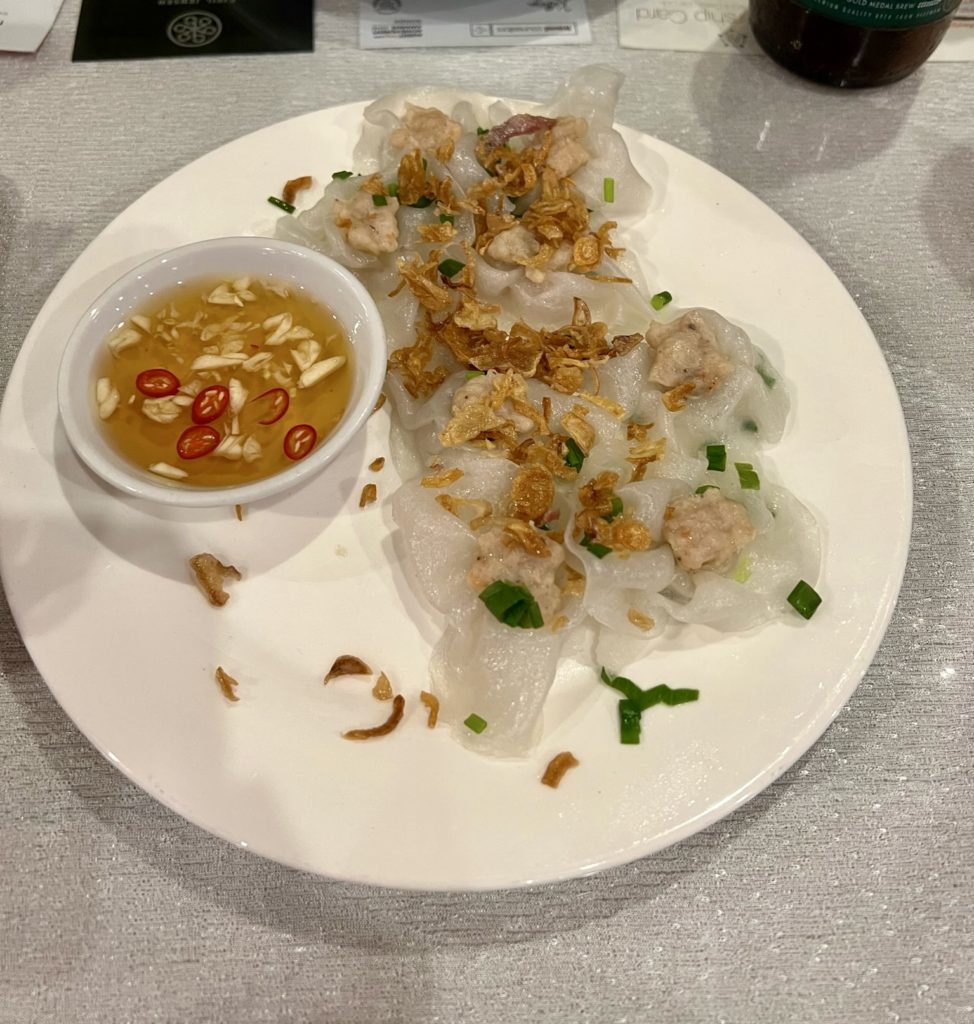
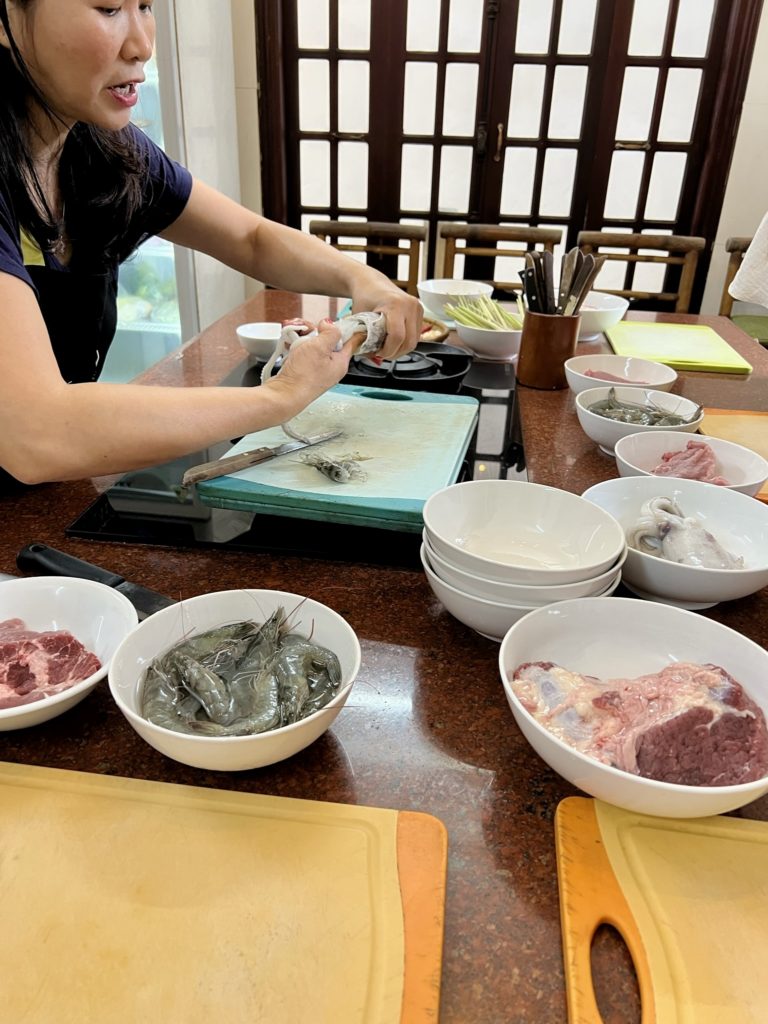
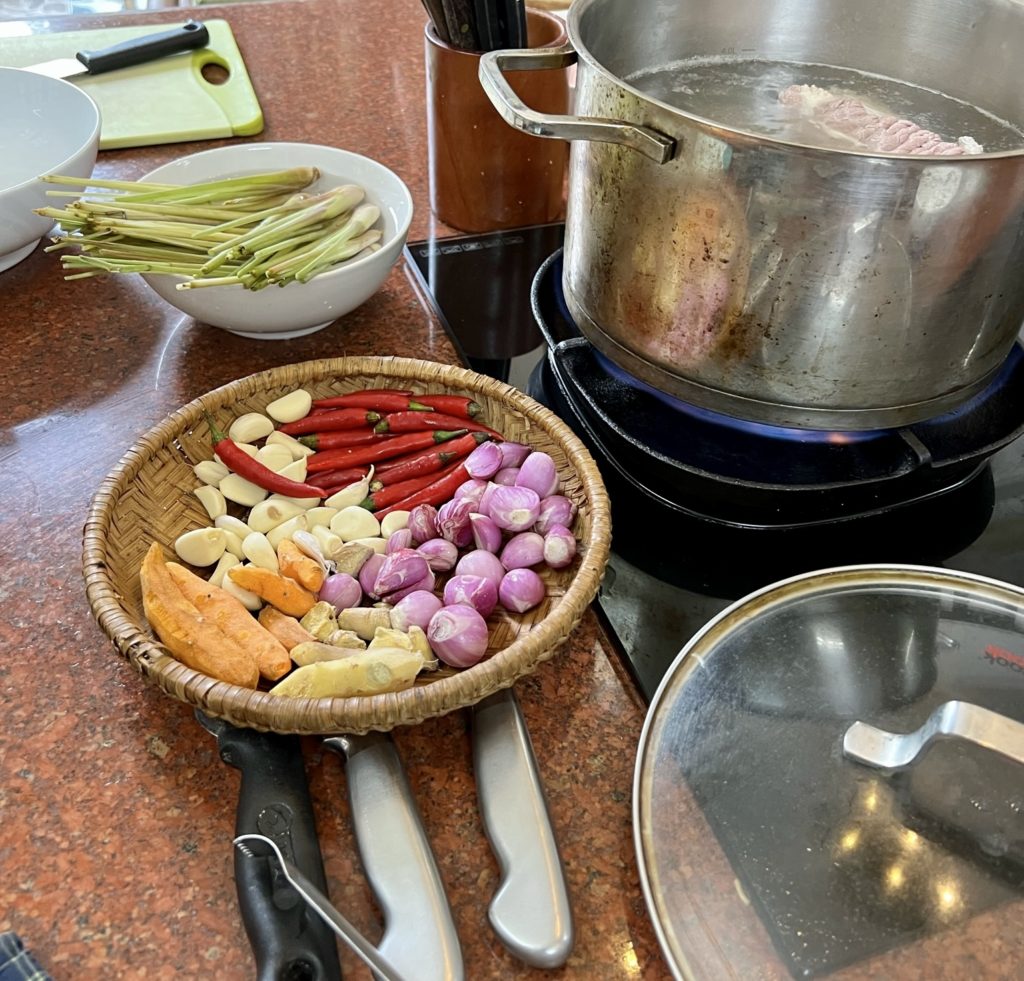
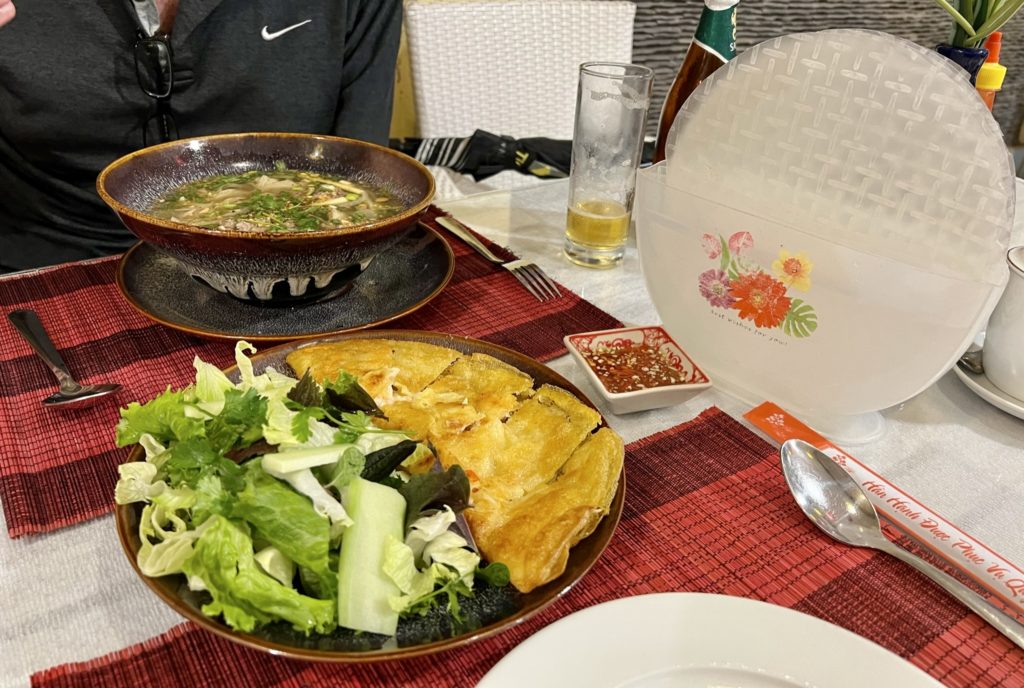
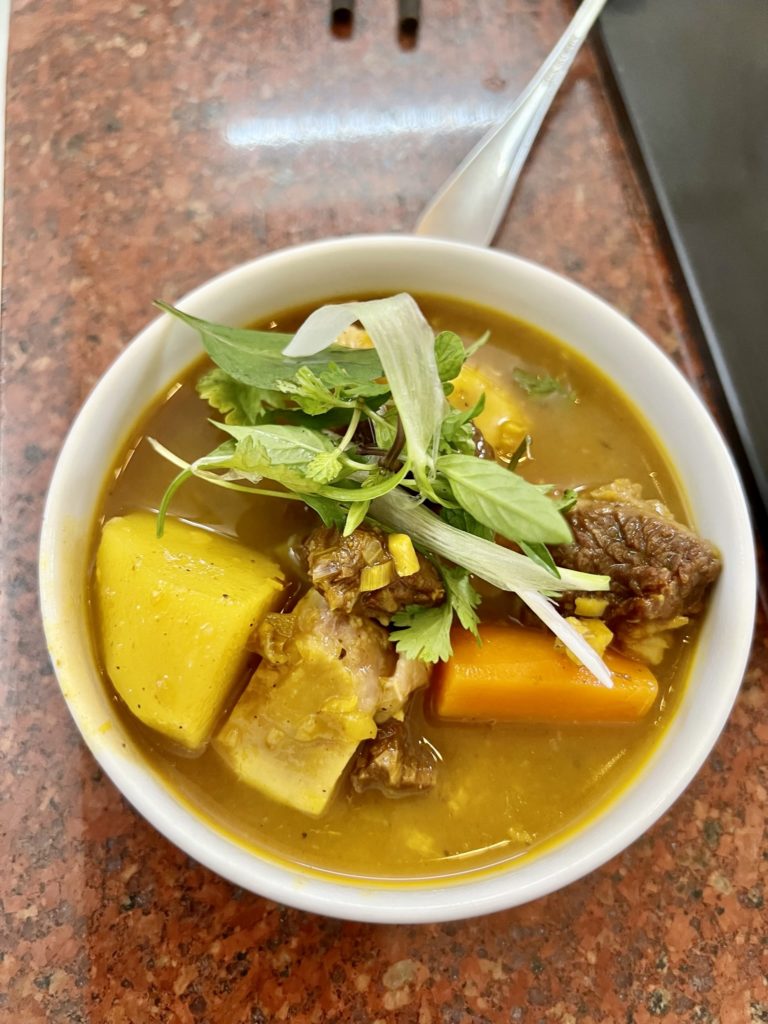
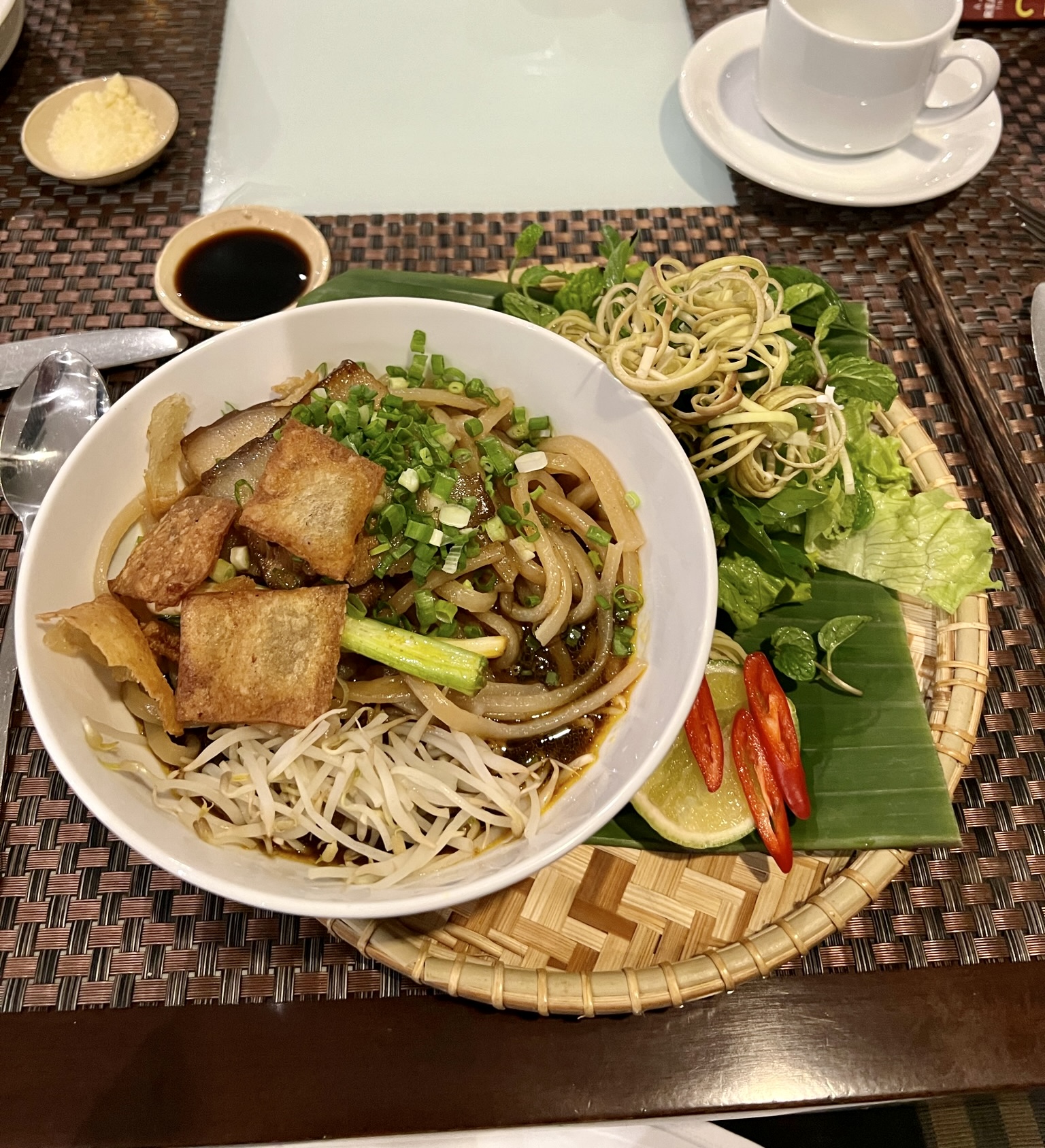
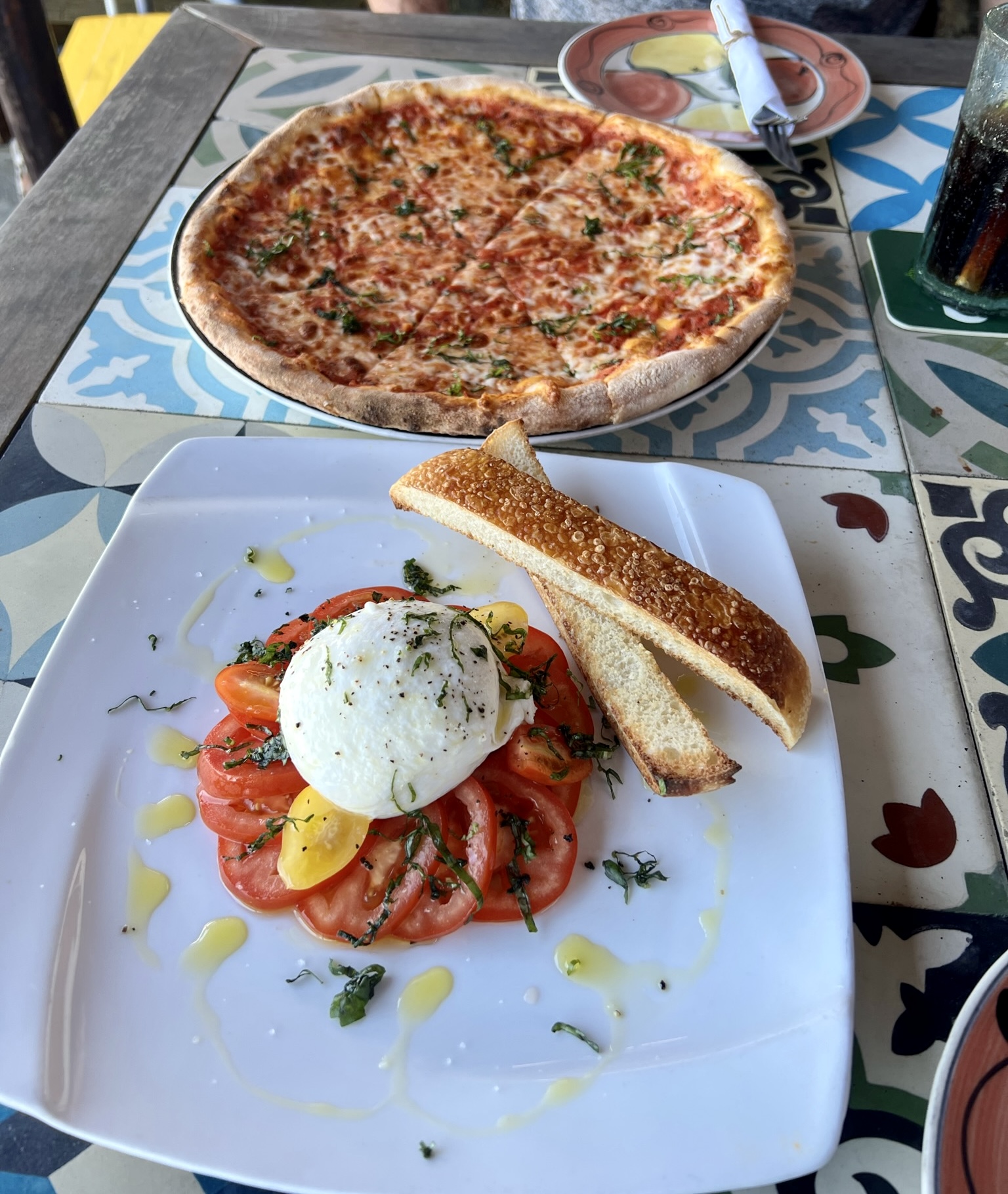
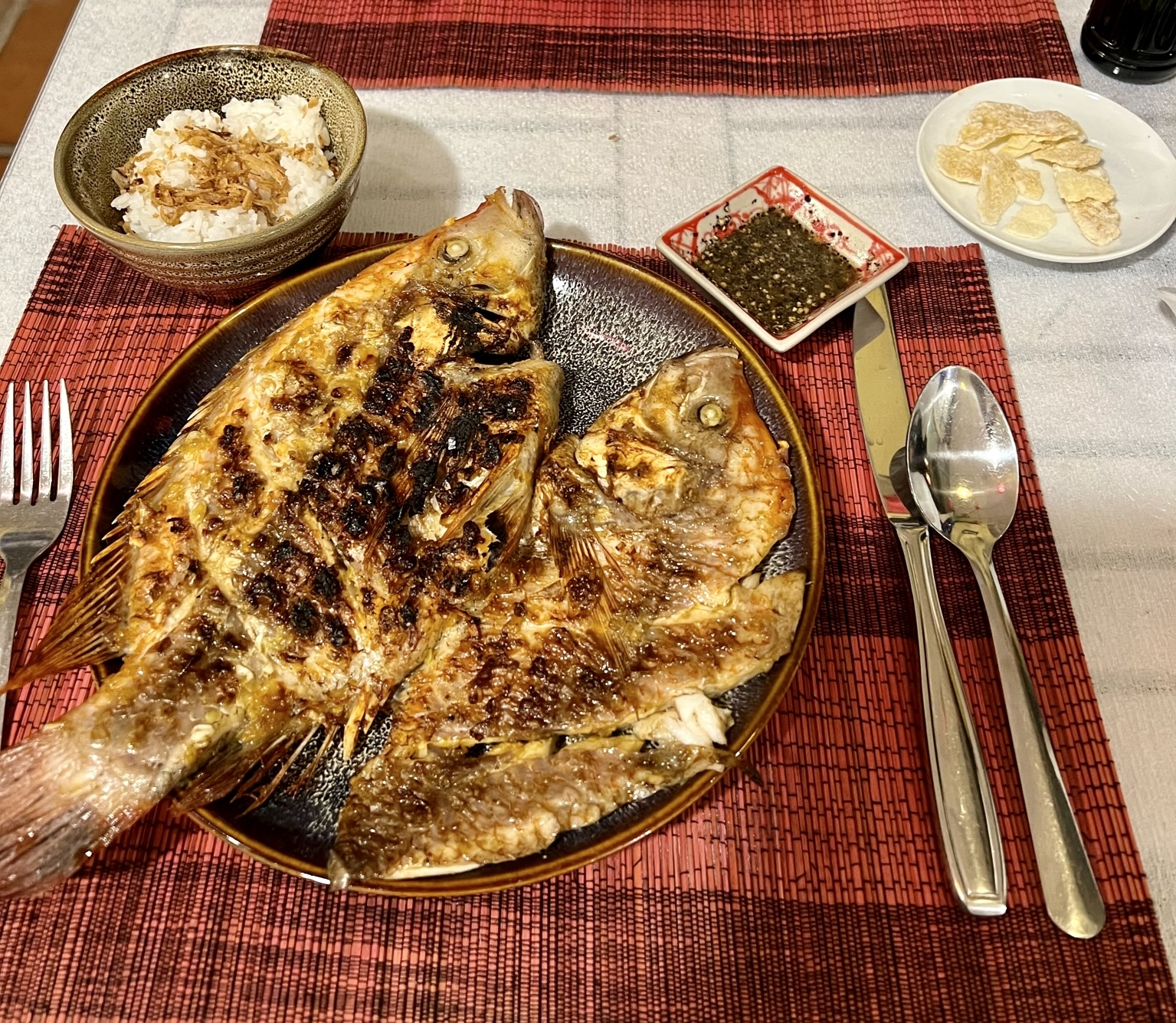
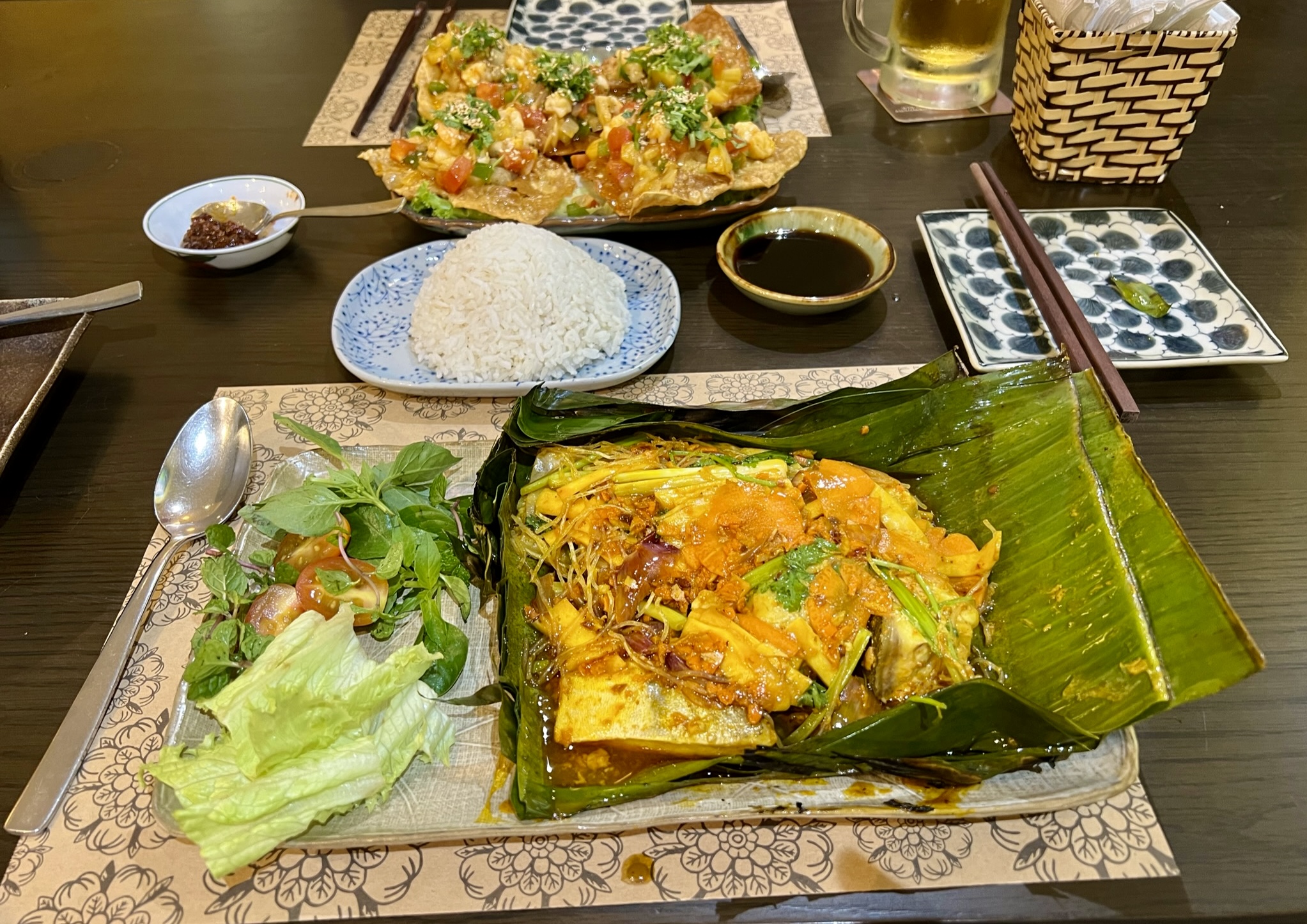
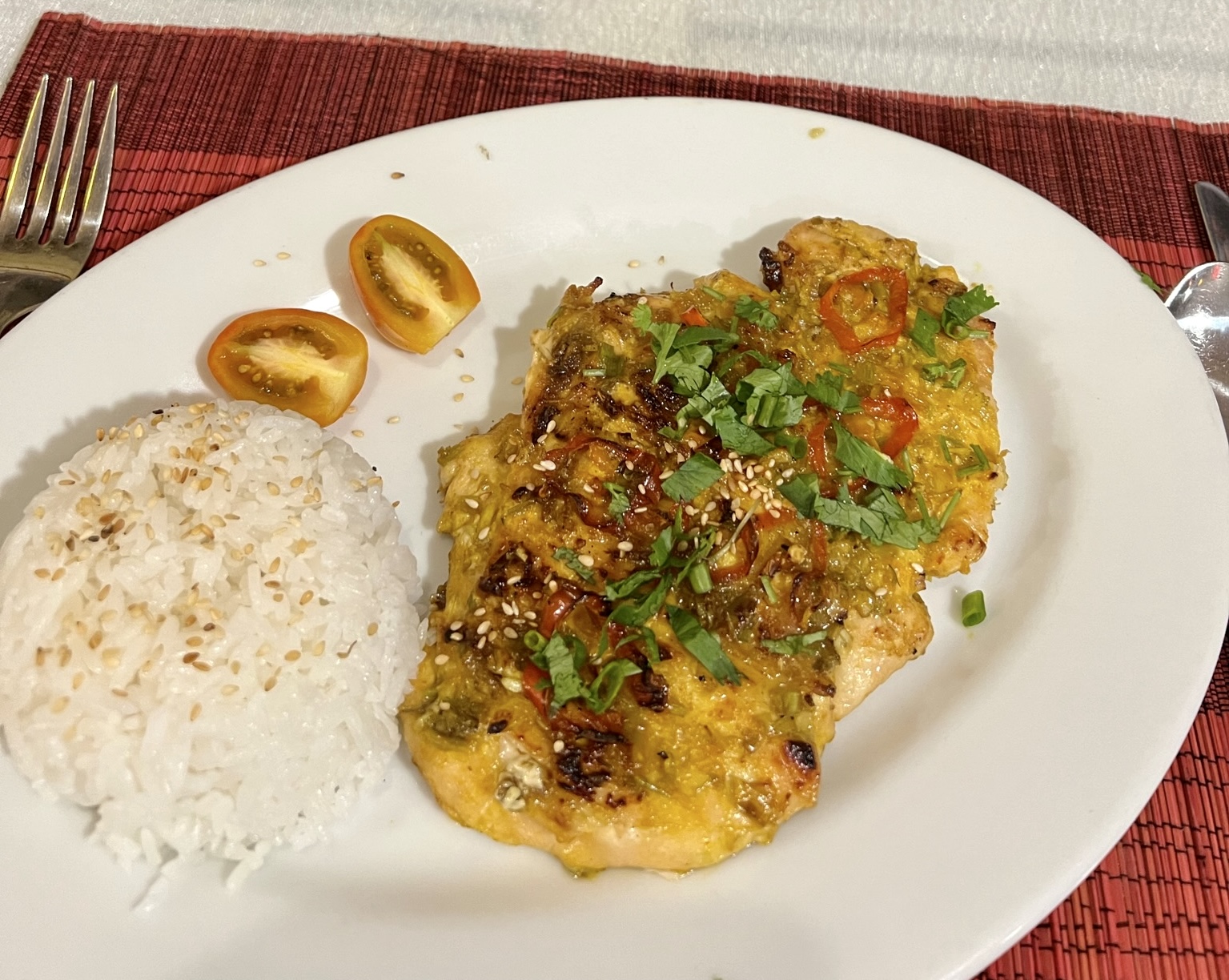
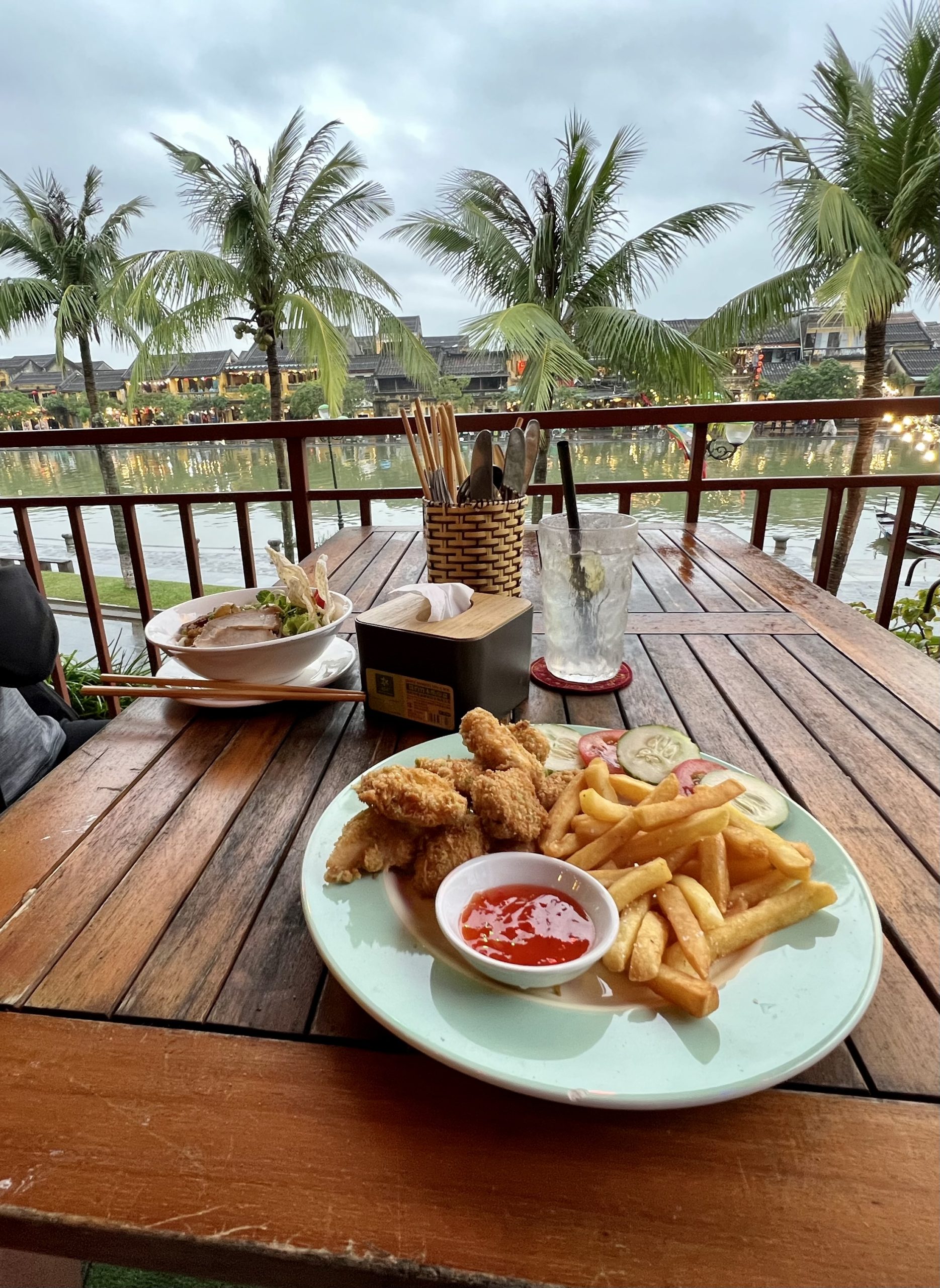
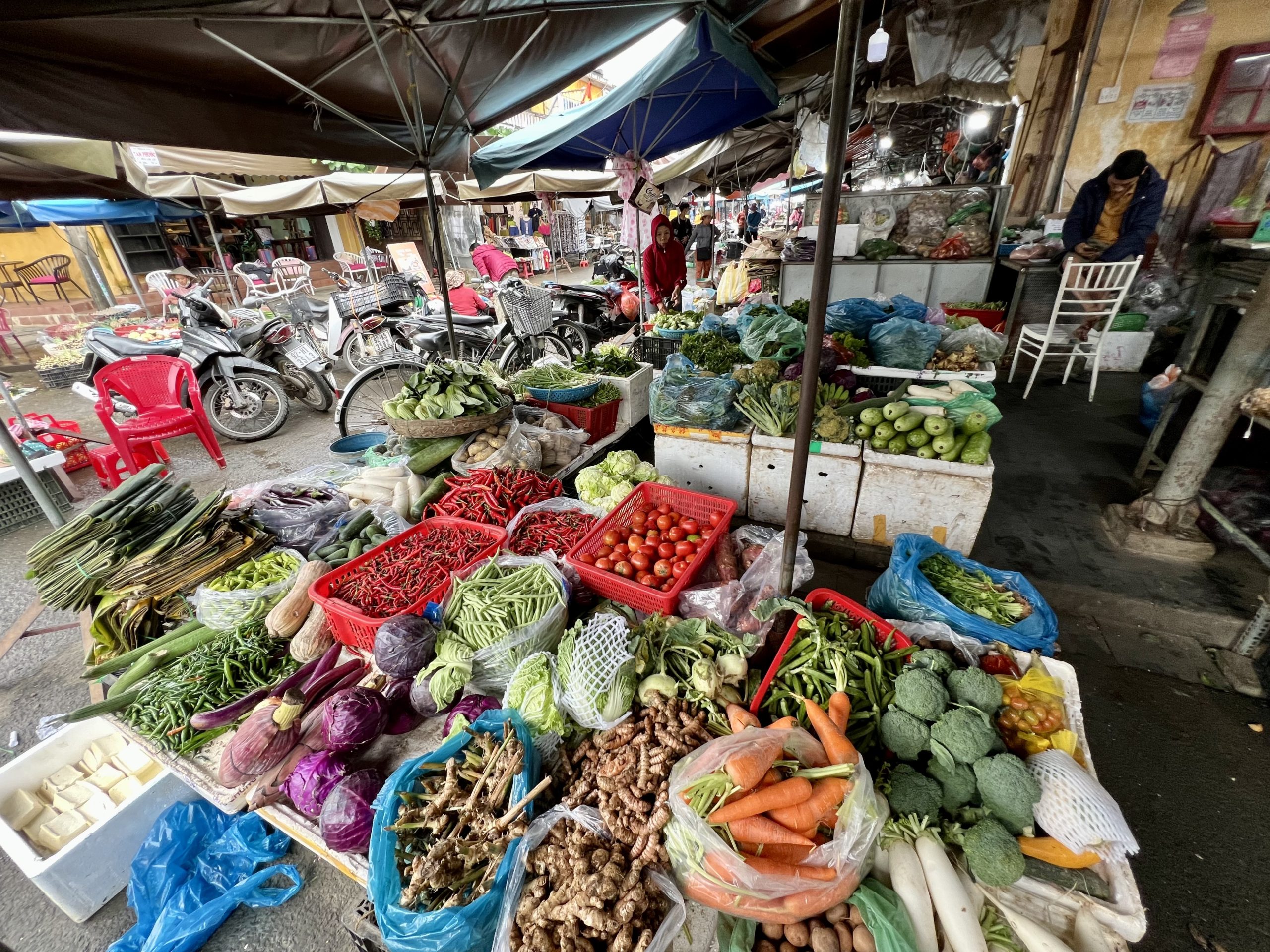
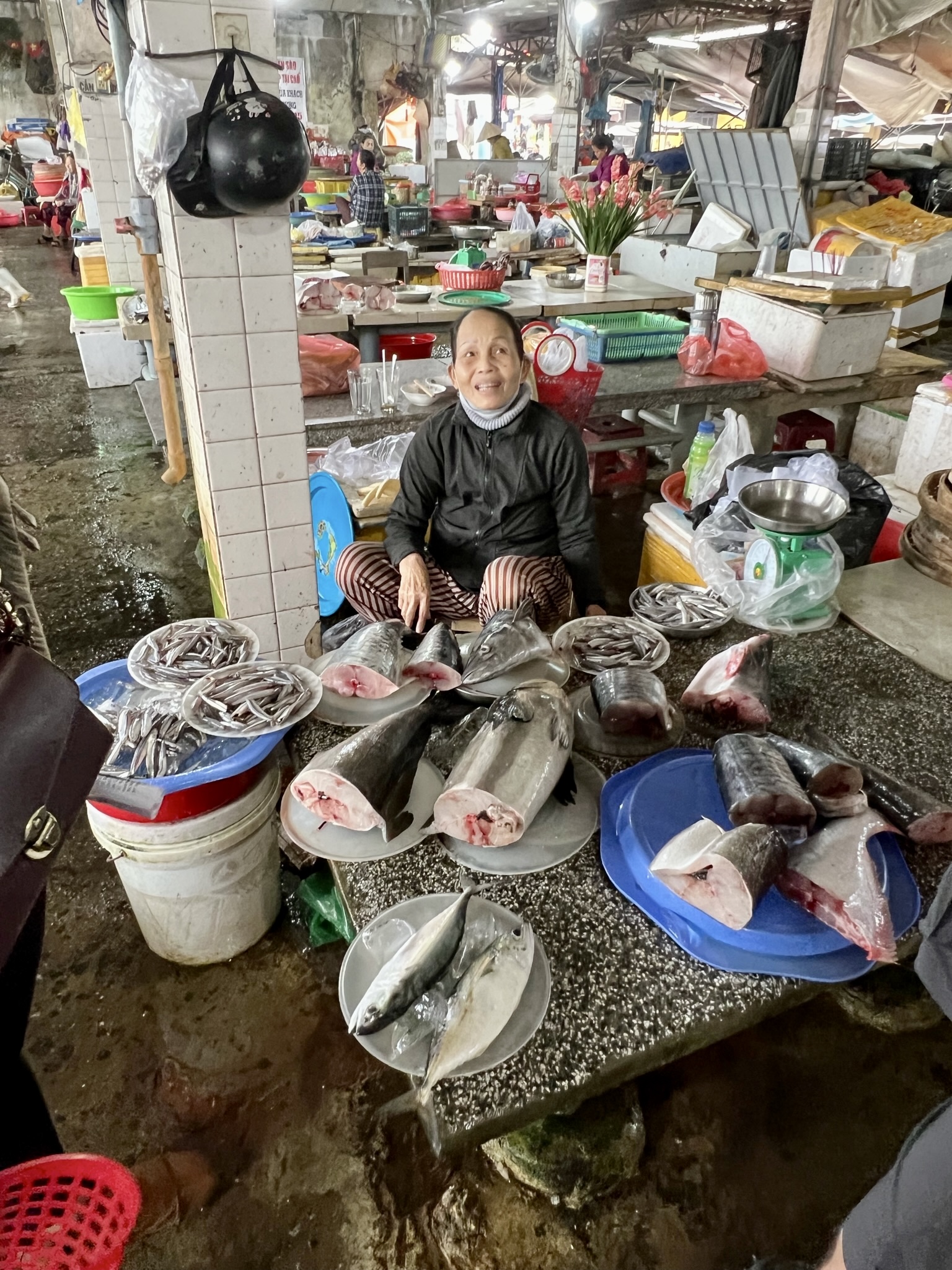
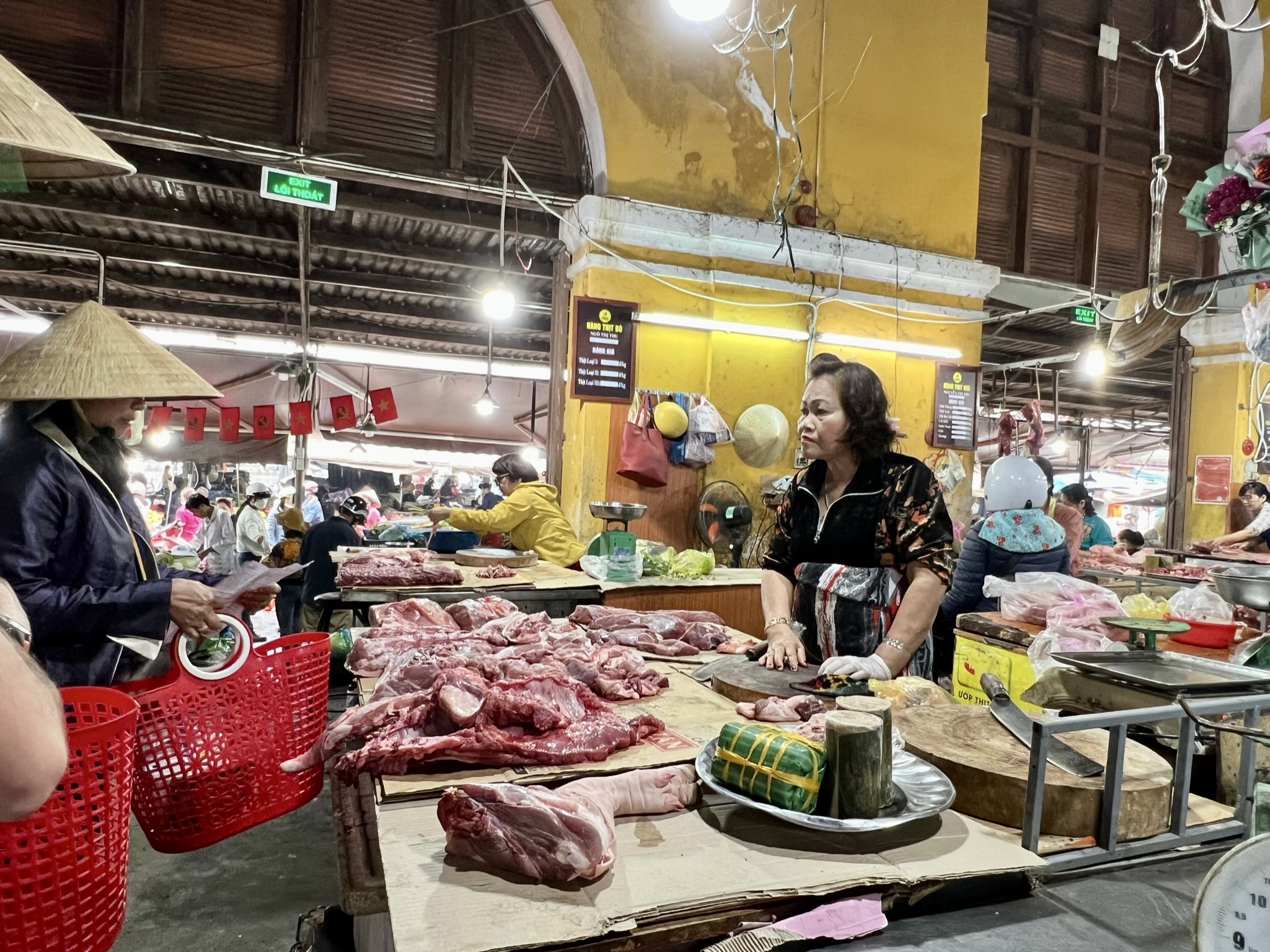
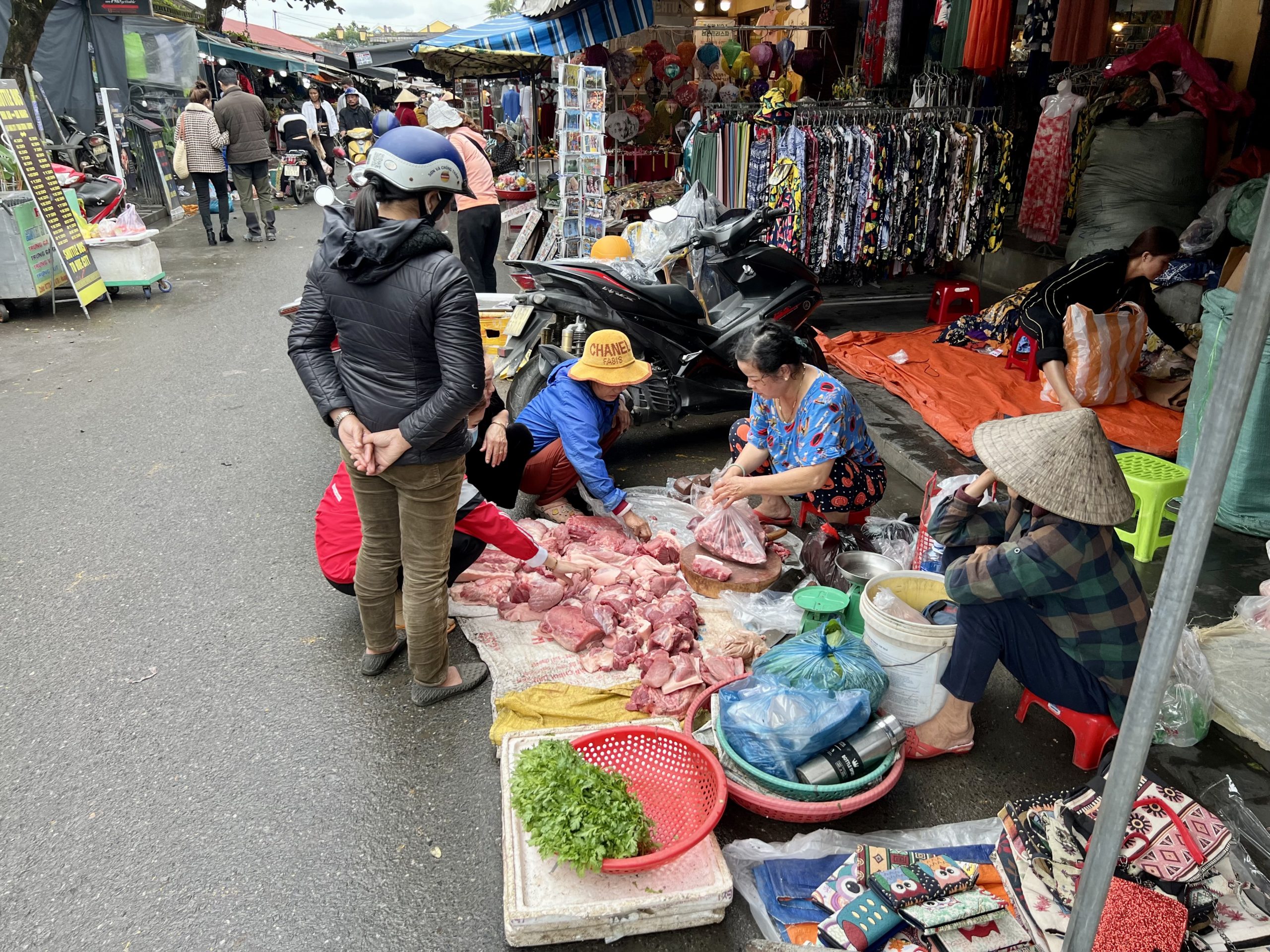
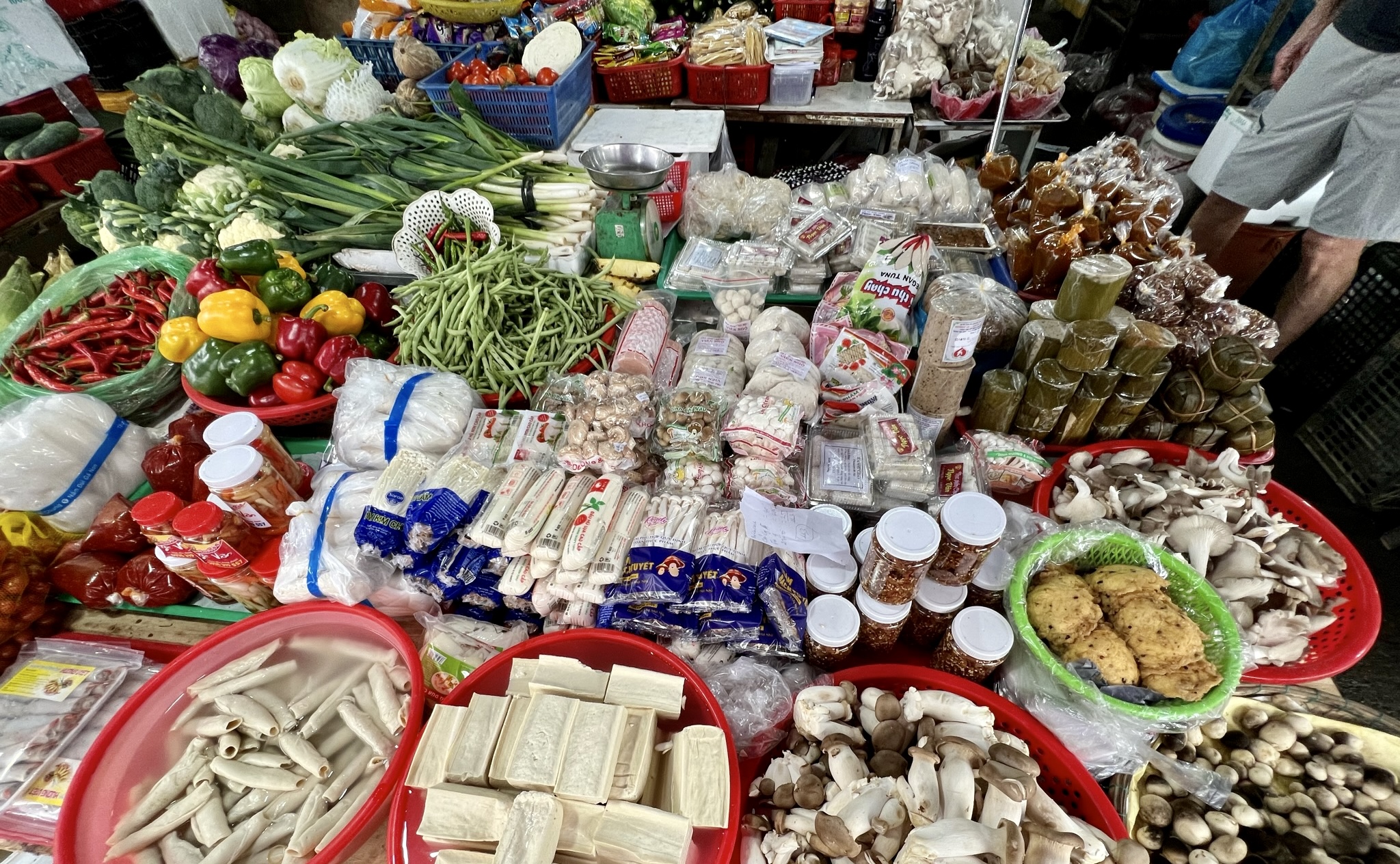
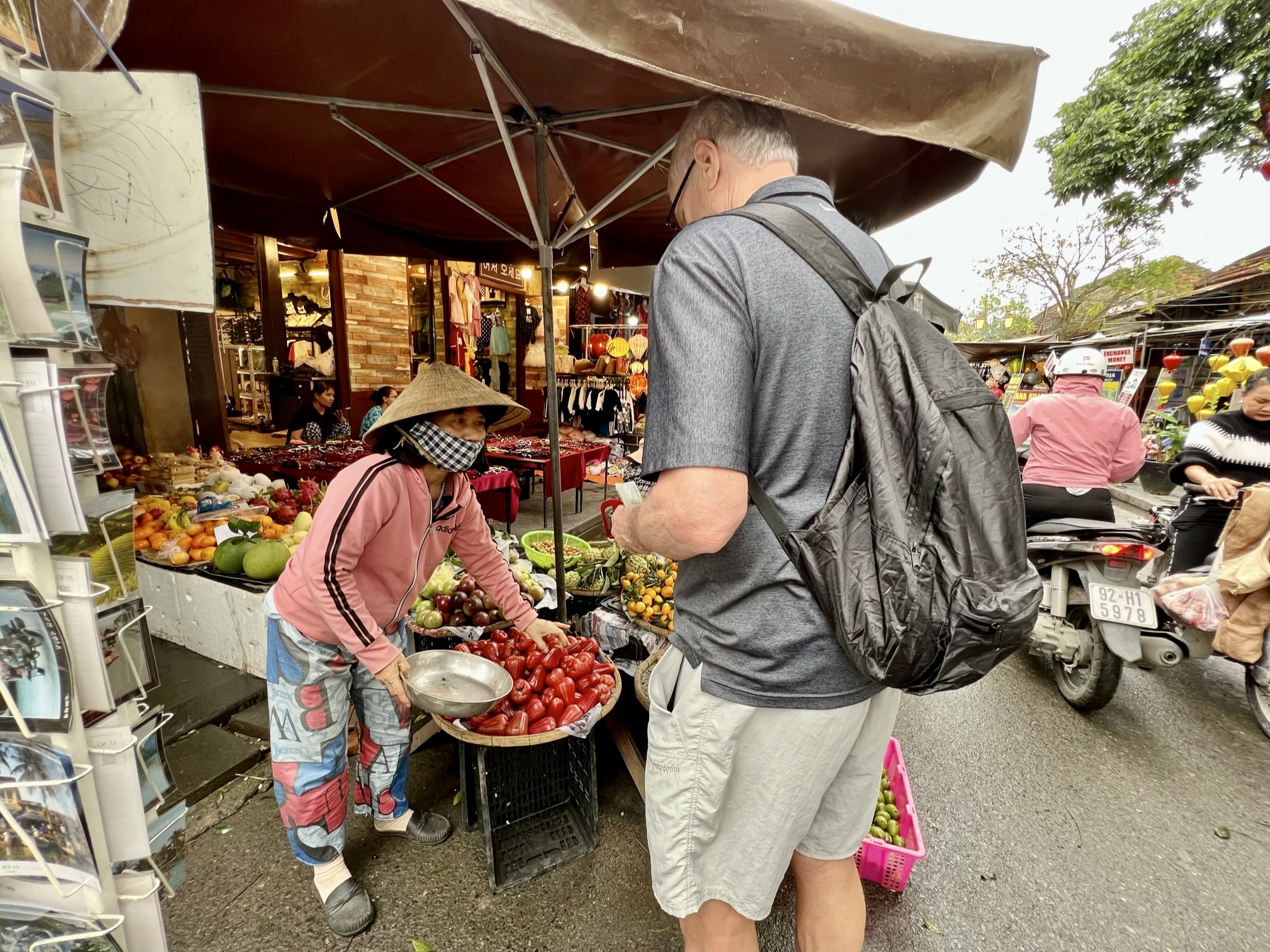
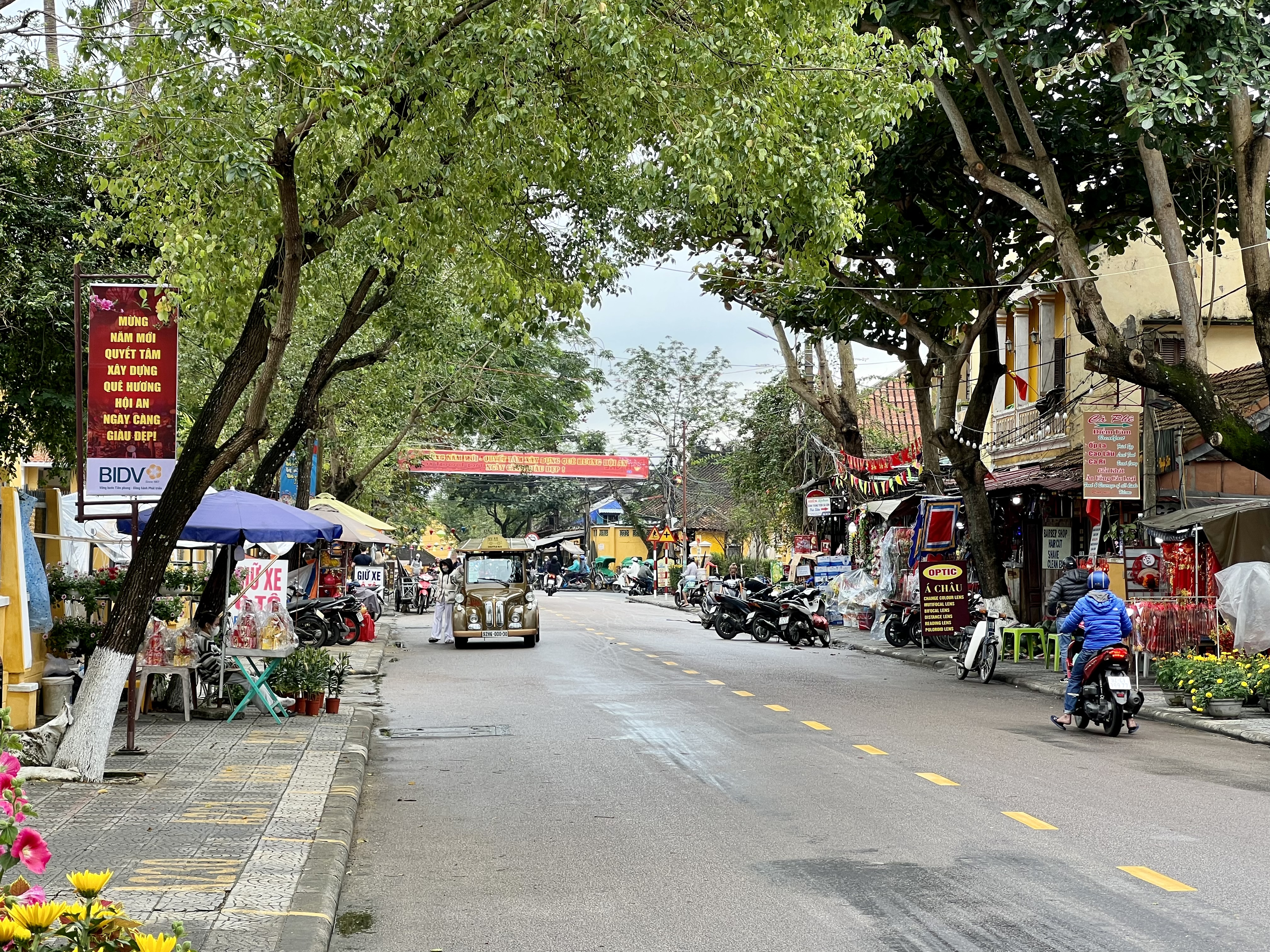
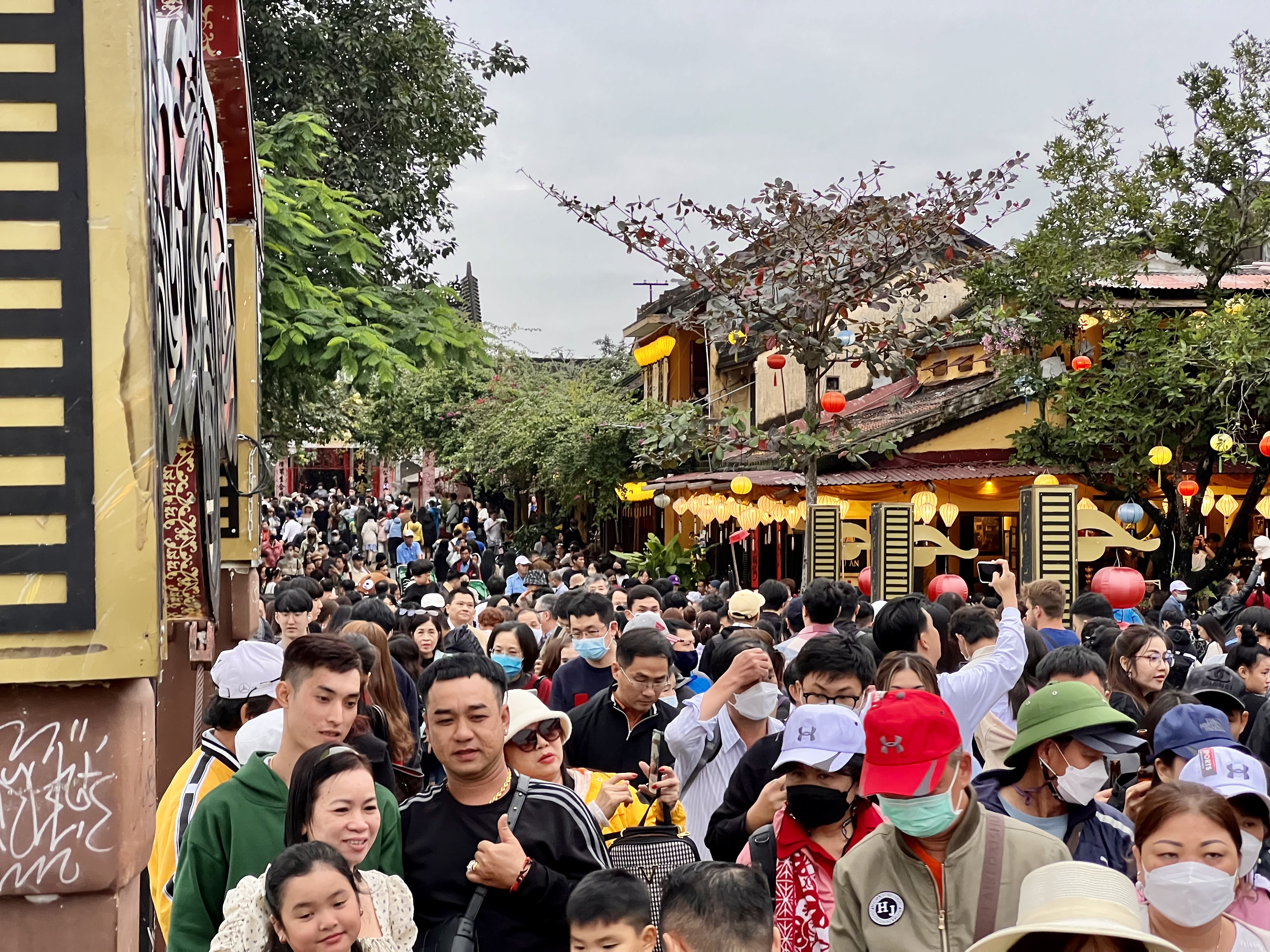
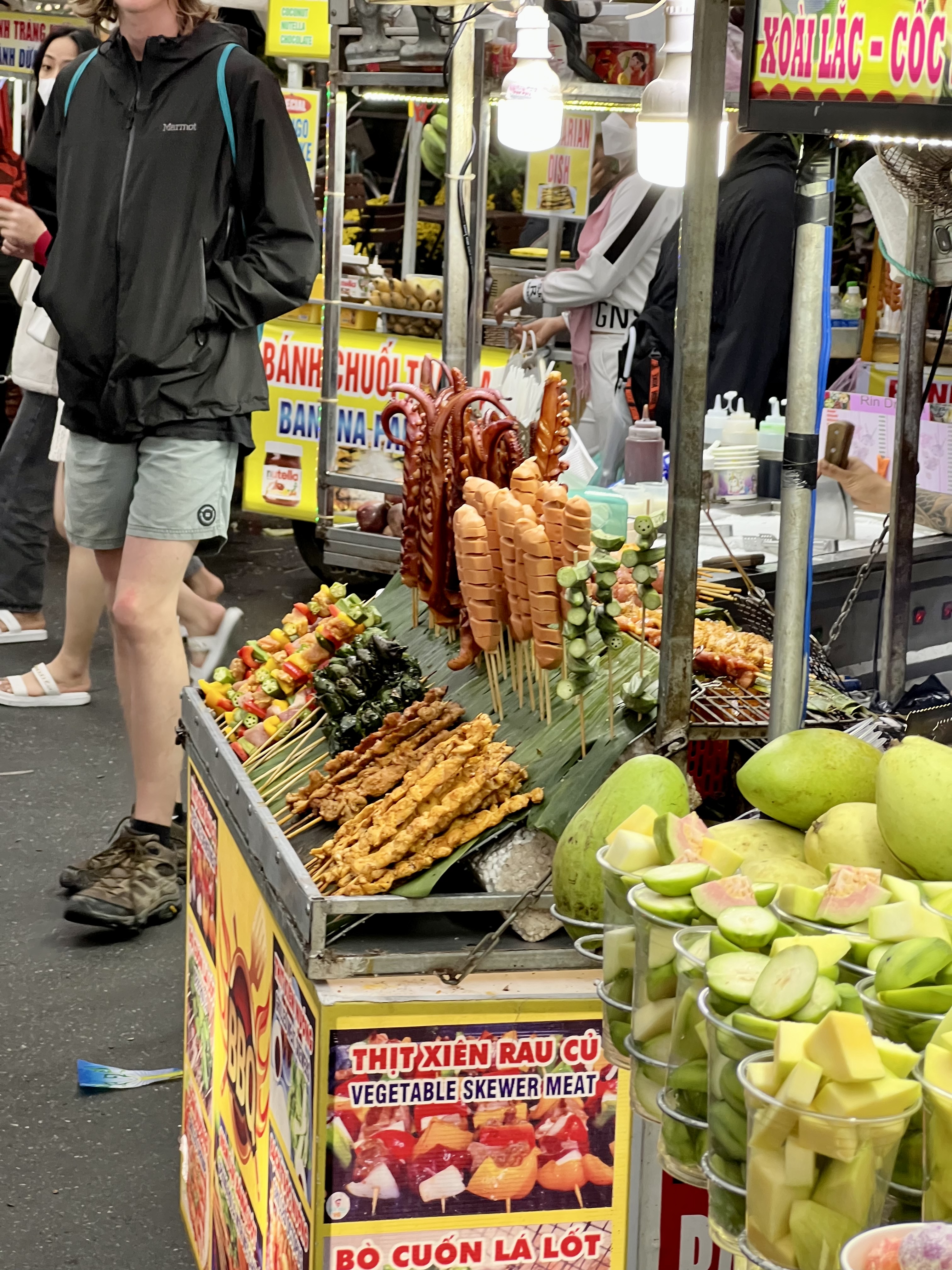
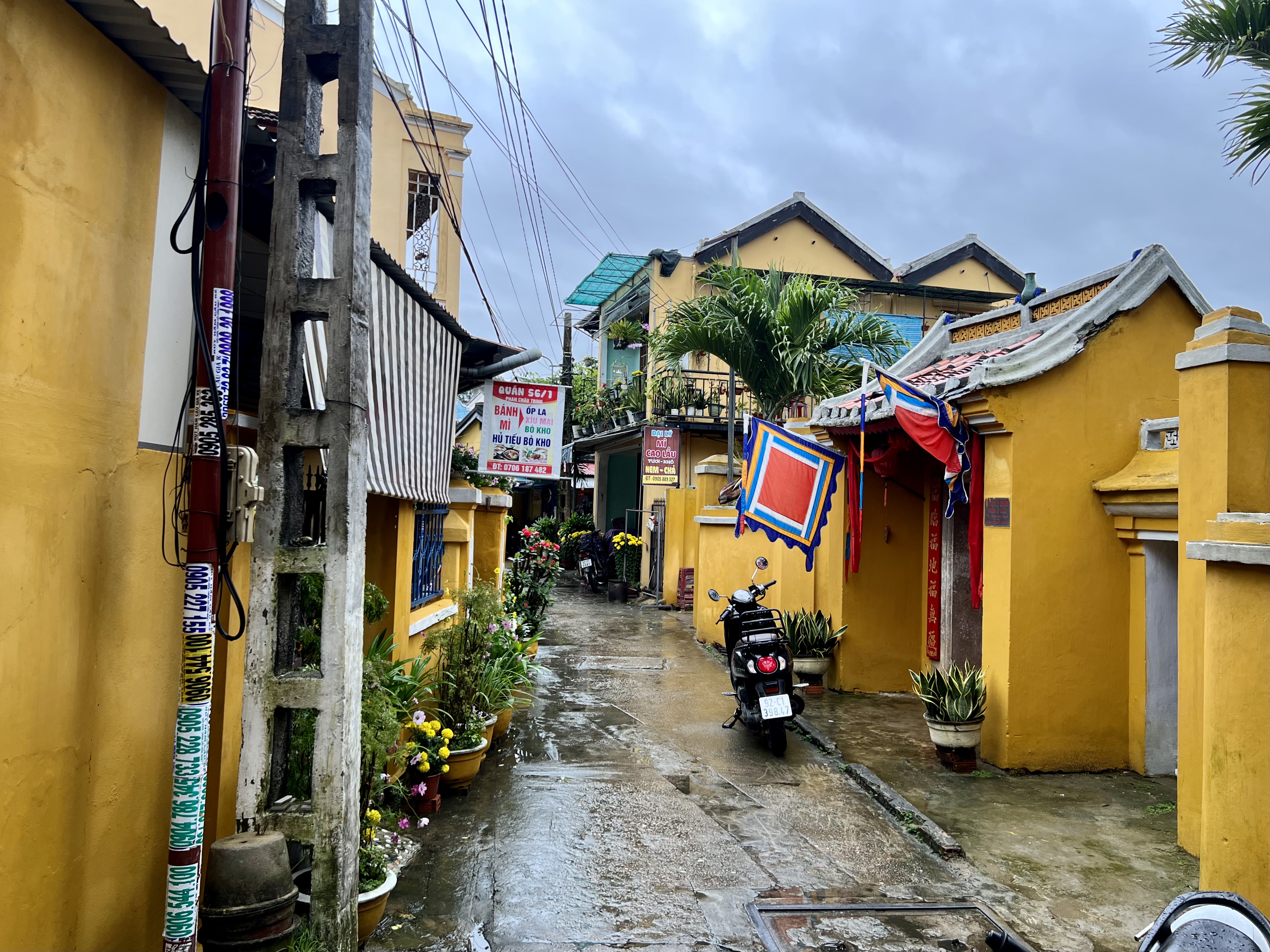
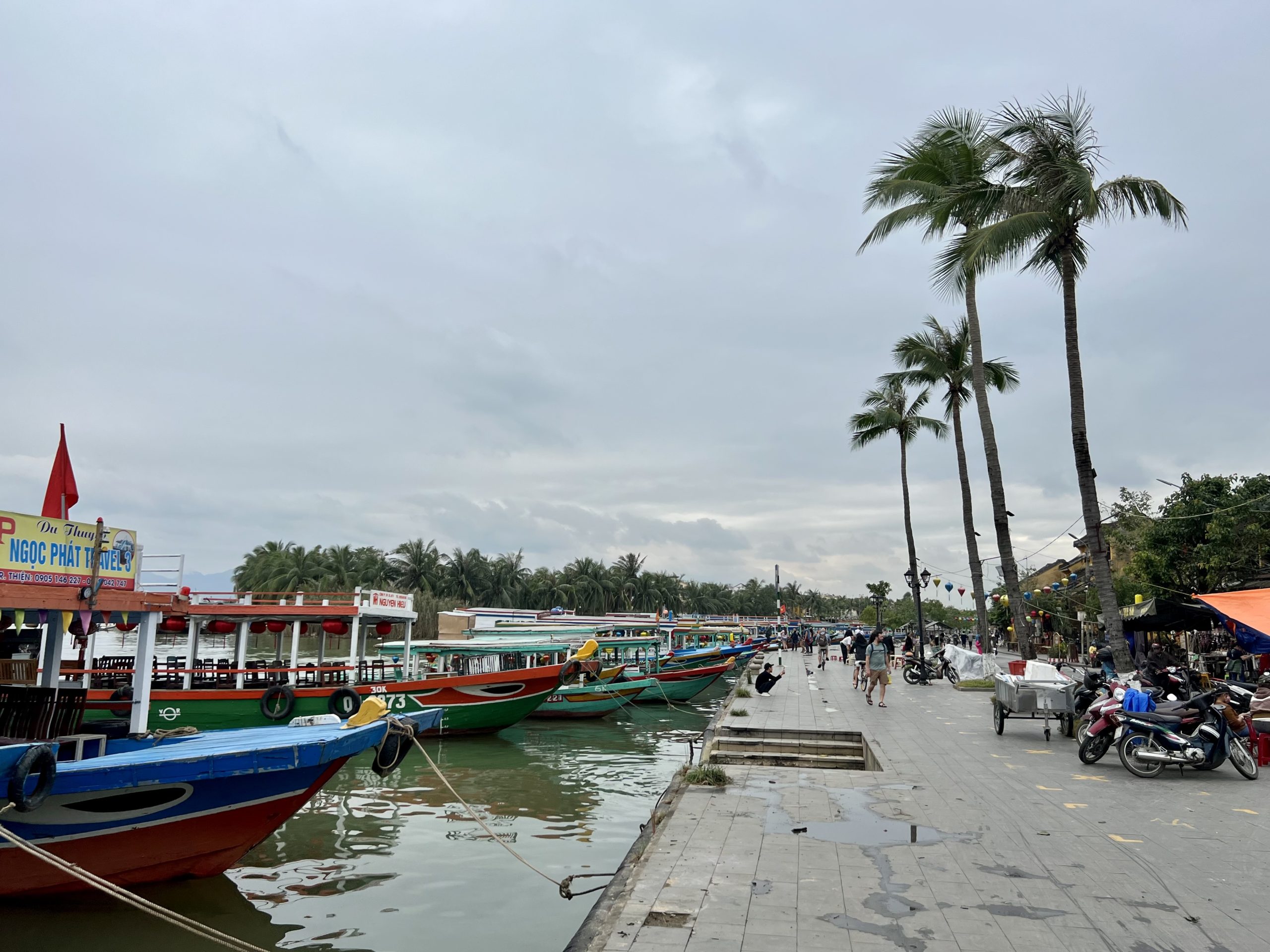
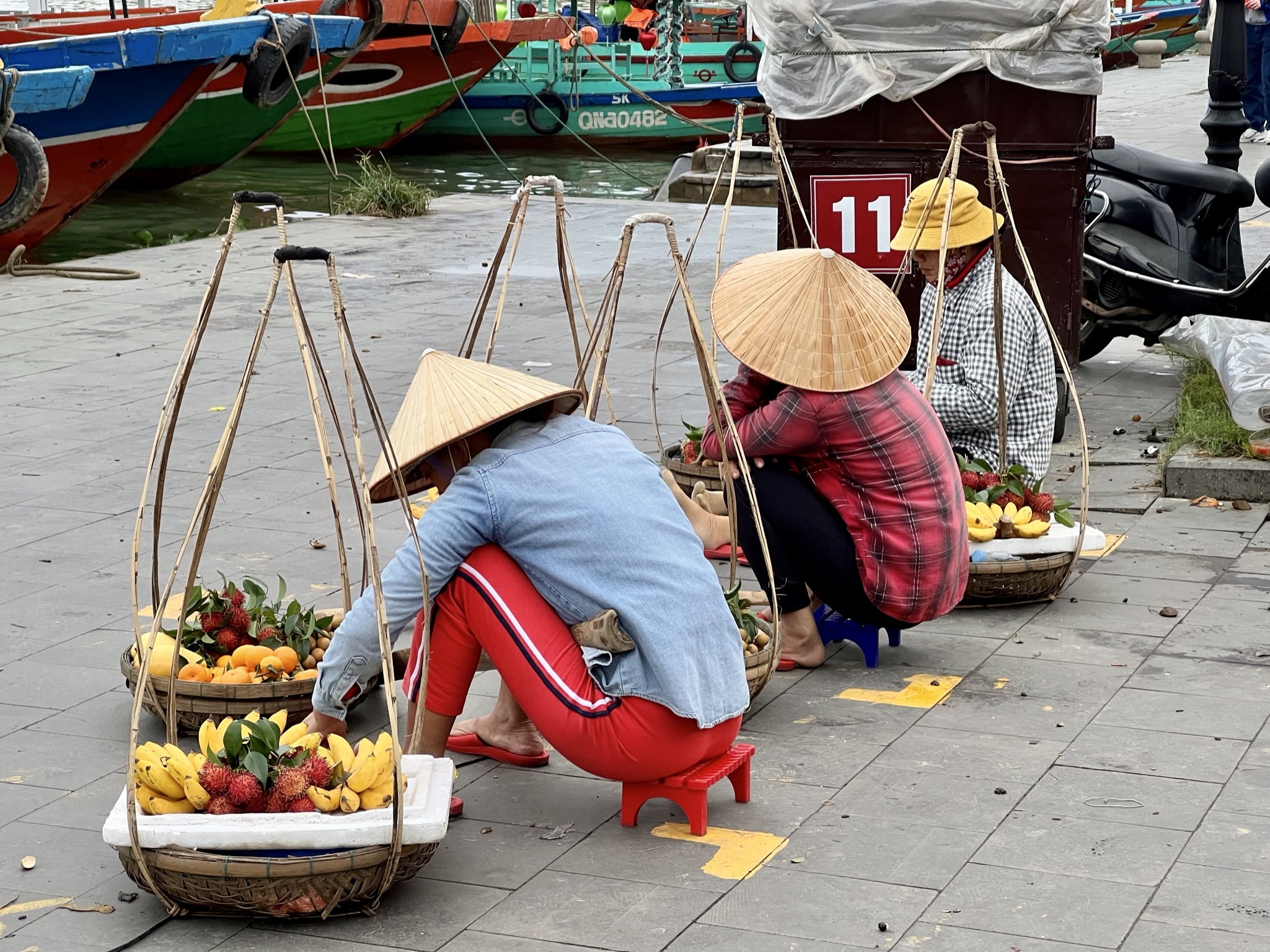
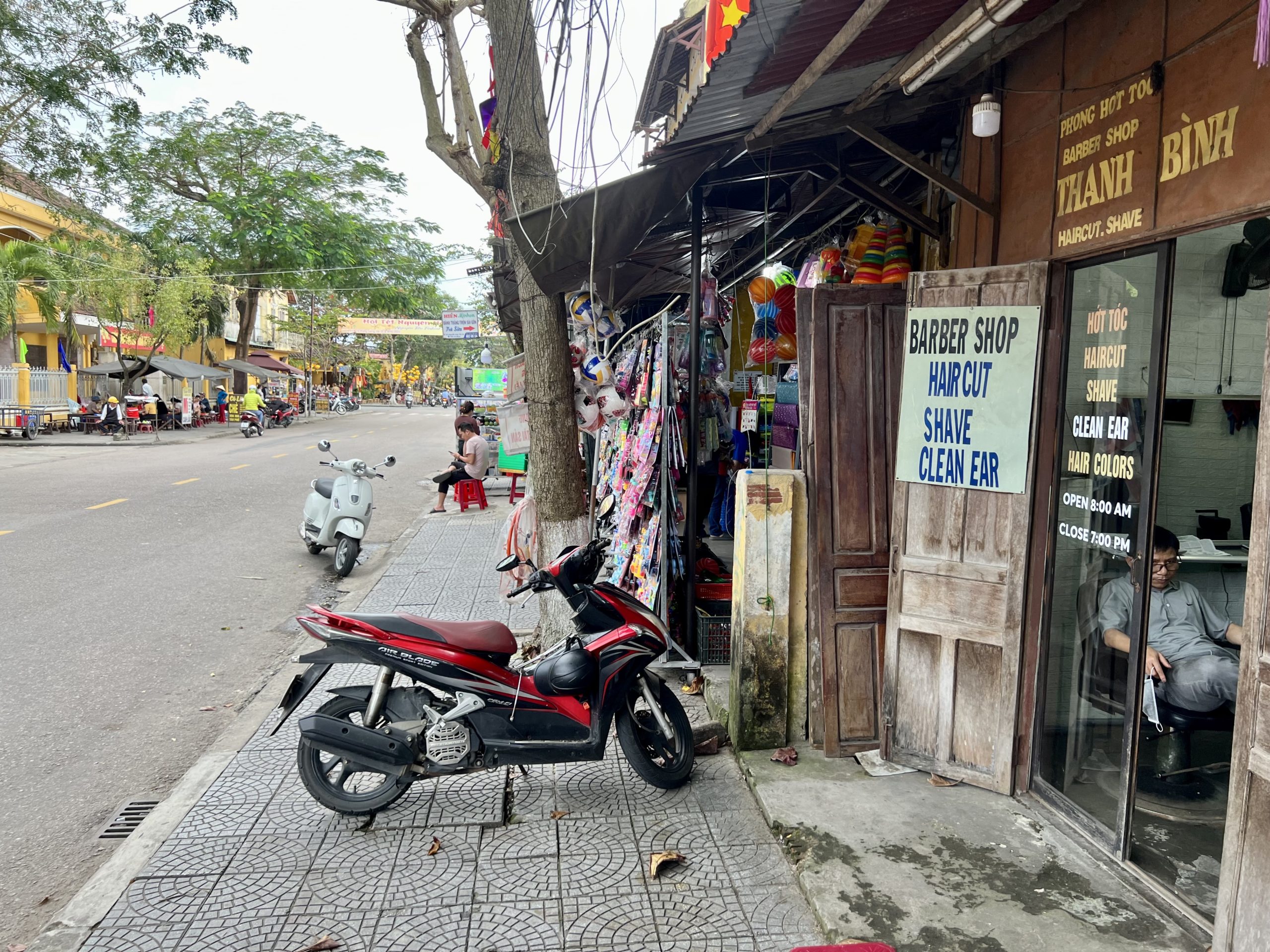
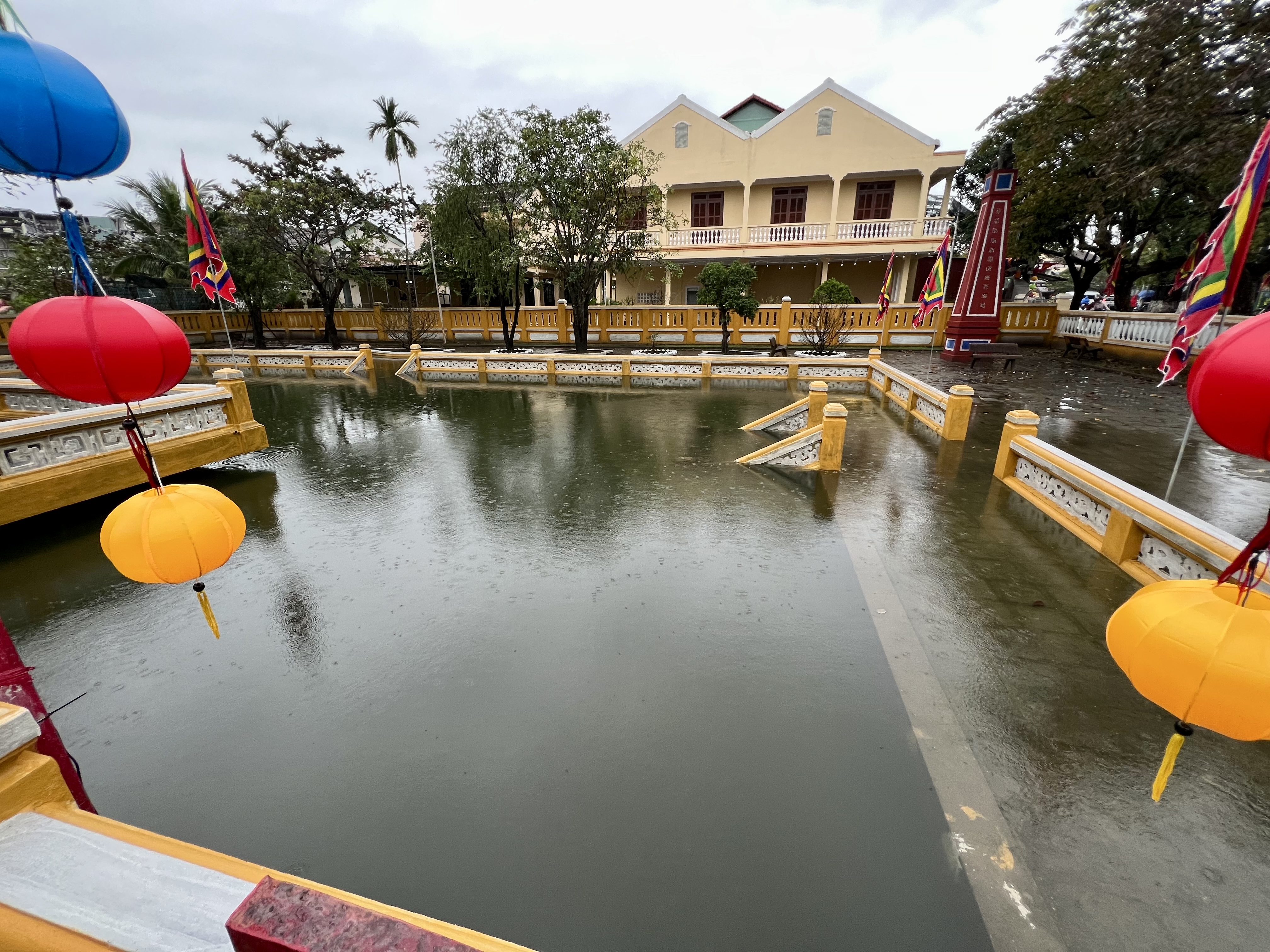
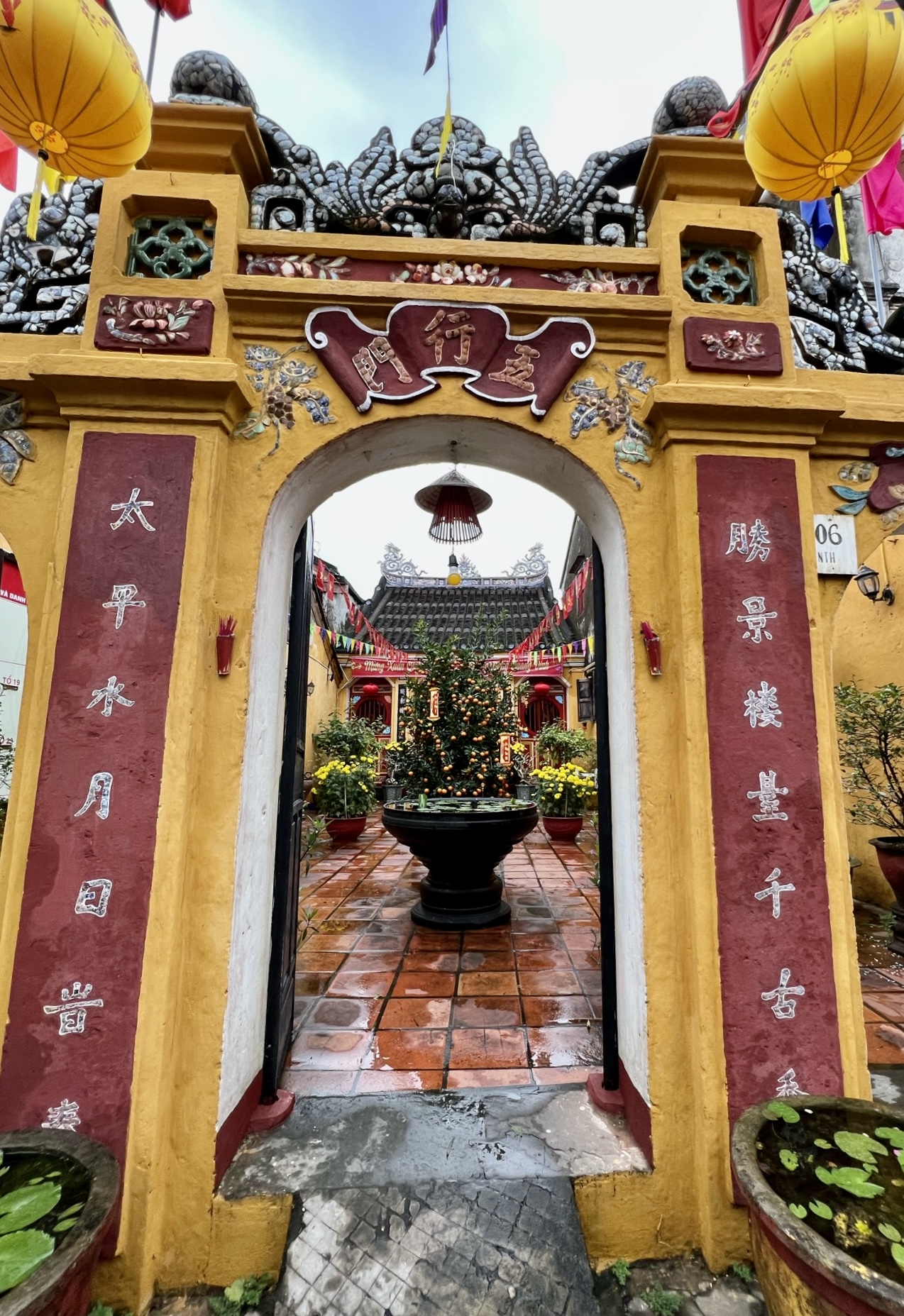
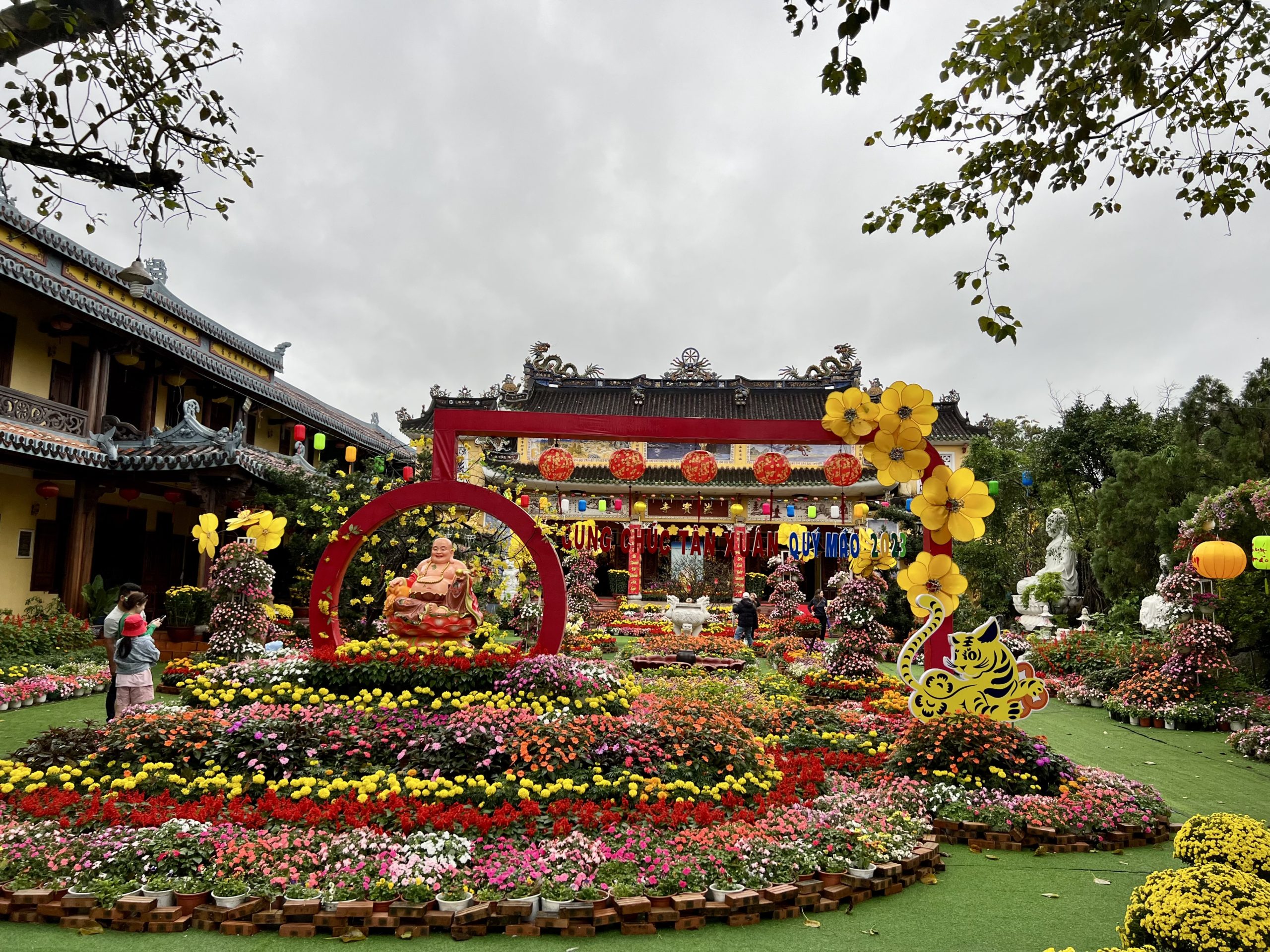
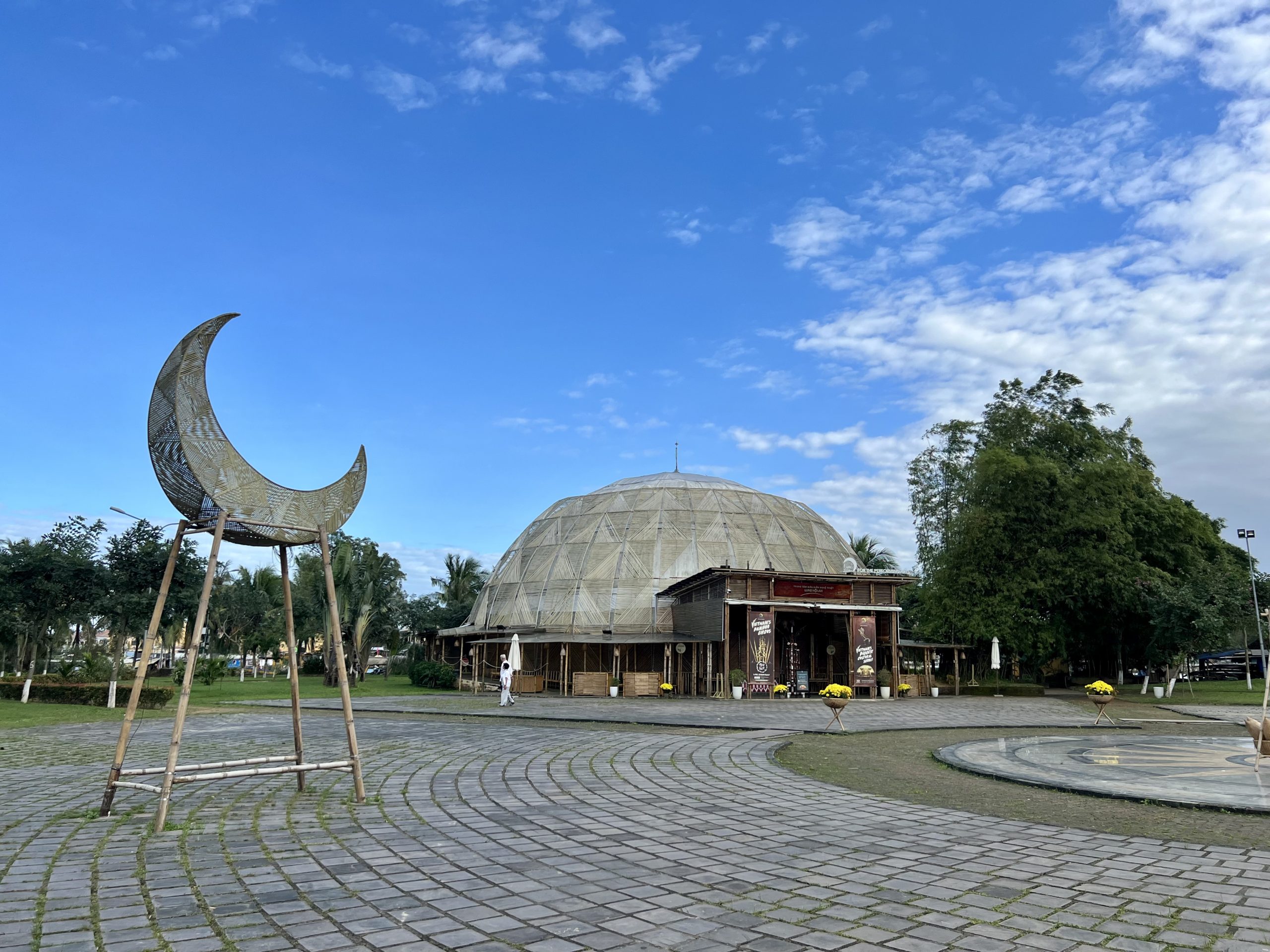
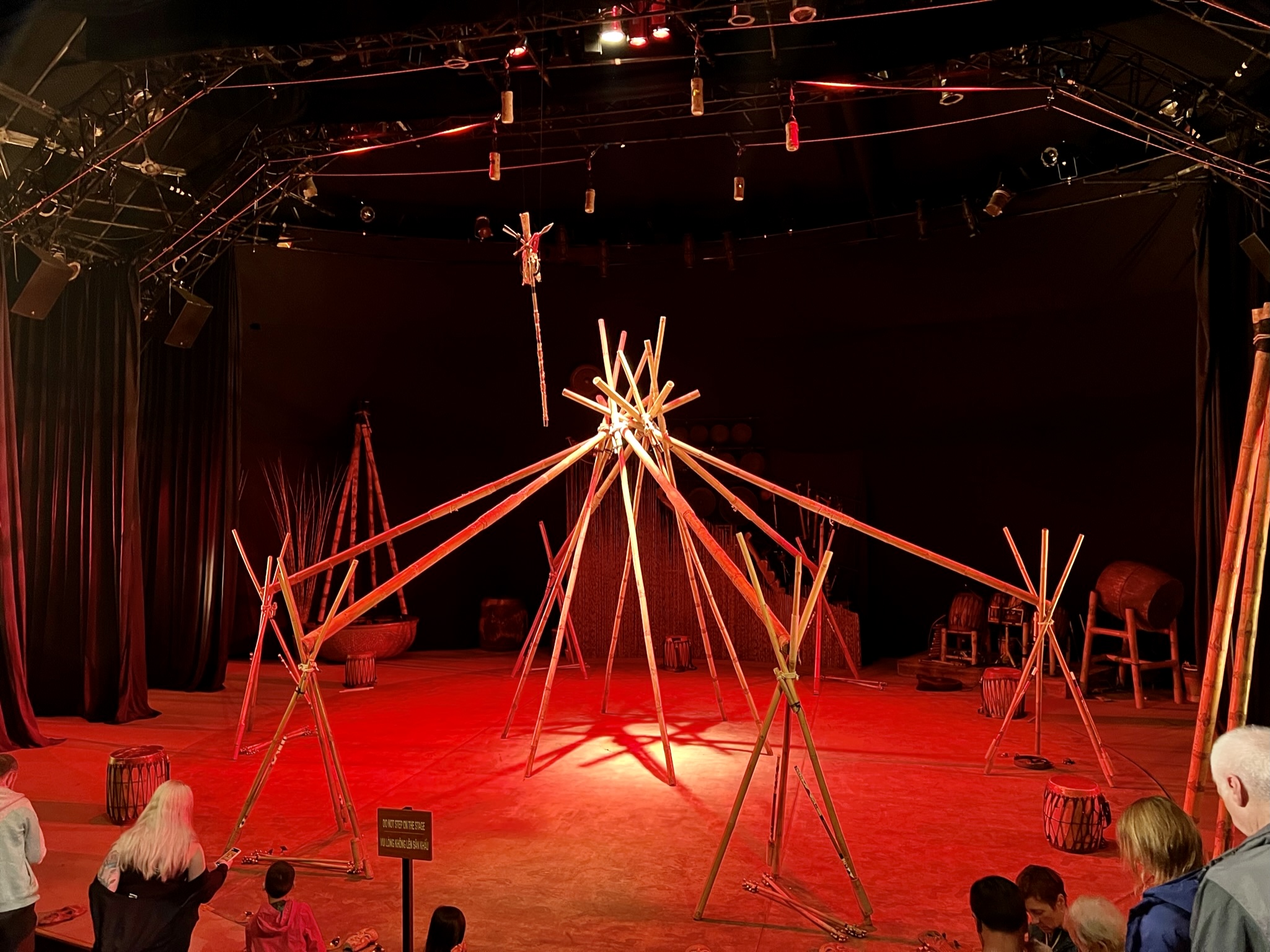
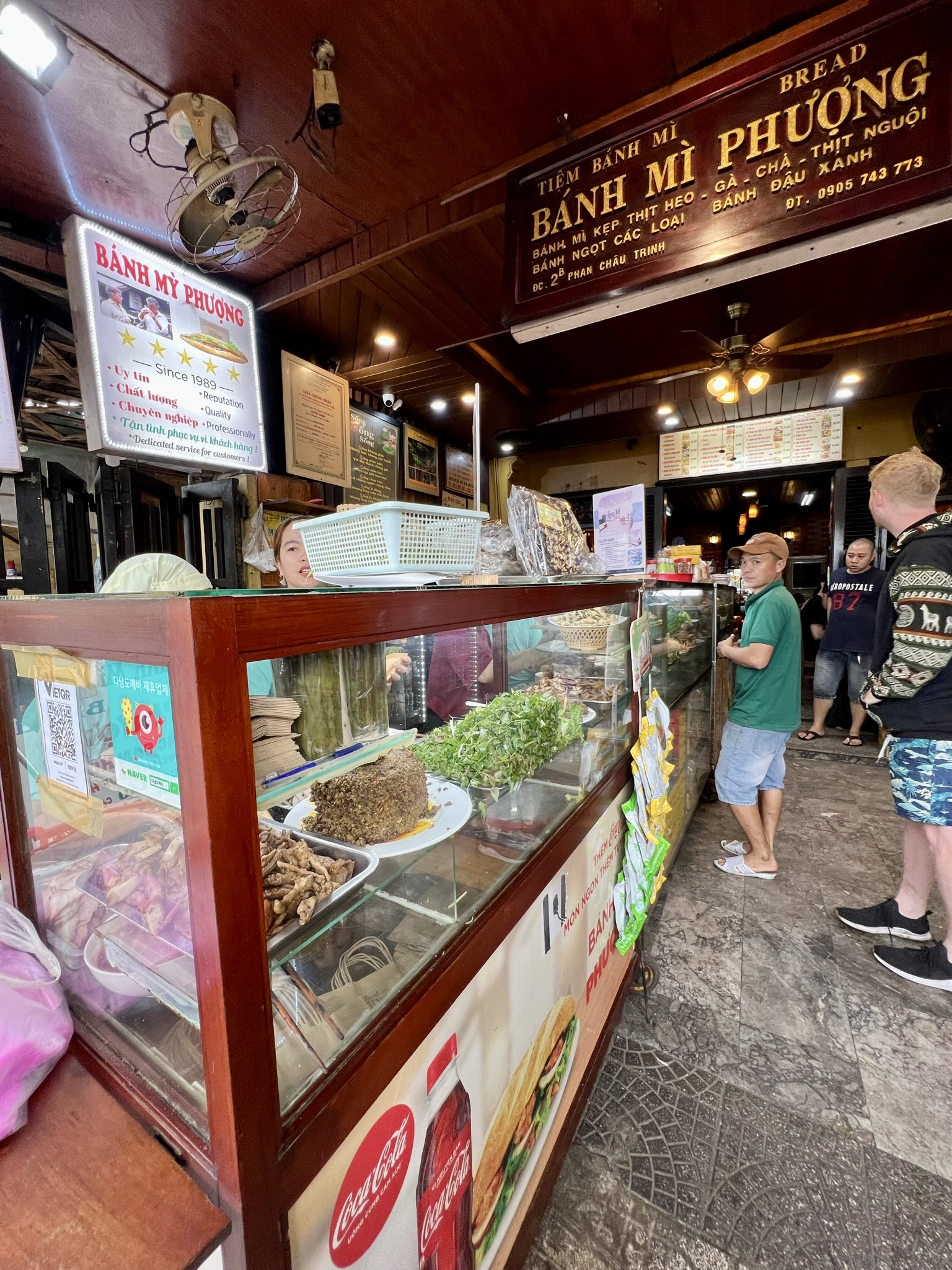
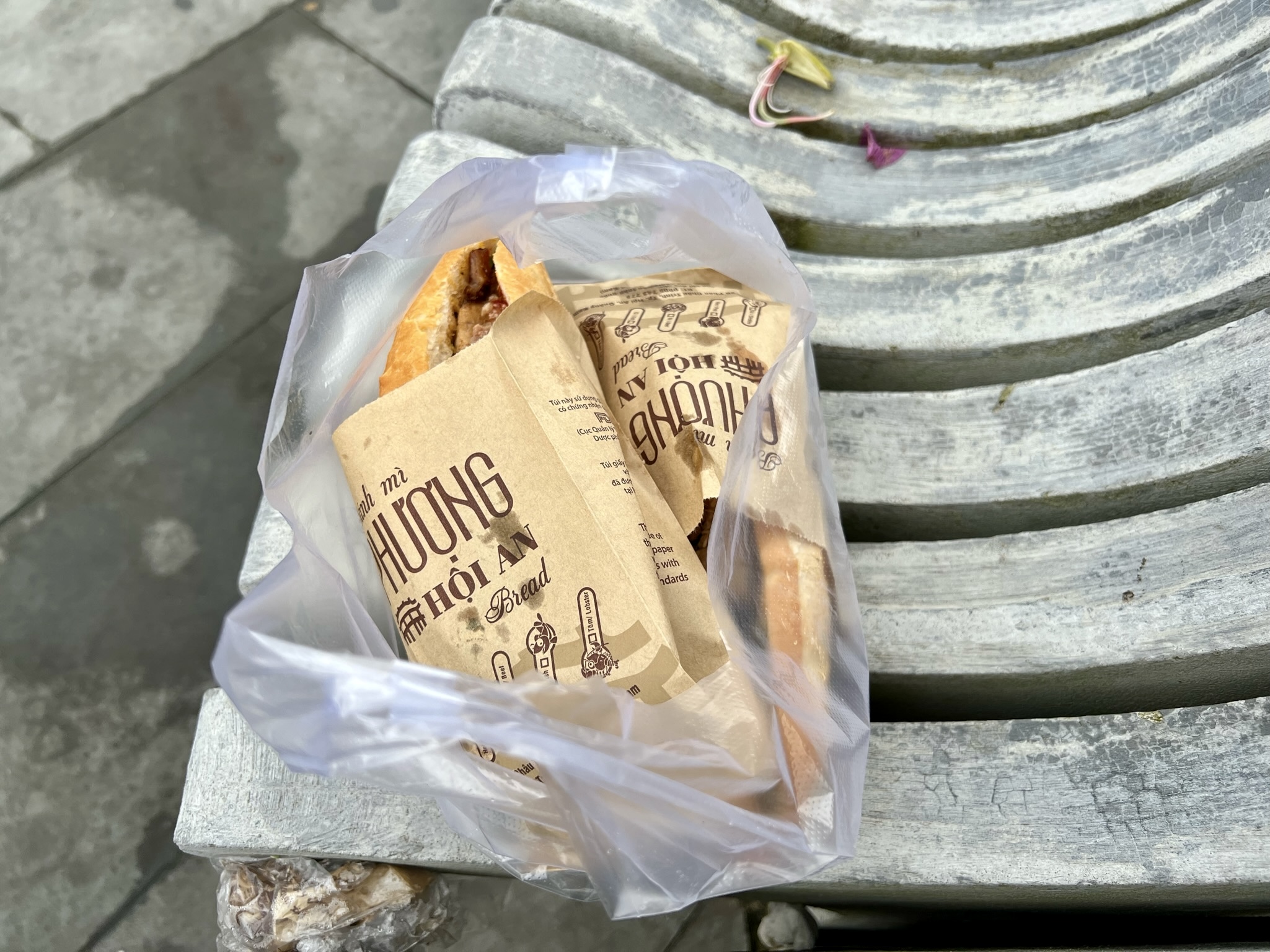
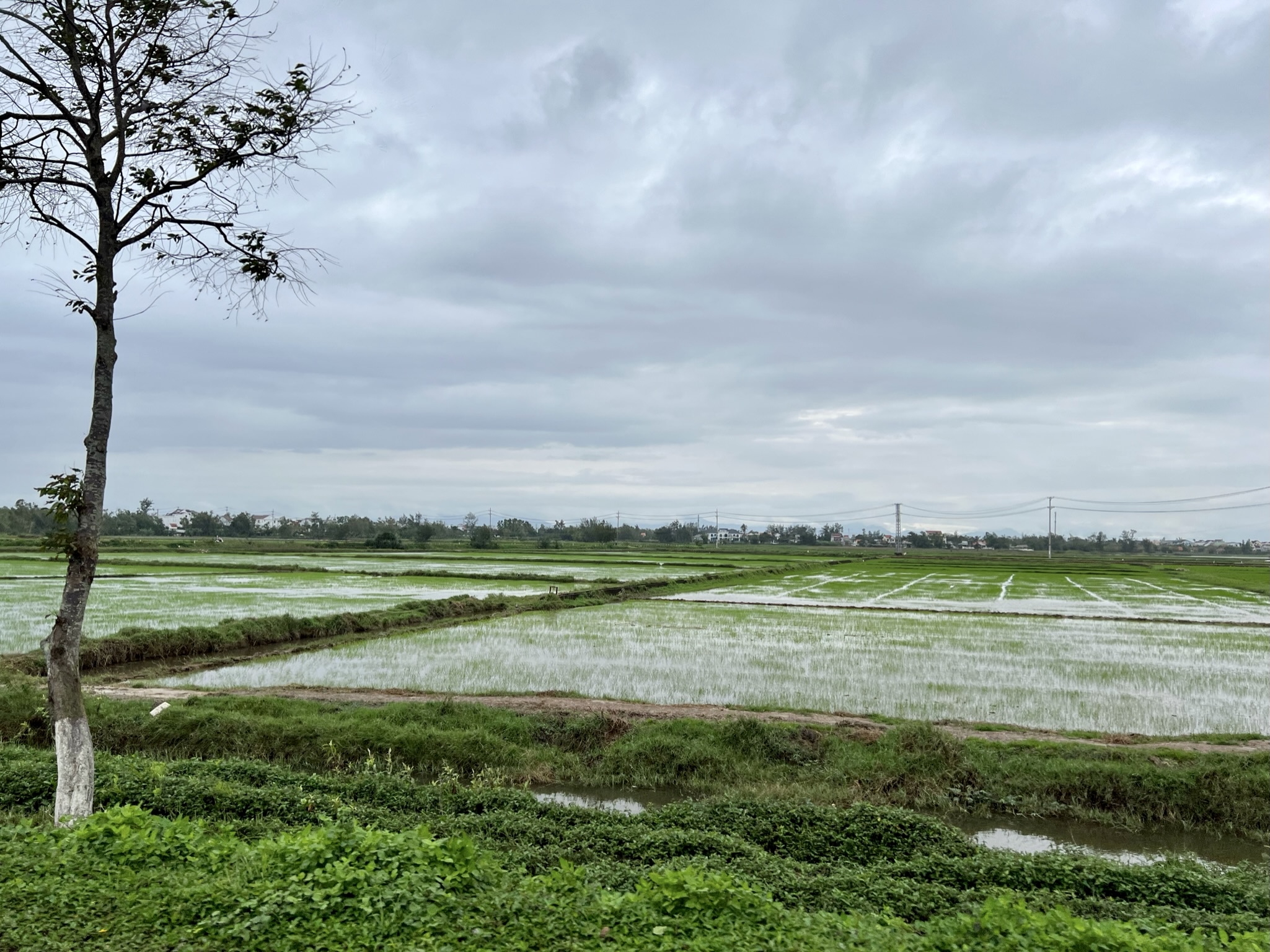
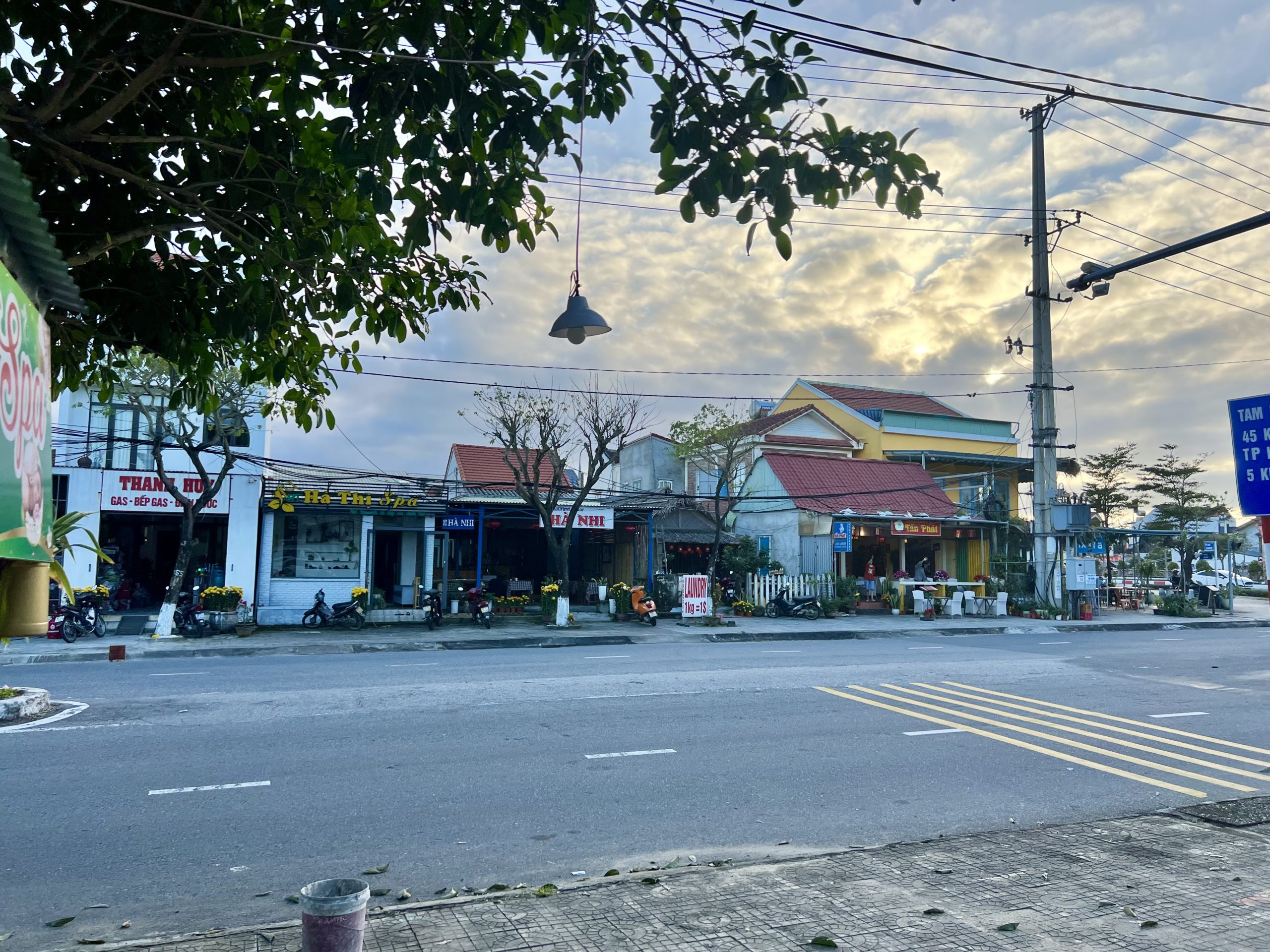
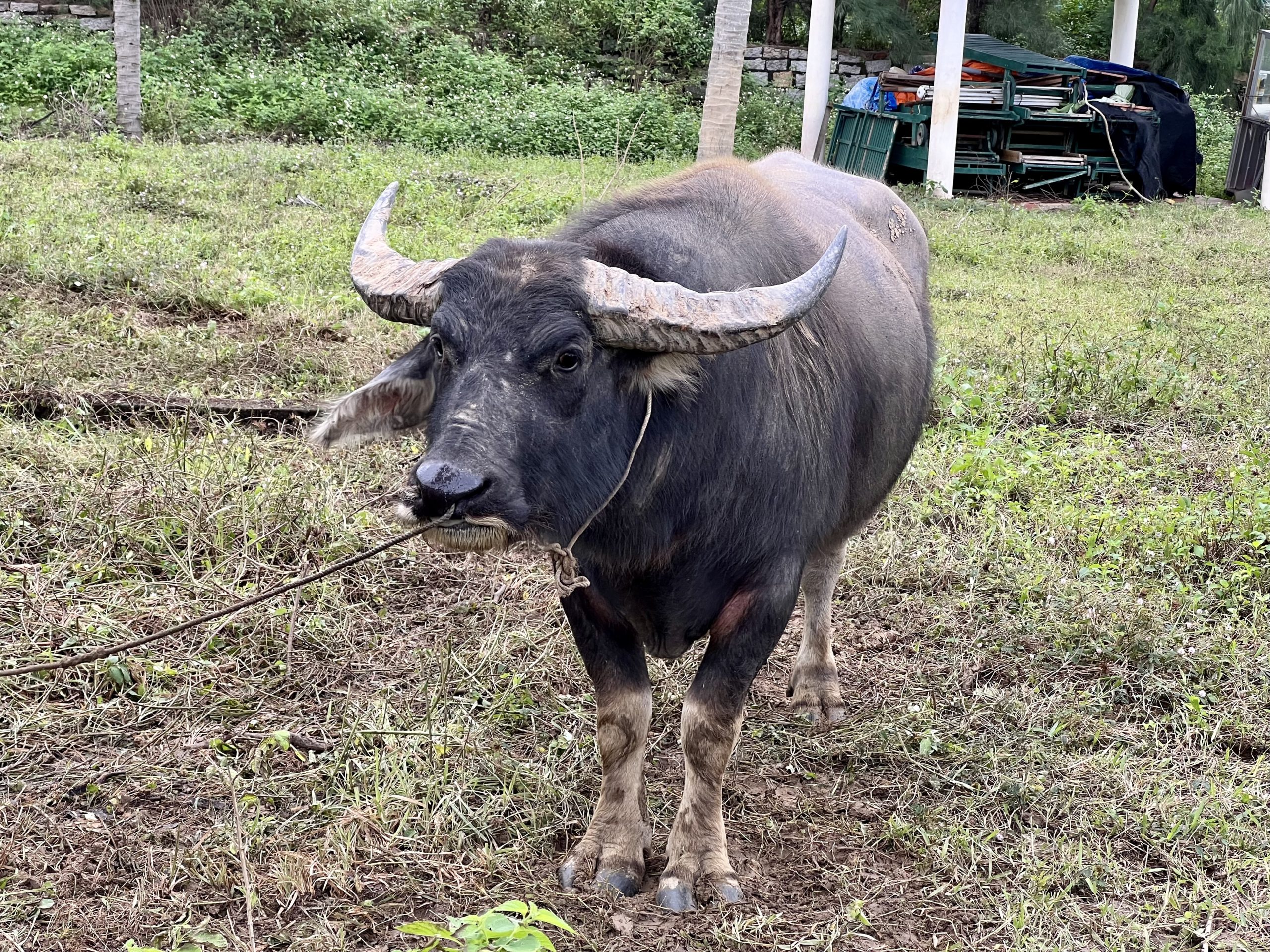
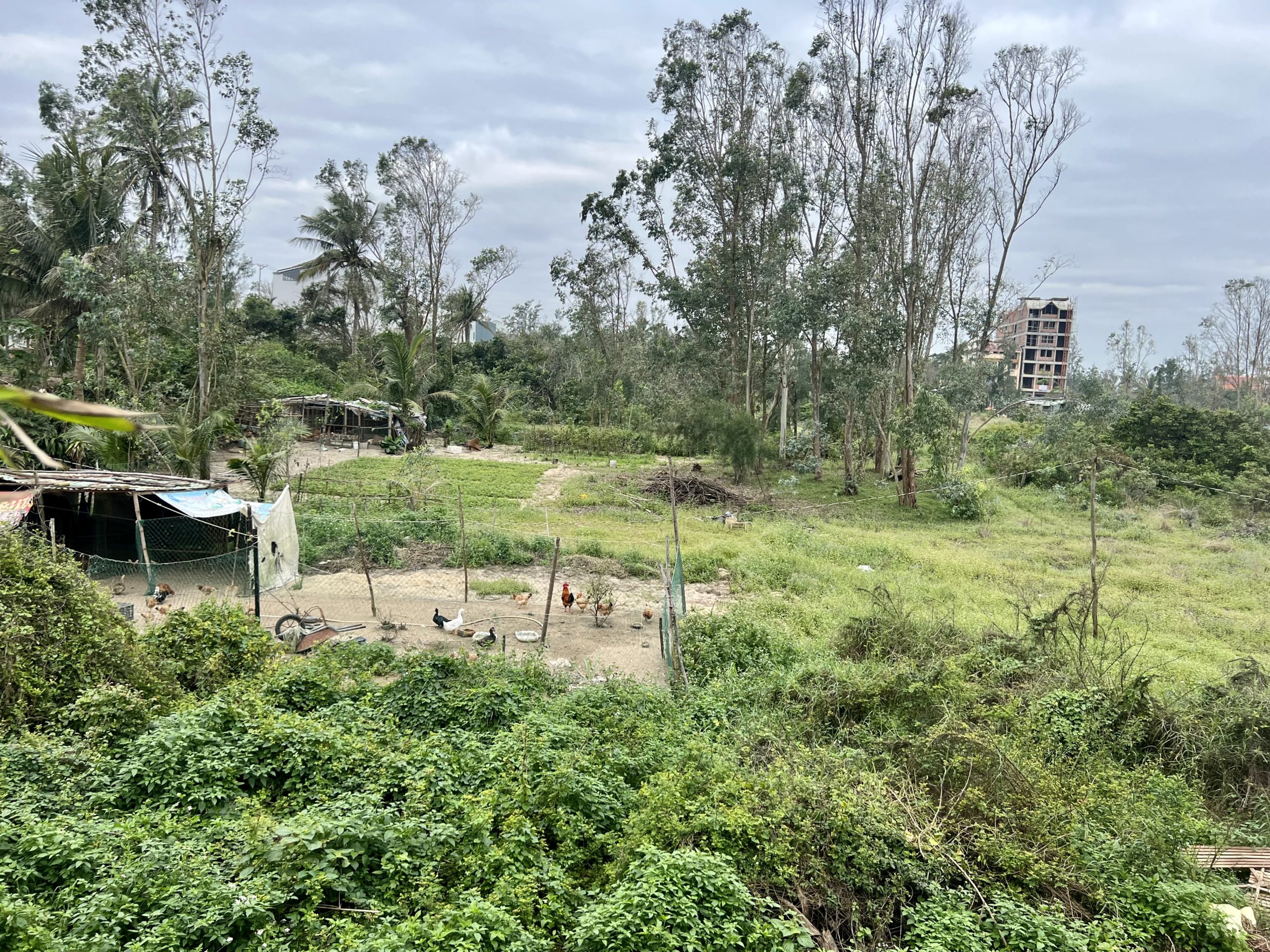
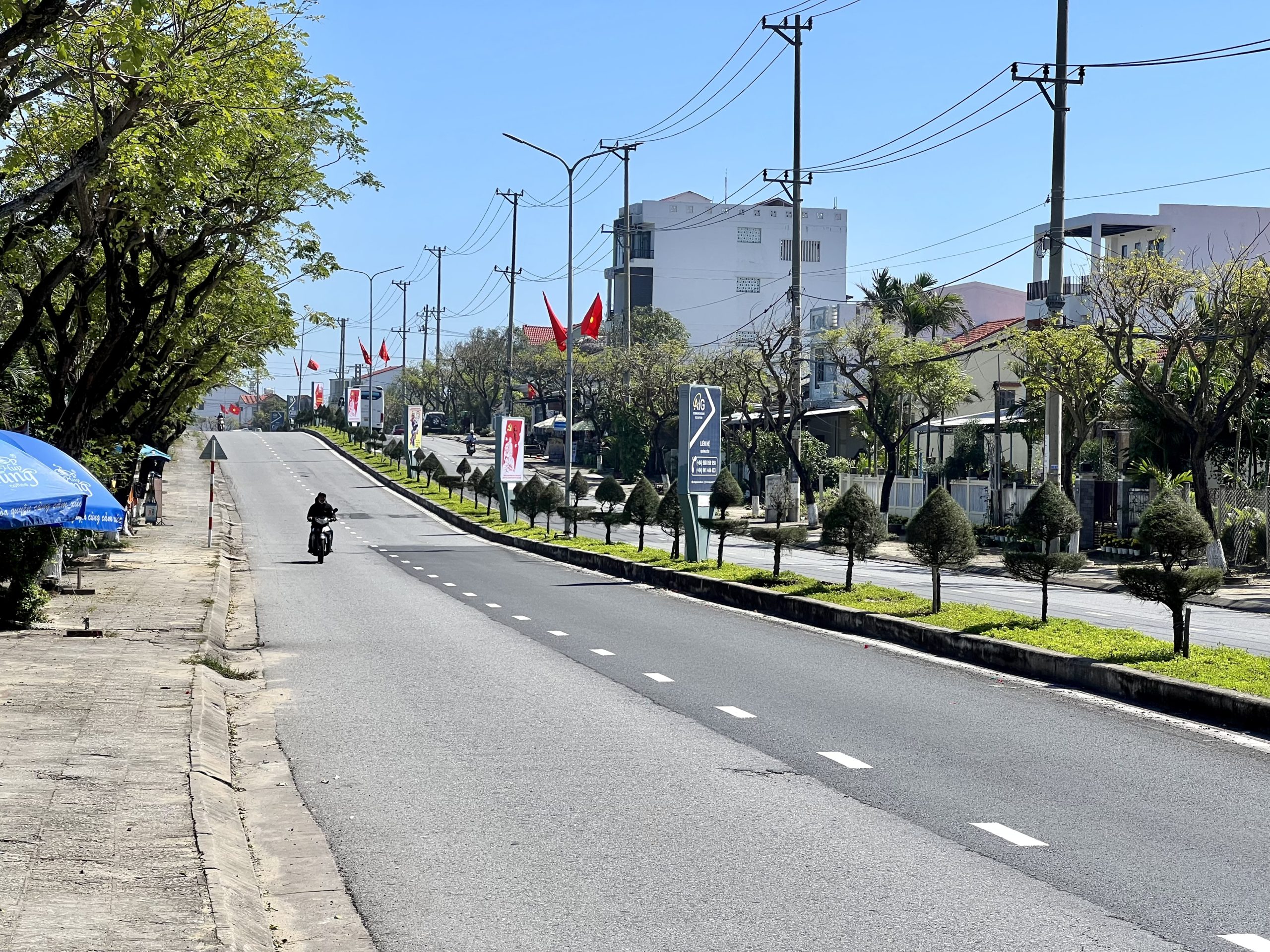
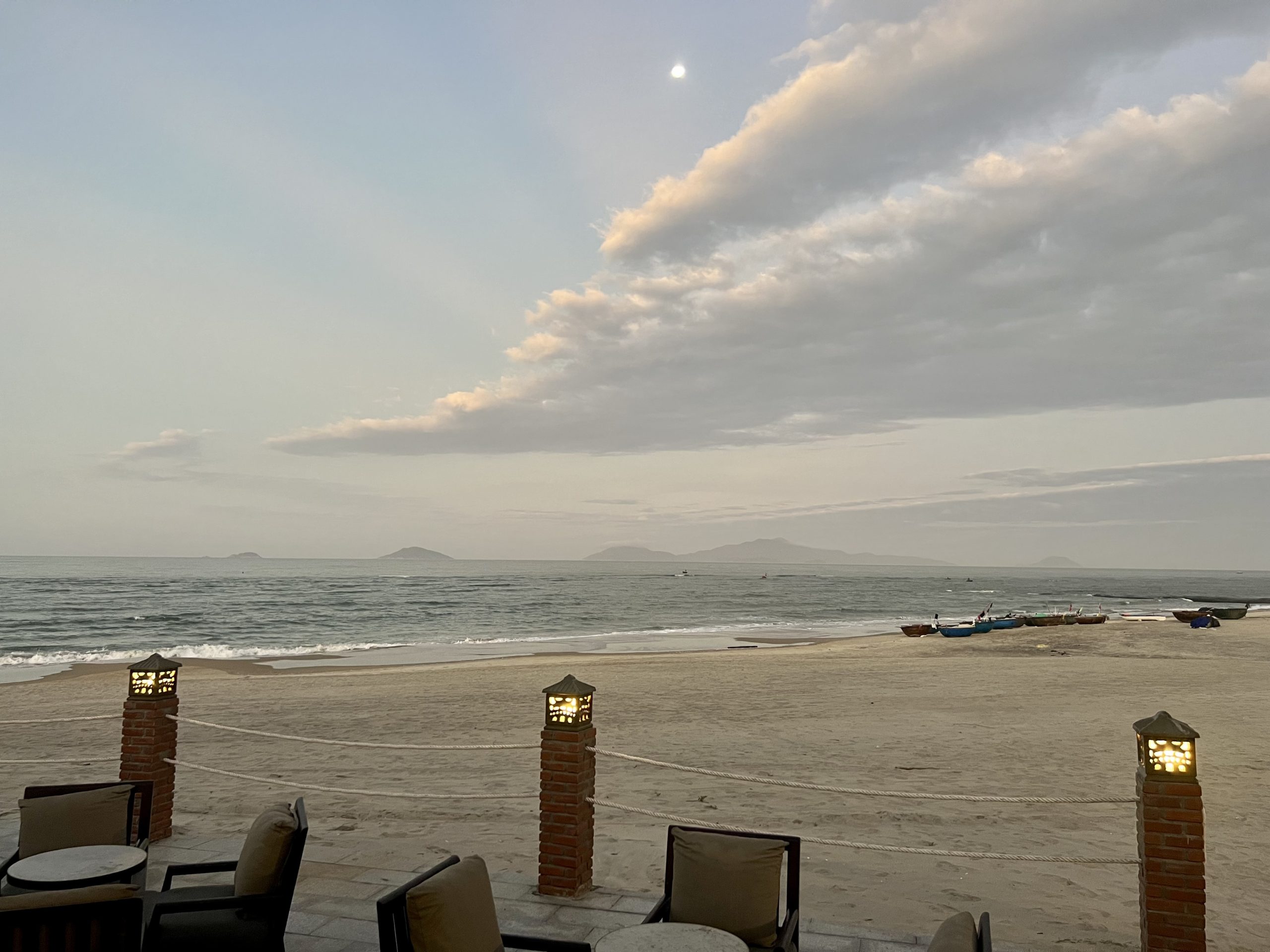
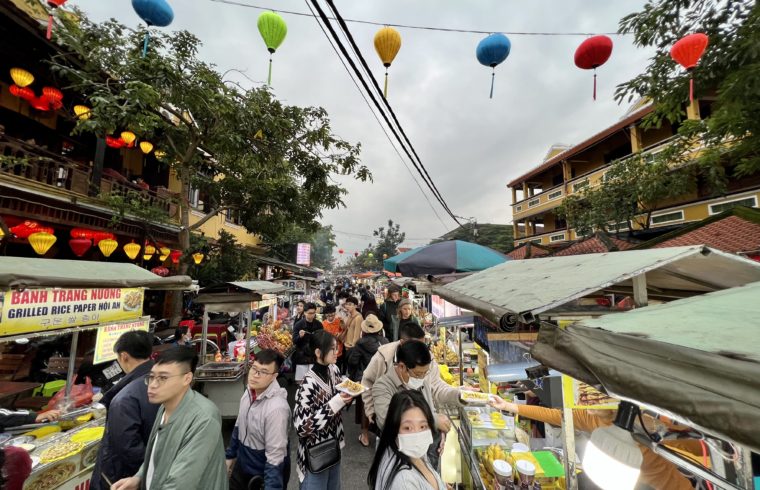
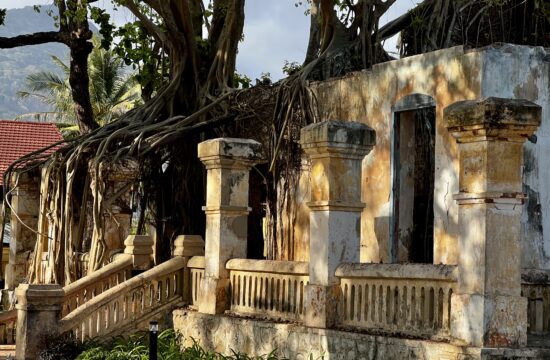
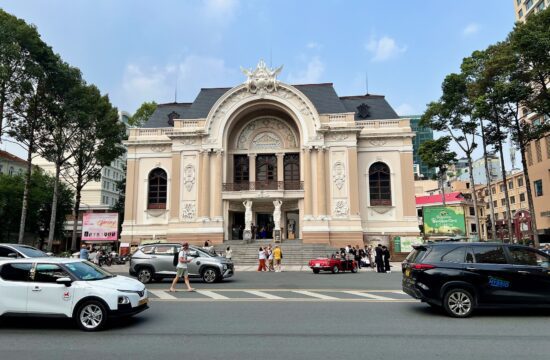
Several dishes are unique to the Hoi An region, and white rose dumplings is one of the most popular. Made from shrimp and mushrooms in translucent rice paper, they are delicate and savory and served with traditional sweet, tart, spicy nuoc cham sauce. On one day, the photographer took an all-day cooking class. Above is the last shot she took before having to get her hands dirty. The core ingredients and the start of almost every Vietnamese dish are turmeric root, garlic, ginger root, shallots, and chili, usually pounded together into a paste as a base for just about everything. Lemongrass is sometimes added, and fish sauce (nuoc mam), soy sauce, and squeezed limes are used as called for. But the holy quintet are the ones in the basket. Banh xeo is one of the dishes the photographer made in her cooking class, probably because it’s one of her favorites. Popular throughout Vietnam, it’s a crispy rice pancake stuffed with shrimp and minced pork (among other things). You wrap it in wetted rice paper along with greens, and nuoc cham of course. The other guy at the table is having beef pho.This cooking-class dish is Vietnamese beef curry, which just happens to be liked by the blogger. Cao lau is another Hoi A specialty, and one the photographer orders often. It is savory pork with various greens and big fat rice noodles reminiscent of Japanese udon. What makes this dish so unique, and unique to this province, are the noodles made from rice soaked in lye water, which gives them a gray cast, a springy texture, and a subtle smoky taste.It would be irresponsible to have a post about regional food and not include pizza. We tried pizza at three different restaurants, because we had to. Only Luna d’Autunno, an Italian restaurant in An Bang town run by a Frenchman, actually served pizza (and caprese salad). All others were local cow cheese and stuff on bread something, which by definition is regional pizza, but not Pizza. Seafood, of course, is always on the menu, like this charcoal grilled sea bass …… cobia grilled in banana leaf …… fresh caught grilled snapper …… and a simple Vietnamese version of fish & chips. Various white fishes are used, the crunchy crust has turmeric-root in it and sometimes finely chopped green peppers, and there’s no vinegar or tartar sauce. So all it really has in common with English or American versions is the chips, but it tastes great. The blogger ate this one at Lily’s Pancake Restaurant overlooking the River in Old Hoi An.Which makes for a good segues to the open market in Old Hoi An Town.The photographer and her cooking instructor made their first stop at the morning market for fish, beef, and spices.The fish monger looked happier about making a sale than this beef whacker.Every trip to the Old Town included a trip to the market. We always knew we were getting close when raw meat started appearing with the aloha shirts.In essence, if you can eat it, you can buy it at the market. Dried mangoes, candied ginger, sweet smoked coconut chips, and Java apples are our favorites for afternoon snacks. Here the blogger is buying Java apples. They’re like the mountain apples we’d pick in Hawaii, except much larger, a tiny bit sweeter, and no seed in the center.We made many trips into Old Hoi An Town, which was very quiet leading up to Tet …… and a bit of a circus during. Most of the Tet crowd were locals and Vietnamese tourists, with the odd Korean visitor and tall white person mixed in.On the far side of the lantern bridge, assuming you make across with no selfie-stick injuries, is a food street that is more food than street. From frozen somethings to fruit to grilled suction cups on a stick, you can feed both your stomach and your curiosity. Most times, we’d work our way from the streets where cars and taxis are permitted and take different winding paths through the narrow pedestrian (and motorbike) streets to get to the riverfront. Along the river, boats await tourists …And so do fruit sellers. As the sun sets, the smaller lantern boats are popular. You don’t go very far, but you get to be in a lantern boat and wear a life jacket.Most of the time the town was dry and not so crowded – no line for haircuts or a good ear cleaning. Wet days, though, were wet indeed. The steps here normally go down to a little water lily pond, but not this day.The Buddhist temples, which are many and varied, dress up with flags, lanterns, and Tet flower displays.This one went all out. The photographer had trouble getting this shot, because no one could make sense of her wanting to take a photo that wasn’t a selfie or a whacky instagram pose.One evening, we went to see a show called Teh Dar, part cirque du bamboo, part interpretive dance, and part tribal story. It was intimate, very well conceived, and acrobatic. (above and below)We stopped again at Banh Mi Phuong, the banh mi shop made famous by Anthony Bourdain. The place was nowhere near as busy as it was our first visit, some three and a half years past …However, the sandwich just didn’t seem as good as I remember it. The photographer believes I got a different type this time. I’m pretty sure I ordered pork both times, but how would I know? There’s more English on the wrapper than on the menu board. Between the Old Town and the beach are figurative and literal islands of vegetable farms and rice paddies. The entire greater Hoi An area is a patchwork of varied land use.To provide some context, across the street from the Boutique hotel we stayed at is a kind of restaurant row, which sprang up in the wake of the hotel being built.The hotel’s southern neighbor is a water buffalo that, though curious, is mostly into projecting attitude. The neighbors to the north are chickens.And all of this is strung along a quiet, well-manicured four-lane divided roadway.Our favorite side of the hotel, of course, is the ocean. Here a full moon rises as we toast our last evening in Hoi An.