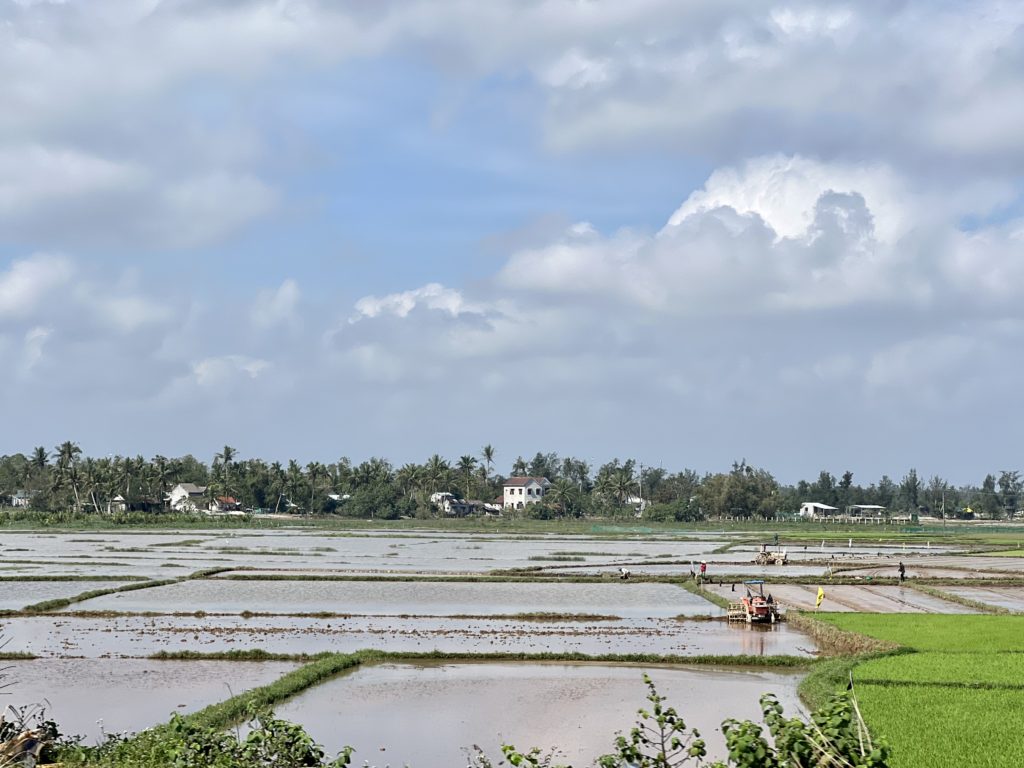
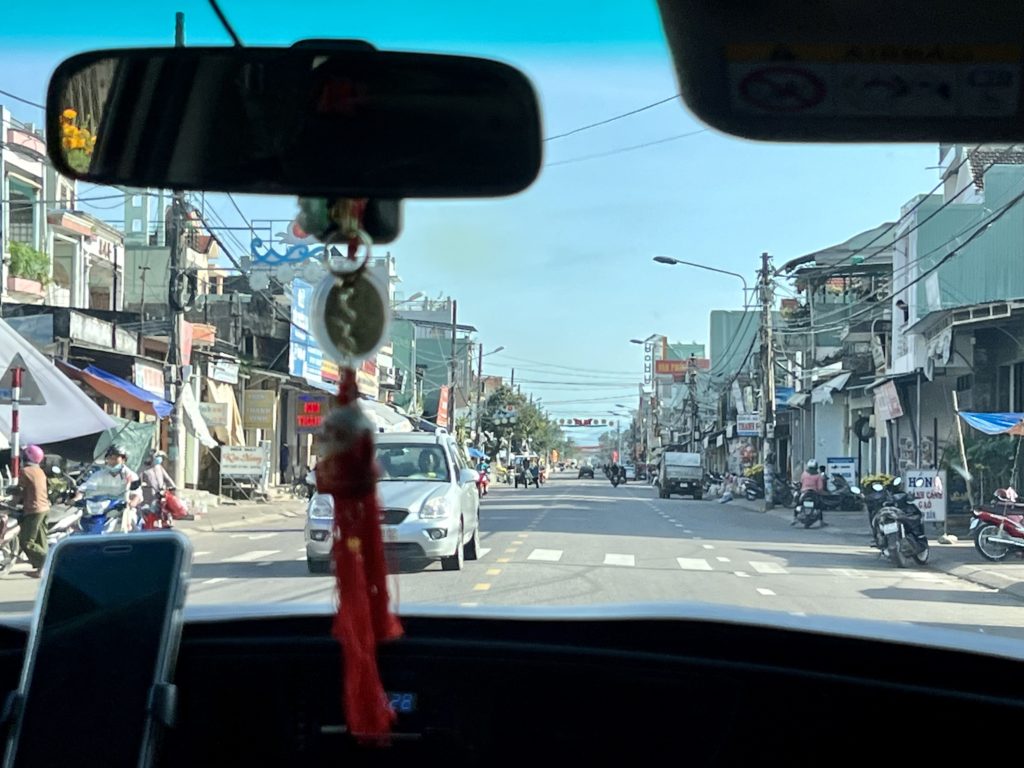
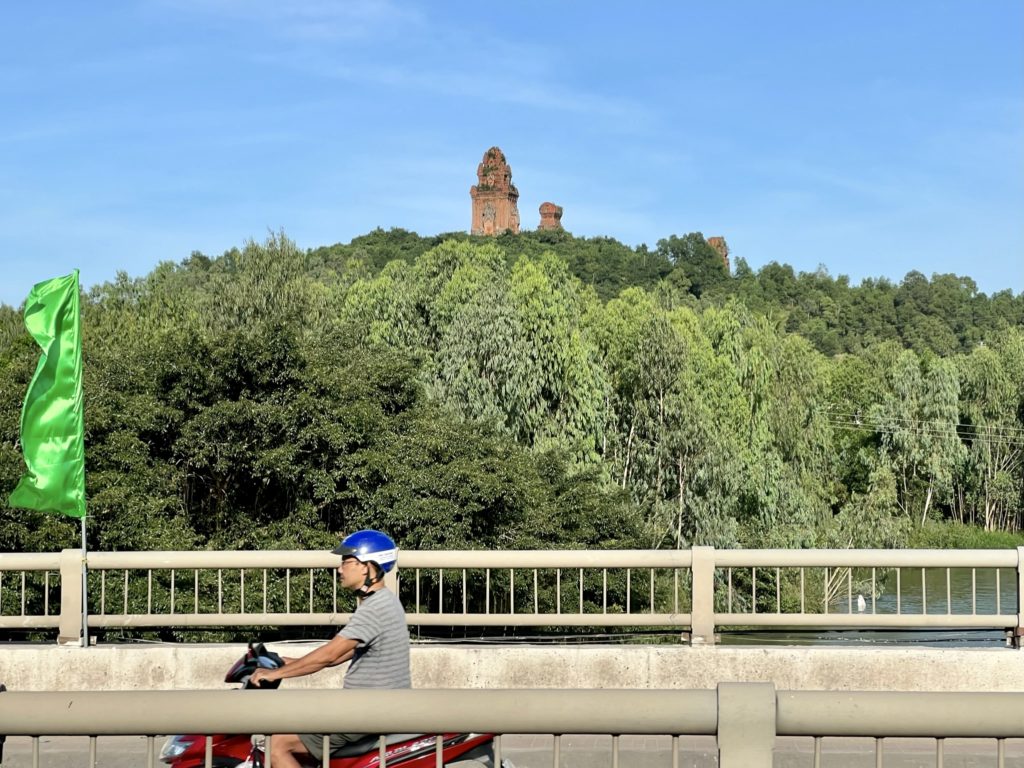
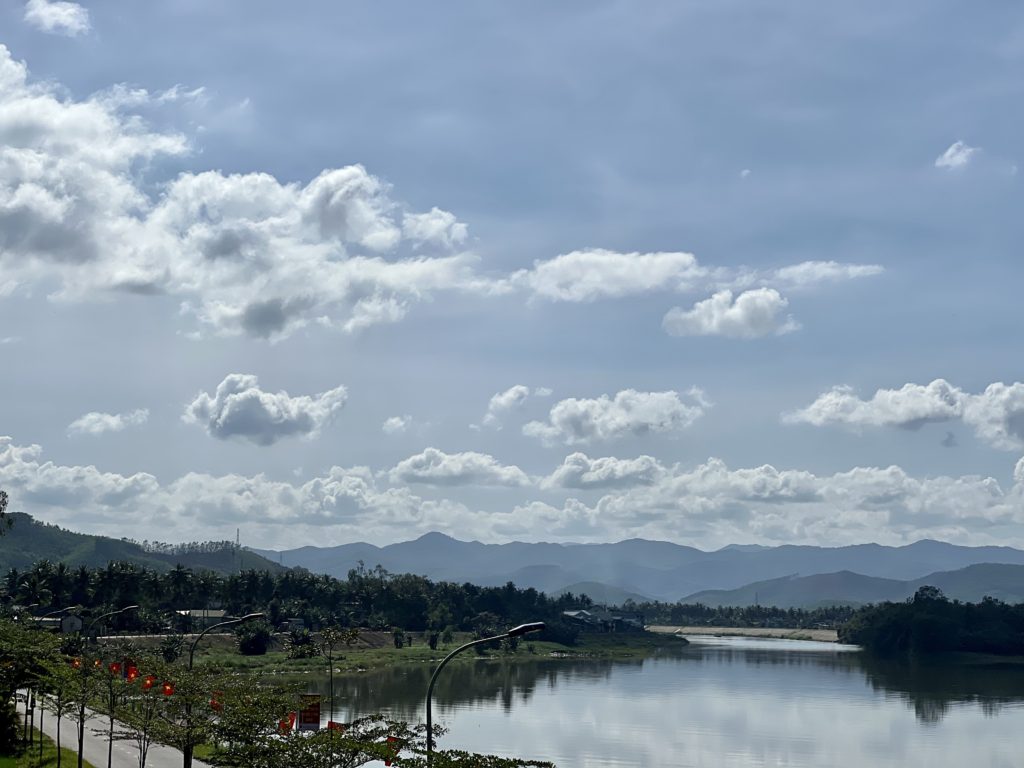
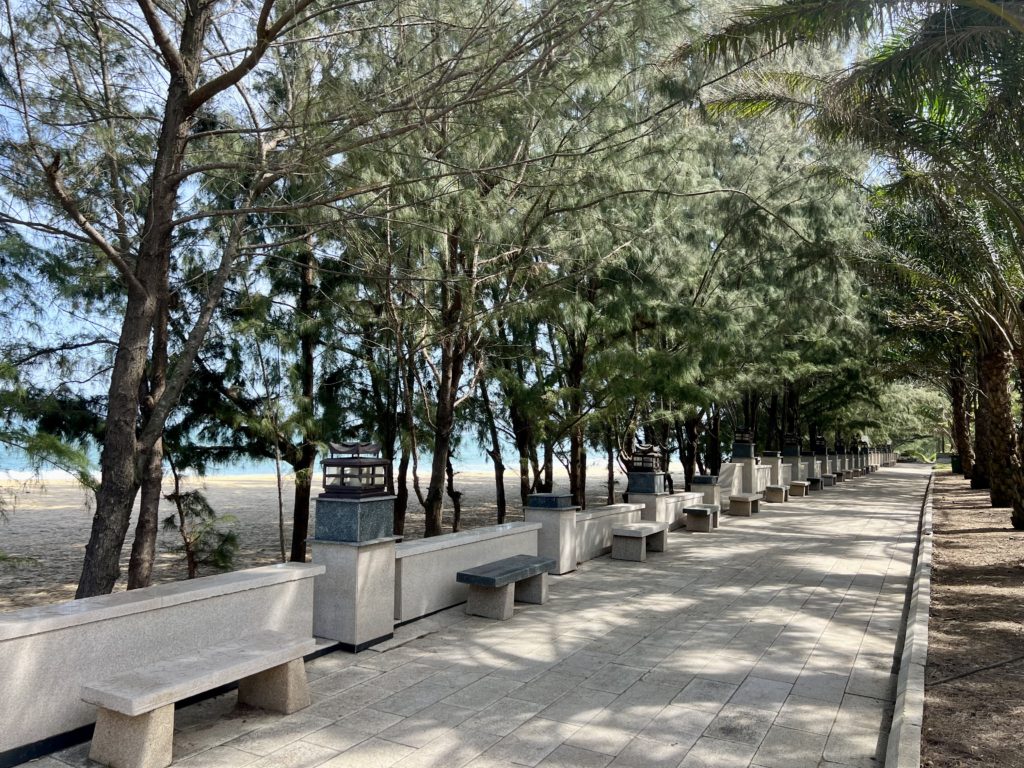
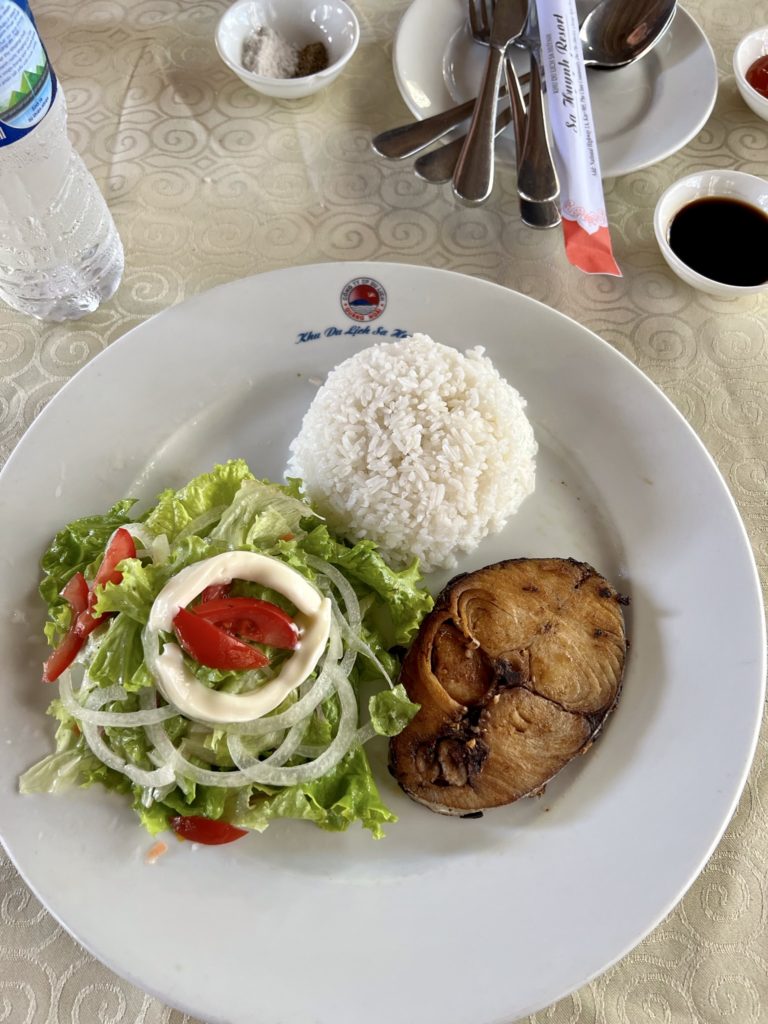
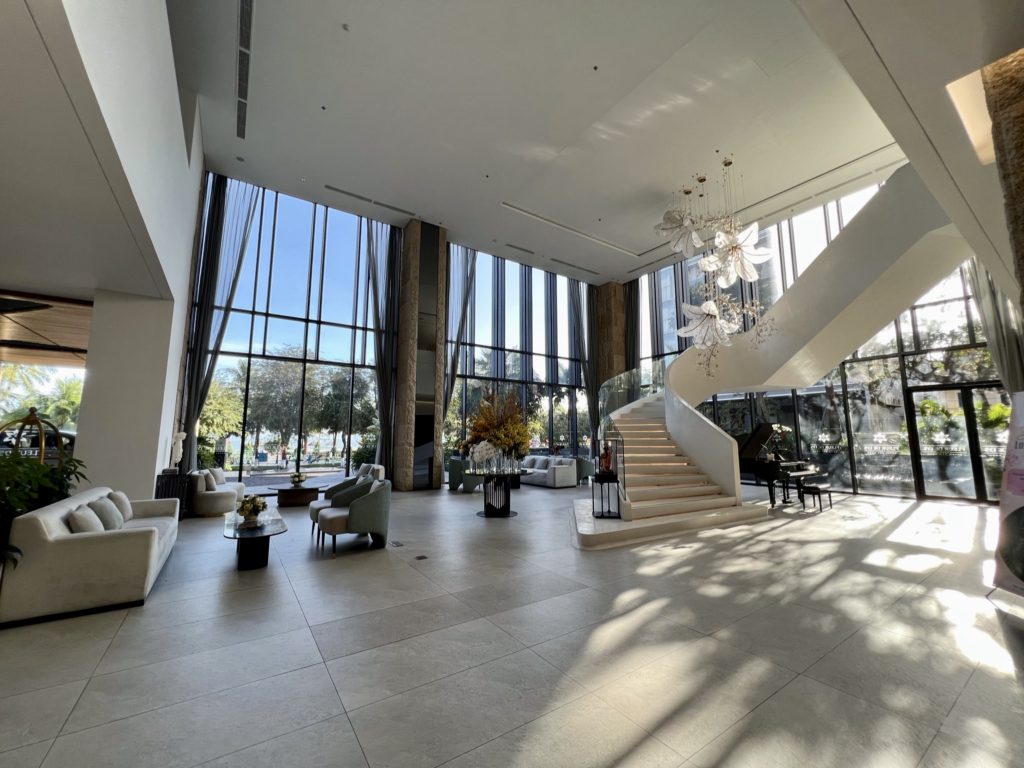
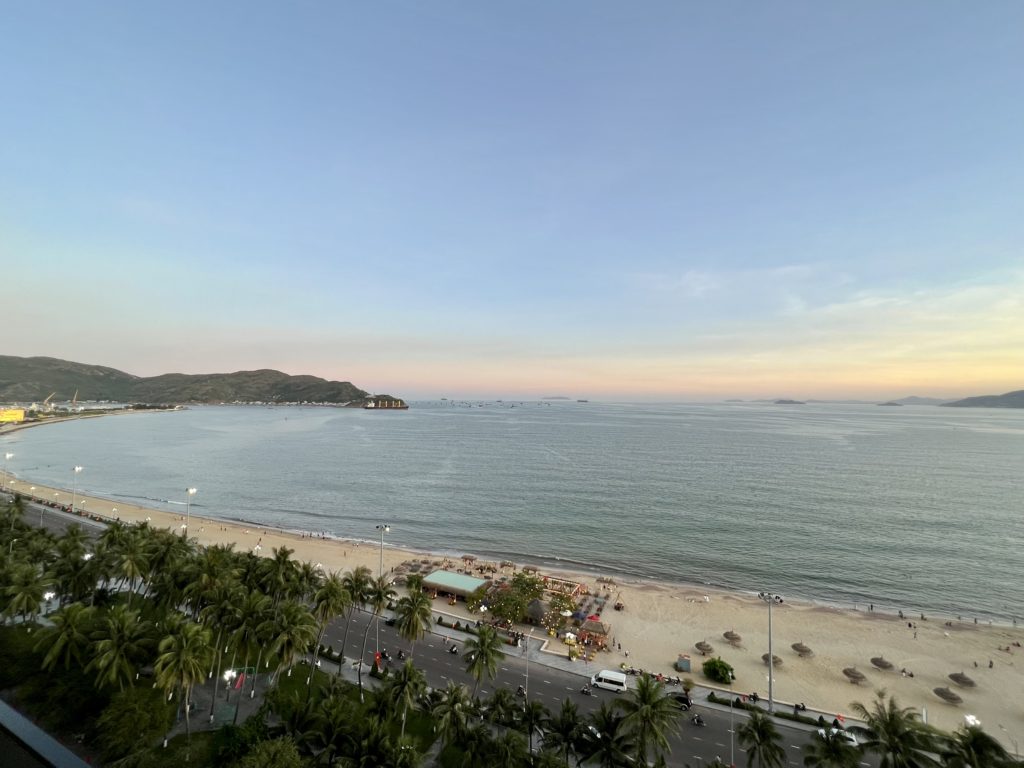
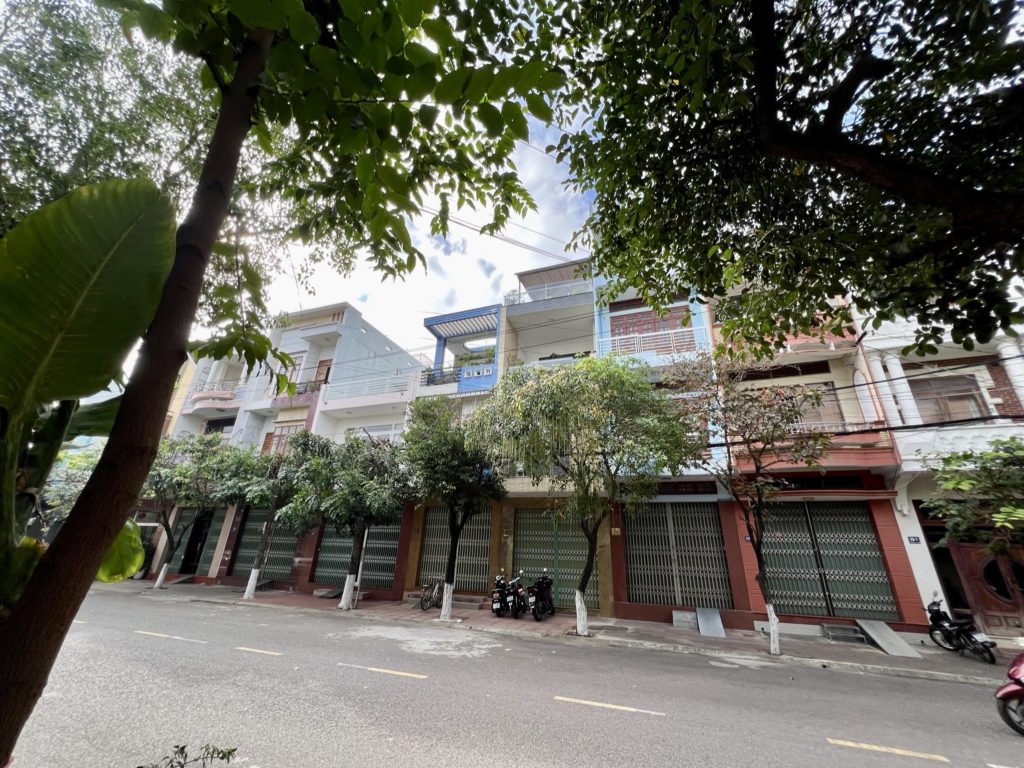
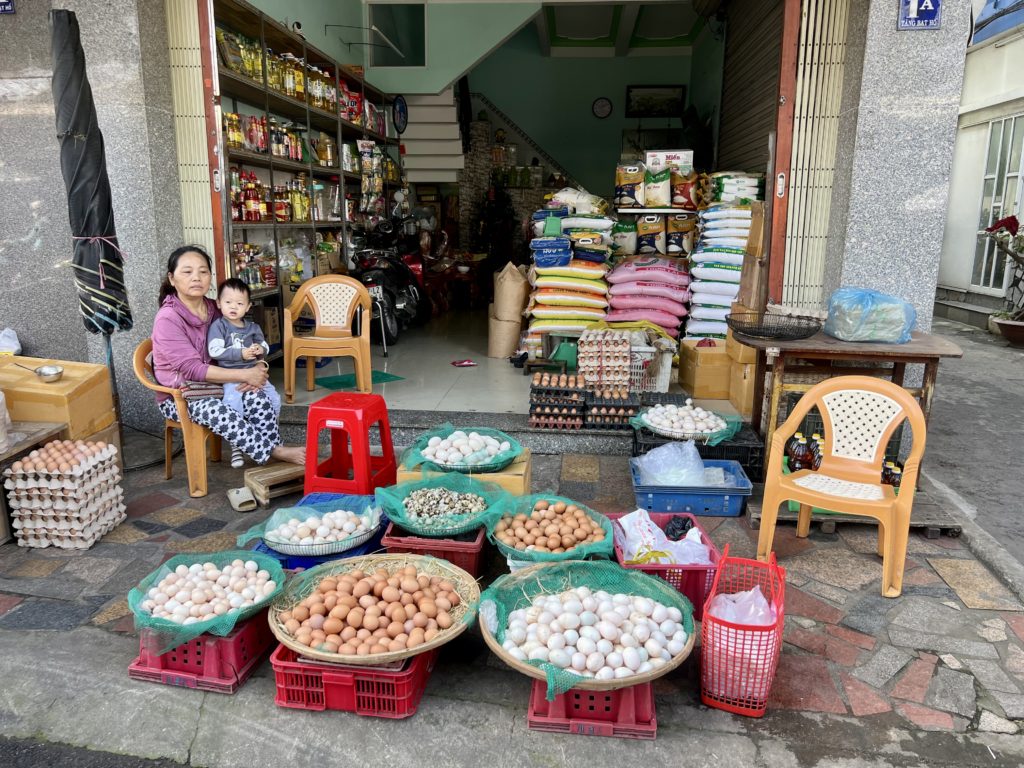
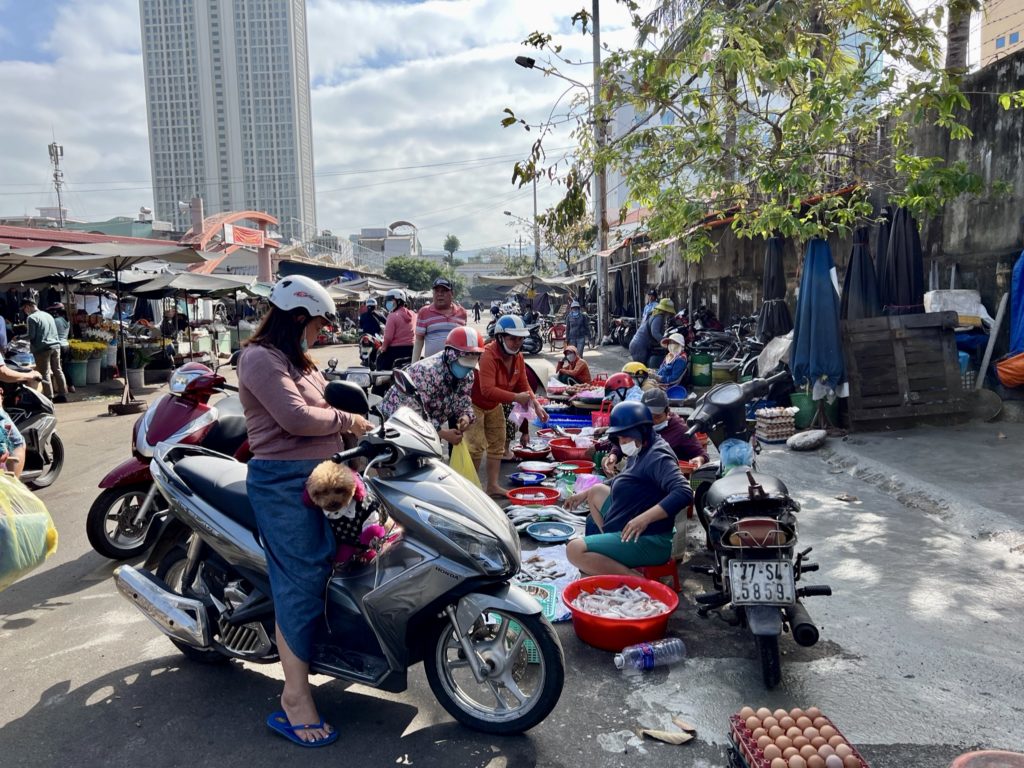
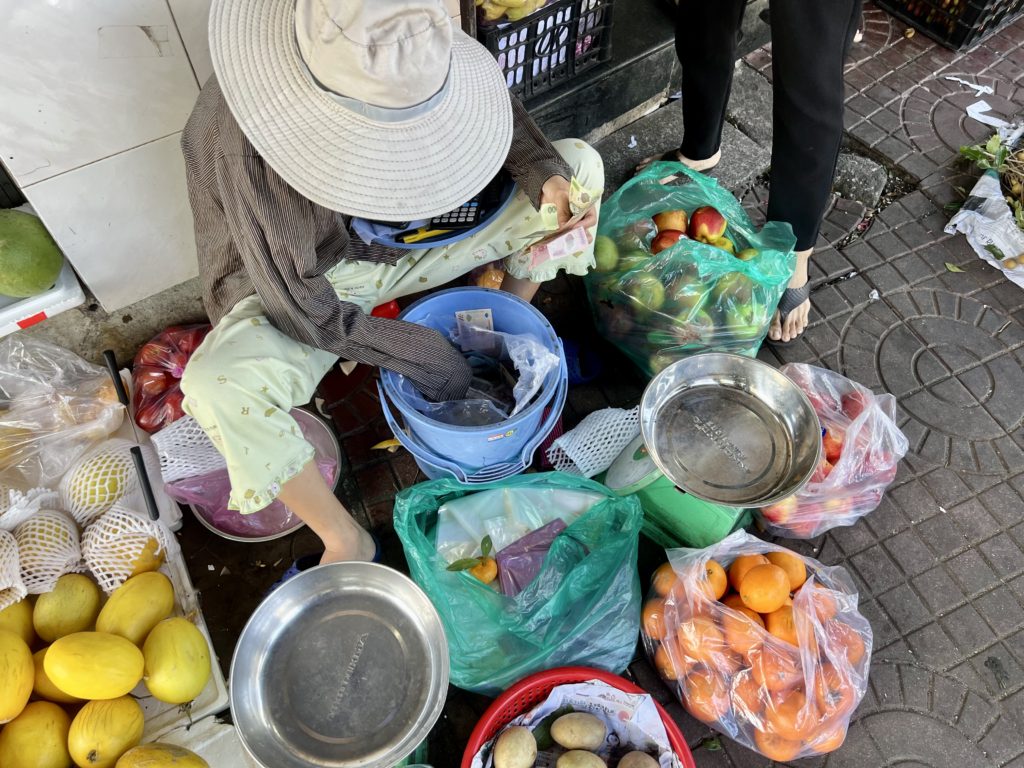
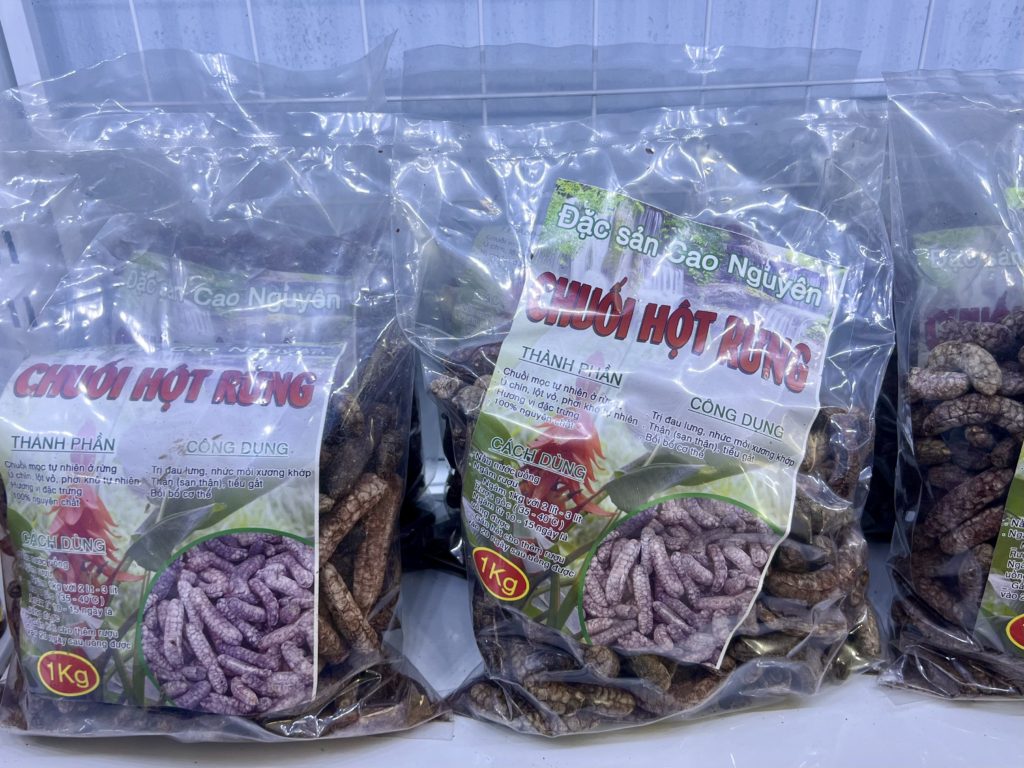
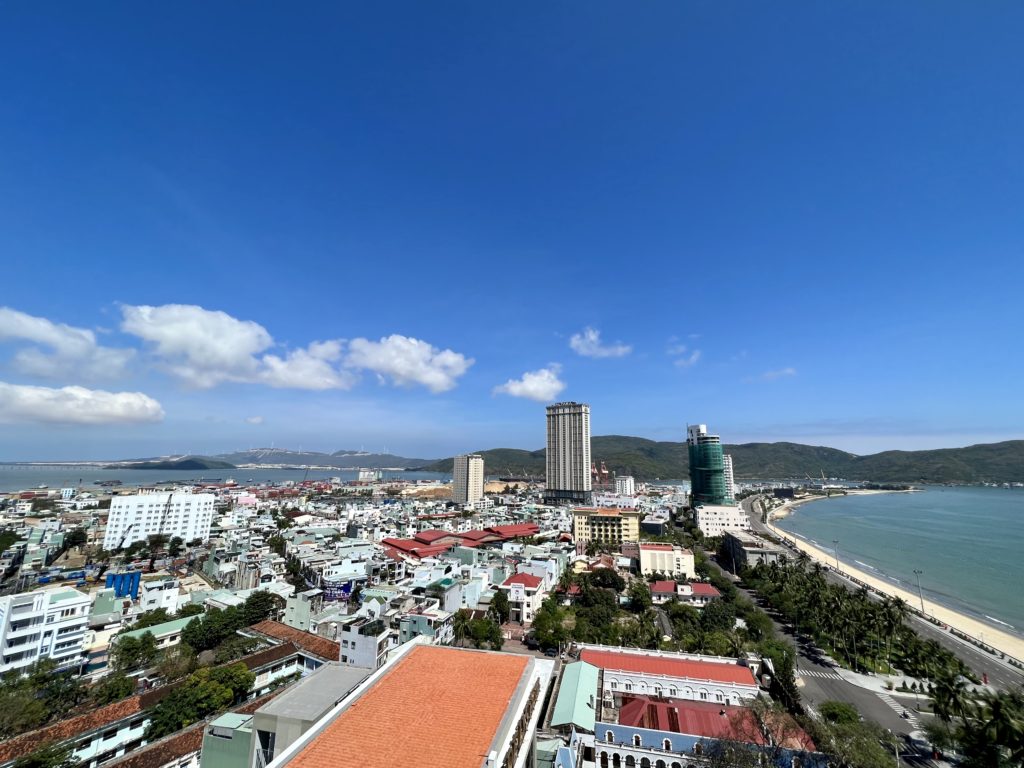
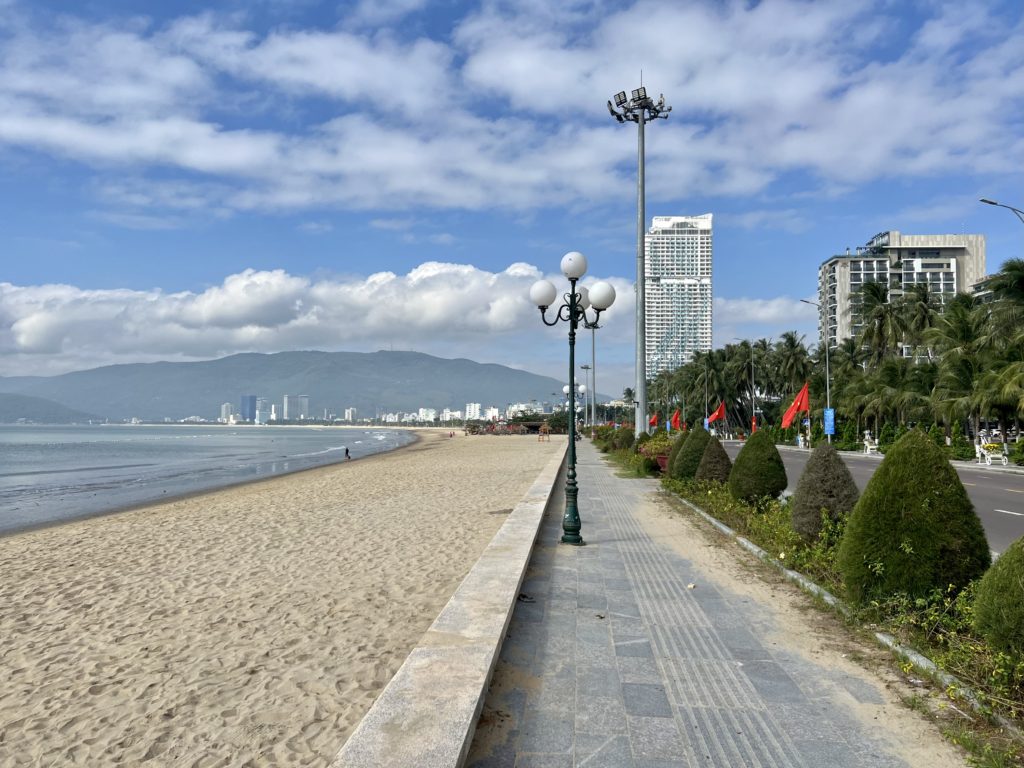
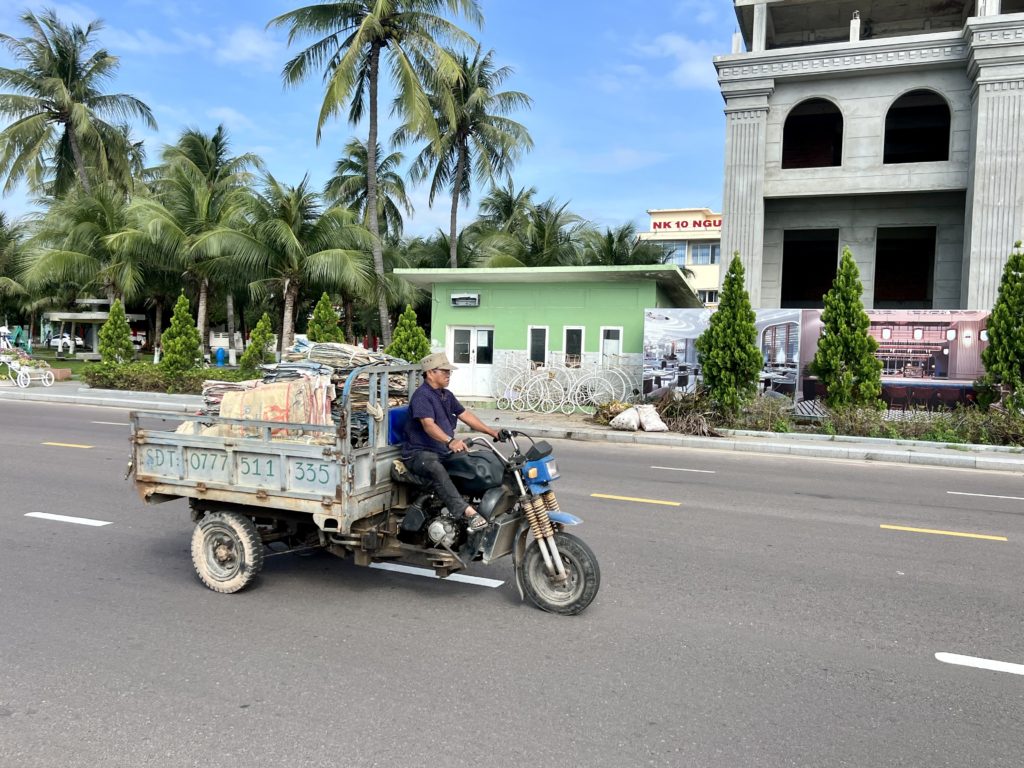
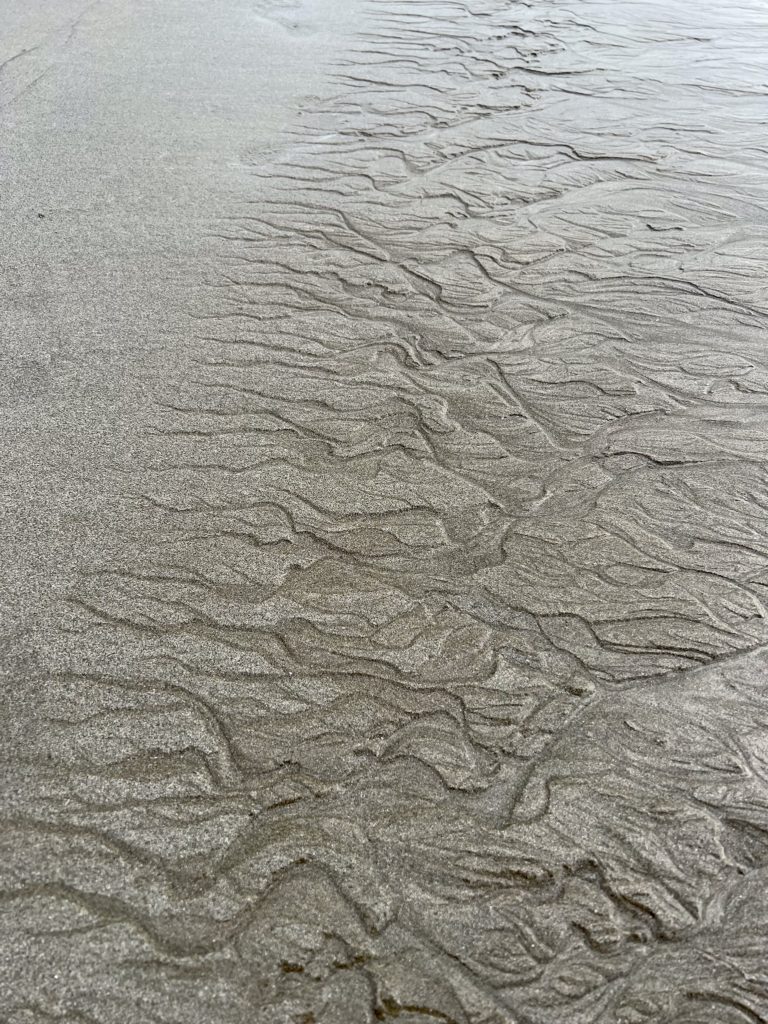
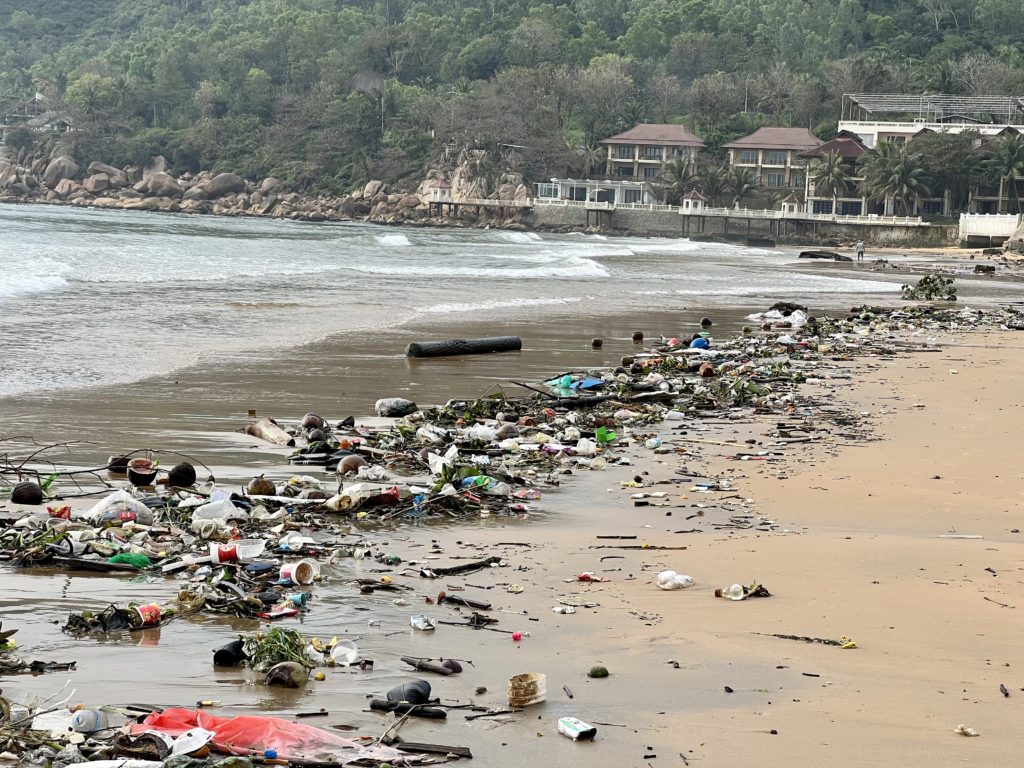
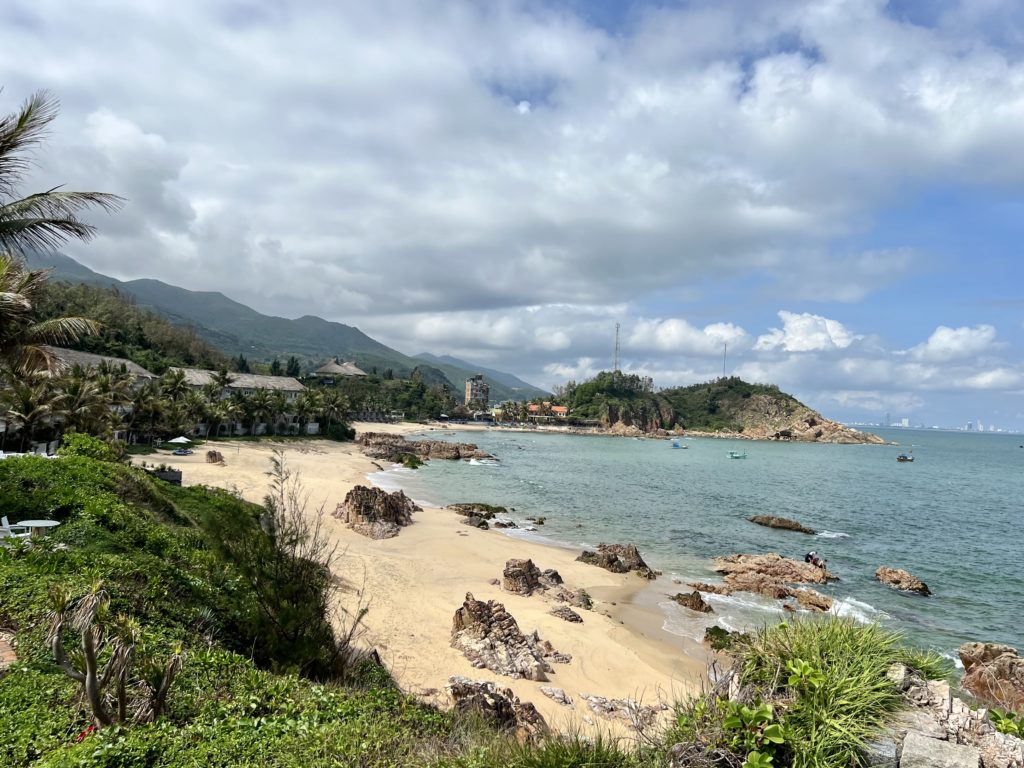
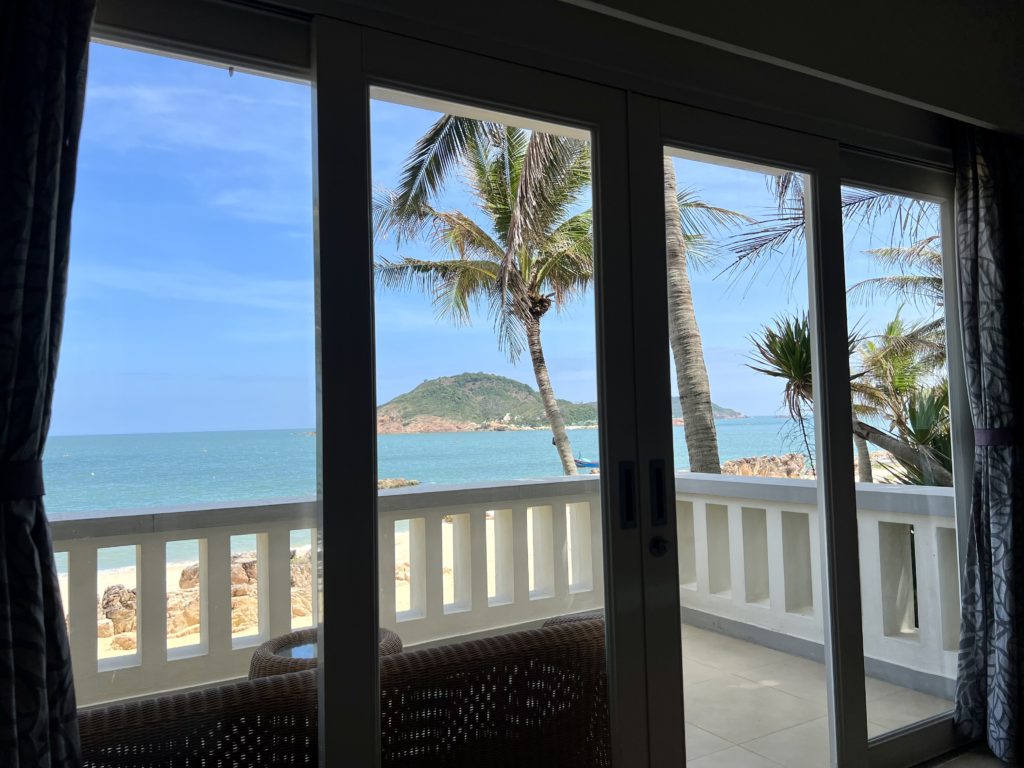
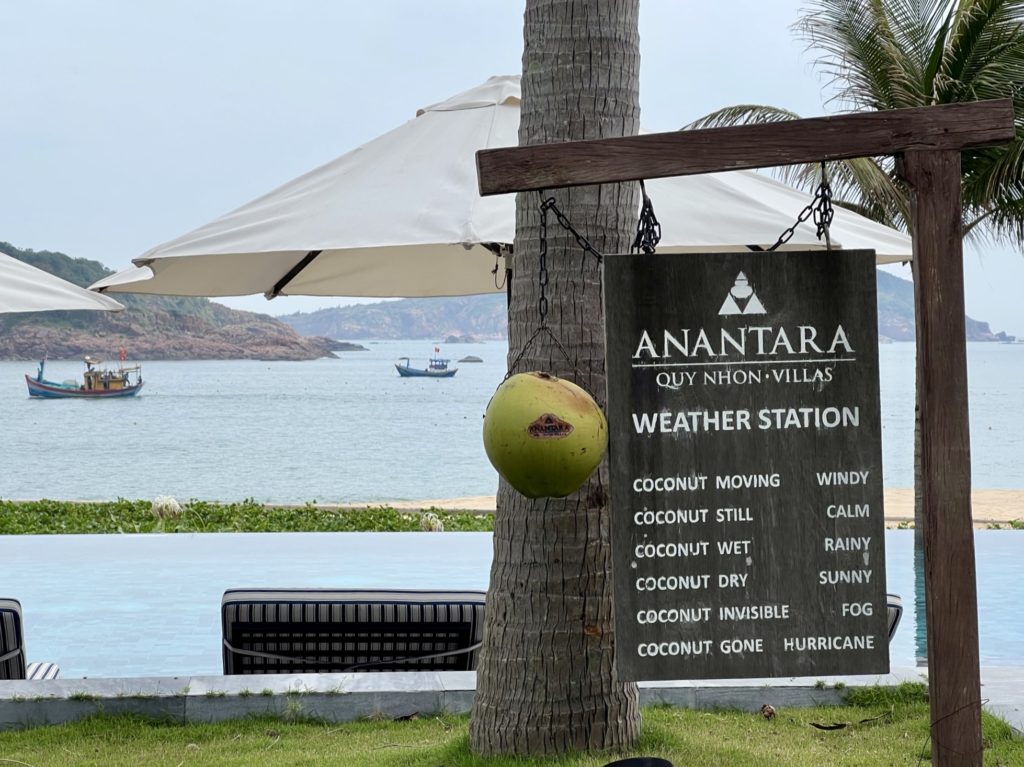
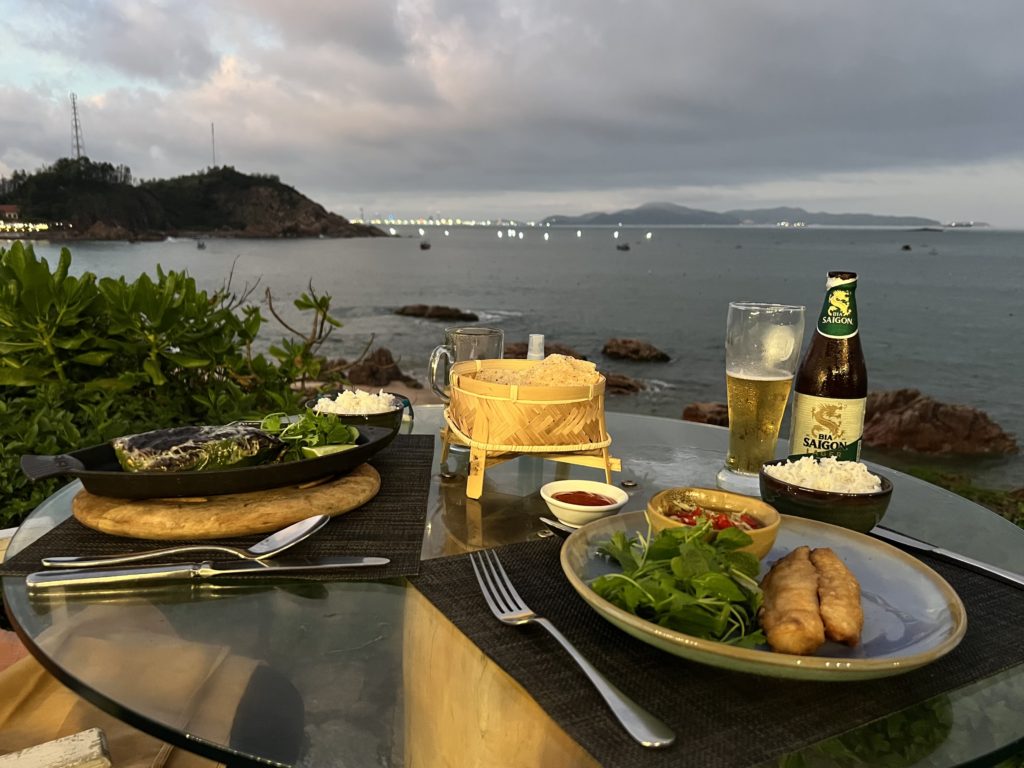
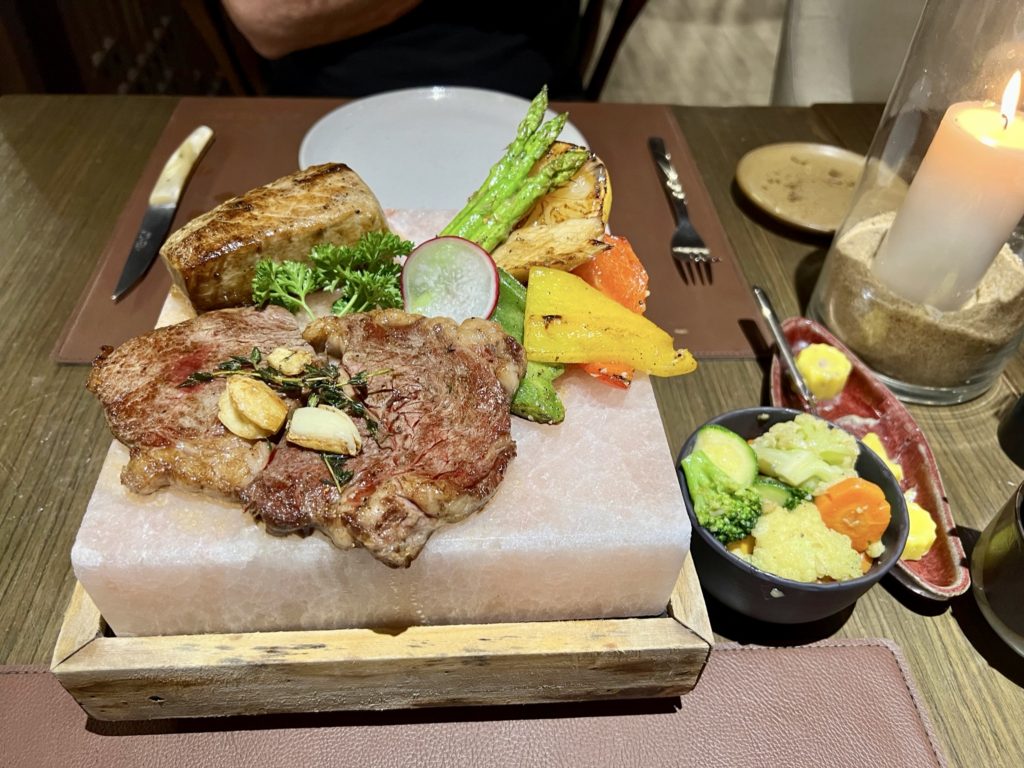
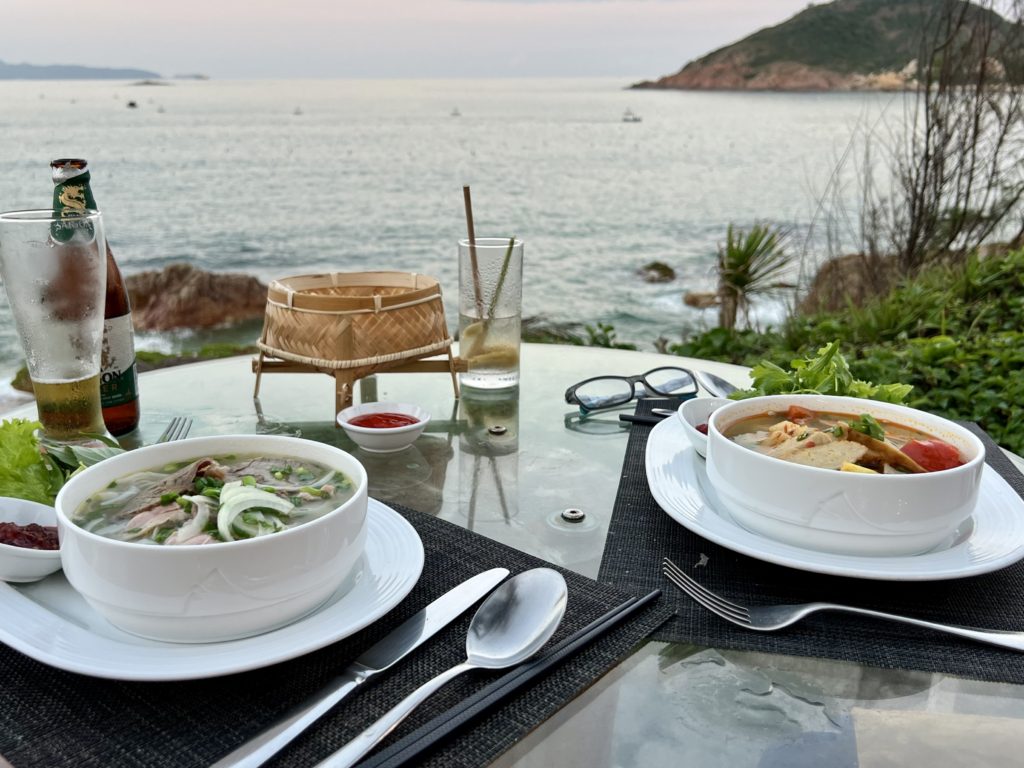
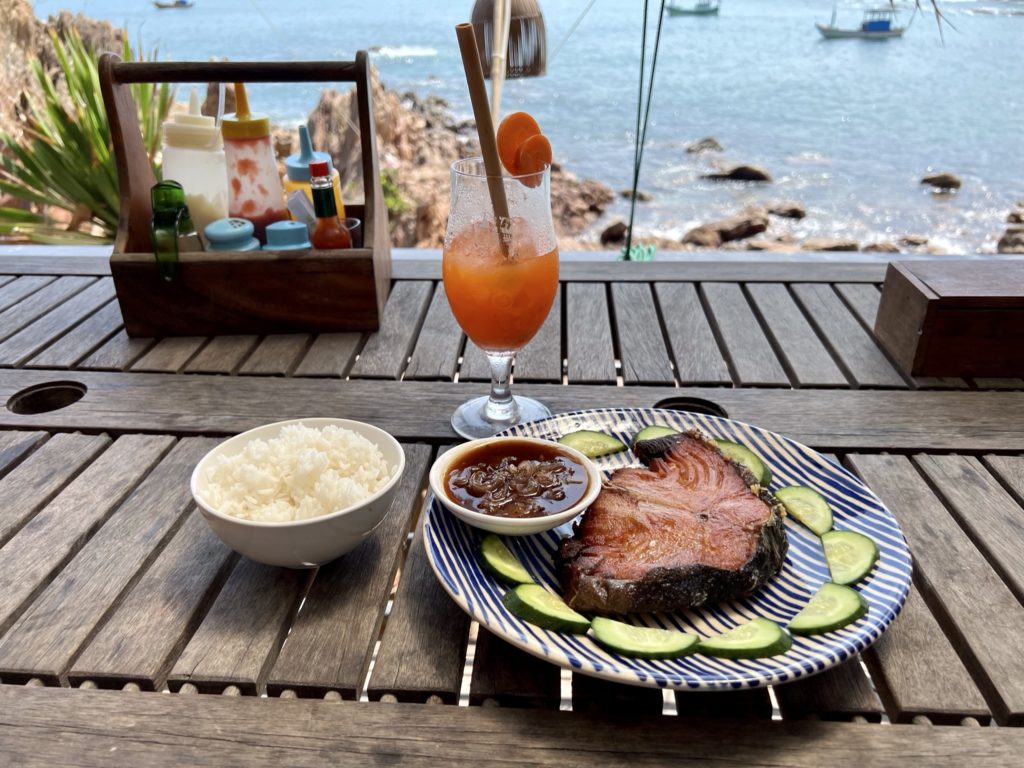
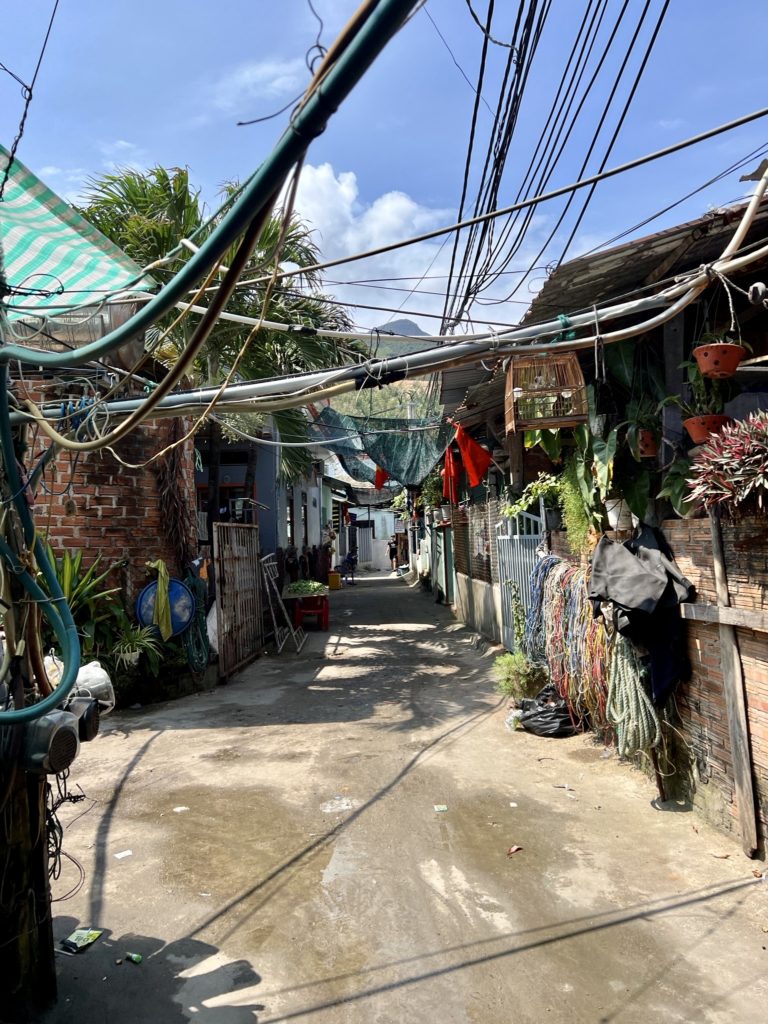
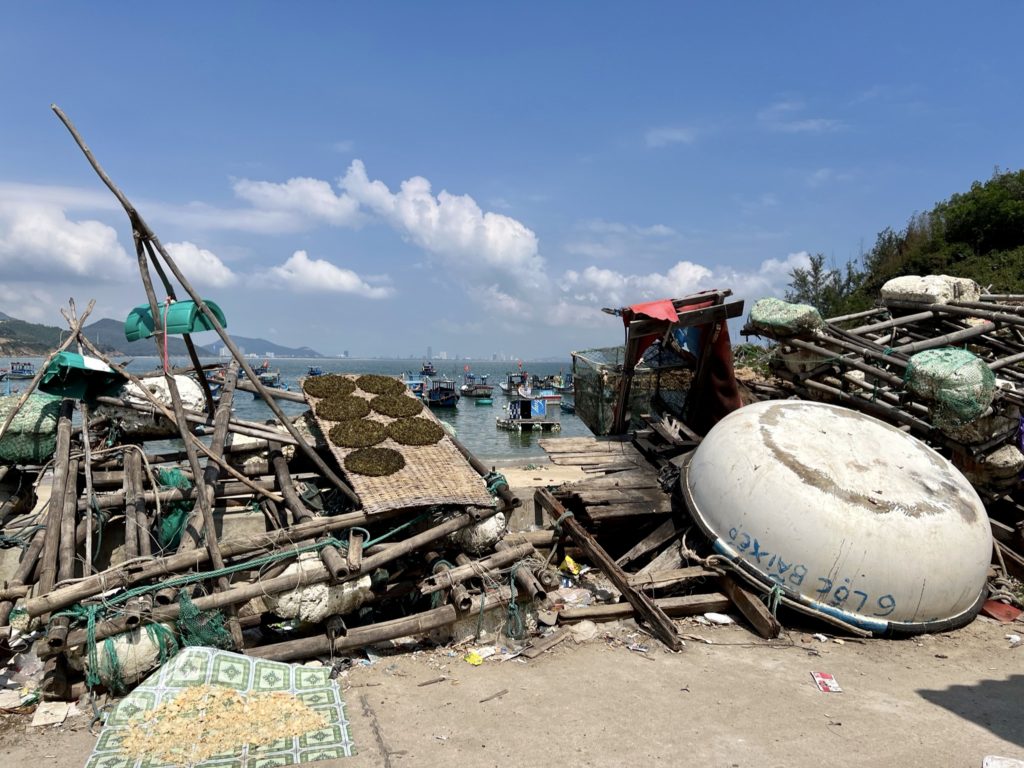
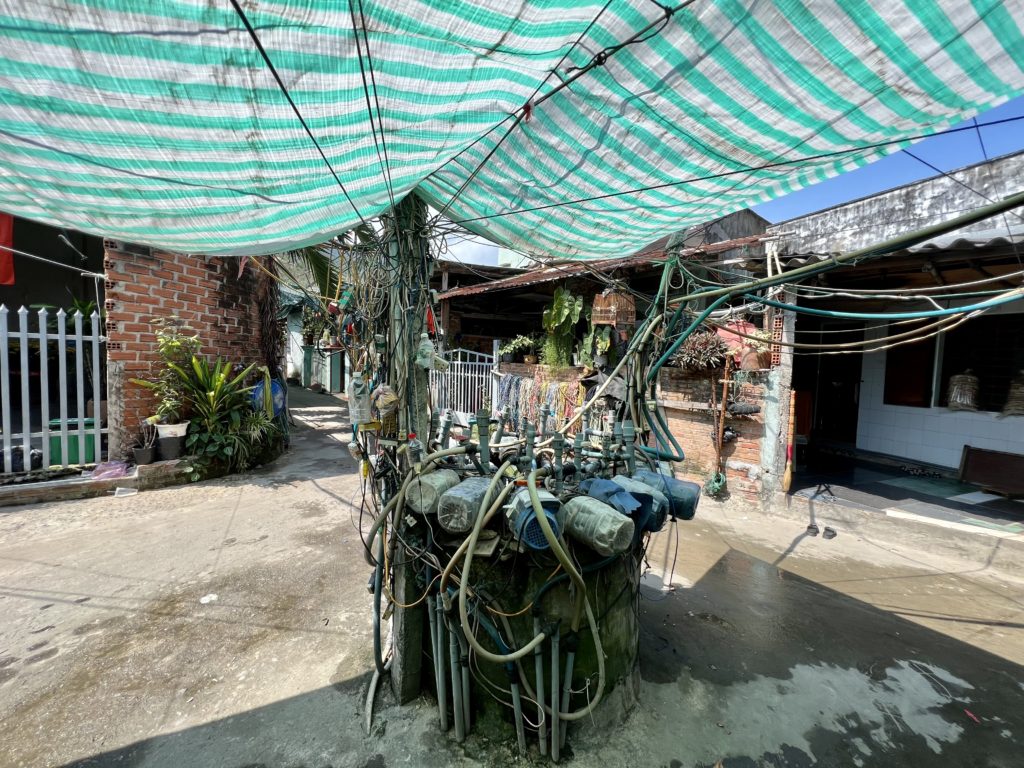
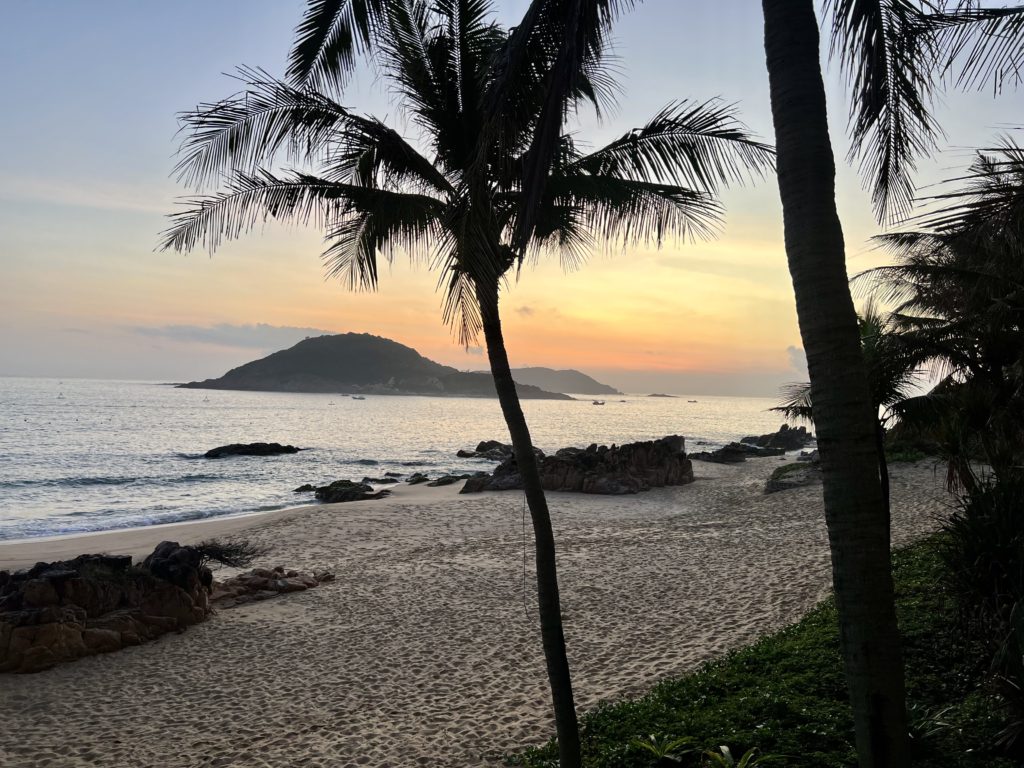
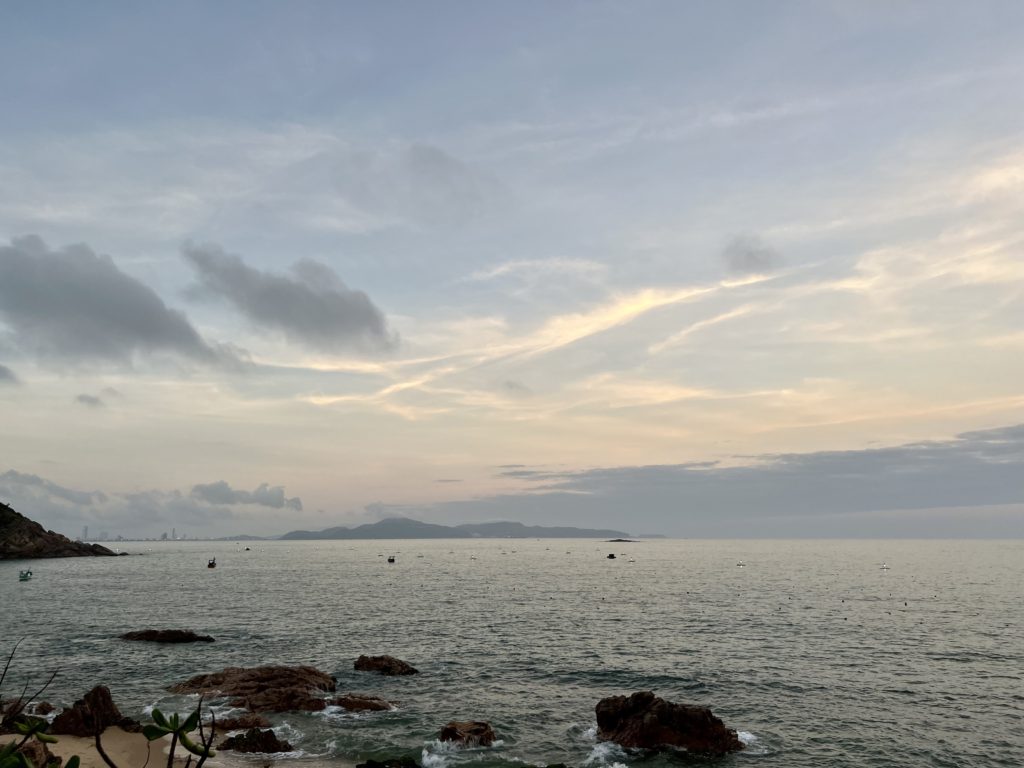
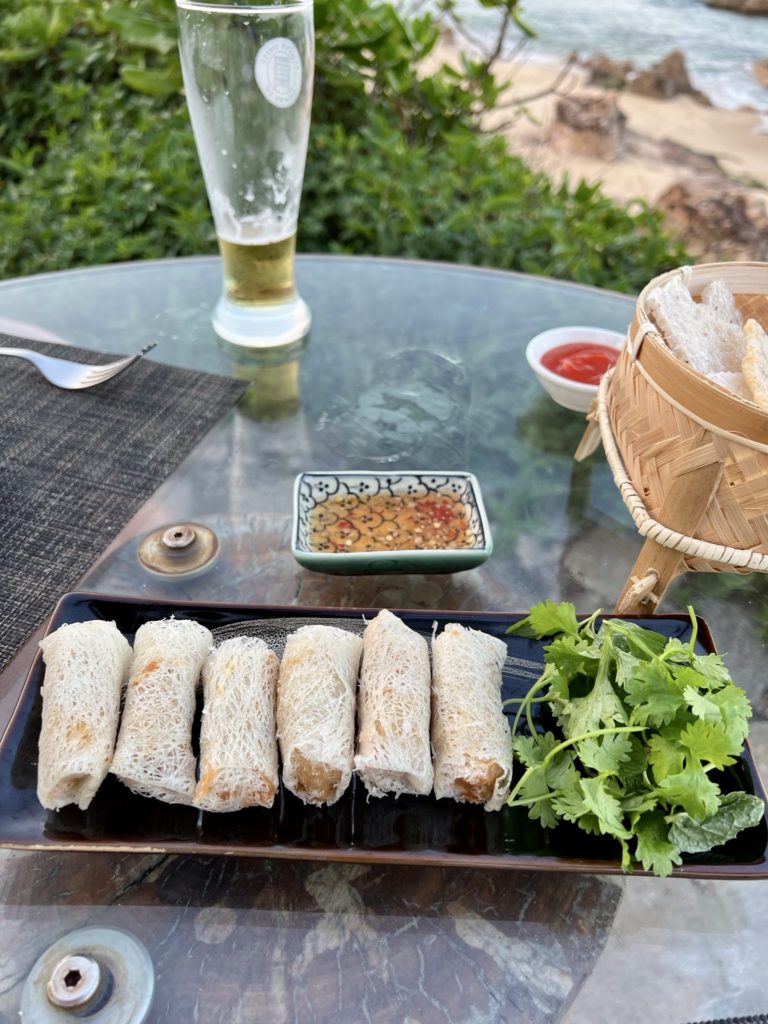
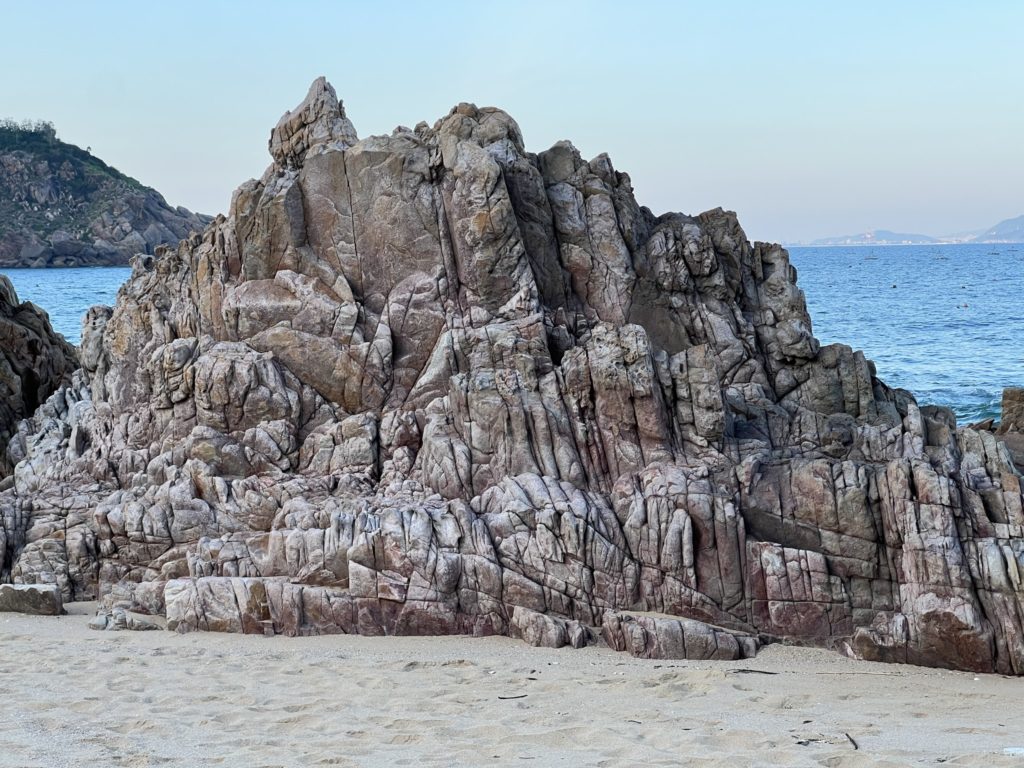
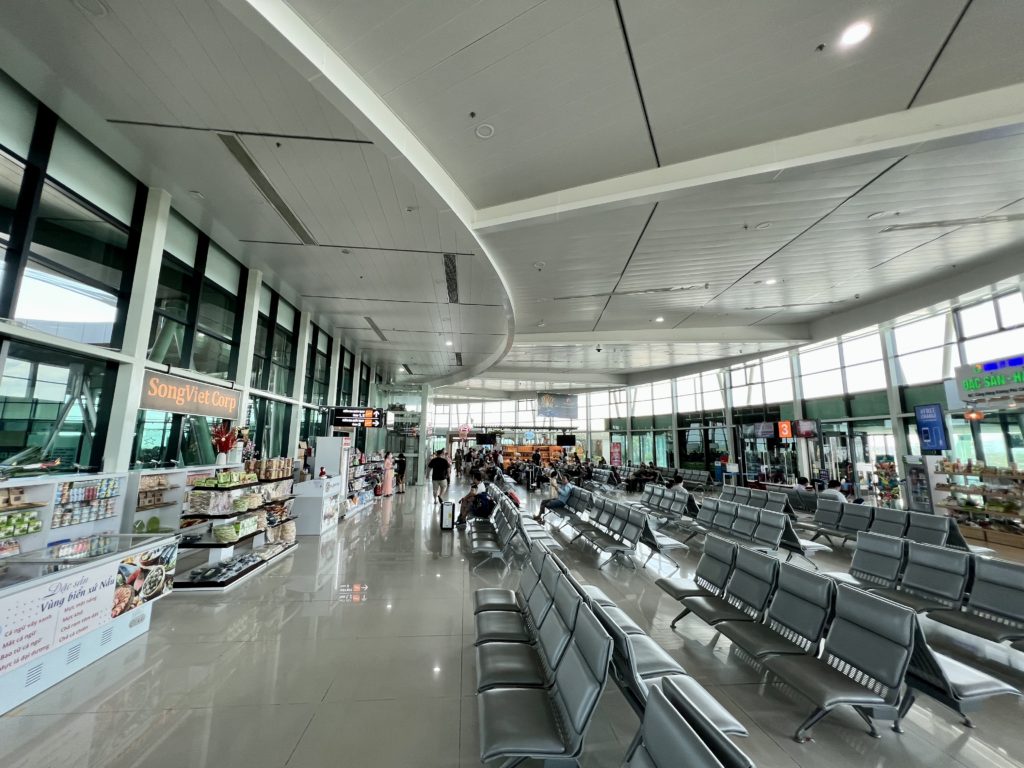
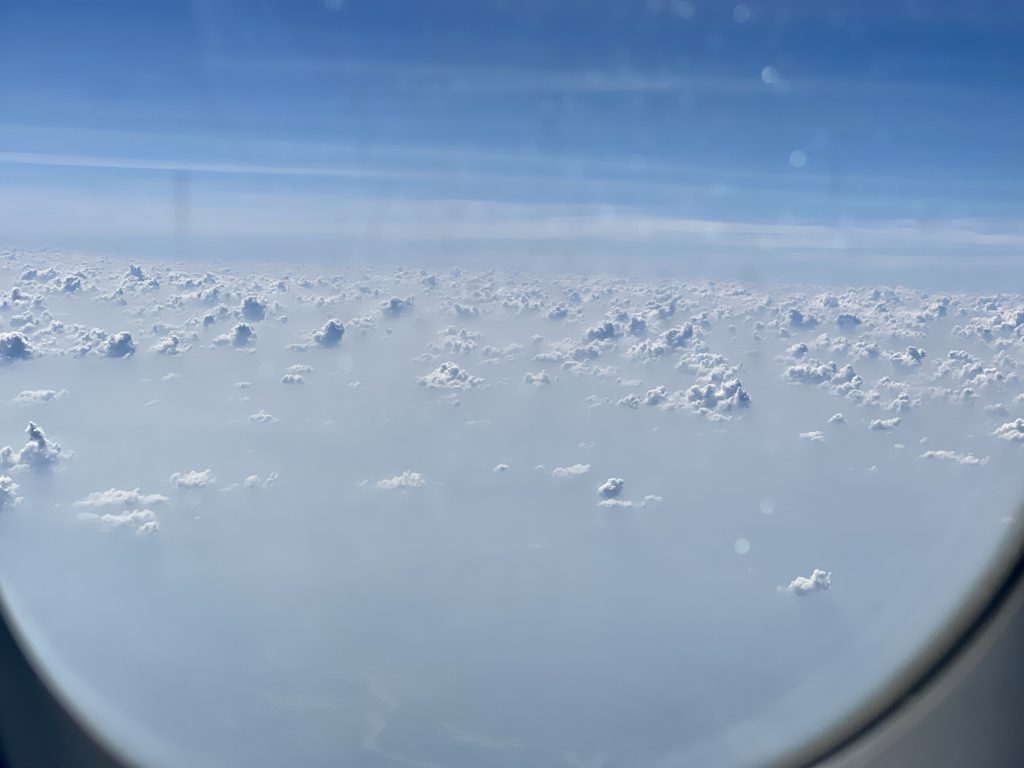
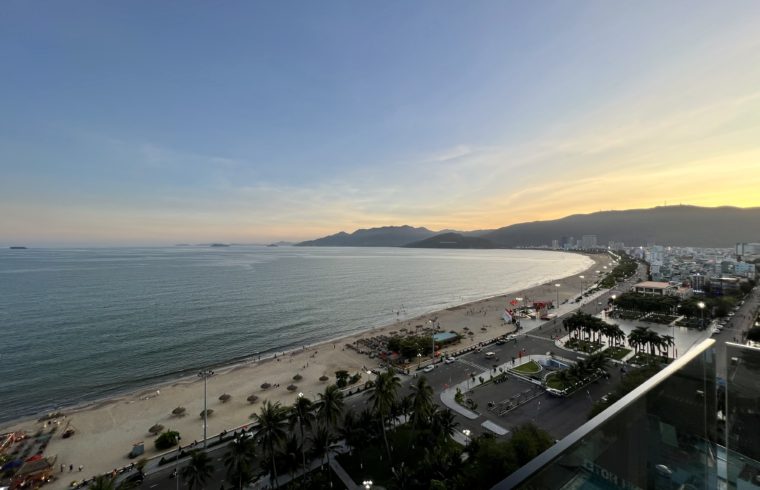
We headed south from Hoi An for Quy Nhon by car. It’s a four to five hour drive, door-to-door, which isn’t much longer than the short flight, when you figure in transfers, waiting, and line time. And the train is both slower and much less sanitary. So we opted for a ground-level view of the countryside from the back of an SUV. The “view of the countryside” idea, though, only half materialized. Much of the highway has accumulated urban-level density in a narrow strip on either side of the road. In effect, you drive for hours through a long skinny town that is no wider than the buildings on either side. That said, there are bridges that industrious shopkeepers have not yet figured out how to colonize, with views of hilltop wats, rivers, and distant mountains – above and below. Near the midway point, we cut over to a little town near Sa Huynh, where a beautiful beach is lined with whispering ironwood trees. It reminds us so much of our favorite Hawaii beaches.Other than a view of the beach, lunch wasn’t noteworthy, yet I note it here as “regional we’ll-never-see-them-again” cuisine. The photographer had well-grilled tuna with rice and a tourist salad, for lack of a better name. Midafternoon we arrived in Quy Nhon for our one week at the Fleur de Lys hotel … we stayed two nights.The hotel is new and beautifully situated on Quy Nhon’s long beach and wide promenade, and our room had sweeping views of the sea and bay. Put simply, though, the hotel has more issues than a call to the front desk can fix. And the empty rooftop disco thumping music through the hotel until past midnight doesn’t help. We used three pillows each. Our time there did let us explore the small and thriving city, with many streets showing off newly built versions of the narrow home-above-shop Vietnamese classic.As throughout Vietnam, those shops readily extend to the sidewalk …Or the street, in the absence of shop or sidewalk. This one is hosting a drive-up fish market. How convenient is that?Here a fruitmonger searches in her money-bucket for change, the blogger having bought bananas for the photographer. Speaking of bananas, we stopped at a little store for water. I was quoted something like $70 for two big bottles. I finally figured out it was grain alcohol, not water – essentially beverage ethanol. Meanwhile, the photographer took pictures of these dried mountain bananas, which are said to cure everything from gout to constipation – but apparently not alcoholism. The city itself straddles a narrow peninsula, with a busy commercial port on one side and beach on the other. The port, along with the region’s industry and agriculture it supports, seems to be the major driver for the city’s growth.Our favorite part is the beach, of course. We walked the promenade and ran the sand. We were disappointed, though, in its overall sparseness. No trees to sit under, no lounge chairs to camp out on, no restaurants to enjoy, the beach is generally deserted except for early morning and evening strollers and excercisers.The broad ocean-front avenue, split by a park, has little traffic, activity being mostly on back streets. The military closed one entire side for a stage setup with speakers the size of Volkswagens. It had no impact on traffic, and despite a DJ pounding out Vietnamese pop at 4:30 the next morning, no one could tell us what was being celebrated. Of the government. By the government. For the government. The photographer was fascinated by the mosaic of rivulets, left behind by receding waves, in the silt-laden sand. Sadly, waves leave more than rivulets. So much of Vietnam’s thousands of miles of coastline is depository for human trash. What’s on the beaches shows what’s in the ocean.When we left our high-rise hotel, we moved to the Avani, shown here on the left, fronted by its small private beach. In the middle distance is a rustic fishing town, with a couple of backpacker hotel-hostels, and in the far distance on the right is Quy Nhon city proper. Our room was right on the beach, and they set up a couple of lounge chairs under an umbrella when they learned we liked to spend our time … well … on the beach in lounge chairs under an umbrella. Right next to the Avani is its sister hotel the Anantara. Both are part of the huge Minor Group, which has a corporate sense of humor. The photographer especially liked Anantara’s weather station. In general, the food around Quy Nhon shares the same central Vietnamese influences as Hoi An, but with more and varied seafood. Here on the left, fresh-caught sea bass grilled in a banana leaf with shallots, garlic, coriander, turmeric, and coconut milk sits on our favorite dinner table beside crispy red snapper with mango and lime sauce. One night we had dinner at the Anantara restaurant Sea.Fire.Salt. All their grilled food is served on huge blocks of very hot Himalayan salt. Not necessarily Vietnamese, but brilliant. And way excellent. For most meals, we ate simple local dishes, like pho and bun cha ca, a fish noodle soup native to central Vietnam. On our visit to the little fishing village, one beach over, we had fresh grilled tuna with a delicious sauce made by adding white pepper, soy sauce, sugar, garlic, and a little nuoc mam to caramelized onions. It’s amazing how such a simple variation on a common Vietnamese theme can create a sauce that is at the same time familiar and unique. The fishing village itself was like stepping back in time, architecturally at least. No streets, just narrow walkways between houses with open living areas right adjacent. We felt like intruders, and got a sense that tourists were tolerated in the tight living quarters more than welcomed. Through the narrow alleys, on the far side from the beach, is a small and seriously smelly fishing harbor.The most fascinating thing, though, was what must pass for the town square and its common well, where the water supply has taken on a life of its own. Each household has mounted their own pump to the small well, spliced it into a mass of wires, and run a personal water line to their home. I believe the jury-rigged awning is to keep the rain from shorting out the miracle of wiring that keeps it all going. Sunrises on the little beach were subtle reminders of why we want to spend at least some of winter in the tropics. And evenfalls were peaceful, with the fishing boats tucked away and the distant city lights coming on over the floats that mark shrimp cages.Here we have lacy spring rolls as we await dinner. The Vietnamese version with nuoc cham is one of our favorites. Here we have a rock. Like the rivulets in the sand, the fractured stone that lines the coast here caught the photographer’s attention. Then it was time to fly out of the little, six-gate Phu Cat airport, an hour’s drive from Quy Nhon. On our flight out, we could see the thick layer of haze that, to some degree, envelopes all of Southeast Asia. In some areas, it’s from industrial level slash-and-burn farming, in others it’s from burning rice fields before the next planting, in the cities it’s made worse by auto and motorbike emissions, and everywhere wood and charcoal are used for cooking and heating.