//Hanoi & Hoa Lu – February 2023

Hanoi & Hoa Lu – February 2023

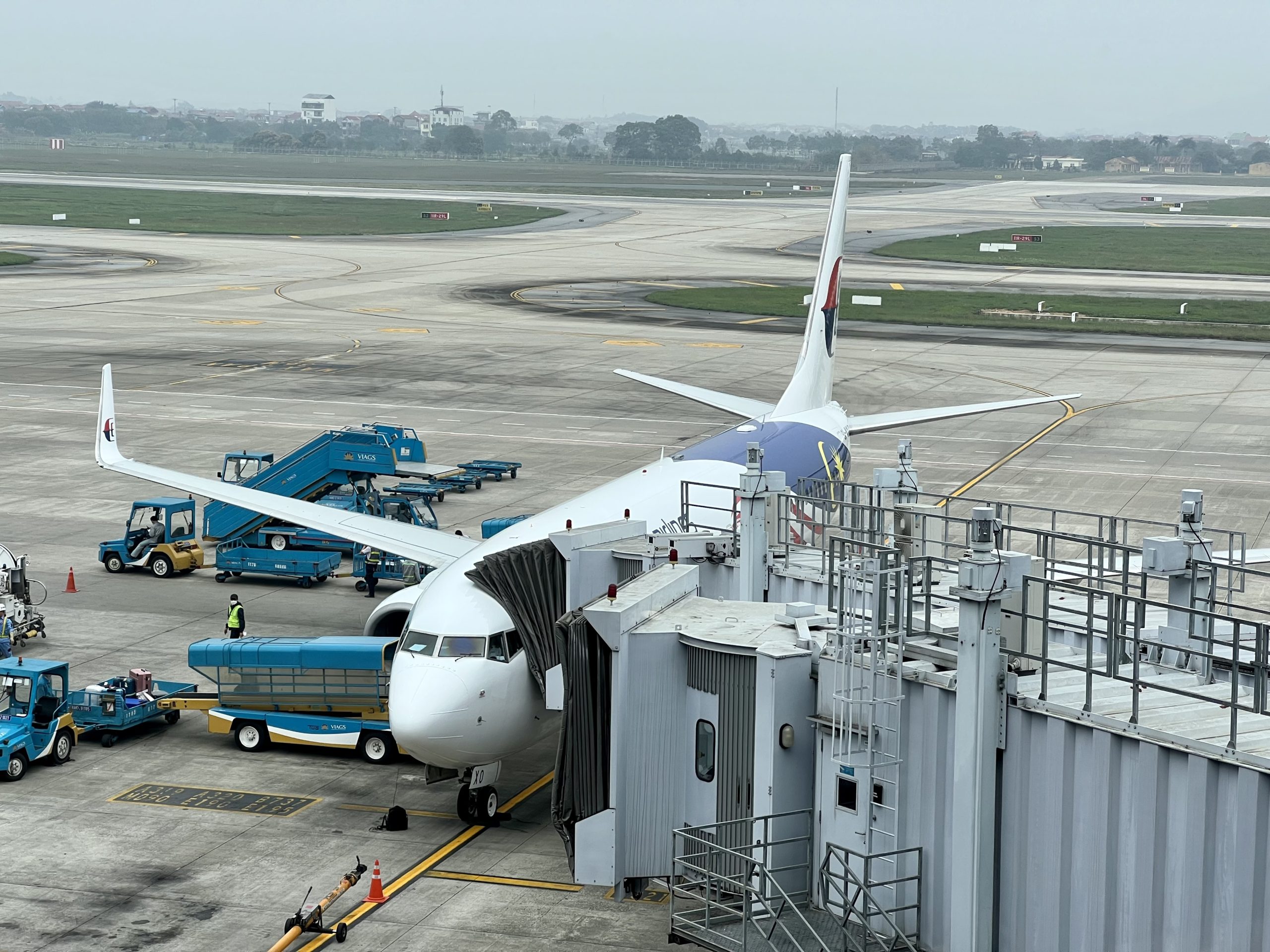
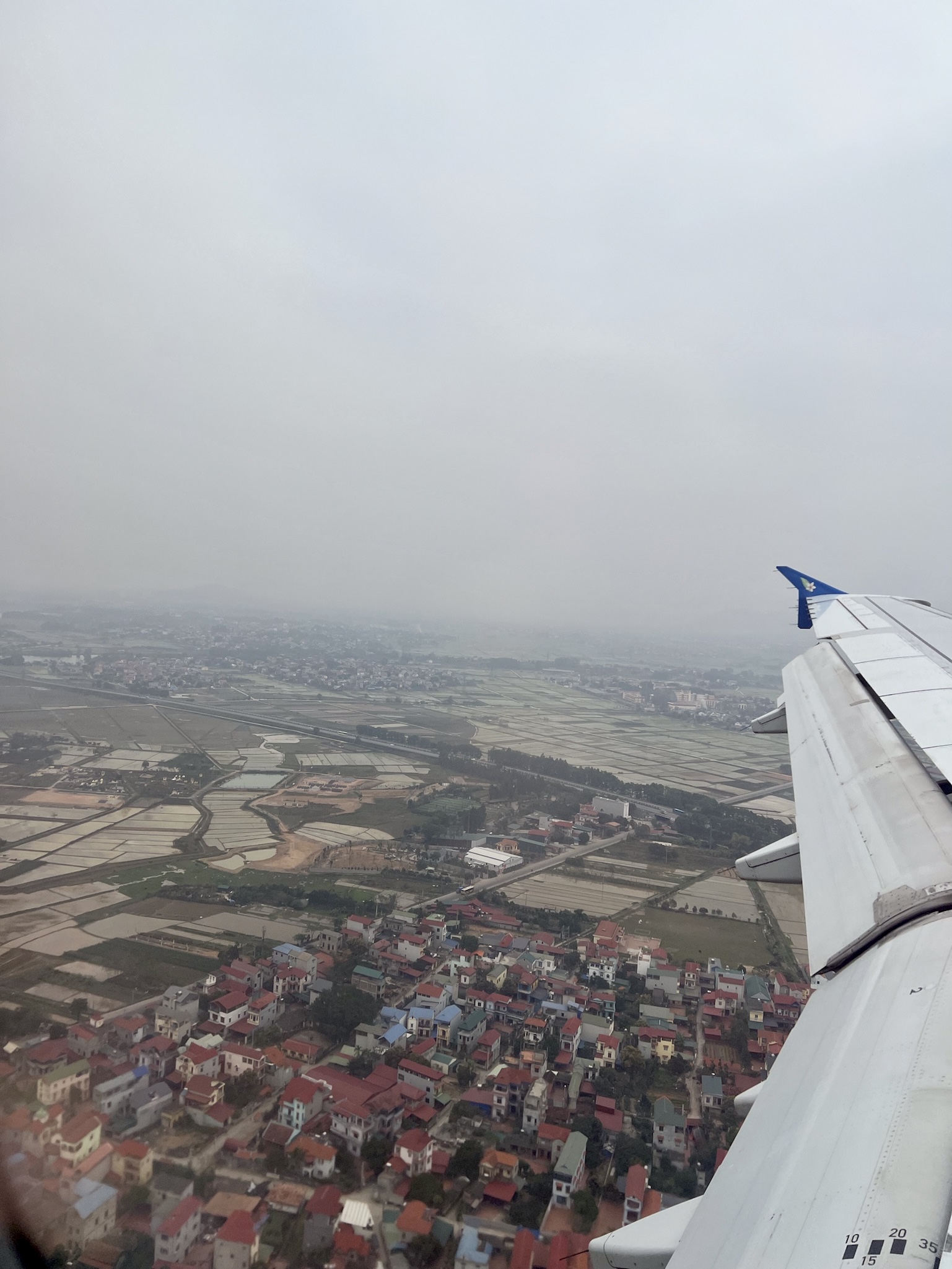
During our approach to Noi Bai International Airport, we could see Hanoi’s air was pretty much as we had left it, some three years prior. Thinking it through, though, if we couldn’t see the air, how would we know it’s there?
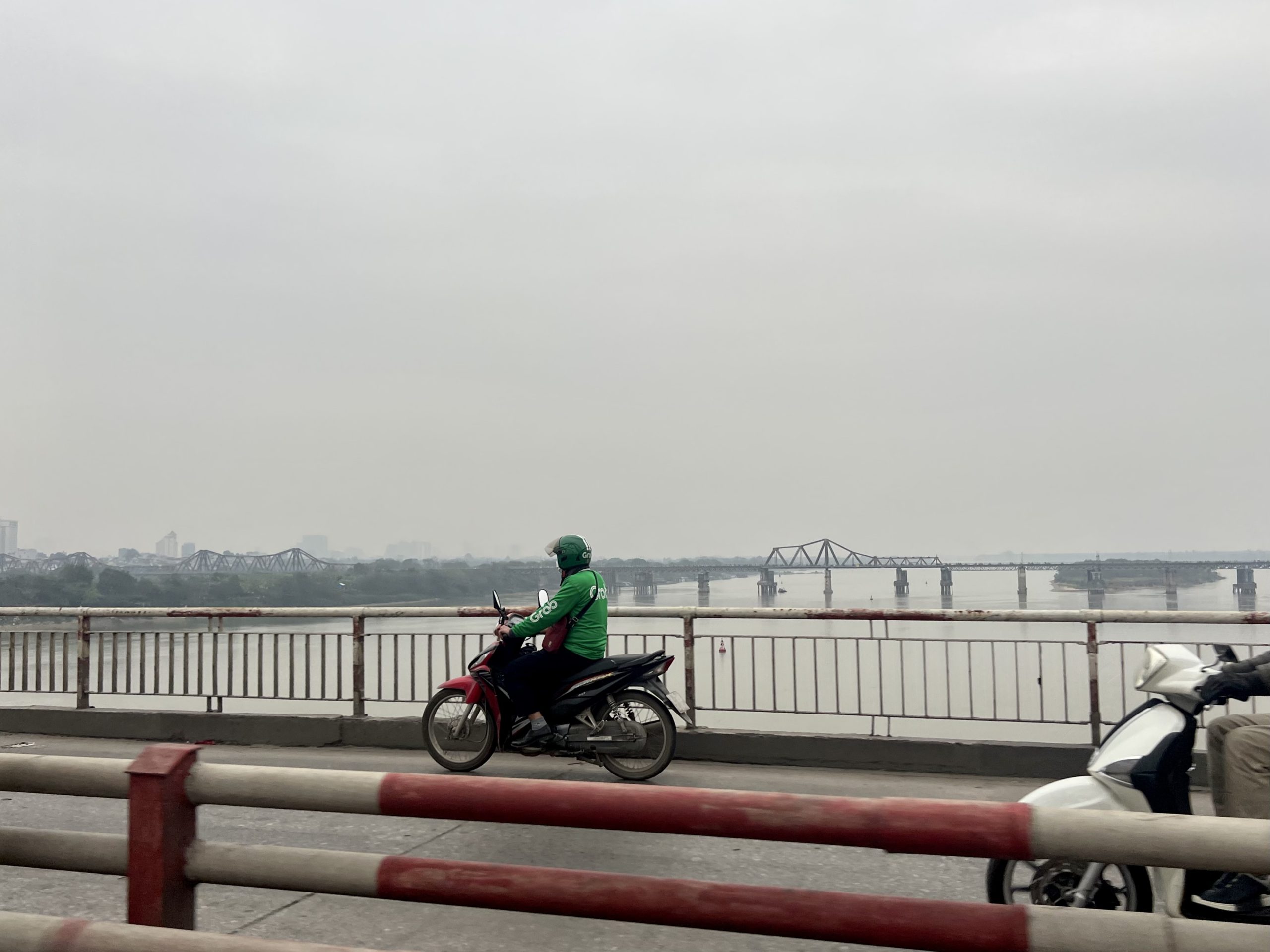
Crossing the Red River, heading for the Old Quarter, was a familiar drive.
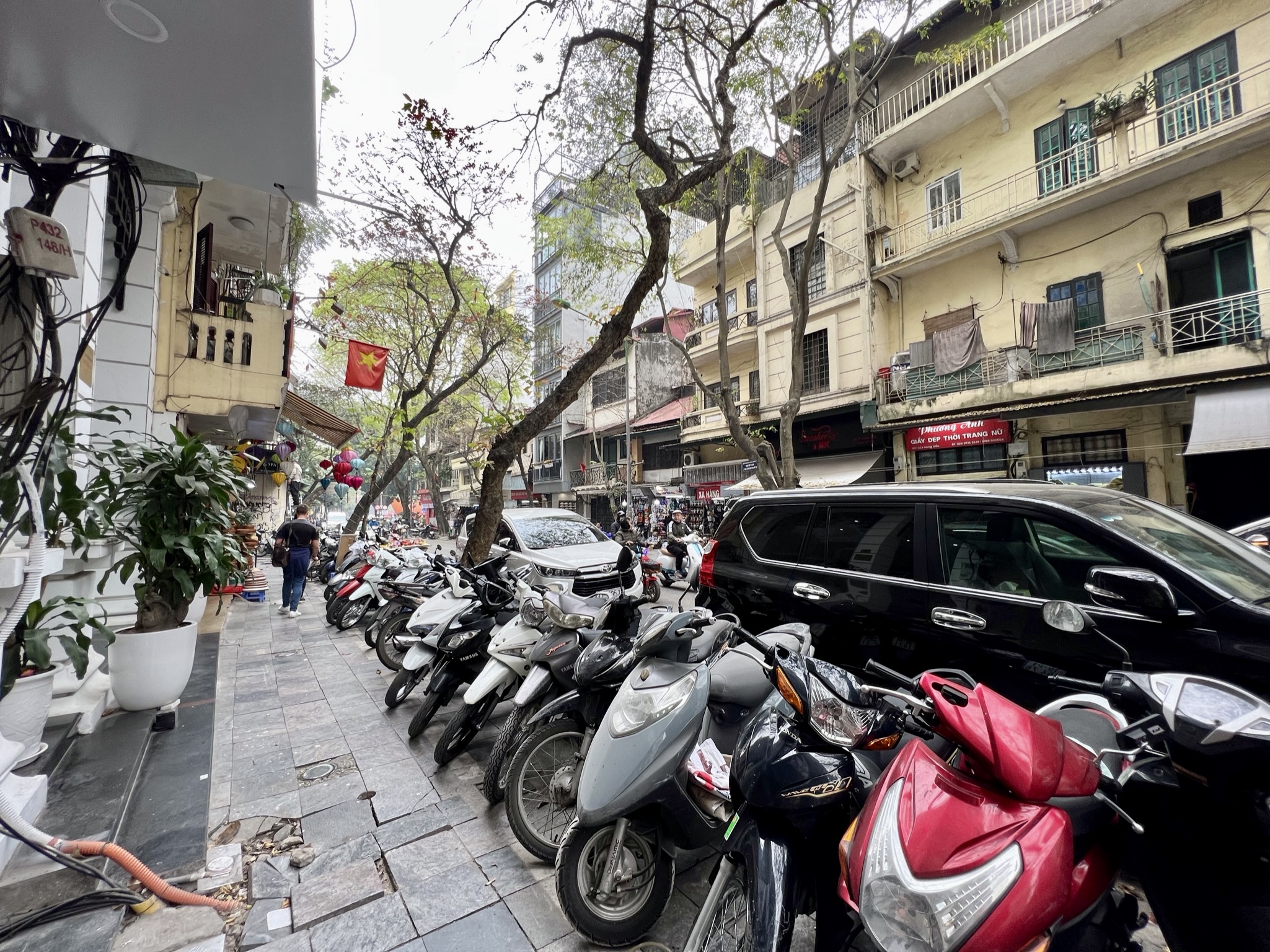
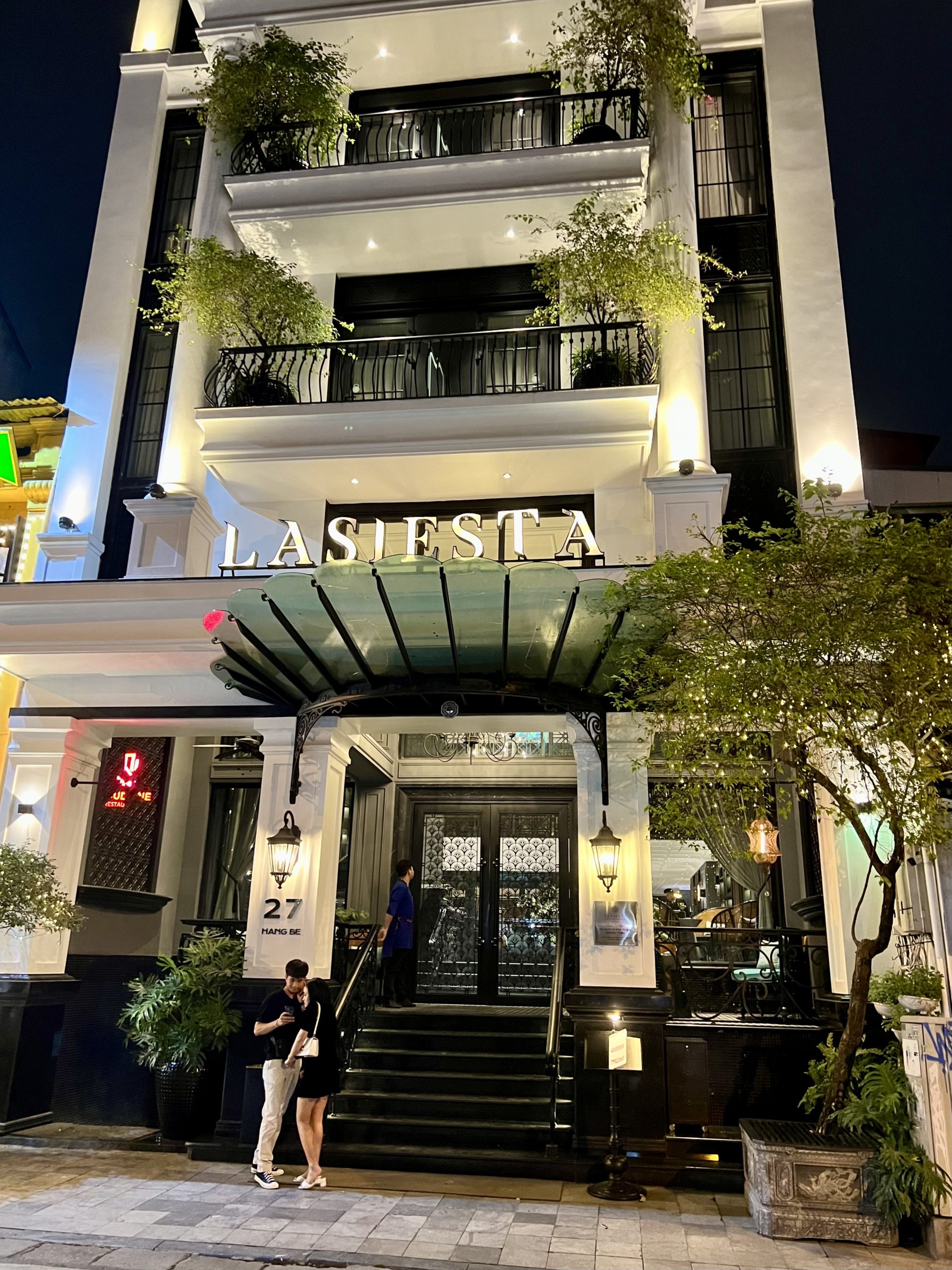
We stayed at a La Siesta boutique hotel. They share a pattern with a dozen or so similar hotels in this section of town: tall, narrow, elegant, with small rooms. You can tell you’re entering a nice hotel because there is a space between parked motorbikes and the entrance – the steps on the left go up into the lobby. Lesser hotels have motorbikes in their lobby.
Here’s an evening shot of the hotel entrance, after the motorbikes have left for the day.
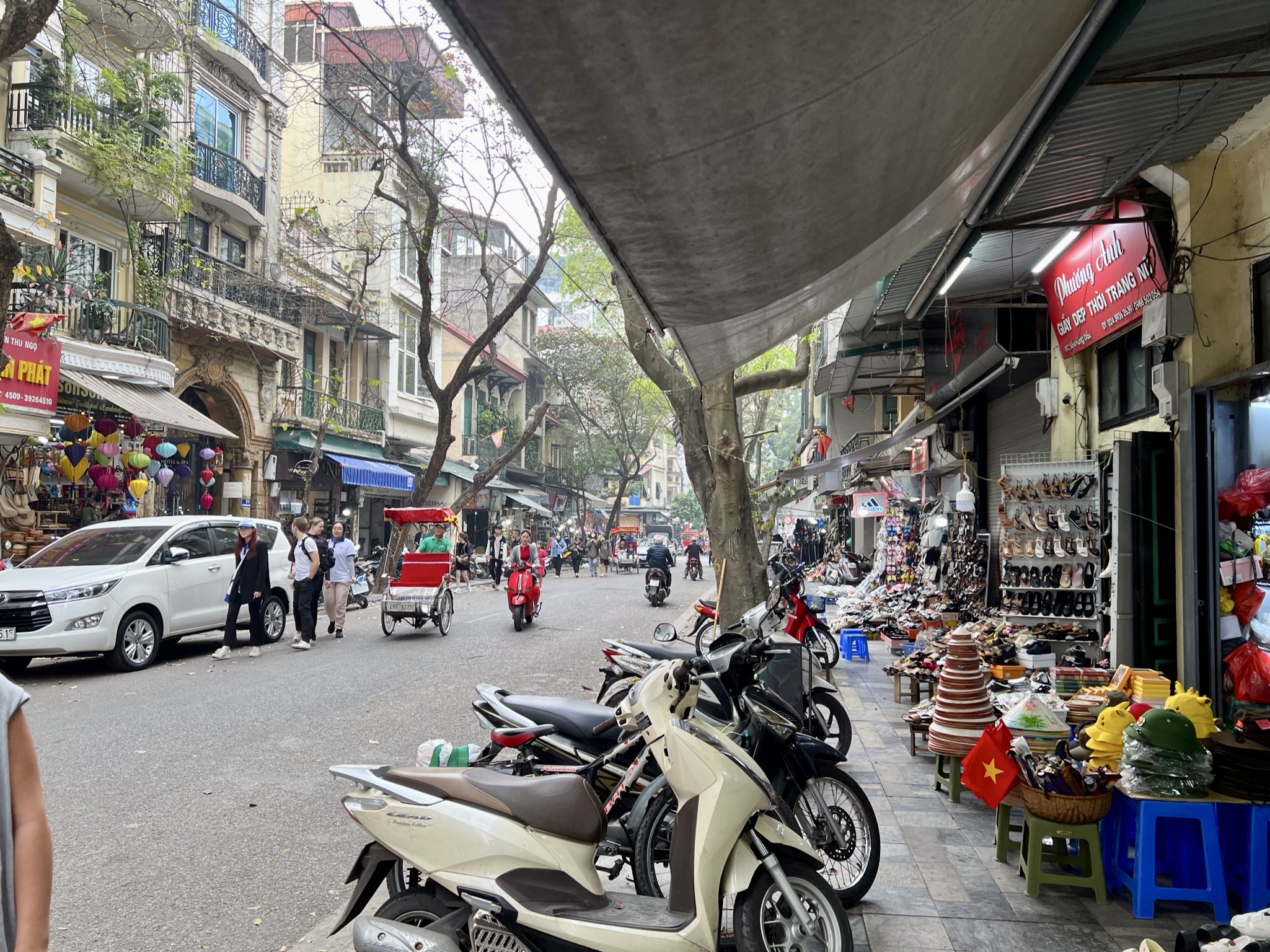
We love walking the streets of the Old Town. They are colorful and crowded …

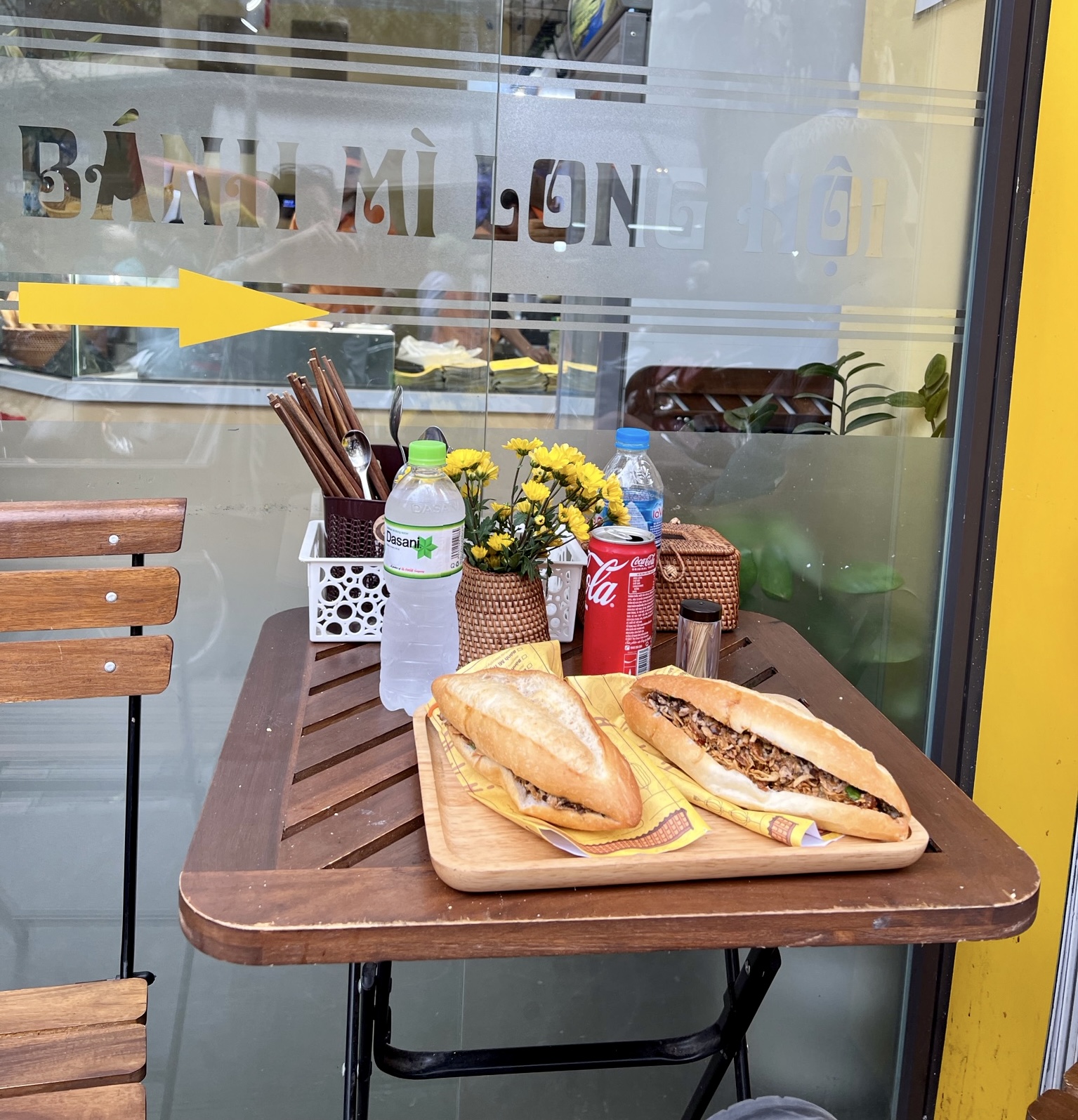
And chaotic. We took this short video while eating bahn mi sandwiches at a little corner restaurant.
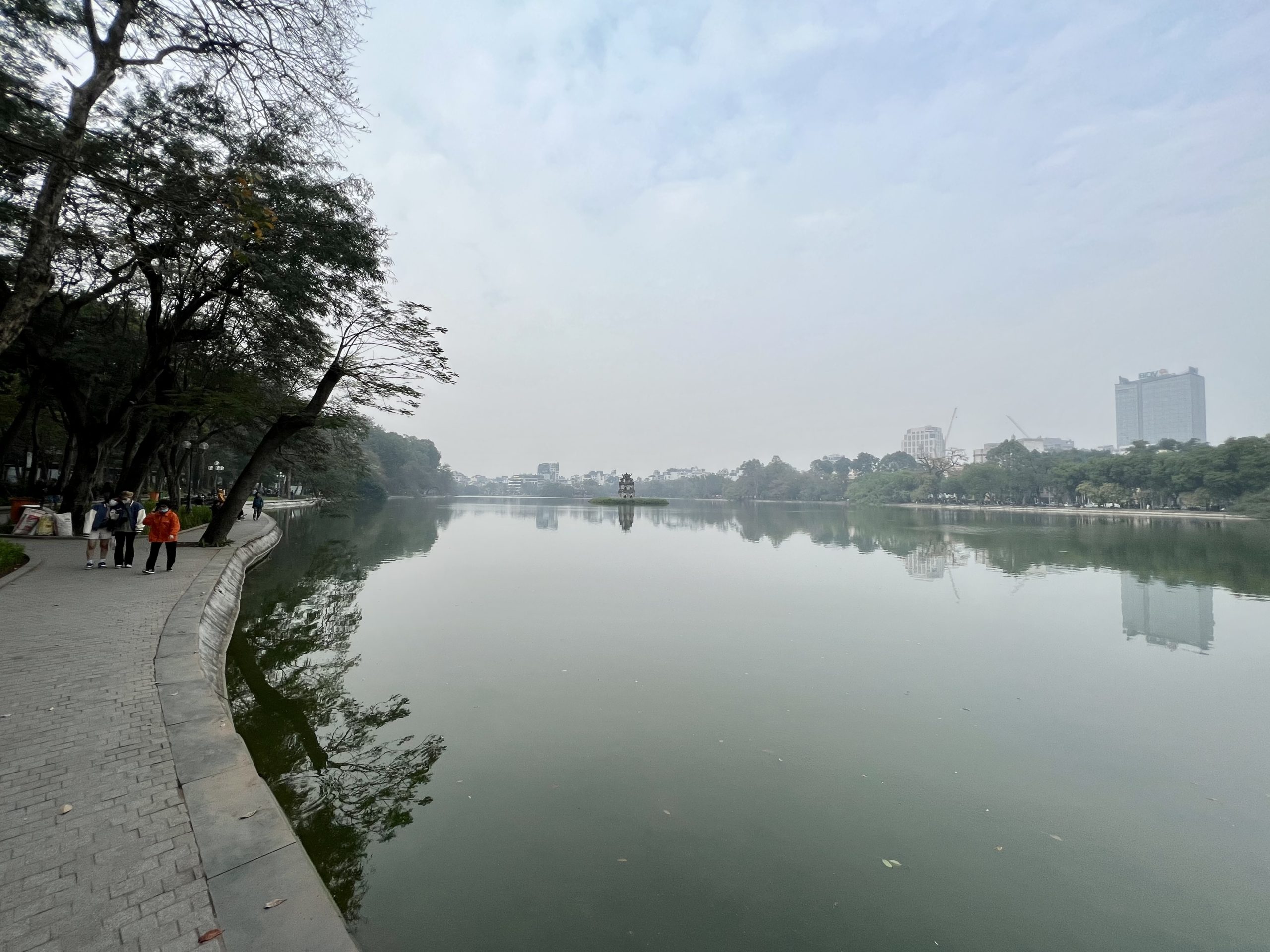
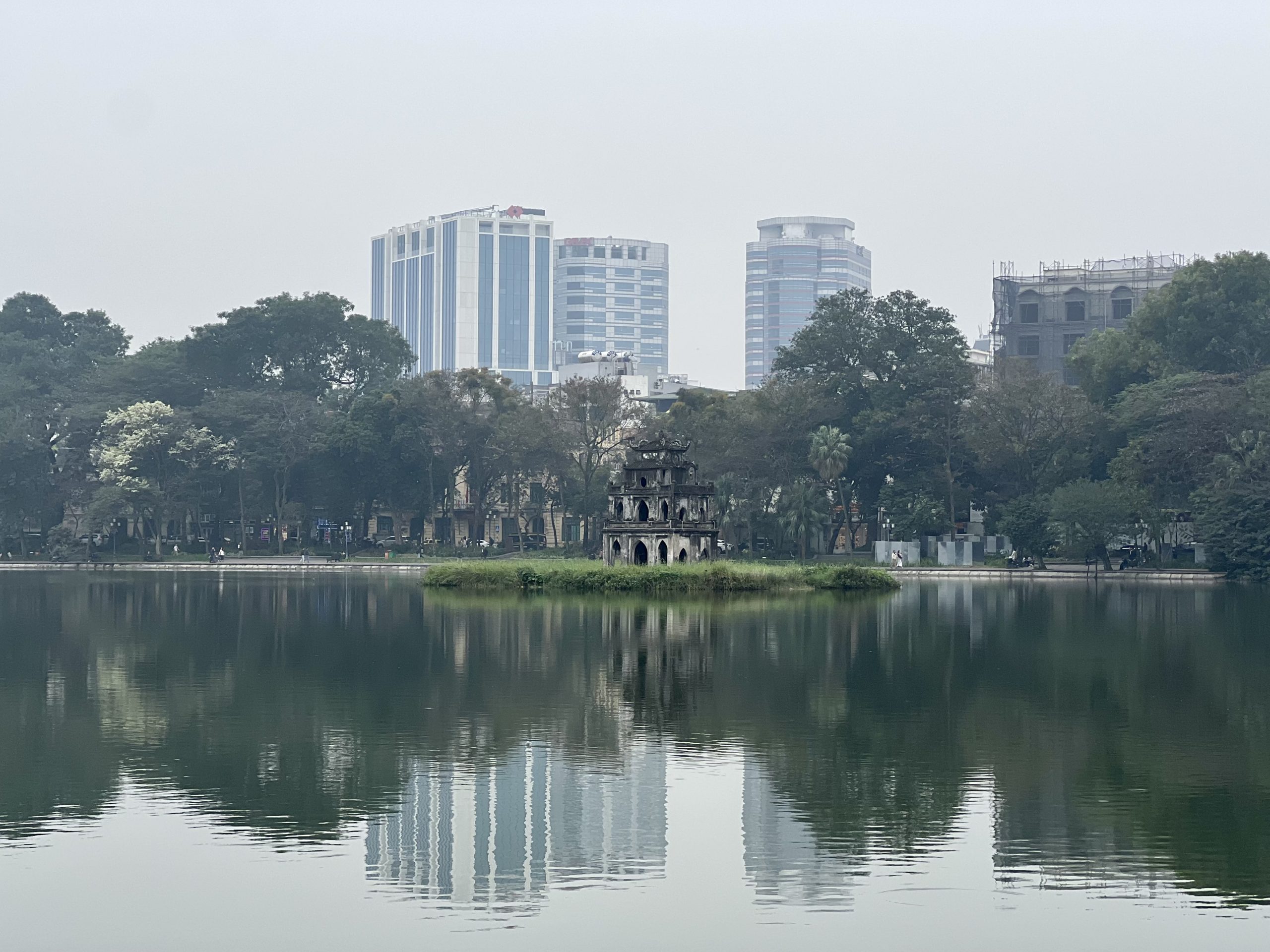
A couple of very short blocks from the hotel is Bay Mau Lake. Being central to old Hanoi and bordered to the west by the French District, we walked it often.
In the center of the lake is the Turtle Tower, built to commemorate the legend of the turtle that asked Emperor Le Loi to return the sword given him by the turtle god and used to drive out the occupying Ming Dynasty Chinese. Le Loi is said to have named the lake Bay Mau, or returned sword, in honor of the event.
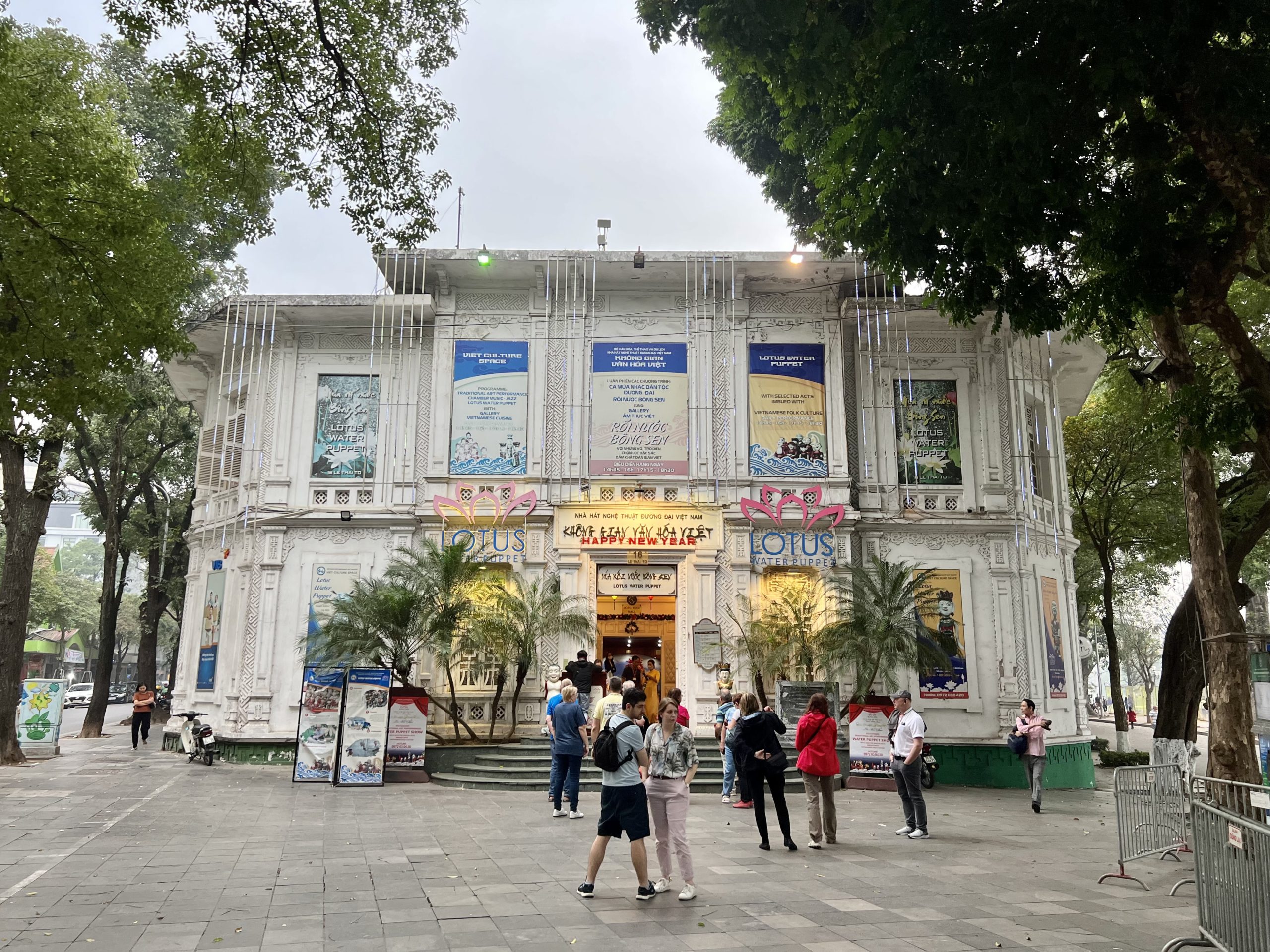
On the east shore of the lake is the Lotus Water Puppet theater, one of two such theaters on either side of the lake. We went to the other theater on our last visit, so we went to the Lotus this time.

Originally presented in flooded rice paddies, the skits tell stories of rural life and well-known legends. Well known to Red River Valley residents, anyway. The twirling goddess here summons and dances with a dragon and a phoenix, the exact reason for which is opaque to me.
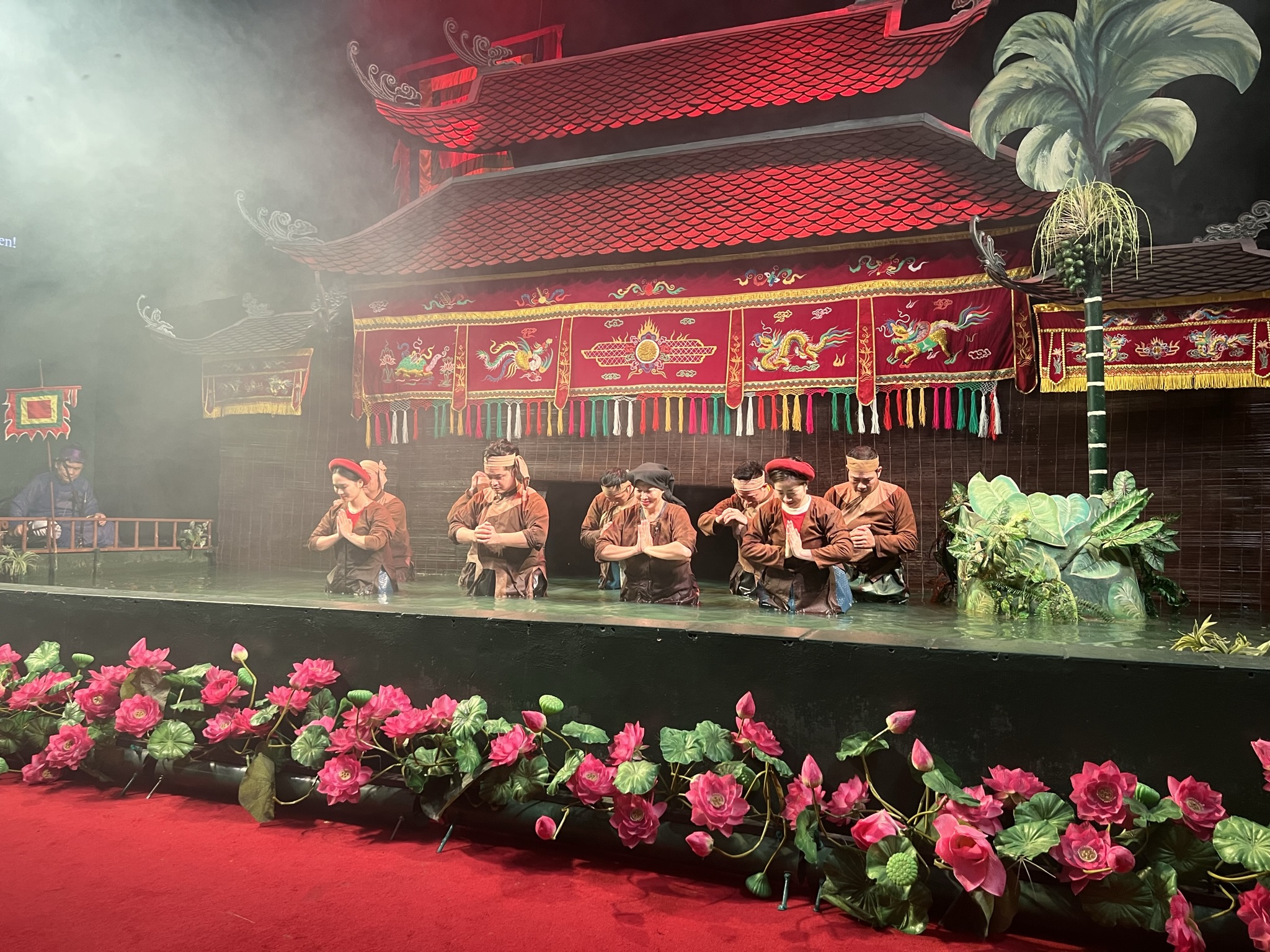
At the end of the performance, the puppeteers, wearing their waders, come out from behind the screen to take their bows, while the audience scratches mosquito bites.
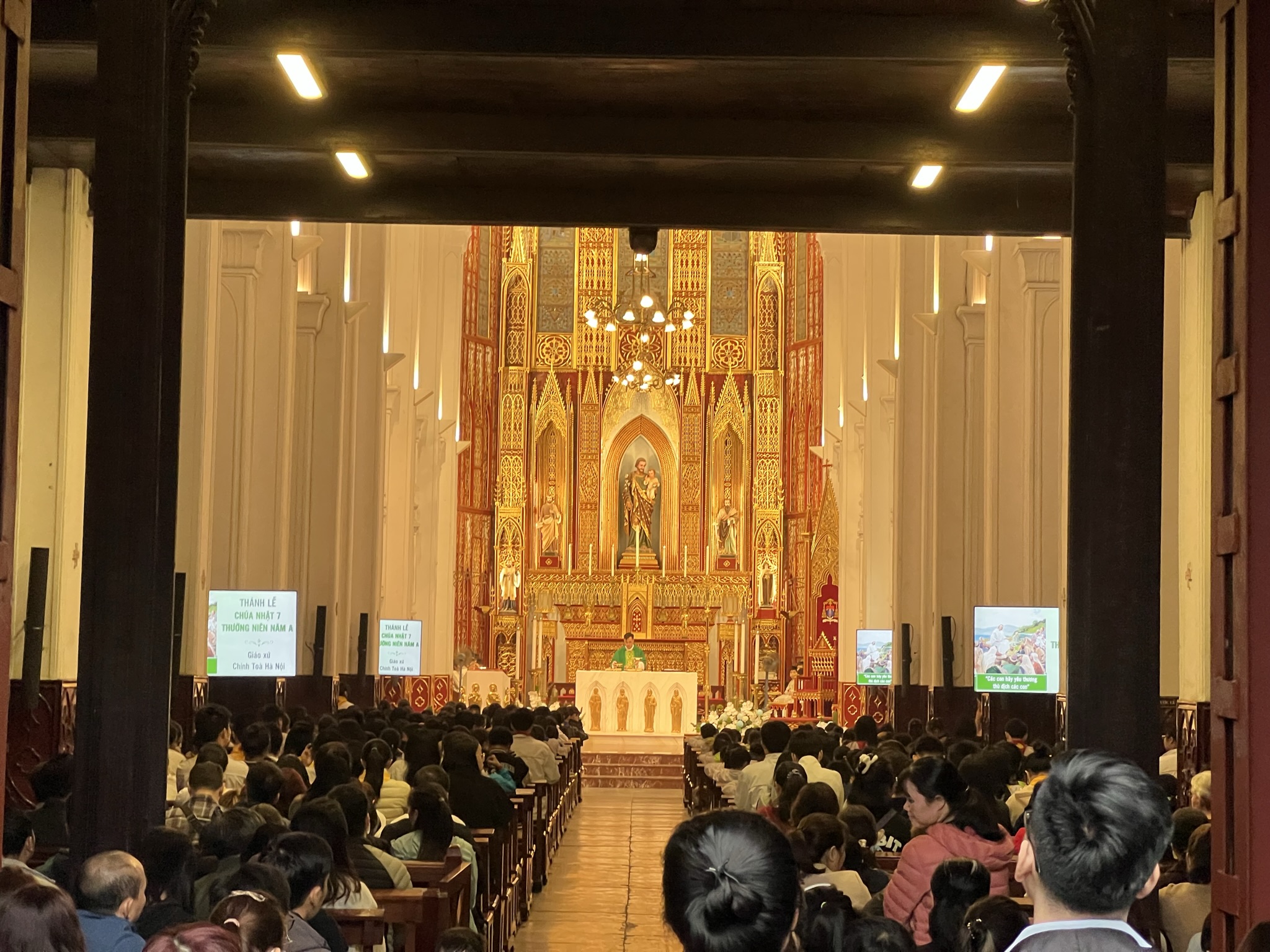
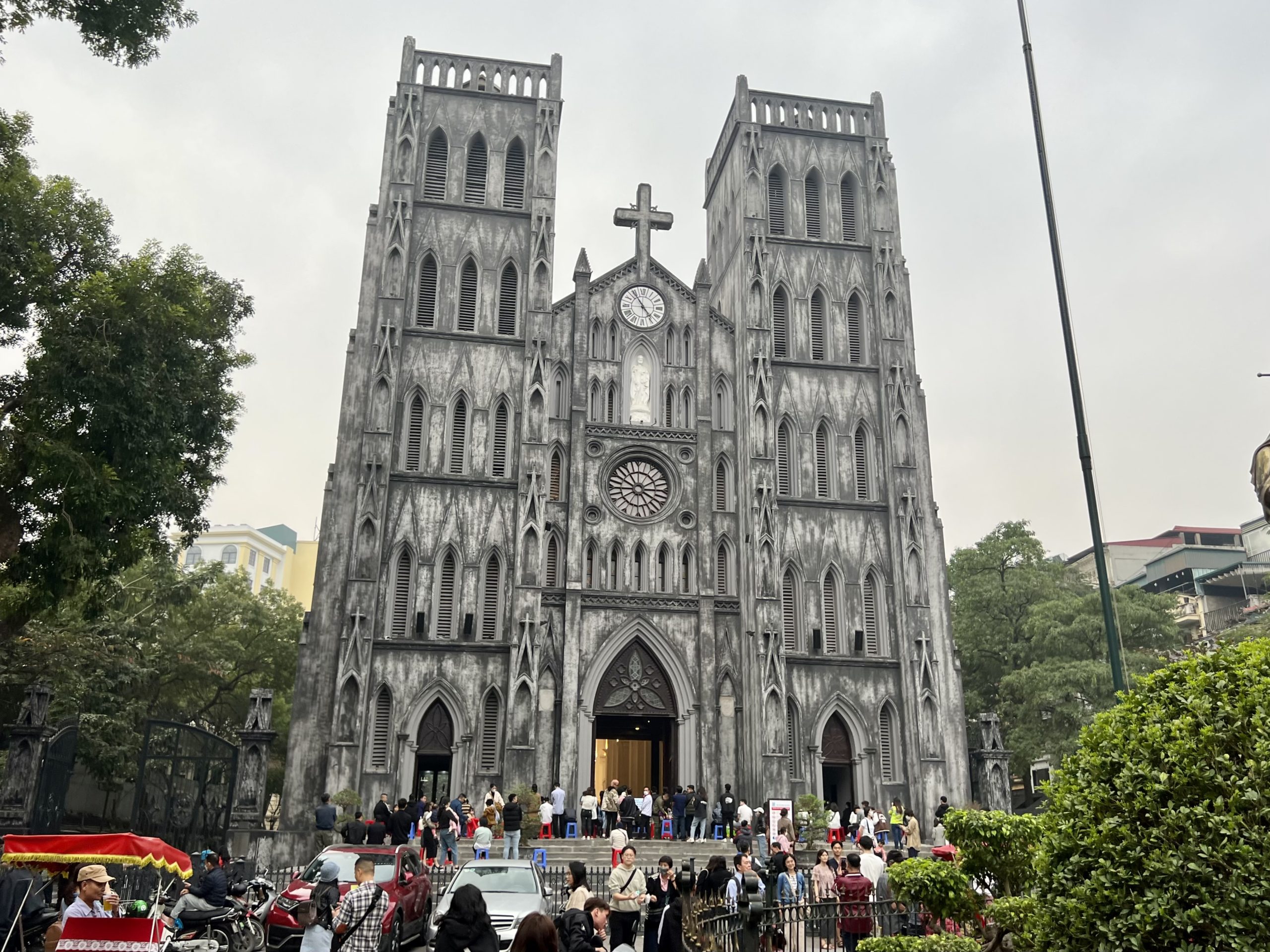
Not far from the puppet theater is St Joseph Cathedral – above and below. Reminiscent of Notre Dame, it was built in the mid-1880s and was one of the first major constructions of the new French Colonial Government.
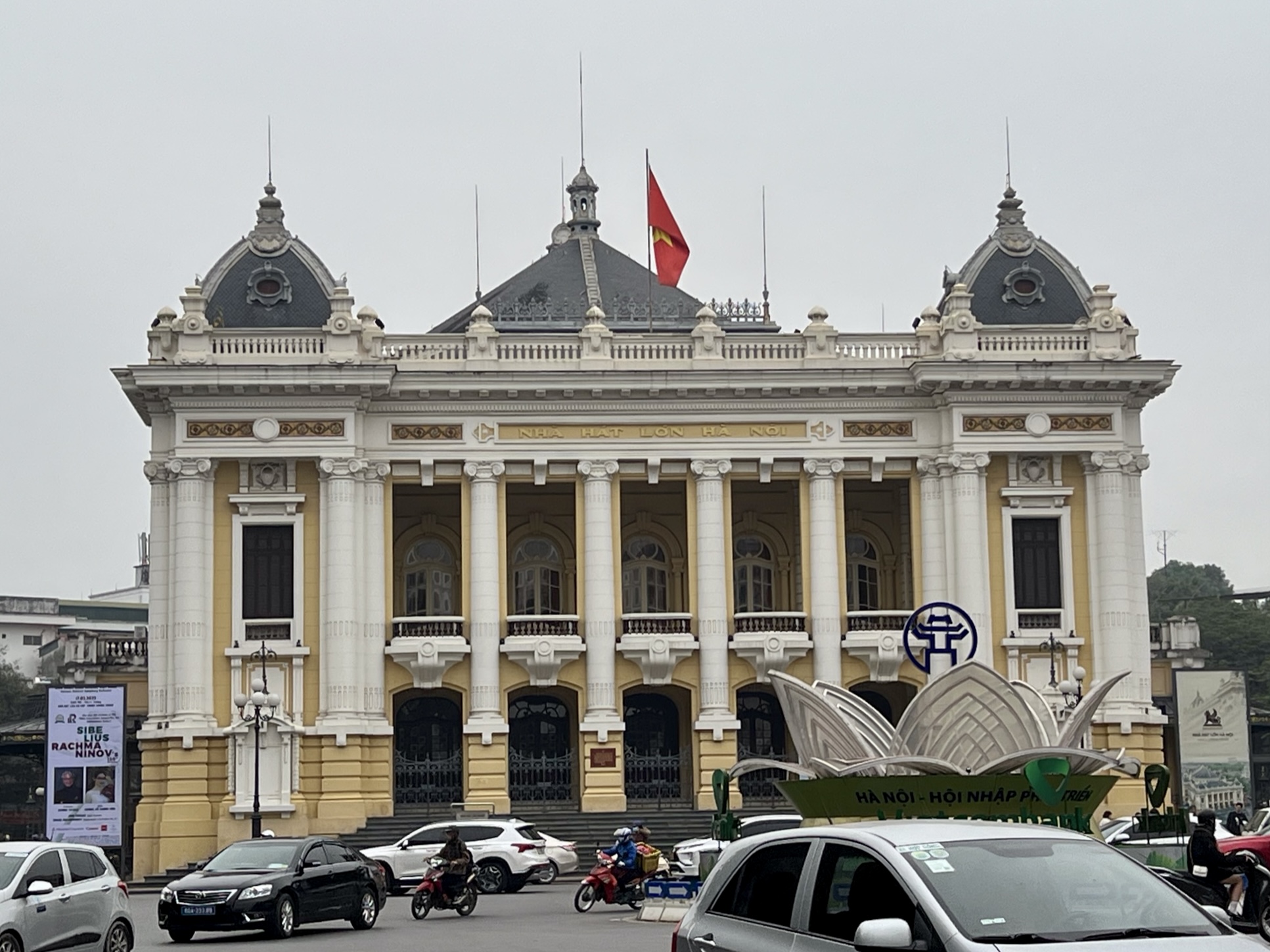
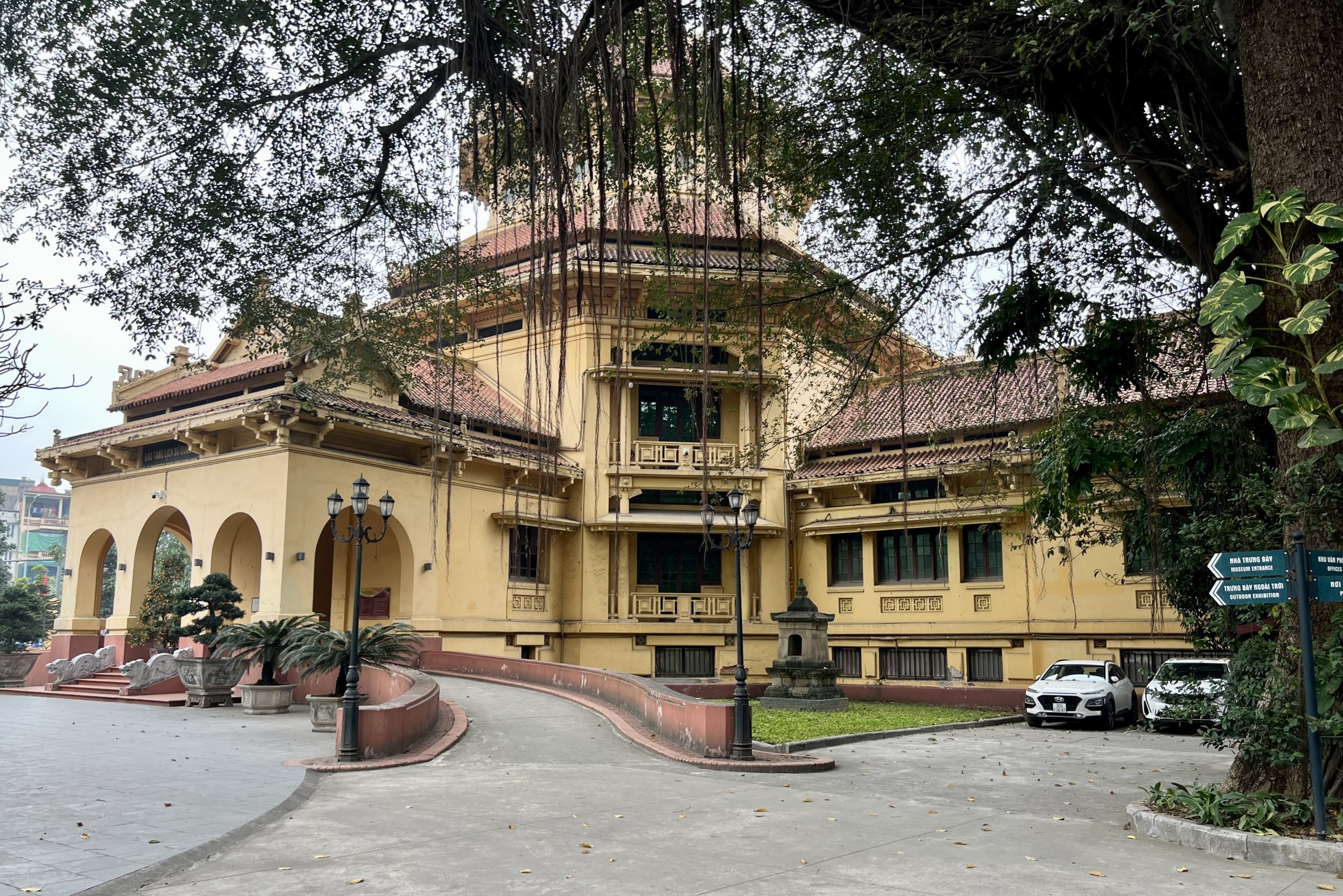
On the opposite side of the lake is the French Quarter, where sits the Hanoi Opera House, which has remained shuttered since being shutdown during the Covid lockdown. We trooped past it on our way to the Vietnam National Museum of History, below.
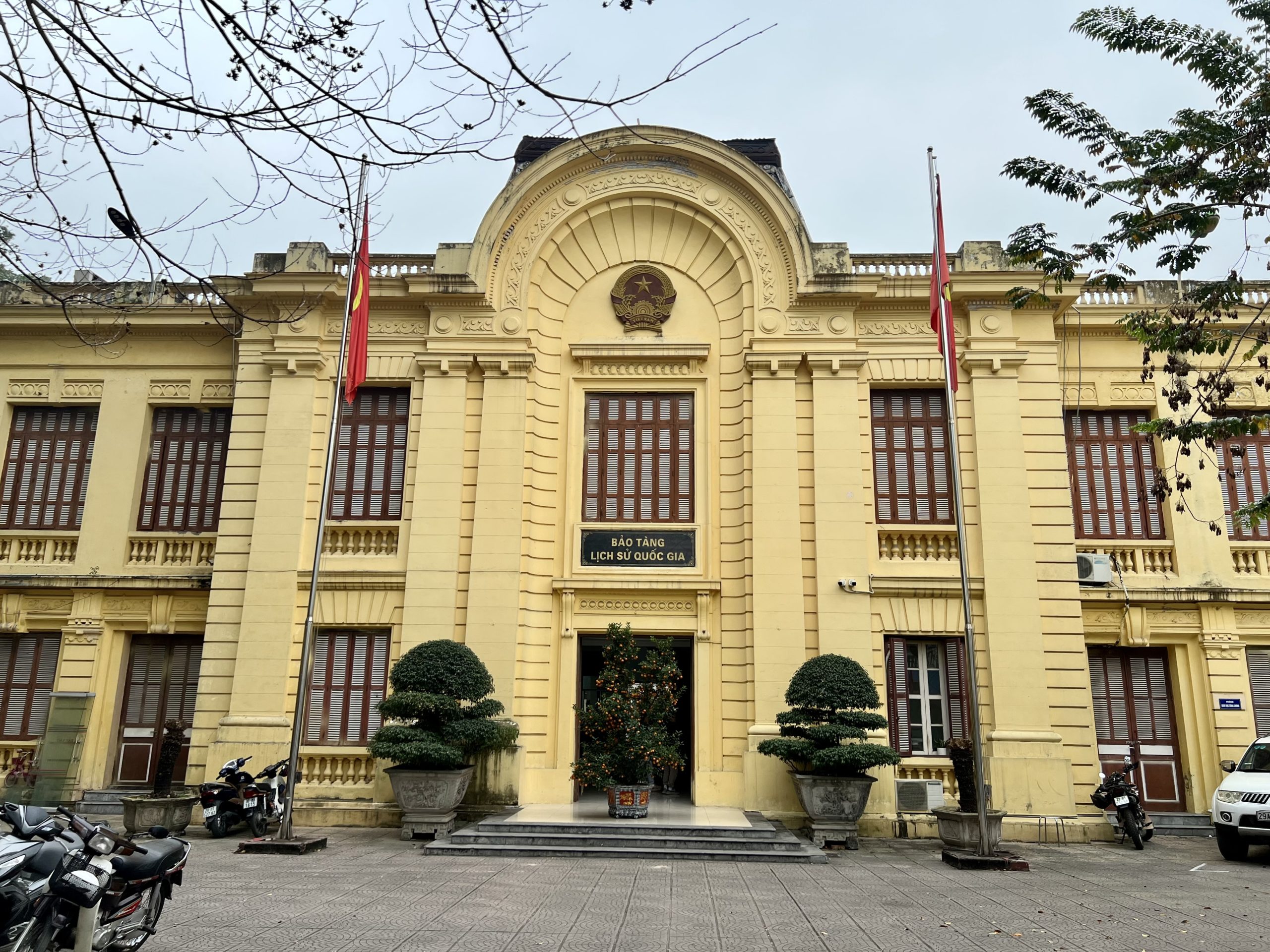
The museum is in two buildings across the street from each other. The one above is dedicated to what we call the Vietnam War and the Vietnamese call the American War.
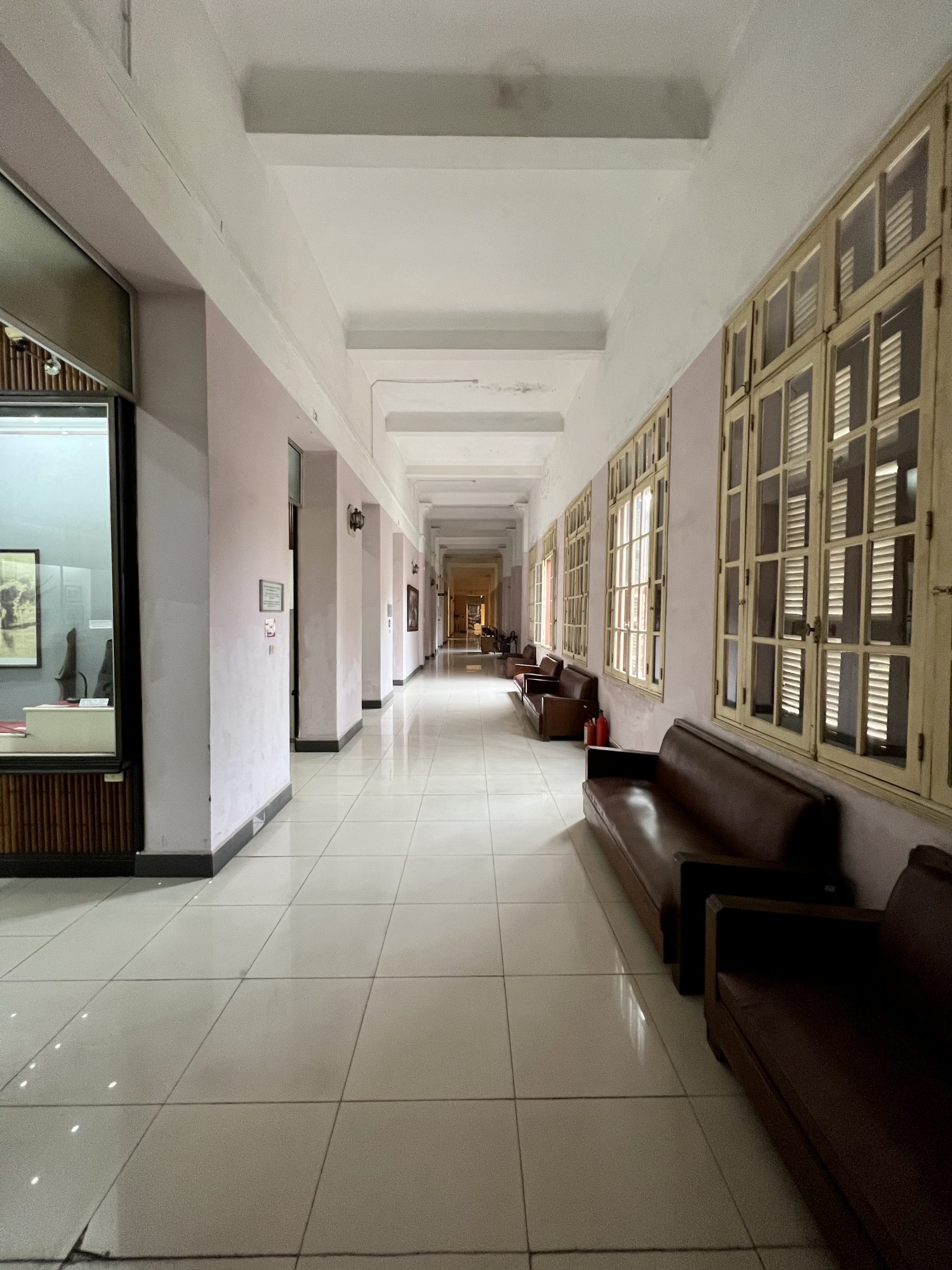
Inside, the halls and galleries are drab and cheerless and hark back to the middle of the century. Especially the couches, which have long outlived their springs. I made the mistake of sitting in one. To this day it is a mystery to me that there aren’t octogenarians – and well-fed tourists – still stuck in them.
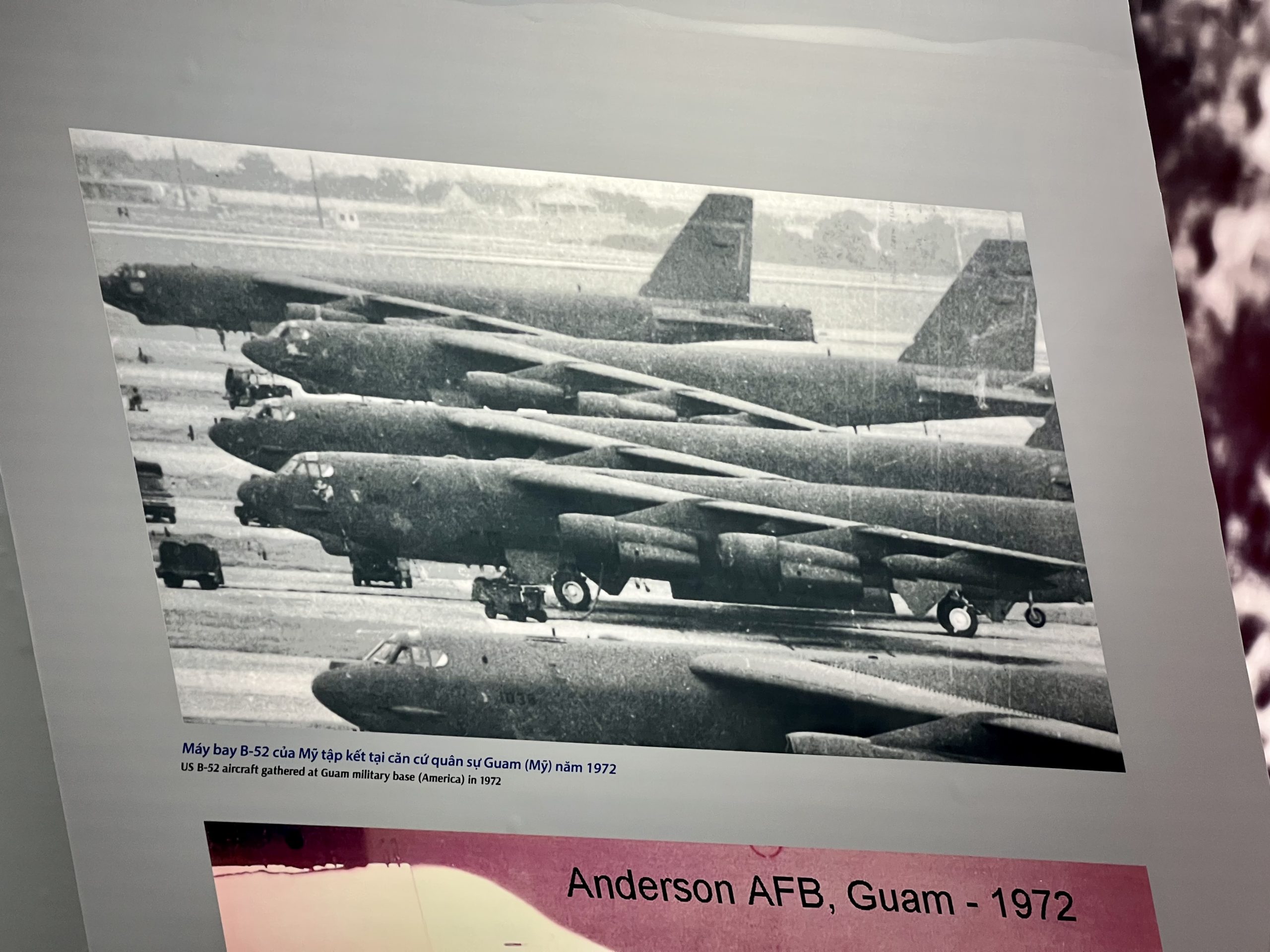
One set of displays hit home. While in high school on Guam, I remember seeing endless open truckloads of bombs being moved from the navy base on one end of the island to Anderson Air Force Base on the other, ultimately headed for Vietnam.
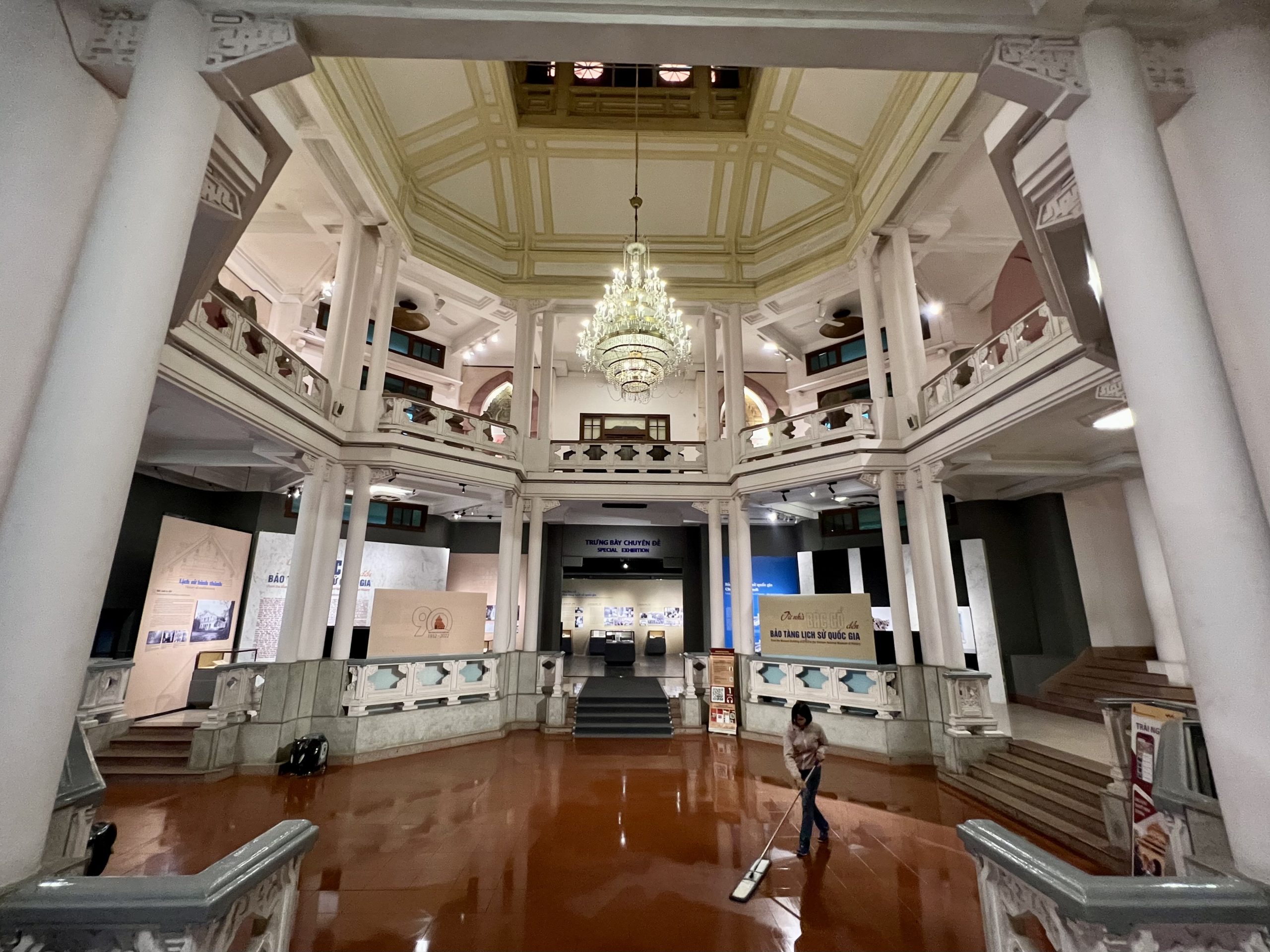
The other museum building, though similar in color on the outside, is fairly elegant inside – below.
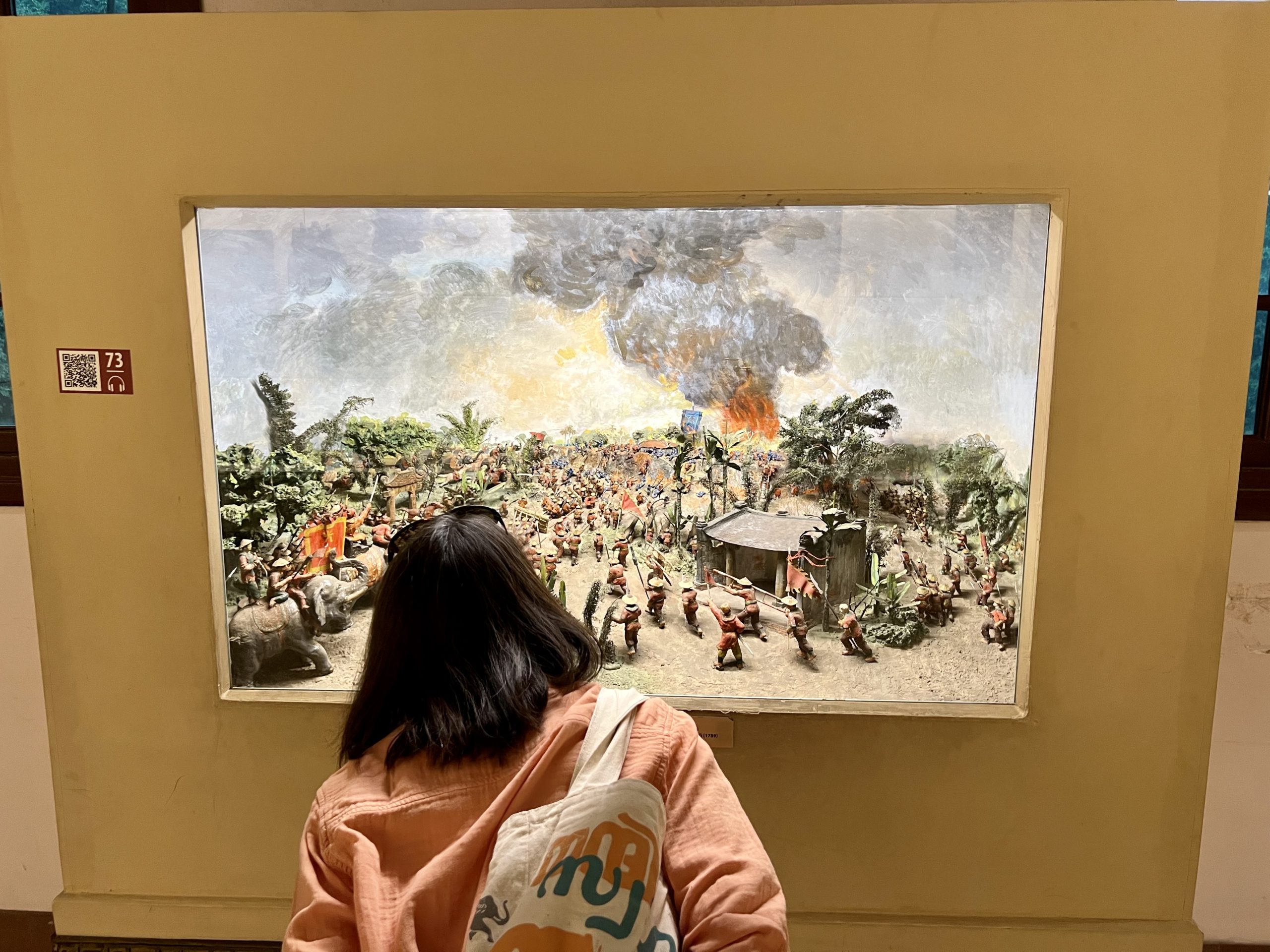
This building covers the history of Vietnam from the Paleolithic to the modern era. Here the blogger had to step in and take the picture because the photographer refused to stop looking at this miniature diorama of one of the countless armed Vietnamese revolts against foreign occupiers. I lost count at 14 successful uprisings in the last 2,000 years, to say nothing of the unsuccessful ones and the internal wars. Vietnam has had a tough time of it.
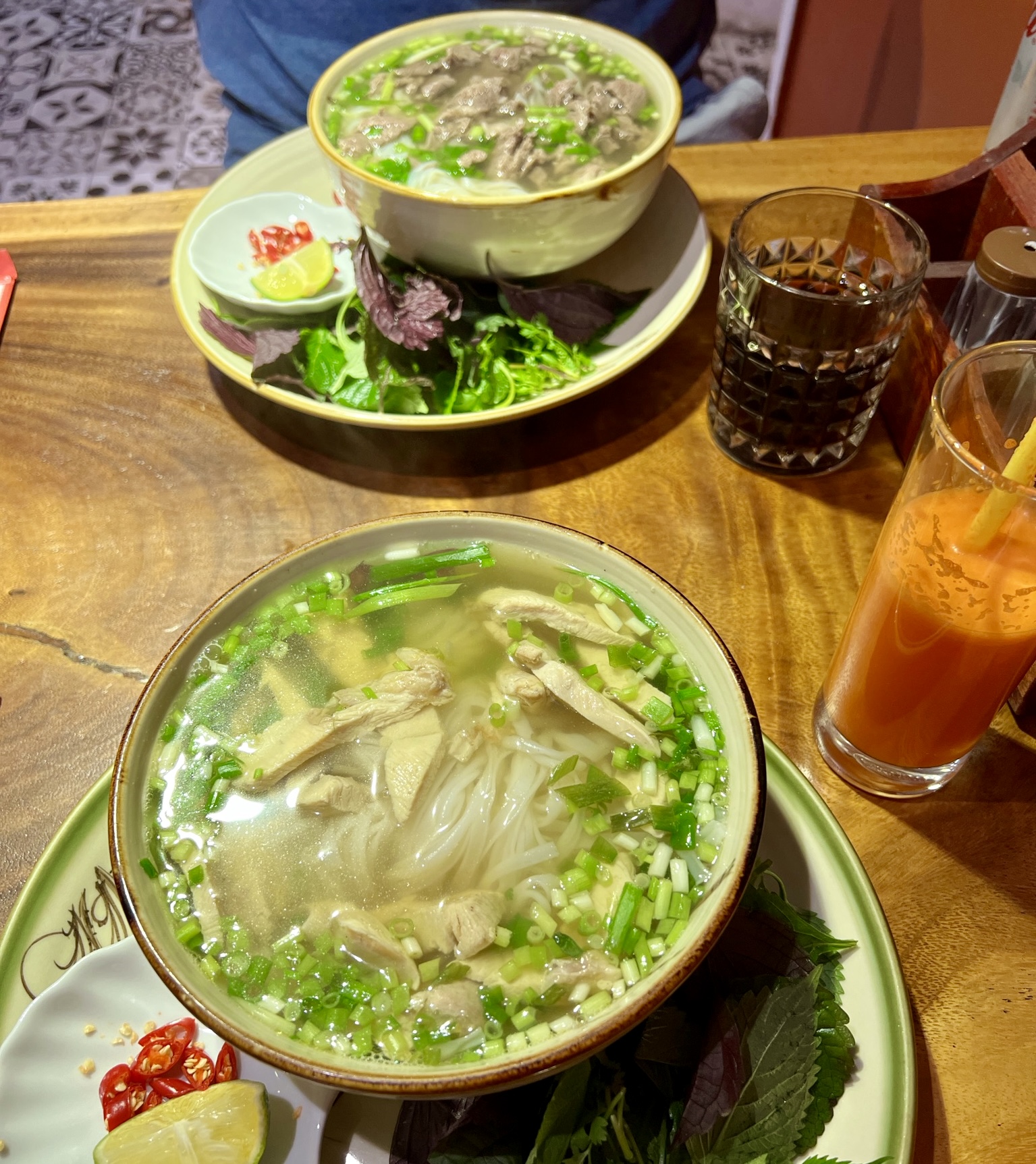
In our wandering, we looked for different dishes, and differences in common ones. At one restaurant, named Lake View for a view of the lake it didn’t have, we ordered pho. The beef and chicken pho shown here were unremarkable, except the serving size being almost twice what we were used to seeing further south. More remarkable was the smell of the restaurant, more like what you’d expect from a used fish store than a restaurant. We sat by the door.
The banh mi shop mentioned earlier also stuffed their sandwiches with much more – and more generic – meat than the thin slices of roasted pork belly we’d come to expect.
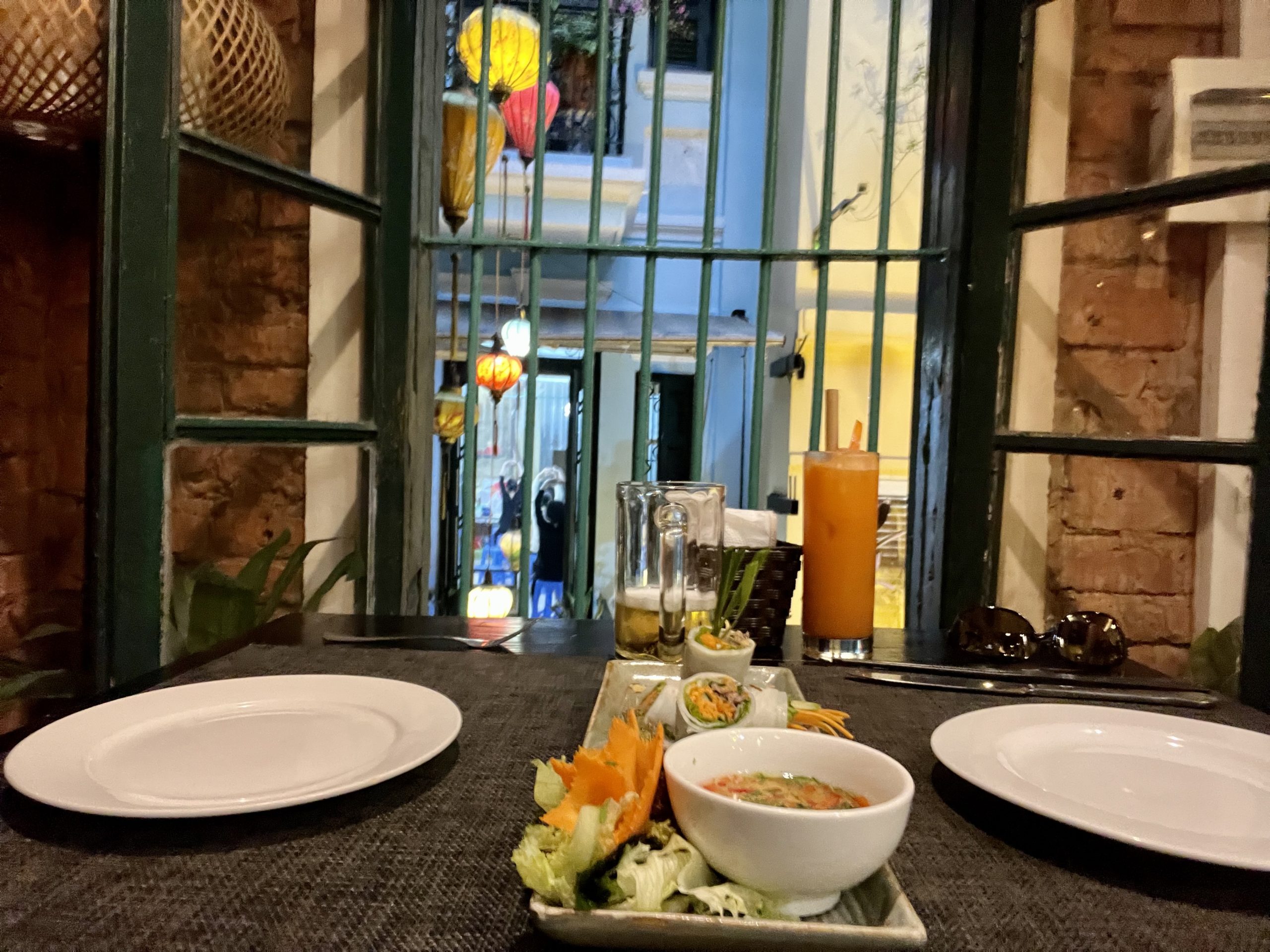
One of our more entertaining meals was at the Hanoi Food Culture restaurant. The large fresh rolls shown here were good, though once again larger than in the south. The entertaining part can be glimpsed through the window and across the narrow street. The server called it a meditation class. How they meditated while waving their arms and pounding each other’s backs in conga lines while listening to loud, sappy American pop from the last century is yet another mystery.
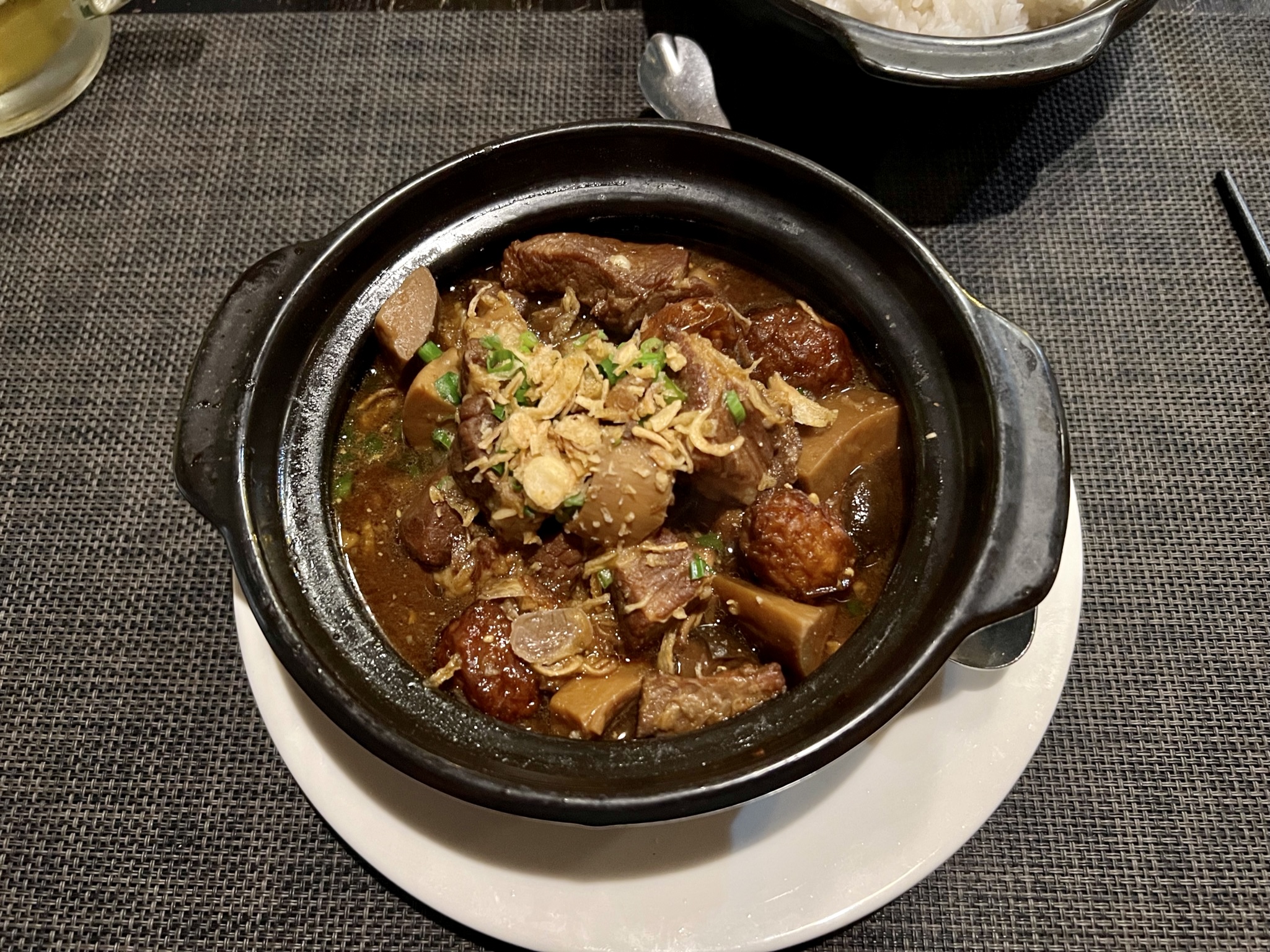
We had some of the best Hanoi food at this same restaurant, like the caramelized slow-cooked pork with taro in a clay pot shown here …
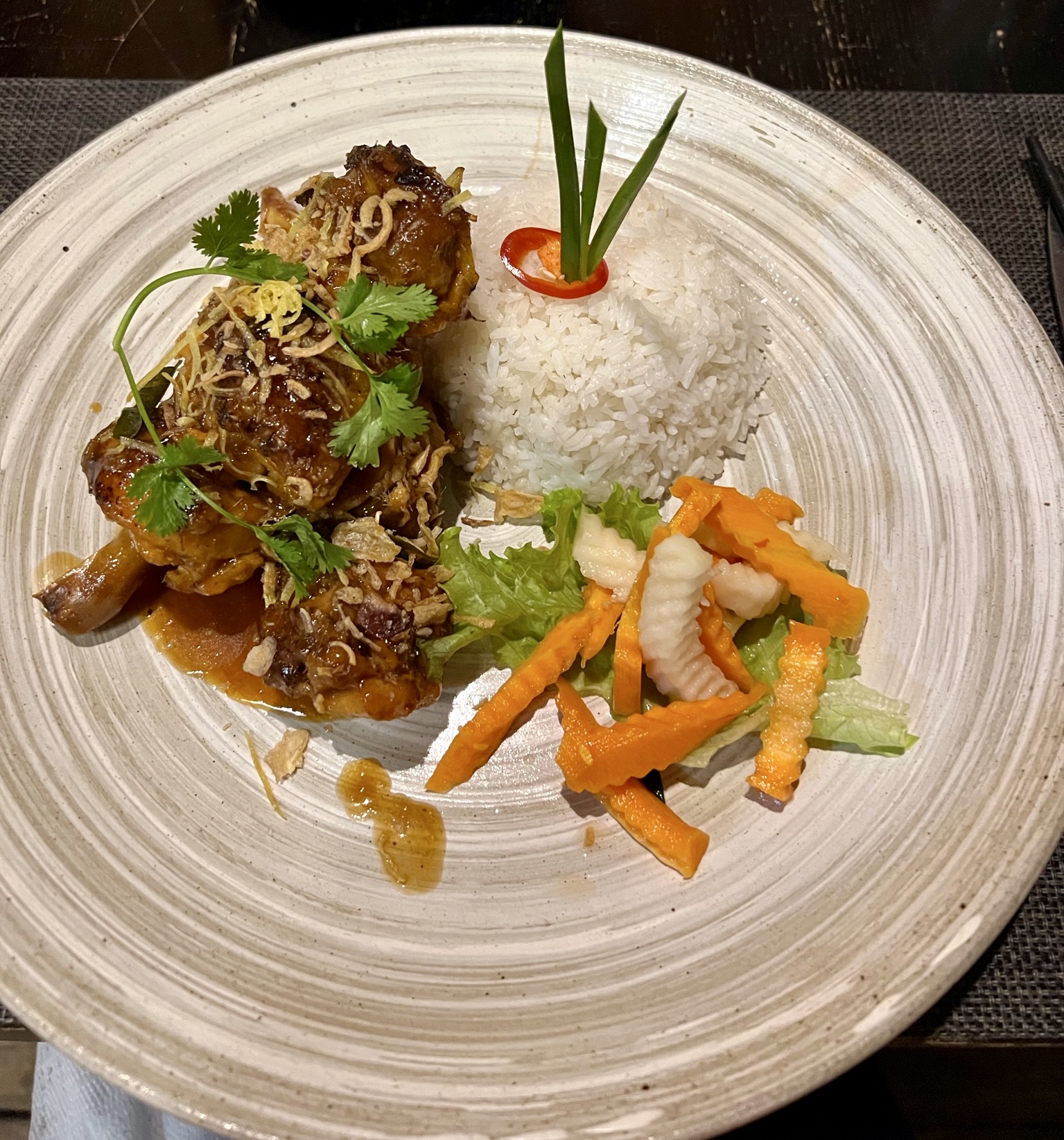
And this grilled chicken with lemon grass and lemon leaves with house-made pickled vegetables.
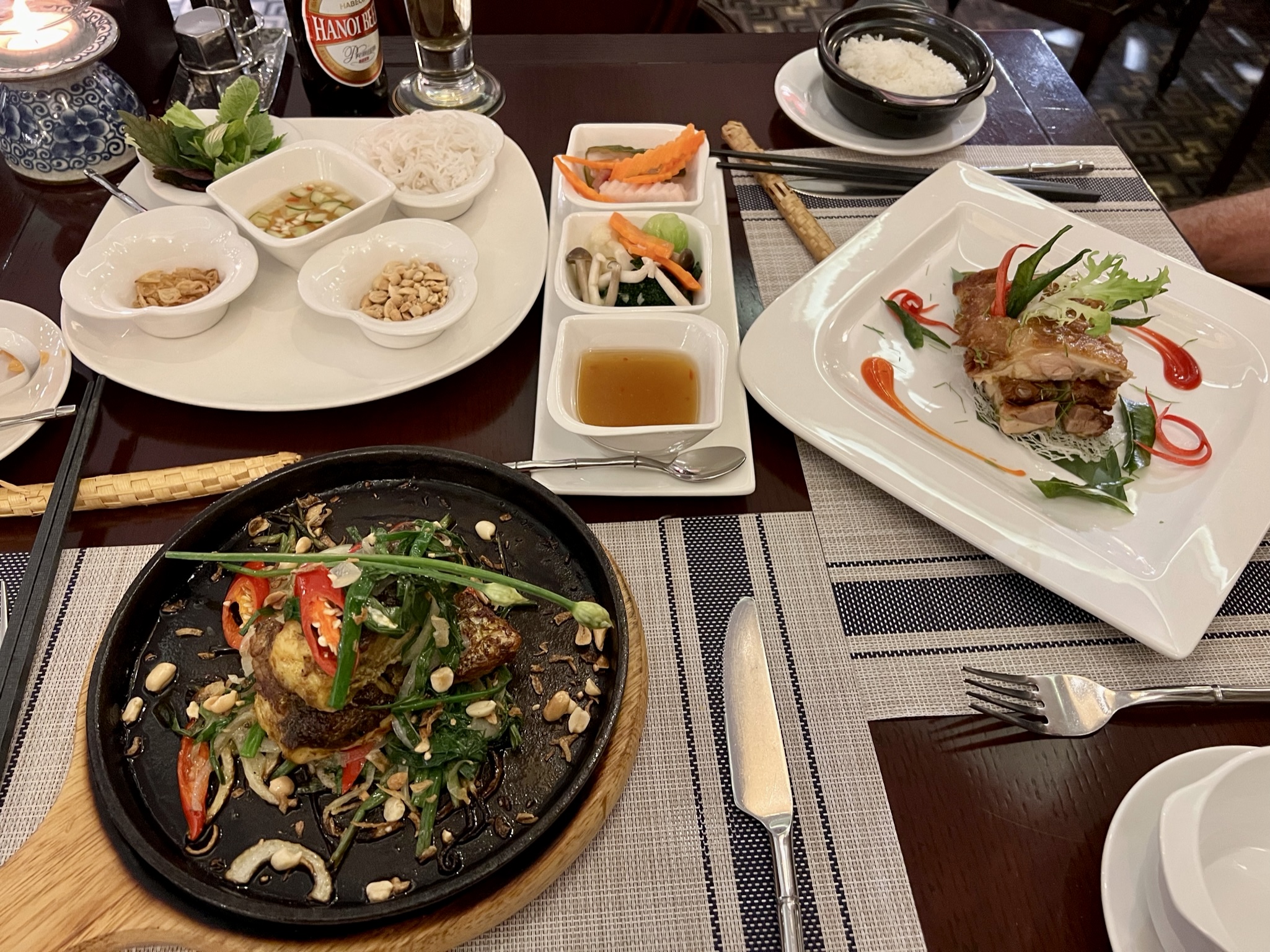
At another restaurant, Red Bean, we had grilled sea bass on a bed of some kind of rice, shown on the left, and honey roasted chicken. The photographer liked the fish well enough, but the blogger wasn’t too happy with the chicken. Generally, Hanoi flavors are a little flatter, perhaps due to both the greater influence from Chinese cuisine and the fact that the peppers and spices grown in southern Vietnam don’t do well in the north and haven’t been historically available.
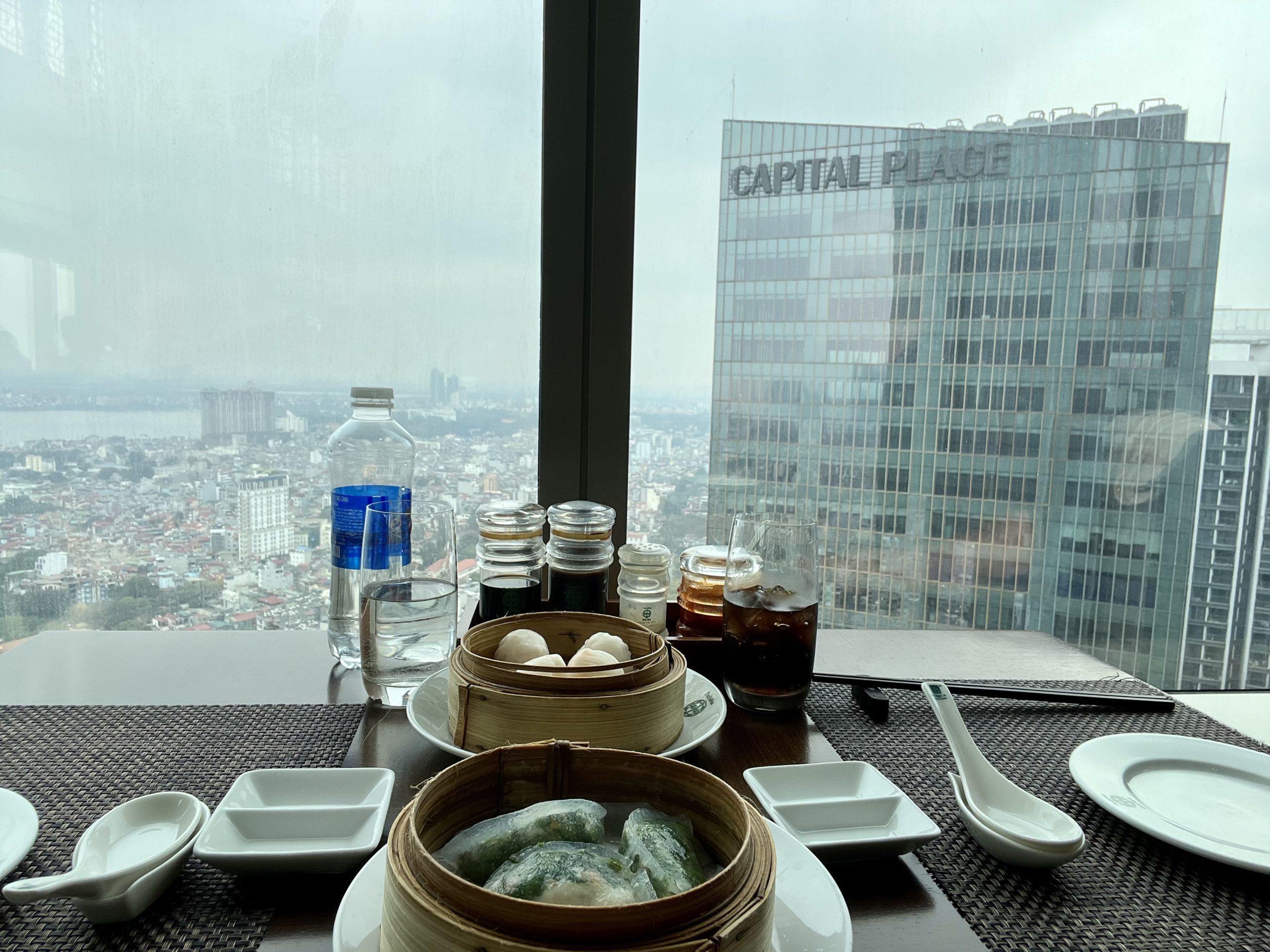
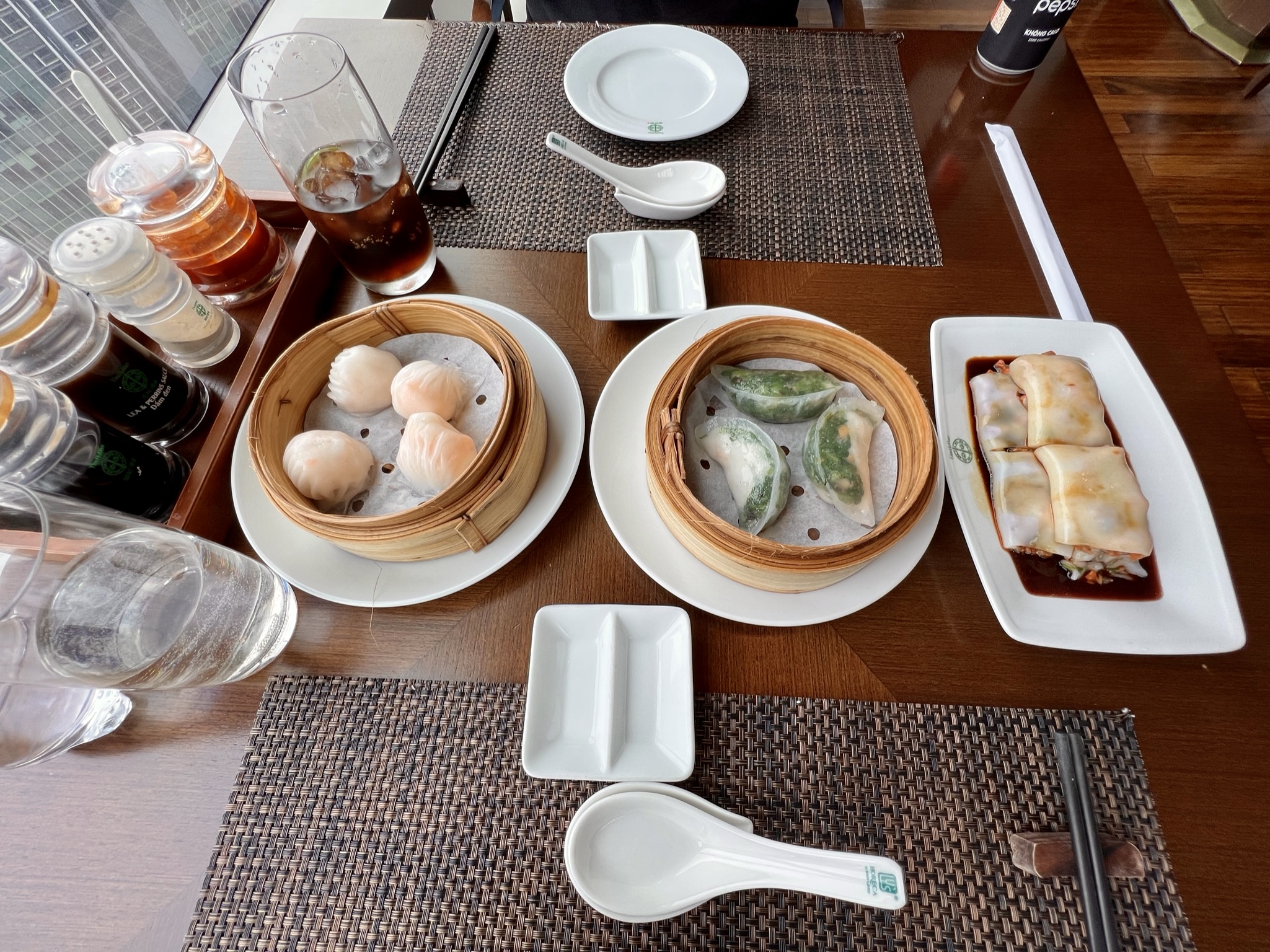
As you’d expect, given centuries of Chinese influence, there are Chinese restaurants. We enjoyed excellent dim sum and a view at Tim Ho Wan – above and below.
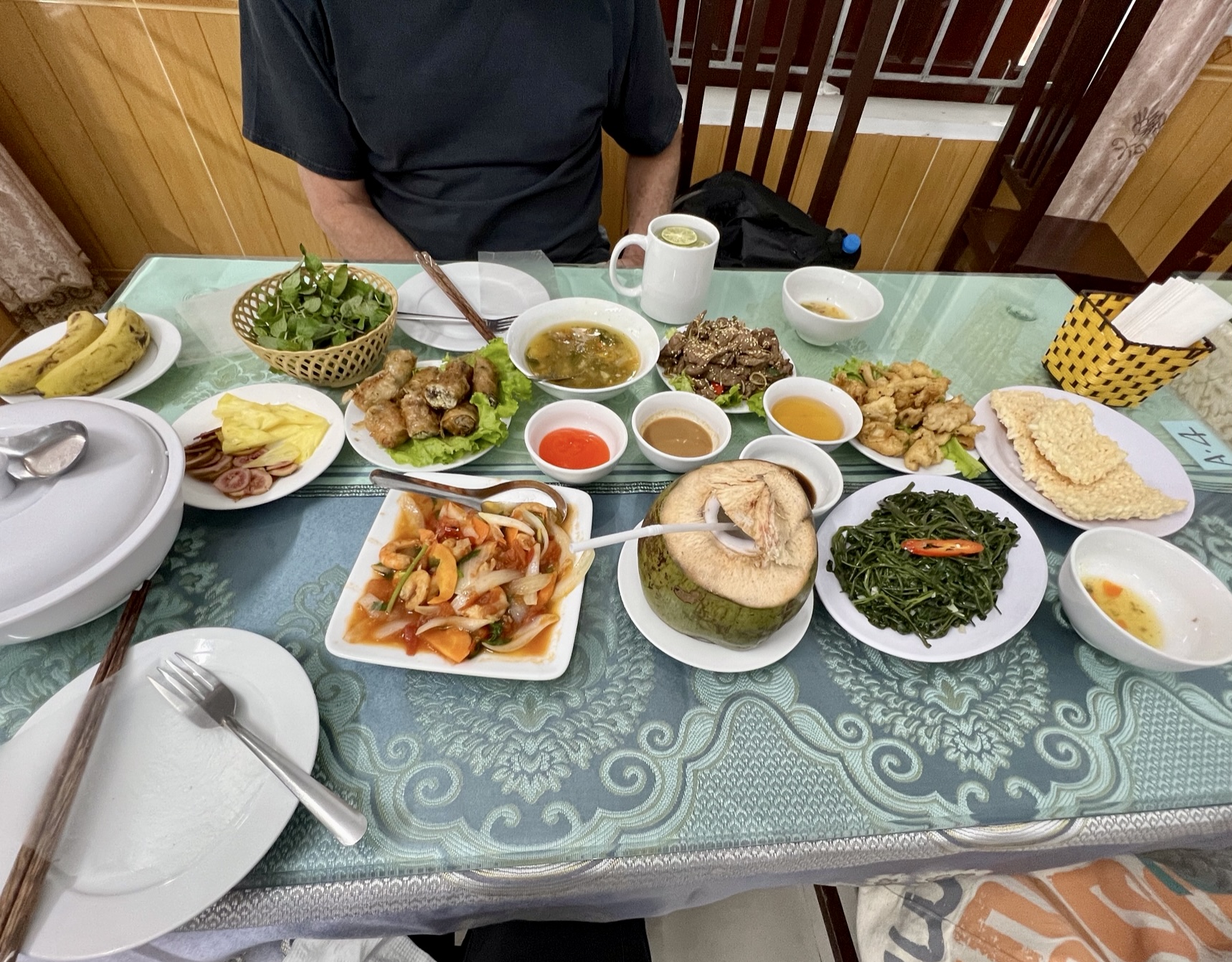
A post including food would fall short if it didn’t include a Worst Meal of some kind. The food above was served at a Hoa Lu restaurant our driver took us to. Other tourists eat it, so it must be good, right? Well … no. Entirely dedicated to feeding bus loads of tourists, this table of food was delivered almost before we were seated. Fast, colorful, terrible. If it wasn’t greasy, it was cold, or it tasted suspiciously off, or it was tough as leather, or it smelled strongly of sun-baked fish, or multiples of the above. Vietnamese tourist restaurants are 0 for 2.
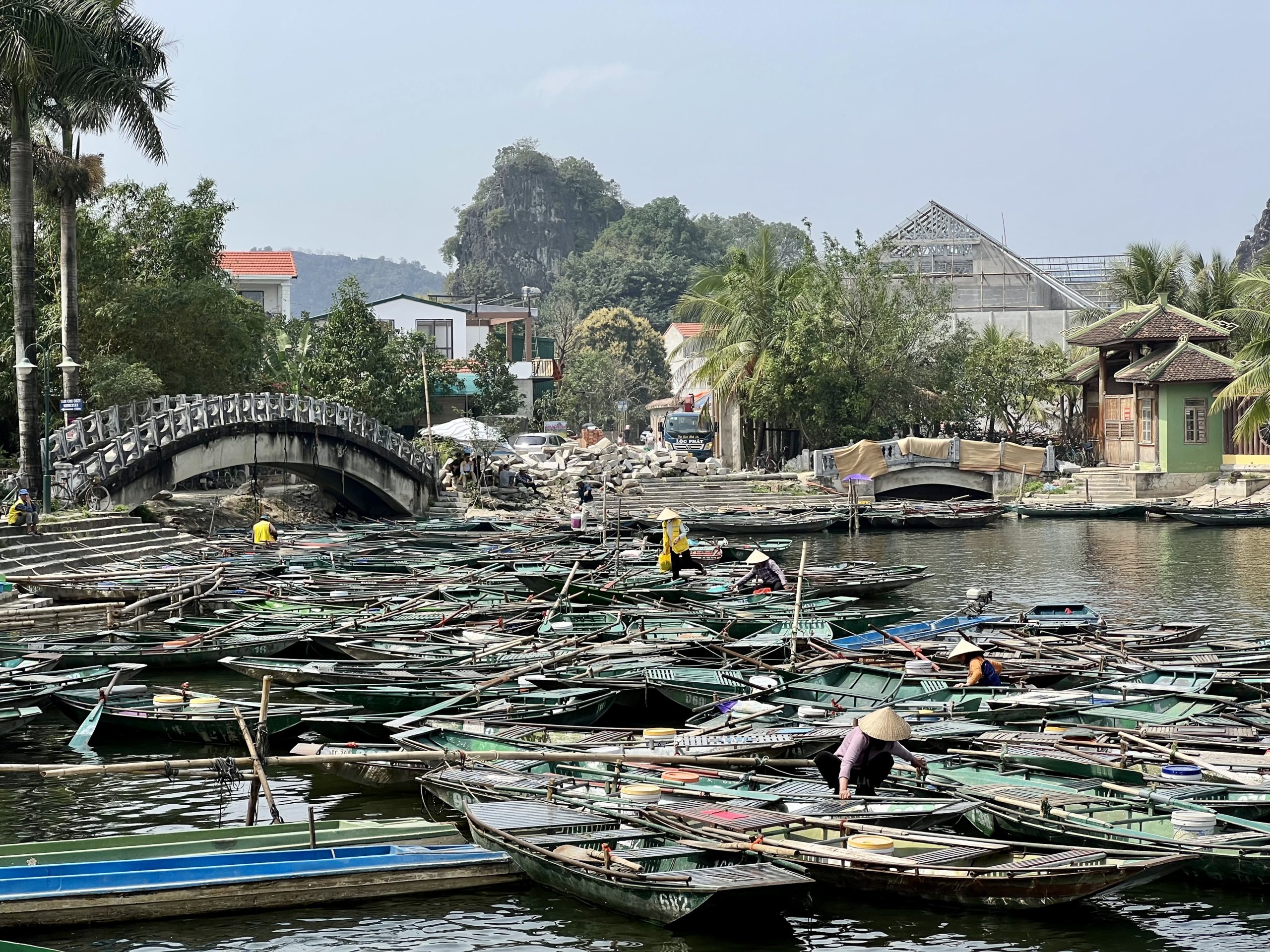
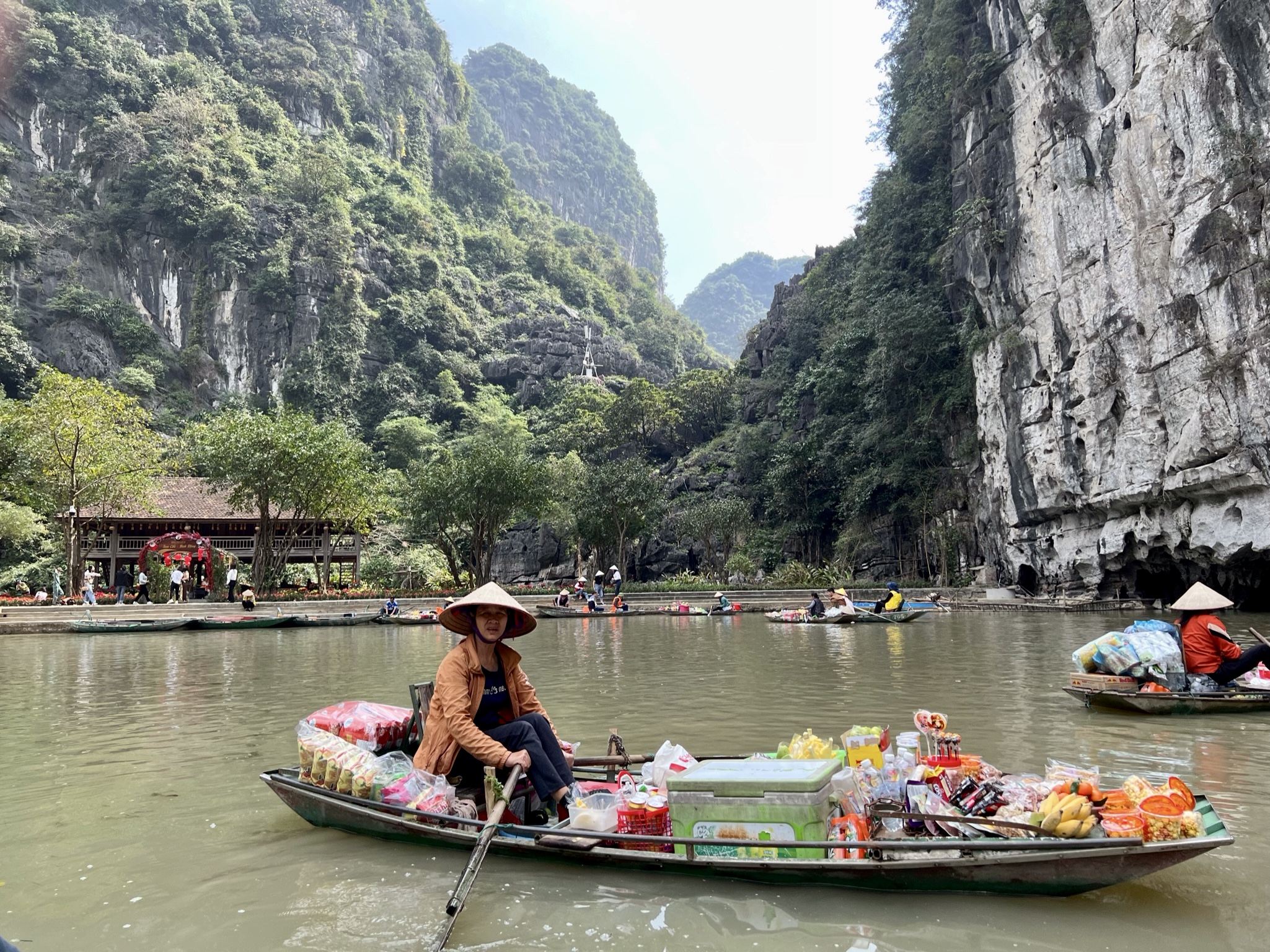
As implied, we hired a driver and guide to take us to Hua Lu, the ancient capital of northern Vietnam. The cool thing about the area, though, is a river at Tam Coc that winds through tall karst formations and rice fields. But first you have to get a boat.
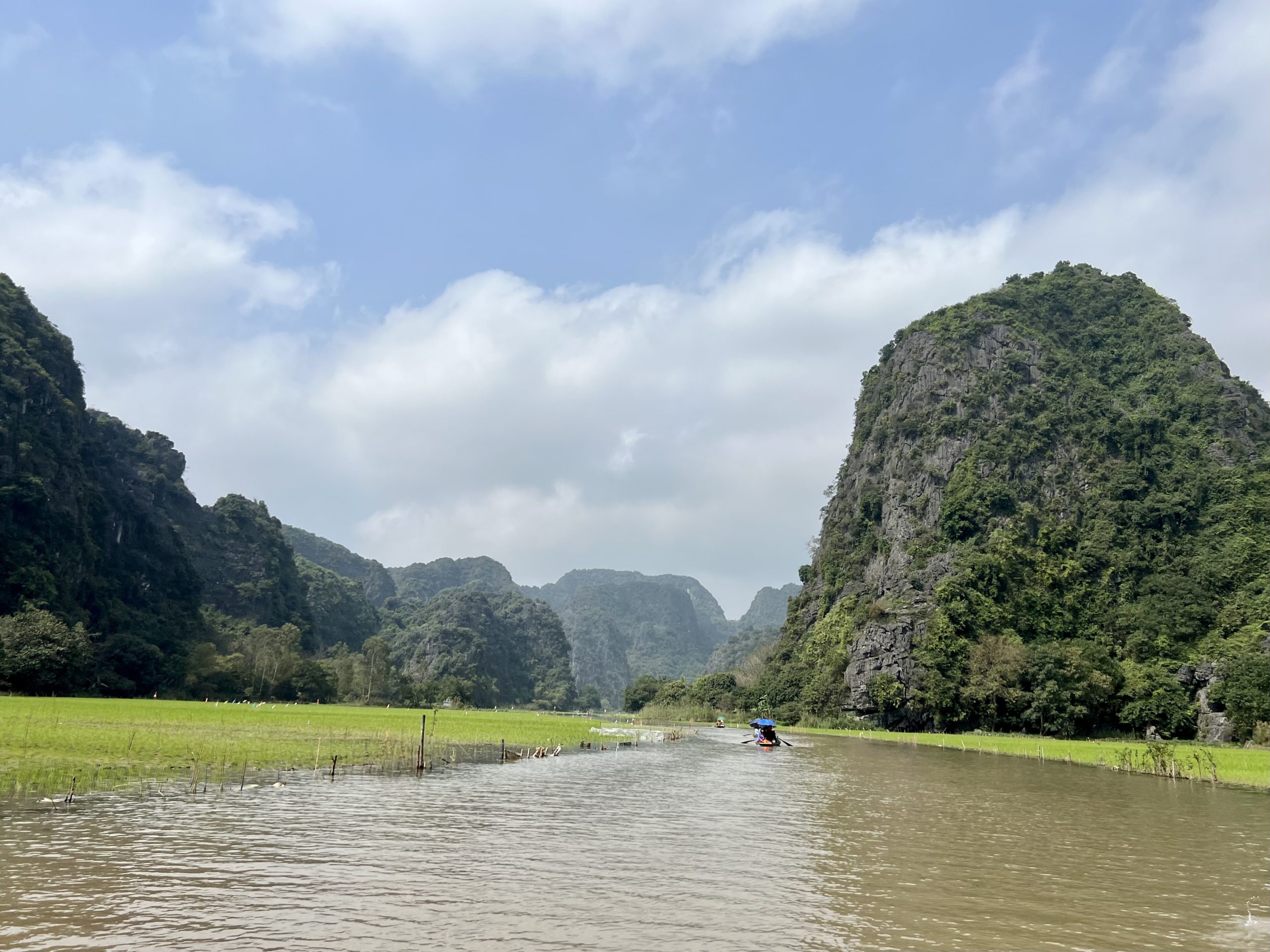
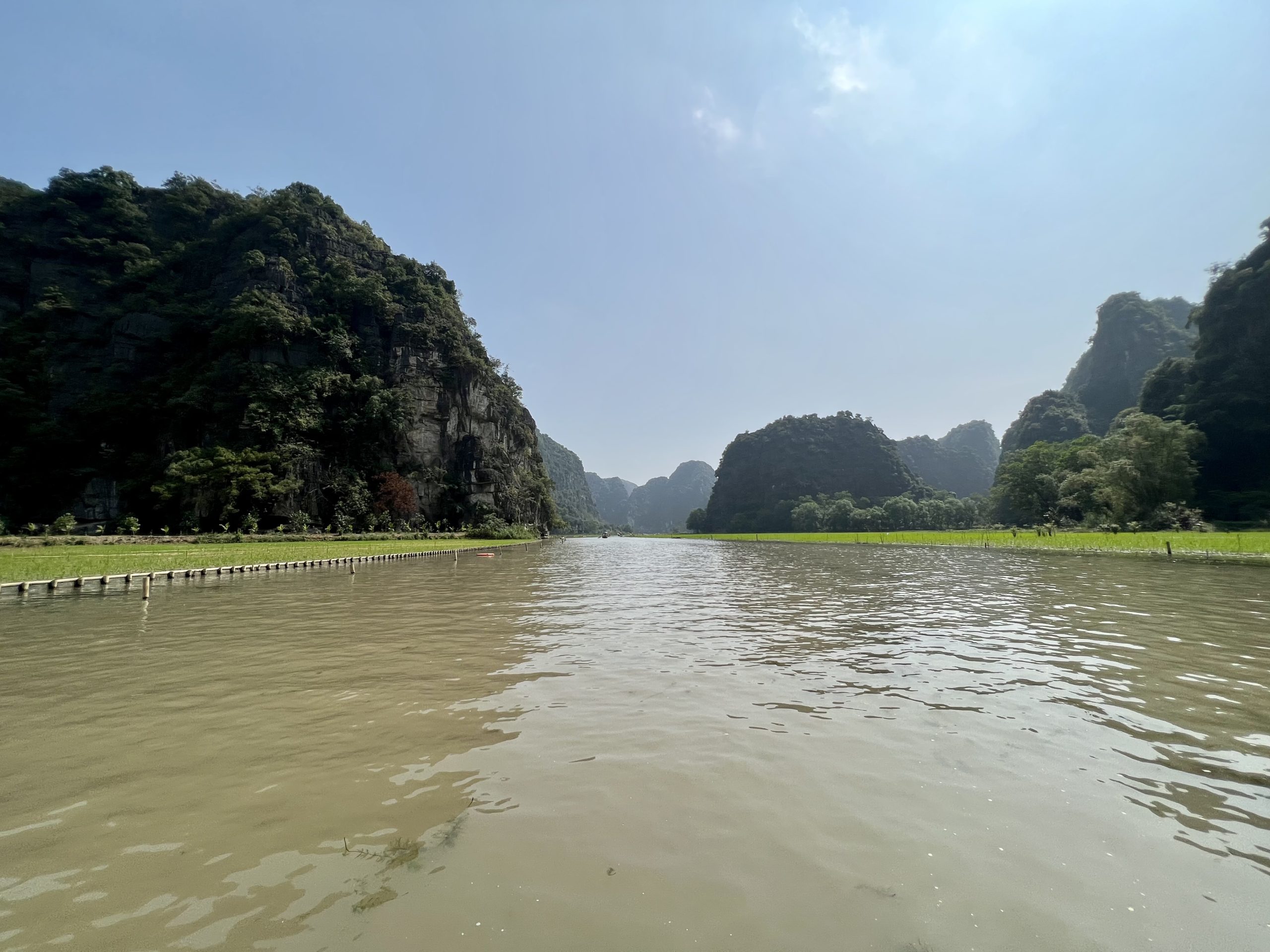
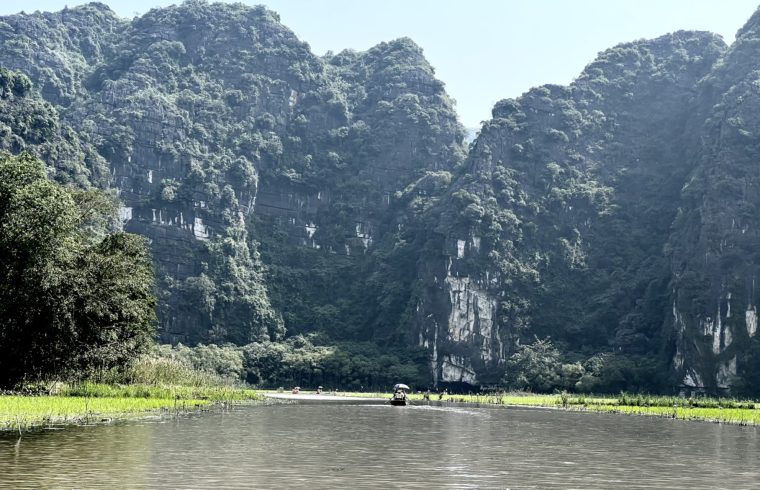
Once you have a boat and paddler, it’s a peaceful meander through peaks and valleys. The formations are of the same making as those in Halong Bay, with working fishing boats replaced by working rice farms. Same tourists, though.
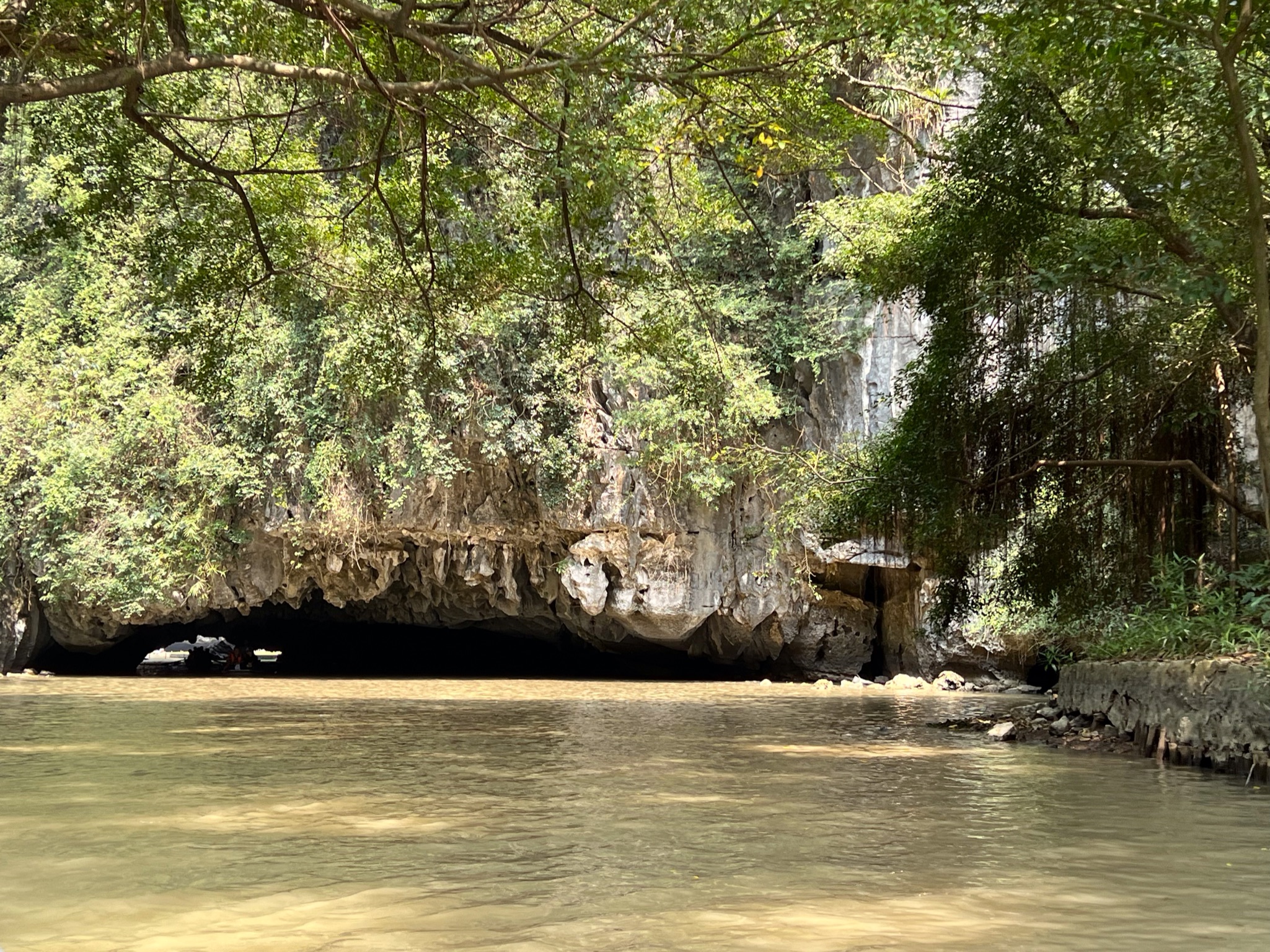
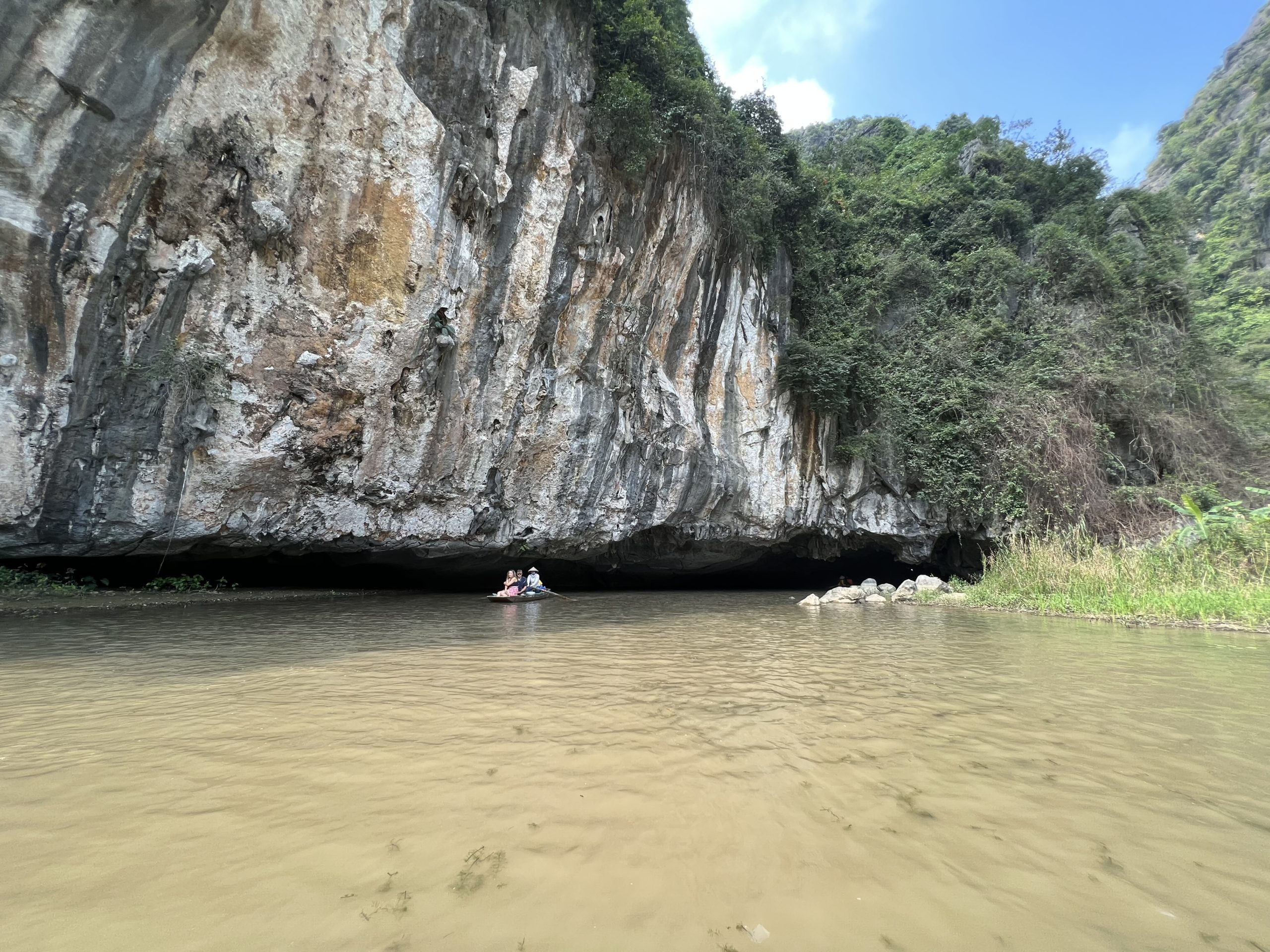
Along the way we transited several low grottos, tunnels really, that pass under and through the limestone rock – above and below.
Through the final grotto is a small lake and … surprise! … gift shops on boats. Hello, buy something, hello. Here we turned around and headed back.
The way back is remarkably similar to the way there, and just as mesmerizing.

A fun thing about the experience is how the boat paddlers have fallen on a unique way to row their small sampans: with their feet. Whoever first came up with this technique, all use it now – women and men, young and no so.
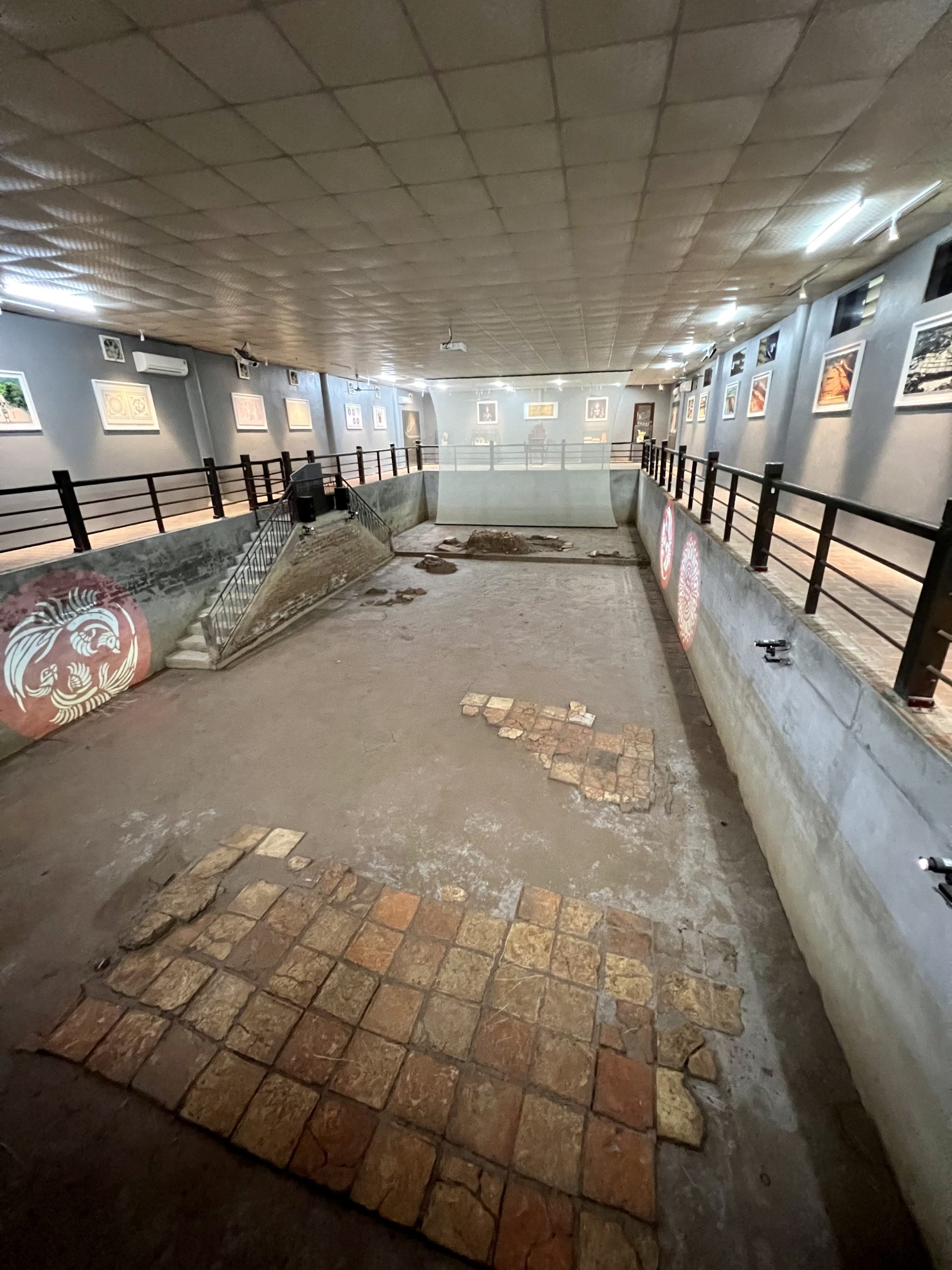
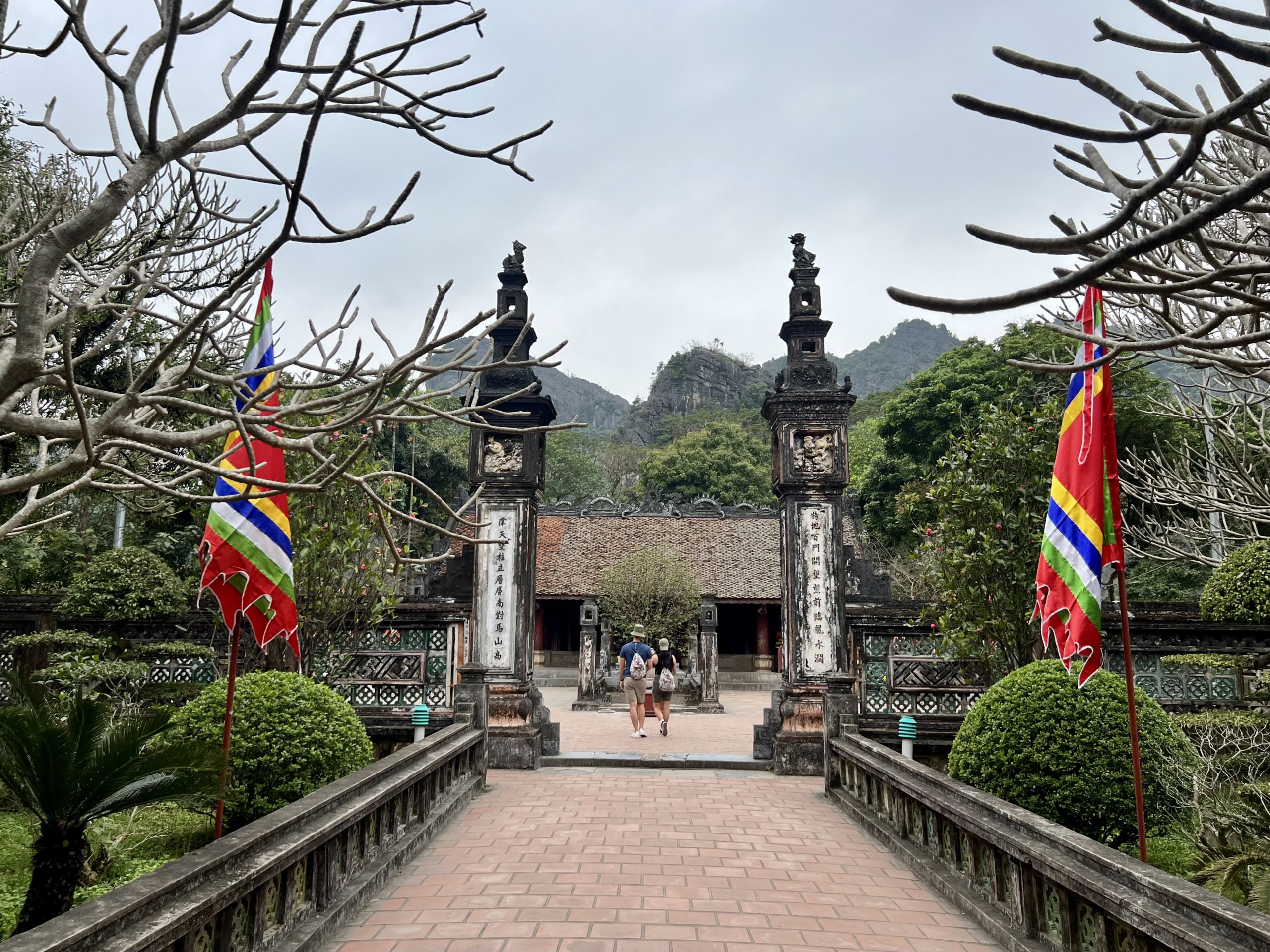
Hoa Lu itself is considered the first capital of Vietnam. A thousand years, though, have left it fully buried. All that is visible are bits and pieces of the palace walls and tiled floors, roofed over where they were unearthed. Many artifacts have also been found, and other excavations are ongoing.
In the 17th century, two temples were built on the site, one honoring Dinh Bo Linh, the unifying first emperor of northern Vietnam.
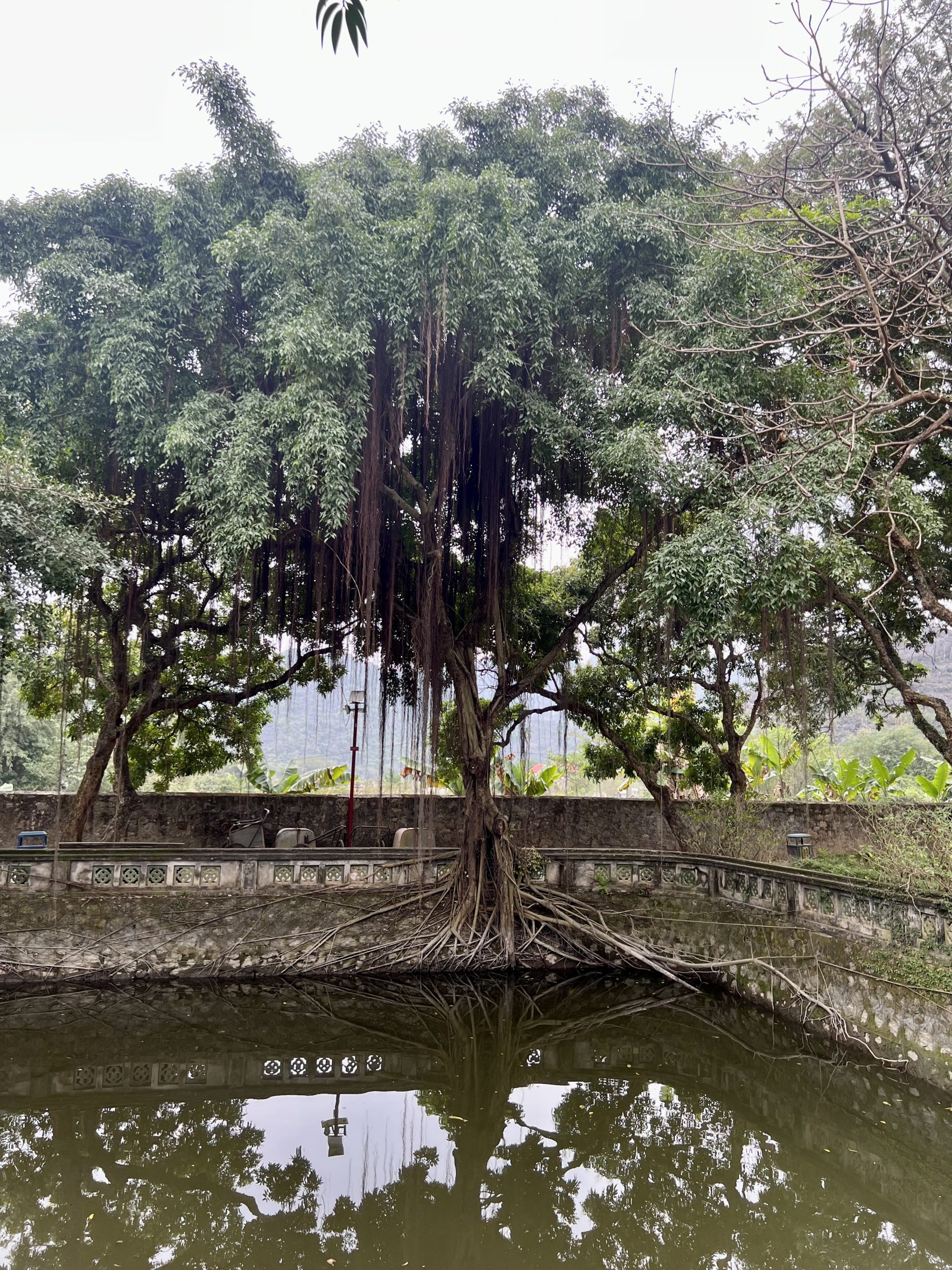
The gardens and pools of the temple are as they were – but with roots – and many people still come to pray to the emperor for wisdom, guidance, and things more mundane.
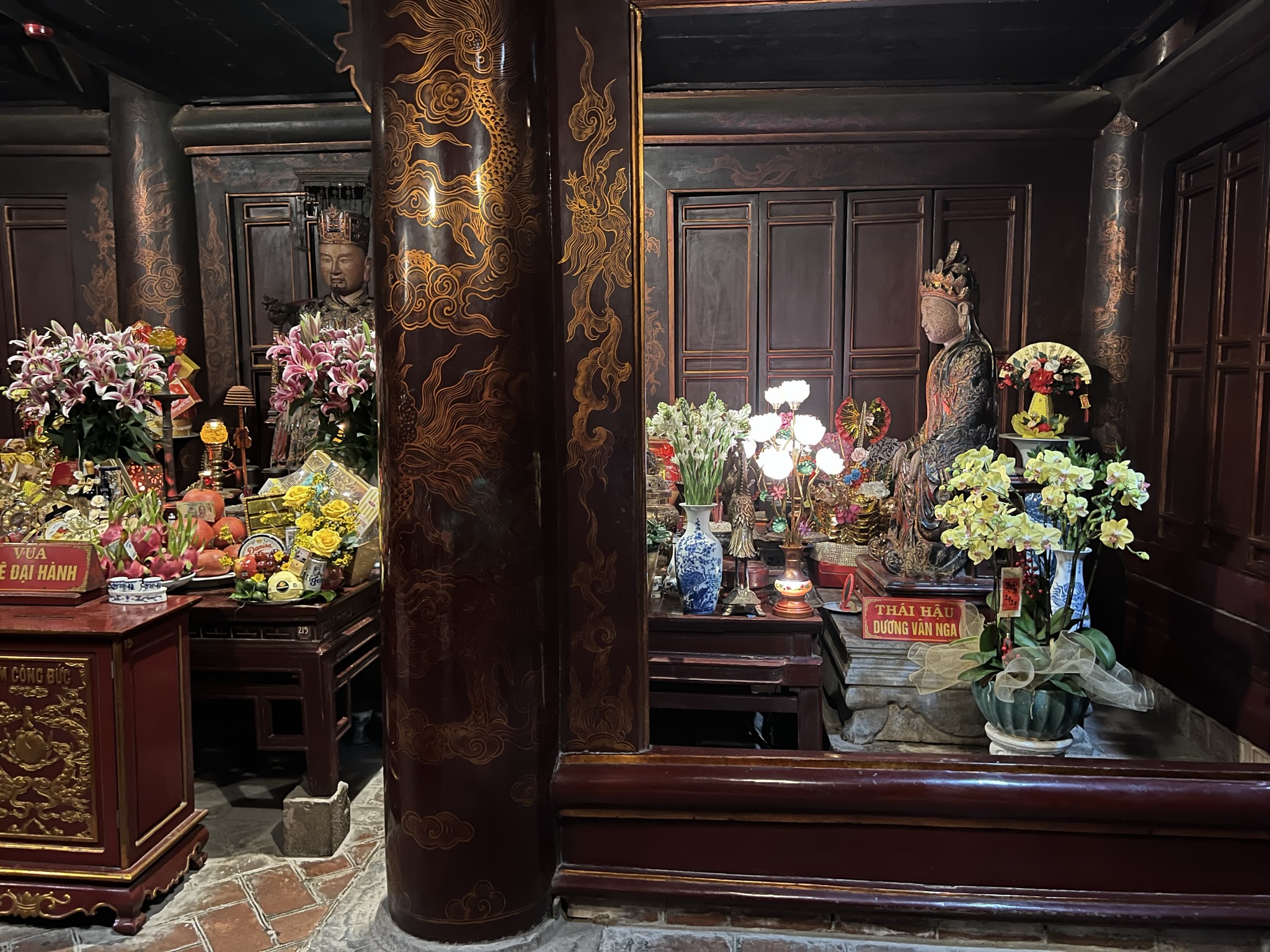
As is often the fate of conquerors, the first emperor didn’t live long. Both he and his son were assassinated. To avoid falling back into incessant civil war, his queen married his star general and ceded the kingdom to him. A second temple was built to honor her and the new emperor, both shown here in their sanctuary.
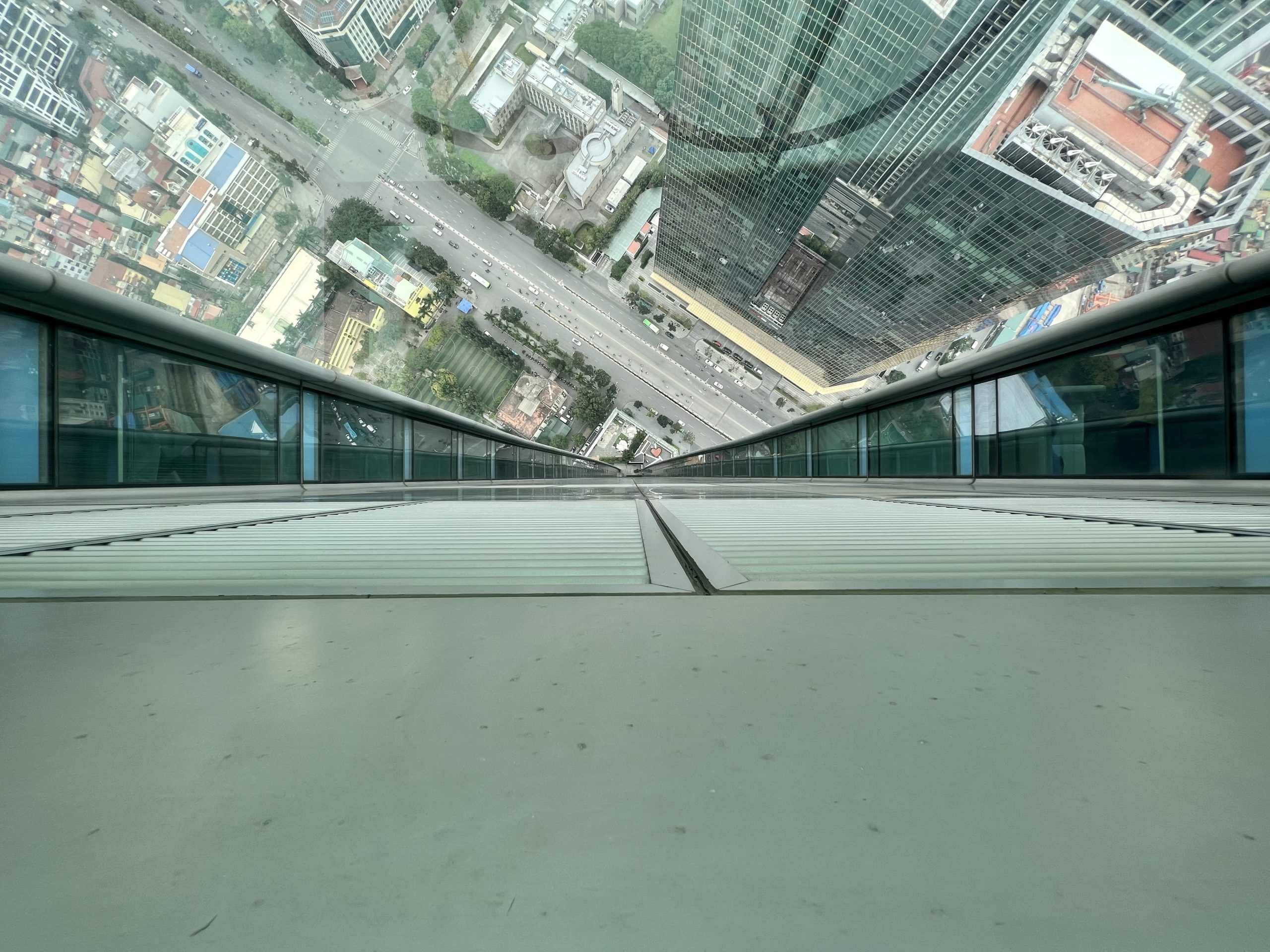
Shortly before we left Hanoi, we taxied over to Lotte Tower, a nearly 900 foot skyscraper built by the huge South Korean conglomerate.
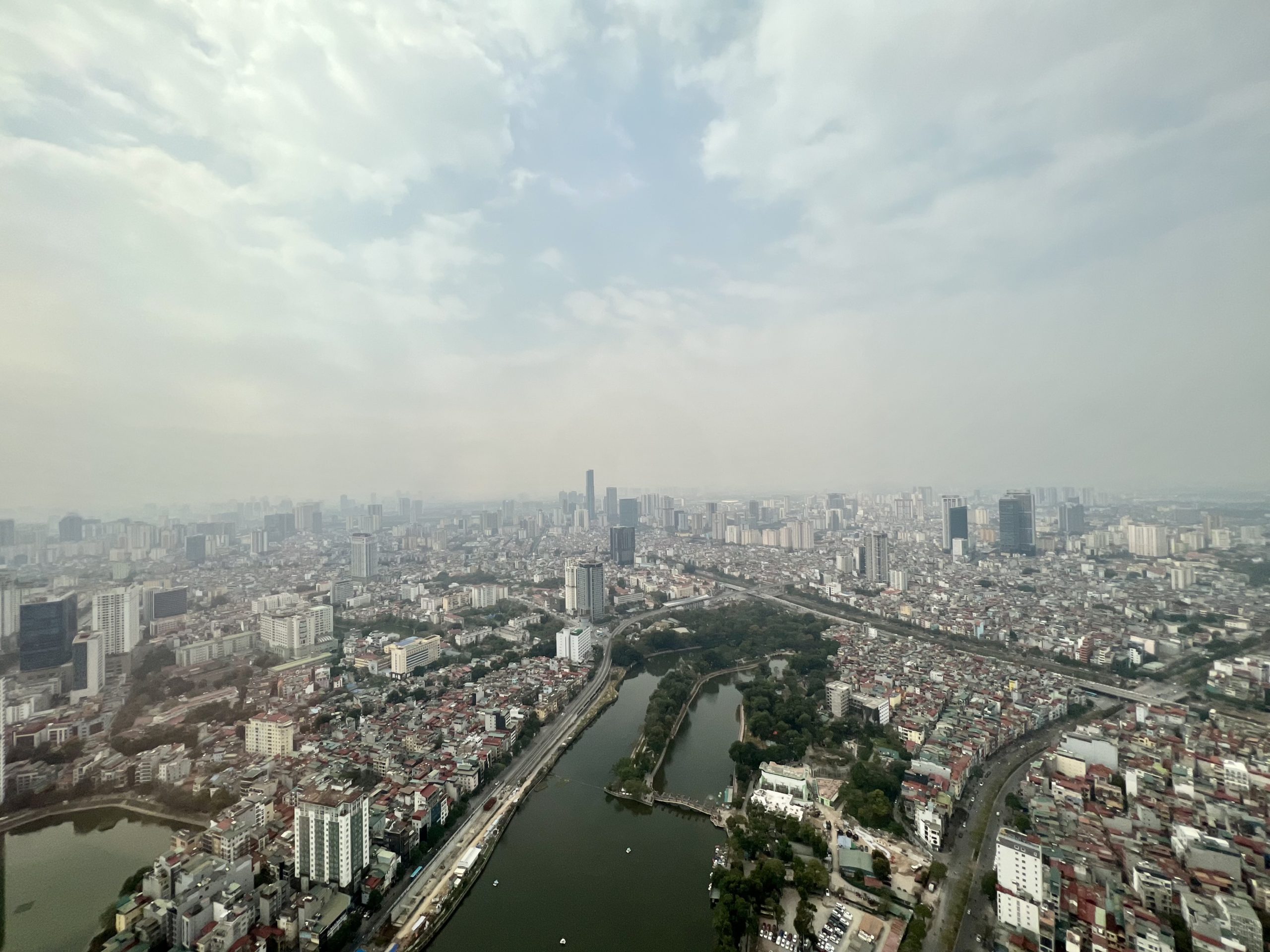
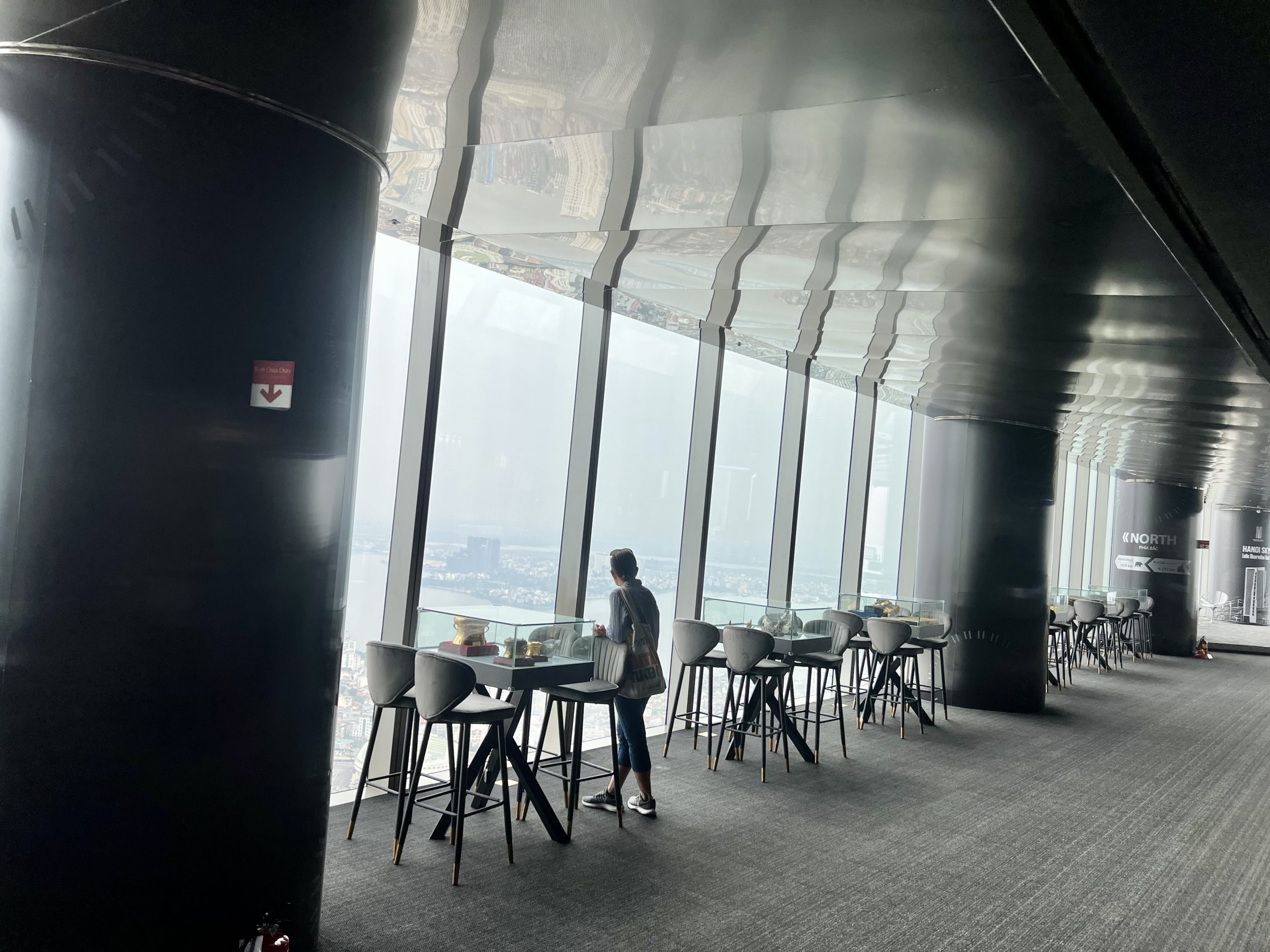
The equivalent of about a 90-story building, the views are airplane-window-ish. This one looks west, away from Old Town and the French Quarter.
The observation deck took up the entire top floor. It was vast, and empty. We wandered around a bit, taking way too many pictures …
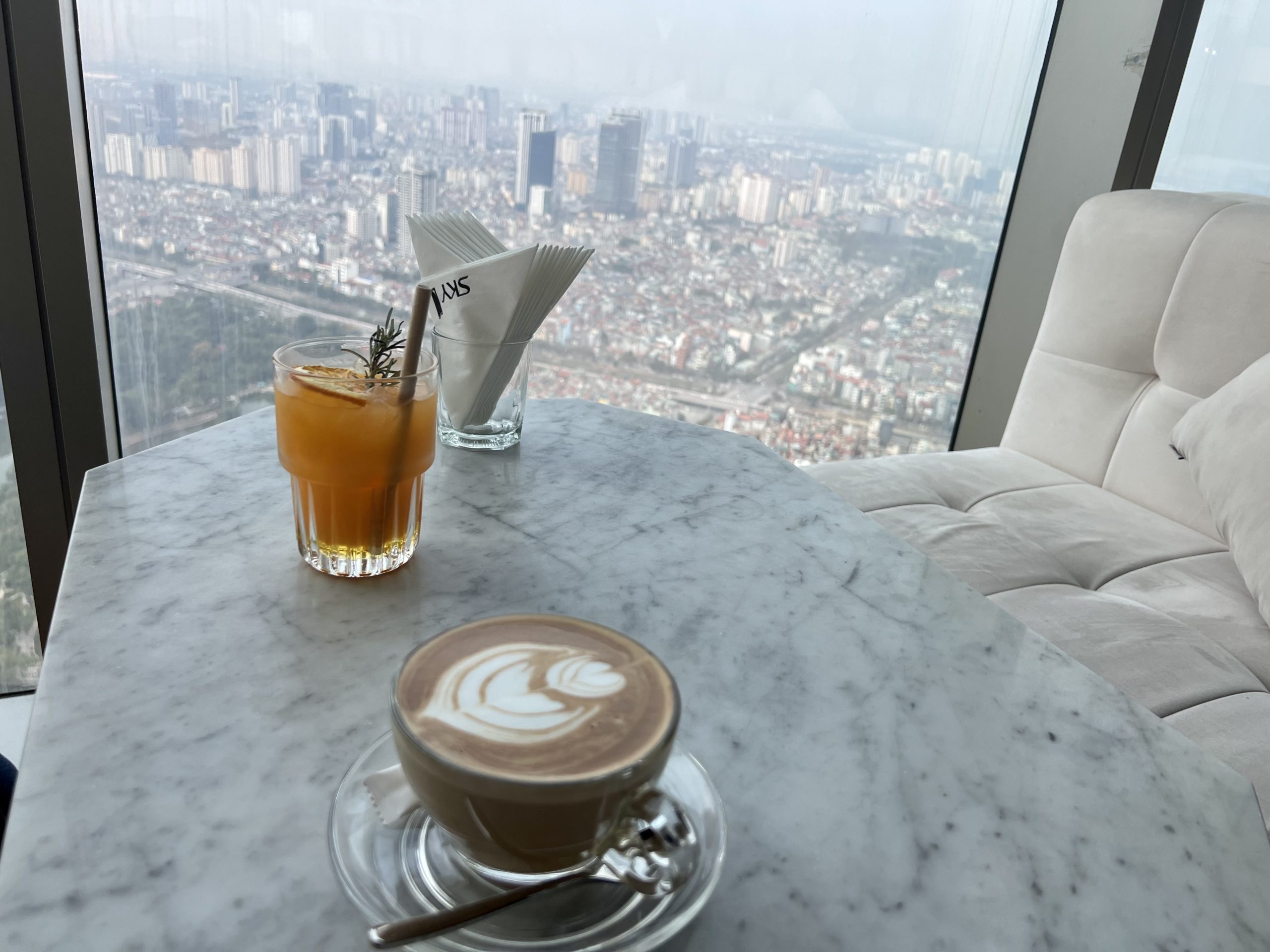
Then we settled down for a fresh juice and latte. By ourselves – just us, the view, and the many idle staff members.
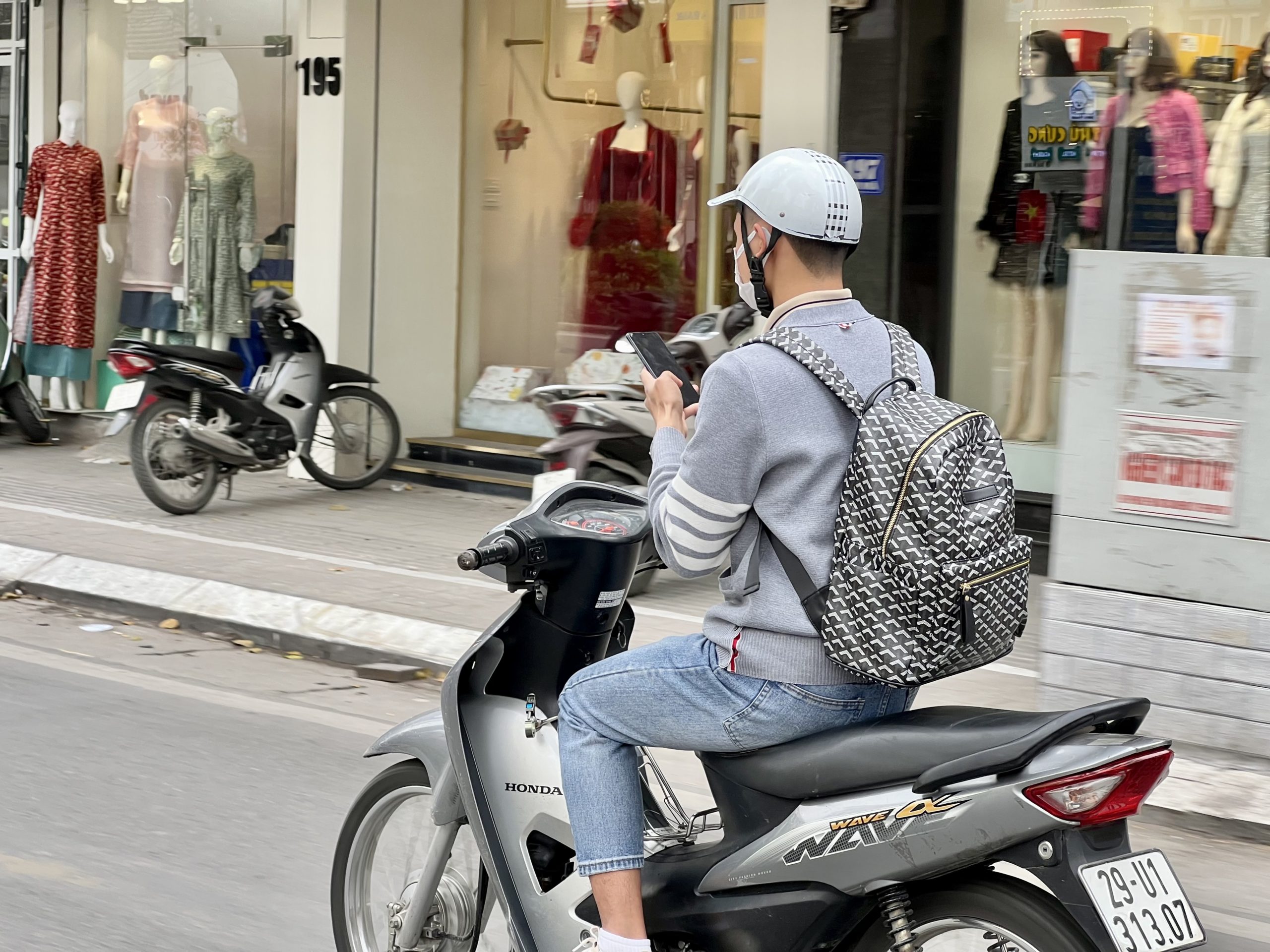
On our taxi ride back from Lotte Tower, we tried to document some of our more common motorbike observations. This one here is by far the most common. Why should piloting a vehicle through traffic interfere with screen time?
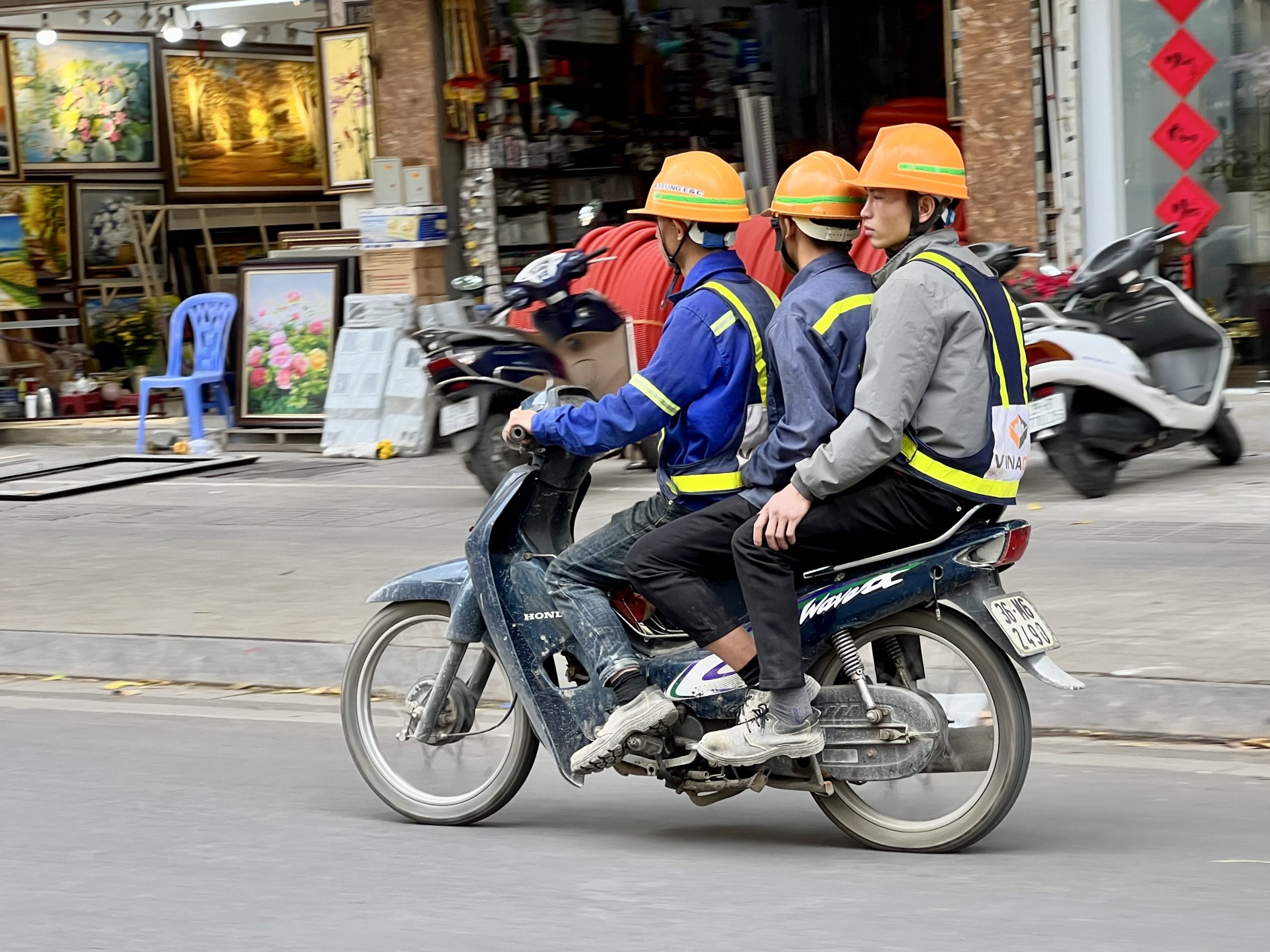
The second most common site is motorbike-as-minivan.
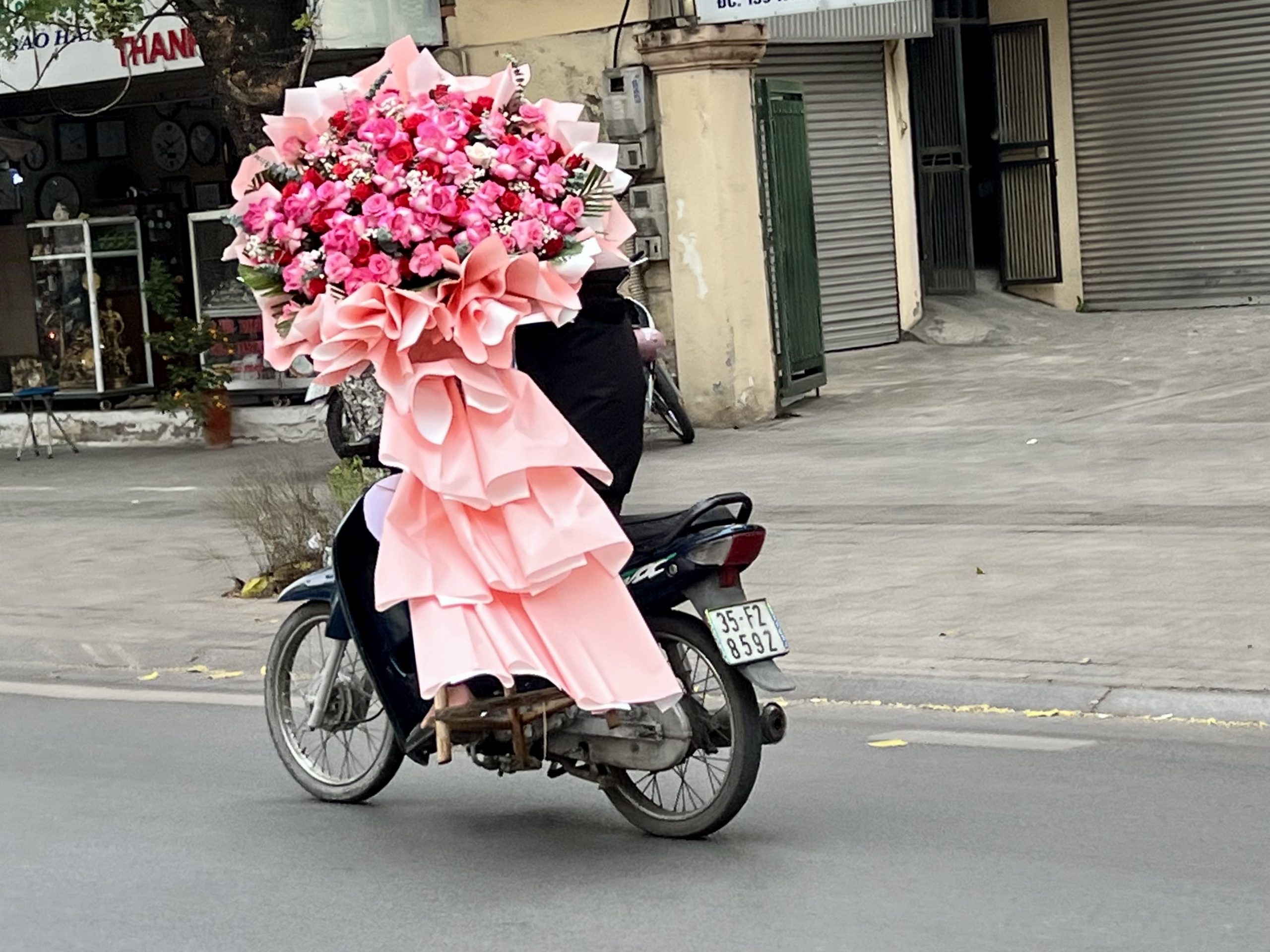
A close third is motorbike-as-carryall. It is only from personal experience that I can say that there is indeed a person at the controls of this bike.
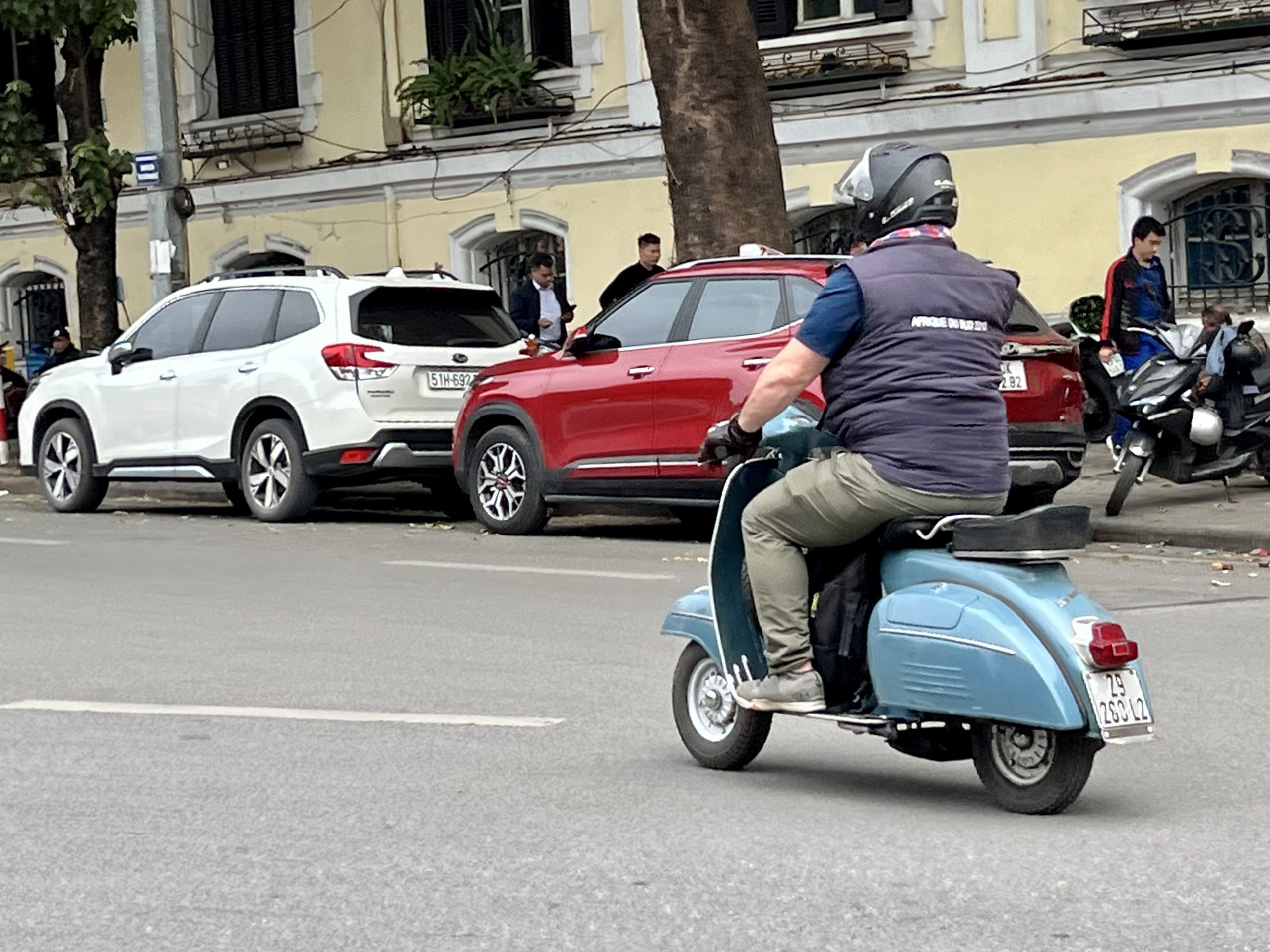
Much less common, but perhaps my favorite, is expats on motorbikes. I know this fellow is a foreigner, because he’s wearing an honest-to-god safety helmet that will actually protect his head, should it meet concrete. And I know he’s not a tourist, because you can’t rent a vintage Vespa. Expats both blend in and stand out.
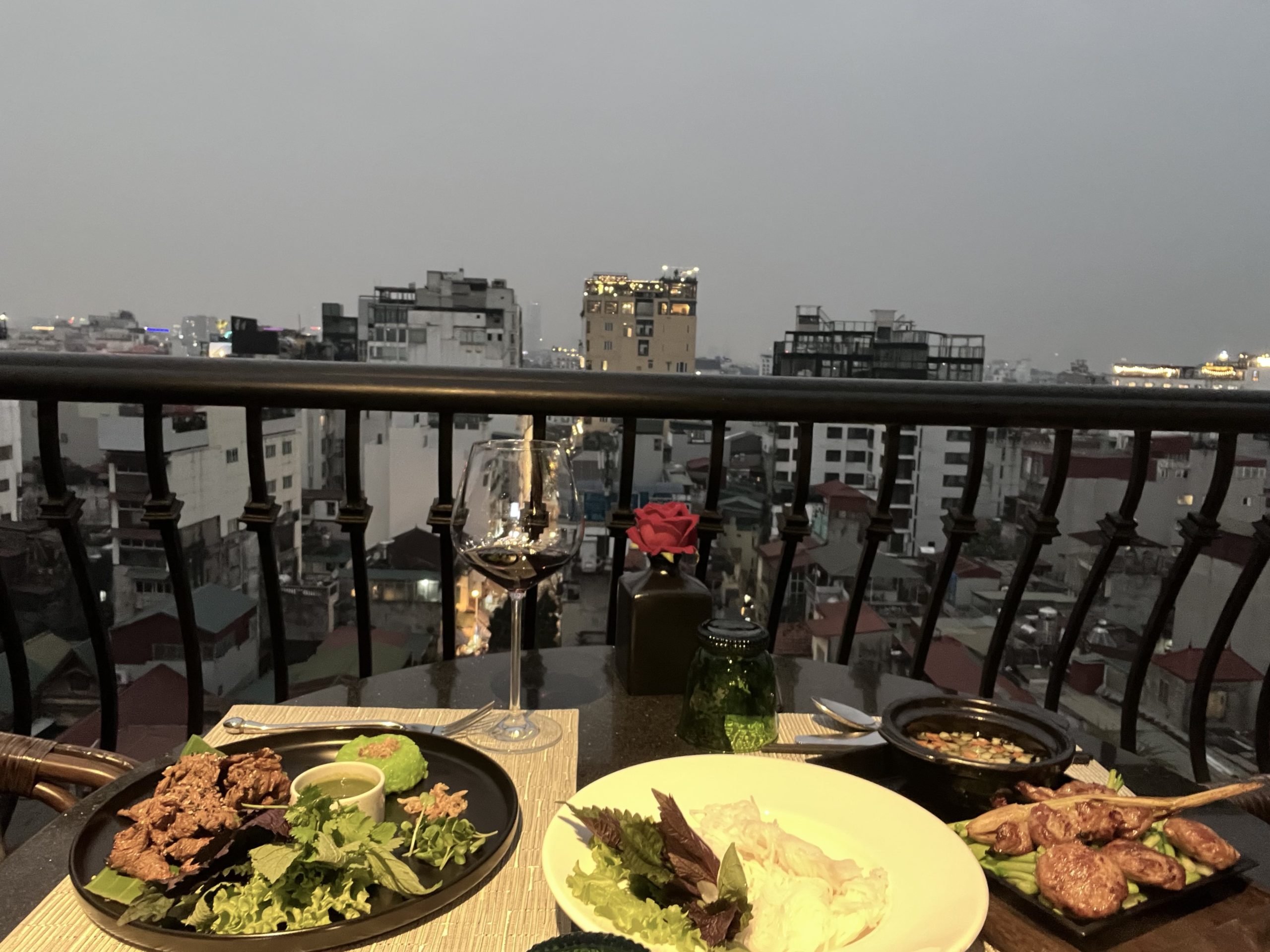
We had our final dinner on a balcony table the hotel set for us. On the left, the blogger had grilled beef with pandan rice and green chili sauce. On the right, the photographer had bun cha, a Hanoi specialty. Bun means pork belly and cha is vermicelli noodles. Usually the pork is ground, flattened or skewered, and grilled. It’s served with fresh herbs, like perilla, spearmint, and anise basil, and nuoc cham, of course.
Then we were off to Borneo. Actually Kota Kinabalu in Sapa, Malaysia, on Borneo, but “off to Borneo” simply sounds better.