//Costa Rica – September 2023

Costa Rica – September 2023

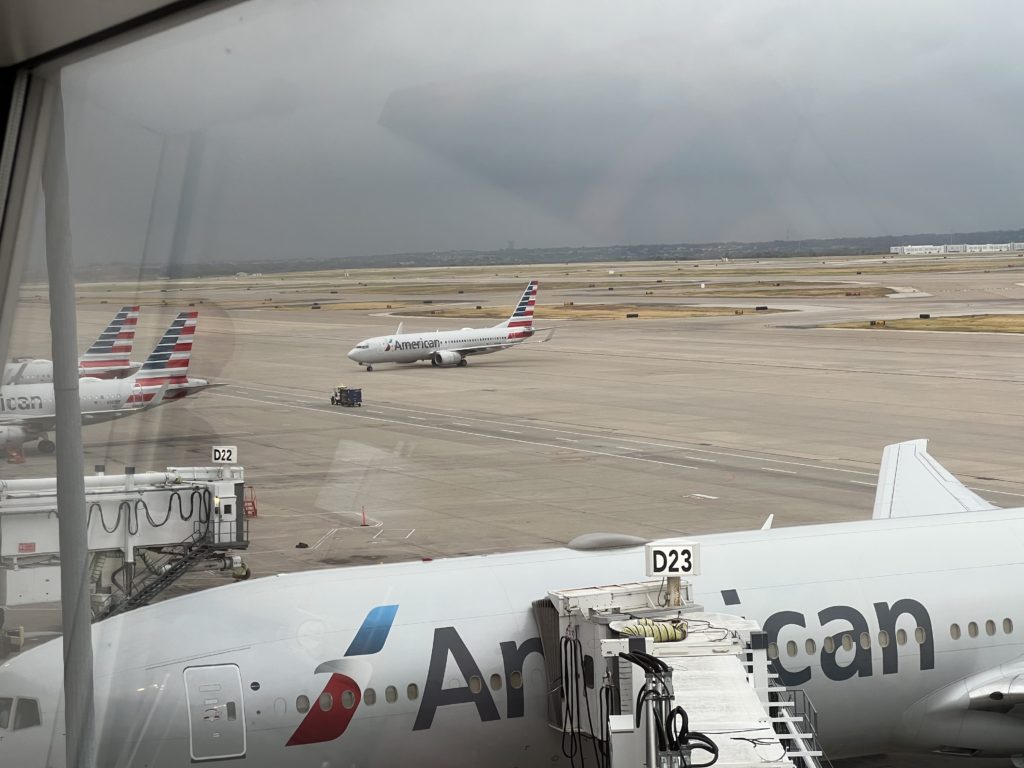
Halfway to Costa Rica, hanging out at the Dallas Fort Worth International Airport, waiting for our delayed flight to board. Neither of us recall ever flying American Airlines before. Back-to-back late departures, five gate changes, no domestic lounges, spectacularly awful food. Calling American mediocre would be praising them too highly.
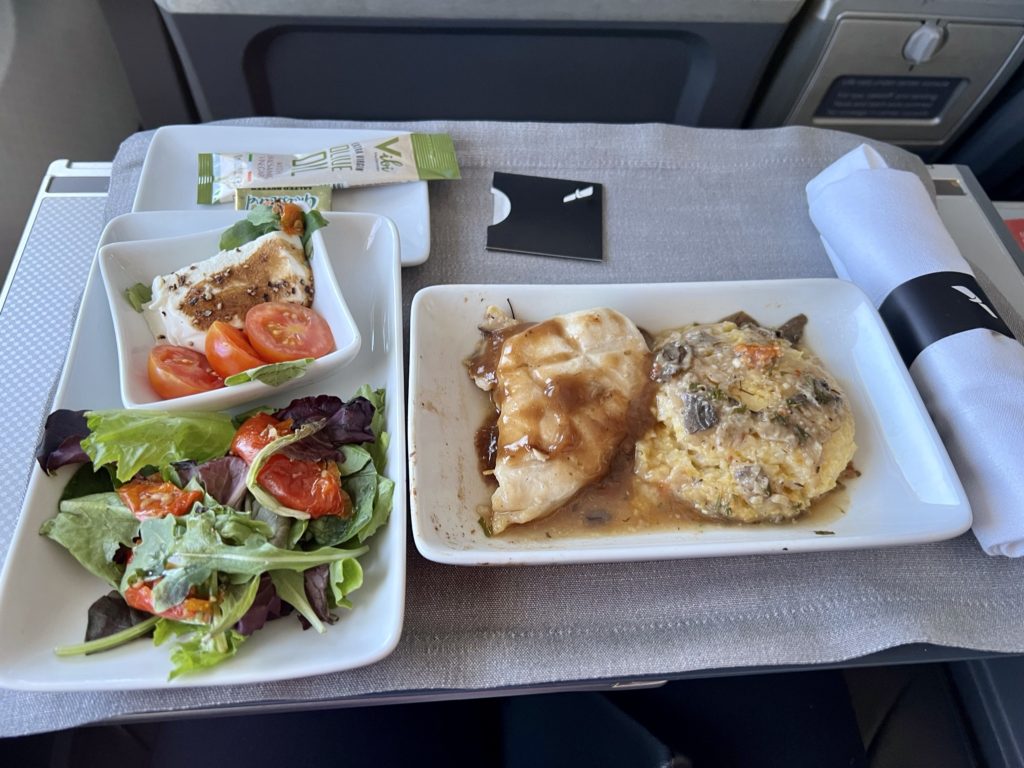
Since the blogger is required to post the photographer’s food pictures, we’ll get this one out of the way. On our two outbound flights, this entree was the most recognizable, to the eye if not to the palate. On our other flight, they ran out of cauliflower pasta right off. When there’s a run on cauliflower pasta, that says someting about the alternative.
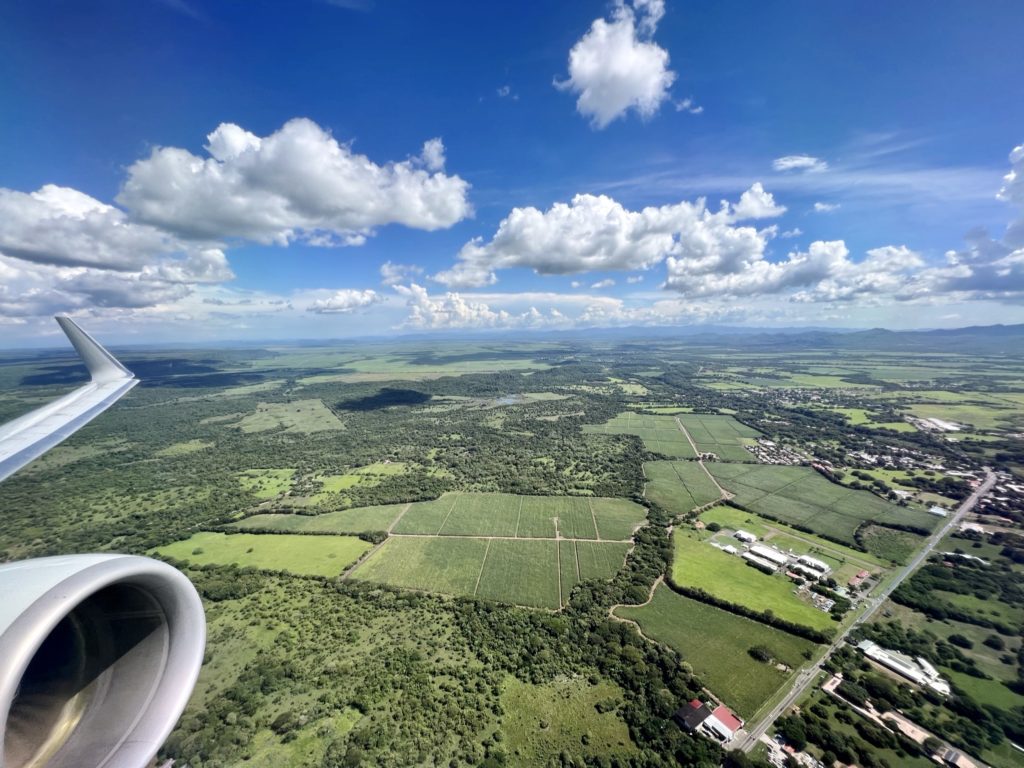
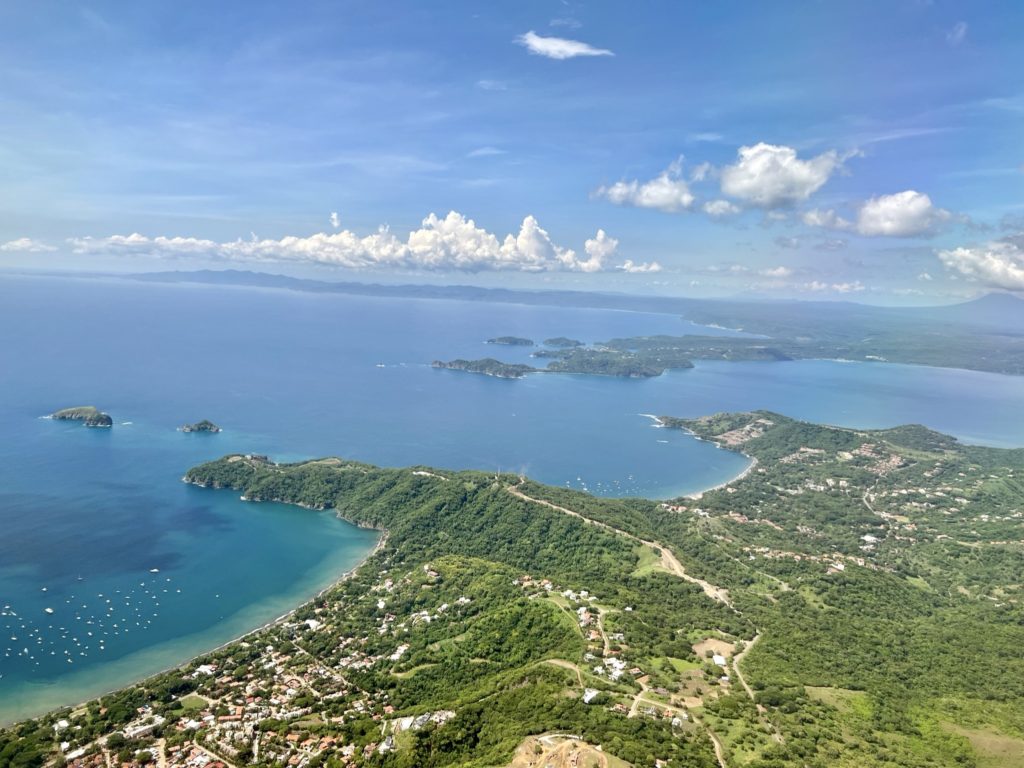
As we descended toward Liberia, Costa Rica, we flew over Playa del Coco. Playa Hermosa, where we’ll spend the final four nights of our trip, is the second bay from the left.
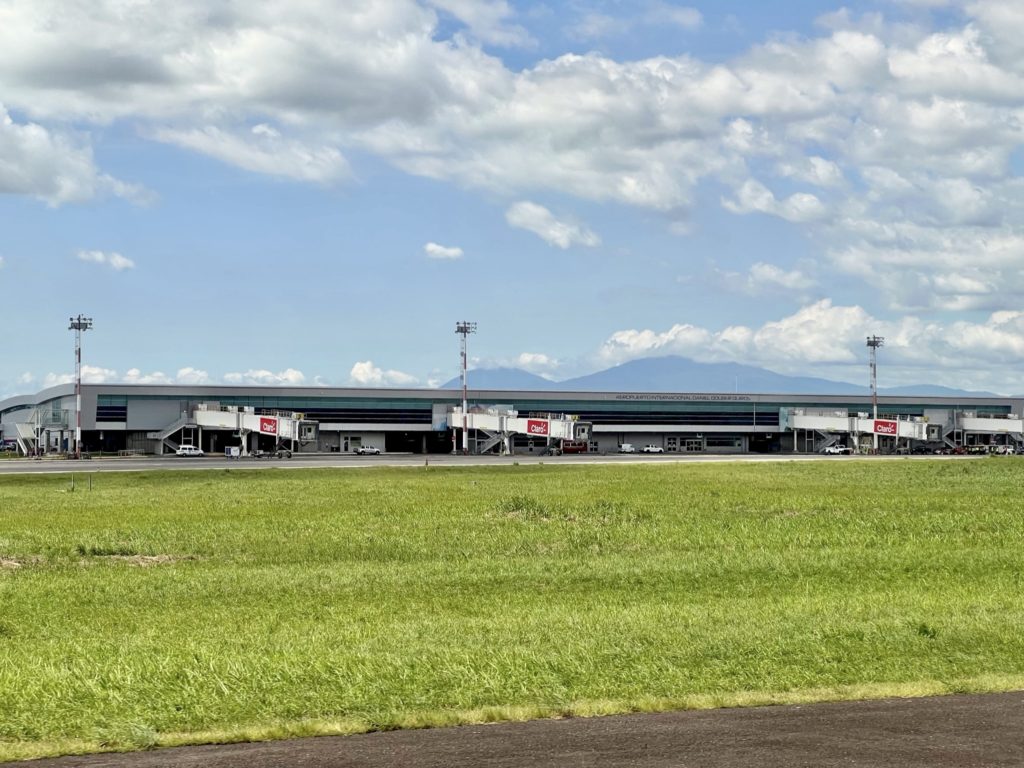
The Liberia Guanacaste Airport is a small, four-jetway affair. Immigration control was smooth, although they insisted we provide proof of our intention to eventually depart. Adobe Car Rental met us just outside of customs and gave us amazing service, including having our car running with the air conditioner on when they handed us the keys.
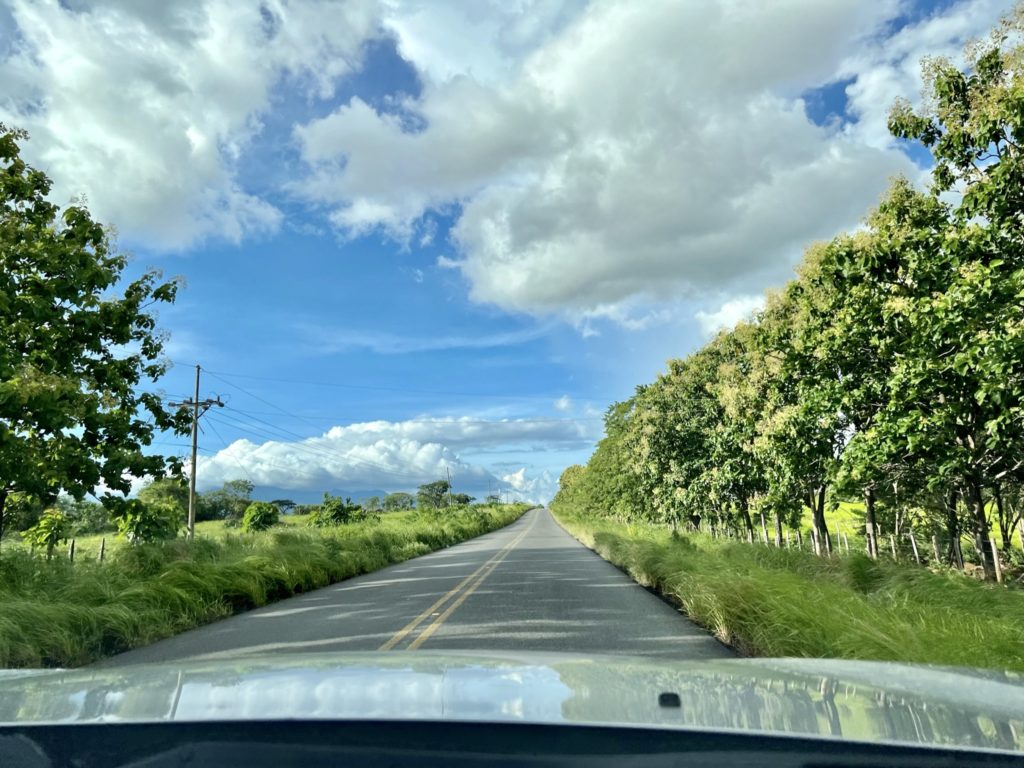
From the airport, we had a three-hour drive to La Fortuna, our first stop. Once we left the four-lane highway, the shoulders were the first to go.
Lane markers went next. We should have appreciated the pavement more while we had it. With most roads having no names, the GPS lady simply repeated, “Turn at the next unpaved road.”
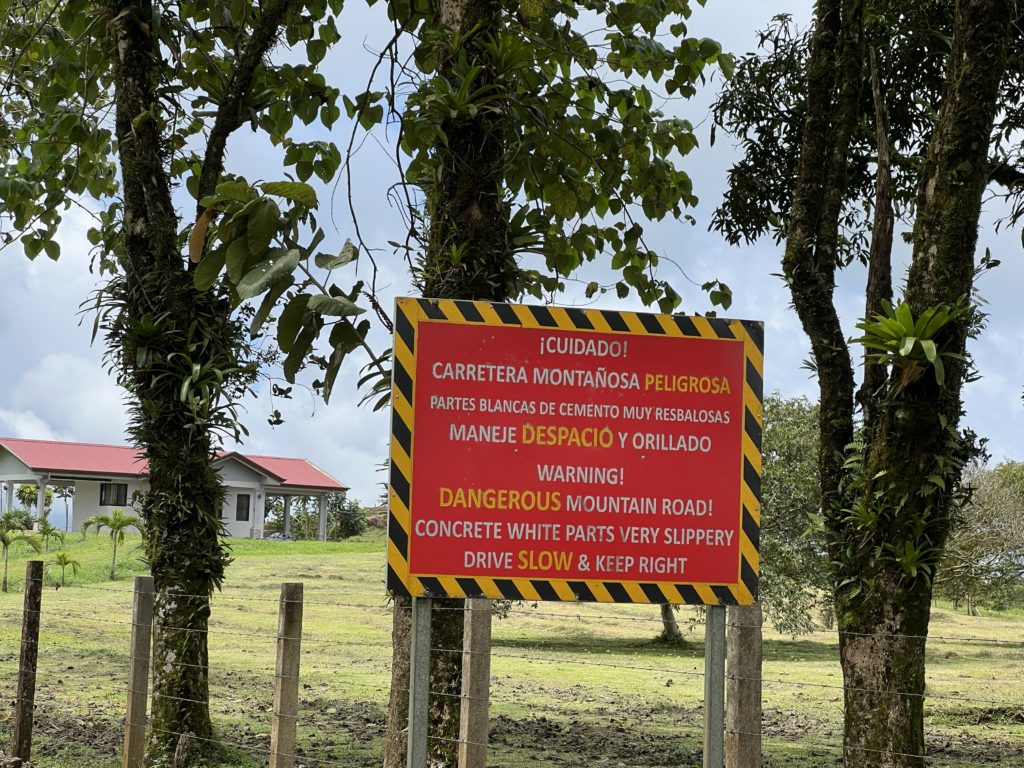
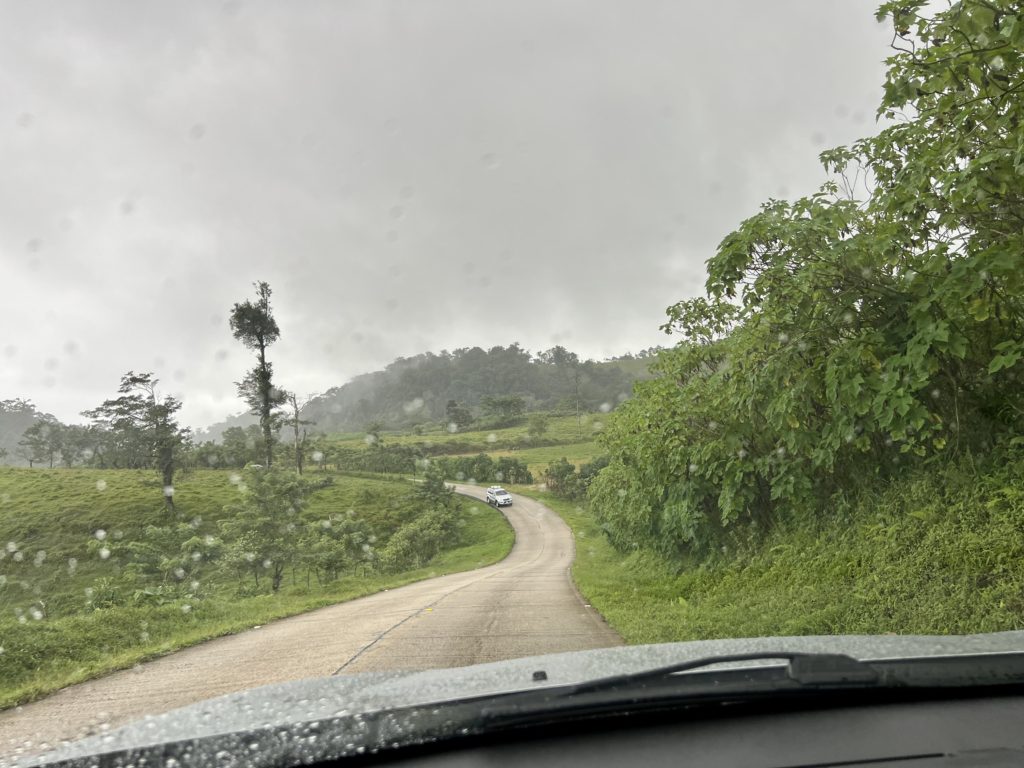
In truth, most roads are fine. We just needed to traverse a few rough ones to cut through the Tenorio Volcano highlands so we could avoid the twisty-windy’s around Lake Arenal. Read the sign, add some pot holes, one-lane bridges, hairpin turns, and a few steep climbs, and you’ll get the picture.
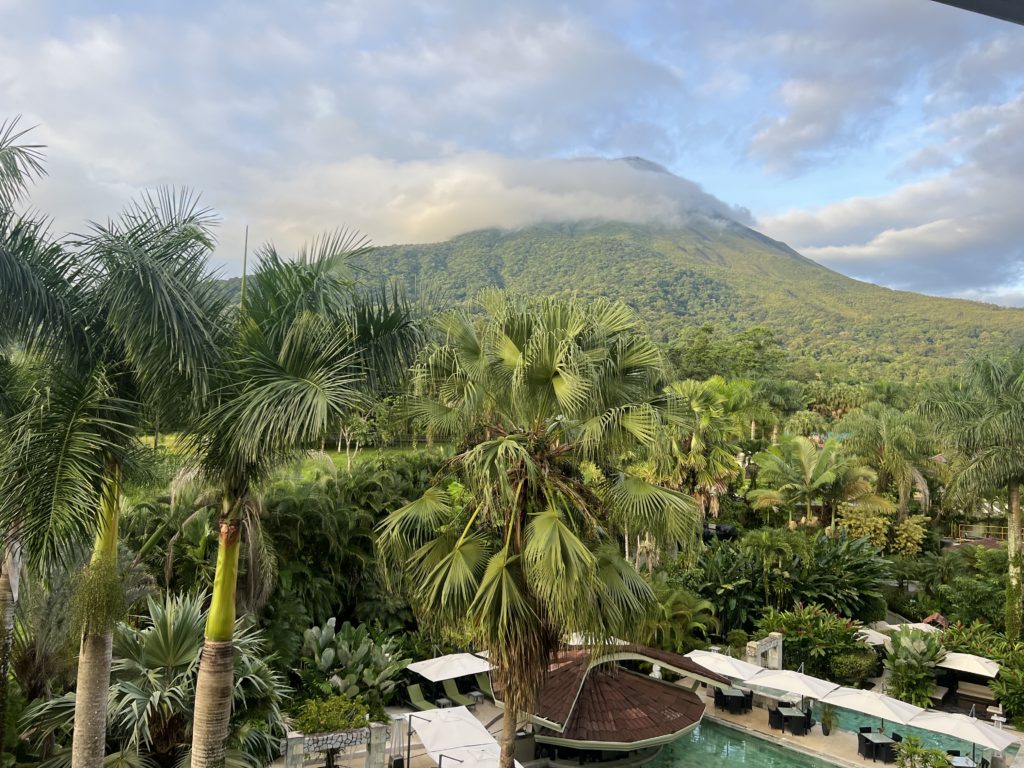
Delayed a bit by La Fortuna Independence Day traffic, we arrived at the Royal Corin hotel just as the sun was setting. We woke to a great view over the hot springs and of Arenal Volcano, give or take a few clouds.
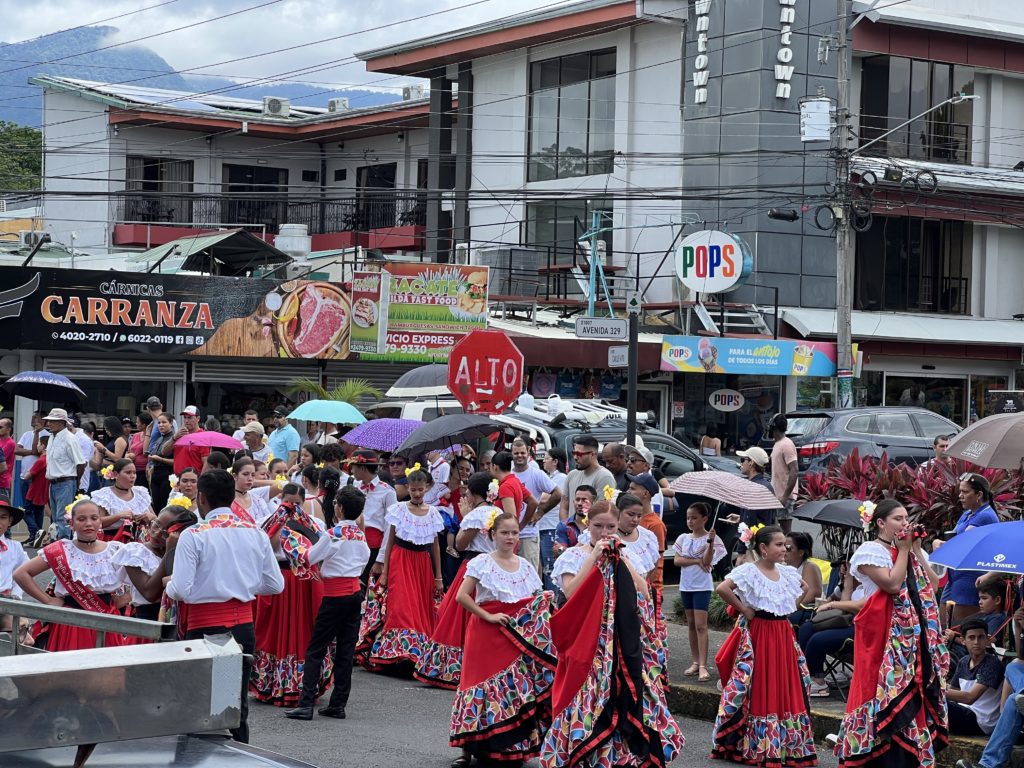
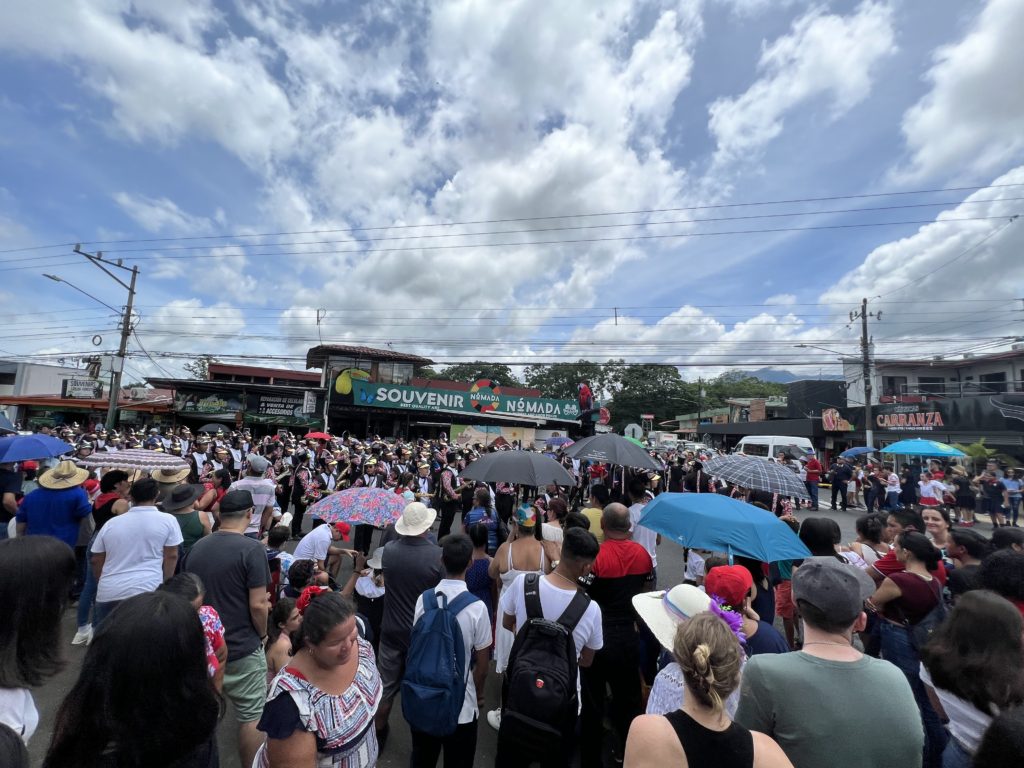
The day after we arrived, La Fortuna’s Main Street was closed for a long, Costa Rican Independence Day parade. Pride of place was held by the La Fortuna Marching Band, which was last to march (below).
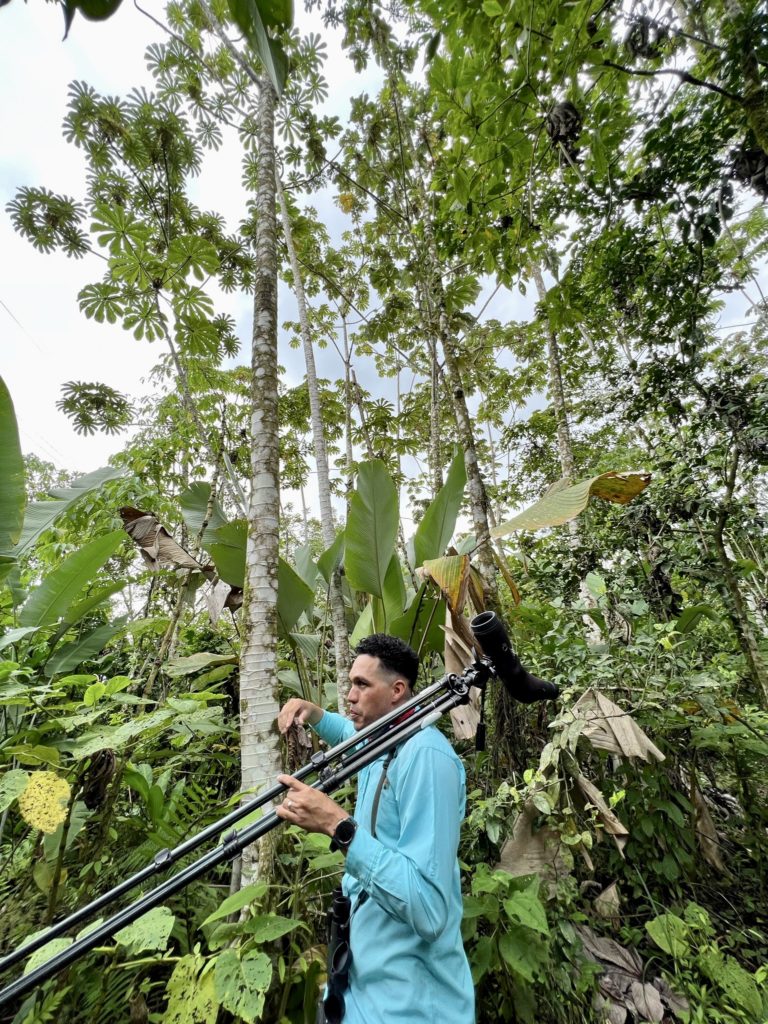
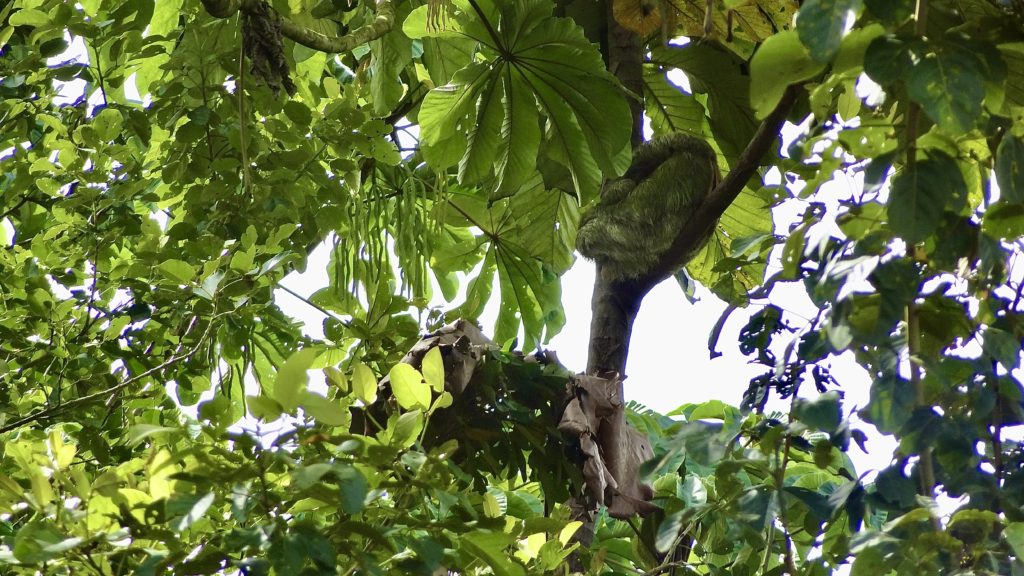
One morning, we hired a guide to help us find sloths. Here our man Diego hoists his spotting scope, the essential tool of jungle guides. The tall trees with umbrella leaves are the hollow, bamboo-like cecropia, favorite of sloths.
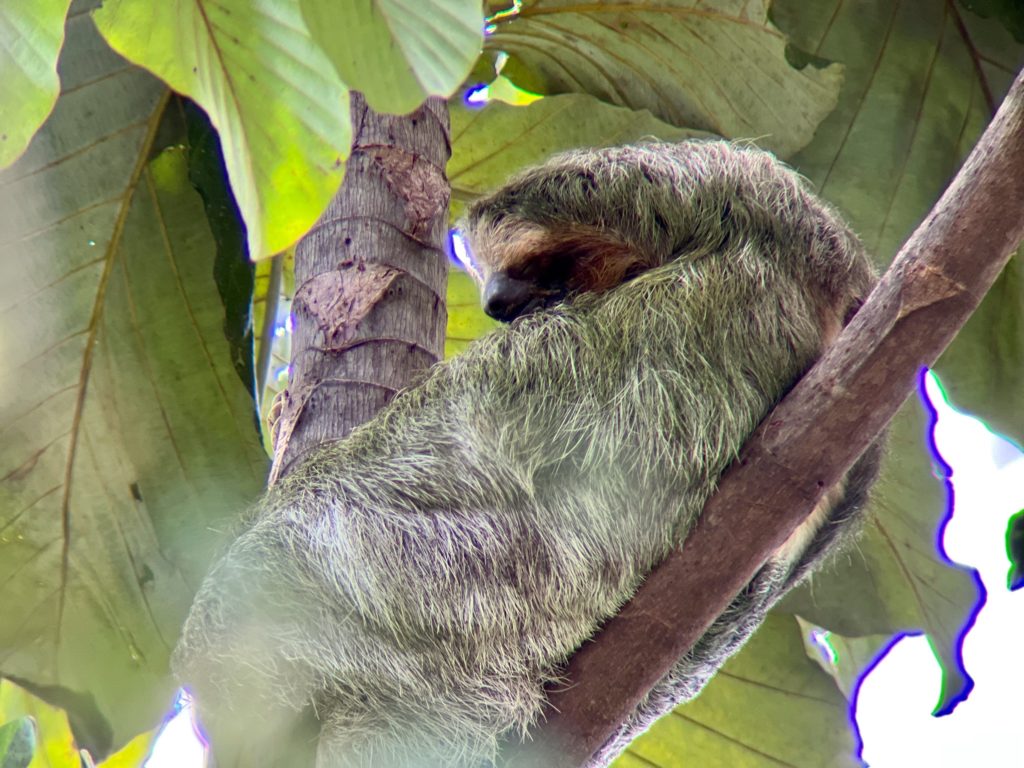
We found two sloths. A three toed one, above and below, and its two toed cousin. The two toed one was so high in a tree that we couldn’t get a good picture, but the spotting scope gave us a good look.
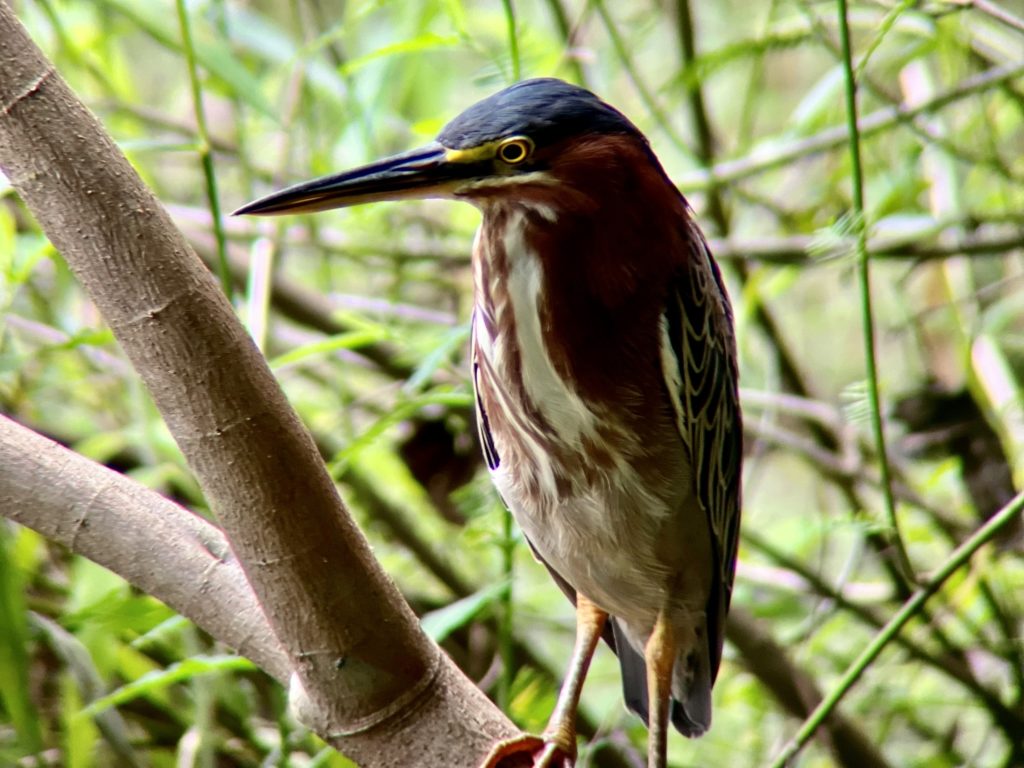
Other wildlife was plentiful in the open areas along a little stream, like this Green Heron.
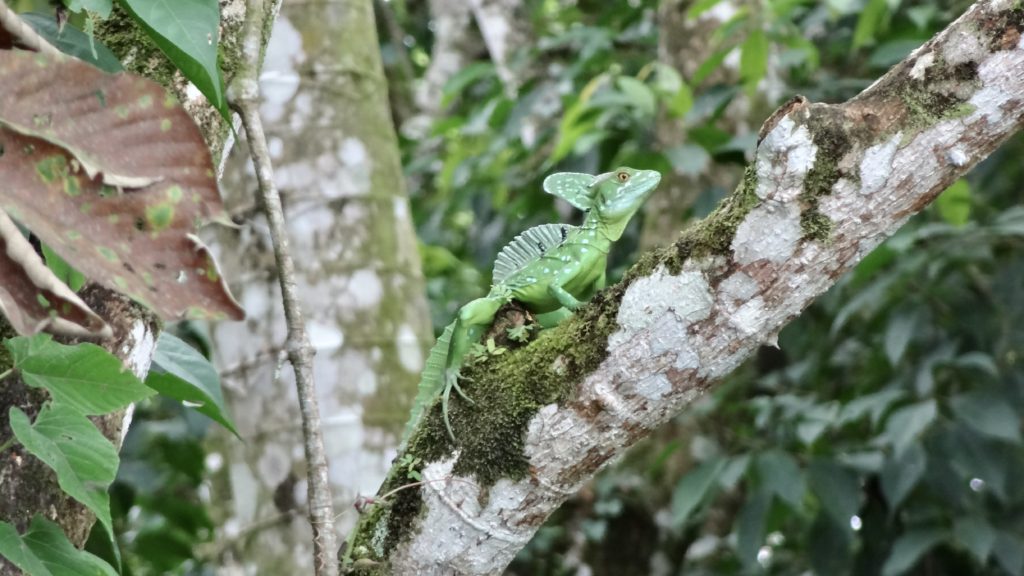
And this male Jesus Christ Lizard, named for its ability to run on water.
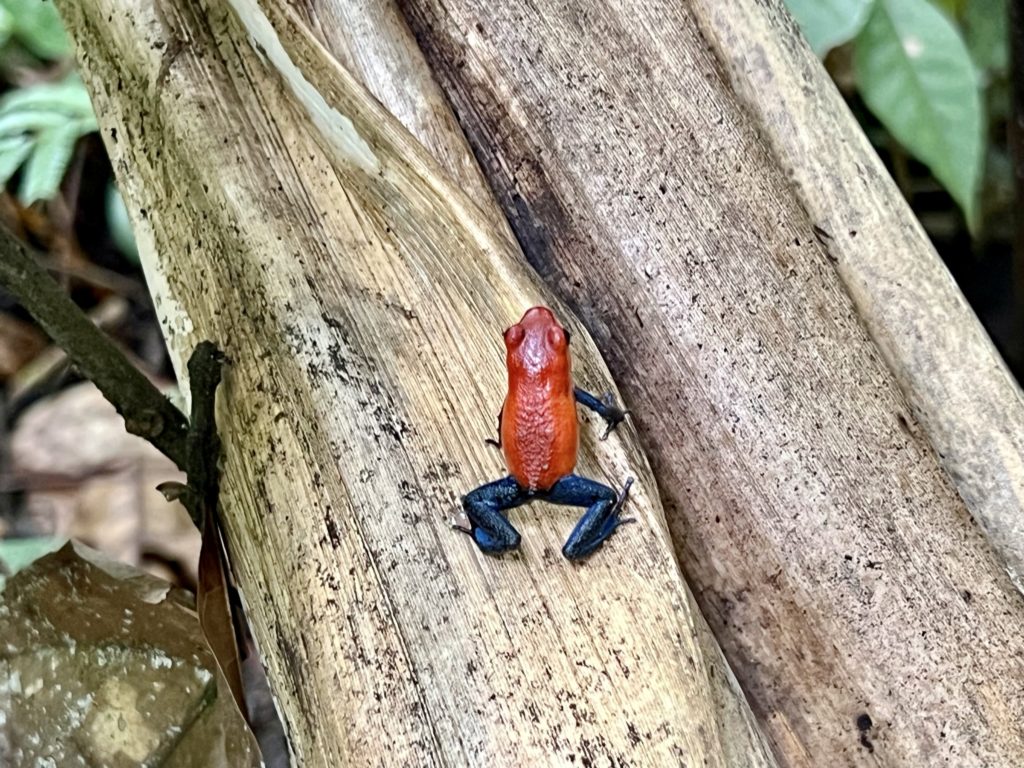
A Costa Rica nature safari wouldn’t be complete without poisonous frogs. This red one is called the Blue Jeans Frog.
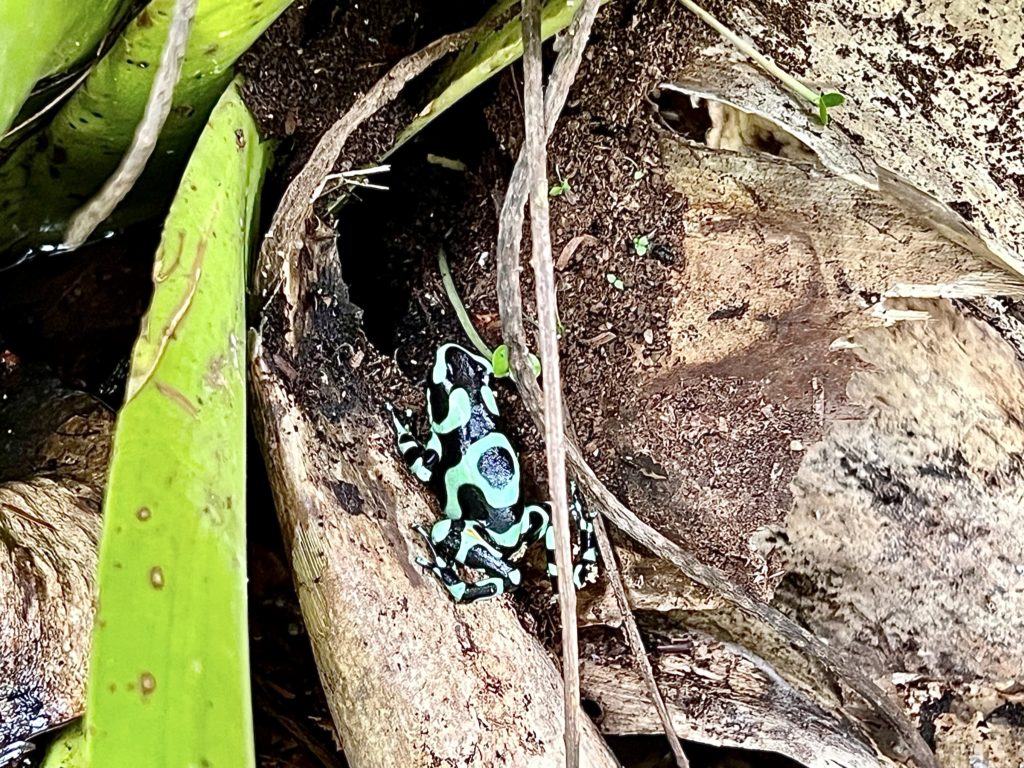
Here’s a Black and Green Poison Dart Frog.
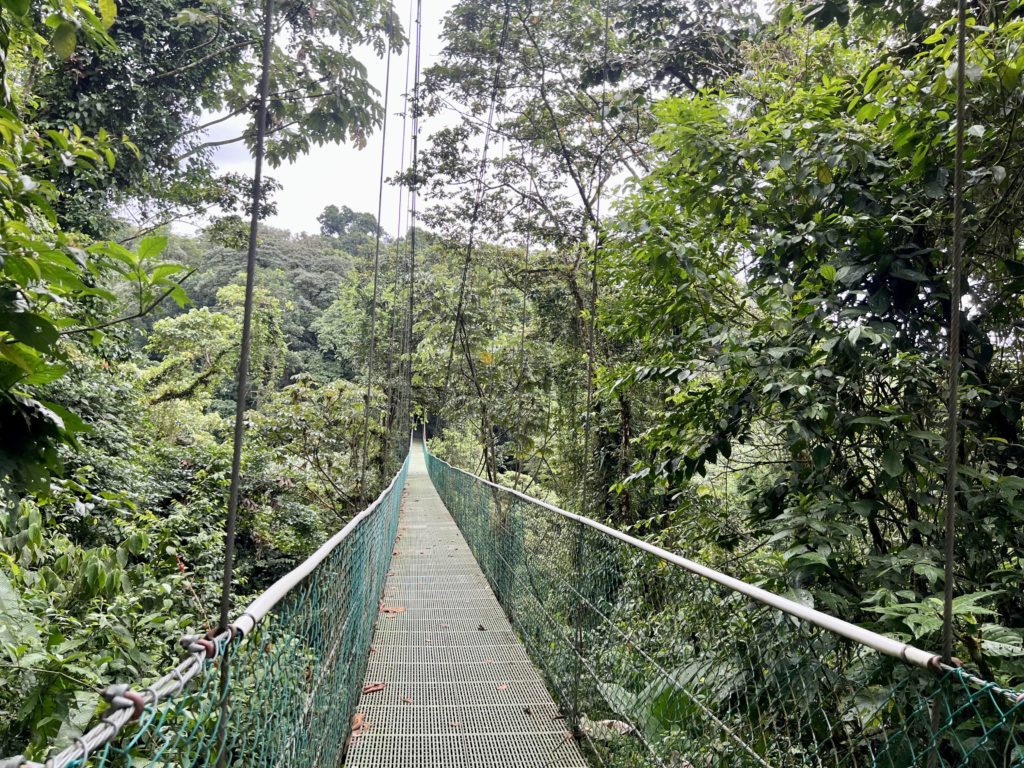
On another day, we went into the Arenal Rain Forest and hiked a trail of swinging bridges.
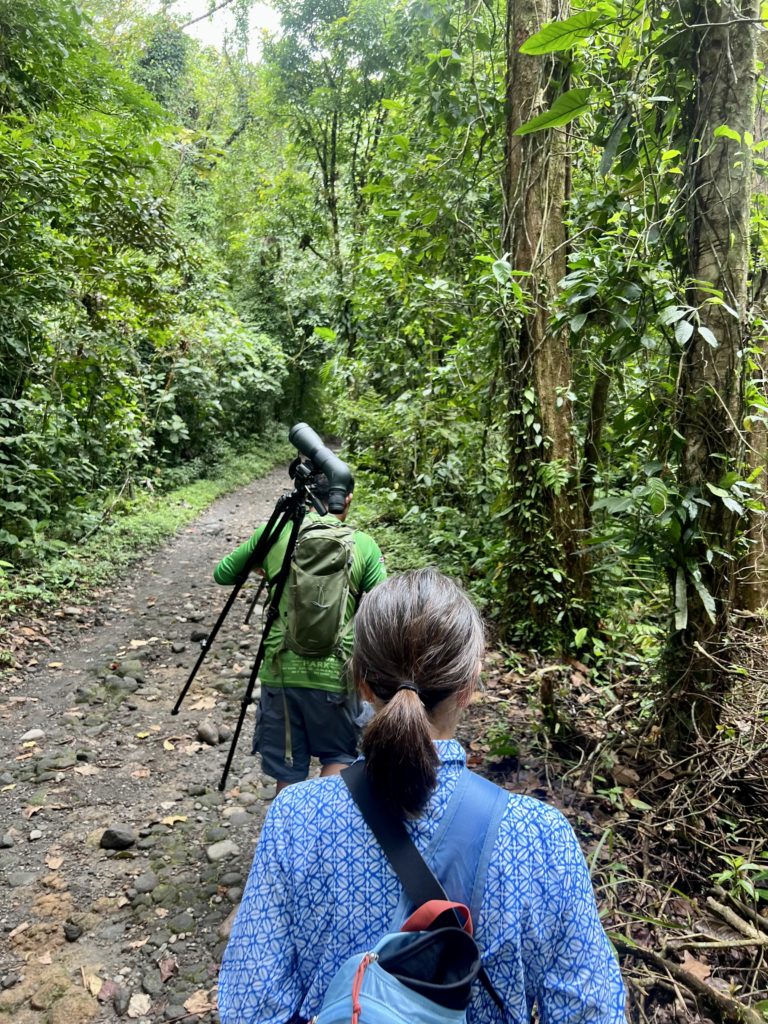
Our guide was Renaldo. He, too, toted a scope, but in the much denser jungle, most of what we saw was more the result of his sharp eyes than magnification.
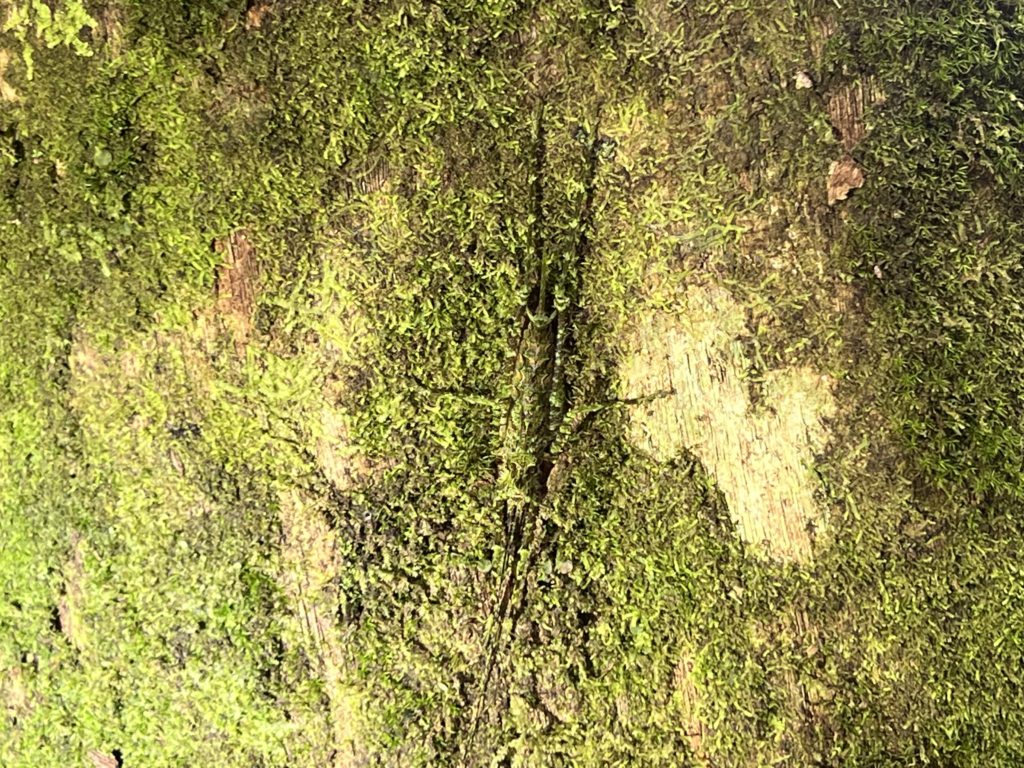
Like this three inch relative of a katydid that was invisible to us until he outlined it with a laser pointer.
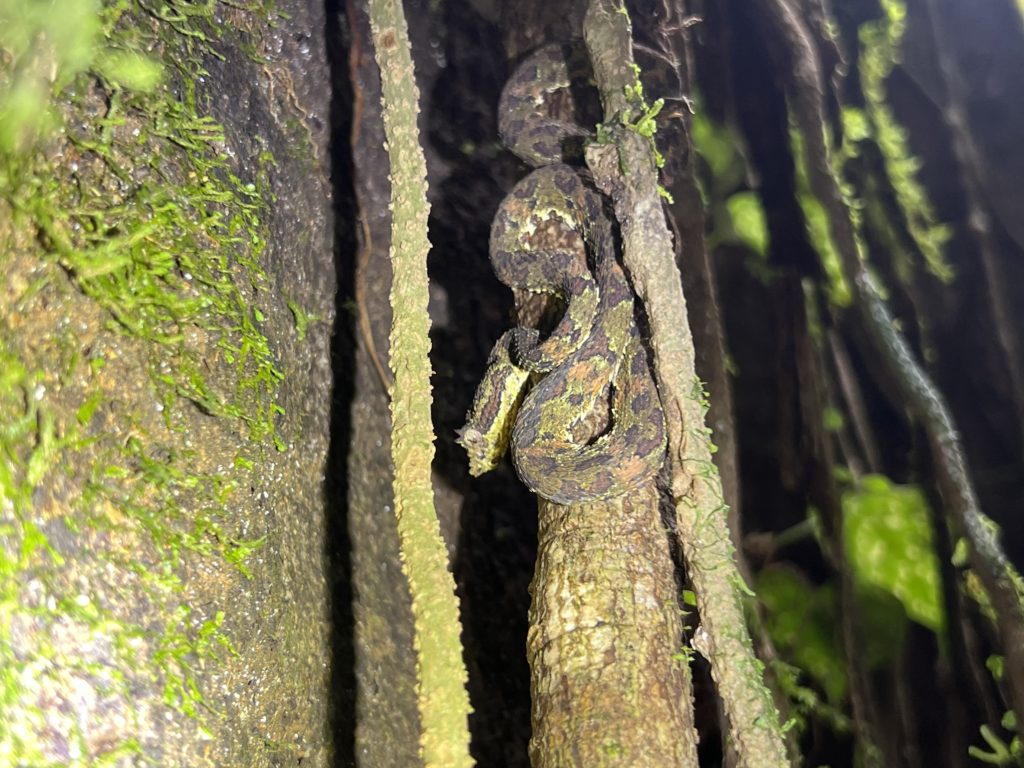
The same was true for this Eyelash Viper. Poisonous and virtually invisible in the roots and vines beside the trail.
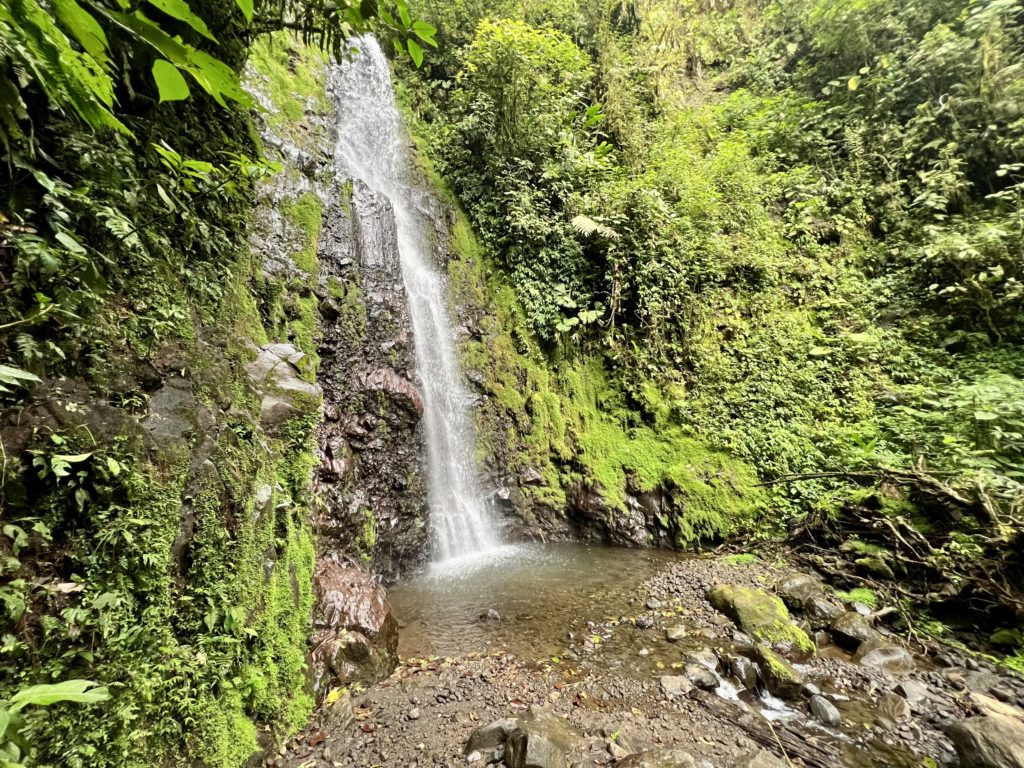
We hiked for about three hours up and down valley trails, over several streams, and past a couple of waterfalls.
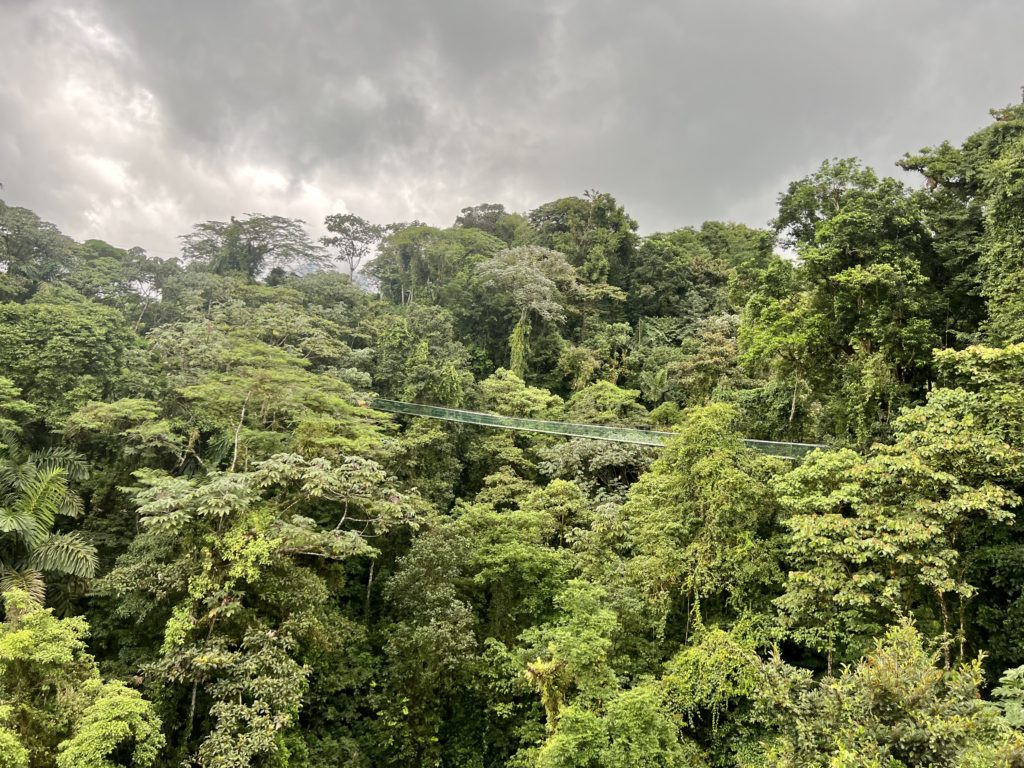
Only from the bridges could we get a full sense of the jungle around us.
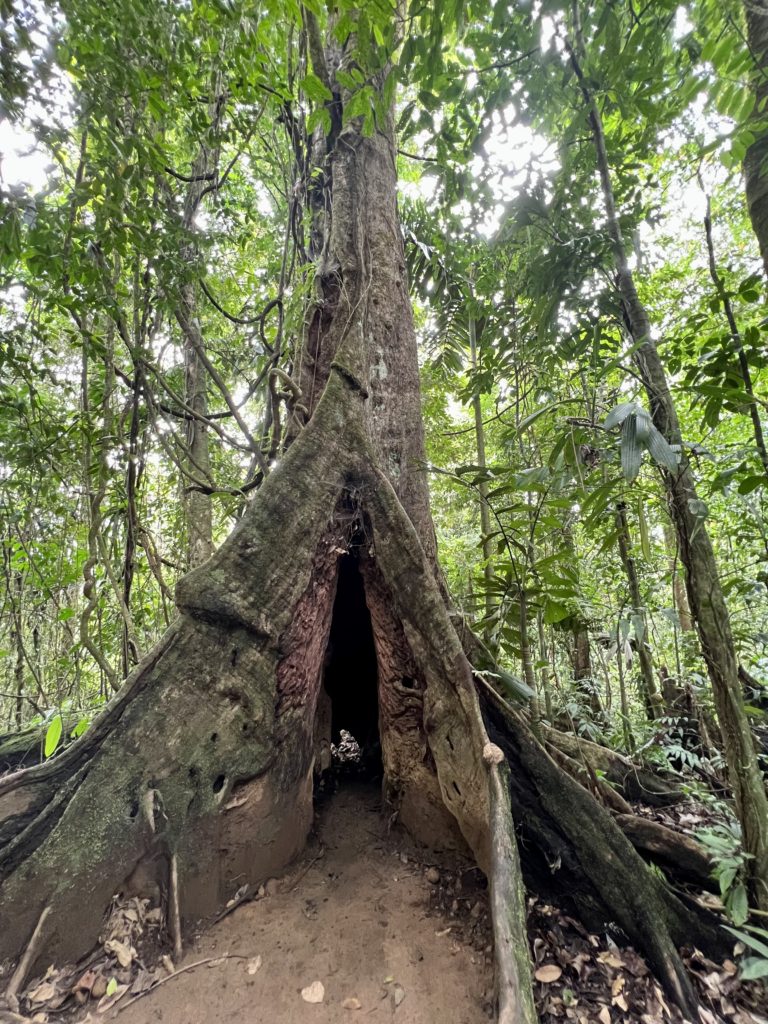
On the trails themselves, we literally couldn’t see the forest for the trees, some hollowed out and held aloft by their great roots alone.
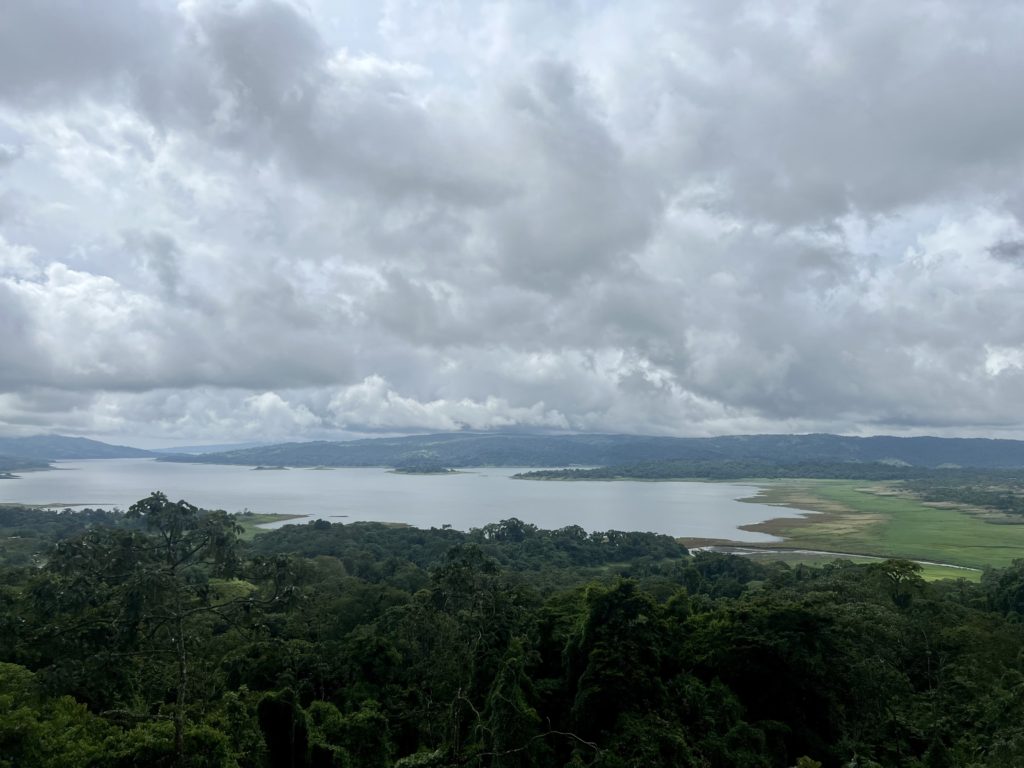
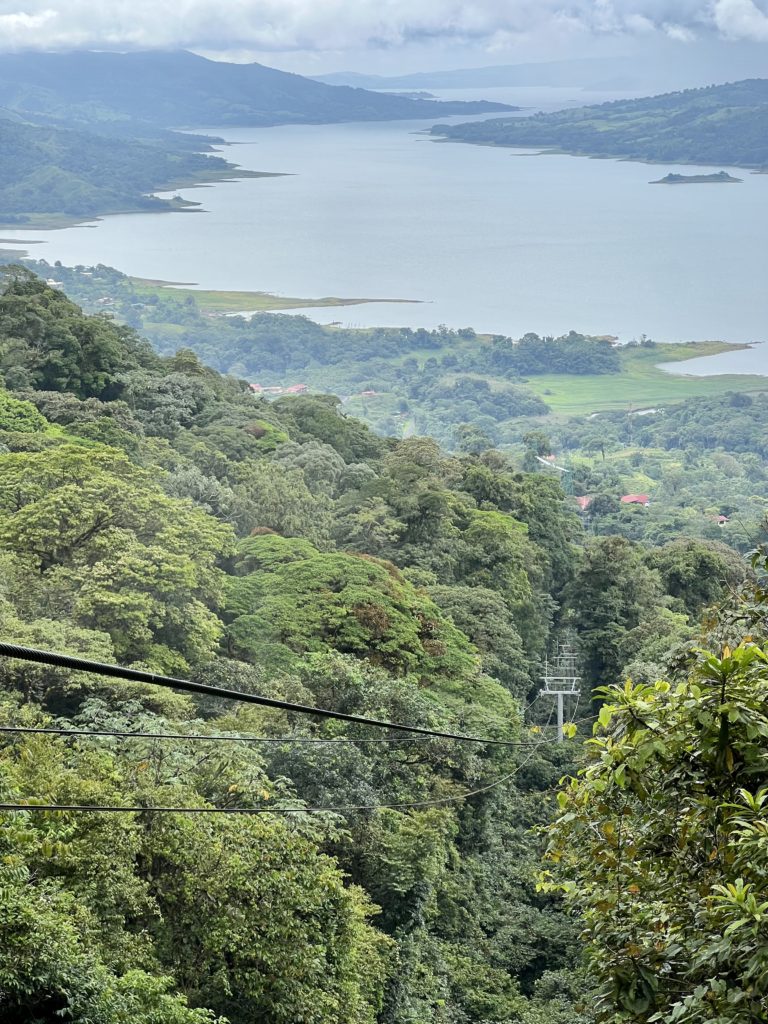
After our long hike, we had lunch at a viewpoint restaurant that was attached to a forest sky tram. The view of Lake Arenal was spectacular.
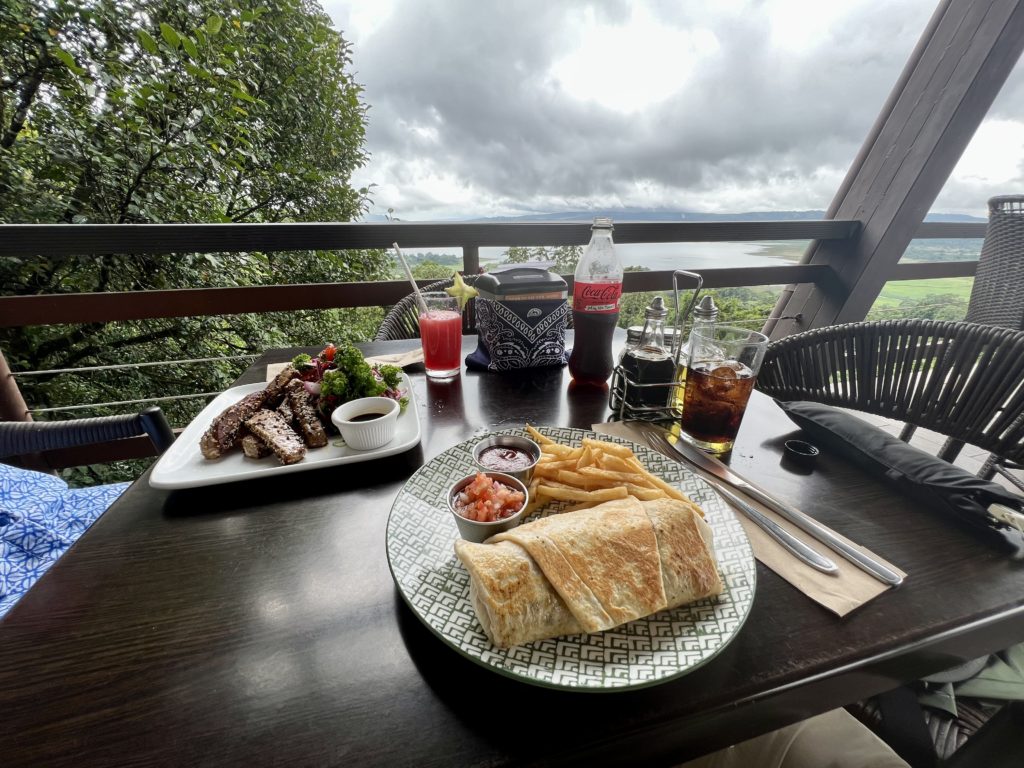
We lunched on seared tuna and a typical bean, rice, and chicken burrito.
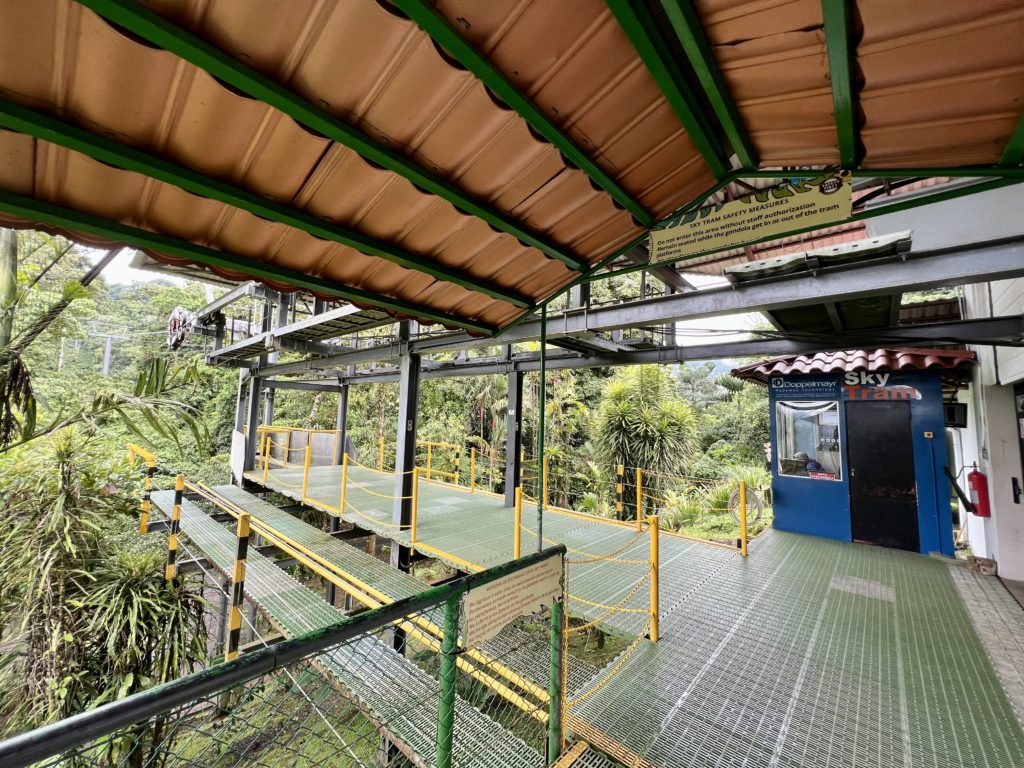
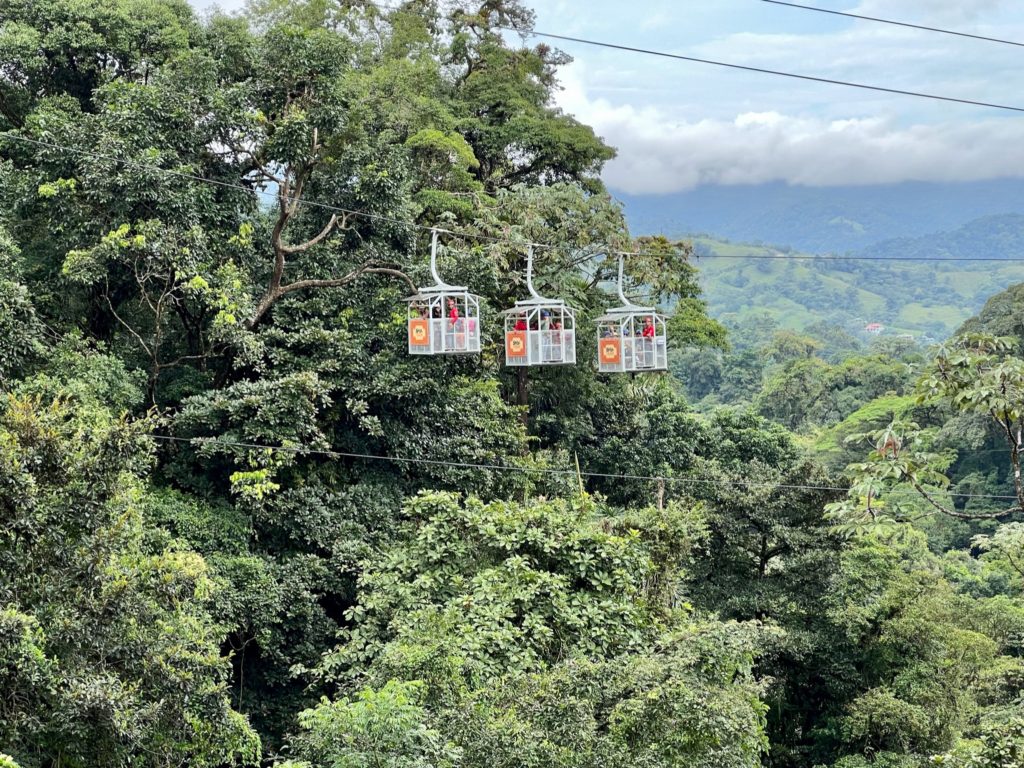
After lunch, we got in line for the sky tram to an even higher viewpoint. We were the beginning and the end of the line and rode to the top alone. Kind-of alone, anyway. We were accompanied by a tram attendant, who would radio down and have the tram stopped so we could watch howler monkeys in the treetops and the like.
The ride up takes about 10 minutes in open buckets, for lack of a better descriptive.
The view from the top of tram run is spectacularer, even, than from the restaurant. It is also the jumping off point for three miles of zip lines. We rode the buckets back down.
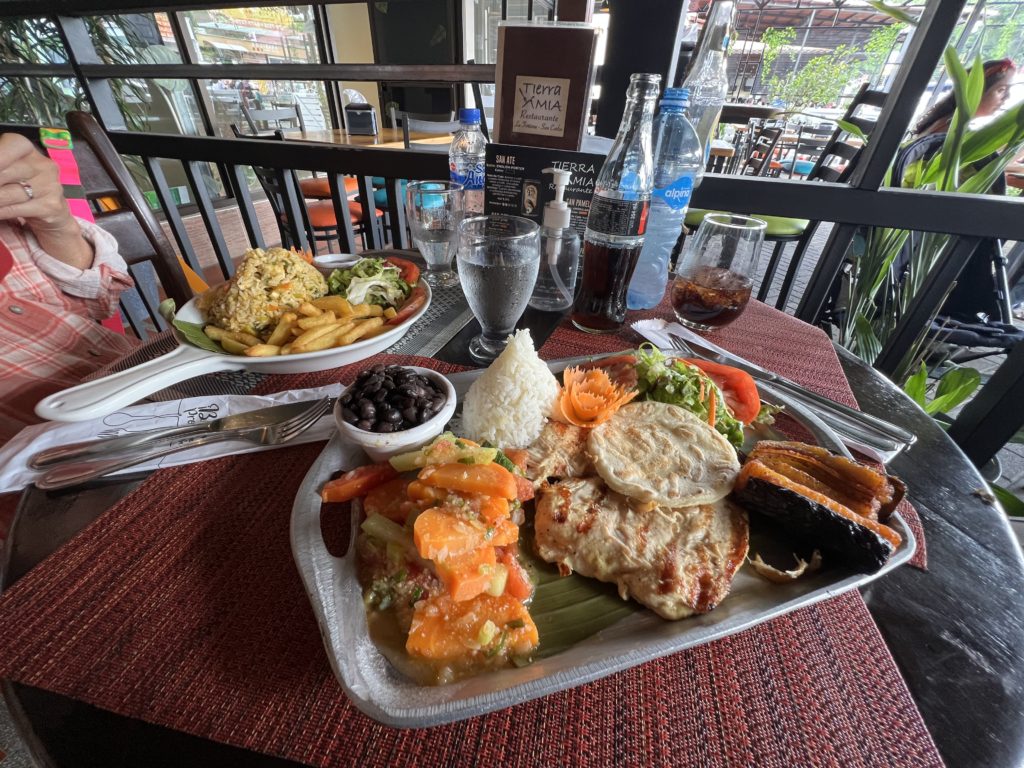
We asked guides and locals for favorite restaurants. We’re not sure it helped. We did, however, come to understand why there are no Costa Rican restaurants outside the country. Gallo Pinto Casado, above, is classic comida tipica (typical food) of rice, beans, and meat. Plus whatever else the chef is inspired to add. The dish is not spiced or flavored, except with maybe a little garlic, so it tastes like it looks. Nothing to blog home about.
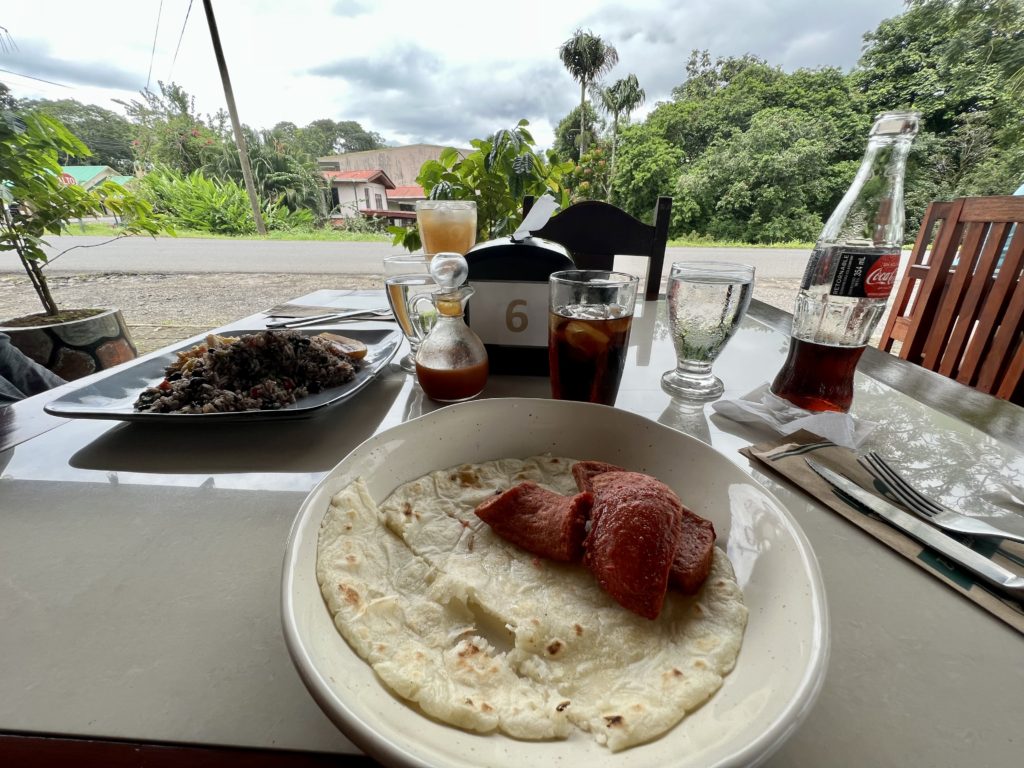
Here is more comida tipica, an early lunch from the breakfast menu at a local restaurant. Salchicha sausage and tortilla in the foreground, eggs with beans and rice beyond. Filling if not terribly exciting.
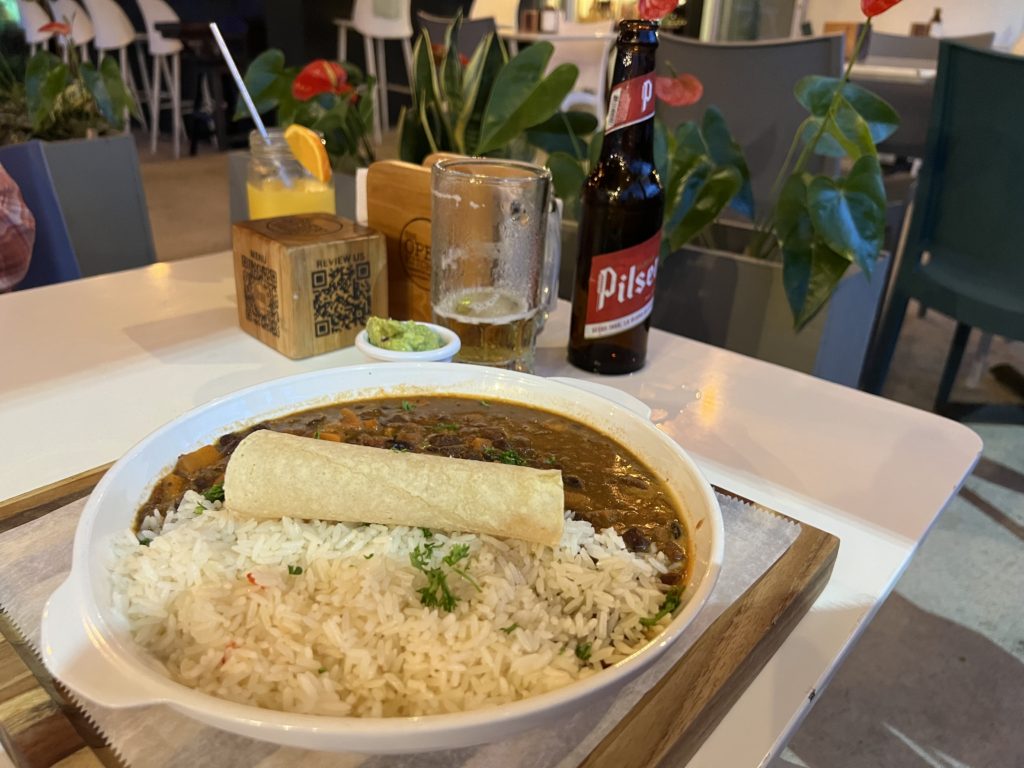
In an effort to expand our taste options, we sought out an Israeli restaurant. We ordered the the two most exotic things on the menu: thin chili con carne with rice (above) and avocado toast. Exotic because we’ve not seen either offered on any other Costa Rican menu to-date. Nevertheless, the restaurant’s link to Israeli cuisine remains a mystery.
From La Fortuna we headed to Rio Celeste, back into the hills near Tenorio Volcano. The area is cooler, being at a higher elevation, plus some rainy weather came in. The rain comes In bucketfuls, but only when directly under a storm cloud. So it comes quickly and goes quickly, except at night, when it might linger and drum steadily on the roof.
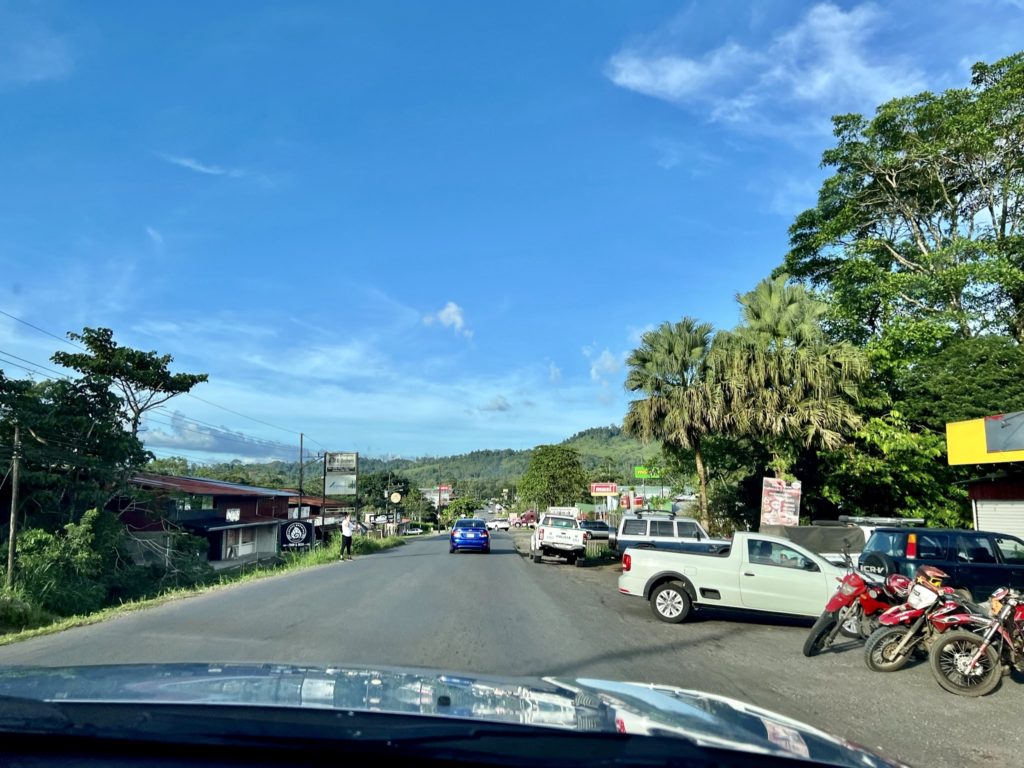
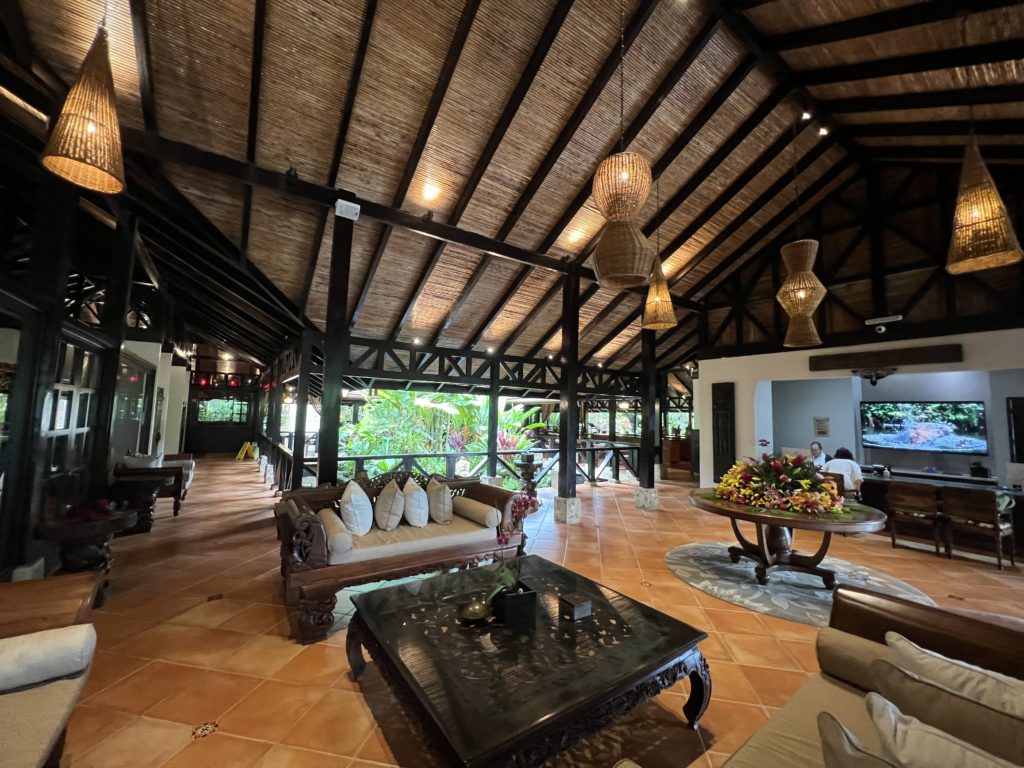
We stayed at the Rio Celeste Hideaway Hotel, a beautiful property tucked up against a national reserve. Unlike the La Fortuna area, where hotels and restaurants lined the road for miles, Rio Celeste is very rural and somewhat isolated. The nearest one-pizza-restaurant town, Bijagua, is about 20 minutes of mountain roads away.

On our arrival, we watched a large troupe of Howler Monkeys in the trees above us.
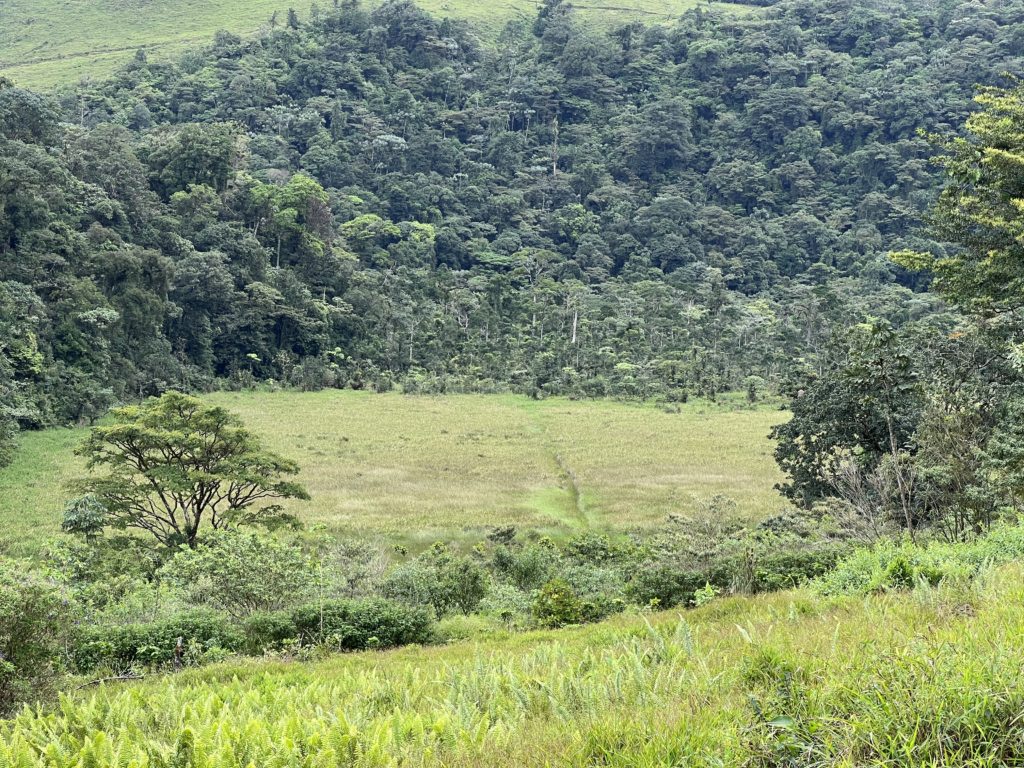
Between the hotel and the highway into town is Tapir Valley, a privately owned 220-acre wetland valley that is dedicated to, well, tapirs. It is also the only known home of the rare Tapir Valley Tree Frog, and way too many other species.
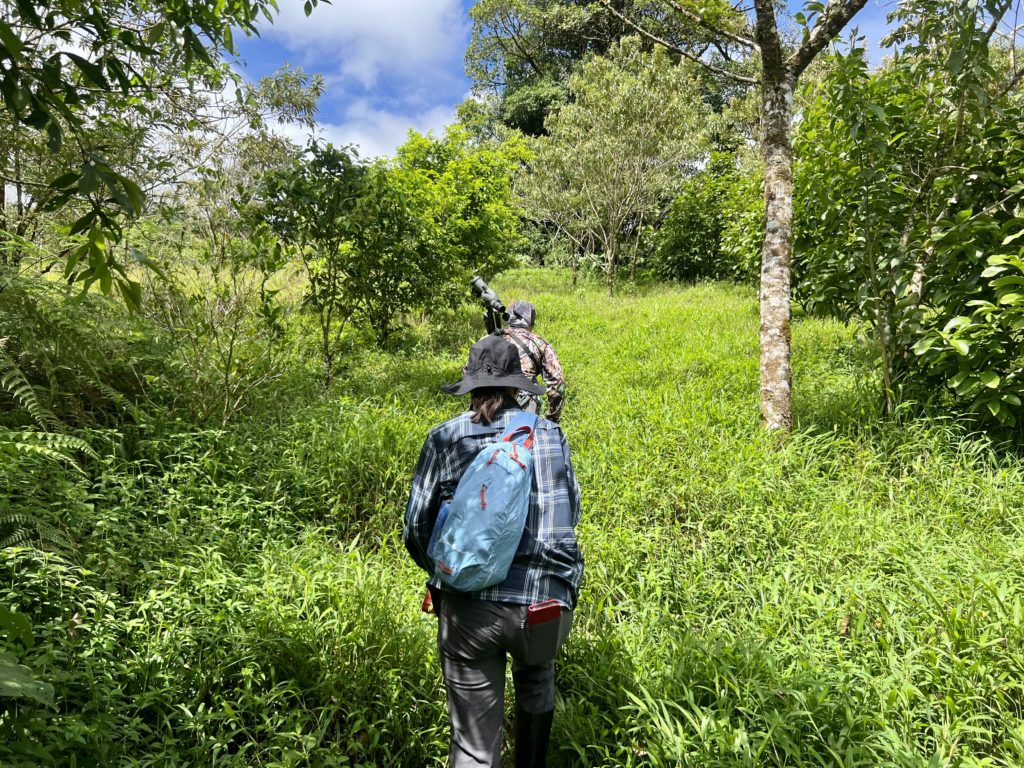
Our guide, Gorge, is the one towing the big spotting scope.
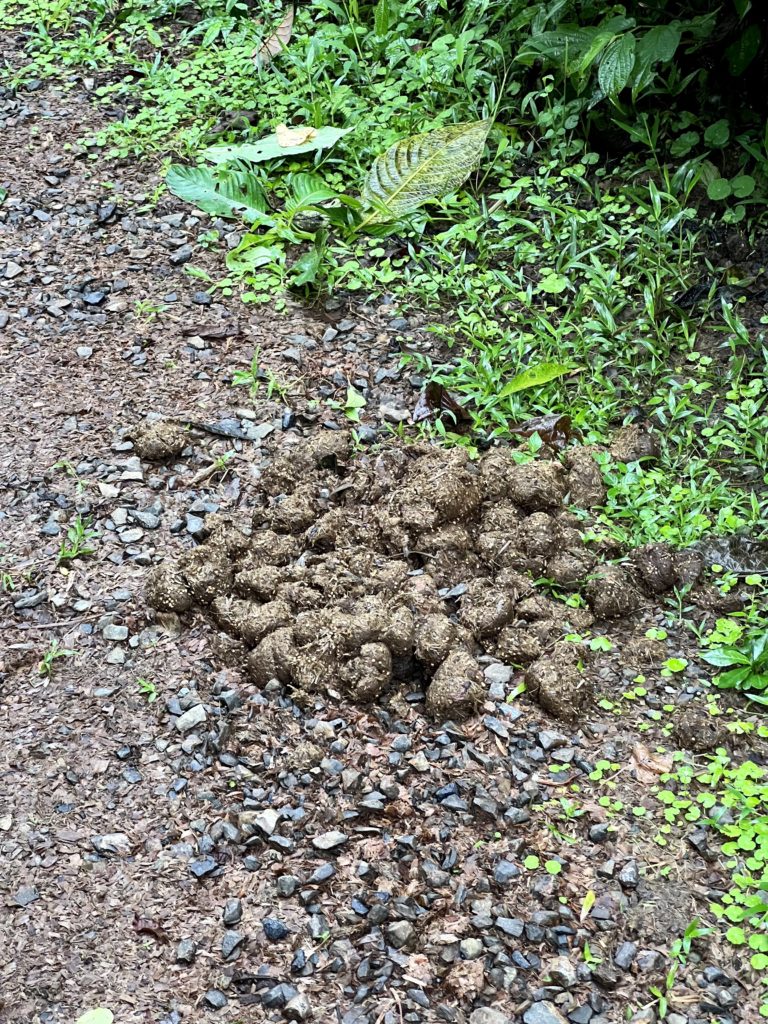
We saw no tapirs, but we were assured that this is tapir poop. Wholly vegetarian, adults can weigh in at over 600 pounds. And they love the native guavas. We really wanted to see one.
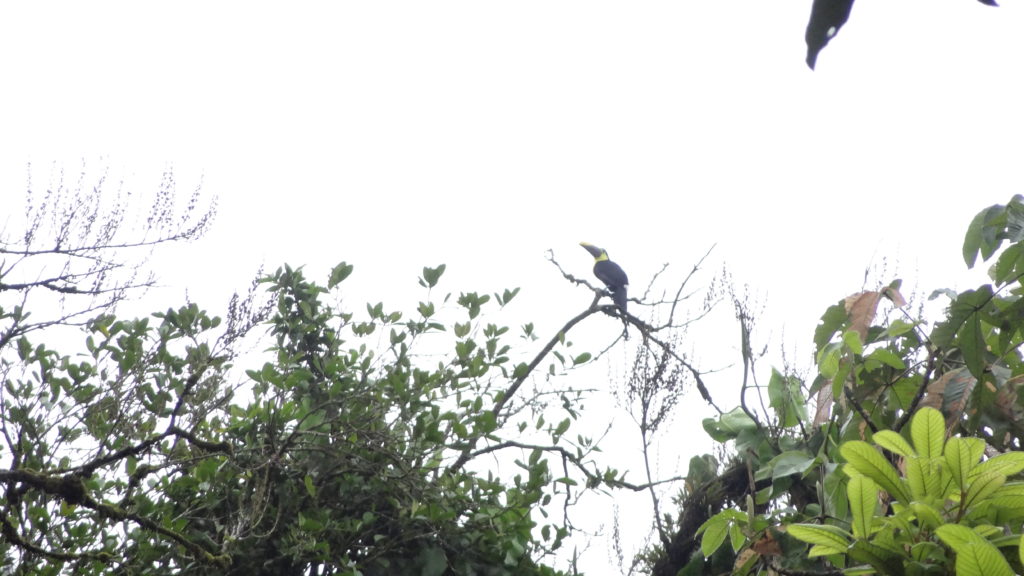
We did see many of the hundreds of other residents of the valley, though. Toucans in treetops …
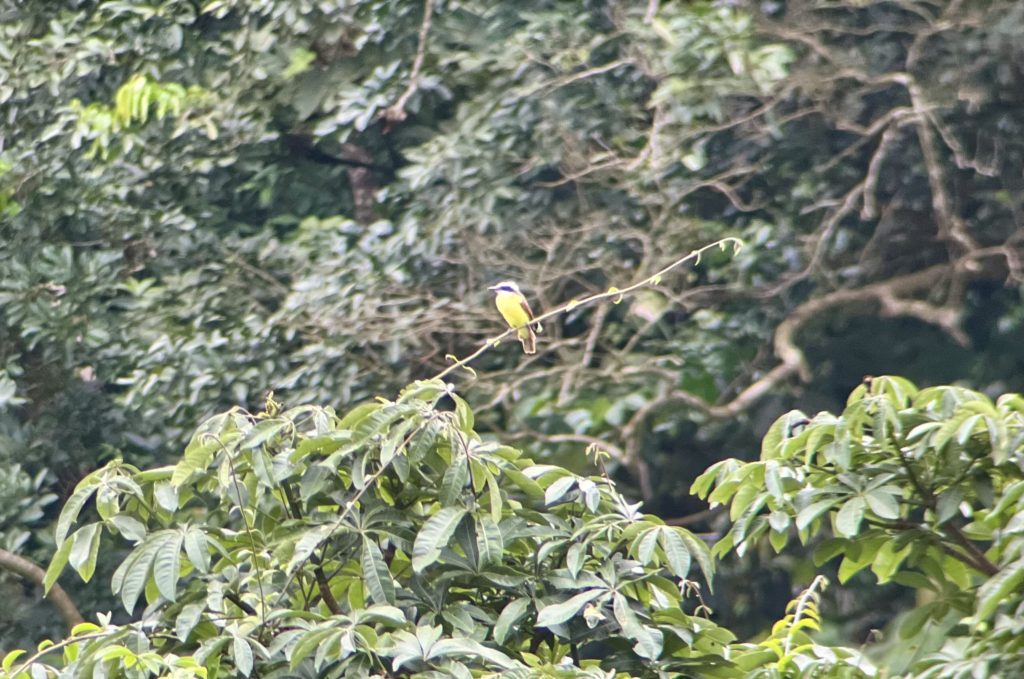
Several kinds kind of tanager …
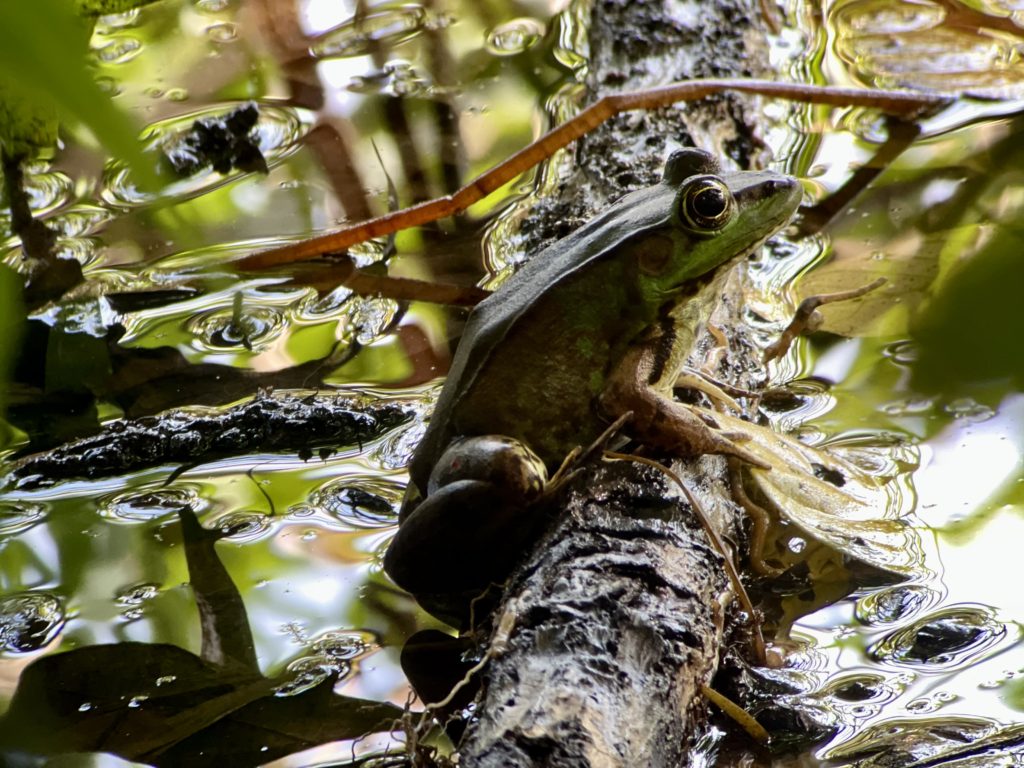
True frogs …
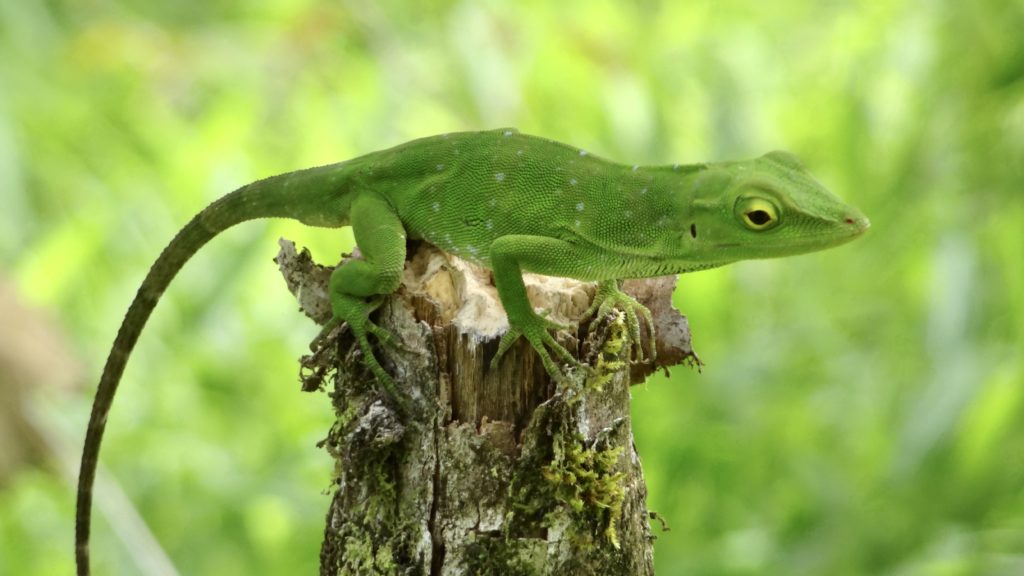
And monkey lizards. To name a few.
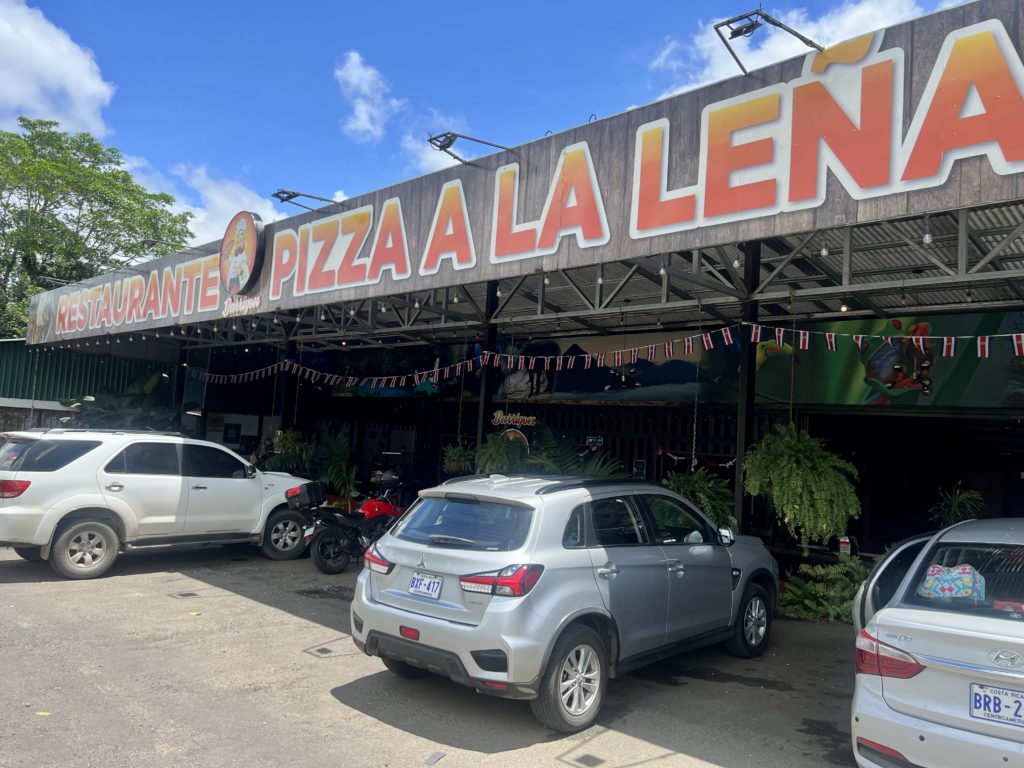
For lunch, our guide recommended the pizza restaurant in town. We parked our little 4WD Mitsubishi out front and visited the souvenir shop, conveniently bolted to the side of the restaurant. We bought something for the photographer to dust when we get home.
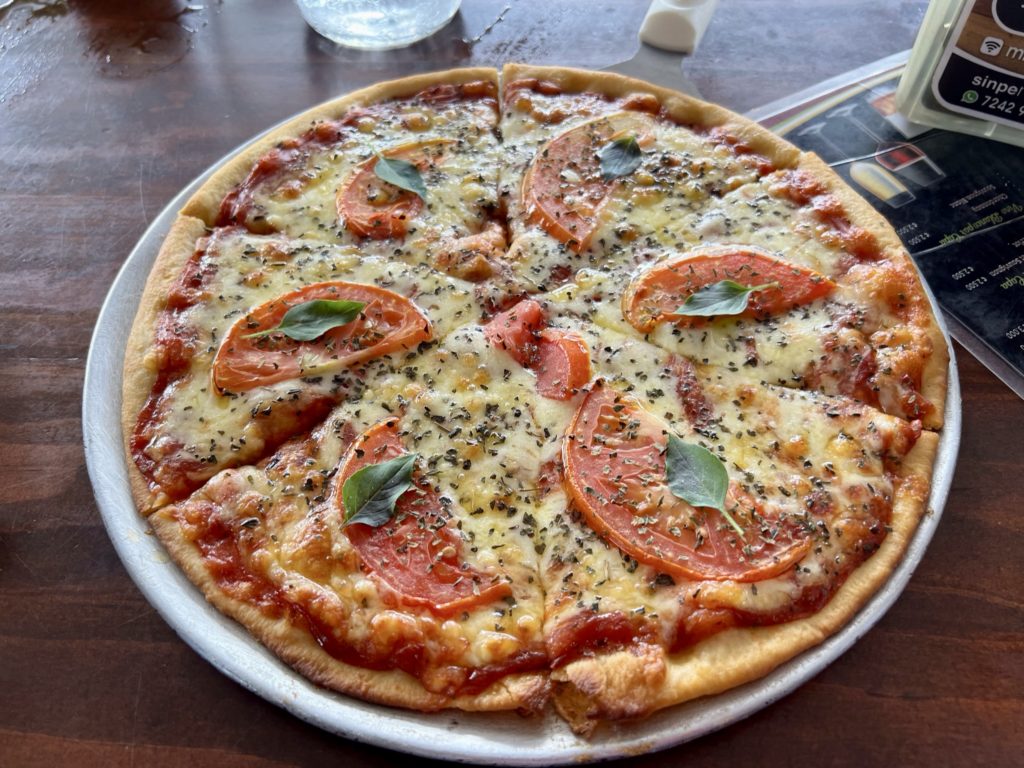
Our margarita pizza was pretty good. Easily the most flavor we’ve run into so far.
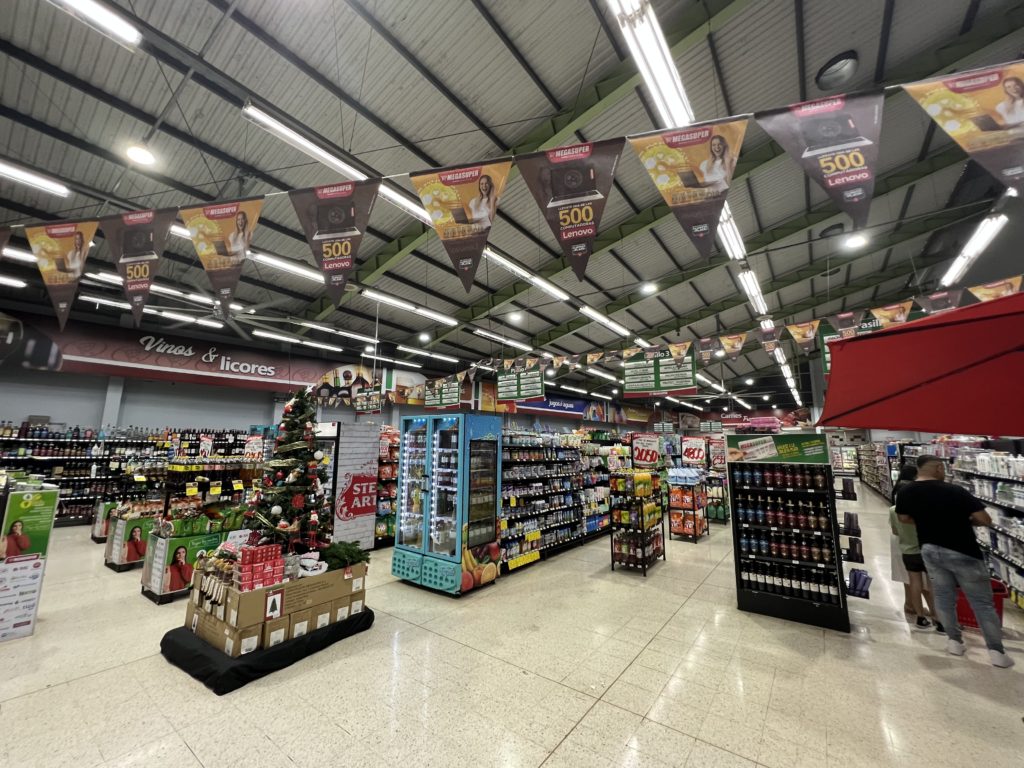
On the way back to the hotel, we stopped at the MEGASUPER to buy water and check out local shopping. We thought the name unnecessarily redundant, until we started seeing MINISUPERs.
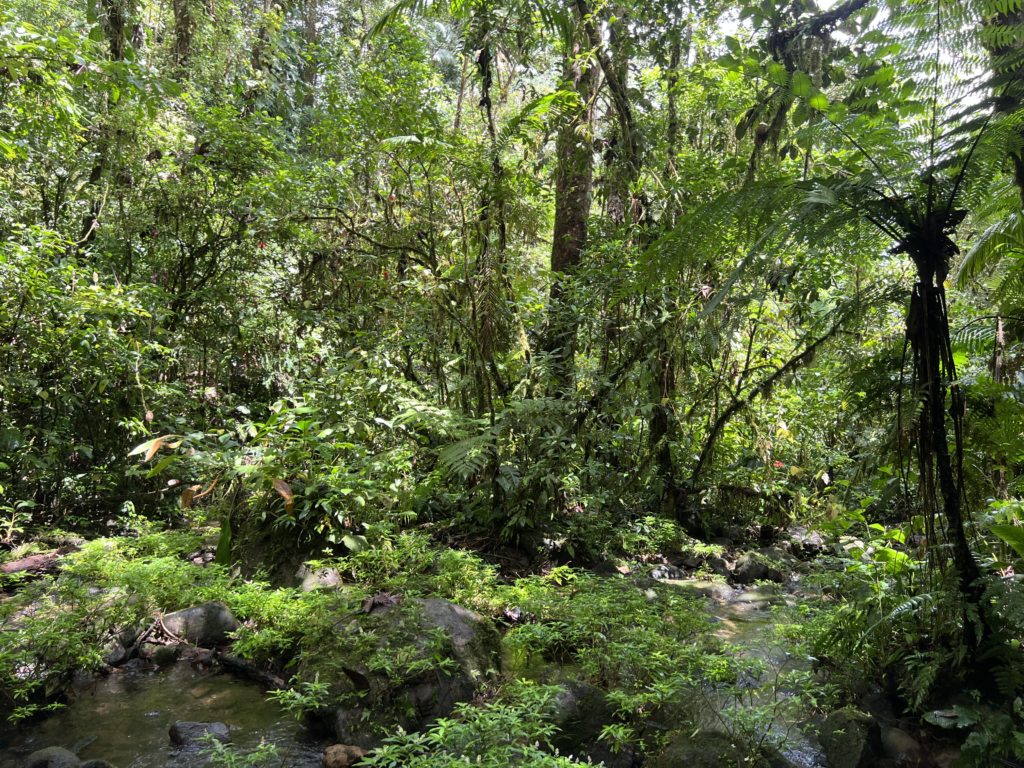
We also hiked a couple of trails that lead from the back of the hotel property, through the national reserve, to the Rio Celeste river. It was some of the densest jungle yet. Here, where we ford a small stream, the forest opens up a bit.

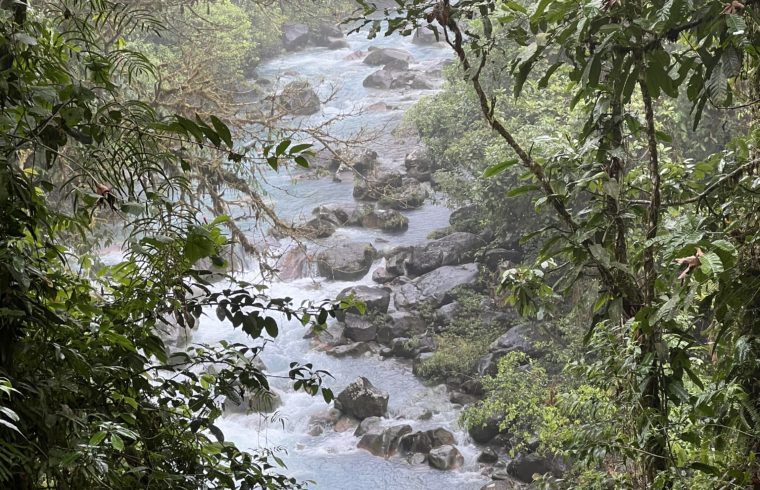
Rio Celeste translates to Sky Blue River, and the water runs a beautiful aquamarine blue, from dissolved minerals.
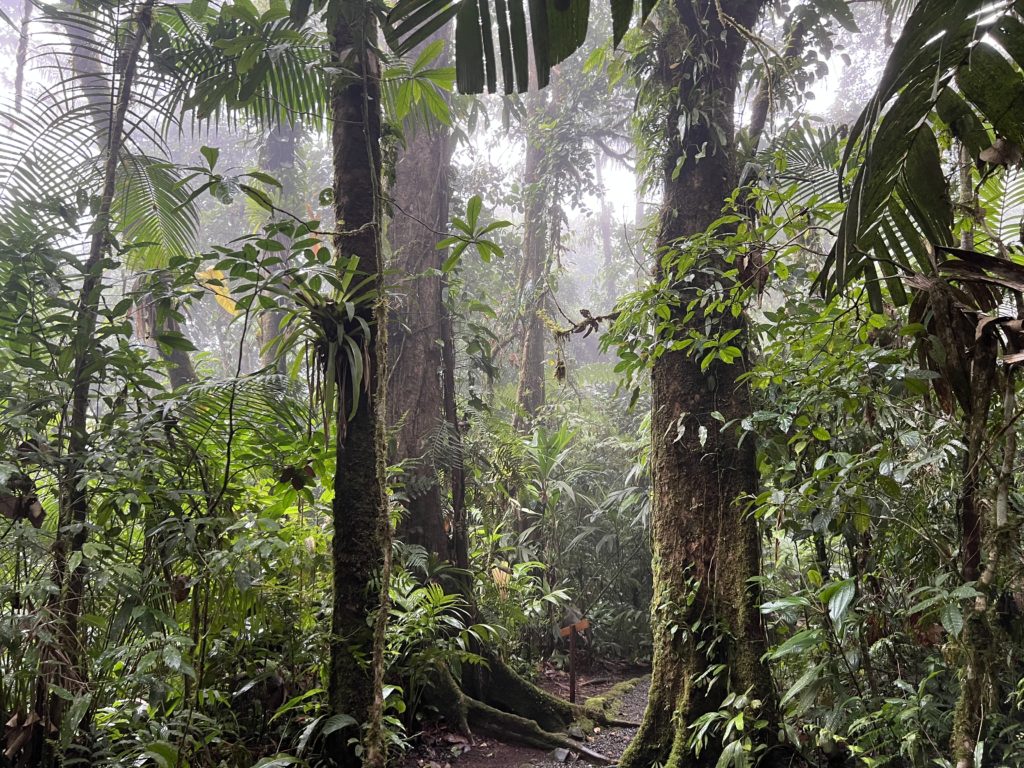
On our hike back, we got a quick downpour, followed by an ethereal mist.
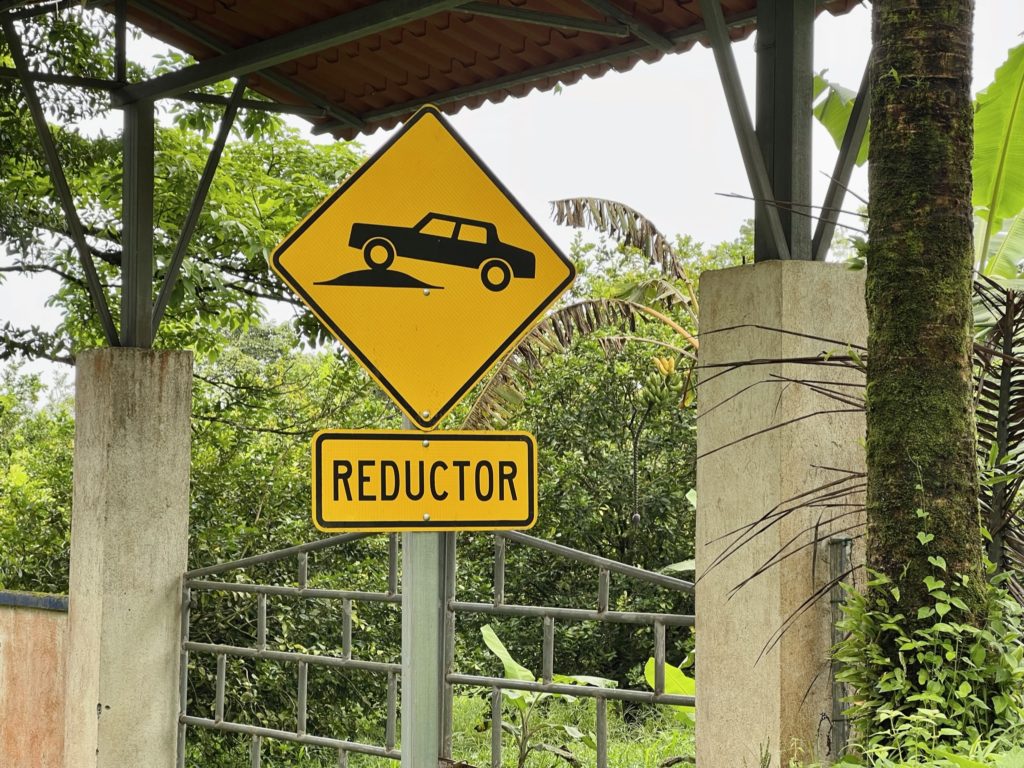
From Rio Celeste, we headed for Playa Hermosa. Still in the Guanacaste Province but on the Pacific coast. The roads got progressively better and progressively more crowded, then once through greater Liberia, they returned to simpler, mostly well-paved ones. Our favorite road signs warned of speed bumps. The bumps themselves are all but camouflaged, so if you miss a sign, you’re glad you’re driving a rental.
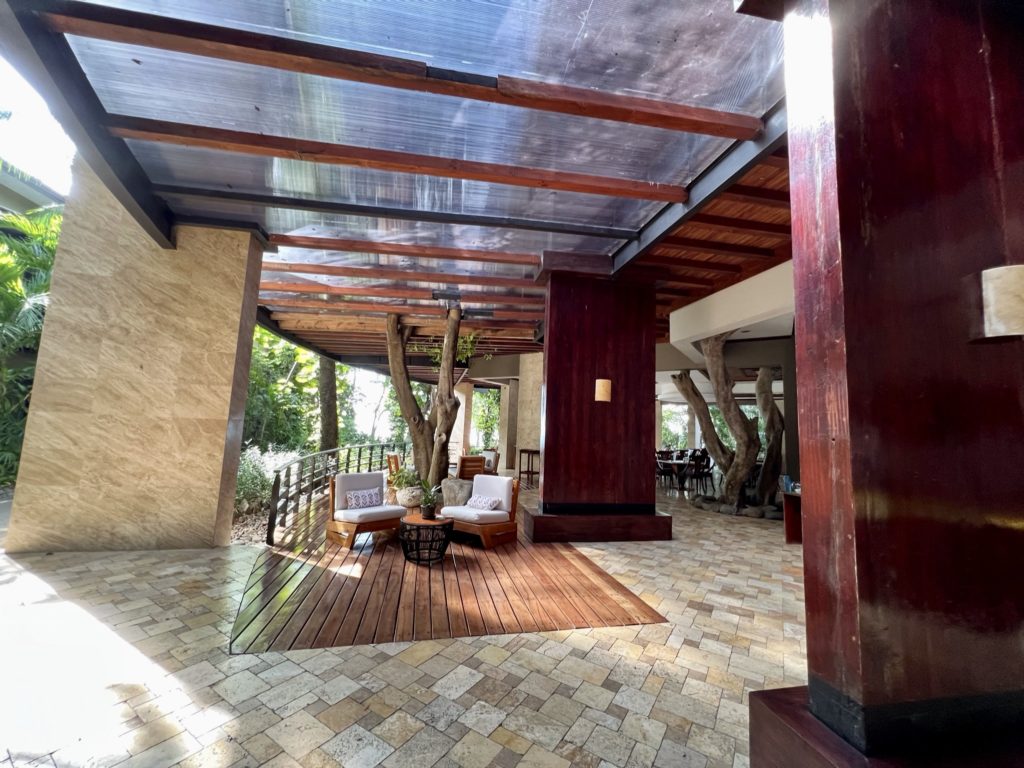
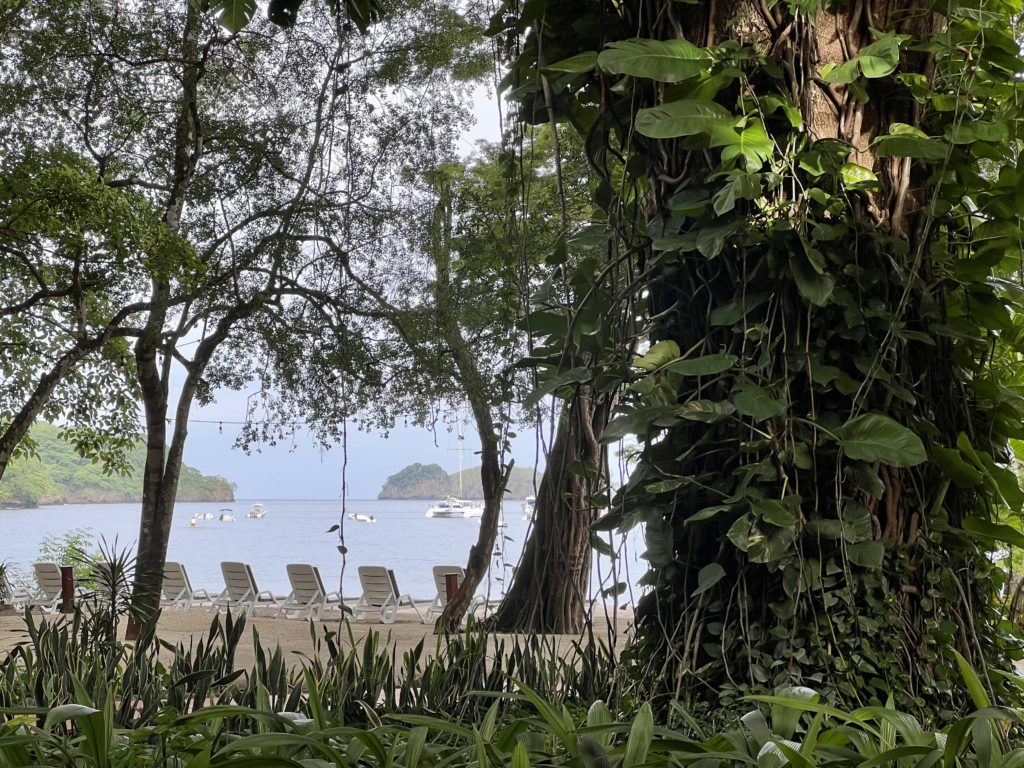
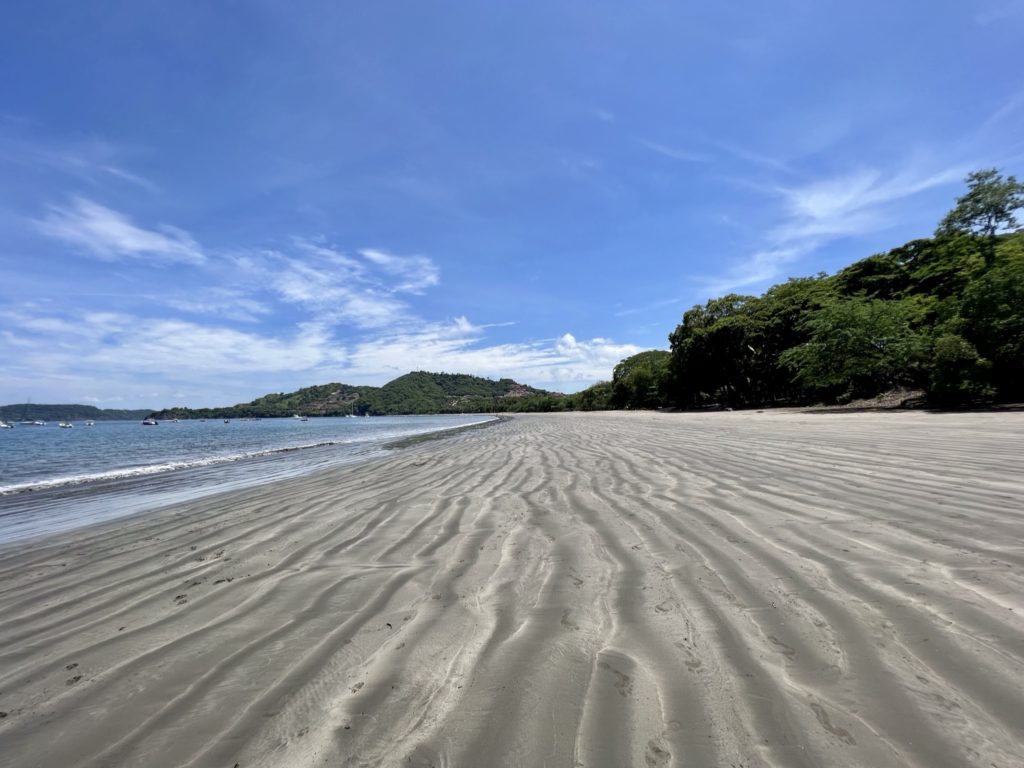
Two hours or so from the mountains, we arrived at Hotel Bosque Del Mar. It is literally a hotel in a forest on the beach (above and below).
The hotel has no fitness room, so we’d run the mile-long Hermosa Beach. It’s much warmer in the lowlands, and more humid, with rarely even a hint of breeze. We had to run early or not at all. And early would still warrant a shelter-in-place heat warning in the Pacific Northwest.
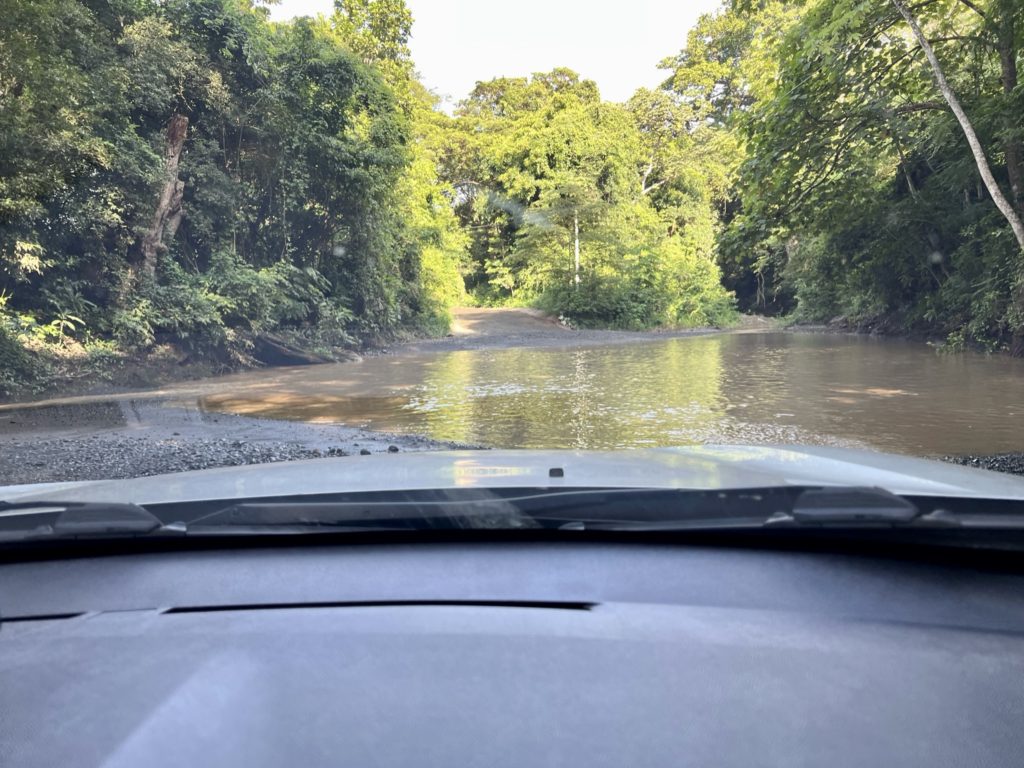
One morning, after breakfast, we headed to Tamarindo, a beach town supposedly an hour and a half south. The main road was closed, and the detour was less than optimal. This low spot came up to the floorboards. We should have rented that SUV with the snorkel.
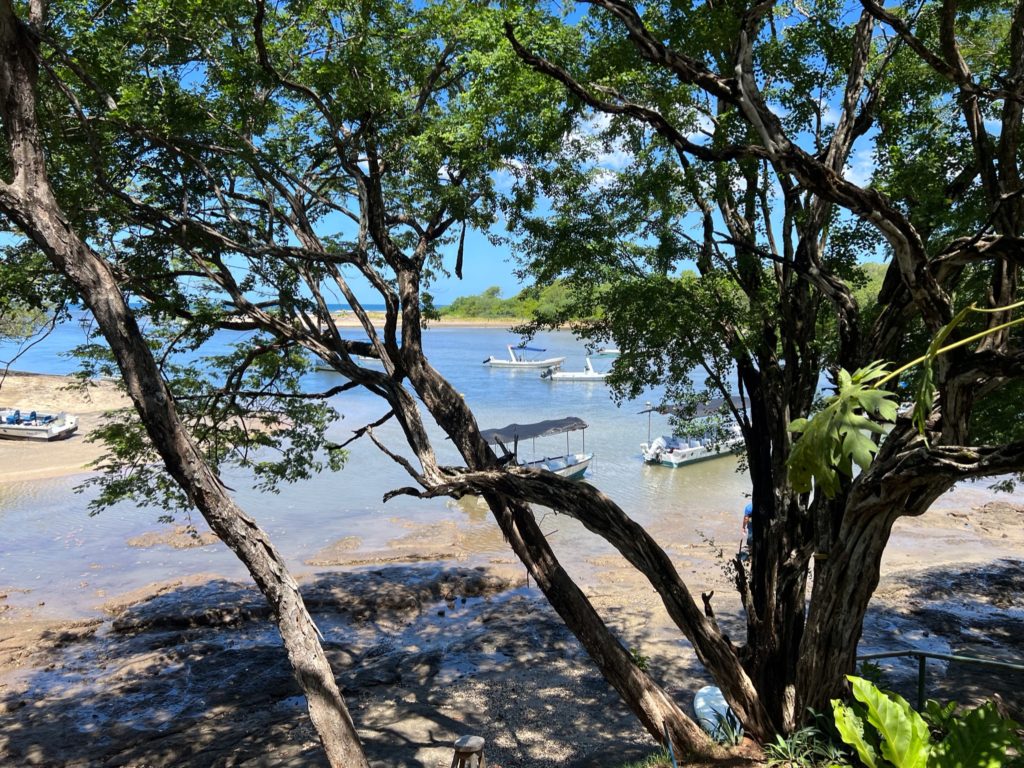
Two hours or so later, we arrived at the boat launch where we planned to take a boat through the mangrove forest that makes up the Playa Grande Estuary.
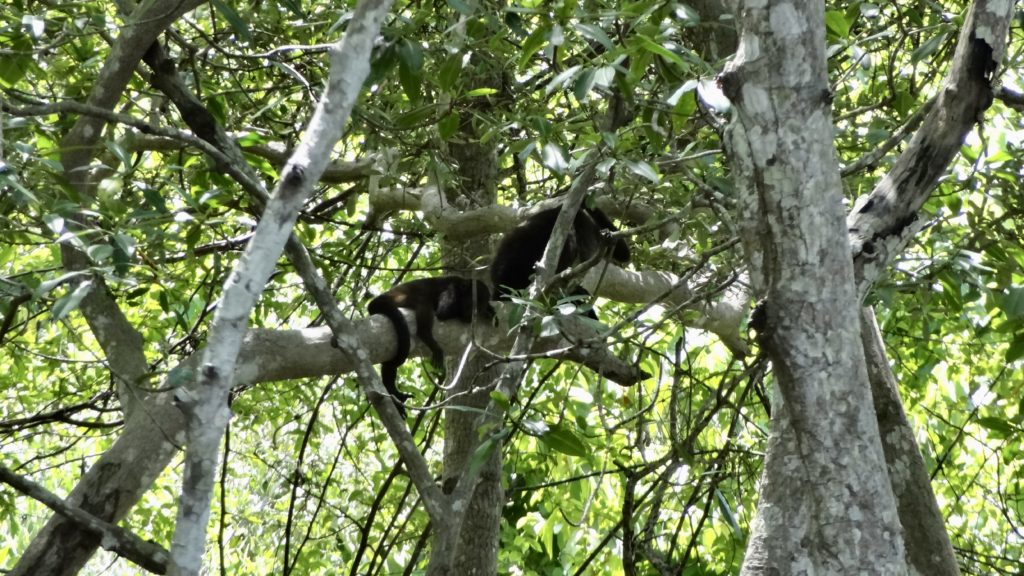
We saw Howler Monkeys draped over tree branches, suffering, no doubt, from heat prostration …
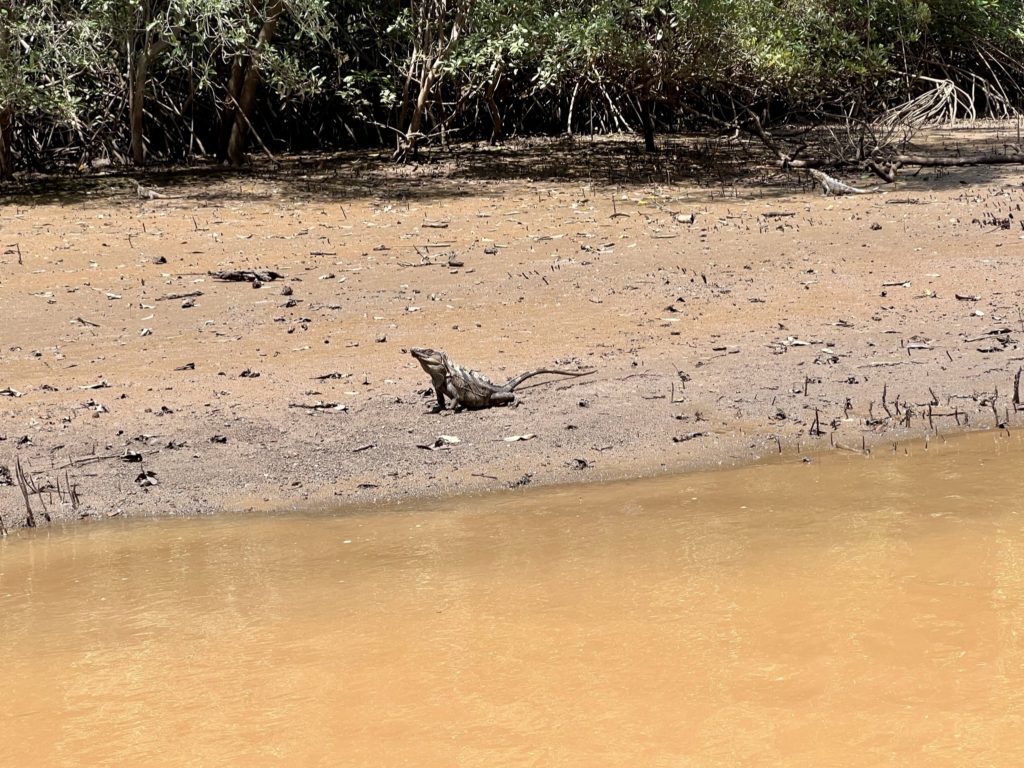
Iguanas guarding their beaches …
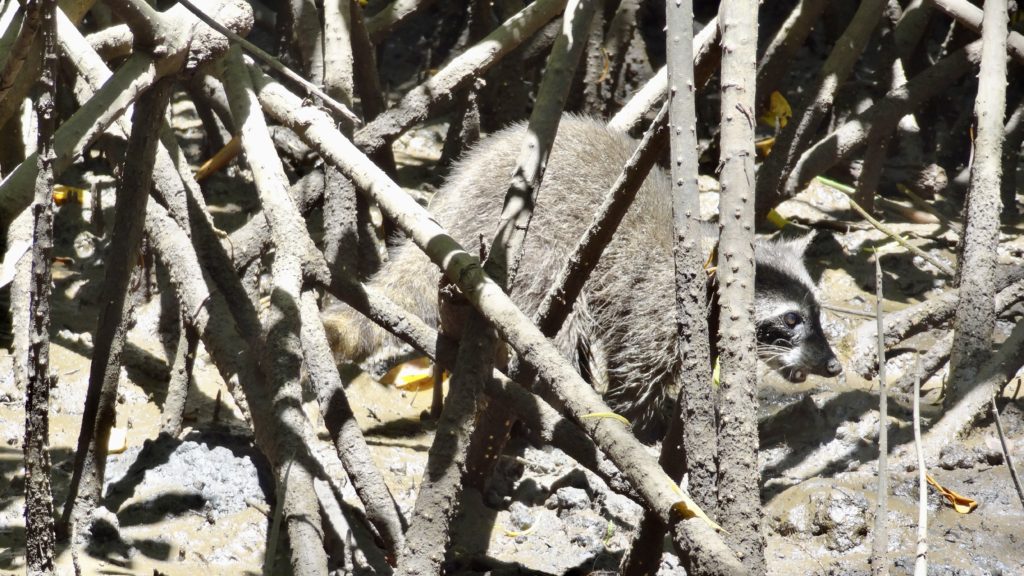
Raccoons munching mud crabs …
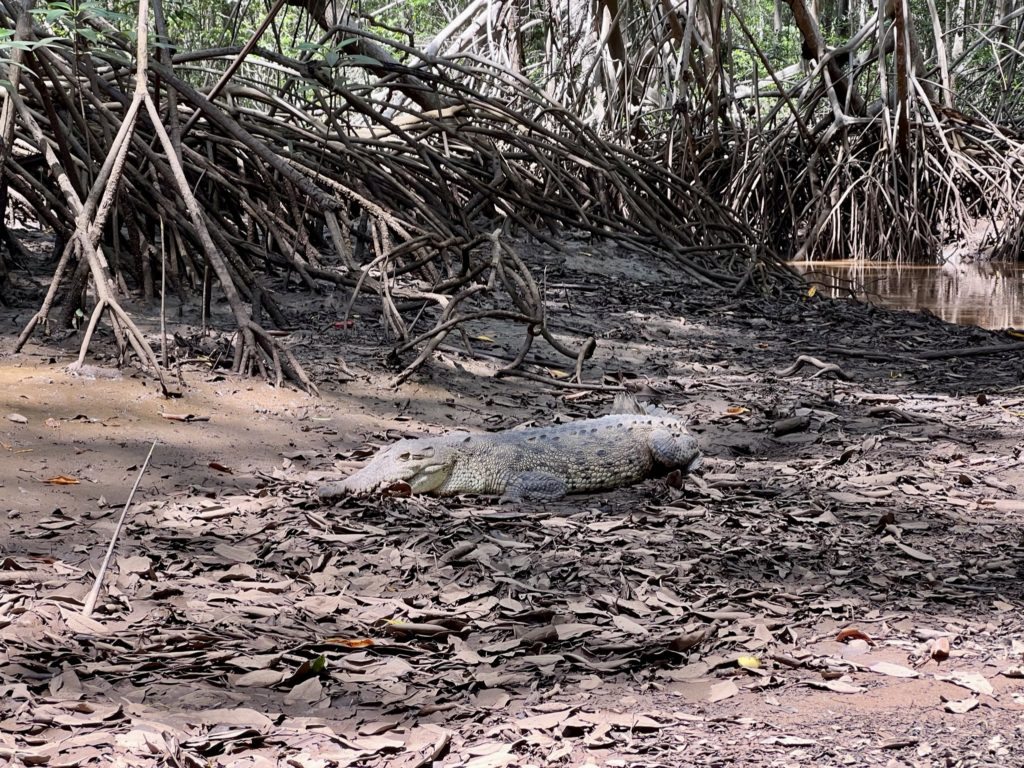
Crocodiles just hanging out …
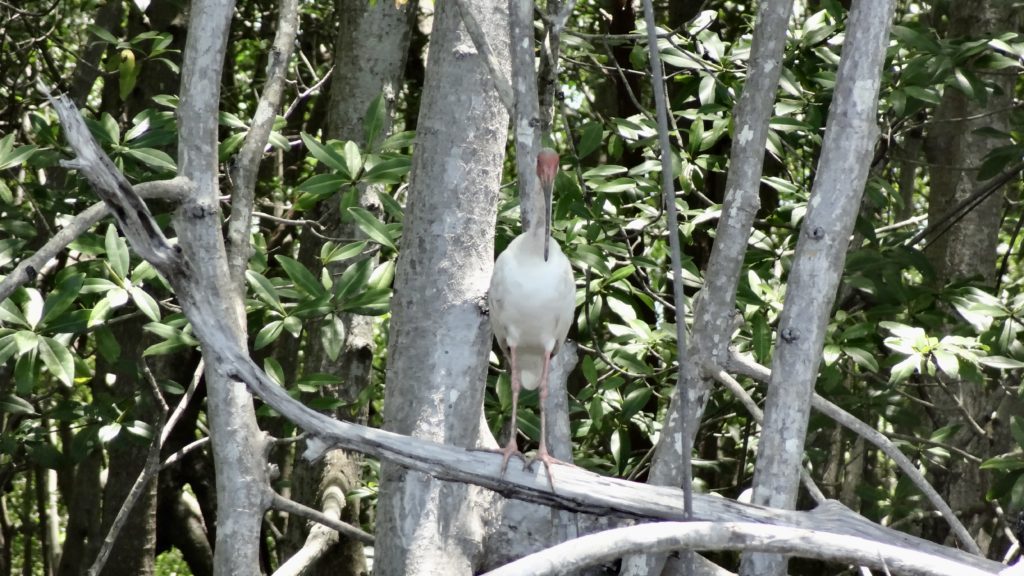
And any number of birds, like this Ibis.
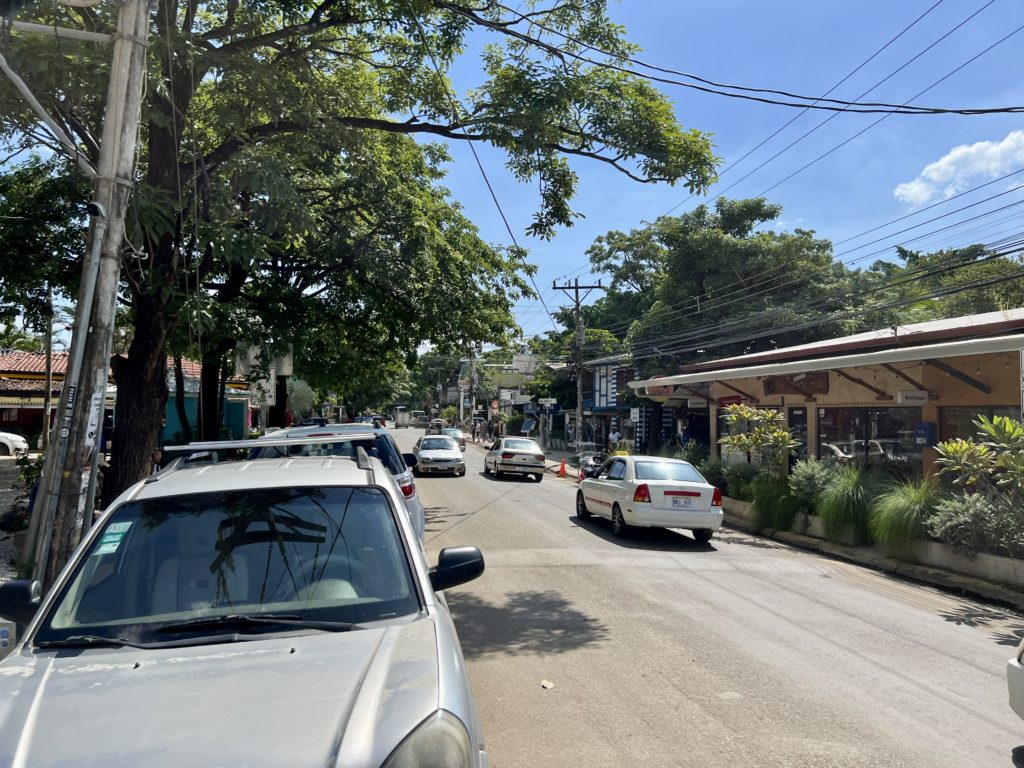
After our boat adventure, we headed into Tamarindo town. It’s main road is the only paved one, with tourist stuff clustered around the Tamarindo Daria Hotel, which seems to anchor the town.
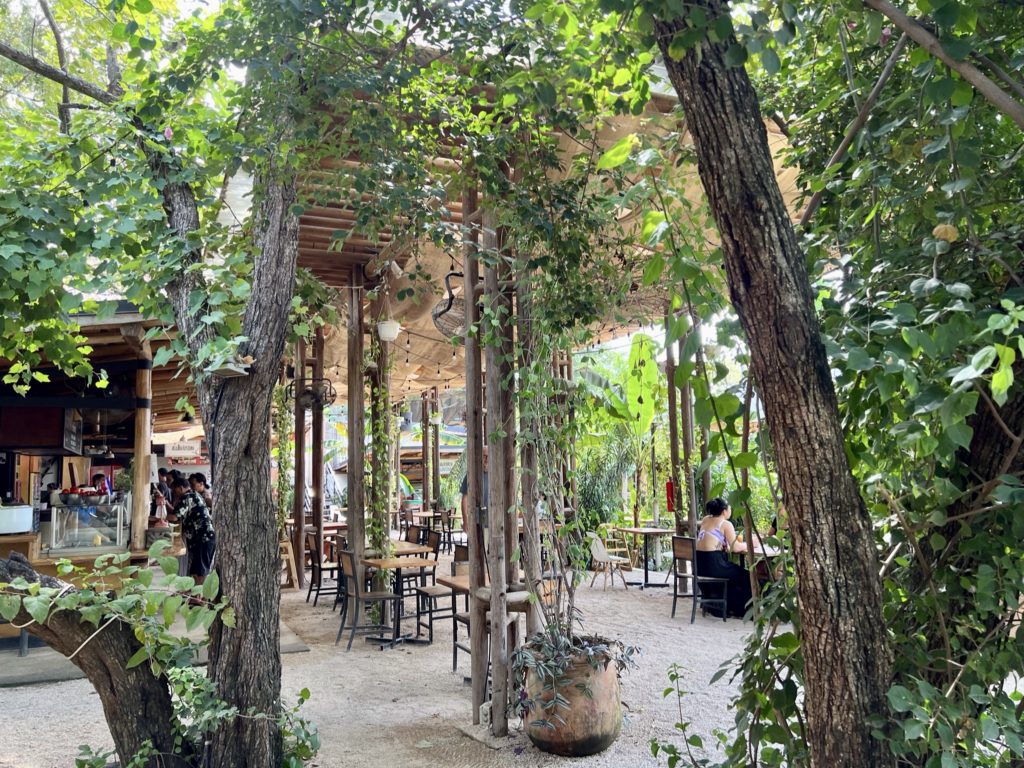
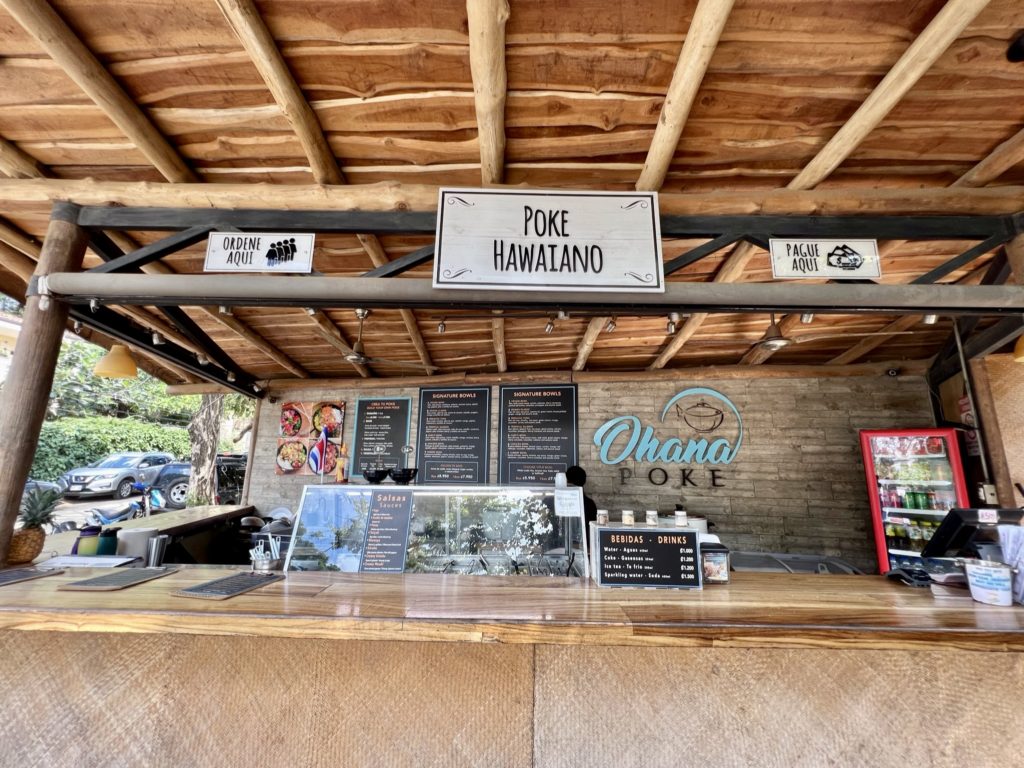
We ate at an open-air food court, our first in Costa Rica. The photographer found a Hawaiian poke stand (below), while the blogger tried a hamburguesa, hold the bacon and eggs — should have waited for the taco stand to open.
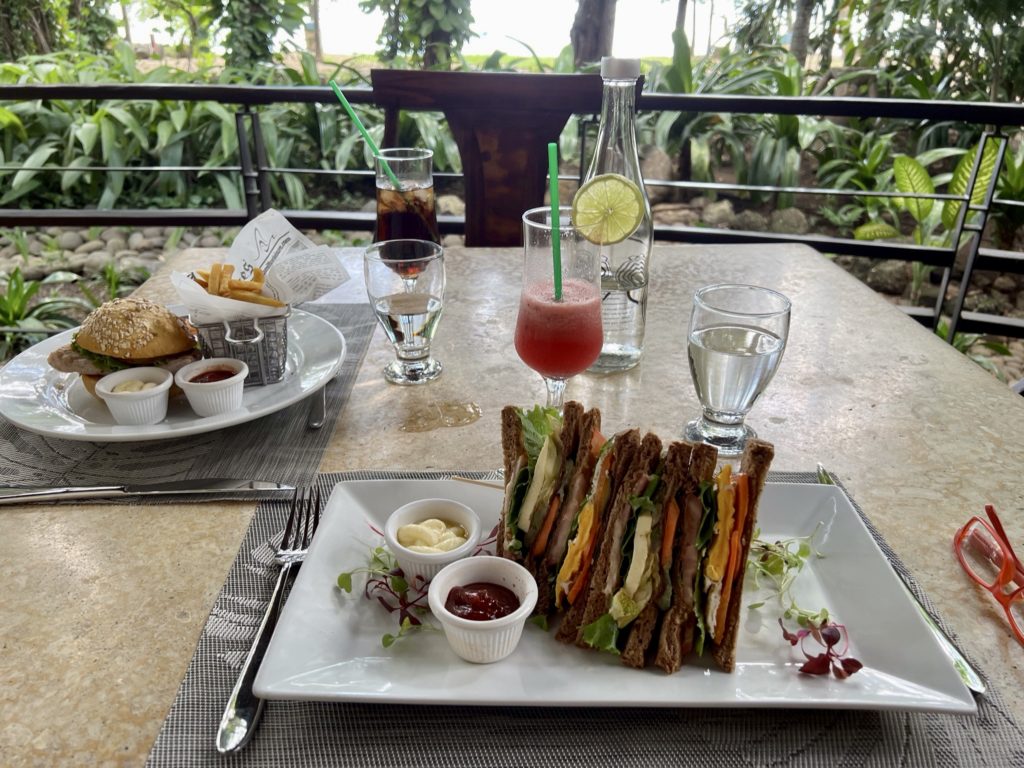
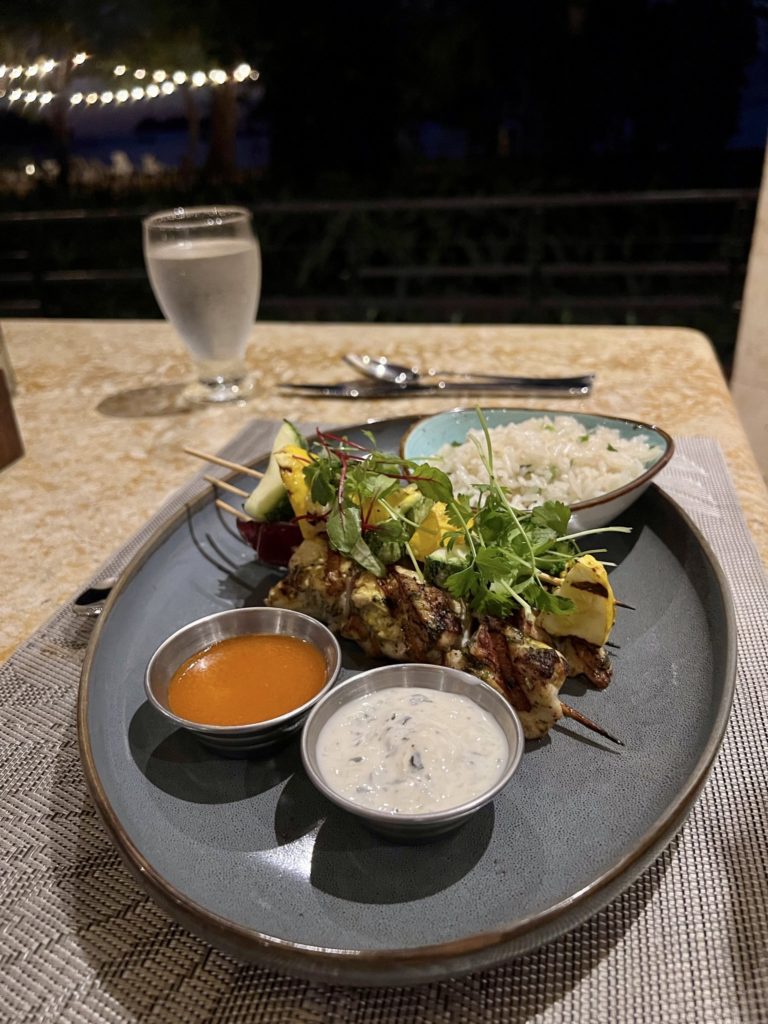
Back in Playa Hermosa, there’s not much going on. The hotel is mainly for chilling on the beach (figure of speech), water activities, and as a base for driving elsewhere. So when we were in residence, we ate at the hotel’s restaurant. As it turned out, they served some of the best food on our trip. This vegetarian club and mahi mahi sandwich, for instance.
They even had tandoori chicken, without the requisite Indian spices of course, but it was still good.
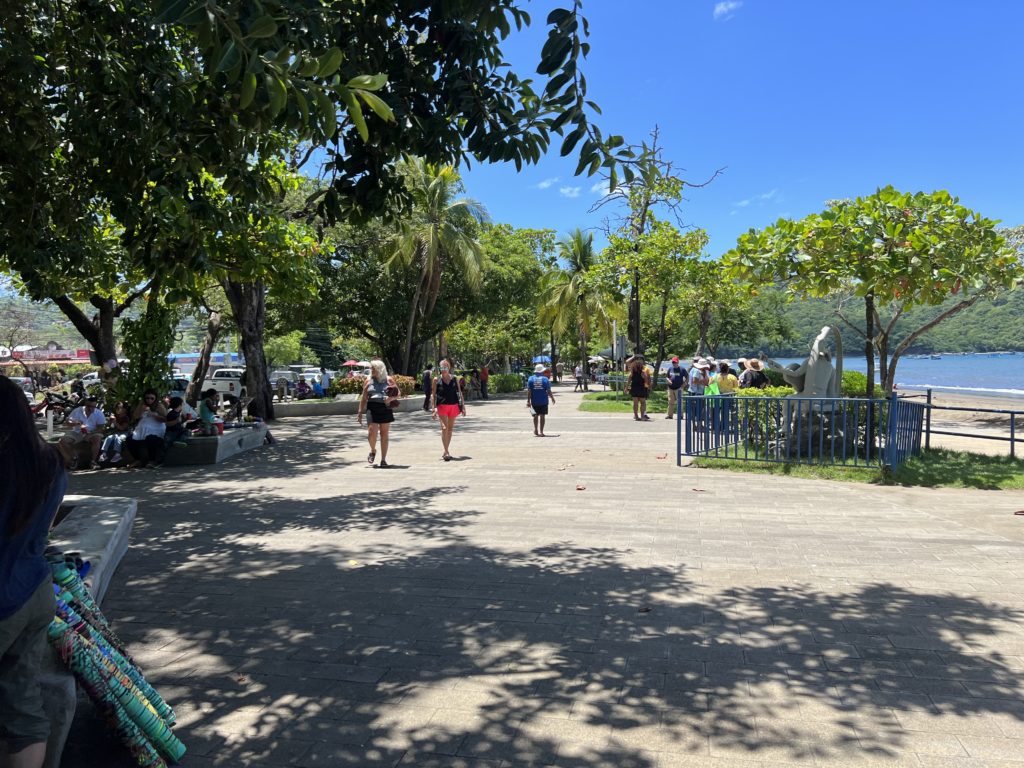
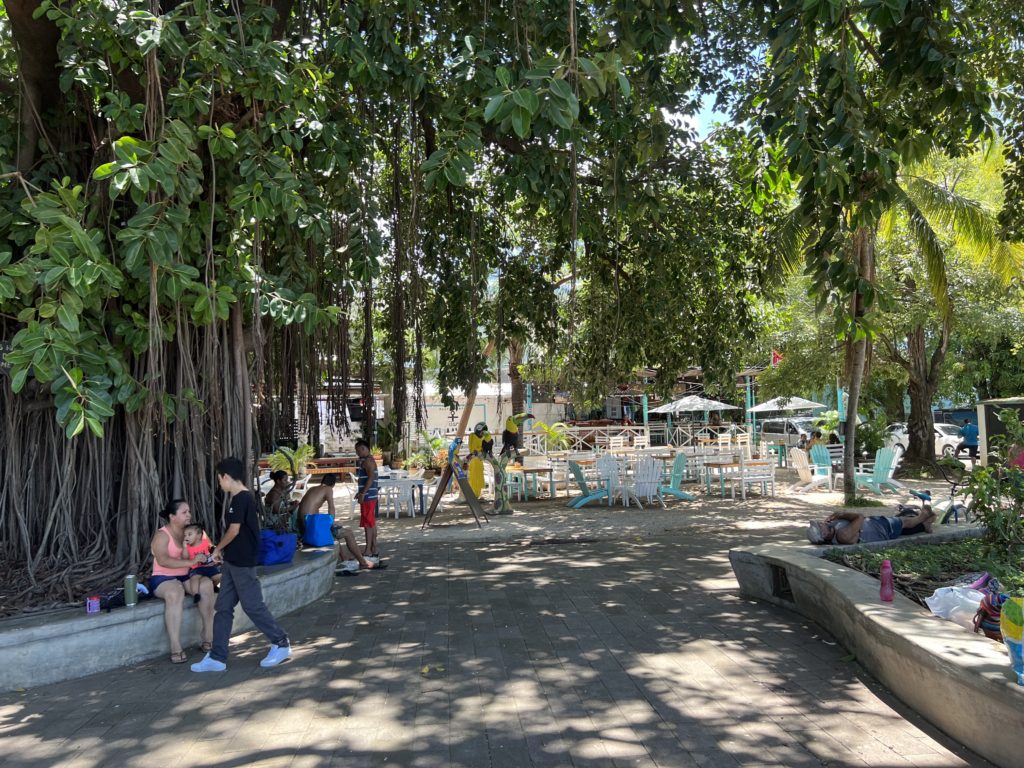
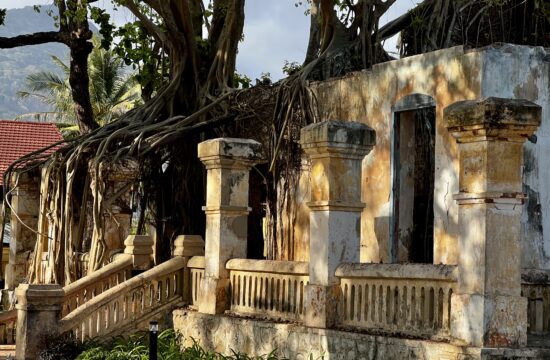
Fortunately, the next beach over, Playa Coco, has a small town. It also has a promenade along the beach, and a banyan tree (below). Both were popular with local families.
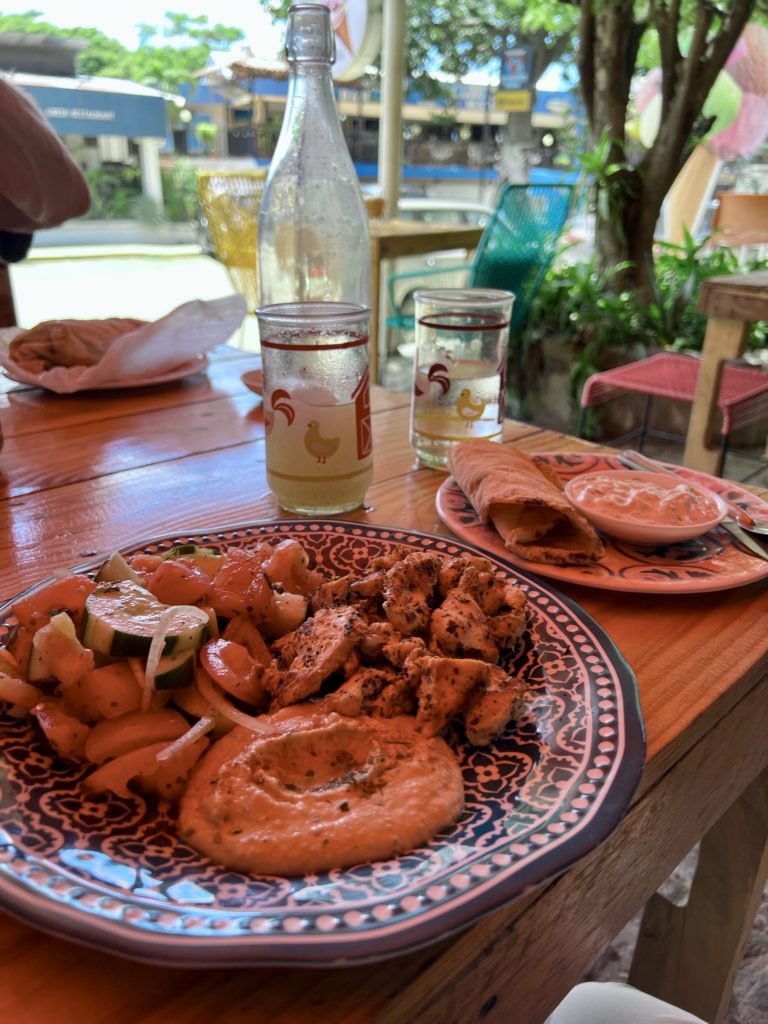
The photographer picked a falafel restaurant for lunch. Opened by a Lebanese fellow, it’s now run by a Canadian woman of Greek descent. We actually got to eat relatively authentic souvlaki and shawarma. Quite the cosmopolitan beach town.
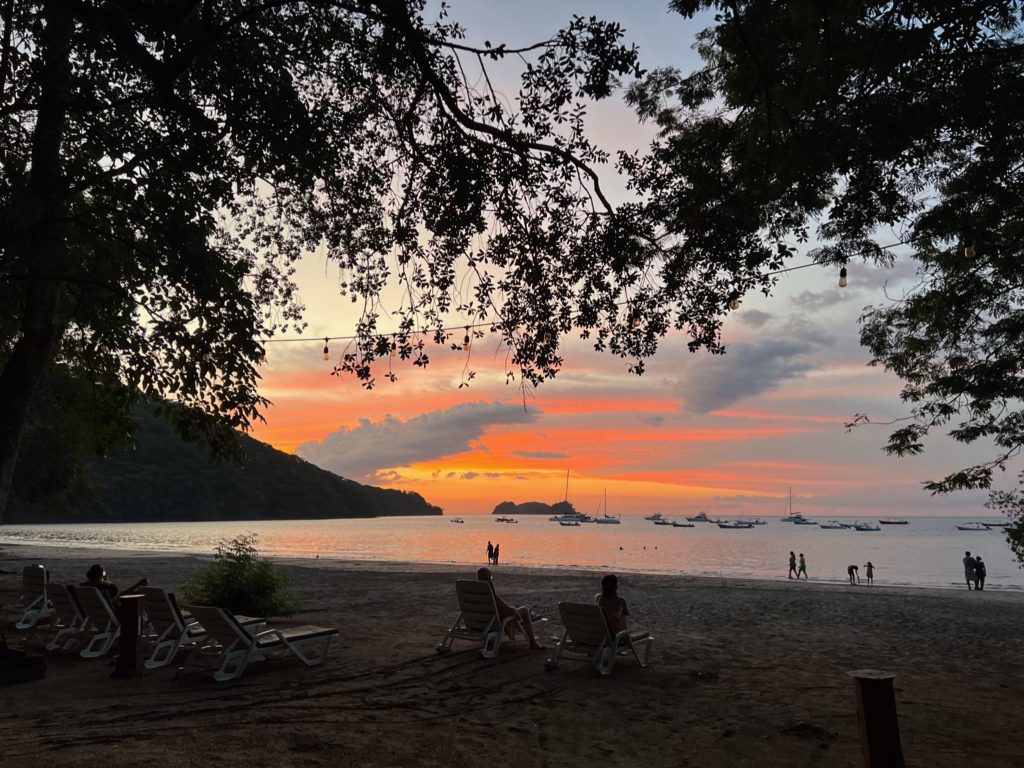
Back at our beach, we enjoyed our last sunset and got ready to head home.
Ciao ciao Costa Rica. Though the country doesn’t seem to offer the variety we would want for a longer stay, we really enjoyed the jungles, beauty, and universally friendly people.