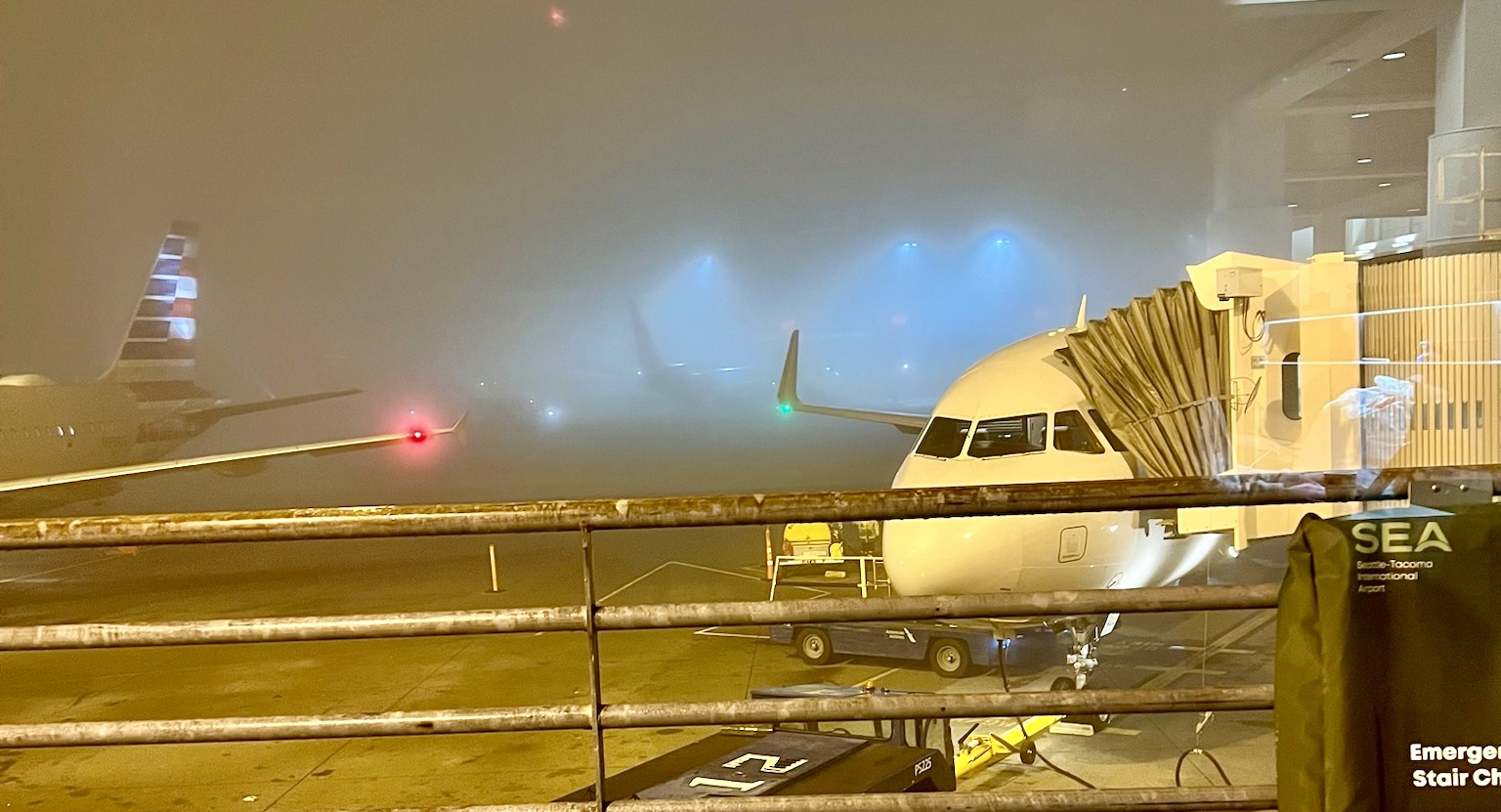
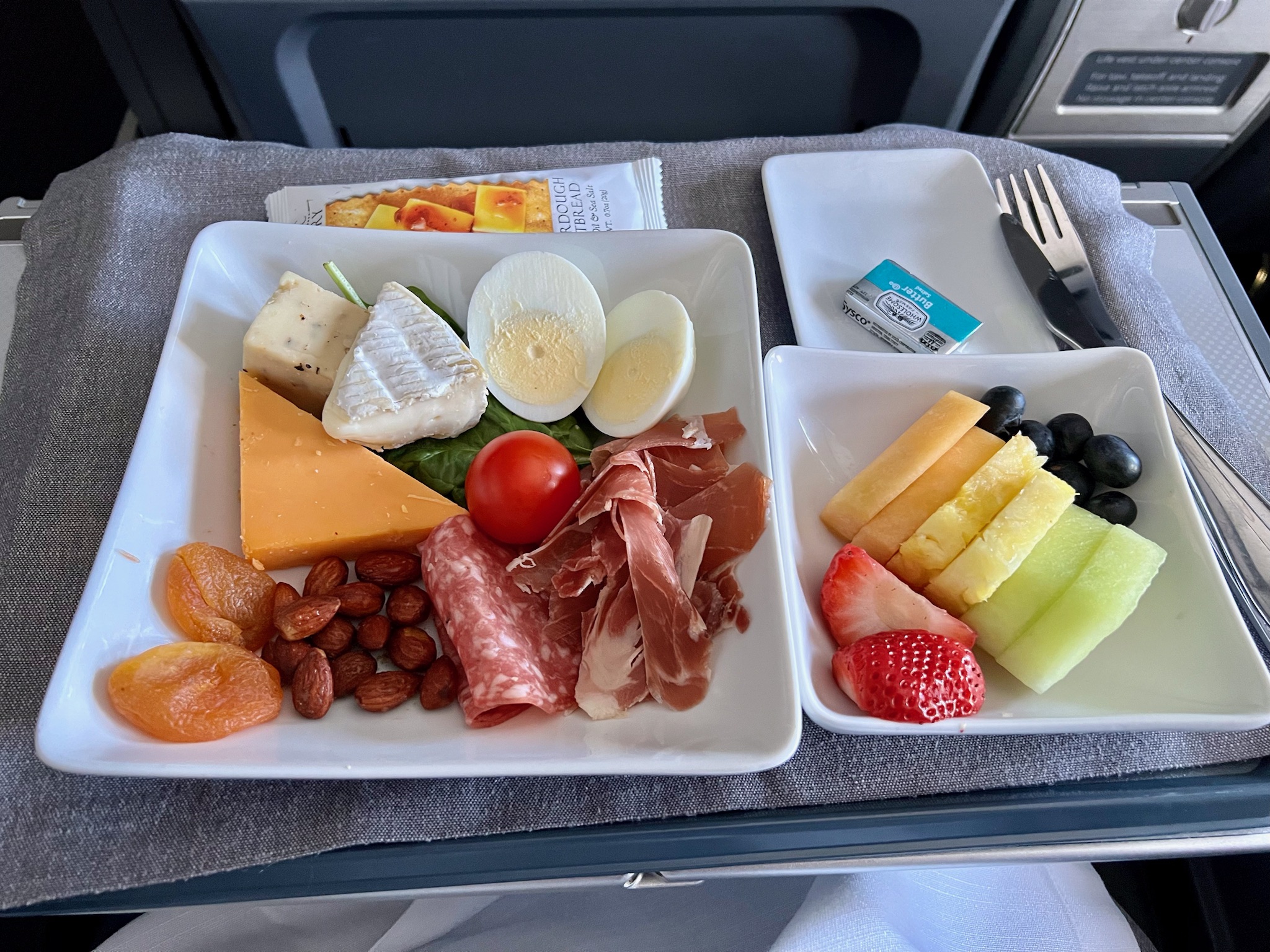
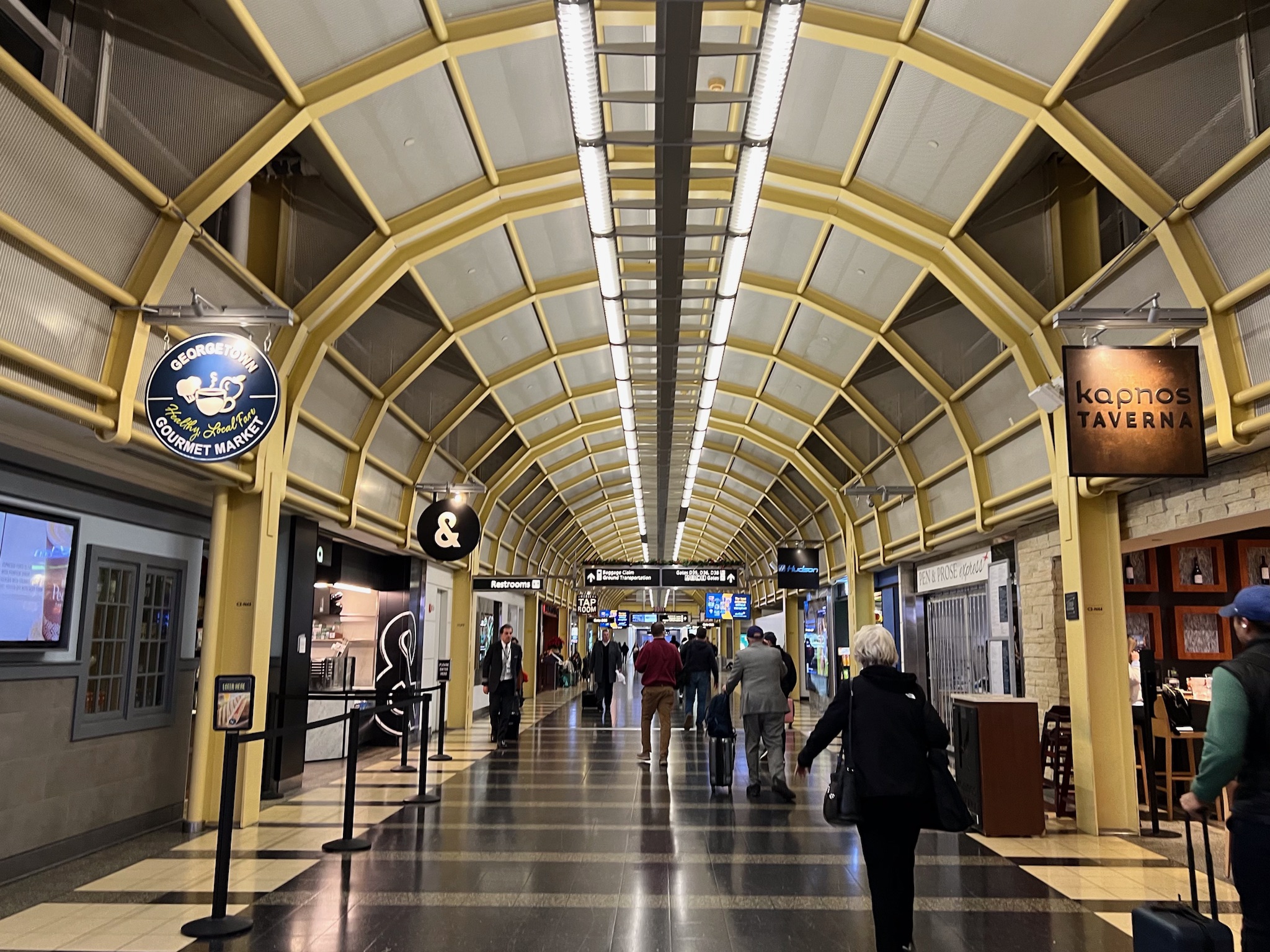
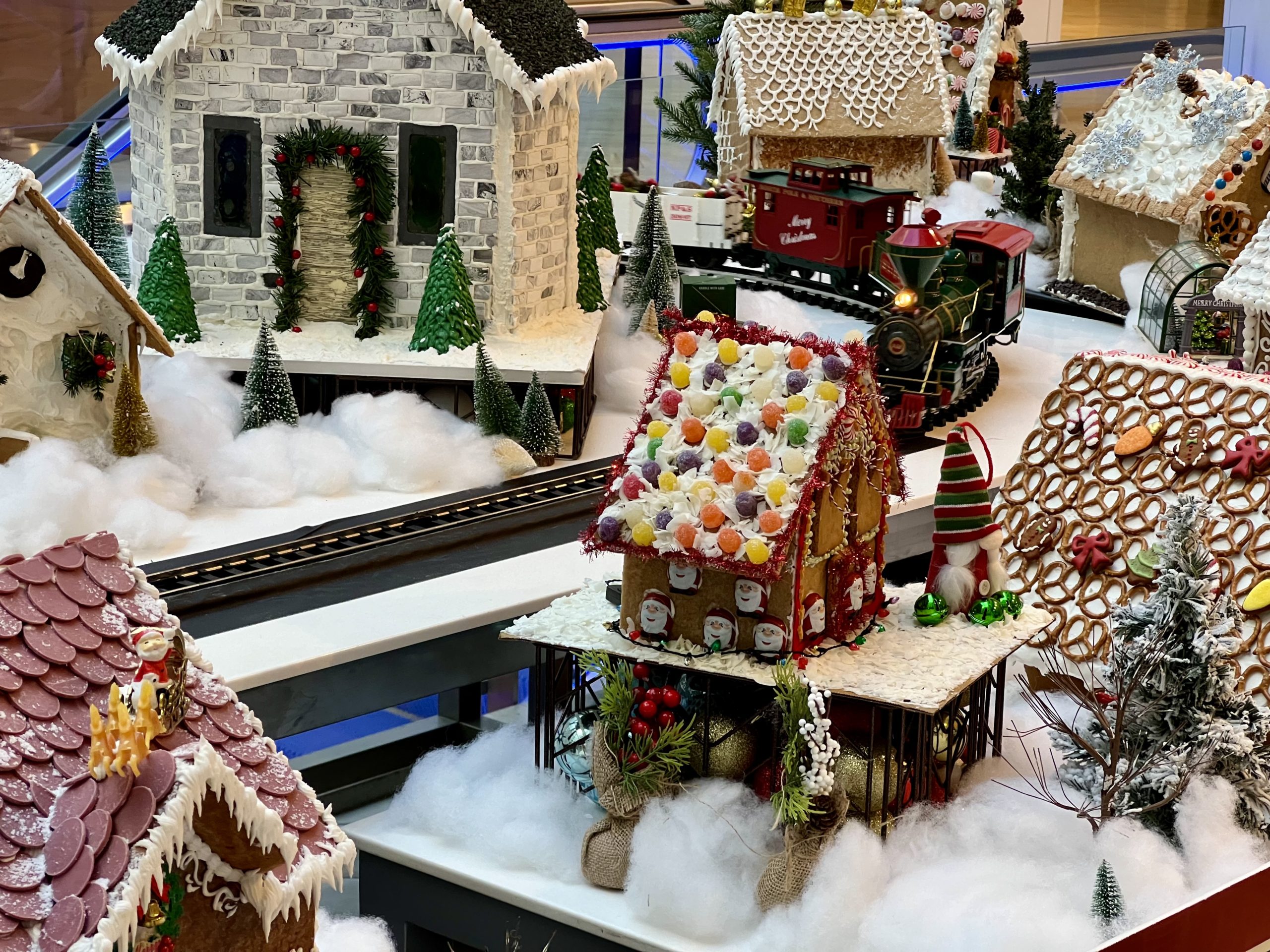
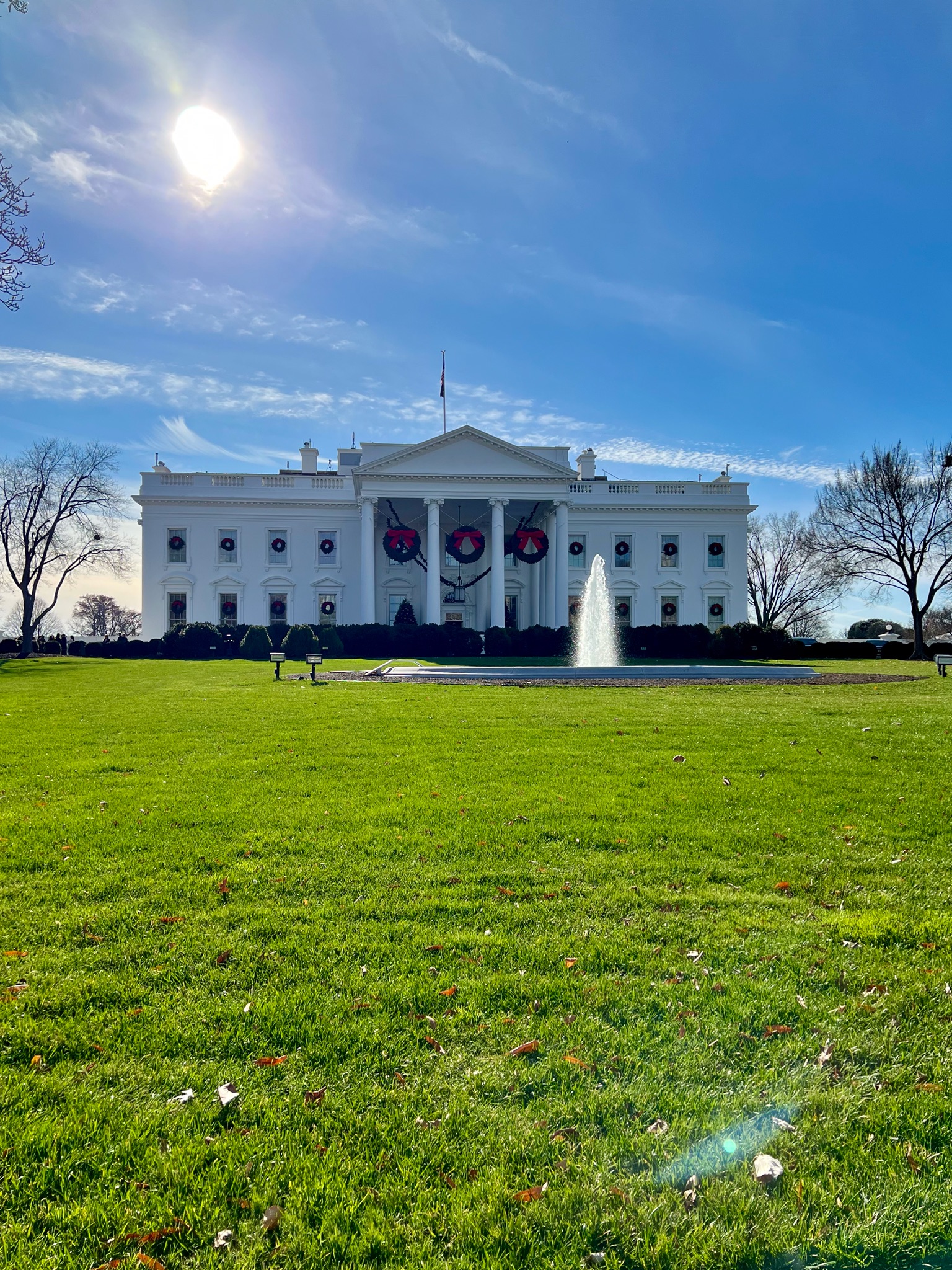
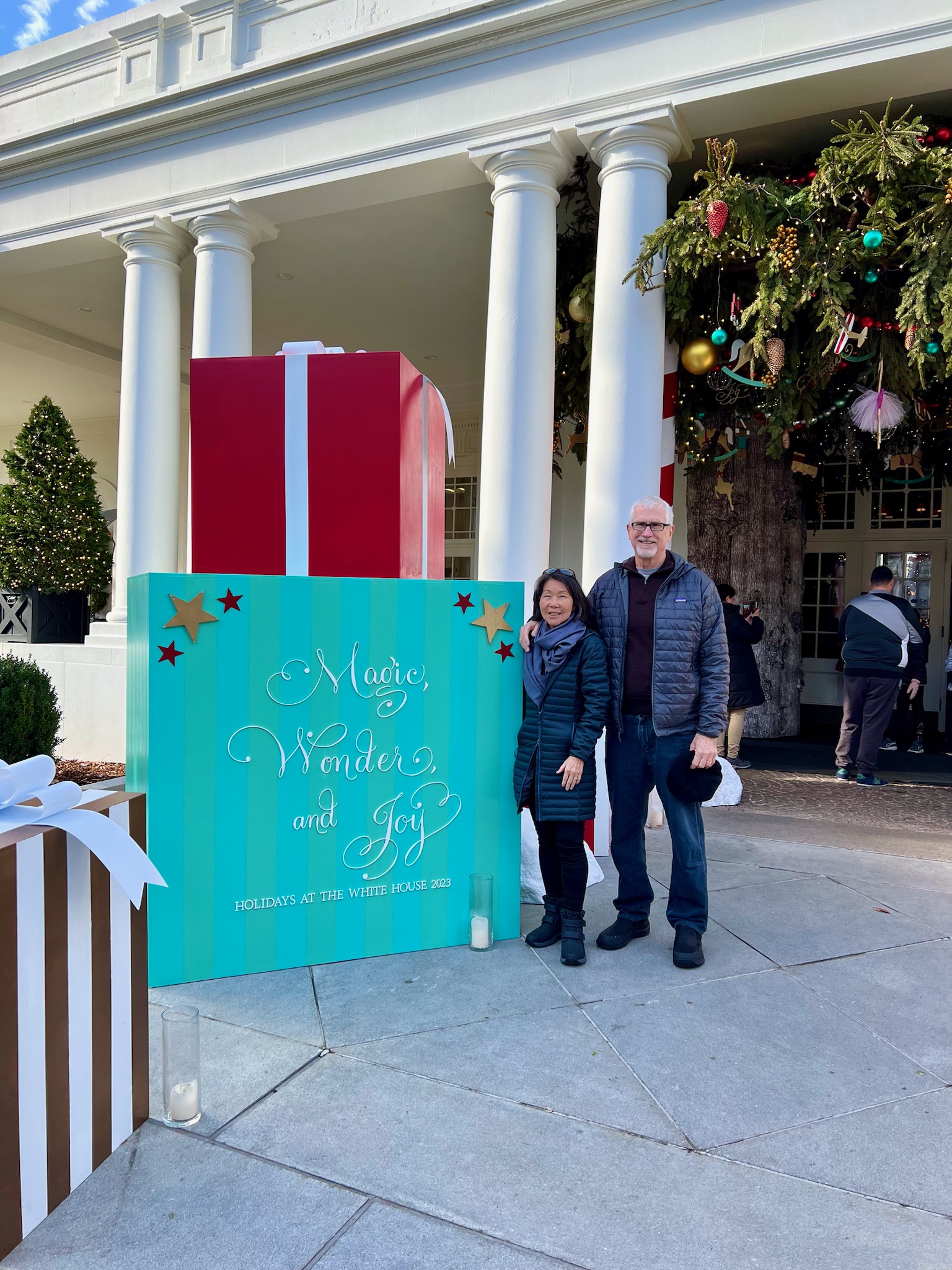
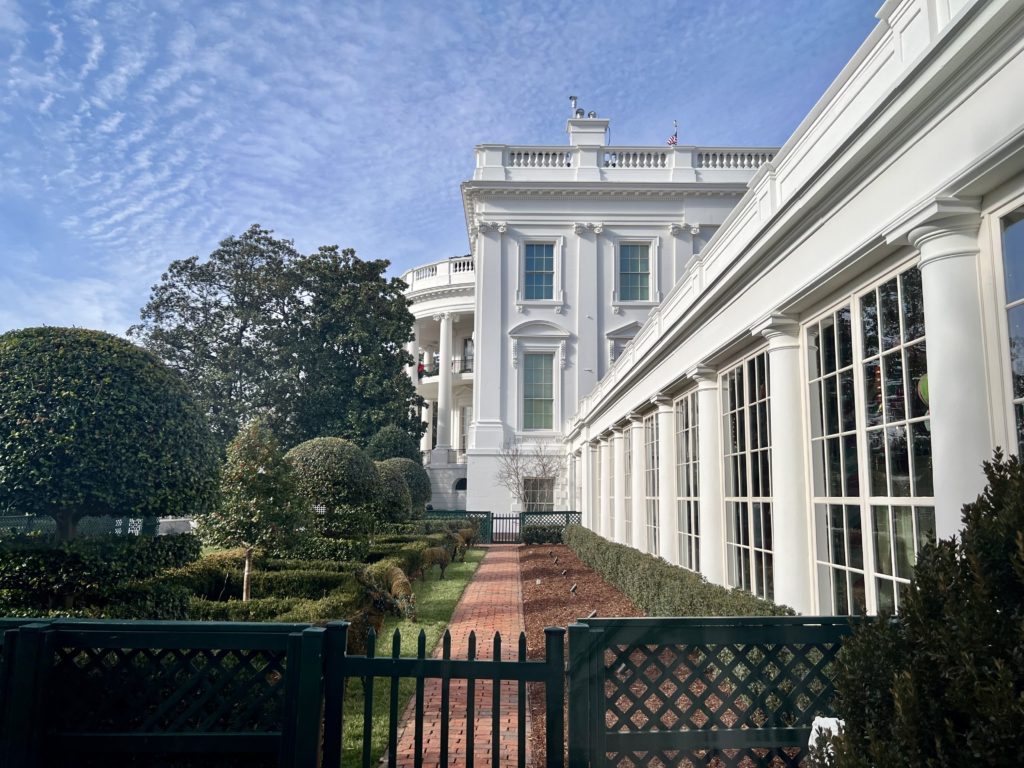
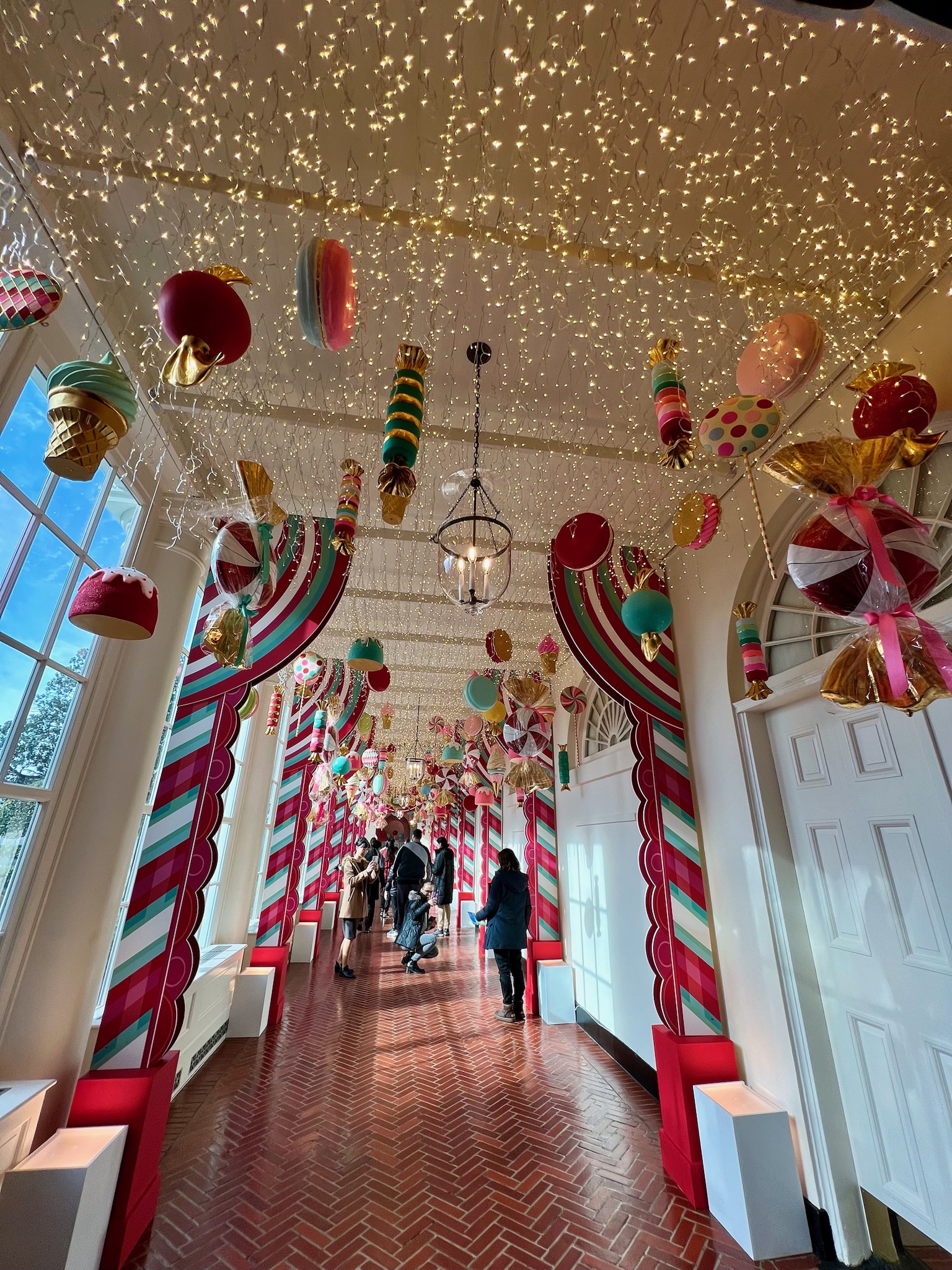
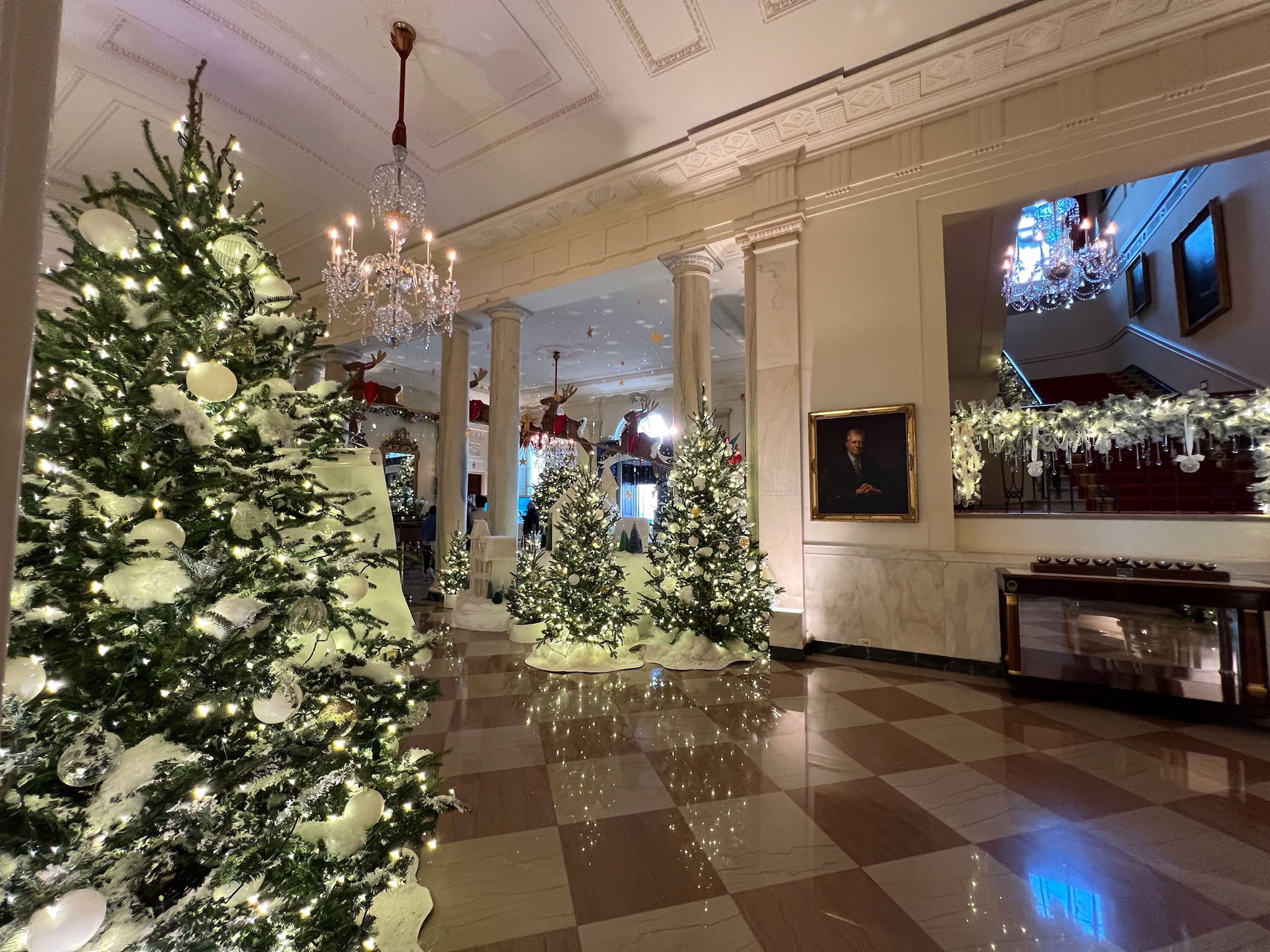
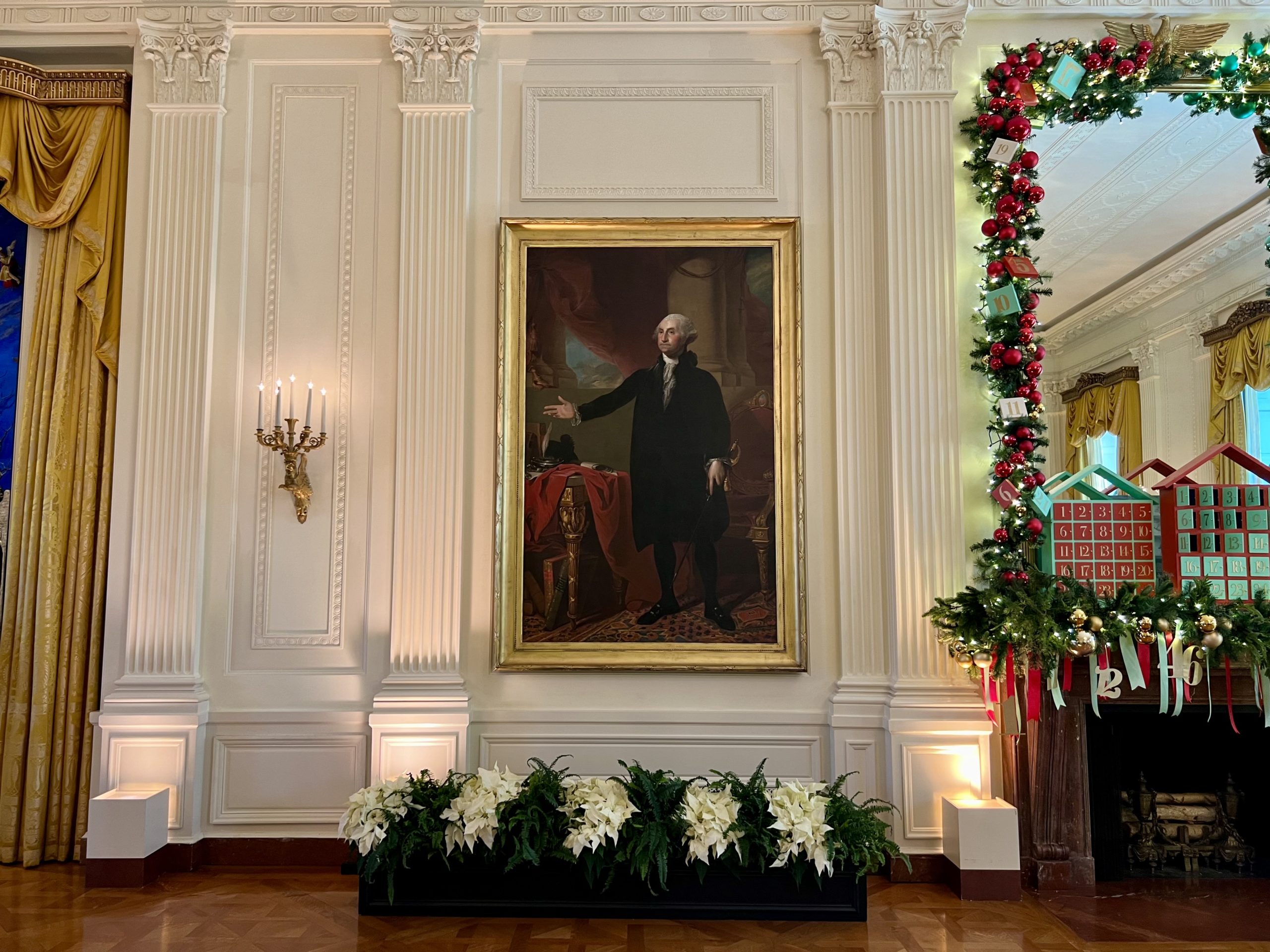
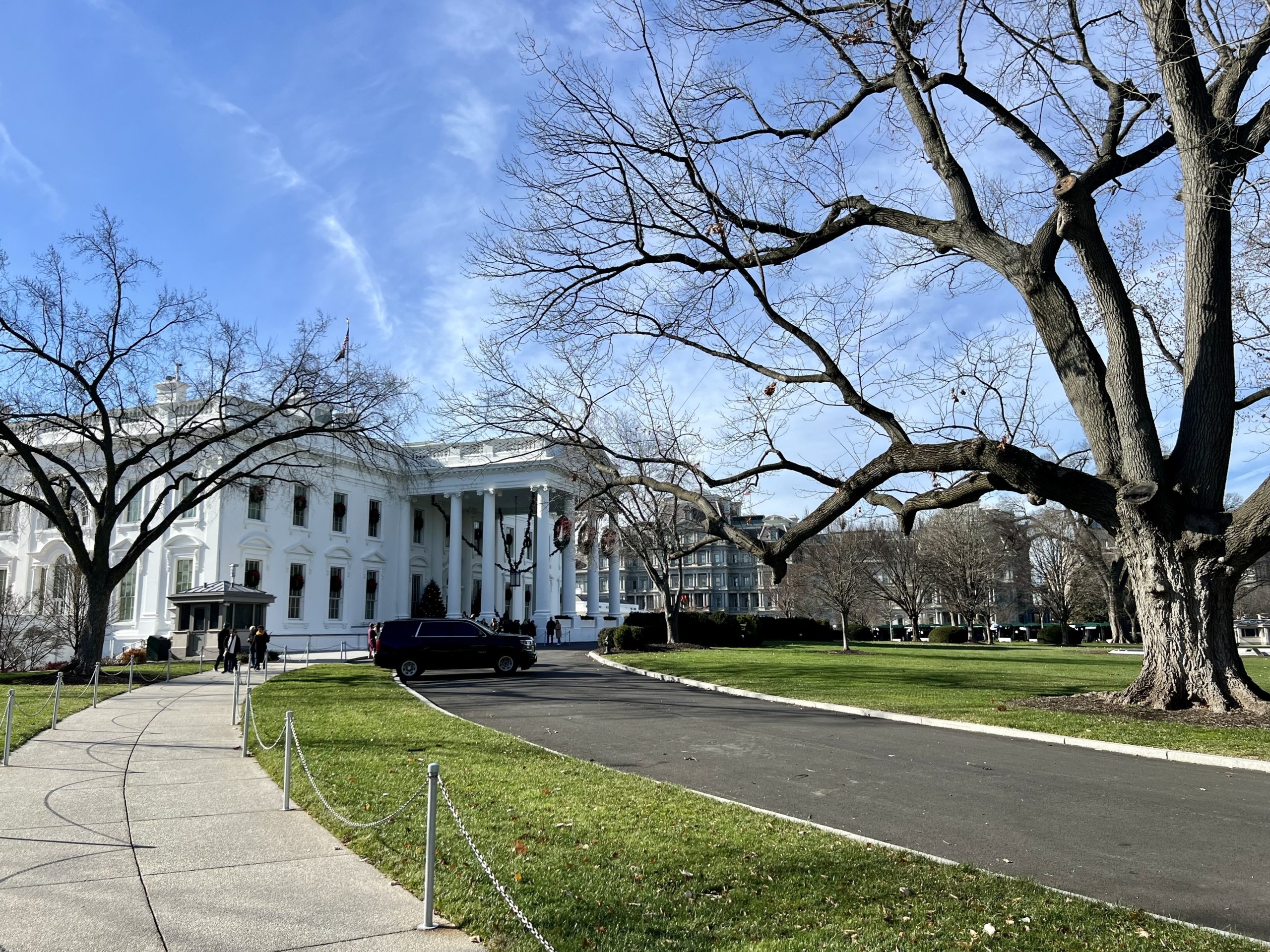
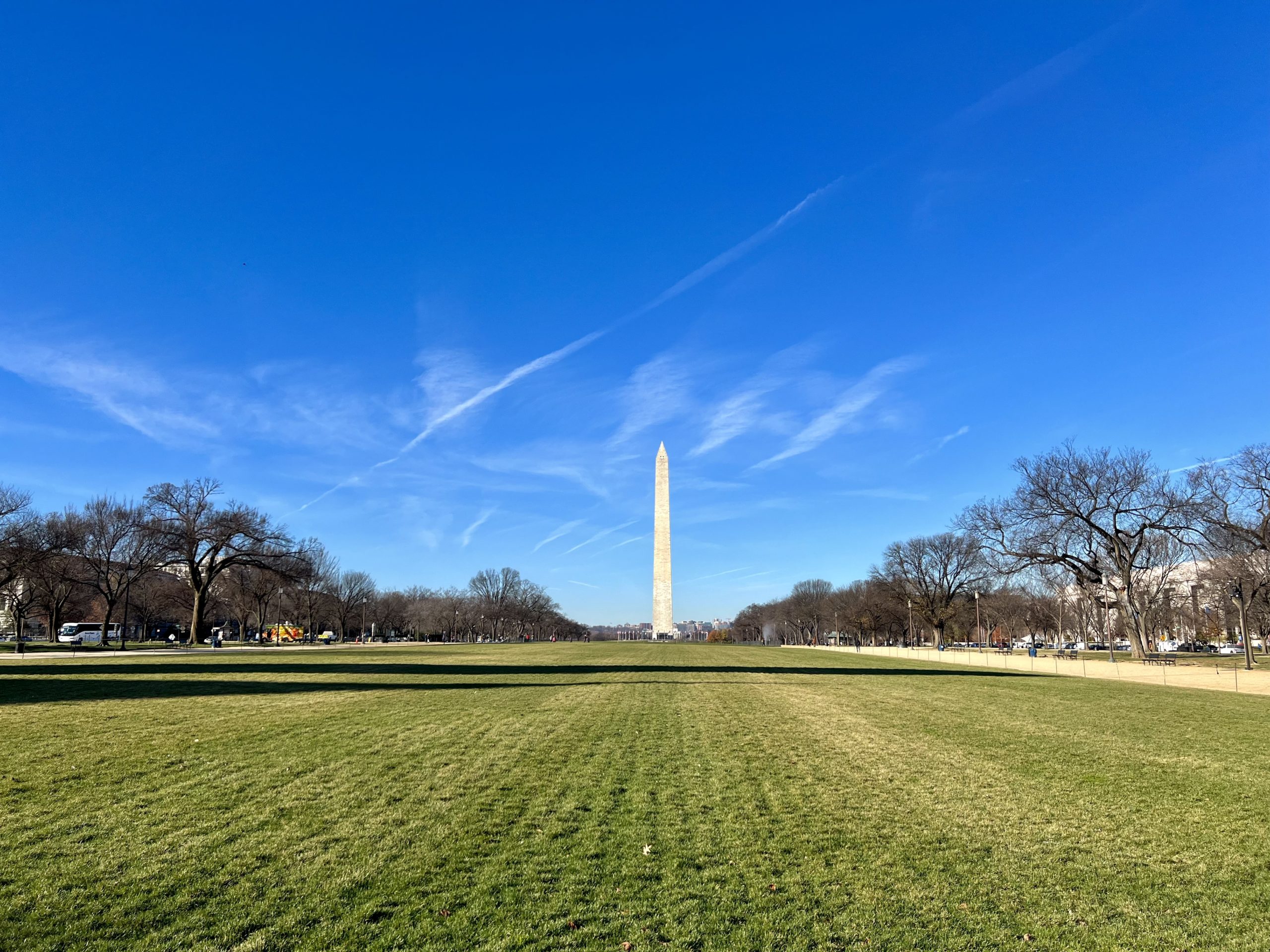
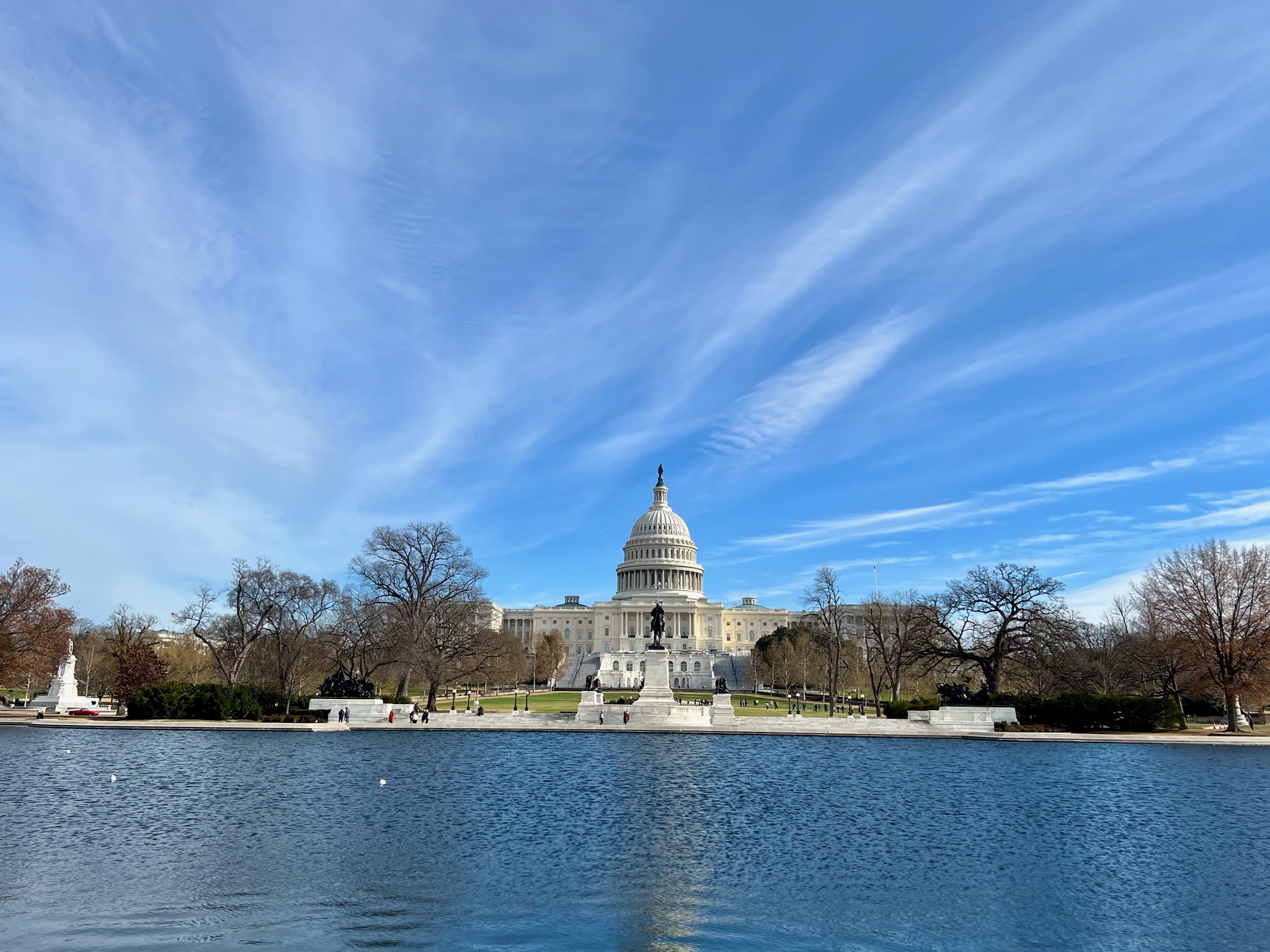
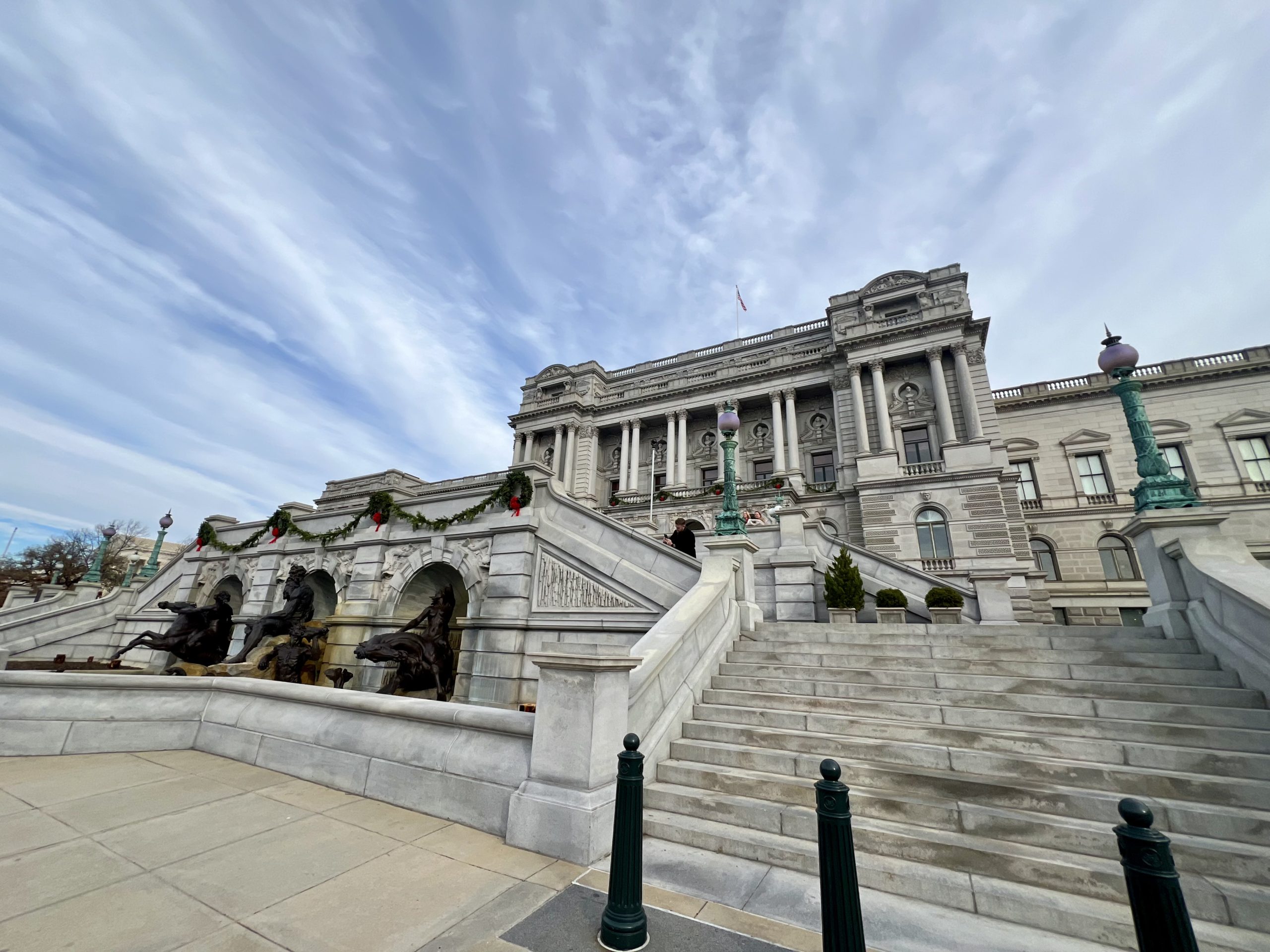
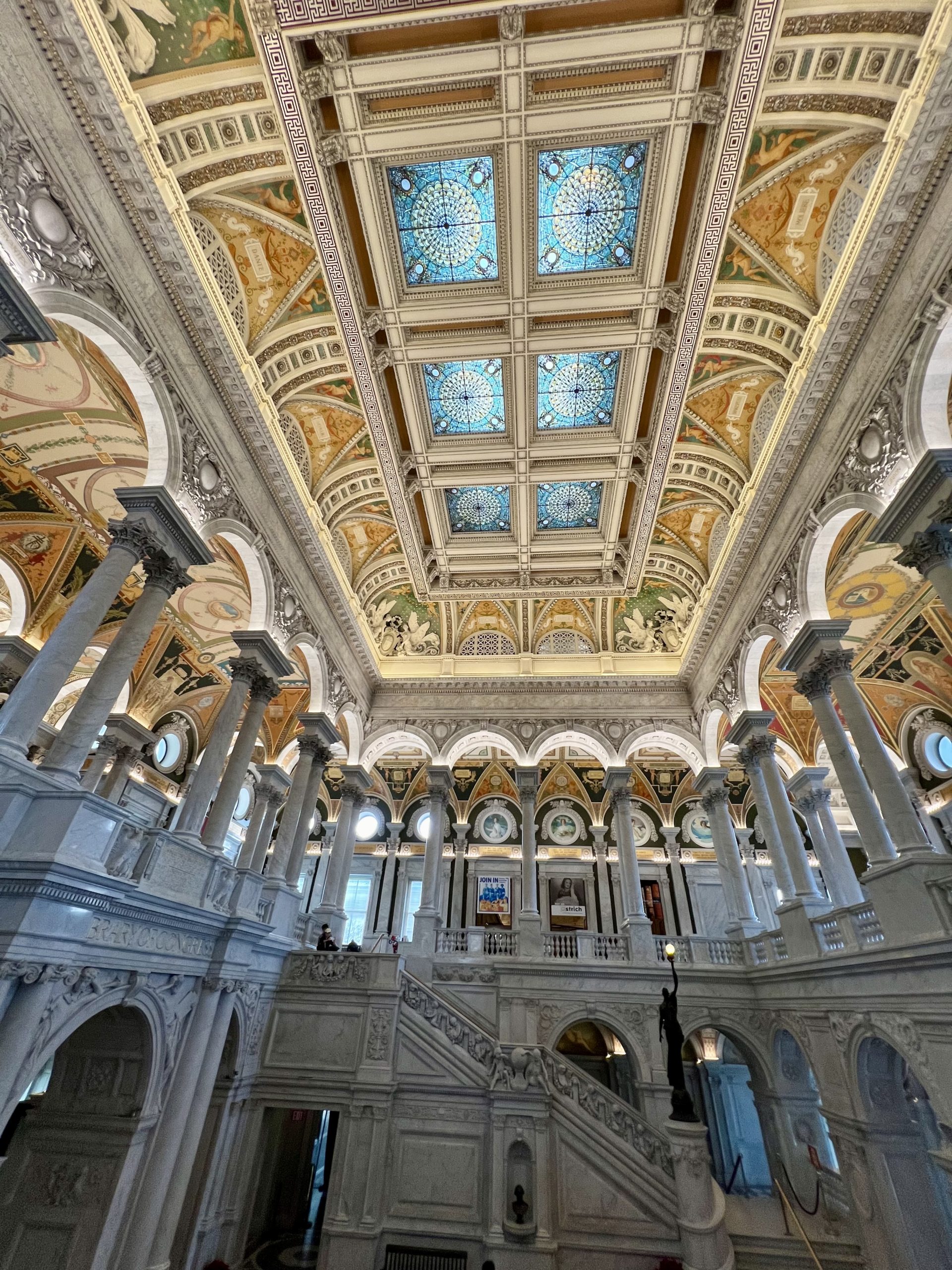
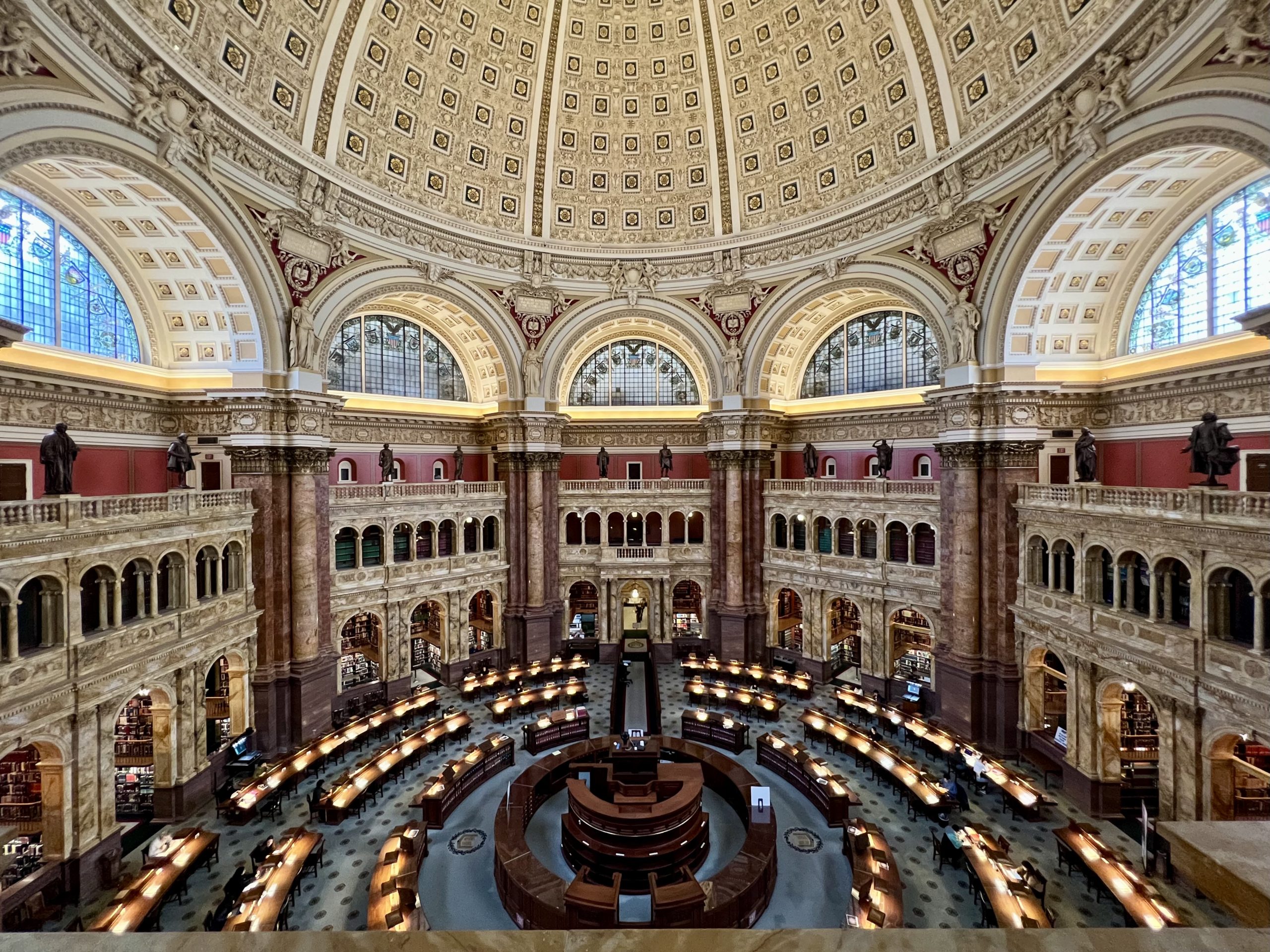
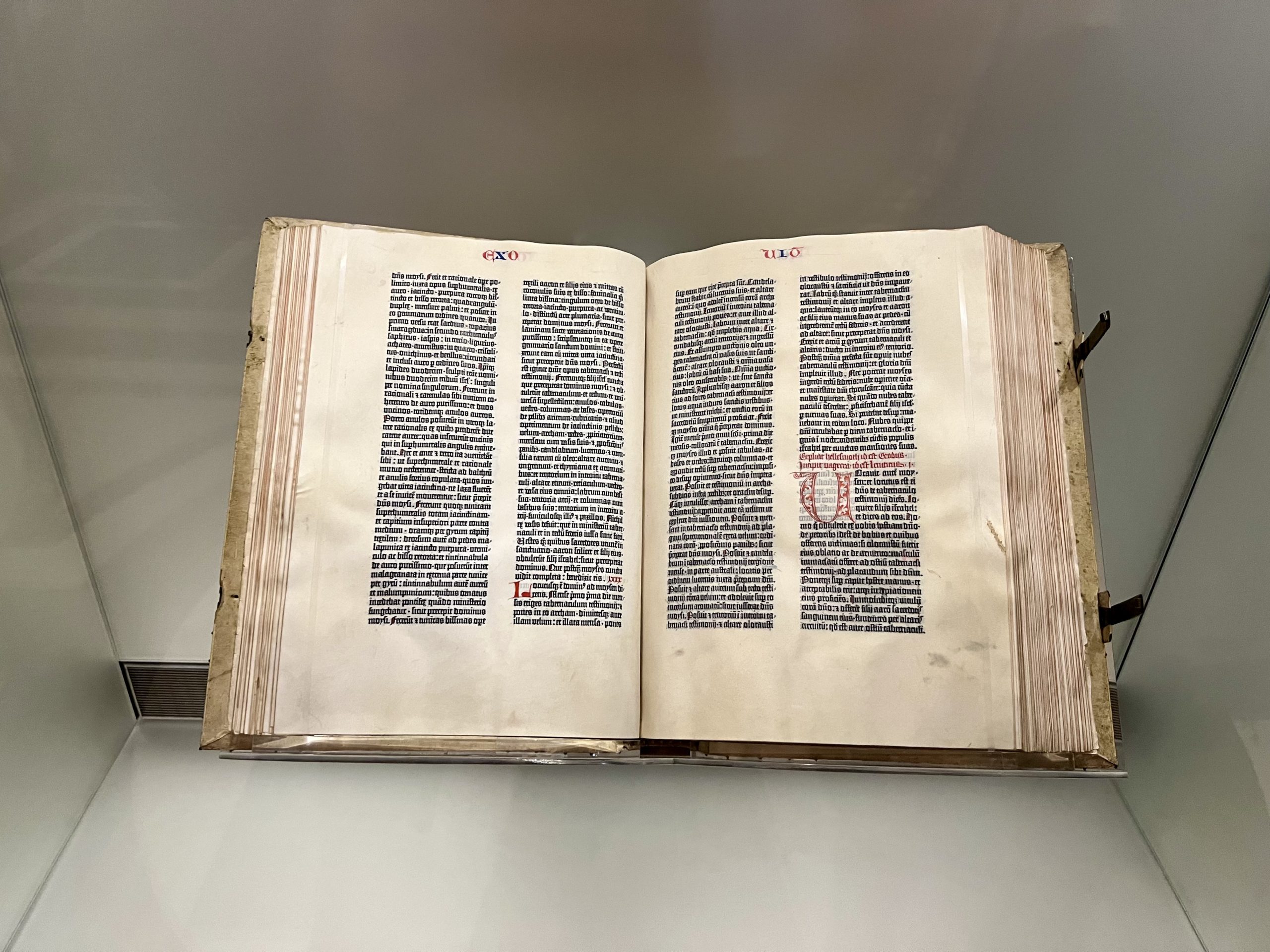
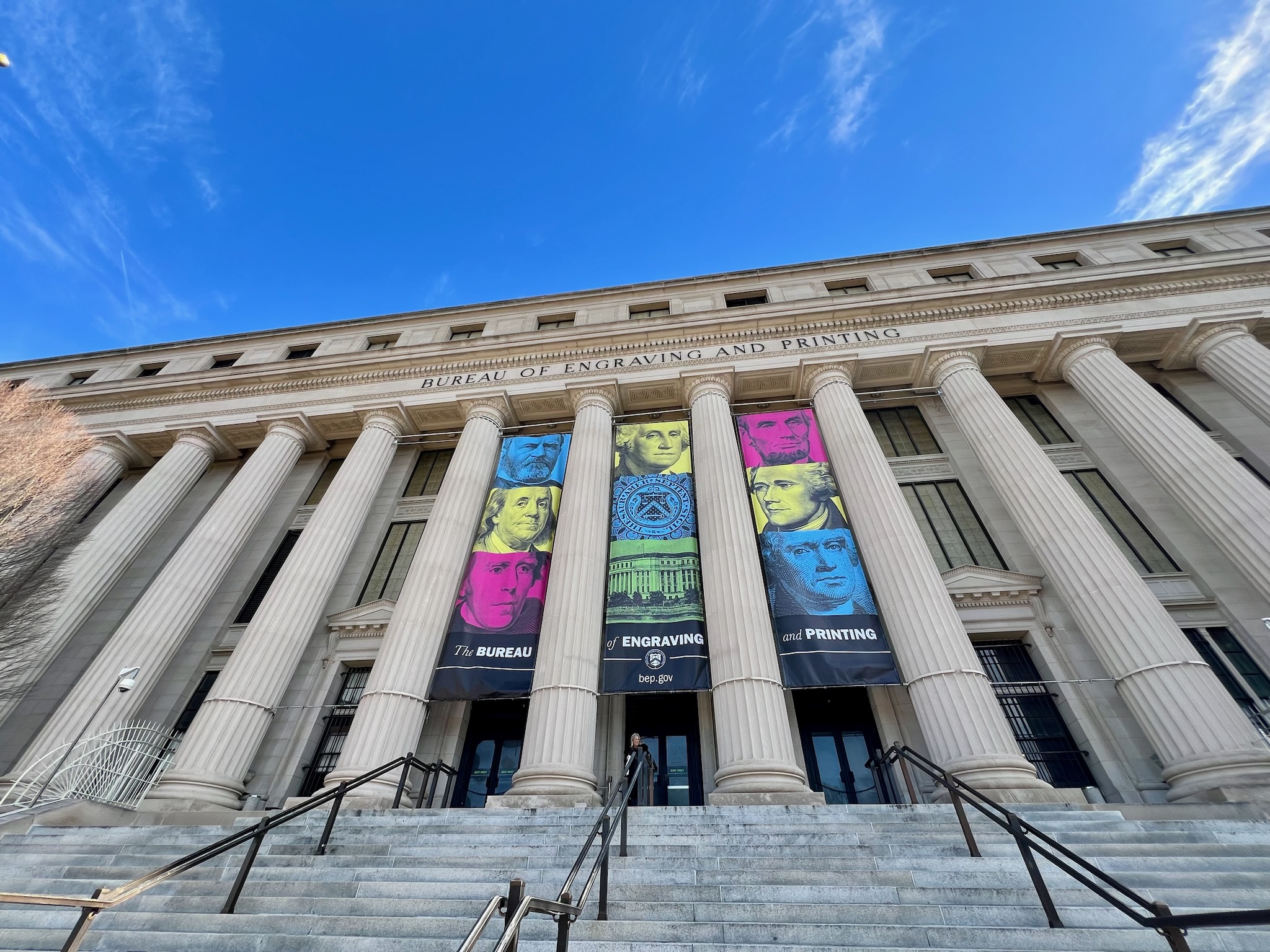
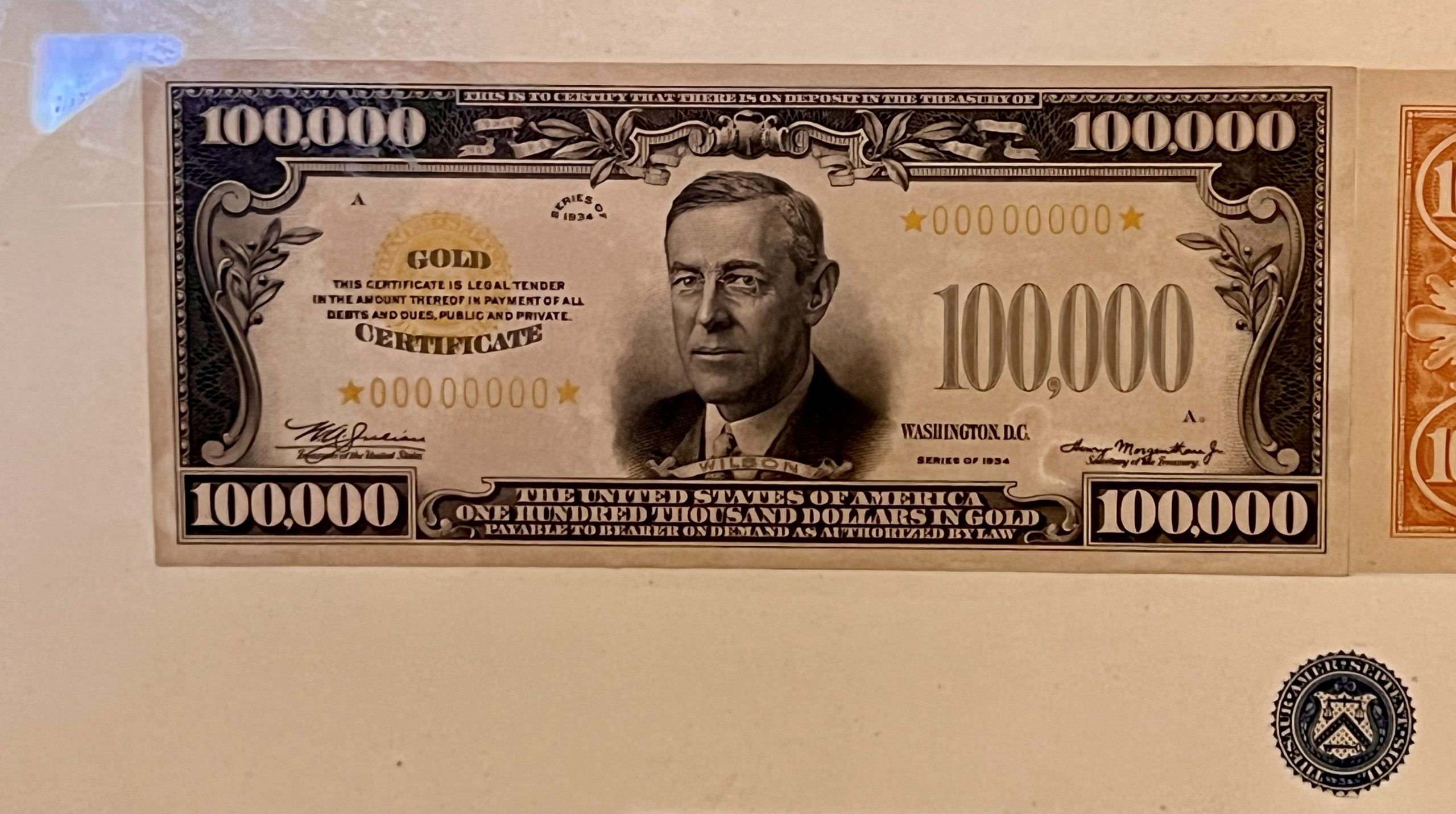
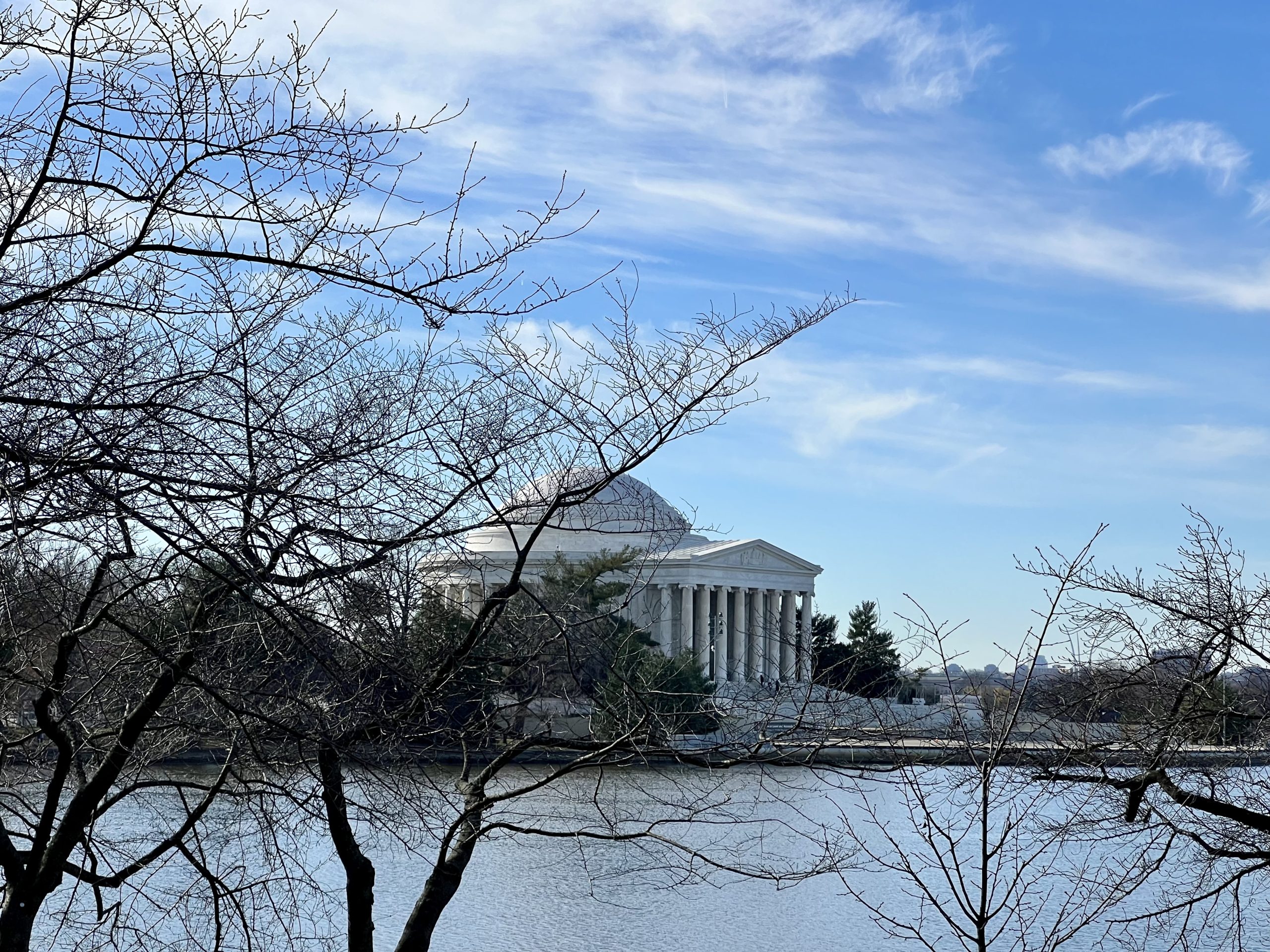
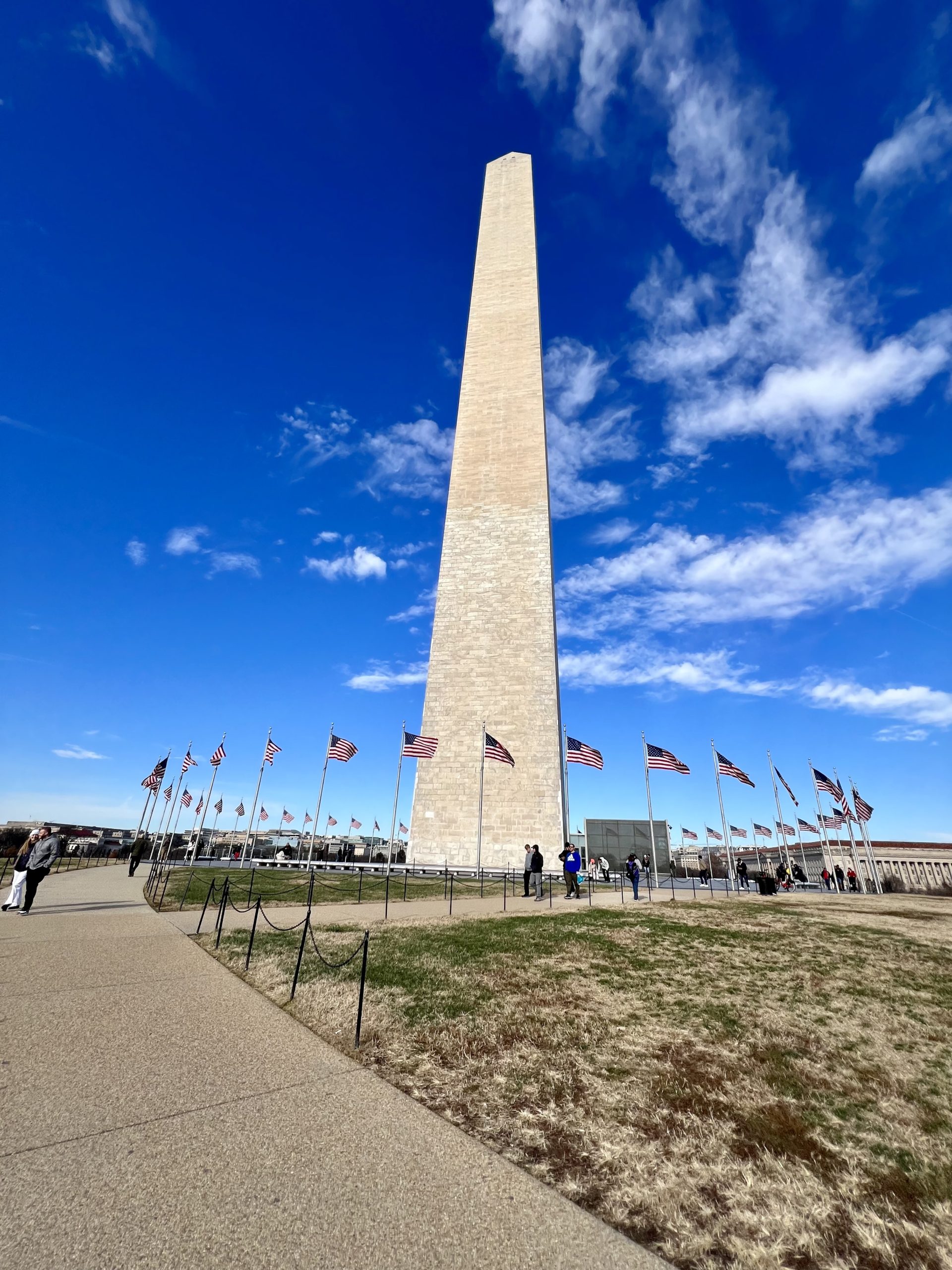
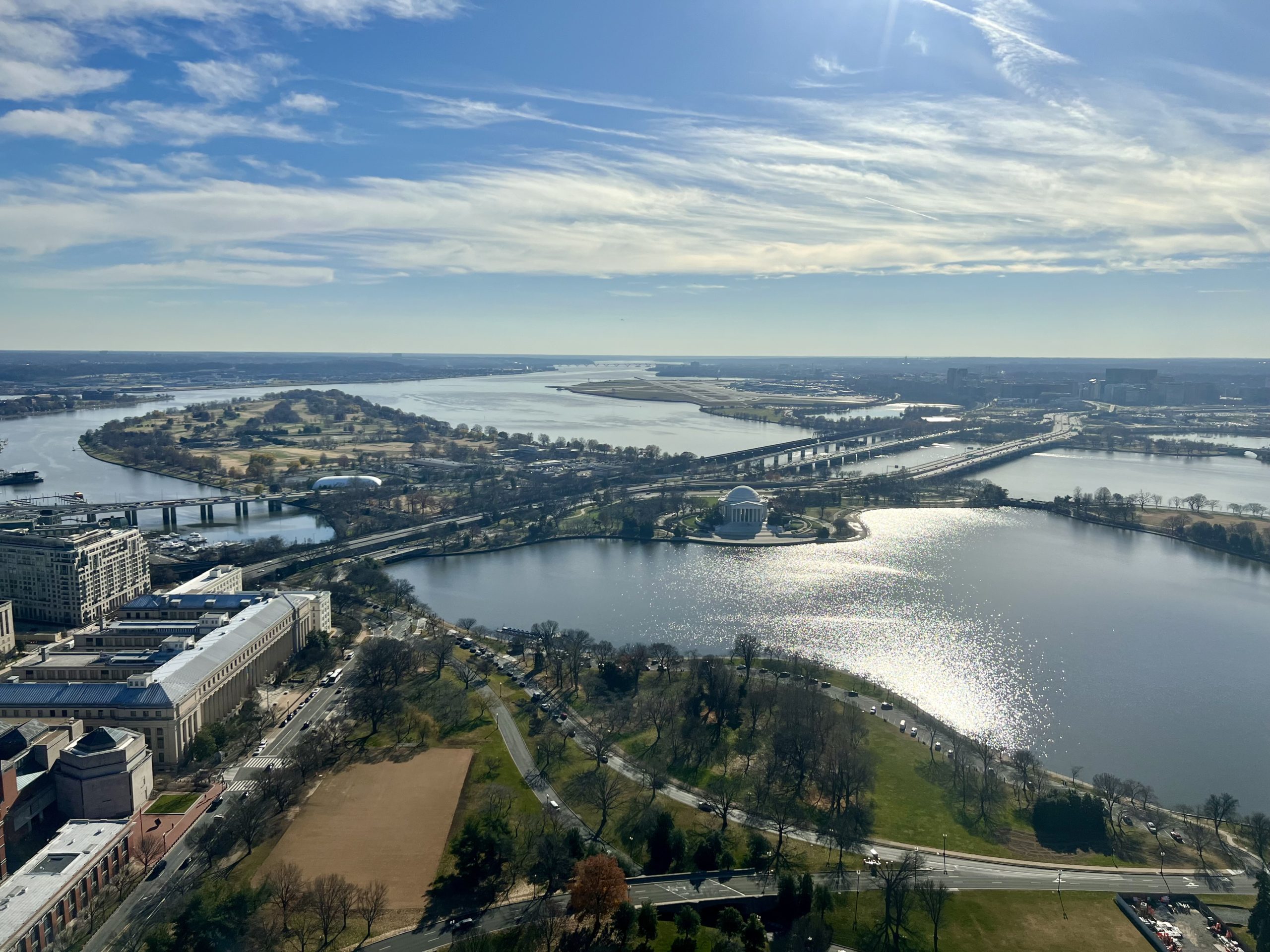
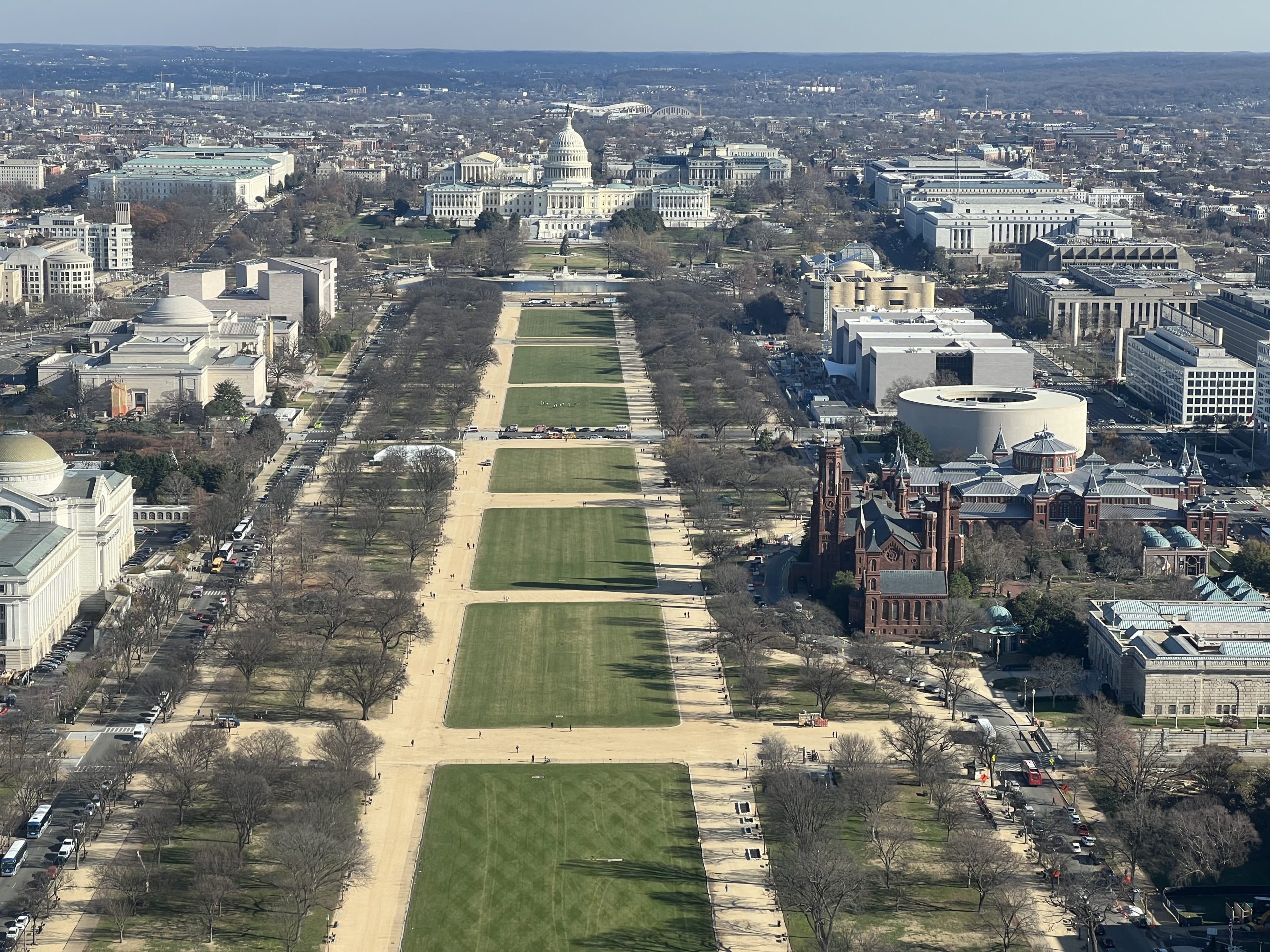
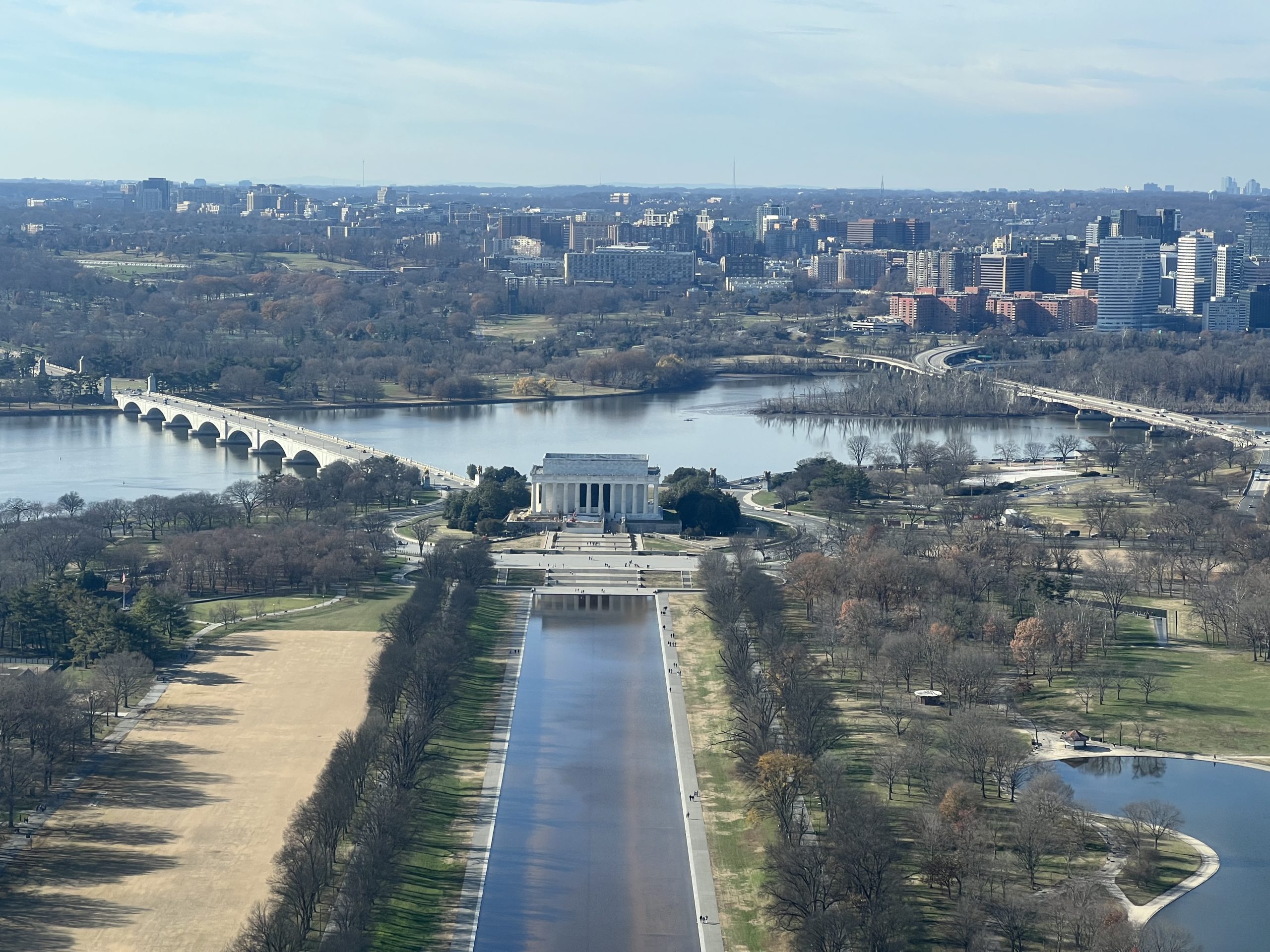
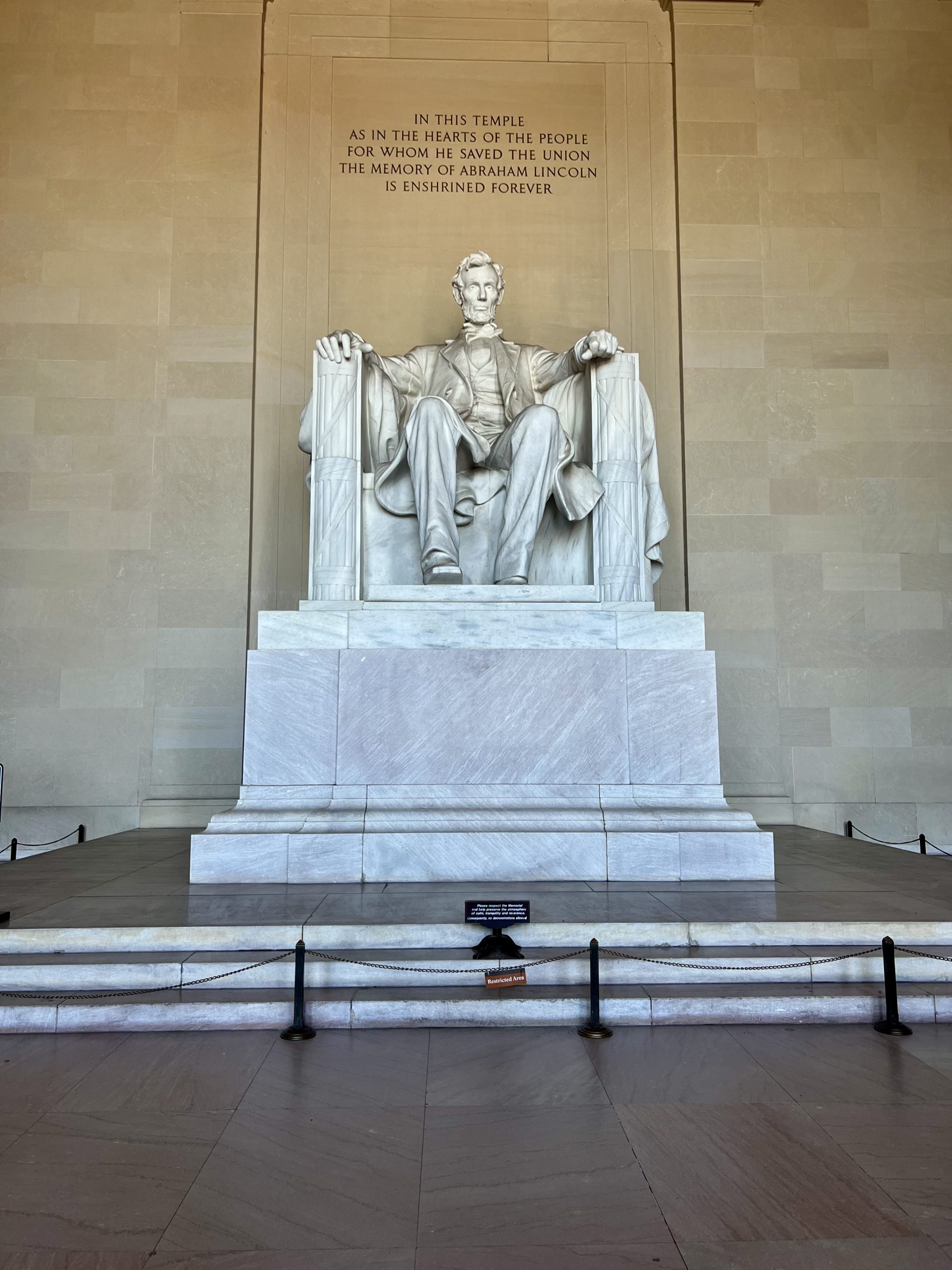
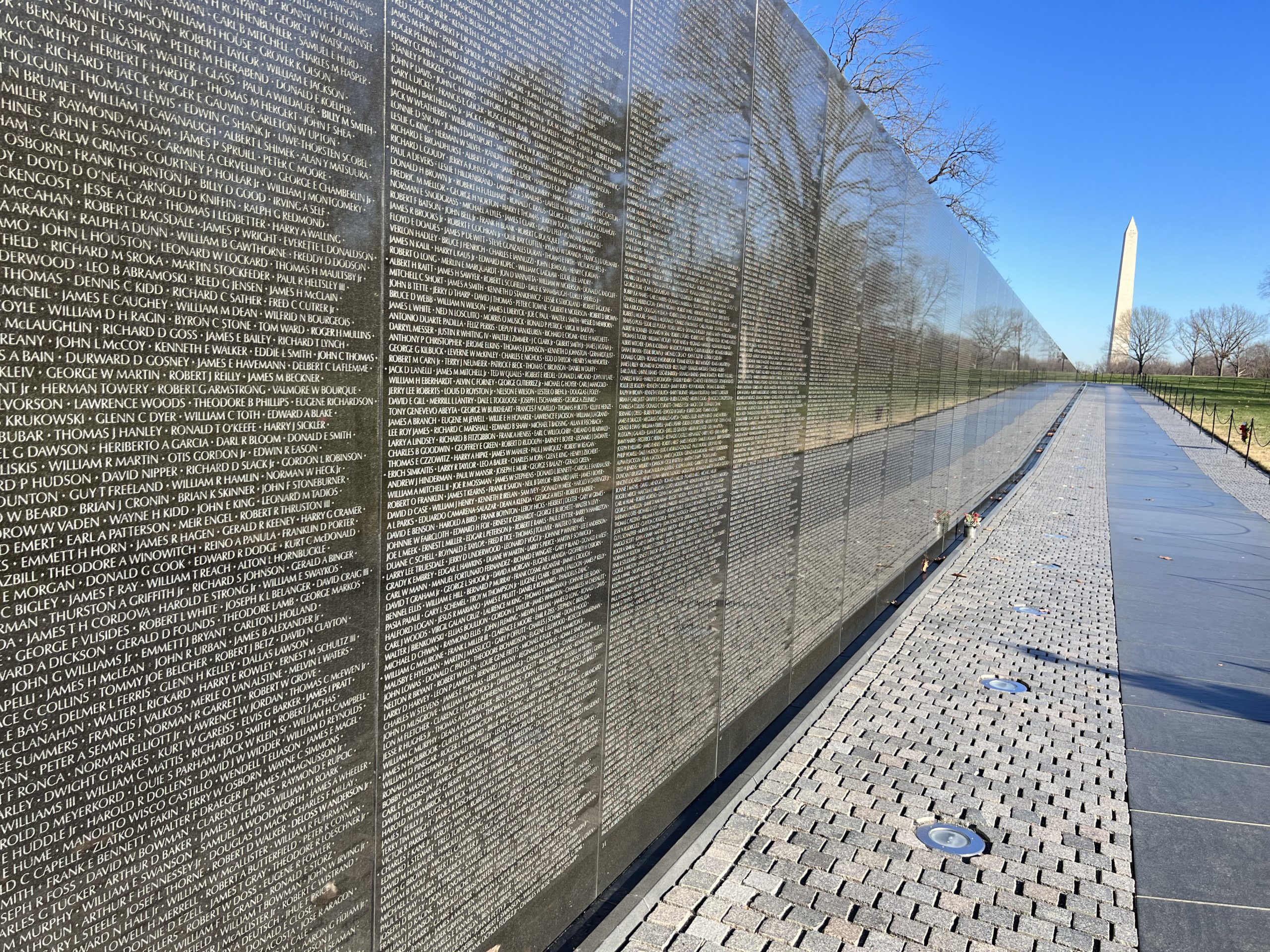
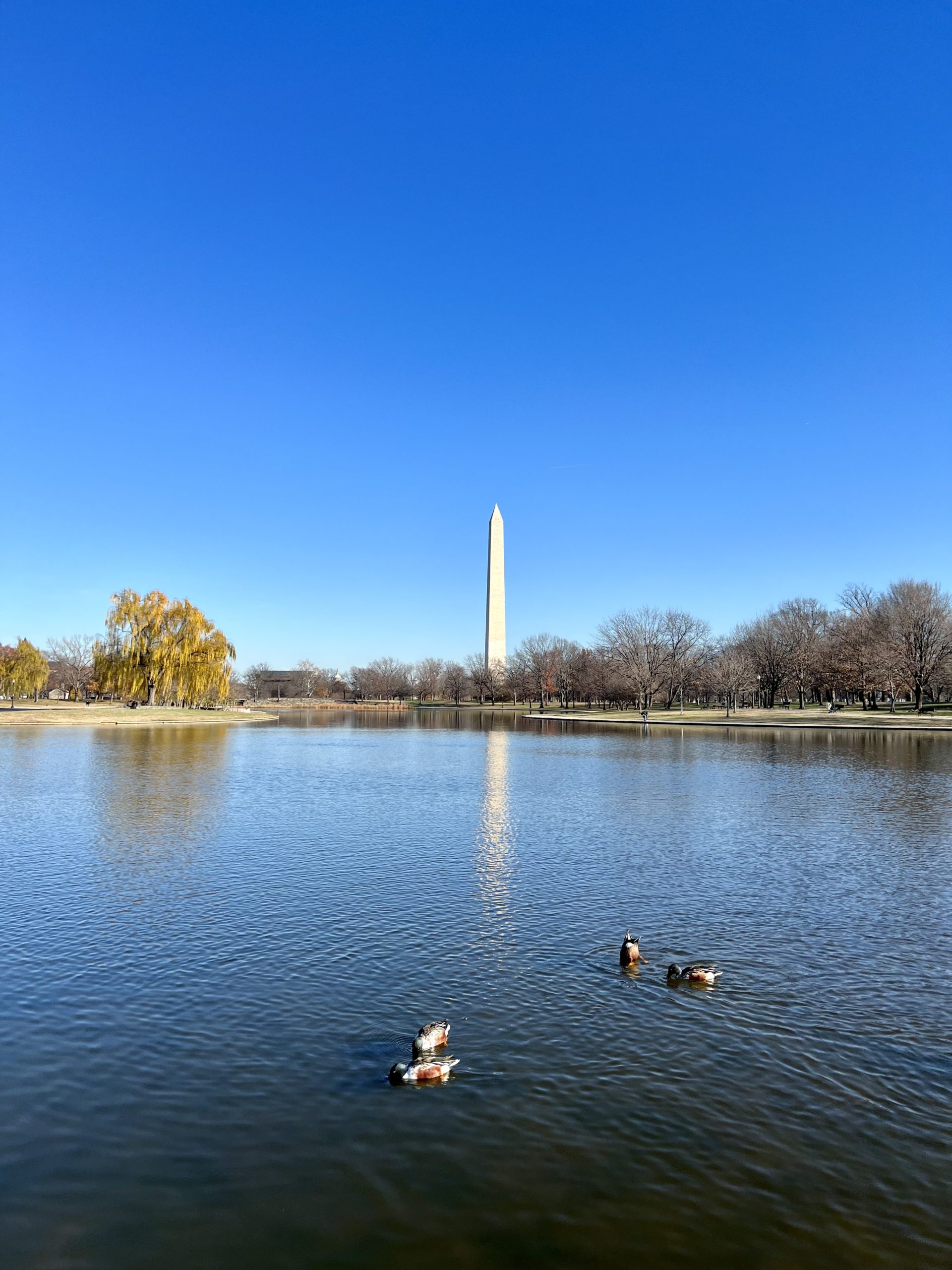
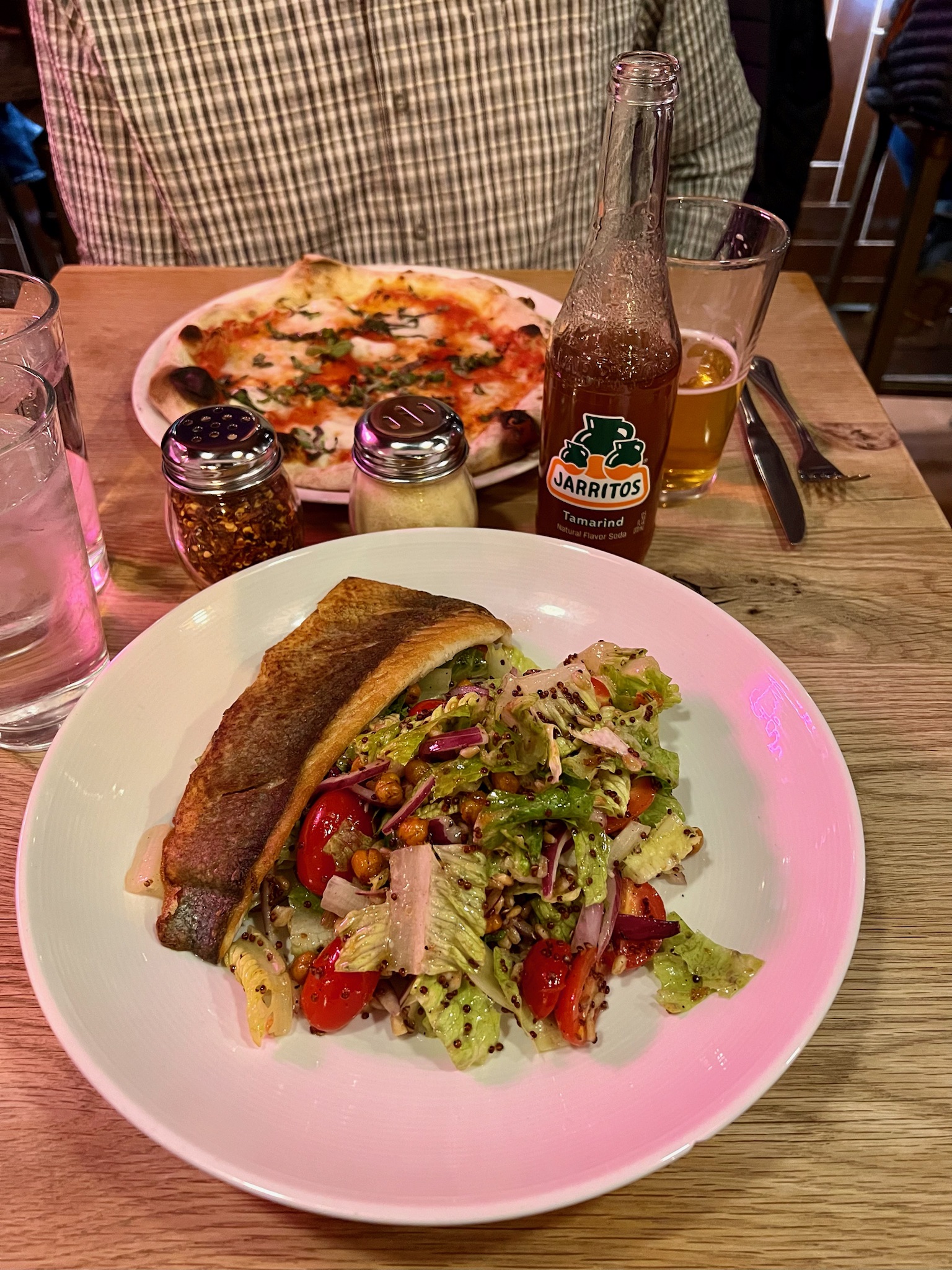
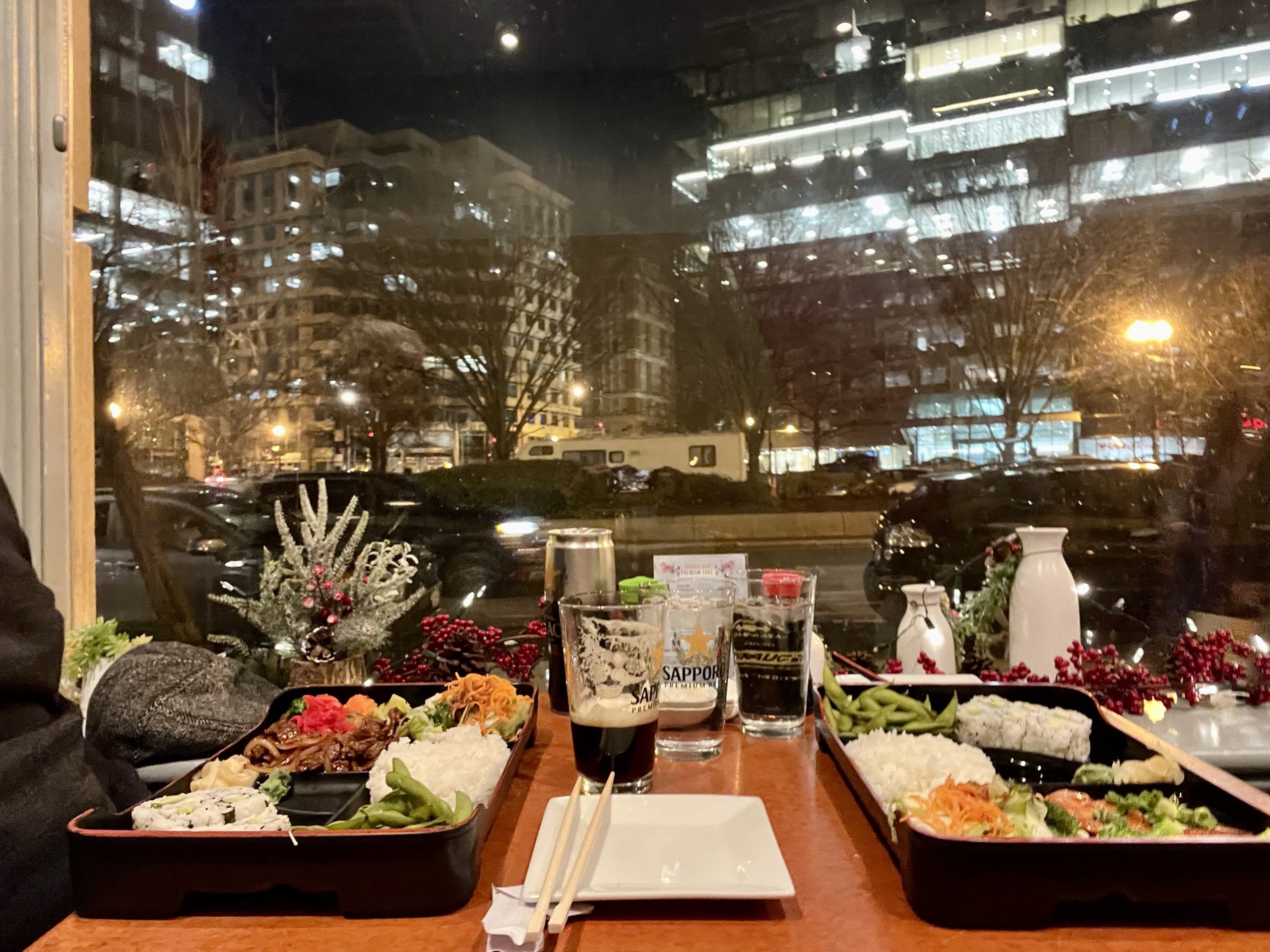
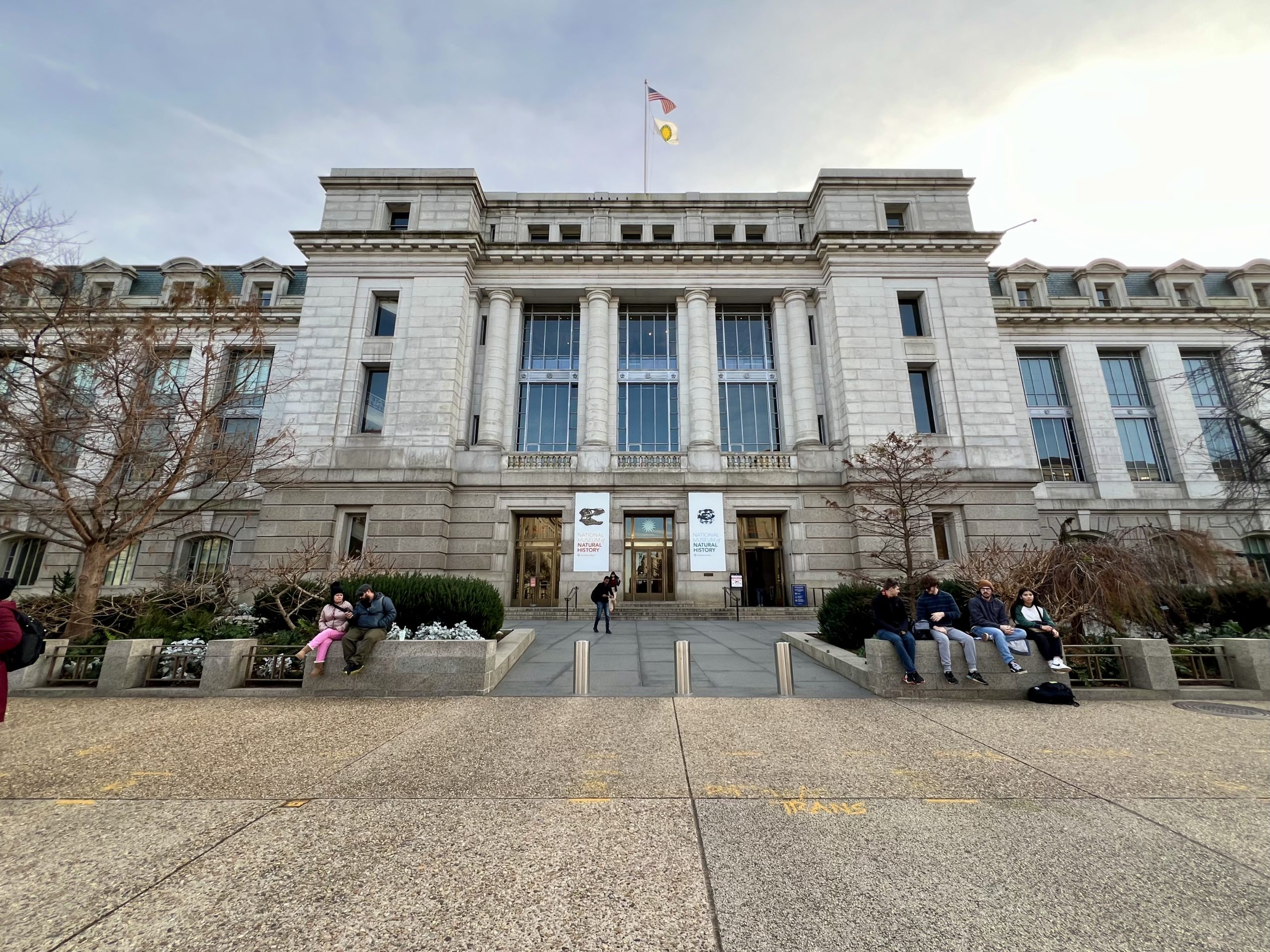
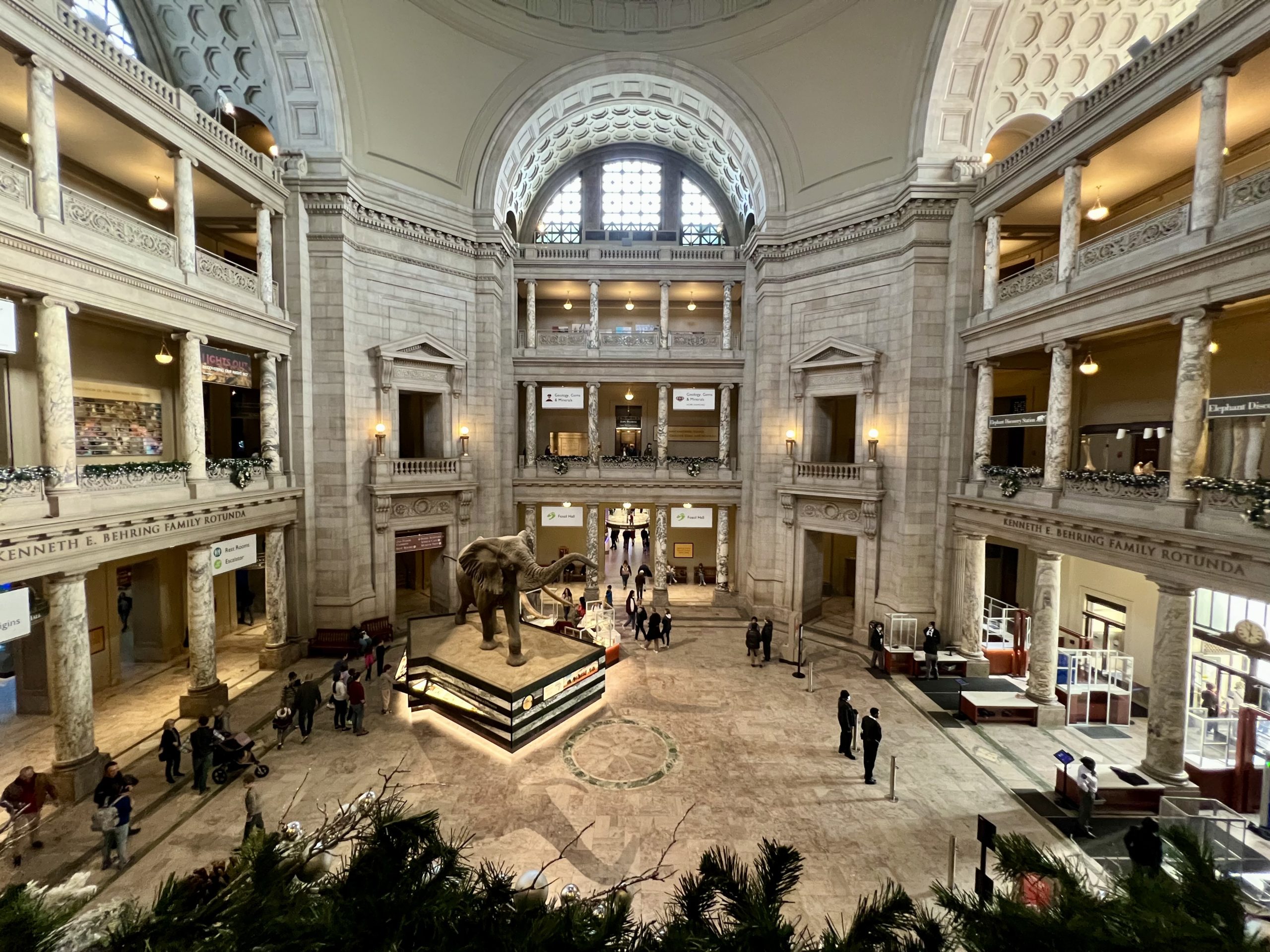
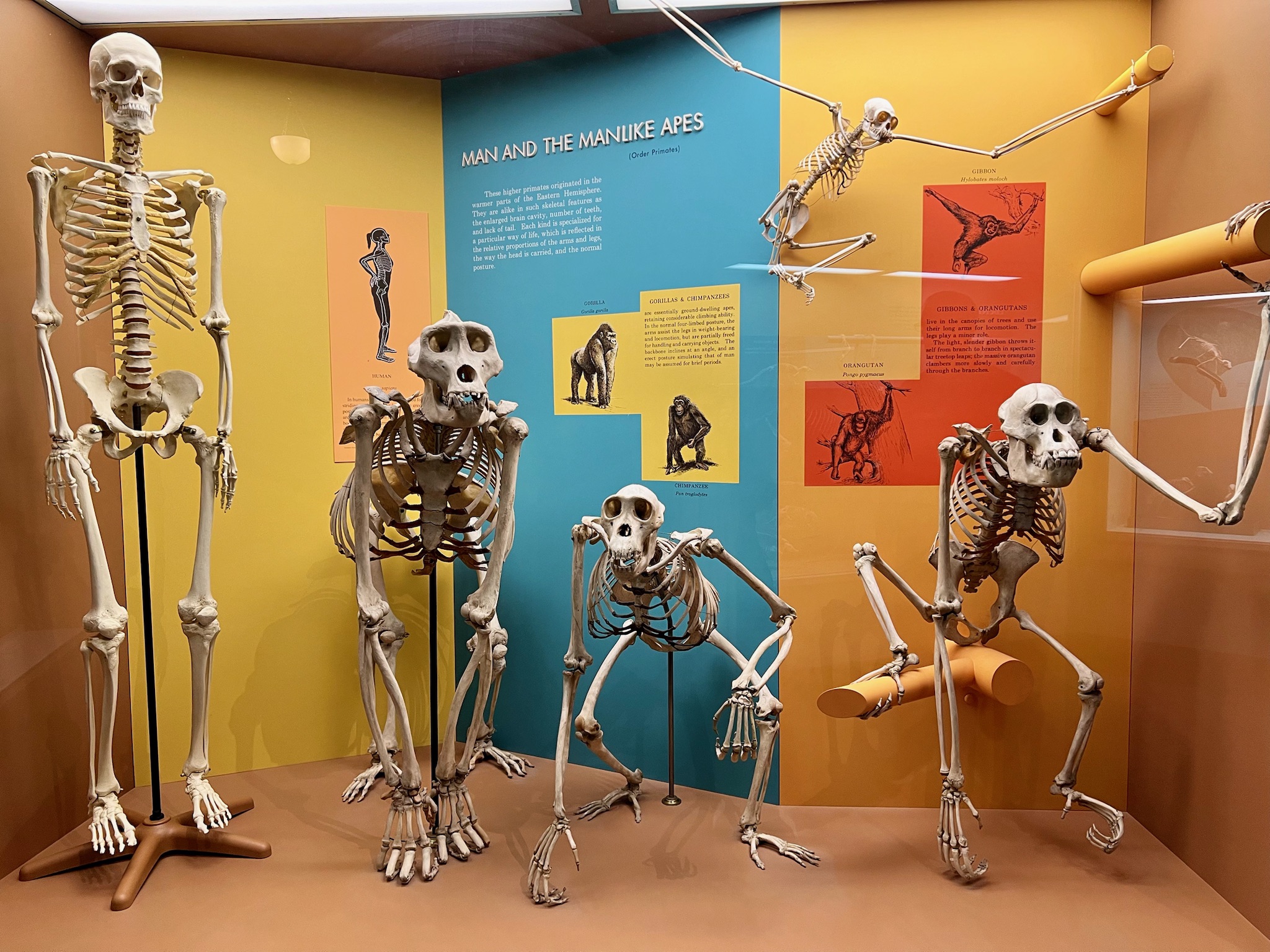
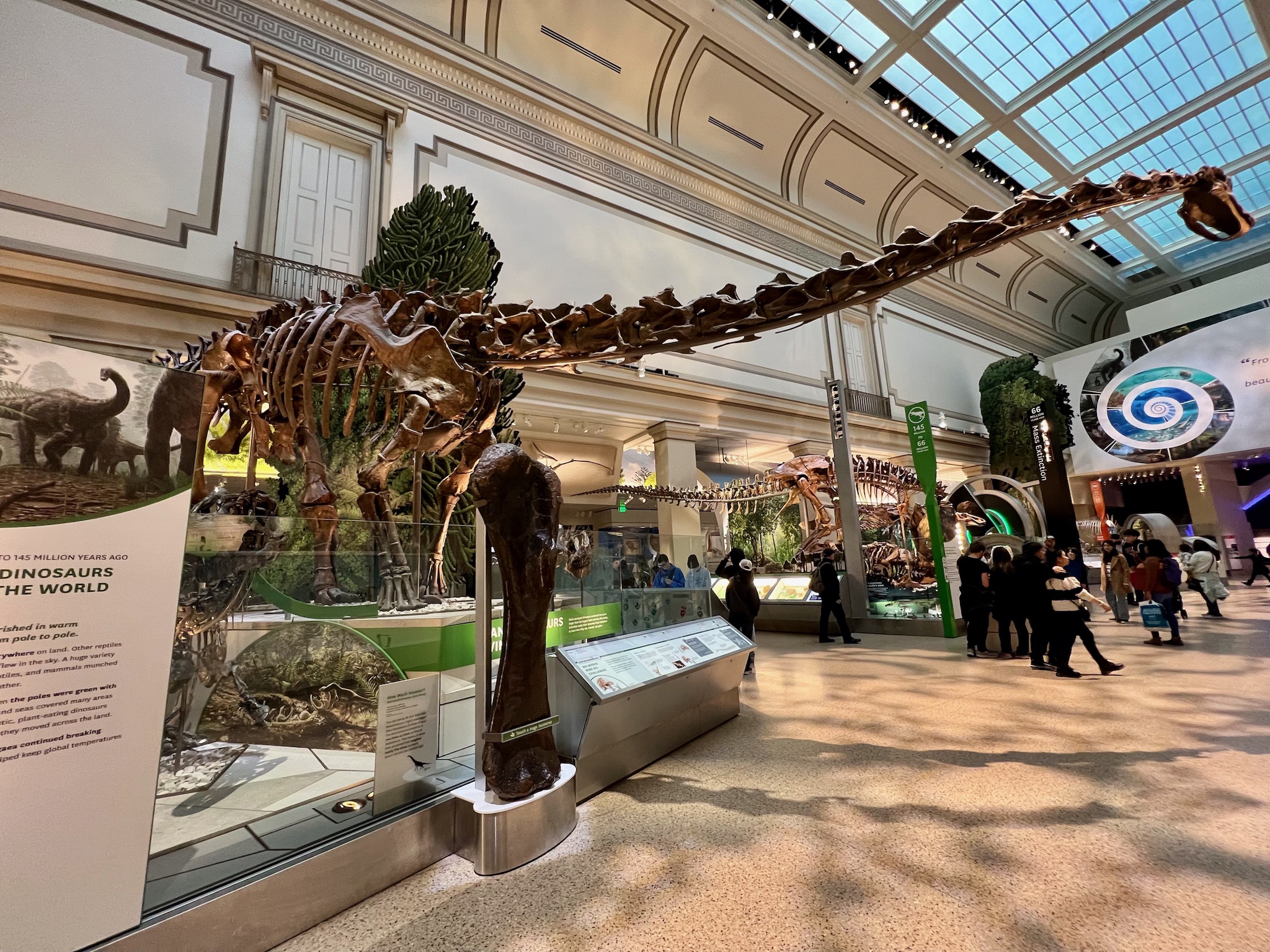
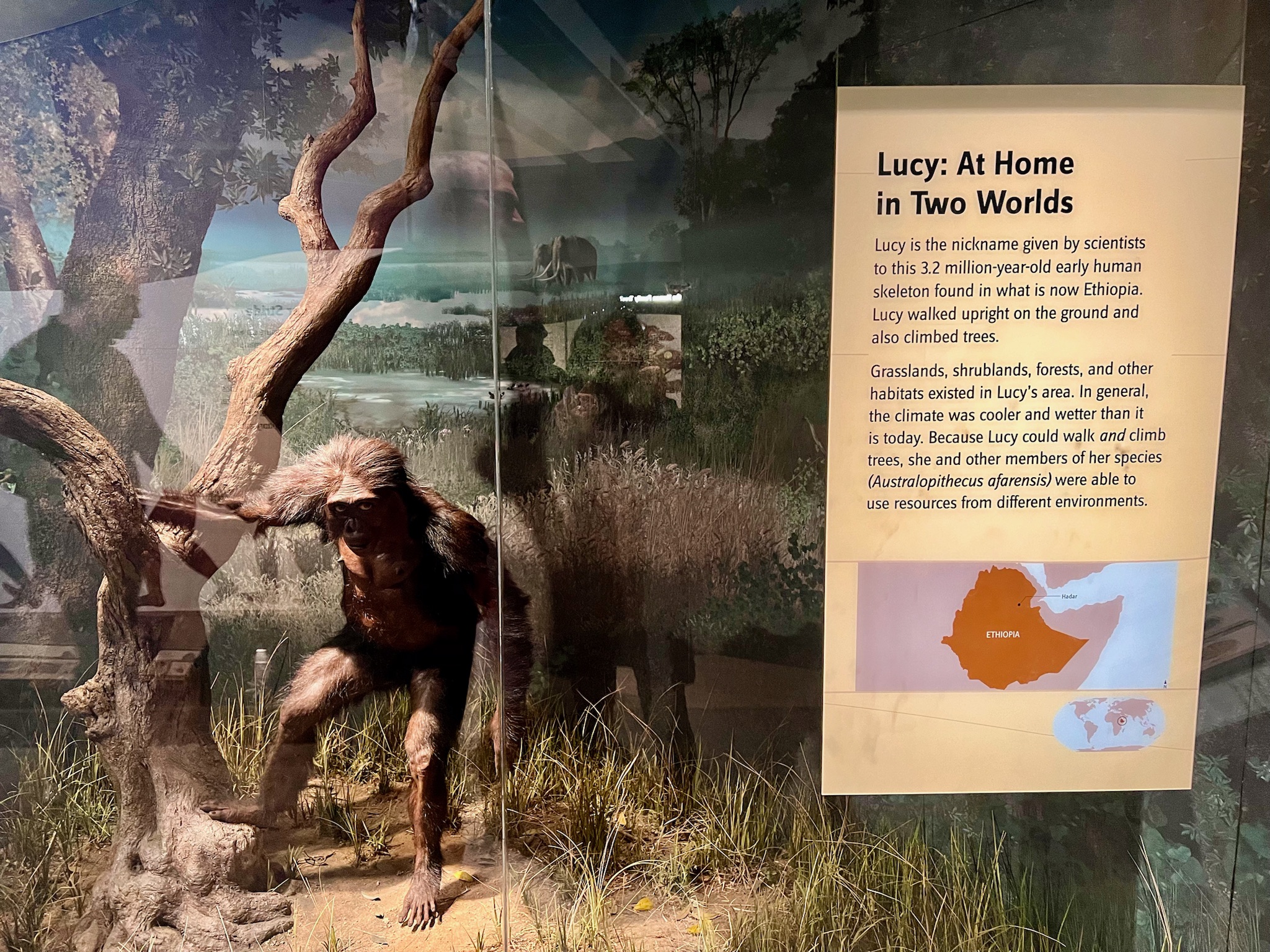
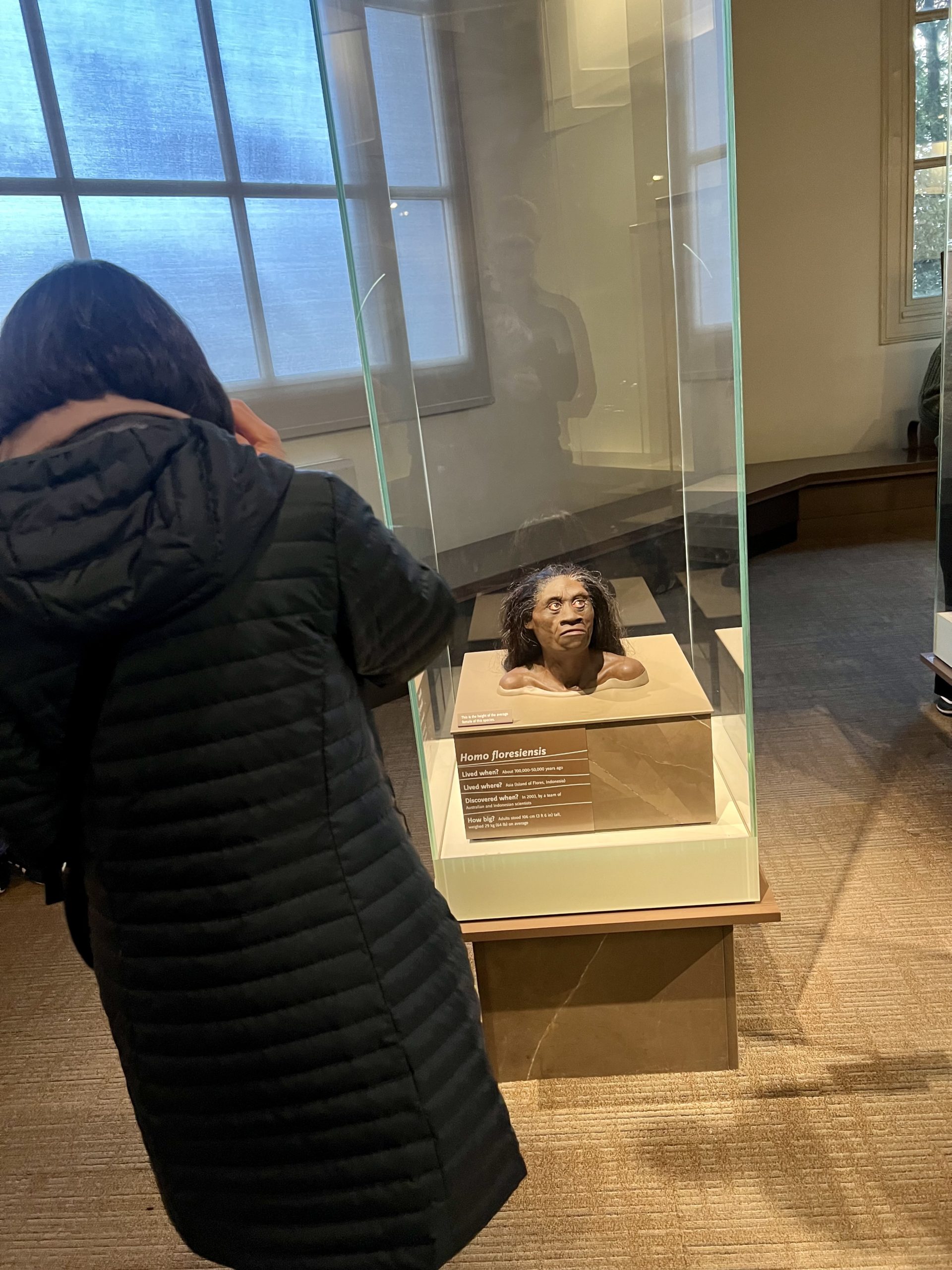
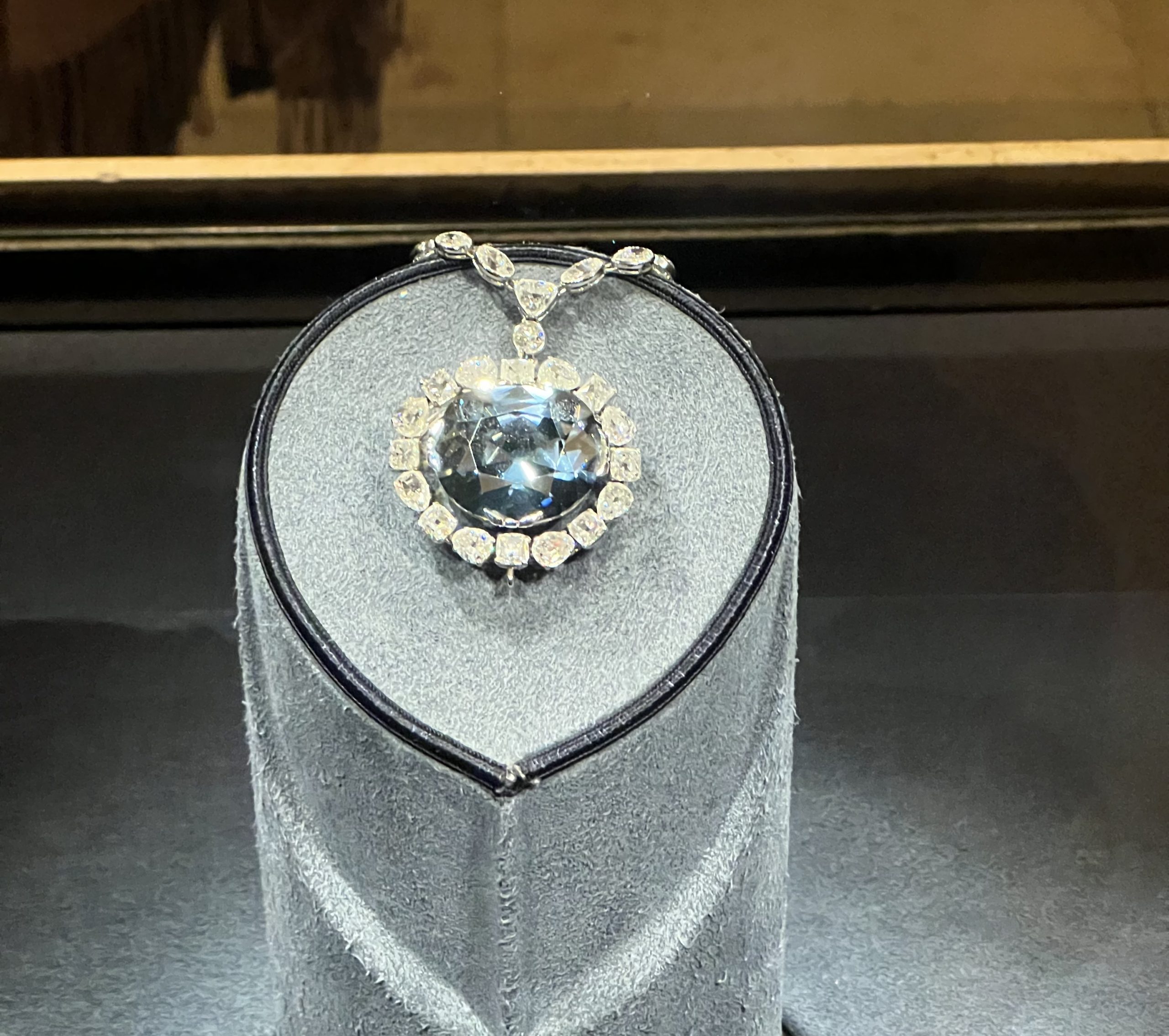
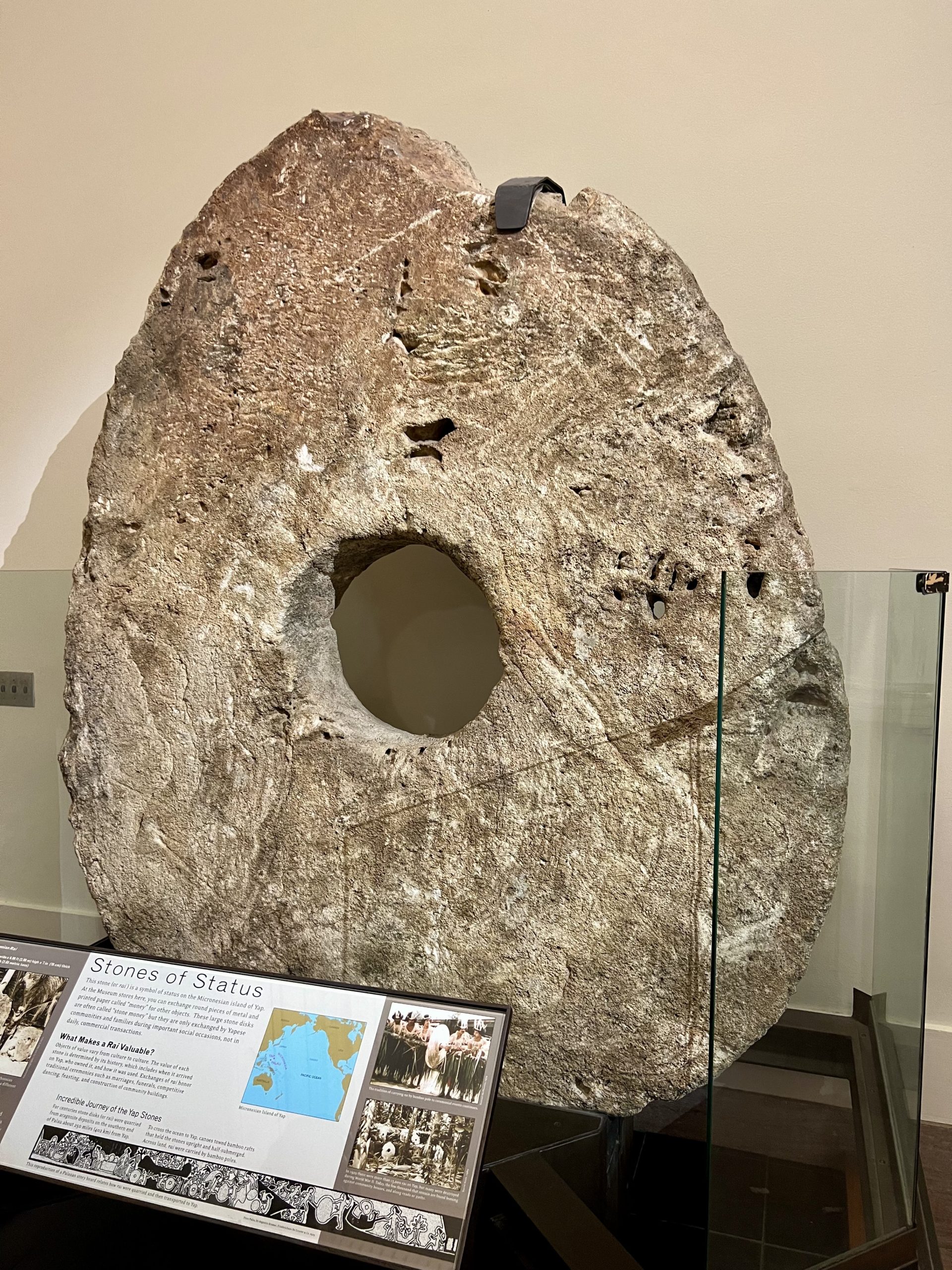
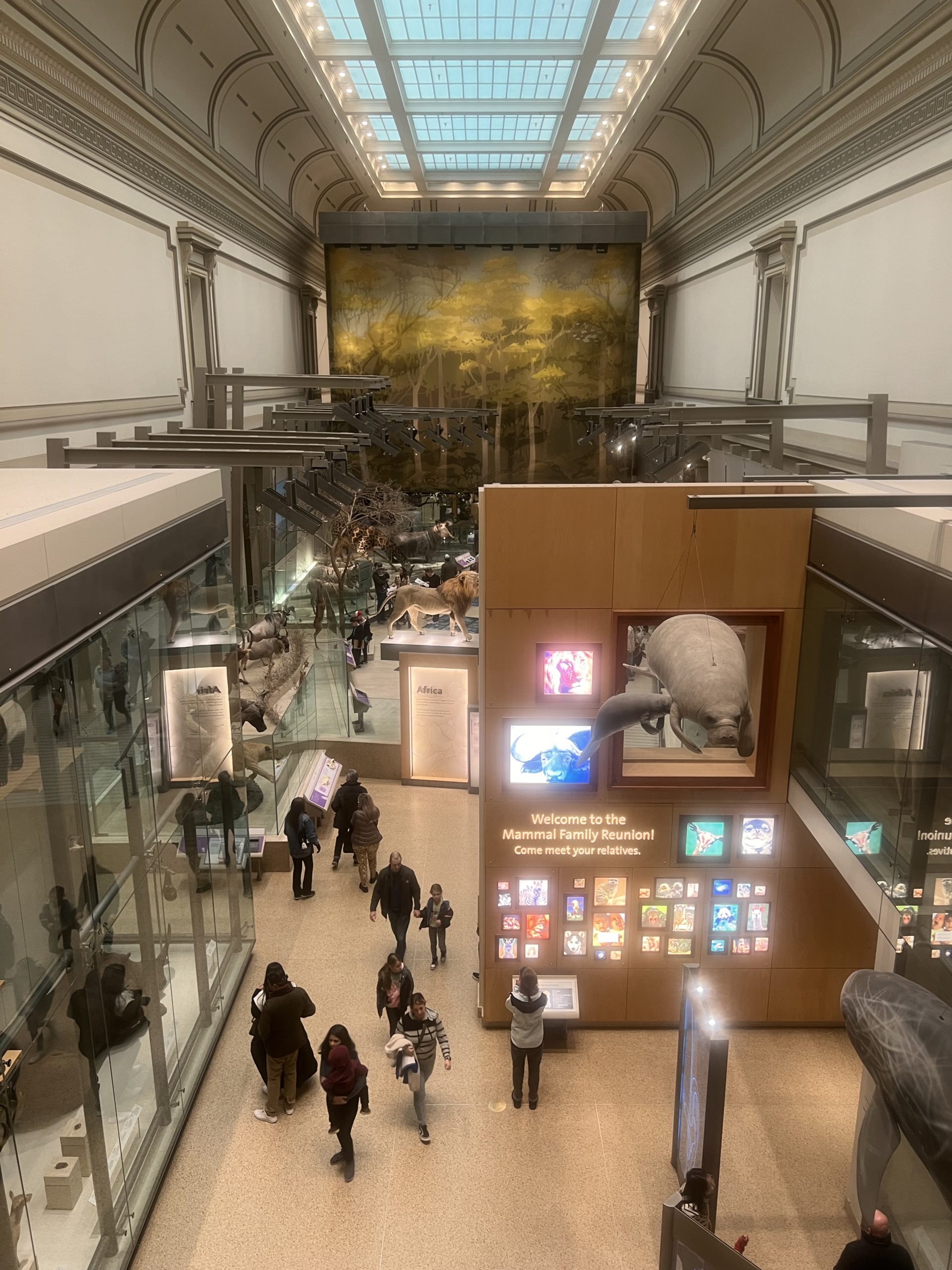
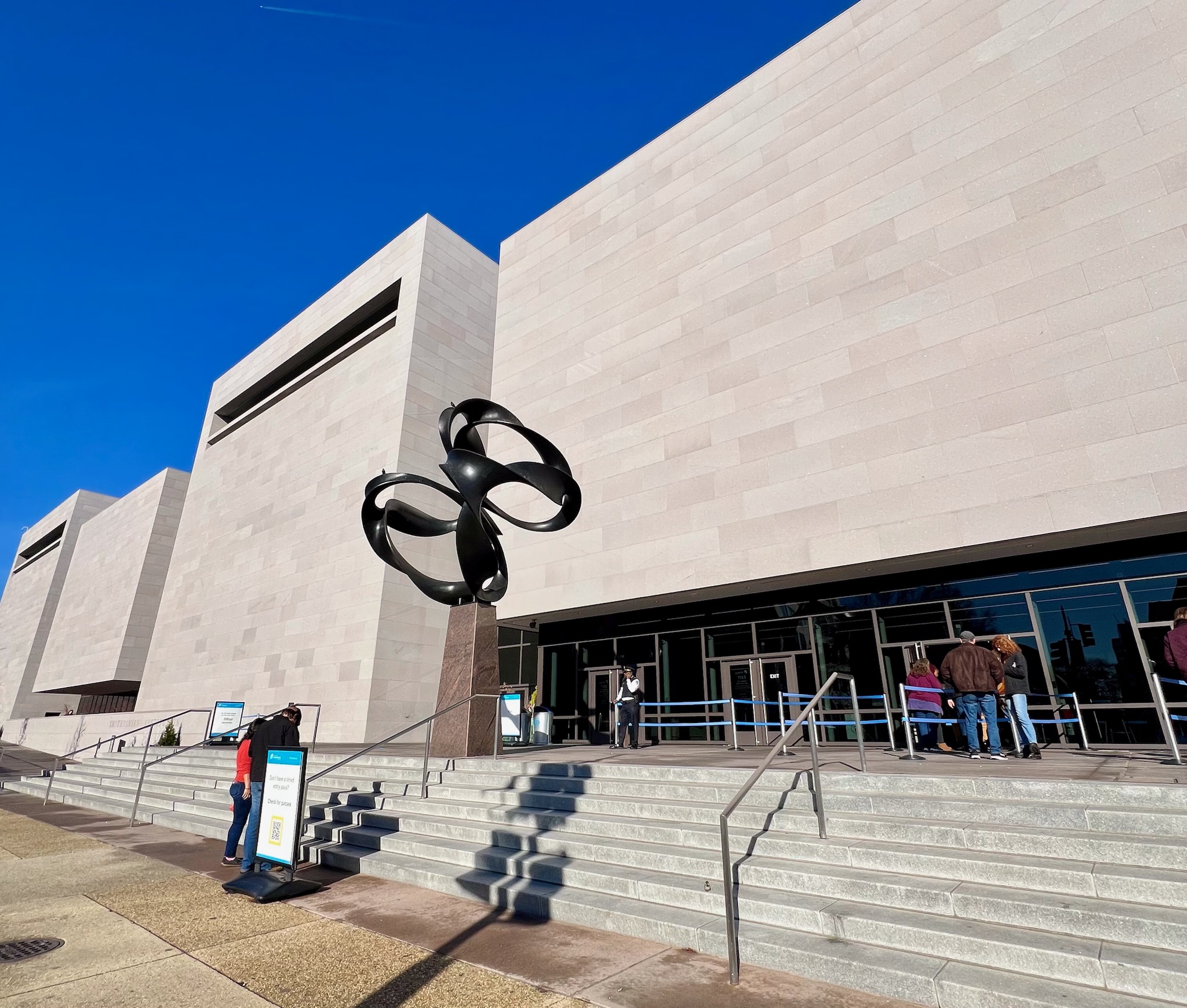
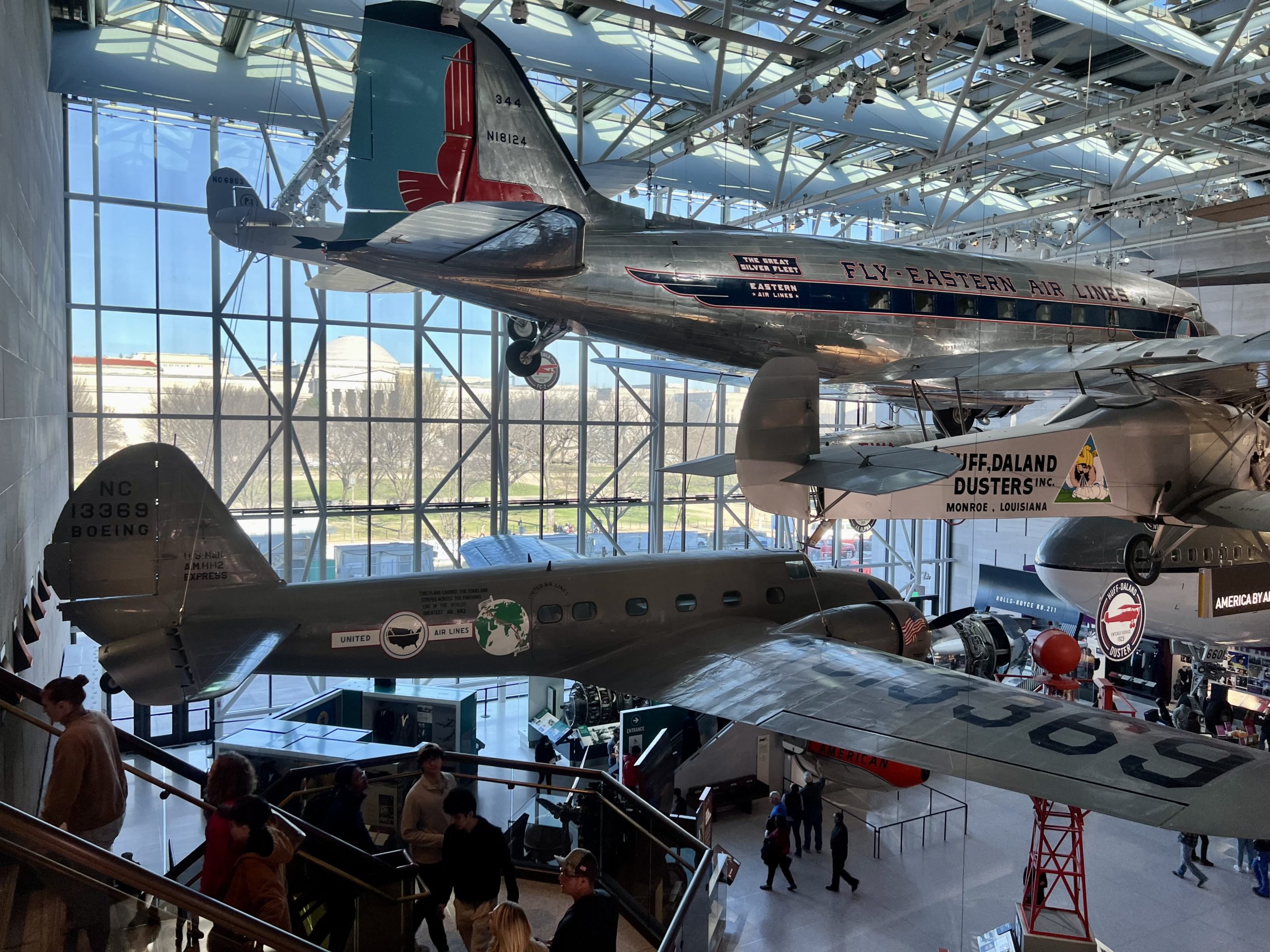
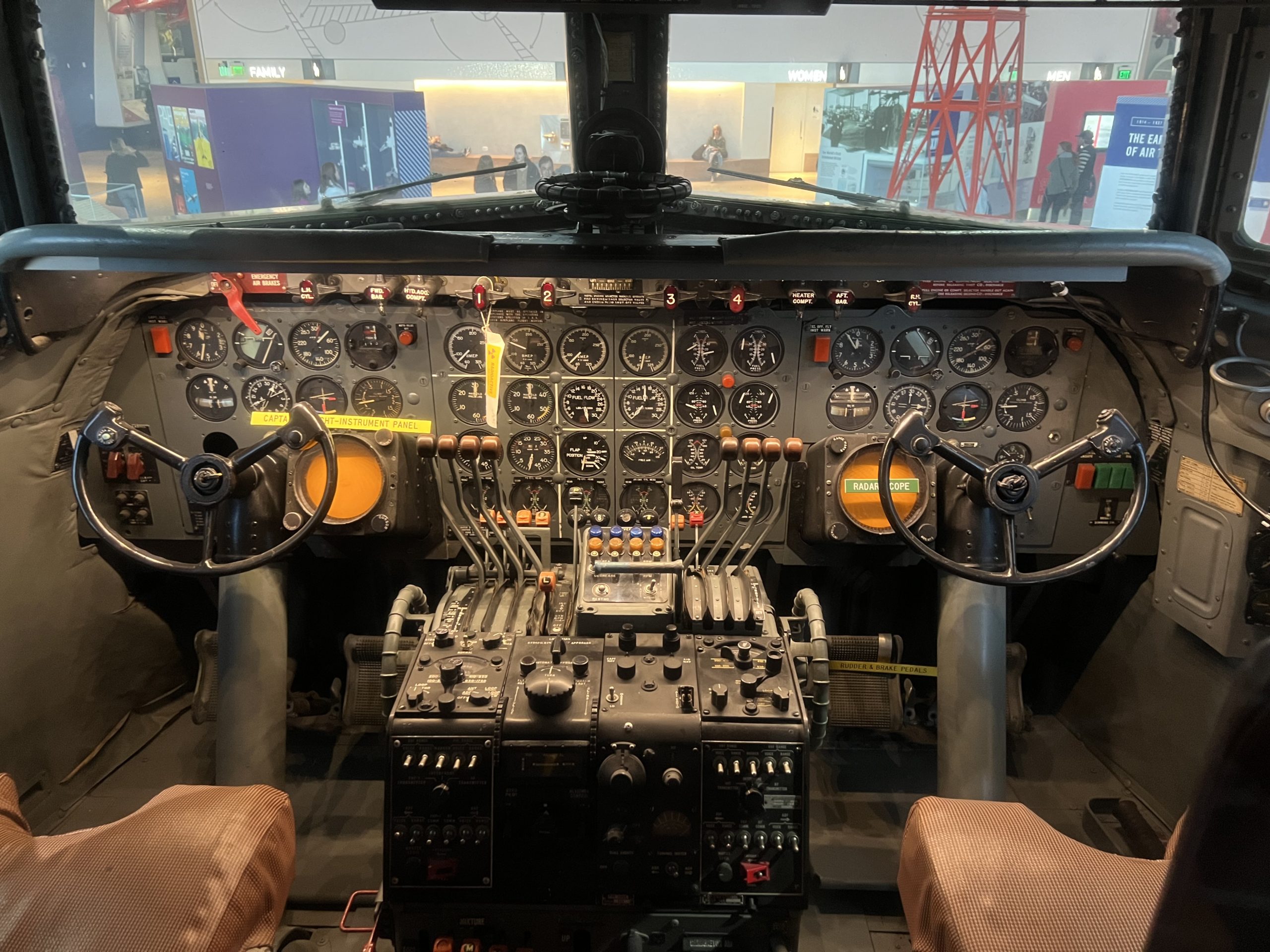
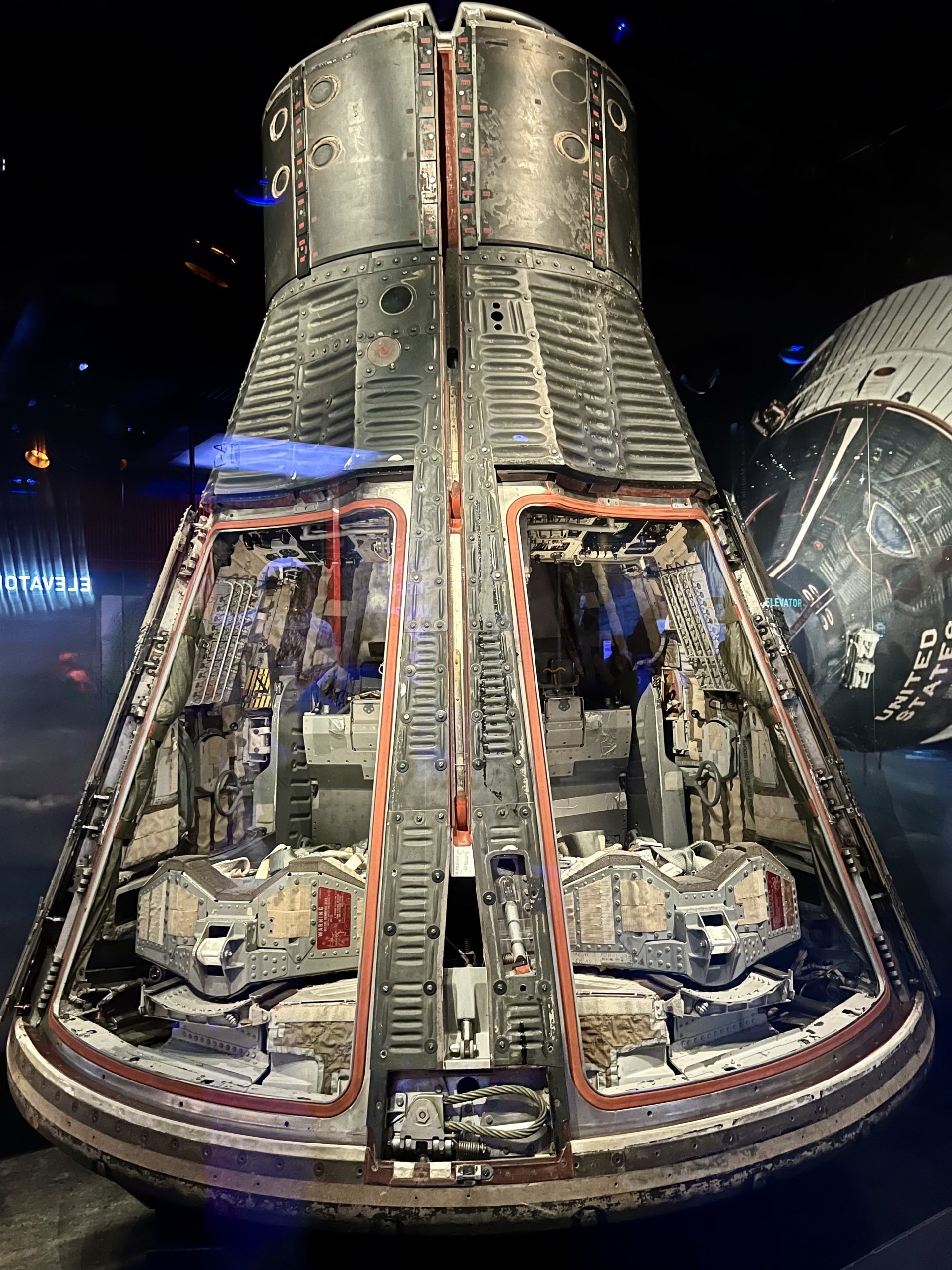
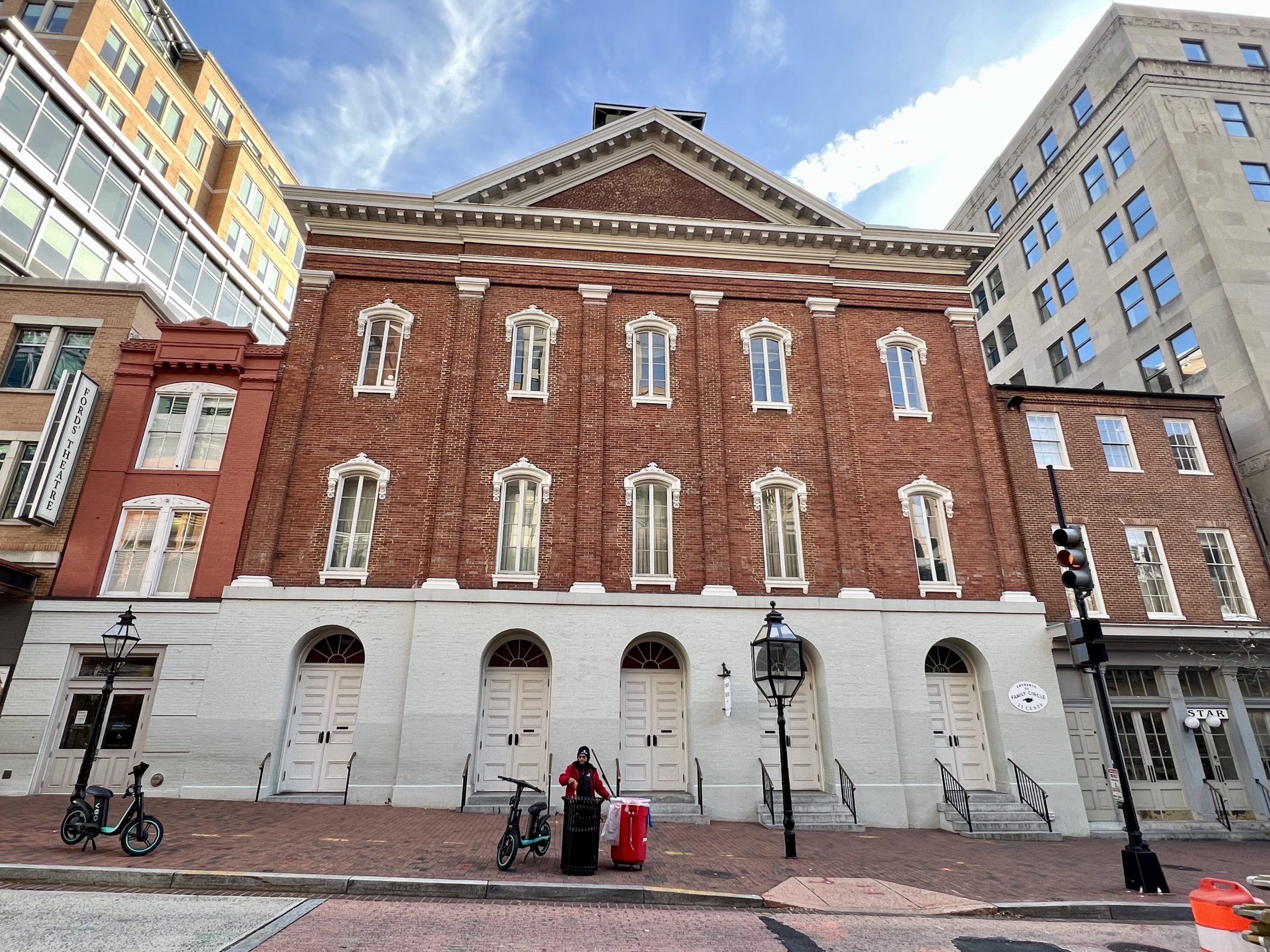
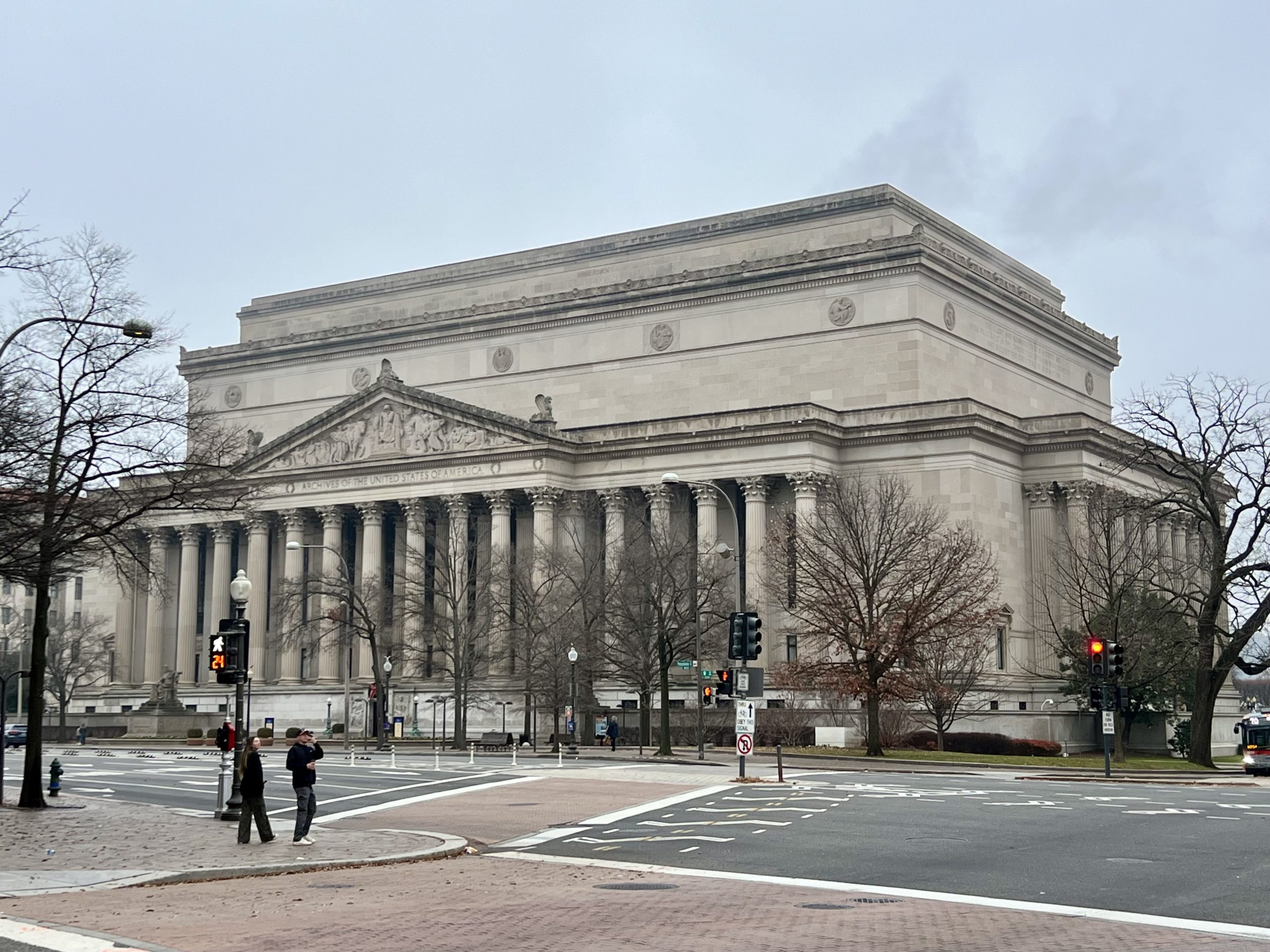
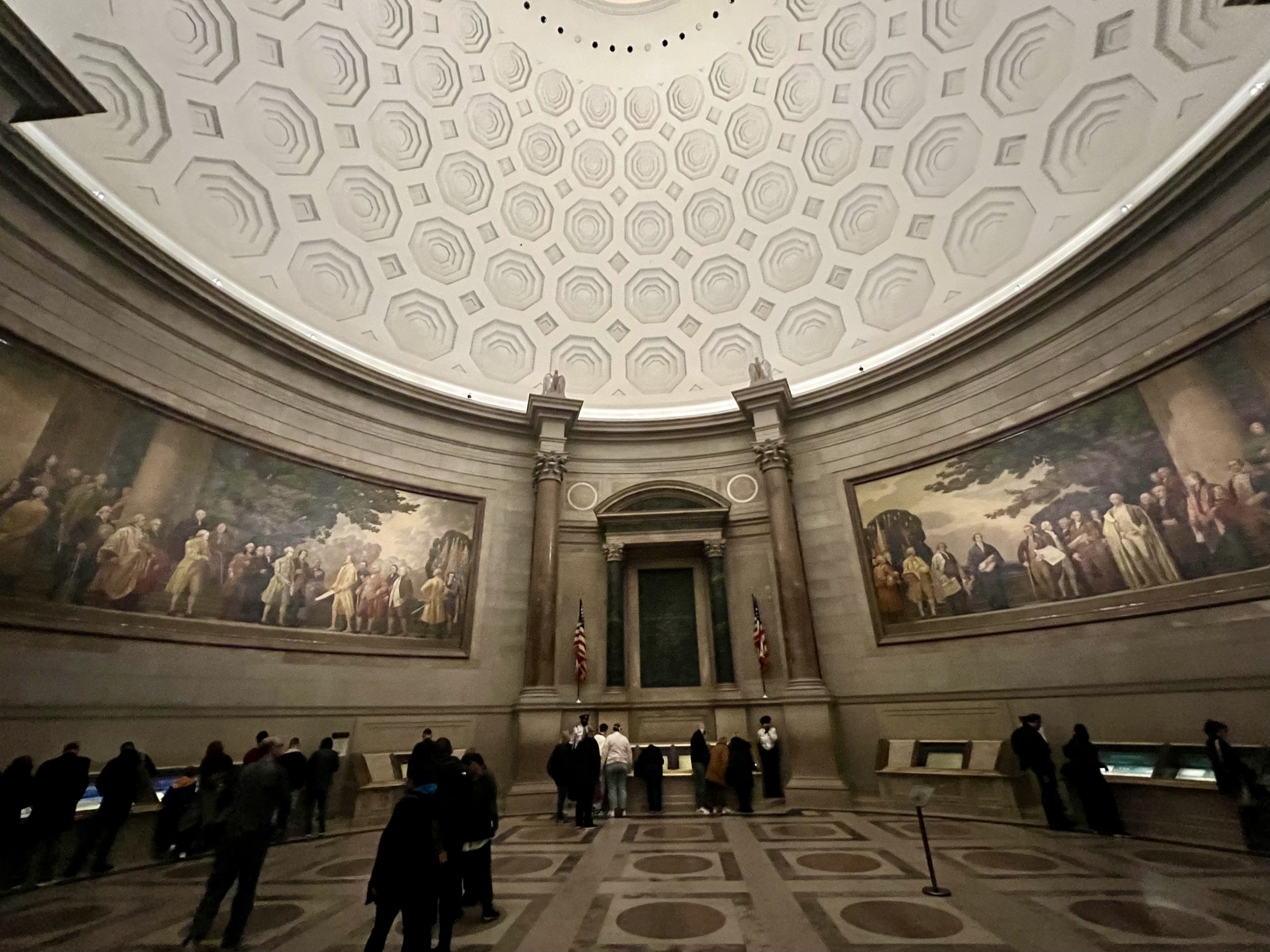
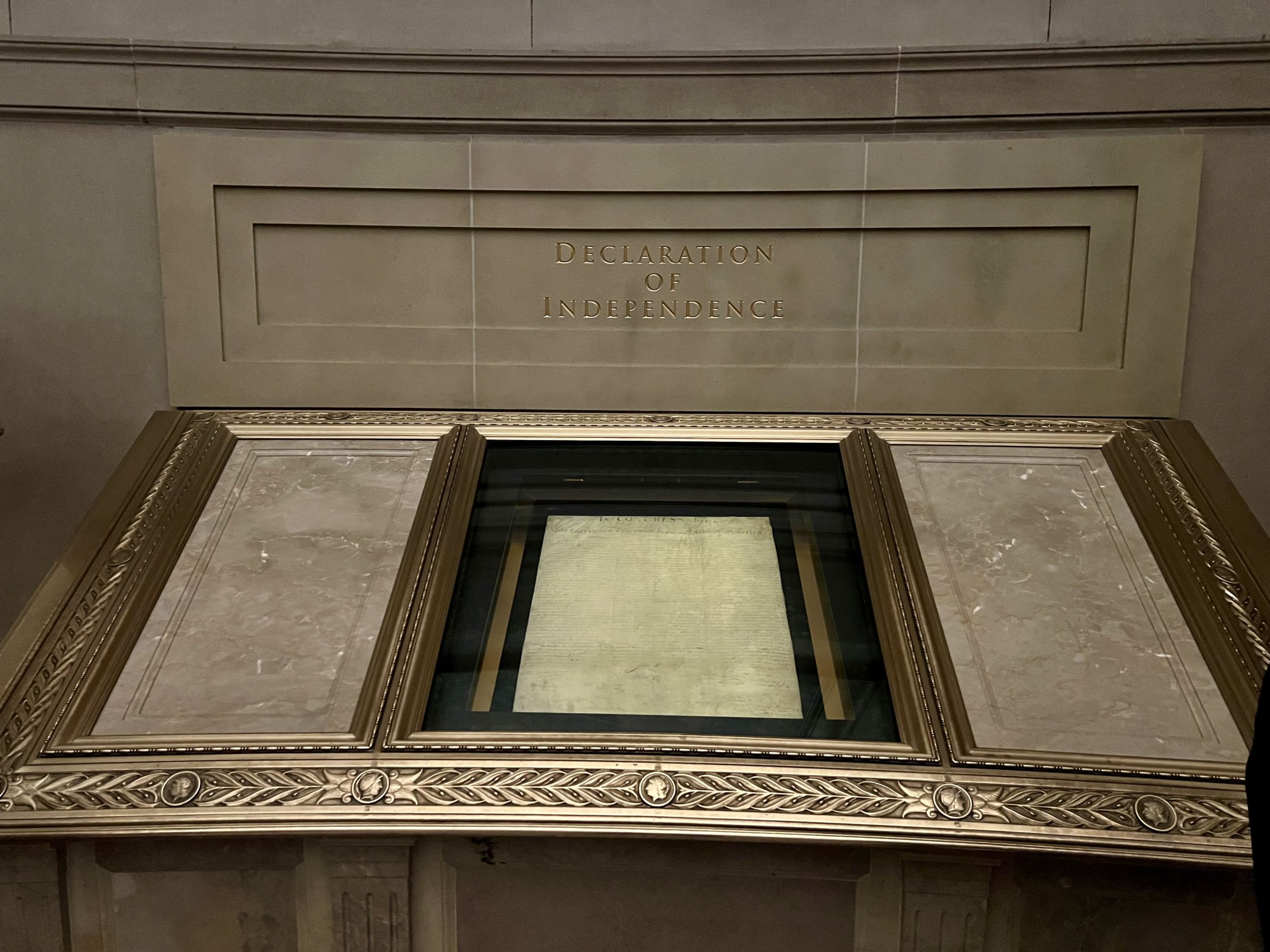
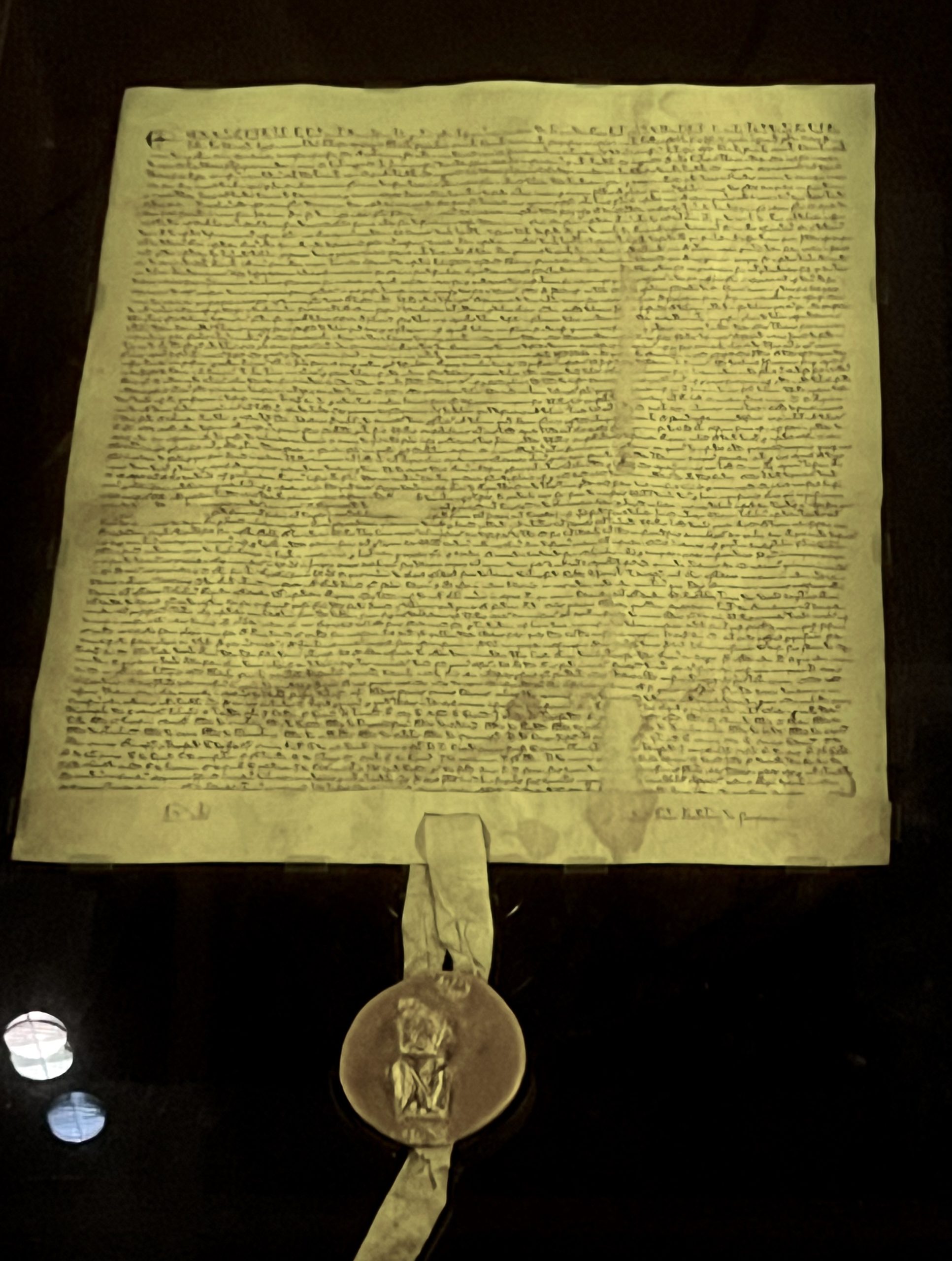
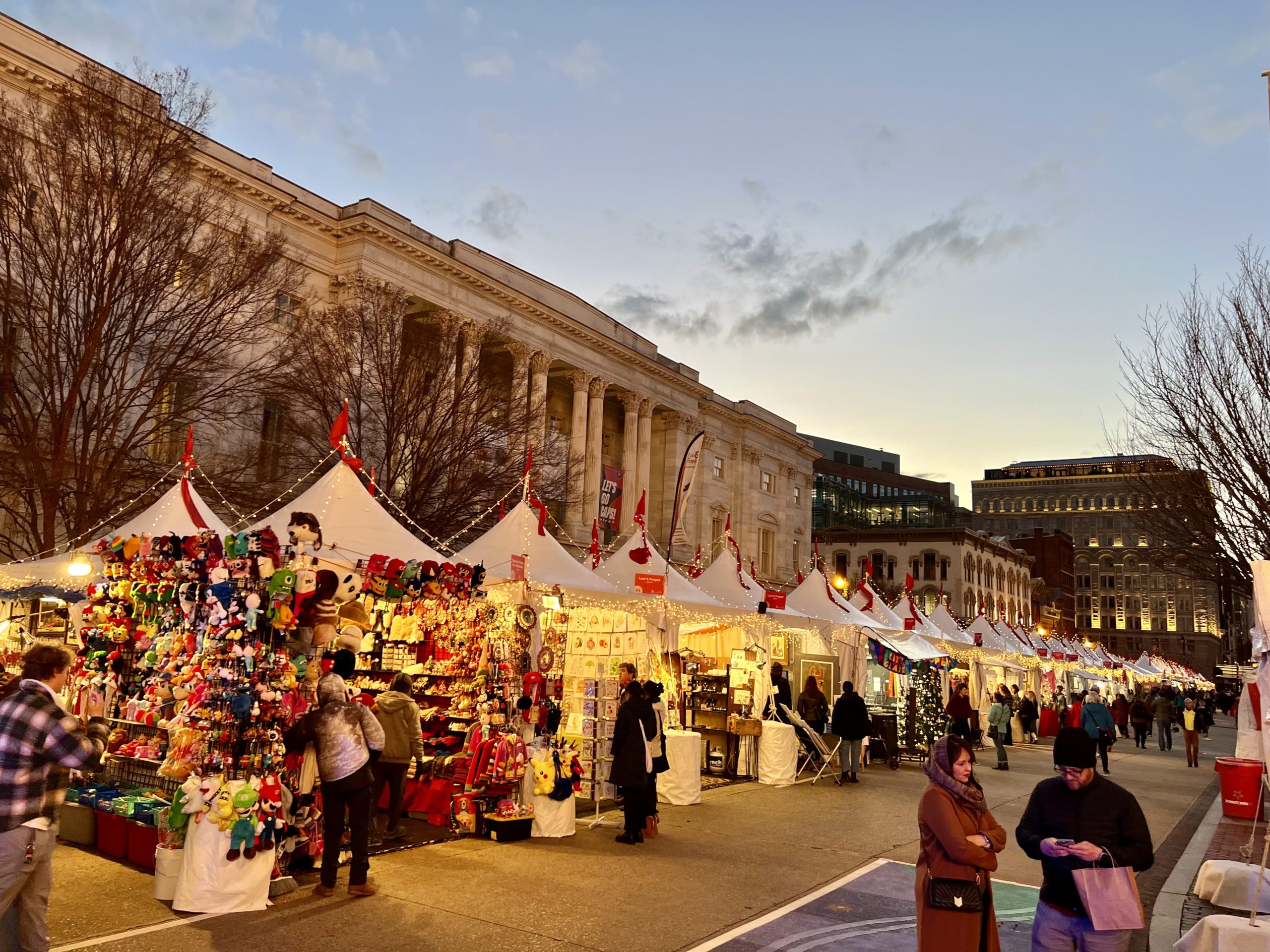
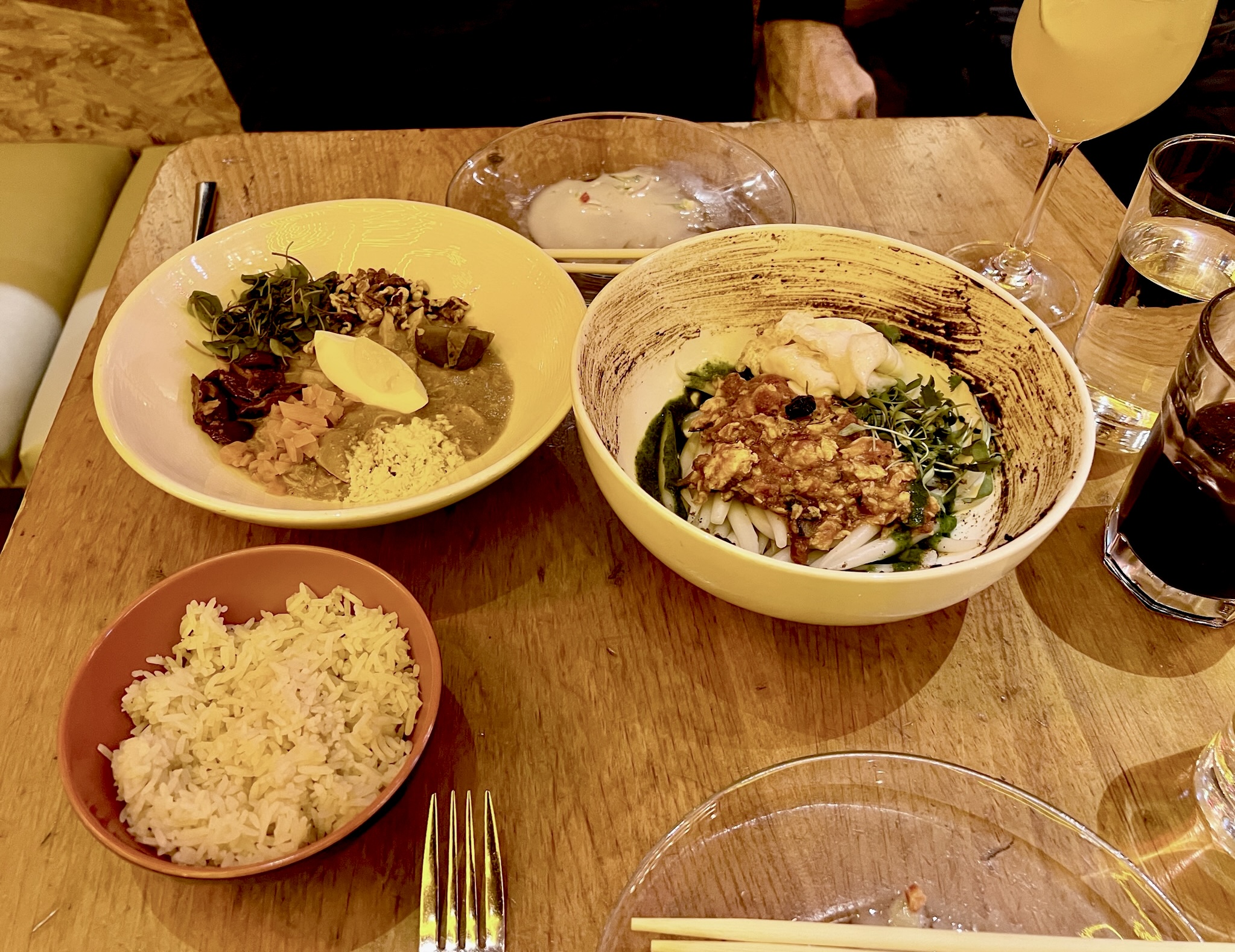
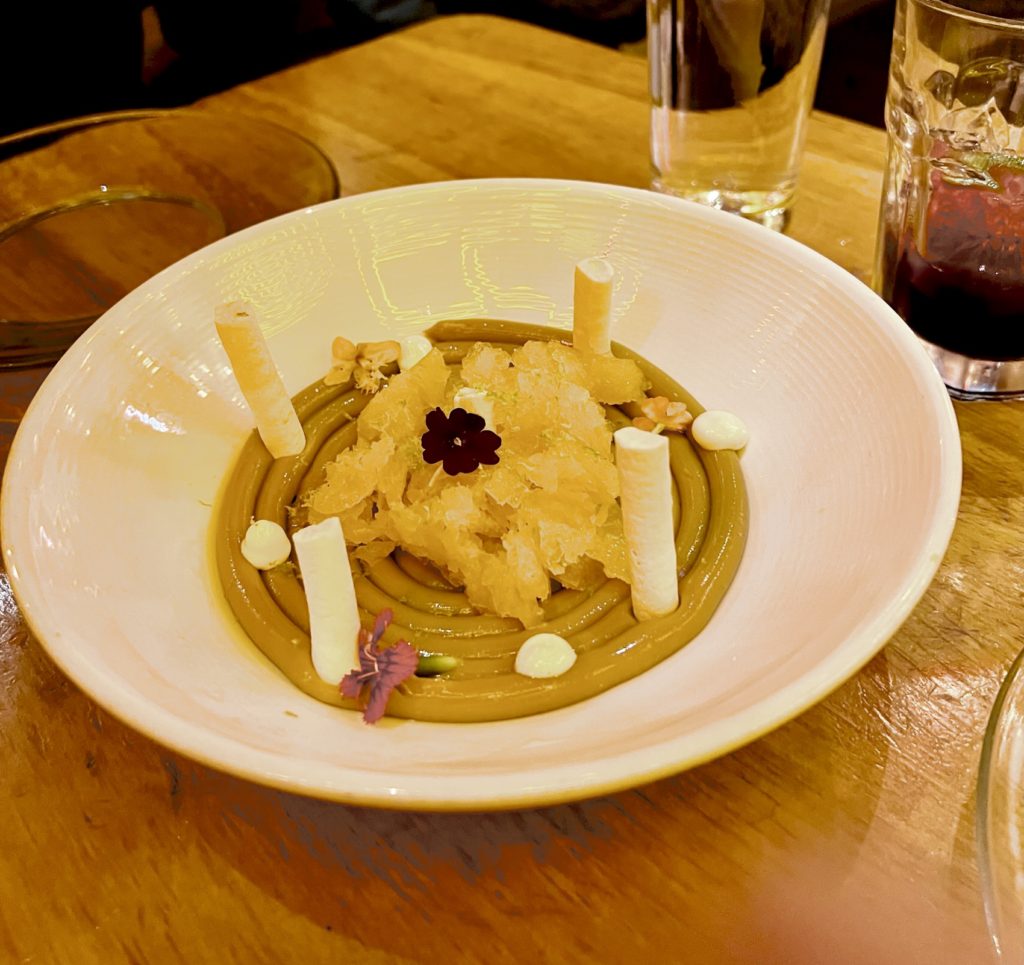
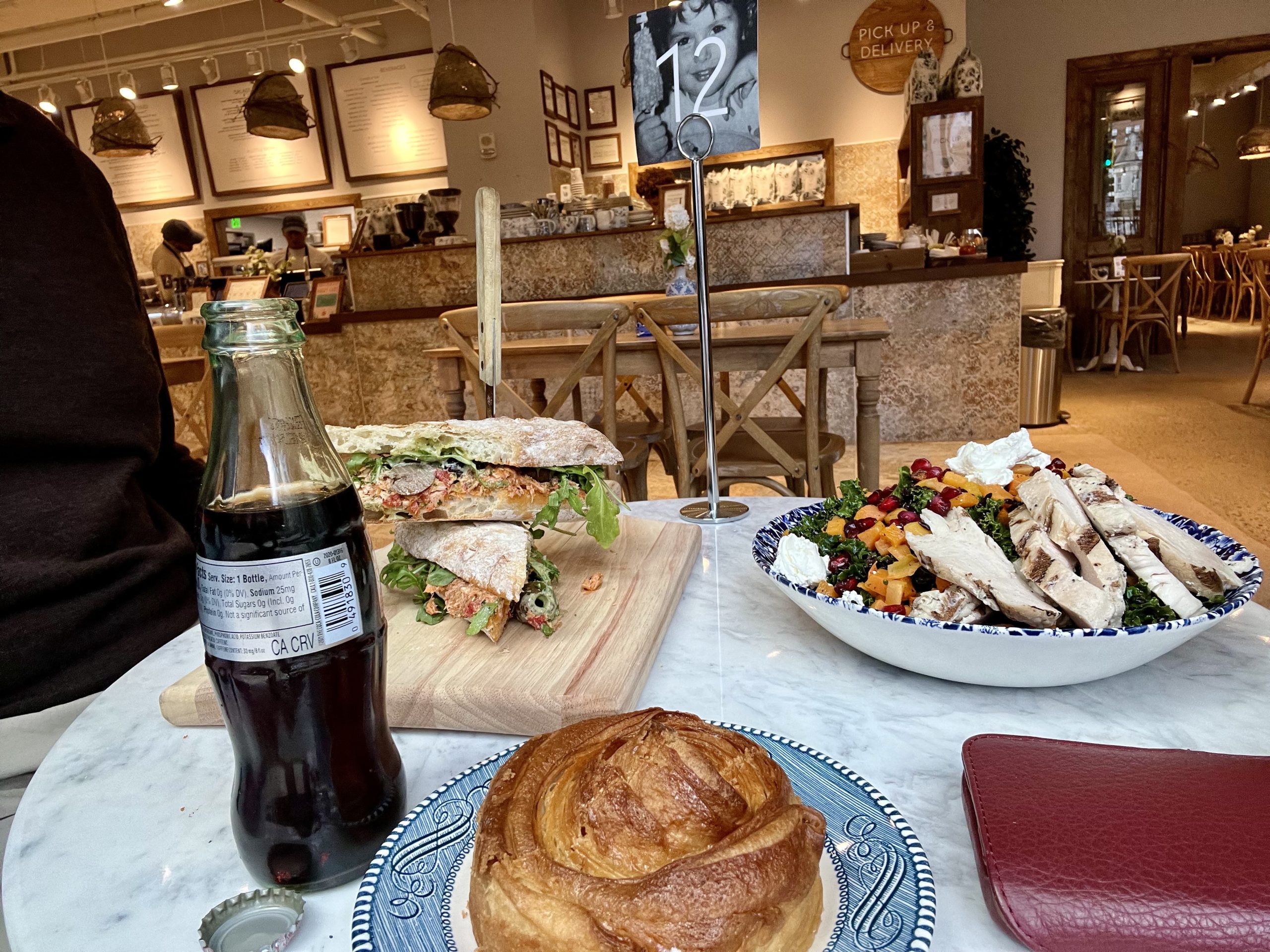
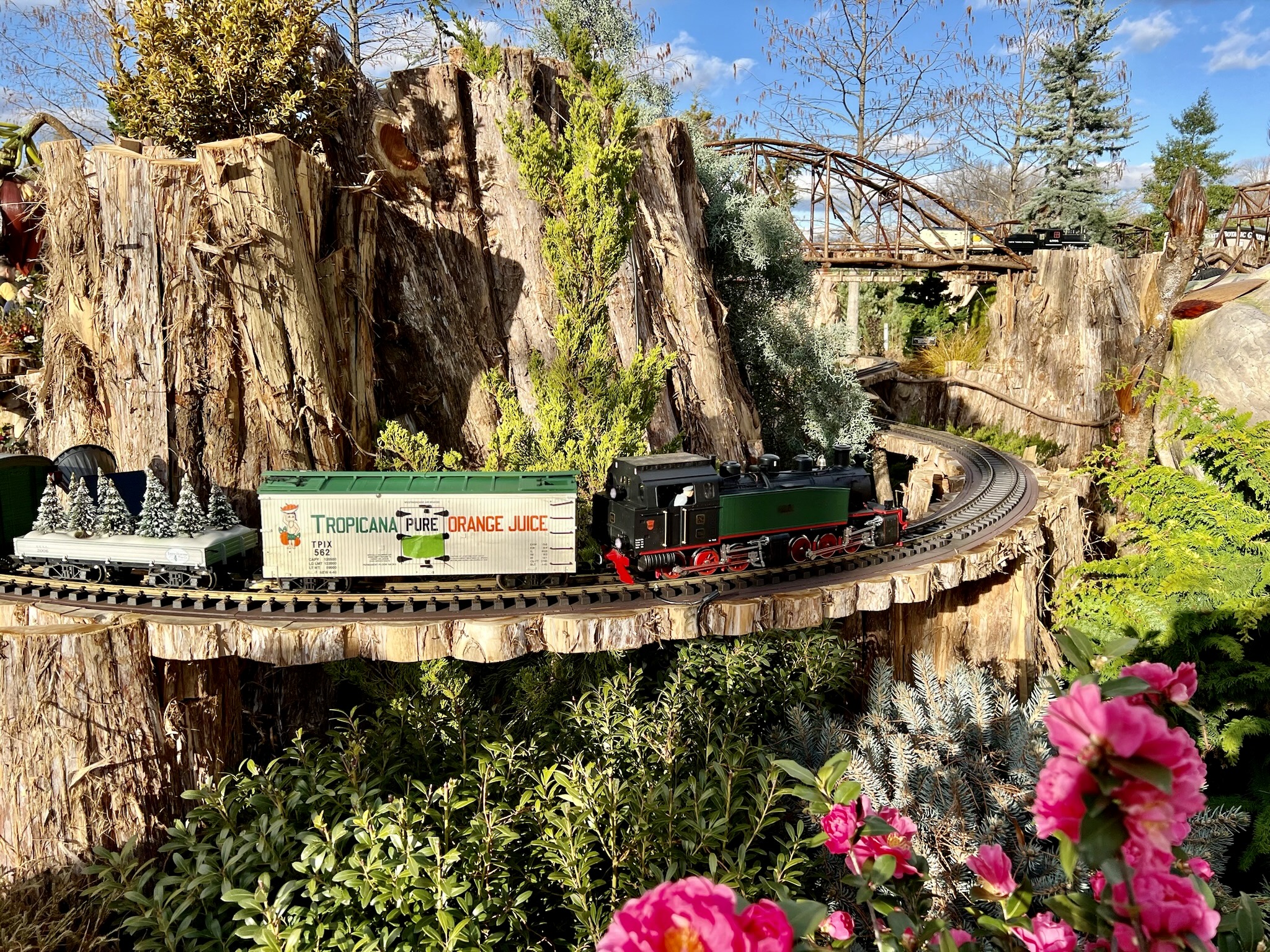
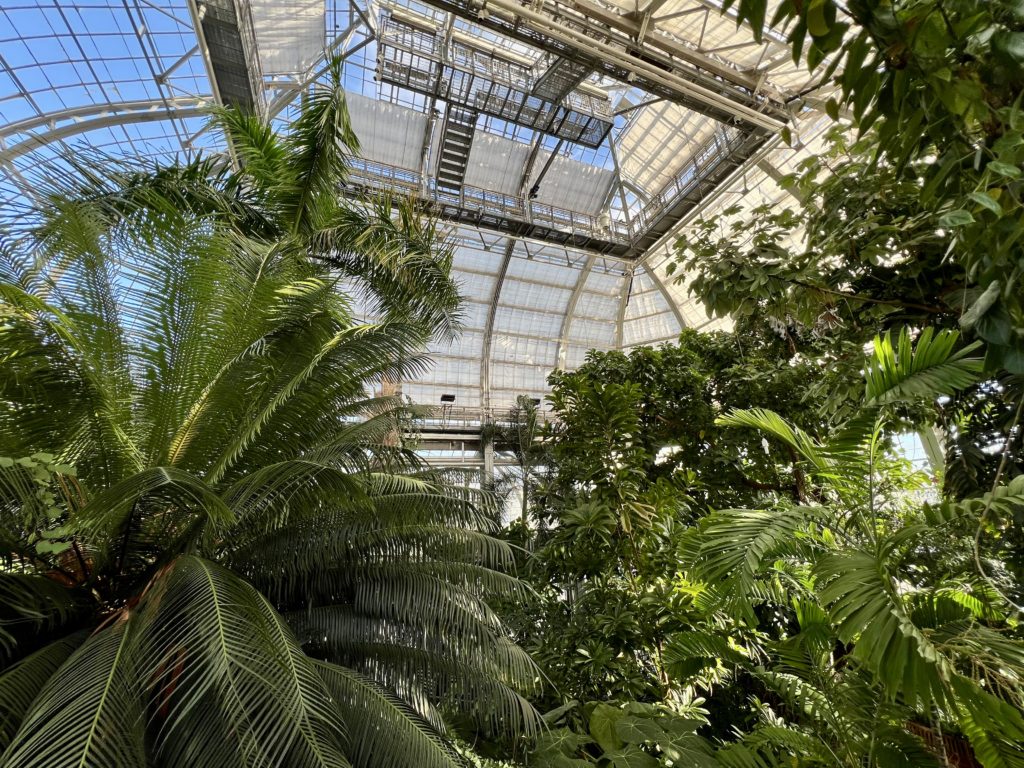
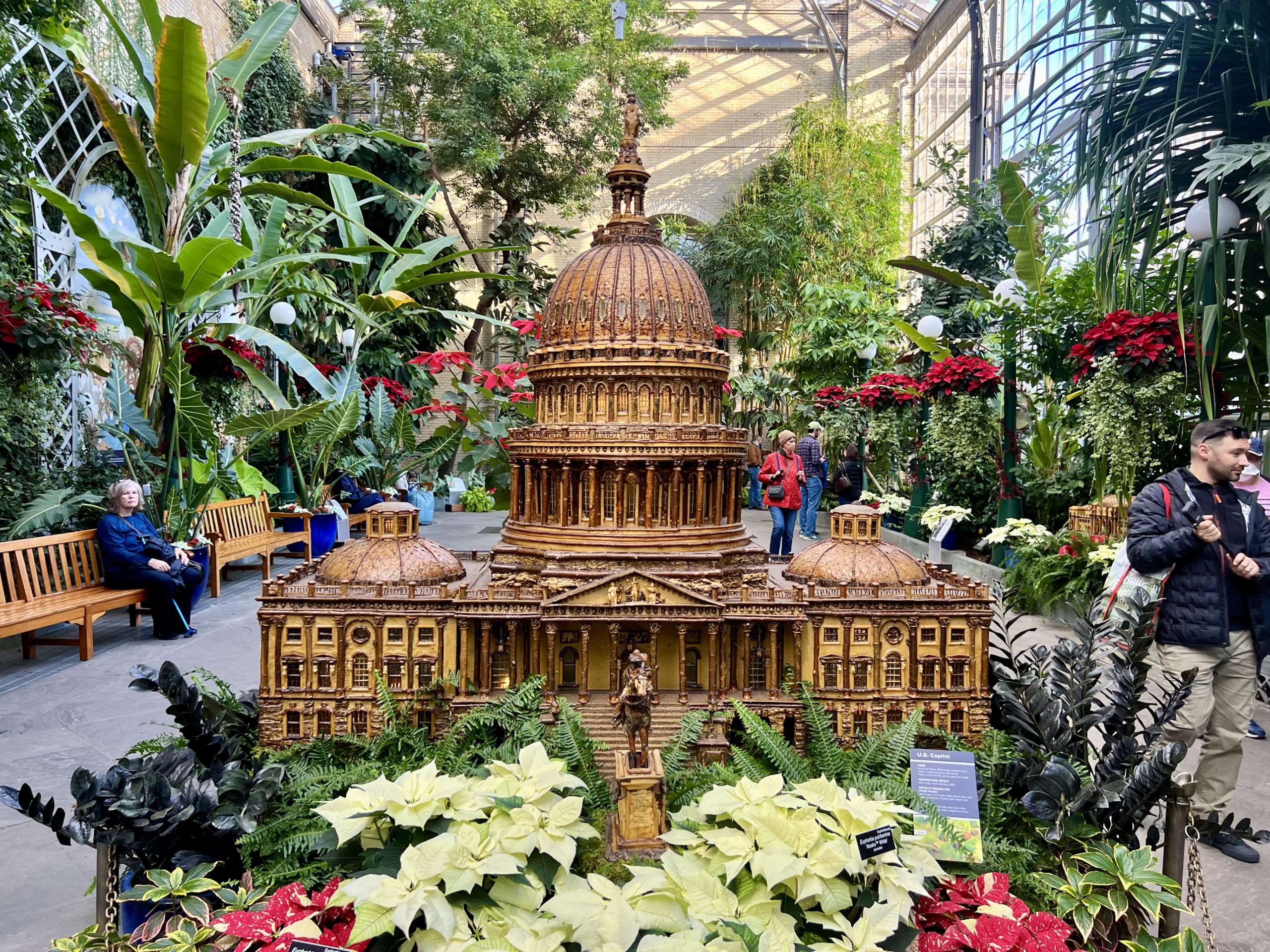
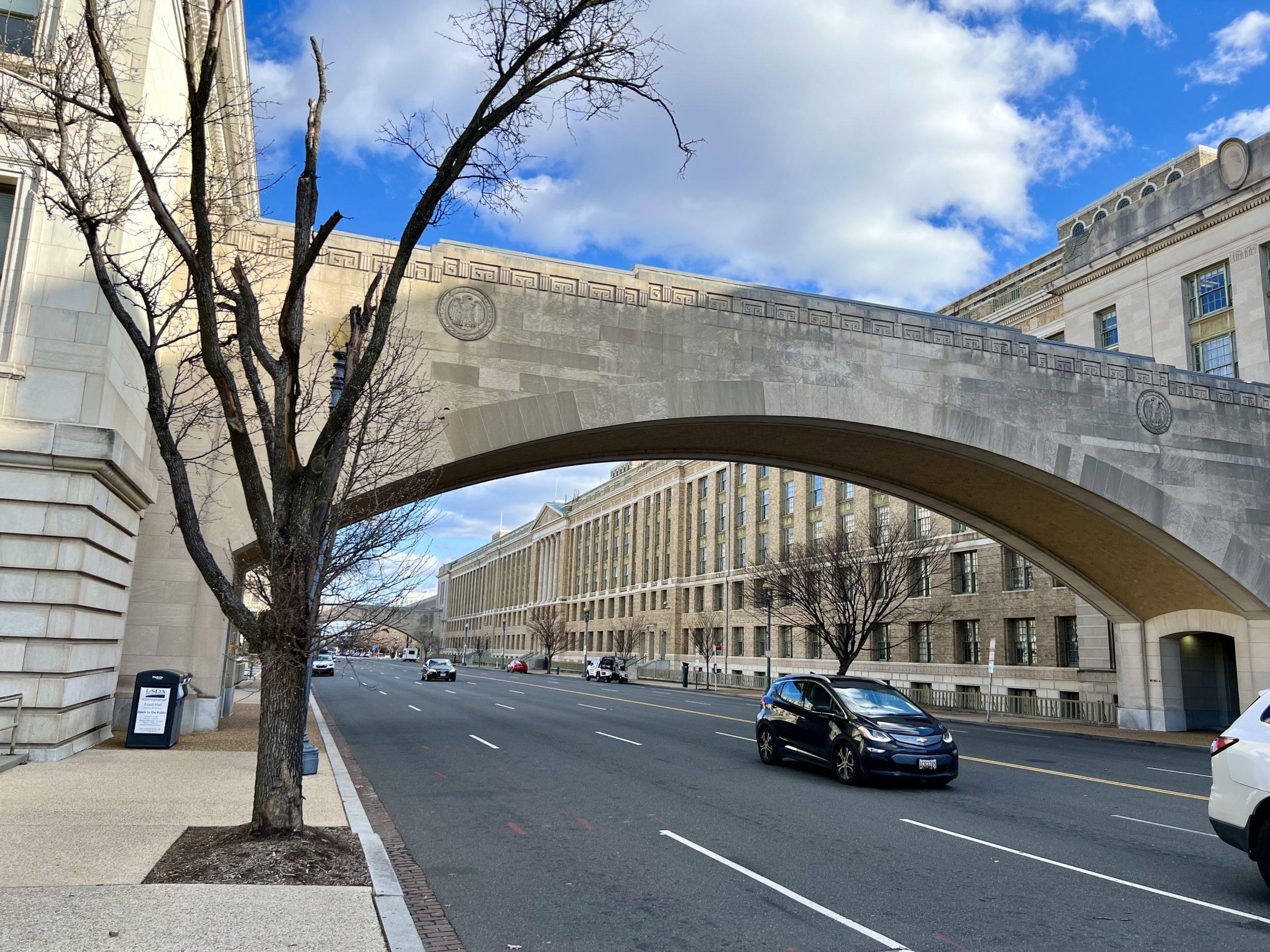
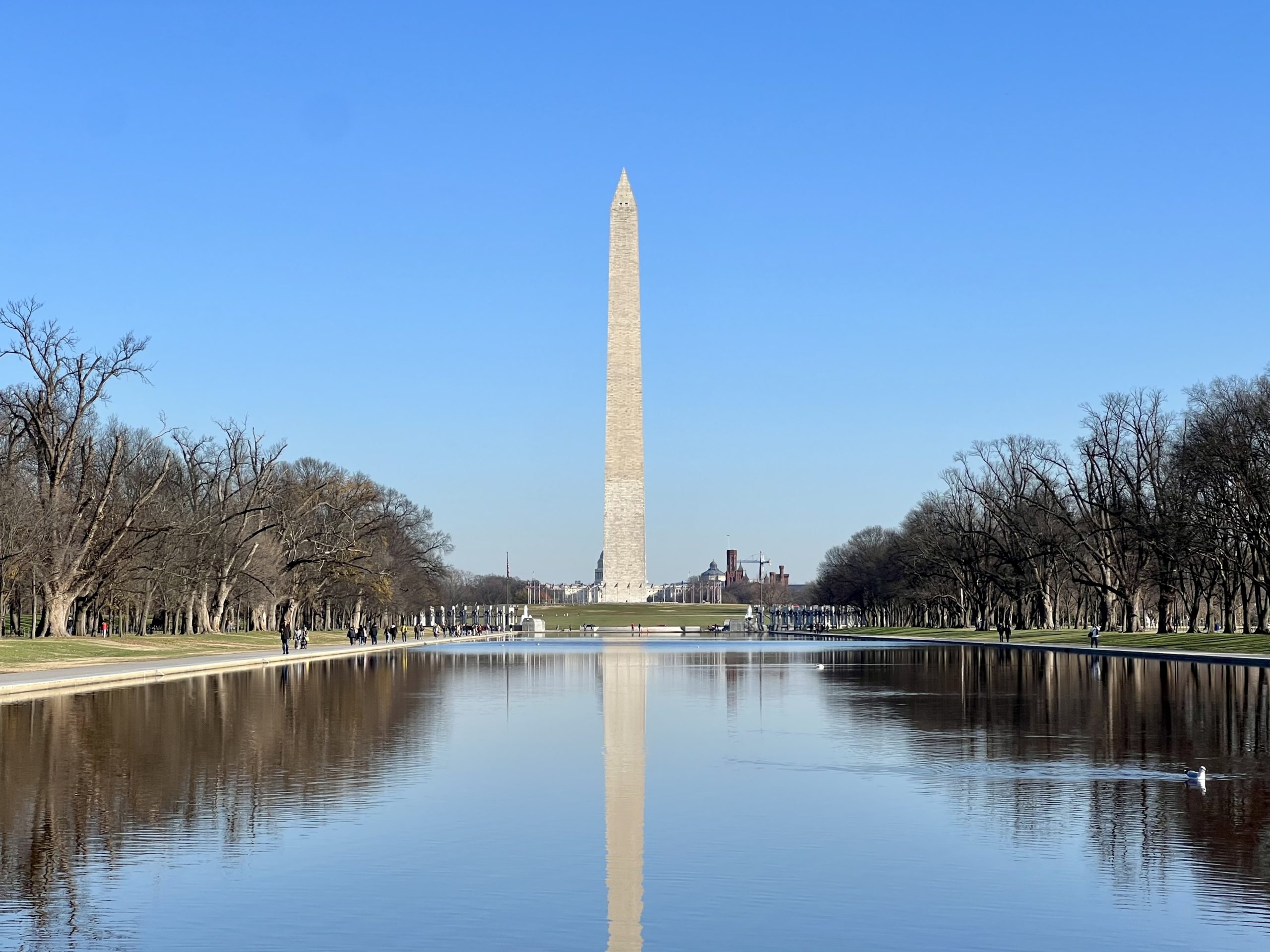
The cold and fog of our early morning departure from Seattle reminded us why we tend to head south for winter. Heading to DC, though, is hardly the kind of south we shoot for, but it will have to do for now. Once again, since the blogger is required to post pictures of food, here is the result of lessons learned on our last series of American Airlines flights: order ahead. Instead of blobs of difficult-to-identify chewy stuff, we actually got edibles. After a short layover at DFW, we arrived at Reagan National Airport, a coin’s throw across the Potomac from Washington DC proper. We were welcomed at the Grand Hyatt by a gingerbread village, replete with choo choo. Unfortunately, a velvet rope and nearby security guard prevented the blogger from sampling a bit of rooftop.On our first day, after a turn in the fitness room and a too-big breakfast, we walked the few blocks to the White House. The day was crisp, cool, and sunny,We had 10:00am tickets and joined the queue through security checkpoints and locked kill-boxes to get in the door. Fellow vetted visitors offered to take this, our proof-we-were-there picture.The Jacqueline Kennedy Garden. Inviting, except we weren’t invited to that part. The hallways and halls were a kaleidoscope of candy colors and Christmas trees – above and below. Like many historic homes and palaces, most rooms in the White House are smallish and cozy, but the stately East Room, presided over by portraits of Martha and George Washington, is one of the largest.It’s hard to imagine that, not too long ago, anyone could walk up and knock on the front door of the White House uninvited. But then it did get burned down twice, so there’s that. From the White House we headed to the National Mall. With only man-made clouds in the sky above us, we passed the Washington Monument (above) and walked east, past the Capitol (below). Despite being home to both Senate and House, the place looked surprisingly functional.Our destination was the Library of Congress – above and below. The library’s reading room was closed for lunch, probably because peanut butter and jelly don’t mix well with old books. The photographer was disappointed, as the second book in the Gray Man series has been unavailable at our local library for quite awhile now. An original vellum copy of the Gutenberg Bible was the most interesting book we came across, even though it’s not in English. On another day, we visited the Bureau of Engraving & Printing, where paper money is designed and printed. There was only one other couple on the guided tour, from Seattle of course. Three floors of integrated presses and inspection stations running 24/7, and pallets of money lying about. We weren’t allowed to take pictures, or handle the cash, for that matter. All we came away with was a picture of the biggest bill on display. And a refrigerator magnet. Restaurants are thin on the ground around the grand buildings, so we walked past the Jefferson Monument, above, to a lonely – and very busy – sandwich restaurant near the new Waterfront district on the Potomac. It was recommended by a Treasury Officer.After lunch, we headed back to the National Mall and got in line for our 1:00pm reservation and elevator-ride to the top of the 500-foot Washington Monument. The views from the tiny windows were worth the wait in the brisk breeze and TSA-like security lines. Here we look south, out over the Tidal Basin, Jefferson Memorial, Potomac, and Reagan National Airport in the near distance. Eastward, along the National Mall and its galleries and museums, the Capitol. Maryland is in the far distance. Facing west, now, we look down the long Reflecting Pool to the Lincoln Memorial, the Potomac, and Arlington, Virginia beyond. From the Washington Monument, we walked to the Lincoln Memorial. What a President. So many of his words, perhaps especially, “A house divided against itself cannot stand,” remain so relevant today, nearly 170 years later.Every memorial held meaning for us, but the Vietnam Veterans Memorial was perhaps the most poignant. Seeing gray haired men taking rubbings of a single name from the sea of names of fallen comrades. Priceless. Before heading back to the hotel, we found a bench in the sun and just enjoyed the park. Such a beautiful, near-winter day.Our meals were typical American food, like this Branzino Salad and Margarita Pizza at Ella’s Wood Fired Kitchen (above), Vietnamese Pho at Noodles on 11, Smashed Avocado Toast at The Smith, and Bento Box dinners (below) at Sushi Aoi. We generally stayed away from the tweezer-food restaurants. We dedicated one day to the National Natural History Museum.Not to put too fine a point on it, the building is really, really big. There are three floors of galleries that we proved one could get lost in. The great African elephant welcoming visitors is Henry. He’s been on the job since 1959 and brings awareness to the plight of his kin.The blogger had a hard time getting the photographer out of the skeleton gallery and its many, many displays, like this one. The huge dinosaur skeletons weren’t even in the skeleton gallery, and the photographer once again got stuck. This Diplodocus from the Jurassic was too big to fit in a photo. There were lots of displays with the skin on, too. Most were stuffed or pickled, but the most fascinating ones were those that artists had created in attempts to portray what our ancient kin may have looked like. Famous Lucy (above) and the now equally famous “Hobbit” found on Flores, in Indonesia (below). The recreated busts of hominins were placed at the their proper height during life. Even the photographer had to bend down for some of them. We could have easily spent an entire day in the geology and gems galleries. The 42½ carats Hope Diamond, which dates back to the 1600s in India, was an easy standout, though.In one of the halls, we came across a money, or Rai, stone from Yap. I remember the huge one in my Aunt and Uncle’s back yard in Honolulu. George Dailey had brought it back as a gift for them from his travels around the world in the 50s. A bulky souvenir then, it would be pretty valuable today.The Natural History Museum was one of two on our must-see list. The other one was the Smithsonian Air and Space Museum. Though half of the museum is still under renovation, we climbed the stairs with our tickets in our phones to see what we could. Though the exhibits were abbreviated, we still had fun. This cockpit of an American Airlines DC7 Flagship started flying the year the blogger was born, 1956. It looks kind of old. They also had recovered capsules from Mercury, Gemini, and Apollo flights. The photographer’s favorite exhibit, though, was a cinematic wrap-around journey through the solar system. It didn’t photograph well. A couple of blocks from our hotel is Ford’s Theater, and across the street the boarding house to which President Lincoln was taken after being shot. We passed it many times on our walks to and from the National Mall. One of those walks took us to the National Archives. Just another megalithic building, except for what it has inside. In the Rotunda, signed and original founding documents are on display – The Declaration of Independence, the Constitution, and the Bill of Rights. The ink is brown and faded, but the signatures of the wealthy and privileged men who chose to craft a constitutional republic and a new form of representational democracy instead of tilting up another absolutist government centered on themselves, like nearly every other government ever created or imagined by powerful men, were there to be seen. And then, amazingly, we came upon an original of the Magna Carta, signed over 800 years ago. One evening, on our way to a local restaurant, we took a quick walk through a Christmas Fair. Unfortunately – or fortunately – we didn’t need any Christmas stuffies, Santa socks, or pine-scented candles.Hands down, our most interesting dinner was at China Chilcano, one of the many DC restaurants spun up by celebrity chef Jose Andres. His food revolves around a fusion of the Spanish-Peruvian, Chinese, and Japanese cuisines of his home country – Peru, if you hadn’t already guessed. The dishes are small-ish but rich. The entertaining part is that the names of menu items, like the Aji de Gallina and Tallarín Zhen Fe shown here, are no help. And then the food comes out of the kitchen, and it’s nearly impossible to tell that it is what you ordered. Our dinner here was described as chicken stew and Hong Kong noodles, respectively.Here is what appeared at our table when we ordered custard with passion fruit and crunchy meringue for dessert, named Suspiro Limena, for what it’s worth. Fabulously delicious, but not easily identifiable as anything. And yes, the restaurant has a lot of yellow lighting, mostly from the neon Nazca Lines on the ceiling. On our last full day in the city, we ventured into a charming little French cafe named Maman (French for mommy). The food was just about the best we’ve had so far. And they had Kouign-Amann! We went back for lunch the next day, too. Even though it is French. After lunch, we headed back through the National Mall to the National Botanical Garden. They had an incredibly intricate model train set up in the garden. The first time we went around the world, we took 16 rolls of Kodak film with us. We would have used up half of that here, with all the pictures we took of the setup. Inside, the central four-story glass conservatory was sub-tropical. We shed layers as we explored the jungle and canopy walkways. Around the main structure are smaller micro-climate glasshouses housing everything from orchids to saguaro. One was dedicated to Hawaiian native species, one of which is now extinct in the wild. The less-tropical Garden Court is a riot of flowers and plants from just about everywhere. And every few feet there is an intricate organic model of a building or monument, made entirely of leaves and sticks (and shellac, no doubt). There are no explanations as to why these were all created, but clearly someone got started making them and just couldn’t stop. We walked a different route back to the hotel, past a massive (the blogger is running out of words for big) Department of Agriculture building. Washington DC is said to be crime-ridden, but it sure puts a good face on it. No homeless camps, no graffiti, sparkling clean streets, and a very visible police presence, yet few sirens. The only evidence we saw of any crime was when a fairly large fellow wanted to show us the big, black police monitor locked to his ankle when we nodded at him as we passed him on the street.