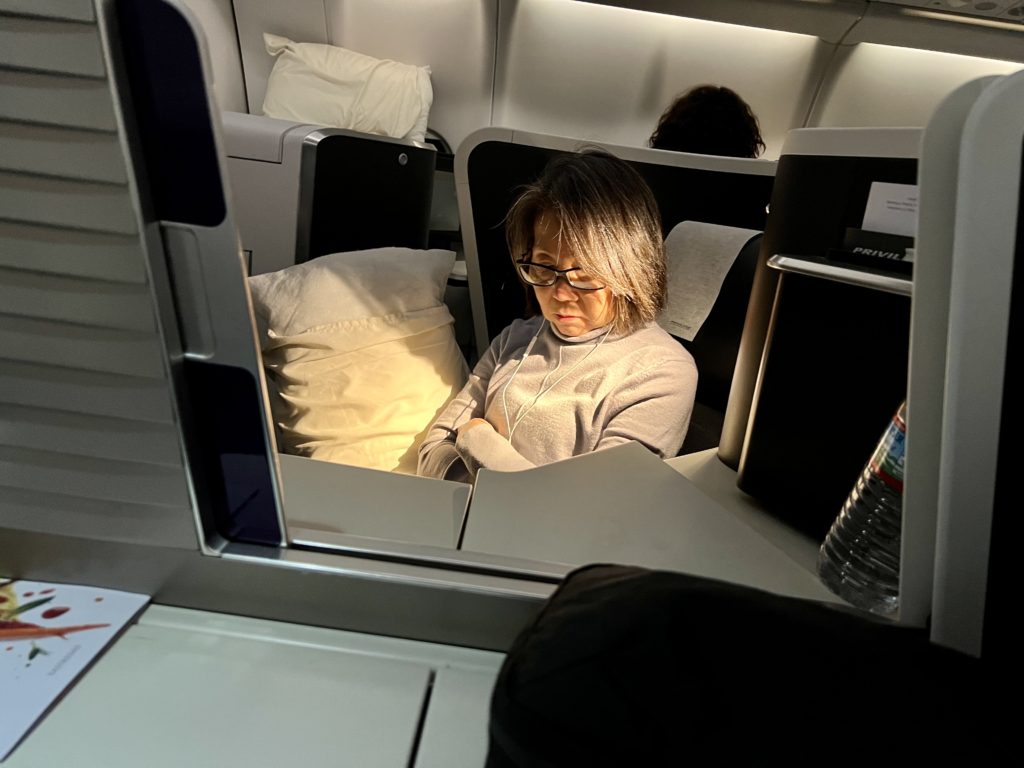
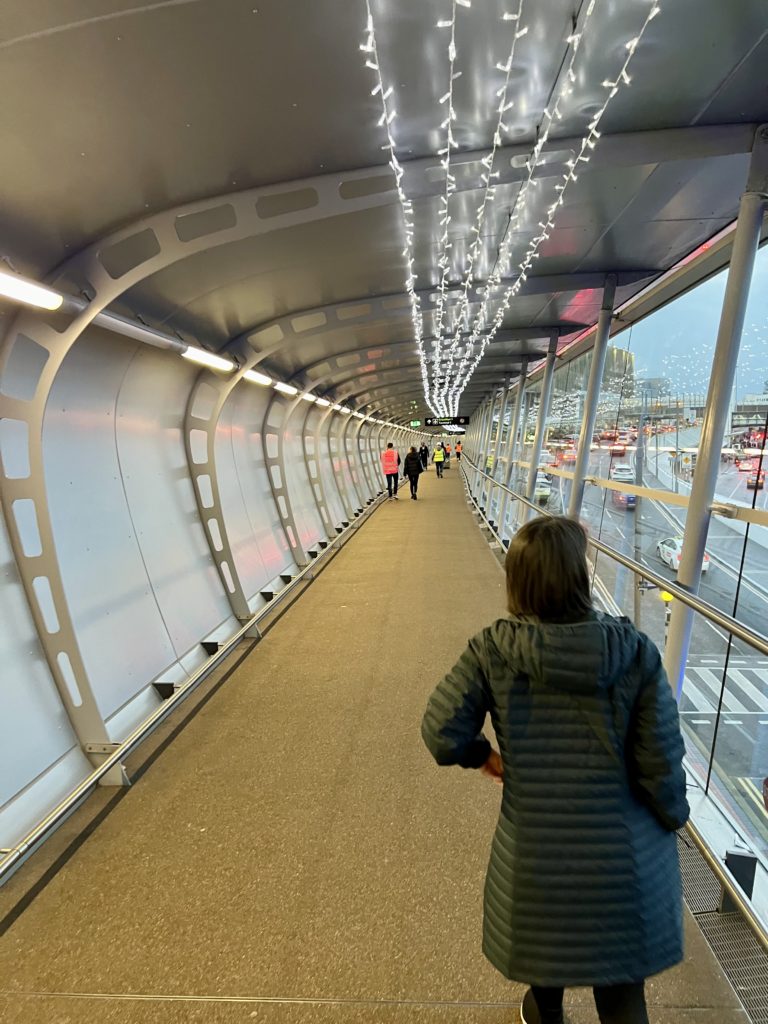
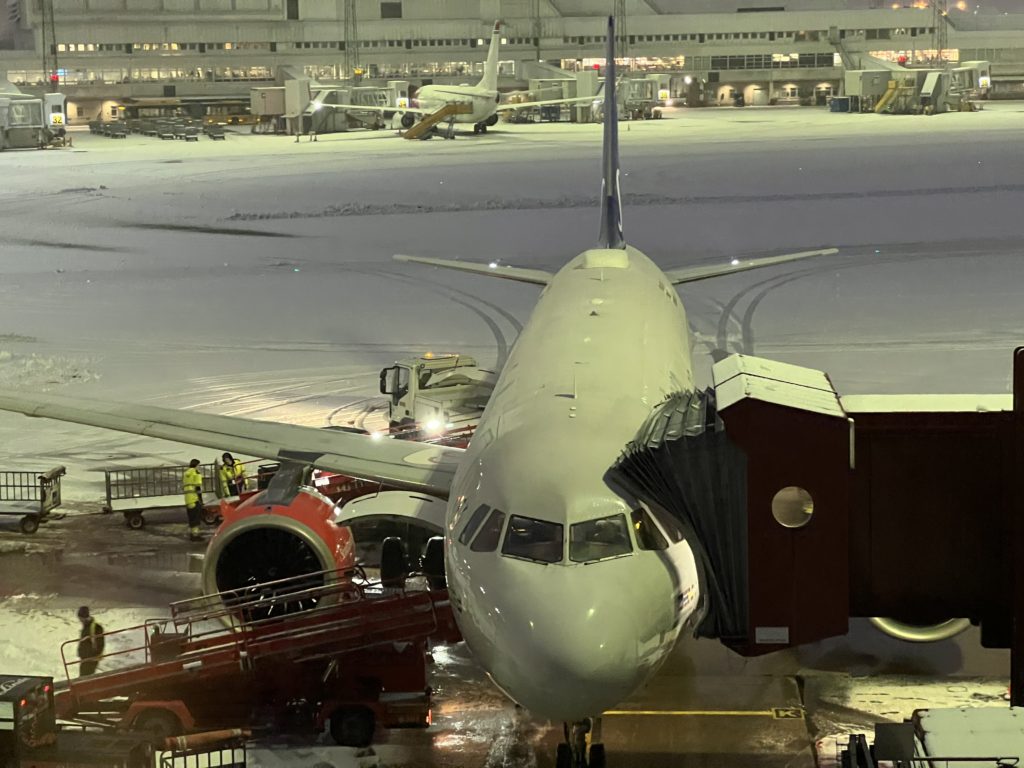
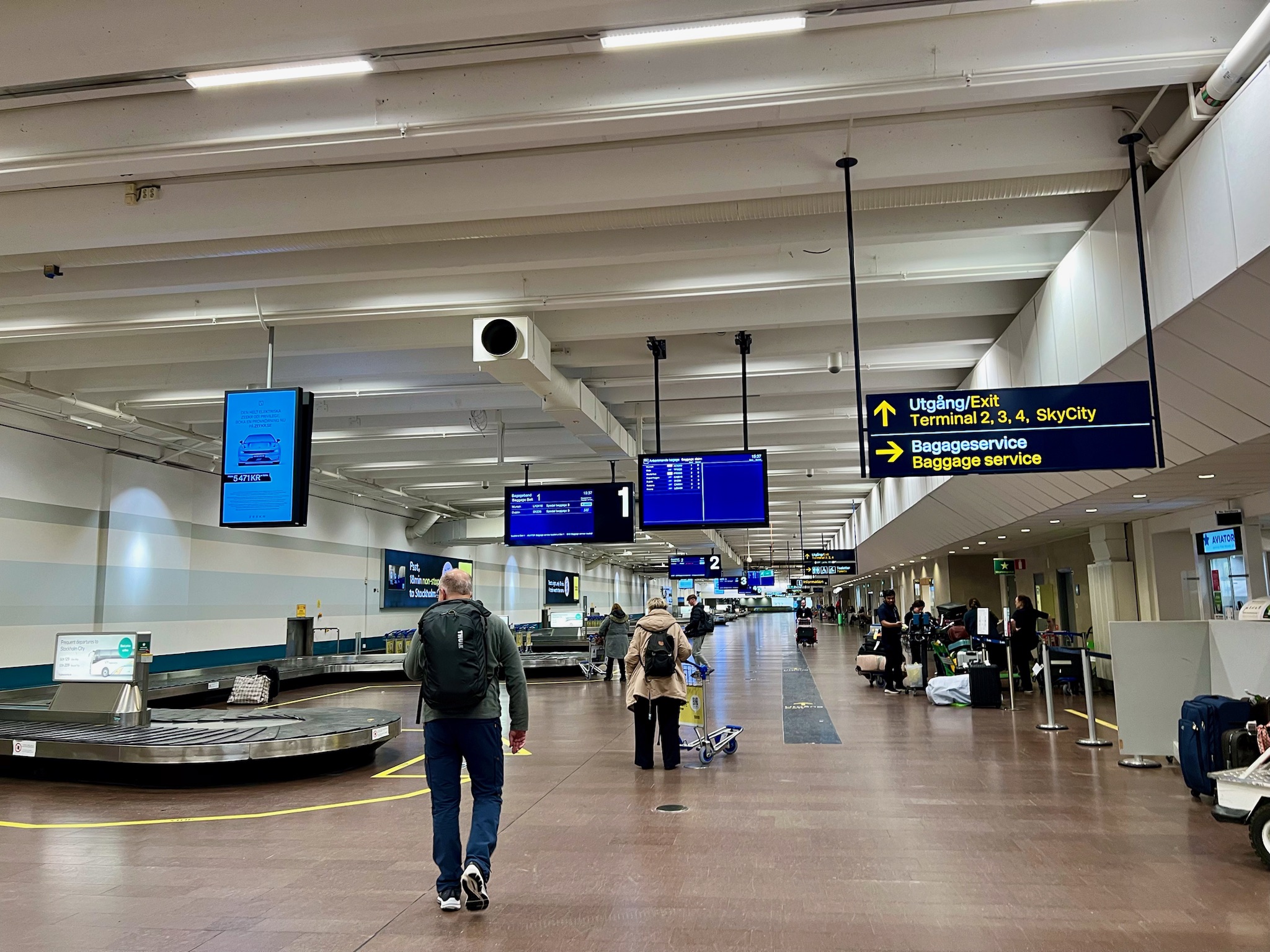
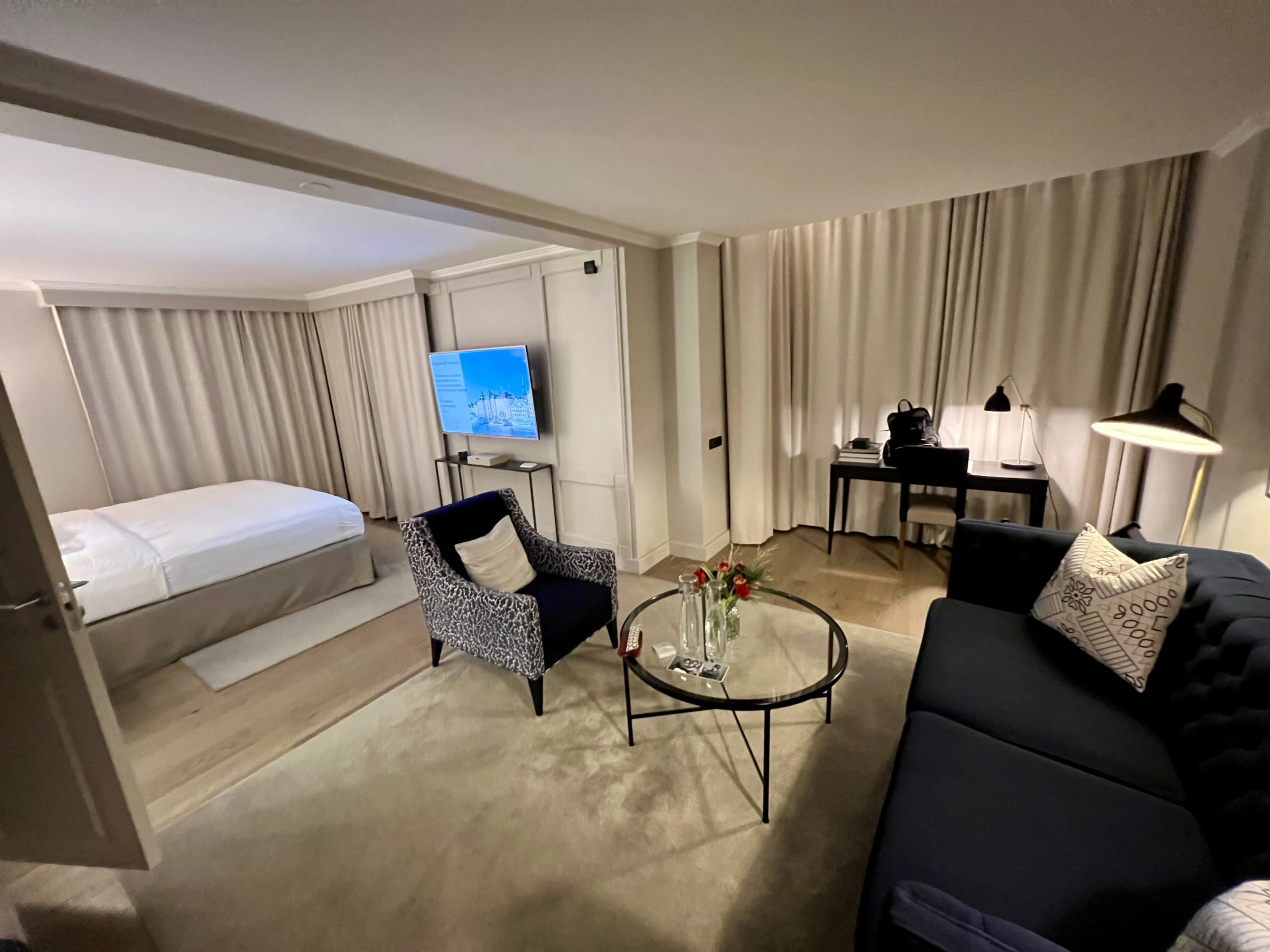
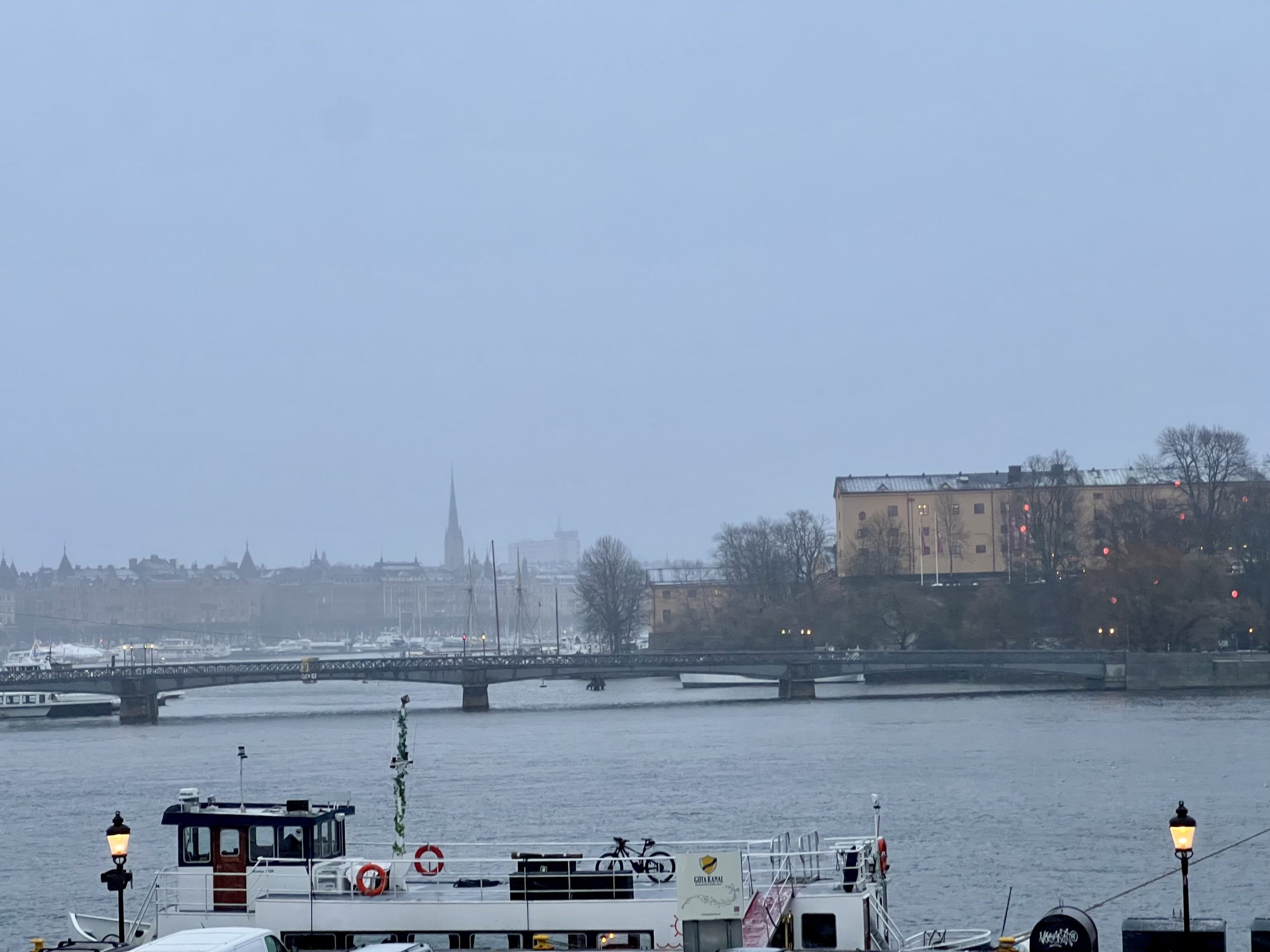
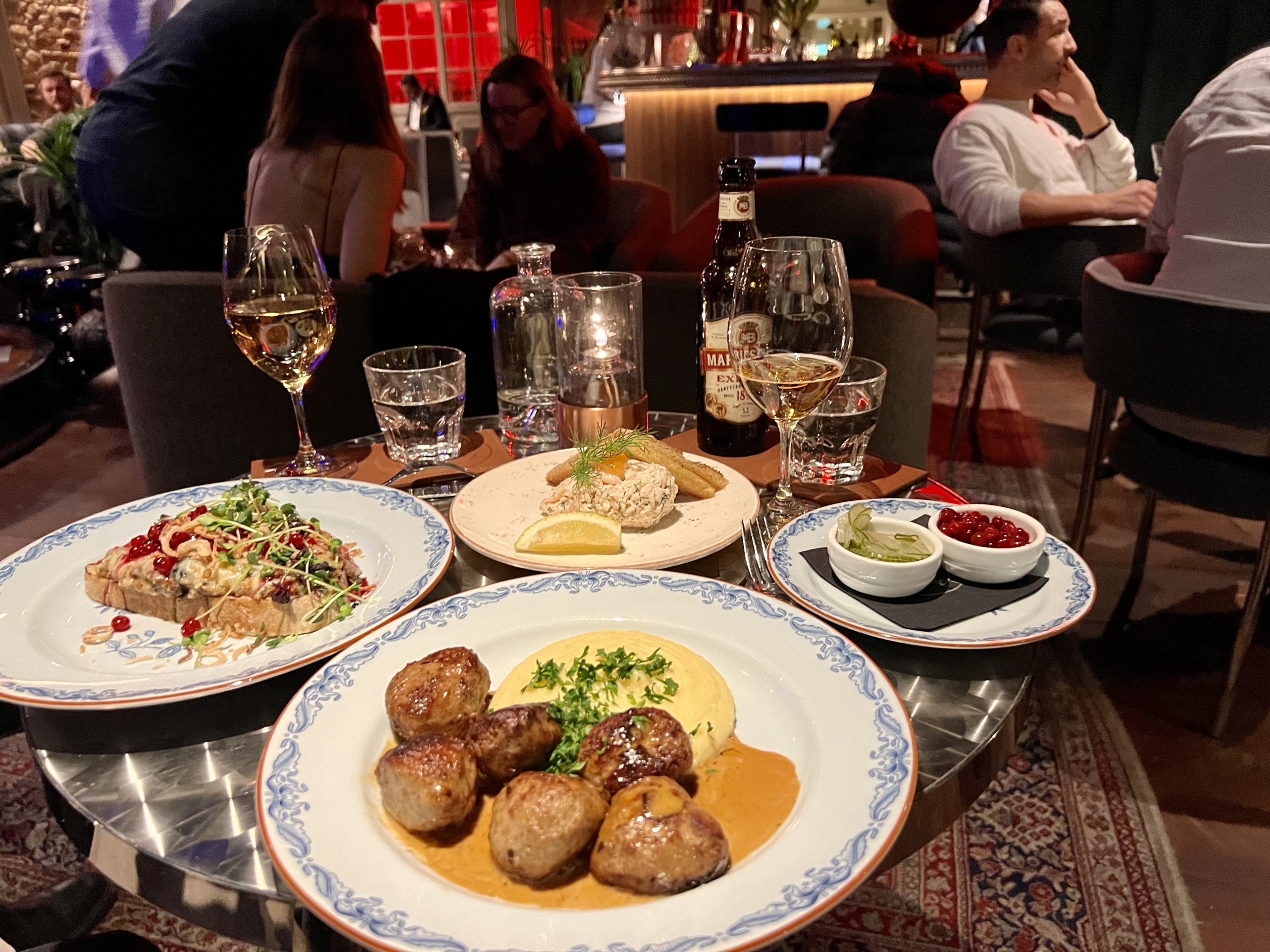
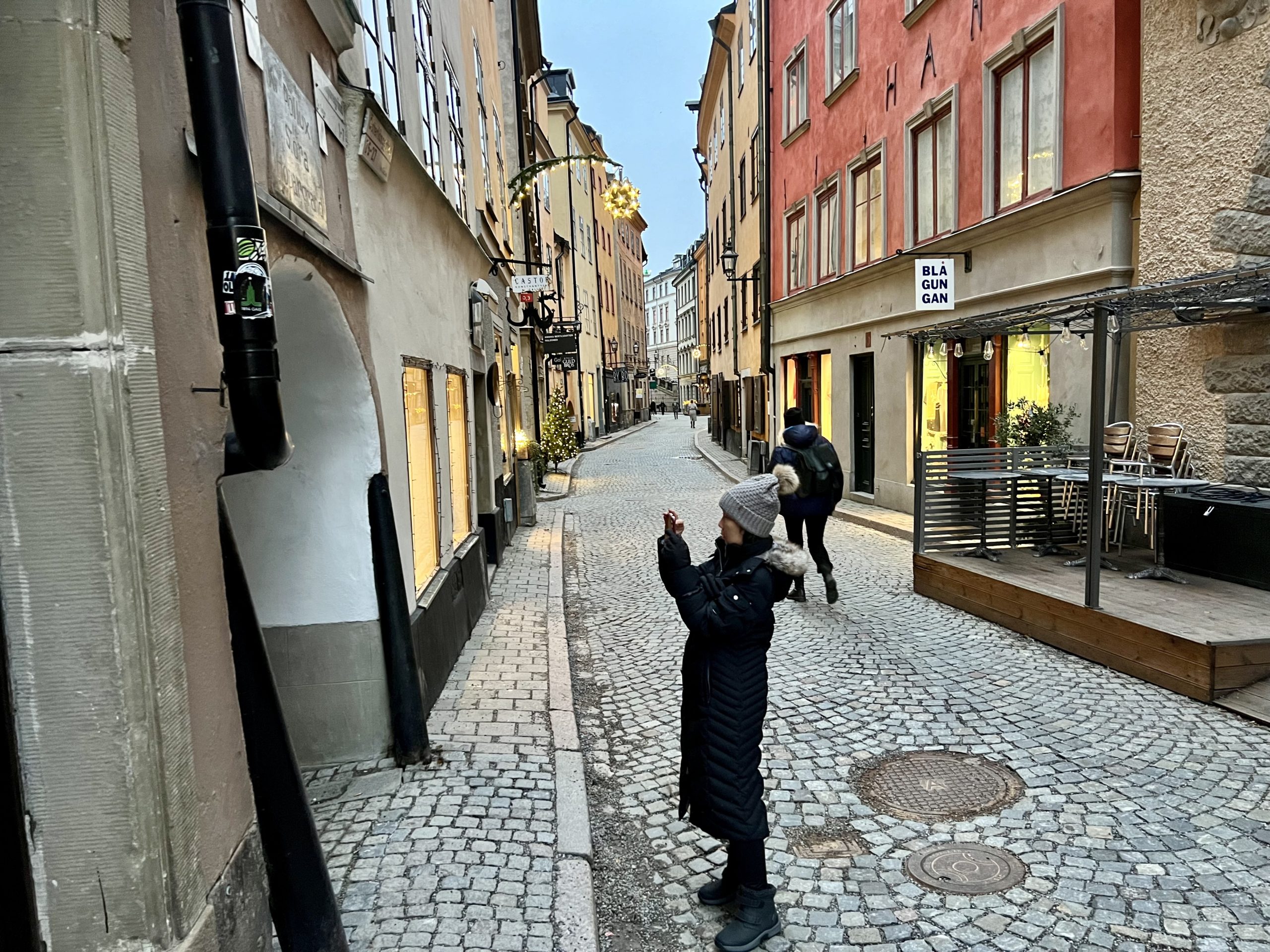
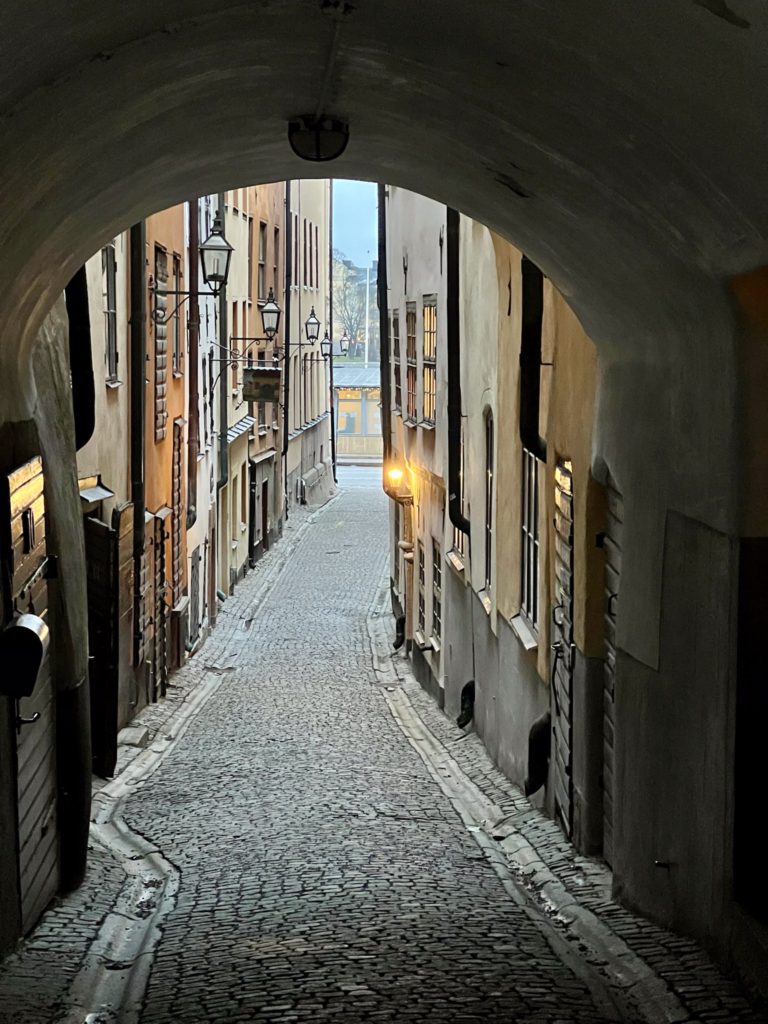
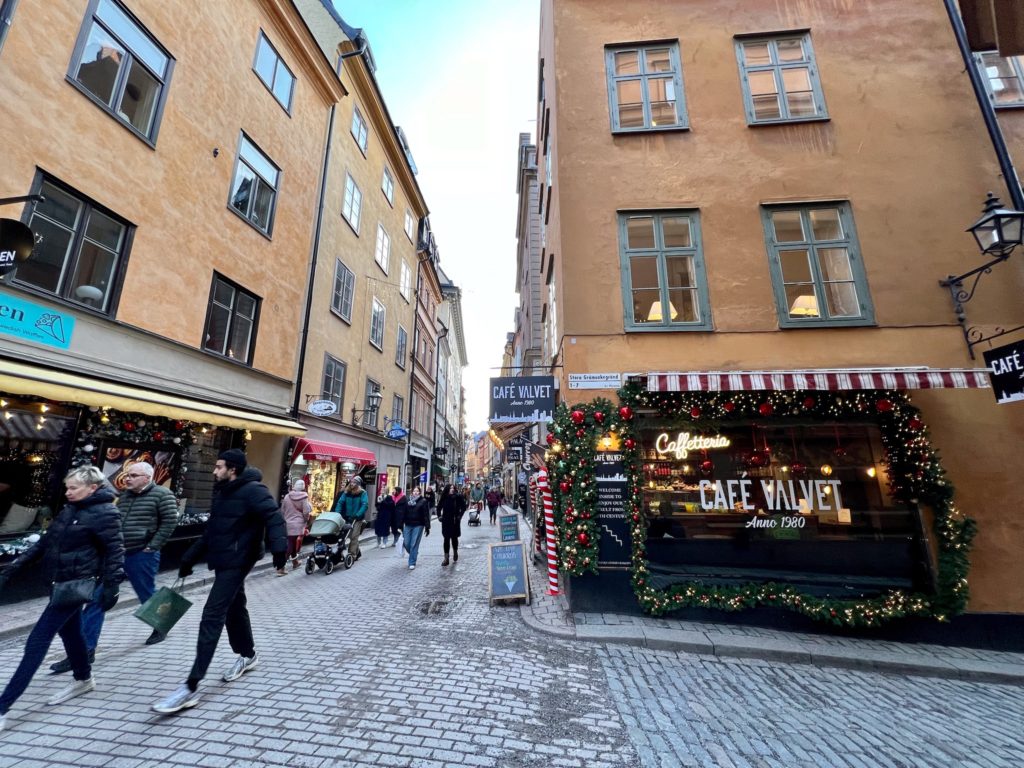
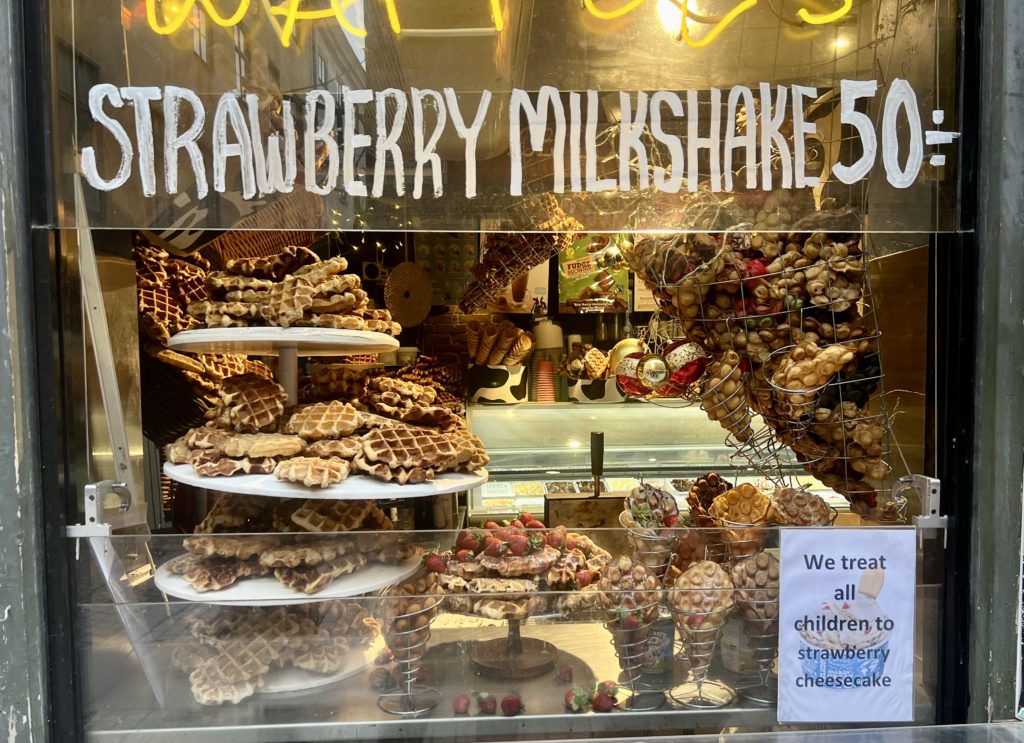
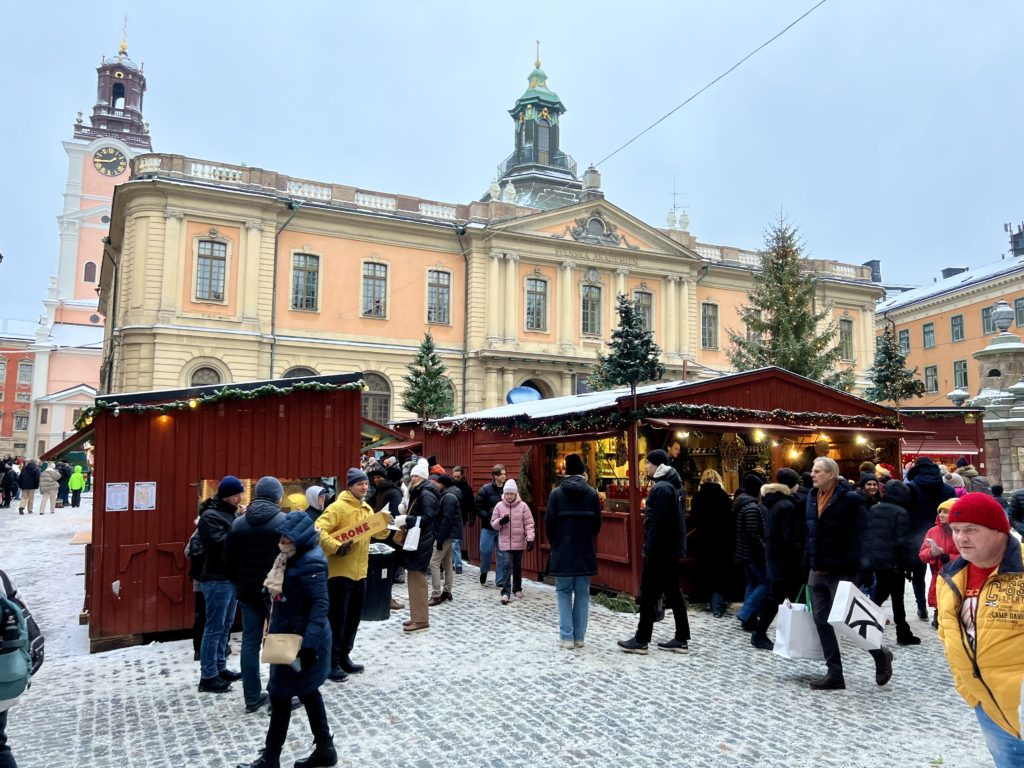
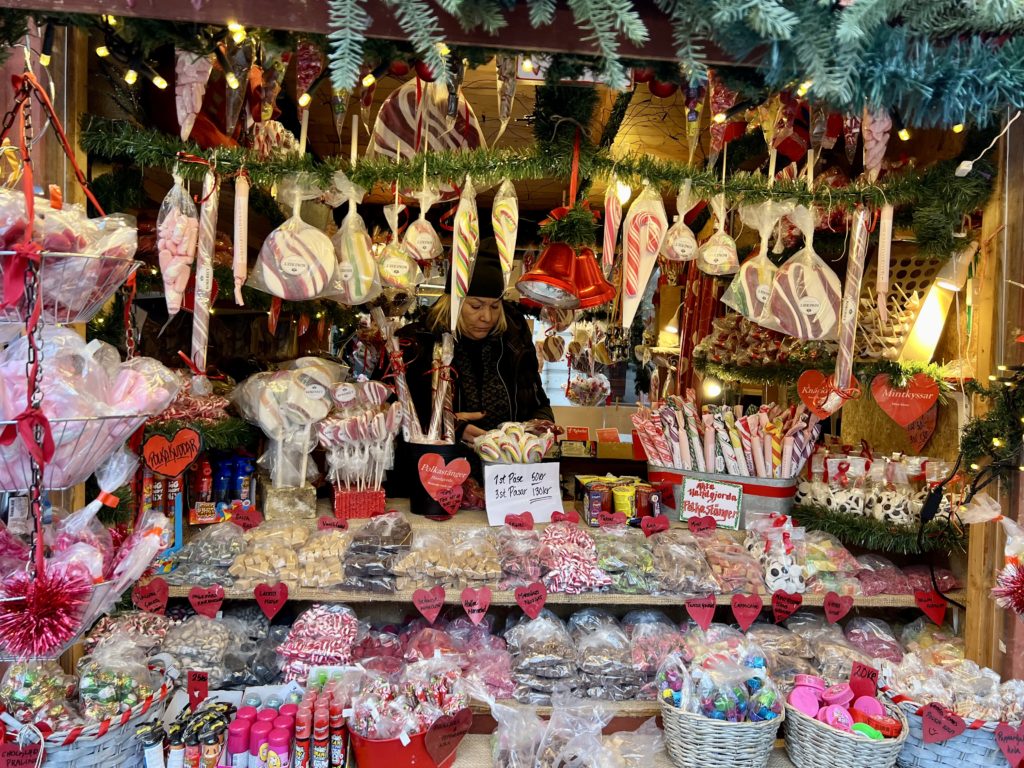
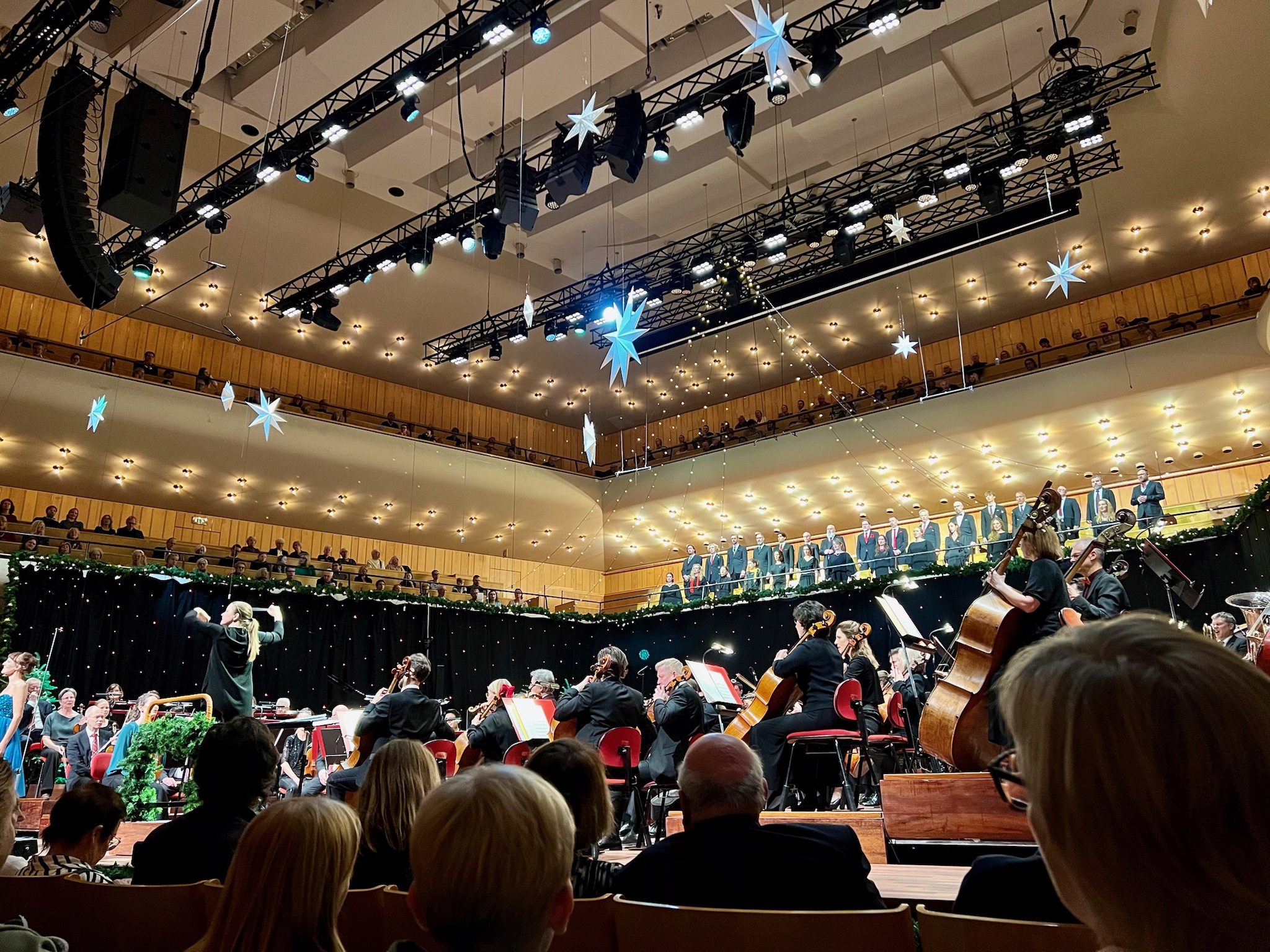
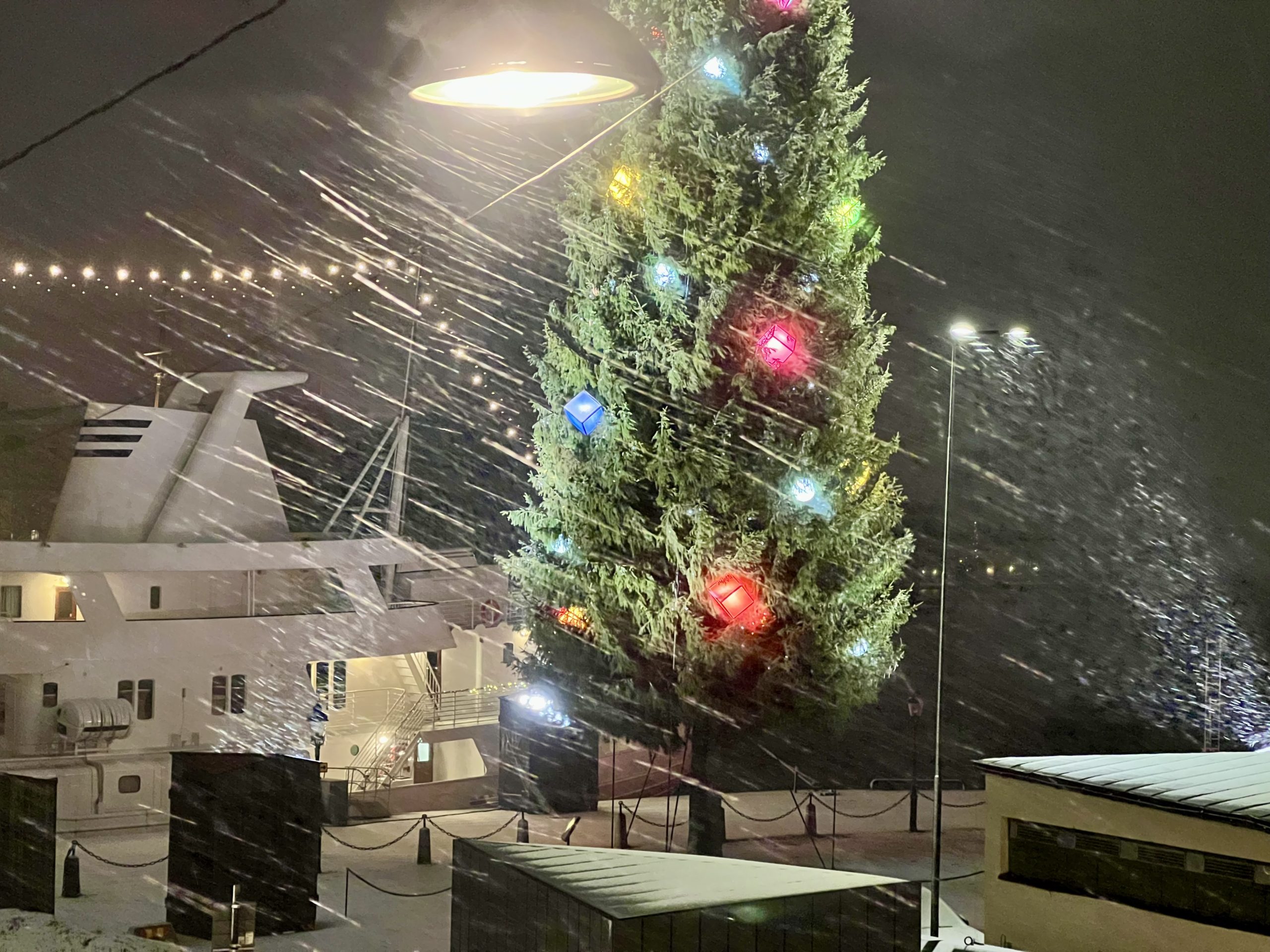
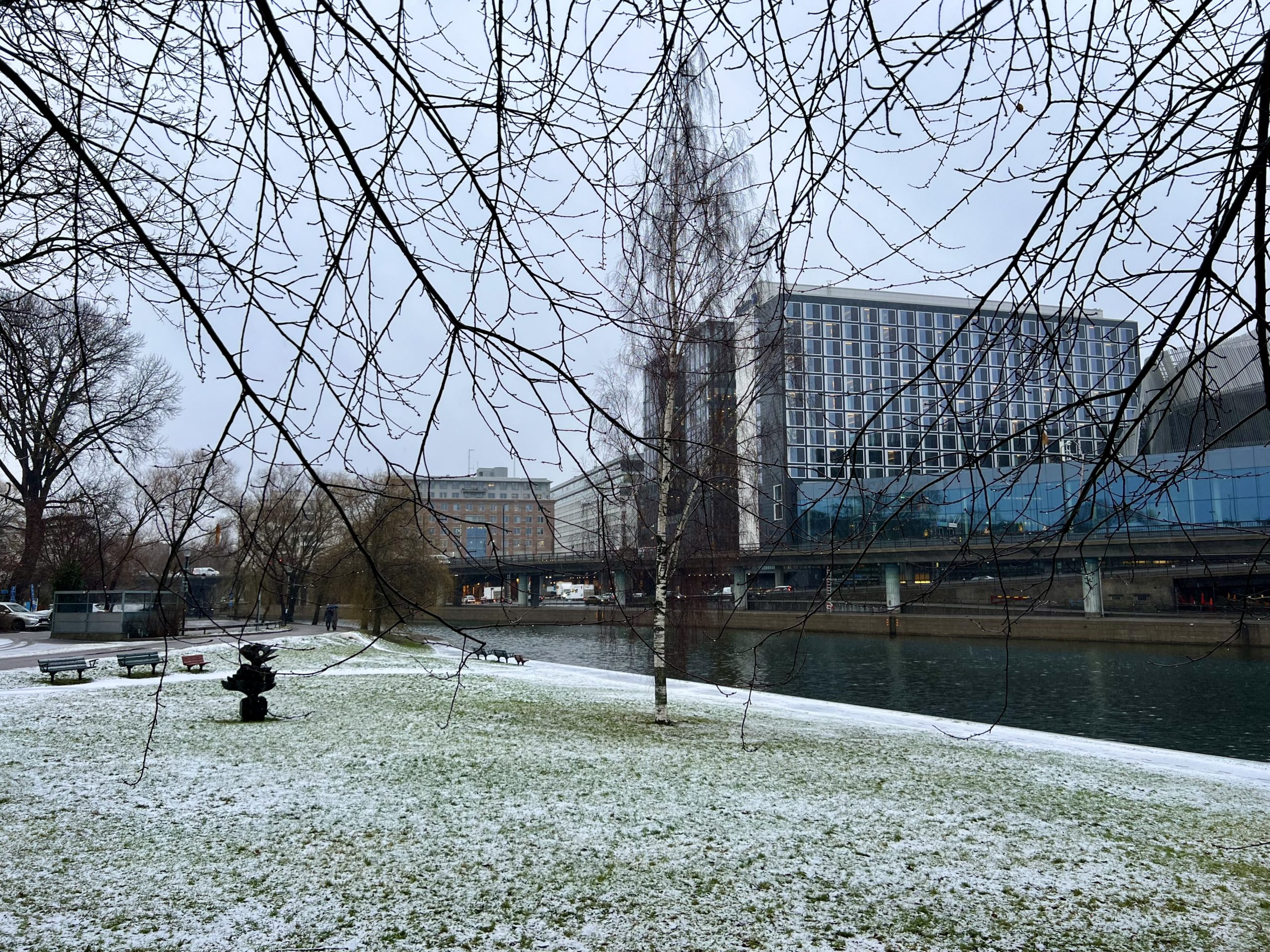
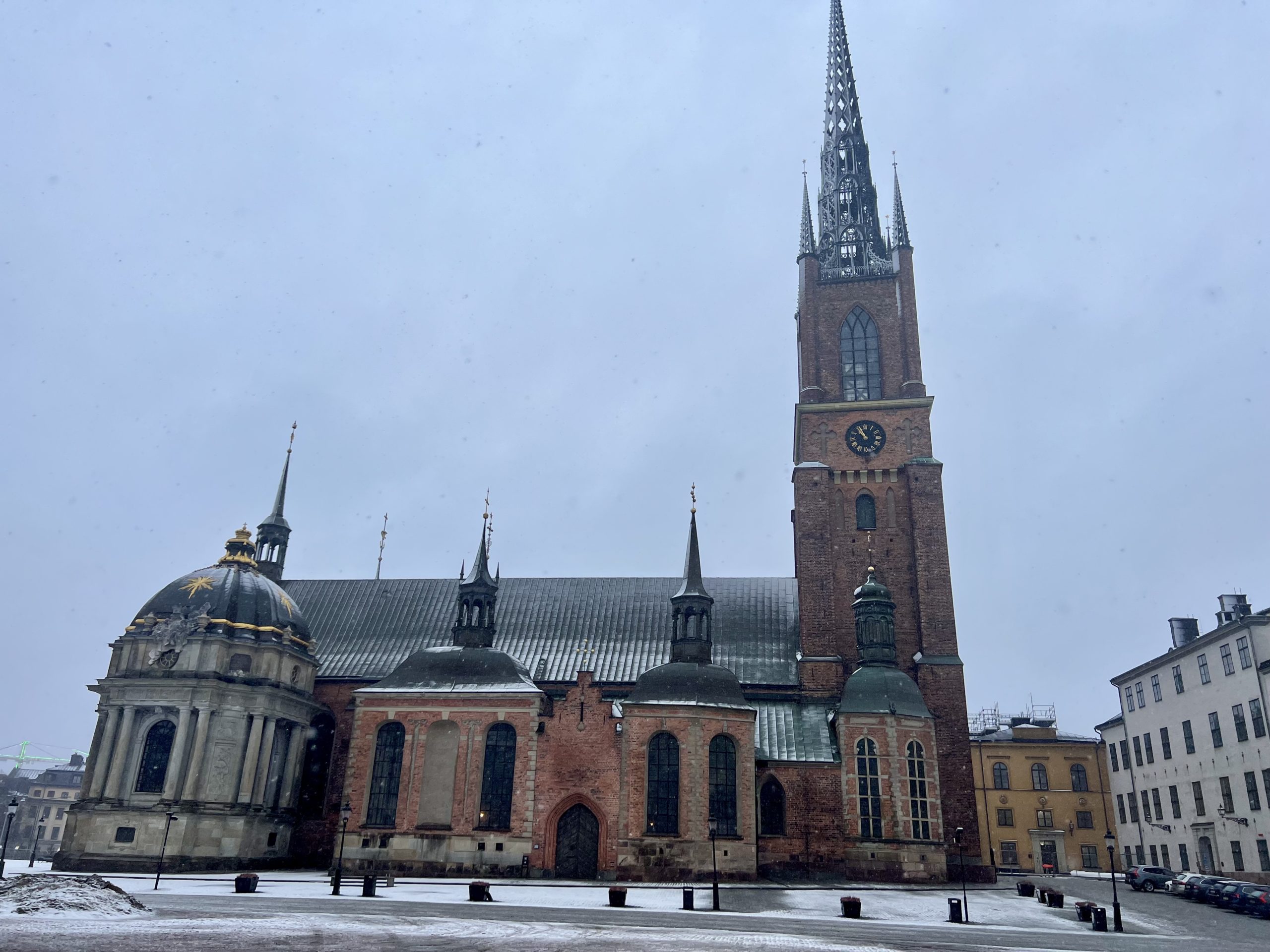
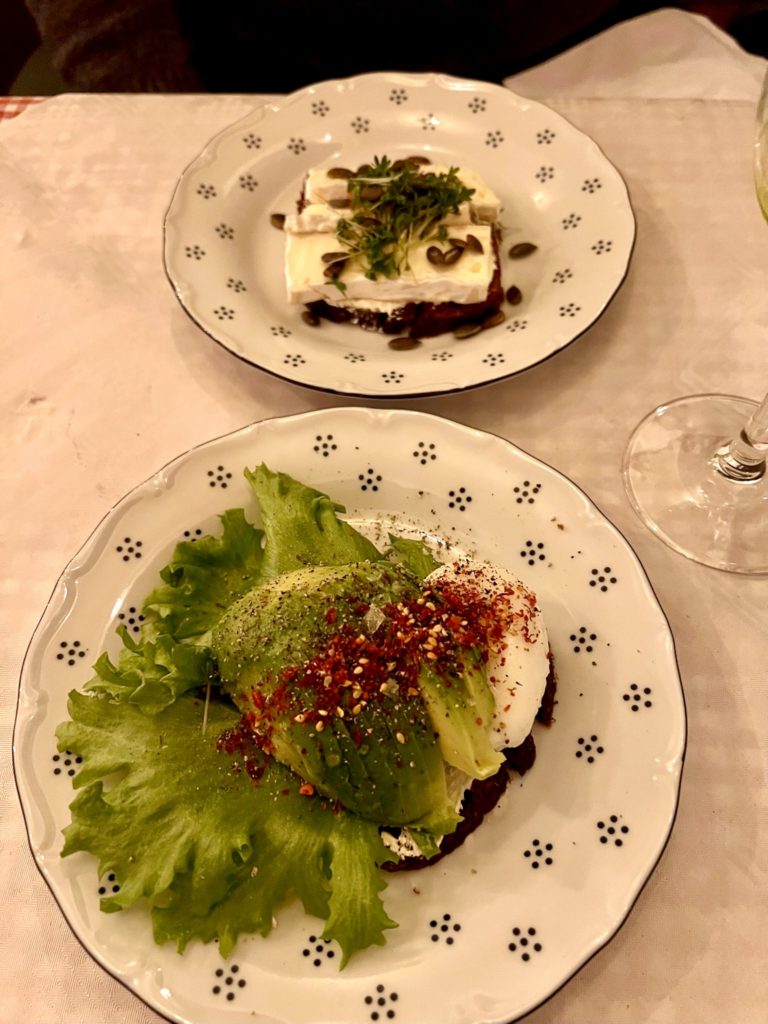
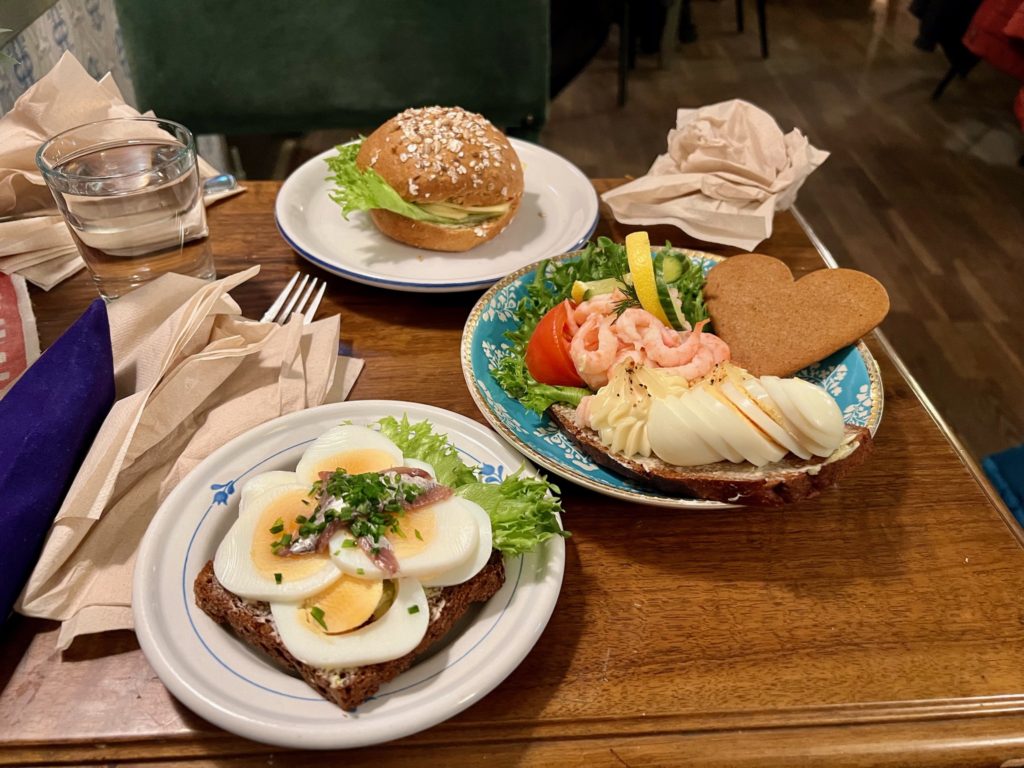
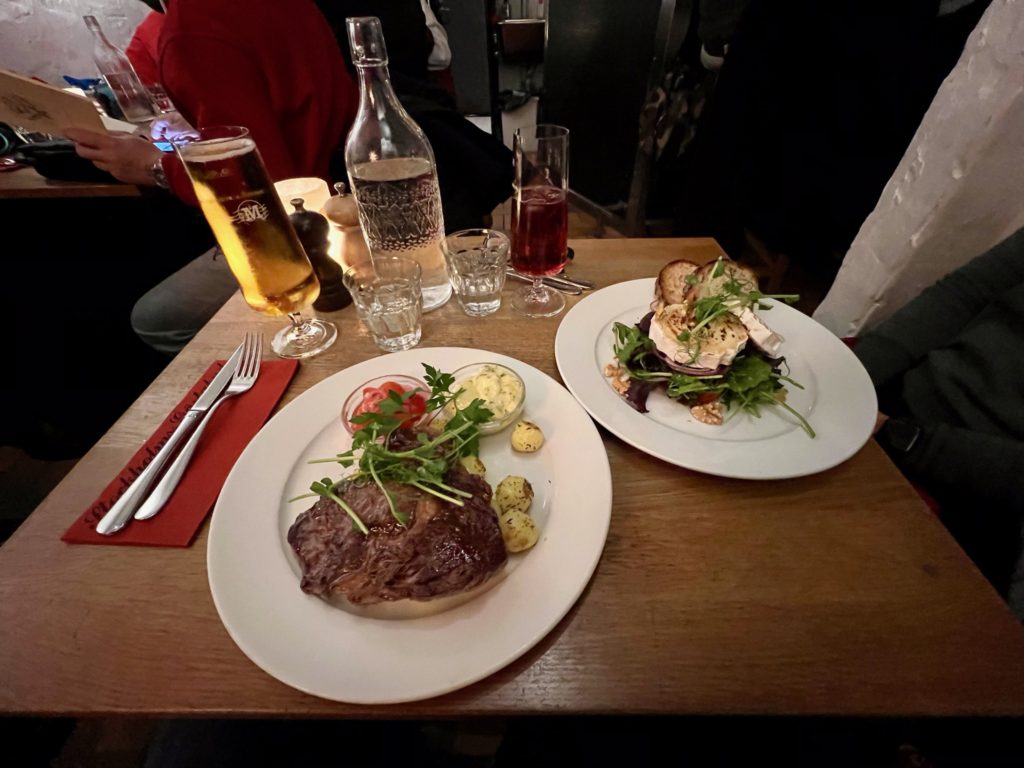
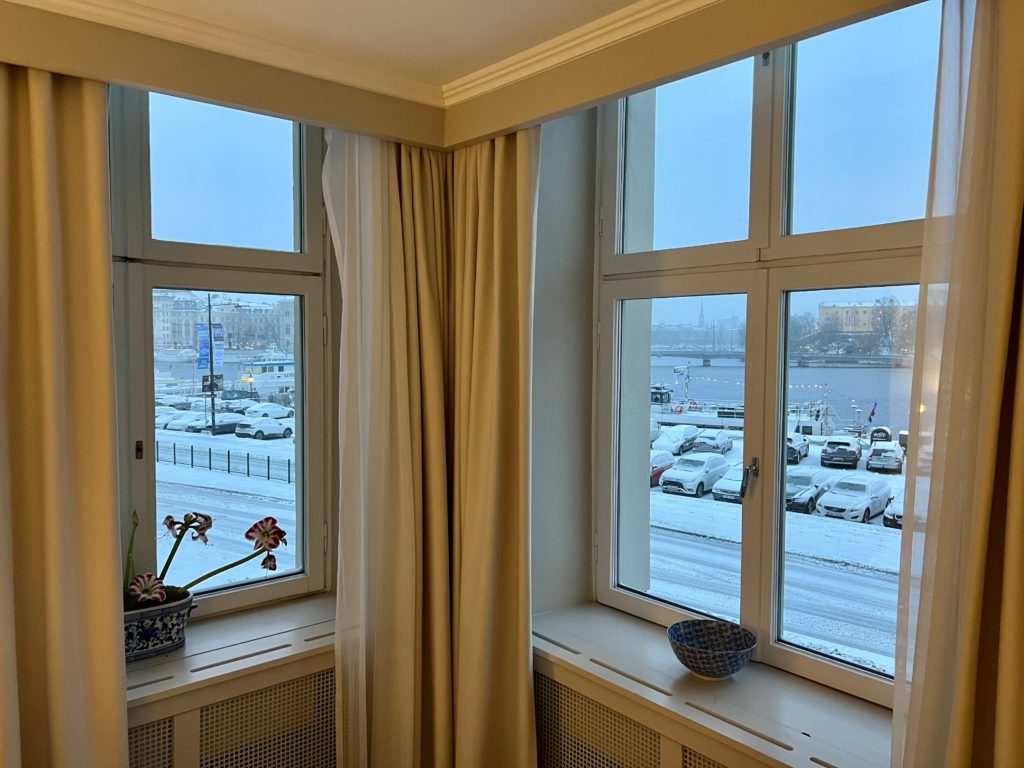
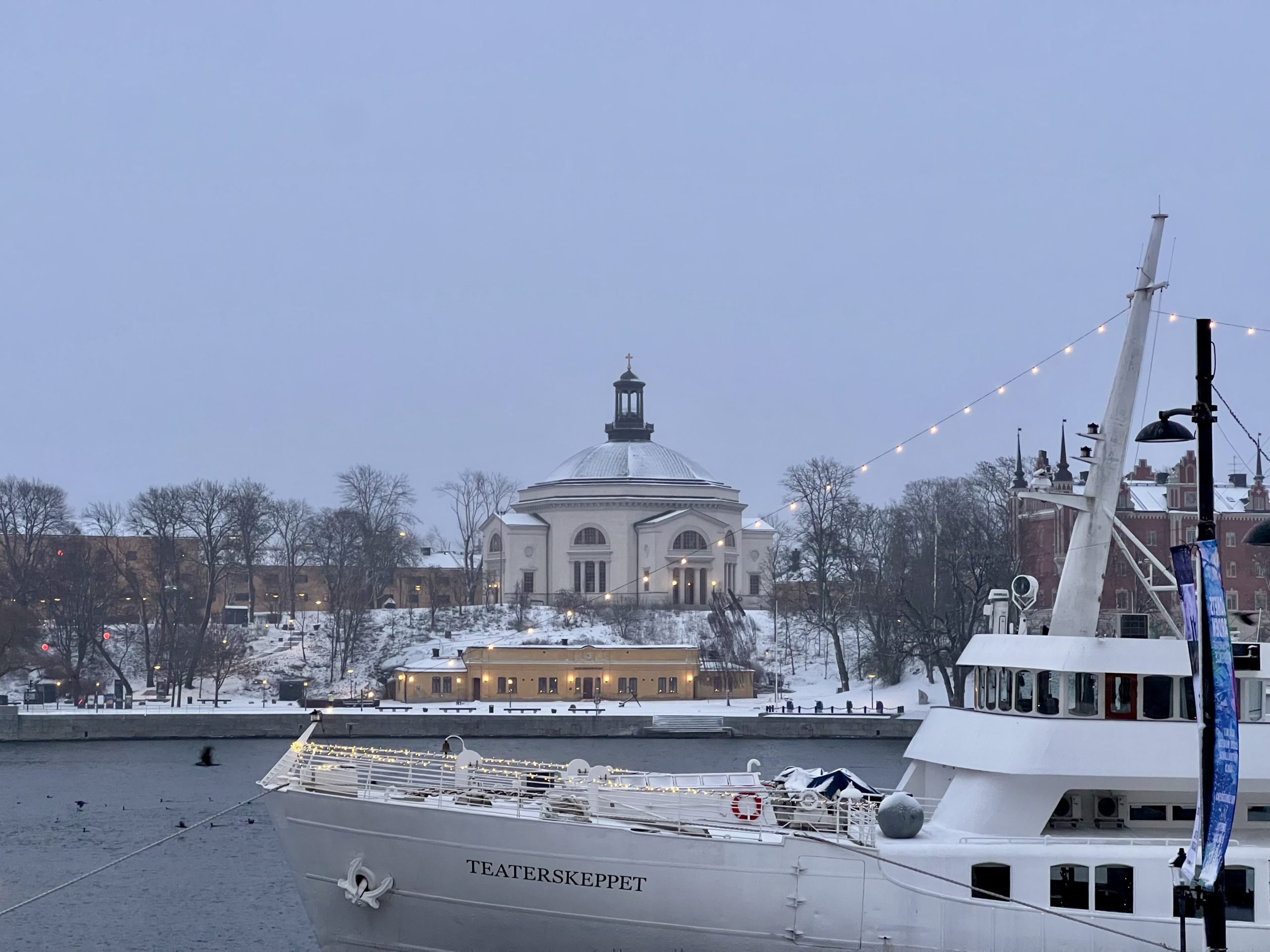
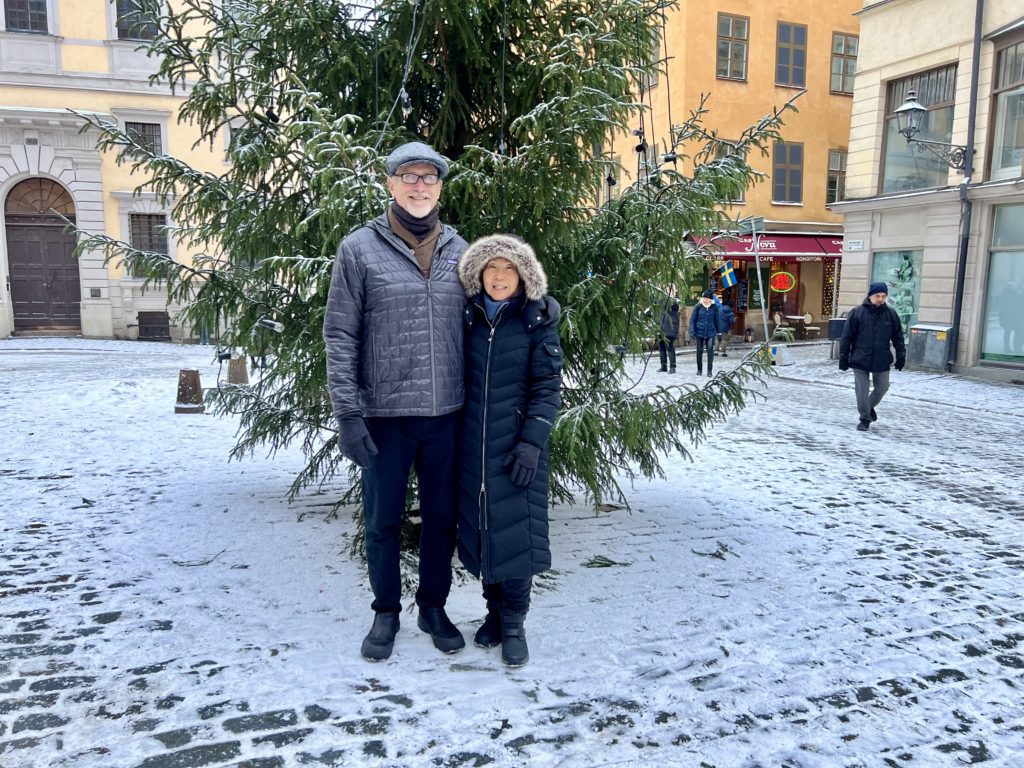
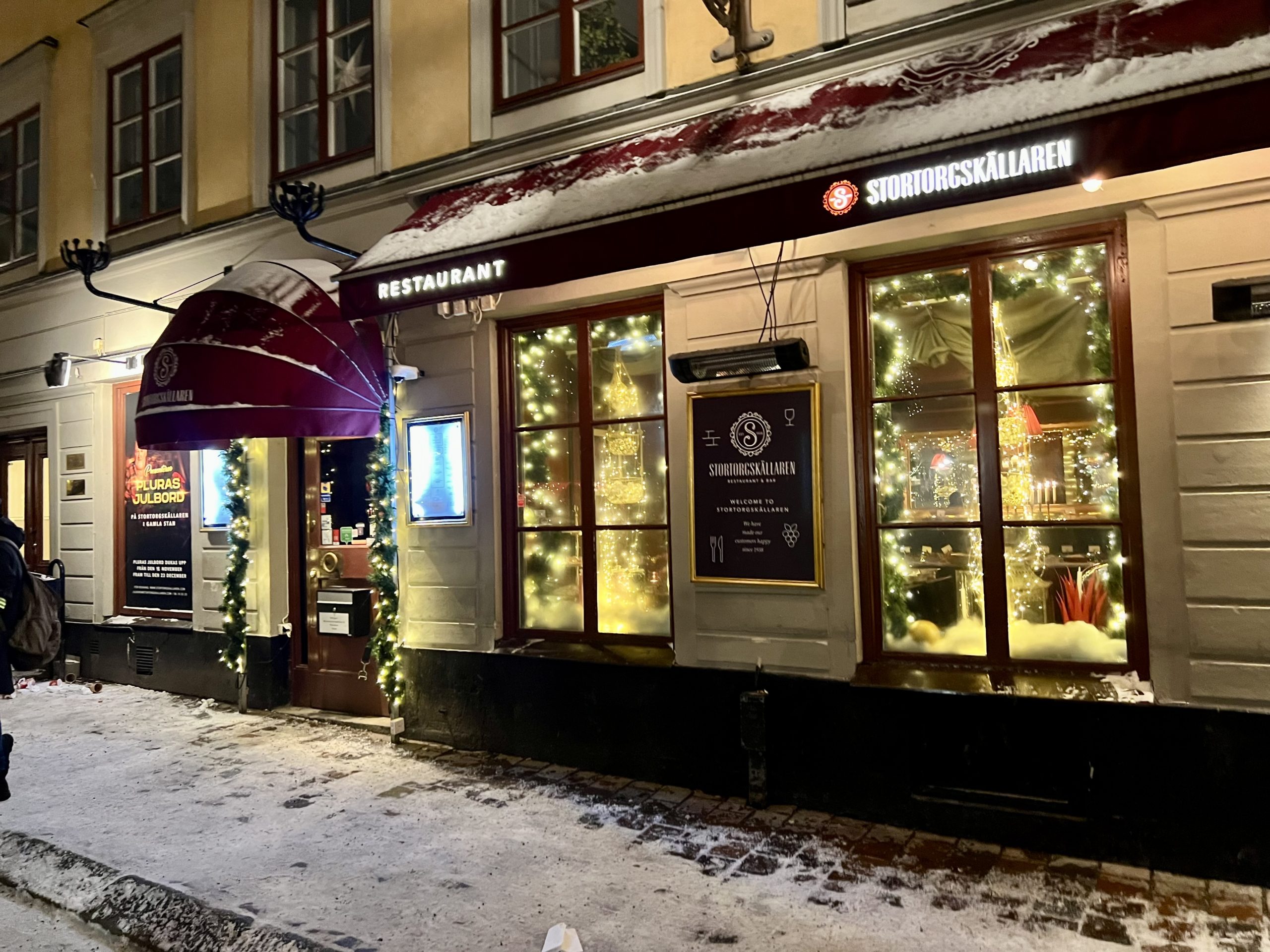
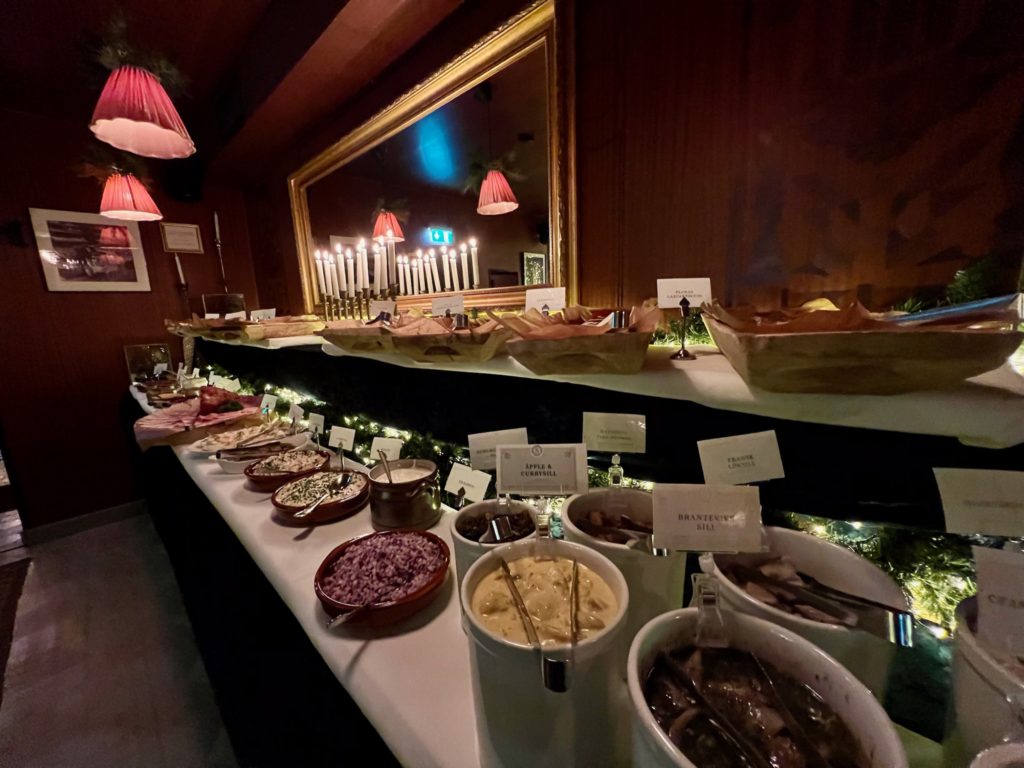
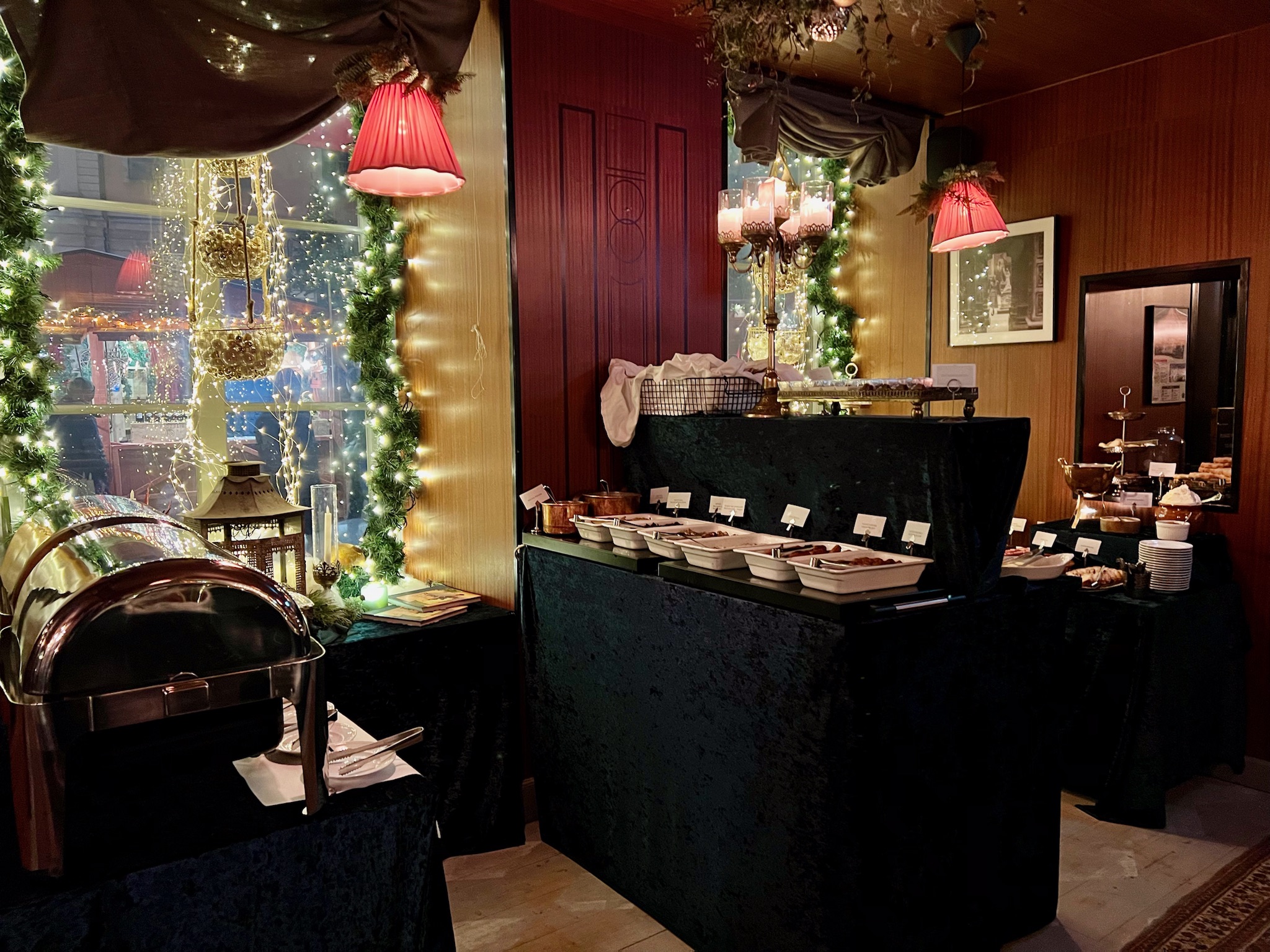
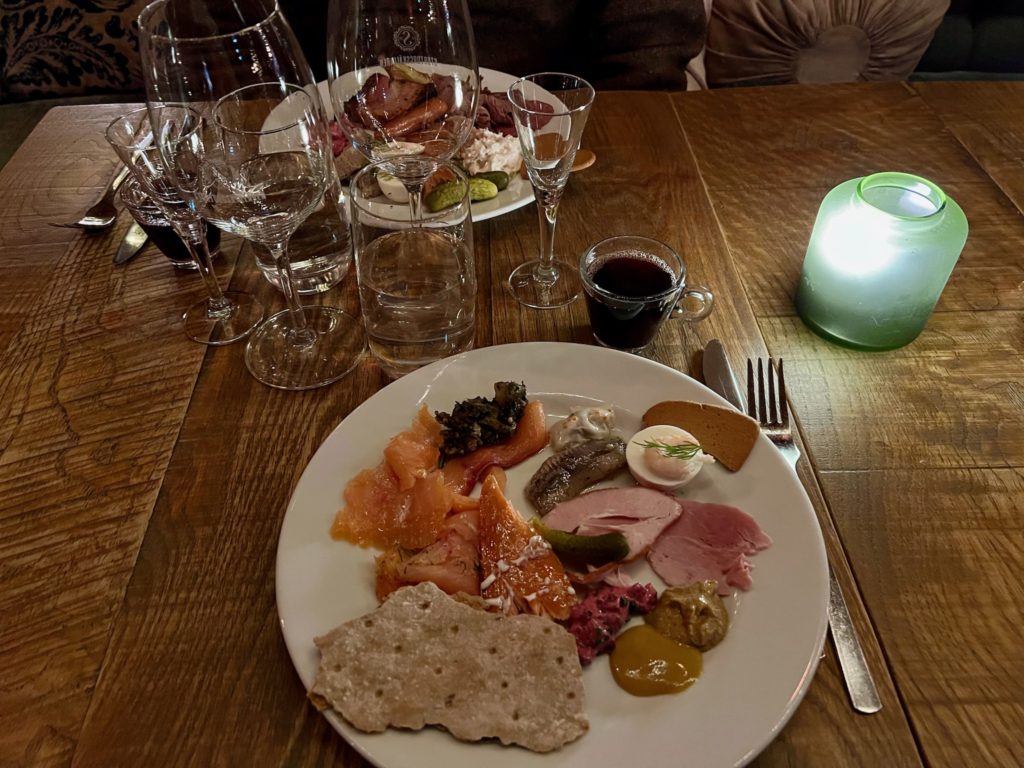
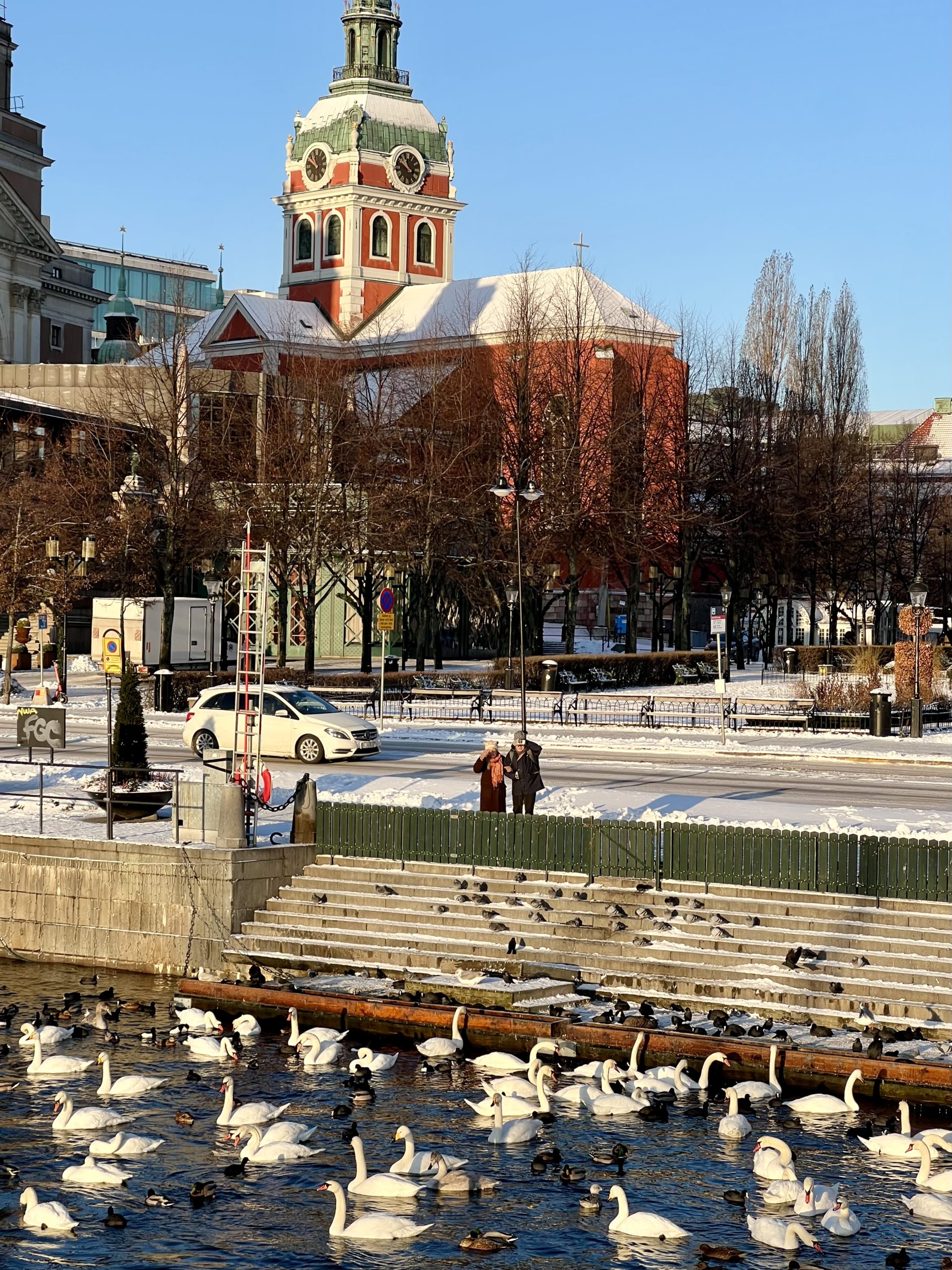
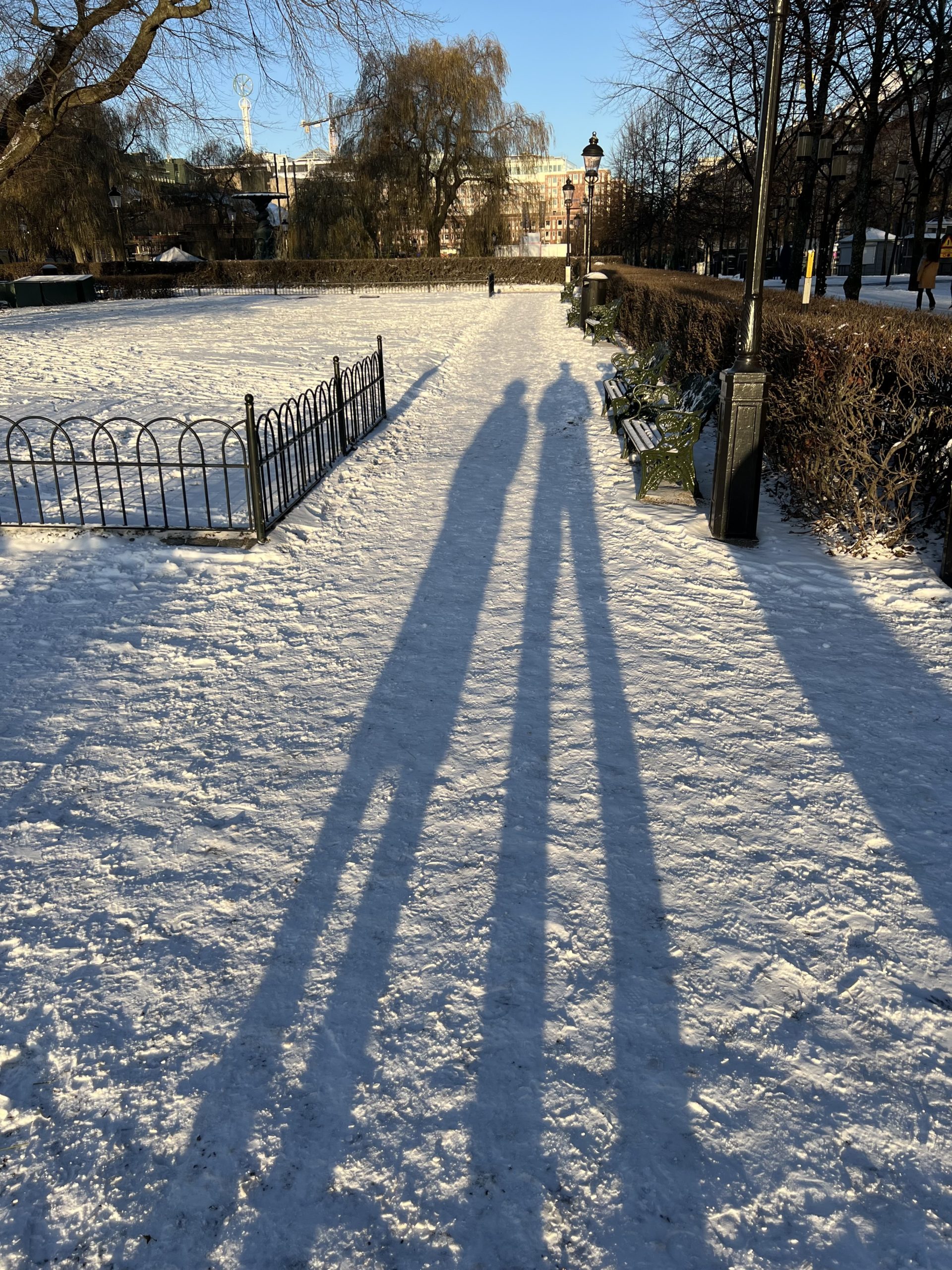
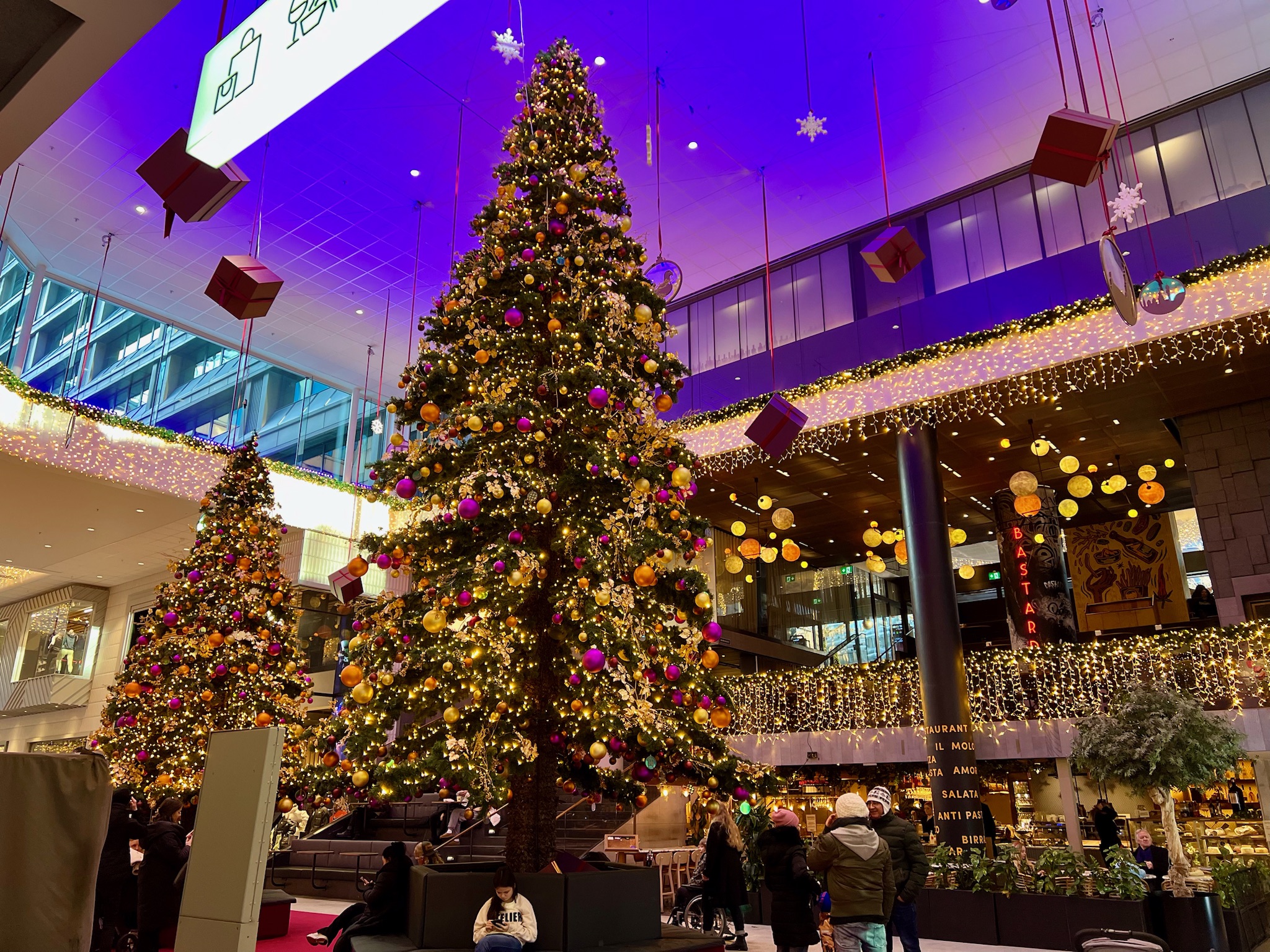
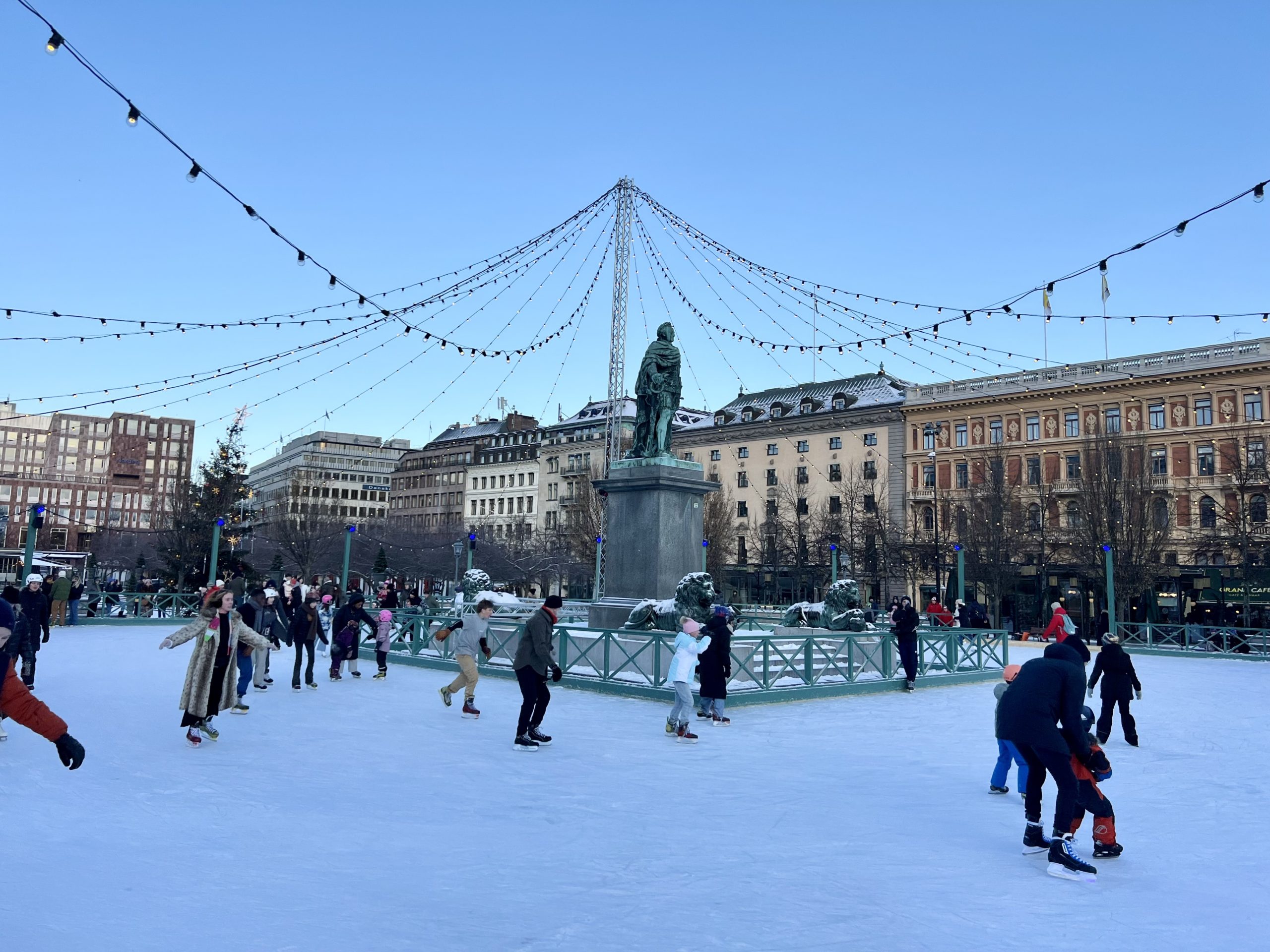
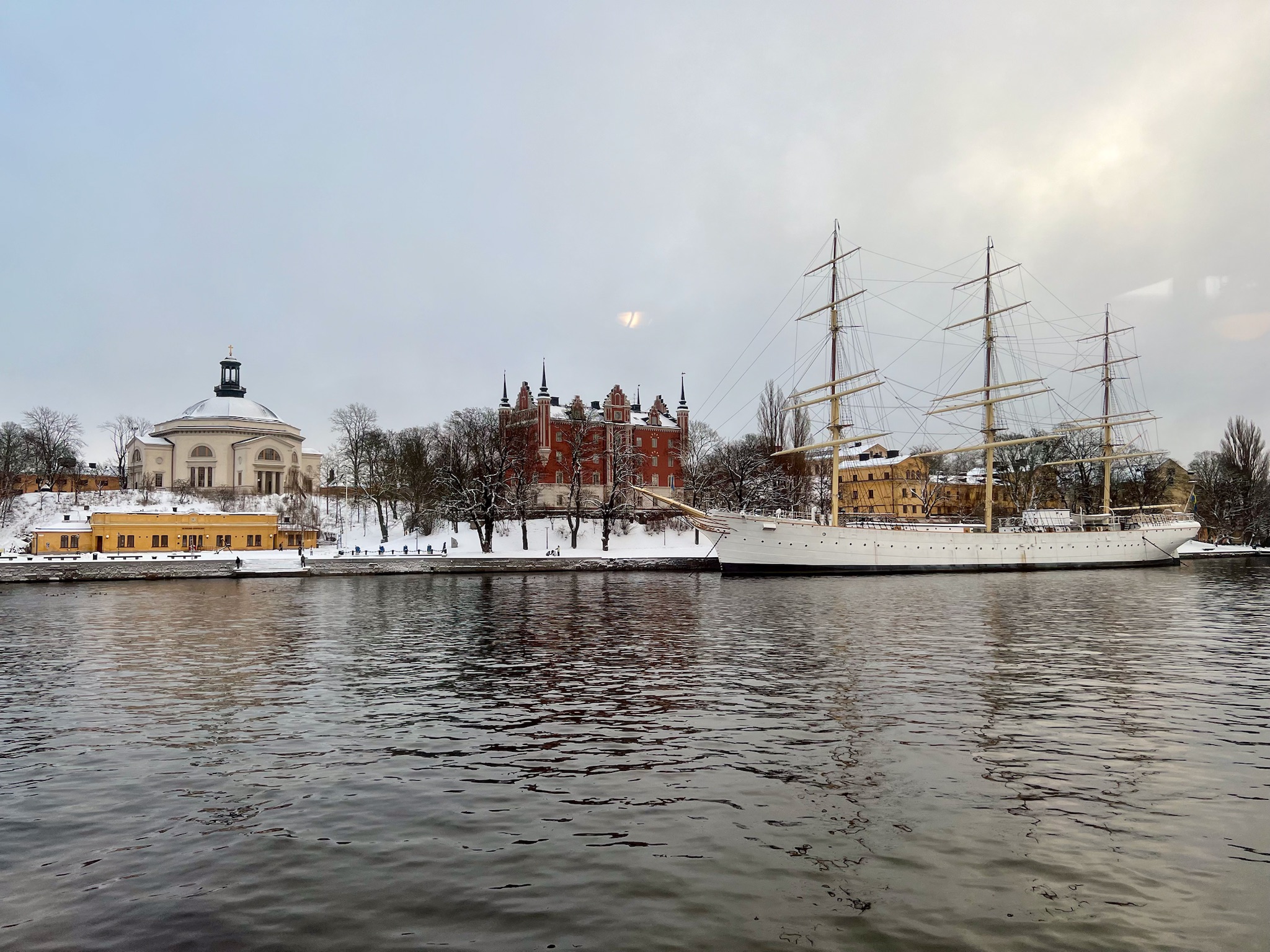
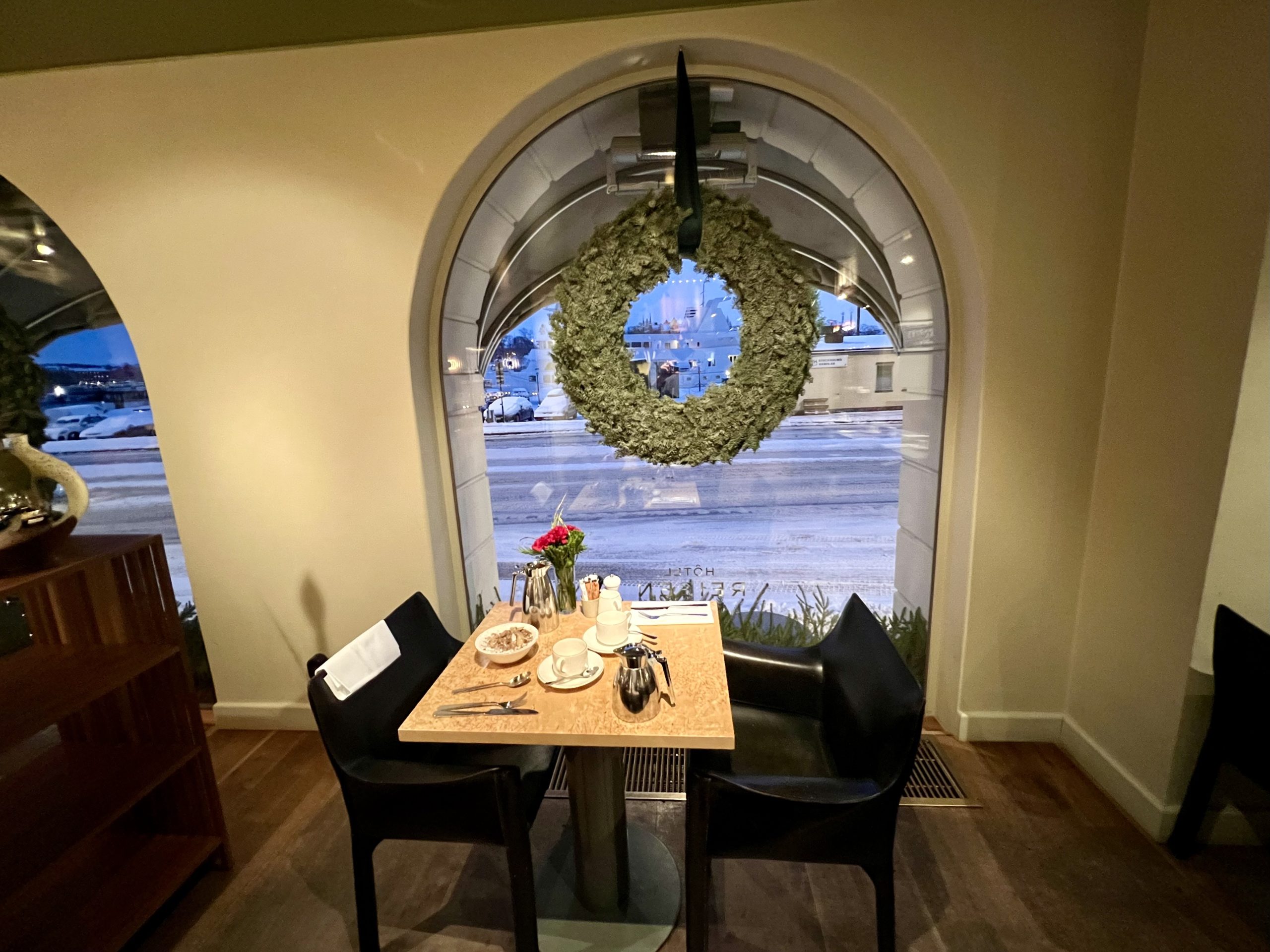
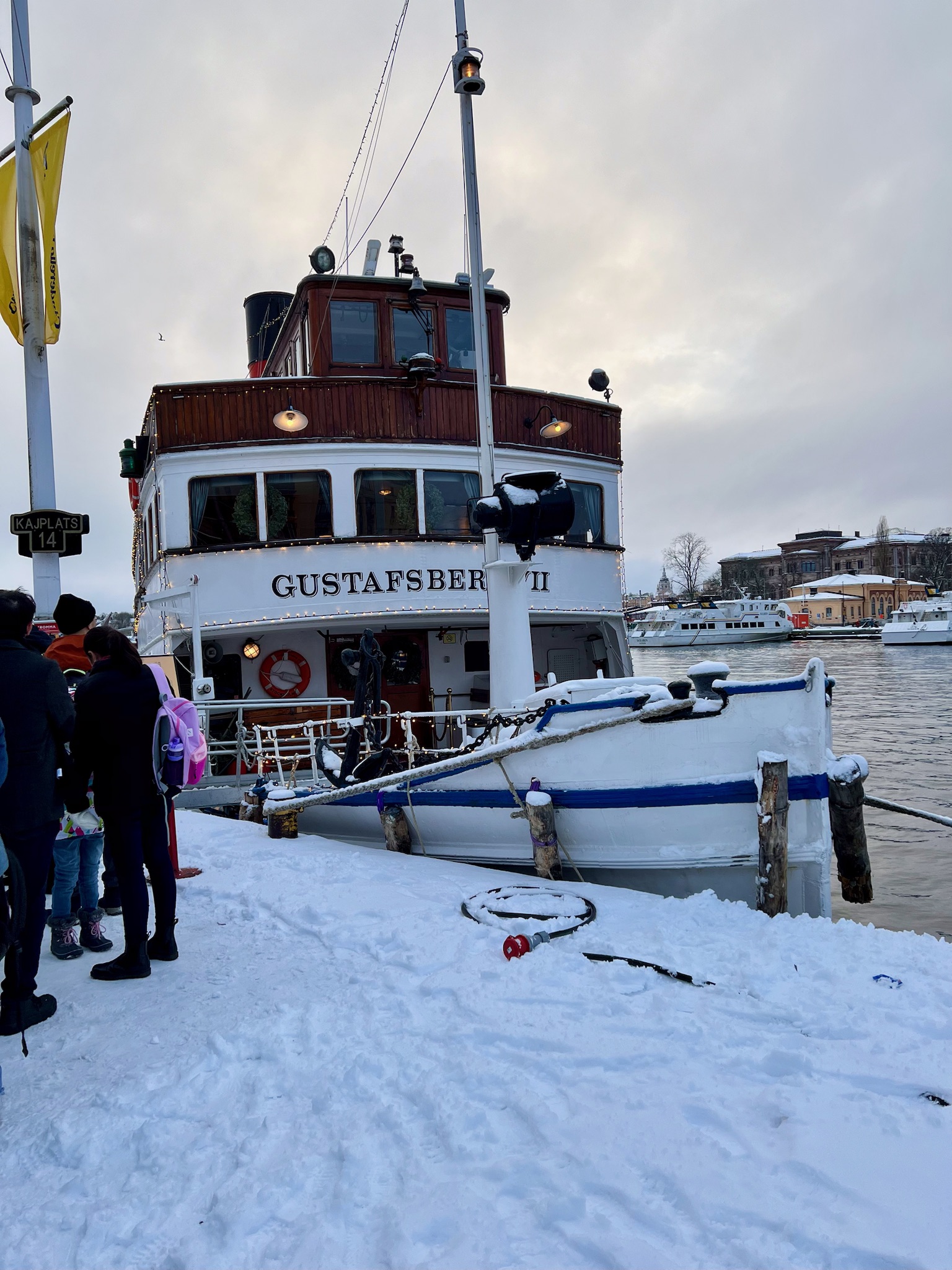
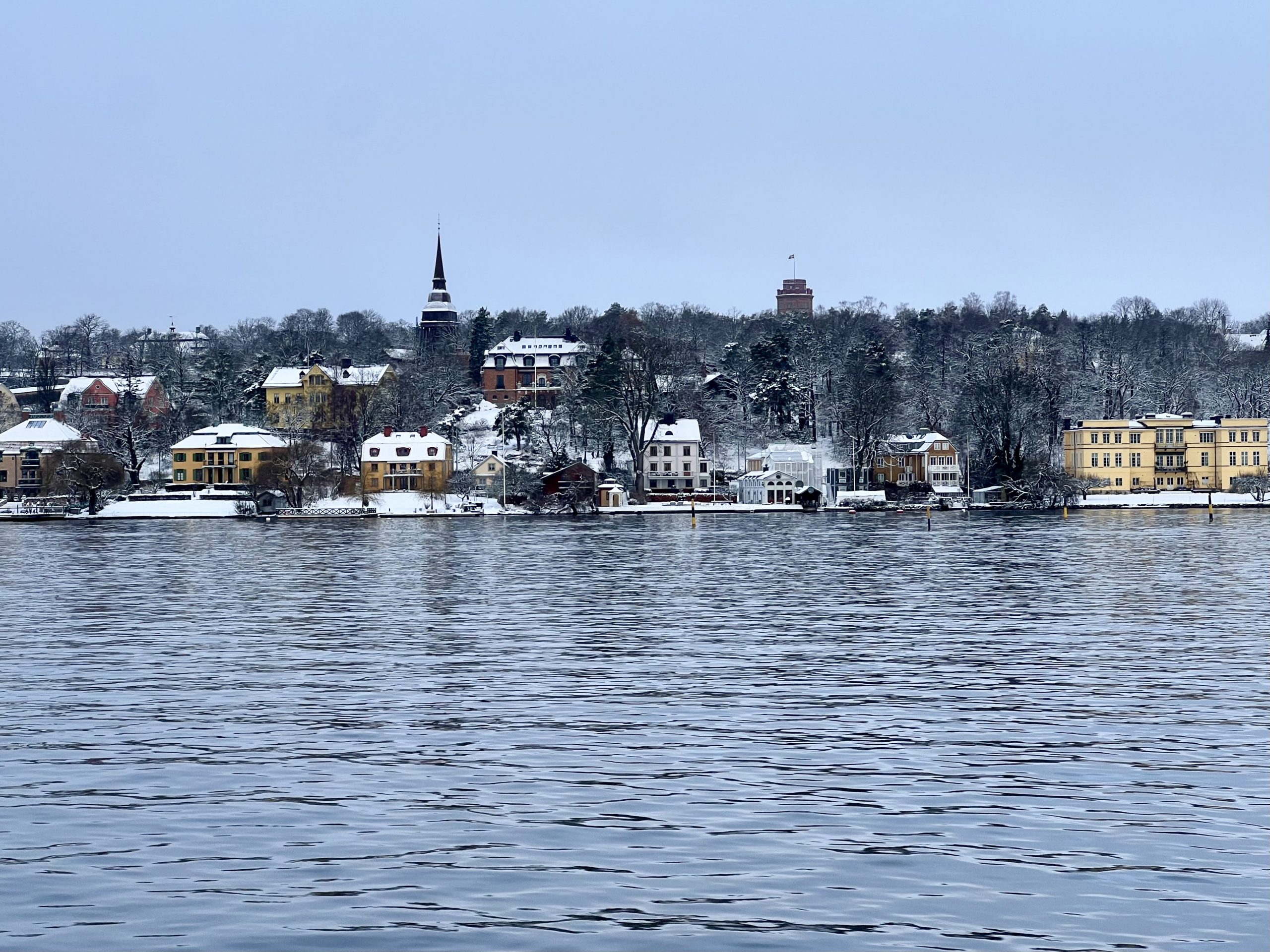
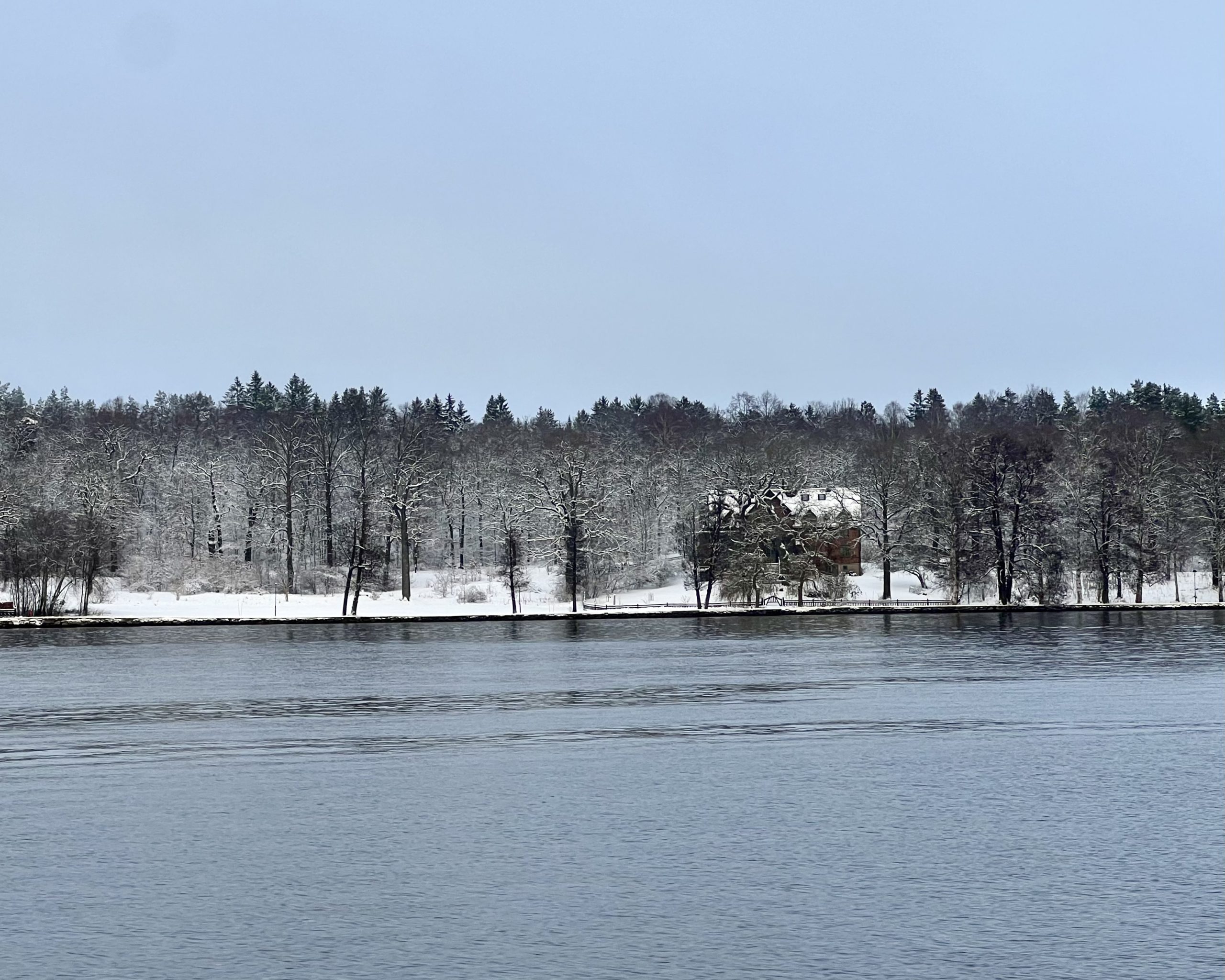
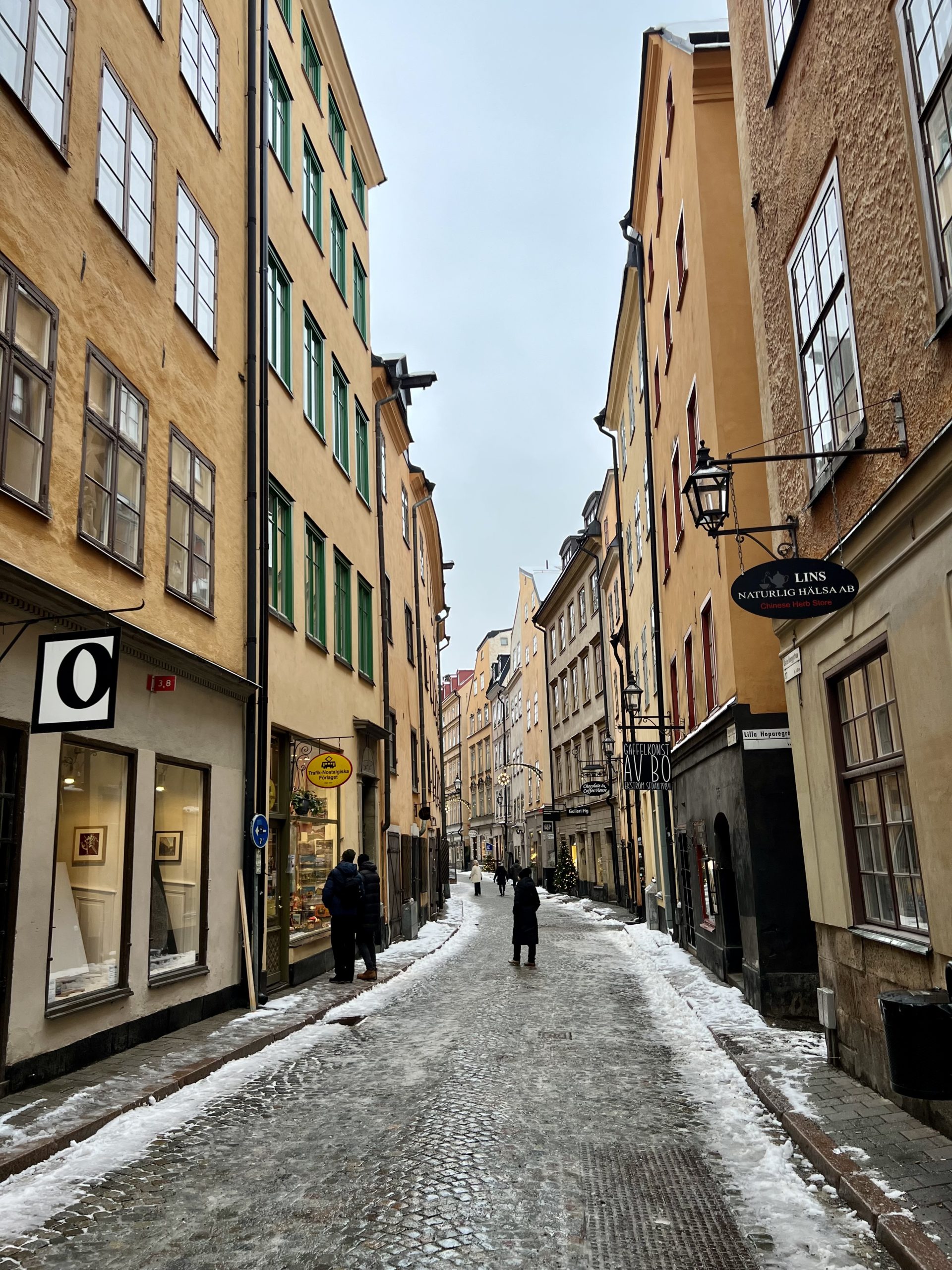
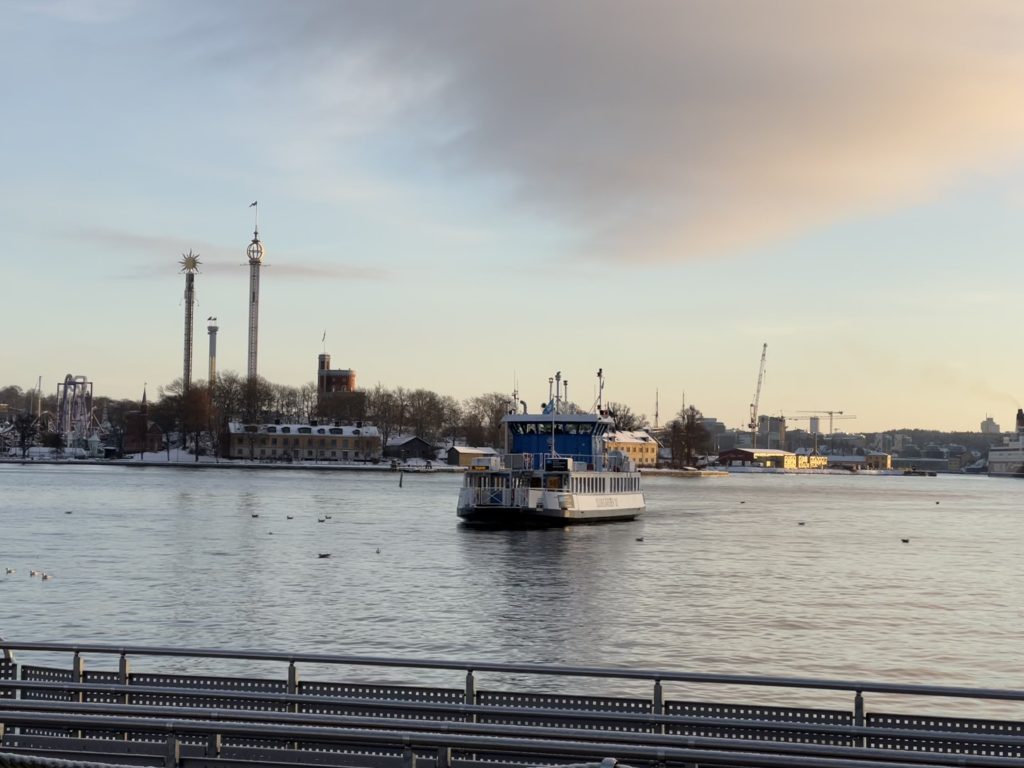
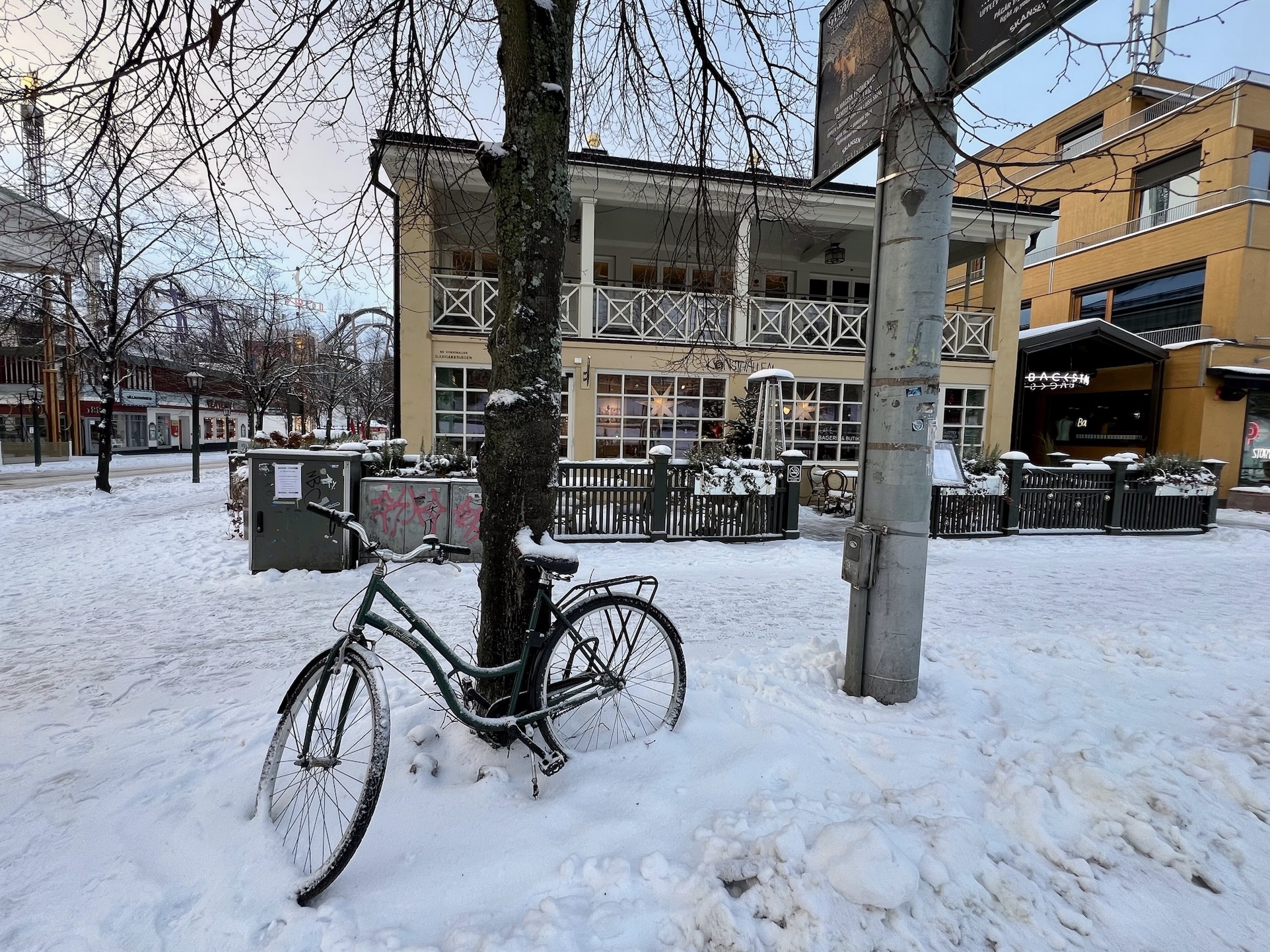
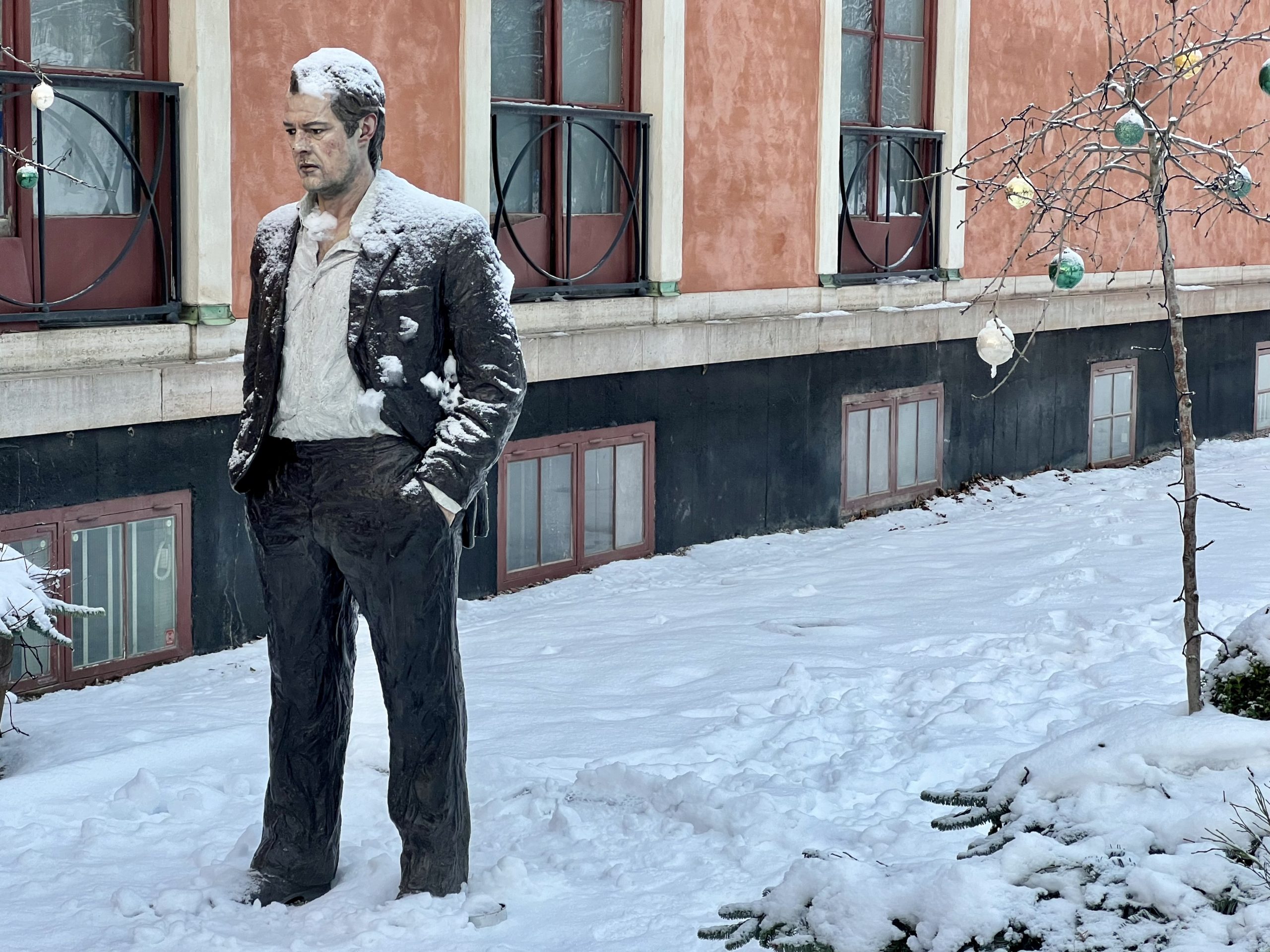
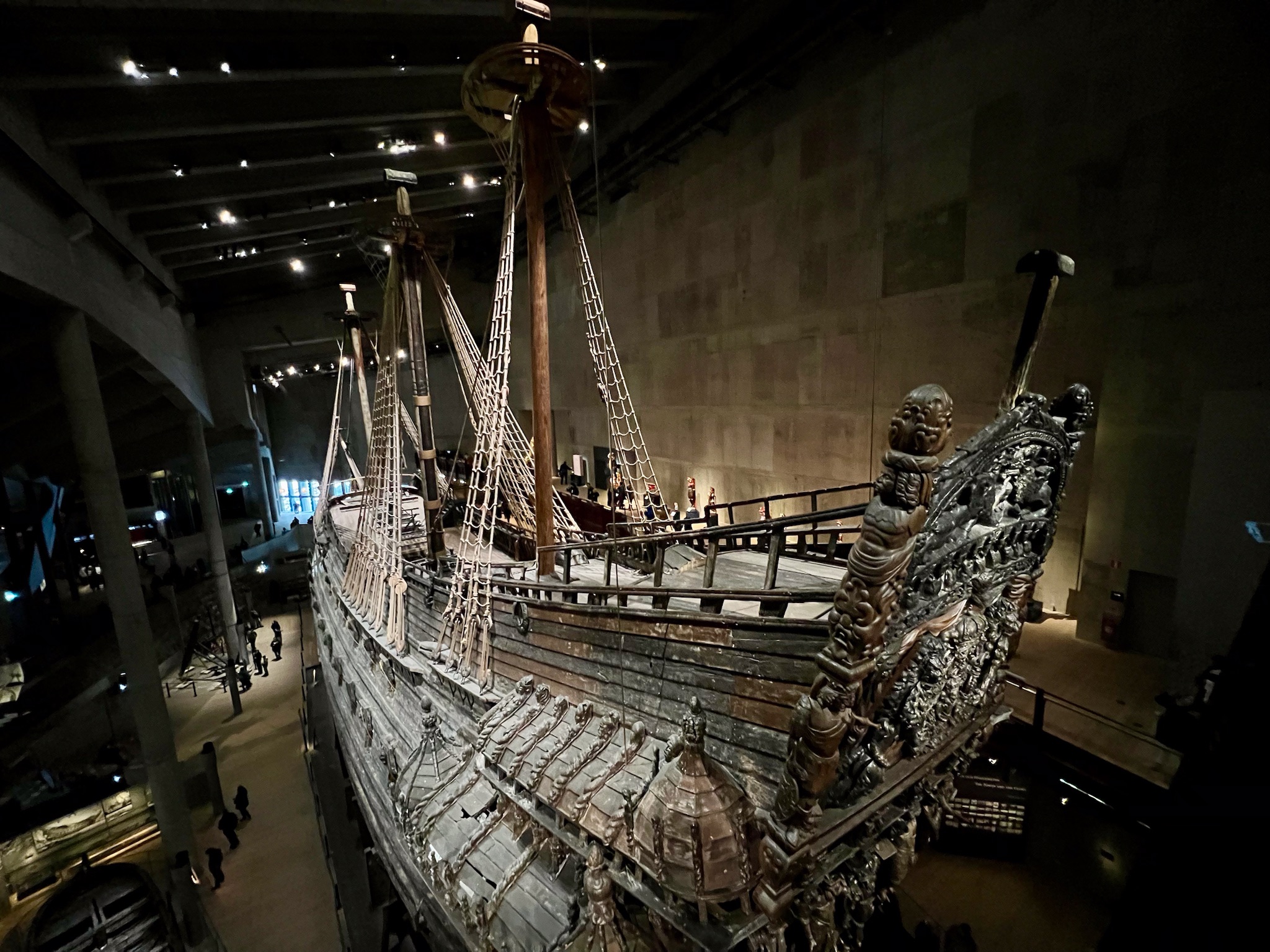
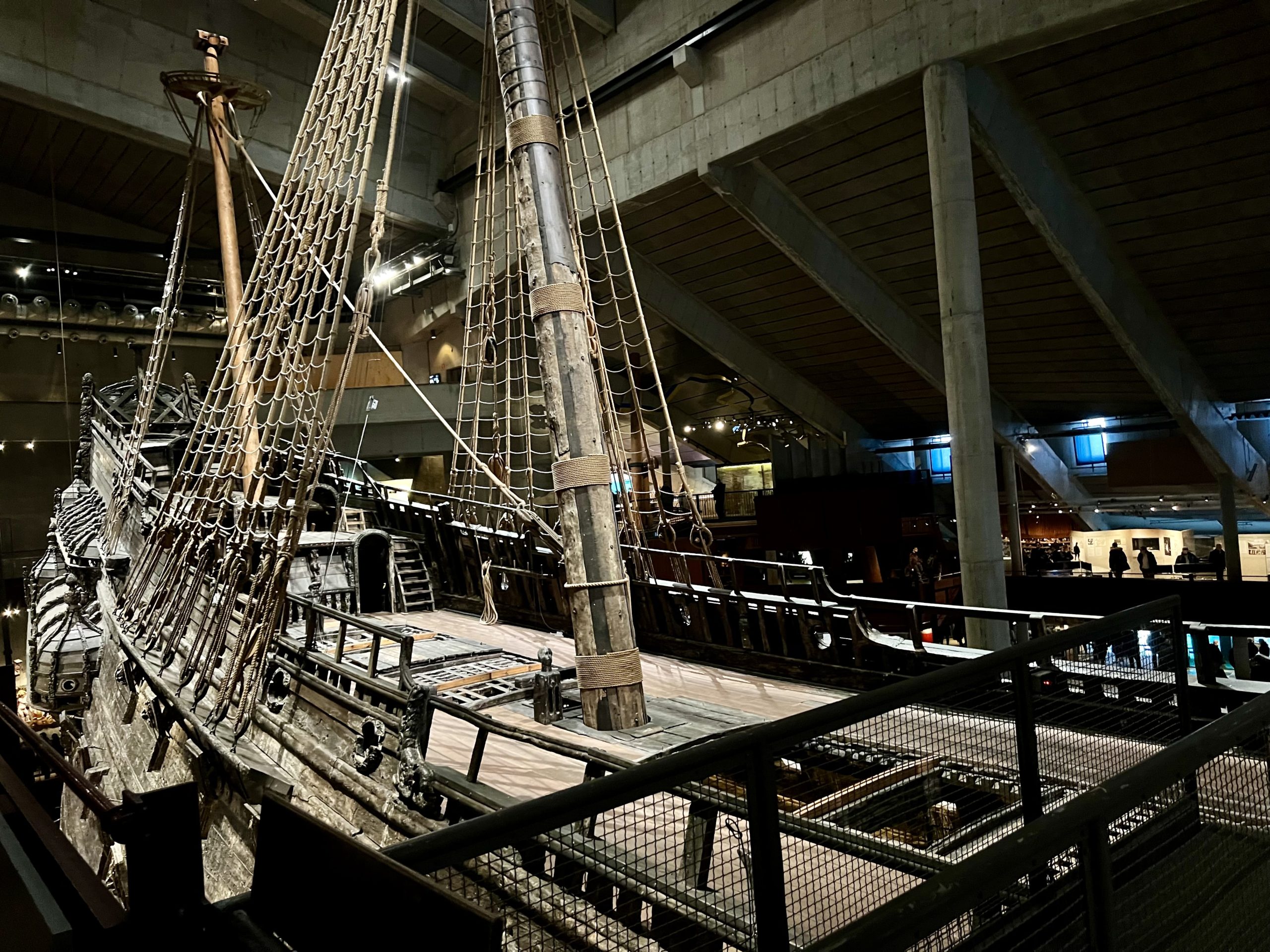
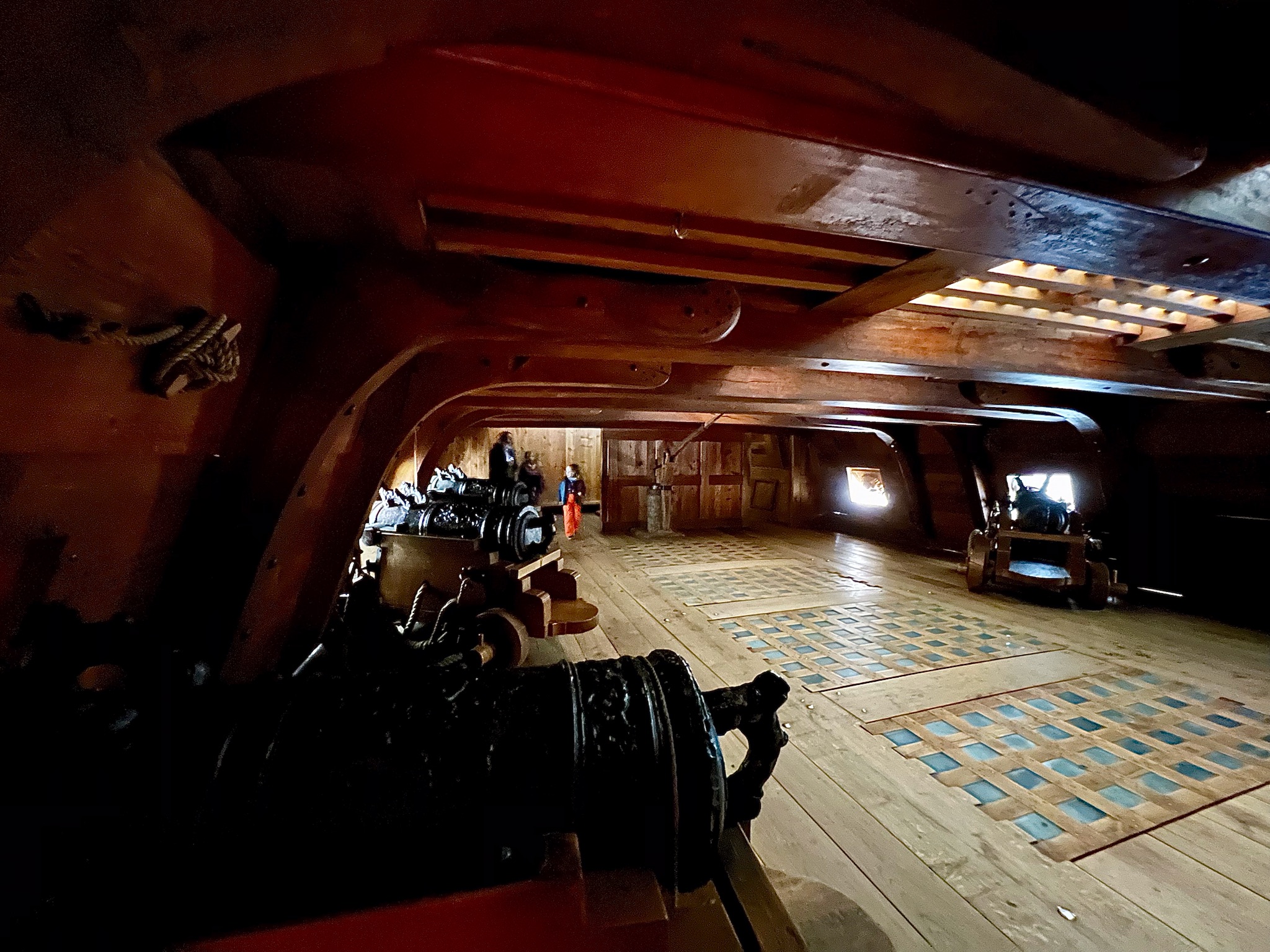
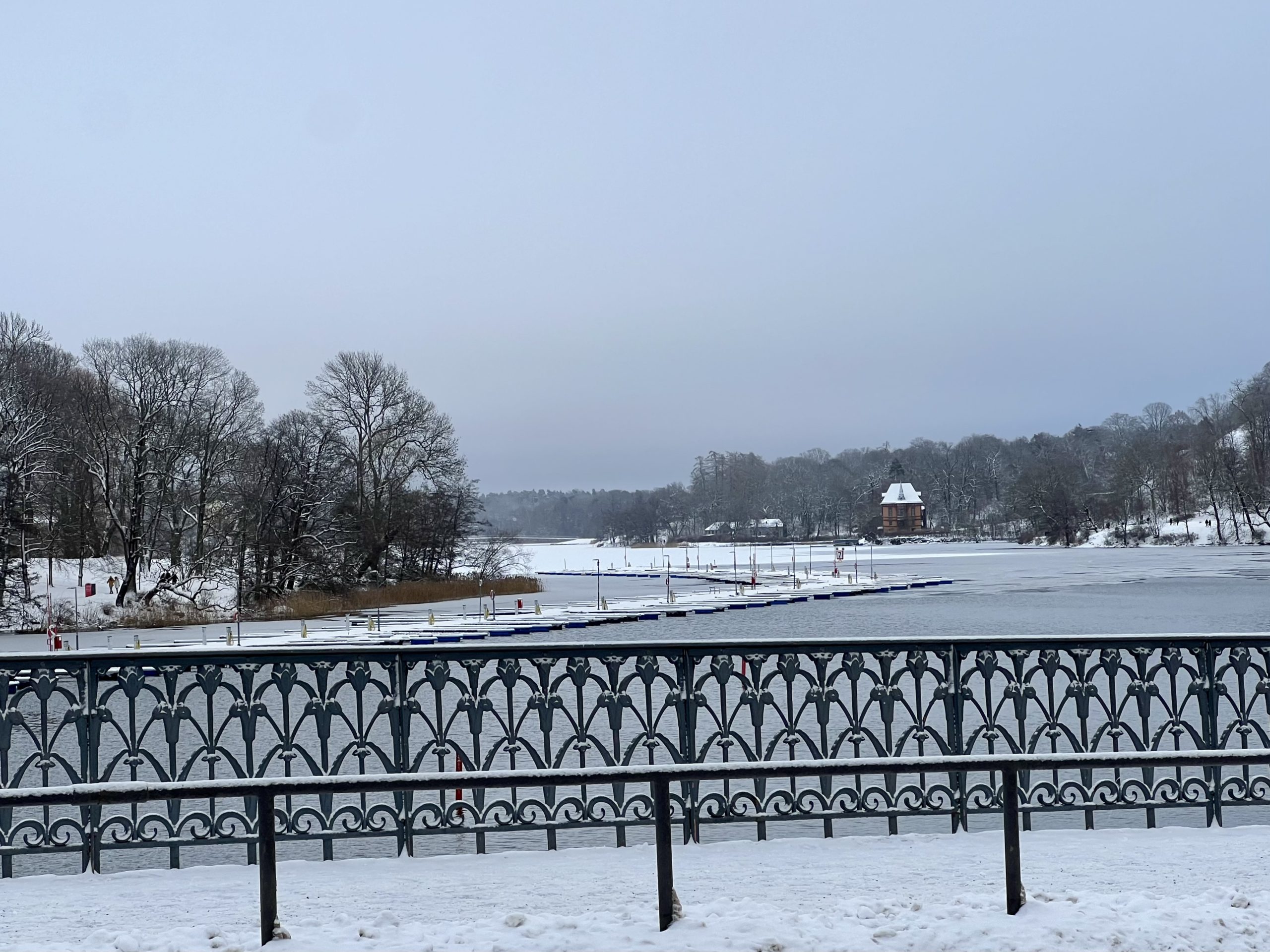
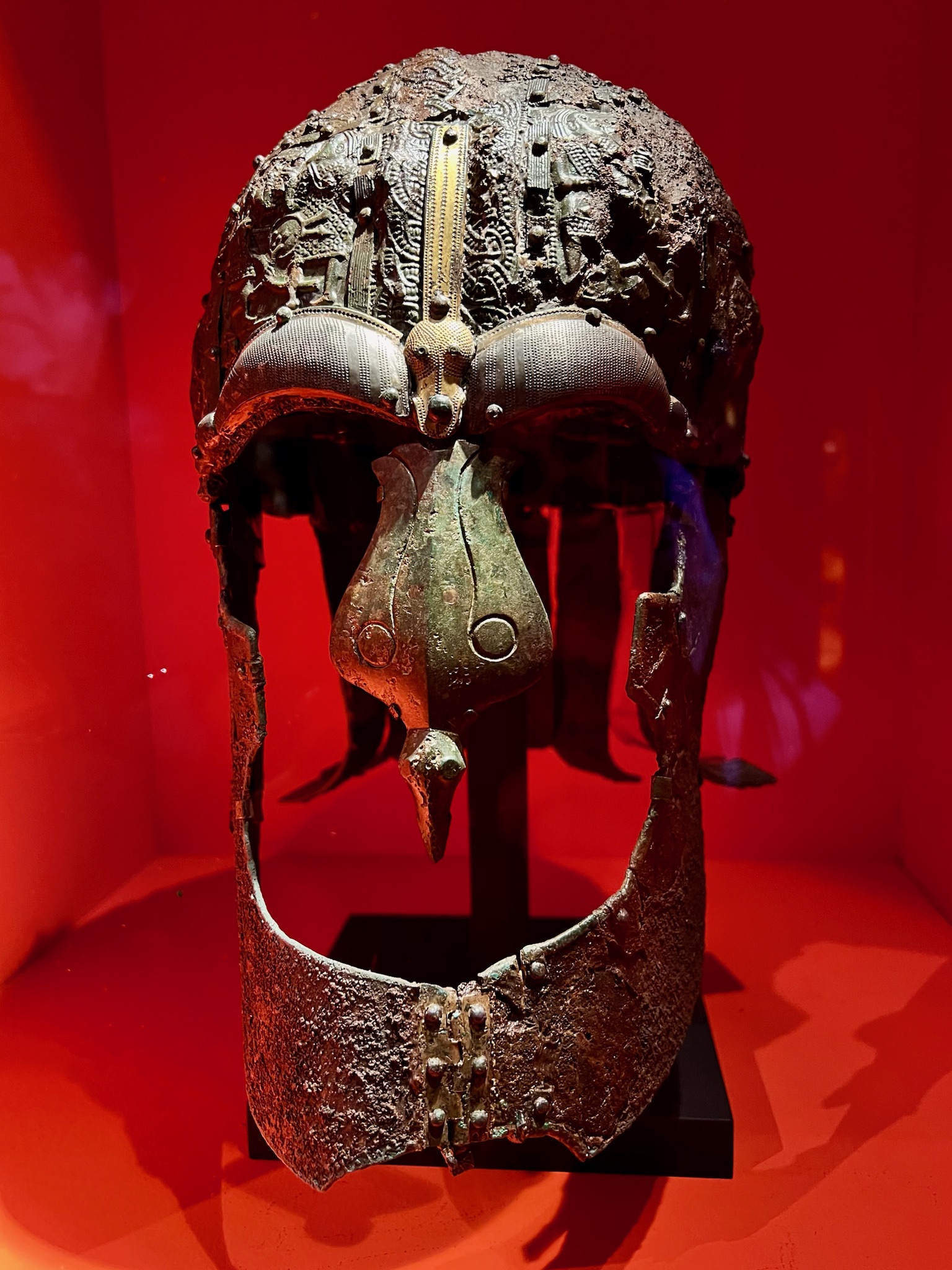
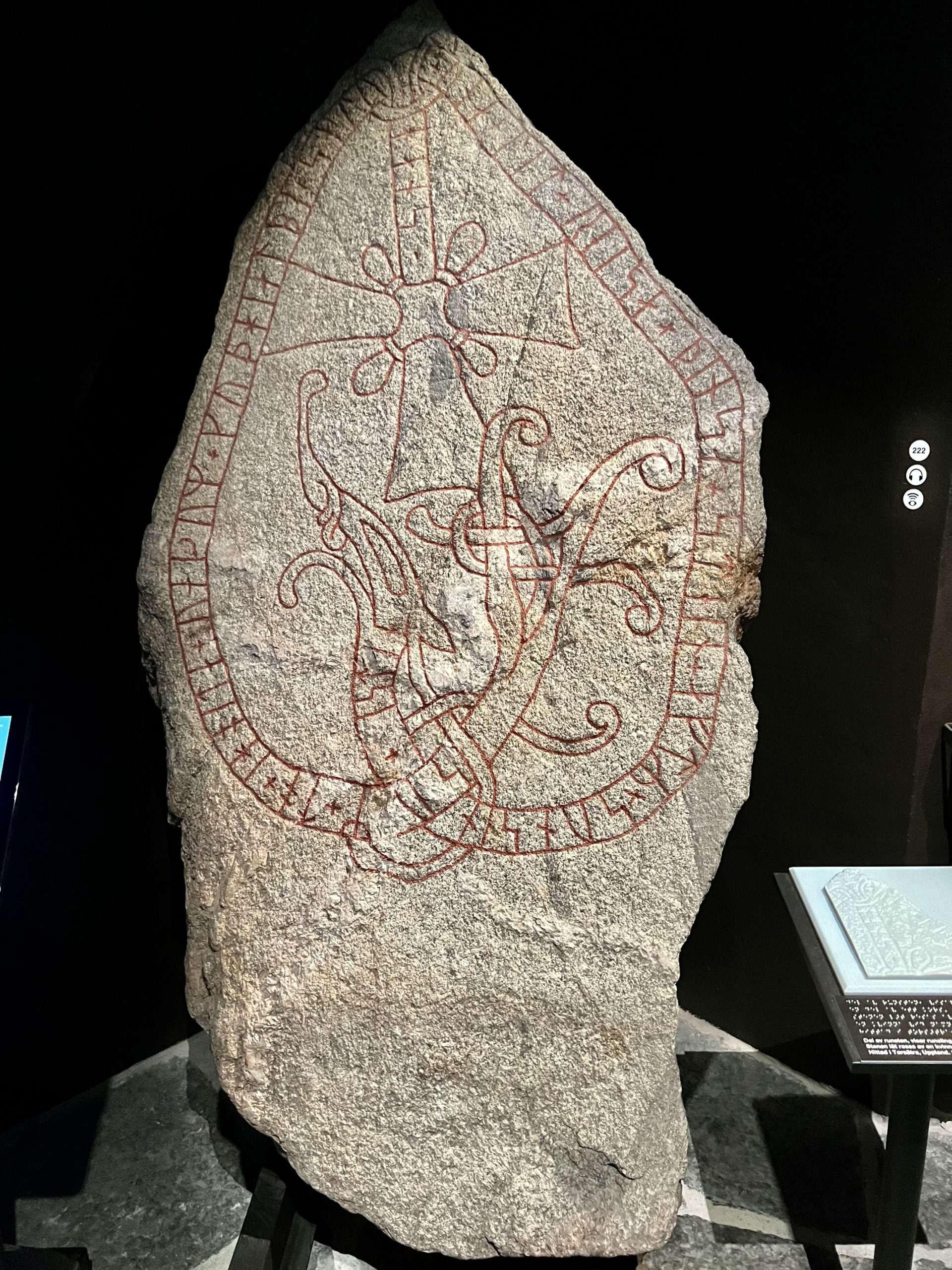
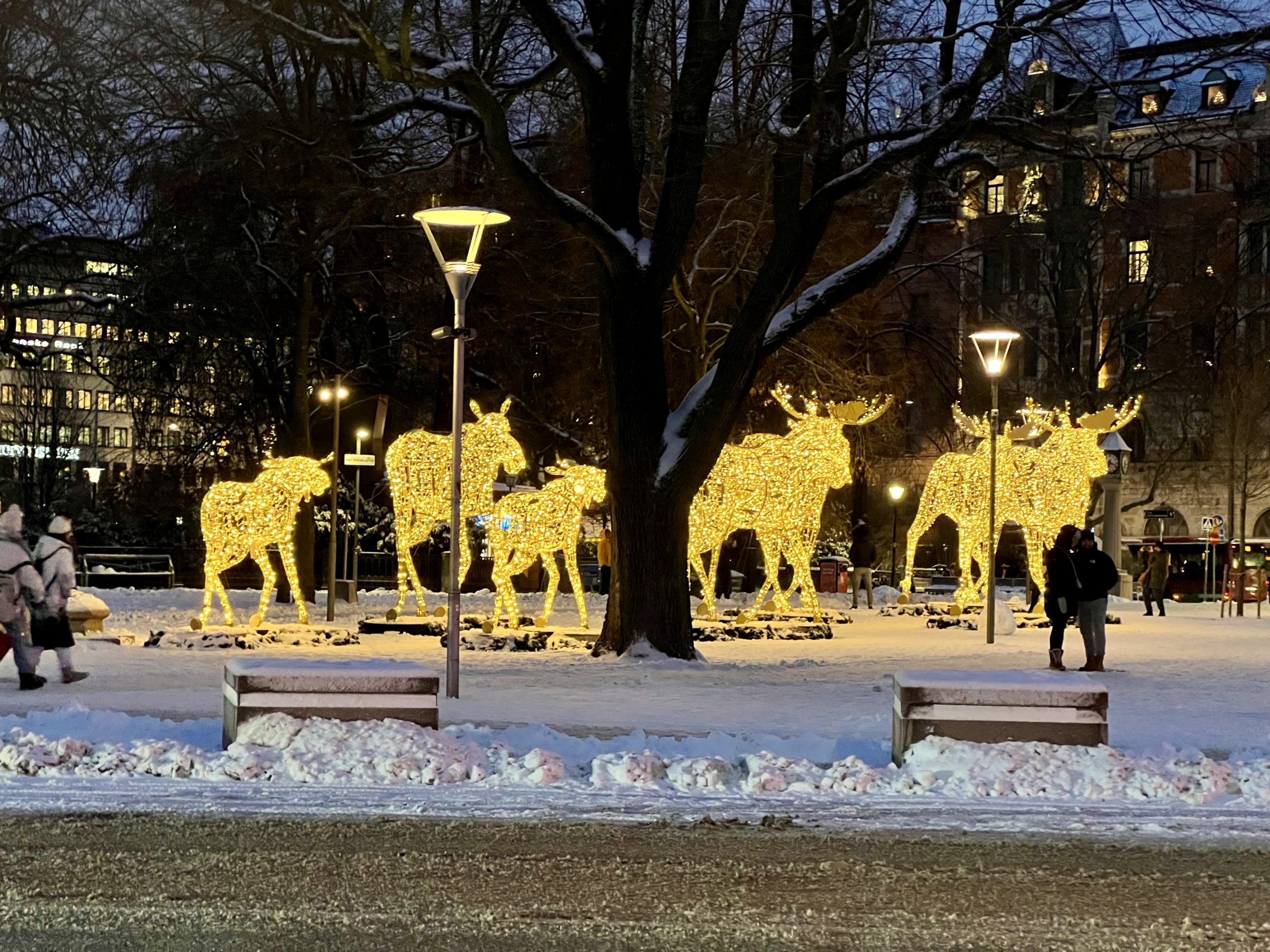
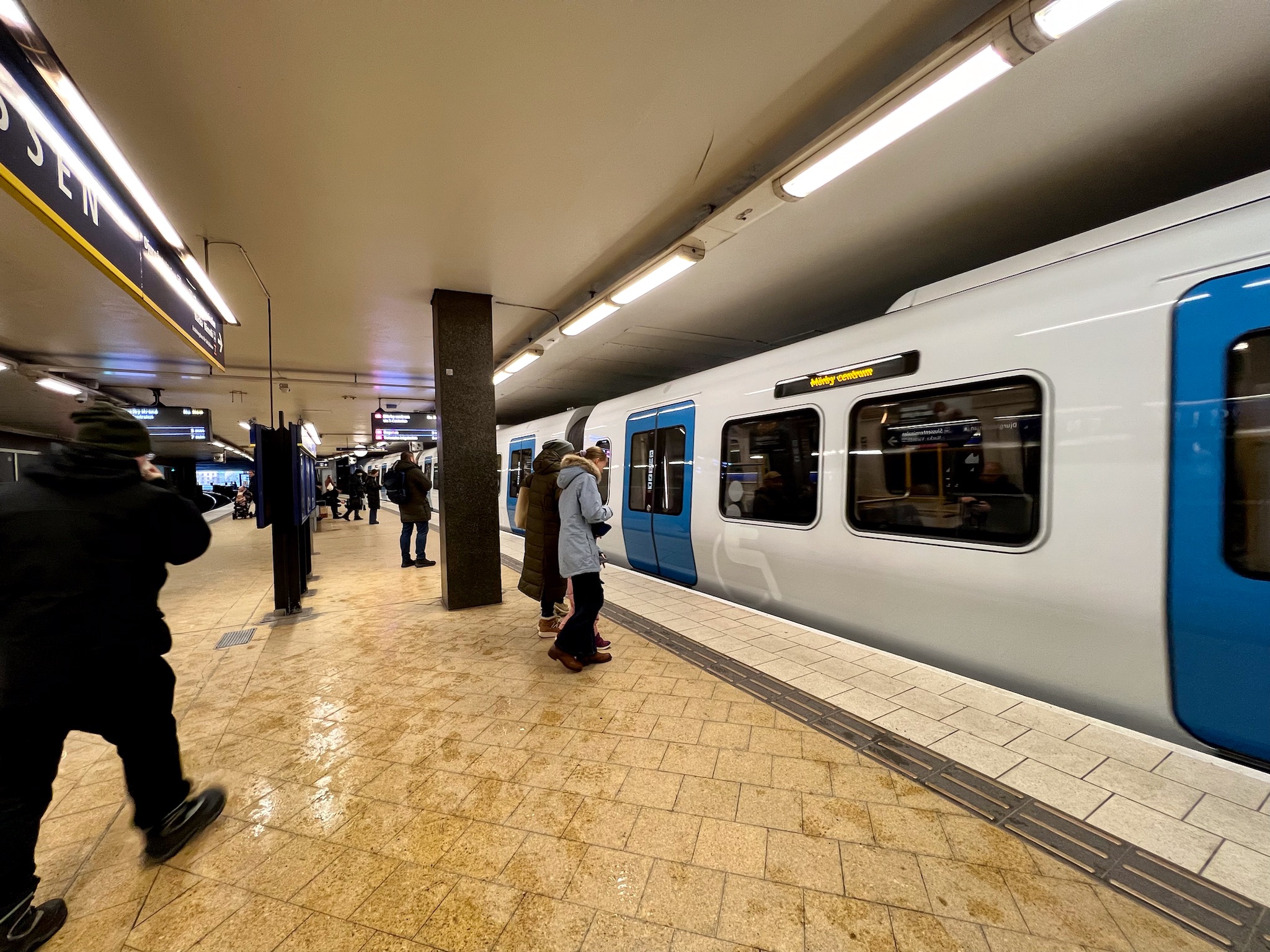
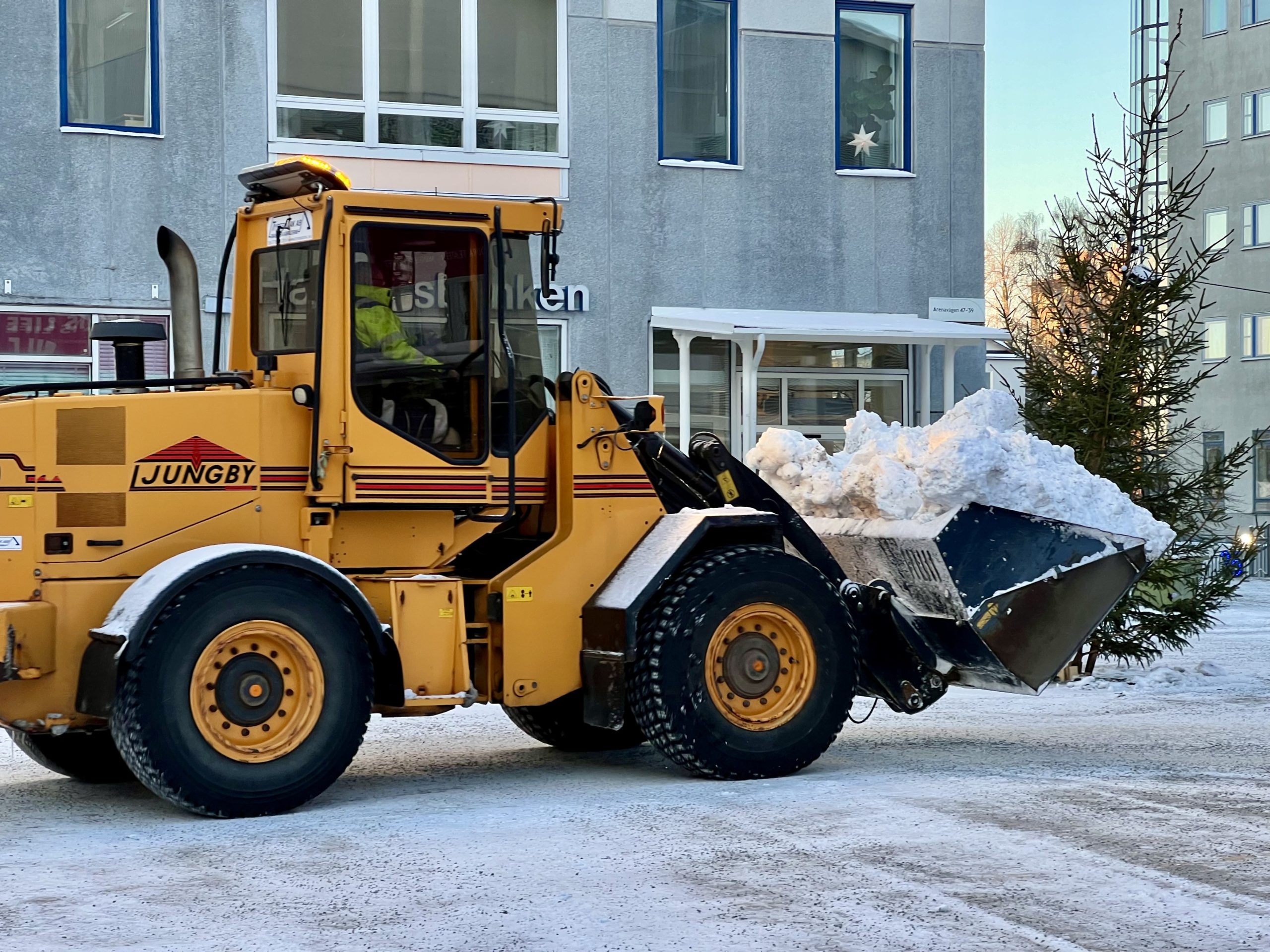
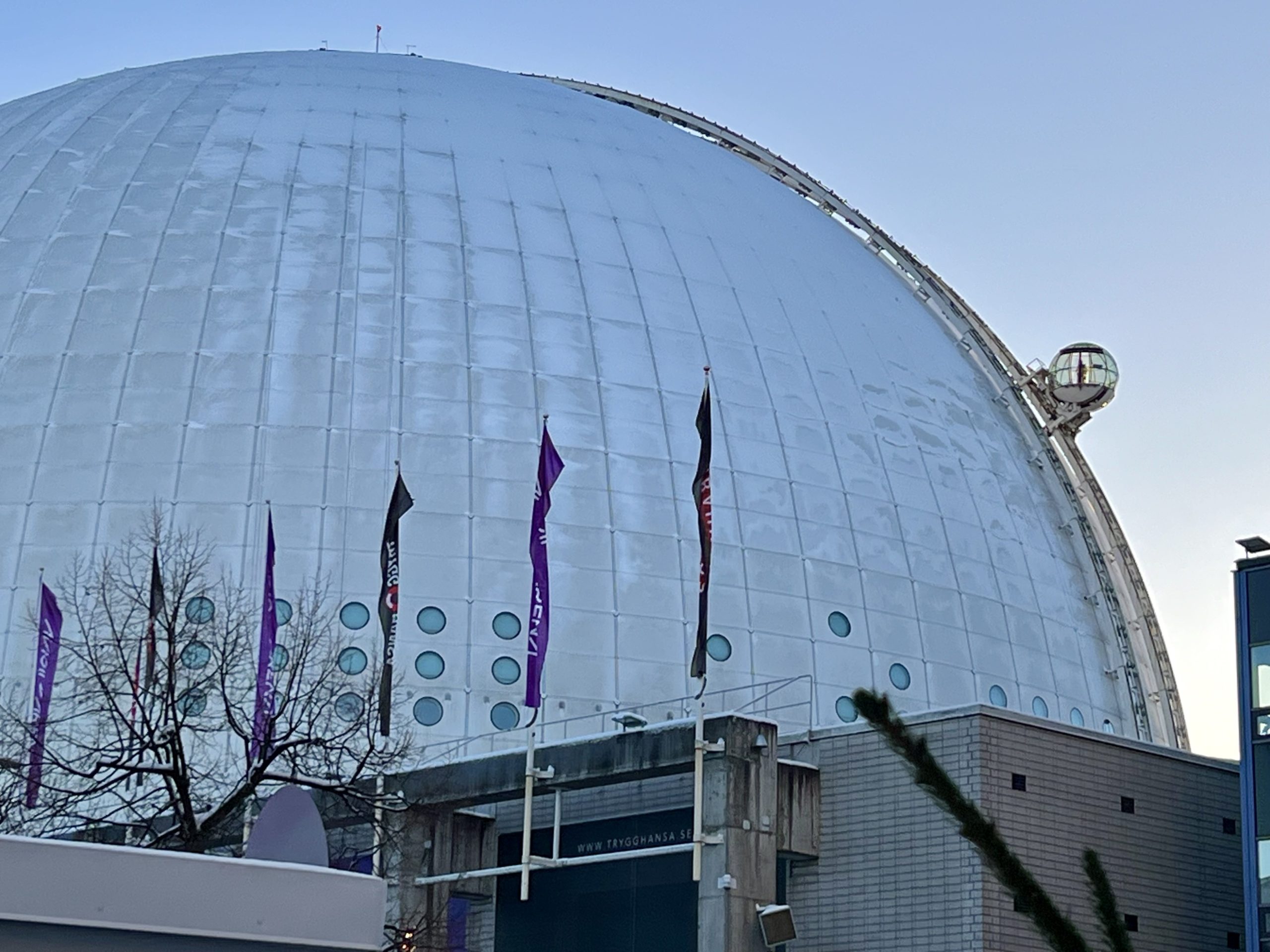
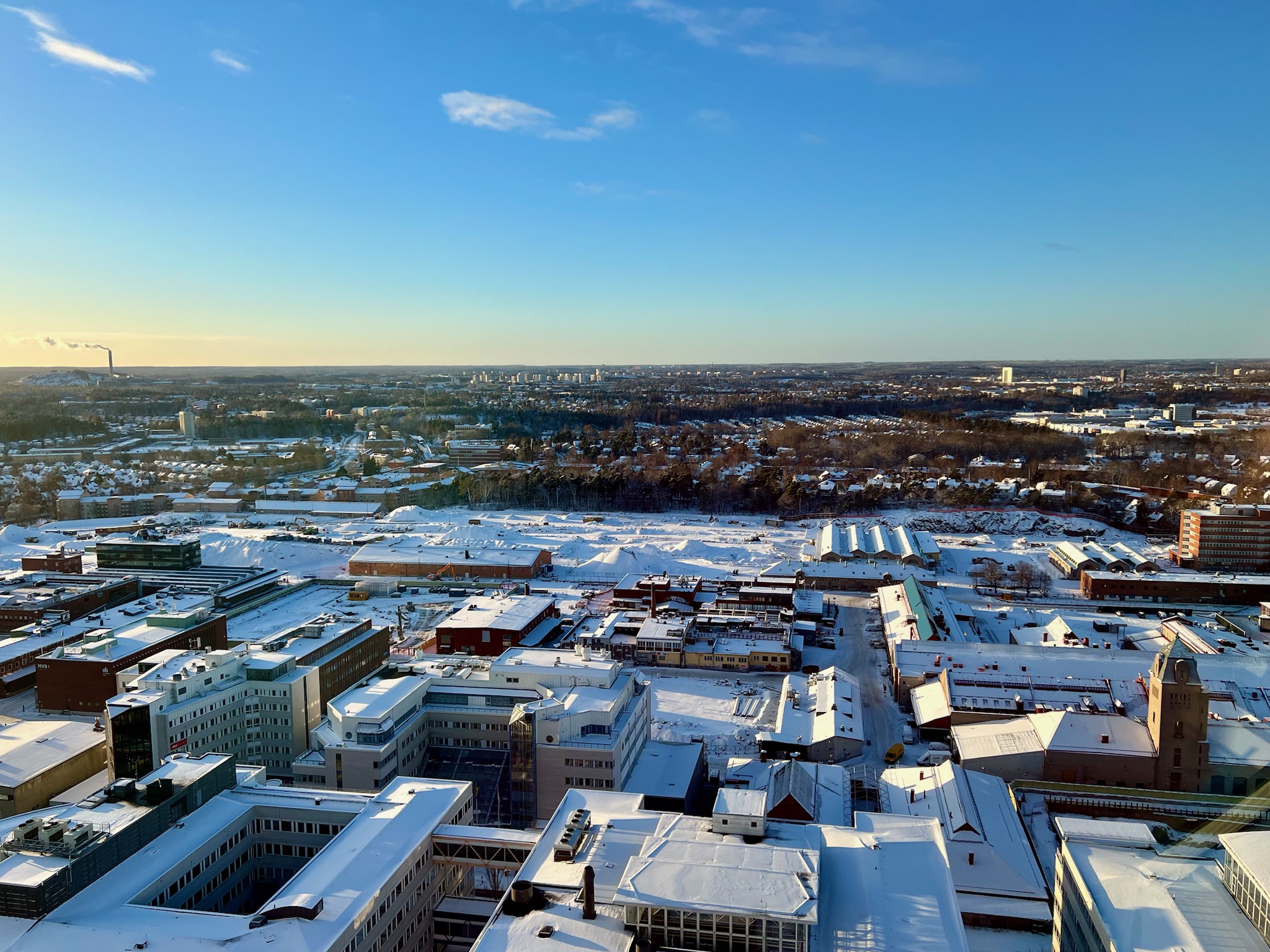
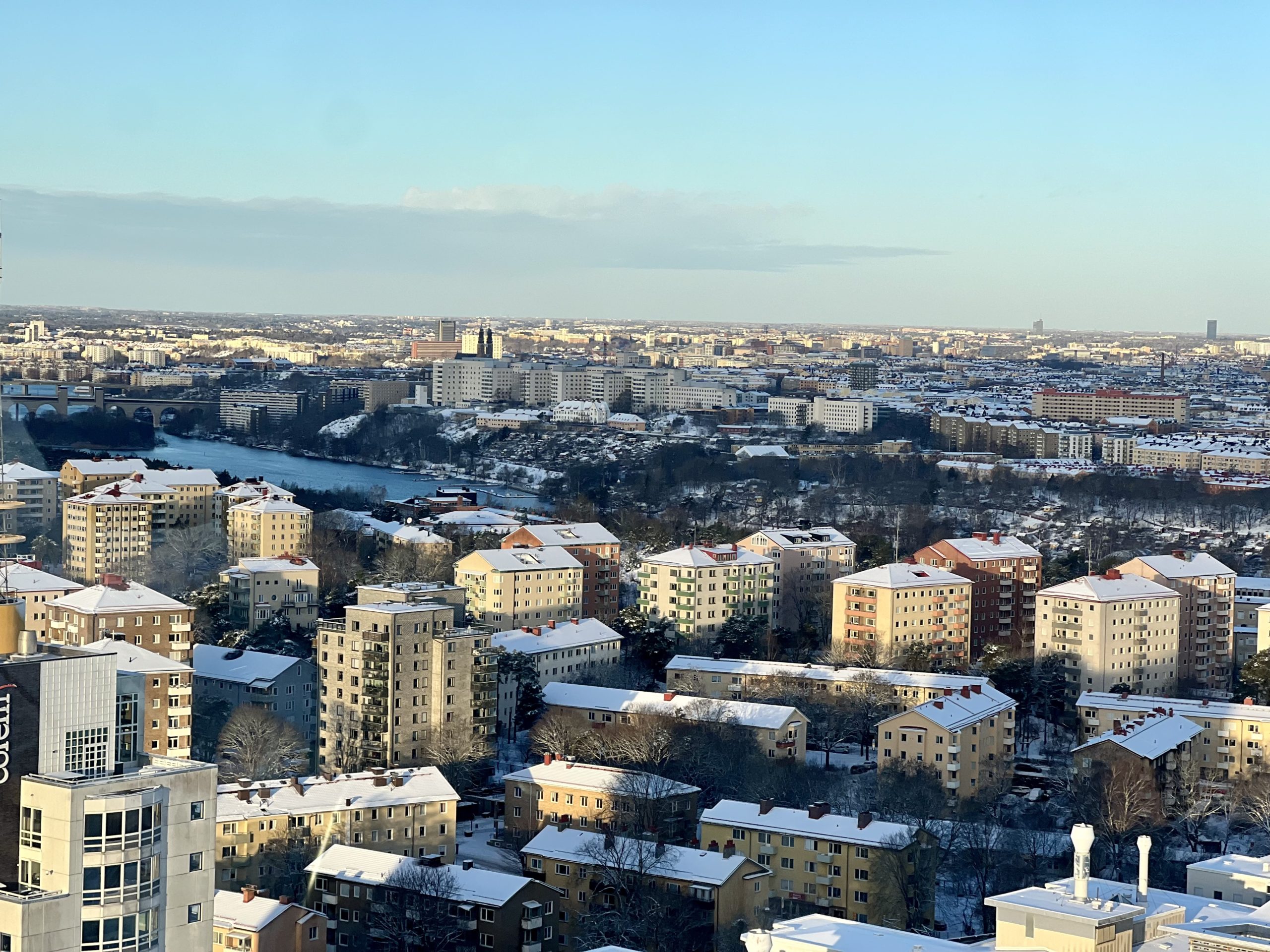
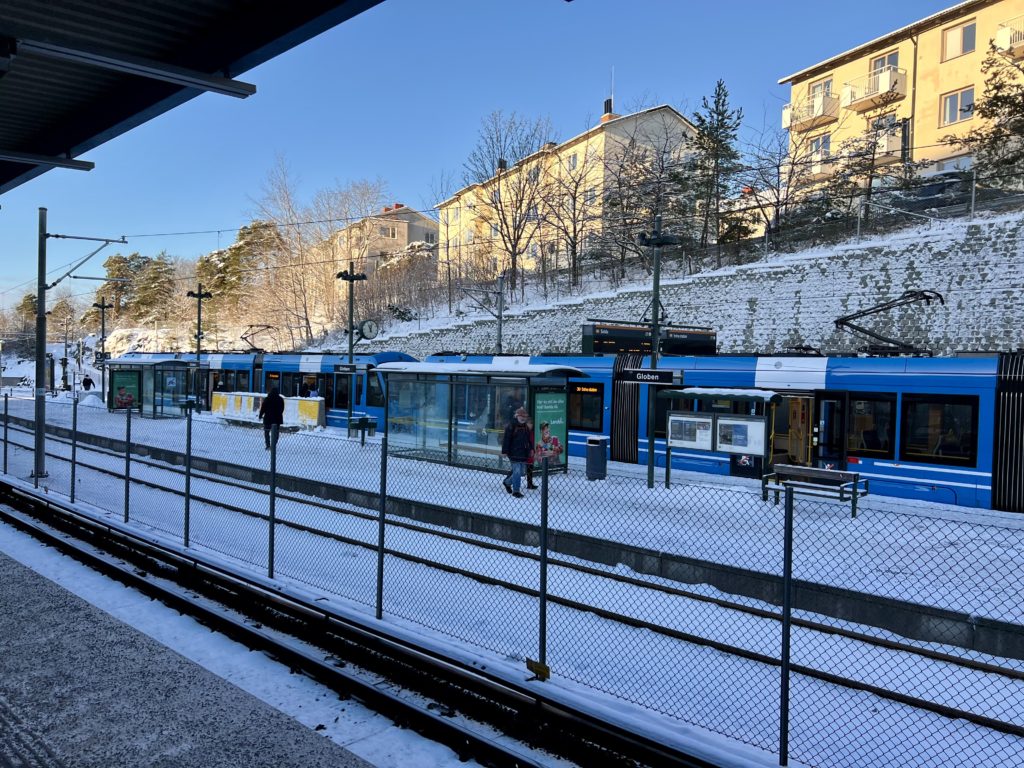
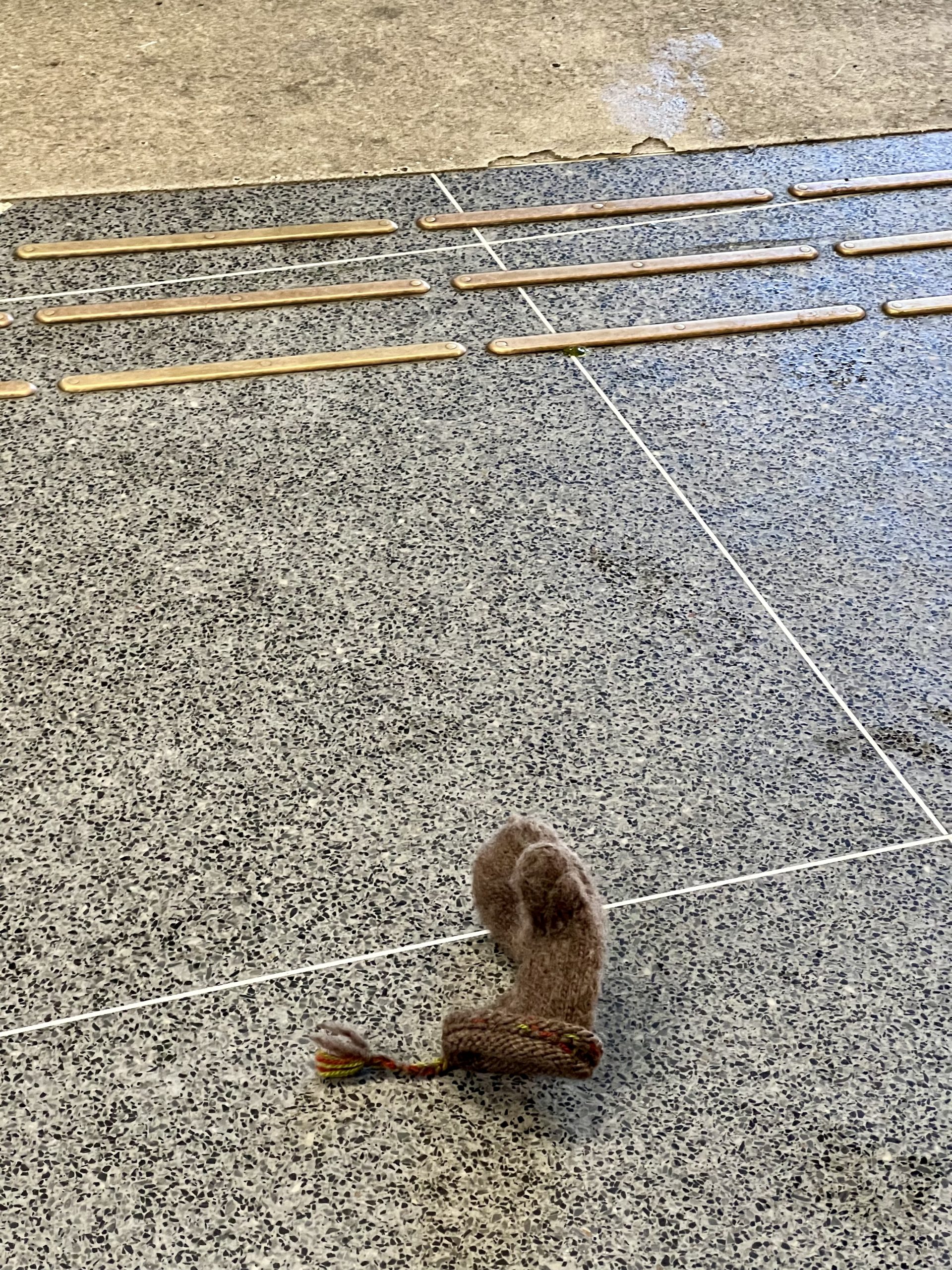
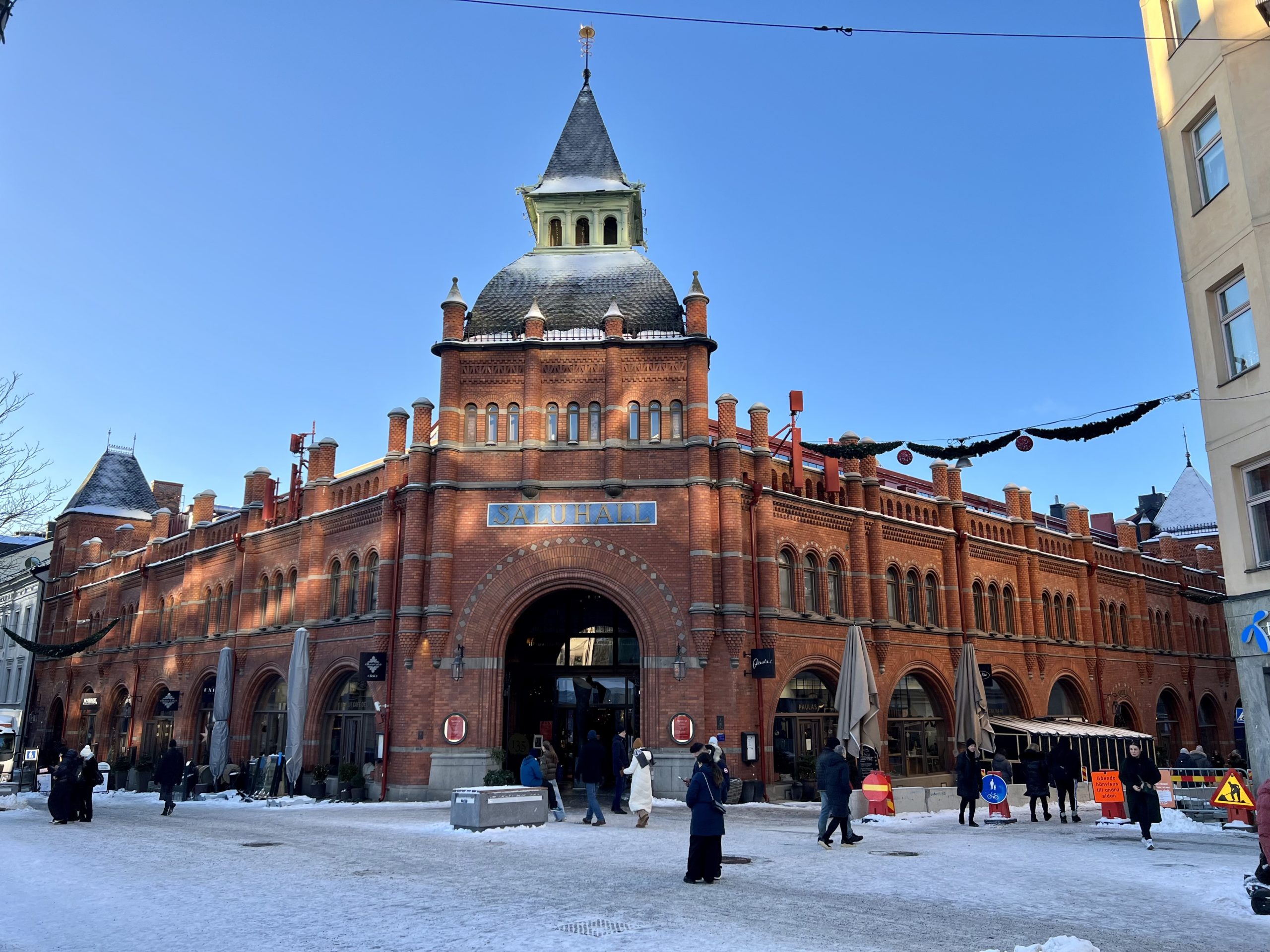
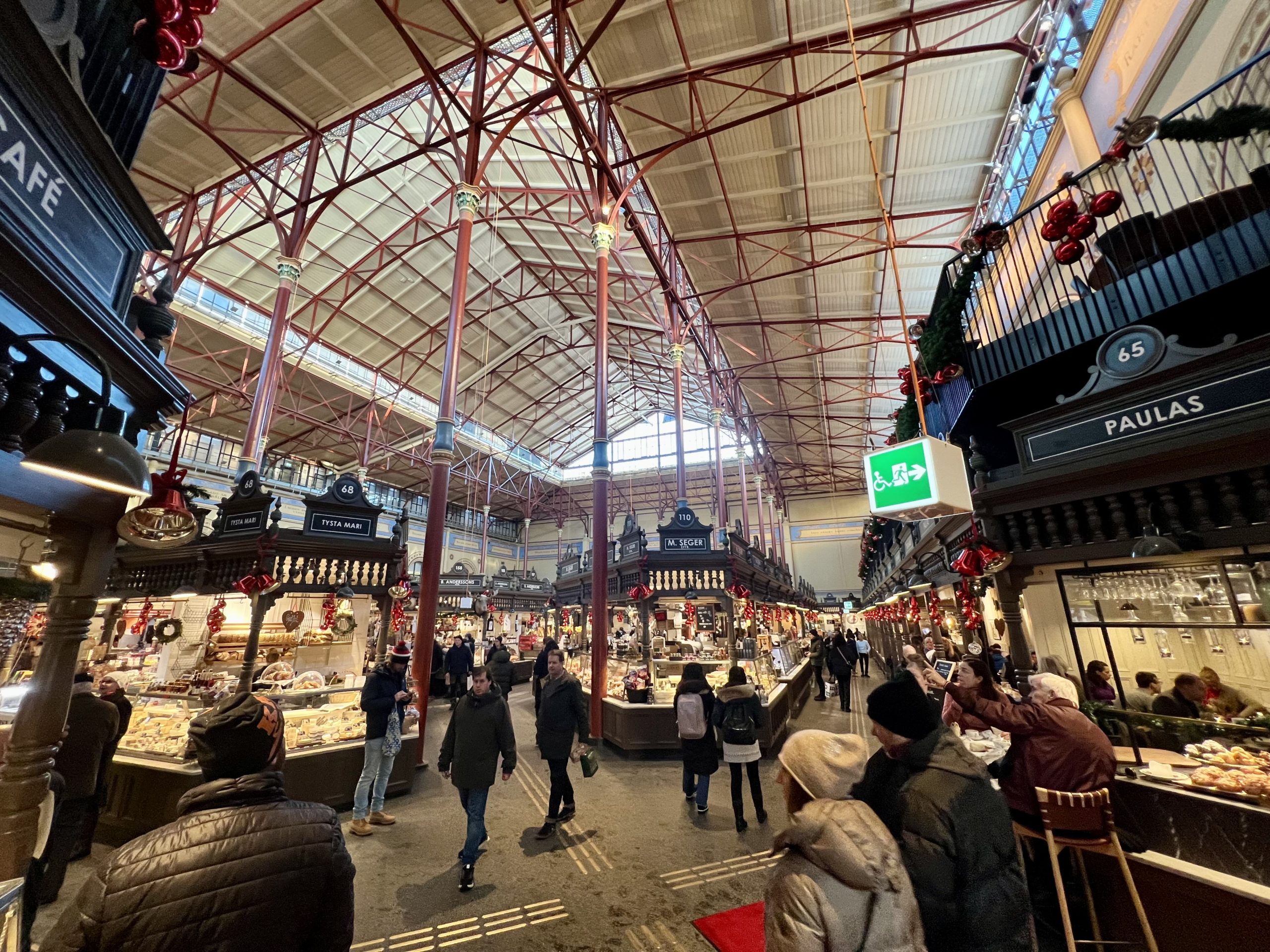
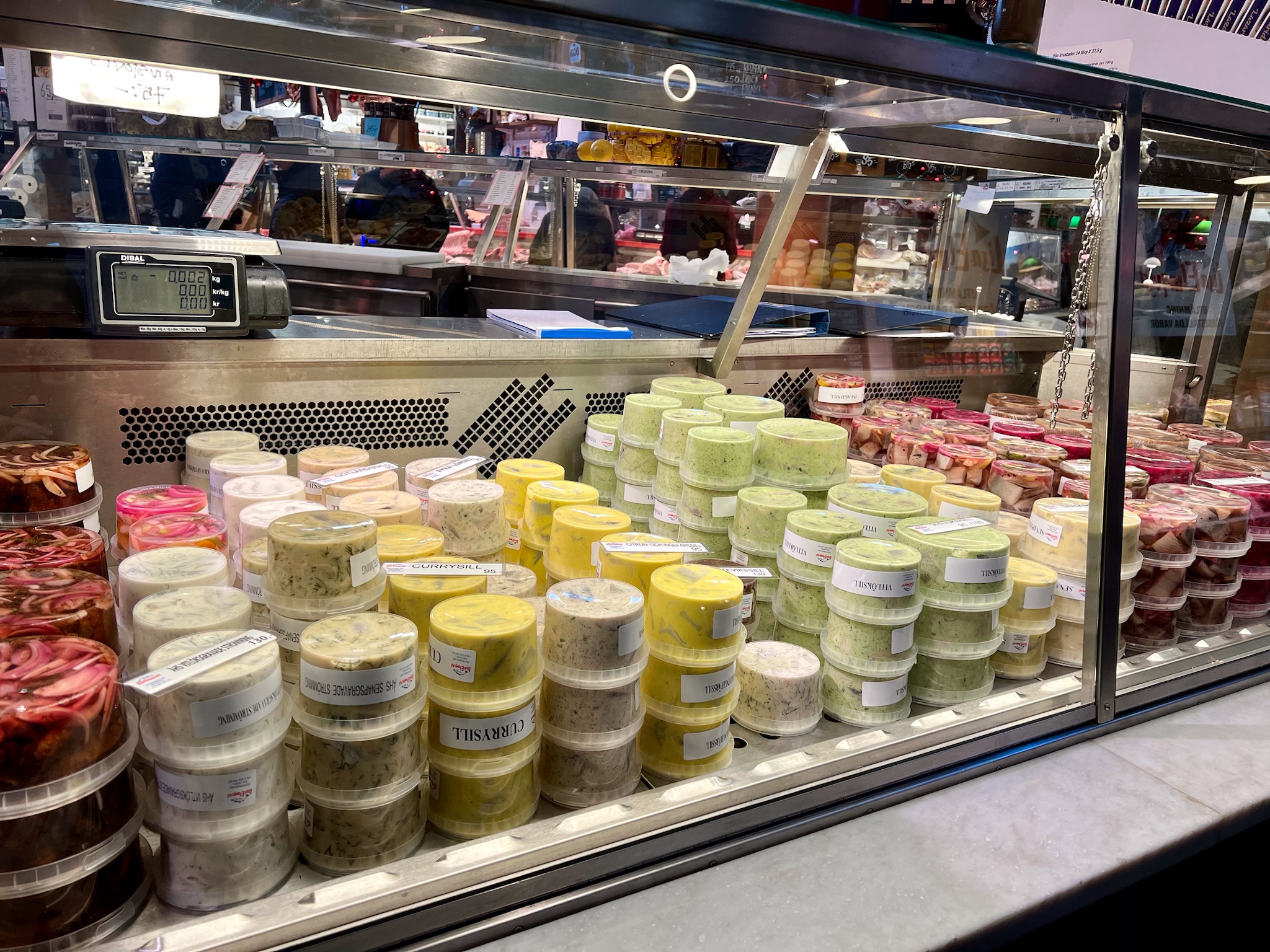
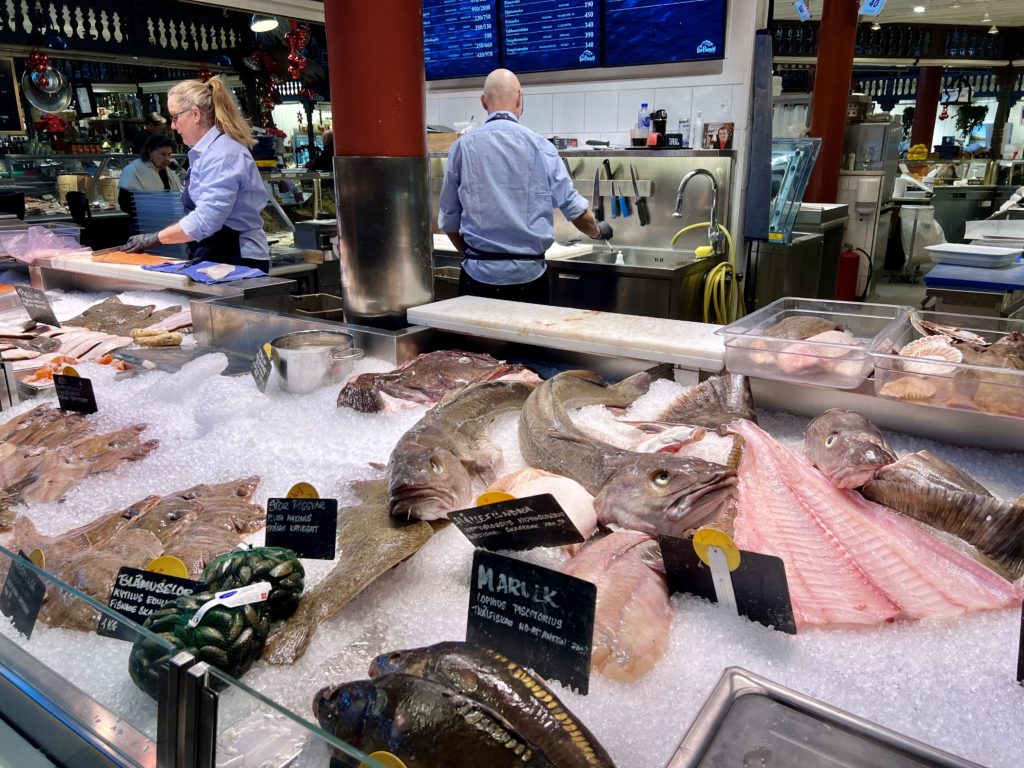
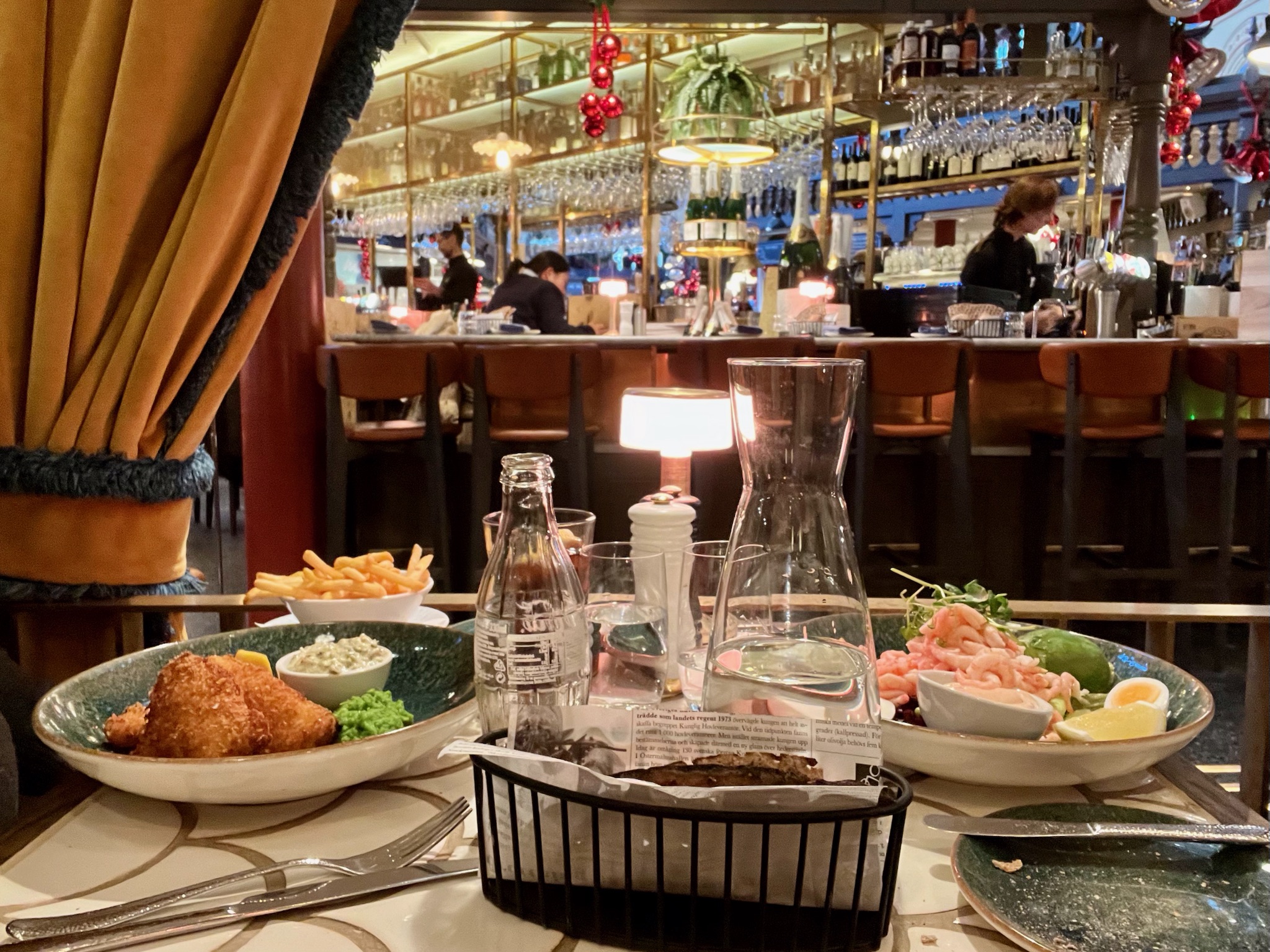
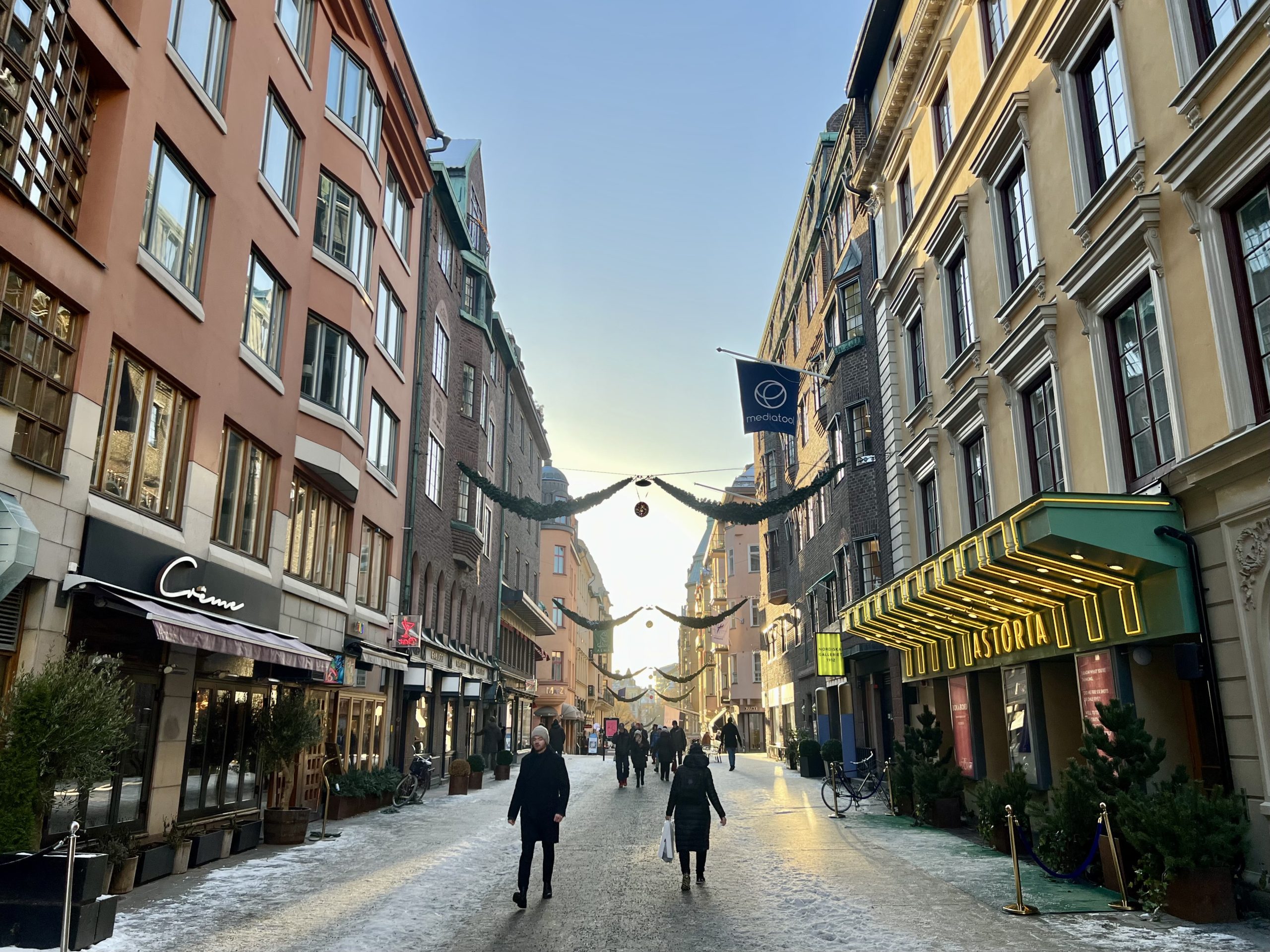
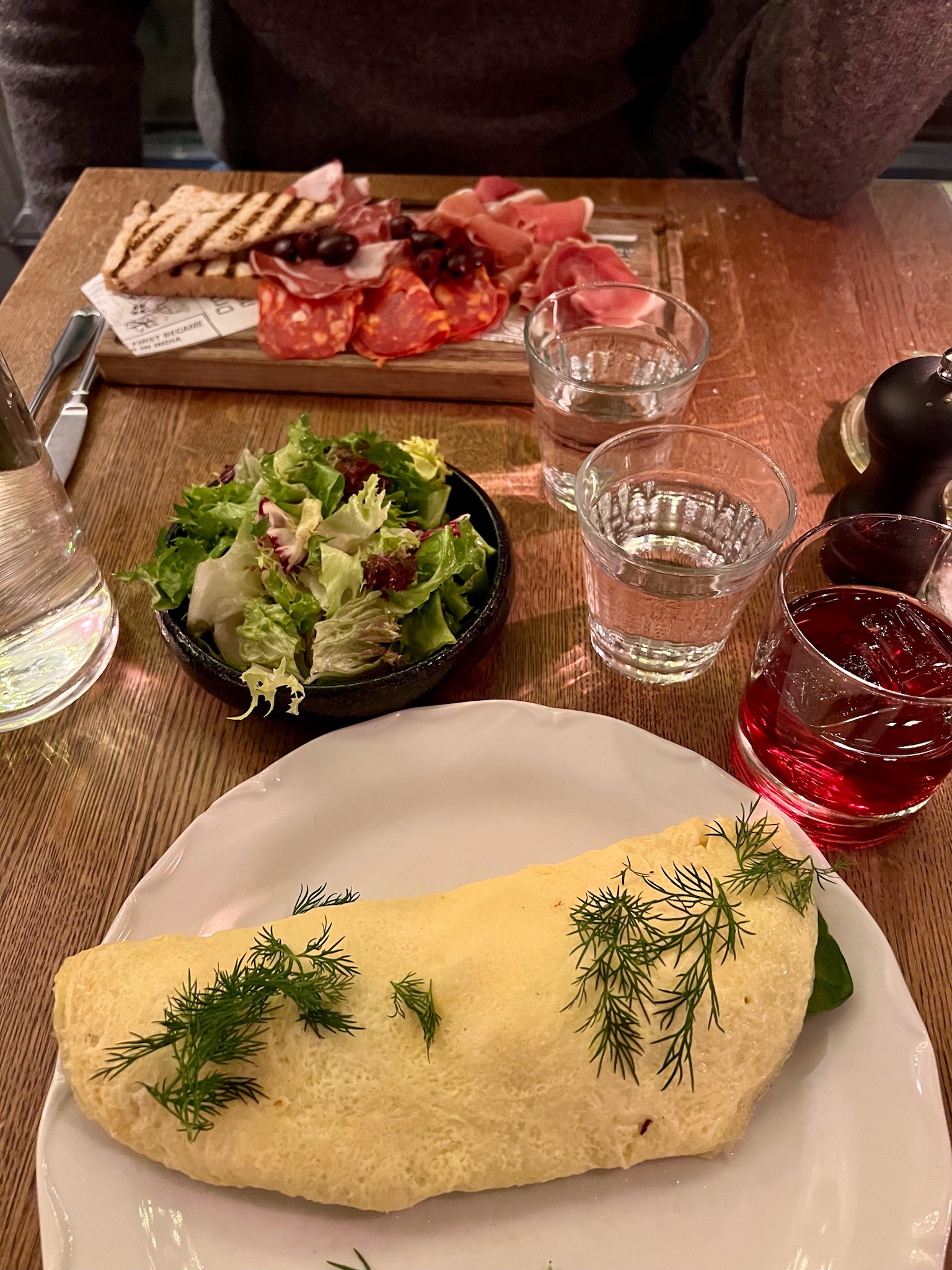
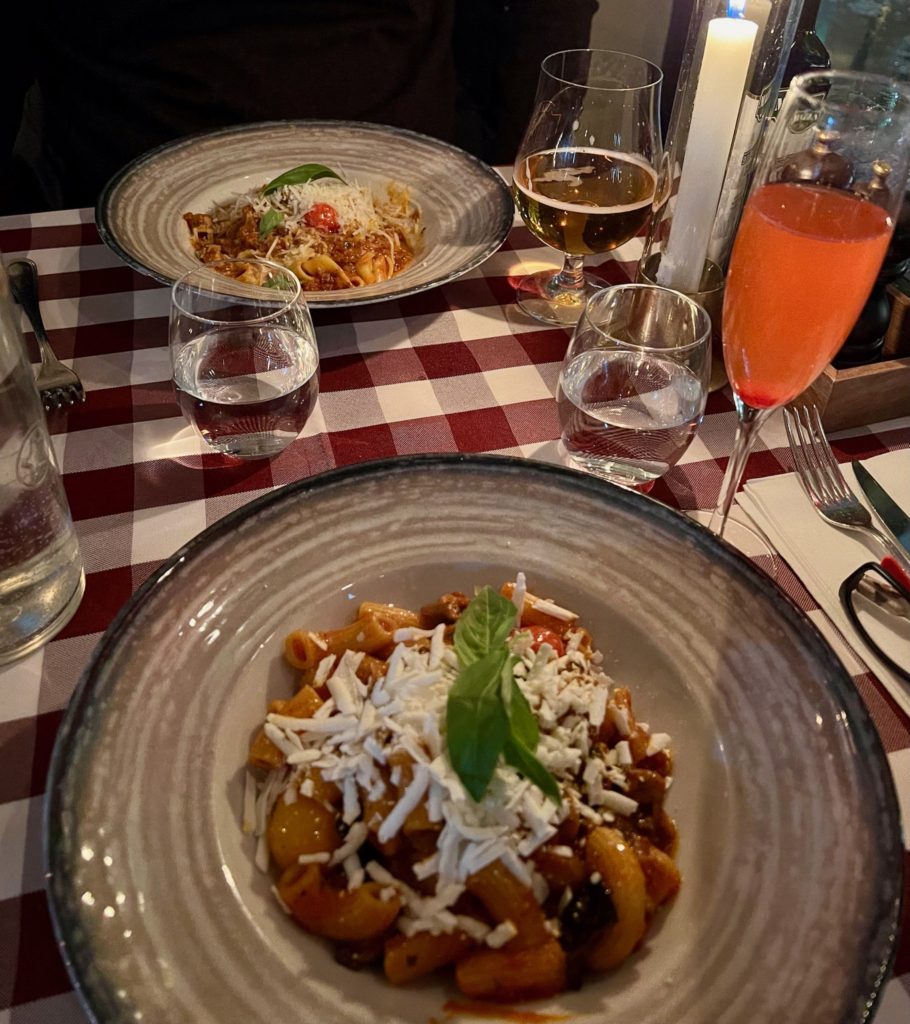
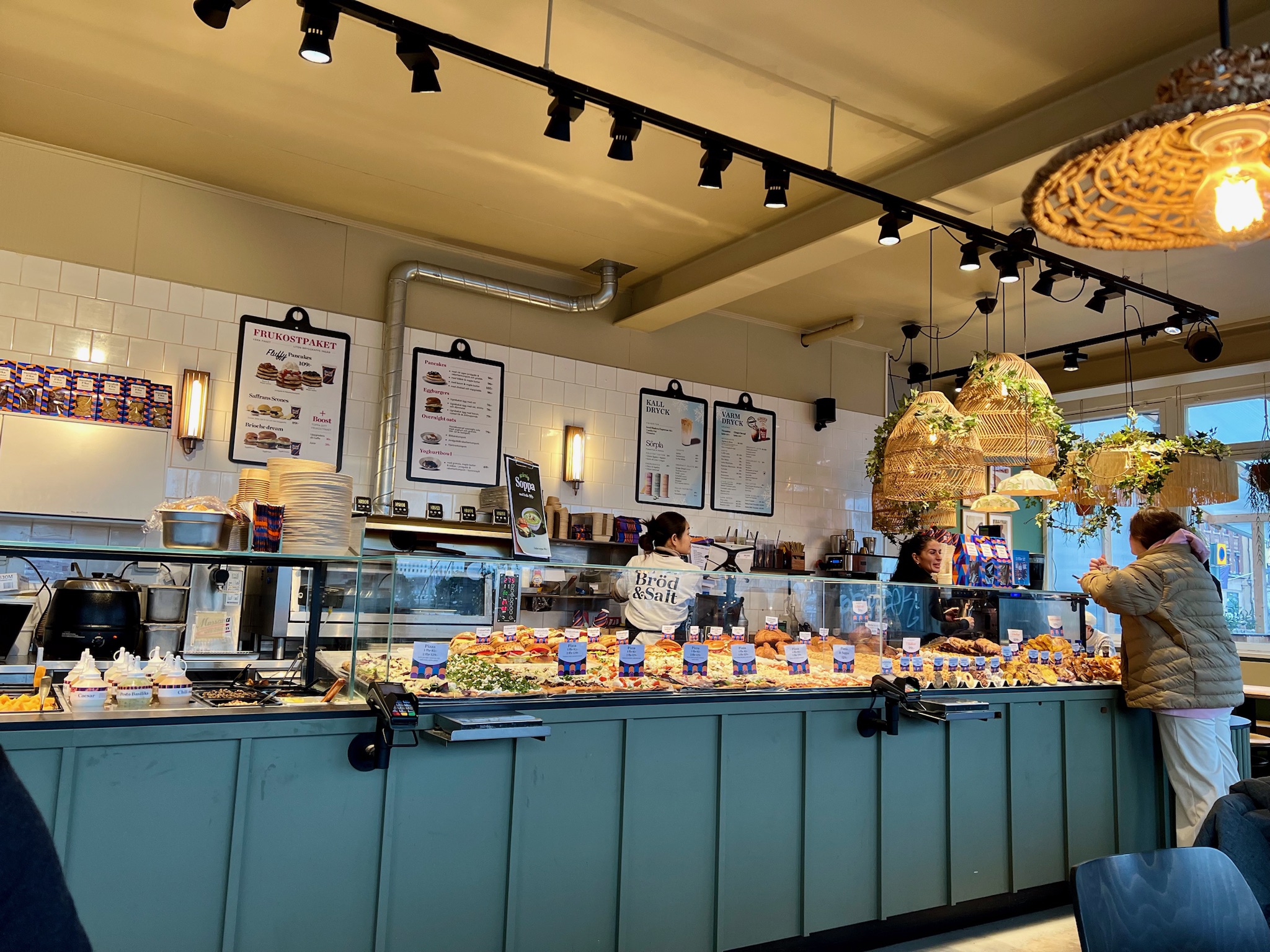
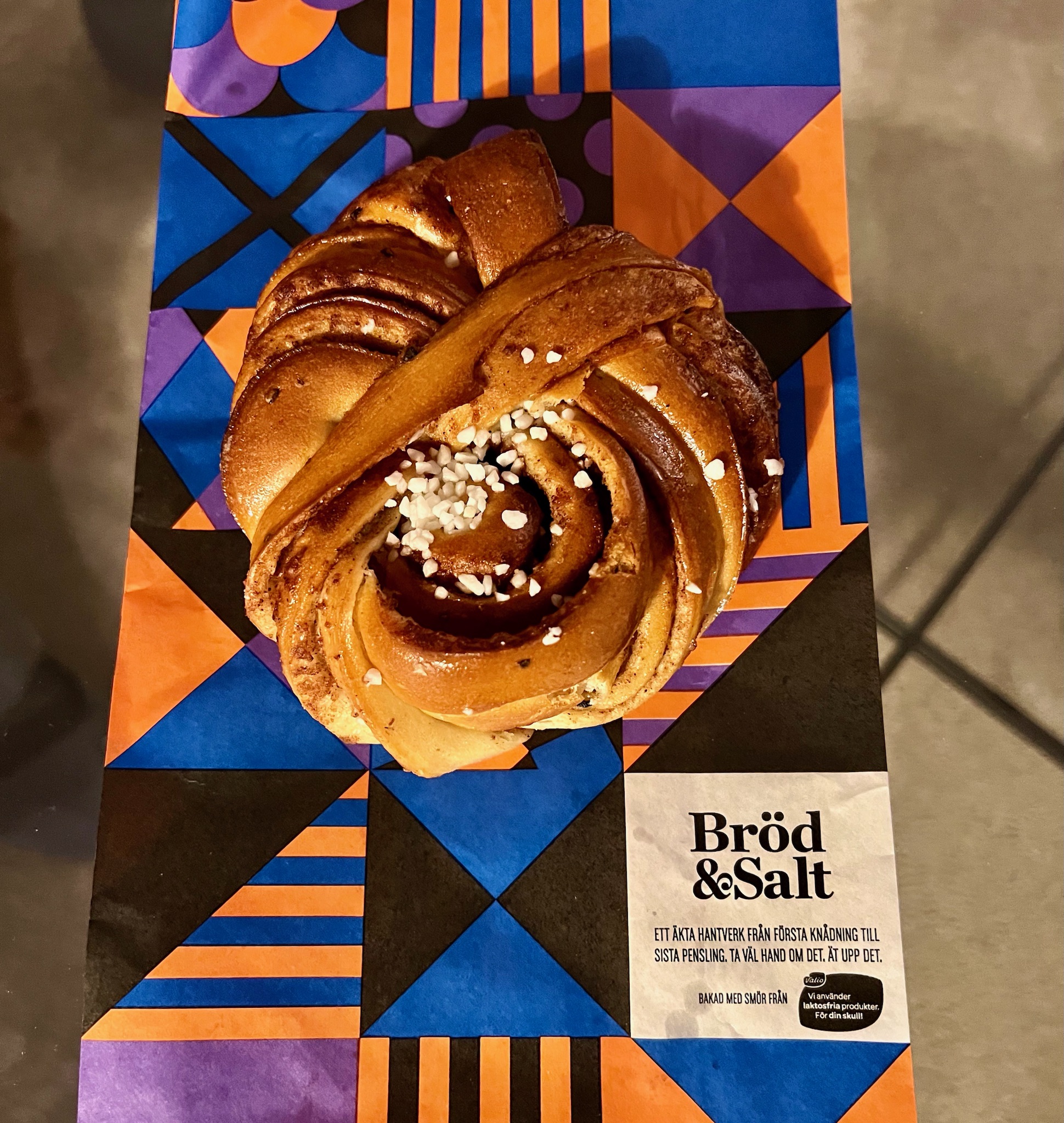
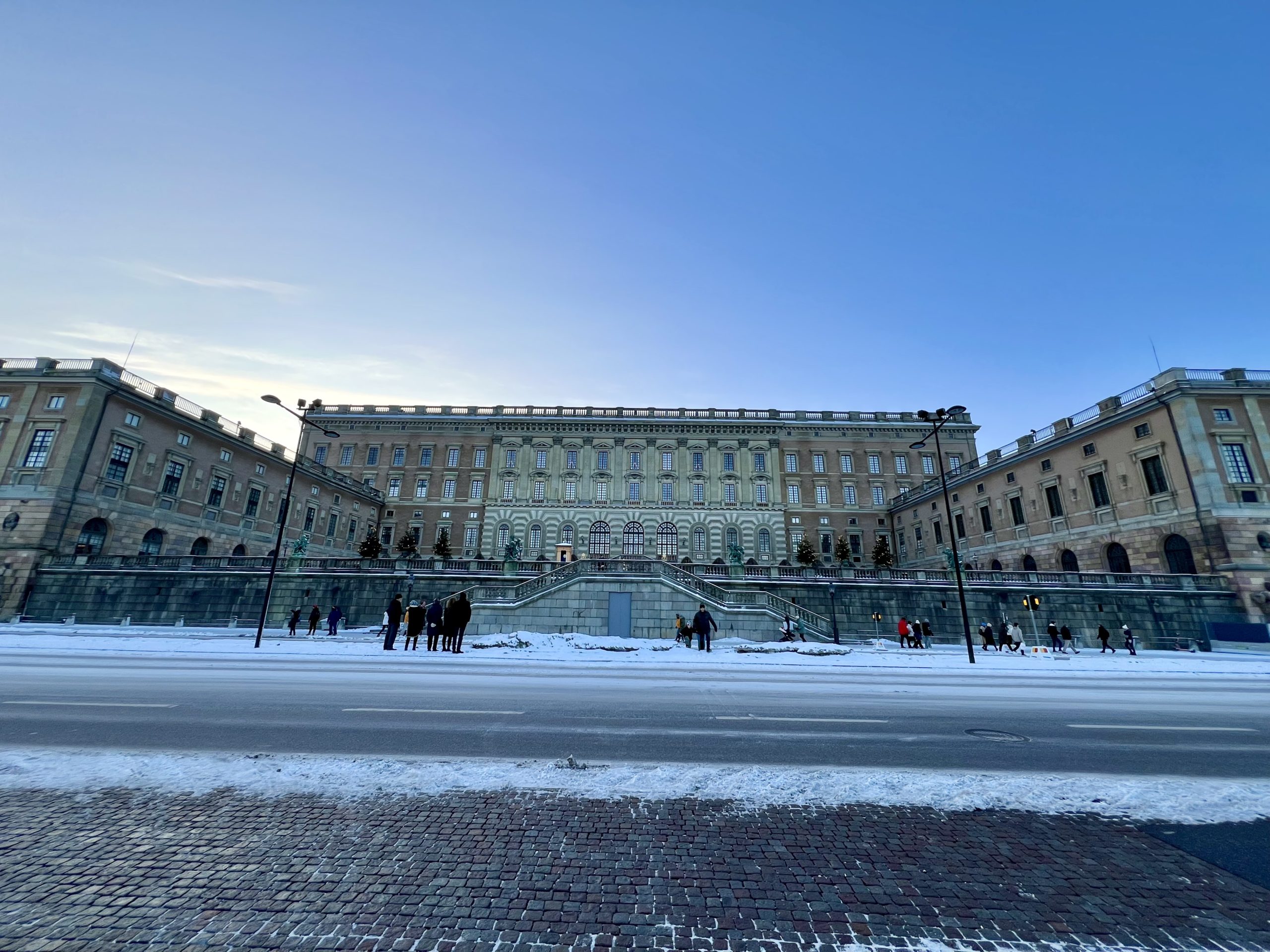
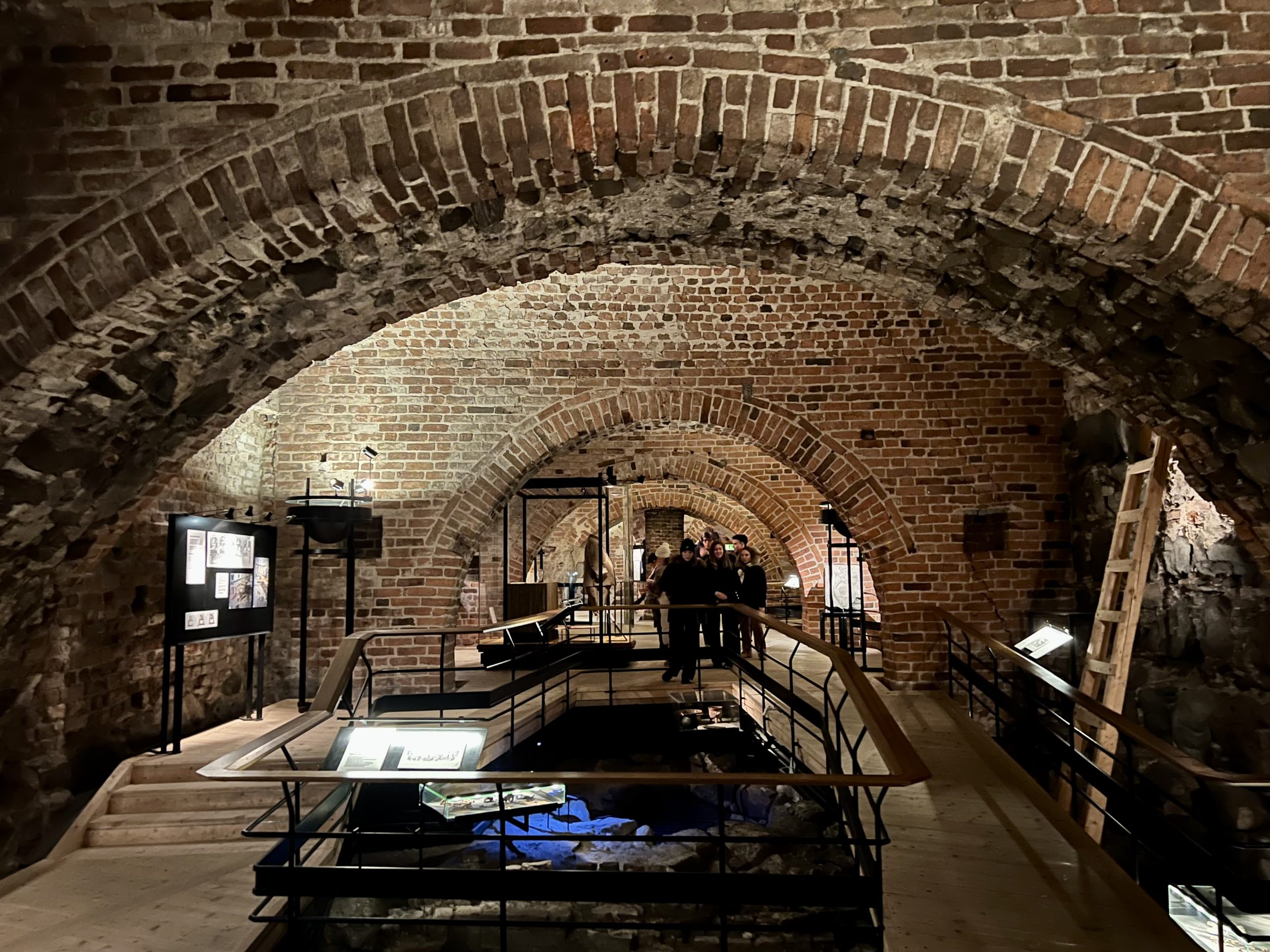
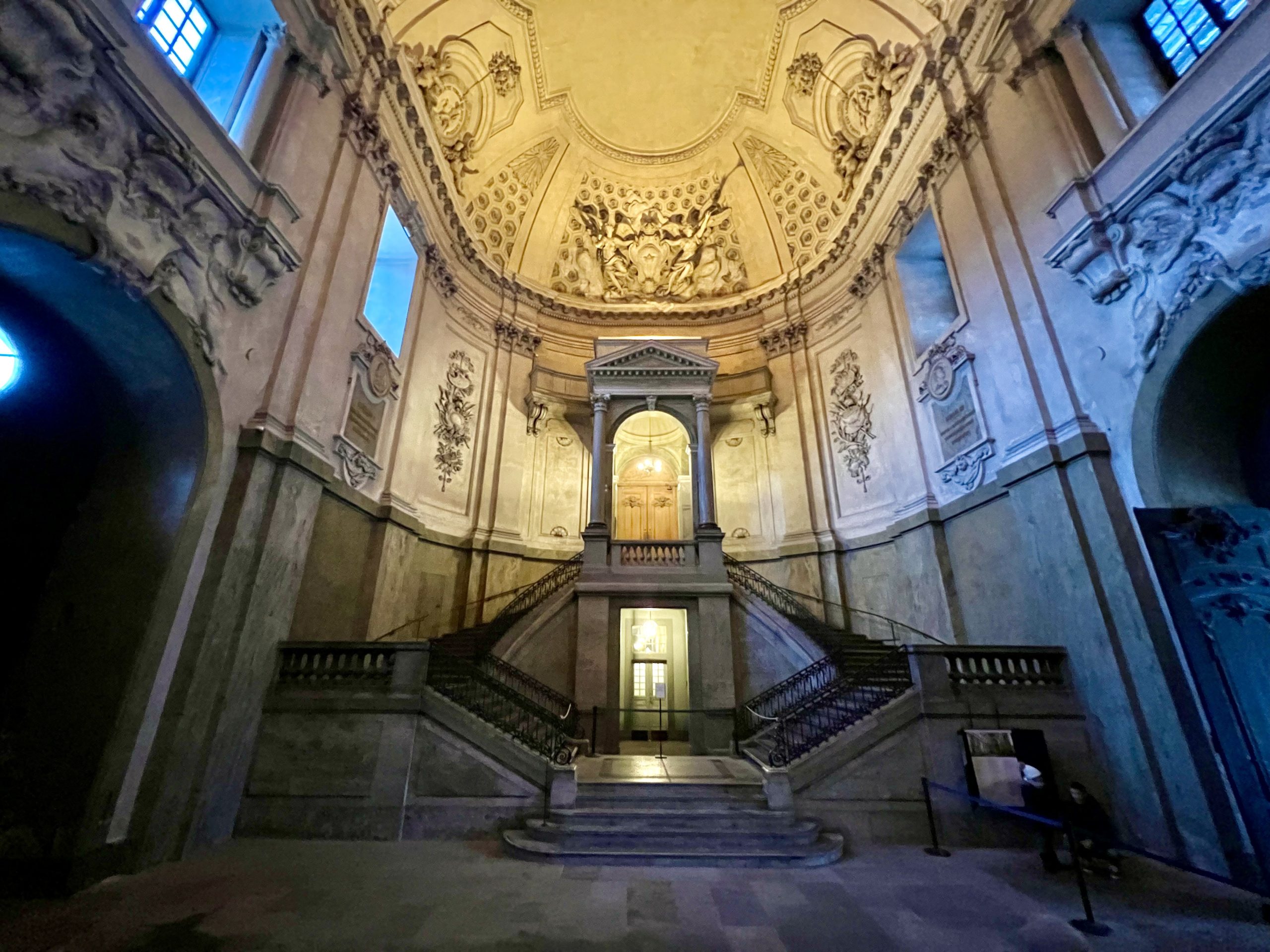
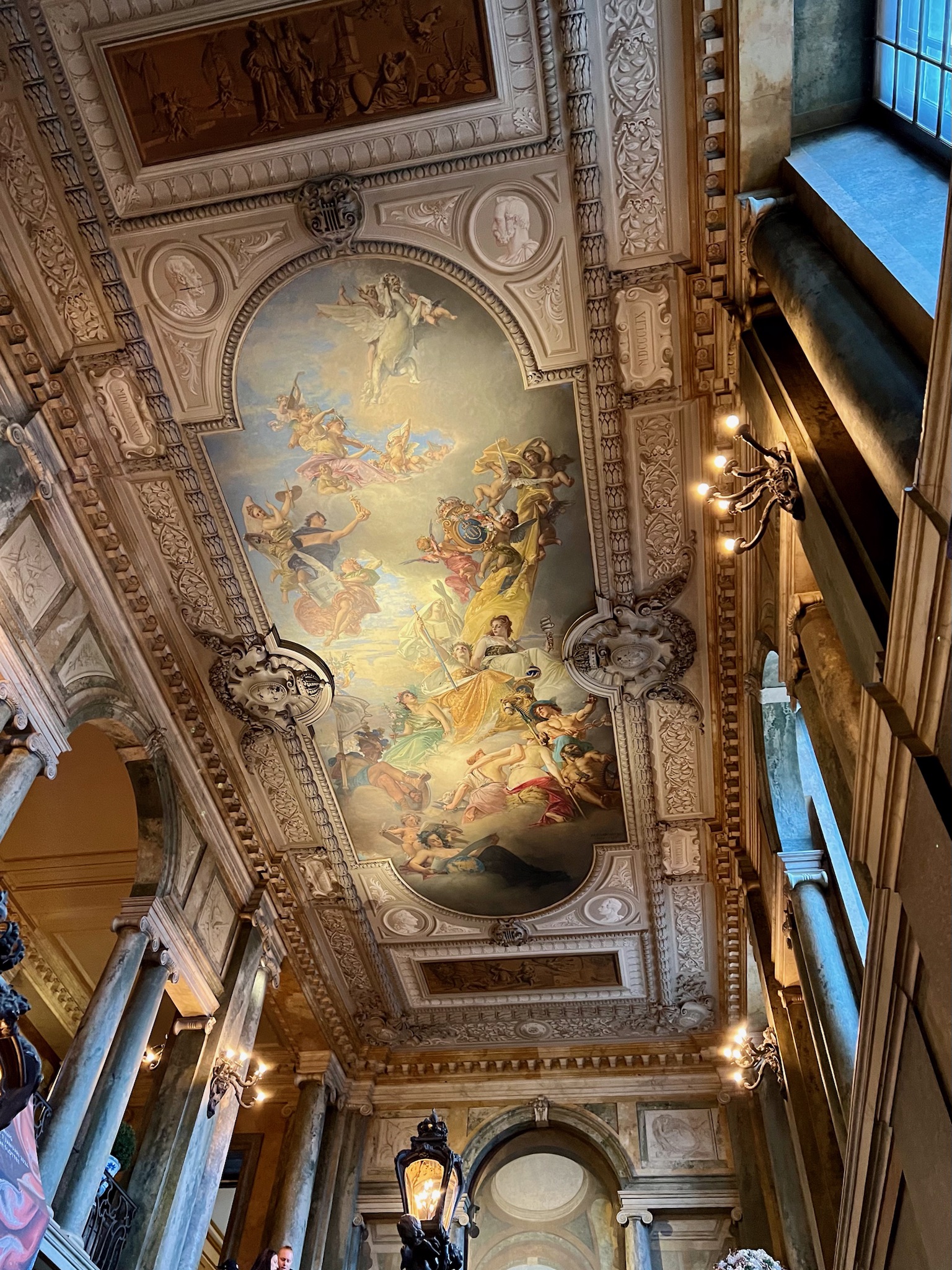
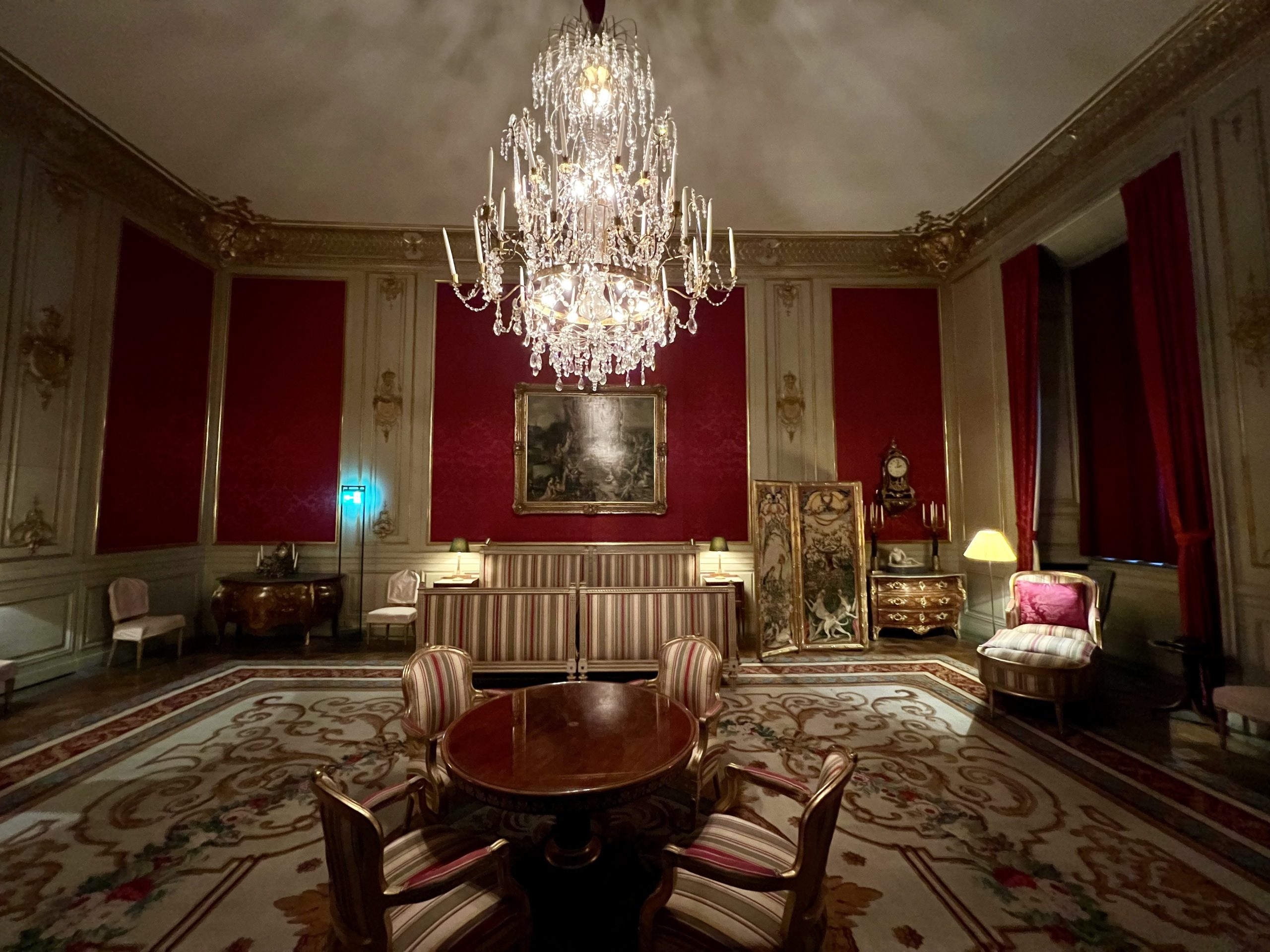
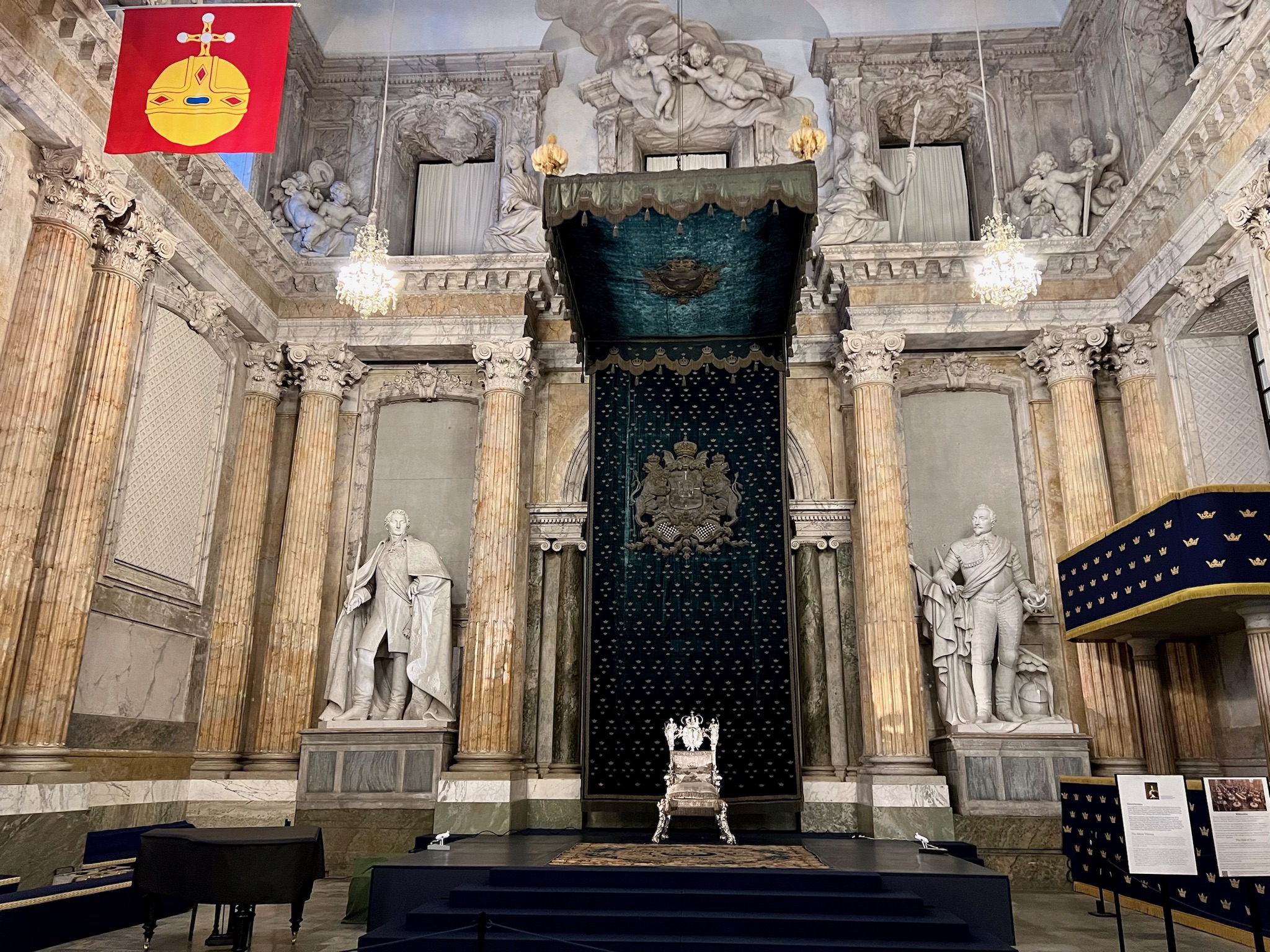
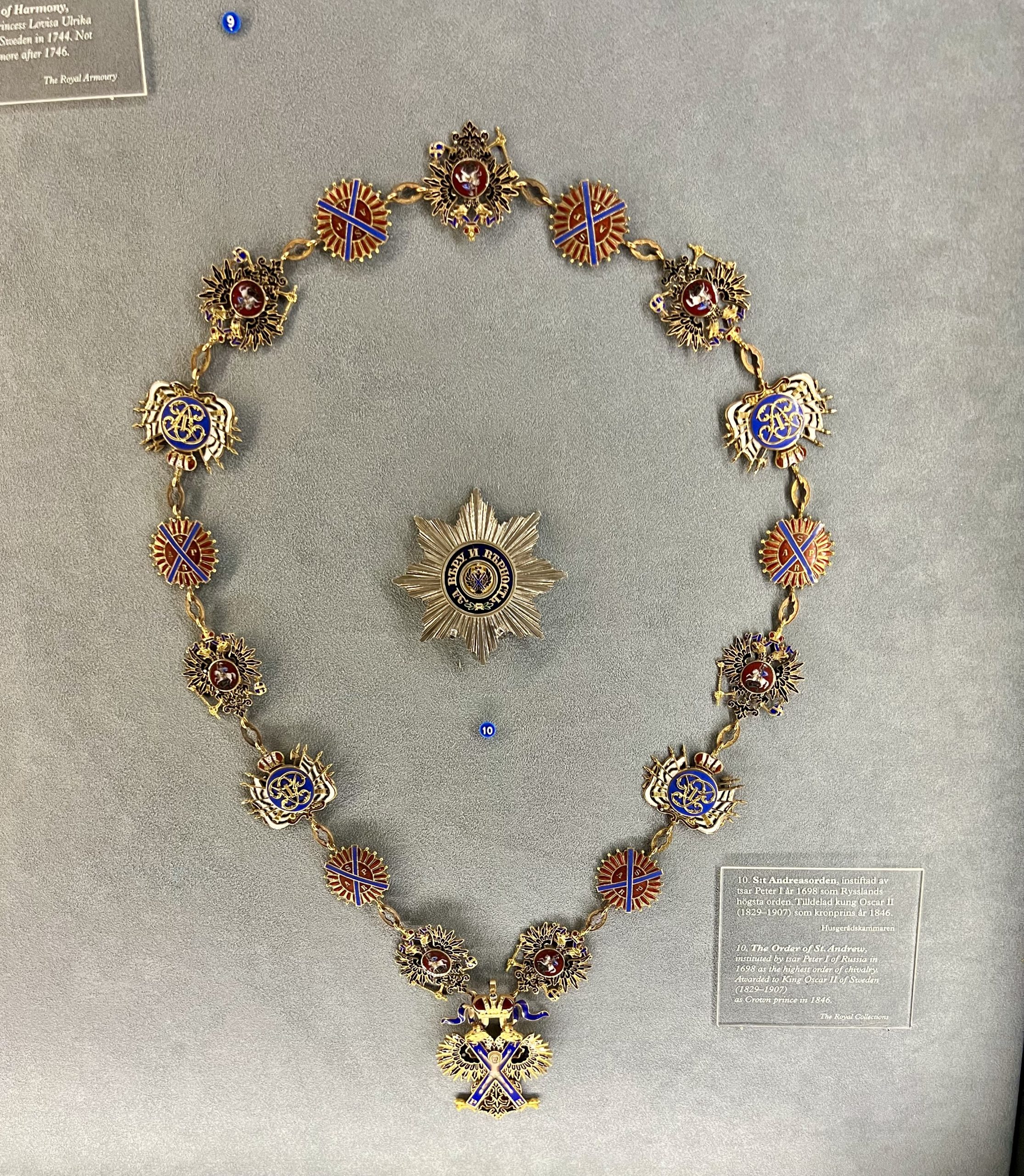
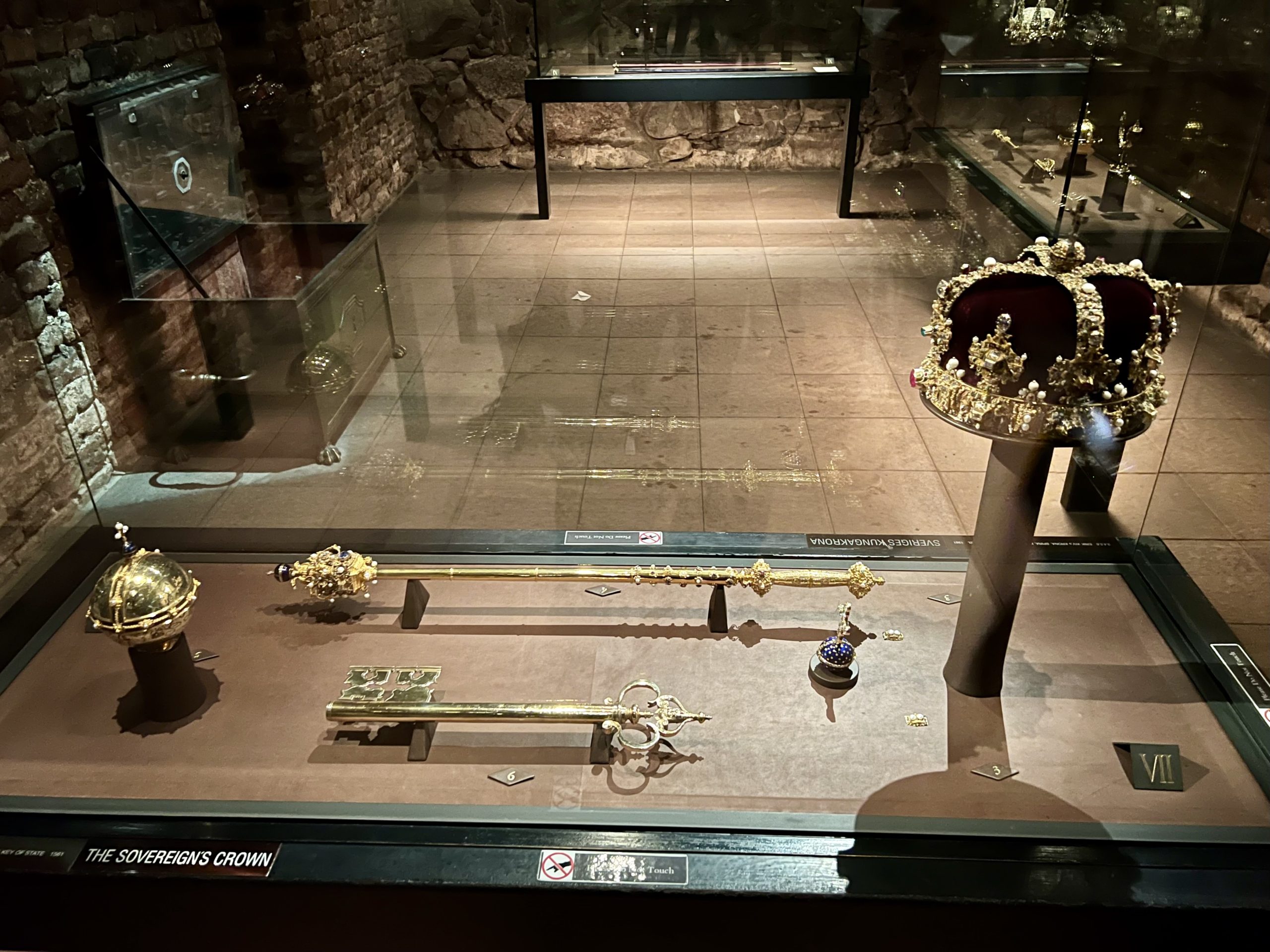
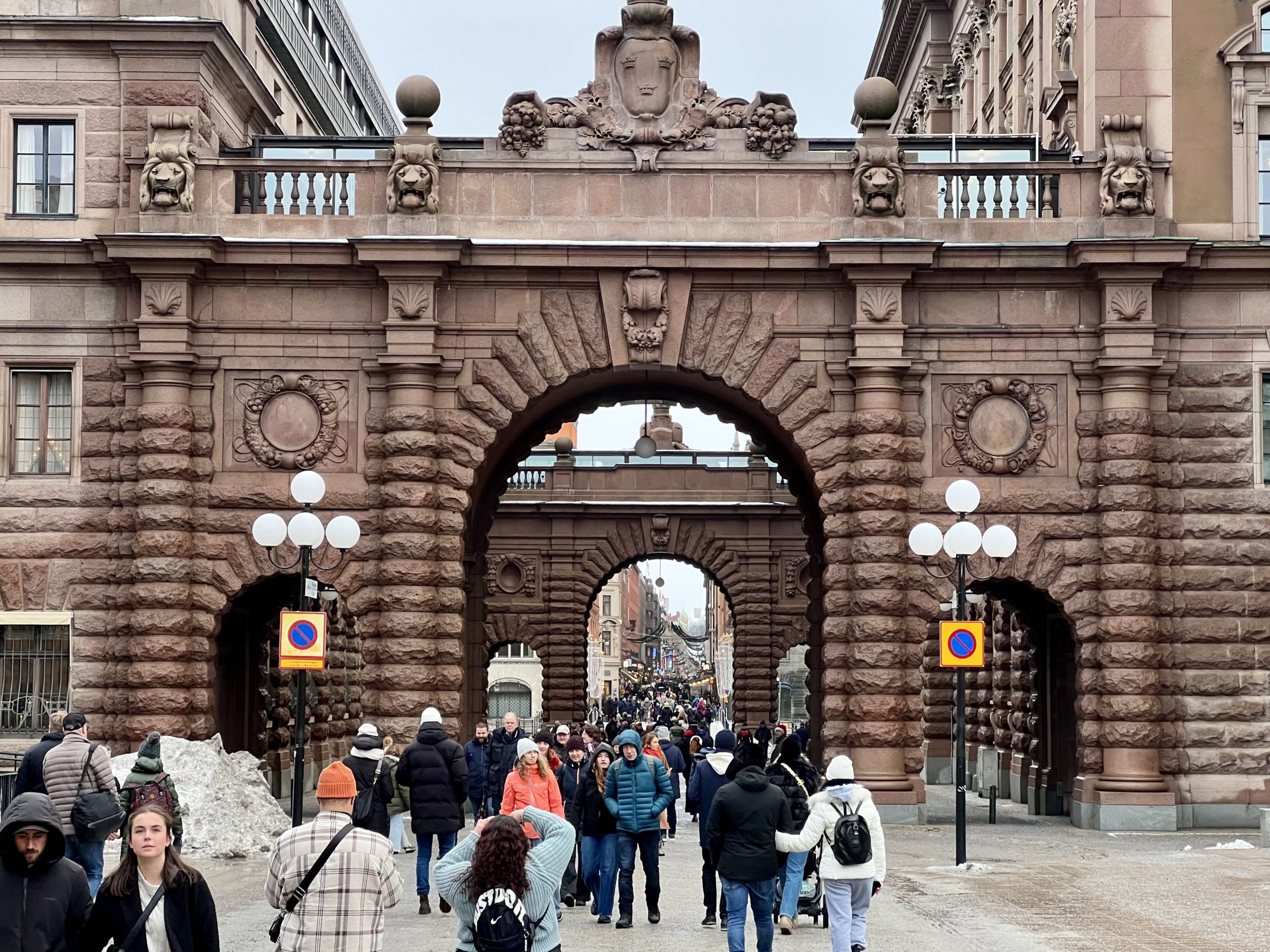
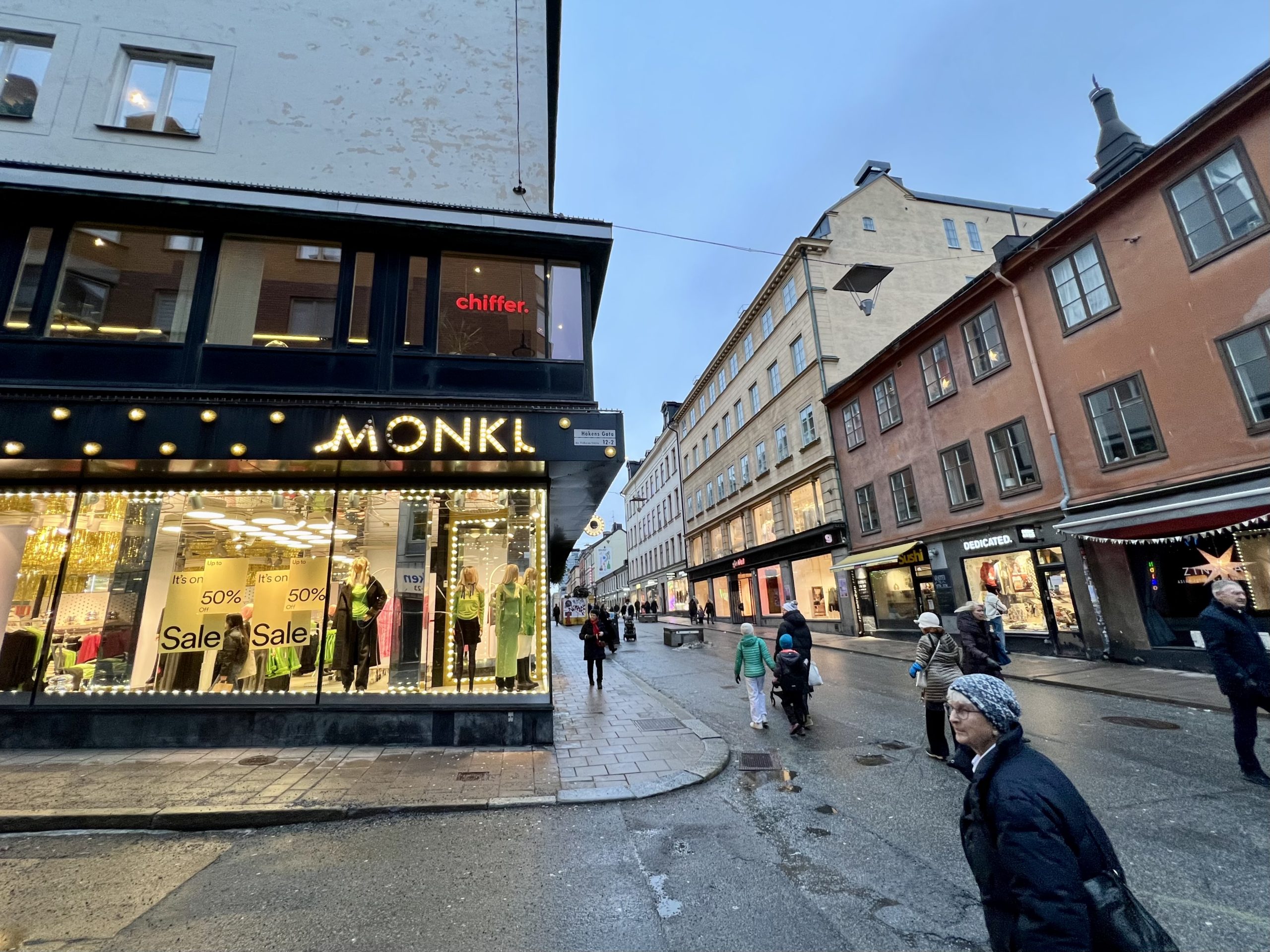
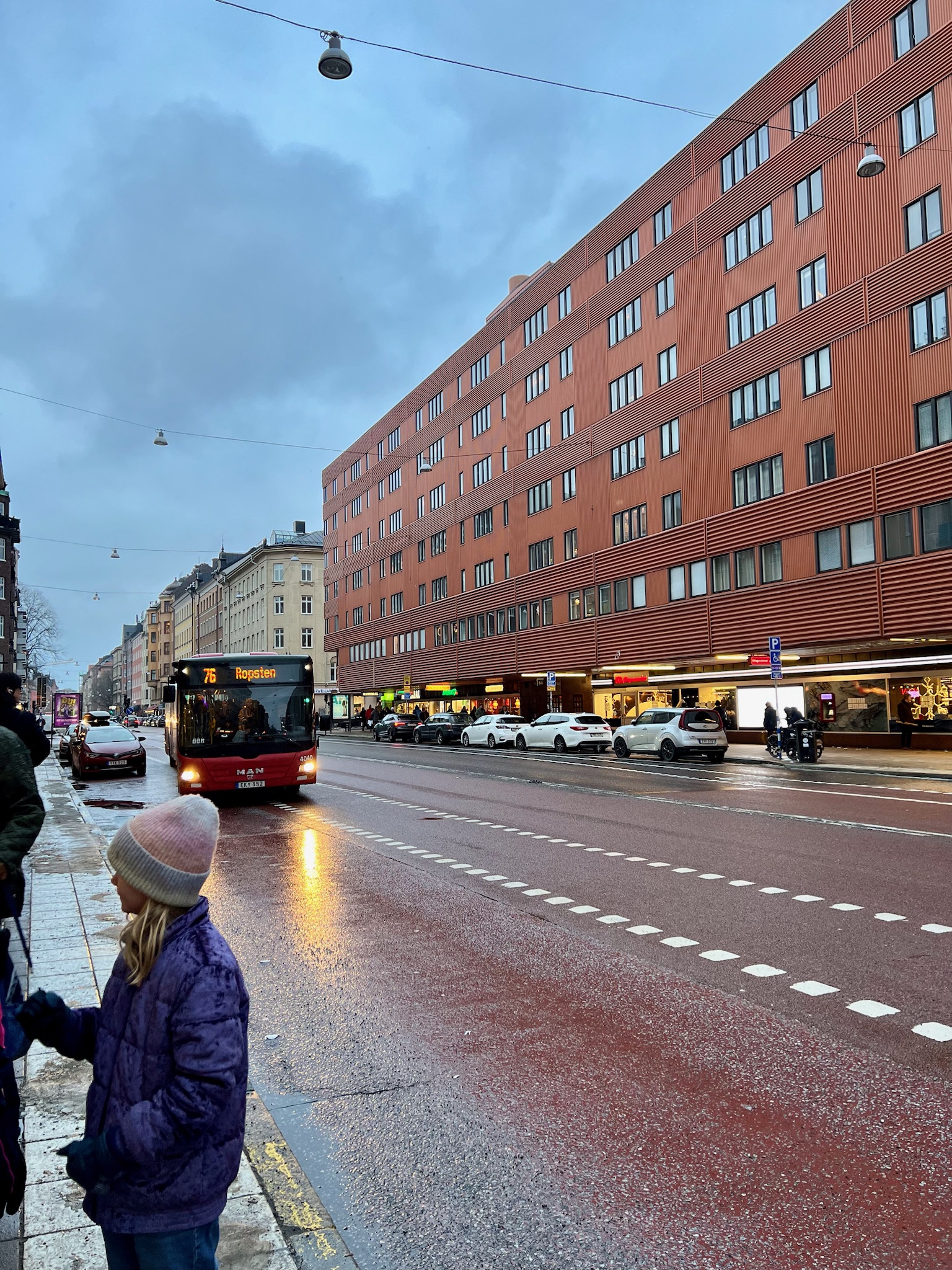
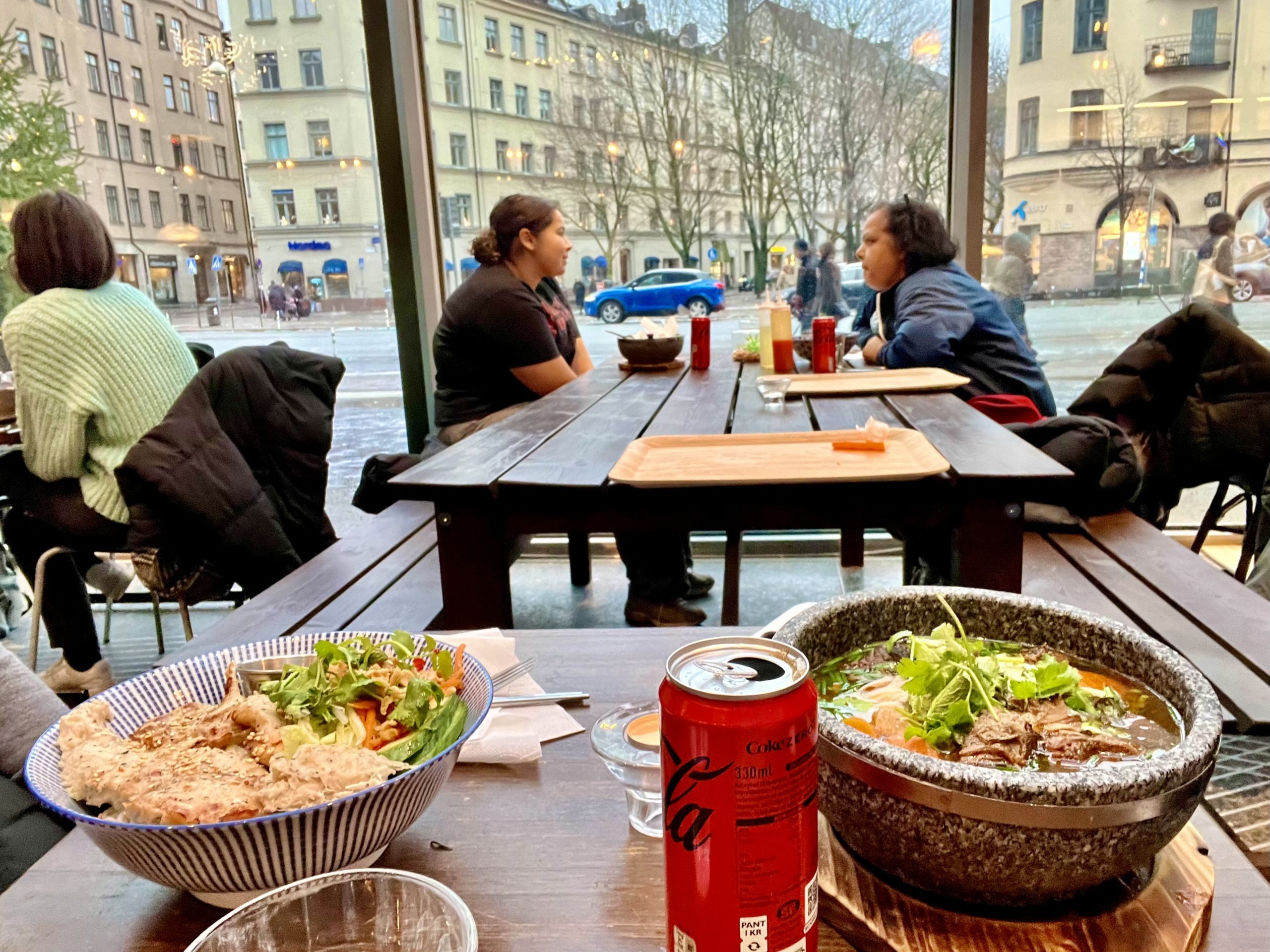
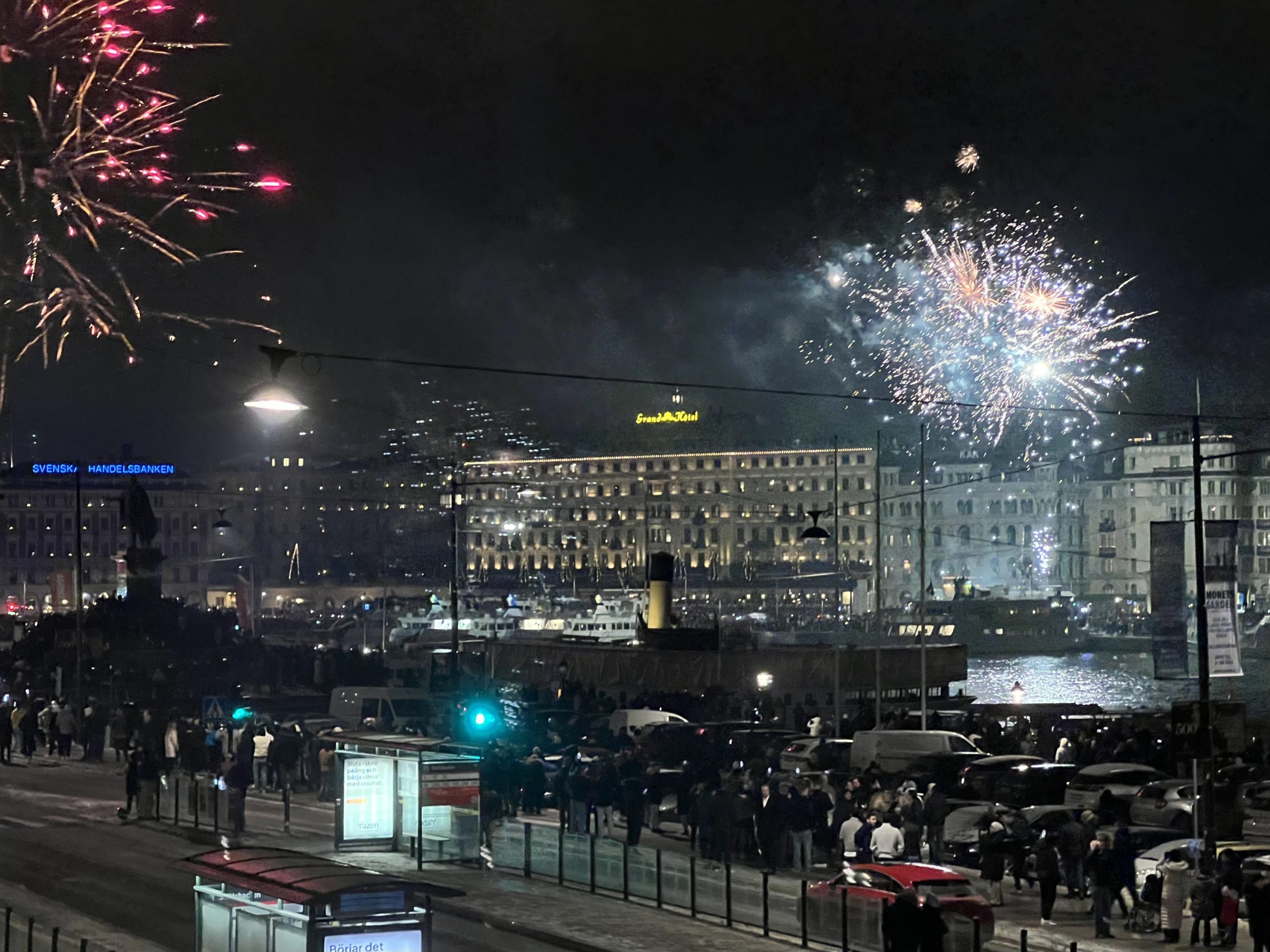
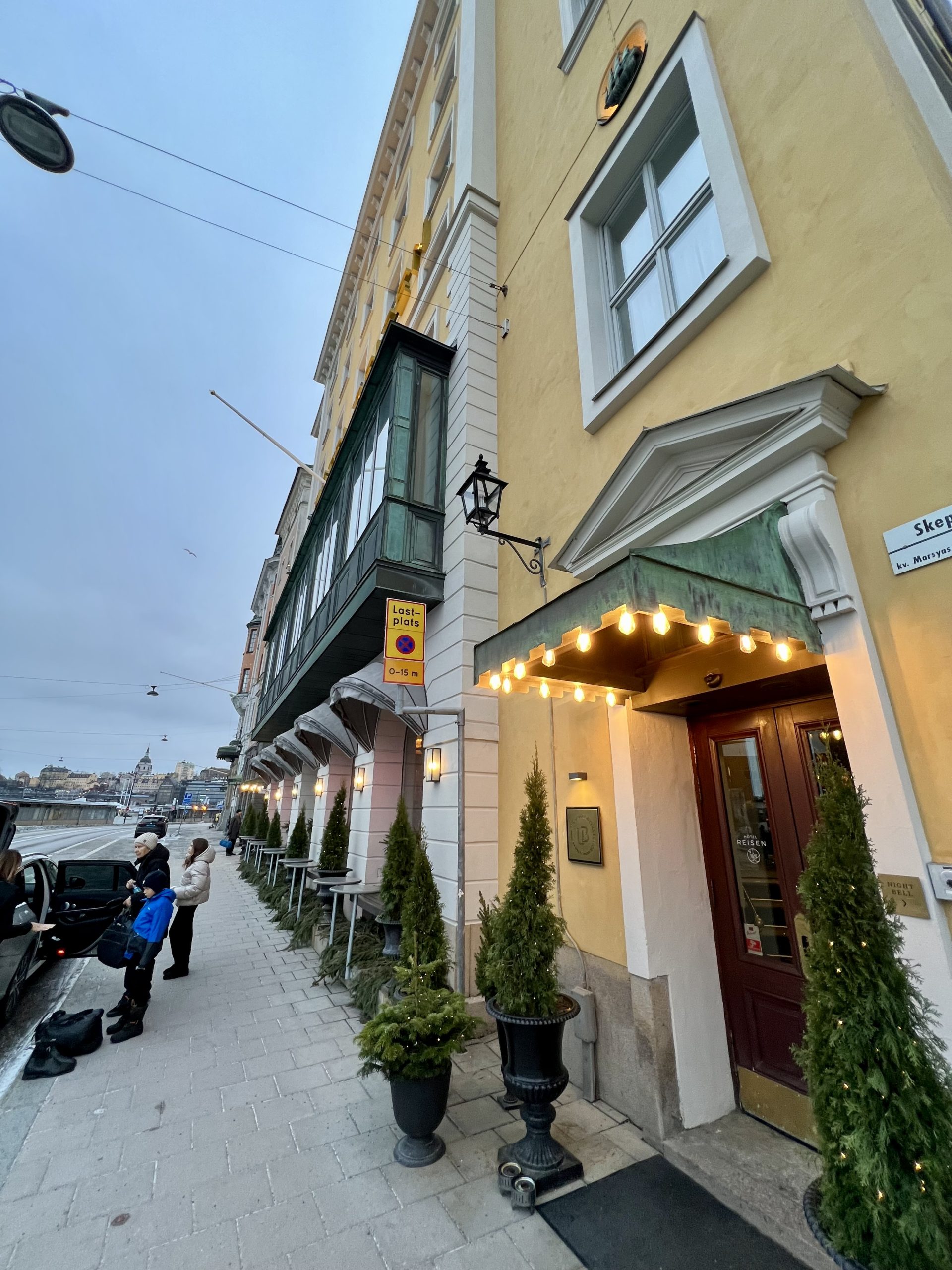
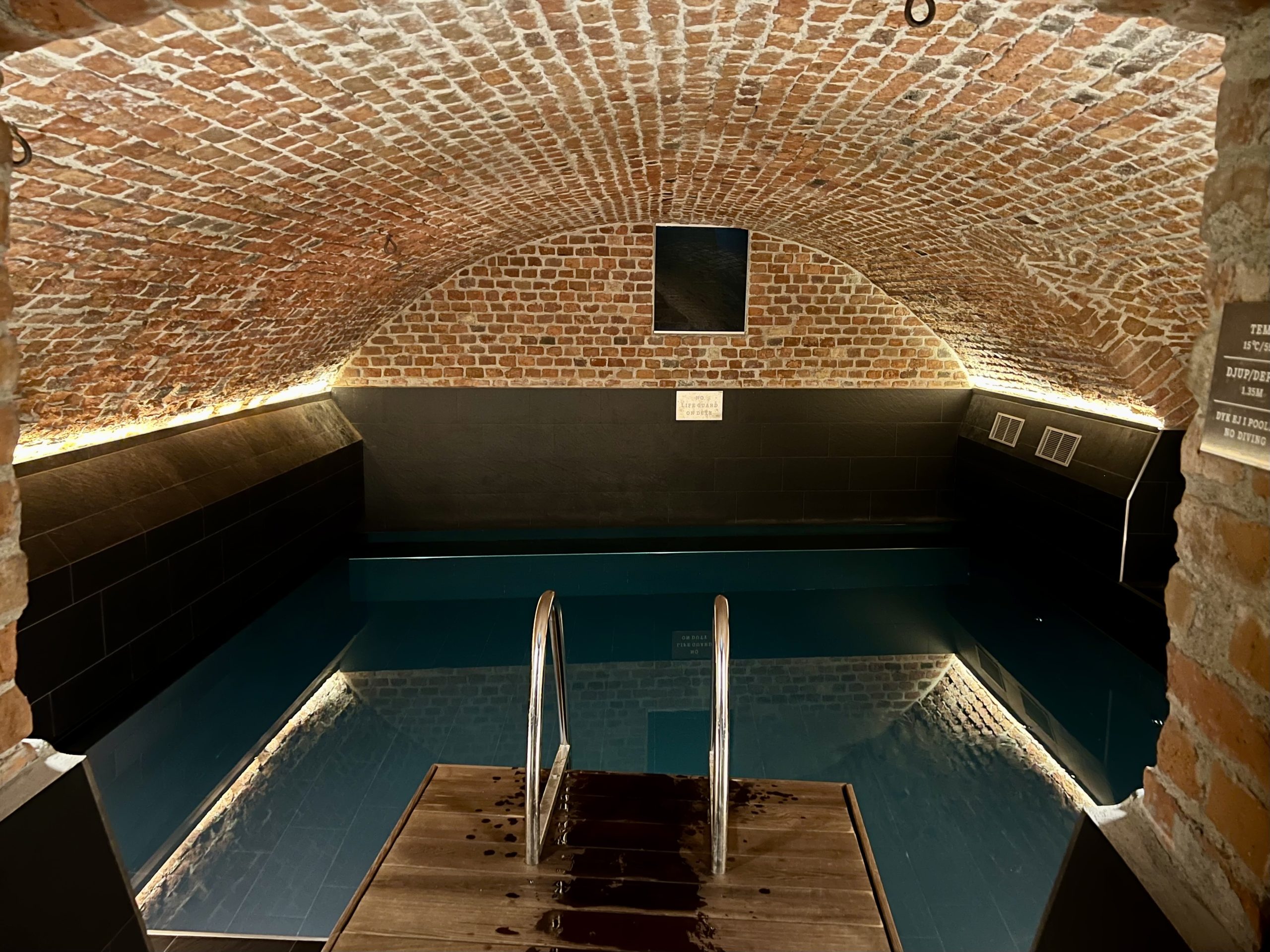
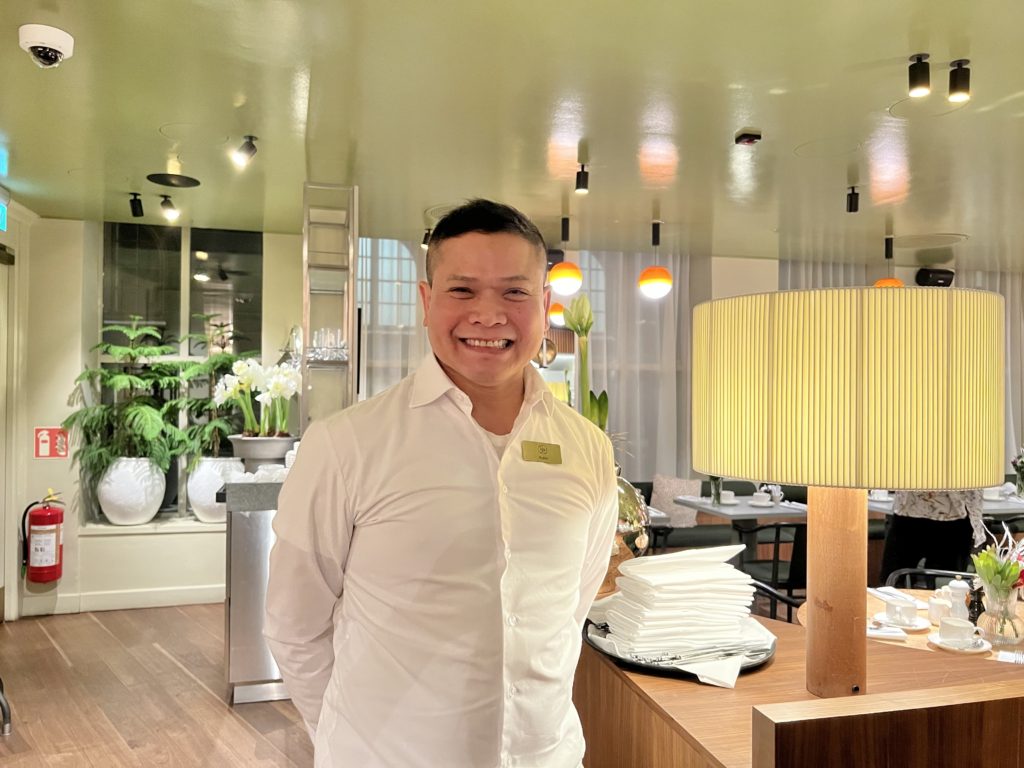
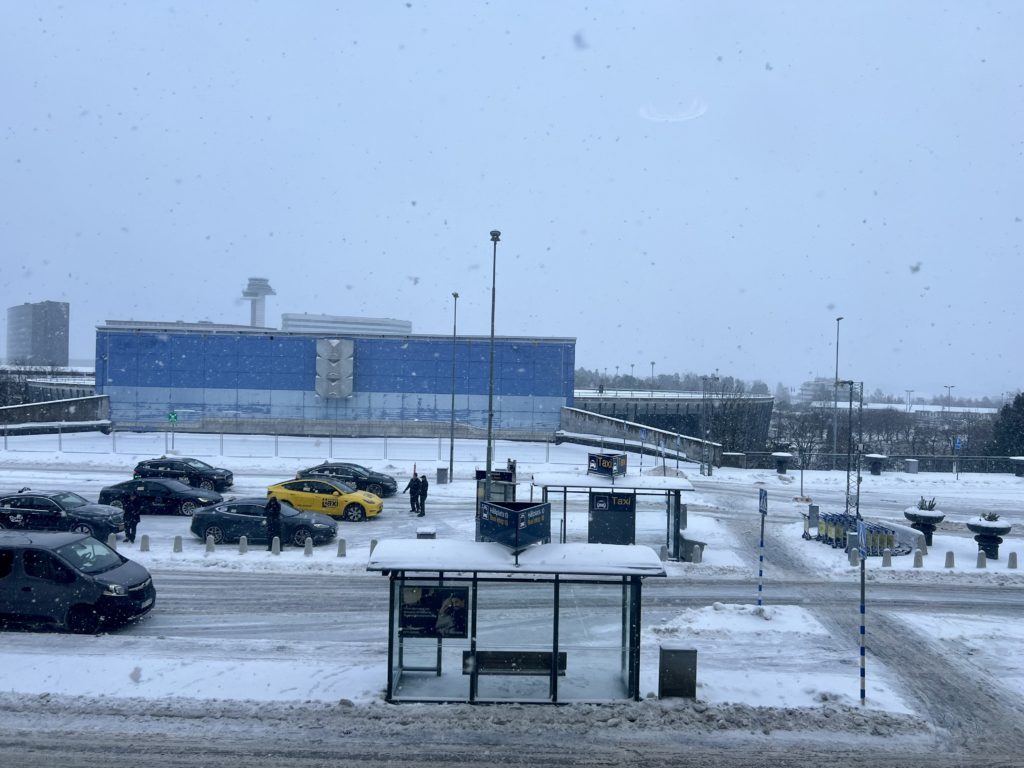
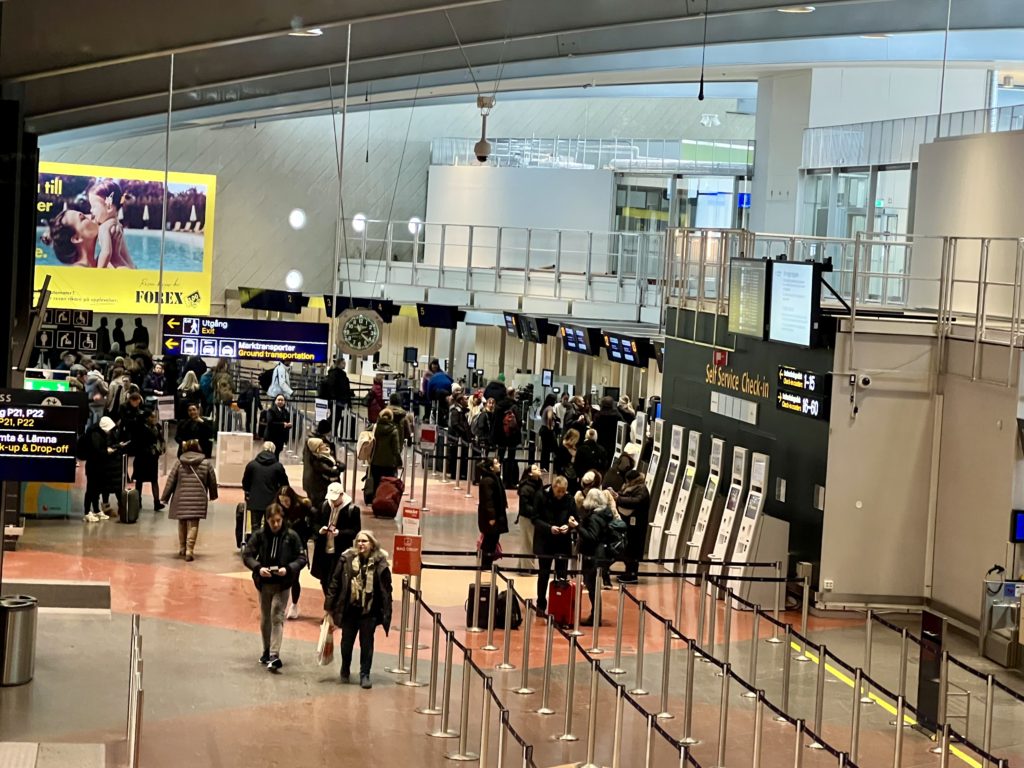
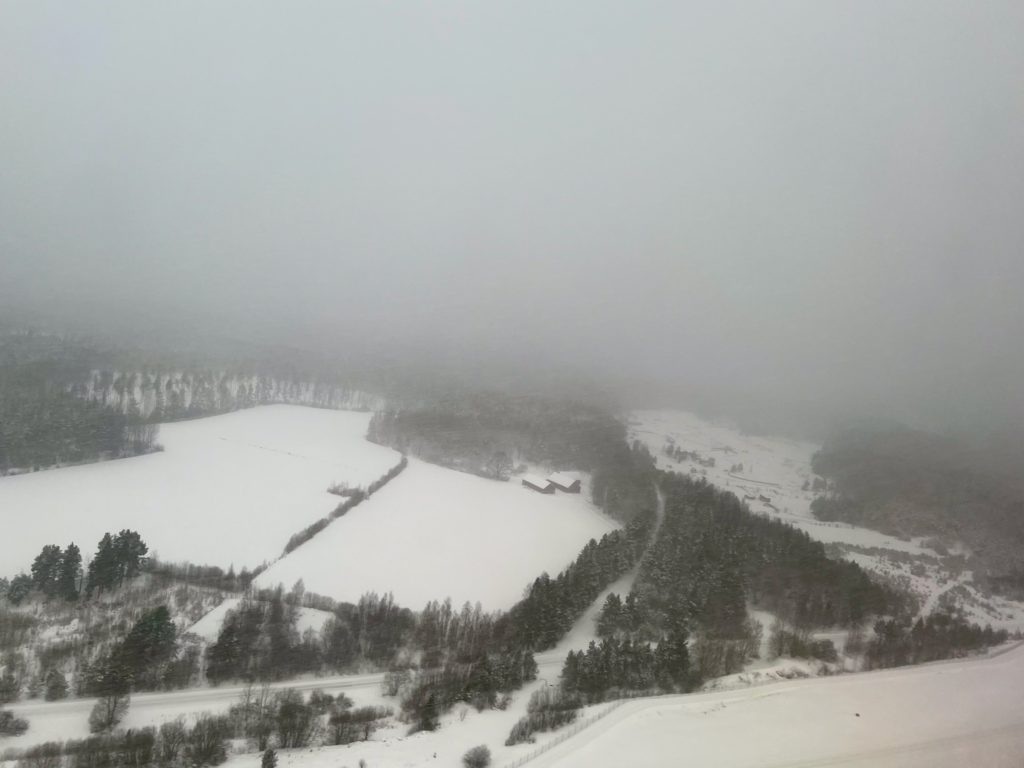
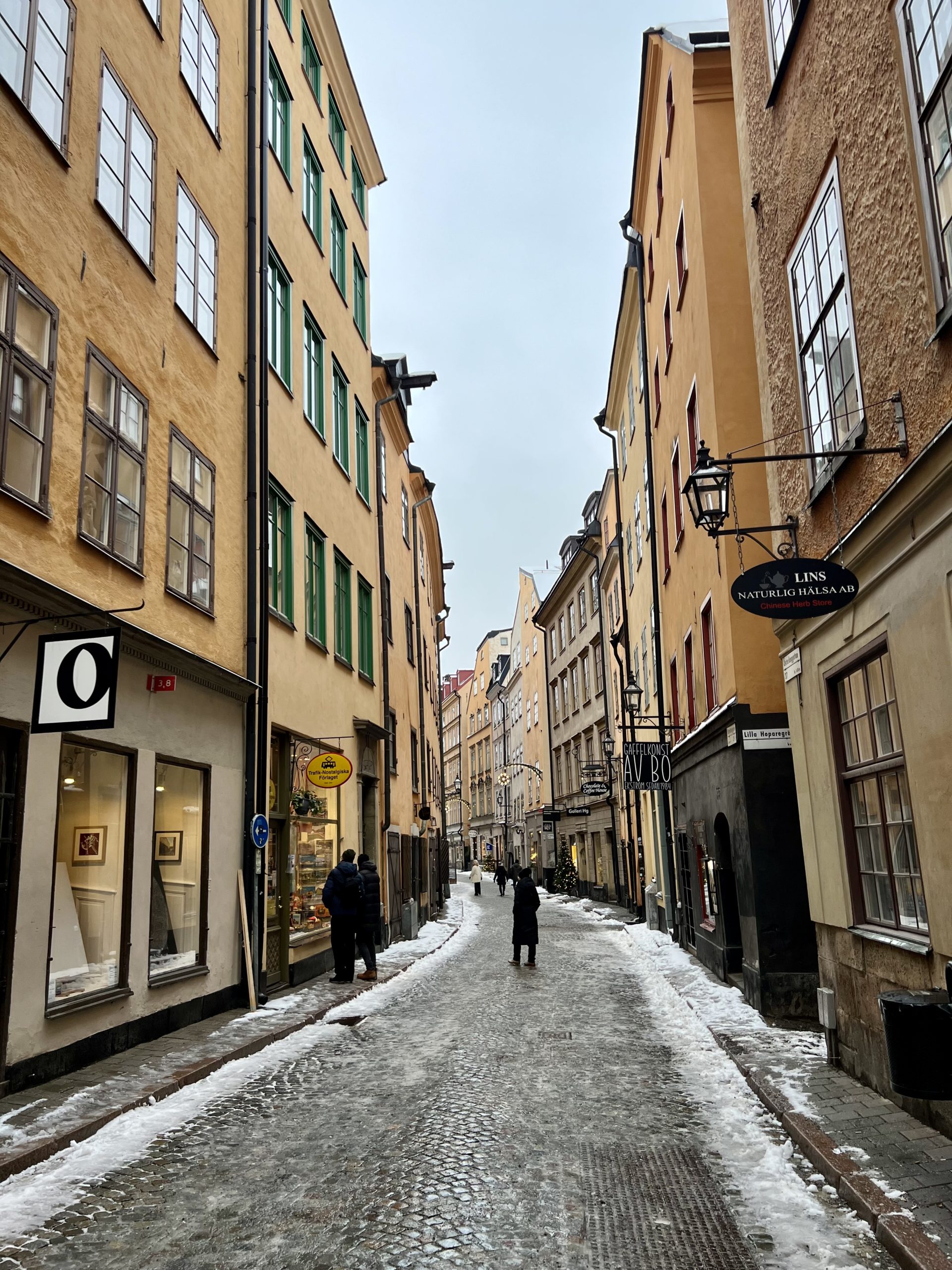
Our flights from Washington DC to Stockholm, Sweden, started off poorly. Our first leg was on Aer Lingus to Dublin, but they couldn’t get a crew together for their flight, so we ended up on a wet-lease plane from a Spanish charter airline called Privilege. It would have been fine, except the person who did the seat reassignments was retarded, and I don’t mean that in a nice way. Once on board, there was a lot of switching seats. We at least ended up sitting (and sleeping) next to each other. We had a three-hour layover in Dublin. The passport control officer was the nicest we’d ever met. He gave us a great welcome and pointed us in the right direction. The airport itself feels a bit 1950-ish, and the long walkway between our arriving and departing terminals was not heated. Good thing we had our puffies. Our 2½ hour flight from Dublin was on SAS, and we were welcomed to Stockholm by snow. And though it was just 3:45pm, it was already evening.Stockholm’s Arlanda Airport was built in 1962. Oddly, unlike virtually every other airport on the planet, this one appears to have not been touched since. At least in the baggage claim area. We checked into the Hotel Reisen. It is in Gamla Stan, which is the old town part of the city on one of the many small islands that make up the archipelago that is Stockholm. Rooms in this part of the city are charming, but small. Like a closet, or maybe a sock drawer, is small. So we reserved a suite – essentially a regular room most other places. We figured we’d have some weather days that might keep us inside and wanted room to stretch out a bit. The hotel sits facing Stockholms Strom, a small waterway that also serves as a harbor of sorts and is but one of the gazillion or less such waterways between Lake Mälaren and the Baltic Sea.After 20 or so hours of travel, we were hungry and tired. Swedish meatballs and a couple of classic toast dishes, chantarell and skagen, fixed the hungry part.On our first full day, we bundled up and wandered the cobbled back streets of Gamla Stan. Here the photographer (above) is taking a picture of the lane leading back to our hotel (below).We eventually found busier streets lined with restaurants and souvenir shops …… and waffles. Not much further along, we found the Christmas Fair.The little rustic sheds sold glog, cheeses, smoked and dried fish, Christmas jewelry, and colorful sweets enough to put every kid in the city into a coma.We had purchased advance tickets to an evening Julkonsert, or Christmas concert, put on by the Swedish Radio Symphony and Choir. We went. We bought a program guide. Oops. At least it had pictures. The presentation was also in Swedish. She was humorous, apparently. The symphony and choir needed no translation.The morning after, we woke to it snowing sideways. But we had plans. One of the blogger’s hearing aids blew a wire in Washington DC. We had gotten it replaced with a too-short version. A few days later the other ear stopped working. After some sleuthing, we found a hearing aid center in Kungsholmen, a near part of Stockholm. Being so close to Christmas, they were only open two hours the day we found them. Since the weather hadn’t let up, we took an Uber.After the hearing aid fix – at less than half the cost paid in Washington DC – the weather improved a bit, so we decided to walk back. It was chilly, but we were well wrapped. Here we prepare to cross the Klara sjö, which means clear lake. Even though it’s more like a canal, it’s still part of greater Lake Mälaren.Riddarholmskyrkan, or Riddarholm Church, as we approach Gamla Stan – more cathedral than church. There are so many of them. We’ve been eating such large breakfasts, our lunches and dinners tend to be lighter. This night we ate at Matrosen Smørrebrød: Brie Cheese with Marmalade and Avocado with Egg. Smörgåsbord refers to a table spread. Smørrebrød Is an open sandwich on some kind of rye, and if it’s not a Swedish national dish, it’s at least a national habit.We had one lunch at Grillska Huset, a unique little counter-service restaurant with a simple salad and bread table and coffee station for anyone who orders anything. The photographer had both a shrimp and egg and an anchovy and egg smørrebrøds. The blogger had a simple cheese sandwich and a cup of coffee. Another evening we dined at a little pub restaurant around a corner or two from our hotel, called Stockholms Gästabud. The photographer had a beet salad, which was really a grilled chèvre salad with a beet, and the blogger had a ribeye. The steak came with a salad of tomatoes floating in vinegar, but it was delicious, nonetheless. The rich béarnaise sauce stayed on the side. On Friday, we woke to snow, just in time for the Christmas weekend – above and below. We added layers and went shopping for odds and ends, thinking we might also spot something worth squeezing in with our winter wear when we ship it back home before we head for the equator. That evening, we had reservations to enjoy a Julbord, or Christmas Table, at Restaurant Stortorgskällaren. Of the many Julbords offered, we chose this one because the menu was created by Plura, a celebrated singer/songwriter, chef, and food show host. We didn’t question the singer/songwriter/chef combination. He is known by a single name, after all.The dishes offered (above and below) were both historic and modern favorites. They had names like revbensspjäll and risgrynsgröt. Many were recognizable, at least in essence, but with no English translations, we employed the scientific method: try everything. What we found was salmon half a dozen ways, herring likewise, shrimp, hams, mustards and sauces, braised pork, pates, little wieners, root vegetables, and way too many desserts, like crisp wagon wheels on which you heap unsweetened whipped cream and cloudberry jam and a national favorite of unsweetened rice pudding that you promptly sweeten with sugar and cinnamon. Every single thing was good. We made as many trips to the food tables as we could and still walk unassisted. All the same, we left feeling the maître d’ was not pleased with our apparent under-consumption. Christmas Eve day was sunny and 18°. We walked over the bridge, past the swans and mallards, into central Stockholm’s Kungsträdgården park andthe main shopping areas around Drottninggatan.When it’s out, the sun remains so low that the golden hour is all day. We took pictures of our long shadows at noon. We can’t visit a city without checking out a local mall. The Gallerian is one such, all decked out with Christmas lights. The photographer bought some fitness clothes and a warmy vest. The challenge with shopping for anything that’s not a winter overcoat is the trying on. De-layering and re-layering must be factored into one’s time budget, and stores close early on Christmas Eve. After a light lunch, we walked a bit and ended up at the skate pond in the park. We wondered how the skaters, some dressed very lightly, kept their exposed parts from freezing solid.Stockholm is beautiful in the winter, as long as journeys are short and you have someplace warm at both ends.Christmas Day began at our favorite breakfast table in the hotel’s Restaurant Reis. The day was to warm up to 30°, though warm-up-to and 30° don’t really belong in the same sentence.Christmas festivities in Stockholm take place Christmas Eve, leaving Christmas Day very quiet. One of the few things happening are ferries and boat trips. We signed up for an out-and-back trip to see some of the archipelago. The boat we chose was built in 1912 as a passenger steamship ferry. It capsized at some point and sank. It was then un-sunk and put back to work. It now serves as a tour boat. We made note of the locations of the lifeboats. The city quickly gave way to waterfront neighborhoods (above) and then stretches of forest with maybe the occasional house (below). We drank tea and hot chocolate and enjoyed a light snowfall. Once we were ashore again, we found Gamla Stan’s cobbled streets nearly empty. We did find a souvenir shop open. It is run by a kind Pakistani gentleman who stayed on in Stockholm after earning his masters in computational intelligence a decade ago. We bought a few things to remind us of our visit. On another day, we took one of the commuter ferries over to Djurgården, another island, of course, where several museums live. As we walked from the ferry landing to the Vasa Museum, we observed the challenges faced by bike riders come winter …And then there’s this fellow. We almost felt sorry for him.If there was one thing the blogger wanted to see in Stockholm, it was the Vasa. At 156 feet long, with seven decks, it was one of the largest galleons ever built, and one of the first to have two gun decks. Unfortunately, it was also built before anybody knew much about why ships don’t flip over. Trial, error, and experience were the shipwright’s rules of the day. So In 1626, the Vasa was launched under full sail, all flags flying. It went about 1,400 yards, healed over, and sank. Oops. The warships of the day, beautifully wrought and the pride of nations, had relatively short lifespans, but jeez. Besides the ship itself, the museum is a fascinating look into the 17th century and the lives of the 445 people crammed into the pestilence-ridden piece of oak artwork that was the Vasa. No bunks, no hammocks, no showers, bring your own drinking cup, and food, since you won’t get fed from ship stores until open ocean. Above is a full-scale mock-up of the main gun deck. The people of that day were short, and the blogger has a good size bump on his head to prove it.From the Vasa Museum we went to the Museum of Wrecks. It’s a small museum highlighting some of the many ship wrecks around the Baltic. They run aground, drag their anchors in a storm and end up in the rocks, they capsize. Most seem to be the result of bad driving. No pictures were taken until we headed across the bridge to Östermalm and the Swedish History Museum. The large History Museum takes one from prehistoric Mesolithic settlements to today. The photographer was transfixed by the iron-age helmets and swords. How could anyone wear that heavy stuff?Runes caught the photographer’s attention, too, like these around a grave marker. Duolingo doesn’t do runes. By the time we headed back to Gamla Stan, it was about 3:30pm, night time again, and these mooses in what we call the Moose Park were already lit up. Moose in Swedish is älg. That translates to Elk in British English and moose in American English. So it’s a moose-elk. But in America, elk is a big wapiti deer. We applied Shakespearean logic: A moose by any other name still smells.The photographer found something for us to do on a sunny day. When one came along, we jumped on the metro and headed south to Johanneshov, a former meatpacking district turned urban bedroom community, with many apartments and a huge arena complex.From where we got off the train to our destination, it was about a 10 minute walk. The roads and walkways are kept very drivable and walkable, with snow moved from where you don’t want it to someplace else, and gravel liberally applied. Good for traction, hard on windshields. Our destination was the Globe, a spherical sports and concert arena onto which they bolted little sphereoidal funicular rides that take you to the top. From the top of the dome, whether you face south (above) or north (below), you can see just how flat the terrain is around Stockholm. Except it’s not really flat. The water from the meeting of Lake Mälaren with the Baltic Sea flows in valleys created when joints between ancient bedrock wore away. The flat tops of the bedrock create the archipelago that is home to the city. The valleys are there, just under water. After our ride up and down, it was back to the metro for two trains and a transfer to get us to Östermalm. We see lost warmy things – beanies, ear muffs, wraps, mittens, and gloves – like the lonely little guy, below, everywhere we go. After a short walk at the end of our ride, we made it to Östermalms Saluhall, or market hall, in time for lunch. We browsed a bit and bought a small jar of cloudberry preserves, but only after multiple assurances that the blogger would be packing it home, not the photographer.We lost count of the number of different kinds of pickled herring being sold …There were lots of other fish, too, of course. And cured meats and sausages. But no chicken. We have yet to see chicken in any store or on any menu. Its complete absence is uncanny. We’re told people eat chicken, but we’ve seen no evidence of it. Meat consumption in general is rapidly declining across Sweden, both for health and humanitarian reasons, but chicken appears to be leading that charge. Lunch itself was entertaining. We picked an appealing restaurant on the main market floor and asked for a table. They didn’t have anything until 1:00, over an hour’s wait, so we thanked the hostess and moved to walk away. She quickly grabbed two menus and asked us to follow her. Voila, a table. Like the hostess, our waitress also appeared to have been a former tank commander; indeed the entire staff seemed to have been recruited from the same military unit. We did get smile out of her just before we left, though it looked a little out of place. And if we’d blinked, we’d have missed it. Östermalm is a charming area with its museums, markets, and shops. It’s also one of the more expensive areas to live, thanks in part to the many old, stately homes. For meals, we were tiring of the choices offered in most restaurants, like Swedish meatballs, shrimp sandwiches, shrimp salad, shrimp toast, ribeye steak, baked char, moose meat in one of its forms, herrings, and the like. It’s not the lack of variety, it’s more the heaviness and blandness. We have to order everything with sauce on the side. Above, we sought variation in a salmon omelette and charcuterie board. The omelette ended up having a mostly cream filling, and the charcuterie board relied on six olives for flavor dimension. We then went Italian with Rigatoni Allá Norma and Pappardelle Ragú – a welcome if not terribly flavorful change. One of the places we visited a couple of times for lunch is Bread & Salt. They offer grab-and-go sandwiches, pizza slices, and pastries. But most importantly, they have an expansive salad bar, sold by the pound. They are also well known for their Kanelbulle (Swedish Cinnamon Bun). Sweden supposedly invented the things. Two or three doors down from our hotel is the Stockholm Royal Palace. We finally made it there.The public areas of the palace are separated out into different museums. Above is the cellar, for lack of a better word. Some sort of stronghold has been here since the 1,200s, and part of the original work is still visible. But with over 800 years of add-ones, rebuilds, and remodels, it’s hard to keep track of what part is what from when. Above the cellar is the modern palace, with it’s grand entrance to the chapel (above) and ornate stairs to the Royal Apartments (below). The 1,400 plus rooms in the palace could be from any European palace of the day, with its ornate king’s bed chamber (above) and rooms of state with thrones (below). A number of its rooms are dedicated to the many orders, medals, and decorations that aristocrats were awarded and wore to assure their importance was known. This one is the blogger’s favorites. Created by Tsar Peter I in the 19th century and given to King Oscar II of Sweden for “the highest order of chivalry.” Amusingly, besides no one really knowing what chivalry is, even when it was supposed to have been a code of conduct, it had disappeared in all but name six hundred years earlier. Was Peter punking Oscar? More likely, they both lived in the same, rather expensive, make-believe world. Like the cellar and Royal Apartments, the treasury has its own entrance and ticket queue. There were crowns everywhere. Above is the current reigning monarch’s regalia, but every queen, princess, prince, and monarch seems to have required their own. Outside the Palace, looking through the arches of the Swedish Parliament, crowds streamed along Drotninggotten, a long street of coffee shops and … well … shops. The crowds have been building since Christmas. We can’t imagine what this place is like during the summer.Another spot on the blogger’s list of things to see were the imaginary offices of Millenium, the magazine of Stieg Larsson‘s Millenium book series. So we walked over the Slussbron Bridge to Södermalm, and down Götgatan until we found the address. The Millenium offices, had they ever existed, would be in the “chiffer” space above Monki in the picture above.Sodermalm, once a working class area, is now a center of hip, even bohemian, culture. An apartment here is quite desirable, and now quite expensive. We ended up at a Vietnamese restaurant named, appropriately, Viet Kitchen. The staff were all Vietnamese, and the food was the best we’ve had outside of Vietnam. We were happily surprised. New Year’s Eve was on our second to last night. Gamla Stan was the place to be in Stockholm, and we had a great view from our room. Lots of aerial fireworks. And people. Speaking of our room, we couldn’t have been happier with Hotel Reisen. The hotel was brilliantly redesigned, and they nailed most everything.The fitness room was small, but adjacent to it in the cellar is a great spa, including a Swedish dry sauna and this cold dipping pool. The brickwork here is part of the city walls of the 1600s. Our favorite breakfast waiter was Robin. That’s his taken western name. His real name is Bandit, romanized from Thai, which comes down from Sanskrit “Pundit.” He was told he couldn’t use Bandit, so he chose Robin, because he learned Robin Hood was a bandit. His story is amazing. Born into abject poverty in Bangkok, he’s had no schooling. Ever. He was brought to Stockholm in his late teens by a Swede. After arriving, Robin was very unhappy, so he went to the top of the tallest building he could find, and eight floors up, he cried and asked his deceased mother and father to help him. A short time later, he met an older gentleman who all but adopted him, and helped him through the citizenship process. He taught himself Swedish and then English, though he remains largely illiterate. Nevertheless, over the 20 years he’s been there, he’s purchased an apartment in trendy Södermalm, which he paid off in 10 years. He’s since bought himself a country cabin an hour and a half from the city – it looks idyllic in his pictures. Last year, the gentleman who helped him had a stroke, so Robin moved him into his apartment and looks after him. He calls him Papa. We would have loved to gotten to know him better. A bit of a snowstorm hit the day we left. Above is the view of Arlanda’s departure deck. As when we arrived, the apparent age of the airport surprised us (below), just as it had on our arrival.Ciao, ciao Stockholm. A great city, but too much winter. Summers are beautiful, but criminally short. Those in the US who press for socialism should take a hard look at this country, as I don’t think any country does it better. But 48 percent of GDP goes to taxes. That’s huge. Yet, still, as a capitalist country, the income gap between the wealthy and the poor is growing, as elsewhere, which engenders crime and drugs and gun deaths, all of which are extremely high in Sweden. Spending a country’s wealth on social services does not solve first-world inequality problems. And the resulting crime is not diminished by a well-resourced police presence, which Sweden has. Clearly, the solution escapes us, but I think the US has a fair chance of finding a way to reign in capitalism without losing free enterprise, if it can just get past the current left-vs-right nonsense.