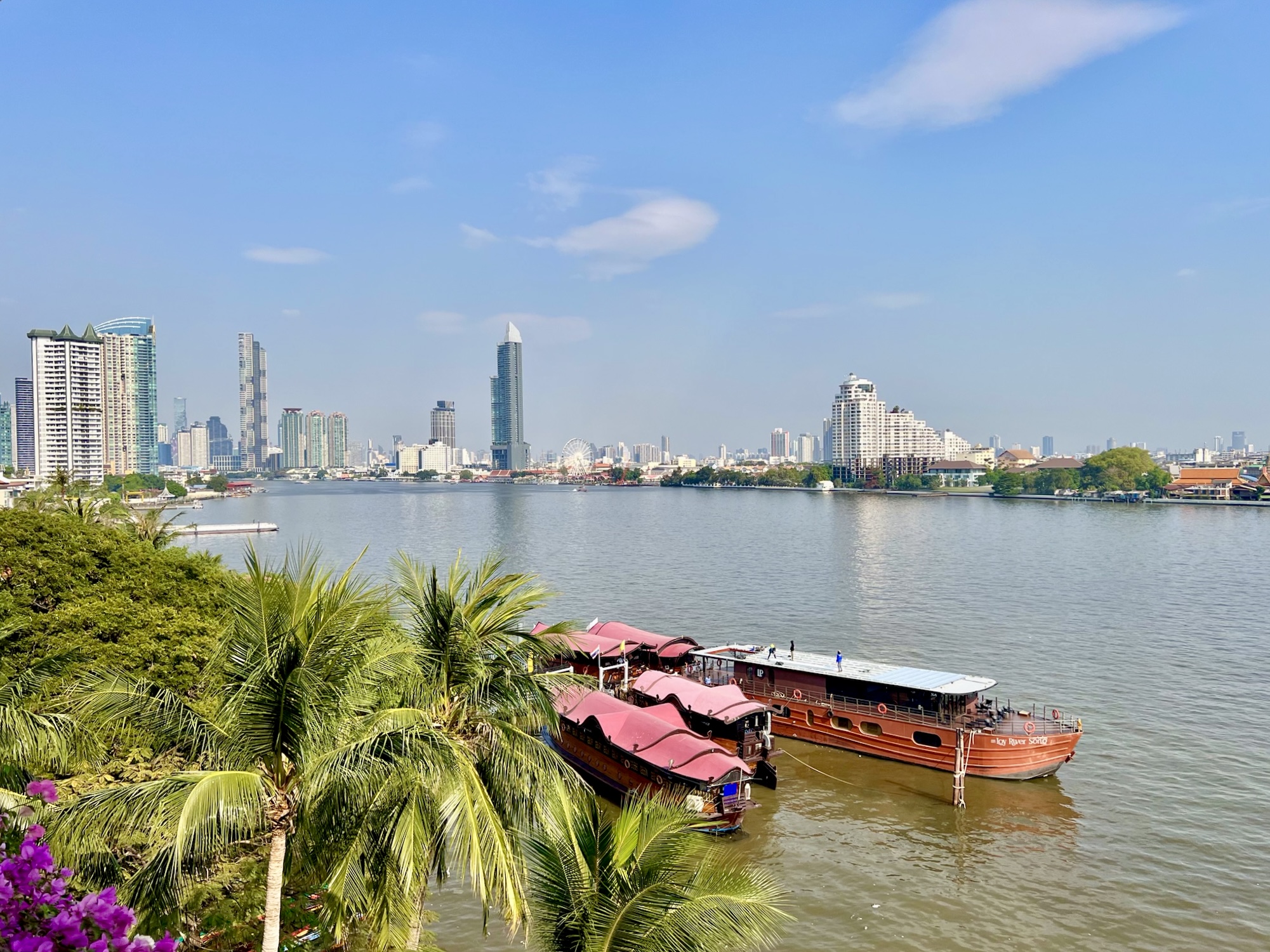
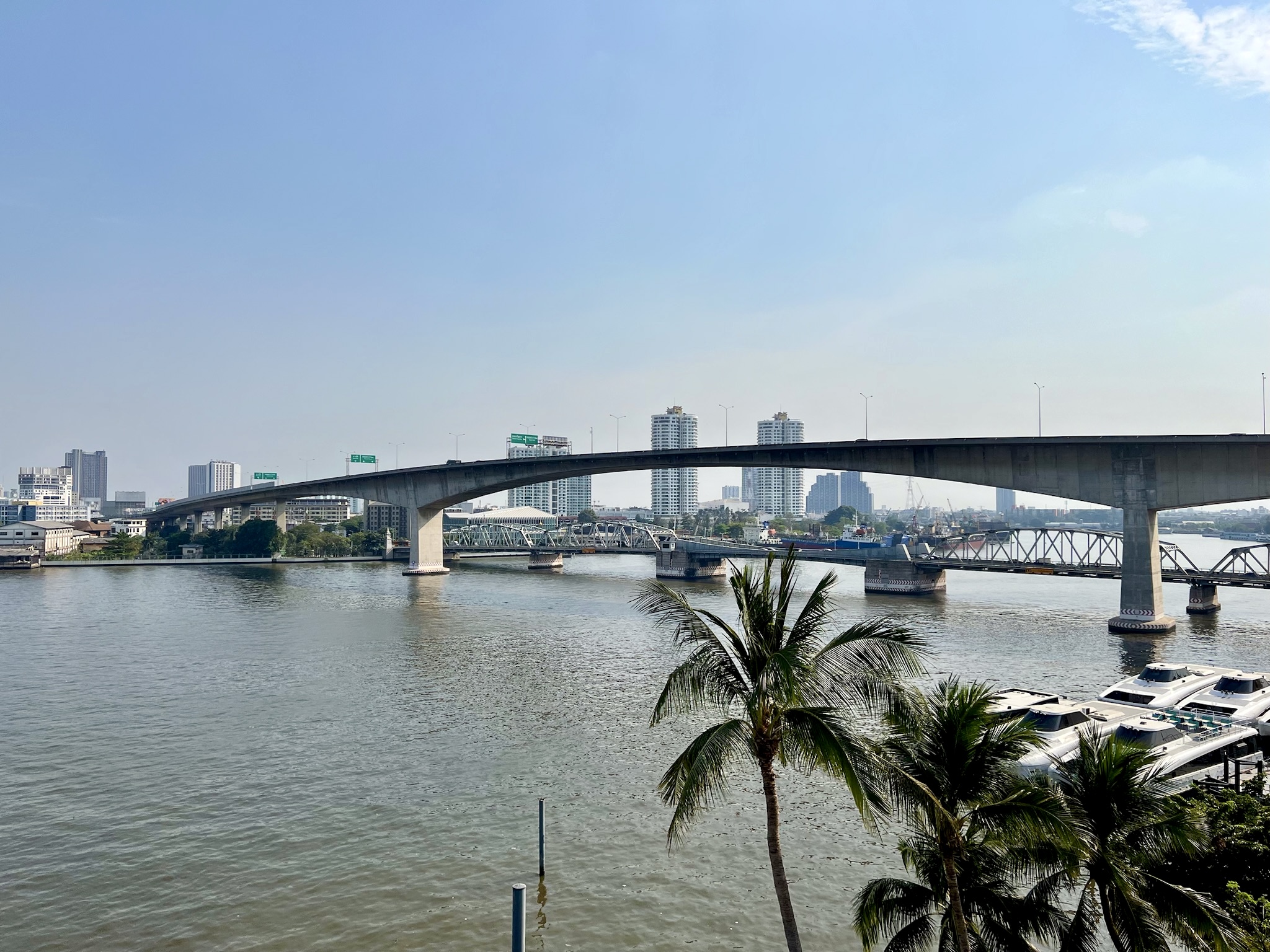
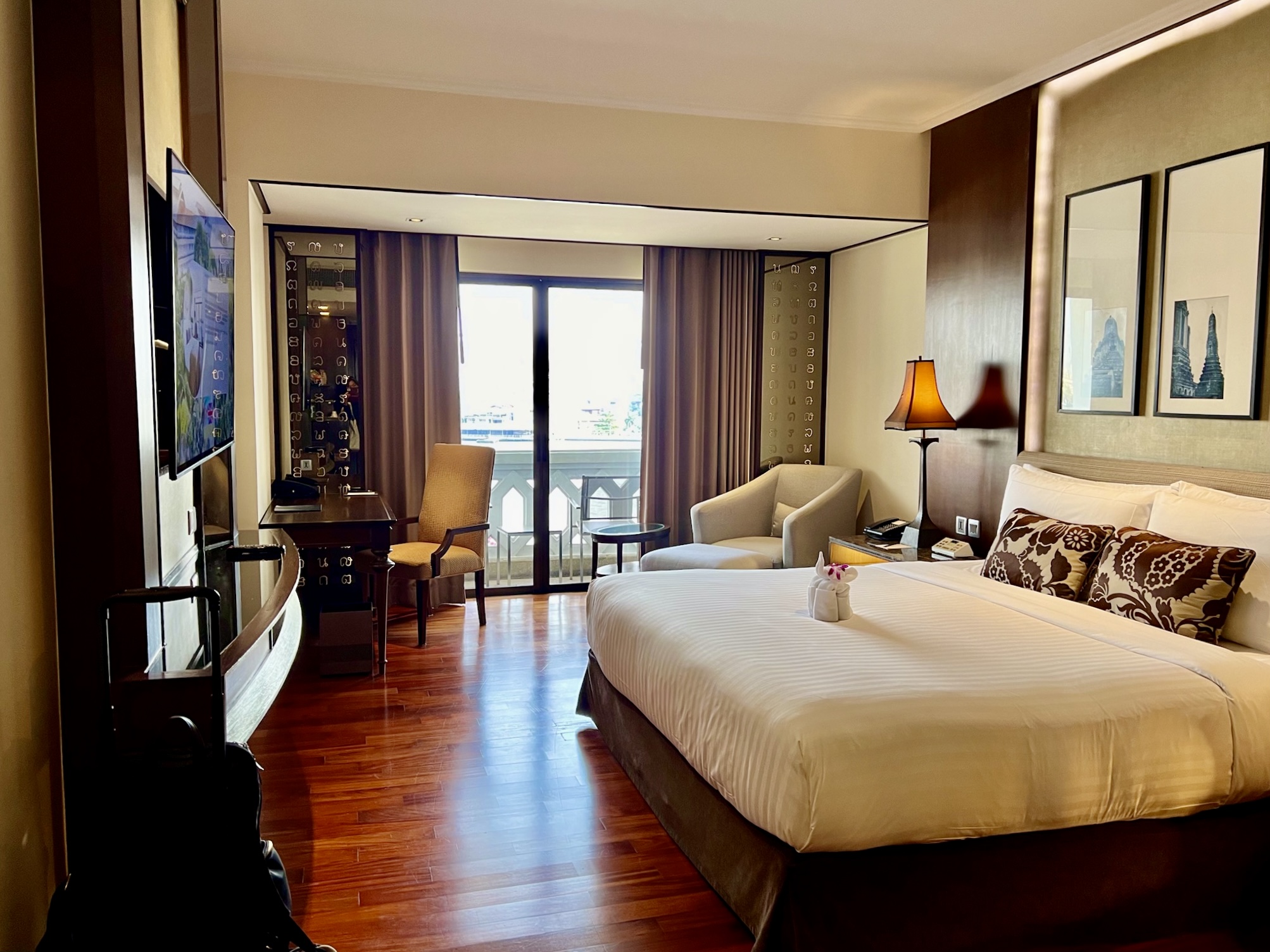
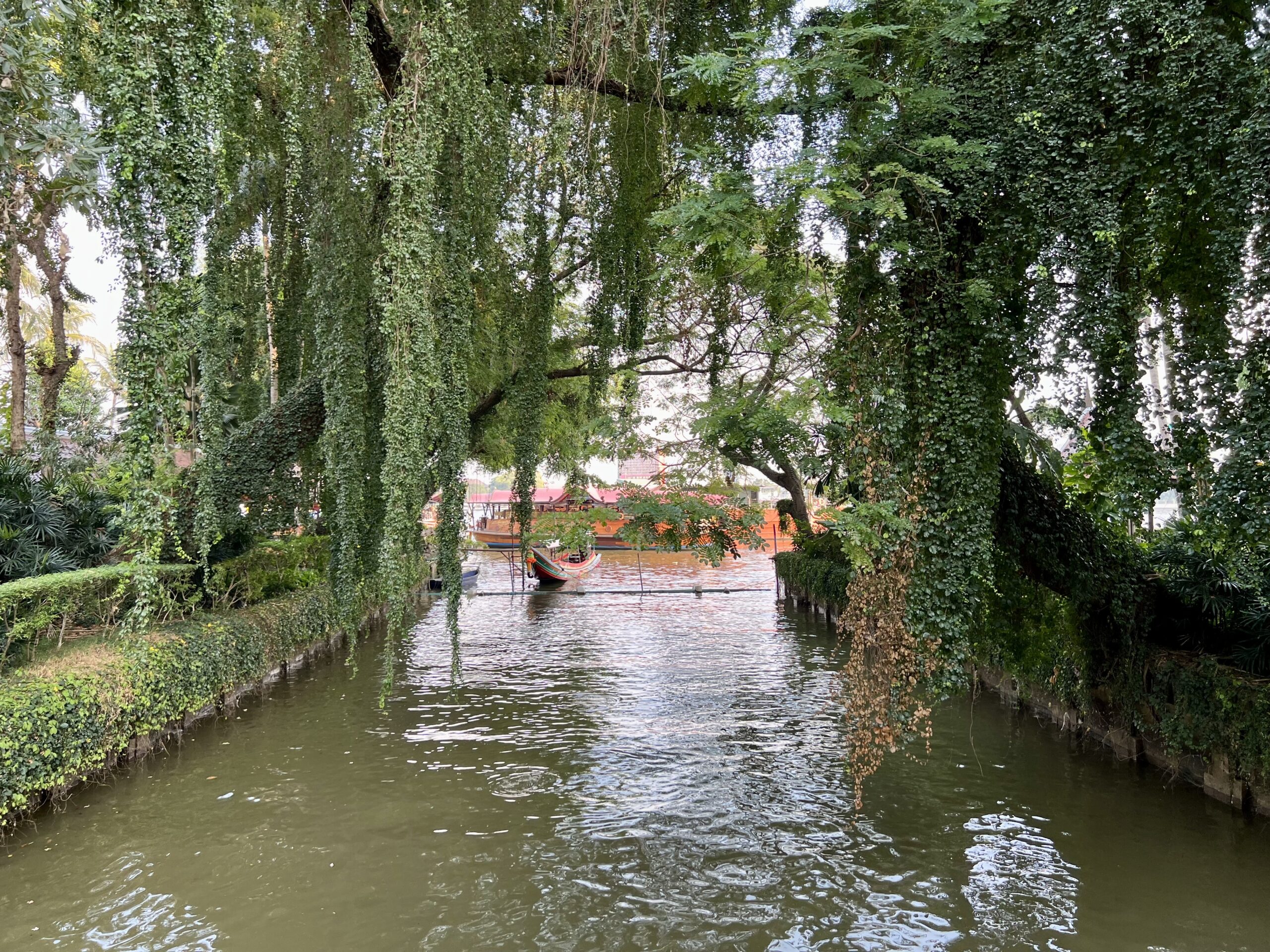
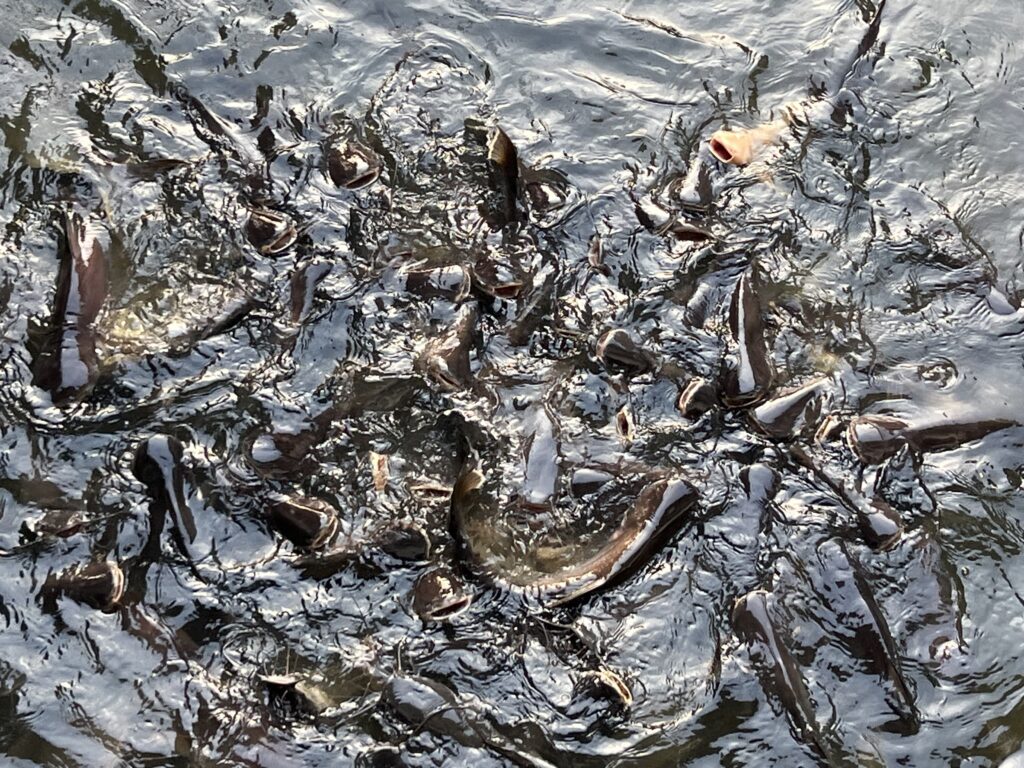
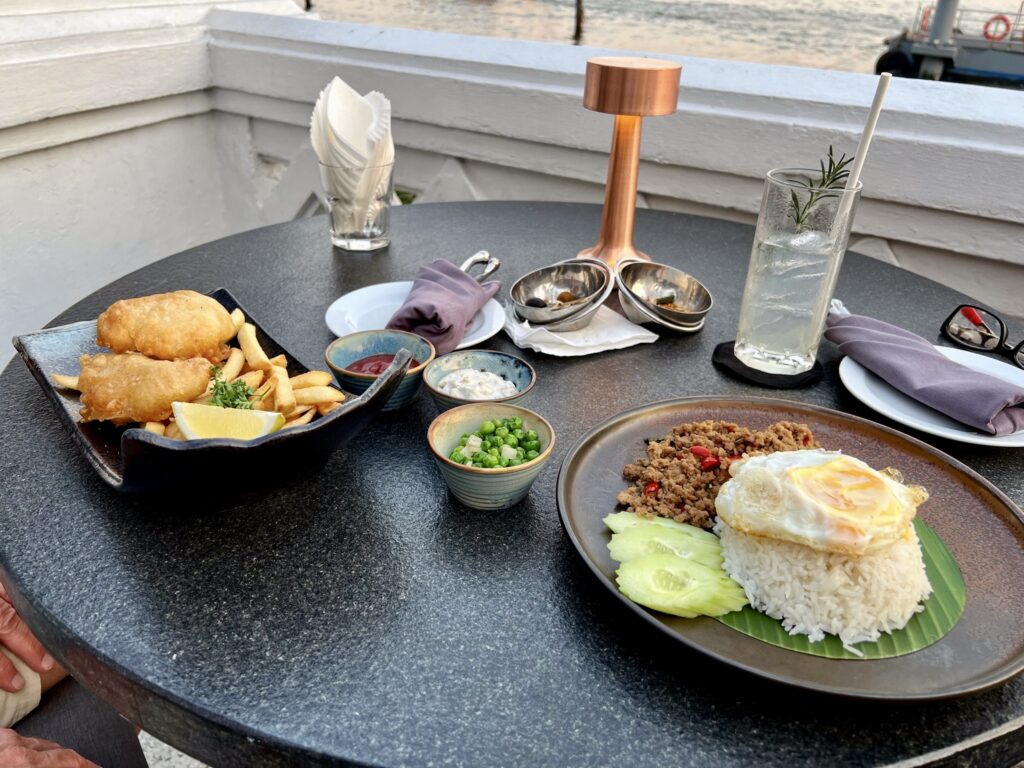
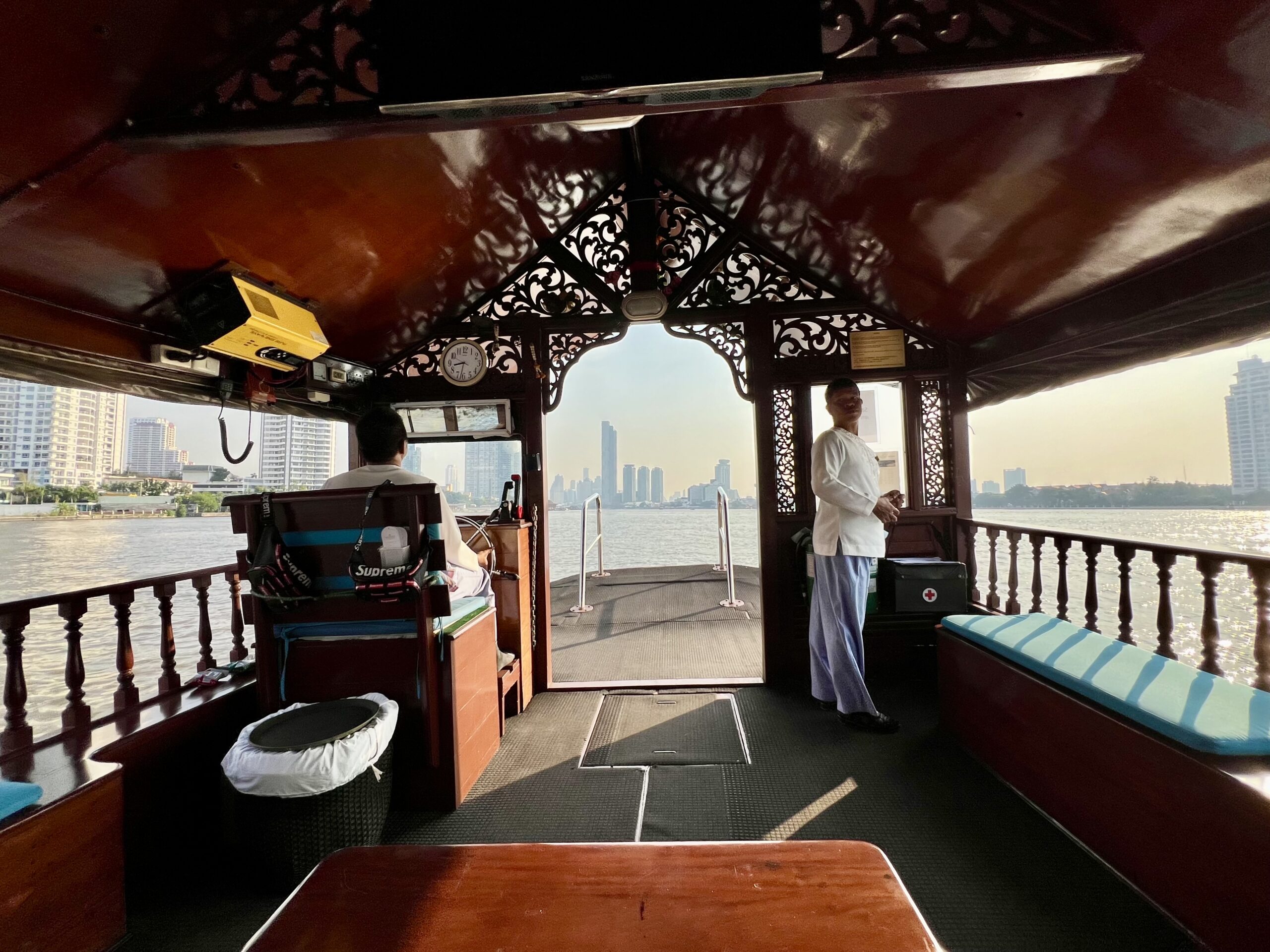
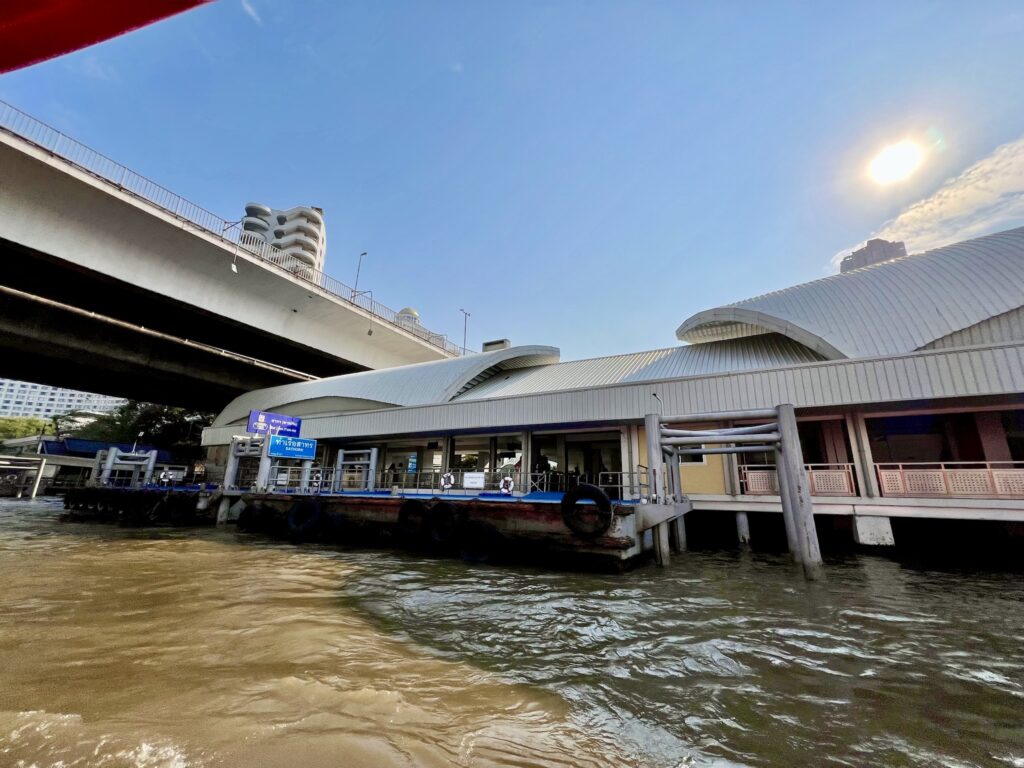
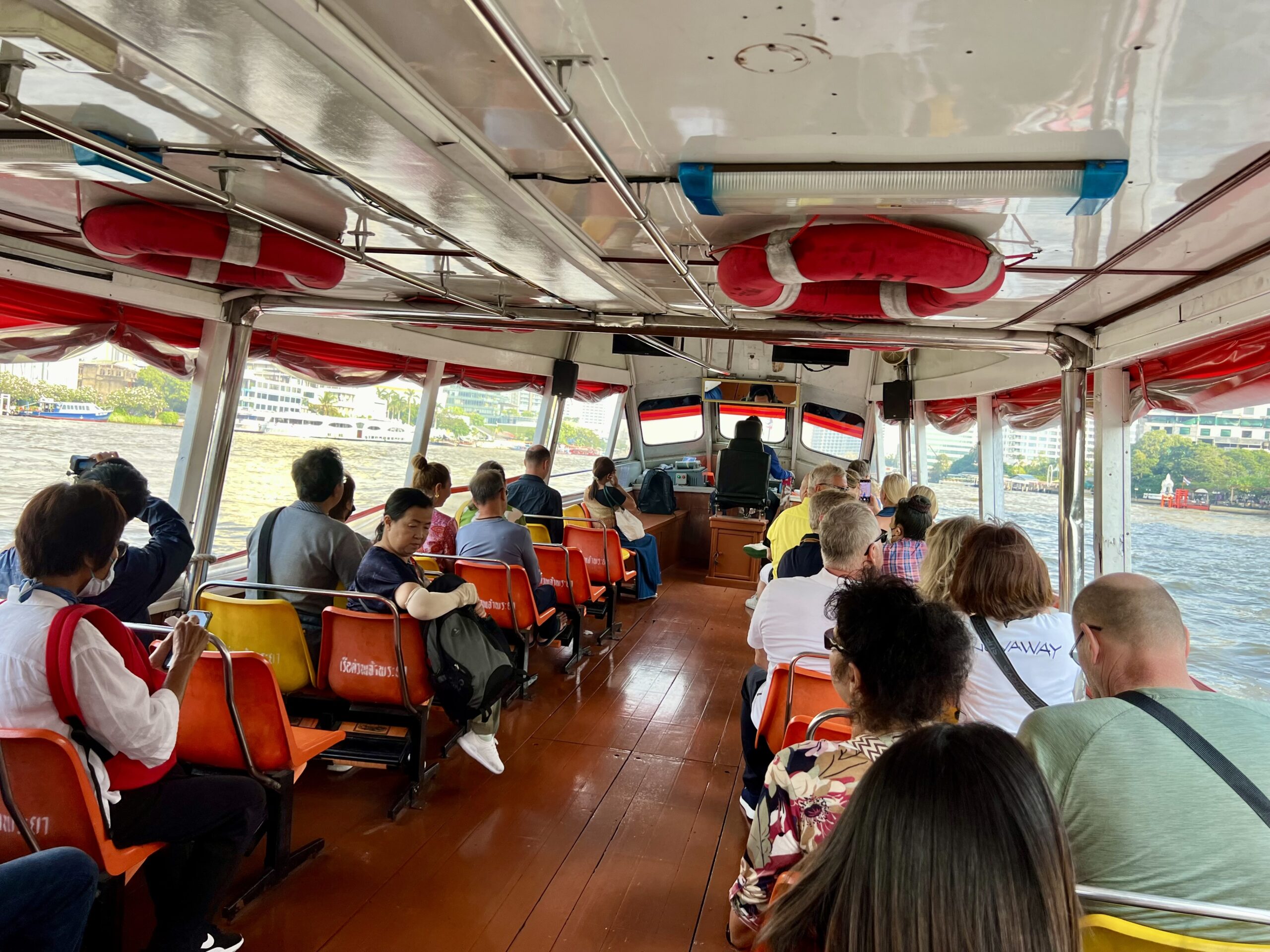
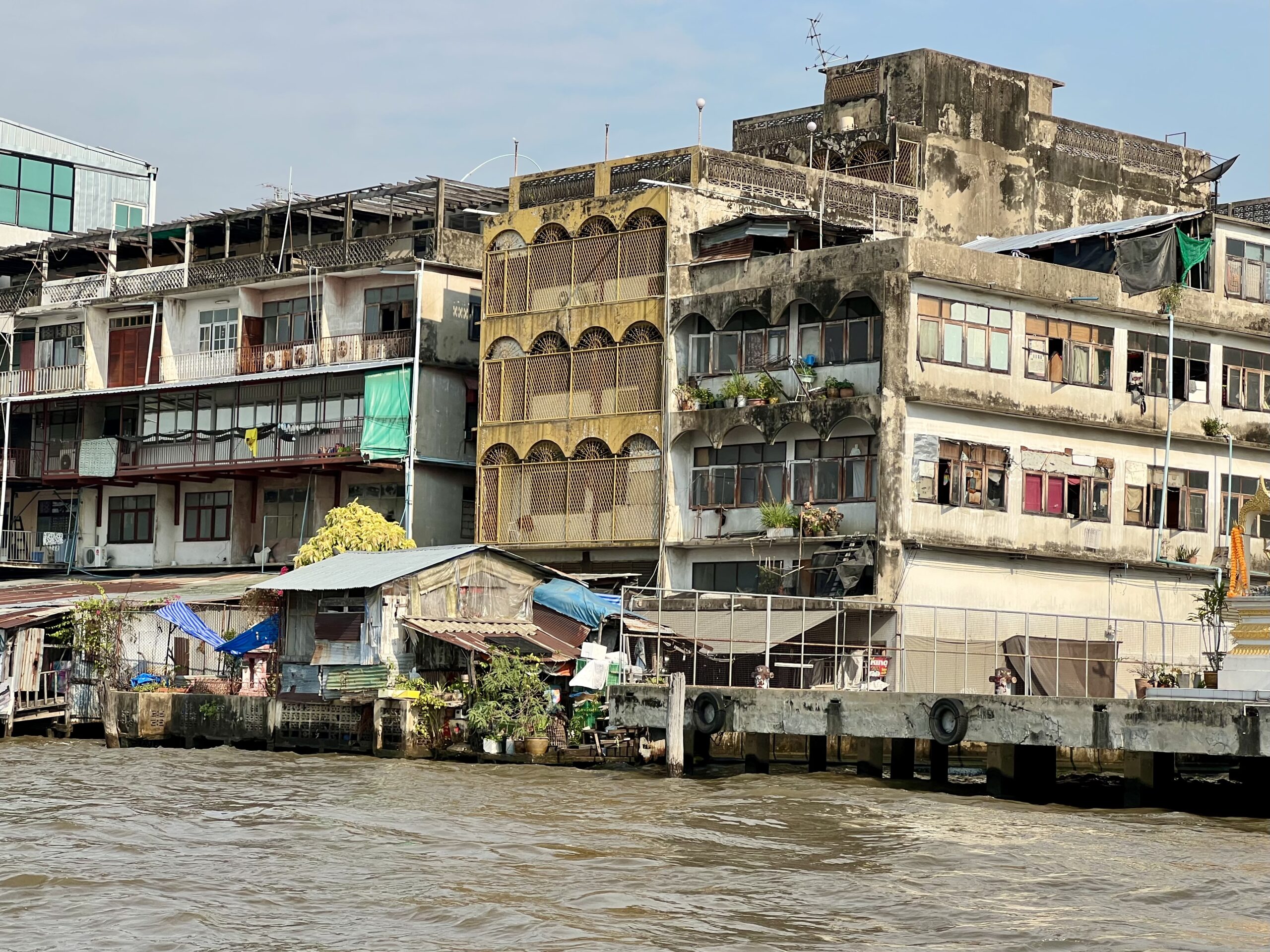
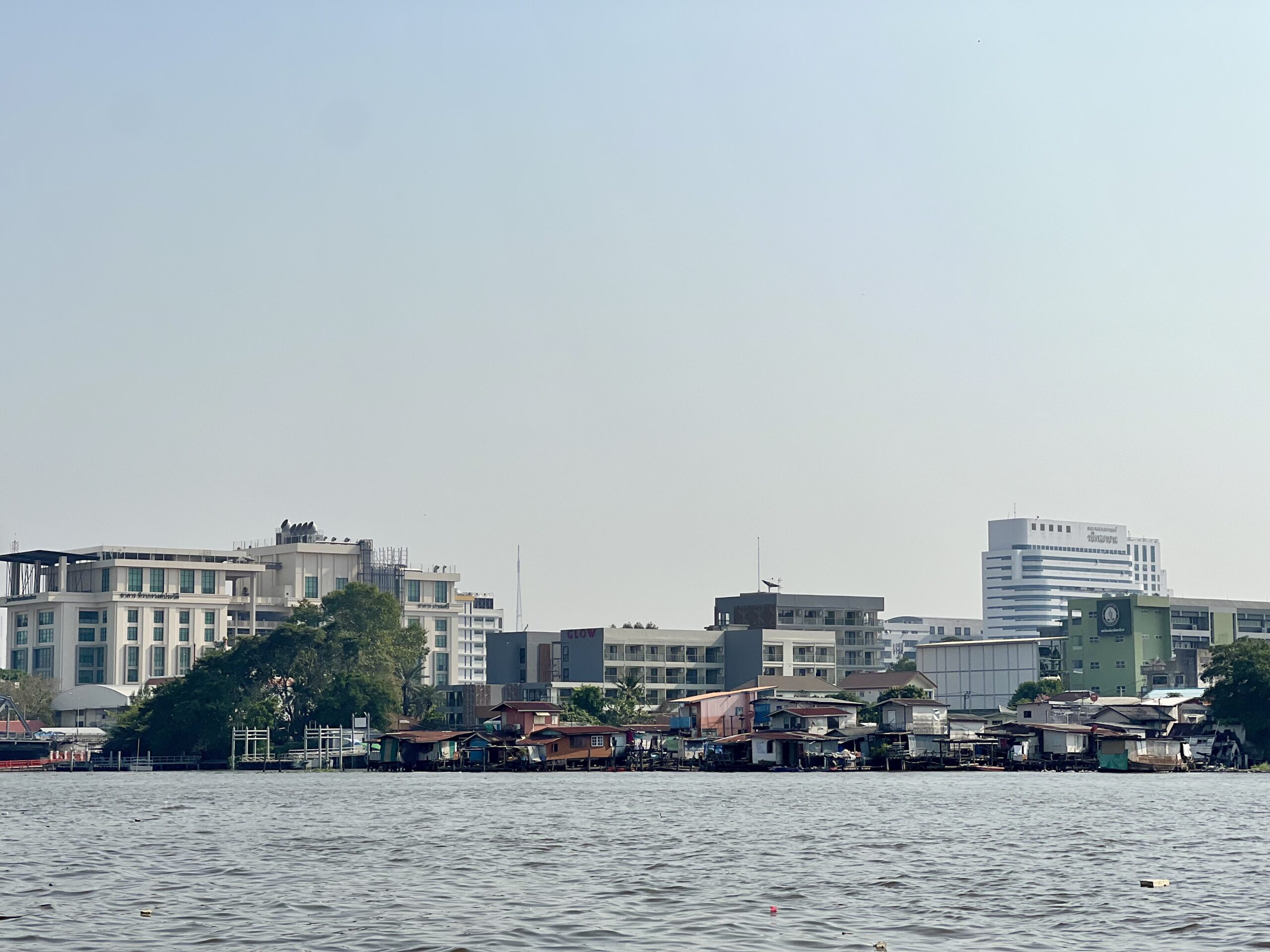
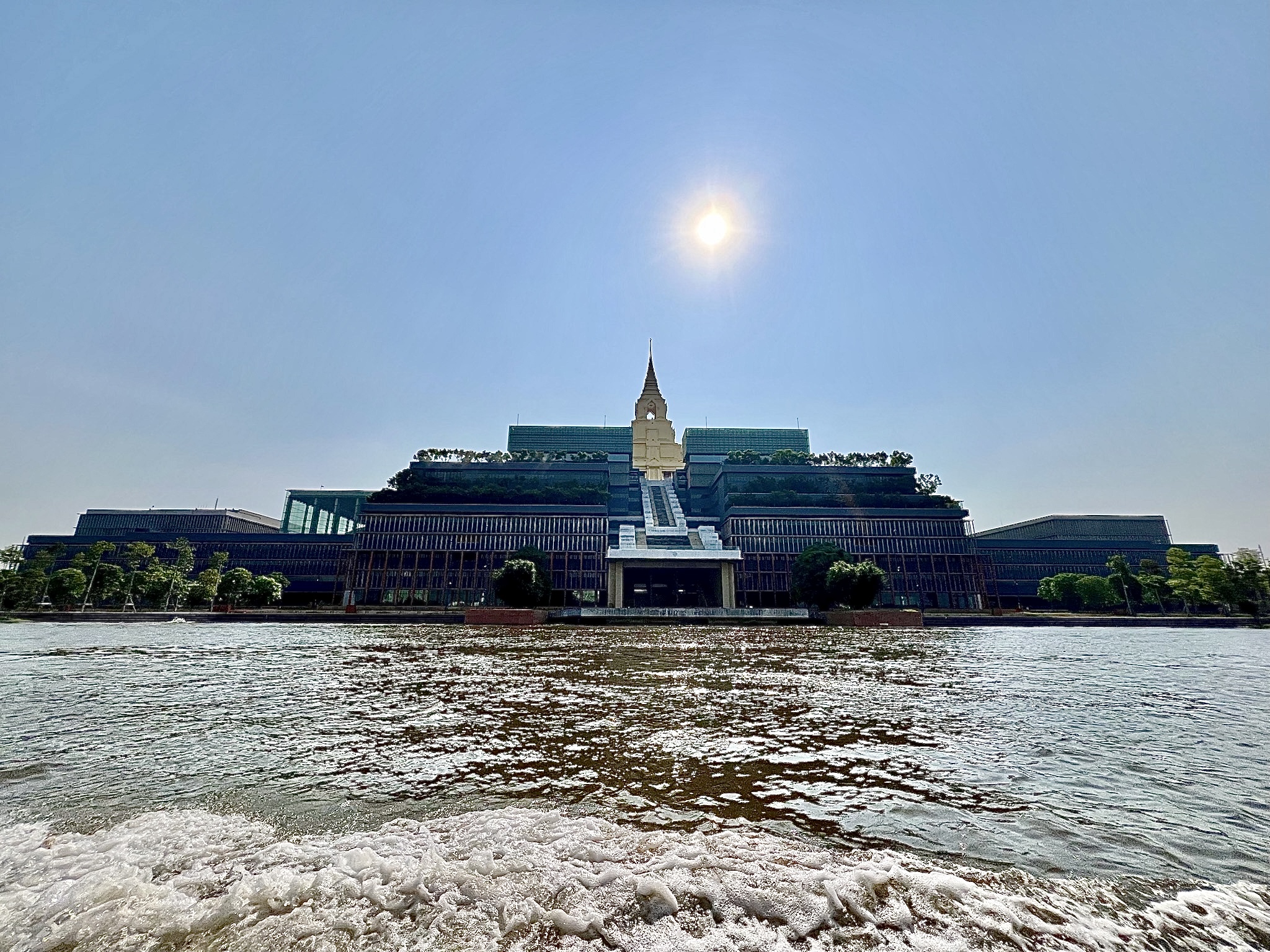
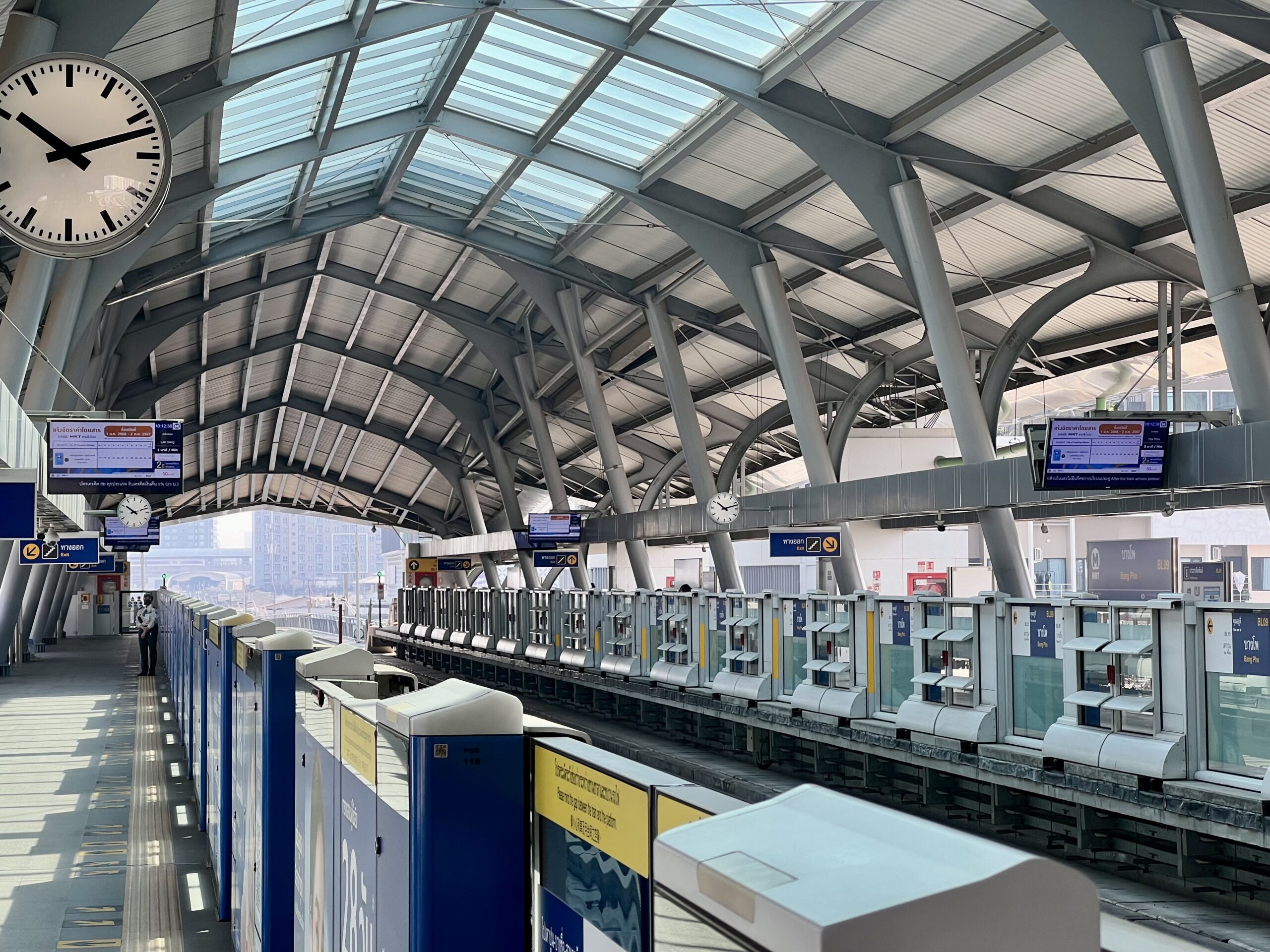
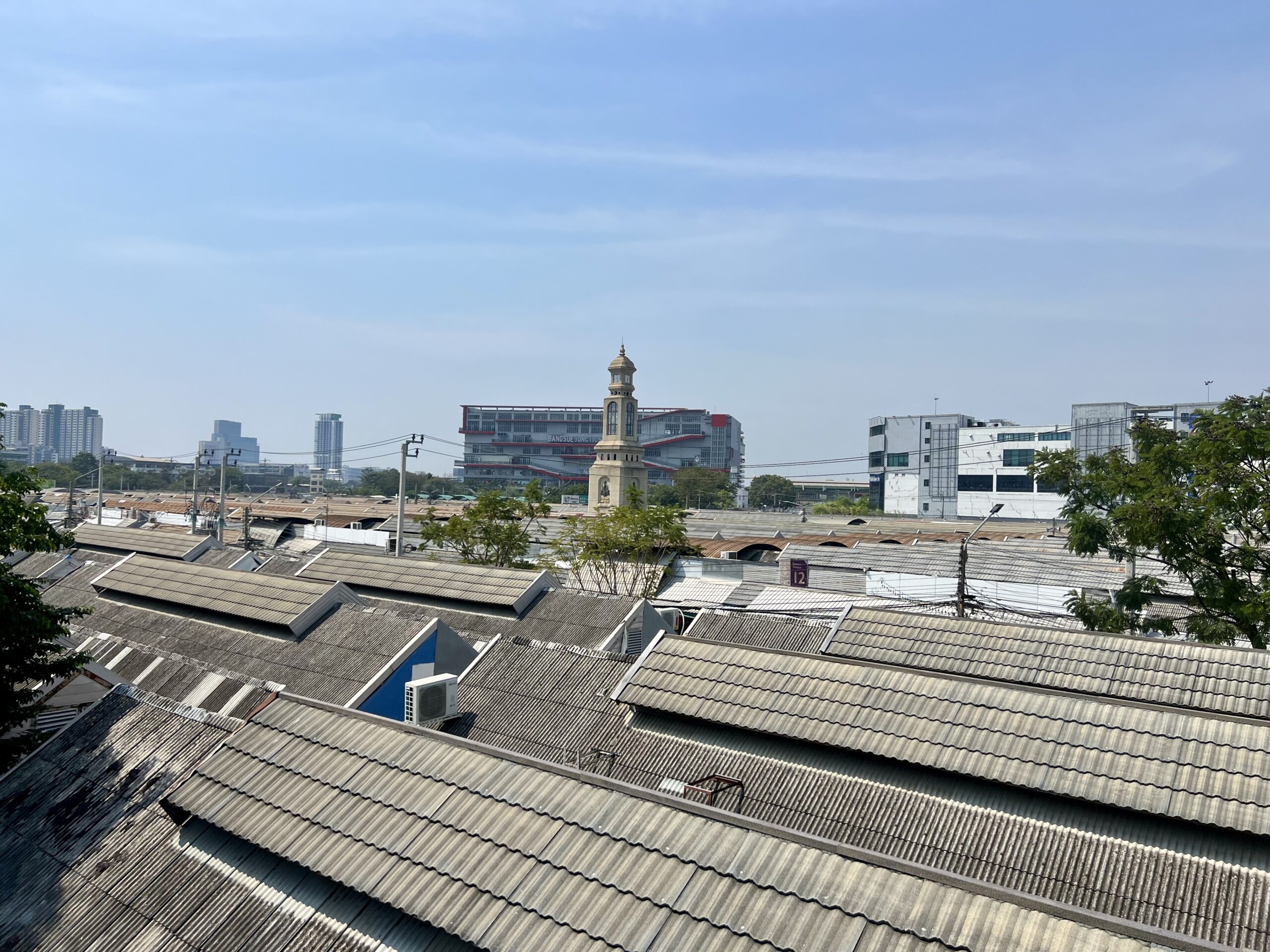
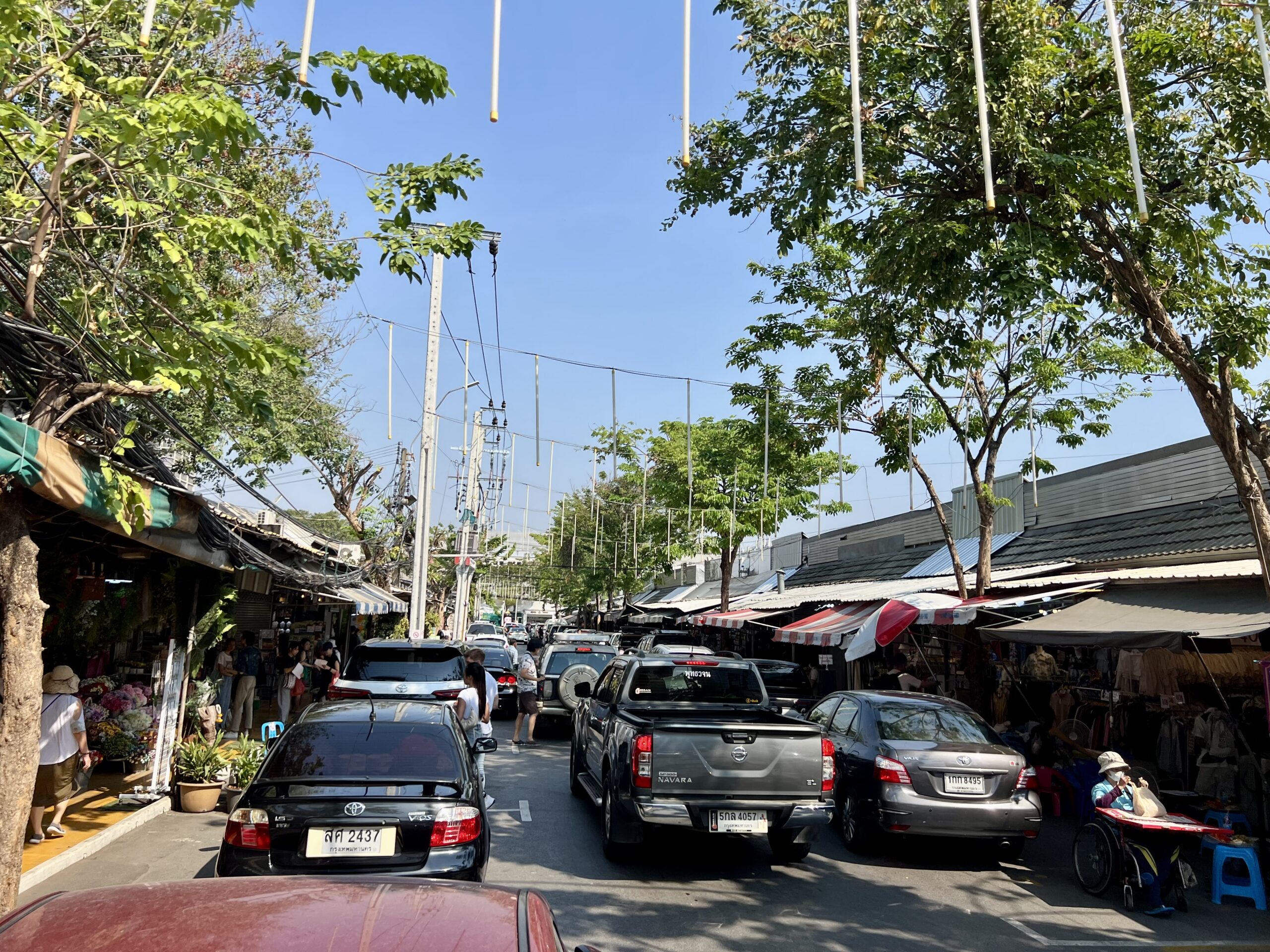
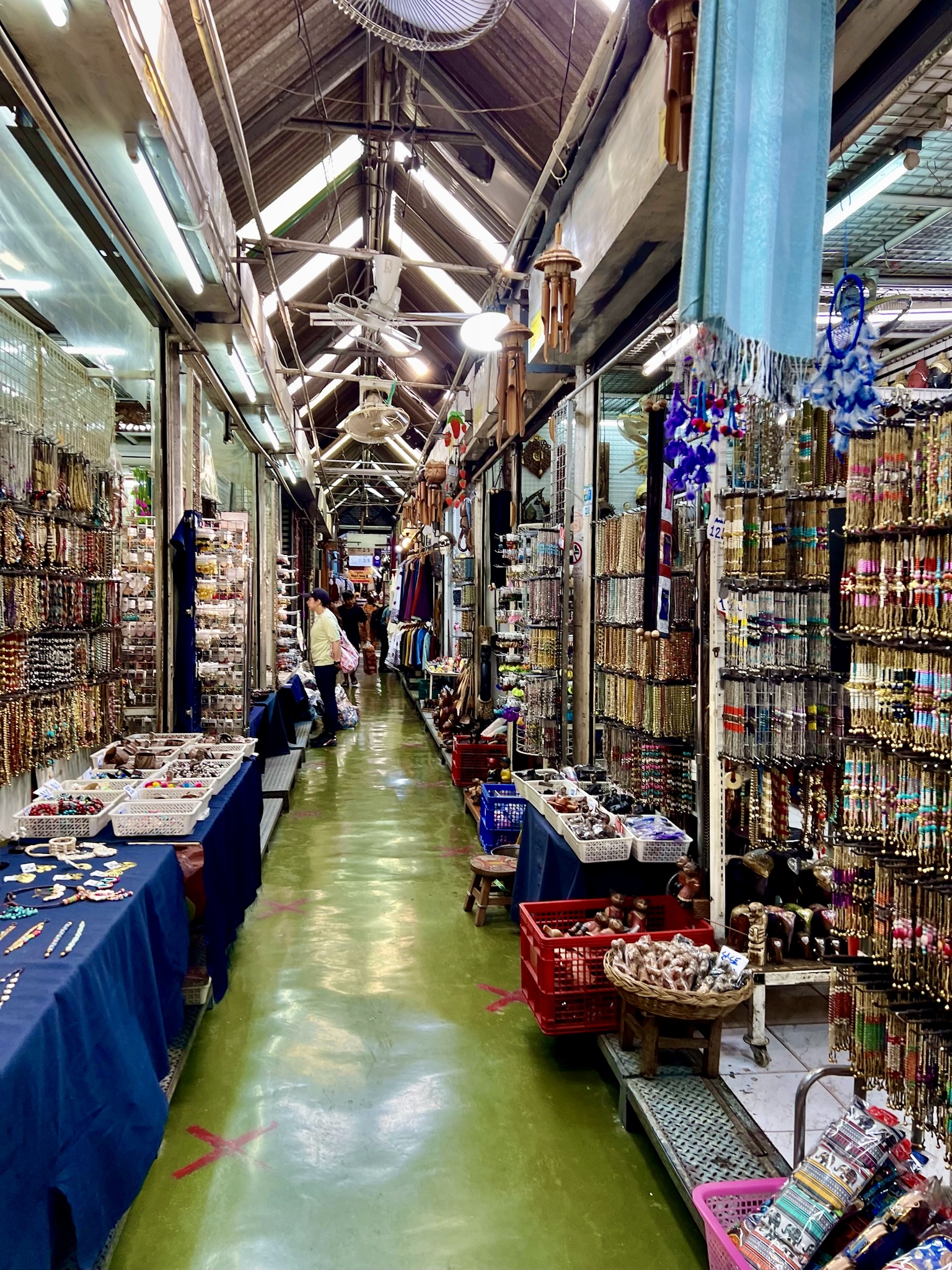
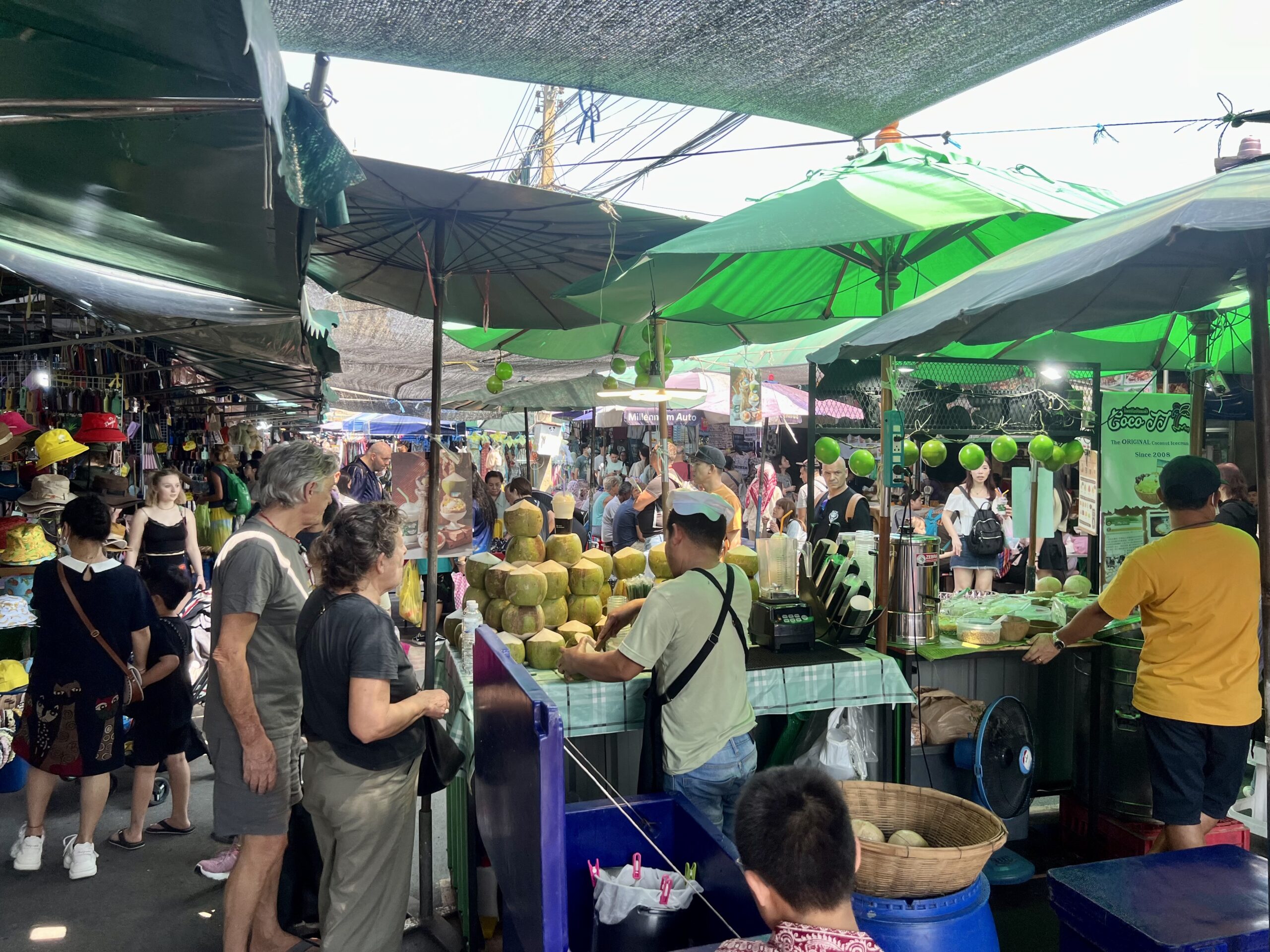
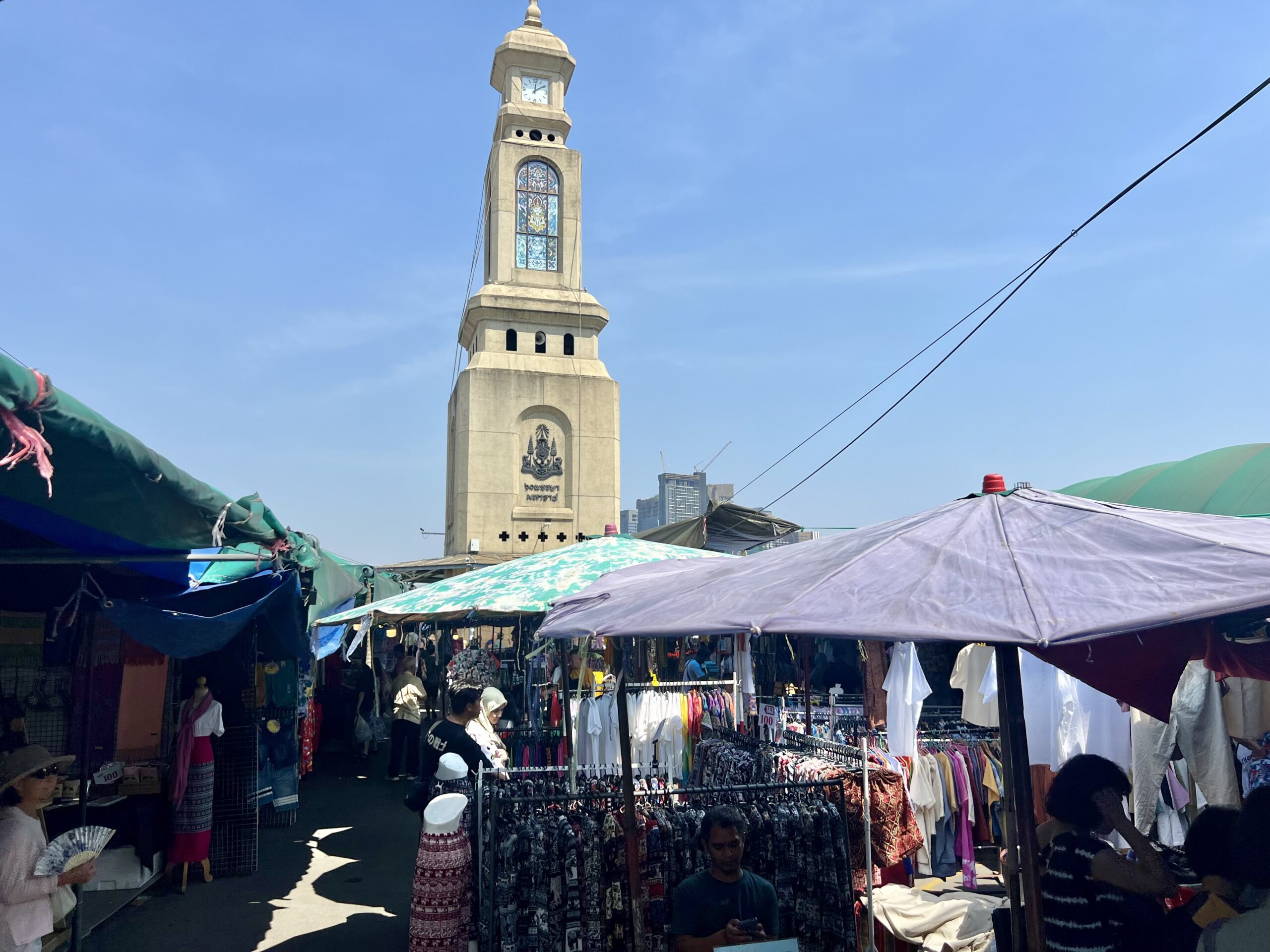
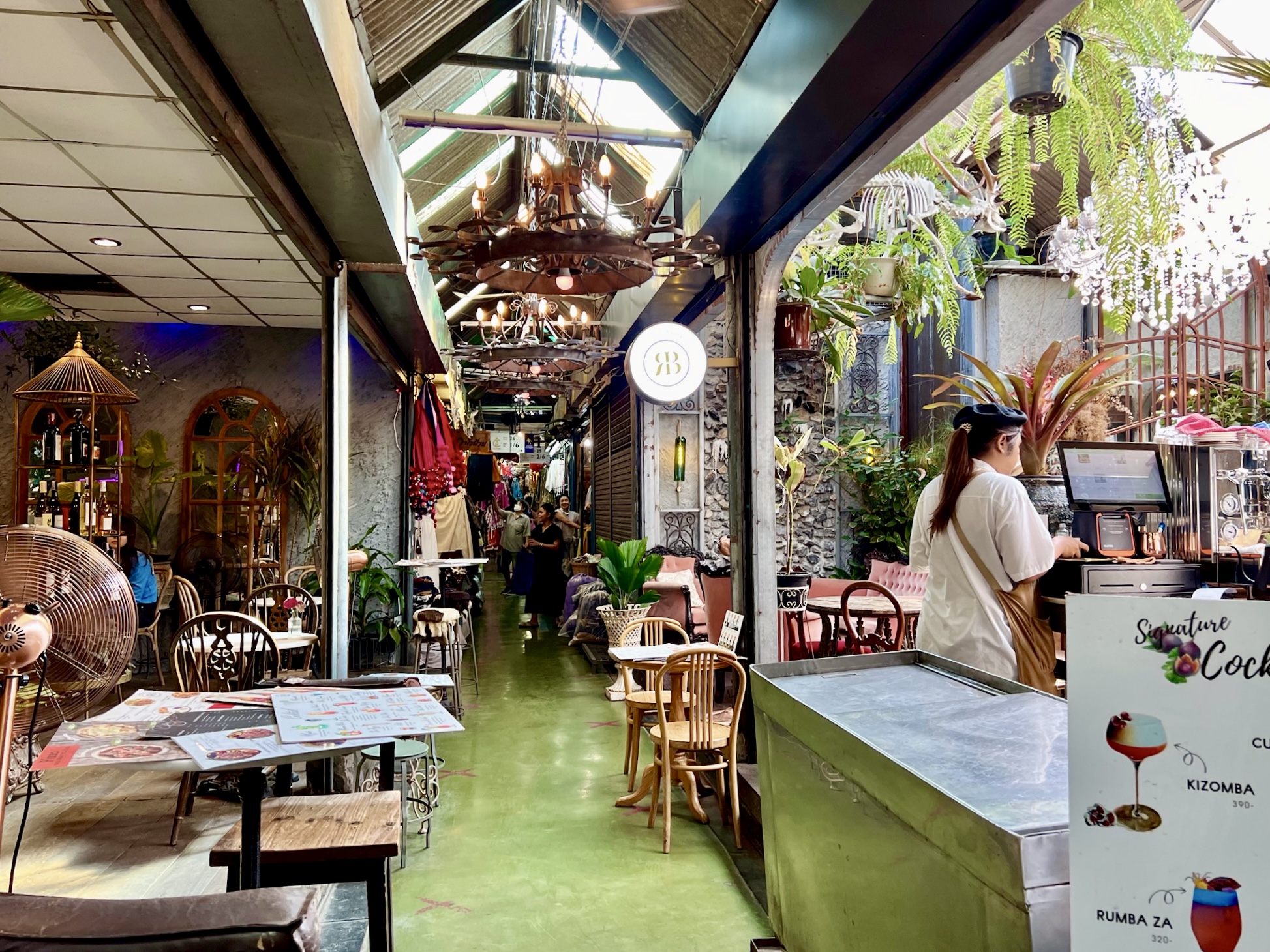
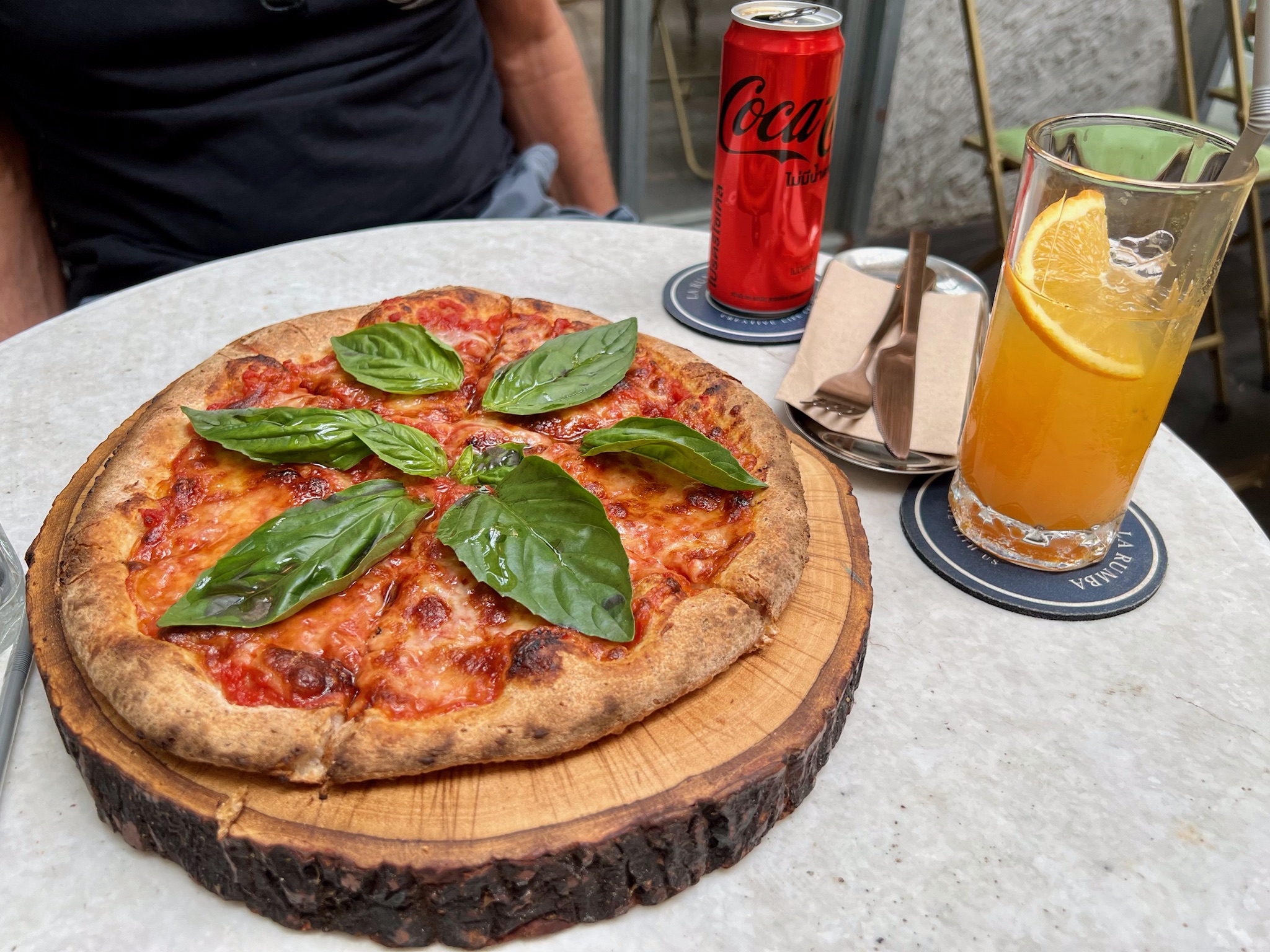
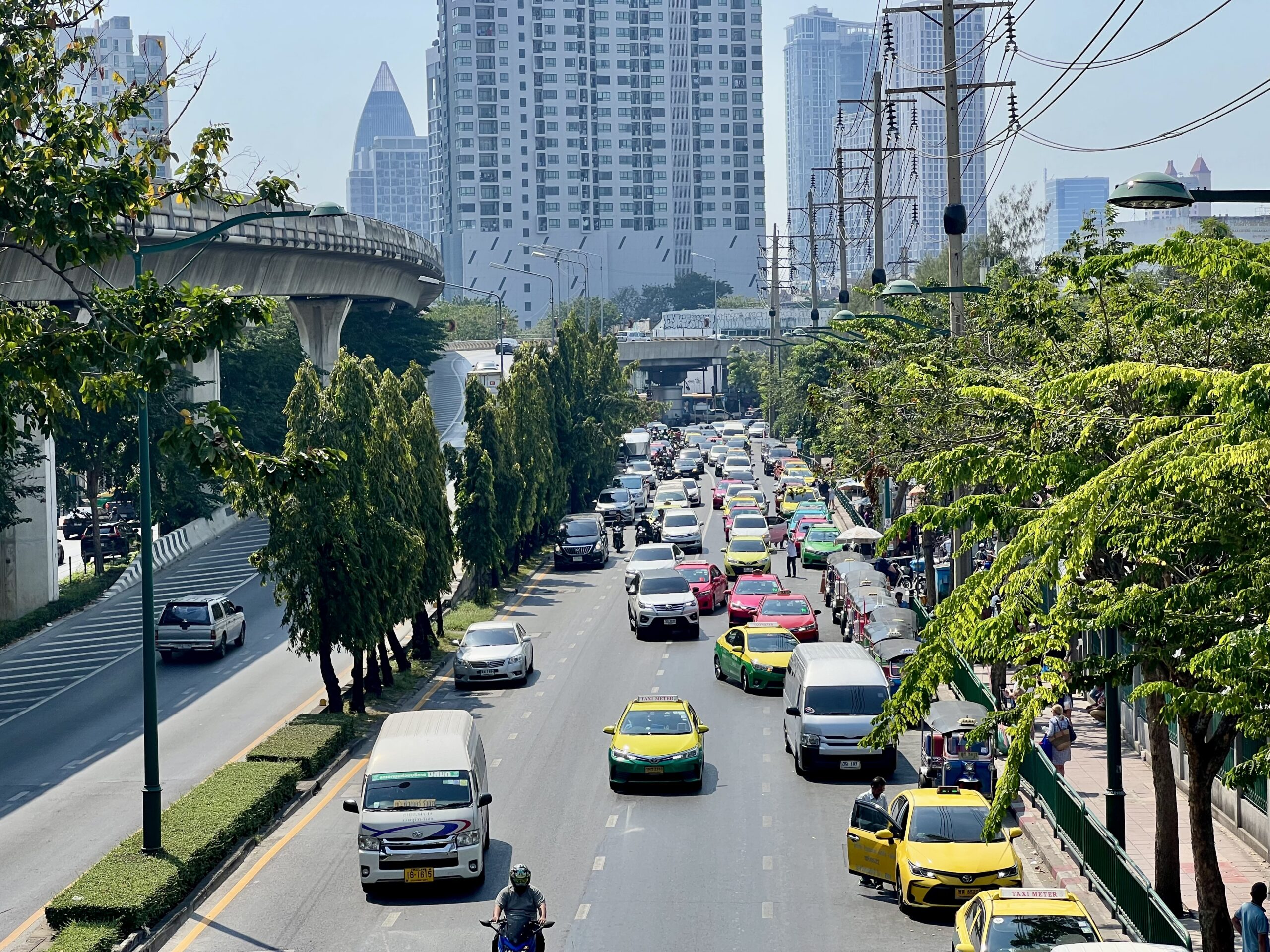
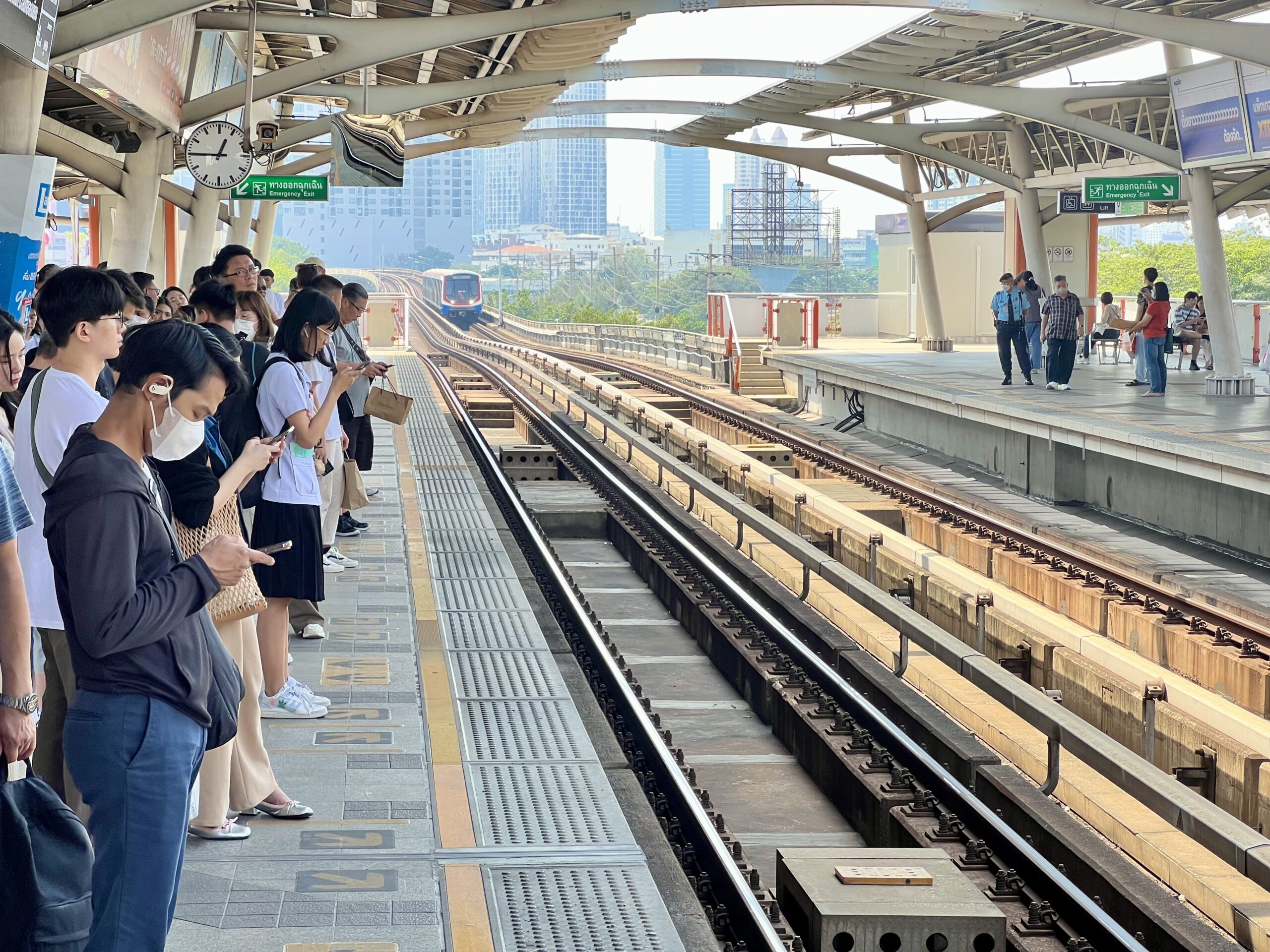
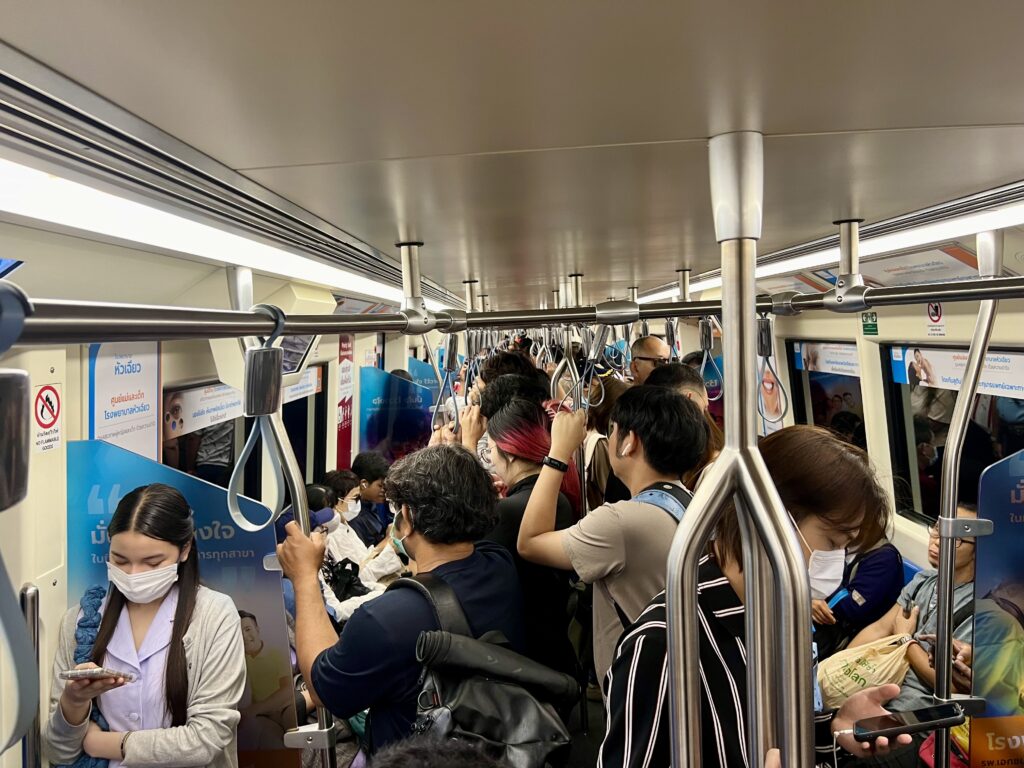
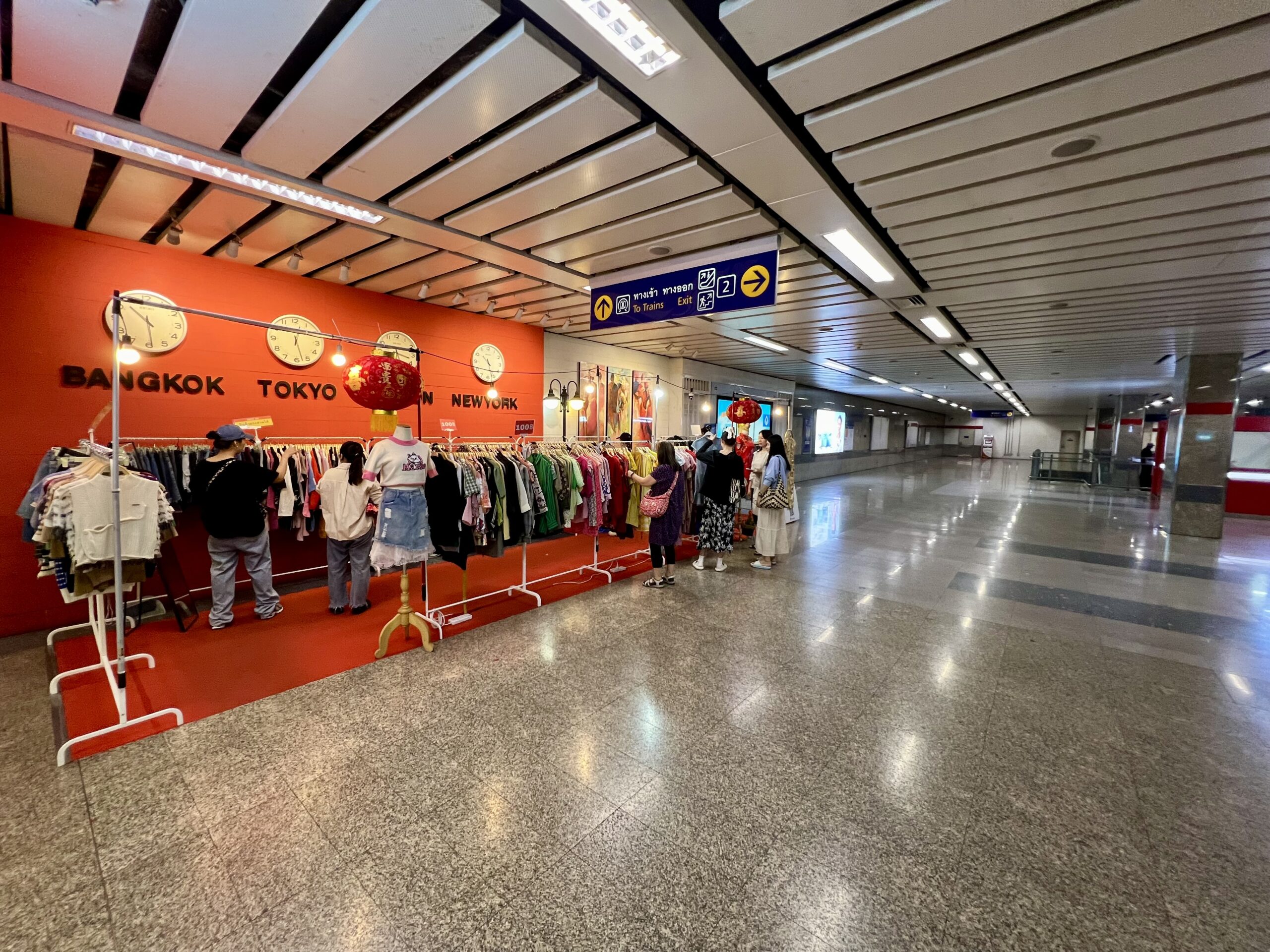
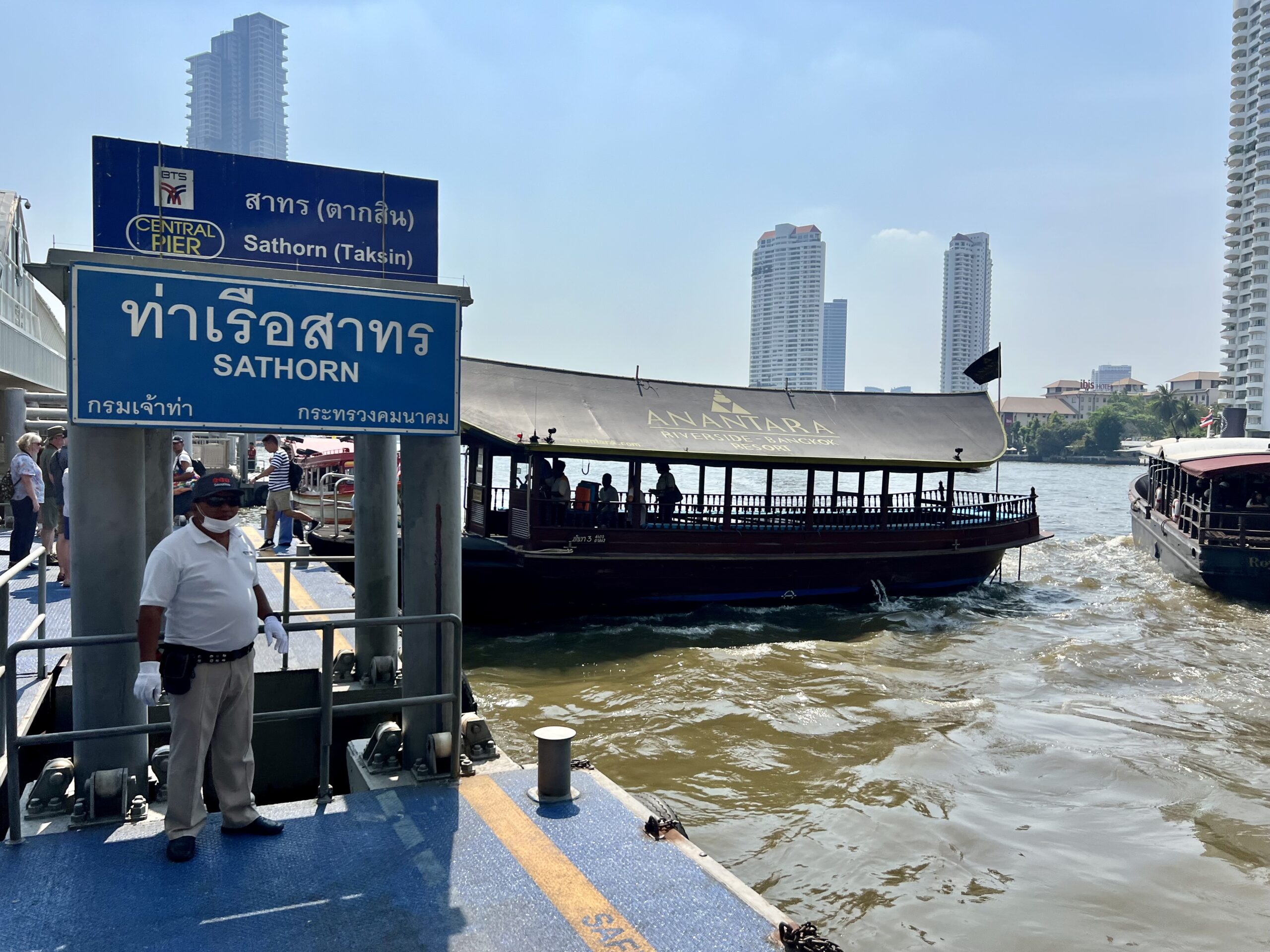
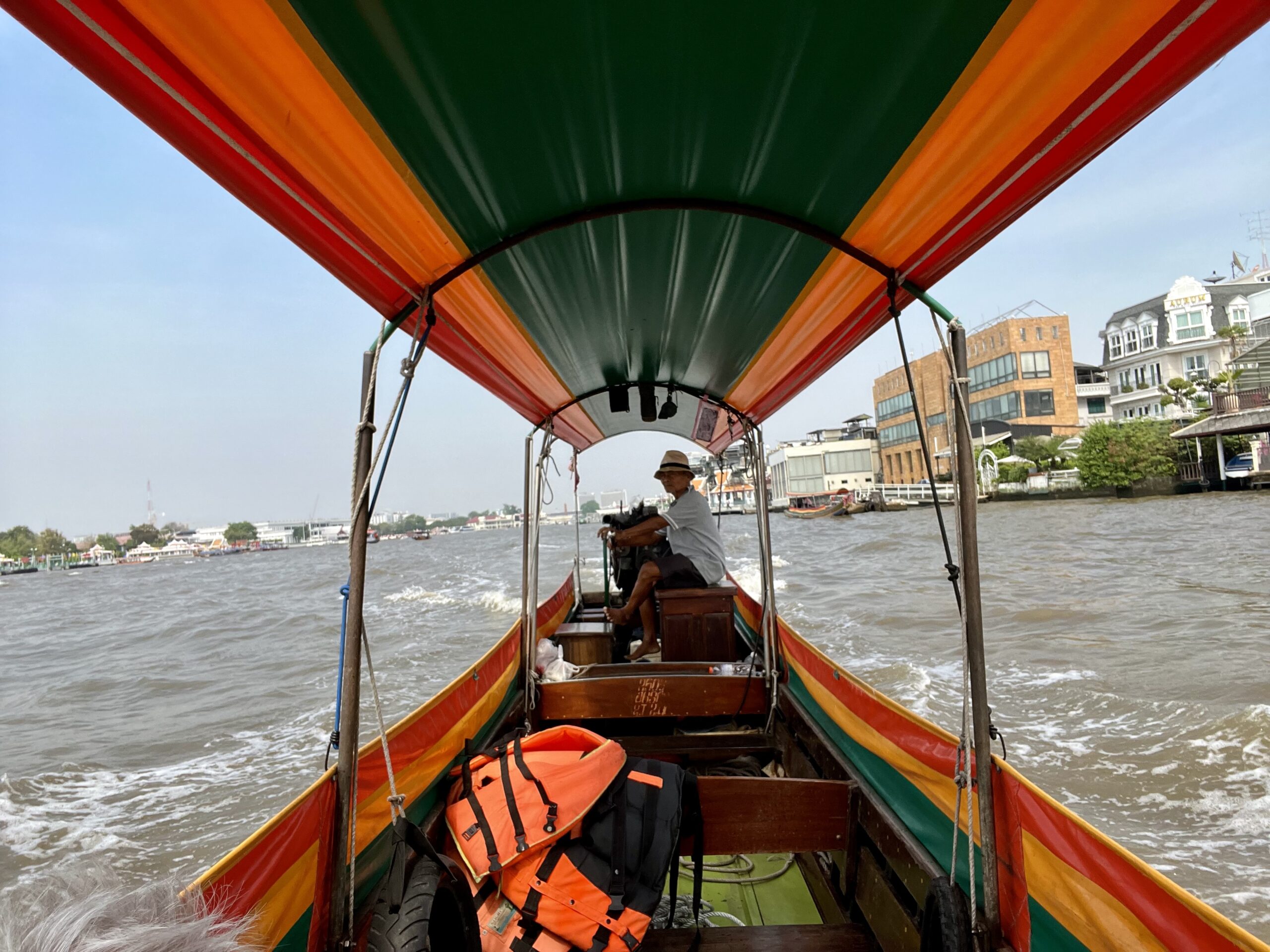
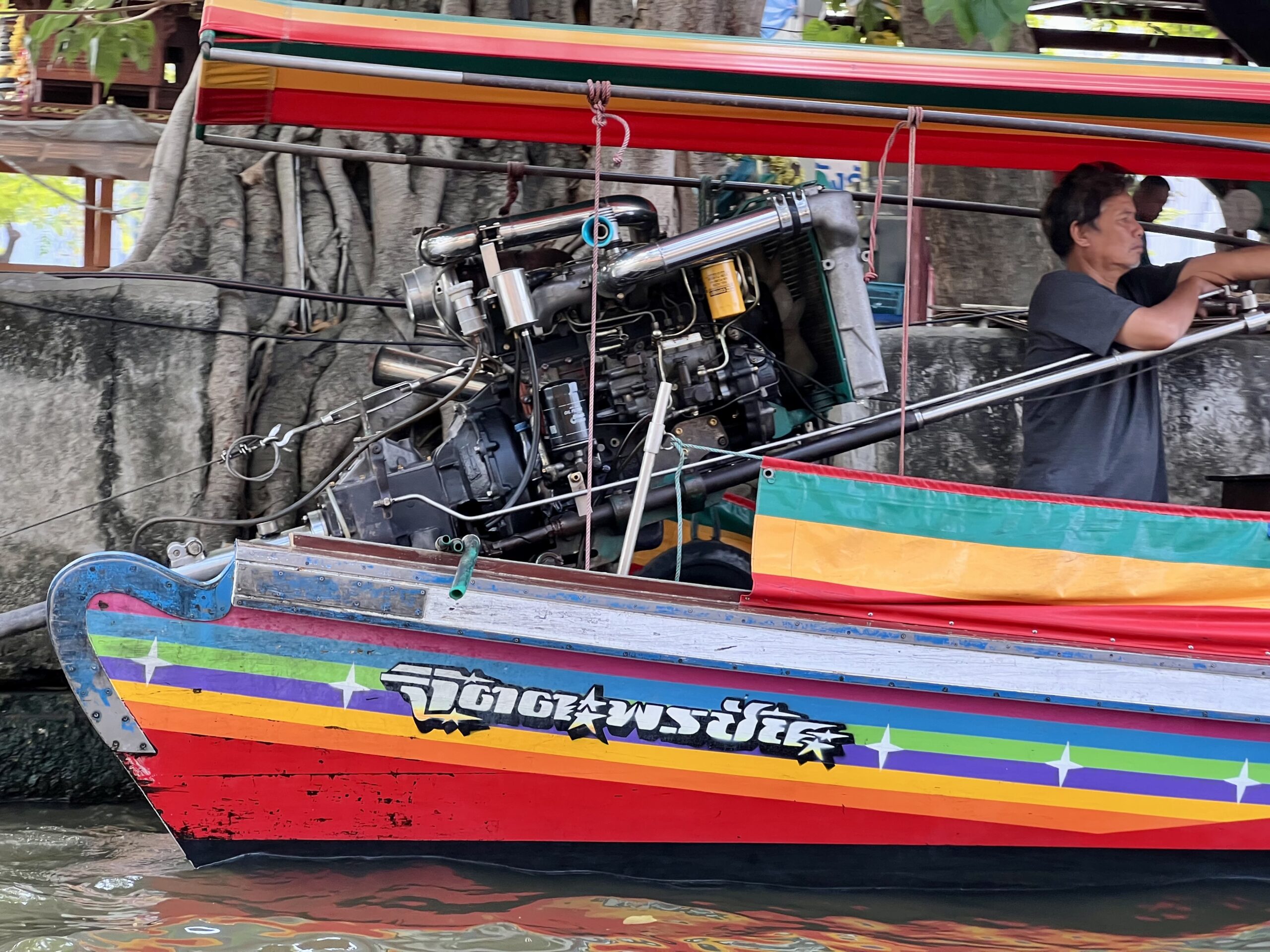
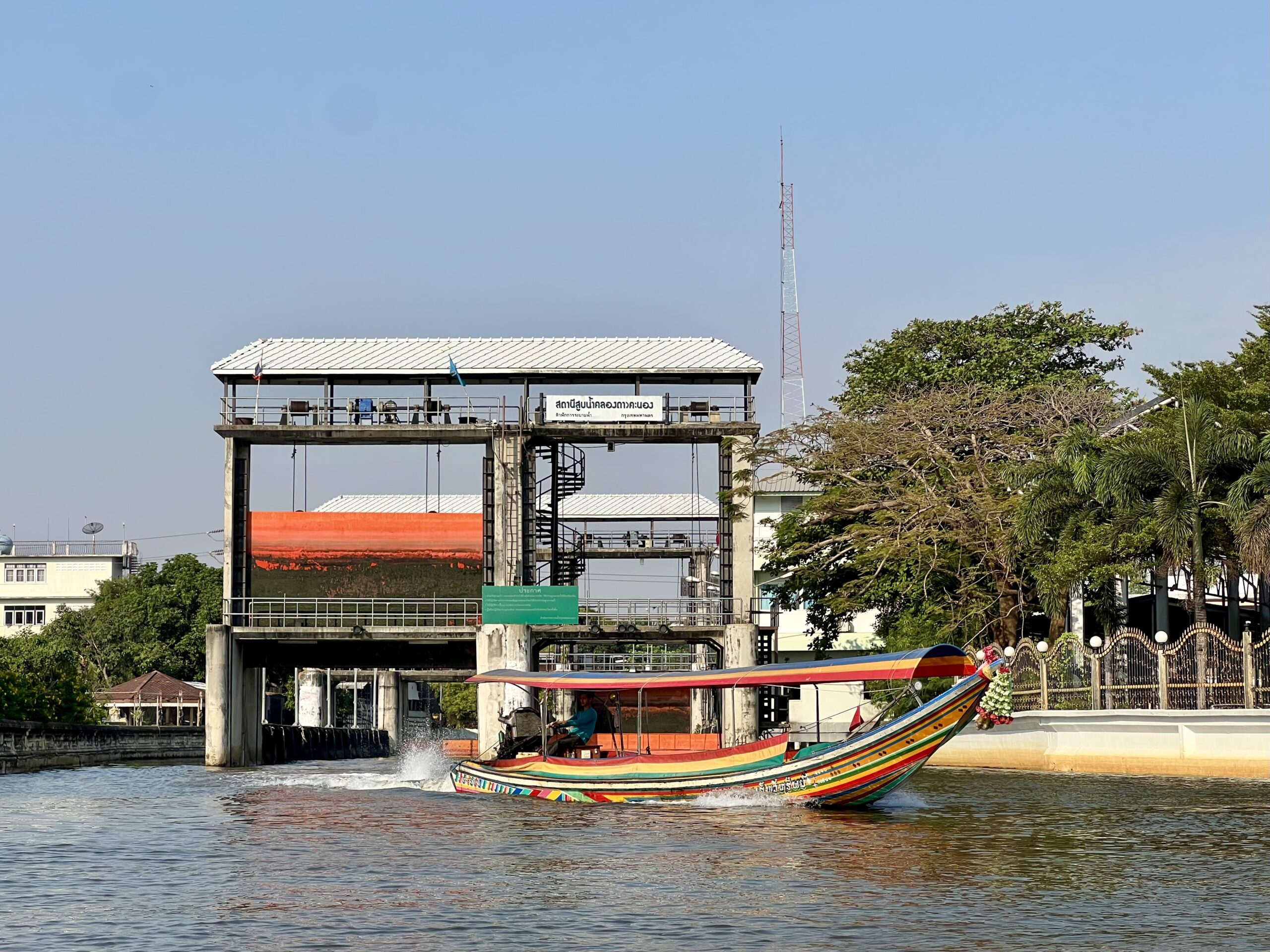
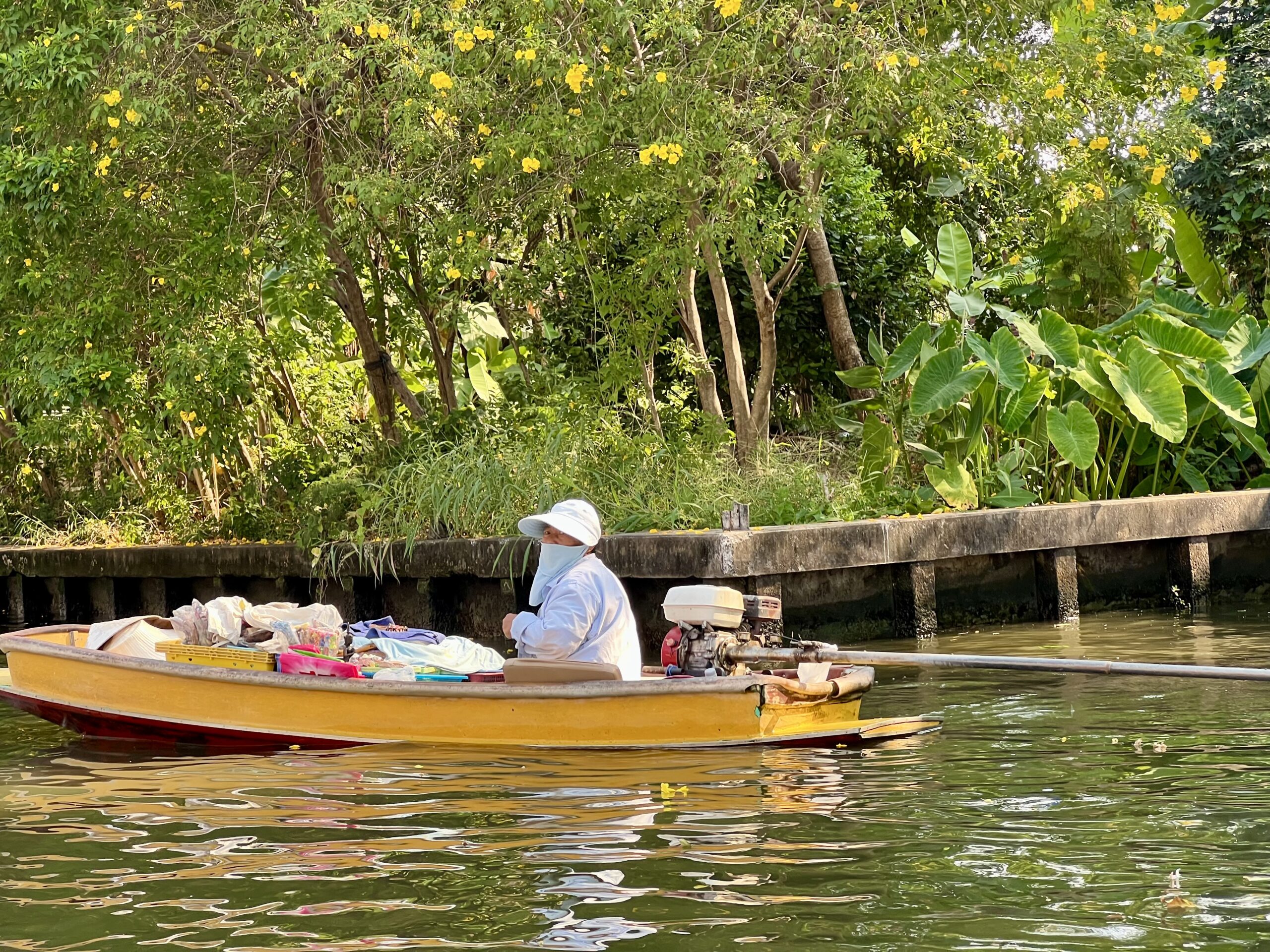
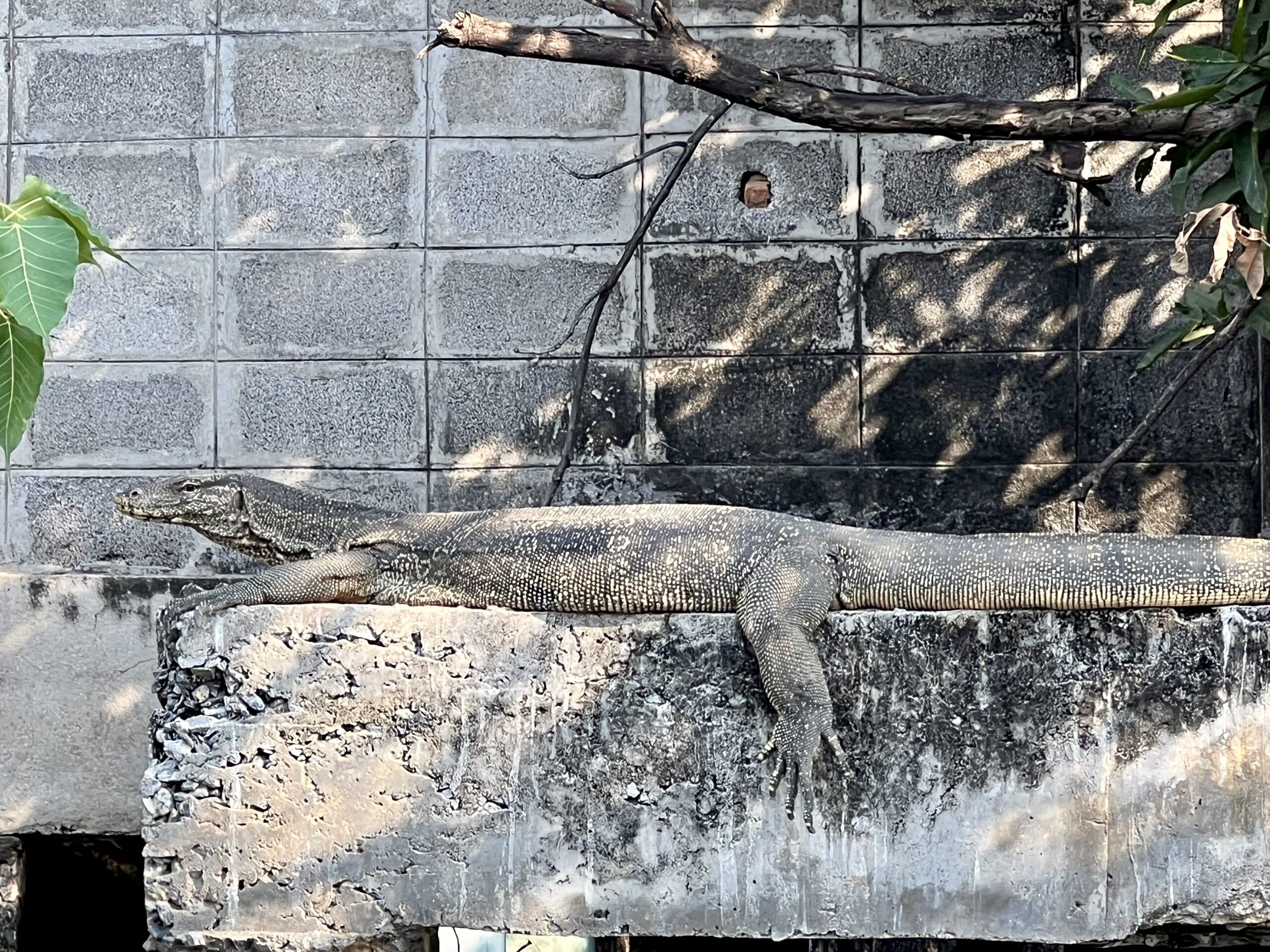
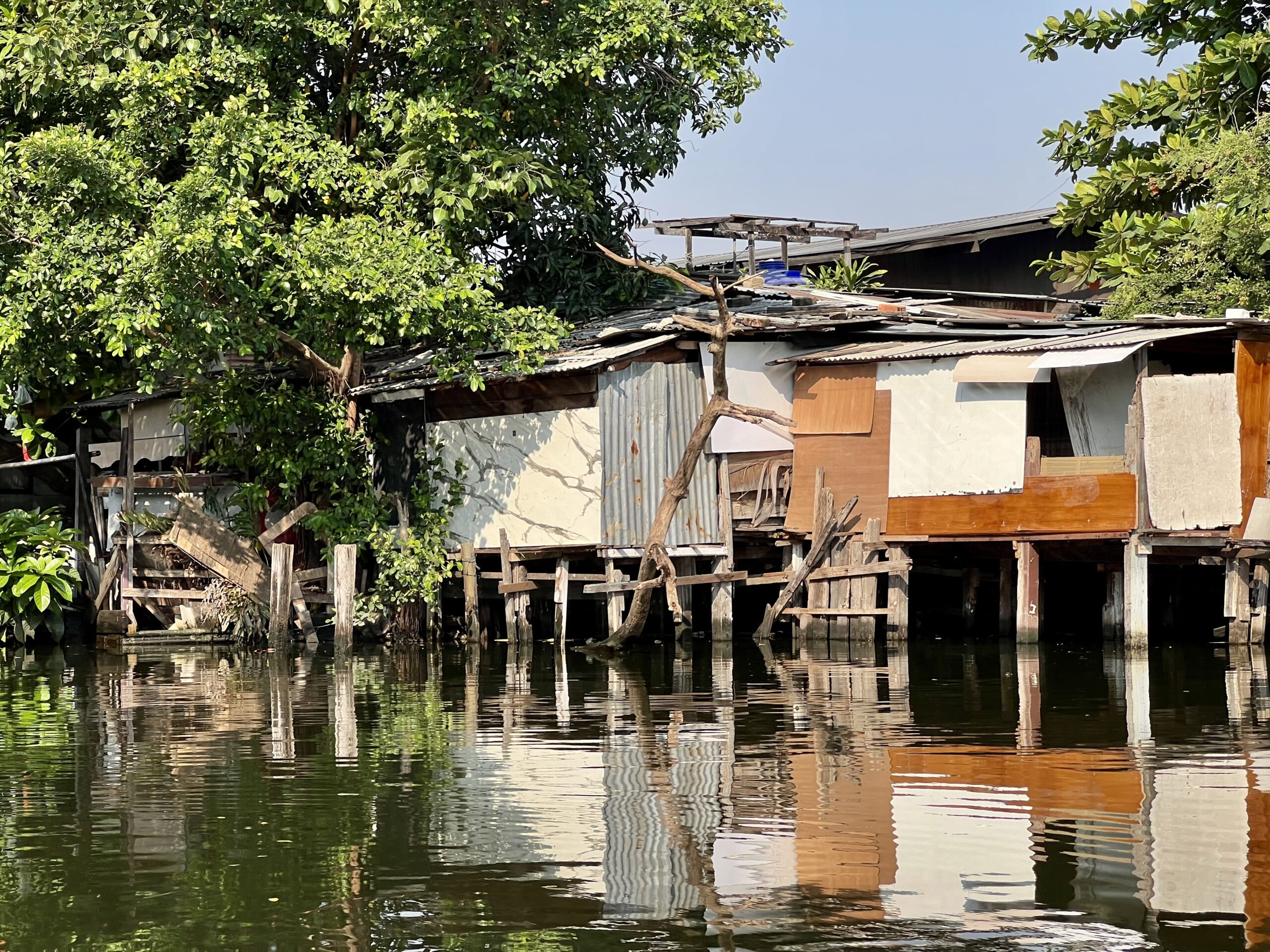
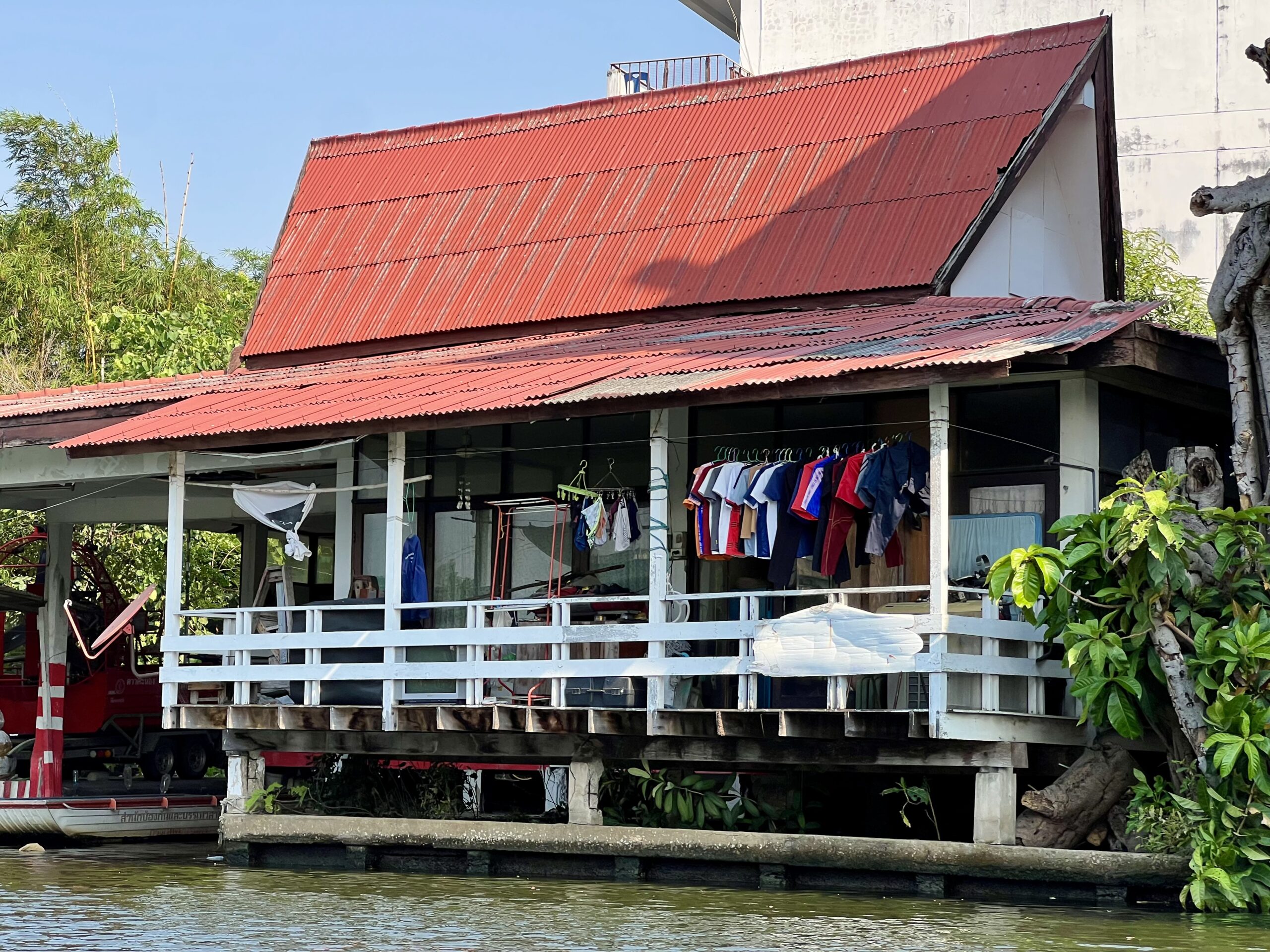
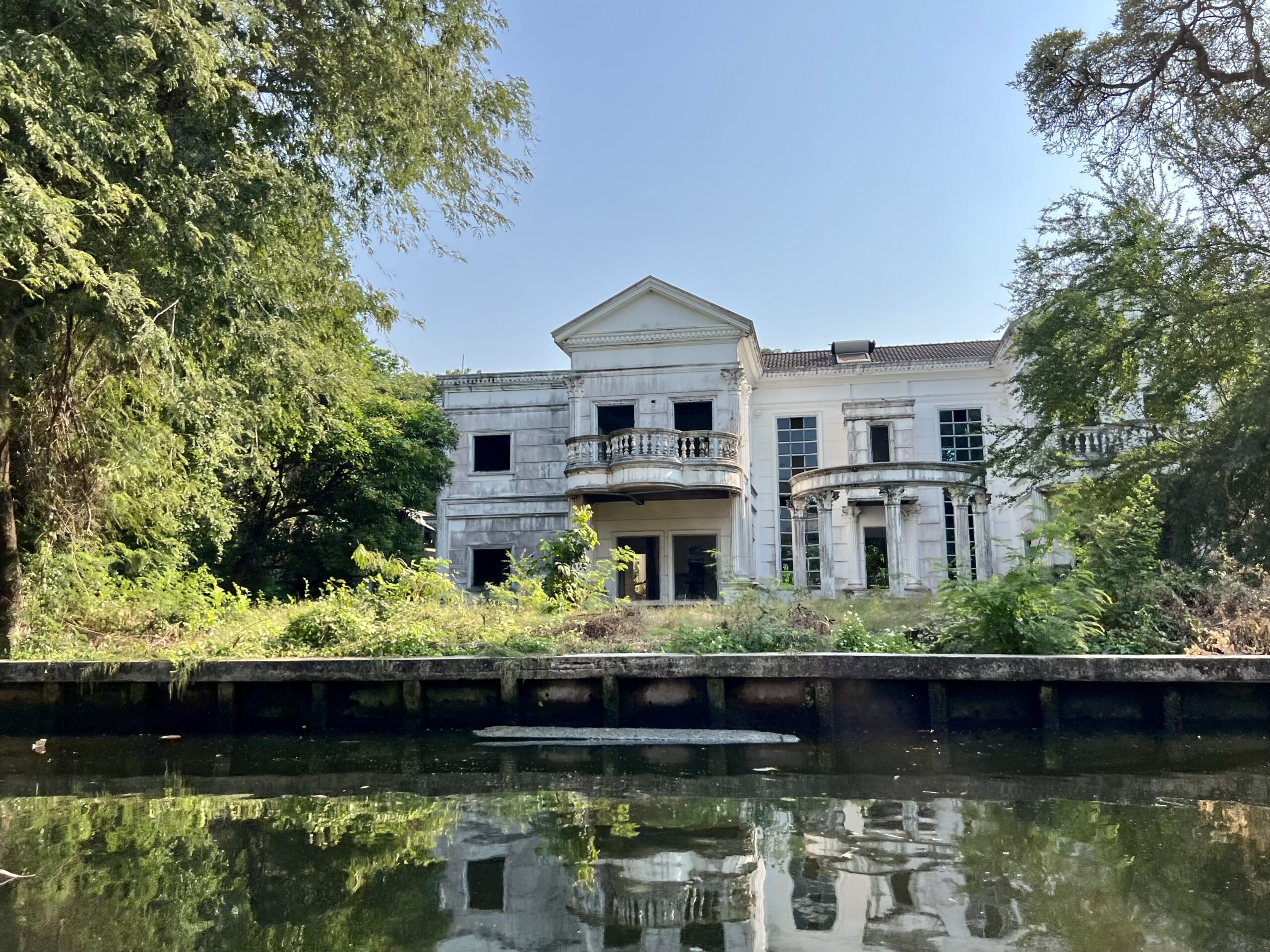
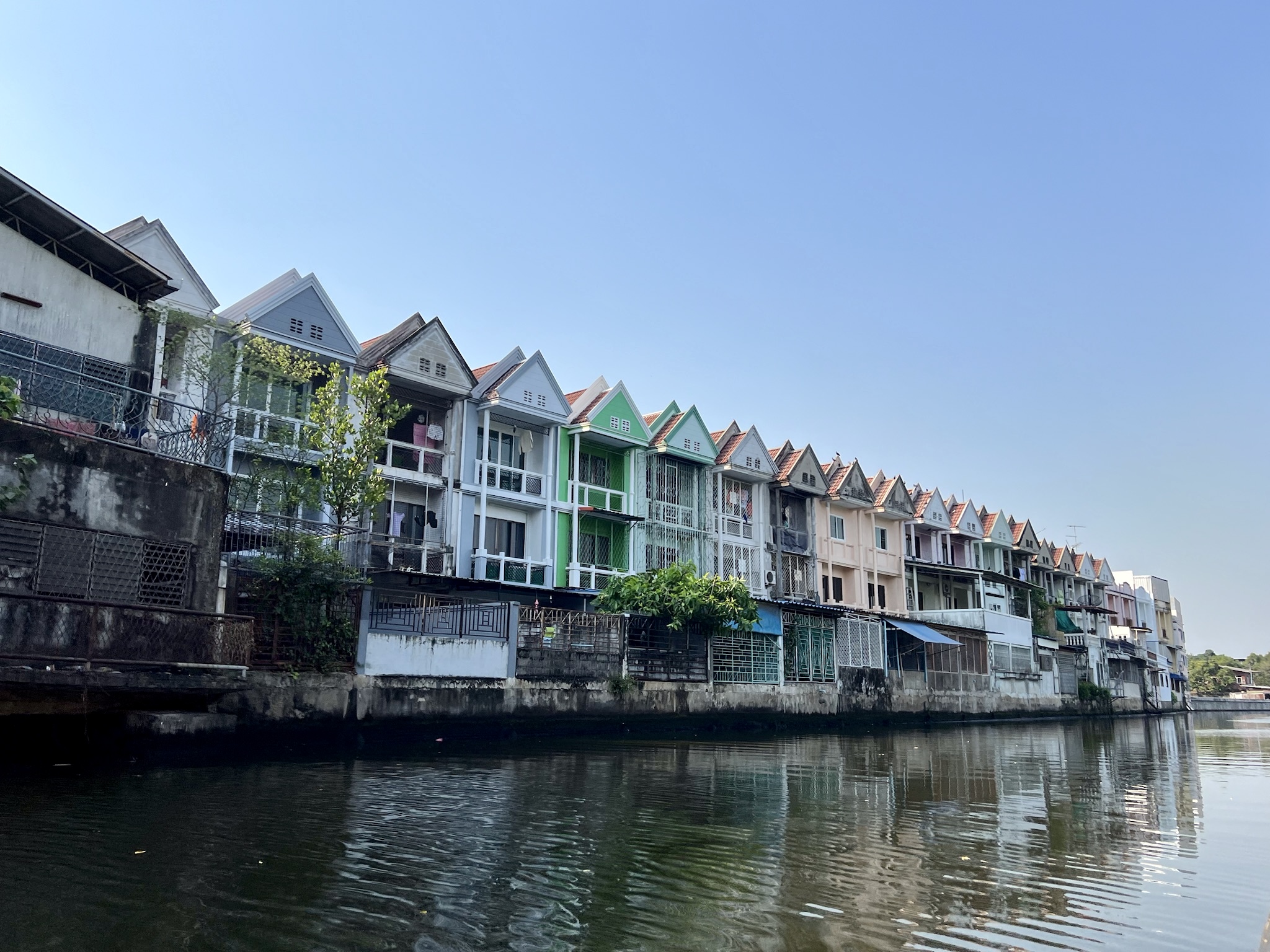
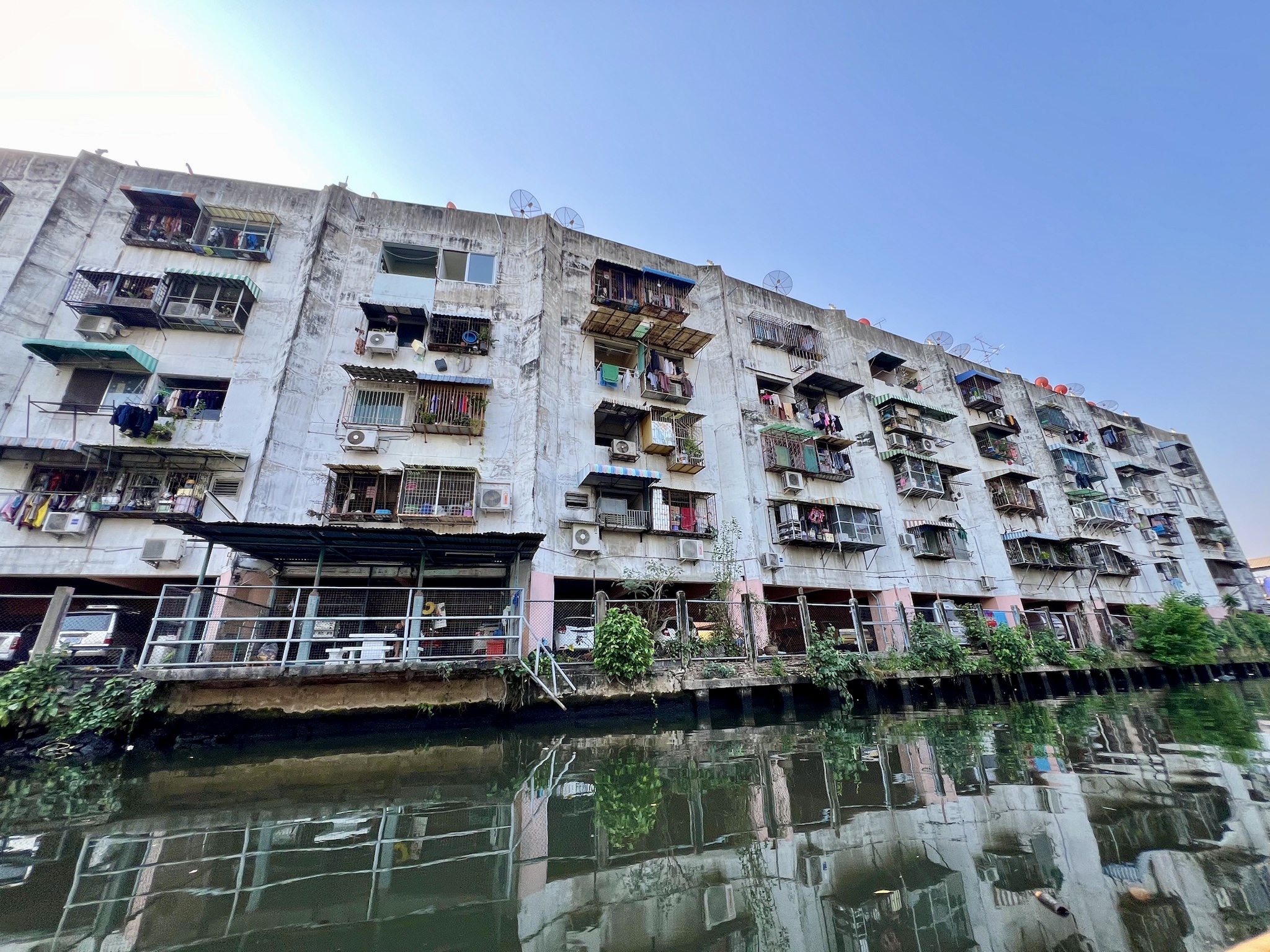
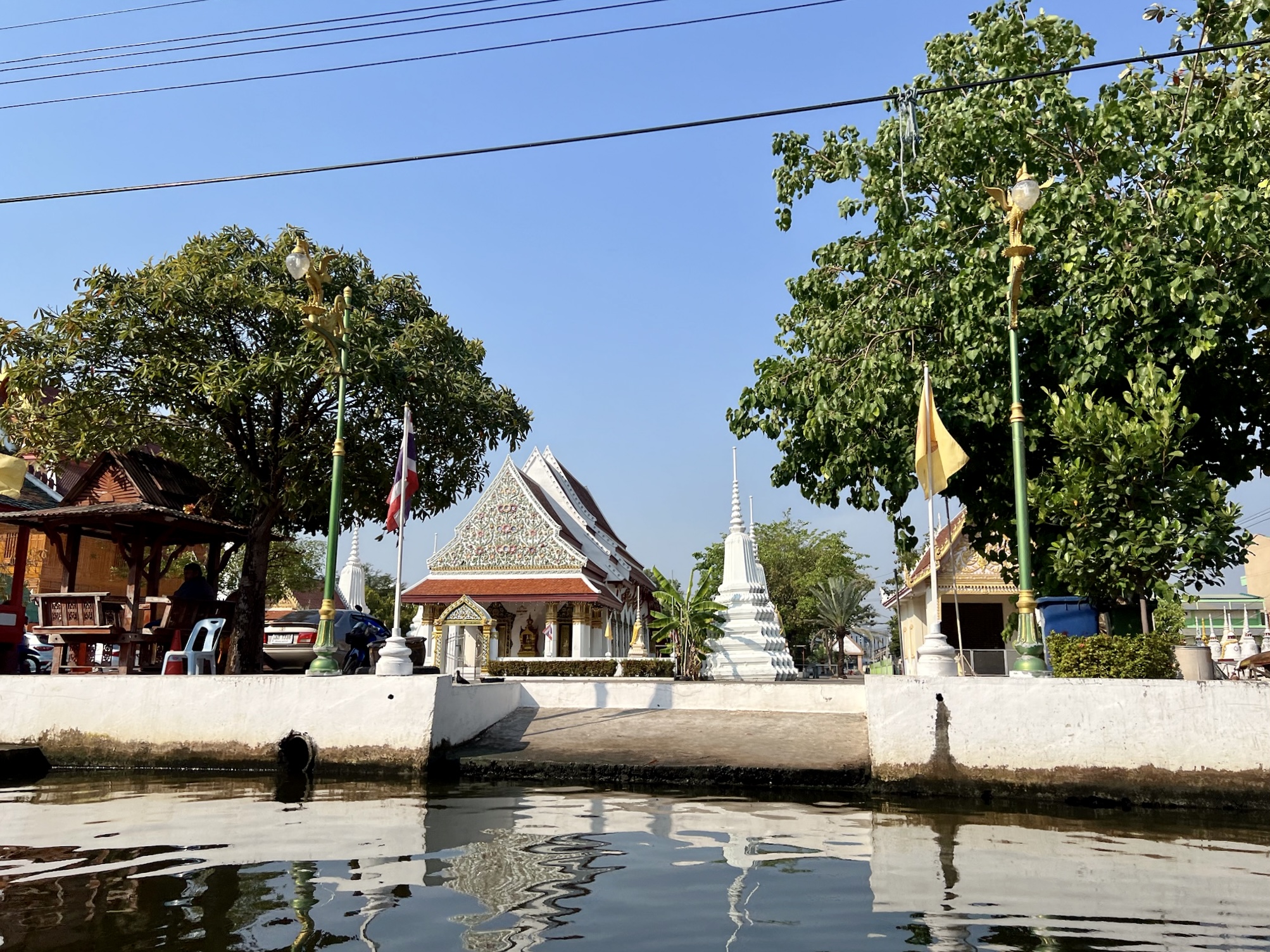
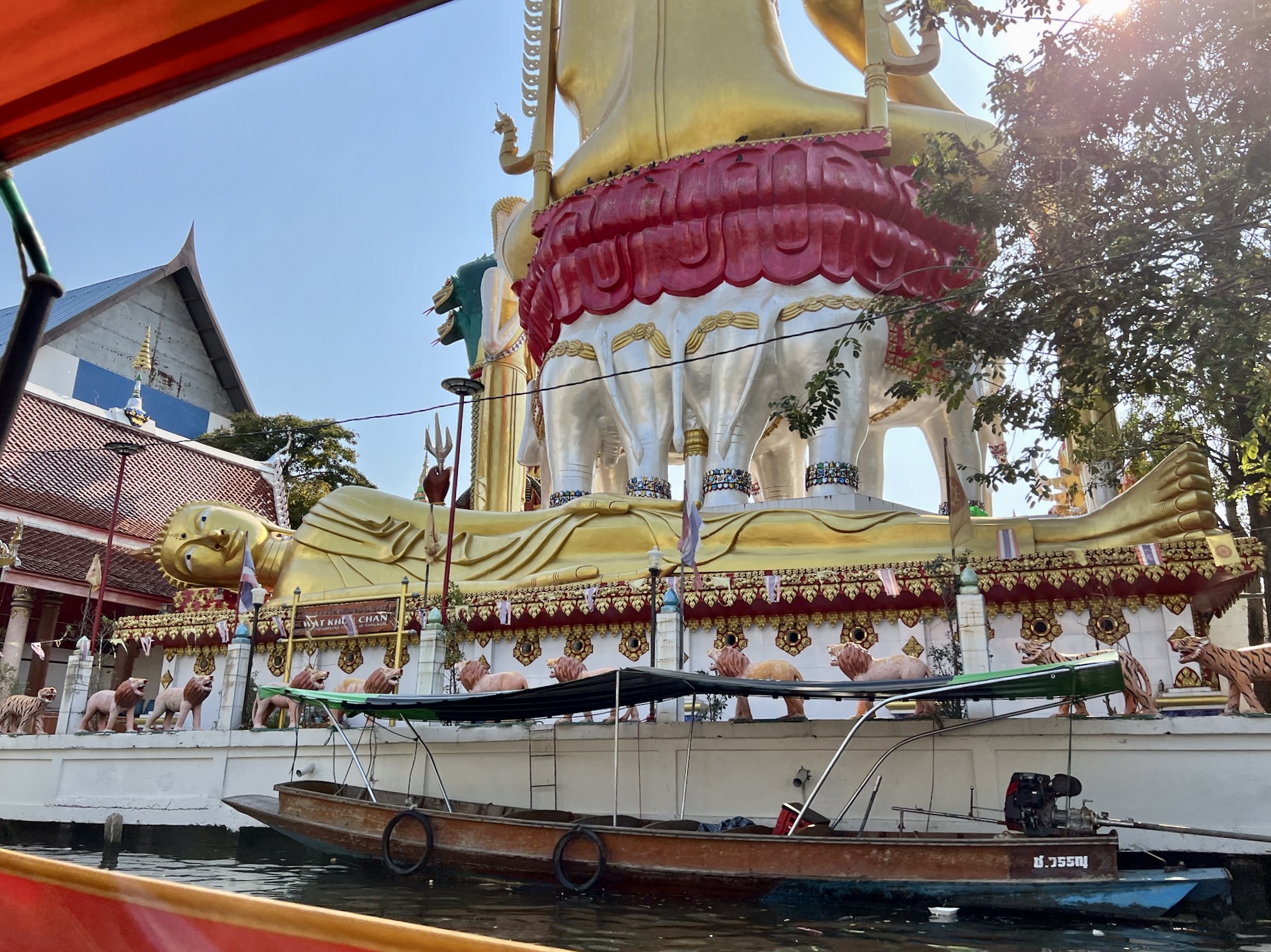
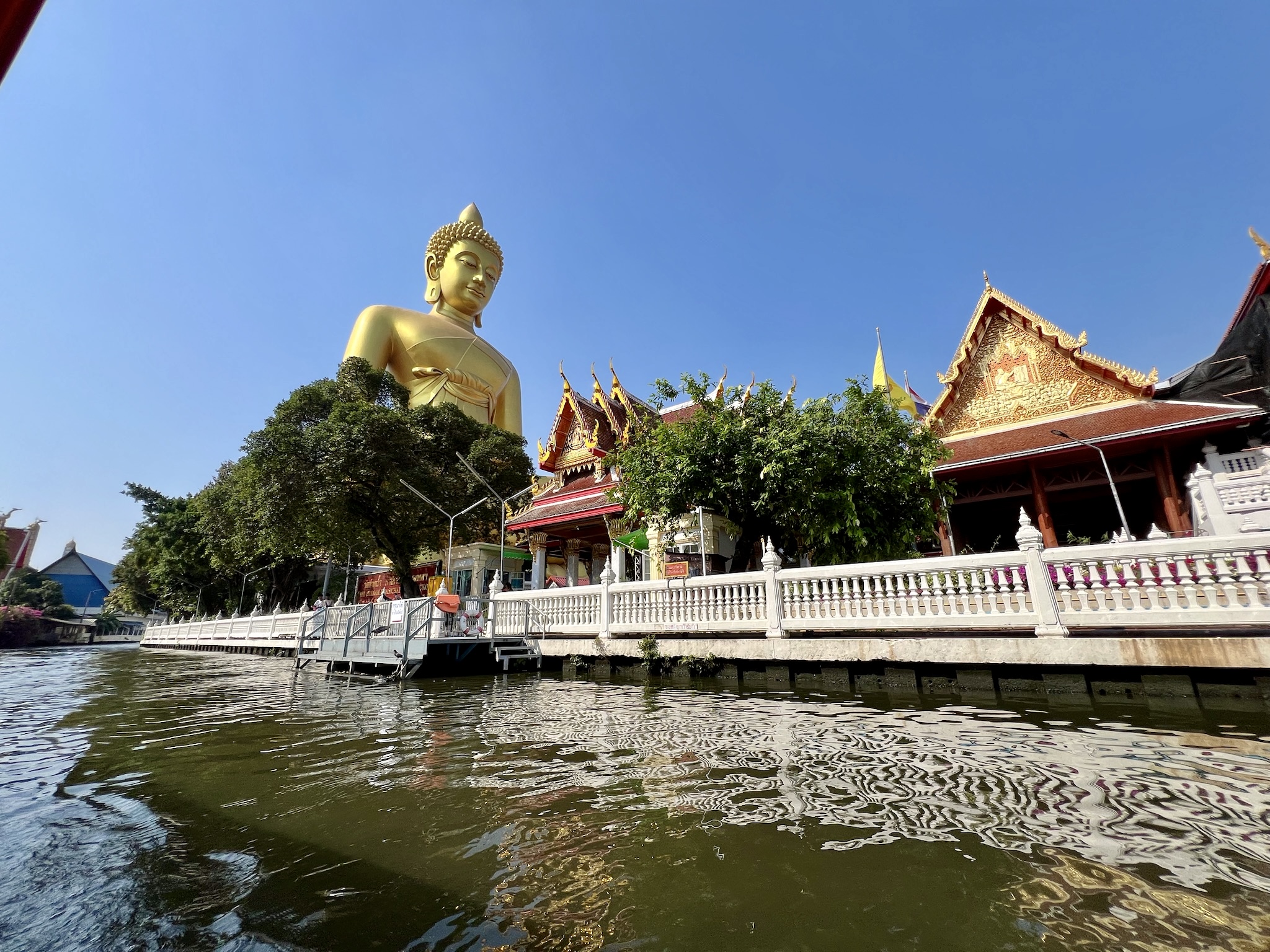
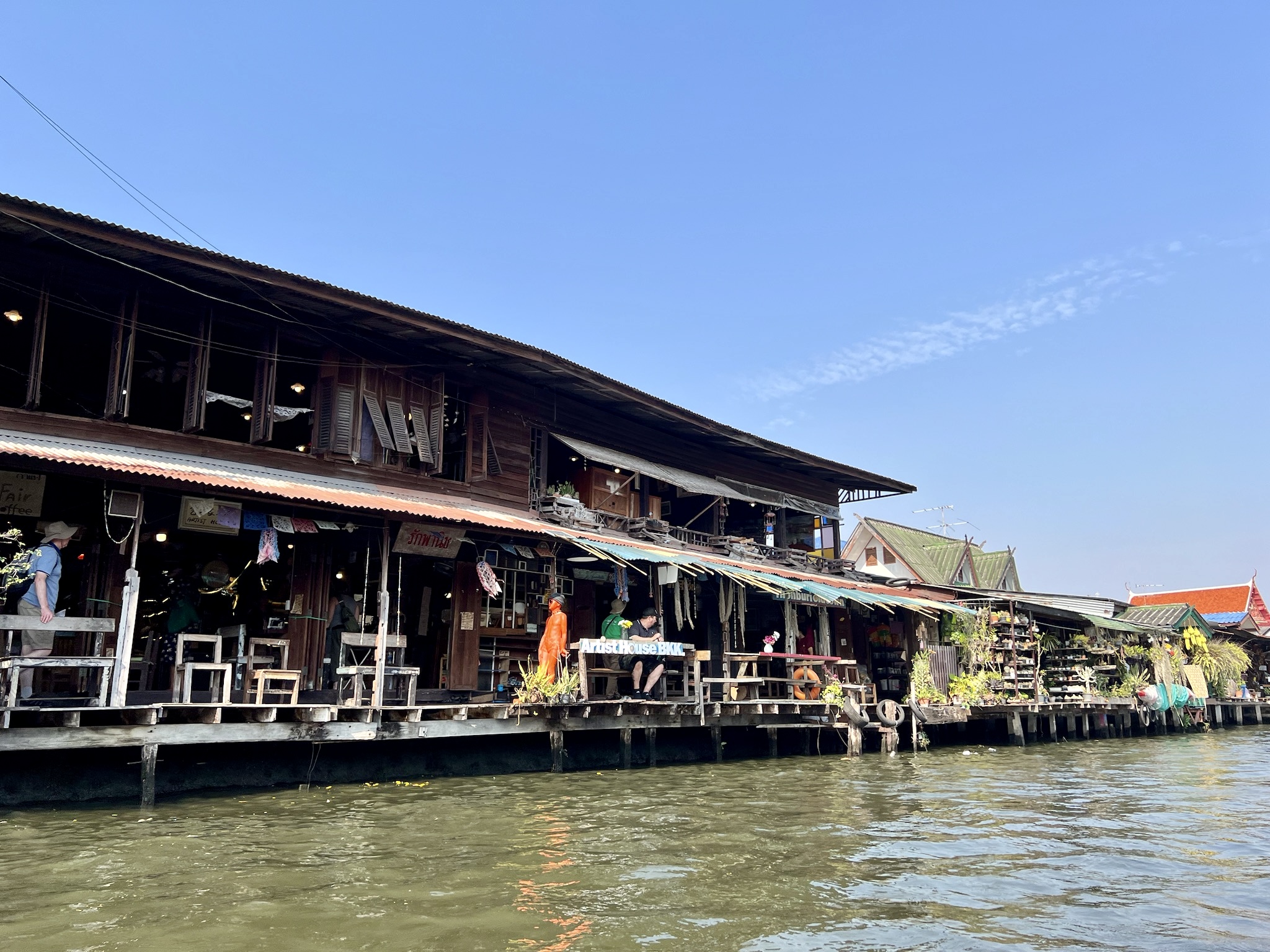
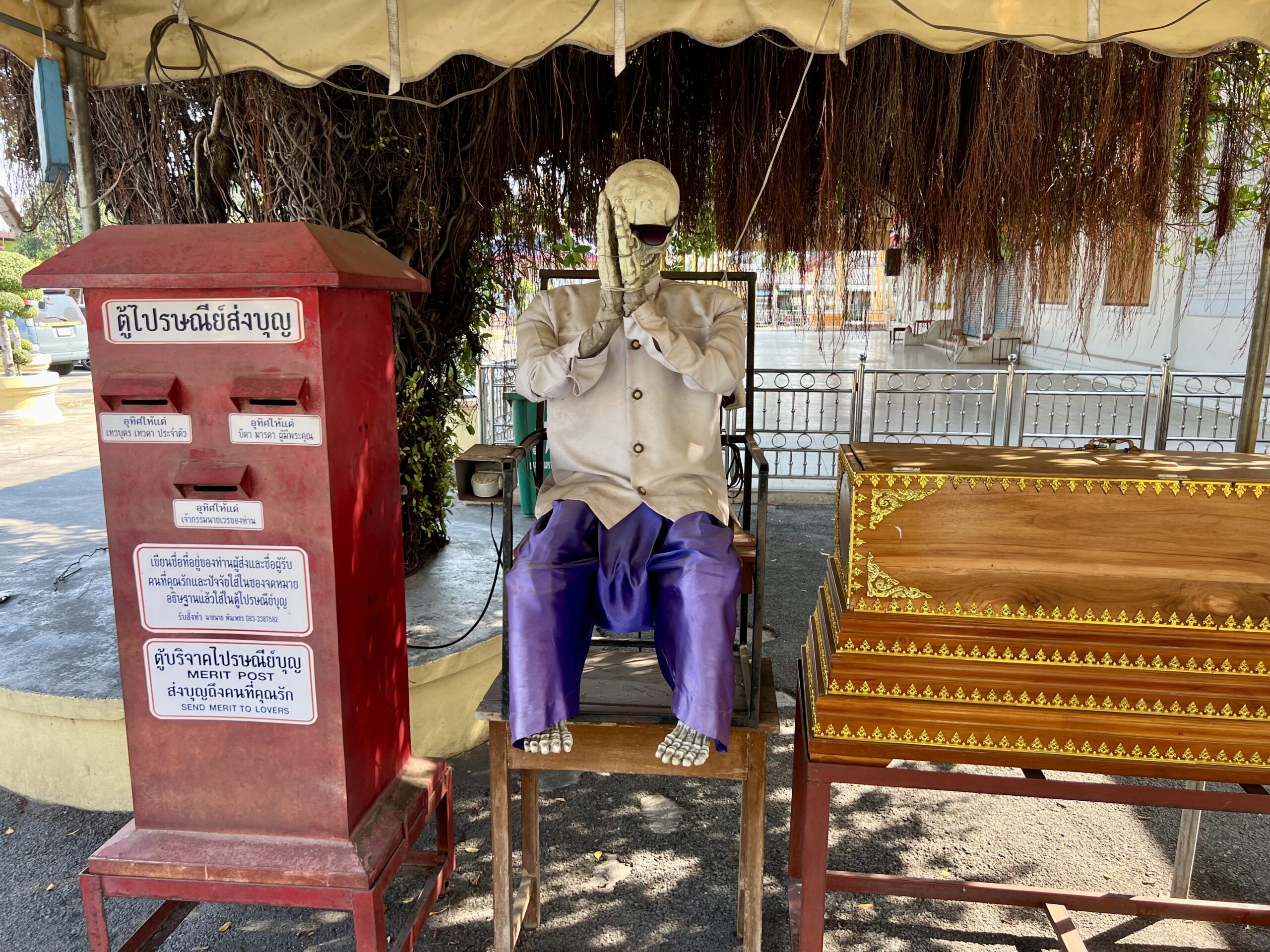
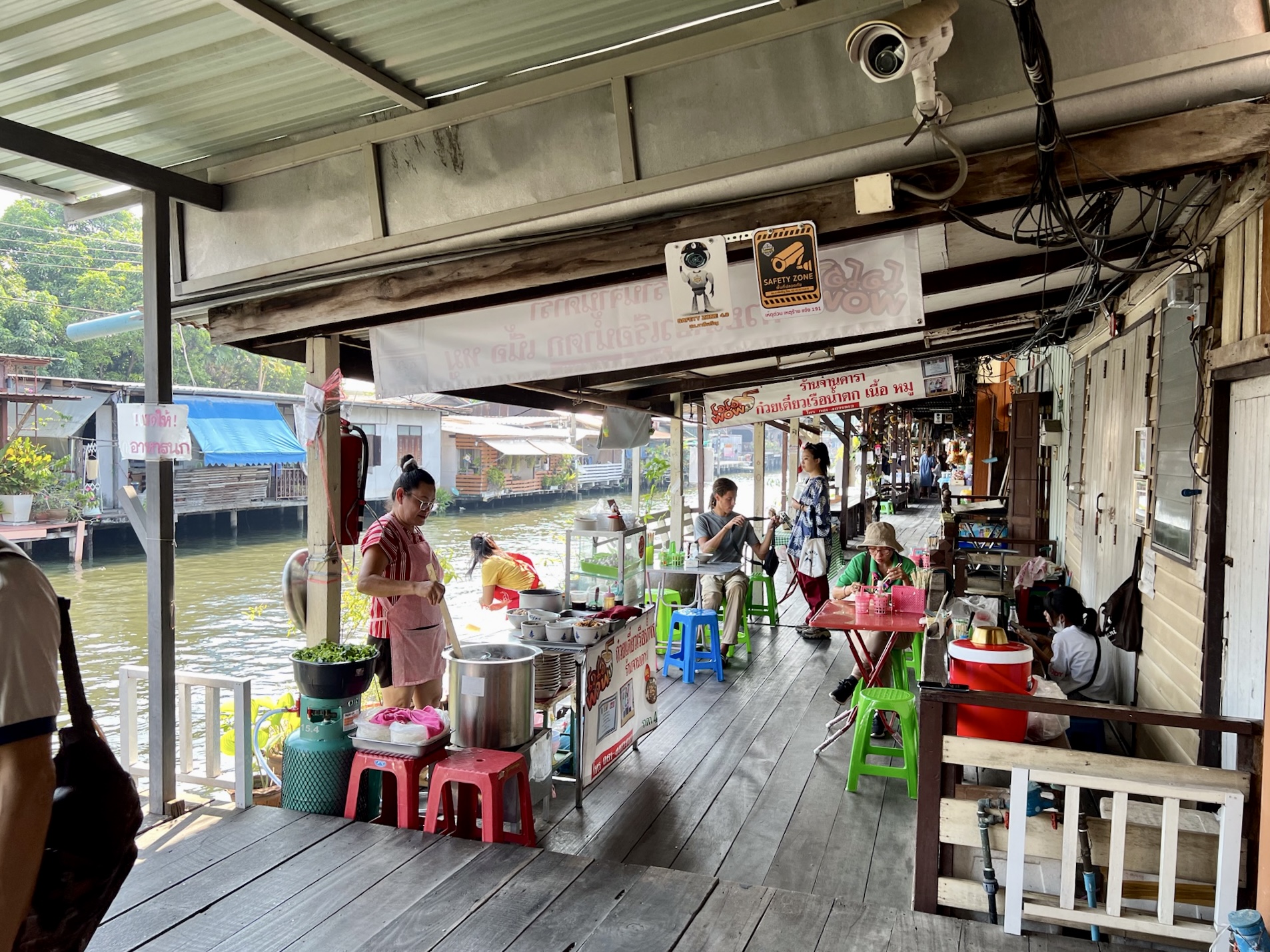
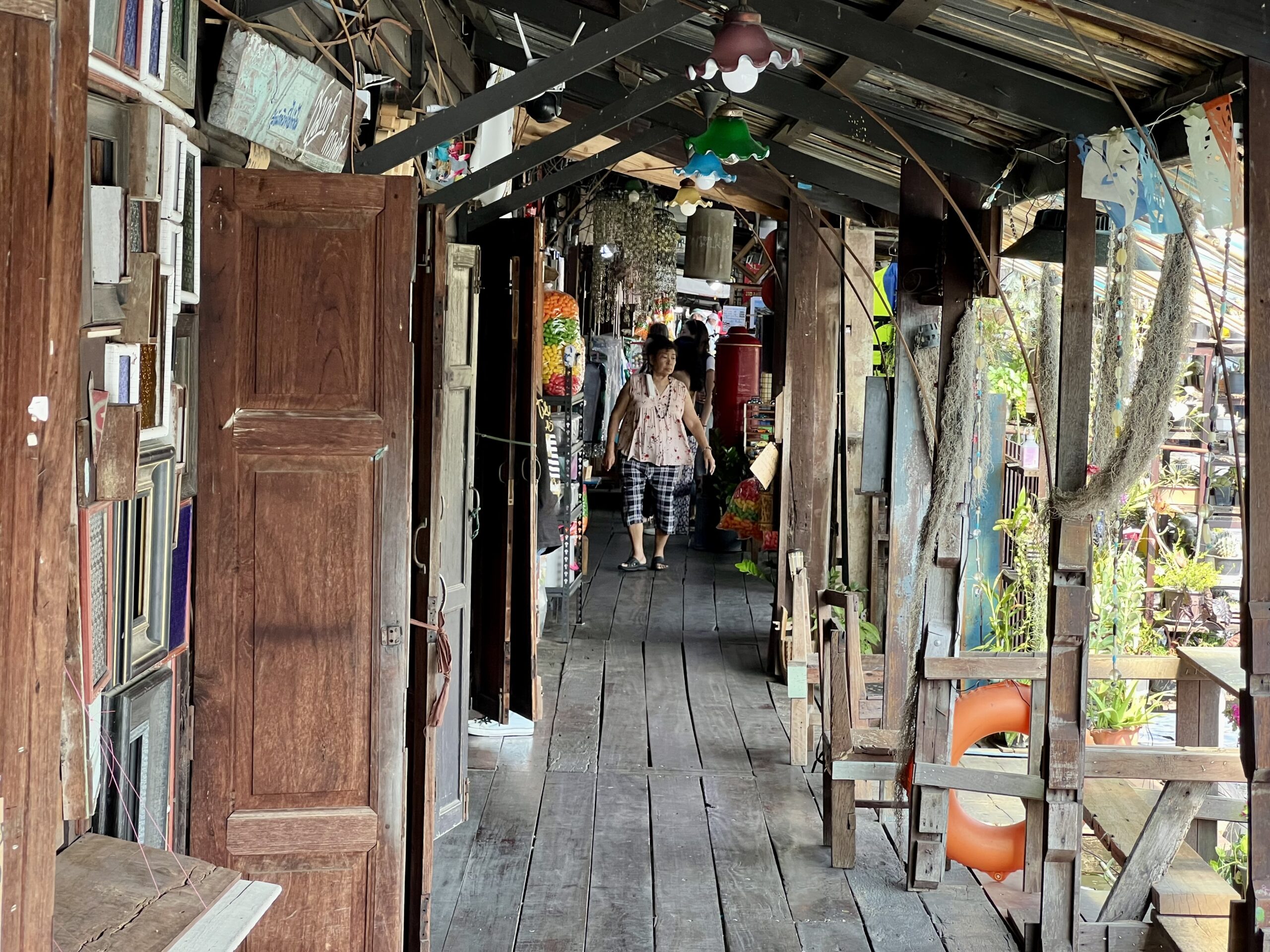
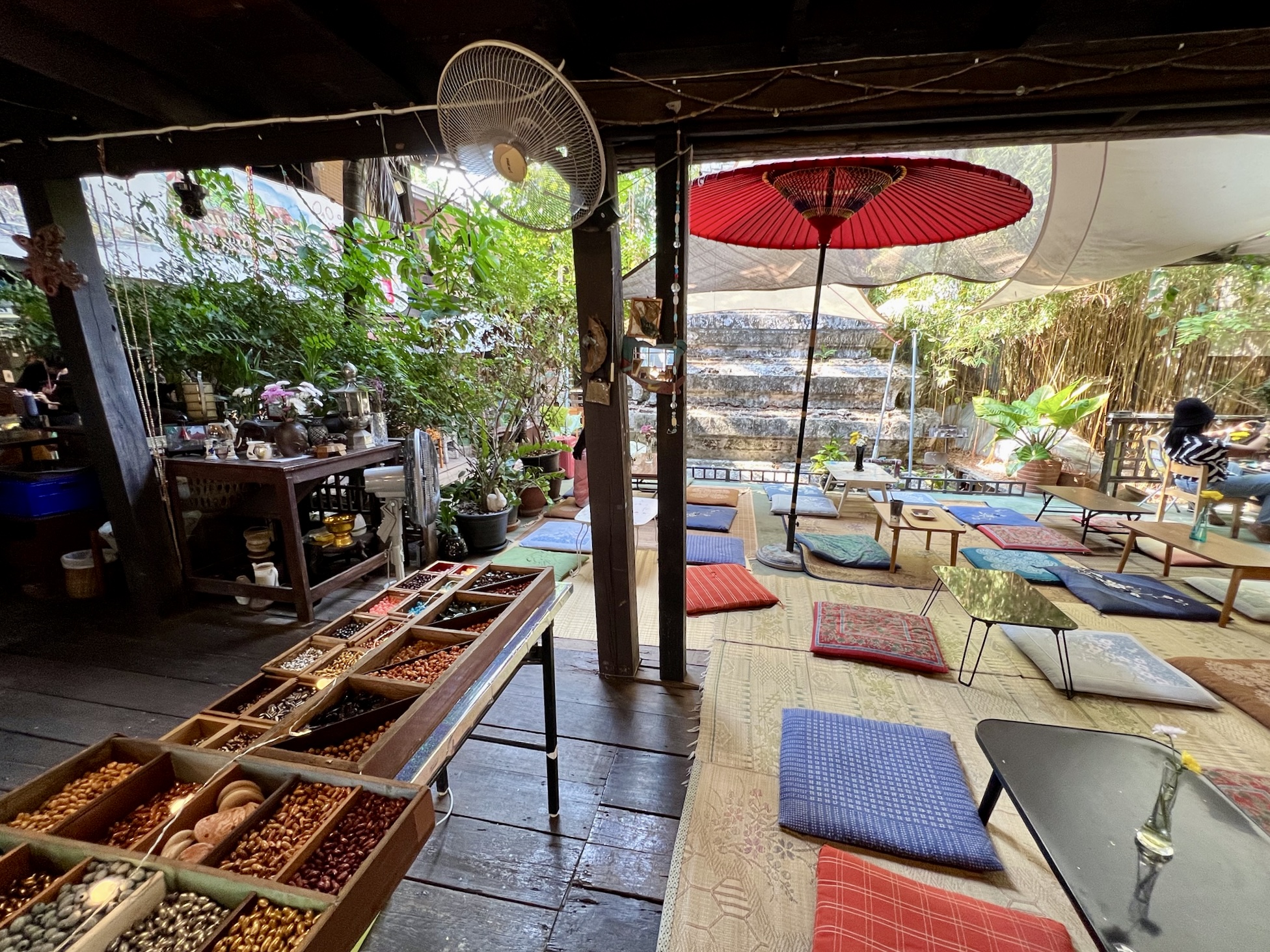
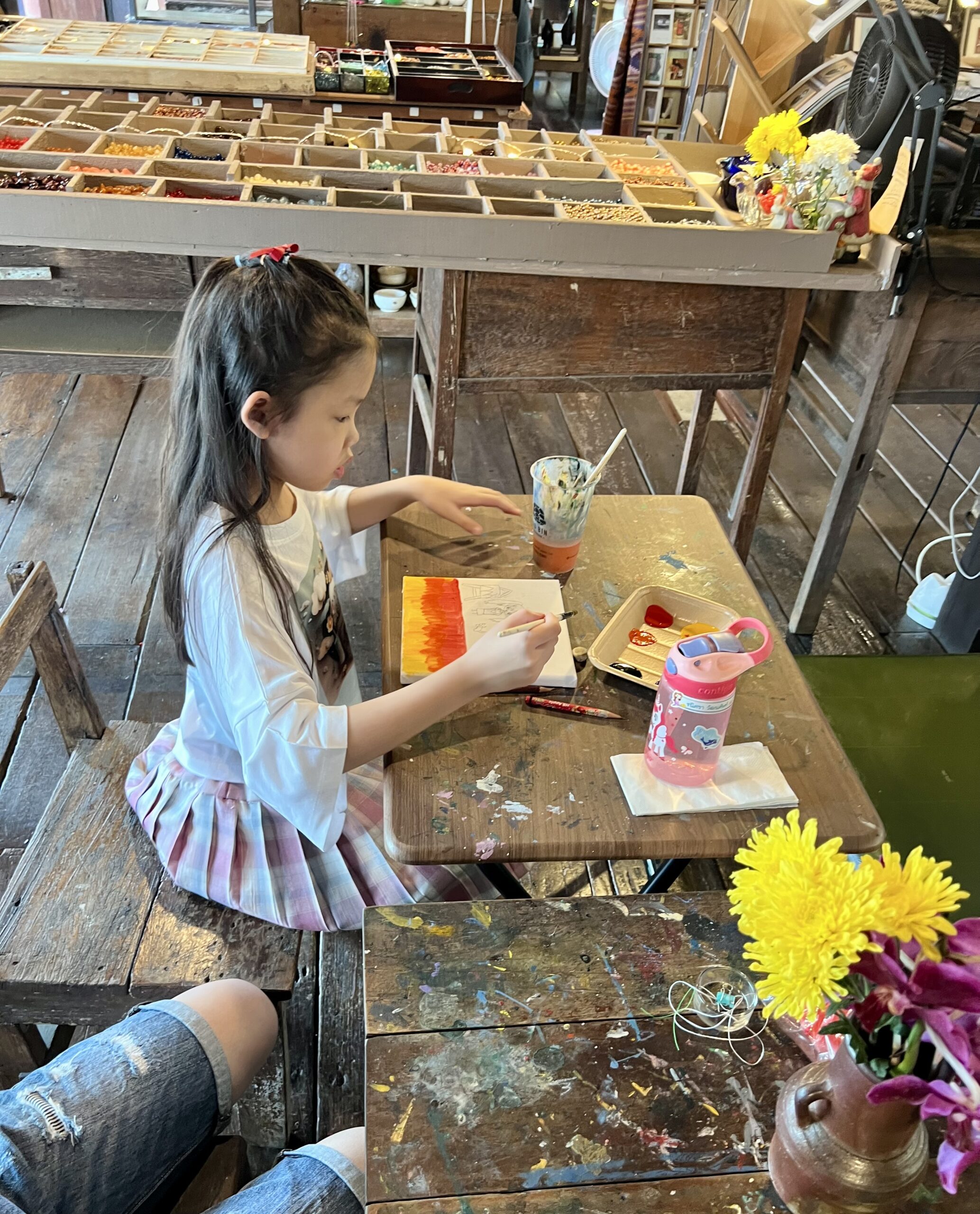
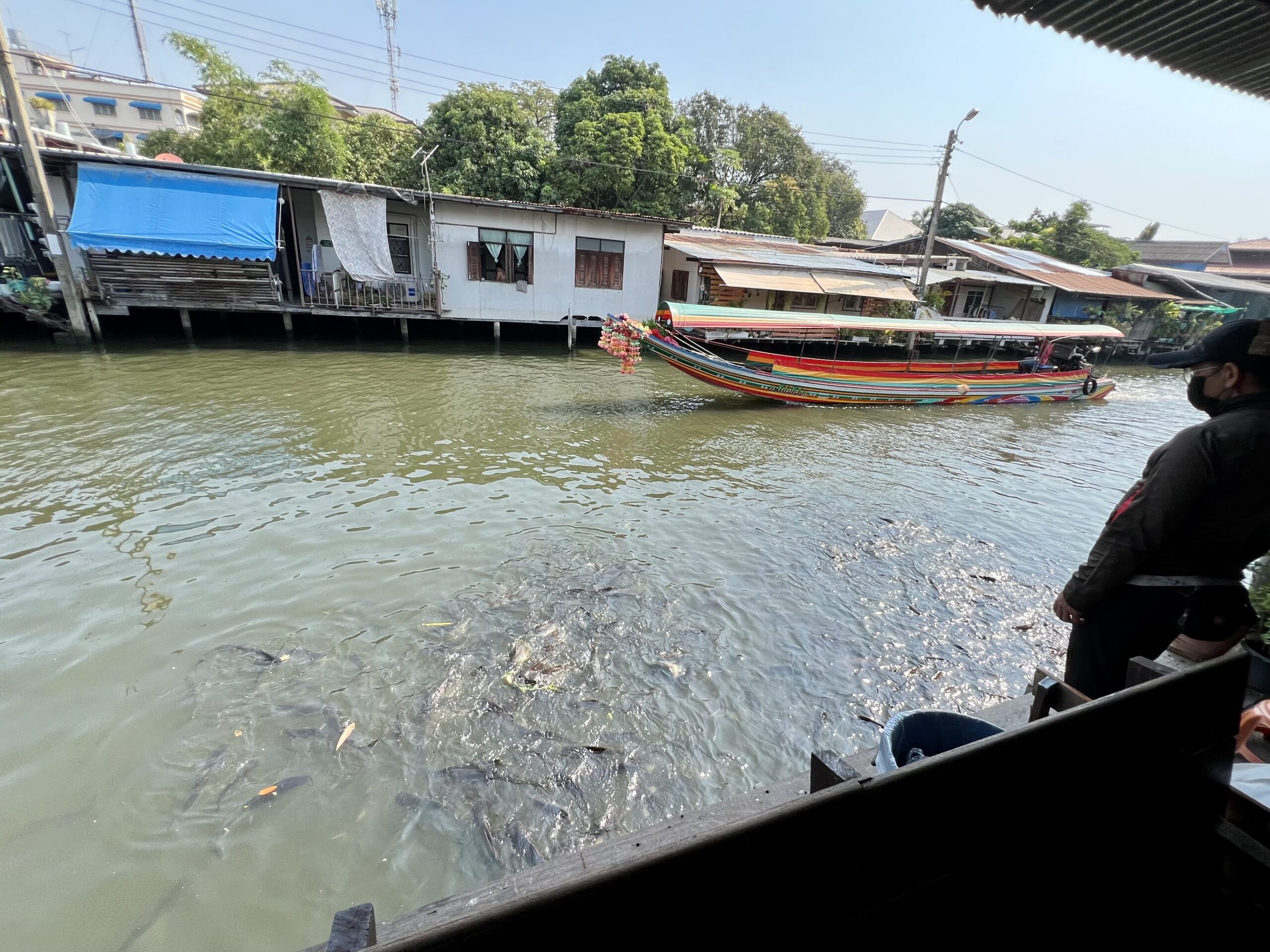
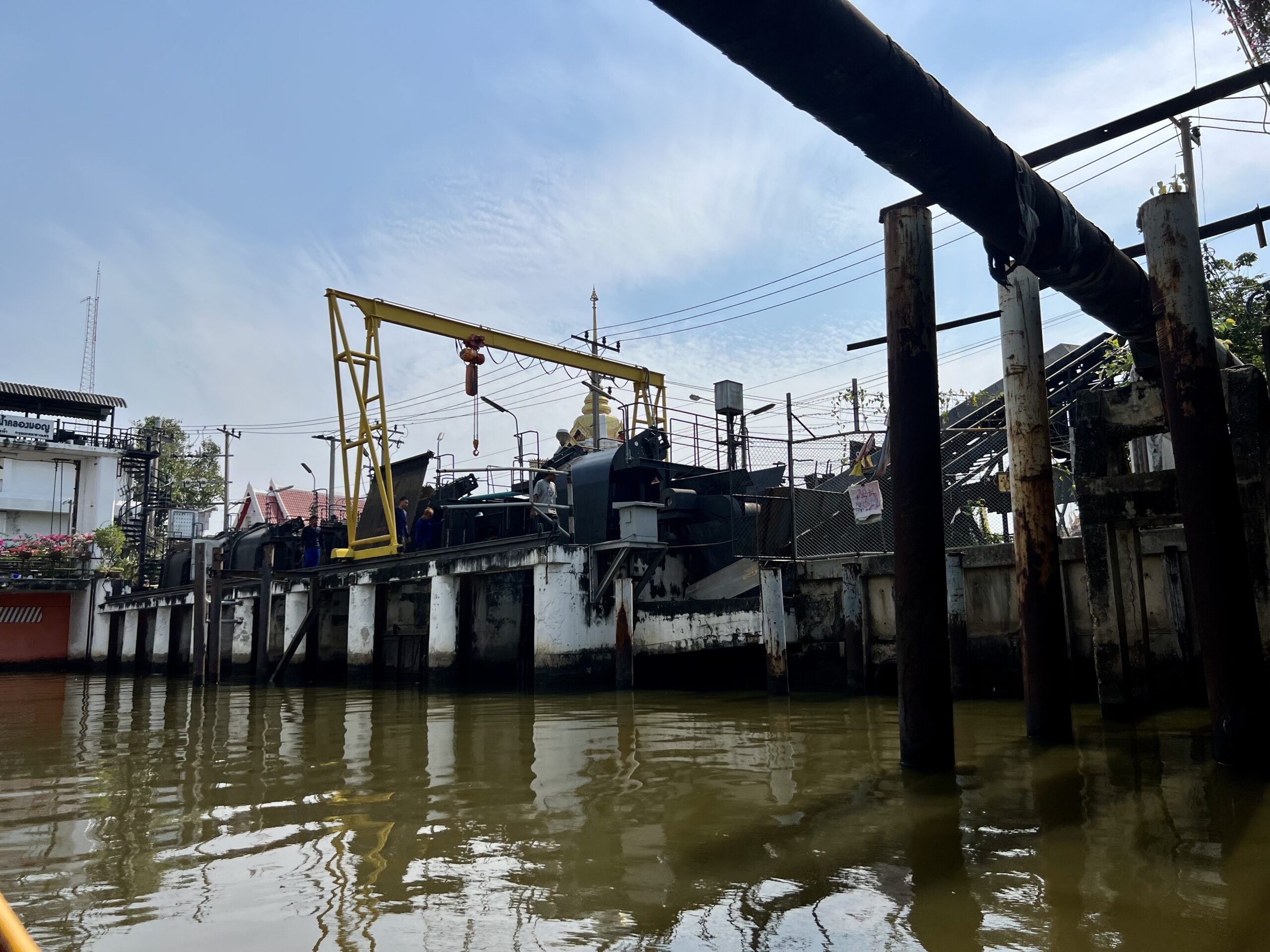
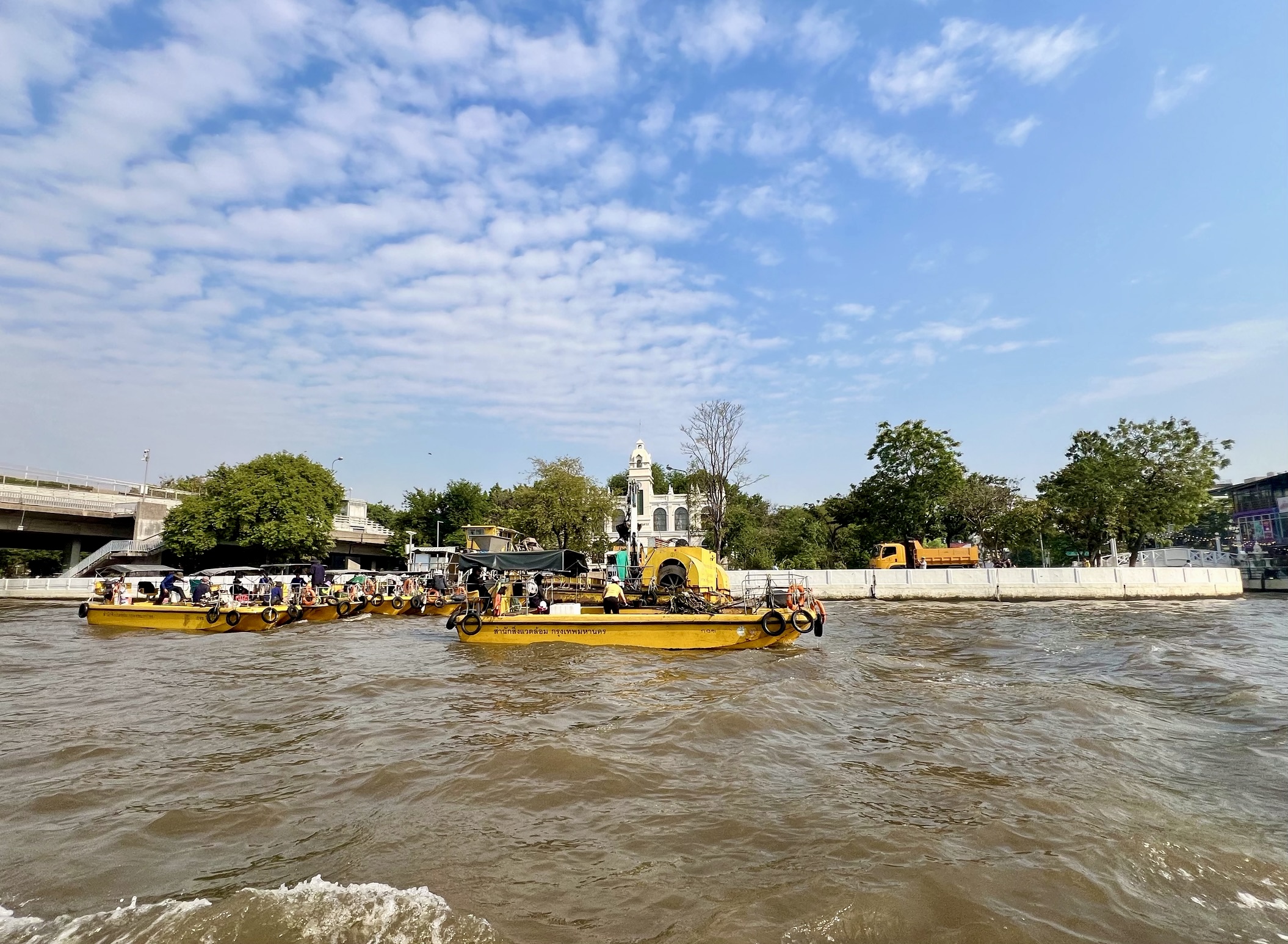
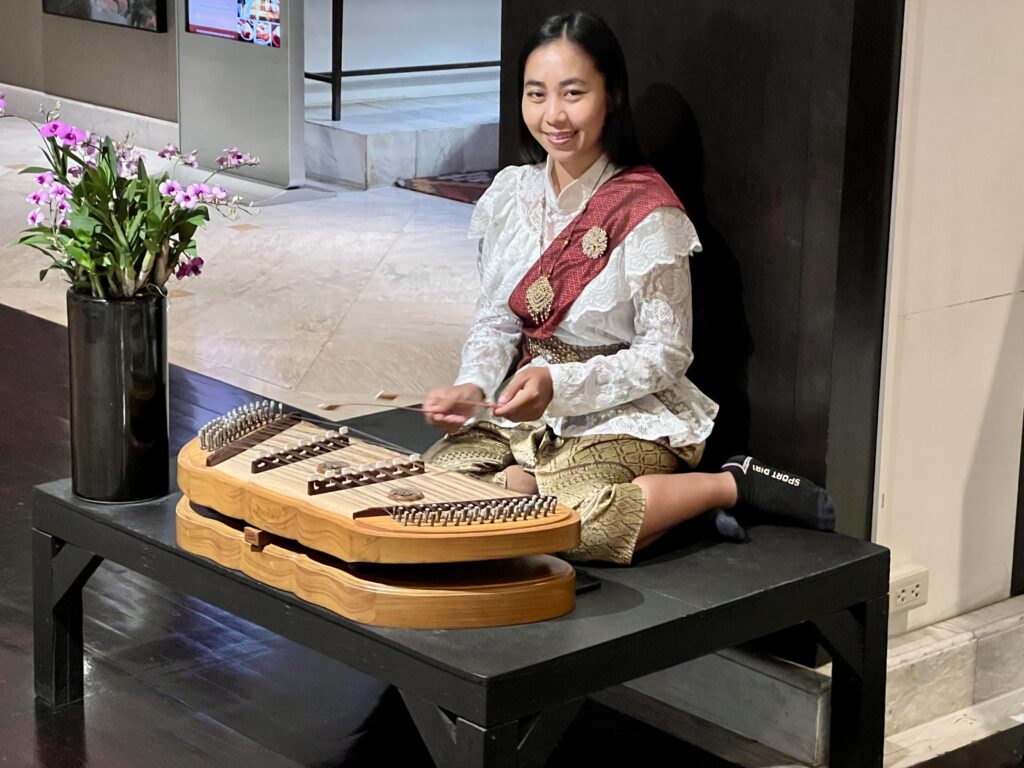
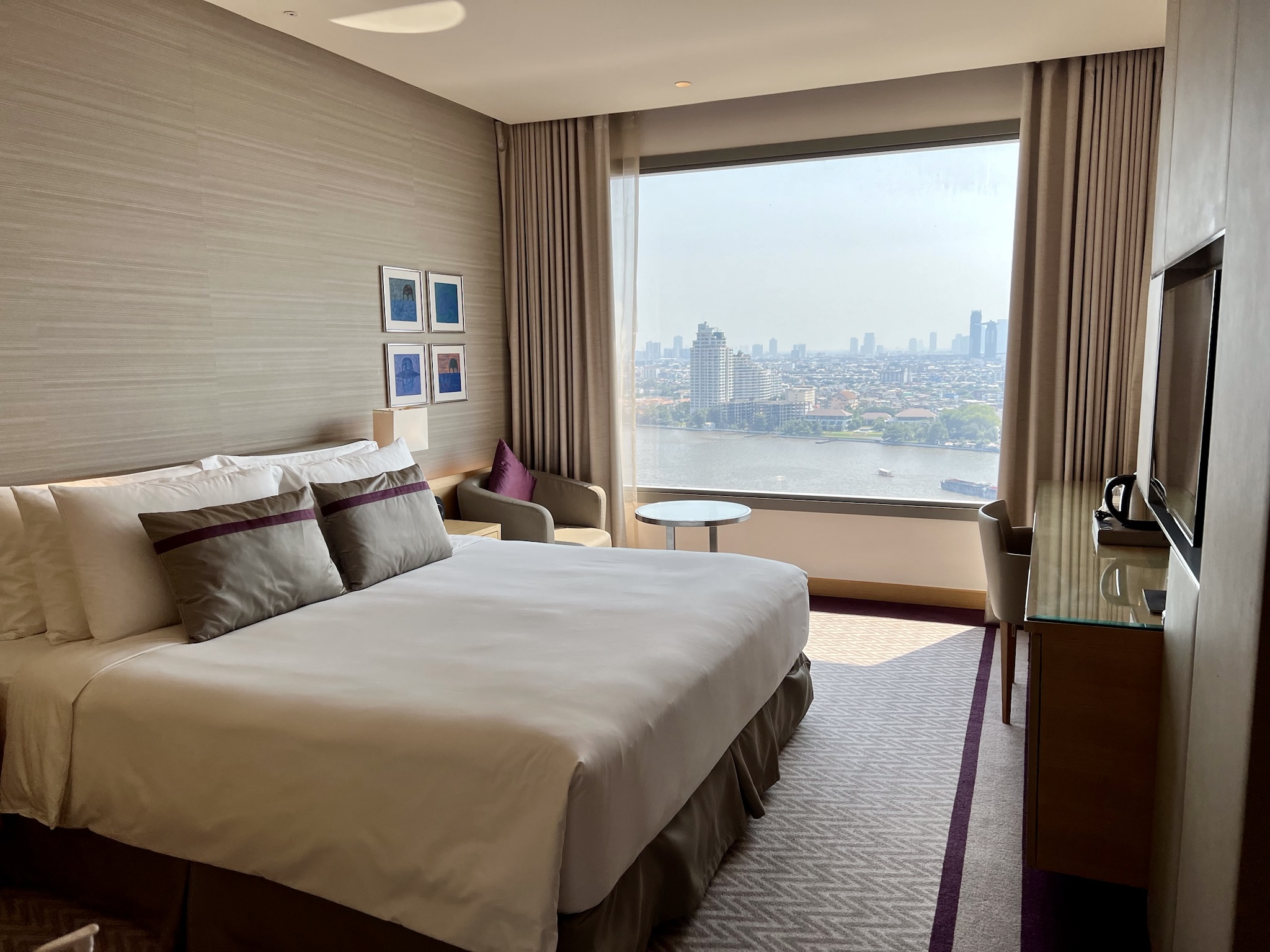
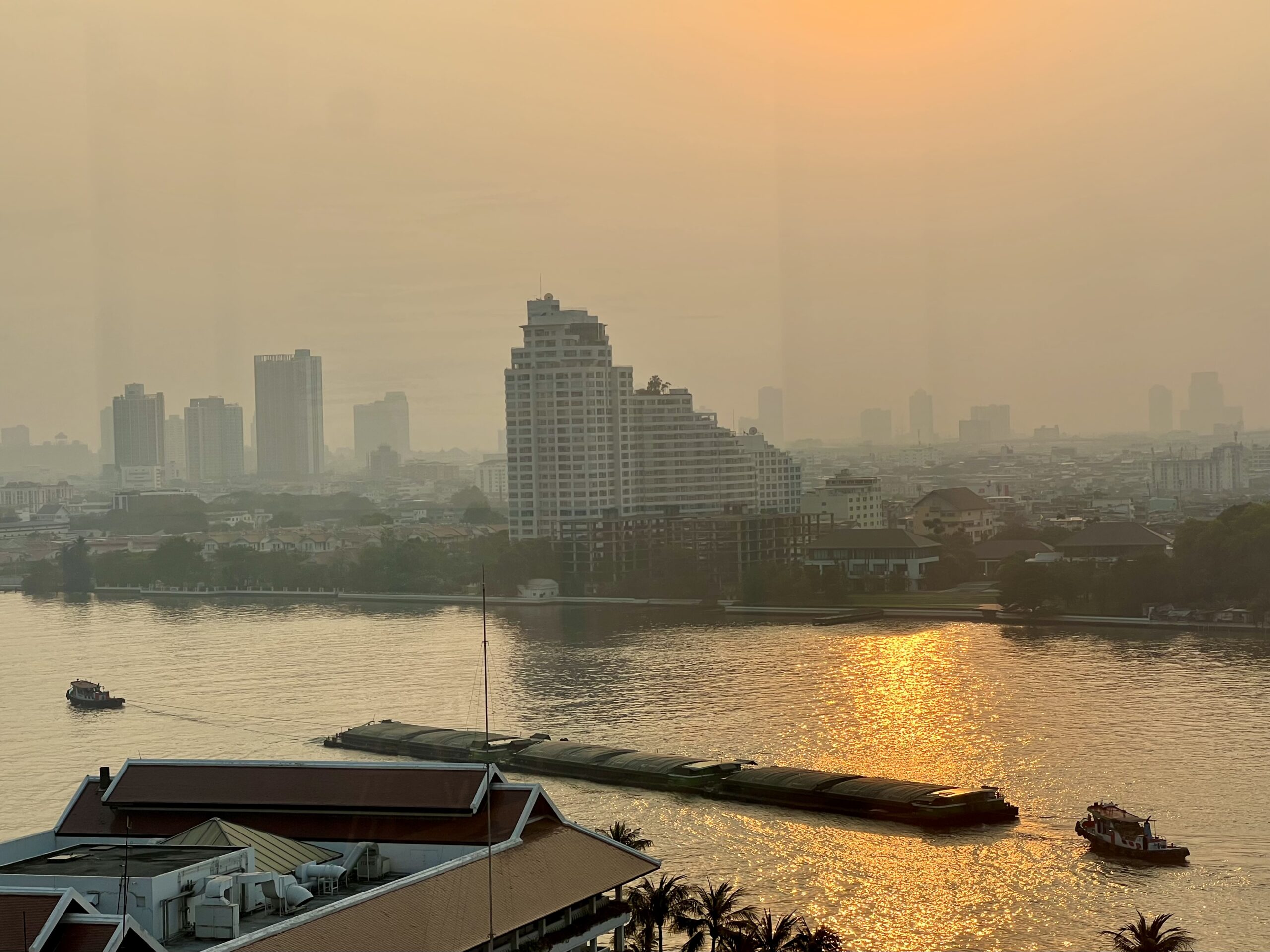
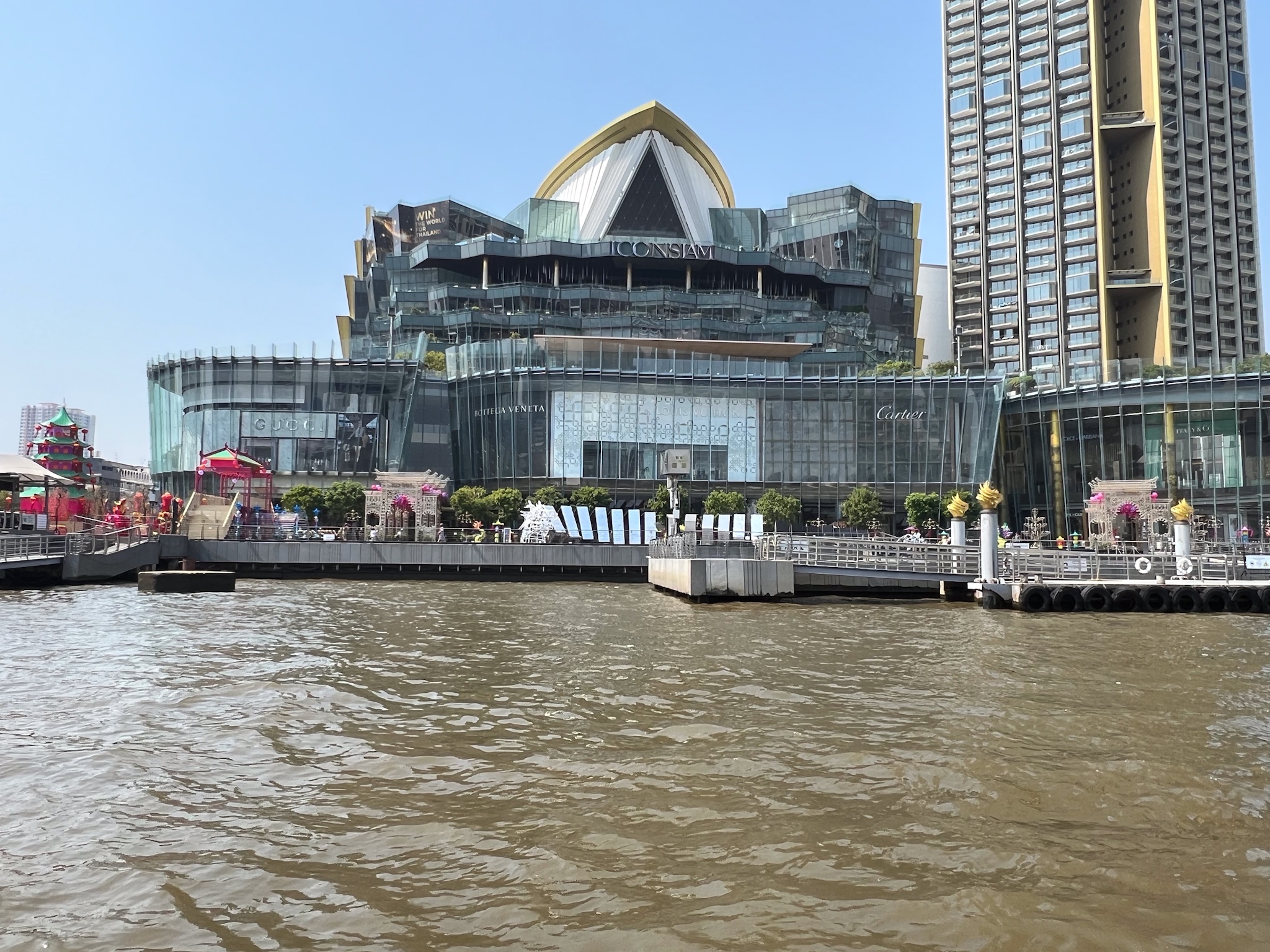
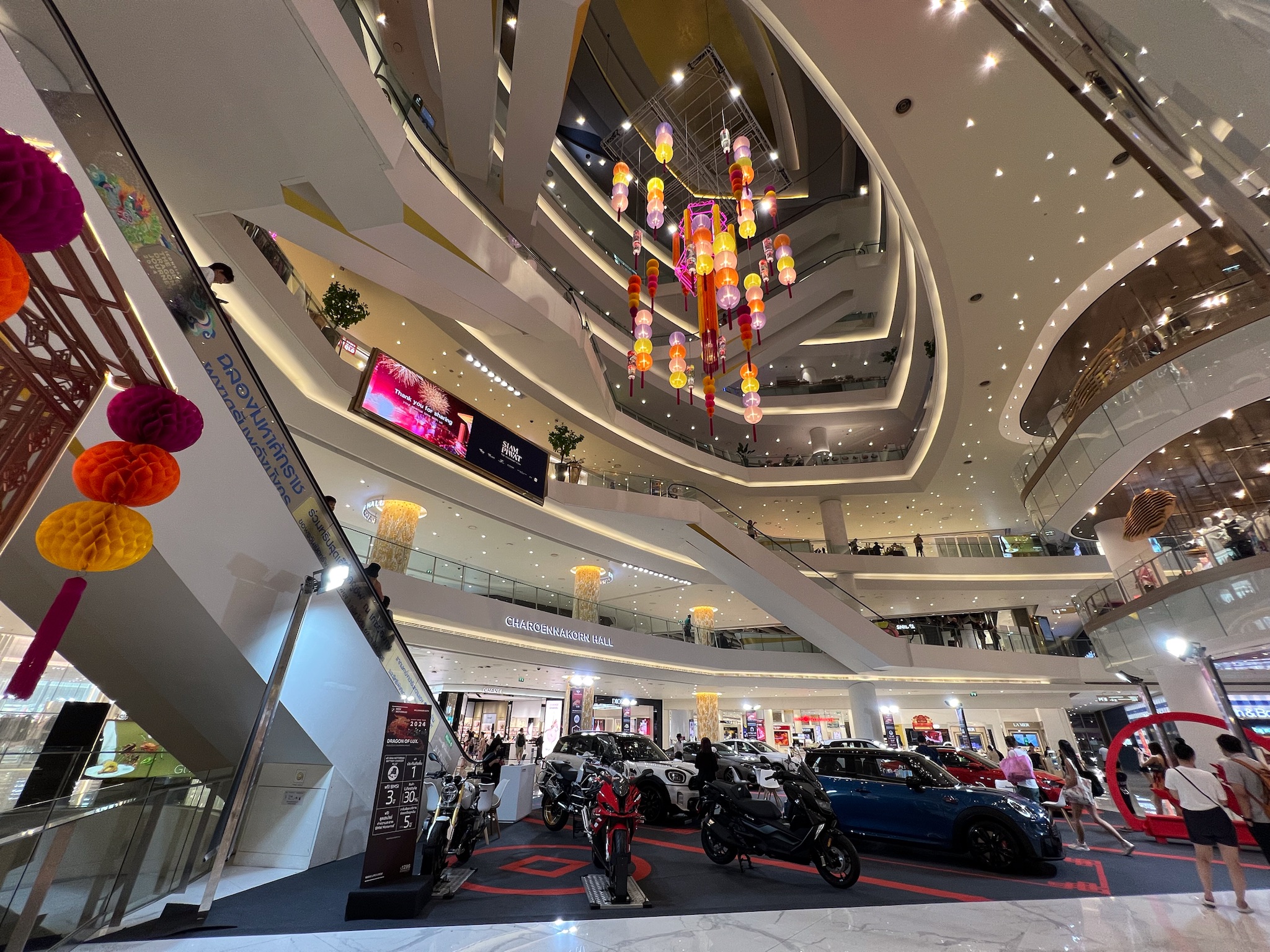
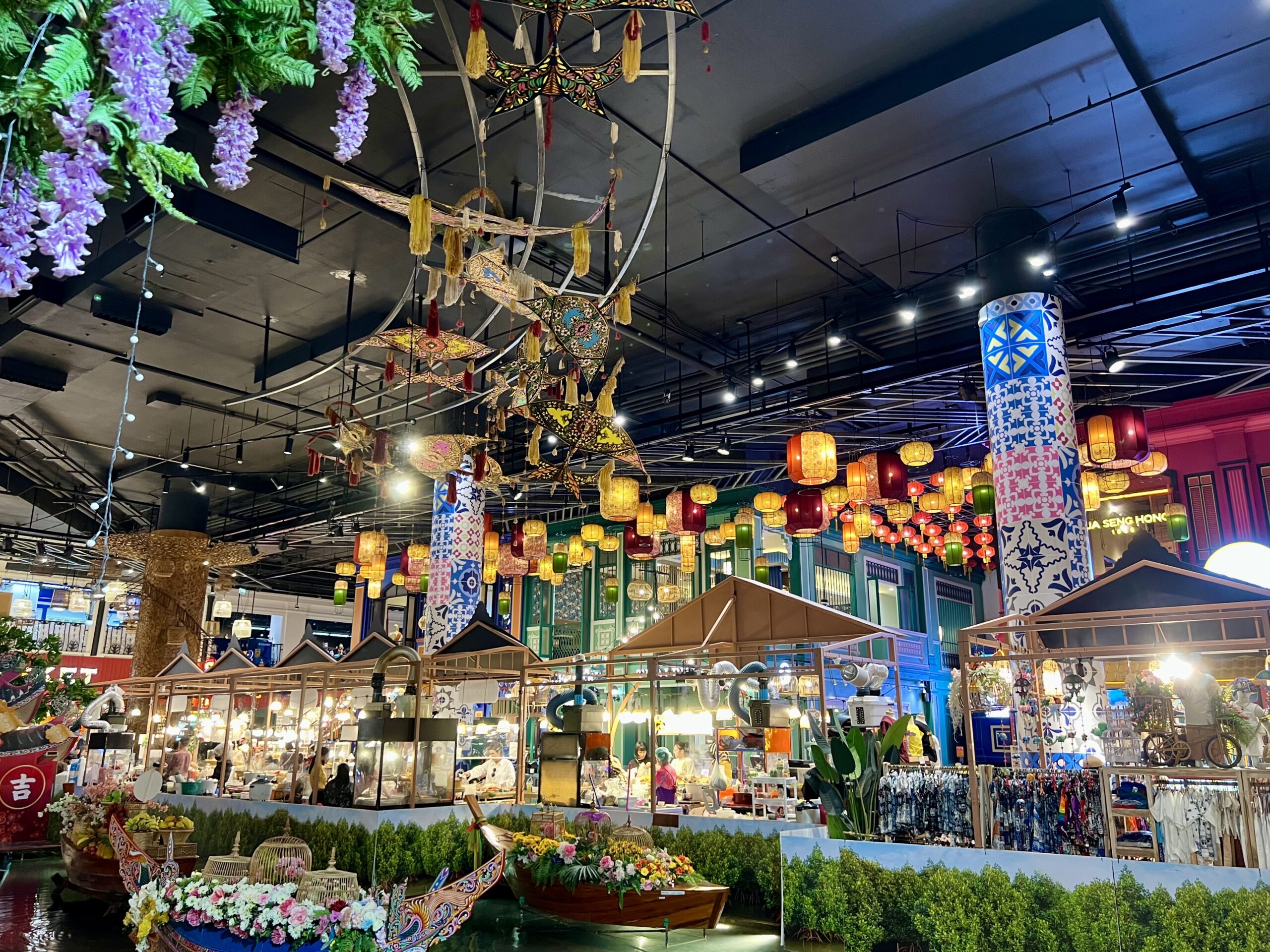
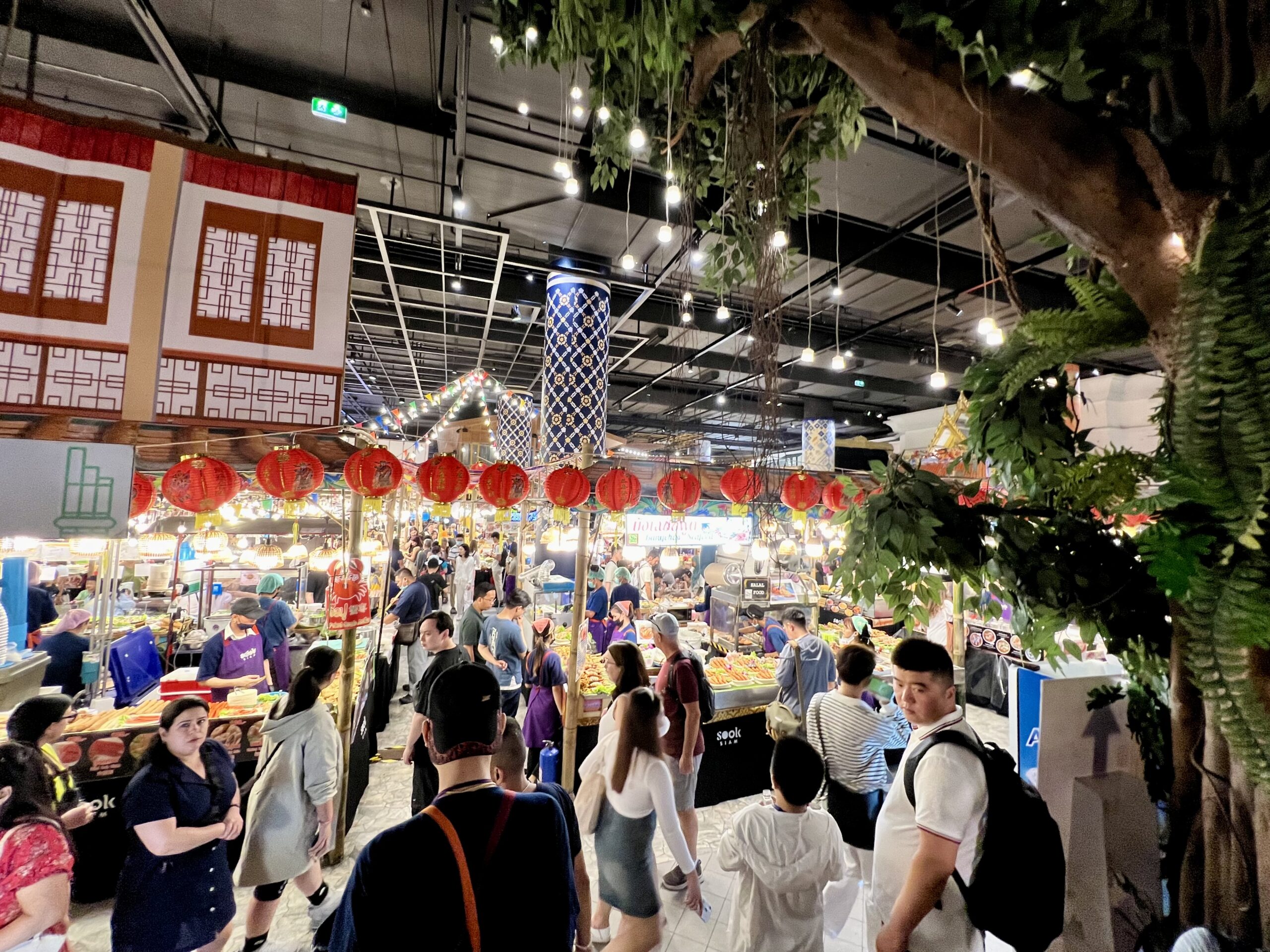
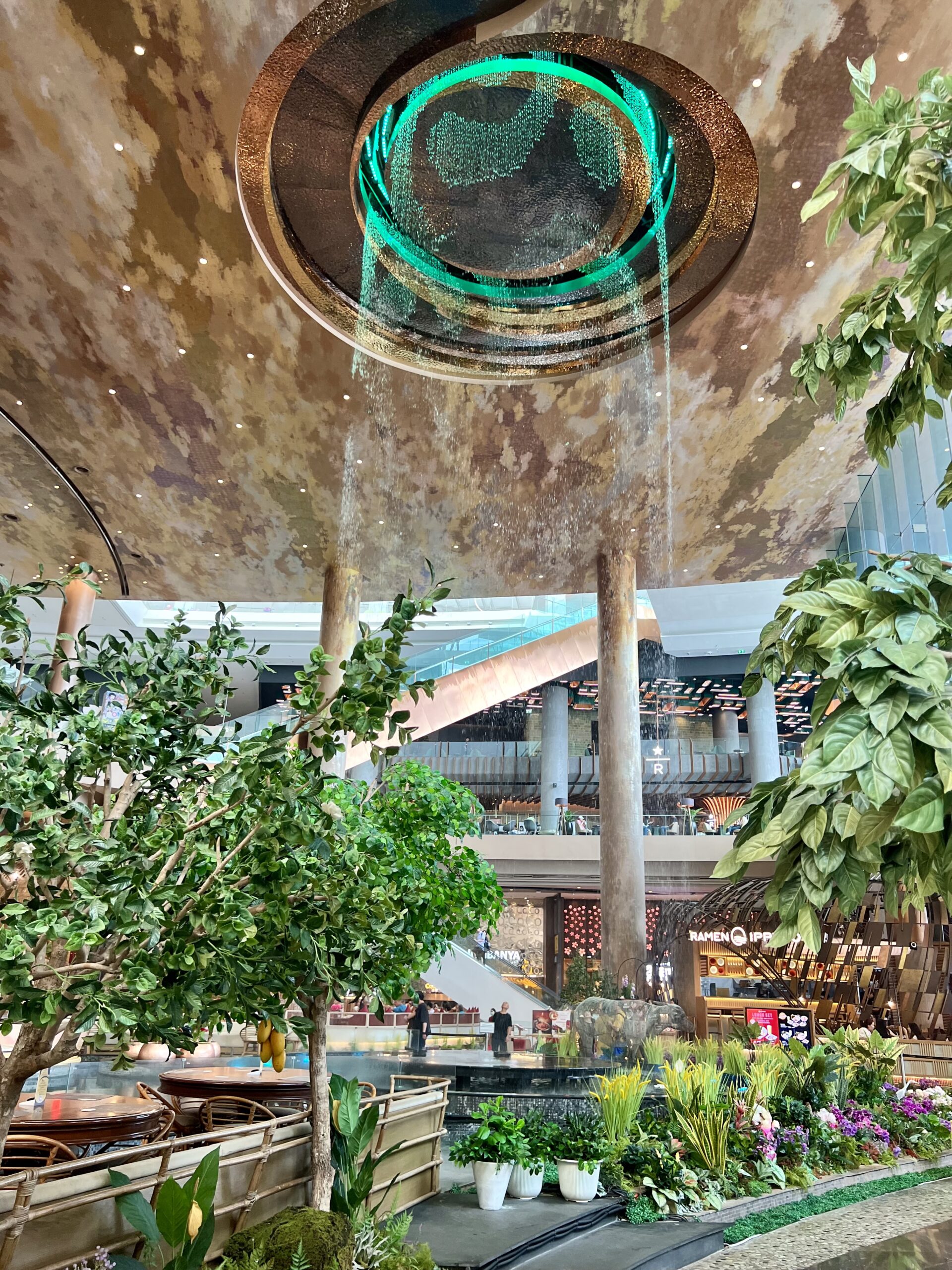
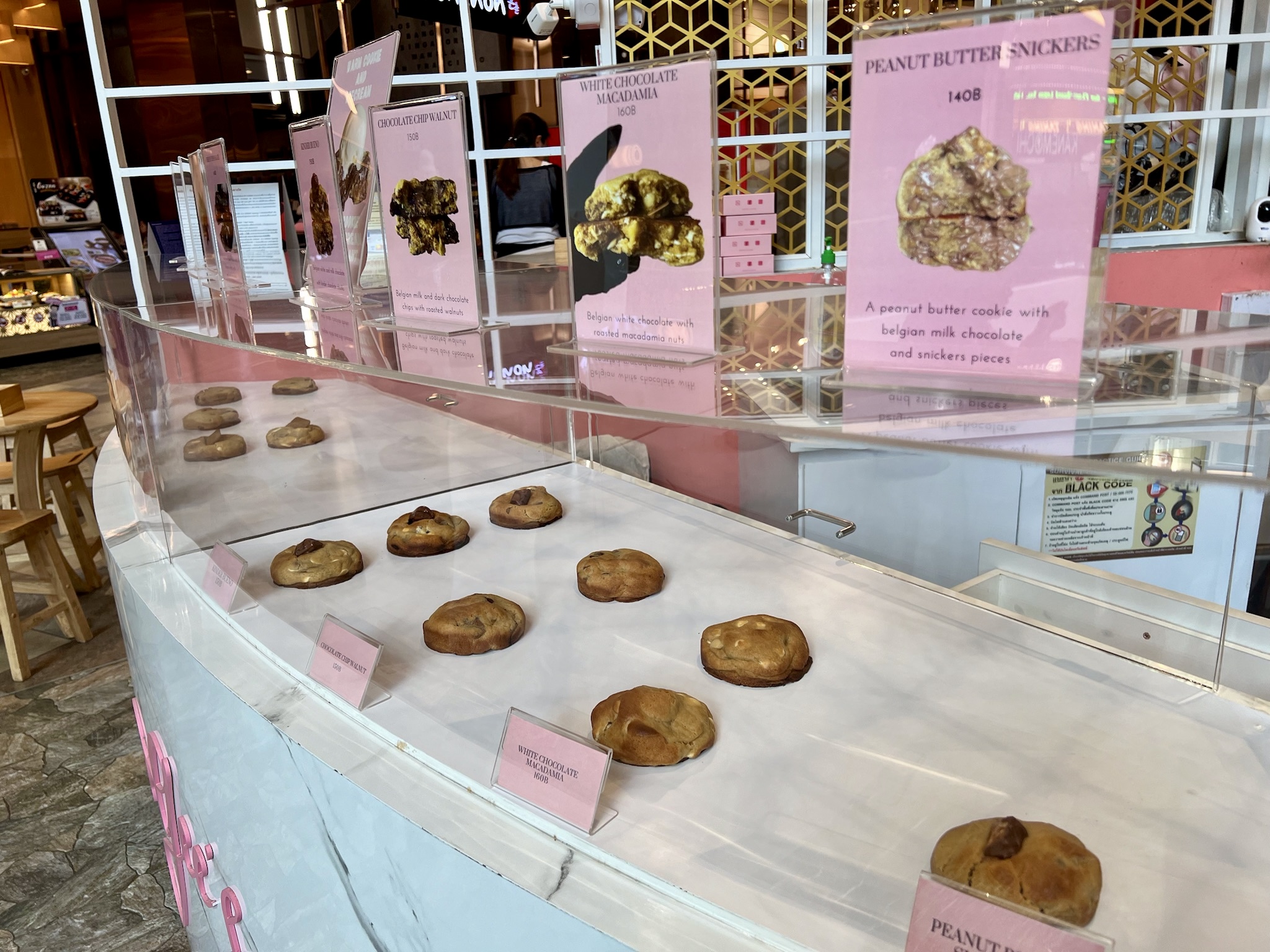
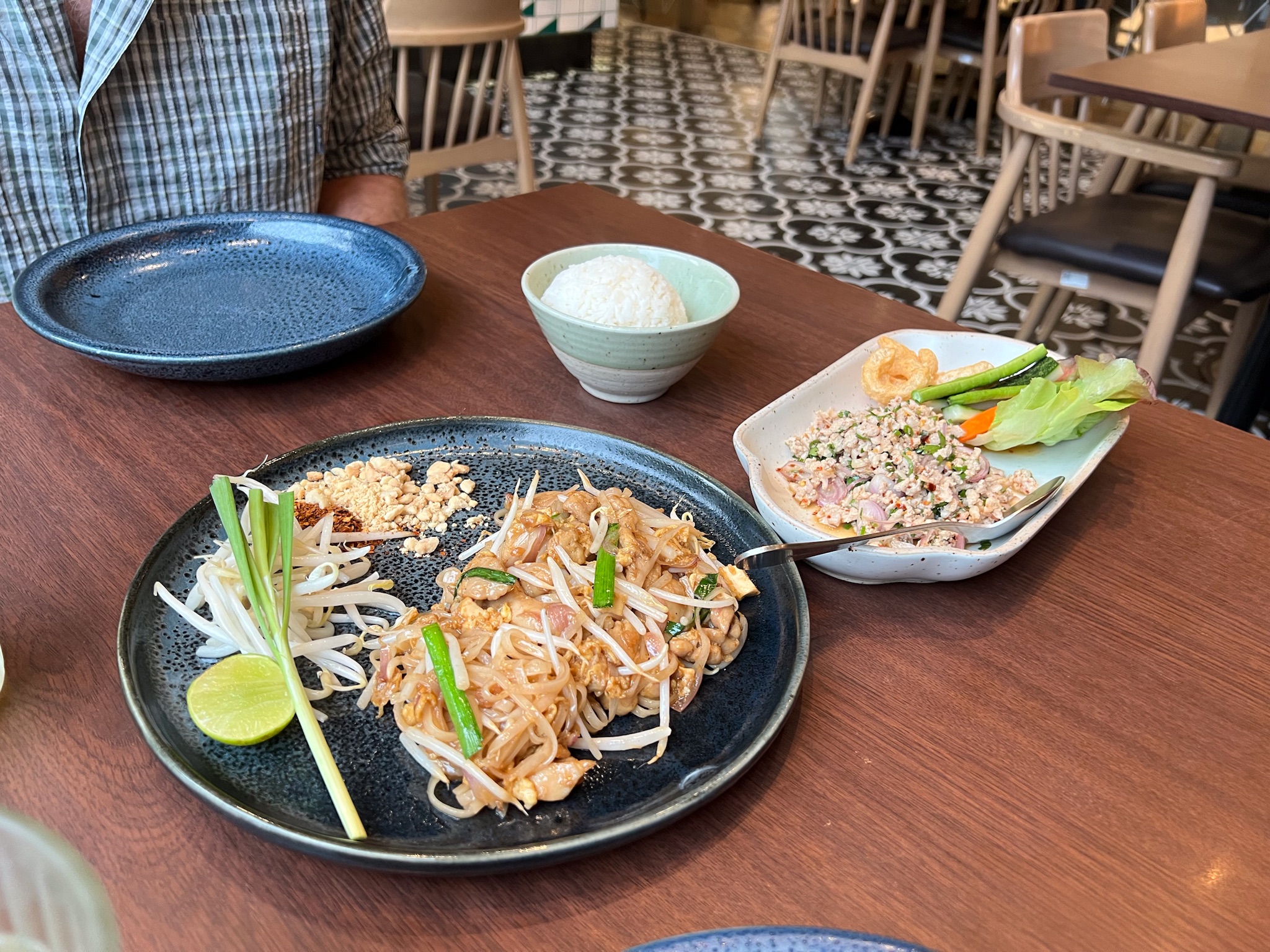
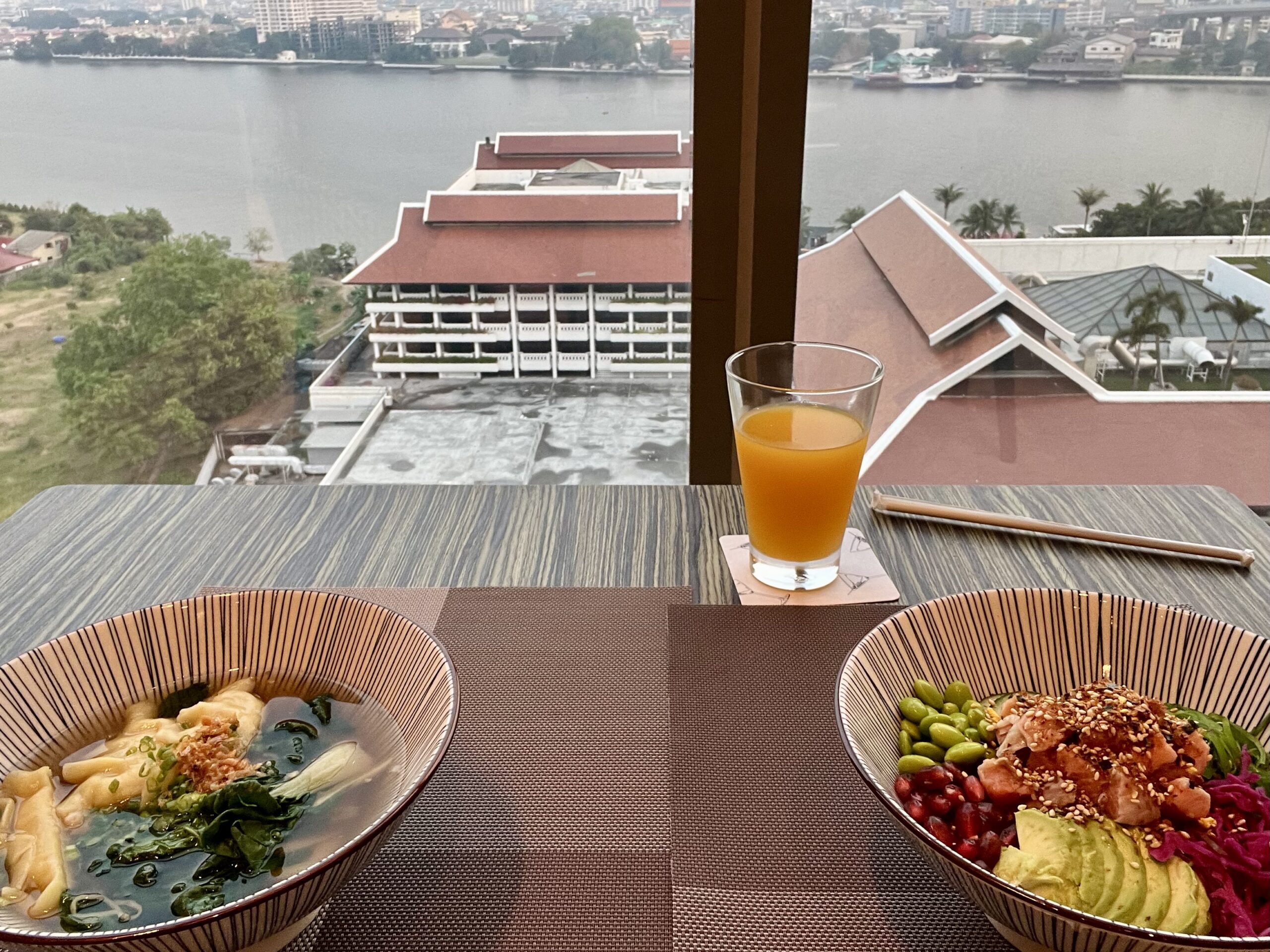
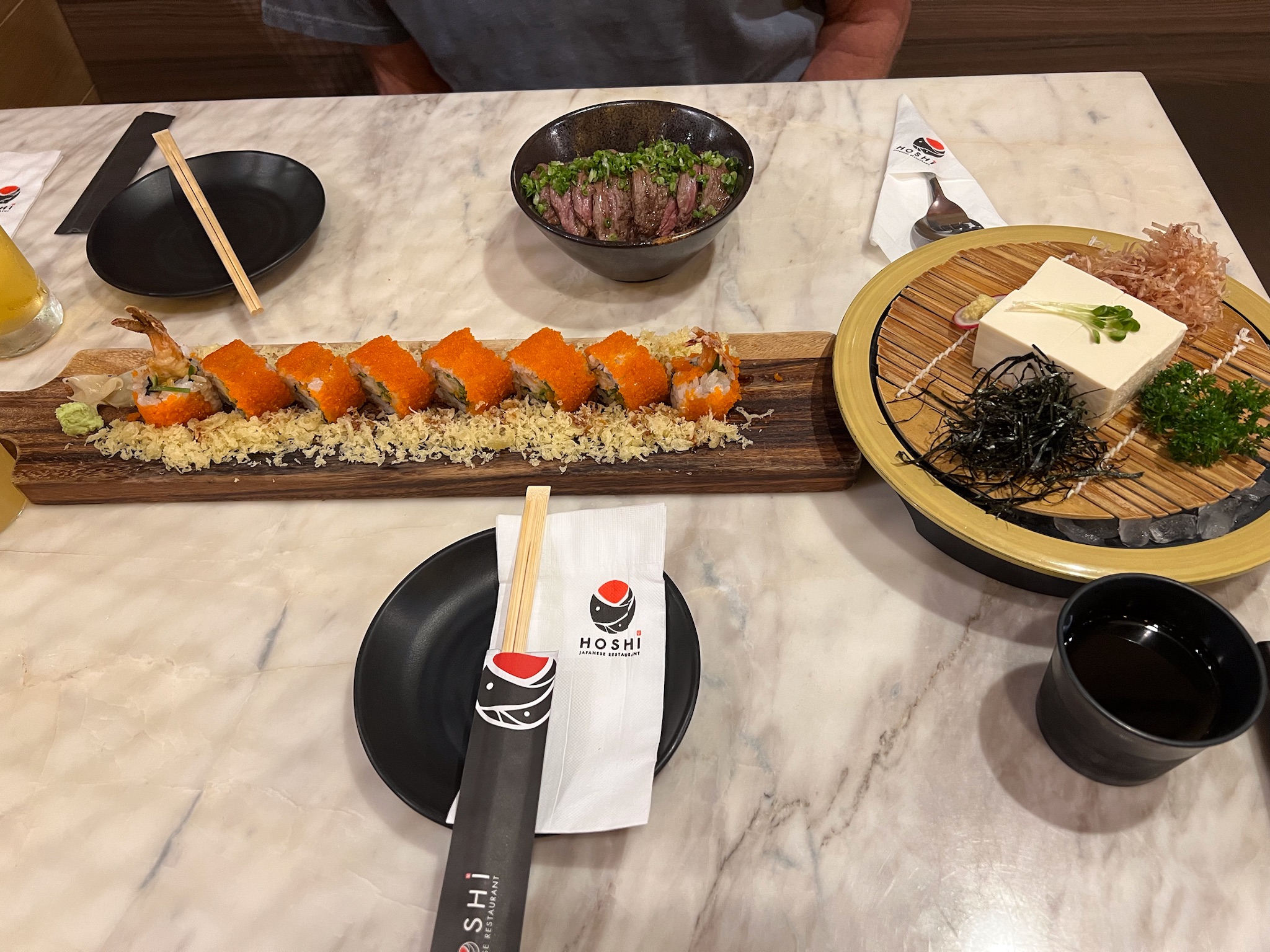
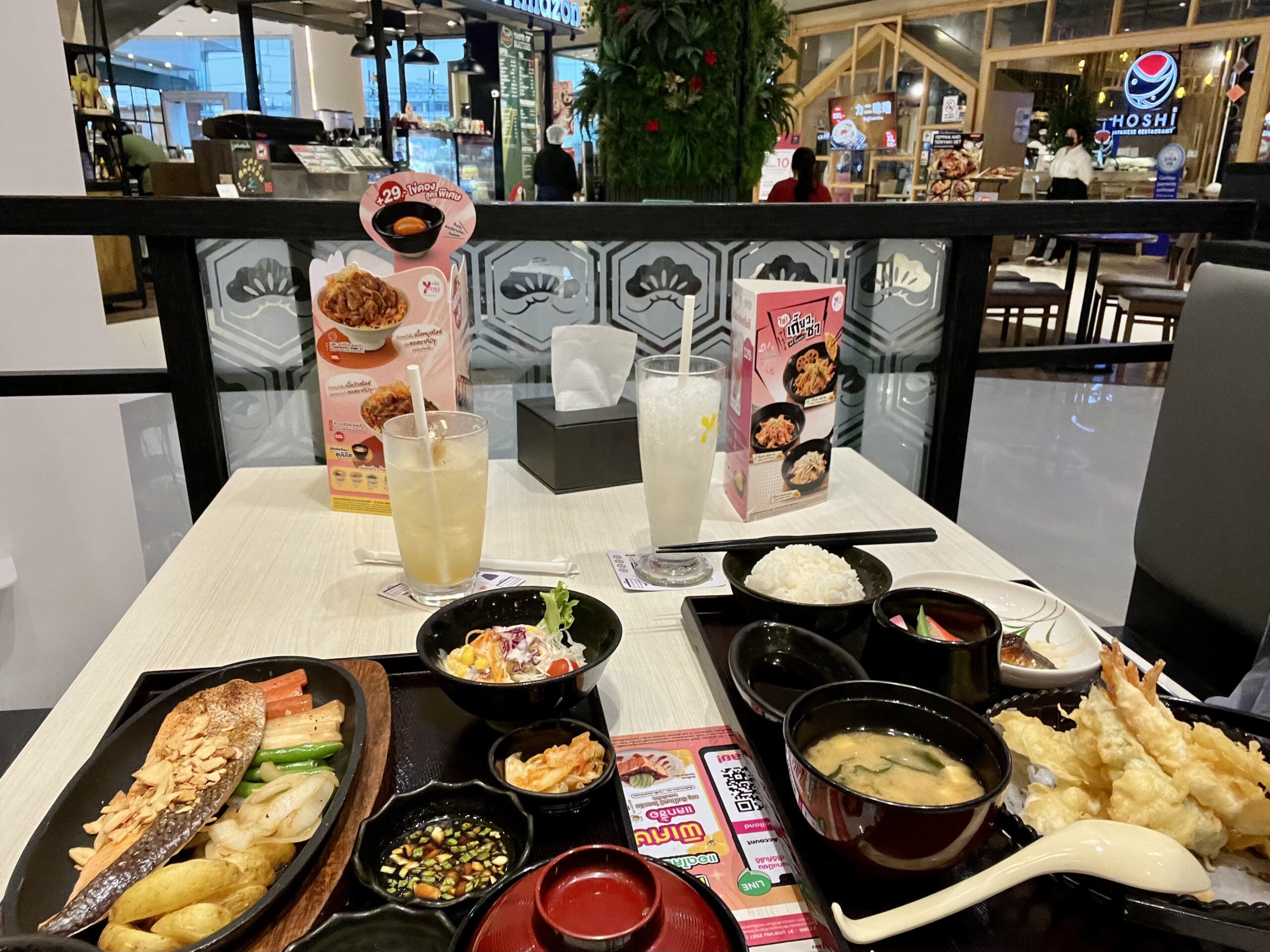
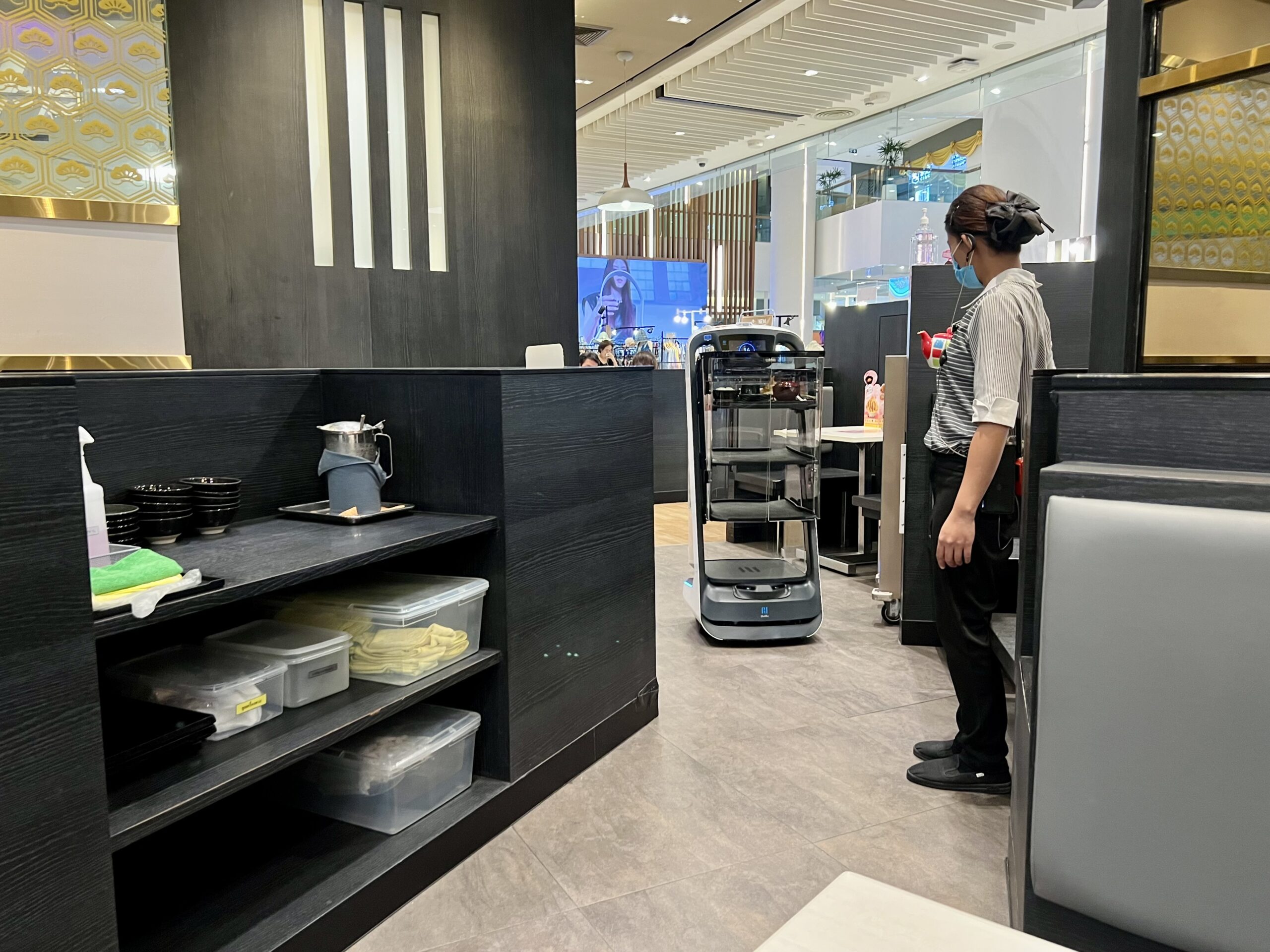
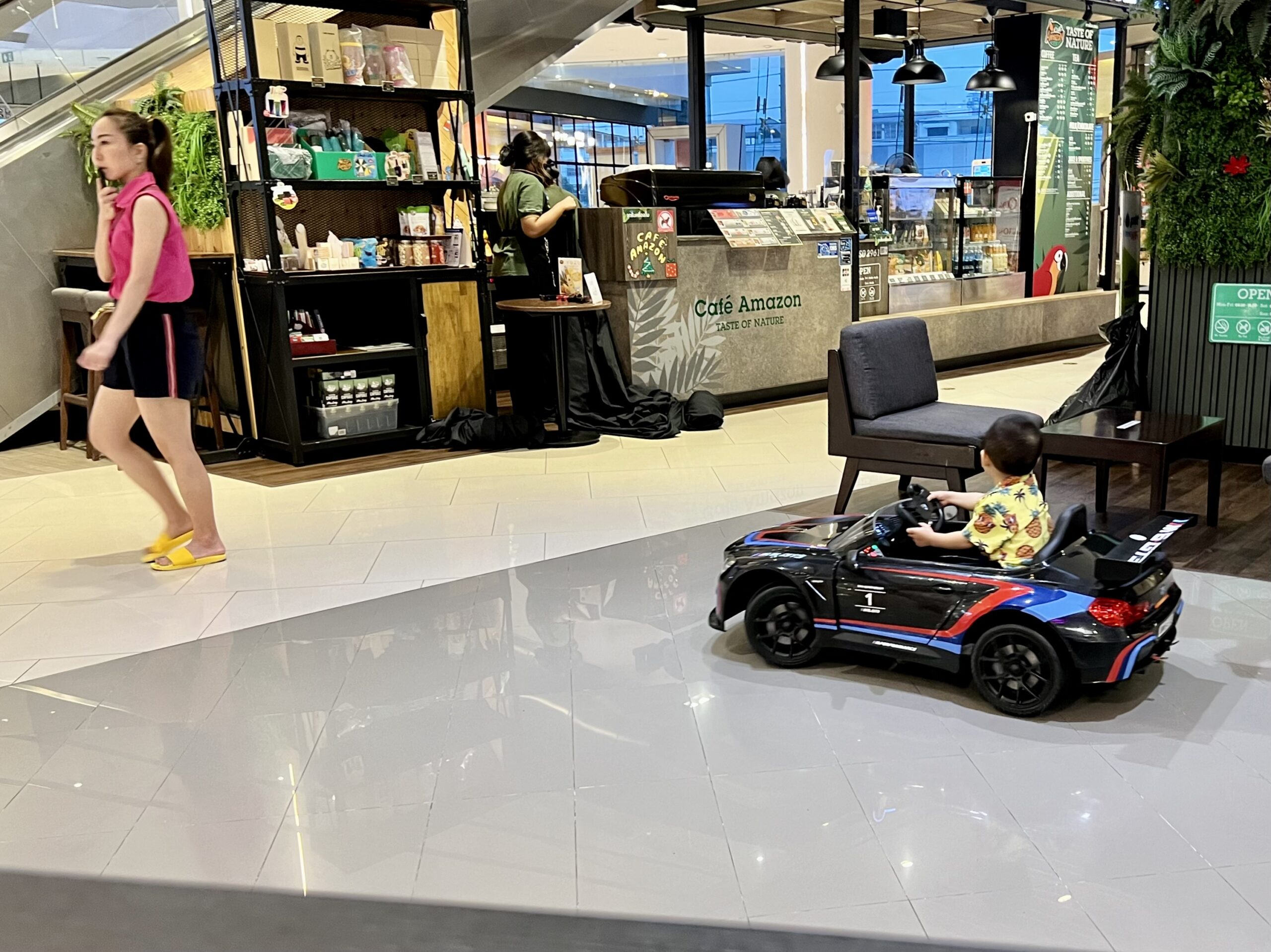
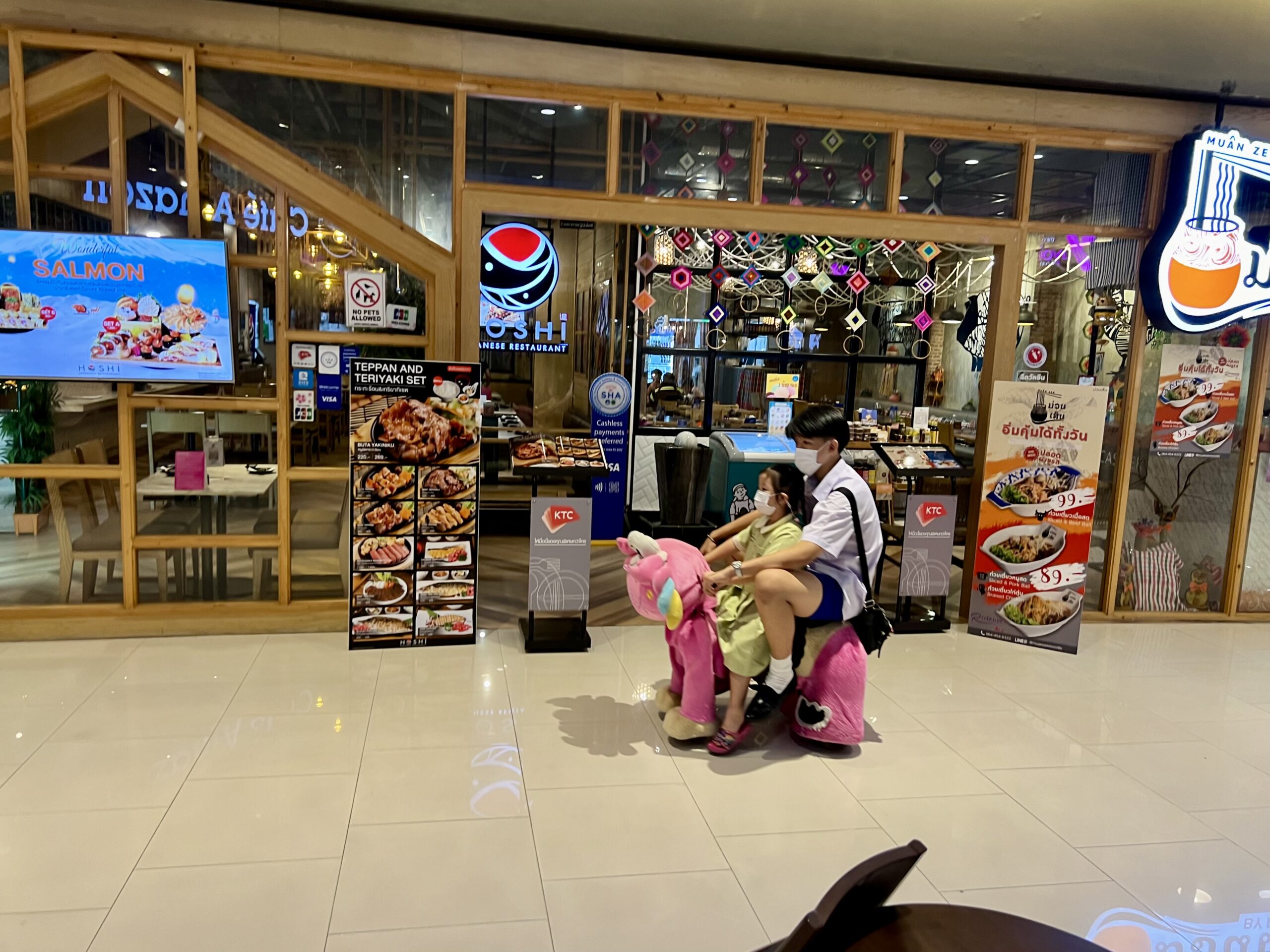
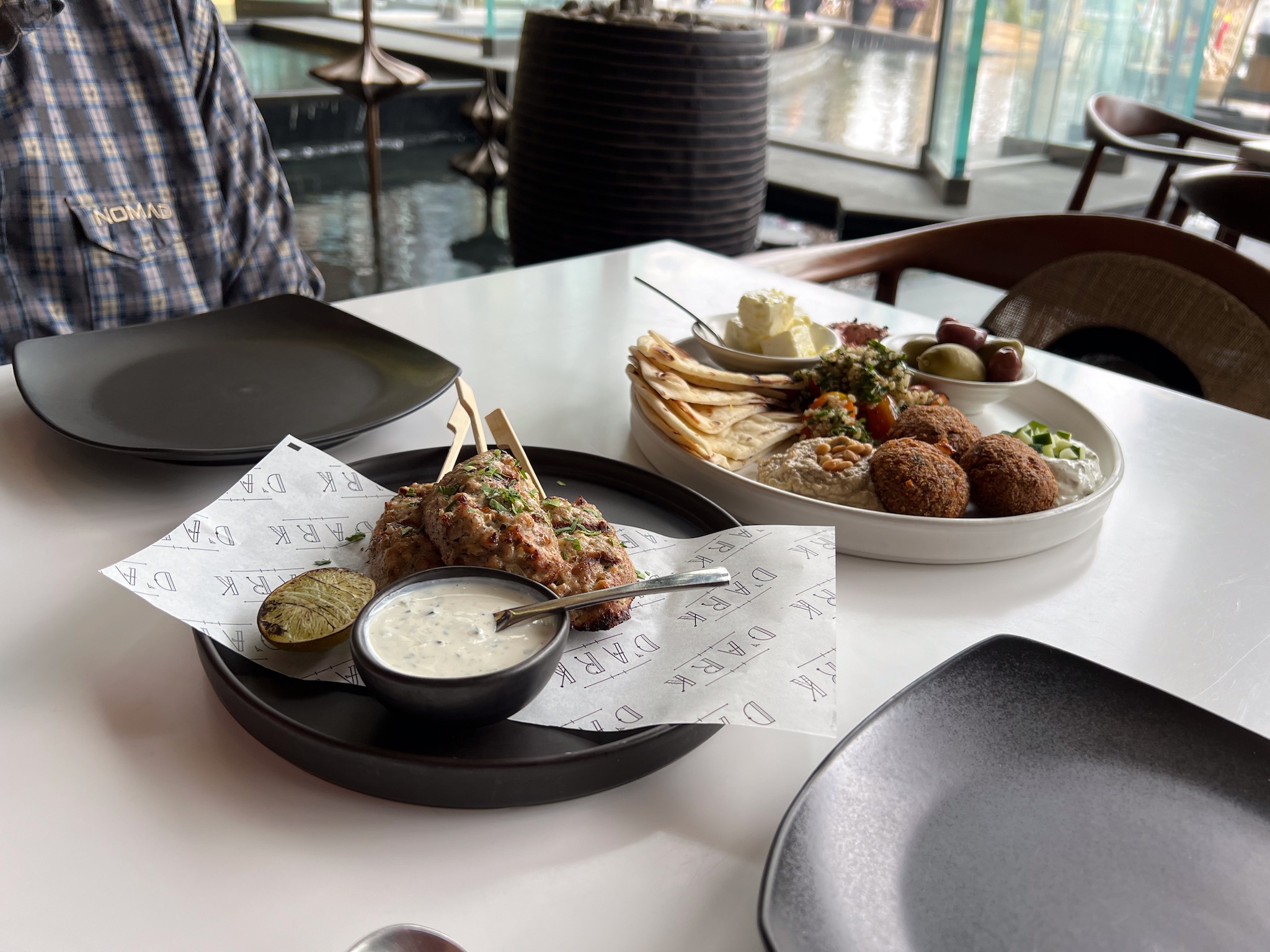
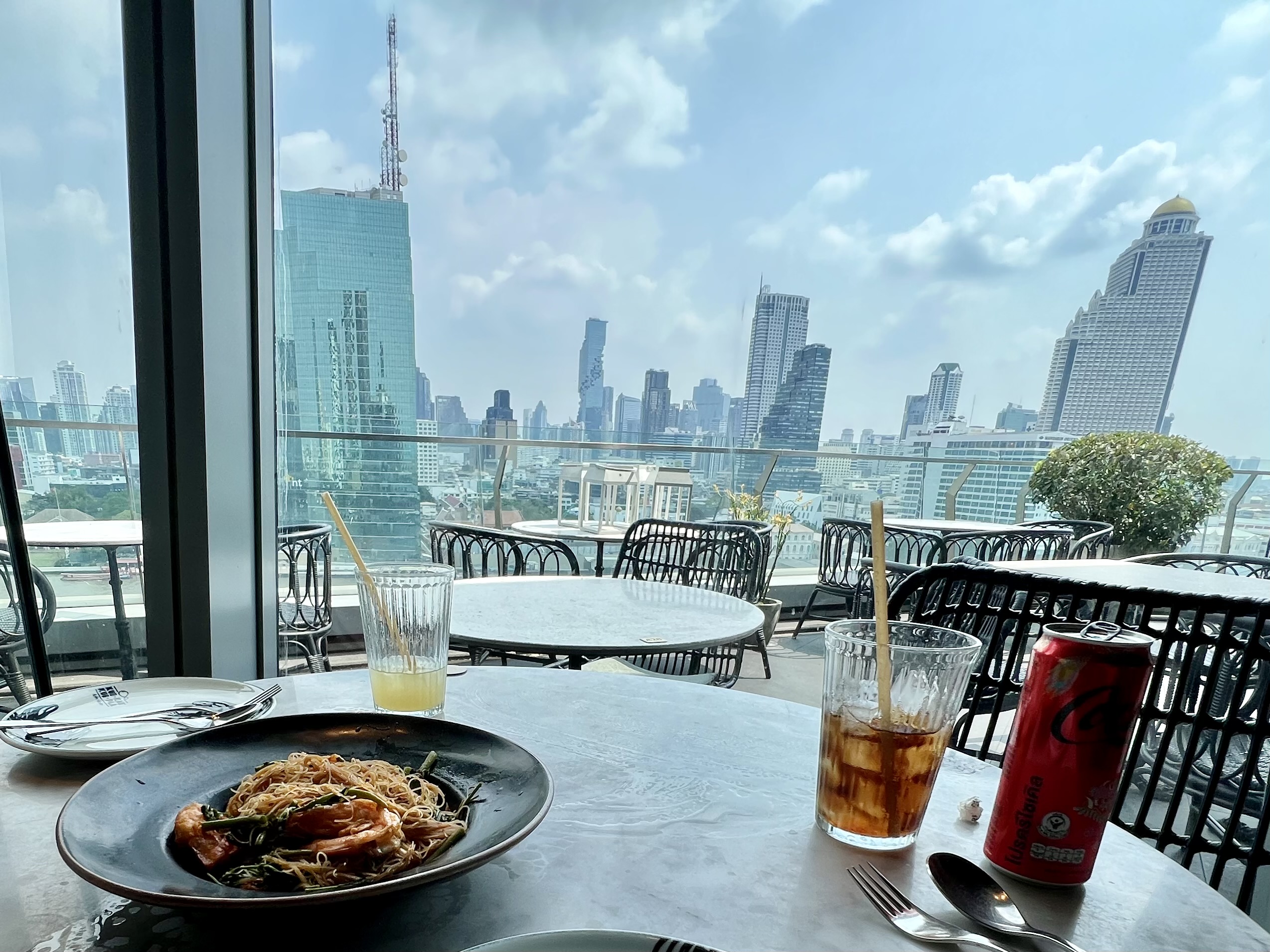
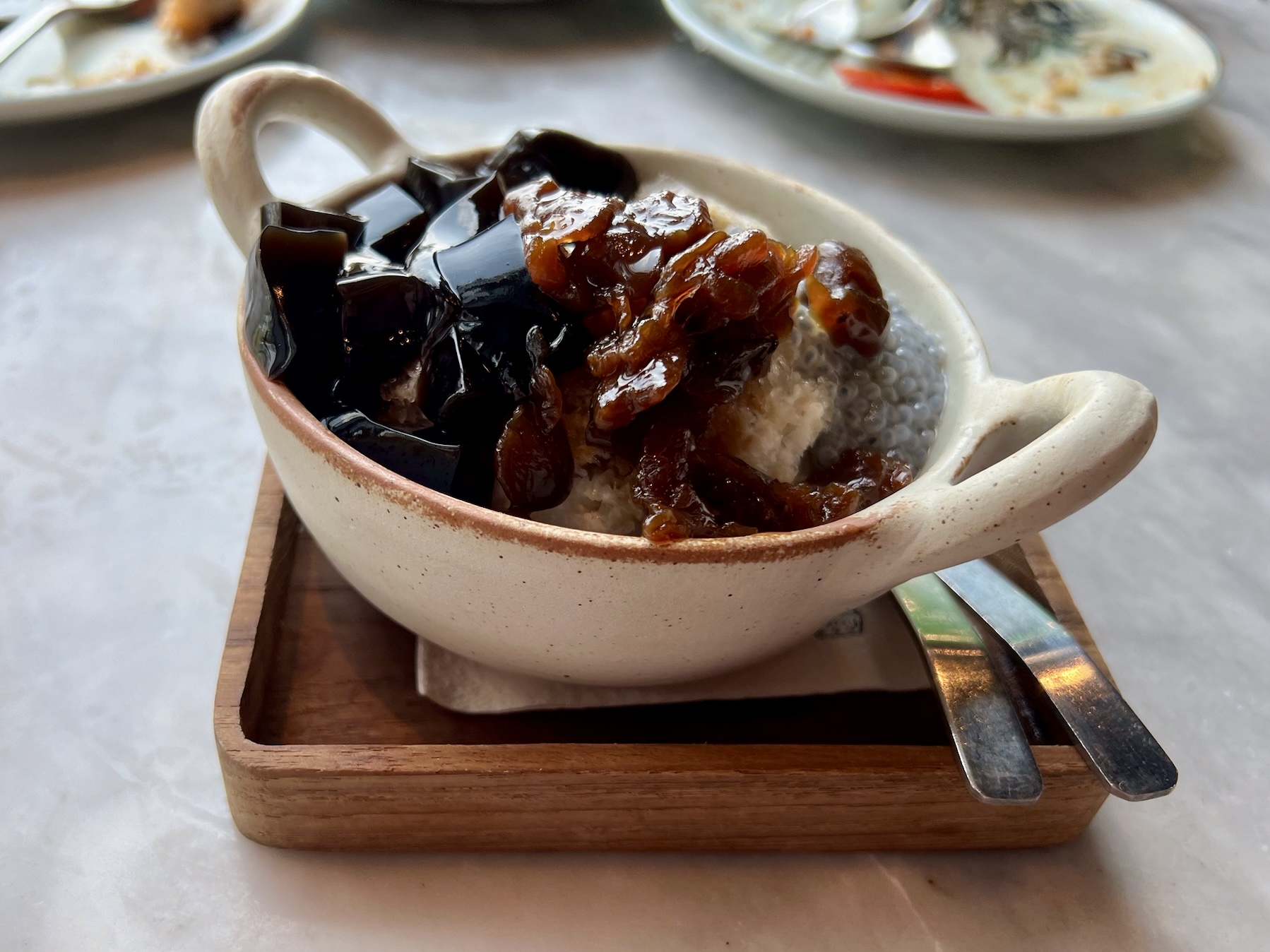
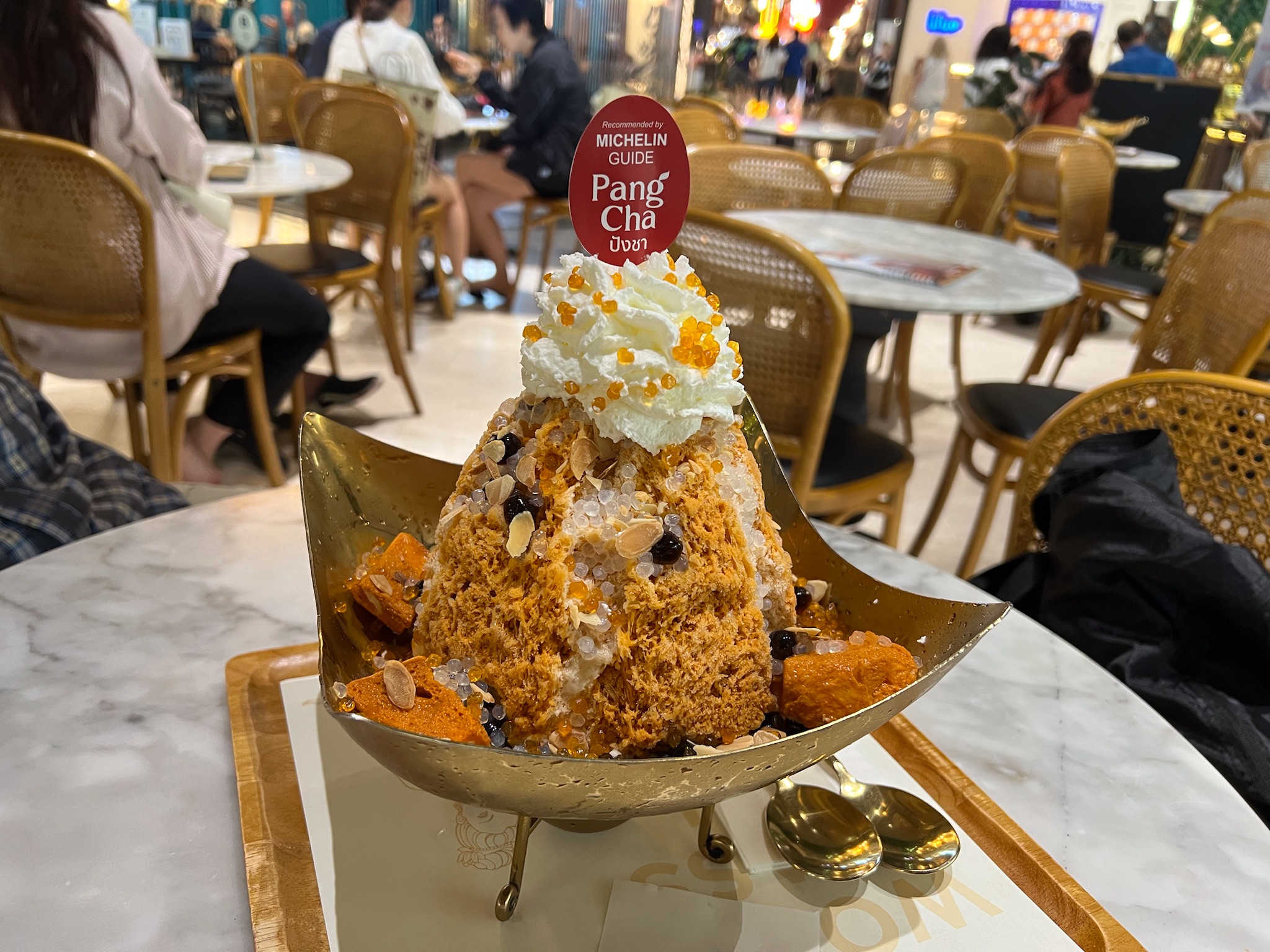
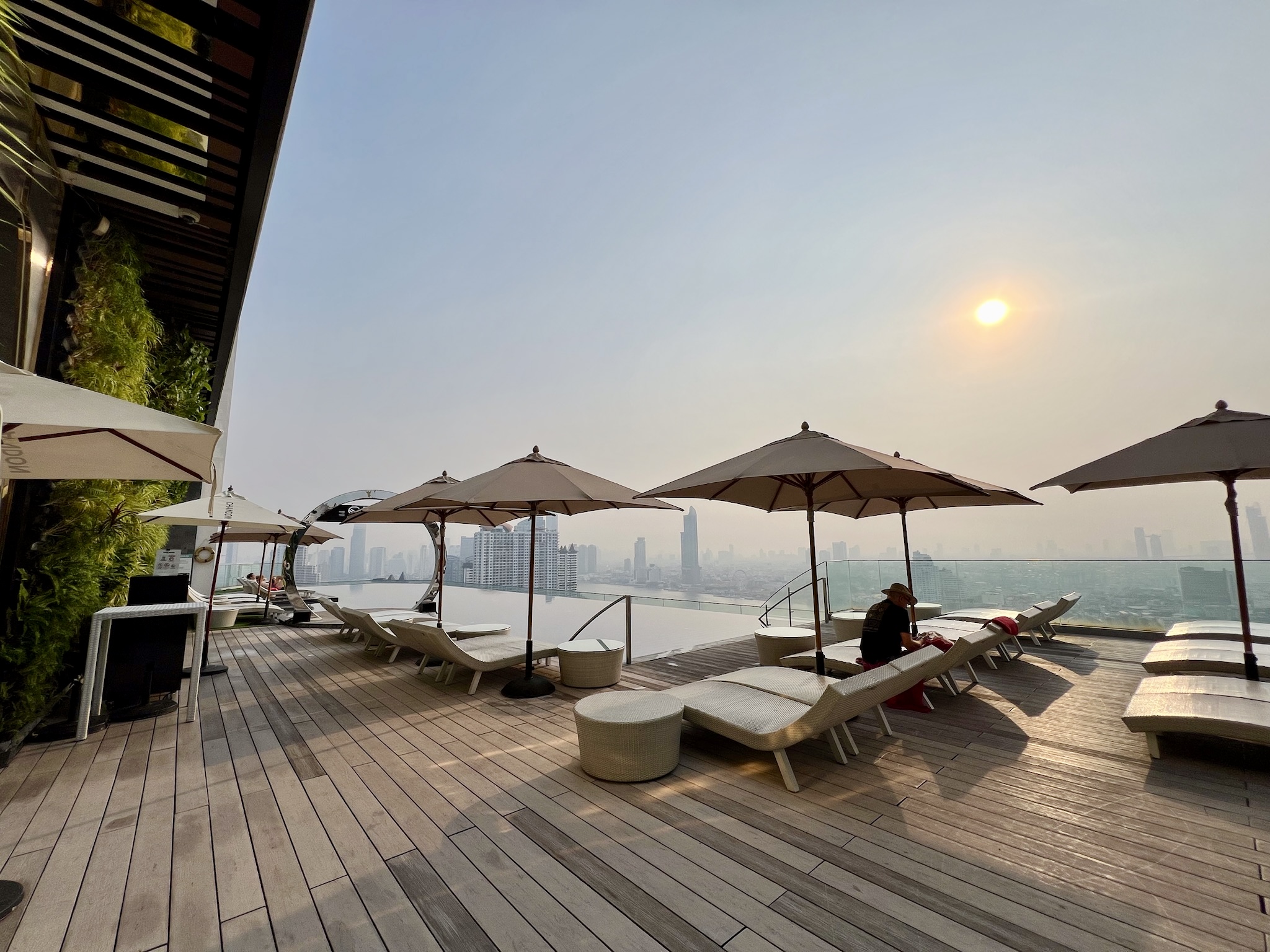
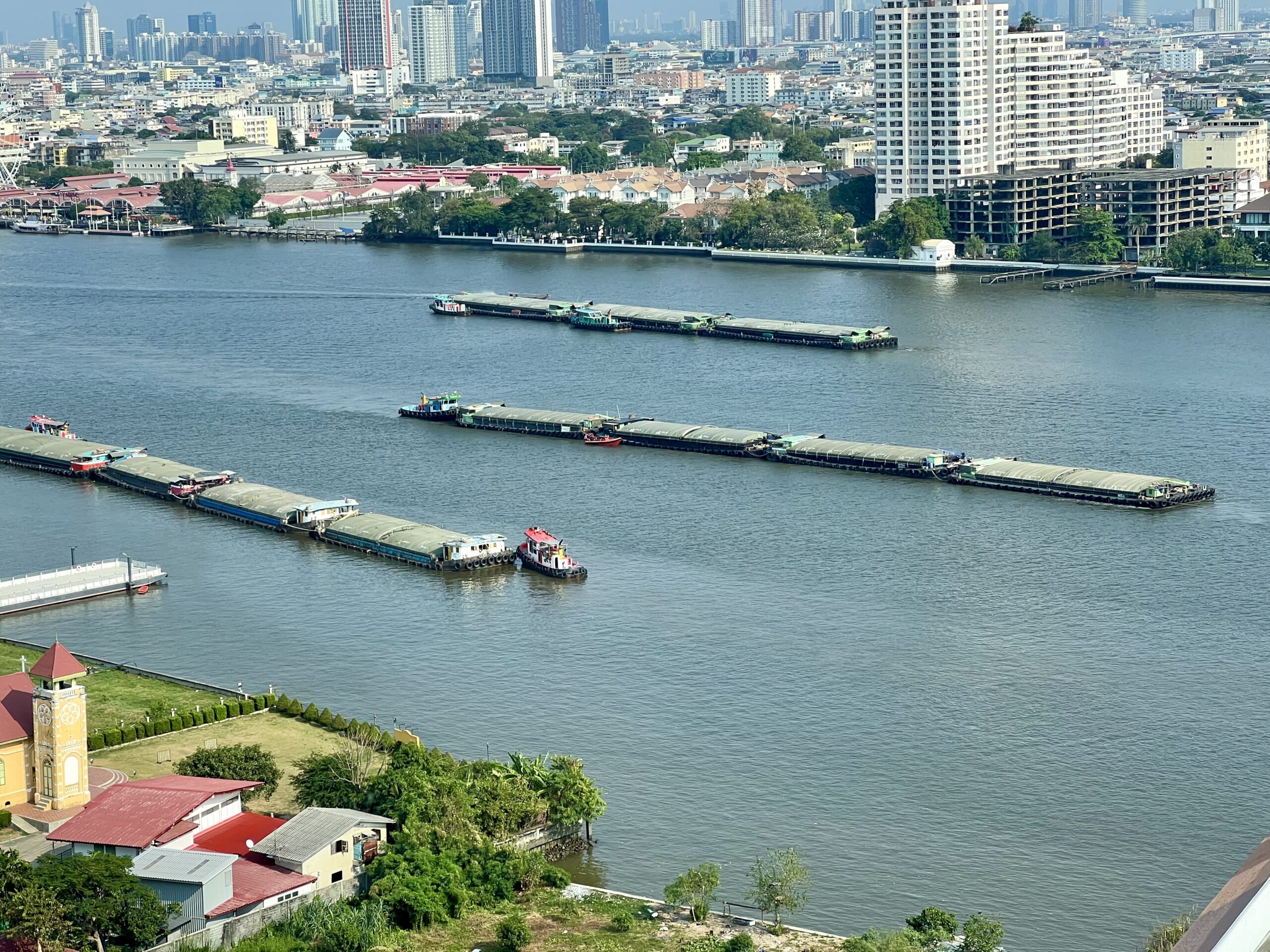
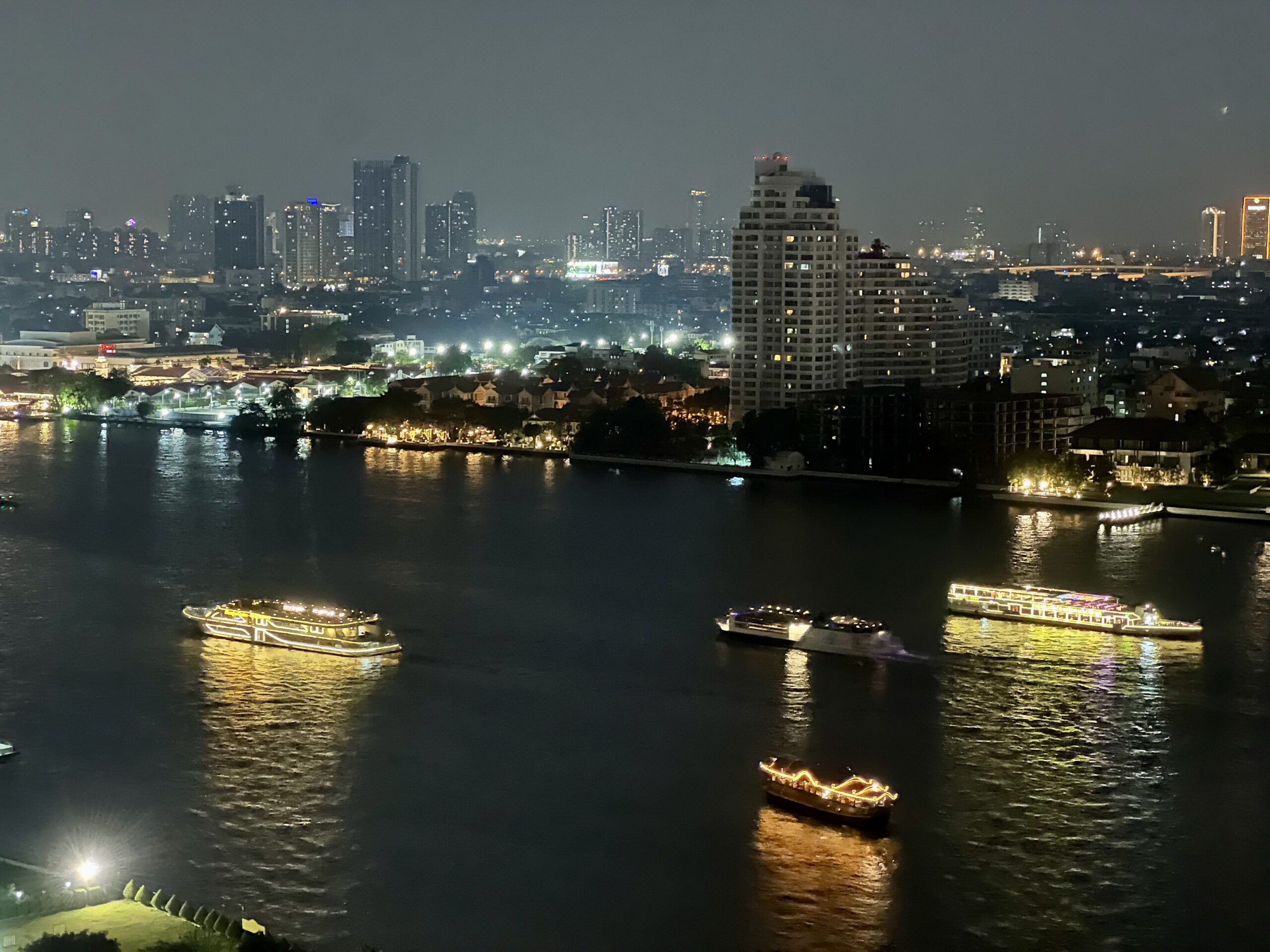
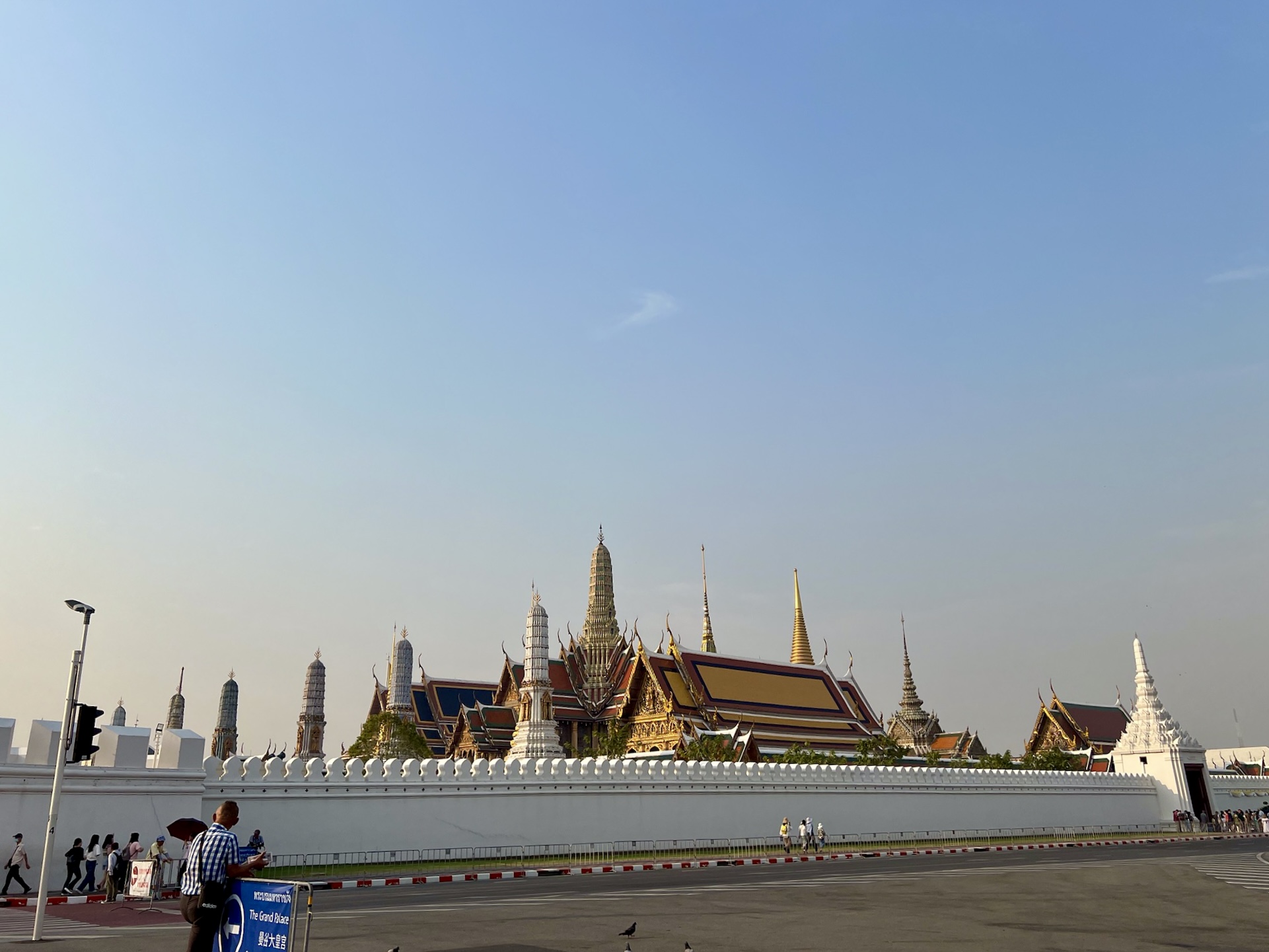
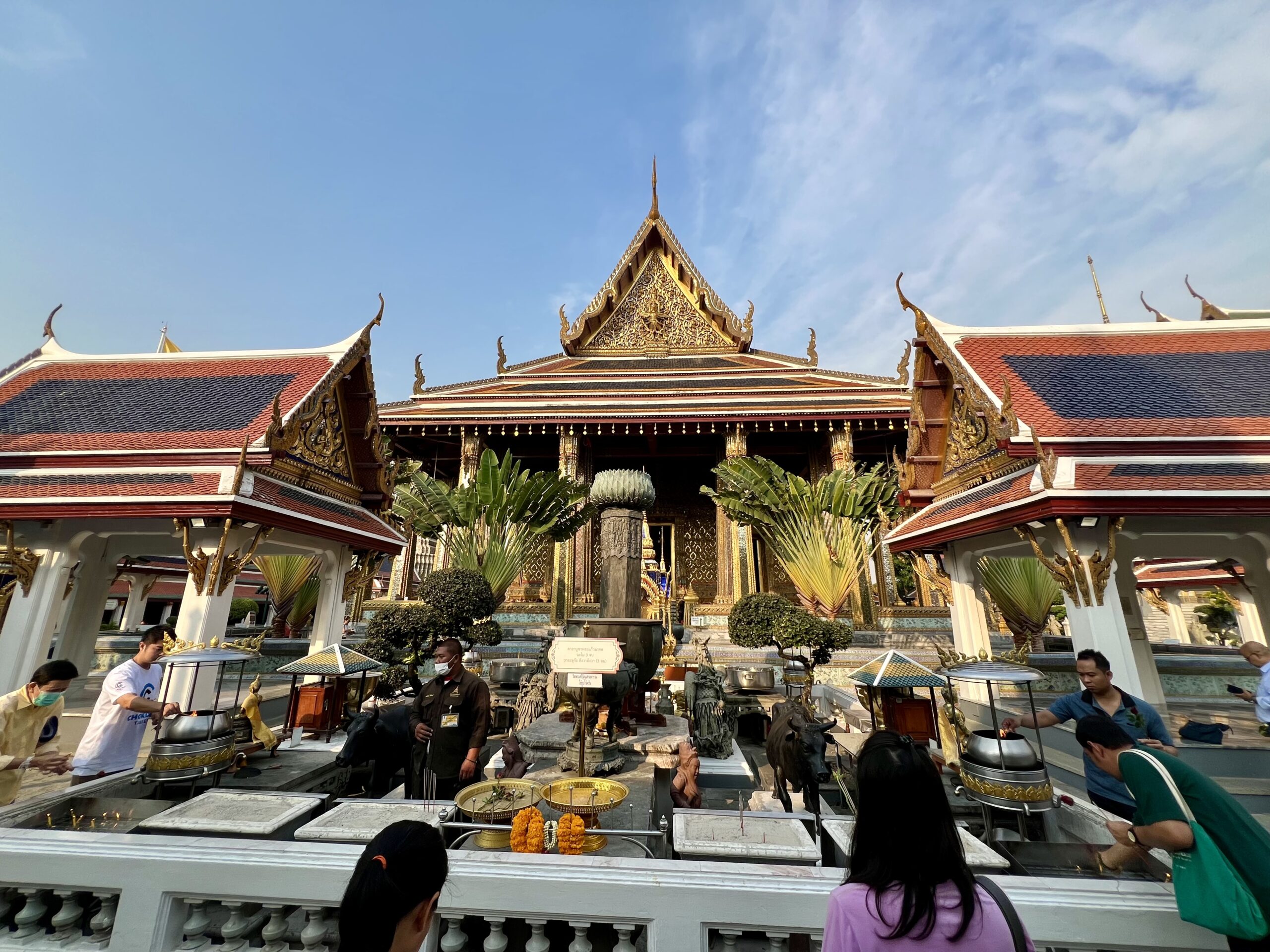
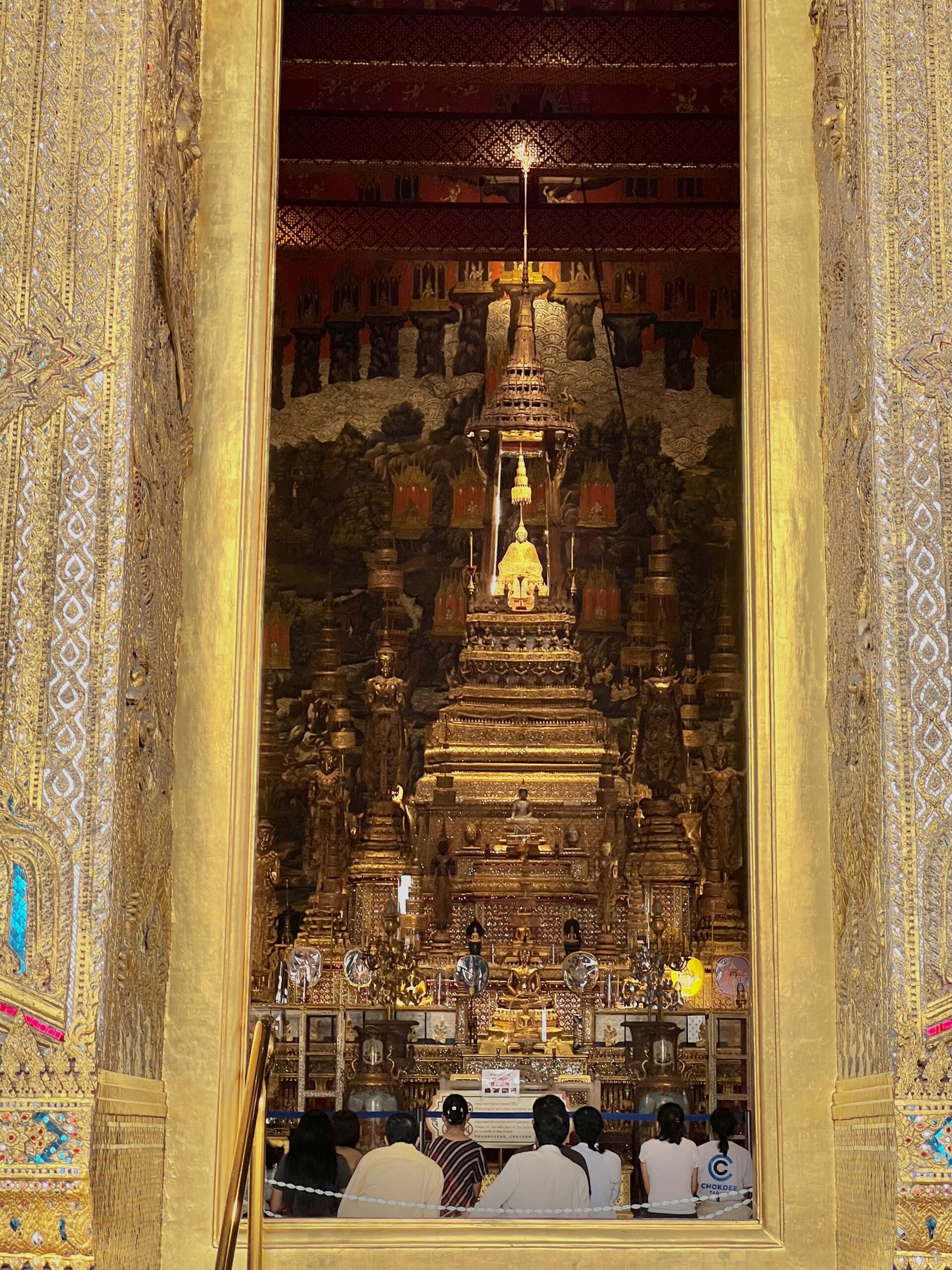
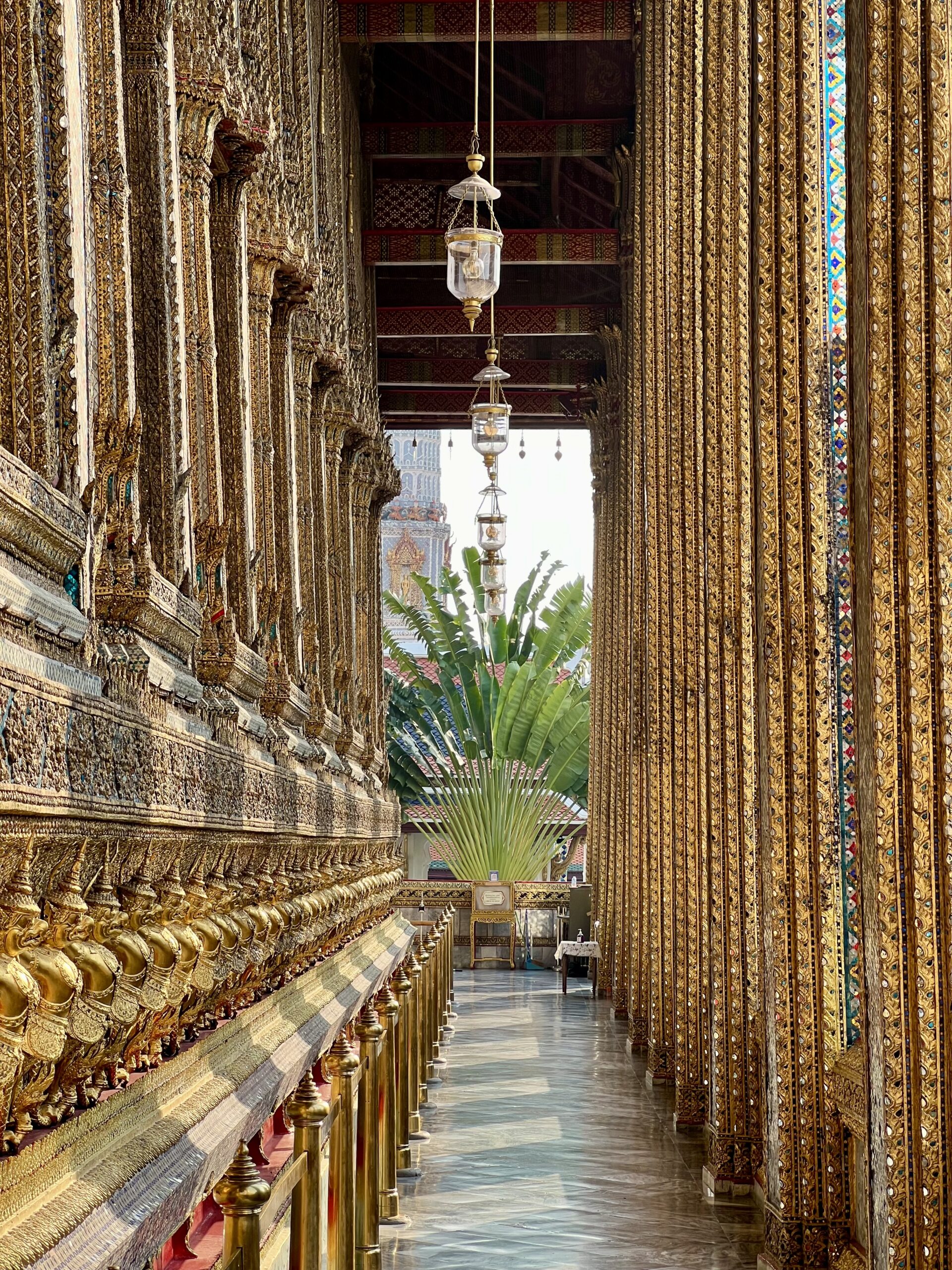
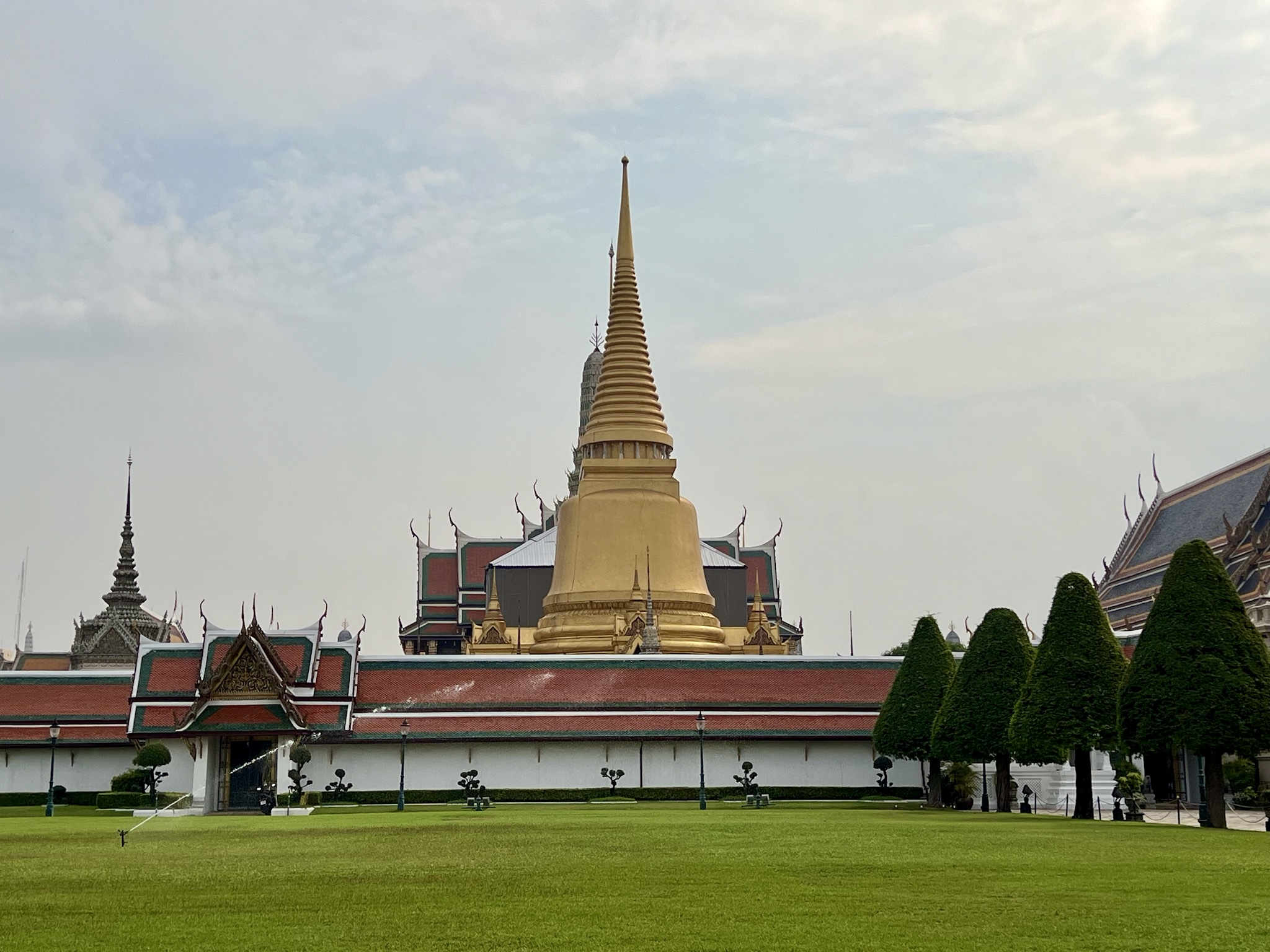
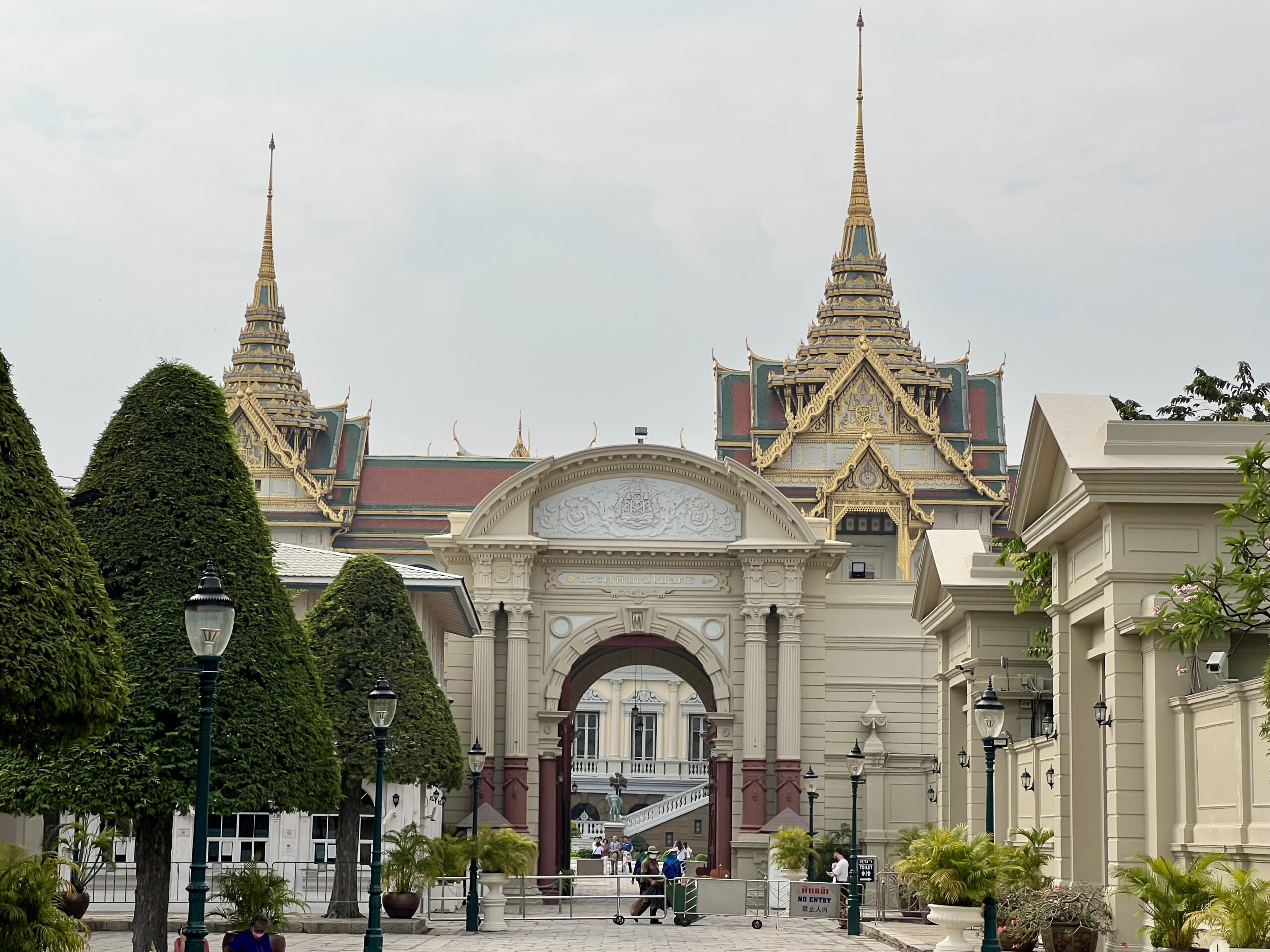
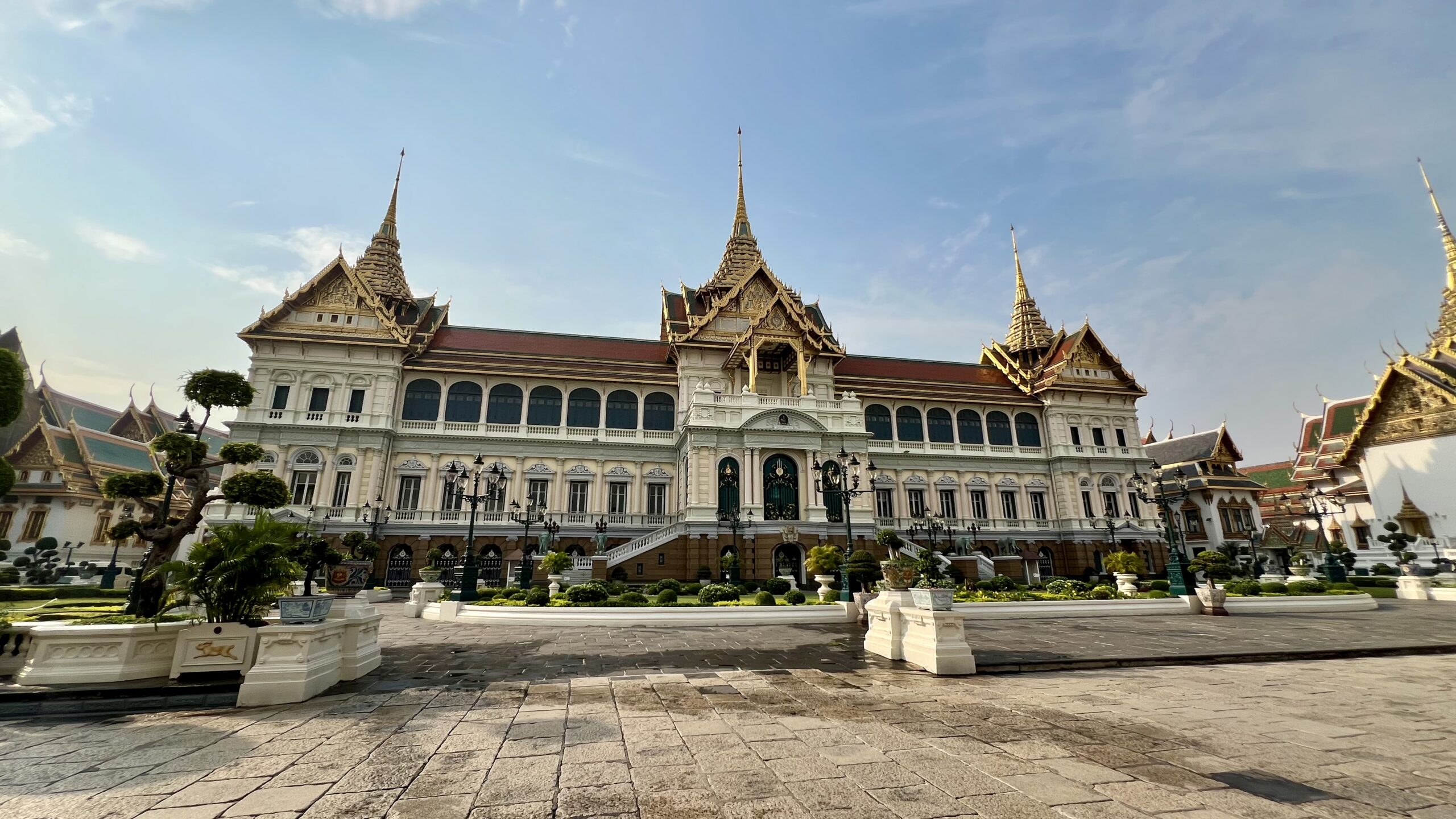
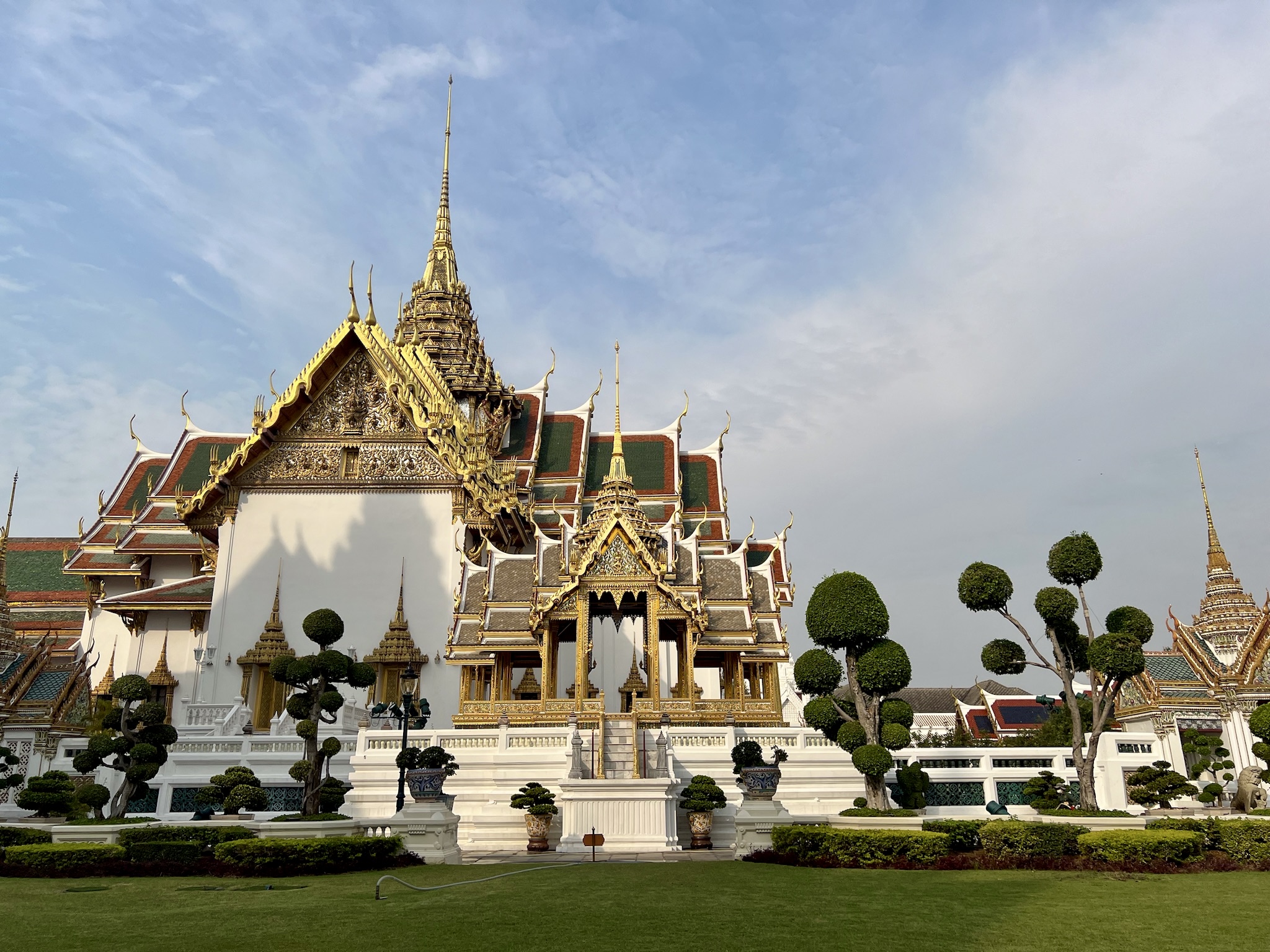
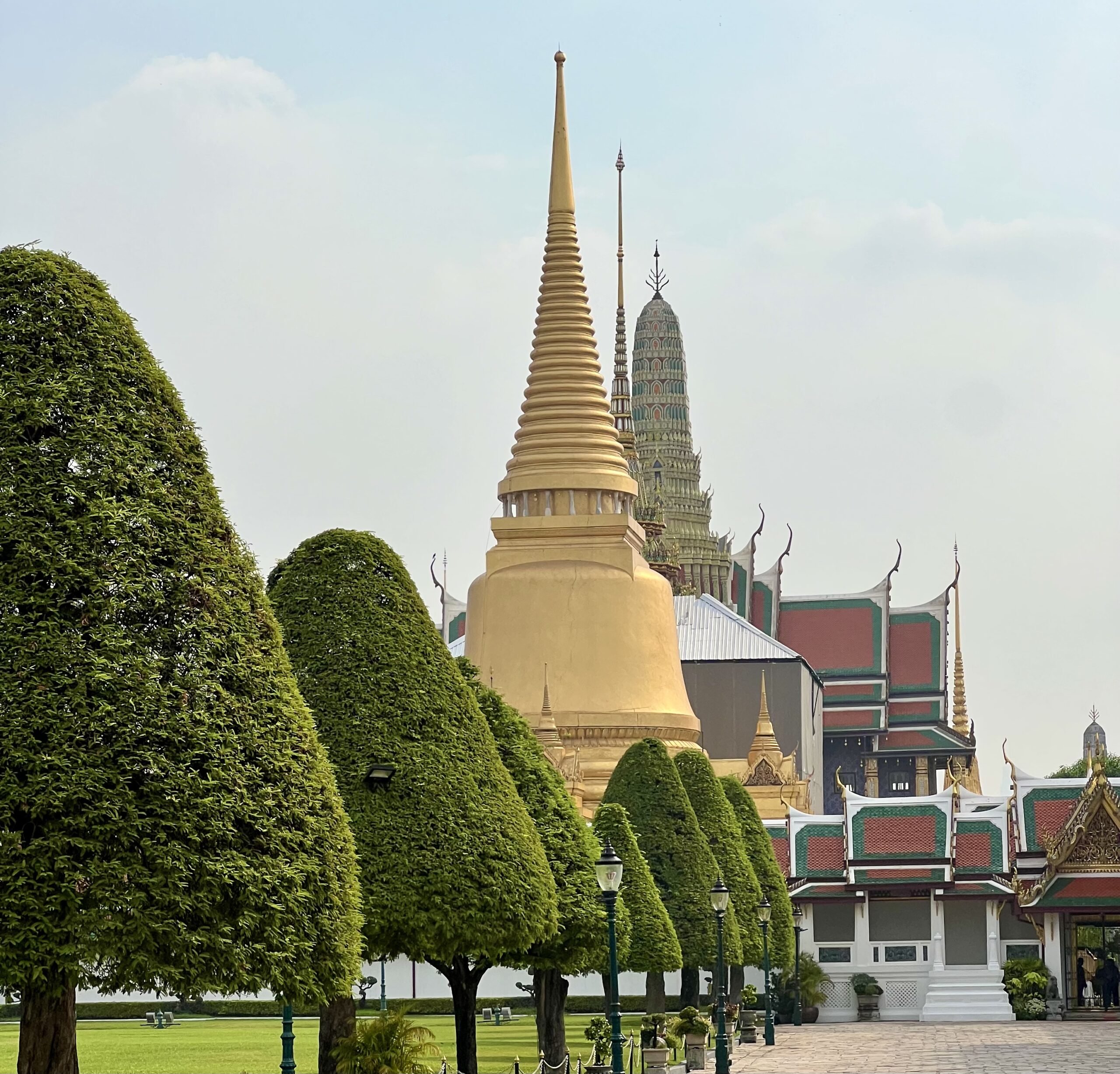
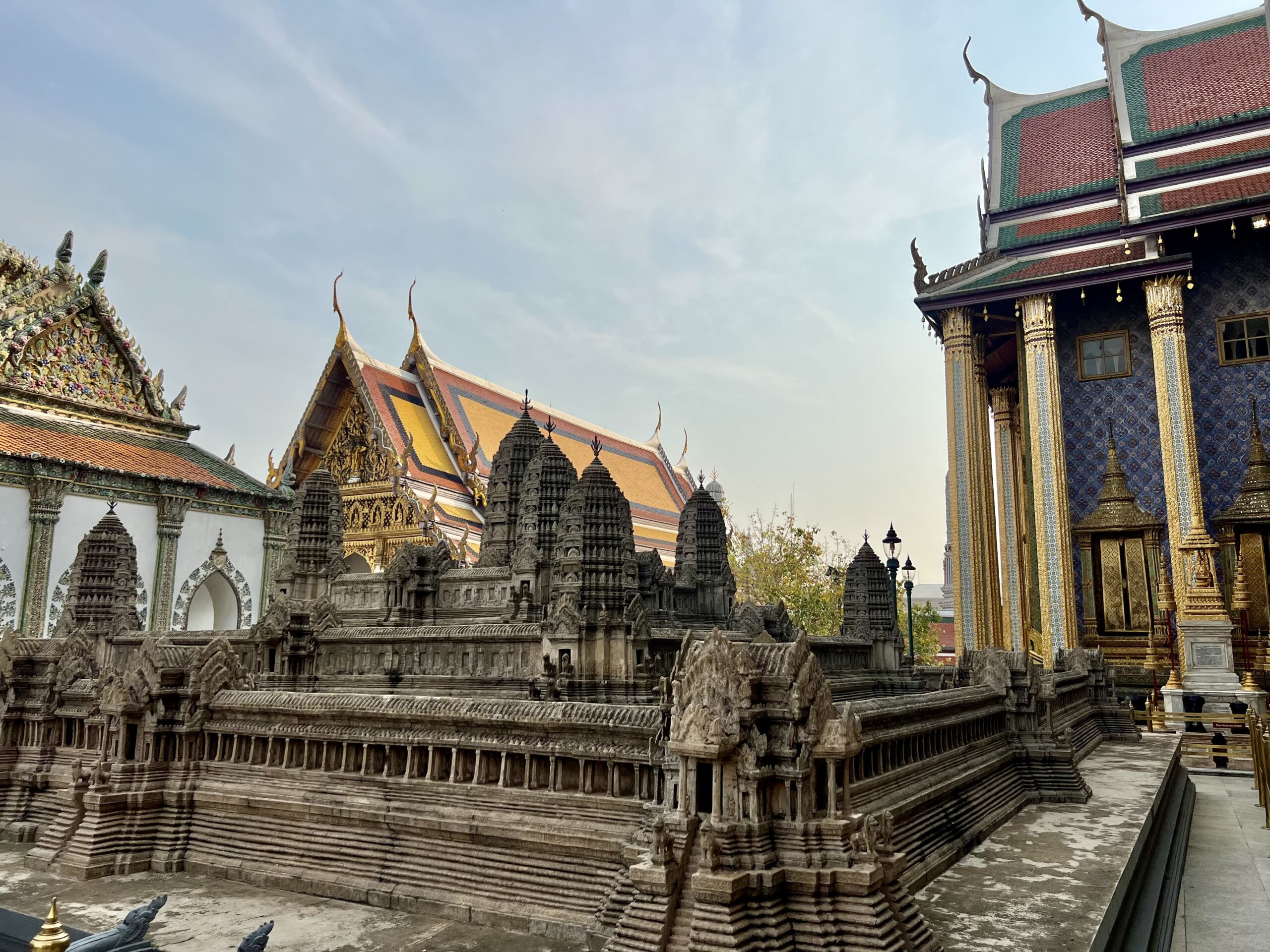
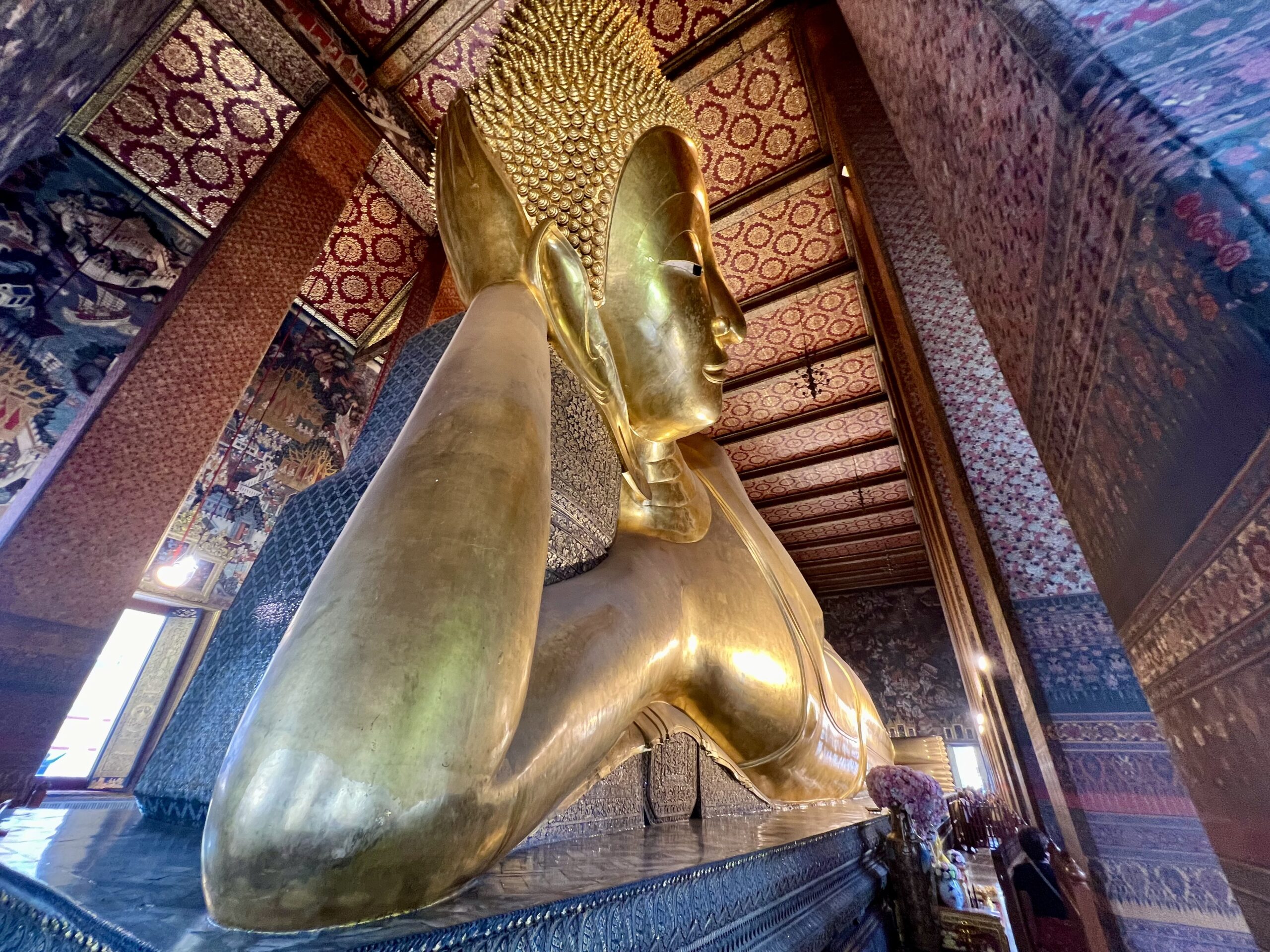
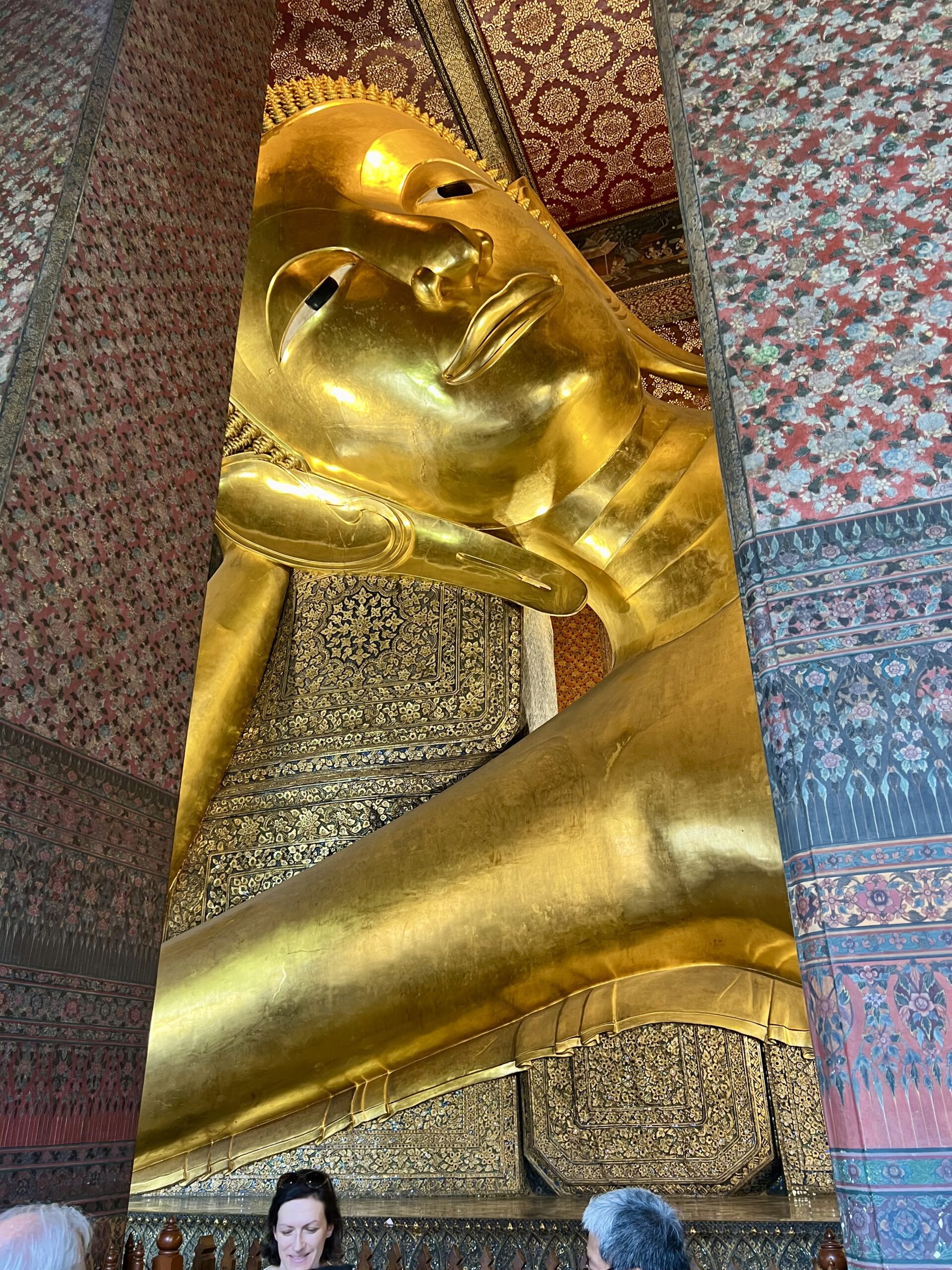
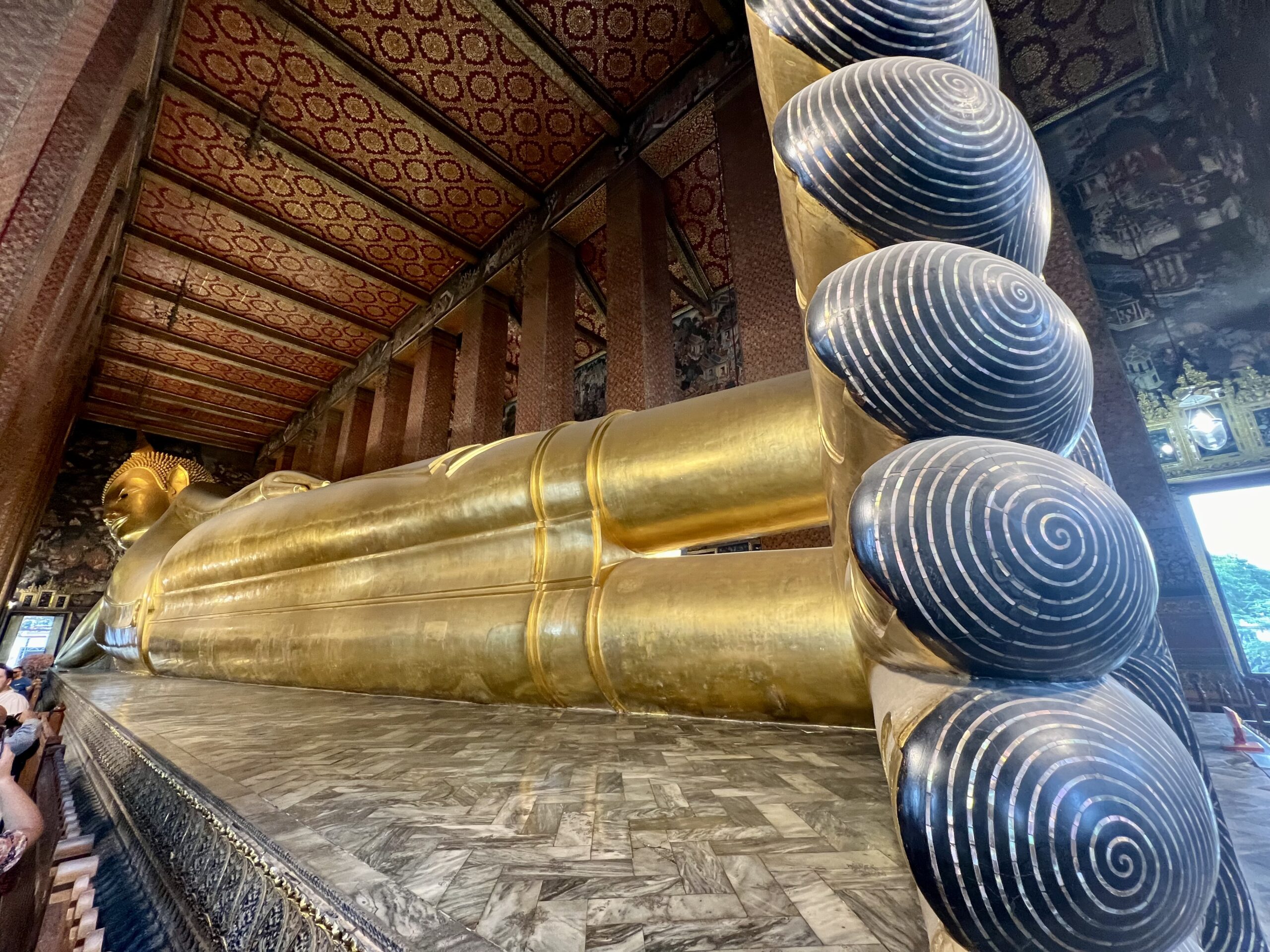
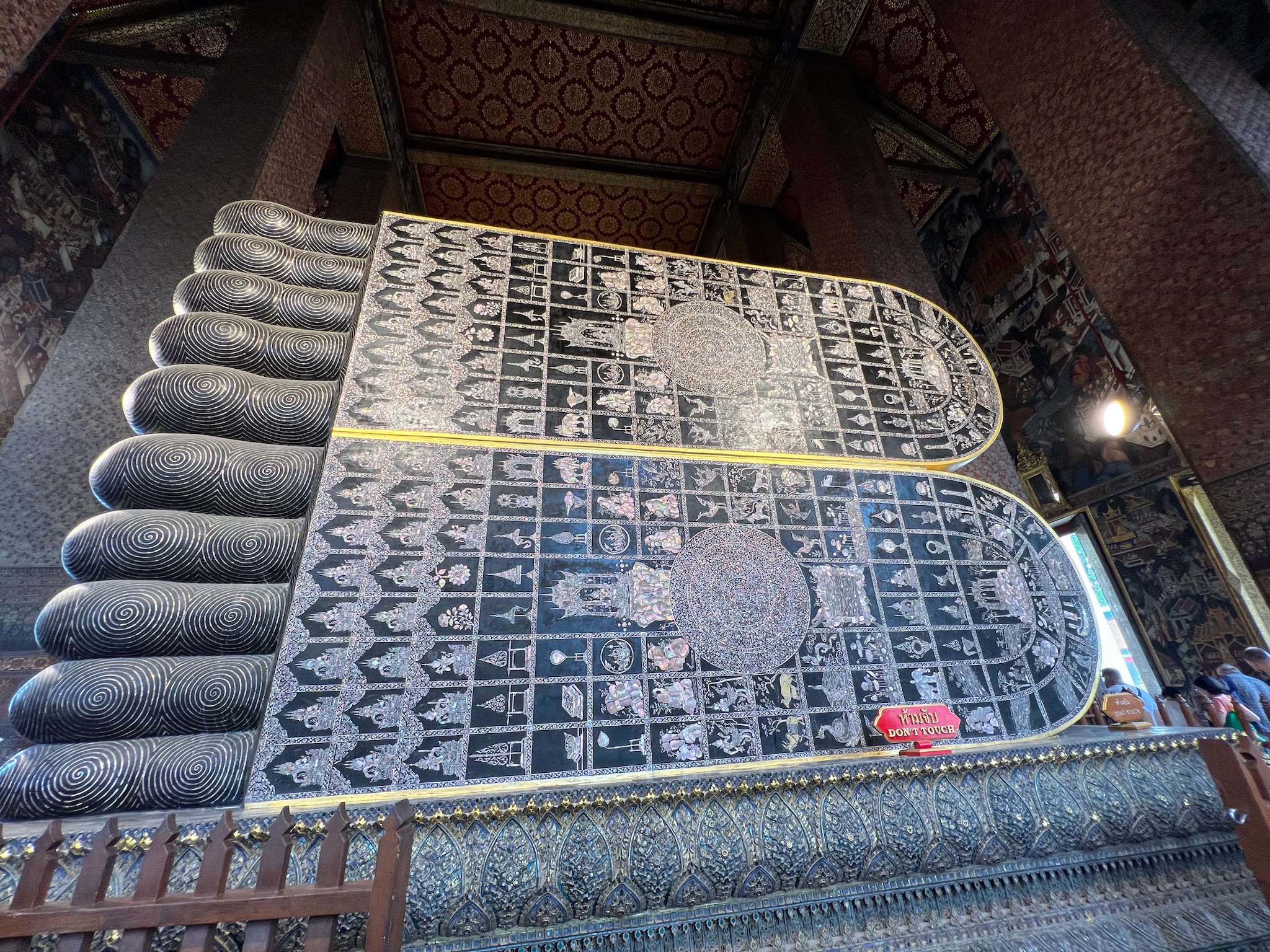
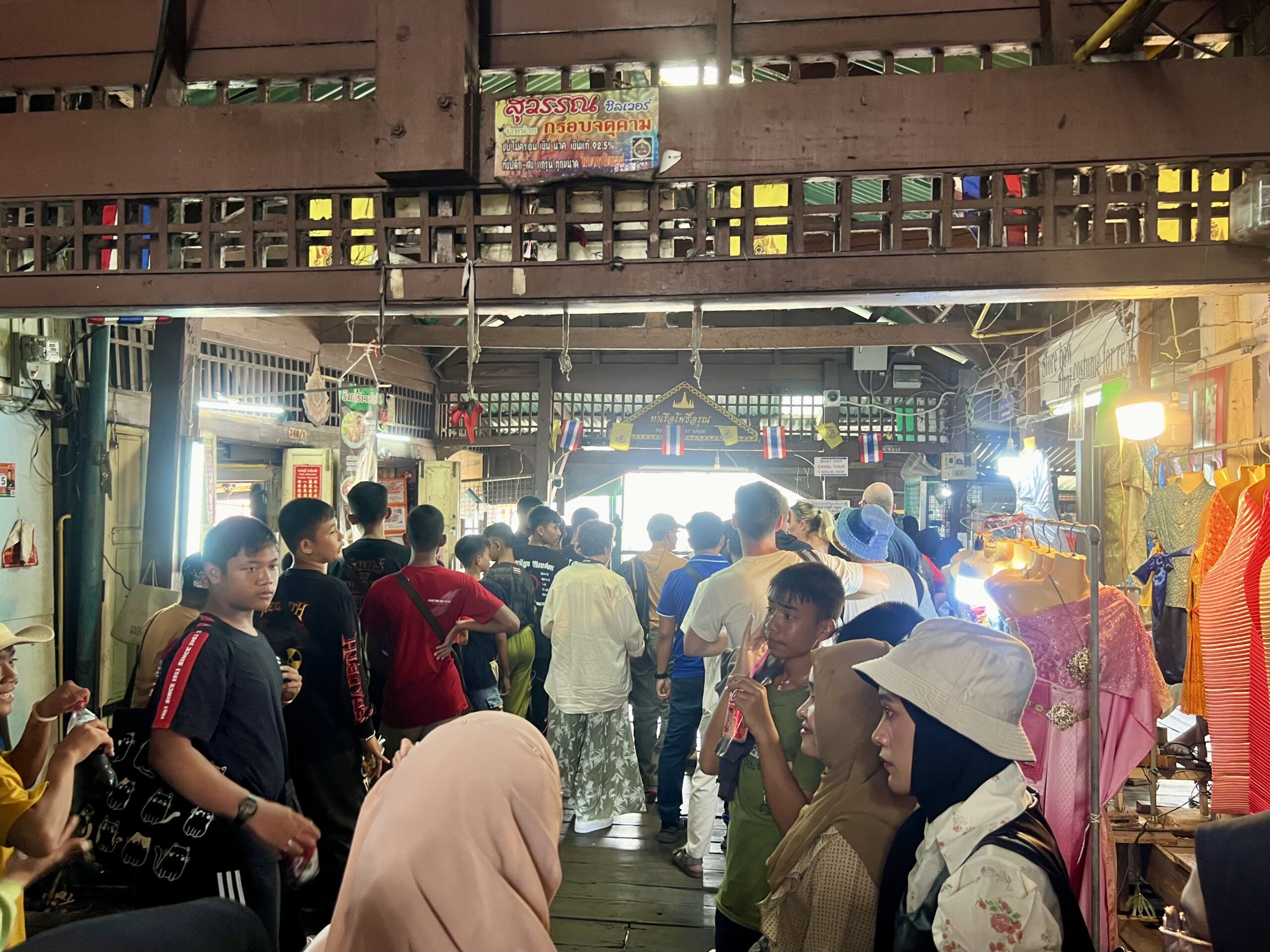
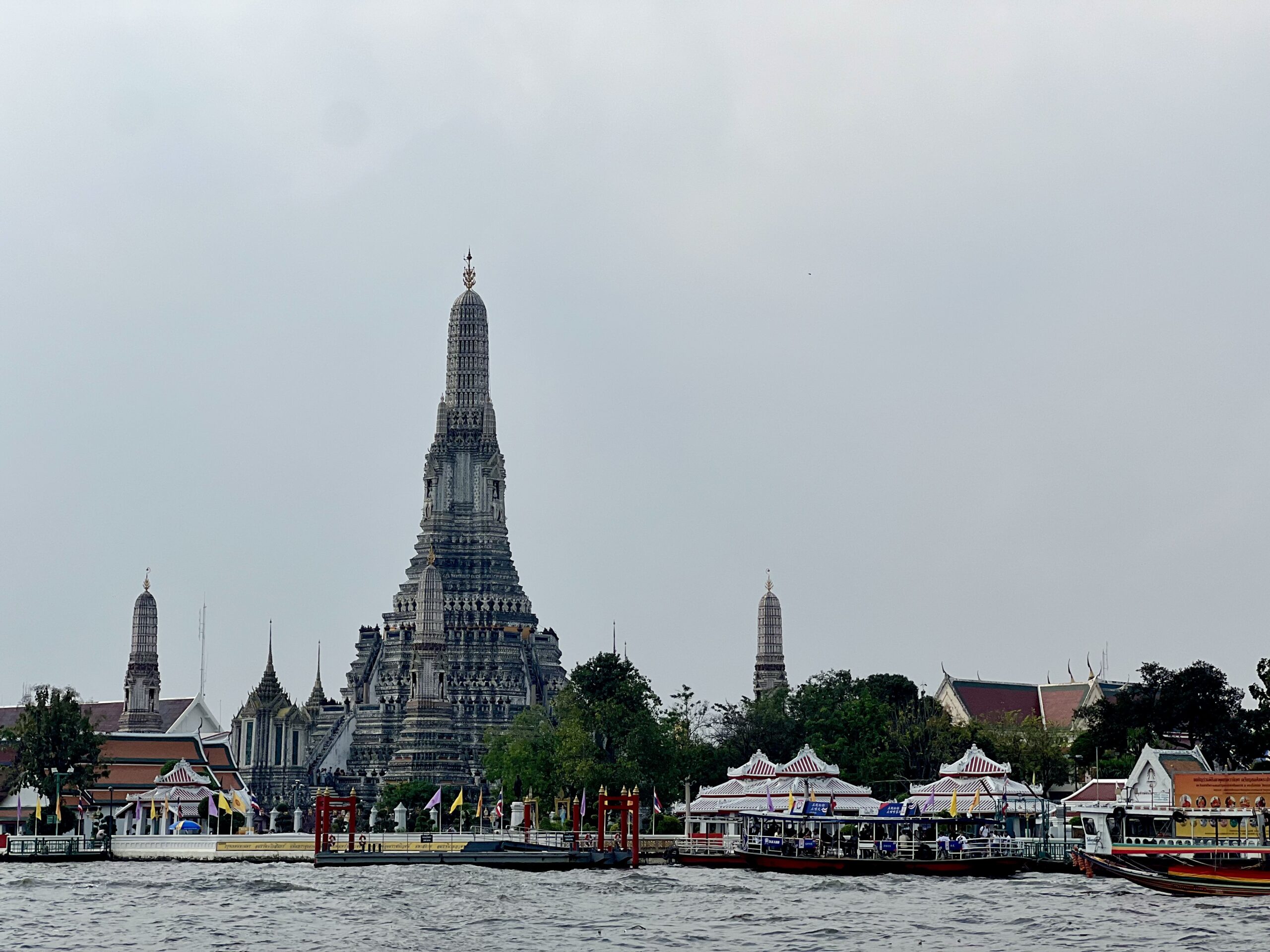
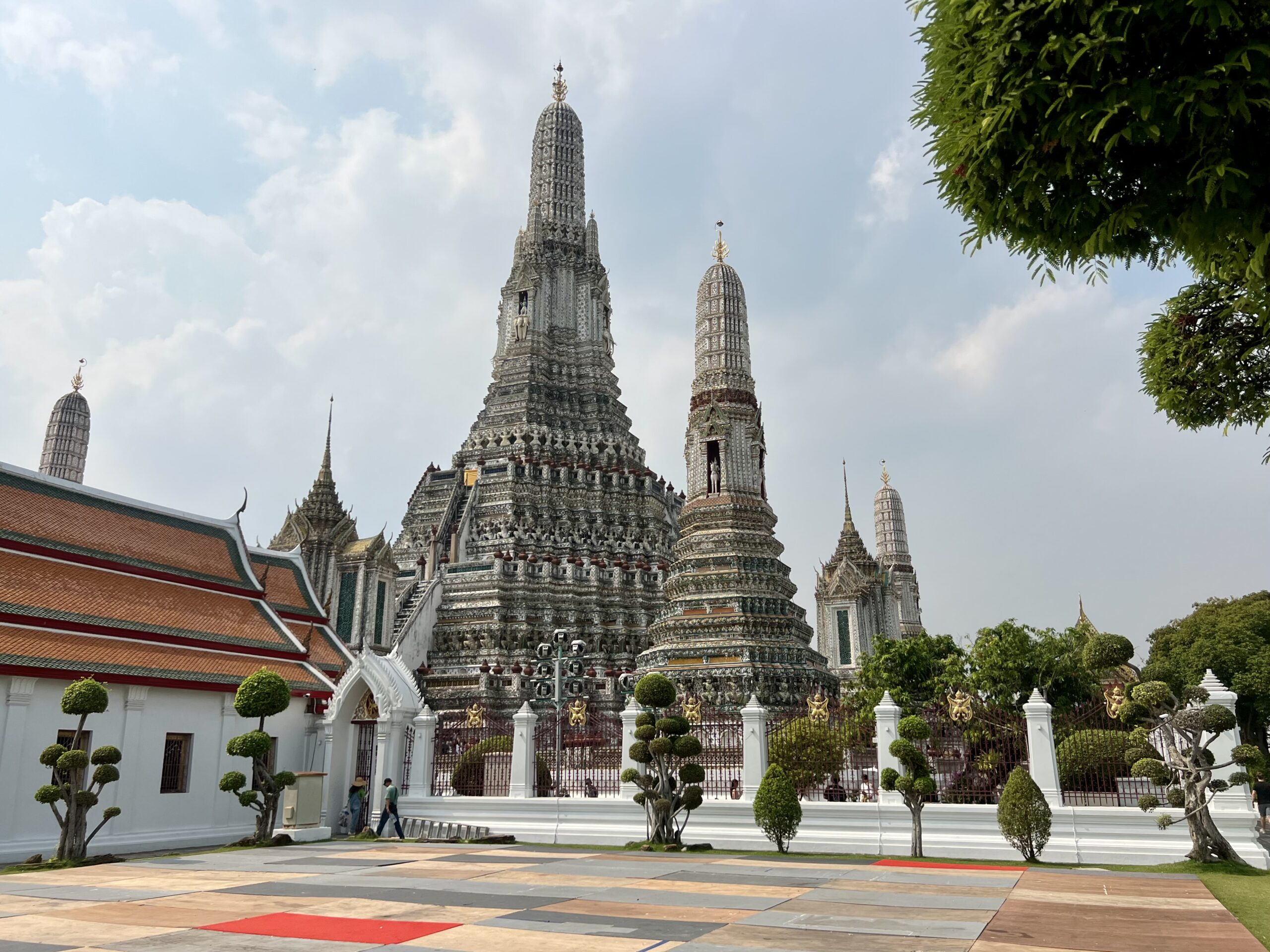
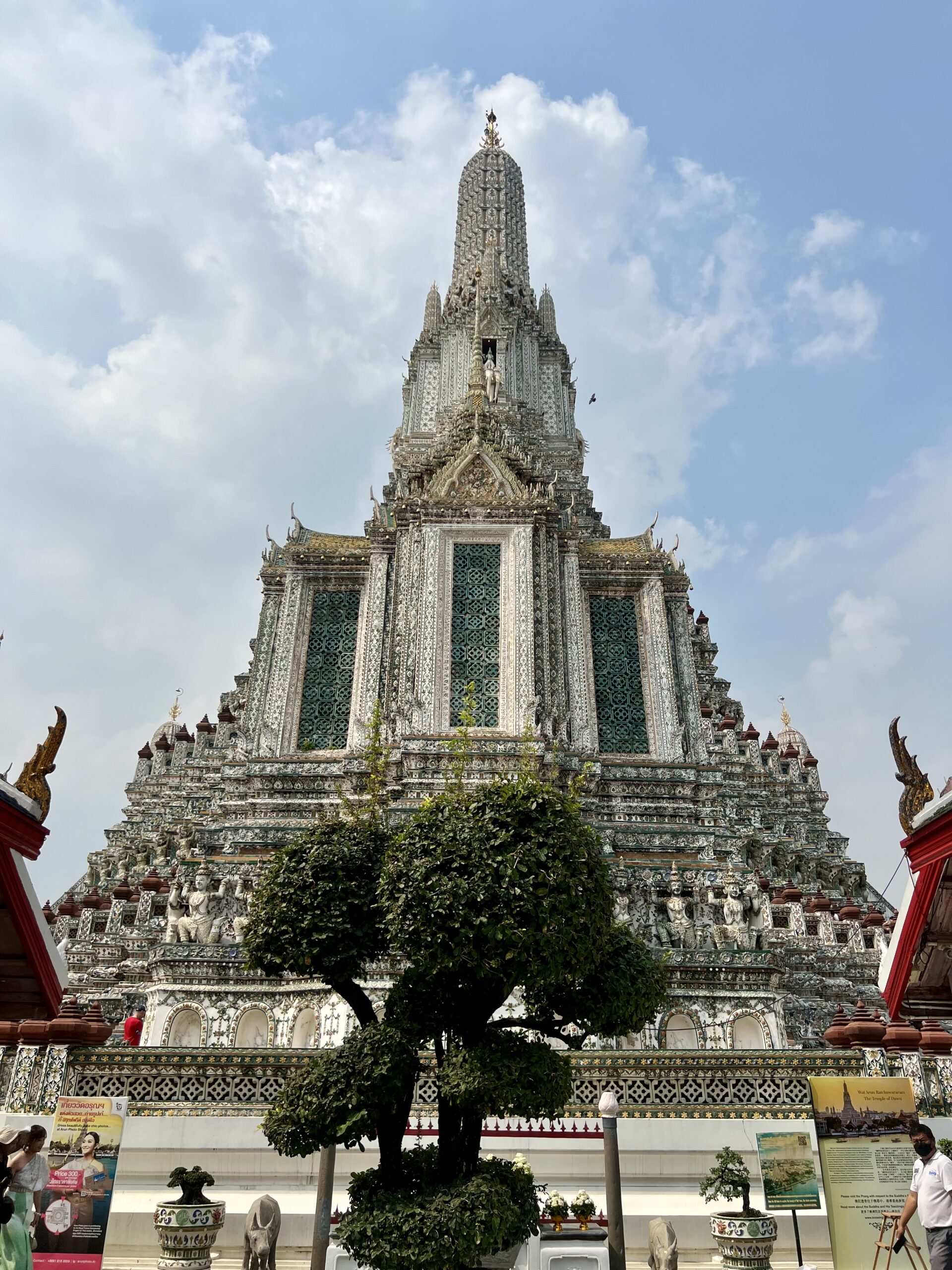
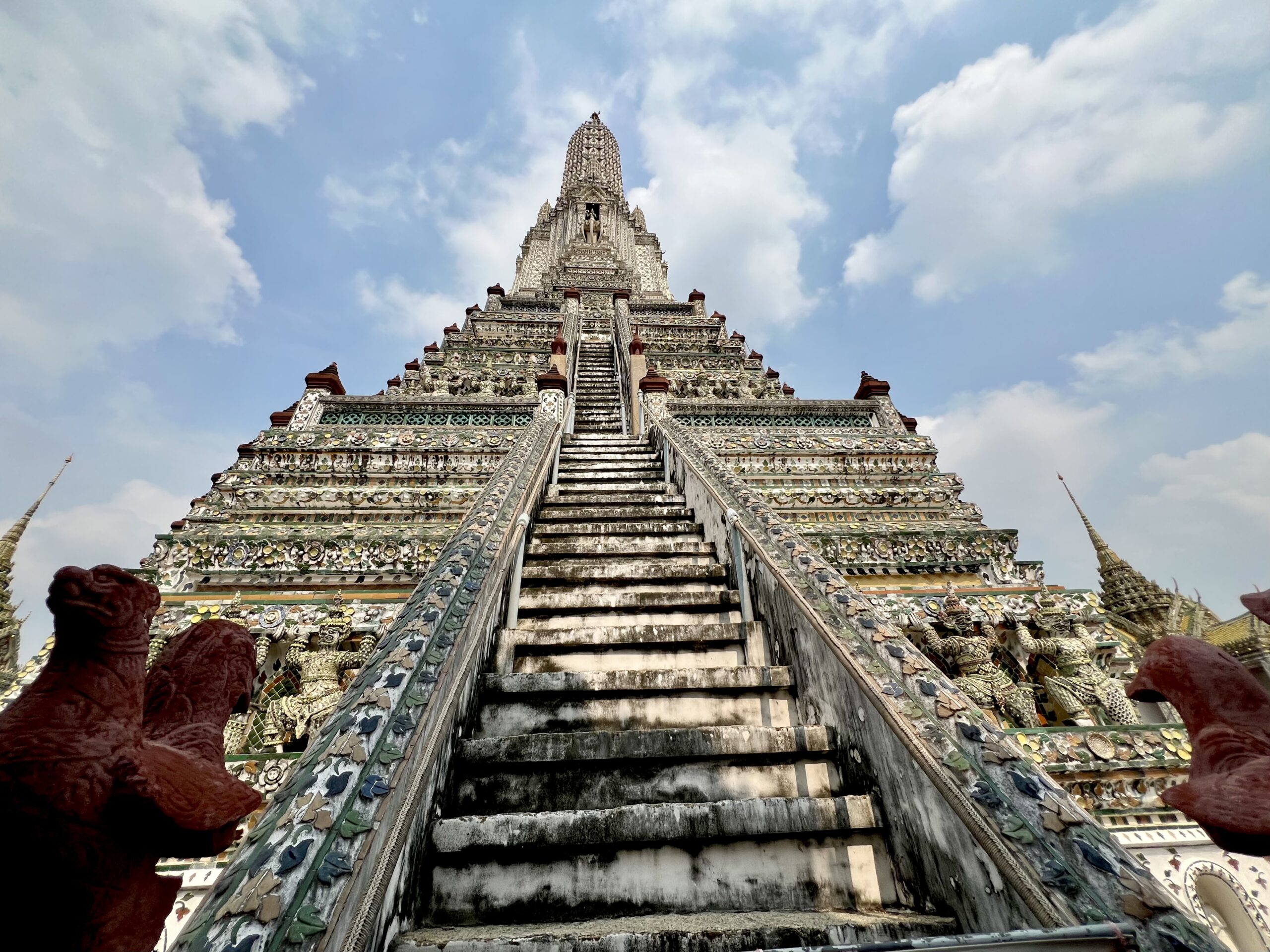
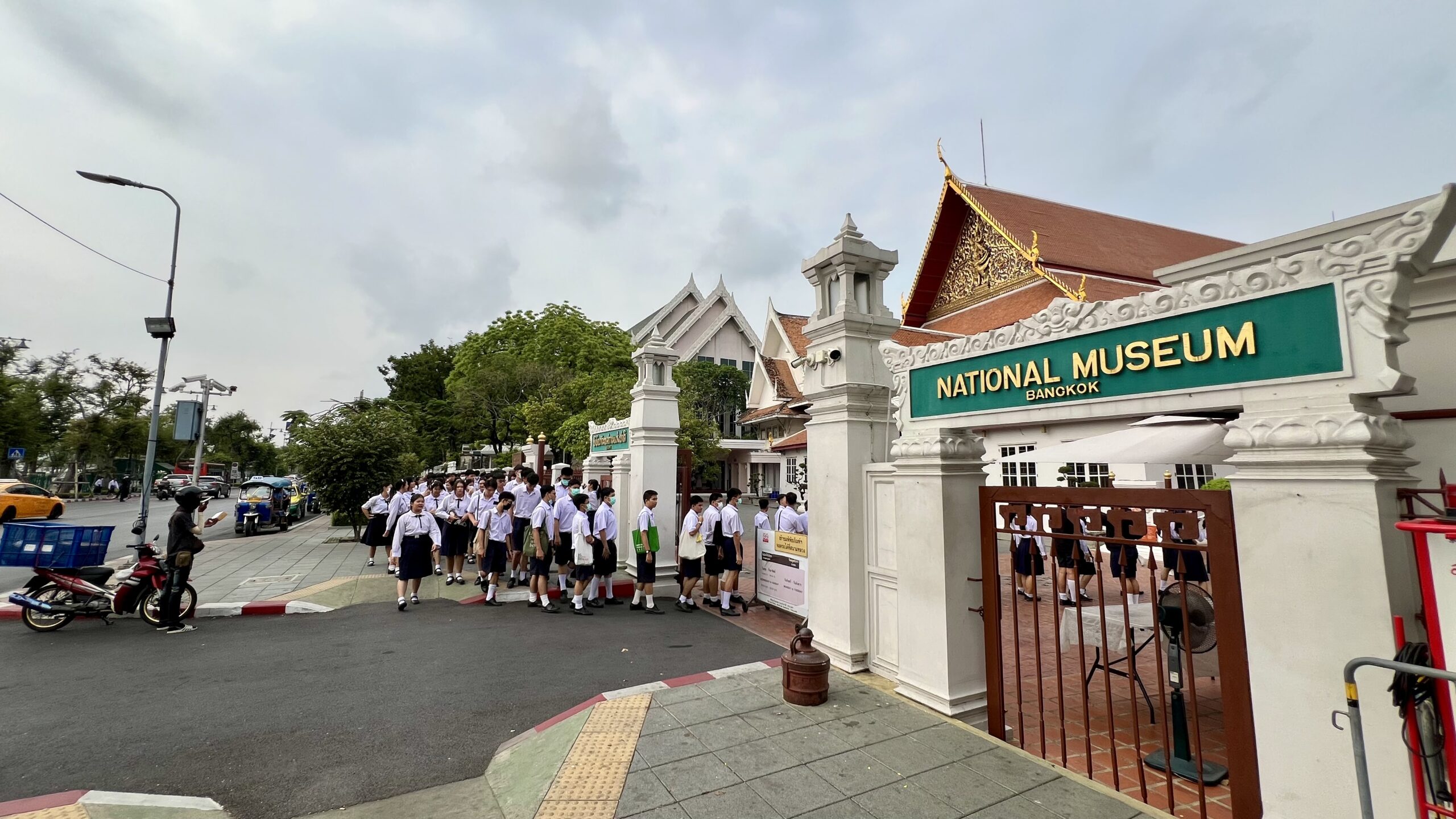
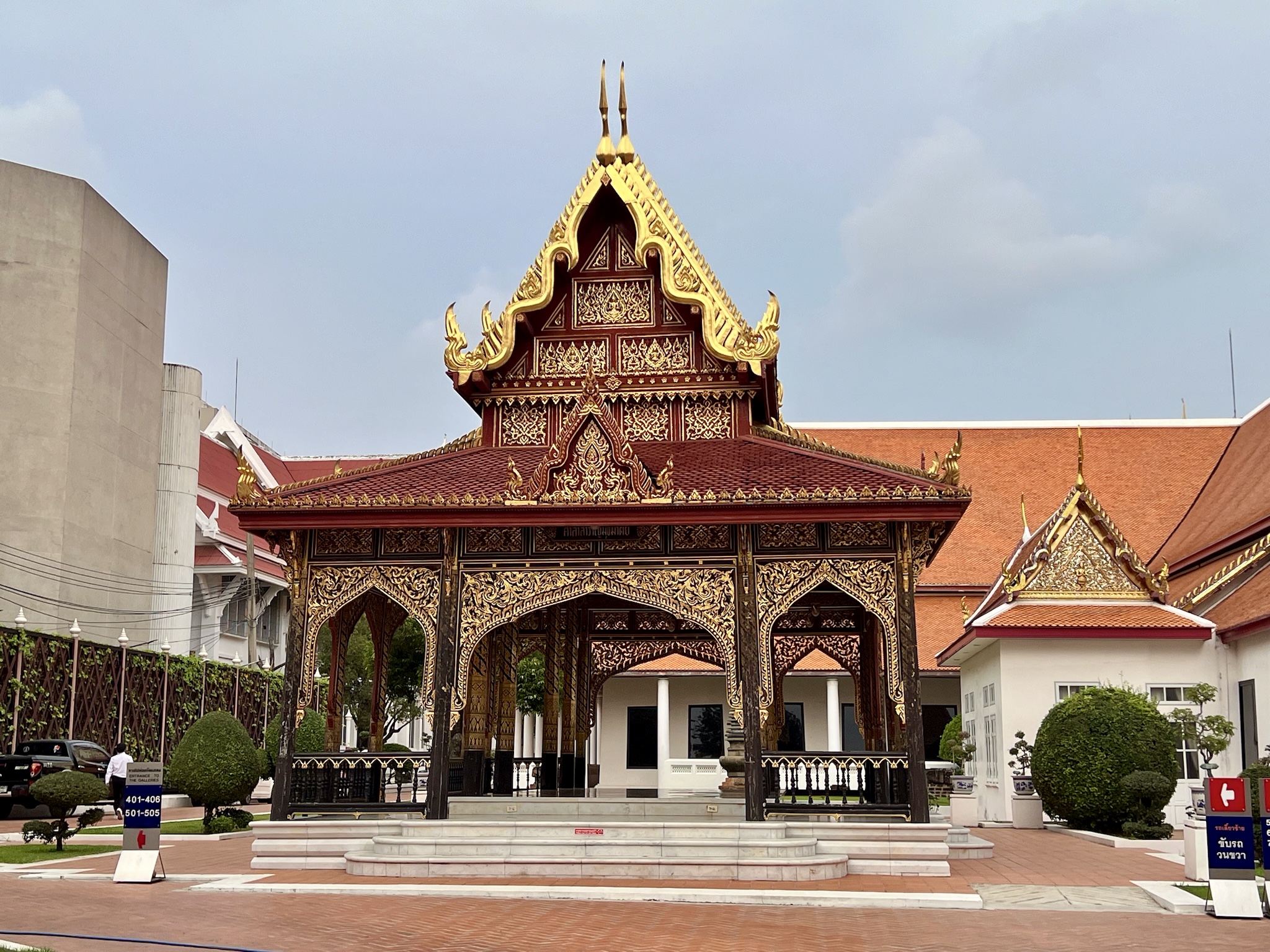
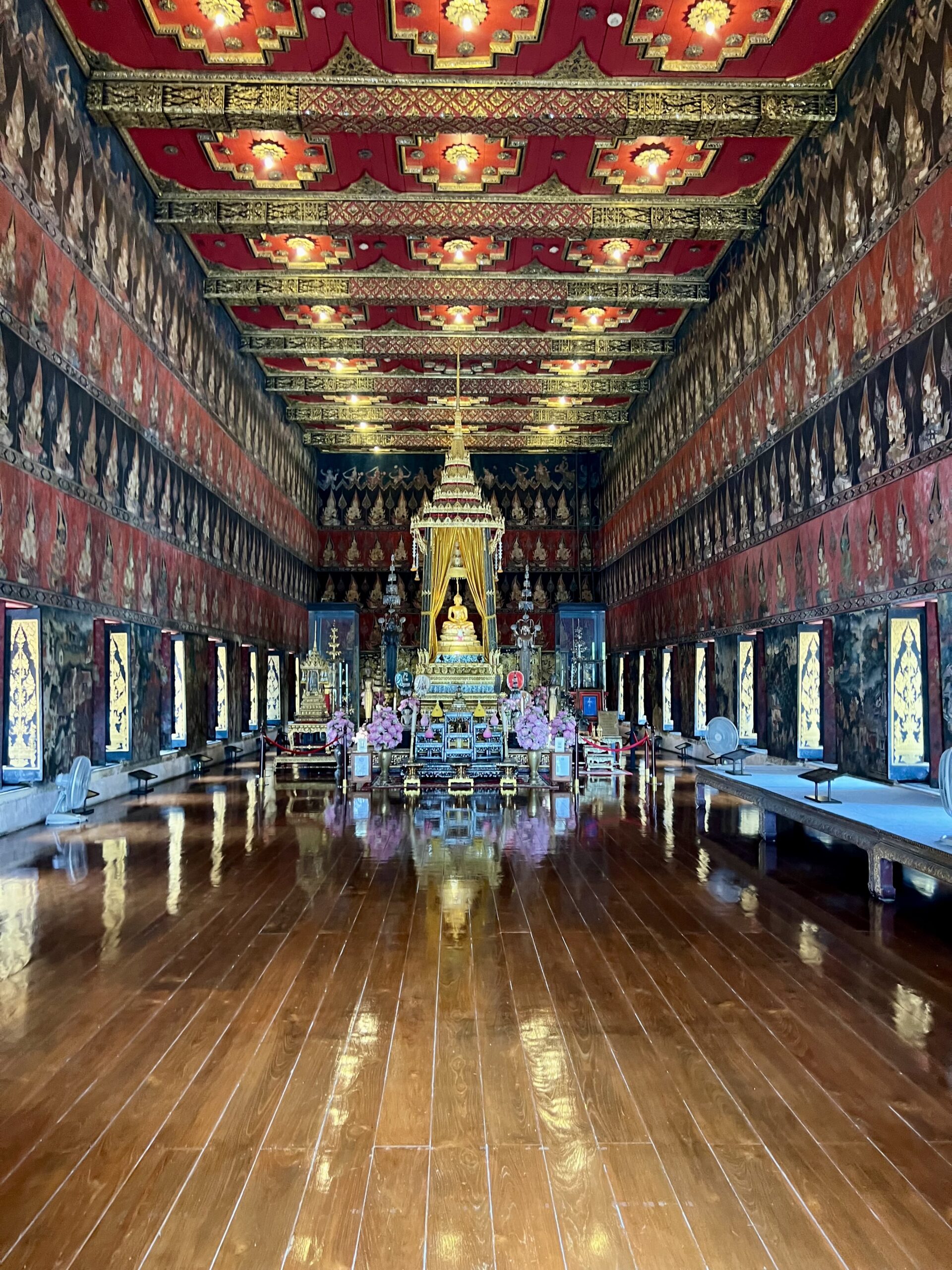
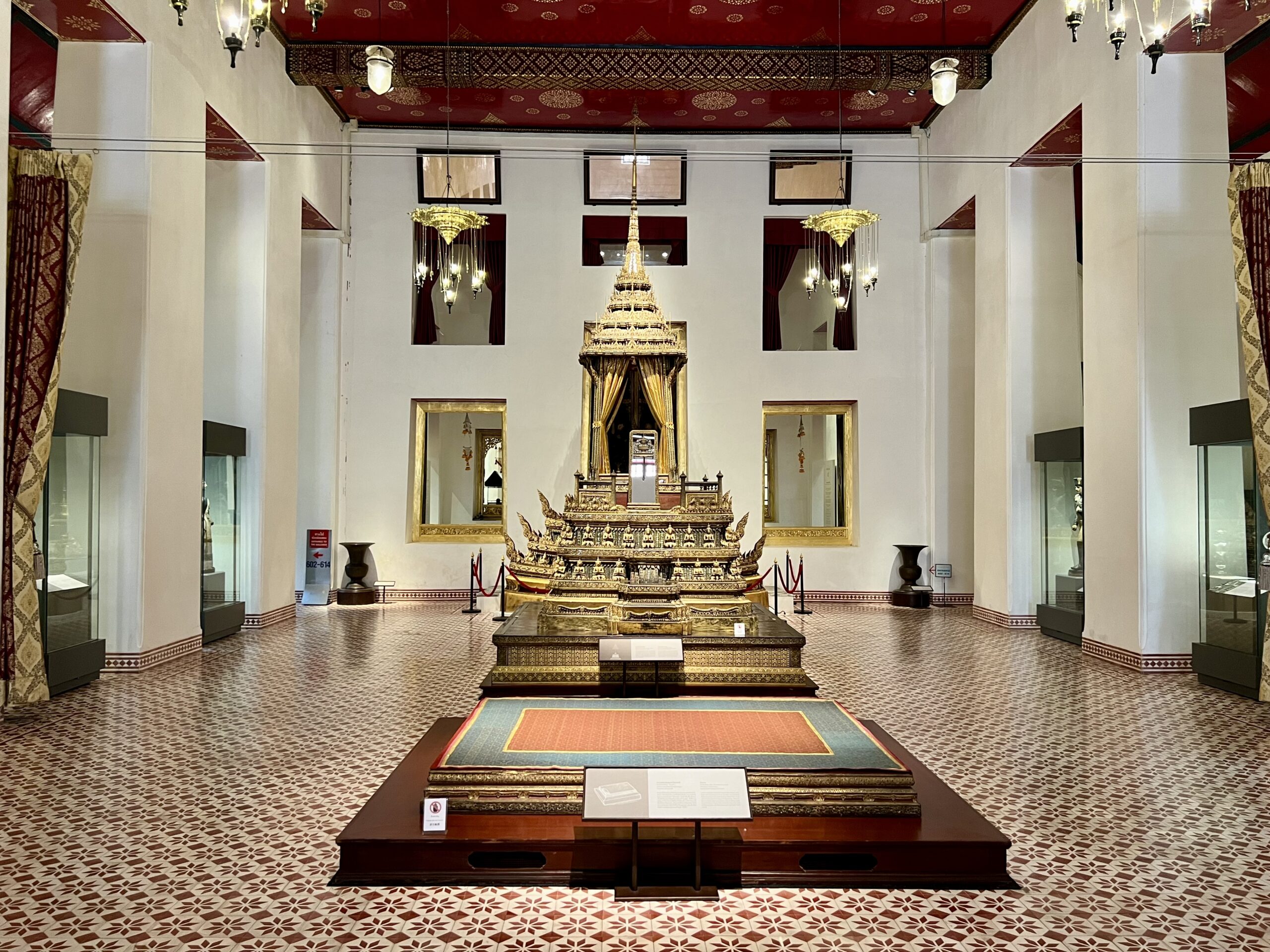
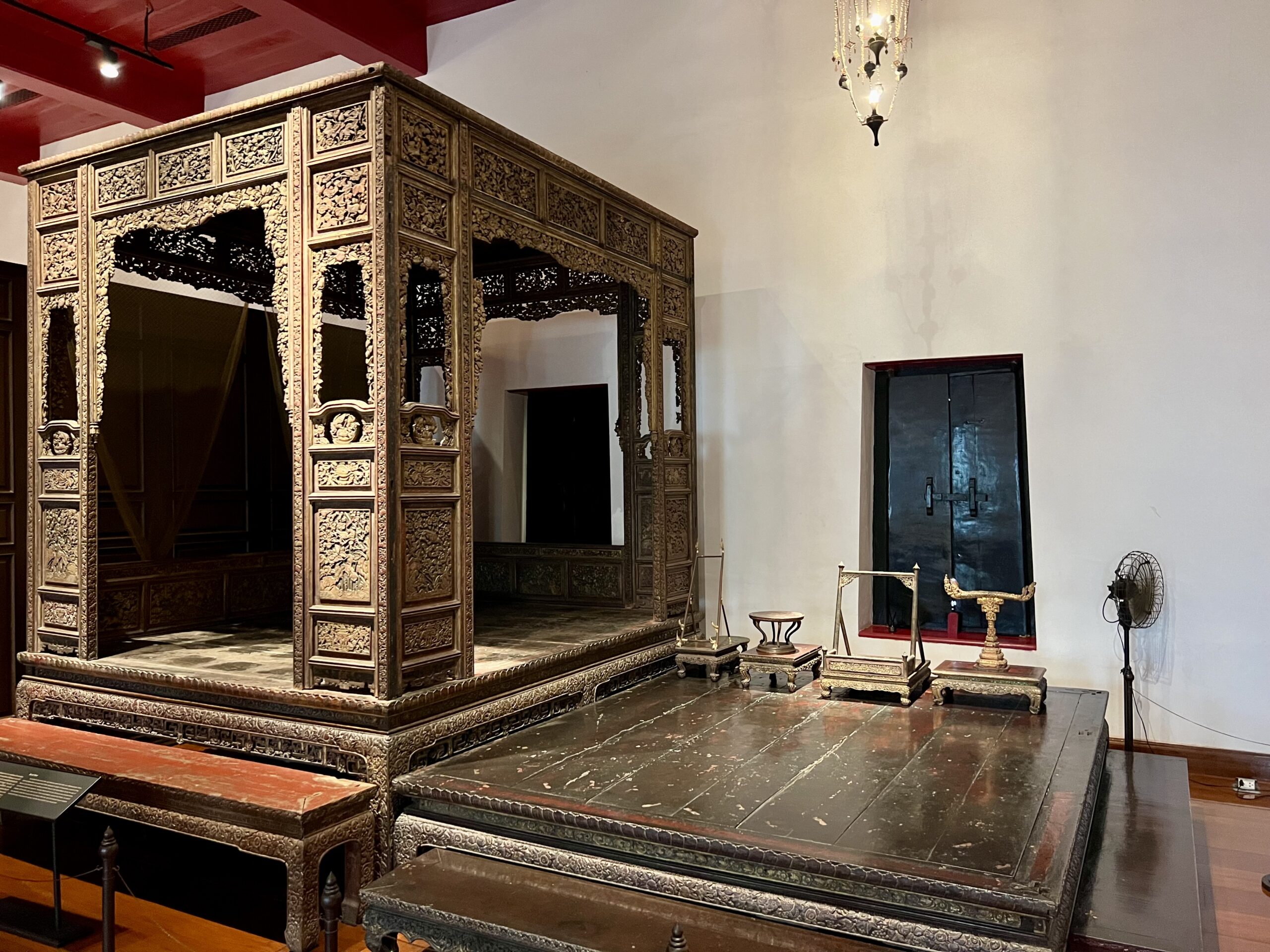
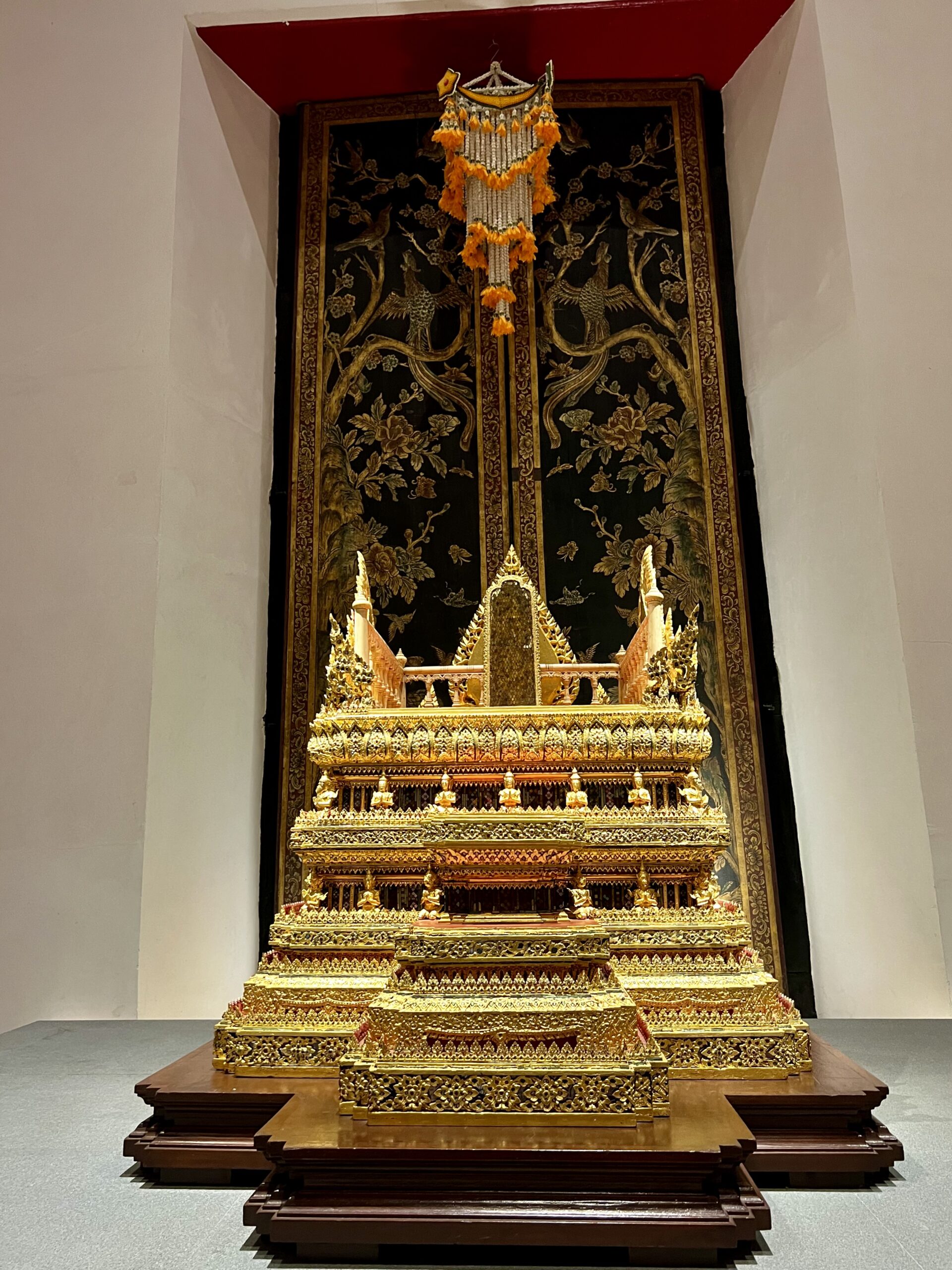
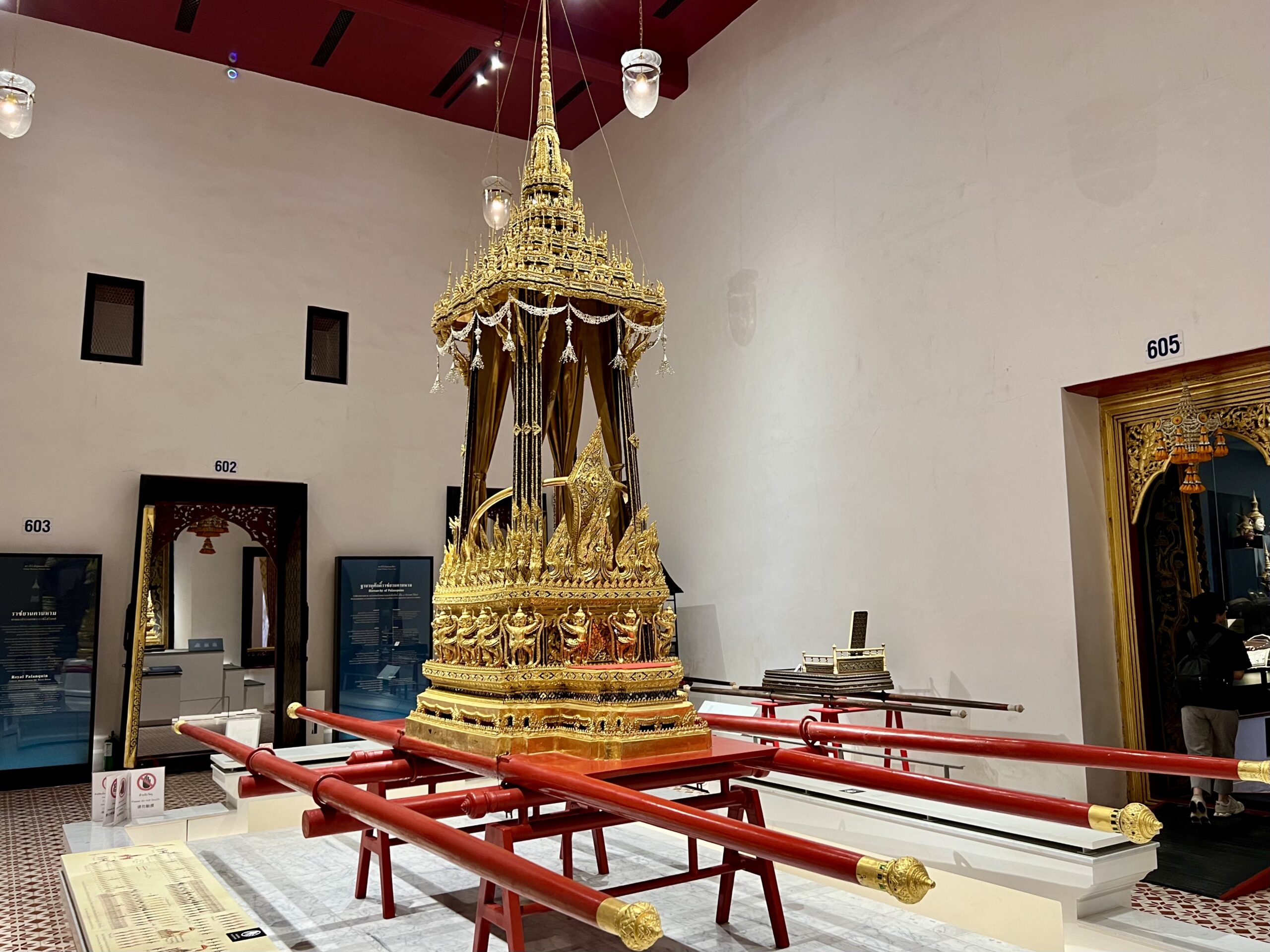
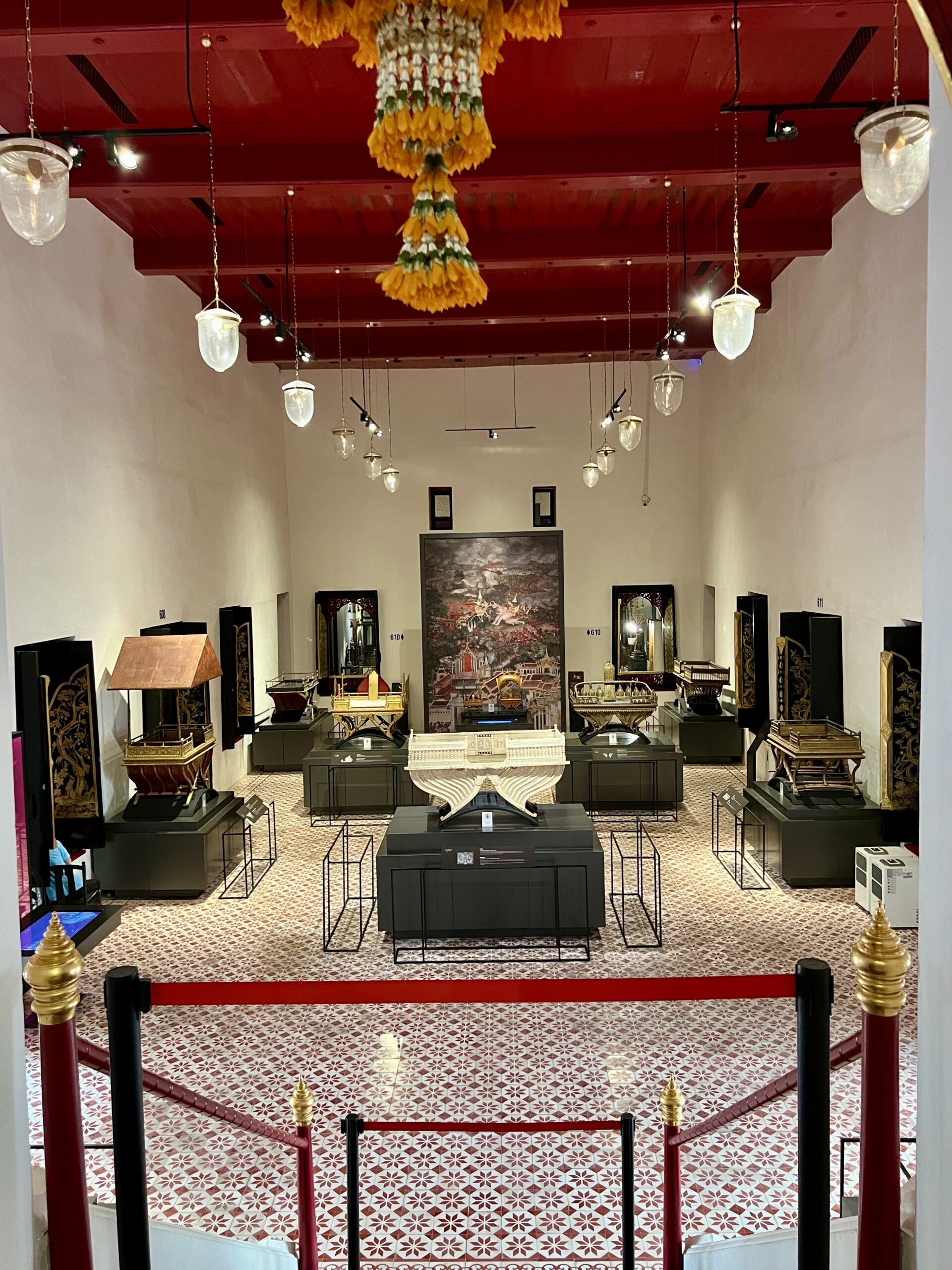
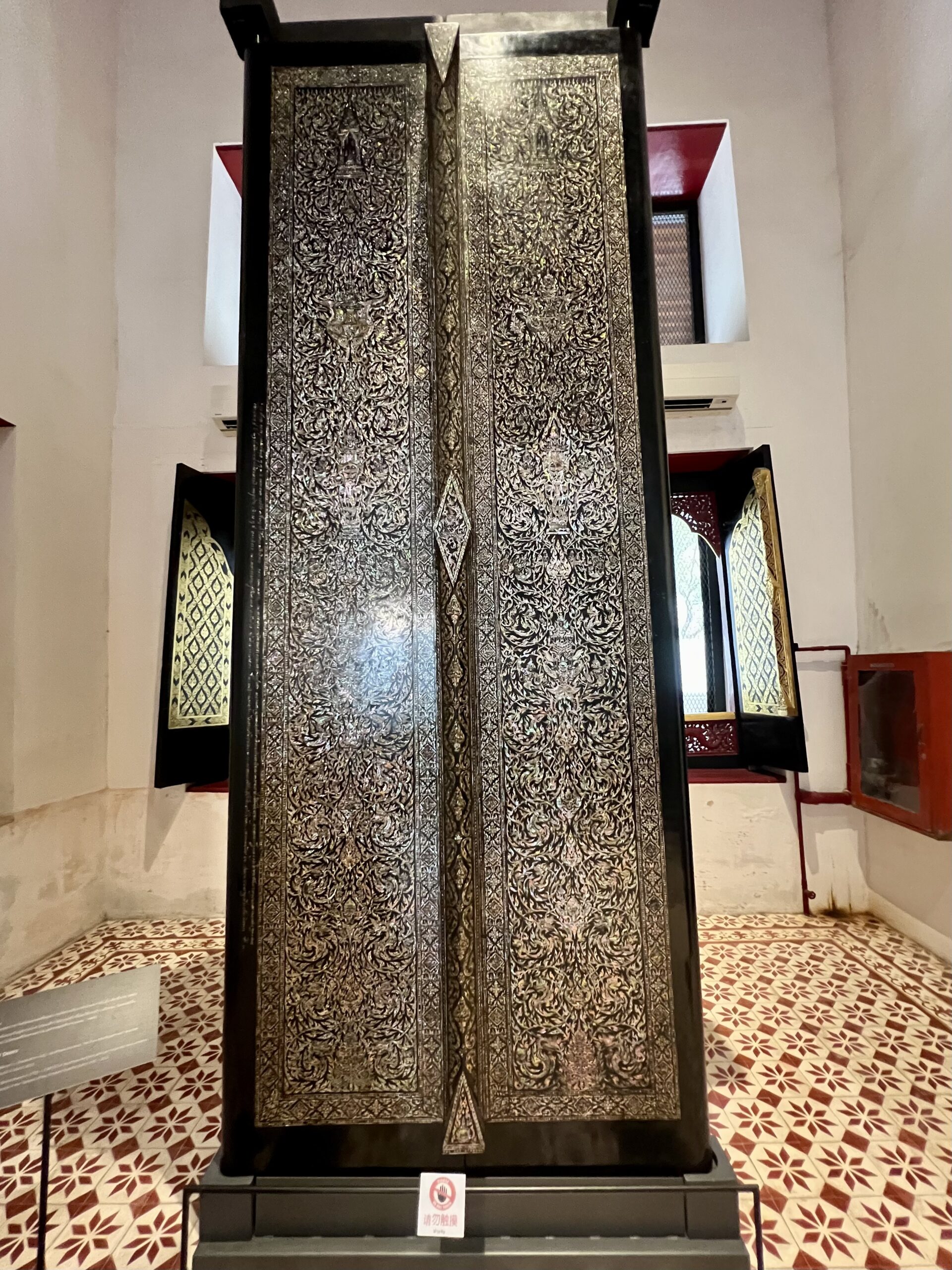
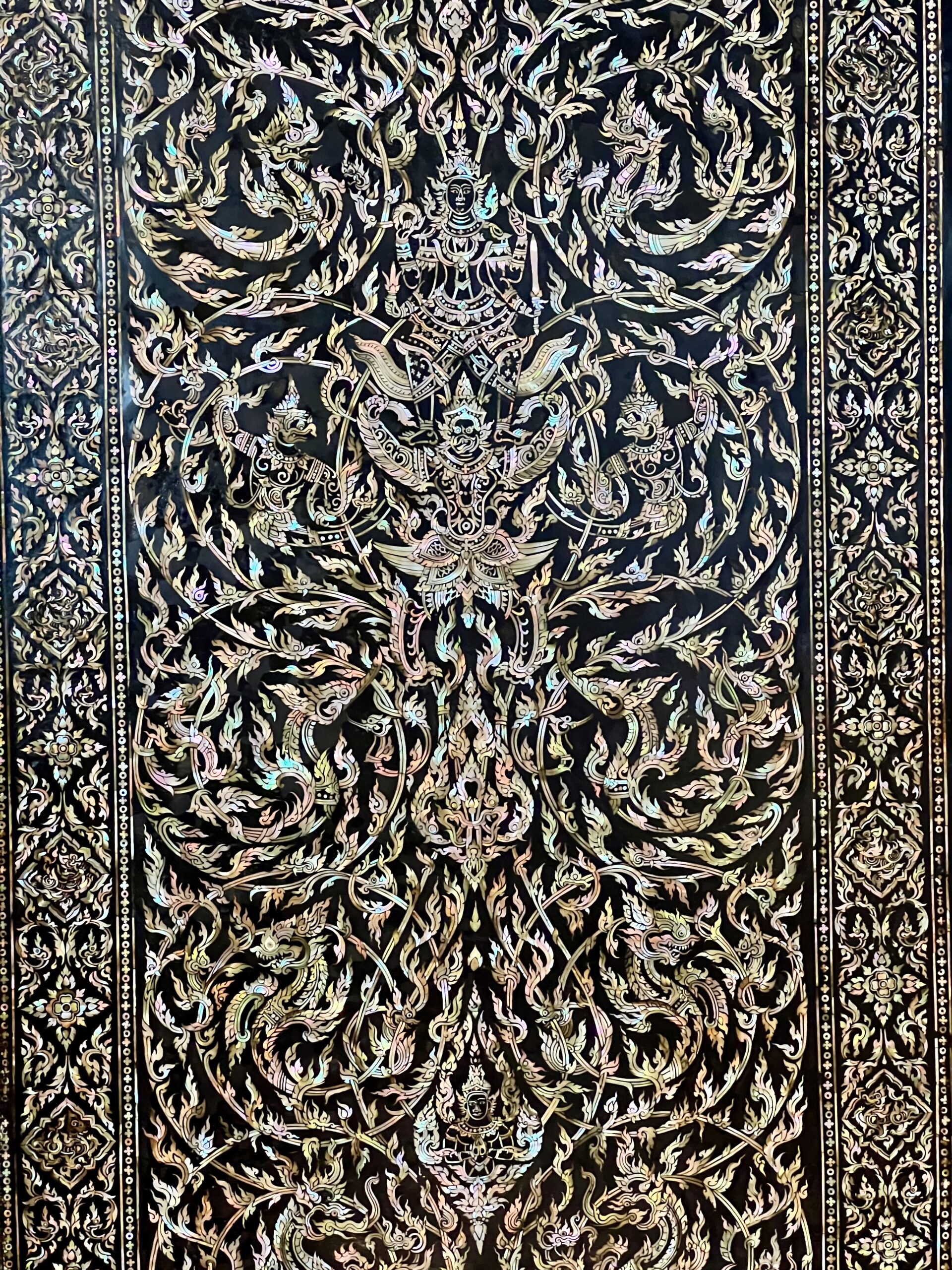
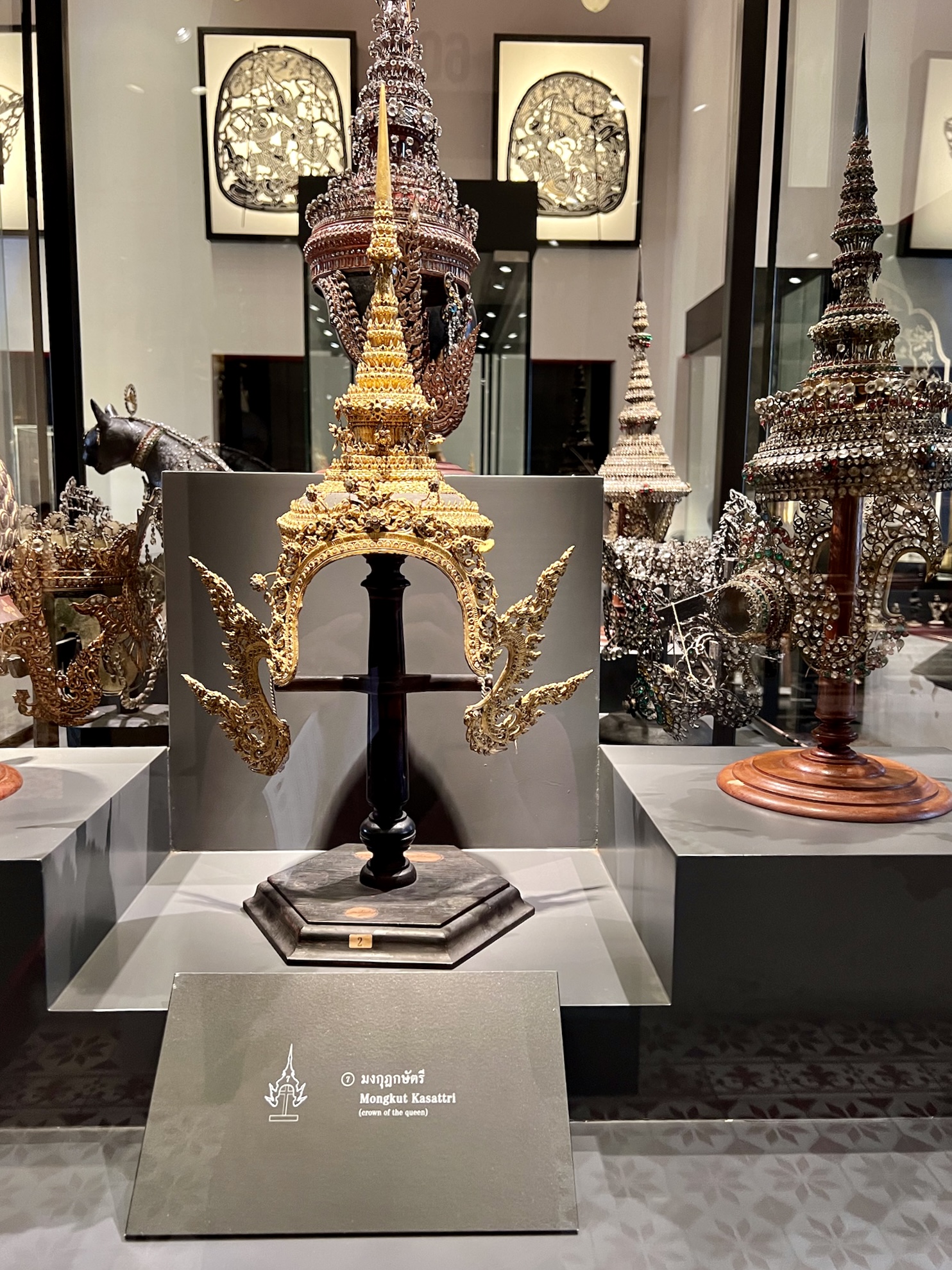
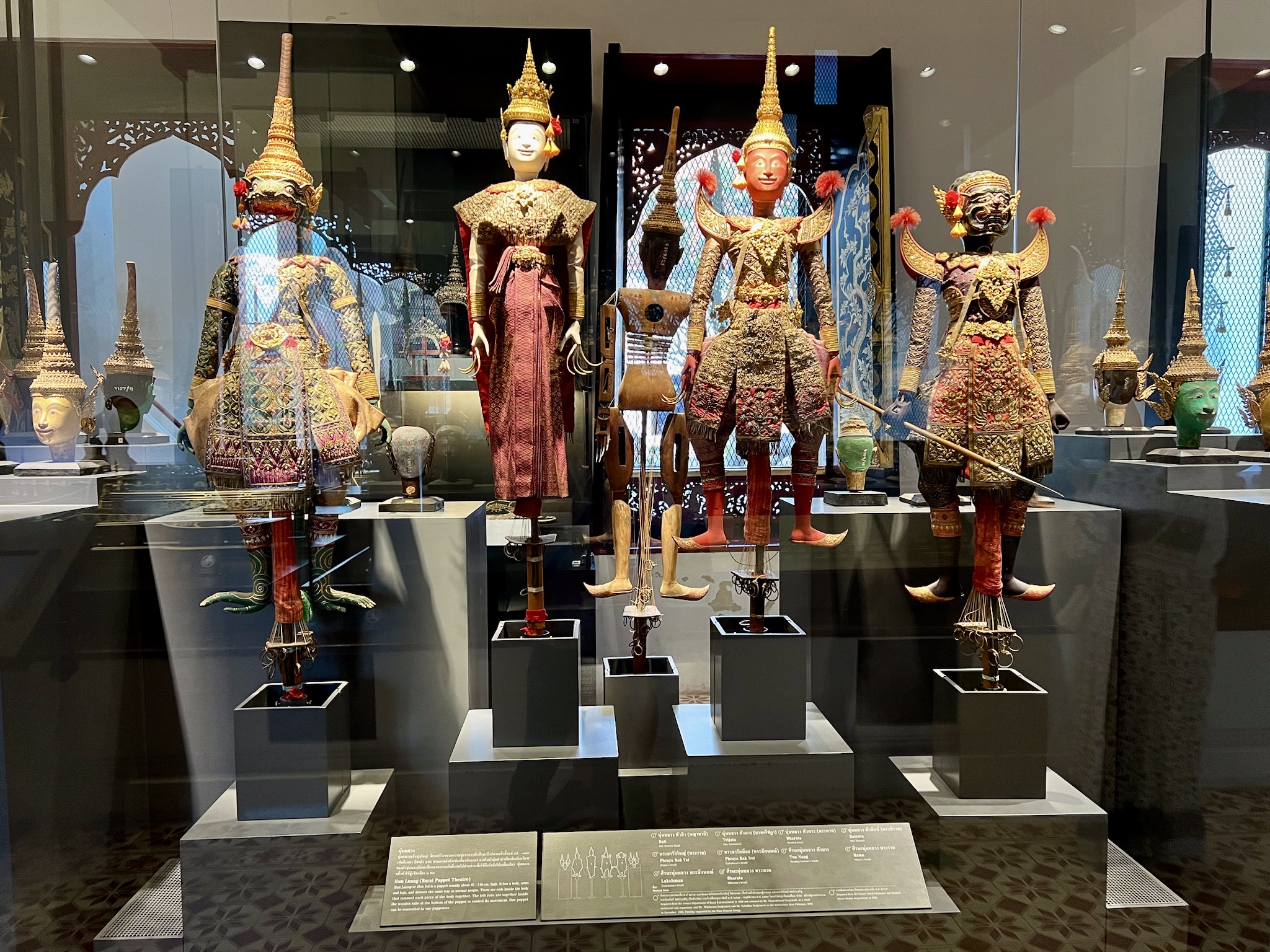
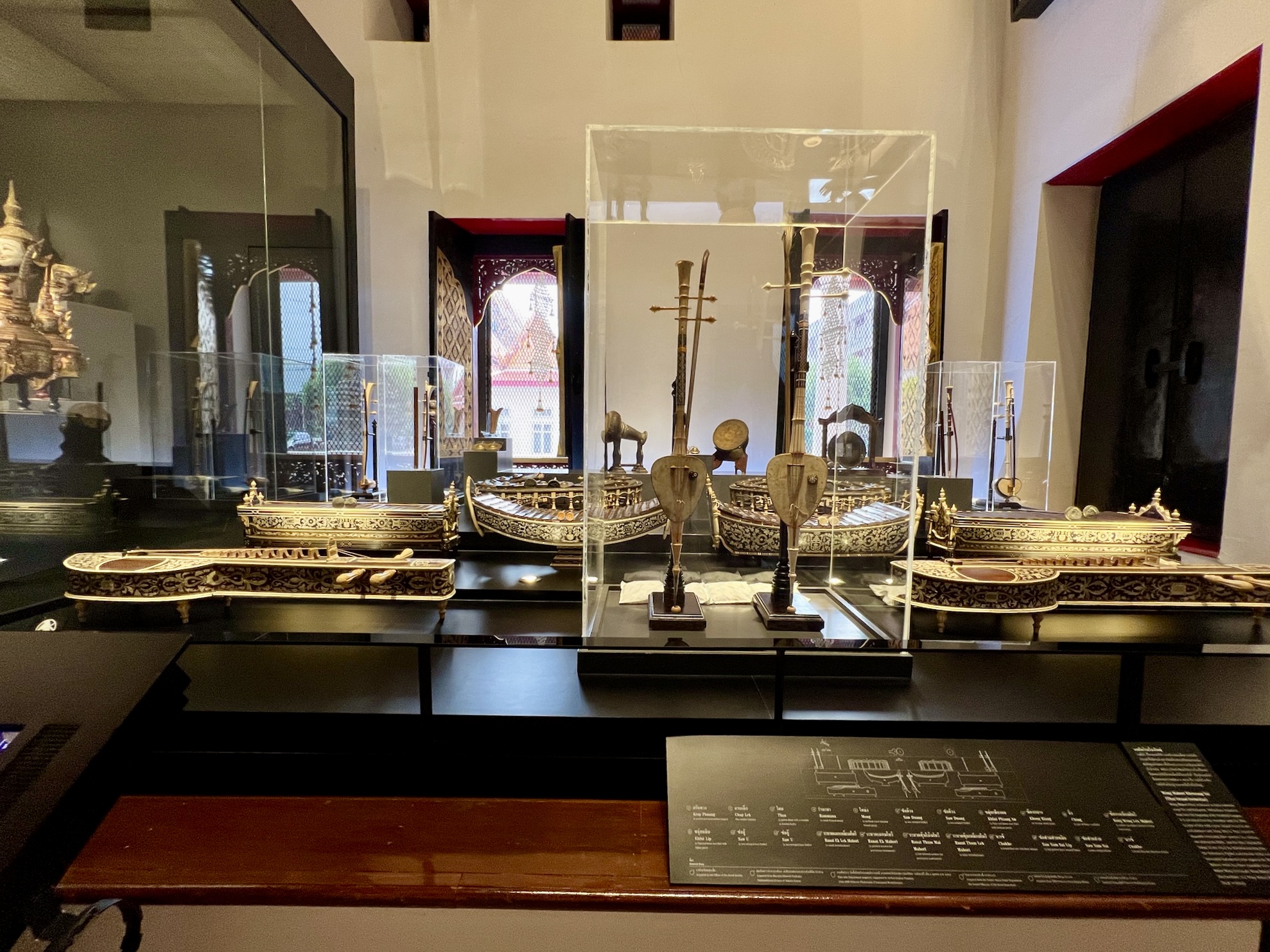
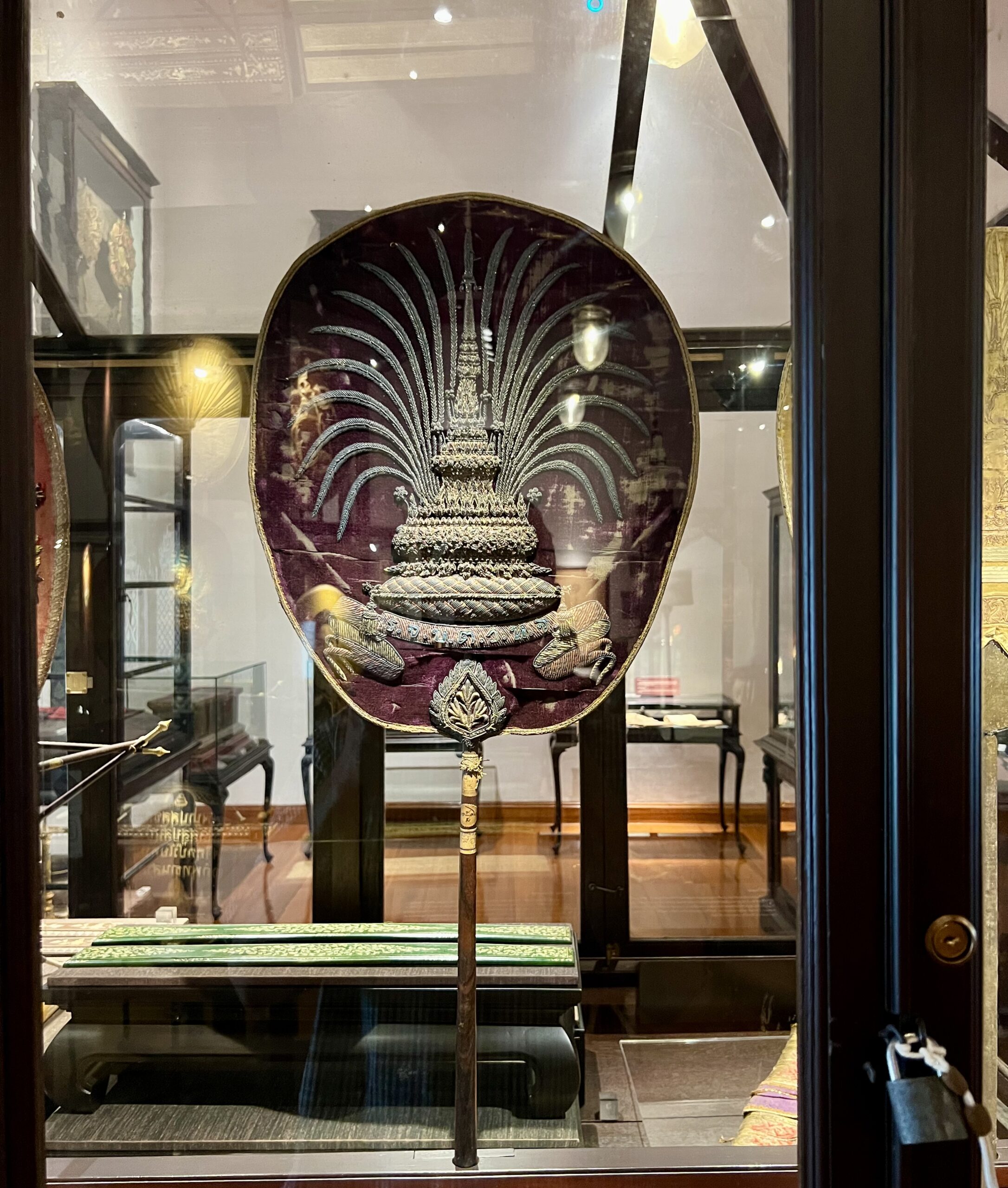
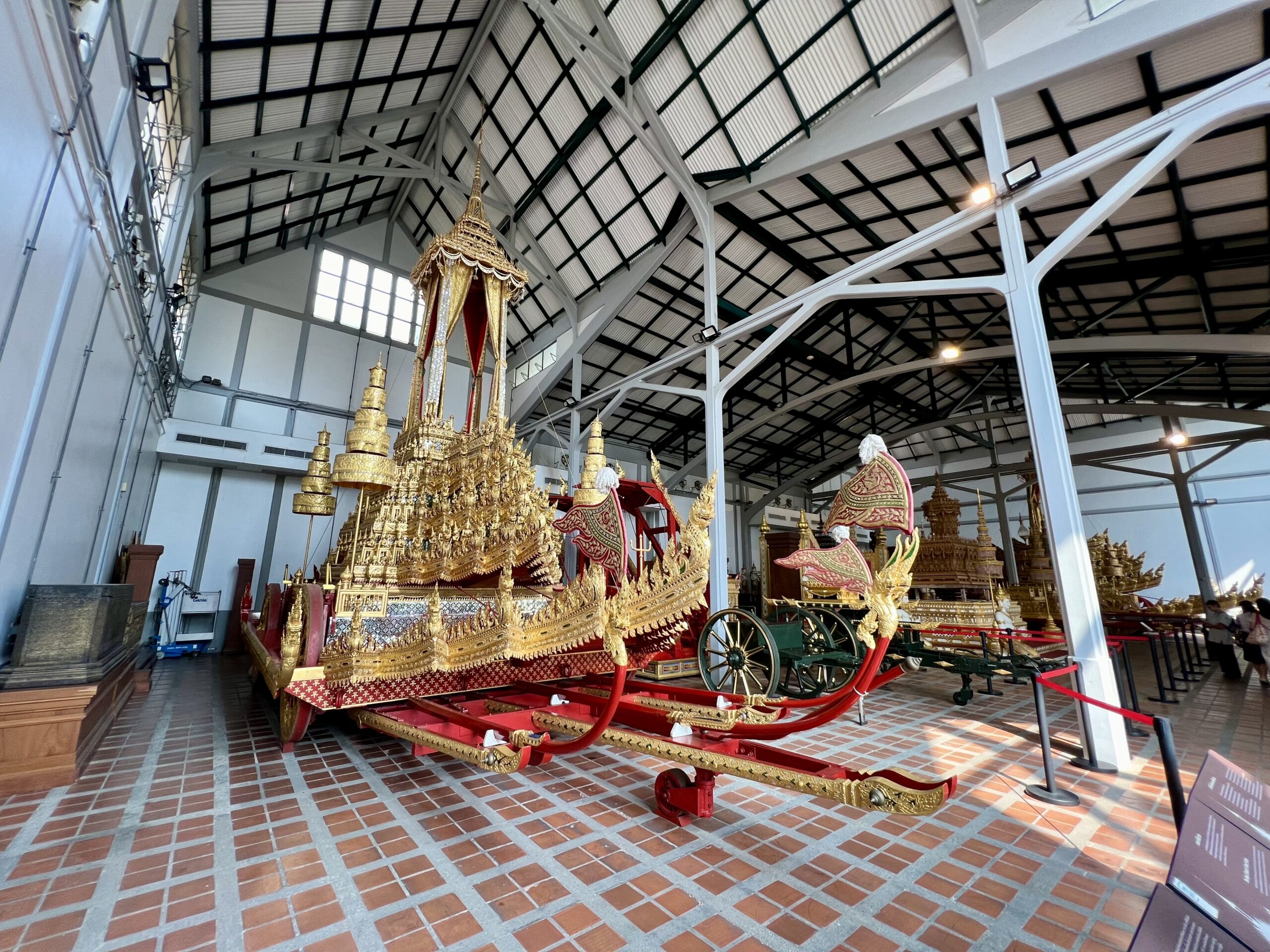
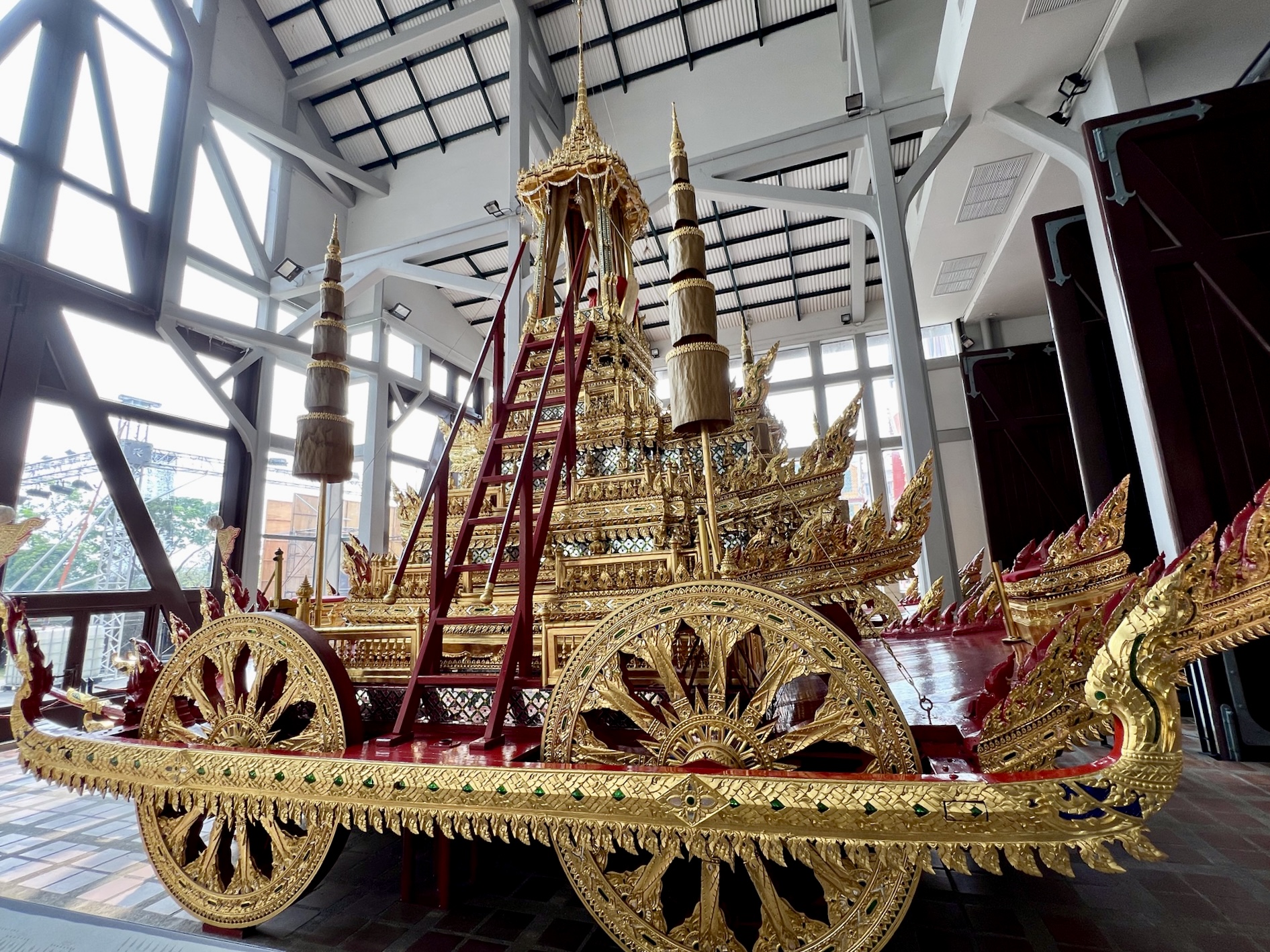
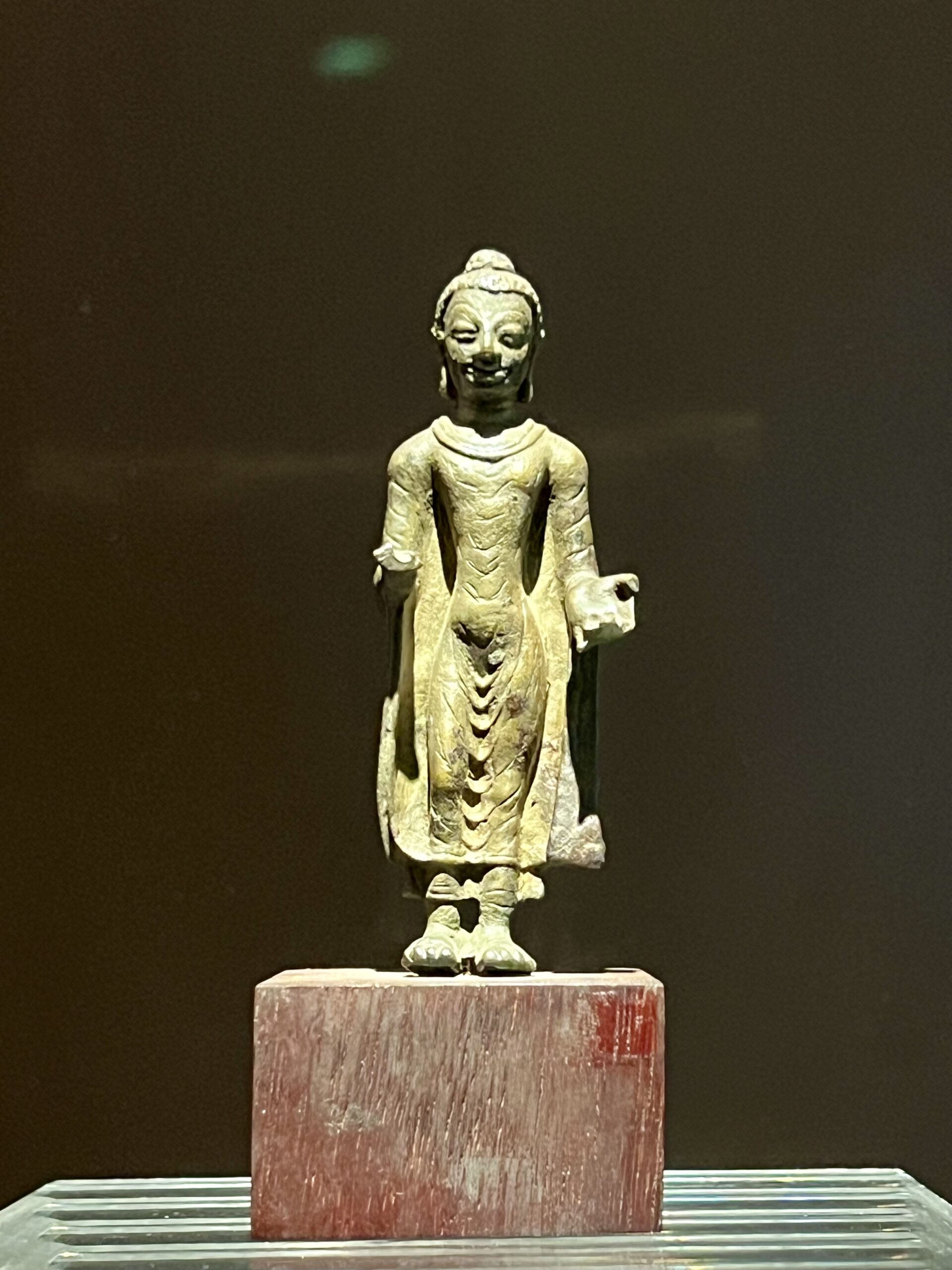
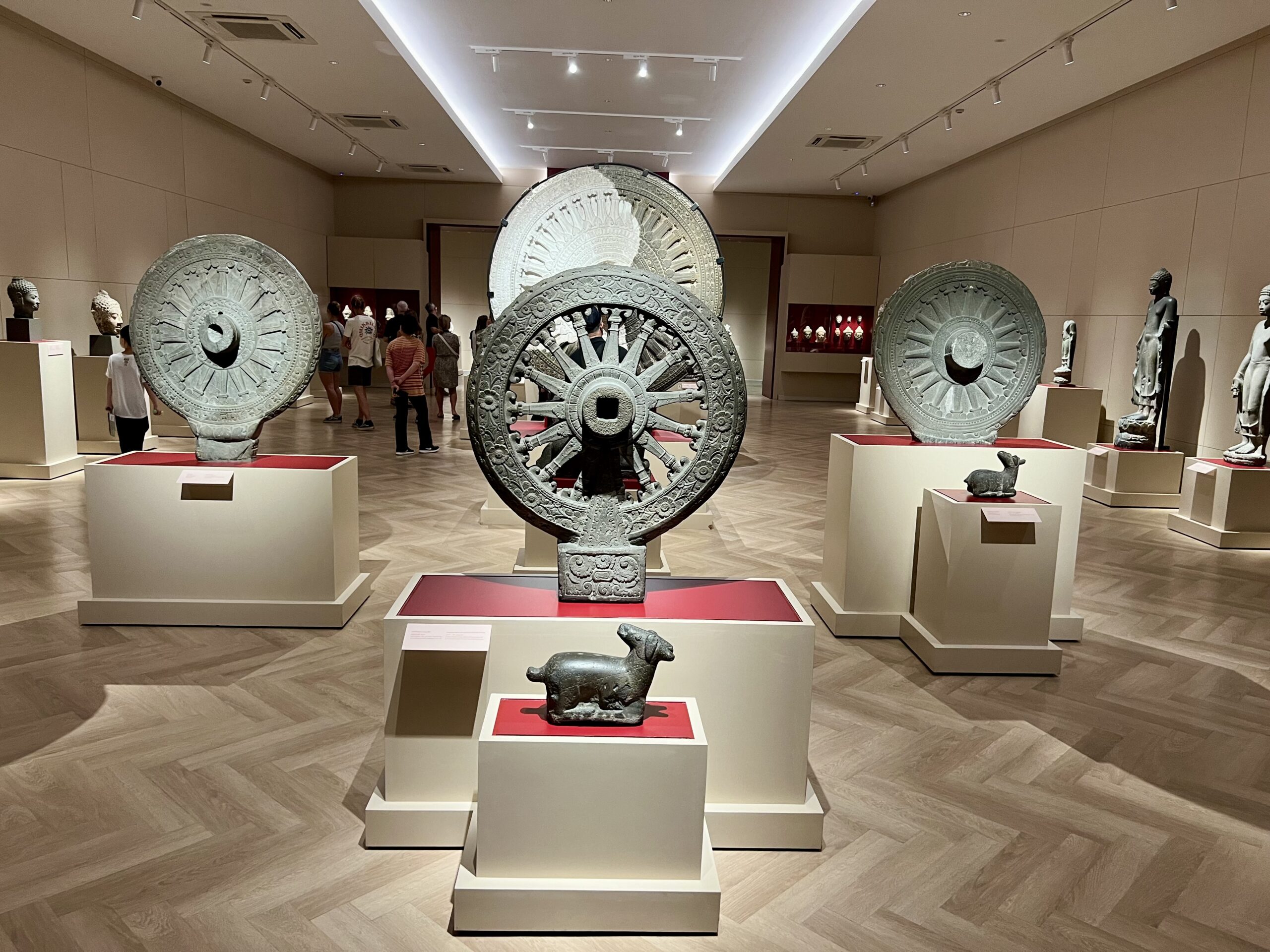
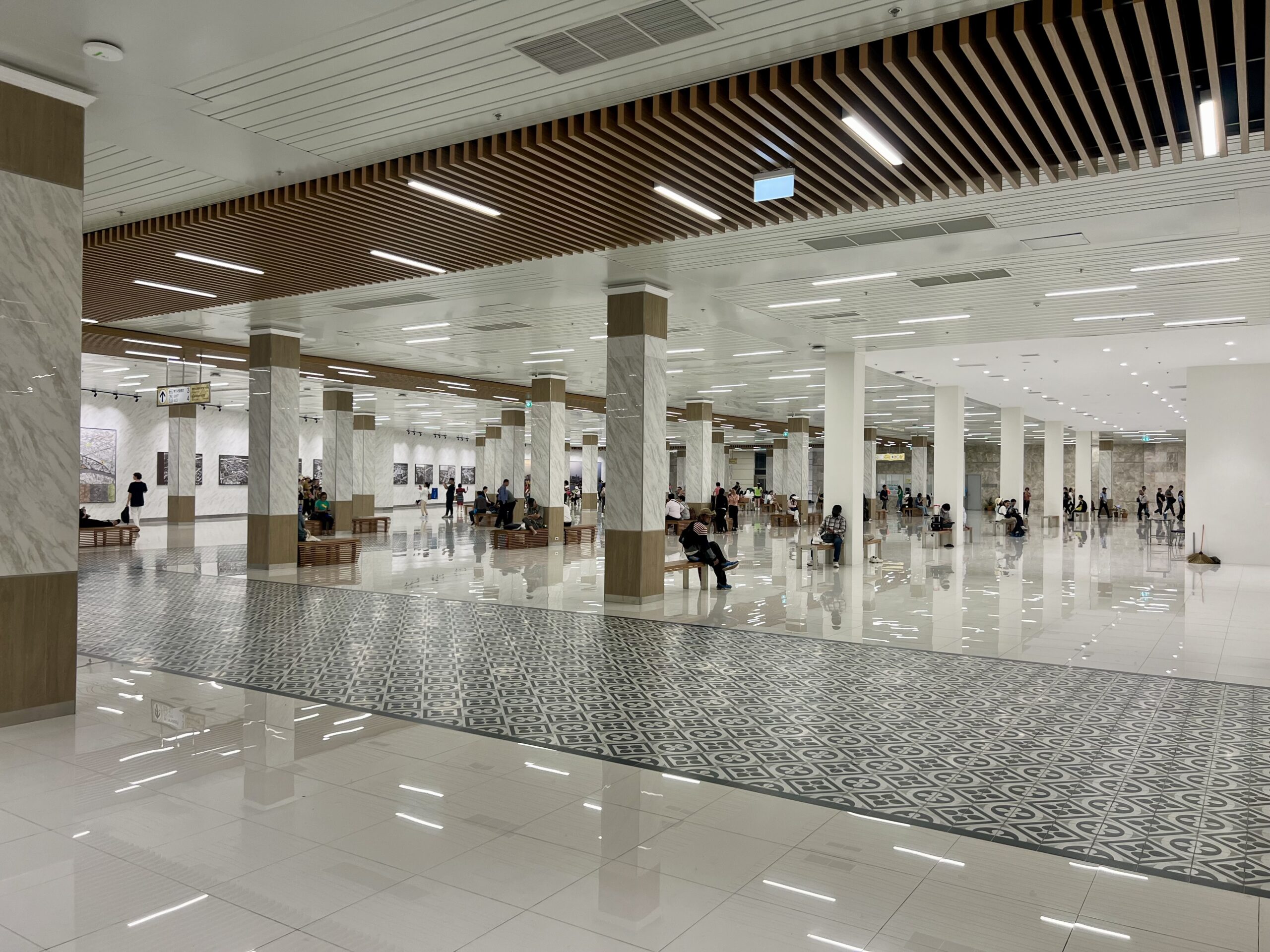
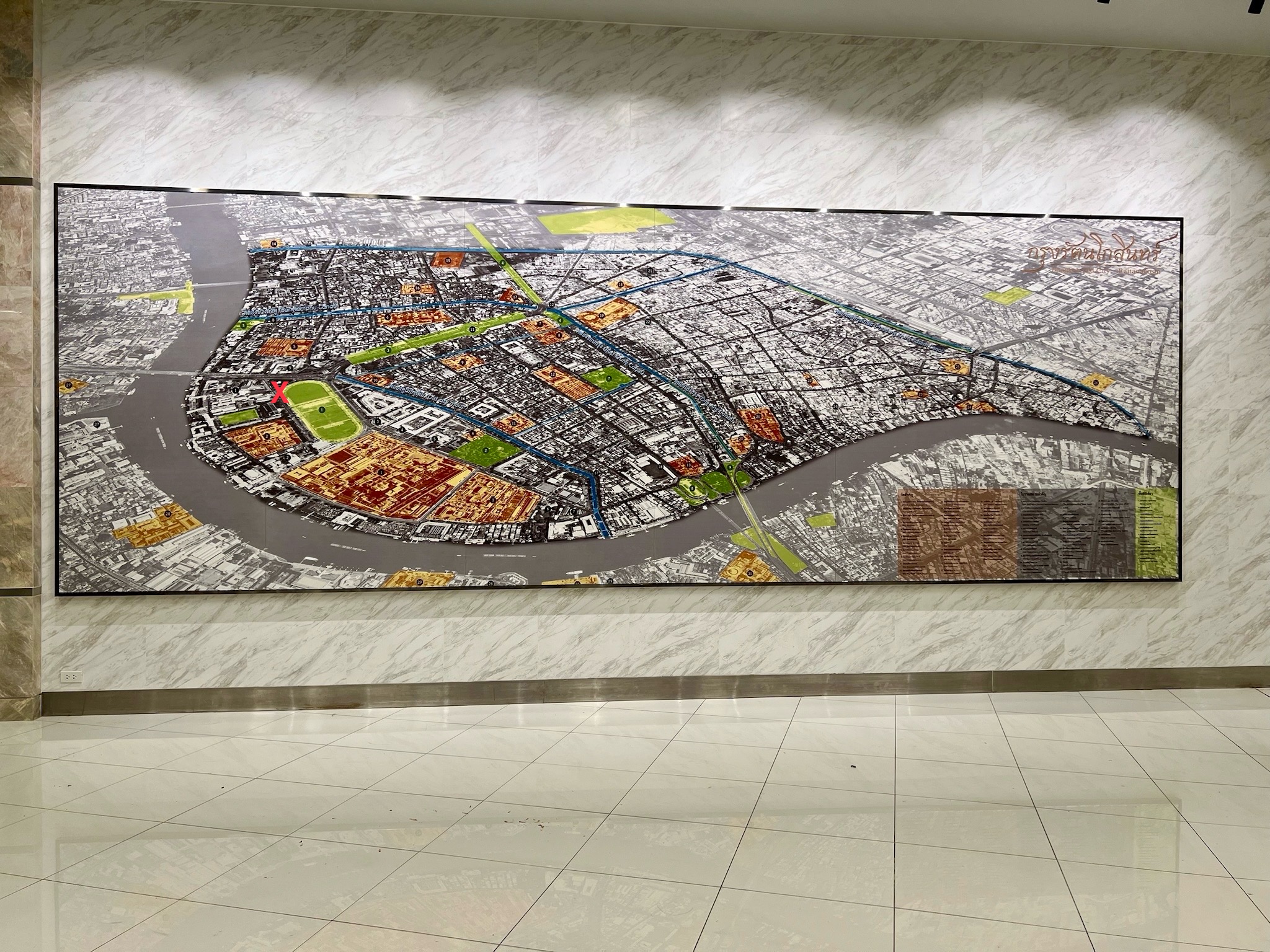
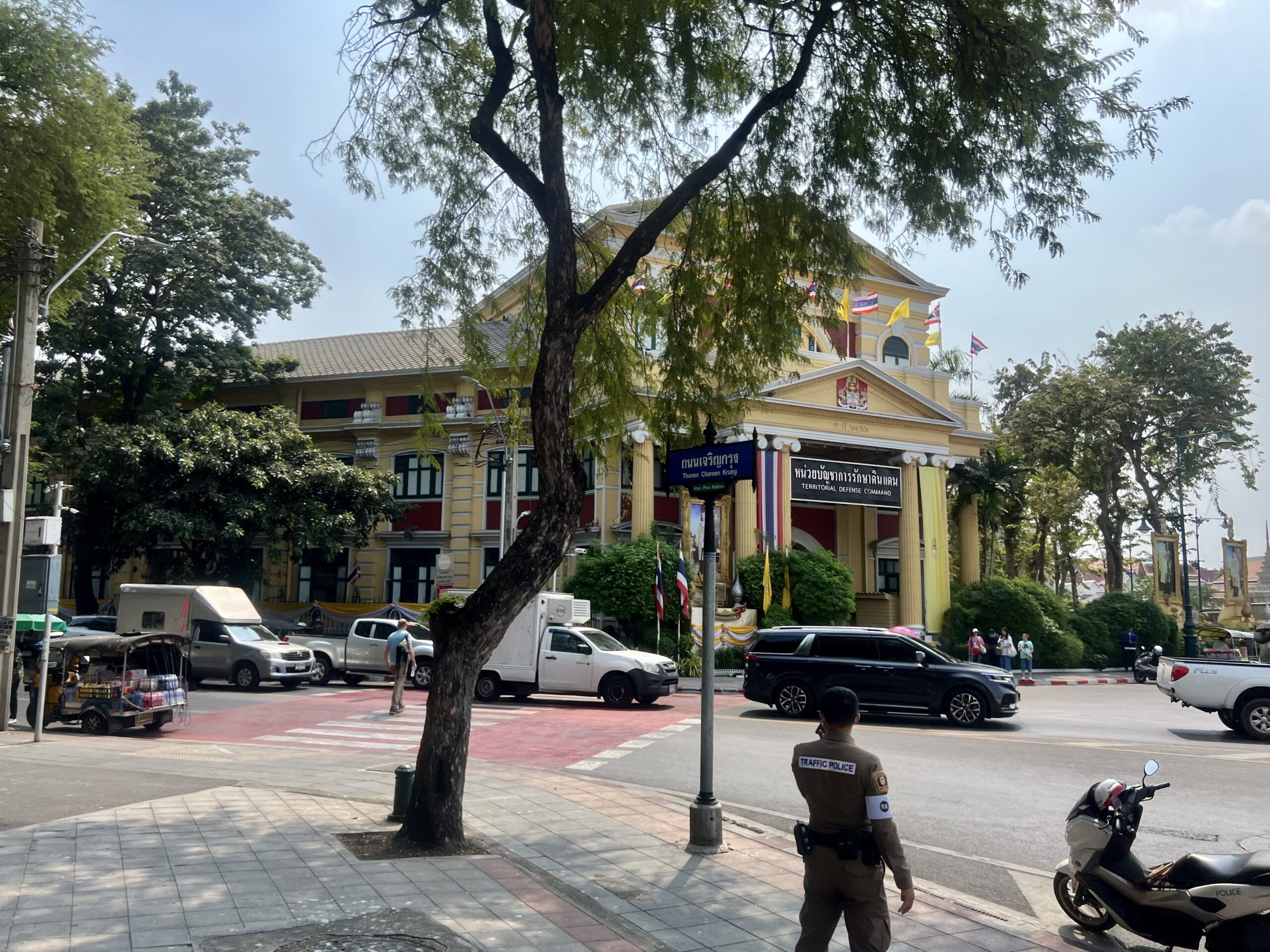
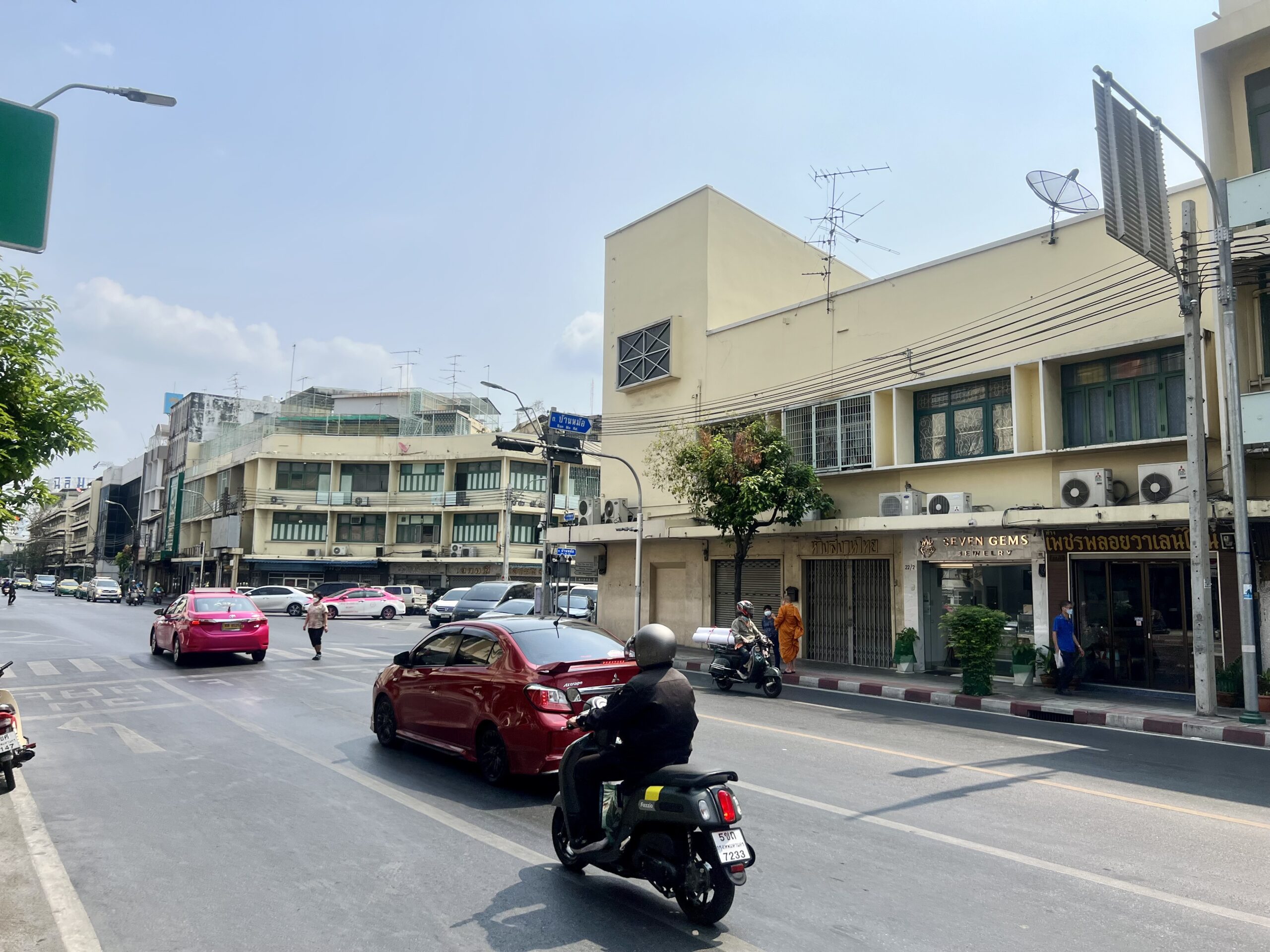
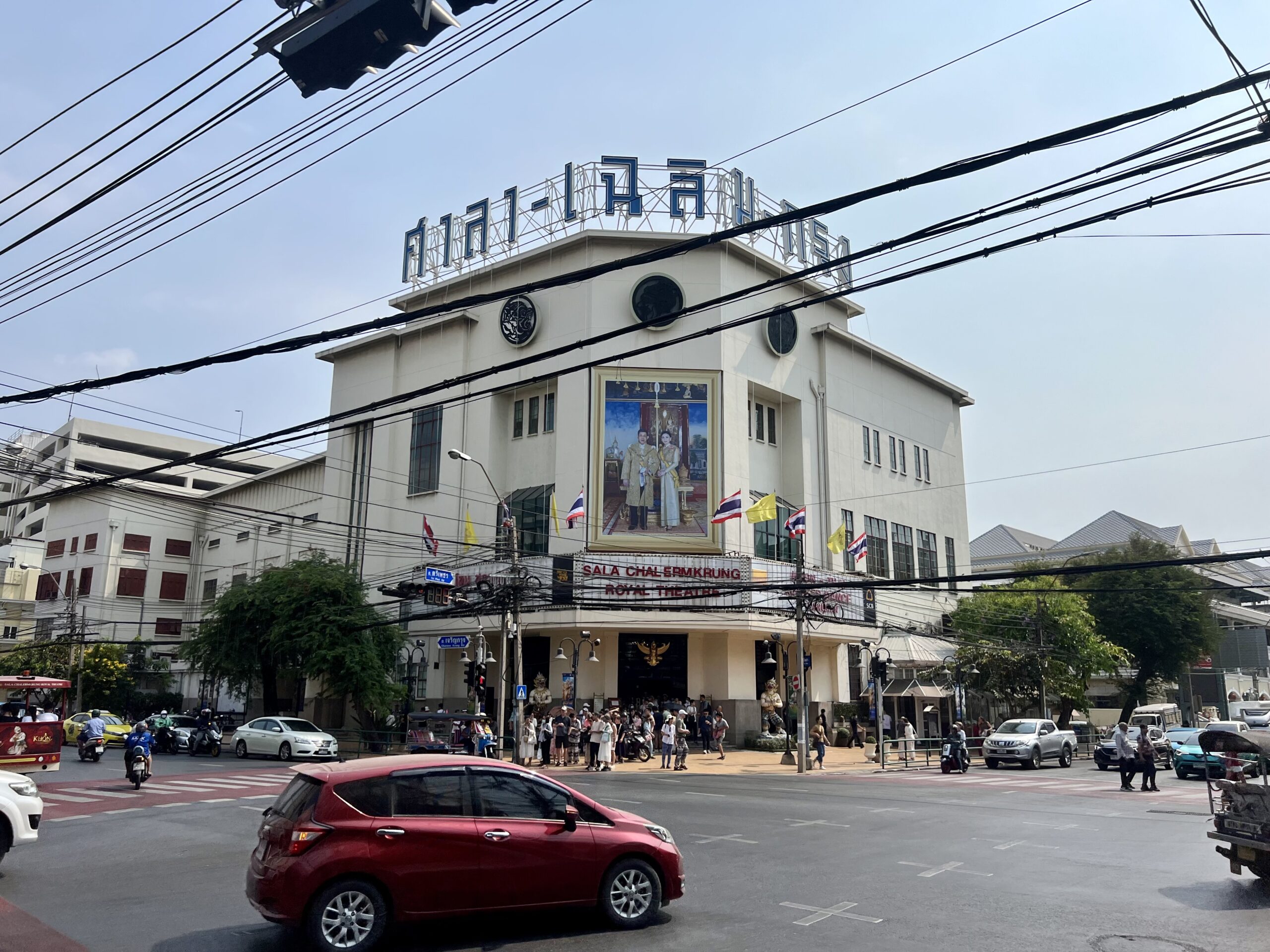
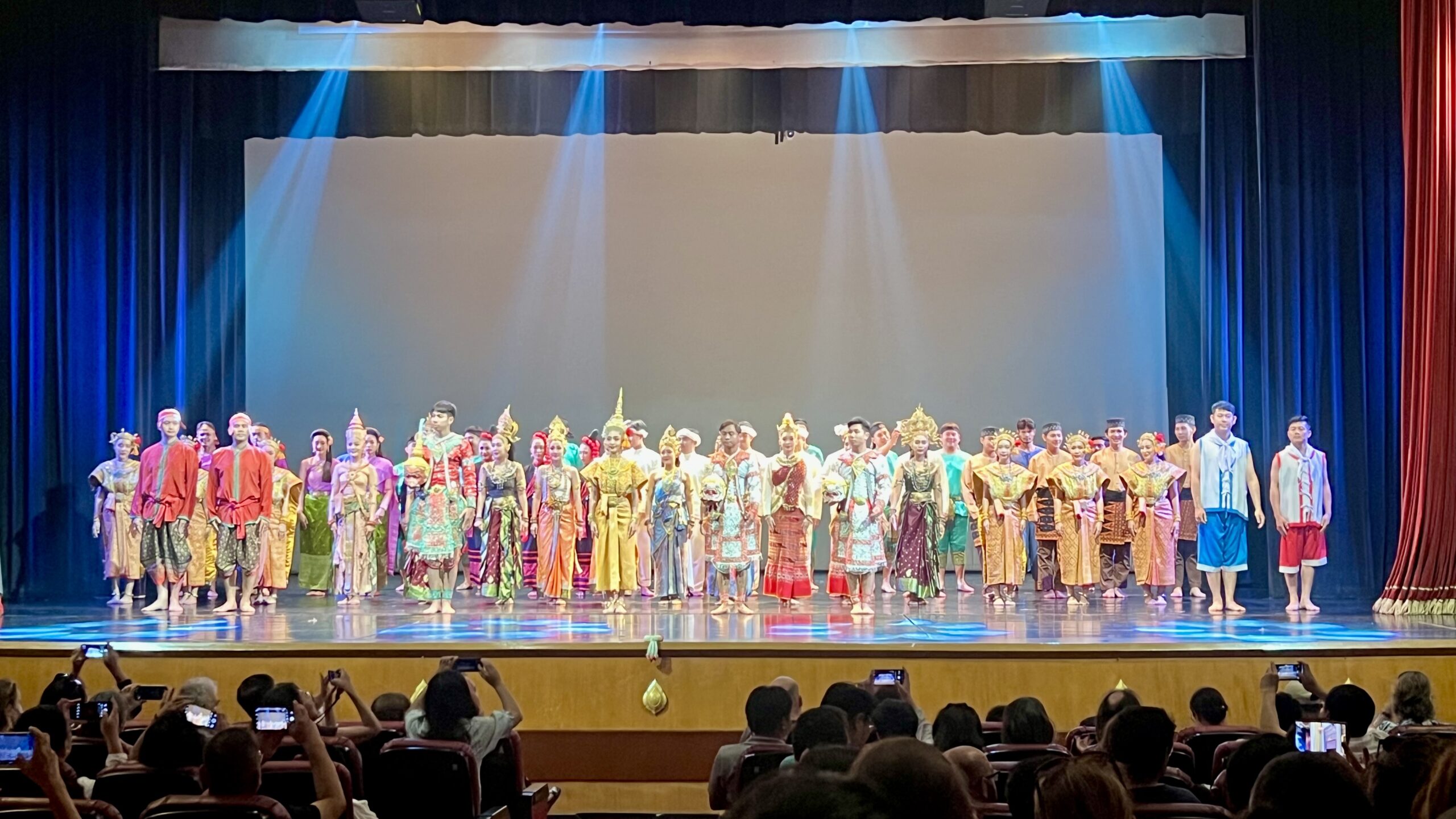
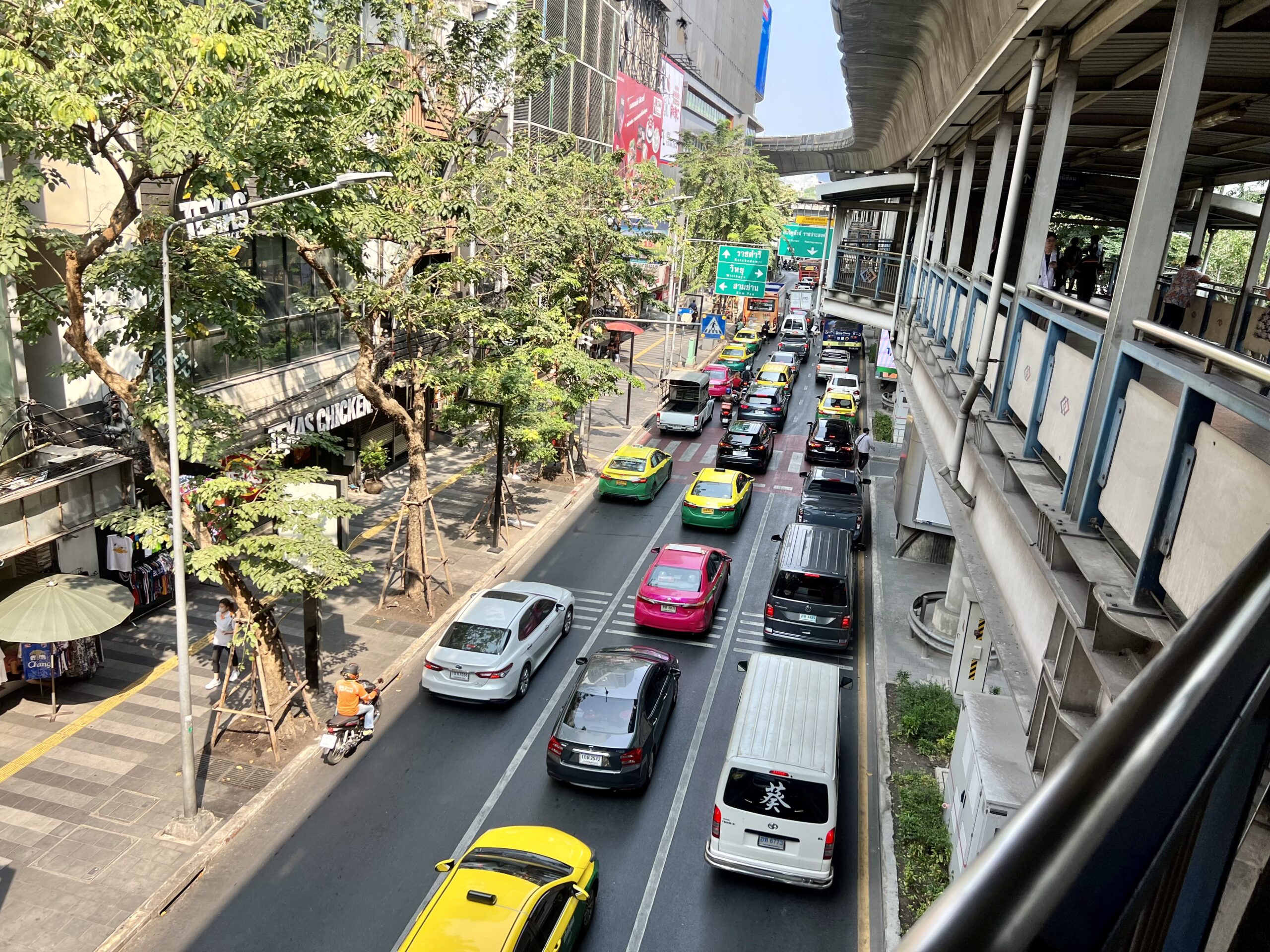
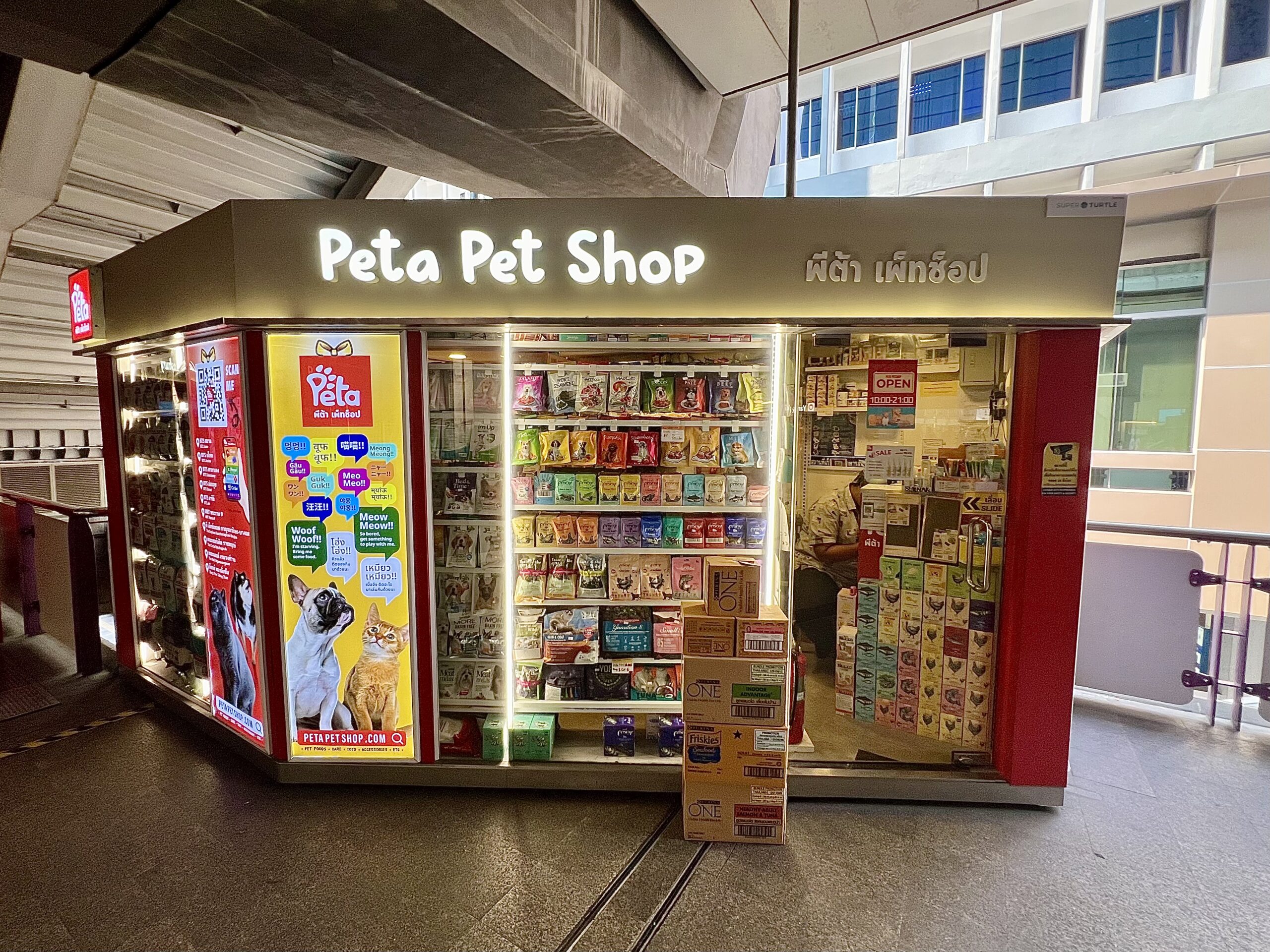
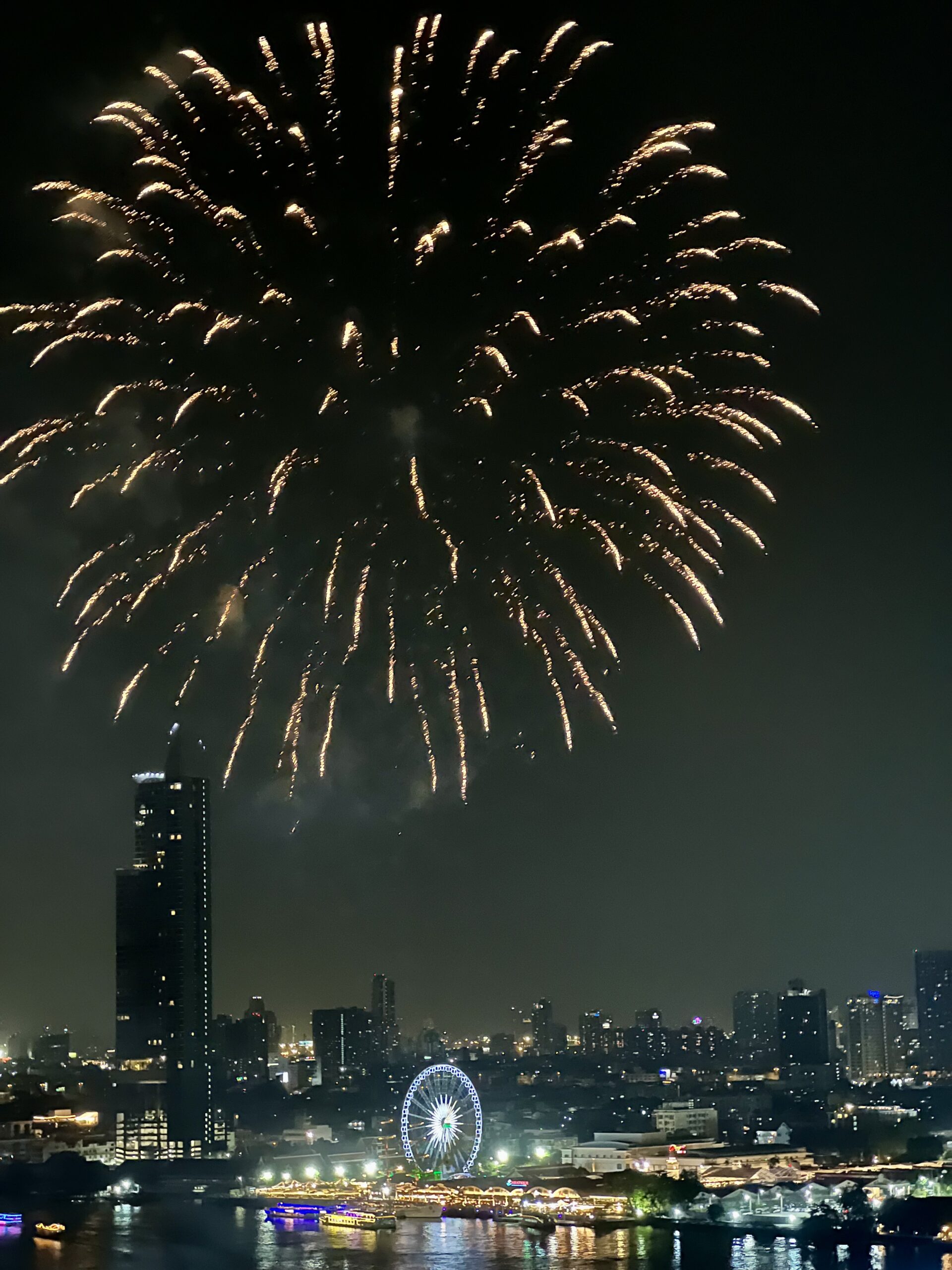
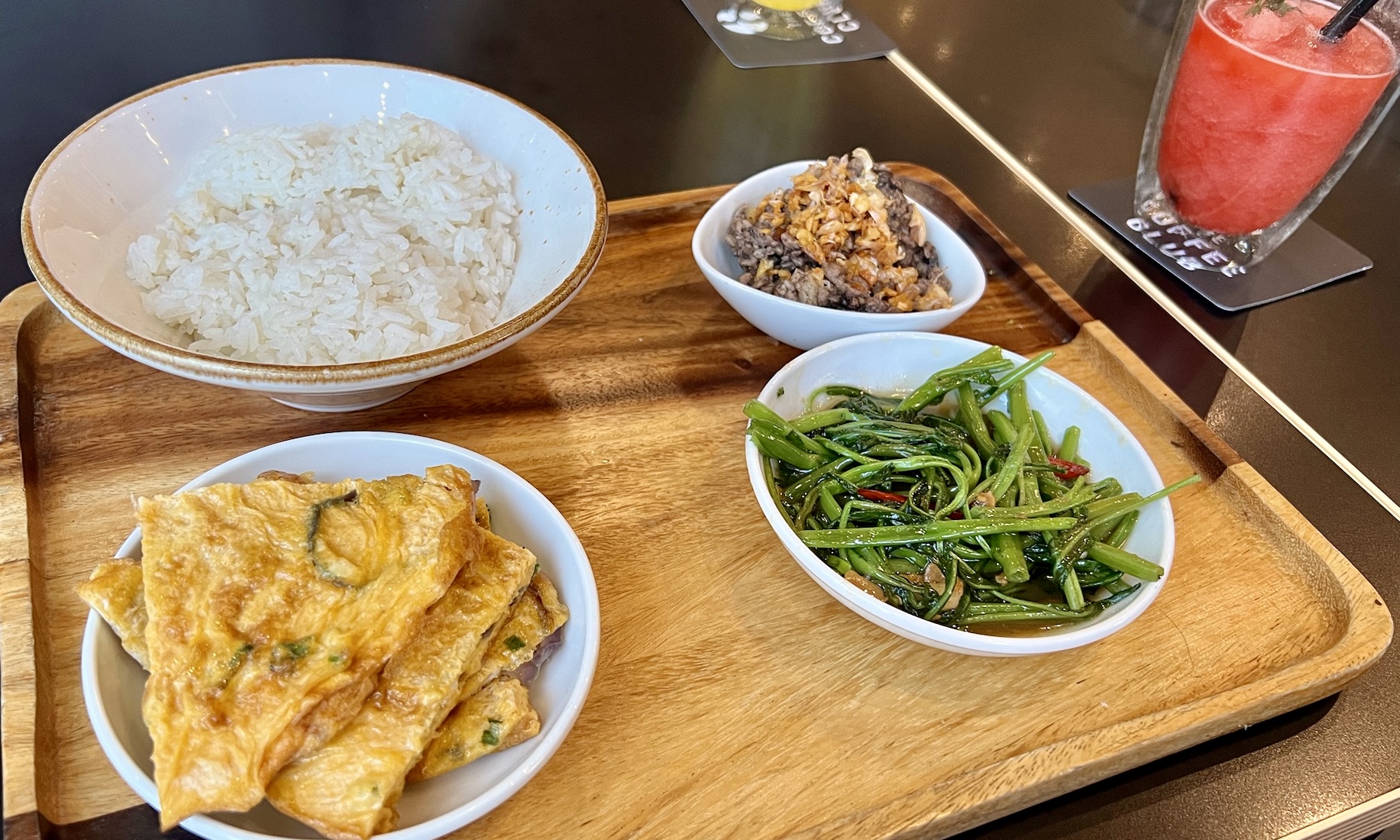
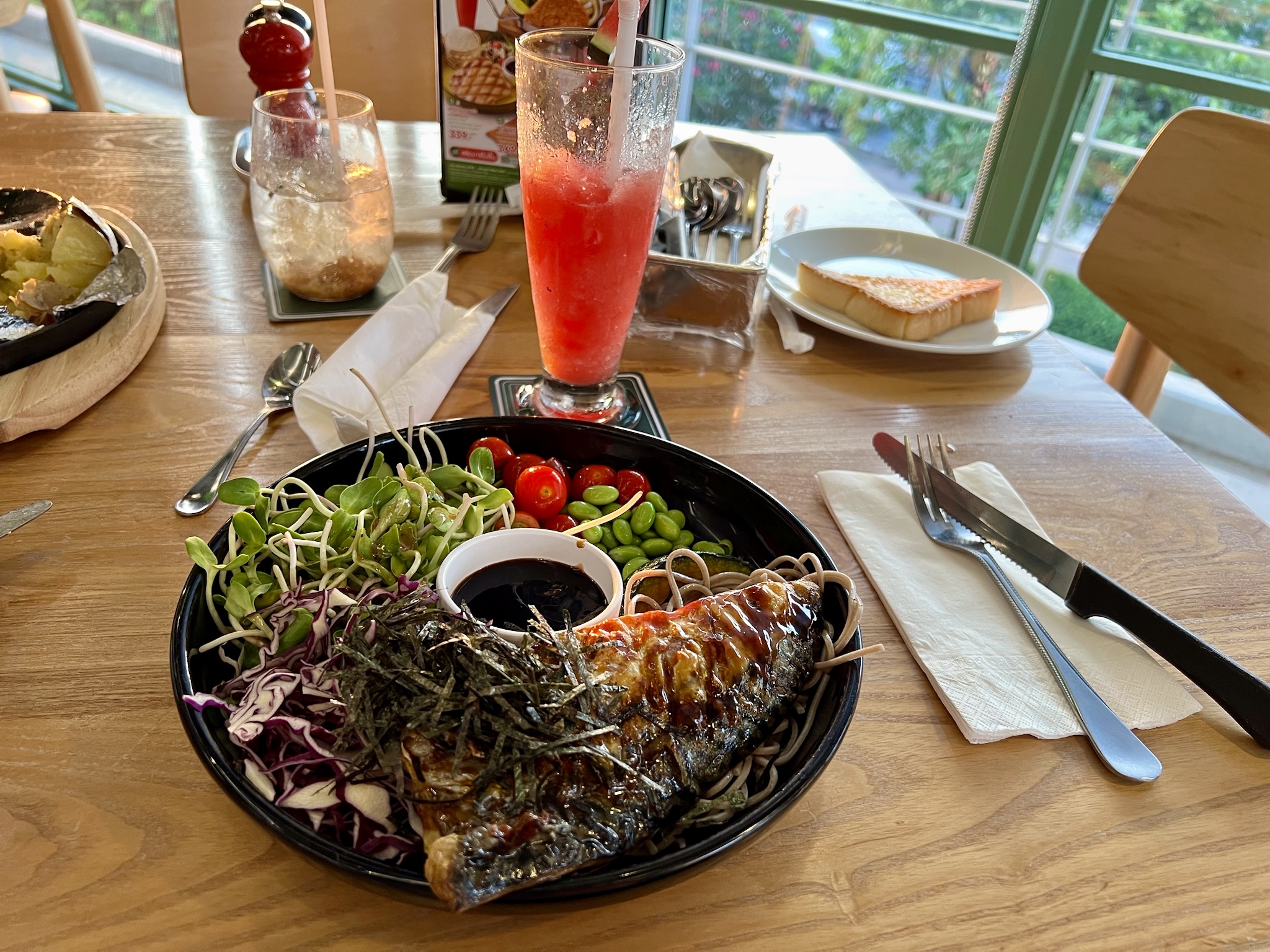
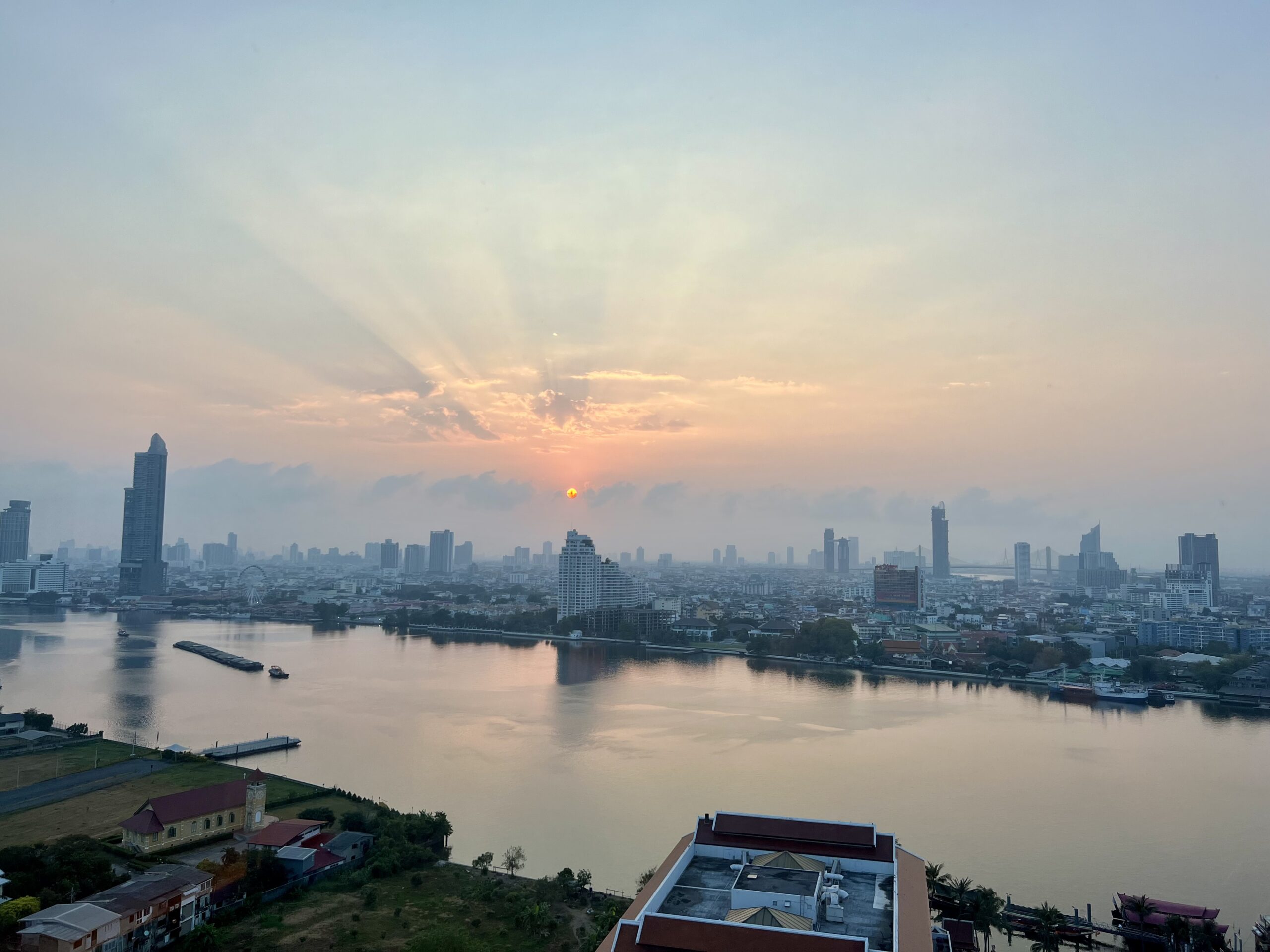
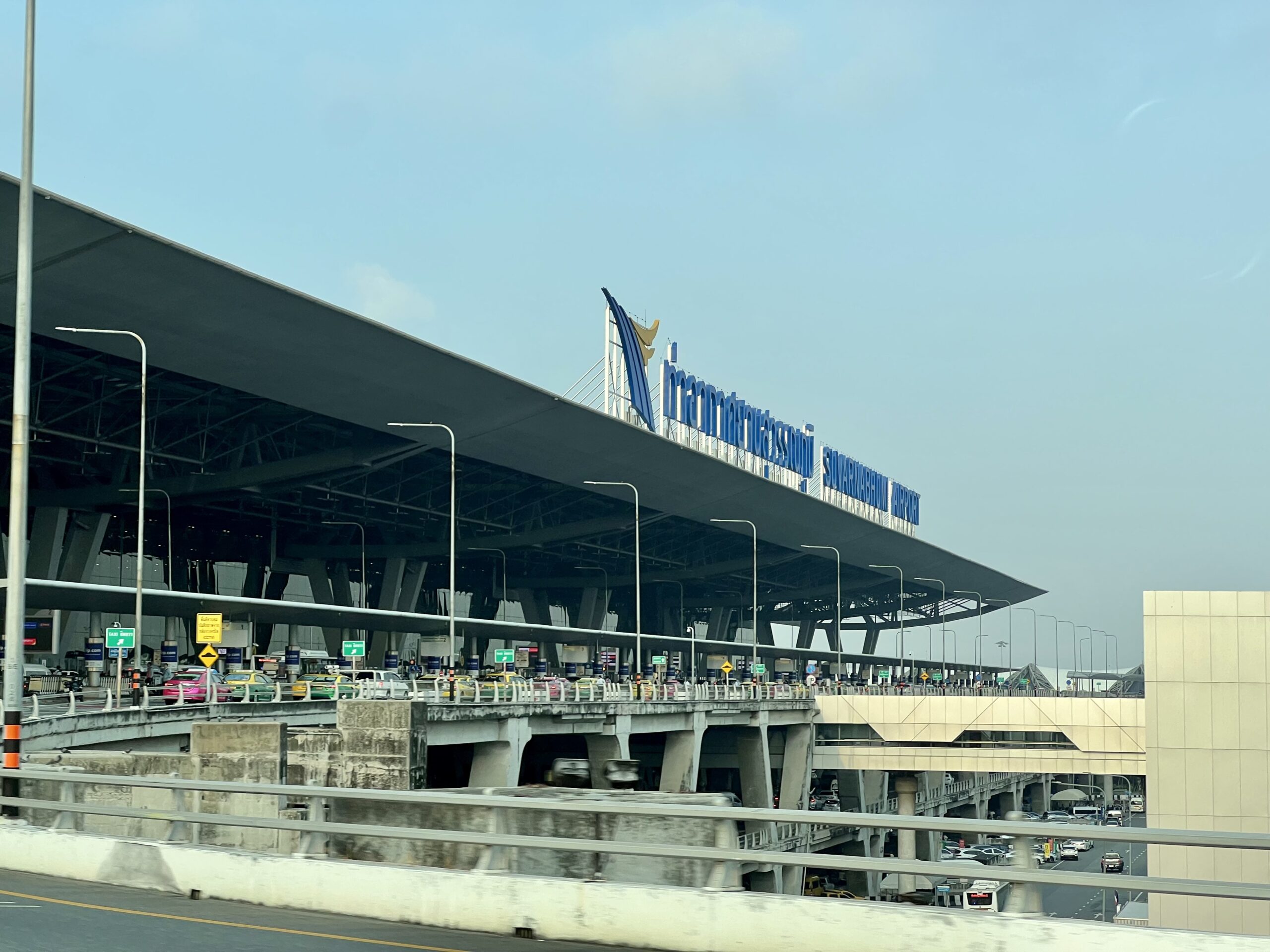
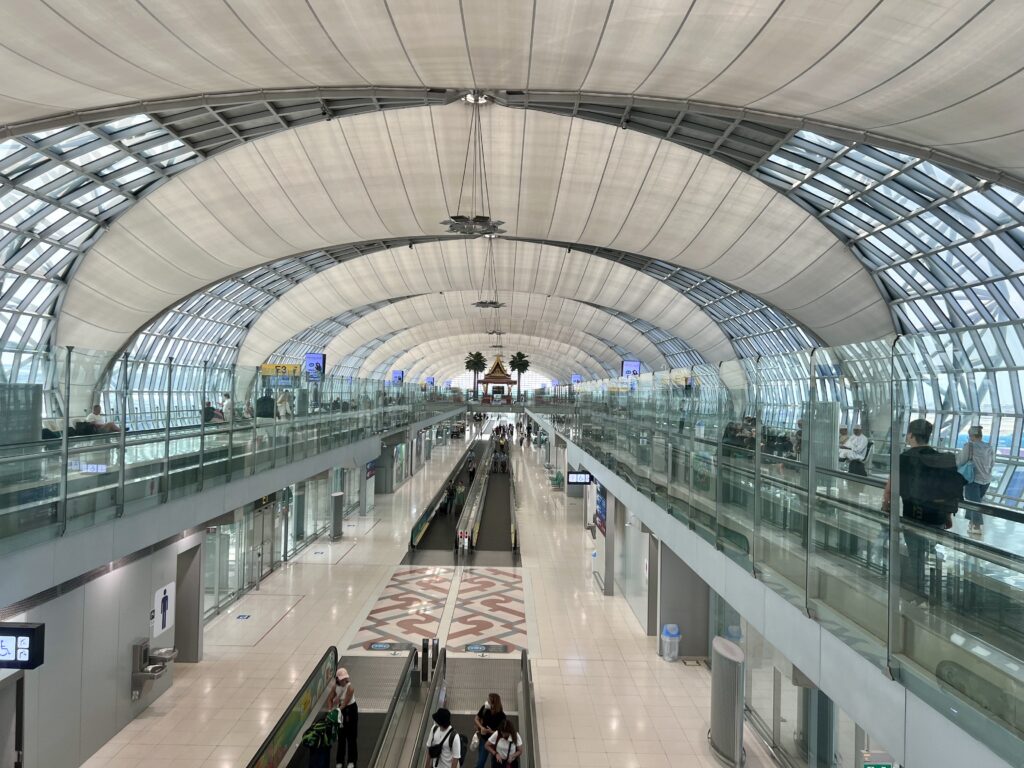
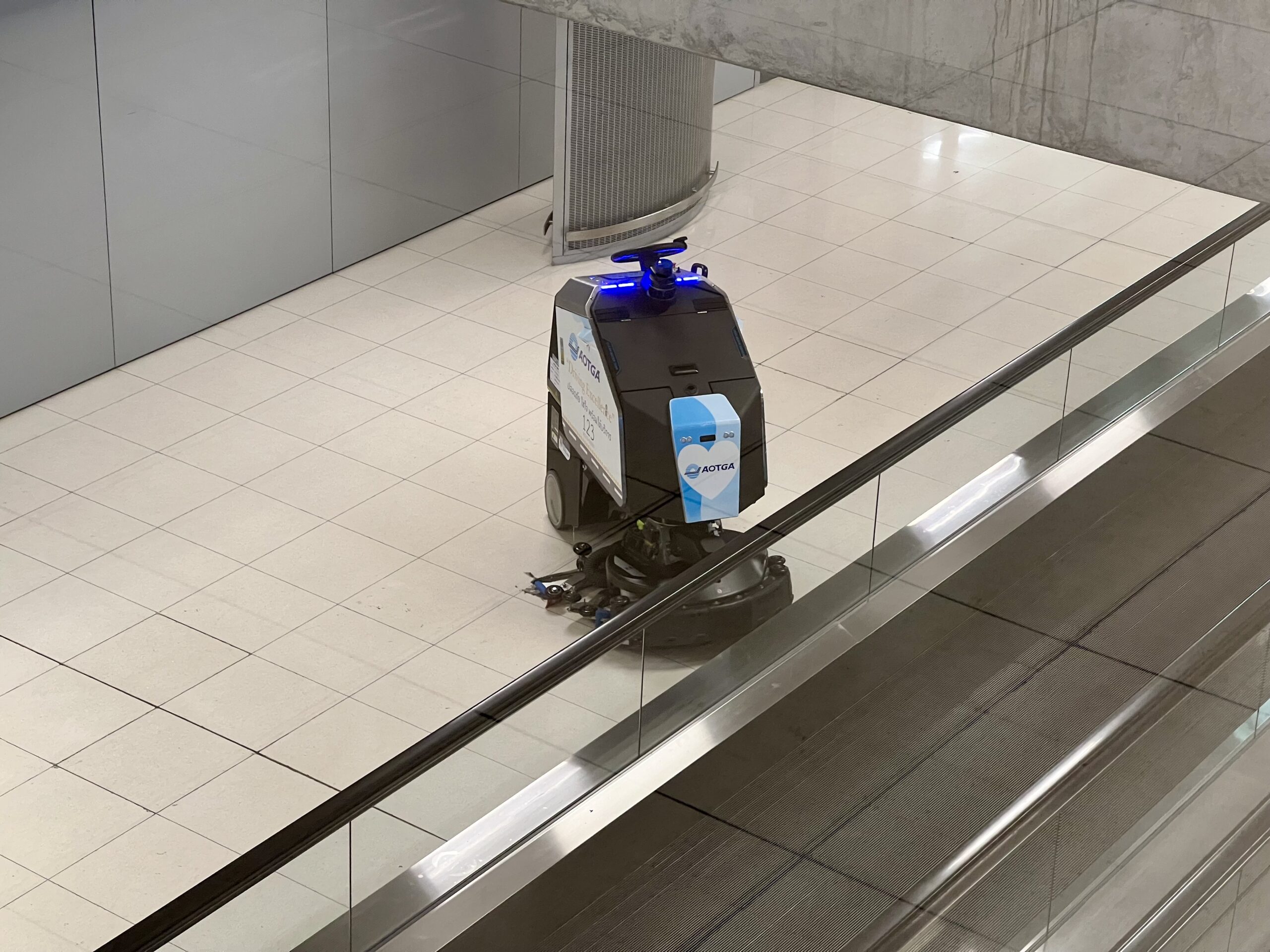
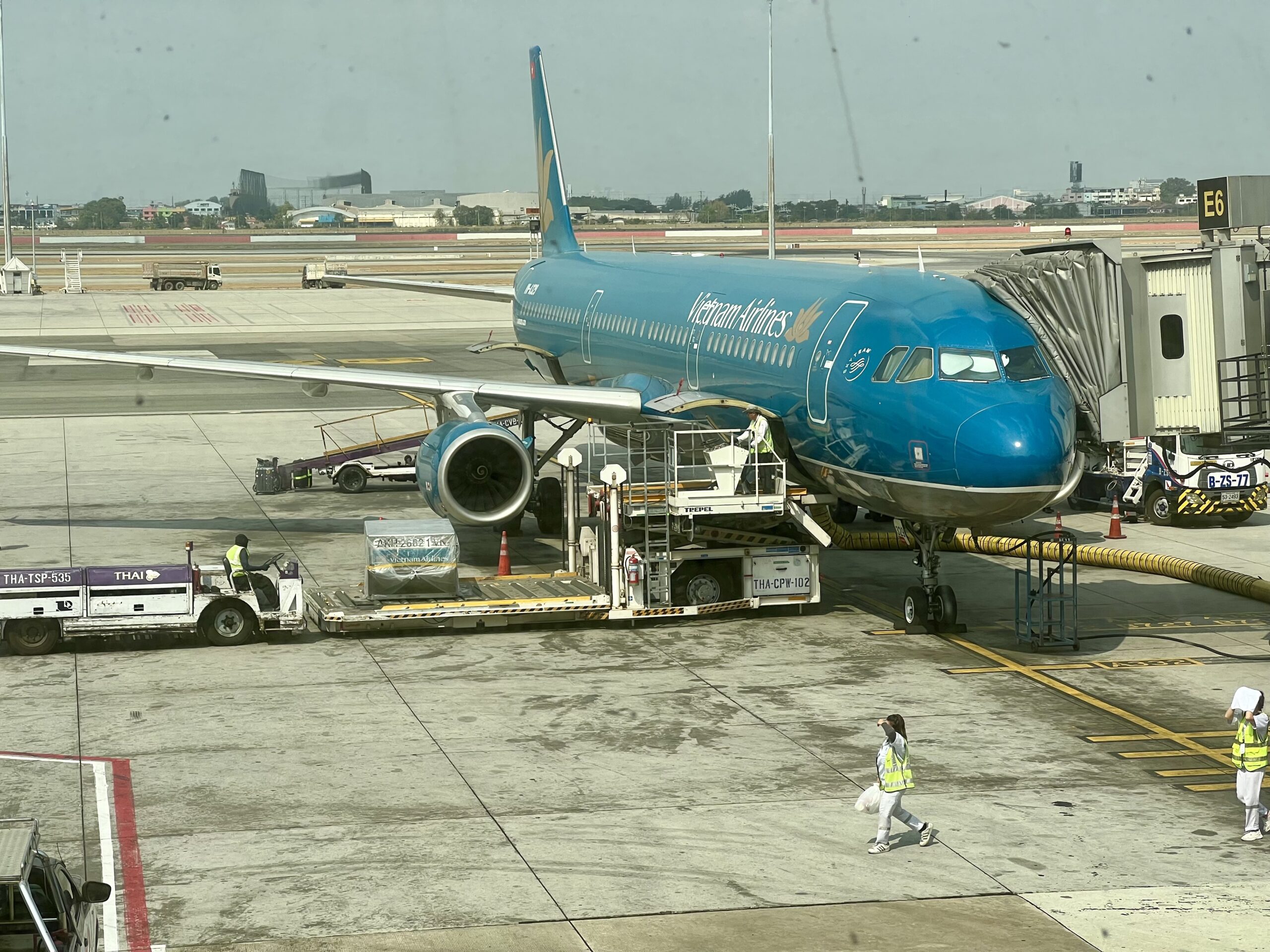
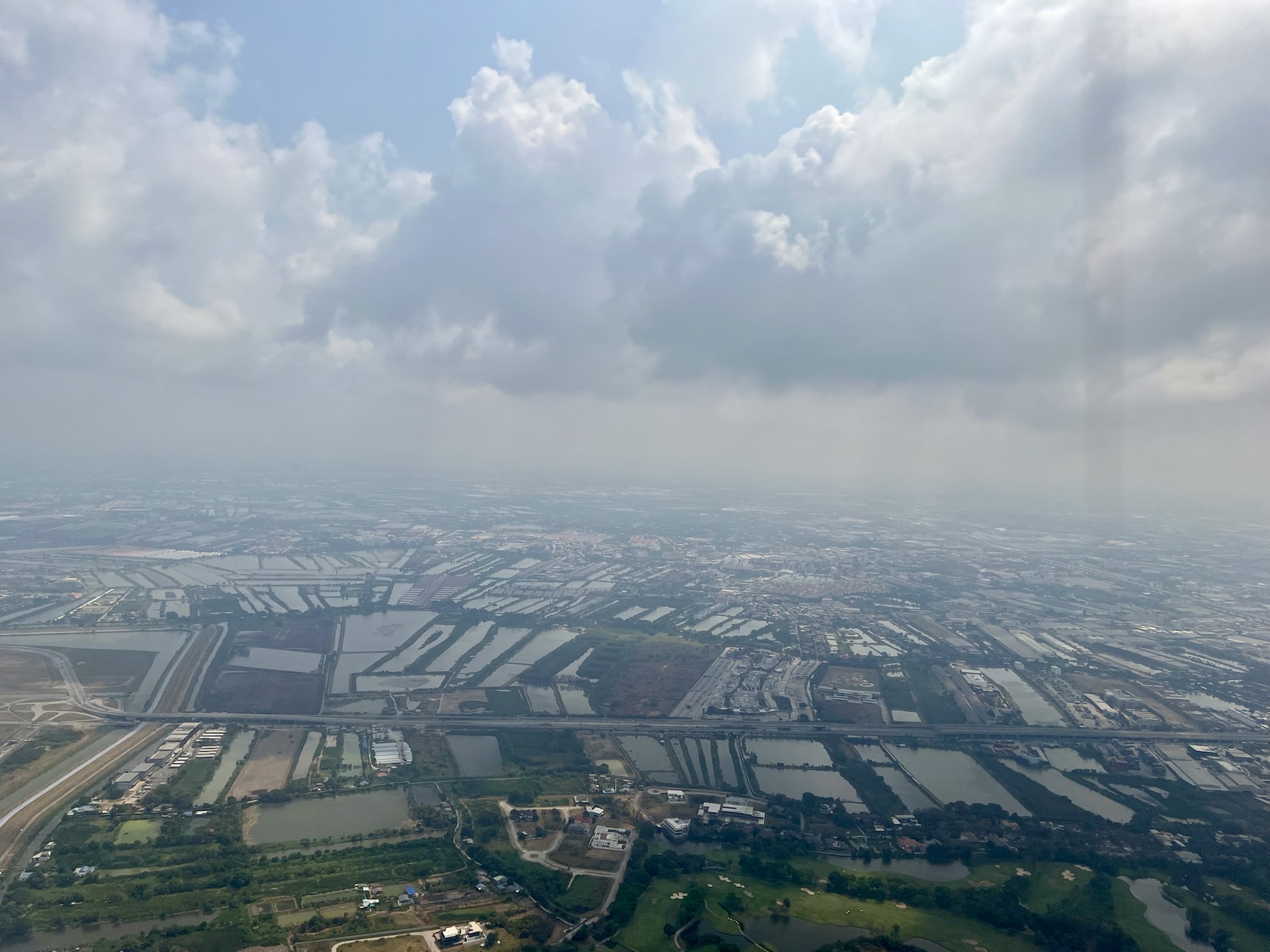
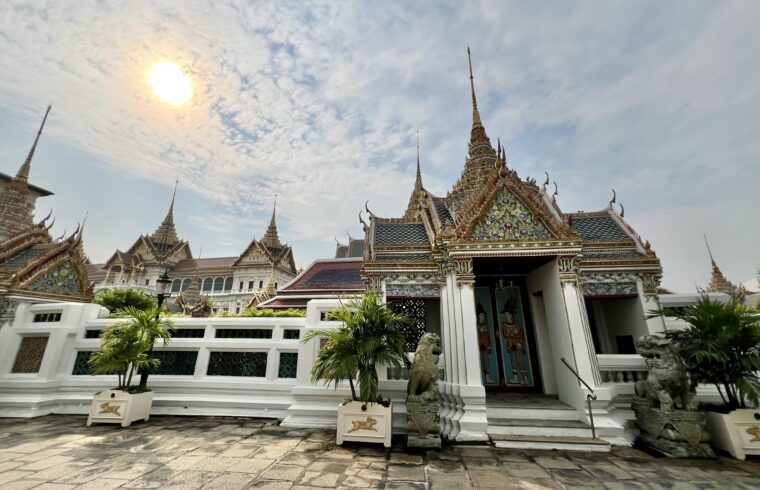
Our drive from Hua Hin to Bangkok was much like our drive there: an uneventful three hours. Same car, same driver. It’s multi-lane highway most of the way, until you hit the city. And there’s a lot of city. Built along the wide and winding Chao Phraya, it has a natural sprawl. Our destination was the Anantara Riverside, a short way downstream and south of central Bangkok. The view above is upriver. The view downriver is much the same. A city founded at a strategic bend in the river now consumes the entire delta.We had a nice riverfront room at the Anantara.The hotel grounds are separated by a small public canal, part of a large network of canals that serve as side streets to the Chao Phraya River’s greater boulevard. The canals are overpopulated with catfish the size of small dogs. Apparently it’s good luck to feed them. Unfortunately, they’re about the most disgusting looking fish on the planet. Feeding them brings them to the surface. They’re bottom fish. They really should stay there. That evening, we had dinner by the river. The blogger had fish and chips – having made certain catfish weren’t involved – and the photographer had Phad Akra Praw Moo, the popular (and spicy) minced pork dish served with a fried egg over jasmine rice.Our first full day was a Saturday, and we had plans to see the Chatuchak Weekend market. It’s on the other side of central Bangkok from the hotel, so we thought to use getting there as a way to explore the city. Our first leg was on the Anantara boat, which runs every 30 minutes between the hotel pier and Sathorn Pier. Easy.Sathorn Pier is a good transfer point, both to ferries that continue upriver or to the Silom Line, an elevated train that runs kind of south and west from Central Bangkok.We opted for the Chao Phraya Express Orange Flag Boat, which takes about 40 minutes to get to Bang Po Pier. The boat stops at every pier, so we weren’t clear on why it’s called an express. Maybe because the boat barely stops moving long enough for passengers to get on and off. For a flat rate of 16 Baht, about 50¢, you can go as far they go, so no one’s complaining. The trip took us through a good part of central Bangkok. Along the river, ramshackle housing is backed by any number of new builds (above and below).One particular new build stands out – the massive Thailand Parliament Center. At Bang Po pier, we walked all of a minute to the Bang Pho metro station and took the Blue Line a half-dozen stops to Kamphaeng Phet, which is just outside of the market. The Blue Line runs a wide circular route through and around the city center. From the outside, the Chatuchak Market reminds us of other markets, like the Grand Bazaar in Instanbul and the souk in Marrakech. But if you’re counting shops, with over 15,000, Chatuchak stands alone,.Wrapped around the market is Main Road. With cars virtually at a standstill, calling it a Road is probably aspirational. It exists, we think, to identify – and isolate – drivers with poor decision-making skills.Inside the market, it’s a maze of shops. Outside, a fellow hands out maps of the market, color coded for which set of stalls sell what kind of stuff. There is no connection between that map and this market. We wound our way through alleys and stalls until we found the central square. We only knew we were in the square when the tin roofs became umbrellas. There was just one gap where we could actually see the central clock tower. The blogger had to hold the camera high over his head to get this shot. A lot of stalls sell food – in fact we bought, and ate, some sweet, chilled water apples – but we found only one honest-to-god restaurant. It takes up a half-dozen or more spaces and crosses two alleys. We had spotted it on our way in and should have marked our trail. It took us a good half-hour to find it again. We almost gave up. To avoid unrefrigerated proteins, we ordered pizza. With its whole wheat crust, it was the best one we’d had so far. After lots of wandering and a couple of purchases, we were ready to head back, but by a different route taking the Skytrain. From the overpass to the Skytrain terminal, we could see the stream of taxis and cars dropping off more market-goers. The Skytrain differed in no way from the other metro train lines. Lots of people, every five minutes, don’t step on the third rail.Fortunately, the trains are well air conditioned. At the central station, we transferred to the Silom Line. In the vast main hall, a lone discount clothes rack seemed out of place. But it drew customers. After a short walk from where we got off at the Saphan Taksin station, we were back at Sathorn Pier, having come full circle. The Anantara boat got us the rest of the way home. The next day, we hired a longtail boat to take us through the back canals. The driver thoughtfully cleared empty beer cans from the deck as we boarded. Modern longtail boats are one part boat and nine parts diesel engine. They date back to the 1930s, when auto engines were ingeniously attached to long propeller shafts and mounted in row boats. The engines stayed dry, and the boats went fast. Steering means aiming the entire drive chain, engine and all, in the direction you want to go. Locks separate the network of back canals from the greater Chao Phraya. They keep the tides from infiltrating the canal system and maintain a navigable depth. This pair of locks is operated by a single, lethargic septuagenarian. He strolls between the locks and occasionally deigns to press the button mounted next to each gate. Shortly after passing through the lock, we were ambushed. We didn’t need any carved Buddhas or beads, but she did talk us into buying a Singha beer for our driver, at three times the street price. What good are tourists, if they don’t buy marked up beer? Plus it explained the empty beer cans on boarding. The first thing the driver brought to our attention was the monitor lizards eyeballing us from the shore. Easily eight feet long, the photographer was fairly certain they eat tourists. The canals are very lived in. Cobbled together stilt houses are common. As are traditional peaked houses, with their Sunday laundry out …And we saw several large estates, some long abandoned …Some wider stretches were lined with row houses and apartments, both newer (above) and less so (below).And there are wats, of course.A couple went all out with their Buddhas. This one offered both sitting and reclining options. Another just went big. A bit of Buddha envy between wats, maybe.As we approached a commercial-ish section, we spotted the Artist’s House, a working crafts shop we wanted to visit.Our driver dropped us at a nearby wat’s pier. We ran into a skeleton offering a wai greeting. He sits between a shiny coffin (his?) and a well-worn “merit wish post box.” From what we could figure out, the idea is to write out a wish for someone, maybe include their address, and put it in a slot with a donation. The different slots mean something, but there’s a larger cultural gap here than Google Translate was going to get us across. The boardwalk between the wat and the Artist’s House is a collection of shops and restaurants, primarily serving residents but benefiting from tourists, too (above and below).The Artist’s House itself offers a few odd pieces for sale, but its real reason for being is to let people create their own art. You can order tea, choose from a huge selection of beads, and make bracelets and and anklets to your hearts content …Or you can buy paper or canvas and paints or pastels and go to town on your own impression of the world. On our way back to meet our driver, we ran into yet another local hoping to bolster his luck by overfeeding catfish. We’re pretty sure the catfish are the lucky ones in this relationship. Then it was back through the canals and, eventually, another lock. Each lock has elaborate trash-removal machinery. It’s not very active during the dry season, but when the rains wash all the canals’ trash to the river, the outflow is diverted into a spillway through multiple bays. Each bay has a sloped grate, and each grate has a toothed comb that drags trash up and over and onto a conveyor belt that empties into a giant dumpster of sorts. Back on the Chao Phraya River, we passed an idle flotilla of cleaning boats. These yellow boats are another weapon in the war against river trash. We see them motoring about, workers using little wire baskets to scoop rubbish from the water. A labor-intensive, Sisyphean job.In the evenings at the hotel, a young woman plays a khim, derived from a Persian santur and similar to a hammered dulcimer. Traditional dress, sports socks. After three nights, we moved to the Avani+ hotel. It’s a sister hotel to the Anantara and on the same property. We considered not moving, but the Anantara had two deal-breakers. The water in the showers runs jump-back hot and cold, and the Trader Vic’s restaurant, on the ground floor below our room, has way-loud live music in the evenings. Besides, the views from the Avani are spectacular. You could see forever, if the air didn’t get in the way. After a couple of days running around in the heat, we took a day off and caught the hotel boat to IconSiam, a spectacular shopping center. This is the main atrium with its eight levels. As in Hua Hin, BMW was showcasing cars on the ground floor. As it turned out, there are four auto showrooms on different levels: BMW & Mini, Porsche, Maserati, and Bentley. We don’t know how they get the cars in and out. The entire ground floor is SoukSiam, a stylish take on Middle Eastern open markets, with literally hundreds of food stalls, small shops selling souk stuff, restaurants, and kiosks (above and below). We had lunch at a Singaporean restaurant and bought some omiyage gifts to take home. On the seventh level of a different section there are theaters, a huge kids play space, and more restaurants. The ceiling there is another 50 feet up, with a circular waterfall that releases water in patterns. Near the waterfall they were selling super-thick Gees soft cookies. We bought one.We kept trying different Thai restaurants, of course. The food offerings are very similar, and we tend to avoid the pork belly and fried things. At the Basil Thai Kitchen restaurant, we ordered fairly typical noodles and spicy minced pork, but the tastes weren’t typical. The flavors were crisper and much more sharply defined. Simple and good. We kept looking for different foods to try, but uniqueness was hard to find. Here we’re having wonton soup and a salmon poke bowl. There are lots of Japanese restaurants around, too, many more than in Hua Hin. Our favorite Japanese restaurant, in the Riverside Plaza shopping center attached to the Avani hotel, had really good teishoku.We ate there twice, both for the food and for Gyo-San, the robot that delivered the food. Not the smartest or fastest food server, but very polite.It seems every shopping center in Southeast Asia has a kids play area. The Riverside also has vehicles kids can drive around the mall. You kinda have to watch out for them.Some are easier to avoid than others, but none of them go very fast. Beyond Thai and Japanese, we looked for anything interesting, like this mezze platter with falafels and kofta kebabs at a restaurant named Dark. We ate at one very popular Thai restaurant, Kub Kao Kub Pla. The noodles were good, but the shrimp wasn’t – ironically, seafood is hit and miss here, especially shellfish. The aubergine and minced pork, not shown here, was excellent, as was the view. We also tried different shave ice dishes, like this one with grass jelly, dried longan berries, and sweet milk.The king of all shave ice, though, is Pang Cha. Sweet Thai milk-tea poured over ice, with big and little bobas, cubes of soft bread, almond slivers, and whipped cream. It’s bigger than most people’s head. On another day, we thought we’d try the rooftop pool. By noon we couldn’t see the view for the perspiration, so we gave silent thanks to Mr. Carrier and went in to enjoy his air conditioning. If there was one thing the photographer liked best about the Avani, it was the ability to watch tug boats and barges navigate the twists, turns, bridges, and currents of the Chao Phraya. Rice, sugar, sand, and gravel move up and down the river in barge trains. At night, though, brightly lit tourist boats dominate. If there’s one must-see for everyone who visits Bangkok, it’s the Grand Palace. Expecting it to get crazy crowded, we bought tickets ahead and took a taxi to get there by its 8:30am opening time. We weren’t alone, but we were ahead of the bus tours and masses. The entrance to the palace grounds is through Wat Phra Kaew, which is the most sacred Buddhist temple in Thailand and home to the Emerald Buddha. As a result, many visitors pay their respects, both outside the temple and in. The Buddha itself is a little over two feet tall and is all but dwarfed by its elaborate golden pedestal and the 200 years of treasures gifted to it by reigning monarchs. The main temple, built in the late 1700s by Rama I to help legitimize his new Chakri dynasty and celebrate making Bangkok his capital city, is incredibly elaborate and has been added to by each king since. The view of the Wat Phra complex across the lawn from the Royal Offices shows a bit of the size of the temple compound and Phra Sri Ratana Chedi, the huge golden stupa said to contain ashes of the Buddha. The grand Palace itself is in its own compound and is actually several buildings. The largest is the Great Hall and Throne Room.Since a single throne room is never enough, there’s another one next door. Out of fairness this, the Dusit Maha Prasat Throne Hall, was built 100 years before the Great Hall and is one of the best preserved structures from the original palace build. It’s a stunning building in an equally stunning setting. The grounds and buildings are beautiful and expansive, with all sorts of things to find.Here is a scale model of Angkor Wat, gifted to the Emerald Buddha in the 1800s by Rama IV. Cambodia was part of the Thai Kingdom from the 1400s up until the beginning of the 20th century. Next door to the Grand Palace is Wat Phra Cetuphon, if 20 acres can be thought of as next door to 50 acres. The temple was built by Rama I as a place for Buddhist monks to study. What draws crowds today is the 150-foot reclining Buddha. It was built by Rama III in a building it barely fits in. This means there’s no room for tourists. This picture is a triumph of creative perspective and elbows. The Buddha requires such a large building that there’s as much pillar as open space. The result is a view of subsequent Buddha slices as you work through the crowd. What makes photographing sites like this so challenging nowadays, is tourists aren’t content with iconic snapshots alone. They are only happy when they have a picture of themselves blocking, maybe even completely occluding, the target of interest.The photographer got a fabulous toe shot (above), along with the writing on the soles of his feet (below).The three major historical sites often visited together are the Grand Palace, Wat Phra, and Wat Arun. Of the three, Wat Arun is the only one on the west bank of the Chao Phraya. The east pier of the ferry that shuttles back and forth is not the easiest to find, nor the most comfortable to wait at. You get on the ferry through a dilapidated building housing odd shops. After the hot, stuffy wait for the boat, the breeze from moving on the river was marvelous. Plus we got a great view of the high central spire. It’s one of the more visible features along this piece of river. Records of temples at Arun goes back to the 1600s, before modern Bangkok was founded on the east bank. Originally a temple in a small riverside town, it began it’s journey to prominence when, in the 1700s, Taksin established the capital of his short-lived Thonburi Kingdom near it.The temple’s facade is much different from most other temples and palaces we visited. The exterior is an intricate mosaic of porcelain, rather than shiny gold and polished stones and glass.The tall central prang is set on a terraced, four-square platform. We climbed to the second level for this perspective. Sometimes they open the stairs to the public, but not this day, not that it would have mattered. Another must-see for us was Bangkok National Museum. On the day we decided to go, we took a morning taxi, as we did when visiting the Grand Palace. Simply put, there’s no good way to get around Bangkok. At least taxis are inexpensive, when you can get them to use the meter. Unlike the palace and temples, there weren’t many foreigners at the museum, but school kids did their best to fill the void. The museum was once a palace. It was called the Front Palace, built in the 1500s for the vice king (heir apparent) and later used as a residence for both viceroys and kings, until the position was abolished by Rama V and the palace turned into the current museum.What was originally the palace’s throne hall is now a Buddhist temple where the Phra Phuttha Sihing Buddha is enshrined. It is second only to the Emerald Buddha in importance to Thai Buddhism Within the palace, the central audience hall contains one of the seemingly countless thrones.Most rooms are on the ground level, but the residence and bed chamber occupy an elevated section.Each room in the main palace is dedicated to an aspect of imperial and aristocratic life. The room of thrones housed a variety of … well … thrones, like the hyper-ornate one above. There was a palanquin room, with some sedan chairs requiring upward of 30 bearers to get liftoff.Another room contains royal howdahs, the riding platforms placed on elephants for pageantry and war. There is a door room with many elaborate doors. One (above and below) intricately inlaid with mother of pearl.Then there’s the crown room, probably the photographer’s favorite. Then there are rooms showcasing elaborate puppets and masks (above) and traditional instruments (below). One rather large hall is dedicated to royal fans and their role in conveying and commemorating rank. The one above is a royal bath and tonsorial fan. A dedicated building outside the palace itself houses royal carriages, for the ashes of kings recently expired (above) …And those still among the living, who just need a ride. Separate wings on either side of the palace building contain a progressive history of Thailand, from Neolithic times to the introduction of Buddhism. The standing Buddha above is from the seventh century. The Southeast Asian Peninsula has seen Indian influence since 600 BC, and Buddhism, in one form or another, has been present for over 1,700 years. As a result, much attention is given to Buddhist iconography over the centuries, of which the wheel of law, or Dharma Wheel, is probably the most recognizable. From the museum, we decided to walk to a national theater that presents traditional Thai dances. We took a shortcut past the Grand Palace through the brand new Na Phra Lan Tunnel. It is, in both purpose and practice, nothing more than an auditorium-size underground crosswalk. More important than pedestrian safety, though, it provides air conditioning.Of the murals and photos on the walls, the photographer took this shot of a large map of central Bangkok. The red X marks our location. Back up on the street it was 95°. Over 100° with windchill. Saranrom Park, here, looked inviting, but it’s outdoors. Central Bangkok is Old Bangkok, but it has been remade over the years. So much has changed since we first visited this area over 30 years ago. Once away from the historic sites and stately government buildings, though, it’s just concrete and traffic.Sala Chalermkrung Royal Theatre was built in the 1930s by Rama VII to both celebrate the 150th anniversary of the founding of Bangkok and to sate the his love of cinema. It was originally a state-of-the-art movie theater. Now it hosts a cultural dance troupe. The large cast presented a number of folk dances. Afterward, we took a series of trains back to Sathorn Pier again, avoiding the chaotic afternoon streets.At the Sala Daeng station, where we transferred to the Silom Line, we found another random shop, sitting all by itself. We went in to buy a dog toy for a friend, and the tiny shop had even tinier aisles. 12, 14 inches wide, tops. The photographer could maneuver, but the blogger had trouble. The large-framed clerk must hire children to do the restocking. That evening, we watched Friday fireworks, compliments of Asiatique Riverfront Market.We only had a couple of days left, so we ate Thai food at the Riverfront Plaza Coffee Club, where we could watch mall shoppers come and go by motorbike taxi. The blogger had a trio of dishes. One was advertised as minced pork, but it turned out to be garlic with pork seasoning.On our final evening, we went to Sizzlers. Not so much for the food but for the memories of family dinners at the Sizzlers on Maui. And we haven’t seen a Sizzler’s in the US for decades. As it turned out, it was a very Thai experience. None of the staff spoke any English, no foreigners in sight, and the menu definitely reflected Thai preferences. The dish here is grilled saba.Our final morning donned hazy and hot. Thailand, or at least Bangkok and Hua Hin, are much different from both Vietnam and Malaysia. It’s somewhere between the two. With more obvious wealth than Vietnam, the people are friendly but definitely more jaded, and there seem to be far more westerners about.Then off to the airport. Sunday morning meant less traffic. But security and passport control were silly busy and disorganized. After almost 90 minutes in a cattle pen labeled Fast Track, the huge concourses felt empty. A lone floor-cleaning Zamboni went about its robot business unattended. The blogger watched it worry over spots on the tile and courteously come to a standstill when anyone approached it, even if they were on the moving walkway.We flew Vietnam Airlines out of Bangkok to Danang, via Ho Chi Min City. Ciao ciao Bangkok.