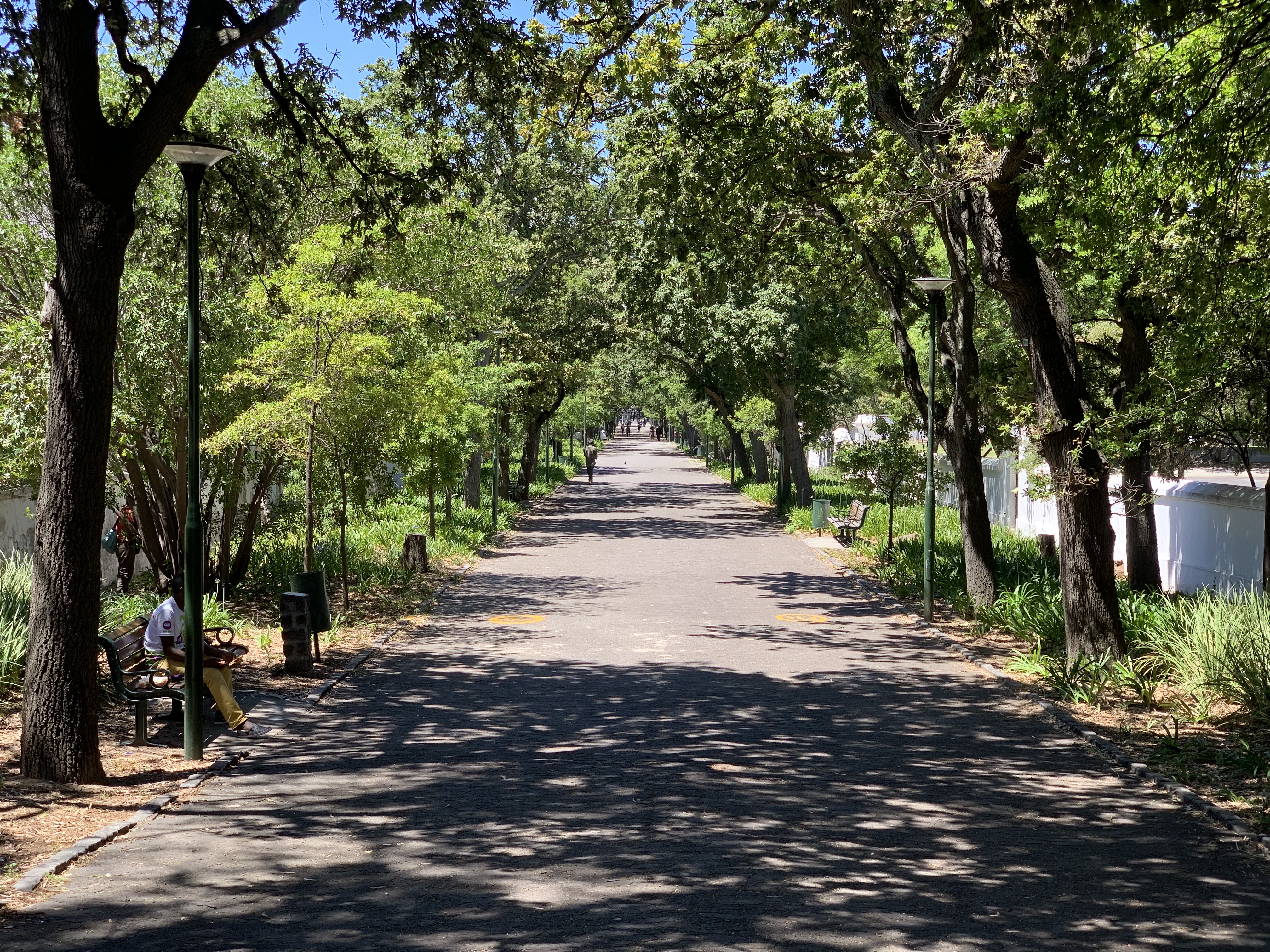
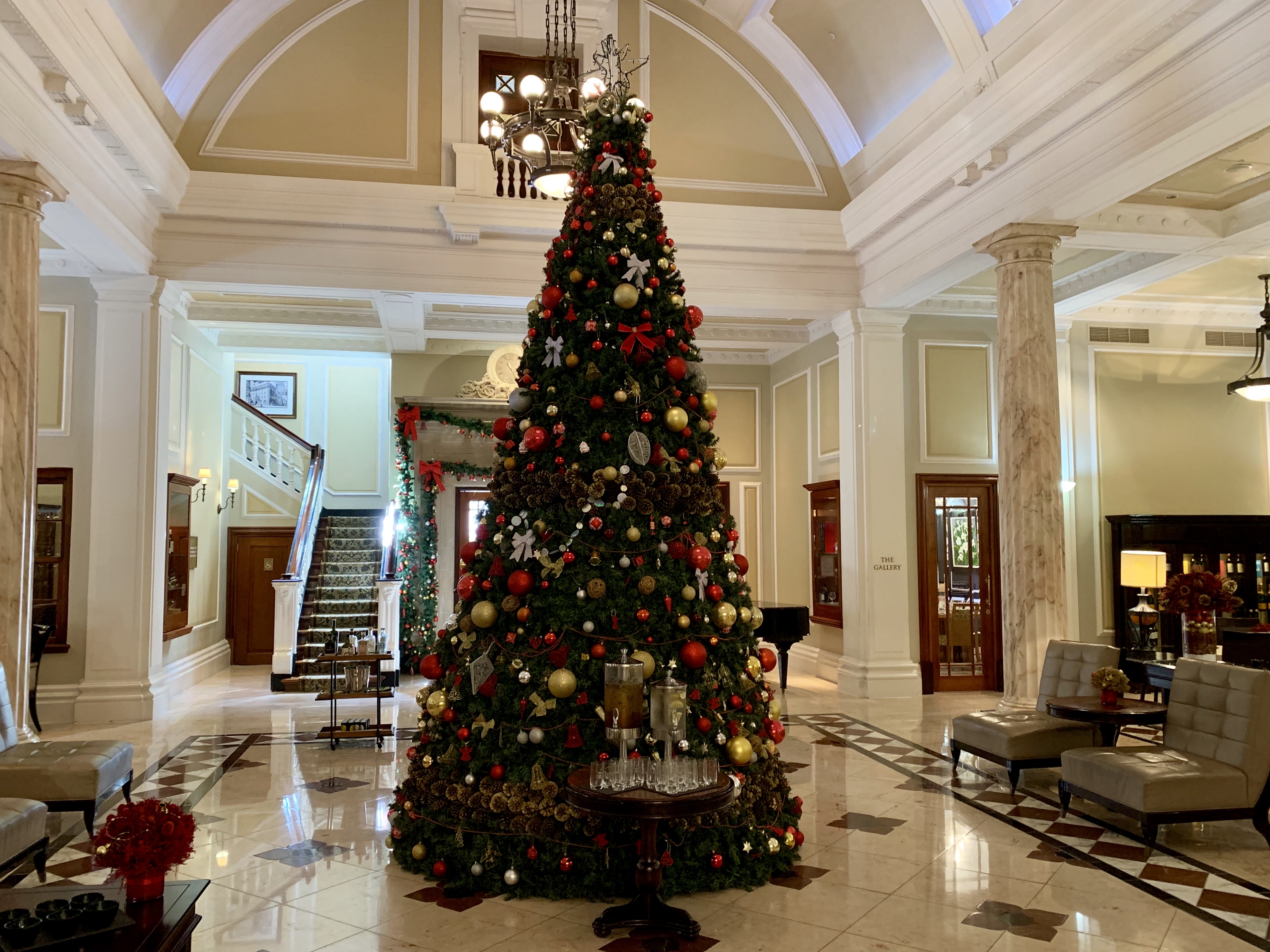
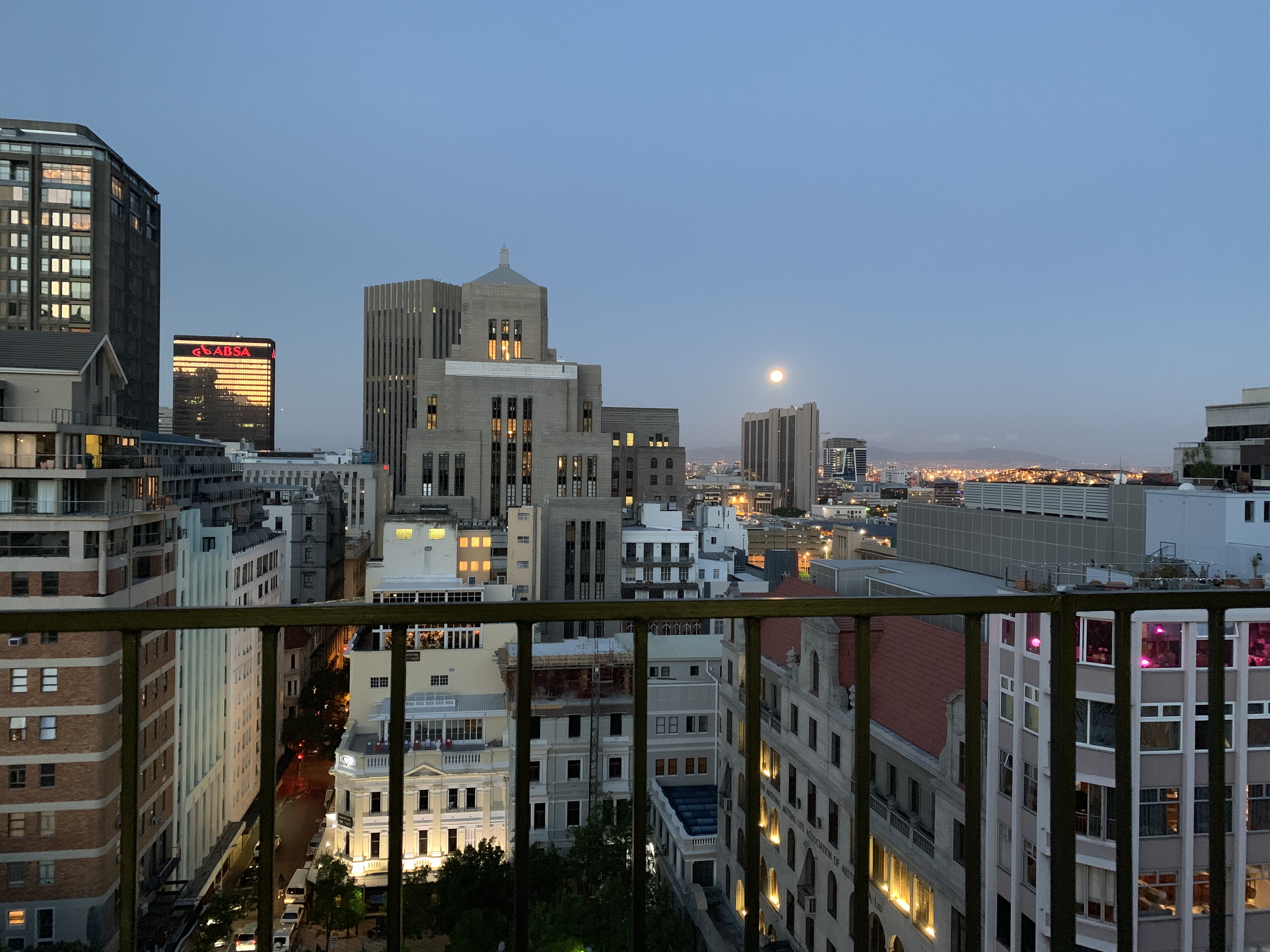
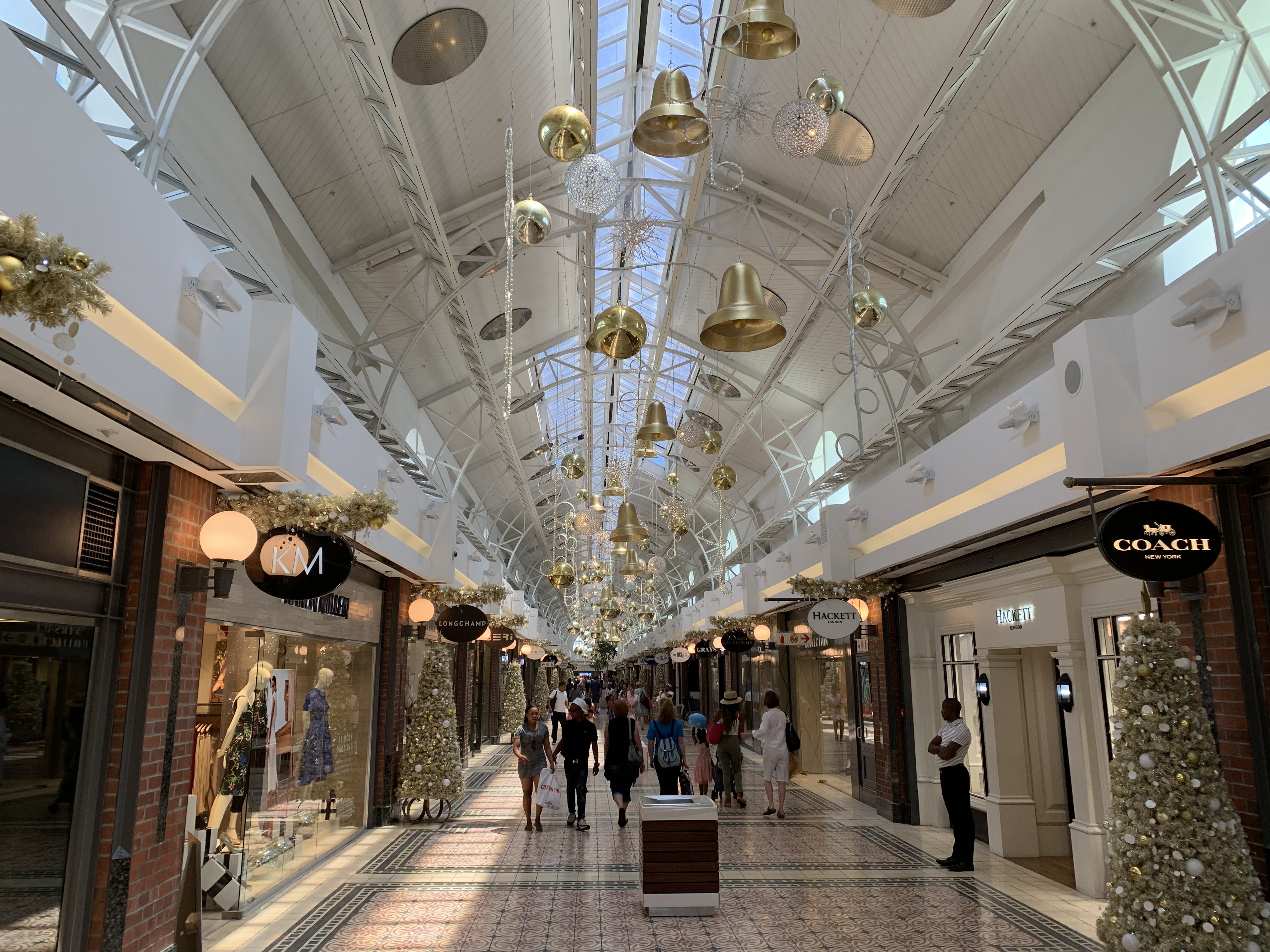
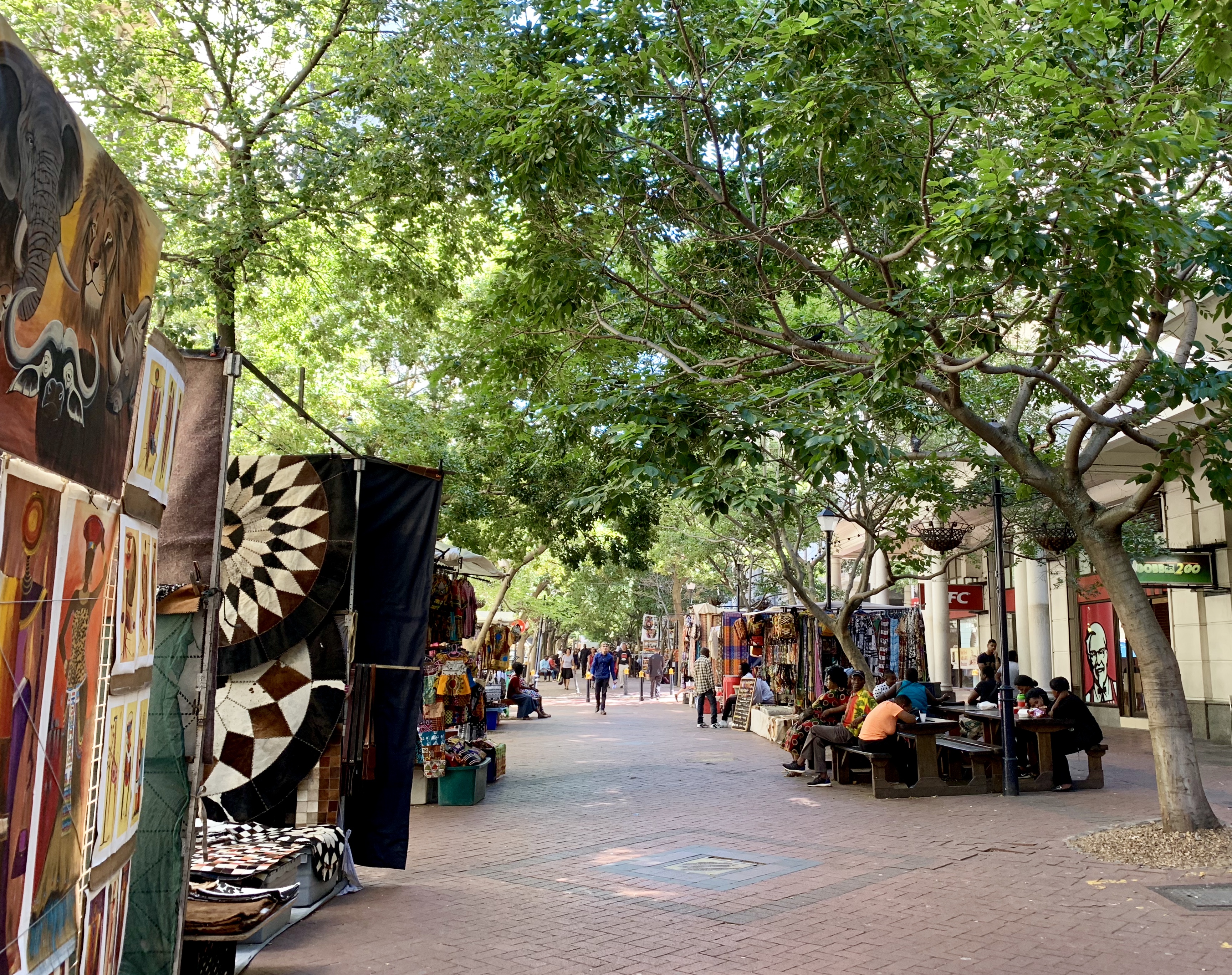
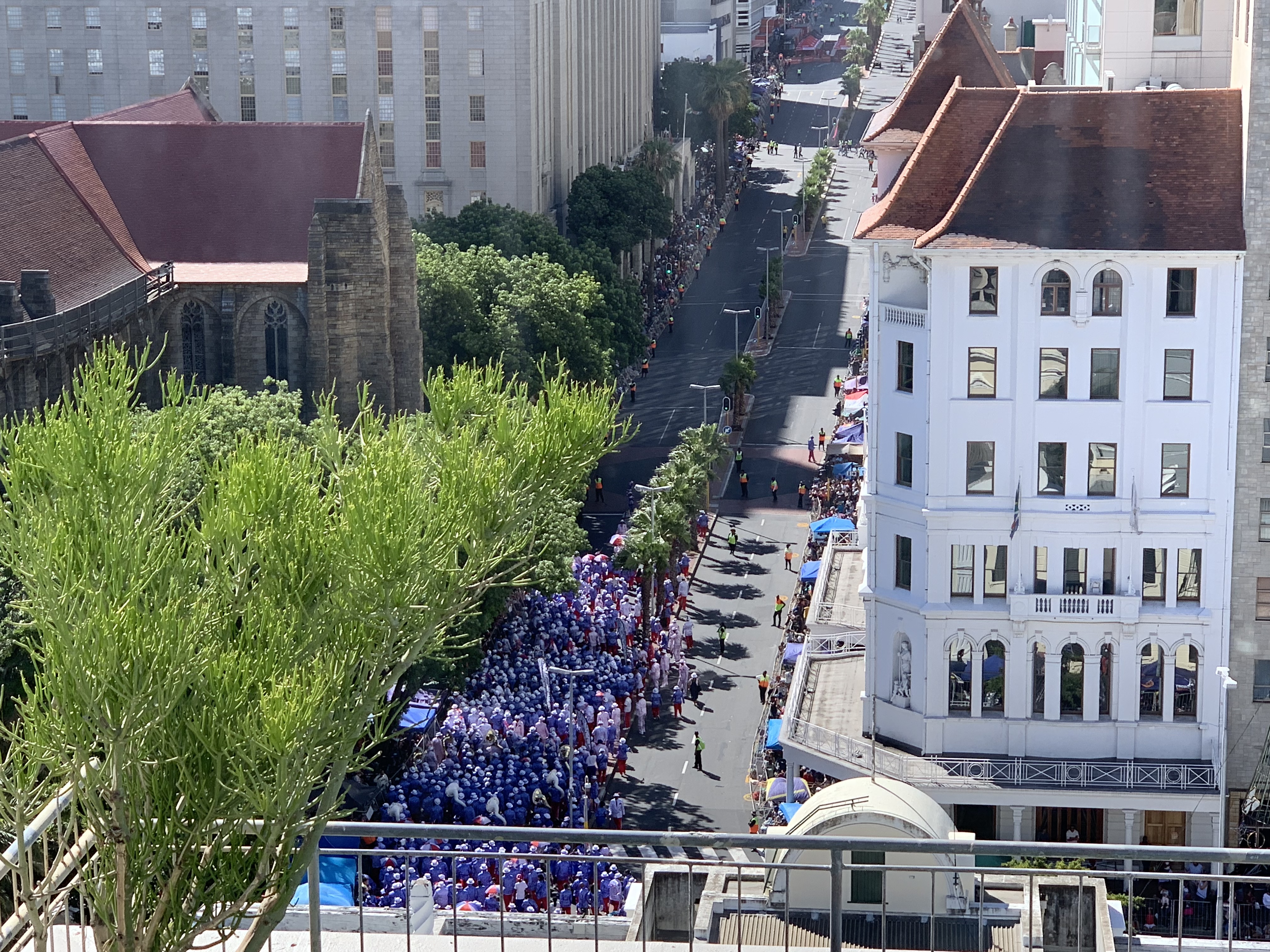
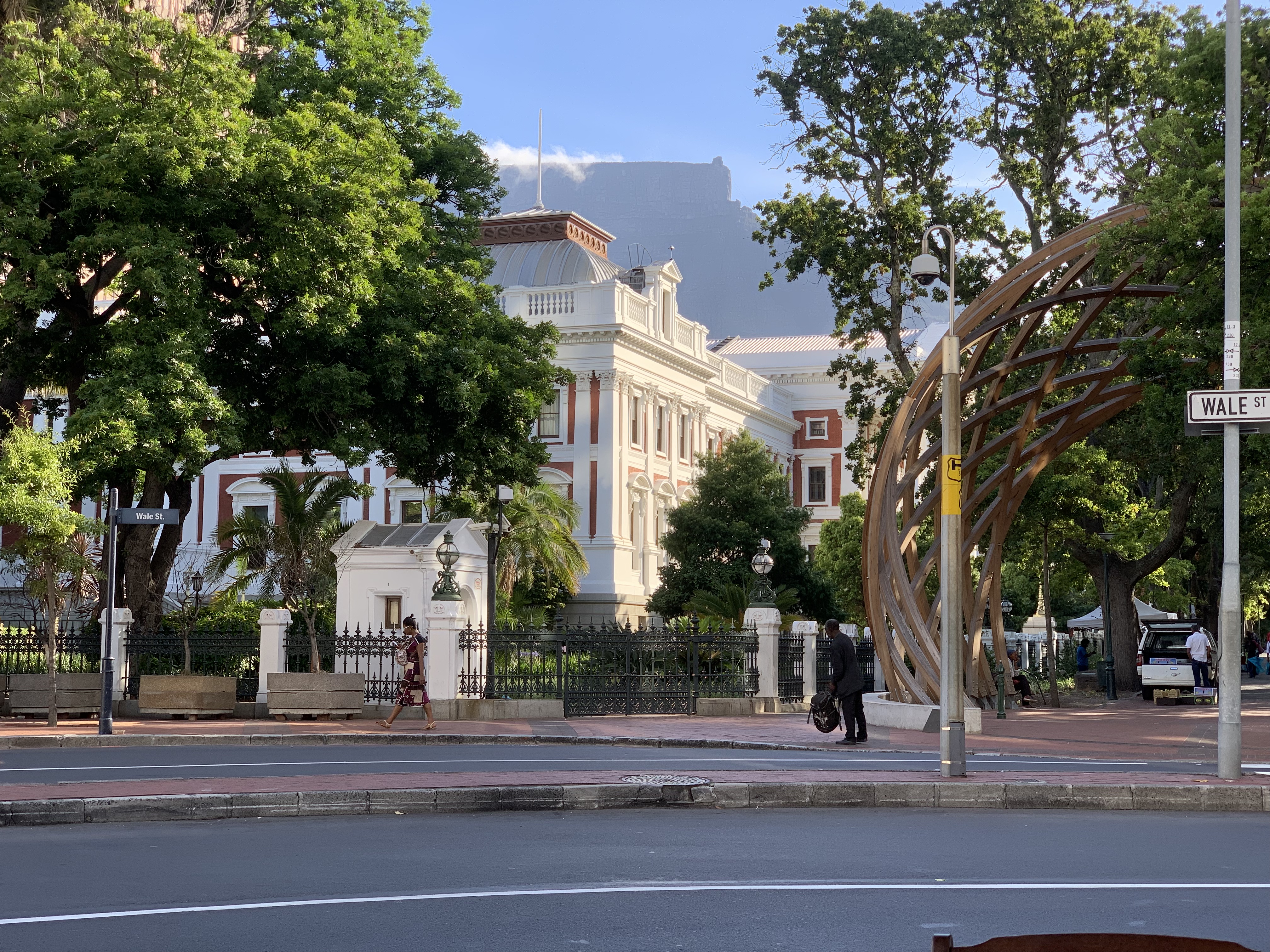
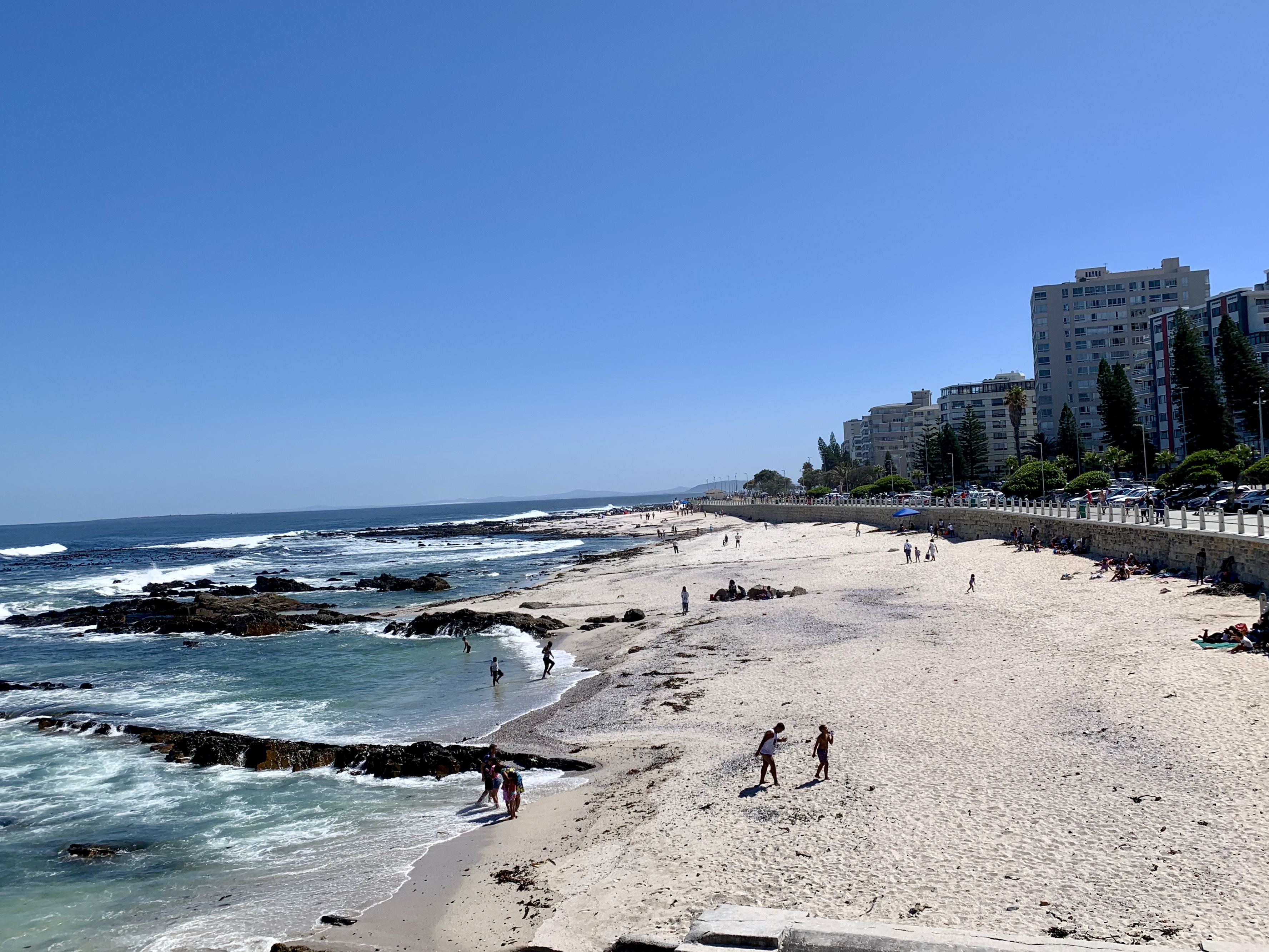
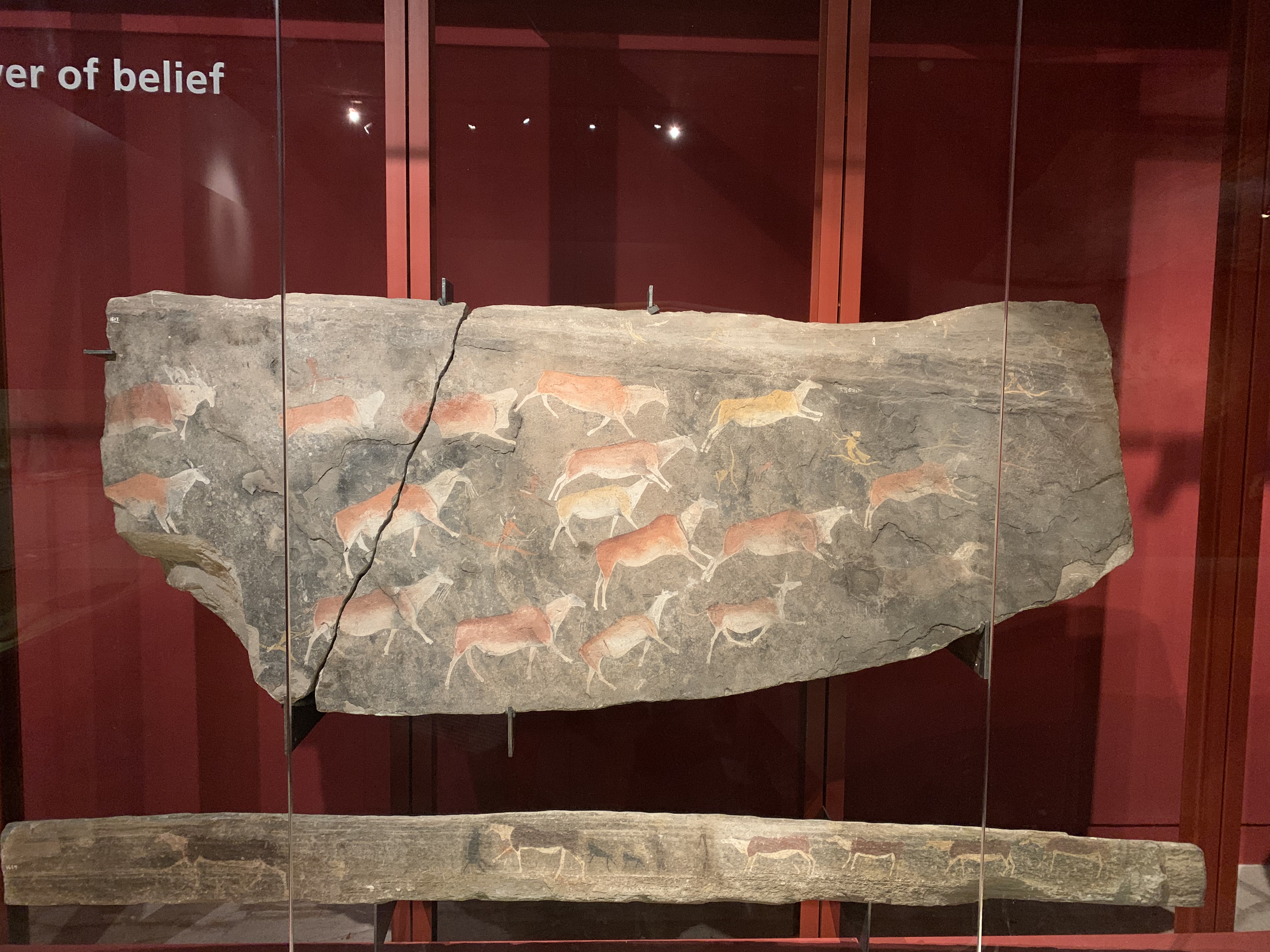
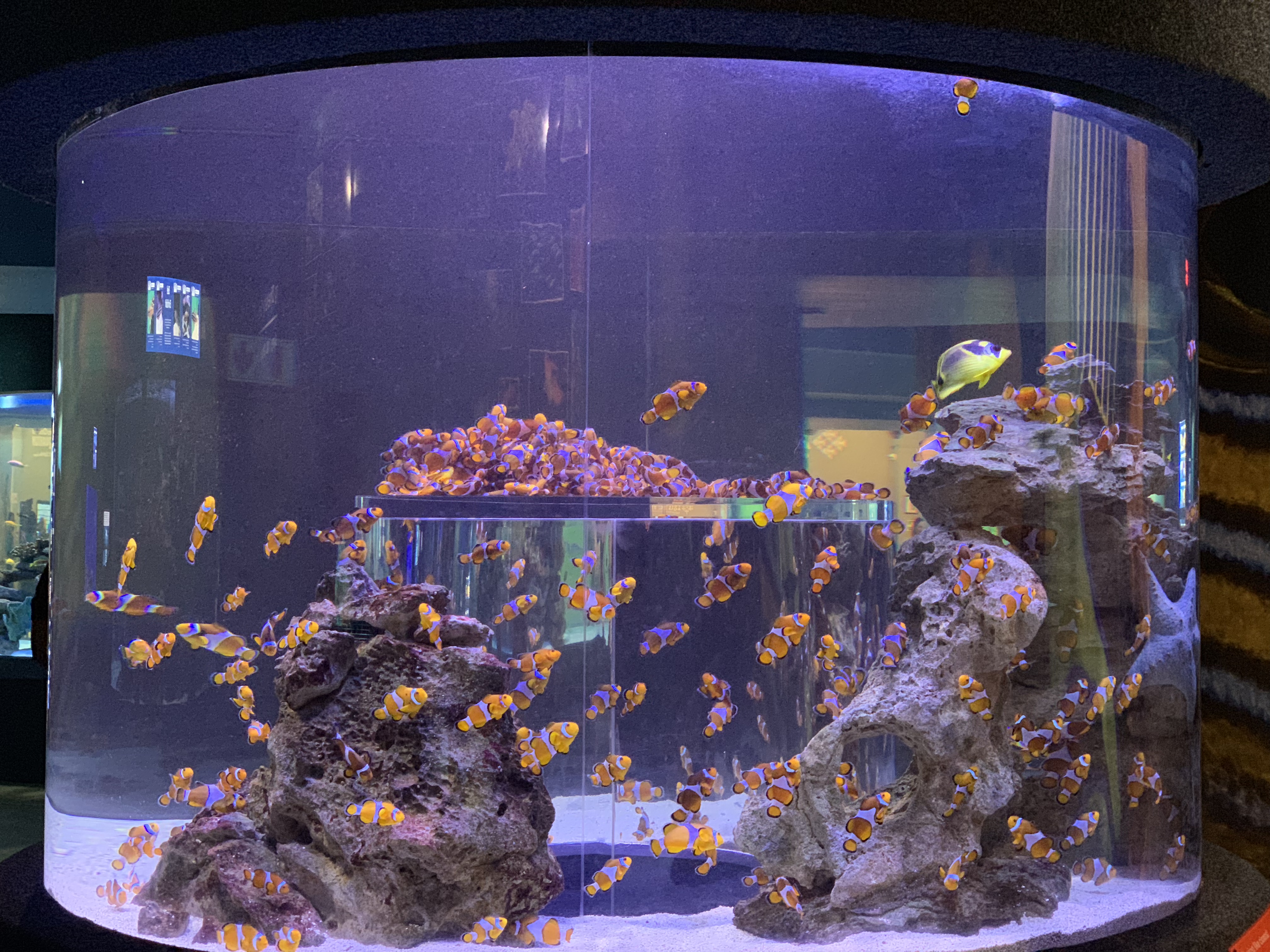
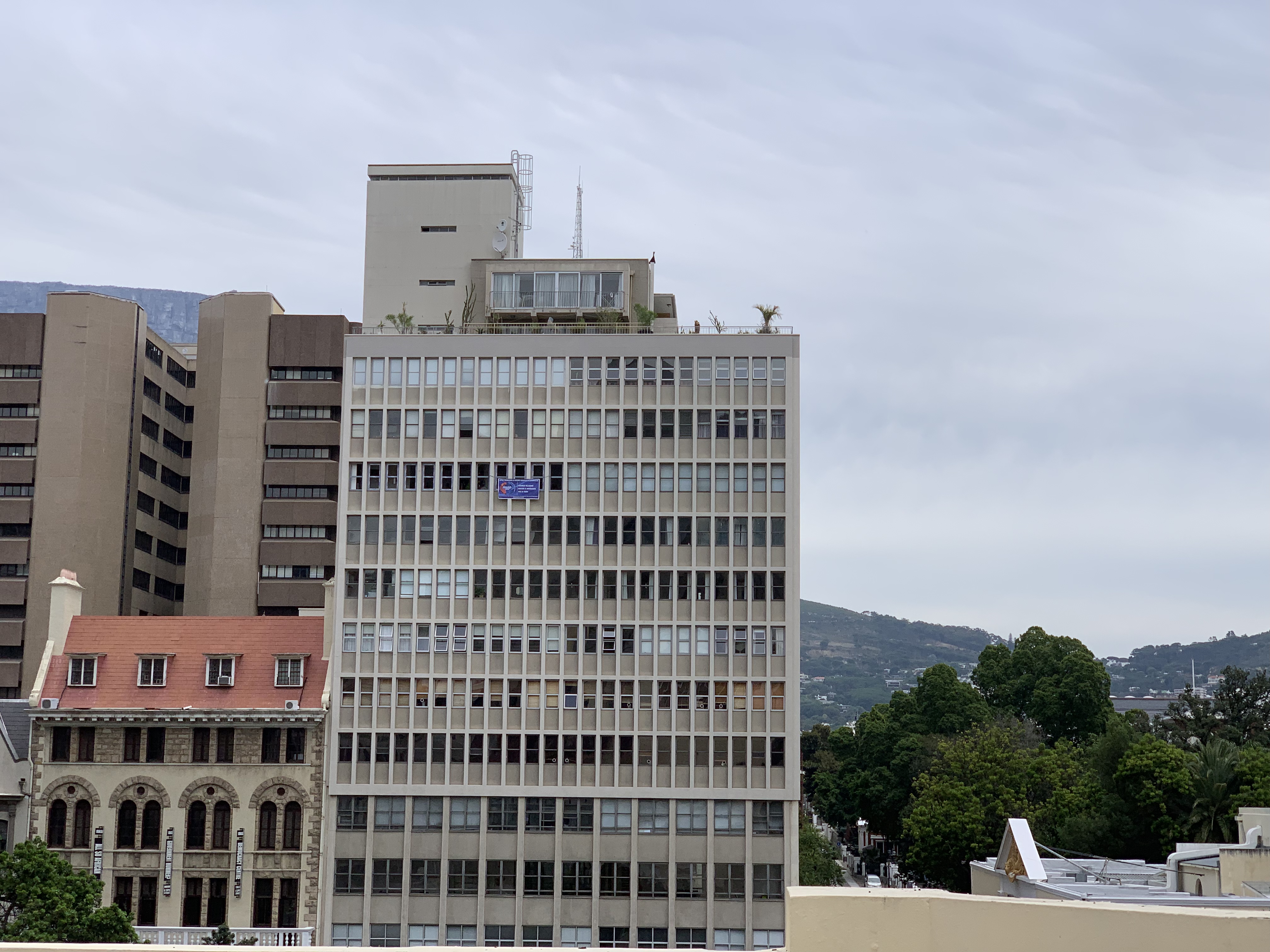
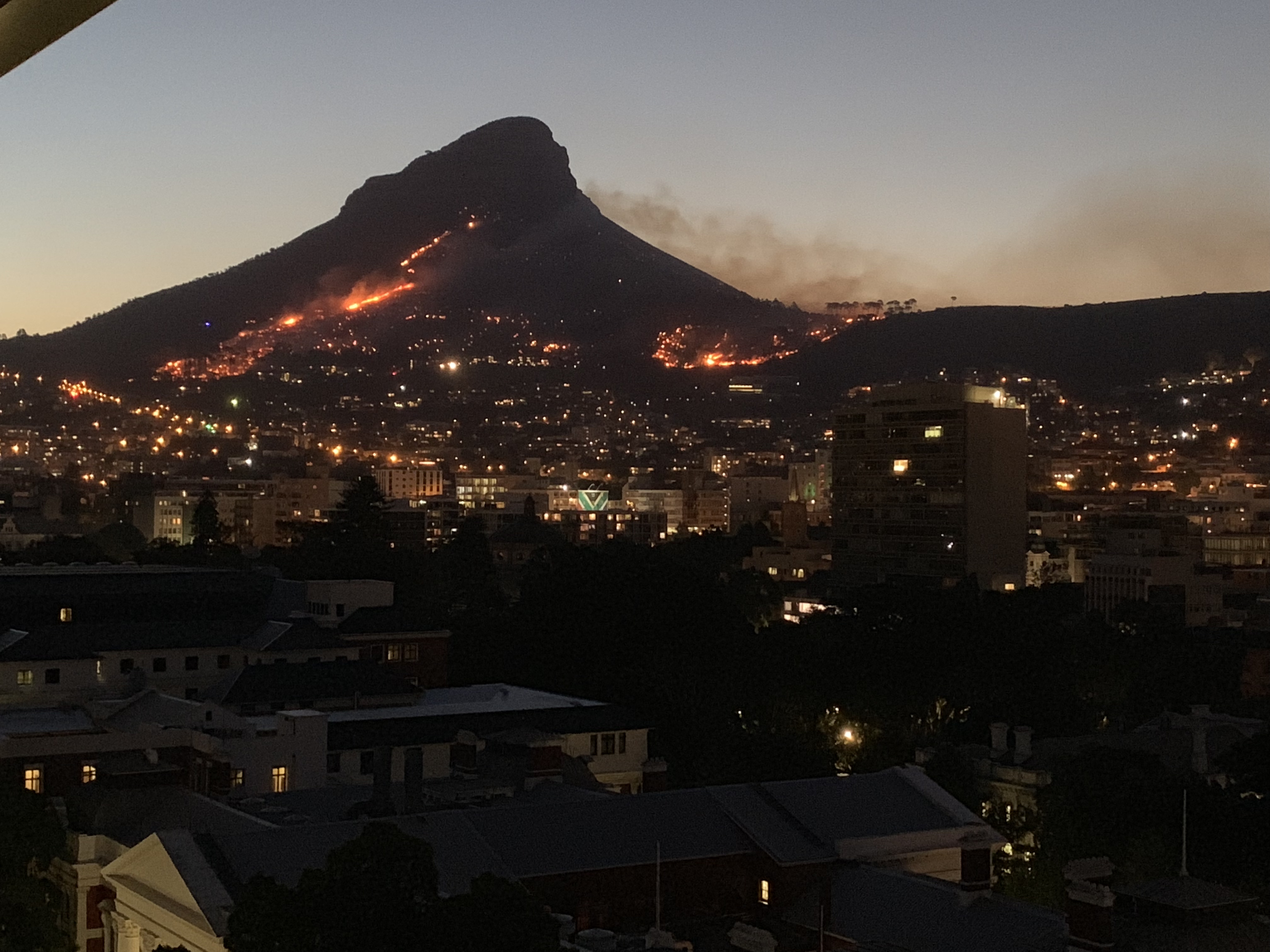
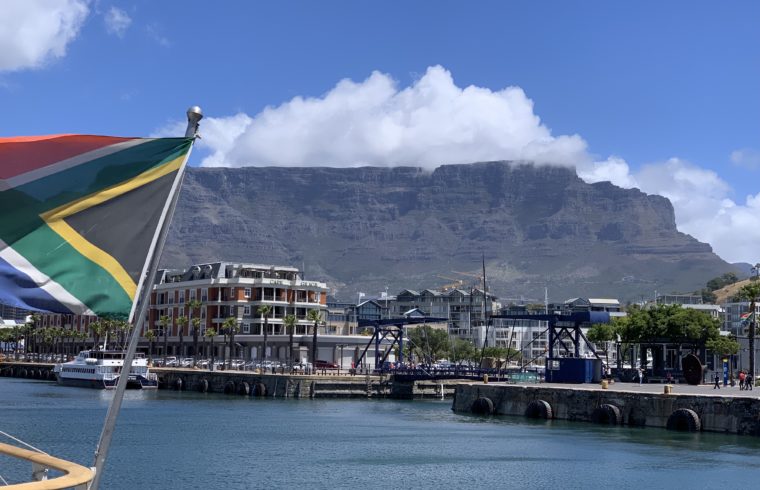
The Festive Season in Cape Town, as it’s called in South Africa, is a remarkably quiet time for both locals and tourists. Goverment Avenue is usually busy with students in school uniform, domestics commuting, walking tours, and tourists hand feeding peanuts to fat squirrels. Here it is all but empty.We spent our first week in Cape Town at the Taj Hotel, where we also enjoyed Christmas lunch as true and proper bloaters. The Food and Beverage Director stopped by to say hi, sleeves rolled up and perspiring. Michele enjoyed her retirement anew. After the Taj, we moved about 500 feet north, to a “penthouse” apartment that overlooks Church Square. Here the moon rises over the City Centre. We made the rounds of the shopping malls, and they were all surprisingly quiet. The Victoria & Alfred Waterfront mall, shown here, was the quietest, dependant as they are on tourists. The local stores in the City Centre weren’t much busier, but they were a bit more entertaining. You don’t see this approach to merchandising just anywhere. St. George’s Mall. Colorful home to peddlers, beggers, and thieves. What more could a traveler ask for?Cape Town celebrates the season many ways, but two of them are particularly boisterous. One is the Cape Malay Choir parade, between 9:00 pm on December 30th and 4:00 am the next day. Over 20 choirs march and sing, each accompanied by their own marching band. The route was just below us, so we got to experience it. In its entirety. On January 2nd Kaapse Klopse, or Tweede Nuwe Jaar, minstrel parade (above), follows the same route. People camp out along the barricaded streets to make sure they have a spot.One of our favorite spots for a cold Cape Town Jack Black beer. Twanky’s at the corner of Wale and Adderley, with Tabletop Mountain rising over the Parliment building. Milton Beach, in Seapoint. Just the other side of Signal Hill from the City Bowl. We frequently walk the three-mile promenade that runs along the Sea Point shore, past Three Anchor Bay, and around Moulle Point to the Waterfront. Cape Town, Mother City of South Africa on the Mother Continent of Africa. Here, ancient rock art at the Iziko South African Museum. The museums are simple, but the roots they showcase are deep.The Two Oceans Aquarium is true to it’s name. Michele, of course, took pictures of Nemo fish.The one bedroom “penthouse” we’re renting for three of the months we’re in Cape Town. It sits atop what was once Parliment chambers, now condominium offices and flats. The entire City Centre is a gentrifying mashup of old, new, and bolt-ons. Again shot from our apartment, a brush fire climbs Lion’s Head. Wildfires are part of summer here, and the air is sometimes thick with smoke. The Fynbos biome makes up 80 percent of the Cape’s floral kingdom. The Mediterranean-like heathland has over 6,000 endemic plant species, including protea. It is fire-adapted and actually requires it to thrive. The adjacent houses, not so much.