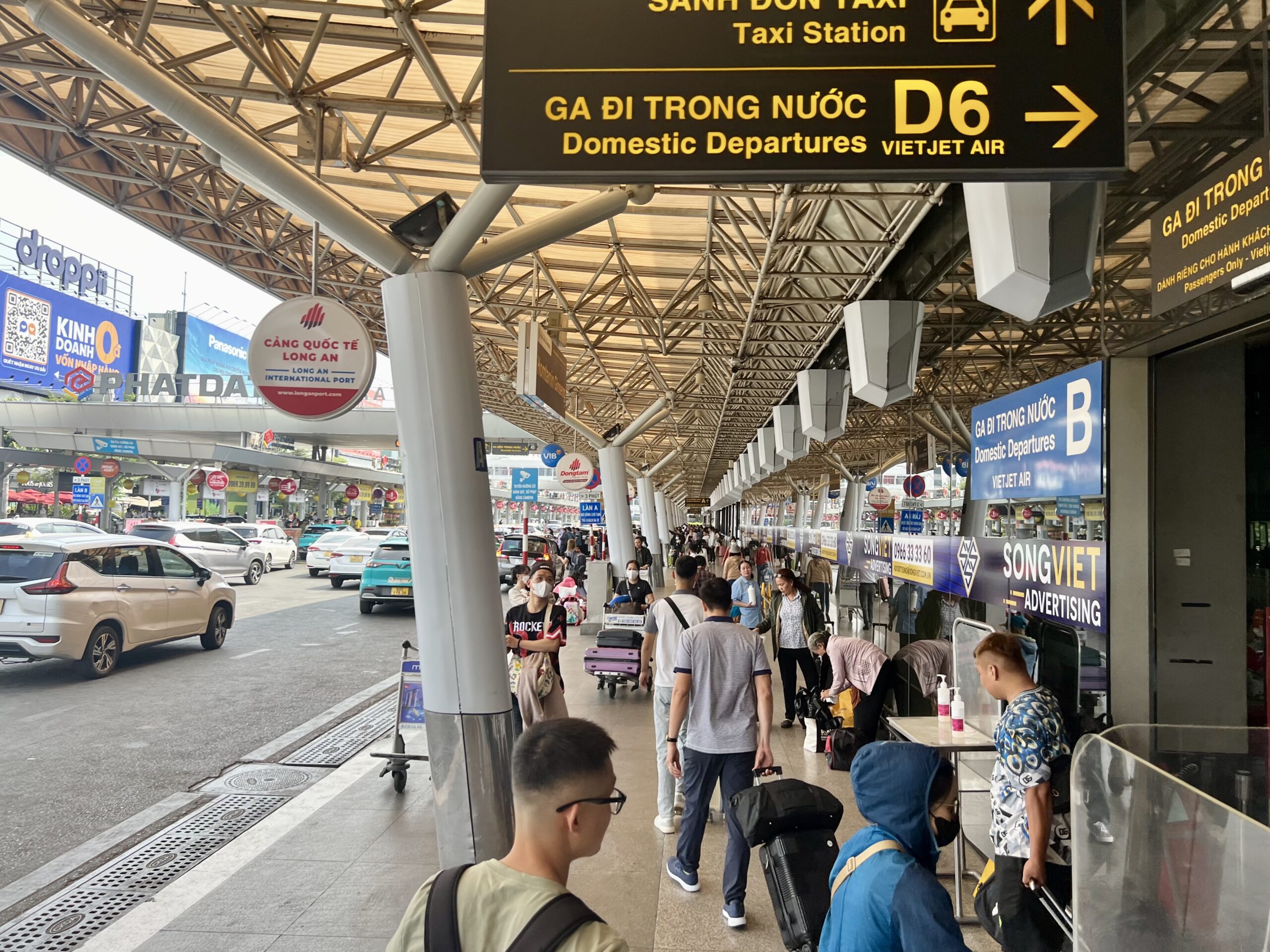
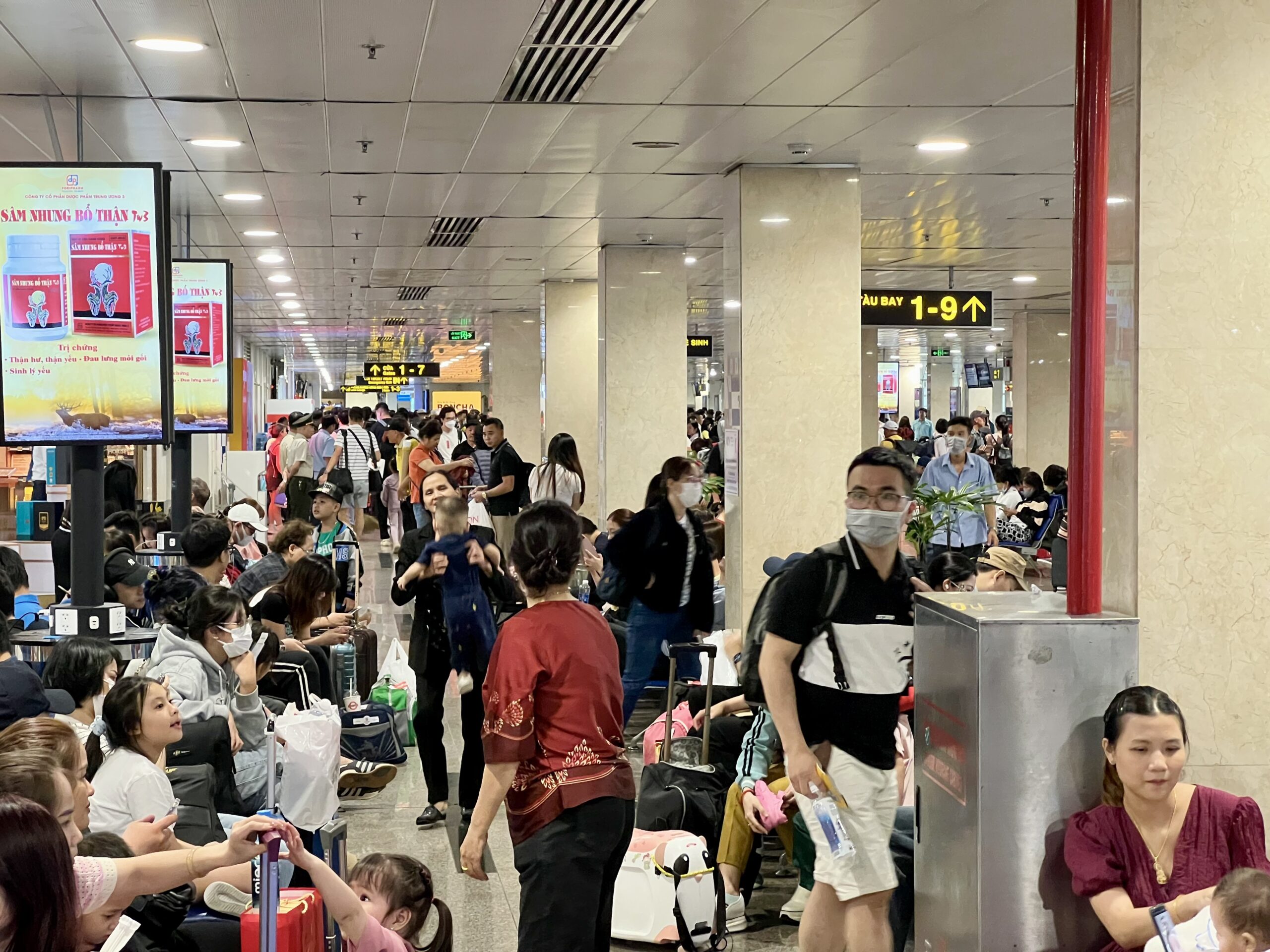
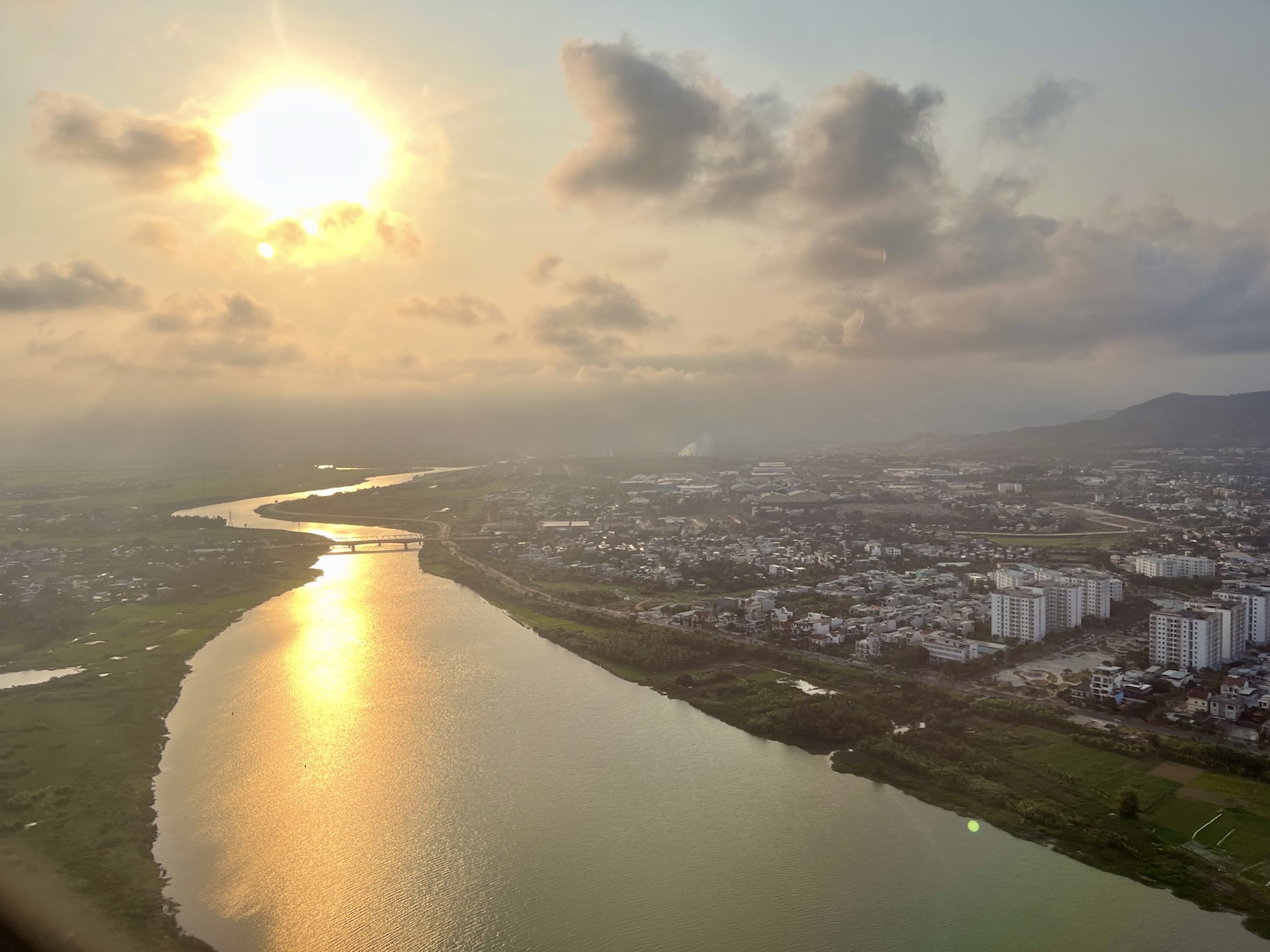
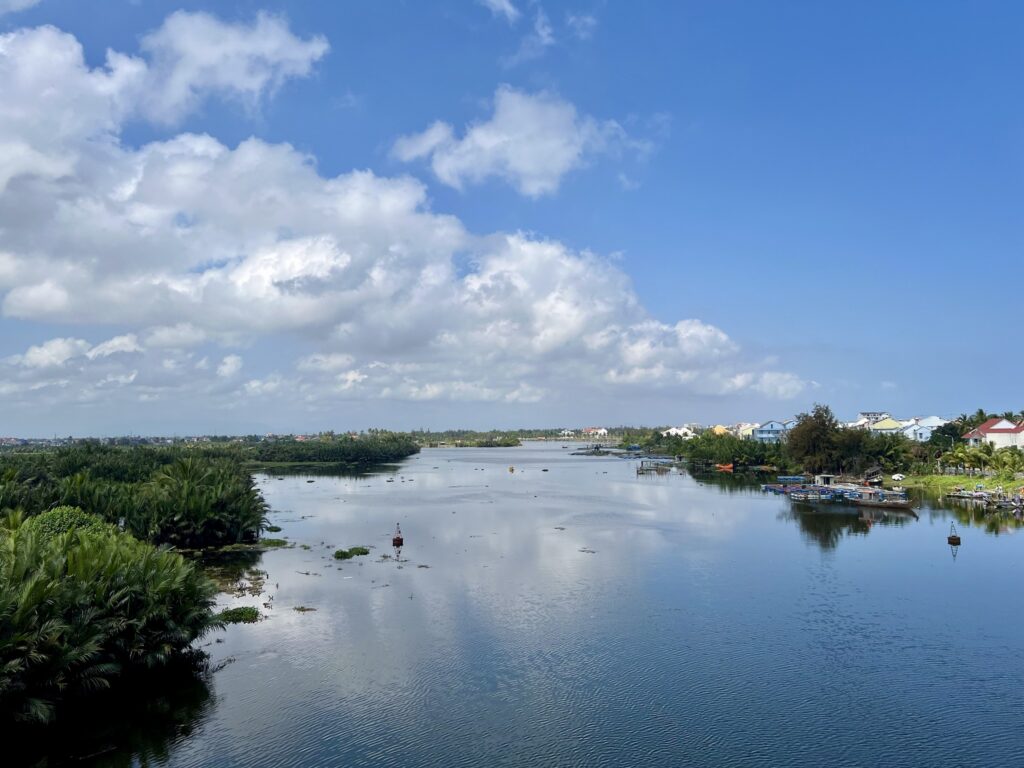
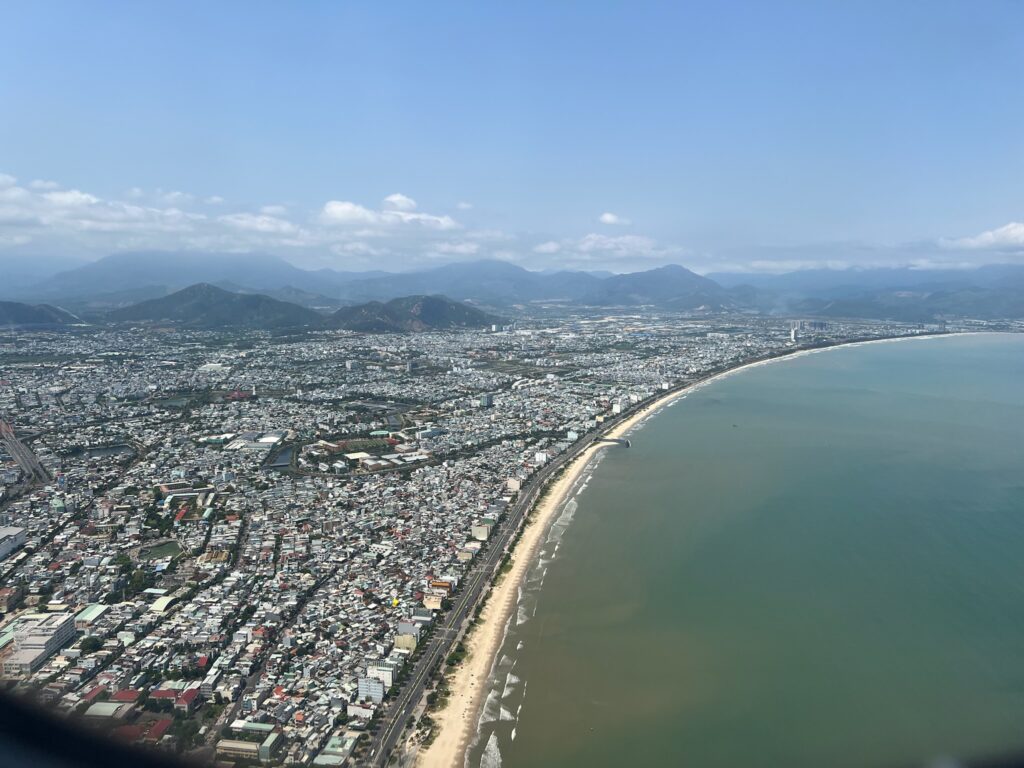
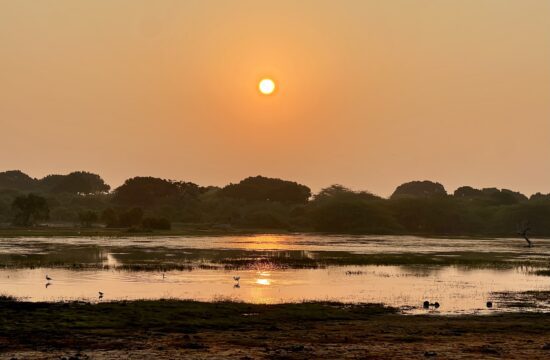
Heading to Hoi An, we flew from Bangkok to Danang through Ho Chi Min City. The arrival and transfer from international to domestic on Vietnam Airlines was quick and efficient, give or take the walk to the domestic terminal.Inside the domestic terminal it was a bit crowded. With the Tet holiday imminent, airlines were adding domestic flights to handle the travel demand. More flights. Same waiting area. The short one-hour flight from Saigon to Danang was easy, and unlike last year, there was still daylight when we landed. This trip we’d spend two months here to see how much we like it for longer stays. This view is up the Cam Le river, part of Danang’s Han River system.
Boutique Hoi An Resort
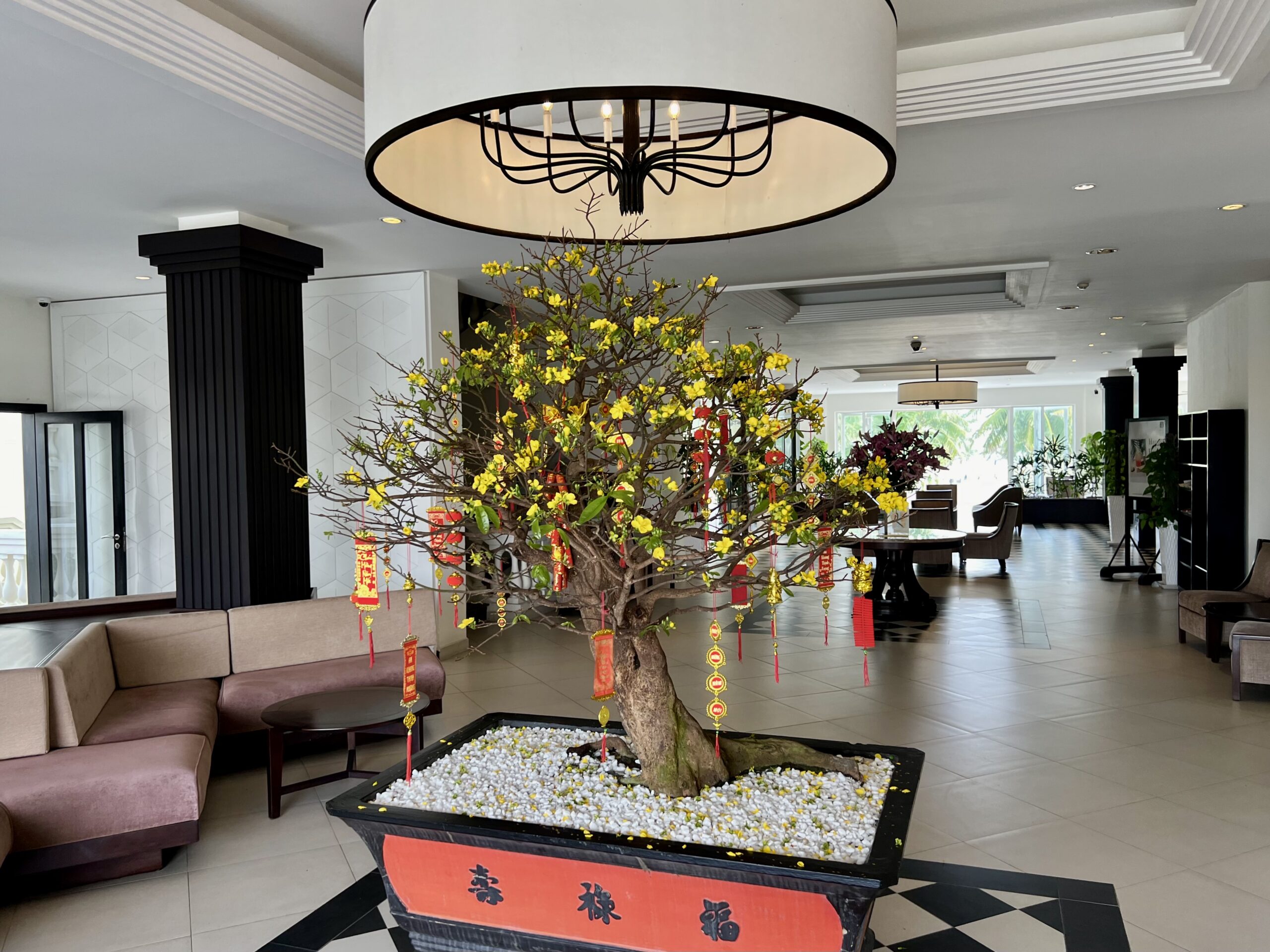
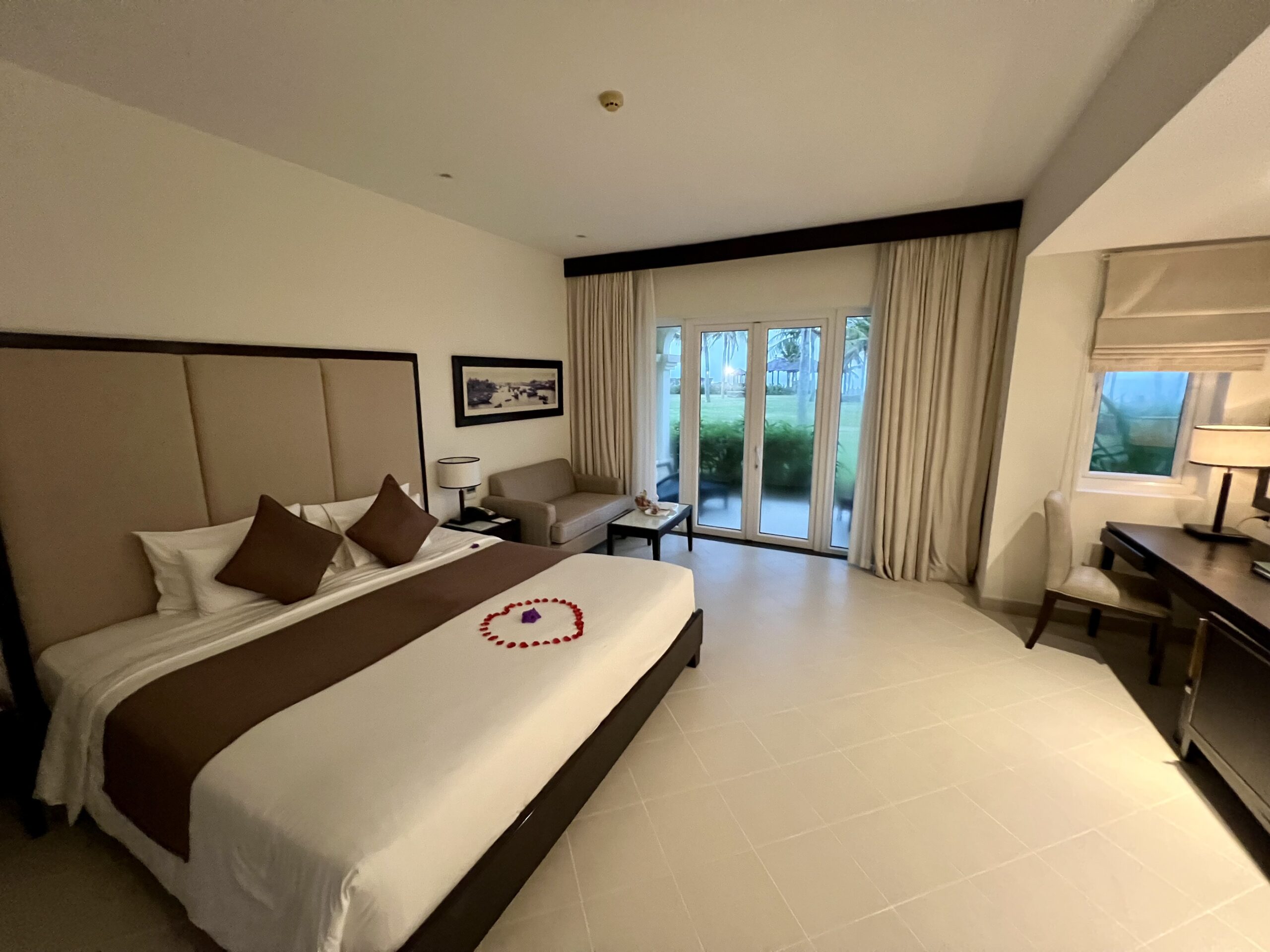
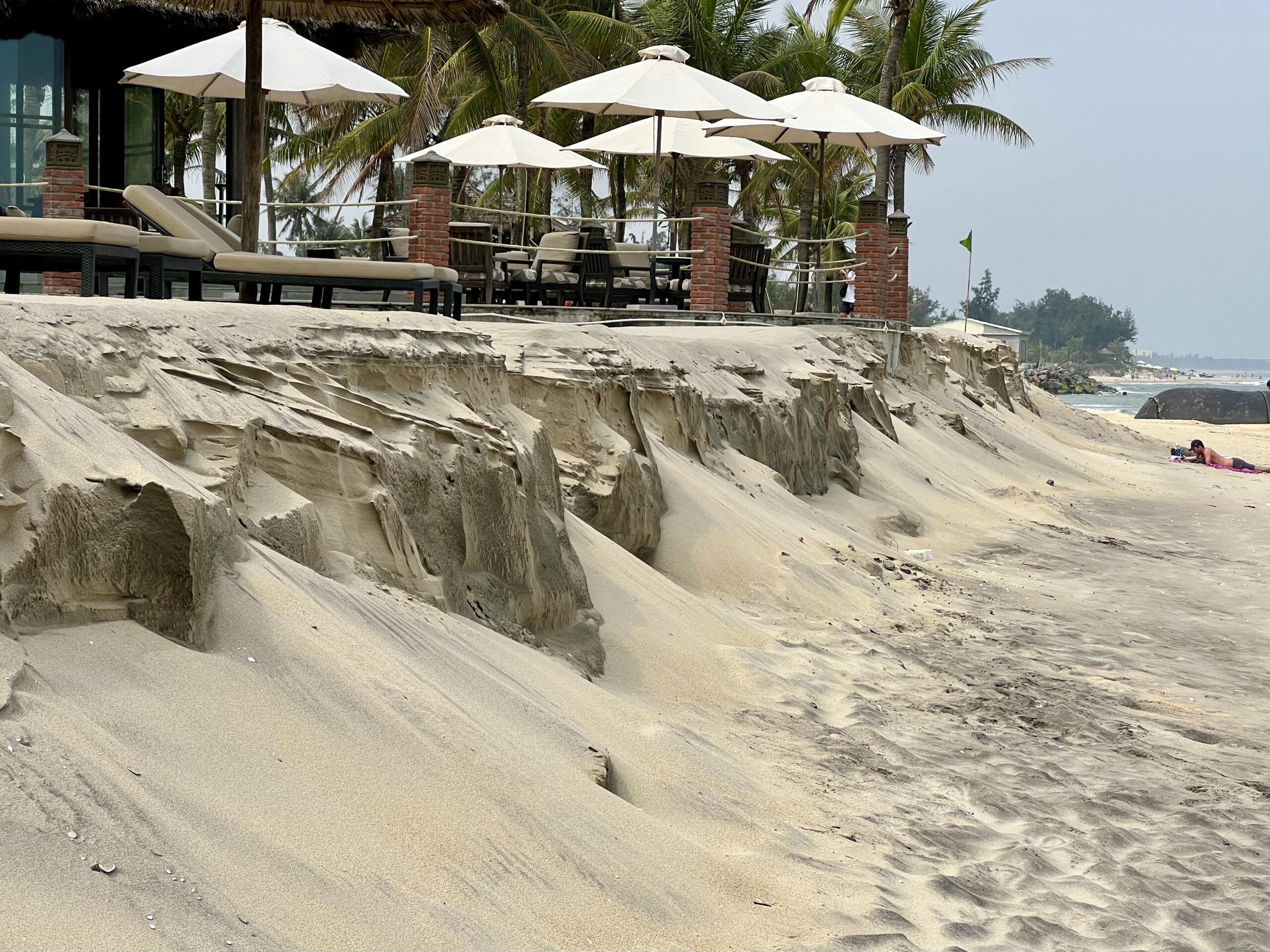
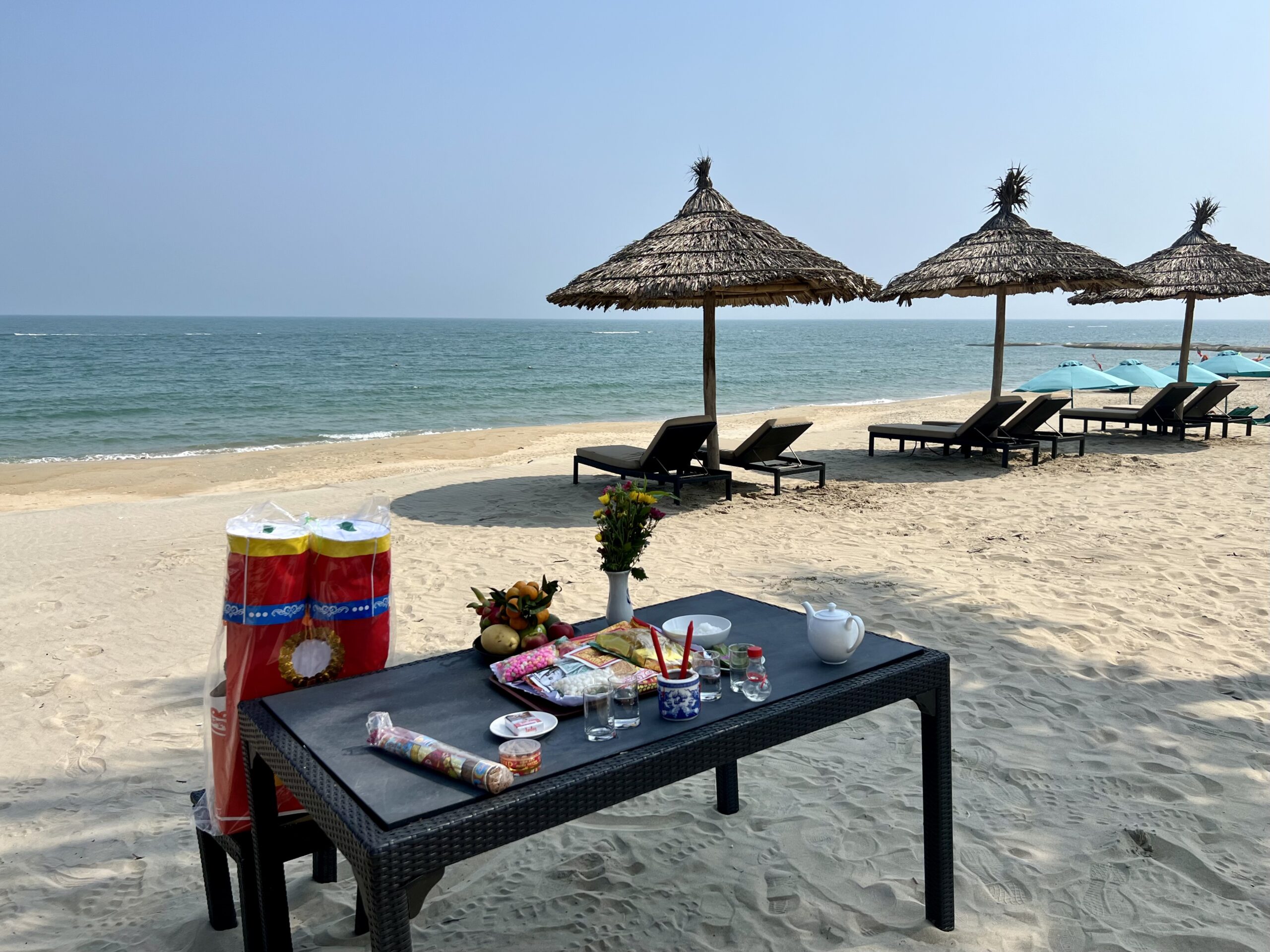
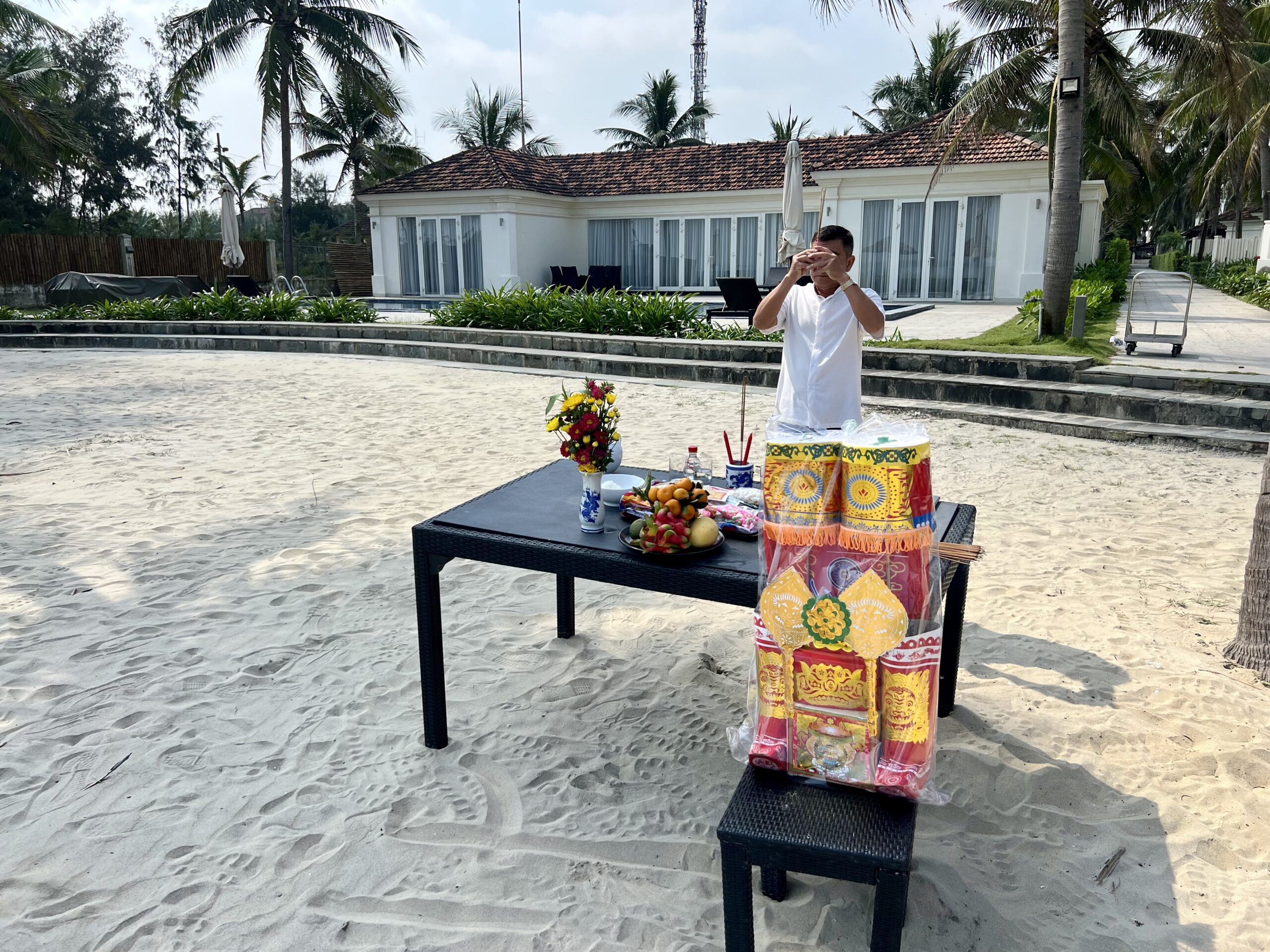
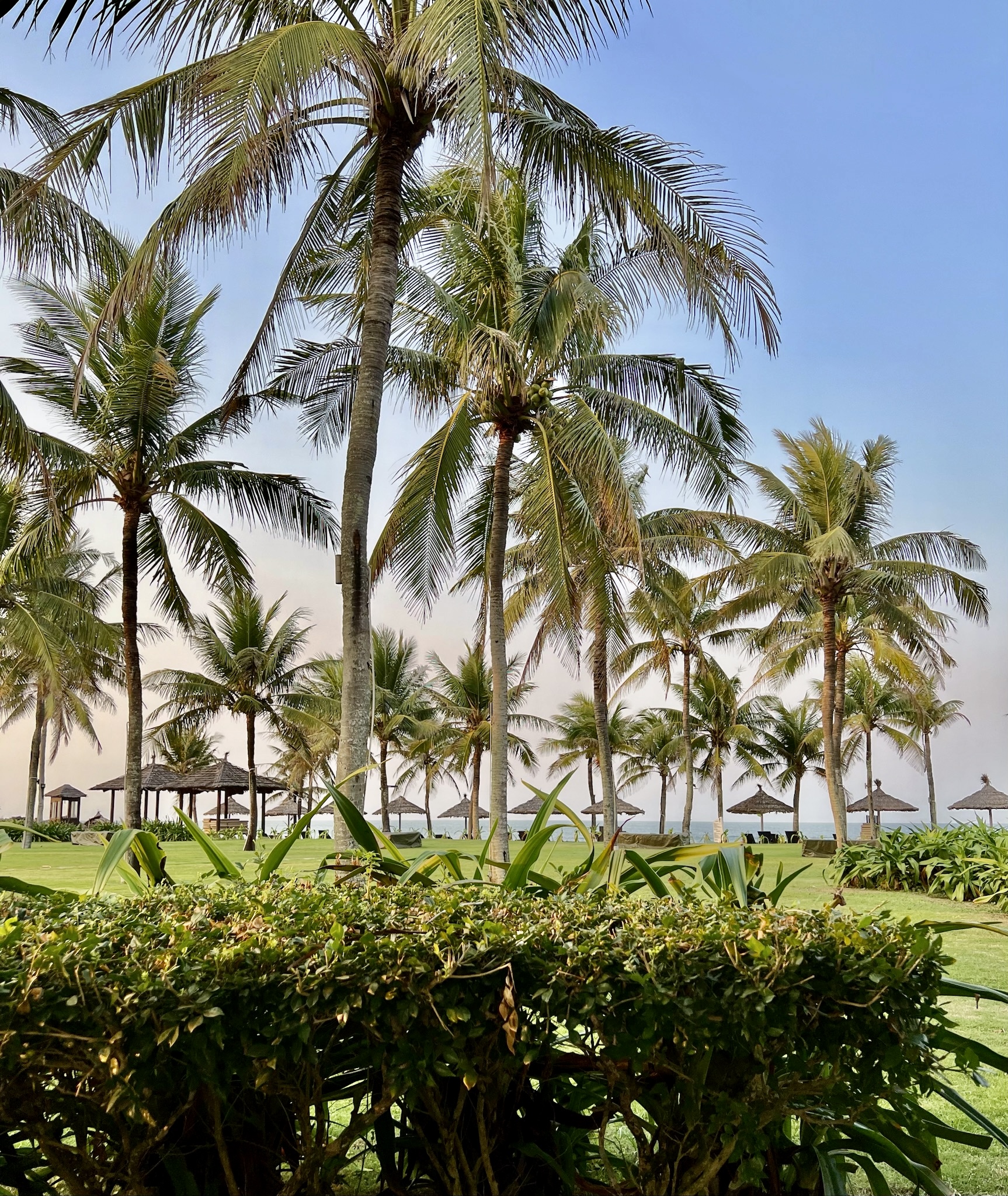
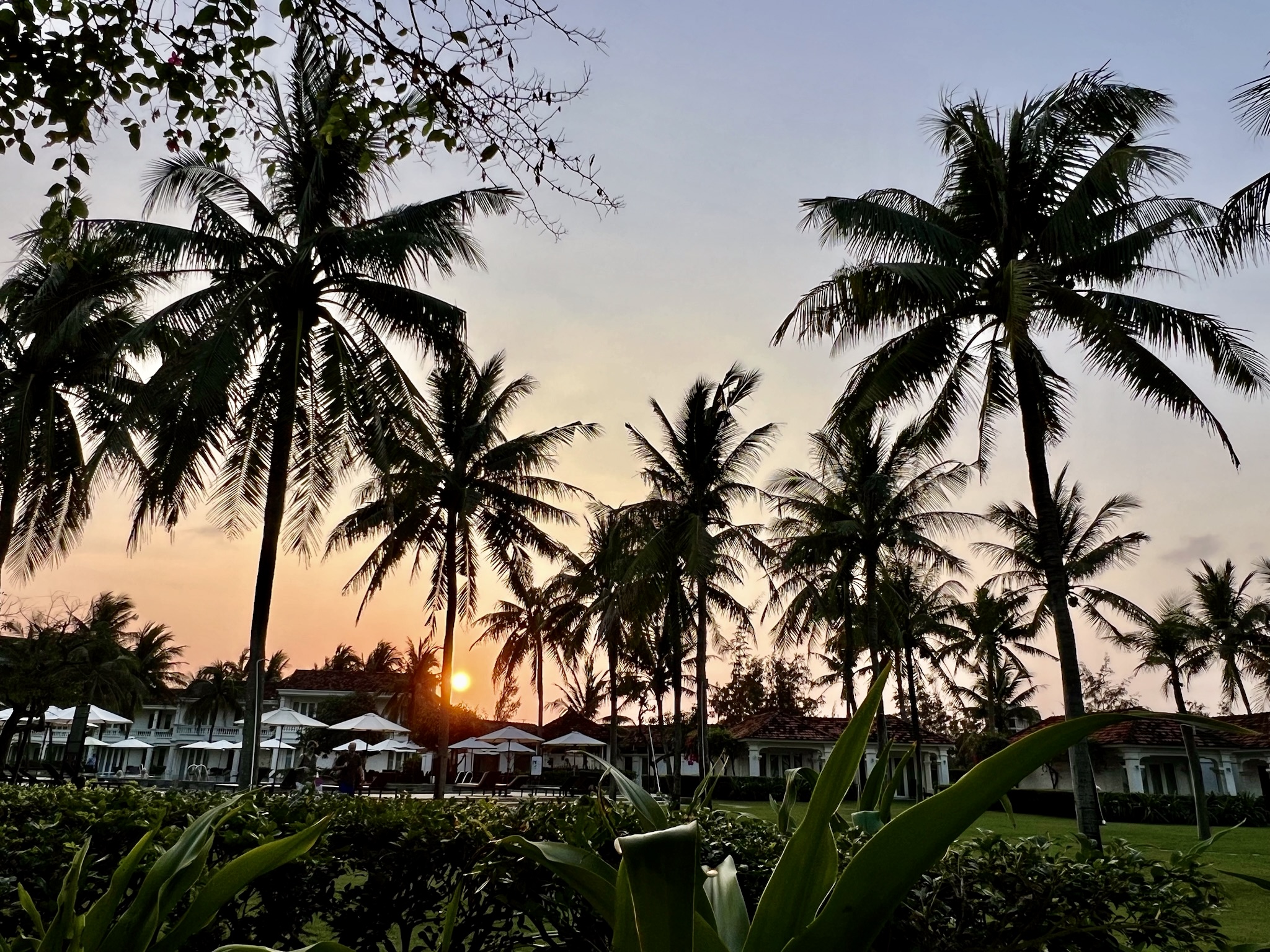
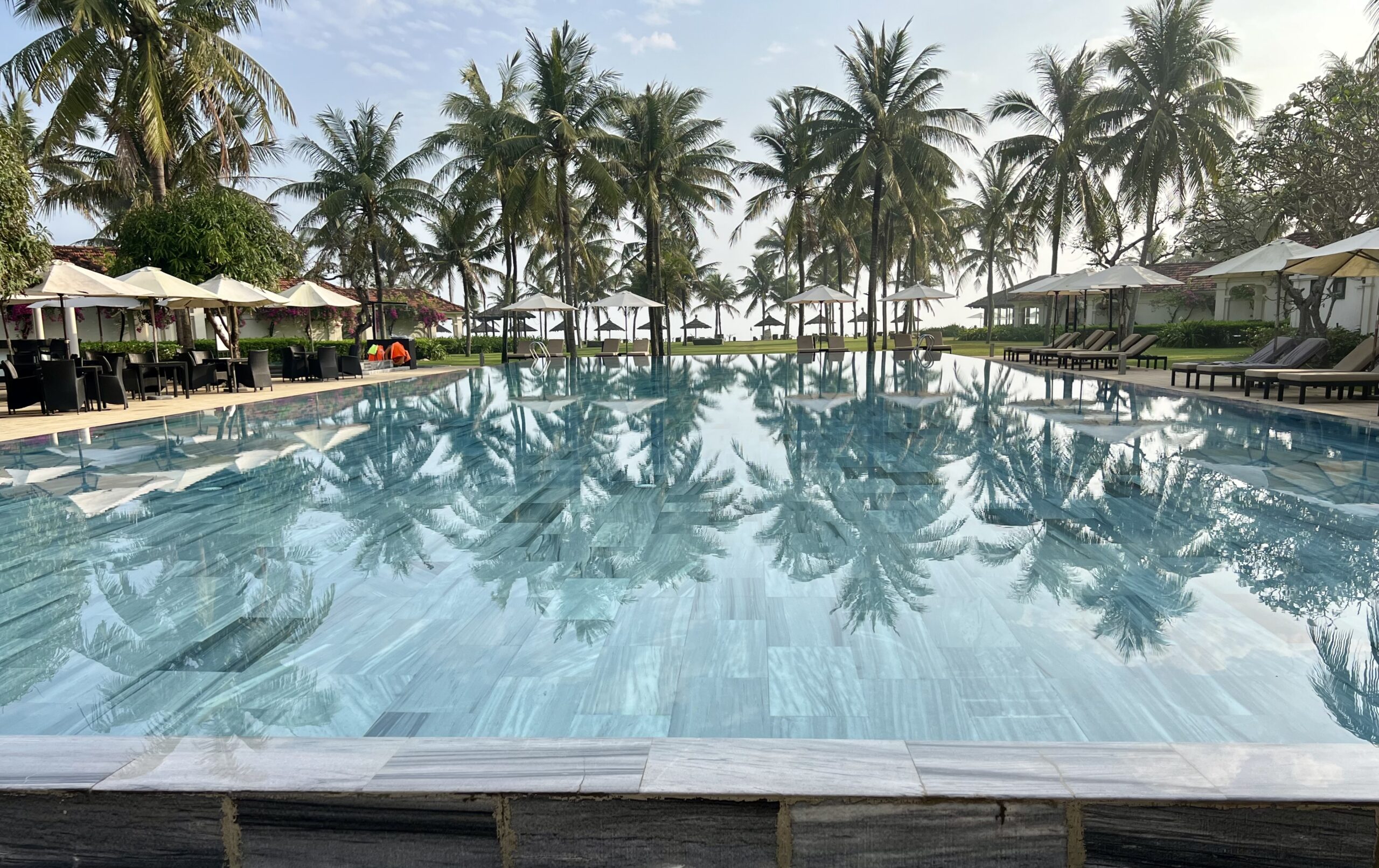
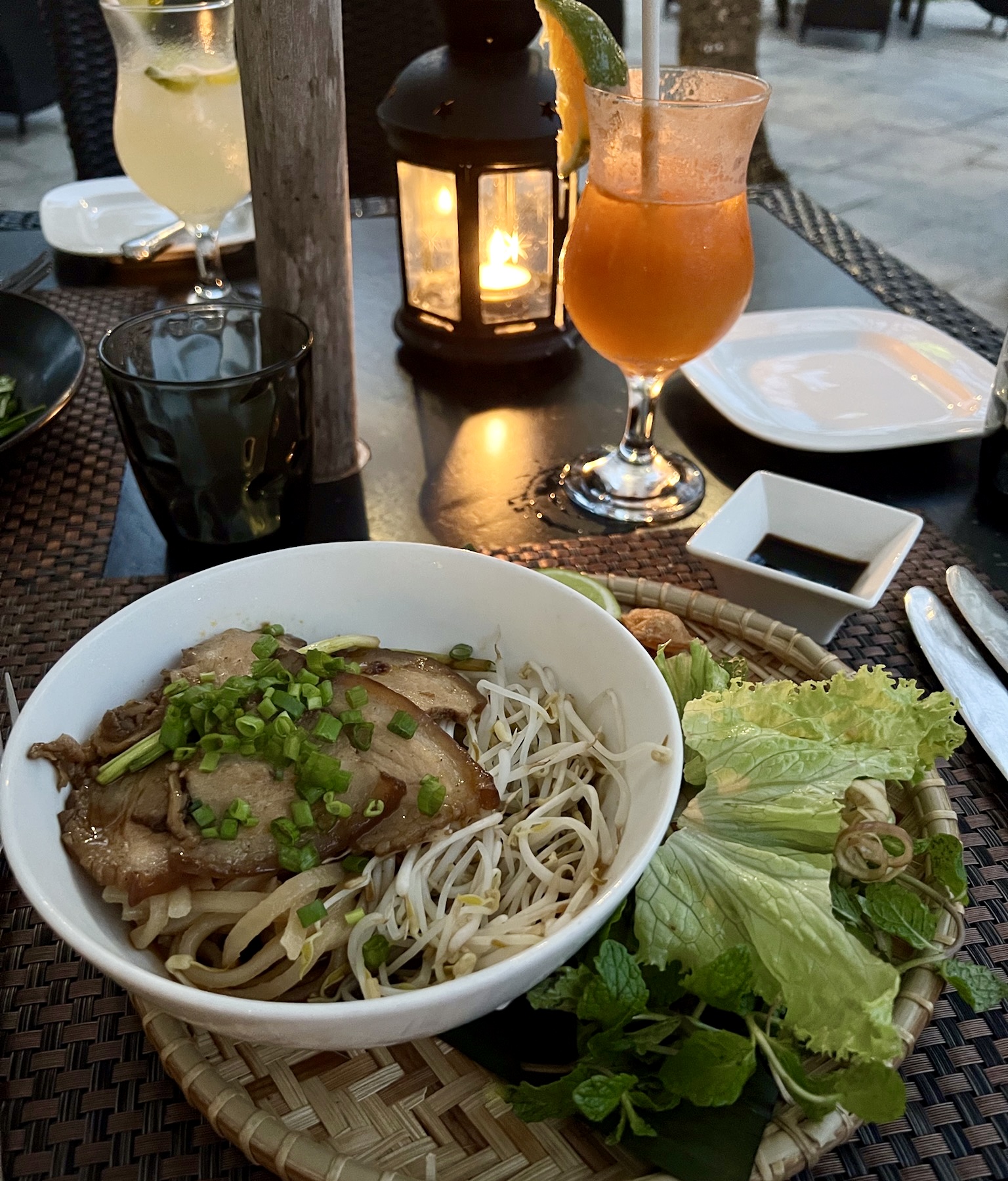
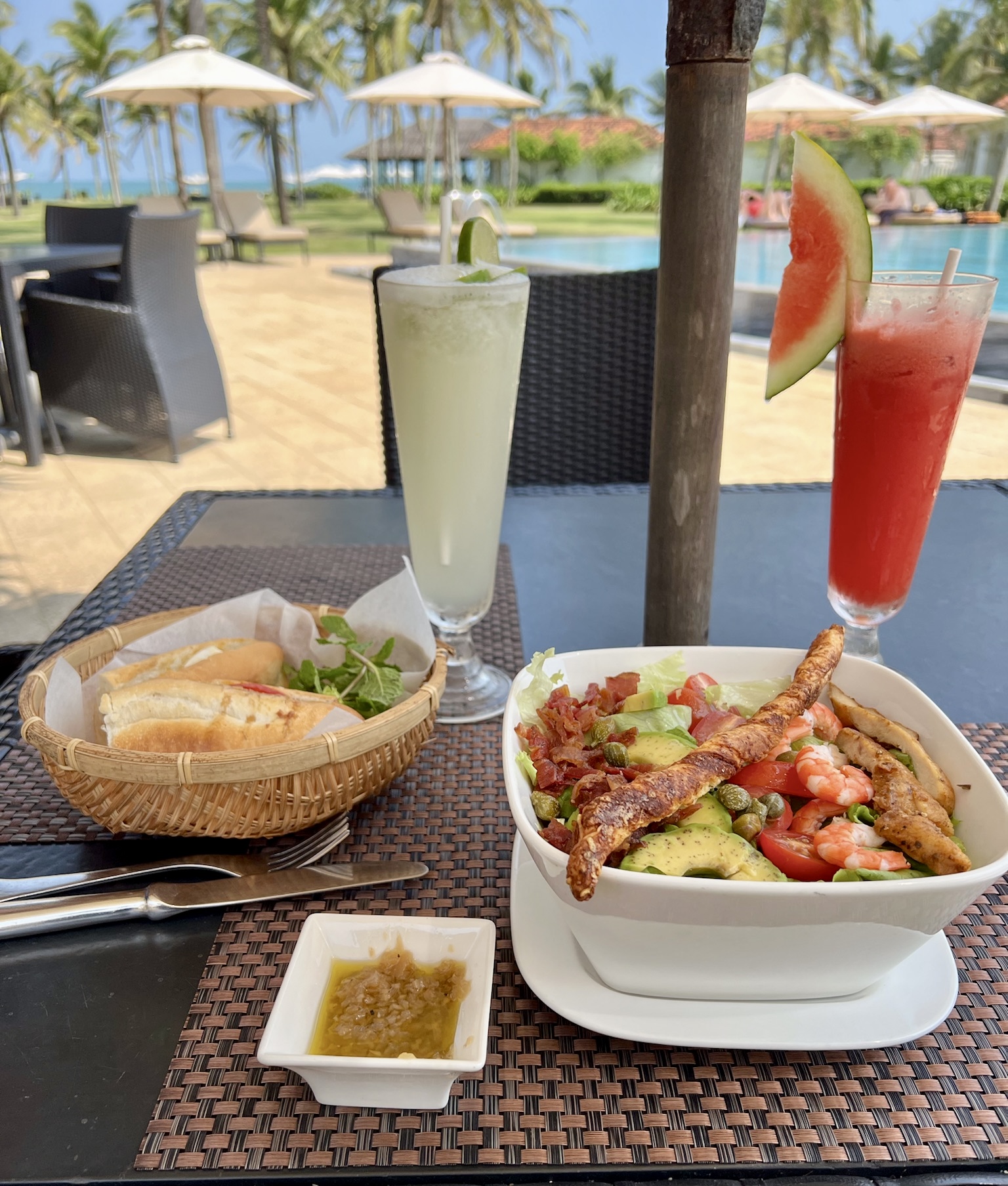
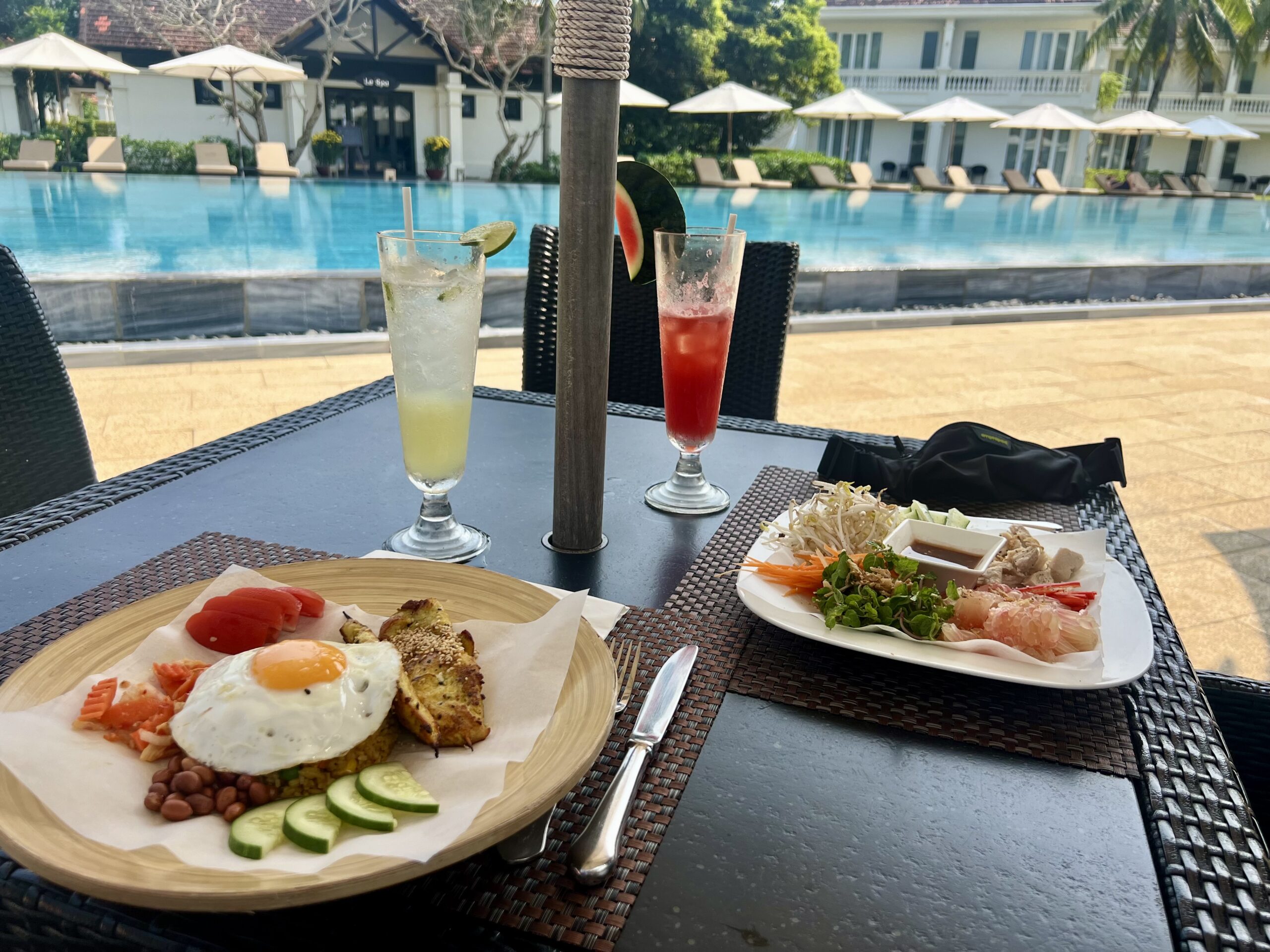
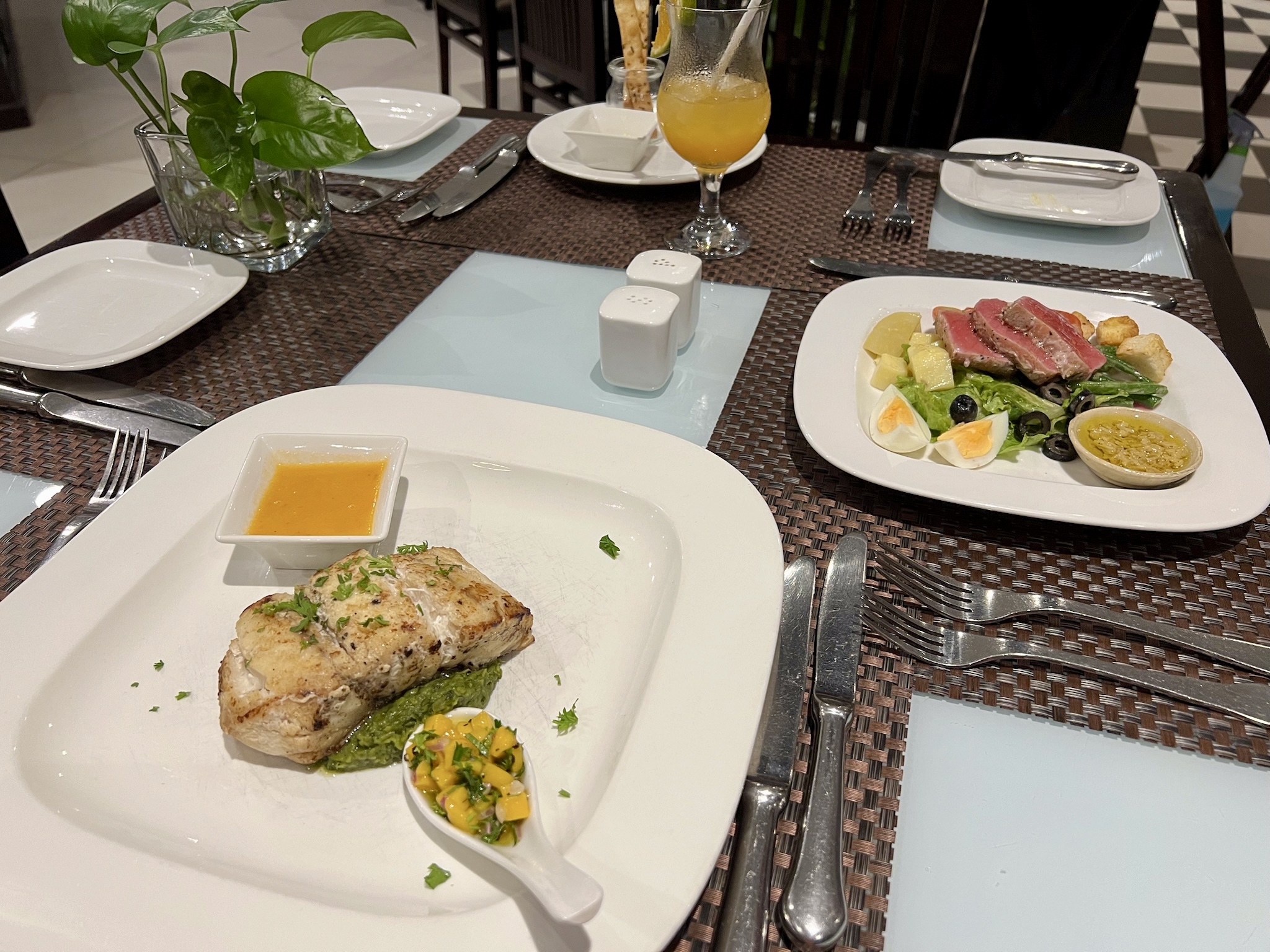
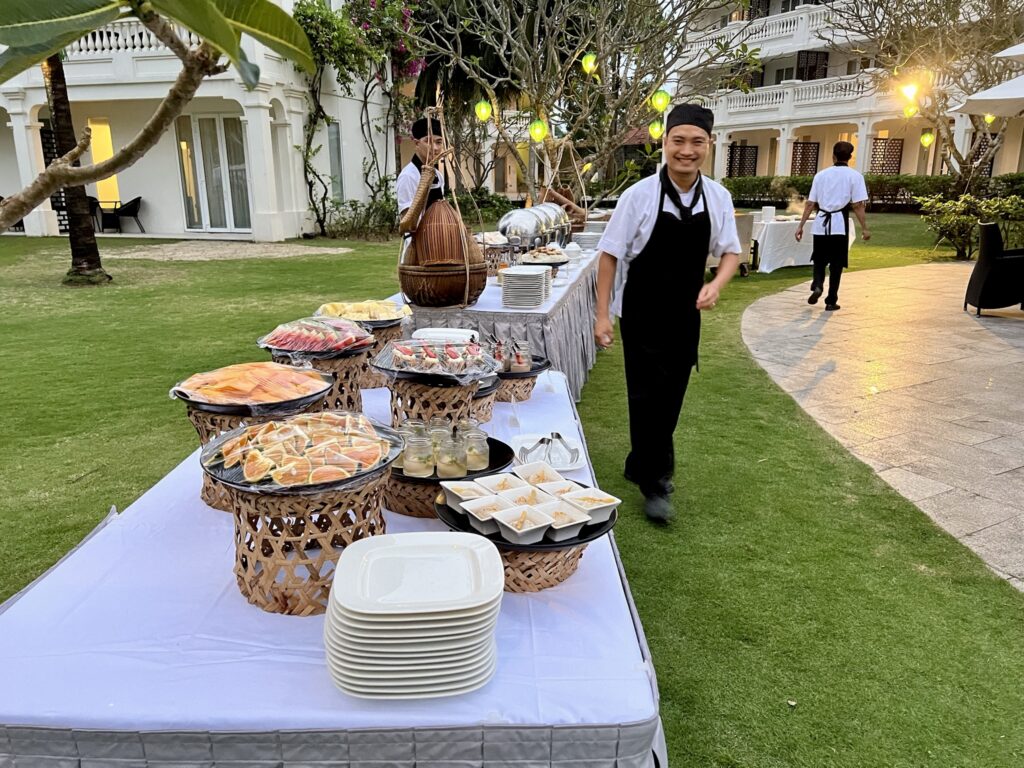
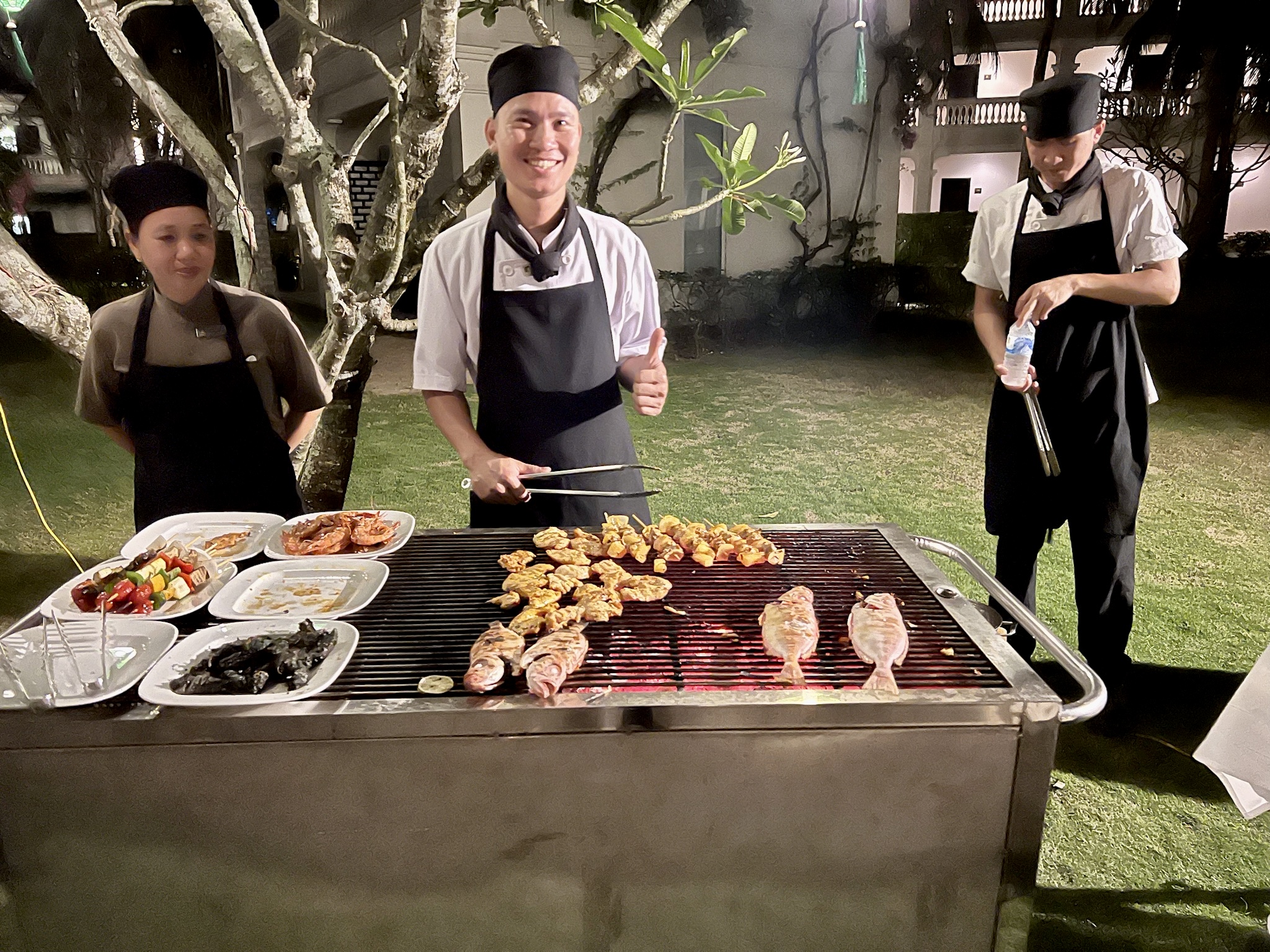
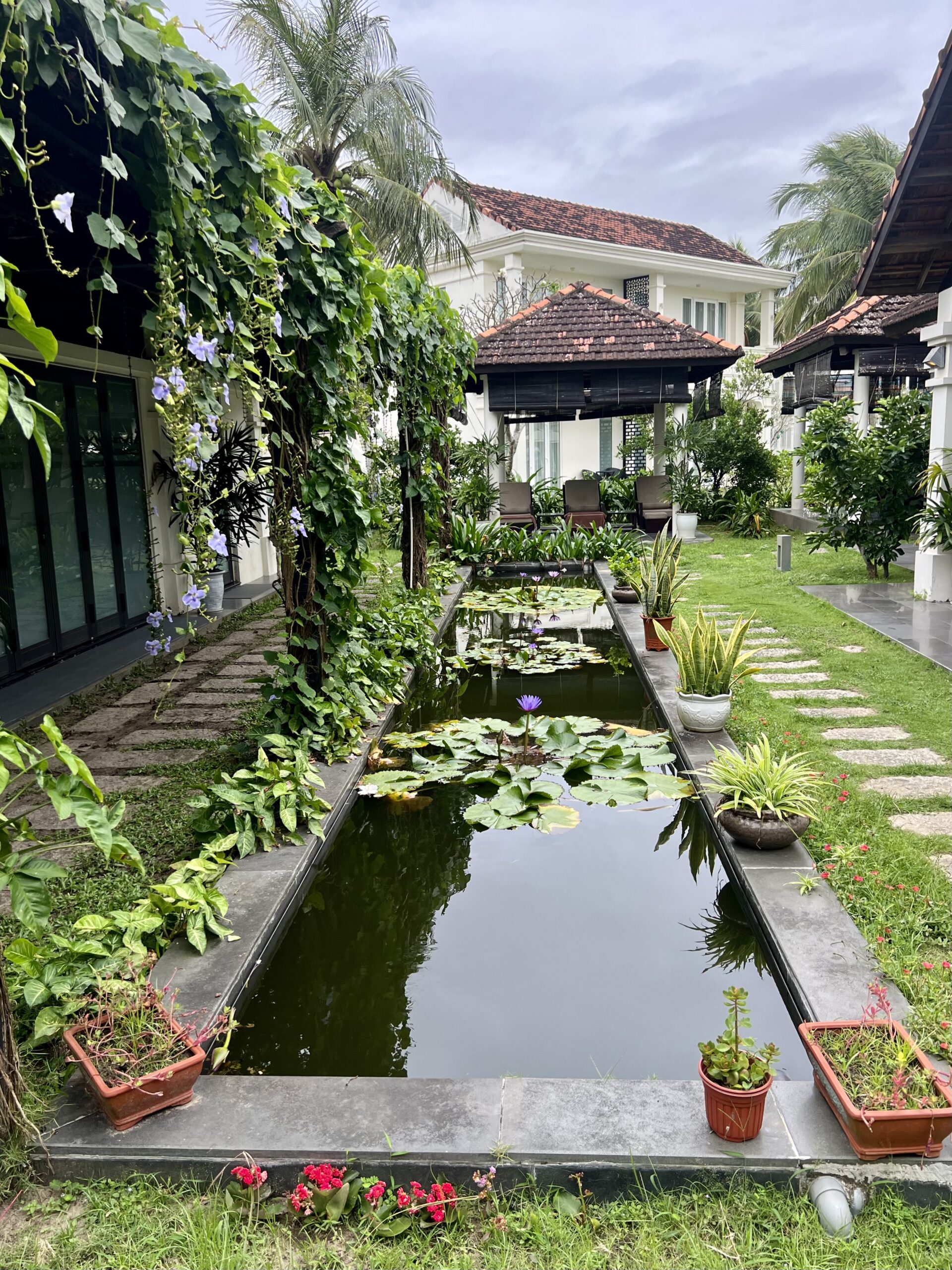
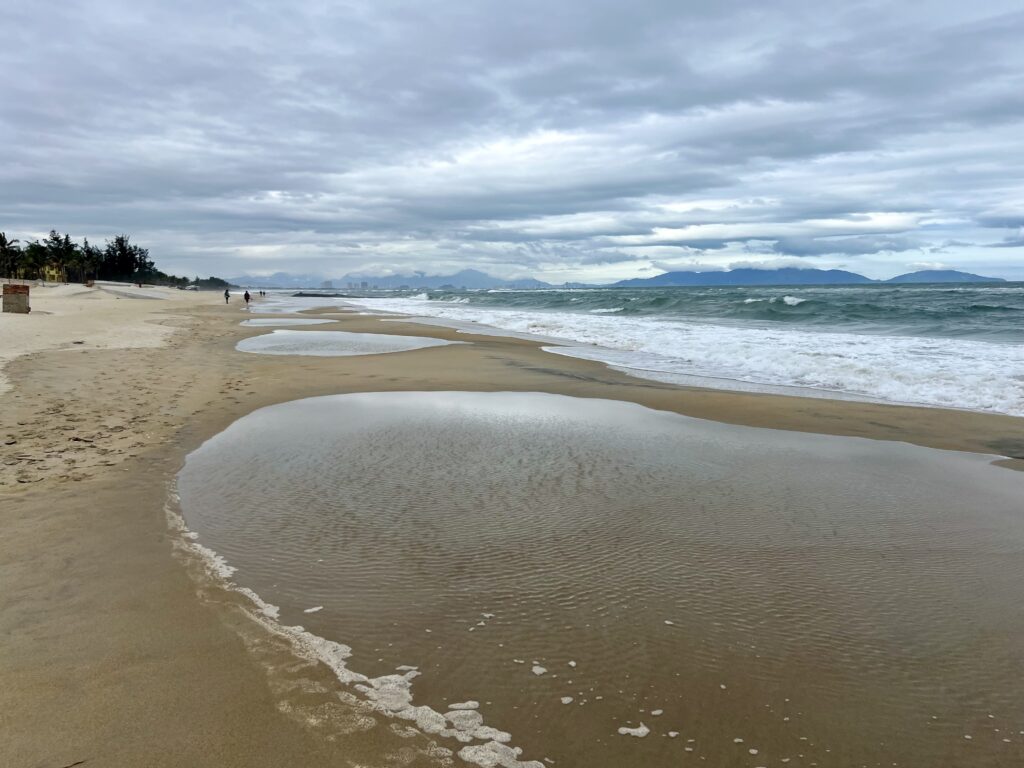
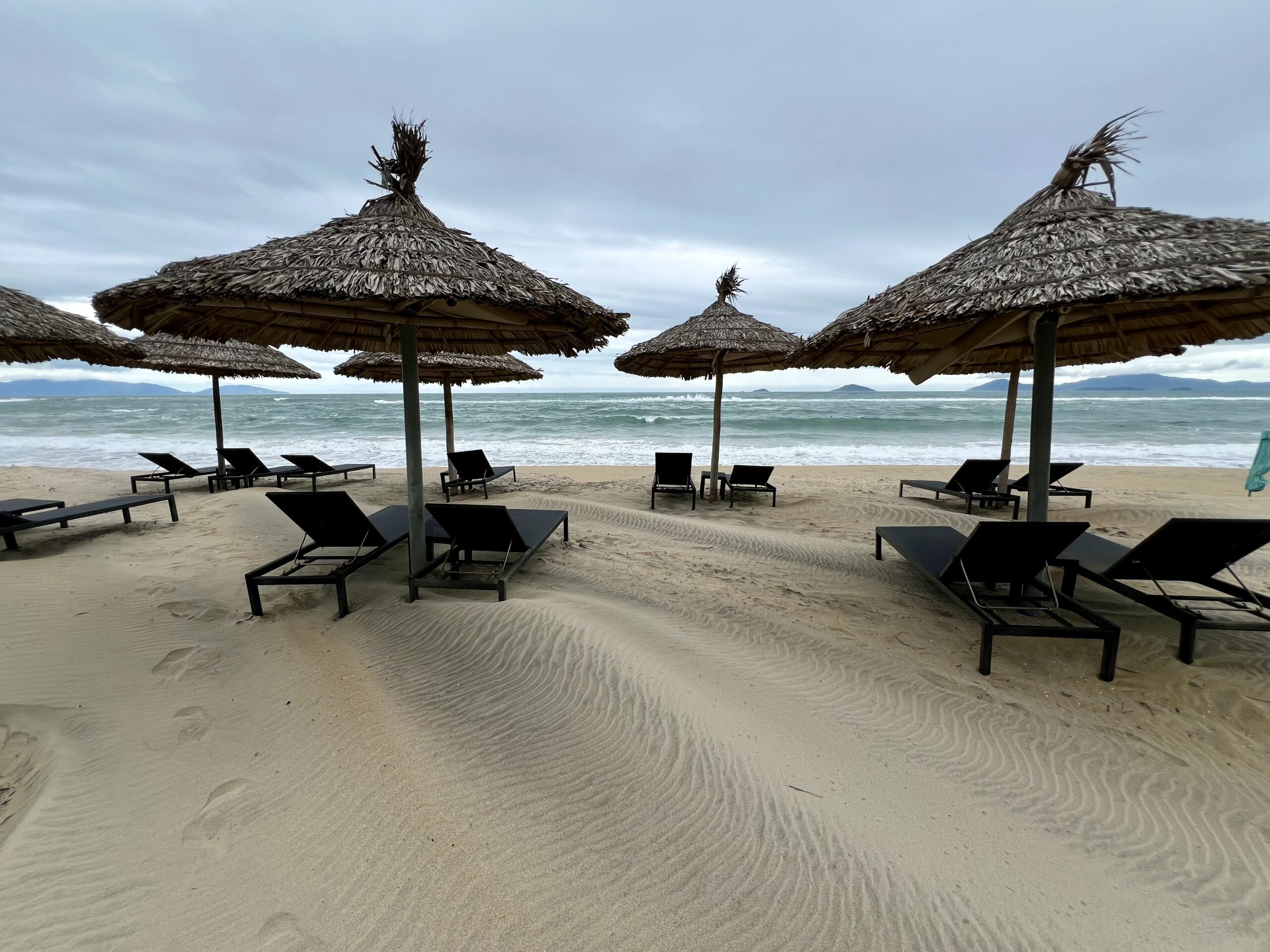
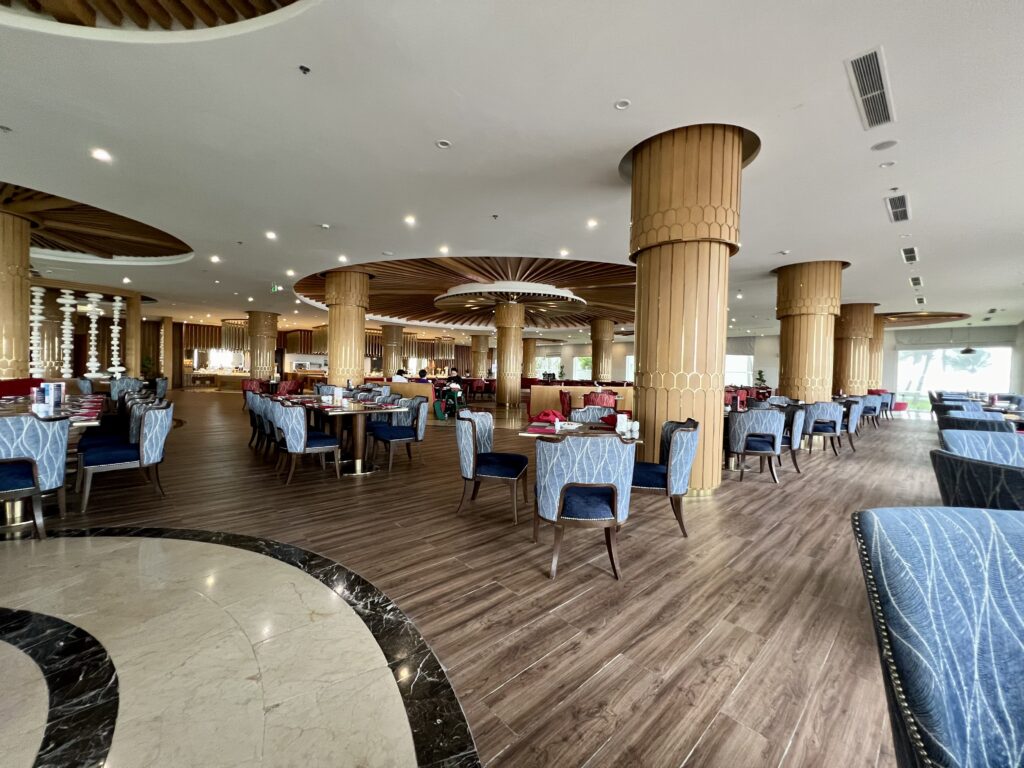
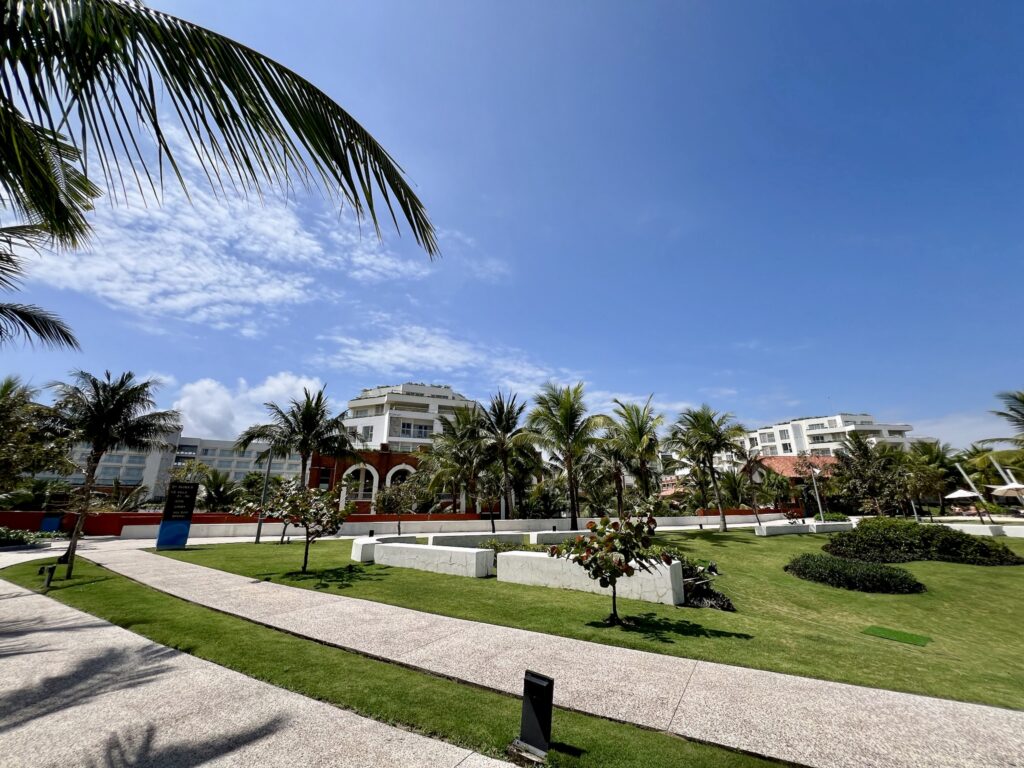
A 40 minute drive took us south to Cam An Beach and the Boutique Hoi An Resort, which was getting ready for Tet. We recognized many of the staff from last year and many remembered us. They gave us the exact same room. Little had changed …Except at the beach. A couple of weeks earlier, a single storm had removed tons of sand. Over the span of our three visits here, we’ve seen this happen up and down the long beach. They had removed their thatched umbrellas for the winter. We asked to see if we could get a portable umbrella for shade, and they put four thatched ones back up again. Along with an offering to the sea. This is Kahn, the chief engineer, burning incense at his offerings table. He said the sea has being giving them trouble. Maybe this will fix that. Later on, after they felt the sea was sufficiently appeased, and they were certain the January storms were behind them, they put up the rest of the beach umbrellas. This was the view of them from our room. Looking west from our patio, the sun sets over the hotel.One view we never tire of is the look over the pool to the sea in the mornings at breakfast. We were happy to be back in Vietnam for the food. The hotel has a new menu with more choices. Their cau lau, a favorite of the photographer, is very good. We spent our first couple of days on the beach with lunch at the hotel. Banh mi and a salad (above) and nasi goreng and pomelo salad (below). Always with fresh juices. Over the course of our stay, we had several dinners in the hotel’s restaurant, usually when we wanted something simple, like the grilled fish and nicoise-like salad in this shot. As we got into March, the hotel got busier. They added a BBQ and Noodles dinner buffet on Thursdays and Saturdays. Their first such buffet since Covid. We went twice. They grilled chicken, pork, and seafood. The whole fish were very fresh. The sign said they were sardines. They were not sardines. They were menpache, or soldier fish, popular but no longer common in Hawai’i. Fish are often given random names here. We figure Vietnamese chefs only know the western names of a couple of fish, and how much can tourists know about fish?This is the hotel’s spa garden. Once we settled in, the photographer got to know this area quite well.
Neighborhood Restaurants
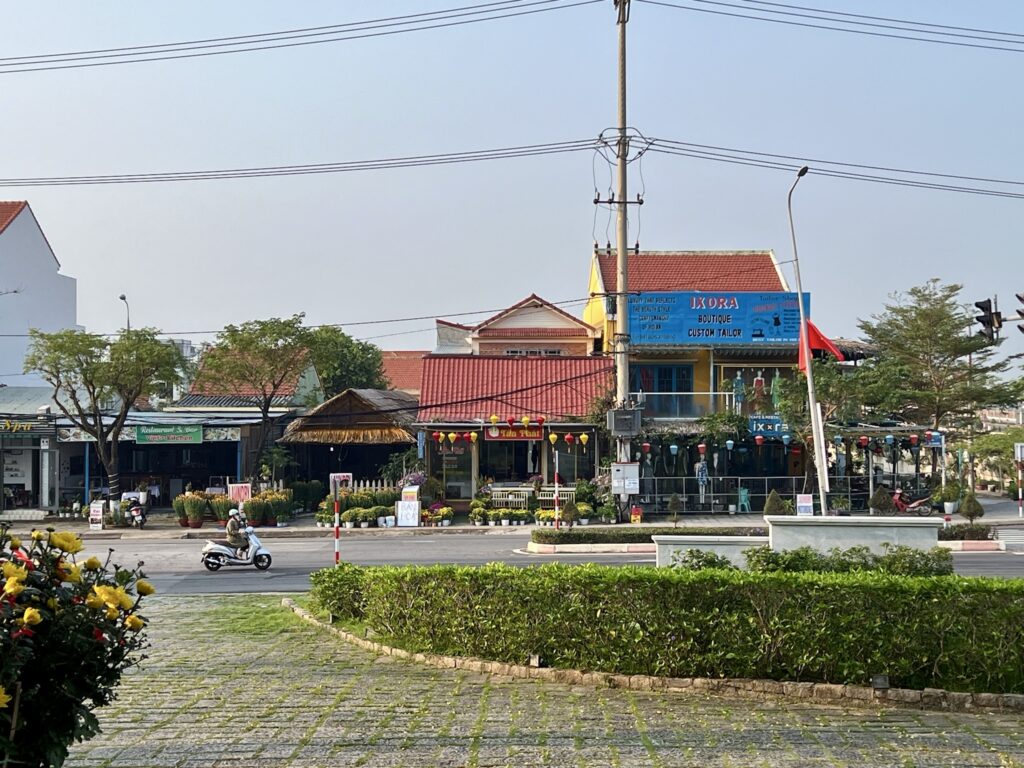
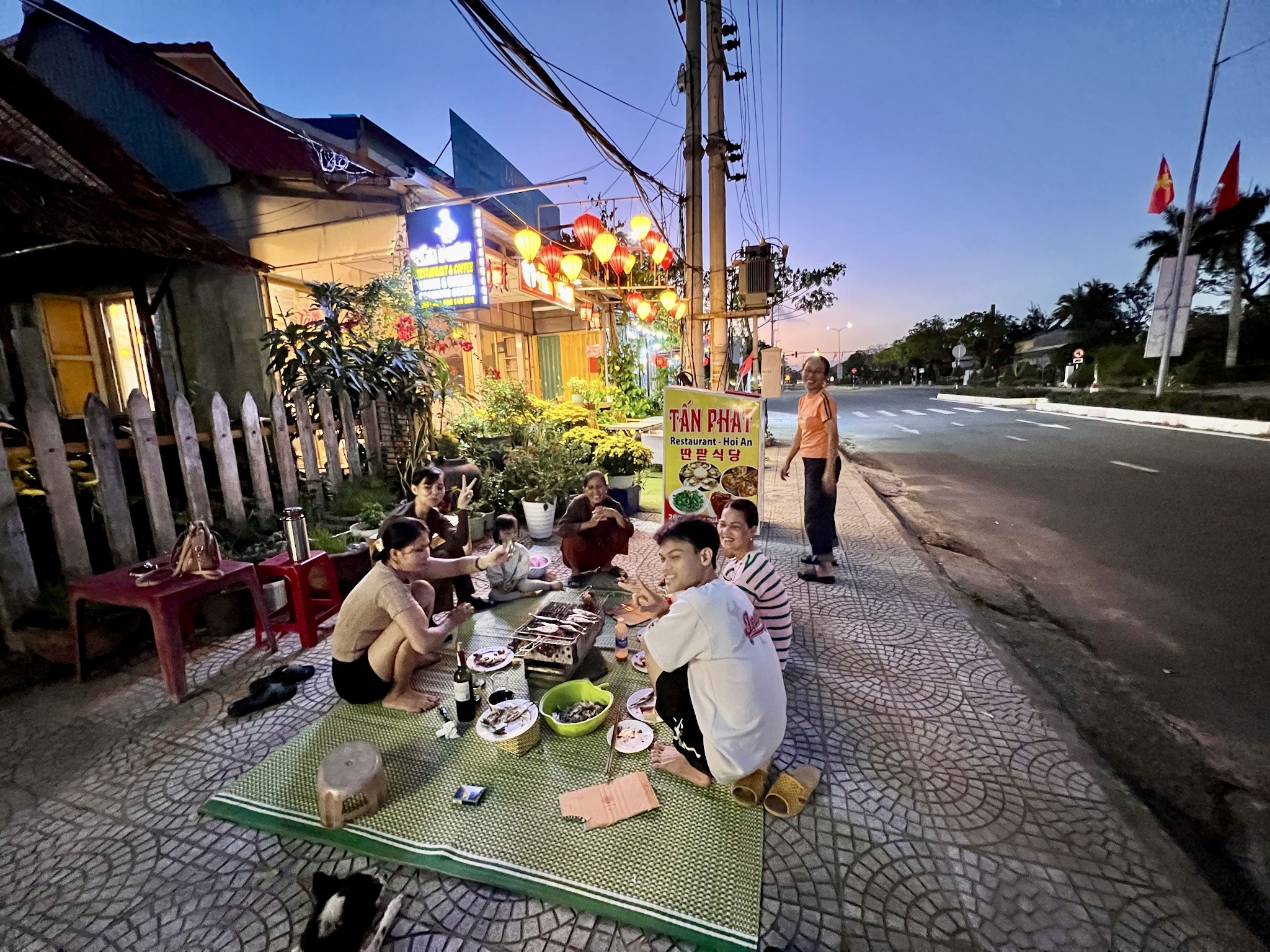
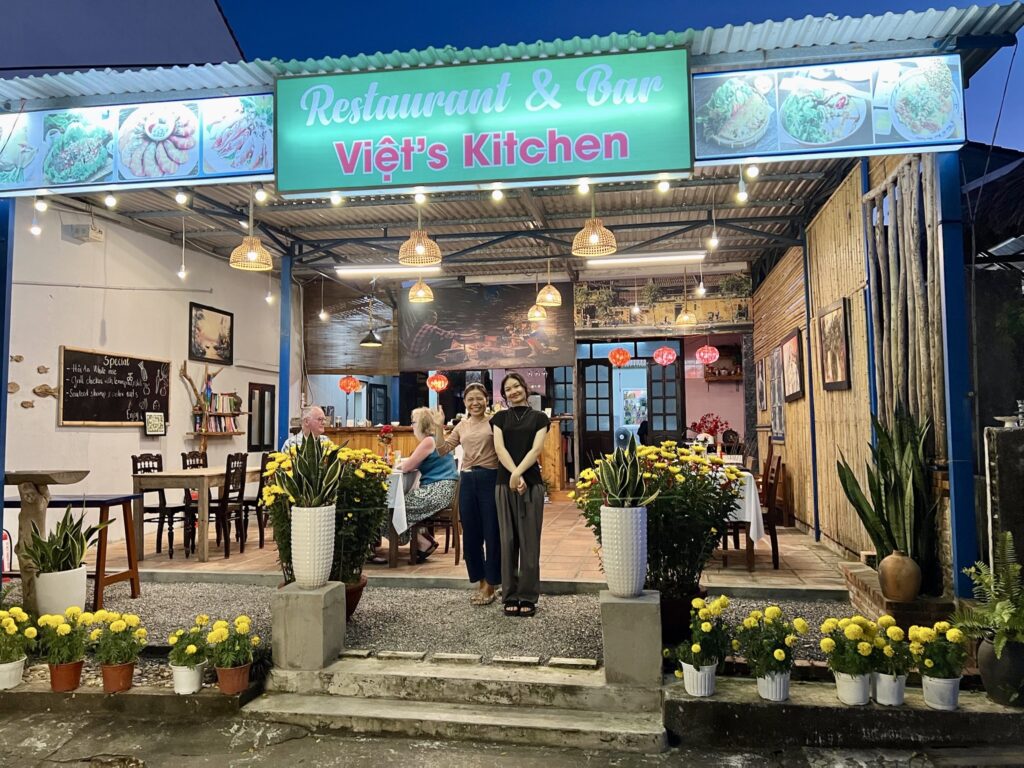
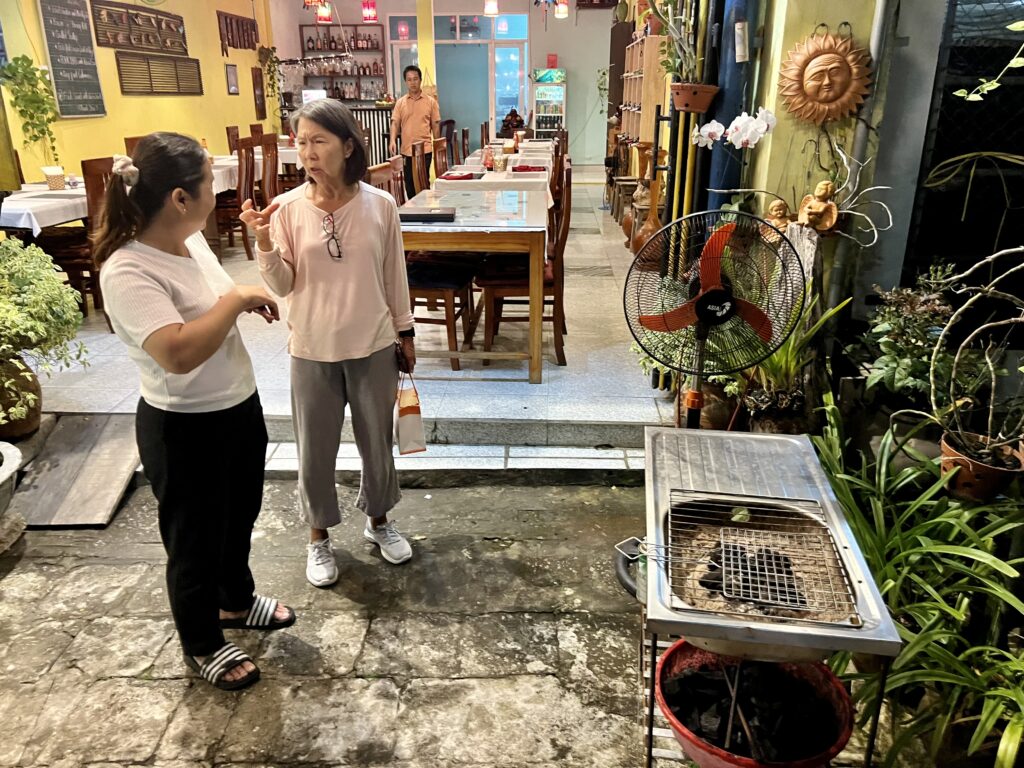
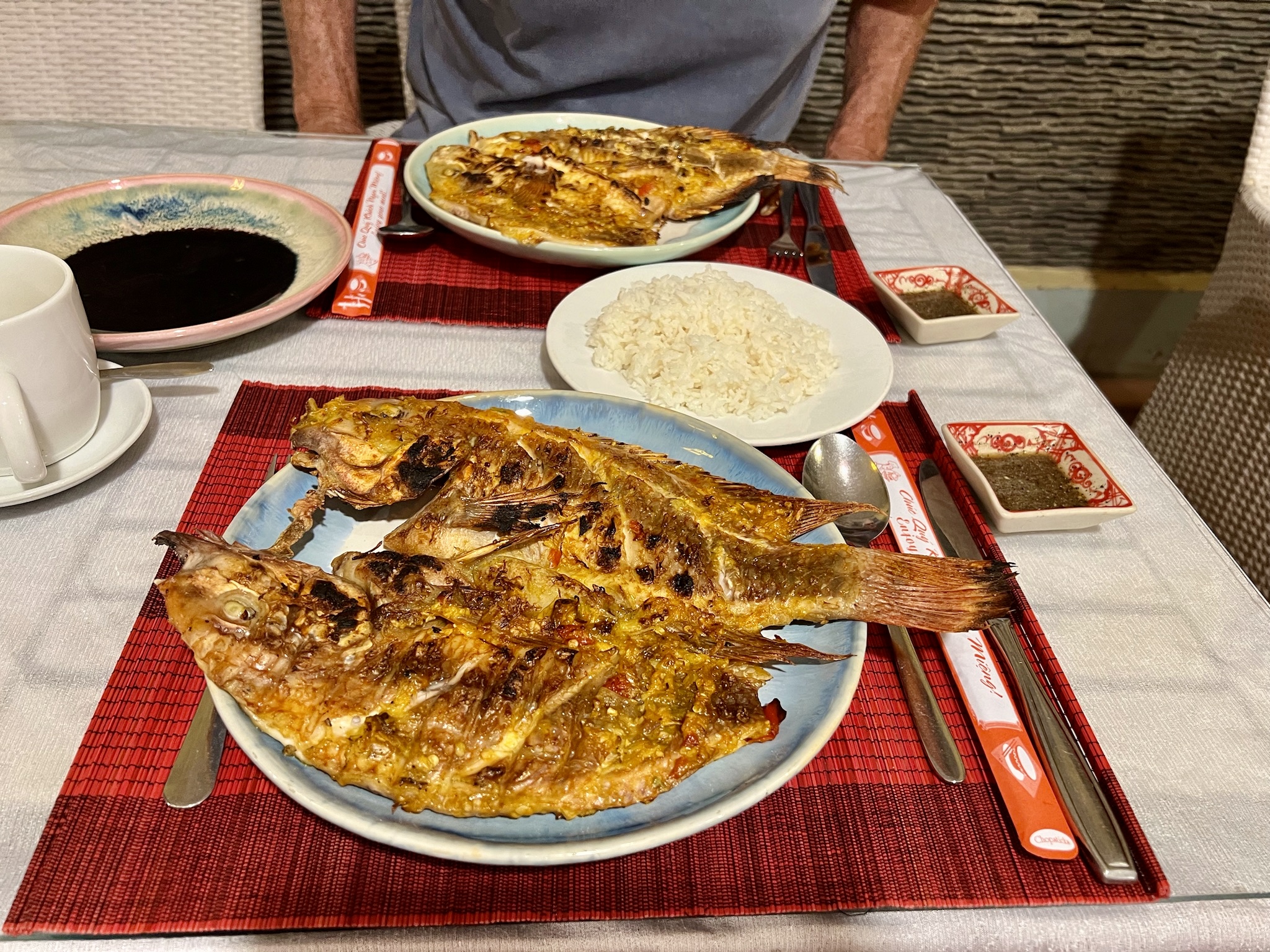
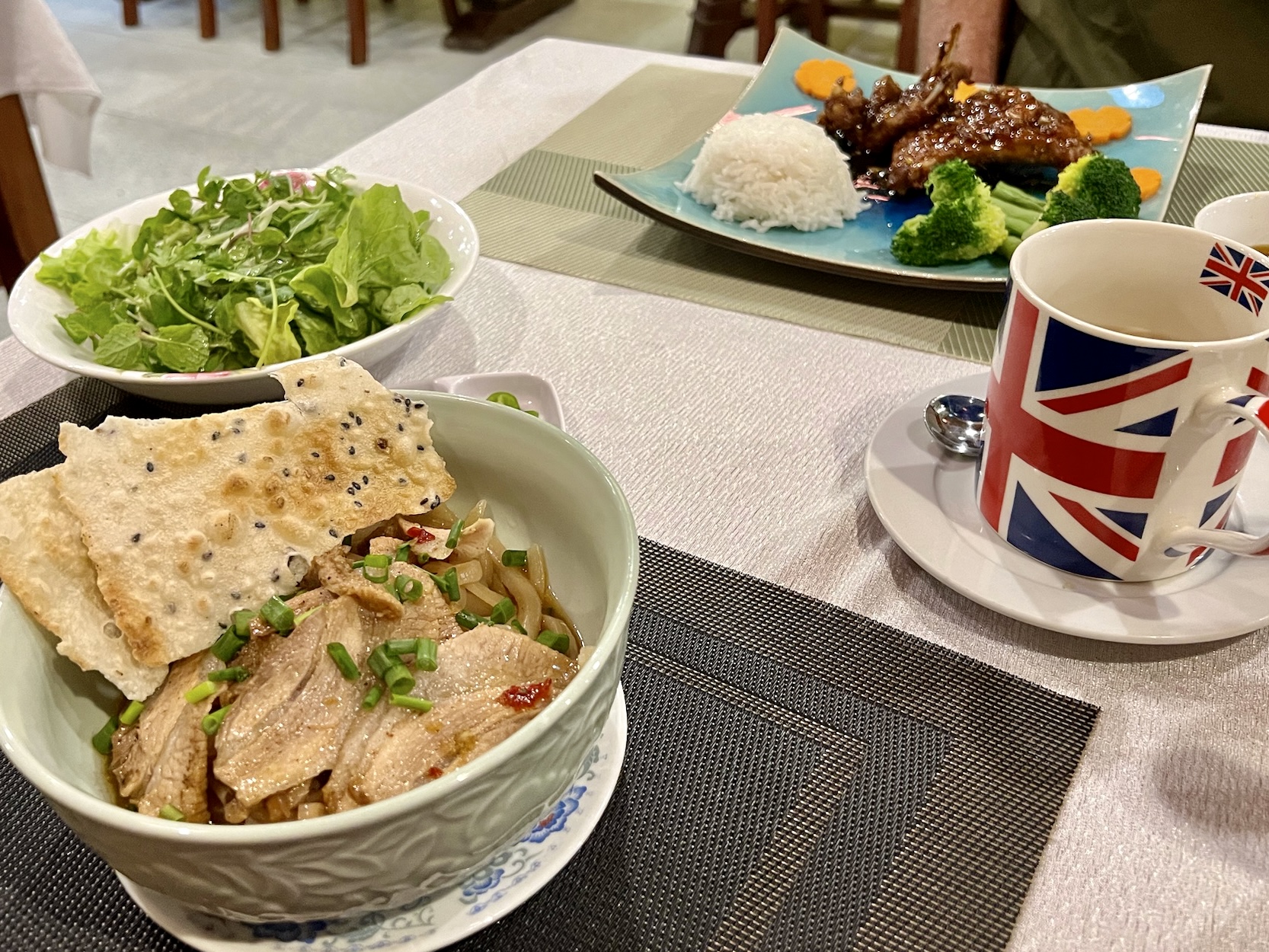
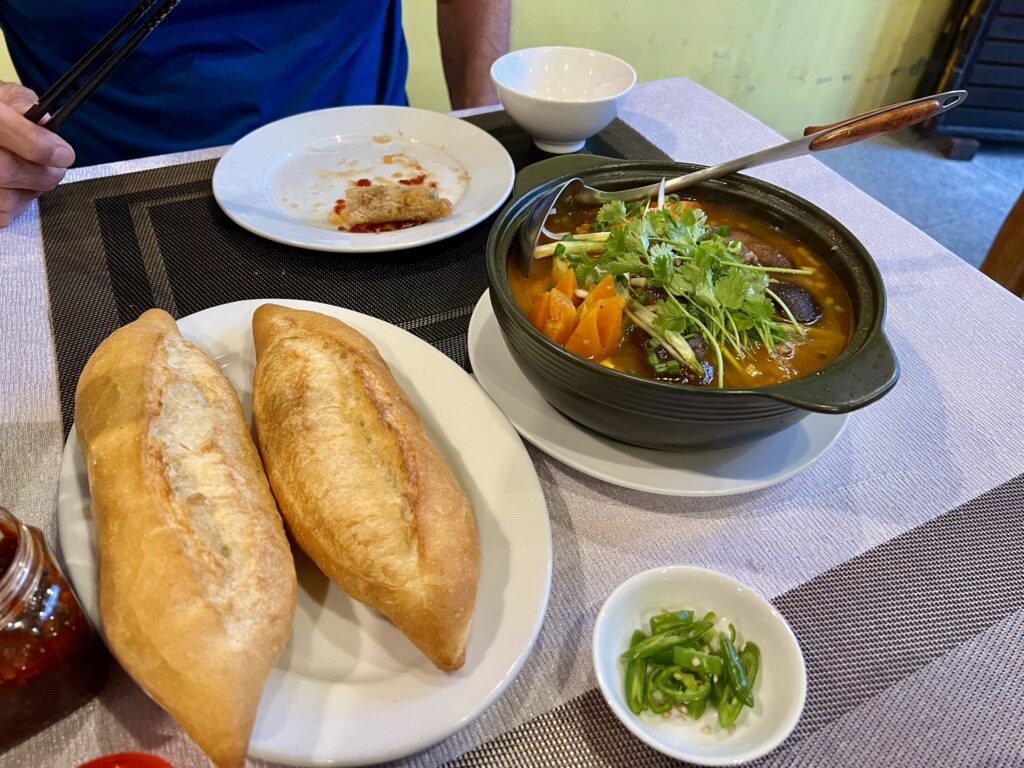
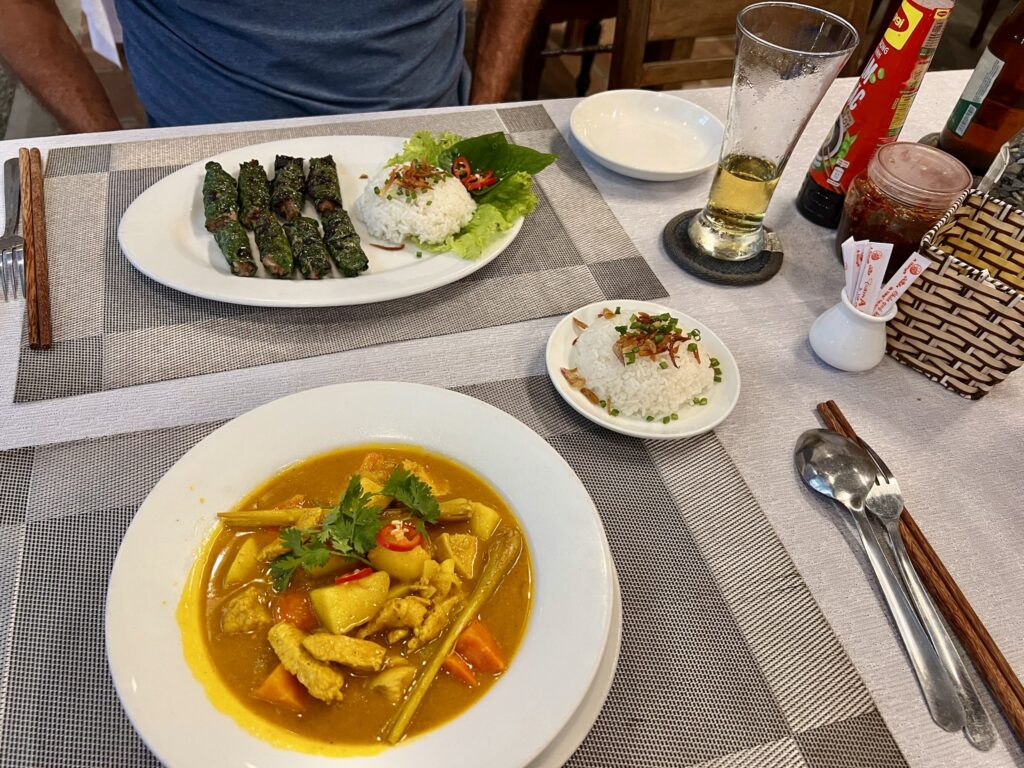
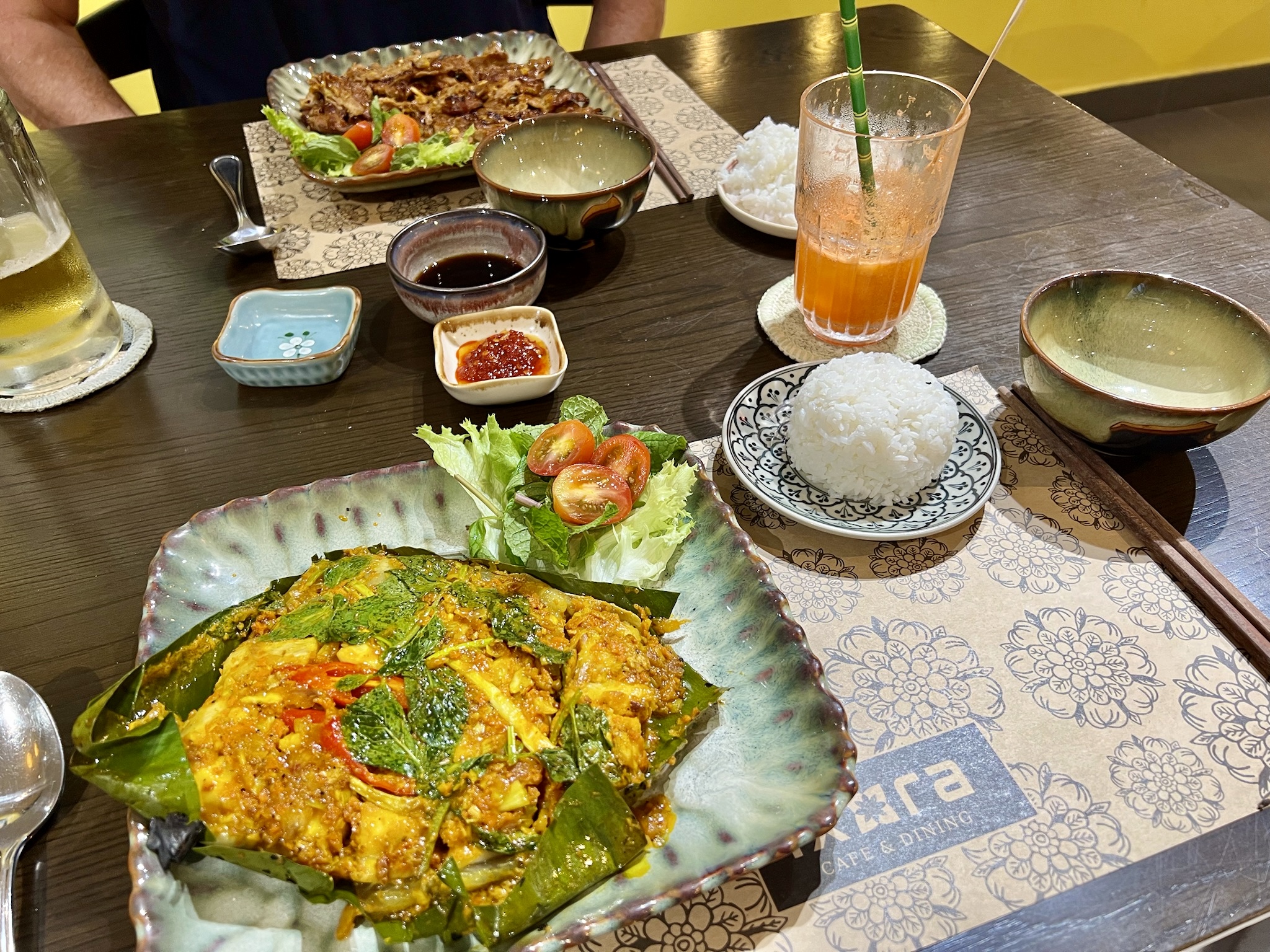
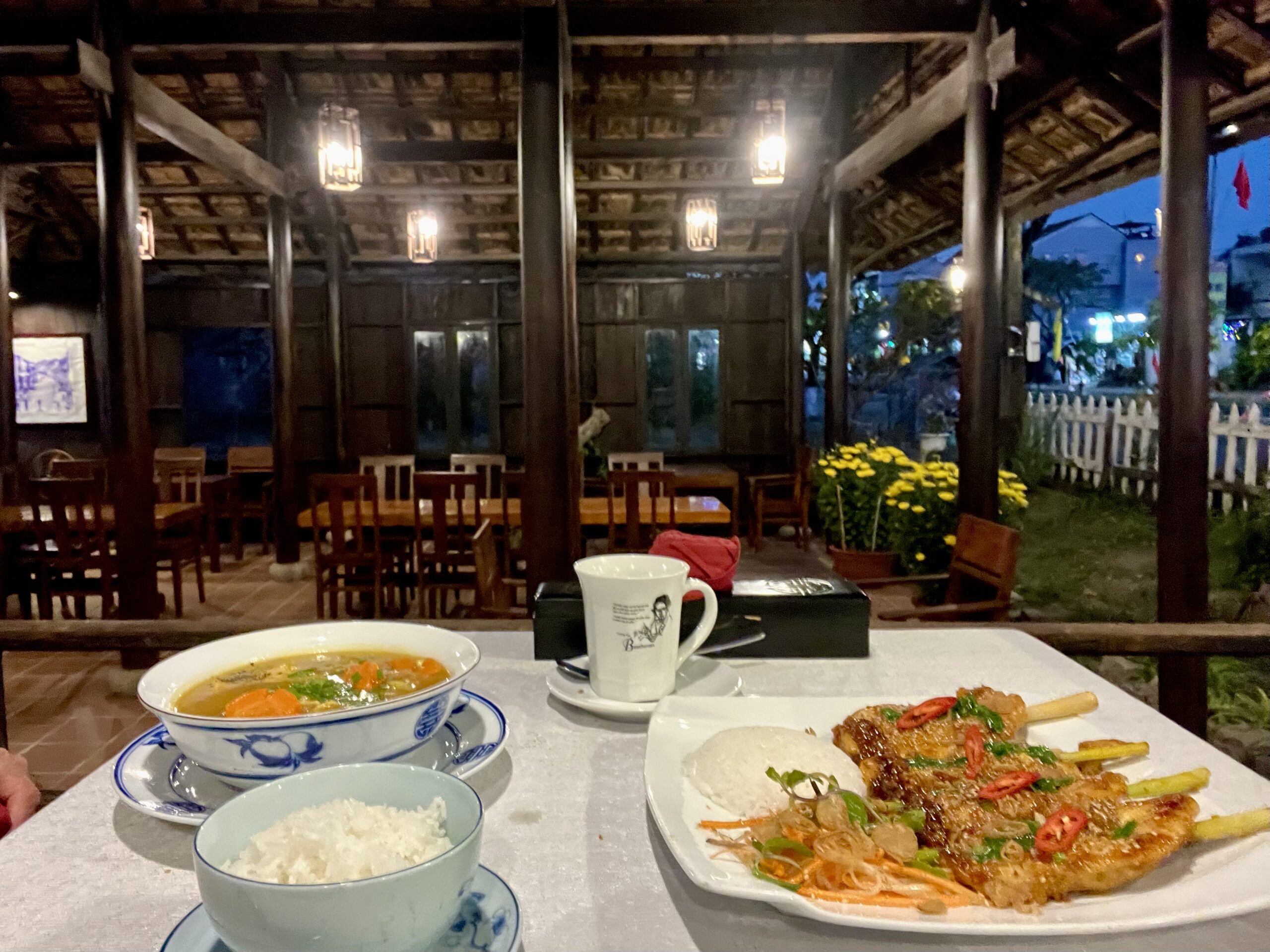
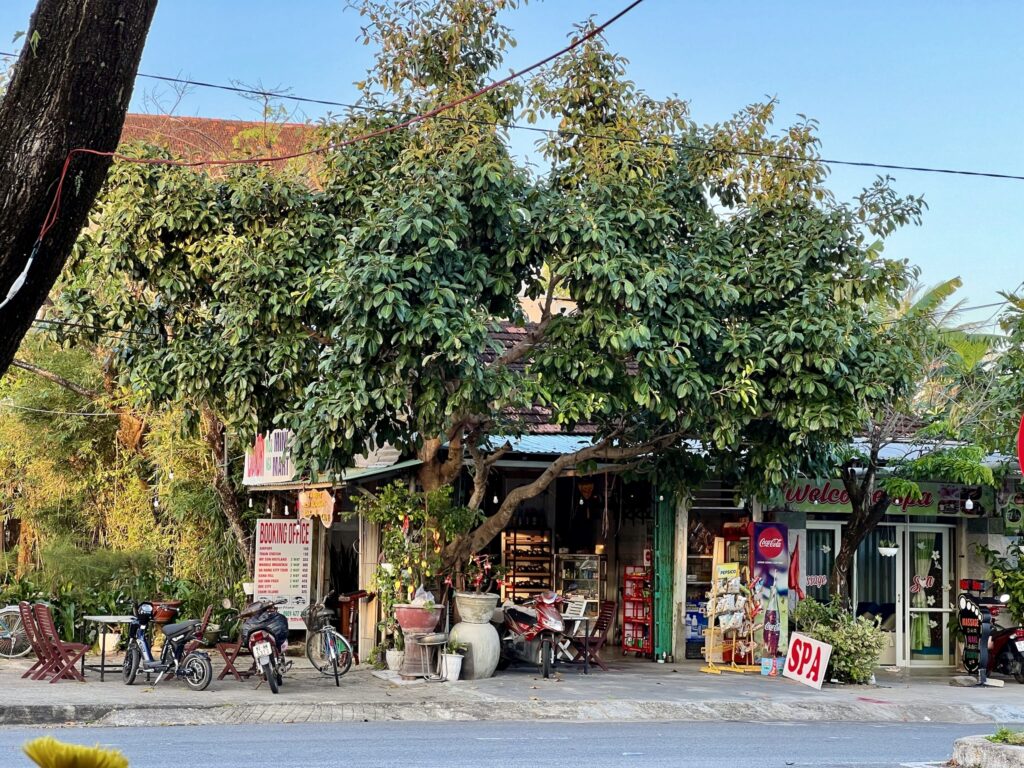
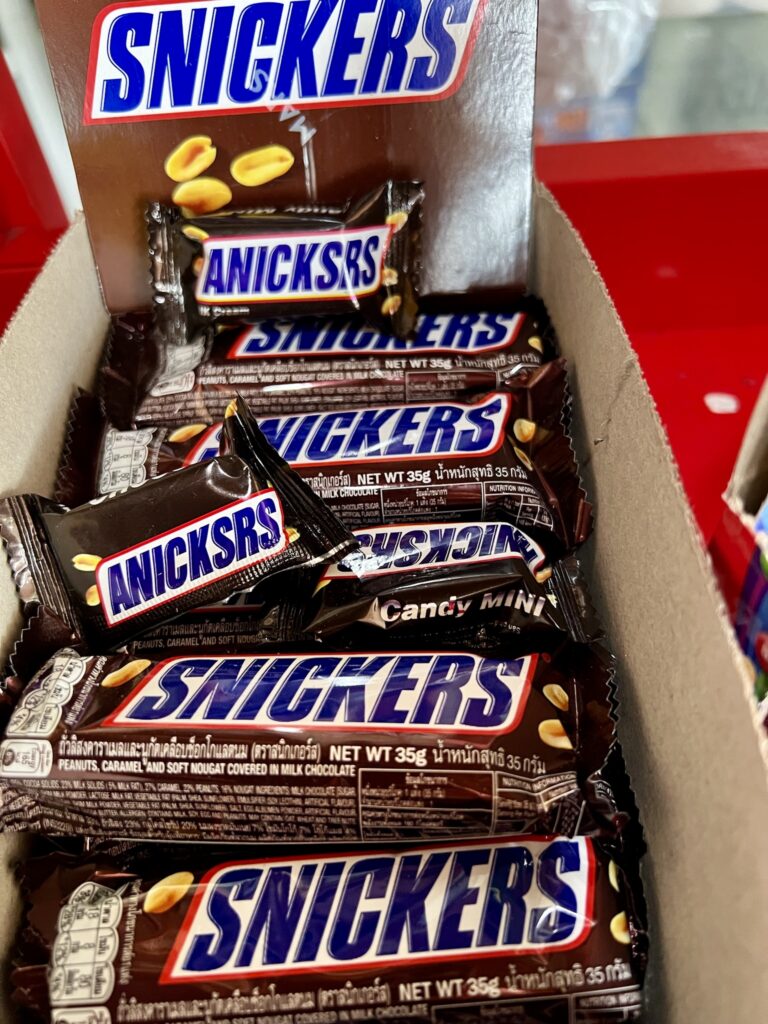
Out front of the hotel are a half dozen family-run restaurants. They are open every day of the year, morning to night, with the families living above or behind and the dining rooms below. The families live an open, integrated life. Here the extended family of Tan Phat restaurant are having a sidewalk picnic dinner grilling the small near-shore boney fish that the coracle fishermen net. Best grilled out of doors, the wife-mother-restaurateur is heading back in to check on her customers. Next to Tan Phat is Viet’s Kitchen (or Ha Nhi Restaurant, depending on which sign you prefer). This is the mother and her oldest daughter. Her niece was married one afternoon, and the family was having quite a party in the kitchen. Vietnamese don’t have indoor voices at the best of times, so it was fun listening to them as we dined.Next down is Co Hong. This is the photographer and Phuong Hong on the sidewalk in front of the restaurant. Phuong’s the cook. In all the others, the men are the cooks. She’s quite the foodie, and we learned a lot about Vietnamese life from her. The photographer’s bag has bananas Phuong gave her. They’re standing in front of Phuong’s sidewalk grill, discussing the merits of cooking fish out of doors. At Tan Phat, we like grilled their fish and their pho. Here we ‘re having grilled red snapper, which may actually be red snapper. The side dip is a simple favorite: lime, salt, and finely ground black pepper.At Co Hong, she remembered the blogger liked her pork ribs. It’s no longer on their menu, but she surprised us and had some for the night we stopped by. The blogger ate the ribs while the photographer had their cau lau – with rice crackers instead of pork cracklings. On another night at Co Hong, she made us bo kho. It’s a Vietnamese beef and pork stew that takes several hours to cook, so it’s not on their menu, either. Very good. Each restaurant offers their take on Hoi An favorites, along with a dish or two not offered by a neighbor. Here is beef rolled in piper lolot and grilled, along with Vietnamese chicken curry at Viet’s Kitchen. At Ixora, the neighborhood restaurant on the corner that we frequent less often – except, ironically, when we needed something hemmed or taken in at the tailor half of their shop – we had cobia fish in banana leaf and Vietnamese grilled beef. And then there’s Môk, a restaurant we ate at only once. We had their chicken curry and grilled lemongrass chicken. Even though it’s just one shop over from the hotel’s drive, it’s out of sight and easily overlooked. Immediately off the driveway at the front of the hotel is perhaps the most diverse family operation. They do laundry, have a micro-mini-mart and spa, and just this year they added a dining room. They invited us for Tet and made us feel very welcome. The husband cooks and does laundry. The wife does massages and runs the store. The daughter does her calculus homework at the laundry table. And their 12 year old son polishes his new electric motorbike and gives high-fives.The blogger bought a SNICKERS at their little store, not to be confused with ANICKSRS. In addition to being unpronounceable, they are a barely edible knockoff.
Walk-to Restaurants
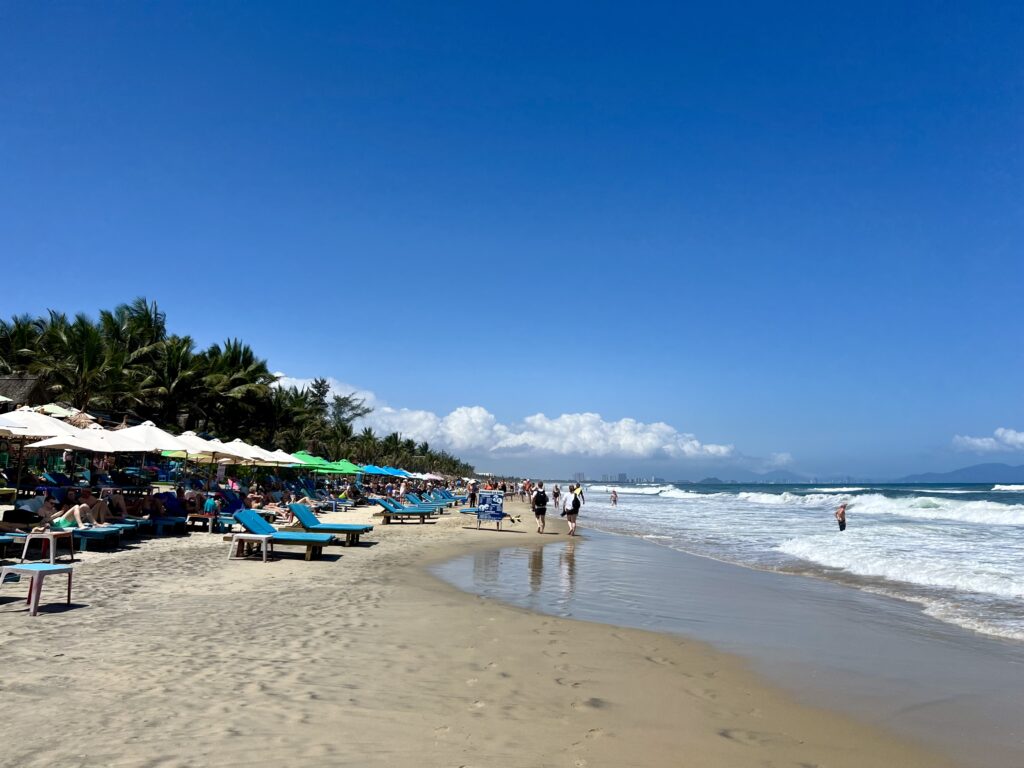
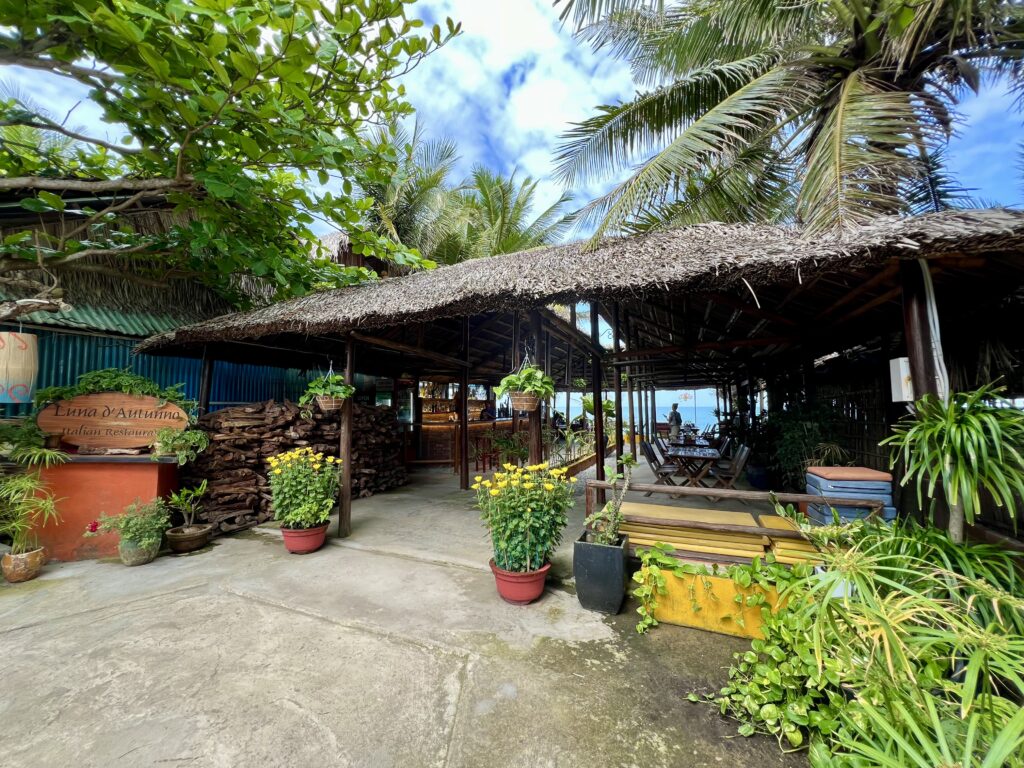
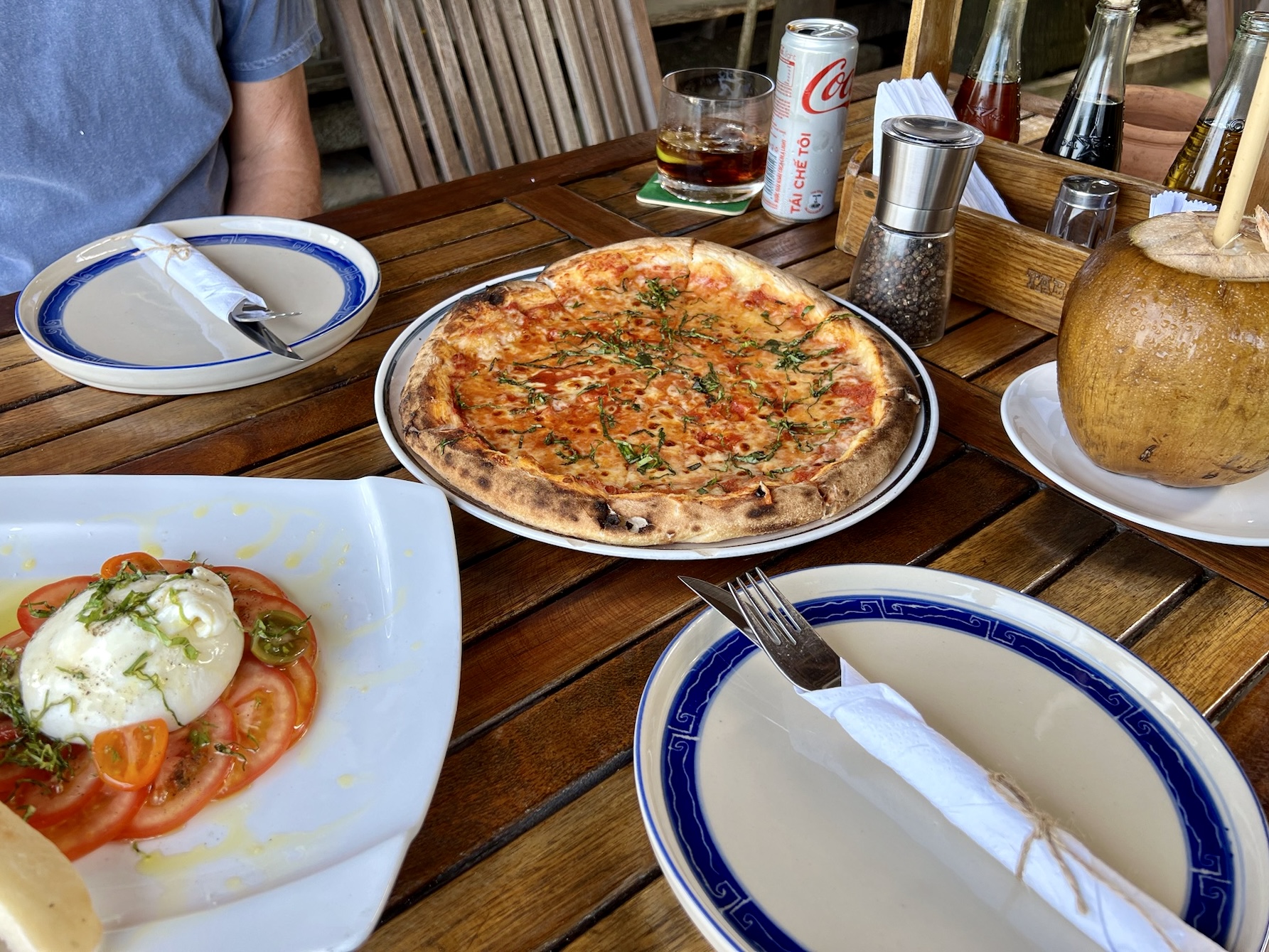
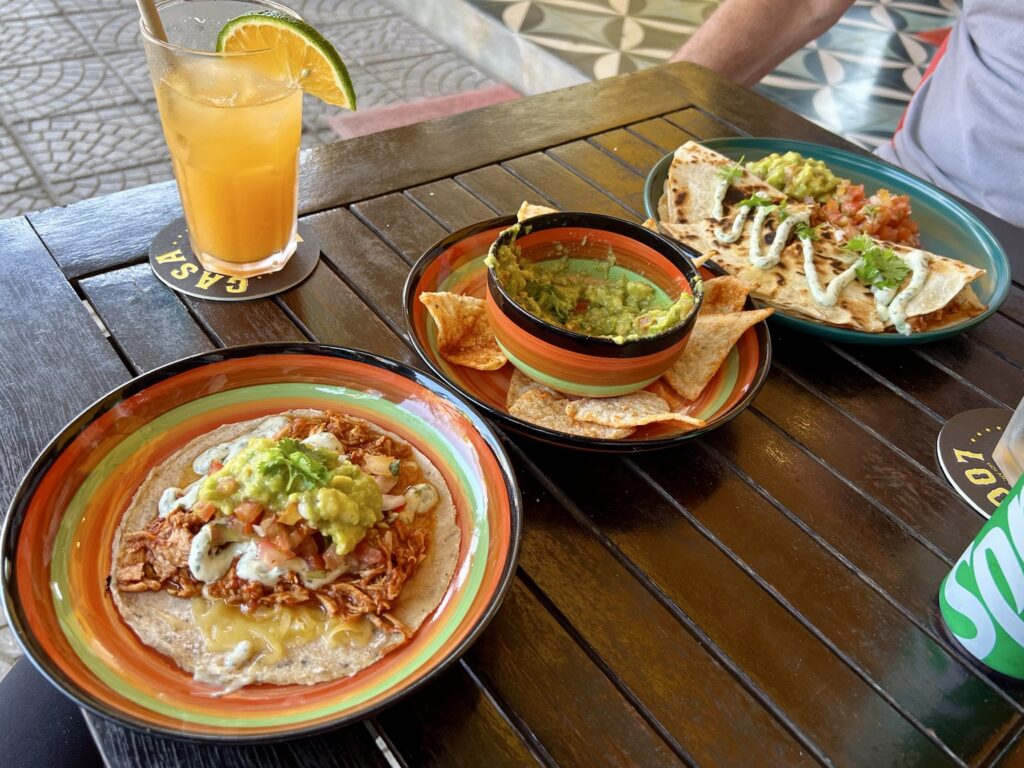
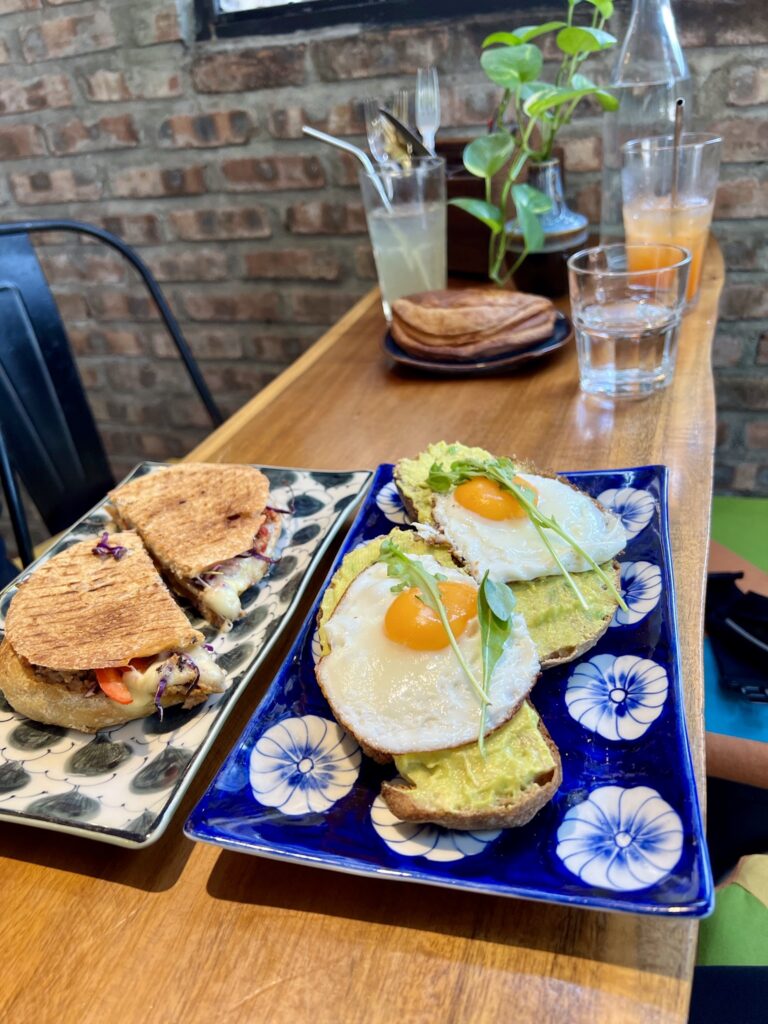
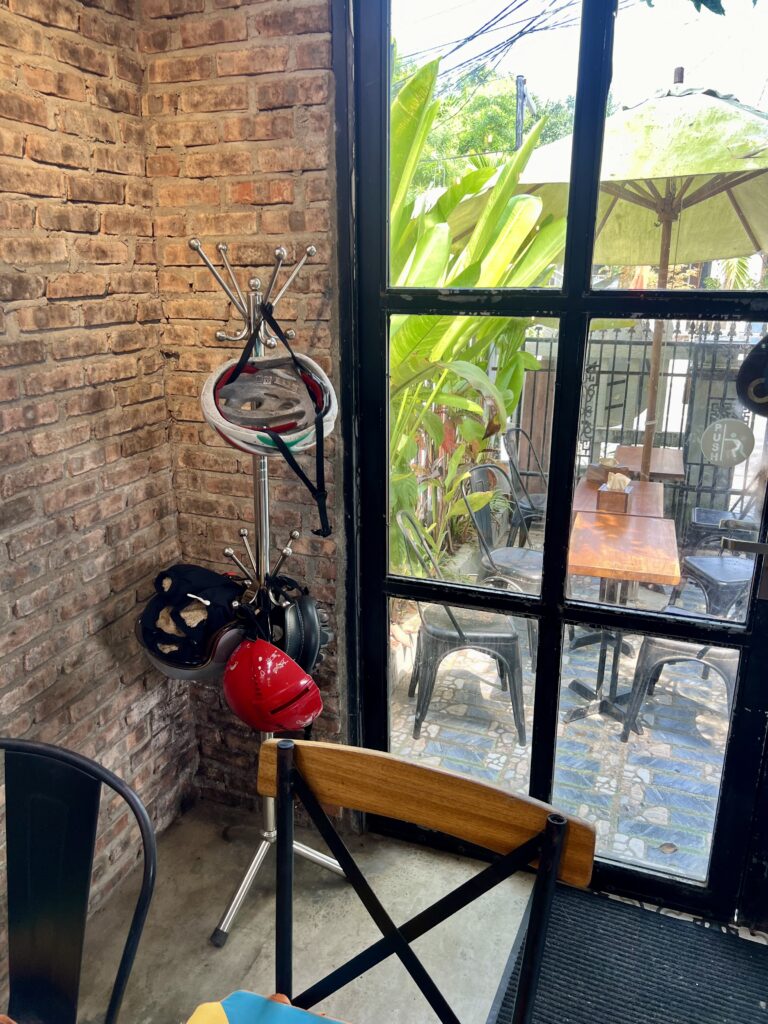
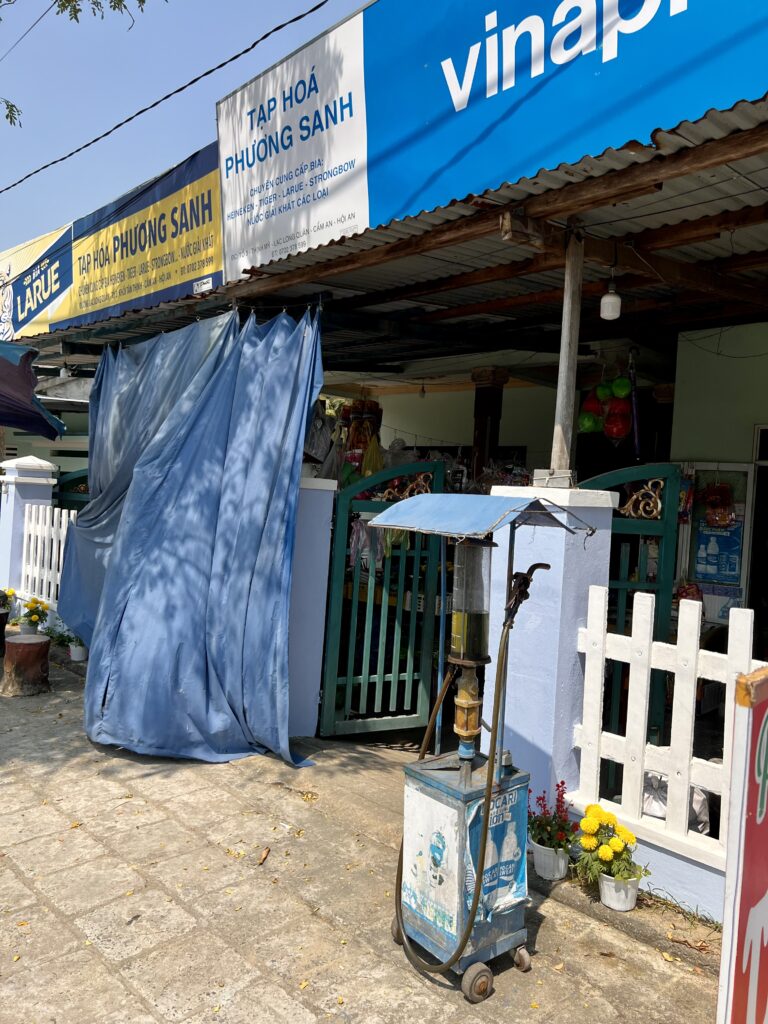
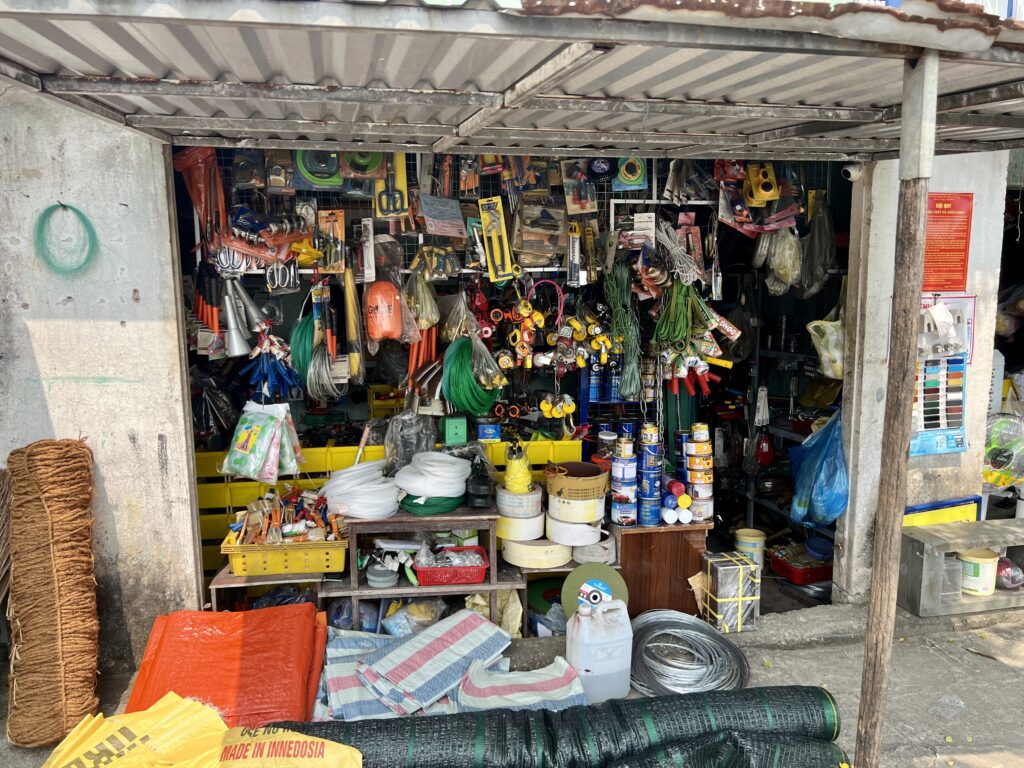
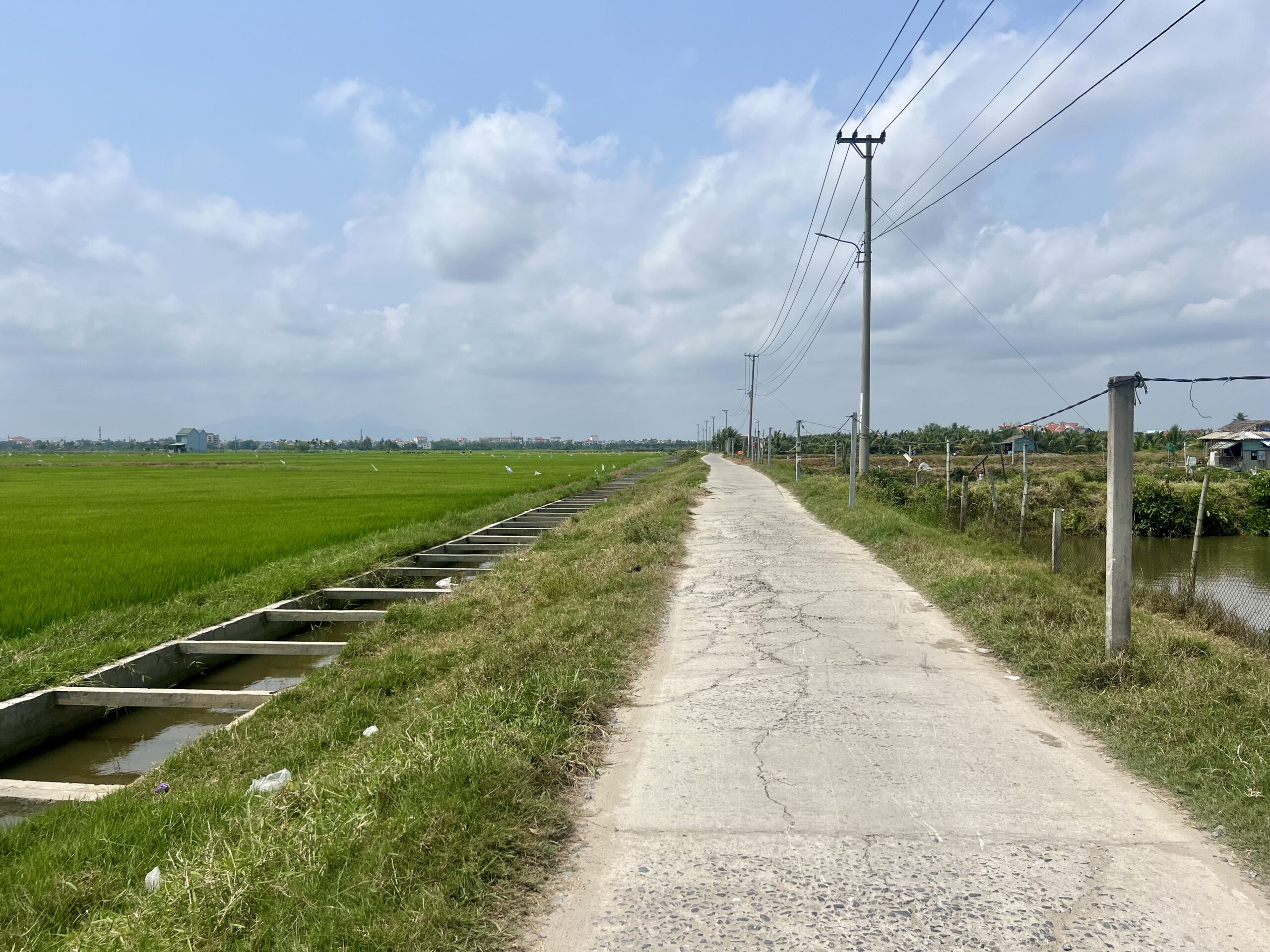
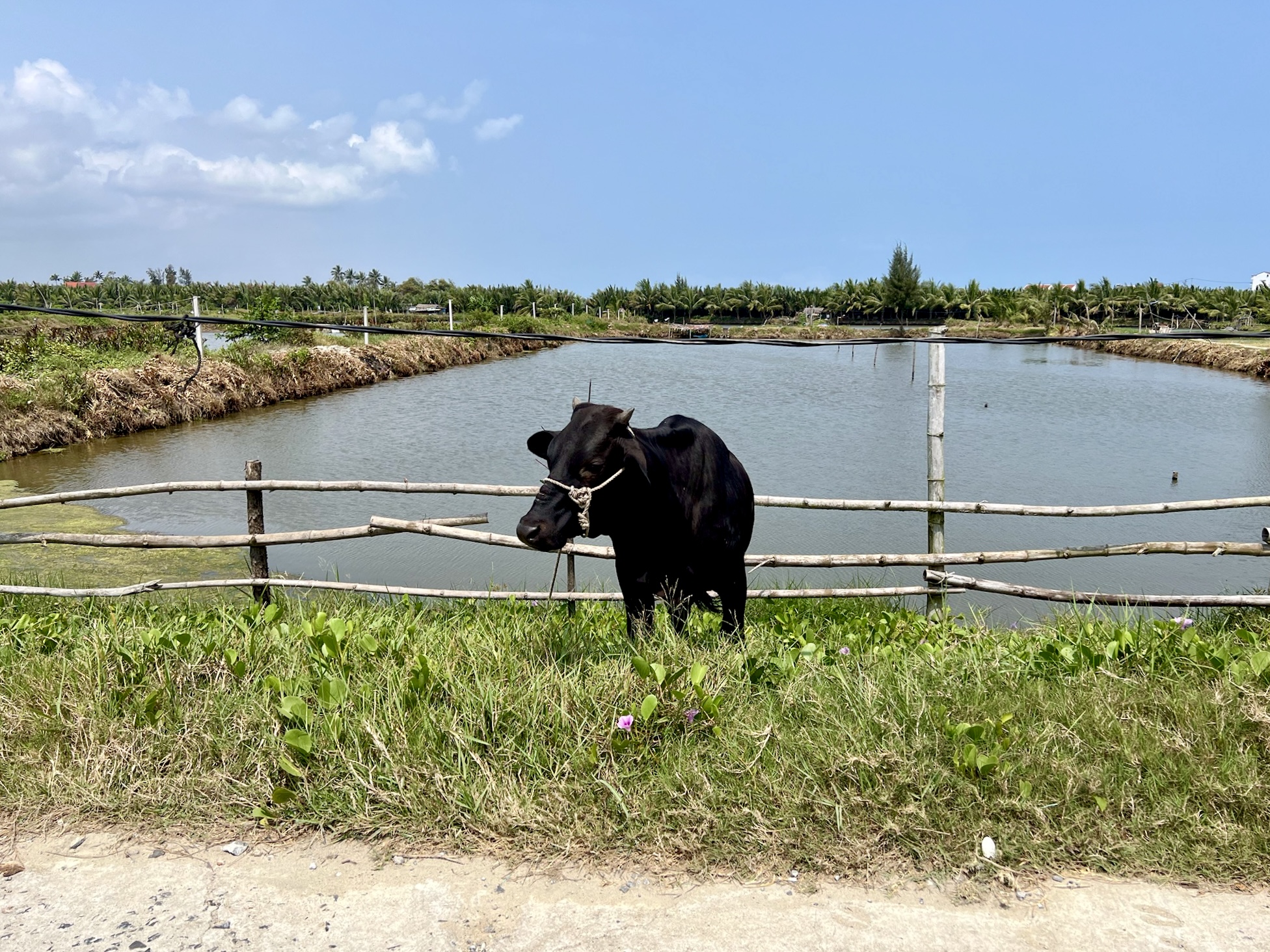
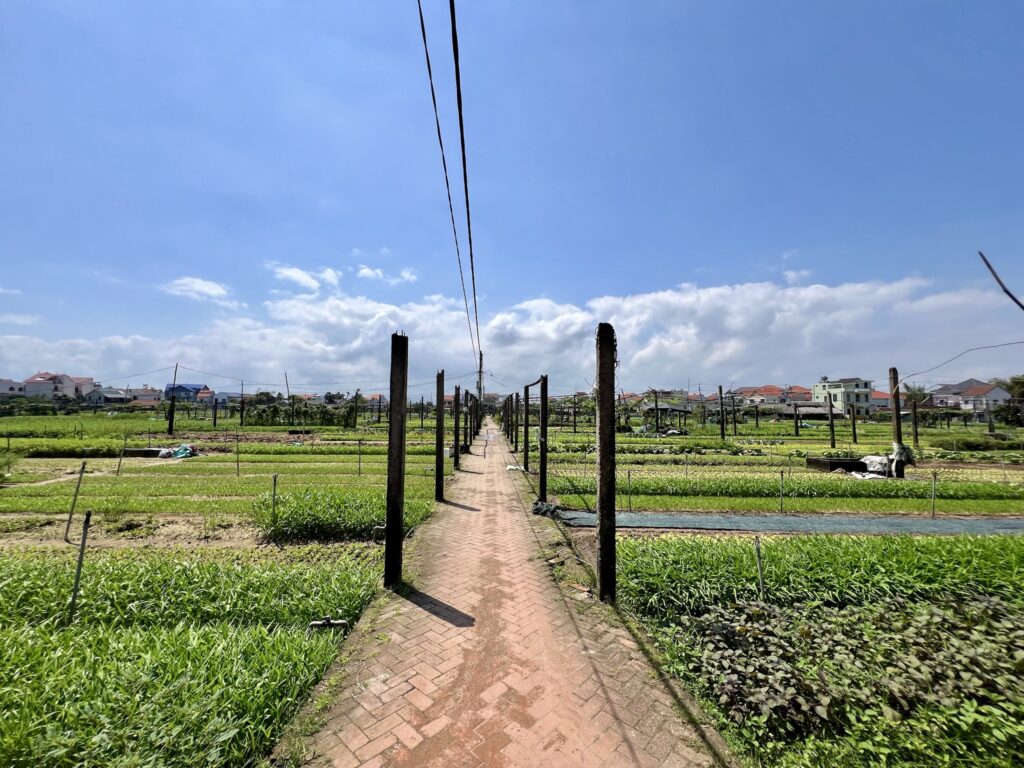
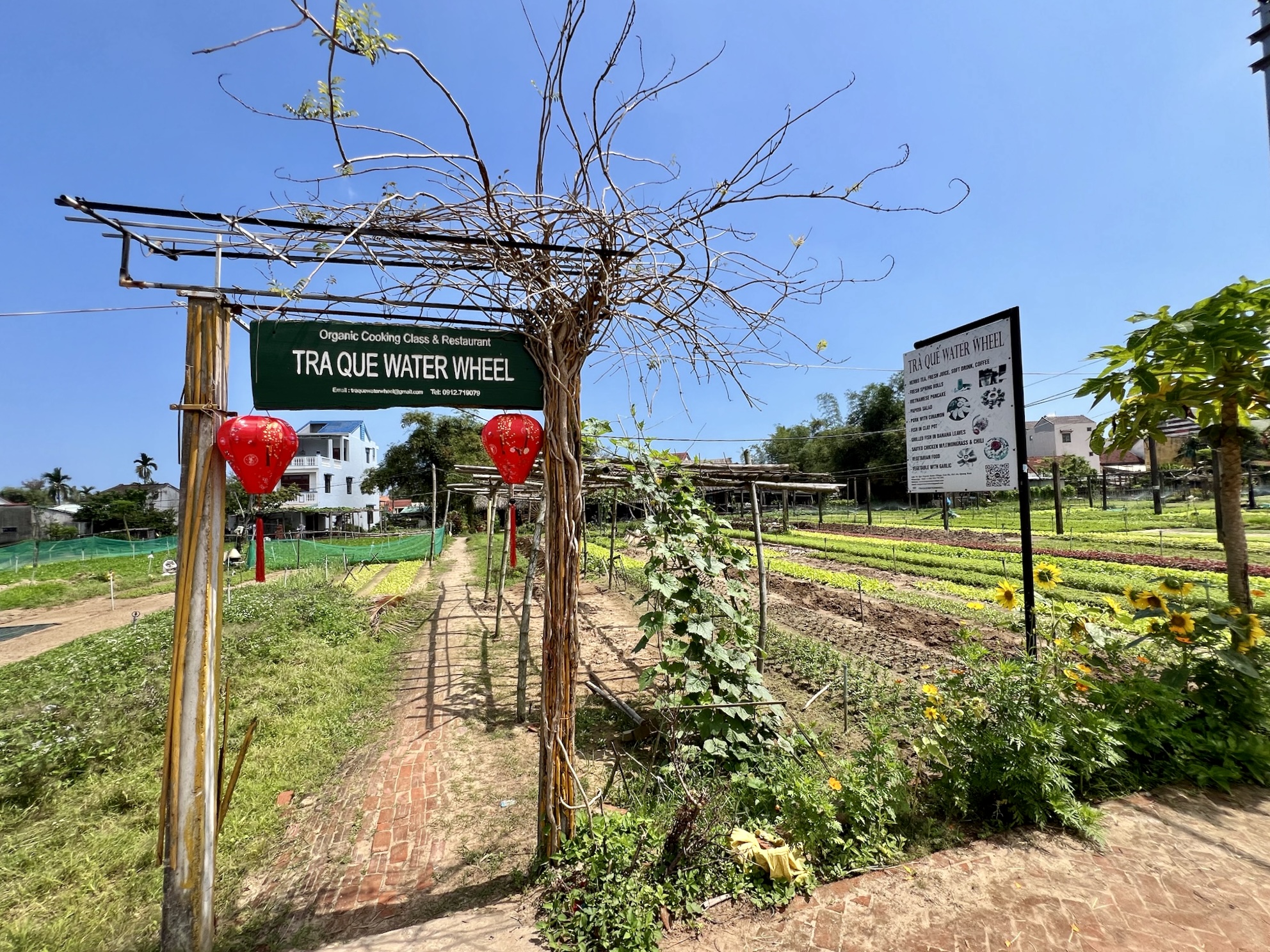
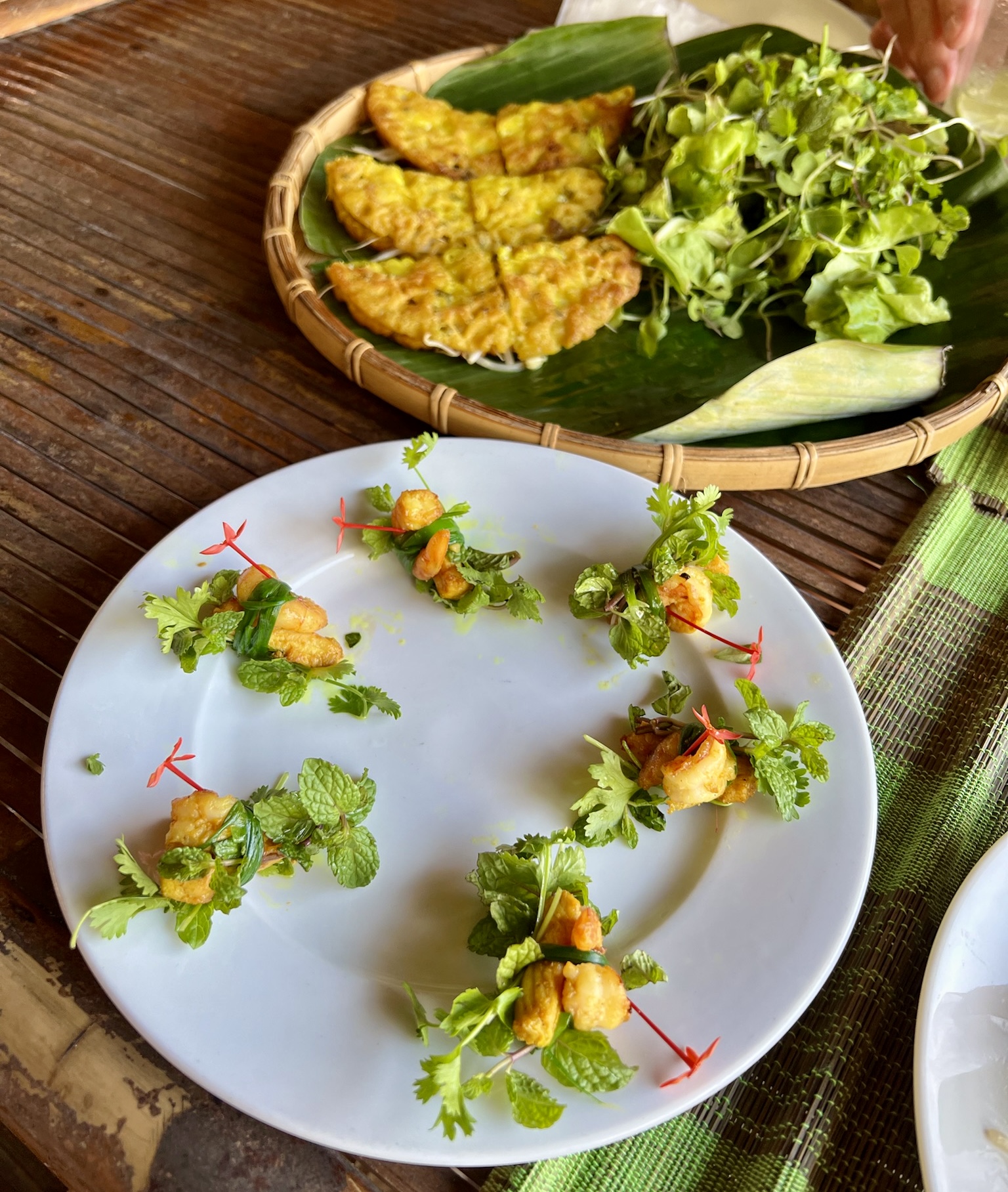
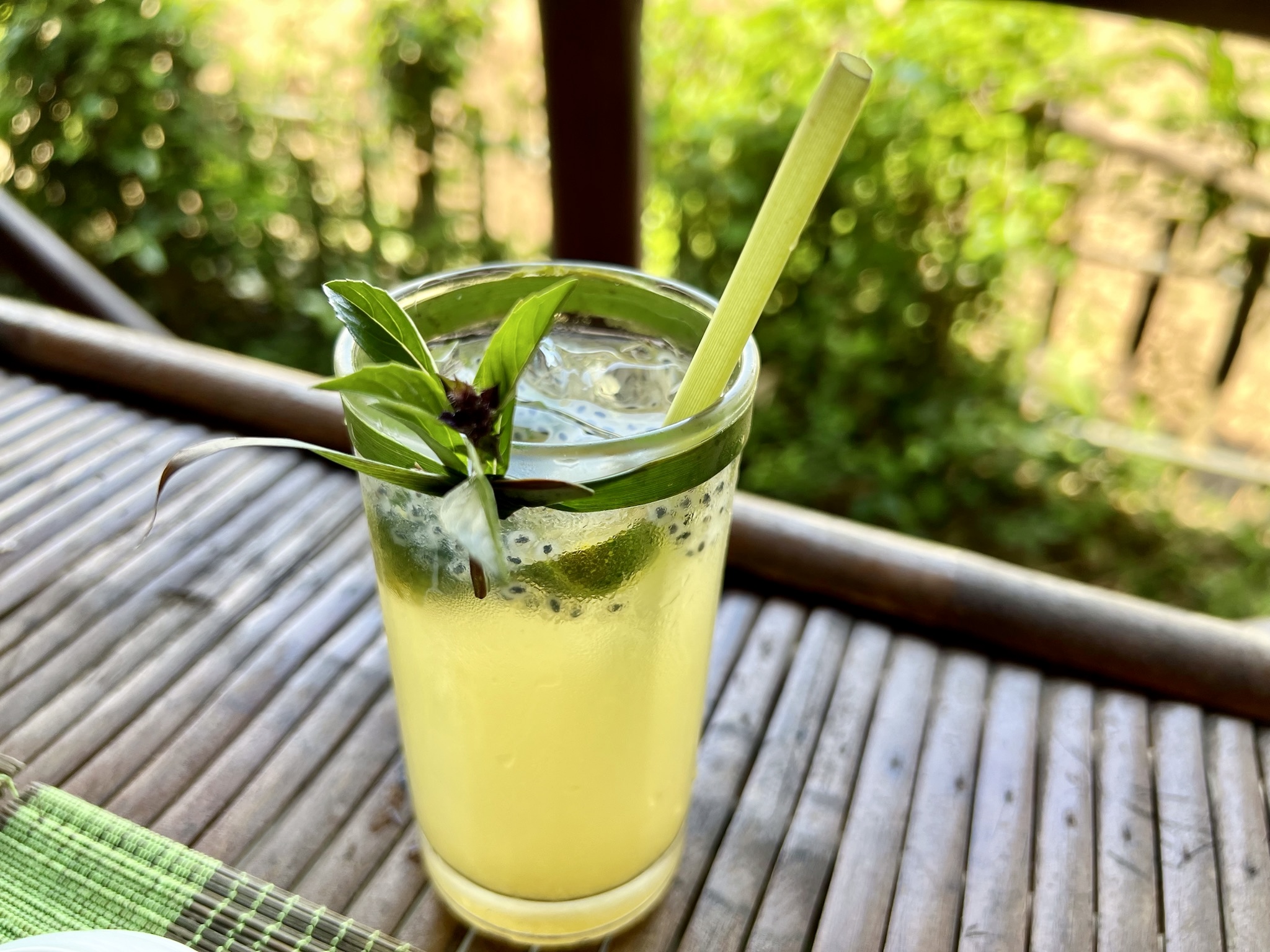
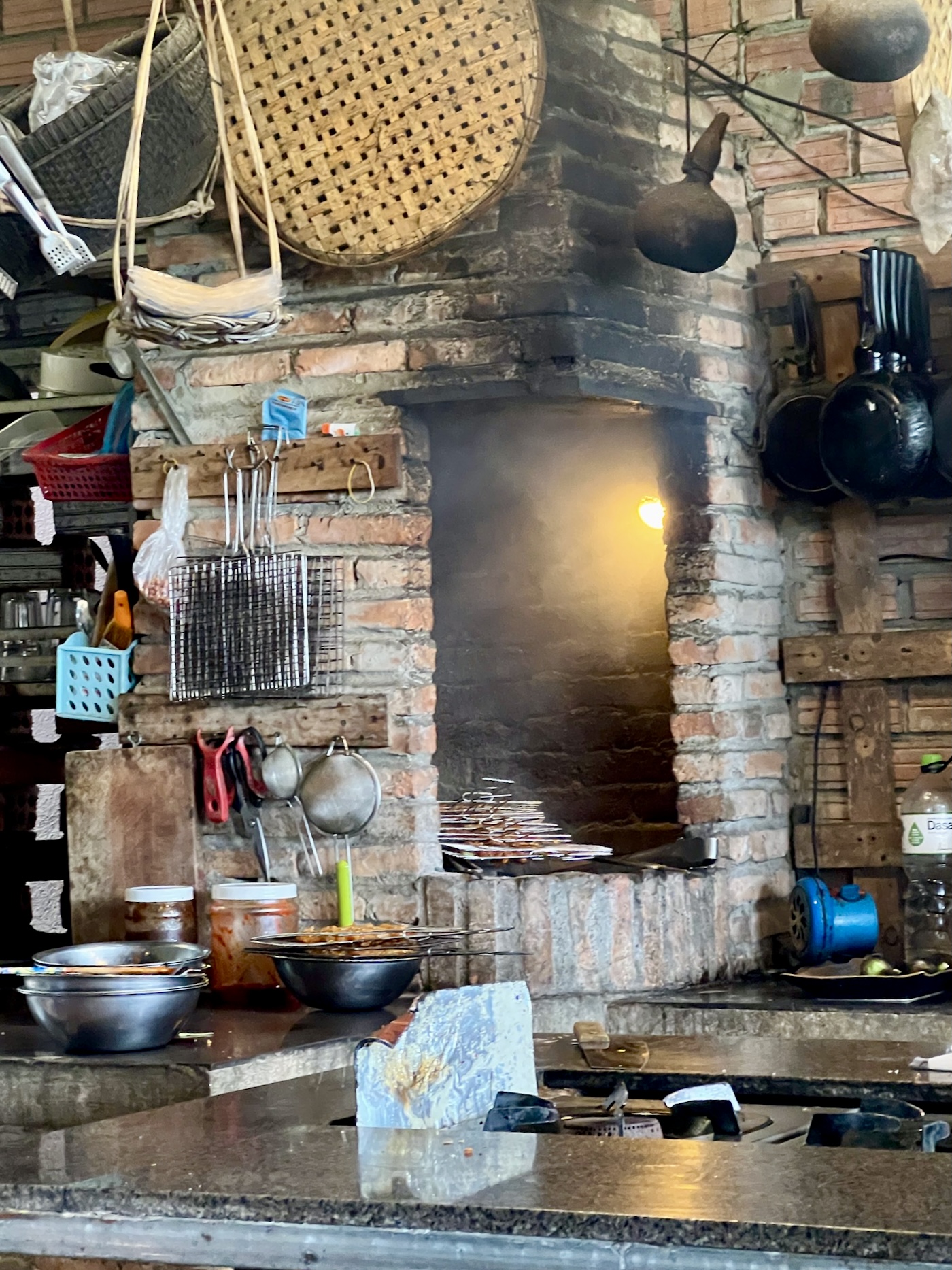
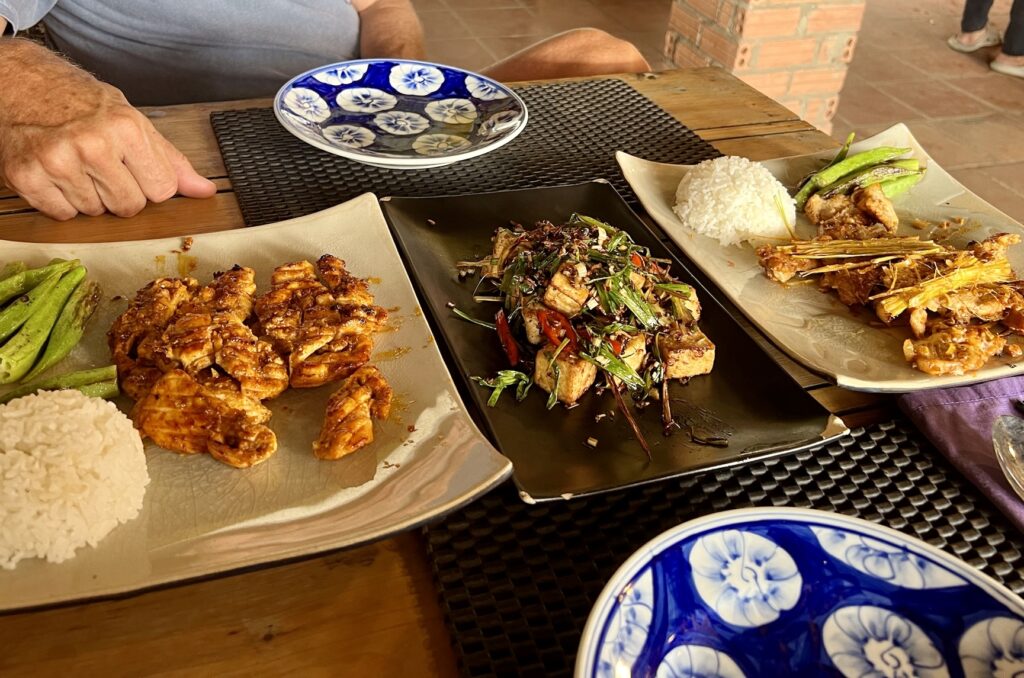
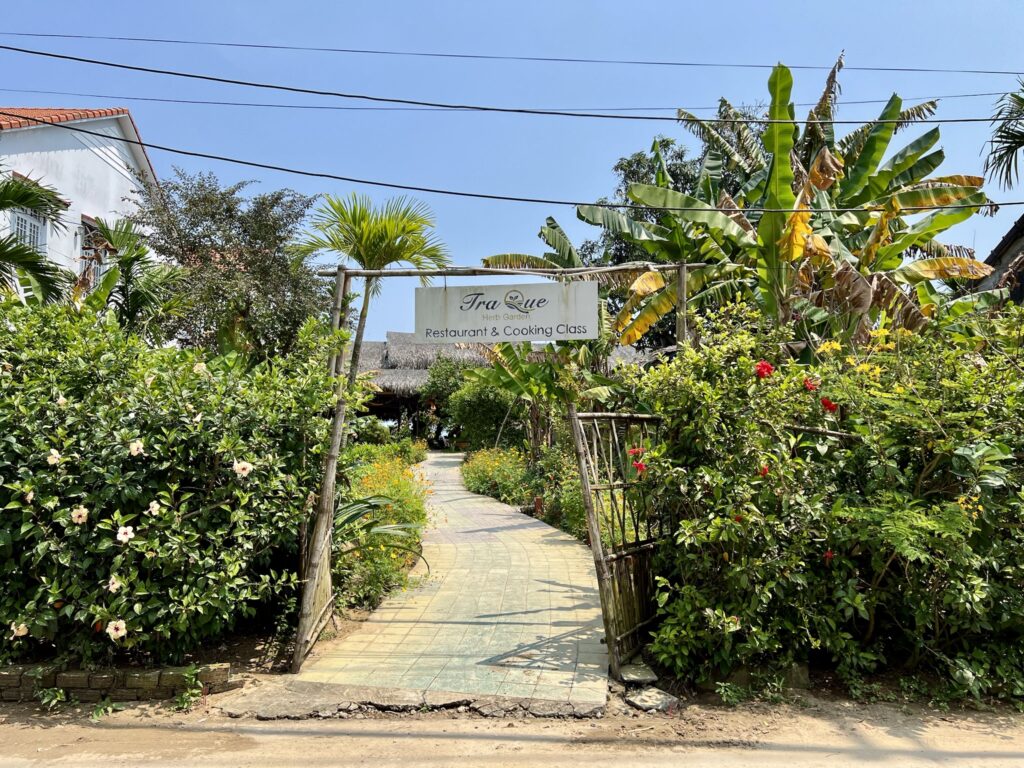
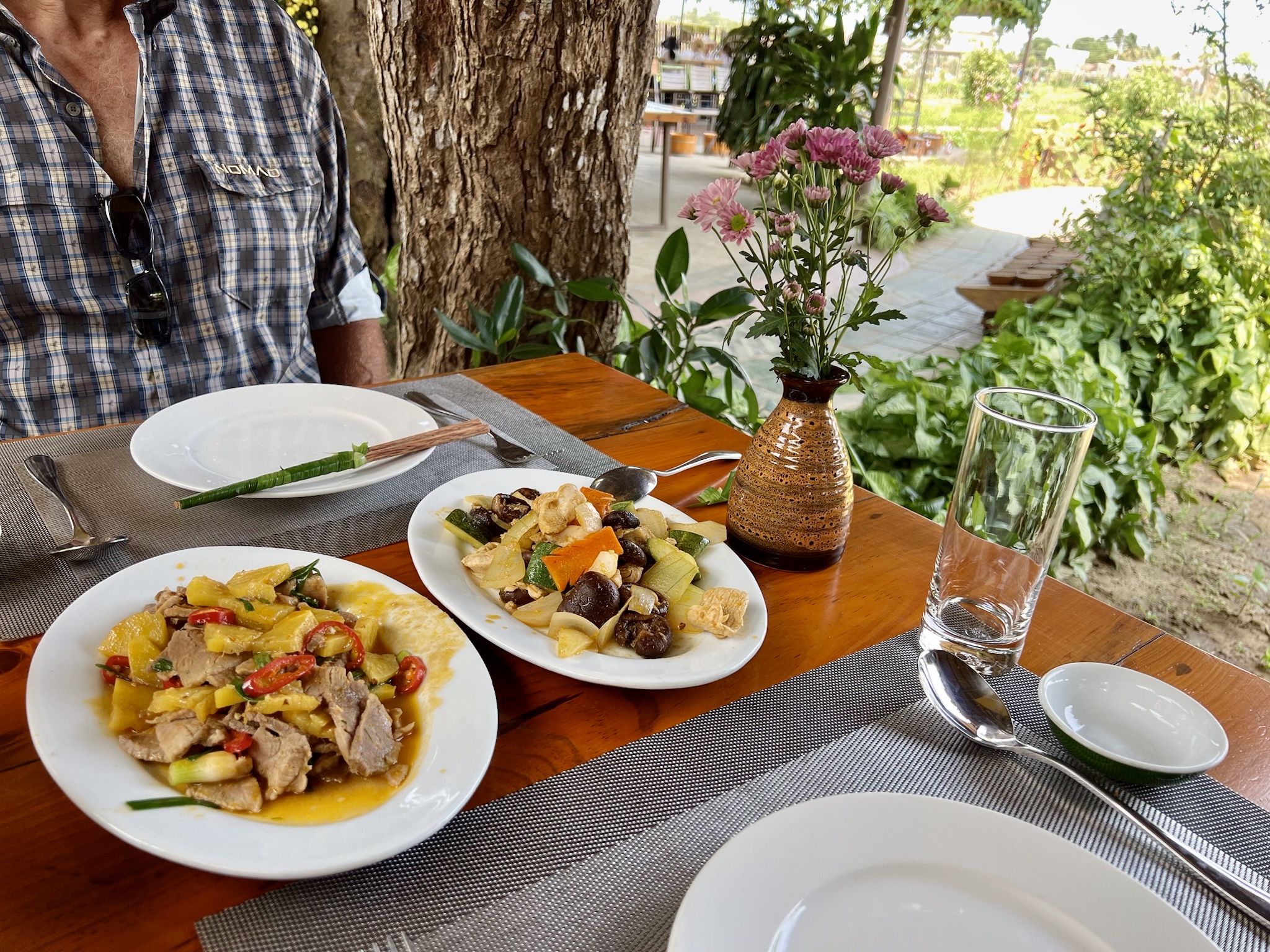
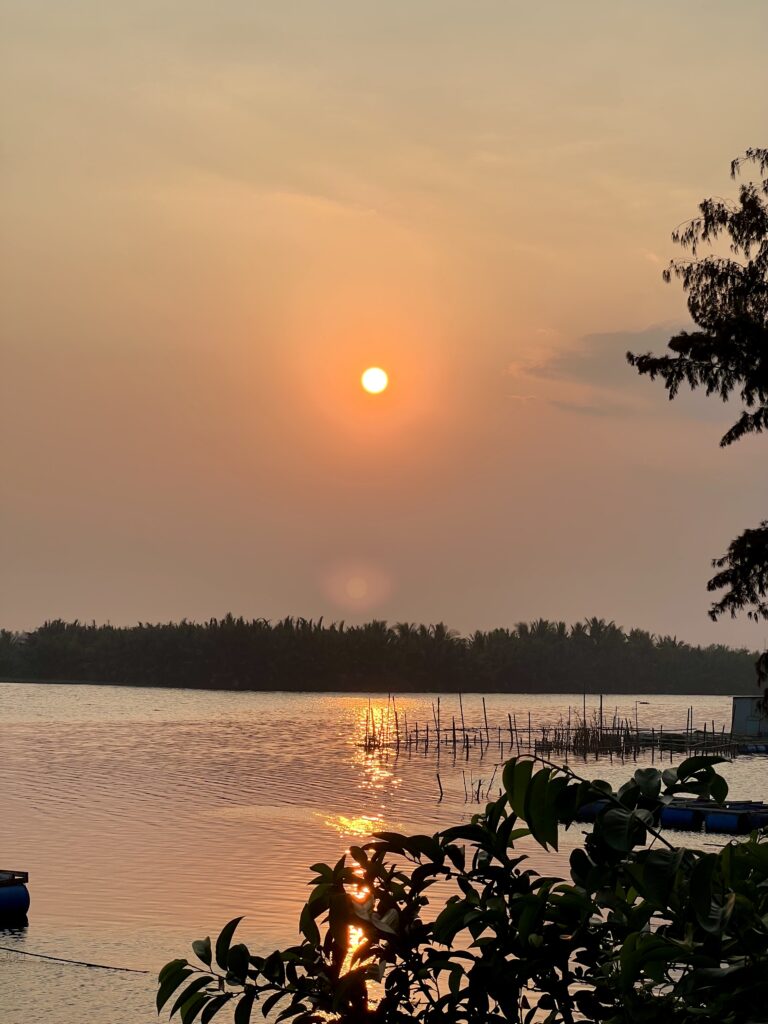
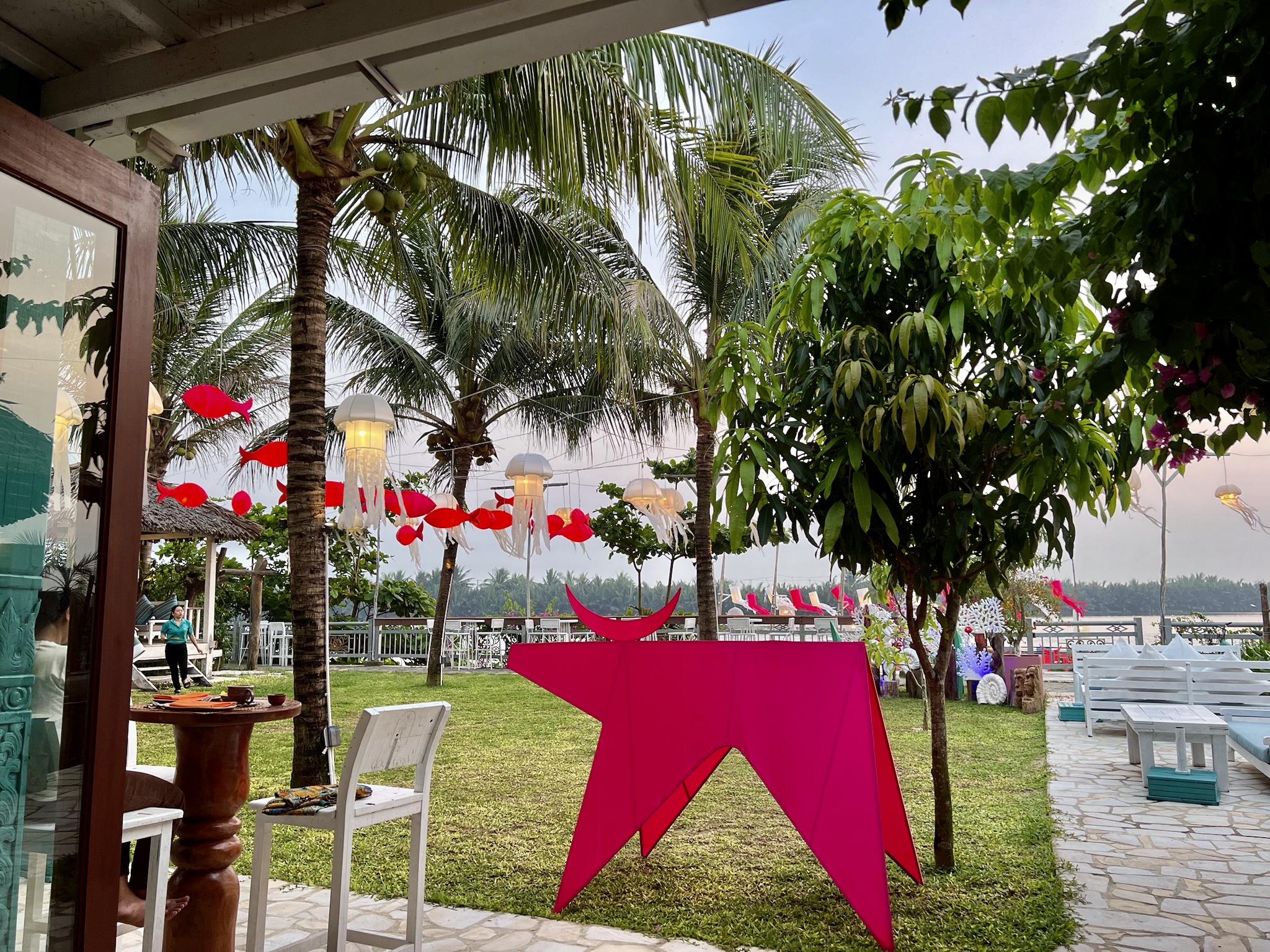
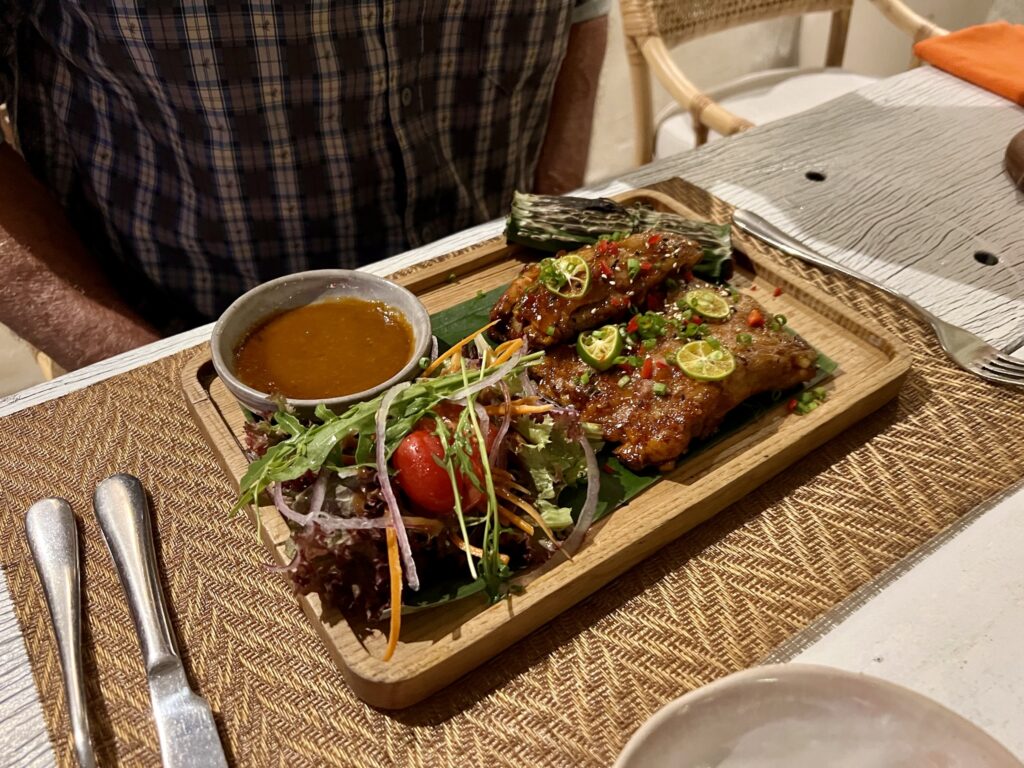
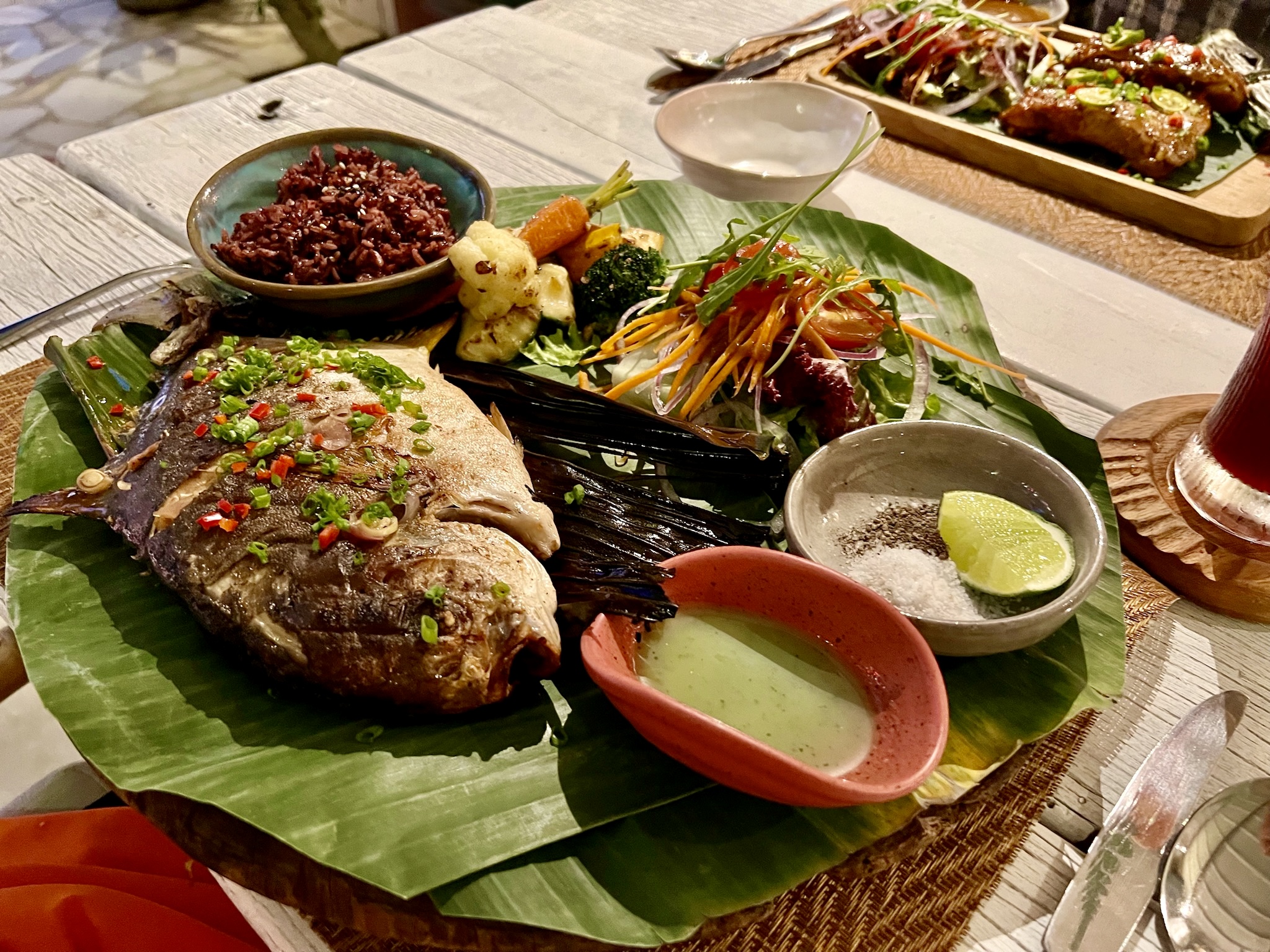
Within a several mile radius of the hotel, between Cua Dai Beach and An Bang town, are many more restaurants. So we get to combine two of our traveling favorites: walking and eating. An Bang is about a mile down the beach. Sometimes sunny, sometimes cloudy, it’s a nice, mostly deserted walk …Until it’s not. As noted in a previous post, An Bang is mostly beach umbrellas and restaurants, where those who stay off-beach get their sun and sand. This is Lunna d’Autunna, beachfront in An Bang. It sounds fishy, but it means Autumn Moon. The place is owned by a chain smoking Frenchman, and it’s the only restaurant we’ve found that serves real pizza, and caprese salad made with real burrata. We’re regulars. Also in A Bang is Casa Loco, a Mexican restaurant run by an Australian expat. Their t-shirts are better than their food. We bought two. In our search for variety, we also tried Thom’s Sourdough Bakery. Despite its name, it’s run by an energetic enterprising Vietnamese woman. The photographer was in need of avocado toast. The blogger had a spongy apple turnover with his meatball sandwich. The use of the coat rack in Thom’s restaurant is typical. Puffy jackets are ubiquitous, worn by everyone when the temperature drops below 81°F and by a good many on even the hottest days – they do have a high SPF rating, after all. Yet coat racks are reserved for bike helmets, required by law here. For places where the beach doesn’t go, we walk the streets, past motorbike gas pumps (above) and local hardware stores (below). Heading inland, across the nearby river bridge, the land turns agricultural. Off the main road, narrow paths lead through rice fields and shrimp farms.This is Cow. We passed him on each of our trips to Tra Que, coming and going. Tra Que is a river island a mile or so south and west. It’s billed as an organic herb village of sorts. Just don’t read the labels on any of the empty bags scattered about. The term organic is clearly a subjective term. The island’s herb gardens are ringed by restaurants, homes, and home stays. Virtually every restaurant offers cooking classes. We go for the food. Watching the cooking classes is free entertainment added. At the Waterwheel Restaurant, we had three friends – a pork, shrimp, and herb dish – and their vegetarian bun xiao, which the menu assured us was made with “some kind of mushroom.”The Waterwheel’s flavors and presentations are among the best. We sipped their signature ginger, lemon, and kumquat juice while we watched a cheerful woman chef teach Vietnamese cooking to a young French couple. Another walk to Tra Que took us to the Kumquat BBQ Restaurant and Cooking School. The wood-fired grill adjacent to the dining area was notable for its lack of ventilation. To fully immerse customers in the cooking experience, ceiling fans ensure the smoke is properly circulated among the tables. We had all grilled dishes, of course. While we ate, the chef taught a large mixed class of American, French, and German tourists. He subscribes to the Soup Nazi school of food service, which made watching a lot of fun for us. We chose another restaurant, the Tra Que Herb Garden, because it looked appealing. And it has a pretty setting up against the herb gardens, with a nice breeze. Unbeknownst to us, the place caters to bus tours: large groups shepherded through the garden, given aprons and a quick turn at frying something, then fed dishes easily prepared en masse. We had pork with pineapple and a chicken with vegetables. Unremarkable and totally missable. Walking along the near side of the same river, we found an out-of-the-way restaurant. It’s sunset views reminded us very much of the Mekong Delta. The restaurant, Coco Casa, is trendy. It features pink cows and hanging fish, a water fountain billed as a swimming pool, upbeat music, and disco-lighted coral. The food is excellent. The blogger had grilled pork ribs. The photographer had their whole grilled fish. She had asked what fish was being served. The chef said tuna, which was probably the limit of his piscine vocabulary. We needlessly speculated on what a whole grilled tuna would look like. When it arrived, it turned out to be monchong (aka pomfret). It was paired with a sauce of green chilis, lime juice, and scant condensed milk, along with simple salt, pepper, and lime. On our walk back to the hotel, we passed a woman sitting on the sidewalk selling fresh caught monchong. We had found where our fish came from.This inspires a worthy aside. Most restaurants have huge menus, offering Vietnamese dishes, pizza, bahn mi, hamburgers, fresh seafood, and any number of squeezed-to-order juices. We marveled at how such small restaurants could maintain such a wide range of fresh items. Simply put, they don’t. They offer something we call Motorbike Menus. If you’re observant, you’ll often see someone take off on a motorbike shortly after you place your order. A few minutes later, the same person will walk out of the kitchen, having returned through a back or side door. We make a game of trying to guess what part of our order required a motorbike. Fresh baked bahn mi bread? Oranges for our juice? A whole fish? The chef at Coco Casa probably didn’t know what fish he would serve until the motorbike got back.
Danang
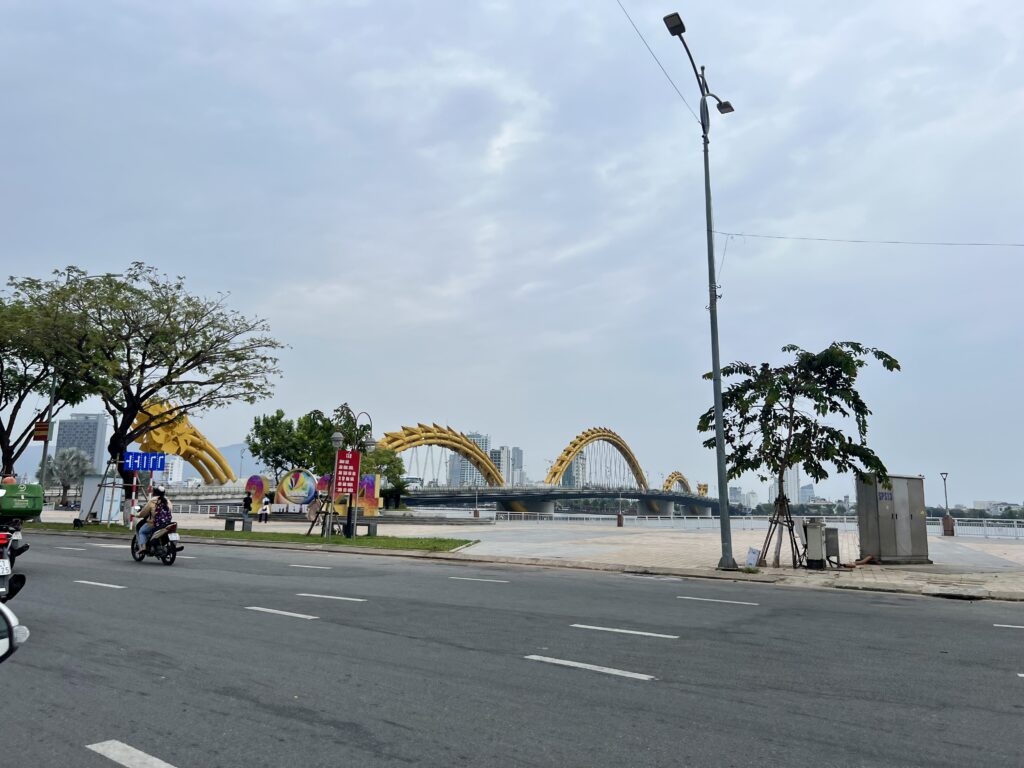
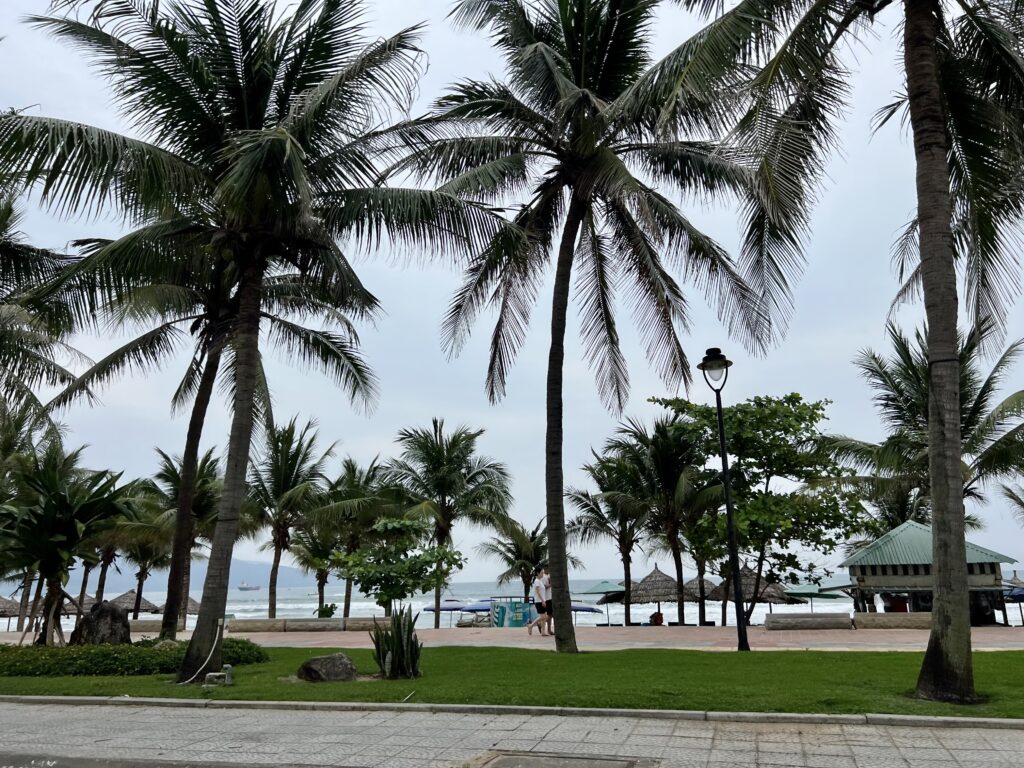
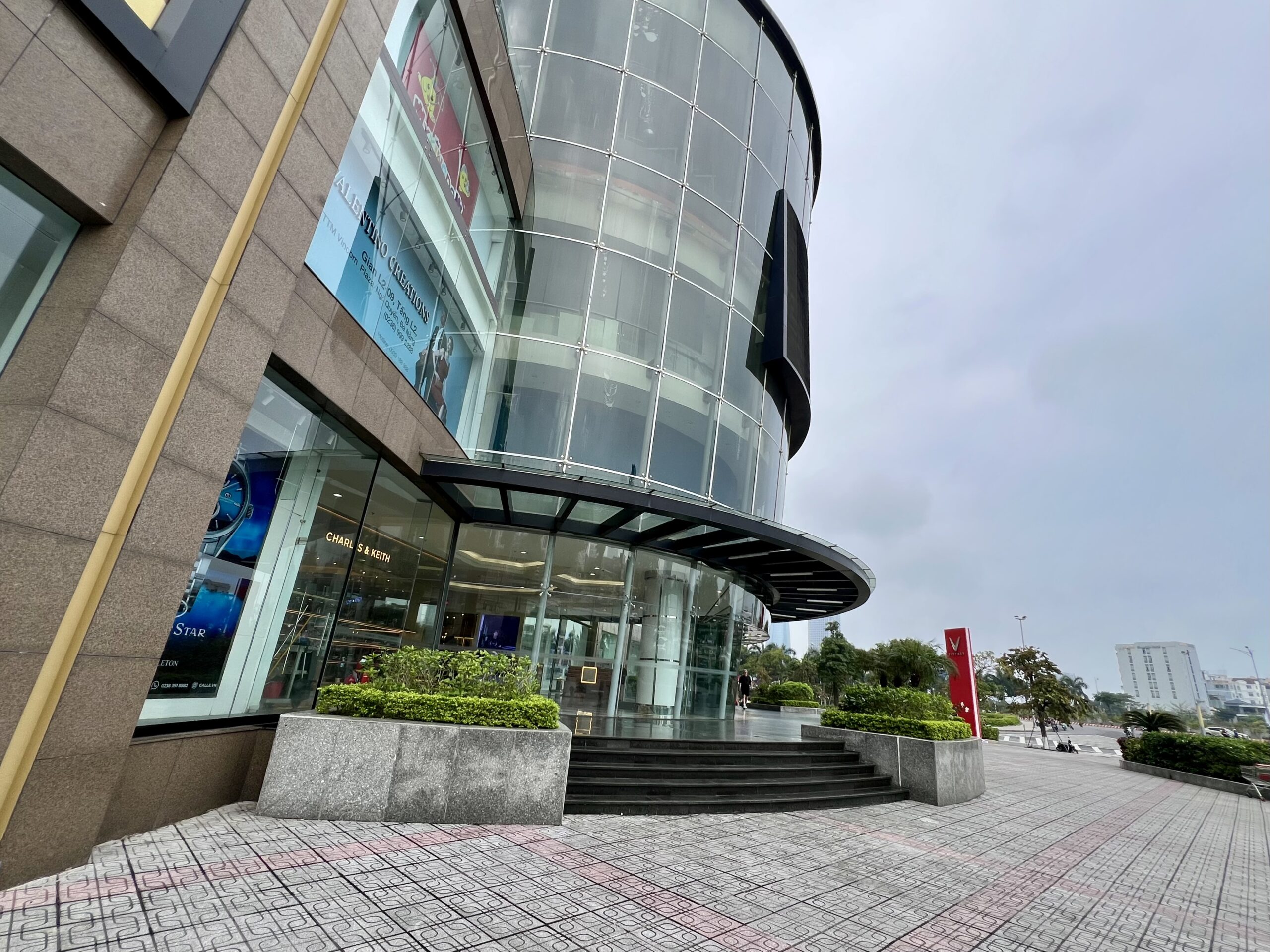
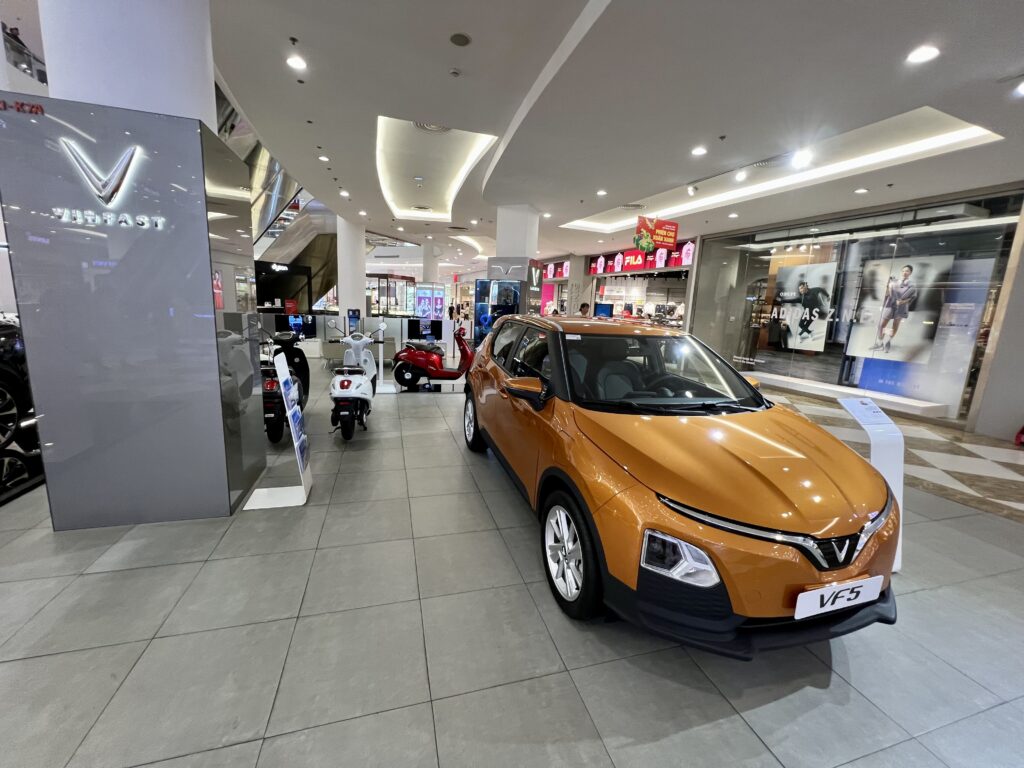
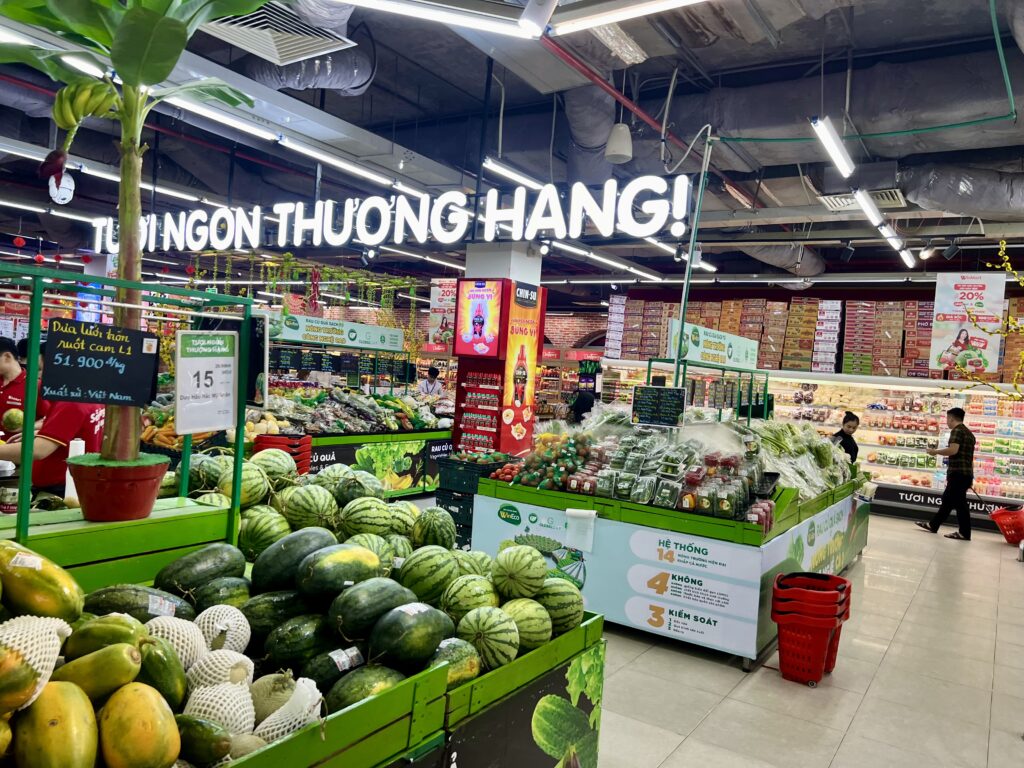
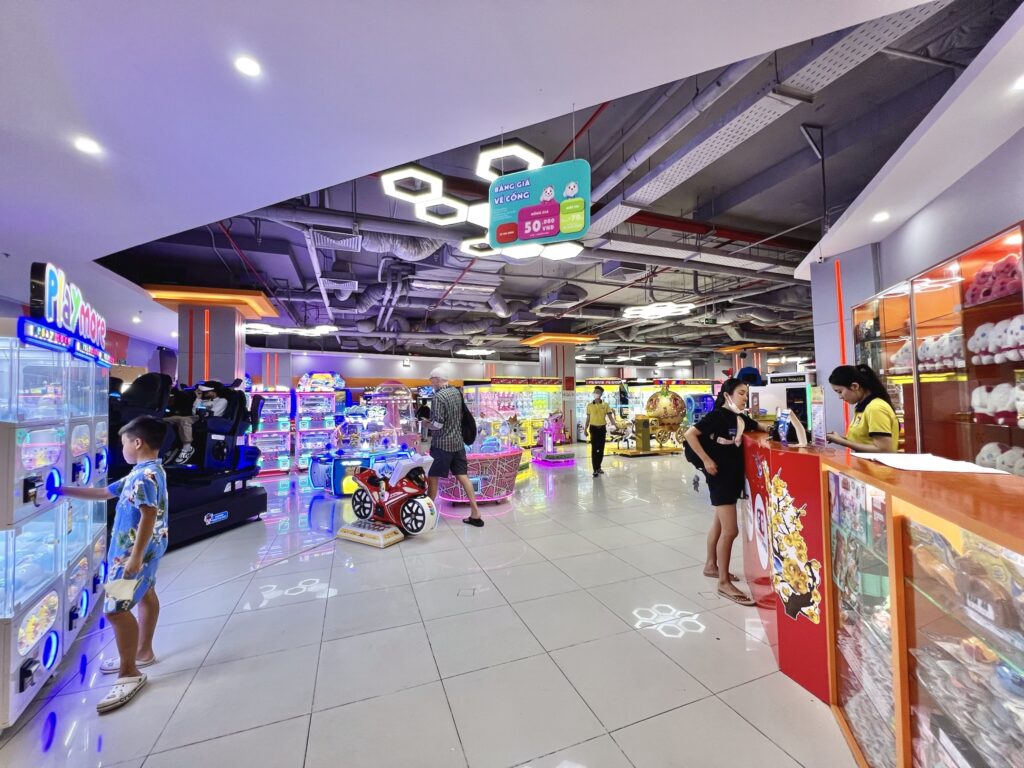
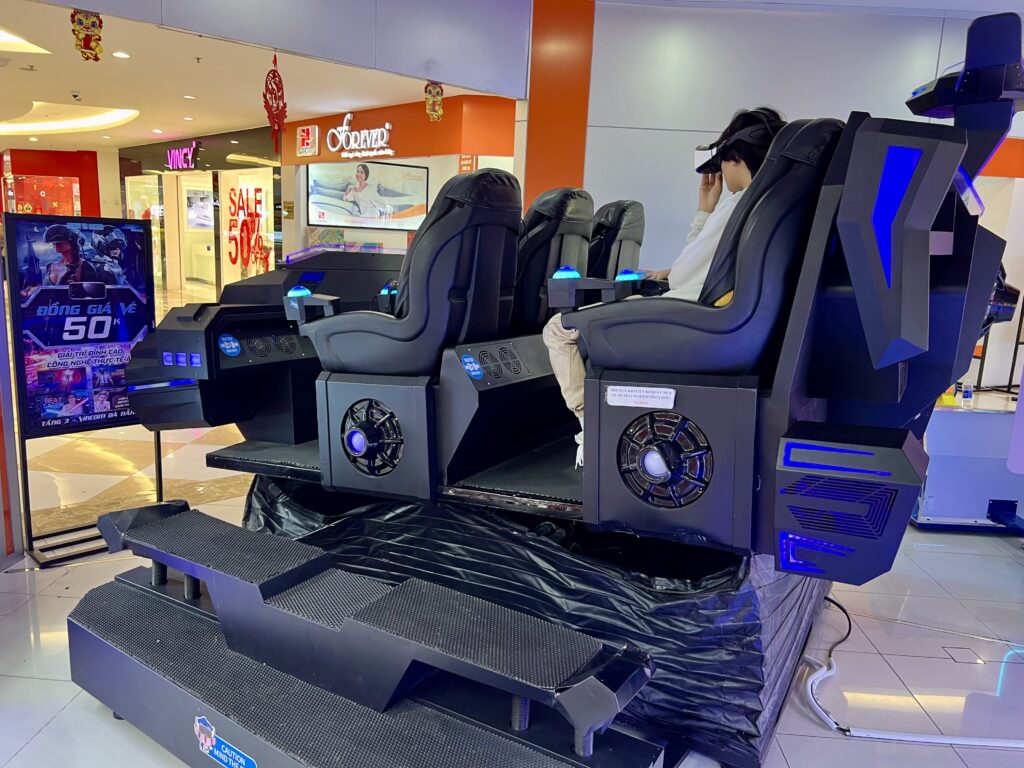
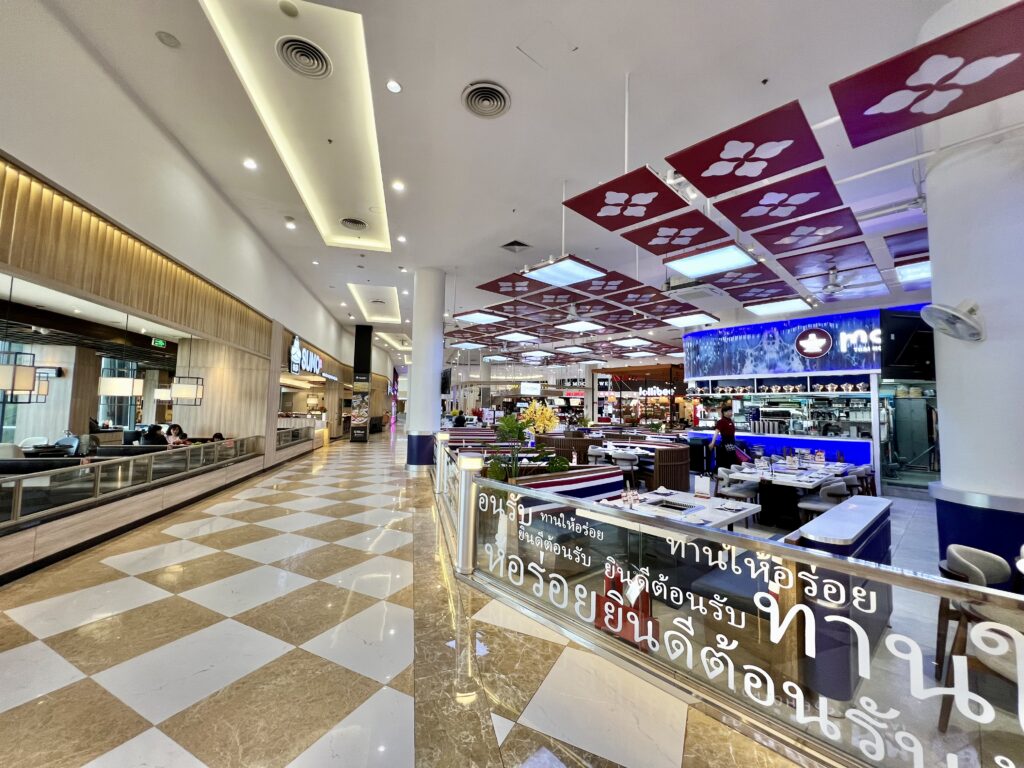
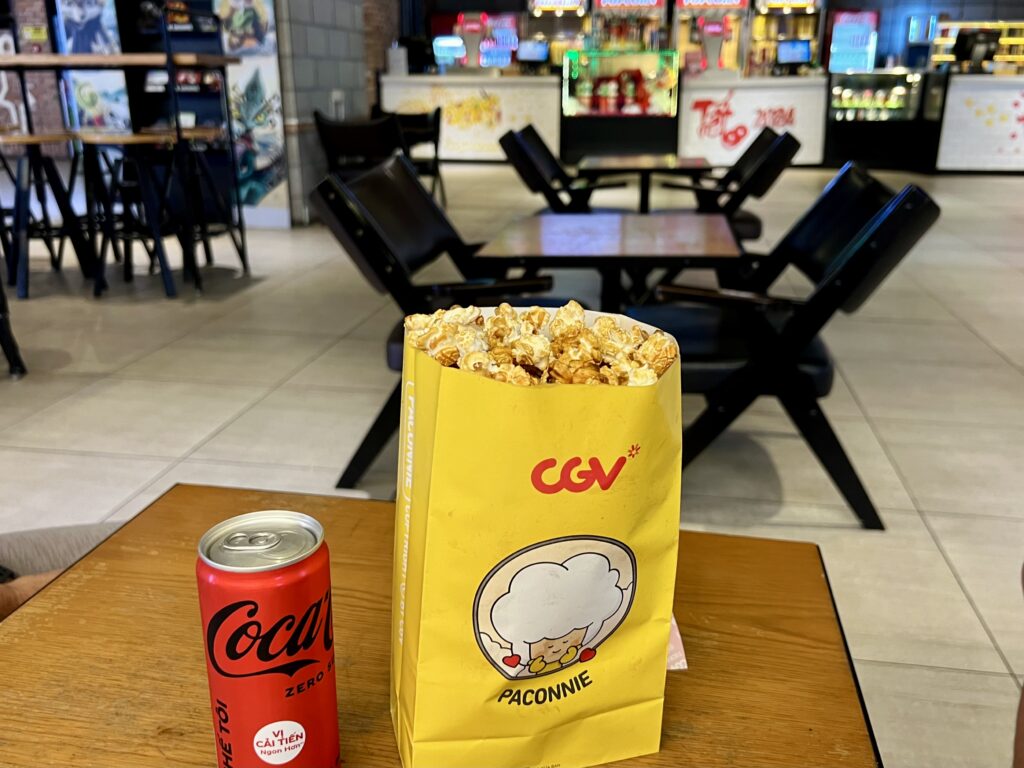
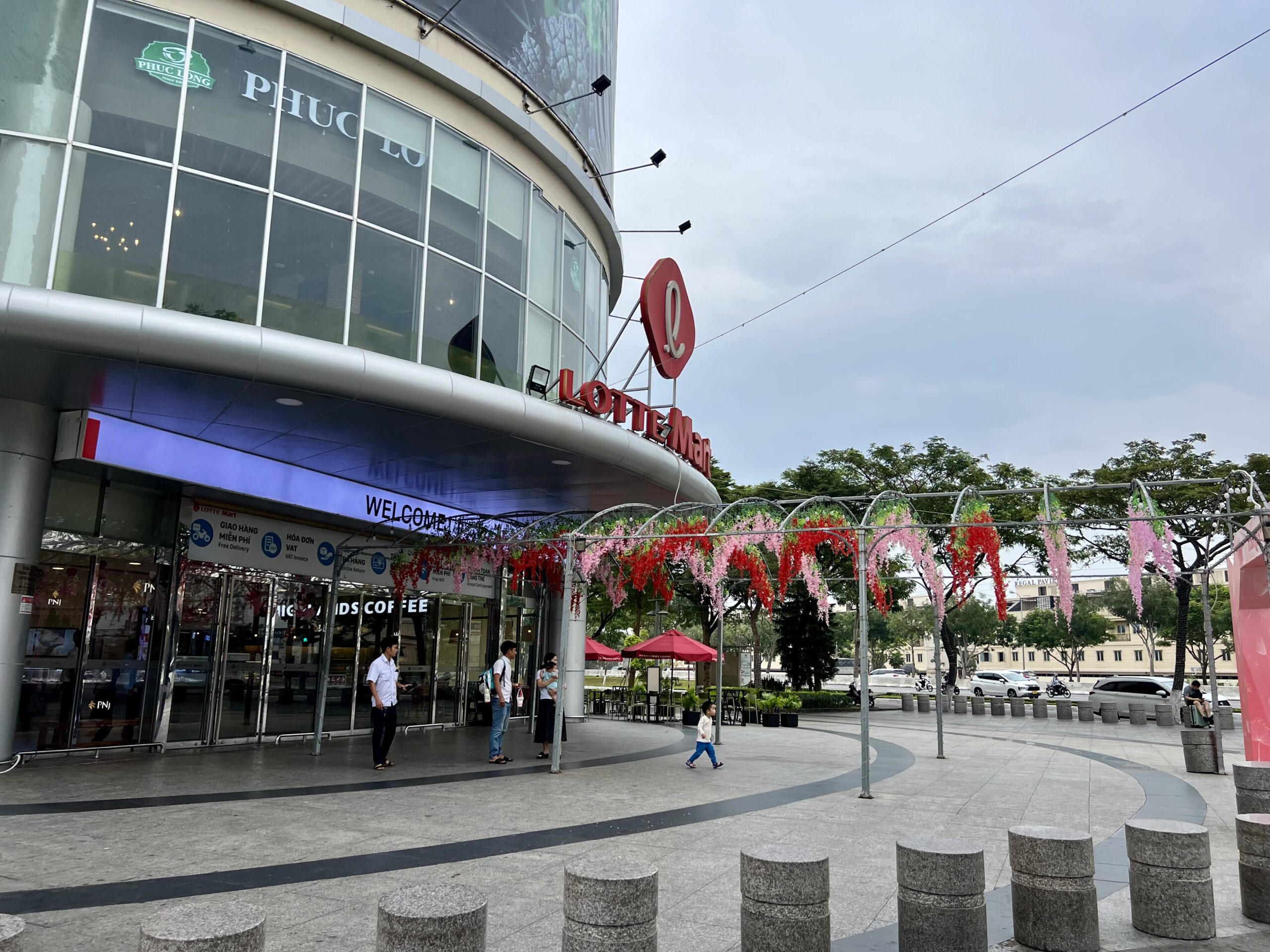
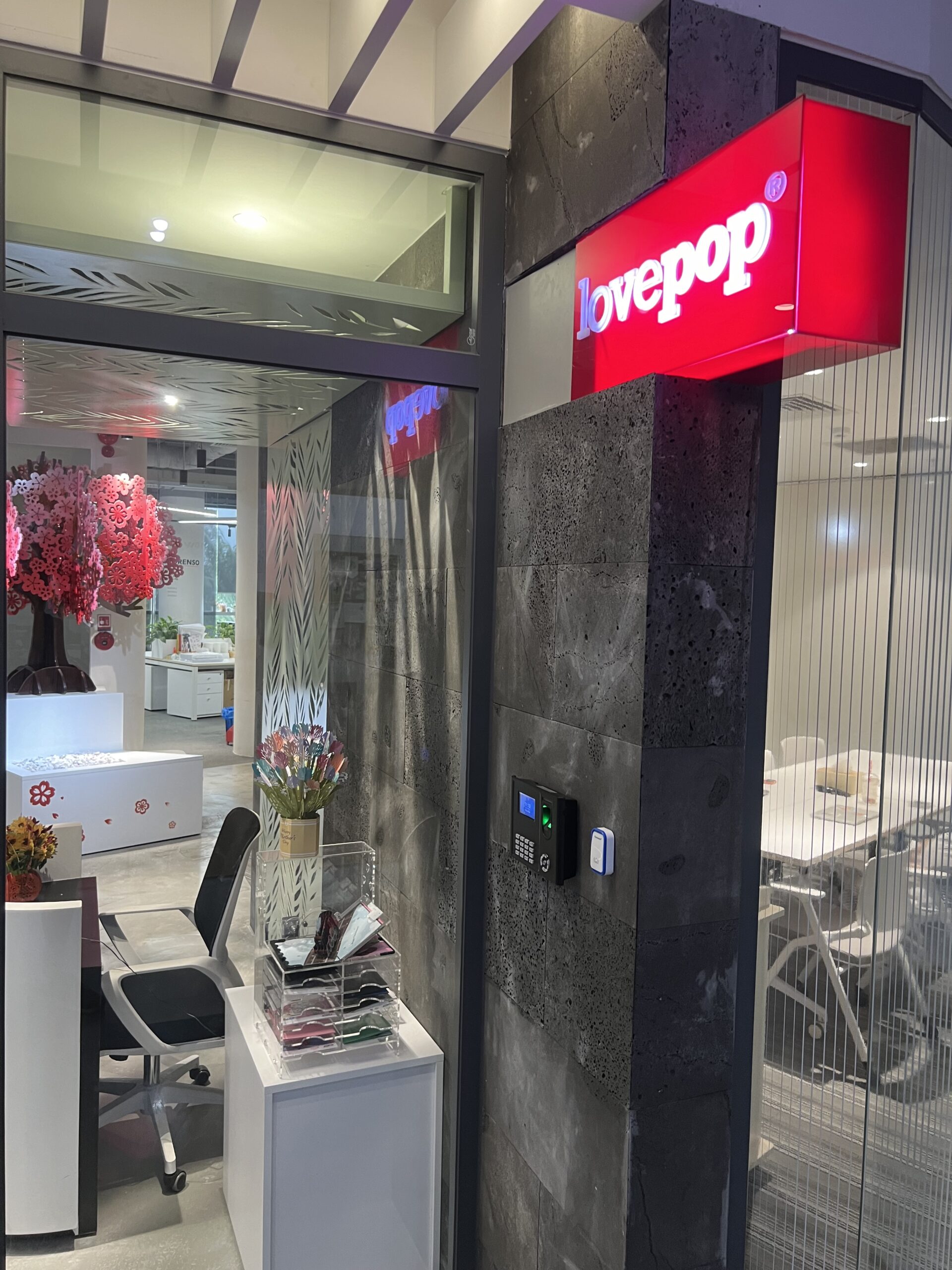
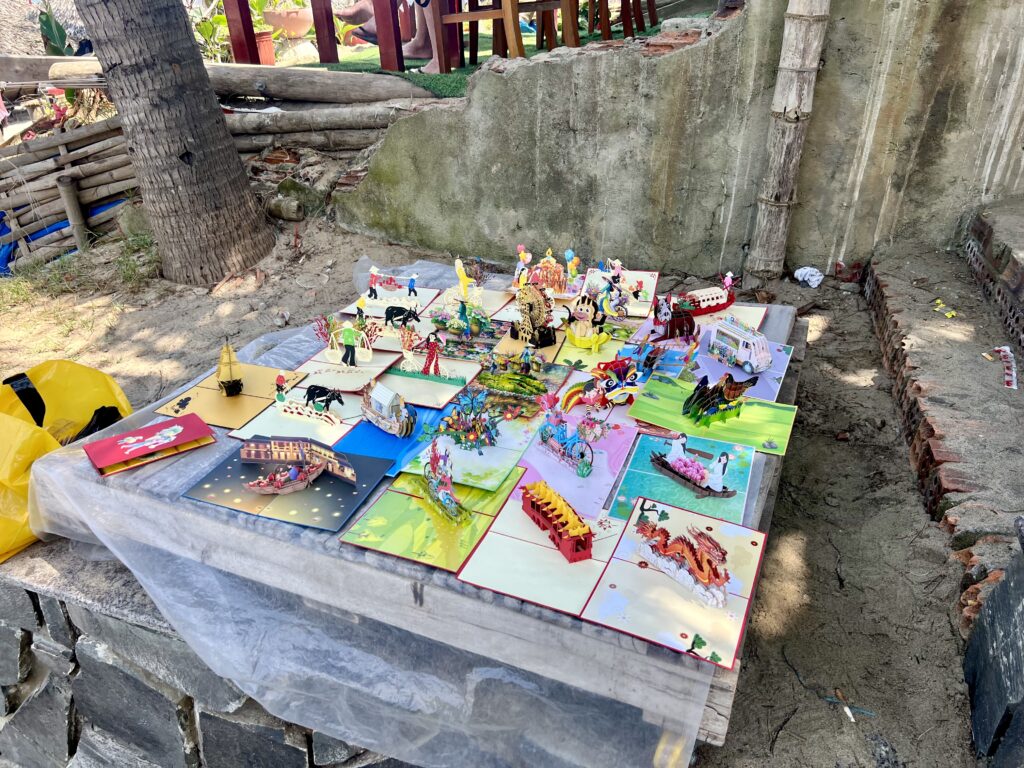
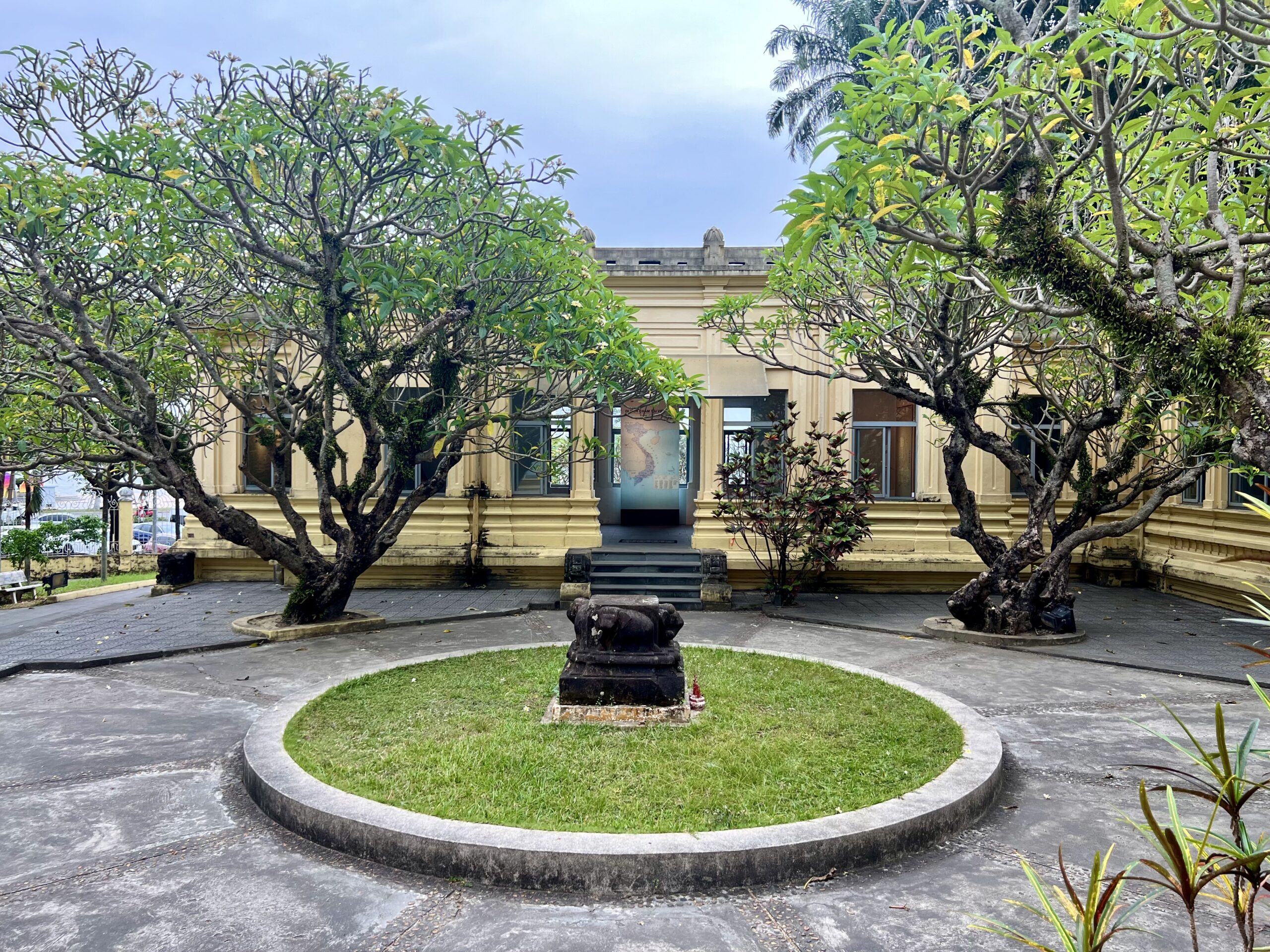
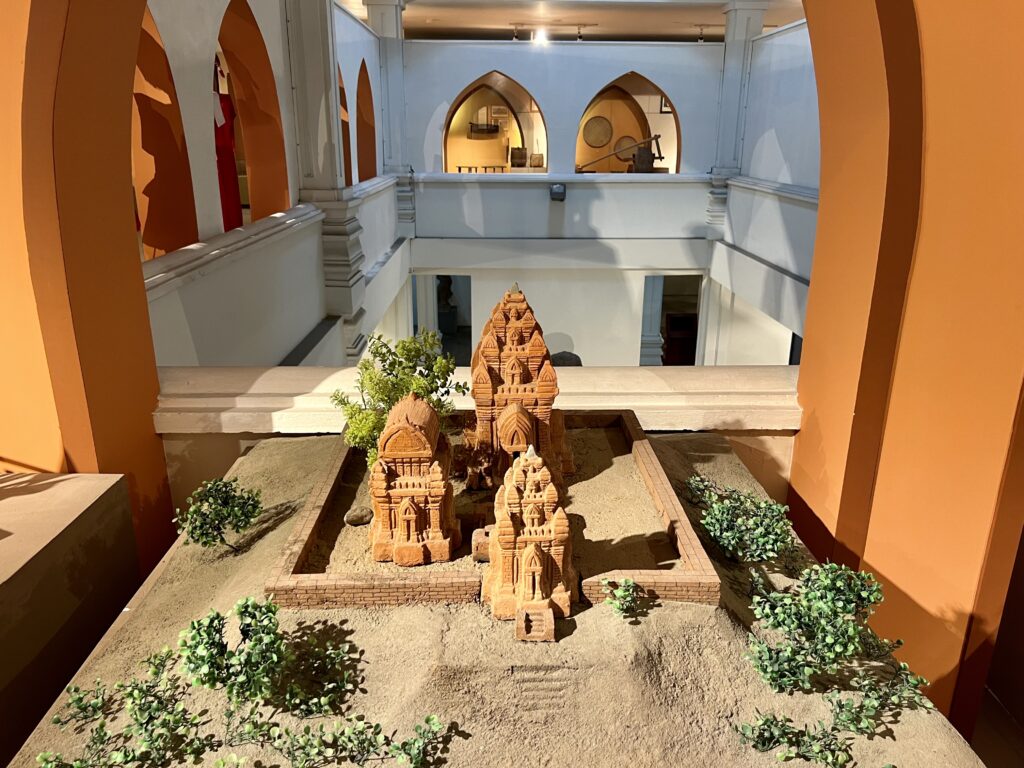
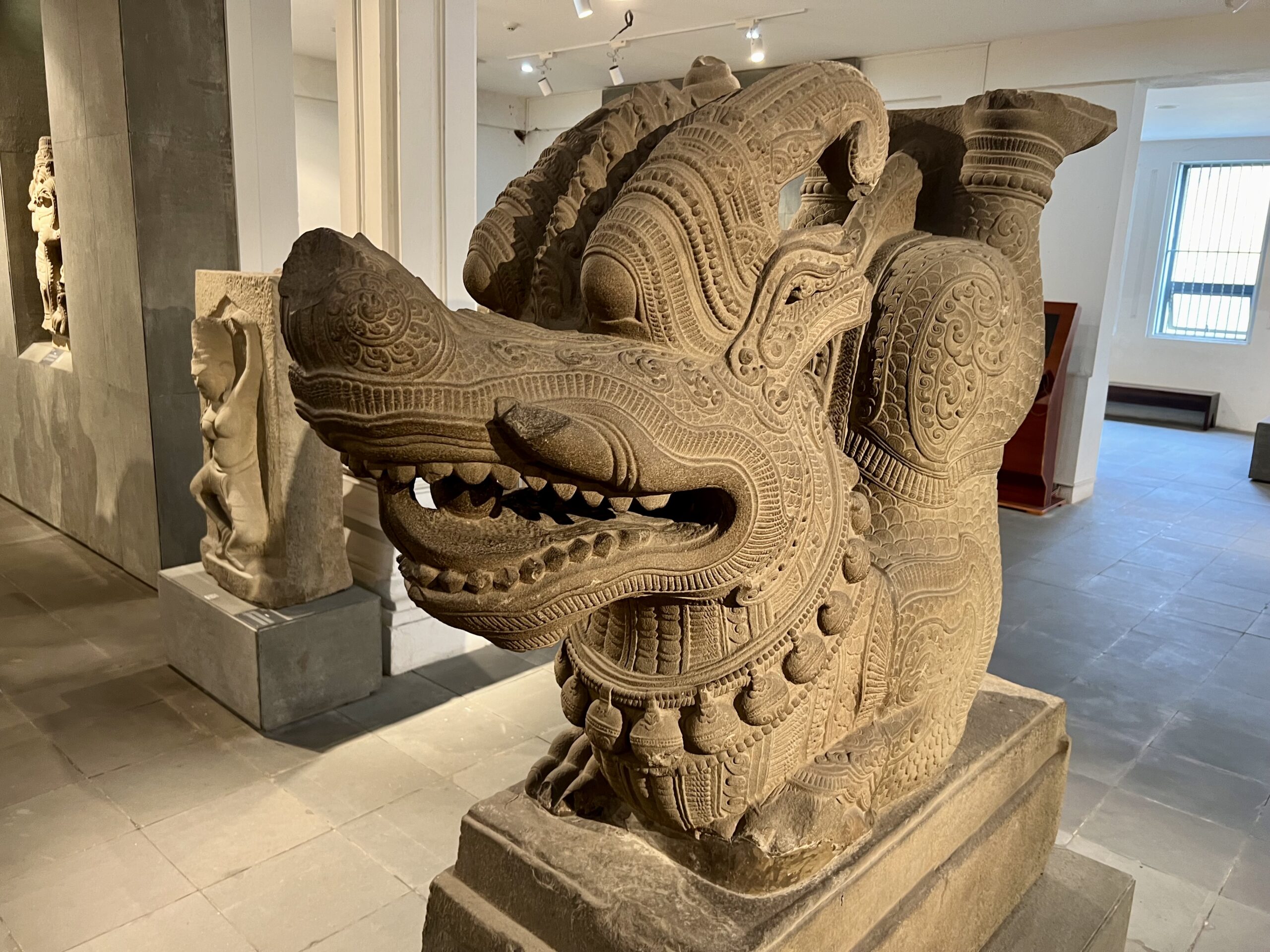
For us, one of the appeals of Hoi An is Danang, a 35-minute drive north along the coast. We made periodic treks, mostly for shopping. This is the Dragon Bridge, one of the many that connect the city across the Han River. The city’s east shore is miles of continuous sandy beach and promenade. This alone explains why so many tourists base their visit out of Danang. Vincom Plaza is our go-to shopping center. We made one supply run just before Tet, because many places, including malls, close for the extended holiday.At Vincom, unlike every mall we visited in Thailand, no BMWs were on display. Instead VinFast electric cars were on show. The VF5 shown here is their least expensive one. It sells for about US $20,000. Without batteries. We’re not sure how that works.In the VinMart grocery store, we bought peanut butter and unscented laundry detergent (two things on our important-stuff list). They had no avocados, though. The photographer was depressed. And we checked out the top-floor kids’ section. Every major shopping center worth its salt has one. The blogger thought the bouncing and dipping VR ride was cool. The photographer wanted to know where the barf bags were. We went to the restaurant court for lunch. Korean hot pot, Japanese hot pot, meat hot pot, conveyor belt hot pot, nothing but hot pot restaurants. South Korean tourists who flock to Danang live for hot pot. Somehow, two restaurants didn’t get the memo, Jollibee and a Thai restaurant. Somewhat ironically, we ate Thai.Another trip took us to the same mall for their cinema. We saw Dune 2, in English with Vietnamese subtitles. They had Standard, VIP, and Sweetbox seats. Standard were the front rows. VIP were every other seat, except the last-row, which has Sweetbox loveseat couches in booths. They had a VVIP thing, but since we didn’t know what that is, we probably don’t belong. Movies were about USD $4.00 each, and the concession prices were actually less than the movie tickets – unheard of in the US. Another useful shopping center is Lotte Mart, of the South Korean Lotte conglomerate family. Its dual customer base is made up of local Vietnamese grocery shoppers and South Korean bus tours. If you need to buy matching floral wear for a motor coach load of fashion challenged tourists, this is the place for you. We visited the Indochina Mall, too, because we liked the name. We were there for maybe five minutes. Most of the shop space has been taken over by company offices. Lovepop, for example, takes up nearly half of a floor. All they do is design pop-up stuff, like the cards we see sold everywhere, from street corner to beach (below). We couldn’t get past their biometric security, so we had to peer through the windows at their displays and computer stations. We hadn’t visited the Danang Museum before, so we made a trip in for that. It’s a simple place focused on the archeological history of the Champa culture in the area. Champa states populated and controlled most of central and south Vietnam for over 1,500 years. Inveterate traders, the Champa were exposed to and influenced by virtually every major culture, Indian, Chinese, and Arabic. This is a model of part of the Hindi temple complex in My Son. Our favorite sculptures were of the Vietnamese dragon. This one here has a bit of a worry face.
Hoi An Old Town
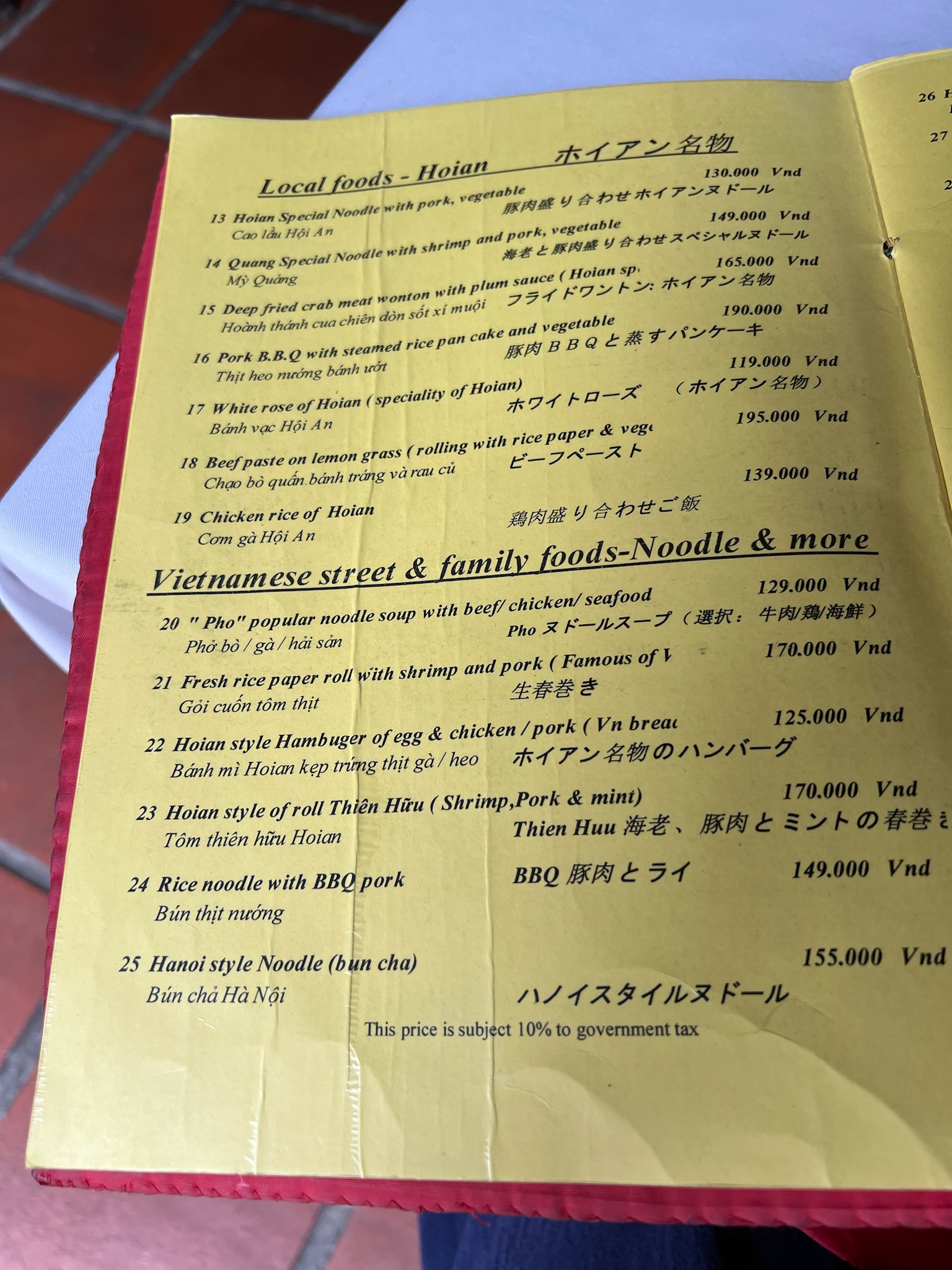
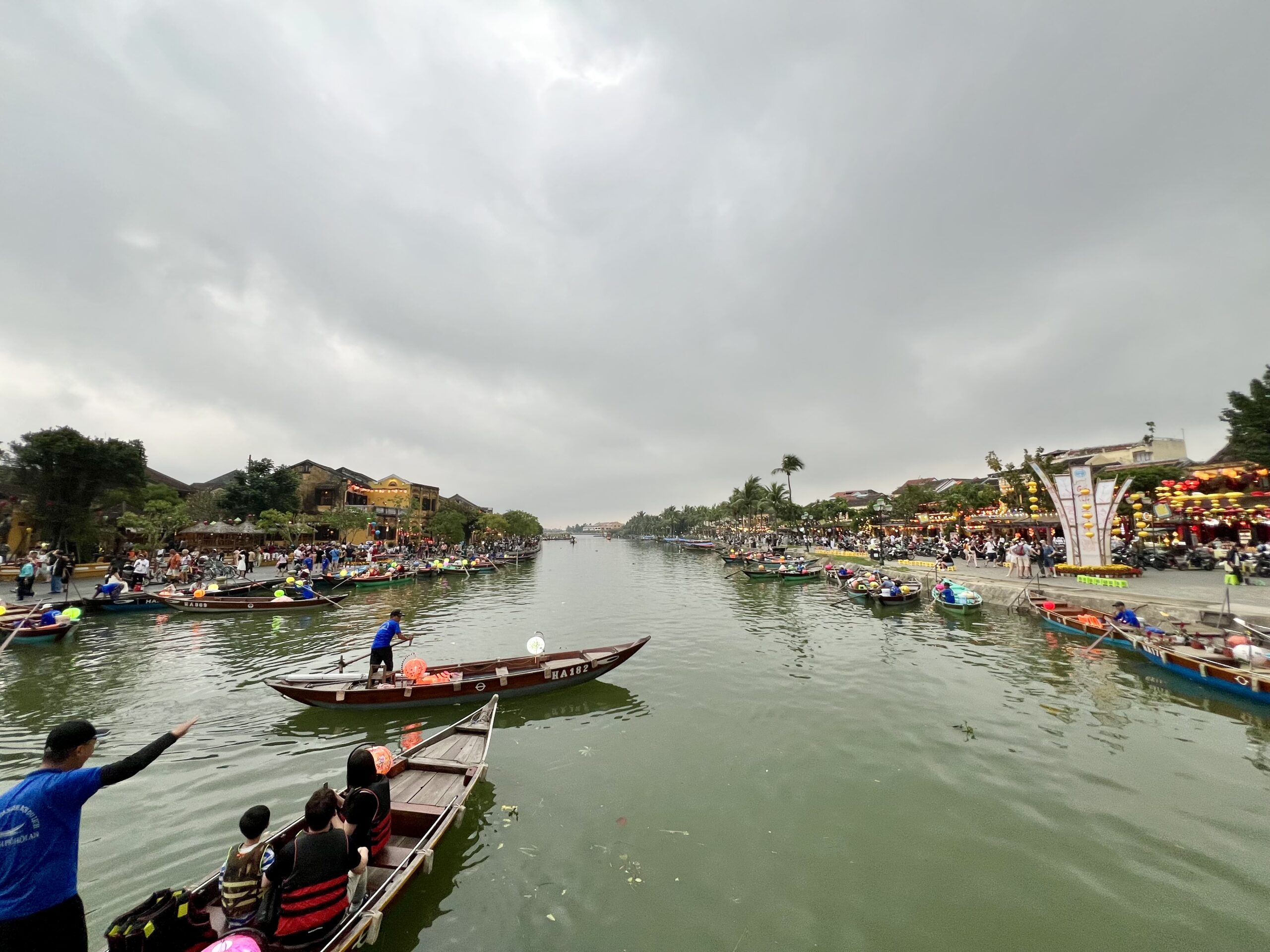
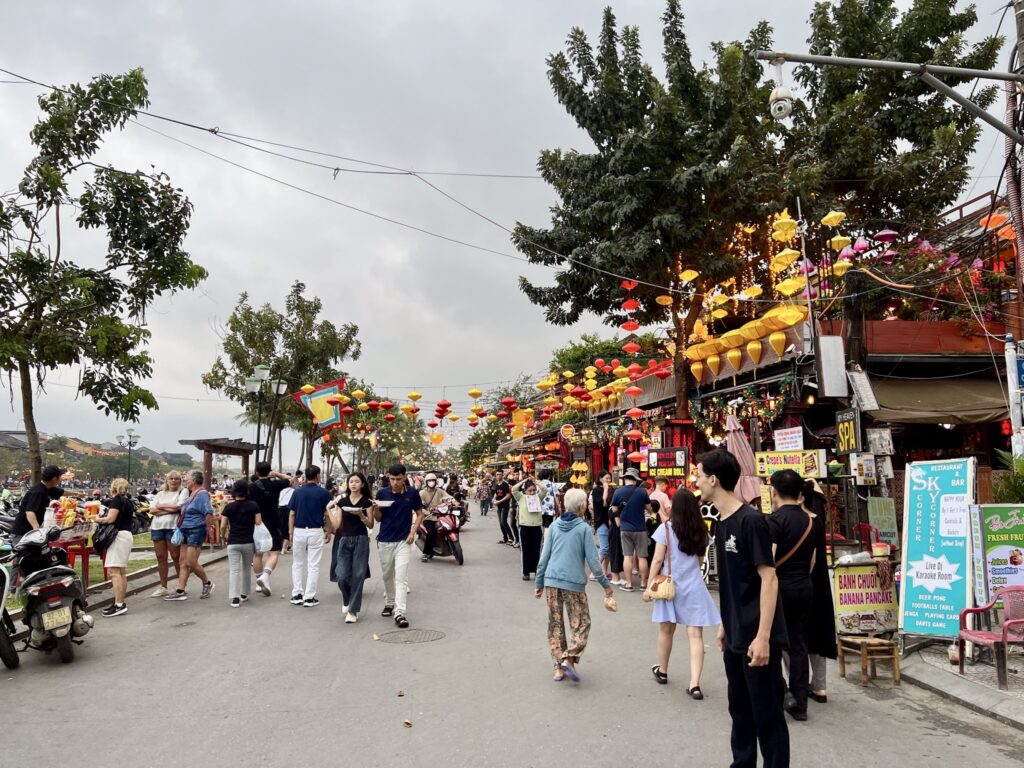
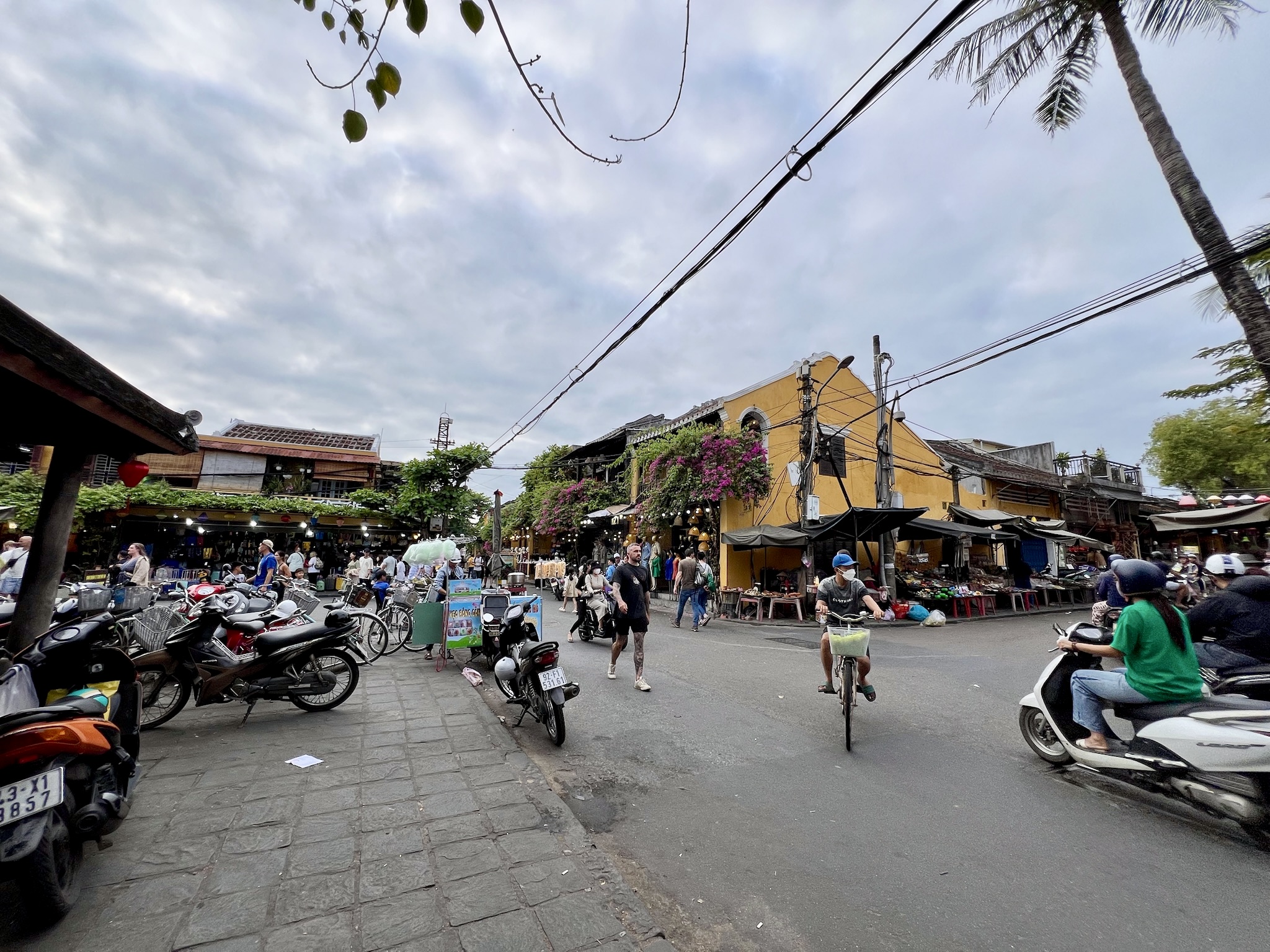
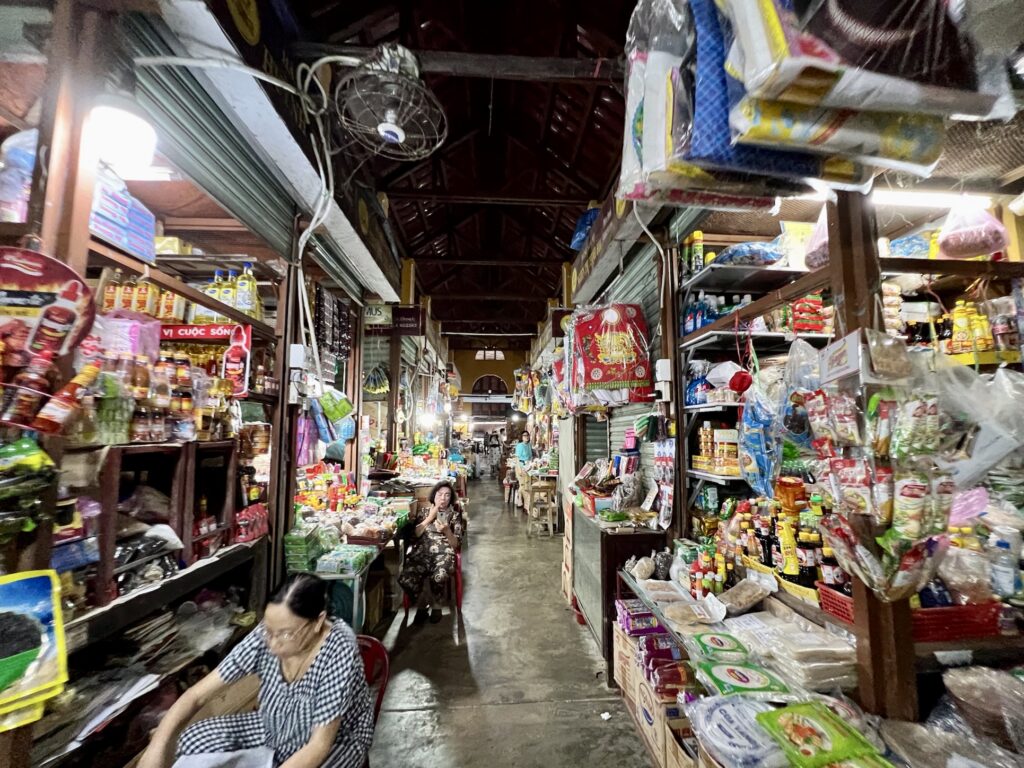
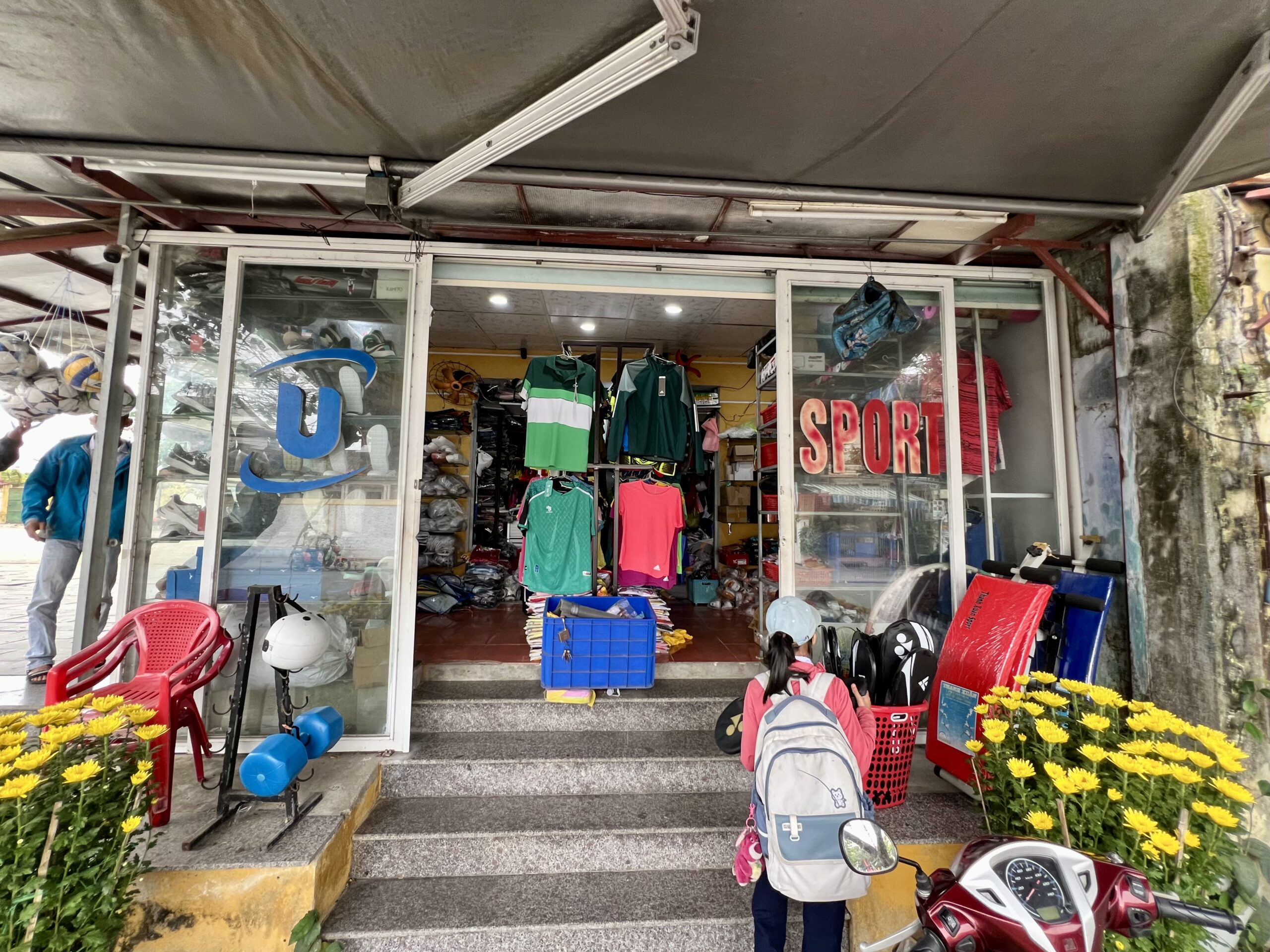
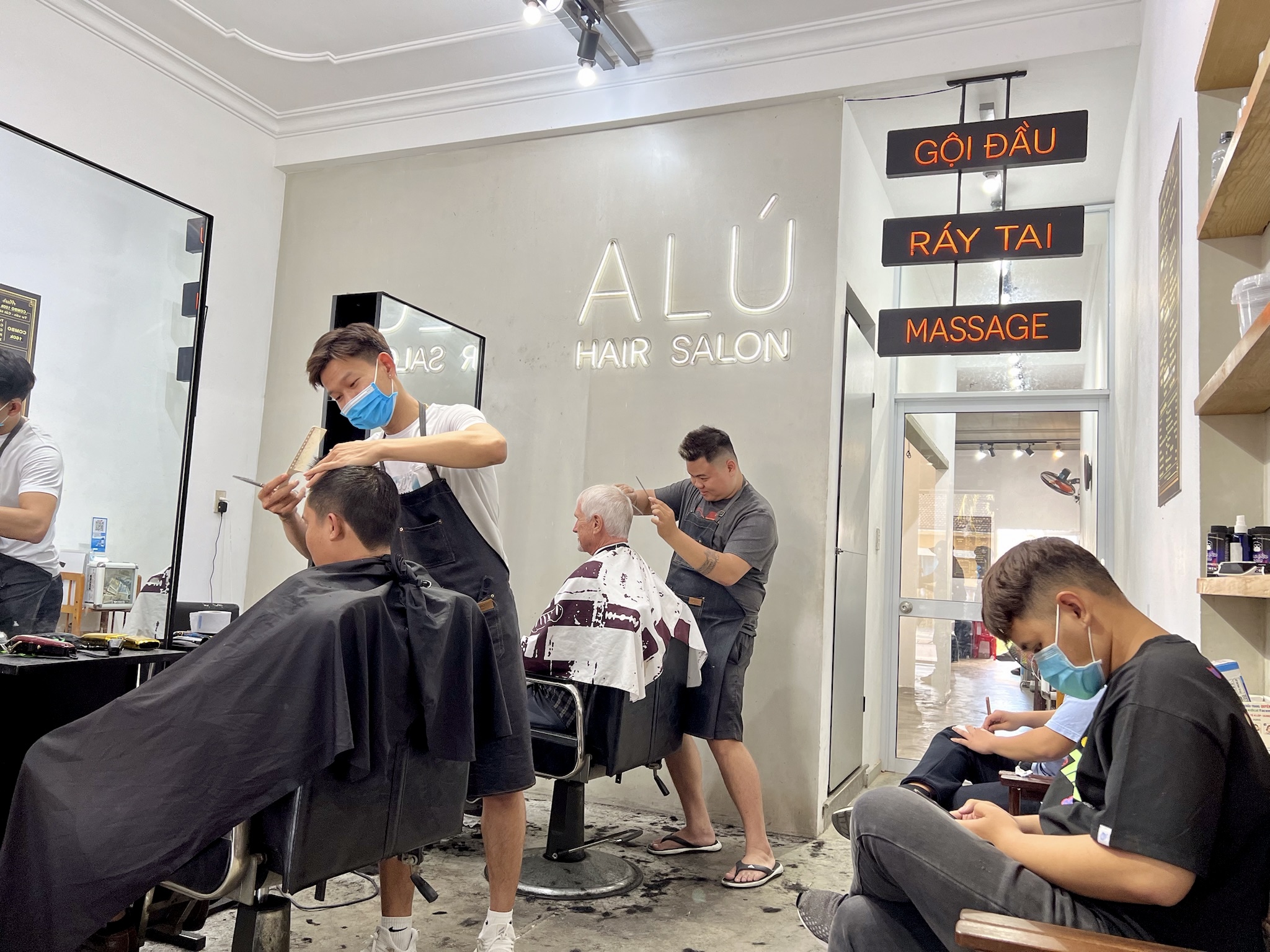
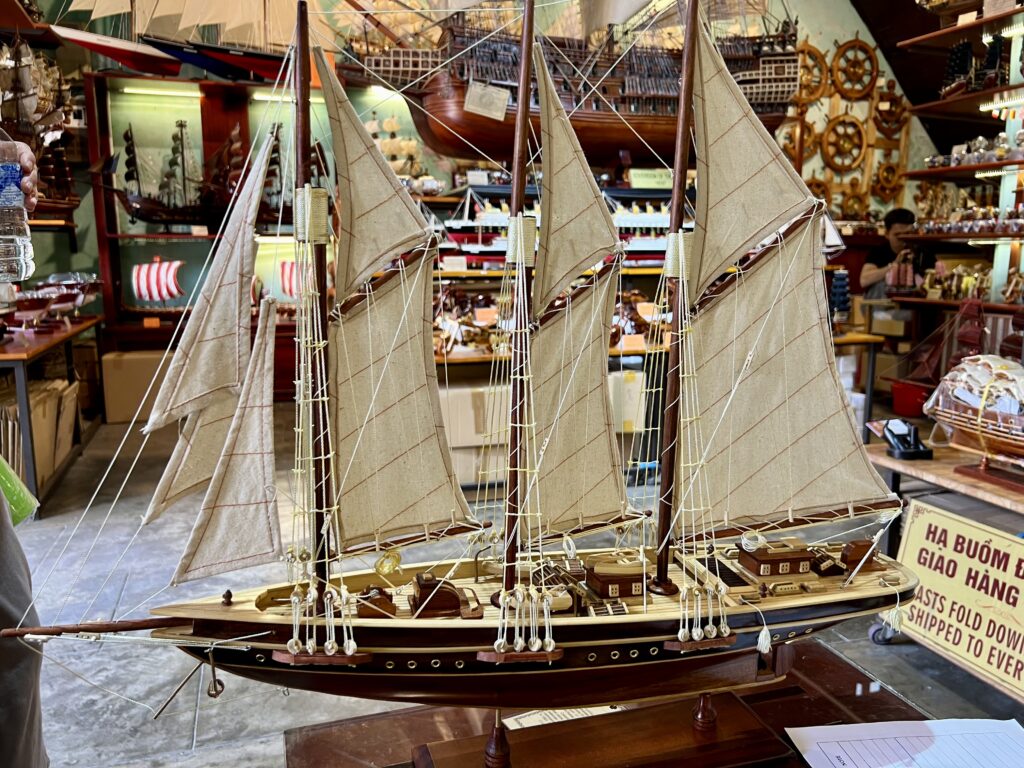
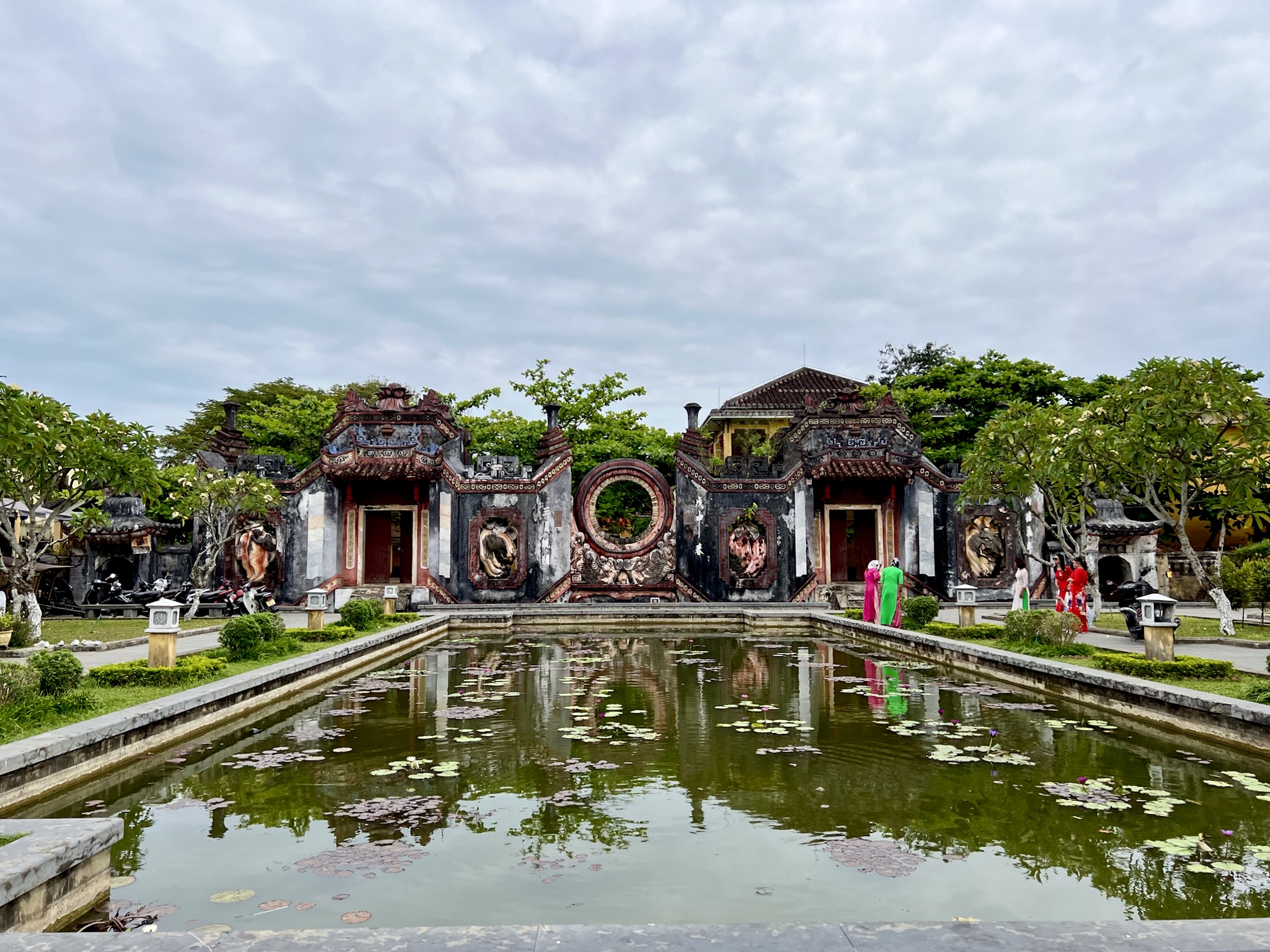
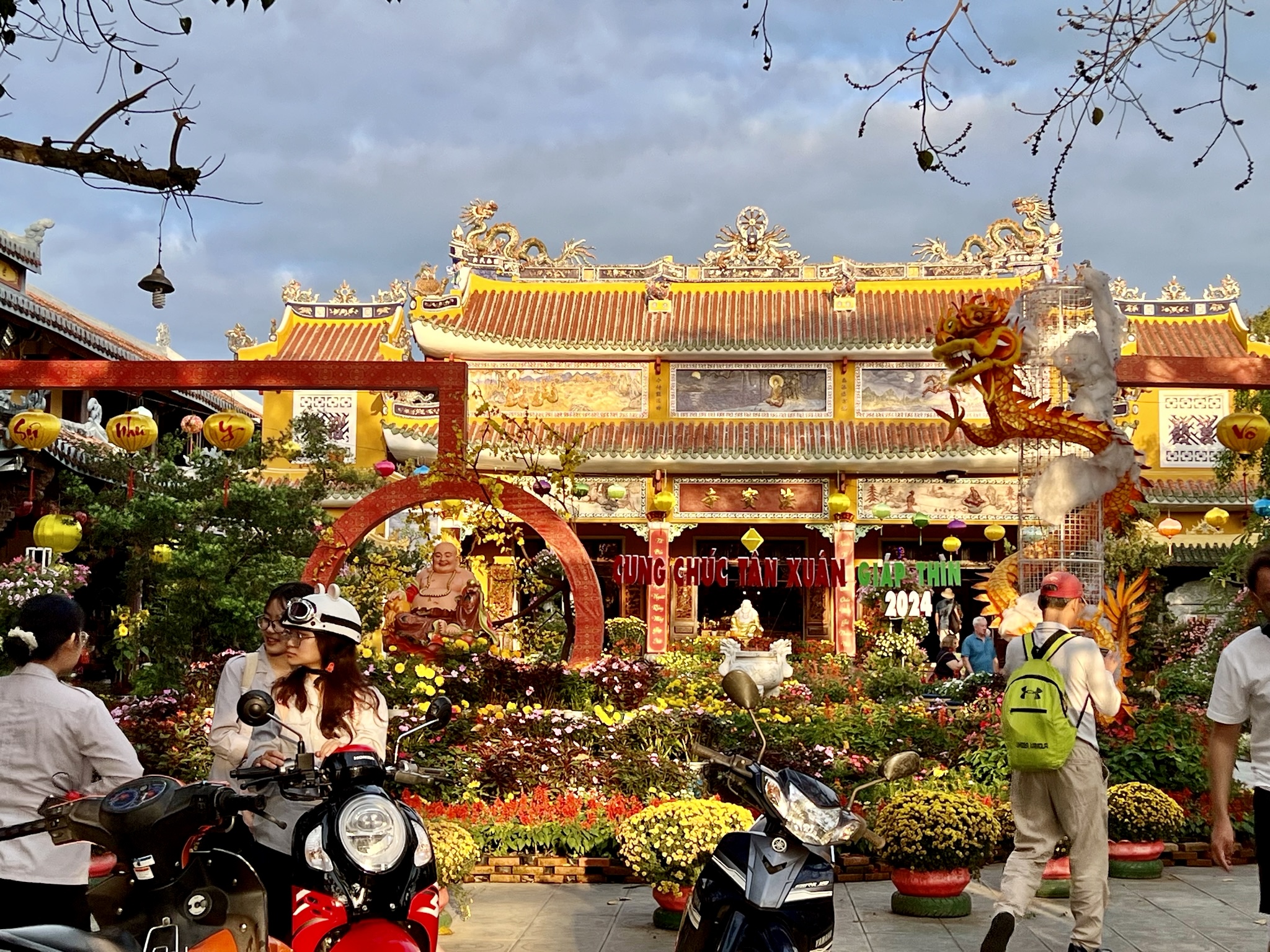
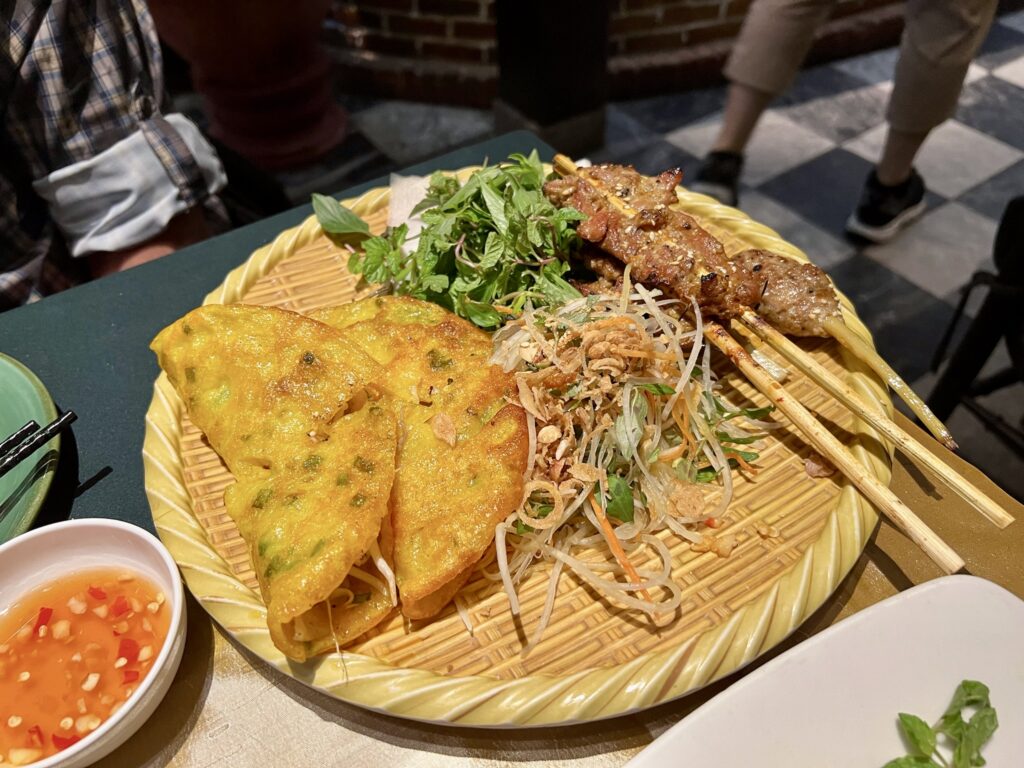
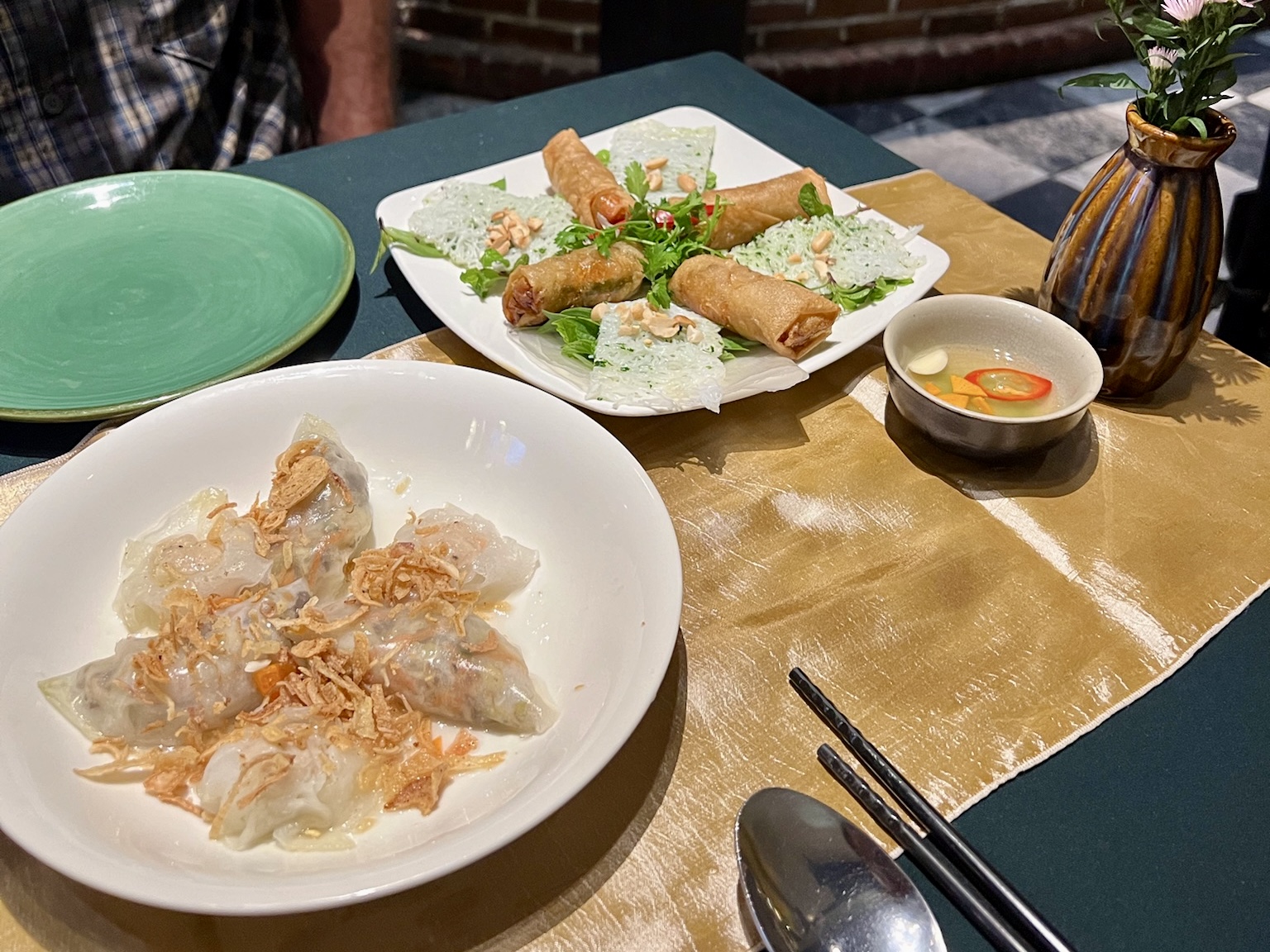
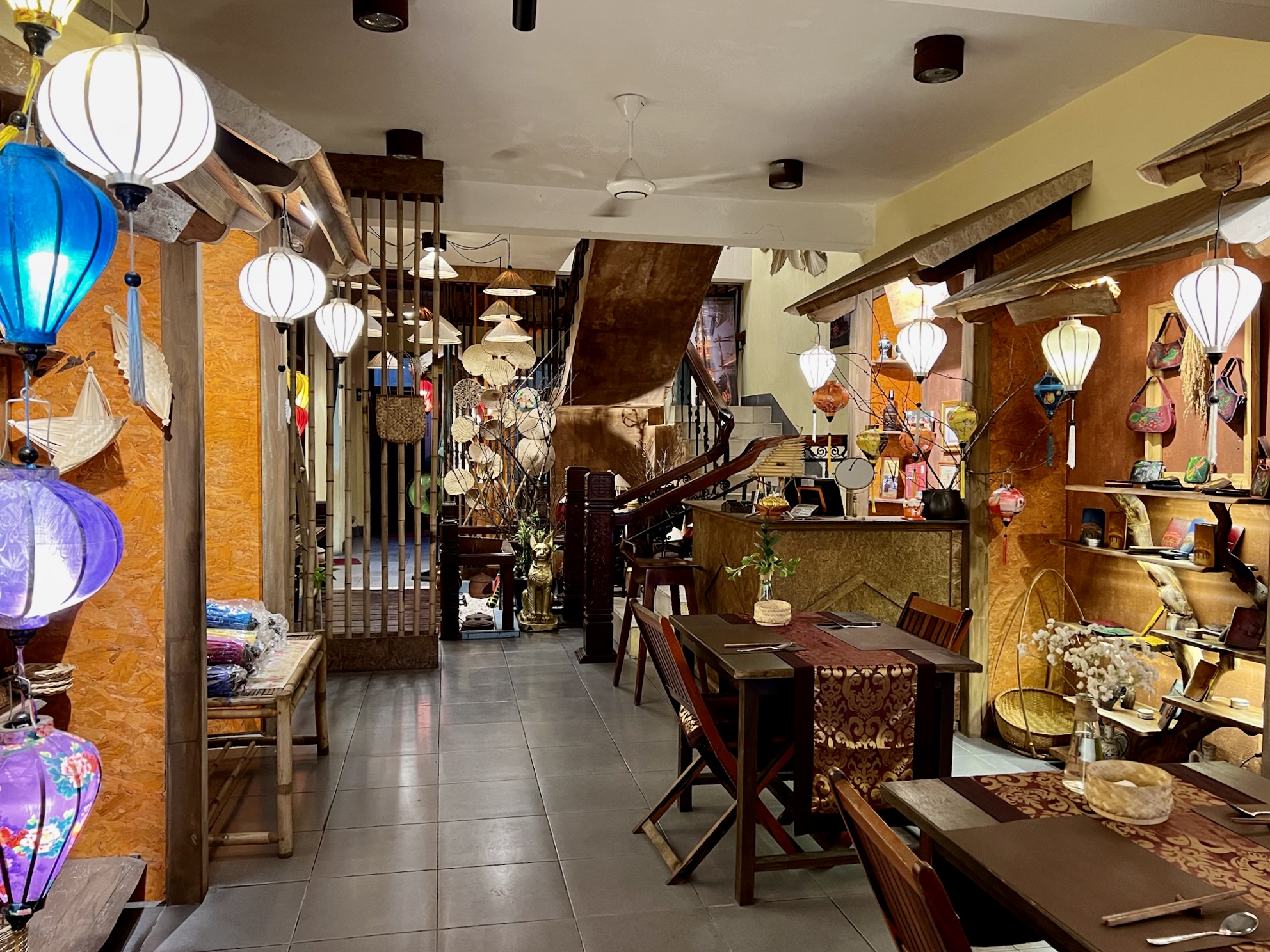
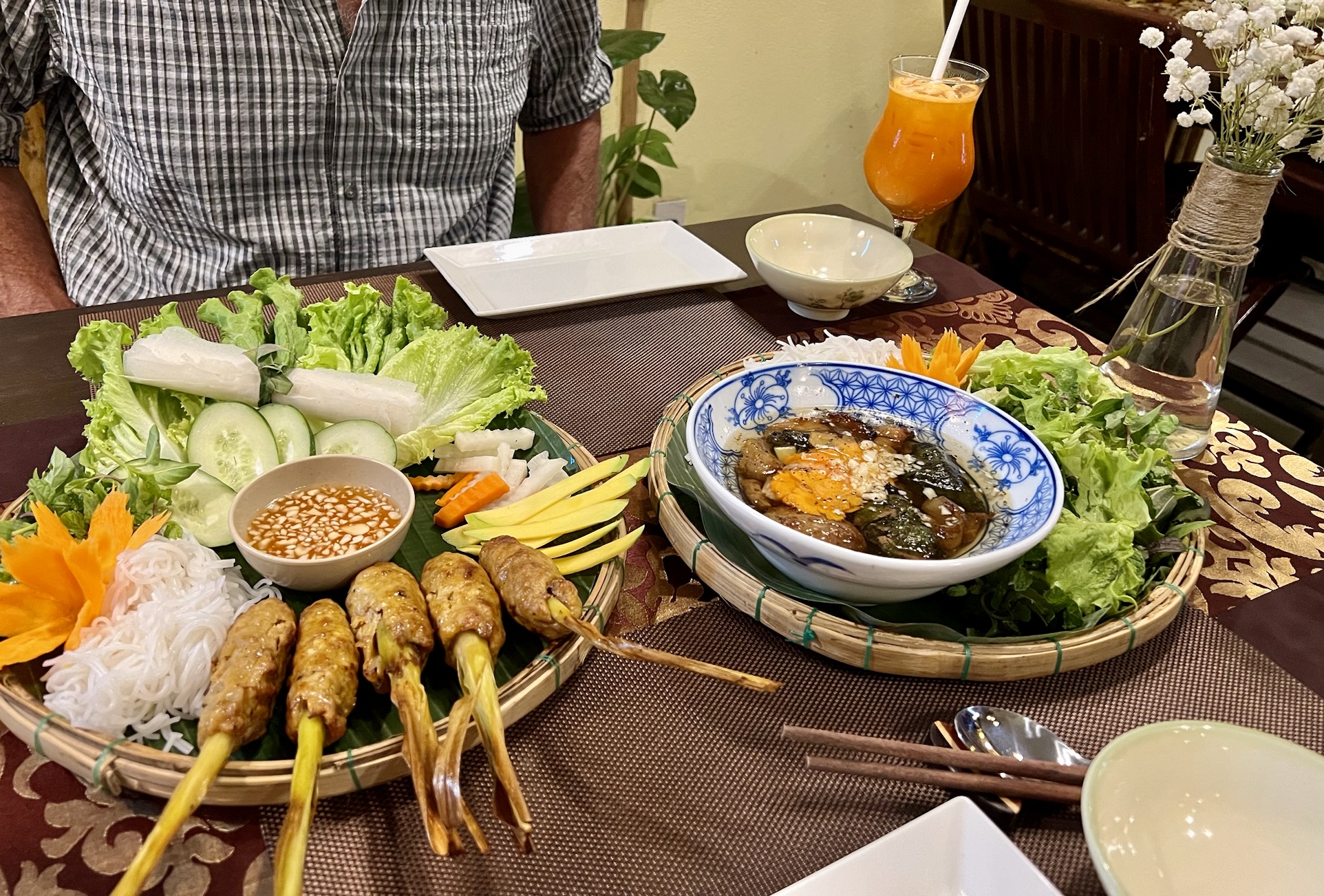
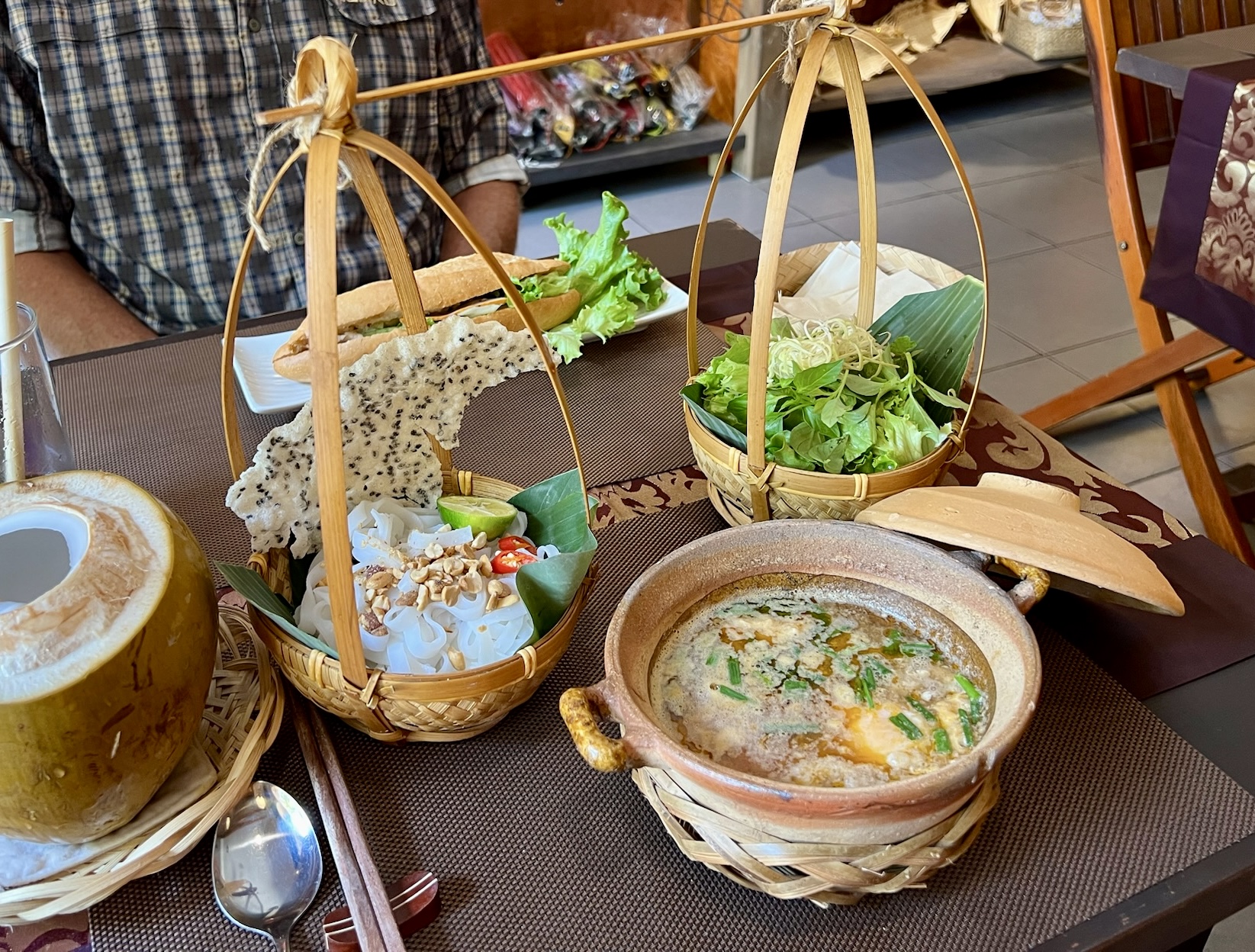
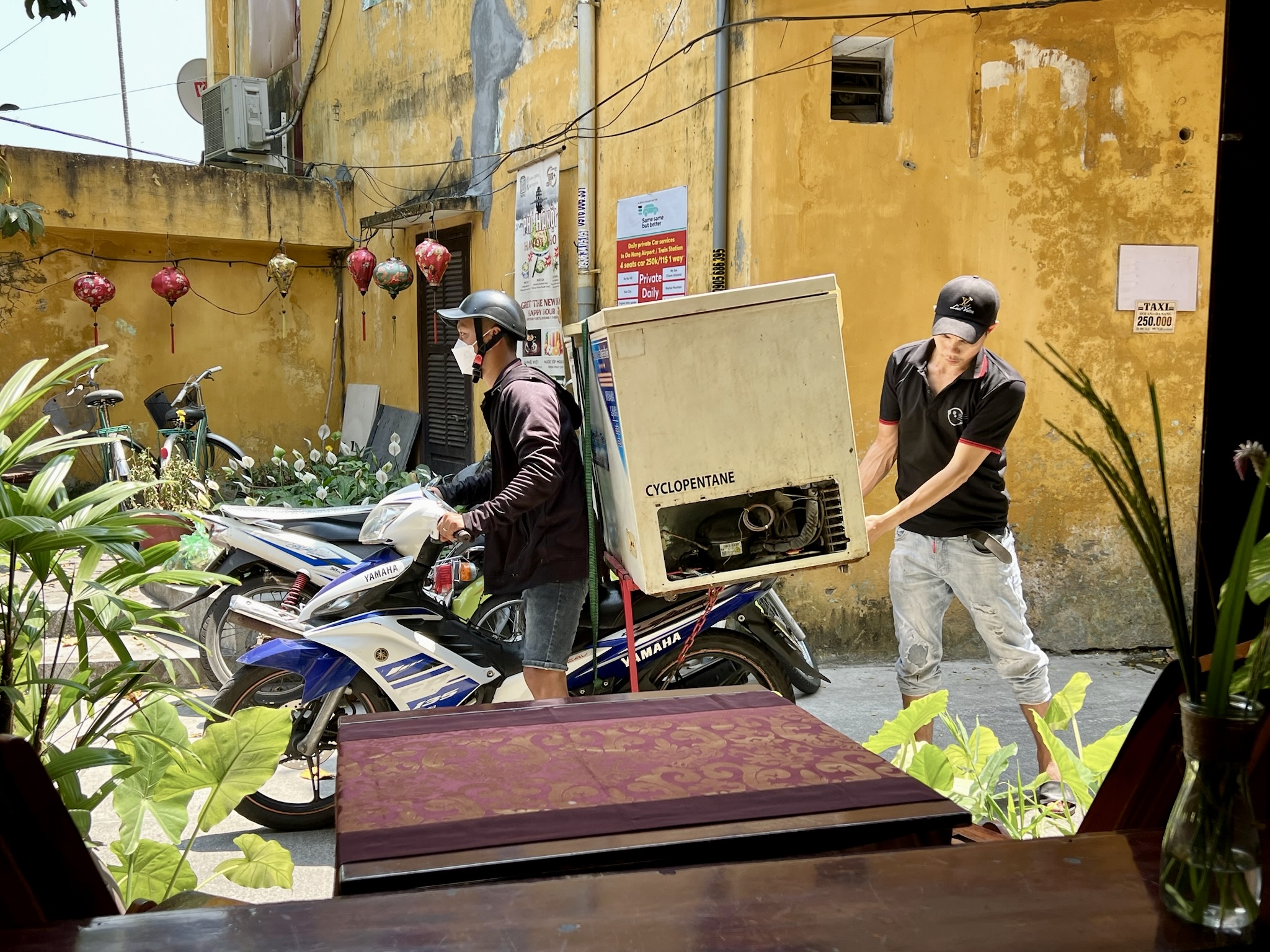
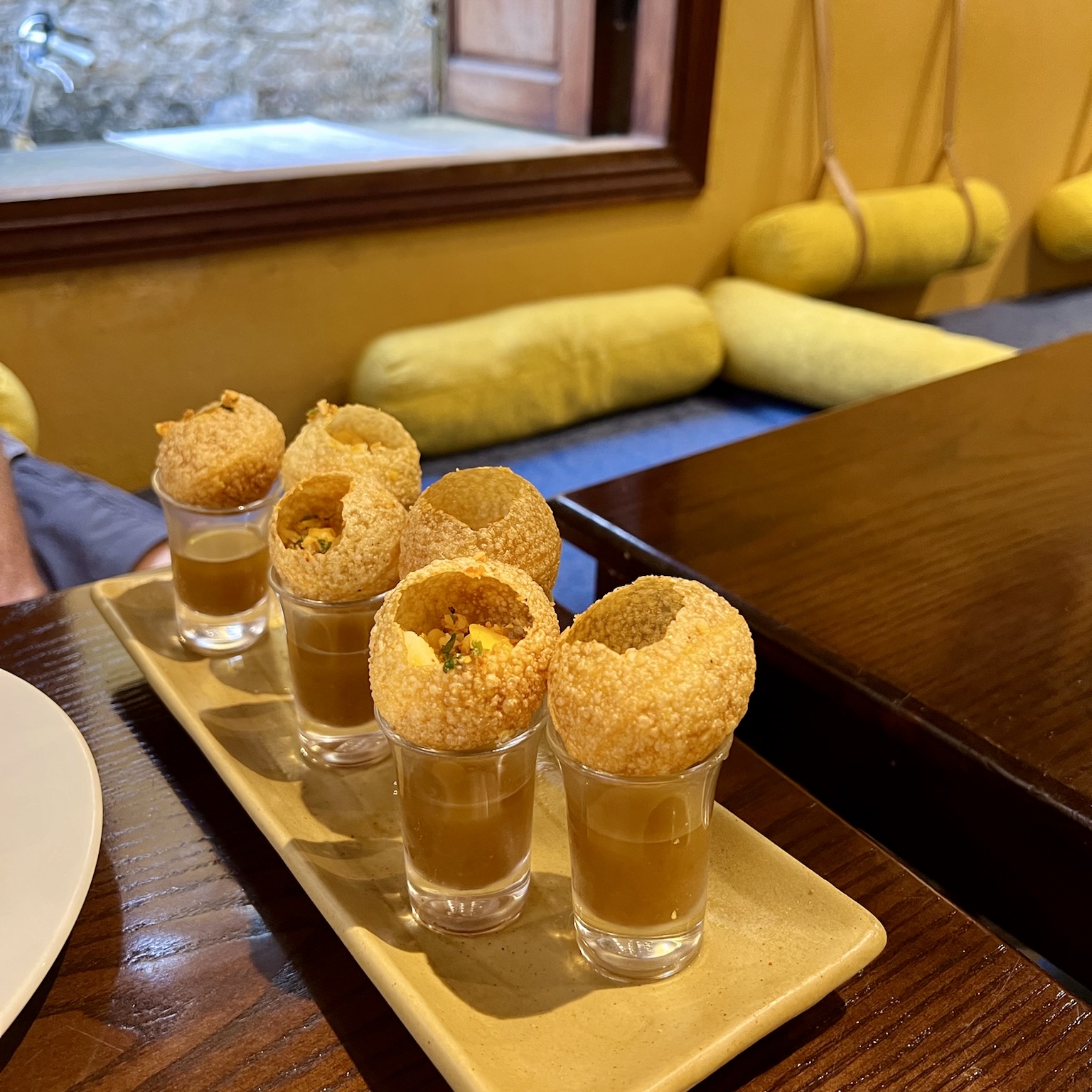
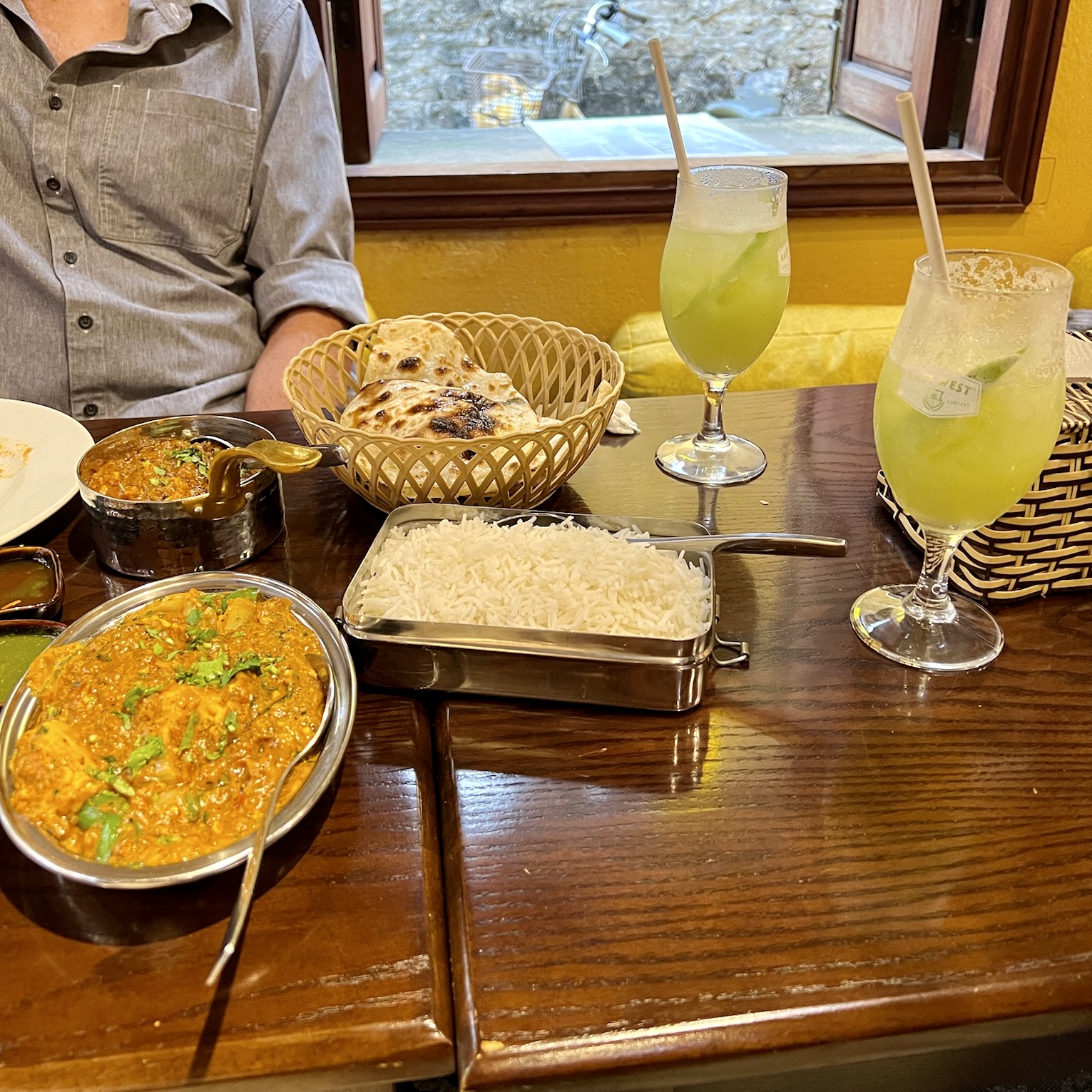
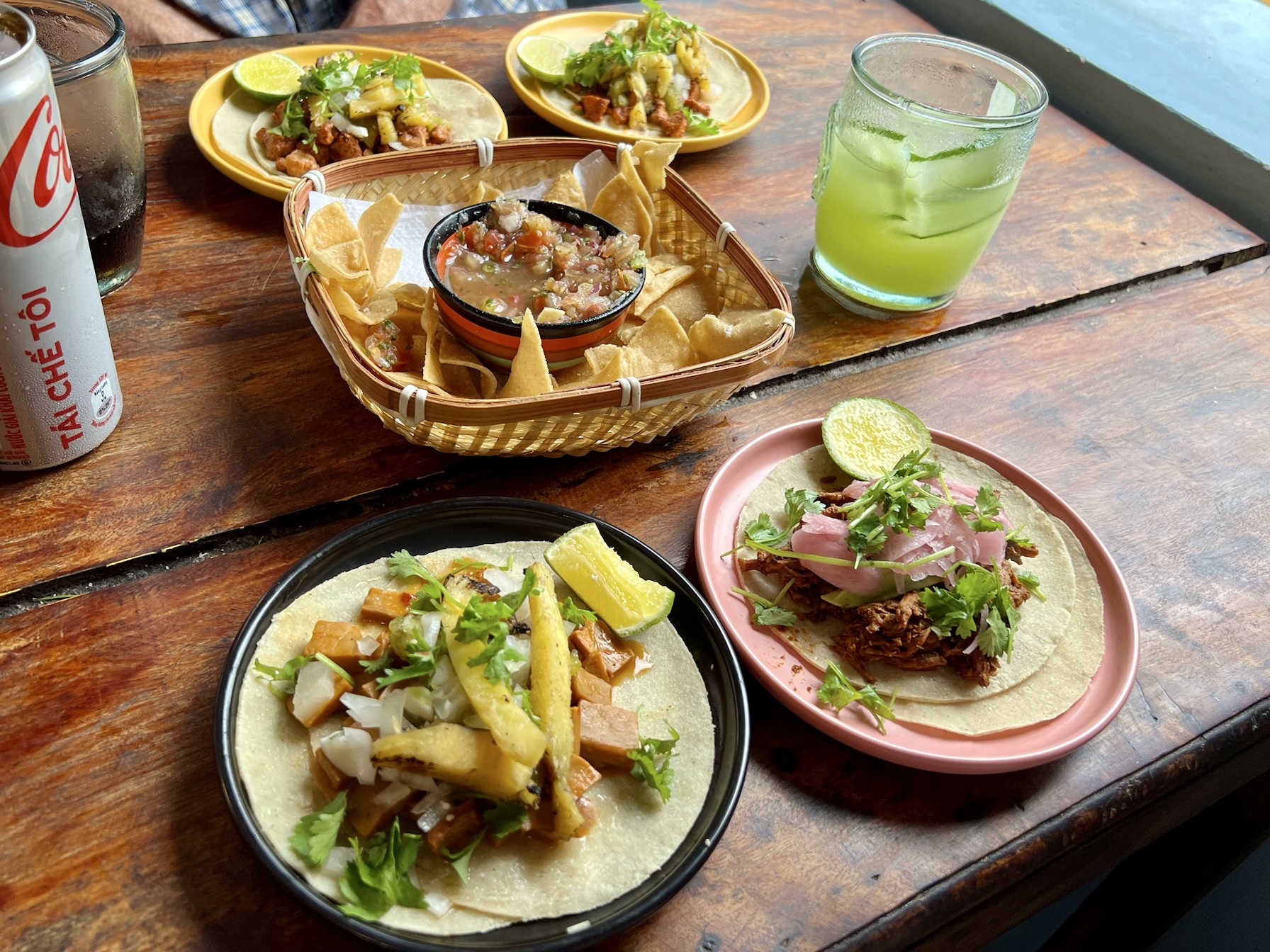
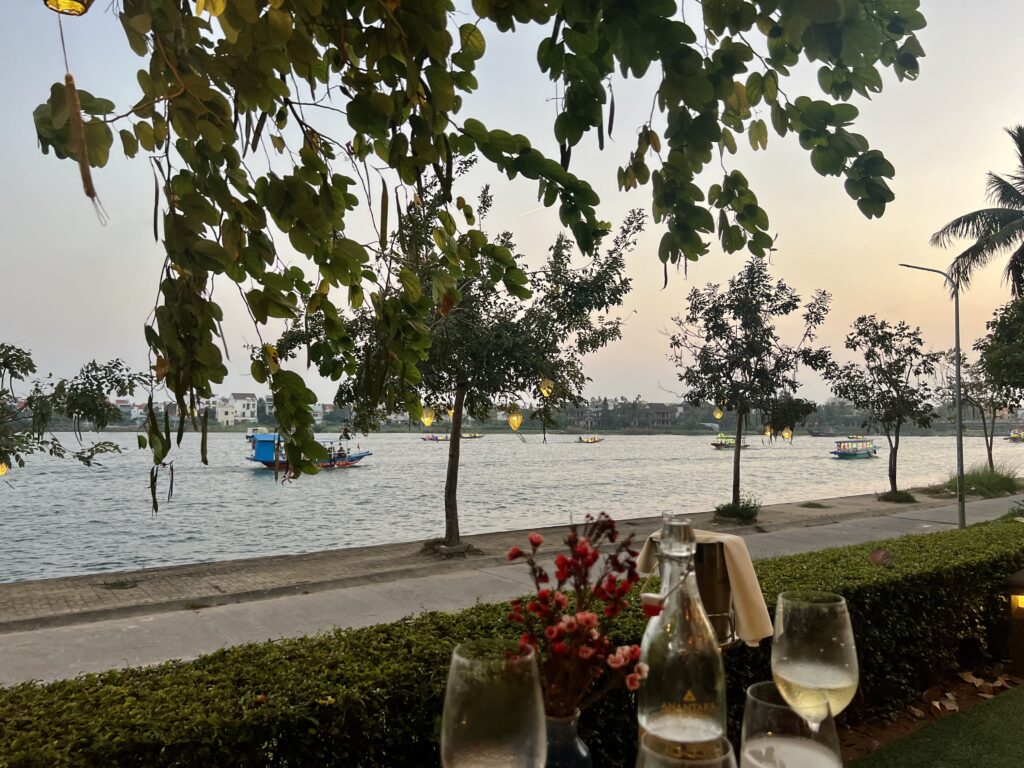
We visited Hoi An Old Town a couple of times each week, by hotel shuttle or inexpensive taxi. Lots of people, lanterns, and lights (above and below).This is a quiet evening in Old Town. From Tet through February and March, the streets can be people shoulder to shoulder. On the outskirts of Old Town proper, we’d usually be able to find our necessities.In what is called The Market, the photographer found a couple of pairs of not-quite-Nike sports socks she needed.In an unbranded sports store, we found a yoga mat to use during our stay. In a similarly jumbled pet store, we bought some pet omiyage to take back with us. The blogger could also get his USD $4.00 haircut. And we could visit the blogger’s favorite shop. It sells detailed wooden models of boats, made in the family’s workshop just outside of Hoi An. They have models of Chinese junks, the Titanic and the Queen Elizabeth, classic sailboats, and even the ill-fated Vasa. We finally bought one, a model of the Atlantic, an early 20th century schooner that set the transatlantic sailing record in 1905. It cost all of USD $43. The model, that is.Scattered about the Old Town are many temples, some providing a remarkably quiet respite from the chaotic streets. This is the gate between Cam Ha and Hai Binh temples. The first honors Bao Sanh Dai De, a 10th century Chinese emperor and the god of health. The second was built for Mazu, a mother goddess of the sea. These are good examples of the breadth of Vietnamese mythology and folk religion: indigenous animism mixed with ancestor worship, Daoism, Chinese emperor deification, and any number of the other belief systems that have washed ashore over the centuries. Pháp Bảo Temple is one of the few Buddhist temples, the riot of color being a favorite of the photographer. Old Town’s restaurants are perhaps our favorite reason for making the trip. Here we’re having lemongrass pork skewers and banh xeo with sweet chili sauce at Morning Glory, a rightfully popular restaurant on a colorful street near the river. We make a point of eating here at least once per visit.We had their white rose dish and spring rolls, too. Like the banh xeo, you wrap the spring rolls in rice paper with the noodles and peanuts. The dipping sauce is spicy acidic. We wish we could get Vietnam Vietnamese food at home. The photographer’s new BFF Mai, the Boutique’s spa manager, has a friend in Old Town with a restaurant: Coco Plus. Coco is short for coconut, and supposedly this restaurant has more of it. It’s a pretty restaurant that also sells simple handmade crafts. Their food is among the best we’ve had. Here we’re having nem loi (pork and lemongrass skewers that you wrap with vegetables to eat) and Bun Cha. We liked their food enough to stop again for lunch. The photographer loved their version of mi quang. The blogger again had to wait patiently for photos to be taken before he could eat his bahn mi.The restaurant’s chest freezer was on the blink, so while we waited for our lunch, we watched the local refrigeration techs load it up on their motorbike to take it to their shop. From the effort it took, we guessed it to be about 200 lbs. We wondered how many motorbikes – and chest freezers – the driver had to go through while learning to maneuver such a top-heavy load through slow traffic. We also went to town for not-Vietnamese food. We found Maazi’s, a northern Indian restaurant. We had a pani puri appetizer, a hard to find dish because it’s no easy task to make. Its chick peas, coriander, and potato in a semolina-flour golfball that you pour tamarind water into and pop in your mouth. Super tasty. Their achari chicken with Hyderabadi masala and their kadhai paneer were truly the best we’ve had outside of India. We pushed all of it into our stomachs with naan bread and basmati rice. Our only complaint was the meal didn’t include a wheelbarrow to help us out of the restaurant. We ate at both of the chef’s restaurants, and both are excellent. We also found a Mexican taco restaurant, run by an expat Scotsman of course. They served only tacos and do a great job. As our trip wound down, we revisited the Anantara Riverside Hotel for a sunset dinner. We enjoyed it on our last trip, but much has changed. The year before, there were only a couple of boats on the river; this year there was a constant flow of the colorful but quiet noisy things. Piled on that was karaoke music from a nearby island. The character of the restaurant had changed, too. Fake grass and extra seating had replaced their bit of garden, and neither the food nor the service were as we remembered. We still enjoyed ourselves, just for different reasons.
Beach & Sea
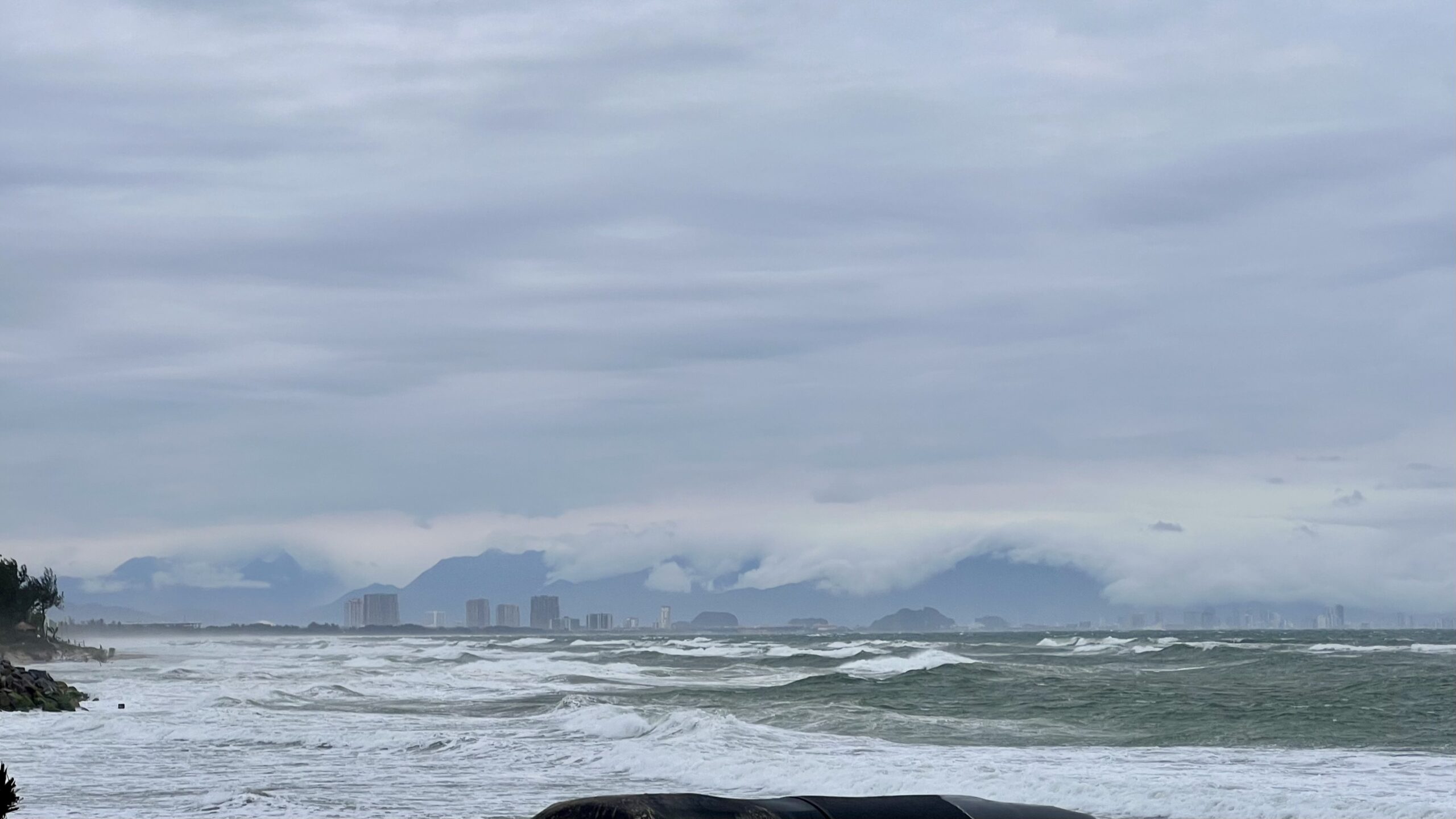
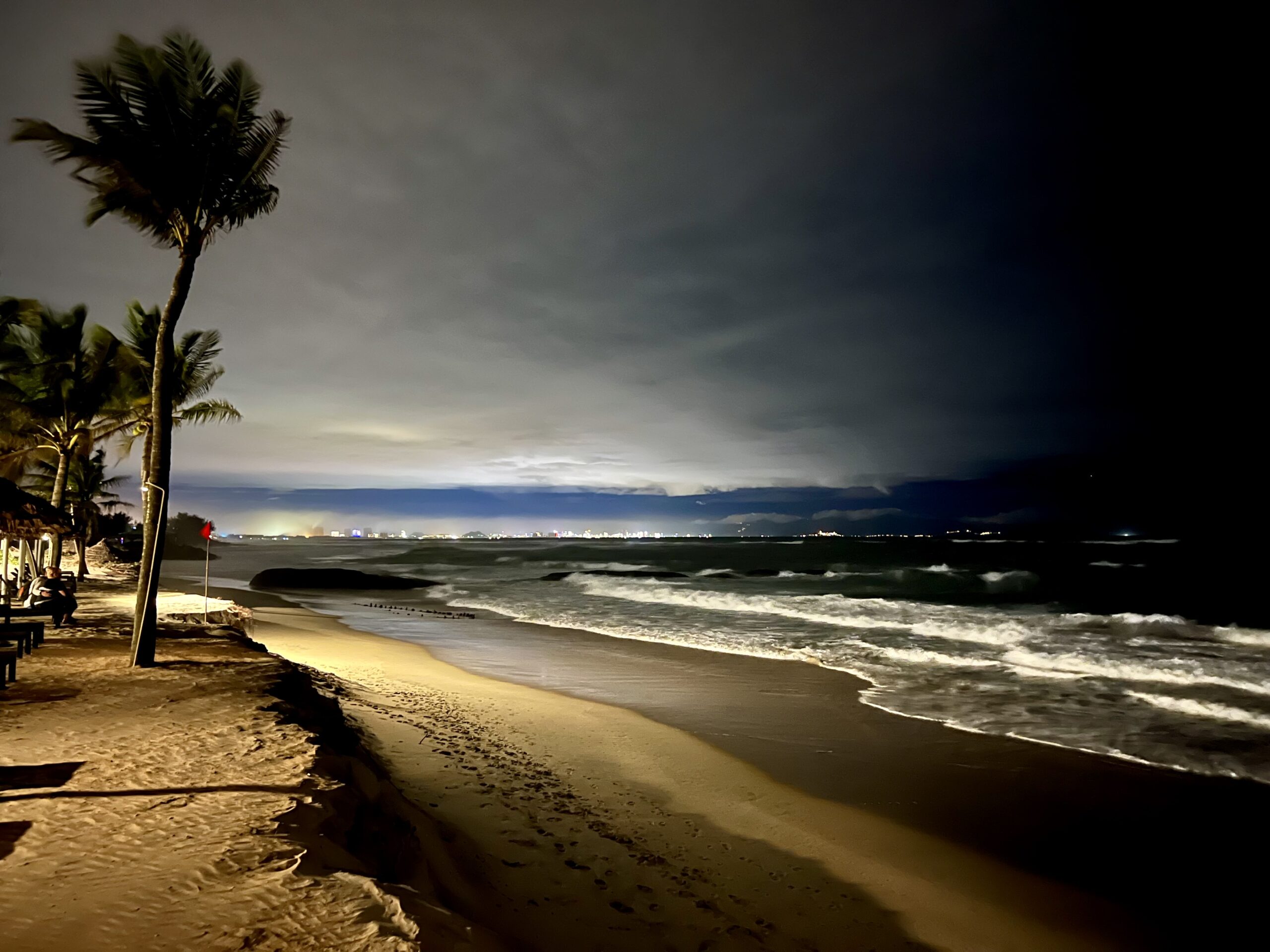
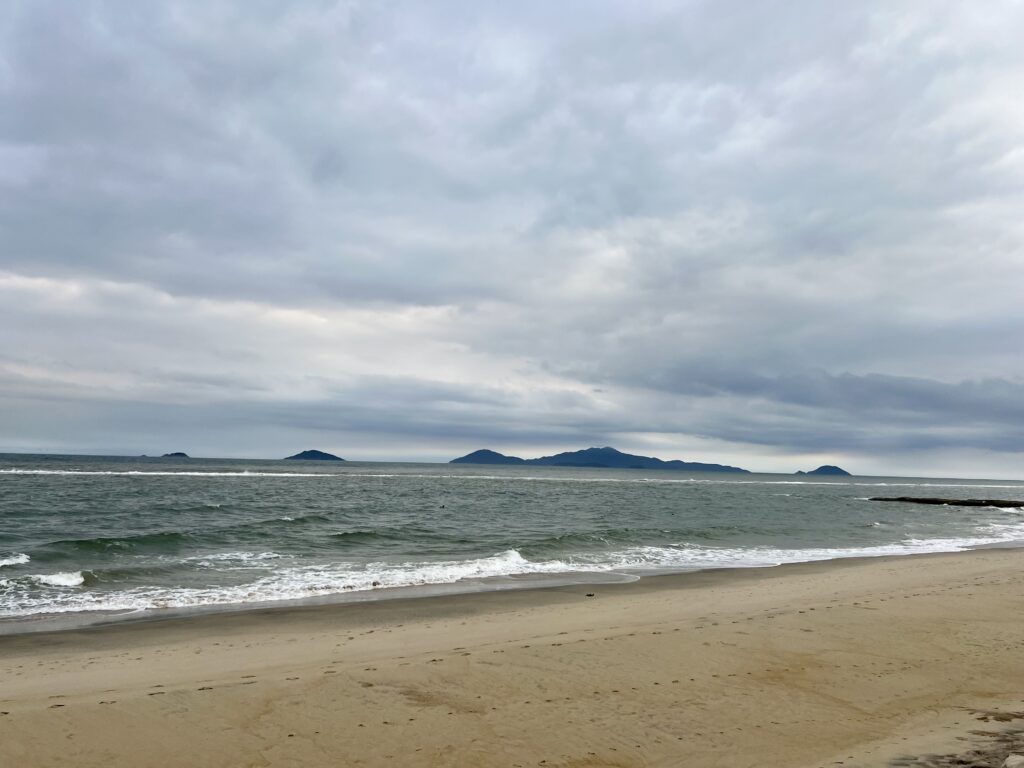
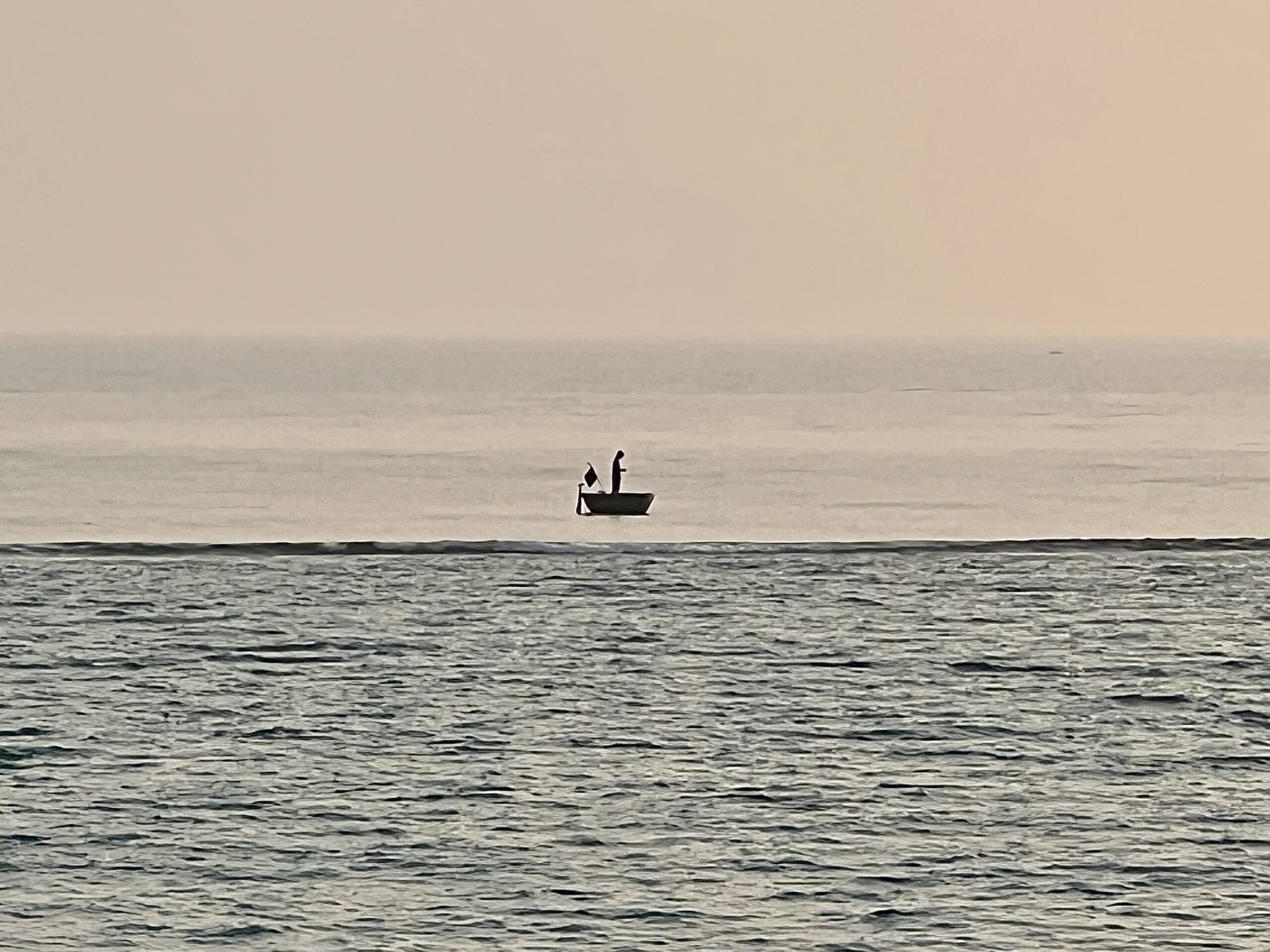
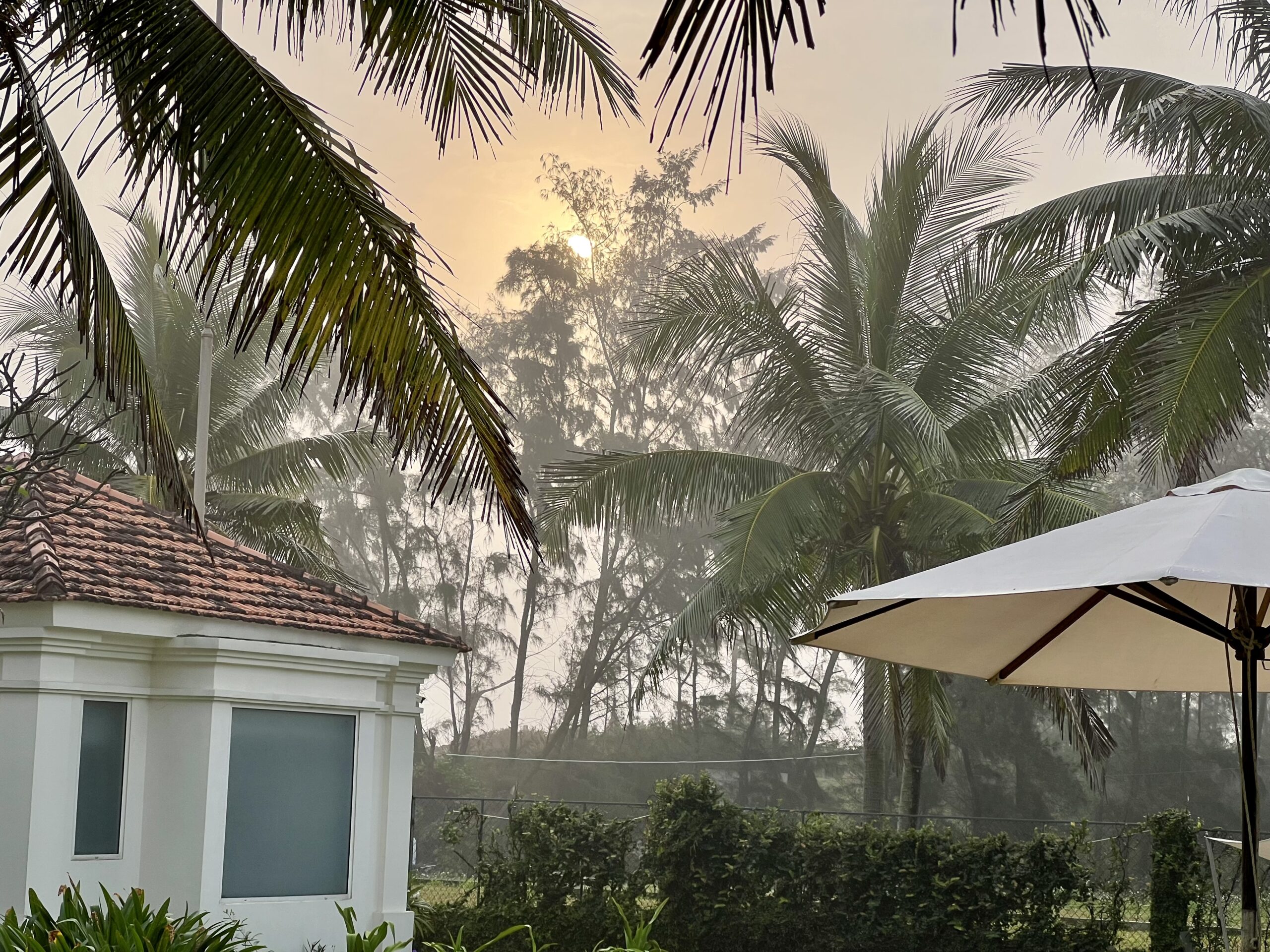
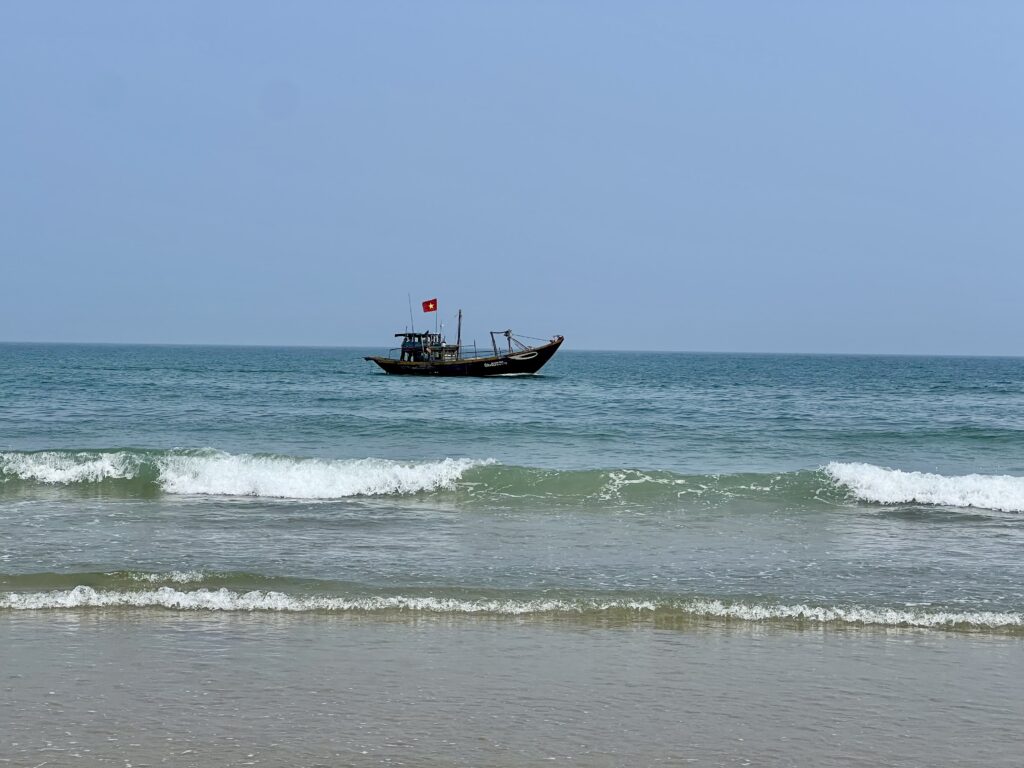
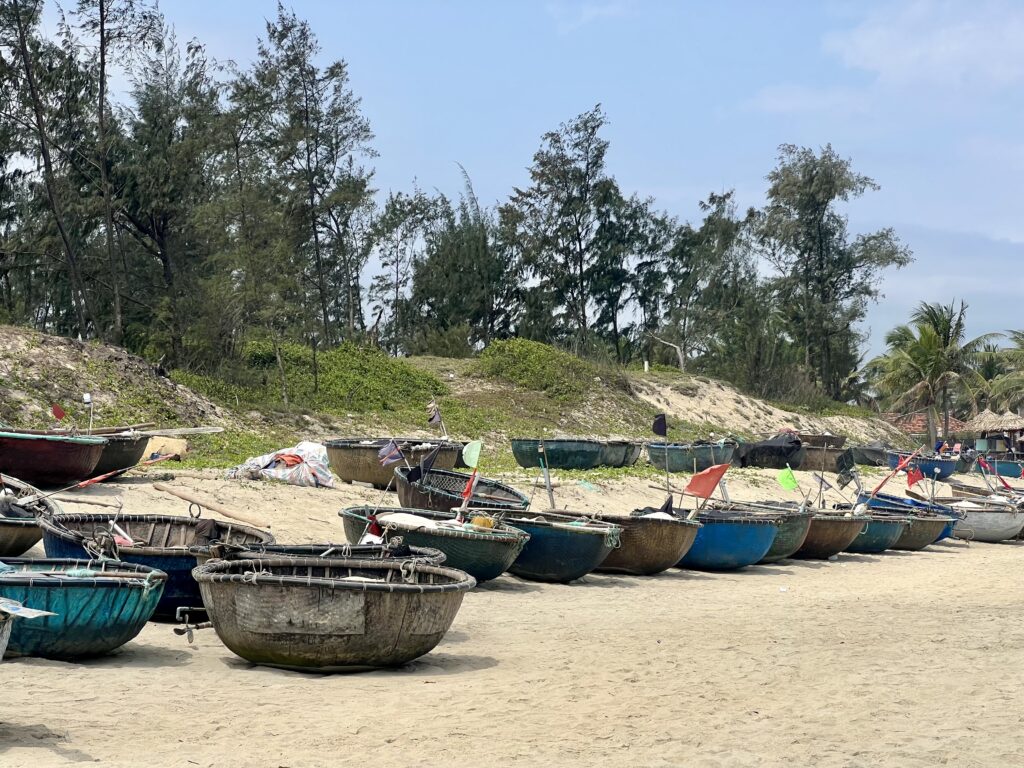
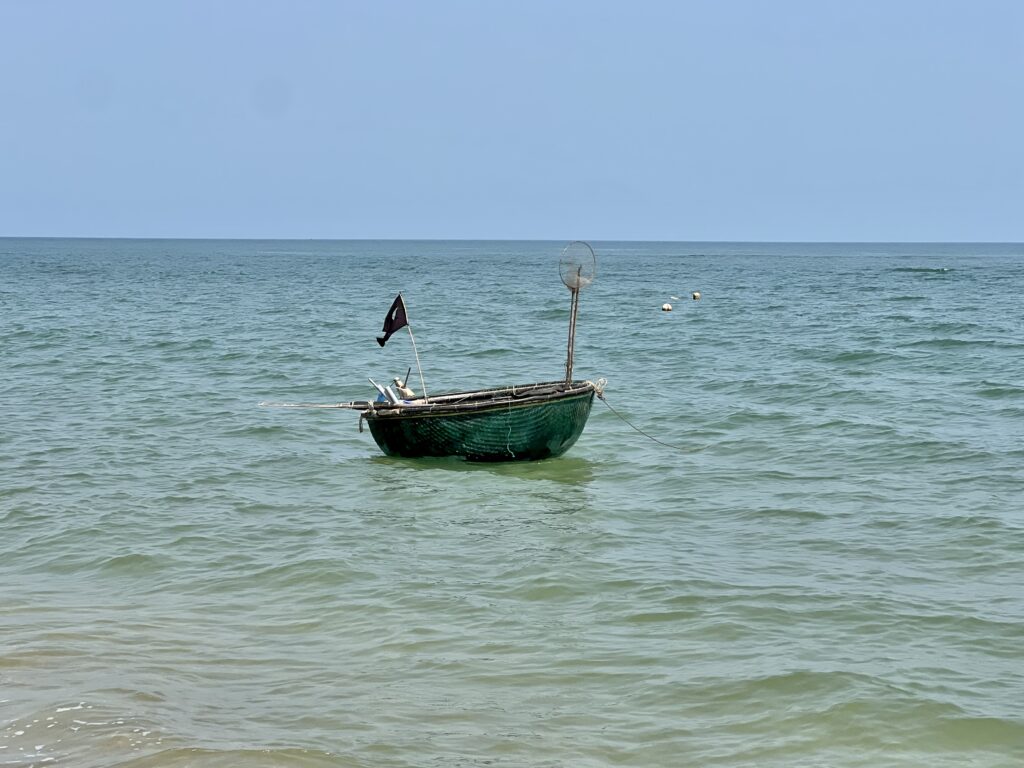
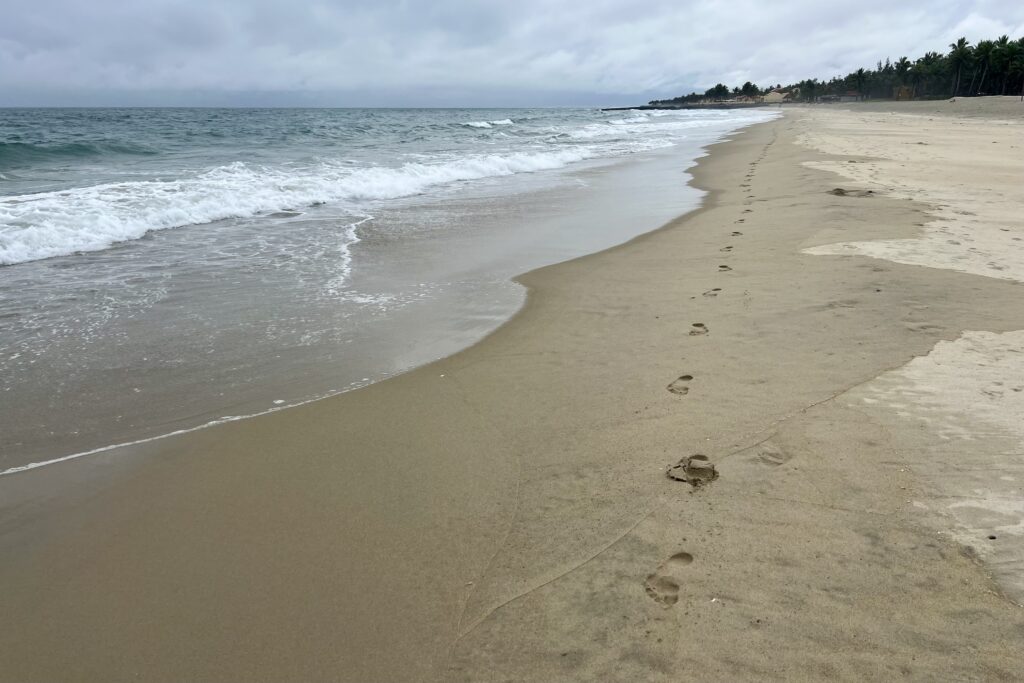
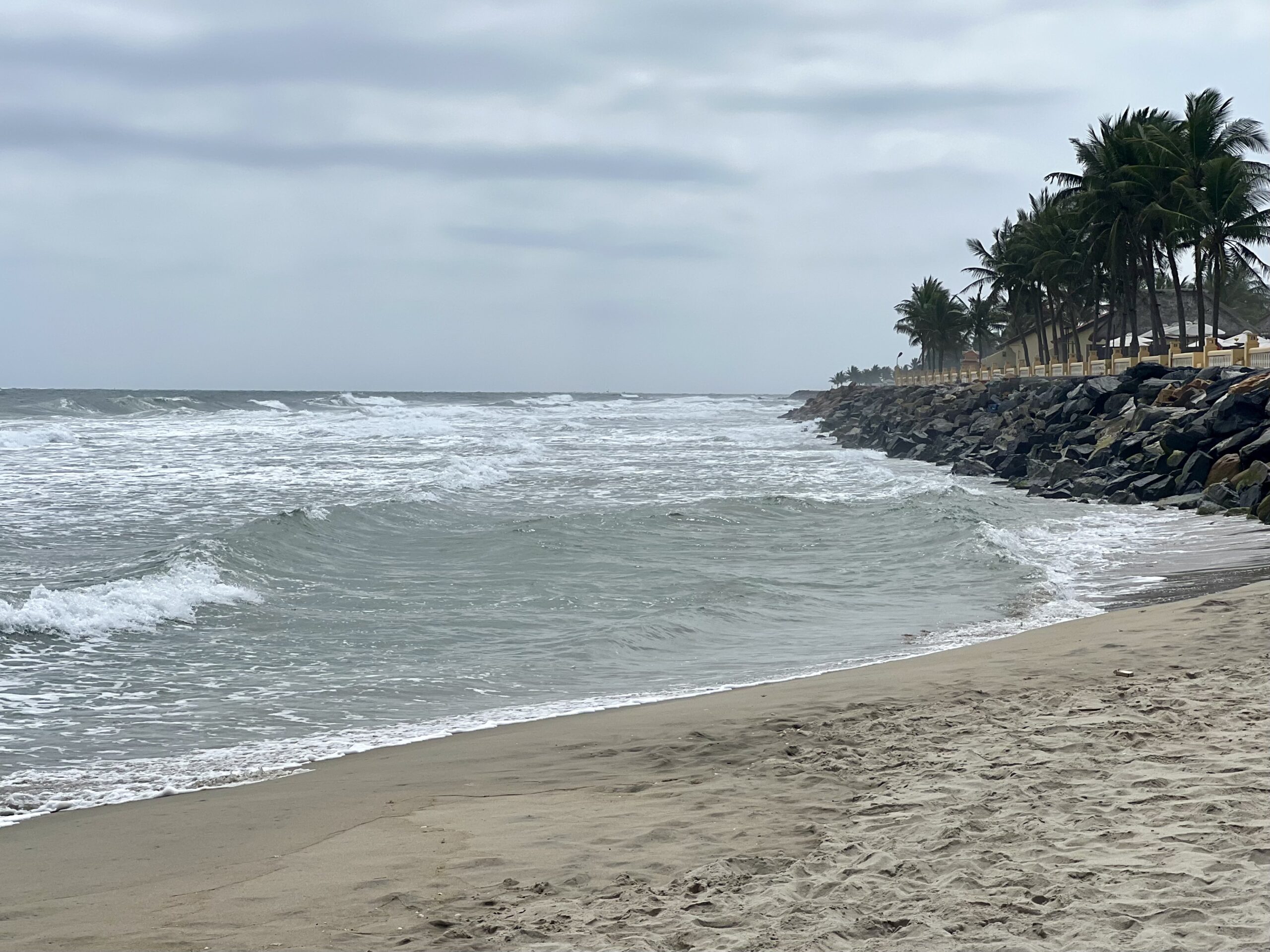
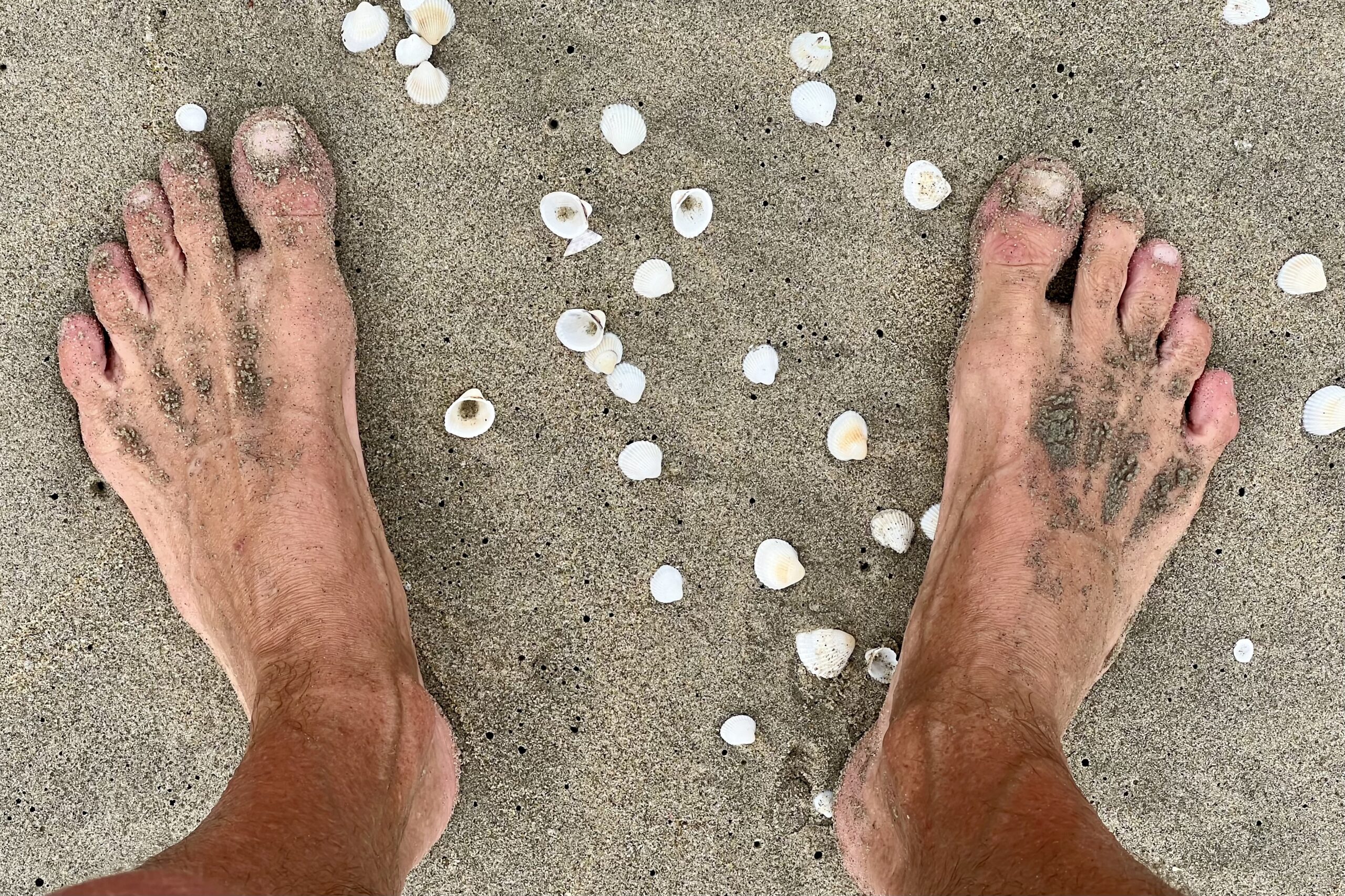
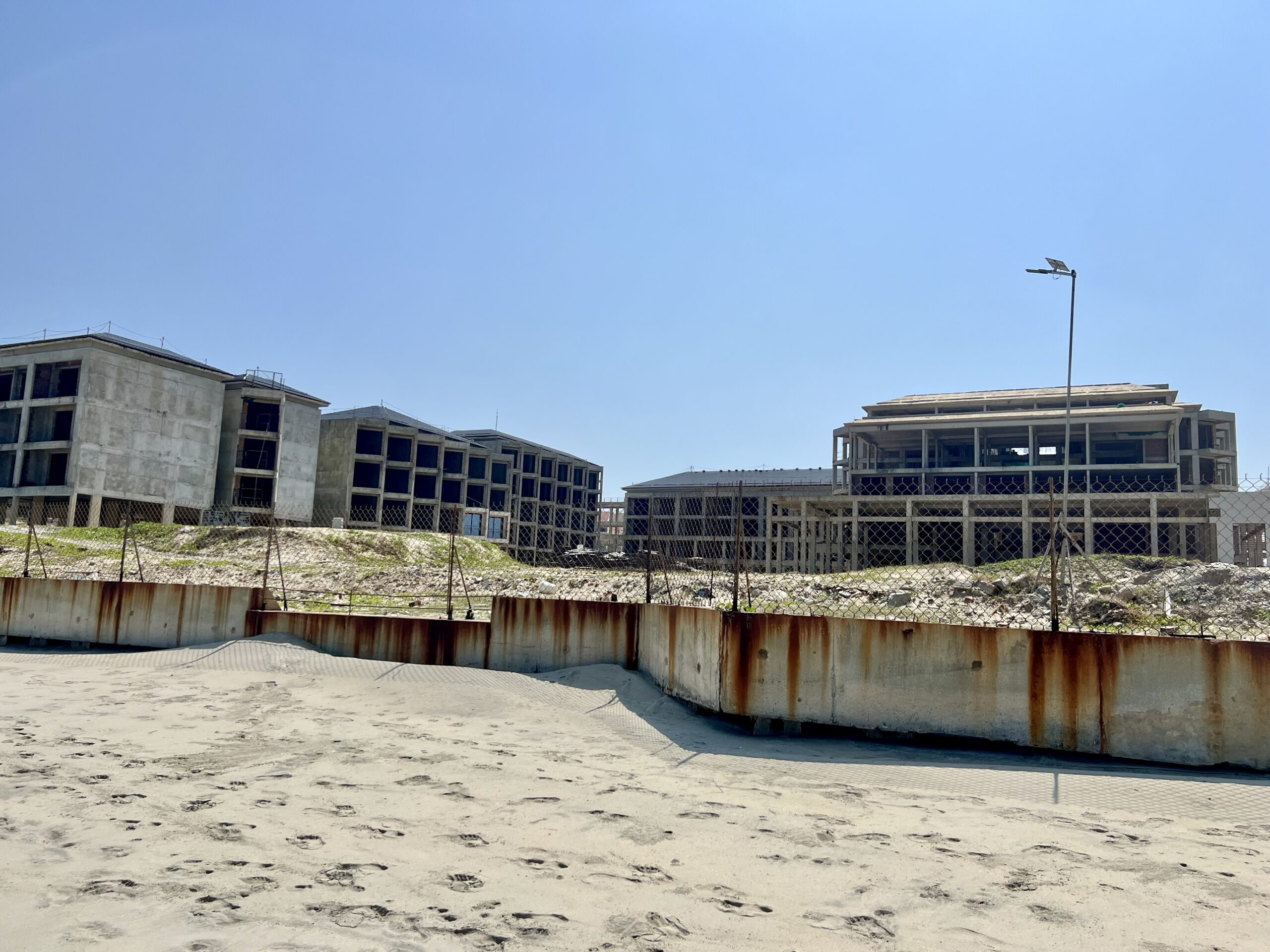
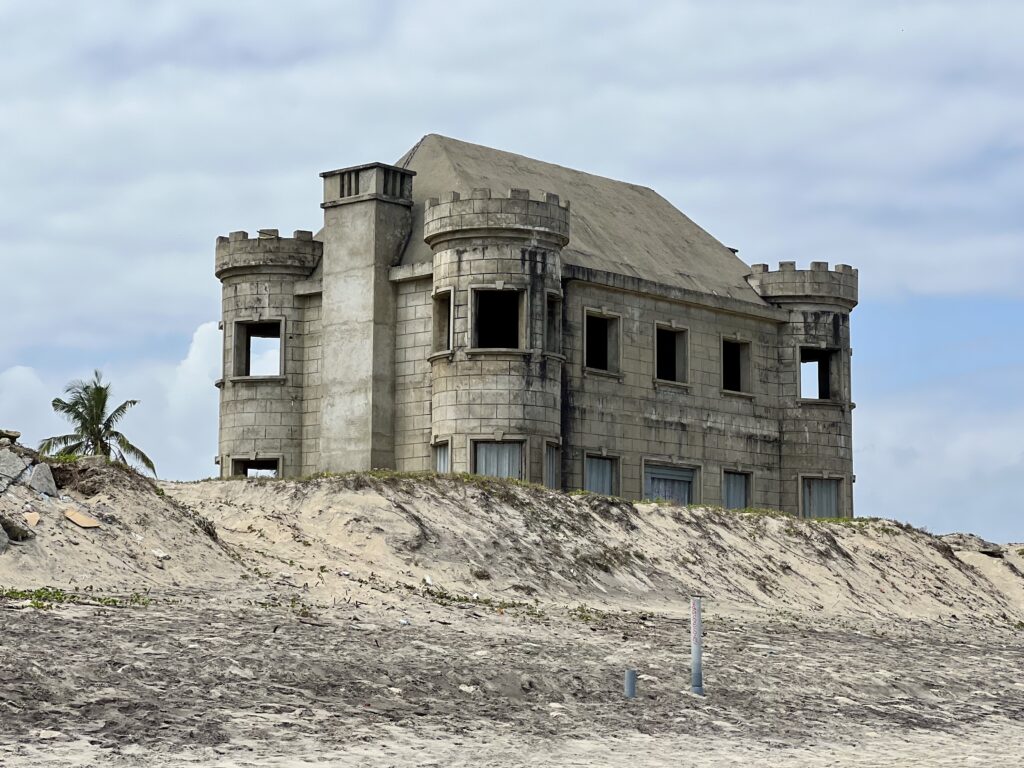
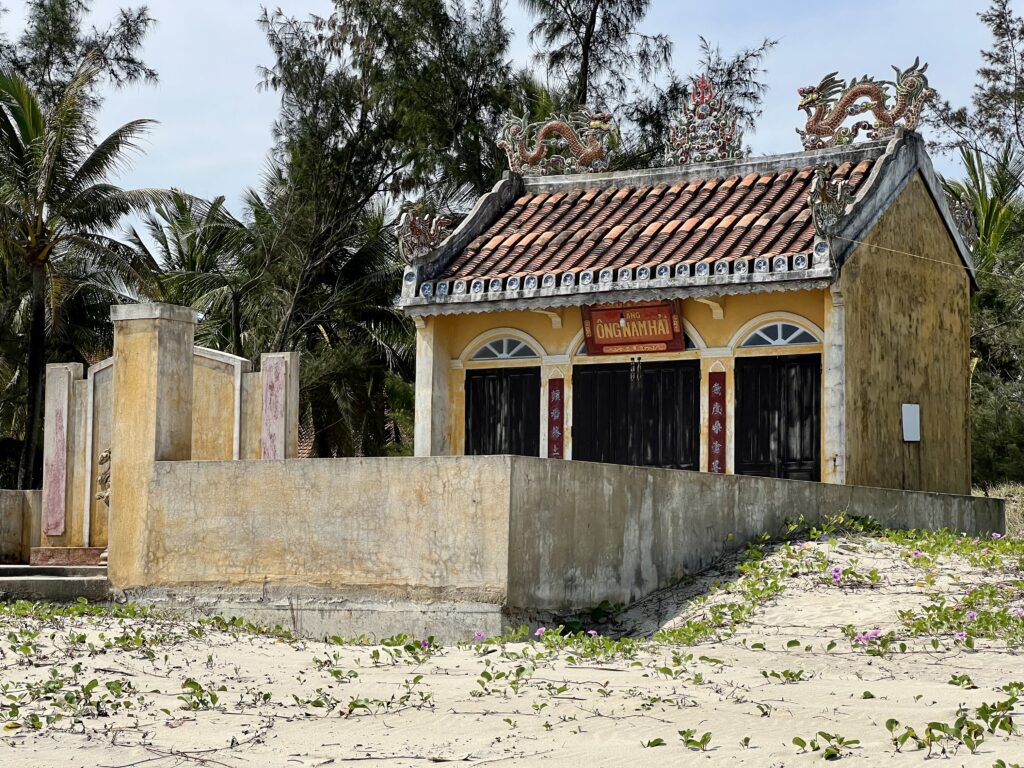
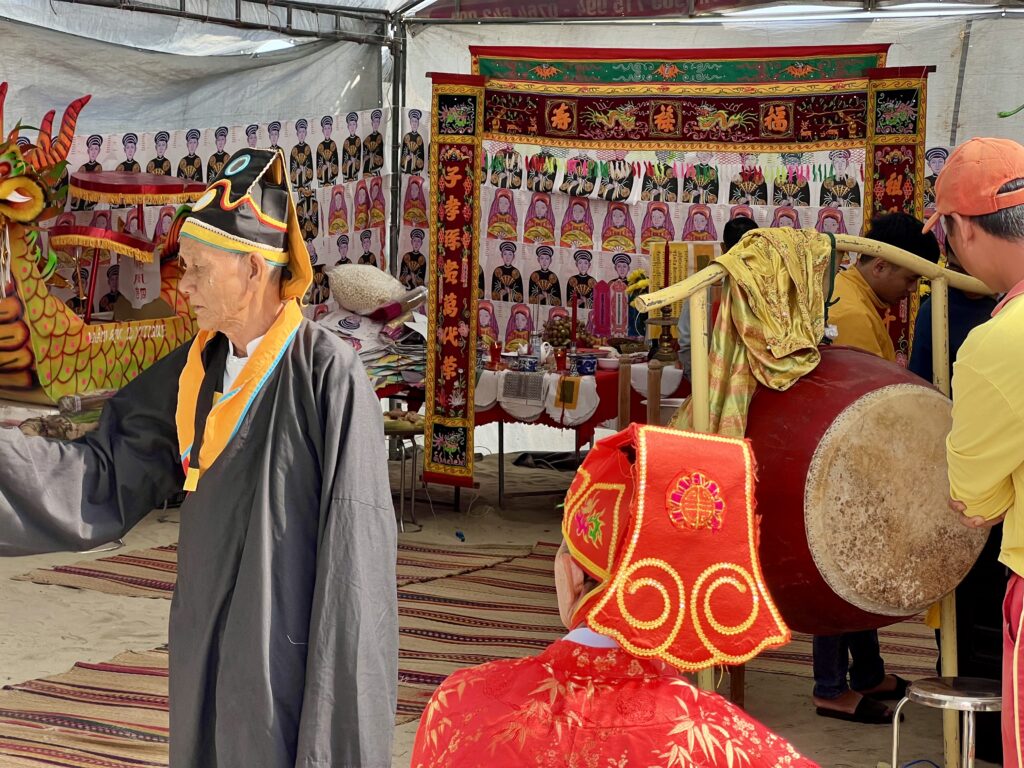
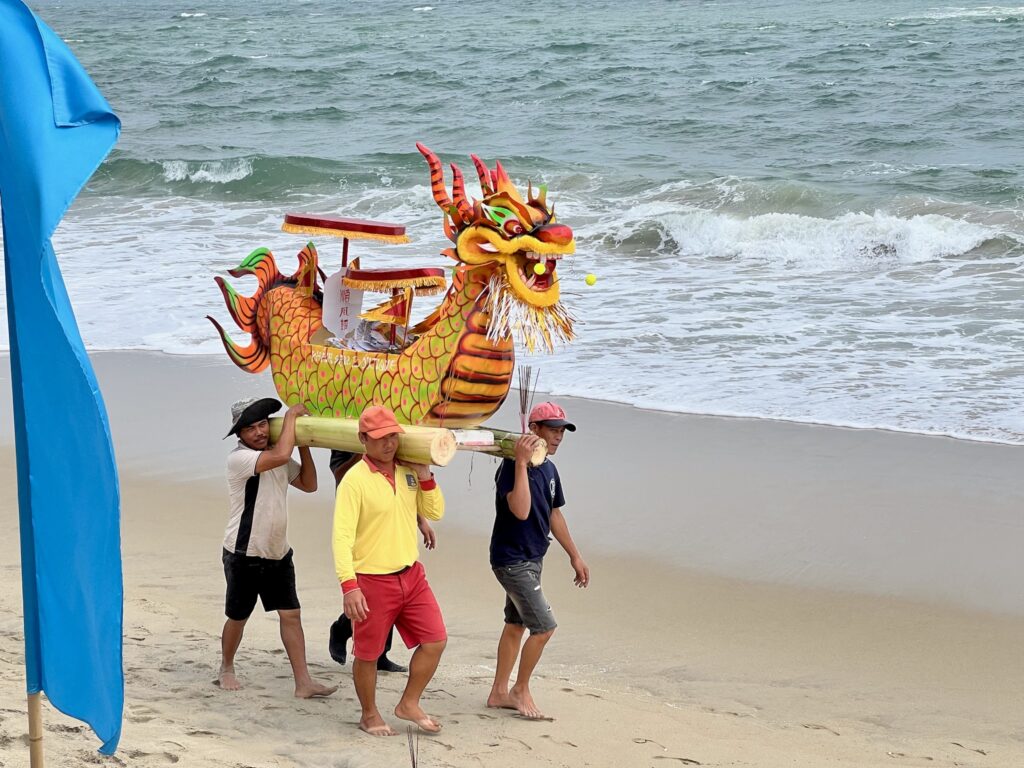
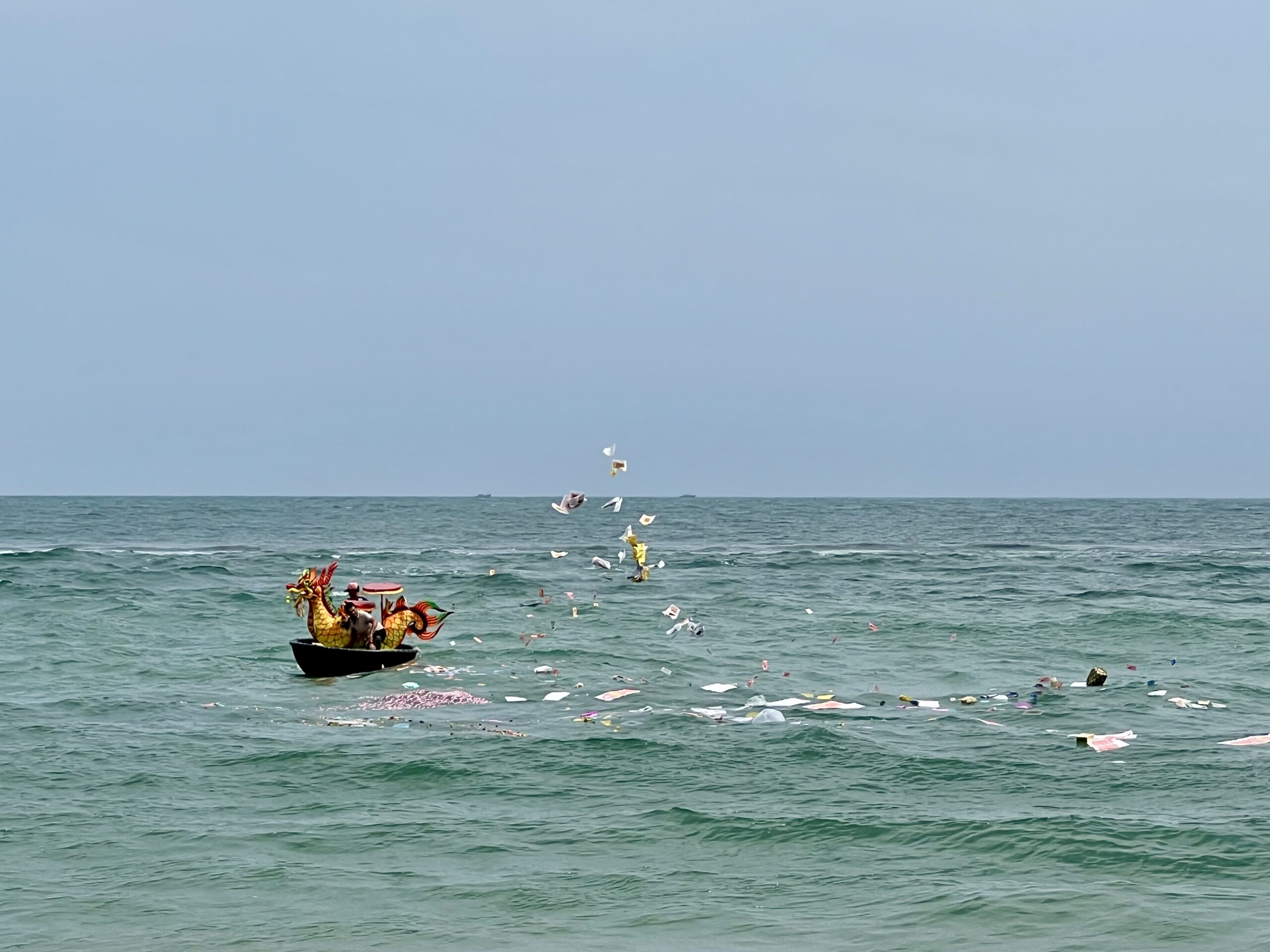
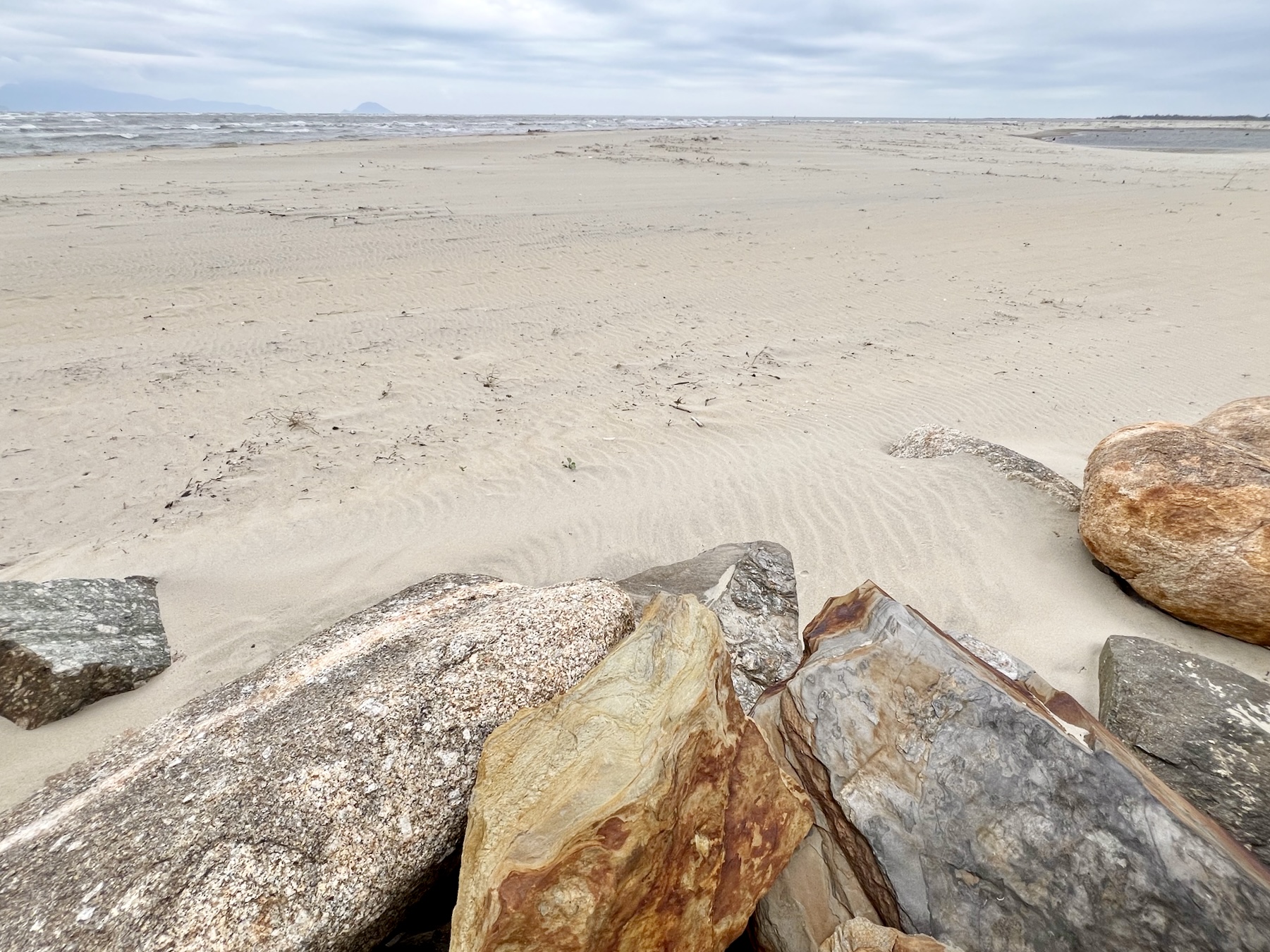
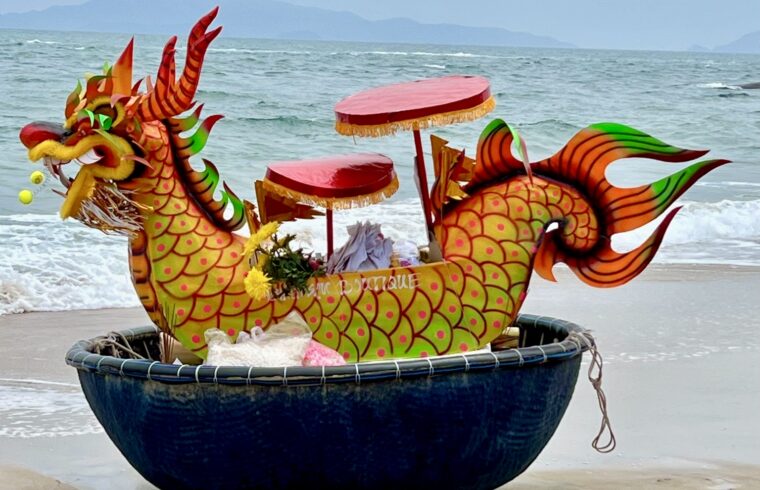
Weather in February, March, and April is 10 percent overcast and blustery, 10 percent somewhat cloudy, and 80 percent sunny and breezy. The winds are usually from the south, and the equatorial moisture creates a hazy marine layer that rarely burns off completely. Winds from the north bring choppy seas, cloud cover, and somewhat cooler air, enough cooler, anyway, to clear out the marine layer and provide a view of Danang, some 15 miles distant. On clear evenings, the view is sparkly bright.The Cham Islands, eight miles or so offshore (above), can completely disappear in marine haze (below), when the winds are southerly, which they are most of the time. On many mornings the haze and reef create an ethereal double horizon. On such mornings, the marine layer can be like a thin fog. When the northerly winds blow, it drifts a lot of sand shoreward. If the waves aren’t taking the sand away, the wind is piling it up.At night, the horizon is often bright with the lights of night fishing boats. They drop their catches in the morning and then motor back along the beach to their sheltered parking spots up the river. In contrast, coracles fish the near shore, scores of which are pulled up on the beach.This is one of the few we’ve seen at anchor. The black flag led us to wonder if it might be a pirate coracle. Perhaps our favorite use of the beach was for running. Going south, it’s about two miles round-trip before running into a rocky sea wall (below). A perfectly adequate distance for exactly half the members of our group. The blogger took this selfie of his running shoes. On any given stretch of beach, abandoned projects weather and rust. Neglected for years, this skeleton was supposed to be a new Marriott. During our stay, roofers started putting a roof on it. Proof of new life?We hold no similar hope for this castle wannabe. A beach castle? Really? Our bet is it was a pet project of some narcissistic real estate developer. We all know one of those. Small coastal temples to a sea goddess are common, and all important to those making a living from the sea. Though it looks abandoned, this one usually has incense burning in a little brazier out front. Though 85 percent of Vietnamese are irreligious, almost all – at least in this area – still maintain spiritual practices of some sort. Of note, virtually every home has an alter. When asked about theirs, people talk about “the pagoda,” which is a catch-all for the local animistic and ancestor temples. Mostly, they see their own alter as a way to stay connected to their family’s ancestors. Otherwise, putting out food, cigarettes, and beer for spirits and the like, and burning incense and paper offerings, seem to be mostly out of superstitious caution. That all said, the temple “pagodas” are living, breathing spiritual centers. During our stay, the hotel took down a section of beach umbrellas and put up a large tent that they turned into a temporary temple. Sustained by copious amounts of nicotine and caffeine, the priests from a local sea goddess pagoda used it to hold two days of on and off drumming to incredibly amplified music.It all culminated in hotel staff members carrying a dragon boat up and down the beach, then coracling it out to the breakwater.All the way out, a fellow on the boat hurled overboard bags and bags of paper, cellophane and Mylar wrapped rice cakes, and dayglow colored cassava-starch balls, along with the huge plastic bags they came in. We saw other dragon boats floating about, as others held similar events. The trash washed up on shore for days. If I were a sea goddess, I’d consider taking their beach away.
Longer Walks
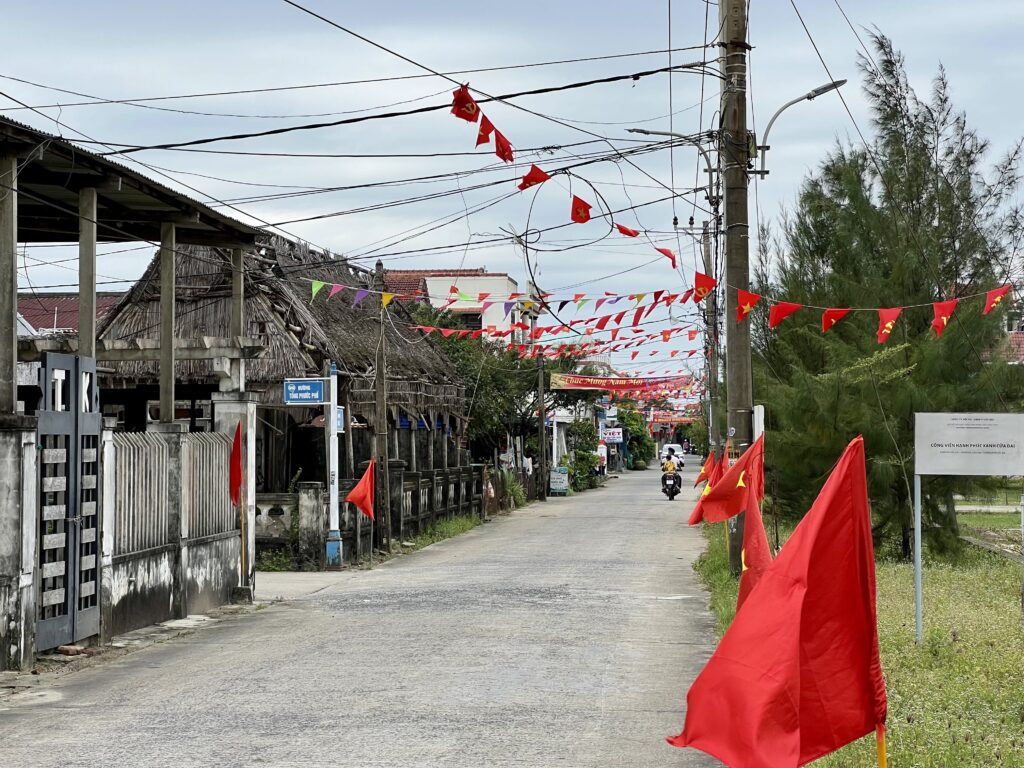
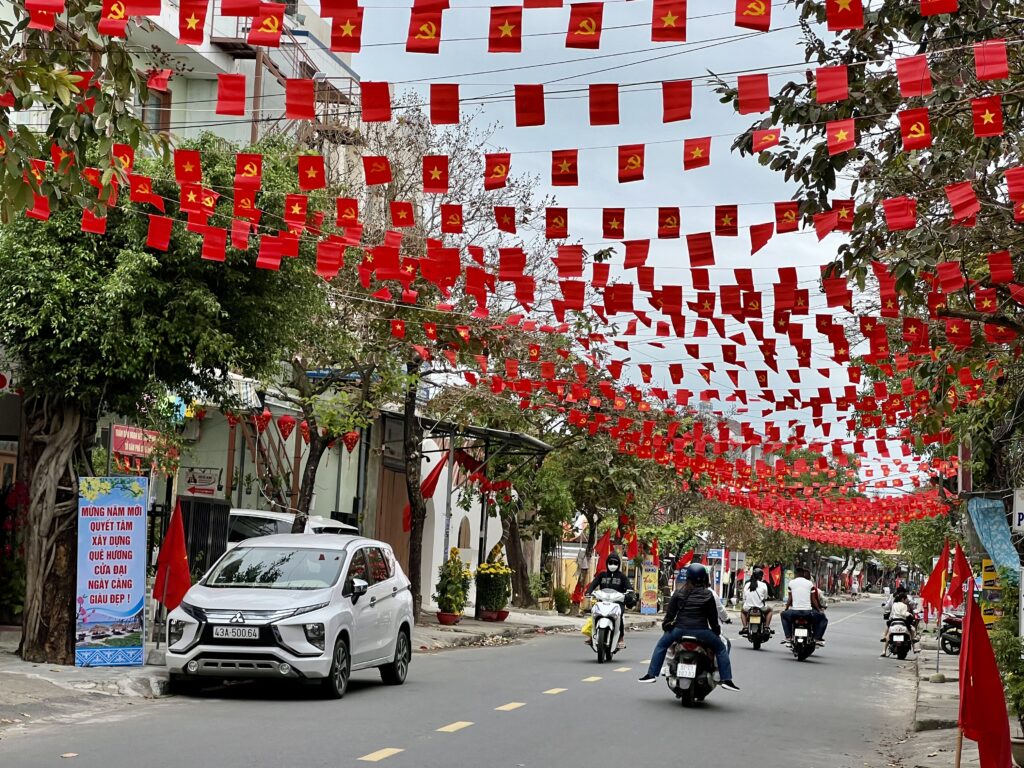
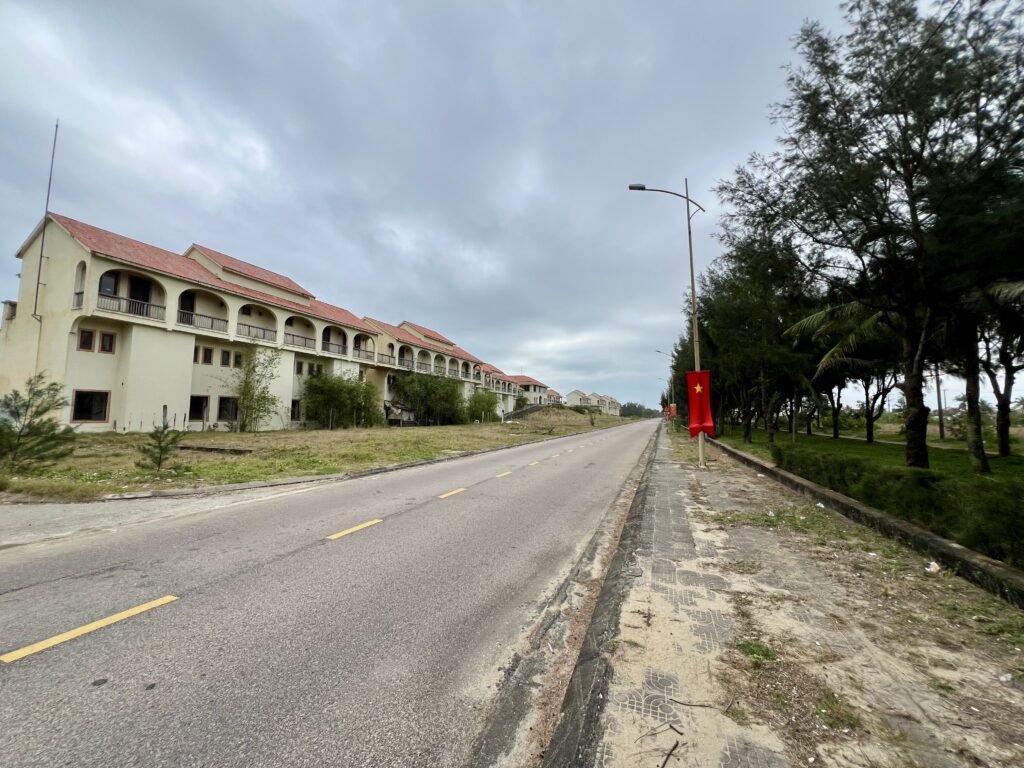
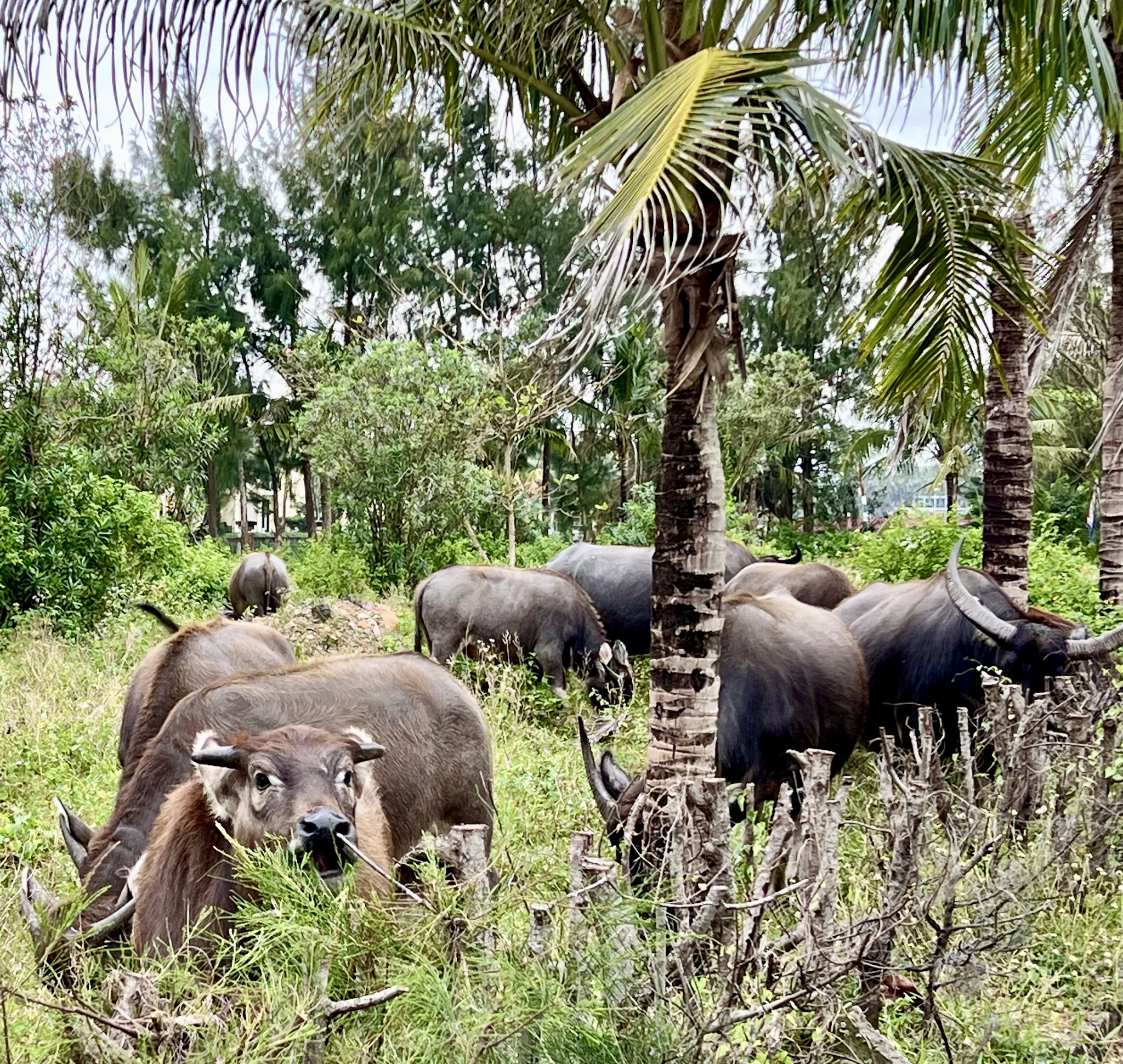
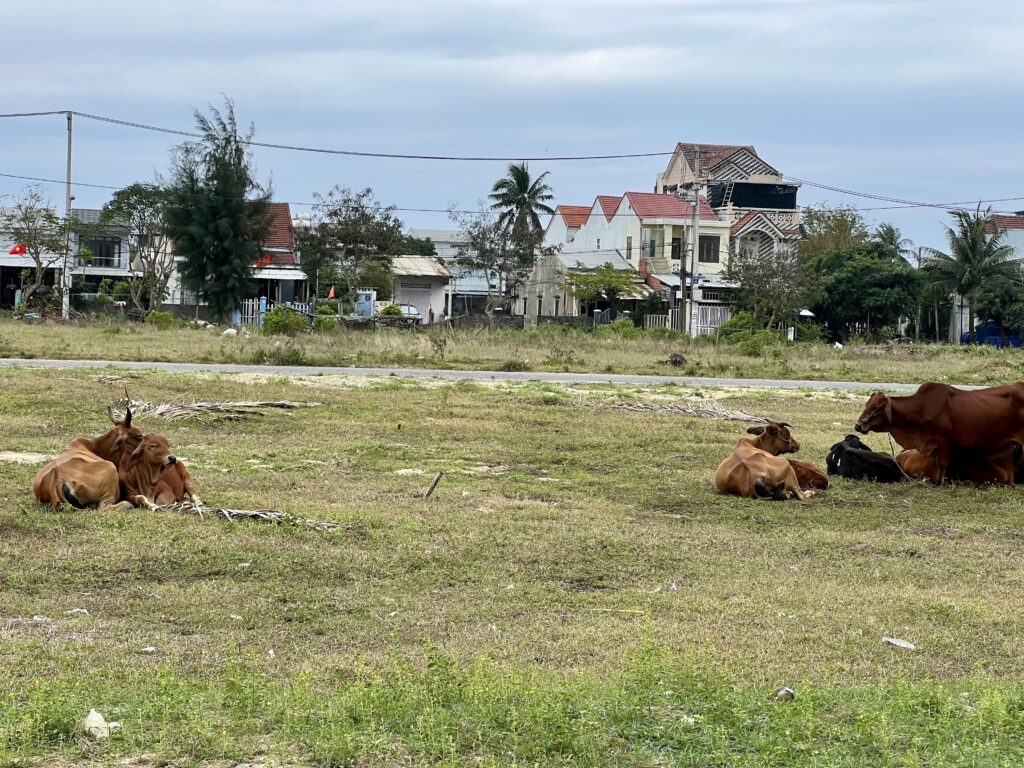
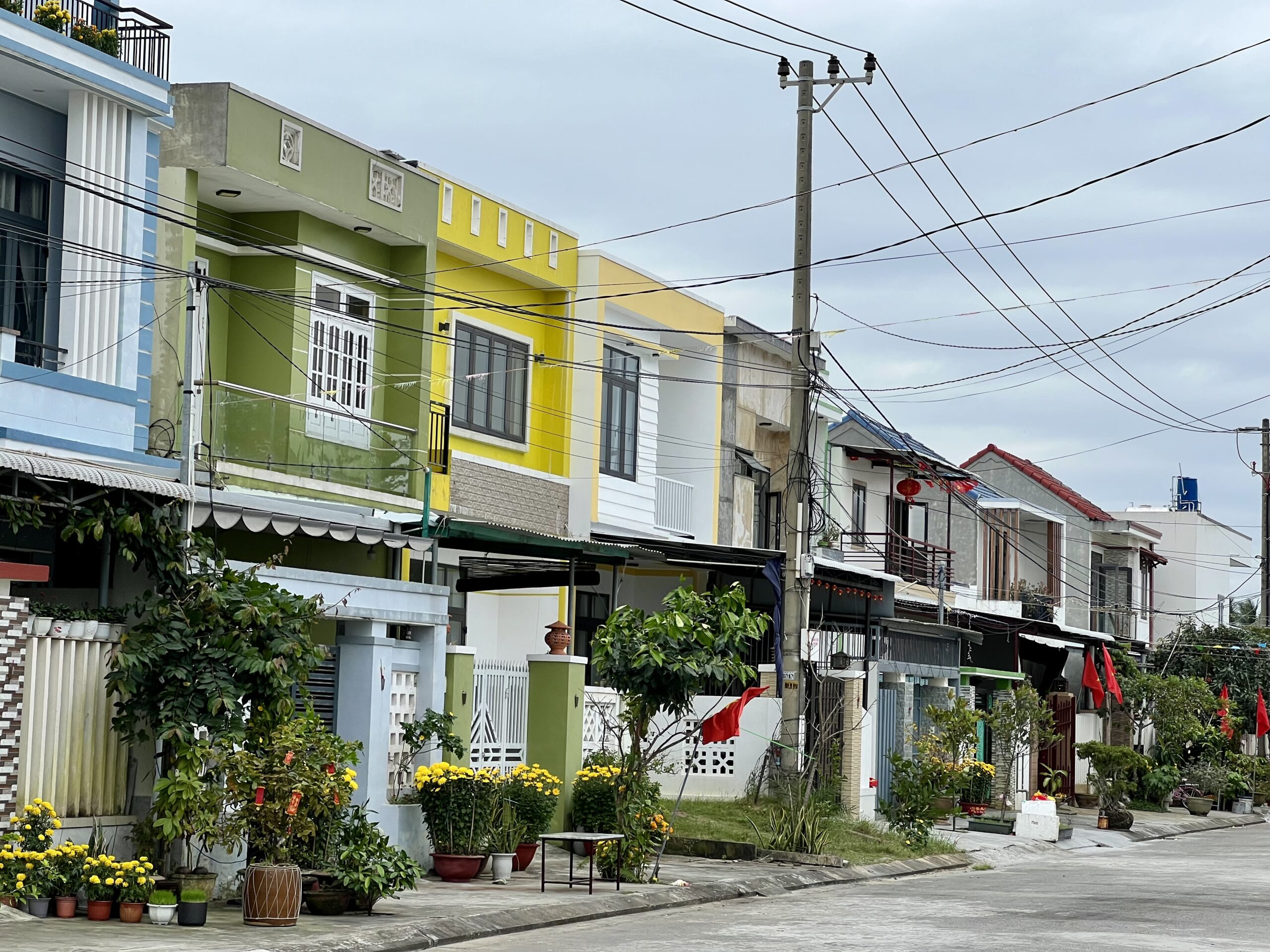
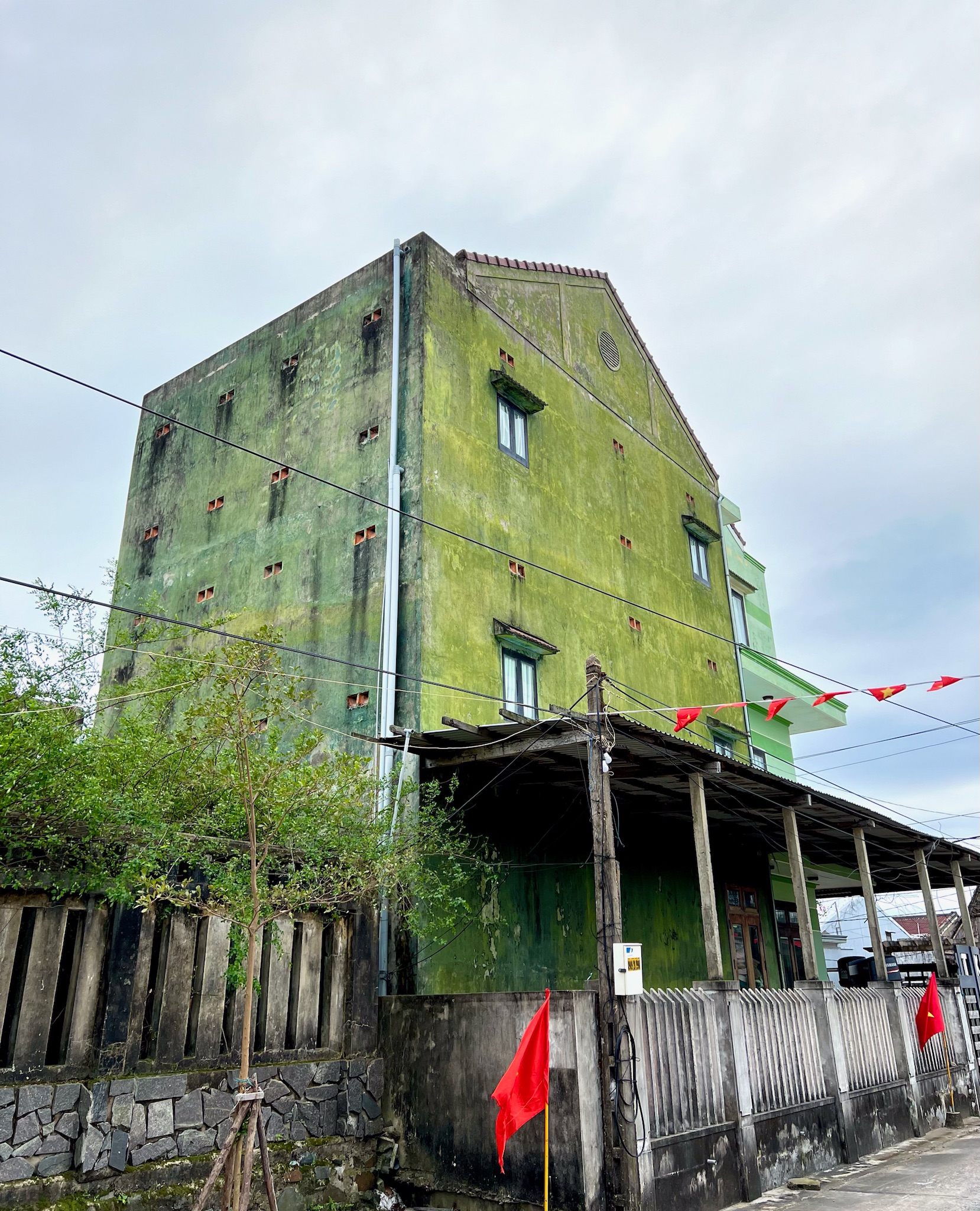
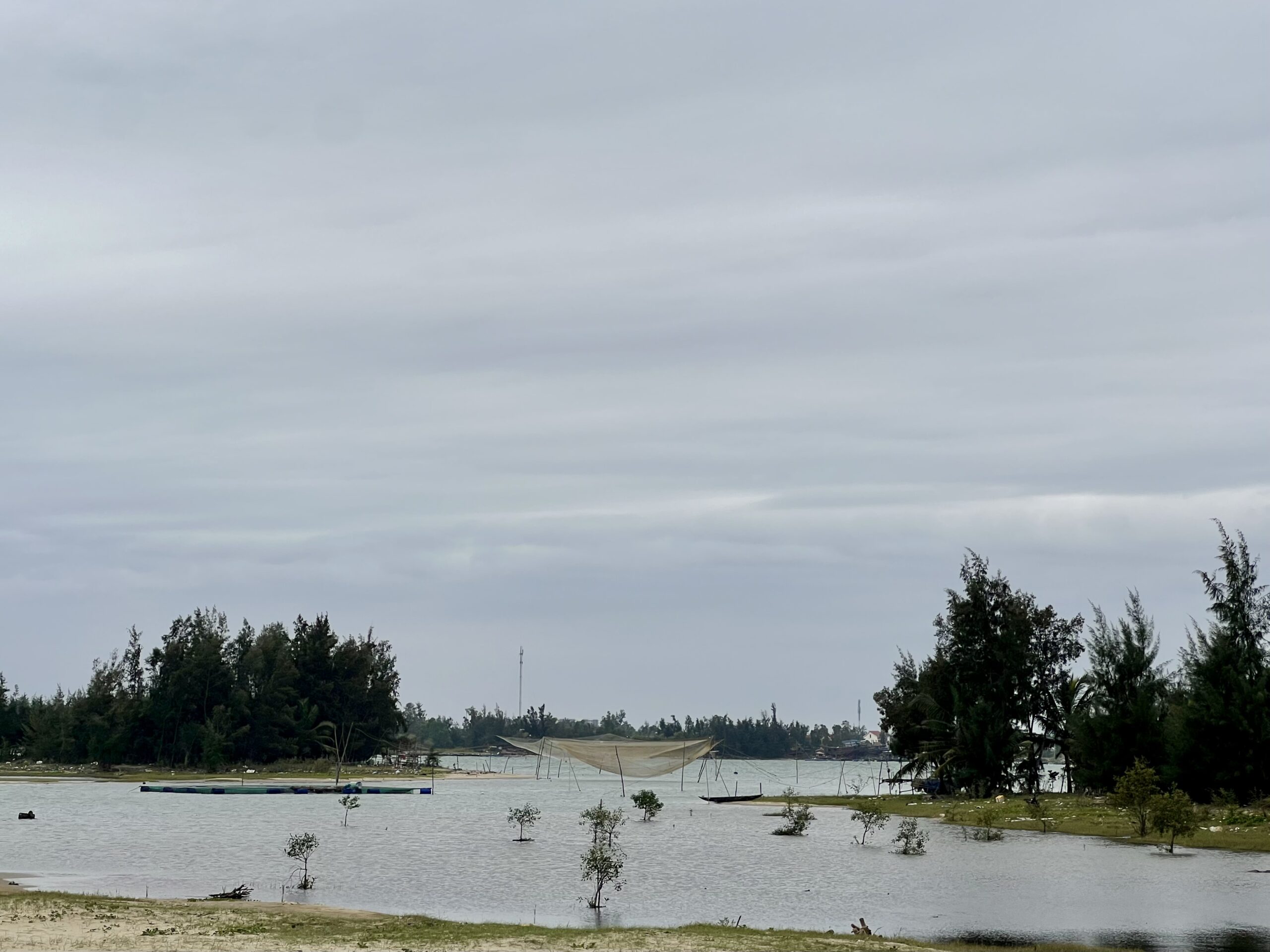
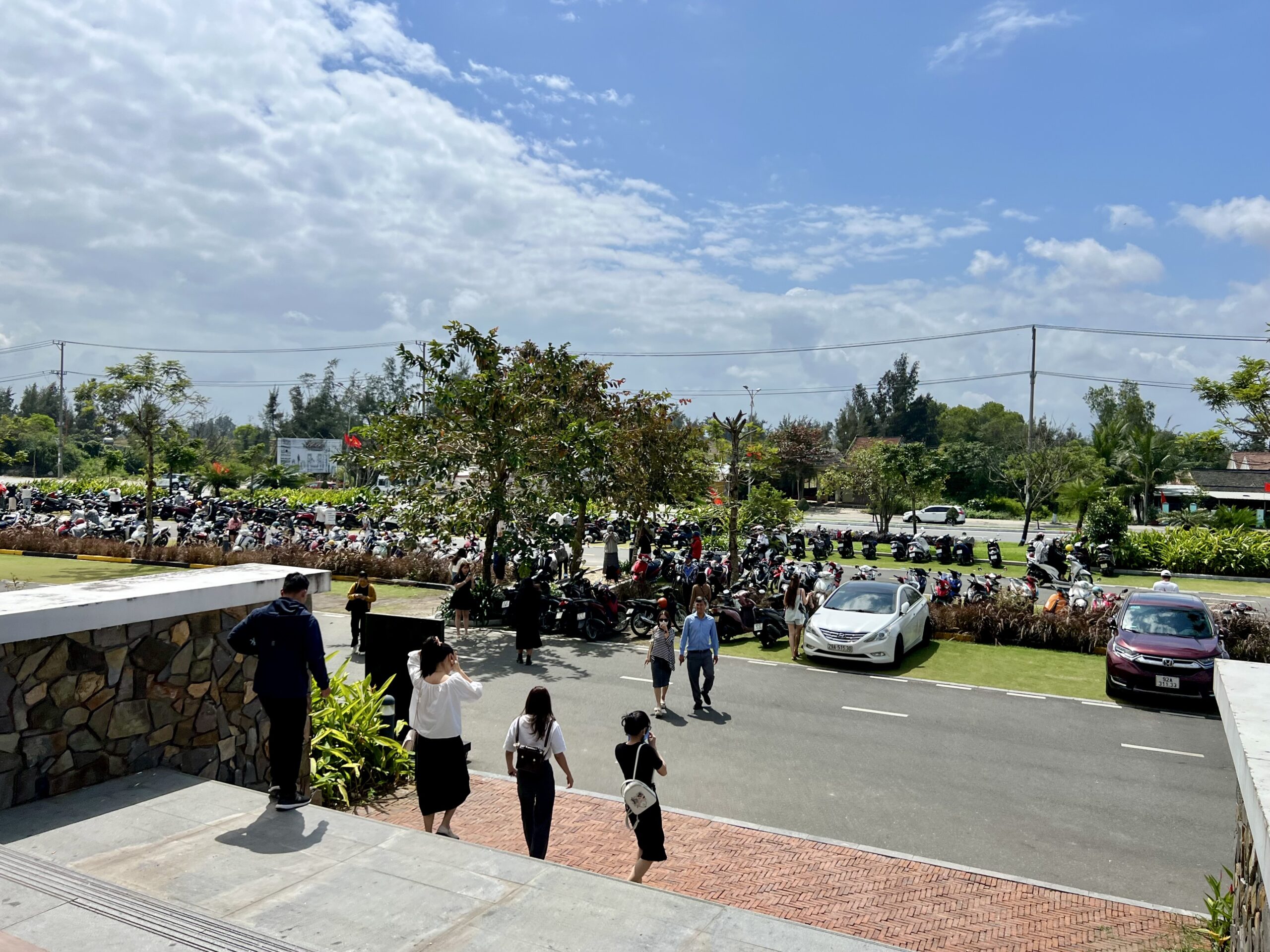
On the cooler, cloudier days, weather was perfect for walking, so we’d head out exploring. About three miles south is the mouth of the Bôn River. To get there, we took side roads through neighborhood streets (above) and townlets (below).All were decked out with red Vietnamese and Communist Party flags.Stretches of the coastal road between populated areas are quite empty, often occupied by abandoned buildings. Some didn’t survive the Covid shutdown, while others, like this complex on the beach, look like they’ve been abandoned for decades, maybe since the 1990s Asian financial meltdown. We did come across the occasional water buffalo (above) and nomadic cow (below). They cross streets untended and seem to graze wherever they like.As we neared the mouth of the river, we walked through another small neighborhood. Some houses were colorfully picturesque …Others were just questionably colorful. Is this color tired army green or well-fed moss? Across the road is a weedy little park, swings swaying and empty, the neighborhood deserted and quiet. Except for Vietnamese karaoke floating out of one of the houses. Vietnamese love their amplifiers. The river mouth itself is passage to the sea for fishing boats, and its shifting sands home to many stationary fish nets.The final, long sandy spit is broken up by tidal pools, with sand bars visible just offshore. The entire greater delta is biblical shifting sand.We stopped for lunch at the Renaissance hotel. It’s a massive and empty property, previously a Vin Pearl Resort and recently rebranded. Back in the day, the photographer worked for Renaissance hotels on Maui and in San Francisco. With so few hotel guests, the restaurant staff was a little too happy to see us. Our furthest excursion north took us a few miles to the Citidines Pearl Resort. Its opening coincided with Covid, and it nearly became another empty shell. Though it looks fine from a distance, it is already in dire need of painting and concrete repair. As we walked around, it was clear South Korean bus tours were the only thing keeping it going.The Citidines hotel has a fairly large shopping mall attached to it. It’s completely vacant except for a Lotte theater, which is almost always super busy. Here’s the parking lot. Two cars and a bazillion motorbikes. We peeked into one of the packed theaters — easy to do because they leave the doors open and the lights on during the movie. Some Asian action movie with Vietnamese subtitles was playing.
Bana Hills
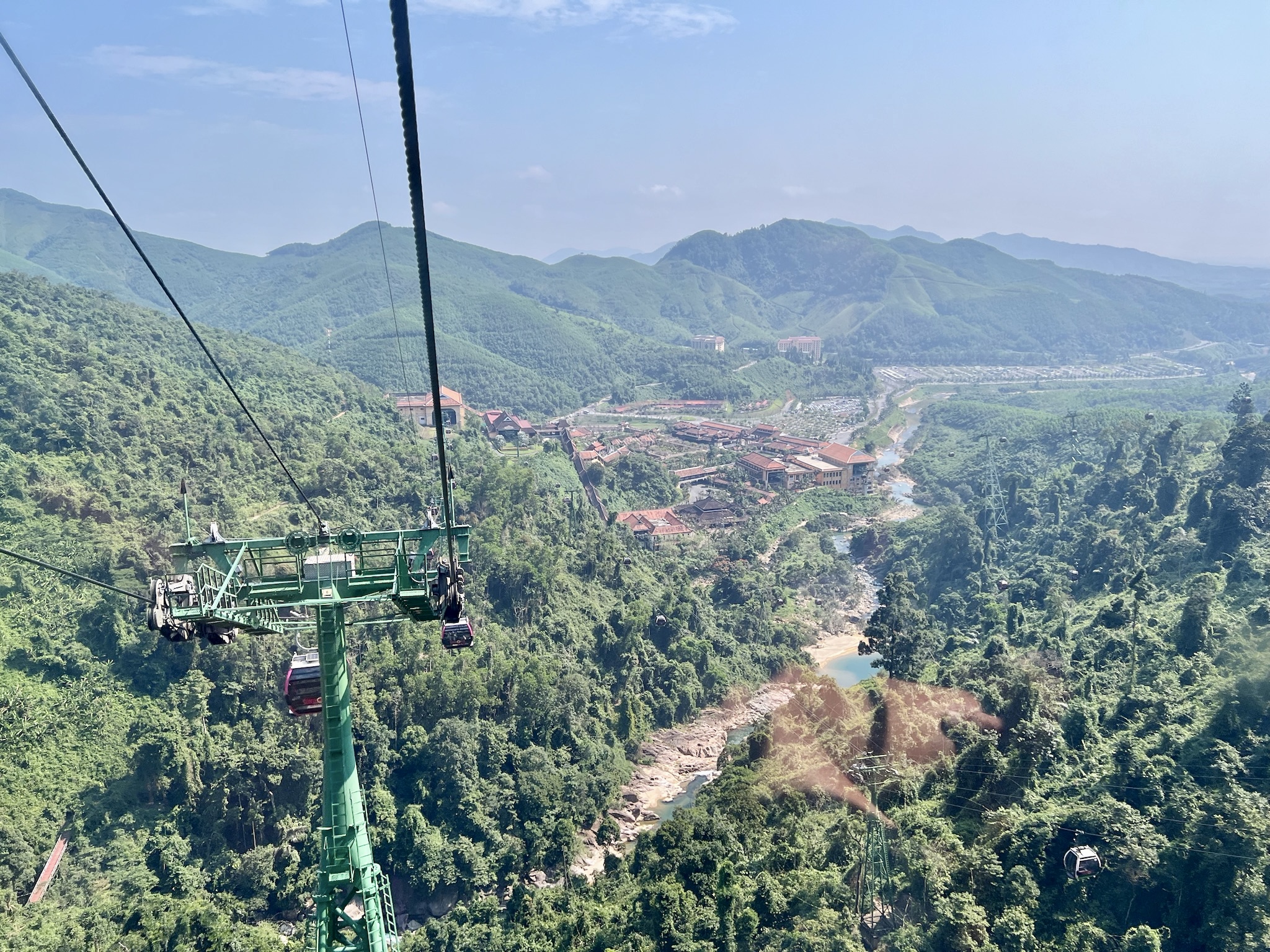
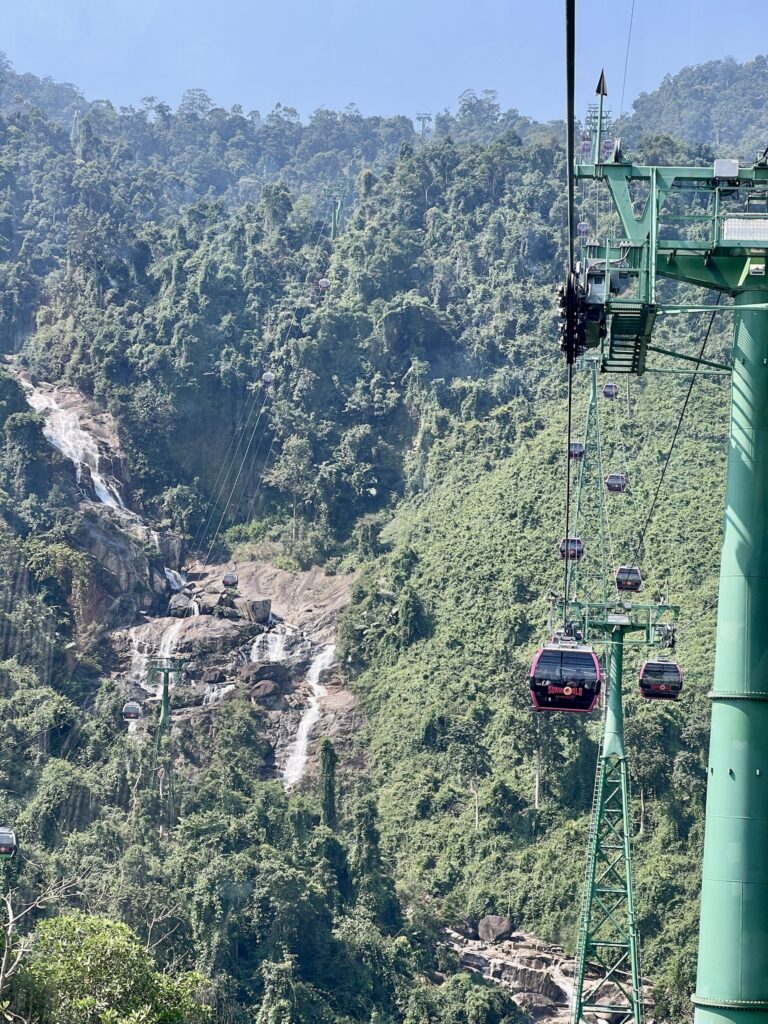
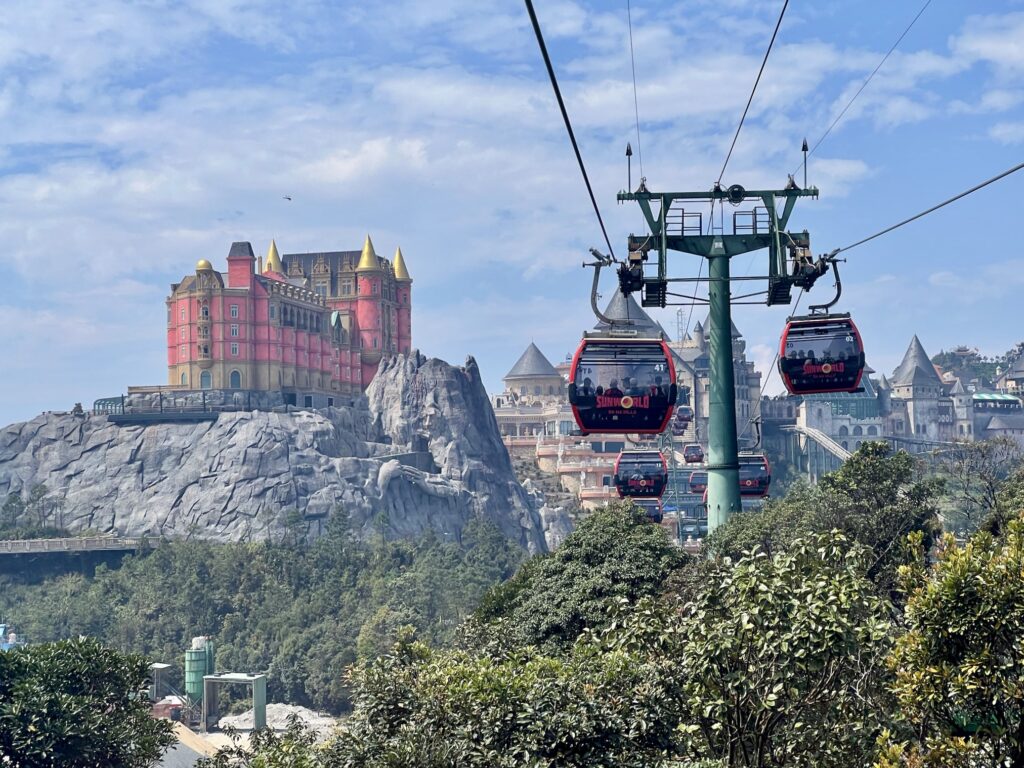
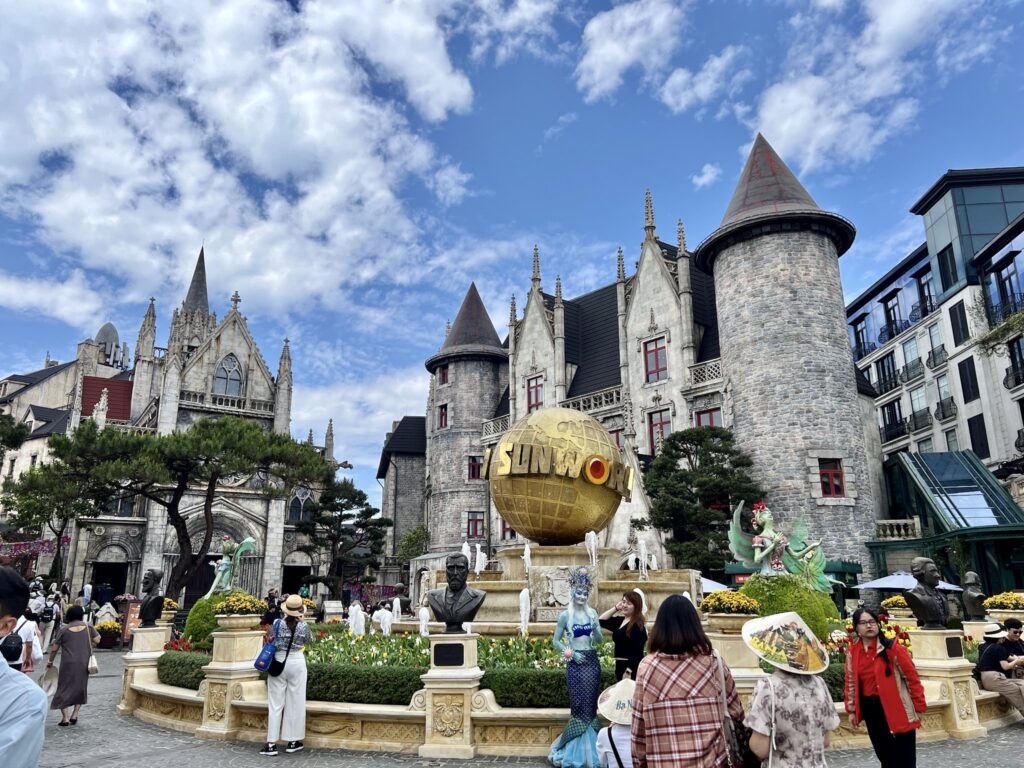
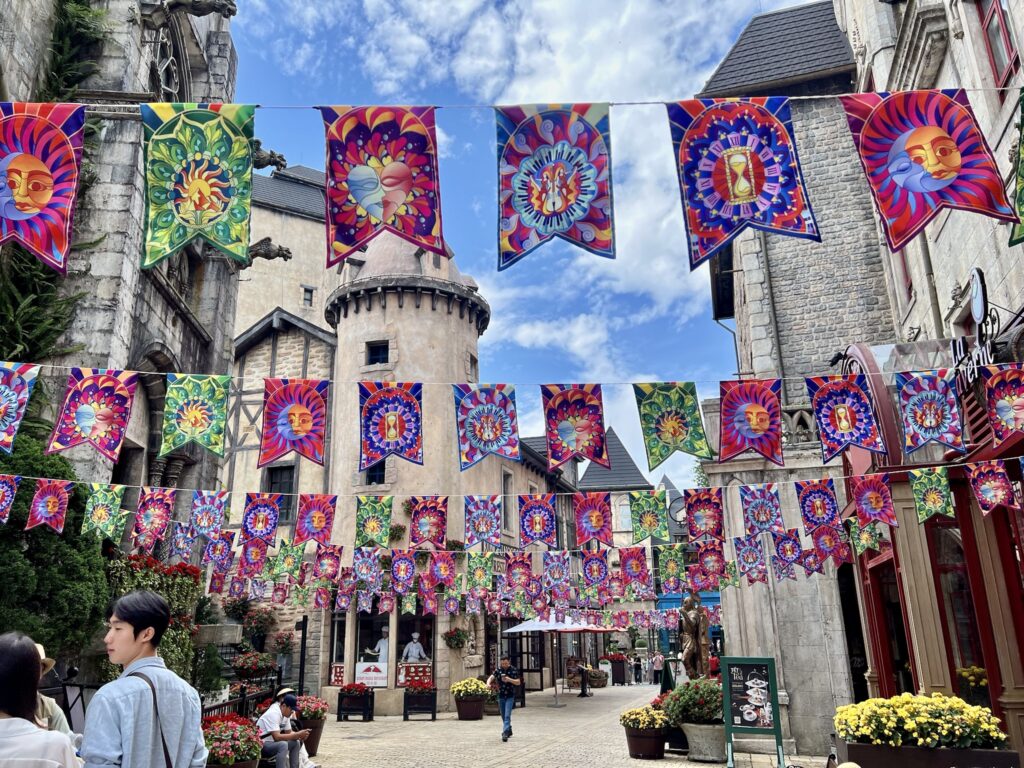
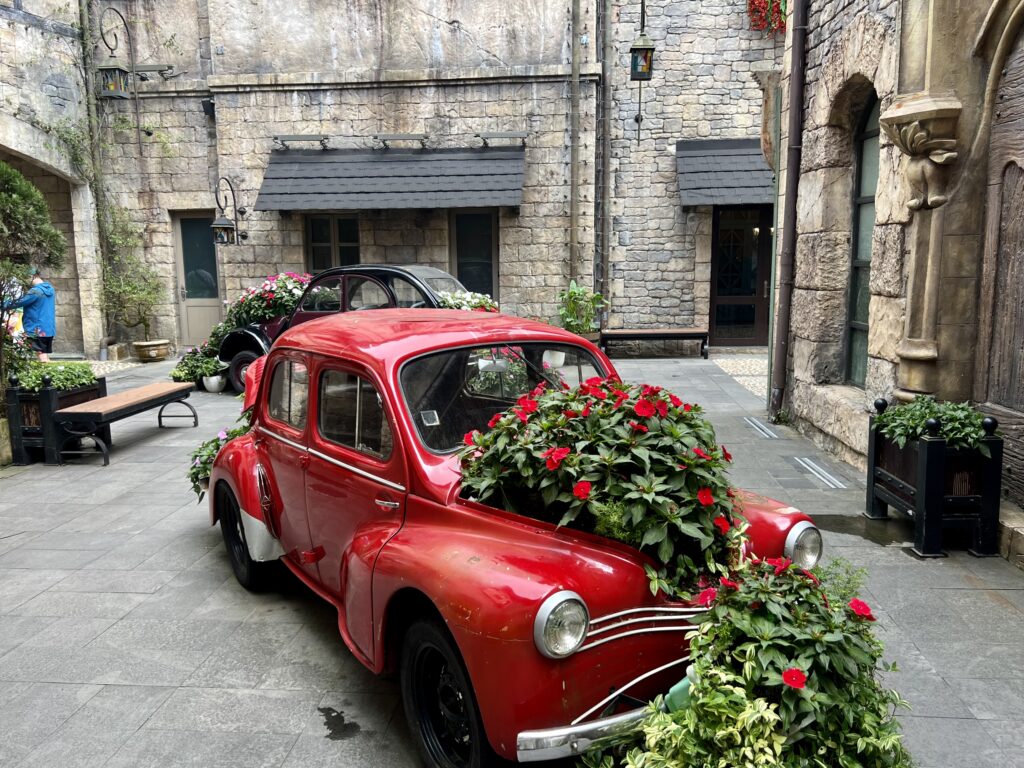
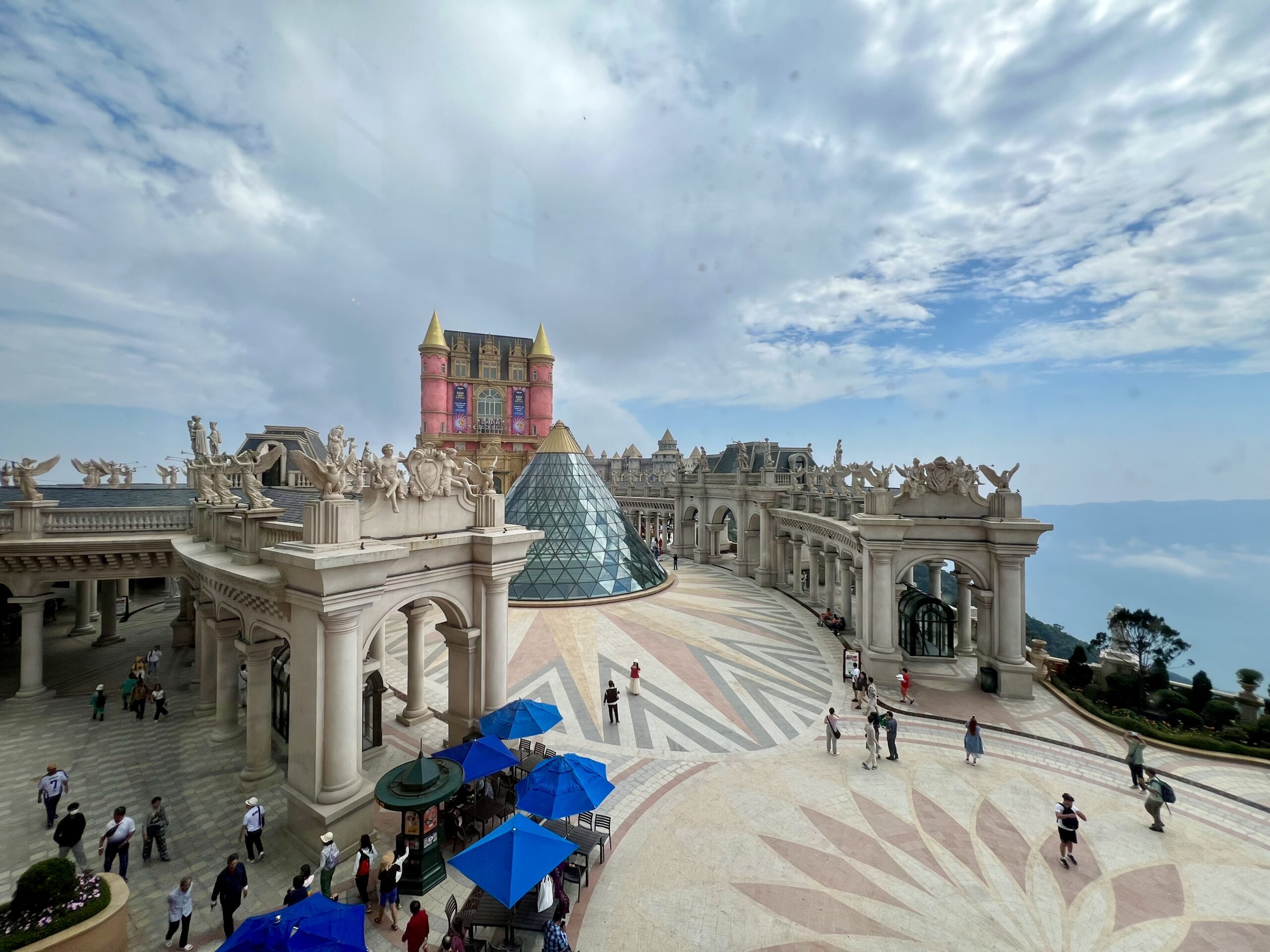
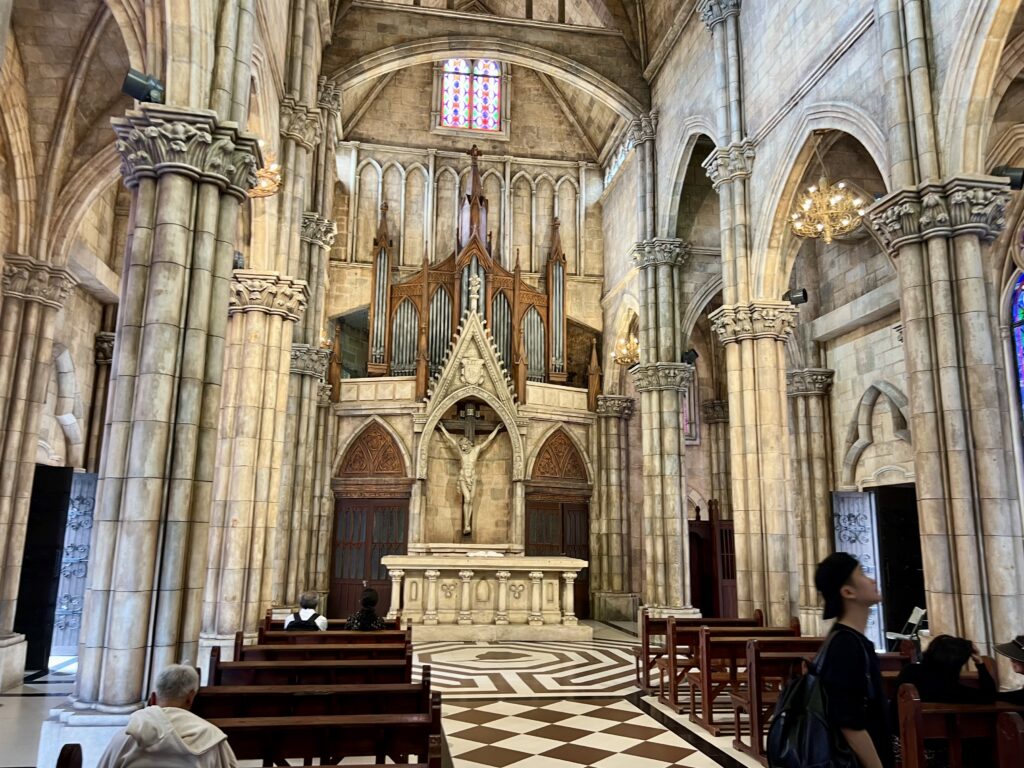
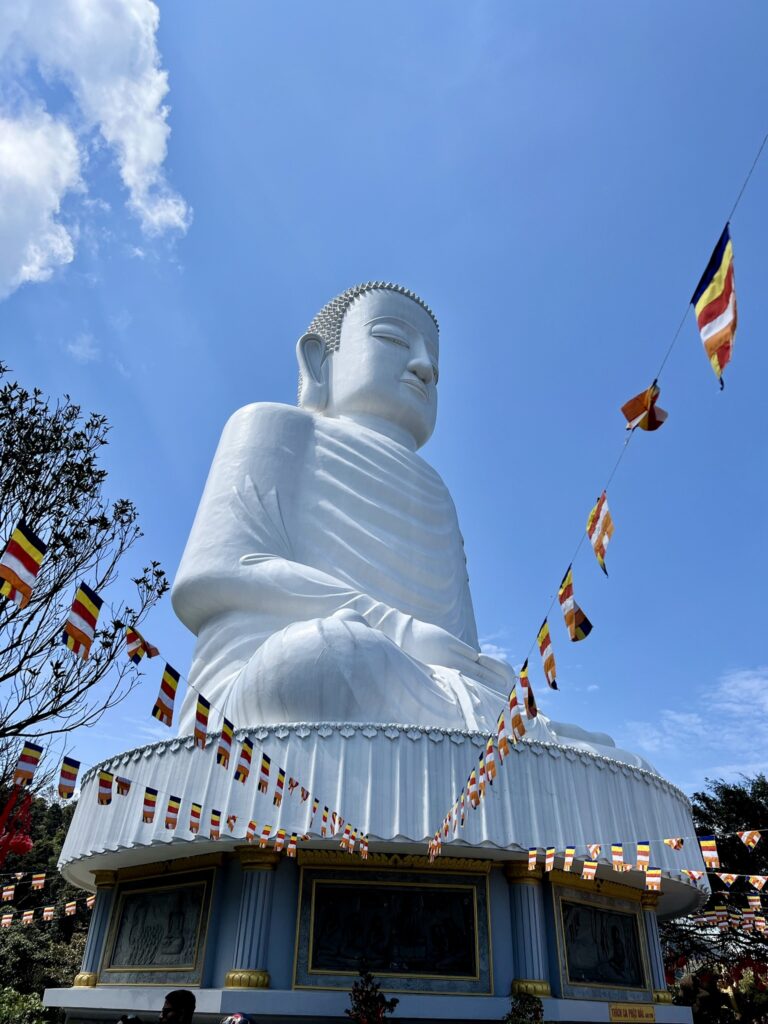
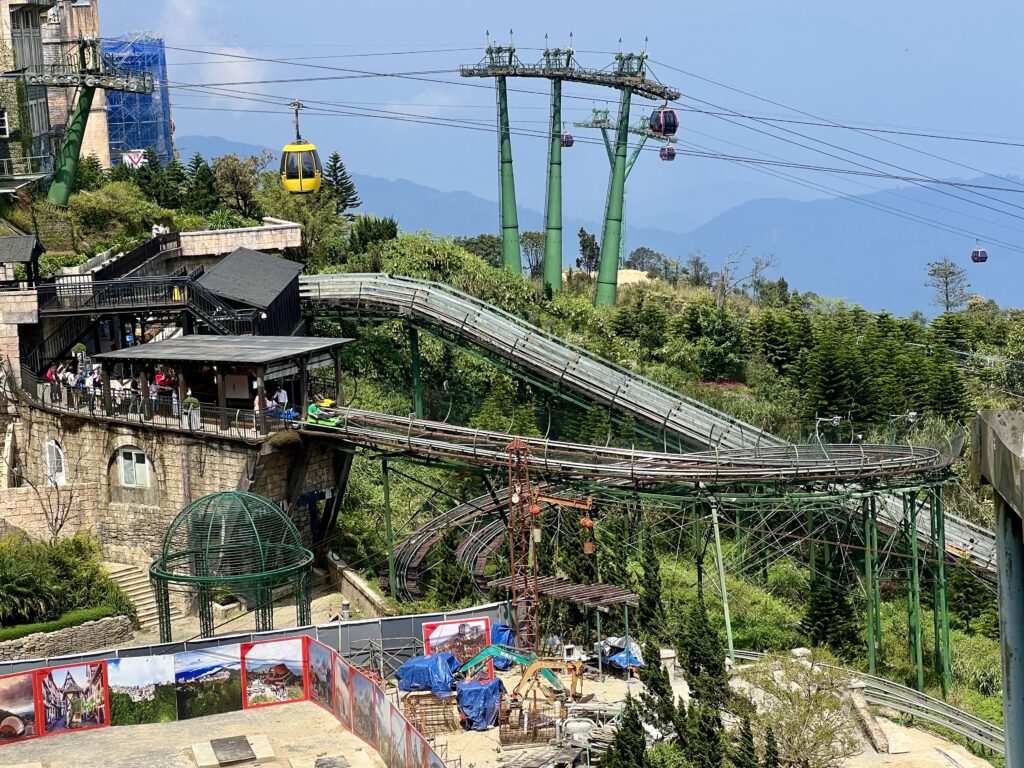
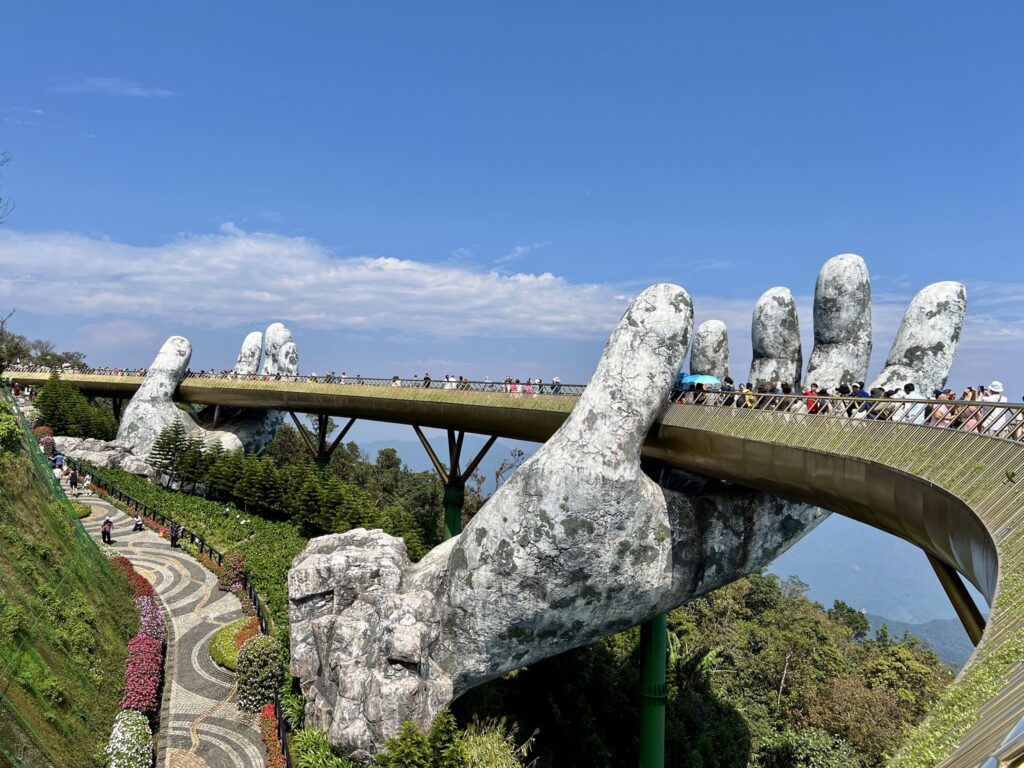
We revisited Bana Hills, both because it was in the clouds on our last visit and because we like to ride the cable car.The cable ride is about four miles, takes a bit over 15 minutes, and goes into and over a couple of valleys. At the top is a totally random collection of fantasy buildings. Inside, there are squares with fountains …Colorful, mostly empty alleyways between themed restaurants and small hotels (above and below) …And miscellaneous architectural mashups. Here we have what appears to be a fatal collision between St Peter’s Square, Sintra’s pink Peña Castle, and the Louvre’s glass pyramid. For believers, there’s a cathedral (above) and a giant Buddha (below) …The most amazing aspect of the whole thing is there’s nothing to do there. Other than one, rather anemic roller coaster, there are restaurants serving remarkably similar food, and gift shops all selling the same merchandise. The only two real attractions are the cable car ride and quixotic photo opportunities. The main photo op is the Golden Hands Bridge. For the rest of it, one can easily photograph everything, and eat lunch, in a couple of hours. Yet the place has hotels. The question is, why in the world would anyone need an overnight to do a walkthrough. Maybe they rent rooms by the hour.
People
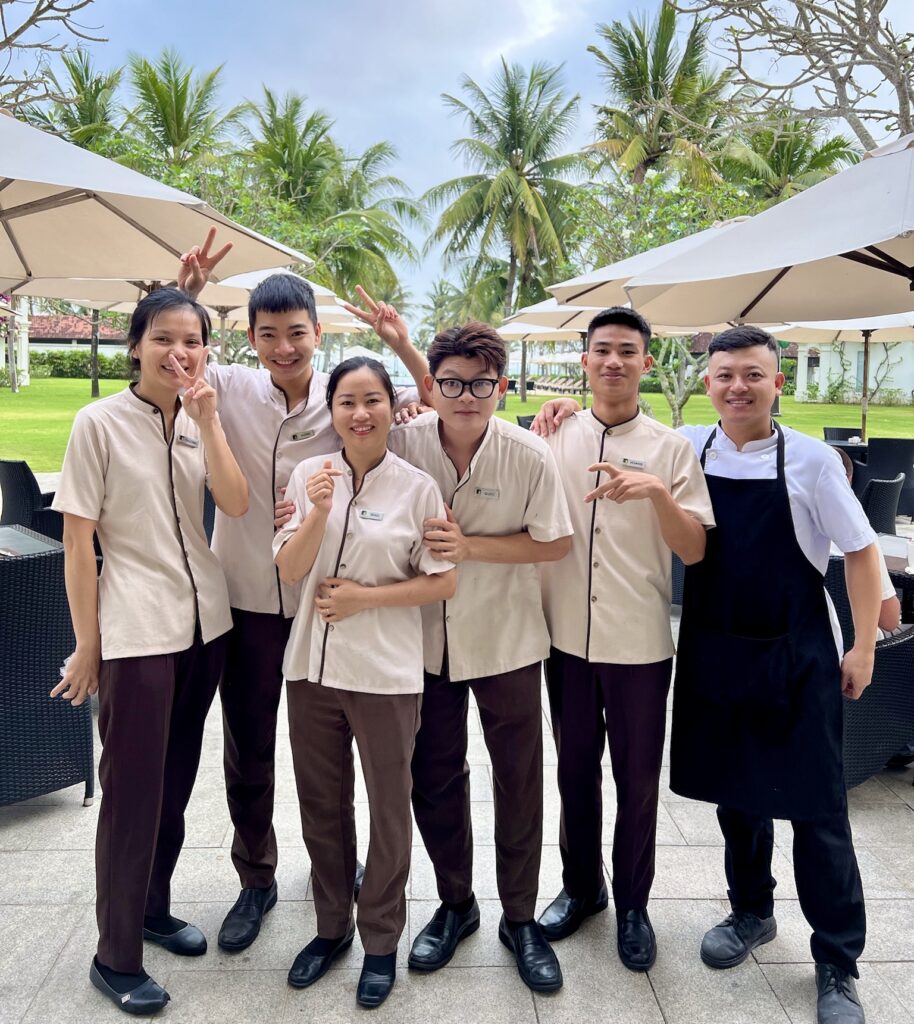
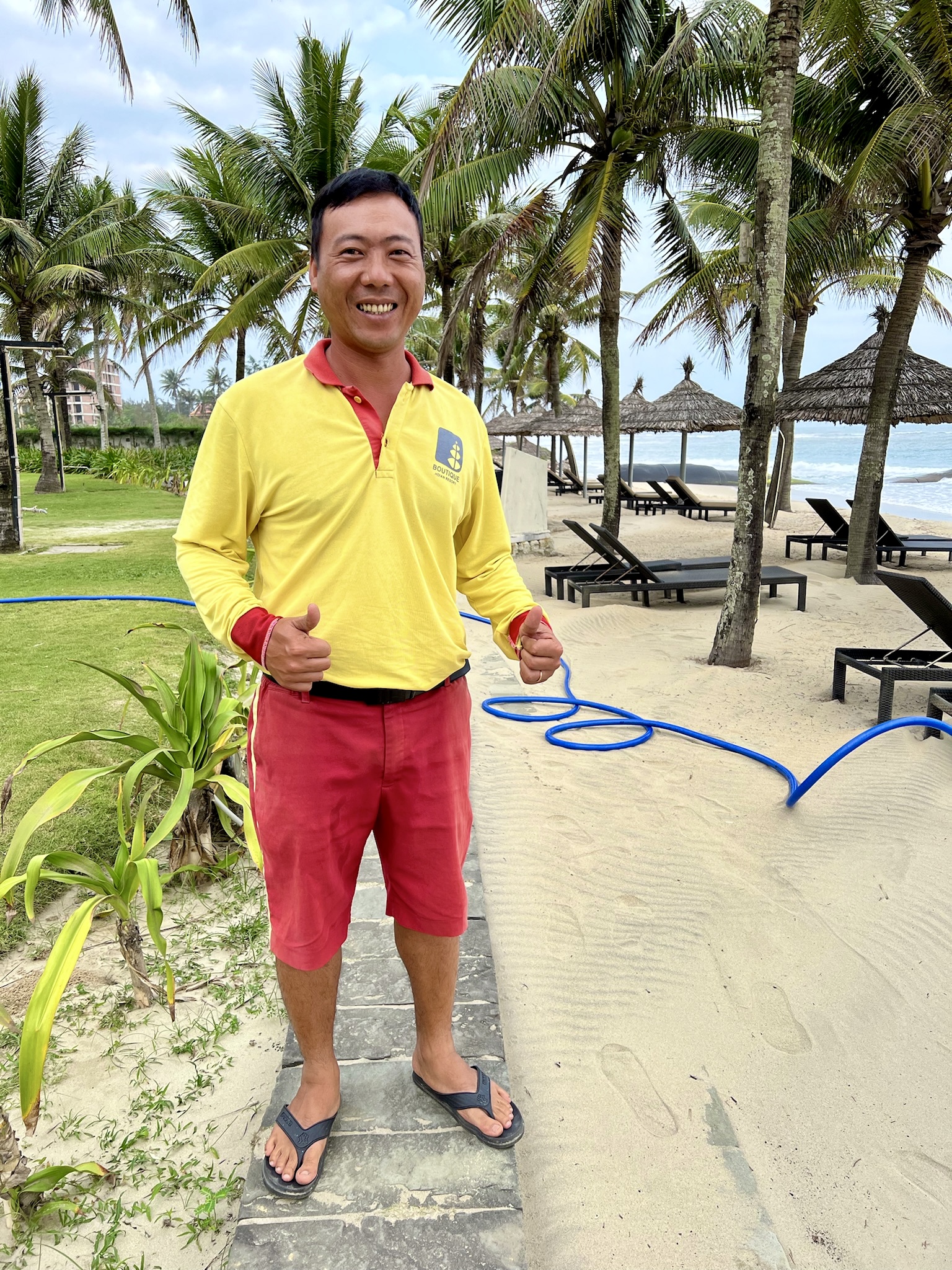
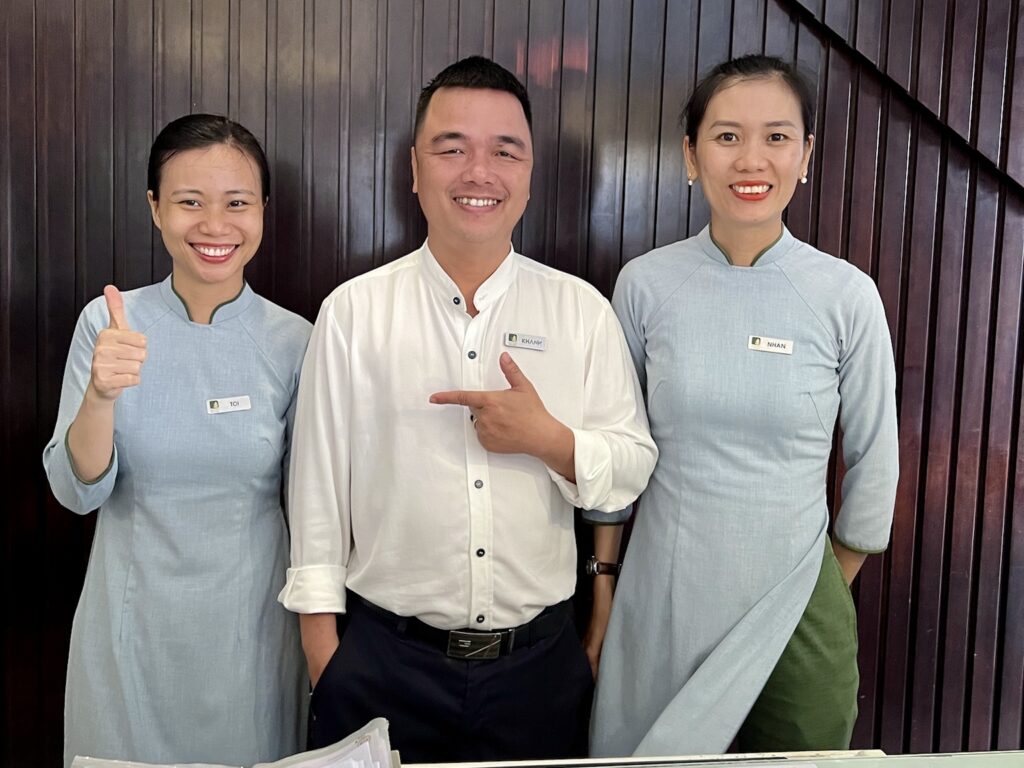
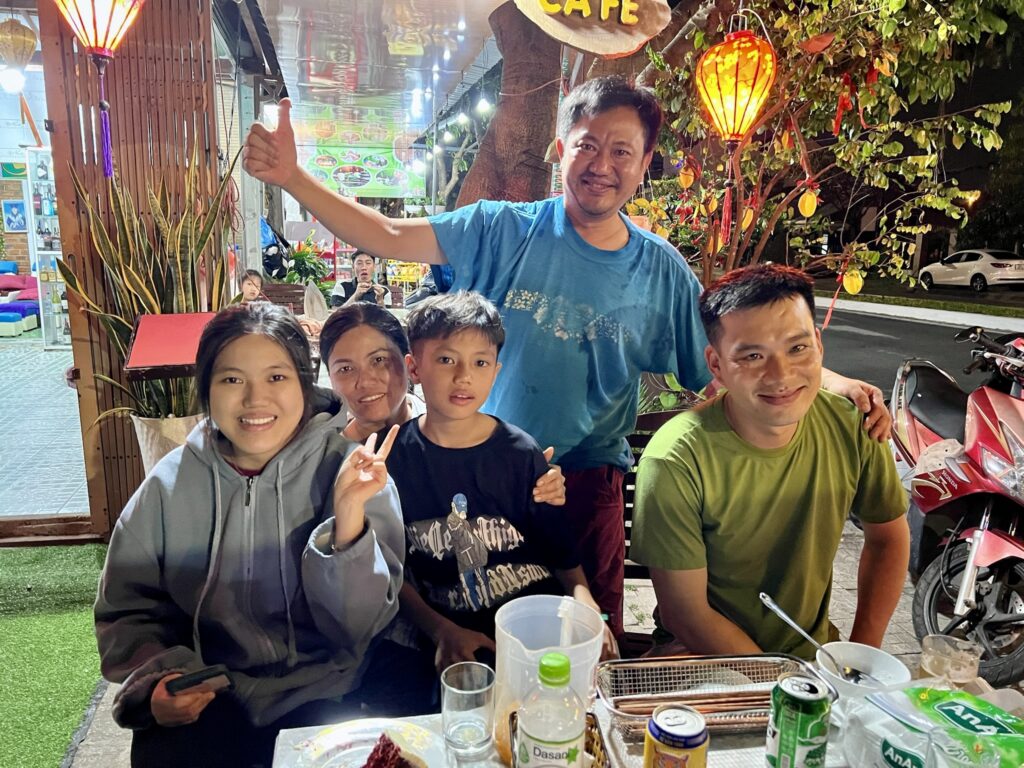
The restaurant staff work all shifts at all restaurants, so if we didn’t see one of them at breakfast, we’d run into them later in the day. We got to know several and would occasionally see them outside the hotel. This is a typical breakfast shift. As you can see, they all lack any kind of personality. This is Gi, one of the three lifeguard attendants. All are soft spoken and incredibly kind.These three anchor the front desk. They are arranged here in order of incessant happiness, from left to right. A couple of nights before we left, the family that runs the laundry/mini-mart/massage/restaurant just outside the hotel entrance invited us to a family dinner. We took a red velvet cake, which they called a birthday cake. It wasn’t anyone’s birthday, but it didn’t seem to matter. They’ve lived there for 20 years, back to when the hotel property was just homes like theirs. The people we’ve met here are some of the kindest, most welcoming we’ve met anywhere.
Leaving
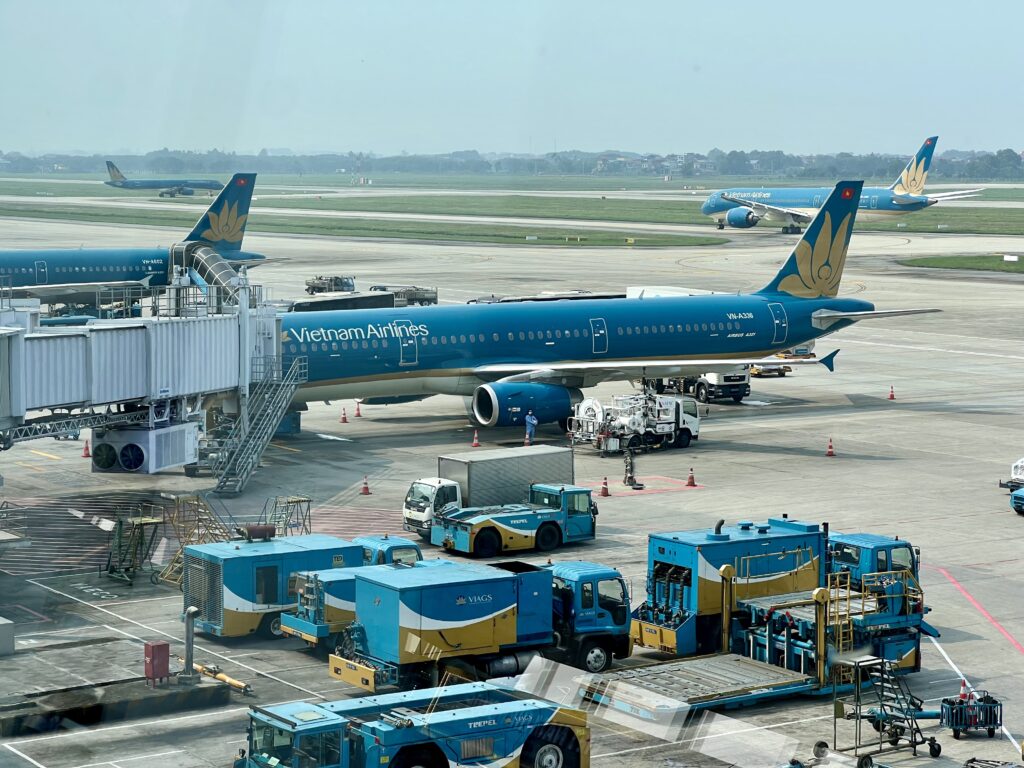
After staying for two months, Vietnam had started to feel like a new normal. We could see why people would want to live here full time. But it was time for us to leave, so we flew from Danang to Hanoi. Ciao ciao Danang In Hanoi, we had a few hours before our flight to Kuala Lumpur. On Vietnam Airlines. Ciao cos Vietnam.