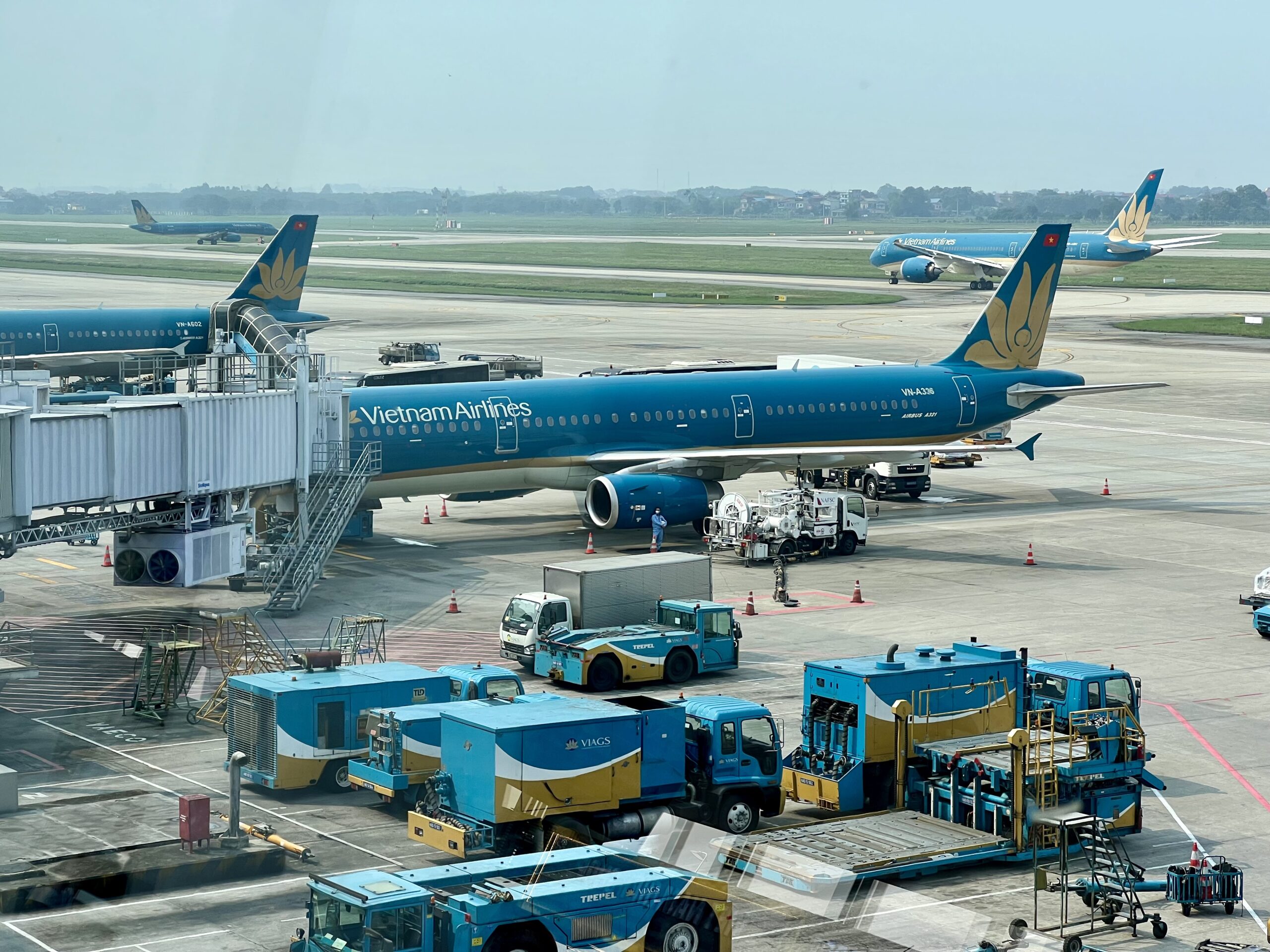
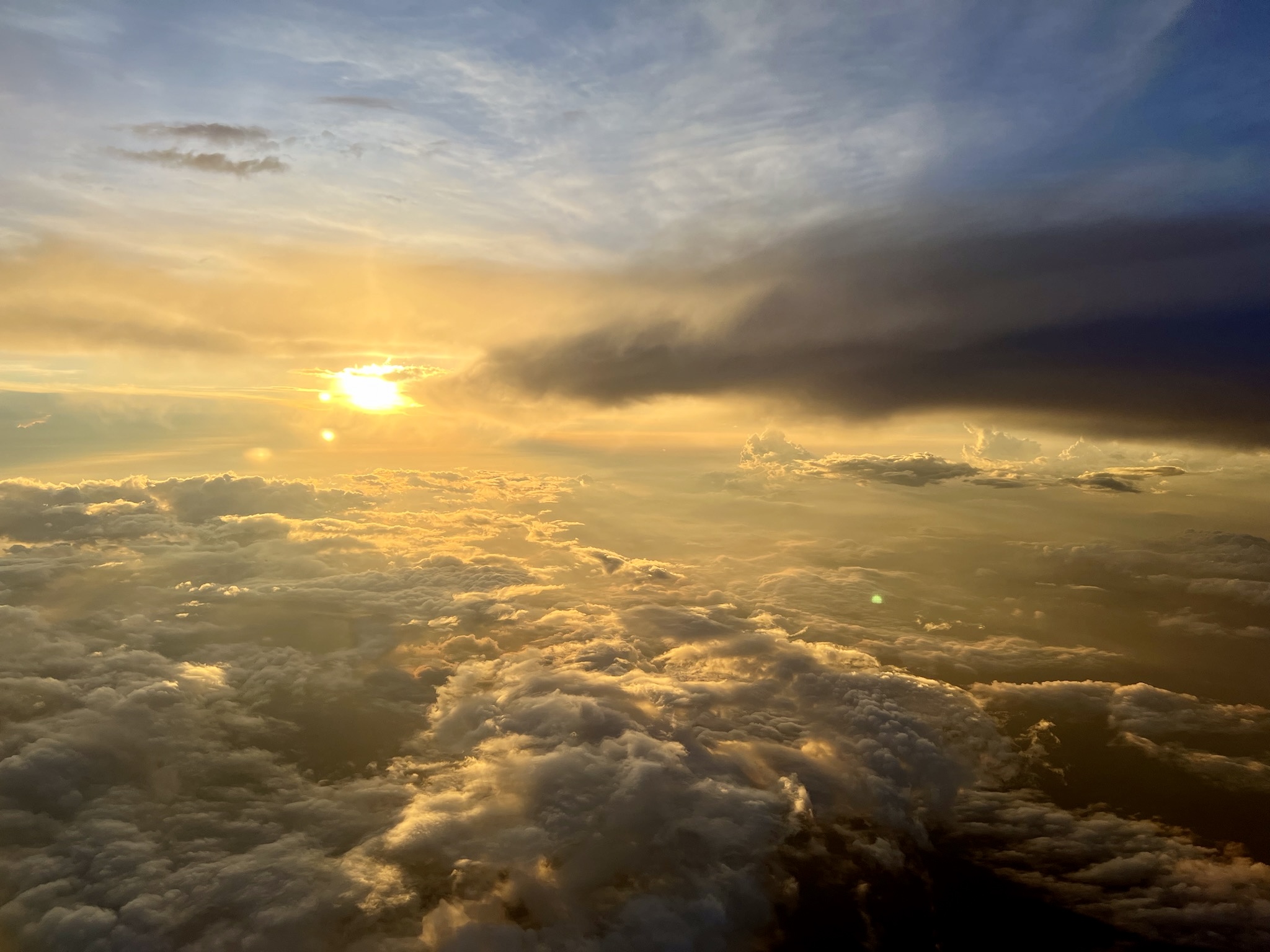
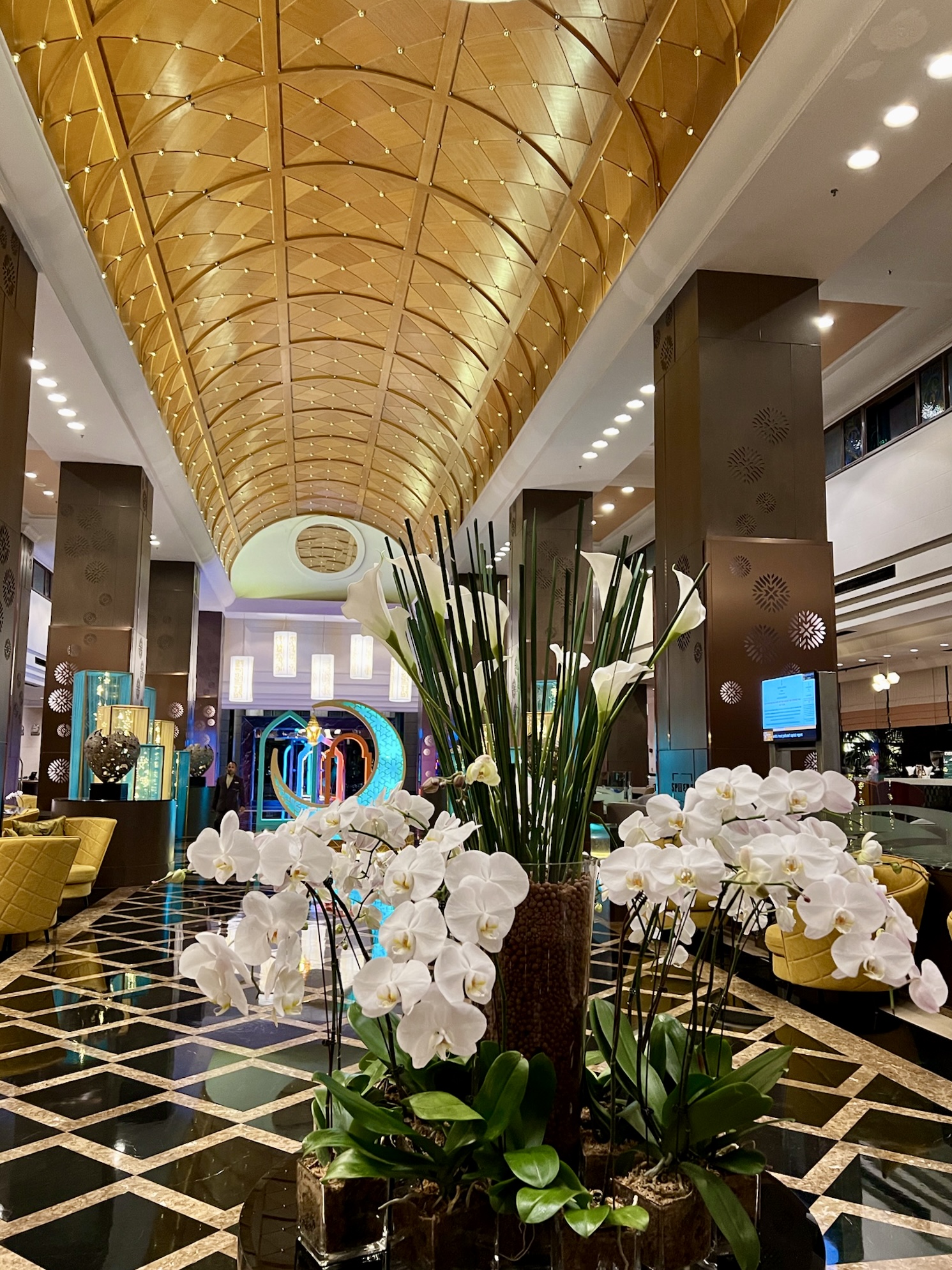
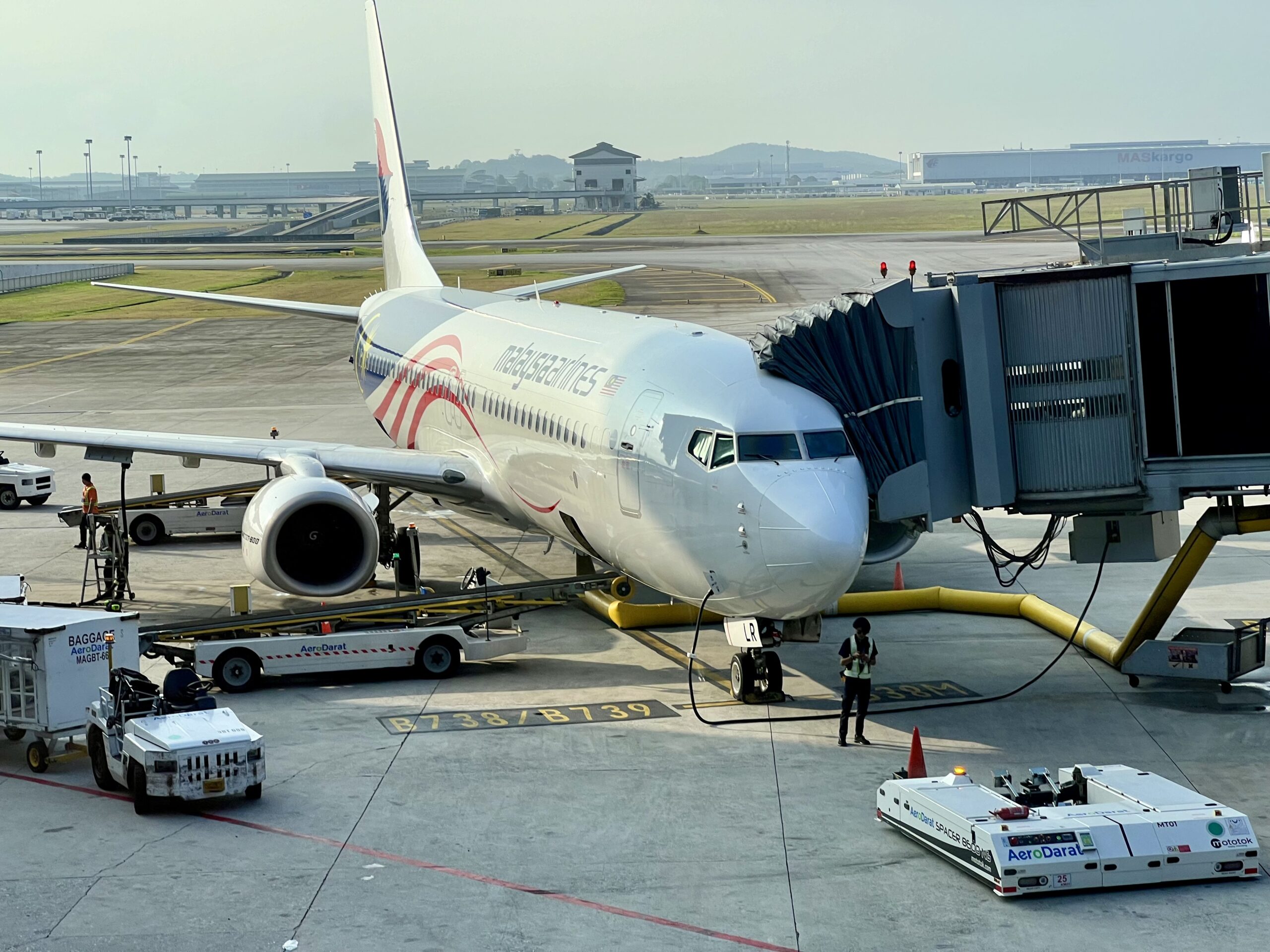
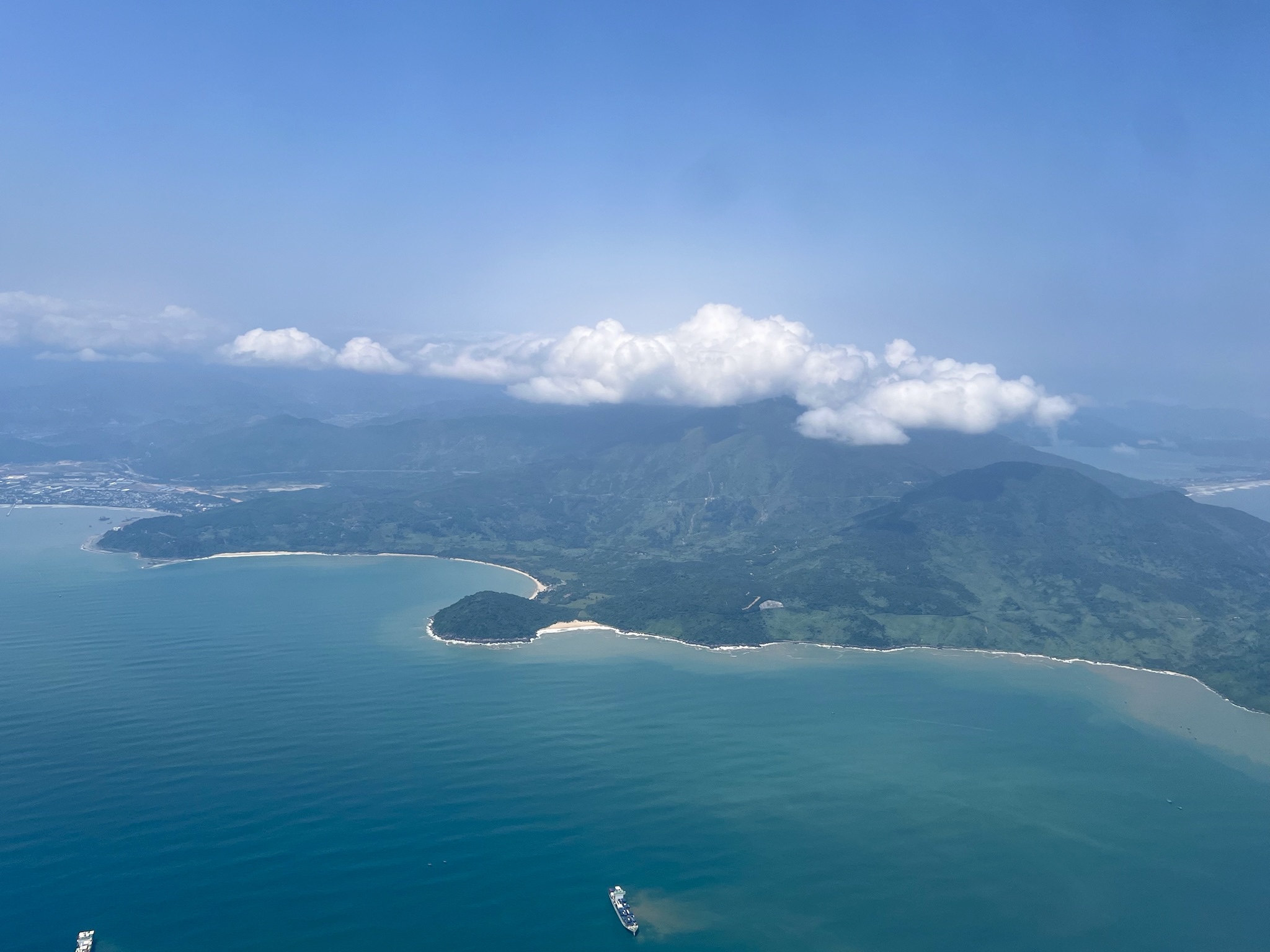
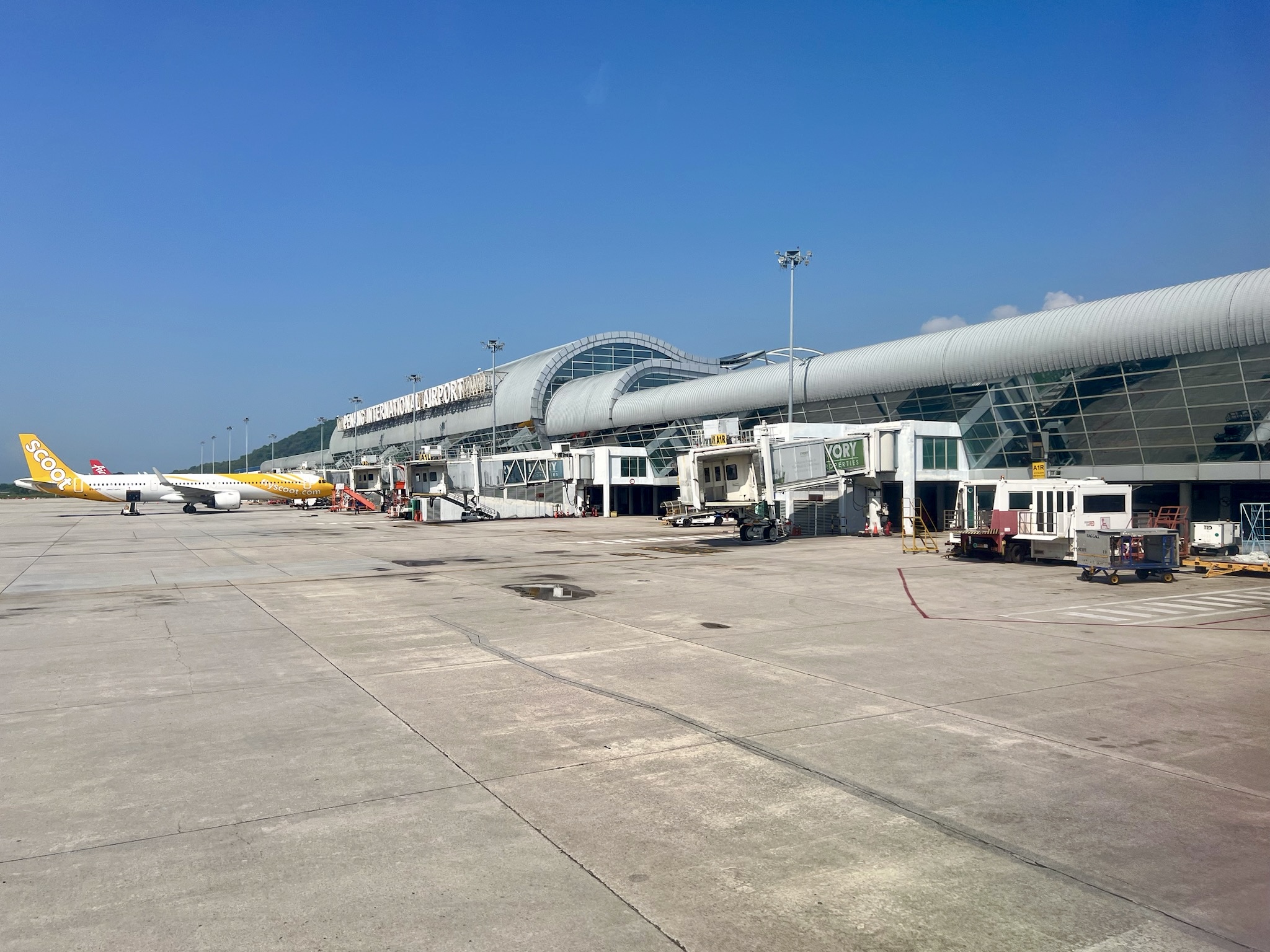
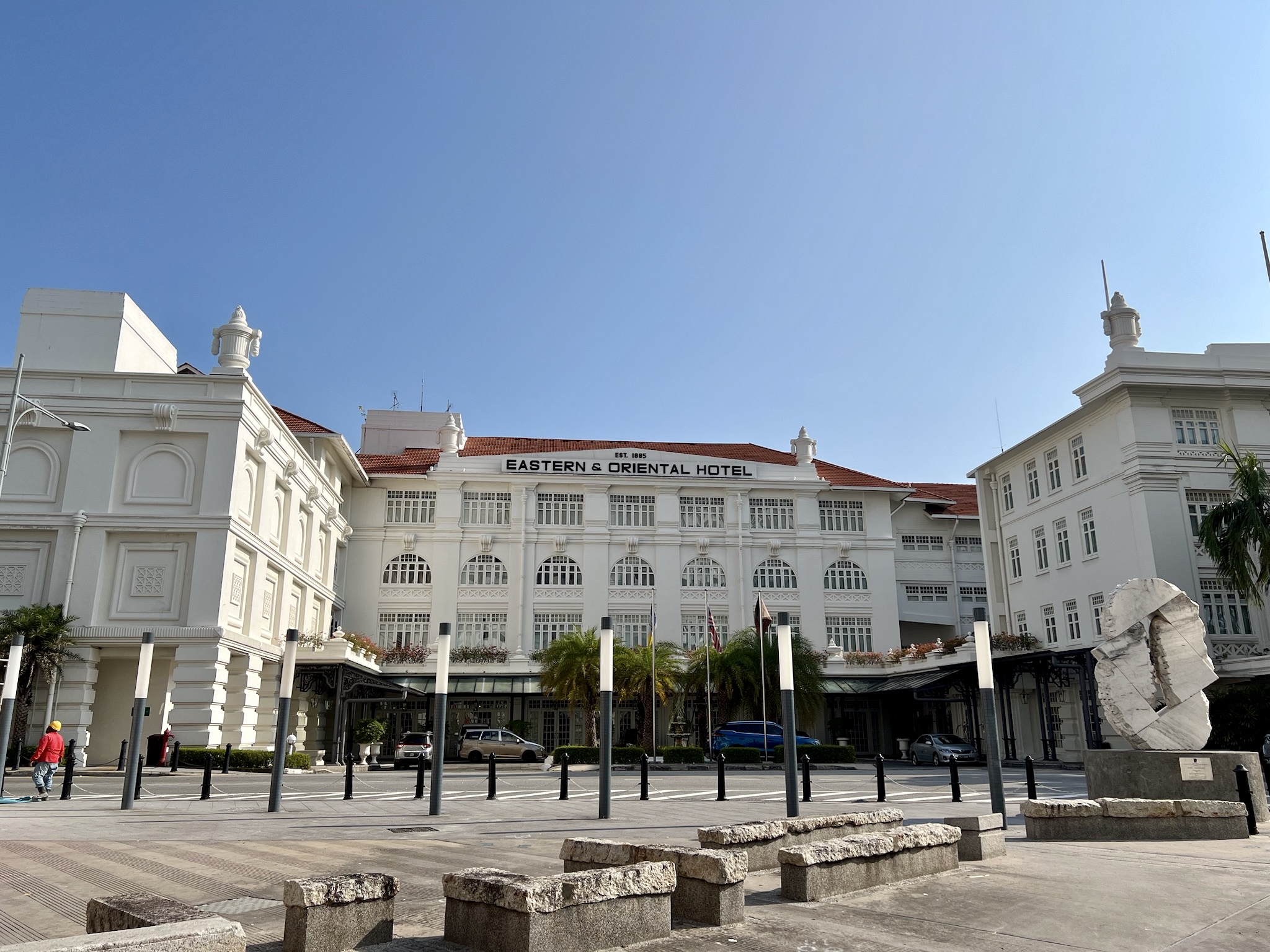
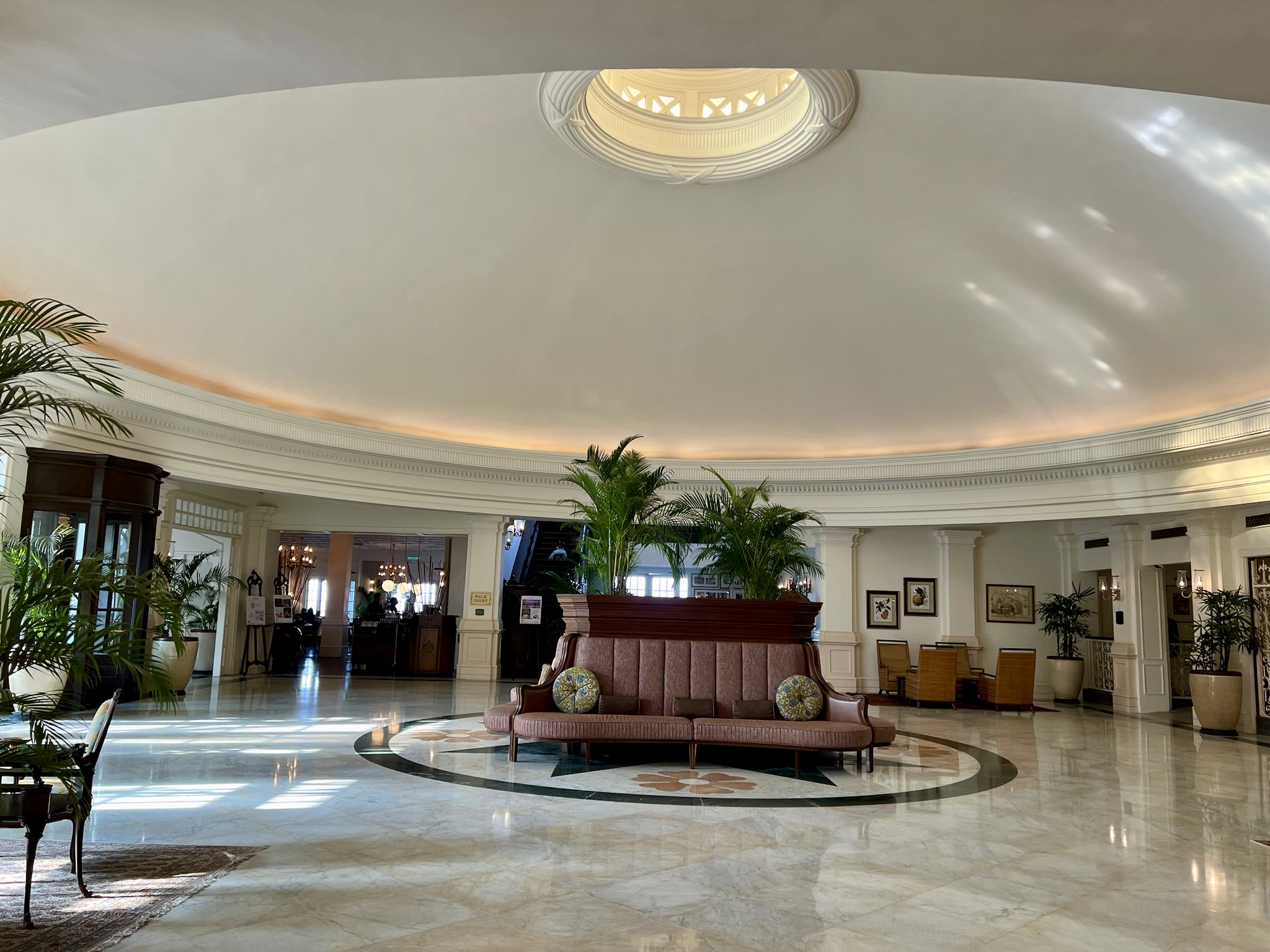
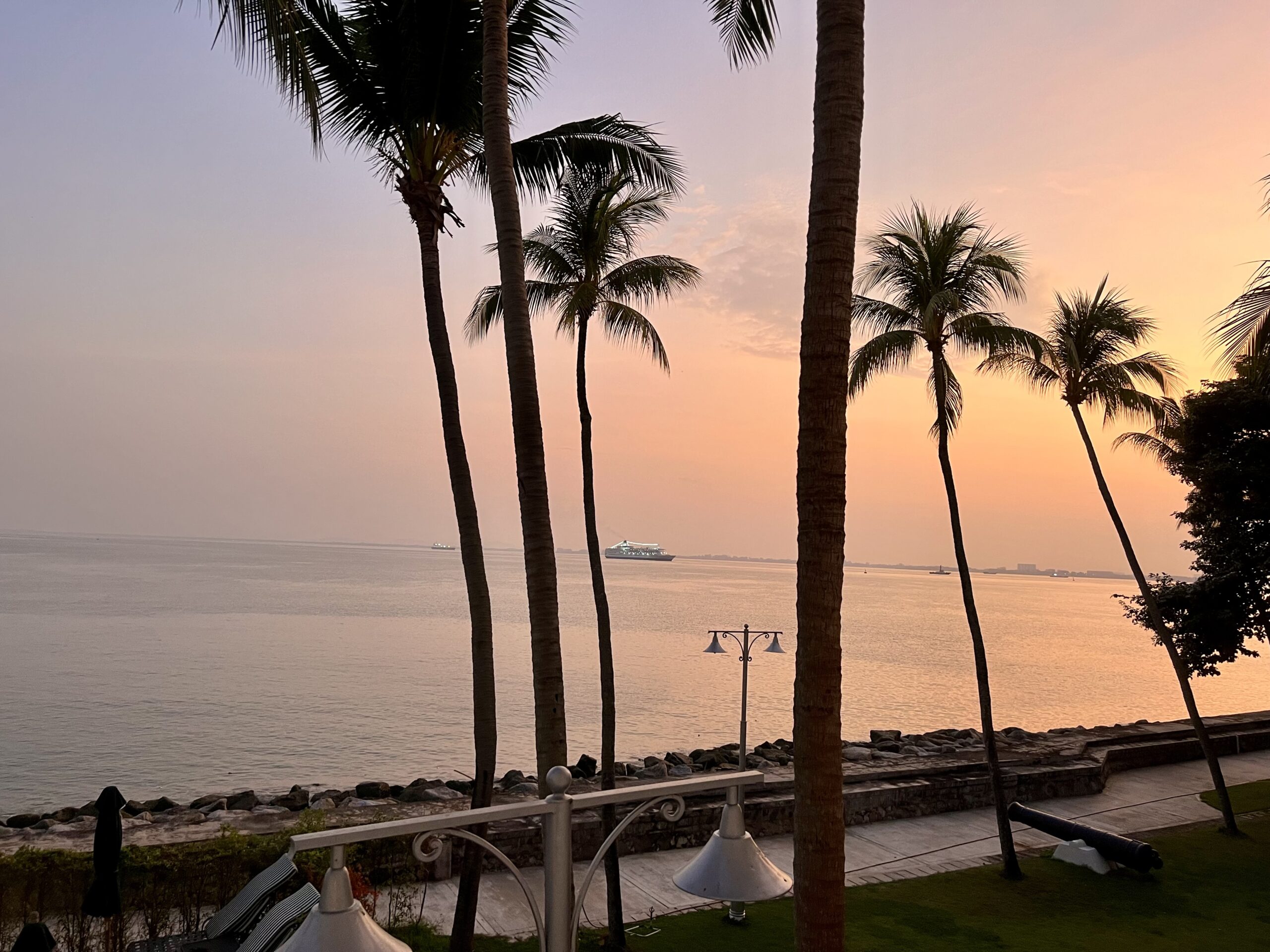
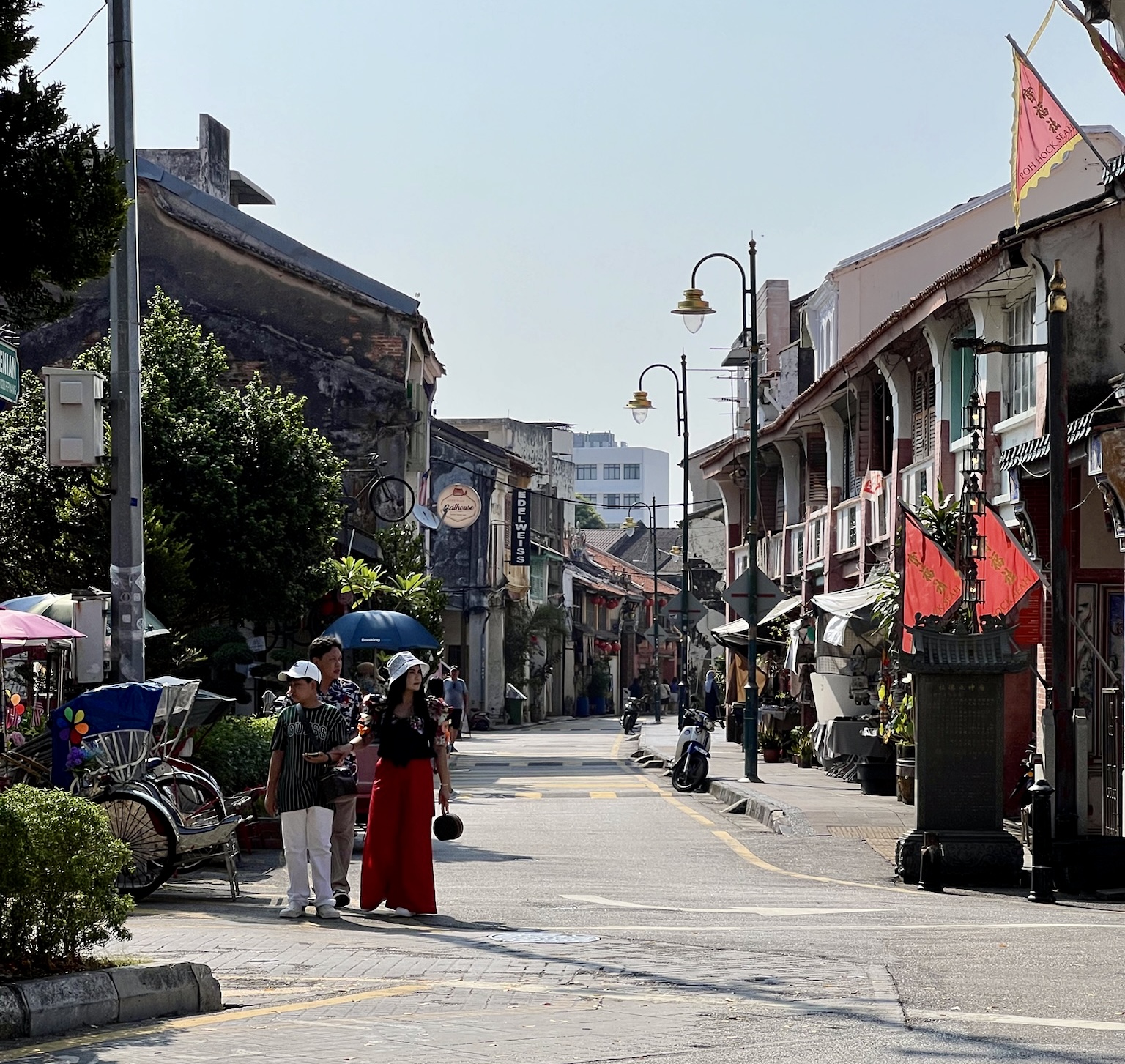
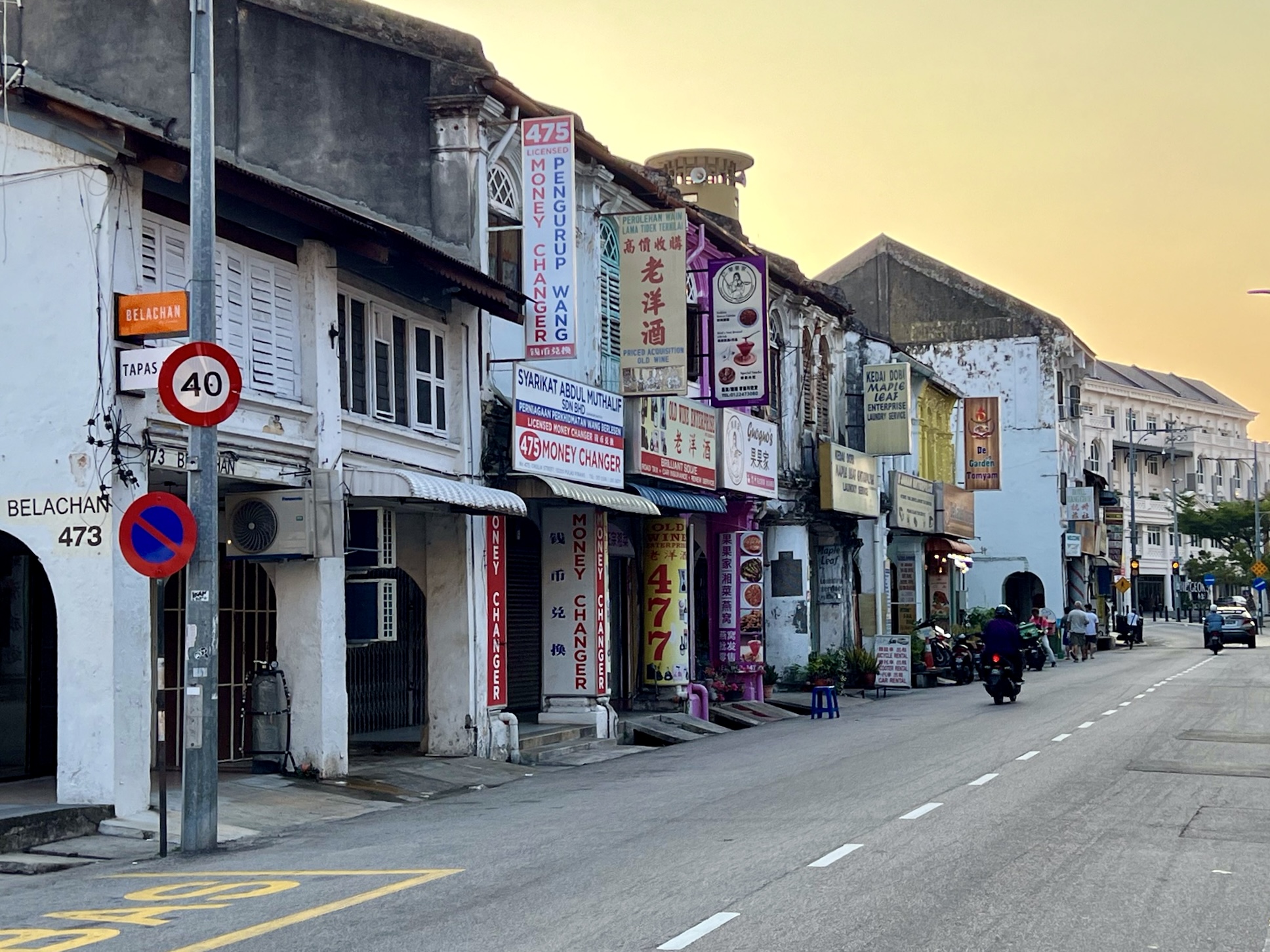
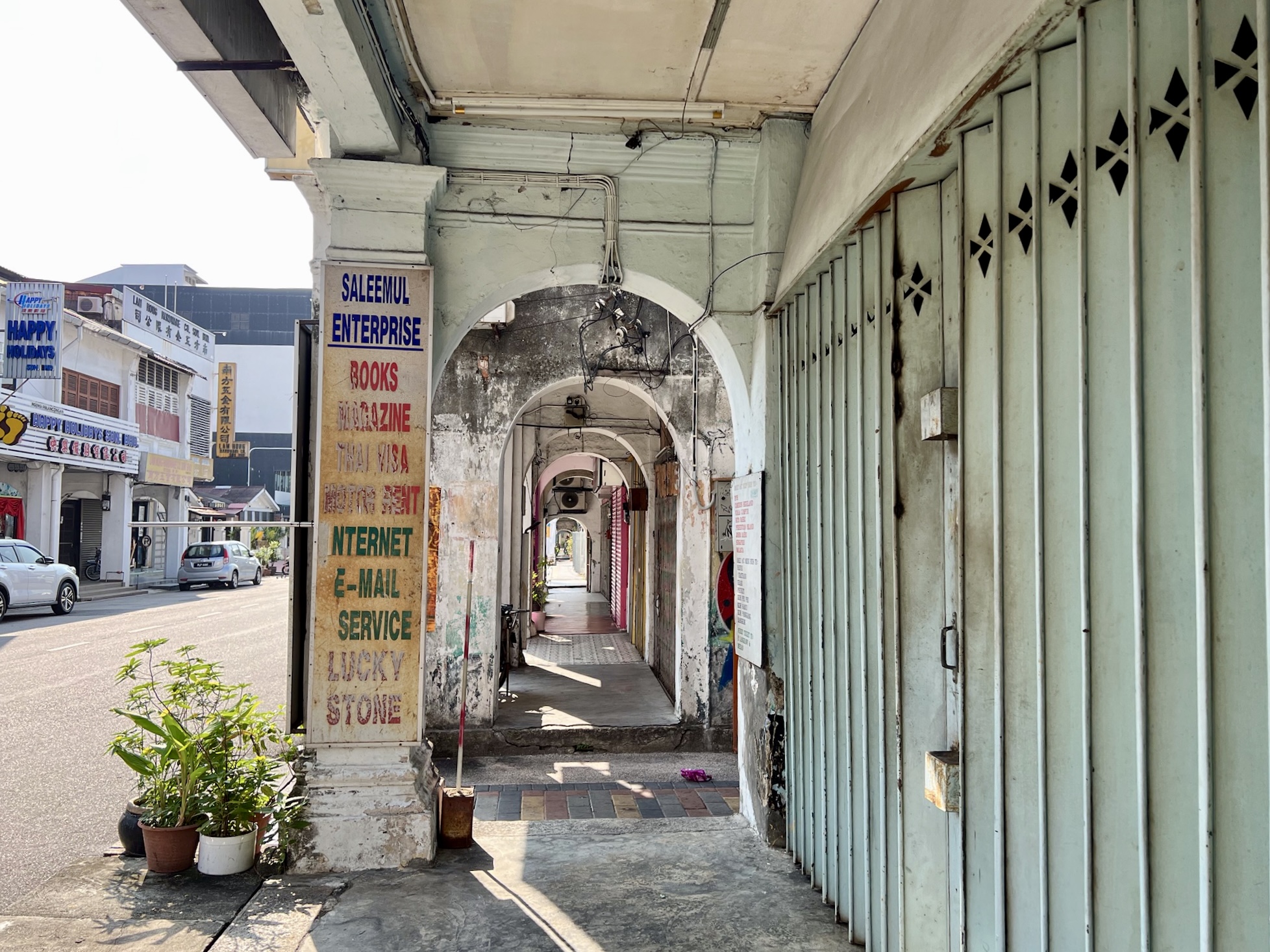
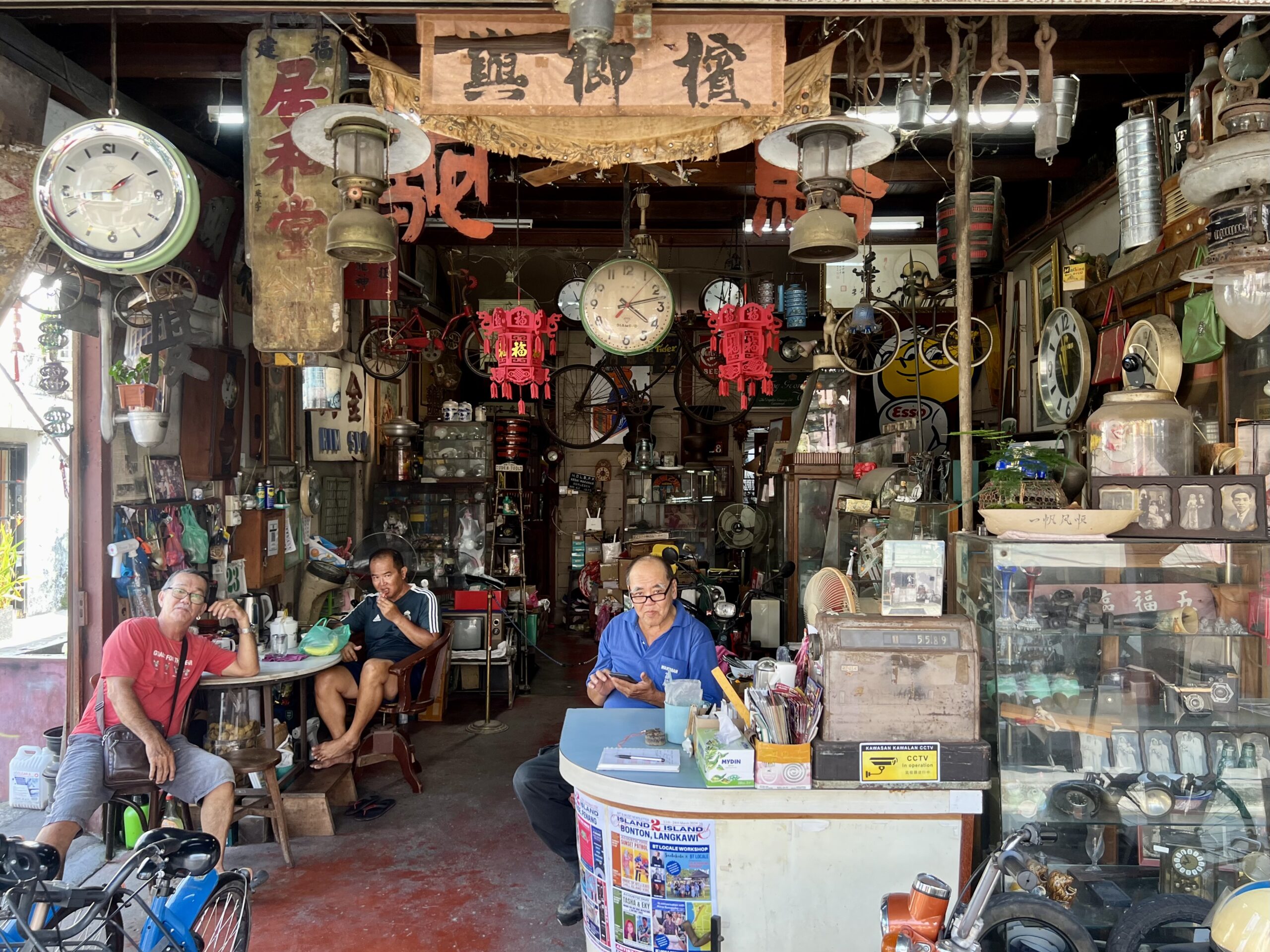
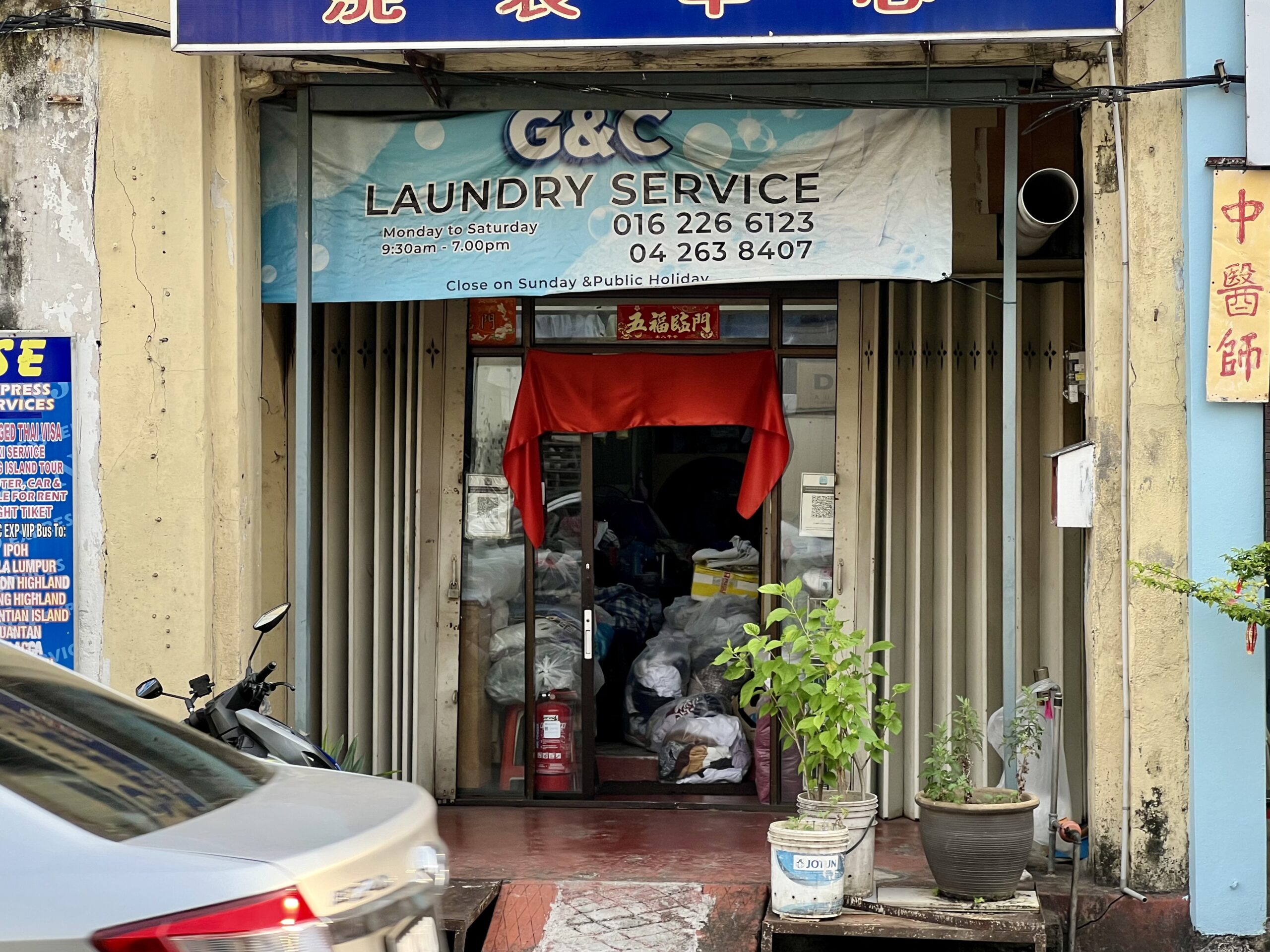
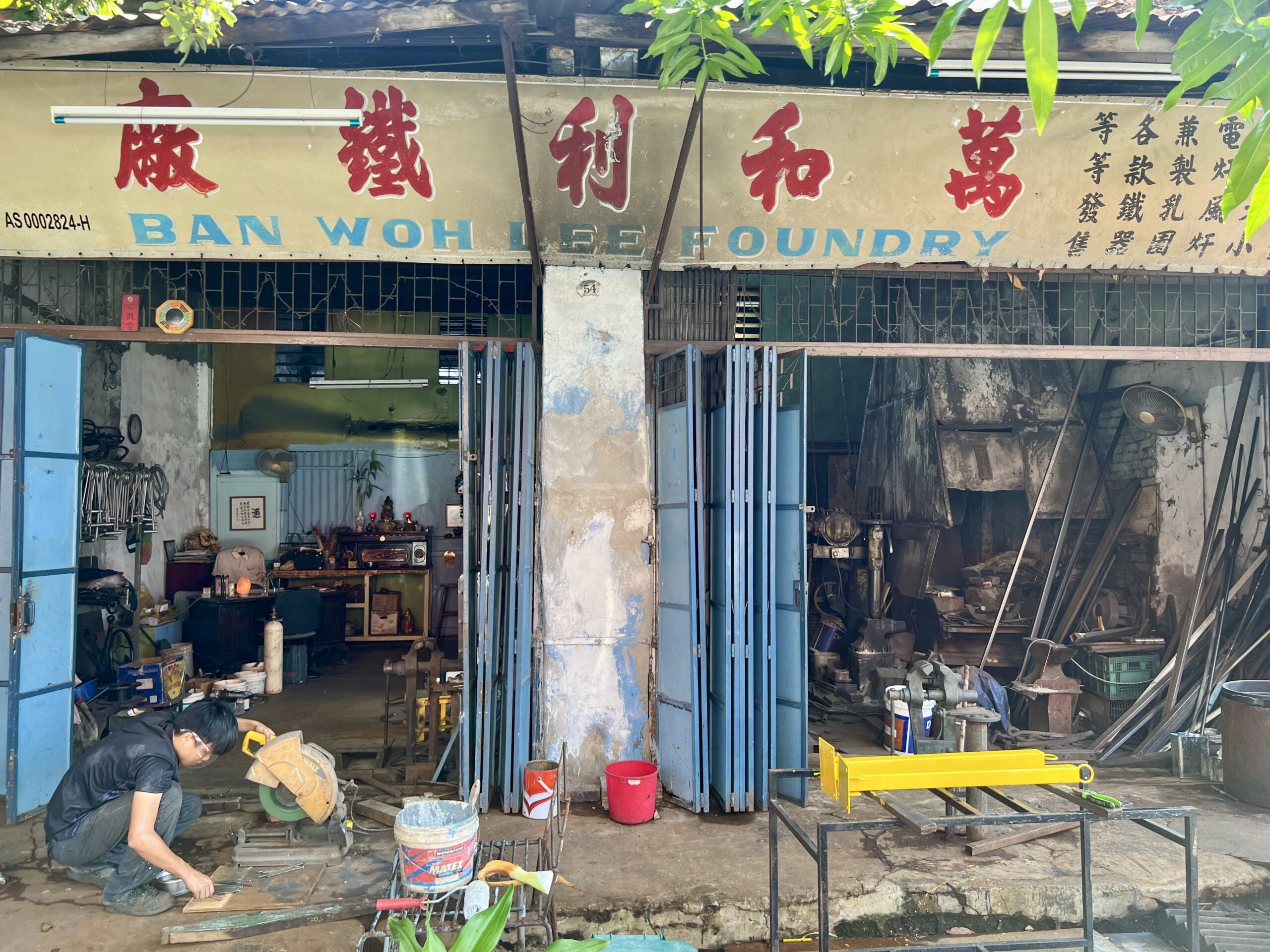
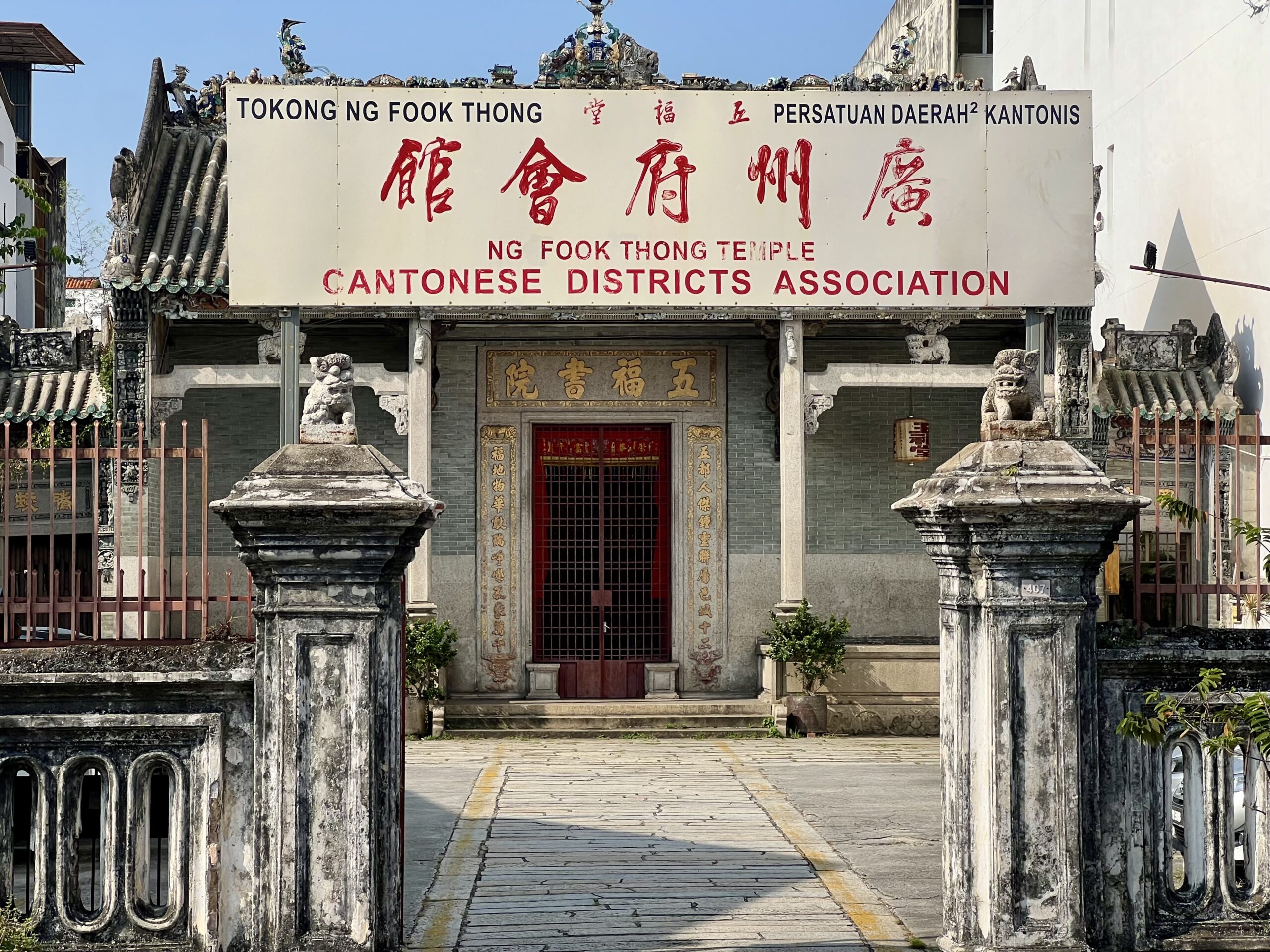
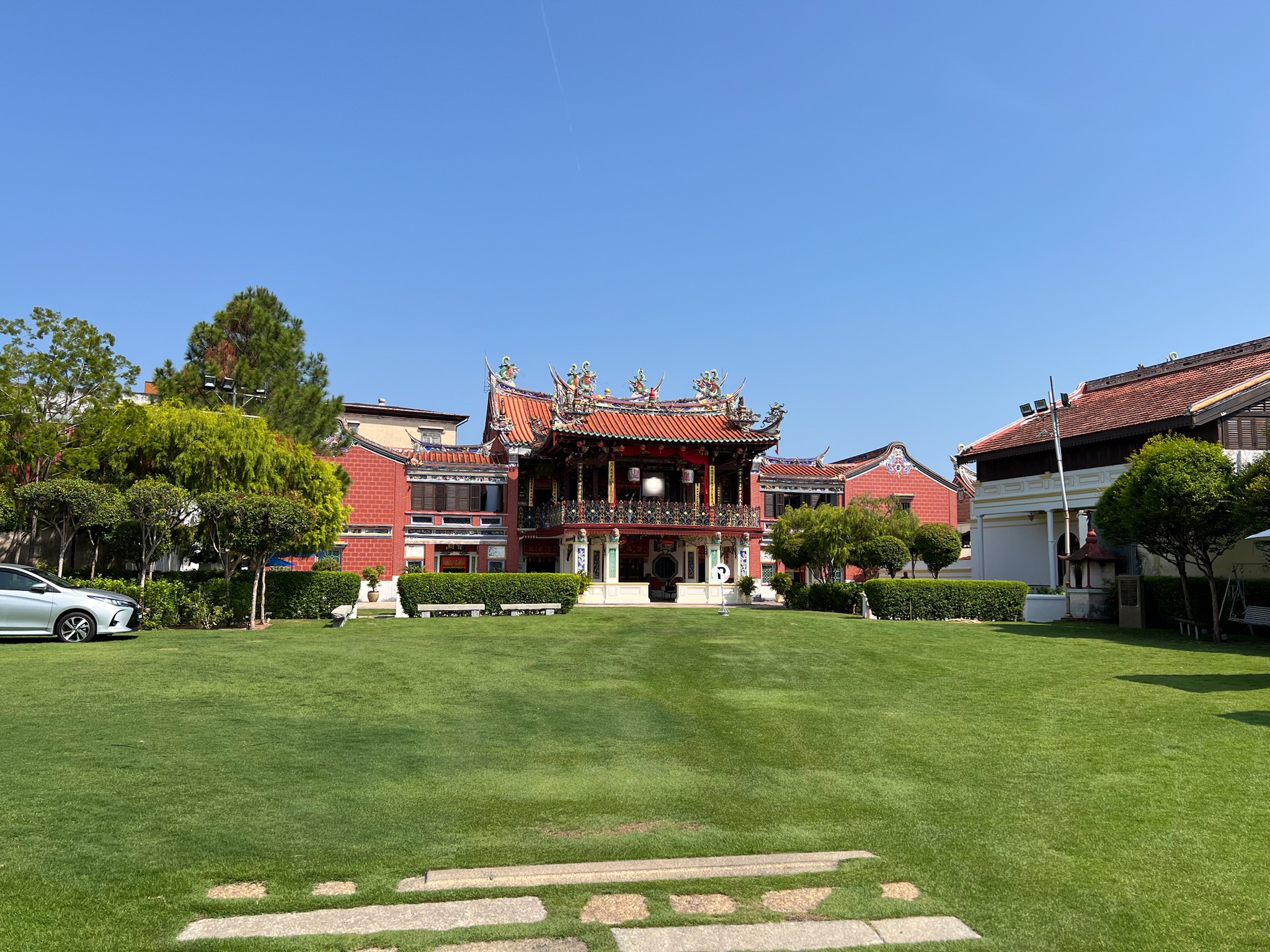
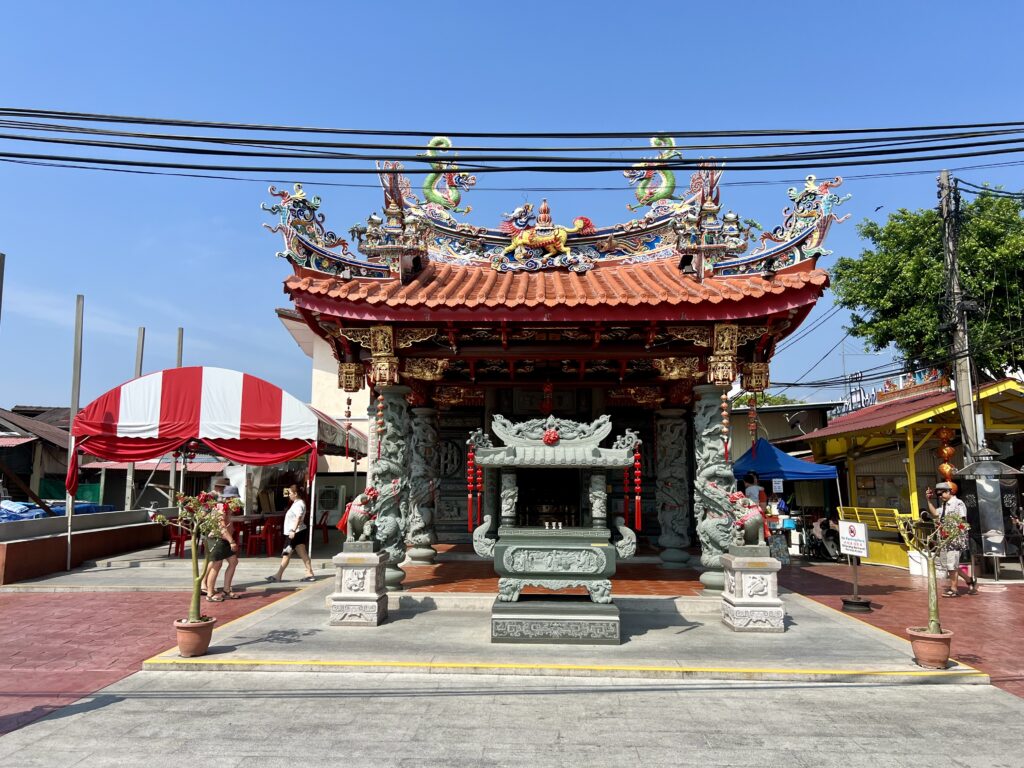
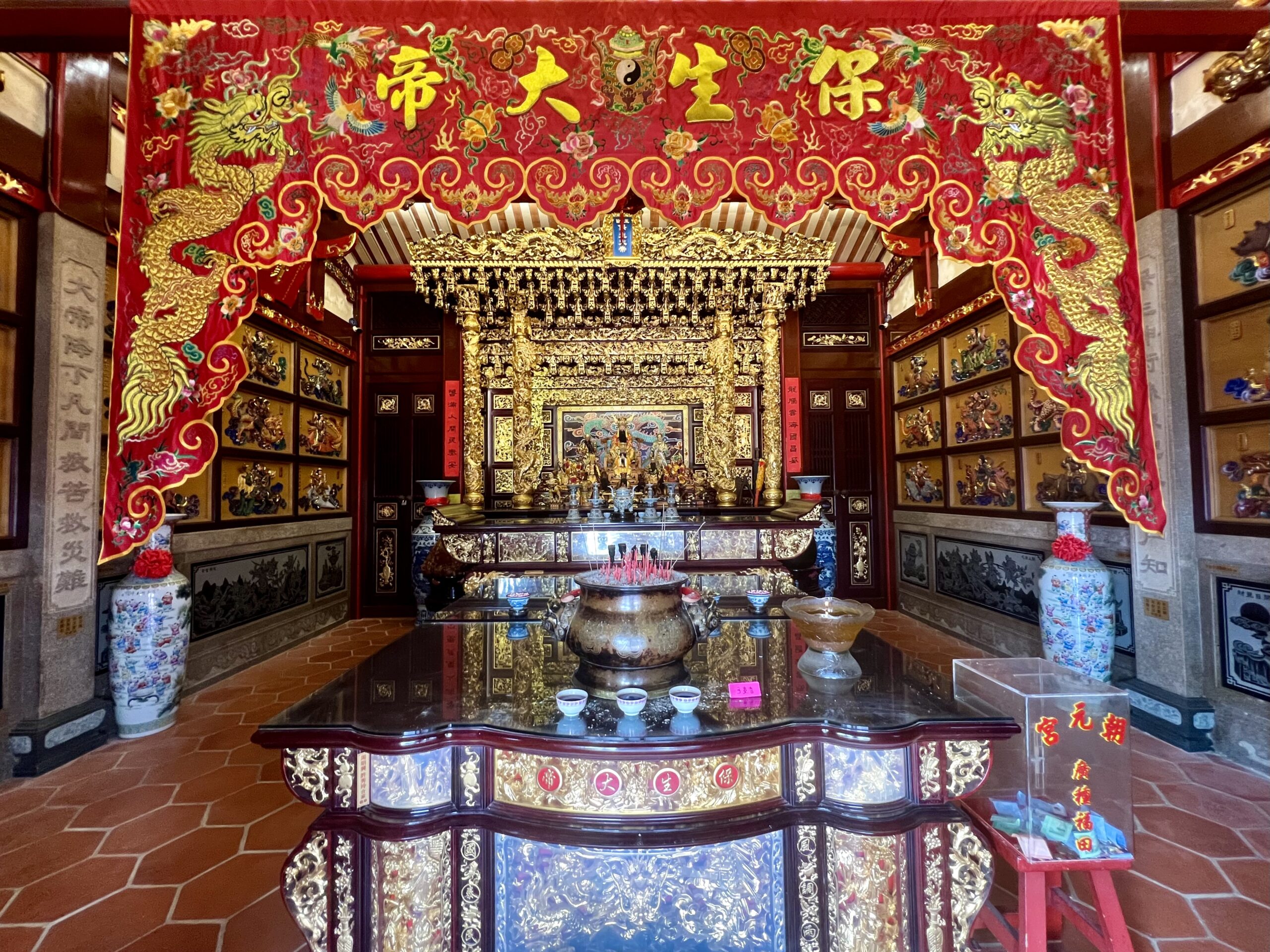
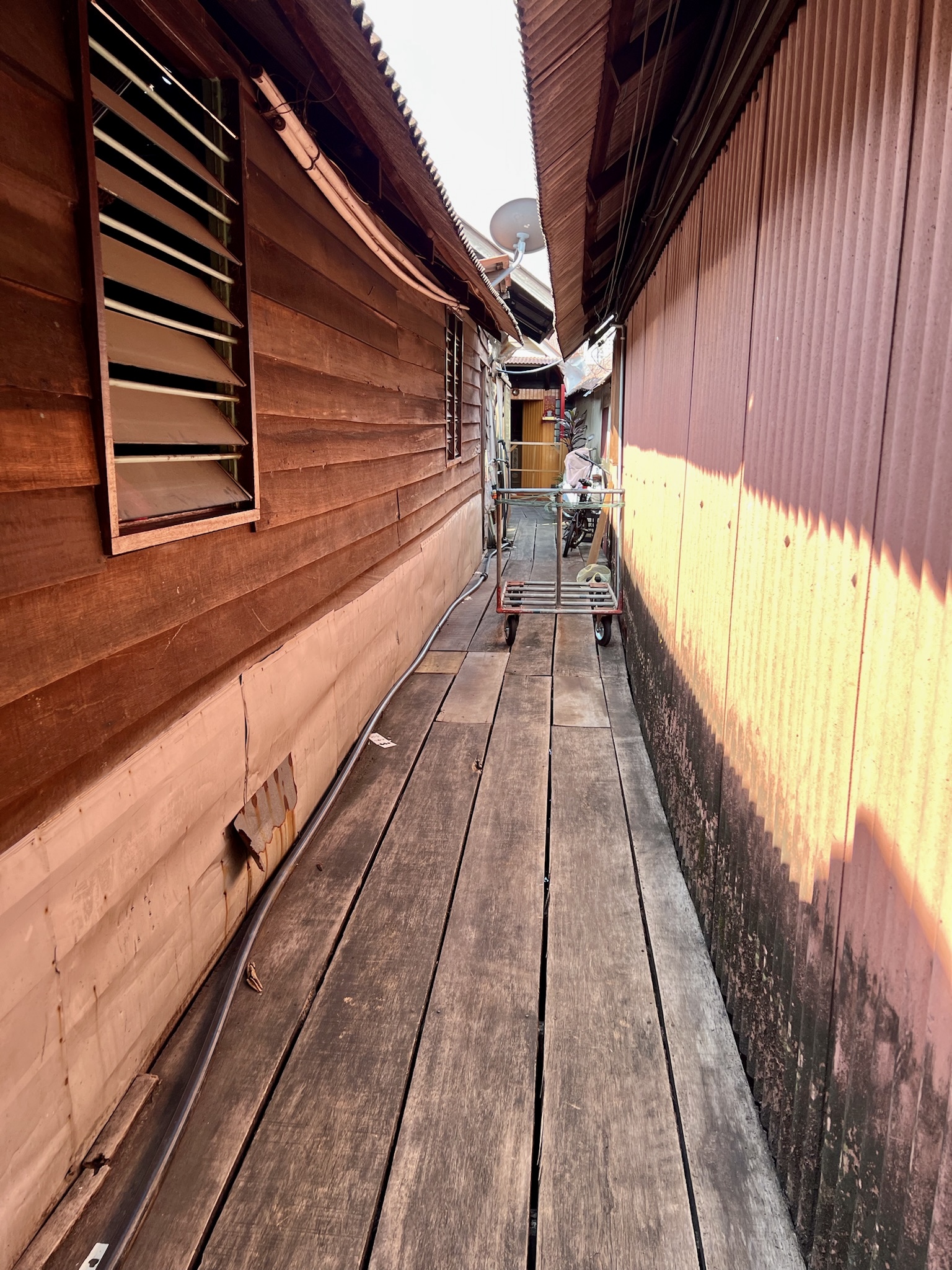
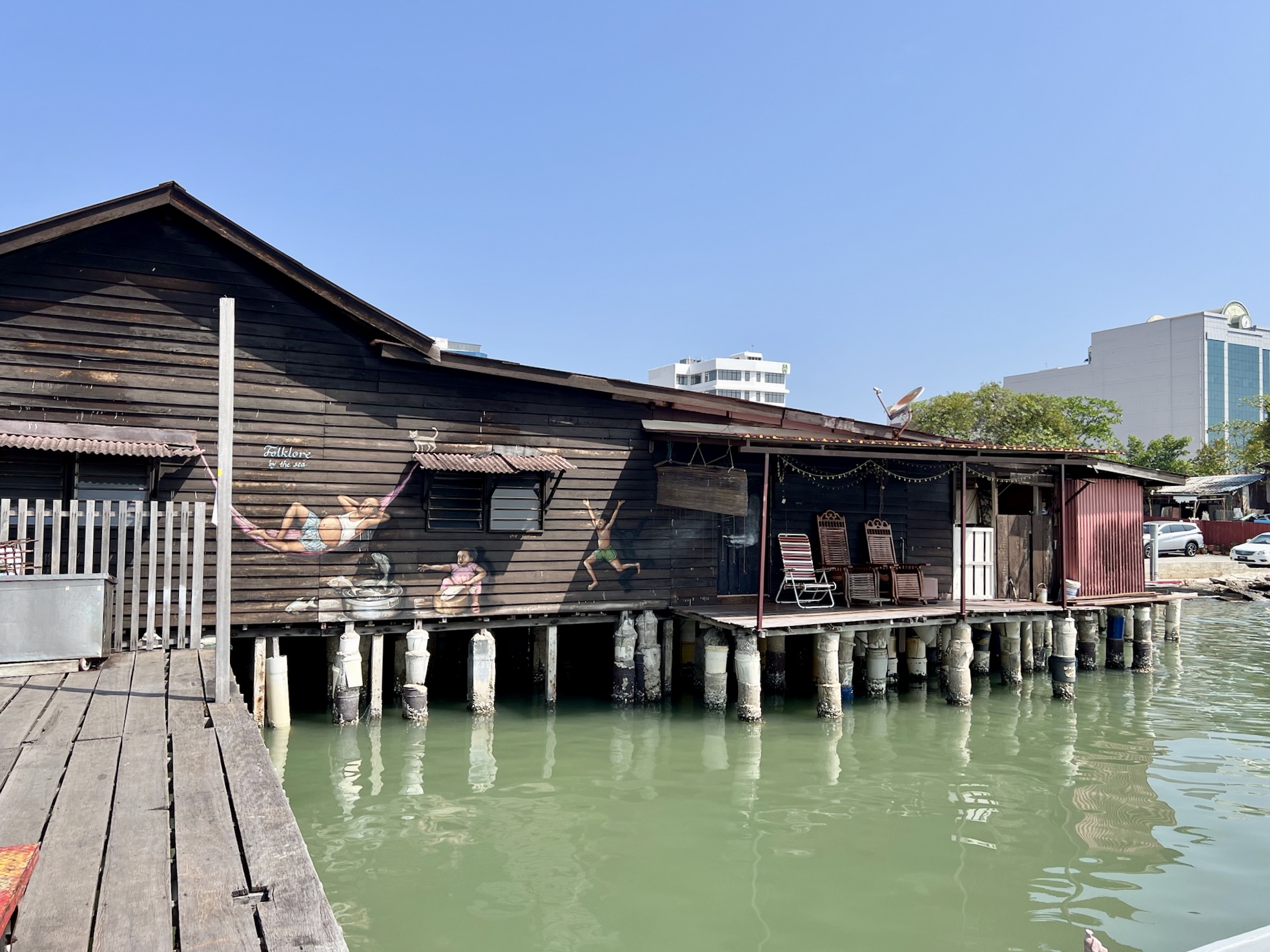
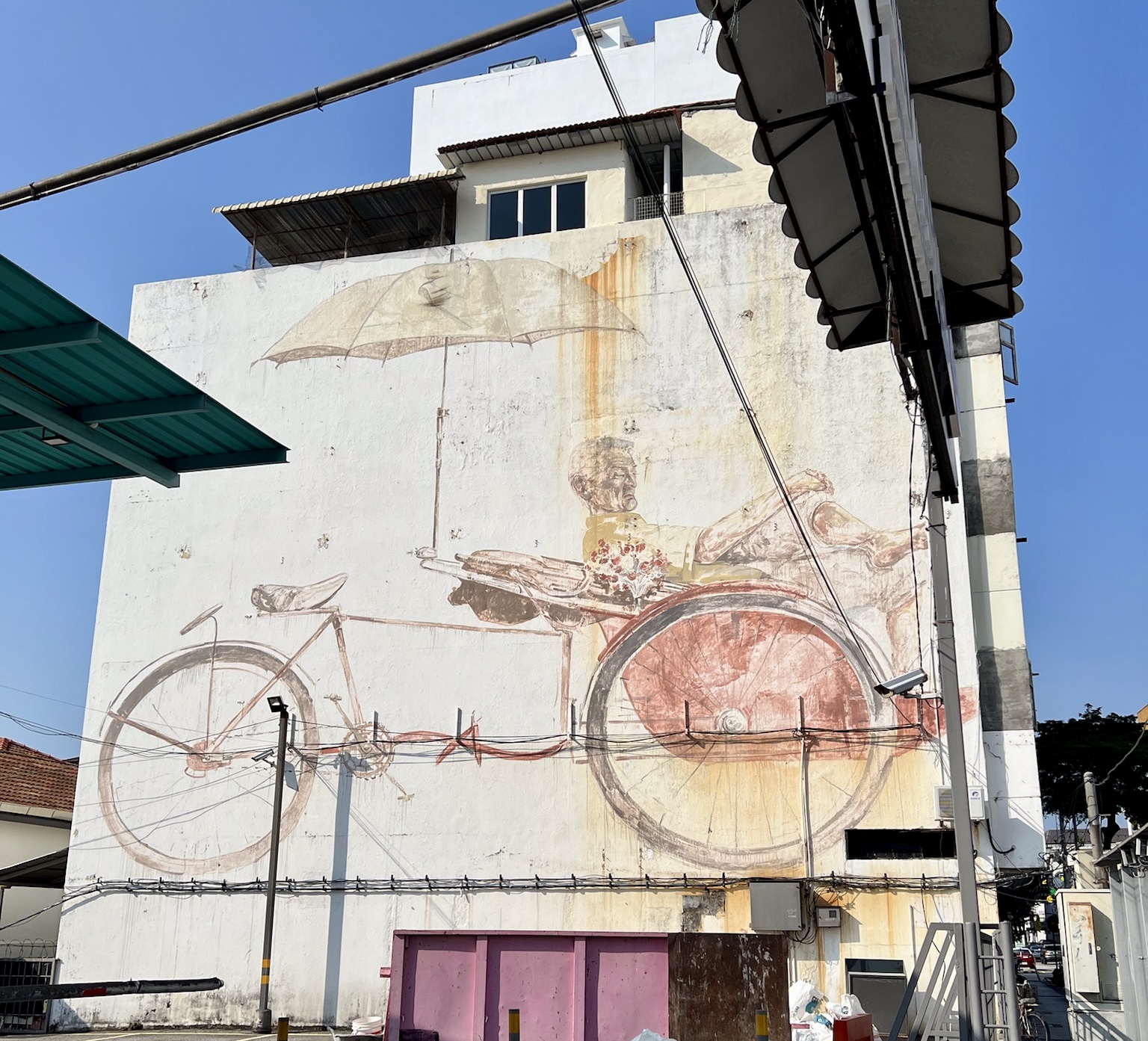
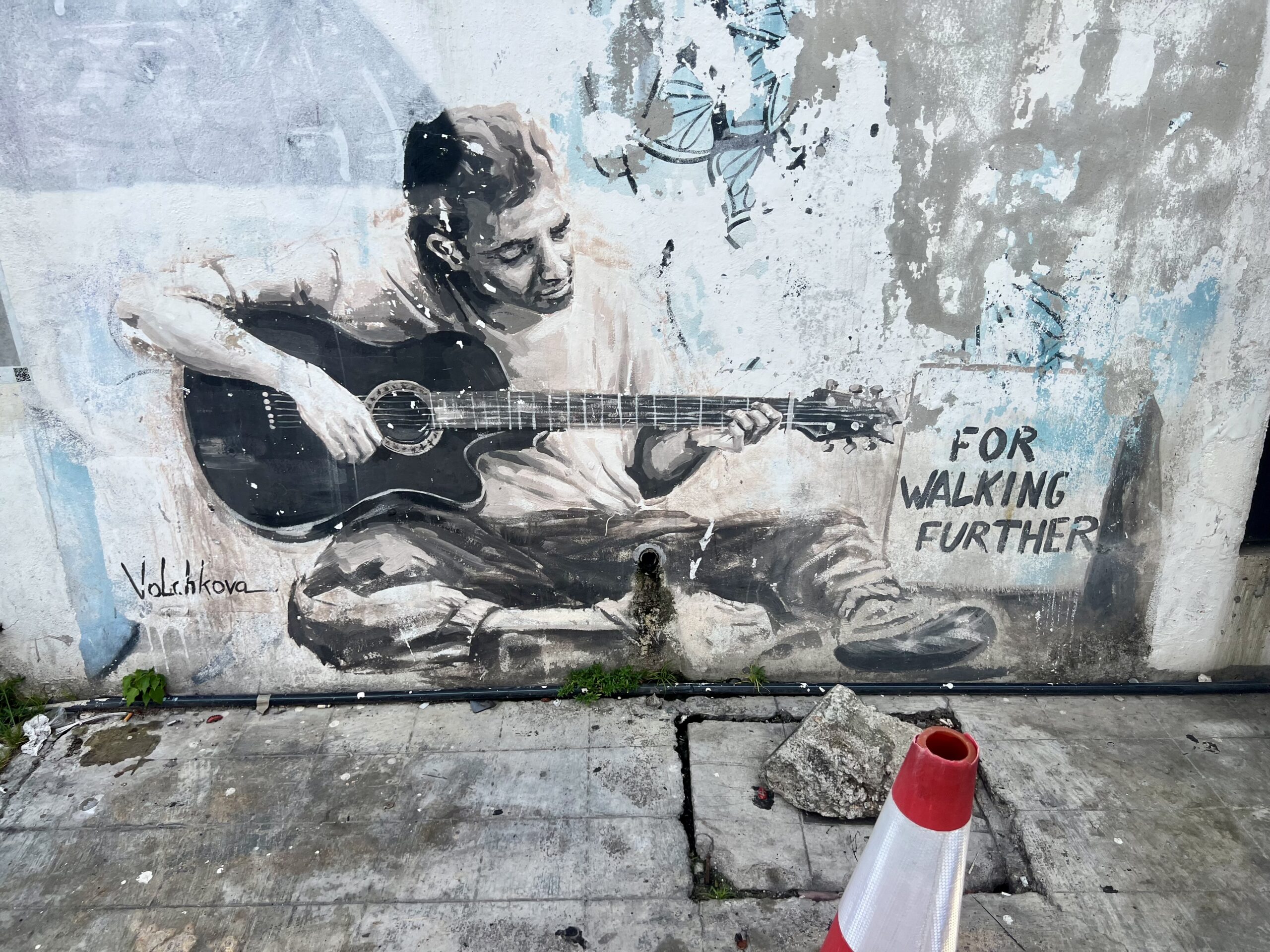
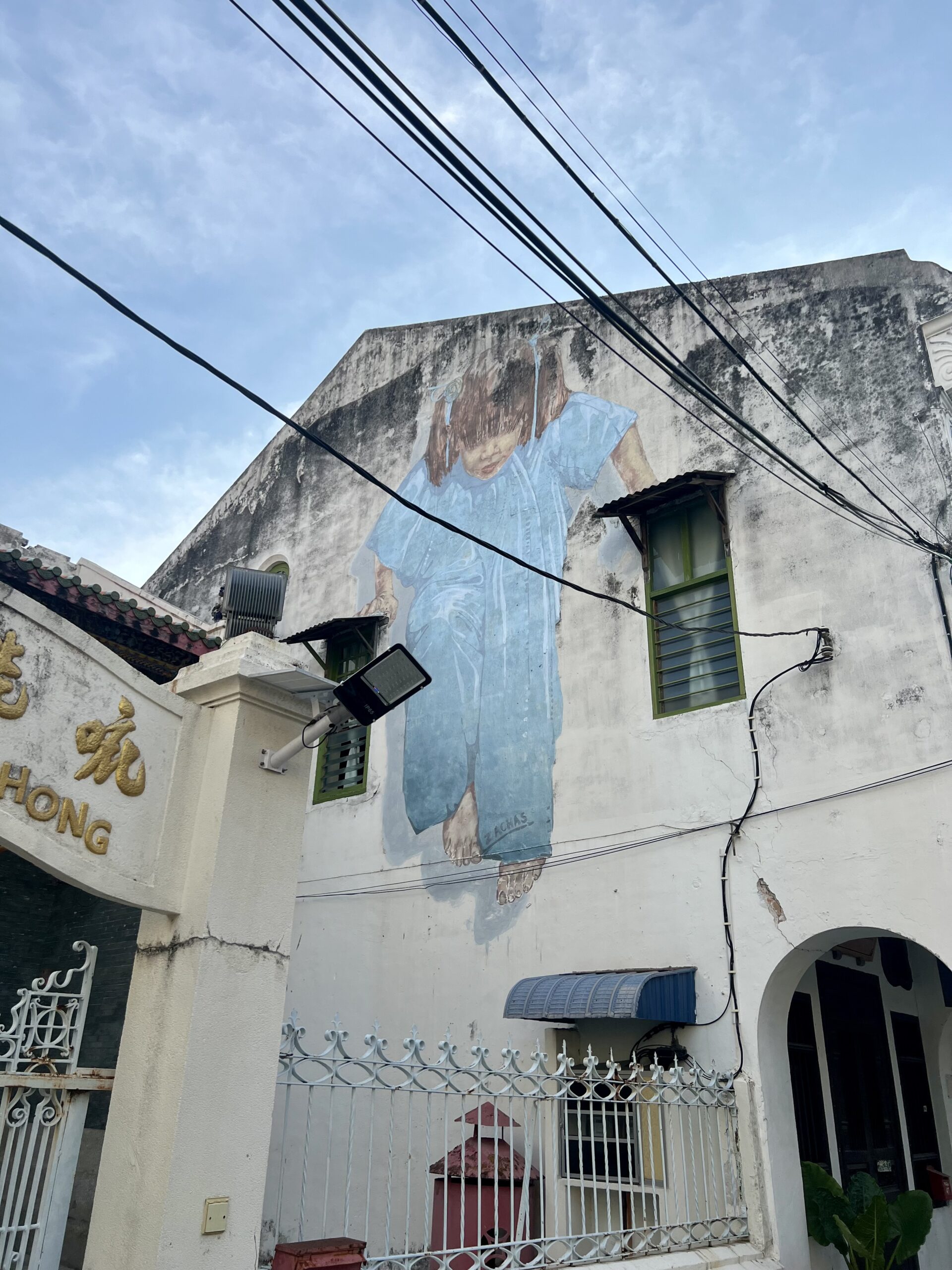
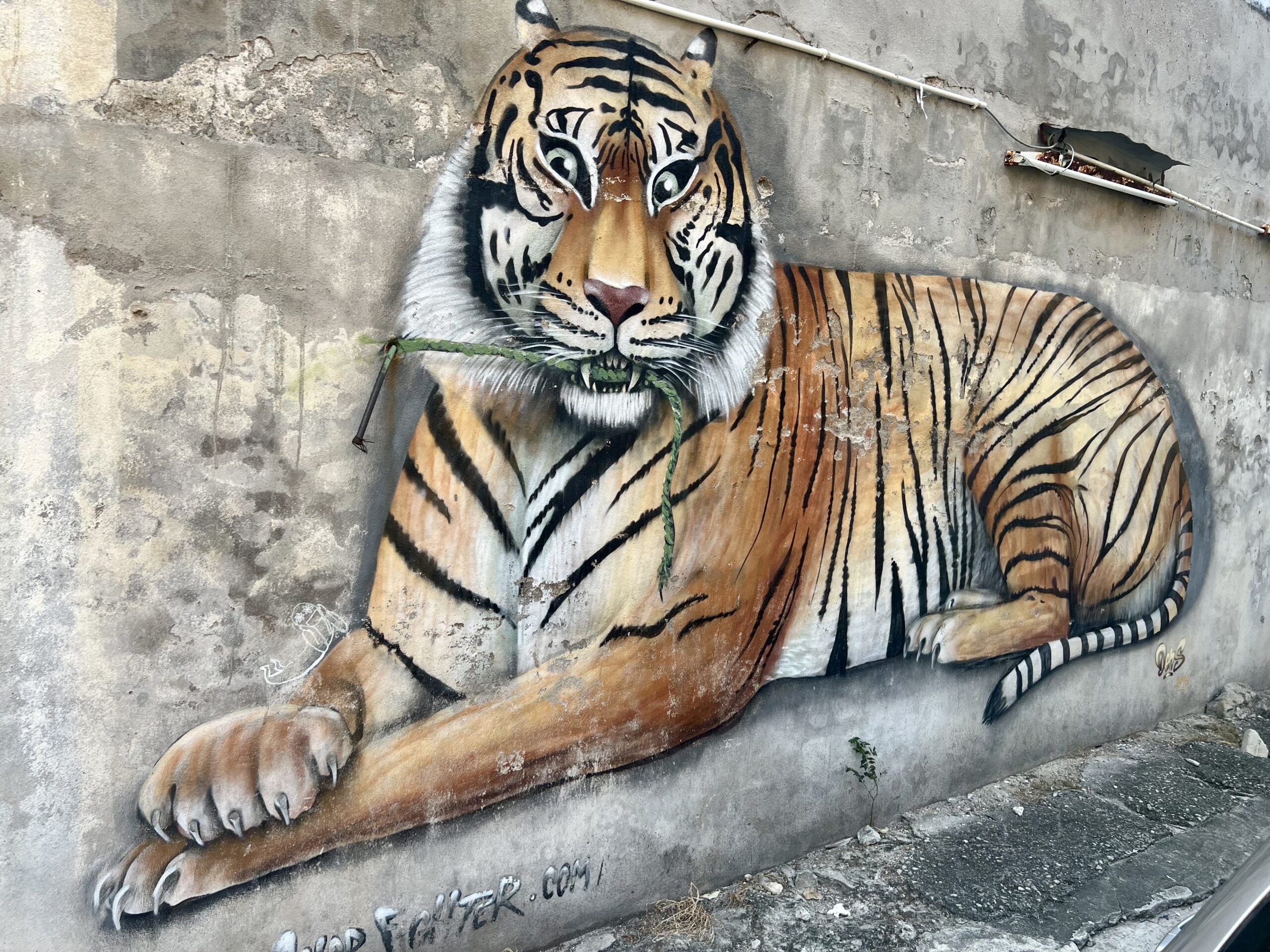
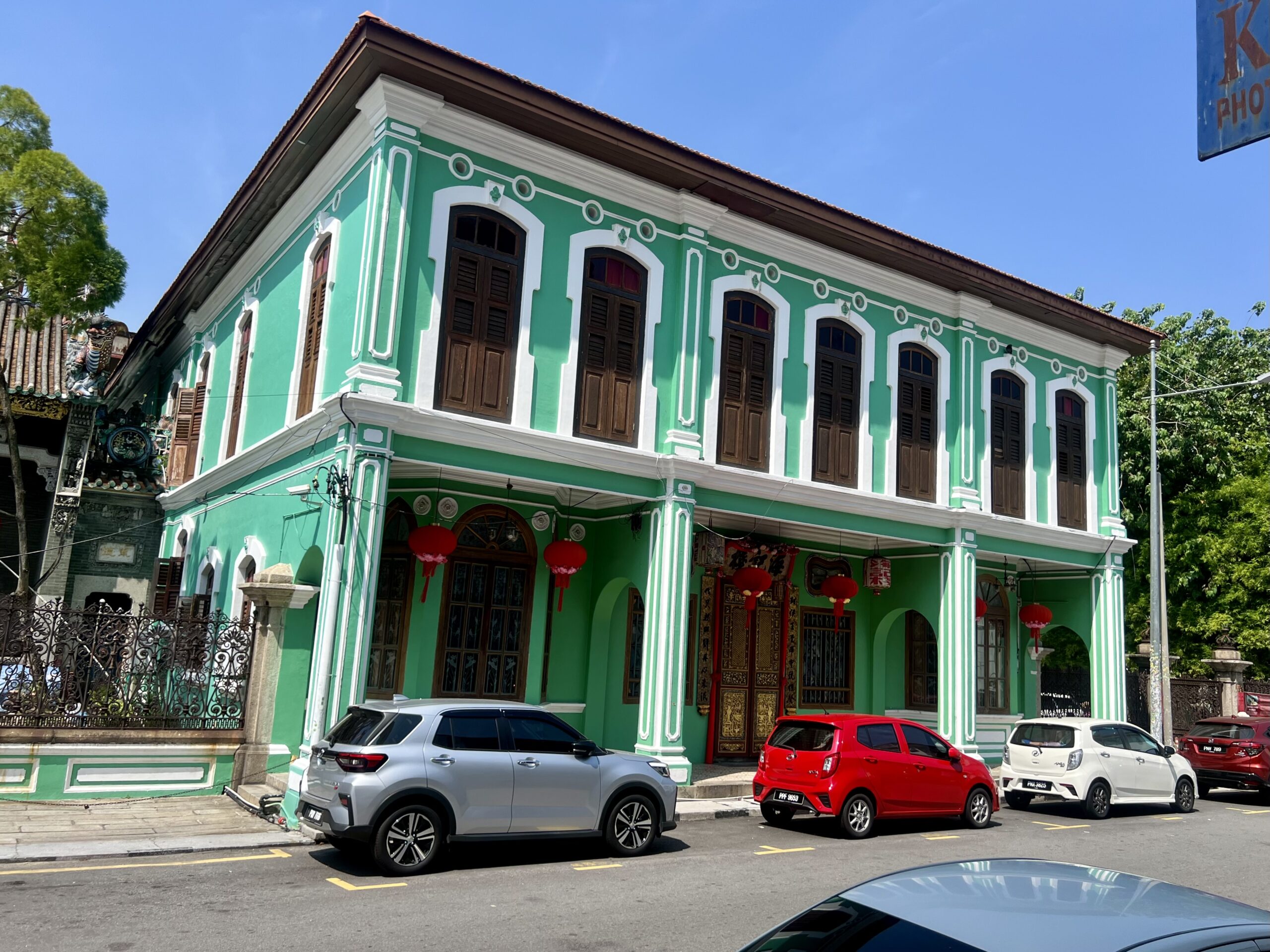
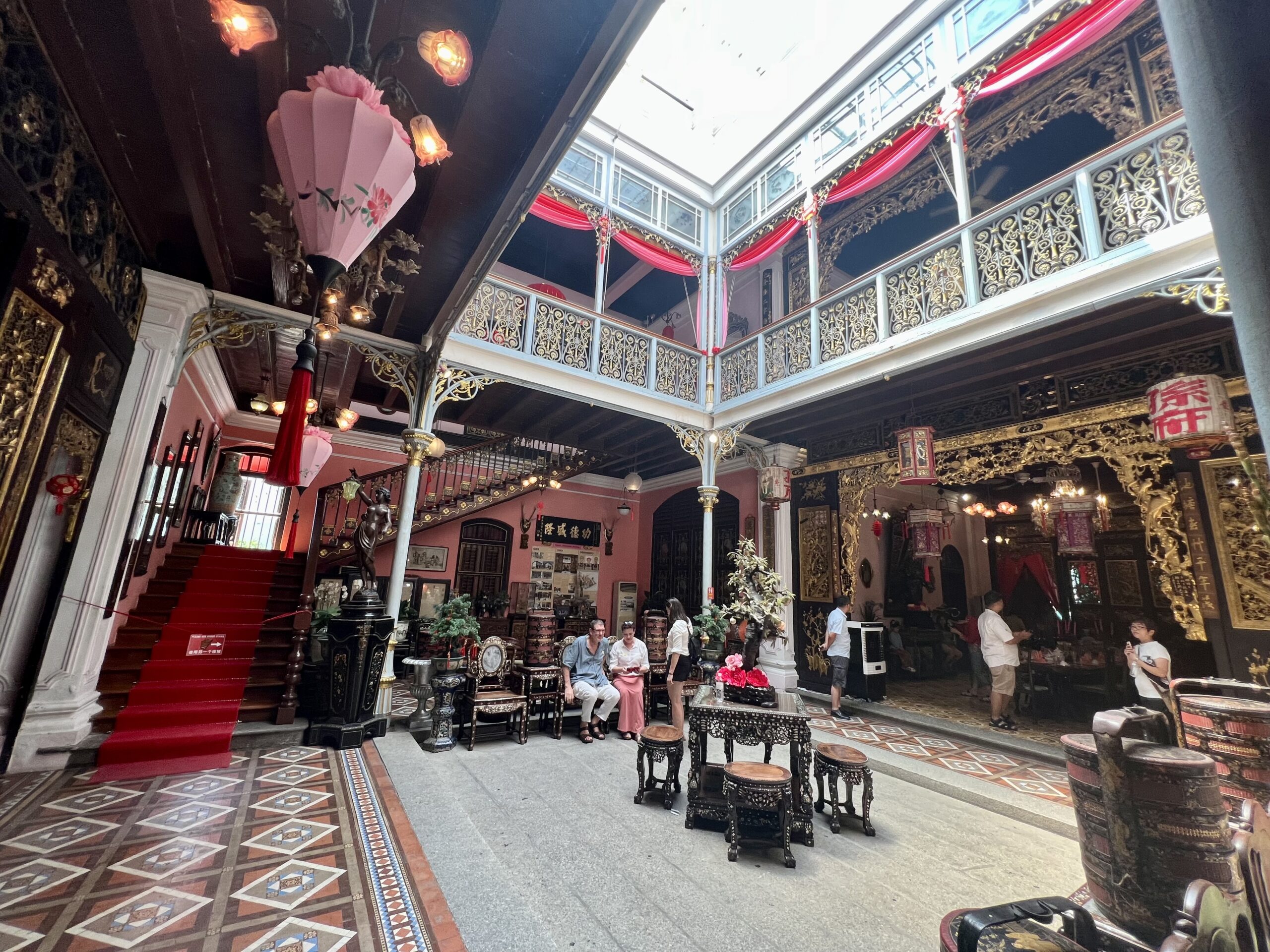
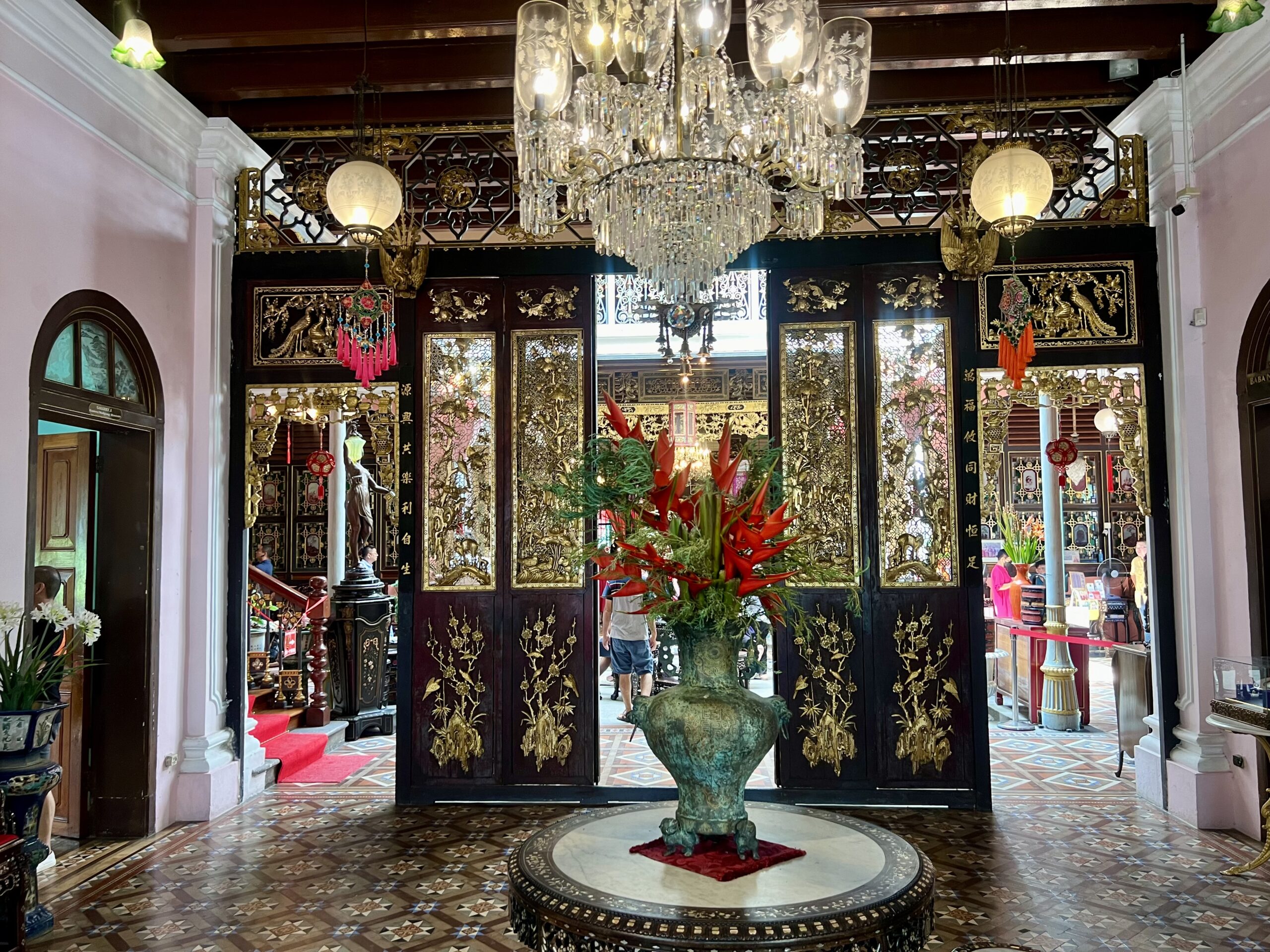
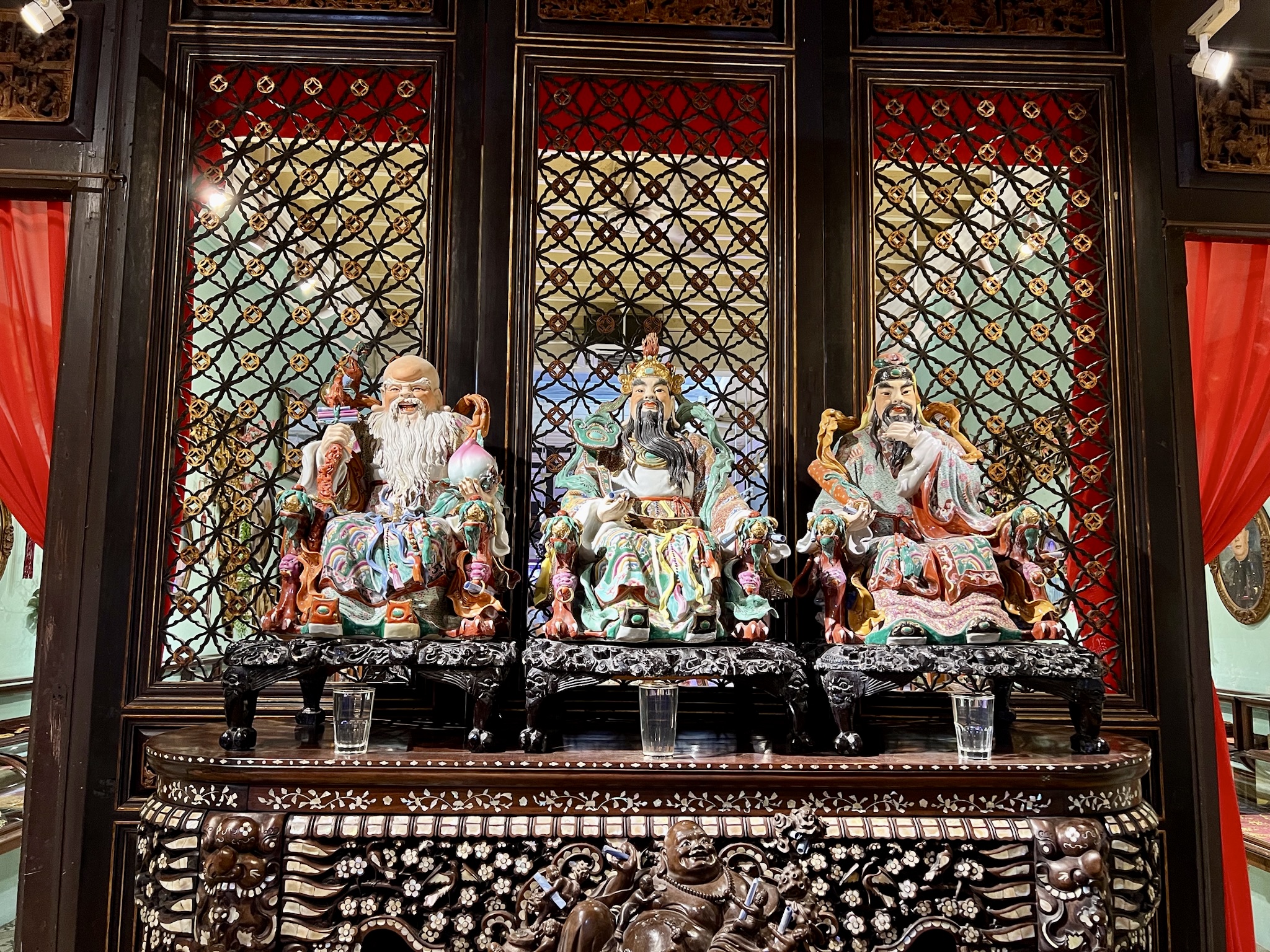
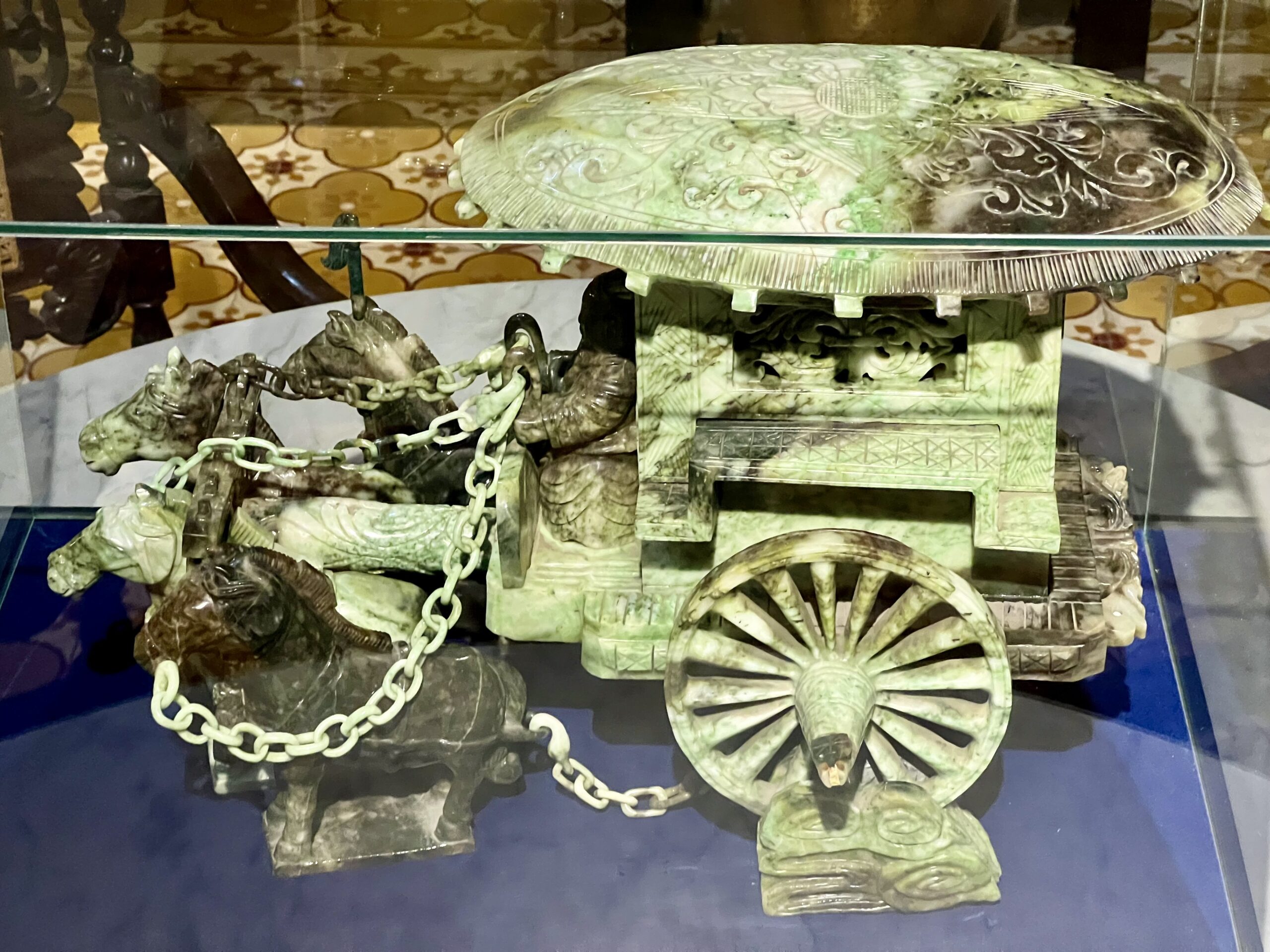
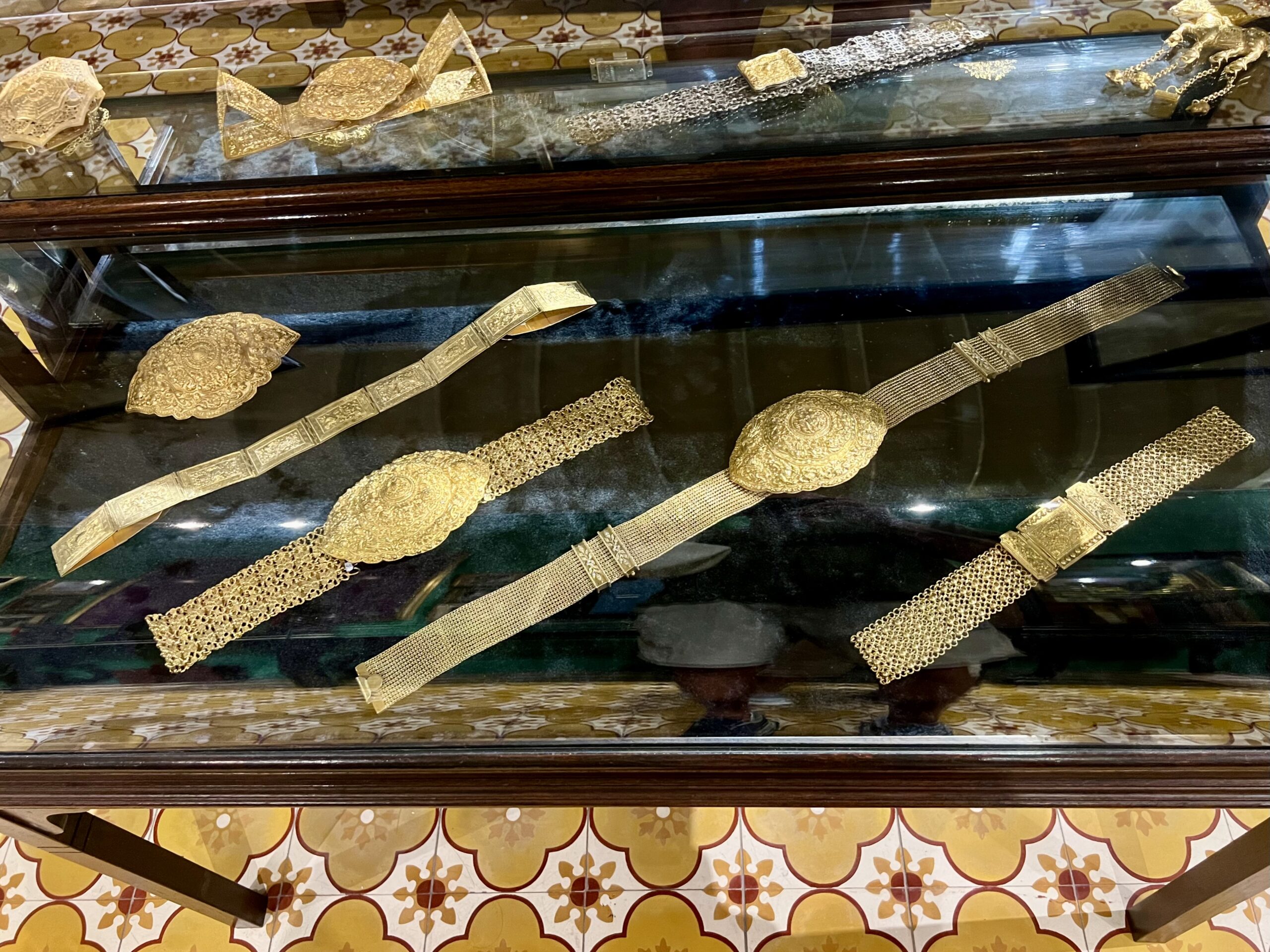
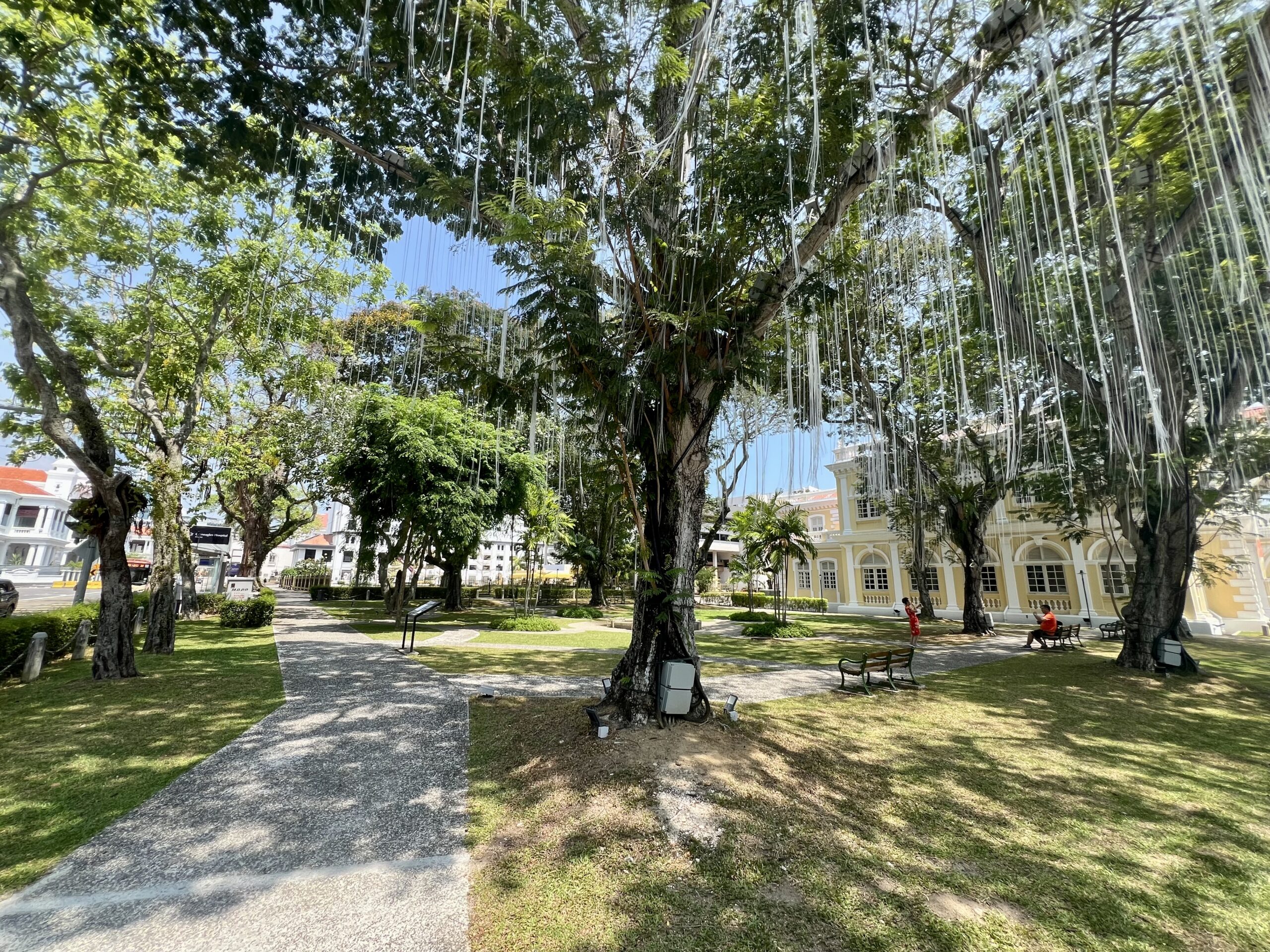
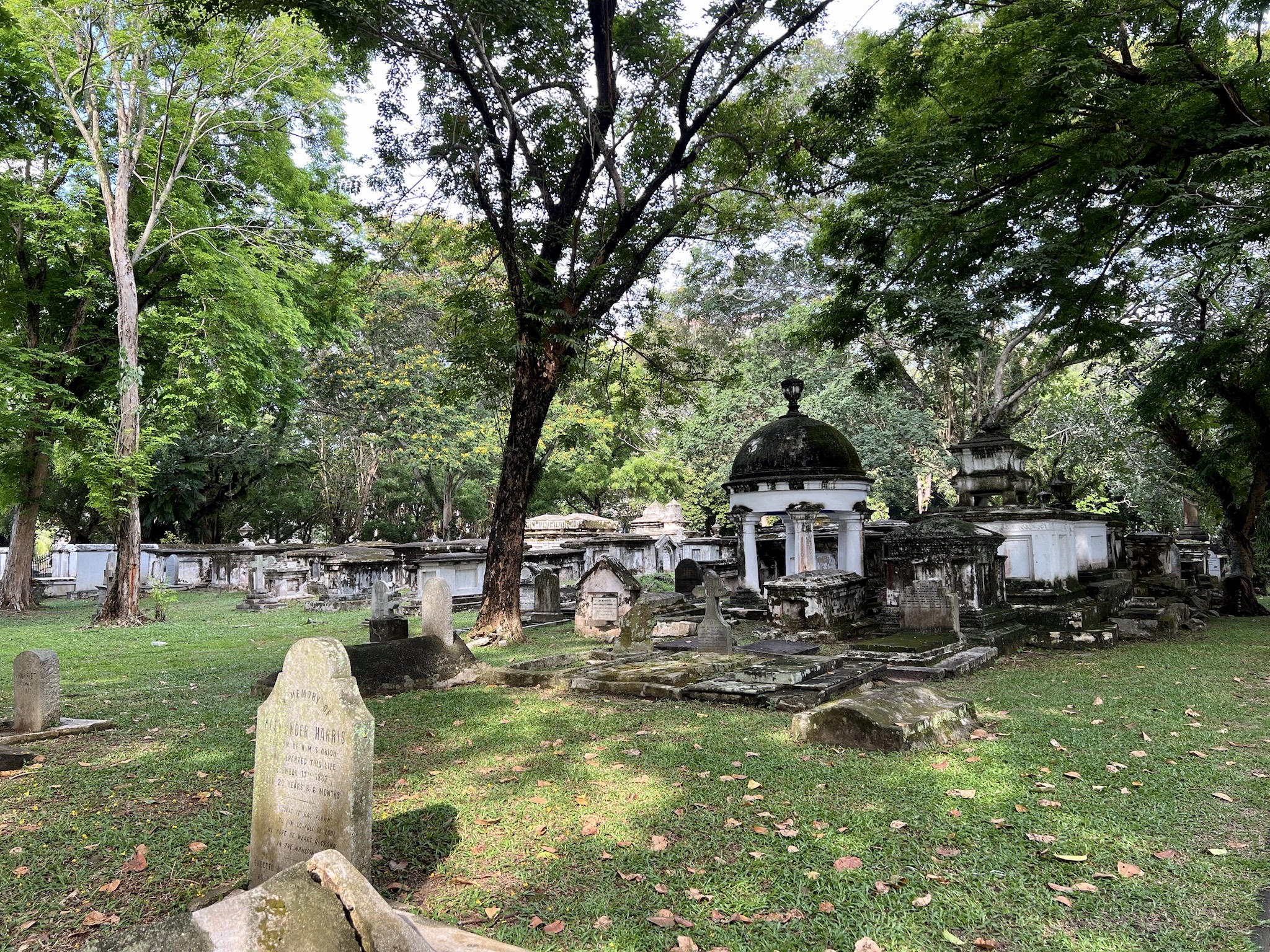
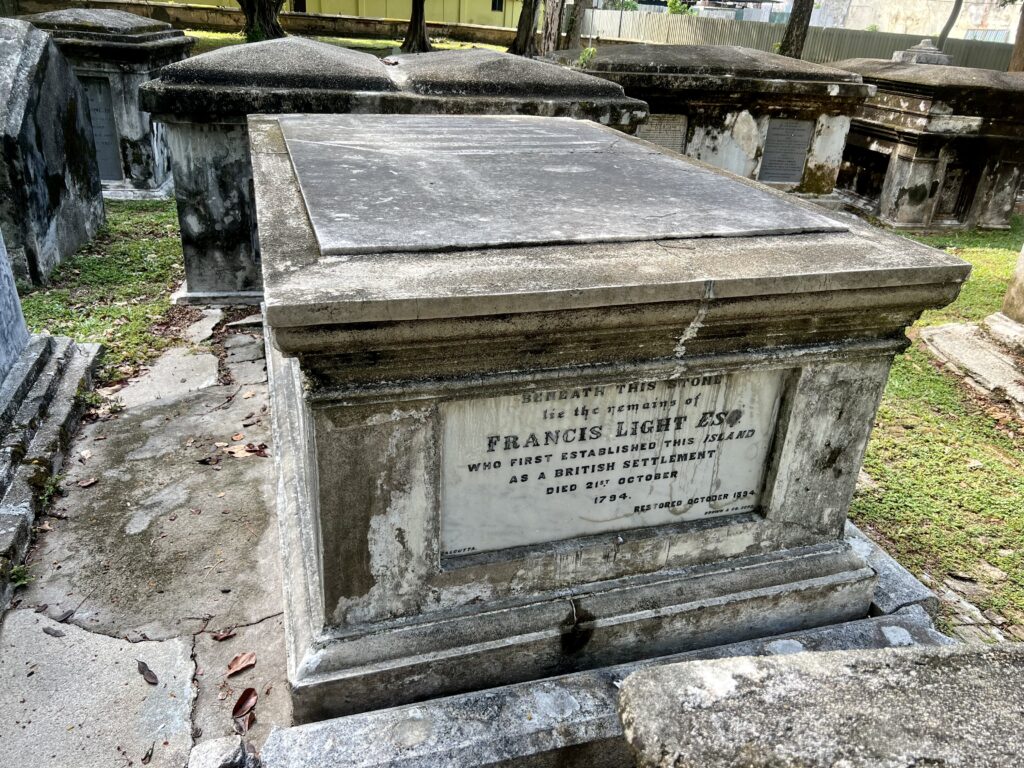
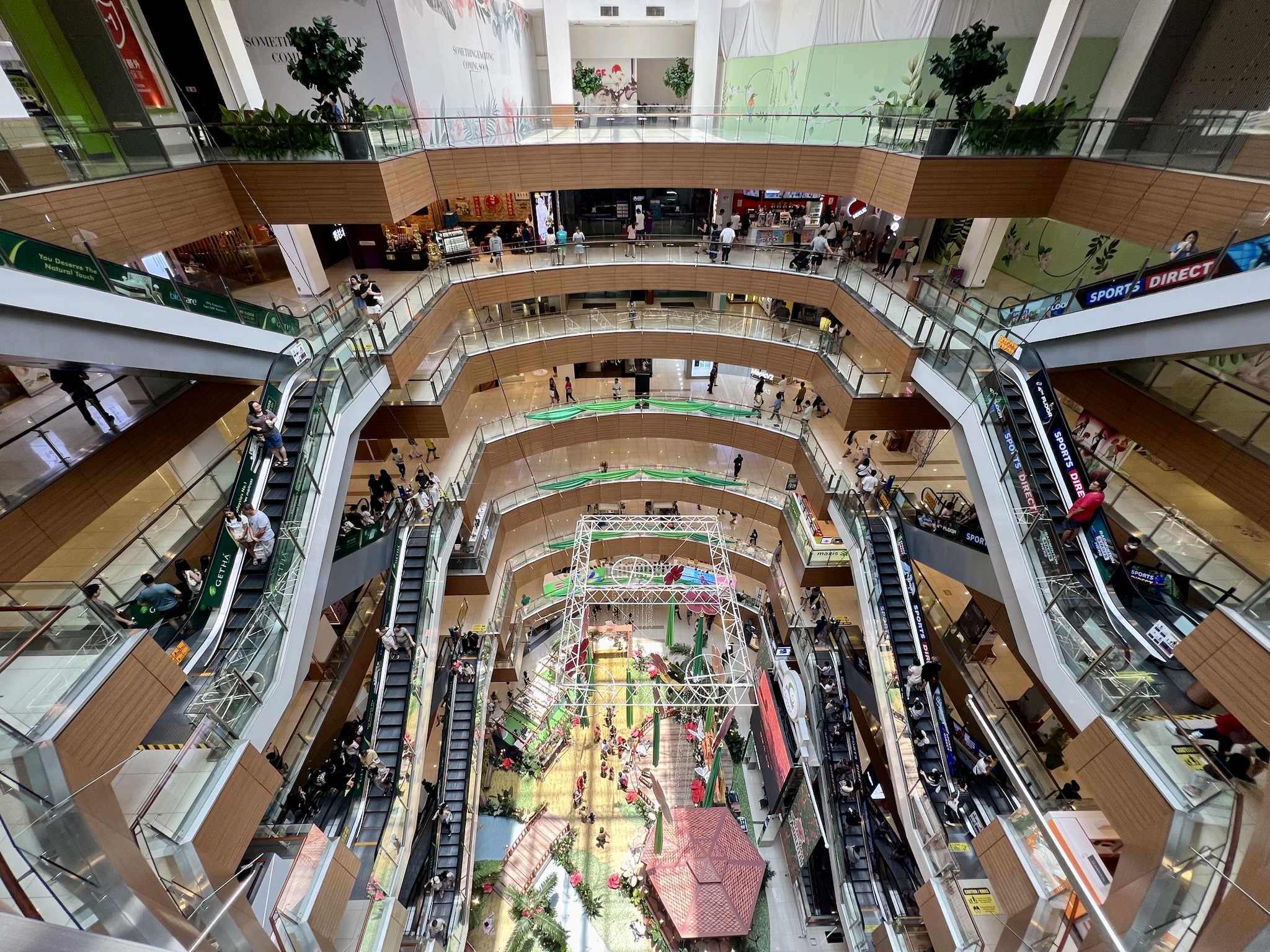
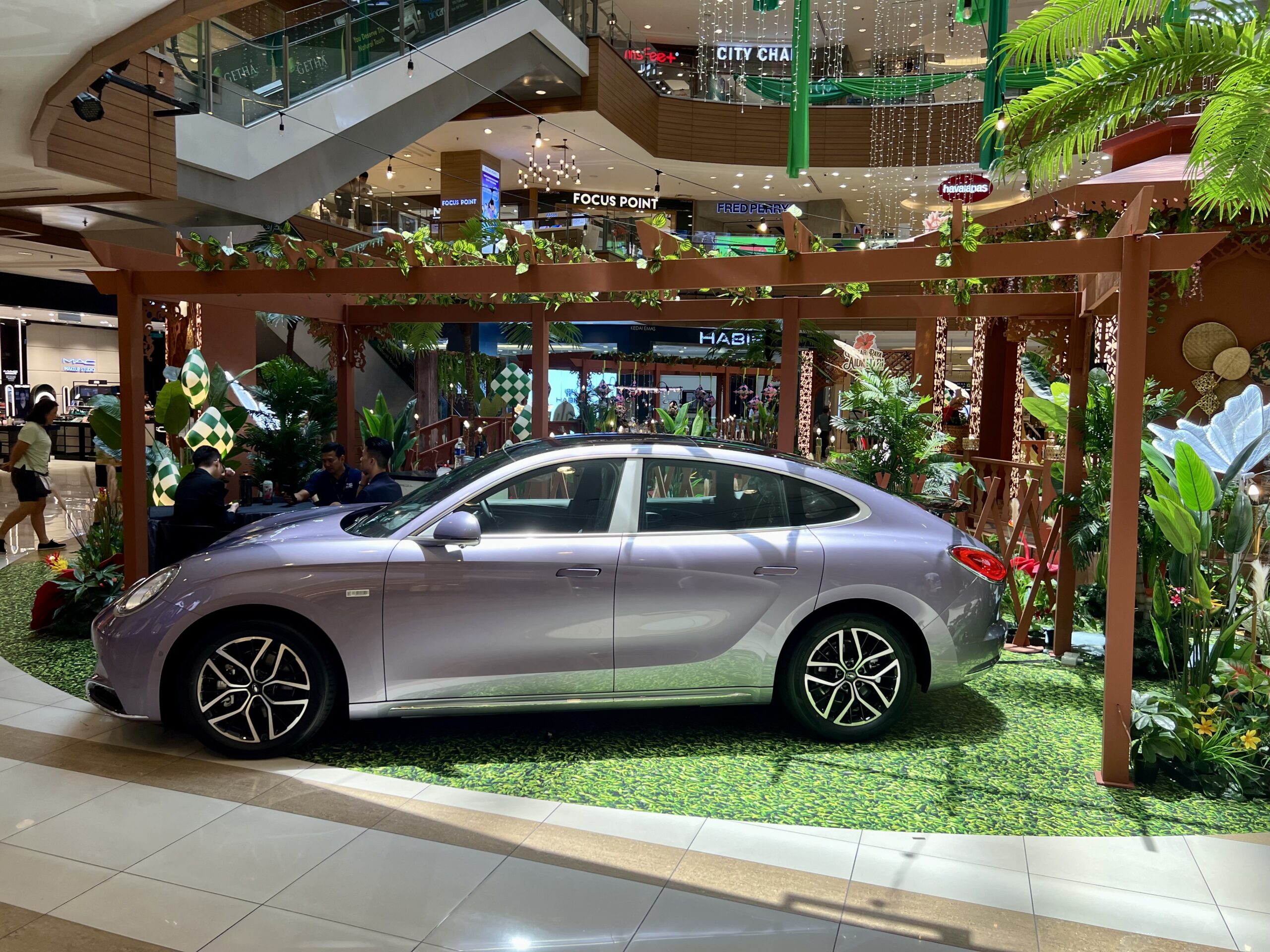
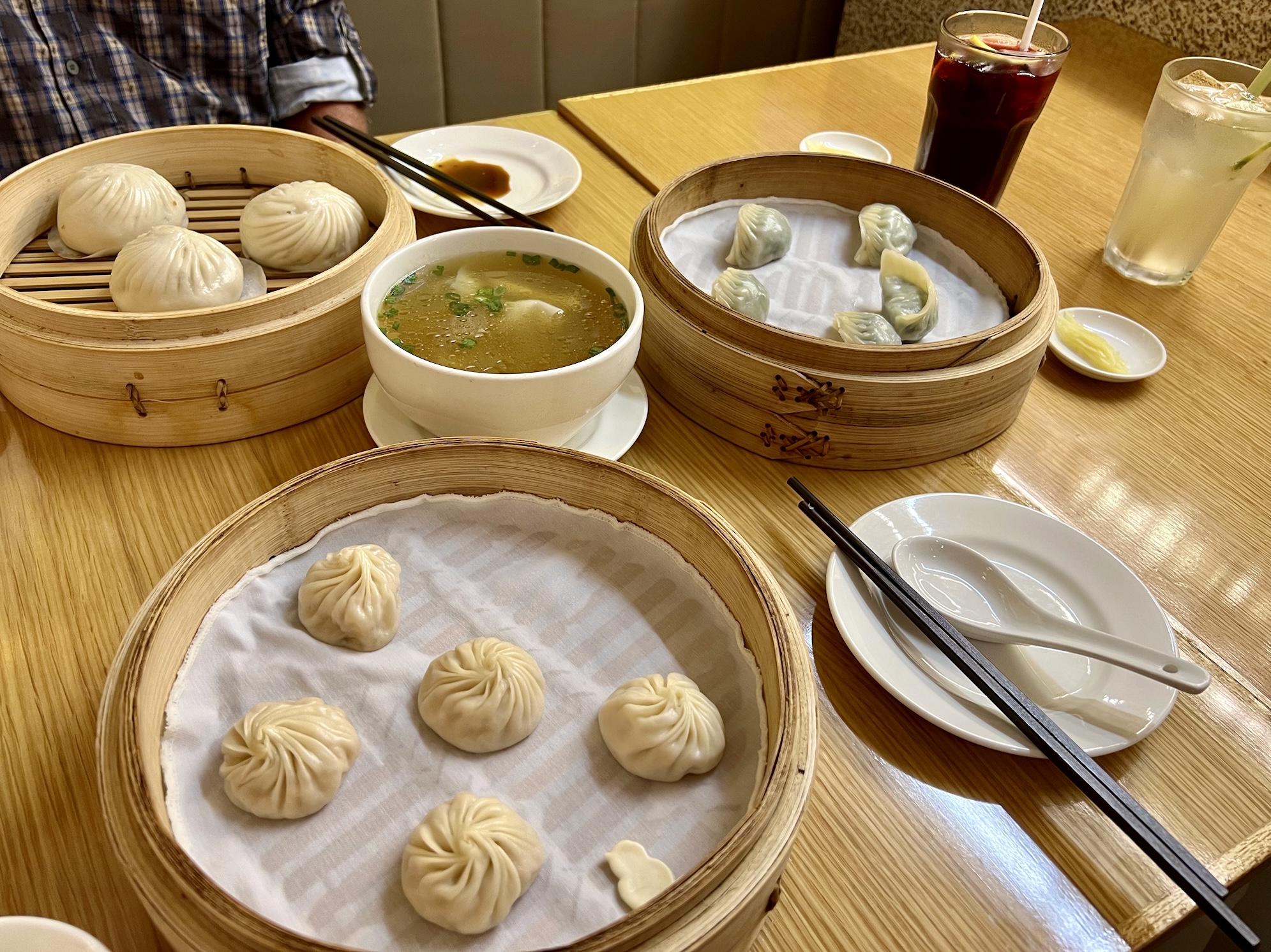
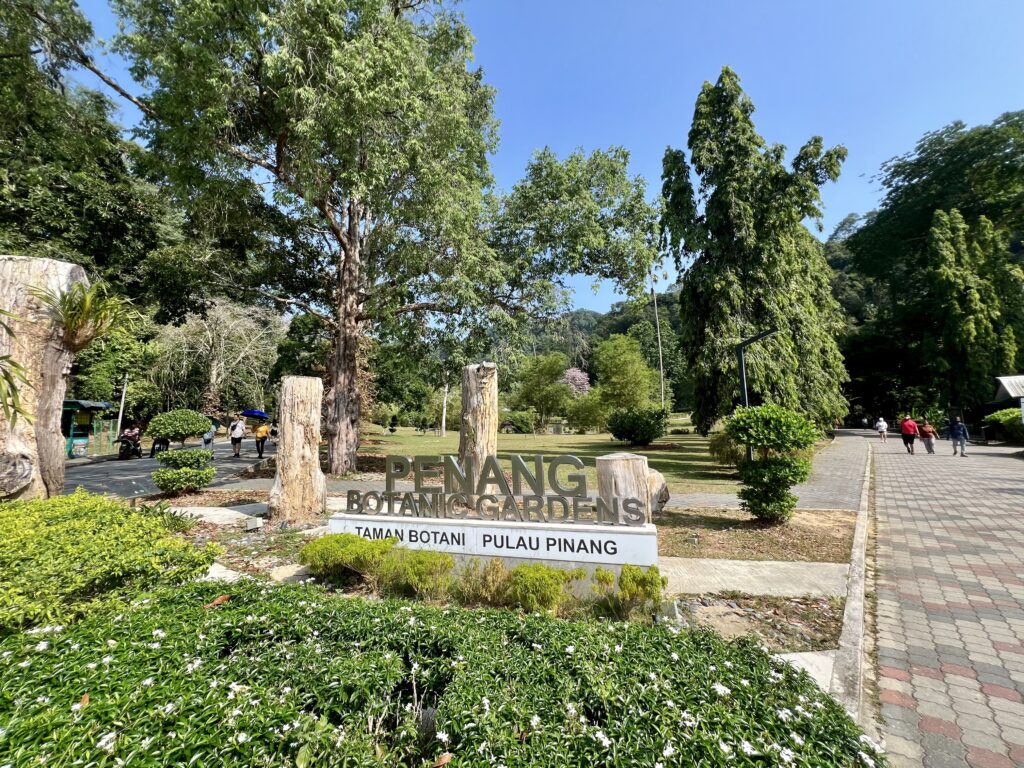
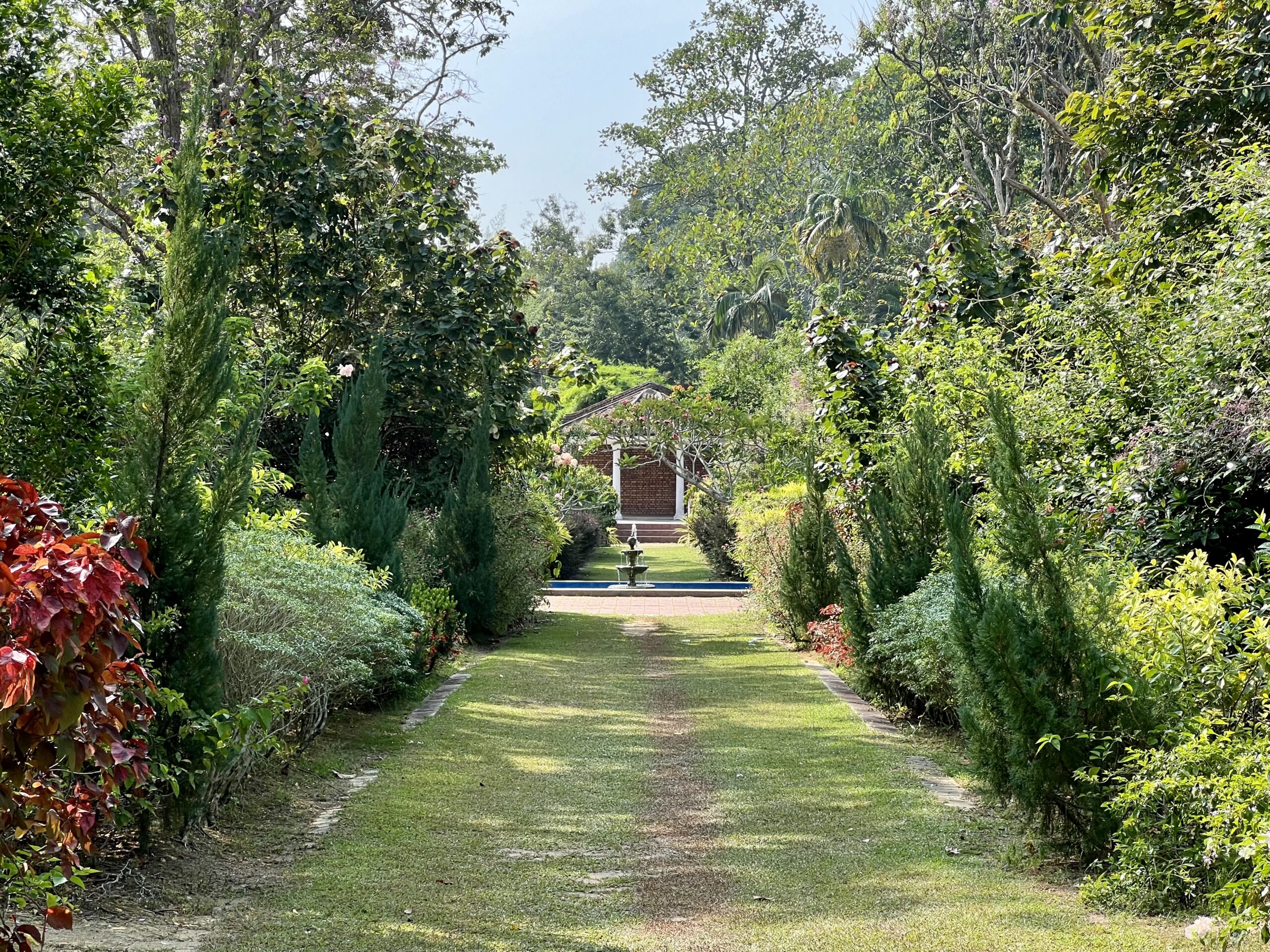
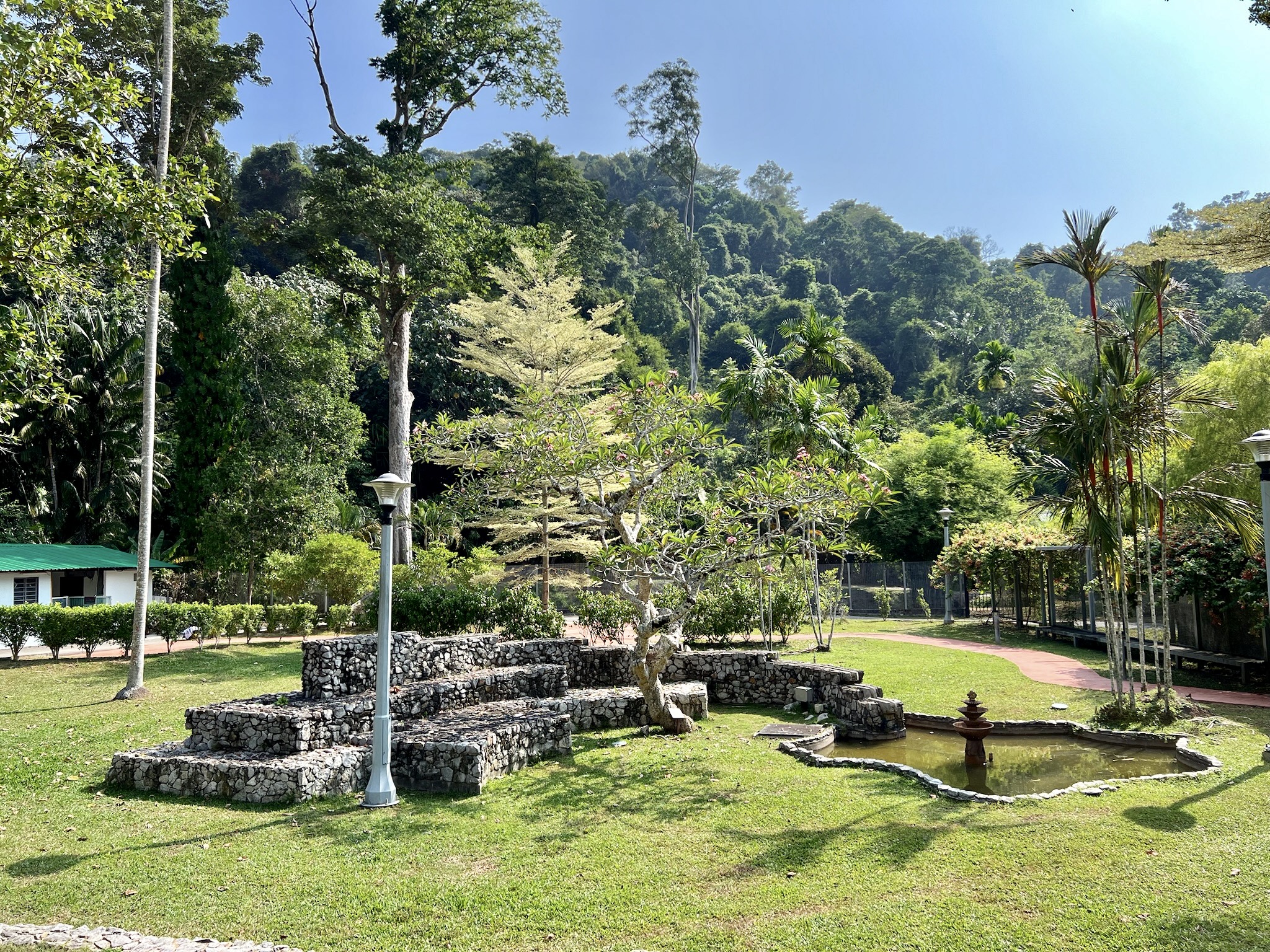
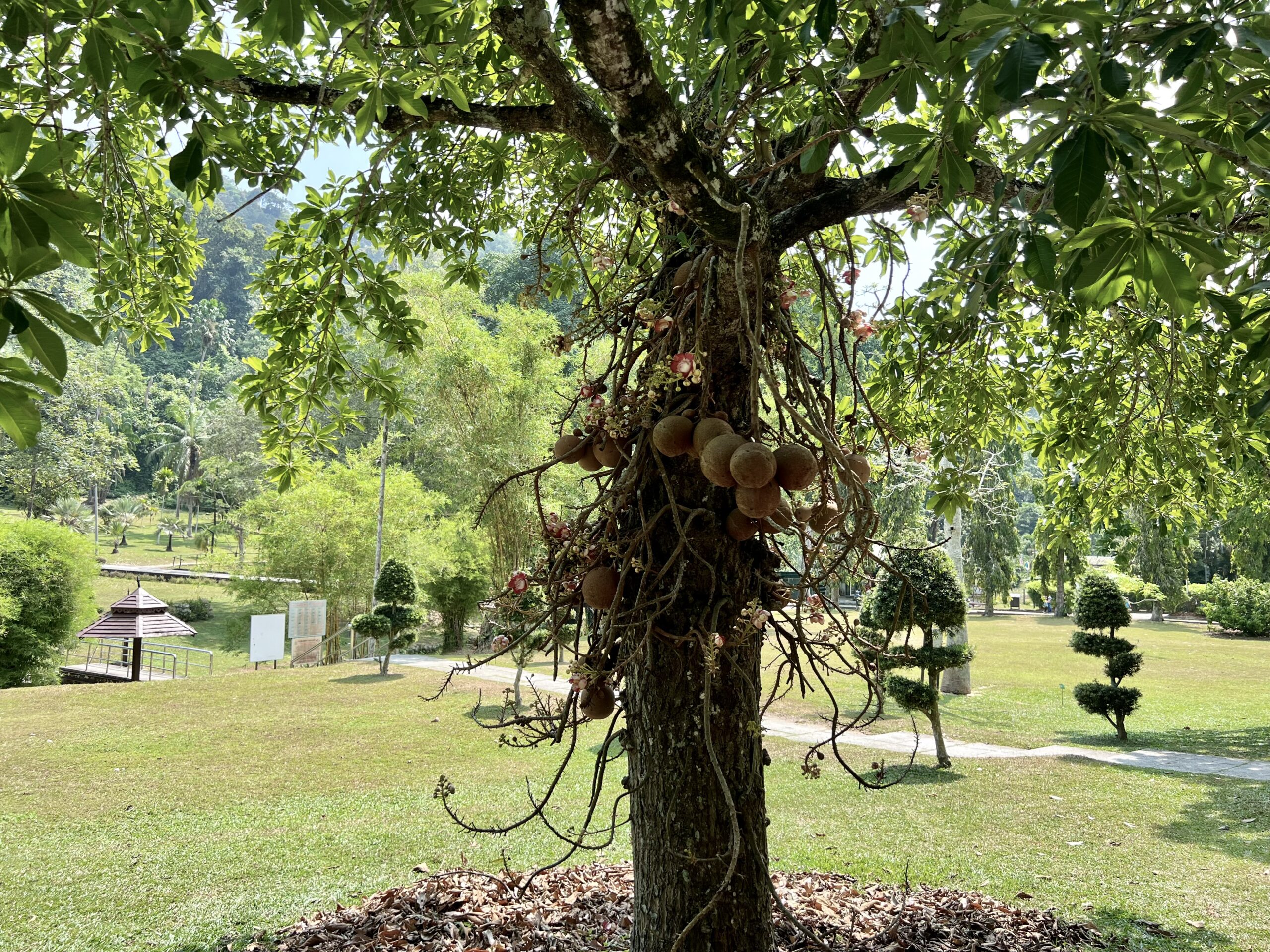
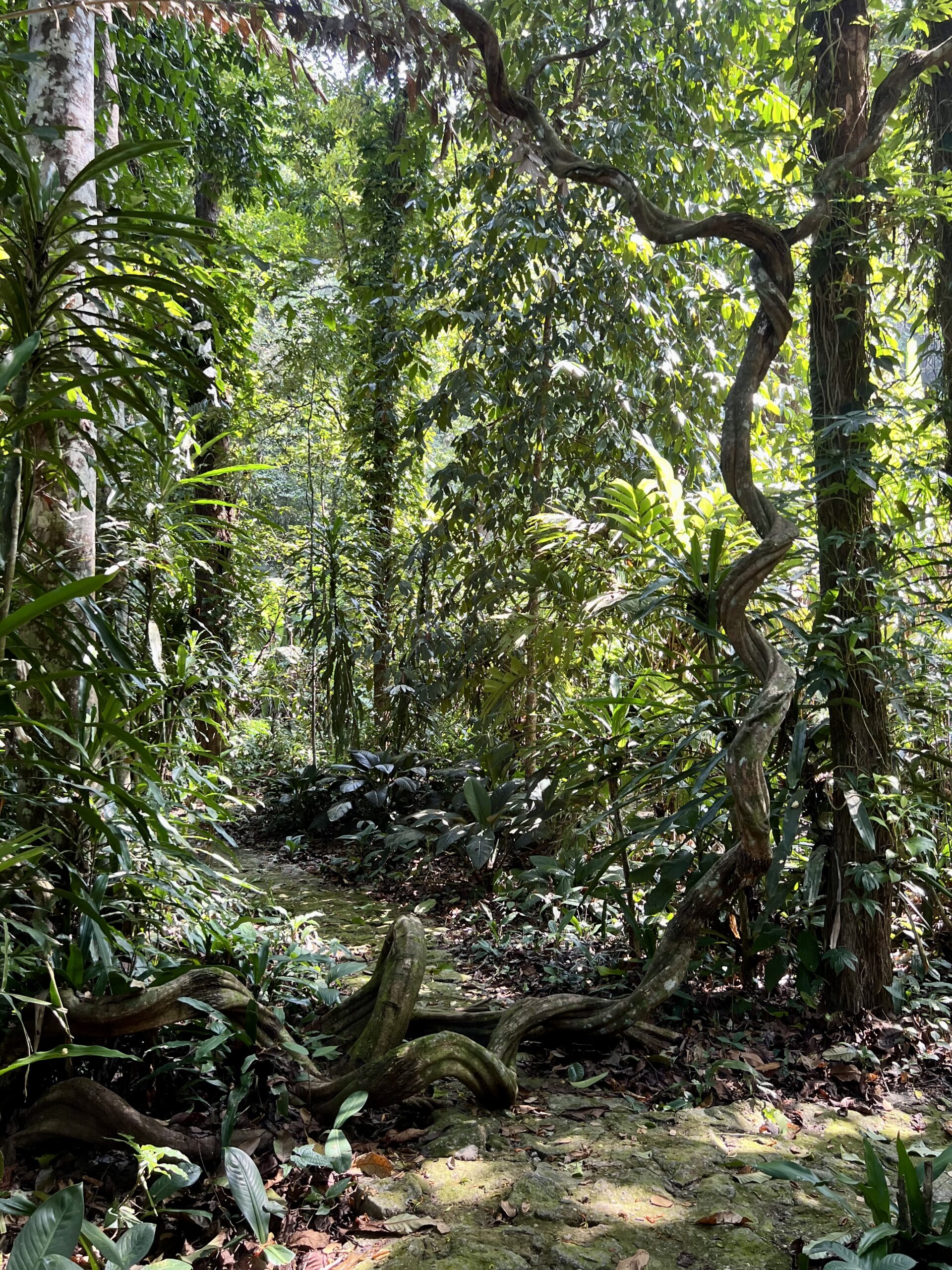
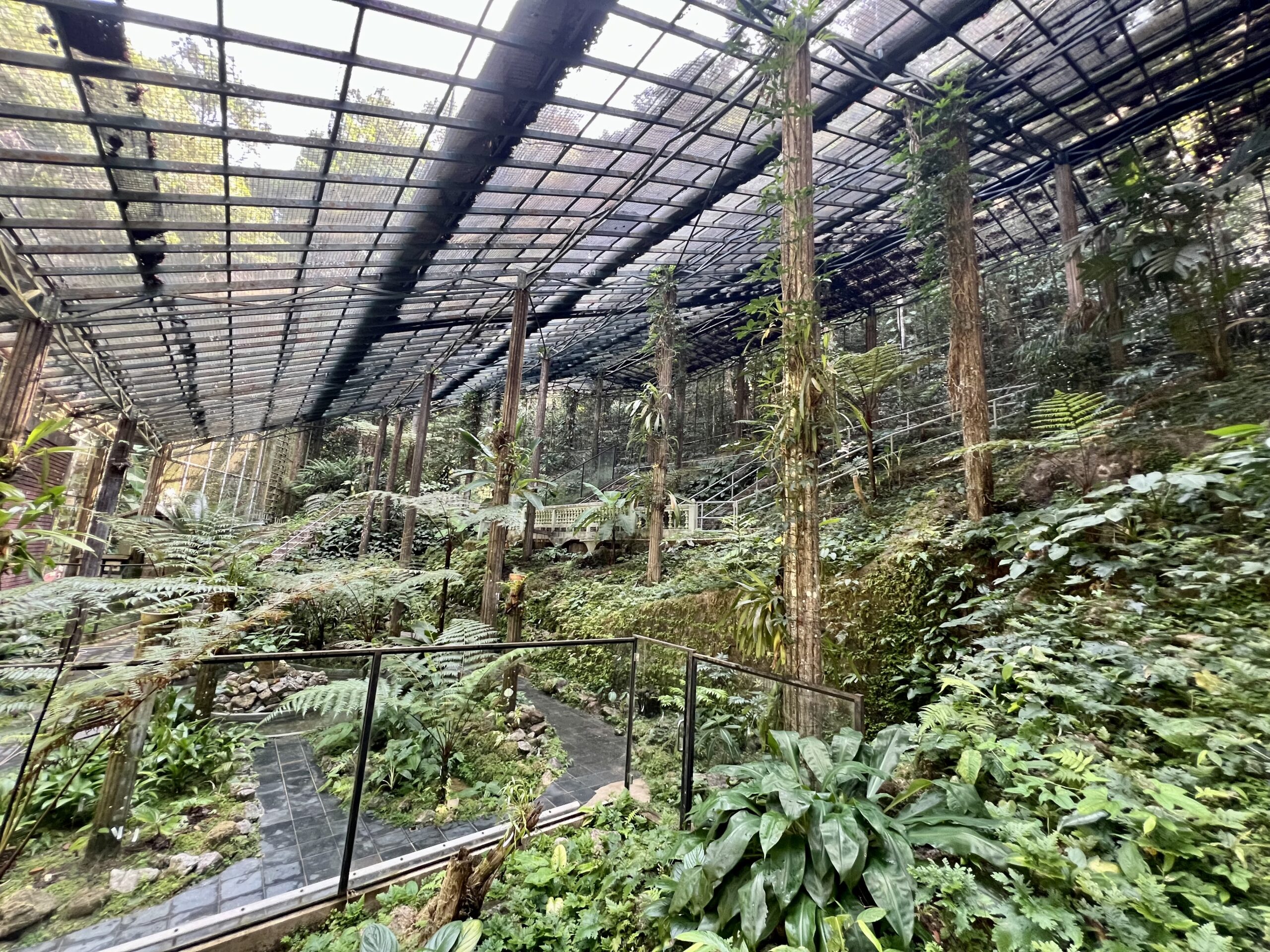
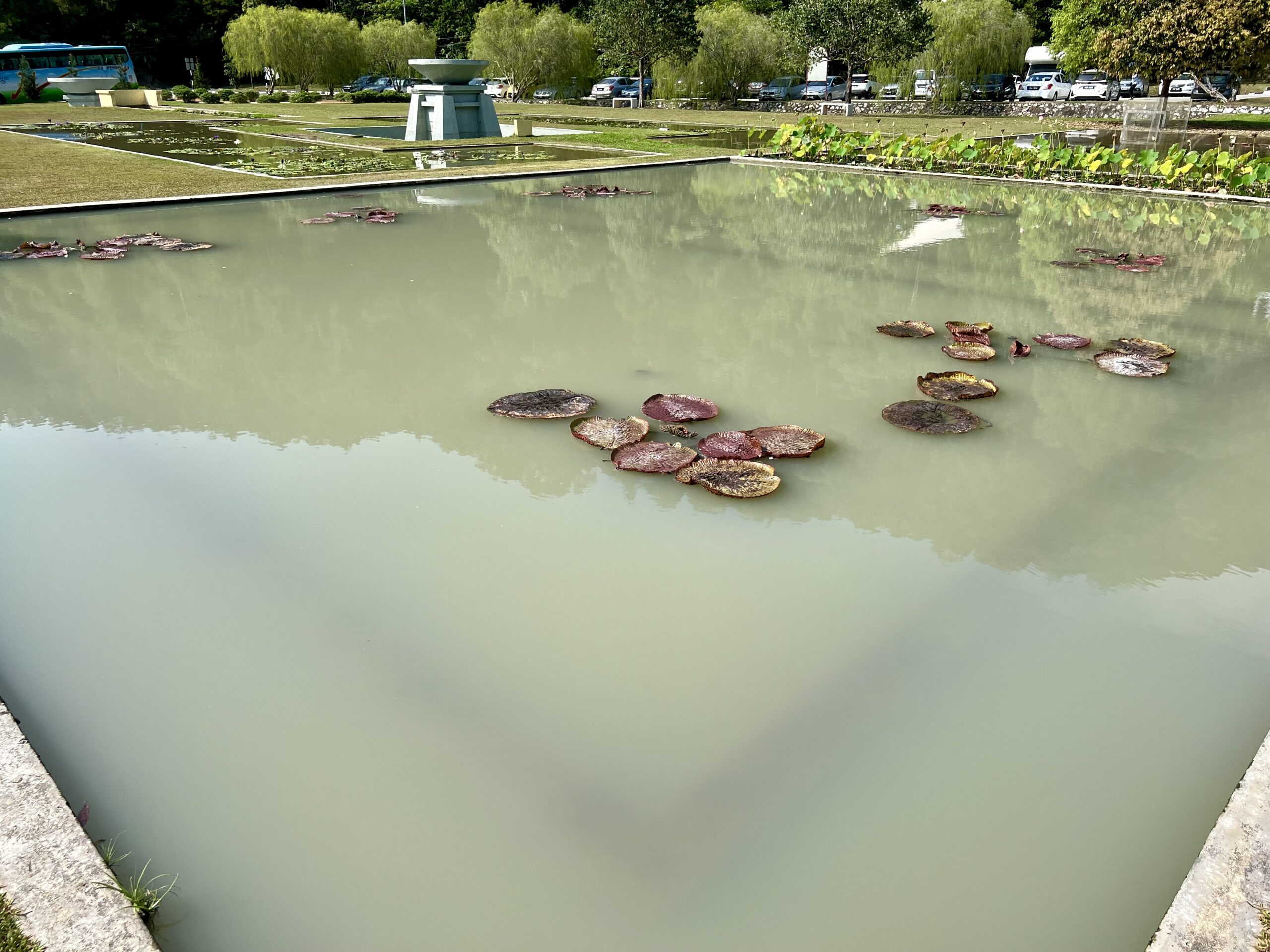
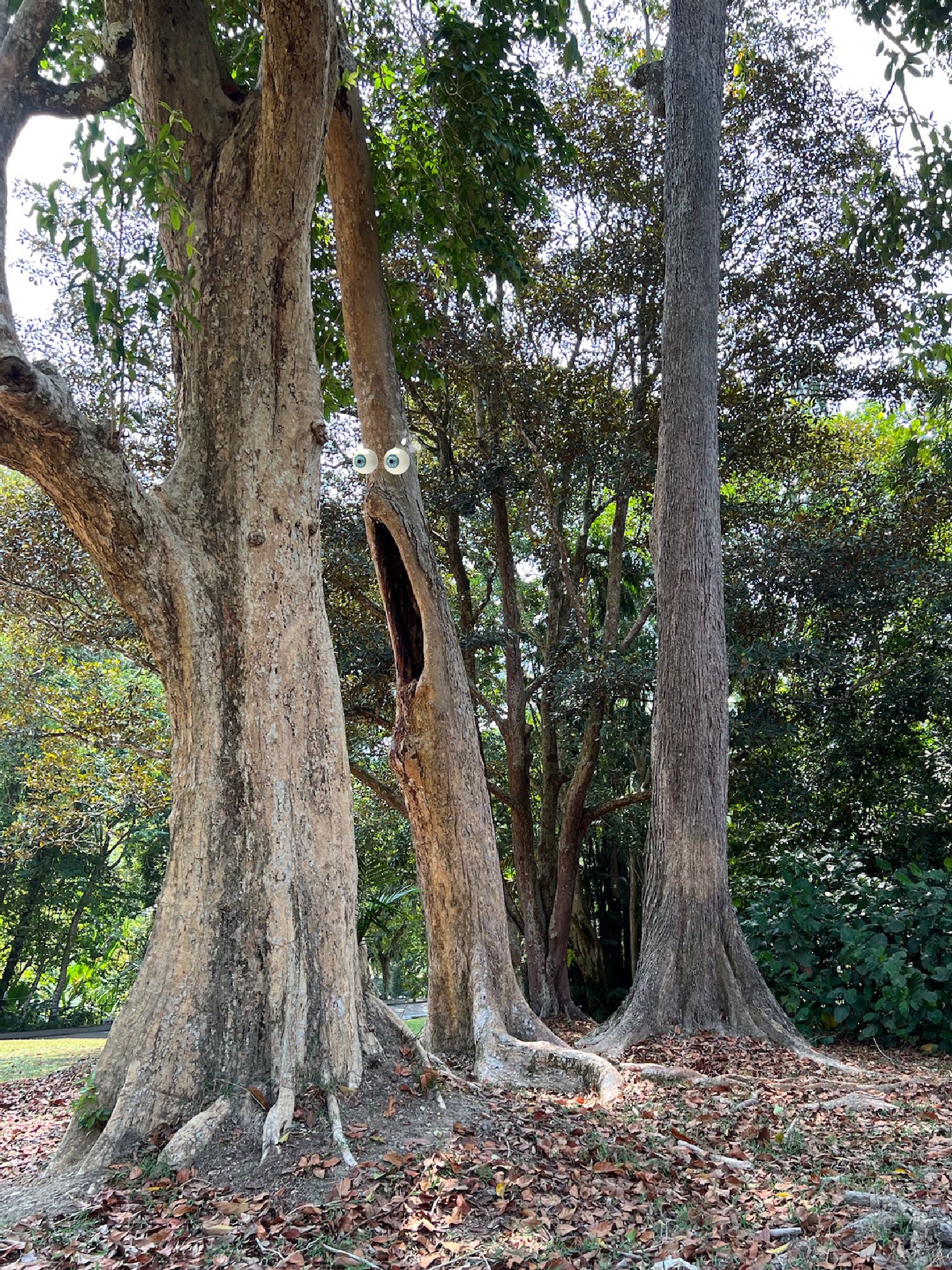
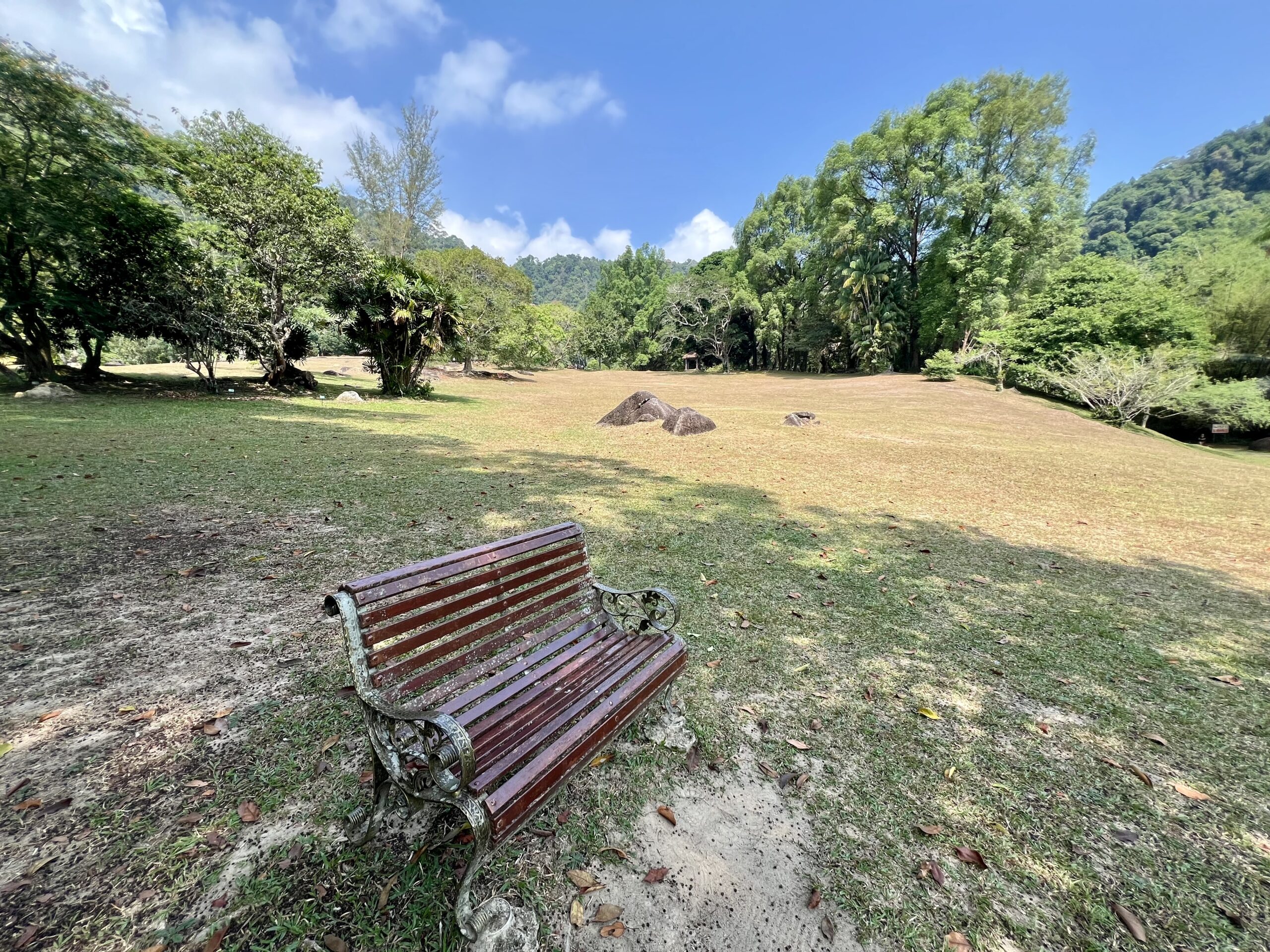
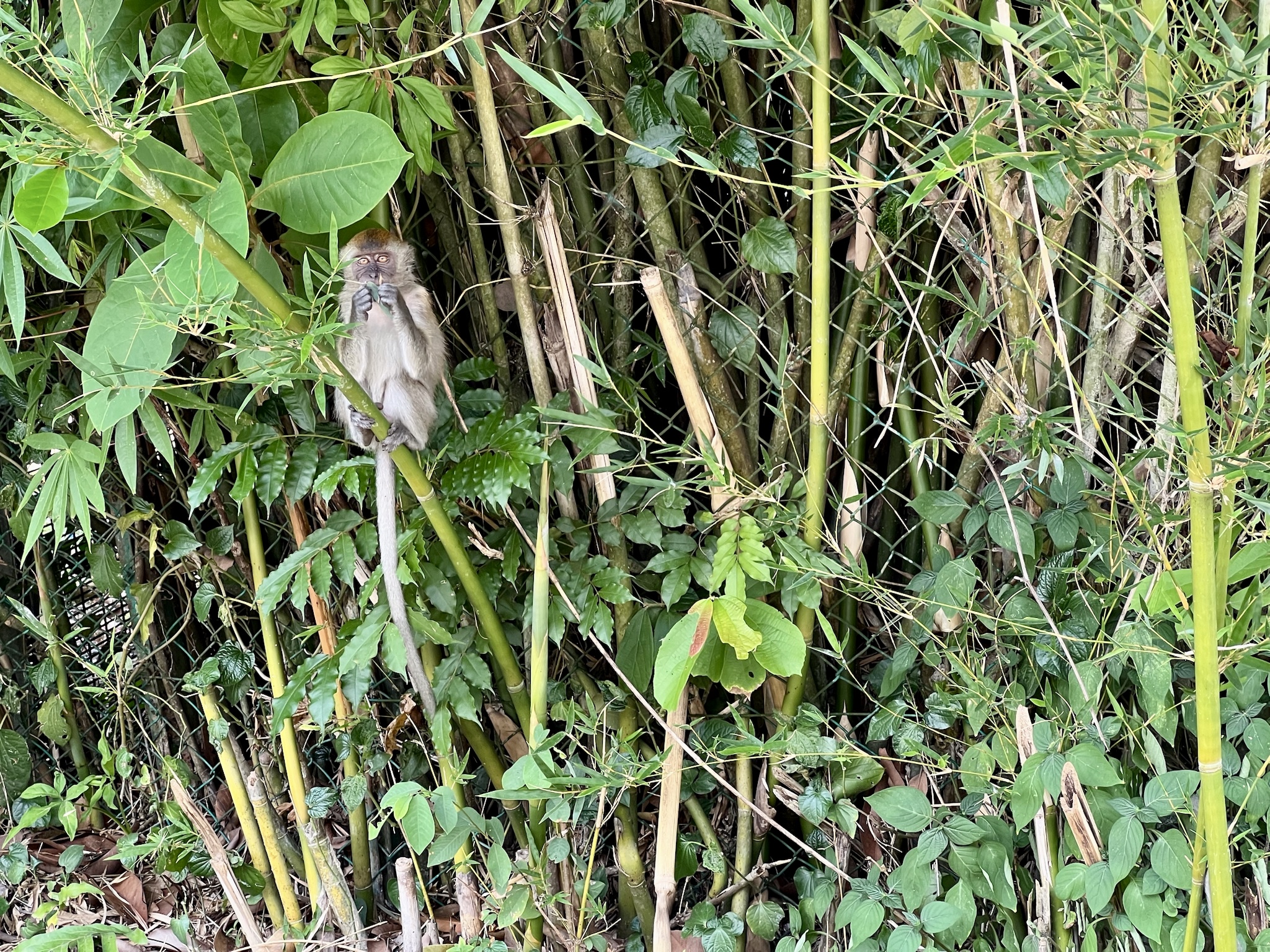
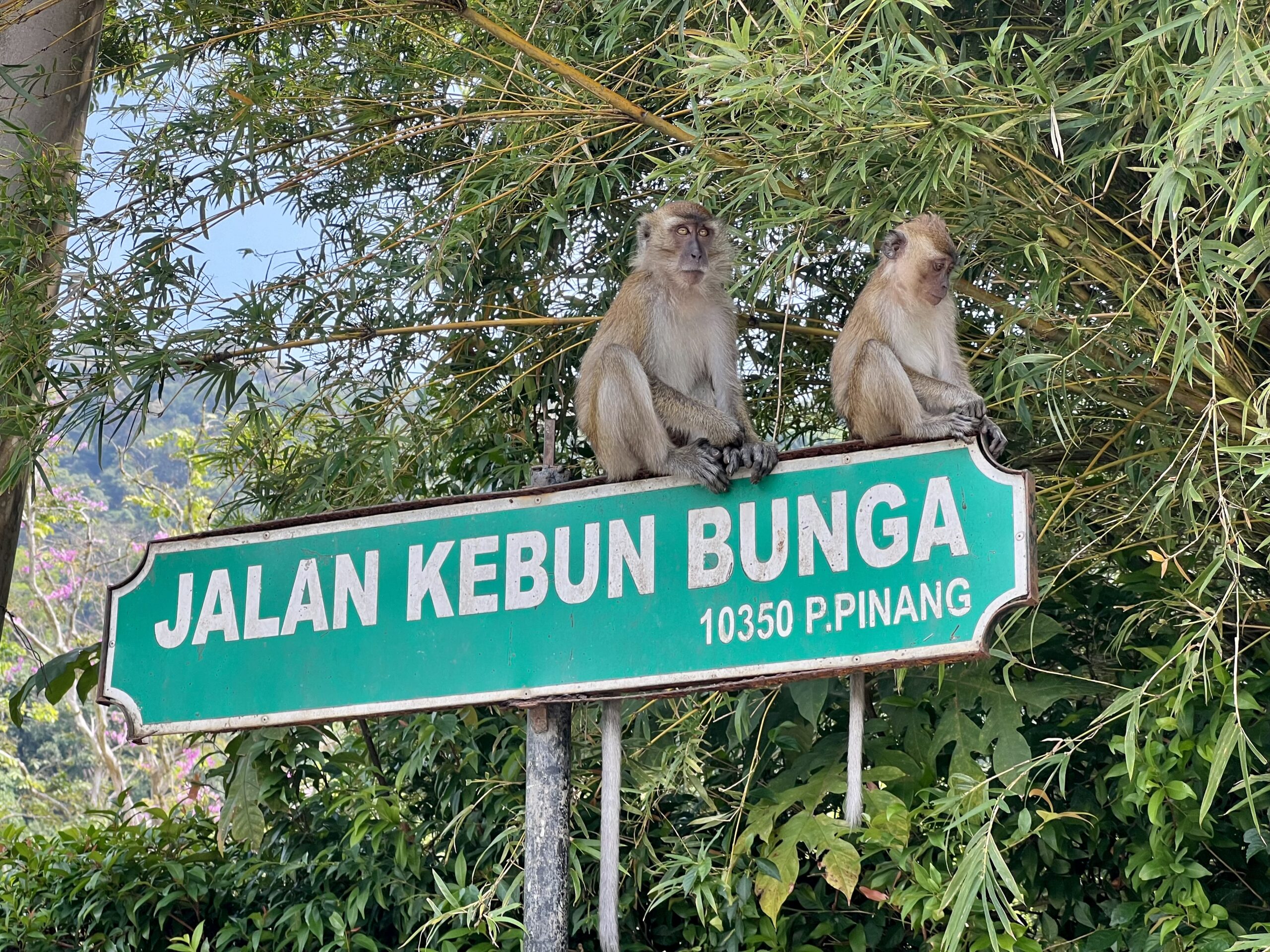
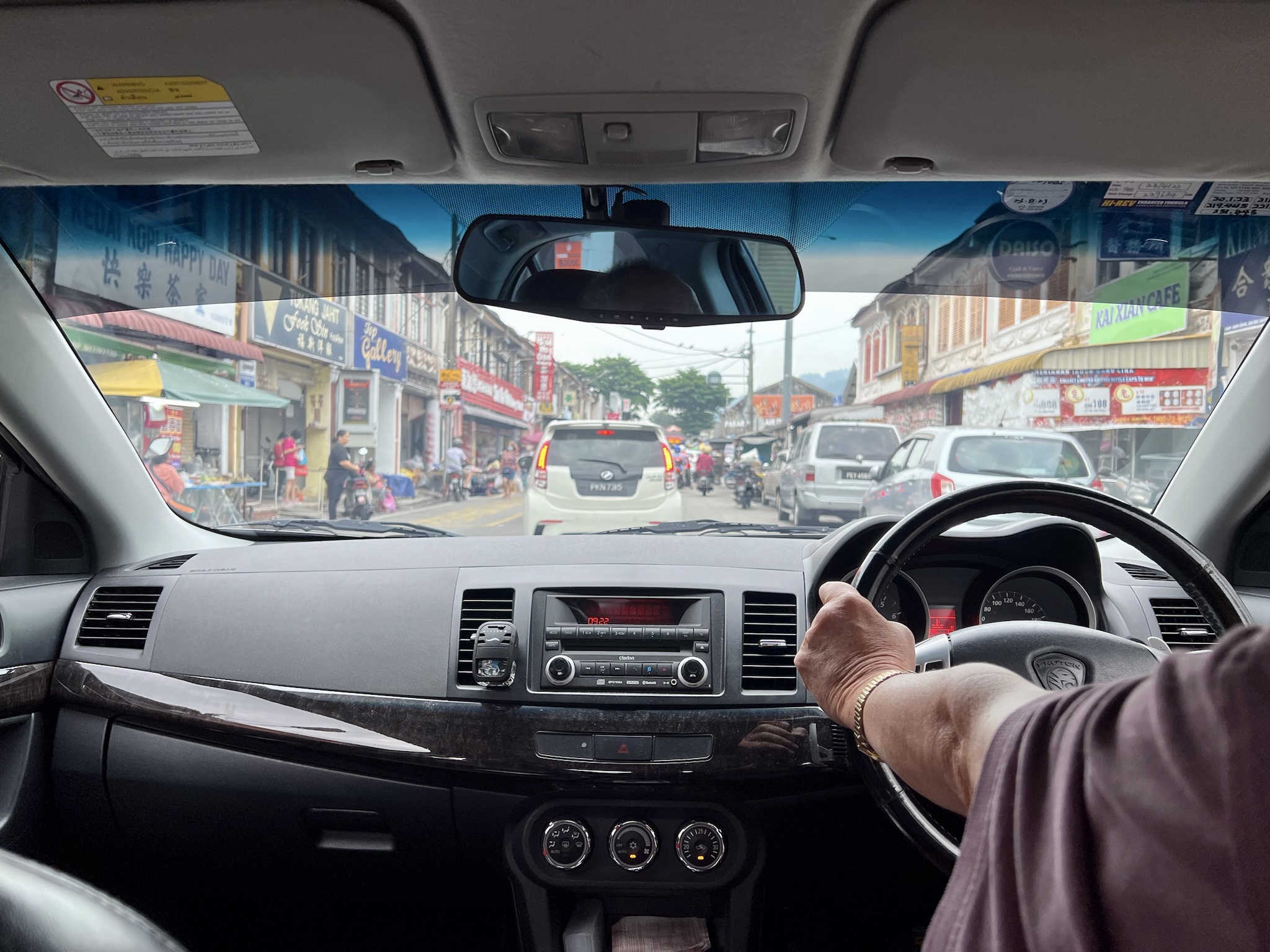
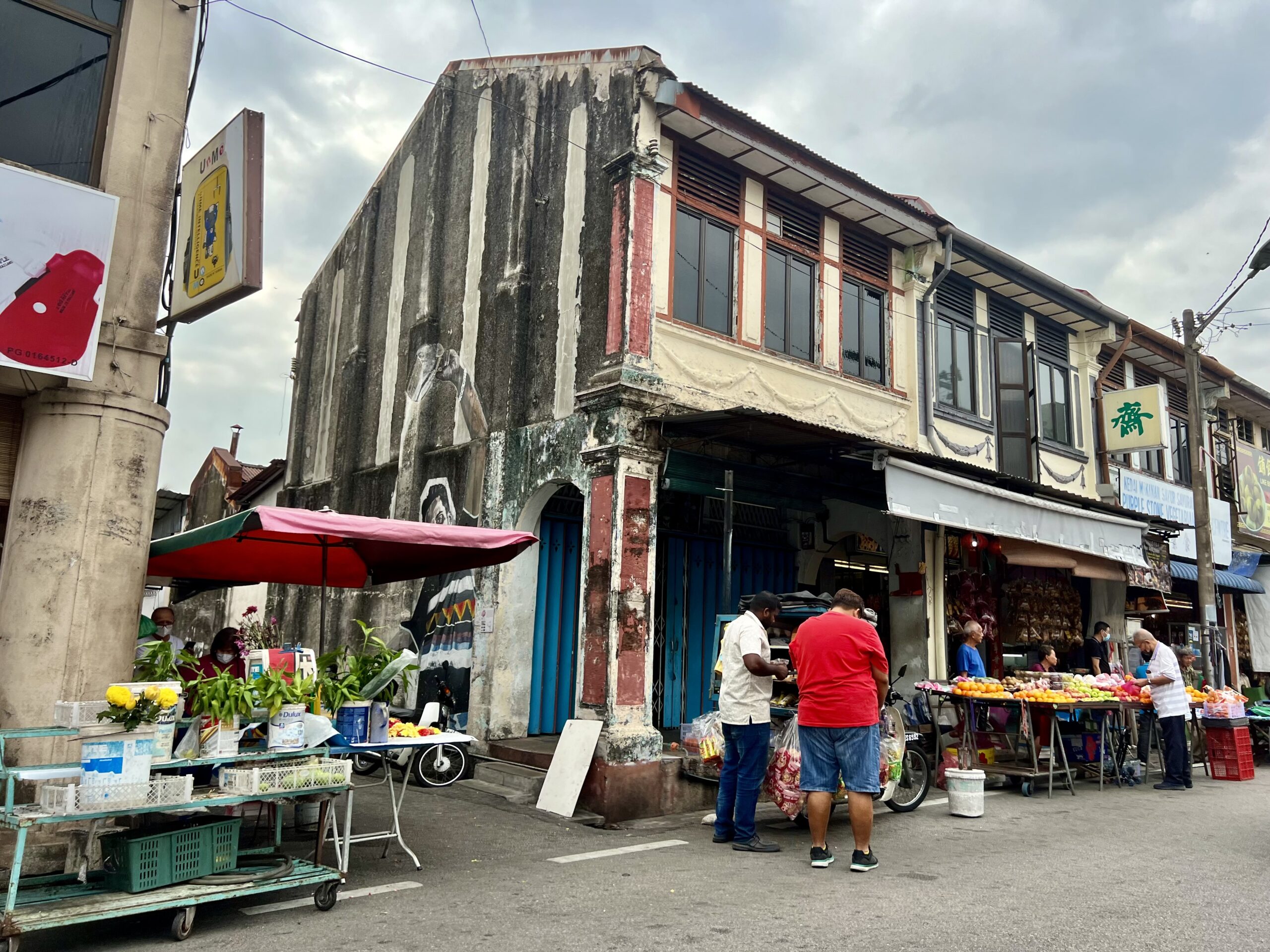
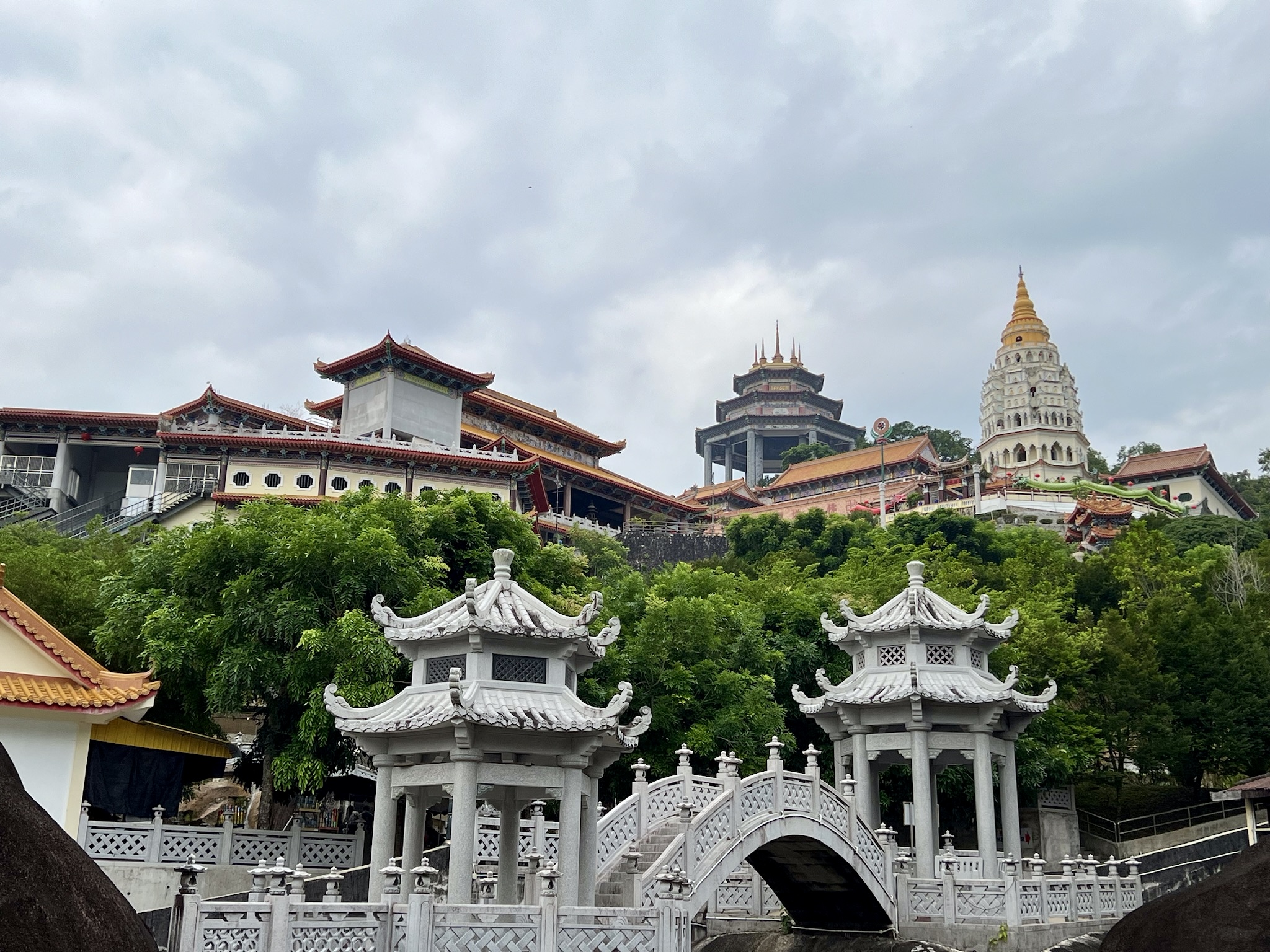
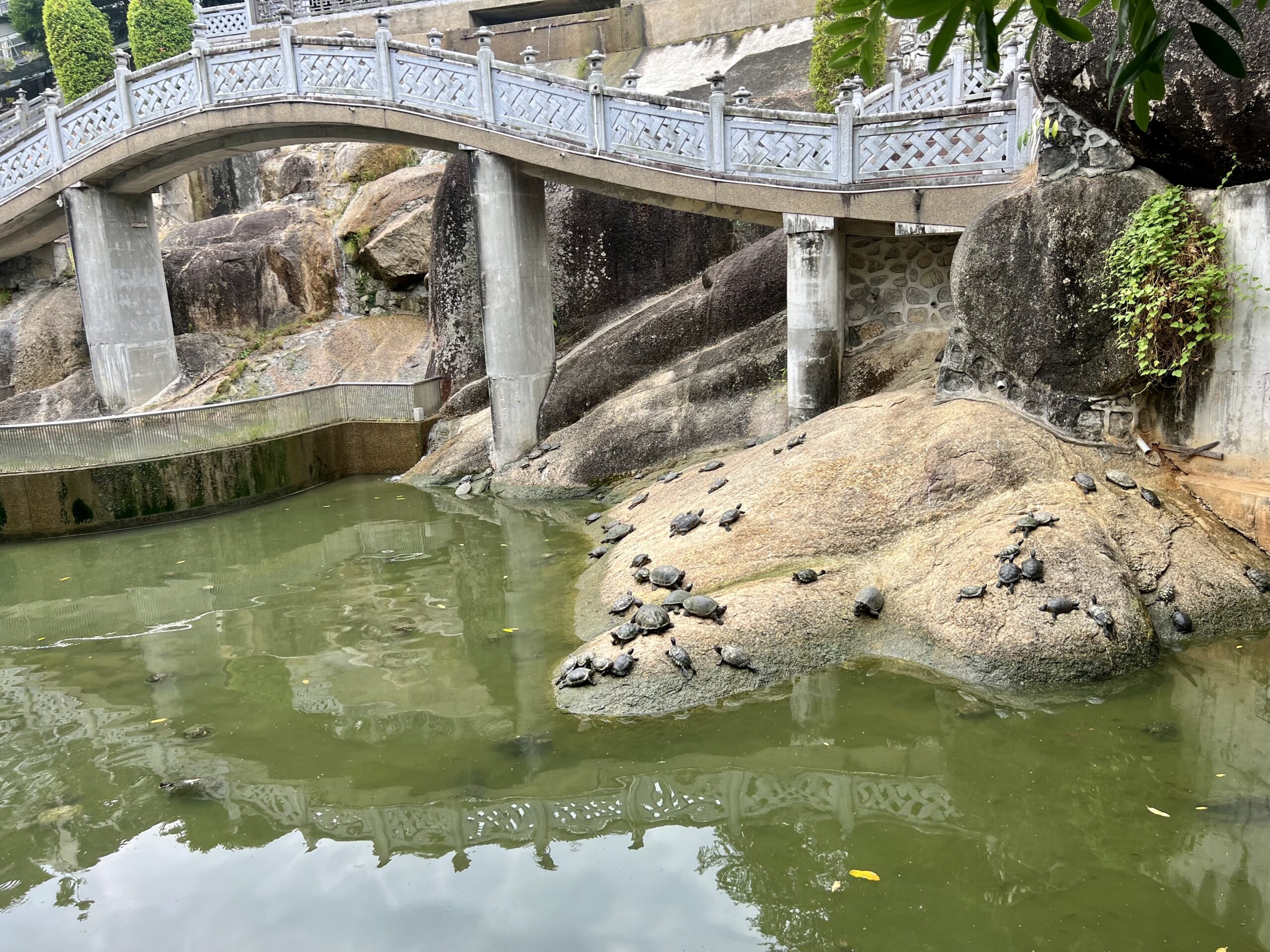
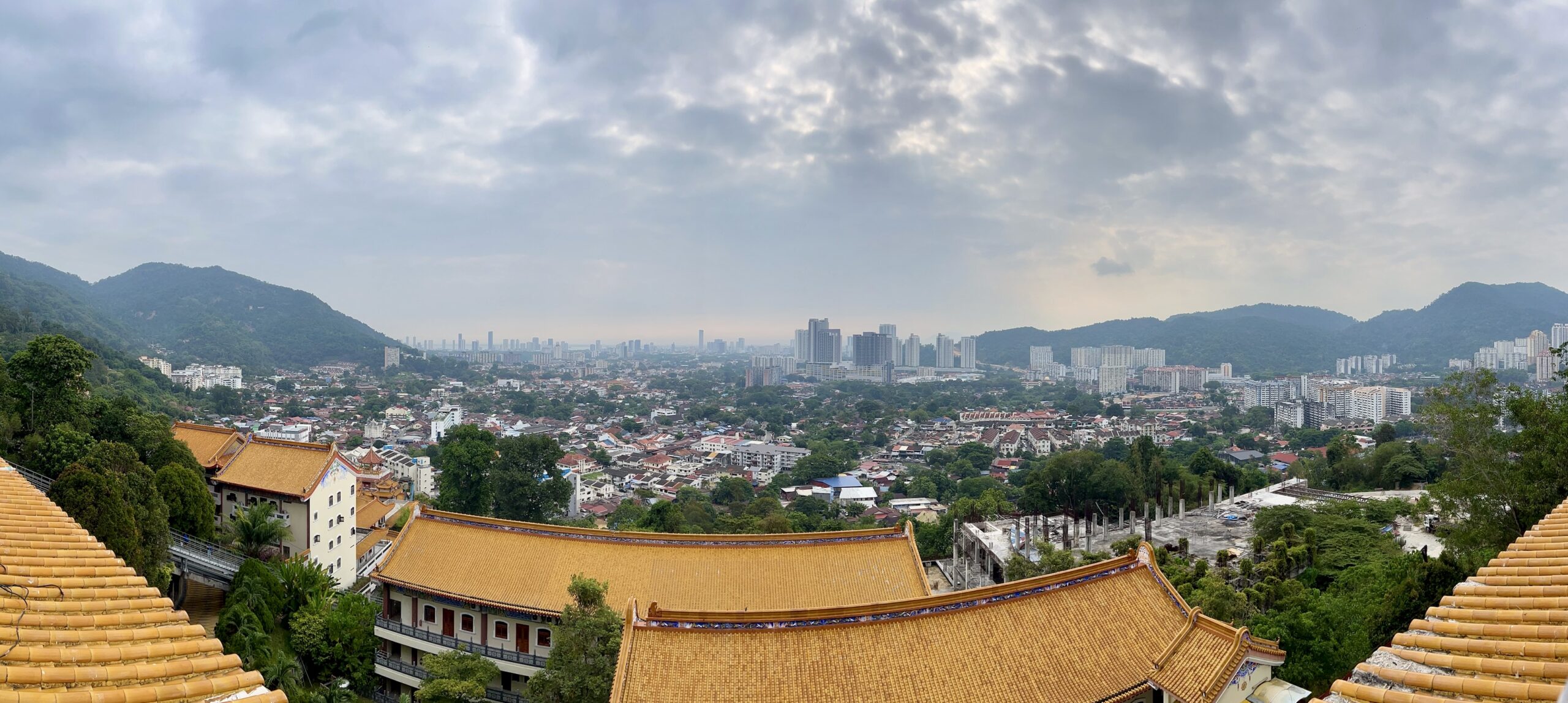
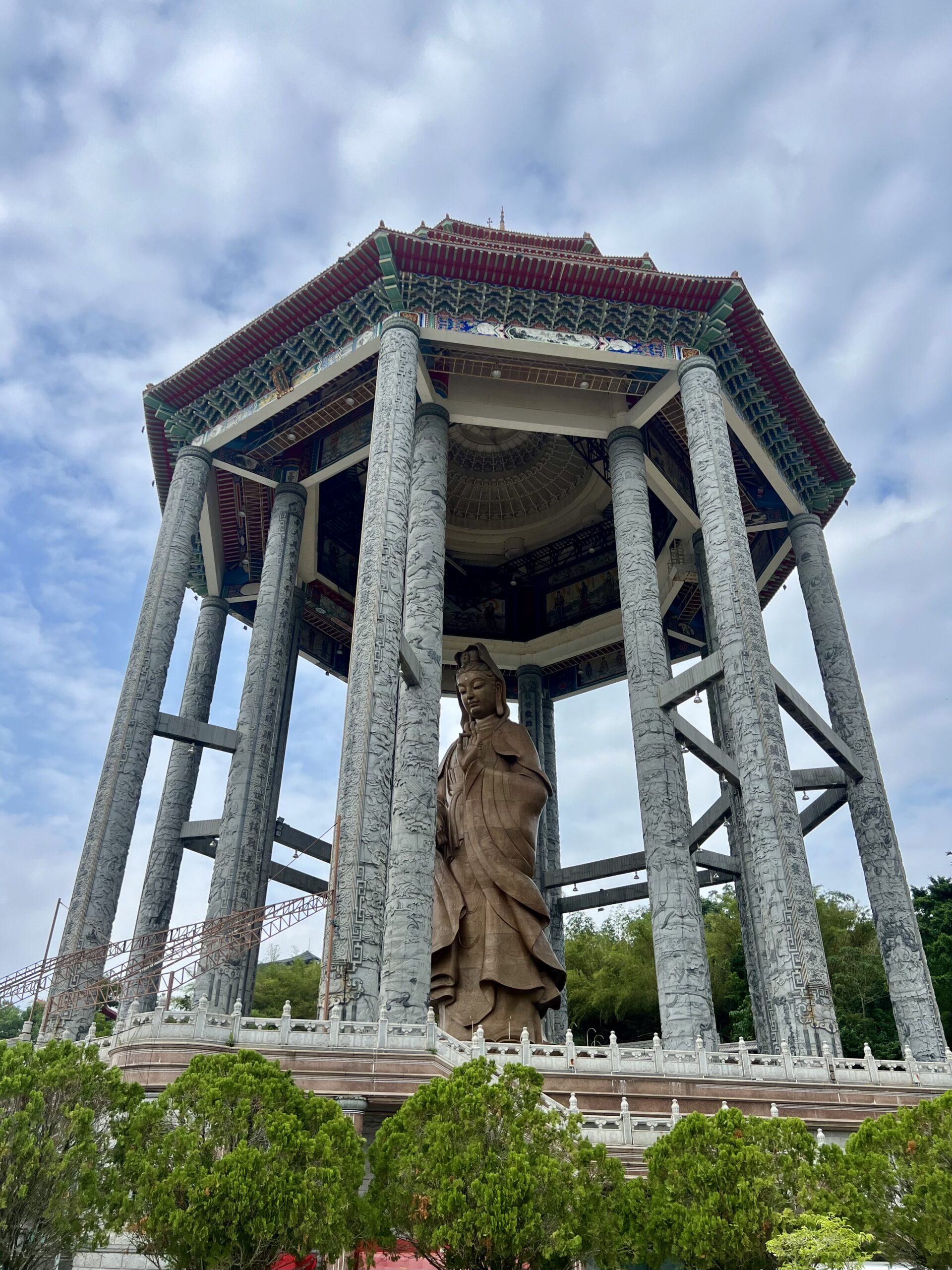
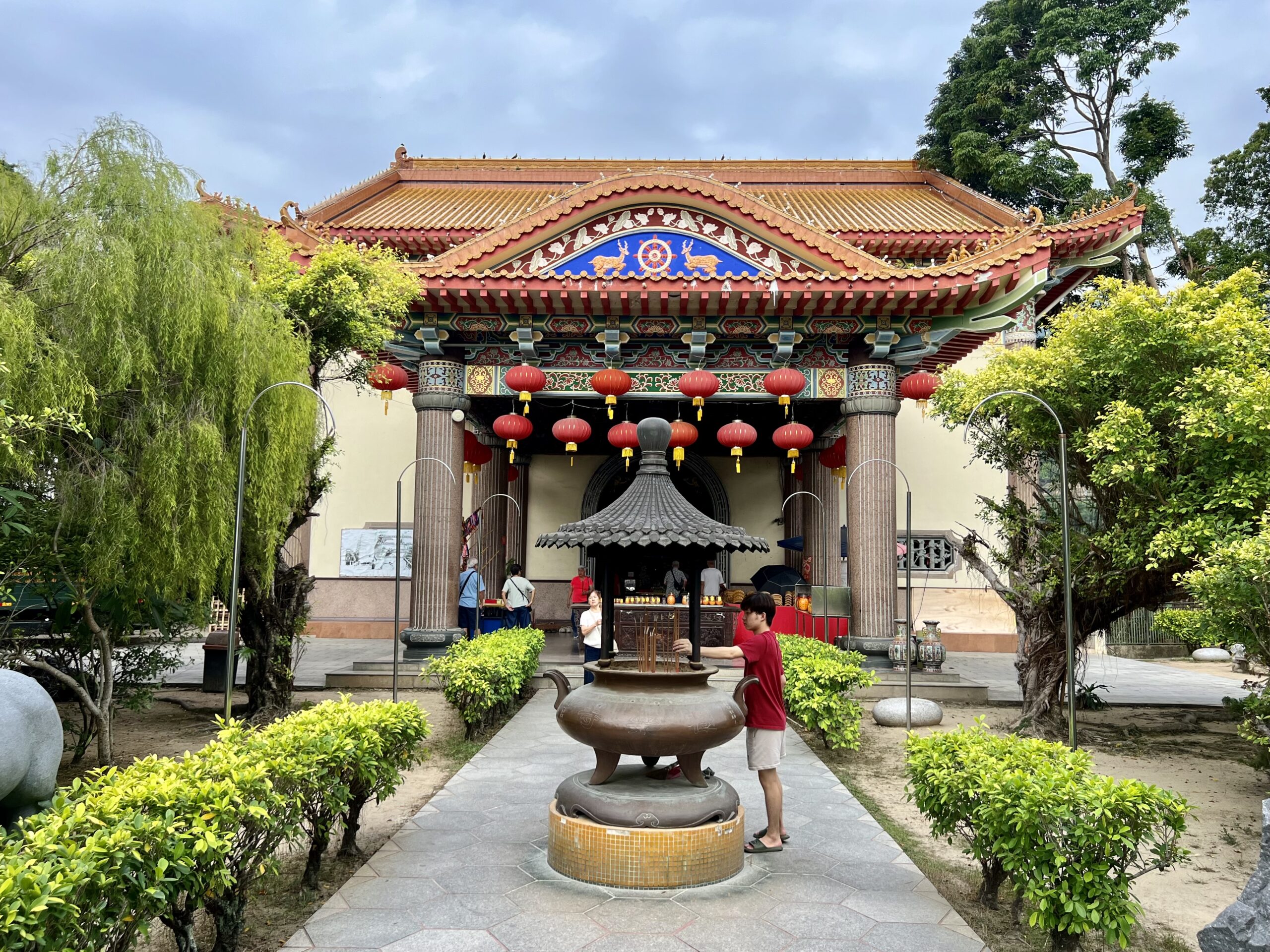
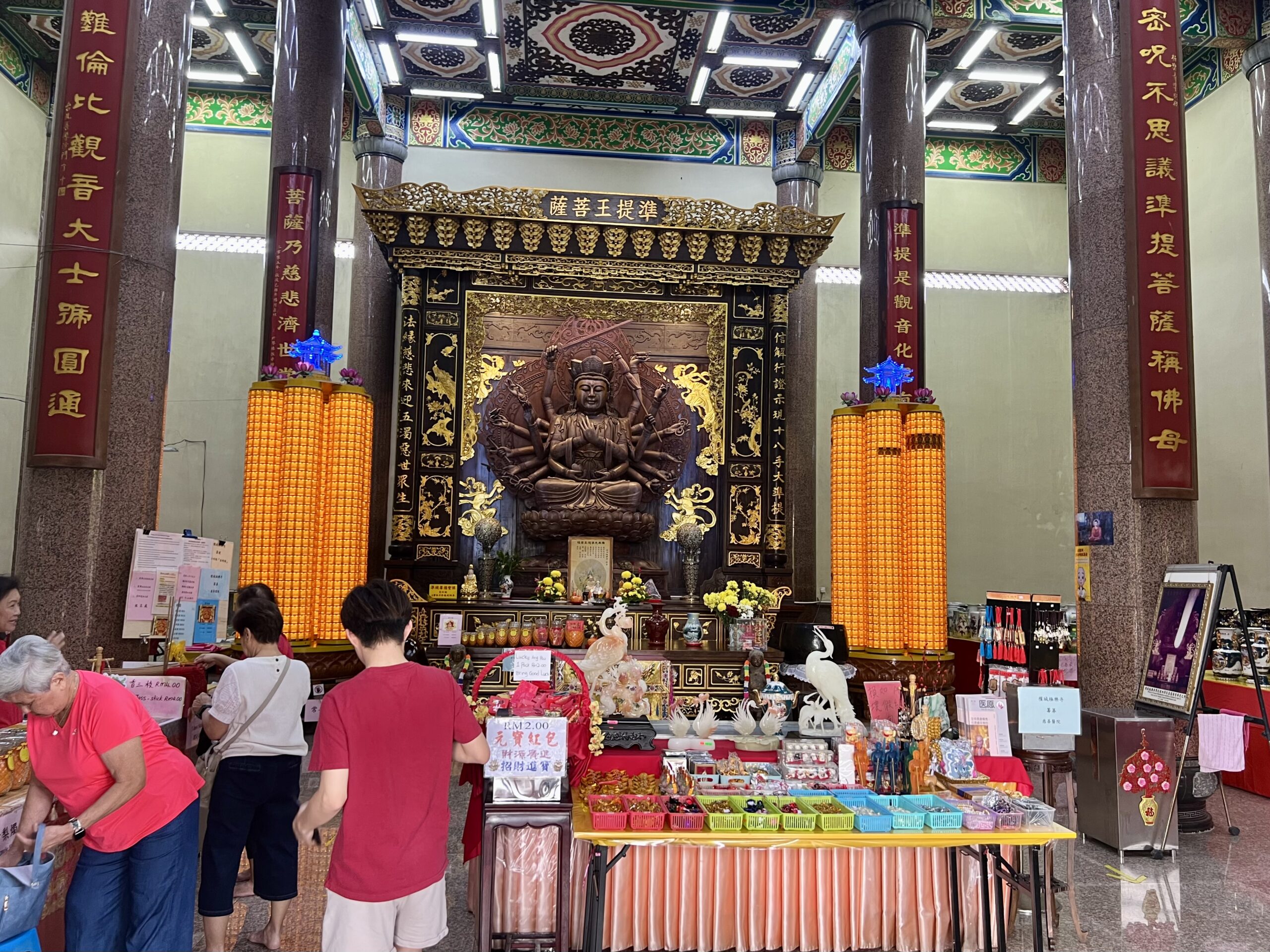
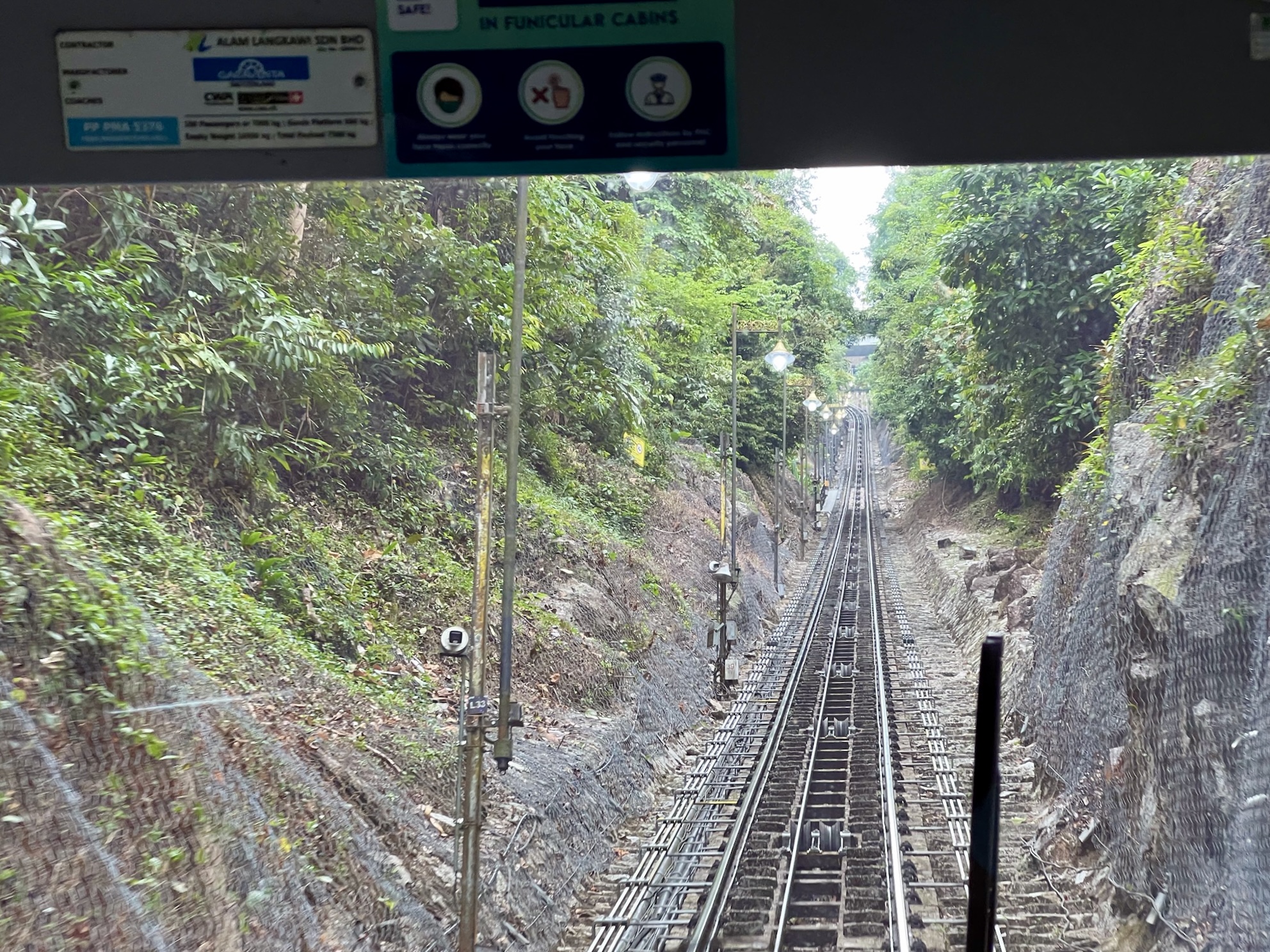
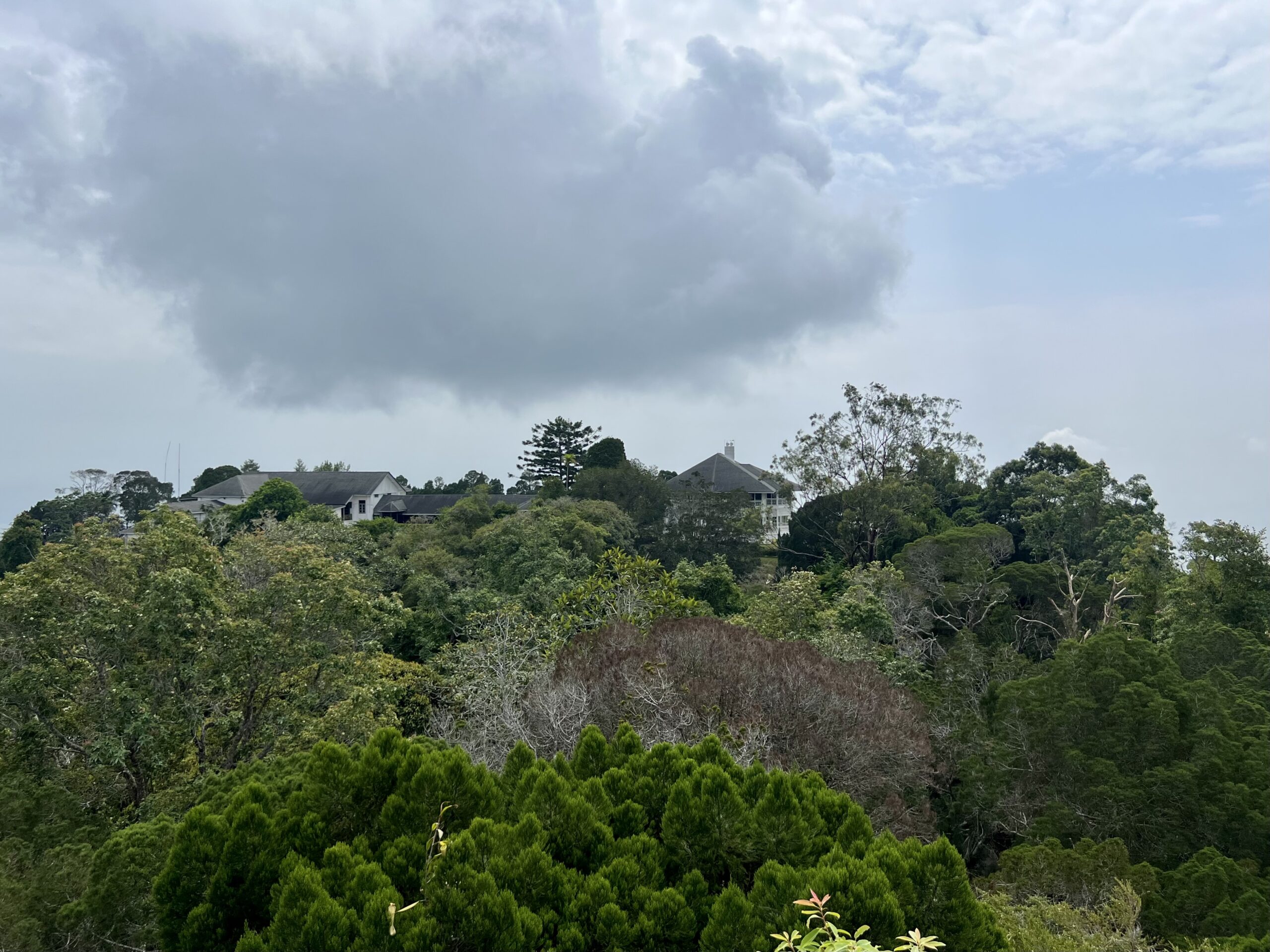
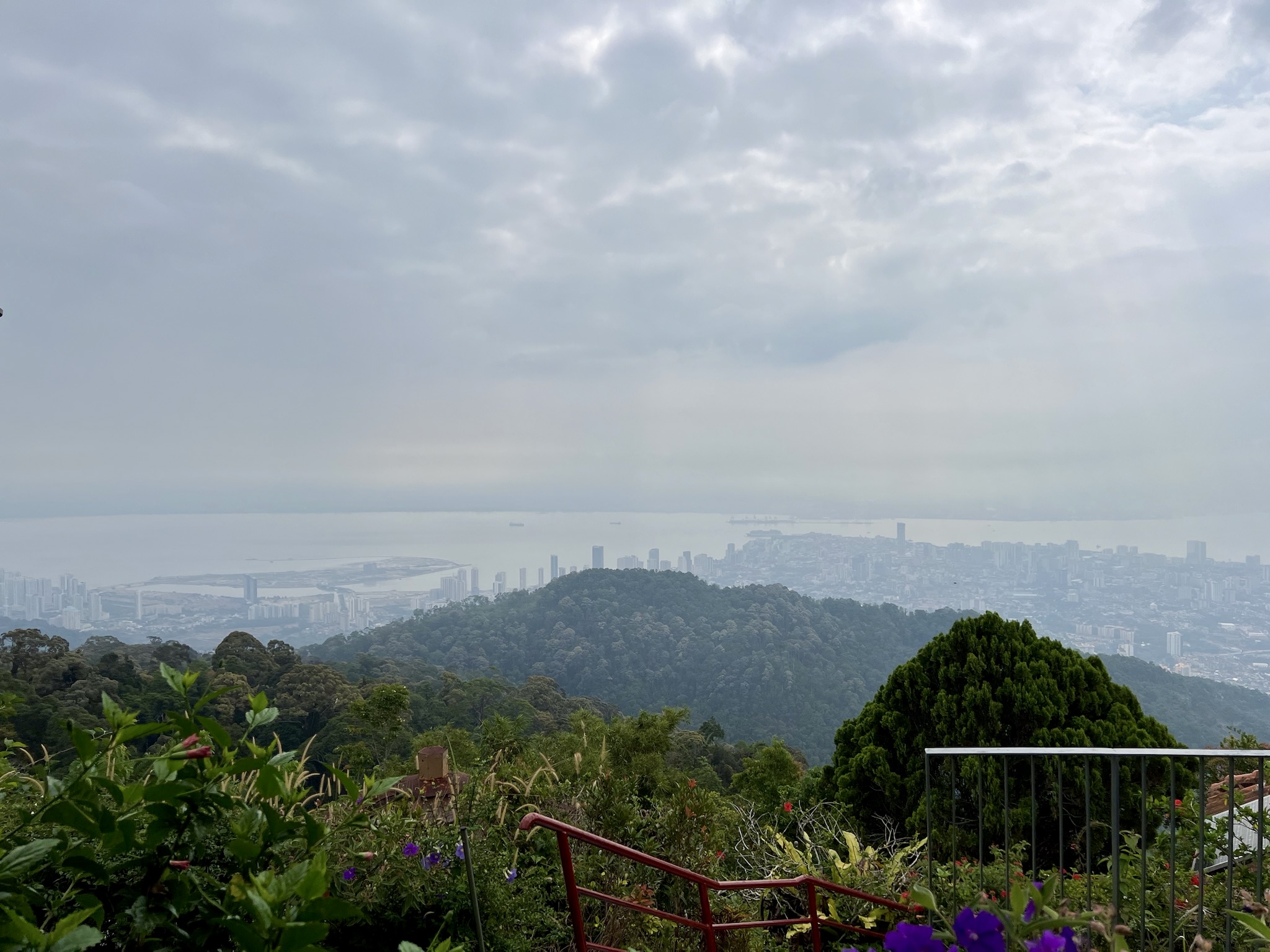
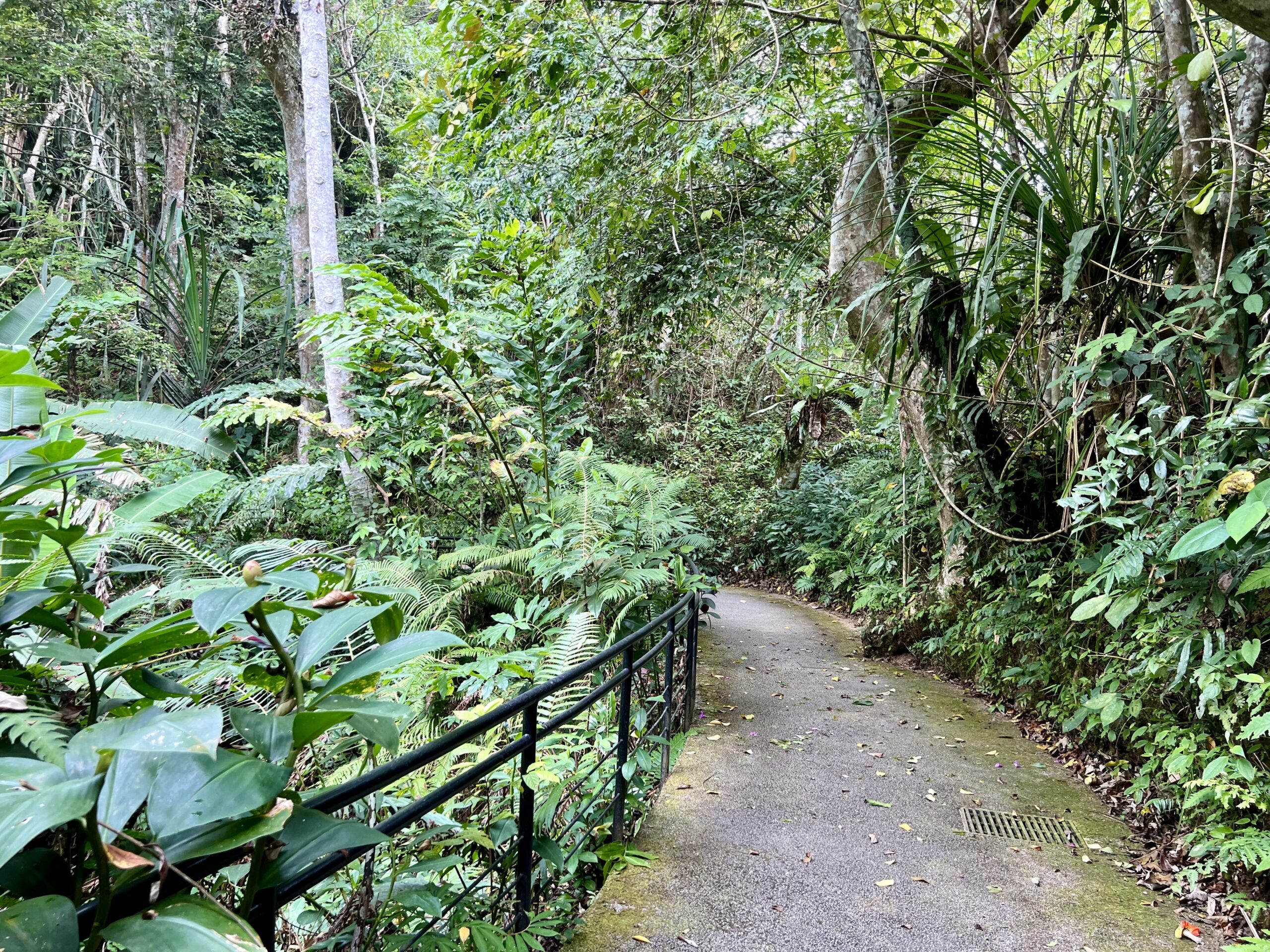
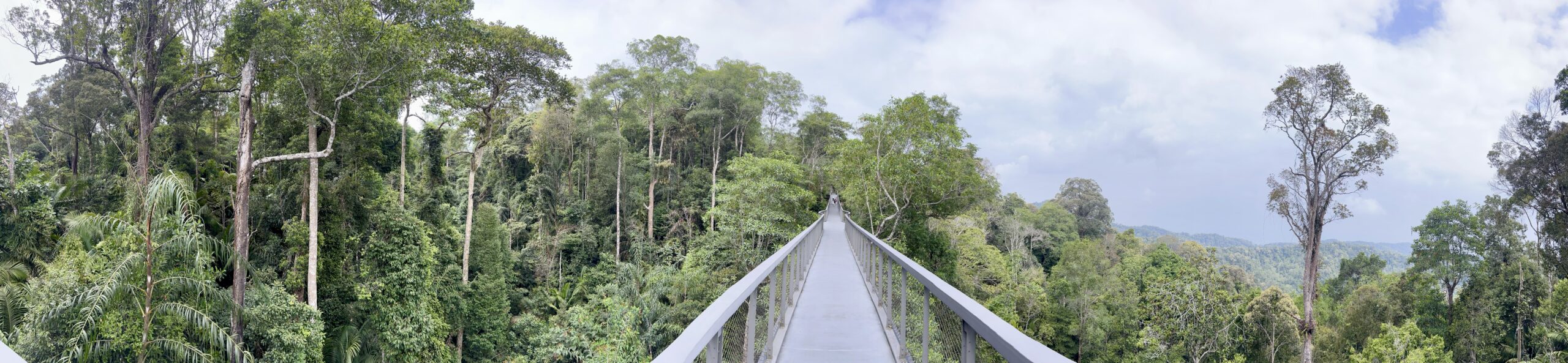
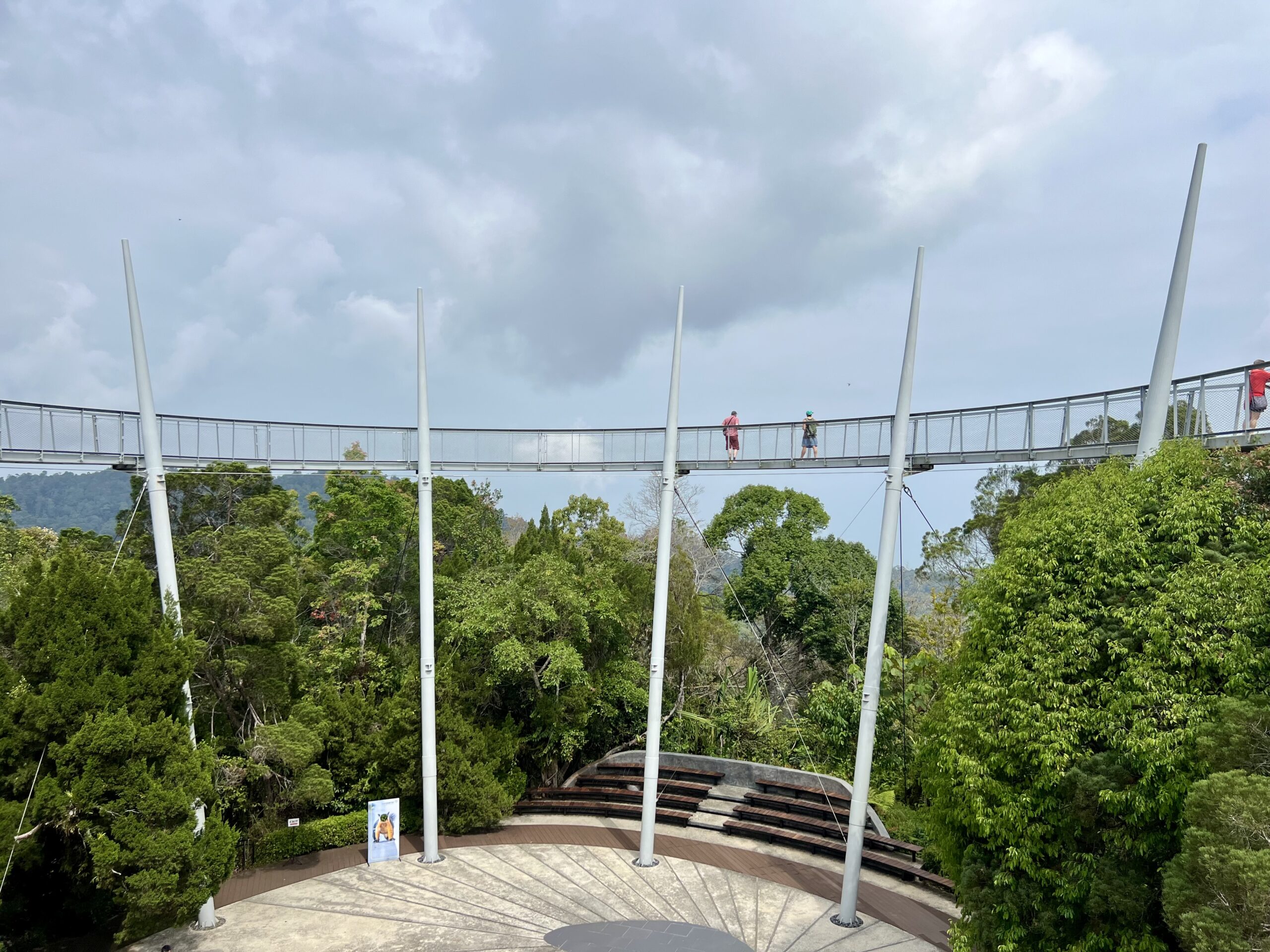
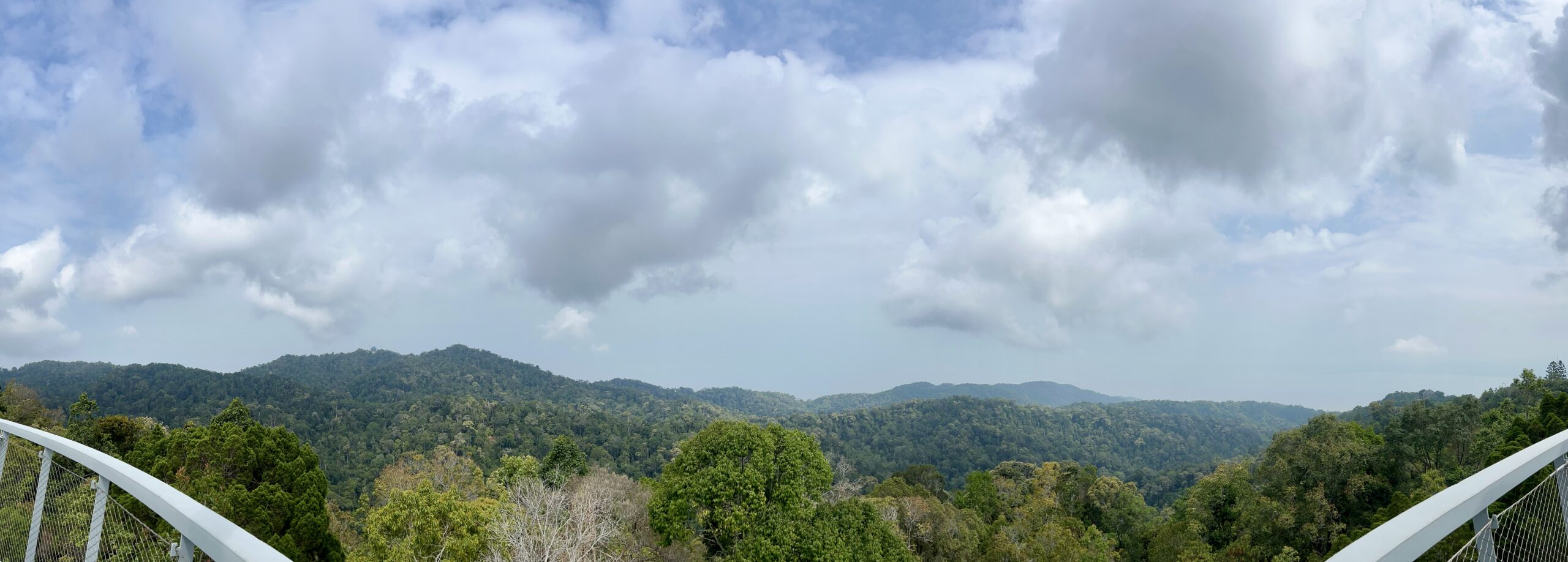
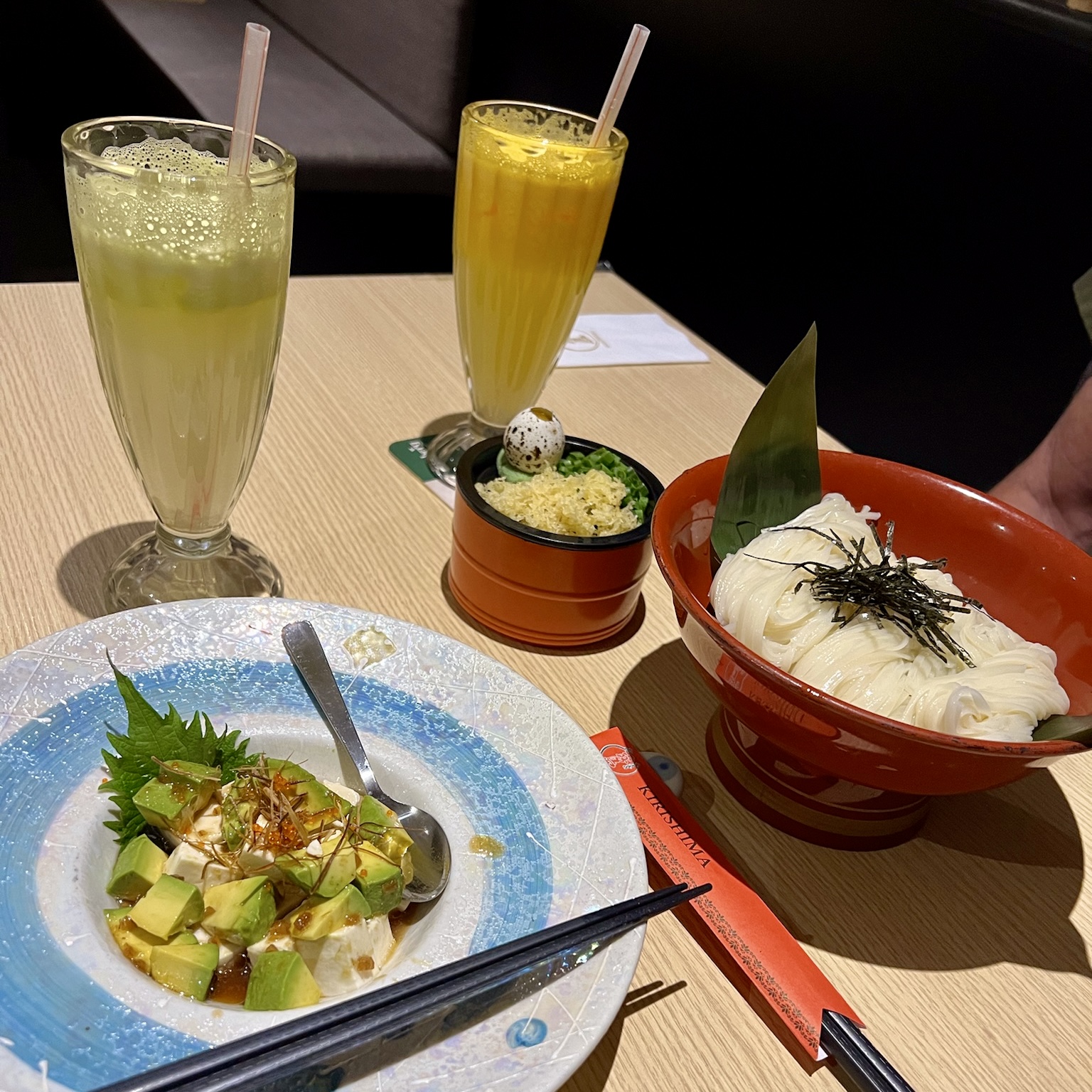
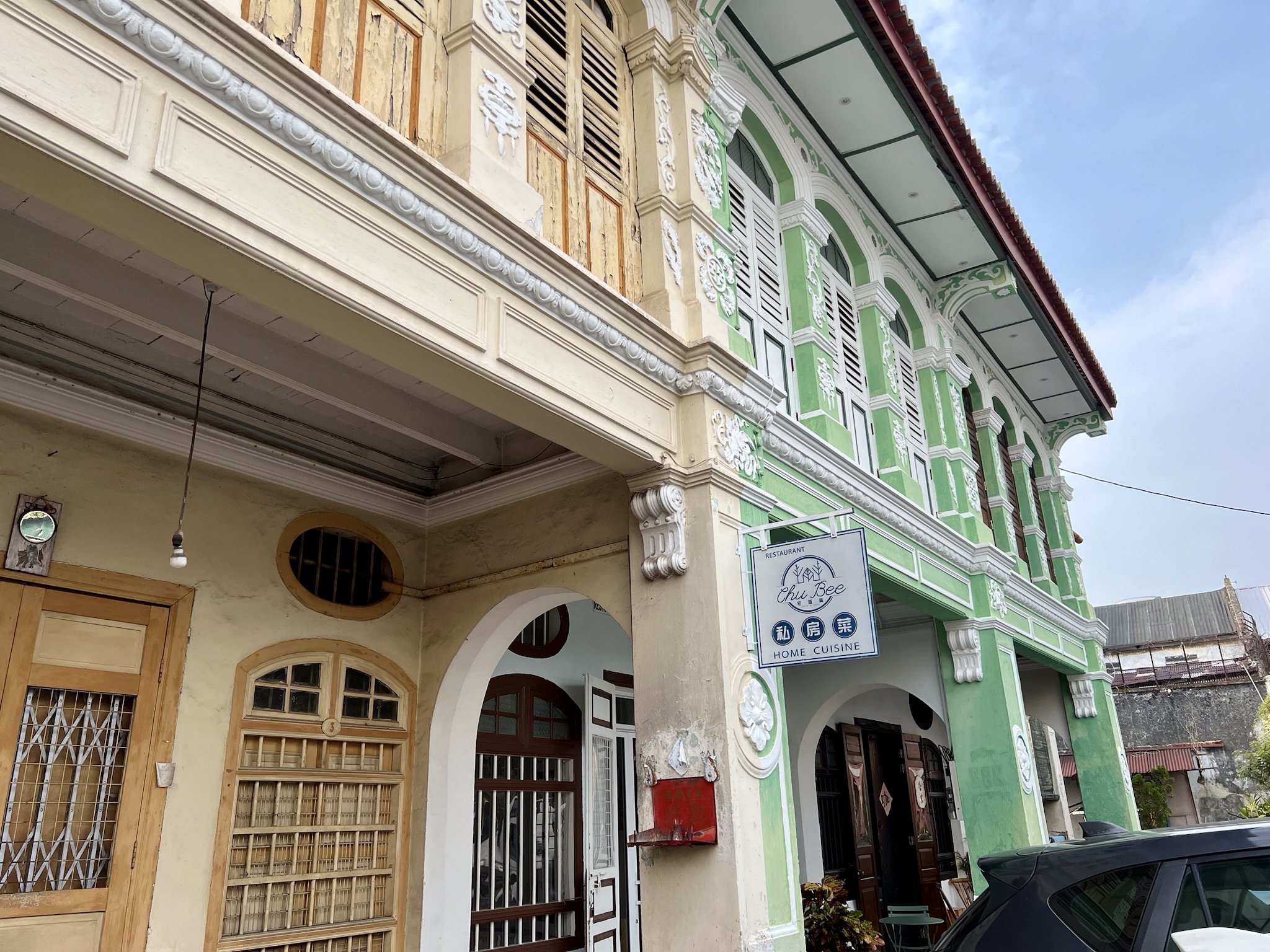
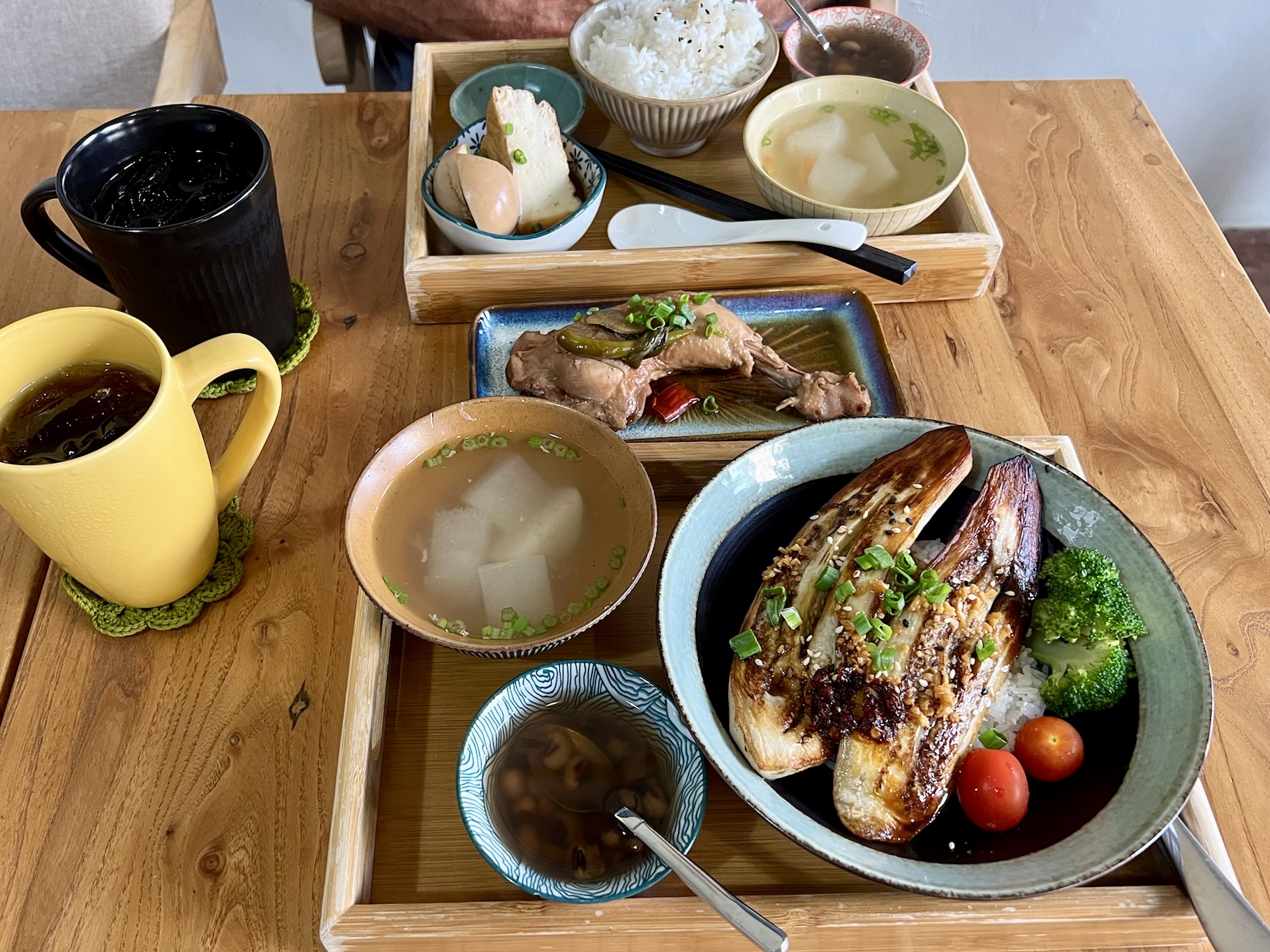
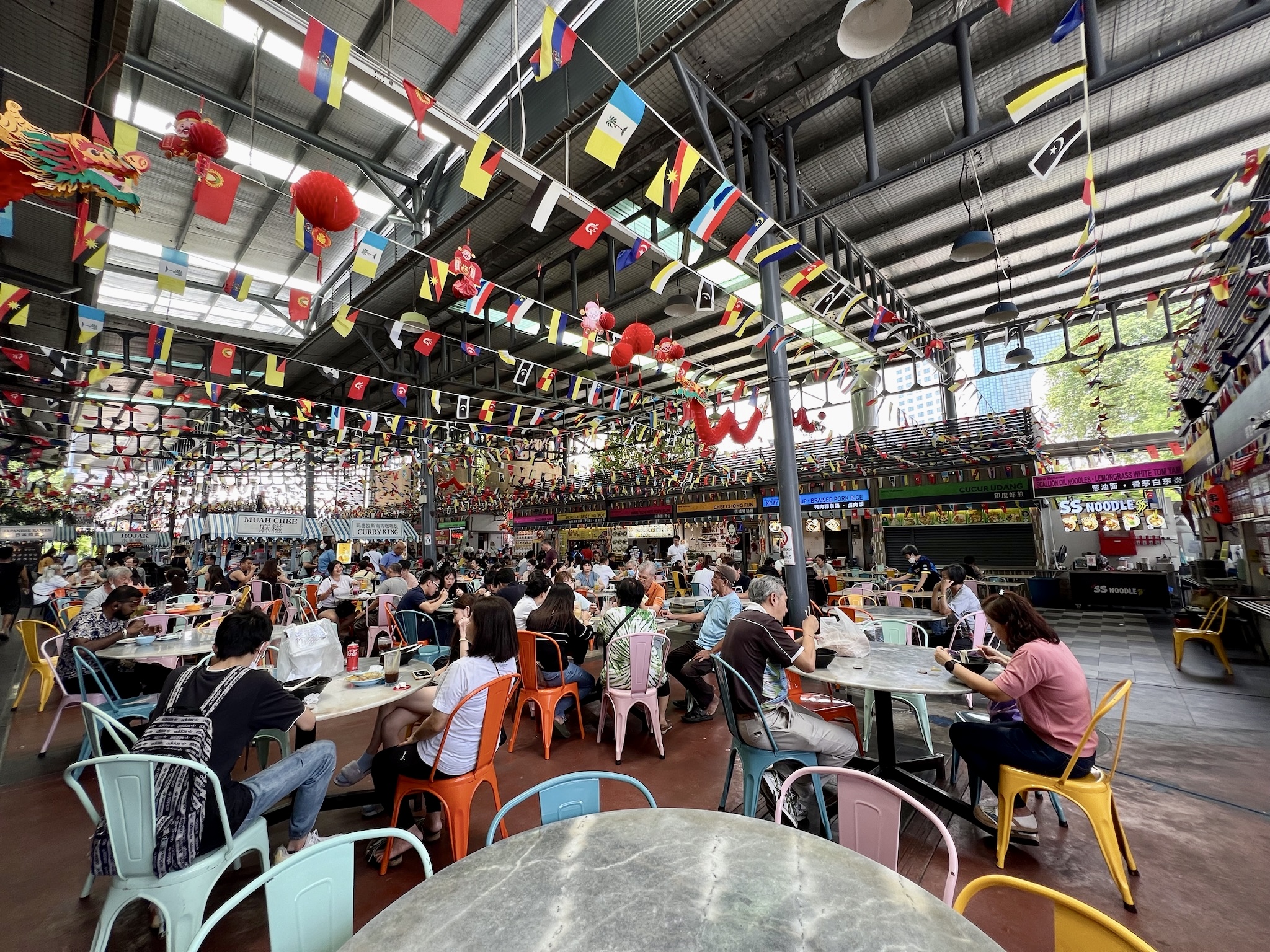
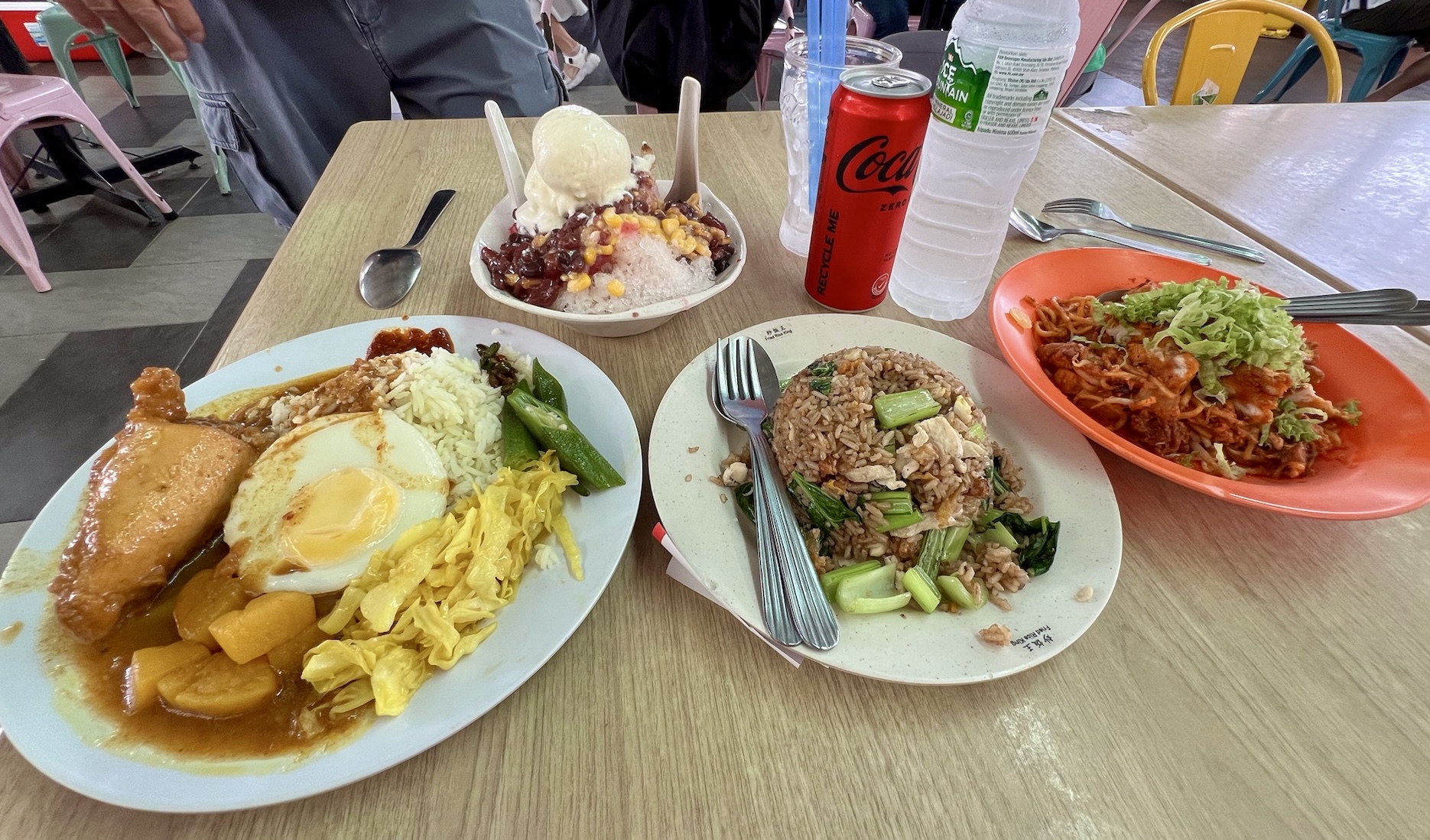
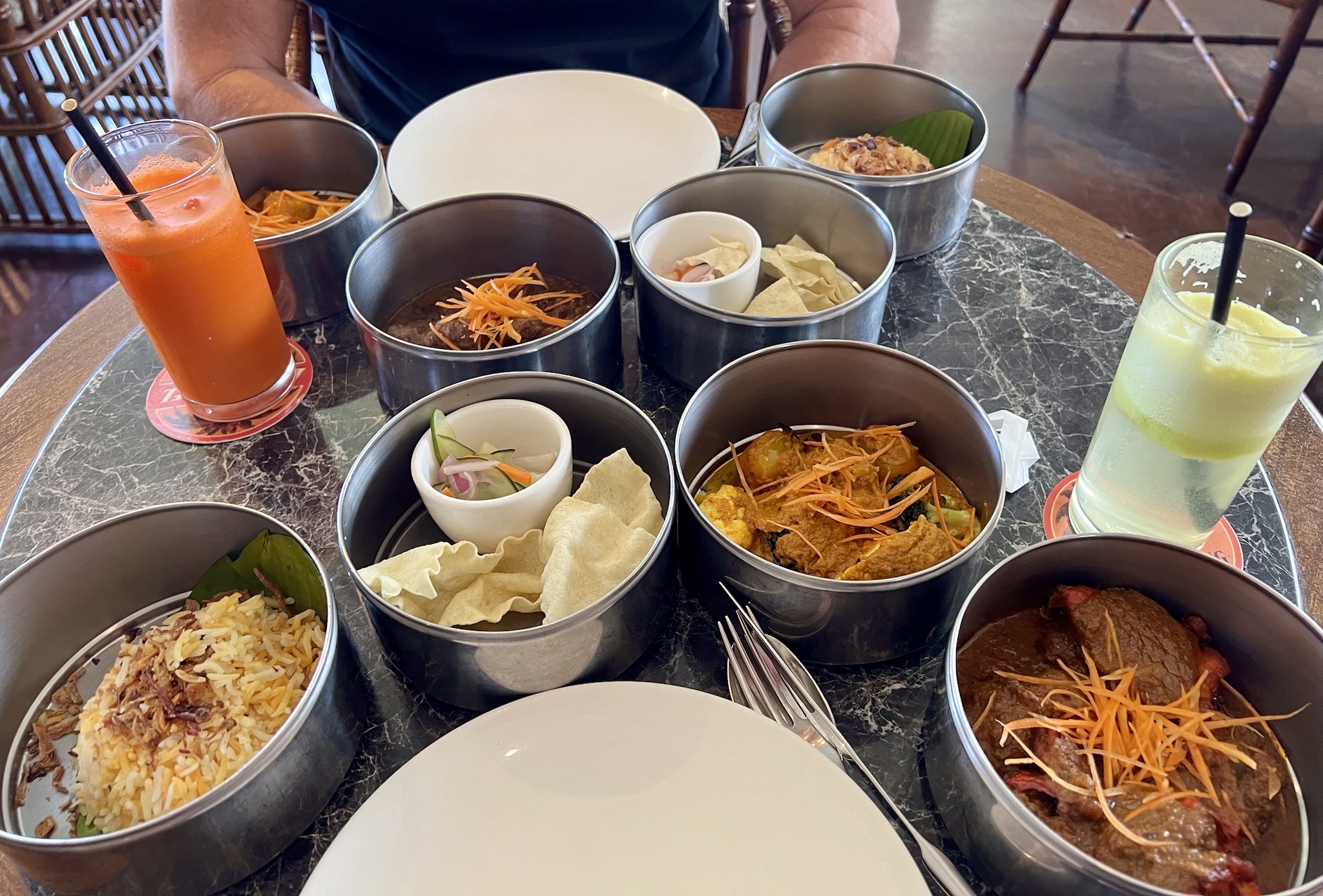
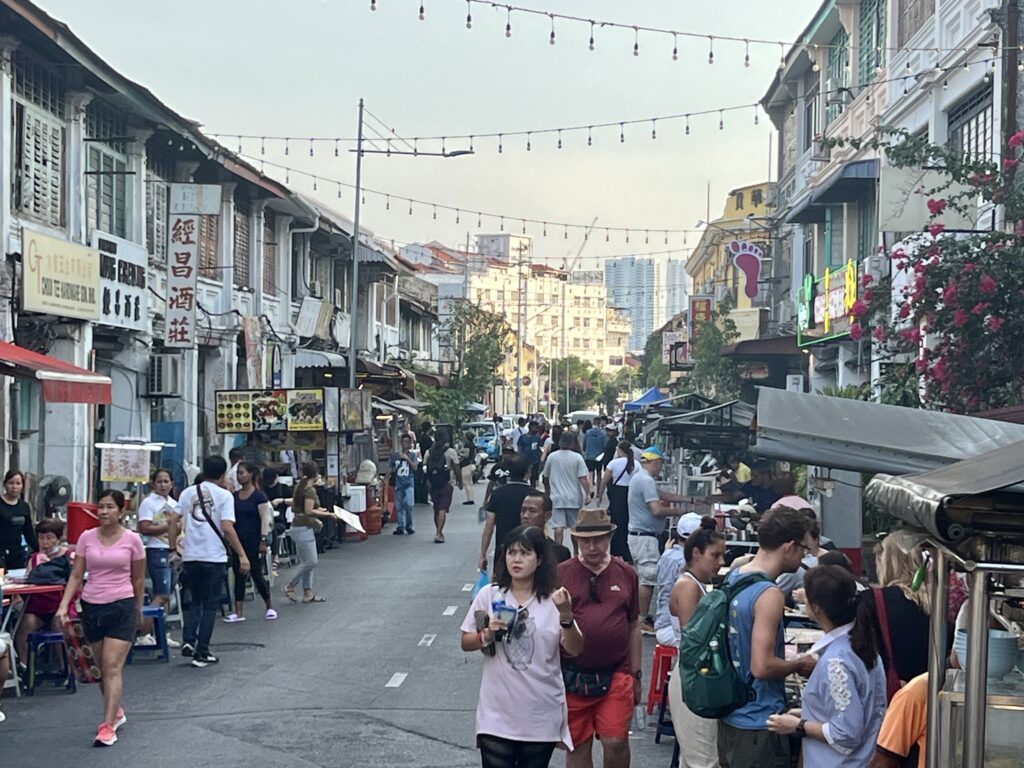
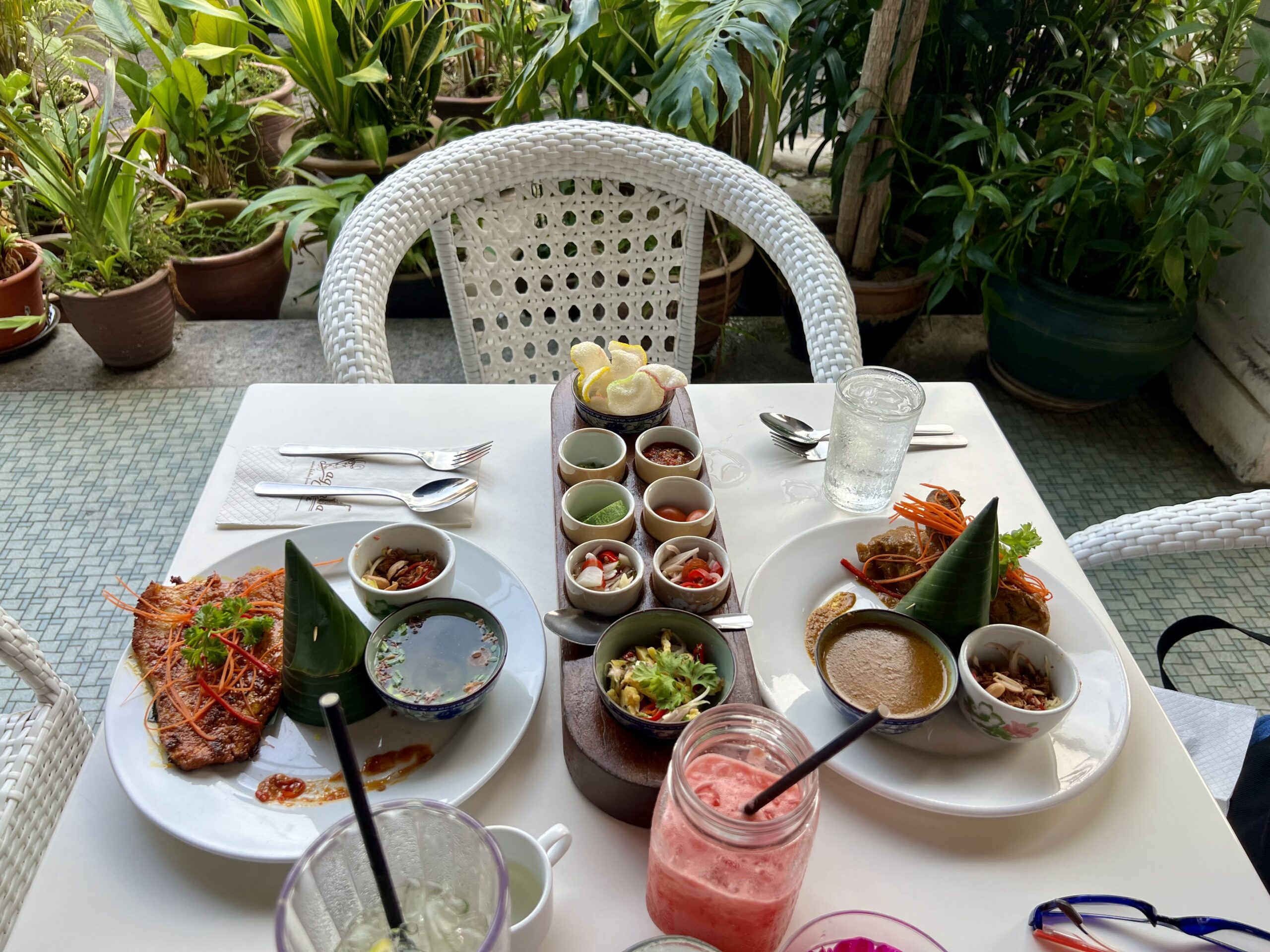
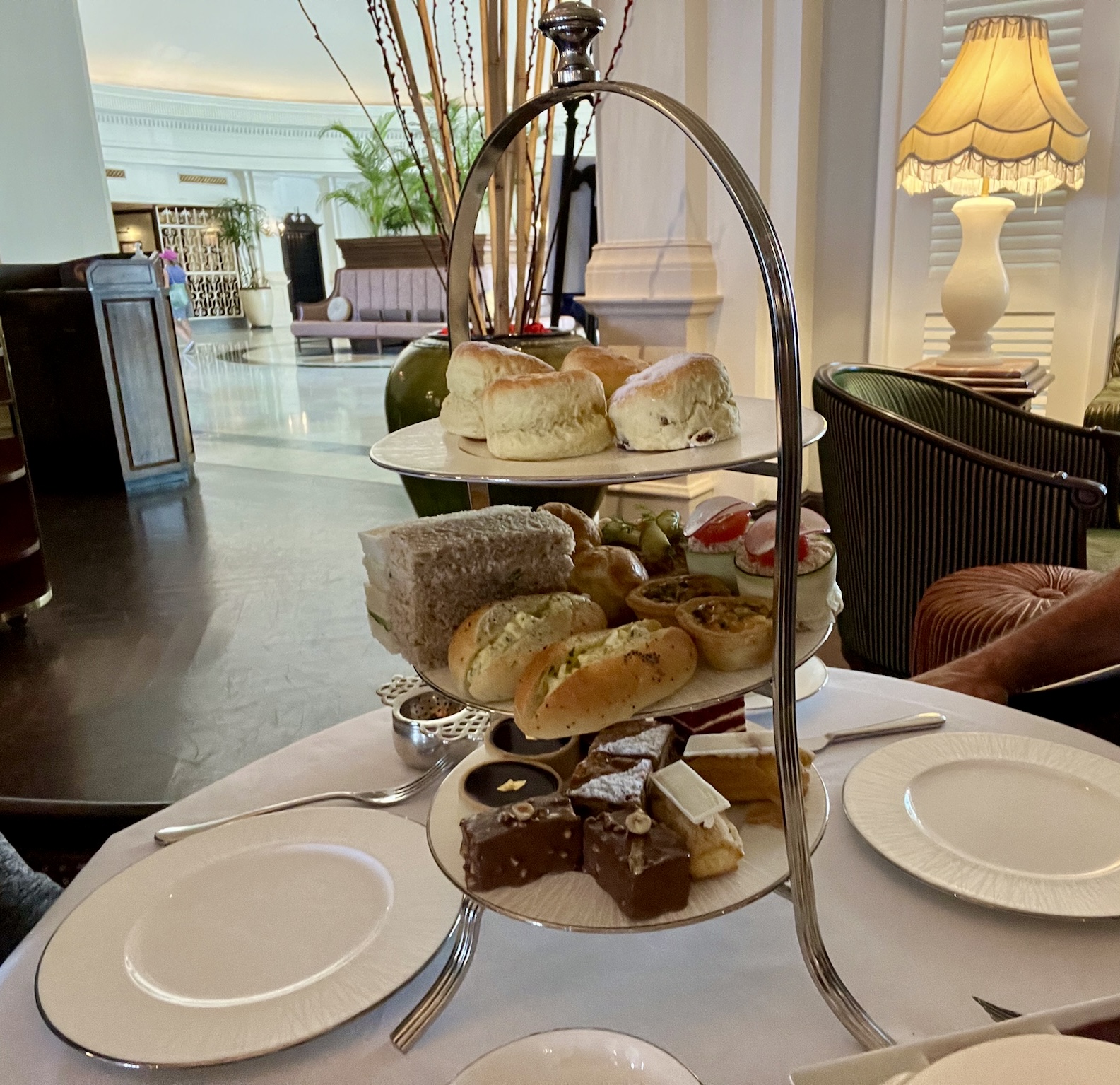
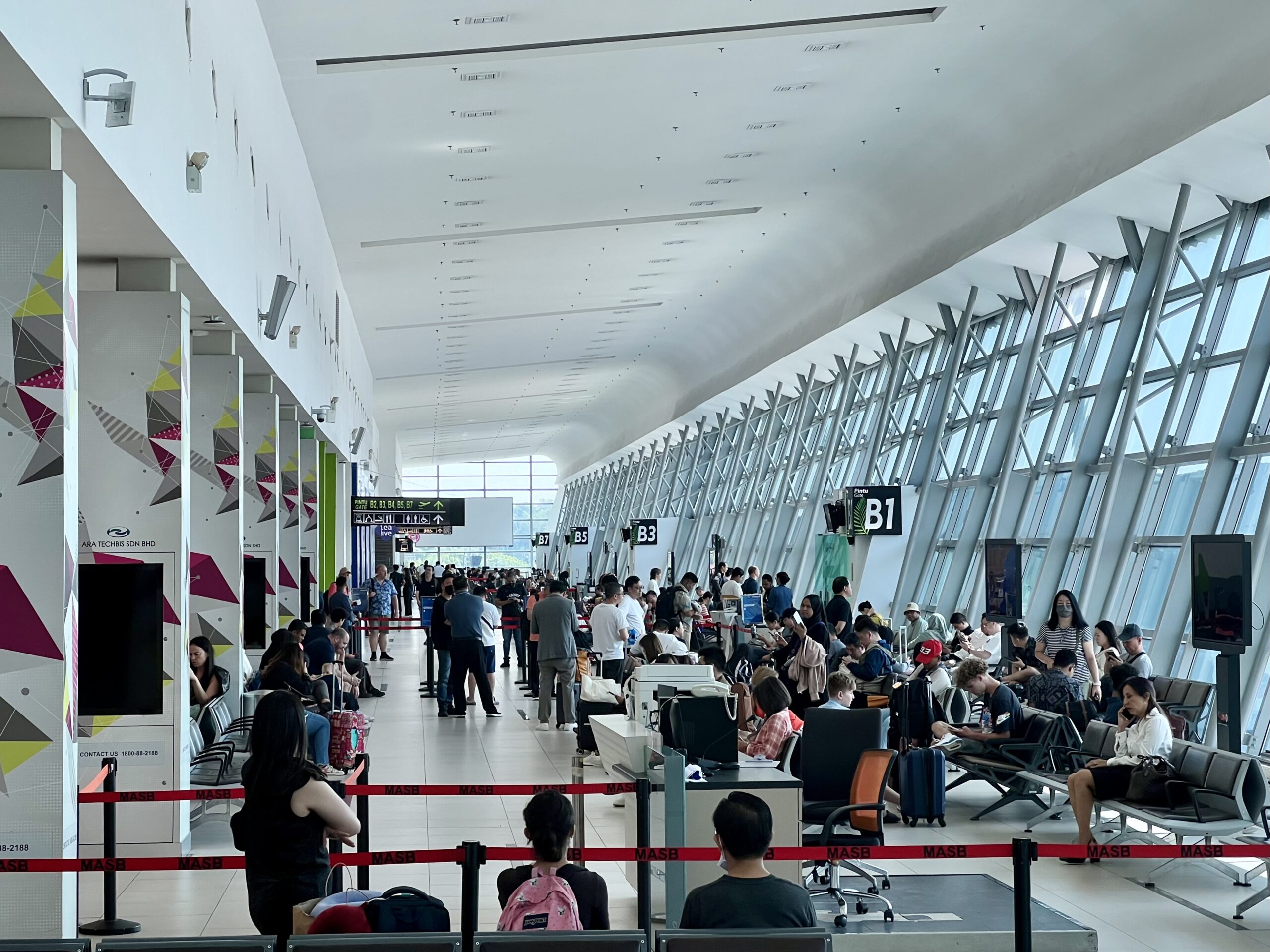
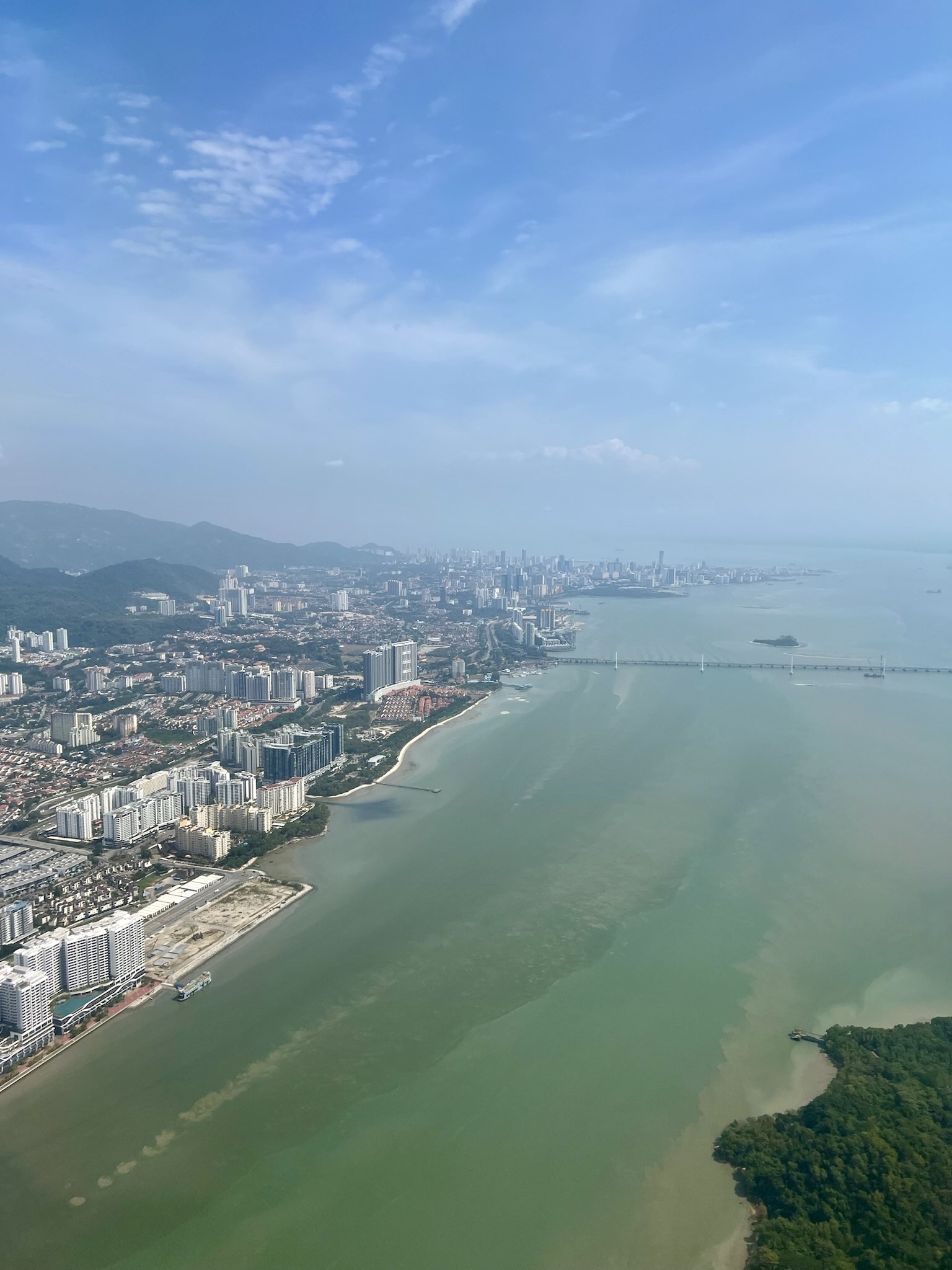
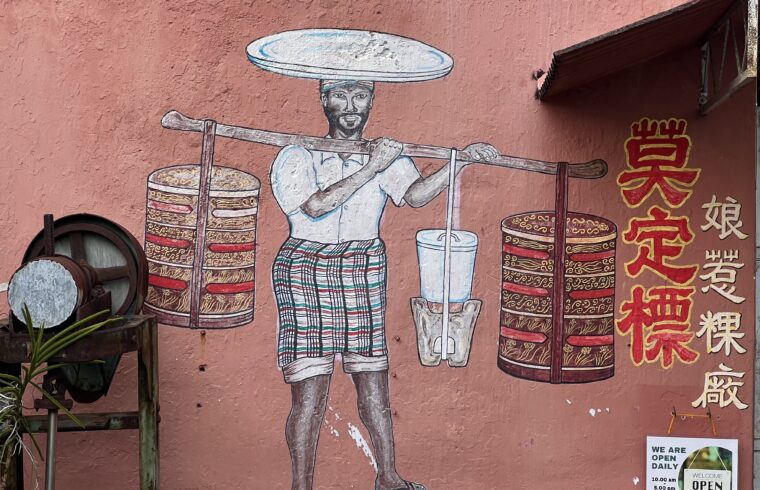
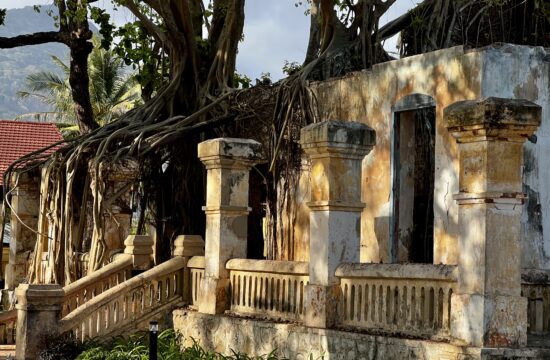
On our way to Penang, Malaysia, we flew Vietnam Airlines from Danang to Hanoi and then on to Kuala Lumpur. The food that Vietnam served us on our second flight gave both of us food poisoning. Airline food is supposed to be bad, but we’d prefer not to be poisoned. With the Hanoi connection, it was late afternoon by the time we made it to Kuala Lumpur. Lots of clouds made for a beautiful, if not bumpy, arrival.Due to the available flights, we over-nighted at the Sama Sama airport hotel. Never heard of Sama Sama, but it was nice. And we’re glad we took the break, as we both woke in the middle of the night sick and throwing up. We didn’t get much sleep.Fortunately, our morning flight on Malaysian Airlines to Penang was a short 40 minutes. We rebuffed their attempts to feed us. Our destination was George Town, on Penang Island. George Town was originally a French trading post and then later the first British settlement in Southeast Asia. Both the French and English used it as a transshipment port because of its strategic location in the Strait of Malacca. Logistics is still a major industry, along with electronics and optical manufacturing, with literally hundreds of multinational companies having a presence here. George Town is the second largest and second richest metropolitan area in Malaysia. Yet it is quaint, tropical, and a UNESCO heritage city. The airport was quiet when we arrived. Unlike our digestive systems. We stayed at the historic Eastern & Oriental Hotel, seaside in the heart of the heritage district. It was established in 1885 by the same three Sarkie brothers who went on to build the Raffles Hotel in Singapore. Keeping a 140 year old hotel at the top of its game is no easy feat. And the E&O does a fair job of it, thanks in no small part to a major restoration in 2019. We had a lovely view from our room out over the Penang Strait to the mainland in the distance. The hotel sits on the seaward edge of the UNESCO heritage district, a thriving community of almost 2,000 historic buildings, half tourist shops, half restaurants, and half local enterprises. (Above and below.)The many covered sidewalks and open drainage channels require one to pay at least some attention to where your feet get put. These three gentlemen were happy to talk to us about their love of old stuff. We loved their antique shop, though their collection seemed more picturesque than marketable. Buried on one of the streets, we found a laundry that would wash and fold our clothes for less than their replacement cost. It is owned and operated by an ill-tempered Chinese woman of indeterminate geriatricity, who seemed to want to end all her sentences with, “Are you retarded or something?” We immediately fell in love with her. We got her to crack a smile when we picked up our first load. She seemed vaguely tolerant of us after that. On our last trip, we took her some specially cured Chinese tea reputed to cure all ills.We also ran into a working metal shop on another block. If noise is any indicator, business is booming. We didn’t need any metalwork, though. Beginning in the 1700s, significant numbers of Chinese settled in George Town, as they did throughout SE Asia. They intermarried with the local Malay people and created a multicultural, multiethnic population with their own hybridized Hokkien language. The resulting Peranakan or Baba-Nonya people are probably the most Chinese non-Chinese on the planet. This is a 1898 Taoist temple, one of many such temples built to honor and preserve hereditary culture and practices. Immigrant families formed clans for mutual support. This is the Cheah Kongsi clan temple. Members of this temple trace their ancestry back to a single Fujian village in ChinaAt the entrance to the Chew Jetty is the Di Da Sheng Bao temple. Baosheng Dadi was a 10th century Taoist doctor who is now a god of medicine. Rumored to have given eye drops to an ailing dragon, a Chinese emperor declared him, Imperial Inspector at Heavenly Gate, Miracle Doctor of Compassion Relief, Great Taoist Immortal, and the Long-lived, Unbounded, Life Protection Emperor. If that doesn’t deify someone, nothing will.The good doctor on his alter inside the Di Da Sheng Bao temple.The Chew Jetty is one of six jetties constructed in the 1880s to service the cargo ships of the day. Promptly taken over by clans, they became both residences and centers of clan competition. The Chew Clan’s jetty is home to hundreds, many who now work tourists instead of fishing nets or cargo. Street art, often cultural and sometimes humorous, can be found on walls in nooks and cranny’s all over the old town, including on the jetties. Some of the art is oversized and quietly aging with the buildings. Others are easily missed if you’re not looking for them (above and below).And then there are those that are, frankly, impossible to miss.One of the old buildings in the district was the opulent home and office of one of the richest men in 1800s George Town. His mansion has been restored as the Pinang Peranakan Mansion. The rooms are opulently arranged as they would have been in their day (above and below).And they house an expansive collection of Peranakan antiques and artifacts. Including fine porcelains …Elaborately carved jade pieces …And an entire hall dedicated to jewelry.Though most of the streets are packed pretty tight, there are a few open areas, like this park. Prosaically named Municipal Fountain Park, it provided us with a bench in the shade and a bit of a breeze. The weather, 92° and equatorially humid, is almost tolerable, as long as you have shade, a breath of wind, and don’t move. Remove any one of the three and you’re done for. Not far from the Eastern & Oriental Hotel and only a stones throw from the sea is the Old Protestant Cemetery. It was created in a grove of plumeria trees in 1786, the year that the British settlement of George Town was founded. Some of the old plumeria trees still stand, hugely tall and ancient with broad, gnarled trunks. The cemetery’s most famous resident is Francis Light, the founder of the George Town settlement. He died of malaria only eight years later at age 54 and was interred here. So many who are buried here died young, before reaching 30 years old. Our need of air conditioning made our tradition of visiting local shopping centers doubly appealing. We took a taxi to Gurney Plaza. It’s a trendy mall at the end of coastal Gurney Drive. The temperature rose a degree or so with each level, so we were glad that the food hall was in the basement. On display on the main floor was a Great Wall Motors’ Ora 07 Lightening Cat EV. Stylish, fast, and advertised to have a 500 mile range. Under USD $40,000, including battery. If it weren’t Chinese, we’d have bought one to take home. For lunch we ate dim sum.Uber is defunct in much of SE Asia, so we used Grab to get us up a nearby valley to the Penang Botanic Gardens. If there’s one thing that will get the photographer out into the heat, it’s a bunch of plants. Admittedly, there are some pretty spots (above and below).And they have cannonball trees. The different areas had a lot of variety. From a deeply shaded path through an aroid garden …To a mesh-enclosed fleurarium, whatever that is. The only disappointment was the Giant Amazon Waterlilies that the photographer so wanted to see. They had a few, but they were defective. So the blogger tried to cheer her up by photoshopping one of her pictures. We parked ourselves for a bit where we could get a little wind and watch the only active wildlife: Homo sapiens. Fortunately, a wedding couple was downslope, he in his tux and she in her layers of meringue. They were being endlessly posed by a significantly loud, overly dramatic, rather round, orange-haired South Korean wedding photographer. We wondered whether the heat ripples surrounding them would show up in their pictures. There were also a few groups of macaques about (above and below). The blogger cautiously ate an ice cream Drumstick under the watchful eye of one of them. On one day, we hired a car and driver to get us to a couple of places we weren’t about to walk to. We only needed a driver who could speak a little English. What we got was a chatty English speaker who could drive a little. Our first destination was the Kek Lok Si Temple above the town of Ayer Itam. As it turned out, our driver grew up in the small town. So we got a breakneck stroll down his memory lane on the way.Kek Lok Si Temple itself is on the slopes of Penang Hill. It’s actually a temple complex that has been growing in size and importance since the late 1800s and is now an important Buddhist pilgrimage center. The tall white spire on the right is the Pagoda of Rama VI, of Thailand, called the Pagoda of 10,000 Buddhas, because that’s pretty much what’s in it. At the lower temple is the Turtle Liberation Pond. We were told people drop turtles off here for good luck and long life. Turtles can be long lived, so the hope is that will rub off on the liberator. Ironically, there’s a big red sign over the pond saying, “Strictly no liberation of tortoises into the pond.” Nevertheless, they try to sell you vegetables to feed them, likely to help defray the cost of keeping all the little buggers alive.At the upper temple, we got a nice view out over the valley and to George Town beyond. The main tourist attraction seems to be the huge new bronze goddess of mercy, a popular deity in Chinese Buddhism.Close by the goddess of mercy statue is a wishing temple. Mahayana Buddhism, Theravada Buddhism, and traditional Chinese deities live happily side by side in the temple complex.At the wishing temple, you can buy a color-coded wish ribbon for one ringgit (10¢) and hang it on a peg tree.After the temple, we went to the Penang Hill Funicular station to catch the funicular train to the English hill station at the top.Now a popular lookout point, the hill station has served many purposes over the years. Originally a strawberry garden planted by the founder of George Town, later the East India Company built bungalows, like these peeking through the trees, so their employees could get respite from the heat and malaria. Later still, tunnels were dug during WWII to store ammunition. The view is now what brings most visitors to Penang Hill. Gurney Bay is in the middle distance on the left. Historic George Town, where we’re staying, is in the middle distance on the right, where the straight is at its narrowest. On the back side of the hill is a well groomed Habitat Walk. It’s kind of like the arboretum, but without the ice cream Drumsticks. One branch of trails has a canopy walk over a rainforest valley.The trails also traverse a peak that features a 360-degree sky walk.The view from the top looks out to the many peaks of the Penang Hills, beyond which is Batu Ferringhi, the popular beach destination along the north shore of the island. Though food is one of the key reasons we like to visit Malaysia, our recovering digestive systems kept us from diving right in. So we tried to eat milder foods, like this avocado and tofu salad and cold noodles with soba sauce at Kirishima’s. We also had dinner at Chu Bee’s Home Cuisine. Home cooking, if your home is Taiwan. The Taiwaneses woman owner and cook was a bit sour, but her food was very good. And the monk fruit and winter melon juice she makes is unique, cold, and perfect on a humid evening. Here we’re having kocha chicken and grilled eggplant.When our stomachs were back to normal, we celebrated by visiting the New World Park Food City hawker center.We ordered dishes from four different stalls. Curry chicken, book choy fried rice, chicken Hokkien mee, and ice kacang. Too much food, but we gave it all we got. At the hotel, we couldn’t resist ordering the special tiffen lunch at the Palm Court restaurant, and not just because it’s served in air conditioning. We had lamb varuval and chicken tikka masala. Disappointingly, the tiffins were not delivered by motorbike, and they got our tiffin orders backward, something a true tiffin wala would never do. We ate it all anyway.One humid evening, we walked down Love Lane to a food street. We sat outside at the Lagenda House, and had an excellent dinner under a big fan. We ate belalang chicken rendang and ikan bakar pancha delima (pomegranate grilled sea bassj. On our last afternoon we sat for the hotel’s afternoon tea. This photo ignores the tea cups for good reason: we went for the pastry stand. When it was time to go, we left George Town by the usual route.Ciao ciao, Penang. Off to Kuala Lumpur.