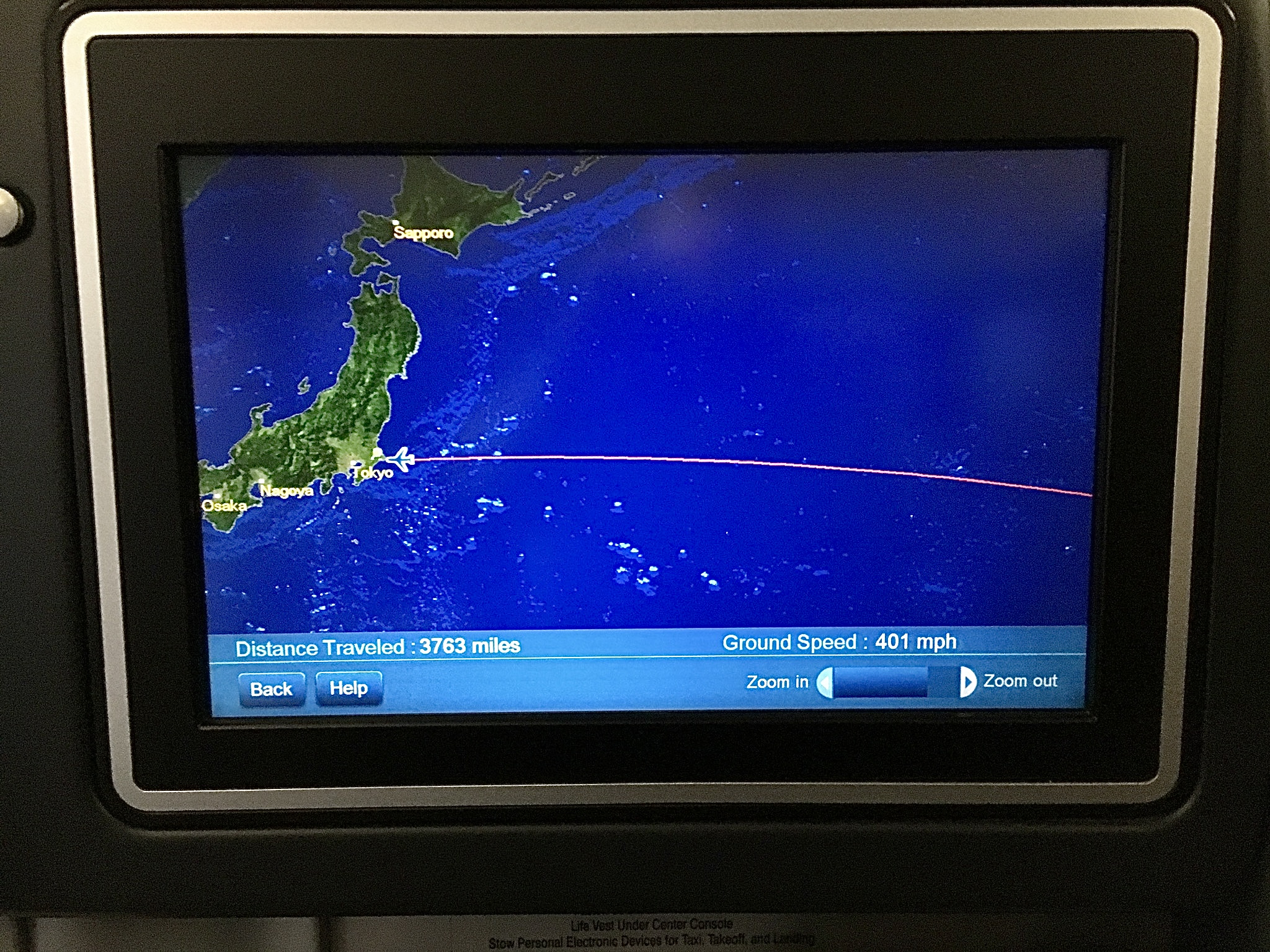
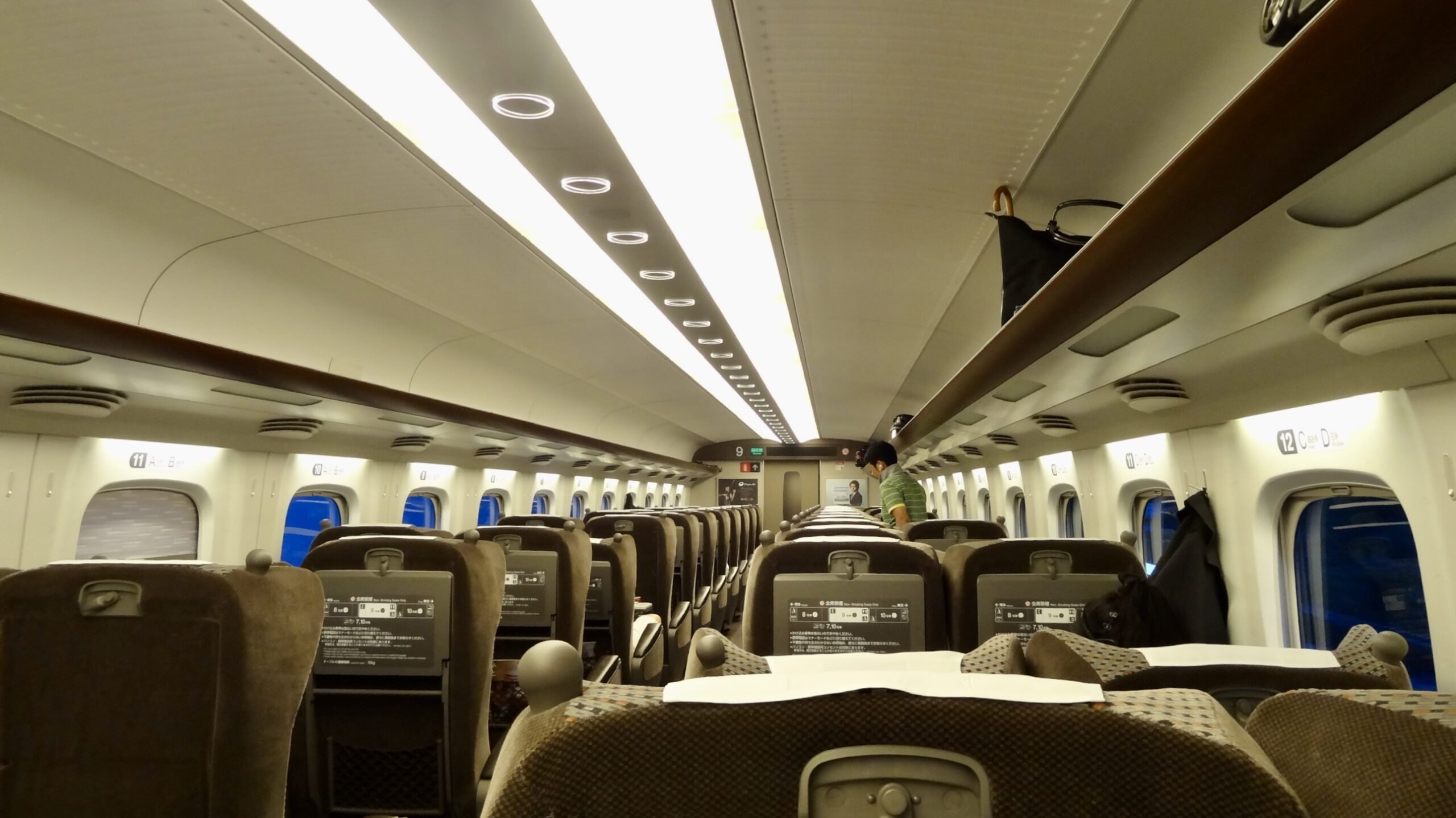
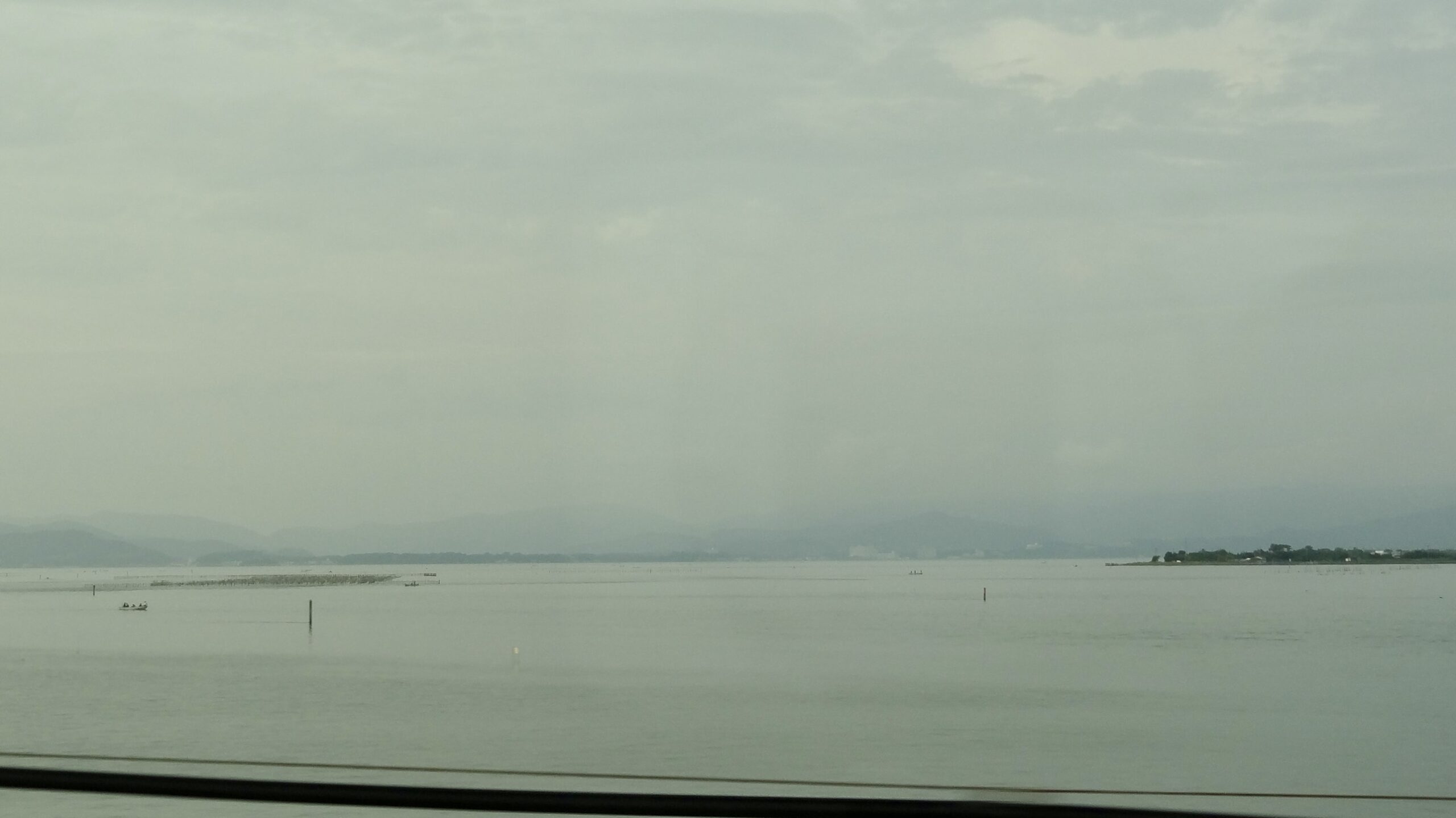
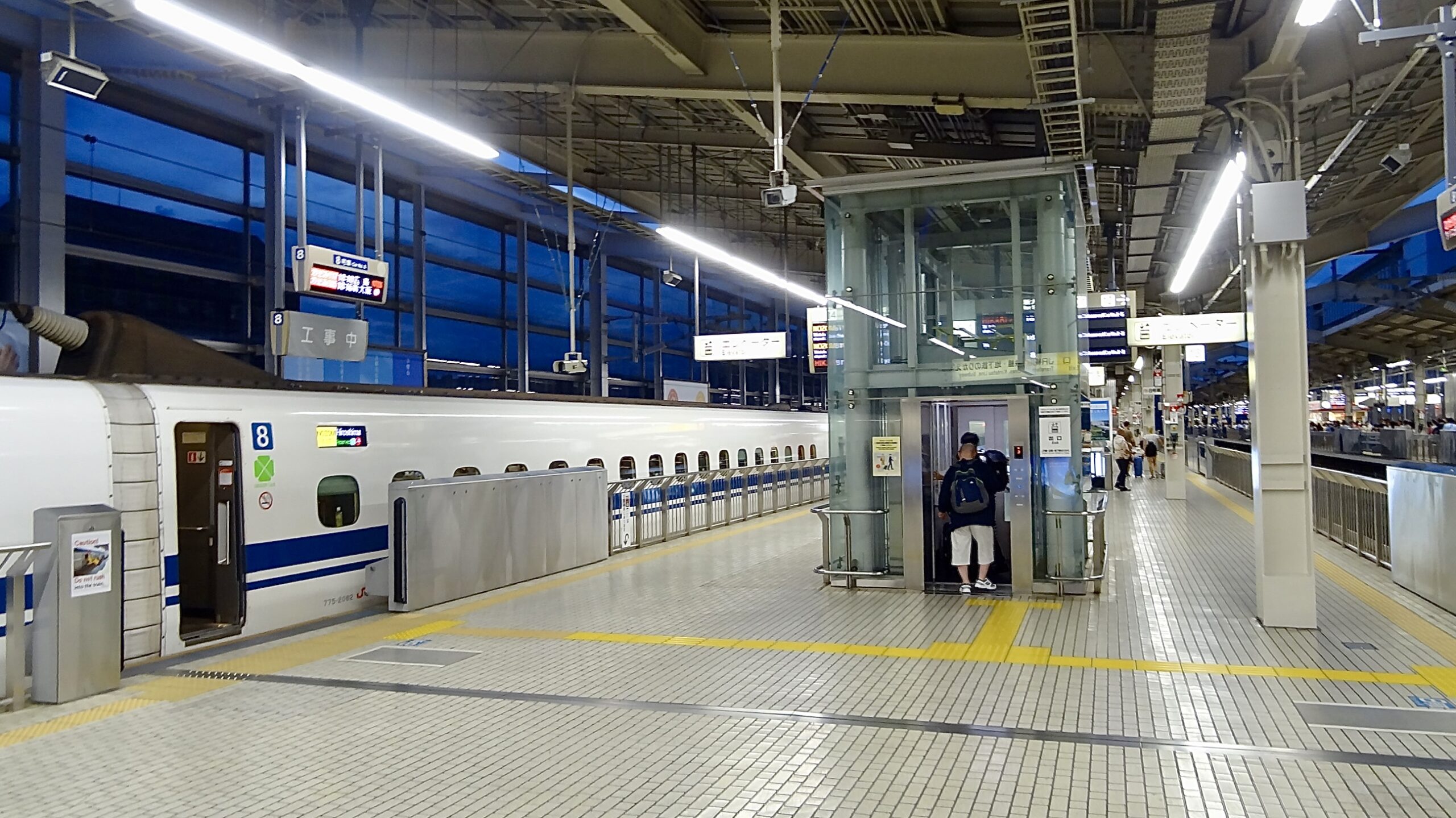
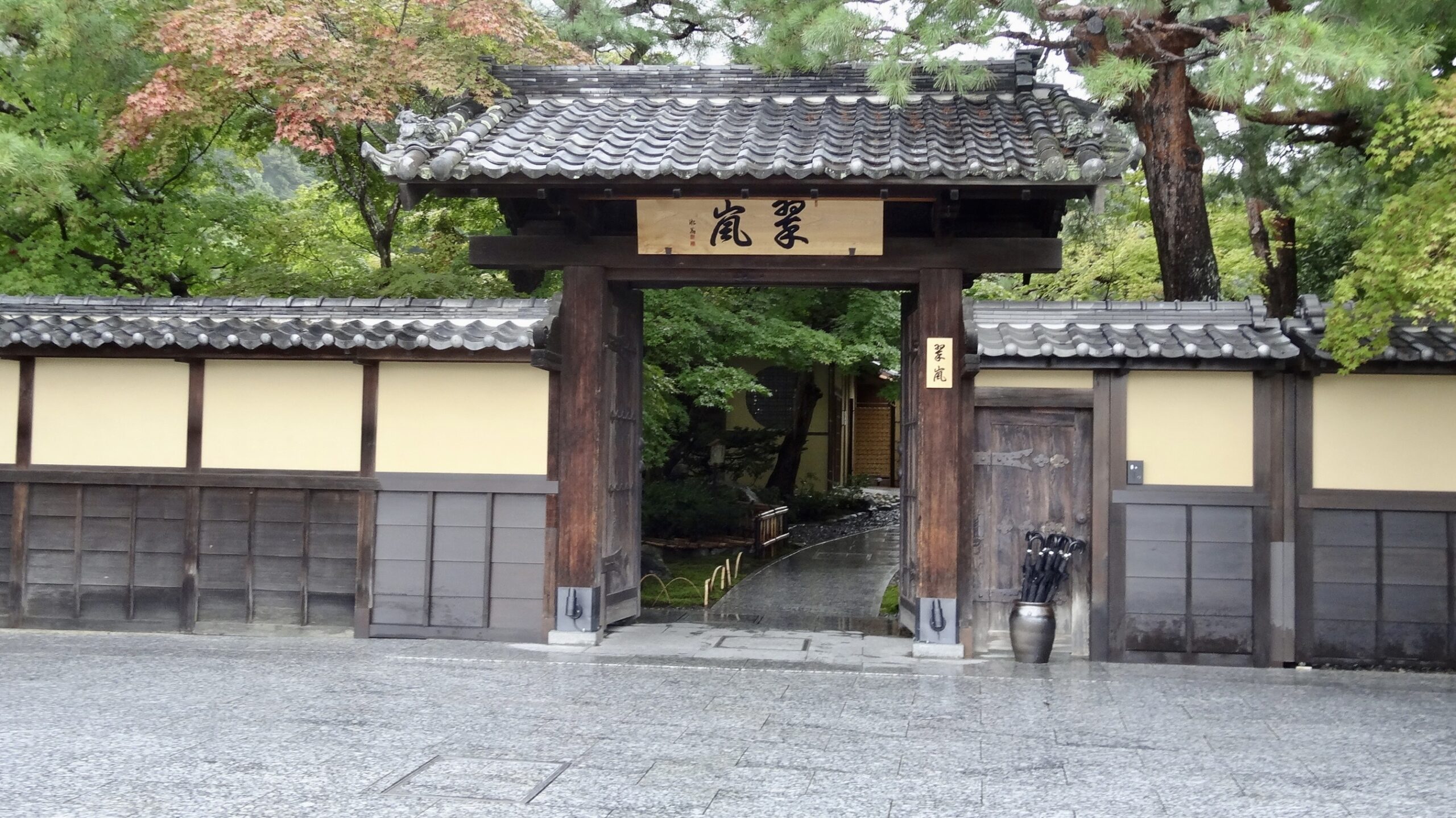
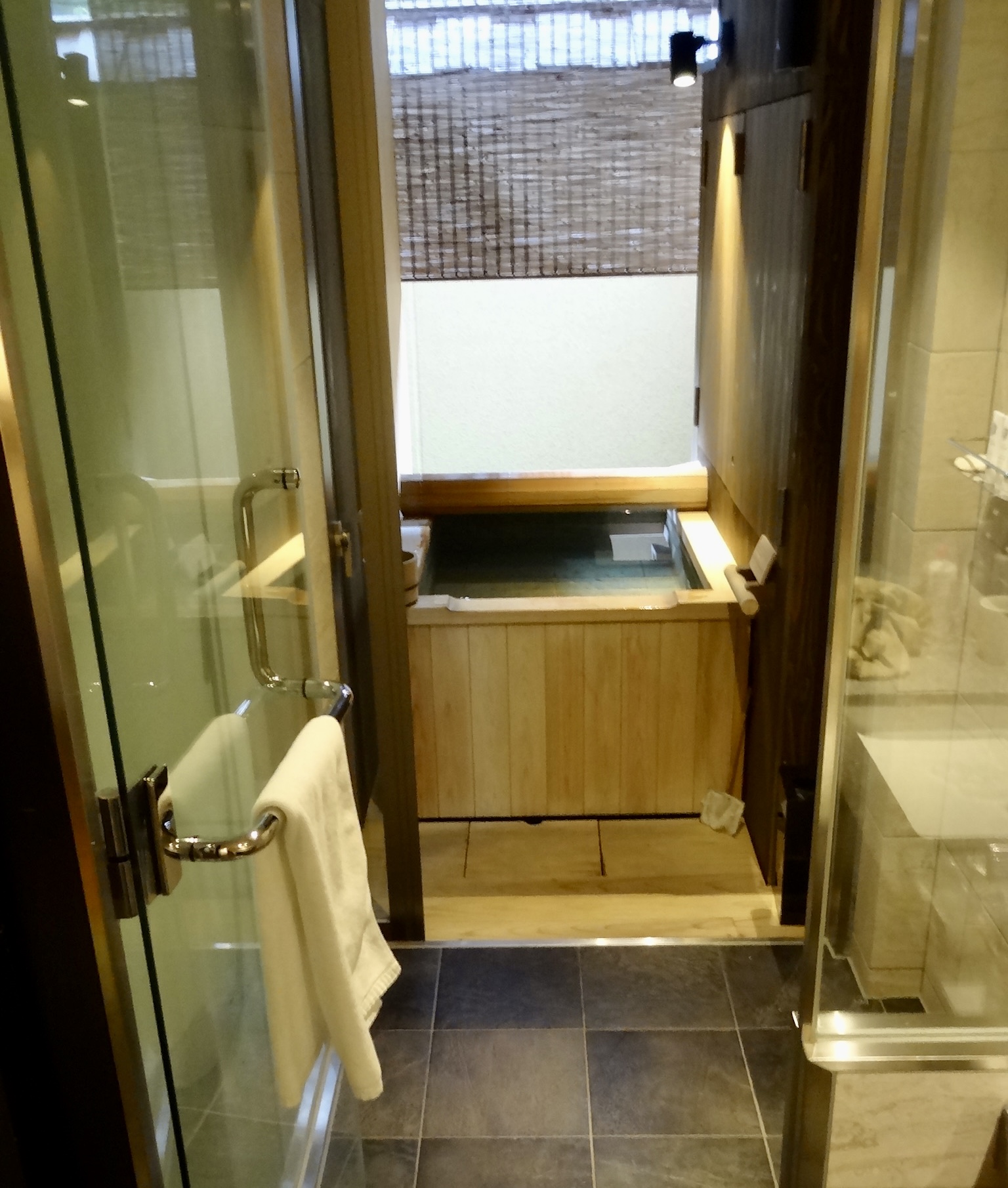
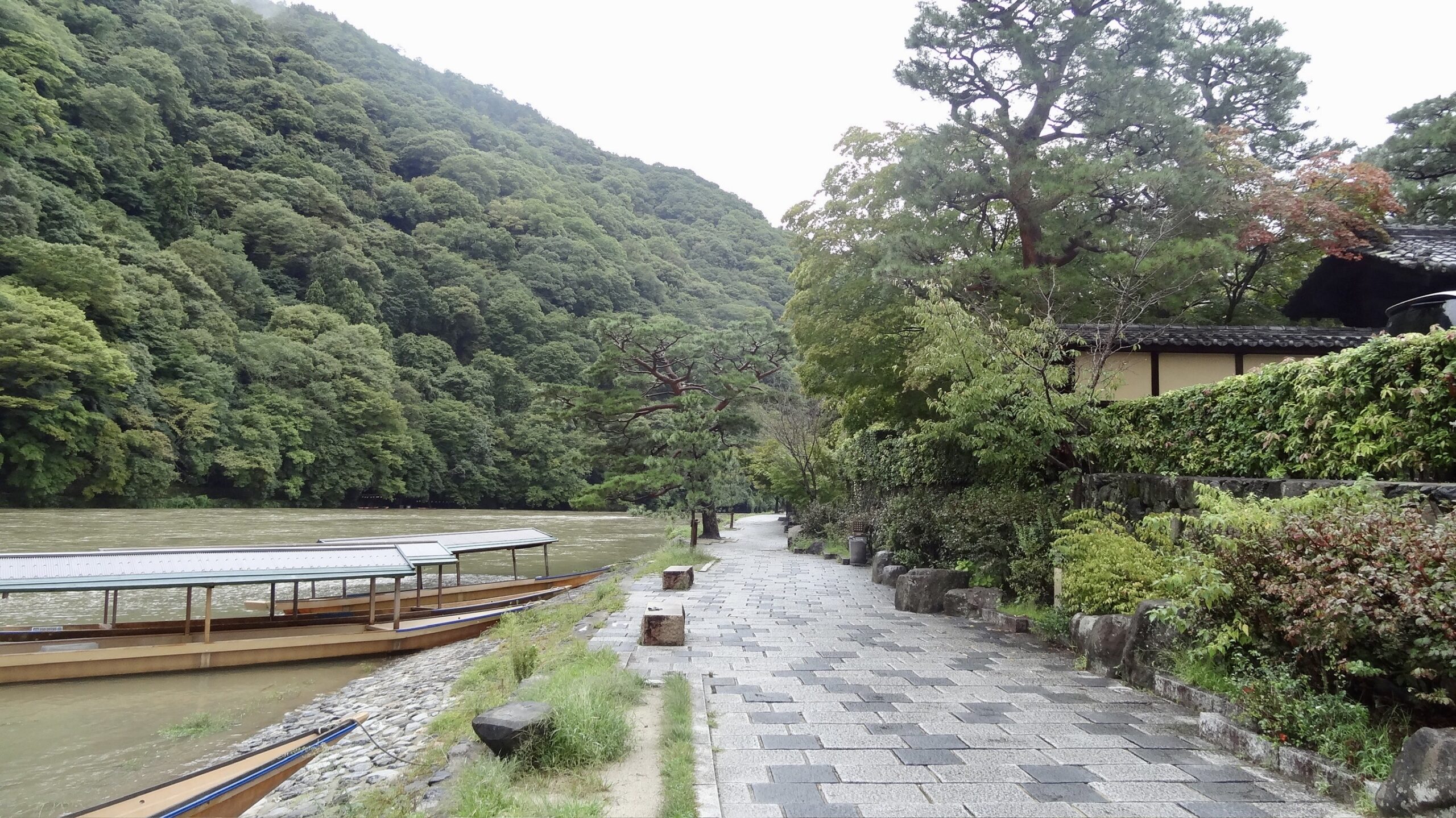
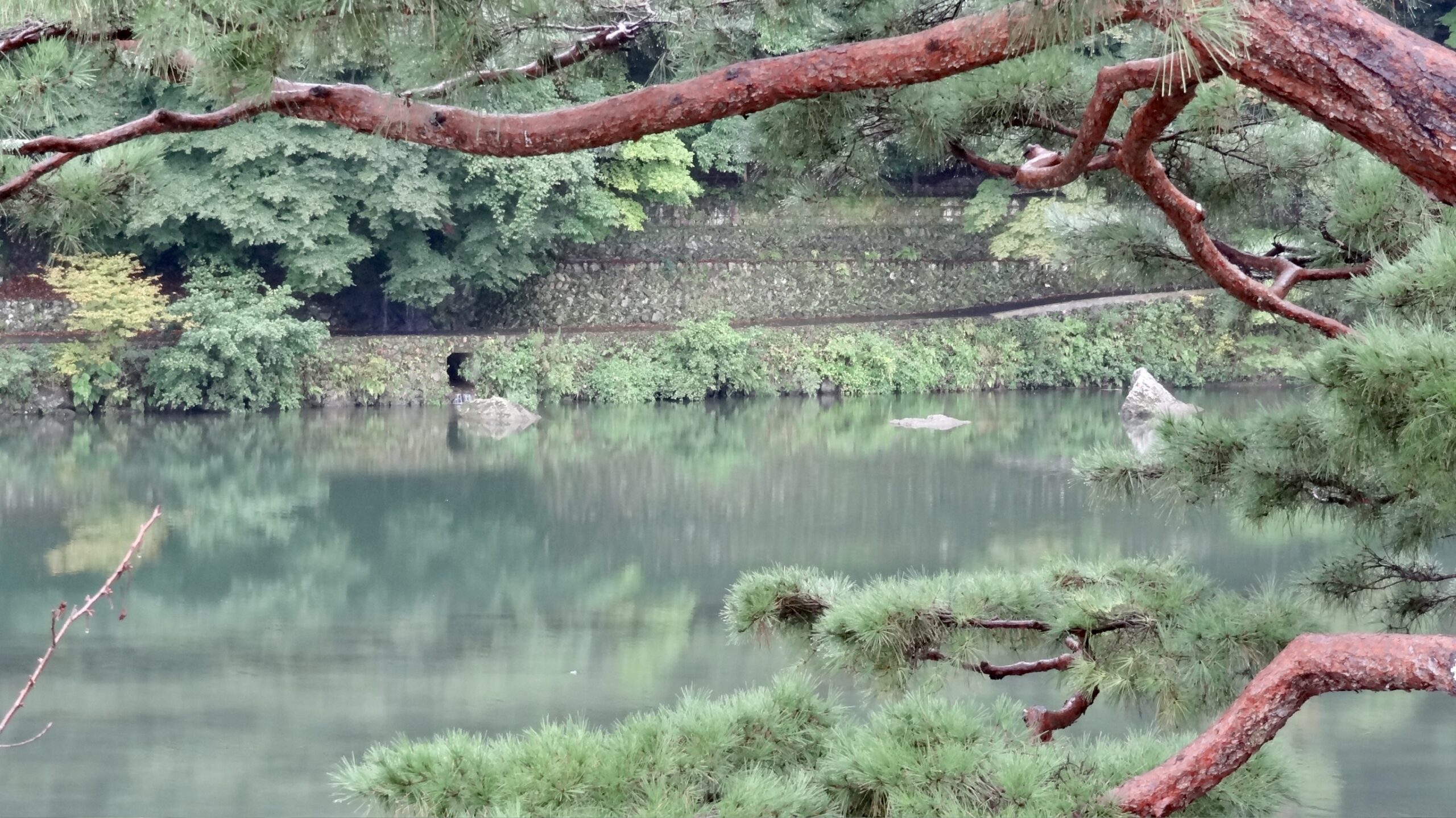
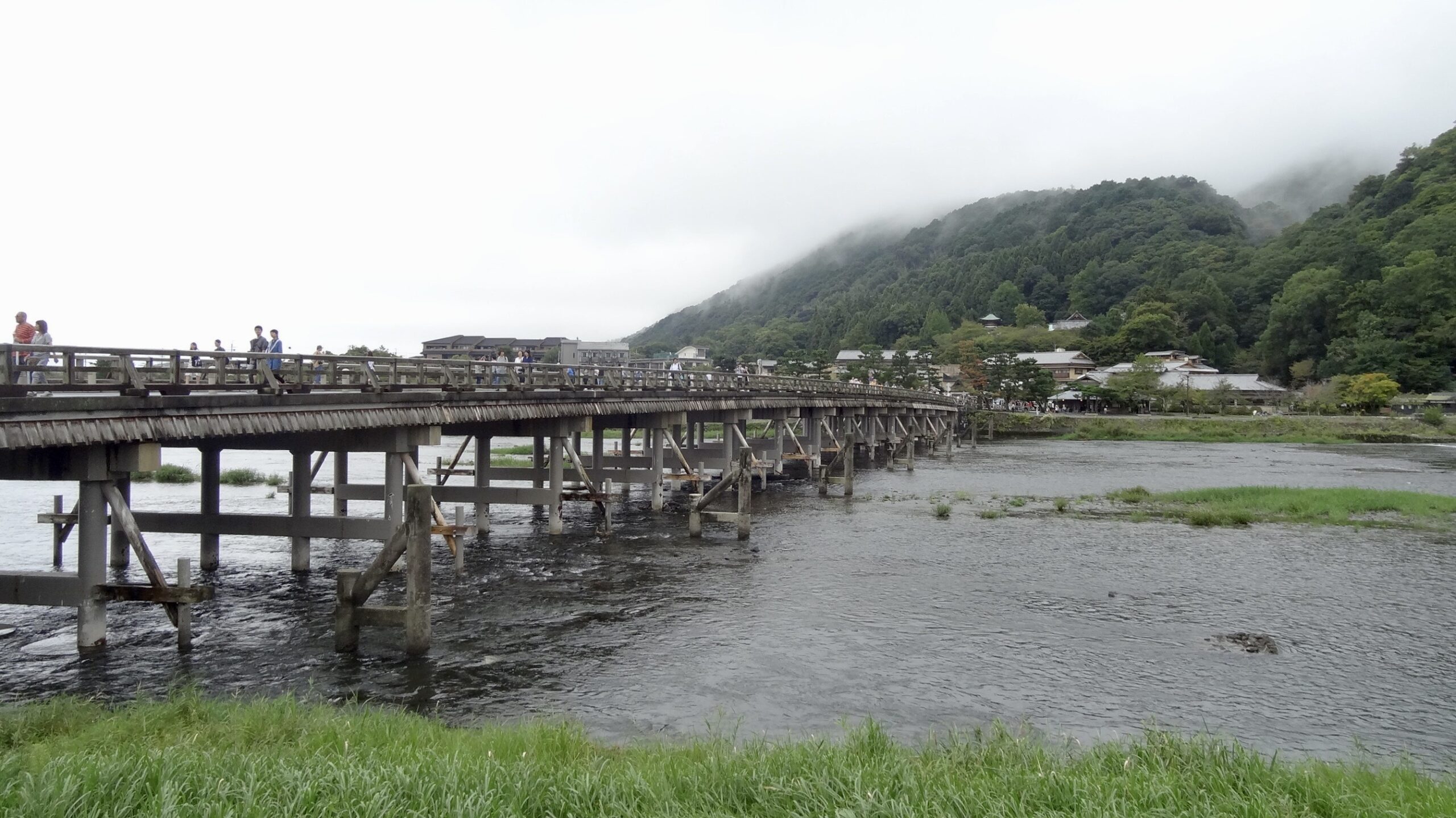
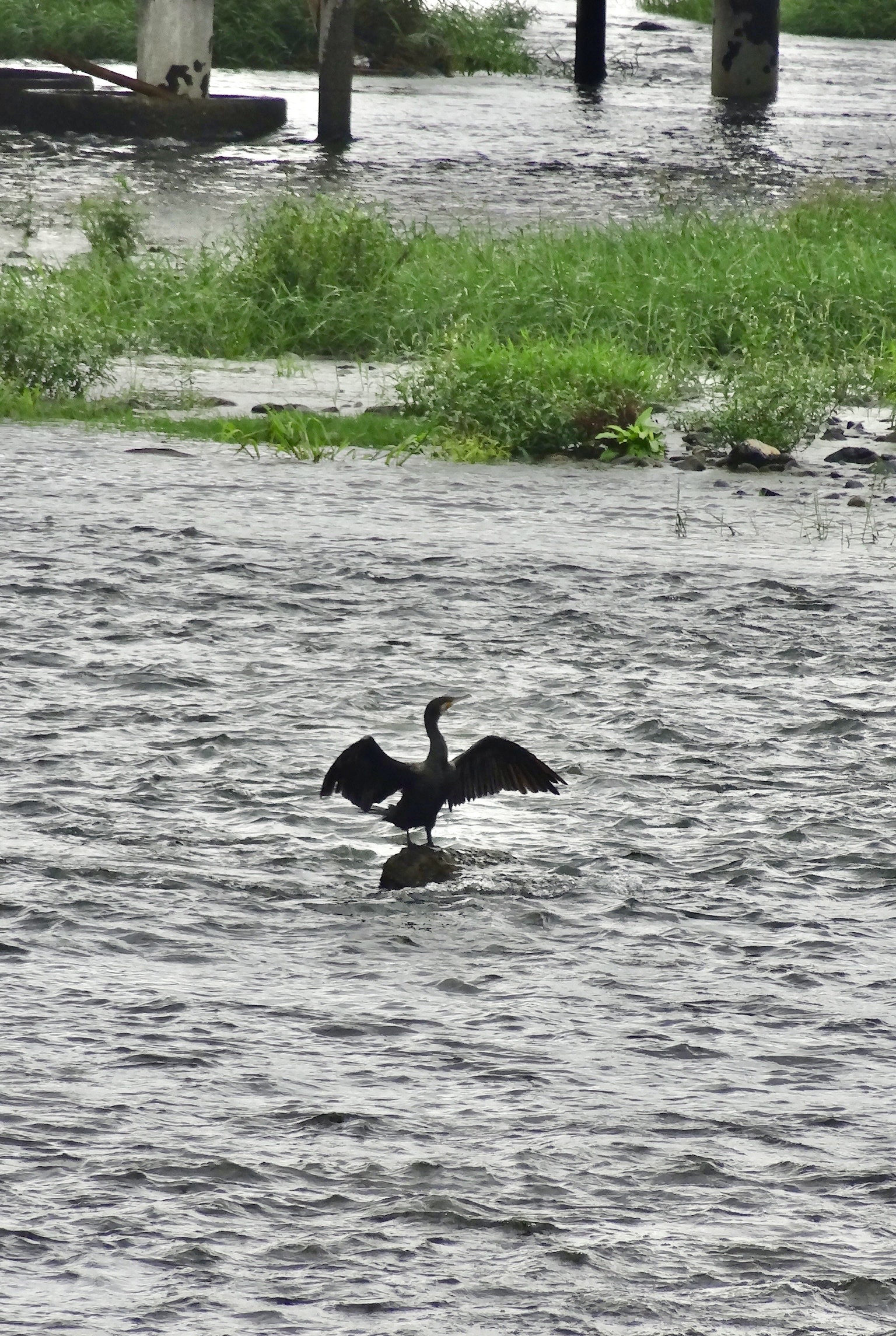
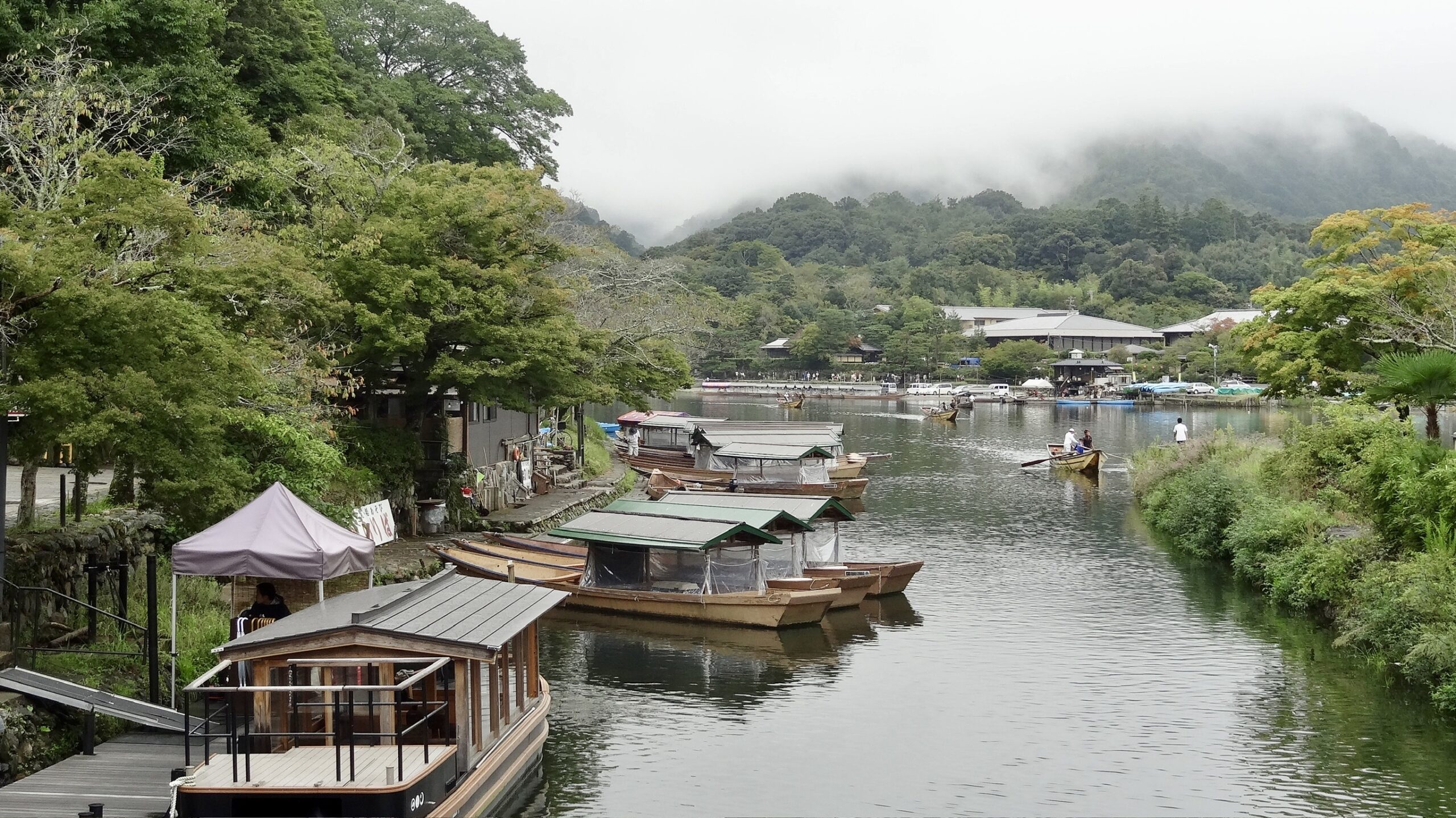
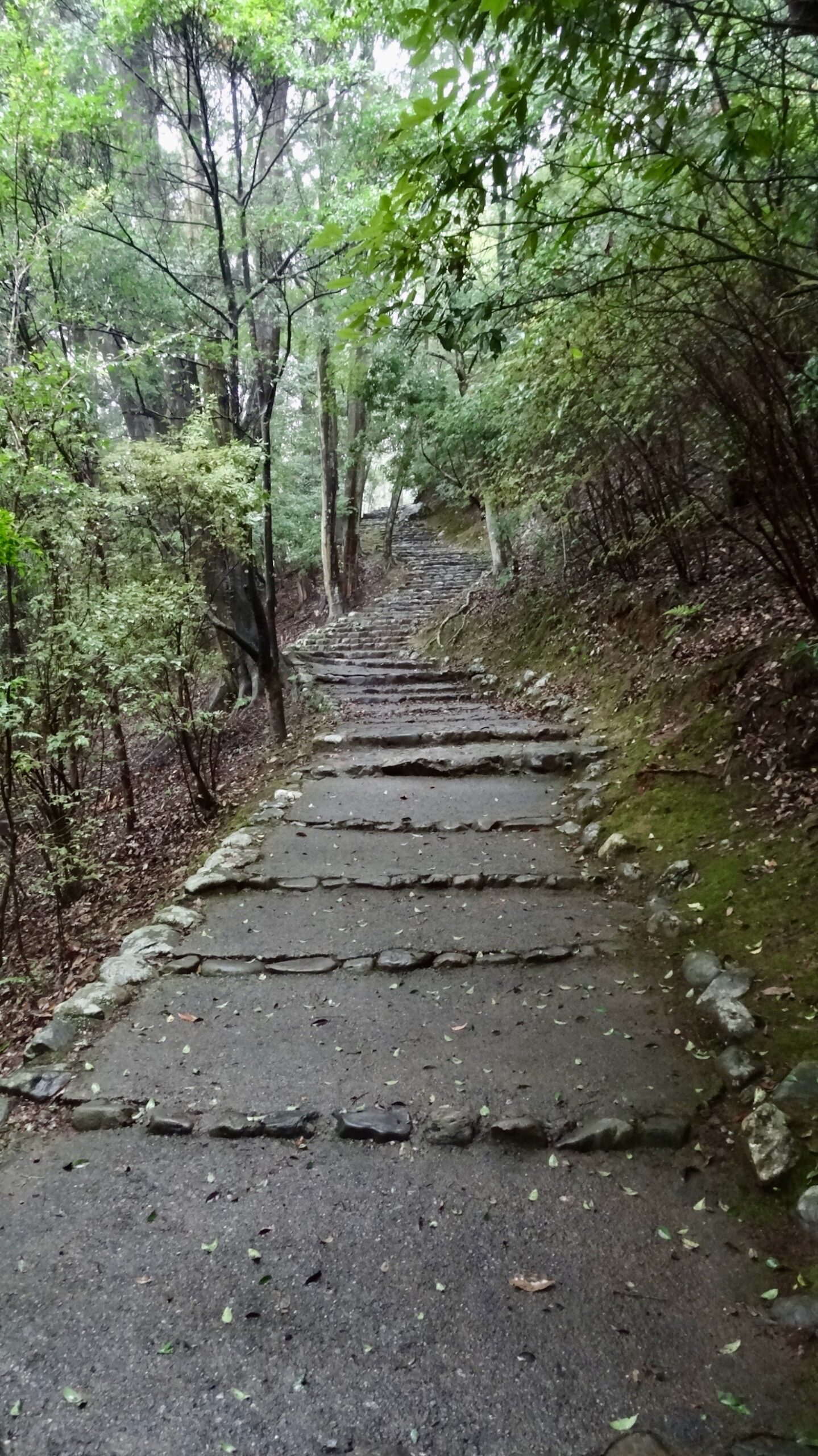
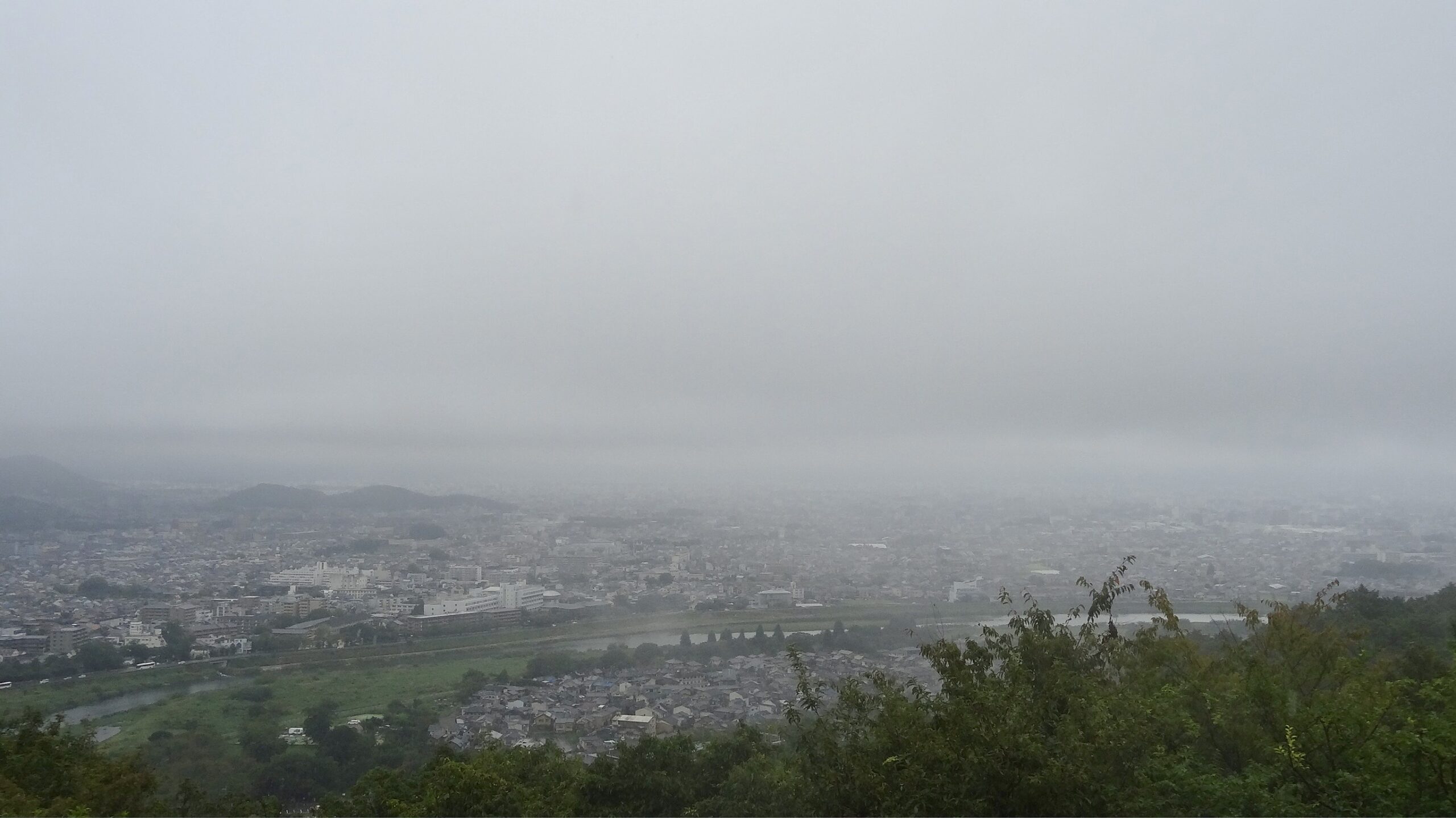
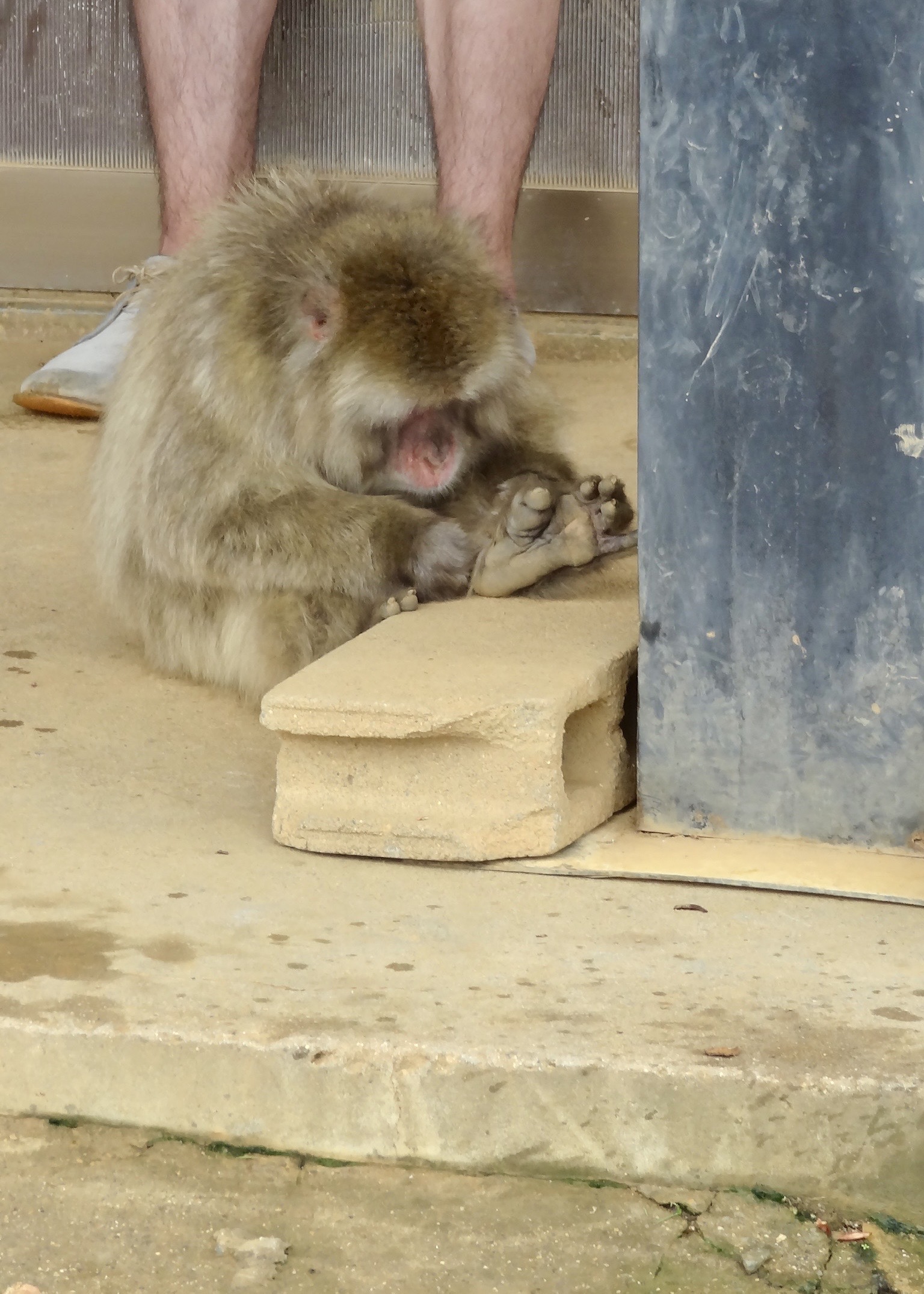
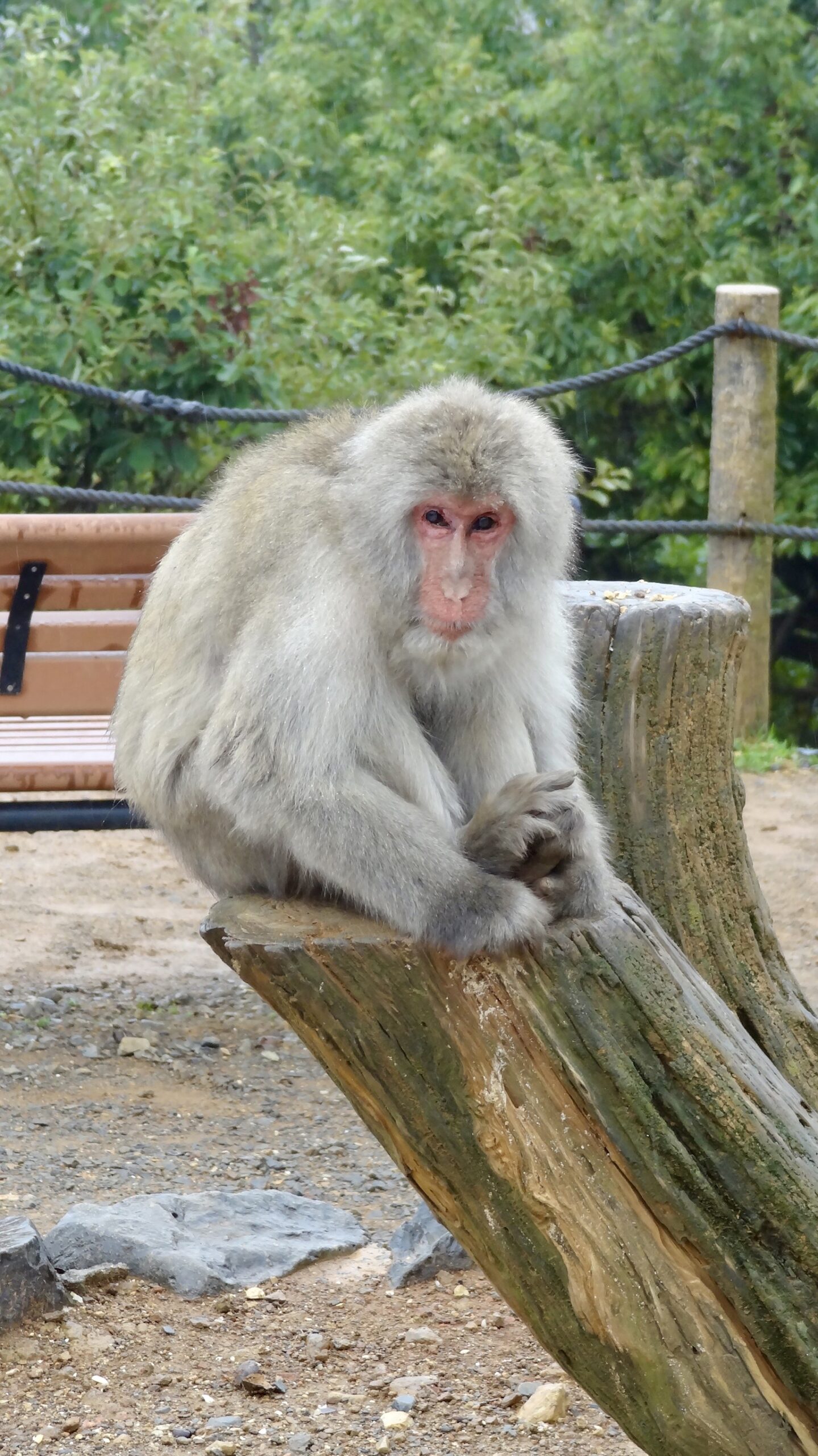
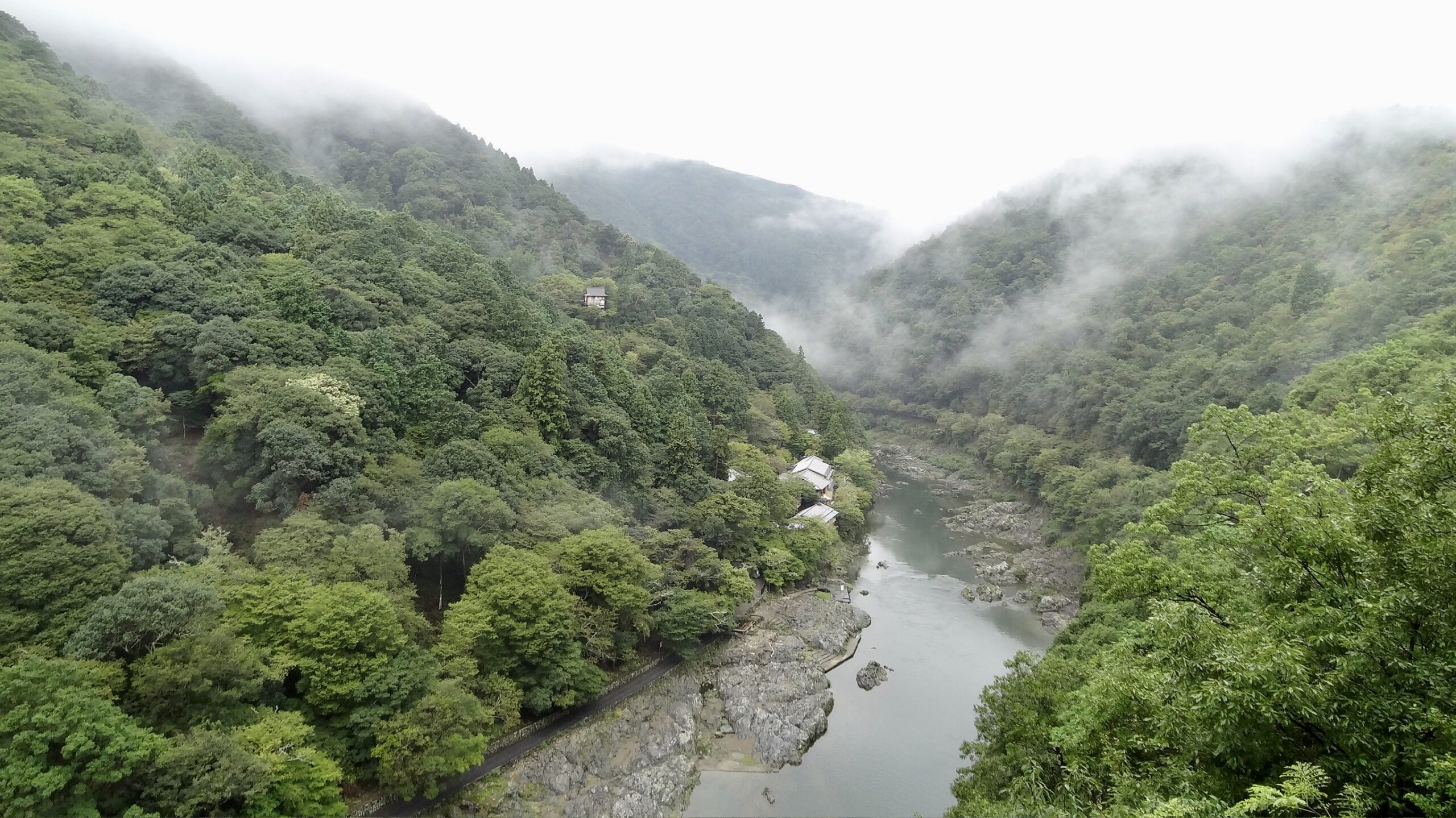
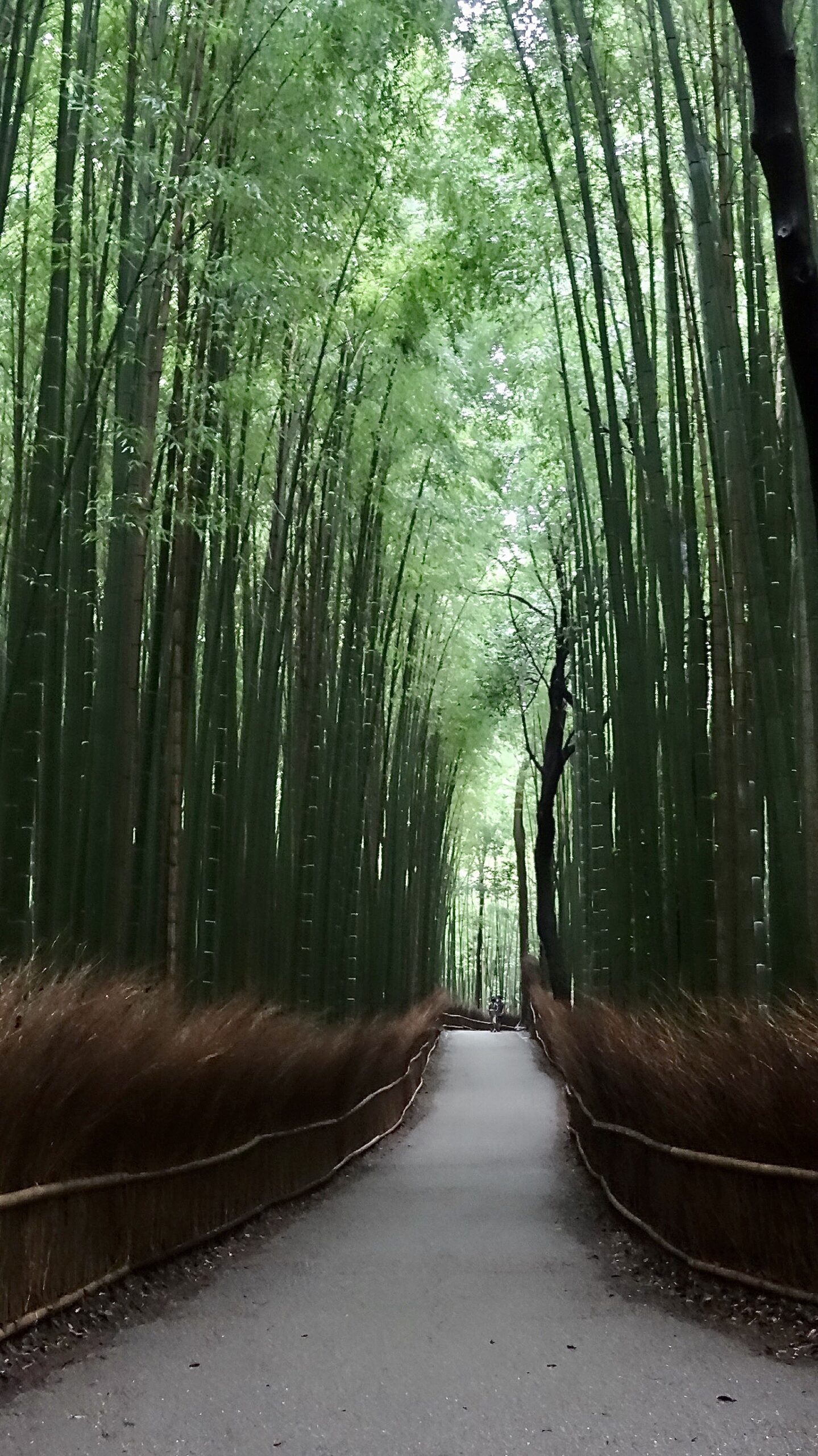
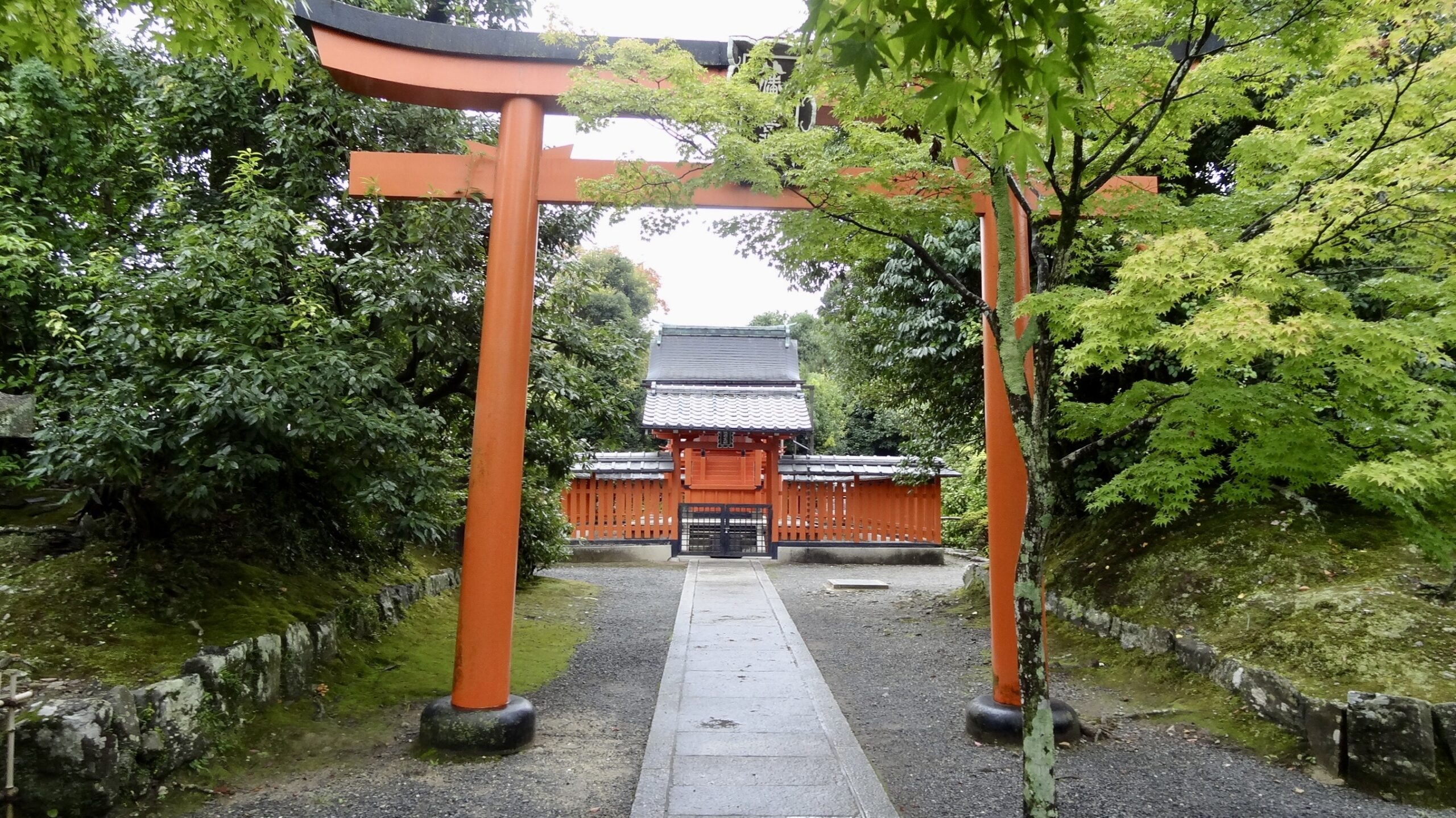
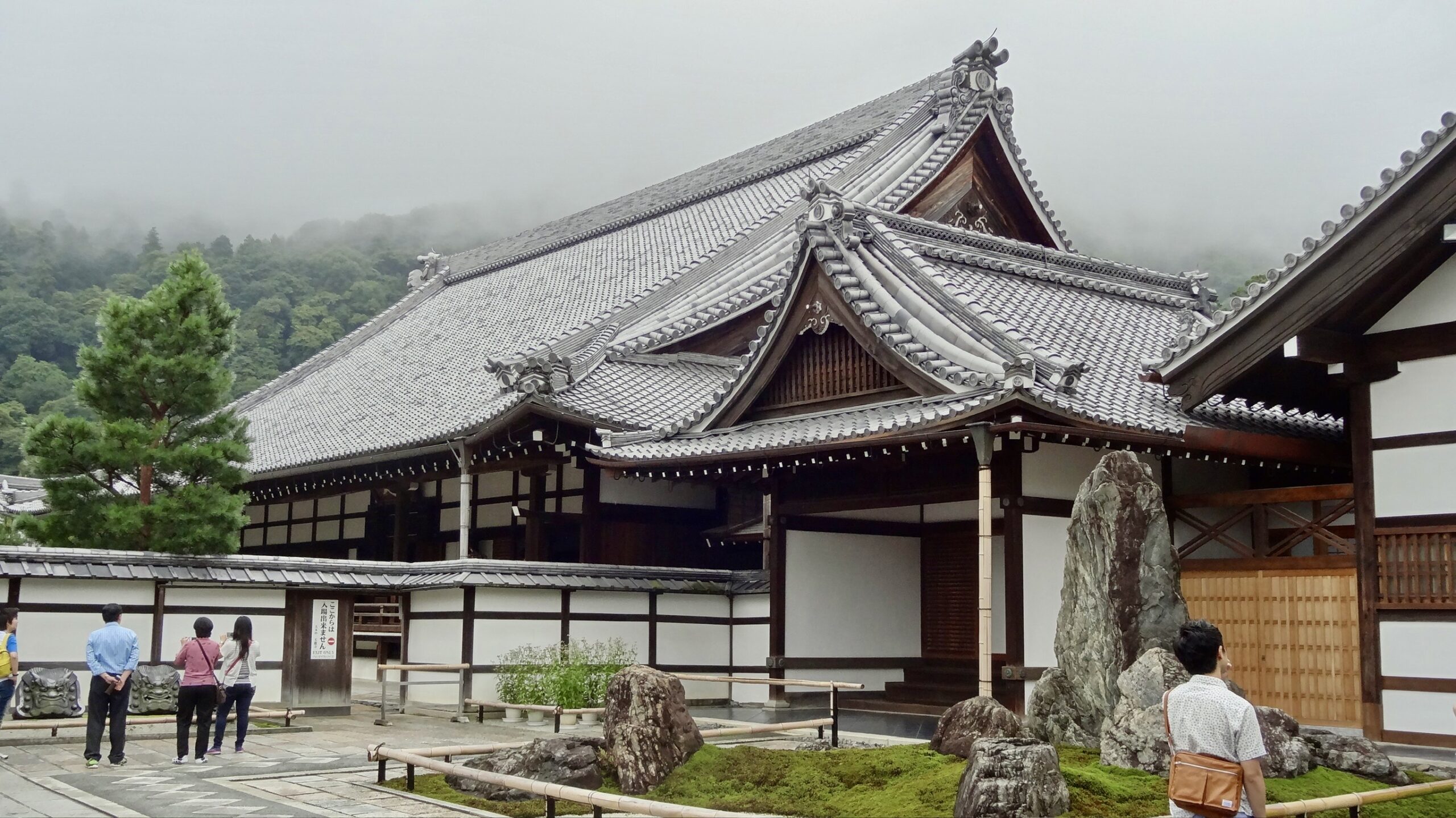
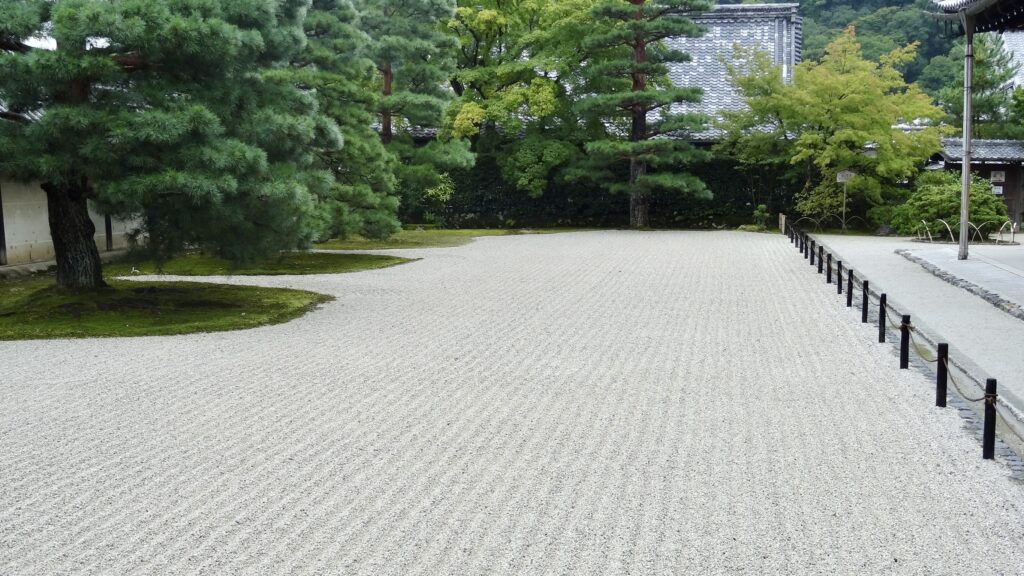
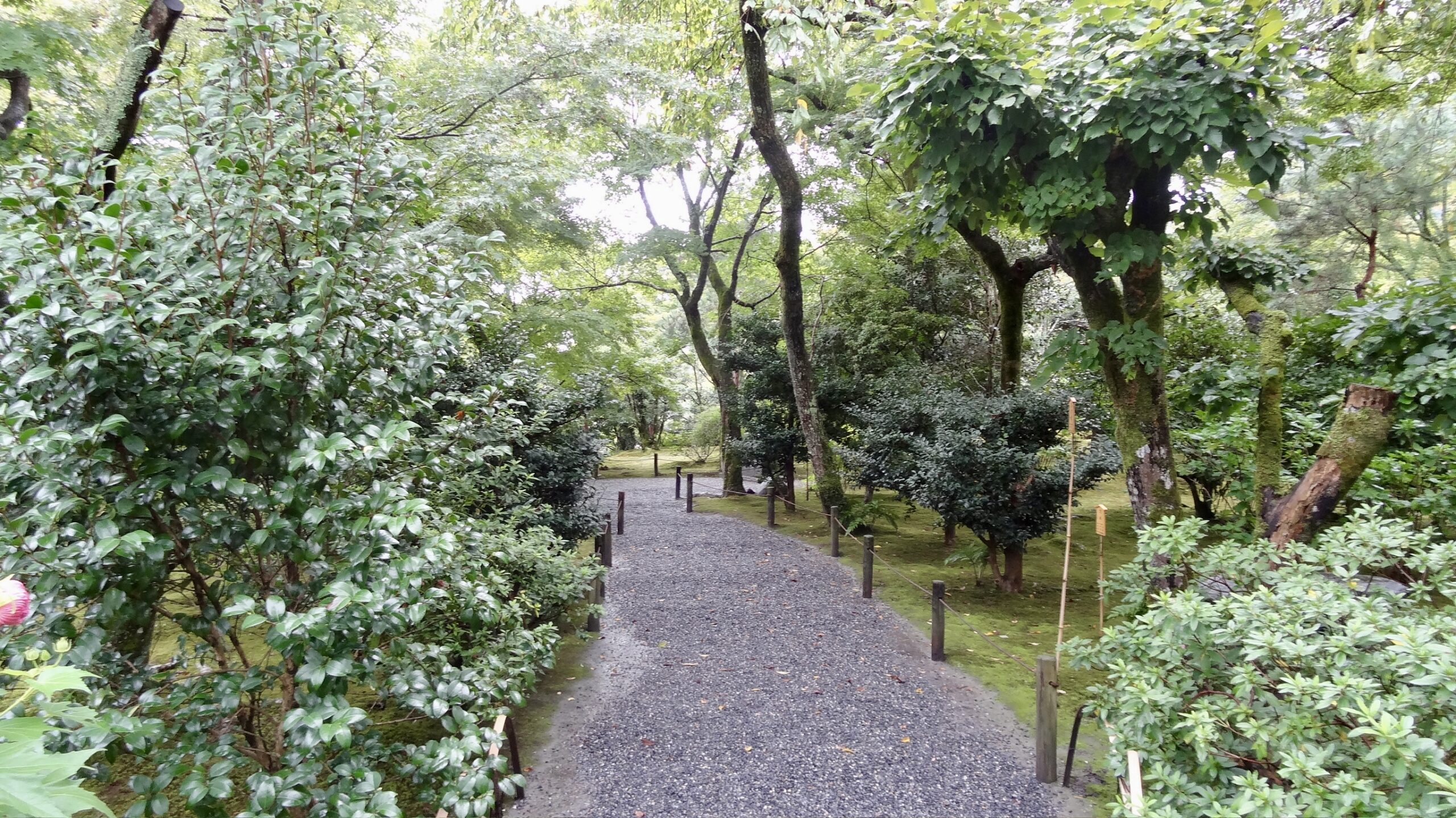
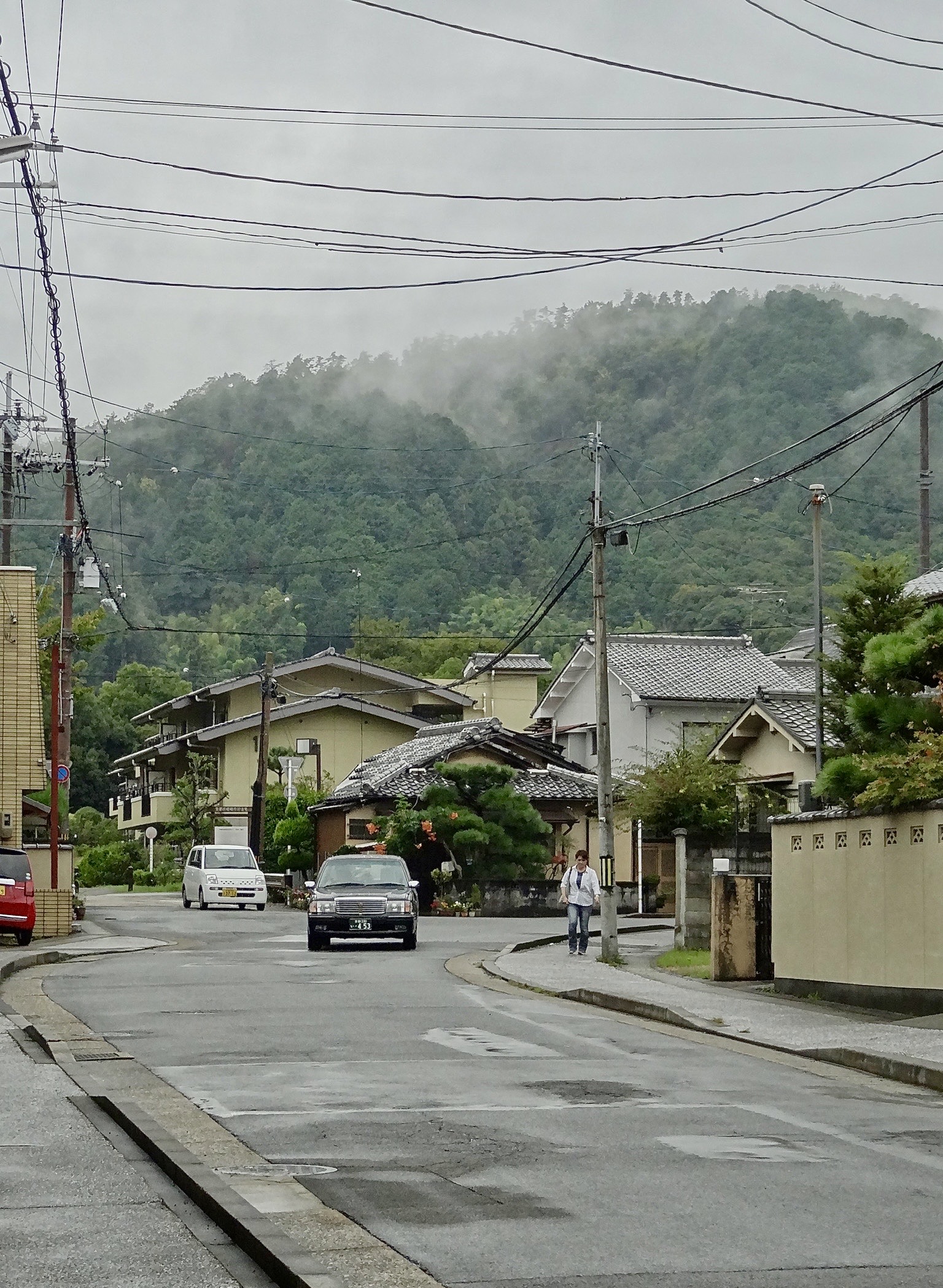
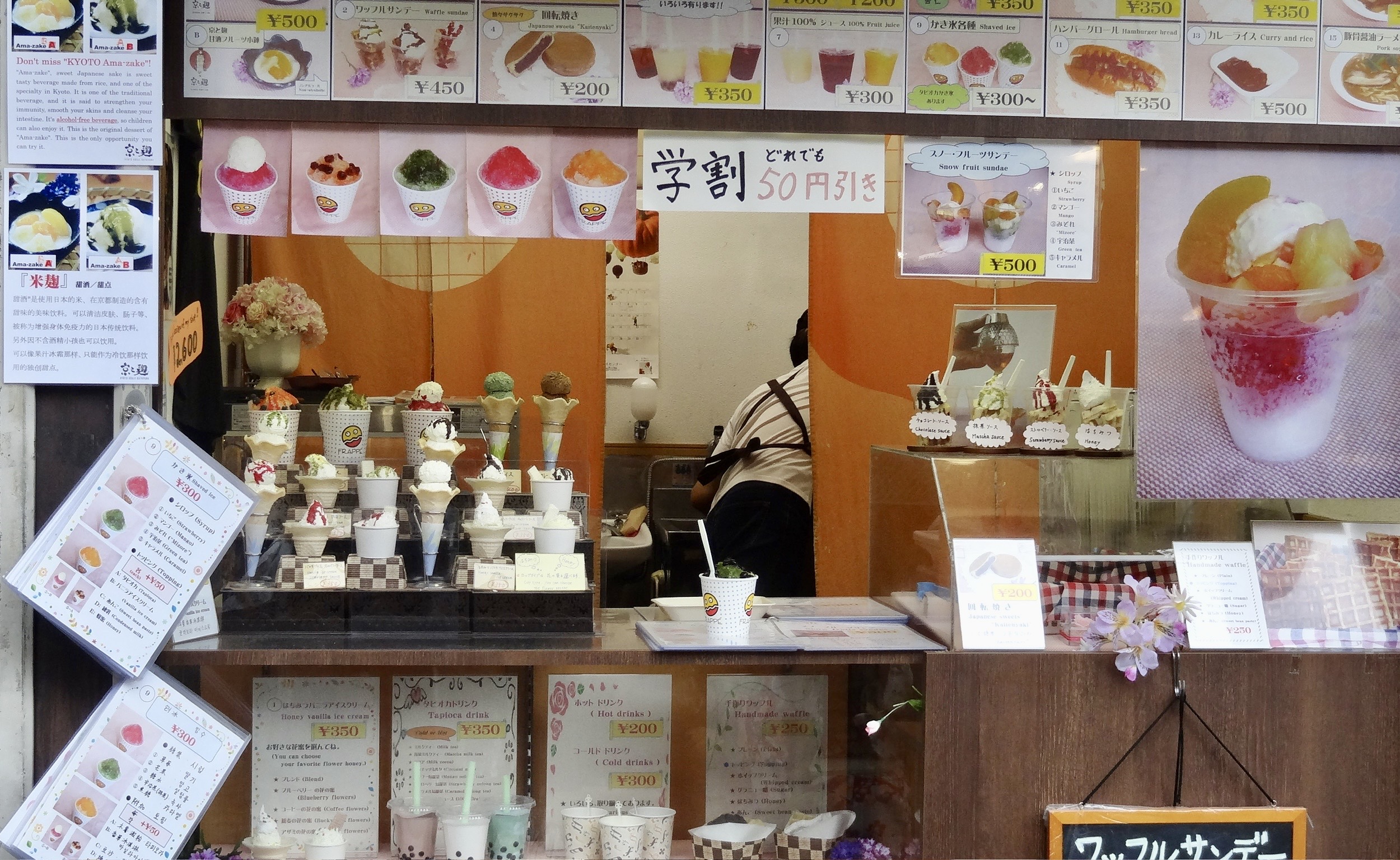
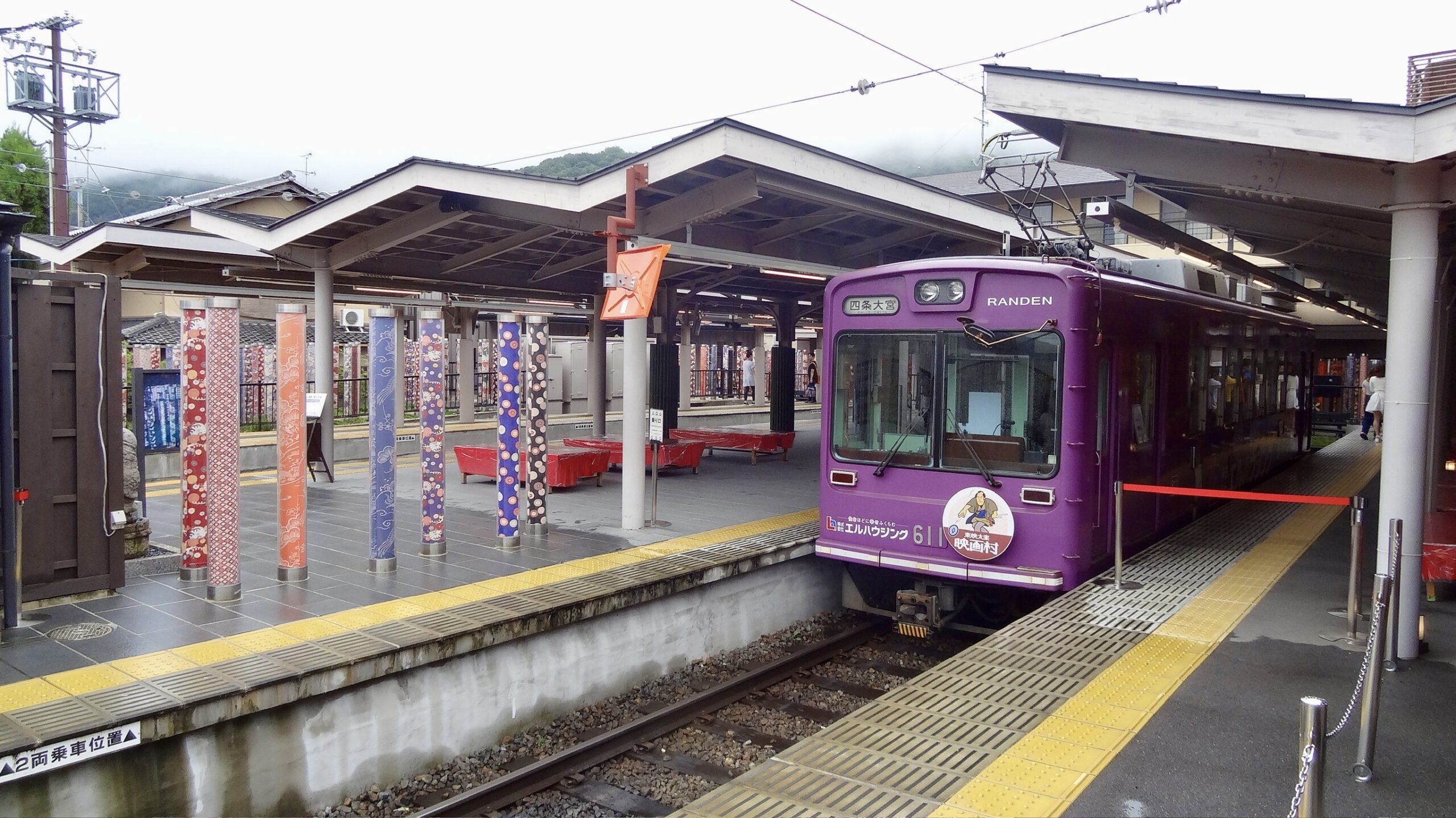
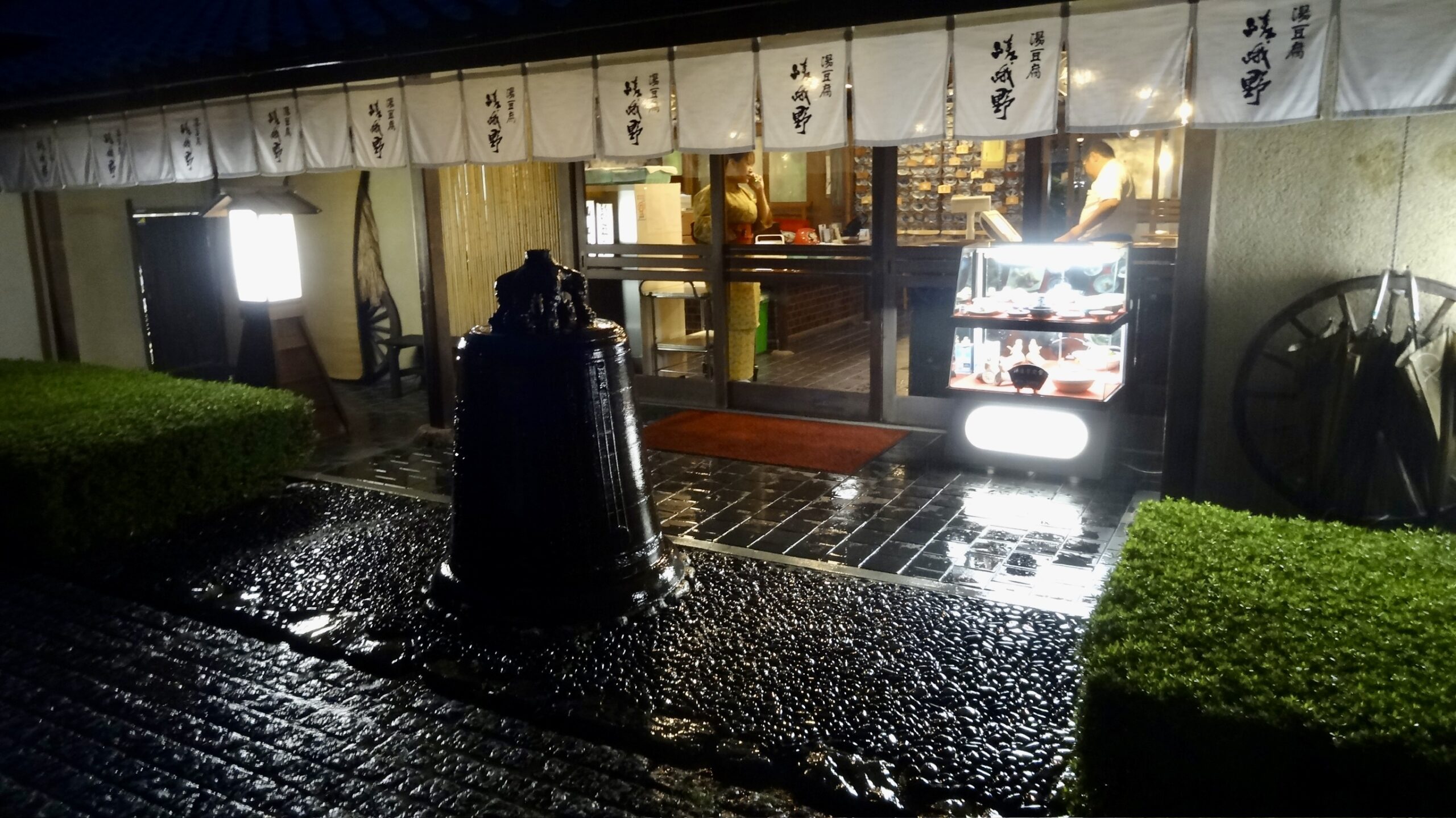
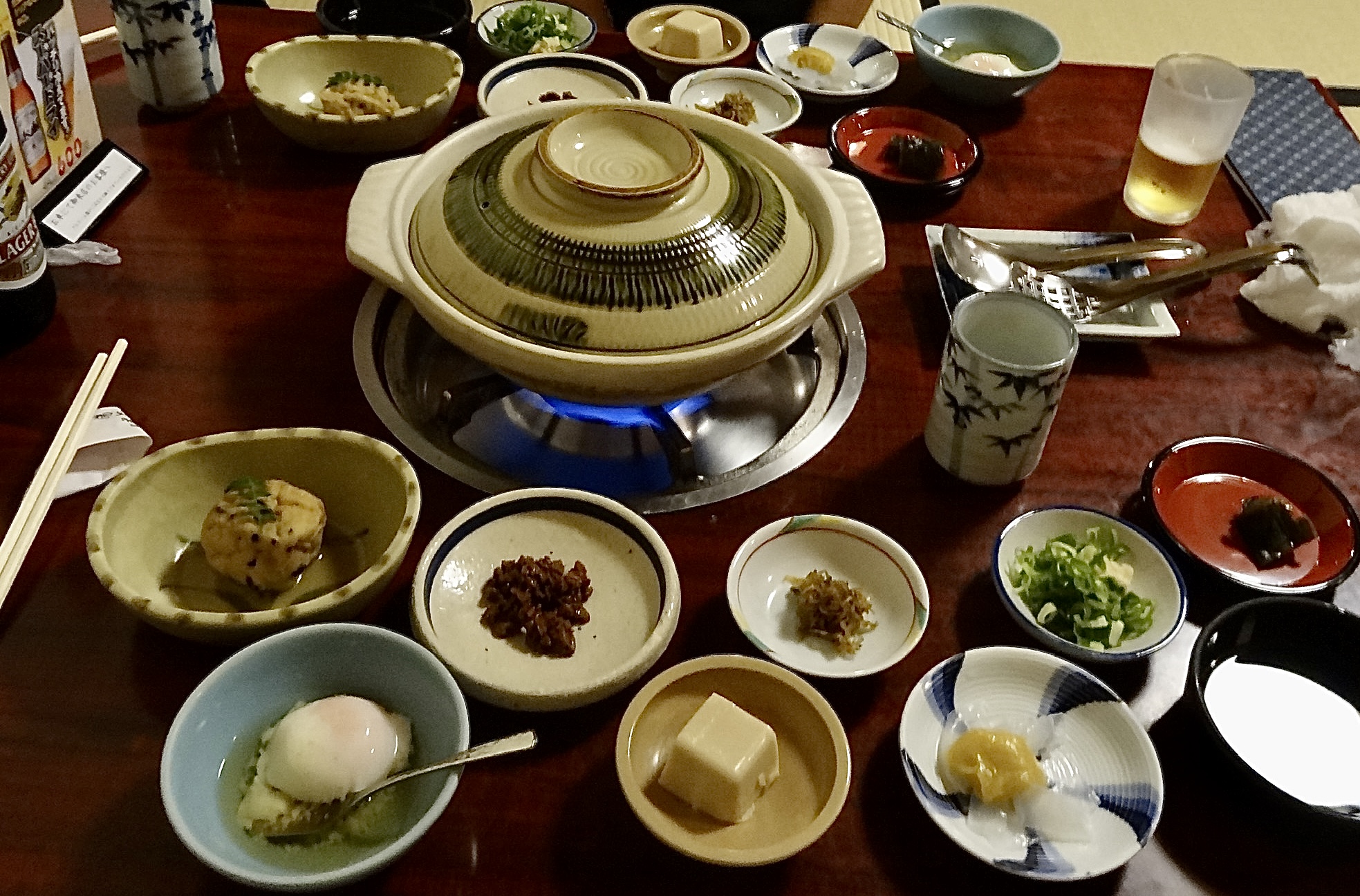
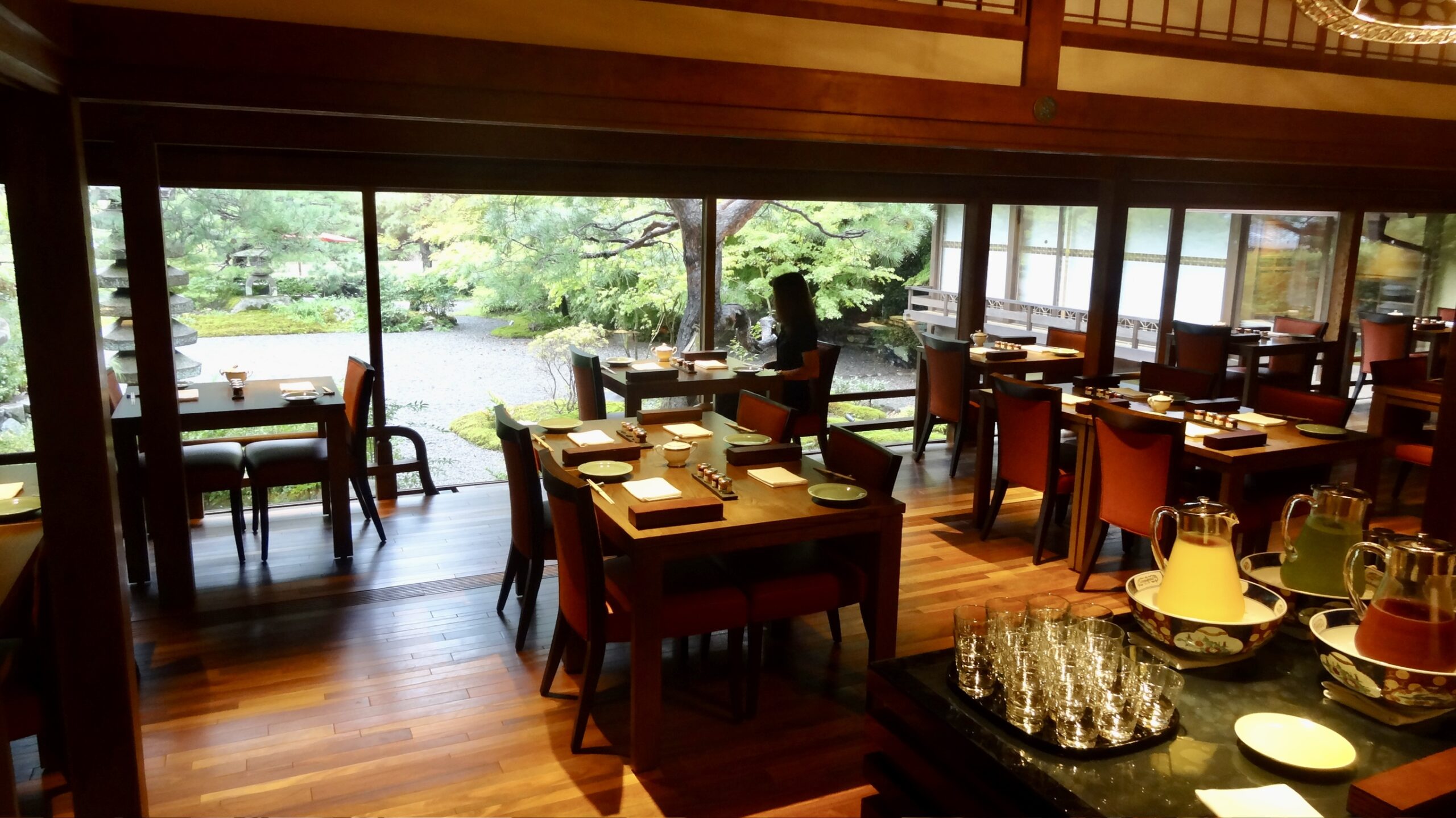
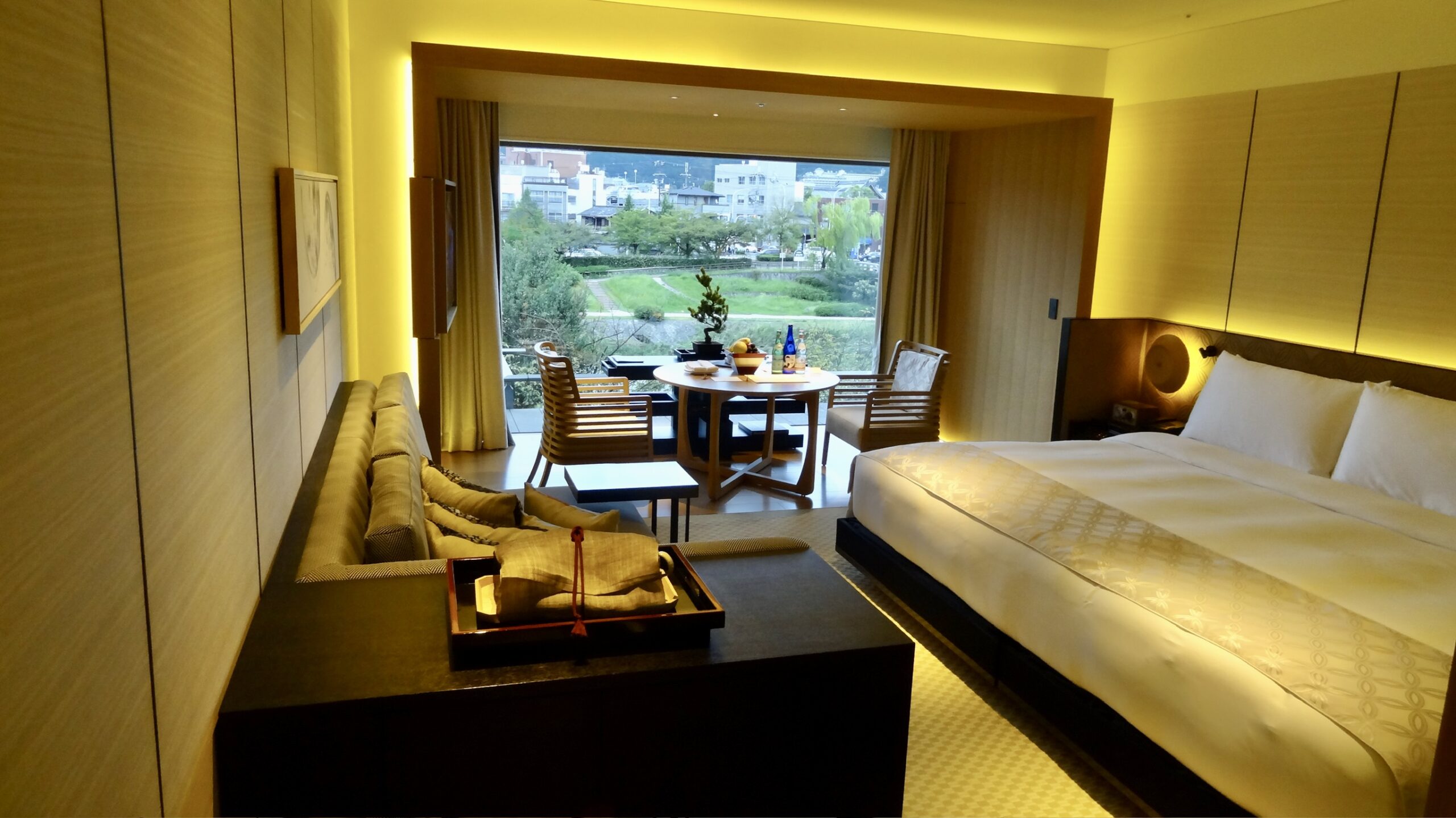
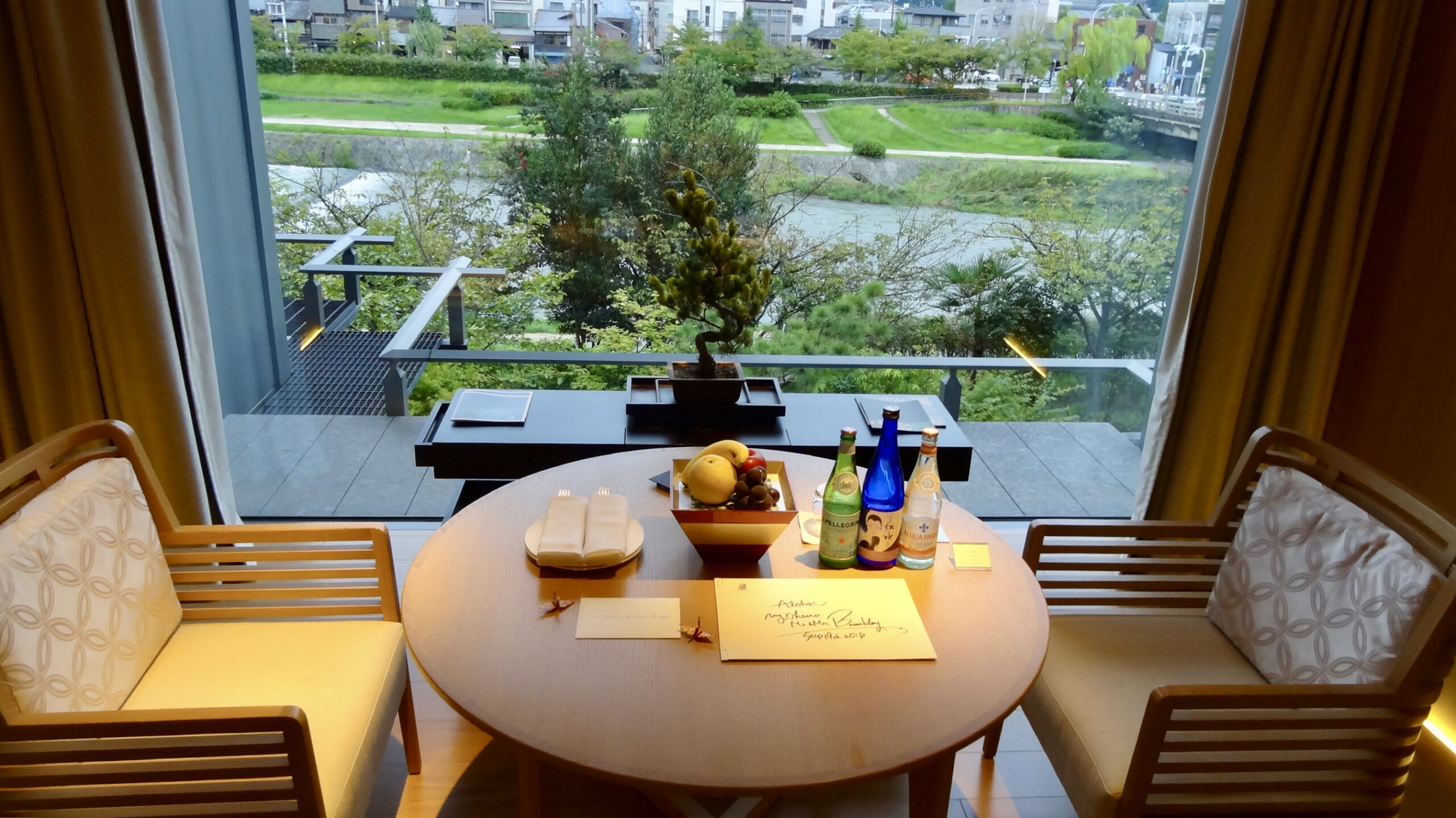
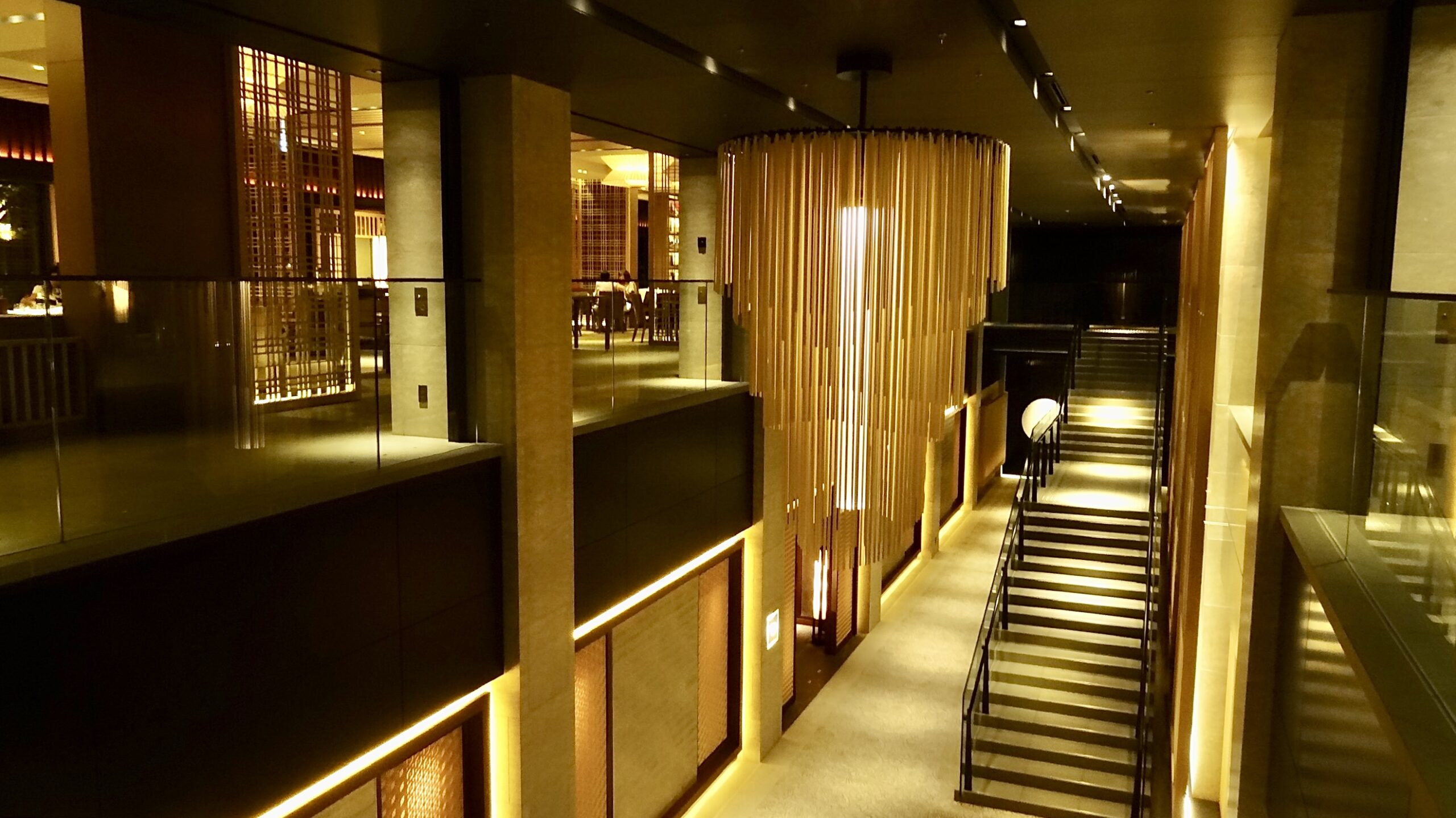
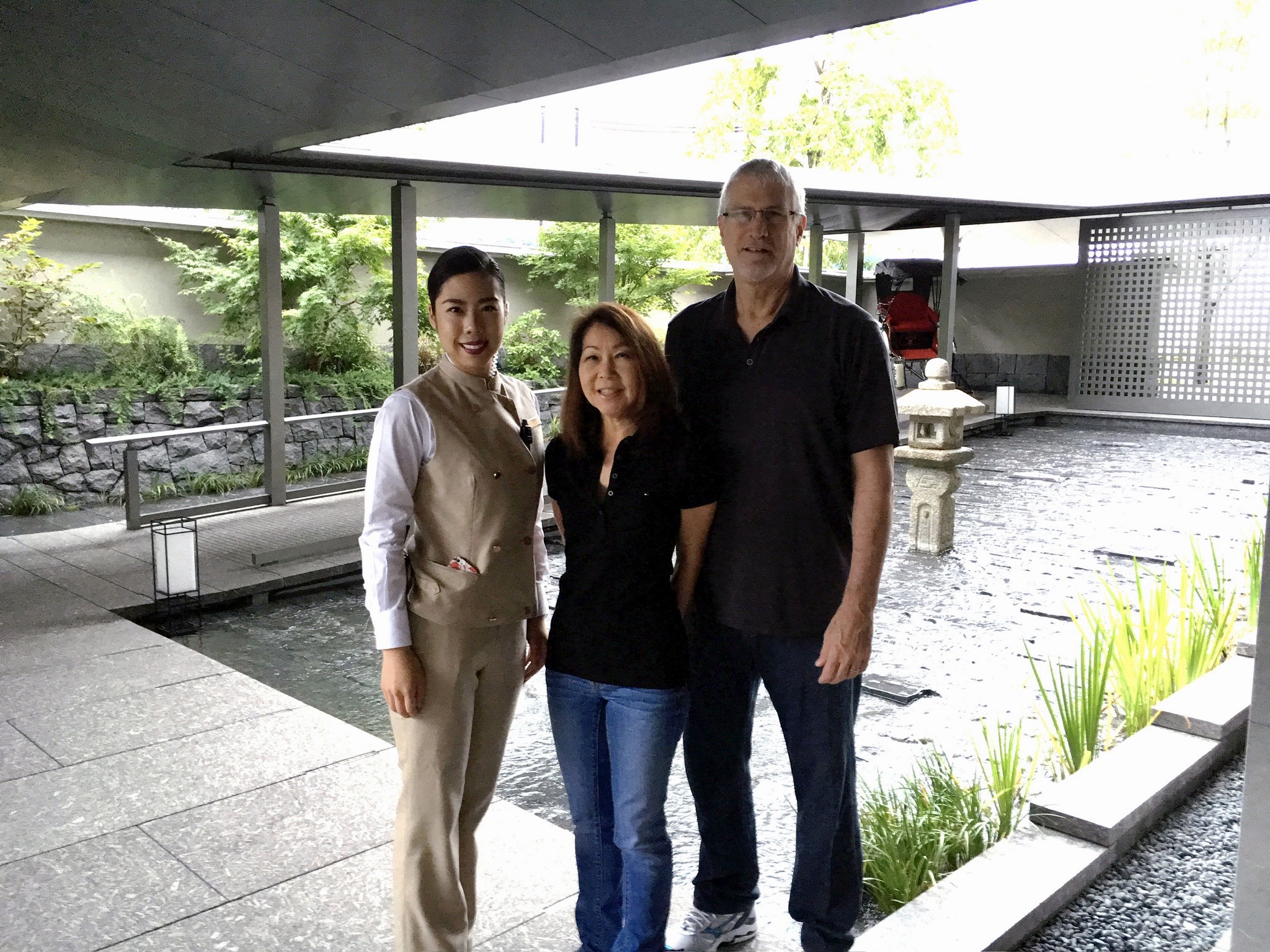
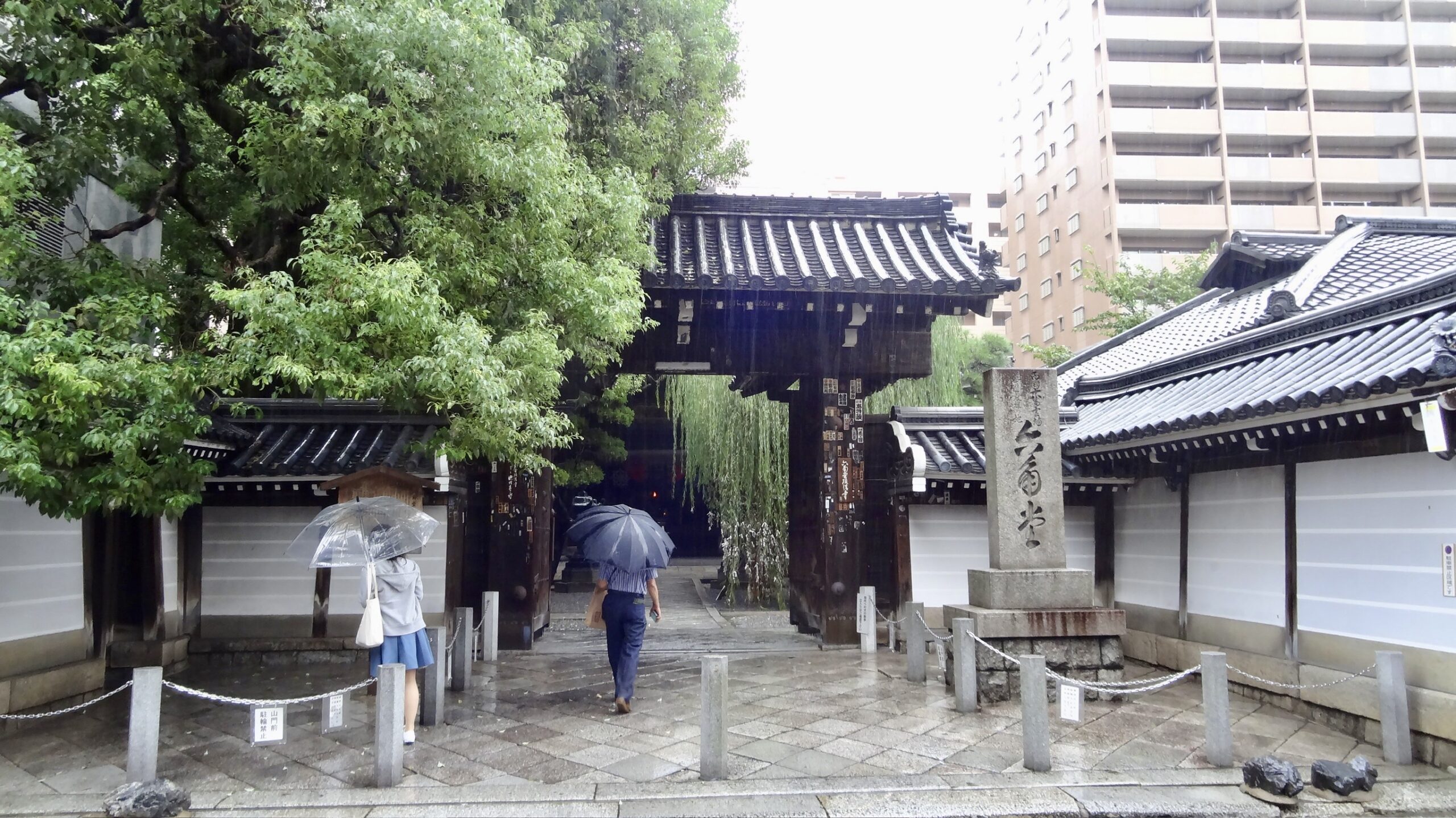
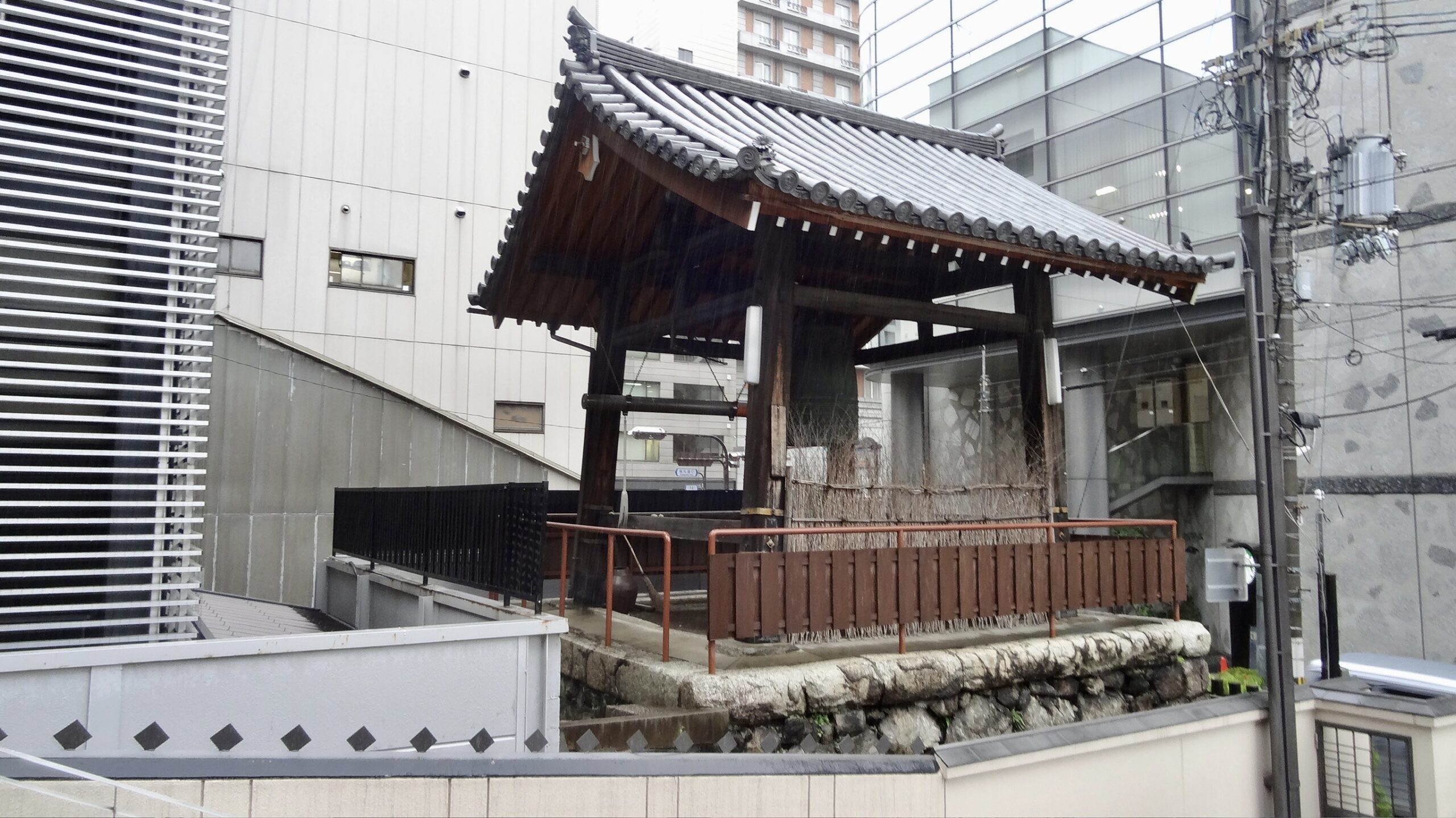
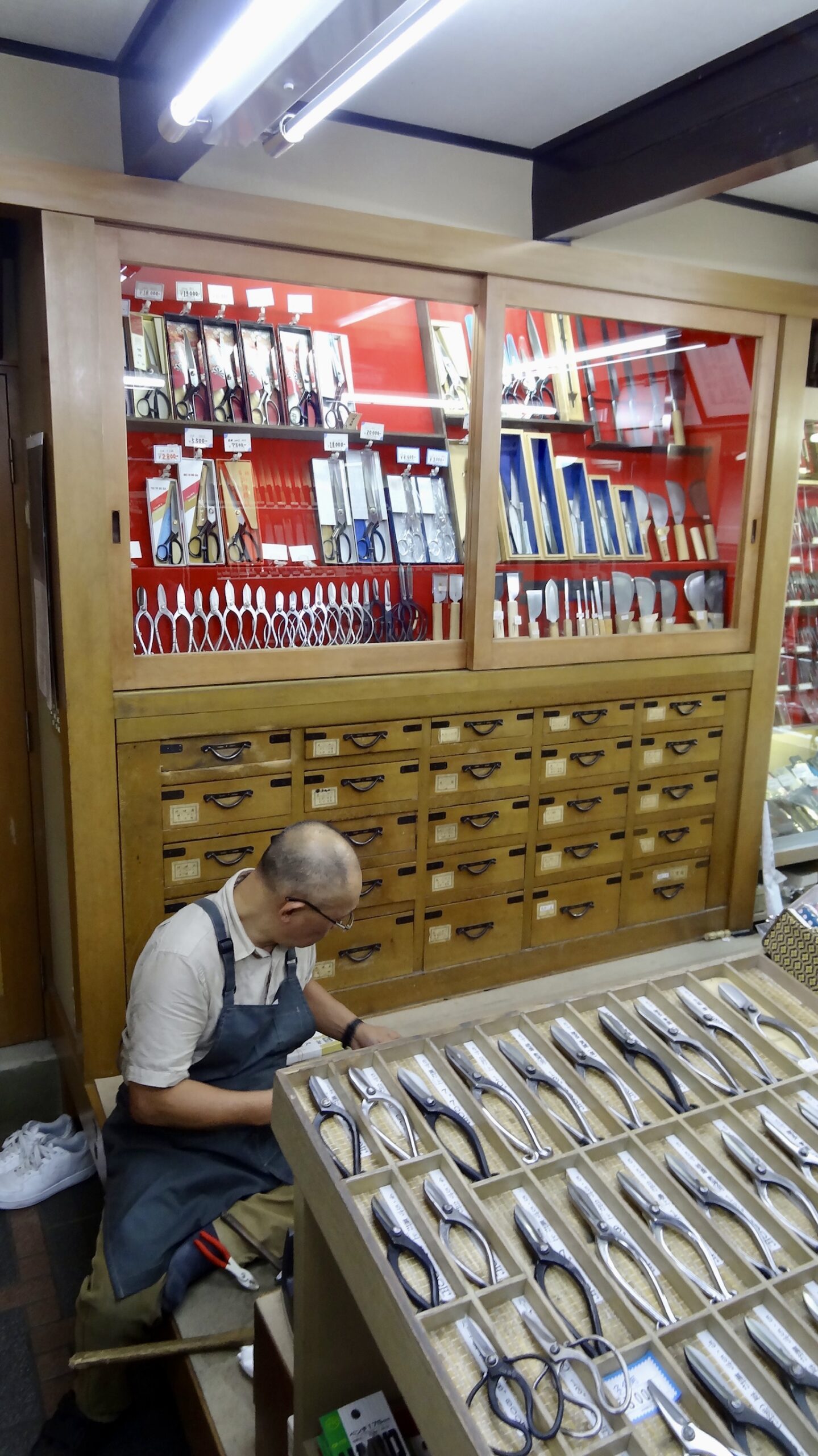
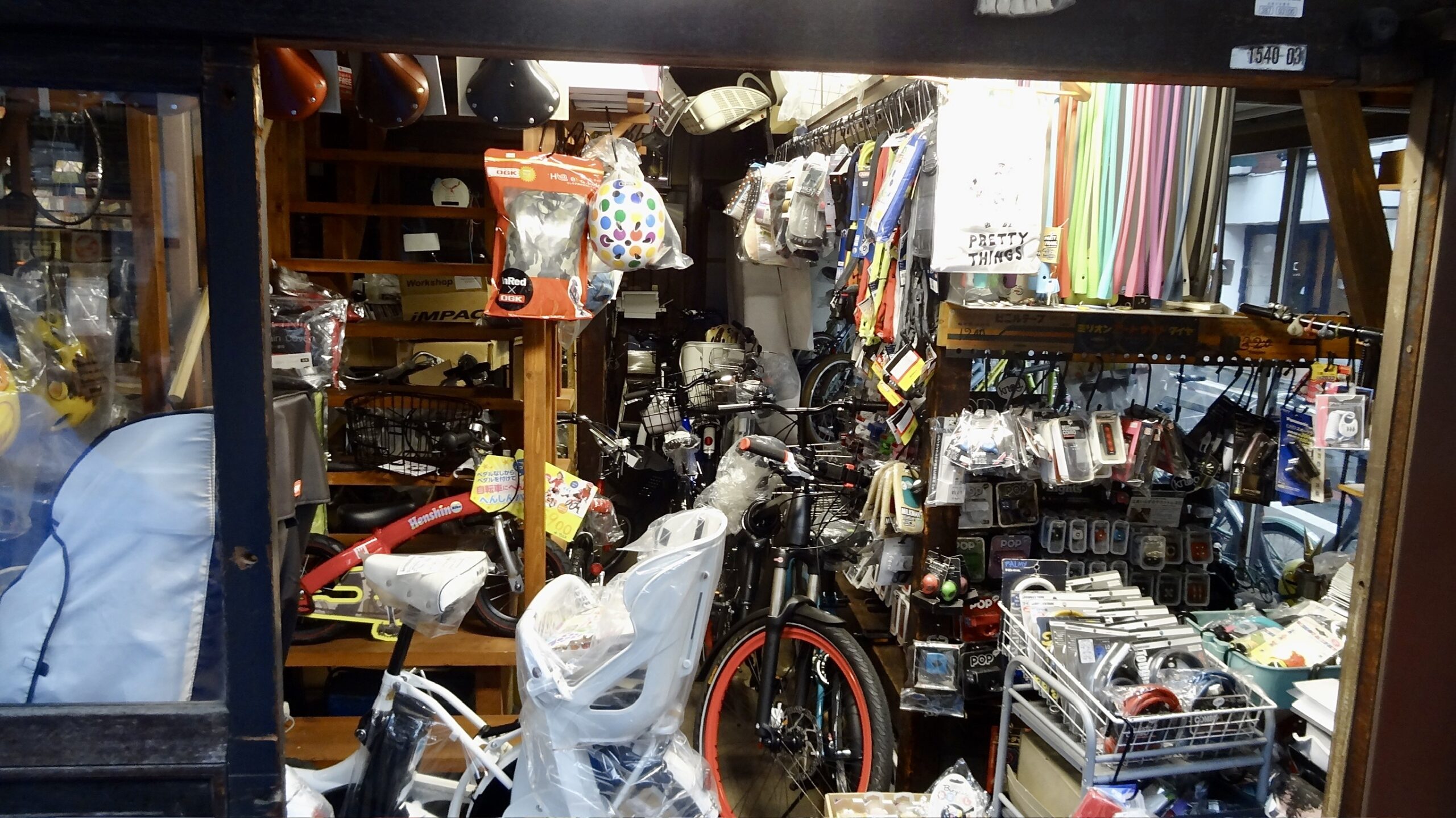
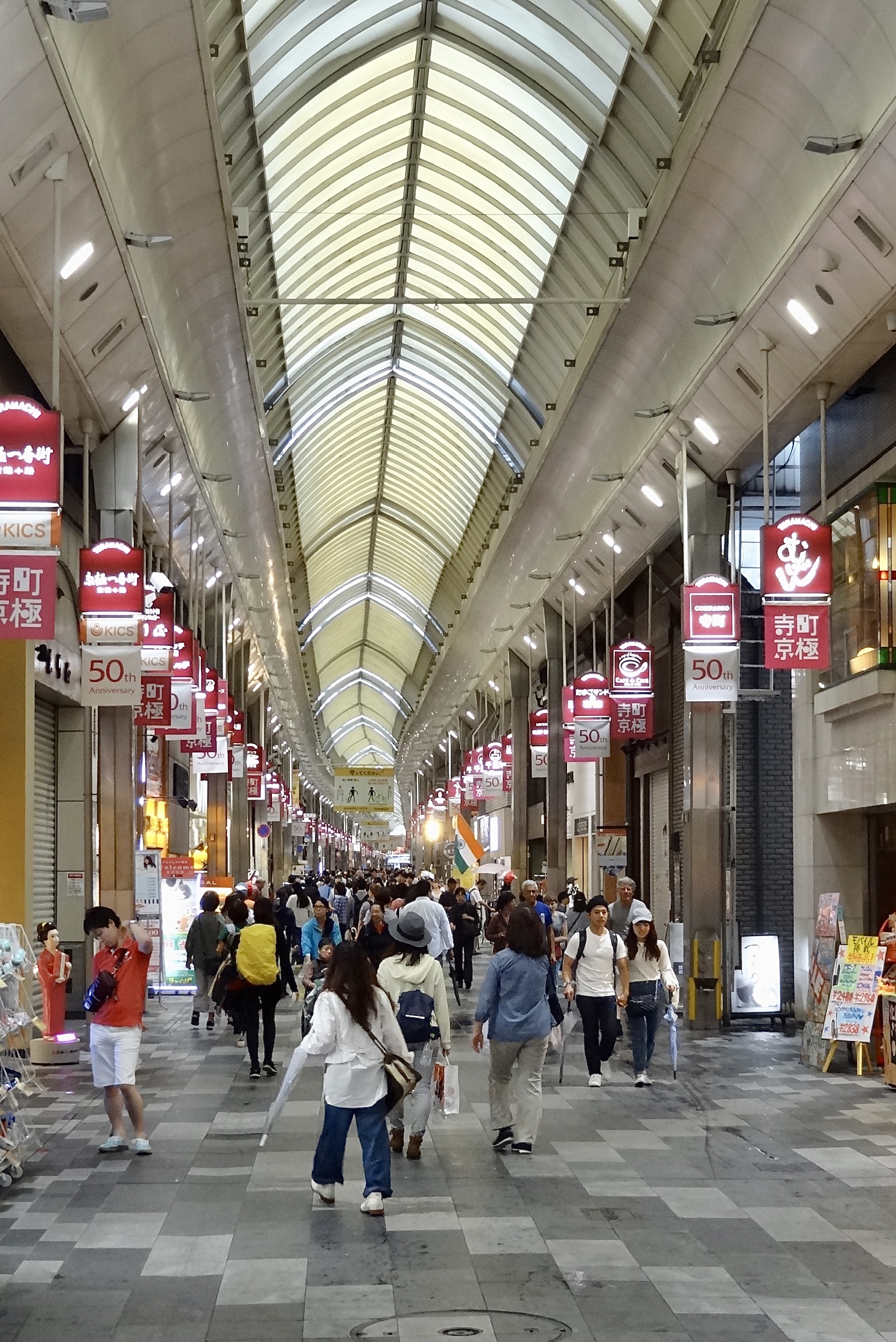
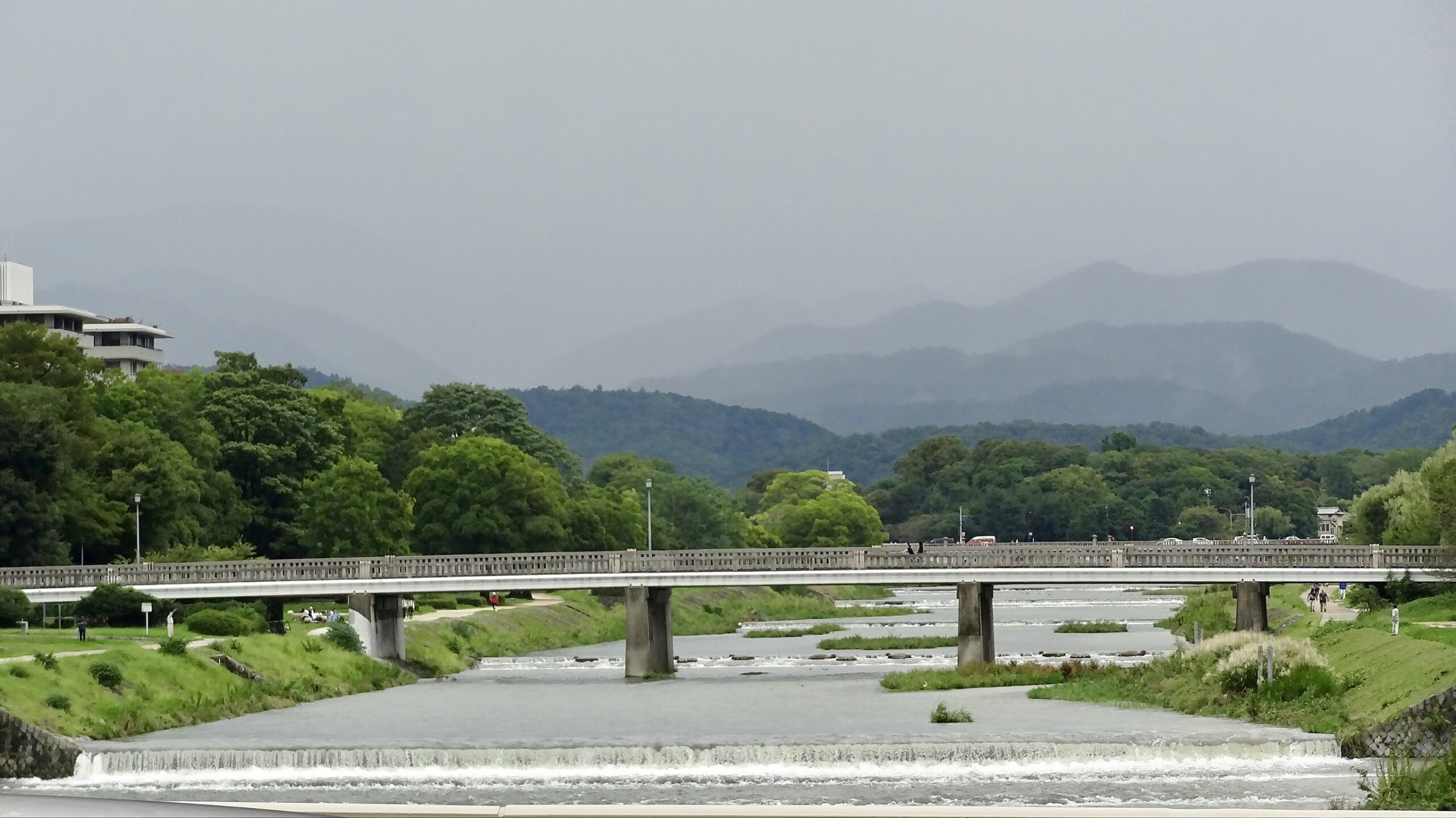
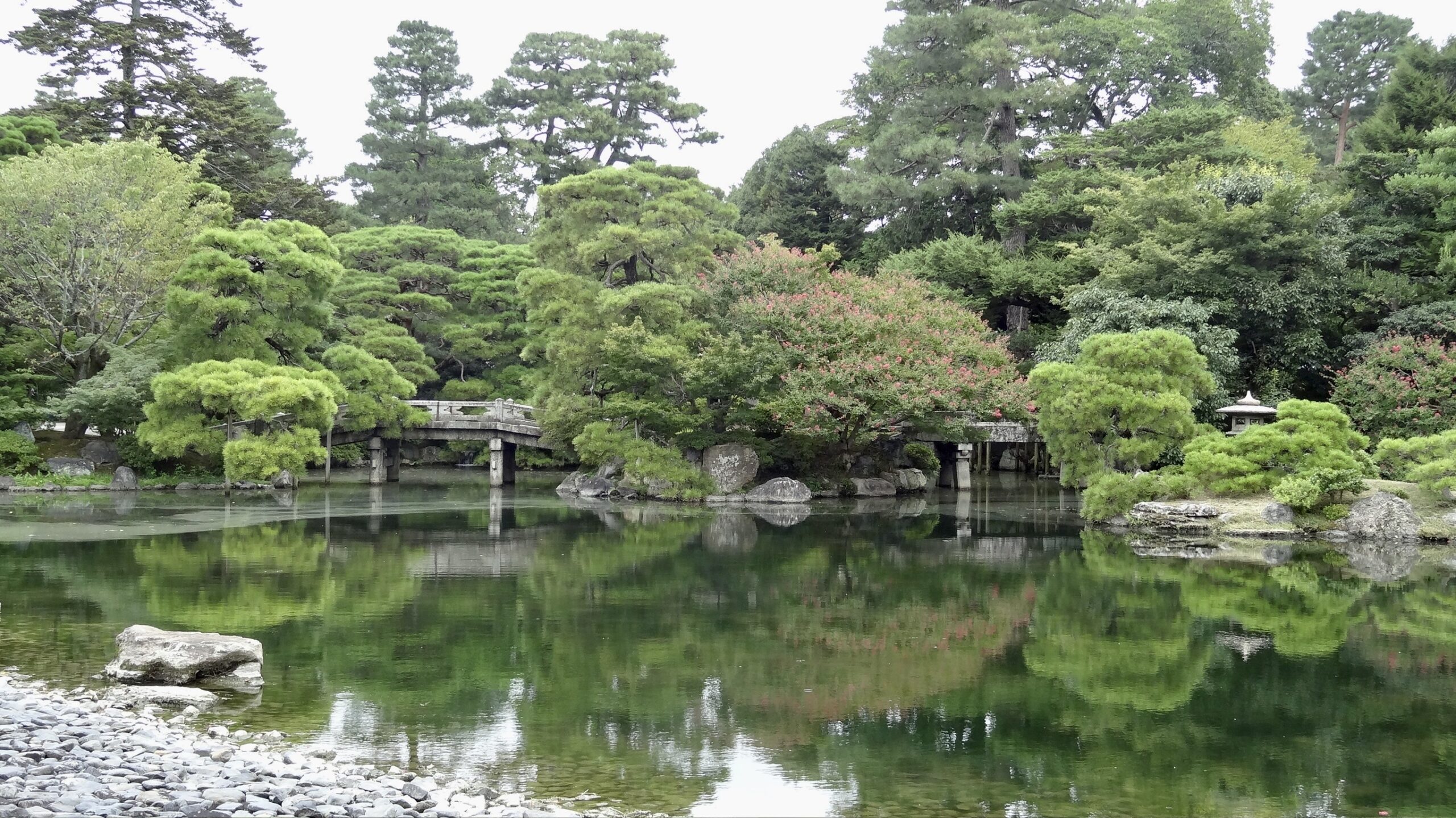
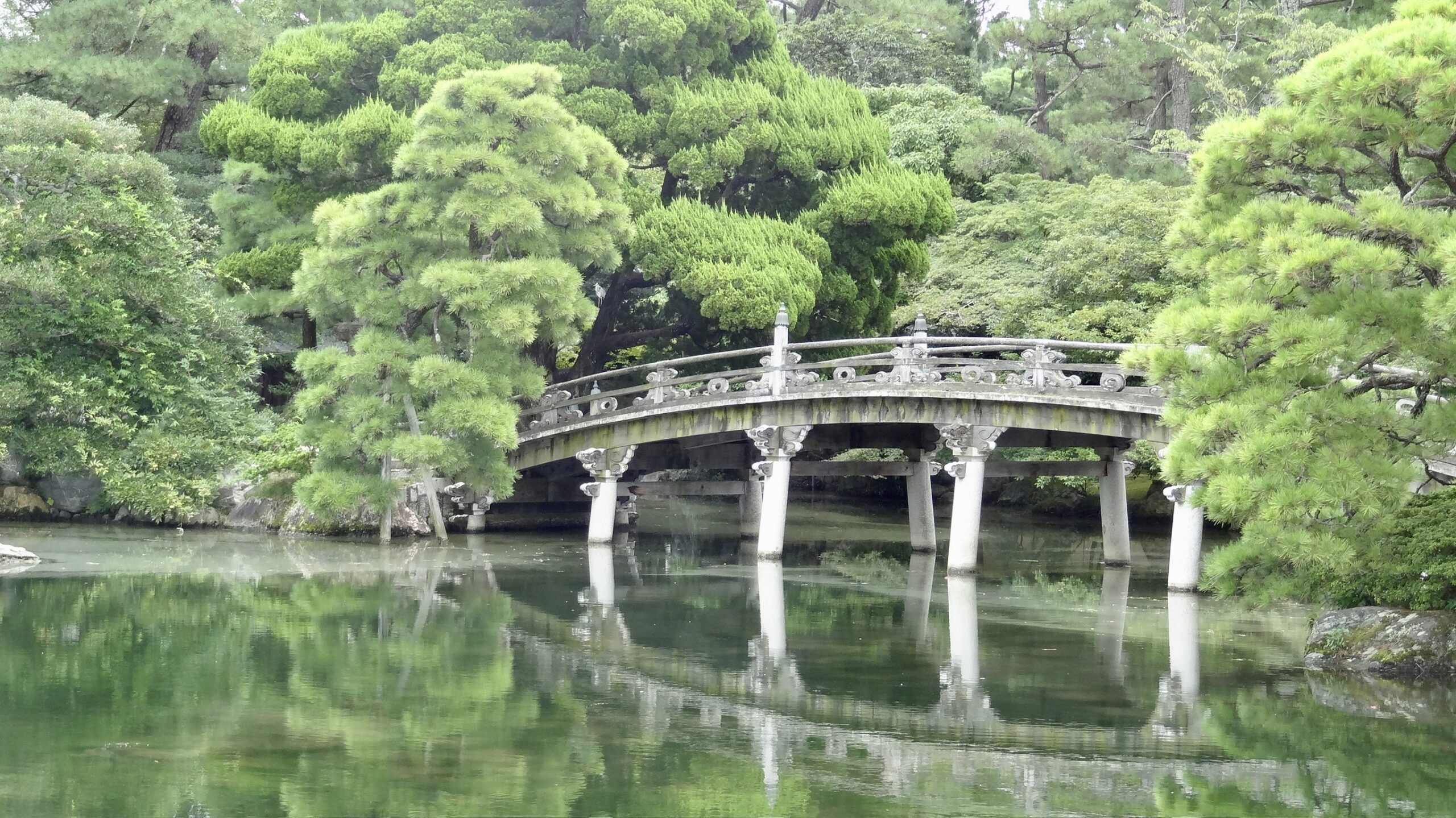
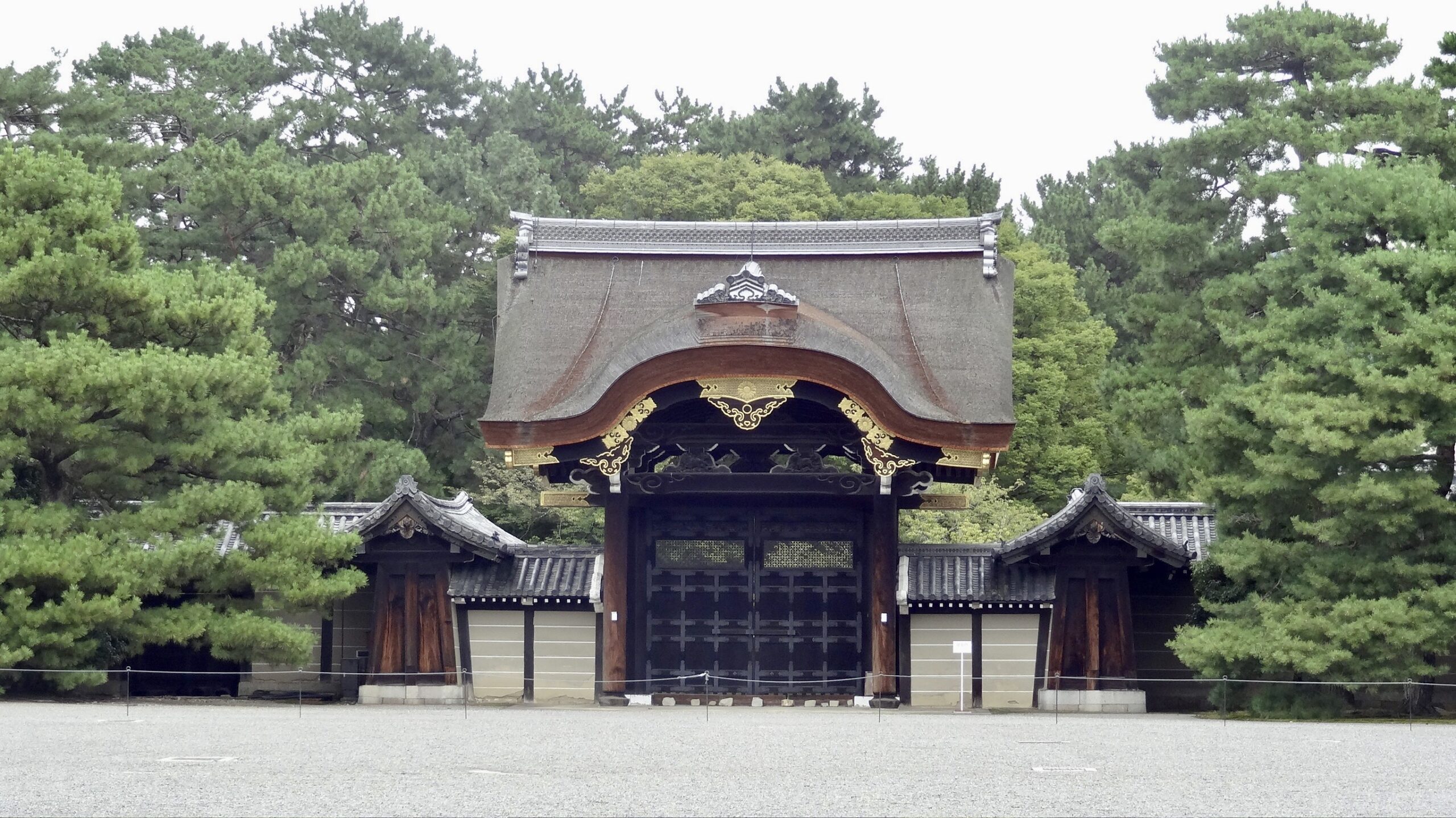
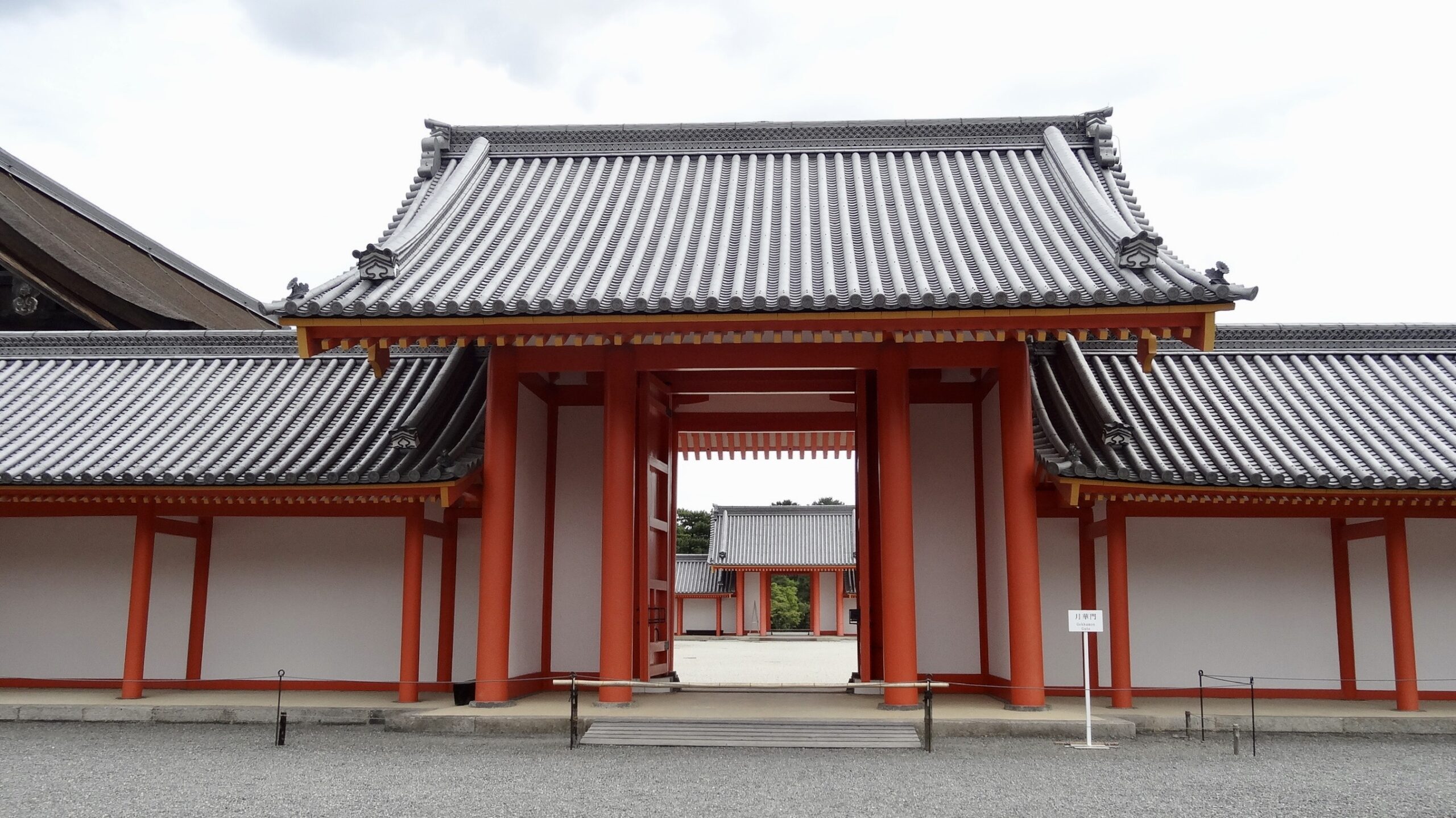
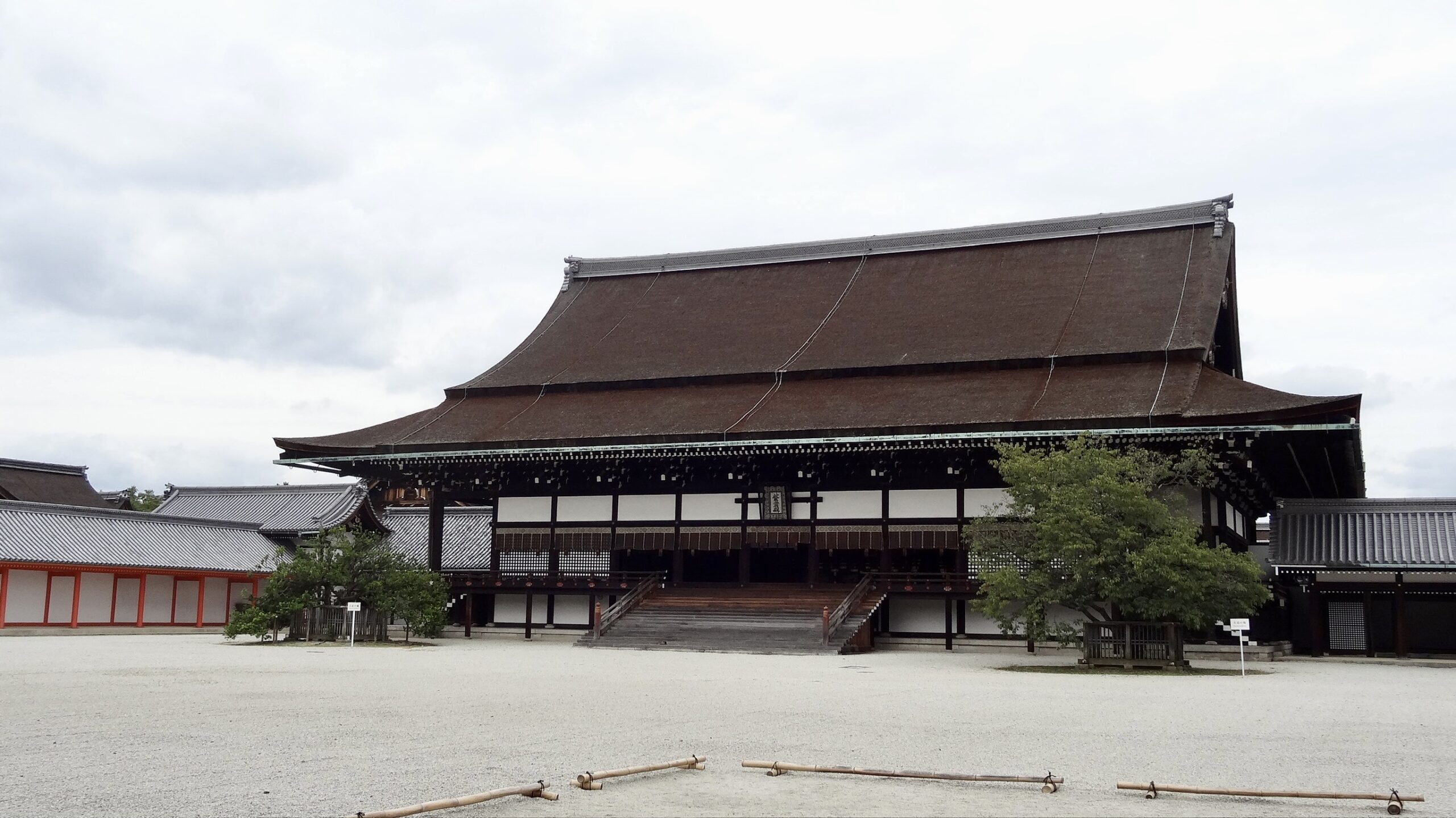
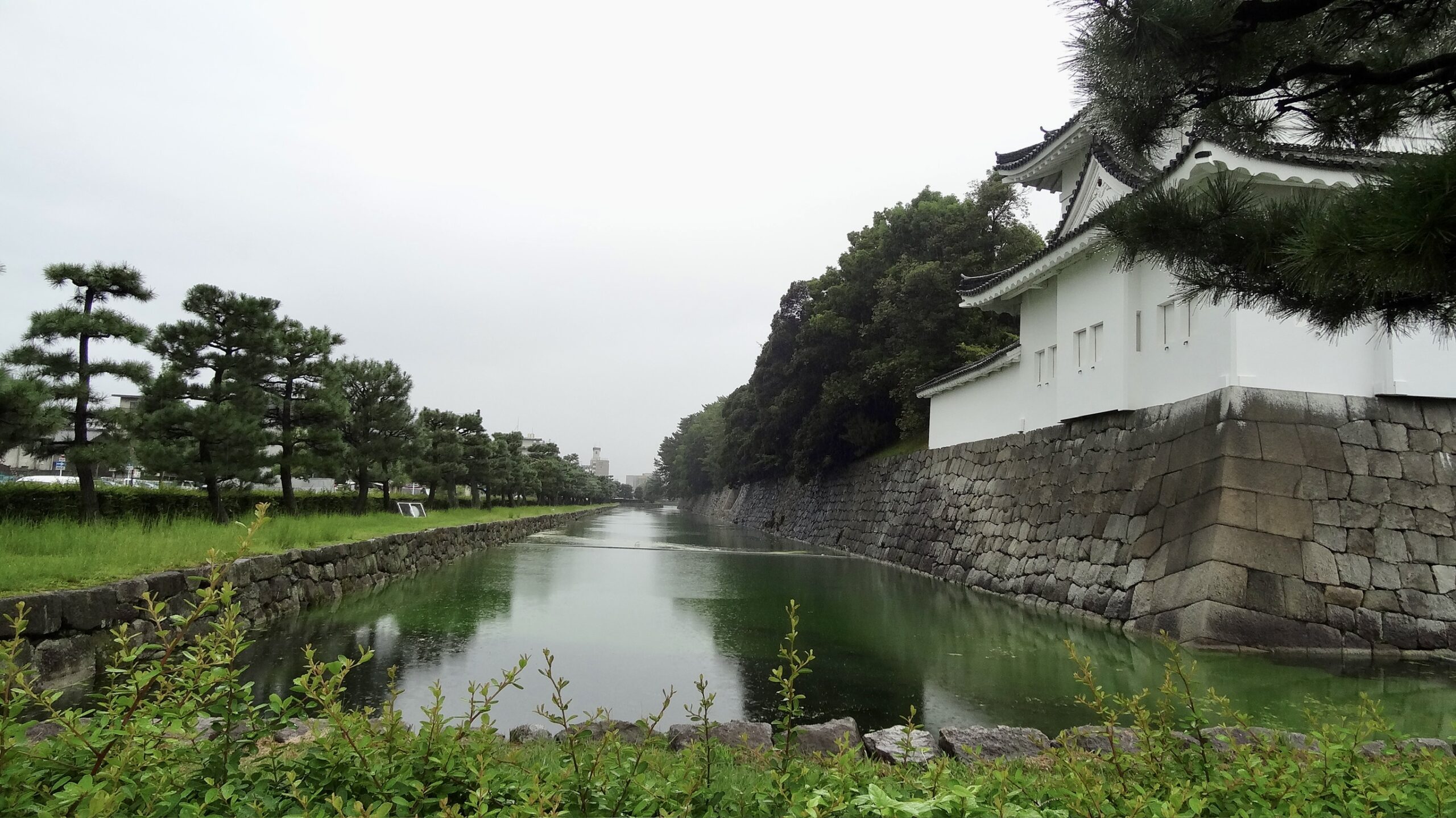
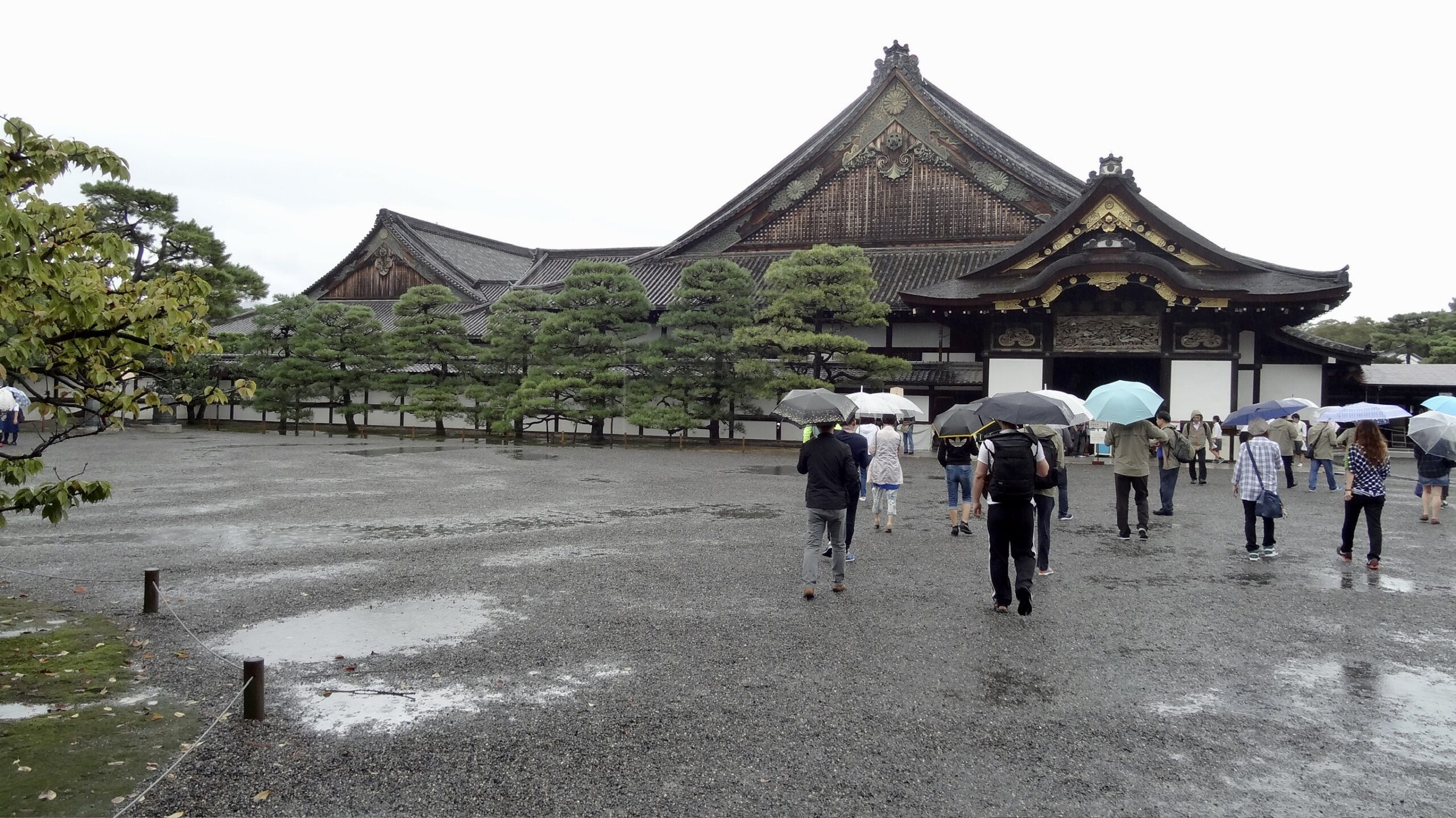
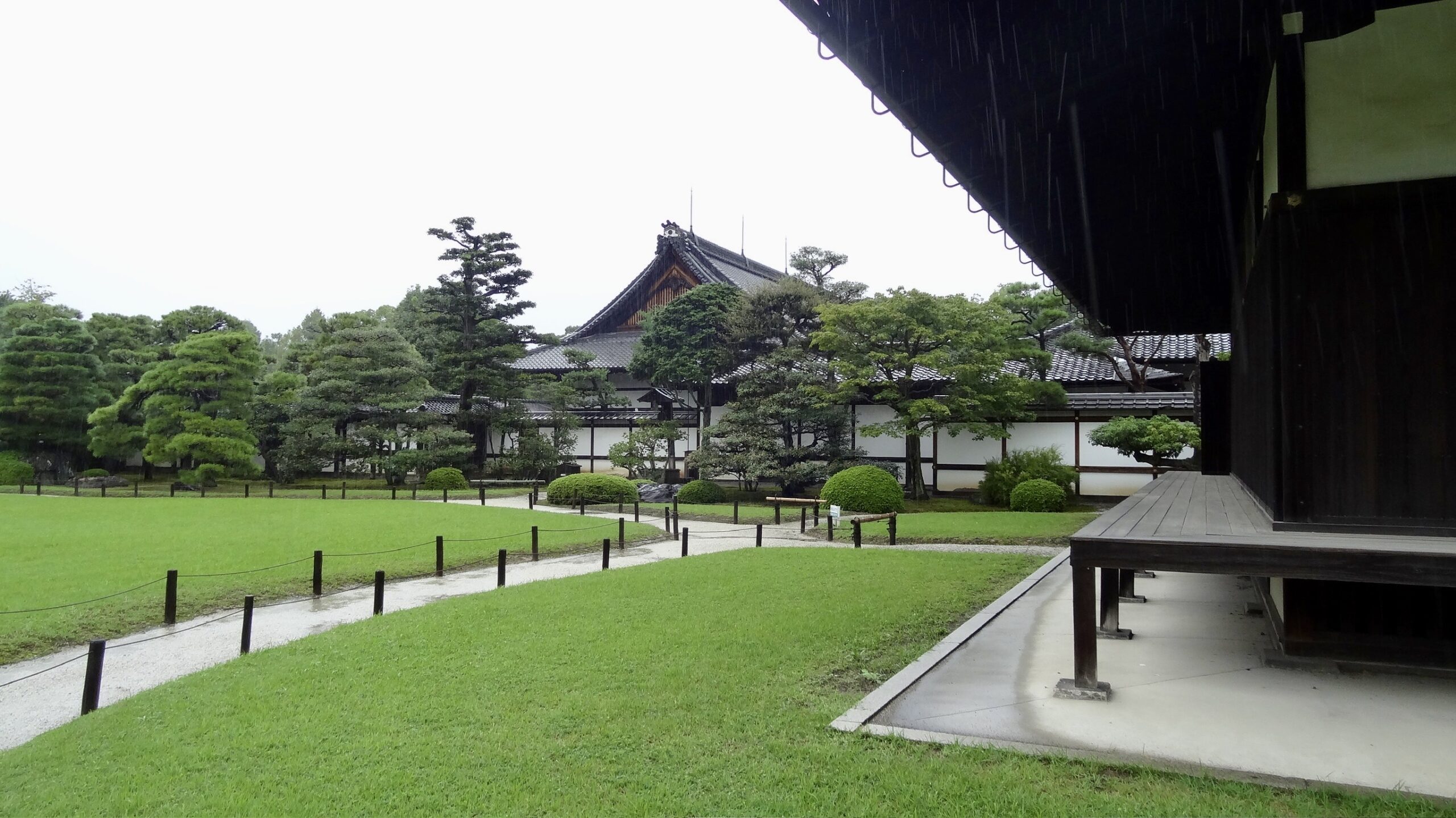
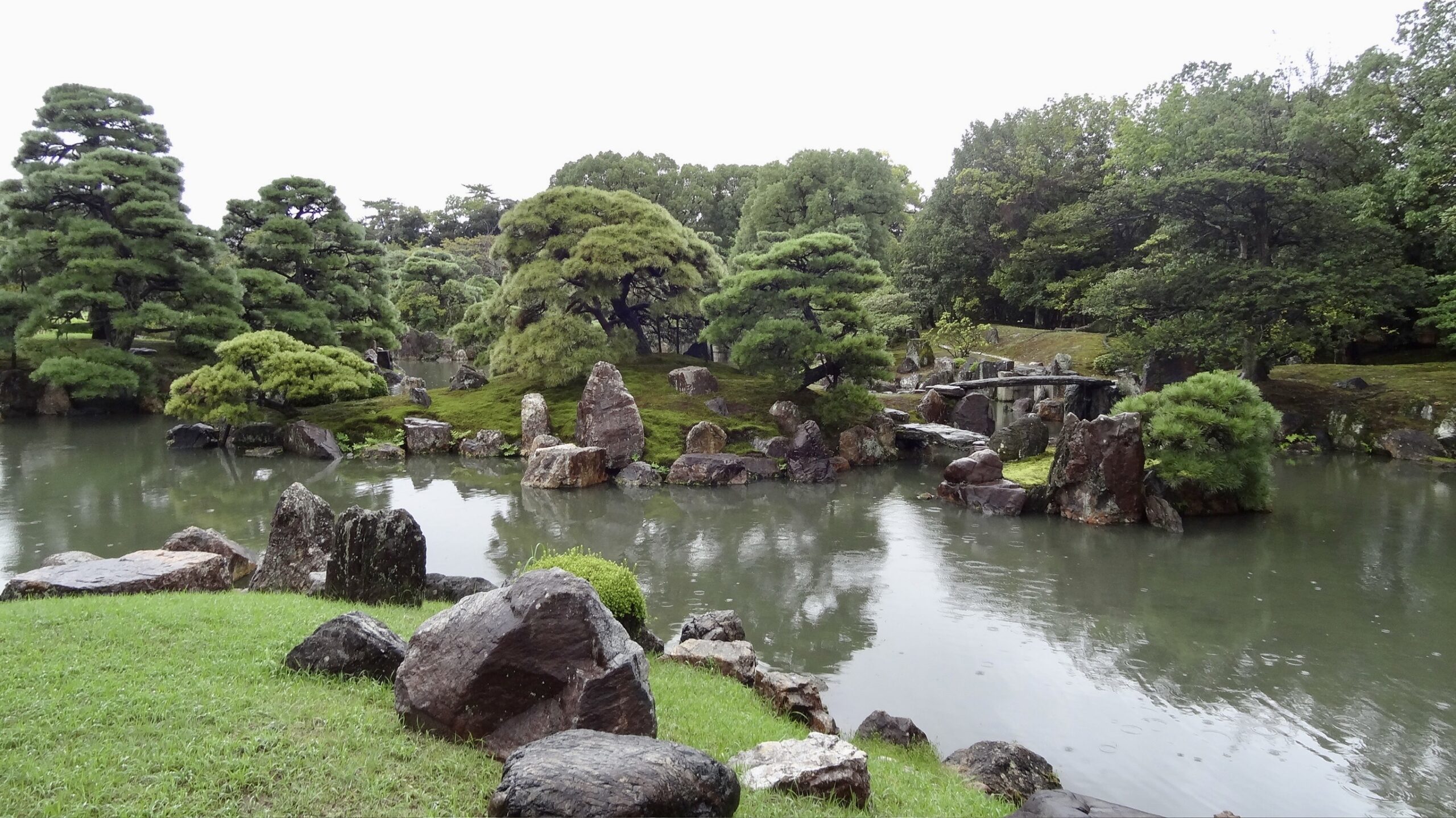
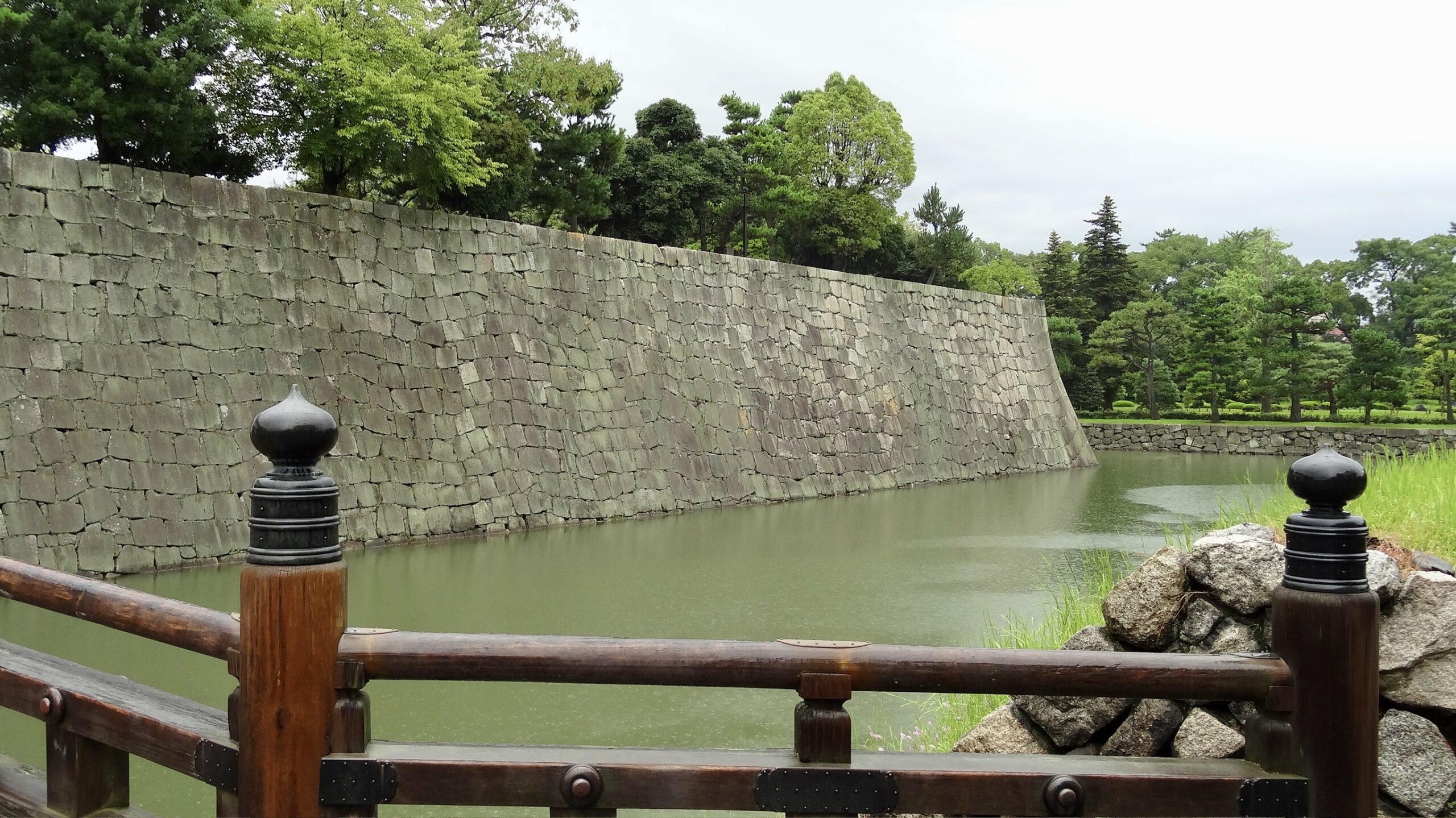
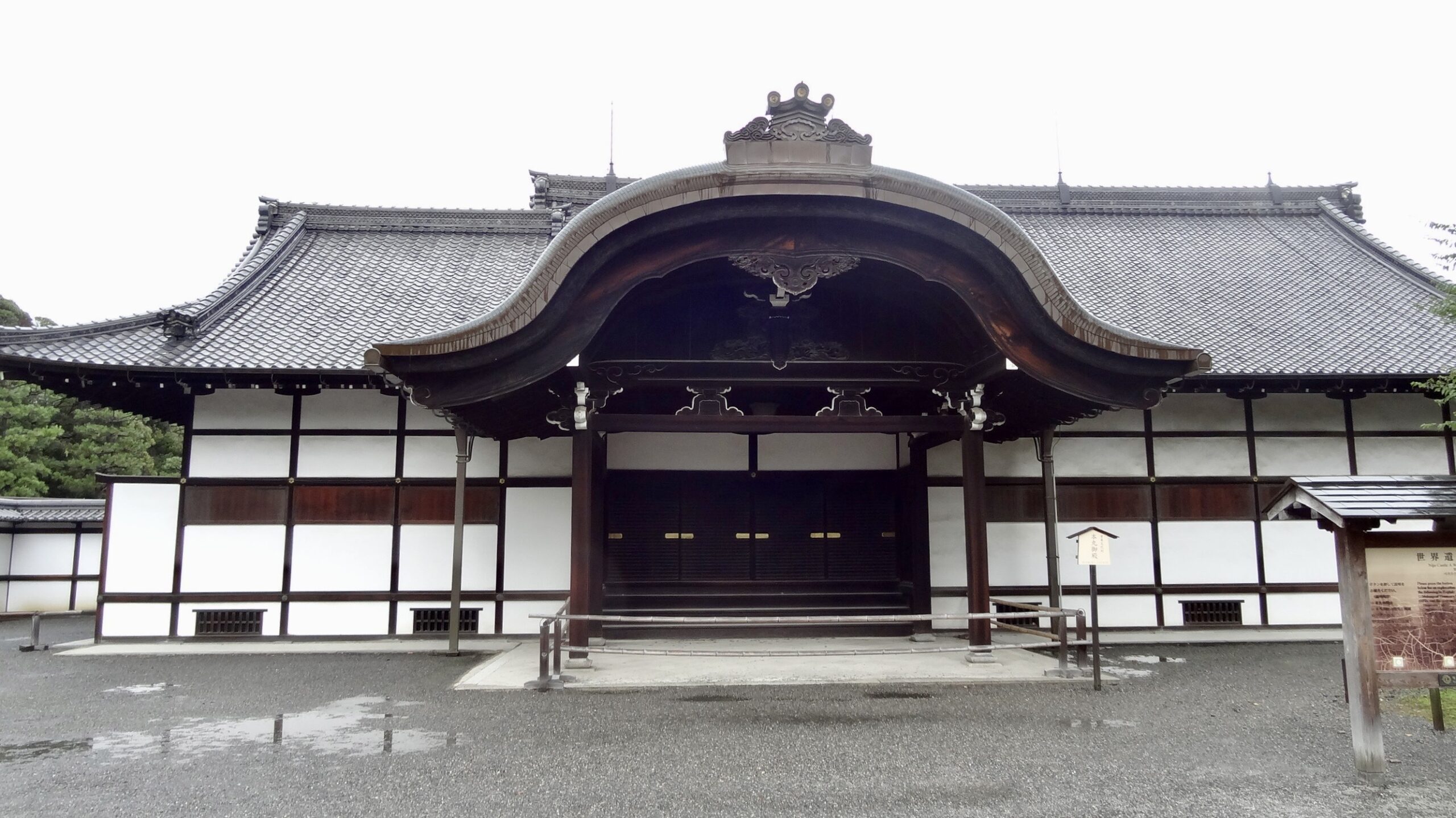
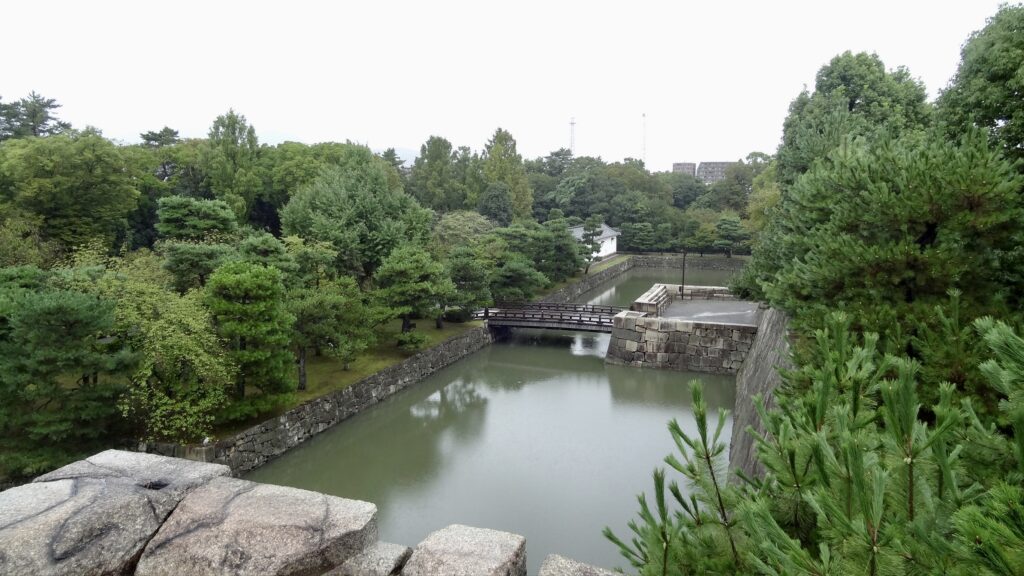
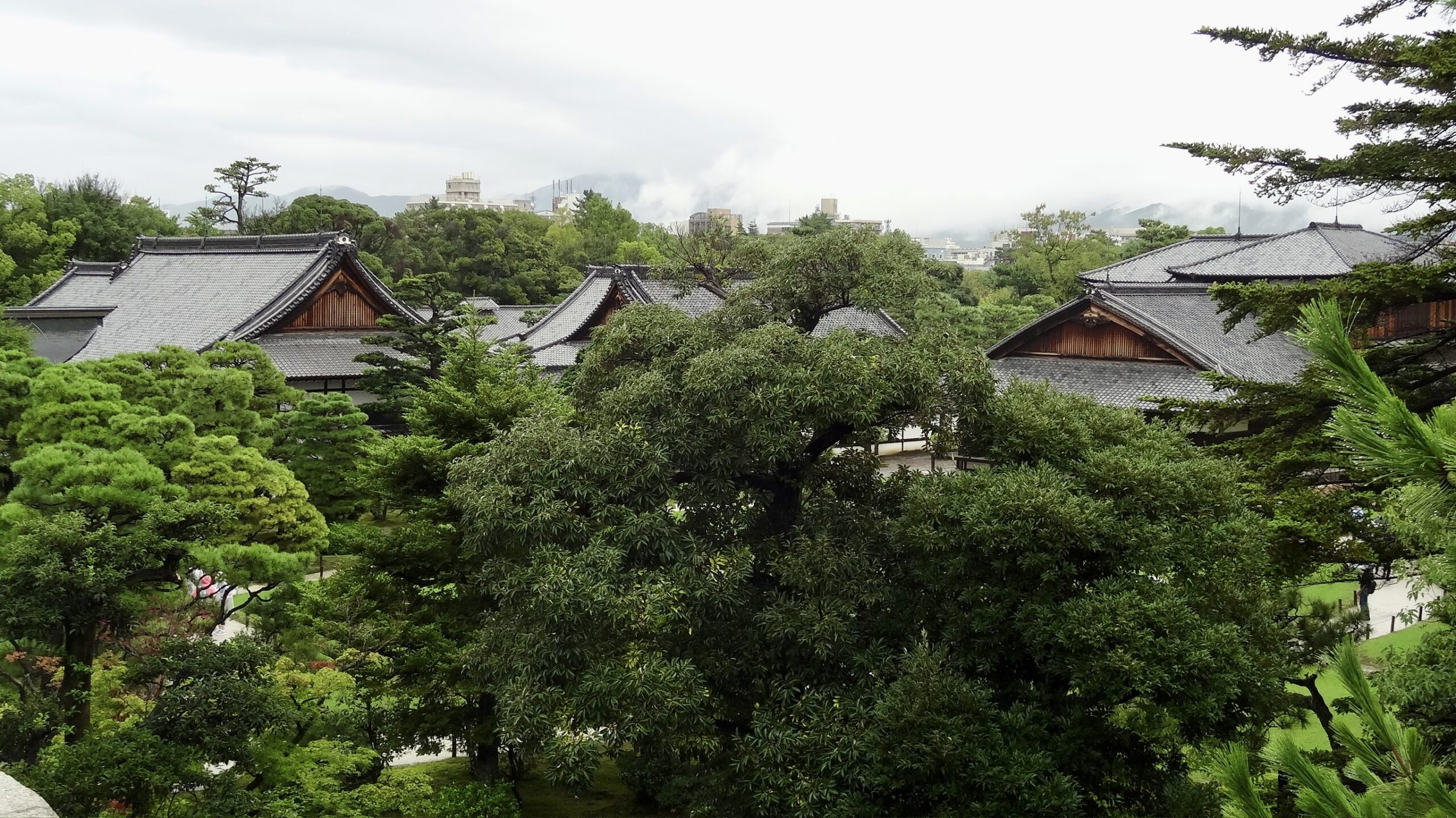
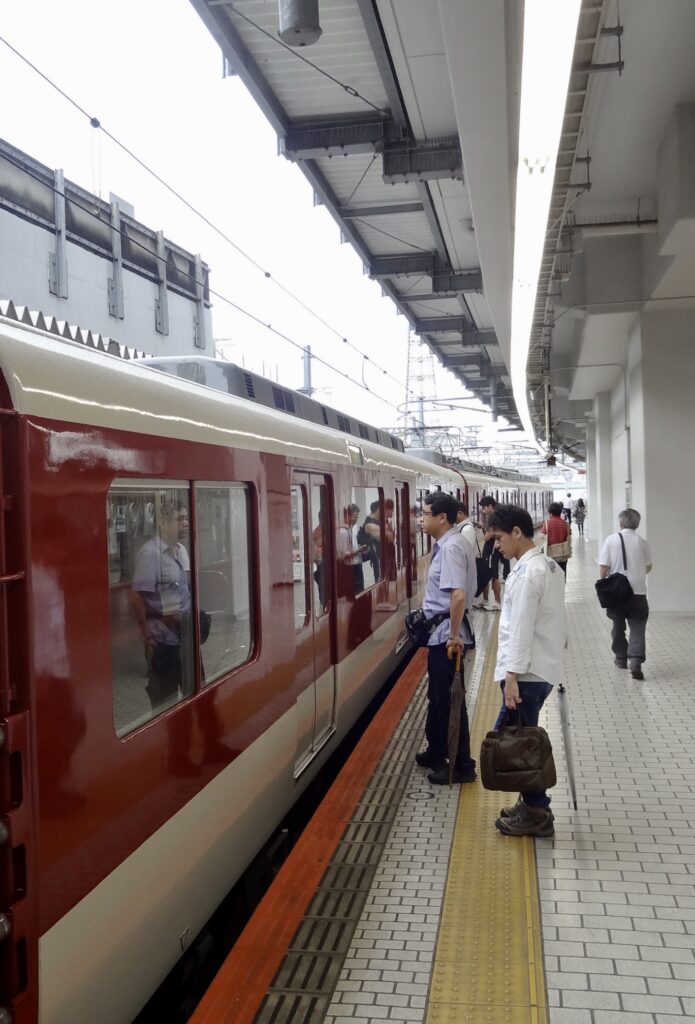
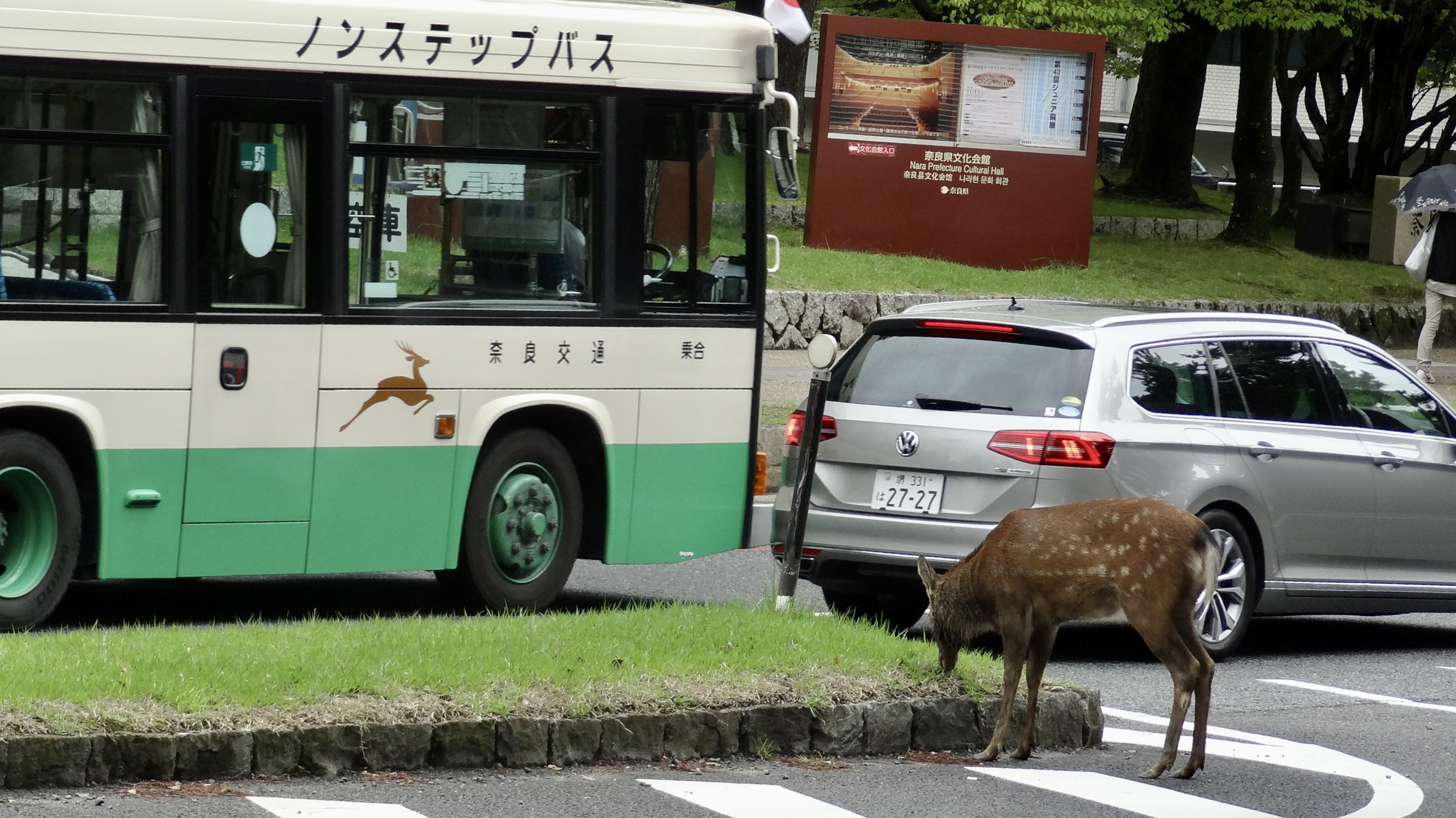
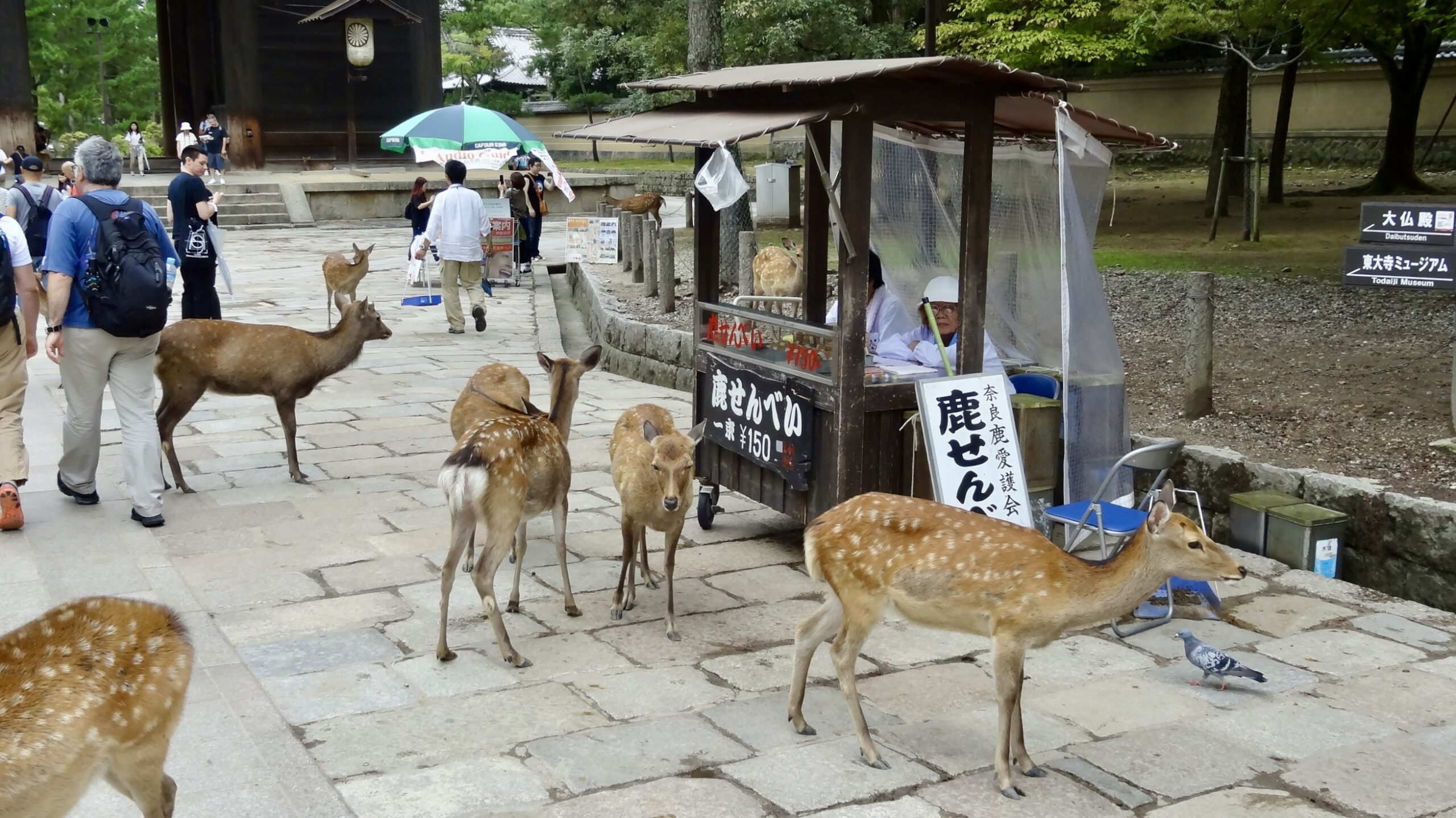
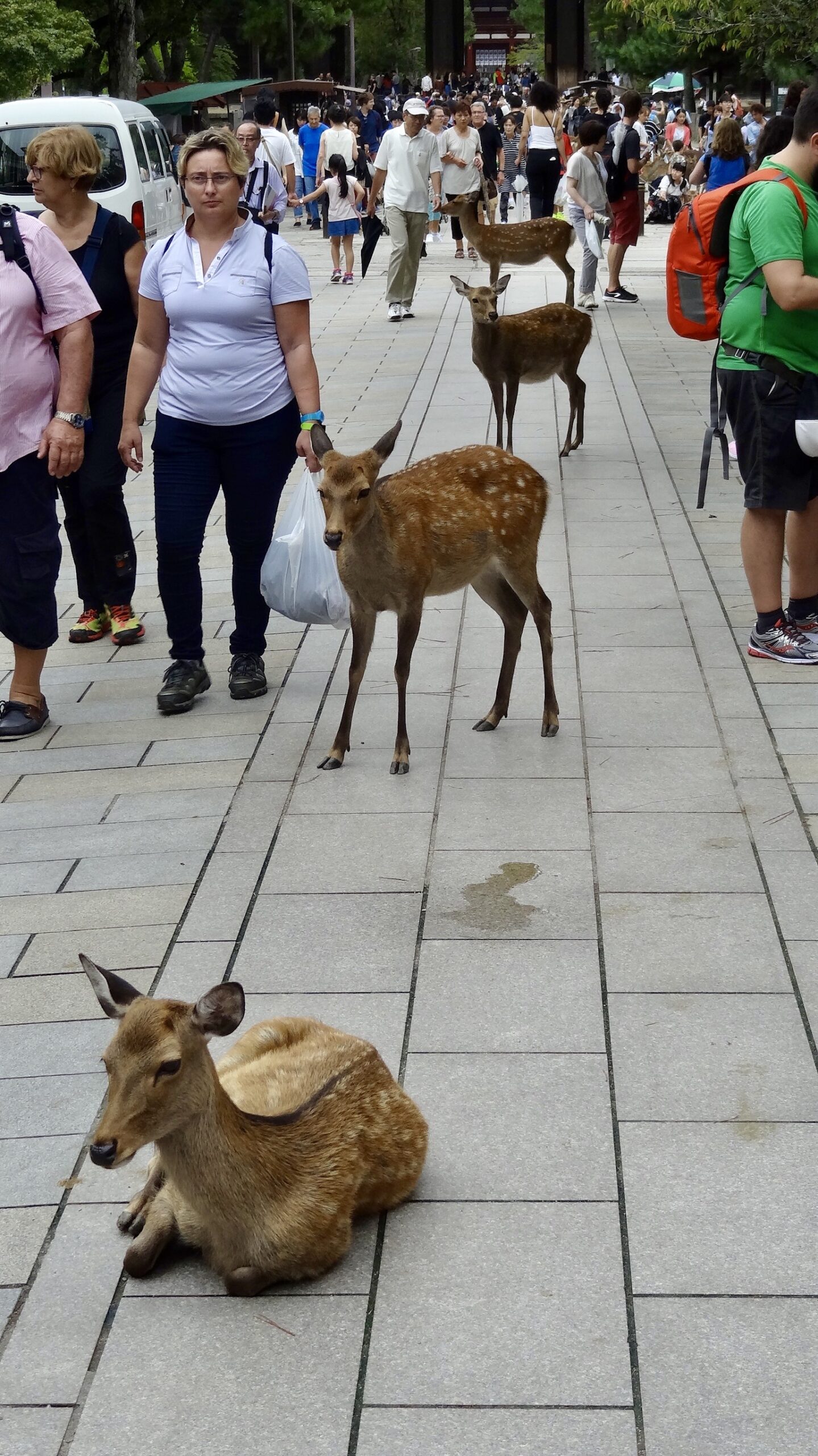
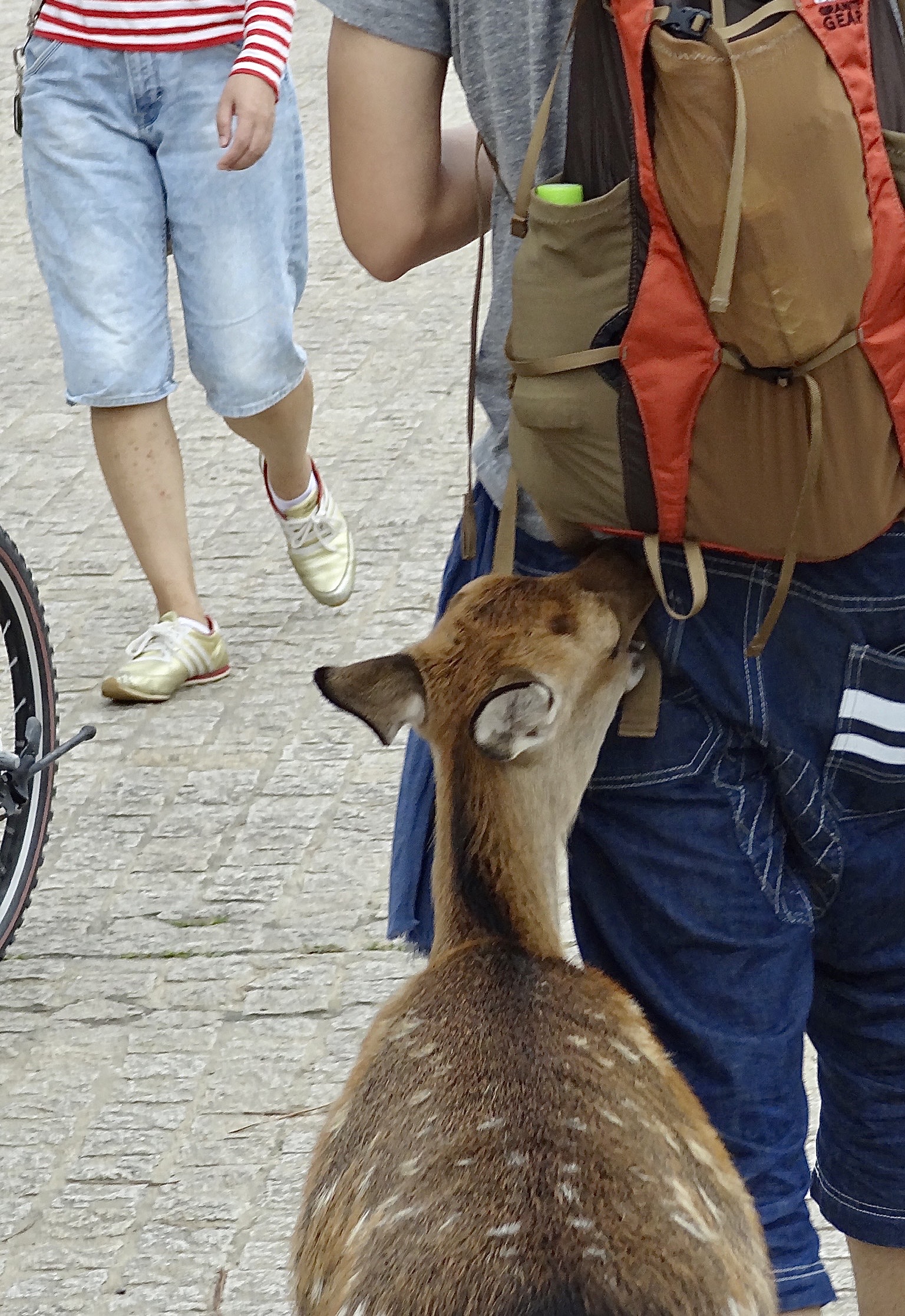
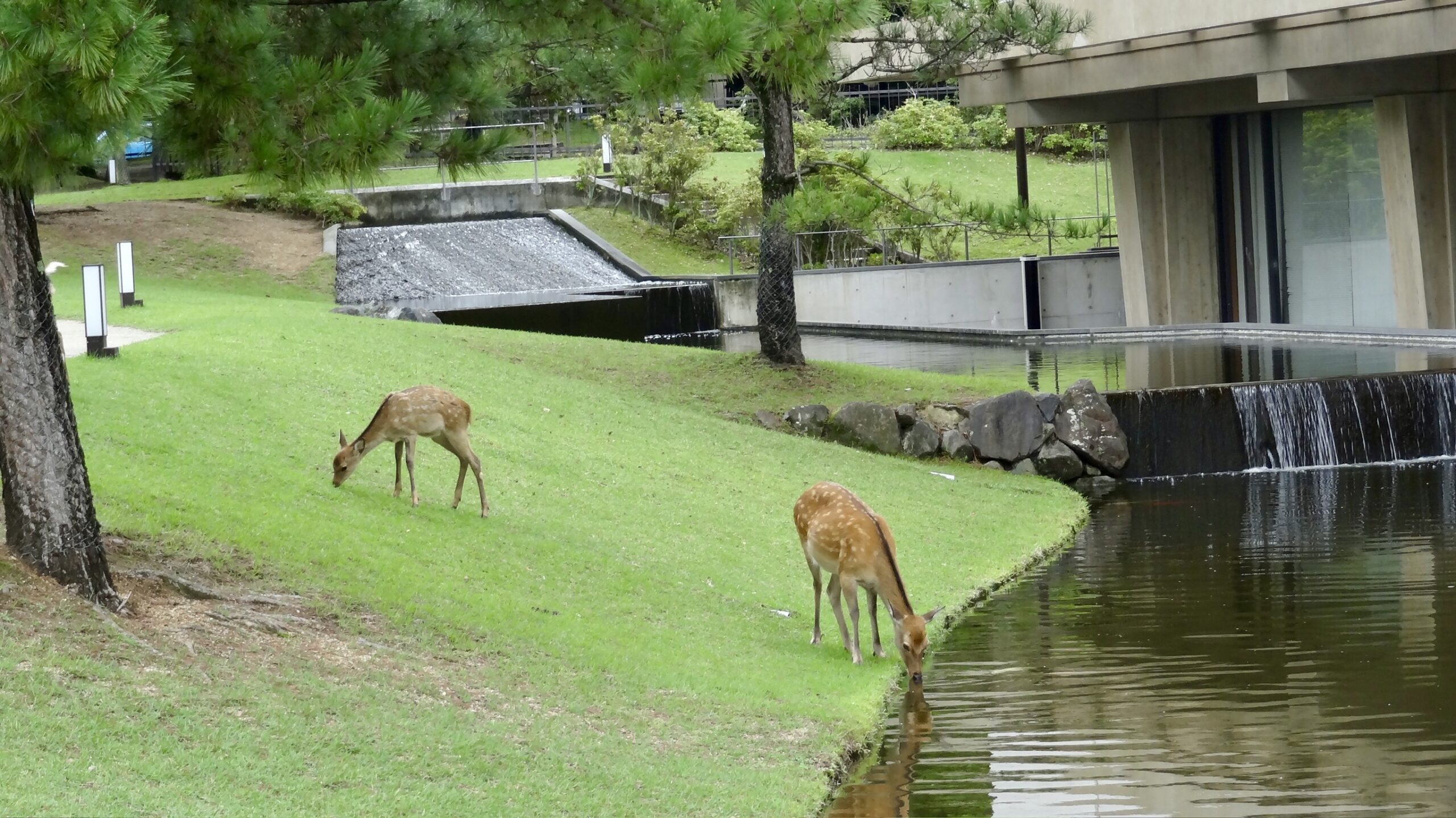
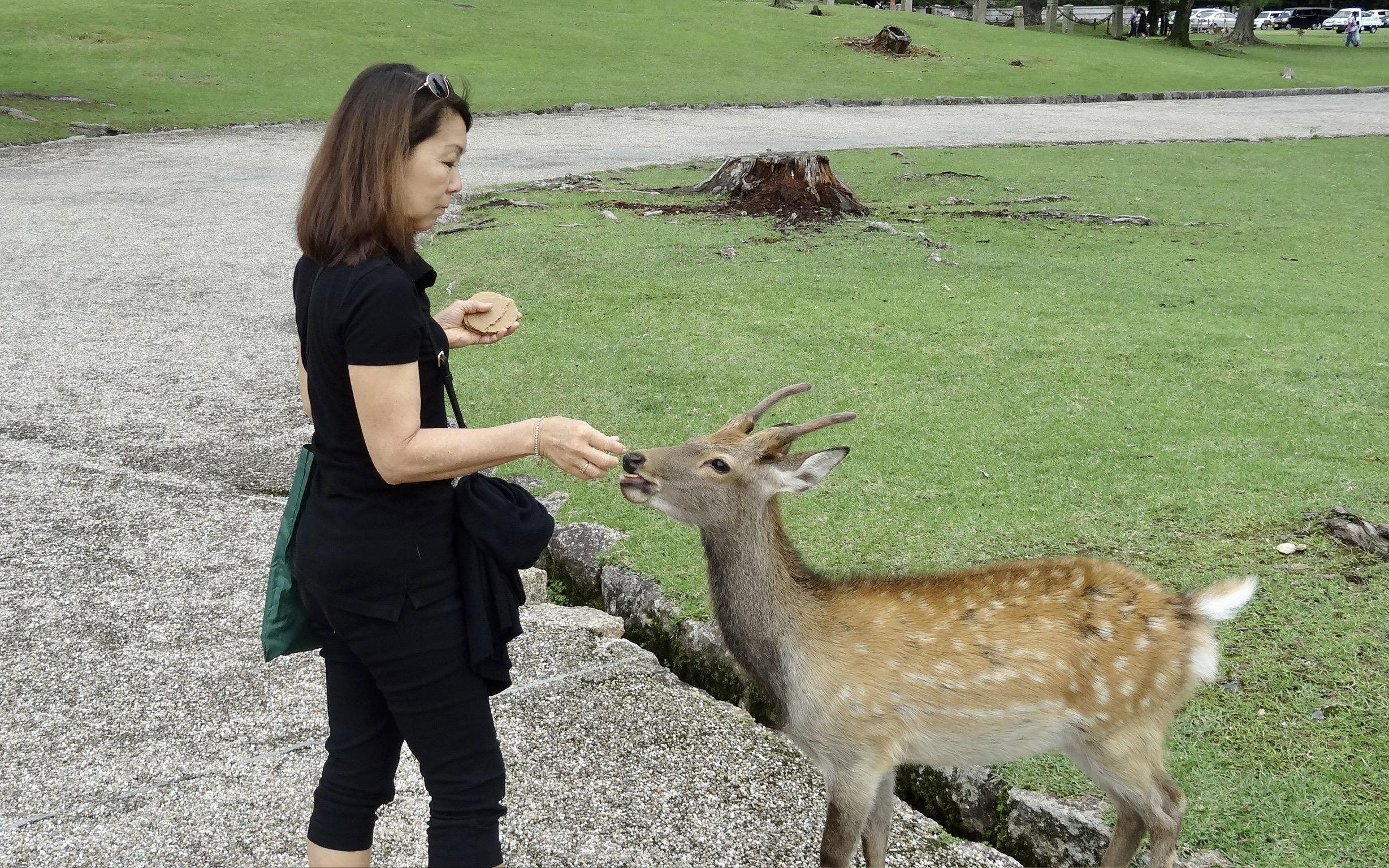
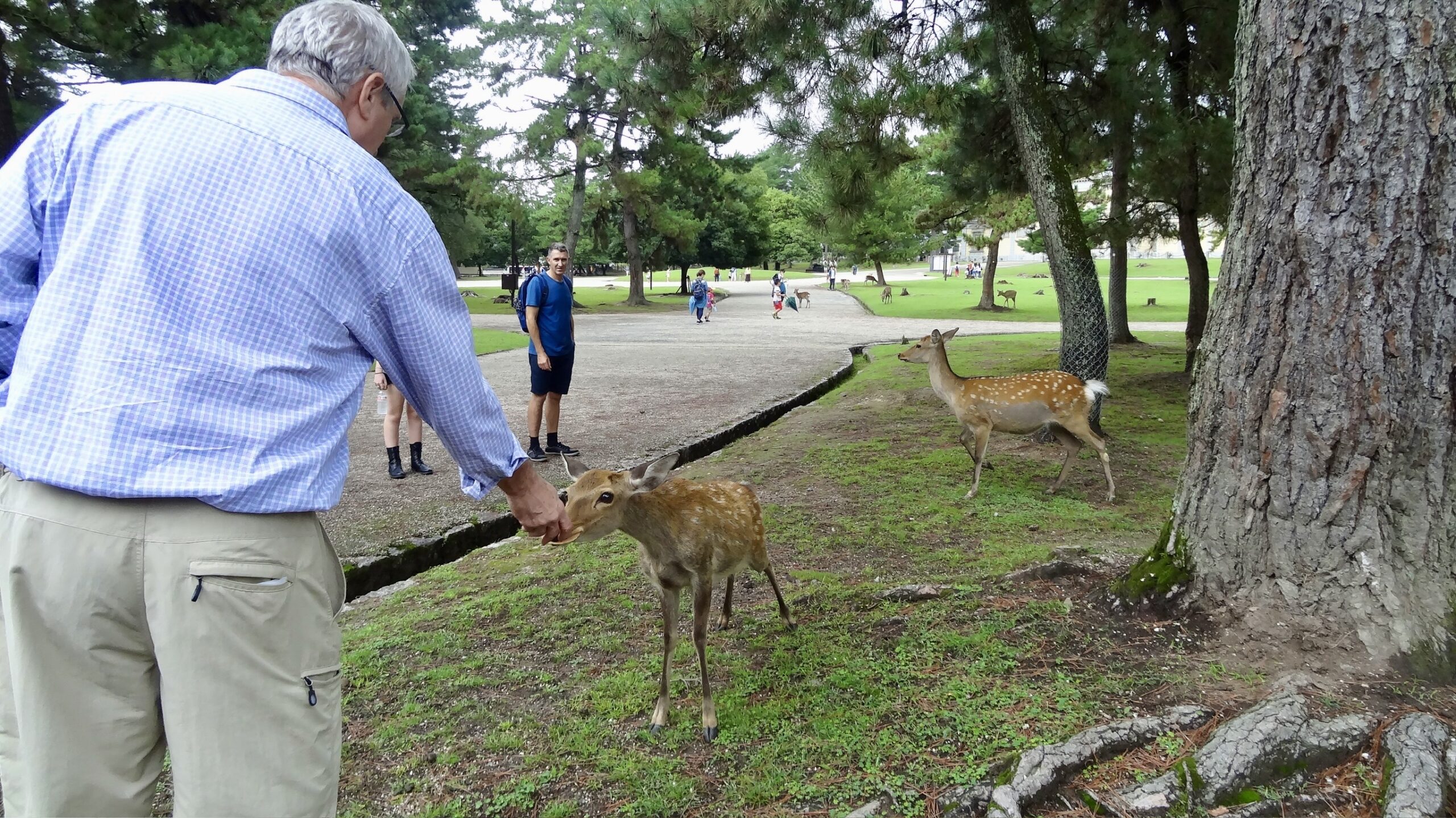
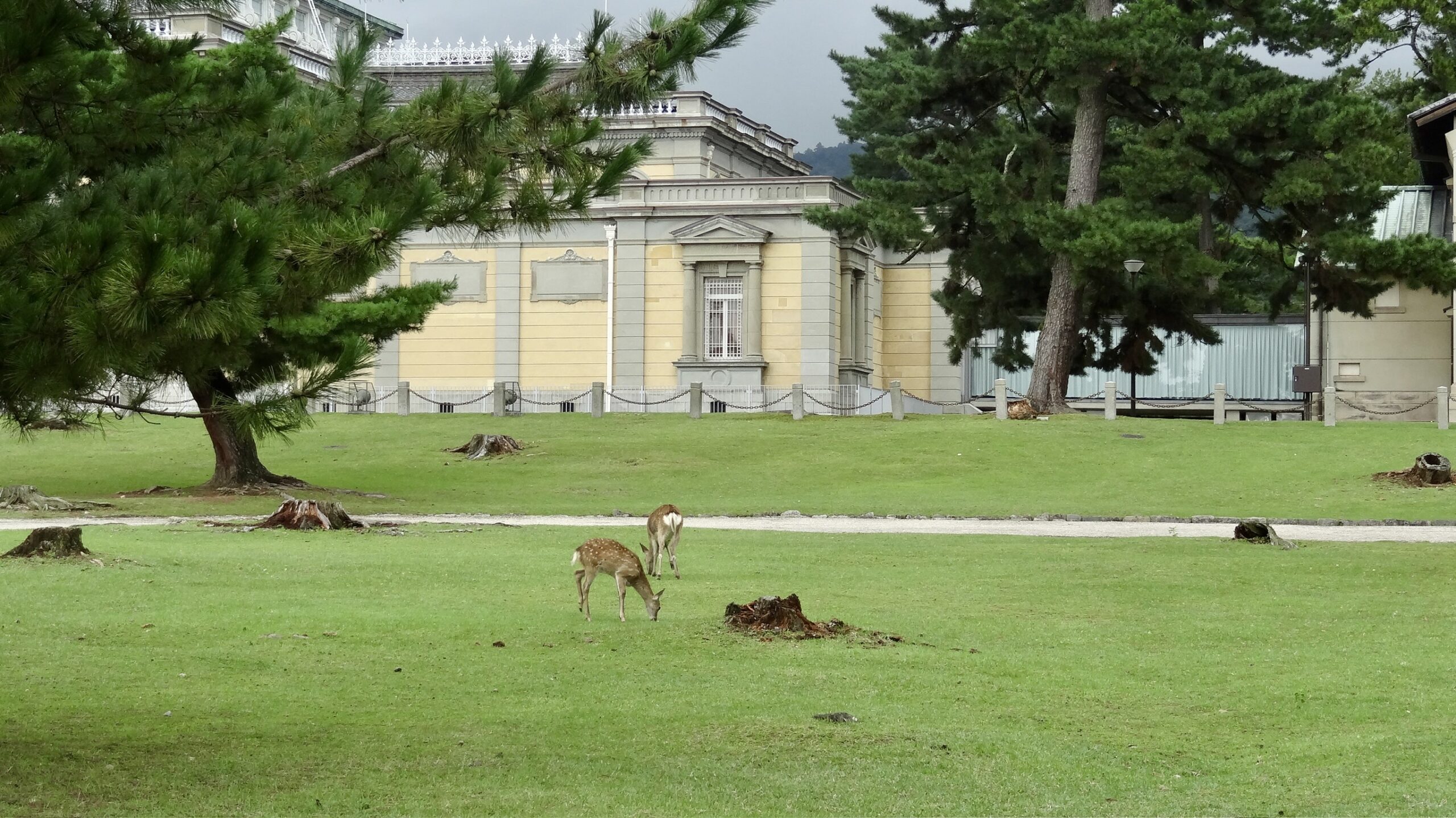
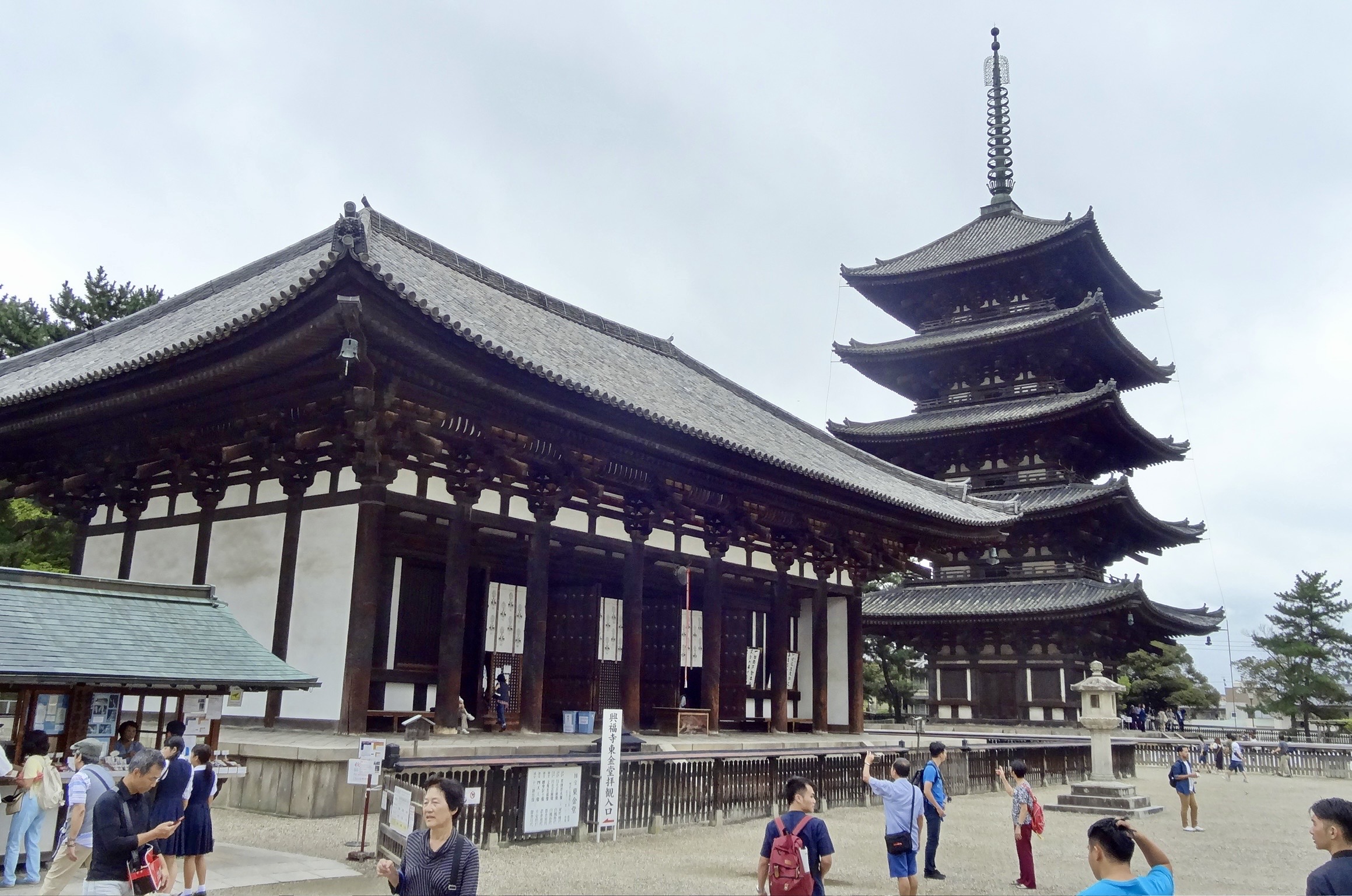
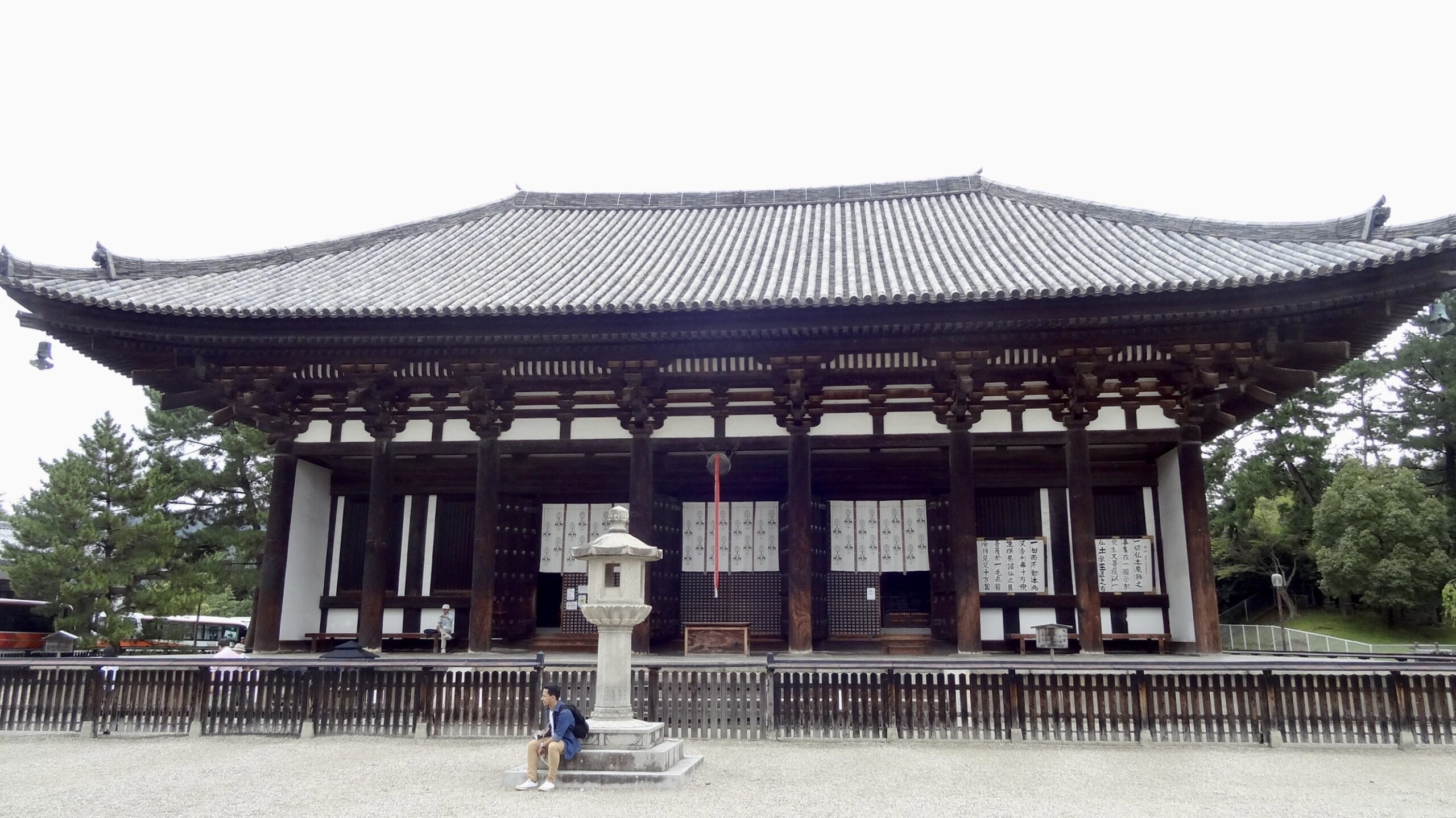
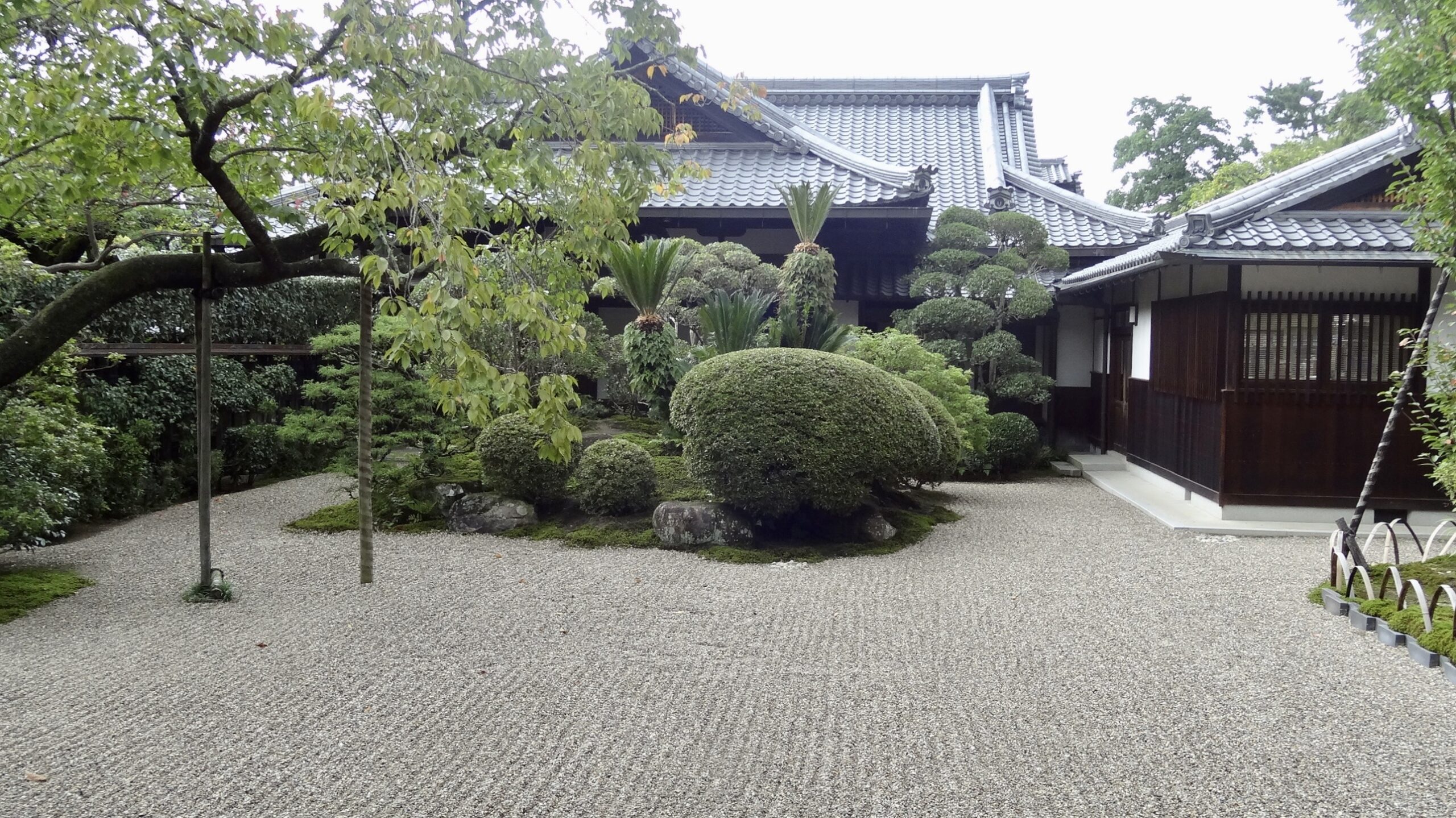
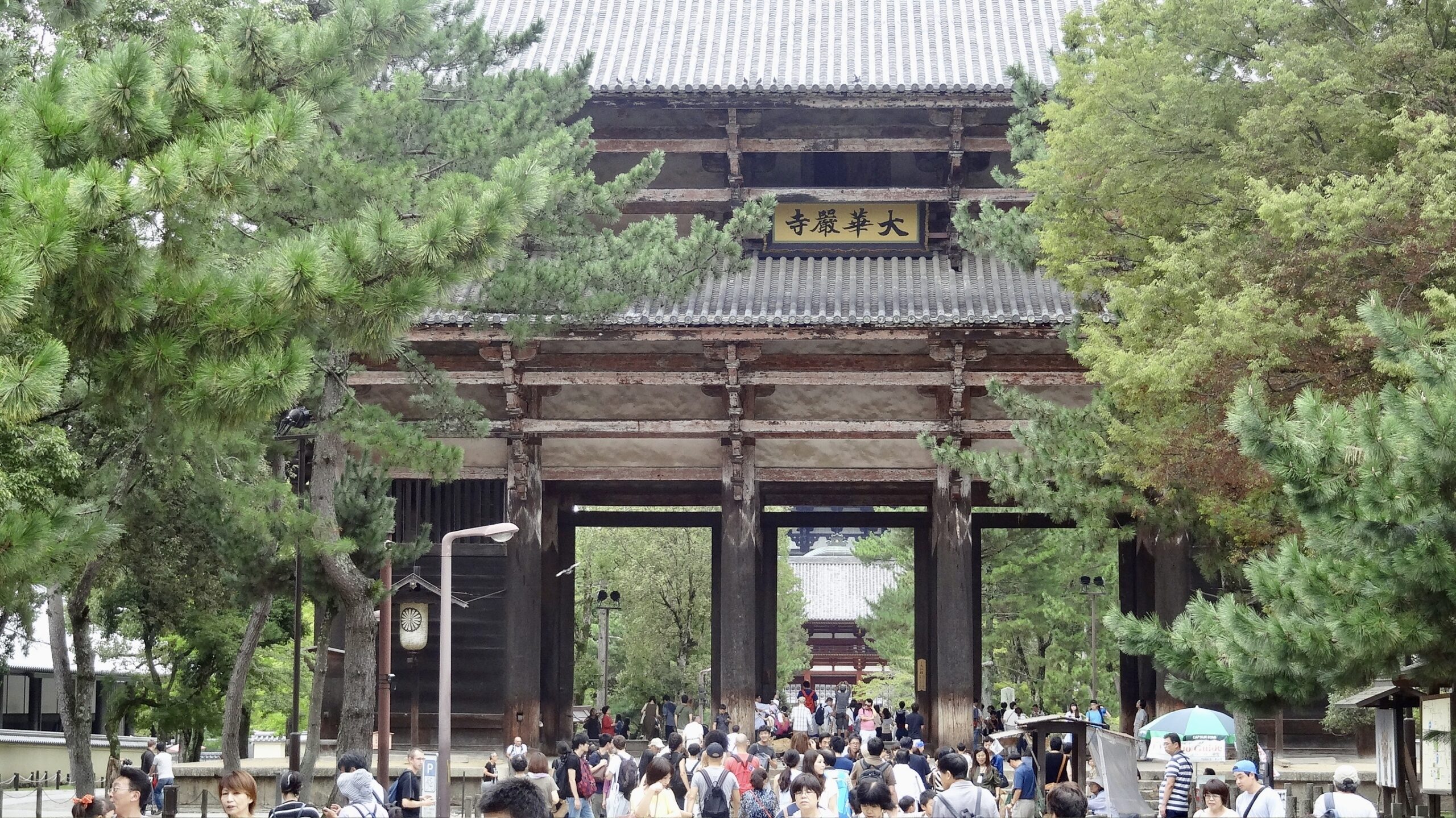
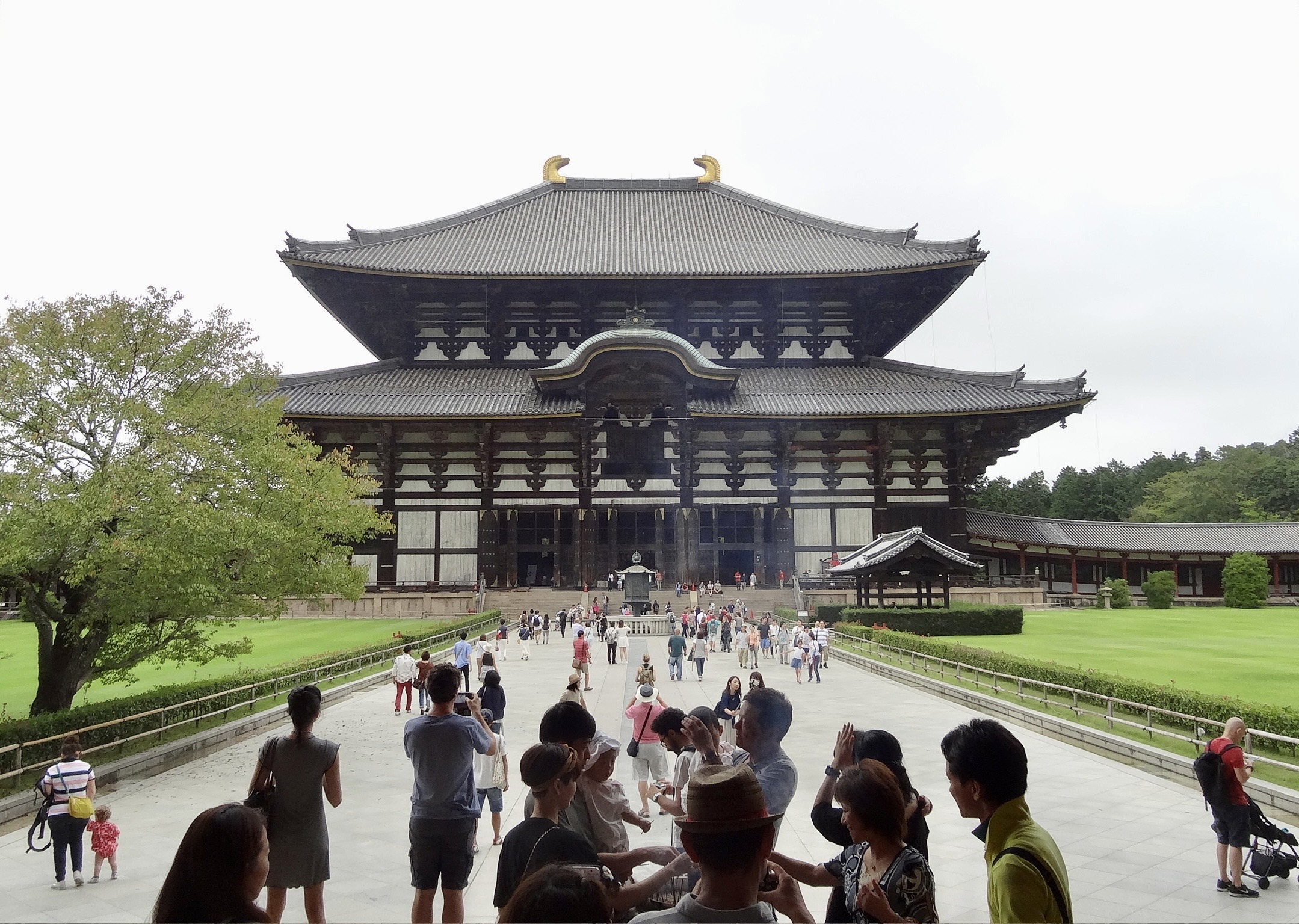
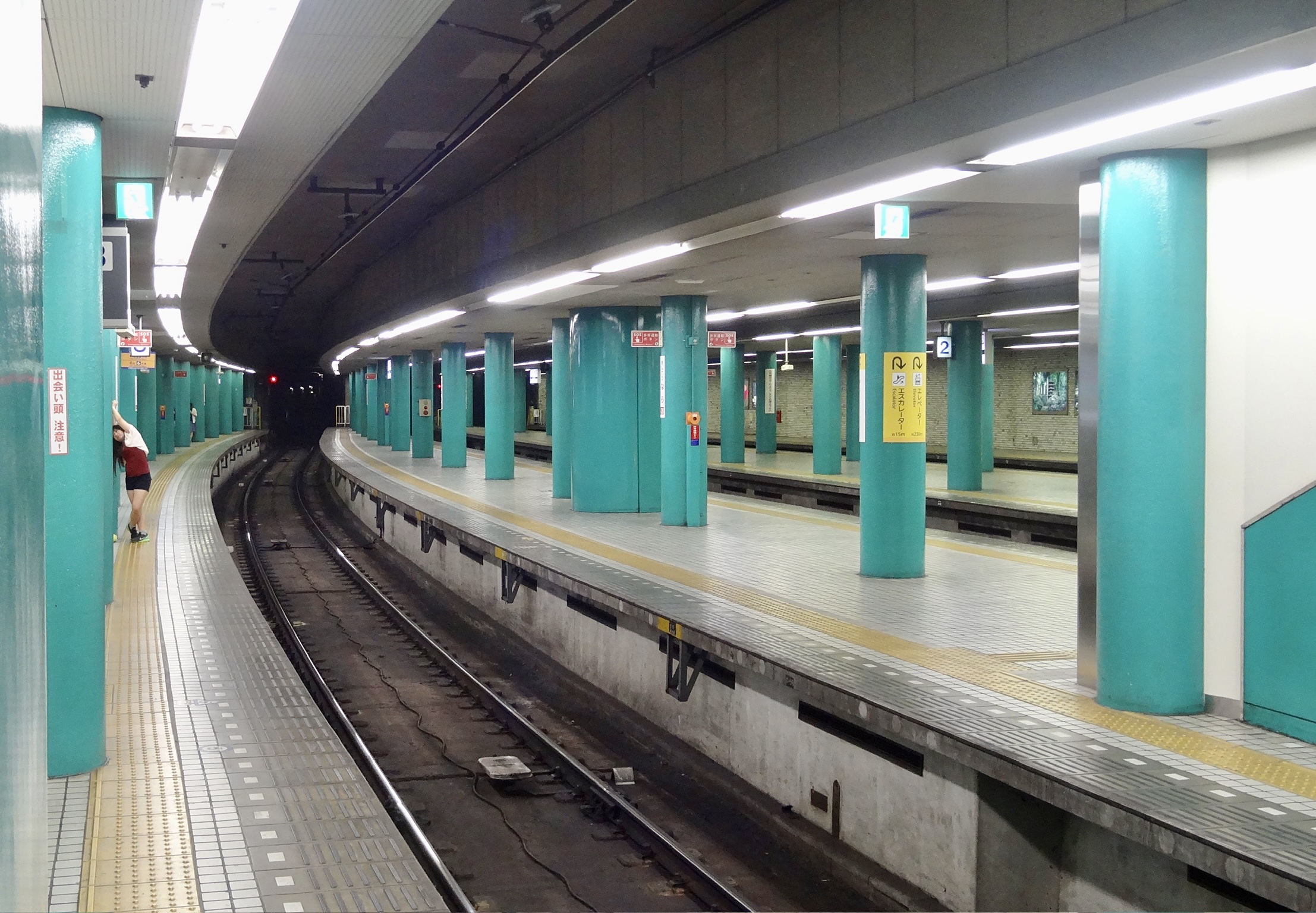
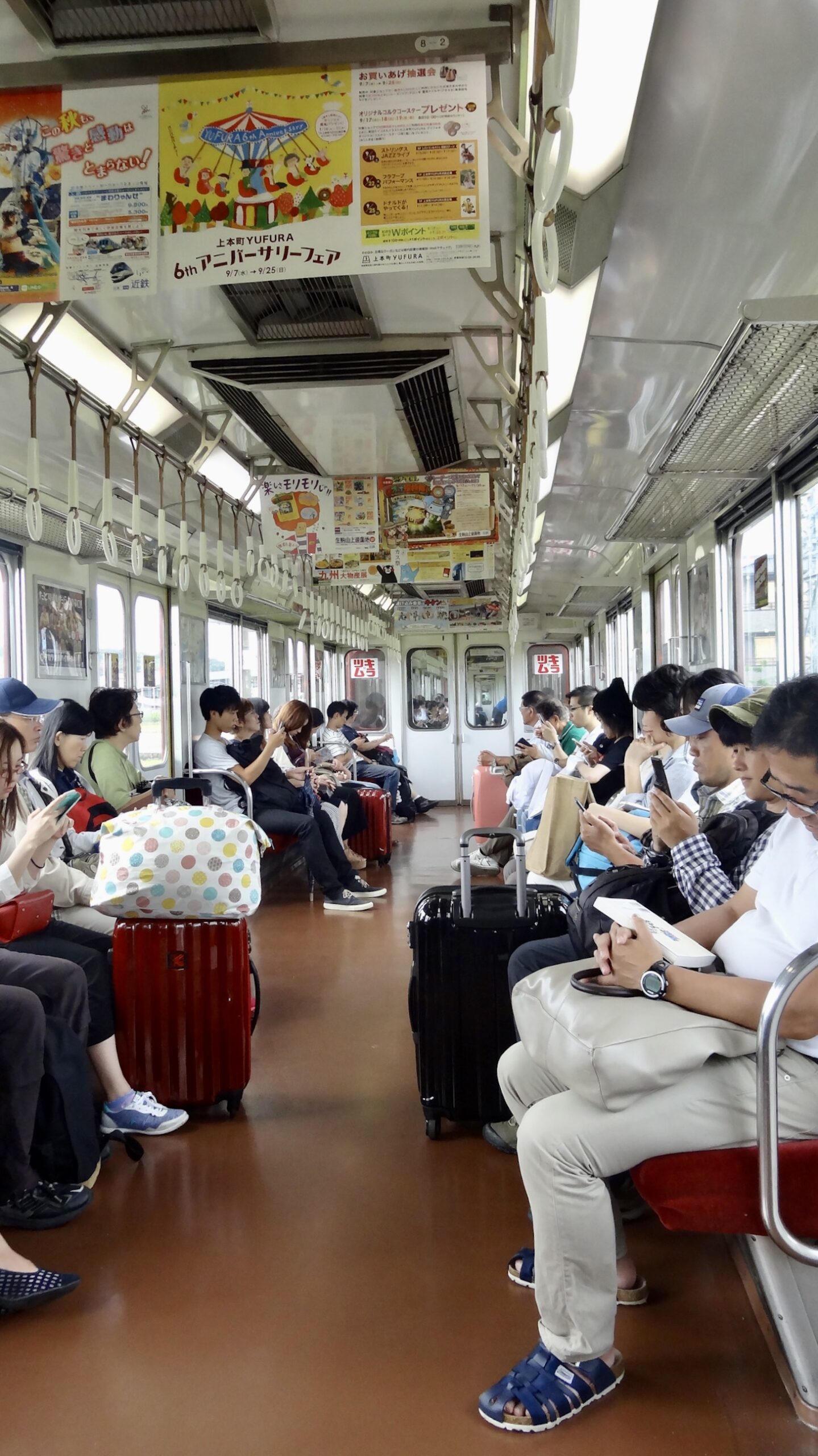
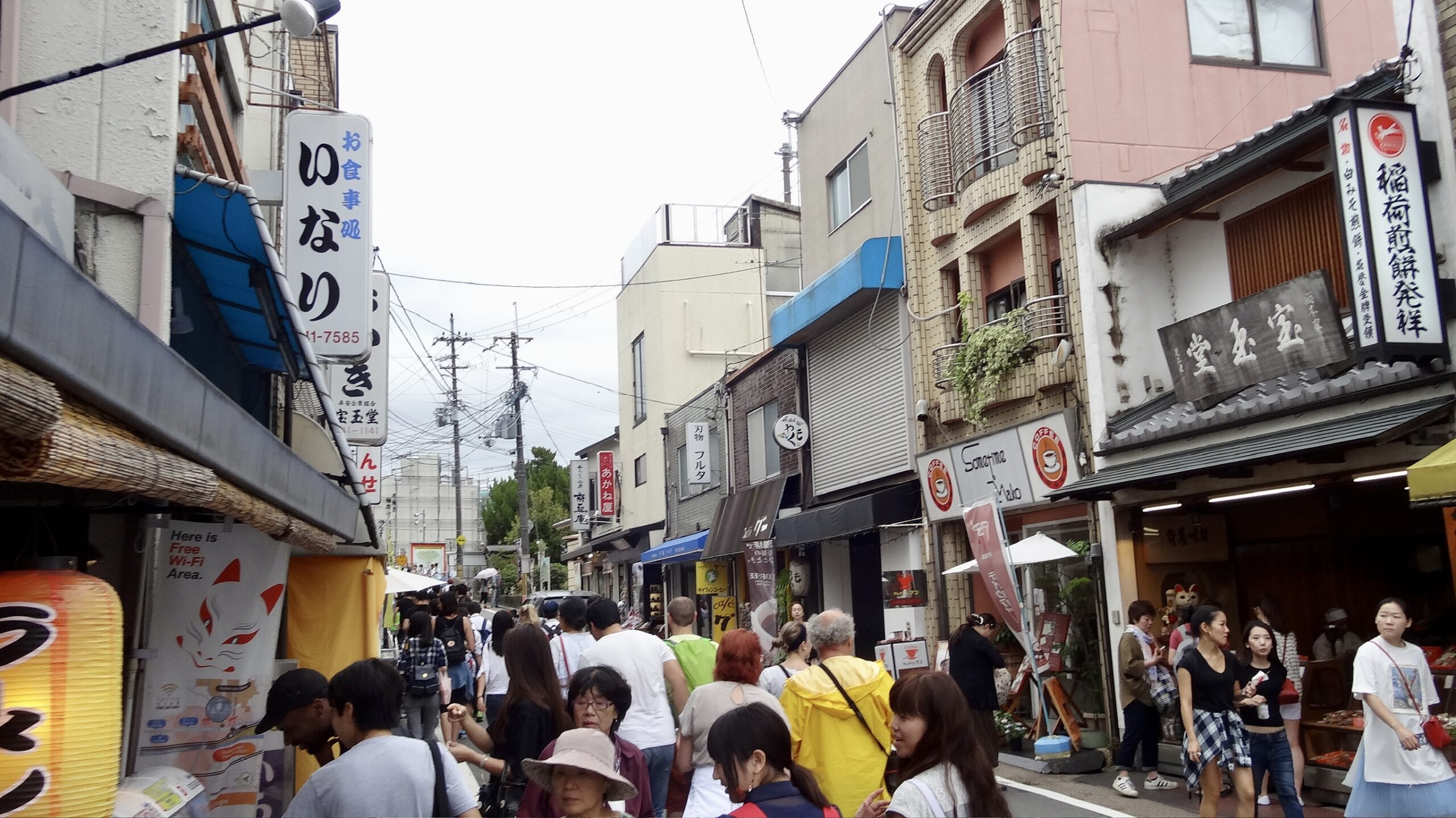
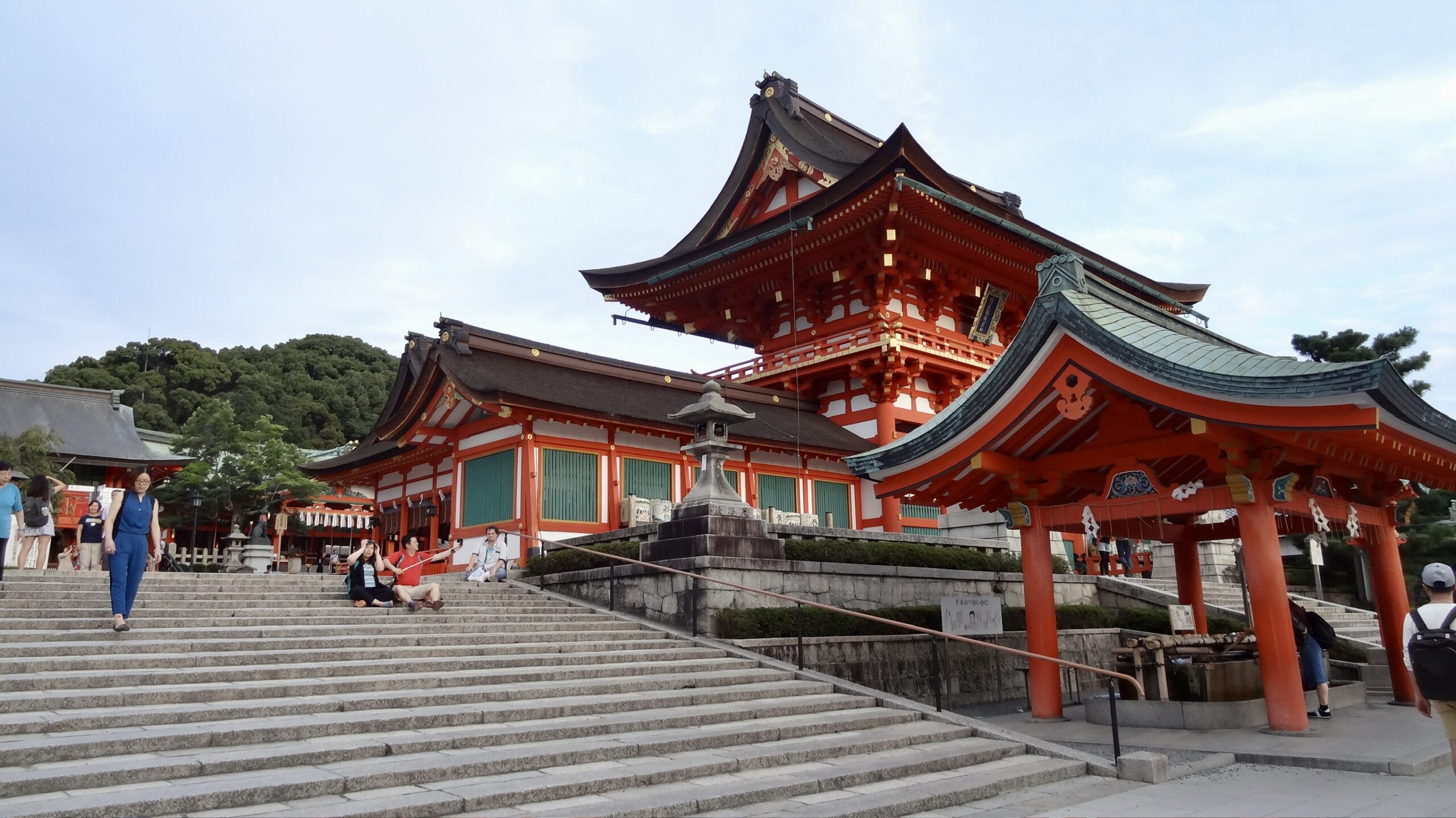
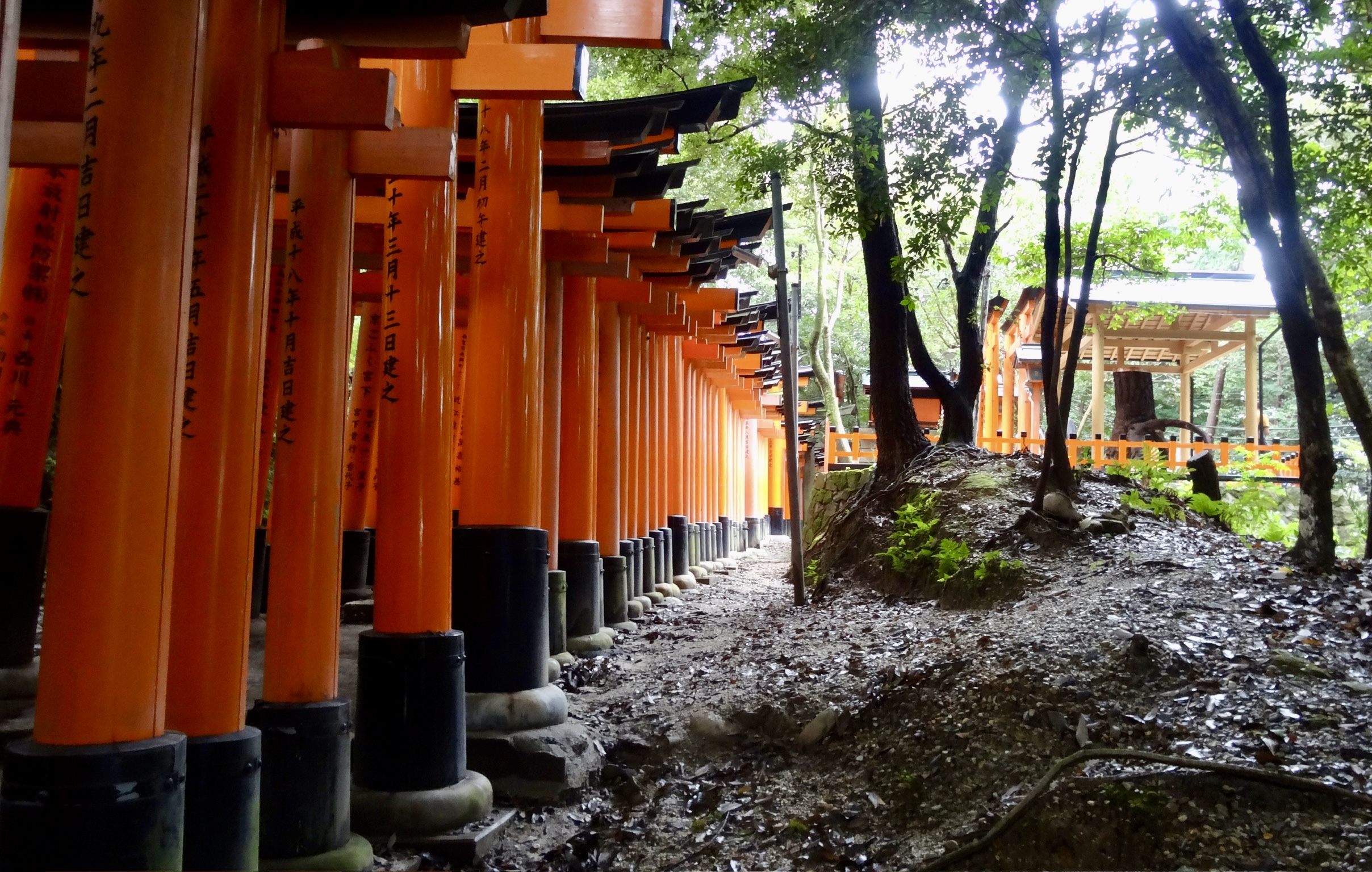
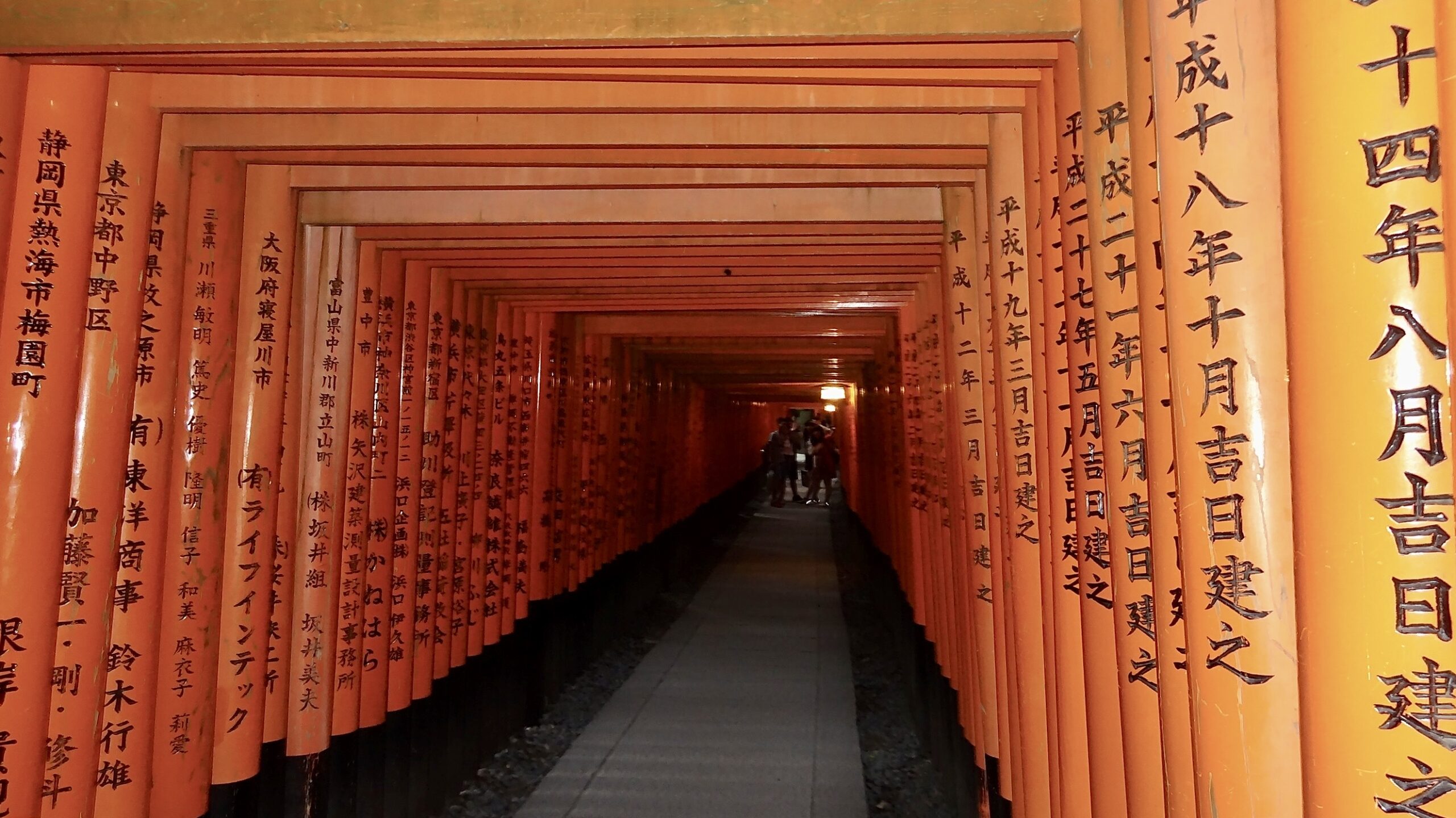
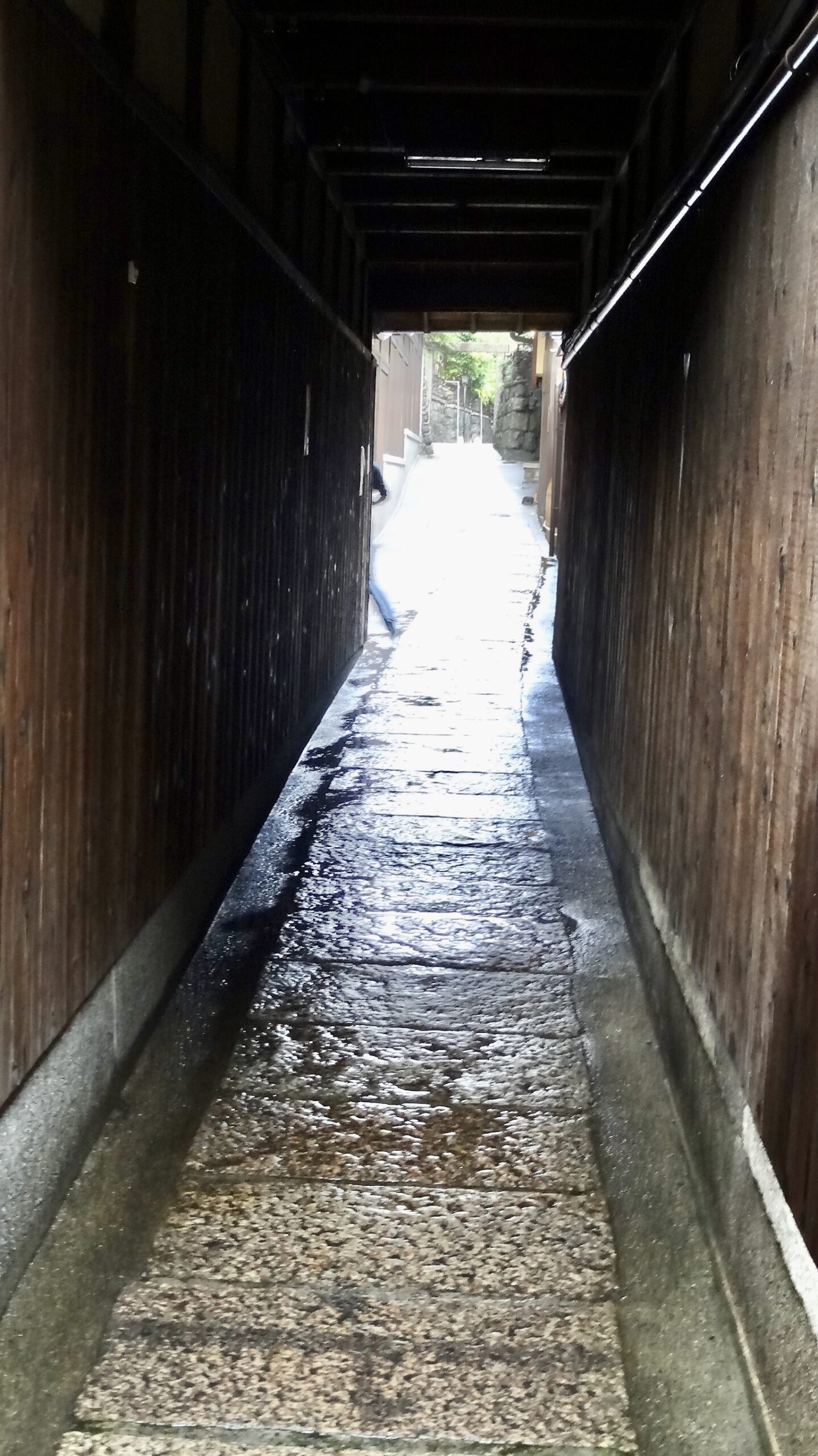
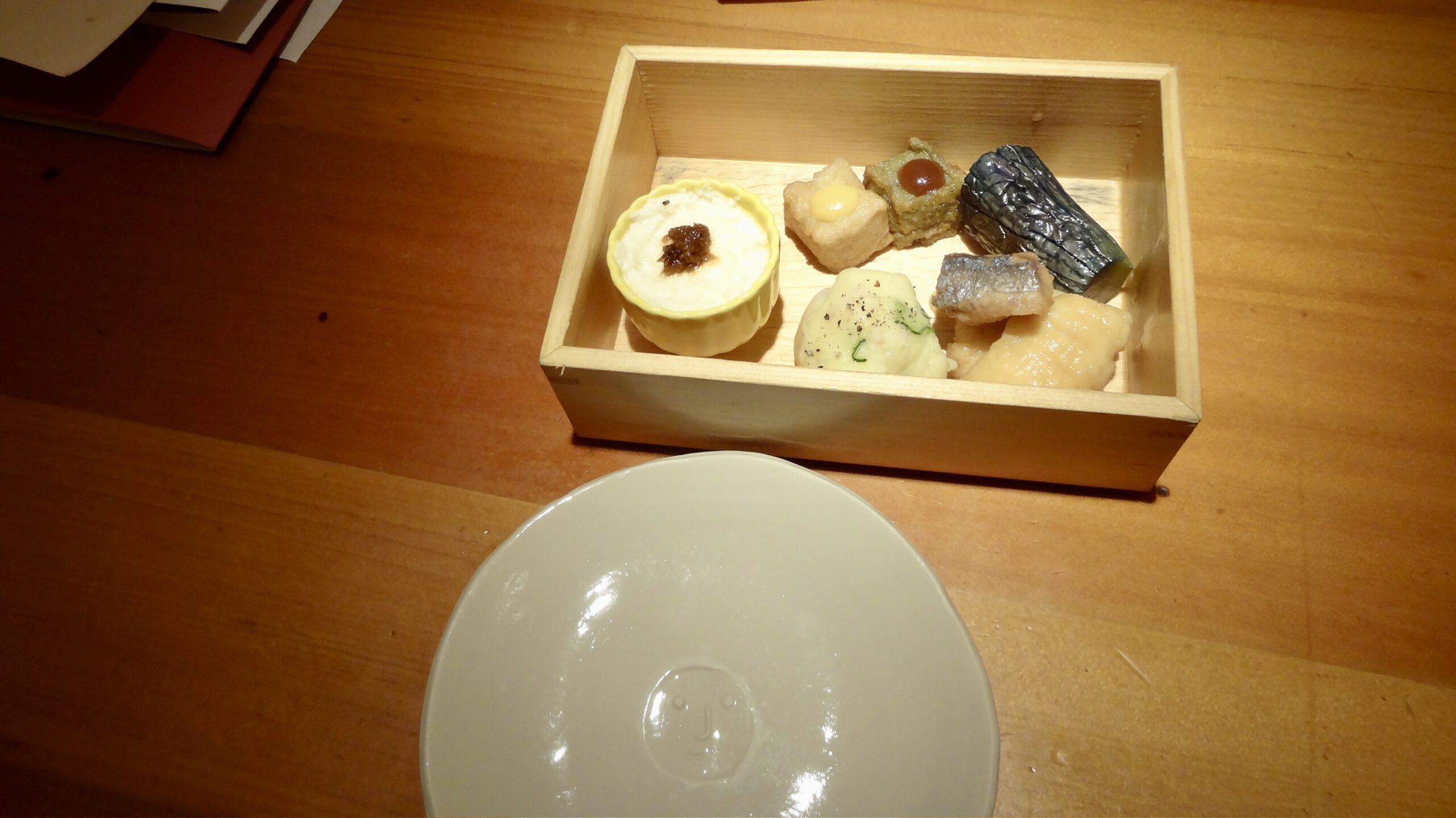
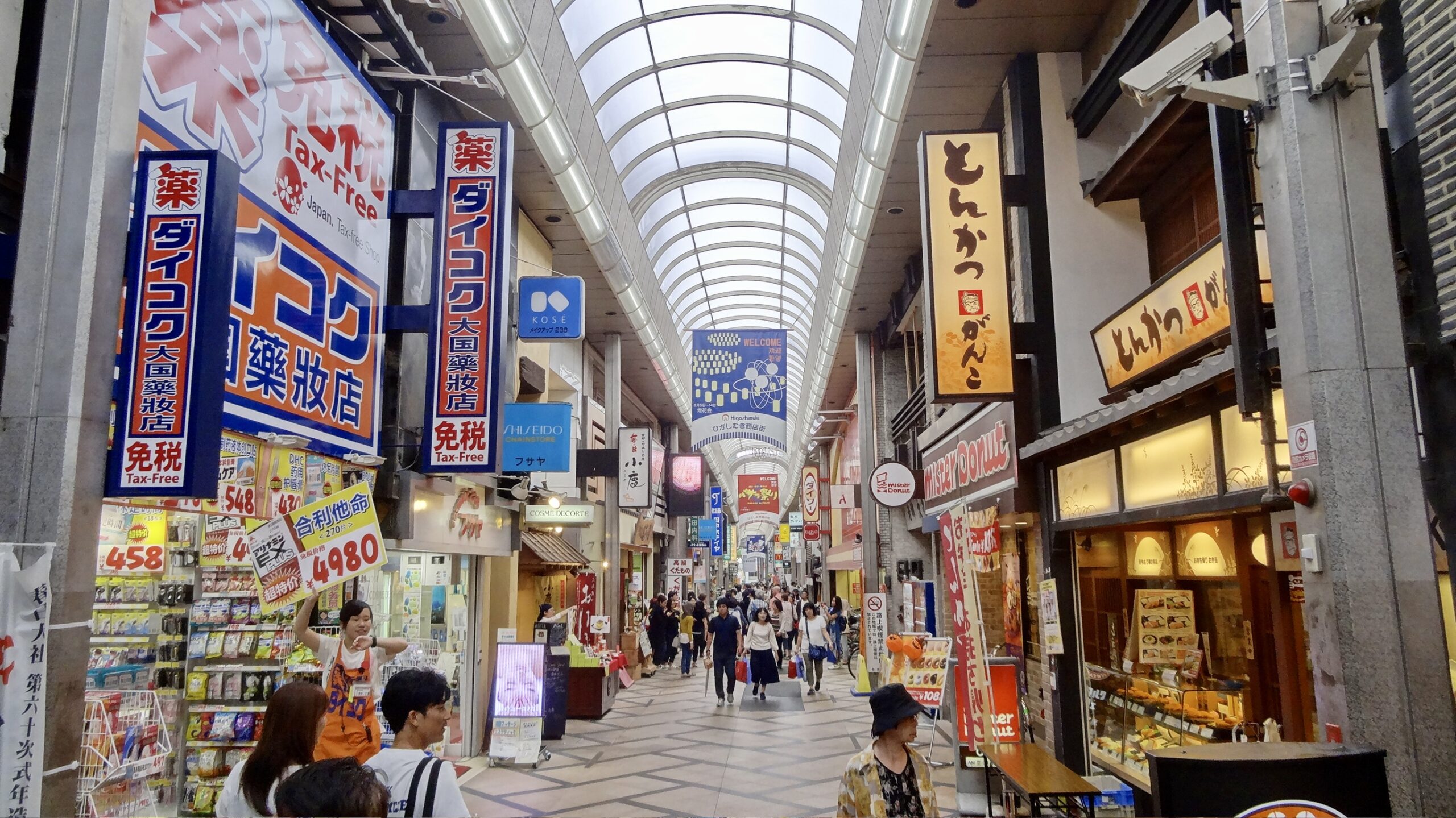
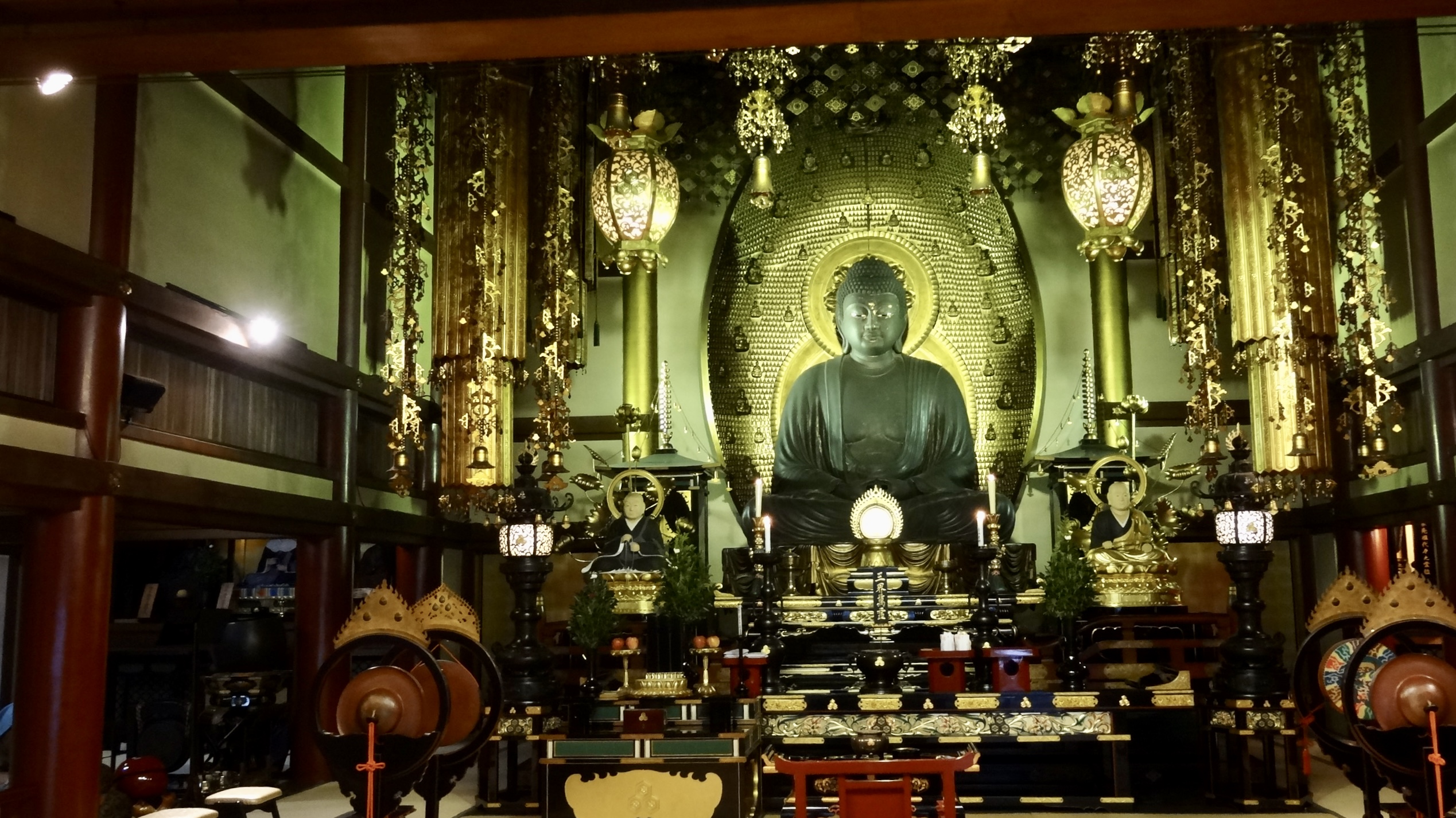
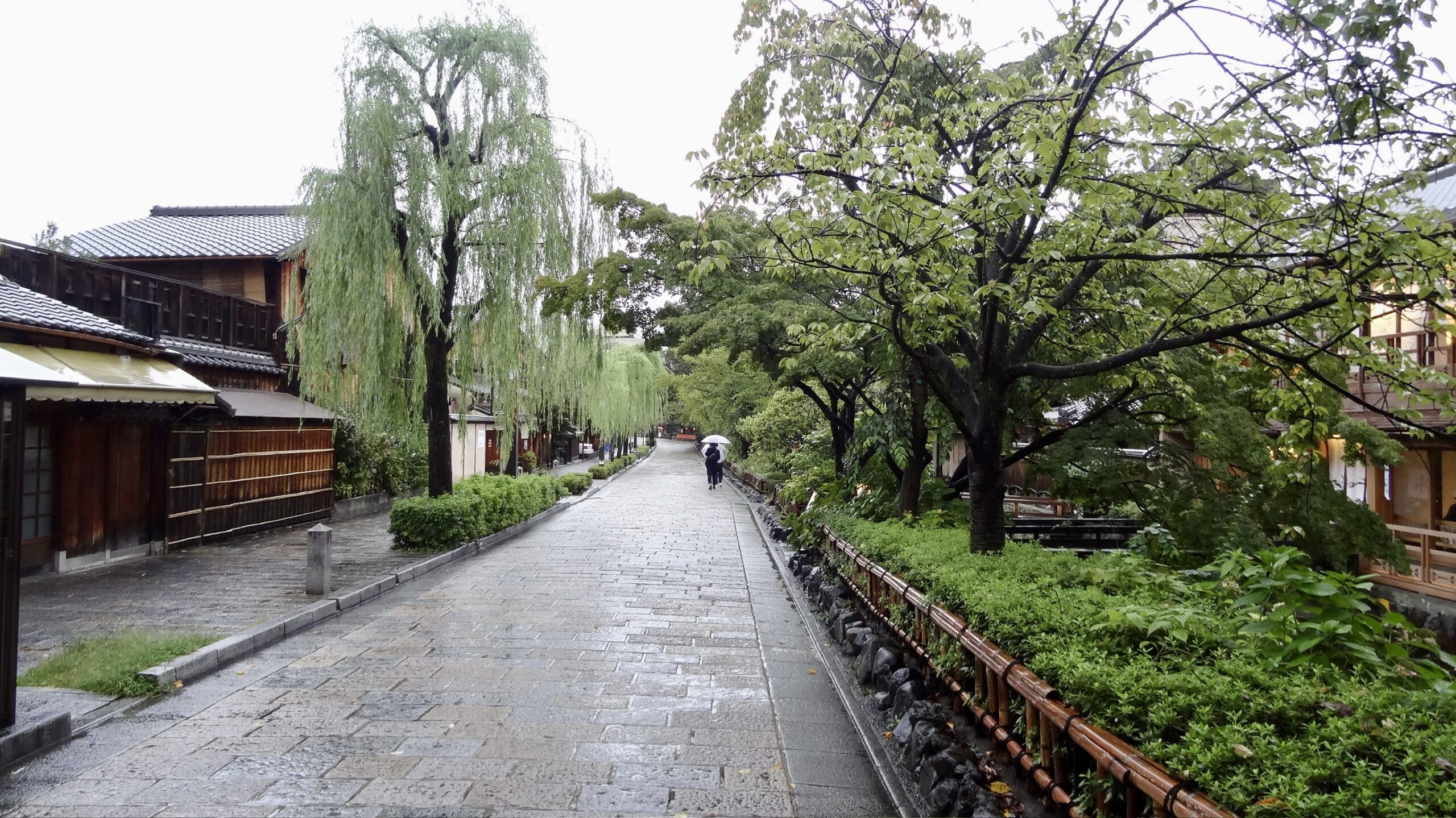
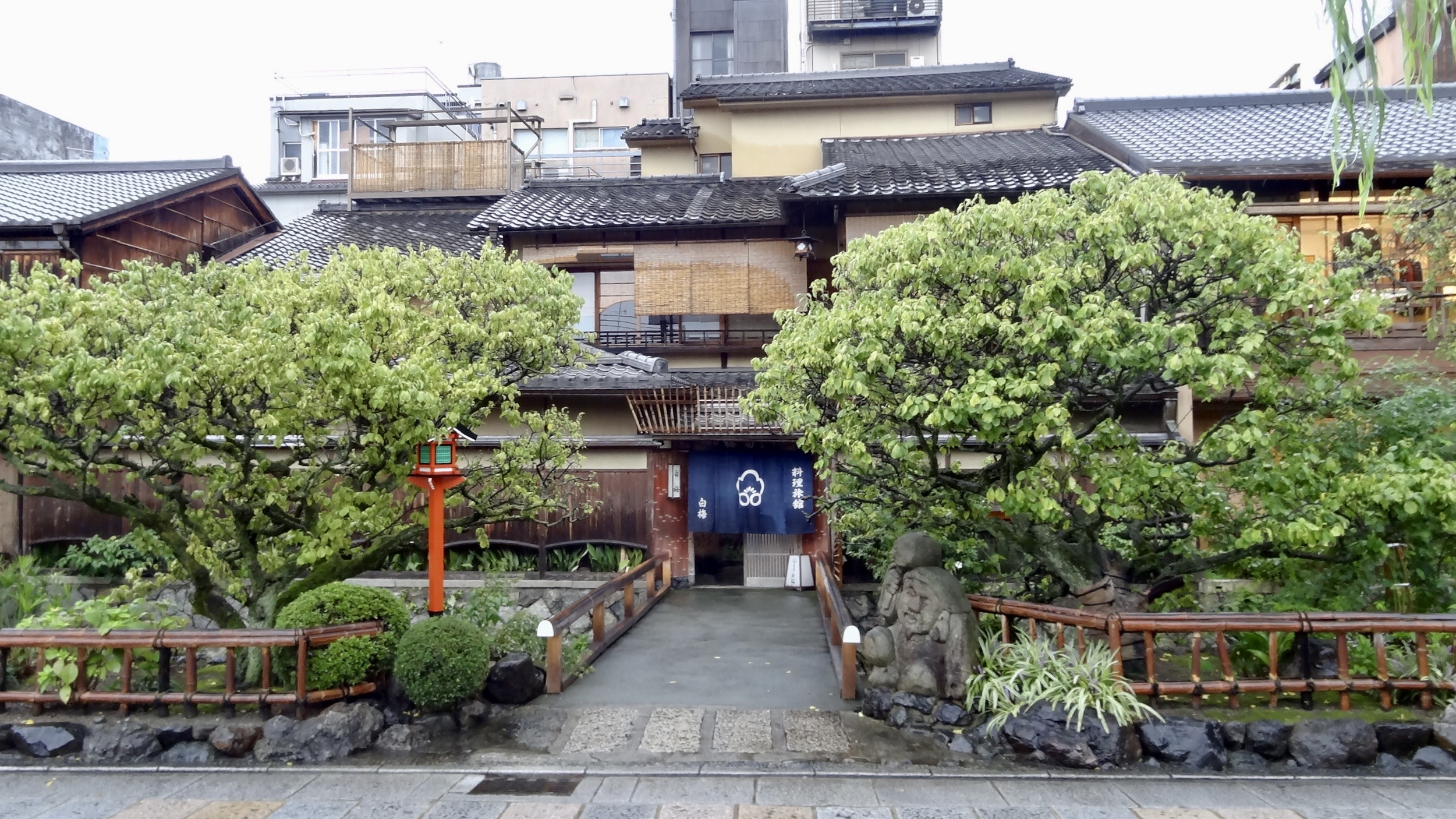
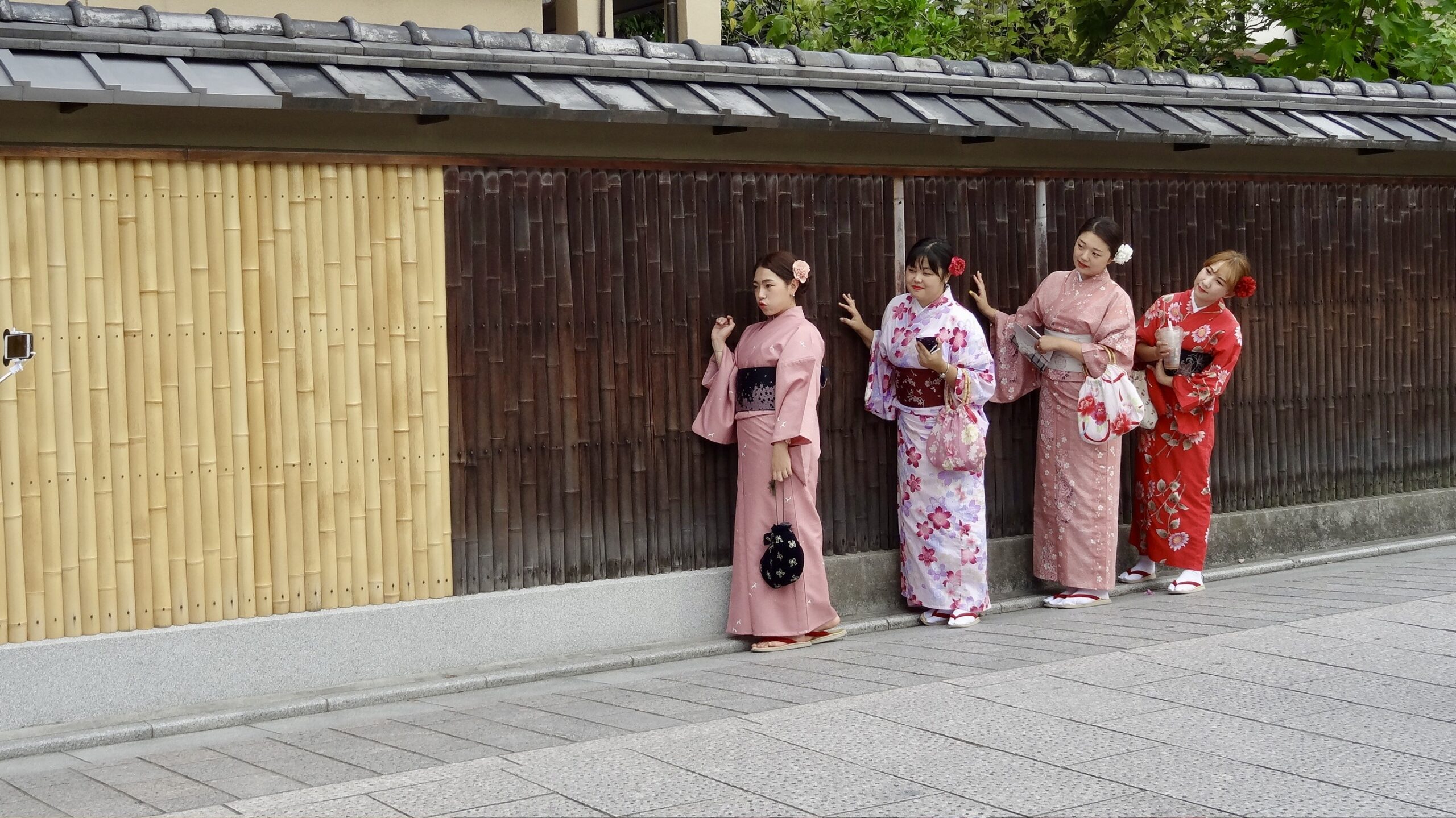
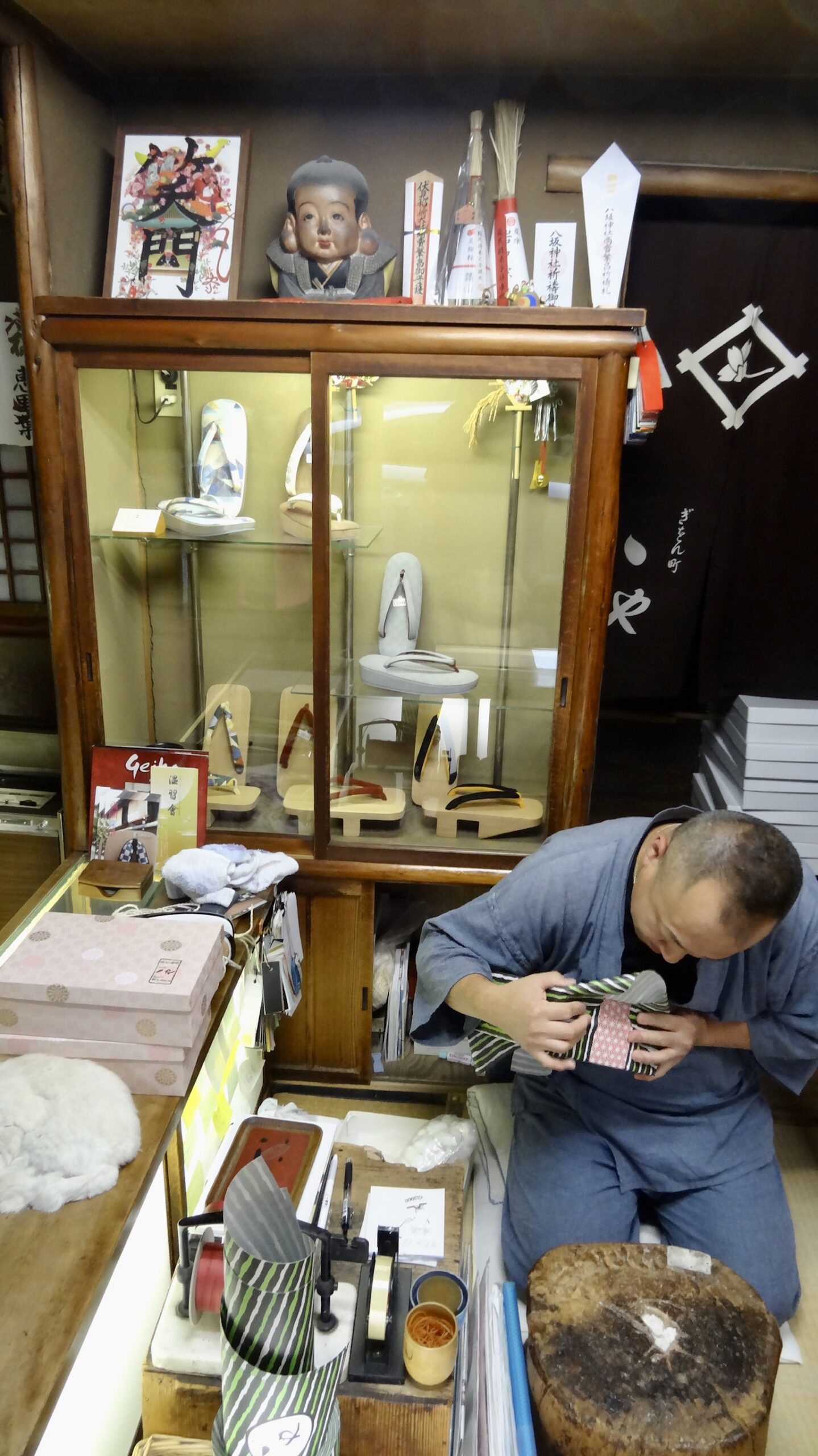
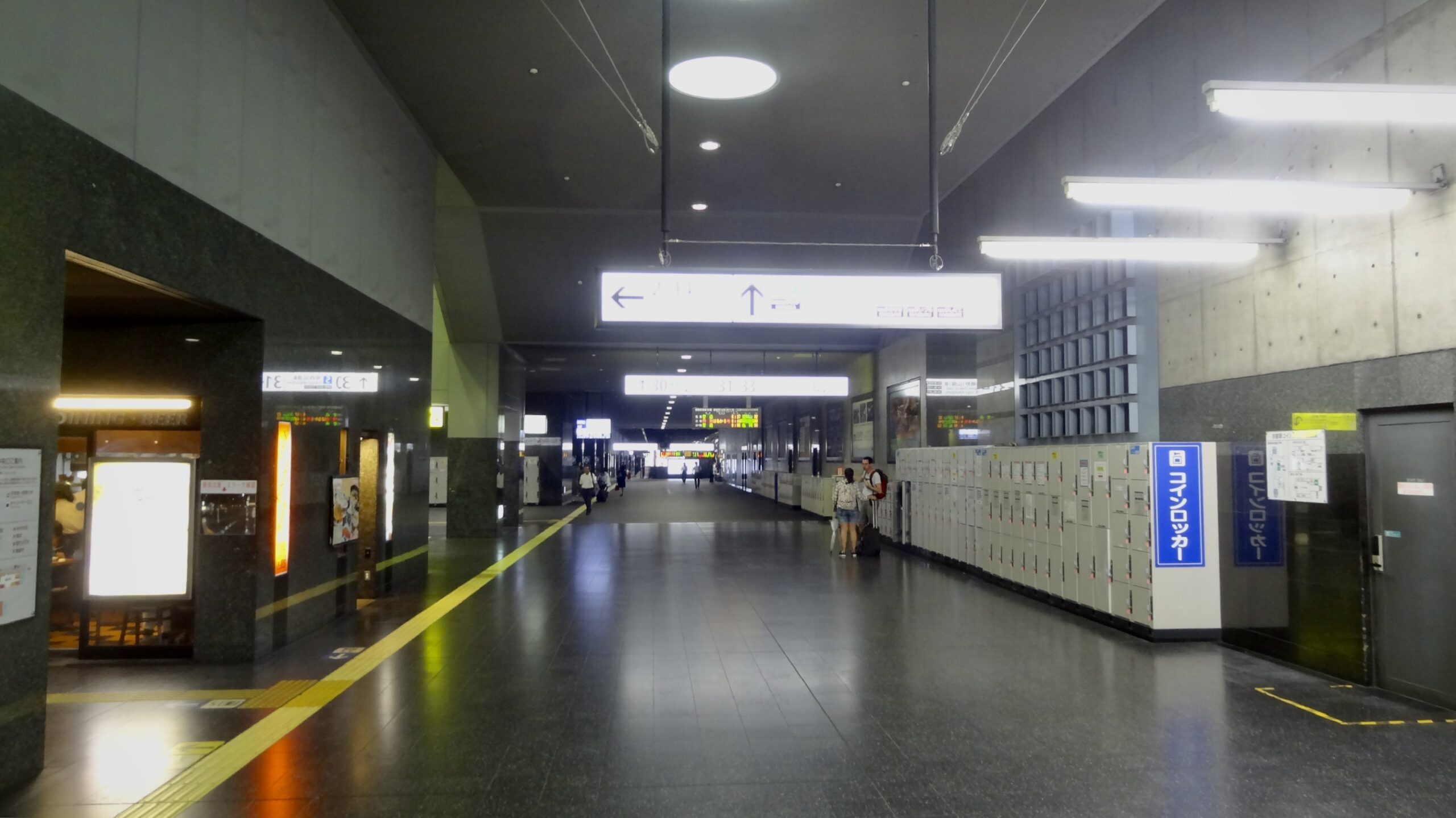
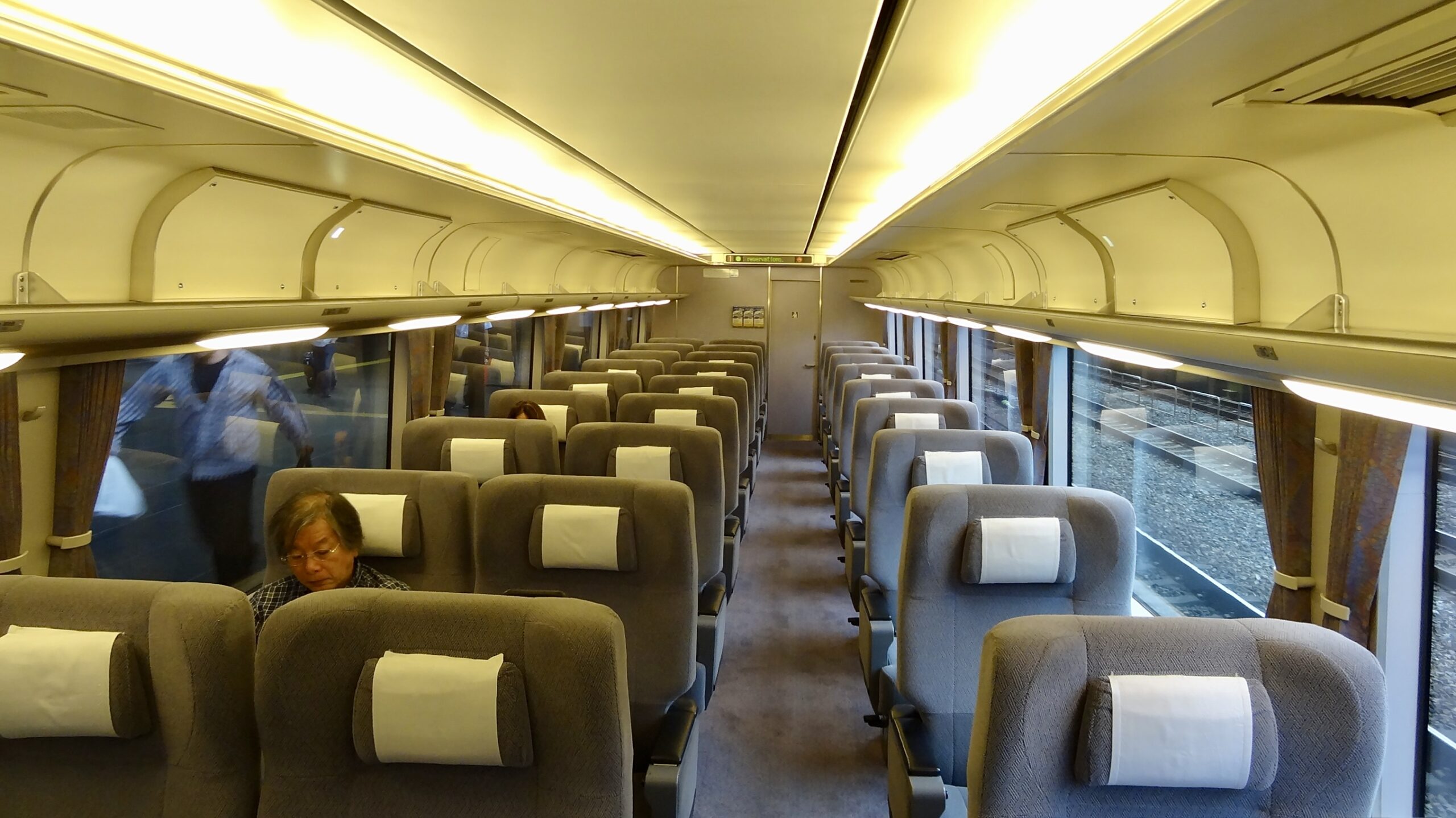
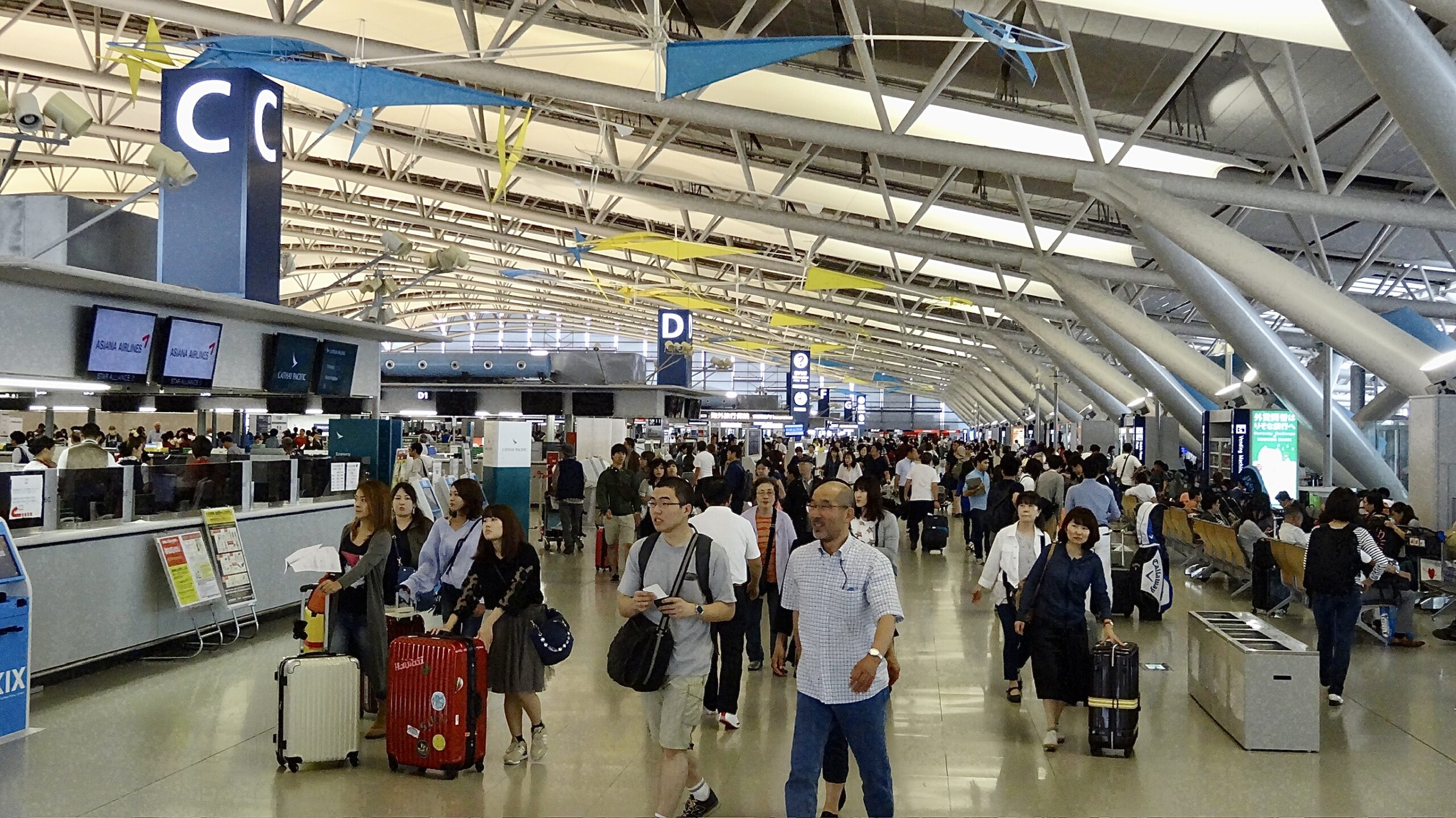
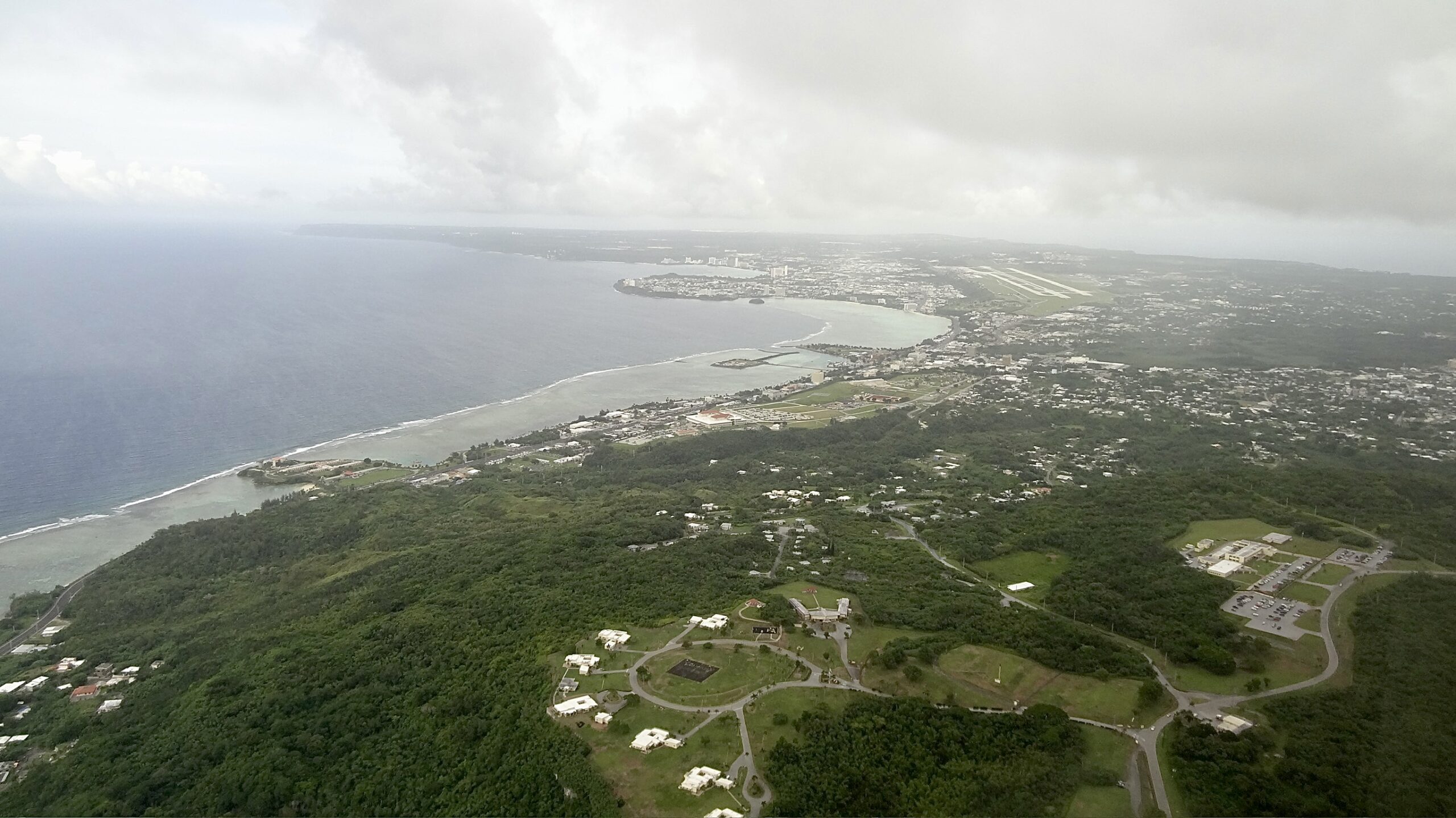
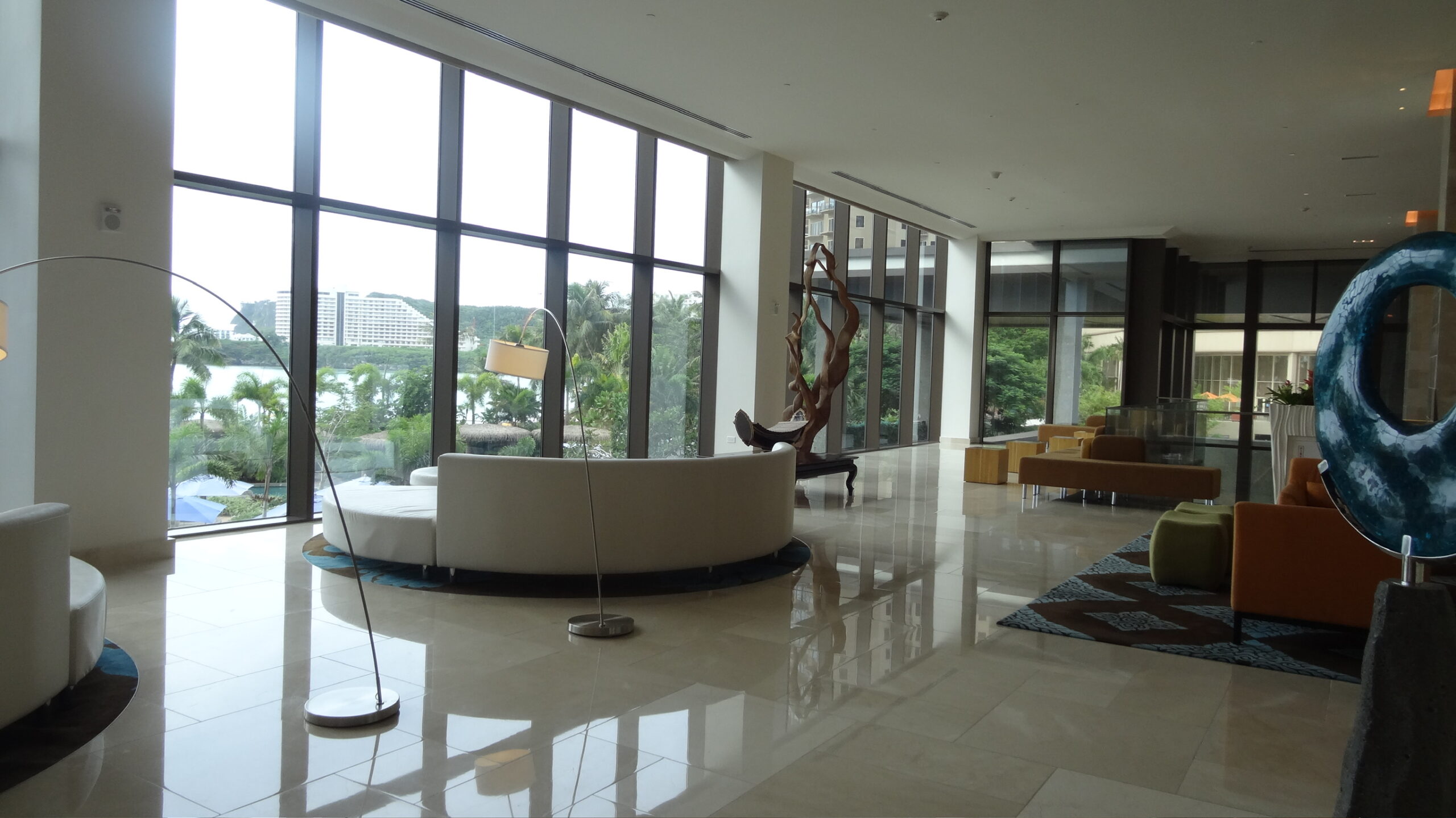
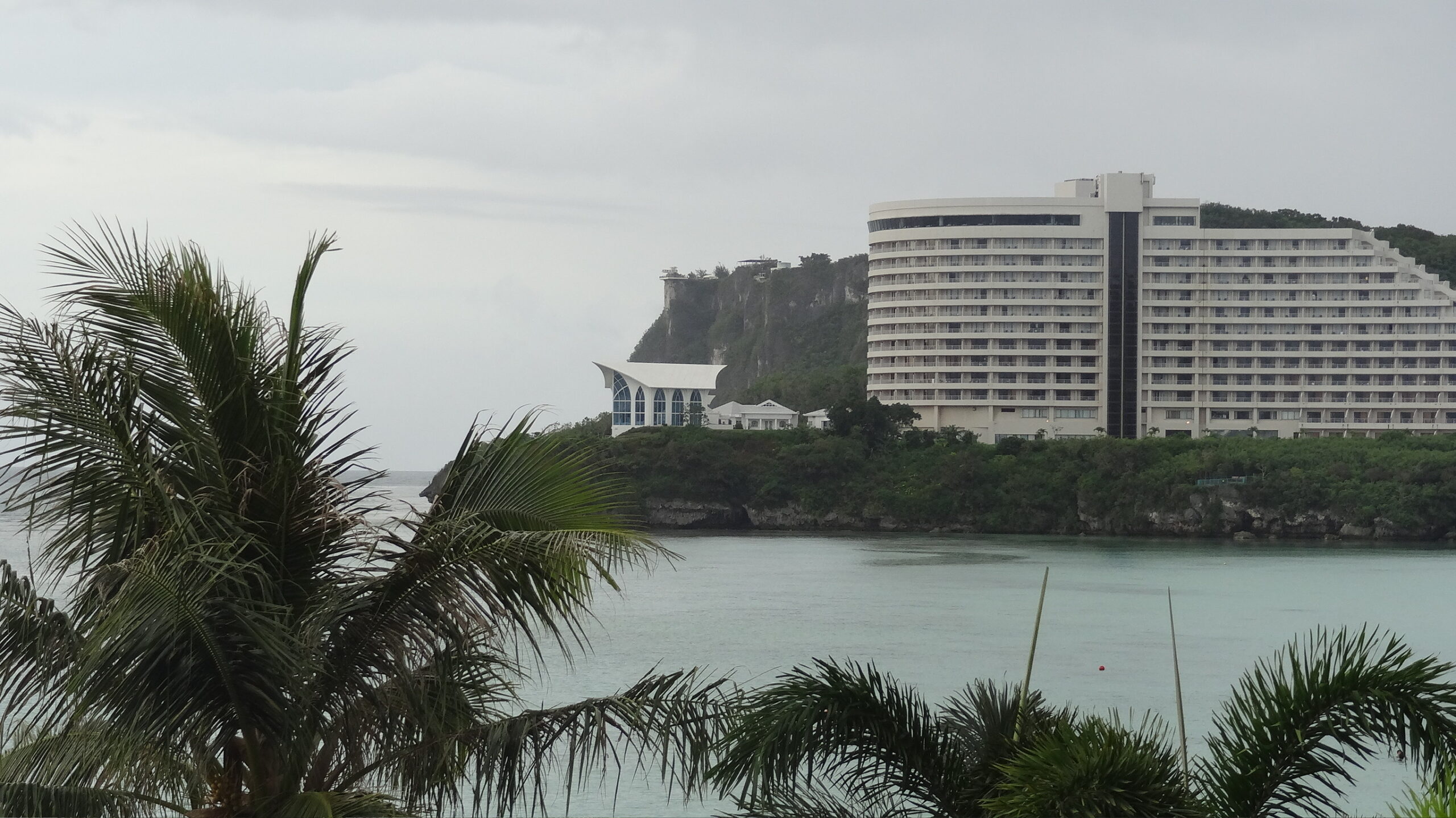
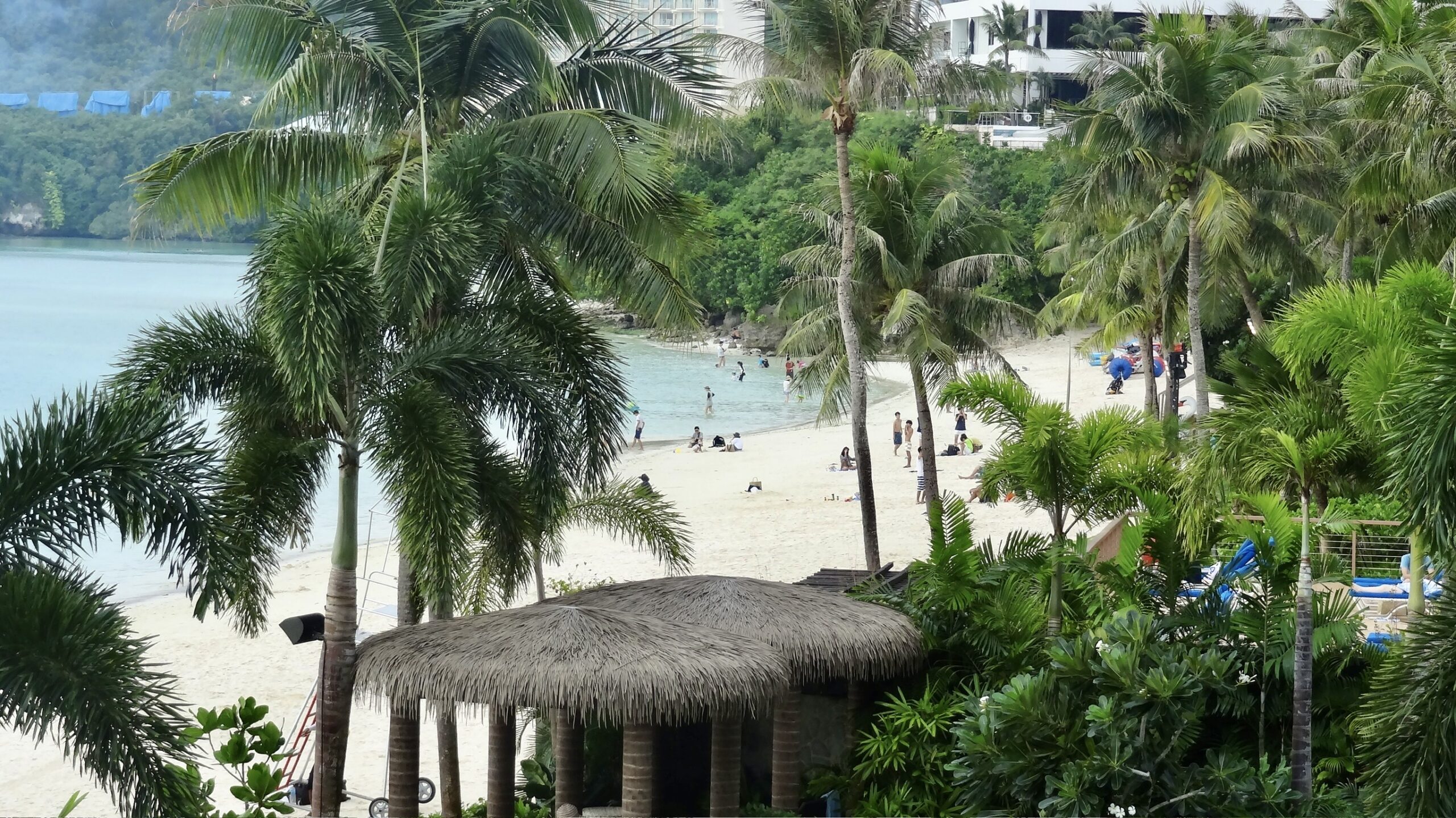
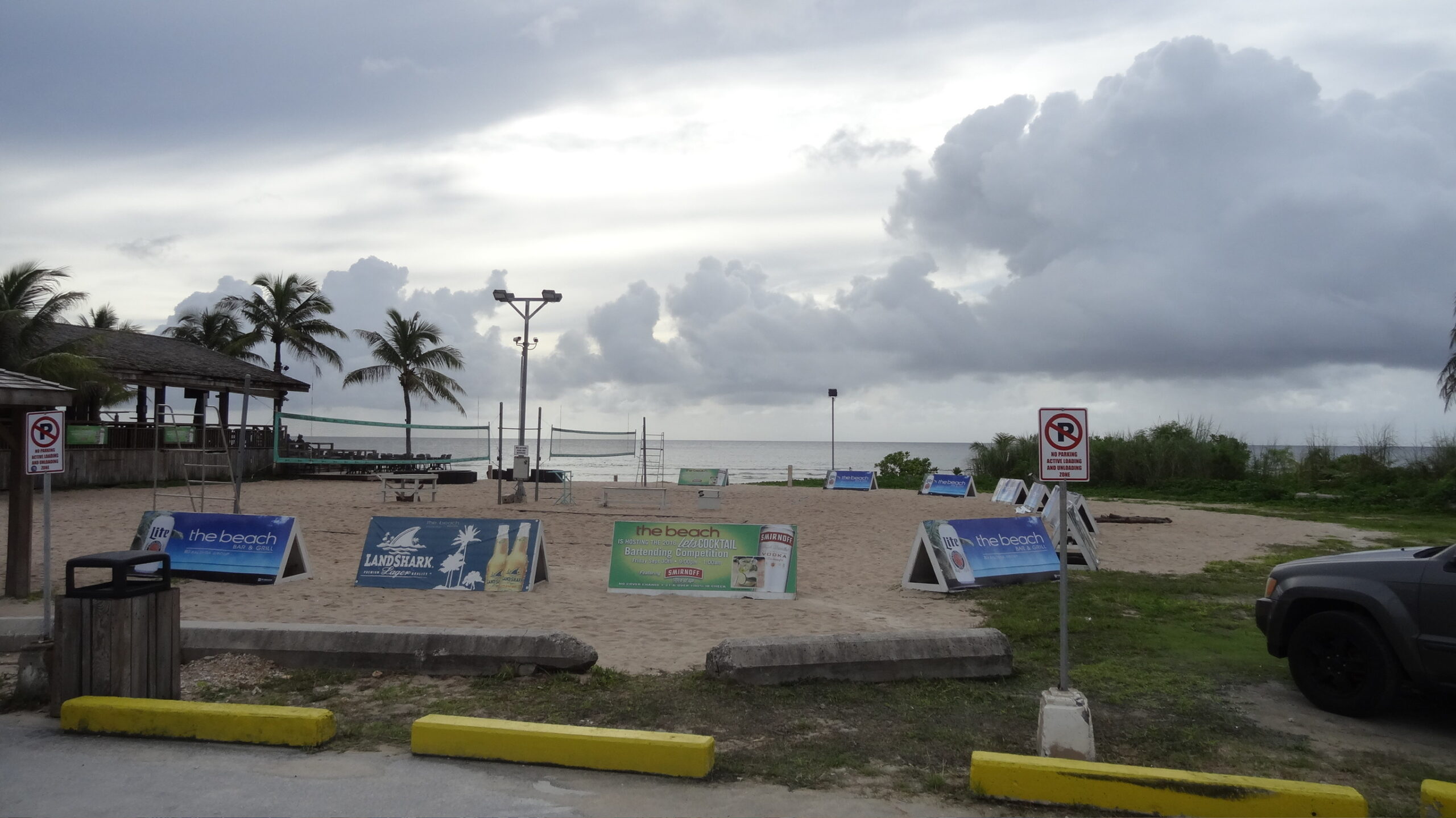
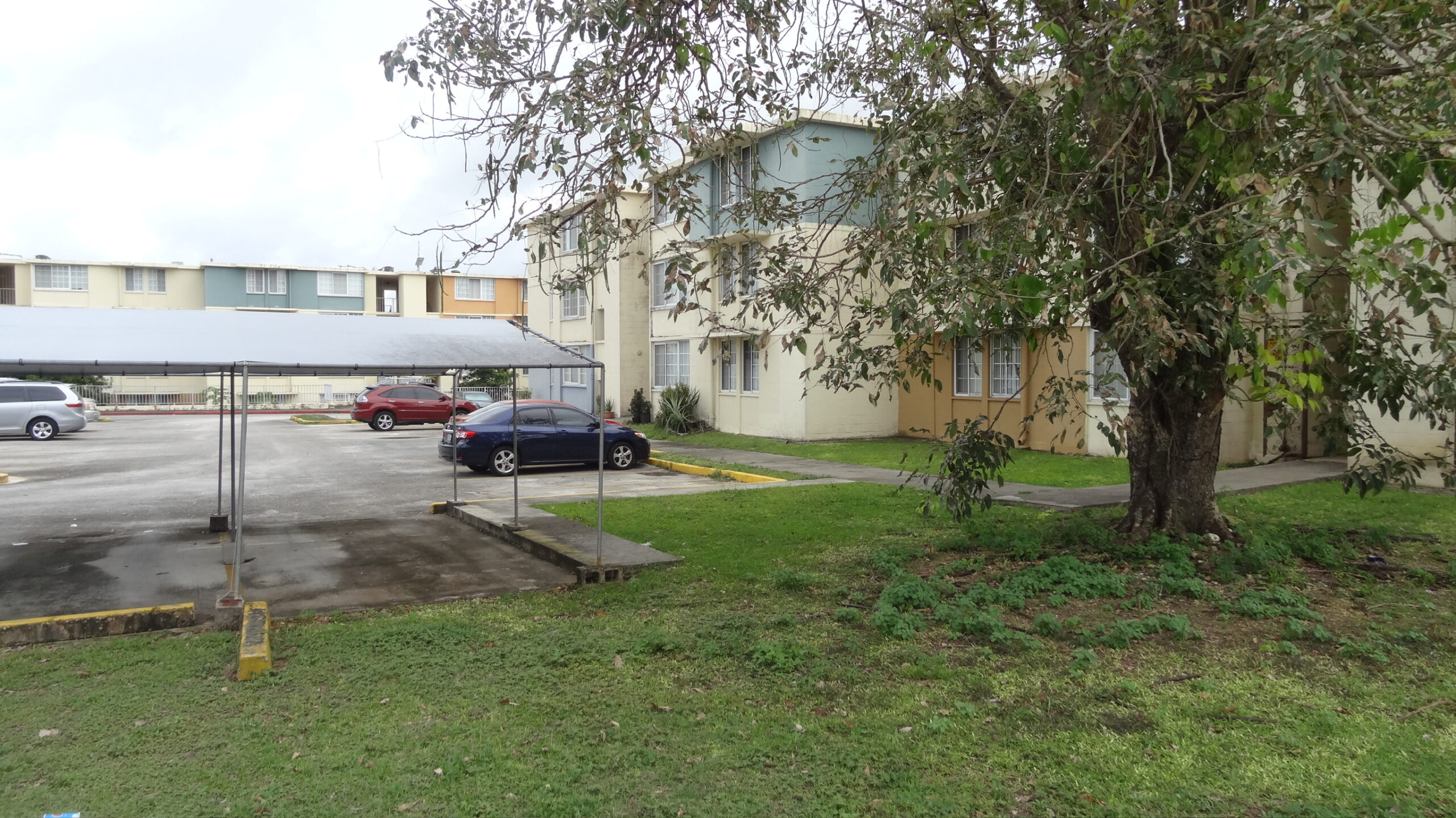
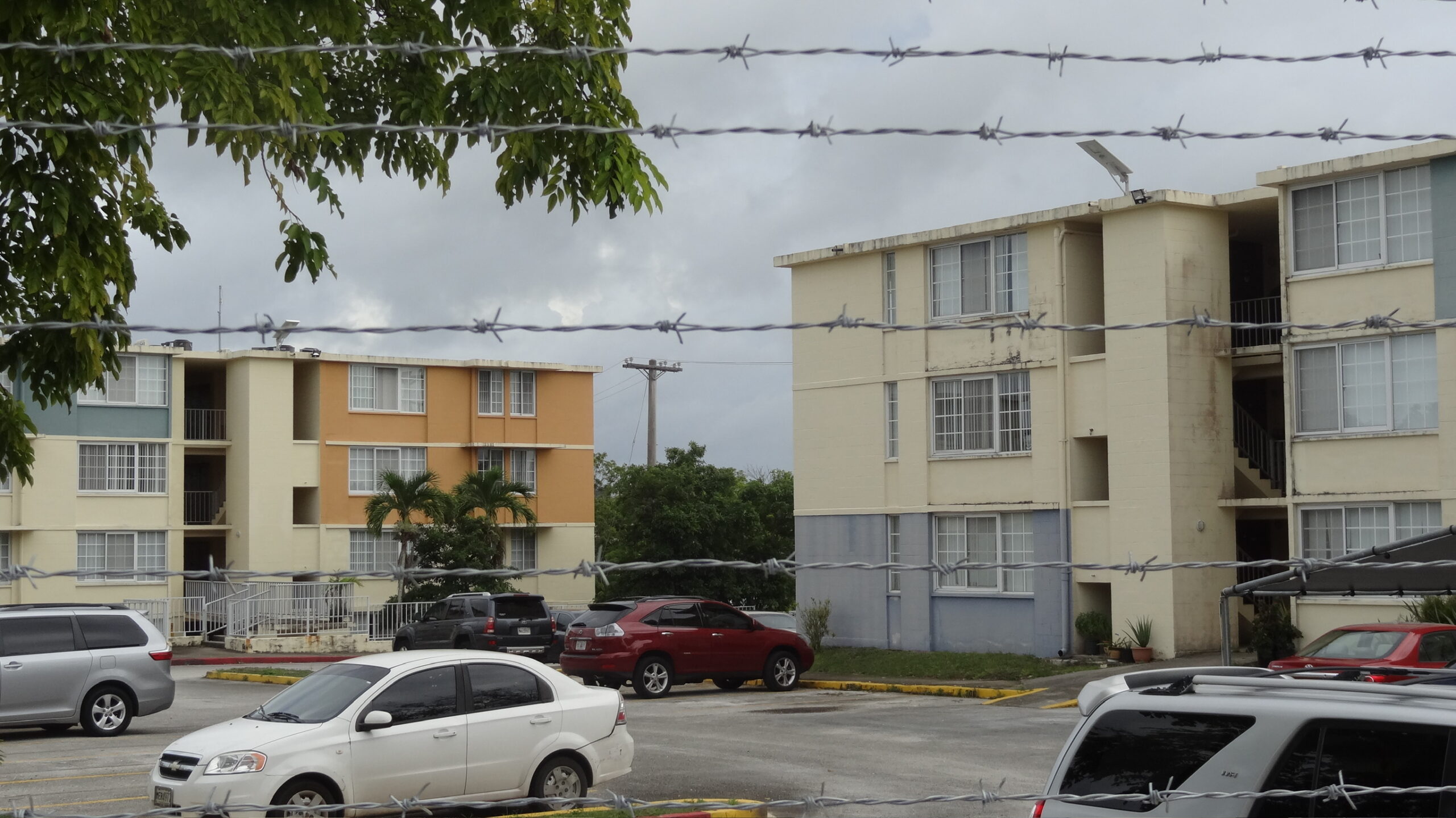
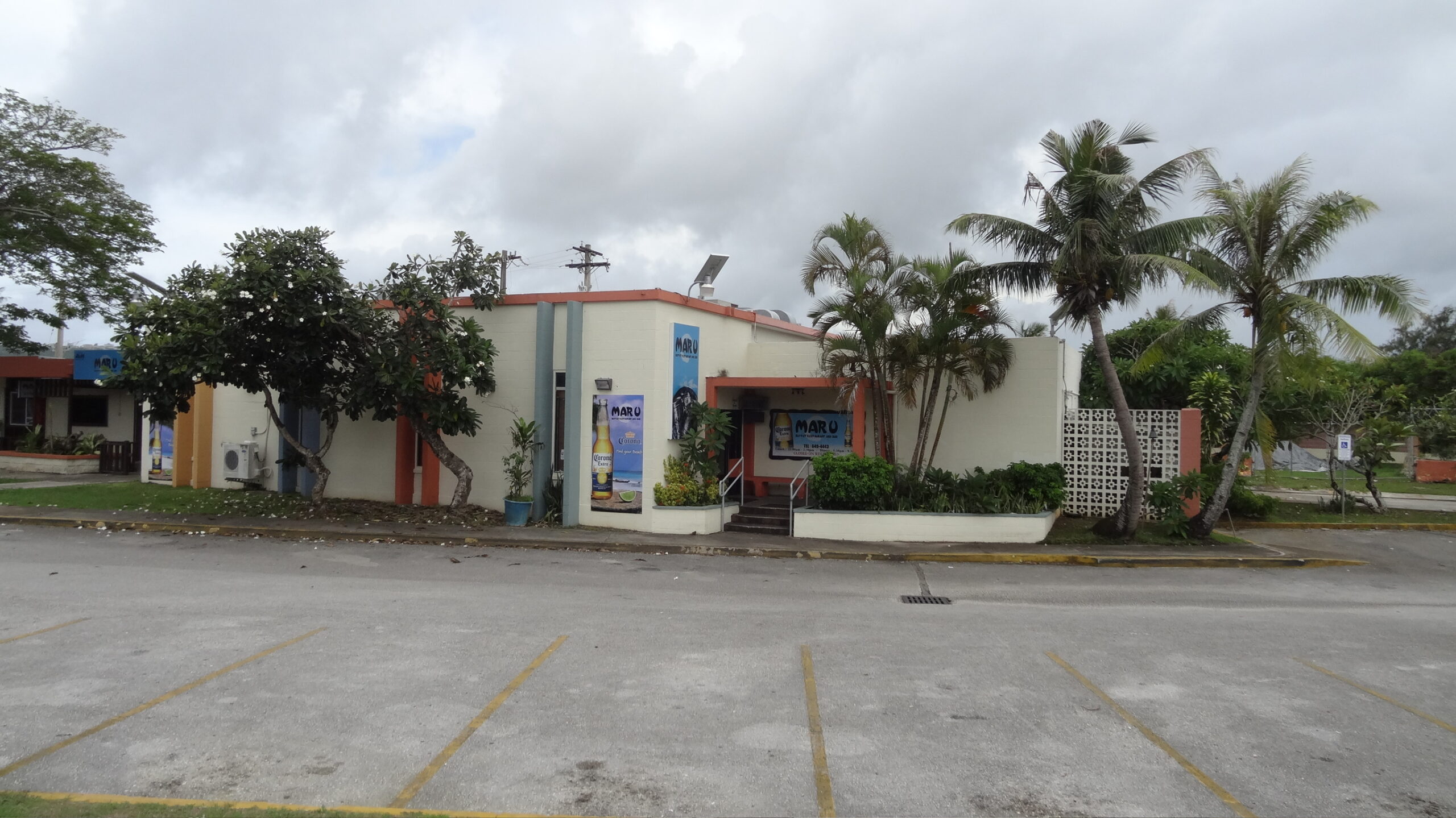
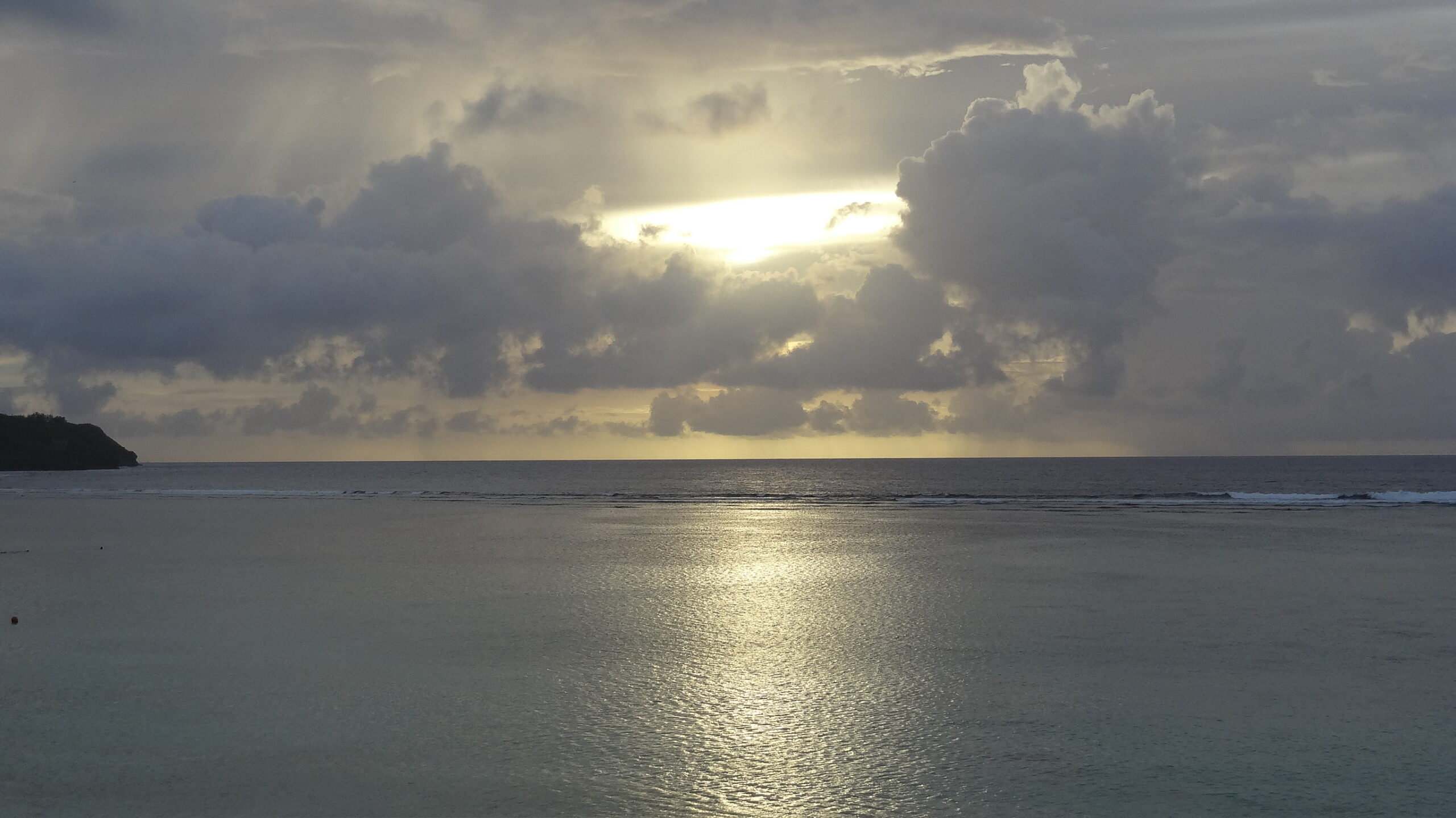
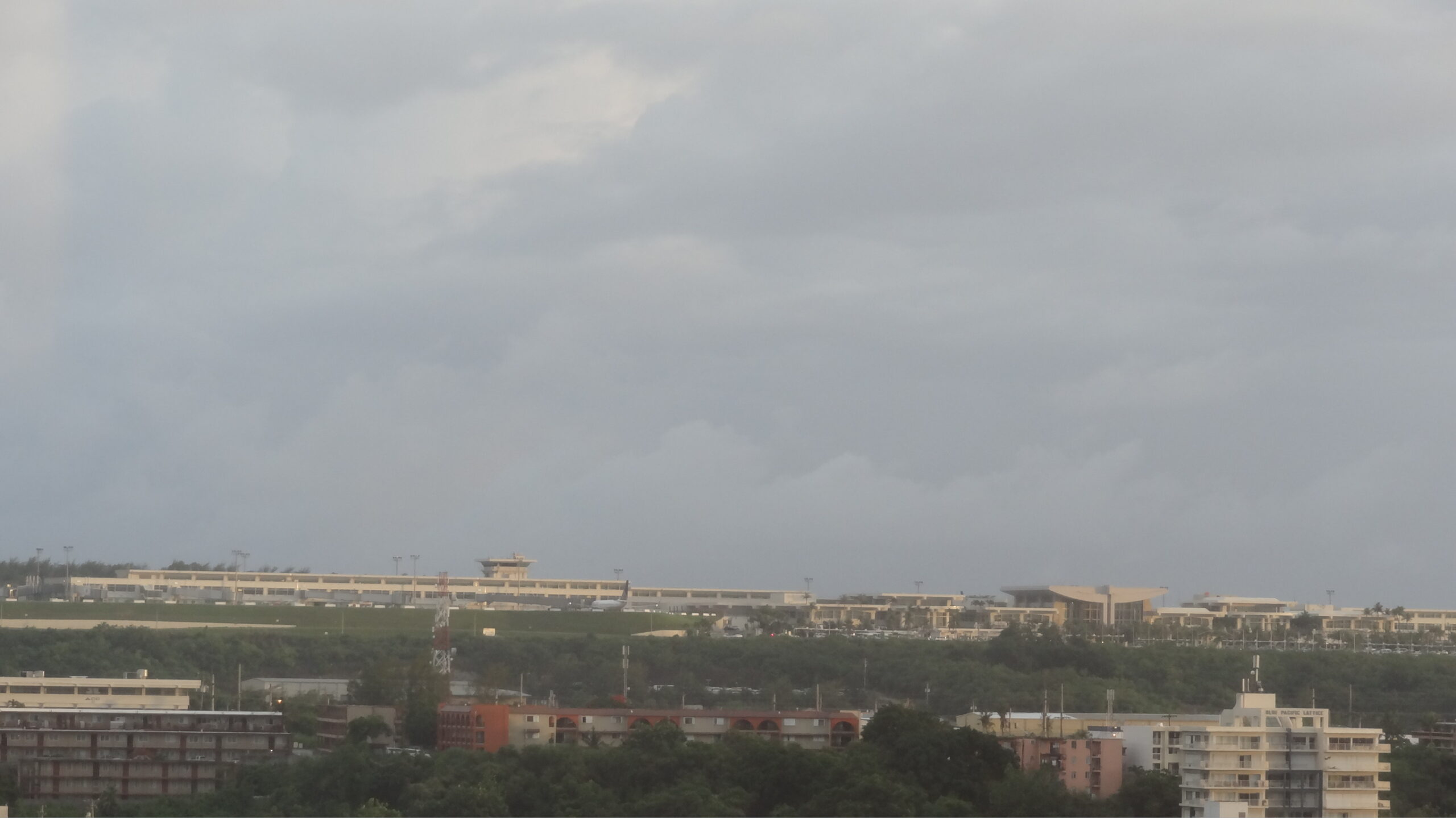
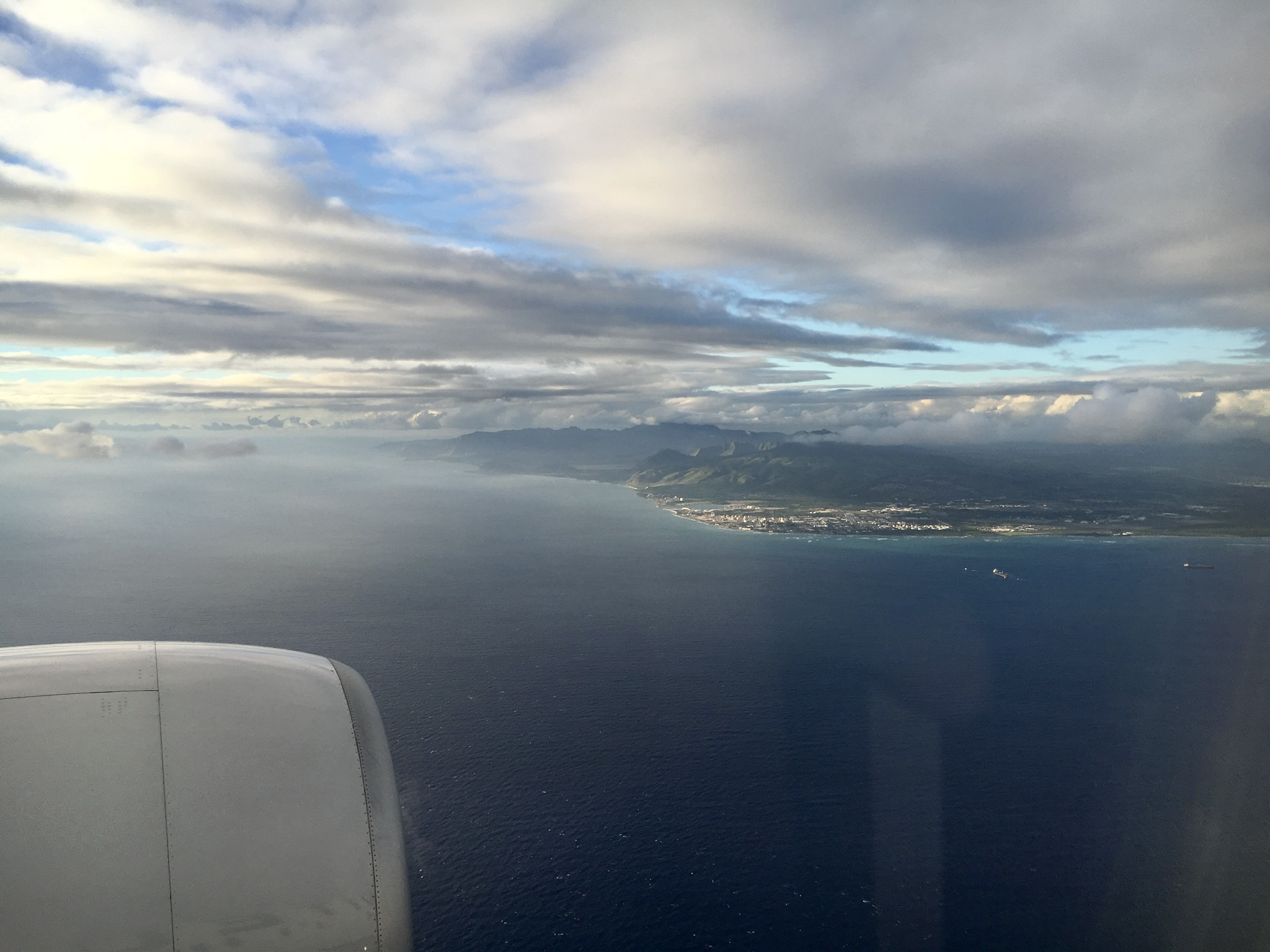
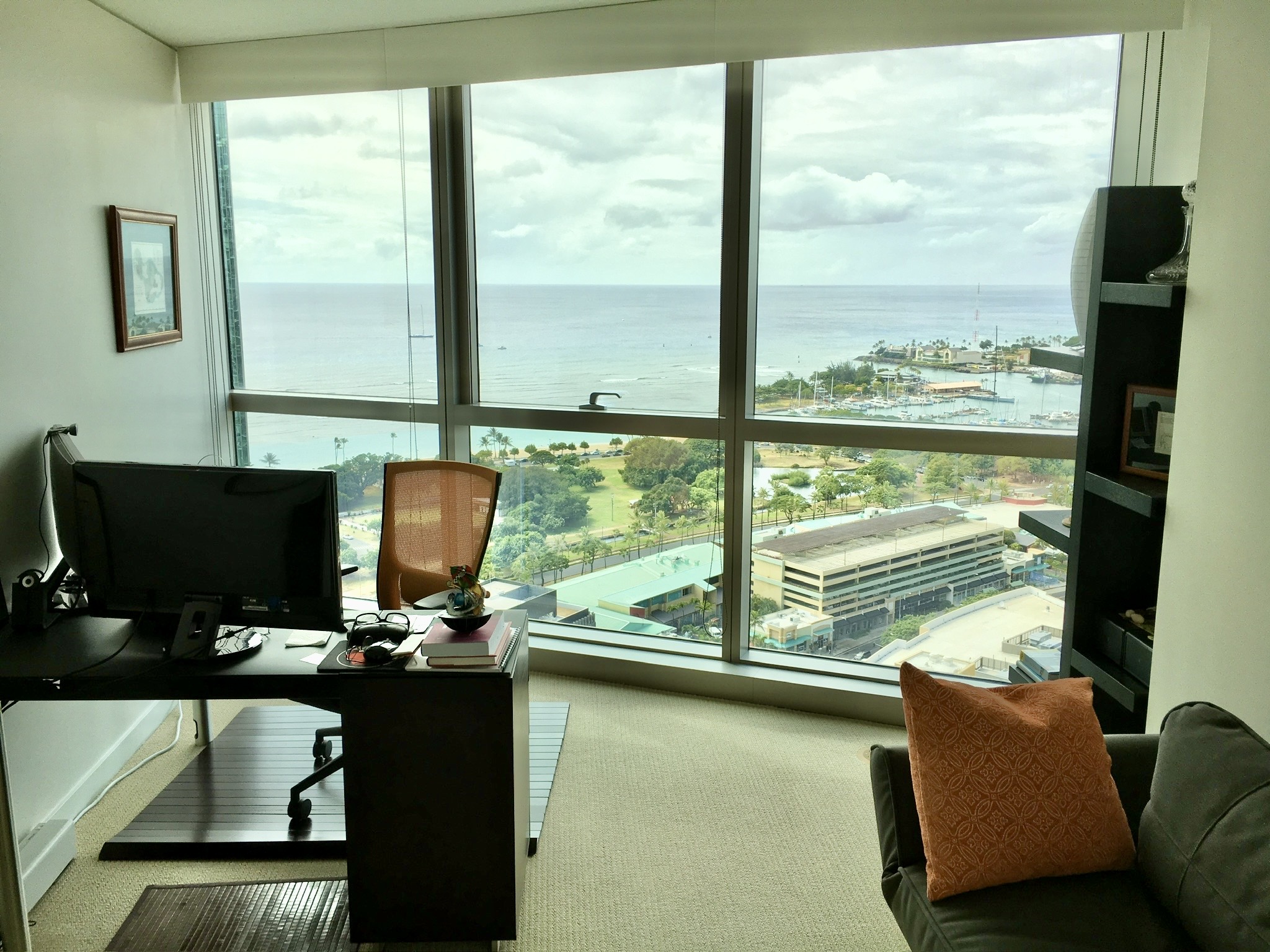
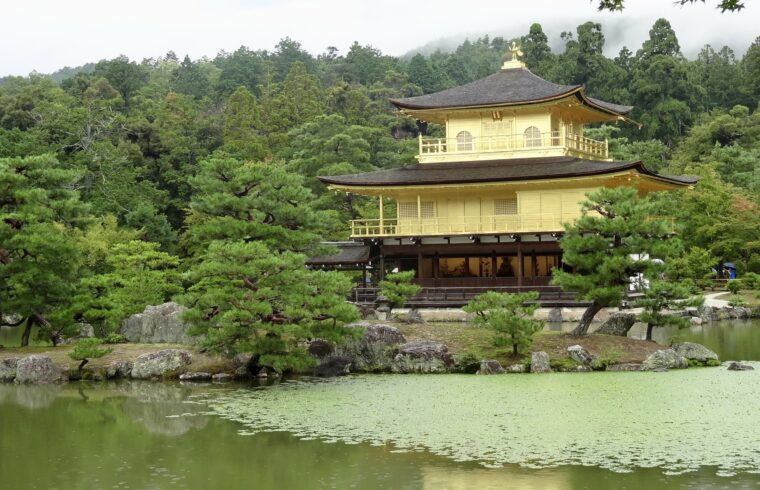
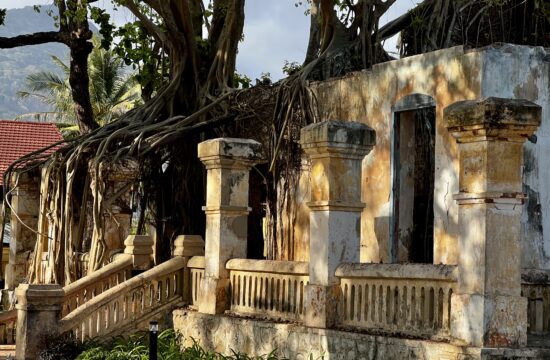
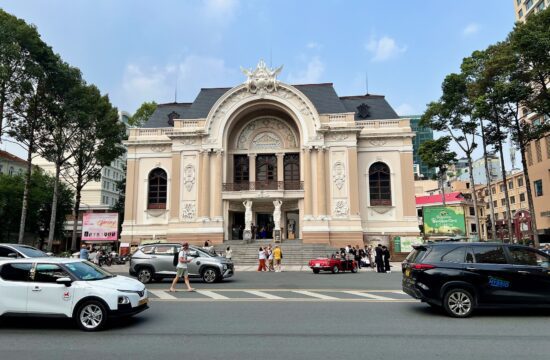
Michele visited Tokyo to tour the flagship hotel of Resorttrust, the Kahala Hotel’s new owner and management company. Gene met her in Tokyo for some vacation time in Kyoto. Here Gene approaches Tokyo.We met at Tokyo Station and took the Tokaido Shinkansen bullet train to Kyoto. Hitting 170 mph, the train took a little over two hours to travel the 320 miles from Tokyo to Kyoto. Here, at about the halfway point, we try taking a blur free photo of Lake Hamana.The sleek Tokaido Shinkansen bullet train as we disembark at Kyoto Station.We stayed at the beautiful Suiran Hotel on the Katsura River in Arashiyama, a stunningly picturesque, shrine-rich area on the western outskirts of Kyoto.The hotel sits near a hot springs, and our room had a private furo bath fed from the springs. The Katsura River is also called the Hozu and the Oi. The best we could figure was different stretches of the river have different names. Here we walk the footpath that leads between the hotel and the river.At every turn, there are strikingly beautiful scenes.A stone’s throw downstream is the Togetsukyo Bridge. The bridge has spanned the river since the ninth century, give or take fires endemic to all things wooden.Great Cormorants fish the river, some are even trained by fishermen to do their fishing for them. Not this one. It had just finished fishing for itself and was drying off in the filtered sunlight.Across the bridge, fishing and pleasure boats are moored in a side channel of the river. In search of the Japanese Macaque monkeys that live in these mountains, we took the well-groomed trail leading to Iwatayama Peak.At the peak, we could look out over Arashiyama through the mist.Unfortunately, the Japanese macaques at the Iwatayama Peak rest house are habituated to humans, who feed them. This one, though, seemed more concerned with what’s going on with a spot of fur. This fellow was just sitting contentedly watching people watch him.On the opposite side of the river from the monkeys, another path leads up the hills to a series of parks, gardens, and shrines, with views up the river gorge.We wandered about and walked through the Arashiyama Bamboo Grove.Not surprisingly, the bamboo grove led us to a Zen shrine.The shrine is on the grounds of the Tenryu-Ji Zen Temple, established in 1339 and first among Kyoto’s Five Mountains major Zen temples.The temple’s Zen garden was … well … very zen. We walked the pathways of the temple’s grounds.Heading back, we looped around and down through the residential streets of Arashiyama …And found an ice cream and shave ice stand. We tried a couple of green tea variations.On the way back to the river, we passed the colorful Keifuku Randen Tram Line station — it runs about 5 miles back and forth to the Shijō-Ōmiya Station, near the Nijo Castle. For our anniversary dinner, we grabbed our umbrellas and walked to the Yudofu Sagano tofu restaurant. The area is renowned for making the best tofu, and this restaurant is renowned for serving it. As the rain drummed on the roof, we dined on yudofu, a Japanese tofu hot pot.Breakfasts at Suiran Hotel were also a tranquil affair. No clusters of tourists around omelette and waffle stations.Then it was time to leave the outskirts of Tokyo and move into the city proper. We stayed at the Ritz Carlton Kyoto, where they gave us a lovely room (above and below).Our room looked out to the Kami River, which flows through the center of Kyoto.The interior of the Ritz Carlton is intimate, with dramatic architectural lighting.As luck would have it, we were greeted on arrival by a young woman named Joanna, who had lived in Hawaii. She immediately adopted us. Joanna is here on the left.Kyoto is a city of shrines and temples, literally thousands of them. As we walked the streets, it seems we saw all of them except maybe one. This one, Rokkukudo Temple, is just off the major Karasuma-dori St. Built in the sixth century next to a little pond, it’s now in the middle of the city across from a Starbucks. Here is where the art Ikebana flower arrangement was created in the 1400s by the temple’s abbot.And there are many small shrines wedged between buildings and power poles, like this Shinto shrine.Eclectic little shops also abound. In this one, the Kanetaka Hamono Knife and Cutlery shop, we found a seventh generation knifemaker at work.Some stores are less organized than others. In fact, the jumble system seems to be culturally popular.We found no shopping centers, per se, but there are shopping streets that are all but. Near the Kyoto Imperial Palace is Teramachi Street. It was laid down in the 16th century and the site of festivals. It’s now a roofed-over street mall closed to traffic.For all its urbanness, Kyoto has the Kami River for peaceful respite. Here we cross one of its many bridges, right near the Kyoto Imperial Palace in the middle of the city.The Imperial Palace itself is a study in Japanese use of nature and space. Here is the Imperial Palace Oikeniwa pond garden, designed by a samurai general in the 16th century.A Japanese pond garden is centered on water and surrounded by a walking garden. The Oikeniwa Garden features a number of graceful bridges. In Japanese architecture, gates hold special significance. The Imperial Palace grounds has many, like the Kenshunmongate in the outer palace courtyard.Another three gates open into the Hall of State Ceremonies courtyard. This one, the smaller Gekkamon Gate, was built in the 13th century.Shishin-den, the palace’s main Hall of State Ceremonies.About a mile from the Imperial Palace is Nijo Castle, built in 1601 at the direction of Tokugawa Ieyasu, the first Tokugawa shogun. This is the outer of two moats that encircle the castle’s fortifications. Within the walls of the first moat is Ninomaru Palace, the shogun’s principal residence and offices. Behind the palace are gardens and pathways …And the Ninomaru Garden. There are no gardens on earth that draw the eye and inspire the imagination the way a Japanese garden can. A wooden bridge spans the inner moat to the Honmaru, or inner circle of defense.Witnin the inner moat is the Honmaru Palace, an Edo Period imperial palace built by Tokugawa shoguns.From the Honmaru ramparts, we could look out over the inner moat and castle grounds …And see the tops of Kyoto city buildings over the Honmaru palace. On one day, we rode the Kintetsu Express to Nara, the ancient capital of Japan in the 700s, before the capital moved the 30 miles to KyotoNara is famous for its tame and nominally sacred deer. A legend of the founding of Nara has a deity traveling to take up residence in the area on the back of a deer. The city’s thousands of Sika deer have benefitted from the association ever since.Cracker stands selling shika senbei, or deer crackers, can be found at the entrances to Nara Park. A packet of 10 crackers set us back 100 yen, about a dollar. Each stand has a smattering of cracker-happy deer willing to take the entire packet off your hands. Others hang out on the main walkways, oblivious to the throngs of tourists …Unless they spot crackers. This deer followed a young man, regularly biting him in the butt to remind him about the need to share his crackers. Not all of the deer are cracker heads. Many wander through the park seemingly content with grazing and browsing. Those deer would wander over if you held out a cracker but were otherwise happy on their own.Gene got to feed a little fawn what may have been its first cracker, given how timid it was. Nara Park is over 1,200 acres and was established in the late 19th century. The modern park encompasses the Mount Kasuga Primeval Forest, which was declared sacred in the 800s and has not been logged or hunted in since. So the park is a park, with attractions like the Nara National Museum, above, but it stretches up Mount Kasuga and includes many important shrines and temples.Kofuku-ji is one such temple, dating to the 600s, when the city was named Heijō-kyō and not yet the capital of Japan. Here is another view of the Kofuku-ji Buddhist Temple.And Kofuku-ji Hombo, the temple abbot’s quarters and garden.This is Todai-ji Namdaimon, the Grand South Gate of the Todai-ji Temple, which was built in the 9th century and is one of the powerful Seven Great Temples of Nara.The Great Buddha Hall of Todai-ji Temple.Templed out, and out of deer crackers, we walked to Kintetsu Railway’s Nara Station, where we took the train to Fushimi Inari Taisha on our way back to Kyoto. .The train was as much a metro rail as anything, with its texters, nappers, travelers. From the station, we walked through shopping streets on our way to the Fushimi Inari Shrine.Fushimi Inari Taisha is an important shrine honoring Inari, the Shinto god of rice. The shrine’s grounds are in south Kyoto and include Mount Inari with its forest trails. The shrine’s origins predate Kyoto becoming the capital in the eighth century. One of Fushimi Inari Taisha’s draws is its nearly 1,000 torii that line mountainside paths. The tradition of donating torii to show thankfulness began in the early 1600s, and it’s been going strong ever since. For one dinner, we sought out a restaurant recommended by Joanna. The taxi driver couldn’t get us all the way and dropped us off at the edge of a warren of narrow paths winding through a hillside neighborhood. The restaurant was an exercise in Japanese minimalism, both the interior design and its food presentation. We enjoyed it. Out walking central Kyoto again, we walked through the shopping district on the way to the historic Gion part of town. Shinkyogoku shopping street is another covered street. This one evolved from a 17th century commercial avenue that sprung up when temples were built in the area.And as expected, we passed temples and shrines. This one, Seigan-ji Temple, has been part of Japan history for over a thousand years, from a house in which a future shogun was born, to where kings and princes would sojourn on their visits to the capital. The Gion District catered to visitors of the Yasaka Shrine, a shrine of the Shinto Gion cult, from which the area takes its name. It eventually became one of the most exclusive geisha districts in all of Japan.Bridges cross small streams to quant houses and restaurants. Like in many of the historic parts of Kyoto, Japanese visitors often don traditional kimono, sometimes for photos and sometimes just because. We bought a pair of red and black laquered getas from a little third-generation geta shop. Here the proprietor wraps them for us to take away. Then it was time to trade the scenic for the mundane as we took the JR Haruka train to the Osaka Kansai Airport. We had lots of signs to help us navigate the Kyoto Train Station. It took a little under two hours to get from Kyoto to the Osaka airport, luggage in tow. At the airport, we waited for our 3½ flight to Guam, where we’d layover for a day on our way back to Honolulu. Our approach took us over Hagatna, the capital village of Guam. When Gene went to high school on Guam in the 70s, it was called Agana. The small bay in the distance is Tumon Bay. Tumon Beach hosts the main stretch of tourist hotels on the island. We stayed at the Dusit Thani for our one day and night.Much development has taken place in the 40 years since Gene was last on the island. And the beach was much improved. Back in the day, rocks were as common as sand, and going barefoot was a risk. We drove around a bit and went by Gun Beach. Once somewhat secluded, it’s now a beach volleyball bar.We also visited the apartment complex where Gene lived. Brand new then and in the middle of an abandoned WWII airfield, its location was unrecognizable. Now a condominium, it’s seriously showing its age. The buildings, though, looked familiar, but the swimming pools in each building group are gone.A funny addition is the fence surrounding the place. The barbed wire is banked inward, like a prison, meant to keep the inmates from escaping. The restaurant that used to be the hugely popular Chuck’s Steakhouse is still there. Gene started his food and beverage career here as dishwasher. It’s now a buffet restaurant of some kind. We passed it by. Much had changed on the little island, but its tropical beauty remains. It’s easy to see why it’s popular as a warm weather destination for winter-weary Japanese and South Koreans. Then it was back to the “new” Guam International Airport. It used to be shared with the Naval Air Station and supposedly recently upgraded. It looked pretty lived-in. As always, flying back to Hawaii reminded us how much we love the Hawaiian Islands. Michele went back to work at The Kahala, and Gene commuted to his office in the second bedroom (above). Trip over. Next one being planned.