//Kalahari – June 2015

Kalahari – June 2015

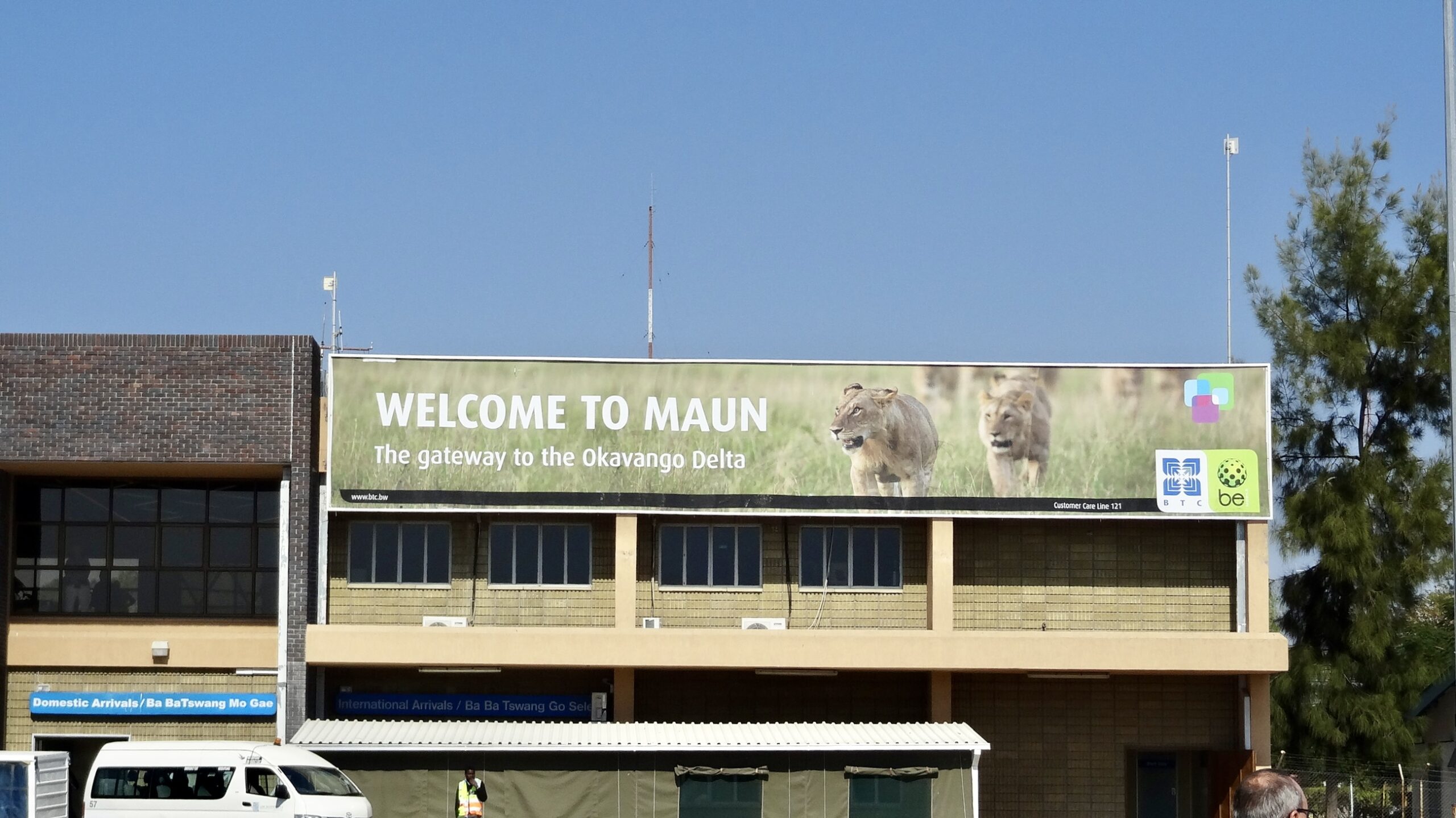
After an overnight layover in Johannesburg and a morning flight, we landed in Maun. It’s the Botswana airport where the safari-bound trade bigger planes for littler ones.
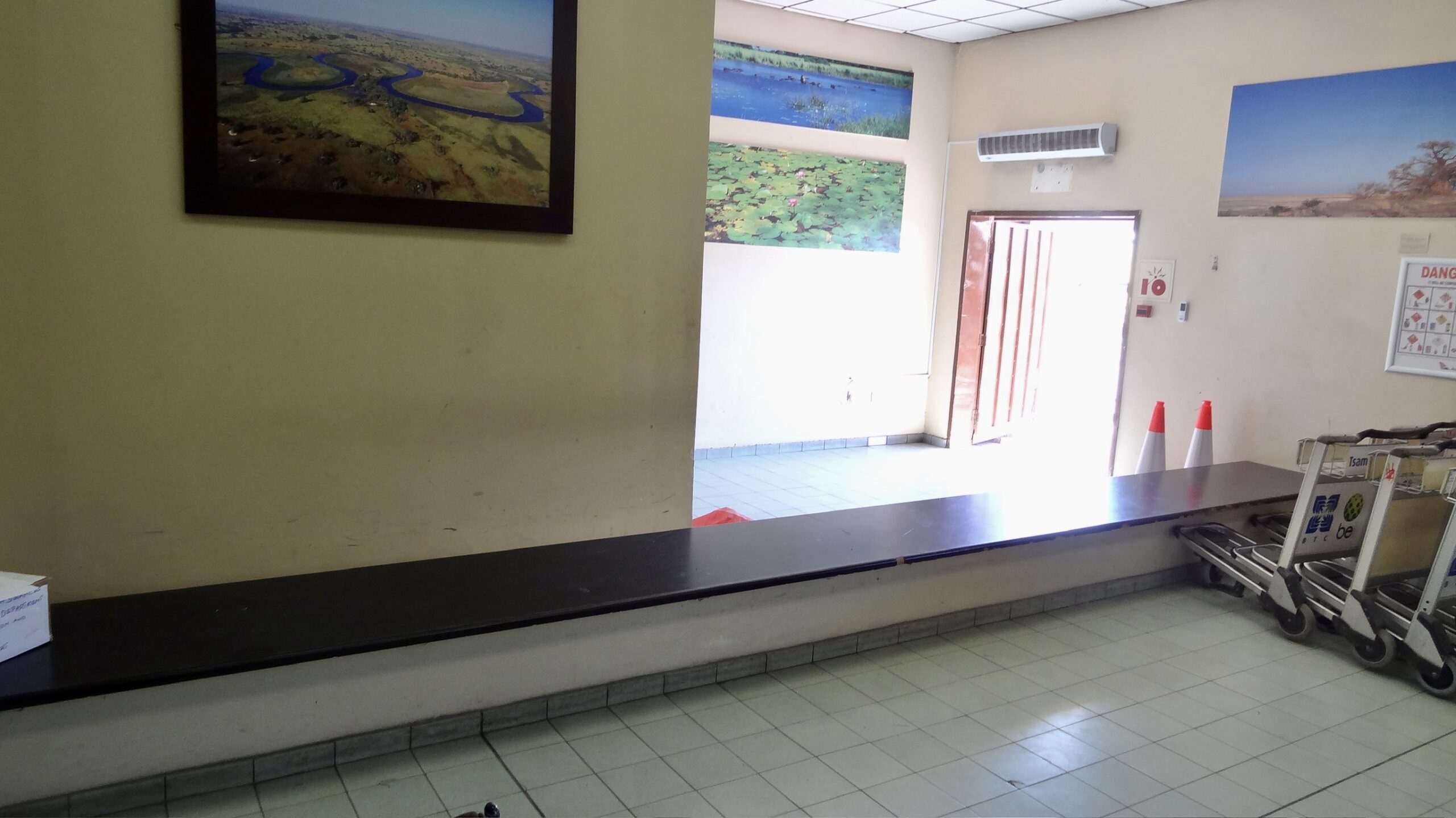
We had no trouble finding our bags in the baggage claim area.
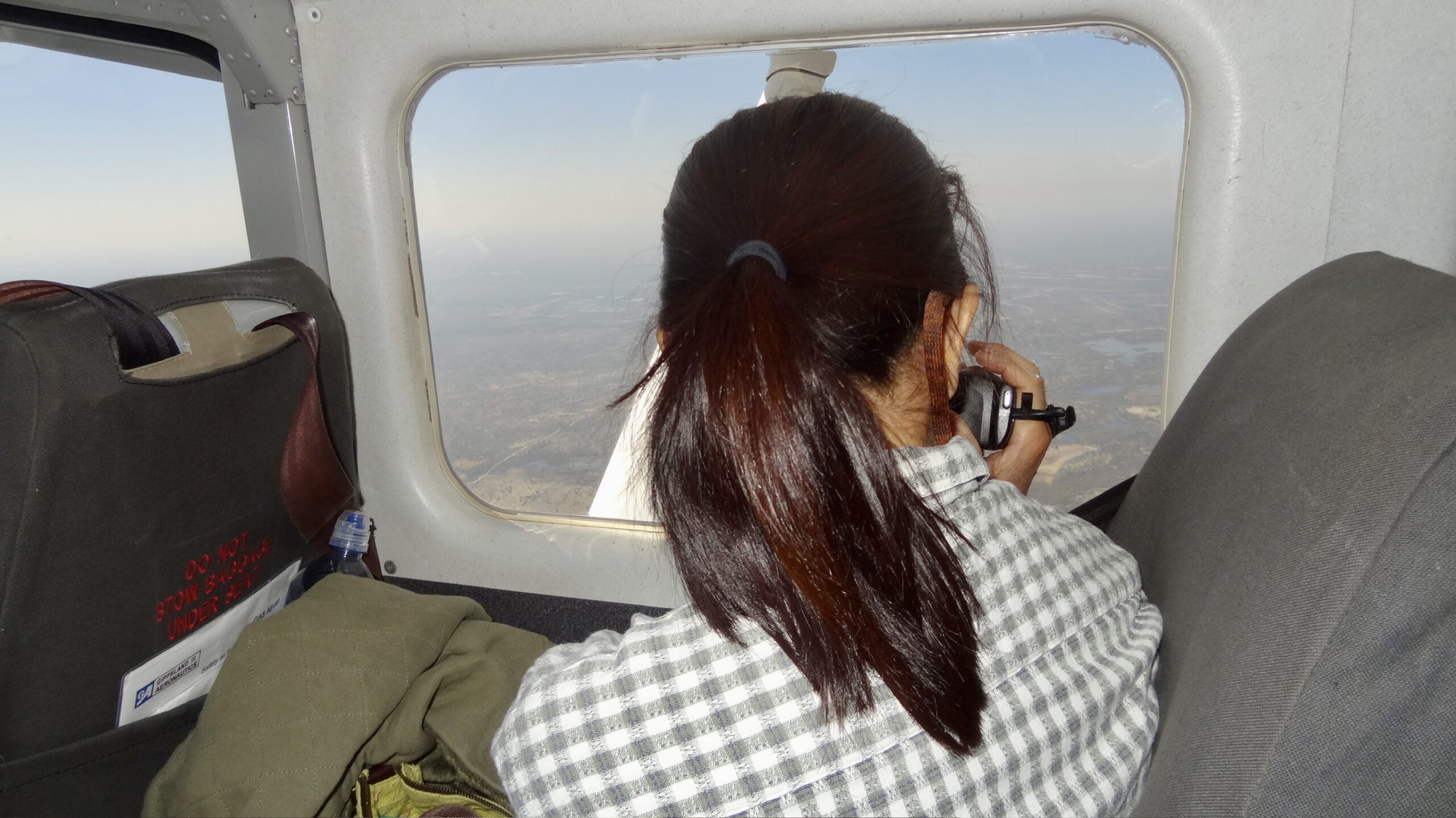
Our duffels loaded, we were on our Cessna and outbound to one of the few camps in the Kalahari.
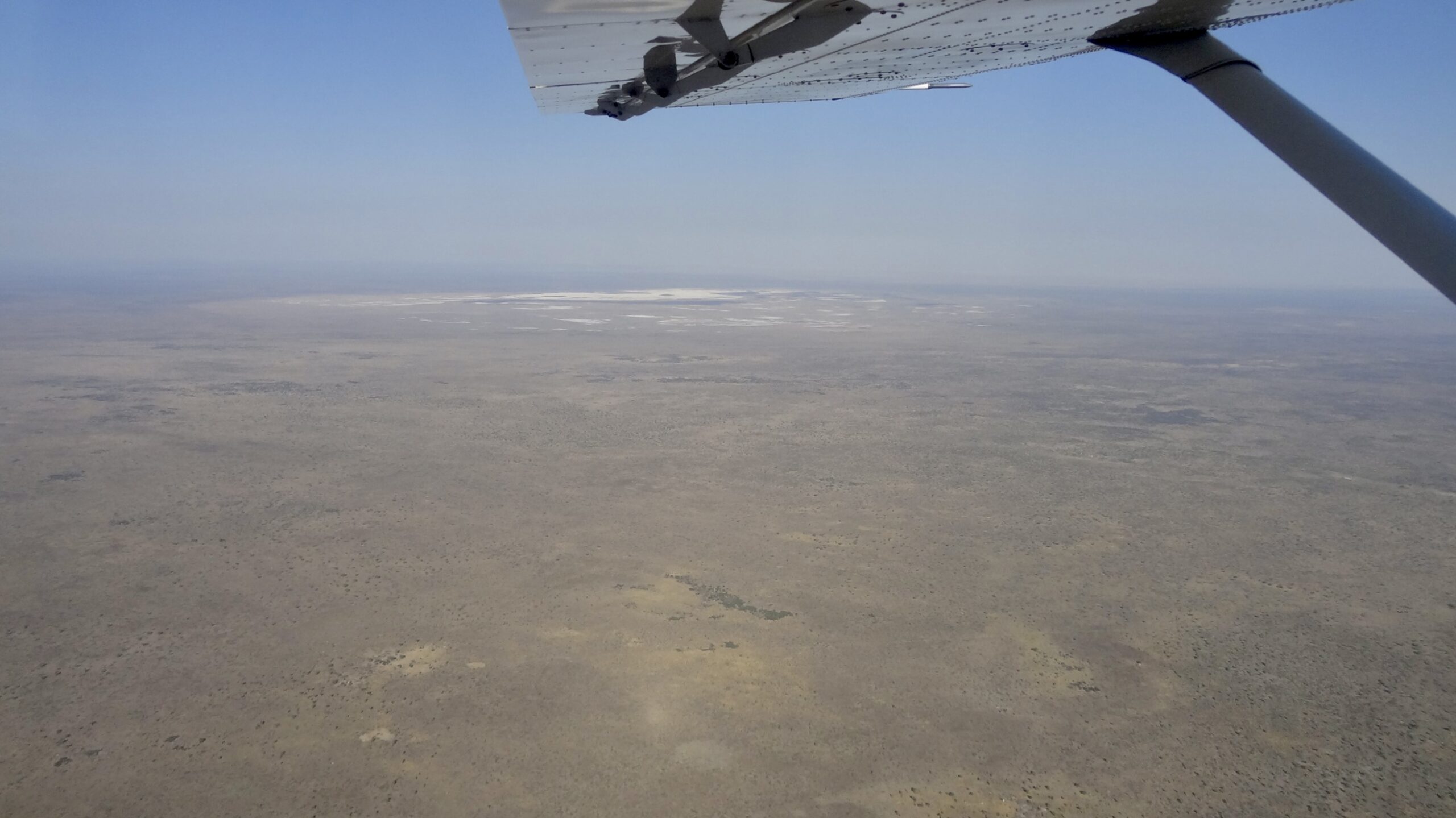
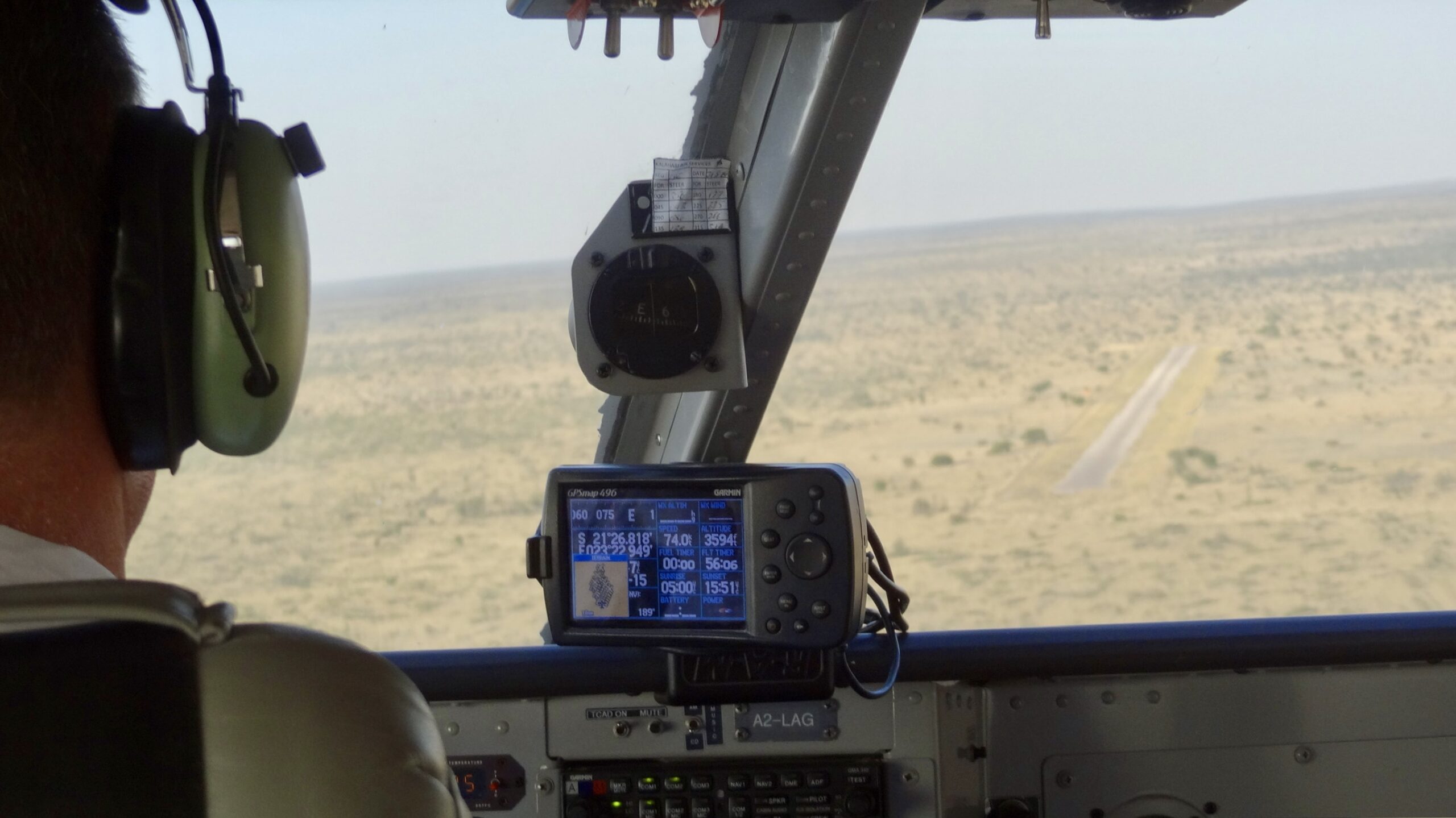
Airstrip in sight, the 100-mile flight took about an hour. Though the videographer isn’t too keen on flying in small planes, we didn’t even consider the alternative of getting bounced around for 9 hours on dirt tracks.
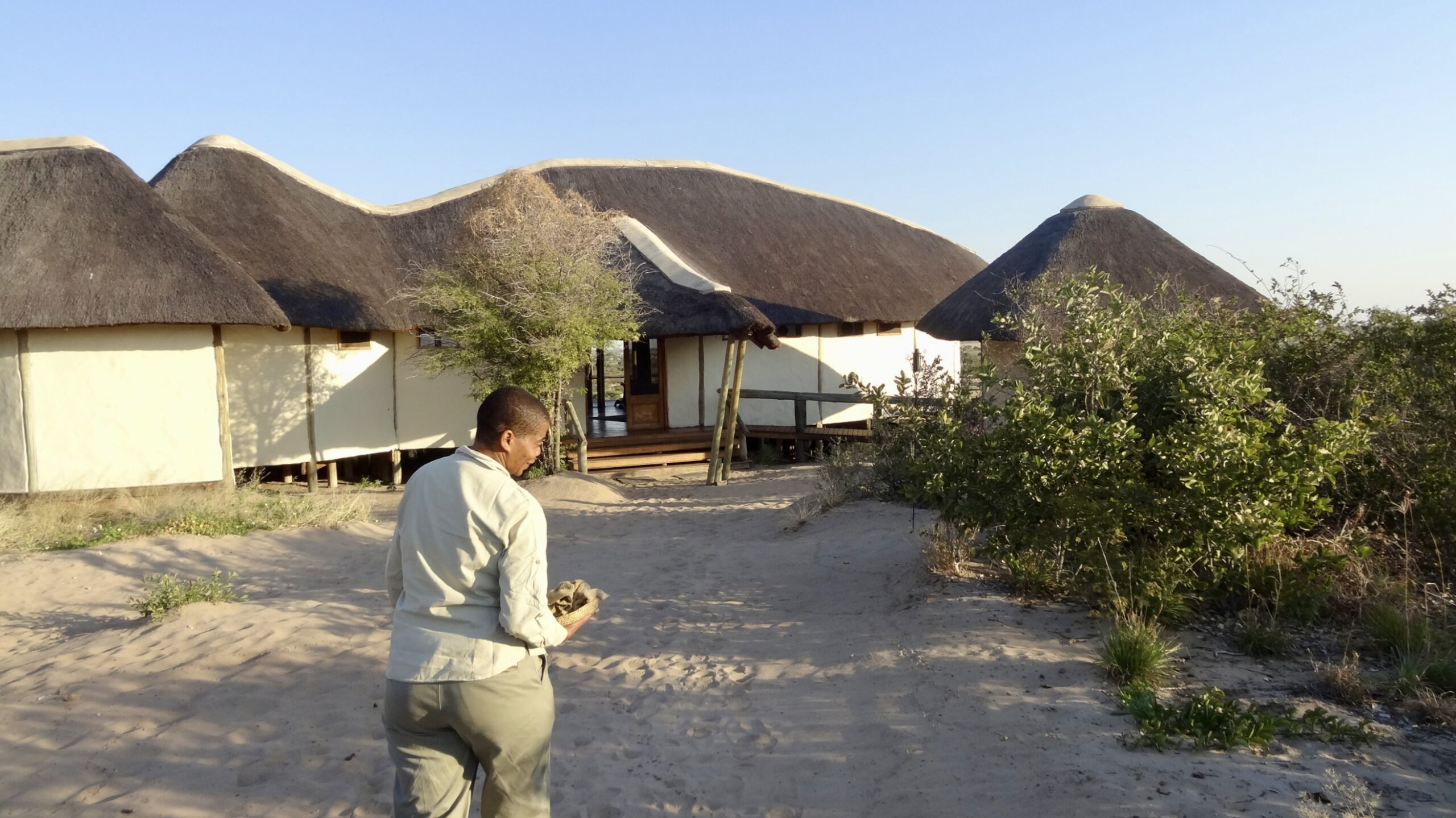
We were greeted by the camp manager. She introduced us to Tau Pan Camp and explained where to put our laundry so it would be done each day. Except for our smallies. We had to wash our own smallies.
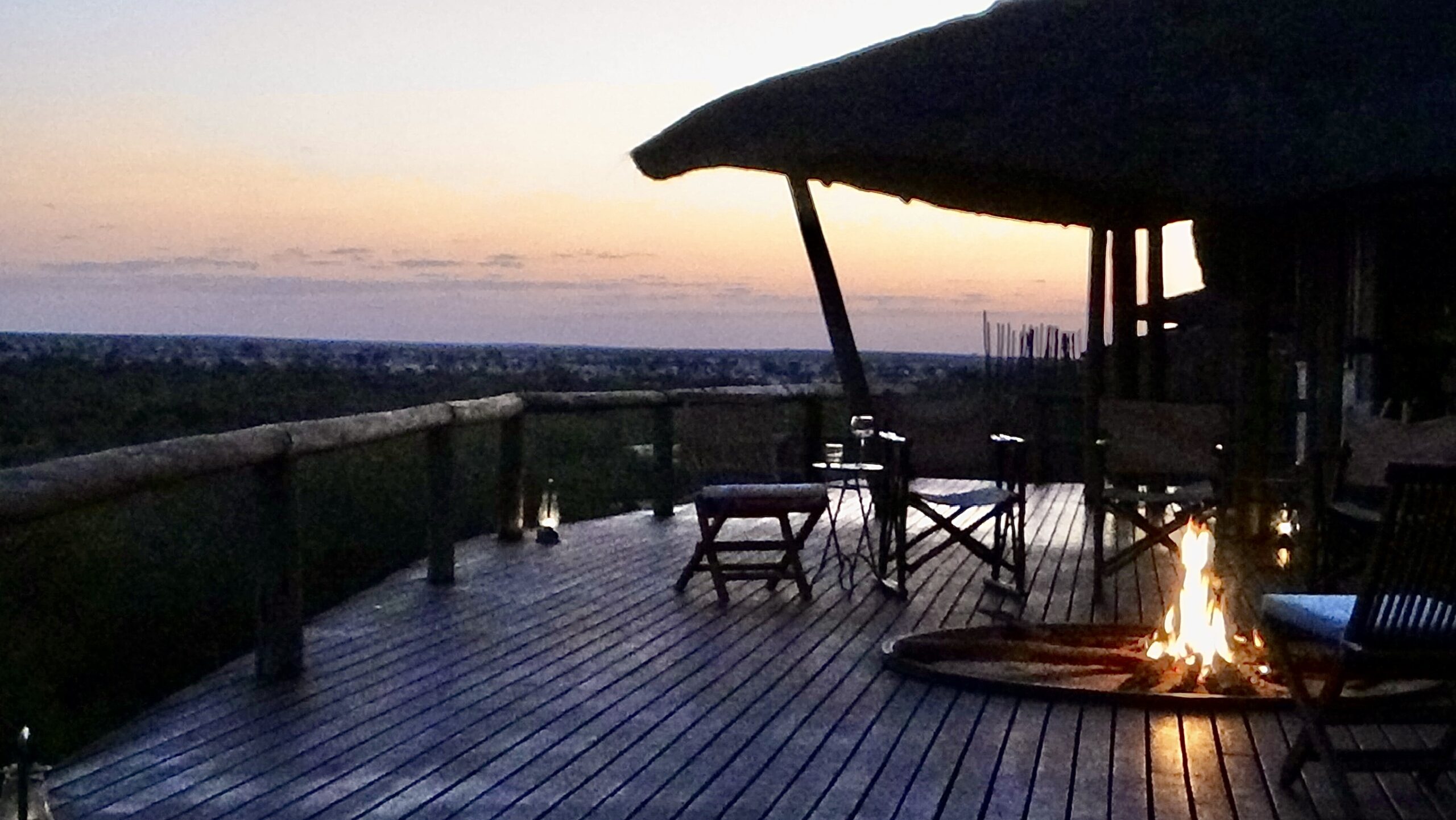
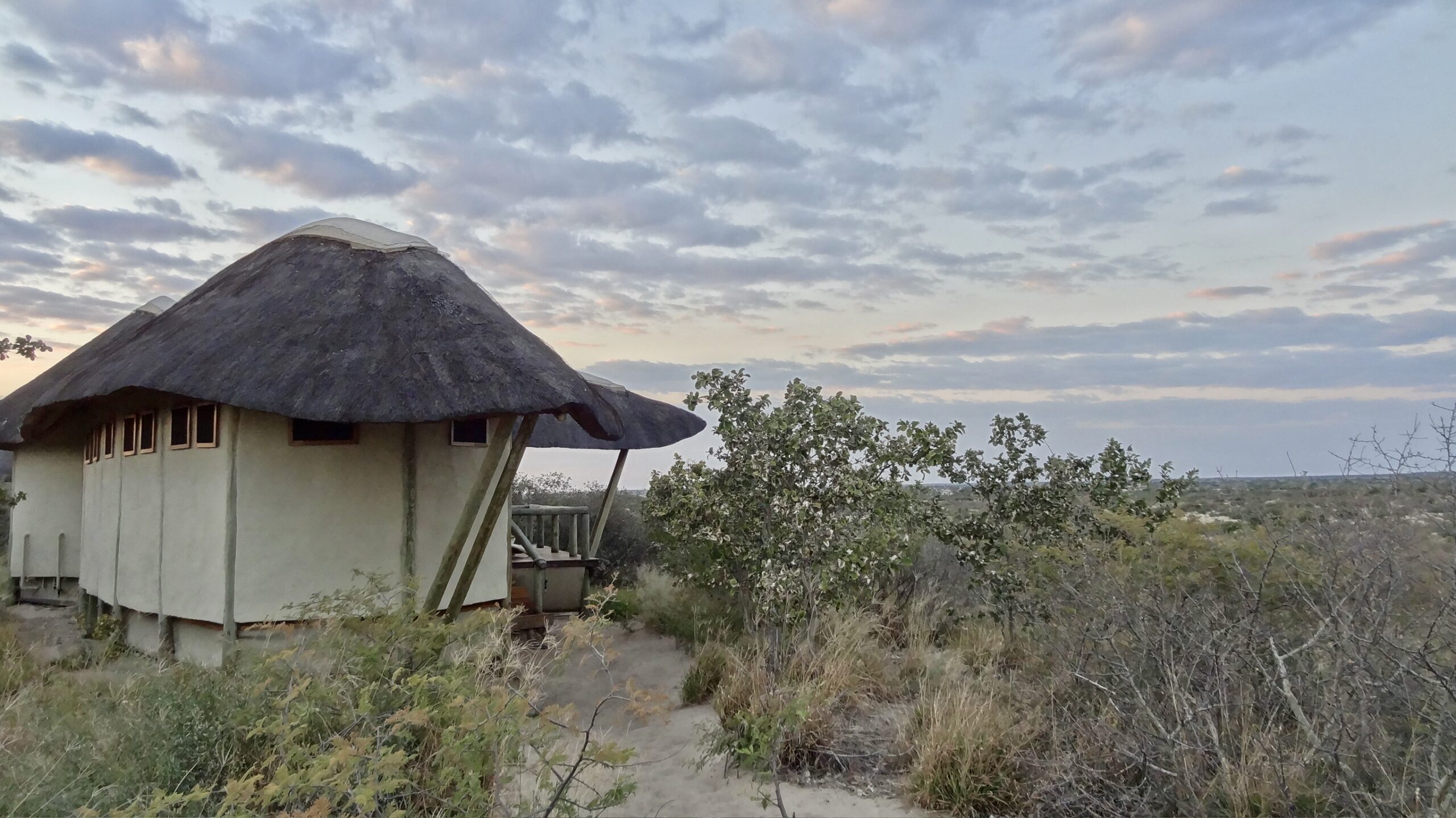
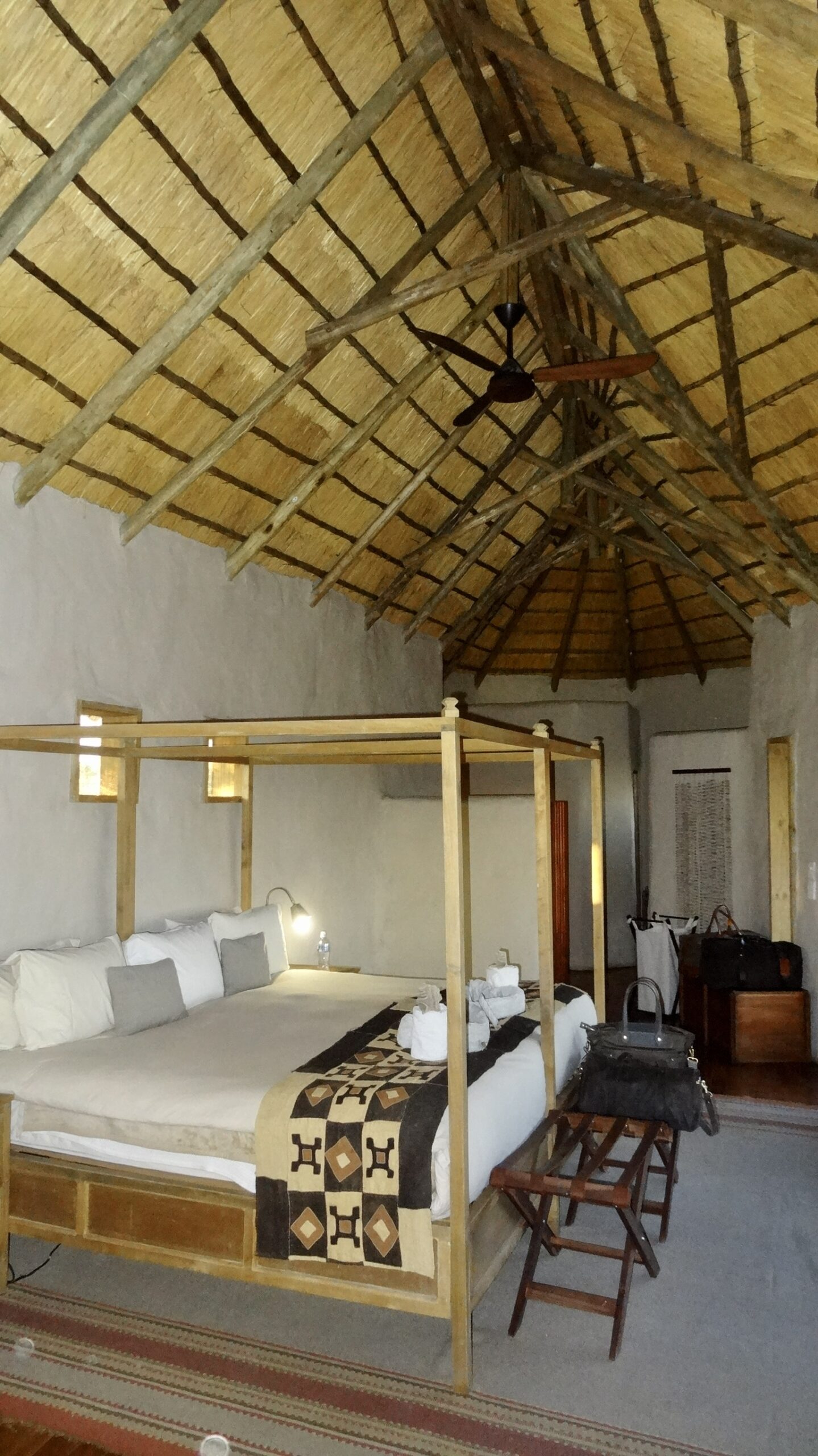
The camp has nine rustic cottages on a low rise.
The rooms are quite different from those at Singita’s Sasakwa Lodge in Tanzania, basic but with ample space and quite comfortable. Tau Pan Camp is one of only three camps in the Kalahari and the only semi-permanent one.
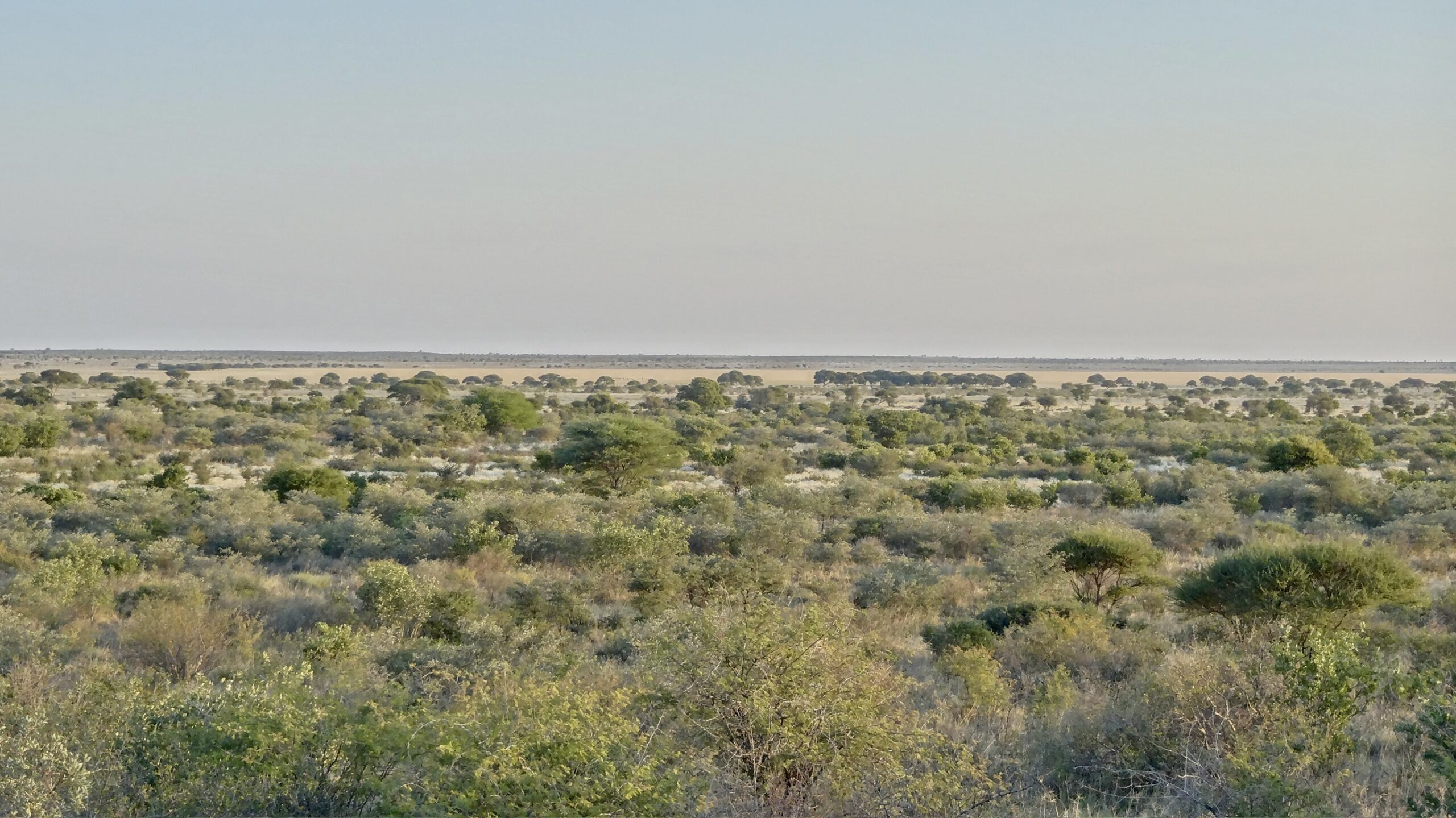
The view from the cottage looks out over the sandy, semi-arid savanna to the dry Tau Pan in the middle distance.
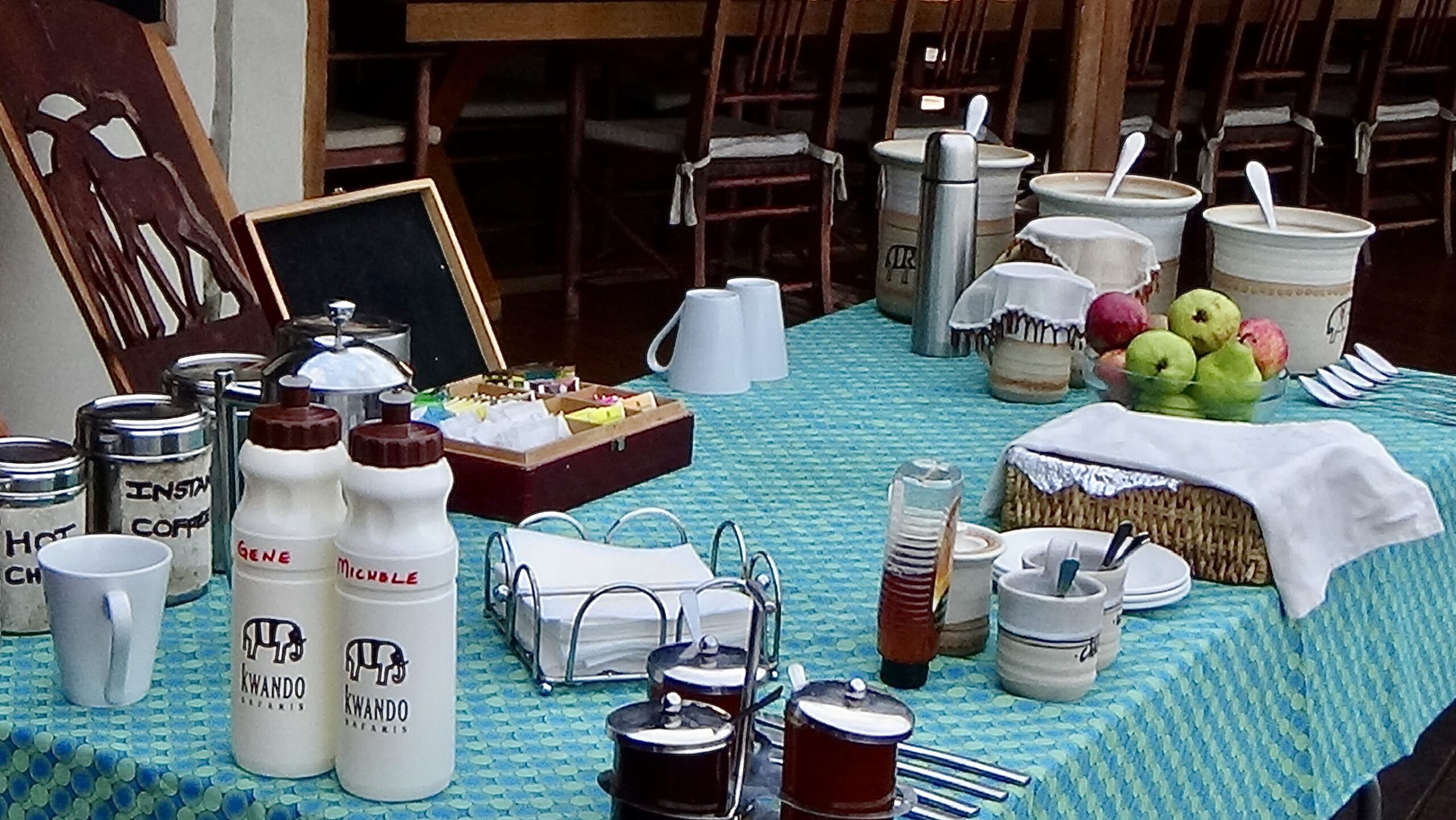
Morning brought a light breakfast with water bottles filled and ready for the day. We were the only guests at the camp and enjoyed the quiet privacy.
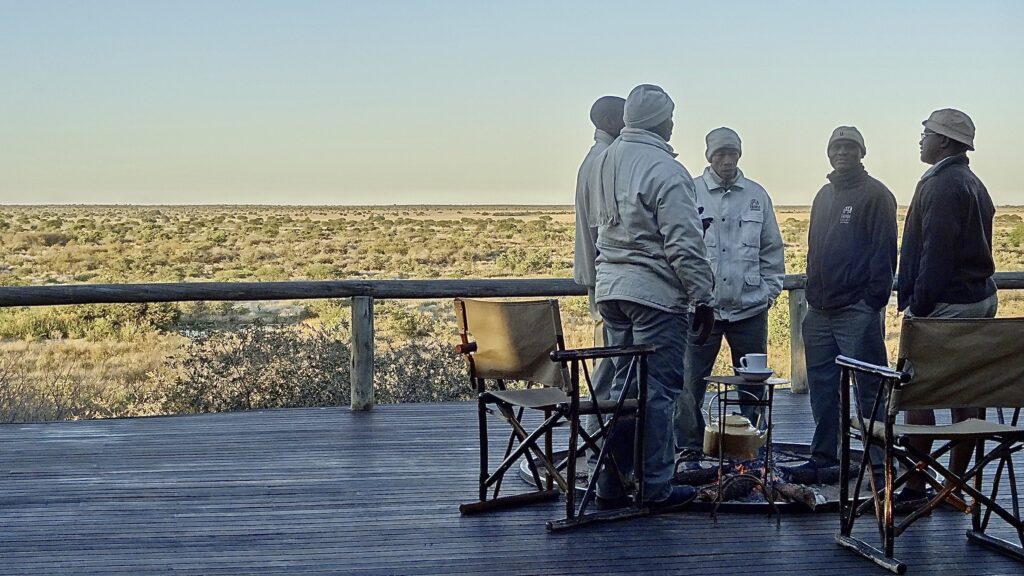
The rainy southern summer had passed, so the days were clear and the air crisp and cold. Here camp staff chat around the fire pit and have their coffee.
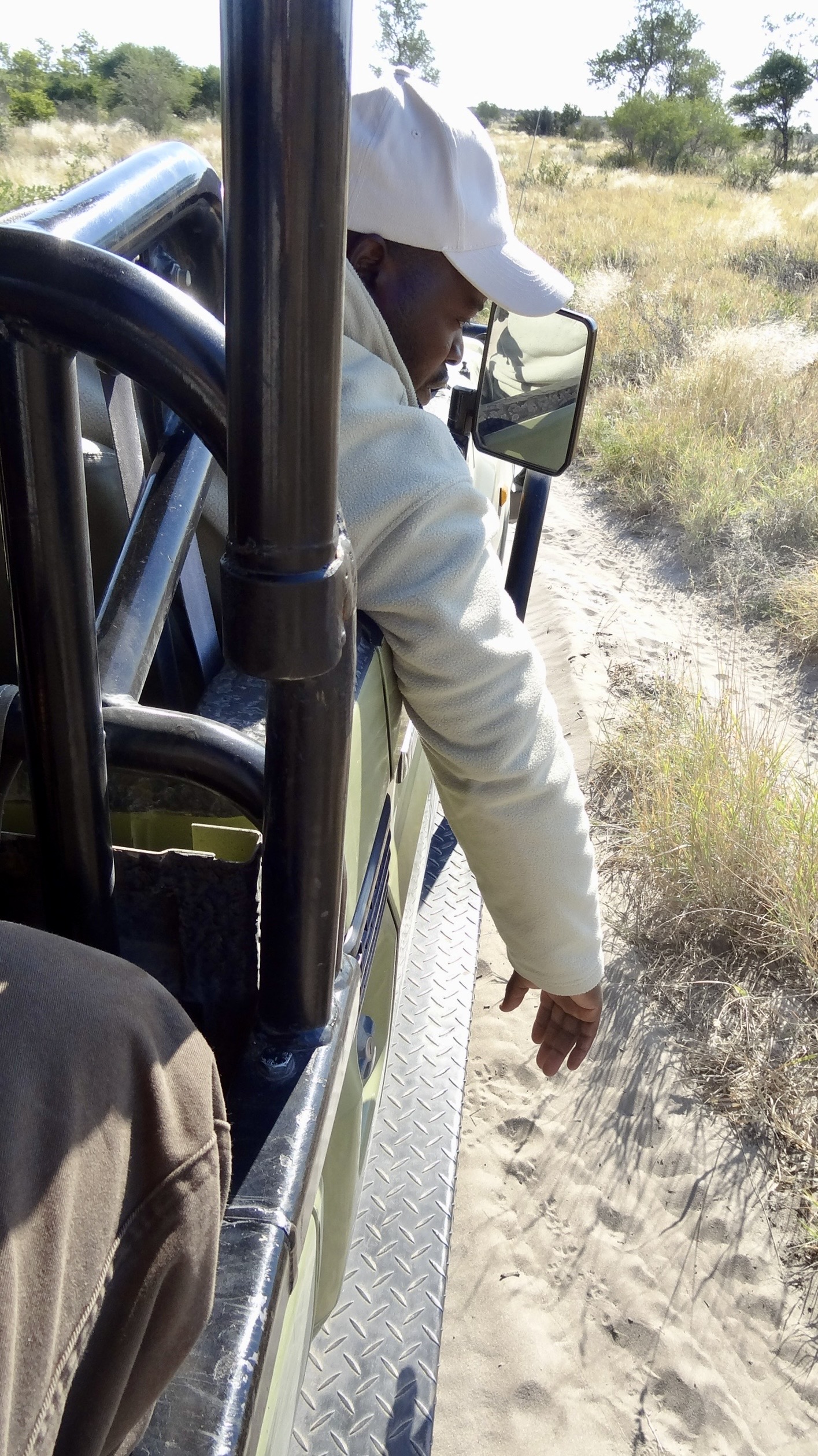
Then we were in a Toyota Land Cruiser and out for a game drive. Here our guide and tracker is looking at some fresh lion tracks. The Tau in Tau Pan is Setswana for lion, and there are black-maned lions that hunt the Kalahari year-round.
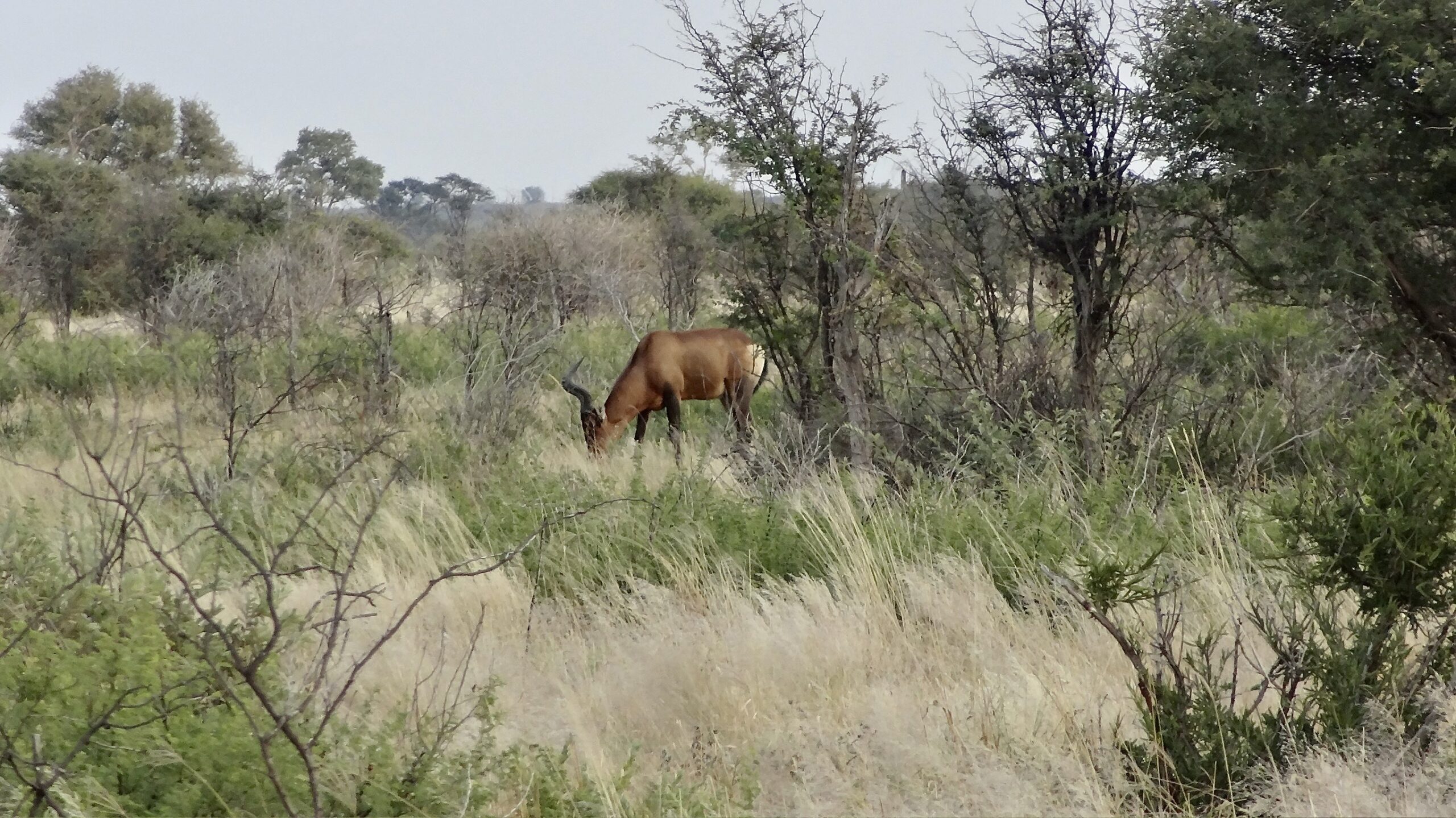
Tracking through the drying savanna grass, we saw Hartebeasts, large members of the Antelope family …
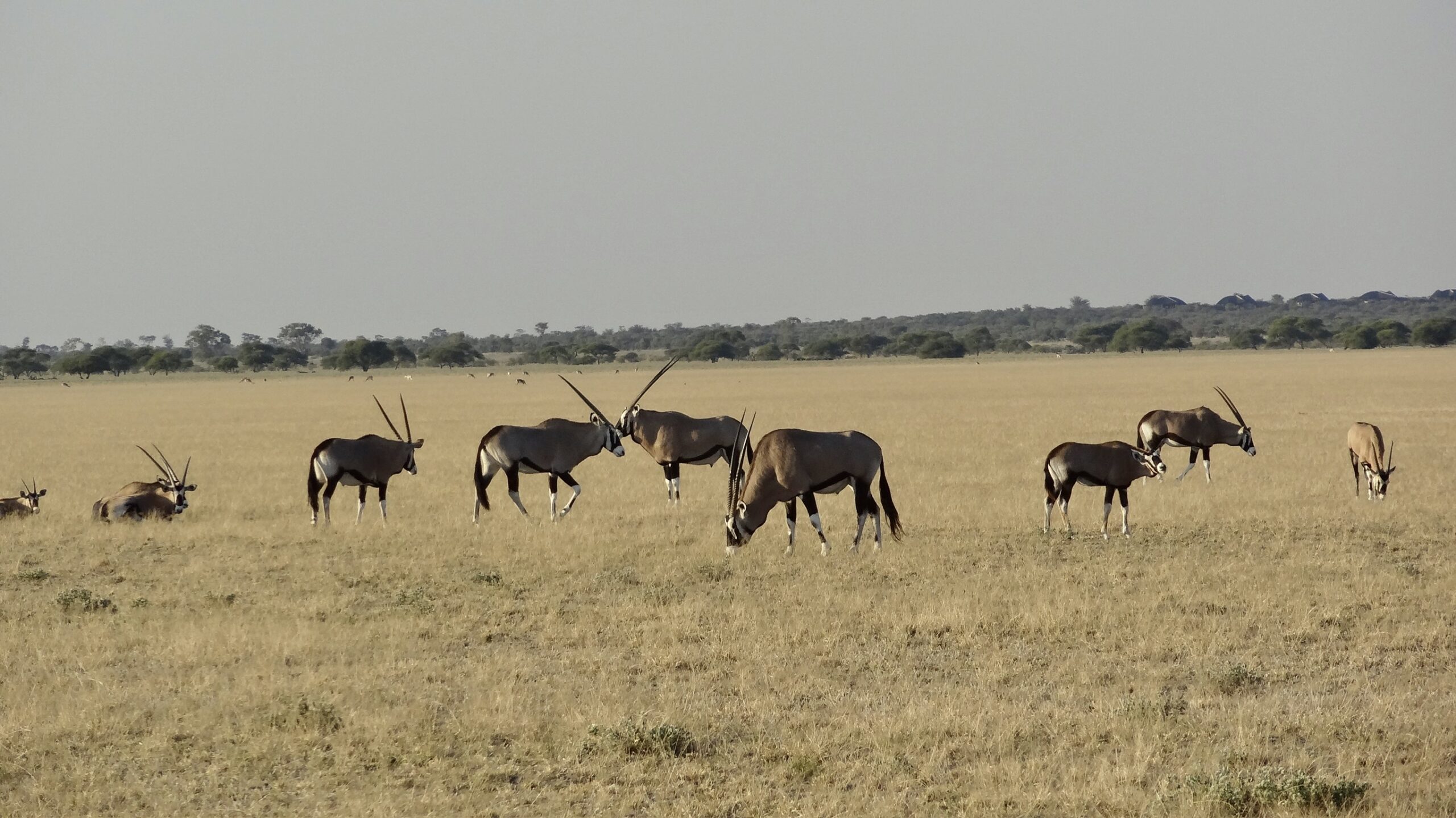
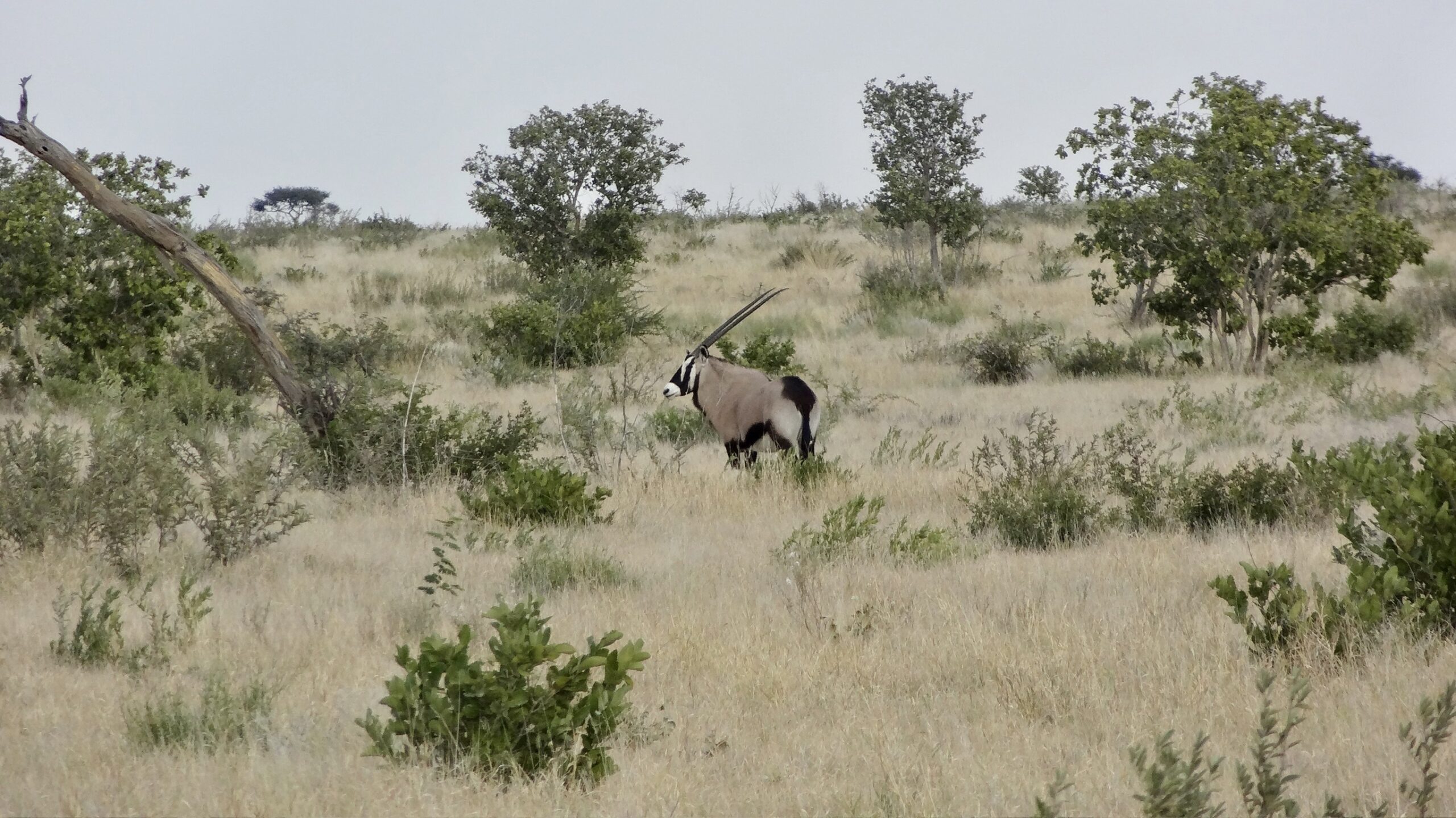
And the striking Gemsbok or Oryx, another Antelope.
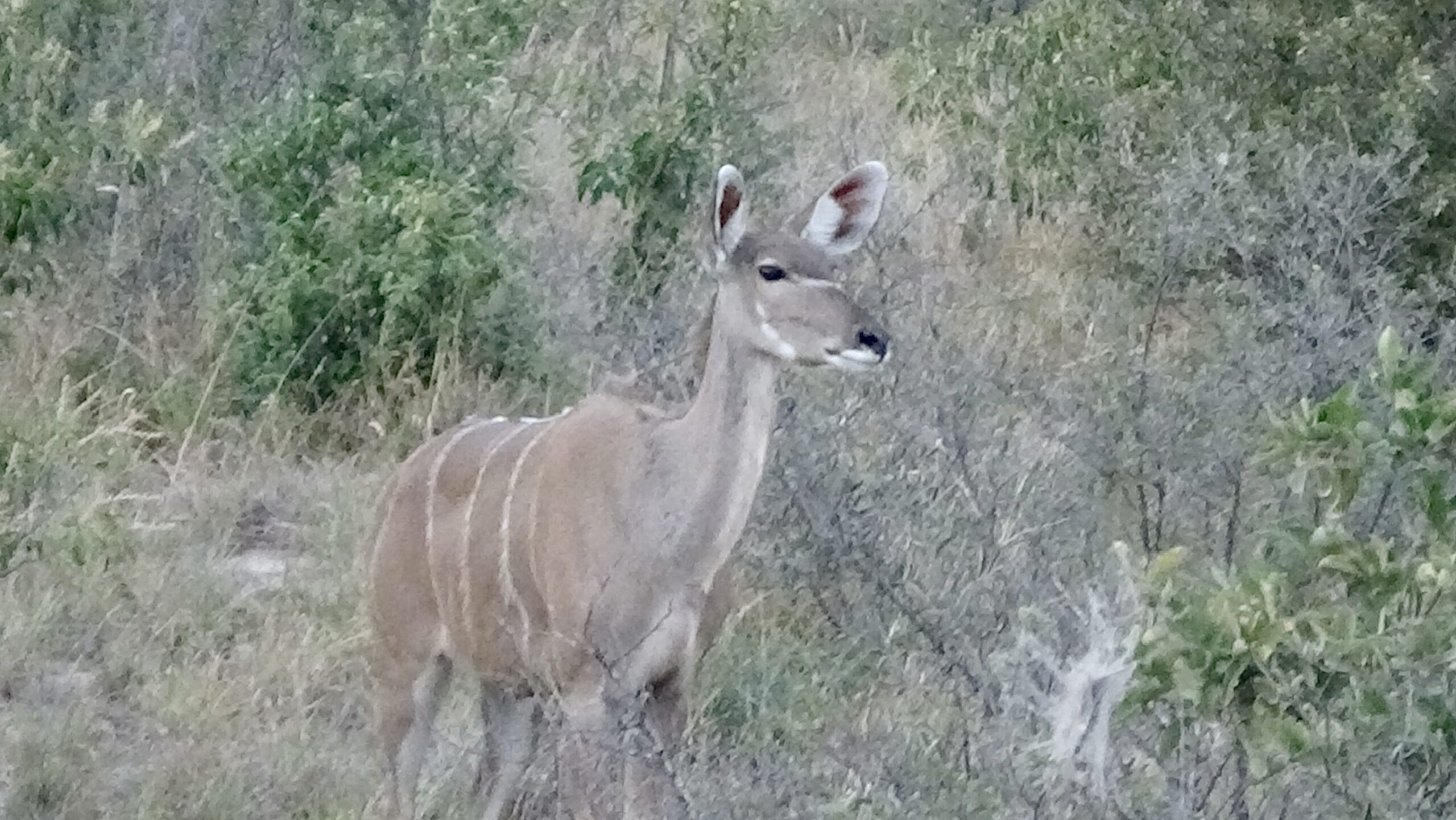
Most curious are the Kudu – yes, another Antelope. They make a remarkable, what-the-hell-was-that kind of sound when frightened. We frequently heard their alarm calls at night around the camp. The sound is like a deflated soccer ball being kicked against a dry wood wall.

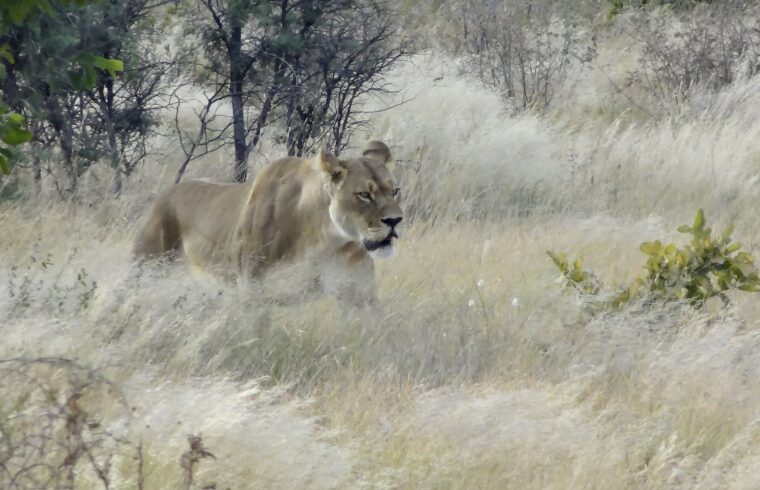
And then we found two lions. They were on the prowl, walking several hundred yards apart. The lead lioness walked past us quite close. Magnificent. As long as you aren’t what they’re looking for.
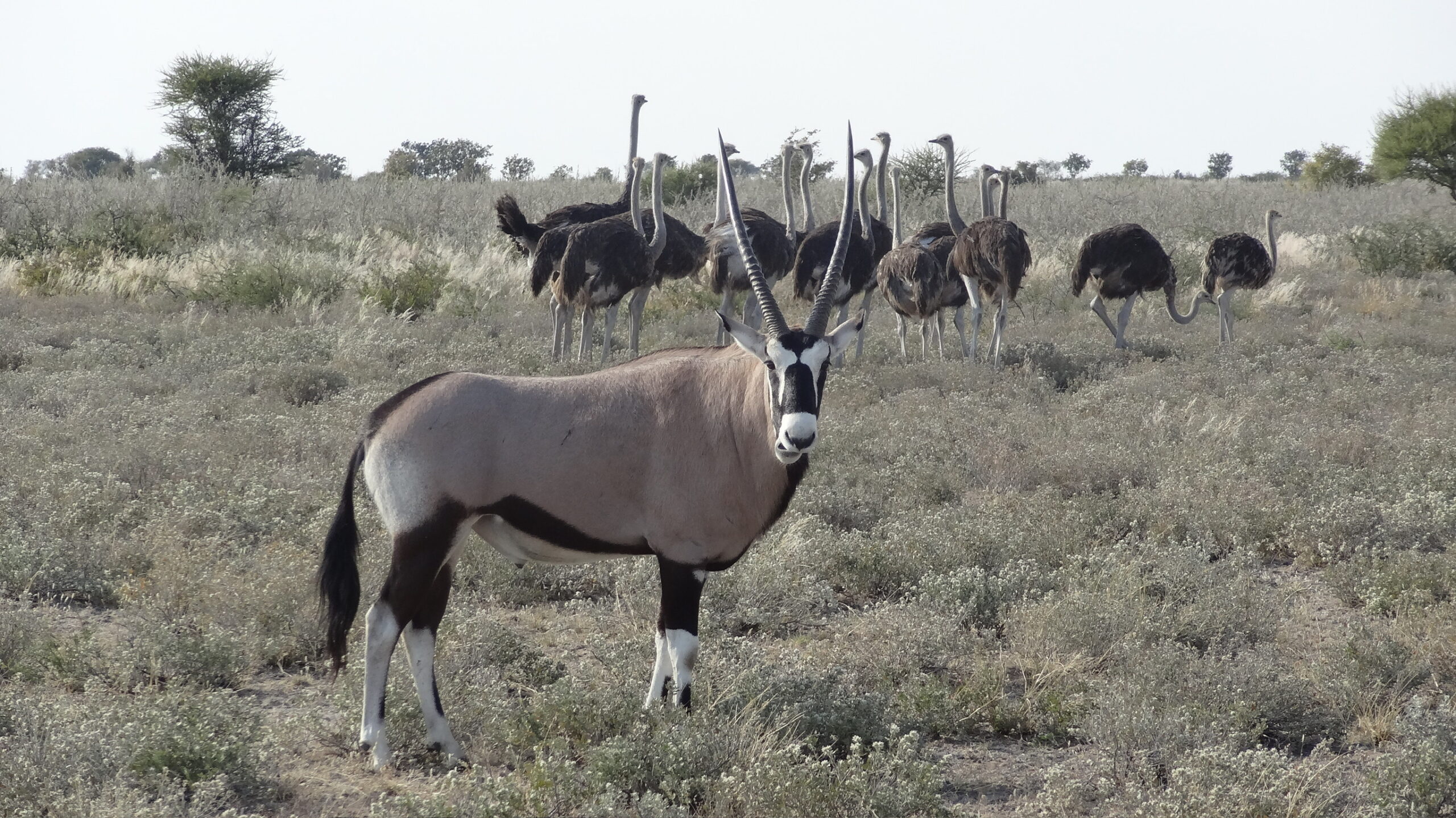
As we worked our way back to the camp, we saw more Oryx, hanging with a flock of Ostriches …
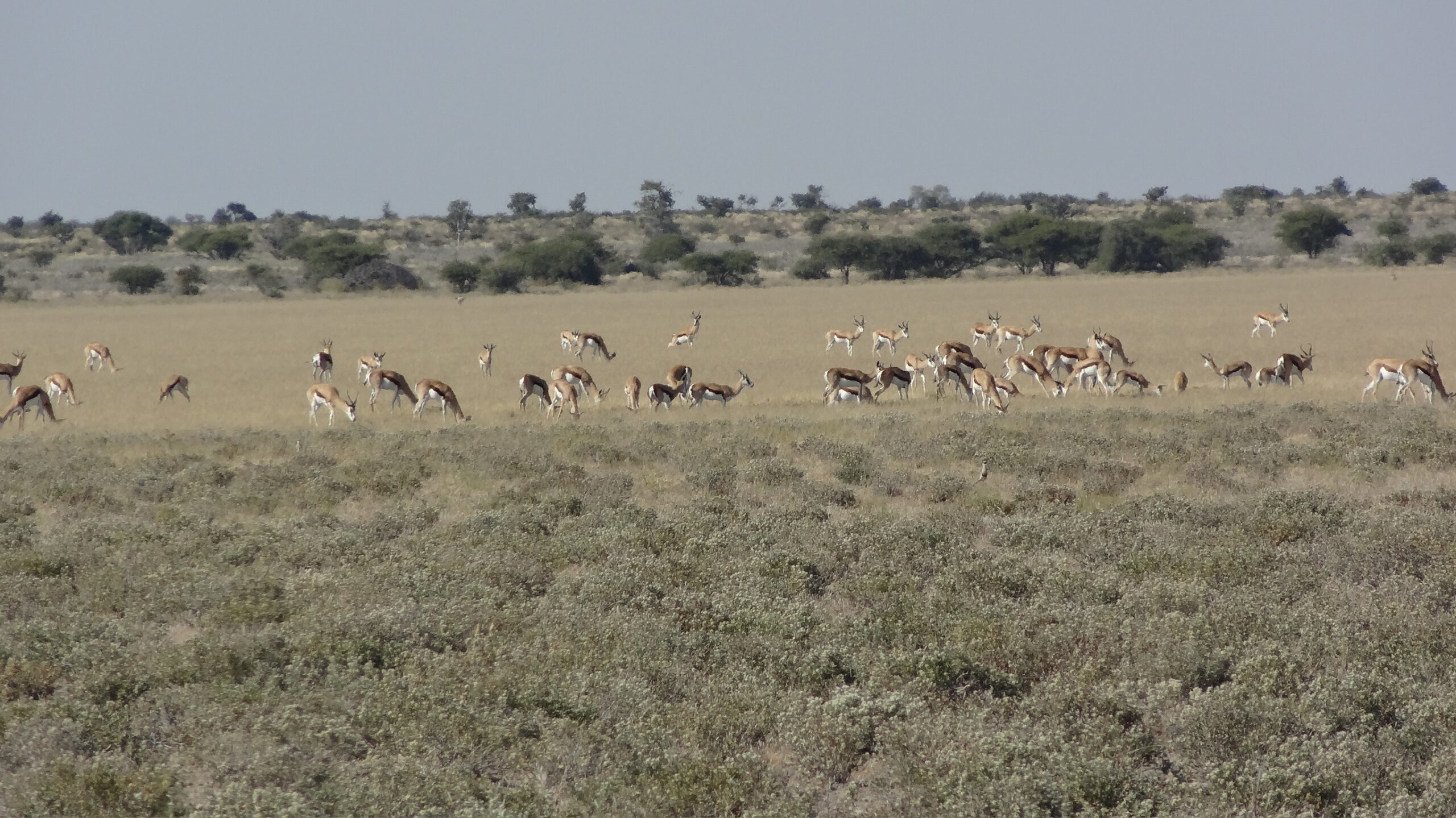
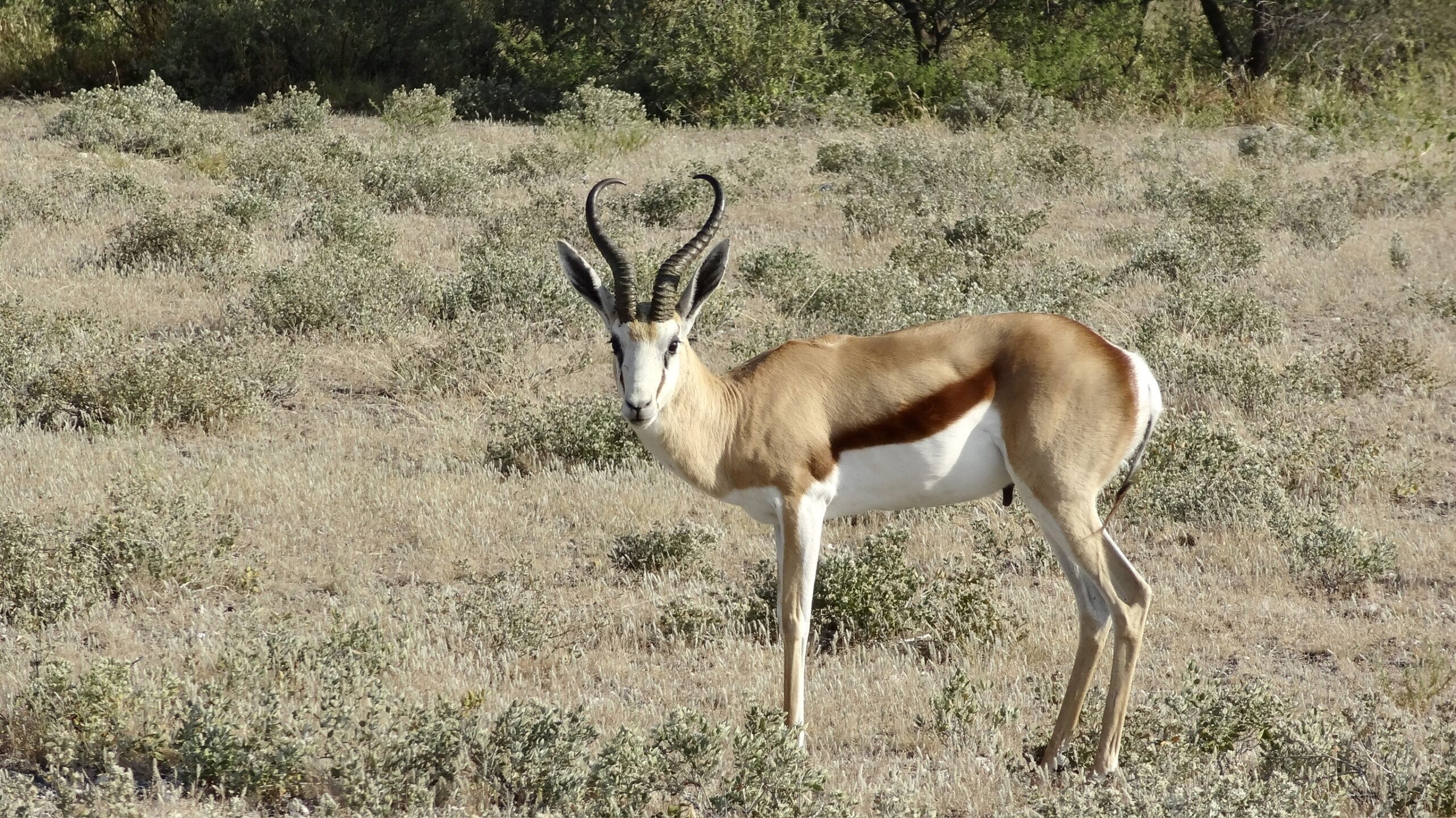
And elegant Springbok in small groups …
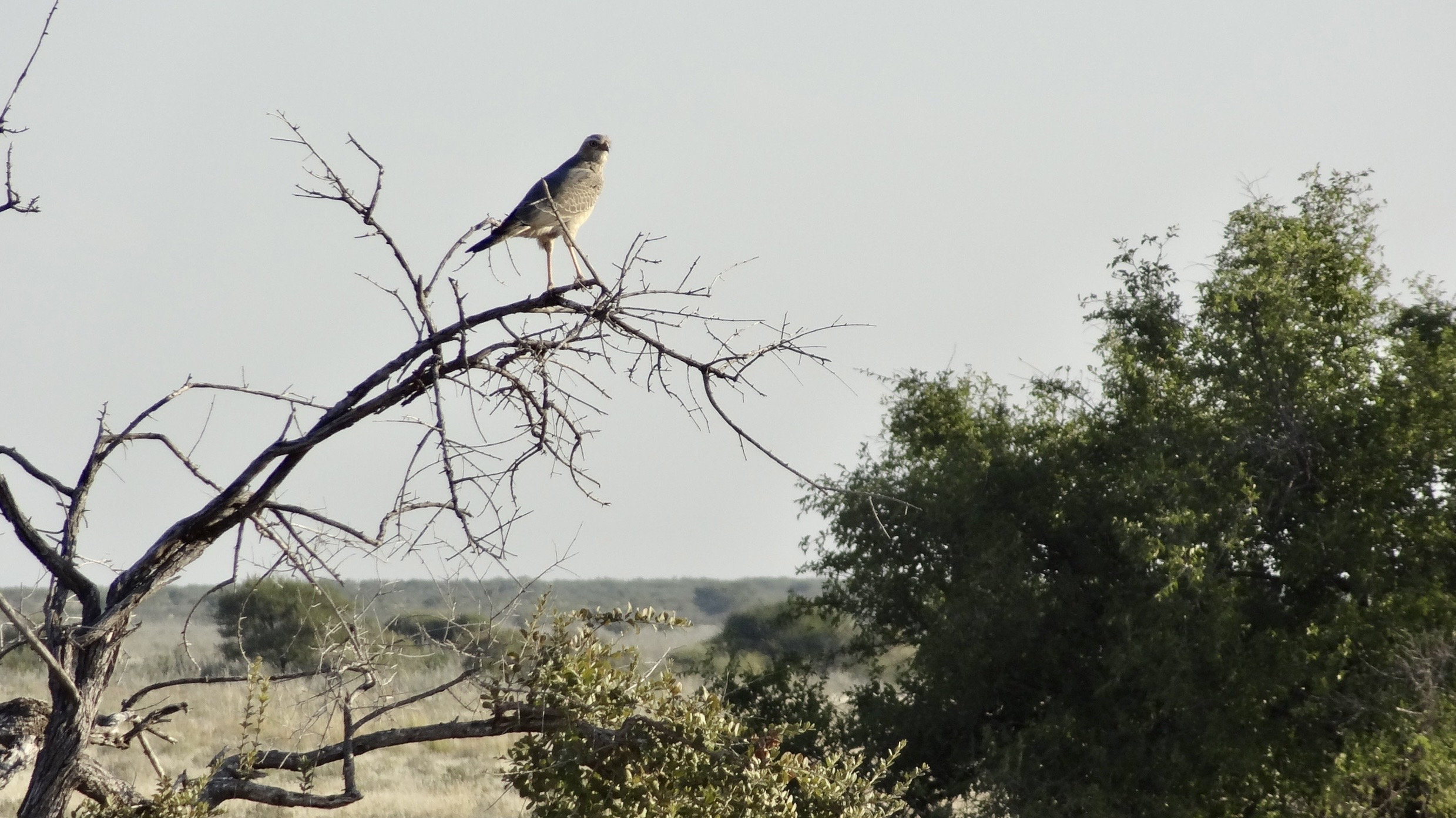
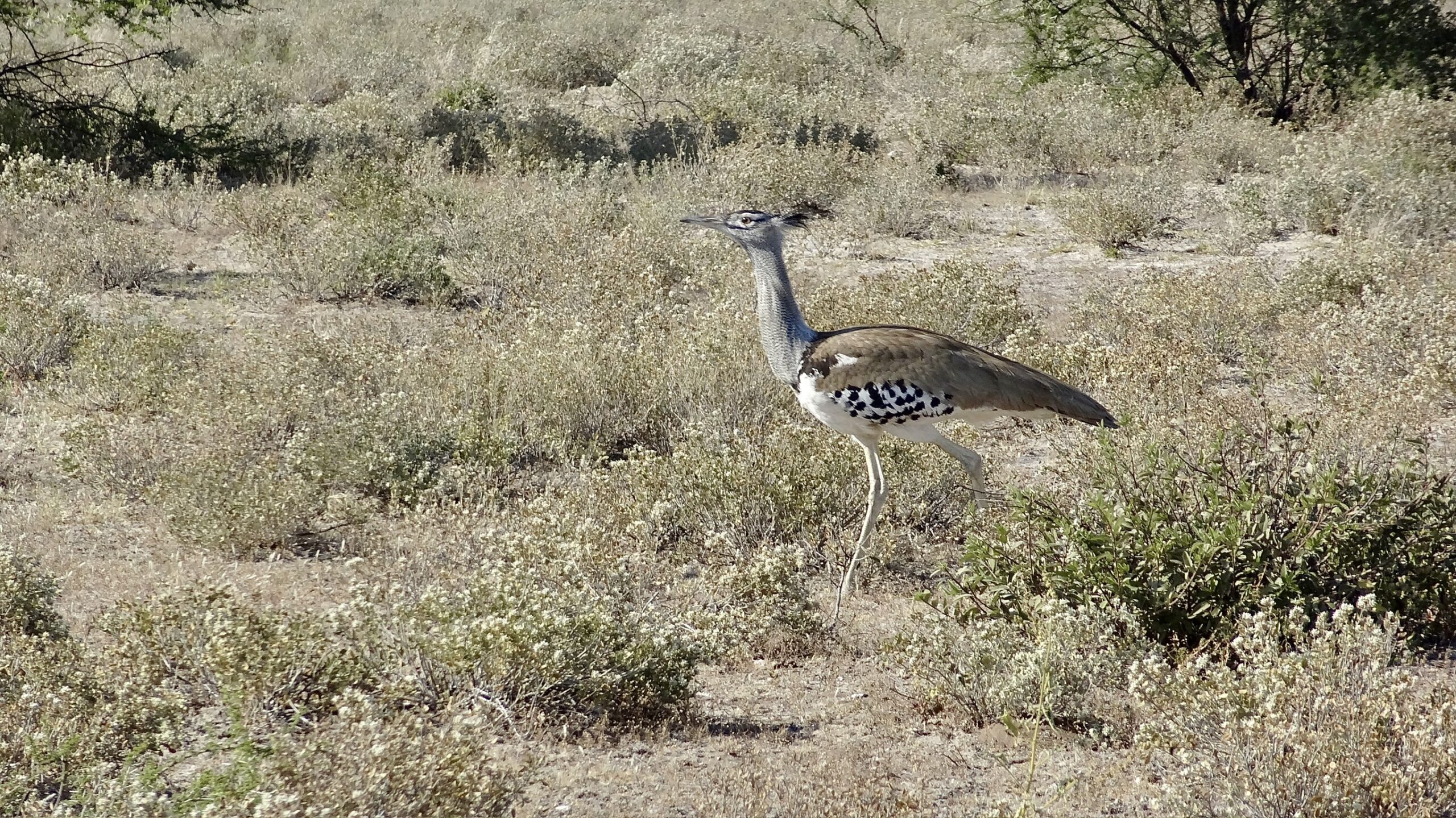
And some of the many birds that live in the Kalahari, like this Goshawk (above) and Kori Bustard (below).
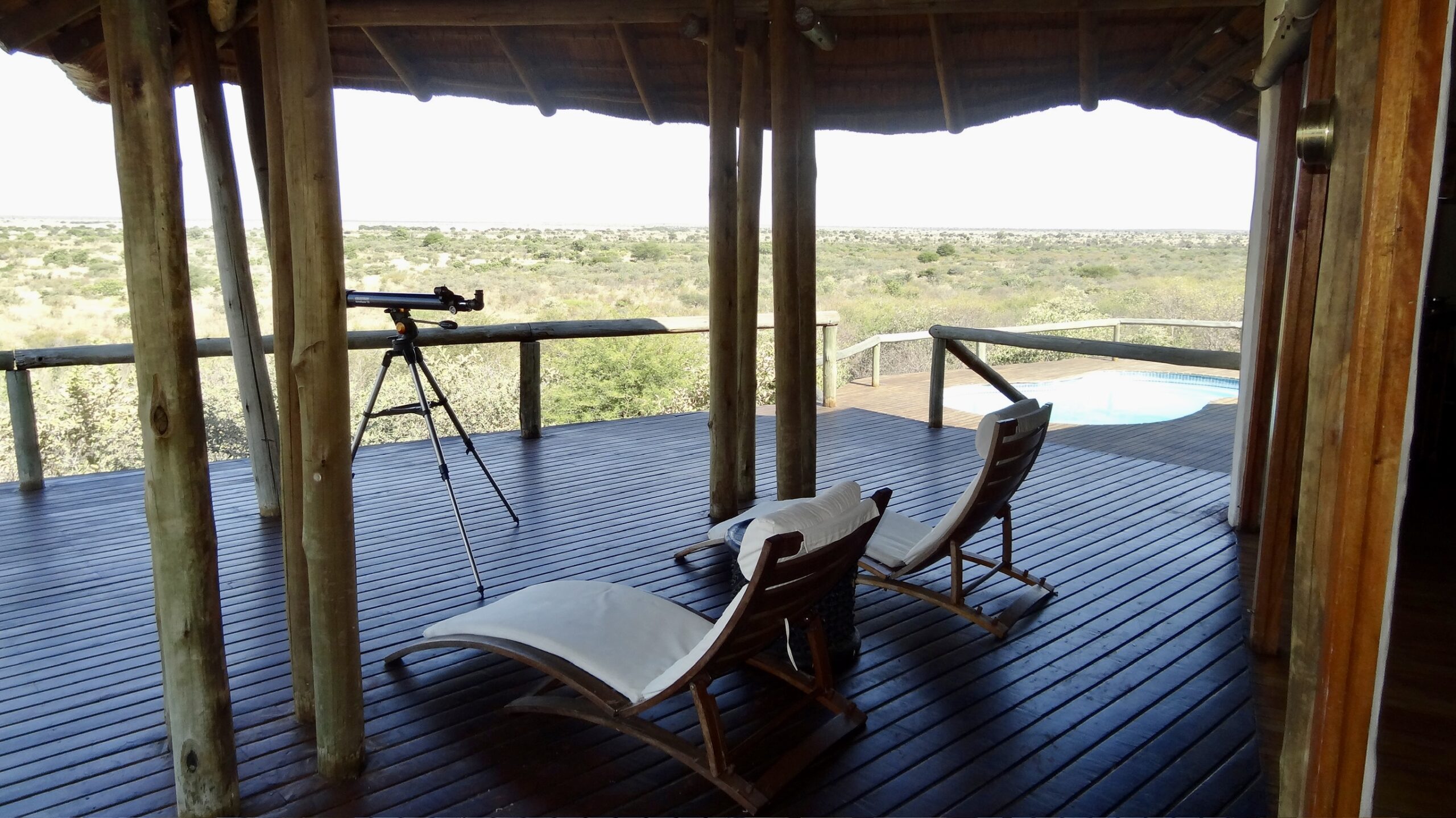
For both wildlife and humans, afternoon is good for some quiet downtime. Though sunny, it was still cool and we were drawn more to the lounge chairs than the small pool.
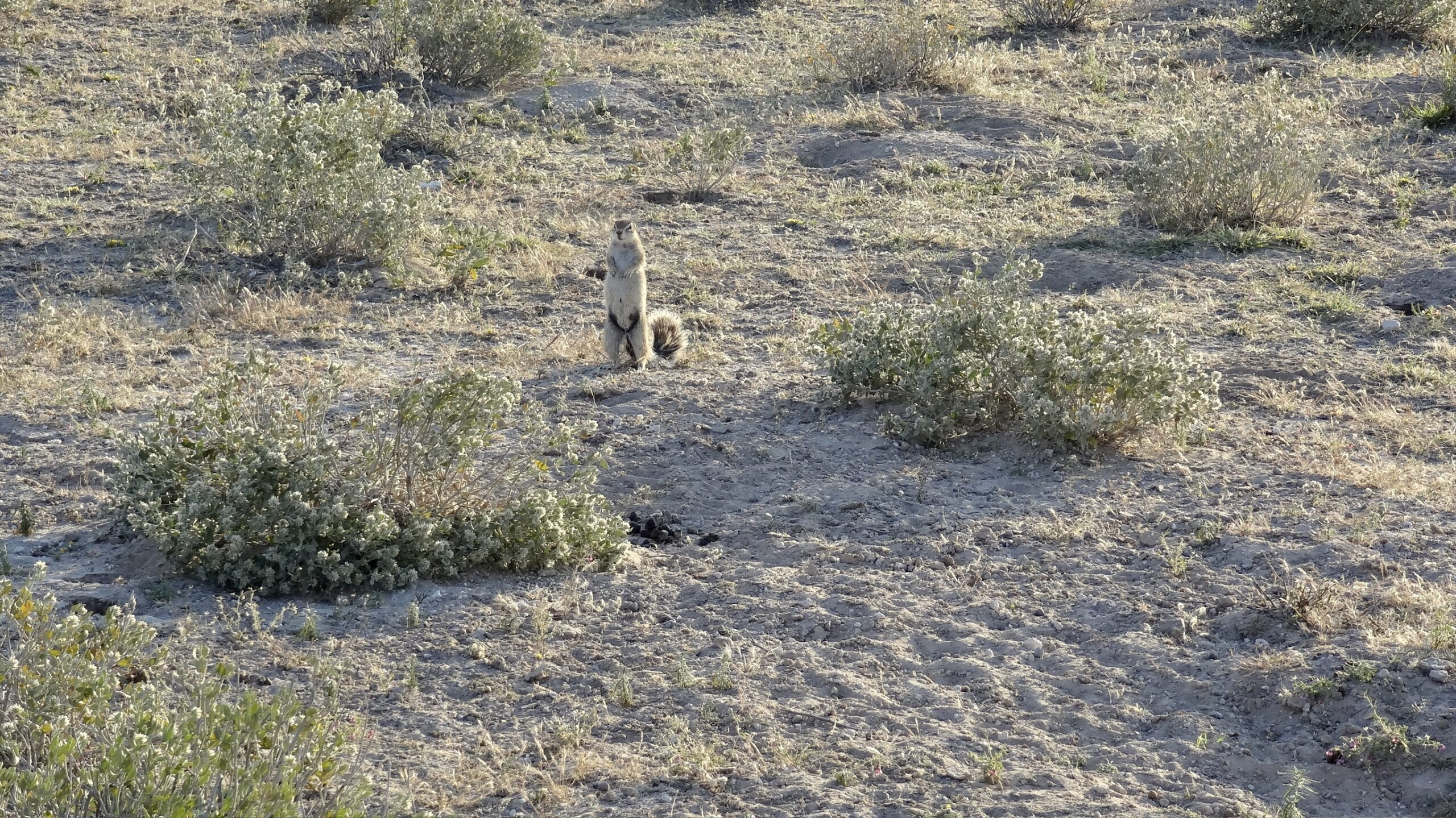
Later in the day, we wound our way down to Tau Pan. Little Ground Squirrels wondered what we were up to.
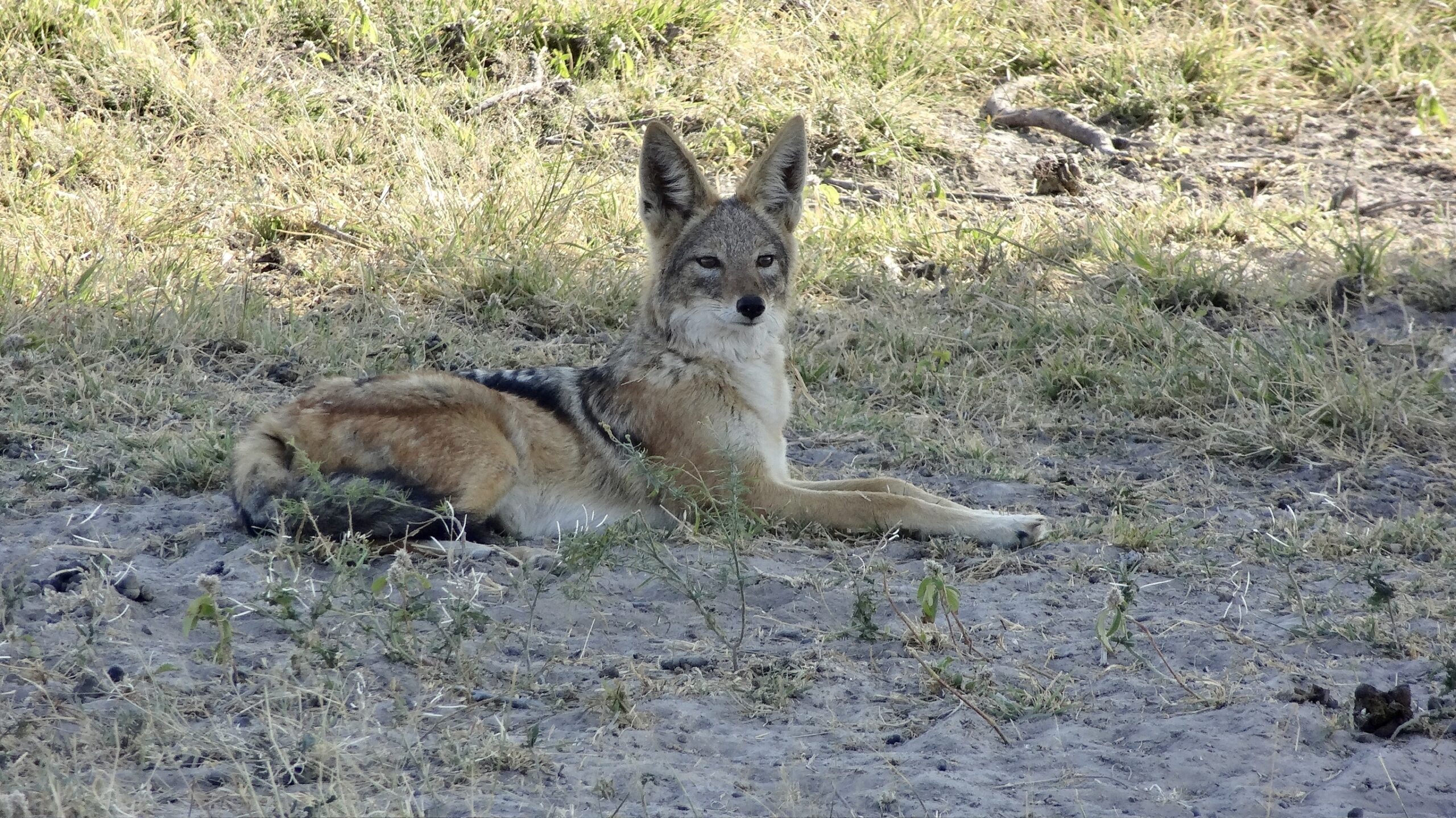
Black-backed Jackals were about, some attentively lazing in the shade.
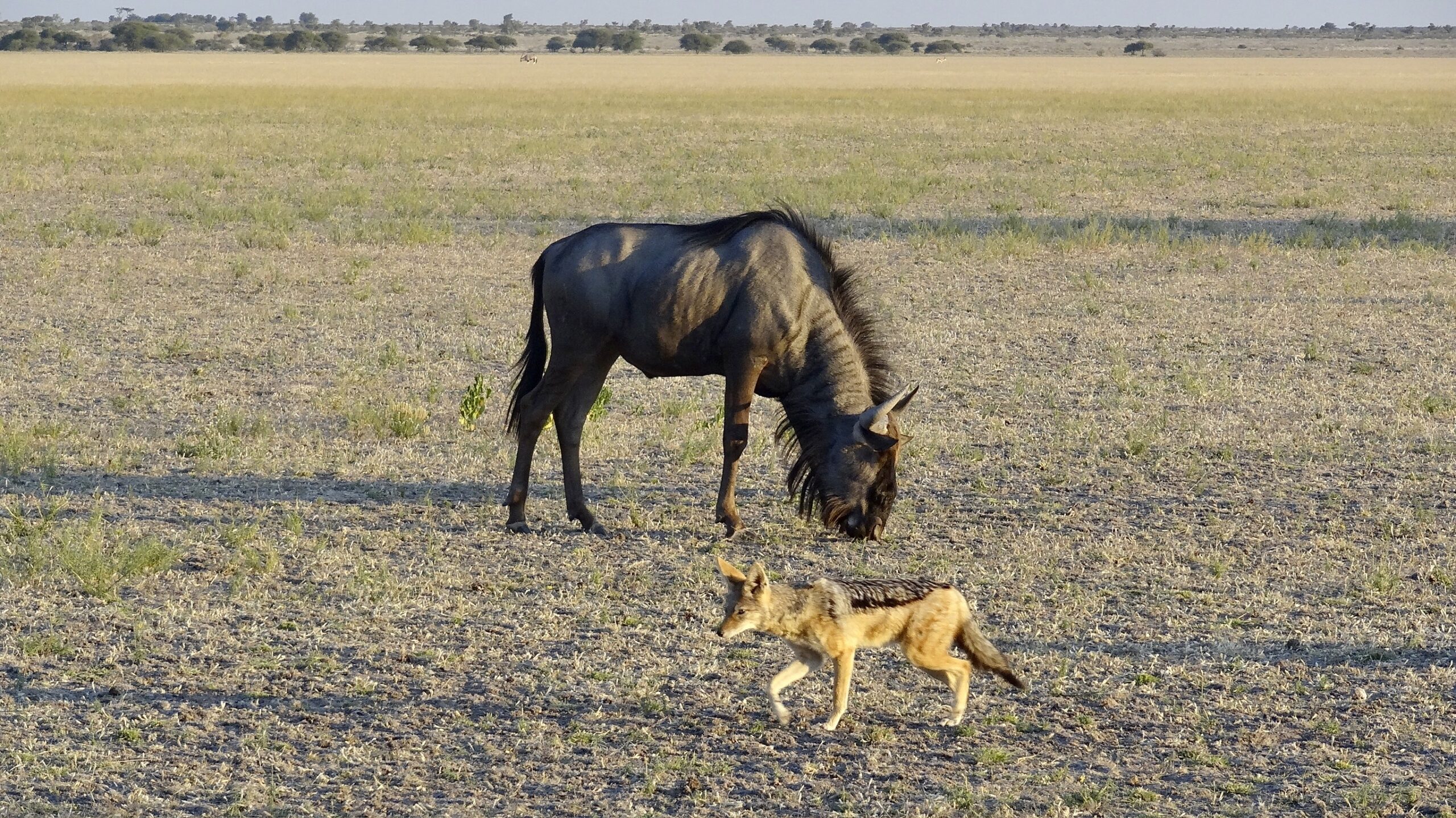
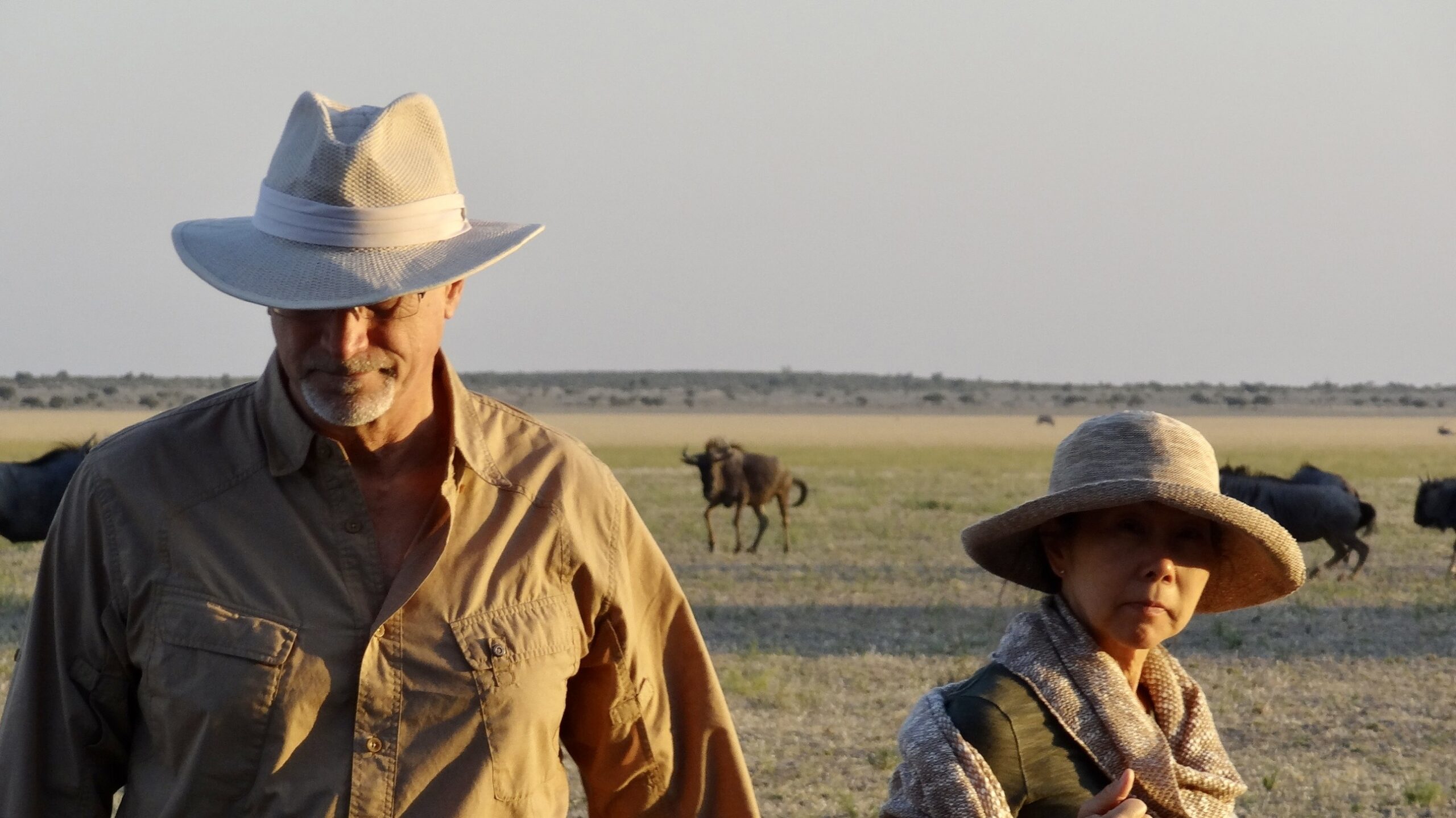
Others were wandering among animals grazing the open pan, like this Wildebeest.
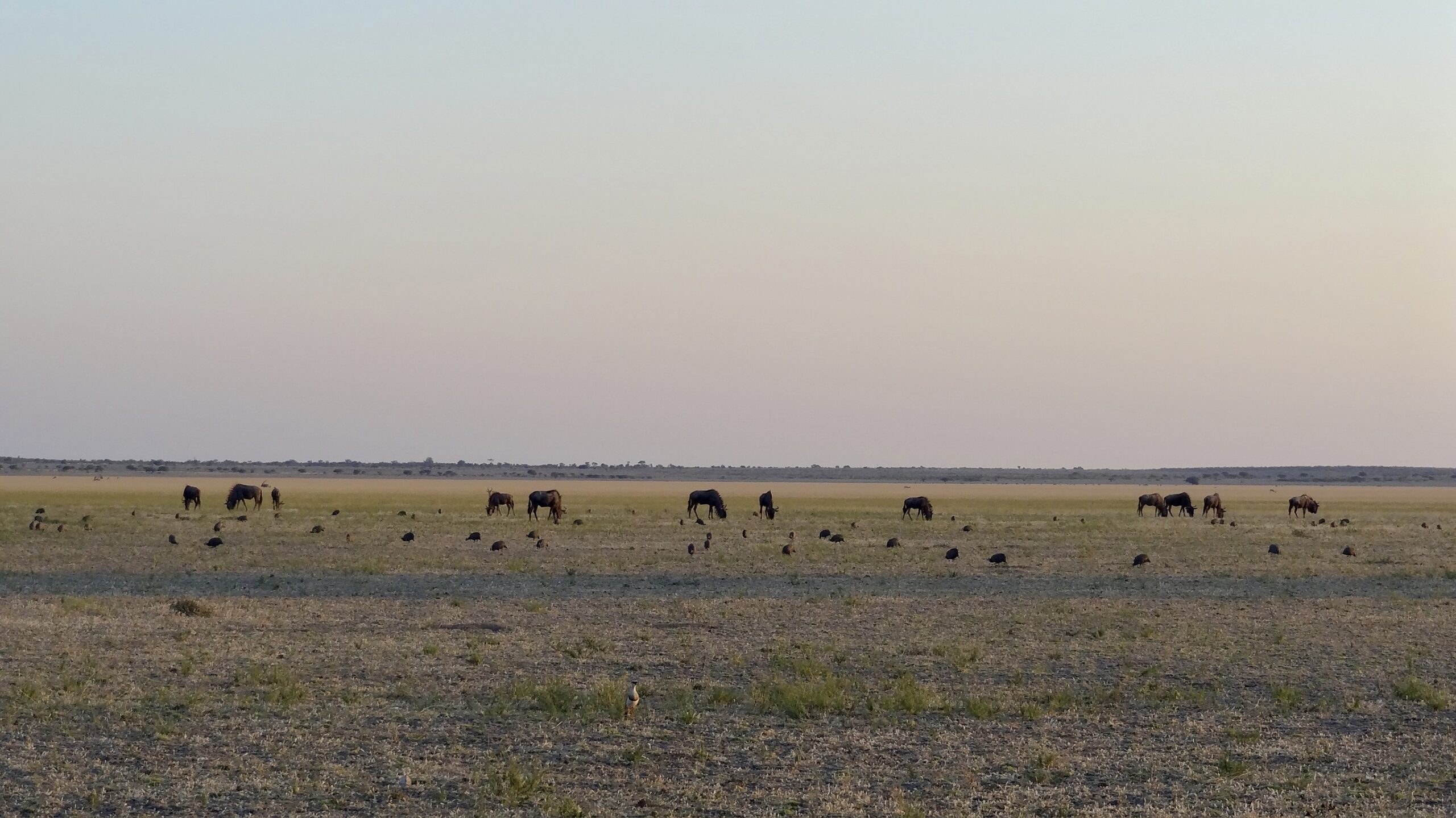
Pans in the Kalahari are wide, flat basins that act as water catchments during the rainy season. Some pans crust over during the dry season, but Tau Pan’s grasses dry and get cropped close from grazing. Here Guinea Fowl mix with Wildebeest.
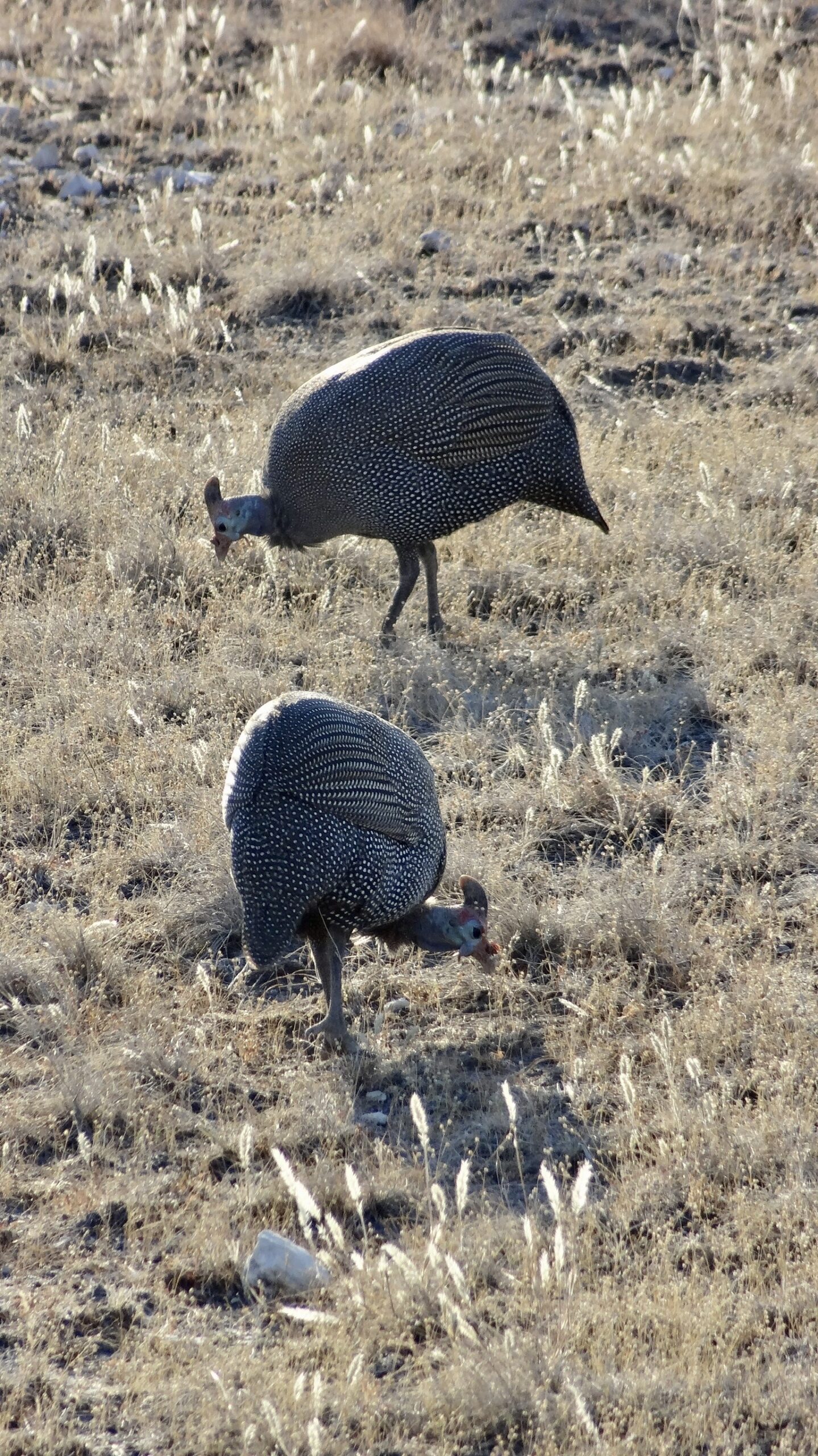
Guinea Fowl are funny little things. Their tiny heads hold even tinier brains. They bob about in groups that seem to forget where they’re going and why.
In addition to fodder, the pan provides open sightlines that give grazing wildlife ample warning when predators are present.
During the dry season, water is all but nonexistent in the Kalahari, so many animals migrate toward the Okavango Delta during the dry winters. Those that remain rely on their food to provide moisture.
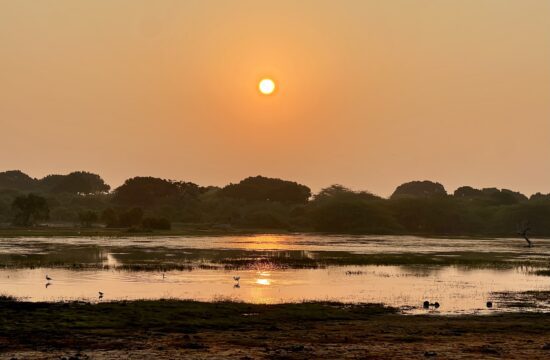
We remained at the edge of the pan as the sun westered and the shadows grew long.
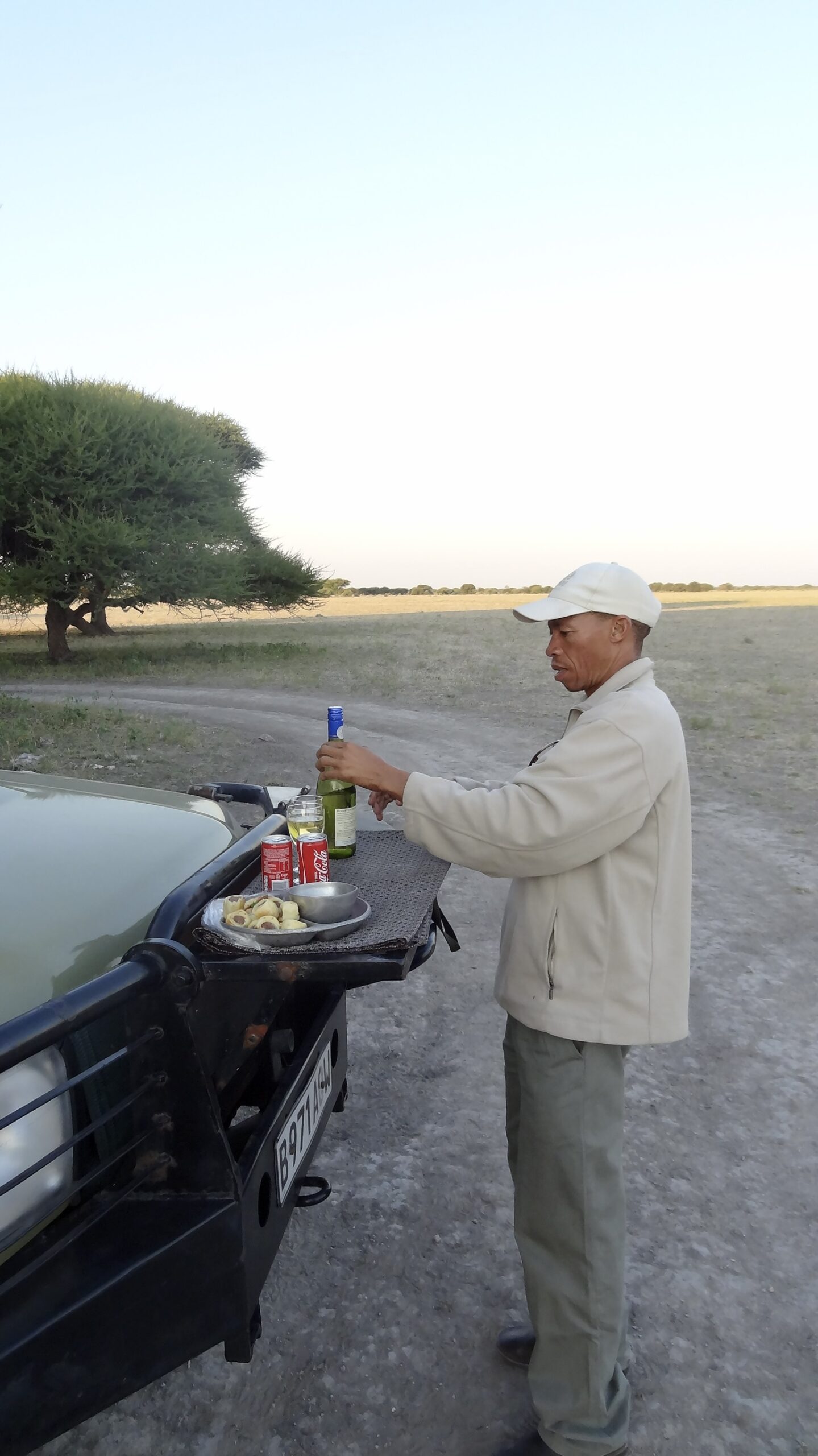
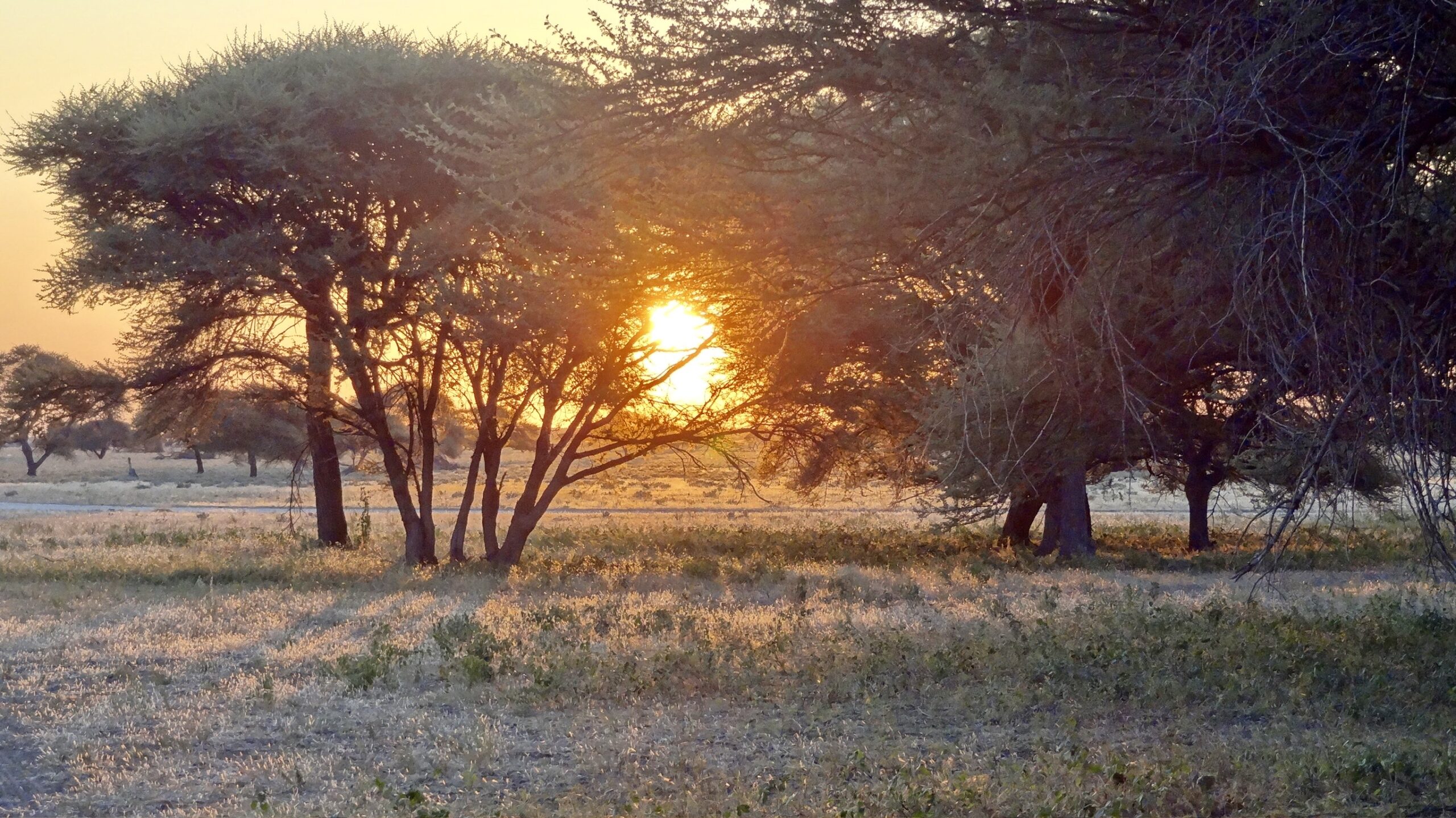
Our afternoon guide set up sundowners – snacks and beverages for us to enjoy as we watched the sun set through the trees surrounding the pan (below).
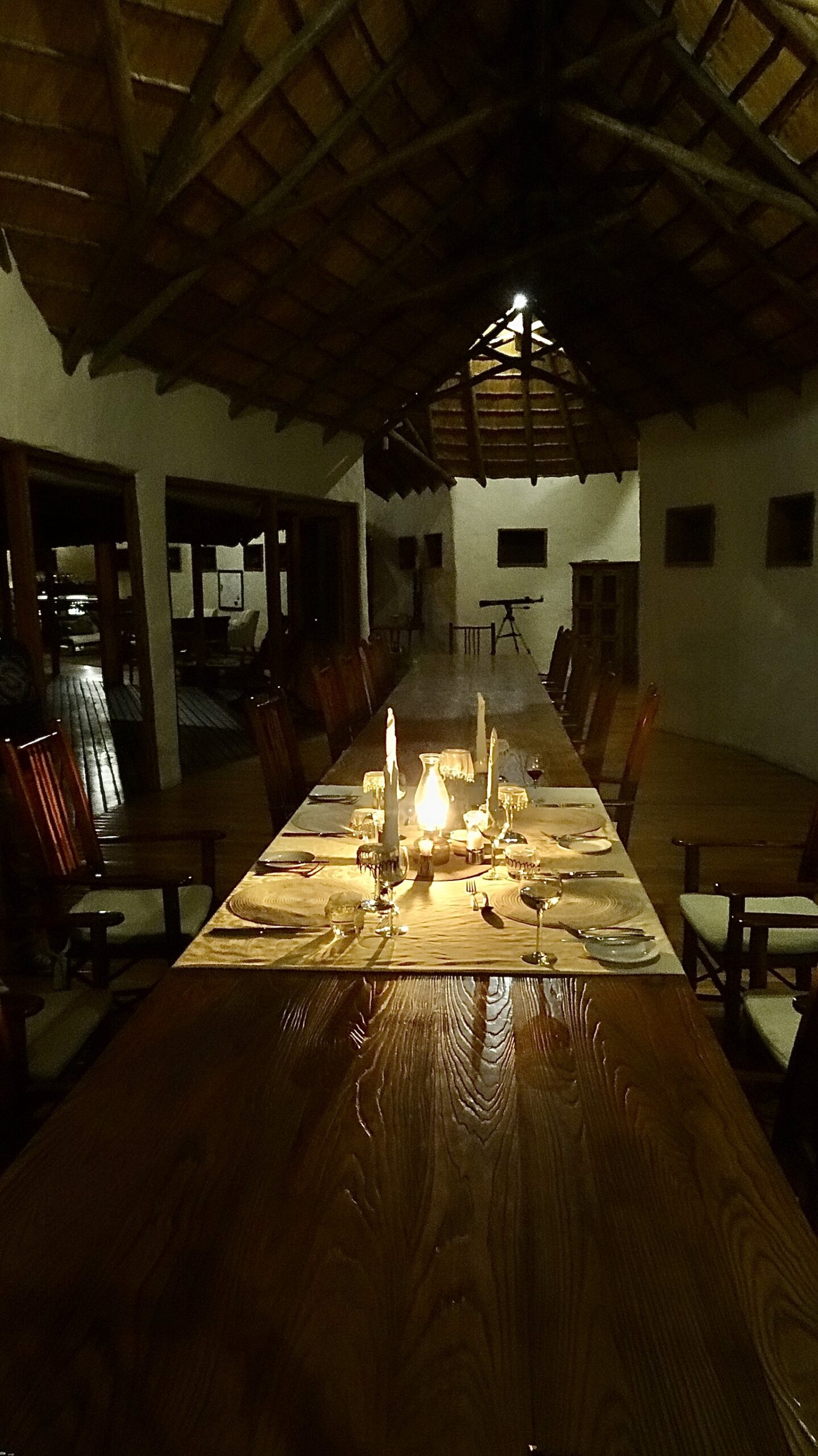
Dinners at the camp were quiet affairs, with our driver and guide joining us for dinner and giving us insights into the local San culture. Dishes were announced in Xhosa, one of the so-called click languages of the region.
After dark, the stars came out and we’d sit around the wood fire and marvel at the southern sky. We were lucky to have moonless nights, and the complete absence of human light pollution gave us amazing views.
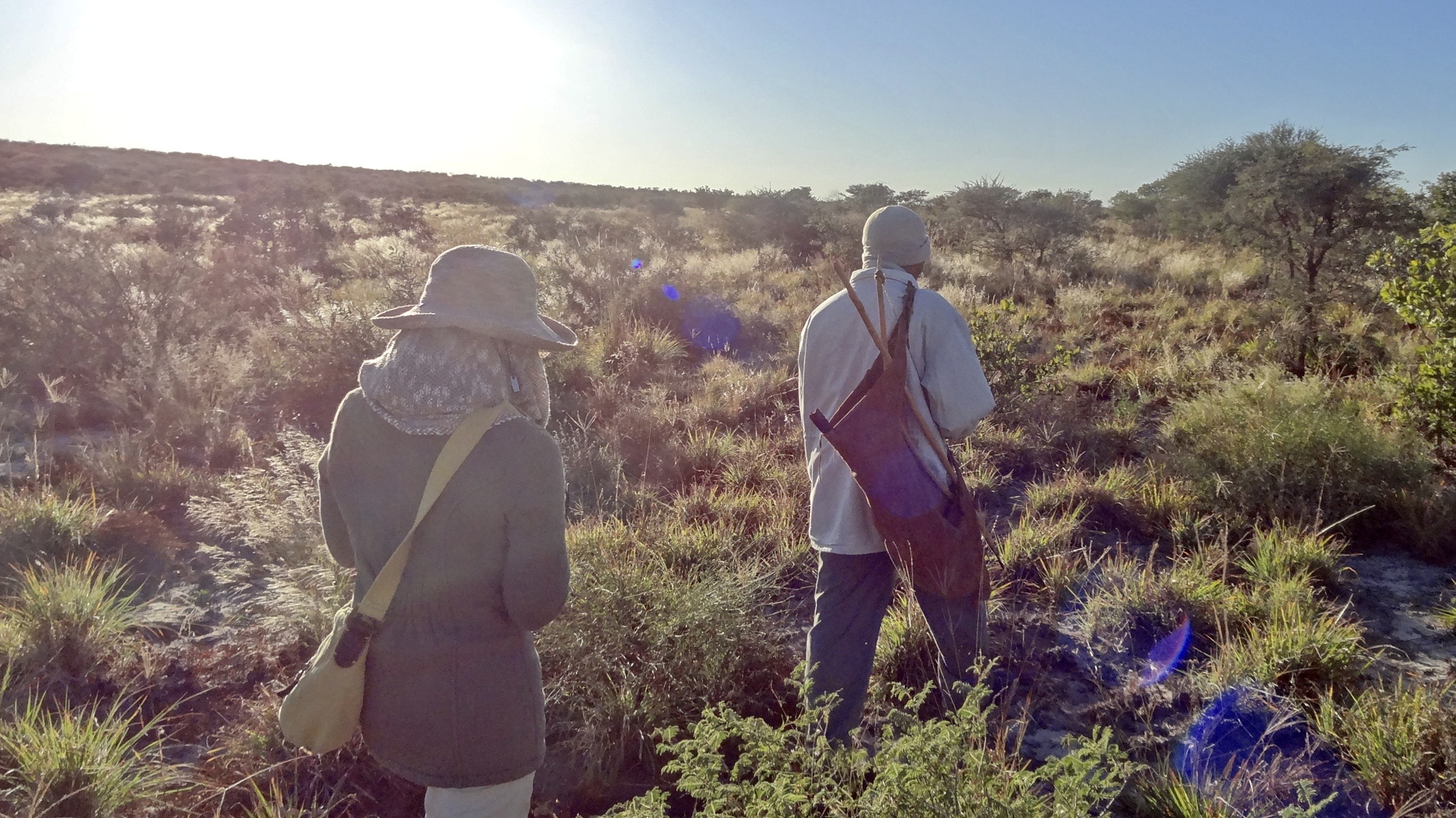
On our last morning, we went on a bush walk with our tracker, who grew up in and near the desert.
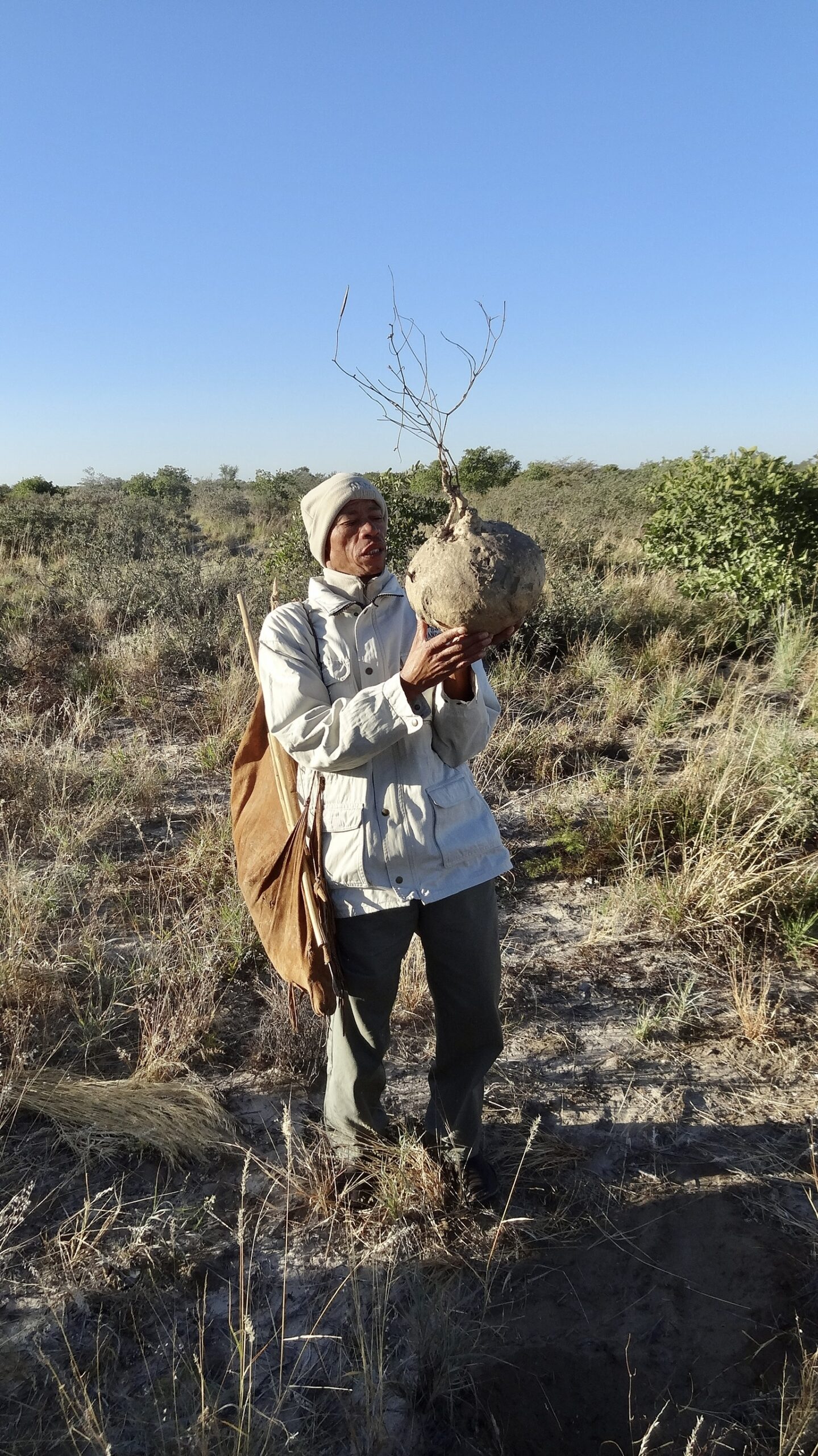
We walked the sandy savanna and learned about plants, hunting, shelter, and his life growing up. His nickname is Music, because he loved to move to music when young. Here he shows us a bi! bulb, or milk bulb root and demonstrated how much liquid can be squeezed from its shavings.
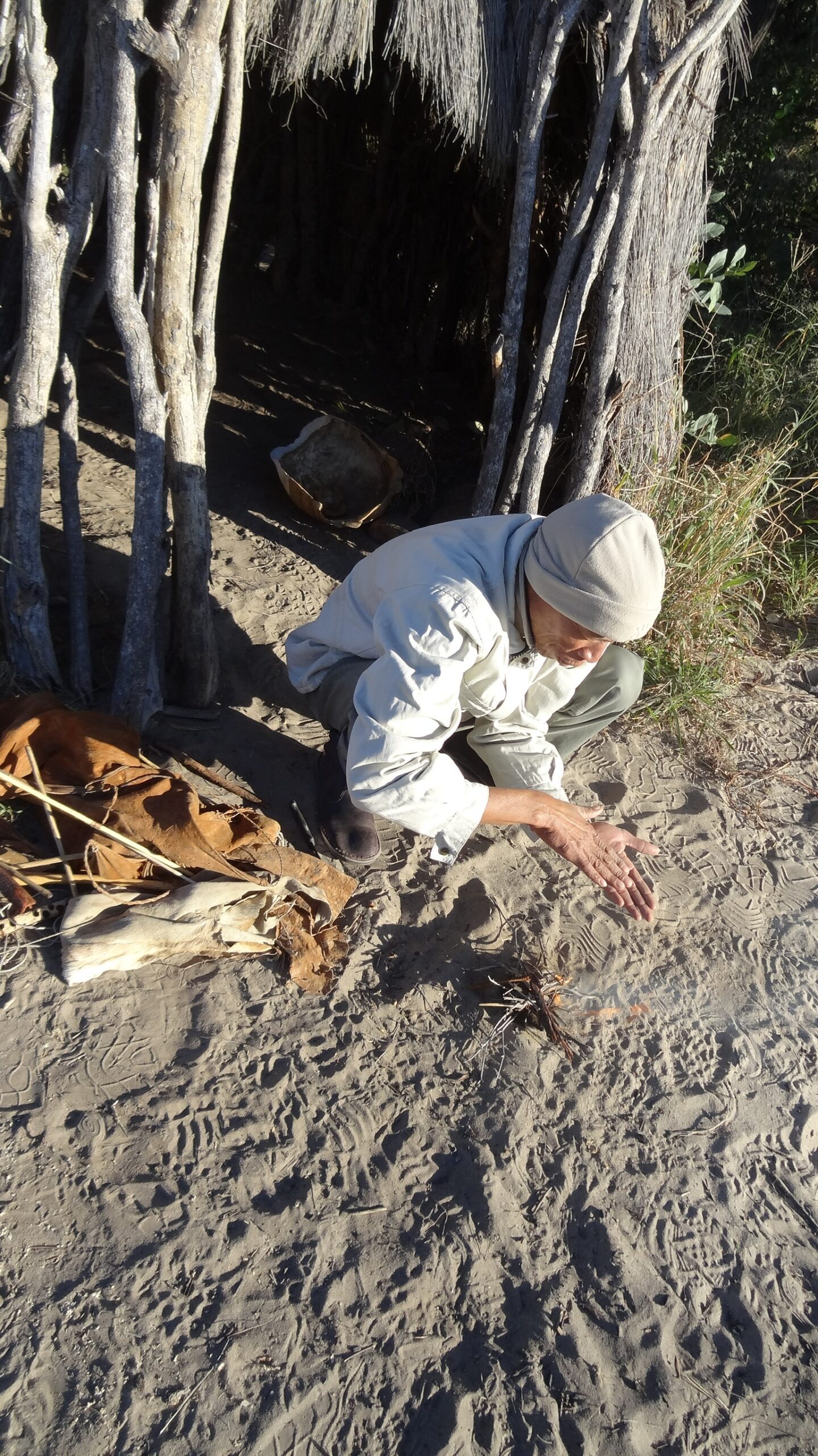
He also started a fire by rubbing a couple of sticks, something well known but rarely seen in the wild. He was amazingly quick.
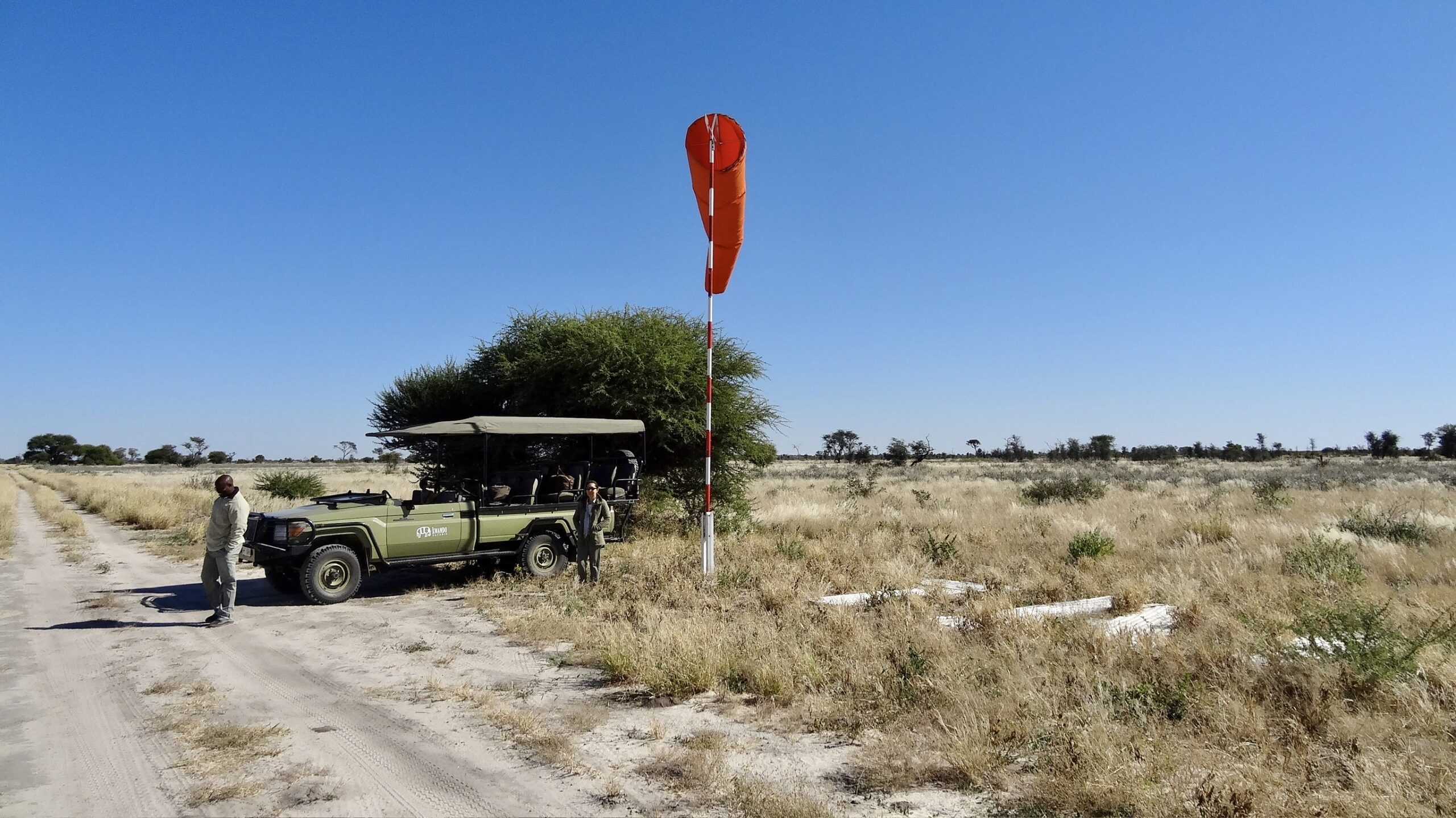
Then we were back at the air strip waiting for our plane mid-field. Our drivers job was to watch for any animals on the field and chase them away if needed.
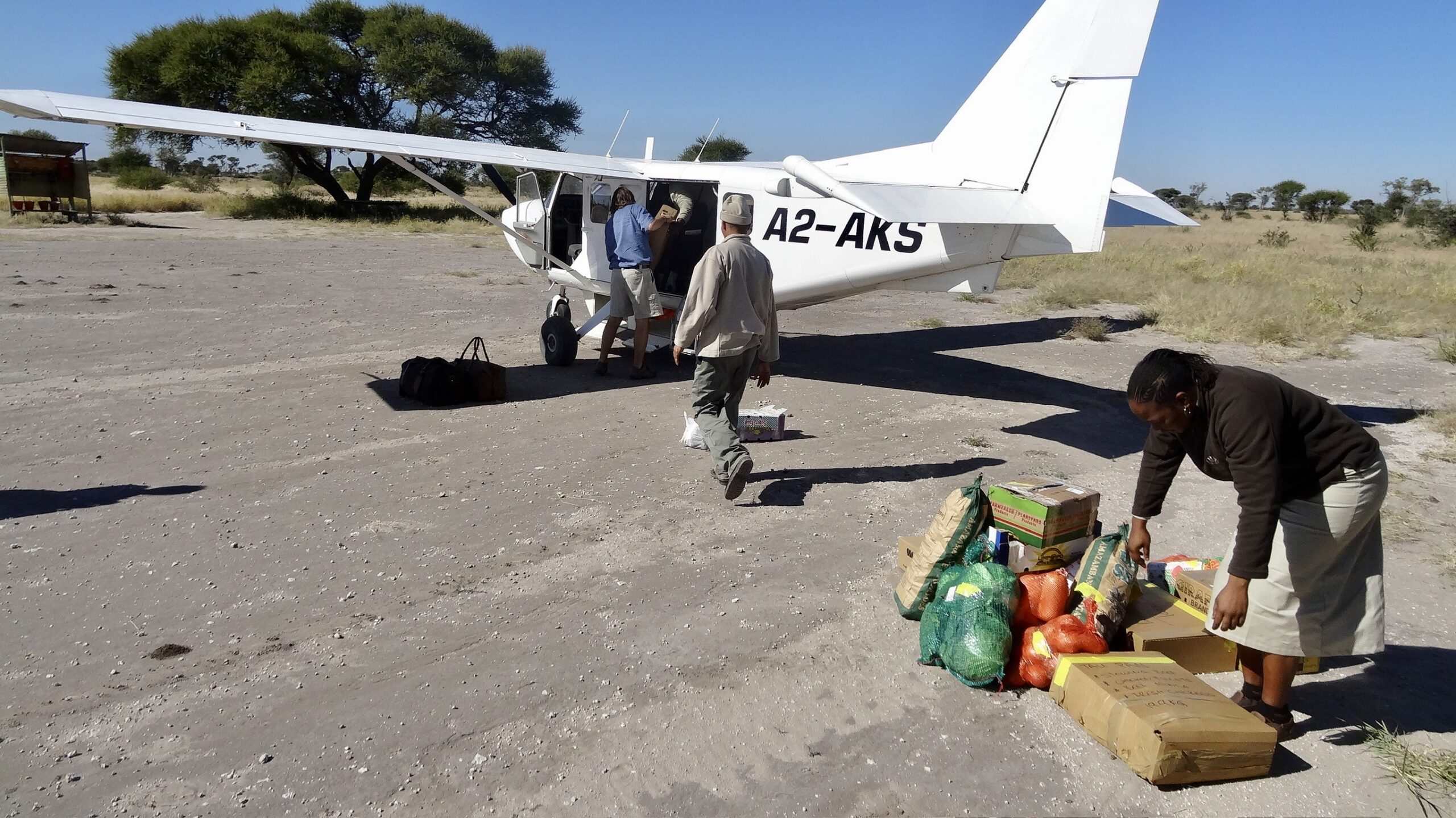
The only inbound passengers were vegetables and camp supplies.
Then we were airborne again, headed across the desert for the Okavango Delta.