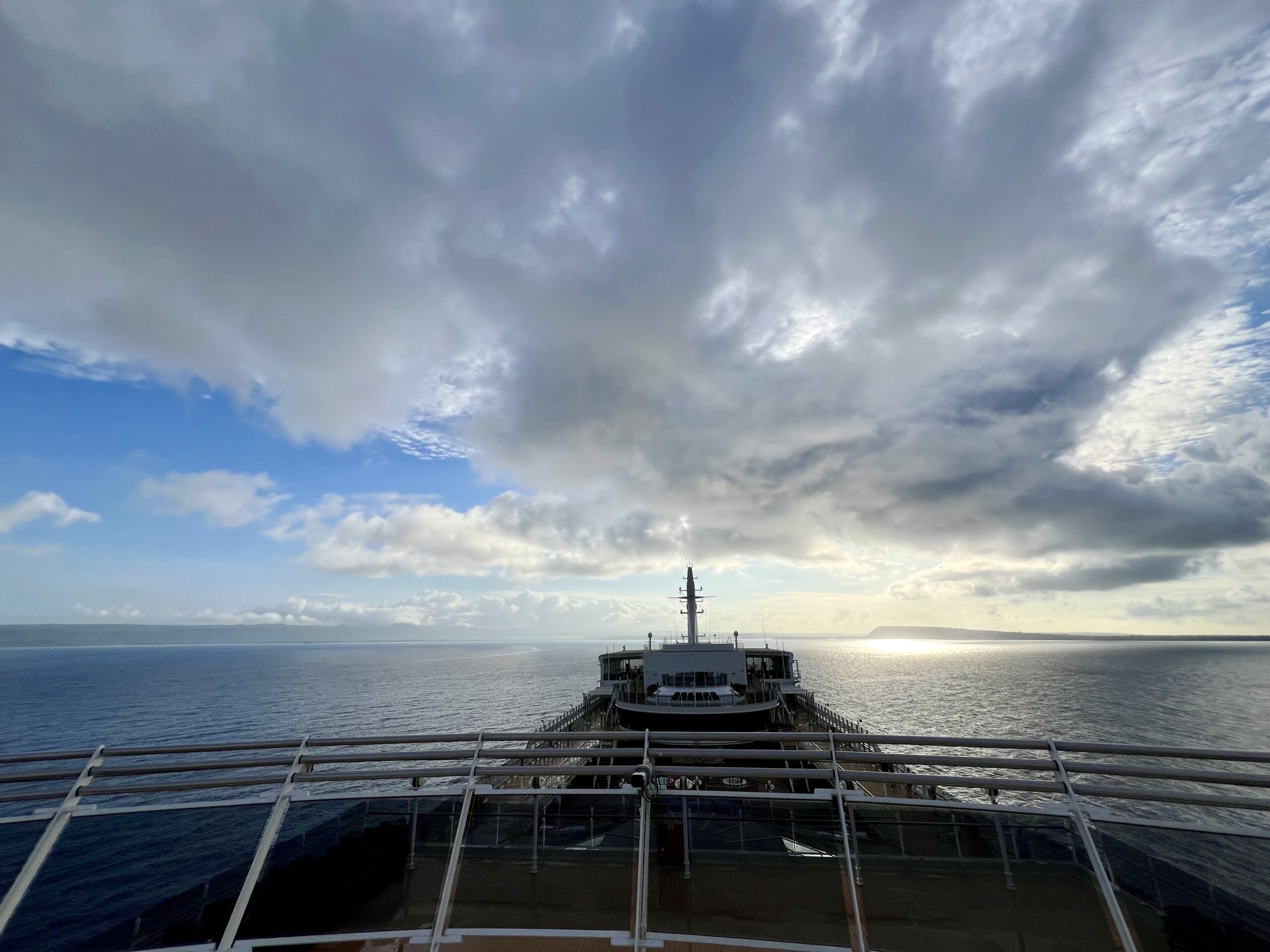
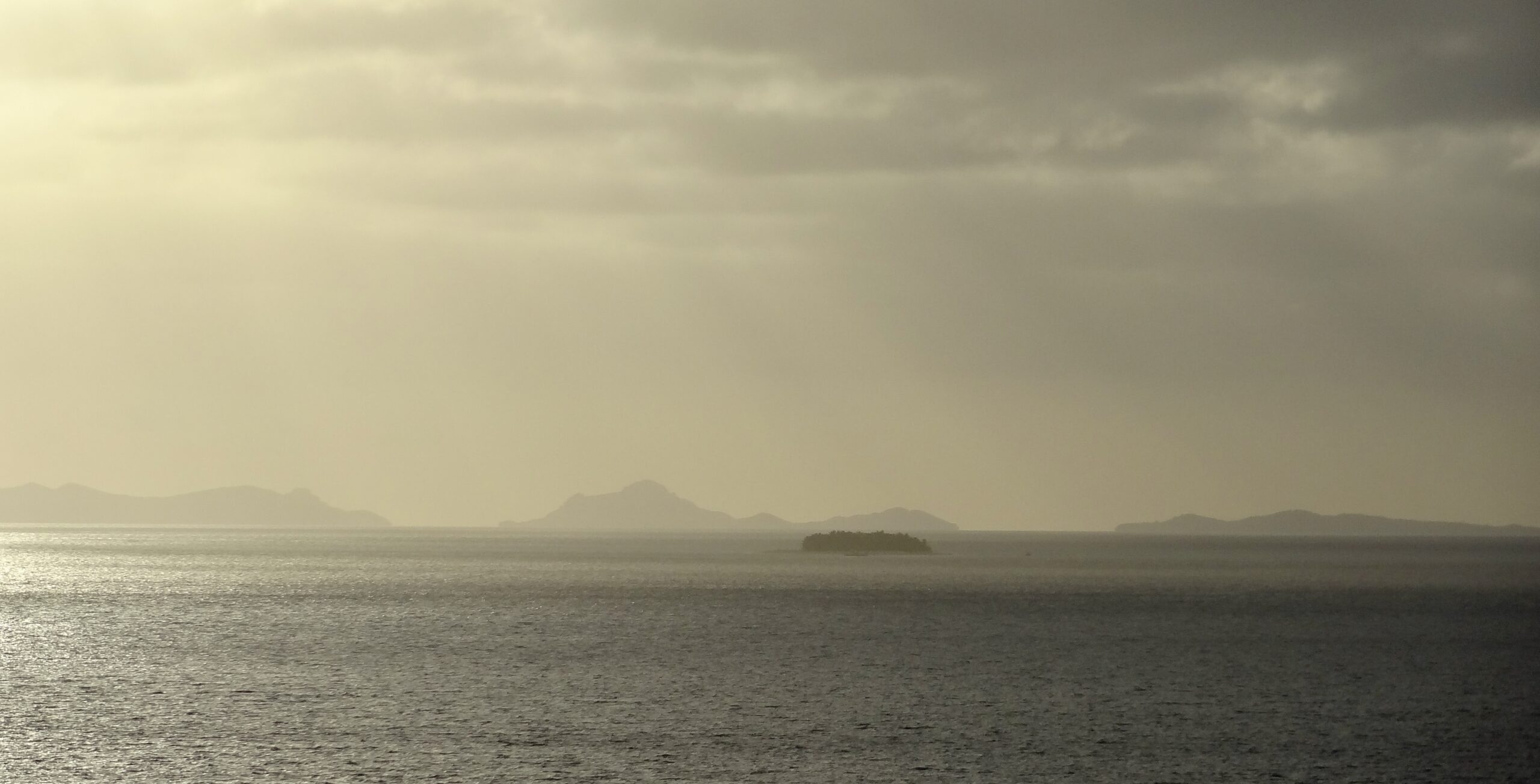
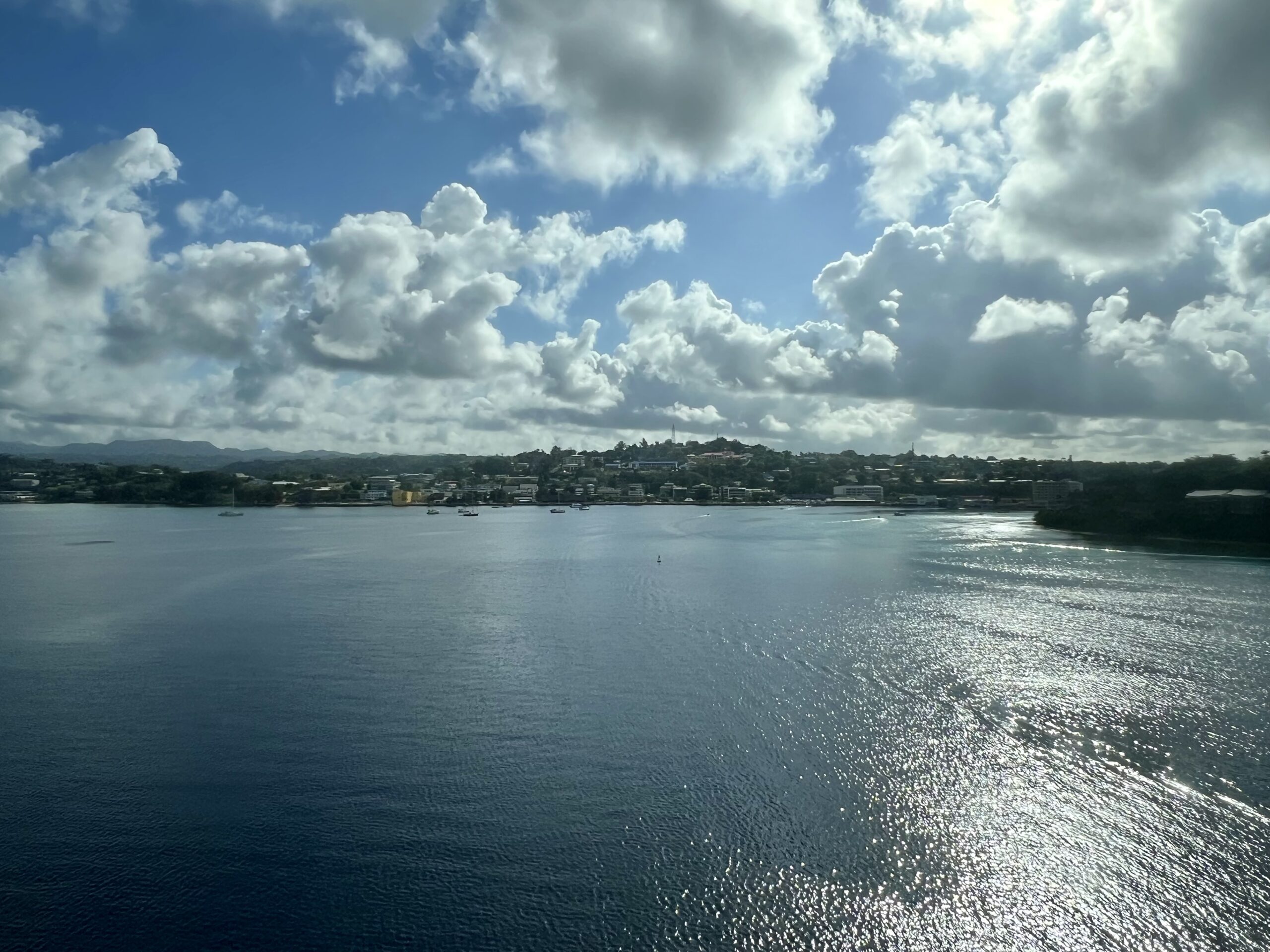
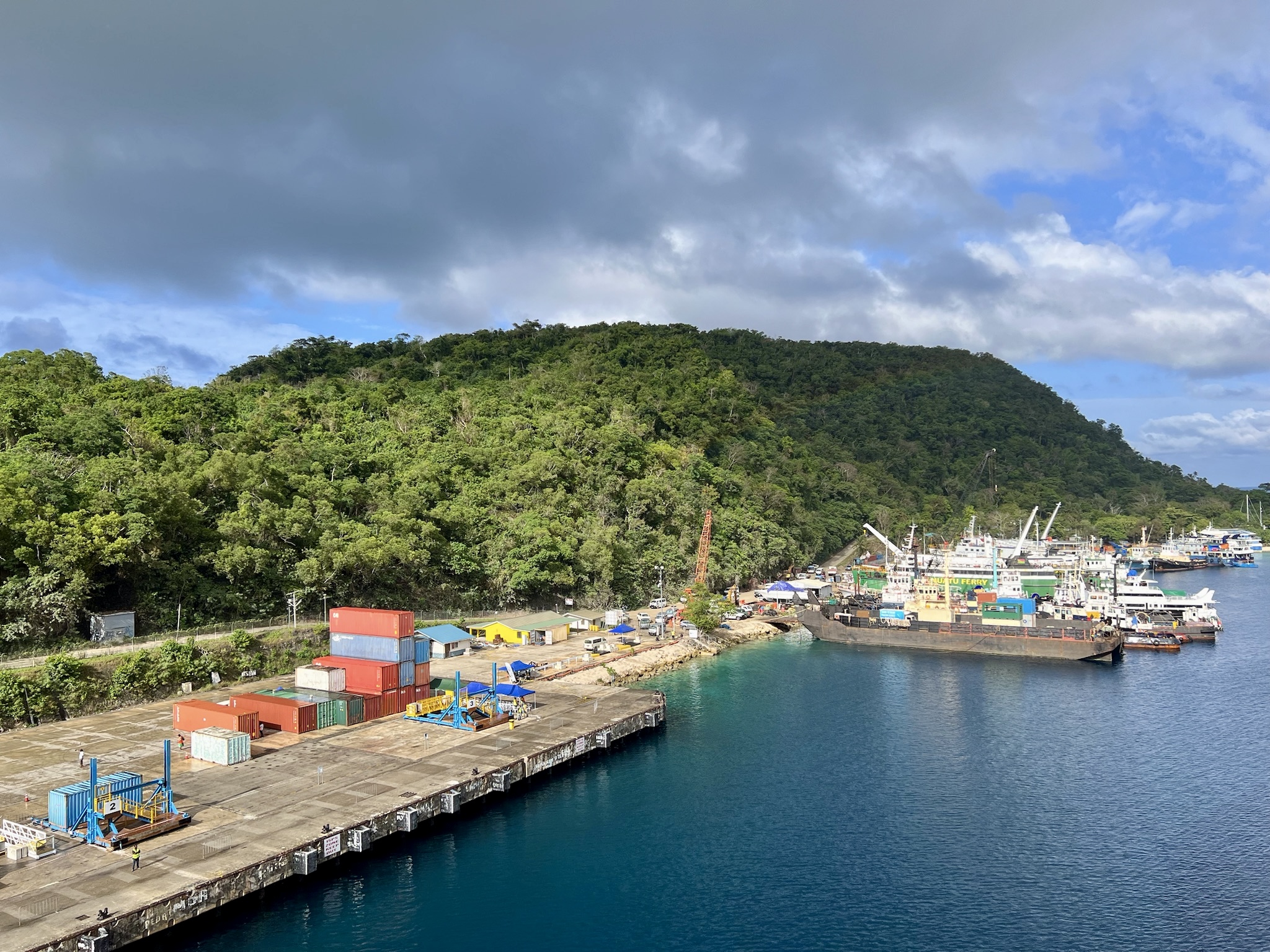
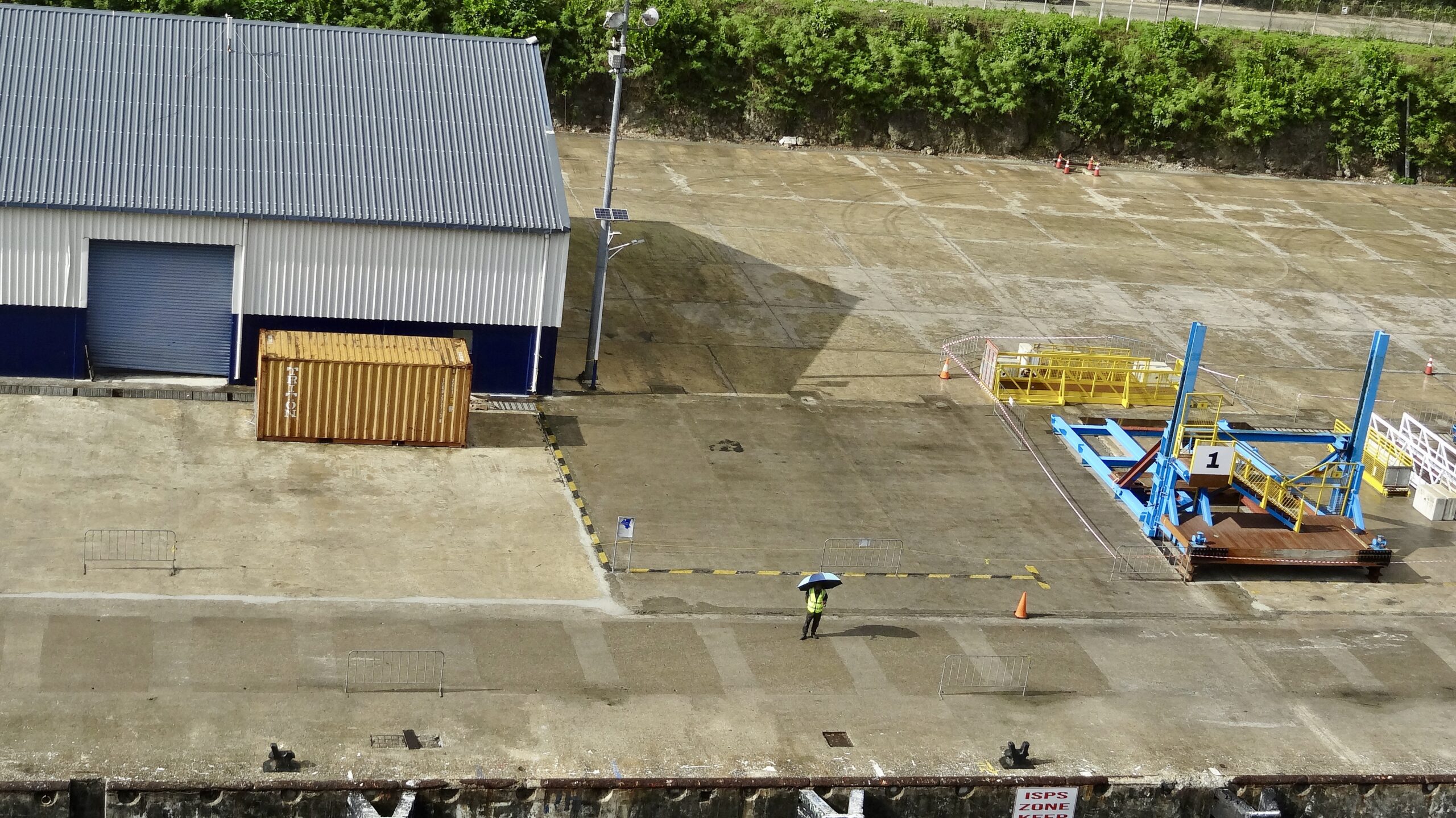
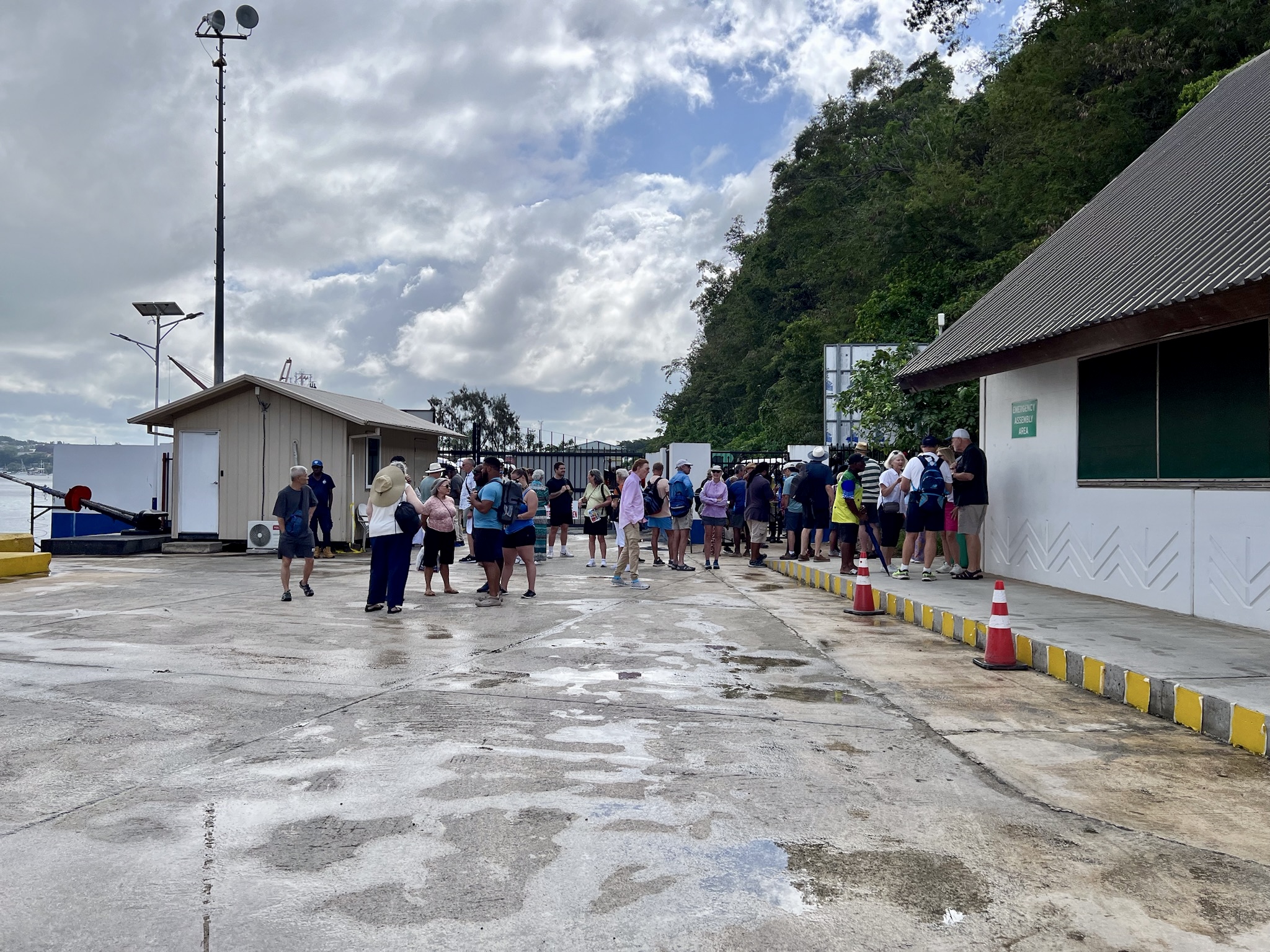
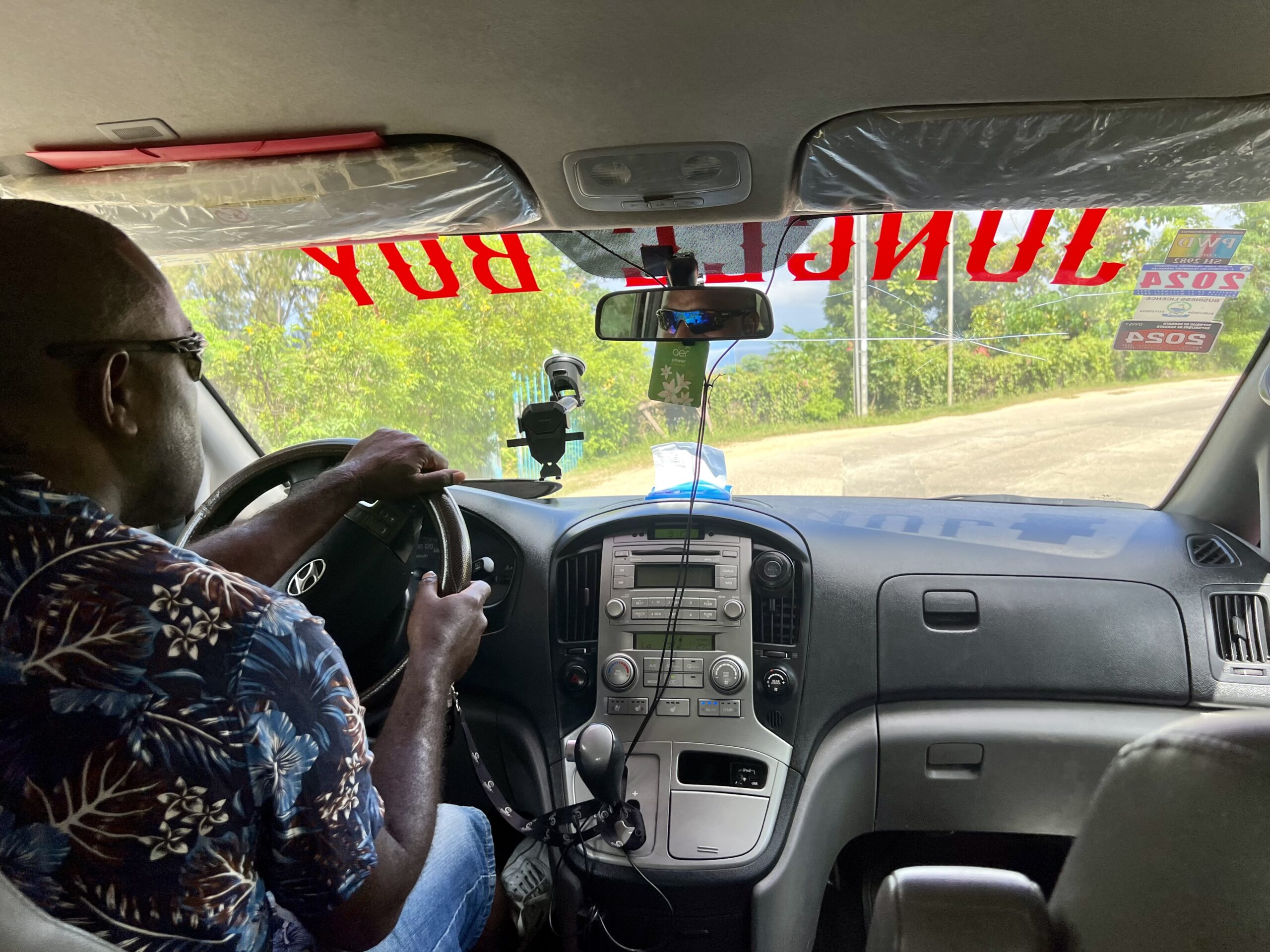
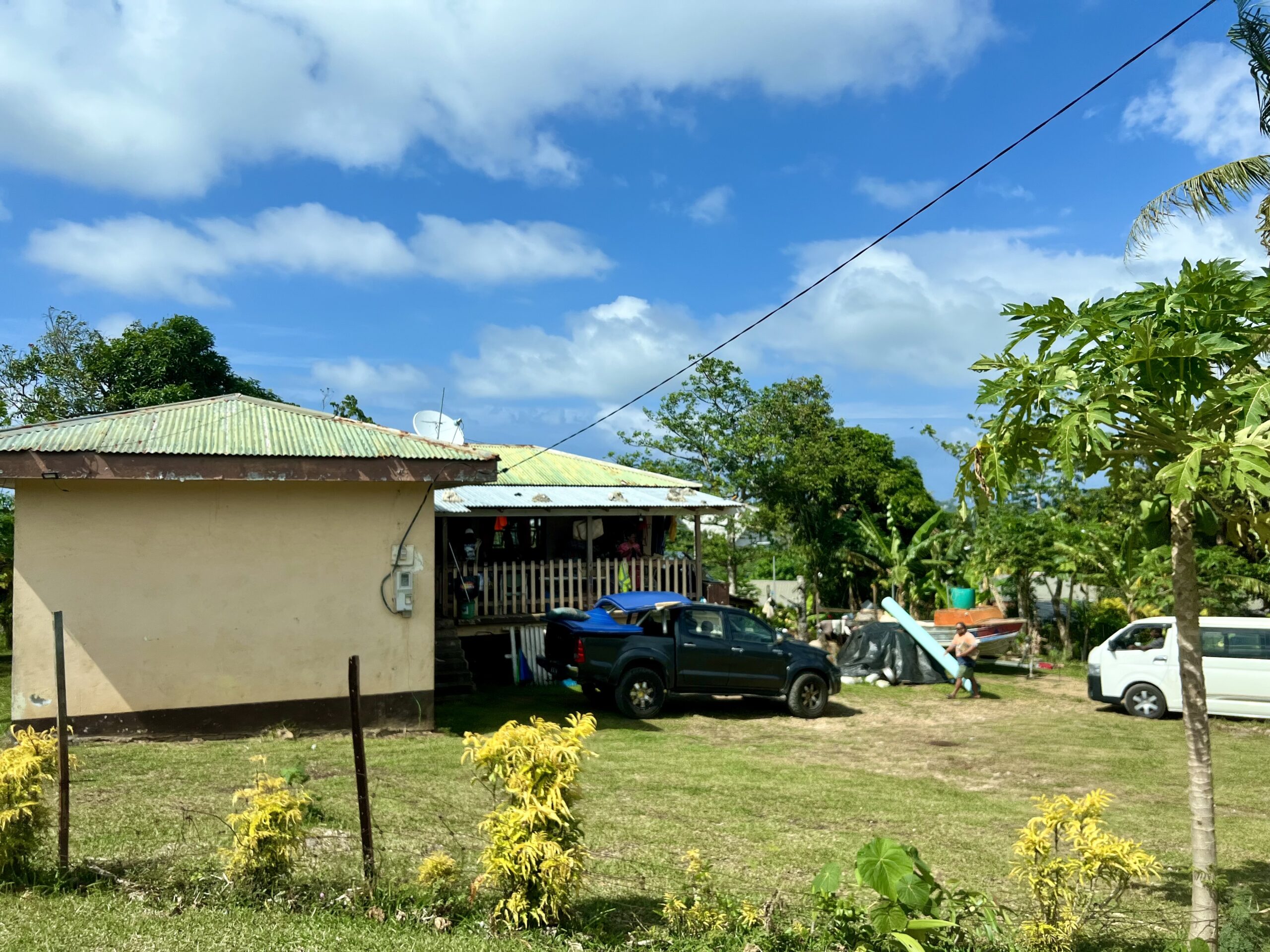
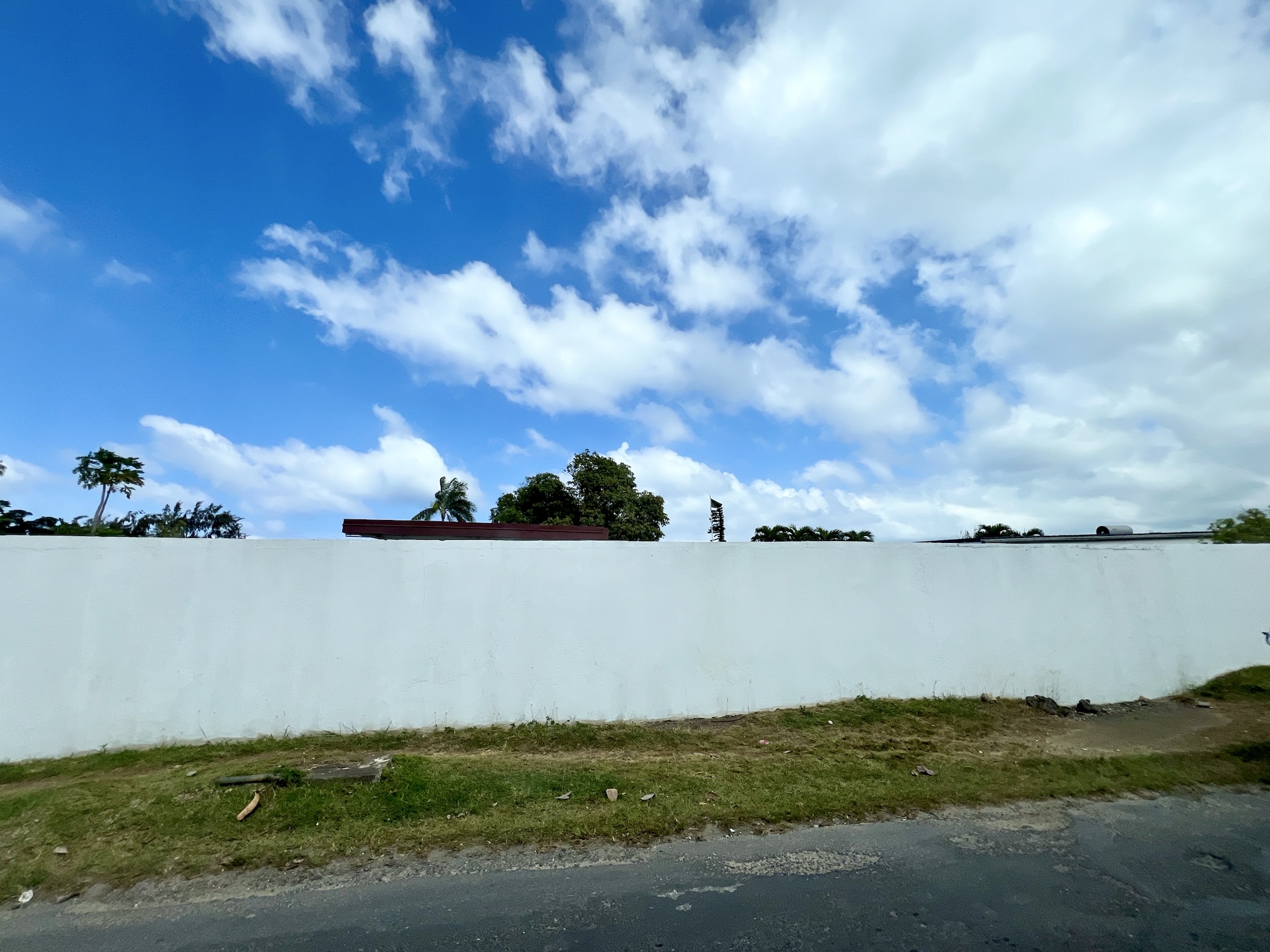
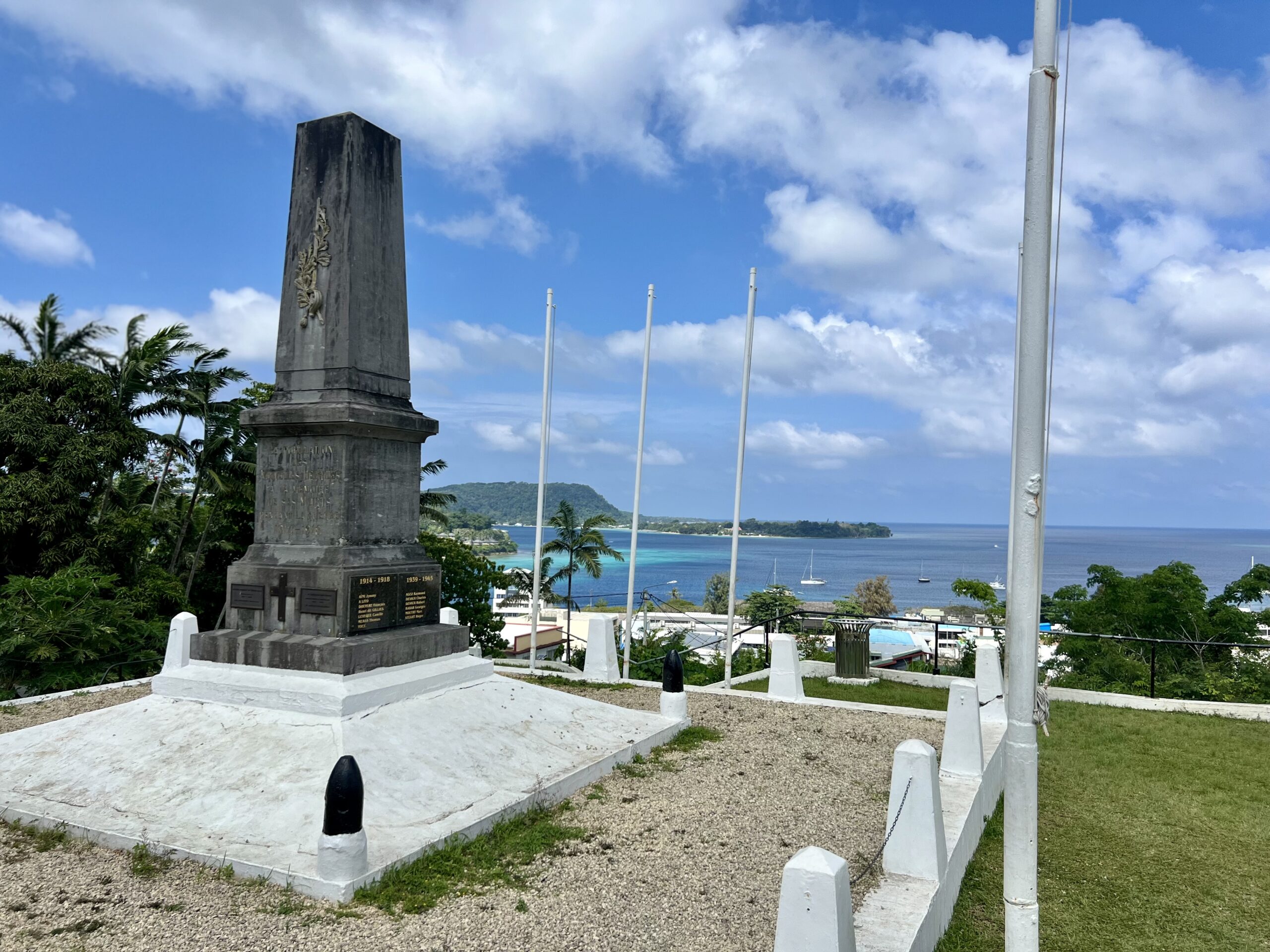
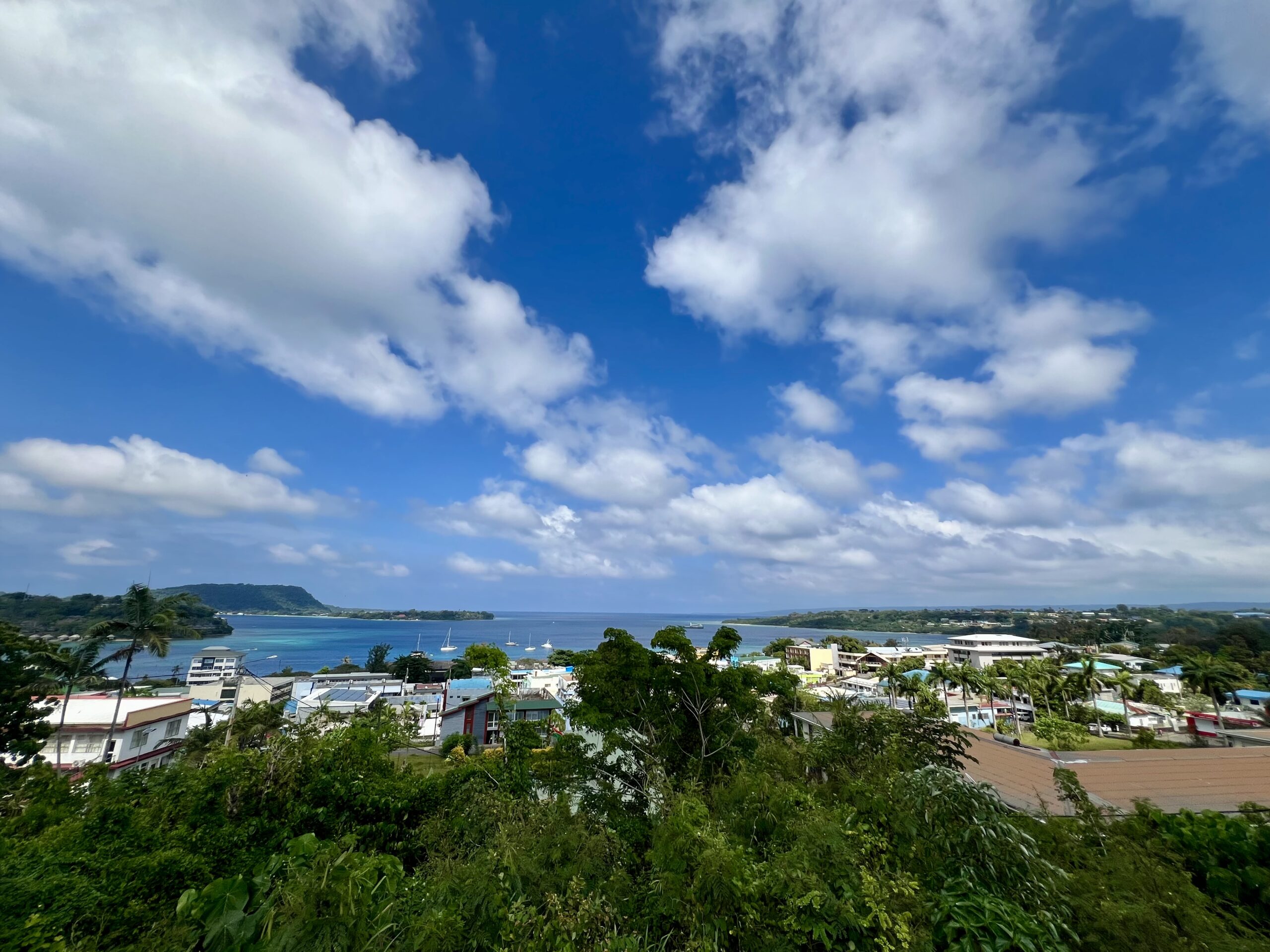
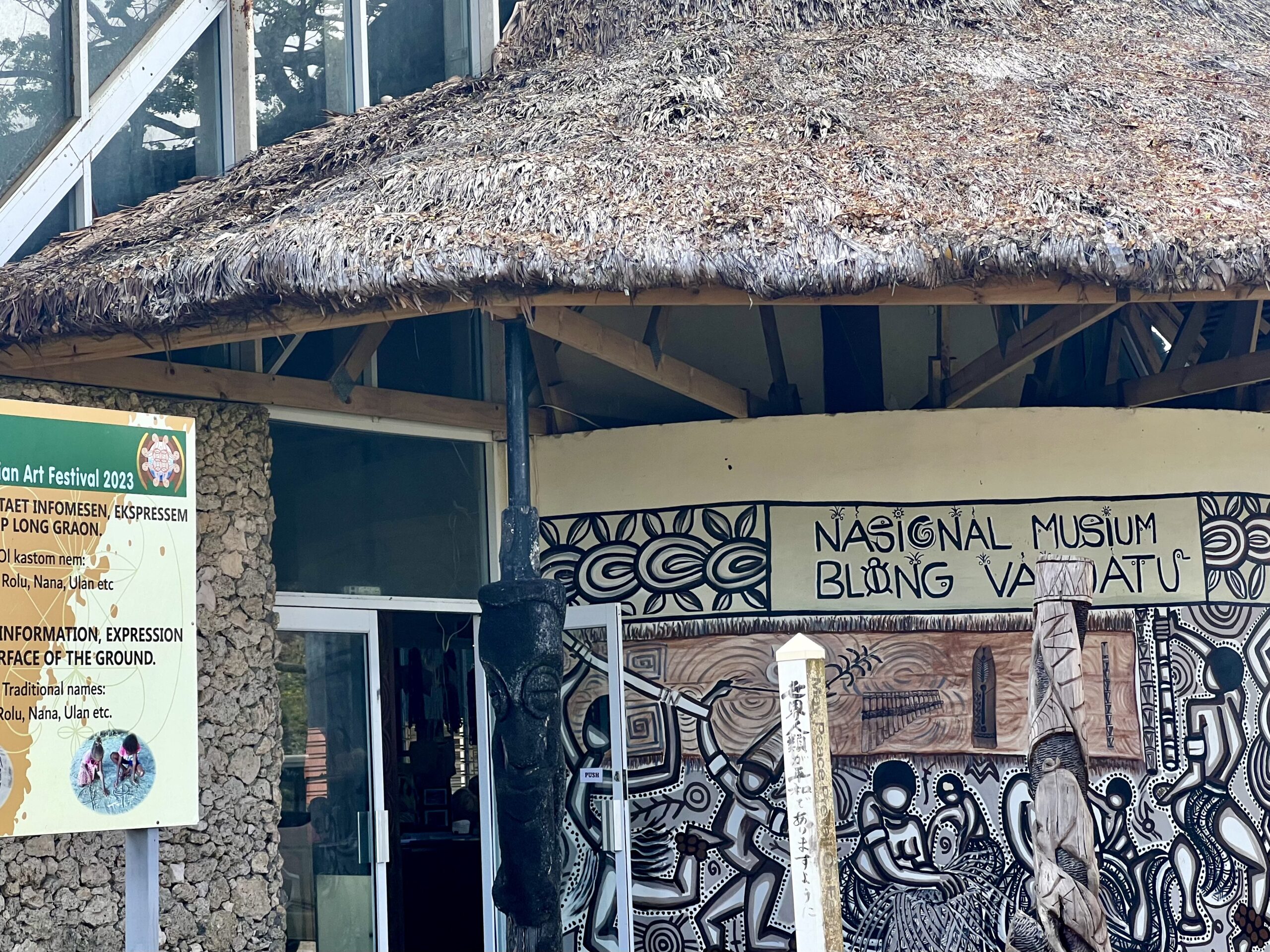
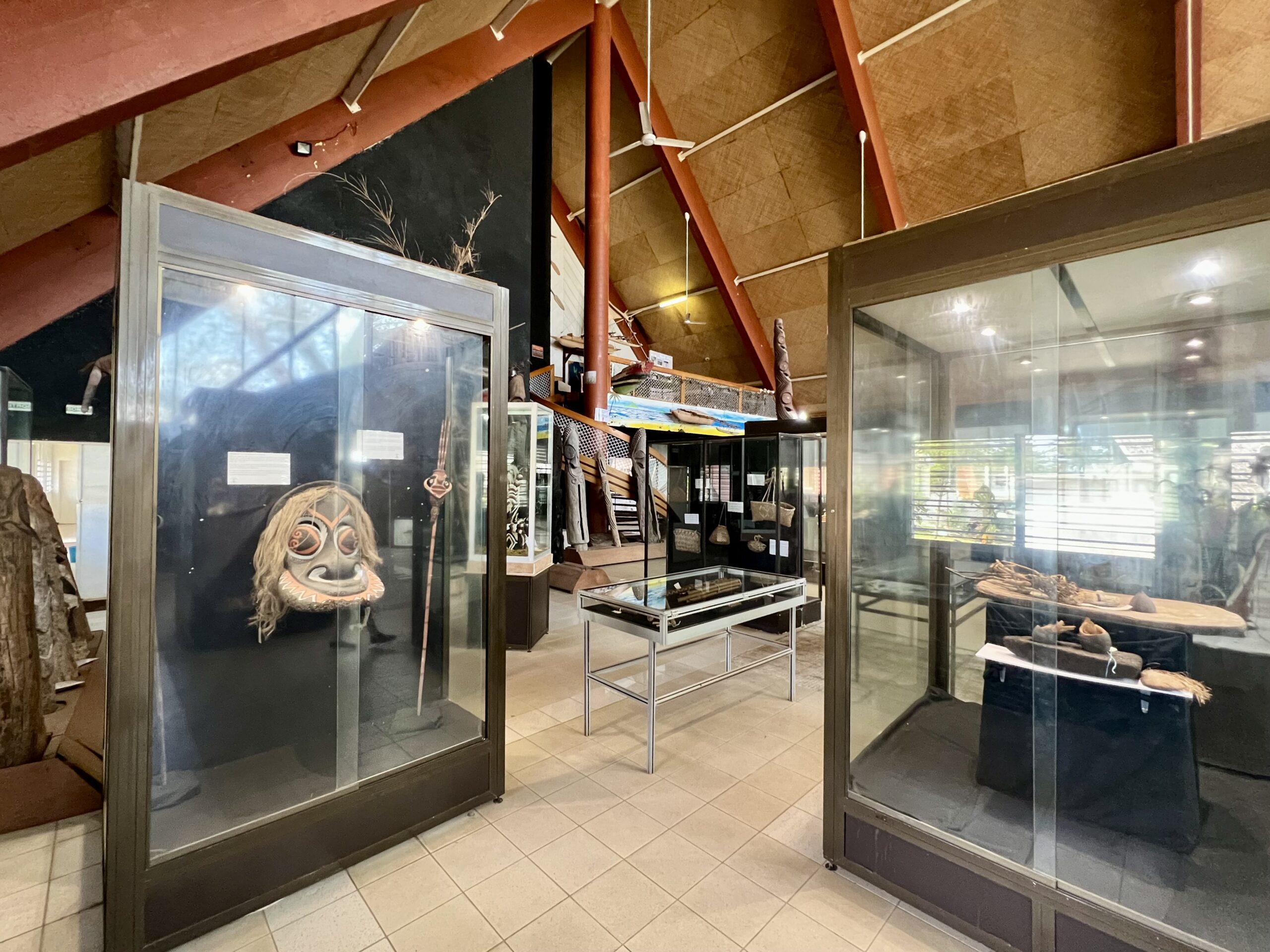
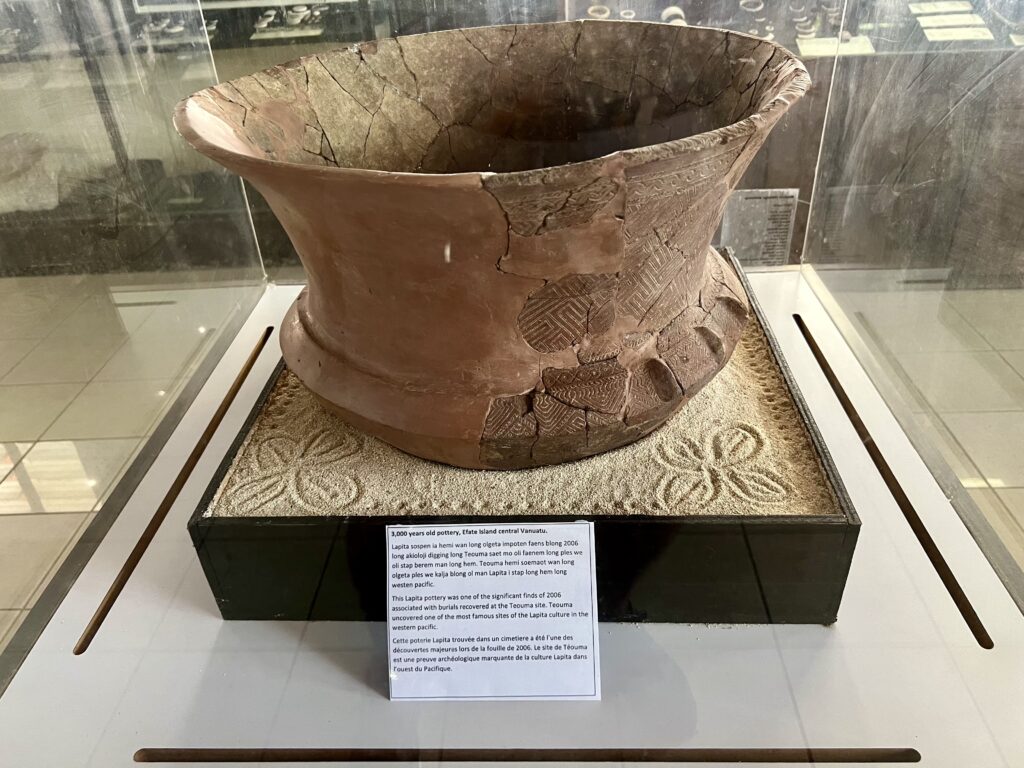
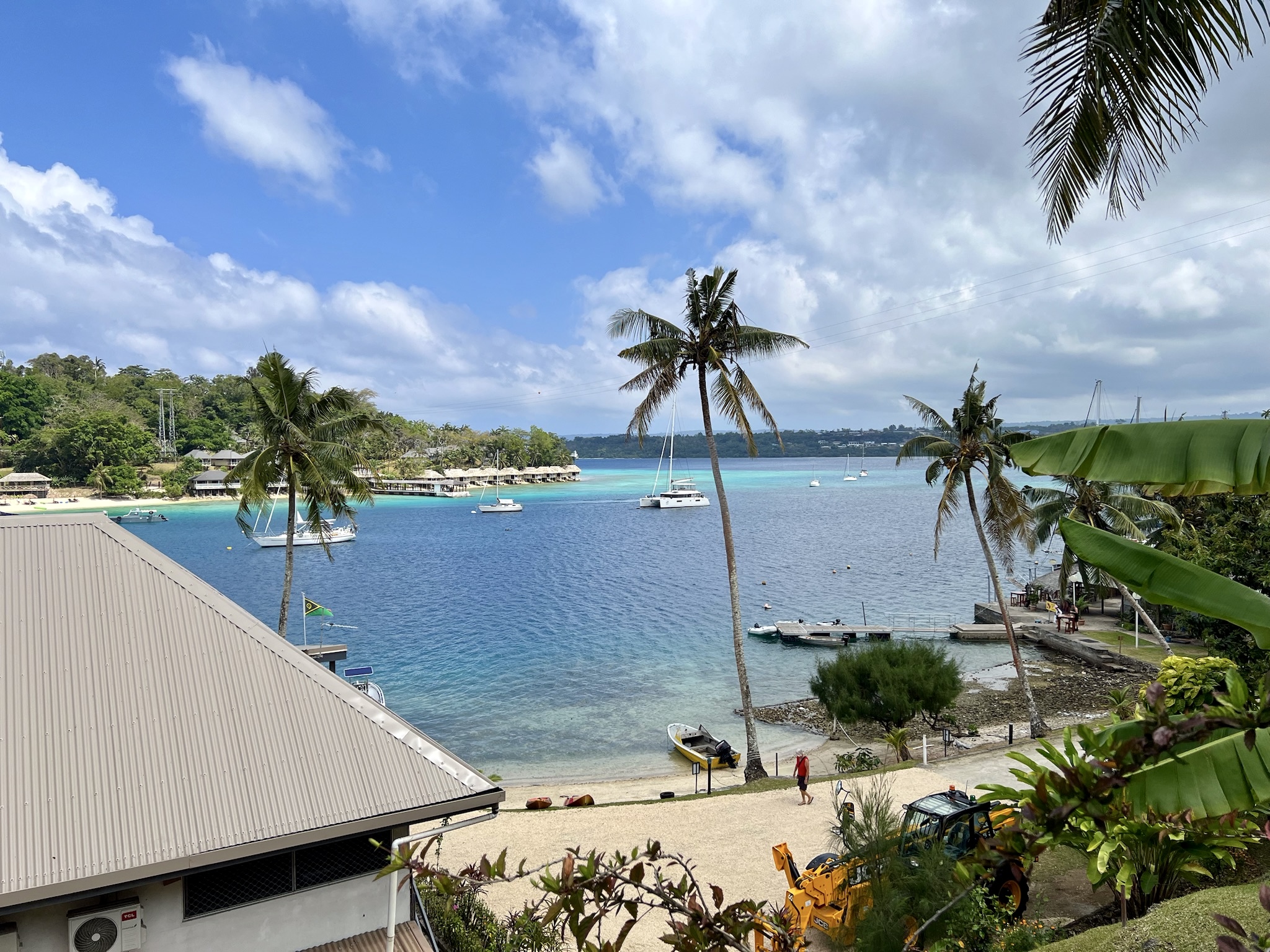
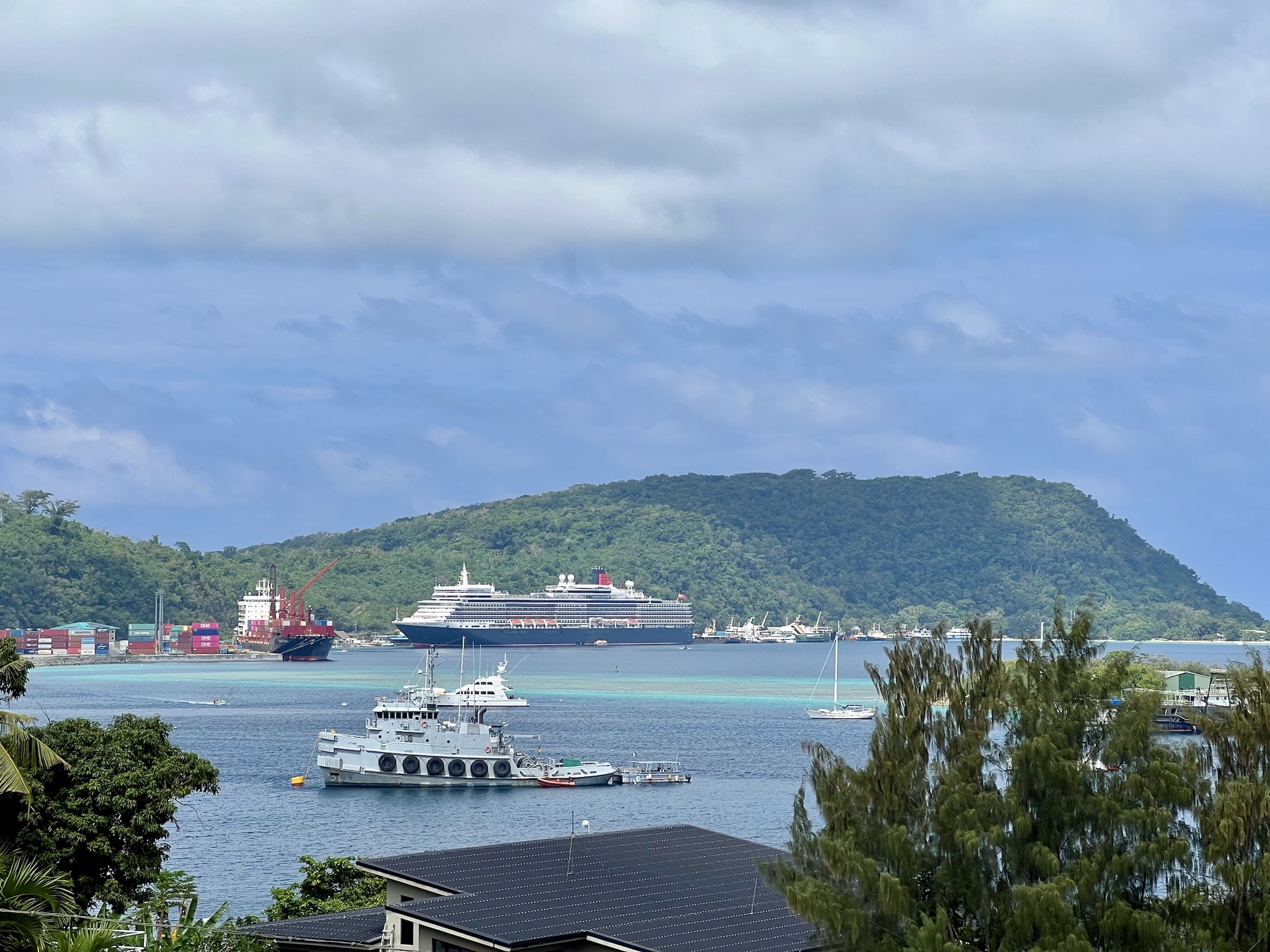
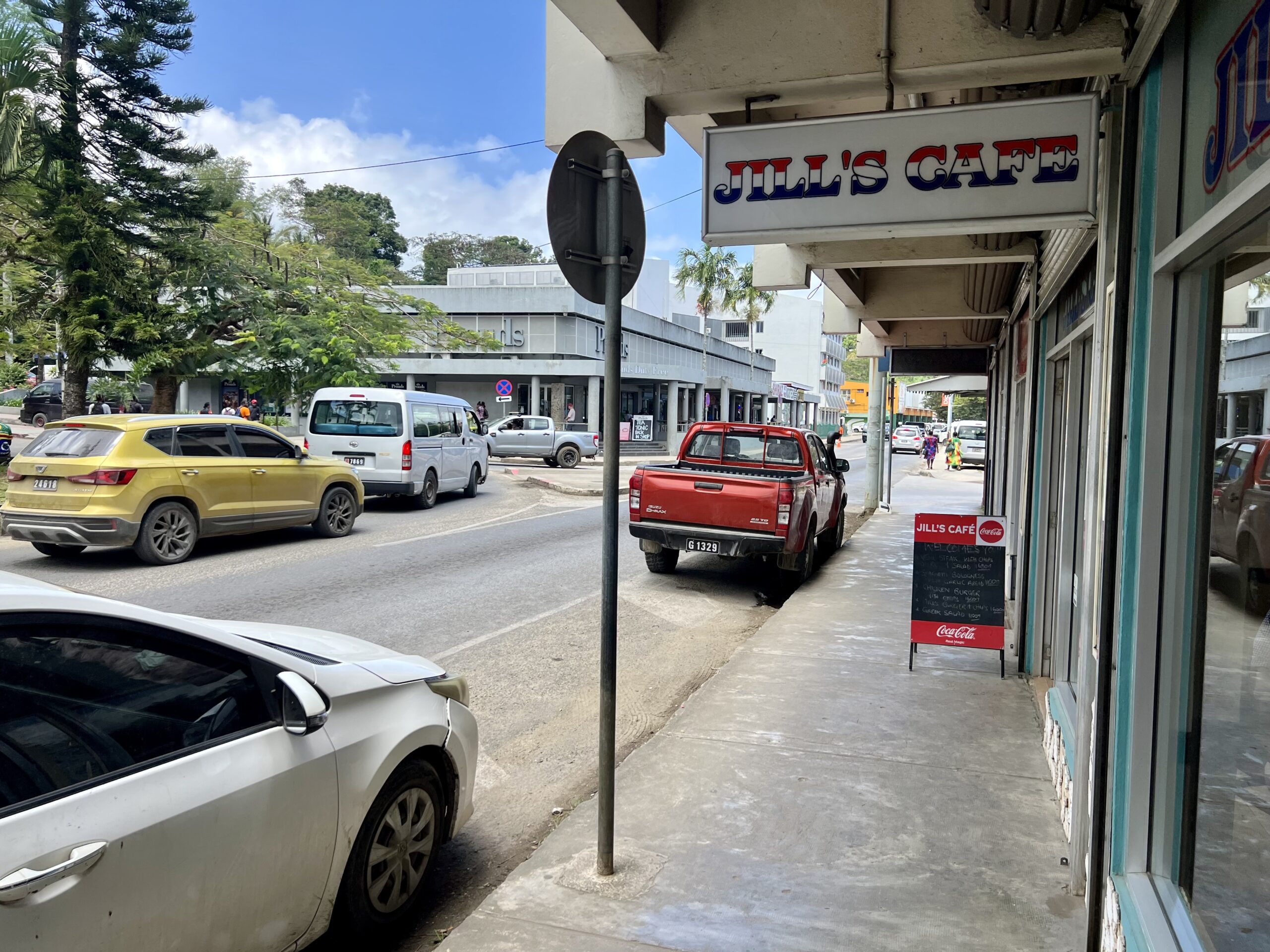
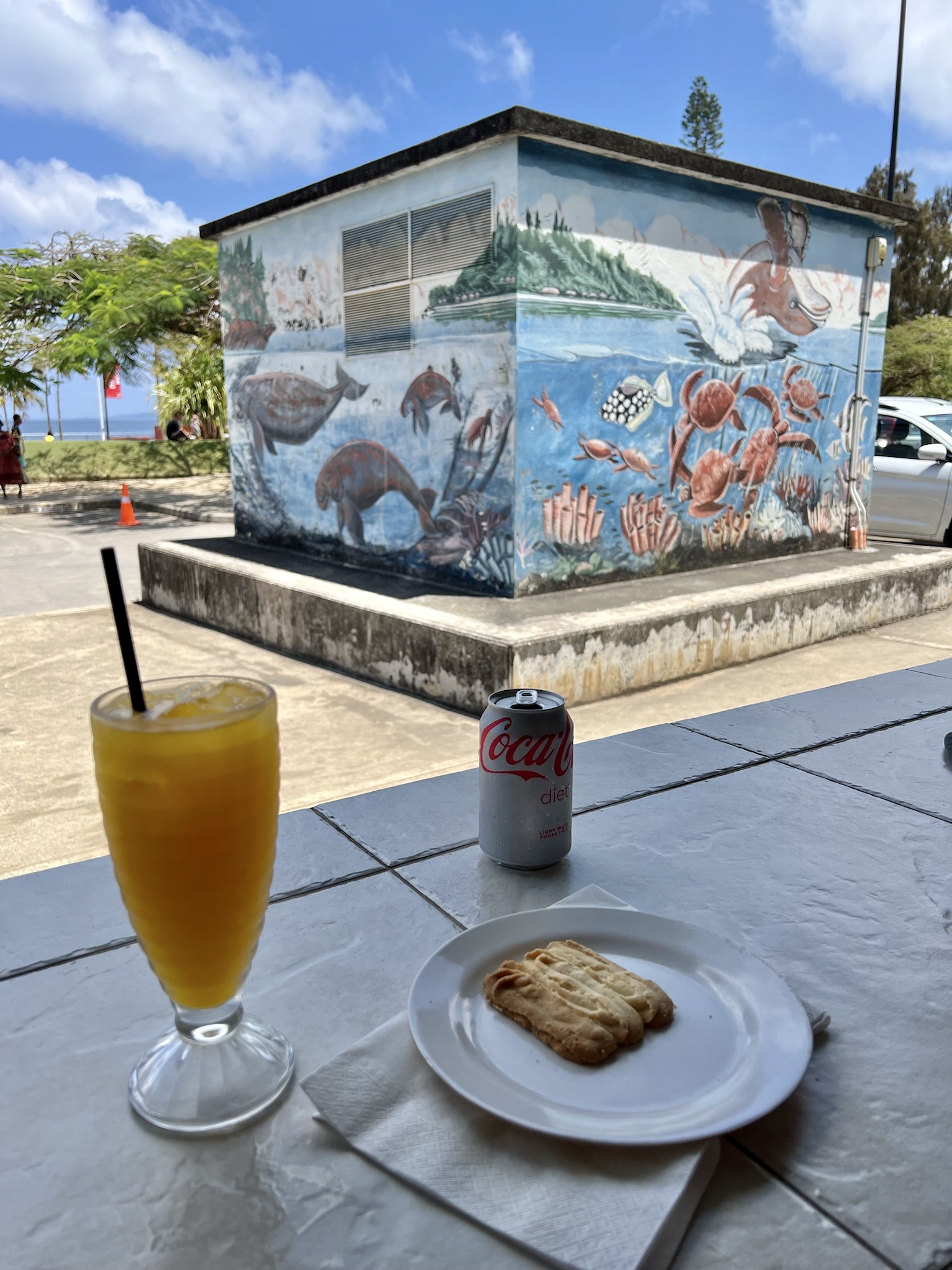
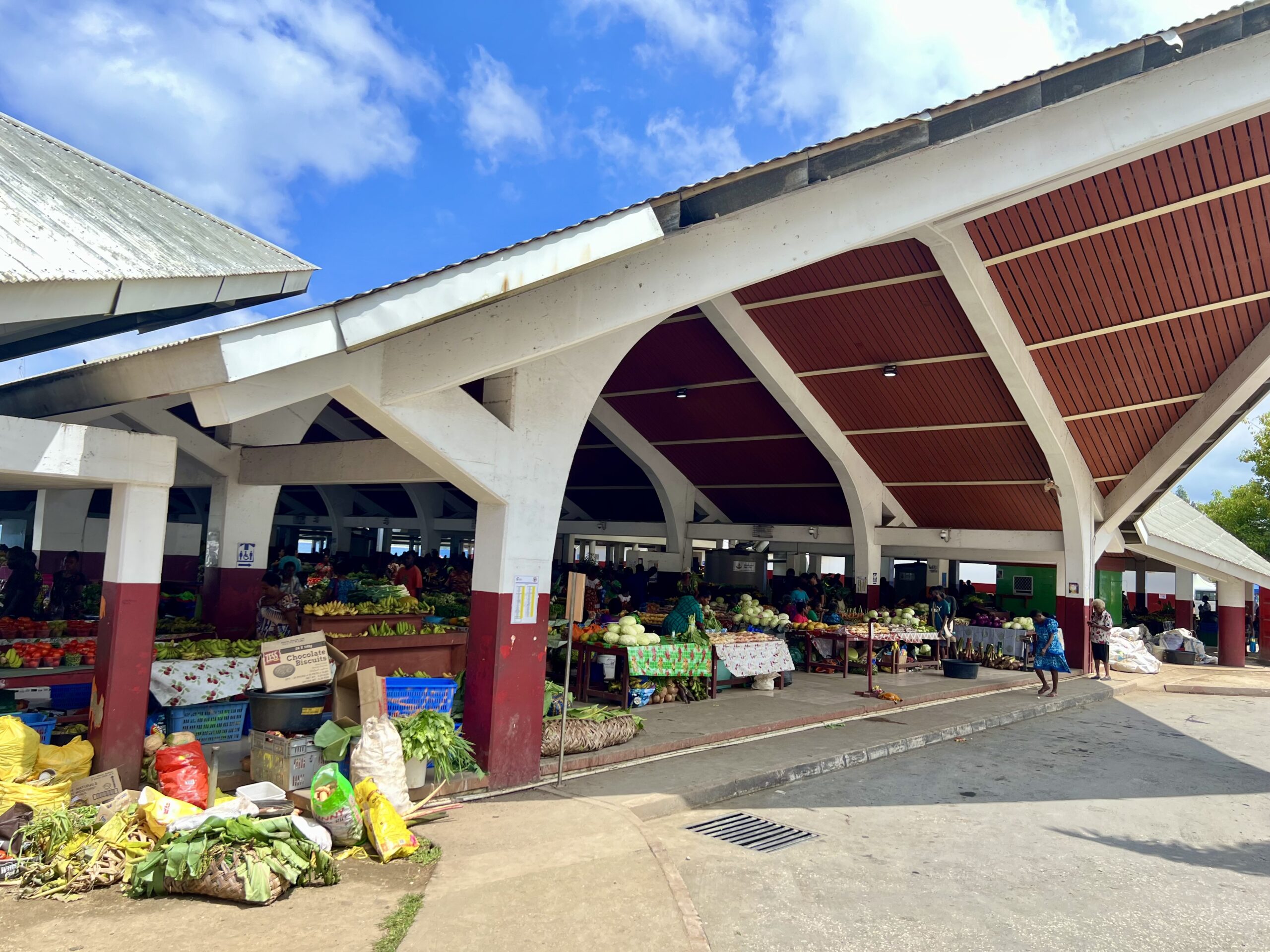
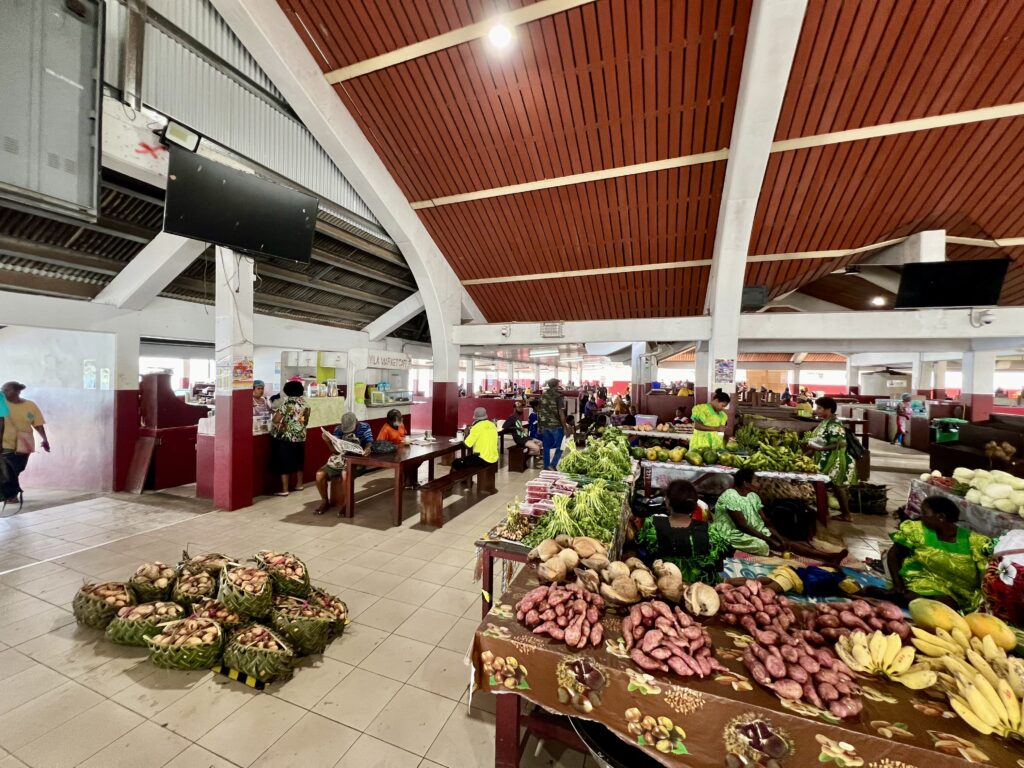
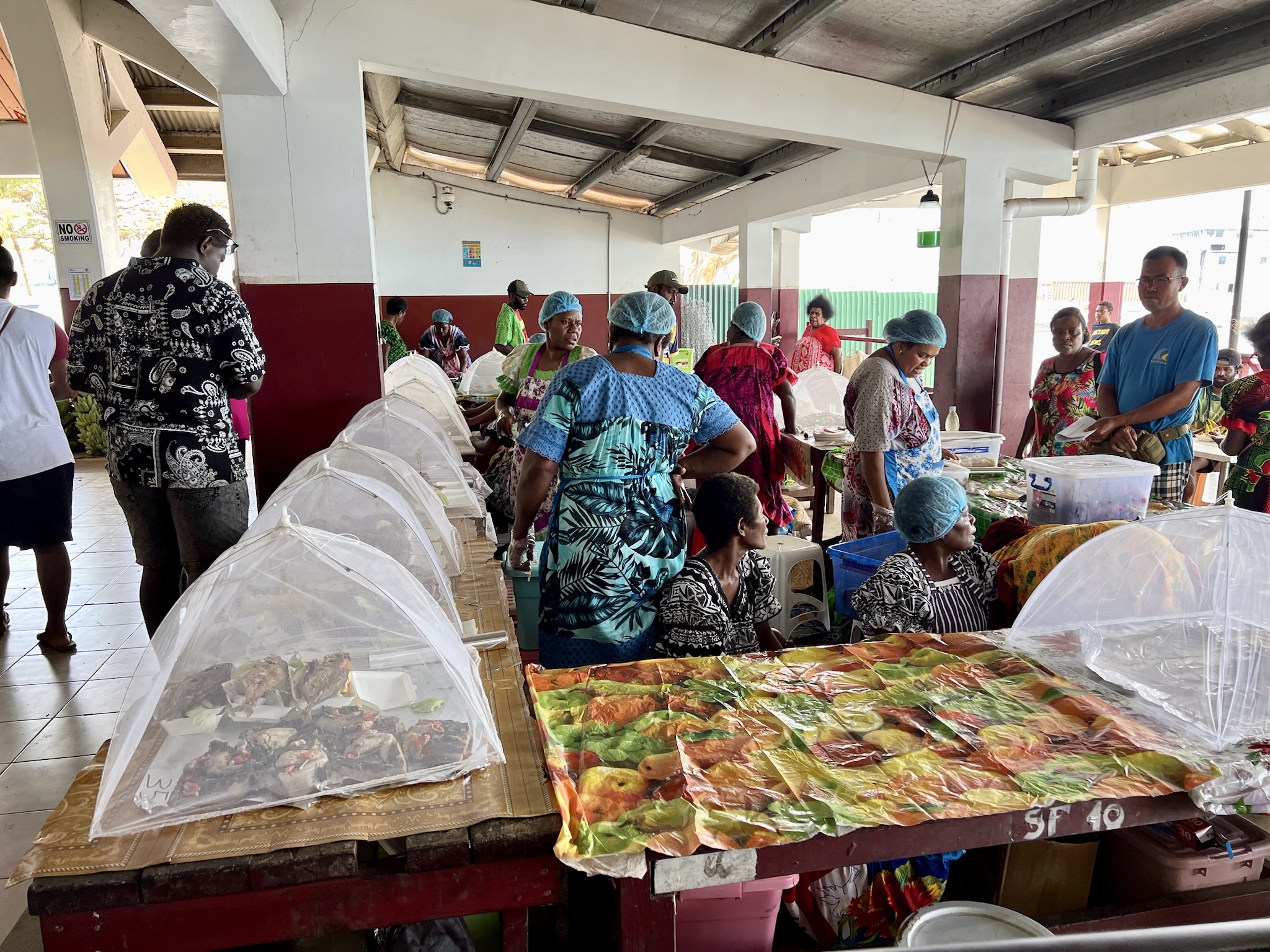
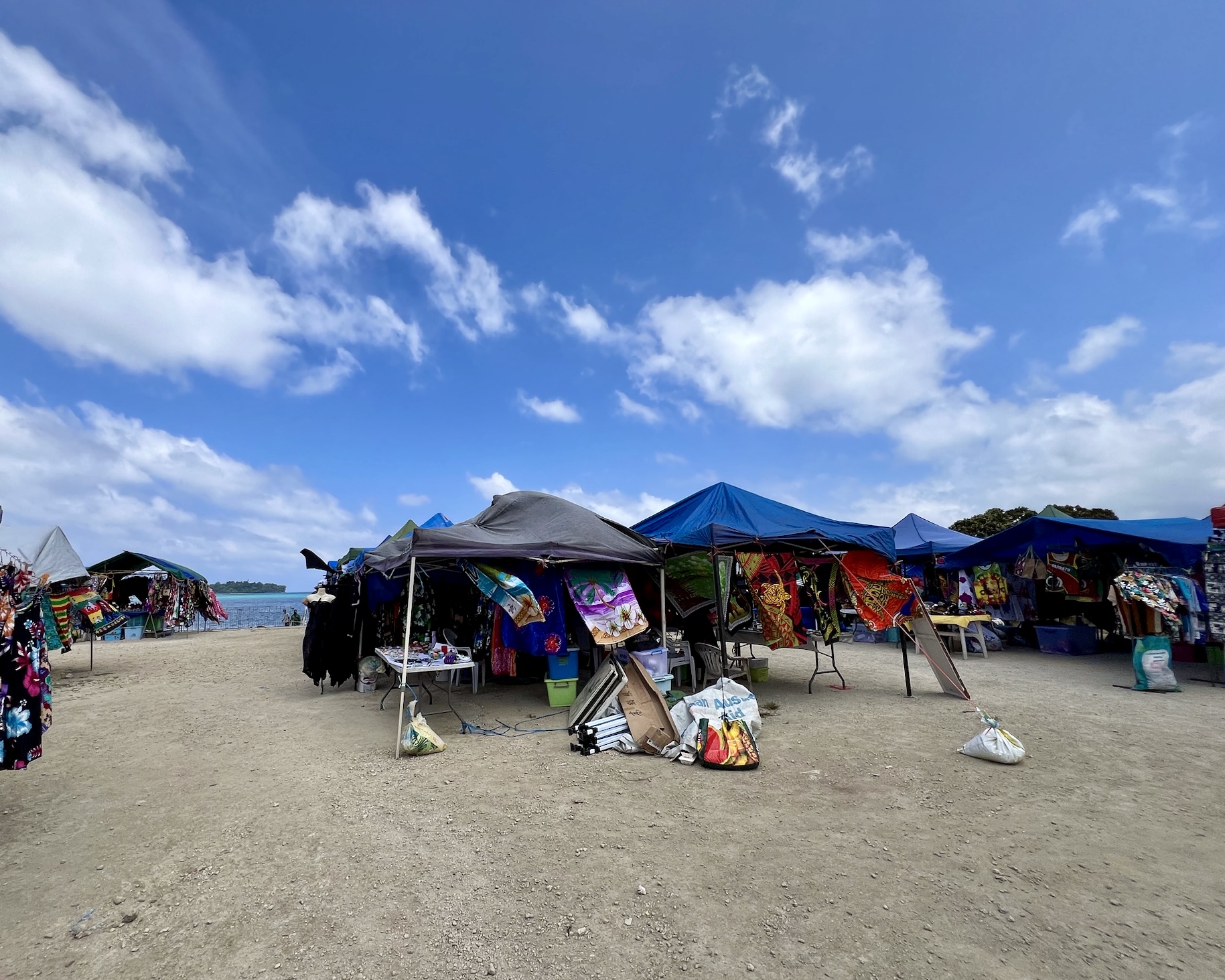
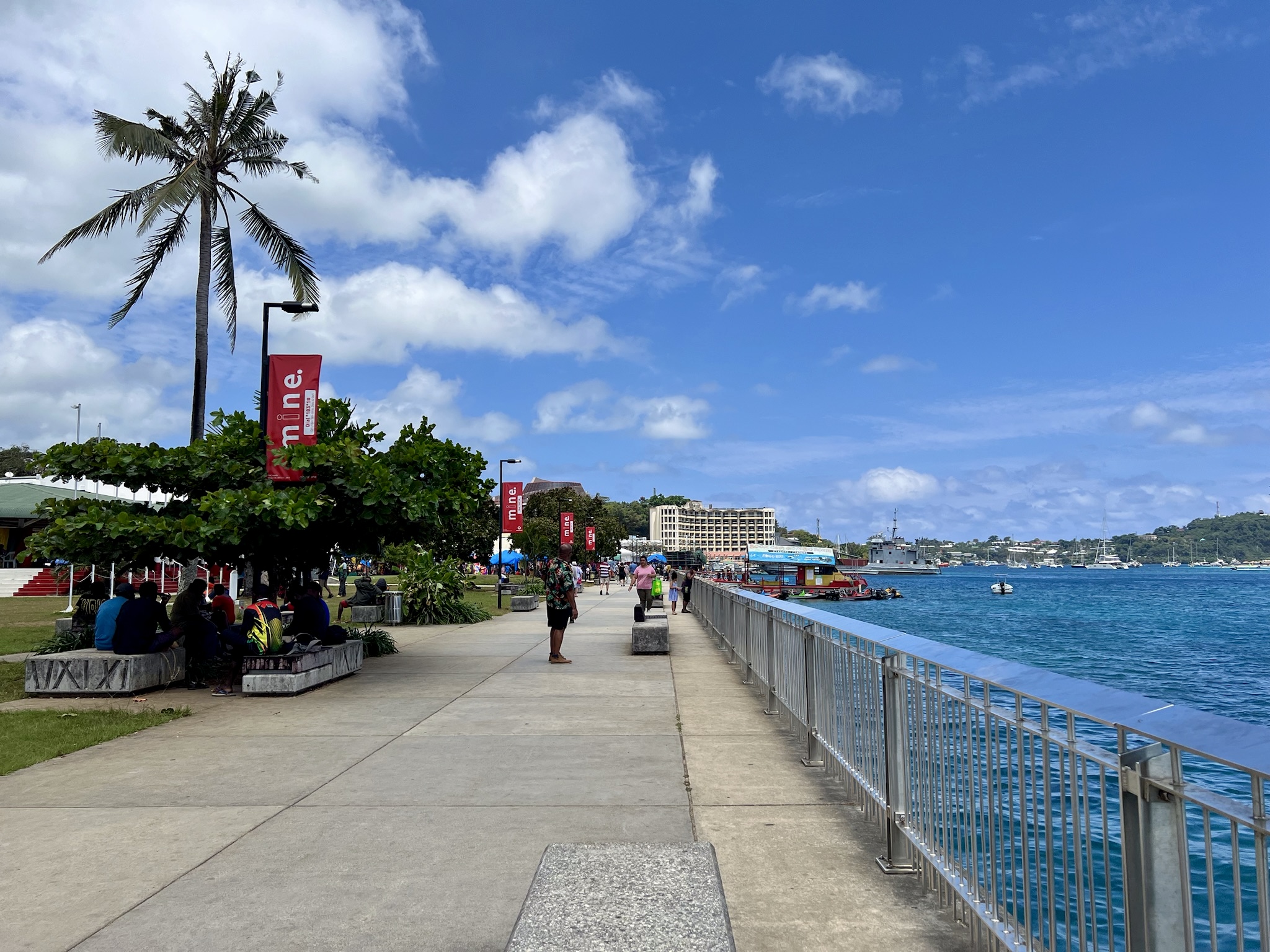
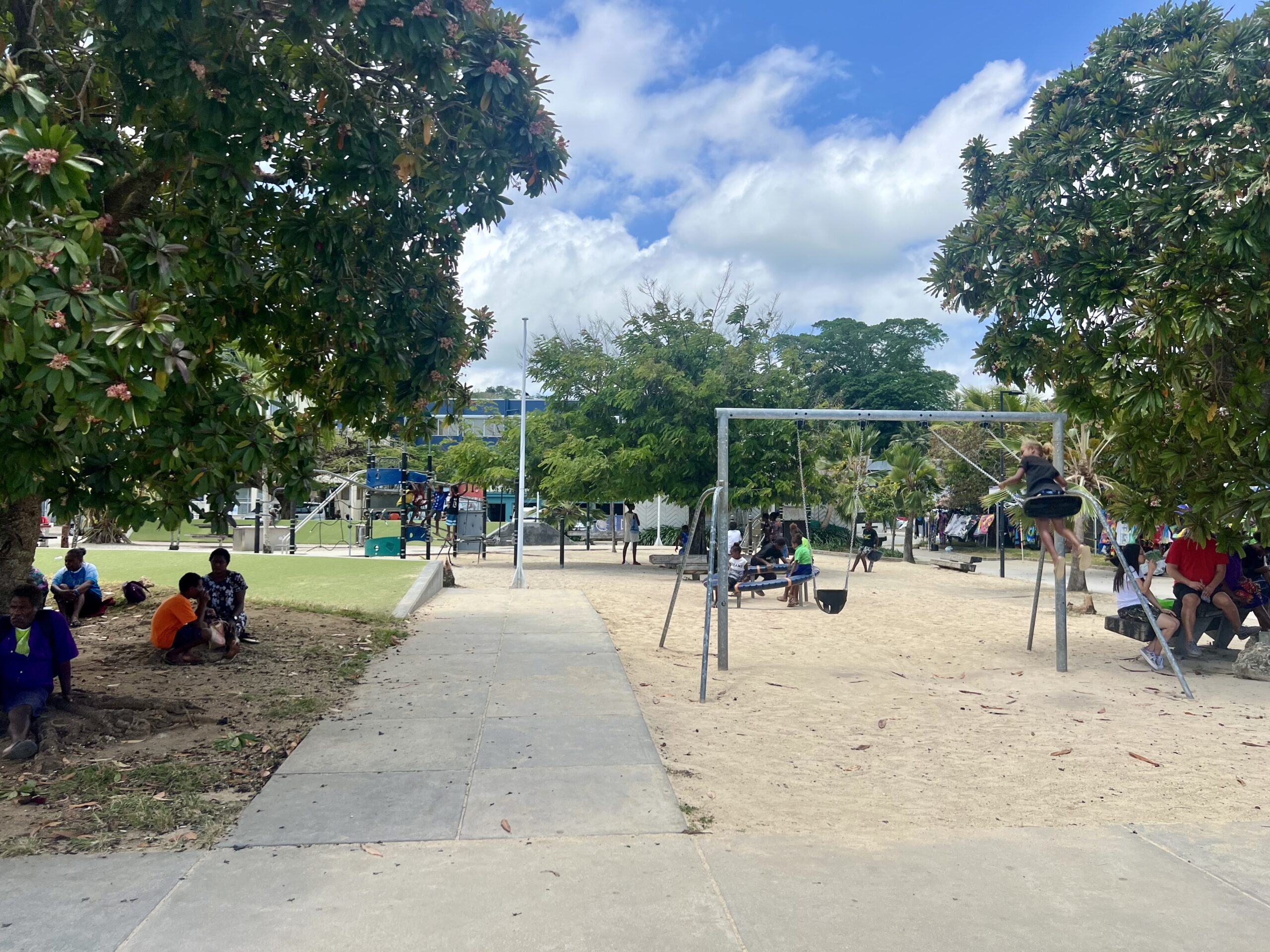
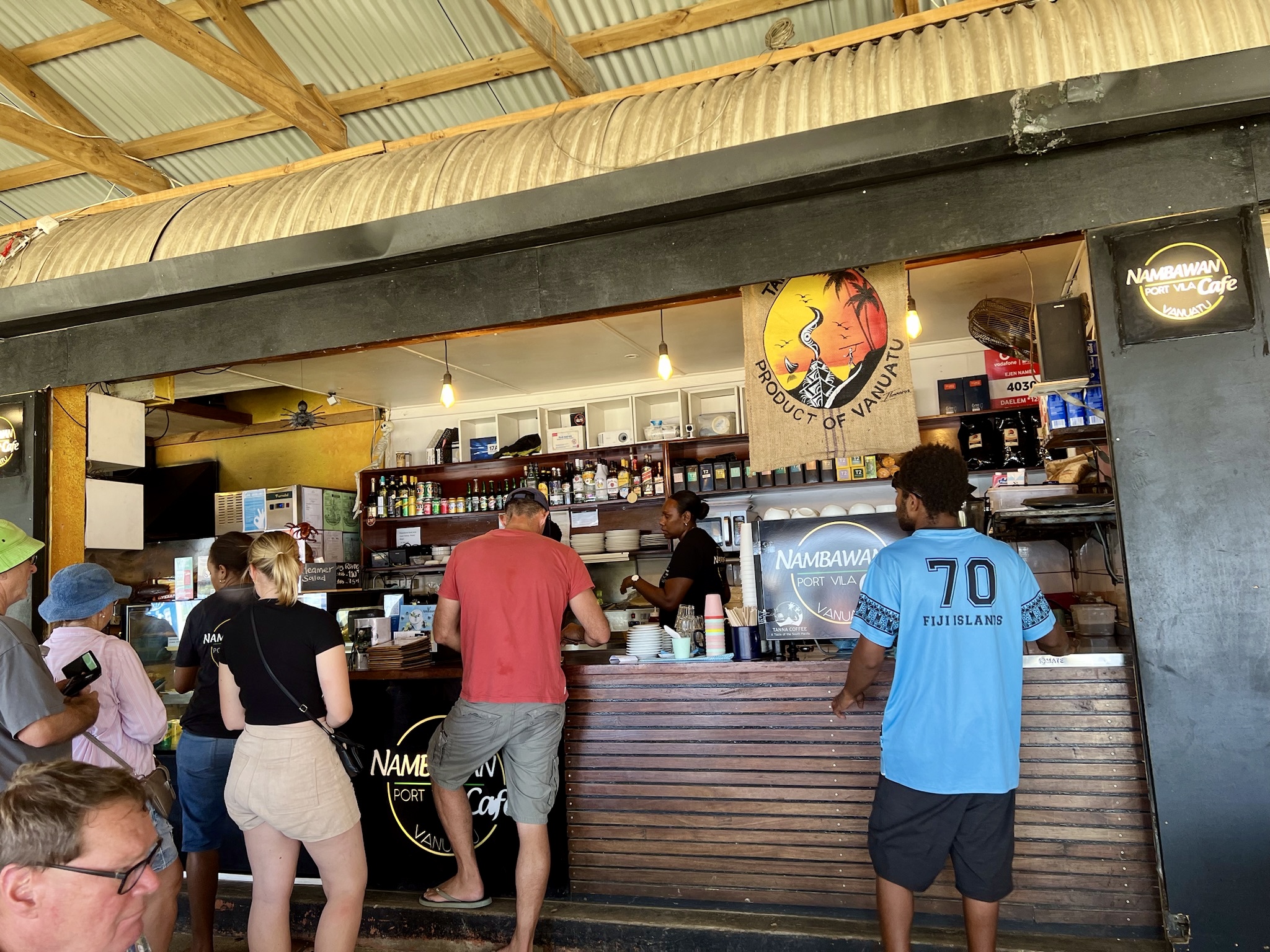
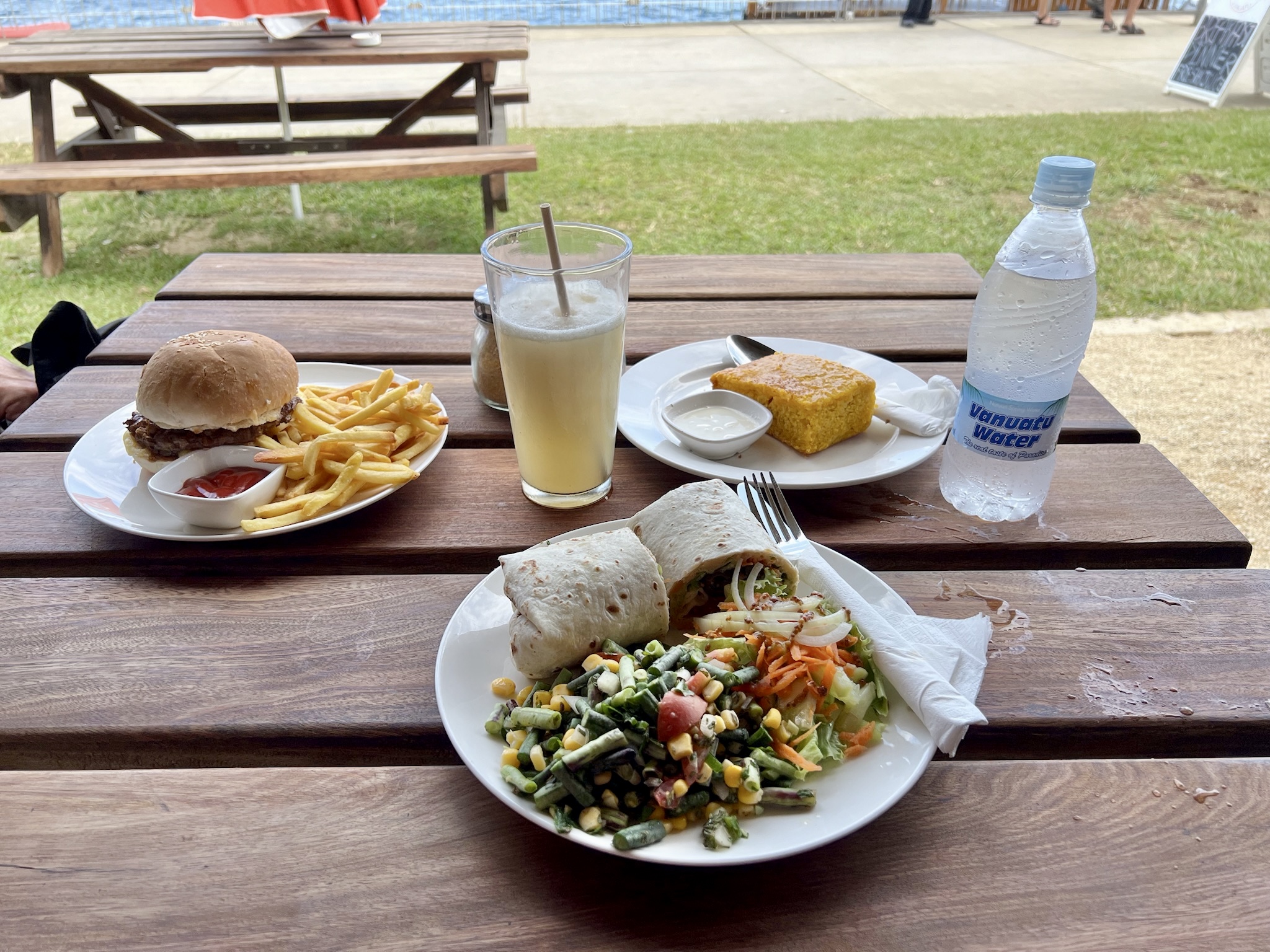
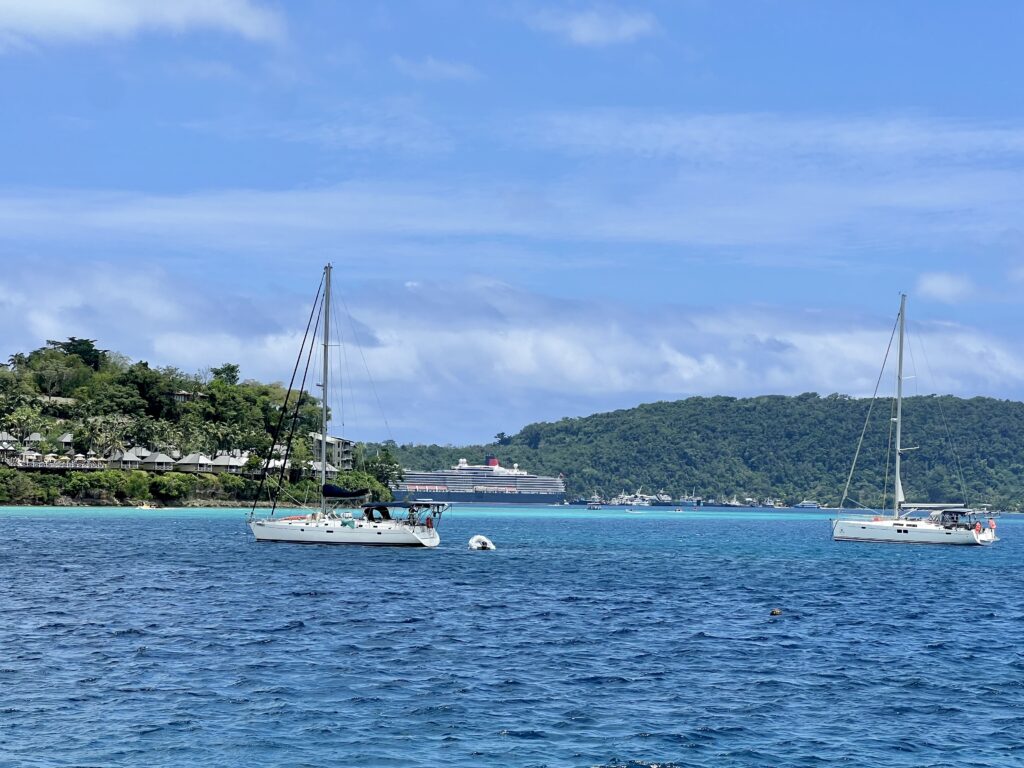
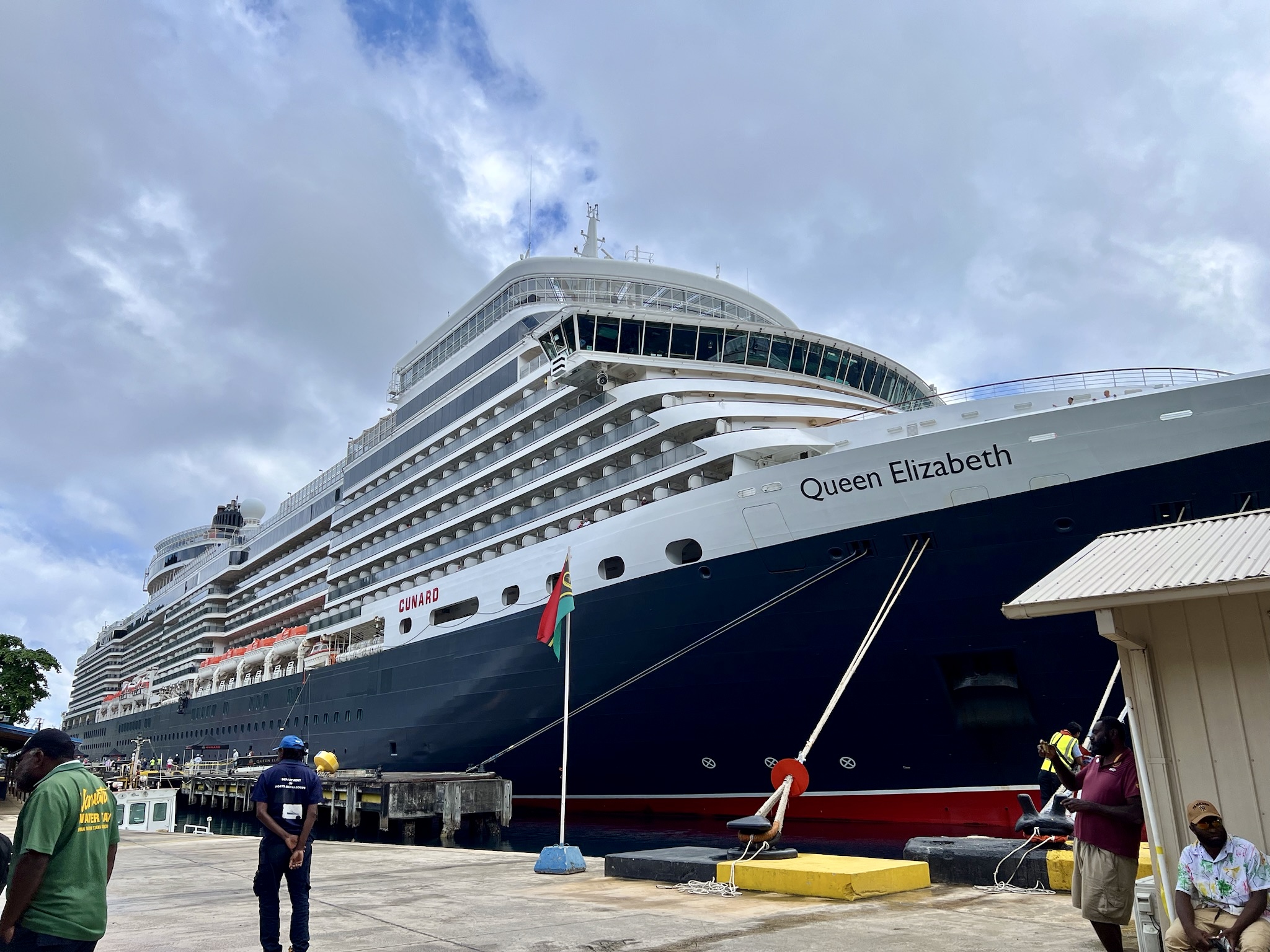
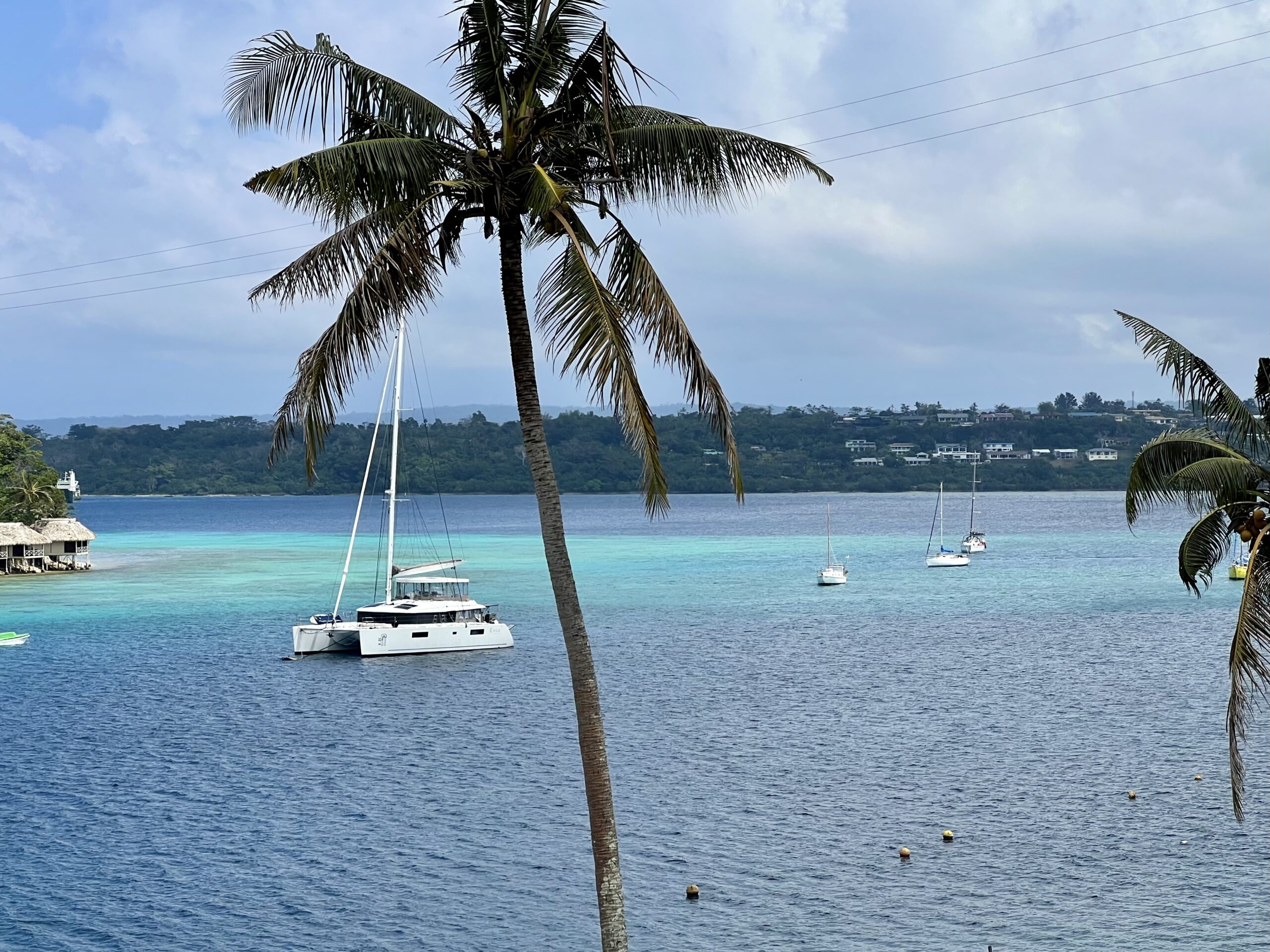
Our last port of call before Melbourne was Port Vila, Vanuatu, on Efate Island. The island appeared in the distance on our morning approach. One thing that came to the fore in our visits to these few South Pacific islands is that they are all fundamentally the same: beaches, tropical jungles, microclimates, mountains, waterfalls, and all. Except for the people and their cultures. These are very different.Vanuatu is an archipelago nation of 83 islands. Once part of the New Hebrides, jointly administered by the UK and France, it gained independence in the 1970s. Like Fiji – but unlike Polynesian Samoa – Vanuatu is part of Melanesia, with similar Lapita and Melanesian cultural and genetic roots.Port Vila’s harbor is well protected, tucked around and inside Vila Bay. With less than 50,000 residents, the tropical capital city is half the size of Suva, Fiji’s capital.The ship’s arrival at the pier was in stark contrast with our other island arrivals. No tour vendors, no souvenir tables, no money changers … Just a single greeter – a lone fellow using his bumbershoot for shade.Once off the ship, we understood the absence of, well, everyone. The gates were locked. I asked a police woman when they would be unlocked. She said they can’t unlock the gate to let us out because all the local hawkers would rush in. Catch 22.We finally got beyond the fence and hooked up with a predatory driver who calls himself Jungle Boy. We worked out a fare for a quick tour around the city and a drop at the National Museum. We couldn’t have found a more avaricious local if we’d advertised. He personified the negative side of dumping 2,000 moneyed tourists into a struggling economy.His city “tour” would have been entertaining if it didn’t speak so poorly of the Island’s residents. He drove us through a congested neighborhood, pointed at some people walking around, and told us they are lazy villagers. They just walk around the streets all day. After further questioning, it turns out the villagers own their own homes and are quite happy. But according to Jungle Boy, So what? They have no money.He drove us by a school with UNICEF tents and a white wall he pointed to and said, Presidents house. The photographer was on her game and got this picture.Our one stop was at what he claimed is the country’s WWII memorial. The dates were 1914 – 1918. Wrong war.But the view of the town and Vila Bay was almost worth enduring the traffic, if not the driver. He then dropped us at the museum and peeled out. We were not the cash windfall he had been hoping for.The small museum is remarkable only in that many of the Plexiglas cases are so hazy you can’t read the writing on the descriptions.The one artifact that stood out is a recent find of Lapita pottery from a 3,000 year old burial on the island. It is evidence that the Lapita peoples were indeed the first to settle on the island, before the current admixture of Melanesians spread through the archipelago.From the museum, it was an easy walk down to the town, with views over to Iririki Island and the protected bay …And views back toward the ship at the pier.We stopped briefly at Jill’s Cafe for a mango juice and a Coke, below …And a cookie. And a lovely depiction of undersea wildlife.Then back to our walk, past more stores and shops, until we found the open air market we were looking for.Only produce is sold here, except at the back where there is a local counter-service restaurant …And a convenience food section, where prepared plates of boney grilled fish and such are available.Just next to the huge market are tents of tourist stuff, set up on a sandy plot, colorful offerings blowing in the trade winds.After walking the stalls, we continued up and down the waterfront …And past kids playing.For lunch, we picked Nambawan Cafe, mostly for the open-air tables. Nambawan is Bislama for “first” or “number one.” Bislama is a pidgin-like English creole that is one of the three official languages of Vanuatu, along with English and French. It’s also mutually intelligible with Tok Pisin, the primary language of Papua New Guinea. If Vanuatu has nothing else, it has languages. In addition to the three official ones, 138 indigenous languages are spoken, plus any number of imported ones, like Hakka, Samoan, Mandarin, and the like.Our lunch was neither like the food served on the ship nor quite what we had hoped for. The burger was onion-infused ground beef served with clove-infused ketchup. Not bad, just unexpected. The raw green-bean salad was crisp, like diced chopsticks are crisp. The pineapple upside cake was neither pineapple nor upside down. We both took it for cornbread. But we were hungry. And the table didn’t roll with any swells.And we had a view across Vila Bay with its brilliant blues.After lunch we took our usual walk around town, popped into a few local stores, bought a carved piece of wood that’s not a fake weapon, and flagged down a “bus” to run us back to the ship.The ship was as we’d left it. And the sea was still the sea. Though the air grew cooler and the wind stiffer as we left the tropics. Four more days to Melbourne and permanent landfall.